Factory Records

The factors of n are those numbers that divide n without remainder. So the factors of 6 are 1, 2, 3 and 6. If the function s(n) is defined as “the sum of the factors of n, excluding n, then s(6) = 1 + 2 + 3 = 6. This makes 6 a perfect number: its factors re-create it. 28 is another perfect number. The factors of 28 are 1, 2, 4, 7, 14 and 28, so s(28) = 1 + 2 + 4 + 7 + 14 = 28. Other perfect numbers are 496 and 8128. And they’re perfect in any base.

Amicable numbers are amicable in any base too. The factors of an amicable number sum to a second number whose factors sum to the first number. So s(220) = 284, s(284) = 220. That pair may have been known to Pythagoras (c.570-c.495 BC), but s(1184) = 1210, s(1210) = 1184 was discovered by an Italian schoolboy called Nicolò Paganini in 1866. There are also sociable chains, in which s(n), s(s(n)), s(s(s(n))) create a chain of numbers that leads back to n, like this:

12496 → 14288 → 15472 → 14536 → 14264 → 12496 (c=5)

Or this:

14316 → 19116 → 31704 → 47616 → 83328 → 177792 → 295488 → 629072 → 589786 → 294896 → 358336 → 418904 → 366556 → 274924 → 275444 → 243760 → 376736 → 381028 → 285778 → 152990 → 122410 → 97946 → 48976 → 45946 → 22976 → 22744 → 19916 → 17716 → 14316 (c=28)

Those sociable chains were discovered (and christened) in 1918 by the Belgian mathematician Paul Poulet (1887-1946). Other factor-sum patterns are dependant on the base they’re expressed in. For example, s(333) = 161. So both n and s(n) are palindromes in base-10. Here are more examples — the numbers in brackets are the prime factors of n and s(n):

333 (3^2, 37) → 161 (7, 23)
646 (2, 17, 19) → 434 (2, 7, 31)
656 (2^4, 41) → 646 (2, 17, 19)
979 (11, 89) → 101 (prime)
1001 (7, 11, 13) → 343 (7^3)
3553 (11, 17, 19) → 767 (13, 59)
10801 (7, 1543) → 1551 (3, 11, 47)
11111 (41, 271) → 313 (prime)
18581 (17, 1093) → 1111 (11, 101)
31713 (3, 11, 31^2) → 15951 (3, 13, 409)
34943 (83, 421) → 505 (5, 101)
48484 (2^2, 17, 23, 31) → 48284 (2^2, 12071)
57375 (3^3, 5^3, 17) → 54945 (3^3, 5, 11, 37)
95259 (3, 113, 281) → 33333 (3, 41, 271)
99099 (3^2, 7, 11^2, 13) → 94549 (7, 13, 1039)
158851 (7, 11, 2063) → 39293 (prime)
262262 (2, 7, 11, 13, 131) → 269962 (2, 7, 11, 1753)
569965 (5, 11, 43, 241) → 196691 (11, 17881)
1173711 (3, 7, 11, 5081) → 777777 (3, 7^2, 11, 13, 37)

Note how s(656) = 646 and s(646) = 434. There’s an even longer sequence in base-495:

33 → 55 → 77 → 99 → [17][17] → [19][19] → [21][21] → [43][43] → [45][45] → [111][111] → [193][193] → [195][195] → [477][477] (b=495) (c=13)
1488 (2^4, 3, 31) → 2480 (2^4, 5, 31) → 3472 (2^4, 7, 31) → 4464 (2^4, 3^2, 31) → 8432 (2^4, 17, 31) → 9424 (2^4, 19, 31) → 10416 (2^4, 3, 7, 31) → 21328 (2^4, 31, 43) → 22320 (2^4, 3^2, 5, 31) → 55056 (2^4, 3, 31, 37) → 95728 (2^4, 31, 193) → 96720 (2^4, 3, 5, 13, 31) → 236592 (2^4, 3^2, 31, 53)

I also tried looking for n whose s(n) mirrors n. But they’re hard to find in base-10. The first example is this:

498906 (2, 3^3, 9239) → 609894 (2, 3^2, 31, 1093)

498906 mirrors 609894, because the digits of each run in reverse to the digits of the other. Base-9 does better for mirror-sums, clocking up four in the same range of integers:

42 → 24 (base=9)
38 (2, 19) → 22 (2, 11)
402 → 204 (base=9)
326 (2, 163) → 166 (2, 83)
4002 → 2004 (base=9)
2918 (2, 1459) → 1462 (2, 17, 43)
5544 → 4455 (base=9)
4090 (2, 5, 409) → 3290 (2, 5, 7, 47)

Base-11 does better still, clocking up eight in the same range:

42 → 24 (base=11)
46 (2, 23) → 26 (2, 13)
2927 → 7292 (base=11)
3780 (2^2, 3^3, 5, 7) → 9660 (2^2, 3, 5, 7, 23)
4002 → 2004 (base=11)
5326 (2, 2663) → 2666 (2, 31, 43)
13772 → 27731 (base=11)
19560 (2^3, 3, 5, 163) → 39480 (2^3, 3, 5, 7, 47)
4[10]7[10]9 → 9[10]7[10]4 (base=11)
72840 (2^3, 3, 5, 607) → 146040 (2^3, 3, 5, 1217)
6929[10] → [10]9296 (base=11)
100176 (2^4, 3, 2087) → 158736 (2^4, 3, 3307)
171623 → 326171 (base=11)
265620 (2^2, 3, 5, 19, 233) → 520620 (2^2, 3, 5, 8677)
263702 → 207362 (base=11)
414790 (2, 5, 41479) → 331850 (2, 5^2, 6637)

Note that 42 mirrors its factor-sum in both base-9 and base-11. But s(42) = 24 in infinitely many bases, because when 42 = 2 x prime, s(42) = 1 + 2 + prime. So (prime-1) / 2 will give the base in which 24 = s(42). For example, 2 x 11 = 22 and 22 = 42 in base (11-1) / 2 or base-5. So s(42) = 1 + 2 + 11 = 14 = 2 x 5 + 4 = 24[b=5]. There are infinitely many primes, so infinitely many bases in which s(42) = 24.

Base-10 does better for mirror-sums when s(n) is re-defined to include n itself. So s(69) = 1 + 3 + 23 + 69 = 96. Here are the first examples of all-factor mirror-sums in base-10:

69 (3, 23) → 96 (2^5, 3)
276 (2^2, 3, 23) → 672 (2^5, 3, 7)
639 (3^2, 71) → 936 (2^3, 3^2, 13)
2556 (2^2, 3^2, 71) → 6552 (2^3, 3^2, 7, 13)

In the same range, base-9 now produces one mirror-sum, 13 → 31 = 12 (2^2, 3) → 28 (2^2, 7). Base-11 produces no mirror-sums in the same range. Base behaviour is eccentric, but that’s what makes it interesting.

More Multi-Magic

The answer, I’m glad to say, is yes. The question is: Can a prime magic-square nest inside a second prime magic-square that nests inside a third prime magic-square? I asked this in Multi-Magic, where I described how a magic square is a square of numbers where all rows, all columns and both diagonals add to the same number, or magic total. This magic square consists entirely of prime numbers, or numbers divisible only by themselves and 1:

43 | 01 | 67
61 | 37 | 13
07 | 73 | 31

Base = 10, magic total = 111

It nests inside this prime magic-square, whose digit-sums in base-97 re-create it:

0619  =  [06][37] | 0097  =  [01][00] | 1123  =  [11][56]
1117  =  [11][50] | 0613  =  [06][31] | 0109  =  [01][12]
0103  =  [01][06] | 1129  =  [11][62] | 0607  =  [06][25]

Base = 97, magic total = 1839

And that prime magic-square nests inside this one:

2803  =  [1][0618] | 2281  =  [1][0096] | 3307  =  [1][1122]
3301  =  [1][1116] | 2797  =  [1][0612] | 2293  =  [1][0108]
2287  =  [1][0102] | 3313  =  [1][1128] | 2791  =  [1][0606]

Base = 2185, magic total = 8391

I don’t know whether that prime magic-square nests inside a fourth square, but a 3-nest is good for 3×3 magic squares. On the other hand, this famous 3×3 magic square is easy to nest inside an infinite series of other magic squares:

6 | 1 | 8
7 | 5 | 3
2 | 9 | 4

Base = 10, magic total = 15

It’s created by the digit-sums of this square in base-9 (“14 = 15” means that the number 14 is represented as “15” in base-9):

14 = 15 → 6 | 09 = 10 → 1 | 16 = 17 → 8
15 = 16 → 7 | 13 = 14 → 5 | 11 = 12 → 3
10 = 11 → 2 | 17 = 18 → 9 | 12 = 13 → 4

Base = 9, magic total = 39


And that square in base-9 is created by the digit-sums of this square in base-17:

30 = 1[13] → 14 | 25 = 00018 → 09 | 32 = 1[15] → 16
31 = 1[14] → 15 | 29 = 1[12] → 13 | 27 = 1[10] → 11
26 = 00019 → 10 | 33 = 1[16] → 17 | 28 = 1[11] → 12

Base = 17, magic total = 87

And so on:

62 = 1[29] → 30 | 57 = 1[24] → 25 | 64 = 1[31] → 32
63 = 1[30] → 31 | 61 = 1[28] → 29 | 59 = 1[26] → 27
58 = 1[25] → 26 | 65 = 1[32] → 33 | 60 = 1[27] → 28

Base = 33, magic total = 183

126 = 1[61] → 62 | 121 = 1[56] → 57 | 128 = 1[63] → 64
127 = 1[62] → 63 | 125 = 1[60] → 61 | 123 = 1[58] → 59
122 = 1[57] → 58 | 129 = 1[64] → 65 | 124 = 1[59] → 60

Base = 65, magic total = 375

Previously Pre-Posted (please peruse):

Multi-Magic

Multi-Magic

A magic square is a square of numbers in which all rows, all columns and both diagonals add to the same number, or magic total. The simplest magic square using distinct numbers is this:

6 1 8
7 5 3
2 9 4

It’s easy to prove that the magic total of a 3×3 magic square must be three times the central number. Accordingly, if the central number is 37, the magic total must be 111. There are lots of ways to create a magic square with 37 at its heart, but this is my favourite:

43 | 01 | 67
61 | 37 | 13
07 | 73 | 31

The square is special because all the numbers are prime, or divisible by only themselves and 1 (though 1 itself is not usually defined as prime in modern mathematics). I like the 37-square even more now that I’ve discovered it can be found inside another all-prime magic square:

0619 = 0006[37] | 0097 = 00000010 | 1123 = [11][56]
1117 = [11][50] | 0613 = 0006[31] | 0109 = 0001[12]
0103 = 00000016 | 1129 = [11][62] | 0607 = 0006[25]

Magic total = 1839

The square is shown in both base-10 and base-97. If the digit-sums of the base-97 square are calculated, this is the result (e.g., the digit-sum of 6[37][b=97] = 6 + 37 = 43):

43 | 01 | 67
61 | 37 | 13
07 | 73 | 31

This makes me wonder whether the 613-square might nest in another all-prime square, and so on, perhaps ad infinitum [Update: yes, the 613-square is a nestling]. There are certainly many nested all-prime squares. Here is square-631 in base-187:

661 = 003[100] | 379 = 00000025 | 853 = 004[105]
823 = 004[075] | 631 = 003[070] | 439 = 002[065]
409 = 002[035] | 883 = 004[135] | 601 = 003[040]

Magic total = 1893

Digit-sums:

103 | 007 | 109
079 | 073 | 067
037 | 139 | 043

Magic total = 219

There are also all-prime magic squares that have two kinds of nestlings inside them: digit-sum magic squares and digit-product magic squares. The digit-product of a number is calculated by multiplying its digits (except 0): digit-product(37) = 3 x 7 = 21, digit-product(103) = 1 x 3 = 3, and so on. In base-331, this all-prime magic square yields both a digit-sum square and a digit-product square:

503 = 1[172] | 359 = 1[028] | 521 = 1[190]
479 = 1[148] | 461 = 1[130] | 443 = 1[112]
401 = 1[070] | 563 = 1[232] | 419 = 1[088]

Magic total = 1383

Digit-sums:

173 | 029 | 191
149 | 131 | 113
071 | 233 | 089

Magic total = 393

Digit-products:

172 | 028 | 190
148 | 130 | 112
070 | 232 | 088

Magic total = 390

Here are two more twin-bearing all-prime magic squares:

Square-719 in base-451:

761 = 1[310] | 557 = 1[106] | 839 = 1[388]
797 = 1[346] | 719 = 1[268] | 641 = 1[190]
599 = 1[148] | 881 = 1[430] | 677 = 1[226]

Magic total = 2157

Digit-sums:

311 | 107 | 389
347 | 269 | 191
149 | 431 | 227

Magic total = 807

Digit-products:

310 | 106 | 388
346 | 268 | 190
148 | 430 | 226

Magic total = 804

Square-853 in base-344:

883 = 2[195] | 709 = 2[021] | 967 = 2[279]
937 = 2[249] | 853 = 2[165] | 769 = 2[081]
739 = 2[051] | 997 = 2[309] | 823 = 2[135]

Magic total = 2559

Digit-sums:

197 | 023 | 281
251 | 167 | 083
053 | 311 | 137

Magic total = 501

Digit-products:

390 | 042 | 558
498 | 330 | 162
102 | 618 | 270

Magic total = 990

Proviously Post-Posted (please peruse):

More Multi-Magic

Prummer-Time Views

East, west, home’s best. And for human beings, base-10 is a kind of home. We have ten fingers and we use ten digits. Base-10 comes naturally to us: it feels like home. So it’s disappointing that there is no number in base-10 that is equal to the sum of the squares of its digits (apart from the trivial 0^2 = 0 and 1^2 = 1). Base-9 and base-11 do better:

41 = 45[b=9] = 4^2 + 5^2 = 16 + 25 = 41
50 = 55[b=9] = 5^2 + 5^2 = 25 + 25 = 50

61 = 56[b=11] = 5^2 + 6^2 = 25 + 36 = 61
72 = 66[b=11] = 6^2 + 6^2 = 36 + 36 = 72

Base-47 does better still, with fourteen 2-sumbers. And base-10 does have 3-sumbers, or numbers equal to the sum of the cubes of their digits:

153 = 1^3 + 5^3 + 3^3 = 1 + 125 + 27 = 153
370 = 3^3 + 7^3 + 0^3 = 27 + 343 + 0 = 370
371 = 3^3 + 7^3 + 1^3 = 27 + 343 + 1 = 371
407 = 4^3 + 0^3 + 7^3 = 64 + 0 + 343 = 407

But base-10 disappoints again when it comes to prumbers, or prime sumbers, or numbers that are equal to the sum of the primes whose indices are equal to the digits of the number. The index of a prime number is its position in the list of primes. Here are the first nine primes and their indices (with 0 as a pseudo-prime at position 0):

prime(0) = 0
prime(1) = 2
prime(2) = 3
prime(3) = 5
prime(4) = 7
prime(5) = 11
prime(6) = 13
prime(7) = 17
prime(8) = 19
prime(9) = 23

So the prumber, or prime-sumber, of 1 = prime(1) = 2. The prumber of 104 = prime(1) + prime(0) + prime(4) = 2 + 0 + 7 = 9. The prumber of 186 = 2 + 19 + 13 = 34. But no number in base-10 is equal to its prime sumber. Base-2 and base-3 do better:

Base-2 has 1 prumber:

2 = 10[b=2] = 2 + 0 = 2

Base-3 has 2 prumbers:

4 = 11[b=3] = 2 + 2 = 4
5 = 12[b=3] = 2 + 3 = 5

But prumbers are rare. The next record is set by base-127, with 4 prumbers:

165 = 1[38][b=127] = 2 + 163 = 165
320 = 2[66][b=127] = 3 + 317 = 320
472 = 3[91][b=127] = 5 + 467 = 472
620 = 4[112][b=127] = 7 + 613 = 620

Base-479 has 4 prumbers:

1702 = 3[265] = 5 + 1697 = 1702
2250 = 4[334] = 7 + 2243 = 2250
2800 = 5[405] = 11 + 2789 = 2800
3344 = 6[470] = 13 + 3331 = 3344

Base-637 has 4 prumbers:

1514 = 2[240] = 3 + 1511 = 1514
2244 = 3[333] = 5 + 2239 = 2244
2976 = 4[428] = 7 + 2969 = 2976
4422 = 6[600] = 13 + 4409 = 4422

Base-831 has 4 prumbers:

999 = 1[168] = 2 + 997 = 999
2914 = 3[421] = 5 + 2909 = 2914
3858 = 4[534] = 7 + 3851 = 3858
4798 = 5[643] = 11 + 4787 = 4798

Base-876 has 4 prumbers:

1053 = 1[177] = 2 + 1051 = 1053
3066 = 3[438] = 5 + 3061 = 3066
4064 = 4[560] = 7 + 4057 = 4064
6042 = 6[786] = 13 + 6029 = 6042

Previously pre-posted (please peruse):

Sumbertime Views

Roo’s Who

11 is a prime number, divisible by only itself and 1. If you add its digits, 1 + 1, you get 2. 11 + 2 = 13, another prime number. And 13 + (1 + 3) = 17, a third prime number. And there it ends, because 17 + (1 + 7) = 25 = 5 x 5. I call (11, 13, 17) kangaroo primes, because one jumps to another. In base 10, the record for numbers below 1,000,000 is this:

6 primes: 516493 + 28 = 516521 + 20 = 516541 + 22 = 516563 + 26 = 516589 + 34 = 516623.

In base 16, the record is this:

8 primes: 97397 = 17,C75[b=16] + 32 = 97429 = 17,C95[b=16] + 34 = 97463 = 17,CB7[b=16] + 38 = 97501 = 17,CDD[b=16] + 46 = 97547 = 17,D0B[b=16] + 32 = 97579 = 17,D2B[b=16] + 34 = 97613 = 17,D4D[b=16] + 38 = 97651 = 17,D73[b=16].

Another kind of kangaroo prime is found not by adding the sum of digits, but by adding their product, i.e., the result of multiplying the digits (except 0). 23 + (2 x 3) = 29. 29 + (2 x 9) = 47. But 47 + (4 x 7) = 75 = 3 x 5 x 5. So (23, 29, 47) are kangaroo primes too. In base 10, the record for numbers below 1,000,000 is this:

9 primes: 524219 + 720 = 524939 + 9720 = 534659 + 16200 = 550859 + 9000 = 559859 + 81000 = 640859 + 8640 = 649499 + 69984 = 719483 + 6048 = 725531.

But what about subtraction? For a reason I don’t understand, subtracting the digit-sum doesn’t seem to create any kangaroo-primes in base 10. But 11 in base 8 is 13 = 1 x 8^1 + 3 x 8^0 and 13[b=8] – (1 + 3) = 7. In base 2, this sequence appears:

1619 = 11,001,010,011[b=2] – 6 = 1613 = 11,001,001,101[b=2] – 6 = 1607 = 11,001,000,111[b=2] – 6 = 1601 = 11,001,000,001[b=2] – 4 = 1597.

However, subtracting the digit-product creates kangaroo-primes in base 10. For example, 23 – (2 x 3) = 17. The record below 1,000,000 is this (when 0 is found in the digits of a number, it is not included in the multiplication):

7 primes: 64037 – 504 = 63533 – 810 = 62723 – 504 = 62219 – 216 = 62003 – 36 = 61967 – 2268 = 59699.

Base 2 also provides examples of addition/subtraction pairs of kangaroo-primes, like this:

3 = 11[b=2] + 2 = 5 = 101[b=2] | 5 = 101[b=2] – 2 = 3

277 = 100,010,101[b=2] + 4 = 281 = 100,011,001[b=2] | 281 – 4 = 277

311 = 100,110,111[b=2] + 6 = 317 = 100,111,101[b=2] | 317 – 6 = 311

In base 10, addition/subtraction pairs are created by the digit-product, like this:

239 + 54 = 293 | 293 – 54 = 239
563 + 90 = 653 | 653 – 90 = 563
613 + 18 = 631 | 631 – 18 = 613
2791 + 126 = 2917 | 2917 – 126 = 2791
3259 + 270 = 3529 | 3529 – 270 = 3259
5233 + 90 = 5323 | 5323 – 90 = 5233
5297 + 630 = 5927 | 5927 – 630 = 5297
6113 + 18 = 6131 | 6131 – 18 = 6113
10613 + 18 = 10631 | 10631 – 18 = 10613
12791 + 126 = 12917 | 12917 – 126 = 12791

You could call these boxing primes, like boxing kangaroos. The two primes in the pair usually have the same digits in different arrangements, but there are also pairs like these:

24527 + 560 = 25087 | 25087 – 560 = 24527
25183 + 240 = 25423 | 25423 – 240 = 25183
50849 + 1440 = 52289 | 52289 – 1440 = 50849

Neuclid on the Block

How many blows does it take to demolish a wall with a hammer? It depends on the wall and the hammer, of course. If the wall is reality and the hammer is mathematics, you can do it in three blows, like this:

α’. Σημεῖόν ἐστιν, οὗ μέρος οὐθέν.
β’. Γραμμὴ δὲ μῆκος ἀπλατές.
γ’. Γραμμῆς δὲ πέρατα σημεῖα.

1. A point is that of which there is no part.
2. A line is a length without breadth.
3. The extremities of a line are points.

That is the astonishing, world-shattering opening in one of the strangest – and sanest – books ever written. It’s twenty-three centuries old, was written by an Alexandrian mathematician called Euclid (fl. 300 B.C.), and has been pored over by everyone from Abraham Lincoln to Bertrand Russell by way of Edna St. Vincent Millay. Its title is highly appropriate: Στοιχεῖα, or Elements. Physical reality is composed of chemical elements; mathematical reality is composed of logical elements. The second reality is much bigger – infinitely bigger, in fact. In his Elements, Euclid slipped the bonds of time, space and matter by demolishing the walls of reality with a mathematical hammer and escaping into a world of pure abstraction.

• Continue reading Neuclid on the Block

Spiral Archipelago

Incomplete map of Earthsea

Incomplete map of Earthsea

Ursula K. Le Guin, creatrix of Earthsea, is a much better writer than J.R.R. Tolkien, creator of Middle-earth: much more subtle, skilful and sophisticated. But for me Middle-earth has one big advantage over Earthsea: I can imagine Middle-earth really existing. I can’t say that for Earthsea, an archipelago-world of fishermen, goatherds and wizards. There’s something dead and disconnected about Earthsea. I’m not sure what it is, but it may have something to do with Le Guin’s dedicated political correctness.

For example, despite the northern European climate and culture on Earthsea, a sea-faring world with lots of rain, mist, snow and mountains, most of the people are supposed to have dark skins. The ones that don’t – the white-skinned, blond-haired Kargs – are the bloodthirsty baddies of A Wizard of Earthsea (1968), the first book in the series. Balls to biology, in other words: there’s propaganda to propagate. So it’s not surprising that Le Guin’s father was a famous and respected figure in the mostly disreputable discipline of anthropology. Earthsea is fantasy for Guardian-readers, in short.

But I still like the idea of an archipelago-world: sea and islands, islands and sea. As Le Guin herself says: “We all have archipelagos in our minds.” That’s one of the reasons I like the Ulam spiral: it reminds me of Earthsea. Unlike Earthsea, however, the sea and islands go on for ever. In the Ulam spiral, the islands are the prime numbers and the sea is the composite numbers. It’s based on a counter-clockwise spiral of integers, like this:

145←144←143←142←141←140139←138←137←136←135←134←133
 ↓                                               ↑
146 101←100←099←098←097←096←095←094←093←092←091 132
 ↓   ↓                                       ↑   ↑
147 102 065←064←063←062←061←060←059←058←057 090 131
 ↓   ↓   ↓                                  ↑   ↑
148 103 066 037←036←035←034←033←032←031 056 089 130
 ↓   ↓   ↓   ↓                       ↑   ↑   ↑   ↑
149 104 067 038 017←016←015←014←013 030 055 088 129
 ↓   ↓   ↓   ↓   ↓               ↑      ↑   ↑   ↑
150 105 068 039 018 005←004←003 012 029 054 087 128
 ↓   ↓   ↓   ↓   ↓   ↓       ↑   ↑   ↑   ↑   ↑   ↑
151 106 069 040 019 006 001002 011 028 053 086 127
 ↓   ↓   ↓   ↓   ↓   ↓           ↑      ↑   ↑   
152 107 070 041 020 007→008→009→010 027 052 085 126
 ↓   ↓   ↓   ↓   ↓                   ↑   ↑   ↑   ↑
153 108 071 042 021→022→023→024→025→026 051 084 125
 ↓   ↓   ↓   ↓                           ↑   ↑   ↑
154 109 072 043→044→045→046→047→048→049→050 083 124
 ↓   ↓   ↓                                   ↑   ↑
155 110 073→074→075→076→077→078→079→080→081→082 123
 ↓   ↓                                           ↑
156 111→112→113→114→115→116→117→118→119→120→121→122
 ↓                                                   ↑
157→158→159→160→161→162→163→164→165→166→167→168→169→170

The spiral is named after Stanislaw Ulam (1909-84), a Polish mathematician who invented it while doodling during a boring meeting. When numbers are represented as pixels and 1 is green, the spiral looks like this – note the unique “knee” formed by 2, 3 (directly above 2) and 11 (to the right of 2):

Ulam spiral

Ulam spiral (animated)

(If the image above does not animate, please try opening it in a new window.)

Some prime-pixels are isolated, like eyots or aits (small islands) in the number-sea, but some touch corner-to-corner and form larger units, larger islands. There are also prime-diamonds, like islands with lakes on them. The largest island, with 19 primes, may come very near the centre of the spiral:

island1

Island 1 = (5, 7, 17, 19, 23, 37, 41, 43, 47, 67, 71, 73, 79, 103, 107, 109, 113, 149, 151) (i=19) (x=-3, y=3, n=37) (n=1 at x=0, y=0)

Here are some more prime-islands – prIslands or priminsulas – in the Ulam-sea that I find interesting or attractive for one reason or other:

island2

Island 2 = (281, 283, 353, 431, 433, 521, 523, 617, 619, 719, 827, 829, 947) (i=13) (x=6, y=-12, n=619)


island3

Island 3 = (20347, 20921, 21499, 21503, 22091, 22093, 22691, 23293, 23297, 23909, 23911, 24533, 25163, 25801, 26449, 27103, 27767, 28439) (i=18) (x=-39, y=-81, n=26449)


island4

Island 4 = (537347, 540283, 543227, 546179, 549139, 552107, 555083, 558067, 561059, 561061, 564059, 564061, 567067, 570083, 573107, 573109) (i=16) (x=375, y=-315, n=561061)


island5

Island 5 = (1259047, 1263539, 1263541, 1268039, 1272547, 1277063, 1281587, 1286119, 1290659, 1295207, 1299763) (i=11) (x=-561, y=399, n=1259047)


island6

Island 6 = (1341841, 1346479, 1351123, 1355777, 1360439, 1360441, 1365107, 1365109, 1369783, 1369787, 1369789, 1374473, 1379167) (i=13) (x=-585, y=-297, n=1369783)


island7

Island 7 = (2419799, 2419801, 2426027, 2426033, 2432263, 2432267, 2438507, 2438509, 2444759, 2451017, 2457283, 2463557) (i=12) (x=558, y=780, n=2432263)


island8

Island 8 = (3189833, 3196979, 3196981, 3204137, 3204139, 3211301, 3211303, 3218471, 3218473, 3218477, 3225653) (i=11) (x=-894, y=858, n=3196981)

Clock around the Rock

If you like minimalism, you should like binary. There is unsurpassable simplicity and elegance in the idea that any number can be reduced to a series of 1’s and 0’s. It’s unsurpassable because you can’t get any simpler: unless you use finger-counting, two symbols are the minimum possible. But with those two – a stark 1 and 0, true and false, yin and yang, sun and moon, black and white – you can conquer any number you please. 2 = 10[2]. 5 = 101. 100 = 1100100. 666 = 1010011010. 2013 = 11111011101. 9^9 = 387420489 = 10111000101111001000101001001. You can also perform any mathematics you please, from counting sheep to modelling the evolution of the universe.

Yin and Yang symbol

1 + 0 = ∞

But one disadvantage of binary, from the human point of view, is that numbers get long quickly: every doubling in size adds an extra digit. You can overcome that disadvantage using octal or hexadecimal, which compress blocks of binary into single digits, but those number systems need more symbols: eight and sixteen, as their names suggest. There’s an elegance there too, but binary goes masked, hiding its minimalist appeal beneath apparent complexity. It doesn’t need to wear a mask for computers, but human beings can appreciate bare binary too, even with our weak memories and easily tiring nervous systems. I especially like minimalist binary when it’s put to work on those most maximalist of numbers: the primes. You can compare integers, or whole numbers, to minerals. Some are like mica or shale, breaking readily into smaller parts, but primes are like granite or some other ultra-hard, resistant rock. In other words, some integers are easy to divide by other integers and some, like the primes, are not. Compare 256 with 257. 256 = 2^8, so it’s divisible by 128, 64, 32, 16, 8, 4, 2 and 1. 257 is a prime, so it’s divisible by nothing but itself and 1. Powers of two are easy to calculate and, in binary, very easy to represent:

2^0 = 1 = 1
2^1 = 2 = 10[2]
2^2 = 4 = 100
2^3 = 8 = 1000
2^4 = 16 = 10000
2^5 = 32 = 100000
2^6 = 64 = 1000000
2^7 = 128 = 10000000
2^8 = 256 = 100000000

Primes are the opposite: hard to calculate and usually hard to represent, whatever the base:

02 = 000010[2]
03 = 000011
05 = 000101
07 = 000111
11 = 001011
13 = 001101
17 = 010001
19 = 010011
23 = 010111
29 = 011101
31 = 011111
37 = 100101
41 = 101001
43 = 101011

Maximalist numbers, minimalist base: it’s a potent combination. But “brimes”, or binary primes, nearly all have one thing in common. Apart from 2, a special case, each brime must begin and end with 1. For the digits in-between, the God of Mathematics seems to be tossing a coin, putting 1 for heads, 0 for tails. But sometimes the coin will come up all heads or all tails: 127 = 1111111[2] and 257 = 100000001, for example. Brimes like that have a stark simplicity amid the jumble of 83 = 1010011[2], 113 = 1110001, 239 = 11101111, 251 = 11111011, 277 = 100010101, and so on. Brimes like 127 and 257 are also palindromes, or the same reading in both directions. But less simple brimes can be palindromes too:

73 = 1001001
107 = 1101011
313 = 100111001
443 = 110111011
1193 = 10010101001
1453 = 10110101101
1571 = 11000100011
1619 = 11001010011
1787 = 11011111011
1831 = 11100100111
1879 = 11101010111

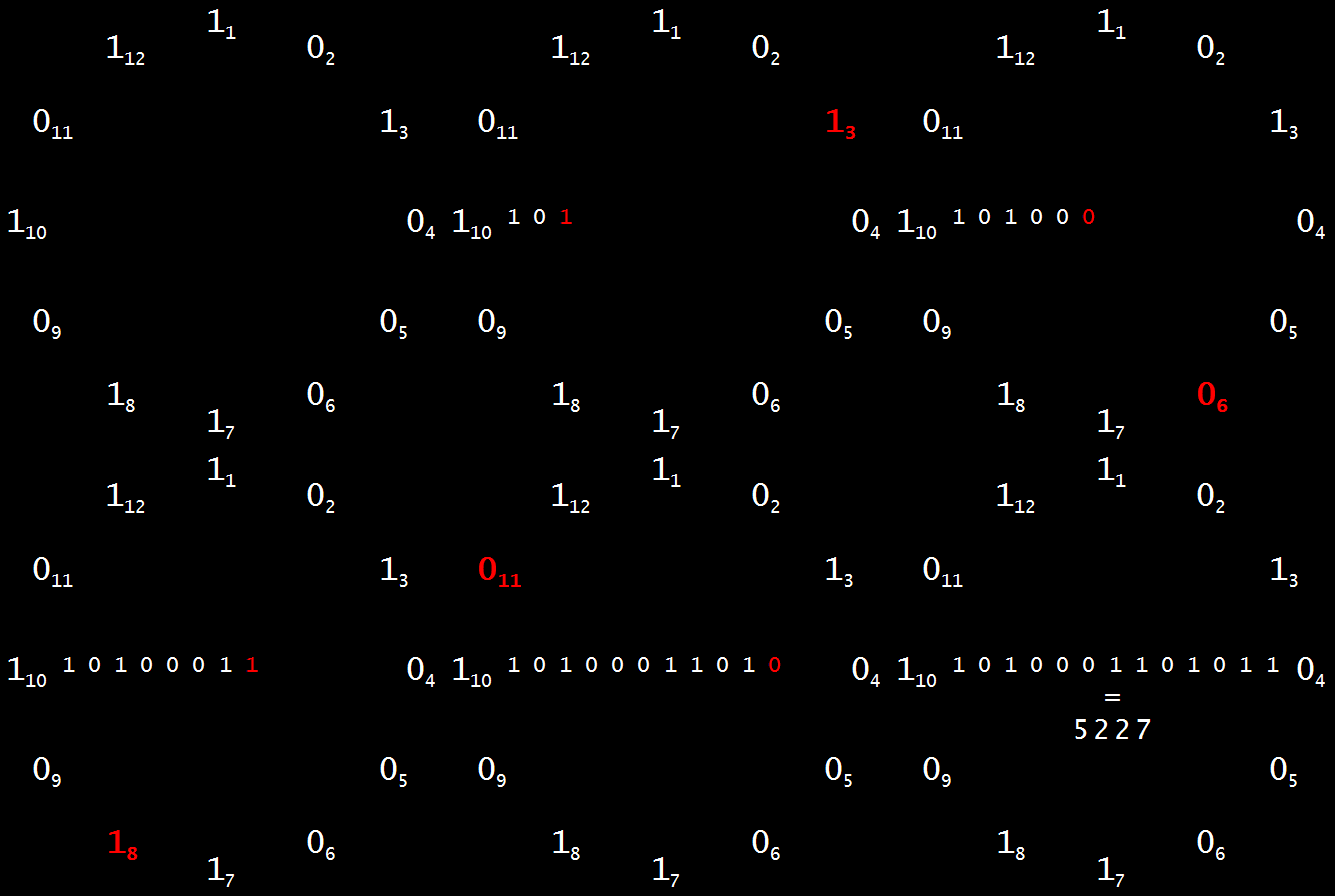
But, whether they’re palindromes or not, all brimes except 2 begin and end with 1, so they can be represented as rings, like this:

Ouroboros5227

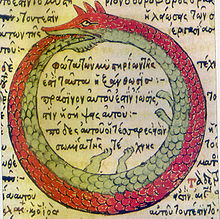
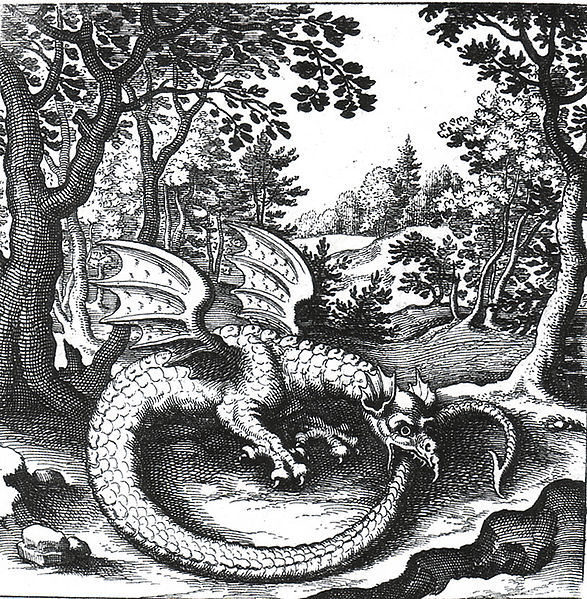
Those twelve bits, or binary digits, actually represent the thirteen bits of 5227 = 1,010,001,101,011. Start at twelve o’clock (digit 1 of the prime) and count clockwise, adding 1’s and 0’s till you reach 12 o’clock again and add the final 1. Then you’ve clocked around the rock and created the granite of 5227, which can’t be divided by any integers but itself and 1. Another way to see the brime-ring is as an Ouroboros (pronounced “or-ROB-or-us”), a serpent or dragon biting its own tail, like this:

Alchemical Ouroboros

Alchemical Ouroboros (1478)

Dragon Ouroboros

Another alchemical Ouroboros (1599)

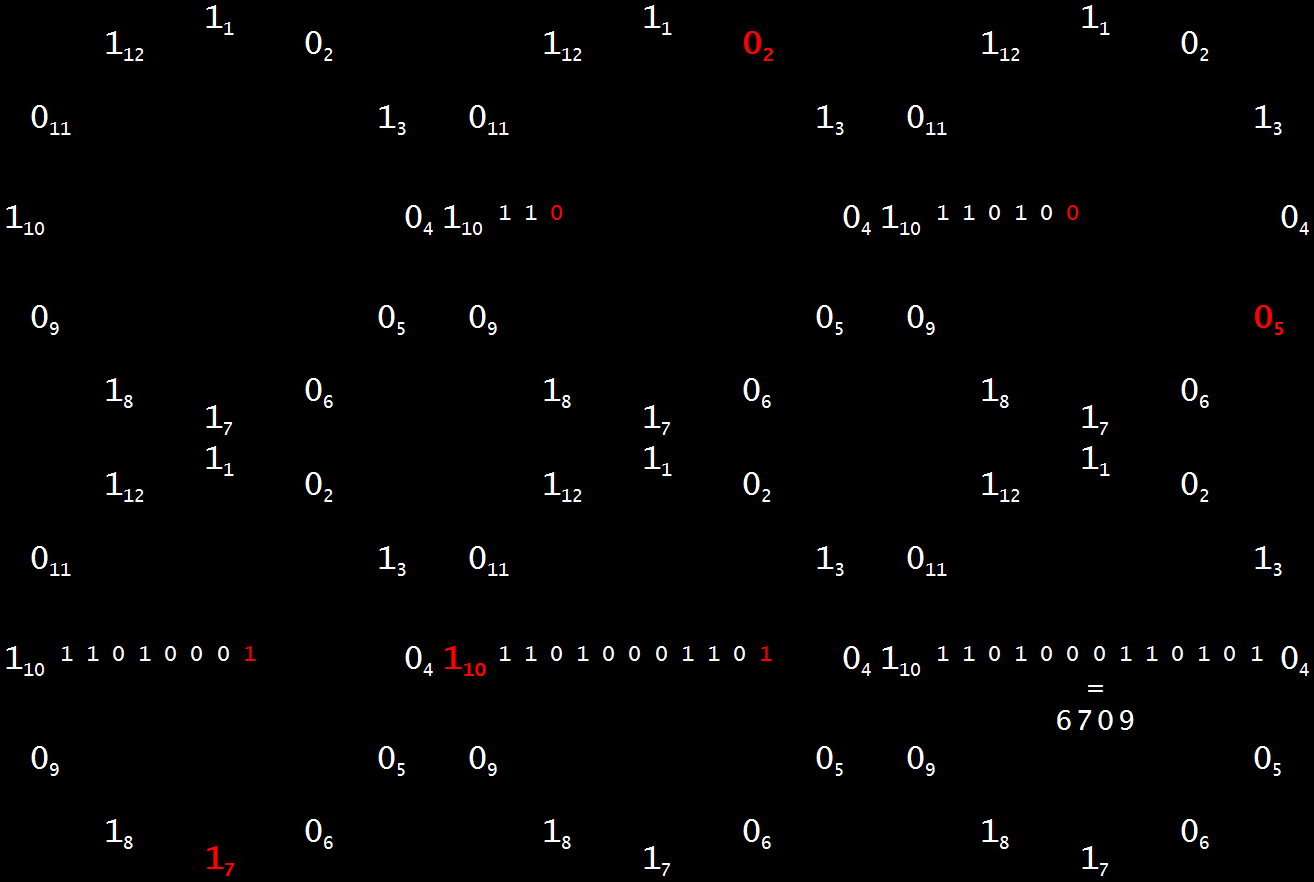
But you don’t have to start clocking around the rock at midday or midnight. Take the Ouroboprime of 5227 and start at eleven o’clock (digit 12 of the prime), adding 1’s and 0’s as you move clockwise. When you’ve clocked around the rock, you’ll have created the granite of 6709, another prime:

Ouroboros6709

Other Ouroboprimes produce brimes both clockwise and anti-clockwise, like 47 = 101,111.

Clockwise

101,111 = 47
111,011 = 59
111,101 = 61

Anti-Clockwise

111,101 = 61
111,011 = 59
101,111 = 47

If you demand the clock-rocked brime produce distinct primes, you sometimes get more in one direction than the other. Here is 151 = 10,010,111:

Clockwise

10,010,111 = 151
11,100,101 = 229

Anti-Clockwise

11,101,001 = 233
11,010,011 = 211
10,100,111 = 167
10,011,101 = 157

The most productive brime I’ve discovered so far is 2,326,439 = 1,000,110,111,111,110,100,111[2], which produces fifteen distinct primes:

Clockwise (7 brimes)

1,000,110,111,111,110,100,111 = 2326439
1,100,011,011,111,111,010,011 = 3260371
1,110,100,111,000,110,111,111 = 3830207
1,111,101,001,110,001,101,111 = 4103279
1,111,110,100,111,000,110,111 = 4148791
1,111,111,010,011,100,011,011 = 4171547
1,101,111,111,101,001,110,001 = 3668593

Anti-Clockwise (8 brimes)

1,110,010,111,111,110,110,001 = 3768241
1,100,101,111,111,101,100,011 = 3342179
1,111,111,011,000,111,001,011 = 4174283
1,111,110,110,001,110,010,111 = 4154263
1,111,101,100,011,100,101,111 = 4114223
1,111,011,000,111,001,011,111 = 4034143
1,110,110,001,110,010,111,111 = 3873983
1,000,111,001,011,111,111,011 = 2332667


Appendix: Deciminimalist Primes

Some primes in base ten use only the two most basic symbols too. That is, primes like 11[10], 101[10], 10111[10] and 1011001[10] are composed of only 1’s and 0’s. Furthermore, when these numbers are read as binary instead, they are still prime: 11[2] = 3, 101[2] = 5, 10111[2] = 23 and 1011001[2] = 89. Here is an incomplete list of these deciminimalist primes:

11[10] = 1,011[2]; 11[2] = 3[10] is also prime.

101[10] = 1,100,101[2]; 101[2] = 5[10] is also prime.

10,111[10] = 10,011,101,111,111[2]; 10,111[2] = 23[10] is also prime.

101,111[10] = 11,000,101,011,110,111[2]; 101,111[2] = 47[10] is also prime.

1,011,001[10] = 11,110,110,110,100,111,001[2]; 1,011,001[2] = 89[10] is also prime.

1,100,101[10] = 100,001,100,100,101,000,101[2]; 1,100,101[2] = 101[10] is also prime.

10,010,101[10] = 100,110,001,011,110,111,110,101[2]; 10,010,101[2] = 149[10] is also prime.

10,011,101[10] = 100,110,001,100,000,111,011,101[2]; 10,011,101[2] = 157[10] is also prime.

10,100,011[10] = 100,110,100,001,110,100,101,011[2]; 10,100,011[2] = 163[10] is also prime.

10,101,101[10] = 100,110,100,010,000,101,101,101[2]; 10,101,101[2] = 173[10] is also prime.

10,110,011[10] = 100,110,100,100,010,000,111,011[2]; 10,110,011[2] = 179[10] is also prime.

10,111,001[10] = 100,110,100,100,100,000,011,001[2].

11,000,111[10] = 101,001,111,101,100,100,101,111[2]; 11,000,111[2] = 199[10] is also prime.

11,100,101[10] = 101,010,010,101,111,111,000,101[2]; 11,100,101[2] = 229[10] is also prime.

11,110,111[10] = 101,010,011,000,011,011,011,111[2].

11,111,101[10] = 101,010,011,000,101,010,111,101[2].

100,011,001[10] = 101,111,101,100,000,101,111,111,001[2]; 100,011,001[2] = 281[10] is also prime.

100,100,111[10] = 101,111,101,110,110,100,000,001,111[2].

100,111,001[10] = 101,111,101,111,001,001,010,011,001[2]; 100,111,001[2] = 313[10] is also prime.

101,001,001[10] = 110,000,001,010,010,011,100,101,001[2].

101,001,011[10] = 110,000,001,010,010,011,100,110,011[2]; 101,001,011[2] = 331[10] is also prime.

101,001,101[10] = 110,000,001,010,010,011,110,001,101[2].

101,100,011[10] = 110,000,001,101,010,100,111,101,011[2].

101,101,001[10] = 110,000,001,101,010,110,111,001,001[2].

101,101,111[10] = 110,000,001,101,010,111,000,110,111[2]; 101,101,111[2] = 367[10] is also prime.

101,110,111[10] = 110,000,001,101,101,000,101,011,111[2].

101,111,011[10] = 110,000,001,101,101,010,011,100,011[2]; 101,111,011[2] = 379[10] is also prime.

101,111,111[10] = 110,000,001,101,101,010,101,000,111[2]; 101,111,111[2] = 383[10] is also prime.

110,010,101[10] = 110,100,011,101,001,111,011,110,101[2].

110,100,101[10] = 110,100,011,111,111,111,010,000,101[2]; 110,100,101[2] = 421[10] is also prime.

110,101,001[10] = 110,100,100,000,000,001,000,001,001[2].

110,110,001[10] = 110,100,100,000,010,010,100,110,001[2]; 110,110,001[2] = 433[10] is also prime.

110,111,011[10] = 110,100,100,000,010,100,100,100,011[2]; 110,111,011[2] = 443[10] is also prime.

Three Is The Key

If The Roses of Heliogabalus (1888) is any guide, Sir Lawrence Alma-Tadema (1836-1912) thought that 222 is a special number. But his painting doesn’t exhaust its secrets. To get to another curiosity of 222, start with 142857. As David Wells puts it in his Penguin Dictionary of Curious and Interesting Numbers (1986), 142857 is a “number beloved of all recreational mathematicians”. He then describes some of its properties, including this:

142857 x 1 = 142857
142857 x 2 = 285714
142857 x 3 = 428571
142857 x 4 = 571428
142857 x 5 = 714285
142857 x 6 = 857142

The multiples are cyclic permutations: the order of the six numbers doesn’t change, only their starting point. Because each row contains the same numbers, it sums to the same total: 1 + 4 + 2 + 8 + 5 + 7 = 27. And because each row begins with a different number, each column contains the same six numbers and also sums to 27, like this:

1 4 2 8 5 7
+ + + + + +
2 8 5 7 1 4
+ + + + + +
4 2 8 5 7 1
+ + + + + +
5 7 1 4 2 8
+ + + + + +
7 1 4 2 8 5
+ + + + + +
8 5 7 1 4 2

= = = = = =

2 2 2 2 2 2
7 7 7 7 7 7

If the diagonals of the square also summed to the same total, the multiples of 142857 would create a full magic square. But the diagonals don’t have the same total: the left-right diagonal sums to 31 and the right-left to 23 (note that 31 + 23 = 54 = 27 x 2).

But where does 142857 come from? It’s actually the first six digits of the reciprocal of 7, i.e. 1/7 = 0·142857… Those six numbers repeat for ever, because 1/7 is a prime reciprocal with maximum period: when you calculate 1/7, all integers below 7 are represented in the remainders. The square of multiples above is simply another way of representing this:

1/7 = 0·142857…
2/7 = 0·285714…
3/7 = 0·428571…
4/7 = 0·571428…
5/7 = 0·714285…
6/7 = 0·857142…
7/7 = 0·999999…

The prime reciprocals 1/17 and 1/19 also have maximum period, so the squares created by their multiples have the same property: each row and each column sums to the same total, 72 and 81, respectively. But the 1/19 square has an additional property: both diagonals sum to 81, so it is fully magic:

01/19 = 0·0 5 2 6 3 1 5 7 8 9 4 7 3 6 8 4 2 1
02/19 = 0·1 0 5 2 6 3 1 5 7 8 9 4 7 3 6 8 4 2…
03/19 = 0·1 5 7 8 9 4 7 3 6 8 4 2 1 0 5 2 6 3…
04/19 = 0·2 1 0 5 2 6 3 1 5 7 8 9 4 7 3 6 8 4…
05/19 = 0·2 6 3 1 5 7 8 9 4 7 3 6 8 4 2 1 0 5…
06/19 = 0·3 1 5 7 8 9 4 7 3 6 8 4 2 1 0 5 2 6…
07/19 = 0·3 6 8 4 2 1 0 5 2 6 3 1 5 7 8 9 4 7…
08/19 = 0·4 2 1 0 5 2 6 3 1 5 7 8 9 4 7 3 6 8…
09/19 = 0·4 7 3 6 8 4 2 1 0 5 2 6 3 1 5 7 8 9…
10/19 = 0·5 2 6 3 1 5 7 8 9 4 7 3 6 8 4 2 1 0…
11/19 = 0·5 7 8 9 4 7 3 6 8 4 2 1 0 5 2 6 3 1…
12/19 = 0·6 3 1 5 7 8 9 4 7 3 6 8 4 2 1 0 5 2…
13/19 = 0·6 8 4 2 1 0 5 2 6 3 1 5 7 8 9 4 7 3…
14/19 = 0·7 3 6 8 4 2 1 0 5 2 6 3 1 5 7 8 9 4…
15/19 = 0·7 8 9 4 7 3 6 8 4 2 1 0 5 2 6 3 1 5…
16/19 = 0·8 4 2 1 0 5 2 6 3 1 5 7 8 9 4 7 3 6…
17/19 = 0·8 9 4 7 3 6 8 4 2 1 0 5 2 6 3 1 5 7…
18/19 = 0·9 4 7 3 6 8 4 2 1 0 5 2 6 3 1 5 7 8

First line = 0 + 5 + 2 + 6 + 3 + 1 + 5 + 7 + 8 + 9 + 4 + 7 + 3 + 6 + 8 + 4 + 2 + 1 = 81

Left-right diagonal = 0 + 0 + 7 + 5 + 5 + 9 + 0 + 3 + 0 + 4 + 2 + 8 + 7 + 5 + 6 + 7 + 5 + 8 = 81

Right-left diagonal = 9 + 9 + 2 + 4 + 4 + 0 + 9 + 6 + 9 + 5 + 7 + 1 + 2 + 4 + 3 + 2 + 4 + 1 = 81

In base 10, this doesn’t happen again until the 1/383 square, whose magic total is 1719 (= 383-1 x 10⁻¹ / 2). But recreational maths isn’t restricted to base 10 and lots more magic squares are created by lots more primes in lots more bases. The prime 223 in base 3 is one of them. Here the first line is

1/223 = 1/220213 = 0·

0000100210210102121211101202221112202
2110211112001012200122102202002122220
2110110201020210001211000222011010010
2222122012012120101011121020001110020
0112011110221210022100120020220100002
0112112021202012221011222000211212212…

The digits sum to 222, so 222 is the magic total for all rows and columns of the 1/223 square. It is also the total for both diagonals, so the square is fully magic. I doubt that Alma-Tadema knew this, because he lived before computers made calculations like that fast and easy. But he was probably a Freemason and, if so, would have been pleased to learn that 222 had a link with squares.

Palace in Numberland

The Palace of Primes

“Cur ad uvas per Zeusim depictas accursabant volucres?” – Iordani Bruni Ars Memoriæ (1582).

“Why did birds flock to the grapes painted by Zeuxis?” – Giordano Bruno’s Art of Memory.

“To mnemonicize the primes is to partake of the mind of God, as though one dipped a shell into plumbless nectar and drank thereof.” So runs the saying in the Cult of Primes, wherein prodigious feats of memory are demanded even of the neophytes, who must enthrone in a memory-palace the initial 931 primes (from 2 to 7,307) ere they can begin climbing, rung by jaden rung, the ladder of the Hierarchy. The Cult has a number-system based on thirty: which is to say, where we, with a base of ten, have nine number-symbols and the cipher, they have twenty-nine ditto and ditto. To each symbol, in their mnemonics, they assign a beast, bird, and flower; a metal, gem, and wood; a fur, cloth, and silk; a food, drink, and condiment; a colour, scent, and sound. Thus, a hummingbird hovering above an emerald amid scent of vanilla symbolizes the prime 1,667; an eye upon a silver harp the prime 5,059; and a porphyry scarab upon a cheetah’s fur the prime 11,173.

When once the neophytes have mastered the system of mnemonics, each sets to constructing his Palatium Primorum, his Palace of Primes. Herein, each Prime has Its Room, wherein It sits on a Throne studded with symbols of its attributes, whilst courtiers feast and musicians play before It. And in the Left Wall of the Room are many doors symbolizing numbers from 1 to 31. If one is in the Throne-Room of 137, for example, and one steps through the Door of 13, one finds oneself in the Throne-Room of 199, the Prime 13 places higher in the List of Primes; and similarly, mutatis mutandis, for other numbers and other doors. And in the Right Wall are an increasing number of doors leading to Primes lower in the list. Thus, the Throne-Room of 2 has no doors on the right; and of 3 has one door; and of 5 two doors; and so till 131, the 32nd prime, whereat the Right Doors reach their maximum. And each priest of the Cult, from his neophycy on, will toil a lifetime bedecking, manning, and extending the Palace, till it seems to him more real than the World, vaster than the Universe, and dearer to him than his heart-beat.

Nor, if earthly misfortune overtakes him, does the Palace fail of consolation, for a priest can resort thither for surcease of pain, if upon the rack; for oblivion of want, if destitute or starving; and for foretaste of Paradise, if dying. Yea, Paradise is a Palace, in the teaching of the Cult, a Palatium Omnium Primorum, of All Primes, primes numberless as beats of a deathless heart, as sands of an endless shore, as stars of a boundless heaven. And Herein the Doors of the Left Wall are infinite and the Doors of the Right increase for ever.