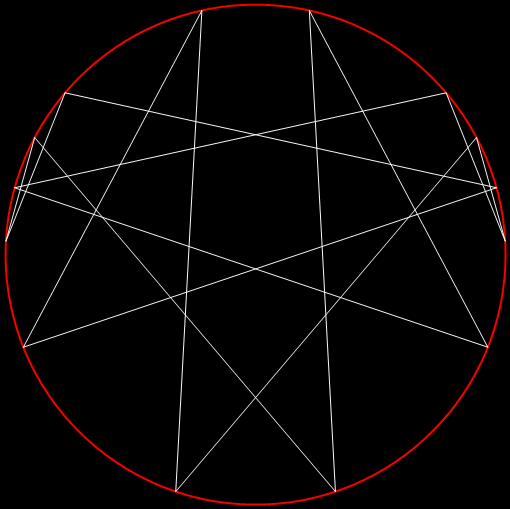
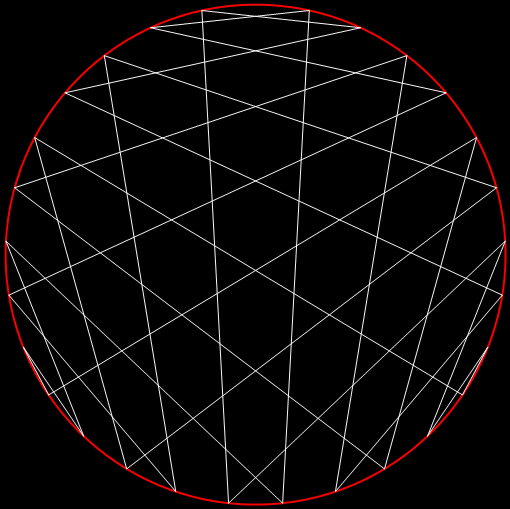
Graph durch Euler

This is the famous Ulam spiral, in which prime numbers are represented on filled squares on a square spiral:

The Ulam spiral


I like the way the spiral sits between chaos and calm. It’s not wholly random and it’s not wholly regular — it’s betwixt and between. You get a similar chaos-and-calm vibe from a graph for a function called Euler phi. And primes are at work there too. Here’s the graph from Wikipedia:
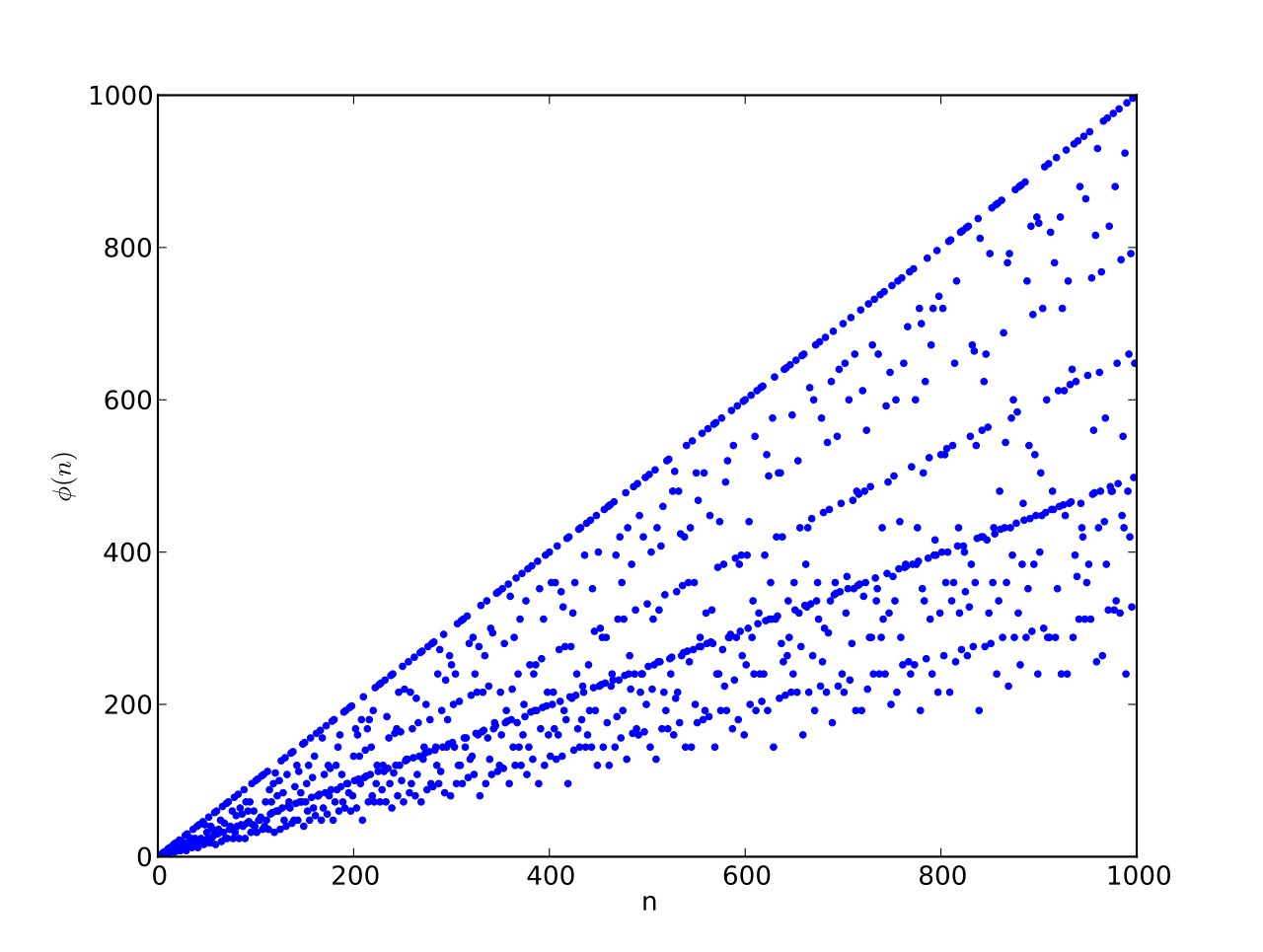
Graph of eulerphi(n) = φ(n) (see Euler’s totient function)


But what is the Euler phi function? For any integer n, eulerphi(n) gives you the count of numbers < n that are relatively prime to n. That is, the count of numbers < n that have no common factors with n other than one. You can see how eulerphi(n) works by considering whether you can simplify the fraction a/b, where a = 1..n-1 and b = n:

φ(6) = 2
1/6 (1)
2/6 → 1/3
3/6 → 1/2
4/6 → 2/3
5/6, ∴ φ(6) = 2


φ(7) = 6
1/7 (1)
2/7 (2)
3/7 (3)
4/7 (4)
5/7 (5)
6/7, ∴ φ(7) = 6


φ(12) = 4
1/12 (1)
2/12 → 1/6
3/12 → 1/4
4/12 → 1/3
5/12 (2)
6/12 → 1/2
7/12 (3)
8/12 → 2/3
9/12 → 3/4
10/12 → 5/6
11/12, ∴ φ(12) = 4


φ(13) = 12
1/13 (1)
2/13 (2)
3/13 (3)
4/13 (4)
5/13 (5)
6/13 (6)
7/13 (7)
8/13 (8)
9/13 (9)
10/13 (10)
11/13 (11)
12/13, ∴ φ(13) = 12


As you can see, eulerphi(n) = n-1 for primes. Now you know what the top line of the Eulerphi graph is. It’s the primes. Here’s a bigger version of the graph:
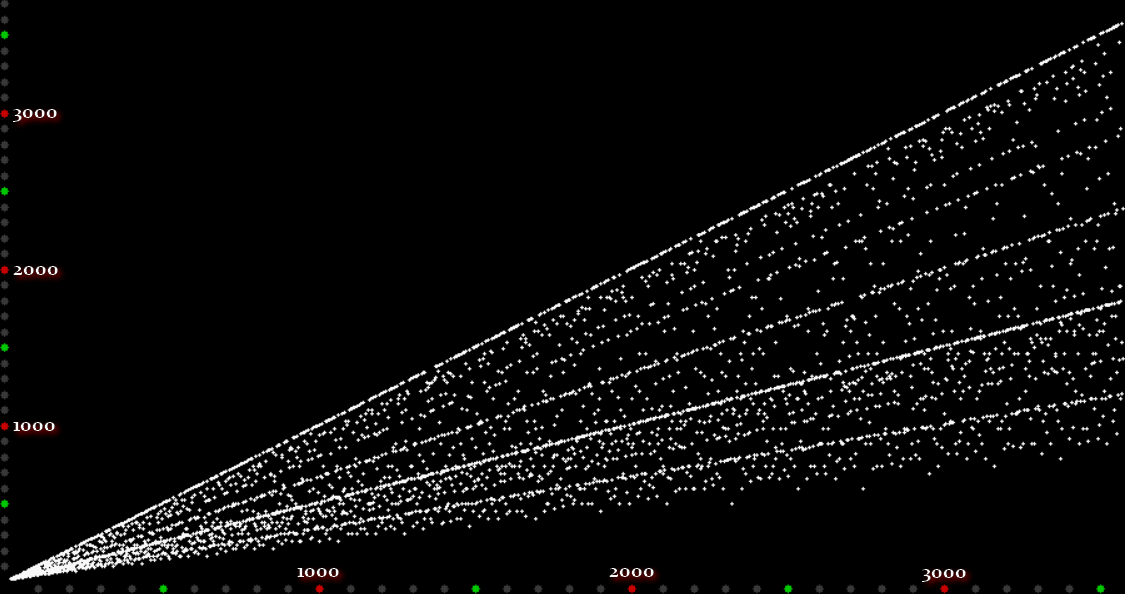
Graph of eulerphi(n) = φ(n)


Unlike the Ulam spiral, however, the Eulerphi graph is cramped. But it’s easy to stretch it. You can represent φ(n) as a fraction between 0 and 1 like this: phifrac(n) = φ(n) / (n-1). Using phifrac(n), you can create Eulerphi bands, like this:
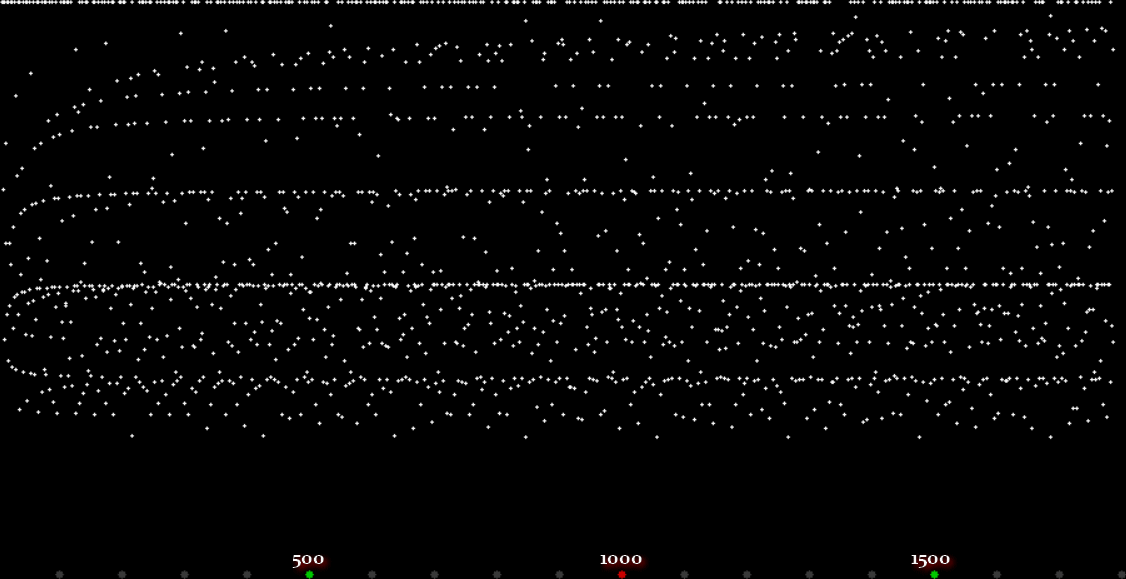
Eulerphi band, n <= 1781
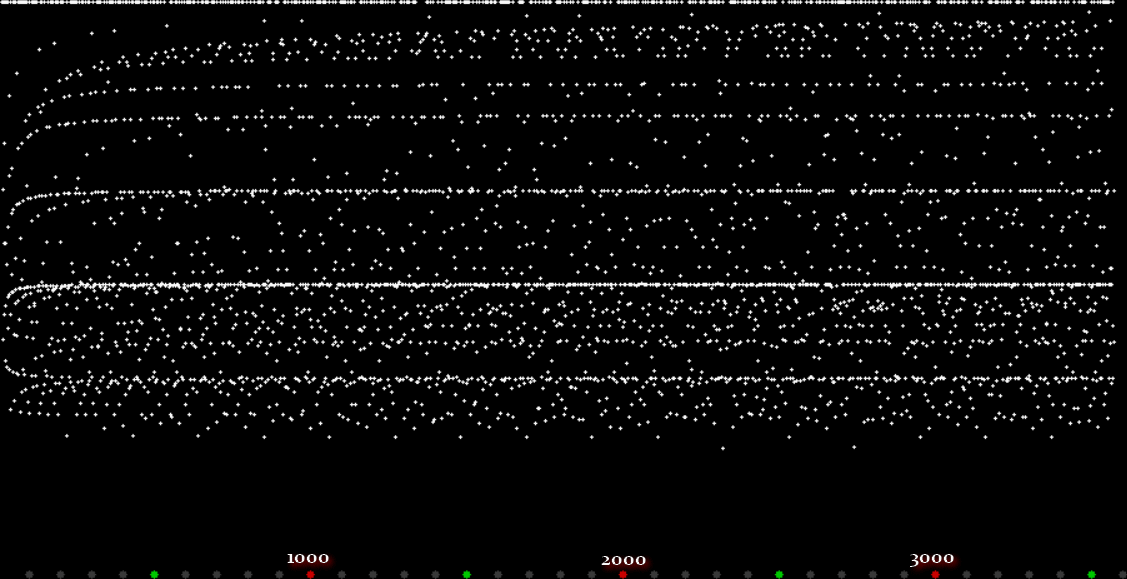

Eulerphi band, n <= 3561
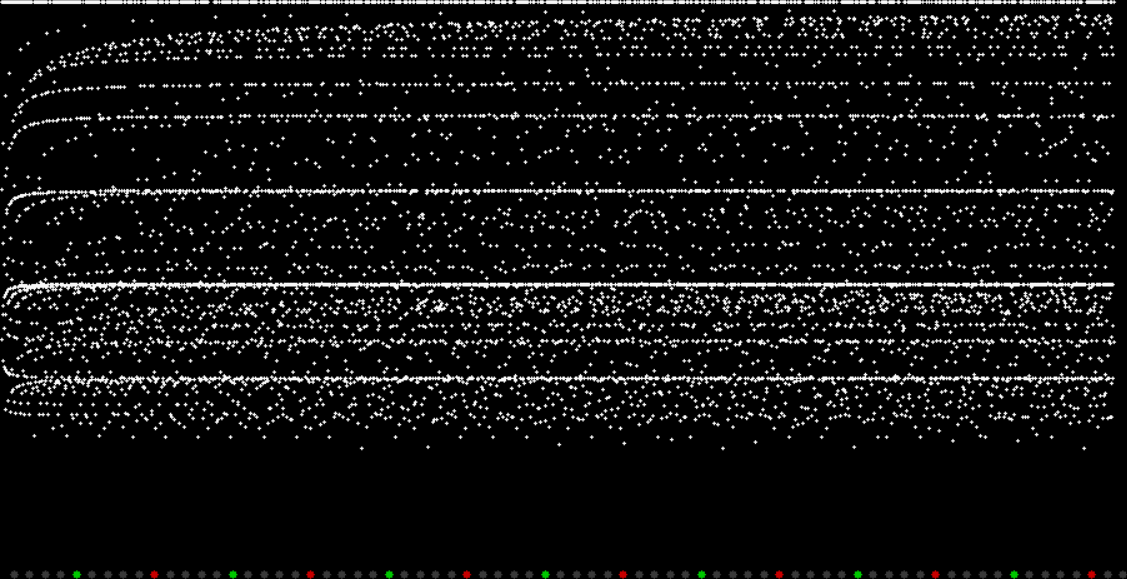

Eulerphi band, n <= 7121
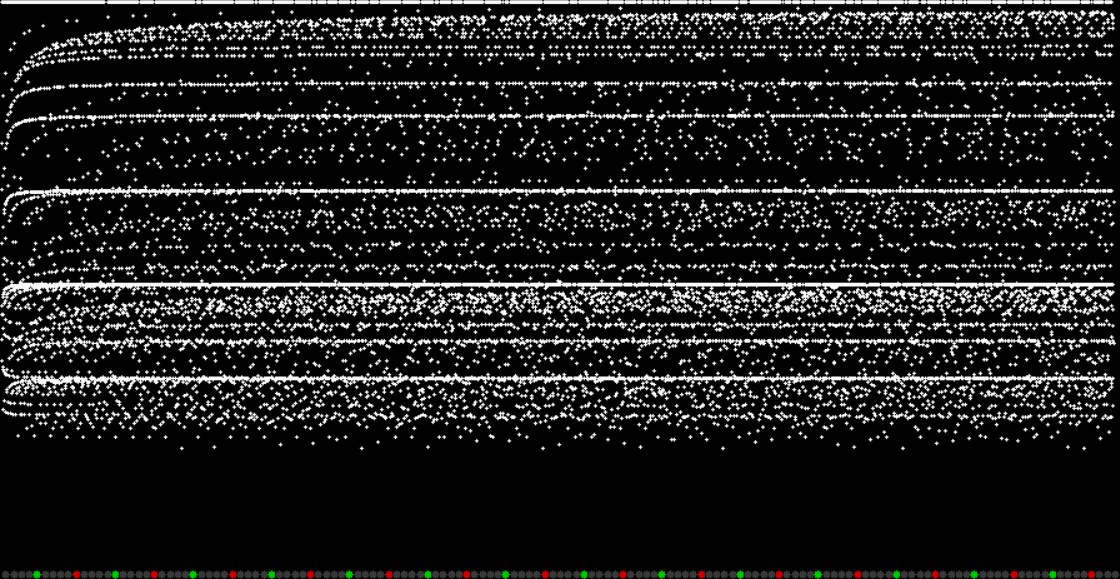

Eulerphi band, n <= 14241


Or you can create Eulerphi discs, like this:
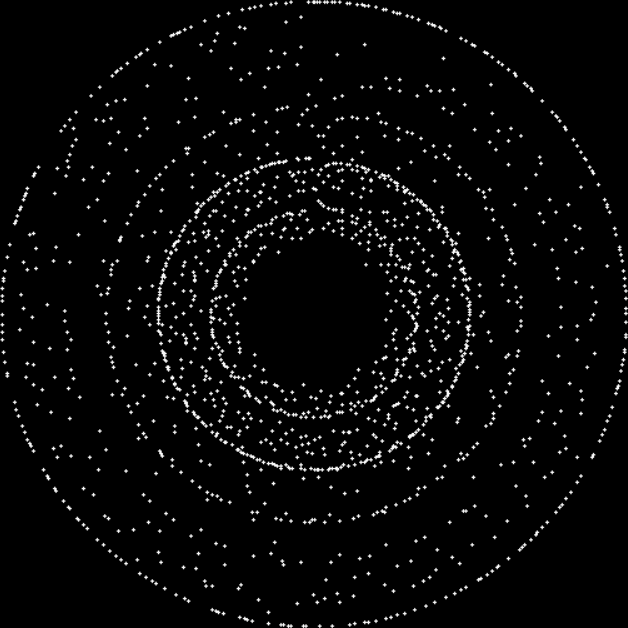
Eulerphi disc, n <= 1601
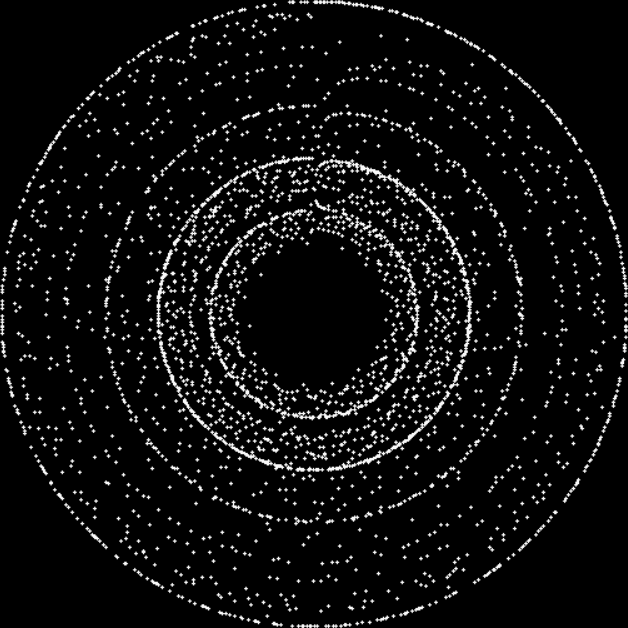

Eulerphi disc, n <= 3201
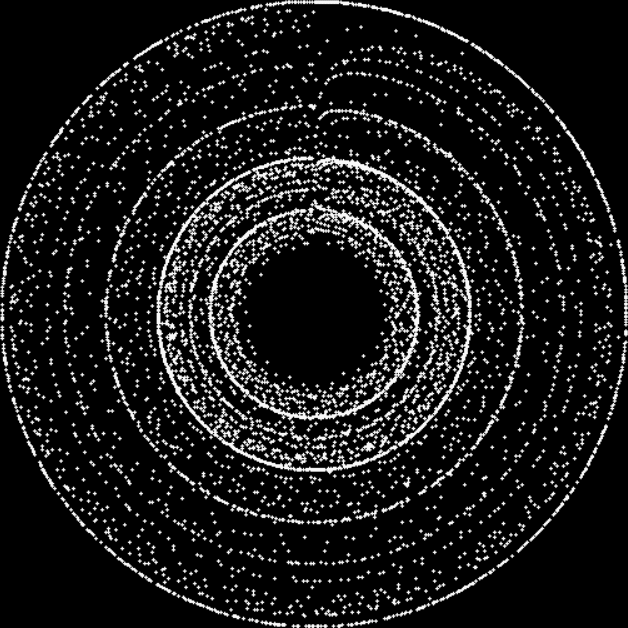

Eulerphi disc, n <= 6401
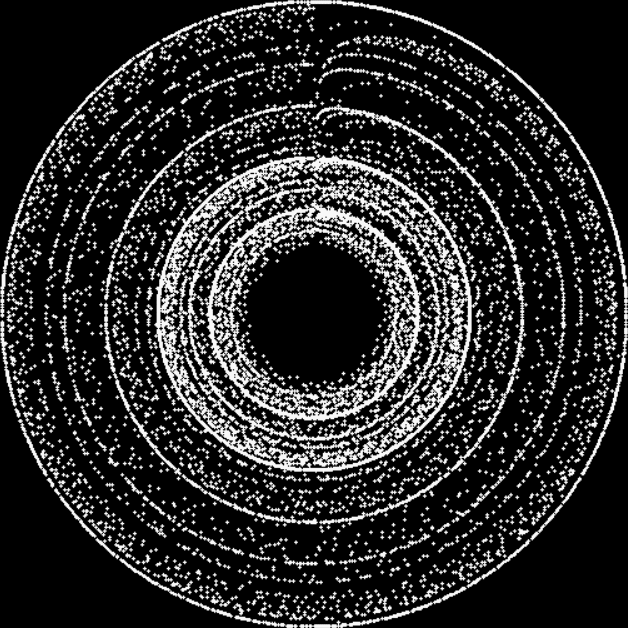

Eulerphi disc, n <= 12802
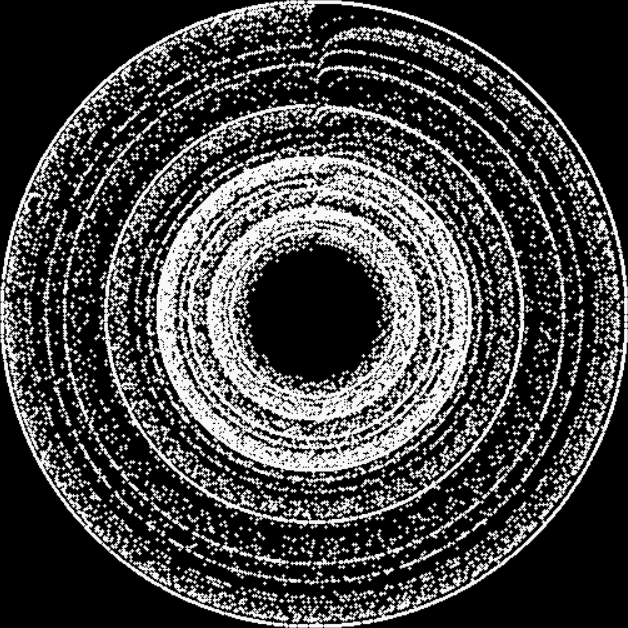

Eulerphi disc, n <= 25602


But what is the bottom line of the Eulerphi bands and inner ring of the Eulerphi discs, where φ(n) is smallest relative to n? Well, the top line or outer ring is the primes and the bottom line or inner ring is the primorials (and their multiples). The function primorial(n) is the multiple of the first n primes:

primorial(1) = 2
primorial(2) = 2*3 = 6
primorial(3) = 2*3*5 = 30
primorial(4) = 2*3*5*7 = 210
primorial(5) = 2*3*5*7*11 = 2310
primorial(6) = 2*3*5*7*11*13 = 30030
primorial(7) = 2*3*5*7*11*13*17 = 510510
primorial(8) = 2*3*5*7*11*13*17*19 = 9699690
primorial(9) = 2*3*5*7*11*13*17*19*23 = 223092870
primorial(10) = 2*3*5*7*11*13*17*19*23*29 = 6469693230


Here are the numbers returning record lows for φfrac(n) = φ(n) / (n-1):

φ(4) = 2 (2/3 = 0.666…)
4 = 2^2
φ(6) = 2 (2/5 = 0.4)
6 = 2.3
φ(12) = 4 (4/11 = 0.363636…)
12 = 2^2.3
[…]
φ(30) = 8 (8/29 = 0.275862…)
30 = 2.3.5
φ(60) = 16 (16/59 = 0.27118…)
60 = 2^2.3.5
[…]
φ(210) = 48 (48/209 = 0.229665…)
210 = 2.3.5.7
φ(420) = 96 (96/419 = 0.2291169…)
420 = 2^2.3.5.7
φ(630) = 144 (144/629 = 0.228934…)
630 = 2.3^2.5.7
[…]
φ(2310) = 480 (480/2309 = 0.2078822…)
2310 = 2.3.5.7.11
φ(4620) = 960 (960/4619 = 0.20783719…)
4620 = 2^2.3.5.7.11
[…]
30030 = 2.3.5.7.11.13
φ(60060) = 11520 (11520/60059 = 0.191811385…)
60060 = 2^2.3.5.7.11.13
φ(90090) = 17280 (17280/90089 = 0.1918103209…)
90090 = 2.3^2.5.7.11.13
[…]
φ(510510) = 92160 (92160/510509 = 0.18052571061…)
510510 = 2.3.5.7.11.13.17
φ(1021020) = 184320 (184320/1021019 = 0.18052553…)
1021020 = 2^2.3.5.7.11.13.17
φ(1531530) = 276480 (276480/1531529 = 0.180525474868579…)
1531530 = 2.3^2.5.7.11.13.17
φ(2042040) = 368640 (368640/2042039 = 0.18052544540040616…)
2042040 = 2^3.3.5.7.11.13.17
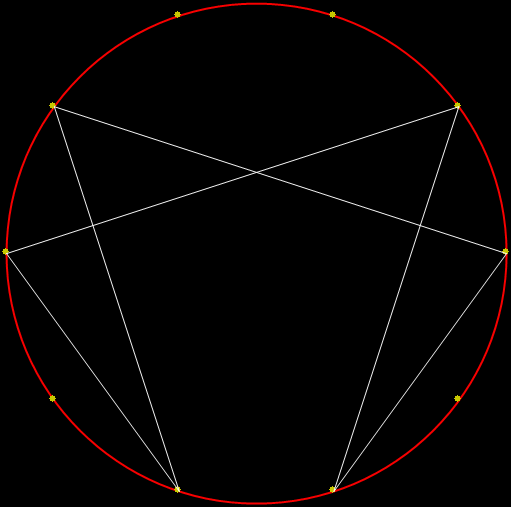
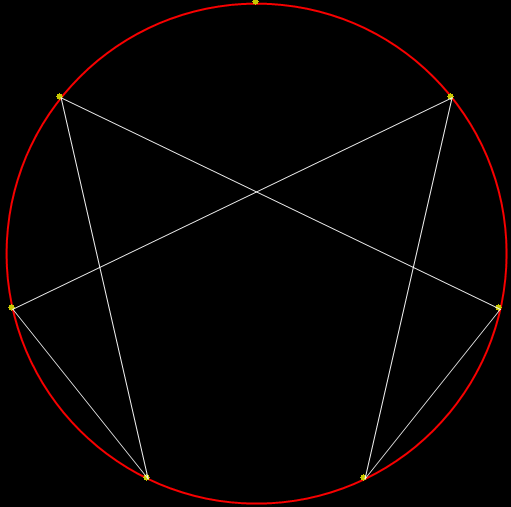
Primal Polynomial

n² + n + 17 is one of the best-known polynomial formulas for primes. Its values for n = 0 to 15 are all prime, starting with 17 and ending with 257. — David Wells in The Penguin Dictionary of Curious and Interesting Numbers (1986), entry for “17”
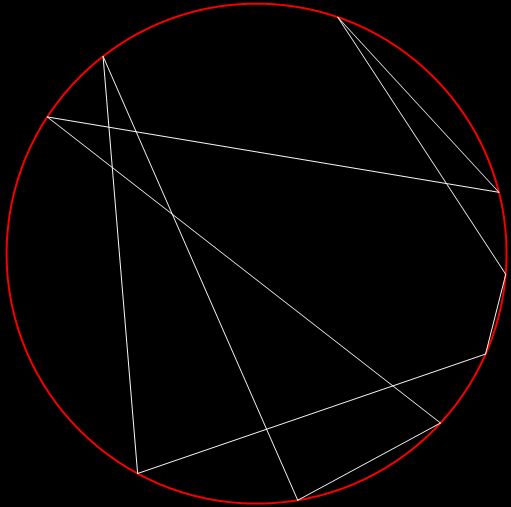
• 17, 19, 23, 29, 37, 47, 59, 73, 89, 107, 127, 149, 173, 199, 227, 257

Piles of Prime Pairs

A087641 Start of the first sequence of exactly n consecutive pairs of twin primes

29, 101, 5, 9419, 909287, 325267931, 678771479, 1107819732821, 170669145704411, 3324648277099157, 789795449254776509

Example: a(6)=325267931 is the starting point of the first occurrence of 6 consecutive pairs of twin primes: (325267931 325267933) (325267937 325267939) (325267949 325267951) (325267961 325267963) (325267979 325267981) (325267991 325267993).

A087641 at the Encyclopedia of Integer Sequences

Summer Samer

10 can be represented in exactly 10 ways as a sum of distinct integers:


10 = 1 + 2 + 3 + 4
10 = 2 + 3 + 5
10 = 1 + 4 + 5
10 = 1 + 3 + 6
10 = 4 + 6 (c=5)
10 = 1 + 2 + 7
10 = 3 + 7
10 = 2 + 8
10 = 1 + 9
10 = 10 (c=10)

But there’s something unsatisfying about including 10 as a sum of itself. It’s much more satisfying that 76 can be represented in exactly 76 ways as a sum of distinct primes:


76 = 2 + 3 + 7 + 11 + 13 + 17 + 23
76 = 5 + 7 + 11 + 13 + 17 + 23
76 = 2 + 3 + 5 + 11 + 13 + 19 + 23
76 = 3 + 7 + 11 + 13 + 19 + 23
76 = 2 + 3 + 5 + 7 + 17 + 19 + 23 (c=5)
76 = 2 + 3 + 5 + 7 + 13 + 17 + 29
76 = 2 + 3 + 5 + 7 + 11 + 19 + 29
76 = 3 + 5 + 7 + 13 + 19 + 29
76 = 11 + 17 + 19 + 29
76 = 11 + 13 + 23 + 29 (c=10)
76 = 2 + 5 + 17 + 23 + 29
76 = 7 + 17 + 23 + 29
76 = 2 + 3 + 19 + 23 + 29
76 = 5 + 19 + 23 + 29
76 = 2 + 3 + 5 + 7 + 11 + 17 + 31 (c=15)
76 = 3 + 5 + 7 + 13 + 17 + 31
76 = 3 + 5 + 7 + 11 + 19 + 31
76 = 2 + 11 + 13 + 19 + 31
76 = 2 + 7 + 17 + 19 + 31
76 = 2 + 7 + 13 + 23 + 31 (c=20)
76 = 2 + 3 + 17 + 23 + 31
76 = 5 + 17 + 23 + 31
76 = 3 + 19 + 23 + 31
76 = 2 + 3 + 11 + 29 + 31
76 = 5 + 11 + 29 + 31 (c=25)
76 = 3 + 13 + 29 + 31
76 = 3 + 5 + 7 + 11 + 13 + 37
76 = 2 + 7 + 13 + 17 + 37
76 = 2 + 7 + 11 + 19 + 37
76 = 2 + 5 + 13 + 19 + 37 (c=30)
76 = 7 + 13 + 19 + 37
76 = 3 + 17 + 19 + 37
76 = 2 + 3 + 11 + 23 + 37
76 = 5 + 11 + 23 + 37
76 = 3 + 13 + 23 + 37 (c=35)
76 = 2 + 3 + 5 + 29 + 37
76 = 3 + 7 + 29 + 37
76 = 3 + 5 + 31 + 37
76 = 2 + 5 + 11 + 17 + 41
76 = 7 + 11 + 17 + 41 (c=40)
76 = 2 + 3 + 13 + 17 + 41
76 = 5 + 13 + 17 + 41
76 = 2 + 3 + 11 + 19 + 41
76 = 5 + 11 + 19 + 41
76 = 3 + 13 + 19 + 41 (c=45)
76 = 2 + 3 + 7 + 23 + 41
76 = 5 + 7 + 23 + 41
76 = 2 + 7 + 11 + 13 + 43
76 = 2 + 3 + 11 + 17 + 43
76 = 5 + 11 + 17 + 43 (c=50)
76 = 3 + 13 + 17 + 43
76 = 2 + 5 + 7 + 19 + 43
76 = 3 + 11 + 19 + 43
76 = 2 + 3 + 5 + 23 + 43
76 = 3 + 7 + 23 + 43 (c=55)
76 = 2 + 31 + 43
76 = 2 + 3 + 11 + 13 + 47
76 = 5 + 11 + 13 + 47
76 = 2 + 3 + 7 + 17 + 47
76 = 5 + 7 + 17 + 47 (c=60)
76 = 2 + 3 + 5 + 19 + 47
76 = 3 + 7 + 19 + 47
76 = 29 + 47
76 = 2 + 3 + 7 + 11 + 53
76 = 5 + 7 + 11 + 53 (c=65)
76 = 2 + 3 + 5 + 13 + 53
76 = 3 + 7 + 13 + 53
76 = 23 + 53
76 = 2 + 3 + 5 + 7 + 59
76 = 17 + 59 (c=70)
76 = 3 + 5 + 7 + 61
76 = 2 + 13 + 61
76 = 2 + 7 + 67
76 = 2 + 3 + 71
76 = 5 + 71 (c=75)
76 = 3 + 73

Power Flip

12 is an interesting number in a lot of ways. Here’s one way I haven’t seen mentioned before:

12 = 3^1 * 2^2


The digits of 12 represent the powers of the primes in its factorization, if primes are represented from right-to-left, like this: …7, 5, 3, 2. But I couldn’t find any more numbers like that in base 10, so I tried a power flip, from right-left to left-right. If the digits from left-to-right represent the primes in the order 2, 3, 5, 7…, then this number is has prime-power digits too:

81312000 = 2^8 * 3^1 * 5^3 * 7^1 * 11^2 * 13^0 * 17^0 * 19^0


Or, more simply, given that n^0 = 1:

81312000 = 2^8 * 3^1 * 5^3 * 7^1 * 11^2


I haven’t found any more left-to-right prime-power digital numbers in base 10, but there are more in other bases. Base 5 yields at least three (I’ve ignored numbers with just two digits in a particular base):

110 in b2 = 2^1 * 3^1 (n=6)
130 in b6 = 2^1 * 3^3 (n=54)
1010 in b2 = 2^1 * 3^0 * 5^1 (n=10)
101 in b3 = 2^1 * 3^0 * 5^1 (n=10)
202 in b7 = 2^2 * 3^0 * 5^2 (n=100)
3020 in b4 = 2^3 * 3^0 * 5^2 (n=200)
330 in b8 = 2^3 * 3^3 (n=216)
13310 in b14 = 2^1 * 3^3 * 5^3 * 7^1 (n=47250)
3032000 in b5 = 2^3 * 3^0 * 5^3 * 7^2 (n=49000)
21302000 in b5 = 2^2 * 3^1 * 5^3 * 7^0 * 11^2 (n=181500)
7810000 in b9 = 2^7 * 3^8 * 5^1 (n=4199040)
81312000 in b10 = 2^8 * 3^1 * 5^3 * 7^1 * 11^2


Post-Performative Post-Scriptum

When I searched for 81312000 at the Online Encyclopedia of Integer Sequences, I discovered that these are Meertens numbers, defined at A246532 as the “base n Godel encoding of x [namely,] 2^d(1) * 3^d(2) * … * prime(k)^d(k), where d(1)d(2)…d(k) is the base n representation of x.”

Period Panes

In his Penguin Dictionary of Curious and Interesting Numbers (1986), David Wells says that 142857 is “beloved of all recreational mathematicians”. He then says it’s the decimal period of the reciprocal of the fourth prime: “1/7 = 0·142857142857142…” And the reciprocal has maximum period. There are 6 = 7-1 digits before repetition begins, unlike the earlier prime reciprocals:


1/2 = 0·5
1/3 = 0·333...
1/5 = 0·2
1/7 = 0·142857 142857 142...

In other words, all possible remainders appear when you calculate the decimals of 1/7:


1*10 / 7 = 1 remainder 3 → 0·1
3*10 / 7 = 4 remainder 2 → 0·14
2*10 / 7 = 2 remainder 6 → 0·142
6*10 / 7 = 8 remainder 4 → 0·1428
4*10 / 7 = 5 remainder 5 → 0·14285
5*10 / 7 = 7 remainder 1 → 0·142857
1*10 / 7 = 1 remainder 3 → 0·142857 1
3*10 / 7 = 4 remainder 2 → 0·142857 14
2*10 / 7 = 2 remainder 6 → 0·142857 142...

That happens again with 1/17 and 1/19, but Wells says that “surprisingly, there is no known method of predicting which primes have maximum period.” It’s a simple question that involves some deep mathematics. Looking at prime reciprocals is like peering through a small window into a big room. Some things are easy to see, some are difficult and some are presently impossible.

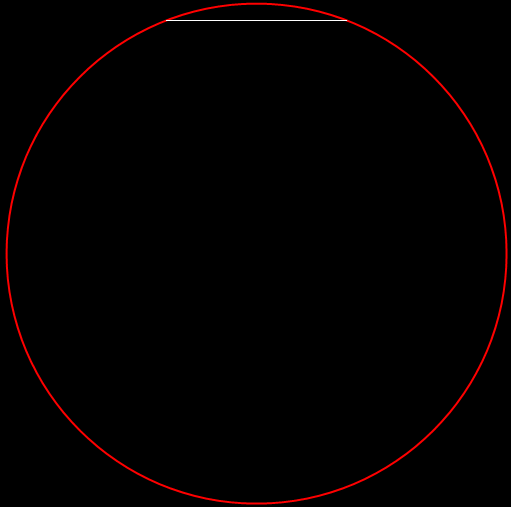
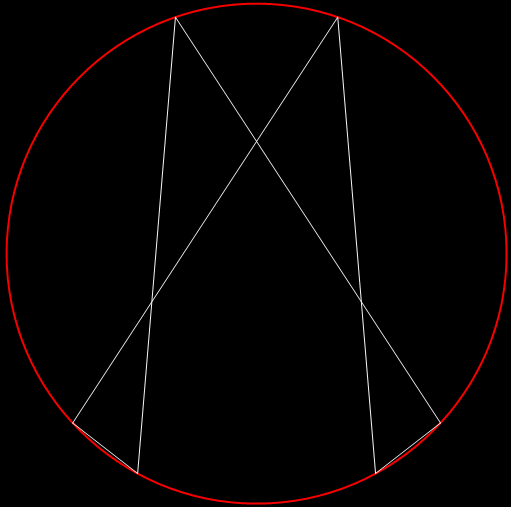
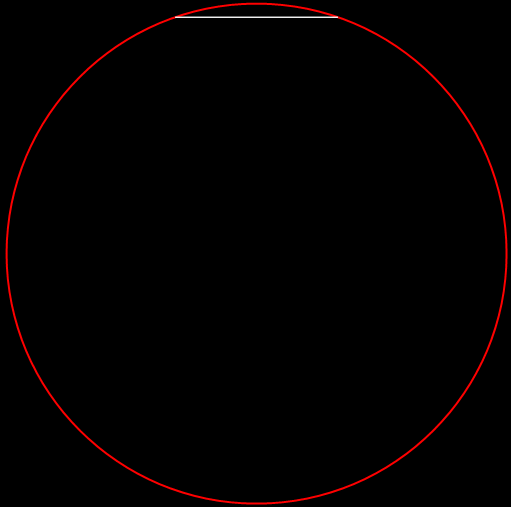
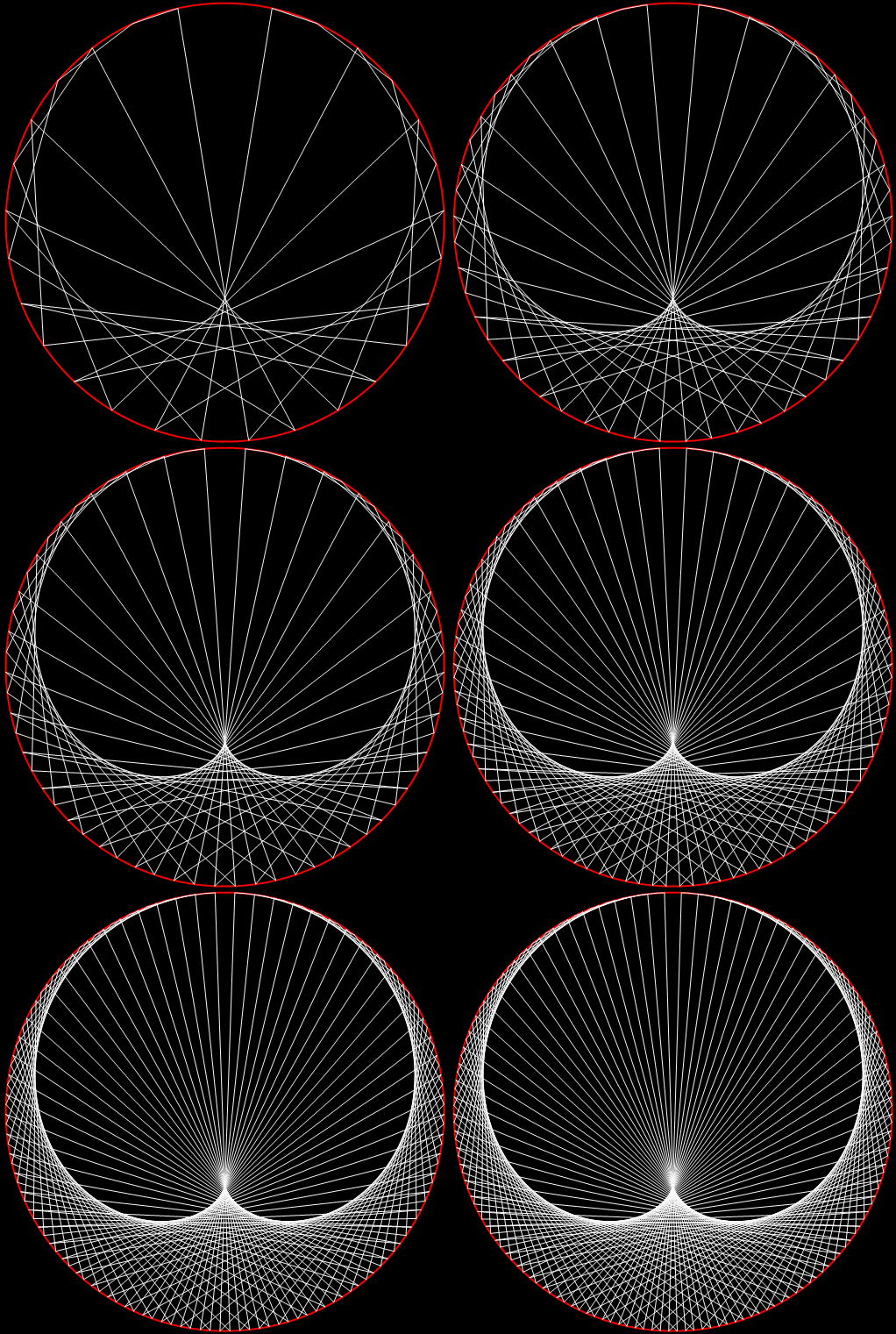
In his discussion of 142857, Wells mentions one way of peering through a period pane: “The sequence of digits also makes a striking pattern when the digits are arranged around a circle.” Here is the pattern, with ten points around the circle representing the digits 0 to 9:

The digits of 1/7 = 0·142857142…


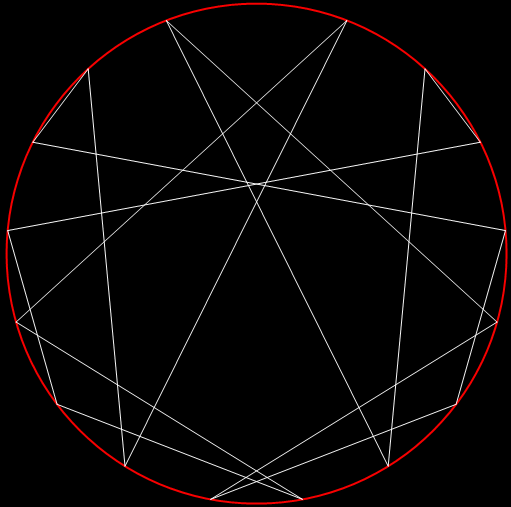
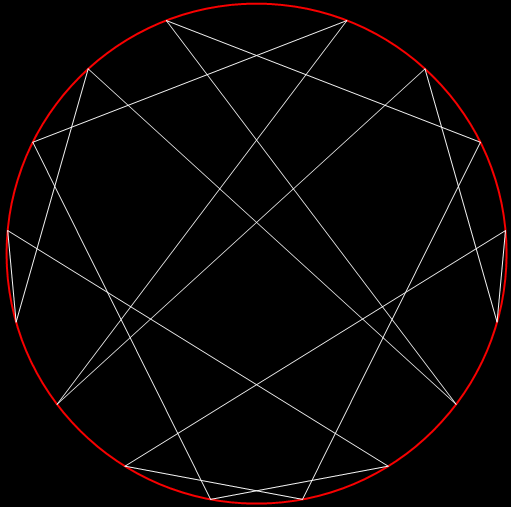
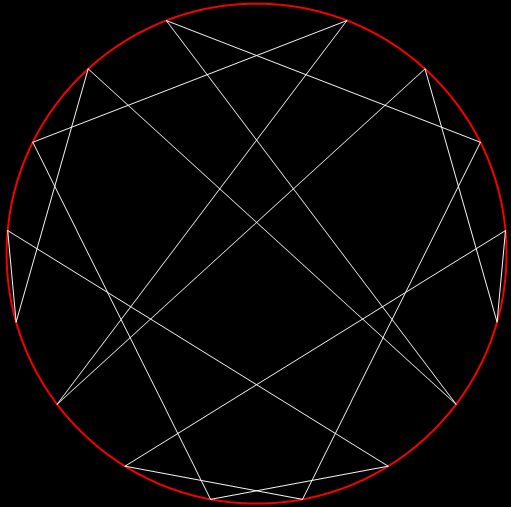
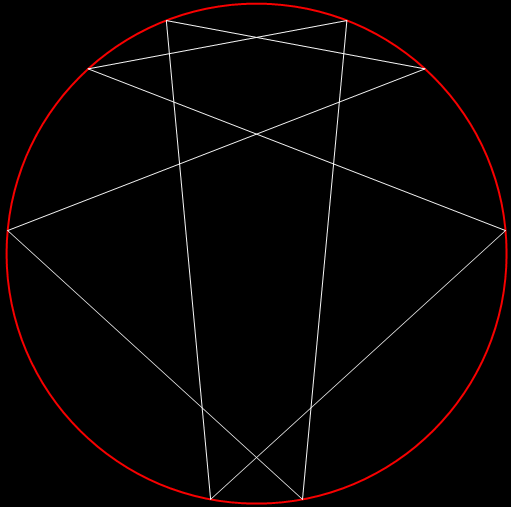
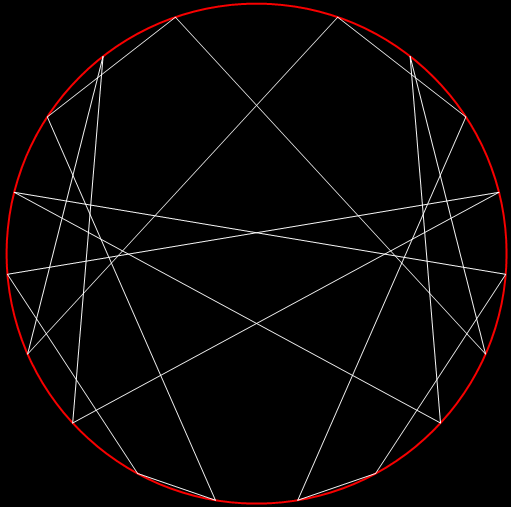
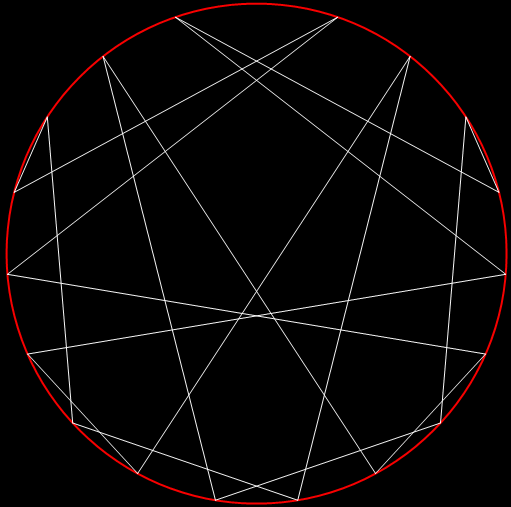
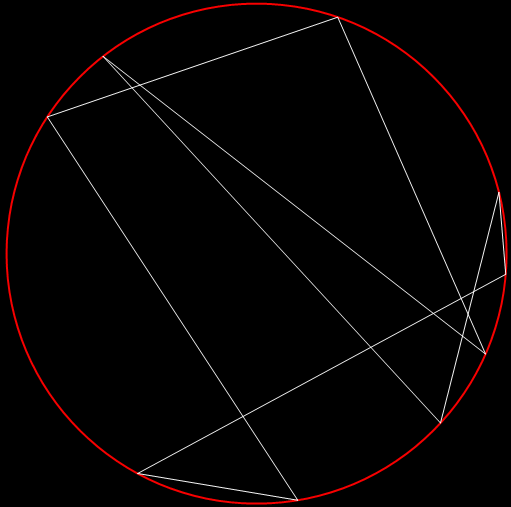
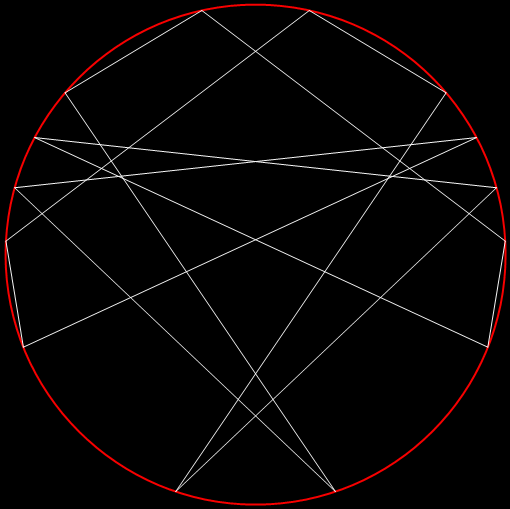
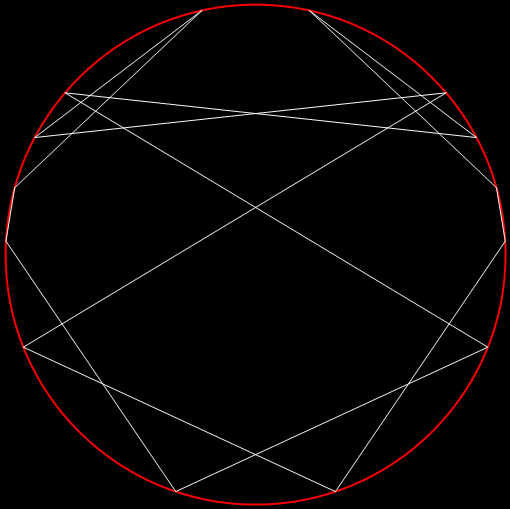
But I prefer, for further peers through the period-panes, to create the period-panes using remainders rather than digits. That is, the number of points around the circle is determined by the prime itself rather than the base in which the reciprocal is calculated:

The remainders of 1/7 = 1, 3, 2, 6, 4, 5…


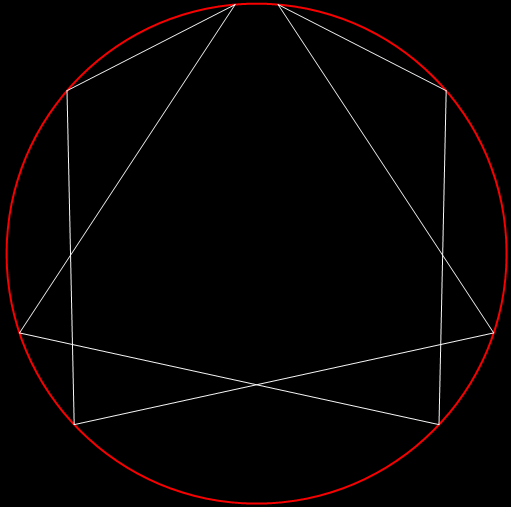
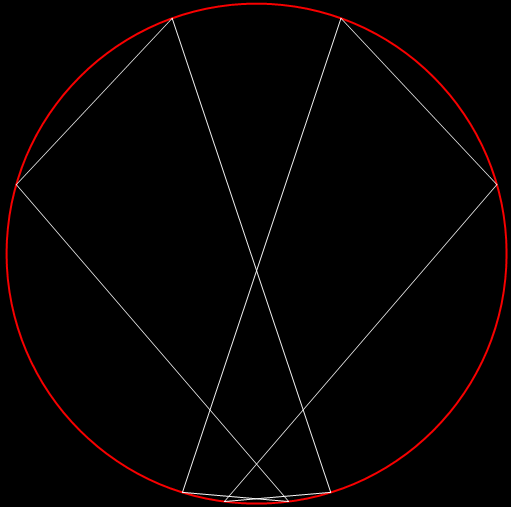
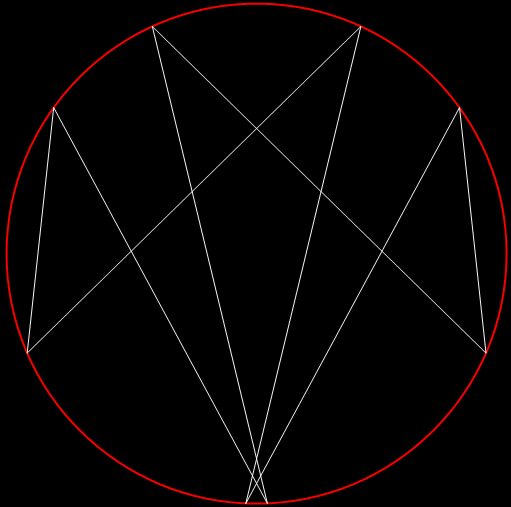
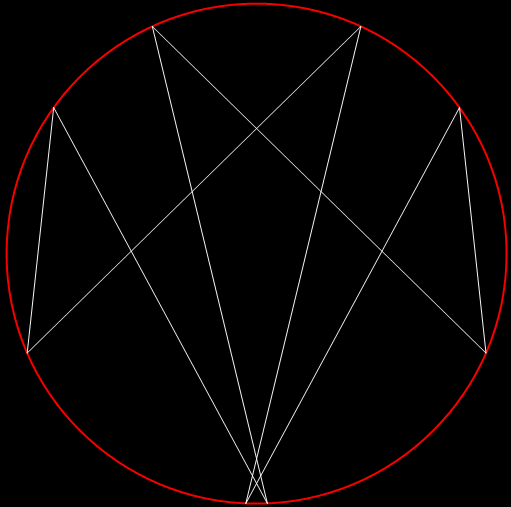
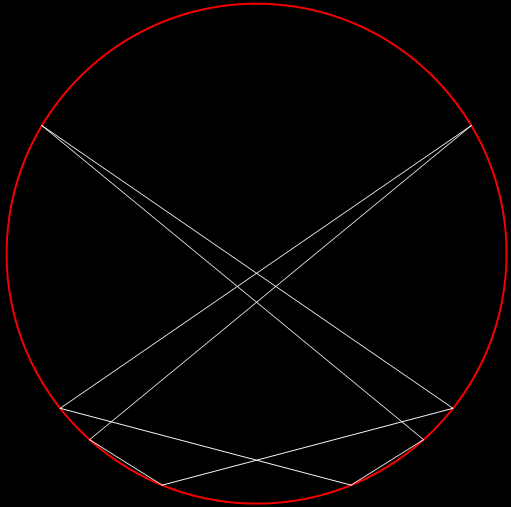
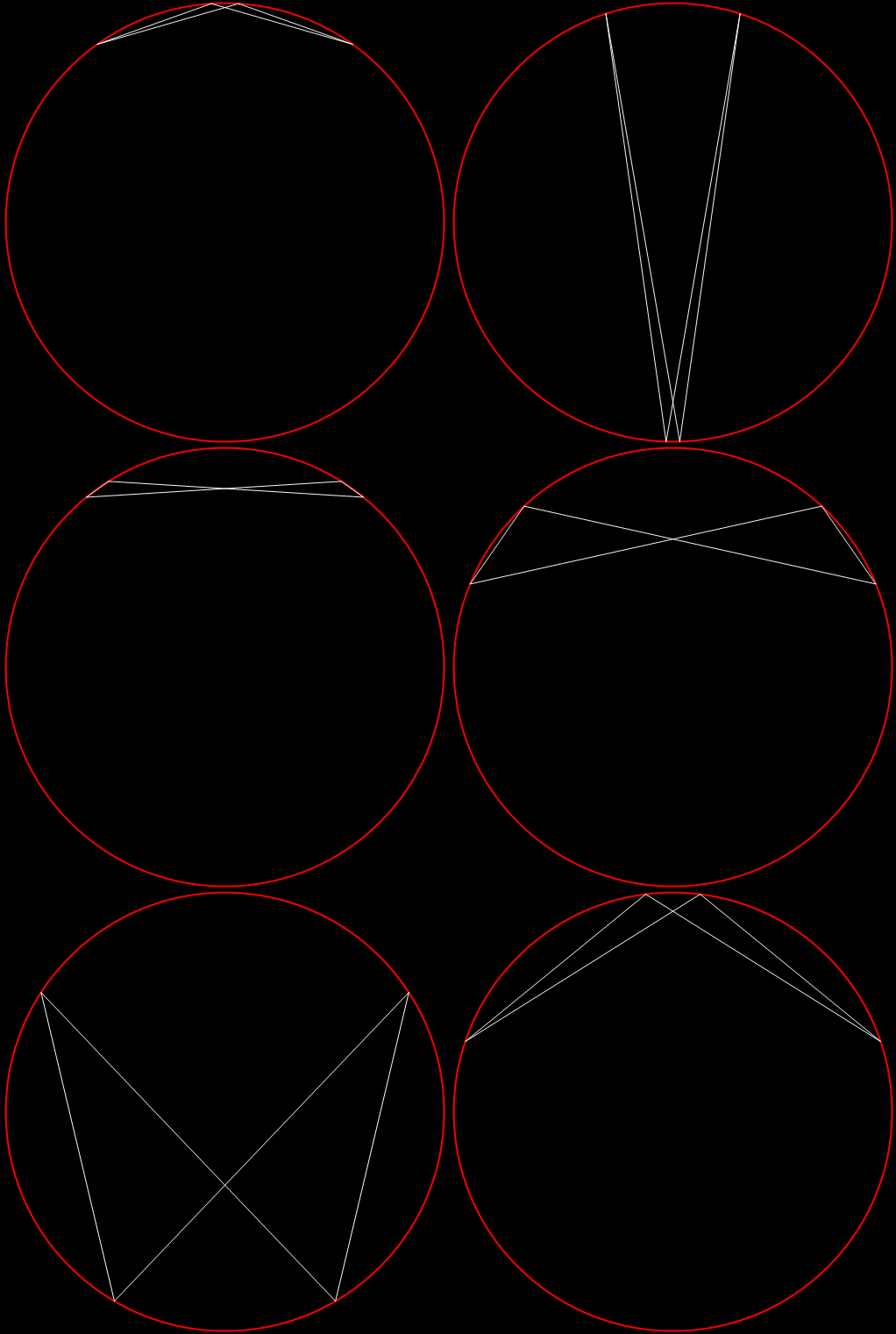
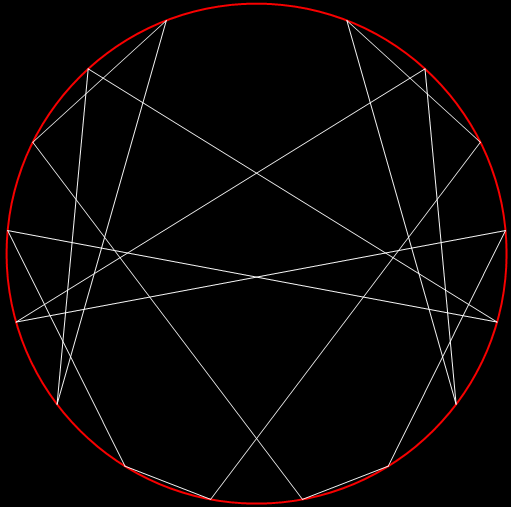
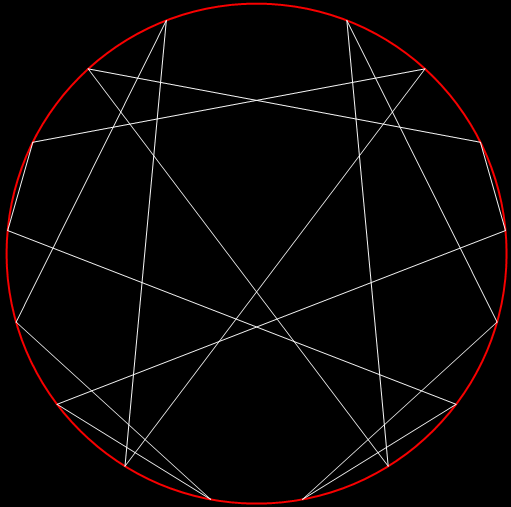
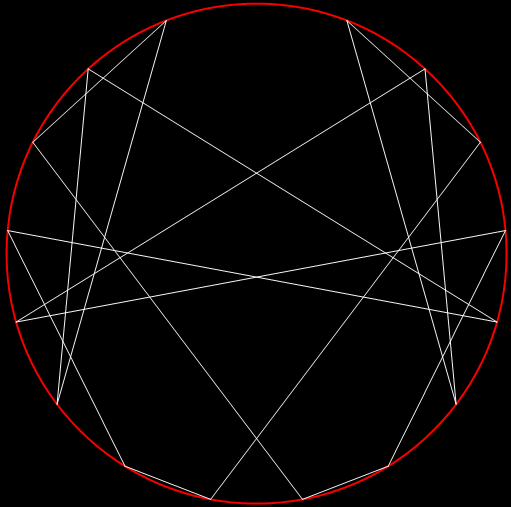
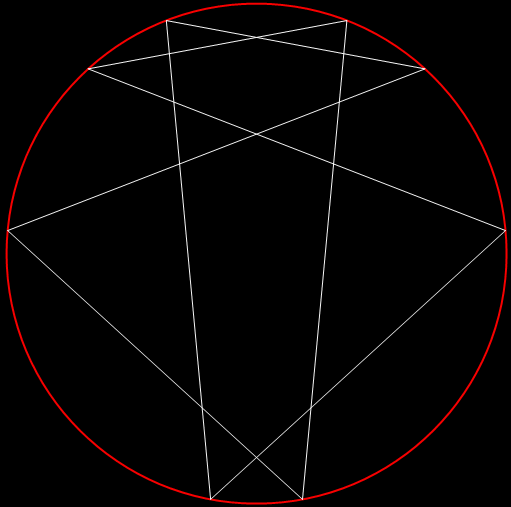
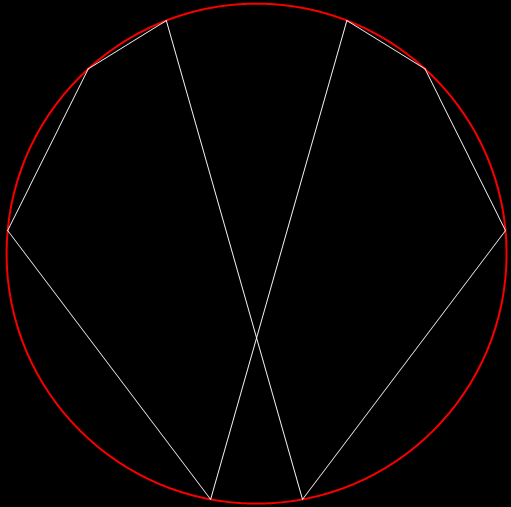
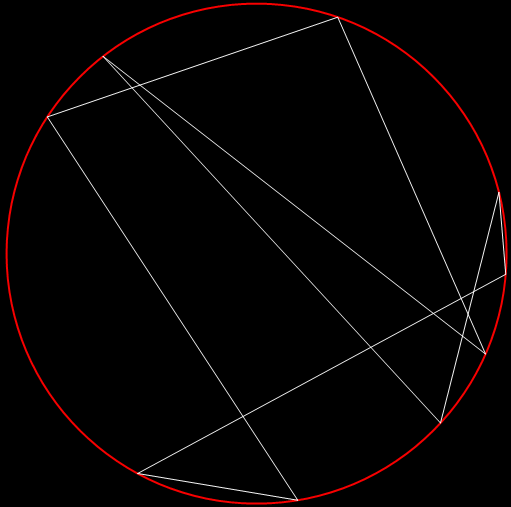
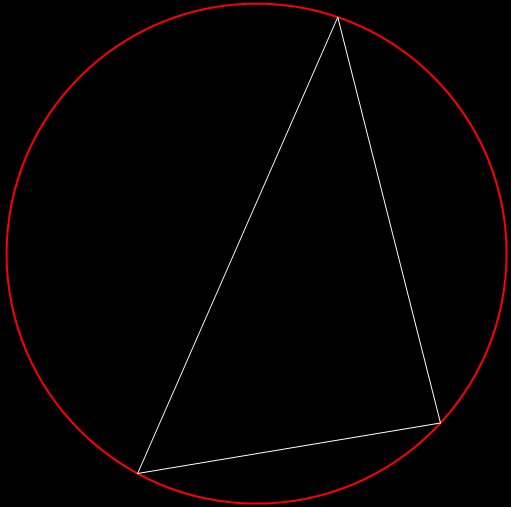
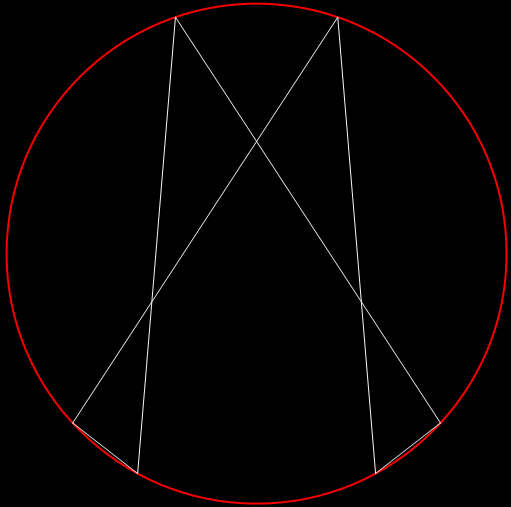
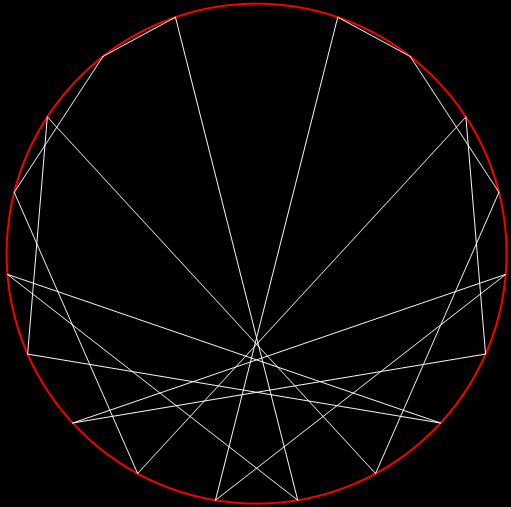
Period-panes can look like butterflies or bats or bivalves or spiders or crabs or even angels. Try the remainders of 1/13. This prime reciprocal doesn’t have maximum period: 1/13 = 0·076923 076923 076923… So there are only six remainders, creating this pattern:

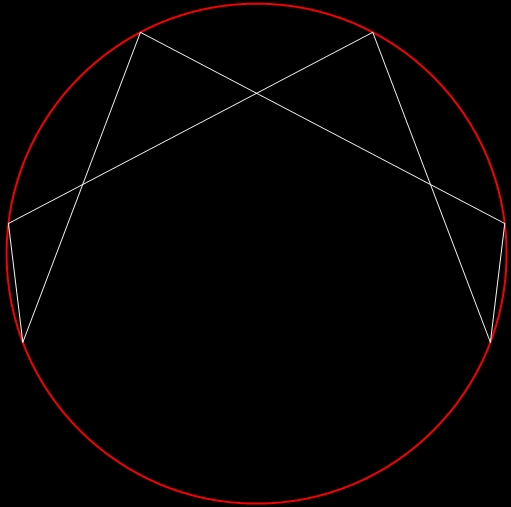
remainders(1/13) = 1, 10, 9, 12, 3, 4


The multiple 2/13 has different remainders and creates a different pattern:

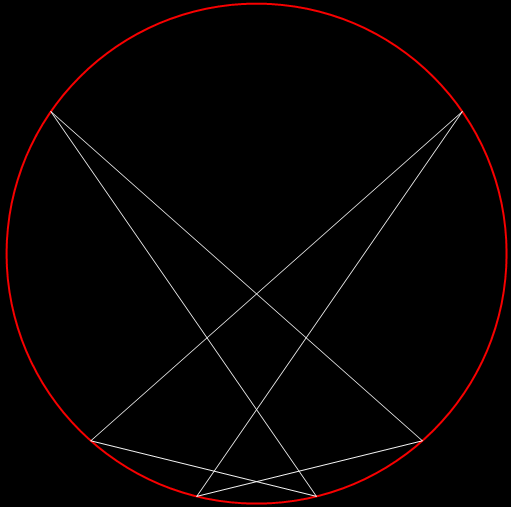
remainders(2/13) = 2, 7, 5, 11, 6, 8


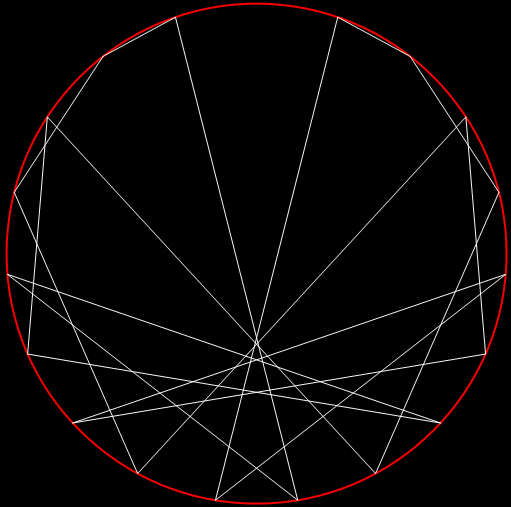
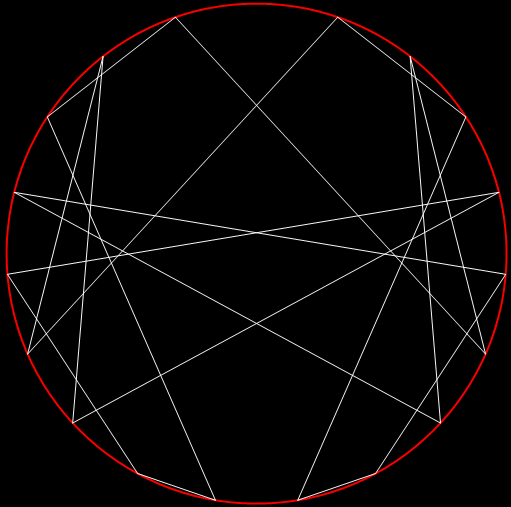
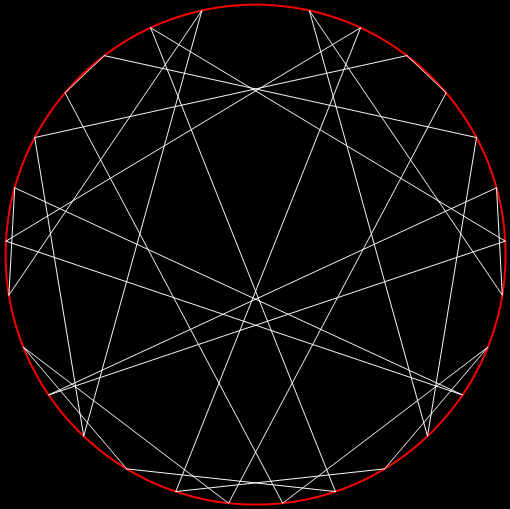
But 1/17, 1/19 and 1/23 all have maximum period and yield these period-panes:

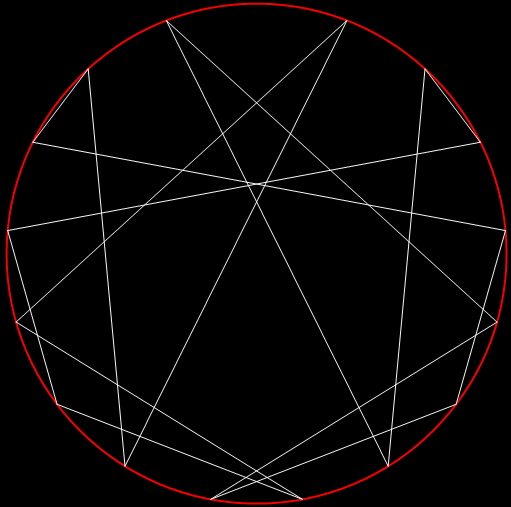
remainders(1/17) = 1, 10, 15, 14, 4, 6, 9, 5, 16, 7, 2, 3, 13, 11, 8, 12


remainders(1/19) = 1, 10, 5, 12, 6, 3, 11, 15, 17, 18, 9, 14, 7, 13, 16, 8, 4, 2


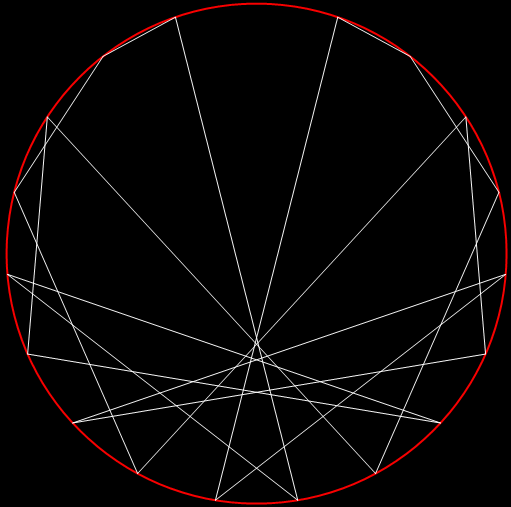
remainders(1/23) = 1, 10, 8, 11, 18, 19, 6, 14, 2, 20, 16, 22, 13, 15, 12, 5, 4, 17, 9, 21, 3, 7


It gets mixed again with the prime 73, which doesn’t have maximum period and yields a plethora of period-panes (some patterns repeat with different n * 1/73, so I haven’t included them):

remainders(1/73)


remainders(2/73)


remainders(3/73)


remainders(4/73)


remainders(5/73)


remainders(6/73)


remainders(9/73)


remainders(11/73) (identical to pattern of 5/73)


remainders(12/73)


remainders(18/73)


101 yields a plethora of period-panes, but they’re variations on a simple theme. They look like flapping wings in this animated gif:

remainders of n/101 (animated)


The remainders of 137 yield more complex period-panes:

remainders of n/137 (animated)


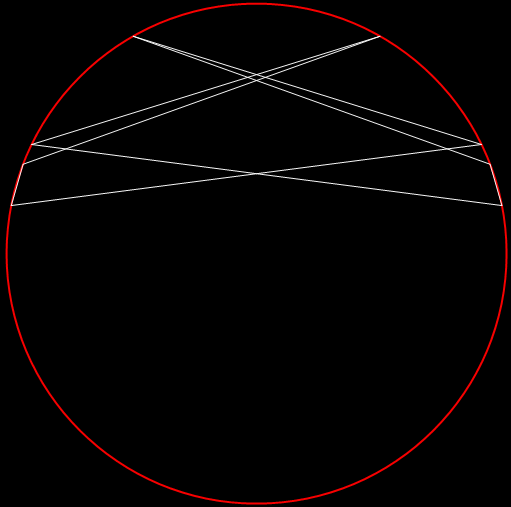
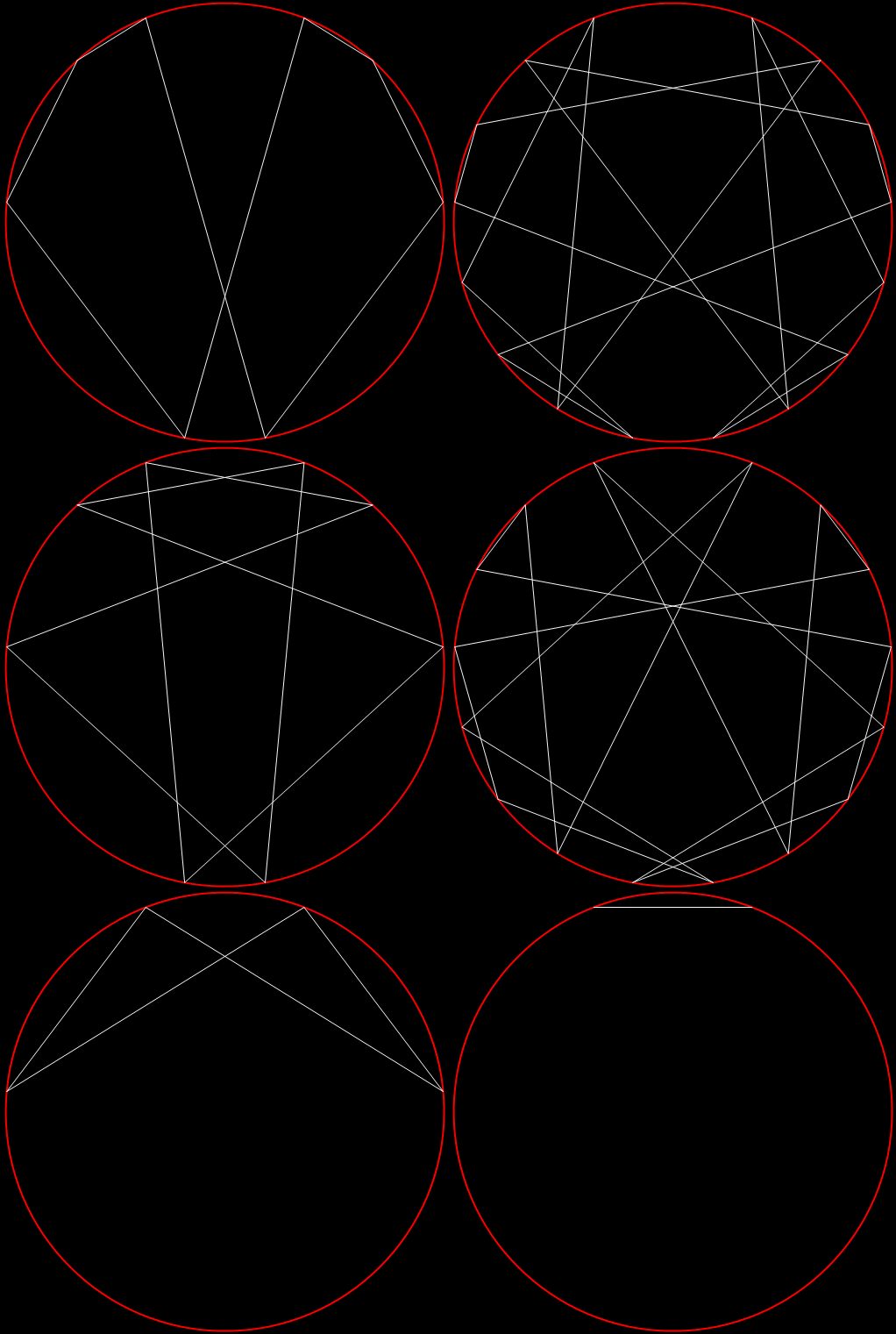
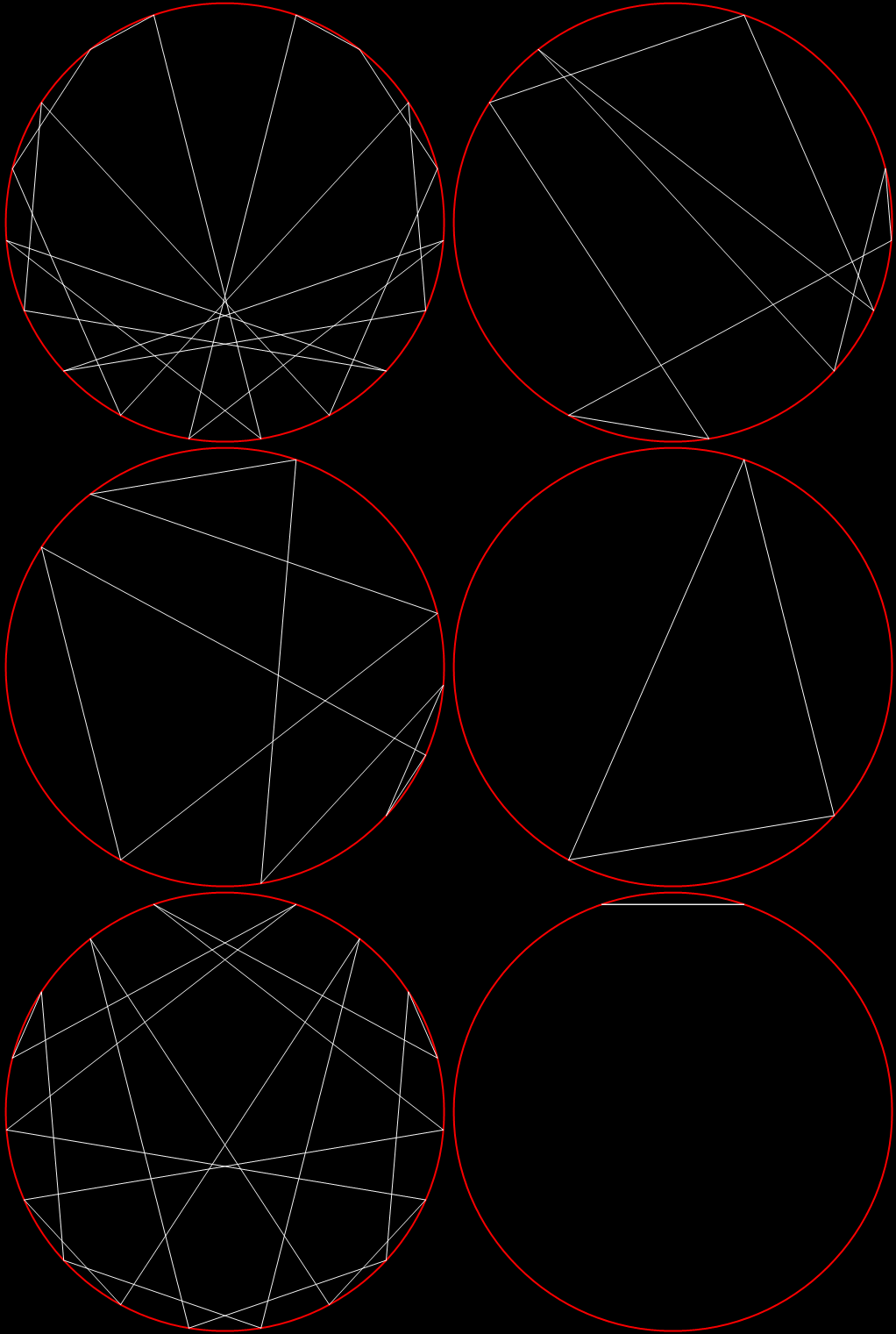
And what about different bases? Here are period-panes for the remainders of 1/17 in bases 2 to 16:

remainders(1/17) in base 2


remainders(1/17) in b3


remainders(1/17) in b4


remainders(1/17) in b5


remainders(1/17) in b6


remainders(1/17) in b7


remainders(1/17) in b8


remainders(1/17) in b9


remainders(1/17) in b10


remainders(1/17) in b11


remainders(1/17) in b12


remainders(1/17) in b13


remainders(1/17) in b14


remainders(1/17) in b15


remainders(1/17) in b16


remainders(1/17) in bases 2 to 16 (animated)


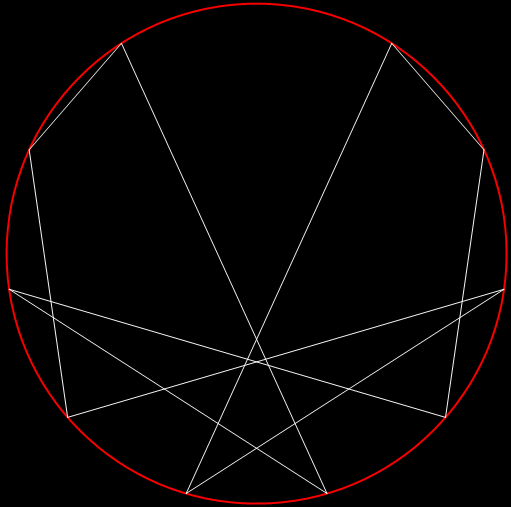
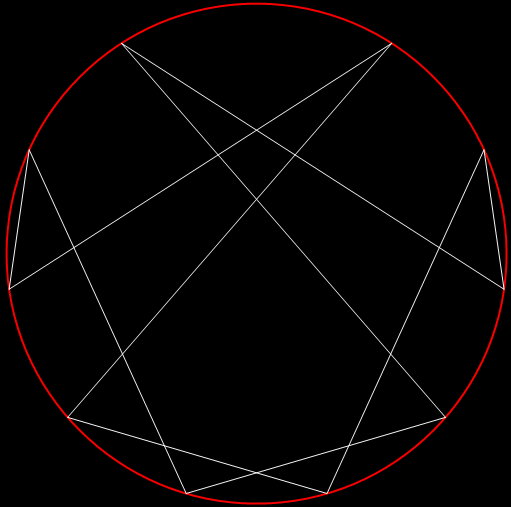
But the period-panes so far have given a false impression. They’ve all been symmetrical. That isn’t the case with all the period-panes of n/19:

remainders(1/19) in b2


remainders(1/19) in b3


remainders(1/19) in b4 = 1, 4, 16, 7, 9, 17, 11, 6, 5 (asymmetrical)


remainders(1/19) in b5 = 1, 5, 6, 11, 17, 9, 7, 16, 4 (identical pattern to that of b4)


remainders(1/19) in b6


remainders(1/19) in b7


remainders(1/19) in b8


remainders(1/19) in b9


remainders(1/19) in b10 (identical pattern to that of b2)


remainders(1/19) in b11


remainders(1/19) in b12


remainders(1/19) in b13


remainders(1/19) in b14


remainders(1/19) in b15


remainders(1/19) in b16


remainders(1/19) in b17


remainders(1/19) in b18


remainders(1/19) in bases 2 to 18 (animated)


Here are a few more period-panes in different bases:

remainders(1/11) in b2


remainders(1/11) in b7


remainders(1/13) in b6


remainders(1/43) in b6


remainders in b2 for reciprocals of 29, 37, 53, 59, 61, 67, 83, 101, 107, 131, 139, 149 (animated)


And finally, to performativize the pun of “period pane”, here are some period-panes for 1/29, whose maximum period will be 28 (NASA says that the “Moon takes about one month to orbit Earth … 27.3 days to complete a revolution, but 29.5 days to change from New Moon to New Moon”):

remainders(1/29) in b4


remainders(1/29) in b5


remainders(1/29) in b8


remainders(1/29) in b9


remainders(1/29) in b11


remainders(1/29) in b13


remainders(1/29) in b14


remainders(1/29) in various bases (animated)


Square Pairs

Girard knew and Fermat a few years later proved the beautiful theorem that every prime of the form 4n + 1; that is, the primes 5, 13, 17, 29, 37, 41, 53… is the sum of two squares in exactly one way. Primes of the form 4n + 3, such as 3, 7, 11, 19, 23, 31, 43, 47… are never the sum of two squares. — David Wells, The Penguin Dictionary of Curious and Interesting Numbers (1986), entry for “13”.


Elsewhere other-accessible…

Fermat’s theorem on sums of two squares
Pythagorean primes

Primal Stream

It’s obvious when you think about: an even number can never be the sum of two consecutive integers. Conversely, an odd number (except 1) is always the sum of two consecutive integers: 3 = 1 + 2; 5 = 2 + 3; 7 = 3 + 4; 9 = 4 + 5; and so on. The sum of three consecutive integers can be either odd or even: 6 = 1 + 2 + 3; 9 = 2 + 3 + 4. The sum of four consecutive integers must always be even: 1 + 2 + 3 + 4 = 10; 2 + 3 + 4 + 5 = 14. And so on.

But notice that 9 is the sum of consecutive integers in two different ways: 9 = 4 + 5 = 2 + 3 + 4. Having spotted that, I decided to look for numbers that were the sums of consecutive integers in the most different ways. These are the first few:

3 = 1 + 2 (number of sums = 1)
9 = 2 + 3 + 4 = 4 + 5 (s = 2)
15 = 1 + 2 + 3 + 4 + 5 = 4 + 5 + 6 = 8 + 7 = (s = 3)
45 (s = 5)
105 (s = 7)
225 (s = 8)
315 (s = 11)
945 (s = 15)
1575 (s = 17)
2835 (s = 19)
3465 (s = 23)
10395 (s = 31)


It was interesting that the number of different consecutive-integer sums for n was most often a prime number. Next I looked for the sequence at the Online Encyclopedia of Integer Sequences and discovered something that I hadn’t suspected:

A053624 Highly composite odd numbers: where d(n) increases to a record.

1, 3, 9, 15, 45, 105, 225, 315, 945, 1575, 2835, 3465, 10395, 17325, 31185, 45045, 121275, 135135, 225225, 405405, 675675, 1576575, 2027025, 2297295, 3828825, 6891885, 11486475, 26801775, 34459425, 43648605, 72747675, 130945815 — A053624 at OEIS

The notes add that the sequence is “Also least number k such that the number of partitions of k into consecutive integers is a record. For example, 45 = 22+23 = 14+15+16 = 7+8+9+10+11 = 5+6+7+8+9+10 = 1+2+3+4+5+6+7+8+9, six such partitions, but all smaller terms have fewer such partitions (15 has four).” When you don’t count the number n itself as a partition of n, you get 3 partitions for 15, i.e. consecutive integers sum to 15 in 3 different ways, so s = 3. I looked at more values for s and found that the stream of primes continued to flow:

3 → s = 1
9 = 3^2 → s = 2 (prime)
15 = 3 * 5 → s = 3 (prime)
45 = 3^2 * 5 → s = 5 (prime)
105 = 3 * 5 * 7 → s = 7 (prime)
225 = 3^2 * 5^2 → s = 8 = 2^3
315 = 3^2 * 5 * 7 → s = 11 (prime)
945 = 3^3 * 5 * 7 → s = 15 = 3 * 5
1575 = 3^2 * 5^2 * 7 → s = 17 (prime)
2835 = 3^4 * 5 * 7 → s = 19 (prime)
3465 = 3^2 * 5 * 7 * 11 → s = 23 (prime)
10395 = 3^3 * 5 * 7 * 11 → s = 31 (prime)
17325 = 3^2 * 5^2 * 7 * 11 → s = 35 = 5 * 7
31185 = 3^4 * 5 * 7 * 11 → s = 39 = 3 * 13
45045 = 3^2 * 5 * 7 * 11 * 13 → s = 47 (prime)
121275 = 3^2 * 5^2 * 7^2 * 11 → s = 53 (prime)
135135 = 3^3 * 5 * 7 * 11 * 13 → s = 63 = 3^2 * 7
225225 = 3^2 * 5^2 * 7 * 11 * 13 → s = 71 (prime)
405405 = 3^4 * 5 * 7 * 11 * 13 → s = 79 (prime)
675675 = 3^3 * 5^2 * 7 * 11 * 13 → s = 95 = 5 * 19
1576575 = 3^2 * 5^2 * 7^2 * 11 * 13 → s = 107 (prime)
2027025 = 3^4 * 5^2 * 7 * 11 * 13 → s = 119 = 7 * 17
2297295 = 3^3 * 5 * 7 * 11 * 13 * 17 → s = 127 (prime)
3828825 = 3^2 * 5^2 * 7 * 11 * 13 * 17 → s = 143 = 11 * 13
6891885 = 3^4 * 5 * 7 * 11 * 13 * 17 → s = 159 = 3 * 53
11486475 = 3^3 * 5^2 * 7 * 11 * 13 * 17 → s = 191 (prime)
26801775 = 3^2 * 5^2 * 7^2 * 11 * 13 * 17 → s = 215 = 5 * 43
34459425 = 3^4 * 5^2 * 7 * 11 * 13 * 17 → s = 239 (prime)
43648605 = 3^3 * 5 * 7 * 11 * 13 * 17 * 19 → s = 255 = 3 * 5 * 17
72747675 = 3^2 * 5^2 * 7 * 11 * 13 * 17 * 19 → s = 287 = 7 * 41
130945815 = 3^4 * 5 * 7 * 11 * 13 * 17 * 19 → s = 319 = 11 * 29


I can’t spot any way of predicting when n will yield a primal s, but I like the way that a simple question took an unexpected turn. When a number sets a record for the number of different ways it can be the sum of consecutive integers, that number will also be a highly composite odd number.

Primal Stream

• 3, 7, 31, 127, 8191, 131071, 524287, 2147483647, 2305843009213693951, 618970019642690137449562111, 162259276829213363391578010288127, 170141183460469231731687303715884105727 — A000668, Mersenne primes (primes of the form 2^n – 1), at the Online Encyclopedia of Integer Sequences

• 2, 3, 5, 7, 13, 17, 19, 31, 61, 89, 107, 127, 521, 607, 1279, 2203, 2281, 3217, 4253, 4423, 9689, 9941, 11213, 19937, 21701, 23209, 44497, 86243, 110503, 132049, 216091, 756839, 859433, 1257787, 1398269, 2976221, 3021377, 6972593, 13466917, 20996011, 24036583, 25964951, 30402457, 32582657, 37156667, 42643801, 43112609, 57885161, 74207281, 77232917, 82589933 — A000043, Mersenne exponents: primes p such that 2^p – 1 is prime. Then 2^p – 1 is called a Mersenne prime. […] It is believed (but unproved) that this sequence is infinite. The data suggest that the number of terms up to exponent N is roughly K log N for some constant K.

• The largest known prime number (as of May 2022) is 282,589,933 − 1, a number which has 24,862,048 digits when written in base 10. It was found via a computer volunteered by Patrick Laroche of the Great Internet Mersenne Prime Search (GIMPS) in 2018. — Largest known prime number

Magiciprocal


A021023 Decimal expansion of 1/19.

0, 5, 2, 6, 3, 1, 5, 7, 8, 9, 4, 7, 3, 6, 8, 4, 2, 1, 0, 5, 2, 6, 3, 1, 5, 7, 8, 9, 4, 7, 3, 6, 8, 4, 2, 1, 0, 5, 2, 6, 3, 1, 5, 7, 8, 9, 4, 7, 3, 6, 8, 4, 2, 1, 0, 5, 2, 6, 3, 1, 5, 7, 8, 9, 4, 7, 3, 6, 8, 4, 2, 1, 0, 5, 2, 6, 3, 1, 5, 7, 8, 9, 4, 7, 3, 6, 8, 4, 2, 1, 0, 5, 2, 6, 3, 1, 5, 7, 8 [...] The magic square that uses the decimals of 1/19 is fully magic. — A021023 at the Online Encyclopedia of Integer Sequences