Digital Disfunction

It’s fun when functions disfunc. The function digit-sum(n^p) takes a number, raises it to the power of p and sums its digits. If p = 1, n is unchanged. So digit-sum(1^1) = 1, digit-sum(11^1) = 2, digit-sum(2013^1) = 6. The following numbers set records for the digit-sum(n^1) from 1 to 1,000,000:

digit-sum(n^1): 1, 2, 3, 4, 5, 6, 7, 8, 9, 19, 29, 39, 49, 59, 69, 79, 89, 99, 199, 299, 399, 499, 599, 699, 799, 899, 999, 1999, 2999, 3999, 4999, 5999, 6999, 7999, 8999, 9999, 19999, 29999, 39999, 49999, 59999, 69999, 79999, 89999, 99999, 199999, 299999, 399999, 499999, 599999, 699999, 799999, 899999, 999999.

The pattern is easy to predict. But the function disfuncs when p = 2. Digit-sum(3^2) = 9, which is more than digit-sum(4^2) = 1 + 6 = 7 and digit-sum(5^2) = 2 + 5 = 7. These are the records from 1 to 1,000,000:

digit-sum(n^2): 1, 2, 3, 7, 13, 17, 43, 63, 83, 167, 264, 313, 707, 836, 1667, 2236, 3114, 4472, 6833, 8167, 8937, 16667, 21886, 29614, 32617, 37387, 39417, 42391, 44417, 60663, 63228, 89437, 141063, 221333, 659386, 791833, 976063, 987917.

Higher powers are similarly disfunctional:

digit-sum(n^3): 1, 2, 3, 4, 9, 13, 19, 53, 66, 76, 92, 132, 157, 353, 423, 559, 842, 927, 1192, 1966, 4289, 5826, 8782, 10092, 10192, 10275, 10285, 10593, 11548, 11595, 12383, 15599, 22893, 31679, 31862, 32129, 63927, 306842, 308113.

digit-sum(n^4): 1, 2, 3, 4, 6, 8, 13, 16, 18, 23, 26, 47, 66, 74, 118, 256, 268, 292, 308, 518, 659, 1434, 1558, 1768, 2104, 2868, 5396, 5722, 5759, 6381, 10106, 12406, 14482, 18792, 32536, 32776, 37781, 37842, 47042, 51376, 52536, 84632, 255948, 341156, 362358, 540518, 582477.

digit-sum(n^5): 1, 2, 3, 5, 6, 14, 15, 18, 37, 58, 78, 93, 118, 131, 139, 156, 179, 345, 368, 549, 756, 1355, 1379, 2139, 2759, 2779, 3965, 4119, 4189, 4476, 4956, 7348, 7989, 8769, 9746, 10566, 19199, 19799, 24748, 31696, 33208, 51856, 207198, 235846, 252699, 266989, 549248, 602555, 809097, 814308, 897778.

You can also look for narcissistic numbers with this function, like digit-sum(9^2) = 8 + 1 = 9 and digit-sum(8^3) = 5 + 1 + 2 = 8. 9^2 is the only narcissistic square in base ten, but 8^3 has these companions:

17^3 = 4913 → 4 + 9 + 1 + 3 = 17
18^3 = 5832 → 5 + 8 + 3 + 2 = 18
26^3 = 17576 → 1 + 7 + 5 + 7 + 6 = 26
27^3 = 19683 → 1 + 9 + 6 + 8 + 3 = 27

Twelfth powers are as unproductive as squares:

108^12 = 2518170116818978404827136 → 2 + 5 + 1 + 8 + 1 + 7 + 0 + 1 + 1 + 6 + 8 + 1 + 8 + 9 + 7 + 8 + 4 + 0 + 4 + 8 + 2 + 7 + 1 + 3 + 6 = 108

But thirteenth powers are fertile:

20 = digit-sum(20^13)
40 = digit-sum(40^13)
86 = digit-sum(86^13)
103 = digit-sum(103^13)
104 = digit-sum(104^13)
106 = digit-sum(106^13)
107 = digit-sum(107^13)
126 = digit-sum(126^13)
134 = digit-sum(134^13)
135 = digit-sum(135^13)
146 = digit-sum(146^13)

There are also numbers that are narcissistic with different powers, like 90:

90^19 = 1·350851717672992089 x 10^37 → 1 + 3 + 5 + 0 + 8 + 5 + 1 + 7 + 1 + 7 + 6 + 7 + 2 + 9 + 9 + 2 + 0 + 8 + 9 = 90
90^20 = 1·2157665459056928801 x 10^39 → 1 + 2 + 1 + 5 + 7 + 6 + 6 + 5 + 4 + 5 + 9 + 0 + 5 + 6 + 9 + 2 + 8 + 8 + 0 + 1 = 90
90^21 = 1·09418989131512359209 x 10^41 → 1 + 0 + 9 + 4 + 1 + 8 + 9 + 8 + 9 + 1 + 3 + 1 + 5 + 1 + 2 + 3 + 5 + 9 + 2 + 0 + 9 = 90
90^22 = 9·84770902183611232881 x 10^42 → 9 + 8 + 4 + 7 + 7 + 0 + 9 + 0 + 2 + 1 + 8 + 3 + 6 + 1 + 1 + 2 + 3 + 2 + 8 + 8 + 1 = 90
90^28 = 5·23347633027360537213511521 x 10^54 → 5 + 2 + 3 + 3 + 4 + 7 + 6 + 3 + 3 + 0 + 2 + 7 + 3 + 6 + 0 + 5 + 3 + 7 + 2 + 1 + 3 + 5 + 1 + 1 + 5 + 2 + 1 = 90

One of the world’s most famous numbers is also multi-narcissistic:

666 = digit-sum(666^47)
666 = digit-sum(666^51)

1423 isn’t multi-narcissistic, but I like the way it’s a prime that’s equal to the sum of the digits of its power to 101, which is also a prime:

1423^101 = 2,
976,424,759,070,864,888,448,625,568,610,774,713,351,233,339,
006,775,775,271,720,934,730,013,444,193,709,672,452,482,197,
898,160,621,507,330,824,007,863,598,230,100,270,989,373,401,
979,514,790,363,102,835,678,646,537,123,754,219,728,748,171,
764,802,617,086,504,534,229,621,770,717,299,909,463,416,760,
781,260,028,964,295,036,668,773,707,186,491,056,375,768,526,
306,341,717,666,810,190,220,650,285,746,057,099,312,179,689,
423 →

2 + 9 + 7 + 6 + 4 + 2 + 4 + 7 + 5 + 9 + 0 + 7 + 0 + 8 + 6 + 4 + 8 + 8 + 8 + 4 + 4 + 8 + 6 + 2 + 5 + 5 + 6 + 8 + 6 + 1 + 0 + 7 + 7 + 4 + 7 + 1 + 3 + 3 + 5 + 1 + 2 + 3 + 3 + 3 + 3 + 9 + 0 + 0 + 6 + 7 + 7 + 5 + 7 + 7 + 5 + 2 + 7 + 1 + 7 + 2 + 0 + 9 + 3 + 4 + 7 + 3 + 0 + 0 + 1 + 3 + 4 + 4 + 4 + 1 + 9 + 3 + 7 + 0 + 9 + 6 + 7 + 2 + 4 + 5 + 2 + 4 + 8 + 2 + 1 + 9 + 7 + 8 + 9 + 8 + 1 + 6 + 0 + 6 + 2 + 1 + 5 + 0 + 7 + 3 + 3 + 0 + 8 + 2 + 4 + 0 + 0 + 7 + 8 + 6 + 3 + 5 + 9 + 8 + 2 + 3 + 0 + 1 + 0 + 0 + 2 + 7 + 0 + 9 + 8 + 9 + 3 + 7 + 3 + 4 + 0 + 1 + 9 + 7 + 9 + 5 + 1 + 4 + 7 + 9 + 0 + 3 + 6 + 3 + 1 + 0 + 2 + 8 + 3 + 5 + 6 + 7 + 8 + 6 + 4 + 6 + 5 + 3 + 7 + 1 + 2 + 3 + 7 + 5 + 4 + 2 + 1 + 9 + 7 + 2 + 8 + 7 + 4 + 8 + 1 + 7 + 1 + 7 + 6 + 4 + 8 + 0 + 2 + 6 + 1 + 7 + 0 + 8 + 6 + 5 + 0 + 4 + 5 + 3 + 4 + 2 + 2 + 9 + 6 + 2 + 1 + 7 + 7 + 0 + 7 + 1 + 7 + 2 + 9 + 9 + 9 + 0 + 9 + 4 + 6 + 3 + 4 + 1 + 6 + 7 + 6 + 0 + 7 + 8 + 1 + 2 + 6 + 0 + 0 + 2 + 8 + 9 + 6 + 4 + 2 + 9 + 5 + 0 + 3 + 6 + 6 + 6 + 8 + 7 + 7 + 3 + 7 + 0 + 7 + 1 + 8 + 6 + 4 + 9 + 1 + 0 + 5 + 6 + 3 + 7 + 5 + 7 + 6 + 8 + 5 + 2 + 6 + 3 + 0 + 6 + 3 + 4 + 1 + 7 + 1 + 7 + 6 + 6 + 6 + 8 + 1 + 0 + 1 + 9 + 0 + 2 + 2 + 0 + 6 + 5 + 0 + 2 + 8 + 5 + 7 + 4 + 6 + 0 + 5 + 7 + 0 + 9 + 9 + 3 + 1 + 2 + 1 + 7 + 9 + 6 + 8 + 9 + 4 + 2 + 3 = 1423


Previously pre-posted (please peruse):

The Hill to Power
Narcissarithmetic #1
Narcissarithmetic #2

V for Vertex

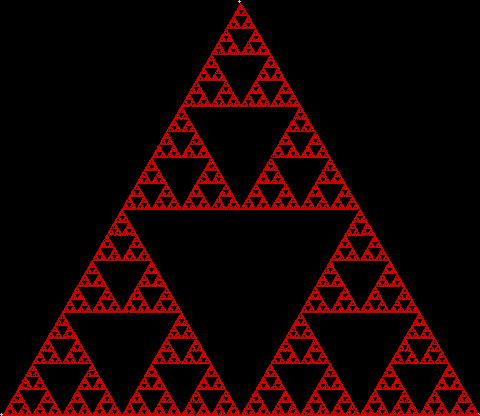
To create a simple fractal, take an equilateral triangle and divide it into four more equilateral triangles. Remove the middle triangle. Repeat the process with each new triangle and go on repeating it. You’ll end up with a shape like this, which is known as the Sierpiński triangle, after the Polish mathematician Wacław Sierpiński (1882-1969):

Sierpinski triangle

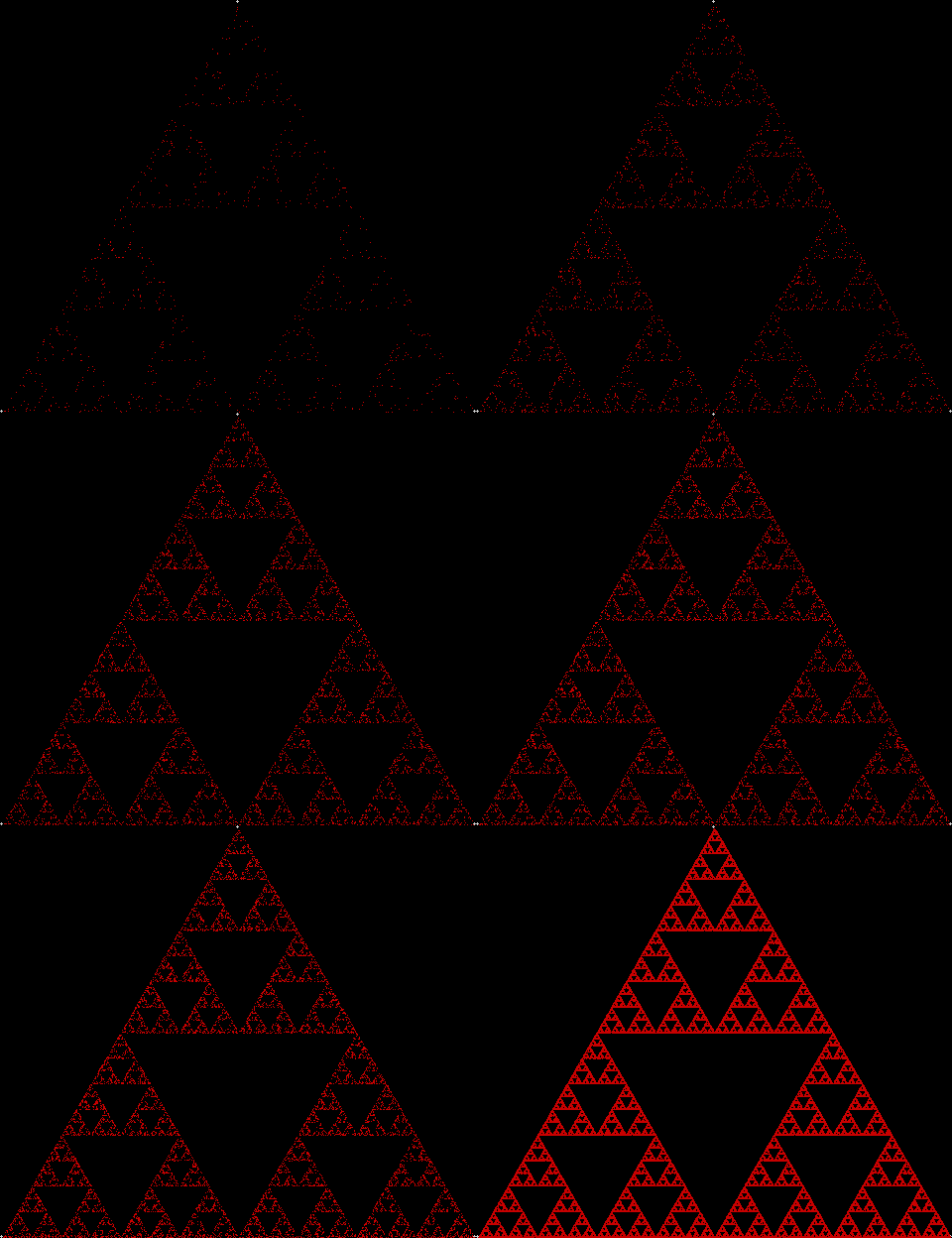
But you can also create the Sierpiński triangle one pixel at a time. Choose any point inside an equilateral triangle. Pick a corner of the triangle at random and move half-way towards it. Mark this spot. Then pick a corner at random again and move half-way towards the corner. And repeat. The result looks like this:

triangle

A simple program to create the fractal looks like this:

initial()
repeat
  fractal()
  altervariables()
until false

function initial()
  v = 3 [v for vertex]
  r = 500
  lm = 0.5
endfunc

function fractal()
  th = 2 * pi / v
[the following loop creates the corners of the triangle]
  for l = 1 to v
    x[l]=xcenter + sin(l*th) * r
    y[l]=ycenter + cos(l*th) * r
  next l
  fx = xcenter
  fy = ycenter
  repeat
    rv = random(v)
    fx = fx + (x[rv]-fx) * lm
    fy = fy + (y[rv]-fy) * lm
    plot(fx,fy)
  until keypressed
endfunc

function altervariables()
[change v, lm, r etc]
endfunc

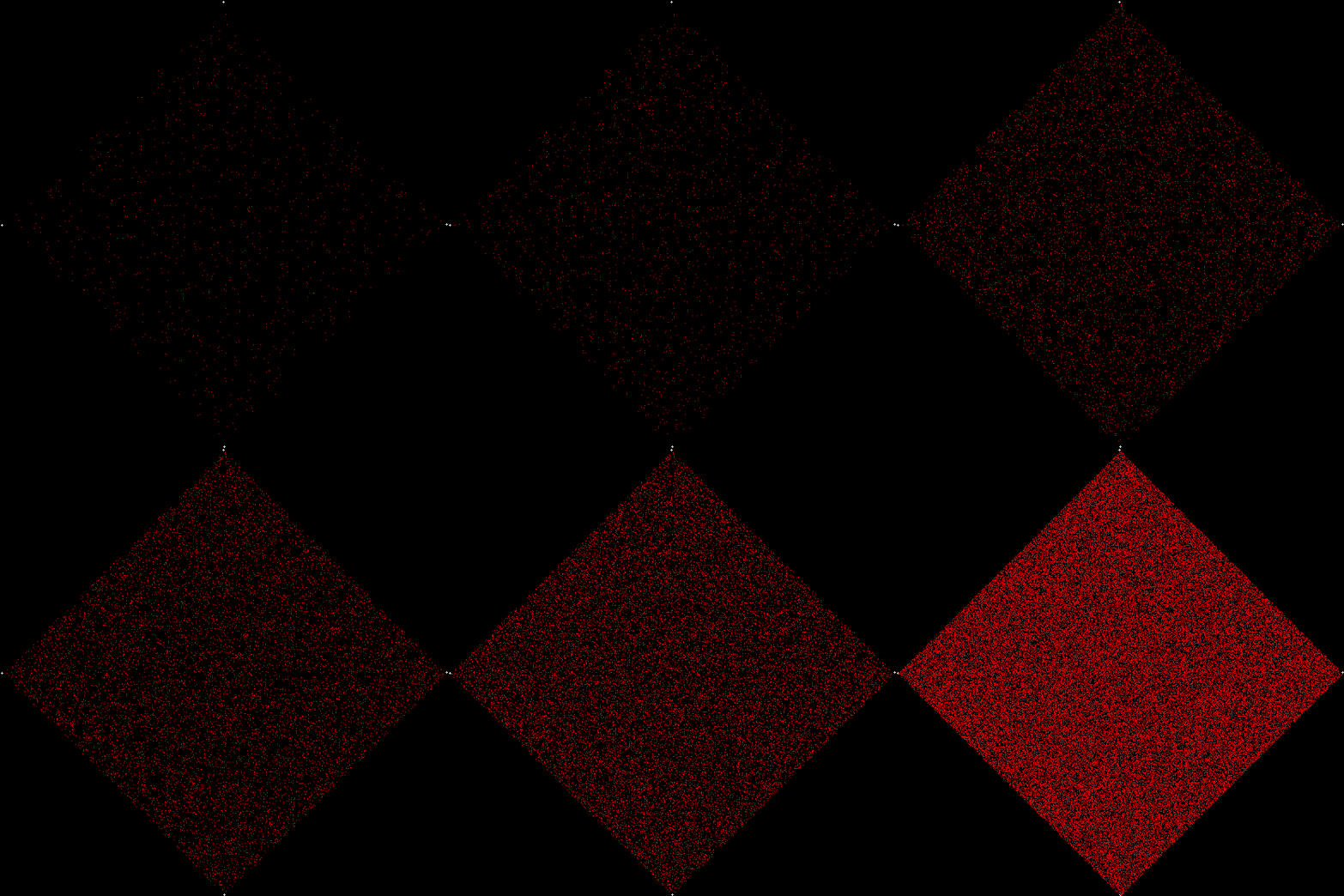
In this case, more is less. When v = 4 and the shape is a square, there is no fractal and plot(fx,fy) covers the entire square.

square

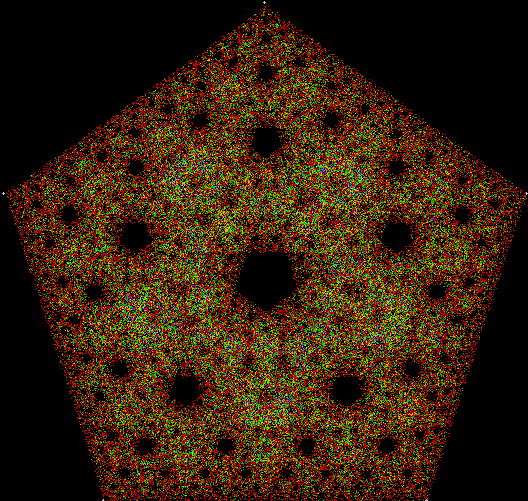
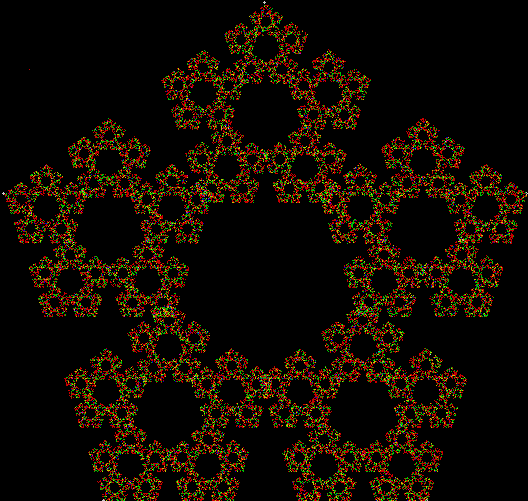
When v = 5 and the shape is a pentagon, this fractal appears:

pentagon

But v = 4 produces a fractal if a simple change is made in the program. This time, a corner cannot be chosen twice in a row:

square_used1

function initial()
  v = 4
  r = 500
  lm = 0.5
  ci = 1 [i.e, number of iterations since corner previously chosen]
endfunc

function fractal()
  th = 2 * pi / v
  for l = 1 to v
    x[l]=xcenter + sin(l*th) * r
    y[l]=ycenter + cos(l*th) * r
    chosen[l]=0
  next l
  fx = xcenter
  fy = ycenter
  repeat
    repeat
      rv = random(v)
    until chosen[rv]=0
    for l = 1 to v
      if chosen[l]>0 then chosen[l] = chosen[l]-1
    next l
    chosen[rv] = ci
    fx = fx + (x[rv]-fx) * lm
    fy = fy + (y[rv]-fy) * lm
    plot(fx,fy)
  until keypressed
endfunc

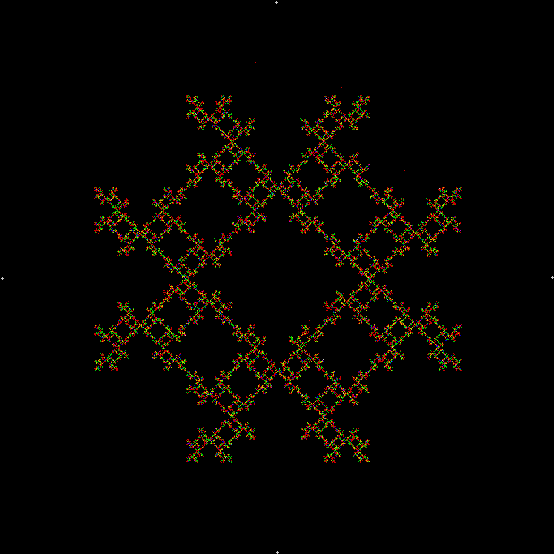
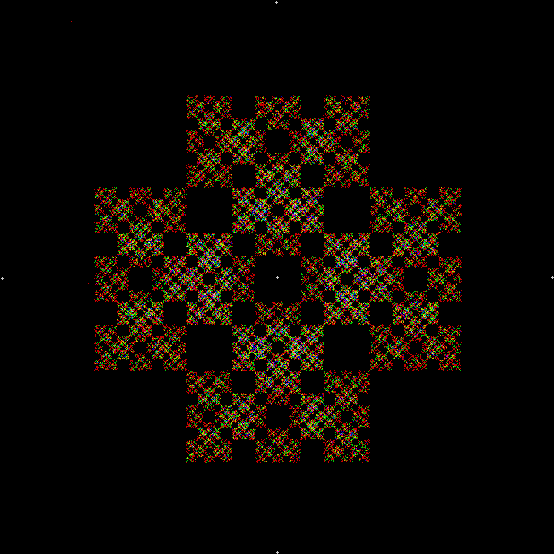
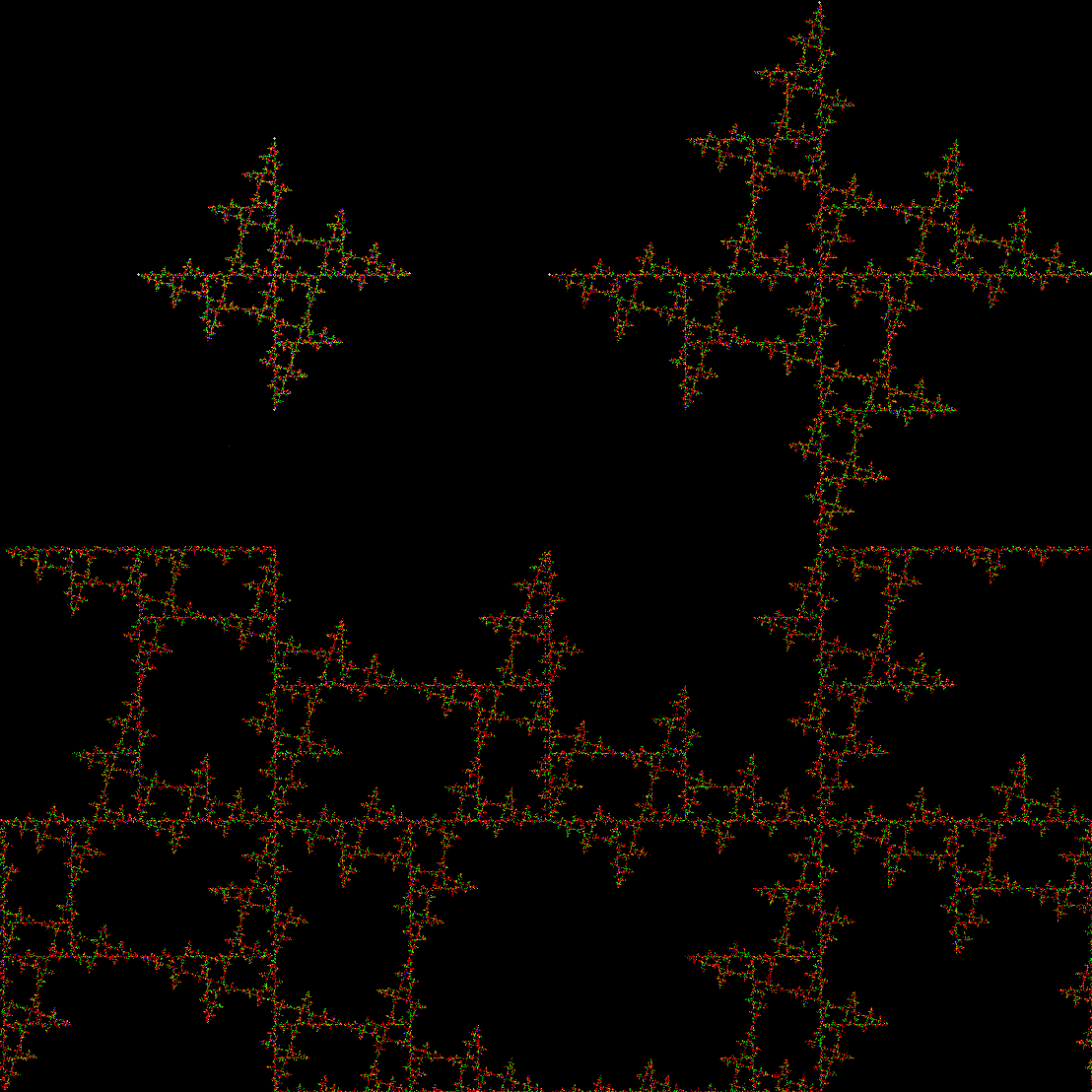
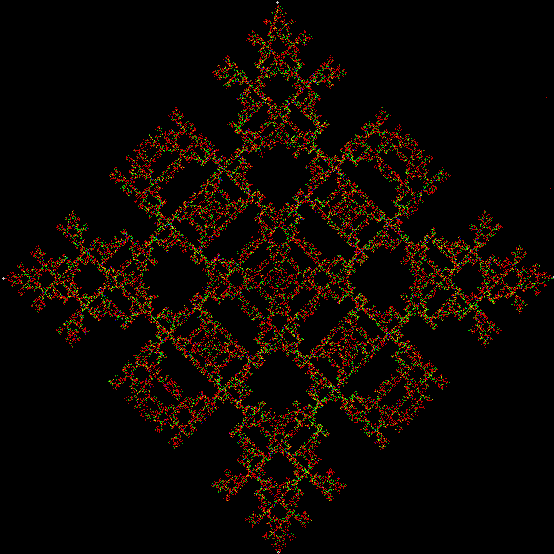
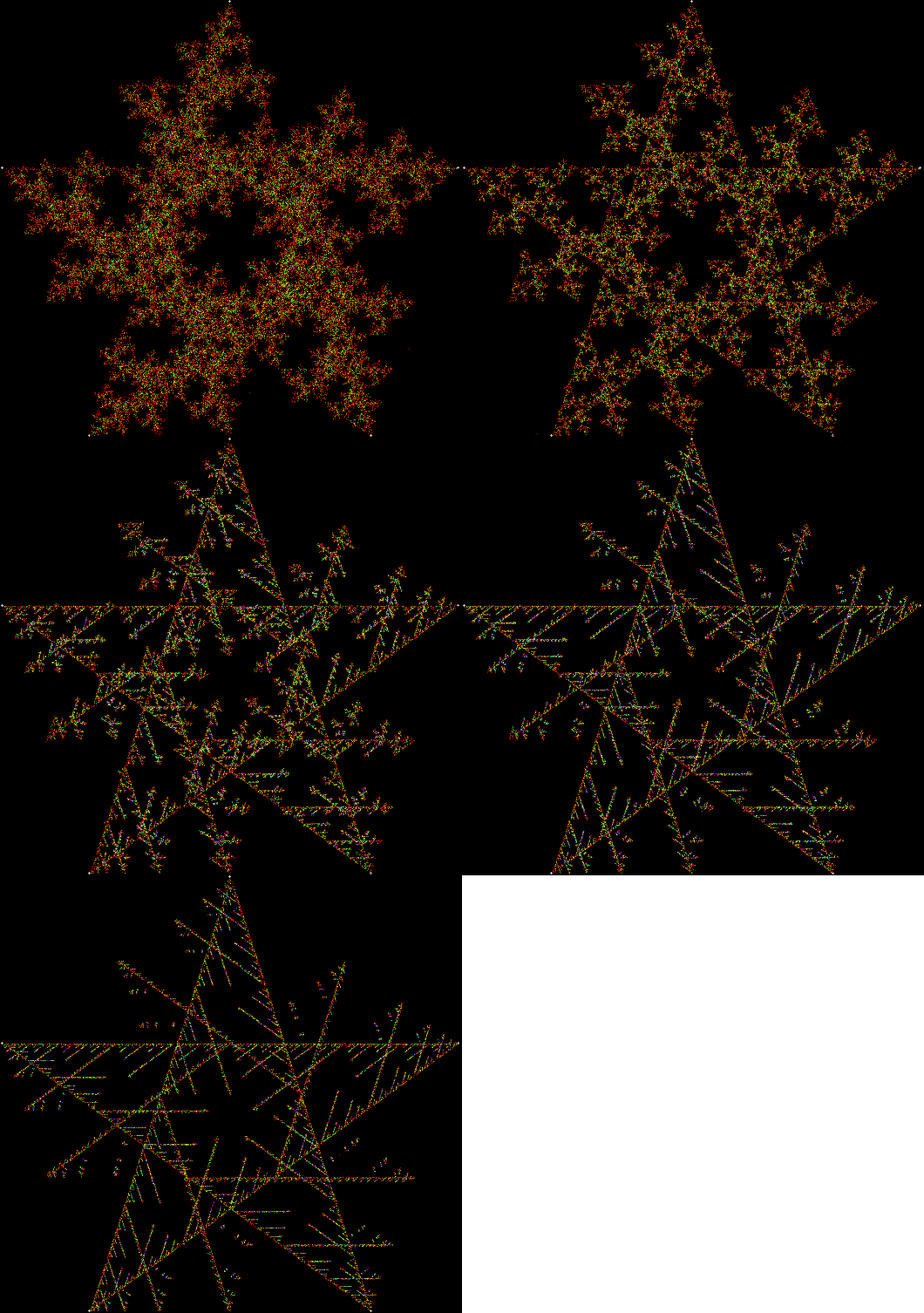
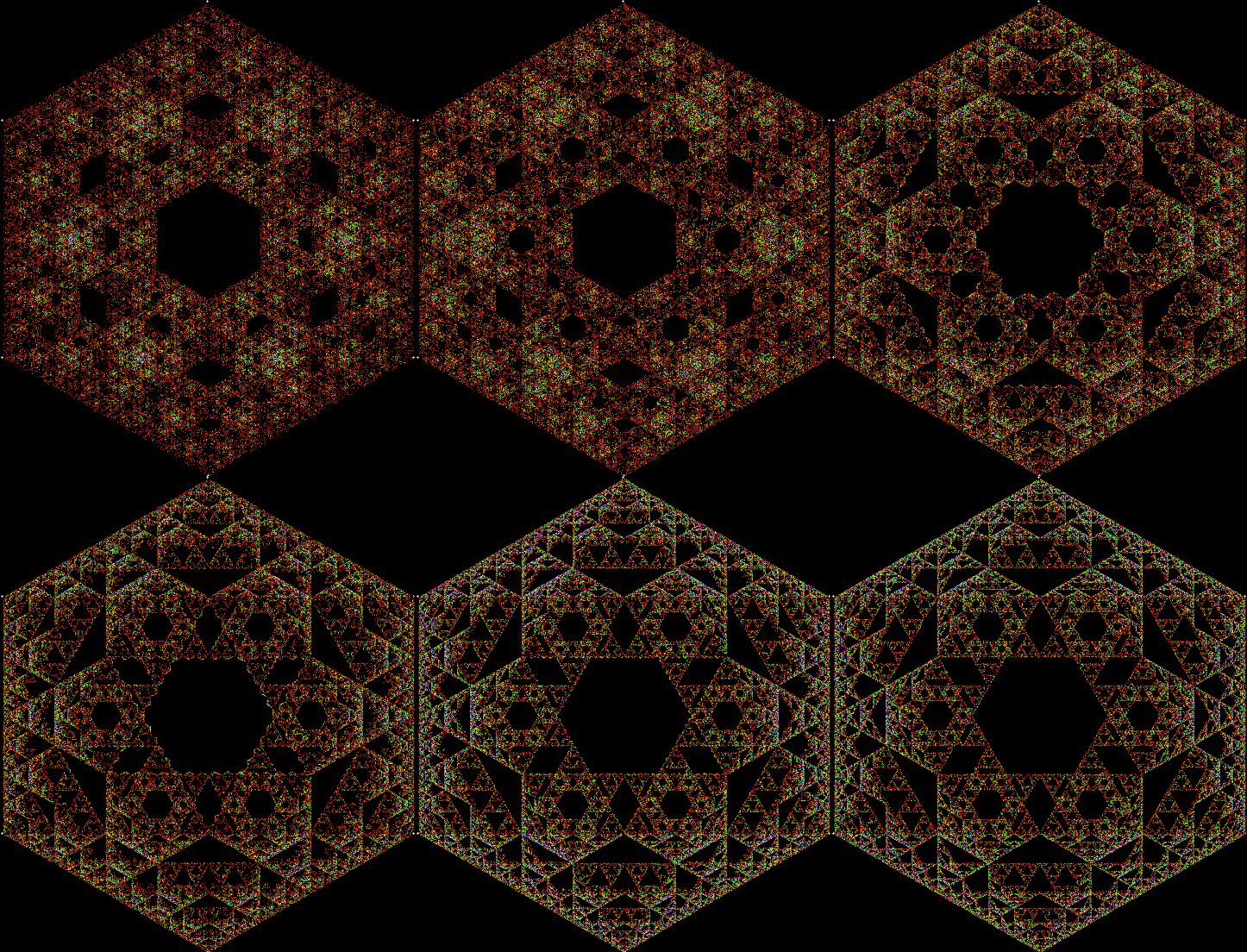
One can also disallow a corner if the corner next to it has been chosen previously, adjust the size of the movement towards the chosen corner, add a central point to the polygon, and so on. Here are more fractals created with such variations:

square_used1_center

square_used1_vi1

square_used1_vi2

square_used2

pentagon_lm0.6

pentagon_used1_5_vi1

hexagon_used1_6_vi3

Sumbertime Views

Like 666 (see Revelation 13:18), 153 (see John 21:11) appears in the Bible. And perhaps for the same reason: because it is the sum of successive integers. 153 = 1+2+3+…+17 = Σ(17), just as 666 = Σ(36). So both numbers are sum-numbers or sumbers. But 153 has other interesting properties, including one that can’t have been known in Biblical times, because numbers weren’t represented in the right way. It’s also the sum of the cubes of its digits: 153 = 1^3 + 5^3 + 3^3 = 1 + 125 + 27. So 153 is a cube-sumber or 3-sumber. The other 3-sumbers are 370, 371 and 407. There are 4-sumbers too, like 1,634 = 1^4 + 6^4 + 3^4 + 4^4, and 5-sumbers, like 194,979 = 1^5 + 9^5 + 4^5 + 9^5 + 7^5 + 9^5, and 6-sumbers, like 548,834 = 5^6 + 4^6 + 8^6 + 8^6 + 3^6 + 4^6.

But there are no 2-sumbers, or numbers that are the sum of the squares of their digits. It doesn’t take long to confirm this, because numbers above a certain size can’t be 2-sumbers. 9^2 + 9^2 = 162, but 9^2 + 9^2 + 9^2 = 243. So 2-sumbers can’t exist above 99 and if you search that high you’ll find that they don’t exist at all. At least not in this house, but they do exist in the houses next door. Base 10 yields nothing, so what about base 9?

4^2 + 5^2 = 45[9] = 41[10]
5^2 + 5^2 = 55[9] = 50

And base 11?

5^2 + 6^2 = 56[11] = 61[10]
6^2 + 6^2 = 66[11] = 72

This happens because odd bases always yield a pair of 2-sumbers whose second digit is one more than half the base and whose first digit is the same or one less. See above (and the appendix). Such a pair is found among the 14 sumbers of base 47, which is the best total till base 157 and its 22 sumbers. Here are the 2-sumbers for base 47:

2^2 + 10^2 = 104
3^2 + 12^2 = 153
5^2 + 15^2 = 250
9^2 + 19^2 = 442
12^2 + 21^2 = 585
14^2 + 22^2 = 680
23^2 + 24^2 = 1,105
24^2 + 24^2 = 1,152
33^2 + 22^2 = 1,573
35^2 + 21^2 = 1,666
38^2 + 19^2 = 1,805
42^2 + 15^2 = 1,989
44^2 + 12^2 = 2,080
45^2 + 10^2 = 2,125

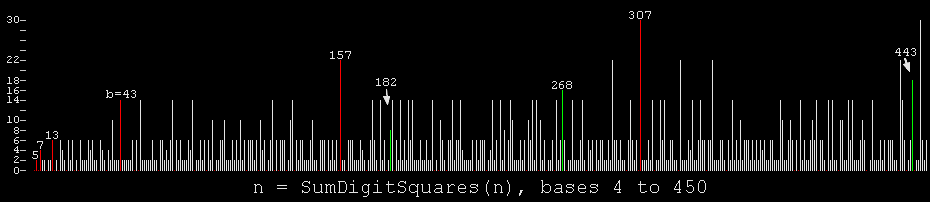
As the progressive records for 2-sumber-totals are set, subsequent bases seem to either match or surpass them, except in three cases below base 450:

2 in base 5
4 in base 7
6 in base 13
10 in base 43
14 in base 47
22 in base 157
8 in base 182*
16 in base 268*
30 in base 307
18 in base 443*

Totals for sums of squares in bases 4 to 450

Totals for sums-of–squares in bases 4 to 450 (click for larger image)

Appendix: Odd Bases and 2-sumbers

Take an even number and half of that even number: say 12 and 6. 12 x 6 = 11 x 6 + 6. Further, 12 x 6 = 2 x 6 x 6 = 2 x 6^2 = 6^2 + 6^2. Accordingly, 66[11] = 6 x 11 + 6 = 12 x 6 = 6^2 + 6^2. So 66 in base 11 is a 2-sumber. Similar reasoning applies to every other odd base except base-3 [update: wrong!]. Now, take 12 x 5 = 2 x 6 x 5 = 2 x (5×5 + 5) = 5^2+5 + 5^5+5 = 5^5 + 5^5+2×5. Further, 5^5+2×5 = (5+1)(5+1) – 1 = 6^2 – 1. Accordingly, 56[11] = 11×5 + 6 = 12×5 + 1 = 5^2 + 6^2. Again, similar reasoning applies to every other odd base except base-3 [update: no — 1^2 + 2^2 = 12[3] = 5; 2^2 + 2^2 = 22[3] = 8]. This means that every odd base b, except base-3, will supply a pair of 2-sumbers with digits [d-1][d] and [d][d], where d = (b + 1) / 2.

Rep-Tile Reflections

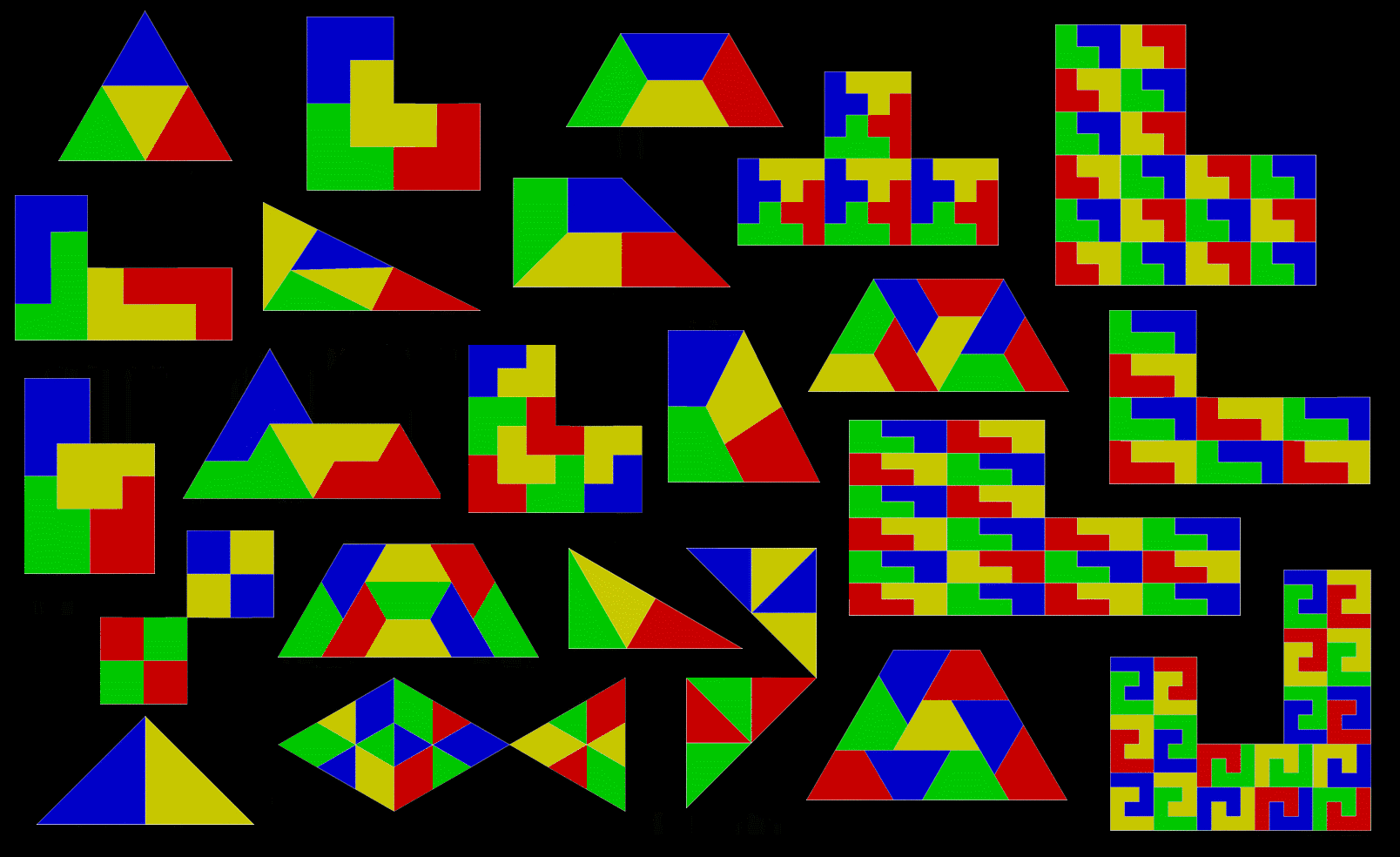
A rep-tile, or repeat-tile, is a two-dimensional shape that can be divided completely into copies of itself. A square, for example, can be divided into smaller squares: four or nine or sixteen, and so on. Rectangles are the same. Triangles can be divided into two copies or three or more, depending on their precise shape. Here are some rep-tiles, including various rep-triangles:

Various rep-tiles

Various rep-tiles — click for larger image

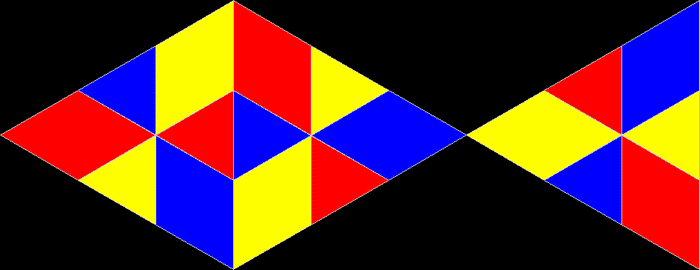
Some are simple, some are complex. Some have special names: the sphinx and the fish are easy to spot. I like both of those, particularly the fish. It would make a good symbol for a religion: richly evocative of life, eternally sub-divisible of self: 1, 9, 81, 729, 6561, 59049, 531441… I also like the double-square, the double-triangle and the T-tile in the top row. But perhaps the most potent, to my mind, is the half-square in the bottom left-hand corner. A single stroke sub-divides it, yet its hypotenuse, or longer side, represents the mysterious and mind-expanding √2, a number that exists nowhere in the physical universe. But the half-square itself is mind-expanding. All rep-tiles are. If intelligent life exists elsewhere in the universe, perhaps other minds are contemplating the fish or the sphinx or the half-square and musing thus: “If intelligent life exists elsewhere in the universe, perhaps…”

Mathematics unites human minds across barriers of language, culture and politics. But perhaps it unites minds across barriers of biology too. Imagine a form of life based on silicon or gas, on unguessable combinations of matter and energy in unreachable, unobservable parts of the universe. If it’s intelligent life and has discovered mathematics, it may also have discovered rep-tiles. And it may be contemplating the possibility of other minds doing the same. And why confine these speculations to this universe and this reality? In parallel universes, in alternative realities, minds may be contemplating rep-tiles and speculating in the same way. If our universe ends in a Big Crunch and then explodes again in a Big Bang, intelligent life may rise again and discover rep-tiles again and speculate again on their implications. The wildest speculation of all would be to hypothesize a psycho-math-space, a mental realm beyond time and matter where, in mathemystic communion, suitably attuned and aware minds can sense each other’s presence and even communicate.

The rep-tile known as the fish

Credo in Piscem…

So meditate on the fish or the sphinx or the half-square. Do you feel the tendrils of an alien mind brush your own? Are you in communion with a stone-being from the far past, a fire-being from the far future, a hive-being from a parallel universe? Well, probably not. And even if you do feel those mental tendrils, how would you know they’re really there? No, I doubt that the psycho-math-space exists. But it might and science might prove its existence one day. Another possibility is that there is no other intelligent life, never has been, and never will be. We may be the only ones who will ever muse on rep-tiles and other aspects of mathematics. Somehow, though, rep-tiles themselves seem to say that this isn’t so. Particularly the fish. It mimics life and can spawn itself eternally. As I said, it would make a good symbol for a religion: a mathemysticism of trans-biological communion. Credo in Piscem, Unum et Infinitum et Æternum. “I believe in the Fish, One, Unending, Everlasting.” That might be the motto of the religion. If you want to join it, simply wish upon the fish and muse on other minds, around other stars, who may be doing the same.