

Musica est exercitium arithmeticae occultum nescientis se numerare animi. — Leibniz.
Musik ist die versteckte arithmetische Tätigkeit der Seele, die sich nicht dessen bewußt ist, daß sie rechnet.
Music is a hidden arithmetic of the soul, which knows not that it calculates.
Papyrocentric Performativity Presents…
Socks-Appeal — How Many Socks Make a Pair? Surprisingly Interesting Everyday Maths, Rob Eastaway (2008)
Def and the Maiden — Rock Chronicles: A Visual History of the World’s Greatest 250 Rock Acts, general editor David Roberts, foreword by Alice Cooper (2012)
Double WHAMmy — The Reversal, Michael Connelly (2010)
A clue, or clew, was originally a ball of thread, as unwound by the Greek hero Theseus en route to the centre of King Minos’ labyrinth on Crete. When he had found and slain the Minotaur, he used the thread to retrace his steps. So a clue is a guide: Theseus followed a thread to solve a puzzle. Nowadays, scientists are following much finer threads to solve much bigger puzzles: DNA is a microscopic thread of chemicals and the clue to all manner of puzzles. Perhaps the biggest and most important is the puzzle of language. How did it evolve? How is it encoded in our genes? How is it instantiated in the brain? Those are the big problems waiting to be slain at the centre of the labyrinth of human genetics. Without language, we wouldn’t be human and you wouldn’t be reading this essay.
But this essay is a thread too: like DNA, language consists of a string of symbols used to construct something bigger. DNA codes for brains and bodies; language codes for ideas and images. By looking at a sample of DNA, scientists can tell what kind of body it builds: its sex and race, for example. In future, we’ll be able to tell much more: DNA will offer clues to intelligence and personality. Samples of language offer similar clues: we can often deduce a lot about someone from his or her writing. There are already computer programs that claim to be able to identify the sex of a writer by the lexical and grammatical patterns in a text. But I wonder how much more computers will be able to deduce in future and what clues there already are in our language to our intellects and personalities. They might not be obvious ones. Perhaps it will be possible to deduce race or sexuality or political preferences from apparently trivial things. Perhaps libertarians or homosexuals or psychopaths use pronouns in a distinctive way or prefer certain kinds of consonants or vowels.
But those are differences between groups: regardless of politics or personality, it’s certain that every individual uses language in a unique way. In future, it will be possible to track people on the internet even when they’re writing anonymously or under false names. A bloodhound can track people after sniffing something known to belong to them. In future, bloodhound programs will track people after sniffing – statistically analyzing – texts known to have been written by them. It’s a worrying thought in our ever-more authoritarian times. Express anonymous thoughts on-line about a controversial topic and you may find a bloodhound-program sniffing you out and the thought-police knocking on your door. Science will hand totalitarian tools to tyrants and it may not be possible to escape even if you avoid controversial topics and write about innocuous things. If psychopaths use language in distinctive ways, as seems likely, perhaps other warped individuals will inadvertently betray themselves in their language. Going for a government job? Maybe you’ll have to write an essay about your last holiday or your first pet. And an apparently innocent metaphor will reveal that you’re racist or homophobic or sexist. So no job for you (and quite right, too).
I don’t know whether crime-think like that can be identified by linguistic patterns, but I do think that good-think can be. In terms of issues around progressive publications like The Guardian and London Review of Books, I’ve noticed again and again that members of the decent’n’compassionate community engage issues around imagery in a special way. In short, they like to mix their metaphors. The most recent example I’ve come across was in a review of a Derrida biography in The Guardian by the decent’n’compassionate Marxist Terry Eagleton:
Before long, the taciturn, socially gauche young man from the colonies was gracing the dinner tables of a galaxy of French luminaries: Jean Genet, Roland Barthes, Julia Kristeva, Maurice Blanchot and others.[1]
Reading that felt a little like stepping on a stair that wasn’t there: it was jarring to go from the image of “dinner tables” to the image of “a galaxy”, as though giant balls of flaming hydrogen could give dinner-parties. But that’s what a mixed metaphor does: it combines incongruent or incompatible images in a lingustically gauche way. George Orwell provided some good examples in his essay “Politics and the English Language” (1946):
By using stale metaphors, similes and idioms, you save much mental effort at the cost of leaving your meaning vague, not only for your reader but for yourself. This is the significance of mixed metaphors. The sole aim of a metaphor is to call up a visual image. When these images clash – as in the fascist octopus has sung its swan song, the jackboot is thrown into the melting pot – it can be taken as certain that the writer is not seeing a mental image of the objects he is naming; in other words he is not really thinking.[2]
The Eagleton example isn’t particularly egregious: Eagleton is mediocre even as a bad writer. He did a little badder six years ago in the same progressive forum:
This year’s calendar to celebrate Beckett’s 100th anniversary is crammed with literary events celebrating the life of the modern age’s most lovable pessimist, most of them, one imagines, awash with talk of the timeless human condition portrayed in his work… Yet there is also a distinctively Irish quality to Beckett’s deflation of the florid and high-flown, just as there is something recognisably Irish about those starved, stagnant landscapes where, like colonial victims, you do nothing but sit and wait for deliverance.[3]
“Talk” consists of vibrations in the air. Is “awash”, which refers to liquids around one’s feet, the right image for talk? And if the “calendar” is “crammed”, is “awash” not over-egging the pudding? Can landscapes be “stagnant”, like water or air? If they can, can they be “starved” at the same time? Or did Eagleton just want the alliteration and not give a toss about the meaning? I suspect it was the last: Eagleton seems to me a typical example of the progressive prosateur. He writes not to convey meaning or apply reason, but for a higher purpose: to demonstrate his own cleverness and assure other progressives of his goodthinkfulness. The Guardian and LRB are full of similar narcissists and Eagleton isn’t exceptional amongst them. So why did I choose his text to unlock the swamp of progressive windbaggery? Well, first because his review of the Derrida biography finally prompted me to write this essay, which I’ve been planning to write for a long time. And second because I didn’t want to give anyone whiplash. Reading Eagleton is a gentle introduction to the mixed metaphor, like driving slowly down a cobbled street in a car with good suspension. Reading another Guardian regular, on the other hand, is like driving fast through the aftermath of an earthquake in a tank with very bad suspension. But forewarned is forearmed. You’ve seen Eagleton and I doubt you’ve been very impressed. Okay, now marvel at the most magisterial mixed-metaphorizer I’ve ever come across:
But the kernel of a message black Britons had been trying to hammer home for decades suddenly took centre stage.[4]
Gary Younge, the Guardian’s resident race’n’racism-expert, is almost praeternatural in his command of the English language. He can cram more crap into less lexicality than anyone else I’ve ever seen. The mixed metaphor above, from 2005, is a triple-whammy: it manages to get three incongruent images into twenty words. If you think that’s easy, try it for yourself. Younge doesn’t have to try: as a progressive prosateur, he postures and preens without conscious effort. But his postural powers are far greater than those of Terry Eagleton. Beauty poured effortlessly from Mozart’s brain; bollocks pours effortlessly from Gary Younge’s. He rose to similar heights of mixed metaphory in 2012, when he interrogated issues around the shooting of a black teenager in Florida:
Outrage at the death of Trayvon Martin is finally lifting the lid on the US’s racist underbelly[5]
That, at least, was the sub-heading for his article: three incongruent images in seventeen words. If Younge himself wasn’t responsible for it, either he has a disciple almost as rhetorically gifted as he is or a sub-editor was taking the piss of his self-righteous posturing in terms of issues around race. I hope it’s the latter: someone really ought to take a mallet to the anti-racist windbags who litter the florid corridors of The Guardian’s stagnant columns. Not that anyone would dare do so openly. The windbags will be typing their socialist siren-songs for some time to come. Here is someone else who is Younge at heart:
Recognising the Conservatives’ persistent image as the “nasty party”, David Cameron saw her [Baroness Warsi’s] real value as someone who could prop up the image of a modern reformist party comfortable in its multi-cultural skin. The chimaera of an Asian woman influencing the levers of Tory power did prop up this illusion for most of the two-and-a-half years that Warsi was in the Cabinet.[6]
That was Ratna Lachman, the directrix of JUST West Yorkshire, “which promotes racial justice, civil liberties and human rights in the north of England”. Or says it does, at least. The language of Lachman suggests to me that she is not necessarily a trustworthy guide to reality or to its rectification. Like Younge and Eagleton, she habitually uses metaphors that don’t work: as Orwell put it in his essay, “the writer is not seeing a mental image of the objects he is naming; in other words he is not really thinking.” Or observing reality. And I can’t believe that this is irrelevant to the progressive politics persistently pursued and promoted by these posturing, preening paragons of pretension. If their relatively simple and easy-to-correct metaphors don’t work, what does that say about their vastly more ambitious and complicated plans for a fairer, juster, more equal society? I wouldn’t trust any of them to organize a party in a brewery or spot a three-foot needle in a two-foot haystack. Linguistics, as a science, insists on being descriptive rather than prescriptive: it describes what language-users do rather than prescribing what they ought to do.
I see the scientific point, but I don’t fully agree with it. Human beings are born to use language, but that doesn’t mean we always use it well. We are born to use bodies too, but that doesn’t mean we always use our bodies in healthy, sensible, and intelligent ways. Medicine describes bodies both in sickness and in health and linguistics should be more like medicine. Language, like DNA, can go wrong and the cancers created by faulty DNA have their linguistic equivalents in publications like The Guardian and London Review of Books. Eagleton, Younge, Lachman and countless other members of the progressive community produce pathological prose. I think they do so because of their politics. You don’t have to subject their writing to sophisticated statistical analysis to know this: the kernels have taken centre stage and the chimaeras are pulling levers in plain view. Lachman claims in one of her windy, wittering articles that “Tory DNA is in essence white, male, Anglo-Saxon and Protestant to its core”. It’s odd, then, that the first Jewish and first female Prime Ministers were Conservative rather than Labour. But I don’t support the Tories any more than I support Labour, in part because neither of them recognizes the importance of actual rather than metaphorical DNA. Our DNA makes us human, so DNA explains both language and politics, as gross aspects of human behaviour. But I think it also accounts for subtler variations in language and politics, from the Marxist windbaggery of Terry Eagleton to the High Tory clarity of Evelyn Waugh. Or the non-conformist clarity of George Orwell, who was diagnosing diseased English and inventing words to describe it in the middle of the last century:
Ultimately it was hoped to make articulate speech issue from the larynx without involving the higher brain centres at all. This aim was frankly admitted in the Newspeak word duckspeak, meaning “to quack like a duck”. Like various other words in the B vocabulary, duckspeak was ambivalent in meaning. Provided that the opinions which were quacked out were orthodox ones, it implied nothing but praise, and when The Times referred to one of the orators of the Party as a doubleplusgood duckspeaker it was paying a warm and valued compliment.[7]
Eagleton, Younge and Lachman are still quacking out orthodox opinions in The Guardian, but the climate is shifting and duckspeakers don’t have wings to fly away south.
[1] “Champion of ambiguity”: Derrida: A Biography, Benoît Peeters – Terry Eagleton enjoys a superb biography of an original thinker, The Guardian, Wednesday, 14th November, 2012.
[2] See “Politics and the English Language”.
[3] “Champion of ambiguity”, Terry Eagleton, The Guardian, Monday, 20th March 2006.
[4] “Riots are a class act — and often they’re the only alternative”, Gary Younge, The Guardian, Monday, 14th November 2005.
[5] “Trayvon Martin: a killing too far”, The Guardian, Wednesday, 21st March, 2012.
[6] “Baroness Warsi’s departure from the cabinet comes as no surprise to Bradford”, The Guardian, Wednesday, 5th September, 2012.
[7] Appendix to Orwell’s Nineteen Eighty-Four (1949).


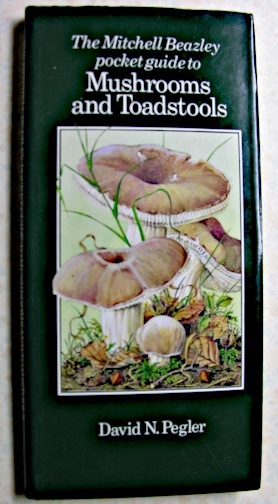 The Mitchell Beazley Pocket Guide to Mushrooms and Toadstools, David N. Pegler (1982)
A little gem of a book in a consistently excellent natural history series. Rather like its subject, it’s an example of something very rich and rewarding that’s growing quietly in a neglected niche. Representational art, banished from the academies and galleries over the past century, has survived in natural history illustration. When I think of contemporary art that’s moved or delighted me I often think of men like Richard Lewington, illustrator of Field Guide to the Dragonflies of Britain and Europe, and Ralph Thompson, who illustrated Gerald Durrell’s books about animal-collecting in Africa and South America. David N. Pegler’s art is more realistic and detailed than Thompson’s and he may be an even better draughtsman. But if you think he has less scope for quirkiness and humor, with non-animal, let alone non-mammalian, subjects, you’d be wrong. Each of the fungi illustrated here is a finely detailed, delicately tinted portrait in miniature and in situ, often accompanied by the dried leaves or bark or pine-needles of the spot in which Pegler presumably found it. And one of the pleasures of looking through the book is uncovering the unique and often witty touches Pelger has added to some of the portraits. For example, there’s the beetle crawling towards two specimens of Tricholoma portenosum – ‘so good to eat the French call it “Marvellous Tricholoma” (Tricholome merveilleux)’ – and the crumpled sweet-wrapper lying near three Agaricus xanthodermus, the Yellow-staining mushroom found in or on “Parks, roadsides and wasteland”.
But Pegler usually lets the fungi speak for themselves in their bewildering variety of voices from their startlingly wide range of habitats: there are fungi that specialize in sand, marsh, burnt ground, and dung, as well as the more familiar dead wood and leaf-litter. As so often, the English-speaking world still has a lot to learn from the French: where many Brits or Americans are familiar with two or three edible species, the French are familiar with dozens. The Italians, on the other hand, knew a lot about another kind of mushroom during the Renaissance: the poisonous varieties whose symbols – black-skull-on-white-background for “dangerous” and white-skull-on-black-background for “deadly” – add a regular macabre frisson to Pegler’s drawings.

One of the deadliest fungi, the Destroying Angel (Amanita virosa), is one of the most beautiful too, like an evil young witch out of Grimms’ Fairy Tales: it’s pure white, slender-stemmed, and with lacy clinging veils, but it reveals its true nature by its “heavy soporific smell”. “Do not mistake for Agaricus silvicola”, Pegler warns (the Latin adjective silvicola, meaning “wood-dwelling”, only exists in the feminine form). One of the ways to avoid mistaking the two is that A. silvicola, the Wood mushroom, “smells of aniseed”. Fungi can delight, or revolt, the nose as well as the eye: there’s the Coconut-scented milk-cap (Lactarius glyciosmus) and the Geranium-scented russula (Russula fellea) on the delightful side, and the Nitrous mycena (Mycena leptocephala), “often smell[ing] of nitric acid”, and the Stinking parasol (Lepiota cristata), with its “unpleasant rubbery smell”, on the revolting.
Unless it can assist identification like that, Pegler doesn’t usually say much about any particular fungus, because he’s writing mainly for identification and has to cram hundreds of species into a pocket-sized space. But each species must have its own unique ecological story and Pegler has managed to make his drawings portraits from the wild and not just mycological mug-shots. And each is accompanied by an illustration of its spores, as a further aid to identification and further invitation for the browsing eye. Spores, like fungi themselves, come in many different shapes and sizes. All of which makes this book my favorite in the Mitchell Beazley series. Every book is worth owning or looking at, but the Pocket Guide to Butterflies, for example, has no artistic charm or whimsy. The butterflies are drawn strictly and severely for identification, with nothing accompanying them: no plants, no landscapes, and no jeux d’esprit. And European butterflies don’t come in many varieties or colors: although they often have hidden charms, most of them are frumpish and dowdy when set beside their glittering, gleaming, multi-spectacular cousins from the tropics.
That isn’t true of European fungi, as Pegler demonstrates: both they and their spores come in all shapes, sizes, and patterns. And all colors too. The Hygrocybe genus gleams with reds, yellows, and lilacs, and the species there look much more like magic mushrooms than the genuine article: the unassuming little Liberty Cap, Psilocybe semilanceata, which can open the doors of perception to a world of wonder. Fungi can drive you mad, kill you, or delight your palate, eye, and intellect, and this book captures their richness and variety better than any other I’ve come across. Art, natural history, and culinary guide: it’s all here and The Mitchell Beazley Pocket Guide to Mushrooms and Toadstools is, in its quiet way, a much greater example of European high culture than anything the modern Turner Prize has produced.
(N.B. I am not a mathematician and often make stupid mistakes in my recreational maths. Caveat lector.)
101 isn’t a number, it’s a label for a number. In fact, it’s a label for infinitely many numbers. In base 2, 1012 = 5; in base 3, 1013 = 10; 1014 = 17; 1015 = 26; and so on, for ever. In some bases, like 2 and 4, the number labelled 101 is prime. In other bases, it isn’t. But it is always a palindrome: that is, it’s the same read forward and back. But 101, the number itself, is a palindrome in only two bases: base 10 and base 100.1 Note that 100 = 101-1: with the exception of 2, all integers, or whole numbers, are palindromic in at least one base, the base that is one less than the integer itself. So 3 = 112; 4 = 113; 5 = 114; 101 = 11100; and so on.
Less trivial is the question of which integers set progressive records for palindromicity, or for the number of palindromes they create in bases less than the integers themselves. You might guess that the bigger the integer, the more palindromes it will create, but it isn’t as simple as that. Here is 10 represented in bases 2 through 9:
10102 | 1013* | 224* | 205 | 146 | 137 | 128 | 119*
10 is a palindrome in bases 3, 4, and 9. Now here is 30 represented in bases 2 through 29 (note that a number between square brackets represents a single digit in that base):2
111102 | 10103 | 1324 | 1105 | 506 | 427 | 368 | 339* | 30 | 2811 | 2612 | 2413 | 2214* | 2015 | 1[14]16 | 1[13]17 | 1[12]18 | 1[11]19 | 1[10]20 | 1921 | 1822 | 1723 | 1624 | 1525 | 1426 | 1327 | 1228
| 1129*
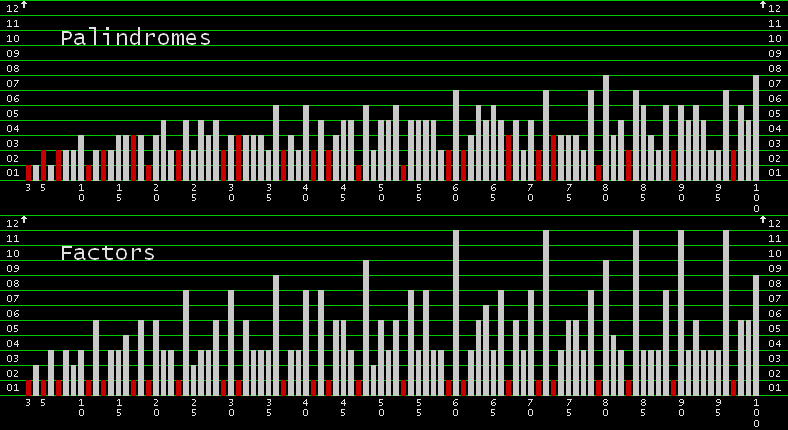
30, despite being three times bigger than 10, creates only three palindromes too: in bases 9, 14, and 29. Here is a graph showing the number of palindromes for each number from 3 to 100 (prime numbers are in red):
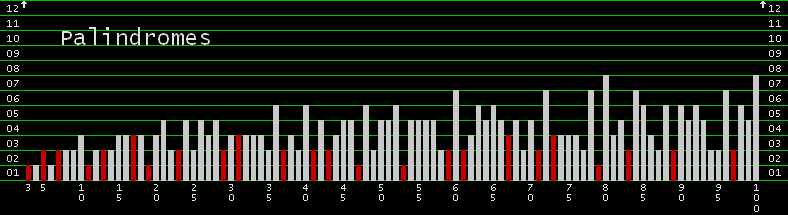
The number of palindromes a number has is related to the number of factors, or divisors, it has. A prime number has only one factor, itself (and 1), so primes tend to be less palindromic than composite numbers. Even large primes can have only one palindrome, in the base b=n-1 (55,440 has 119 factors and 61 palindromes; 65,381 has one factor and one palindrome, 1165380). Here is a graph showing the number of factors for each number from 3 to 100:

And here is an animated gif combining the two previous images:
Here is a graph indicating where palindromes appear when n, along the x-axis, is represented in the bases b=2 to n-1, along the y-axis:
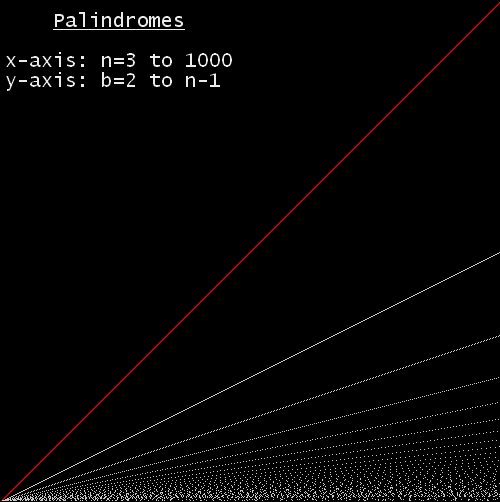
The red line are the palindromes in base b=n-1, which is “11” for every n>2. The lines below it arise because every sufficiently large n with divisor d can be represented in the form d·n1 + d. For example, 8 = 2·3 + 2, so 8 in base 3 = 223; 18 = 3·5 + 3, so 18 = 335; 32 = 4.7 + 4, so 32 = 447; 391 = 17·22 + 17, so 391 = [17][17]22.
And here, finally, is a table showing integers that set progressive records for palindromicity (p = number of palindromes, f = total number of factors, prime and non-prime):
| n | Prime Factors | p | f | n | Prime Factors | p | f | |
| 3 | 3 | 1 | 1 | 2,520 | 23·32·5·7 | 25 | 47 | |
| 5 | 5 | 2 | 1 | 3,600 | 24·32·52 | 26 | 44 | |
| 10 | 2·5 | 3 | 3 | 5,040 | 24·32·5·7 | 30 | 59 | |
| 21 | 3·7 | 4 | 3 | 7,560 | 23·33·5·7 | 32 | 63 | |
| 36 | 22·32 | 5 | 8 | 9,240 | 23·3·5·7·11 | 35 | 63 | |
| 60 | 22·3·5 | 6 | 11 | 10,080 | 25·32·5·7 | 36 | 71 | |
| 80 | 24·5 | 7 | 9 | 12,600 | 23·32·52·7 | 38 | 71 | |
| 120 | 23·3·5 | 8 | 15 | 15,120 | 24·33·5·7 | 40 | 79 | |
| 180 | 22·32·5 | 9 | 17 | 18,480 | 24·3·5·7·11 | 43 | 79 | |
| 252 | 22·32·7 | 11 | 17 | 25,200 | 24·32·52·7 | 47 | 89 | |
| 300 | 22·3·52 | 13 | 17 | 27,720 | 23·32·5·7·11 | 49 | 95 | |
| 720 | 24·32·5 | 16 | 29 | 36,960 | 25·3·5·7·11 | 50 | 95 | |
| 1,080 | 23·33·5 | 17 | 31 | 41,580 | 22·33·5·7·11 | 51 | 95 | |
| 1,440 | 25·32·5 | 18 | 35 | 45,360 | 24·34·5·7 | 52 | 99 | |
| 1,680 | 24·3·5·7 | 20 | 39 | 50,400 | 25·32·52·7 | 54 | 107 | |
| 2,160 | 24·33·5 | 21 | 39 | 55,440 | 24·32·5·7·11 | 61 | 119 |
Notes
1. That is, it’s only a palindrome in two bases less than 101. In higher bases, “101” is a single digit, so is trivially a palindrome (as the numbers 1 through 9 are in base 10).
2. In base b, there are b digits, including 0. So base 2 has two digits, 0 and 1; base 10 has ten digits, 0-9; base 16 has sixteen digits: 0, 1, 2, 3, 4, 5, 6, 7, 8, 9, A, B, C, D, E, F.
Papyrocentric Performativity Presents…
Mens et Mons — The Swiss Alps, Kev Reynolds (2012)
All Bosched Up — Michael Connelly’s Harry Bosch books
Hate State — Escape from Camp 14: One Man’s Remarkable Odyssey from North Korea to Freedom in the West, Blaine Harden (2012)
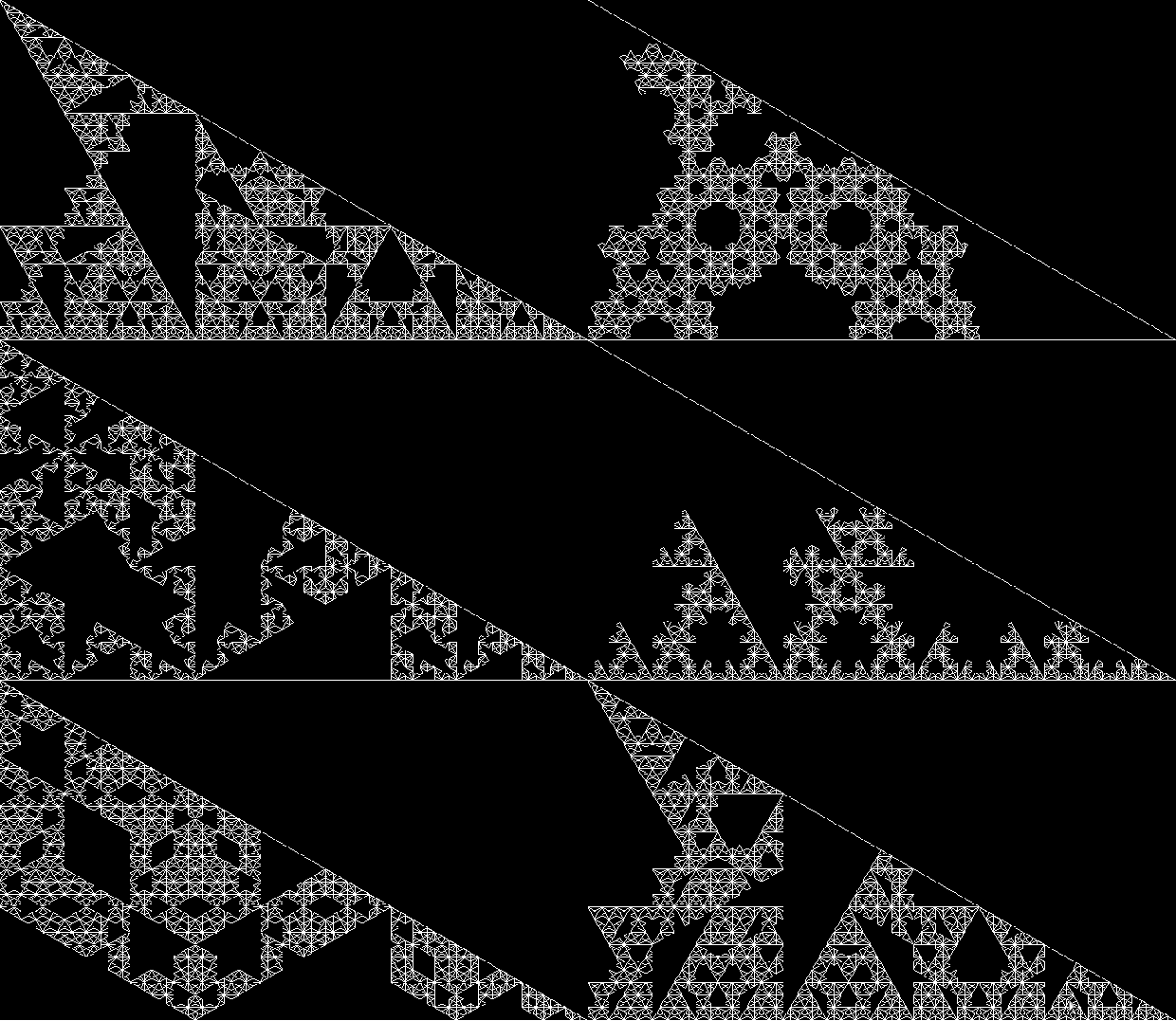
Here are some fractals based on the Angelo di Monteverde or Angelo della Resurrezione carved by the Italian sculptor Giulio Monteverde (1837-1917) for the monumental cemetery of Staglieno in Genoa.


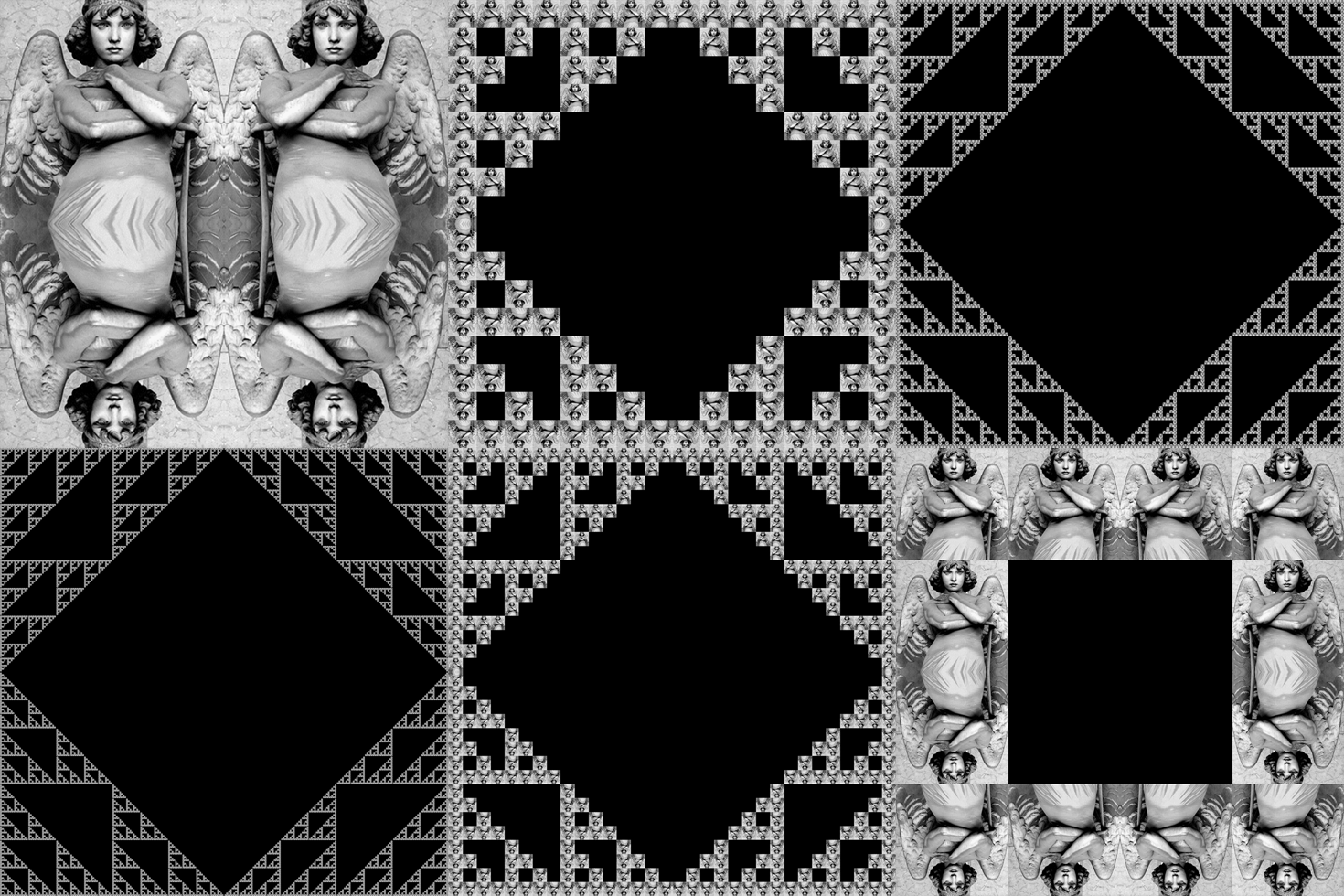


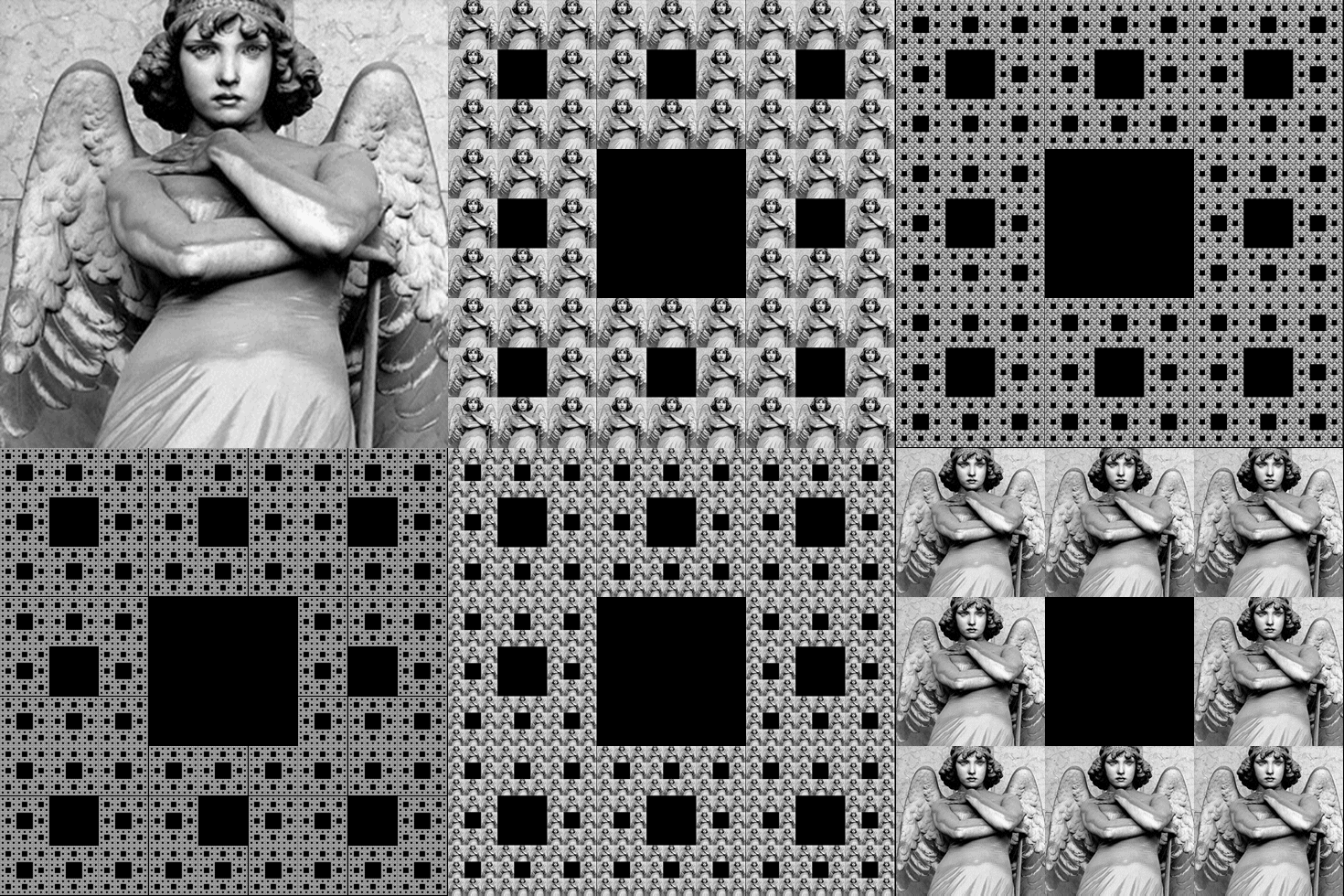
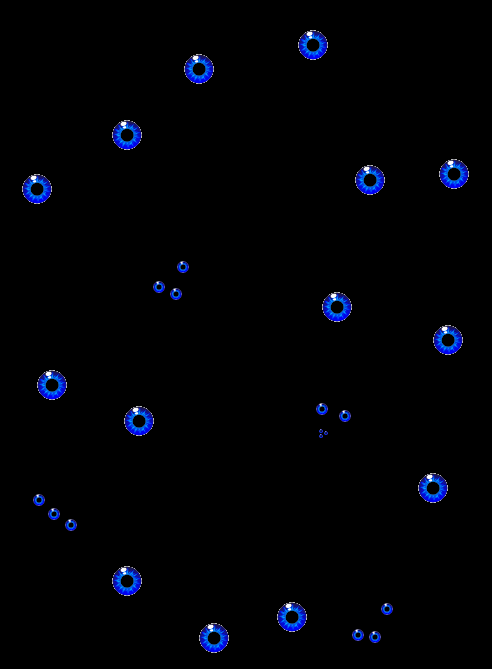
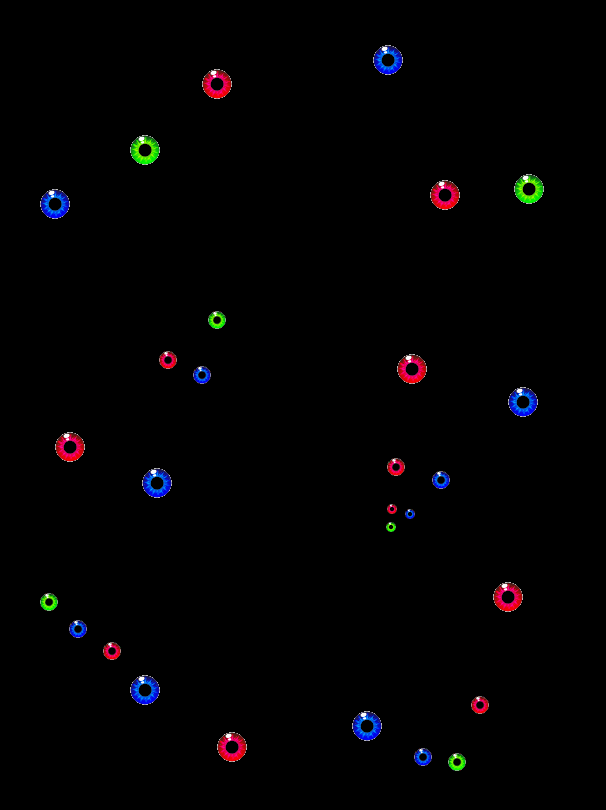
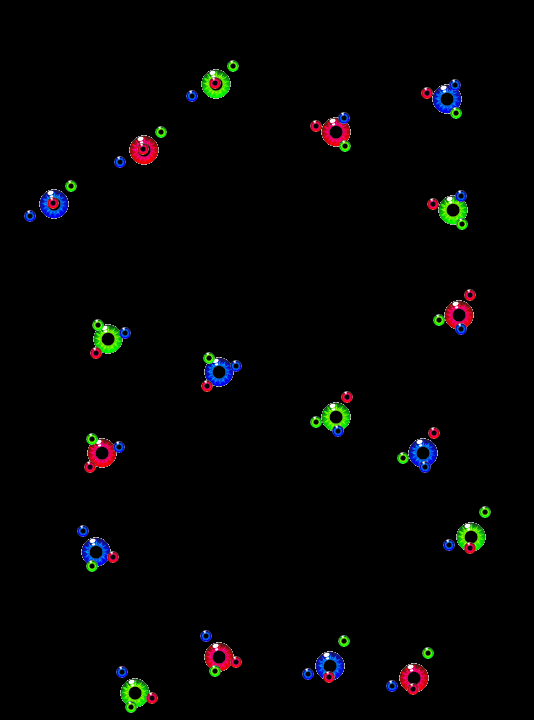
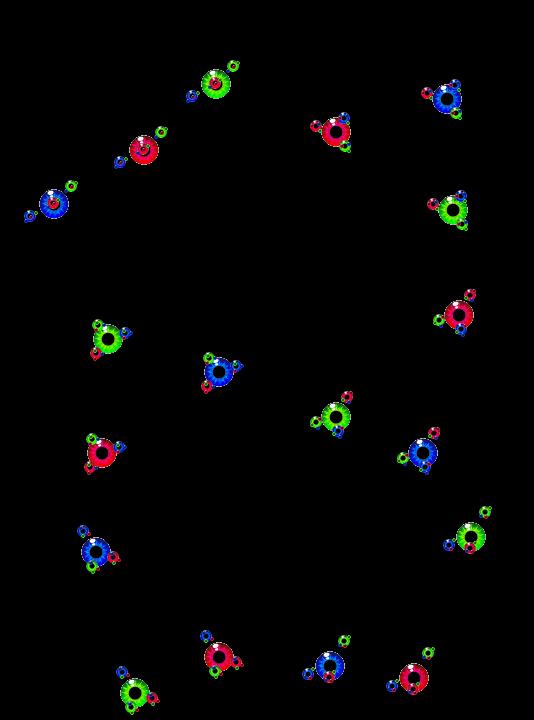
In “The Gems of Rebbuqqa”, I interrogated notions around the concept of priestesses who permanently juggle three giant eye-like gems, a ruby, a sapphire, and an emerald, atop a sandstone altar. In “The Schismatarch” (forthcoming), I will interrogate notions around the concept of a Himalayan sect that believes this universe is one of three juggled by a god called Nganāma. Each of these universes contains a smaller Nganāma who juggles three dwarf universes; et sic ad infinitum. Moreover, the Nganāma juggling our universe sits in a larger universe, one of three juggled by a giant Nganāma in a larger universe still, which is one of three on a higher plane; et sic ad infinitum. The cosmology of the Nganāma-sect is fractal: ut supra, sic infra: as above, so below. Here are some animated gifs inspired by these two stories and based on juggled eye-gem fractals.


 Overlord In Terms of Core Issues Around Maximal Engagement with Key Notions of the Über-Feral