
What’s the point of writing 2/10? It’s equal to 1/5, just as 4/10 = 2/5, 6/10 = 3/5 and 8/10 = 4/5. But there are times when the full-fat form can be mathematically — and æsthetically — appropriate. For example, you get a nice series of triangular waves — and an optical illusion — when you use all the rational fractions to create a graph representing the size of the fraction, a/b, as 0 < a/b < 1. If the even denominators are in white and the odd denominators in red, the graph looks like this:
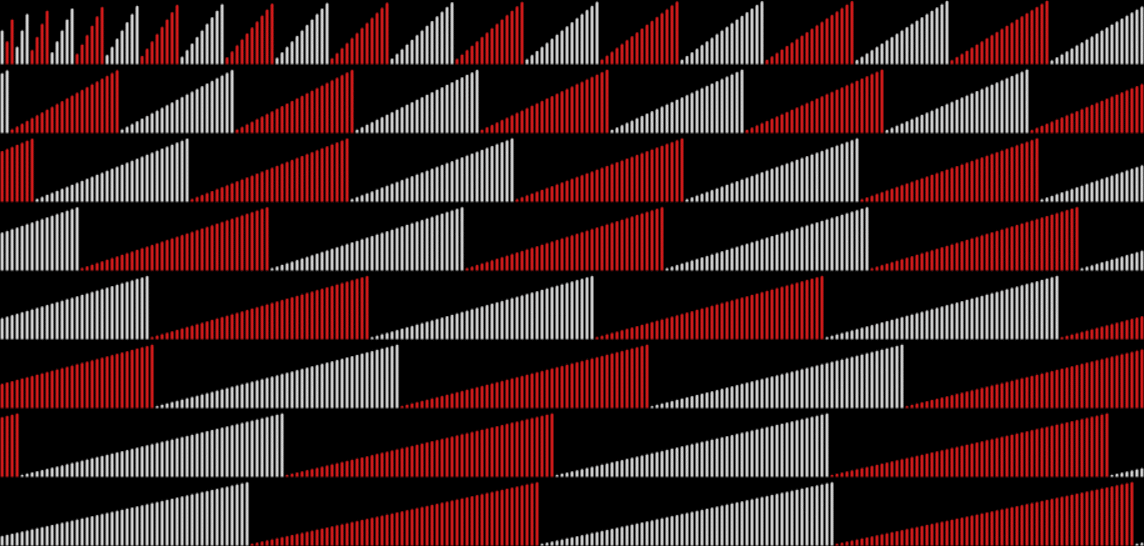
Graph of 1/2, 1/3, 2/3, 1/4, 2/4, 3/4, 1/5, 2/5, …
(click for larger)
The optical illusion is that the lines of waves appear to sink from left to right. Otherwise the graph has no complexity. But suppose you take the continued fraction of a/b, reverse it, and calculate a new fraction from the reversal. If you use the fractions in simplest form, you get this graph:
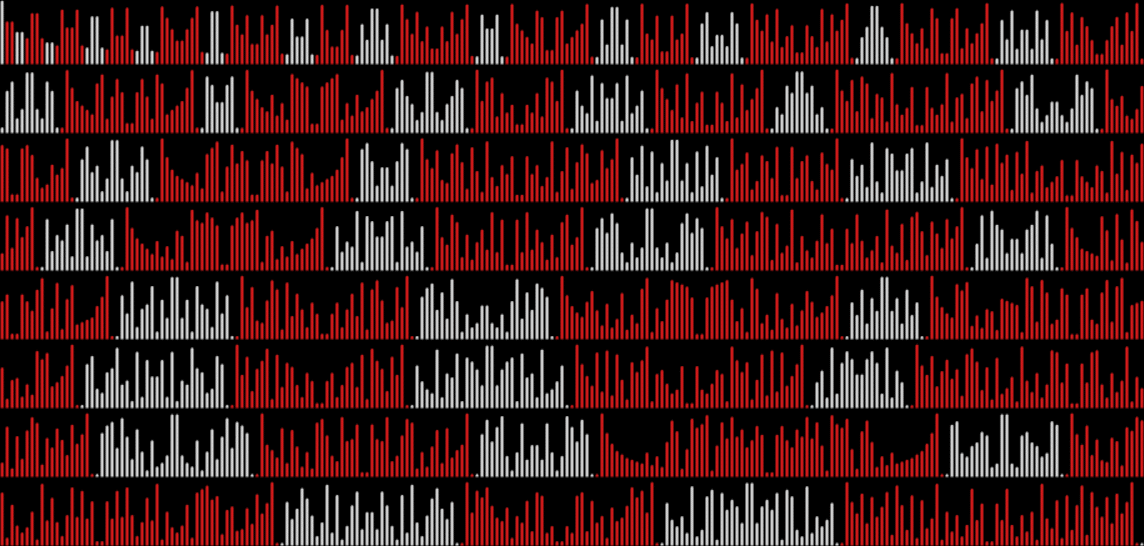
Graph of a2/b2 = reversed(contfrac(a1/b1)) for 1/2, 1/3, 2/3, 1/4, 3/4, …
But if you use all the rational fractions, simplified and unsimplified, you get a graph with pyramids and ships, like this:
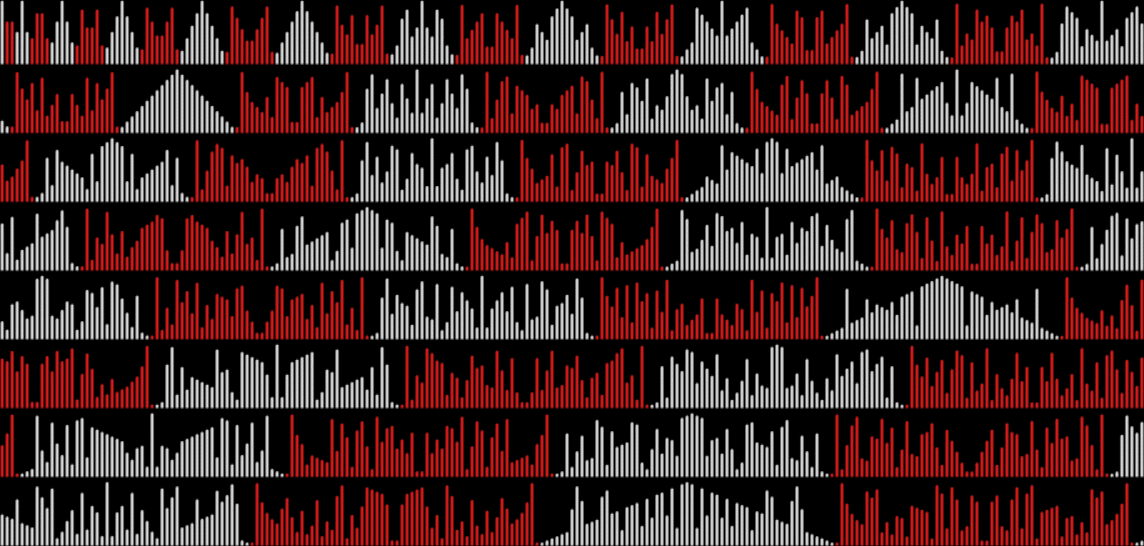
Graph of a2/b2 = reversed(contfrac(a1/b1)) for 1/2, 1/3, 2/3, 1/4, 2/4, 3/4, …
The full pyramids are few, alas. But the other ones decay in interesting ways.

