Performativizing Papyrocentricity #11

Papyrocentric Performativity Presents:

StellissimusThe Cosmic Gallery: The Most Beautiful Images of the Universe, Giles Sparrow (Quercus 2013)

Eyck’s EyesVan Eyck, Simone Ferrari (Prestel 2013)

Dealing Death at a DistanceSniper: Sniping Skills from the World’s Elite Forces, Martin J. Dougherty (Amber Books 2012)

Serious StimbulationCleaner, Kinder, Caringer: Women’s Wisdom for a Wounded World, edited by Dr Miriam B. Stimbers (University of Nebraska Press 2013)


Keeping It GweelGweel and Other Alterities, Simon Whitechapel (Ideophasis Press 2011) (posted @ Overlord of the Über-Feral)

Ave Aves!Collins Bird Guide: The Most Complete Guide to the Birds of Britain and Europe (second edition), text and maps by Lars Svensson, illustrations and captions by Killian Mullarney and Dan Zetterström (HarperCollins, 2009) (@ O.o.t.Ü.-F.)

Flesh and FearUnderstanding Owls: Biology, Management, Breeding, Training, Jemima Parry-Jones (David & Charles, 1998) (@ O.o.t.Ü.-F.)

Hit and SmithSongs that Saved Your Life: The Art of The Smiths 1982-87, Simon Goddard (Titan Books 2013) (@ O.o.t.Ü.-F.)


Or Read a Review at Random: RaRaR

The Term Turns dot dot dot

In Titus Graun, I interrogated issues around the Grauniness, or Guardianisticity, of two keyly committed core components of the counter-cultural community: the semiotician Stewart Home and the æsthetician John Coulthart. Seeking to utilizate their usage-metrics for the core/epicentral Guardianista phrase “in terms of” (i.t.o.), I interrogated their personal websites like this in terms of January 2013:

site:http://www.johncoulthart.com “in terms of”
About 2,180 results

site:http://www.johncoulthart.com “the”
About 8,860 results

site:http://www.johncoulthart.com “and”
About 8,150 results


site:http://www.stewarthomesociety.org “in terms of”
About 123 results

site:http://www.stewarthomesociety.org “the”
About 602 results

site:http://www.stewarthomesociety.org “and”
About 599 results

Noting that Coulthart’s site used “the/and” approximately 14 times more often than Home’s, I adjusted Home’s raw i.t.o.-score accordingly: 123 x 14 = 1722. I concluded that Coulthart, with an i.t.o.-score of 2180, was approximately 26·59% Graunier than Home – exactly as one might have hoped, given that Coulthart is not merely a Guardianista (good), but a gay Guardianista (doubleplusgood). But that was in terms of January. When I re-interrogated their websites in terms of June 2013, I discovered that the semiotic situation had transitioned in a most disturbing and disquieting way:

site:http://www.johncoulthart.com “in terms of”
About 1,080 results

site:http://www.johncoulthart.com “the”
About 8,680 results

site:http://www.johncoulthart.com “and”
About 8,010 results


site:http://www.stewarthomesociety.org “in terms of”
About 119 results

site:http://www.stewarthomesociety.org “the”
About 541 results

site:http://www.stewarthomesociety.org “and”
About 536 results

I was aghast (literally) to see that Coulthart’s i.t.o.-metrics have spiked (in reverse). Other lexicostatistical metrics have transitioned relatively little: his site now seems to use “the/and” approximately 15·5 times more often than Home’s. Home’s raw i.t.o.-score is 119 and 119 x 15·5 = 1844·5. So it is now Home who is approximately 70·78% Graunier than Coulthart.

This can only be described as highly suspicious. What has Coulthart been up to? Has he been spraying his site with verbicide? Has he donned a black Savoy nihilinja-suit™, crept out under cover of darkness and clubbed innocent i.t.o.’s as they lay basking in the feral radiance of Manchester’s Most Maverick Messiahs? If so, this is “‘Pushing the Transgressive Envelope Too Far’ Too Far” too far. Even M.M.M.M. must look askance at behaviour like that. Surely.


Previously pre-posted (please peruse):

Titus Graun
Ex-term-in-ate!
Reds under the Thread

He Say, He Sigh, He Sow #12

“There were no bears, but at one point I disturbed an eagle on a ledge — and perhaps have seen nothing more beautiful than the one lazy flap of its wings that set it on a seemingly effortless vertical flight up the sun-warmed cliff behind it.” — the art-critic Brian Sewell describing a Turkish journey in Outsider II: Always Almost, Never Quite (2012).

Young at Art

Head of a Young English Girl by Fernand Khnopff

Head of a Young English Girl (1895)

Graphische Sammlung Albertina, Vienna.

’Dith and the Maiden #2

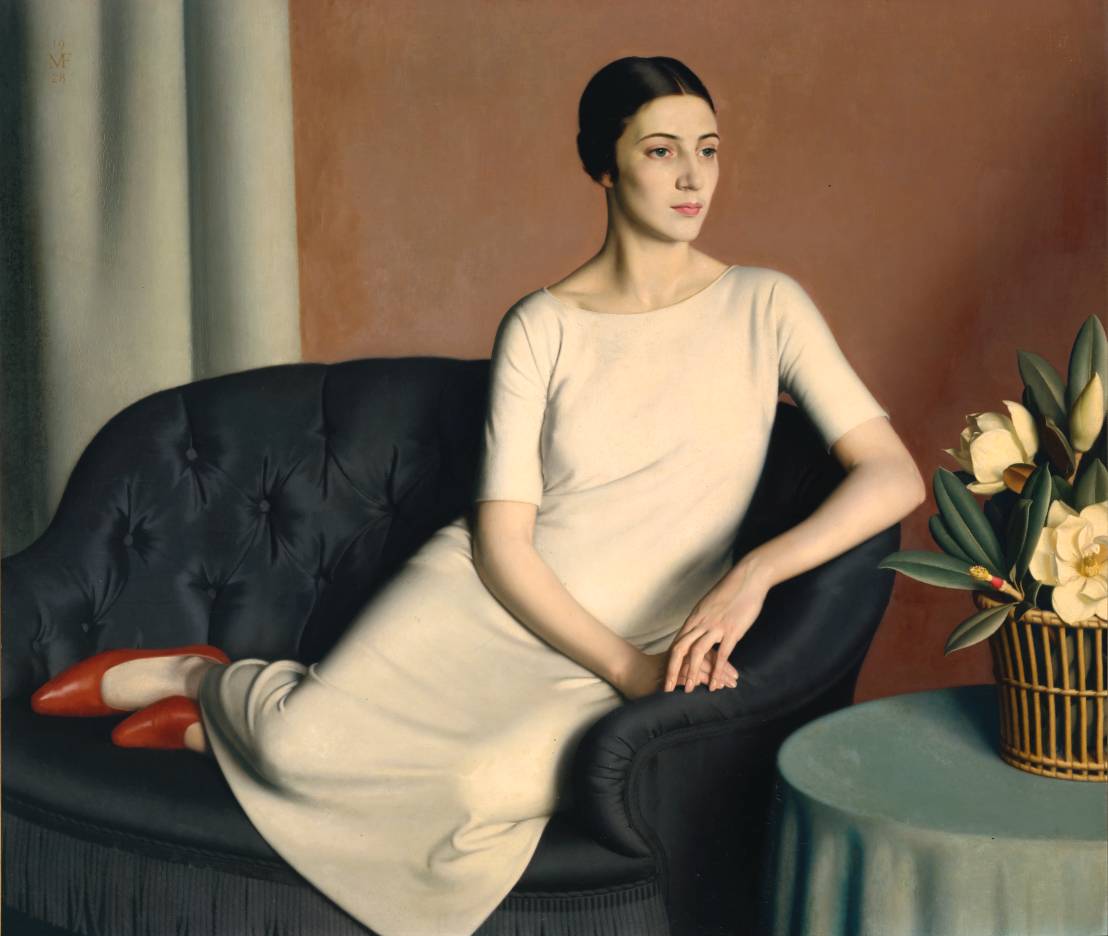
Marguerite Kelsey 1928 by Meredith Frampton 1894-1984

Portrait of Marguerite Kelsey (1928) by Meredith Frampton (1894-1984).

Previously pre-posted (please peruse):

’Dith and the Maiden #1

They Say, They Sigh, They Sow

“The IAE [International Art English] of the French press release is almost too perfect: It is written, we can only imagine, by French interns imitating American interns imitating American academics imitating French academics.” — “International Art English”, Alix Rule and David Levine

Clock around the Rock

If you like minimalism, you should like binary. There is unsurpassable simplicity and elegance in the idea that any number can be reduced to a series of 1’s and 0’s. It’s unsurpassable because you can’t get any simpler: unless you use finger-counting, two symbols are the minimum possible. But with those two – a stark 1 and 0, true and false, yin and yang, sun and moon, black and white – you can conquer any number you please. 2 = 10[2]. 5 = 101. 100 = 1100100. 666 = 1010011010. 2013 = 11111011101. 9^9 = 387420489 = 10111000101111001000101001001. You can also perform any mathematics you please, from counting sheep to modelling the evolution of the universe.

Yin and Yang symbol

1 + 0 = ∞

But one disadvantage of binary, from the human point of view, is that numbers get long quickly: every doubling in size adds an extra digit. You can overcome that disadvantage using octal or hexadecimal, which compress blocks of binary into single digits, but those number systems need more symbols: eight and sixteen, as their names suggest. There’s an elegance there too, but binary goes masked, hiding its minimalist appeal beneath apparent complexity. It doesn’t need to wear a mask for computers, but human beings can appreciate bare binary too, even with our weak memories and easily tiring nervous systems. I especially like minimalist binary when it’s put to work on those most maximalist of numbers: the primes. You can compare integers, or whole numbers, to minerals. Some are like mica or shale, breaking readily into smaller parts, but primes are like granite or some other ultra-hard, resistant rock. In other words, some integers are easy to divide by other integers and some, like the primes, are not. Compare 256 with 257. 256 = 2^8, so it’s divisible by 128, 64, 32, 16, 8, 4, 2 and 1. 257 is a prime, so it’s divisible by nothing but itself and 1. Powers of two are easy to calculate and, in binary, very easy to represent:

2^0 = 1 = 1
2^1 = 2 = 10[2]
2^2 = 4 = 100
2^3 = 8 = 1000
2^4 = 16 = 10000
2^5 = 32 = 100000
2^6 = 64 = 1000000
2^7 = 128 = 10000000
2^8 = 256 = 100000000

Primes are the opposite: hard to calculate and usually hard to represent, whatever the base:

02 = 000010[2]
03 = 000011
05 = 000101
07 = 000111
11 = 001011
13 = 001101
17 = 010001
19 = 010011
23 = 010111
29 = 011101
31 = 011111
37 = 100101
41 = 101001
43 = 101011

Maximalist numbers, minimalist base: it’s a potent combination. But “brimes”, or binary primes, nearly all have one thing in common. Apart from 2, a special case, each brime must begin and end with 1. For the digits in-between, the God of Mathematics seems to be tossing a coin, putting 1 for heads, 0 for tails. But sometimes the coin will come up all heads or all tails: 127 = 1111111[2] and 257 = 100000001, for example. Brimes like that have a stark simplicity amid the jumble of 83 = 1010011[2], 113 = 1110001, 239 = 11101111, 251 = 11111011, 277 = 100010101, and so on. Brimes like 127 and 257 are also palindromes, or the same reading in both directions. But less simple brimes can be palindromes too:

73 = 1001001
107 = 1101011
313 = 100111001
443 = 110111011
1193 = 10010101001
1453 = 10110101101
1571 = 11000100011
1619 = 11001010011
1787 = 11011111011
1831 = 11100100111
1879 = 11101010111

But, whether they’re palindromes or not, all brimes except 2 begin and end with 1, so they can be represented as rings, like this:
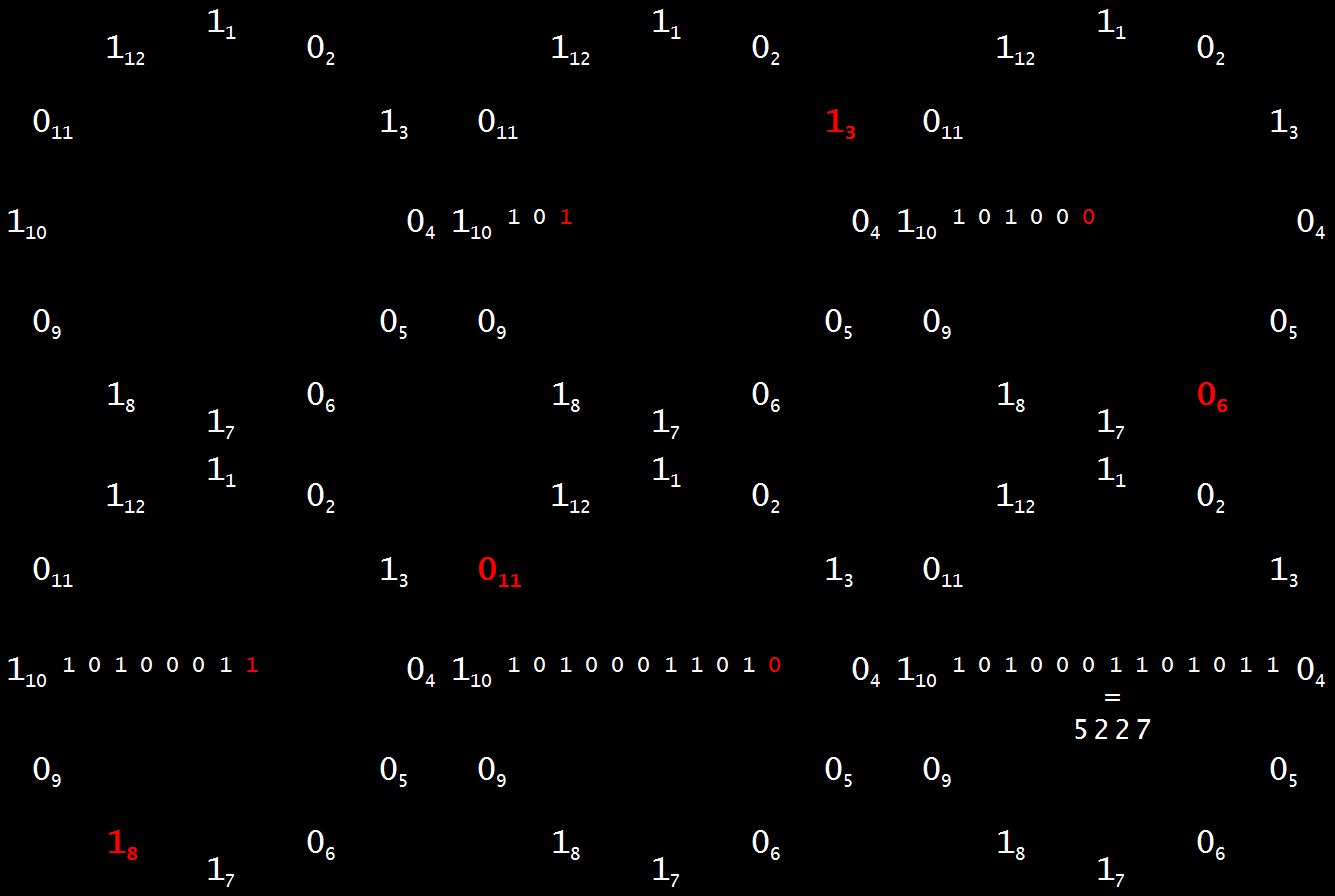
Ouroboros5227

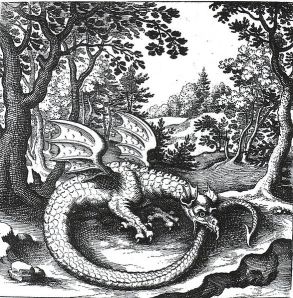
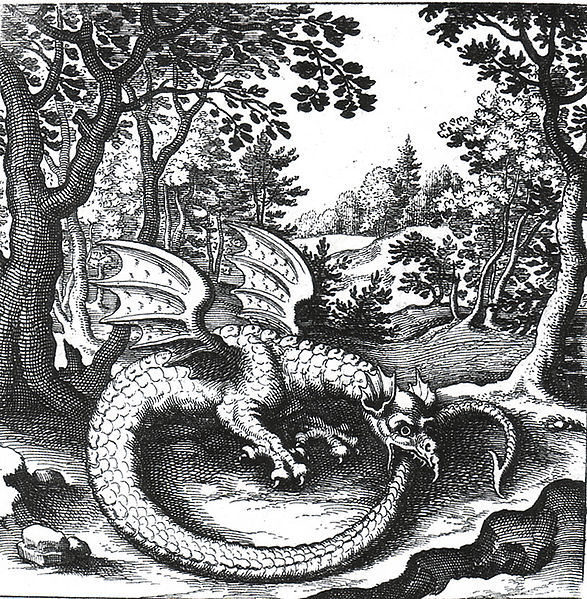
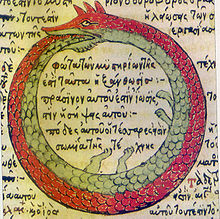
Those twelve bits, or binary digits, actually represent the thirteen bits of 5227 = 1,010,001,101,011. Start at twelve o’clock (digit 1 of the prime) and count clockwise, adding 1’s and 0’s till you reach 12 o’clock again and add the final 1. Then you’ve clocked around the rock and created the granite of 5227, which can’t be divided by any integers but itself and 1. Another way to see the brime-ring is as an Ouroboros (pronounced “or-ROB-or-us”), a serpent or dragon biting its own tail, like this:
Alchemical Ouroboros

Alchemical Ouroboros (1478)

Dragon Ouroboros

Another alchemical Ouroboros (1599)

But you don’t have to start clocking around the rock at midday or midnight. Take the Ouroboprime of 5227 and start at eleven o’clock (digit 12 of the prime), adding 1’s and 0’s as you move clockwise. When you’ve clocked around the rock, you’ll have created the granite of 6709, another prime:
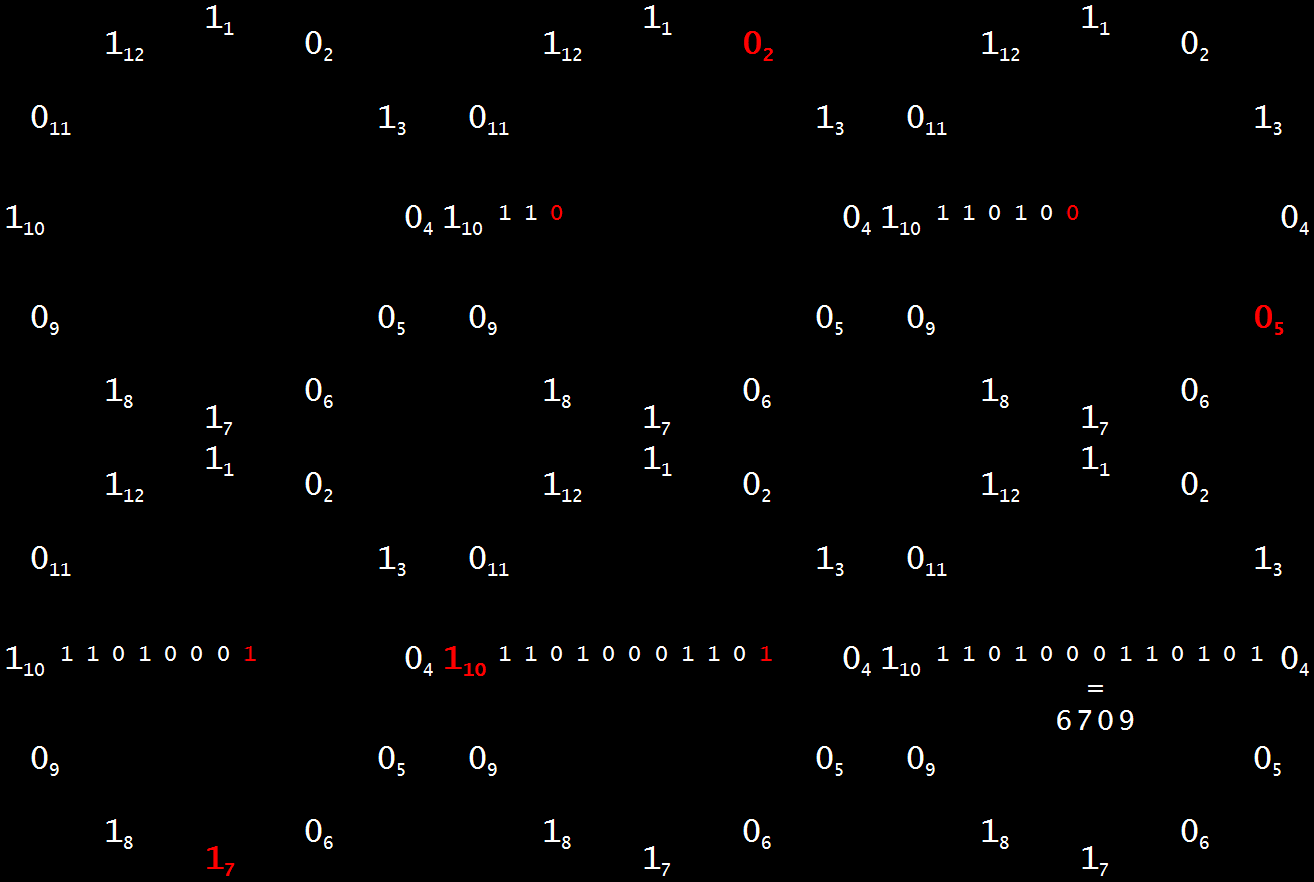
Ouroboros6709

Other Ouroboprimes produce brimes both clockwise and anti-clockwise, like 47 = 101,111.

Clockwise

101,111 = 47
111,011 = 59
111,101 = 61

Anti-Clockwise

111,101 = 61
111,011 = 59
101,111 = 47

If you demand the clock-rocked brime produce distinct primes, you sometimes get more in one direction than the other. Here is 151 = 10,010,111:

Clockwise

10,010,111 = 151
11,100,101 = 229

Anti-Clockwise

11,101,001 = 233
11,010,011 = 211
10,100,111 = 167
10,011,101 = 157

The most productive brime I’ve discovered so far is 2,326,439 = 1,000,110,111,111,110,100,111[2], which produces fifteen distinct primes:

Clockwise (7 brimes)

1,000,110,111,111,110,100,111 = 2326439
1,100,011,011,111,111,010,011 = 3260371
1,110,100,111,000,110,111,111 = 3830207
1,111,101,001,110,001,101,111 = 4103279
1,111,110,100,111,000,110,111 = 4148791
1,111,111,010,011,100,011,011 = 4171547
1,101,111,111,101,001,110,001 = 3668593

Anti-Clockwise (8 brimes)

1,110,010,111,111,110,110,001 = 3768241
1,100,101,111,111,101,100,011 = 3342179
1,111,111,011,000,111,001,011 = 4174283
1,111,110,110,001,110,010,111 = 4154263
1,111,101,100,011,100,101,111 = 4114223
1,111,011,000,111,001,011,111 = 4034143
1,110,110,001,110,010,111,111 = 3873983
1,000,111,001,011,111,111,011 = 2332667


Appendix: Deciminimalist Primes

Some primes in base ten use only the two most basic symbols too. That is, primes like 11[10], 101[10], 10111[10] and 1011001[10] are composed of only 1’s and 0’s. Furthermore, when these numbers are read as binary instead, they are still prime: 11[2] = 3, 101[2] = 5, 10111[2] = 23 and 1011001[2] = 89. Here is an incomplete list of these deciminimalist primes:

11[10] = 1,011[2]; 11[2] = 3[10] is also prime.

101[10] = 1,100,101[2]; 101[2] = 5[10] is also prime.

10,111[10] = 10,011,101,111,111[2]; 10,111[2] = 23[10] is also prime.

101,111[10] = 11,000,101,011,110,111[2]; 101,111[2] = 47[10] is also prime.

1,011,001[10] = 11,110,110,110,100,111,001[2]; 1,011,001[2] = 89[10] is also prime.

1,100,101[10] = 100,001,100,100,101,000,101[2]; 1,100,101[2] = 101[10] is also prime.

10,010,101[10] = 100,110,001,011,110,111,110,101[2]; 10,010,101[2] = 149[10] is also prime.

10,011,101[10] = 100,110,001,100,000,111,011,101[2]; 10,011,101[2] = 157[10] is also prime.

10,100,011[10] = 100,110,100,001,110,100,101,011[2]; 10,100,011[2] = 163[10] is also prime.

10,101,101[10] = 100,110,100,010,000,101,101,101[2]; 10,101,101[2] = 173[10] is also prime.

10,110,011[10] = 100,110,100,100,010,000,111,011[2]; 10,110,011[2] = 179[10] is also prime.

10,111,001[10] = 100,110,100,100,100,000,011,001[2].

11,000,111[10] = 101,001,111,101,100,100,101,111[2]; 11,000,111[2] = 199[10] is also prime.

11,100,101[10] = 101,010,010,101,111,111,000,101[2]; 11,100,101[2] = 229[10] is also prime.

11,110,111[10] = 101,010,011,000,011,011,011,111[2].

11,111,101[10] = 101,010,011,000,101,010,111,101[2].

100,011,001[10] = 101,111,101,100,000,101,111,111,001[2]; 100,011,001[2] = 281[10] is also prime.

100,100,111[10] = 101,111,101,110,110,100,000,001,111[2].

100,111,001[10] = 101,111,101,111,001,001,010,011,001[2]; 100,111,001[2] = 313[10] is also prime.

101,001,001[10] = 110,000,001,010,010,011,100,101,001[2].

101,001,011[10] = 110,000,001,010,010,011,100,110,011[2]; 101,001,011[2] = 331[10] is also prime.

101,001,101[10] = 110,000,001,010,010,011,110,001,101[2].

101,100,011[10] = 110,000,001,101,010,100,111,101,011[2].

101,101,001[10] = 110,000,001,101,010,110,111,001,001[2].

101,101,111[10] = 110,000,001,101,010,111,000,110,111[2]; 101,101,111[2] = 367[10] is also prime.

101,110,111[10] = 110,000,001,101,101,000,101,011,111[2].

101,111,011[10] = 110,000,001,101,101,010,011,100,011[2]; 101,111,011[2] = 379[10] is also prime.

101,111,111[10] = 110,000,001,101,101,010,101,000,111[2]; 101,111,111[2] = 383[10] is also prime.

110,010,101[10] = 110,100,011,101,001,111,011,110,101[2].

110,100,101[10] = 110,100,011,111,111,111,010,000,101[2]; 110,100,101[2] = 421[10] is also prime.

110,101,001[10] = 110,100,100,000,000,001,000,001,001[2].

110,110,001[10] = 110,100,100,000,010,010,100,110,001[2]; 110,110,001[2] = 433[10] is also prime.

110,111,011[10] = 110,100,100,000,010,100,100,100,011[2]; 110,111,011[2] = 443[10] is also prime.

Cat out of Bel

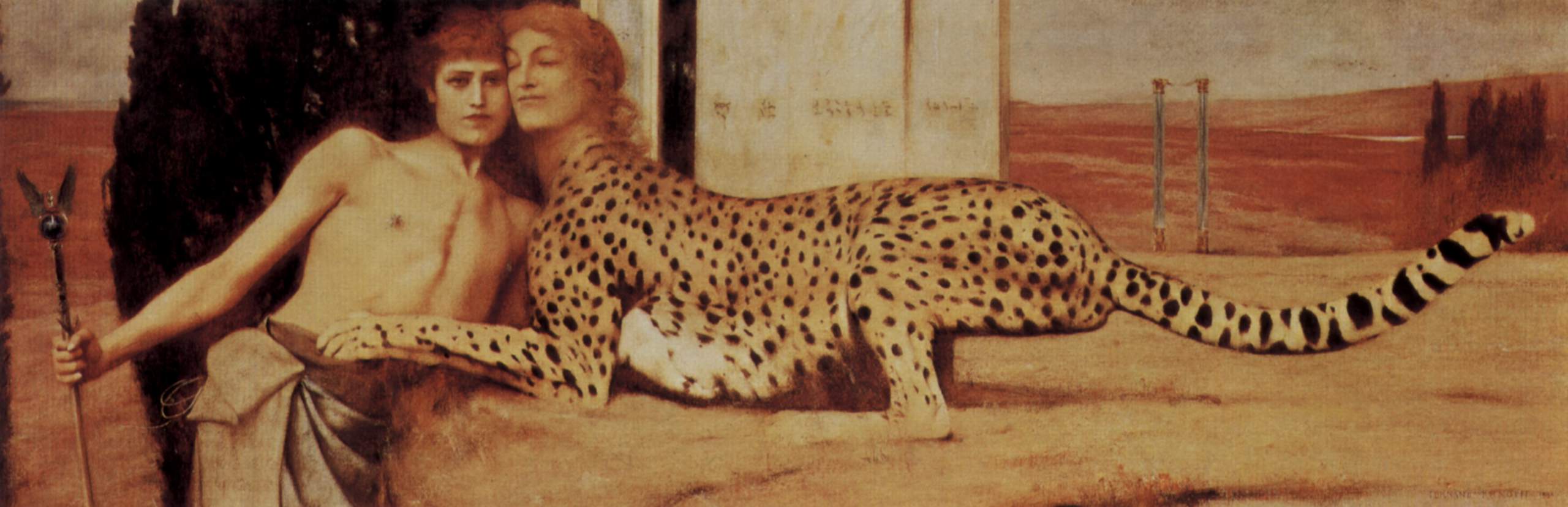
The Belgian symbolist Fernand Khnopff (1858-1921) is one of my favourite artists; Caresses (1896) is one of his most famous paintings. I like it a lot, though I find it more interesting than attractive. It’s a good example of Khnopff’s art in that the symbols are detached from clear meaning and float mysteriously in a world of their own. As Khnopff used to say: On n’a que soi “One has only oneself.” But he was clearly inspired by the story of Oedipus and the Sphinx, which is thousands of years old. Indeed, an alternate title for the painting is The Sphinx.

Caresses by Fernand Khnopff (click for larger image)

Caresses (1896) by Fernand Khnopff (click for larger image)

Even older than the Oedipus story is another link to the incestuous themes constantly explored by Khnopff, who was obsessed with his sister Marguerite and portrayed her again and again in his art. That’s her heavy-jawed face rubbing against the heavy-jawed face of the oddly nippled man, but Khnopff has given her the body of a large spotted felid. Many people misidentify it as a leopard, Panthera pardus. It’s actually a stranger and rarer felid: a cheetah, Acinonyx jubatus, which occupies a genus of its own among the great cats. And A. jubatus, unlike P. pardus, is an incestuous animal par excellence:

Cheetahs are very inbred. They are so inbred that genetically they are almost identical. The current theory is that they became inbred when a “natural” disaster dropped their total world population down to less than seven individual cheetahs – probably about 10,000 years ago. They went through a “Genetic Bottleneck”, and their genetic diversity plummeted. They survived only through brother-to-sister or parent-to-child mating. (Cheetah Extinction)

It must have been a large disaster. Perhaps cheetahs barely survived the inferno of a strike by a giant meteor, which would make them a cat out of hell. In 1896, they became a cat out of Bel too when Khnopff unveiled Caresses. Back then, biologists could not analyse DNA and discover the ancient history of a species like that. So how did Khnopff know the cheetah would add extra symbolism to his painting? Presumably he didn’t, though he must have recognized the cheetah as unique in other ways. All the same, I like to think that perhaps he had extra-rational access to scientific knowledge from the future. As he dove into the subconscious, Khnopff used symbols like weights to drag himself and his art deeper and darker. So perhaps far down, in the mysterious black, where time and space lose their meaning, he encountered a current of telepathy bearing the news of the cheetah’s incestuous nature. And that’s why he chose to give his sphinx-sister a cheetah’s body.

Numbered Days

Numbered Days: Literature, Mathematics and the Deus Ex Machina

Think French. Think genius. Think rebellious, tormented, iconoclastic. Finally, think dead tragically young in the nineteenth century… And if you’re thinking of anyone at all, I think you’ll be thinking of Rimbaud.

And you’d be right to do so. But only half-right. Because there were in fact two rebellious, tormented, iconoclastic French geniuses who died tragically young in the nineteenth century. One was called Arthur Rimbaud (1854-91) and the other Évariste Galois (1811-32). Rimbaud is still famous, Galois never has been. At least not to the general educated public, though on all objective criteria – but one – you might expect his fame to be greater. In every way – but one – Galois has the more powerful appeal.

Continue reading Numbered Days

Yew and Me

The Pocket Guide to The Trees of Britain and Northern Europe, Alan Mitchell, illustrated by David More (1990)

Leafing through this book after I first bought it, I suddenly grabbed at it, because I thought one of the illustrations was real and that a leaf was about to slide off the page and drop to the floor. It was an easy mistake to make, because David More is a good artist. That isn’t surprising: good artists are often attracted to trees. I think it’s a mathemattraction. Trees are one of the clearest and commonest examples of natural fractals, or shapes that mirror themselves on smaller and smaller scales. In trees, trunks divide into branches into branchlets into twigs into twiglets, where the leaves, well distributed in space, wait to eat the sun.

When deciduous, or leaf-dropping, trees go hungry during the winter, this fractal structure is laid bare. And when you look at a bare tree, you’re looking at yourself, because humans are fractals too. Our torsos sprout arms sprout hands sprout fingers. Our veins become veinlets become capillaries. Ditto our lungs and nervous systems. We start big and get small, mirroring ourselves on smaller and smaller scales. Fractals make maximum and most efficient use of space and what’s found in me or thee is also found in a tree, both above and below ground. The roots of a tree are also fractals. But one big difference between trees and people is that trees are much freer to vary their general shape. Trees aren’t mirror-symmetrical like animals and that’s another thing that attracts human eyes and human artists. Each tree is unique, shaped by the chance of its seeding and setting, though each species has its characteristic silhouette. David More occasionally shows that bare winter silhouette, but usually draws the trees in full leaf, disposed to eat the sun. Trees can also be identified by their leaves alone and leaves too are fractals. The veins of a leaf divide and sub-divide, carrying the raw materials and the finished products of photosynthesis to and from the trunk and roots. Trees are giants that work on a microscopic scale, manufacturing themselves from photons and molecules of water and carbon dioxide.

We eat or sculpt what they manufacture, as Alan Mitchell describes in the text of this book:

The name “Walnut” comes from the Anglo-Saxon for “foreign nut” and was in use before the Norman Conquest, probably dating from Roman times. It may refer to the fruit rather than the tree but the Common Walnut, Juglans regia, has been grown in Britain for a very long time. The Romans associated their god Jupiter (Jove) with this tree, hence the Latin name juglans, “Jove’s acorn (glans) or nut”… The wood [of Black Walnut, Juglans nigra] is like that of Common Walnut and both are unsurpassed for use as gunstocks because, once seasoned and worked, neither moves at all and they withstand shock particularly well. They are also valued in furniture for their good colour and their ability to take a high polish. (entry for “Walnuts”, pg. 18)

That’s from the first and longer section, devoted to “Broadleaved Trees and Palms”; in the second section, “Conifers”, devoted to pines and their relatives, maths appears in a new form. Pine-cones embody the Fibonacci sequence, one of the most famous of all number sequences or series. Start with 1 and 1, then add the pair and go on adding pairs: 1, 1, 2, 3, 5, 8, 13, 21, 34, 55, 89, 144… That’s the Fibonacci sequence, named after the Italian mathematician Leonardo Fibonacci (c.1170-c.1245). And if you examine the two spirals created by the scales of a pine-cone, clockwise and counter-clockwise, you’ll find that there are, say, five spirals in one direction and eight in another, or eight and thirteen. The scales of a pineapple and petals of many flowers behave in a similar way. These patterns aren’t fractals like branches and leaves, but they’re also about distributing living matter efficiently through space. Mitchell doesn’t discuss any of this mathematics, but it’s there implicitly in the illustrations and underlies his text. Even the toxicity of the yew is ultimately mathematical, because the effect of toxins is determined by their chemical shape and its interaction with the chemicals in our bodies. Micro-geometry can be noxious. Or nourishing:

The Yews are a group of conifers, much more primitive than those which bear cones. Each berry-like fruit has a single large seed, partially enclosed in a succulent red aril which grows up around it. The seed is, like the foliage, very poisonous to people and many animals, but deer and rabbits eat the leaves without harm. Yew has extremely strong and durable wood [and the] Common Yew, Taxus baccata, is nearly immortal, resistant to almost every pest and disease of importance, and immune to stress from exposure, drought and cold. It is by a long way the longest-living tree we have and many in country churchyards are certainly much older than the churches, often thousands of years old. Since the yews pre-date the churches, the sites may have been holy sites and the yews sacred trees, possibly symbols of immortality, under which the Elders met. (entry for “Yews”, pg. 92)

This isn’t a big book, but there’s a lot to look at and read. I’d like a doubtful etymology to be true: some say “book” is related to “beech”, because beech-bark or beech-leaves were used for writing on. Bark is another way of identifying a tree and another aspect of their dendro-mathematics, in its texture, colours and patterns. But trees can please the ear as well as the eye: the dendrophile A.E. Housman (1859-1936) recorded how “…overhead the aspen heaves / Its rainy-sounding silver leaves” (A Shropshire Lad, XXVI). There’s maths there too. An Aspen sounds like rain in part because its many leaves, which tremble even in the lightest breeze, are acting like many rain-drops. That trembling is reflected in the tree’s scientific name: Populus tremula, “trembling poplar”. Housman, a Latin professor as well as an English poet, could have explained how tree-nouns in Latin are masculine in form: Alnus, Pinus, Ulmus; but feminine in gender: A. glutinosa, P. contorta, U. glabra (Common Alder, Lodgepole Pine, Wych-Elm). He also sums up why trees please in these simple and ancient words of English:

Give me a land of boughs in leaf,
A land of trees that stand;
Where trees are fallen, there is grief;
I love no leafless land.

More Poems, VIII.