Deep-Dive Dyadendricity

This simple equation helps you understand a fractal:

1 + 1/2 + 1/4 + 1/8 + 1/16 + 1/32 + … = 2 = Σ(1/2k,k=0..∞)

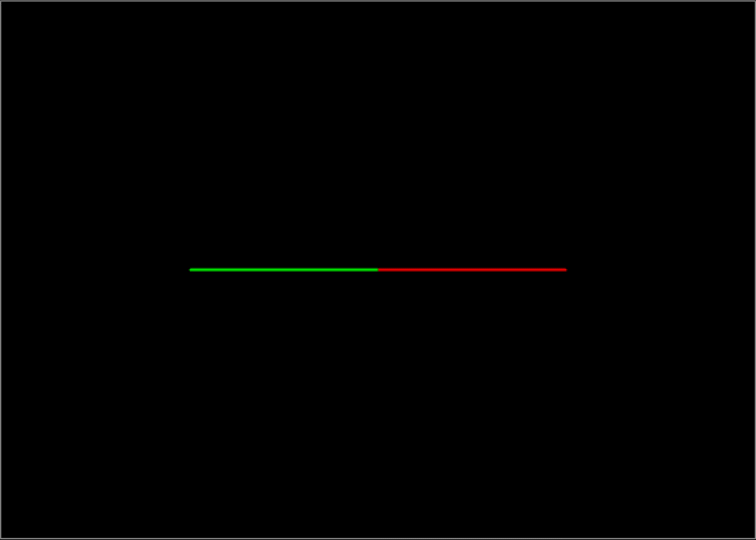
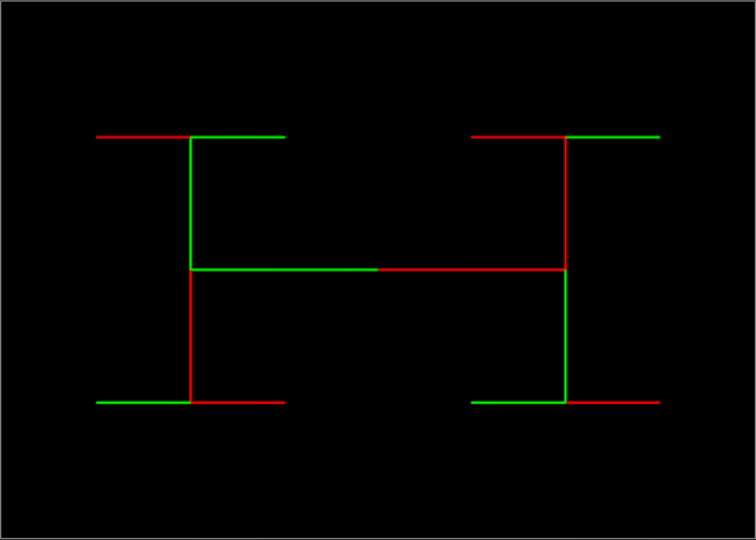
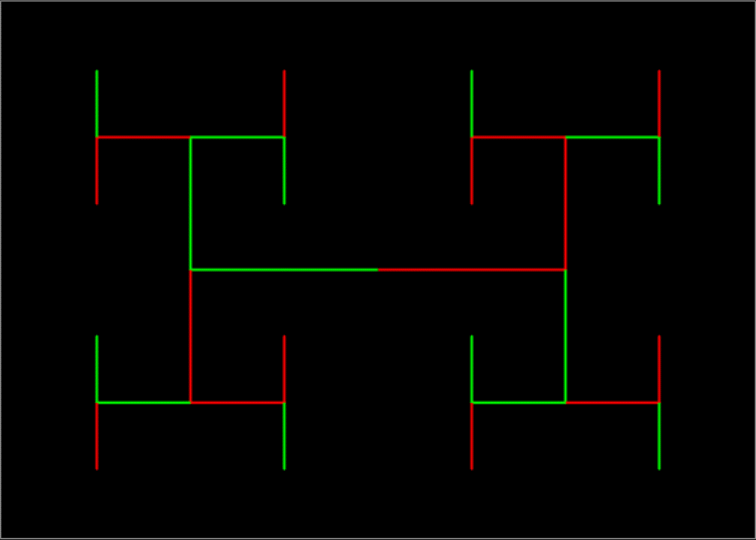
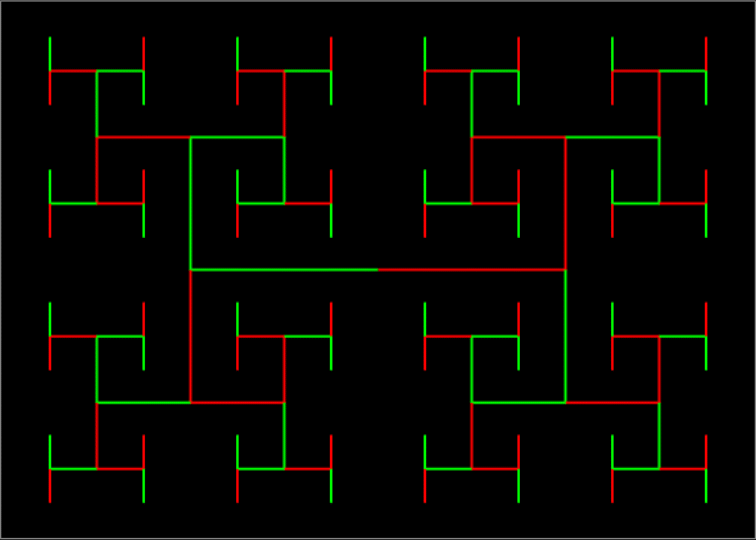
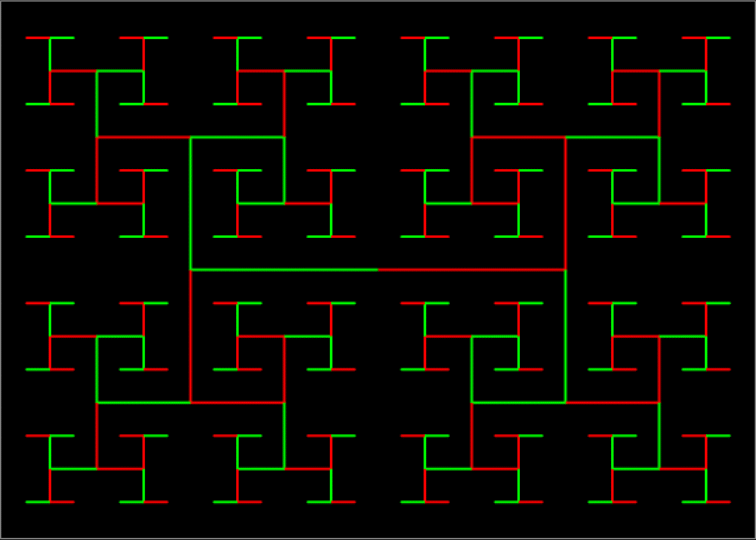
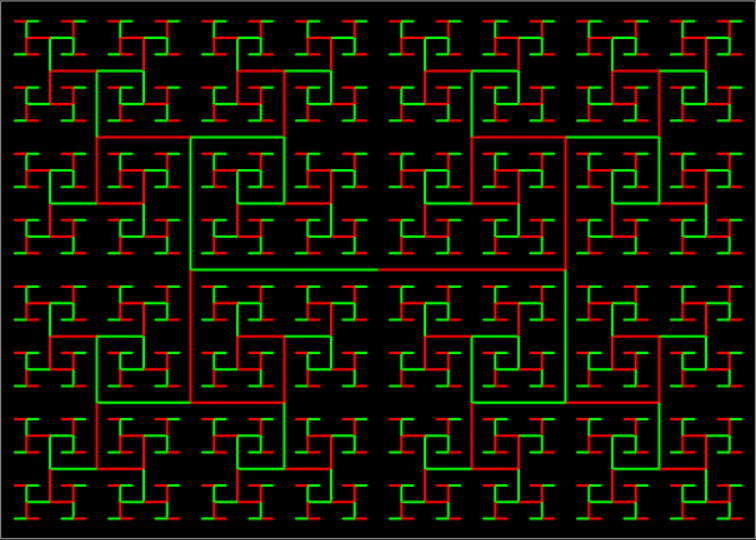
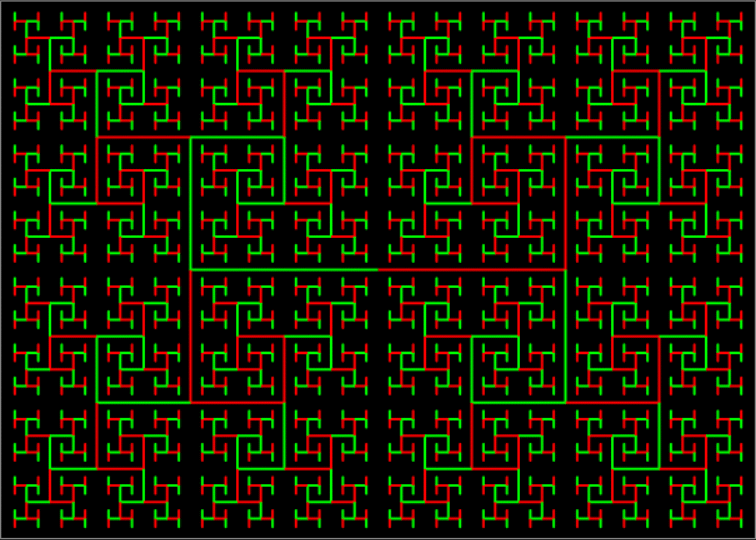
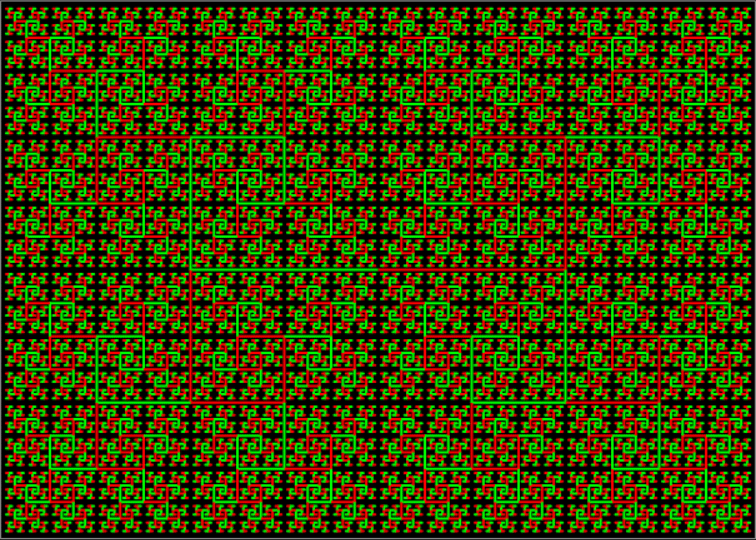
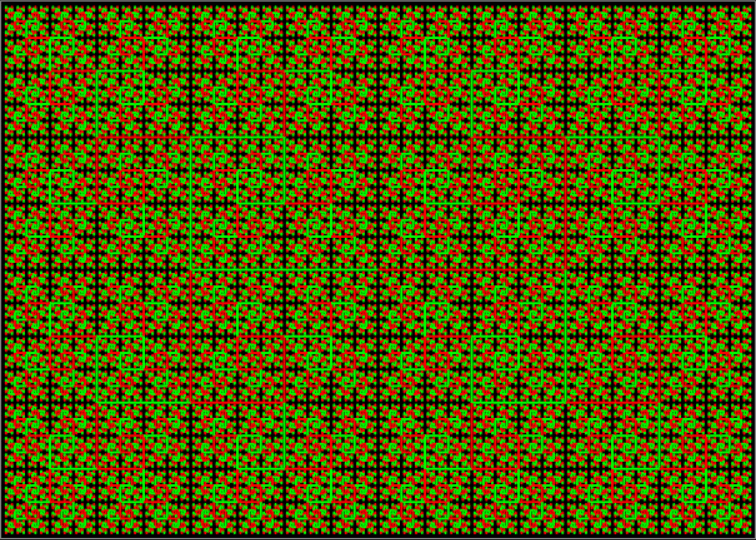
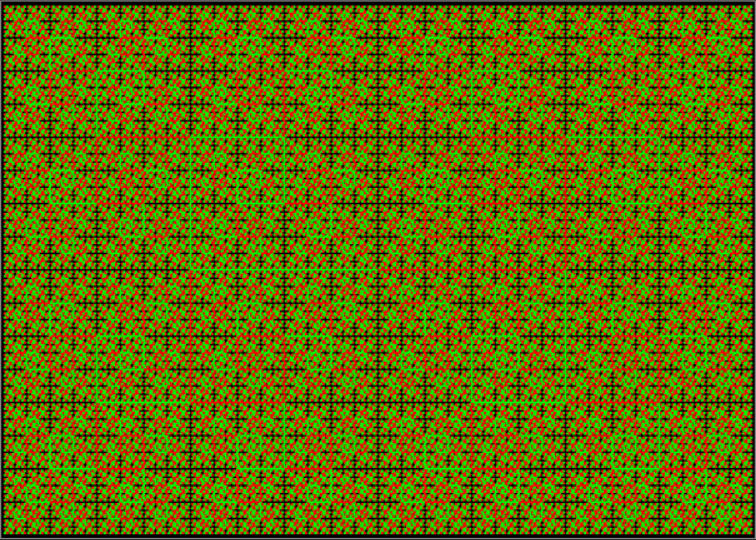
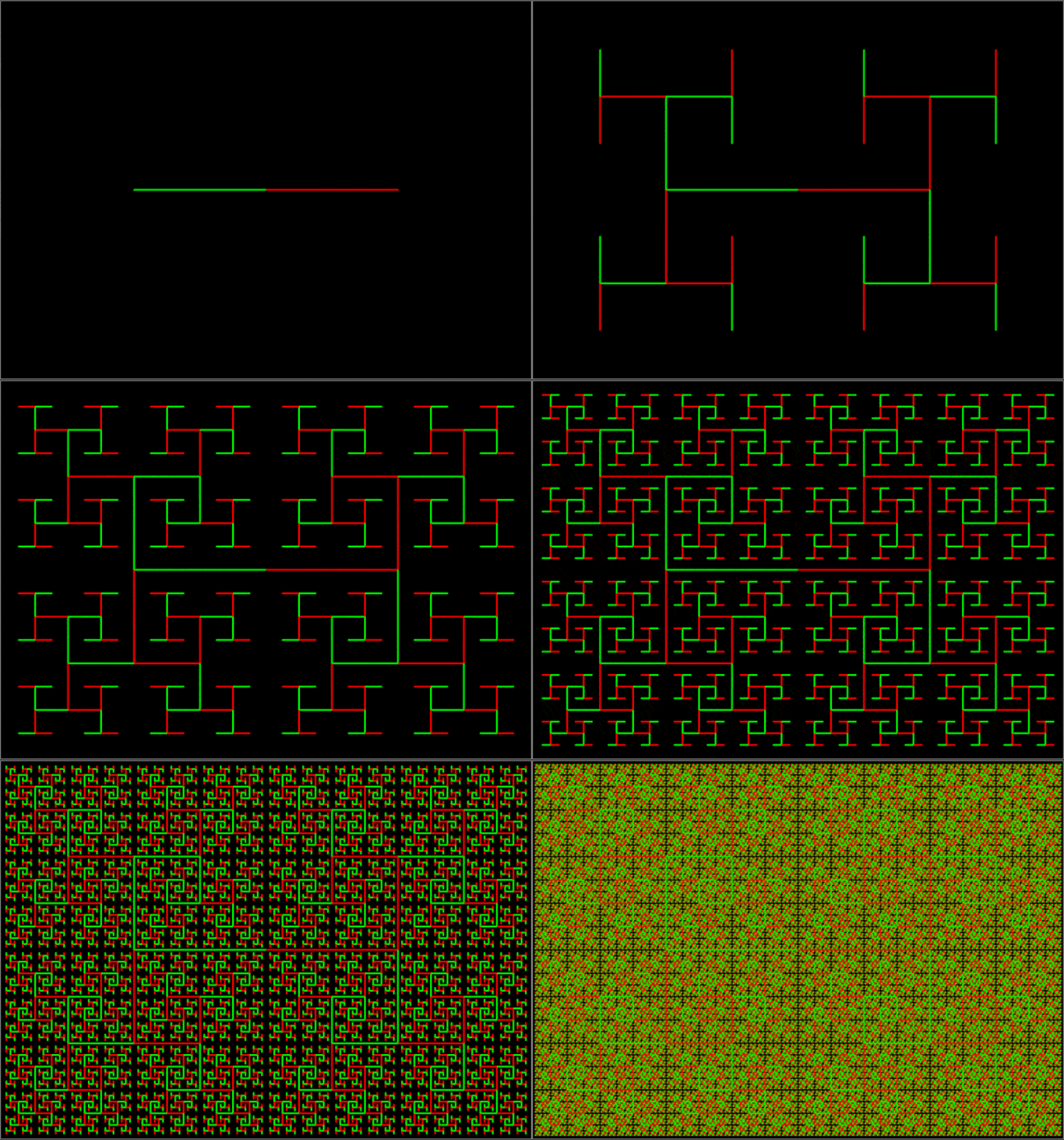
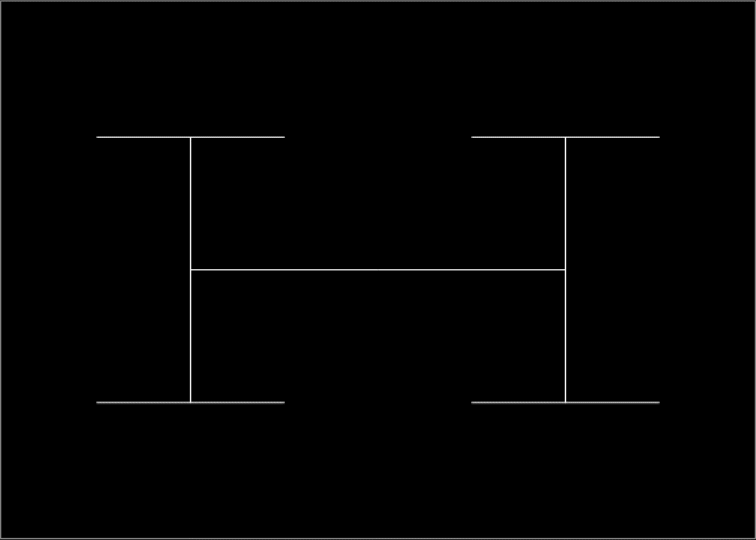
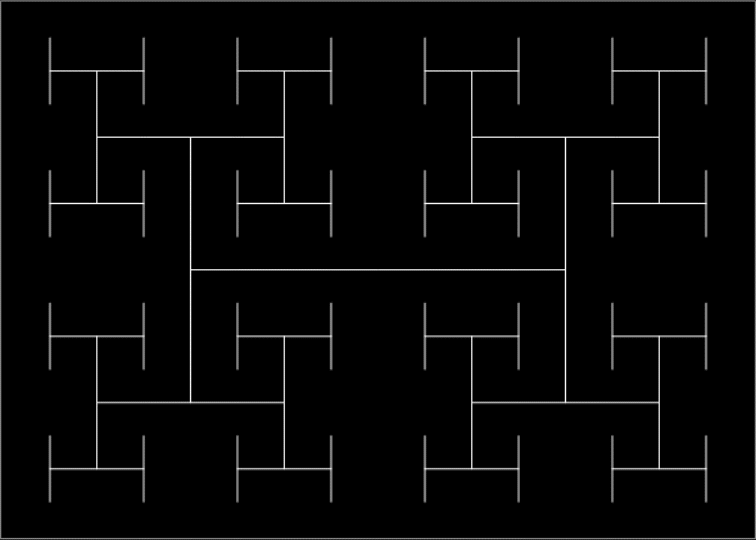
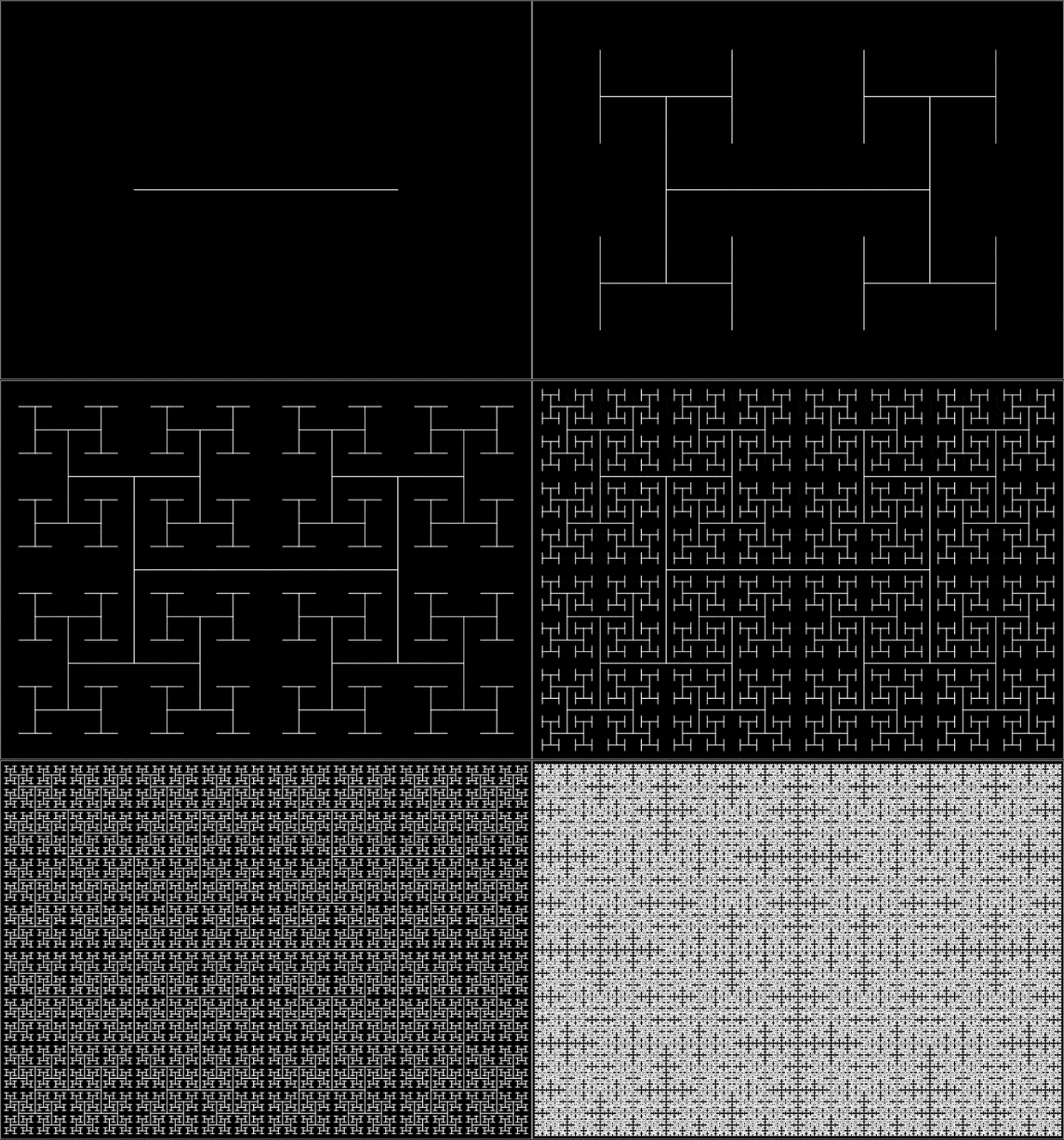
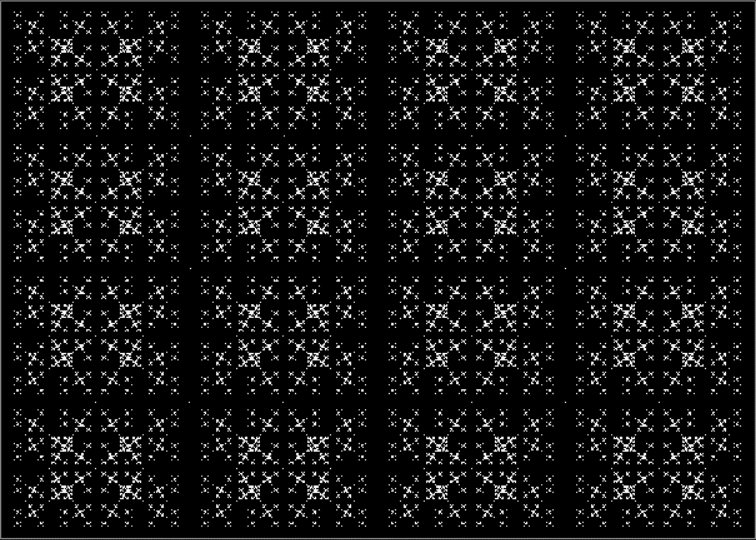
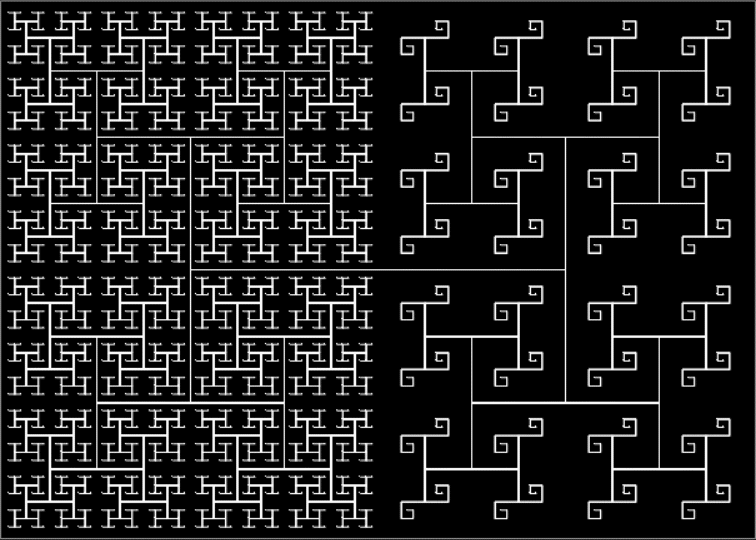
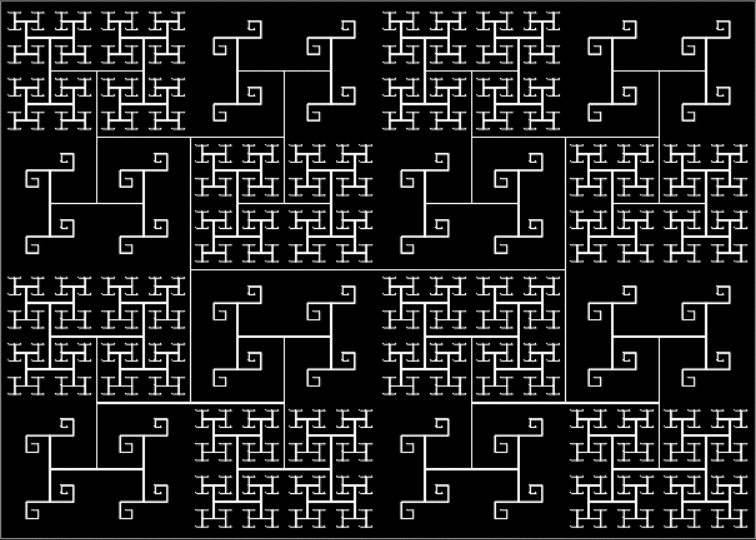
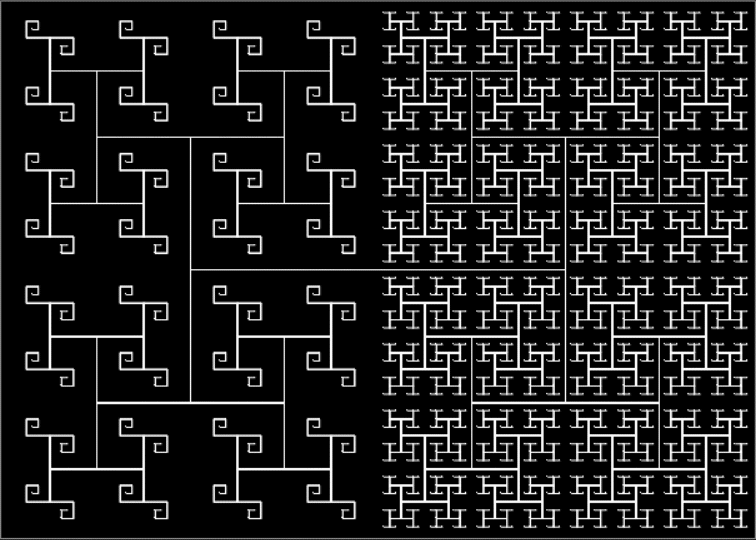
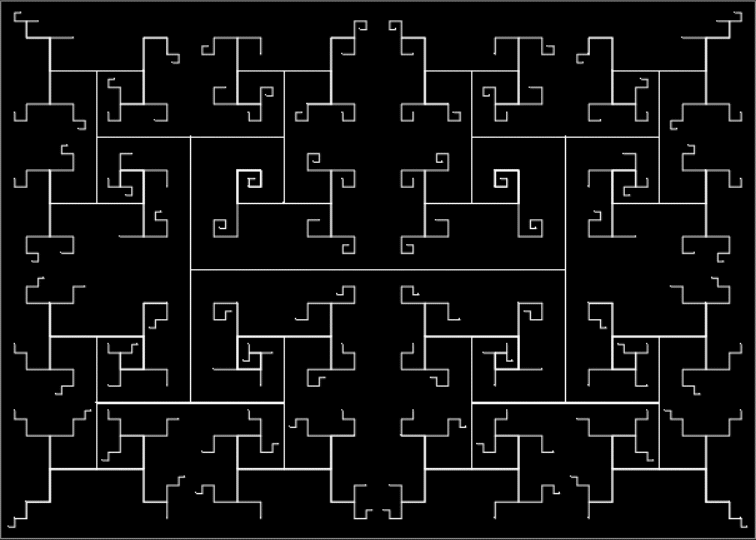
Now here’s the construction of the H-tree fractal, in which the lines are divided in length by sqrt(2) = 1.41421356237… at each stage. Or multiplied by 0.70710678118… = &sqrt;0.5. This means that, after two divisions, the lines are 1/2 the size. So in the end they create a 1 x &sqrt;2 rectangle:

H-Tree fractal #1


H-Tree fractal #2


H-Tree fractal #3


H-Tree fractal #4


H-Tree fractal #5


H-Tree fractal #6


H-Tree fractal #7


H-Tree fractal #8


H-Tree fractal #9


H-Tree fractal #10


[…]

H-Tree fractal #13


H-Tree fractal #14


H-Tree fractal #15


Here’s an animation:

H-Tree fractal (animated at EZgif)


And here’s the H-tree in black-and-white:

H-Tree fractal #3

H-Tree fractal #6

H-Tree fractal #6

H-Tree fractal #12

H-Tree fractal #15

H-Tree fractal (animated at EZgif)


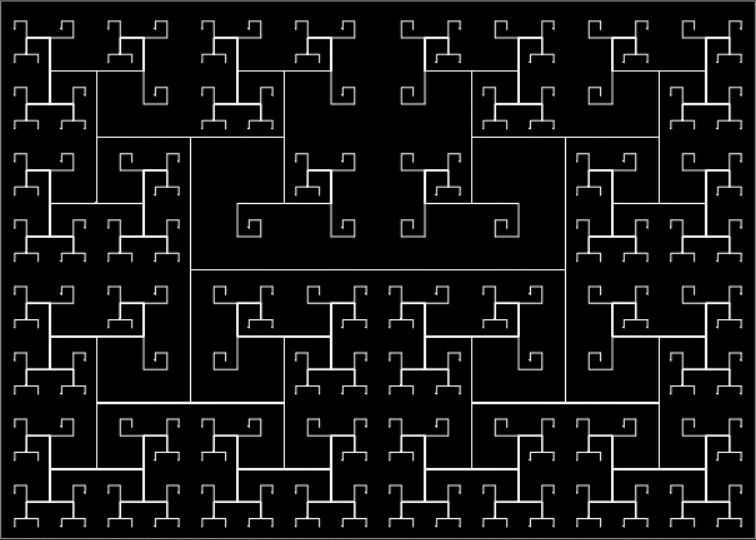
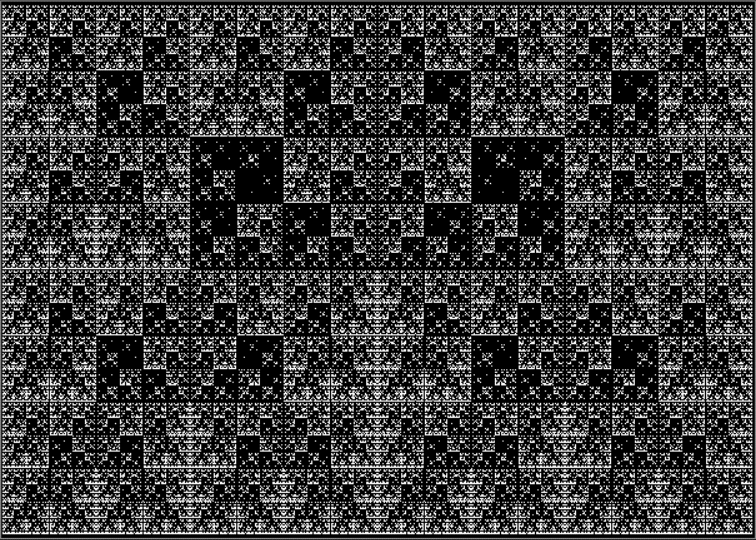
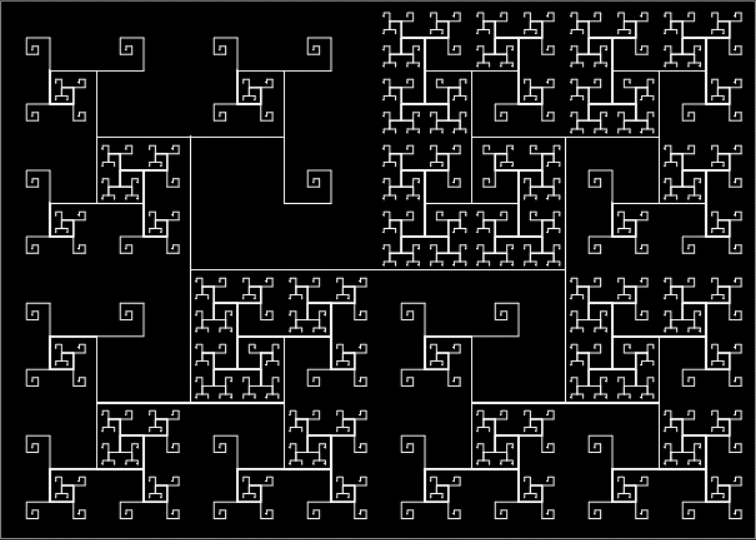
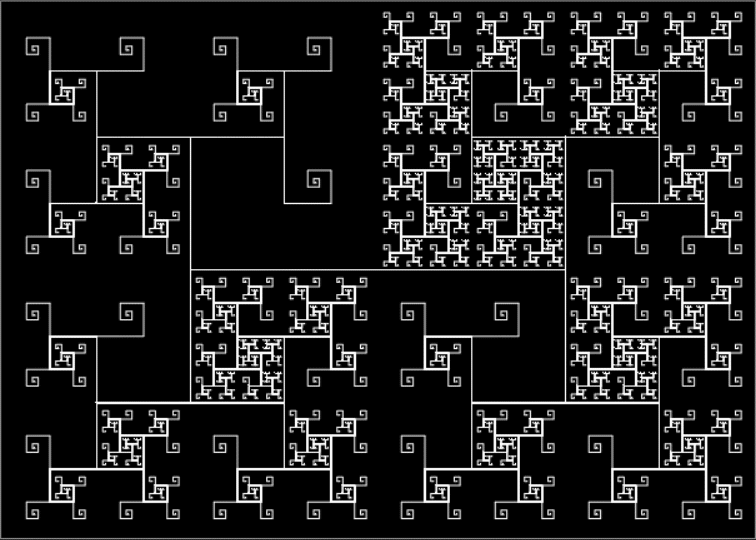
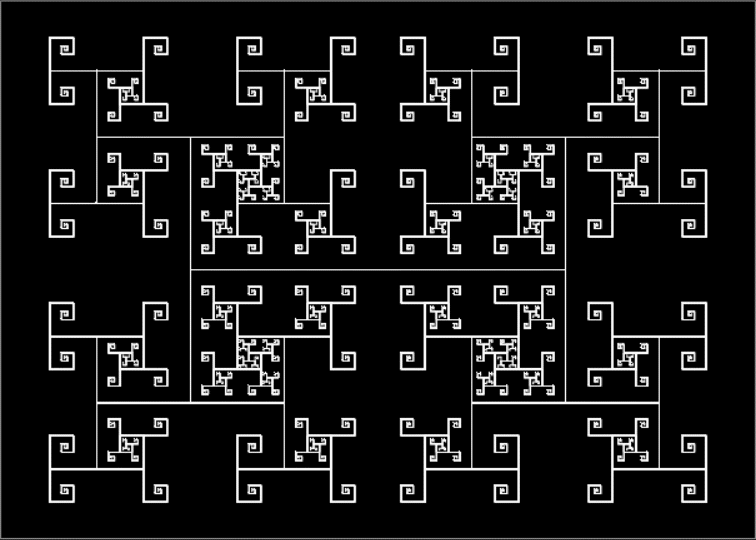
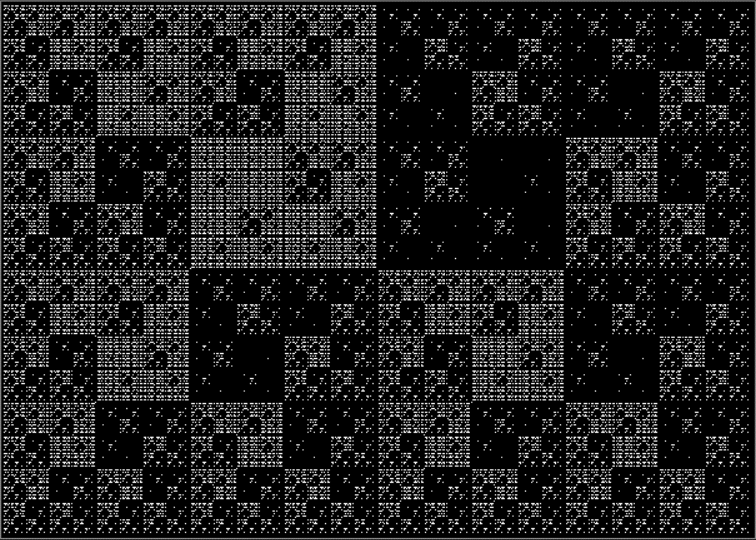
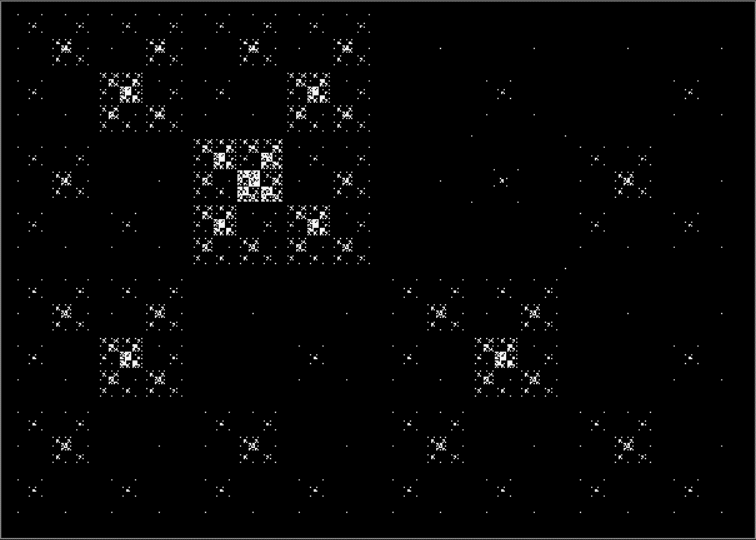
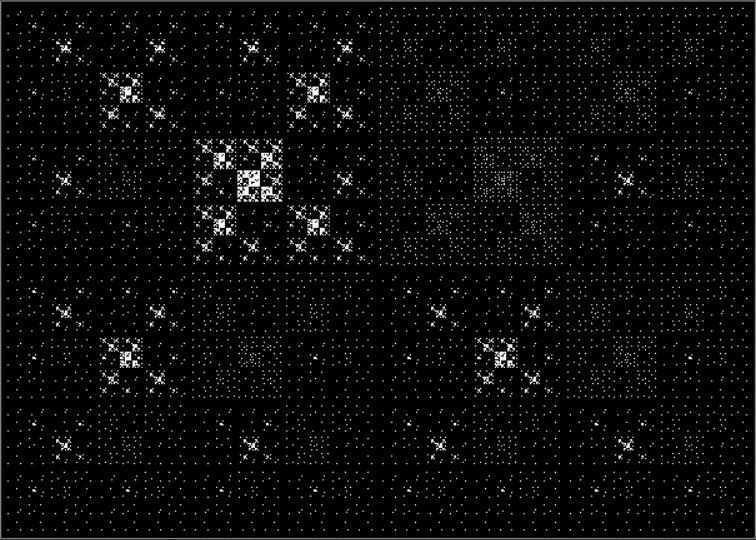
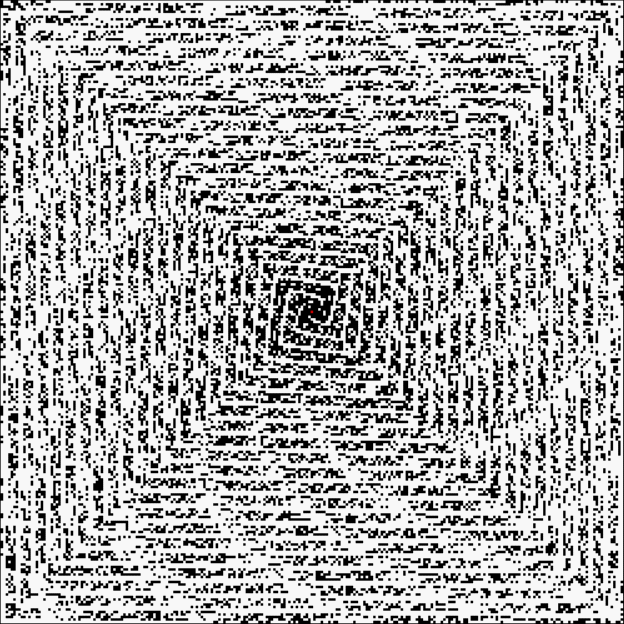
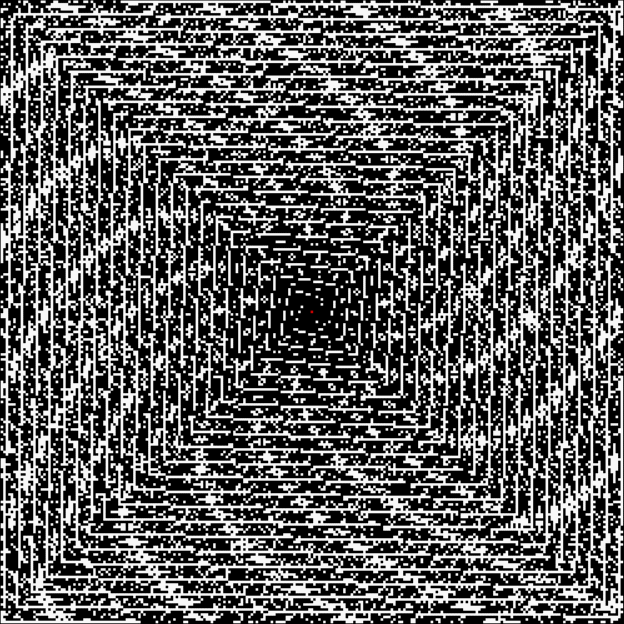
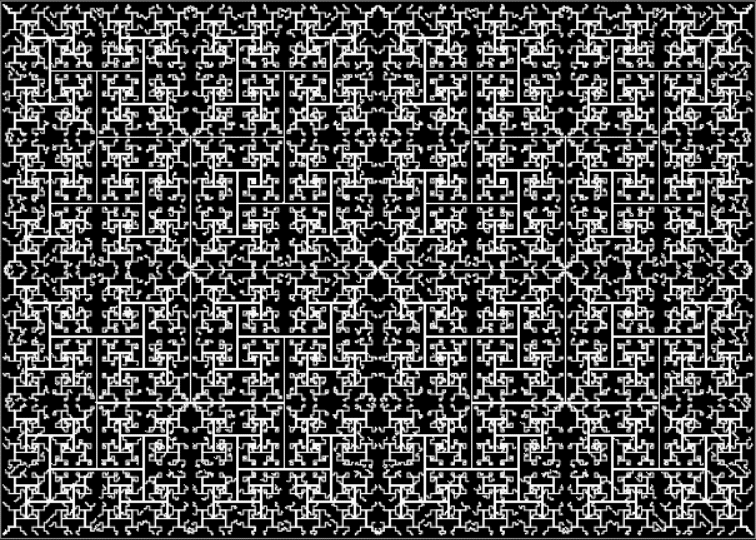
Because the construction of the H-tree is governed by a string of directions — for example, left-right-right-left-left-left… or 211222… — you can perform tests on that string to create sub-fractals from the super-fractal. Like this:

count(1) = count(2) in string to step 12


count(1) = count(2) in string (omitting lines)


sum(string) = mul(string)


sum(string) > mul(string)


count(1) = 2 or count(2) = 2 after step 2


count(1) < count(2)


count(1) < 3 or count(2) < 3 after step 6


value of string after step 8 > value of string at step 1


value after step 8 > value at step 4


value after step 8 < value step 1


ispalindrome(string) to step 11


ispalindrome(string) to step 18


ispalindrome(string) to step 20


alternating 121… or 212… in string after step 9


ispolygonal(sum(string[i]-1),pol=10)


isprime(sum(string))


sum(string[i]-1) mod 13 = 0


sum(string[i]-1) mod 13 = 1


sum(string[i]-1) mod 16 = 0


sum(string[i]-1) mod 18 = 0


The Call of CFulhu

“The most merciful thing in the world, I think, is the inability of the human mind to correlate all its contents.” So said HPL in “The Call of Cthulhu” (1926). But I’d still like to correlate the contents of mine a bit better. For example, I knew that φ, the golden ratio, is the most irrational of all numbers, in that it is the slowest to be approximated with rational fractions. And I also knew that continued fractions, or CFs, were a way of representing both rationals and irrationals as a string of numbers, like this:

contfrac(10/7) = [1; 2, 3]
10/7 = 1 + 1/(2 + 1/3)
10/7 = 1.428571428571…

contfrac(3/5) = [0; 1, 1, 2]
4/5 = 0 + 1/(1 + 1/(1 + 1/2))
4/5 = 0.8

contfrac(11/8) = [1; 2, 1, 2]
11/8 = 1 + 1/(2 + 1/(1 + 1/2))
11/8 = 1.375

contfrac(4/7) = [0; 1, 1, 3]
4/7 = 0 + 1/(1 + 1/(1 + 1/3))
4/7 = 0.57142857142…

contfrac(17/19) = [0; 1, 8, 2]
17/19 = 0 + 1/(1 + 1/(8 + 1/2))
17/19 = 0.8947368421052…

contfrac(8/25) = [0; 3, 8]
8/25 = 0 + 1/(3 + 1/8)
8/25 = 0.32

contfrac(√2) = [1; 2, 2, 2, 2, 2, 2, 2…] = [1; 2]

√2 = 1 + 1/(2 + 1/(2 + 1/(2 + 1/(2 + 1/(2 + 1/(2 + 1/2 + …))))))

√2 = 1.41421356237309504…

contfrac(φ) = [1; 1, 1, 1, 1, 1, 1, 1, 1…]

φ = 1/(1 + 1/(1 + 1/(1 + 1/(1 + 1/(1 + 1/(1 + 1/(1 + 1/1 + …)))))))

φ = 1.6180339887498948…


But I didn’t correlate those two contents of my mind: the maximal irrationality of φ and the way continued fractions work.

That’s why I was surprised when I was looking at the continued fractions of 2..(n-1) / n for 3,4,5,6,7… That is, I was looking at the continued fractions of 2/3, 3/4, 2/5, 3/5, 4/5, 5/6, 2/7, 3/7… (skipping fractions like 2/4, 2/6, 3/6 etc, because they’re reducible: 2/4 = ½, 2/6 = 1/3, 3/6 = ½ etc). I wondered which fractions set successive records for the length of their continued fractions as one worked through ½, 2/3, 3/4, 2/5, 3/5, 4/5, 5/6, 2/7, 3/7… And because I hadn’t correlated the contents of my mind, I was surprised at the result. I shouldn’t have been, of course:

contfrac(1/2) = [0; 2] (cfl=1)
1/2 = 0 + 1/2
1/2 = 0.5

contfrac(2/3) = [0; 1, 2] (cfl=2)
2/3 = 0 + 1/(1 + 1/2)
2/3 = 0.666666666…

contfrac(3/5) = [0; 1, 1, 2] (cfl=3)
3/5 = 0 + 1/(1 + 1/(1 + 1/2))
3/5 = 0.6

contfrac(5/8) = [0; 1, 1, 1, 2] (cfl=4)
5/8 = 0 + 1/(1 + 1/(1 + 1/(1 + 1/2)))
5/8 = 0.625

contfrac(8/13) = [0; 1, 1, 1, 1, 2] (cfl=5)
8/13 = 0 + 1/(1 + 1/(1 + 1/(1 + 1/(1 + 1/2))))
8/13 = 0.615384615…

contfrac(13/21) = [0; 1, 1, 1, 1, 1, 2] (cfl=6)
13/21 = 0 + 1/(1 + 1/(1 + 1/(1 + 1/(1 + 1/(1 + 1/2)))))
13/21 = 0.619047619…

contfrac(21/34) = [0; 1, 1, 1, 1, 1, 1, 2] (cfl=7)
21/34 = 0 + 1/(1 + 1/(1 + 1/(1 + 1/(1 + 1/(1 + 1/(1 + 1/2))))))
21/34 = 0.617647059…

contfrac(34/55) = [0; 1, 1, 1, 1, 1, 1, 1, 2] (cfl=8)
contfrac(55/89) = [0; 1, 1, 1, 1, 1, 1, 1, 1, 2] (cfl=9)
contfrac(89/144) = [0; 1, 1, 1, 1, 1, 1, 1, 1, 1, 2] (cfl=10)
contfrac(144/233) = [0; 1, 1, 1, 1, 1, 1, 1, 1, 1, 1, 2] (cfl=11)
contfrac(233/377) = [0; 1, 1, 1, 1, 1, 1, 1, 1, 1, 1, 1, 2] (cfl=12)
contfrac(377/610) = [0; 1, 1, 1, 1, 1, 1, 1, 1, 1, 1, 1, 1, 2] (cfl=13)
contfrac(610/987) = [0; 1, 1, 1, 1, 1, 1, 1, 1, 1, 1, 1, 1, 1, 2] (cfl=14)
contfrac(987/1597) = [0; 1, 1, 1, 1, 1, 1, 1, 1, 1, 1, 1, 1, 1, 1, 2] (cfl=15)
contfrac(1597/2584) = [0; 1, 1, 1, 1, 1, 1, 1, 1, 1, 1, 1, 1, 1, 1, 1, 2] (cfl=16)
contfrac(2584/4181) = [0; 1, 1, 1, 1, 1, 1, 1, 1, 1, 1, 1, 1, 1, 1, 1, 1, 2] (cfl=17)
contfrac(4181/6765) = [0; 1, 1, 1, 1, 1, 1, 1, 1, 1, 1, 1, 1, 1, 1, 1, 1, 1, 2] (cfl=18)
[…]


Which n1/n2 set records for the length of their continued fractions (with n2 > n1)? It’s the successive Fibonacci fractions, fib(i)/fib(i+1), of course. I didn’t anticipate that answer because I didn’t understand φ and continued fractions properly. And I still don’t, because I’ve been surprised again today looking at palindromic CFs like these:

contfrac(2/5) = [0; 2, 2] (cfl=2)
2/5 = 0 + 1/(2 + 1/2)
2/5 = 0.4

contfrac(3/8) = [0; 2, 1, 2] (cfl=3)
3/8 = 0 + 1/(2 + 1/(1 + 1/2))
3/8 = 0.375

contfrac(3/10) = [0; 3, 3] (cfl=2)
3/10 = 0 + 1/(3 + 1/3)
3/10 = 0.3

contfrac(5/12) = [0; 2, 2, 2] (cfl=3)
5/12 = 0 + 1/(2 + 1/(2 + 1/2))
5/12 = 0.416666666…

contfrac(5/13) = [0; 2, 1, 1, 2] (cfl=4)
5/13 = 0 + 1/(2 + 1/(1 + 1/(1 + 1/2)))
5/13 = 0.384615384…

contfrac(4/15) = [0; 3, 1, 3] (cfl=3)
4/15 = 0 + 1/(3 + 1/(1 + 1/3))
4/15 = 0.266666666…

contfrac(7/16) = [0; 2, 3, 2] (cfl=3)
7/16 = 0 + 1/(2 + 1/(3 + 1/2))
7/16 = 0.4375

contfrac(4/17) = [0; 4, 4] (cfl=2)
4/17 = 0 + 1/(4 + 1/4)
4/17 = 0.235294117…


Again, I wondered which of these fractions set successive records for the length of their palindromic continued fractions. Here’s the answer:

contfrac(1/2) = [0; 2] (cfl=1)
1/2 = 0 + 1/2
1/2 = 0.5

contfrac(2/5) = [0; 2, 2] (cfl=2)
2/5 = 0 + 1/(2 + 1/2)
2/5 = 0.4

contfrac(3/8) = [0; 2, 1, 2] (cfl=3)
3/8 = 0 + 1/(2 + 1/(1 + 1/2))
3/8 = 0.375

contfrac(5/13) = [0; 2, 1, 1, 2] (cfl=4)
5/13 = 0 + 1/(2 + 1/(1 + 1/(1 + 1/2)))
5/13 = 0.384615384…

contfrac(8/21) = [0; 2, 1, 1, 1, 2] (cfl=5)
8/21 = 0 + 1/(2 + 1/(1 + 1/(1 + 1/(1 + 1/2))))
8/21 = 0.380952380…

contfrac(13/34) = [0; 2, 1, 1, 1, 1, 2] (cfl=6)
13/34 = 0 + 1/(2 + 1/(1 + 1/(1 + 1/(
1
+ 1/(1 + 1/2)))))
13/34 = 0.382352941..

contfrac(21/55) = [0; 2, 1, 1, 1, 1, 1, 2] (cfl=7)
21/55 = 0 + 1/(2 + 1/(1 + 1/(1 + 1/(1 + 1/(1 + 1/(1 + 1/2))))))
21/55 = 0.381818181…

contfrac(34/89) = [0; 2, 1, 1, 1, 1, 1, 1, 2] (cfl=8)
contfrac(55/144) = [0; 2, 1, 1, 1, 1, 1, 1, 1, 2] (cfl=9)
contfrac(89/233) = [0; 2, 1, 1, 1, 1, 1, 1, 1, 1, 2] (cfl=10)
contfrac(144/377) = [0; 2, 1, 1, 1, 1, 1, 1, 1, 1, 1, 2] (cfl=11)
contfrac(233/610) = [0; 2, 1, 1, 1, 1, 1, 1, 1, 1, 1, 1, 2] (cfl=12)
contfrac(377/987) = [0; 2, 1, 1, 1, 1, 1, 1, 1, 1, 1, 1, 1, 2] (cfl=13)
contfrac(610/1597) = [0; 2, 1, 1, 1, 1, 1, 1, 1, 1, 1, 1, 1, 1, 2] (cfl=14)
contfrac(987/2584) = [0; 2, 1, 1, 1, 1, 1, 1, 1, 1, 1, 1, 1, 1, 1, 2] (cfl=15)
contfrac(1597/4181) = [0; 2, 1, 1, 1, 1, 1, 1, 1, 1, 1, 1, 1, 1, 1, 1, 2] (cfl=16)
contfrac(2584/6765) = [0; 2, 1, 1, 1, 1, 1, 1, 1, 1, 1, 1, 1, 1, 1, 1, 1, 2] (cfl=17)
[…]


Now it’s the successive Fibonacci skip-one fractions, fib(i)/fib(i+2), that set records for the length of their palindromic continued fractions. But I think you’d have to be very good at maths not to be surprised by that result.

After that, I continued to be compelled by the Call of CFulhu and started to look at the CFs of Fibonacci skip-n fractions in general. That’s contfrac(fib(i)/fib(i+n)) for n = 1,2,3,… And I’ve found more interesting patterns, as I’ll describe in a follow-up post.

Message from Mater

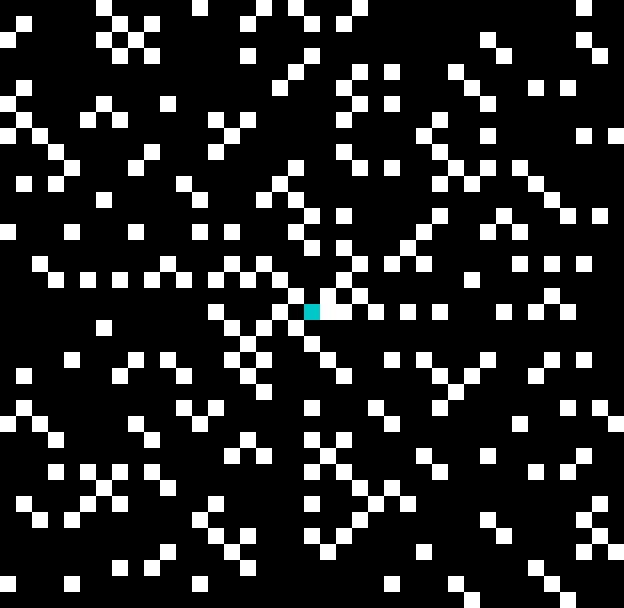
As any recreational mathematician kno, the Ulam spiral shows the prime numbers on a spiral grid of integers. Here’s a Ulam spiral with 1 represented in blue and 2, 3, 5, 7… as white blocks spiralling anti-clockwise from the right of 1:

The Ulam spiral of prime numbers


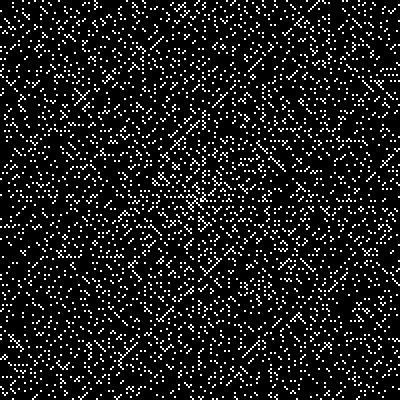
Ulam spiral at higher resolution


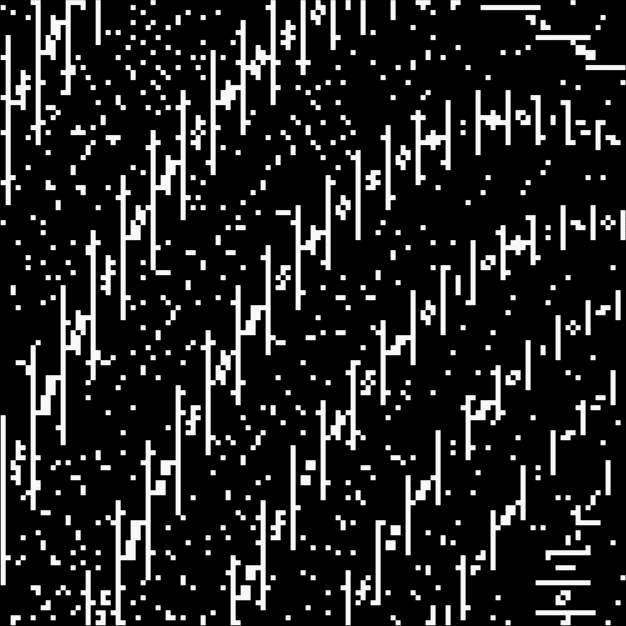
I like the Ulam spiral and whenever I’m looking at new number sequences I like to Ulamize it, that is, display it on a spiral grid of integers. Sometimes the result looks good, sometimes it doesn’t. But I’ve always wondered something beforehand: will this be the spiral where I see a message appear? That is, will I see a message from Mater Mathematica, Mother Maths, the omniregnant goddess of mathematics? Is there an image or text embedded in some obscure number sequence, revealed when the sequence is Ulamized and proving that there’s divine intelligence and design behind the universe? Maybe the image of a pantocratic cat will appear. Or a text in Latin or Sanskrit or some other suitably century-sanctified language.

That’s what I wonder. I don’t wonder it seriously, of course, but I do wonder it. But until 22nd March 2025 I’d never seen any Ulam-ish spiral that looked remotely like a message. But 22nd May is the day I Ulamed some continued fractions. And I saw something that did look a little like a message. Like text, that is. But I might need to explain continued fractions first. What are they? They’re a fascinating and beautiful way of representing both rational and irrational numbers. The continued fractions for rational numbers look like this in expanded and compact format:

5/3 = 1 + 1/(1 + ½) = 1 + ⅔
5/3 = [1; 1, 2]

19/7 = 2 + 1/(1 + 1/(2 + ½)) = 2 + 4/7
19/7 = [2; 1, 2, 2]

2/3 = 0 + 1/(1 + 1/2)
2/3 = [0; 1, 2] (compare 5/3 above)

3/5 = 0 + 1/(1 + 1/(1 + 1/2))
3/5 = [0; 1, 1, 2]

5/7 = 0 + 1/(1 + 1/(2 + 1/2))
5/7 = [0; 1, 2, 2] (compare 19/7 above)

13/17 = 0 + 1/(1 + 1/(3 + 1/4))
13/17 = [0; 1, 3, 4]

30/67 = 0 + 1/(2 + 1/(4 + 1/(3 + ½)))
30/67 = [0; 2, 4, 3, 2]

The continued fractions of irrational numbers are different. Most importantly, they never end. For example, here are the infinite continued fractions for φ, √2 and π in expanded and compact format:

φ = 1 + (1/(1 + 1/(1 + 1/(1 + …)))φ = [1; 1]

√2 = 1 + (1/(2 + 1/(2 + 1/(2 + …)))
√2 = [1; 2]

π = 3 + 1/(7 + 1/(15 + 1/(1 + 1/(292 + 1/(1 + 1/(1 + 1/(1 + 1/(2 + 1/(1 + 1/(3 +…))))))))))
π = [3; 7, 15, 1, 292, 1, 1, 1, 2, 1, 3…]

As you can see, the continued fraction of π doesn’t fall into a predictable pattern like those for φ and √2. But I’ve already gone into continued fractions further than I need for this post, so let’s return to the continued fractions of rationals. I set up an Ulam spiral to show patterns based on the continued fractions for 1/1, ½, ⅓, ⅔, 1/4, 2/4, 3/4, 1/5, 2/5, 3/5, 4/5, 1/6, 2/6, 3/6… (where the fractions are assigned to 1,2,3… and 2/4 = ½, 2/6 = ⅓ etc). For example, if the continued fraction contains a number higher than 5, you get this spiral:

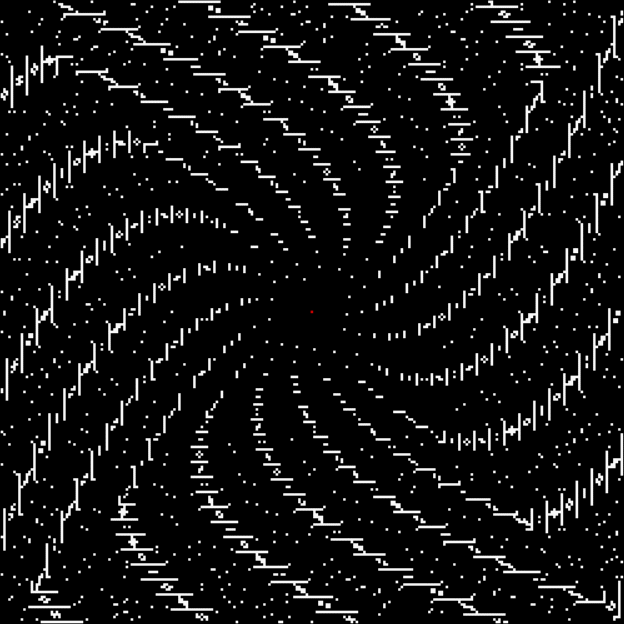
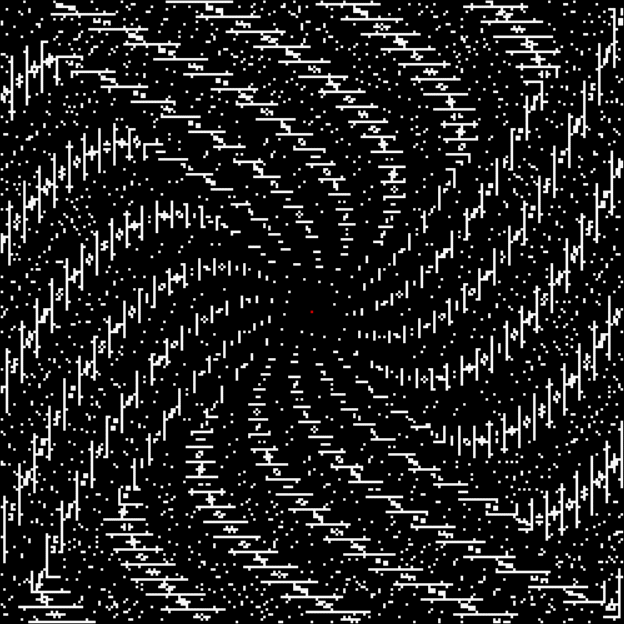
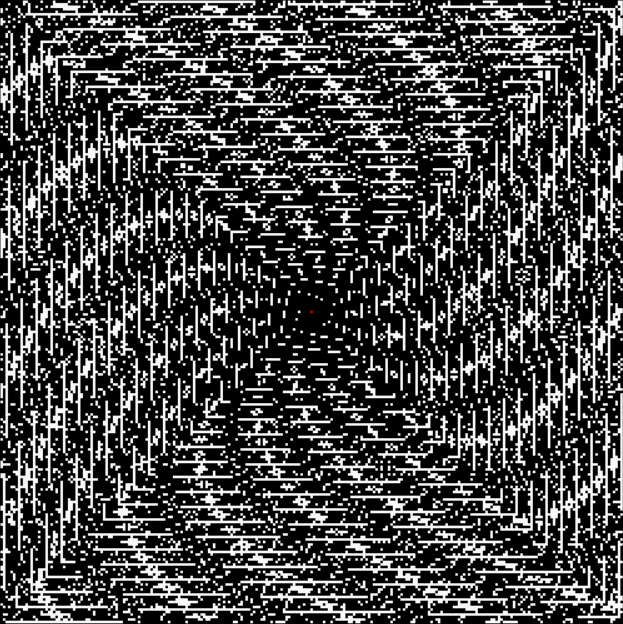
Spiral for continued fractions containing at least number > 5


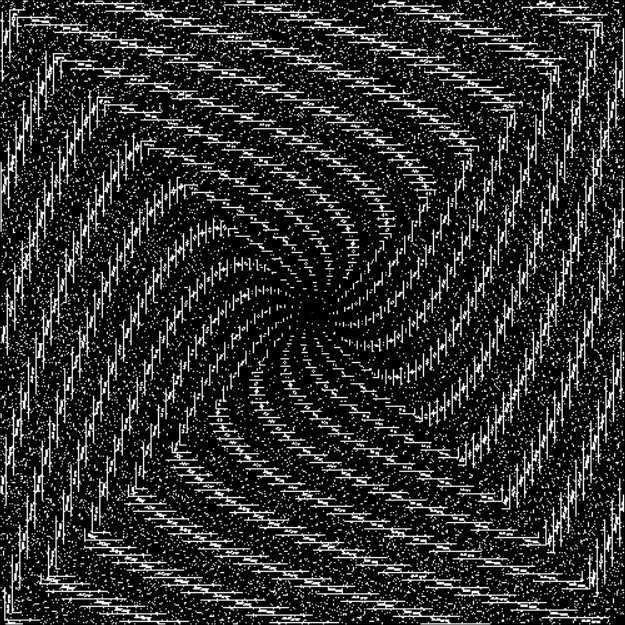
With tests for higher and higher numbers in the continued fractions, the spirals start to thin and apparent symbols start to appear in the arms of the spirals:

Spiral for contfrac > 10


Spiral for contfrac > 15


Spiral for contfrac > 20


Spiral for contfrac > 25


Spiral for contfrac > 30


Spiral for contfrac > 35


Spiral for contfrac > 40


Spirals for contfrac > 5..40 (animated at EZgif)


Here are some more of these spirals at increasing magnification:

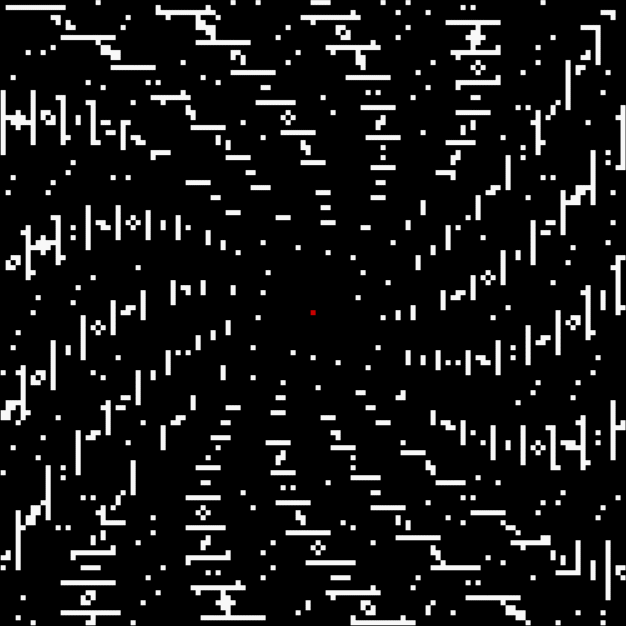
Spiral for contfrac > 23 (#1)


Spiral for contfrac > 23 (#2)


Spiral for contfrac > 23 (#3)


Spiral for contfrac > 13


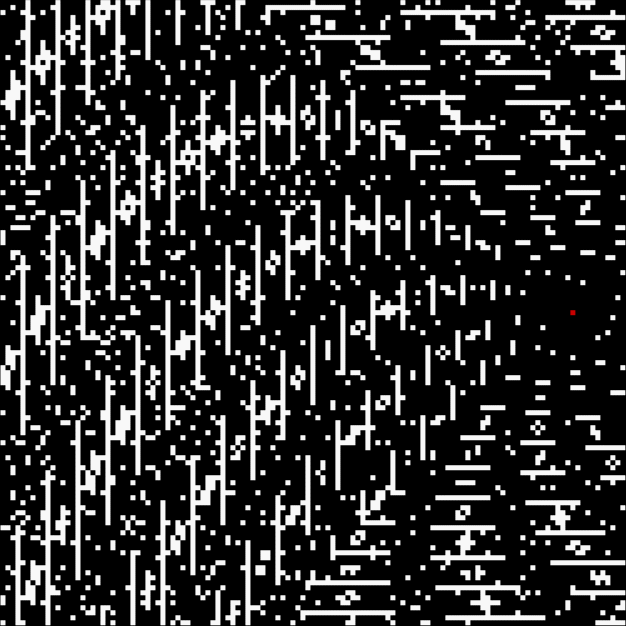
Spiral for contfrac > 15 (off-center)


Spiral for contfrac > 23 (off-center)


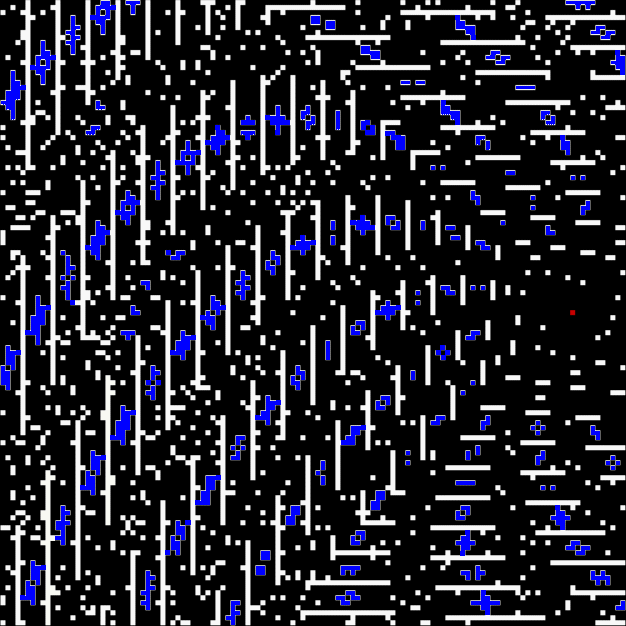
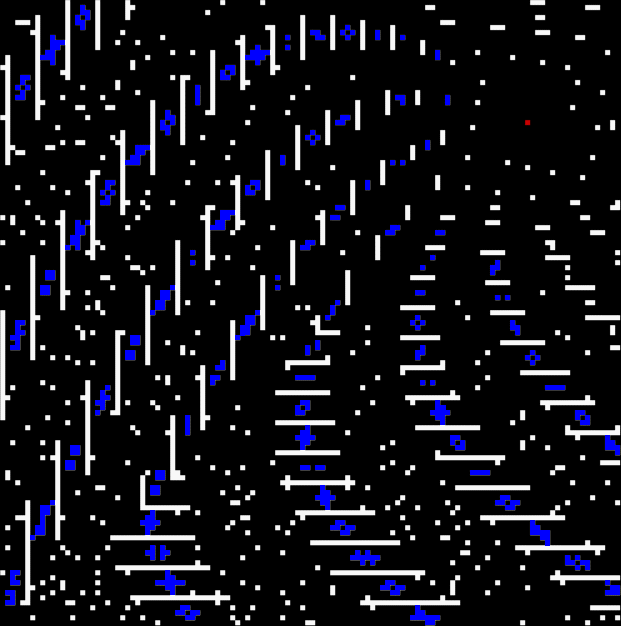
And here are some of the symbols picked out in blue:

Spiral for contfrac > 15 (blue symbols)


Spiral for contfrac > 23 (blue symbols)


But they’re not really symbols, of course. They’re quasi-symbols, artefacts of the Ulamization of a simple test on continued fractions. Still, they’re the closest I’ve got so far to a message from Mater Mathematica.

Root Pursuit

Roots are hard, powers are easy. For example, the square root of 2, or √2, is the mysterious and never-ending number that is equal to 2 when multiplied by itself:

• √2 = 1·414213562373095048801688724209698078569671875376948073...

It’s hard to calculate √2. But the powers of 2, or 2^p, are the straightforward numbers that you get by multiplying 2 repeatedly by itself. It’s easy to calculate 2^p:

• 2 = 2^1
• 4 = 2^2
• 8 = 2^3
• 16 = 2^4
• 32 = 2^5
• 64 = 2^6
• 128 = 2^7
• 256 = 2^8
• 512 = 2^9
• 1024 = 2^10
• 2048 = 2^11
• 4096 = 2^12
• 8192 = 2^13
• 16384 = 2^14
• 32768 = 2^15
• 65536 = 2^16
• 131072 = 2^17
• 262144 = 2^18
• 524288 = 2^19
• 1048576 = 2^20
[...]

But there is a way to find √2 by finding 2^p, as I discovered after I asked a simple question about 2^p and 3^p. What are the longest runs of matching digits at the beginning of each power?

131072 = 2^17
129140163 = 3^17
1255420347077336152767157884641... = 2^193
1214512980685298442335534165687... = 3^193
2175541218577478036232553294038... = 2^619
2177993962169082260270654106078... = 3^619
7524389324549354450012295667238... = 2^2016
7524012611682575322123383229826... = 3^2016

There’s no obvious pattern. Then I asked the same question about 2^p and 5^p. And an interesting pattern appeared:

32 = 2^5
3125 = 5^5
316912650057057350374175801344 = 2^98
3155443620884047221646914261131... = 5^98
3162535207926728411757739792483... = 2^1068
3162020133383977882730040274356... = 5^1068
3162266908803418110961625404267... = 2^127185
3162288411569894029343799063611... = 5^127185

The digits 31622 rang a bell. Isn’t that the start of √10? Yes, it is:

• √10 = 3·1622776601683793319988935444327185337195551393252168268575...

I wrote a fast machine-code program to find even longer runs of matching initial digits. Sure enough, the pattern continued:

• 316227... = 2^2728361
• 316227... = 5^2728361
• 3162277... = 2^15917834
• 3162277... = 5^15917834
• 31622776... = 2^73482154
• 31622776... = 5^73482154
• 3162277660... = 2^961700165
• 3162277660... = 5^961700165

But why are powers of 2 and 5 generating the digits of √10? If you’re good at math, that’s a trivial question about a trivial discovery. Here’s the answer: We use base ten and 10 = 2 * 5, 10^2 = 100 = 2^2 * 5^2 = 4 * 25, 10^3 = 1000 = 2^3 * 5^3 = 8 * 125, and so on. When the initial digits of 2^p and 5^p match, those matching digits must come from the digits of √10. Otherwise the product of 2^p * 5^p would be too large or too small. Here are the records for matching initial digits multiplied by themselves:

32 = 2^5
3125 = 5^5
• 3^2 = 9

316912650057057350374175801344 = 2^98
3155443620884047221646914261131... = 5^98
• 31^2 = 961

3162535207926728411757739792483... = 2^1068
3162020133383977882730040274356... = 5^1068
• 3162^2 = 9998244

3162266908803418110961625404267... = 2^127185
3162288411569894029343799063611... = 5^127185
• 31622^2 = 999950884

• 316227... = 2^2728361
• 316227... = 5^2728361
• 316227^2 = 99999515529

• 3162277... = 2^15917834
• 3162277... = 5^15917834
• 3162277^2 = 9999995824729

• 31622776... = 2^73482154
• 31622776... = 5^73482154
• 31622776^2 = 999999961946176

• 3162277660... = 2^961700165
• 3162277660... = 5^961700165
• 3162277660^2 = 9999999998935075600

The square of each matching run falls short of 10^p. And so when the digits of 2^p and 5^p stop matching, one power must fall below √10, as it were, and one must rise above:

3 162266908803418110961625404267... = 2^127185
3·162277660168379331998893544432... = √10
3 162288411569894029343799063611... = 5^127185

In this way, 2^p * 5^p = 10^p. And that’s why matching initial digits of 2^p and 5^p generate the digits of √10. The same thing, mutatis mutandis, happens in base 6 with 2^p and 3^p, because 6 = 2 * 3:

• 2.24103122055214532500432040411... = √6 (in base 6)

24 = 2^4
213 = 3^4
225522024 = 2^34 in base 6 = 2^22 in base 10
22225525003213 = 3^34 (3^22)
2241525132535231233233555114533... = 2^1303 (2^327)
2240133444421105112410441102423... = 3^1303 (3^327)
2241055222343212030022044325420... = 2^153251 (2^15007)
2241003215453455515322105001310... = 3^153251 (3^15007)
2241032233315203525544525150530... = 2^233204 (2^20164)
2241030204225410320250422435321... = 3^233204 (3^20164)
2241031334114245140003252435303... = 2^2110415 (2^102539)
2241031103430053425141014505442... = 3^2110415 (3^102539)

And in base 30, where 30 = 2 * 3 * 5, you can find the digits of √30 in three different ways, because 30 = 2 * 15 = 3 * 10 = 5 * 6:

• 5·E9F2LE6BBPBF0F52B7385PE6E5CLN... = √30 (in base 30)

55AA4 = 2^M in base 30 = 2^22 in base 10
5NO6CQN69C3Q0E1Q7F = F^M = 15^22
5E63NMOAO4JPQD6996F3HPLIMLIRL6F... = 2^K6 (2^606)
5ECQDMIOCIAIR0DGJ4O4H8EN10AQ2GR... = F^K6 (15^606)
5E9DTE7BO41HIQDDO0NB1MFNEE4QJRF... = 2^B14 (2^9934)
5E9G5SL7KBNKFLKSG89J9J9NT17KHHO... = F^B14 (15^9934)
[...]
5R4C9 = 3^E in base 30 = 3^14 in base 10
52CE6A3L3A = A^E = 10^14
5E6SOQE5II5A8IRCH9HFBGO7835KL8A = 3^3N (3^113)
5EC1BLQHNJLTGD00SLBEDQ73AH465E3... = A^3N (10^113)
5E9FI455MQI4KOJM0HSBP3GG6OL9T8P... = 3^EJH (3^13187)
5E9EH8N8D9TR1AH48MT7OR3MHAGFNFQ... = A^EJH (10^13187)
[...]
5OCNCNRAP = 5^I in base 30 = 5^18 in base 10
54NO22GI76 = 6^I (6^18)
5EG4RAMD1IGGHQ8QS2QR0S0EH09DK16... = 5^1M7 (5^1567)
5E2PG4Q2G63DOBIJ54E4O035Q9TEJGH... = 6^1M7 (6^1567)
5E96DB9T6TBIM1FCCK8A8J7IDRCTM71... = 5^F9G (5^13786)
5E9NM222PN9Q9TEFTJ94261NRBB8FCH... = 6^F9G (6^13786)
[...]

So that’s √10, √6 and √30. But I said at the beginning that you can find √2 by finding 2^p. How do you do that? By offsetting the powers, as it were. With 2^p and 5^p, you can find the digits of √10. With 2^(p+1) and 5^p, you can find the digits of √2 and √20, because 2^(p+1) * 5^p = 2 * 2^p * 5^p = 2 * 10^p:

•  √2 = 1·414213562373095048801688724209698078569671875376948073...
• √20 = 4·472135954999579392818347337462552470881236719223051448...

16 = 2^4
125 = 5^3
140737488355328 = 2^47
142108547152020037174224853515625 = 5^46
1413... = 2^243
1414... = 5^242
14141... = 2^6651
14142... = 5^6650
141421... = 2^35389
141420... = 5^35388
4472136... = 2^162574
4472135... = 5^162573
141421359... = 2^3216082
141421352... = 5^3216081
447213595... = 2^172530387
447213595... = 5^172530386
[...]

Wake the Snake

In my story “Kopfwurmkundalini”, I imagined the square root of 2 as an infinitely long worm or snake whose endlessly varying digit-segments contained all stories ever (and never) written:

• √2 = 1·414213562373095048801688724209698078569671875376948073…

But there’s another way to get all stories ever written from the number 2. You don’t look at the root(s) of 2, but at the powers of 2:

• 2 = 2^1 = 2
• 4 = 2^2 = 2*2
• 8 = 2^3 = 2*2*2
• 16 = 2^4 = 2*2*2*2
• 32 = 2^5 = 2*2*2*2*2
• 64 = 2^6 = 2*2*2*2*2*2
• 128 = 2^7 = 2*2*2*2*2*2*2
• 256 = 2^8 = 2*2*2*2*2*2*2*2
• 512 = 2^9 = 2*2*2*2*2*2*2*2*2
• 1024 = 2^10
• 2048 = 2^11
• 4096 = 2^12
• 8192 = 2^13
• 16384 = 2^14
• 32768 = 2^15
• 65536 = 2^16
• 131072 = 2^17
• 262144 = 2^18
• 524288 = 2^19
• 1048576 = 2^20
• 2097152 = 2^21
• 4194304 = 2^22
• 8388608 = 2^23
• 16777216 = 2^24
• 33554432 = 2^25
• 67108864 = 2^26
• 134217728 = 2^27
• 268435456 = 2^28
• 536870912 = 2^29
• 1073741824 = 2^30
[...]

The powers of 2 are like an ever-lengthening snake swimming across a pool. The snake has an endlessly mutating head and a rhythmically waving tail with a regular but ever-more complex wake. That is, the leading digits of 2^p don’t repeat but the trailing digits do. Look at the single final digit of 2^p, for example:

• 02 = 2^1
• 04 = 2^2
• 08 = 2^3
• 16 = 2^4
• 32 = 2^5
• 64 = 2^6
• 128 = 2^7
• 256 = 2^8
• 512 = 2^9
• 1024 = 2^10
• 2048 = 2^11
• 4096 = 2^12
• 8192 = 2^13
• 16384 = 2^14
• 32768 = 2^15
• 65536 = 2^16
• 131072 = 2^17
• 262144 = 2^18
• 524288 = 2^19
• 1048576 = 2^20
• 2097152 = 2^21
• 4194304 = 2^22
[...]

The final digit of 2^p falls into a loop: 2 → 4 → 8 → 6 → 2 → 4→ 8…

Now try the final two digits of 2^p:

02 = 2^1
04 = 2^2
08 = 2^3
16 = 2^4
32 = 2^5
64 = 2^6
• 128 = 2^7
• 256 = 2^8
• 512 = 2^9
• 1024 = 2^10
• 2048 = 2^11
• 4096 = 2^12
• 8192 = 2^13
• 16384 = 2^14
• 32768 = 2^15
• 65536 = 2^16
• 131072 = 2^17
• 262144 = 2^18
• 524288 = 2^19
• 1048576 = 2^20
• 2097152 = 2^21
• 4194304 = 2^22
• 8388608 = 2^23
• 16777216 = 2^24
• 33554432 = 2^25
• 67108864 = 2^26
• 134217728 = 2^27
• 268435456 = 2^28
• 536870912 = 2^29
• 1073741824 = 2^30
[...]

Now there’s a longer loop: 02 → 04 → 08 → 16 → 32 → 64 → 28 → 56 → 12 → 24 → 48 → 96 → 92 → 84 → 68 → 36 → 72 → 44 → 88 → 76 → 52 → 04 → 08 → 16 → 32 → 64 → 28… Any number of trailing digits, 1 or 2 or one trillion, falls into a loop. It just takes longer as the number of trailing digits increases.

That’s the tail of the snake. At the other end, the head of the snake, the digits don’t fall into a loop (because of the carries from the lower digits). So, while you can get only 2, 4, 8 and 6 as the final digits of 2^p, you can get any digit but 0 as the first digit of 2^p. Indeed, I conjecture (but can’t prove) that not only will all integers eventually appear as the leading digits of 2^p, but they will do so infinitely often. Think of a number and it will appear as the leading digits of 2^p. Let’s try the numbers 1, 12, 123, 1234, 12345…:

16 = 2^4
128 = 2^7
12379400392853802748... = 2^90
12340799625835686853... = 2^1545
12345257952011458590... = 2^34555
12345695478410965346... = 2^63293
12345673811591269861... = 2^4869721
12345678260232358911... = 2^5194868
12345678999199154389... = 2^62759188

But what about the numbers 9, 98, 987, 986, 98765… as leading digits of 2^p? They don’t appear as quickly:

9007199254740992 = 2^53
98079714615416886934... = 2^186
98726397006685494828... = 2^1548
98768356967522174395... = 2^21257
98765563827287722773... = 2^63296
98765426081858871289... = 2^5194871
98765430693066680199... = 2^11627034
98765432584491513519... = 2^260855656
98765432109571471006... = 2^1641098748

Why do fragments of 123456789 appear much sooner than fragments of 987654321? Well, even though all integers occur infinitely often as leading digits of 2^p, some integers occur more often than others, as it were. The leading digits of 2^p are actually governed by a fascinating mathematical phenomenon known as Benford’s law, which states, for example, that the single first digit, d, will occur with the frequency log10(1 + 1/d). Here are the actual frequencies of 1..9 for all powers of 2 up to 2^101000, compared with the estimate by Benford’s law:

1: 30% of leading digits ↔ 30.1% estimated
2: 17.55% ↔ 17.6%
3: 12.45% ↔ 12.49%
4: 09.65% ↔ 9.69%
5: 07.89% ↔ 7.92%
6: 06.67% ↔ 6.69%
7: 05.77% ↔ 5.79%
8: 05.09% ↔ 5.11%
9: 04.56% ↔ 4.57%

Because (inter alia) 1 appears as the first digit of 2^p far more often than 9 does, the fragments of 123456789 appear faster than the fragments of 987654321. Mutatis mutandis, the same applies in all other bases (apart from bases that are powers of 2, where there’s a single leading digit, 1, 2, 4, 8…, followed by 0s). But although a number like 123456789 occurs much frequently than 987654321 in 2^p expressed in base 10 (and higher), both integers occur infinitely often.

As do all other integers. And because stories can be expressed as numbers, all stories ever (and never) written appear in the powers of 2. Infinitely often. You’ll just have to trim the tail of the story-snake.

La Formule de François

Here is a beautiful and astonishingly simple formula for π created by the French mathematician François Viète (1540-1603):

• 2 / π = √2/2 * √(2 + √2)/2 * √(2 + √(2 + √2))/2…

I can remember testing the formula on a scientific calculator that allowed simple programming. As I pressed the = key and the results began to home in on π, I felt as though I was watching a tall and elegant temple emerge through swirling mist.

Triangular Squares

The numbers that are both square and triangular are beautifully related to the best approximations to √2:

Number

Square Root

Factors of root

1 1 1
36 6 2 * 3
1225 35 5 * 7
41616 204 12 * 17

and so on.

In each case the factors of the root are the numerator and denominator of the next approximation to √2. — David Wells, The Penguin Dictionary of Curious and Interesting Mathematics (1986), entry for “36”.


Elsewhere other-accessible

A001110 — Square triangular numbers: numbers that are both triangular and square

The Trivial Troot

Here is the square root of 2:

√2 = 1·414213562373095048801688724209698078569671875376948073176679738...

Here is the square root of 20:

√20 = 4·472135954999579392818347337462552470881236719223051448541794491...

And here are the first few triangular numbers:

1, 3, 6, 10, 15, 21, 28, 36, 45, 55, 66, 78, 91, 105, 120, 136, 153, 171, 190, 210, 231, 253, 276, 300, 325, 351, 378, 406, 435, 465, 496, 528, 561, 595, 630, 666, 703, 741, 780, 820, 861, 903, 946, 990, 1035...

What links √2 and √20 strongly with the triangular numbers? At first glance, nothing does. The square roots of 2 and 20 are very different from the triangular numbers. Square roots like those are irrational, that is, they can’t be represented as a fraction or ratio of integers. This means that their digits go on for ever, never falling into a regular pattern. So the digits are hard to calculate. The sequence of triangular numbers also goes on for ever, but it’s very easy to calculate. The triangular numbers get their name from the way they can be arranged into simple triangles, like this:

* = 1


*
** = 3


*
**
*** = 6


*
**
***
**** = 10


*
**
***
****
***** = 15

The 1st triangular number is 1, the 2nd is 3 = 1+2, the 3rd is 6 = 1+2+3, the 4th is 10 = 1+2+3+4, and so on. The n-th triangular number = 1+2+3…+n, so the formula for the n-th triangular number is n*(n+1)/2 = (n^2+n)/2. So what’s the 123456789th triangular number? Easy: it’s 7620789436823655 (see A077694 at the OEIS). But what’s the 123456789th digit of √2 or √20? That’s not easy to answer. But here’s something else that is easy to answer. If tri(n) is the n-th triangular number, what are the values of n when tri(n) is one digit longer than tri(n-1)? That is, what are the values of n when tri(n) increases in length by one digit? If you look at the beginning of the sequence, you can see the first three answers:

1, 3, 6, 10, 15, 21, 28, 36, 45, 55, 66, 78, 91, 105...

1 is one digit longer than nothing, as it were, and 1 = tri(1); 10 is one digit longer than 6 and 10 = tri(4); 105 is one digit longer than 91 and 105 = tri(14). Here are some more answers, giving triangular numbers on the left, as they increase in length by one digit, and the n of tri(n) on the right:

1 ← 1
10 ← 4
105 ← 14
1035 ← 45
10011 ← 141
100128 ← 447
1000405 ← 1414
10001628 ← 4472
100005153 ← 14142
1000006281 ← 44721
10000020331 ← 141421
100000404505 ← 447214
1000001326005 ← 1414214
10000002437316 ← 4472136
100000012392316 ← 14142136
1000000042485480 ← 44721360
10000000037150046 ← 141421356
100000000000018810 ← 447213595
1000000000179470703 ← 1414213562
10000000002237948990 ← 4472135955
100000000010876002500 ← 14142135624
1000000000022548781025 ← 44721359550
10000000000026940078203 ← 141421356237
100000000000242416922750 ← 447213595500
1000000000000572687476751 ← 1414213562373
10000000000004117080477500 ← 4472135955000
100000000000007771272992046 ← 14142135623731
1000000000000031576491575006 ← 44721359549996
10000000000000140731196136705 ← 141421356237310
100000000000000250760786750861 ← 447213595499958
1000000000000000638090771126060 ← 1414213562373095
10000000000000000479330922588410 ← 4472135954999579
100000000000000000169466805816725 ← 14142135623730950
1000000000000000025572412483843115 ← 44721359549995794
10000000000000000087657358700327265 ← 141421356237309505
100000000000000000097566473134542830 ← 447213595499957939
1000000000000000000987561276980703725 ← 1414213562373095049
10000000000000000003048443380954913921 ← 4472135954999579393
100000000000000000006832246143819194316 ← 14142135623730950488
1000000000000000000014155501020518731556 ← 44721359549995793928

Can you spot the patterns? When tri(n) has an odd number of digits, n approximates the digits of √2; when tri(n) has an even number of digits, n approximates the digits of √20. And what can you call the approximations? Well, in a way they’re triangular roots so I’m calling them troots. Here are the troots for tri(n) with an odd number of digits:

1 → 1
14 → 105
141 → 10011
1414 → 1000405
14142 → 100005153
141421 → 10000020331
1414214 → 1000001326005
14142136 → 100000012392316
141421356 → 10000000037150046
1414213562 → 1000000000179470703
14142135624 → 100000000010876002500
141421356237 → 10000000000026940078203
1414213562373 → 1000000000000572687476751
14142135623731 → 100000000000007771272992046
141421356237310 → 10000000000000140731196136705
1414213562373095 → 1000000000000000638090771126060
14142135623730950 → 100000000000000000169466805816725
141421356237309505 → 10000000000000000087657358700327265
1414213562373095049 → 1000000000000000000987561276980703725
14142135623730950488 → 100000000000000000006832246143819194316
14142135623730950488... = √2 (without the decimal point)

When I first found these patterns, I thought I might have discovered something mathematically profound. I hadn’t. Troots are trivial. I think troots are beautiful too, but a little thought soon showed me how easily and obviously they arise. Remember that the formula for tri(n), the n-th triangular number, is tri(n) = (n^2+n)/2. As you can see above, when tri(n) is increasing in length by one digit, it rises above the next power of 10, which always begins with 1 followed by only 0s. Therefore n^2+n will begin with the digit 2 followed by some 0s, which then becomes 1 followed by some 0s as (n^2+n) is divided by 2. So n for tri(n) increasing-by-one-digit will be the first integer, n, where n^2+n yields a number with 2 as the leading digit followed by more and more 0s.

And that’s why n approximates the digits of √2·0000… and √20·0000…, for tri(n) with an odd and even number of digits, respectively. Similar trootful patterns exist in other bases and for other polygonal numbers, like the square numbers, the pentagonal numbers and so on. The troots are beautiful to see but trivial to explain. All the same, there is a sense in which you can say the mindless sequence of triangular numbers is “calculating” the digits of √2 and √20. It even rounds up the final digits when necessary:

1414214 → 1000001326005
14142136 → 100000012392316
141421356 → 10000000037150046
141421356... = √2
[...]
14142135624 → 100000000010876002500
141421356237 → 10000000000026940078203
141421356237... = √2
[...]
14142135623731 → 100000000000007771272992046
141421356237310 → 10000000000000140731196136705
1414213562373095 → 1000000000000000638090771126060
1414213562373095... = √2
[...]
1414213562373095049 → 1000000000000000000987561276980703725
14142135623730950488 → 100000000000000000006832246143819194316
14142135623730950488... = √2

The Power of Powder

• Racine carrée de 2, c’est 1,414 et des poussières… Et quelles poussières ! Des grains de sable qui empêchent d’écrire racine de 2 comme une fraction. Autrement dit, cette racine n’est pas dans Q. — Rationnel mon Q: 65 exercices de styles, Ludmilla Duchêne et Agnès Leblanc (2010)

• The square root of 2 is 1·414 and dust… And what dust! Grains of sand that stop you writing the root of 2 as a fraction. Put another way, this root isn’t in Q [the set of rational numbers].

Root Rite

A square contains one of the great — perhaps the greatest — intellectual rites of passage. If each side of the square is 1 unit in length, how long are its diagonals? By Pythagoras’ theorem:

a^2 + b^2 = c^2
1^2 + 1^2 = 2, so c = √2

So each diagonal is √2 units long. But what is √2? It’s a new kind of number: an irrational number. That doesn’t mean that it’s illogical or against reason, but that it isn’t exactly equal to any ratio of integers like 3/2 or 17/12. When represented as decimals, the digits of all integer ratios either end or fall, sooner or later, into an endlessly repeating pattern:

3/2 = 1.5

17/12 = 1.416,666,666,666,666…

577/408 = 1.414,2156 8627 4509 8039,2156 8627 4509 8039,2156 8627 4509 8039,2156 8627 4509 8039,2156 8627 4509 8039,…

But when √2 is represented as a decimal, its digits go on for ever without any such pattern:

√2 = 1.414,213,562,373,095,048,801,688,724,209,698,078,569,671,875,376,948,073,176,679,737,990,732,478,462,107…

The intellectual rite of passage comes when you understand why √2 is irrational and behaves like that:

Proof of the irrationality of √2

1. Suppose that there is some ratio, a/b, such that

2. a and b have no factors in common and

3. a^2/b^2 = 2.

4. It follows that a^2 = 2b^2.

5. Therefore a is even and there is some number, c, such that 2c = a.

6. Substituting c in #4, we derive (2c)^2 = 4c^2 = 2b^2.

7. Therefore 2c^2 = b^2 and b is also even.

8. But #7 contradicts #2 and the supposition that a and b have no factors in common.

9. Therefore, by reductio ad absurdum, there is no ratio, a/b, such that a^2/b^2 = 2. Q.E.D.

Given that subtle proof, you might think the digits of an irrational number like √2 would be difficult to calculate. In fact, they’re easy. And one method is so easy that it’s often re-discovered by recreational mathematicians. Suppose that a is an estimate for √2 but it’s too high. Clearly, if 2/a = b, then b will be too low. To get a better estimate, you simply split the difference: a = (a + b) / 2. Then do it again and again:

a = (2/a + a) / 2

If you first set a = 1, the estimates improve like this:

(2/1 + 1) / 2 = 3/2
2 – (3/2)^2 = -0.25
(2/(3/2) + 3/2) / 2 = 17/12
2 – (17/12)^2 = -0.00694…
(2/(17/12) + 17/12) / 2 = 577/408
2 – (577/408)^2 = -0.000006007…
(2/(577/408) + 577/408) / 2 = 665857/470832
2 – (665857/470832)^2 = -0.00000000000451…

In fact, the estimate doubles in accuracy (or better) at each stage (the first digit to differ is underlined):

1.5… = 3/2 (matching digits = 1)
1.4… = √2

1.416… = 17/12 (m=3)
1.414… = √2

1.414,215… = 577/408 (m=6)
1.414,213… = √2

1.414,213,562,374… = 665857/470832 (m=12)
1.414,213,562,373… = √2
1.414,213,562,373,095,048,801,689… = 886731088897/627013566048 (m=24)
1.414,213,562,373,095,048,801,688… = √2
1.414,213,562,373,095,048,801,688,724,209,698,078,569,671,875,377… (m=48)
1.414,213,562,373,095,048,801,688,724,209,698,078,569,671,875,376… = √2

1.414,213,562,373,095,048,801,688,724,209,698,078,569,671,875,376,948,073,176,679,737,990,732,478,46
2,107,038,850,387,534,327,641,6… (m=97)
1.414,213,562,373,095,048,801,688,724,209,698,078,569,671,875,376,948,073,176,679,737,990,732,478,46
2,107,038,850,387,534,327,641,5… = √2

1.414,213,562,373,095,048,801,688,724,209,698,078,569,671,875,376,948,073,176,679,737,990,732,478,46
2,107,038,850,387,534,327,641,572,735,013,846,230,912,297,024,924,836,055,850,737,212,644,121,497,09
9,935,831,413,222,665,927,505,592,755,799,950,501,152,782,060,8… (m=196)
1.414,213,562,373,095,048,801,688,724,209,698,078,569,671,875,376,948,073,176,679,737,990,732,478,46
2,107,038,850,387,534,327,641,572,735,013,846,230,912,297,024,924,836,055,850,737,212,644,121,497,09
9,935,831,413,222,665,927,505,592,755,799,950,501,152,782,060,5… = √2
1.414,213,562,373,095,048,801,688,724,209,698,078,569,671,875,376,948,073,176,679,737,990,732,478,46
2,107,038,850,387,534,327,641,572,735,013,846,230,912,297,024,924,836,055,850,737,212,644,121,497,09
9,935,831,413,222,665,927,505,592,755,799,950,501,152,782,060,571,470,109,559,971,605,970,274,534,59
6,862,014,728,517,418,640,889,198,609,552,329,230,484,308,714,321,450,839,762,603,627,995,251,407,98
9,687,253,396,546,331,808,829,640,620,615,258,352,395,054,745,750,287,759,961,729,835,575,220,337,53
1,857,011,354,374,603,43… (m=392)
1.414,213,562,373,095,048,801,688,724,209,698,078,569,671,875,376,948,073,176,679,737,990,732,478,46
2,107,038,850,387,534,327,641,572,735,013,846,230,912,297,024,924,836,055,850,737,212,644,121,497,09
9,935,831,413,222,665,927,505,592,755,799,950,501,152,782,060,571,470,109,559,971,605,970,274,534,59
6,862,014,728,517,418,640,889,198,609,552,329,230,484,308,714,321,450,839,762,603,627,995,251,407,98
9,687,253,396,546,331,808,829,640,620,615,258,352,395,054,745,750,287,759,961,729,835,575,220,337,53
1,857,011,354,374,603,40… = √2

1.414,213,562,373,095,048,801,688,724,209,698,078,569,671,875,376,948,073,176,679,737,990,732,478,46
2,107,038,850,387,534,327,641,572,735,013,846,230,912,297,024,924,836,055,850,737,212,644,121,497,09
9,935,831,413,222,665,927,505,592,755,799,950,501,152,782,060,571,470,109,559,971,605,970,274,534,59
6,862,014,728,517,418,640,889,198,609,552,329,230,484,308,714,321,450,839,762,603,627,995,251,407,98
9,687,253,396,546,331,808,829,640,620,615,258,352,395,054,745,750,287,759,961,729,835,575,220,337,53
1,857,011,354,374,603,408,498,847,160,386,899,970,699,004,815,030,544,027,790,316,454,247,823,068,49
2,936,918,621,580,578,463,111,596,668,713,013,015,618,568,987,237,235,288,509,264,861,249,497,715,42
1,833,420,428,568,606,014,682,472,077,143,585,487,415,565,706,967,765,372,022,648,544,701,585,880,16
2,075,847,492,265,722,600,208,558,446,652,145,839,889,394,437,092,659,180,031,138,824,646,815,708,26
3,010,059,485,870,400,318,648,034,219,489,727,829,064,104,507,263,688,131,373,985,525,611,732,204,02
4,509,122,770,022,694,112,757,362,728,049,574… (m=783)
1.414,213,562,373,095,048,801,688,724,209,698,078,569,671,875,376,948,073,176,679,737,990,732,478,46
2,107,038,850,387,534,327,641,572,735,013,846,230,912,297,024,924,836,055,850,737,212,644,121,497,09
9,935,831,413,222,665,927,505,592,755,799,950,501,152,782,060,571,470,109,559,971,605,970,274,534,59
6,862,014,728,517,418,640,889,198,609,552,329,230,484,308,714,321,450,839,762,603,627,995,251,407,98
9,687,253,396,546,331,808,829,640,620,615,258,352,395,054,745,750,287,759,961,729,835,575,220,337,53
1,857,011,354,374,603,408,498,847,160,386,899,970,699,004,815,030,544,027,790,316,454,247,823,068,49
2,936,918,621,580,578,463,111,596,668,713,013,015,618,568,987,237,235,288,509,264,861,249,497,715,42
1,833,420,428,568,606,014,682,472,077,143,585,487,415,565,706,967,765,372,022,648,544,701,585,880,16
2,075,847,492,265,722,600,208,558,446,652,145,839,889,394,437,092,659,180,031,138,824,646,815,708,26
3,010,059,485,870,400,318,648,034,219,489,727,829,064,104,507,263,688,131,373,985,525,611,732,204,02
4,509,122,770,022,694,112,757,362,728,049,573… = √2