Pair on a D-String

What’s special about the binary number 10011 and the ternary number 1001120221? To answer the question, you have to see double. 10011 contains all possible pairs of numbers created from 0 and 1, just as 1001120221 contains all possible pairs created from 0, 1 and 2. And each pair appears exactly once. Now try the quaternary number 10011202130322331. That contains exactly one example of all possible pairs created from 0, 1, 2 and 3.

But there’s something more: in each case, the number is the smallest possible number with that property. As the bases get higher, that gets less obvious. In quinary, or base 5, the smallest number containing all possible pairs is 10011202130314042232433441. The digits look increasingly random. And what about base 10? There are 100 possible pairs of numbers created from the digits 0 to 9, starting with 00, 01, 02… and ending with …97, 98, 99. To accommodate 100 pairs, the all-pair number in base 10 has to be 101 digits long. It’s a string of digits, so let’s call it a d-string:

1, 0, 0, 1, 1, 2, 0, 2, 1, 3, 0, 3, 1, 4, 0, 4, 1, 5, 0, 5, 1, 6, 0, 6, 1, 7, 0, 7, 1, 8, 0, 8, 1, 9, 0, 9, 2, 2, 3, 2, 4, 2, 5, 2, 6, 2, 7, 2, 8, 2, 9, 3, 3, 4, 3, 5, 3, 6, 3, 7, 3, 8, 3, 9, 4, 4, 5, 4, 6, 4, 7, 4, 8, 4, 9, 5, 5, 6, 5, 7, 5, 8, 5, 9, 6, 6, 7, 6, 8, 6, 9, 7, 7, 8, 7, 9, 8, 8, 9, 9, 1

Again, the digits look increasingly random. They aren’t: they’re strictly determined. The d-string is in harmony. As the digits are generated from the left, they impose restrictions on the digits that appear later. It might appear that you could shift larger digits to the right and make the number smaller, but if you do that you no longer meet the conditions and the d-string collapses into dischord.

Now examine d-strings containing all possible triplets created from the digits of bases 2, 3 and 4:

1, 0, 0, 0, 1, 0, 1, 1, 1, 0 in base 2 = 558 in base 10

1, 0, 0, 0, 1, 0, 1, 1, 0, 2, 0, 0, 2, 1, 1, 1, 2, 0, 1, 2, 1, 2, 2, 0, 2, 2, 2, 1, 0 in base 3 = 23203495920756 in base 10

1, 0, 0, 0, 1, 0, 1, 1, 0, 2, 0, 0, 2, 1, 0, 3, 0, 0, 3, 1, 1, 1, 2, 0, 1, 2, 1, 1, 3, 0, 1, 3, 1, 2, 2, 0, 2, 2, 1, 2, 3, 0, 2, 3, 1, 3, 2, 0, 3, 2, 1, 3, 3, 0, 3, 3, 2, 2, 2, 3, 2, 3, 3, 3, 1, 0 in base 4 = 1366872334420014346556556812432766057460 in base 10

Note that there are 8 possible triplets in base 2, so the all-triplet number has to be 10 digits long. In base 10, there are 1000 possible triplets, so the all-triplet number has to be 1002 digits long. Here it is:

1, 0, 0, 0, 1, 0, 1, 1, 0, 2, 0, 0, 2, 1, 0, 3, 0, 0, 3, 1, 0, 4, 0, 0, 4, 1, 0, 5, 0, 0, 5, 1, 0, 6, 0, 0, 6, 1, 0, 7, 0, 0, 7, 1, 0, 8, 0, 0, 8, 1, 0, 9, 0, 0, 9, 1, 1, 1, 2, 0, 1, 2, 1, 1, 3, 0, 1, 3, 1, 1, 4, 0, 1, 4, 1, 1, 5, 0, 1, 5, 1, 1, 6, 0, 1, 6, 1, 1, 7, 0, 1, 7, 1, 1, 8, 0, 1, 8, 1, 1, 9, 0, 1, 9, 1, 2, 2, 0, 2, 2, 1, 2, 3, 0, 2, 3, 1, 2, 4, 0, 2, 4, 1, 2, 5, 0, 2, 5, 1, 2, 6, 0, 2, 6, 1, 2, 7, 0, 2, 7, 1, 2, 8, 0, 2, 8, 1, 2, 9, 0, 2, 9, 1, 3, 2, 0, 3, 2, 1, 3, 3, 0, 3, 3, 1, 3, 4, 0, 3, 4, 1, 3, 5, 0, 3, 5, 1, 3, 6, 0, 3, 6, 1, 3, 7, 0, 3, 7, 1, 3, 8, 0, 3, 8, 1, 3, 9, 0, 3, 9, 1, 4, 2, 0, 4, 2, 1, 4, 3, 0, 4, 3, 1, 4, 4, 0, 4, 4, 1, 4, 5, 0, 4, 5, 1, 4, 6, 0, 4, 6, 1, 4, 7, 0, 4, 7, 1, 4, 8, 0, 4, 8, 1, 4, 9, 0, 4, 9, 1, 5, 2, 0, 5, 2, 1, 5, 3, 0, 5, 3, 1, 5, 4, 0, 5, 4, 1, 5, 5, 0, 5, 5, 1, 5, 6, 0, 5, 6, 1, 5, 7, 0, 5, 7, 1, 5, 8, 0, 5, 8, 1, 5, 9, 0, 5, 9, 1, 6, 2, 0, 6, 2, 1, 6, 3, 0, 6, 3, 1, 6, 4, 0, 6, 4, 1, 6, 5, 0, 6, 5, 1, 6, 6, 0, 6, 6, 1, 6, 7, 0, 6, 7, 1, 6, 8, 0, 6, 8, 1, 6, 9, 0, 6, 9, 1, 7, 2, 0, 7, 2, 1, 7, 3, 0, 7, 3, 1, 7, 4, 0, 7, 4, 1, 7, 5, 0, 7, 5, 1, 7, 6, 0, 7, 6, 1, 7, 7, 0, 7, 7, 1, 7, 8, 0, 7, 8, 1, 7, 9, 0, 7, 9, 1, 8, 2, 0, 8, 2, 1, 8, 3, 0, 8, 3, 1, 8, 4, 0, 8, 4, 1, 8, 5, 0, 8, 5, 1, 8, 6, 0, 8, 6, 1, 8, 7, 0, 8, 7, 1, 8, 8, 0, 8, 8, 1, 8, 9, 0, 8, 9, 1, 9, 2, 0, 9, 2, 1, 9, 3, 0, 9, 3, 1, 9, 4, 0, 9, 4, 1, 9, 5, 0, 9, 5, 1, 9, 6, 0, 9, 6, 1, 9, 7, 0, 9, 7, 1, 9, 8, 0, 9, 8, 1, 9, 9, 0, 9, 9, 2, 2, 2, 3, 2, 2, 4, 2, 2, 5, 2, 2, 6, 2, 2, 7, 2, 2, 8, 2, 2, 9, 2, 3, 3, 2, 3, 4, 2, 3, 5, 2, 3, 6, 2, 3, 7, 2, 3, 8, 2, 3, 9, 2, 4, 3, 2, 4, 4, 2, 4, 5, 2, 4, 6, 2, 4, 7, 2, 4, 8, 2, 4, 9, 2, 5, 3, 2, 5, 4, 2, 5, 5, 2, 5, 6, 2, 5, 7, 2, 5, 8, 2, 5, 9, 2, 6, 3, 2, 6, 4, 2, 6, 5, 2, 6, 6, 2, 6, 7, 2, 6, 8, 2, 6, 9, 2, 7, 3, 2, 7, 4, 2, 7, 5, 2, 7, 6, 2, 7, 7, 2, 7, 8, 2, 7, 9, 2, 8, 3, 2, 8, 4, 2, 8, 5, 2, 8, 6, 2, 8, 7, 2, 8, 8, 2, 8, 9, 2, 9, 3, 2, 9, 4, 2, 9, 5, 2, 9, 6, 2, 9, 7, 2, 9, 8, 2, 9, 9, 3, 3, 3, 4, 3, 3, 5, 3, 3, 6, 3, 3, 7, 3, 3, 8, 3, 3, 9, 3, 4, 4, 3, 4, 5, 3, 4, 6, 3, 4, 7, 3, 4, 8, 3, 4, 9, 3, 5, 4, 3, 5, 5, 3, 5, 6, 3, 5, 7, 3, 5, 8, 3, 5, 9, 3, 6, 4, 3, 6, 5, 3, 6, 6, 3, 6, 7, 3, 6, 8, 3, 6, 9, 3, 7, 4, 3, 7, 5, 3, 7, 6, 3, 7, 7, 3, 7, 8, 3, 7, 9, 3, 8, 4, 3, 8, 5, 3, 8, 6, 3, 8, 7, 3, 8, 8, 3, 8, 9, 3, 9, 4, 3, 9, 5, 3, 9, 6, 3, 9, 7, 3, 9, 8, 3, 9, 9, 4, 4, 4, 5, 4, 4, 6, 4, 4, 7, 4, 4, 8, 4, 4, 9, 4, 5, 5, 4, 5, 6, 4, 5, 7, 4, 5, 8, 4, 5, 9, 4, 6, 5, 4, 6, 6, 4, 6, 7, 4, 6, 8, 4, 6, 9, 4, 7, 5, 4, 7, 6, 4, 7, 7, 4, 7, 8, 4, 7, 9, 4, 8, 5, 4, 8, 6, 4, 8, 7, 4, 8, 8, 4, 8, 9, 4, 9, 5, 4, 9, 6, 4, 9, 7, 4, 9, 8, 4, 9, 9, 5, 5, 5, 6, 5, 5, 7, 5, 5, 8, 5, 5, 9, 5, 6, 6, 5, 6, 7, 5, 6, 8, 5, 6, 9, 5, 7, 6, 5, 7, 7, 5, 7, 8, 5, 7, 9, 5, 8, 6, 5, 8, 7, 5, 8, 8, 5, 8, 9, 5, 9, 6, 5, 9, 7, 5, 9, 8, 5, 9, 9, 6, 6, 6, 7, 6, 6, 8, 6, 6, 9, 6, 7, 7, 6, 7, 8, 6, 7, 9, 6, 8, 7, 6, 8, 8, 6, 8, 9, 6, 9, 7, 6, 9, 8, 6, 9, 9, 7, 7, 7, 8, 7, 7, 9, 7, 8, 8, 7, 8, 9, 7, 9, 8, 7, 9, 9, 8, 8, 8, 9, 8, 9, 9, 9, 1, 0

Consider the quadruplet number in base 10. There are 10000 possible quadruplets, so the all-quadruplet number is 10003 digits long. And so on. In general, the “all n-tuplet” number in base b contains b^n n-tuplets and is (b^n + n-1) digits long. If b = 10 and n = 4, the d-string starts like this:

1, 0, 0, 0, 0, 1, 0, 0, 1, 1, 0, 0, 2, 0, 0, 0, 2, 1, 0, 0, 3, 0, 0, 0, 3, 1, 0, 0, 4, 0, 0, 0, 4, 1, 0, 0, 5, 0, 0, 0, 5, 1, 0, 0, 6, 0, 0, 0, 6, 1, 0, 0, 7, 0, 0, 0, 7, 1, 0, 0, 8, 0, 0, 0, 8, 1, 0, 0, 9, 0, 0, 0, 9, 1, 0, 1, 0, 1, 1, 1, 0, 1, 2, 0, 0, 1, 2, 1, 0, 1, 3, 0, 0, 1, 3, 1, 0, 1, 4, 0, 0, 1, 4, 1, 0, 1, 5, 0, 0, 1, 5, 1, 0, 1, 6, 0, 0, 1, 6, 1, 0, 1, 7, 0, 0, 1, 7, 1, 0, 1, 8, 0, 0, 1, 8, 1, 0, 1, 9, 0, 0, 1, 9, 1, 0, 2, 0, 1, 0, 2, 1, 1, 0, 2, 2, 0, 0, 2, 2, 1, 0, 2, 3, 0, 0, 2, 3, 1, 0, 2, 4, 0, 0, 2, 4, 1, 0, 2, 5, 0, 0, 2, 5, 1, 0, 2, 6…

What about when n = 100? Now the d-string is ungraspably huge – too big to fit in the known universe. But it starts with 1 followed by a hundred 0s and every digit after that is entirely determined. Perhaps there’s a simple way to calculate any given digit, given its position in the d-string. Either way, what is the ontological status of the d-string for n=100? Does it exist in some Platonic realm of number, independent of physical reality?

Some would say that it does, just like √2 or π or e. I disagree. I don’t believe in a Platonic realm. If the universe or multiverse ceased to exist, numbers and mathematics in general would also cease to exist. But this isn’t to say that mathematics depends on physical reality. It doesn’t. Nor does physical reality depend on mathematics. Rather, physical reality necessarily embodies mathematics, which might be defined as “entity in interrelation”. Humans have invented small-m mathematics, a symbolic way of expressing the physical embodiment of big-m mathematics.

But small-m mathematics is actually more powerful and far-ranging, because it increases the number, range and power of entities and their interaction. Where are √2 and π in physical reality? Nowhere. You could say that early mathematicians saw their shadows, cast from a Platonic realm, and deduced their existence in that realm, but that’s a metaphor. Do all events, like avalanches or thunderstorms, exist in some Platonic realm before they are realized? No, they arise as physical entities interact according to laws of physics. In a more abstract way, √2 and π arise as entities of another kind interact according to laws of logic: the concepts of a square and its diagonal, of a circle and its diameter.

The d-strings discussed above arise from the interaction of simpler concepts: the finite set of digits in a base and the ways in which they can be combined. Platonism is unnecessary: the arc and spray of a fountain are explained by the pressure of the water, the design of the pipes, the arrangement of the nozzles, not by reference to an eternal archetype of water and spray. In small-m mathematics, there are an infinite number of fountains, because small-m mathematics opens a door to a big-U universe, infinitely larger and richer than the small-u universe of physical reality.
Summus

I’m interested in digit-sums and in palindromic numbers. Looking at one, I found the other. It started like this: 9^2 = 81 and 9 = 8 + 1, so digitsum(9^1) = digitsum(9^2). I wondered how long such a sequence of powers could be (excluding powers of 10). I quickly found that the digit-sum of 468 is equal to the digit-sum of its square and cube:

digsum(468) = digsum(219024) = digsum(102503232)

But I couldn’t find any longer sequence, although plenty of other numbers are similar to 468:

digsum(585) = digsum(342225) = digsum(200201625)
digsum(4680) = digsum(21902400) = digsum(102503232000)
digsum(5850) = digsum(34222500) = digsum(200201625000)
digsum(5851) = digsum(34234201) = digsum(200304310051)
digsum(5868) = digsum(34433424) = digsum(202055332032)
digsum(28845) = digsum(832034025) = digsum(24000021451125) […]
digsum(589680) = digsum(347722502400) = digsum(205045005215232000)

What about other bases? First came this sequence:

digsum(2) = digsum(11) (base = 3) (highest power = 2)

Then these:

digsum(4) = digsum(22) = digsum(121) (b=7) (highest power = 3)
digsum(8) = digsum(44) = digsum(242) = digsum(1331) (b=15) (hp=4)
digsum([16]) = digsum(88) = digsum(484) = digsum(2662) = digsum(14641) (b=31) (hp=5)

The pattern continues (a number between square brackets represents a single digit in the base):

digsum([32]) = digsum([16][16]) = digsum(8[16]8) = digsum(4[12][12]4) = digsum(28[12]82) = digsum(15[10][10]51) (b=63) (hp=6)
digsum([64]) = digsum([32][32]) = digsum([16][32][16]) = digsum(8[24][24]8) = digsum(4[16][24][16]4) = digsum(2[10][20][20][10]2) = digsum(16[15][20][15]61) (b=127) (hp=7)
digsum([128]) = digsum([64][64]) = digsum([32][64][32]) = digsum([16][48][48][16]) = digsum(8[32][48][32]8) = digsum(4[20][40][40][20]4) = digsum(2[12][30][40][30][12]2) = digsum(17[21][35][35][21]71) (b=255) (hp=8)
digsum([256]) = digsum([128][128]) = digsum([64][128][64]) = digsum([32][96][96][32]) = digsum([16][64][96][64][16]) = digsum(8[40][80][80][40]8) = digsum(4[24][60][80][60][24]4) = digsum(2[14][42][70][70][42][14]2) = digsum(18[28][56][70][56][28]81) (b=511) (hp=9)

After this, I looked at sequences in which n(i) = n(i-1) + digitsum(n(i-1)). How long could digitsum(n(i)) be greater than or equal to digitsum(n(i-1))? In base 10, I found these sequences:

1 (digitsum=1) → 2 → 4 → 8 → 16 (sum=7) (count=4) (base=10)
9 → 18 (sum=9) → 27 (s=9) → 36 (s=9) → 45 (s=9) → 54 (s=9) → 63 (s=9) → 72 (s=9) → 81 (s=9) → 90 (s=9) → 99 (s=18) → 117 (s=9) (c=11) (b=10)
801 (s=9) → 810 (s=9) → 819 (s=18) → 837 (s=18) → 855 (s=18) → 873 (s=18) → 891 (s=18) → 909 (s=18) → 927 (s=18) → 945 (s=18) → 963 (s=18) → 981 (s=18) → 999 (s=27) → 1026 (s=9) (c=13)

Base 2 does better:

1 → 10 (s=1) → 11 (s=2) → 101 (s=2) → 111 (s=3) → 1010 (s=2) (c=5) (b=2)
16 = 10000 (s=1) → 10001 (s=2) → 10011 (s=3) → 10110 (s=3) → 11001 (s=3) → 11100 (s=3) → 11111 (s=5) → 100100 (s=2) (c=7) (b=2)
962 = 1111000010 (s=5) → 1111000111 (s=7) → 1111001110 (s=7) → 1111010101 (s=7) → 1111011100 (s=7) → 1111100011 (s=7) → 1111101010 (s=7) → 1111110001 (s=7) → 1111111000 (s=7) → 1111111111 (s=10) → 10000001001 (s=3) (c=10) (b=2)
524047 = 1111111111100001111 (s=15) → 1111111111100011110 (s=15) → 1111111111100101101 (s=15) → 1111111111100111100 (s=15) → 1111111111101001011 (s=15) → 1111111111101011010 (s=15) → 1111111111101101001(s=15) → 1111111111101111000 (s=15) → 1111111111110000111 (s=15) → 1111111111110010110 (s=15) → 1111111111110100101 (s=15) → 1111111111110110100 (s=15) → 1111111111111000011 (s=15) → 1111111111111010010 (s=15) → 1111111111111100001 (s=15) → 1111111111111110000 (s=15) → 1111111111111111111 (s=19) → 10000000000000010010 (s=3) (c=17) (b=2)

The best sequence I found in base 3 is shorter than in base 10, but there are more sequences:

1 → 2 → 11 (s=2) → 20 (s=2) → 22 (s=4) → 110 (s=2) (c=5) (b=3)
31 = 1011 (s=3) → 1021 (s=4) → 1102 (s=4) → 1120 (s=4) → 1201 (s=4) → 1212 (s=6) → 2002 (s=4) (c=6) (b=3)
54 = 2000 (s=2) → 2002 (s=4) → 2020 (s=4) → 2101 (s=4) → 2112 (s=6) → 2202 (s=6) → 2222 (s=8) → 10021(s=4) (c=7) (b=3)
432 = 121000 (s=4) → 121011 (s=6) → 121101 (s=6) → 121121 (s=8) → 121220 (s=8) → 122012 (s=8) → 122111 (s=8) → 122210 (s=8) → 200002 (s=4) (c=8) (b=3)
648 = 220000 (s=4) → 220011 (s=6) → 220101 (s=6) → 220121 (s=8) → 220220 (s=8) → 221012 (s=8) → 221111 (s=8) → 221210 (s=8) → 222002 (s=8) → 222101 (s=8) → 222200 (s=8) → 222222 (s=12) → 1000102 (s=4) (c=12) (b=3)

And what about sequences in which digitsum(n(i)) is always greater than digitsum(n(i-1))? Base 10 is disappointing:

1 → 2 → 4 → 8 → 16 (sum=7) (count=4) (base=10)
50 (s=5) → 55 (s=10) → 65 (s=11) → 76 (s=13) → 89 (s=17) → 106 (s=7) (c=5) (b=10)

Some other bases do better:

2 = 10 (s=1) → 11 (s=2) → 101 (s=2) (c=2) (b=2)
4 = 100 (s=1) → 101 (s=2) → 111 (s=3) → 1010 (s=2) (c=3) (b=2)
240 = 11110000 (s=4) → 11110100 (s=5) → 11111001 (s=6) → 11111111 (s=8) → 100000111 (s=4) (c=4) (b=2)

1 → 2 → 11 (s=2) (c=2) (b=3)
19 = 201 (s=3) → 211 (s=4) → 222 (s=6) → 1012 (s=4) (c=3) (b=3)
58999 = 2222221011 (s=15) → 2222221201 (s=16) → 2222222022 (s=18) → 2222222222 (s=20) → 10000000201 (s=4) (c=4) (b=3)

1 → 2 → 10 (s=1) (c=2) (b=4)
4 = 10 (s=1) → 11 (s=2) → 13 (s=4) → 23 (s=5) → 100 (s=1) (c=4) (b=4)
977 = 33101 (s=8) → 33121 (s=10) → 33203 (s=11) → 33232 (s=13) → 33323 (s=14) → 100021 (s=4) (c=5) (b=4)

1 → 2 → 4 → 13 (s=4) (c=3) (b=5)
105 = 410 (s=5) → 420 (s=6) → 431 (s=8) → 444 (s=12) → 1021 (s=4) (c=4) (b=5)

1 → 2 → 4 → 12 (s=3) (c=3) (b=6)
13 = 21 (s=3) → 24 (s=6) → 34 (s=7) → 45 (s=9) → 102 (s=3) (c=4) (b=6)
396 = 1500 (s=6) → 1510 (s=7) → 1521 (s=9) → 1534 (s=13) → 1555 (s=16) → 2023 (s=7) (c=5) (b=6)

1 → 2 → 4 → 11 (s=2) (c=3) (b=7)
121 = 232 (s=7) → 242 (s=8) → 253 (s=10) → 266 (s=14) → 316 (s=10) (c=4) (b=7)
205 = 412 (s=7) → 422 (s=8) → 433 (s=10) → 446 (s=14) → 466 (s=16) → 521 (s=8) (c=5) (b=7)

1 → 2 → 4 → 10 (s=1) (c=3) (b=8)
8 = 10 (s=1) → 11 (s=2) → 13 (s=4) → 17 (s=8) → 27 (s=9) → 40 (s=4) (c=5) (b=8)
323 = 503 (s=8) → 513 (s=9) → 524 (s=11) → 537 (s=15) → 556 (s=16) → 576 (s=18) → 620 (s=8) (c=6) (b=8)

1 → 2 → 4 → 8 → 17 (s=8) (c=4) (b=9)
6481 = 8801 (s=17) → 8820 (s=18) → 8840 (s=20) → 8862 (s=24) → 8888 (s=32) → 10034 (s=8) (c=5) (b=9)

1 → 2 → 4 → 8 → 16 (s=7) (c=4) (b=10)
50 (s=5) → 55 (s=10) → 65 (s=11) → 76 (s=13) → 89 (s=17) → 106 (s=7) (c=5) (b=10)

1 → 2 → 4 → 8 → 15 (s=6) (c=4) (b=11)
1013 = 841 (s=13) → 853 (s=16) → 868 (s=22) → 888 (s=24) → 8[10][10] (s=28) → 925 (s=16) (c=5) (b=11)

1 → 2 → 4 → 8 → 14 (s=5) (c=4) (b=12)
25 = 21 (s=3) → 24 (s=6) → 2[10] (s=12) → 3[10] (s=13) → 4[11] (s=15) → 62 (s=8) (c=5) (b=12)
1191 = 833 (s=14) → 845 (s=17) → 85[10] (s=23) → 879 (s=24) → 899 (s=26) → 8[11][11] (s=30) → 925 (s=16) (c=6) (b=12)

1 → 2 → 4 → 8 → 13 (s=4) (c=4) (b=13)
781 = 481 (s=13) → 491 (s=14) → 4[10]2 (s=16) → 4[11]5 (s=20) → 4[12][12] (s=28) → 521 (s=8) (c=5) (b=13)
19621 = 8[12]14 (s=25) → 8[12]33 (s=26) → 8[12]53 (s=28) → 8[12]75 (s=32) → 8[12]9[11] (s=40) → 8[12][12][12] (s=44) → 9034 (s=16) (c=6) (b=13)

1 → 2 → 4 → 8 → 12 (s=3) (c=4) (b=14)
72 = 52 (s=7) → 59 (s=14) → 69 (s=15) → 7[10] (s=17) → 8[13] (s=21) → [10]6 (s=16) (c=5) (b=14)
1275 = 671 (s=14) → 681 (s=15) → 692 (s=17) → 6[10]5 (s=21) → 6[11][12] (s=29) → 6[13][13] (s=32) → 723 (s=12) (c=6) (b=14)
19026 = 6[13]10 (s=20) → 6[13]26 (s=27) → 6[13]45 (s=28) → 6[13]65 (s=30) → 6[13]87 (s=34) → 6[13][10][13] (s=42) → 6[13][13][13] (s=45) → 7032 (s=12) (c=7) (b=14)

1 → 2 → 4 → 8 → 11 (s=2) (c=4) (b=15)
603 = 2[10]3 (s=15) → 2[11]3 (s=16) → 2[12]4 (s=18) → 2[13]7 (s=22) → 2[14][14] (s=30) → 31[14] (s=18) (c=5) (b=15)
1023 = 483 (s=15) → 493 (s=16) → 4[10]4 (s=18) → 4[11]7 (s=22) → 4[12][14] (s=30) → 4[14][14] (s=32) → 521 (s=8) (c=6) (b=15)
1891 = 861 (s=15) → 871 (s=16) → 882 (s=18) → 895 (s=22) → 8[10][12] (s=30) → 8[12][12] (s=32) → 8[14][14] (s=36) → 925 (s=16) (c=7) (b=15)

1 → 2 → 4 → 8 → 10 (s=1) (c=4) (b=16)
16 = 10 (s=1) → 11 (s=2) → 13 (s=4) → 17 (s=8) → 1[15] (s=16) → 2[15] (s=17) → 40 (s=4) (c=6) (b=16)
1396 = 574 (s=16) → 584 (s=17) → 595 (s=19) → 5[10]8 (s=23) → 5[11][15] (s=31) → 5[13][14] (s=32) → 5[15][14] (s=34) → 620 (s=8) (c=7) (b=16)
2131 = 853 (s=16) → 863 (s=17) → 874 (s=19) → 887 (s=23) → 89[14] (s=31) → 8[11][13] (s=32) → 8[13][13] (s=34) → 8[15][15] (s=38) → 925 (s=16) (c=8) (b=16)

1 → 2 → 4 → 8 → [16] (s=16) → 1[15] (s=16) (c=5) (b=17)

1 → 2 → 4 → 8 → [16] (s=16) → 1[14] (s=15) (c=5) (b=18)
5330 = [16]82 (s=26) → [16]9[10] (s=35) → [16][11]9 (s=36) → [16][13]9 (s=38) → [16][15][11] (s=42) → [16][17][17] (s=50) → [17]2[13] (s=32) (c=6) (b=18)

1 → 2 → 4 → 8 → [16] (s=16) → 1[13] (s=14) (c=5) (b=19)
116339 = [16][18]52 (s=41) → [16][18]75 (s=46) → [16][18]9[13] (s=56) → [16][18][12][12] (s=58) → [16][18][15][13] (s=62) → [16][18][18][18] (s=70) → [17]03[12] (s=32) (c=6) (b=19)

1 → 2 → 4 → 8 → [16] (s=16) → 1[12] (s=13) (c=5) (b=20)
100 = 50 (s=5) → 55 (s=10) → 5[15] (s=20) → 6[15] (s=21) → 7[16] (s=23) → 8[19] (s=27) → [10]6 (s=16) (c=6) (b=20)
135665 = [16][19]35 (s=43) → [16][19]58 (s=48) → [16][19]7[16] (s=58) → [16][19][10][14] (s=59) → [16][19][13][13] (s=61) → [16][19][16][14] (s=65) → [16][19][19][19] (s=73) → [17]03[12] (s=32) (c=7) (b=20)

N-route

In maths, one thing leads to another. I wondered whether, in a spiral of integers, any number was equal to the digit-sum of the numbers on the route traced by moving to the origin first horizontally, then vertically. To illustrate the procedure, here is a 9×9 integer spiral containing 81 numbers:

| 65 | 64 | 63 | 62 | 61 | 60 | 59 | 58 | 57 |
| 66 | 37 | 36 | 35 | 34 | 33 | 32 | 31 | 56 |
| 67 | 38 | 17 | 16 | 15 | 14 | 13 | 30 | 55 |
| 68 | 39 | 18 | 05 | 04 | 03 | 12 | 29 | 54 |
| 69 | 40 | 19 | 06 | 01 | 02 | 11 | 28 | 53 |
| 70 | 41 | 20 | 07 | 08 | 09 | 10 | 27 | 52 |
| 71 | 42 | 21 | 22 | 23 | 24 | 25 | 26 | 51 |
| 72 | 43 | 44 | 45 | 46 | 47 | 48 | 49 | 50 |
| 73 | 74 | 75 | 76 | 77 | 78 | 79 | 80 | 81 |

Take the number 21, which is three places across and up from the bottom left corner of the spiral. The route to the origin contains the numbers 21, 22, 23, 8 and 1, because first you move right two places, then up two places. And 21 is what I call a route number, because 21 = 3 + 4 + 5 + 8 + 1 = digitsum(21) + digitsum(22) + digitsum(23) + digitsum(8) + digitsum(1). Beside the trivial case of 1, there are two more route numbers in the spiral:

58 = 13 + 14 + 6 + 7 + 7 + 6 + 4 + 1 = digitsum(58) + digitsum(59) + digitsum(60) + digitsum(61) + digitsum(34) + digitsum(15) + digitsum(4) + digitsum(1).

74 = 11 + 12 + 13 + 14 + 10 + 5 + 8 + 1 = digitsum(74) + digitsum(75) + digitsum(76) + digitsum(77) + digitsum(46) + digitsum(23) + digitsum(8) + digitsum(1).

Then I wondered about other possible routes to the origin. Think of the origin as one corner of a rectangle and the number being tested as the diagonal corner. Suppose that you always move away from the starting corner, that is, you always move up or right (or up and left, and so on, depending on where the corners lie). In a x by y rectangle, how many routes are there between the diagonal corners under those conditions?

It’s an interesting question, but first I’ve looked at the simpler case of an n by n square. You can encode each route as a binary number, with 0 representing a vertical move and 1 representing a horizontal move. The problem then becomes equivalent to finding the number of distinct ways you can arrange equal numbers of 1s and 0s. If you use this method, you’ll discover that there are two routes across the 2×2 square, corresponding to the binary numbers 01 and 10:

2x2

Across the 3×3 square, there are six routes, corresponding to the binary numbers 0011, 0101, 0110, 1001, 1010 and 1100:

3x3

Across the 4×4 square, there are twenty routes:
4x4

(Please open in new window if it fails to animate)

(Please open in new window if it fails to animate)

Across the 5×5 square, there are 70 routes:

5x5

(Please open in new window etc)

(Please open in new window etc)

Across the 6×6 and 7×7 squares, there are 252 and 924 routes:

6x6

7x7

After that, the routes quickly increase in number. This is the list for n = 1 to 14:

1, 2, 6, 20, 70, 252, 924, 3432, 12870, 48620, 184756, 705432, 2704156, 10400600… (see A000984 at the Online Encyclopedia of Integer Sequences)

After that you can vary the conditions. What if you can move not just vertically and horizontally, but diagonally, i.e. vertically and horizontally at the same time? Now you can encode the route with a ternary number, or number in base 3, with 0 representing a vertical move, 1 a horizontal move and 2 a diagonal move. As before, there is one route across a 1×1 square, but there are three across a 2×2, corresponding to the ternary numbers 01, 2 and 10:

3x3t

There are 13 routes across a 3×3 square, corresponding to the ternary numbers 0011, 201, 021, 22, 0101, 210, 1001, 120, 012, 102, 0110, 1010, 1100:

4x4t

And what about cubes, hypercubes and higher?

He Say, He Sigh, He Sow #20

“In 1997, Fabrice Bellard announced that the trillionth digit of π, in binary notation, is 1.” — Ian Stewart, The Great Mathematical Problems (2013).

Prime Climb Time

The third prime is equal to the sum of the first and second primes: 2 + 3 = 5. After that, for obvious reasons, the prime-sum climbs much more rapidly than the primes themselves:

2, 3, 05, 07, 11, 13, 17, 19, 023, 029...
2, 5, 10, 17, 28, 41, 58, 77, 100, 129...

But what if you use digit-sum(p1..pn), i.e., the sum of the digits of the primes from the first to the nth? For example, the digit-sum(p1..p5) = 2 + 3 + 5 + 7 + 1+1 = 19, whereas the sum(p1..p5) = 2 + 3 + 5 + 7 + 11 = 28. Using the digit-sums of the primes, the comparison now looks like this:

2, 3, 05, 07, 11, 13, 17, 19, 23, 29...
2, 5, 10, 17, 19, 23, 31, 41, 46, 57...

The sum climbs more slowly, but still too fast. So what about a different base? In base-2, the digit-sum(p1..p3) = (1+0) + (1+1) + (1+0+1) = 1 + 2 + 2 = 5. The comparison looks like this:

2, 3, 05, 07, 11, 13, 17, 19, 23, 29...
1, 3, 05, 08, 11, 14, 16, 19, 23, 27...

For primes 3, 5, 11, 19, and 23, p = digit-sum(primes <= p) in base-2. But the cumulative digit-sum soon begins to climb too slowly:

2, 3, 5, 7, 11, 13, 17, 19, 23, 29, 31, 37, 41, 43, 47, 53, 59, 61, 67, 71, 73, 79, 83, 89, 97, 101, 103, 107, 109, 113, 127, 131, 137, 139, 149, 151, 157, 163, 167, 173, 179, 181, 191, 193, 197, 199, 211, 223, 227, 229, 233, 239, 241, 251, 257, 263, 269, 271...

1, 3, 5, 8, 11, 14, 16, 19, 23, 27, 32, 35, 38, 42, 47, 51, 56, 61, 64, 68, 71, 76, 80, 84, 87, 091, 096, 101, 106, 110, 117, 120, 123, 127, 131, 136, 141, 145, 150, 155, 160, 165, 172, 175, 179, 184, 189, 196, 201, 206, 211, 218, 223, 230, 232, 236, 240, 245...

So what about base-3?

2, 3, 5, 7, 11, 13, 17, 19, 23, 29, 31, 37, 41, 43, 47, 53, 59...
2, 3, 6, 9, 12, 15, 20, 23, 28, 31, 34, 37, 42, 47, 52, 59, 64...

In base-3, for p = 2, 3 and 37, p = digit-sum(primes <= p), while for p = 23, 31, 47 and 59, p = digit-sum(primes < p), like this:

2 = 2.
3 = 2 + (1+0).
37 = 2 + (1+0) + (1+2) + (2+1) + (1+0+2) + (1+1+1) + (1+2+2) + (2+0+1) + (2+1+2) + (1+0+0+2) + (1+0+1+1) + (1+1+0+1) = 2 + 1 + 3 + 3 + 3 + 3 + 5 + 3 + 5 + 3 + 3 + 3.

23 = 2 + (1+0) + (1+2) + (2+1) + (1+0+2) + (1+1+1) + (1+2+2) + (2+0+1) = 2 + 1 + 3 + 3 + 3 + 3 + 5 + 3.
31 = 2 + (1+0) + (1+2) + (2+1) + (1+0+2) + (1+1+1) + (1+2+2) + (2+0+1) + (2+1+2) + (1+0+0+2) = 2 + 1 + 3 + 3 + 3 + 3 + 5 + 3 + 5 + 3.
47 = 2 + (1+0) + (1+2) + (2+1) + (1+0+2) + (1+1+1) + (1+2+2) + (2+0+1) + (2+1+2) + (1+0+0+2) + (1+0+1+1) + (1+1+0+1) + (1+1+1+2) + (1+1+2+1) = 2 + 1 + 3 + 3 + 3 + 3 + 5 + 3 + 5 + 3 + 3 + 3 + 5 + 5.
59 = 2 + (1+0) + (1+2) + (2+1) + (1+0+2) + (1+1+1) + (1+2+2) + (2+0+1) + (2+1+2) + (1+0+0+2) + (1+0+1+1) + (1+1+0+1) + (1+1+1+2) + (1+1+2+1) + (1+2+0+2) + (1+2+2+2) = 2 + 1 + 3 + 3 + 3 + 3 + 5 + 3 + 5 + 3 + 3 + 3 + 5 + 5 + 5 + 7.

This carries on for a long time. For these primes, p = digit-sum(primes < p):

23, 31, 47, 59, 695689, 698471, 883517, 992609, 992737, 993037, 1314239, 1324361, 1324571, 1326511, 1327289, 1766291, 3174029

And for these primes, p = digit-sum(primes <= p):

3, 37, 695663, 695881, 1308731, 1308757, 1313153, 1314301, 1326097, 1766227, 3204779, 14328191

Now try the cumulative digit-sum in base-4:

2, 3, 5, 07, 11, 13, 17, 19, 23, 29, 31, 37, 41, 43, 47, 53, 59...
2, 5, 7, 11, 16, 20, 22, 26, 31, 36, 43, 47, 52, 59, 67, 72, 80... 

The sum of digits climbs too fast. Base-3 is the Goldilocks base, climbing neither too slowly, like base-2, nor too fast, like all bases greater than 3.

Prummer-Time Views

East, west, home’s best. And for human beings, base-10 is a kind of home. We have ten fingers and we use ten digits. Base-10 comes naturally to us: it feels like home. So it’s disappointing that there is no number in base-10 that is equal to the sum of the squares of its digits (apart from the trivial 0^2 = 0 and 1^2 = 1). Base-9 and base-11 do better:

41 = 45[b=9] = 4^2 + 5^2 = 16 + 25 = 41
50 = 55[b=9] = 5^2 + 5^2 = 25 + 25 = 50

61 = 56[b=11] = 5^2 + 6^2 = 25 + 36 = 61
72 = 66[b=11] = 6^2 + 6^2 = 36 + 36 = 72

Base-47 does better still, with fourteen 2-sumbers. And base-10 does have 3-sumbers, or numbers equal to the sum of the cubes of their digits:

153 = 1^3 + 5^3 + 3^3 = 1 + 125 + 27 = 153
370 = 3^3 + 7^3 + 0^3 = 27 + 343 + 0 = 370
371 = 3^3 + 7^3 + 1^3 = 27 + 343 + 1 = 371
407 = 4^3 + 0^3 + 7^3 = 64 + 0 + 343 = 407

But base-10 disappoints again when it comes to prumbers, or prime sumbers, or numbers that are equal to the sum of the primes whose indices are equal to the digits of the number. The index of a prime number is its position in the list of primes. Here are the first nine primes and their indices (with 0 as a pseudo-prime at position 0):

prime(0) = 0
prime(1) = 2
prime(2) = 3
prime(3) = 5
prime(4) = 7
prime(5) = 11
prime(6) = 13
prime(7) = 17
prime(8) = 19
prime(9) = 23

So the prumber, or prime-sumber, of 1 = prime(1) = 2. The prumber of 104 = prime(1) + prime(0) + prime(4) = 2 + 0 + 7 = 9. The prumber of 186 = 2 + 19 + 13 = 34. But no number in base-10 is equal to its prime sumber. Base-2 and base-3 do better:

Base-2 has 1 prumber:

2 = 10[b=2] = 2 + 0 = 2

Base-3 has 2 prumbers:

4 = 11[b=3] = 2 + 2 = 4
5 = 12[b=3] = 2 + 3 = 5

But prumbers are rare. The next record is set by base-127, with 4 prumbers:

165 = 1[38][b=127] = 2 + 163 = 165
320 = 2[66][b=127] = 3 + 317 = 320
472 = 3[91][b=127] = 5 + 467 = 472
620 = 4[112][b=127] = 7 + 613 = 620

Base-479 has 4 prumbers:

1702 = 3[265] = 5 + 1697 = 1702
2250 = 4[334] = 7 + 2243 = 2250
2800 = 5[405] = 11 + 2789 = 2800
3344 = 6[470] = 13 + 3331 = 3344

Base-637 has 4 prumbers:

1514 = 2[240] = 3 + 1511 = 1514
2244 = 3[333] = 5 + 2239 = 2244
2976 = 4[428] = 7 + 2969 = 2976
4422 = 6[600] = 13 + 4409 = 4422

Base-831 has 4 prumbers:

999 = 1[168] = 2 + 997 = 999
2914 = 3[421] = 5 + 2909 = 2914
3858 = 4[534] = 7 + 3851 = 3858
4798 = 5[643] = 11 + 4787 = 4798

Base-876 has 4 prumbers:

1053 = 1[177] = 2 + 1051 = 1053
3066 = 3[438] = 5 + 3061 = 3066
4064 = 4[560] = 7 + 4057 = 4064
6042 = 6[786] = 13 + 6029 = 6042

Previously pre-posted (please peruse):

Sumbertime Views

The World as Worm

In “Hymn to Herm”, I wrote about a religion based on √2, or the square root of two, the number that, multiplied by itself, equals 2. In the religion, neophytes learn the mystery and majesty of this momentous number when they try to calculate its exact value. The calculation involves adding and subtracting fractions based on powers of two. The first step is this: 1 x 1 = 1. So that’s too small. Add 1/2^1 = ½ and re-multiply: 1½ x 1½ = 2¼. Too big. So subtract 1/2^2 = ¼, and re-multiply. 1¼ x 1¼ = 1+9/16. Too small. Add 1/8 and re-multiply. 1+3/8 x 1+3/8 = 1+57/64. Too small again. Add 1/16 and re-multiply. And so on.

In effect, what the neophytes are doing is calculate the digits of √2 in binary, or base two. When the multiplication is too small, put a 1; when it’s too big, put a 0. Like this:

1 x 1 = 1 < 2, so √2 ≈ 1·…
1½ x 1½ = 2¼ > 2, so √2 ≈ 1·0…
1¼ x 1¼ = 1+9/16 < 2, so √2 ≈ 1·01…
(1+3/8) x (1+3/8) = 1+57/64 < 2, so √2 ≈ 1·011…
(1+7/16) x (1+7/16) = 2+17/256 > 2, so √2 ≈ 1·0110…
(1+13/32) x (1+13/32) = 1+1001/1024 < 2, so √2 ≈ 1.01101…
(1+27/64) x (1+27/64) = 2+89/4096 > 2, so √2 ≈ 1.011010…
(1+53/128) x (1+53/128) = 1+16377/16384 < 2, so √2 ≈ 1·0110101…
(1+107/256) x (1+107/256) = 2+697/65536 > 2, so √2 ≈ 1·01101010…
(1+213/512) x (1+213/512) = 2+1337/262144 > 2, so √2 ≈ 1·011010100…
(1+425/1024) x (1+425/1024) = 2+2449/1048576 > 2, so √2 ≈ 1·0110101000…
(1+849/2048) x (1+849/2048) = 2+4001/4194304 > 2, so √2 ≈ 1·01101010000…
(1+1697/4096) x (1+1697/4096) = 2+4417/16777216 > 2, so √2 ≈ 1·011010100000…
(1+3393/8192) x (1+3393/8192) = 1+67103361/67108864 < 2, so √2 ≈ 1·0110101000001…

Mathematically naïve neophytes, seeing the process miss 2 by smaller and smaller amounts on either side, might imagine that eventually the exact root will appear and the calculations end. But they would be wrong. They could work a year or a million years: they would never calculate the exact square root of two. There is no ratio of whole numbers, a/b, such that a^2/b^2 = 2. In other words, √2 is an irrational number, or number that can’t be represented as a ratio of integers (please see appendix for the proof).

This discovery, made by Greek mathematicians more than two millennia ago, is both mind-boggling and world-shattering. In fact, it’s mind-boggling in part because it’s world-shattering. √2 shatters the world because the world is too small to contain it: in the words of the Cult of Infinite Hermaphrodites, “Were the sky all parchment, the seas all ink, and gulls all plucked for quills”, the square root of two could not be recorded in full. This is far more certain than tomorrow’s sunrise, because predicting tomorrow’s sunrise depends on fallible scientific reasoning from incomplete knowledge. Proving the irrationality of √2 depends on infallible mathematical reasoning.

At least, it’s as close to infallible as human beings can get. But that’s another part of what is mind-boggling about √2. A finite, feeble human being, with a speck of soon-decaying brain, can prove the existence of things larger than the universe. A few binary digits of √2 are shown above. Here are a few more:

1·
0110101000001001111001100110011111110011101111001100100100001000
1011001011111011000100110110011011101010100101010111110100111110
0011101011011110110000010111010100010010011101110101000010011001
1101101000101111010110010000101100000110011001110011001000101010
1001010111111001000001100000100001110101011100010100010110000111
0101000101100011111111001101111110111001000001111011011001110010 
0001111011101001010100001011110010000111001110001111011010010100 
1111000000001001000011100110110001111011111101000100111011010001 
1010010001000000010111010000111010000101010111100011111010011100 
1010011000001011001110001100000000100011011110000110011011110111 
1001010101100011011110010010001000101101000100001000101100010100 
1000110000010101011110001110010001011110111110001001110001100111 
1000110110101011010100010100011100010111011011111101001110111001 
1001011001010100110001101000011001100011111001111001000010011011 
1110101001011110001001000001111100000110110111001011000001011101 
1101010101001001010000010001001100100000100000011001010010010101 
0000001001110010100101010110110110110001111110100001110111111011 
1110100110100111010000000101100111010111100100100111110000011000 
1000010011001001101101010111100110101010010100010110110010100011 
0111000110011110011010000011011011011111000001000110110110001110 
0000001000001001101110000000001111111100011001000110101001011110 
0110011001010100101111010011111011110111101101000011110101111111 
1110110101000011011111000111111110010100010001000010011000001111 
1011110101000000110001001000001111101111010101010000001110000101 
1000001111111001011110111011110101000101111011111011100001100110 
0011000100000111000101000101110101011111111010111110011101100101 
1010010010011110100101001110110001111111010110010111000100000101 
1111101111111100001011100001111110100111011000111110111100000001 
1111001101011001100111001000001011110010111111100101000000001011 
1000010010001100111100001011110100100101001010101110000001000110 
1011111110011111000111101111011110010100011111010100011001110110 
1001101011111000110000010100101111001100011001111100011111000010 
1001000010111110011101101001001010011011000001010111100011000001 
0000101101011000010011111011010010000111110010010010010011110101 
1011011100011111100000101101110011010010100100000011011000001001 
1101111011101000100100010010100110000011110101001110101010101101 
0000111011101010001100100001111101110100100010011111010001101010 
0111111010010000001100001011111000100000111110110111011010010100 
1110111110110101100011001001100110000100110011011101011100001010 
0001110110101001000001000101110000111101000100110011101000000110 
1000010000100011110101101110001110000011000000111101100100000001 
1011101010011101101000110100011101100110100001000111100101101100 
0101110011010101100101110010110111000000111111110011010101000000 
1100001101000001001010010100001011010110010000000110000100000001 
1110111101101111110001101101111010010001000101001010001010110100 
1111001001001000110001101000100111000110000000001011101101000000 
1010100010110101011010110000010000011111110101011101111001101110 
0000110111010000110001100110110101001000001100011111111001111111 
1111111101010111010101111110010001110001000010011000000011001101 
1011110101011100001001101000010010000101110110100101111010010001 
1011001111100010111100100000010110110111001001110010010110111001 
0111000111010110000010100001111110001000100011110000100010100000 
1010011011100001000000001100110011101101110000101100111001011011 
1101100110001010111011100111000111100100001011100010011010001101 
0011011110100110000001110010111100100010000000100011010001100001 
0011111111111100001000100100010100110100001110011110101010010111 
1010100110011001101101101100100111100011110011100111000111111001 
0100110101100000100100101010110011100001001000001010101110001110 
0101010100001110000011010101010100010001011010001000011000110001 
0111011110001100111101100000001101010000110100000010111111101000 
0101111100101001111011001000101111100101110001110010101110000000 
0111101011110101011101110001101110000010010110110011000010100000 
1110011110000011011101101010100100011100000010001100011010100111 
1111000011111000111100110010001110110011011000101000000111010010 
0010010101101000100111000000101101011010100000100000010001111101 
1011100110001001111101100011101010001010011001001110100001010001 
1001101111000000110100001100000111100010001000101000000001001000 
0100110110010100111101001111100110111011001111010100101100110001 
1101010010001001110101110101001000110001101101011100011000110011 
1100010010000000110010010110101111100101010010011011111101011101 
1001011001100111100010110100110100101100010011011101101010000110 
0111101111011000111001001000000000101001111111101010100011001000 
0001011100110101011001111100001010111010001111010011110011101001 
1101111111100000101111010001101101001101110101110111000100010111 
1000000001010111101101101001010110110111111010101111000110110000 
0101110000100010110010001101010111111110111010111101000001110111 
1111111011001001011011011011100011110111011110001111110000011100 
0010101110111011110011100001101101001001111010111111010110101111 
0100010001100000100010000010100101011000101011011101000000011100 
1010011111110001101101101011110000001011011111101100000110111100 
0110111000001010011011101101101111000110011111111000010110110010 
0111010011100000100001100001101100111010000100110111010101110001 
1011000101100101010010011000011100111101001000010001110001101010 
1010111001101001110110000000000111100101011110010100010001011011 
1100011000001010001111100000101001001111110110001001011010001110 
1011011110010100101111011100011100000010110101101001010001011101 
1010100101001011000001001010010001000000110010101011110010010100 
0011100001111100001111010010011011111101000011110011101111101000 
1010111101100011000001011010010100111010000101110111001010001000 
1010110010100001001111111011010000000110110010011000001010010001 
0101110110000011101110100000110100110101010110001101100000011101 
1101000100010101100111101001011001000011111010101010001001111110 
1011011101110101011110100010000001010010100101110101101101101111 
0100101010001000100111100011110100001001001010111011000111000110 
1000010101001000000011011100001011101001100110010100011110110011 
0111001011011110110110100000010111100010000110010010111110010101 
1011000110111001001001100101000100101011010000000100110000110011
0001100000011101011...

The distribution of 1’s and 0’s seems effectively random, as though the God of Mathematics were endlessly tossing a coin, putting 1 for heads, 0 for tails. Yet √2 is the opposite of a random number. Change a single digit anywhere and it ceases to be √2. Every 1 and every 0 is rigidly determined by “unalterable law”. So are the position and magnitude of the digits of √2 in every other base. Here, for example, is √2 in base 4:

1·
112220021321212133303233030210020230233230103121232222111133
103320322313230011311010213131100212131220233112100230012121
303020222211133210012002013111...

Another word for base-4 is DNA: genes are in fact written in a base-4 code based on the chemicals guanine, adenine, thymine and cytosine, or G, A, T, C for short. If the digits of √2 are truly random, in the statistical sense, then all genomes, actual and potential, occur somewhere along its length: yours, mine, the Emperor Heliogabalus’s, Bilbo Baggins’, the sabre-toothed tiger’s, the dodo’s, and so on. But almost all the “DNA” of √2 in base-4 will be meaningless: although √2 is the opposite of random, it is effectively a typing chimpanzee. Or a typing worm – a type-worm. √2 is like an endless worm that types out its own segments on a typewriter with two keys (for binary numbers) or four keys (for quaternary numbers) or ten keys (for decimal numbers) and so on.

But √2 doesn’t just encode the genomes of individual people, animals and plants: it encodes everything they do throughout their lives. In fact, it encodes the entire universe. And perhaps the universe is √2 or some number like it. Perhaps, in some sense, everything exists within the digits of an irrational number, or a sufficiently large rational number. If so, then √2 has become aware of itself through human beings: the World as Worm has bitten its own tail.

Appendix: Proof of the irrationality of √2

1. Suppose that there is some ratio, a/b, such that

2. a and b have no factors in common and

3. a^2/b^2 = 2.

4. It follows that a^2 = 2b^2.

5. Therefore a is even and there is some number, c, such that 2c = a.

6. Substituting c in #4, we derive (2c)^2 = 4c^2 = 2b^2.

7. Therefore 2c^2 = b^2 and b is also even.

8. But #7 contradicts #2 and the supposition that a and b have no factors in common.

9. Therefore, by reductio ad absurdum, there is no ratio, a/b, such that a^2/b^2 = 2. Q.E.D.

Roo’s Who

11 is a prime number, divisible by only itself and 1. If you add its digits, 1 + 1, you get 2. 11 + 2 = 13, another prime number. And 13 + (1 + 3) = 17, a third prime number. And there it ends, because 17 + (1 + 7) = 25 = 5 x 5. I call (11, 13, 17) kangaroo primes, because one jumps to another. In base 10, the record for numbers below 1,000,000 is this:

6 primes: 516493 + 28 = 516521 + 20 = 516541 + 22 = 516563 + 26 = 516589 + 34 = 516623.

In base 16, the record is this:

8 primes: 97397 = 17,C75[b=16] + 32 = 97429 = 17,C95[b=16] + 34 = 97463 = 17,CB7[b=16] + 38 = 97501 = 17,CDD[b=16] + 46 = 97547 = 17,D0B[b=16] + 32 = 97579 = 17,D2B[b=16] + 34 = 97613 = 17,D4D[b=16] + 38 = 97651 = 17,D73[b=16].

Another kind of kangaroo prime is found not by adding the sum of digits, but by adding their product, i.e., the result of multiplying the digits (except 0). 23 + (2 x 3) = 29. 29 + (2 x 9) = 47. But 47 + (4 x 7) = 75 = 3 x 5 x 5. So (23, 29, 47) are kangaroo primes too. In base 10, the record for numbers below 1,000,000 is this:

9 primes: 524219 + 720 = 524939 + 9720 = 534659 + 16200 = 550859 + 9000 = 559859 + 81000 = 640859 + 8640 = 649499 + 69984 = 719483 + 6048 = 725531.

But what about subtraction? For a reason I don’t understand, subtracting the digit-sum doesn’t seem to create any kangaroo-primes in base 10. But 11 in base 8 is 13 = 1 x 8^1 + 3 x 8^0 and 13[b=8] – (1 + 3) = 7. In base 2, this sequence appears:

1619 = 11,001,010,011[b=2] – 6 = 1613 = 11,001,001,101[b=2] – 6 = 1607 = 11,001,000,111[b=2] – 6 = 1601 = 11,001,000,001[b=2] – 4 = 1597.

However, subtracting the digit-product creates kangaroo-primes in base 10. For example, 23 – (2 x 3) = 17. The record below 1,000,000 is this (when 0 is found in the digits of a number, it is not included in the multiplication):

7 primes: 64037 – 504 = 63533 – 810 = 62723 – 504 = 62219 – 216 = 62003 – 36 = 61967 – 2268 = 59699.

Base 2 also provides examples of addition/subtraction pairs of kangaroo-primes, like this:

3 = 11[b=2] + 2 = 5 = 101[b=2] | 5 = 101[b=2] – 2 = 3

277 = 100,010,101[b=2] + 4 = 281 = 100,011,001[b=2] | 281 – 4 = 277

311 = 100,110,111[b=2] + 6 = 317 = 100,111,101[b=2] | 317 – 6 = 311

In base 10, addition/subtraction pairs are created by the digit-product, like this:

239 + 54 = 293 | 293 – 54 = 239
563 + 90 = 653 | 653 – 90 = 563
613 + 18 = 631 | 631 – 18 = 613
2791 + 126 = 2917 | 2917 – 126 = 2791
3259 + 270 = 3529 | 3529 – 270 = 3259
5233 + 90 = 5323 | 5323 – 90 = 5233
5297 + 630 = 5927 | 5927 – 630 = 5297
6113 + 18 = 6131 | 6131 – 18 = 6113
10613 + 18 = 10631 | 10631 – 18 = 10613
12791 + 126 = 12917 | 12917 – 126 = 12791

You could call these boxing primes, like boxing kangaroos. The two primes in the pair usually have the same digits in different arrangements, but there are also pairs like these:

24527 + 560 = 25087 | 25087 – 560 = 24527
25183 + 240 = 25423 | 25423 – 240 = 25183
50849 + 1440 = 52289 | 52289 – 1440 = 50849

Clock around the Rock

If you like minimalism, you should like binary. There is unsurpassable simplicity and elegance in the idea that any number can be reduced to a series of 1’s and 0’s. It’s unsurpassable because you can’t get any simpler: unless you use finger-counting, two symbols are the minimum possible. But with those two – a stark 1 and 0, true and false, yin and yang, sun and moon, black and white – you can conquer any number you please. 2 = 10[2]. 5 = 101. 100 = 1100100. 666 = 1010011010. 2013 = 11111011101. 9^9 = 387420489 = 10111000101111001000101001001. You can also perform any mathematics you please, from counting sheep to modelling the evolution of the universe.

Yin and Yang symbol

1 + 0 = ∞

But one disadvantage of binary, from the human point of view, is that numbers get long quickly: every doubling in size adds an extra digit. You can overcome that disadvantage using octal or hexadecimal, which compress blocks of binary into single digits, but those number systems need more symbols: eight and sixteen, as their names suggest. There’s an elegance there too, but binary goes masked, hiding its minimalist appeal beneath apparent complexity. It doesn’t need to wear a mask for computers, but human beings can appreciate bare binary too, even with our weak memories and easily tiring nervous systems. I especially like minimalist binary when it’s put to work on those most maximalist of numbers: the primes. You can compare integers, or whole numbers, to minerals. Some are like mica or shale, breaking readily into smaller parts, but primes are like granite or some other ultra-hard, resistant rock. In other words, some integers are easy to divide by other integers and some, like the primes, are not. Compare 256 with 257. 256 = 2^8, so it’s divisible by 128, 64, 32, 16, 8, 4, 2 and 1. 257 is a prime, so it’s divisible by nothing but itself and 1. Powers of two are easy to calculate and, in binary, very easy to represent:

2^0 = 1 = 1
2^1 = 2 = 10[2]
2^2 = 4 = 100
2^3 = 8 = 1000
2^4 = 16 = 10000
2^5 = 32 = 100000
2^6 = 64 = 1000000
2^7 = 128 = 10000000
2^8 = 256 = 100000000

Primes are the opposite: hard to calculate and usually hard to represent, whatever the base:

02 = 000010[2]
03 = 000011
05 = 000101
07 = 000111
11 = 001011
13 = 001101
17 = 010001
19 = 010011
23 = 010111
29 = 011101
31 = 011111
37 = 100101
41 = 101001
43 = 101011

Maximalist numbers, minimalist base: it’s a potent combination. But “brimes”, or binary primes, nearly all have one thing in common. Apart from 2, a special case, each brime must begin and end with 1. For the digits in-between, the God of Mathematics seems to be tossing a coin, putting 1 for heads, 0 for tails. But sometimes the coin will come up all heads or all tails: 127 = 1111111[2] and 257 = 100000001, for example. Brimes like that have a stark simplicity amid the jumble of 83 = 1010011[2], 113 = 1110001, 239 = 11101111, 251 = 11111011, 277 = 100010101, and so on. Brimes like 127 and 257 are also palindromes, or the same reading in both directions. But less simple brimes can be palindromes too:

73 = 1001001
107 = 1101011
313 = 100111001
443 = 110111011
1193 = 10010101001
1453 = 10110101101
1571 = 11000100011
1619 = 11001010011
1787 = 11011111011
1831 = 11100100111
1879 = 11101010111

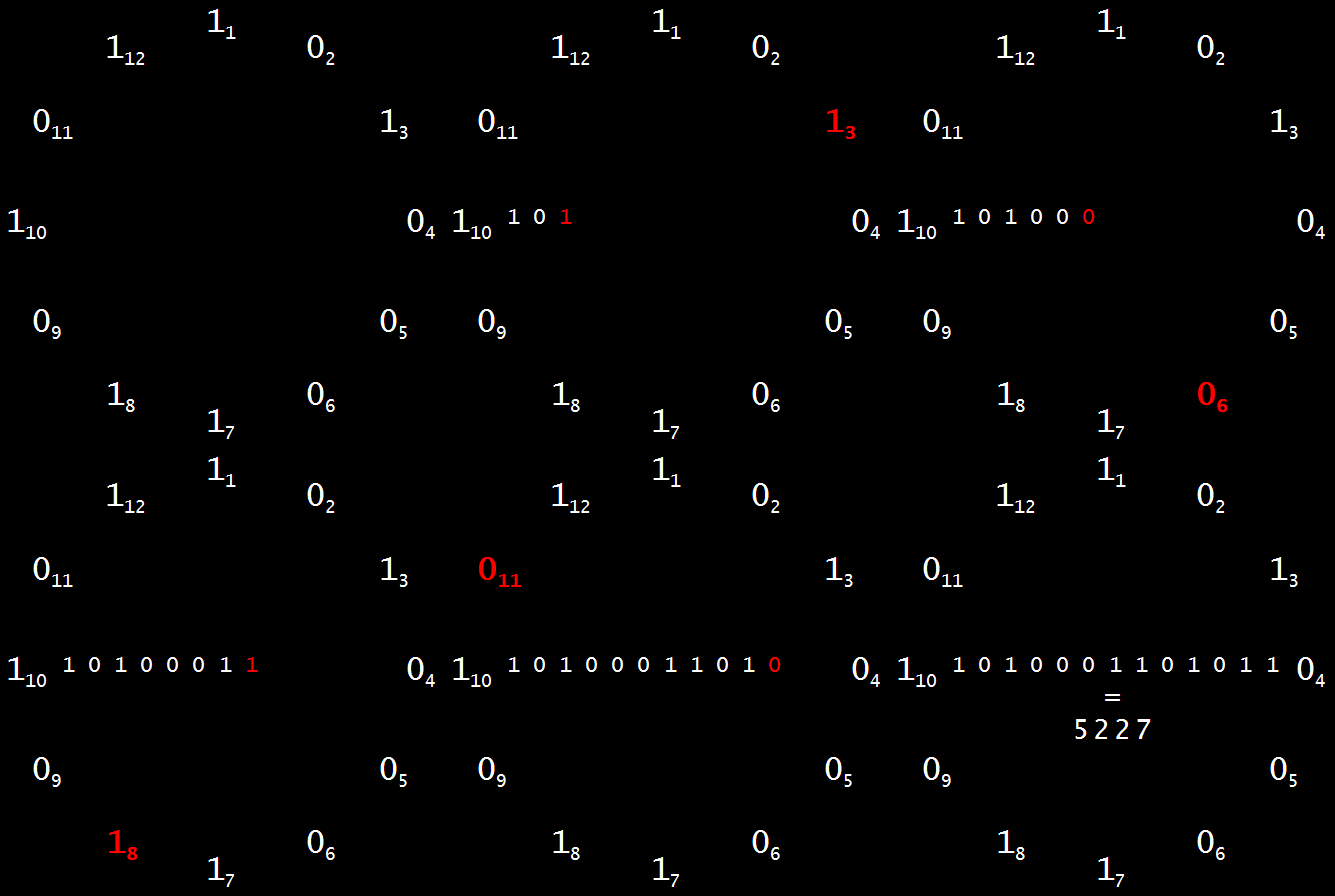
But, whether they’re palindromes or not, all brimes except 2 begin and end with 1, so they can be represented as rings, like this:

Ouroboros5227

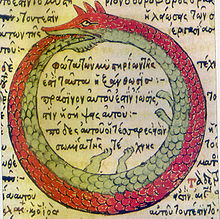
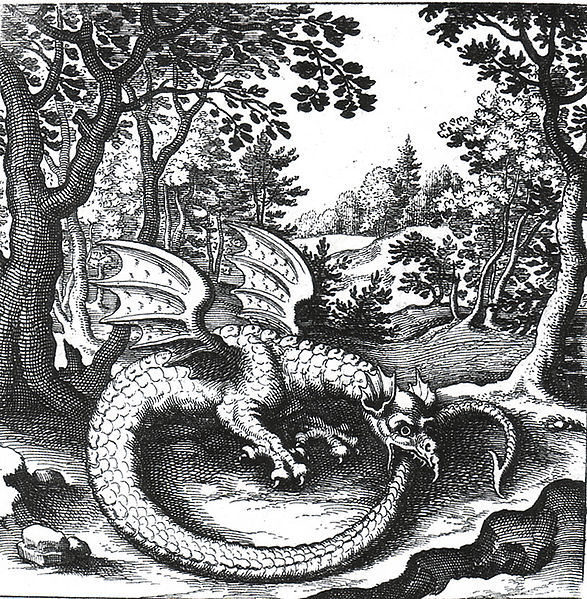
Those twelve bits, or binary digits, actually represent the thirteen bits of 5227 = 1,010,001,101,011. Start at twelve o’clock (digit 1 of the prime) and count clockwise, adding 1’s and 0’s till you reach 12 o’clock again and add the final 1. Then you’ve clocked around the rock and created the granite of 5227, which can’t be divided by any integers but itself and 1. Another way to see the brime-ring is as an Ouroboros (pronounced “or-ROB-or-us”), a serpent or dragon biting its own tail, like this:

Alchemical Ouroboros

Alchemical Ouroboros (1478)

Dragon Ouroboros

Another alchemical Ouroboros (1599)

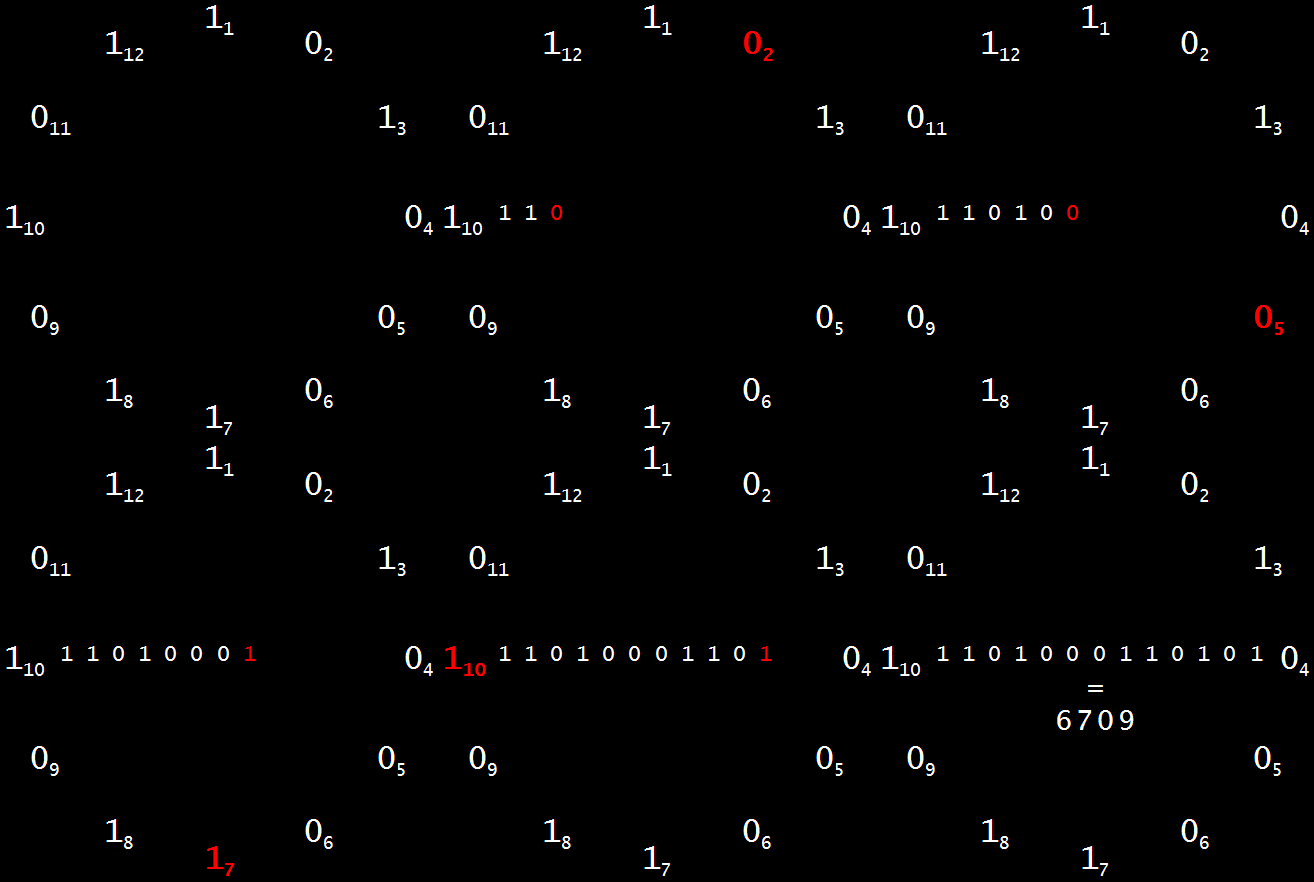
But you don’t have to start clocking around the rock at midday or midnight. Take the Ouroboprime of 5227 and start at eleven o’clock (digit 12 of the prime), adding 1’s and 0’s as you move clockwise. When you’ve clocked around the rock, you’ll have created the granite of 6709, another prime:

Ouroboros6709

Other Ouroboprimes produce brimes both clockwise and anti-clockwise, like 47 = 101,111.

Clockwise

101,111 = 47
111,011 = 59
111,101 = 61

Anti-Clockwise

111,101 = 61
111,011 = 59
101,111 = 47

If you demand the clock-rocked brime produce distinct primes, you sometimes get more in one direction than the other. Here is 151 = 10,010,111:

Clockwise

10,010,111 = 151
11,100,101 = 229

Anti-Clockwise

11,101,001 = 233
11,010,011 = 211
10,100,111 = 167
10,011,101 = 157

The most productive brime I’ve discovered so far is 2,326,439 = 1,000,110,111,111,110,100,111[2], which produces fifteen distinct primes:

Clockwise (7 brimes)

1,000,110,111,111,110,100,111 = 2326439
1,100,011,011,111,111,010,011 = 3260371
1,110,100,111,000,110,111,111 = 3830207
1,111,101,001,110,001,101,111 = 4103279
1,111,110,100,111,000,110,111 = 4148791
1,111,111,010,011,100,011,011 = 4171547
1,101,111,111,101,001,110,001 = 3668593

Anti-Clockwise (8 brimes)

1,110,010,111,111,110,110,001 = 3768241
1,100,101,111,111,101,100,011 = 3342179
1,111,111,011,000,111,001,011 = 4174283
1,111,110,110,001,110,010,111 = 4154263
1,111,101,100,011,100,101,111 = 4114223
1,111,011,000,111,001,011,111 = 4034143
1,110,110,001,110,010,111,111 = 3873983
1,000,111,001,011,111,111,011 = 2332667


Appendix: Deciminimalist Primes

Some primes in base ten use only the two most basic symbols too. That is, primes like 11[10], 101[10], 10111[10] and 1011001[10] are composed of only 1’s and 0’s. Furthermore, when these numbers are read as binary instead, they are still prime: 11[2] = 3, 101[2] = 5, 10111[2] = 23 and 1011001[2] = 89. Here is an incomplete list of these deciminimalist primes:

11[10] = 1,011[2]; 11[2] = 3[10] is also prime.

101[10] = 1,100,101[2]; 101[2] = 5[10] is also prime.

10,111[10] = 10,011,101,111,111[2]; 10,111[2] = 23[10] is also prime.

101,111[10] = 11,000,101,011,110,111[2]; 101,111[2] = 47[10] is also prime.

1,011,001[10] = 11,110,110,110,100,111,001[2]; 1,011,001[2] = 89[10] is also prime.

1,100,101[10] = 100,001,100,100,101,000,101[2]; 1,100,101[2] = 101[10] is also prime.

10,010,101[10] = 100,110,001,011,110,111,110,101[2]; 10,010,101[2] = 149[10] is also prime.

10,011,101[10] = 100,110,001,100,000,111,011,101[2]; 10,011,101[2] = 157[10] is also prime.

10,100,011[10] = 100,110,100,001,110,100,101,011[2]; 10,100,011[2] = 163[10] is also prime.

10,101,101[10] = 100,110,100,010,000,101,101,101[2]; 10,101,101[2] = 173[10] is also prime.

10,110,011[10] = 100,110,100,100,010,000,111,011[2]; 10,110,011[2] = 179[10] is also prime.

10,111,001[10] = 100,110,100,100,100,000,011,001[2].

11,000,111[10] = 101,001,111,101,100,100,101,111[2]; 11,000,111[2] = 199[10] is also prime.

11,100,101[10] = 101,010,010,101,111,111,000,101[2]; 11,100,101[2] = 229[10] is also prime.

11,110,111[10] = 101,010,011,000,011,011,011,111[2].

11,111,101[10] = 101,010,011,000,101,010,111,101[2].

100,011,001[10] = 101,111,101,100,000,101,111,111,001[2]; 100,011,001[2] = 281[10] is also prime.

100,100,111[10] = 101,111,101,110,110,100,000,001,111[2].

100,111,001[10] = 101,111,101,111,001,001,010,011,001[2]; 100,111,001[2] = 313[10] is also prime.

101,001,001[10] = 110,000,001,010,010,011,100,101,001[2].

101,001,011[10] = 110,000,001,010,010,011,100,110,011[2]; 101,001,011[2] = 331[10] is also prime.

101,001,101[10] = 110,000,001,010,010,011,110,001,101[2].

101,100,011[10] = 110,000,001,101,010,100,111,101,011[2].

101,101,001[10] = 110,000,001,101,010,110,111,001,001[2].

101,101,111[10] = 110,000,001,101,010,111,000,110,111[2]; 101,101,111[2] = 367[10] is also prime.

101,110,111[10] = 110,000,001,101,101,000,101,011,111[2].

101,111,011[10] = 110,000,001,101,101,010,011,100,011[2]; 101,111,011[2] = 379[10] is also prime.

101,111,111[10] = 110,000,001,101,101,010,101,000,111[2]; 101,111,111[2] = 383[10] is also prime.

110,010,101[10] = 110,100,011,101,001,111,011,110,101[2].

110,100,101[10] = 110,100,011,111,111,111,010,000,101[2]; 110,100,101[2] = 421[10] is also prime.

110,101,001[10] = 110,100,100,000,000,001,000,001,001[2].

110,110,001[10] = 110,100,100,000,010,010,100,110,001[2]; 110,110,001[2] = 433[10] is also prime.

110,111,011[10] = 110,100,100,000,010,100,100,100,011[2]; 110,111,011[2] = 443[10] is also prime.