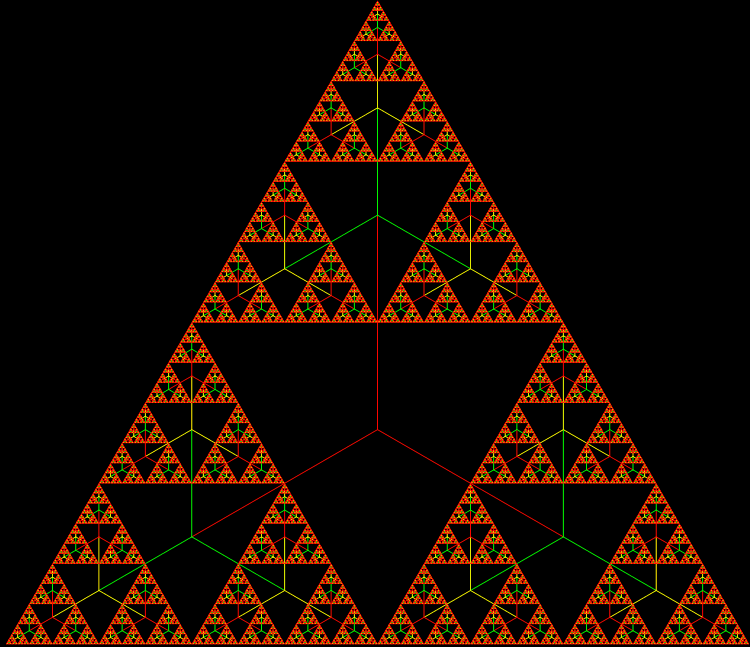
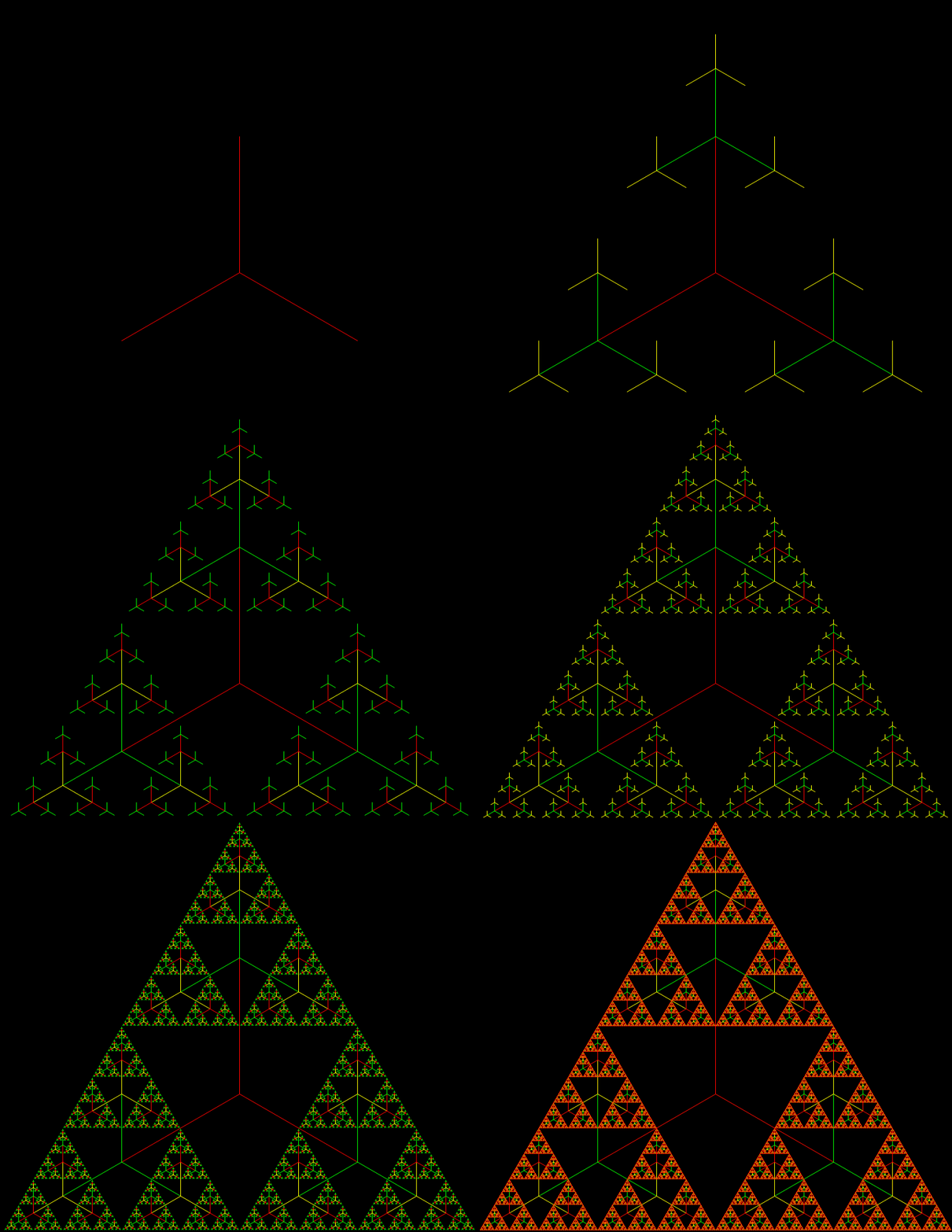
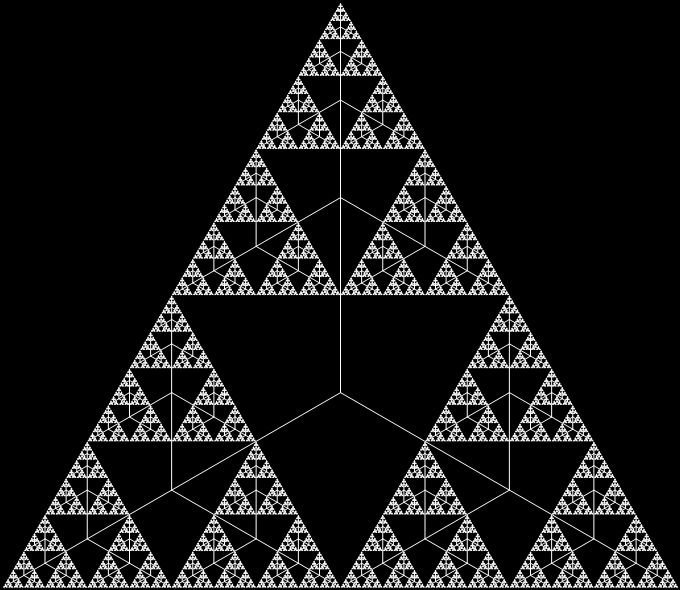
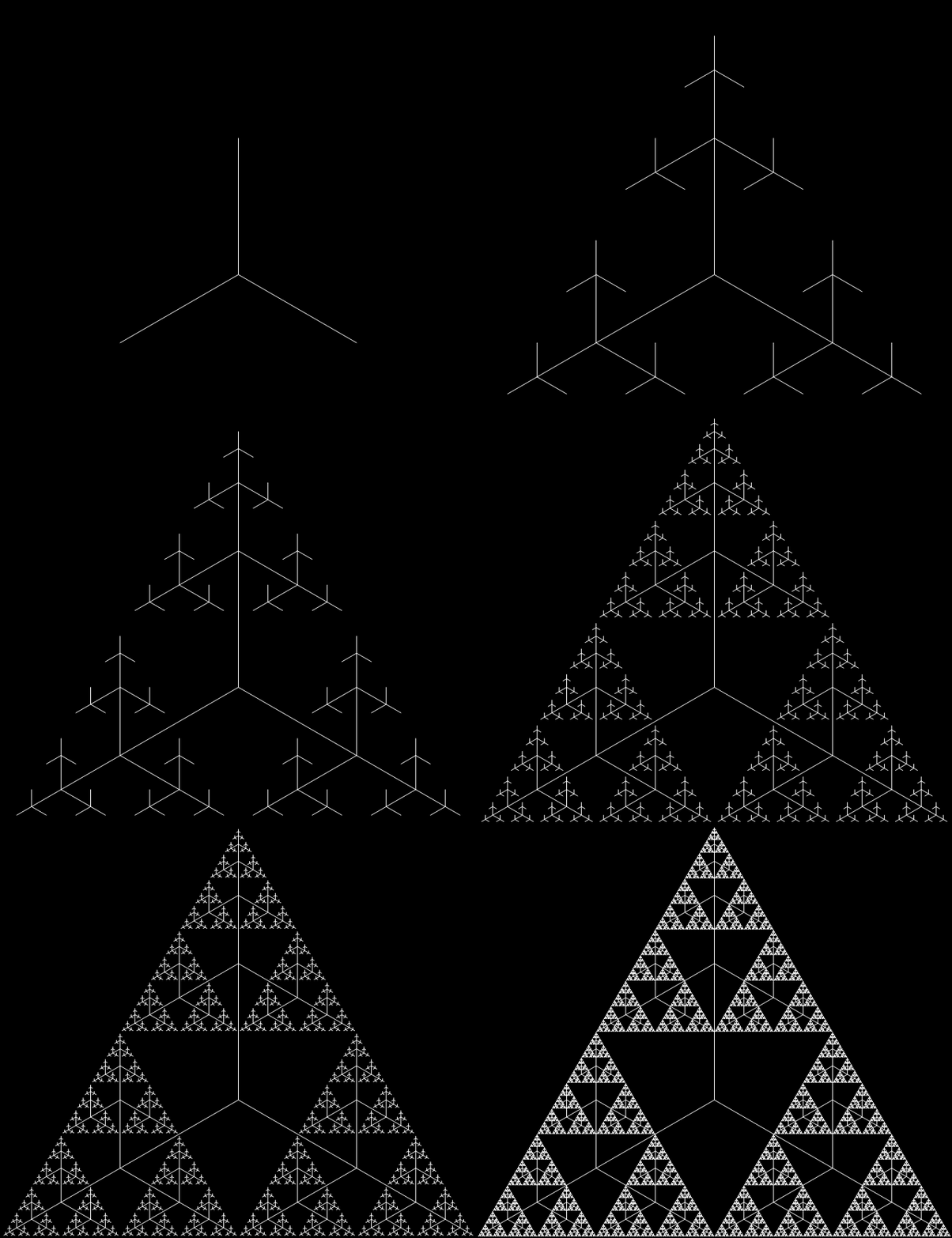
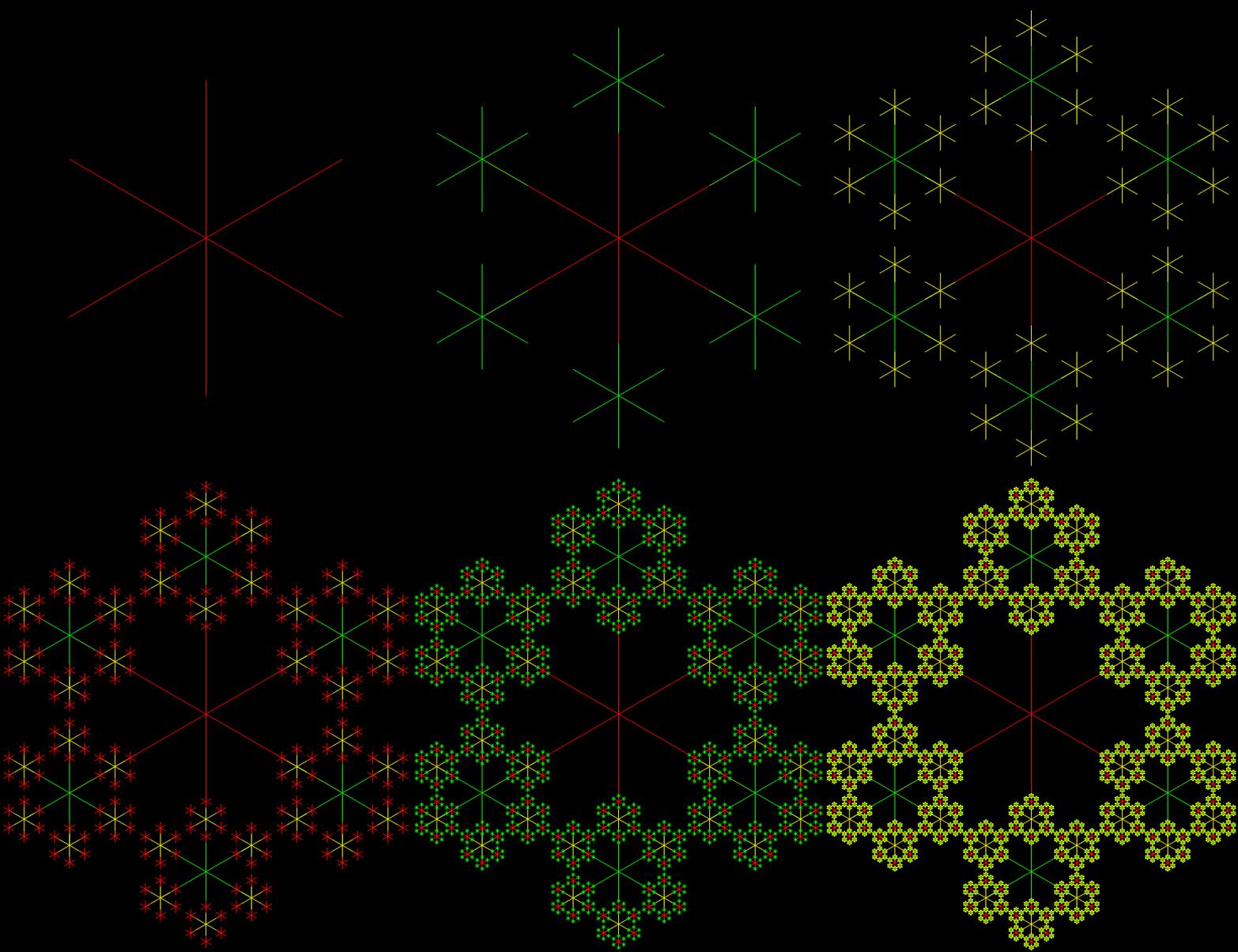
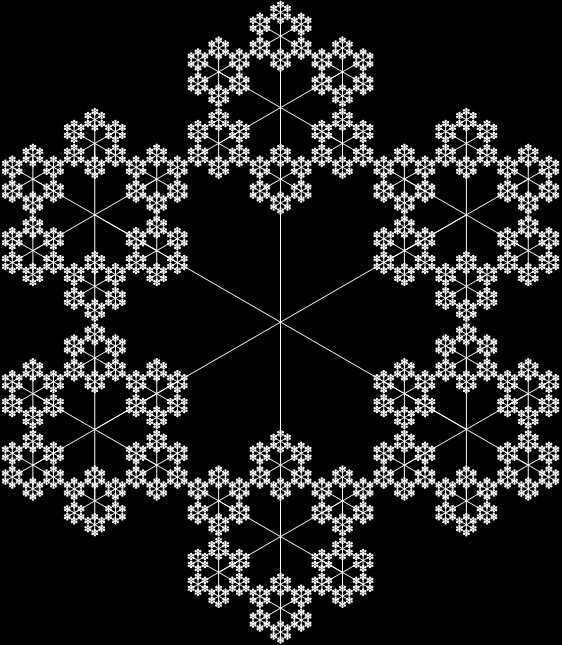
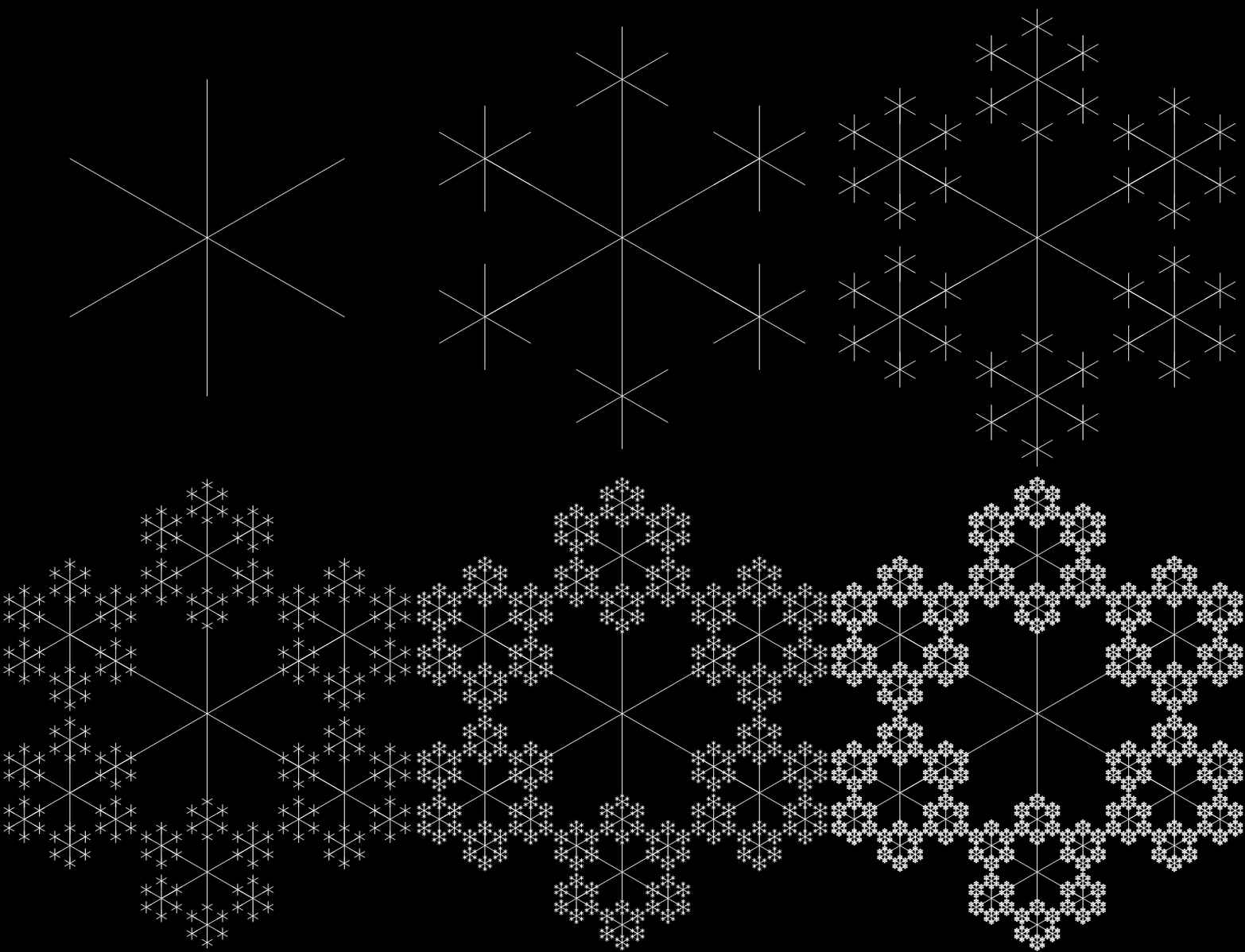
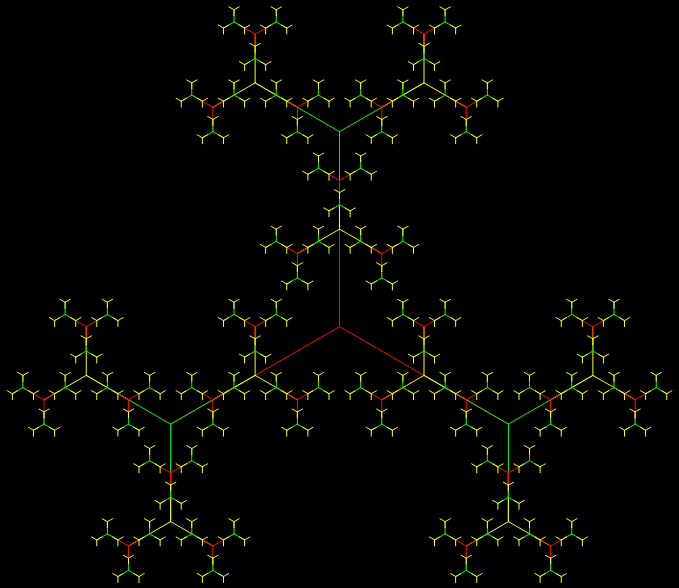
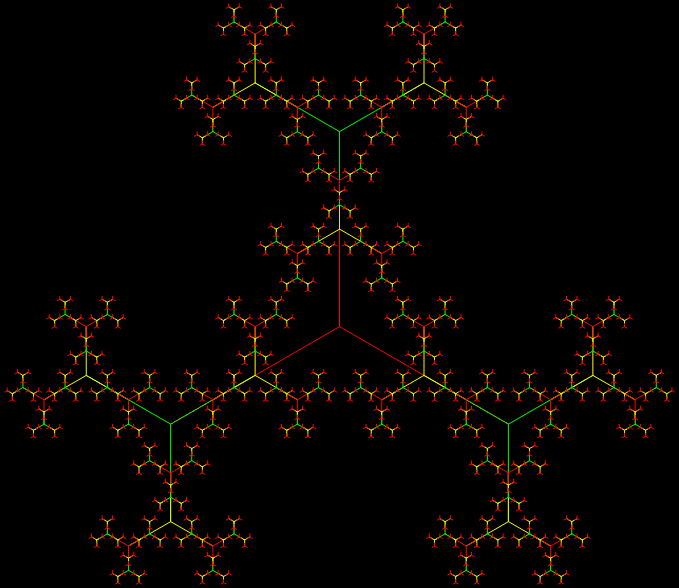
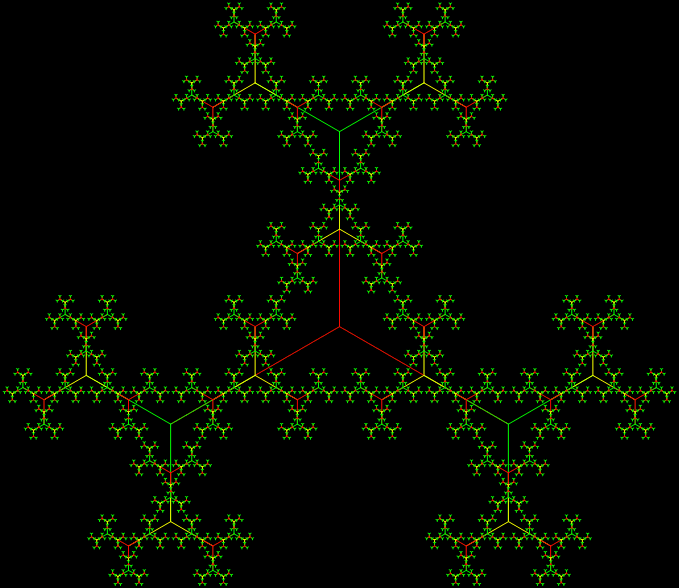
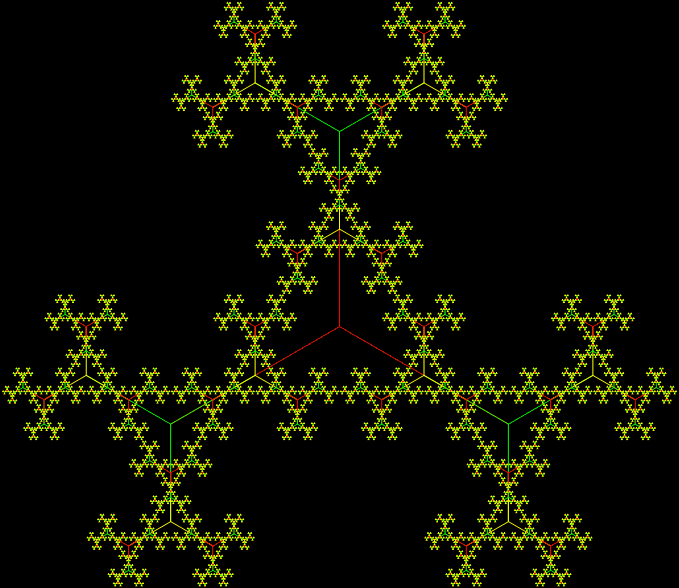
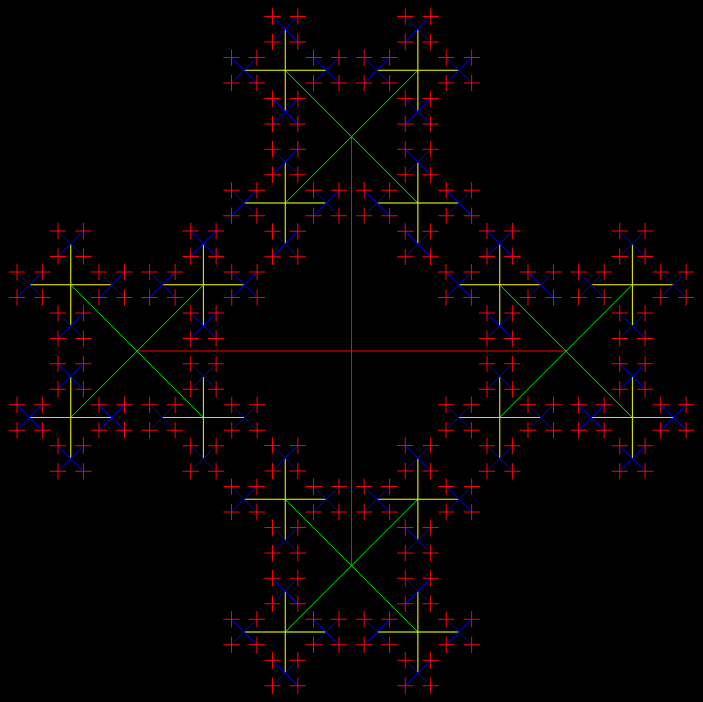
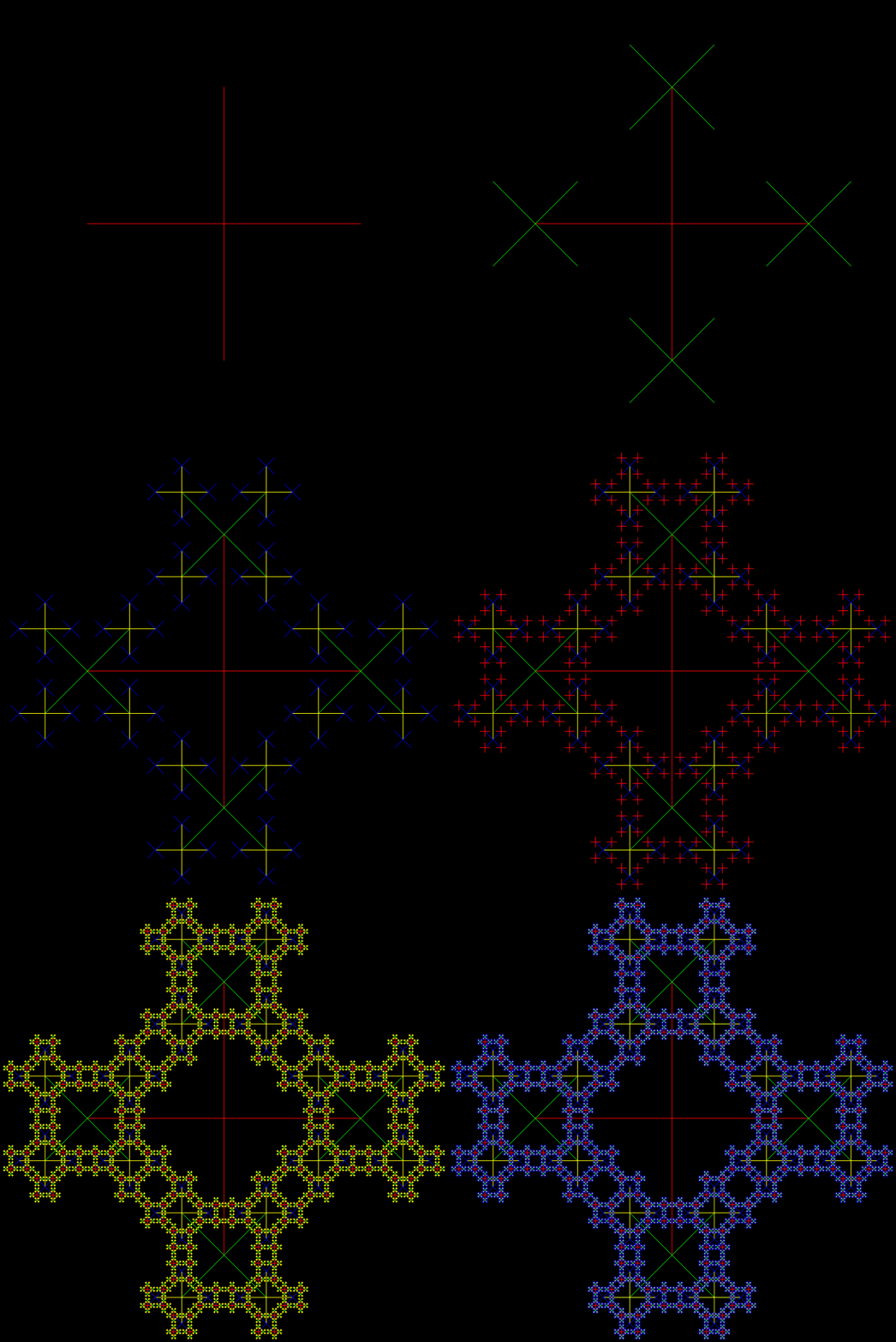
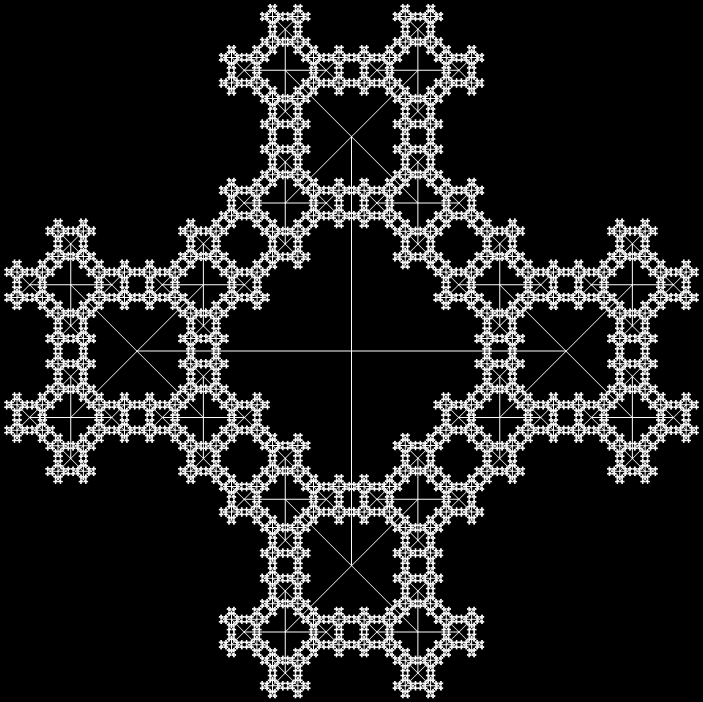
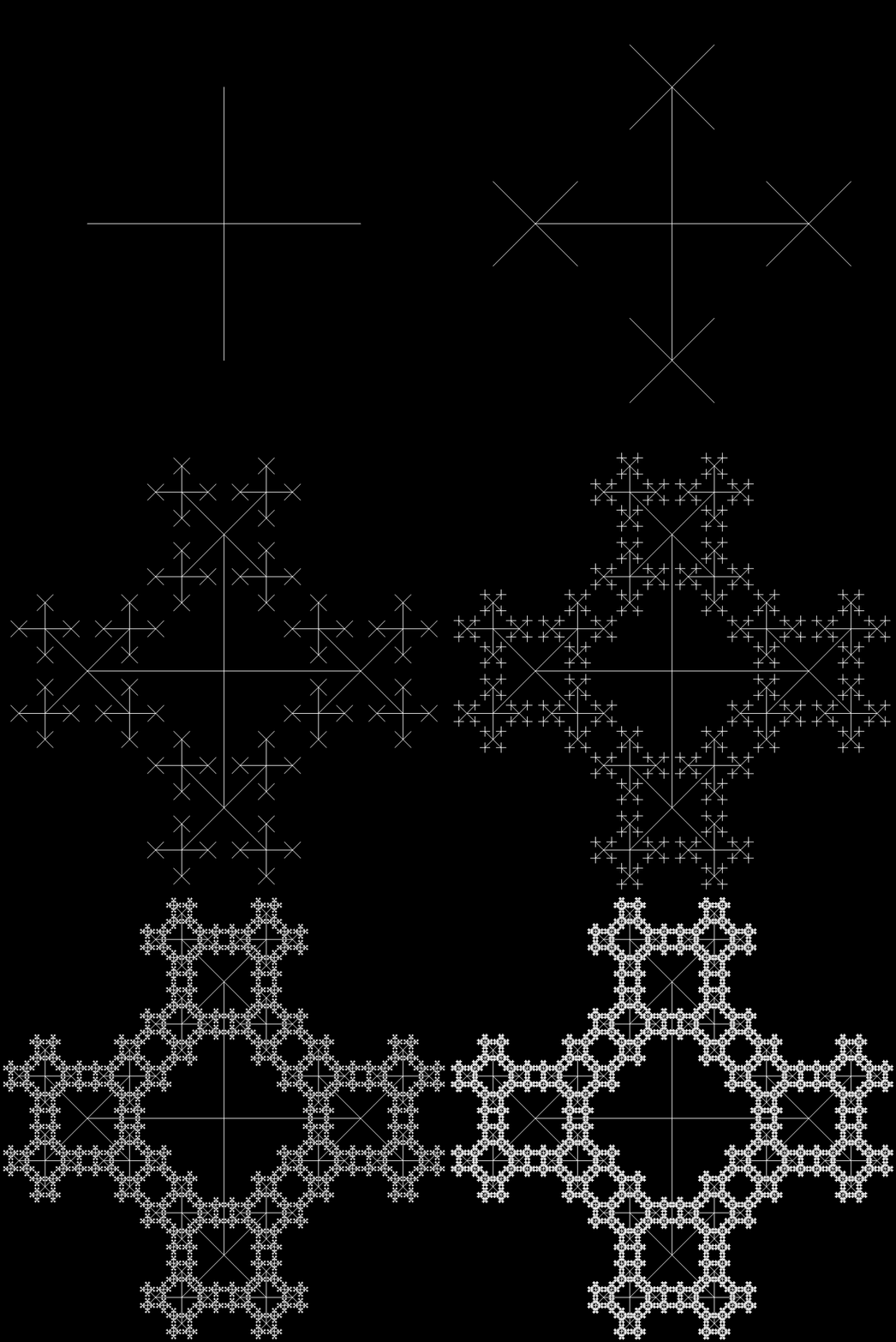
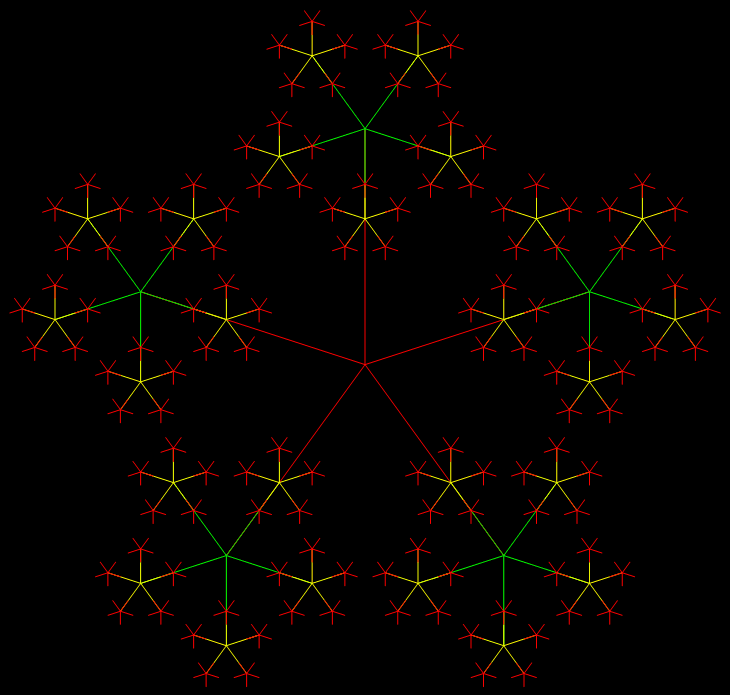
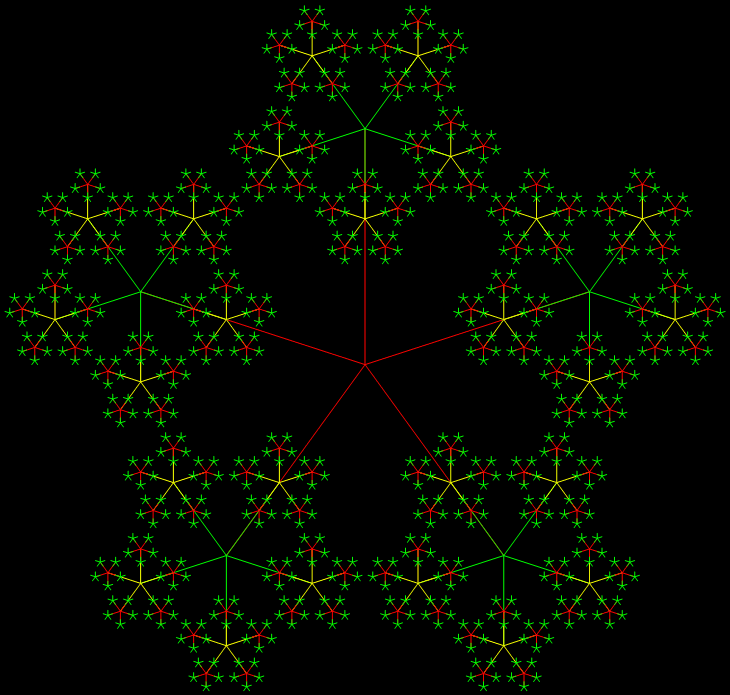
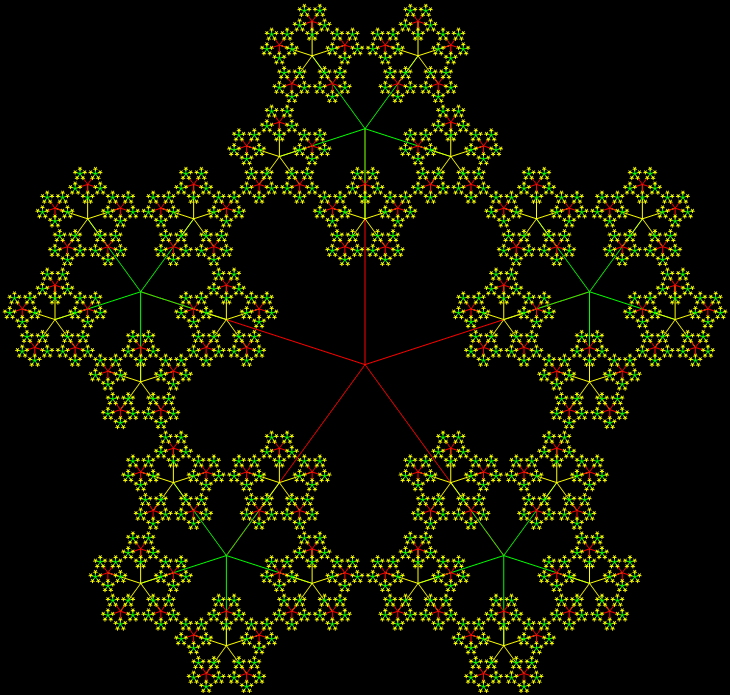
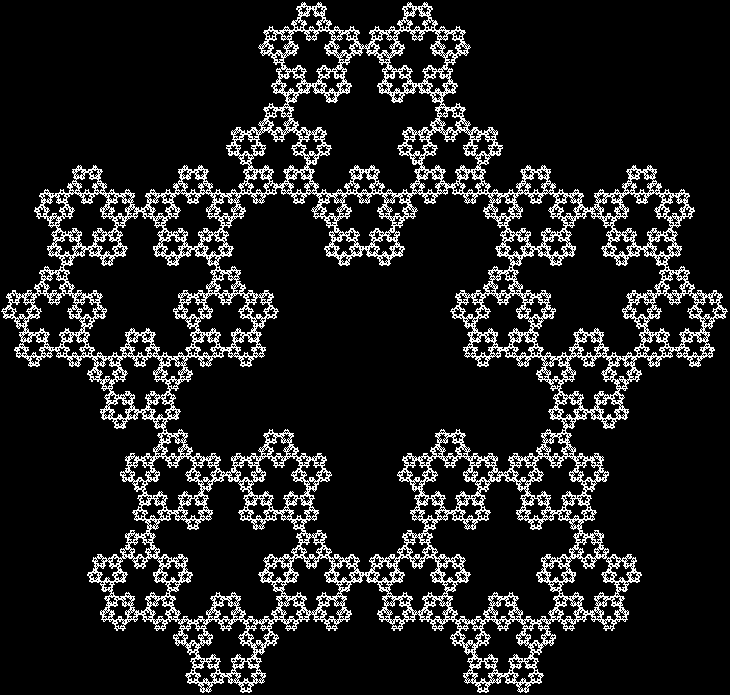
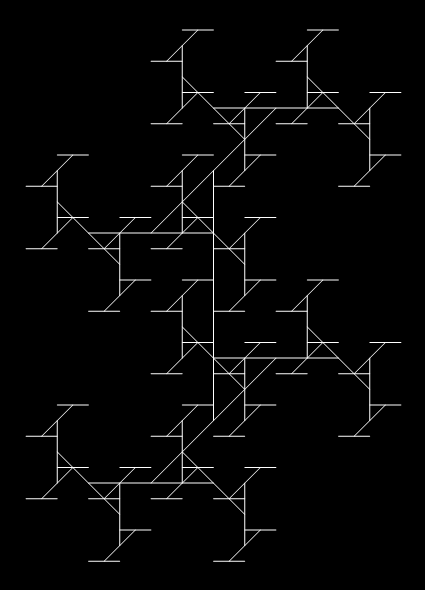
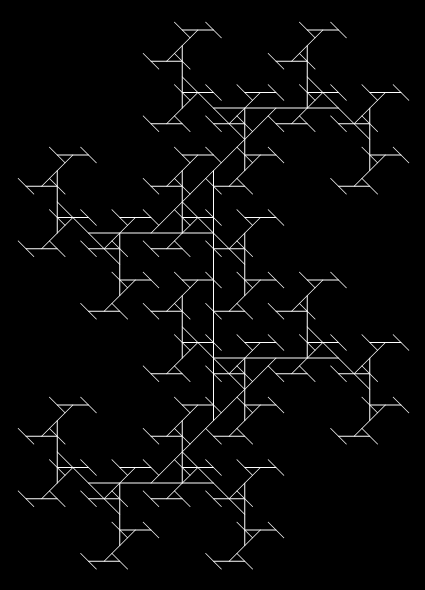
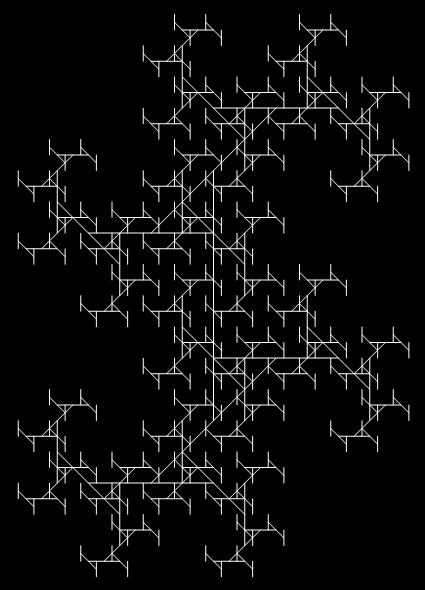
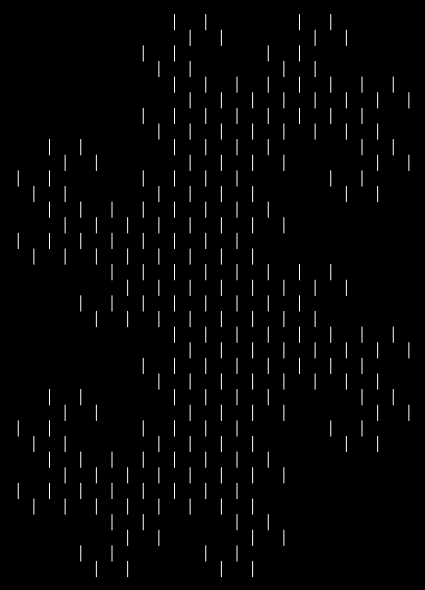
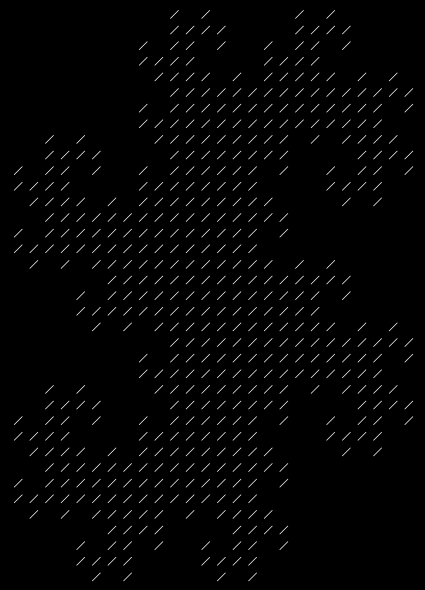
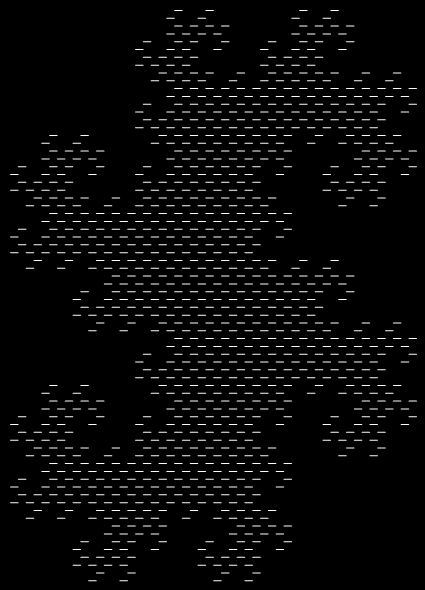
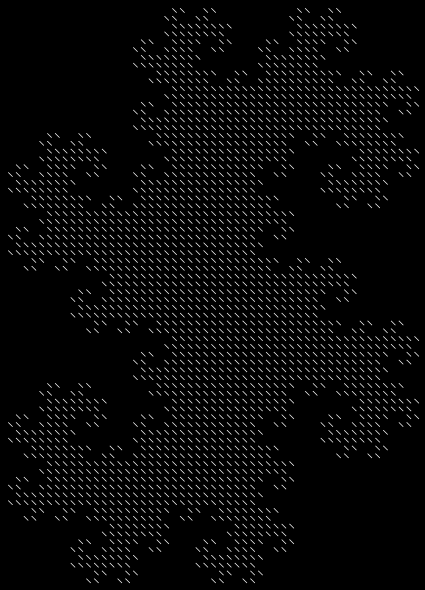
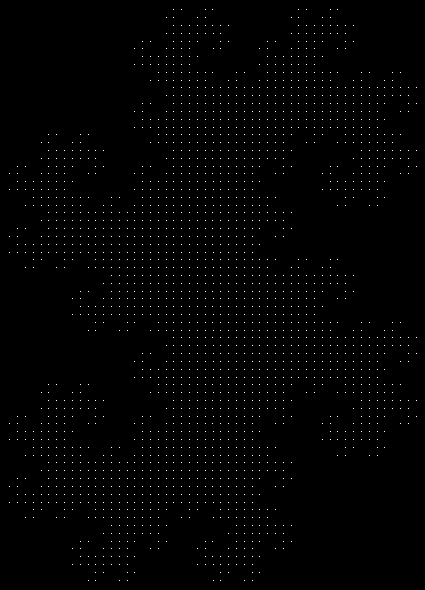
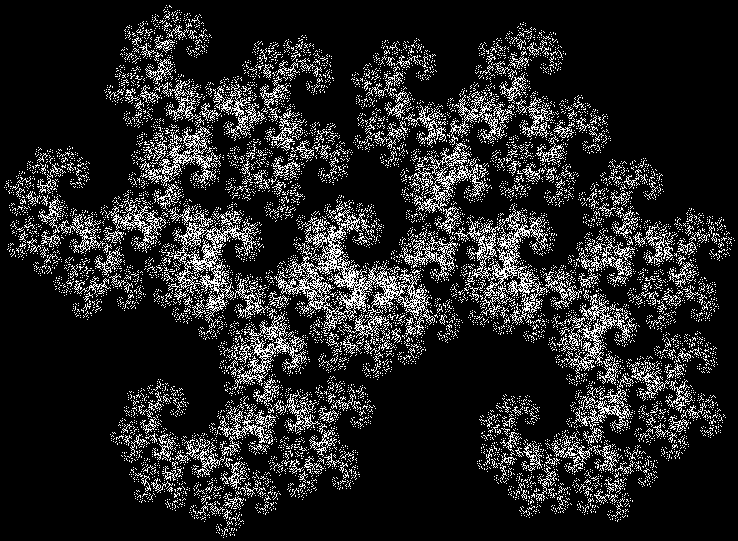
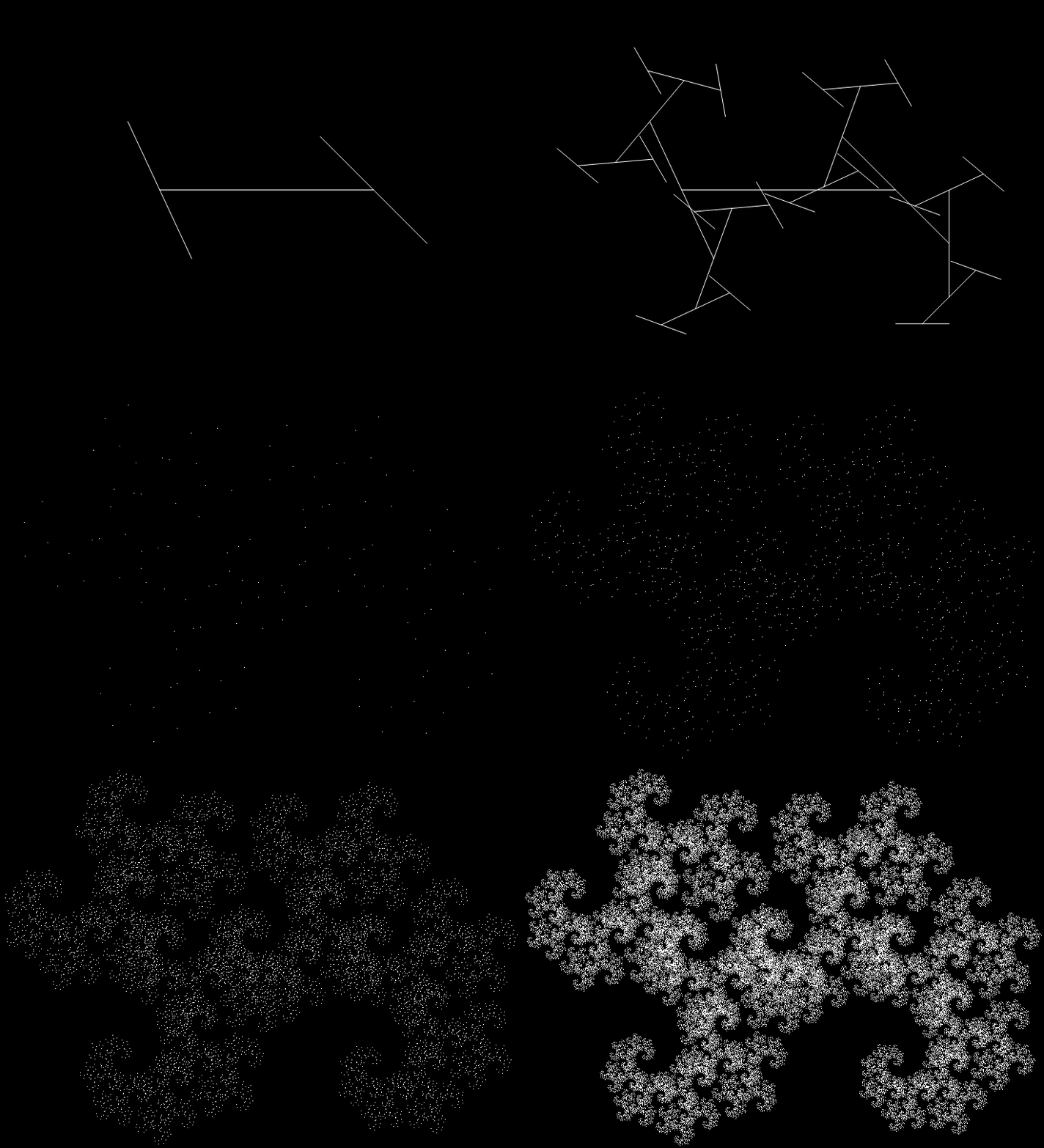
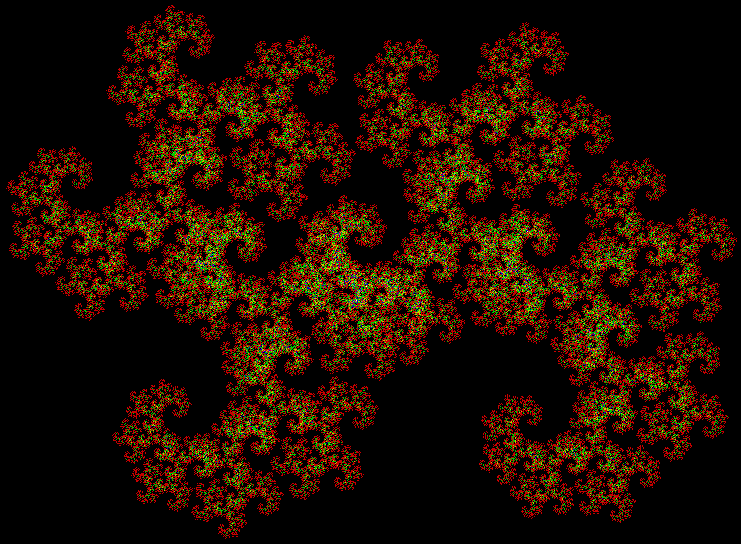
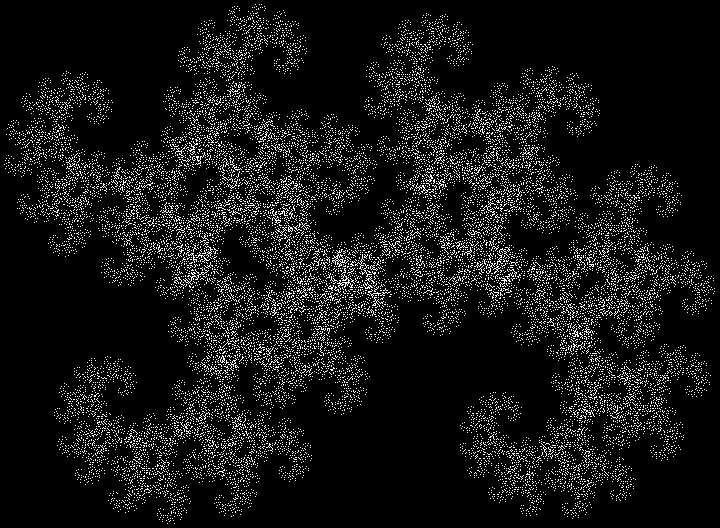
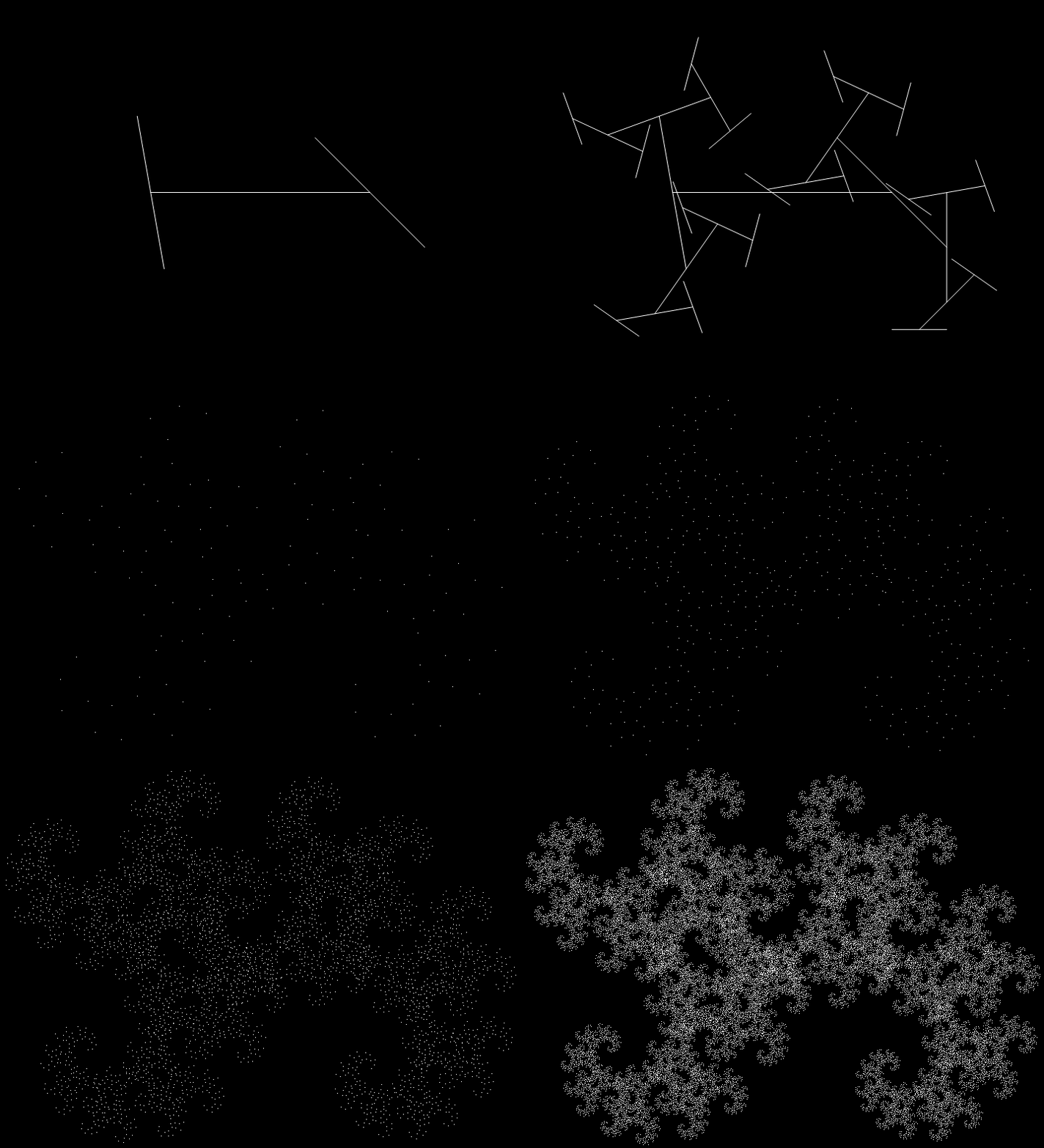
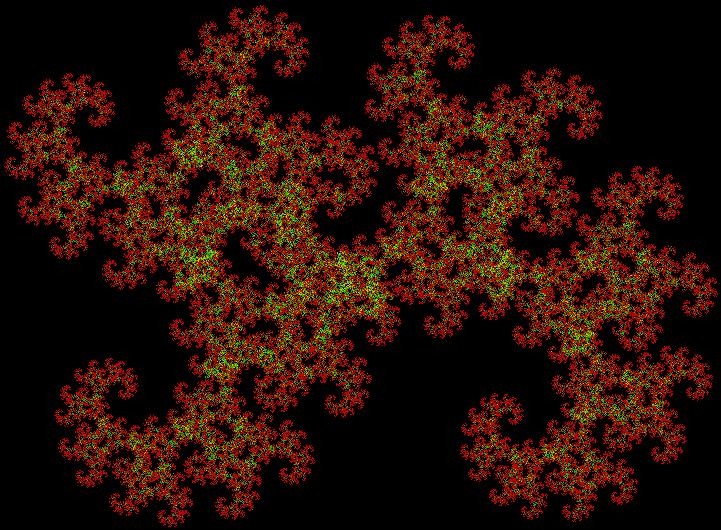
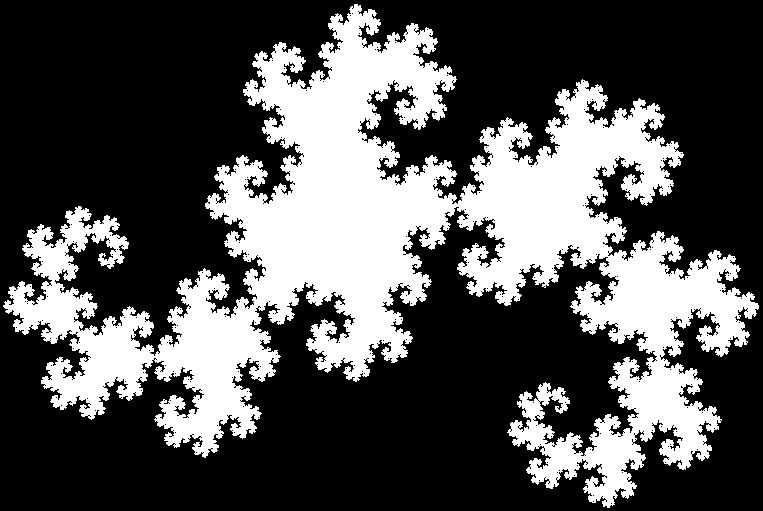
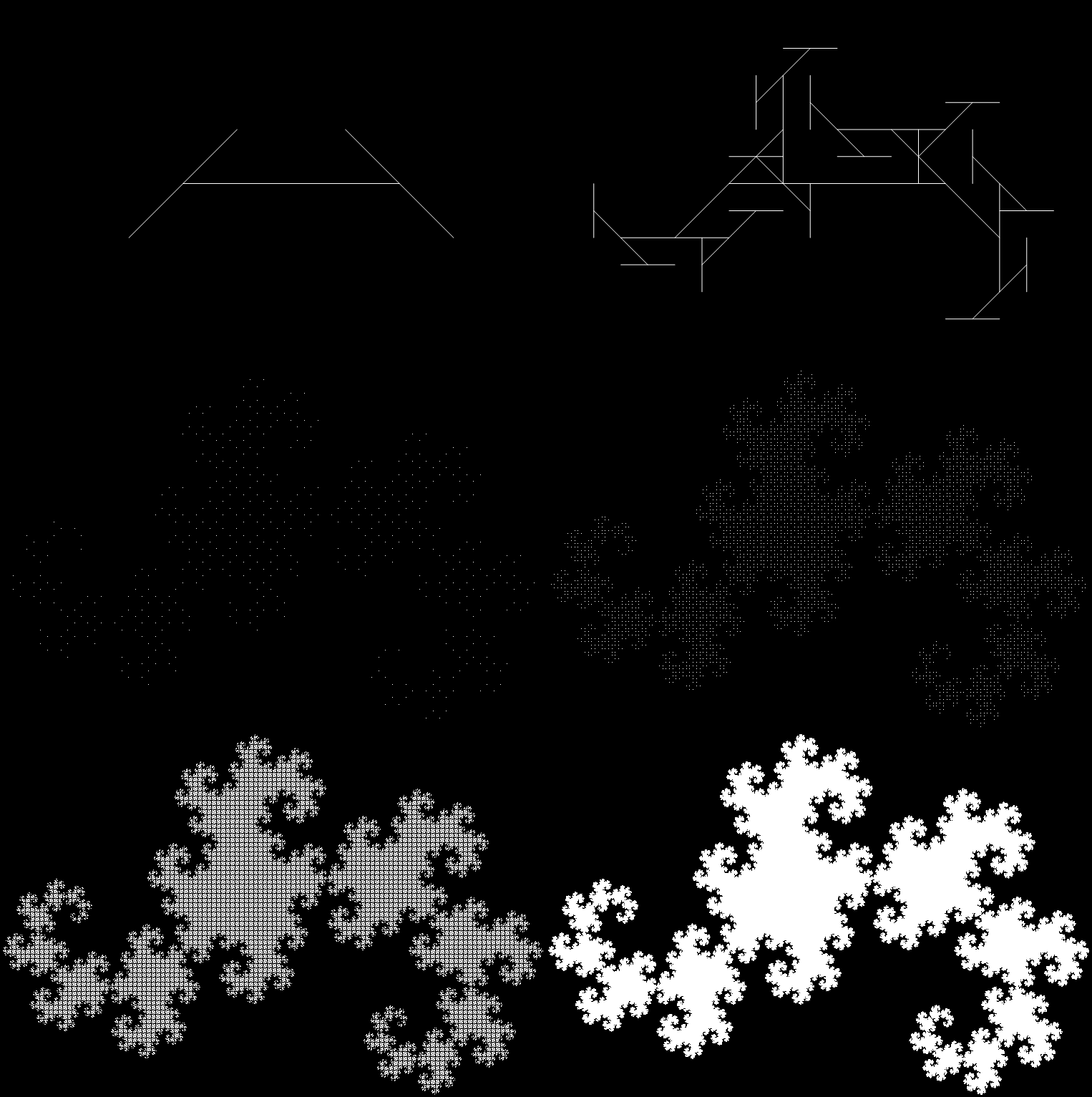
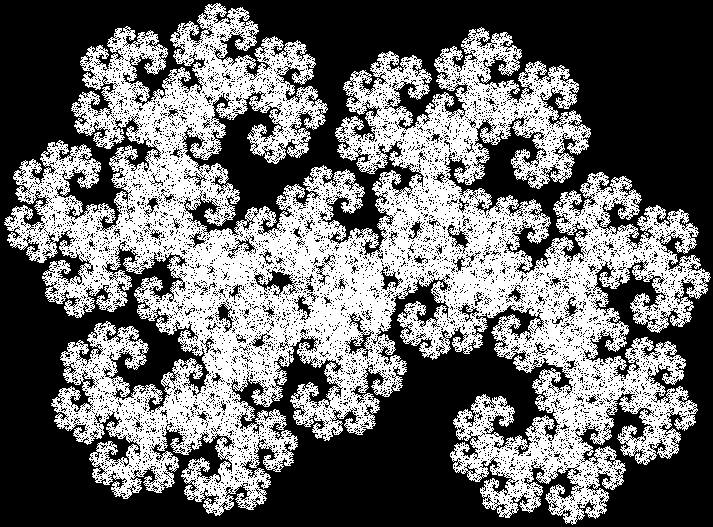
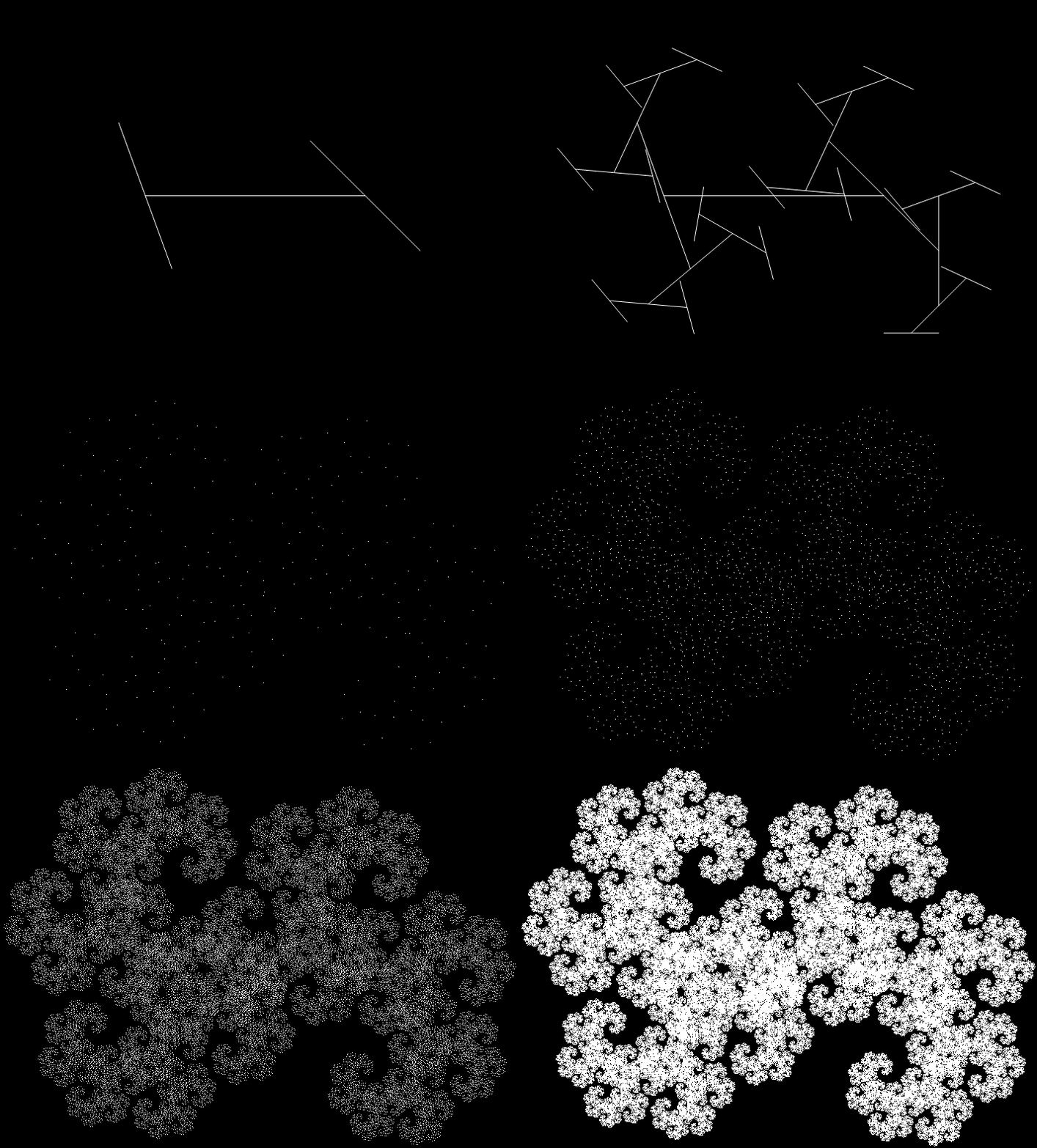
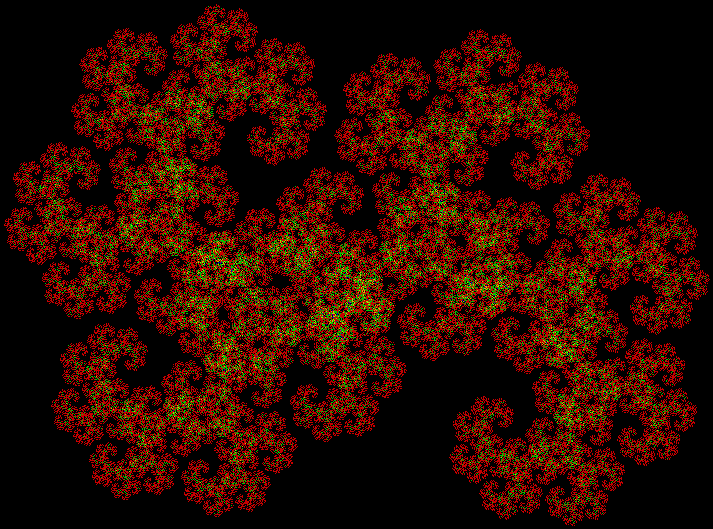
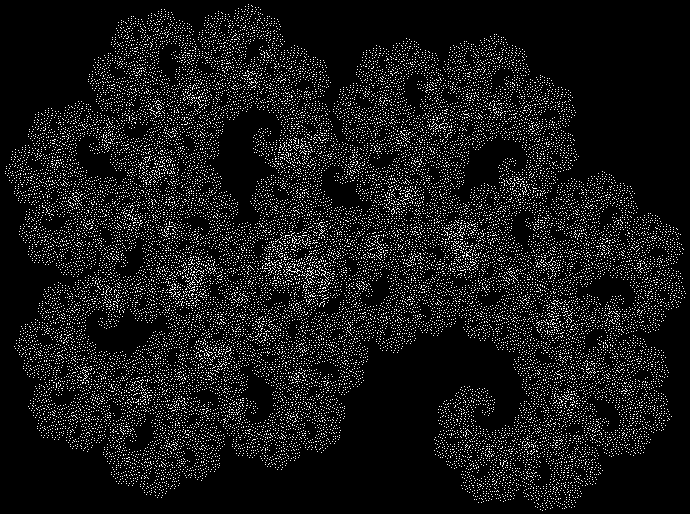
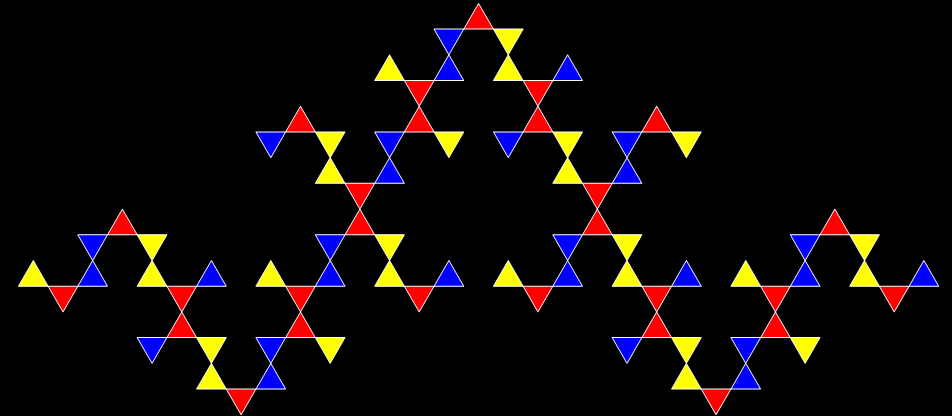
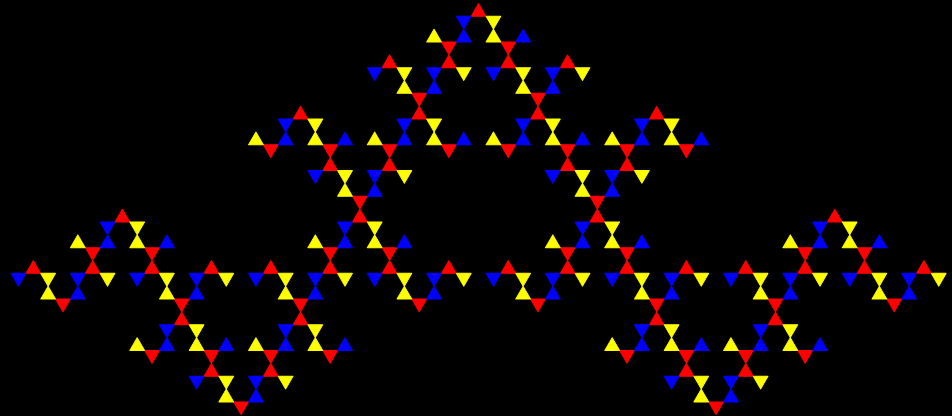
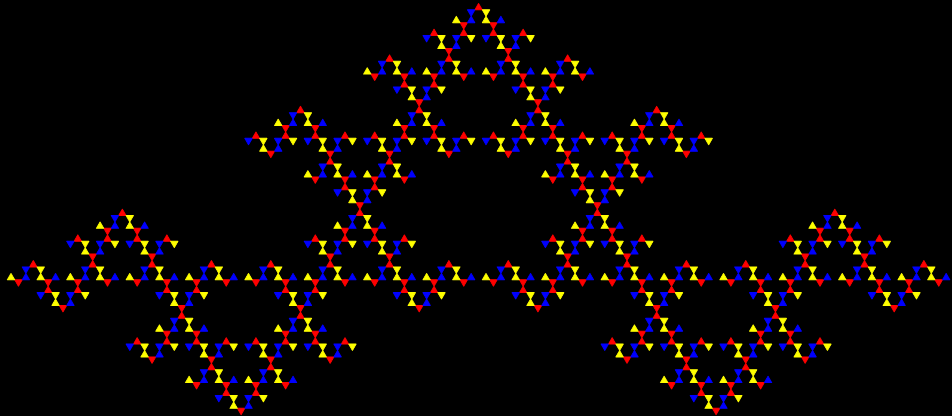
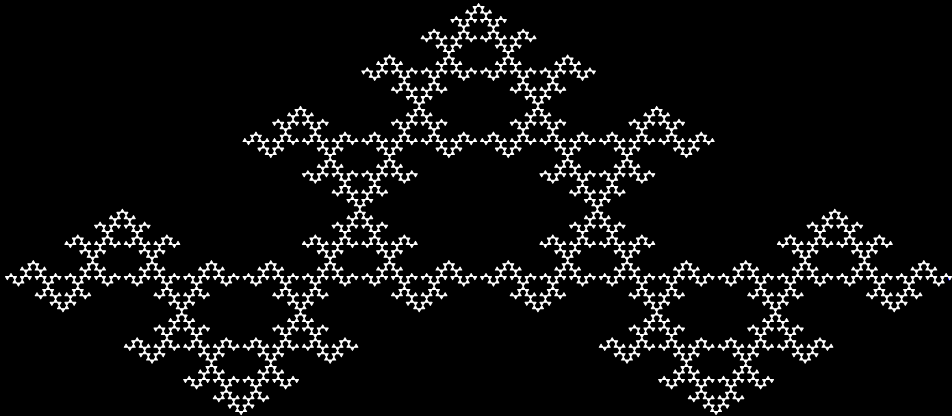
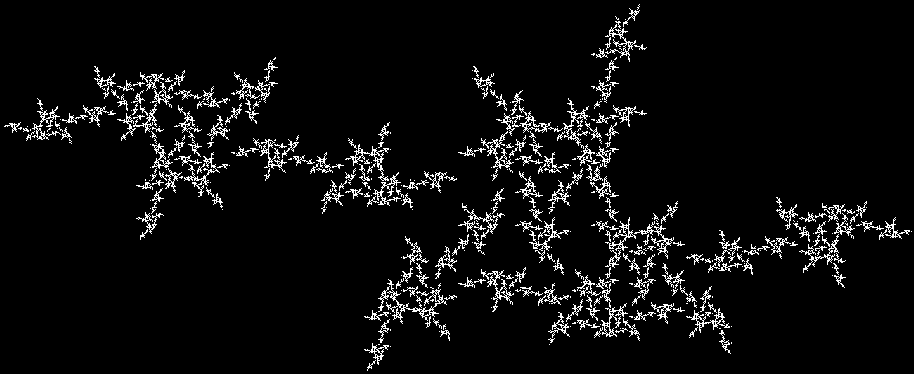
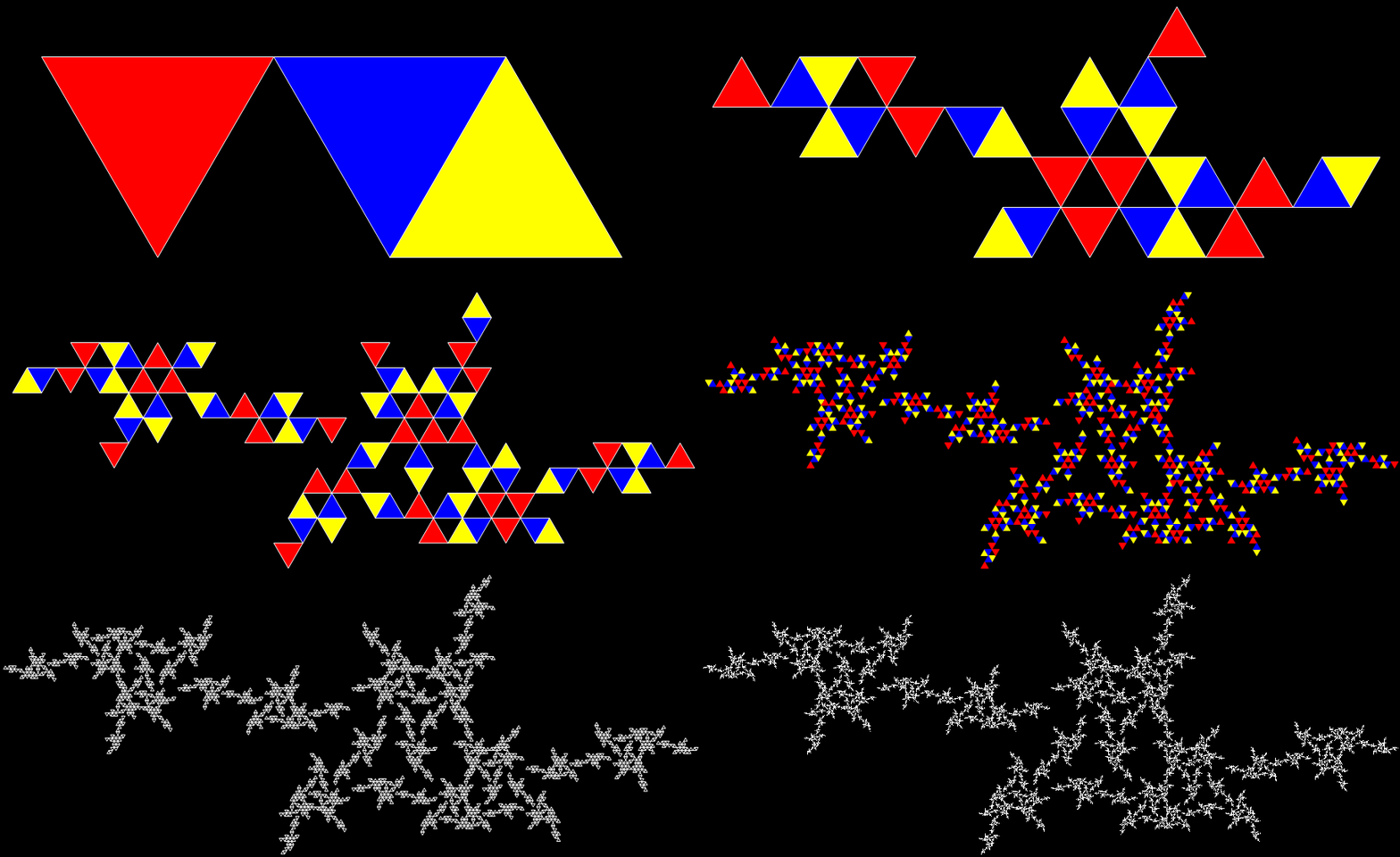
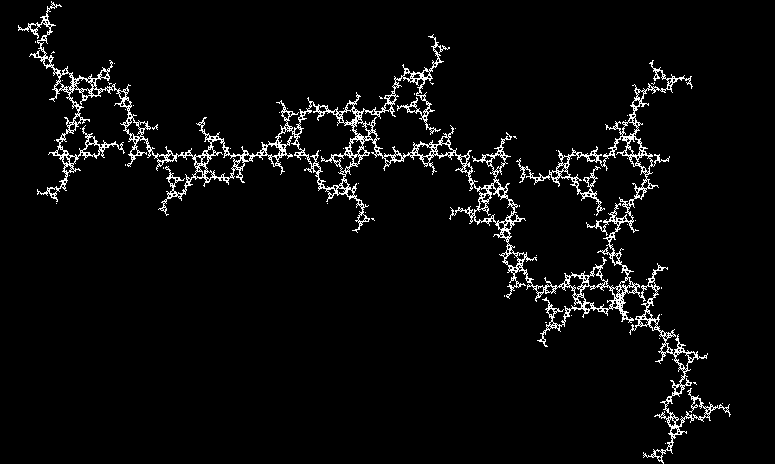
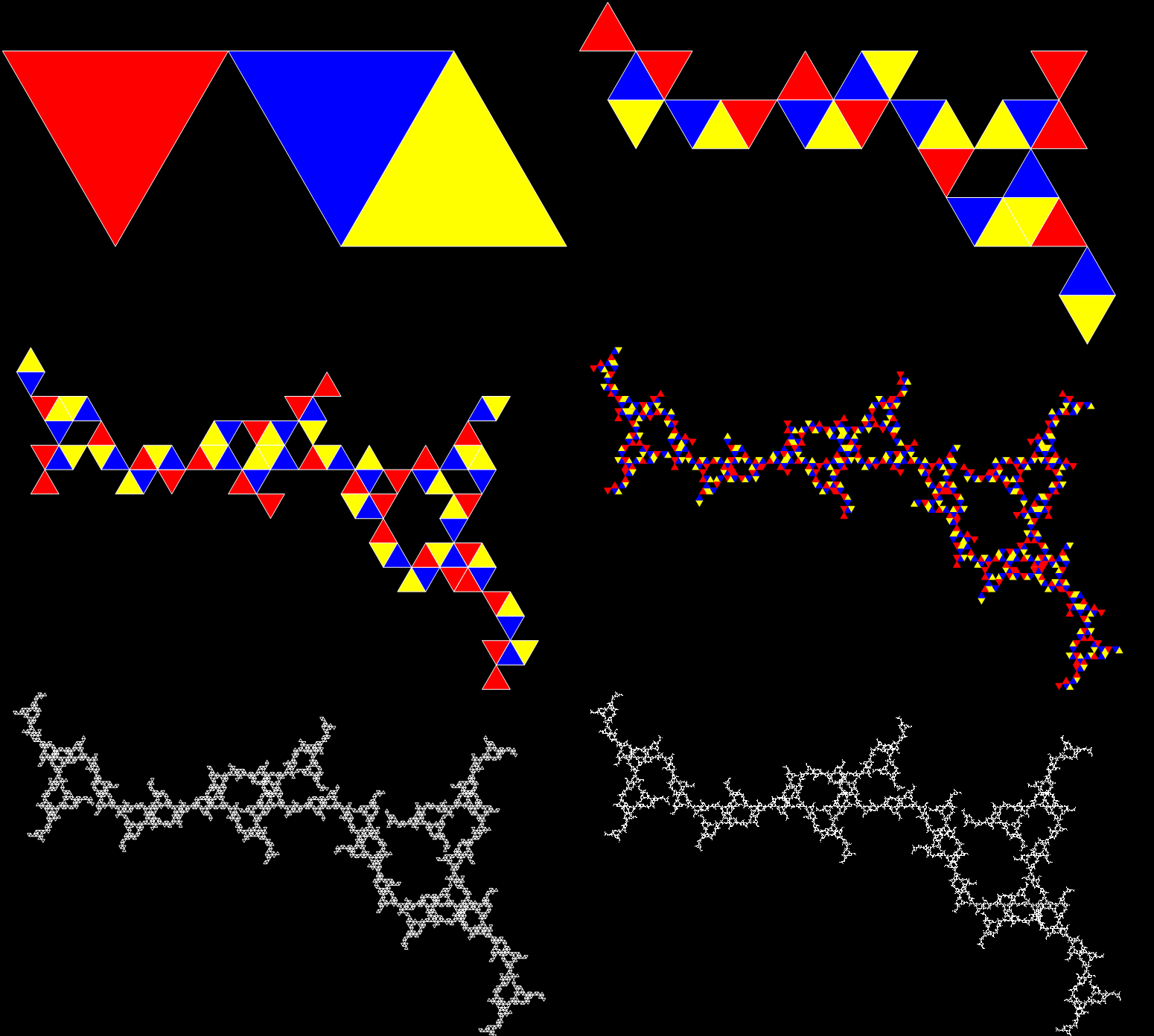
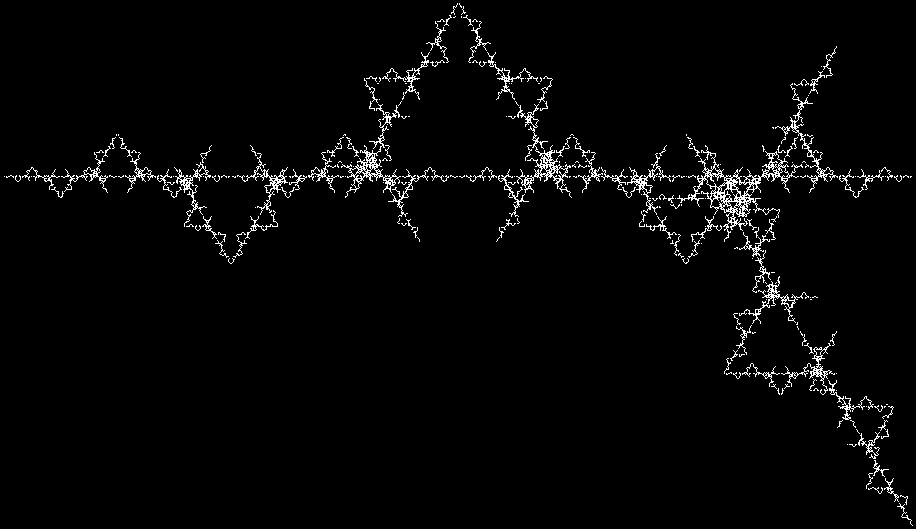
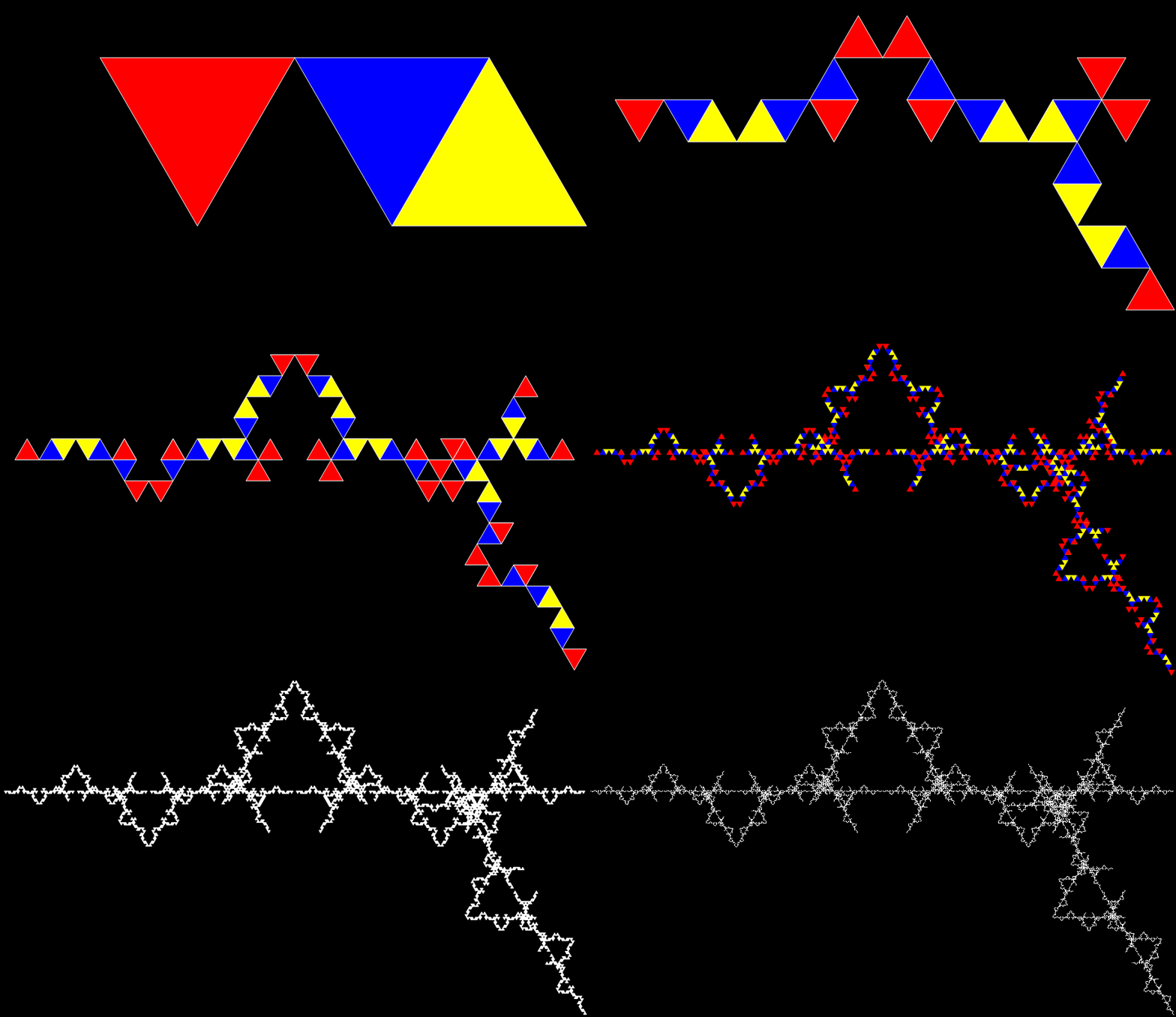
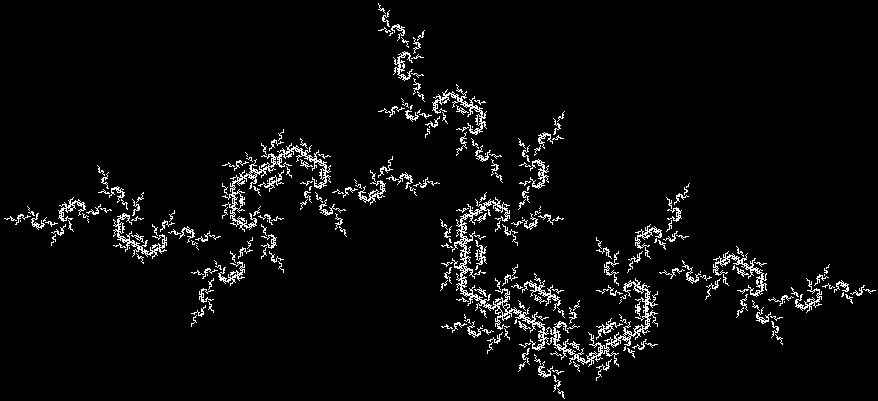
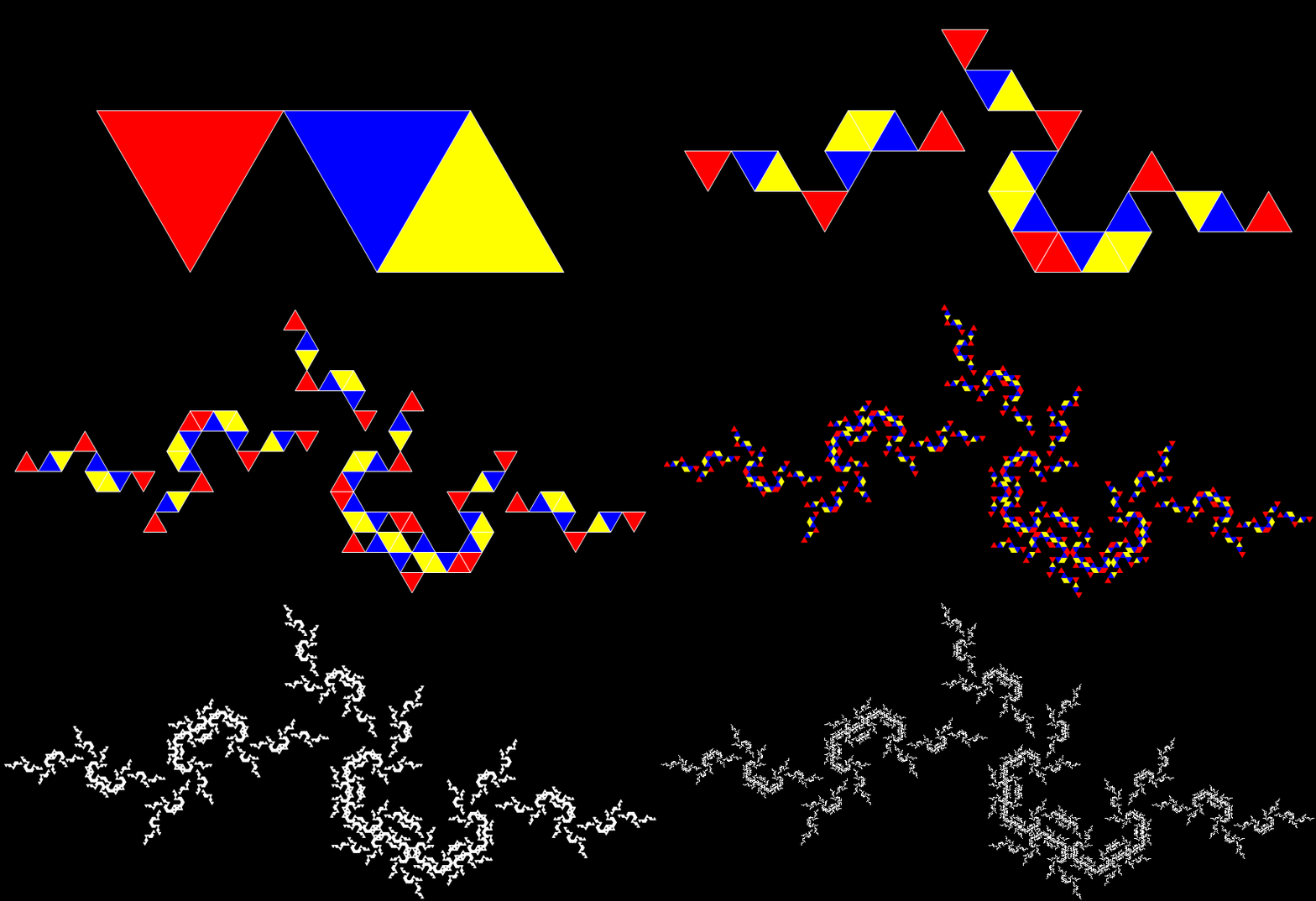
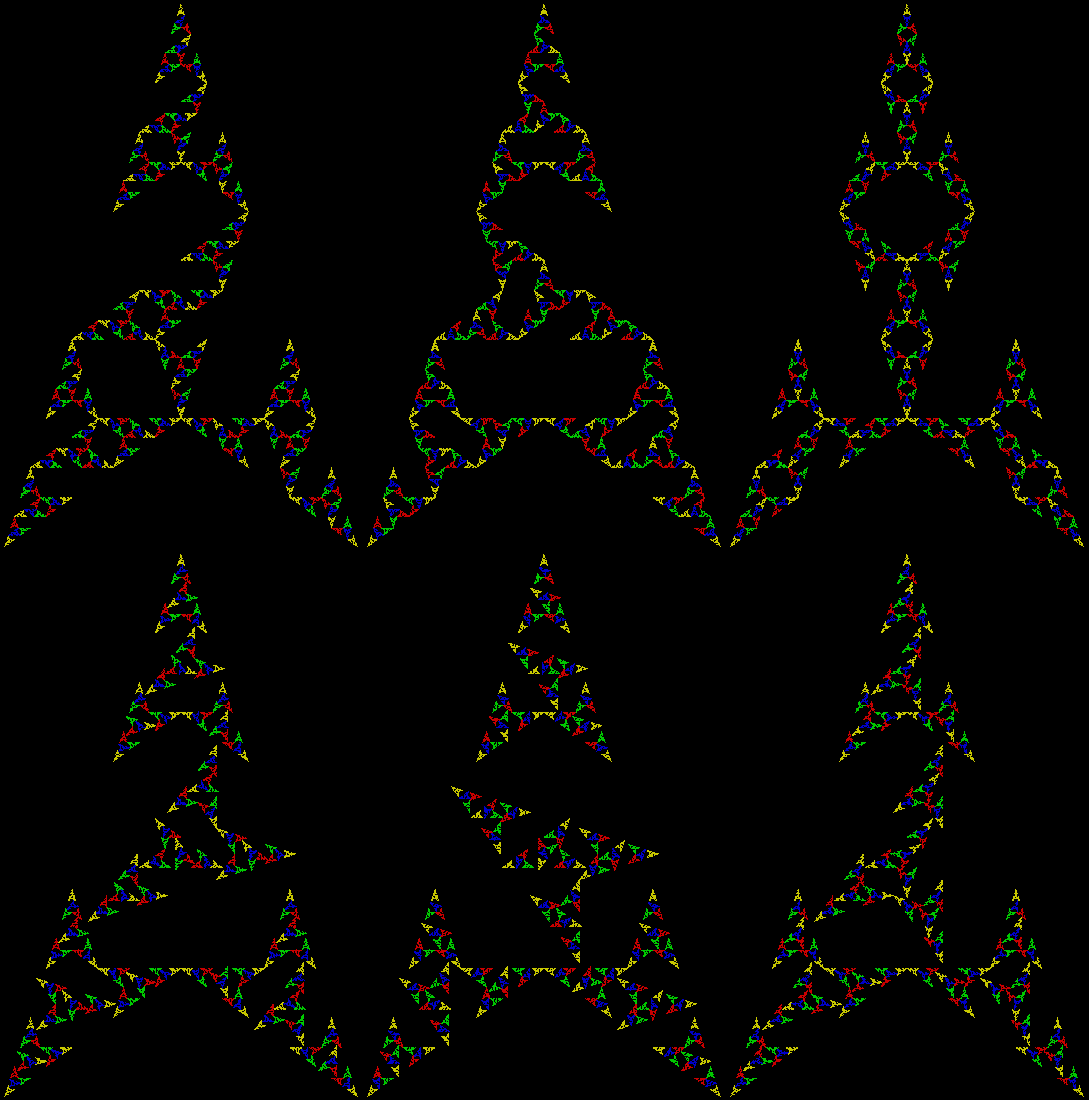
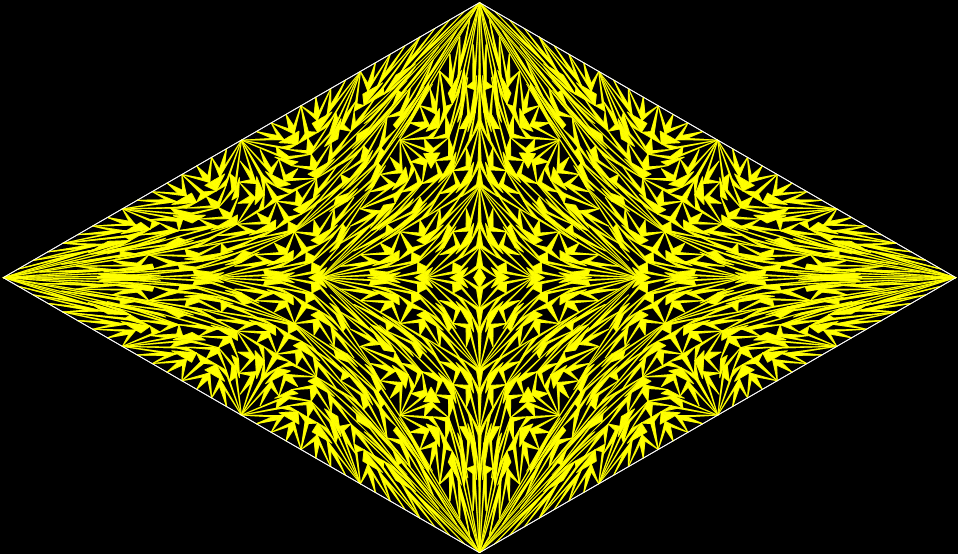
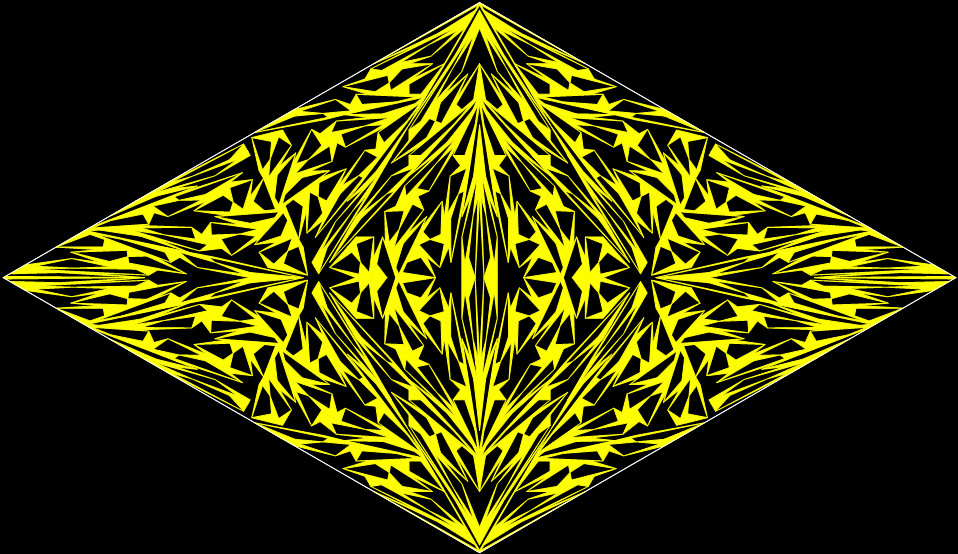
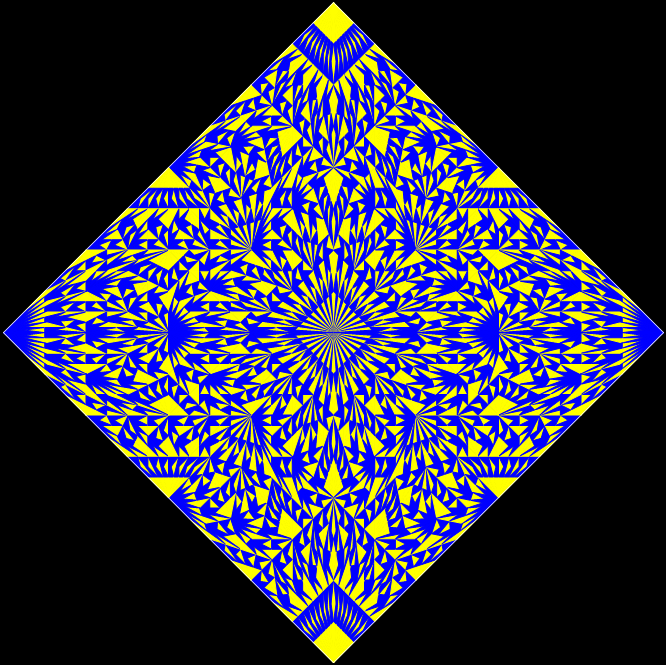
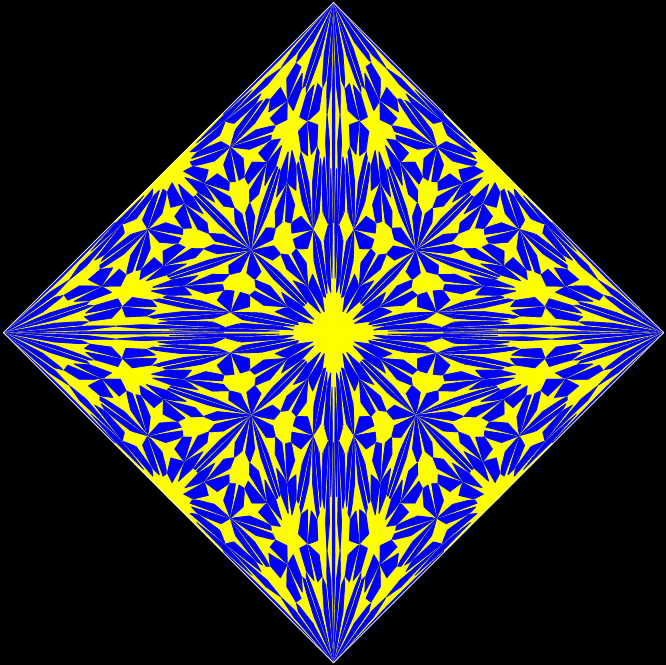
Square Routes Re-Re-Re-Revisited

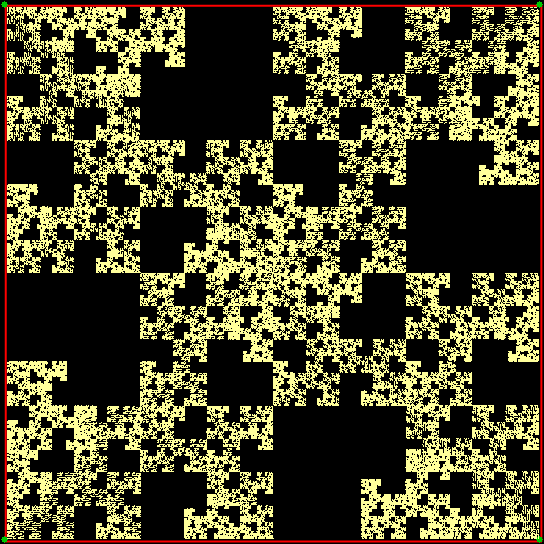
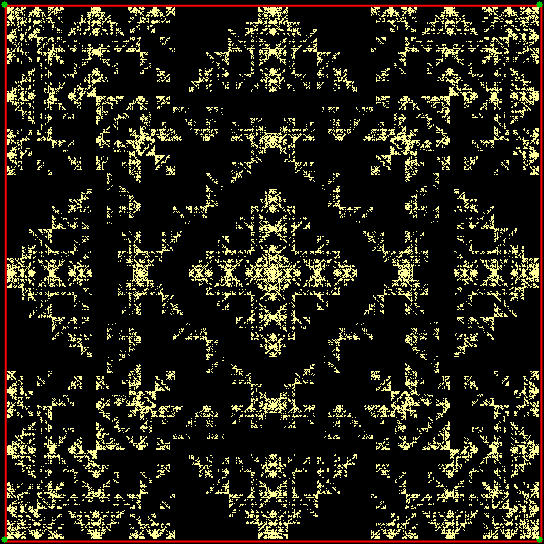
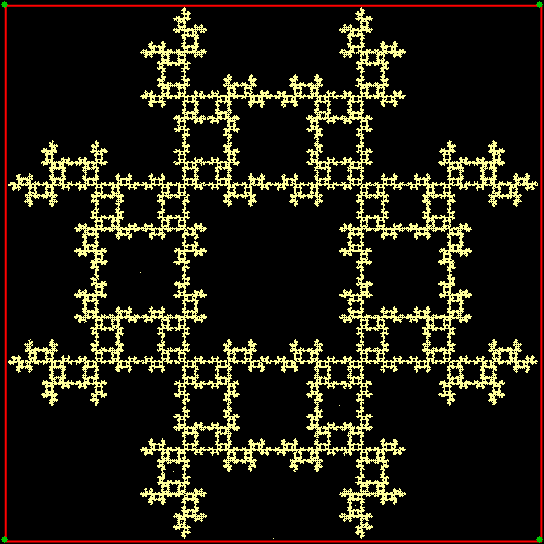
Discovering something that’s new to you in recreational maths is good. But so is re-discovering it by a different route. I’ve long been passionate about what happens when a point is allowed to jump repeatedly halfway towards the randomly chosen vertices of a square. If the point can choose any vertex any number of times, the interior of the square fills slowly and completely with points, like this:

Point jumping at random halfway towards vertices of a square


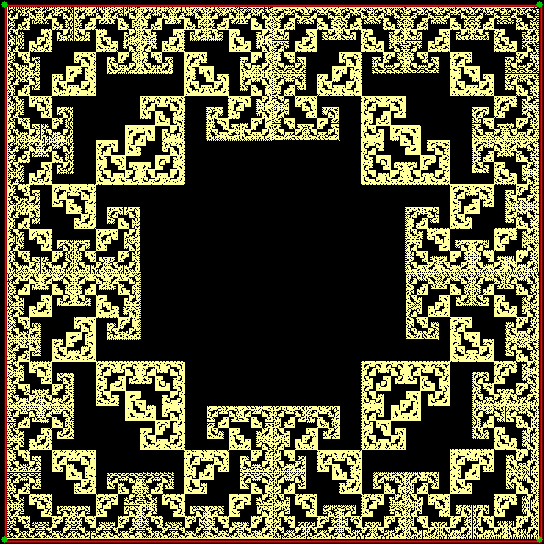
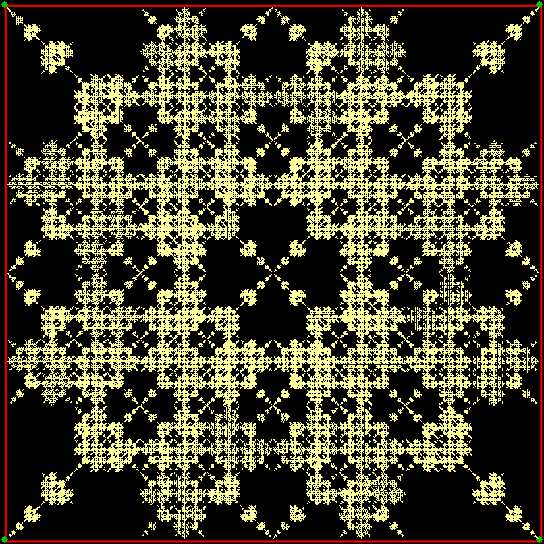
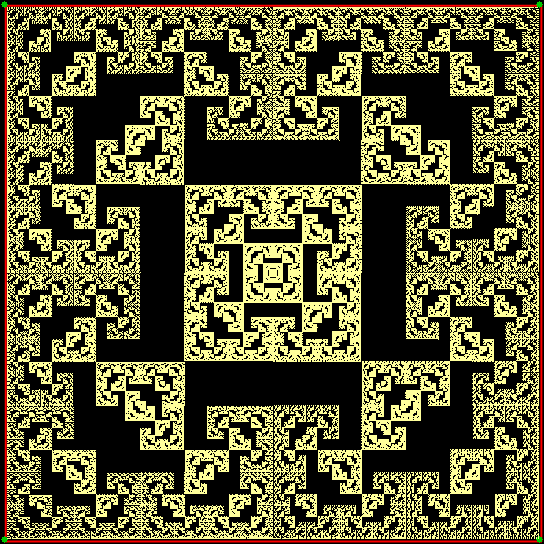
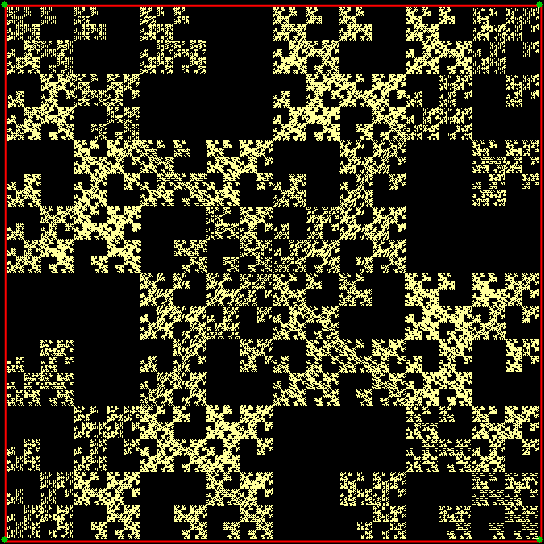
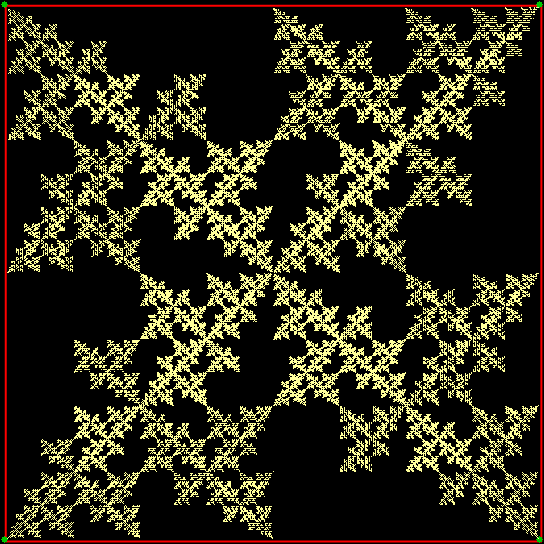
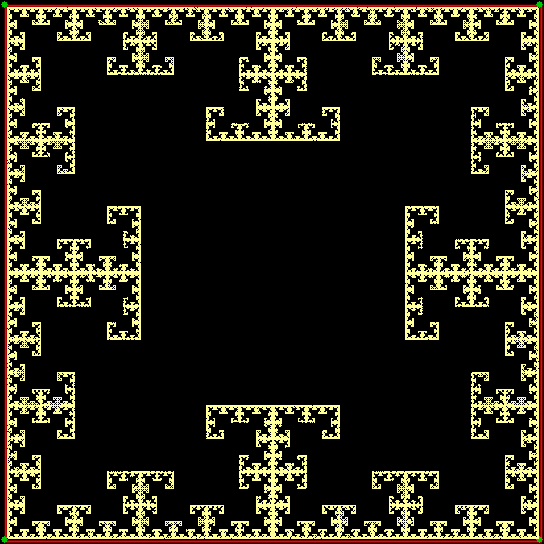
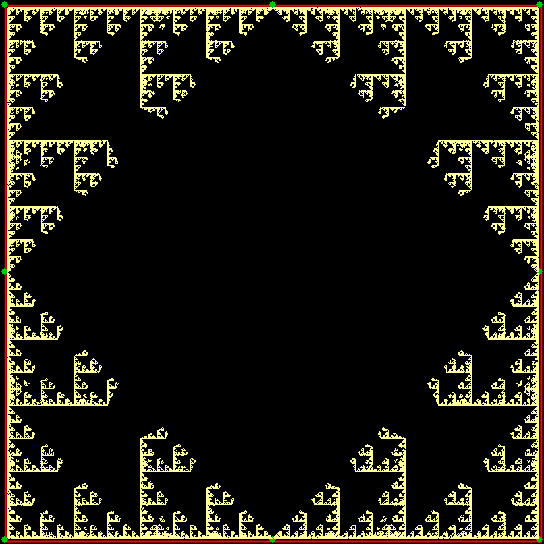
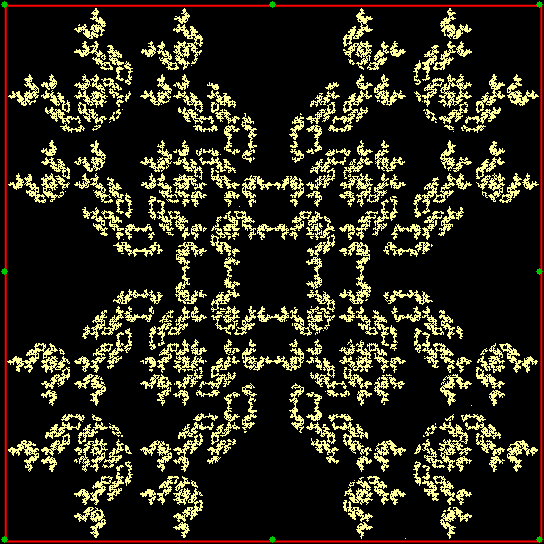
However, if the point is banned from jumping towards the same vertex twice or more in a row, an interesting fractal appears:

Fractal #1 — ban on jumping towards vertex vi twice or more


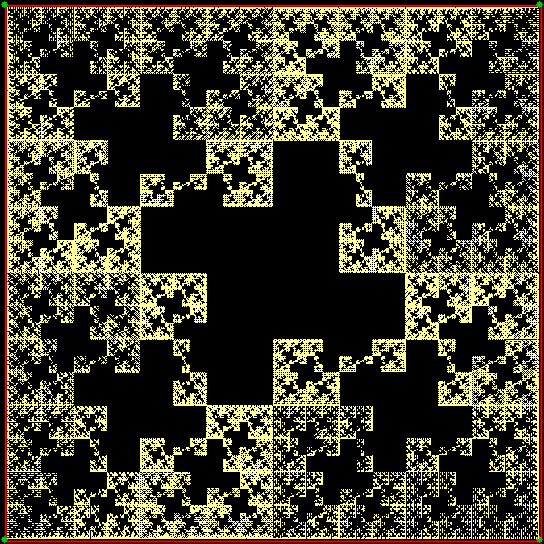
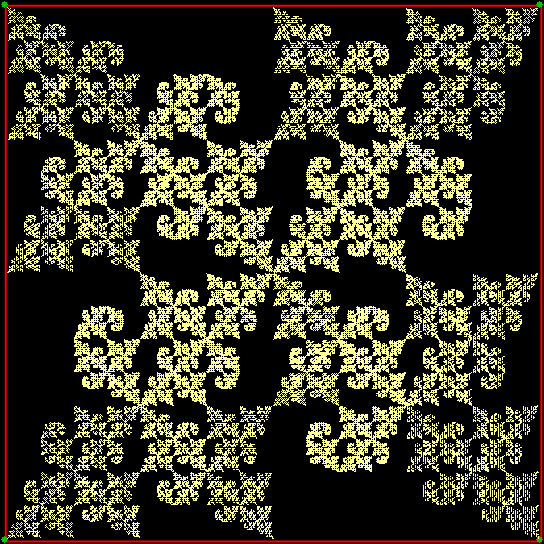
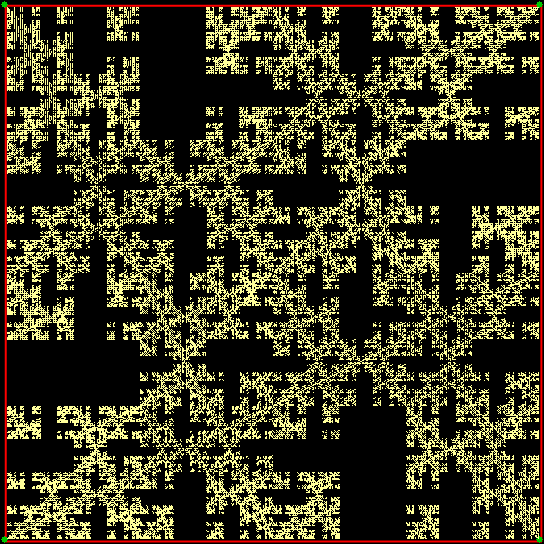
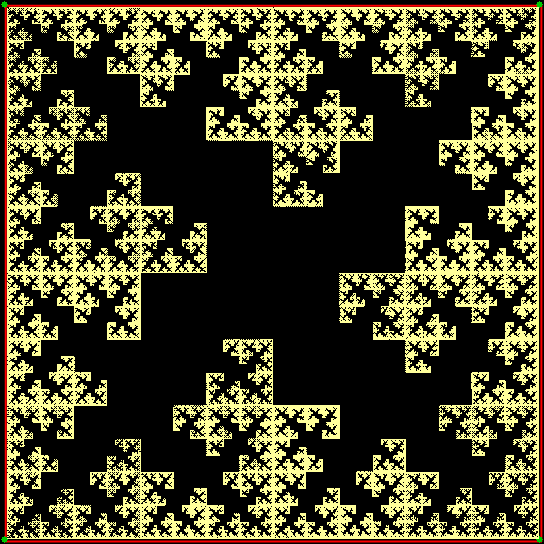
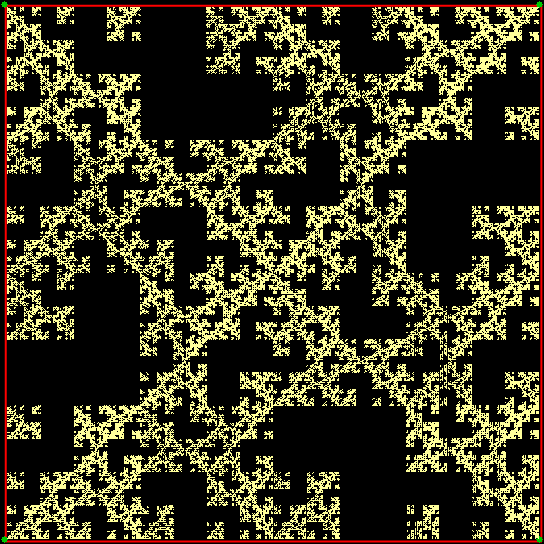
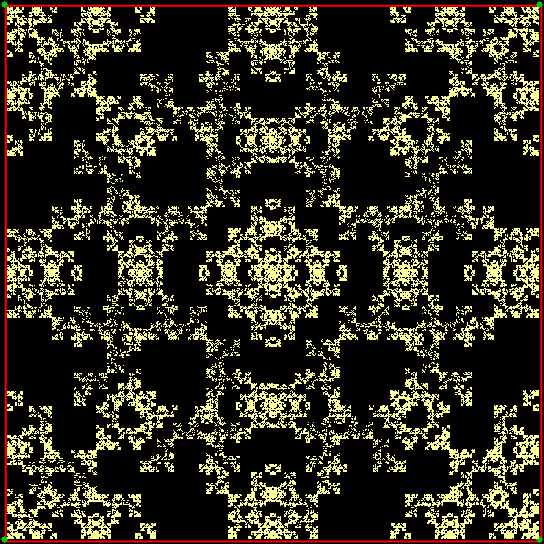
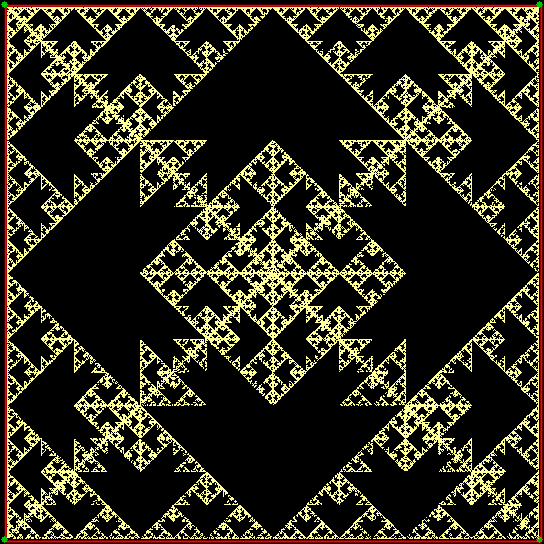
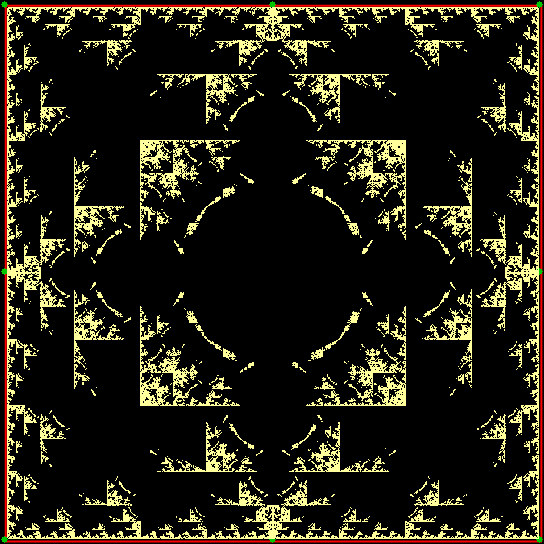
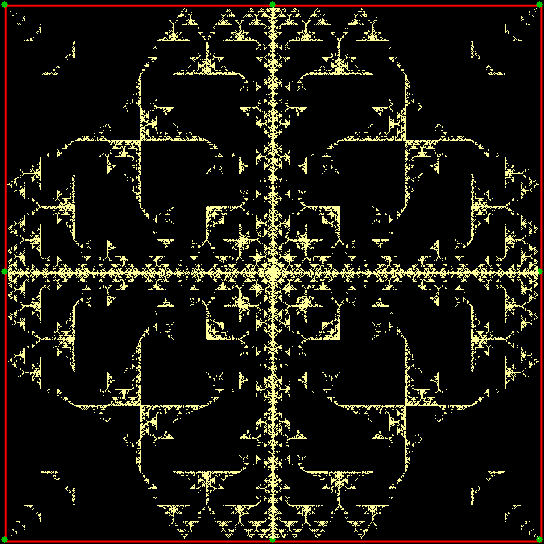
If the point can’t jump towards the vertex one place clockwise of the vertex it’s just jumped towards, this fractal appears:

Fractal #2 — ban on jumping towards vertex vi+1


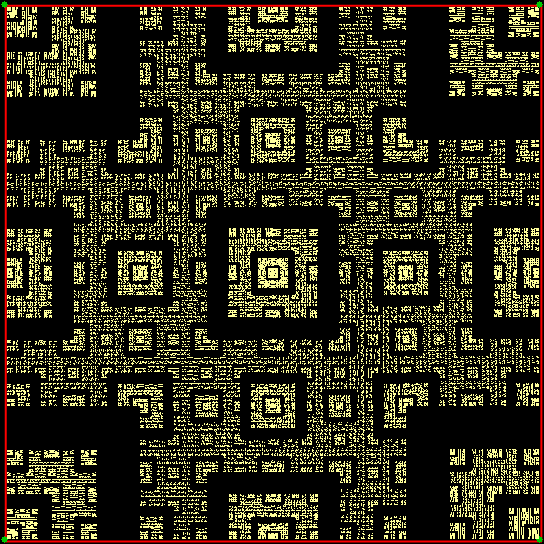
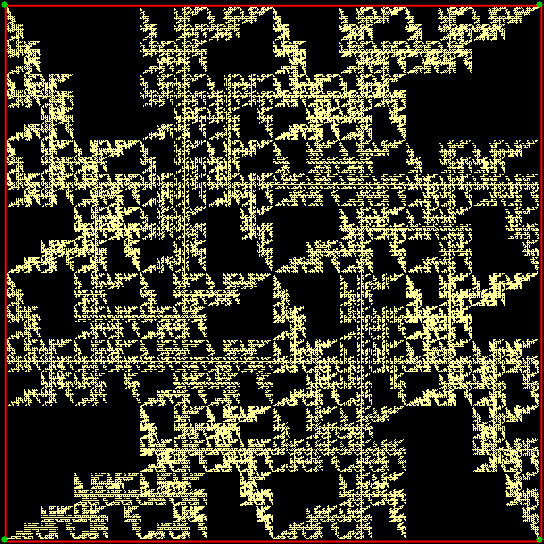
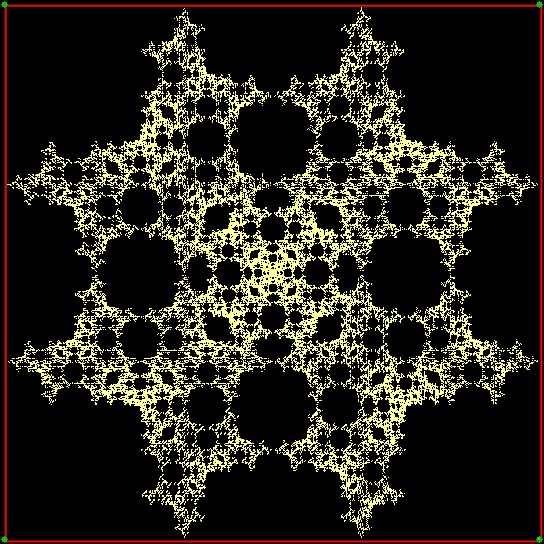
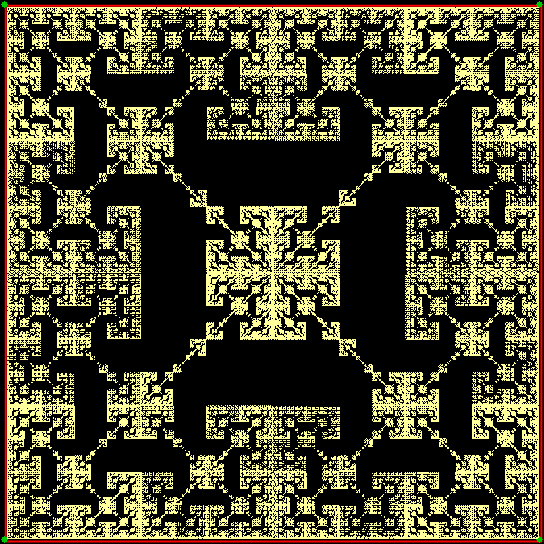
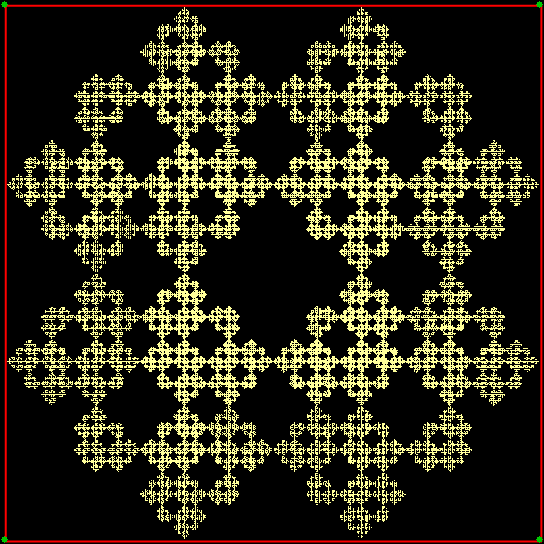
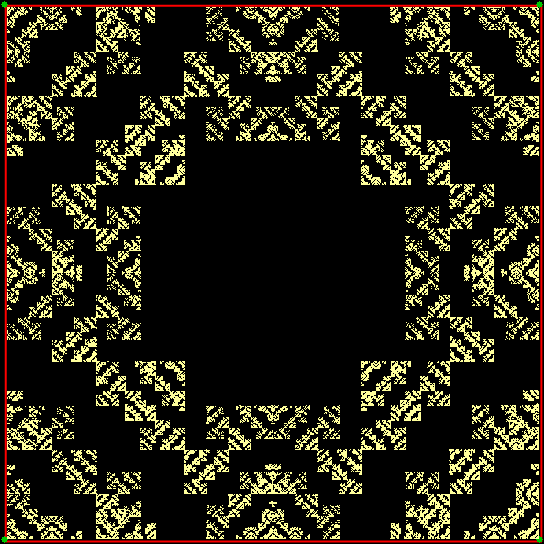
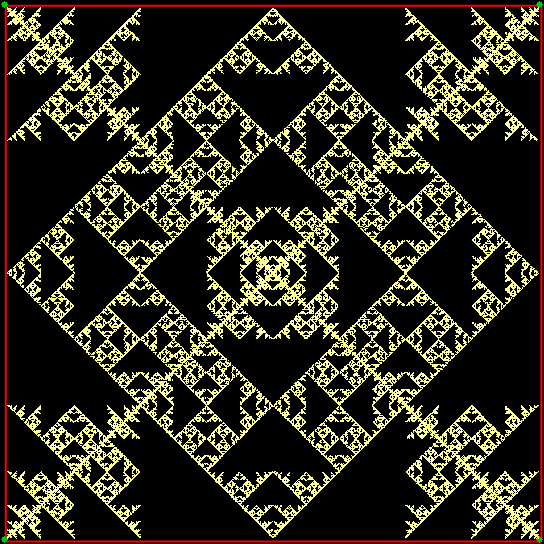
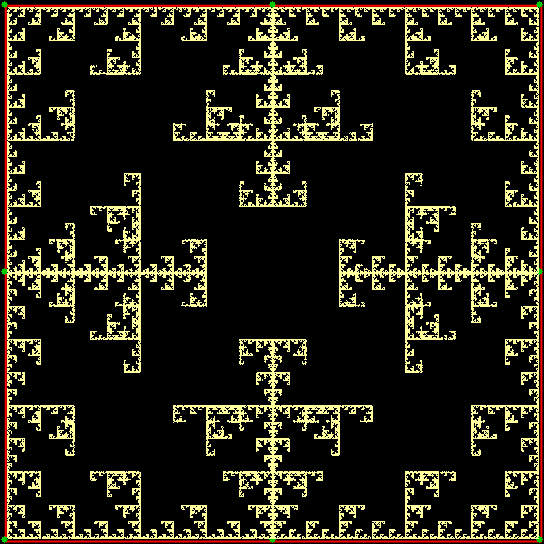
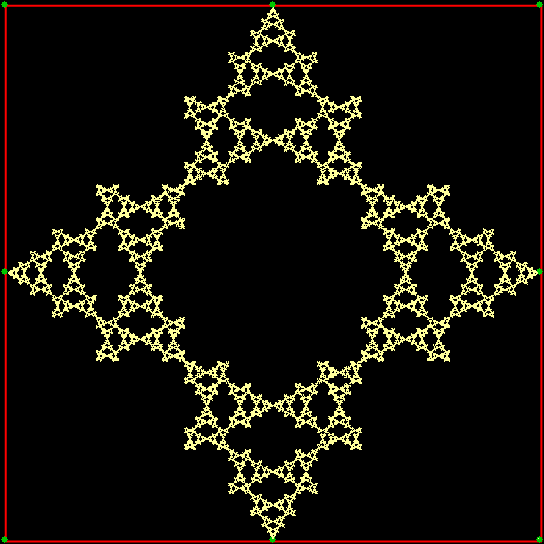
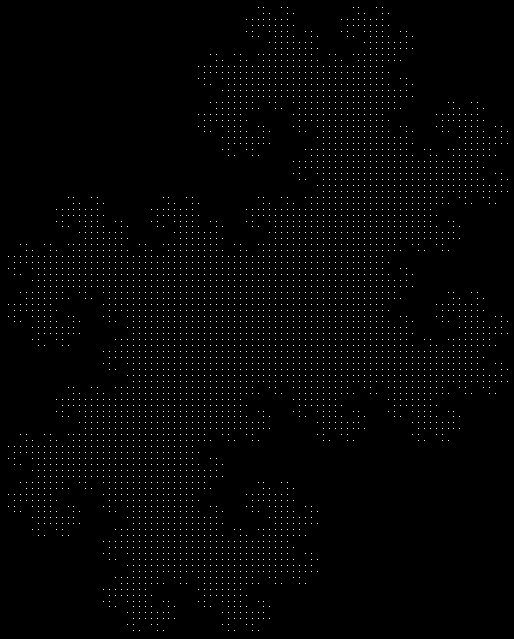
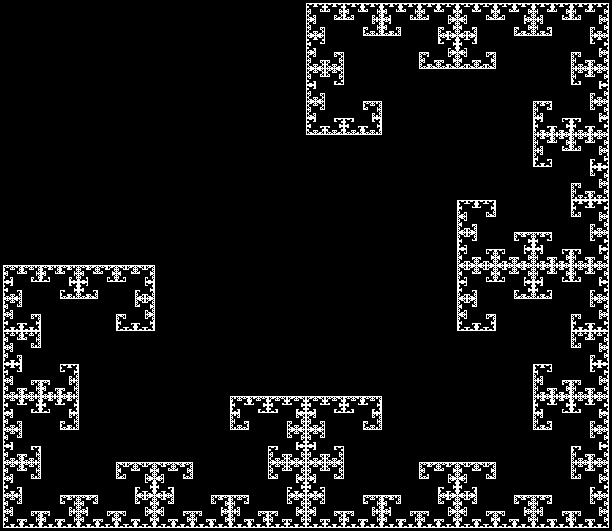
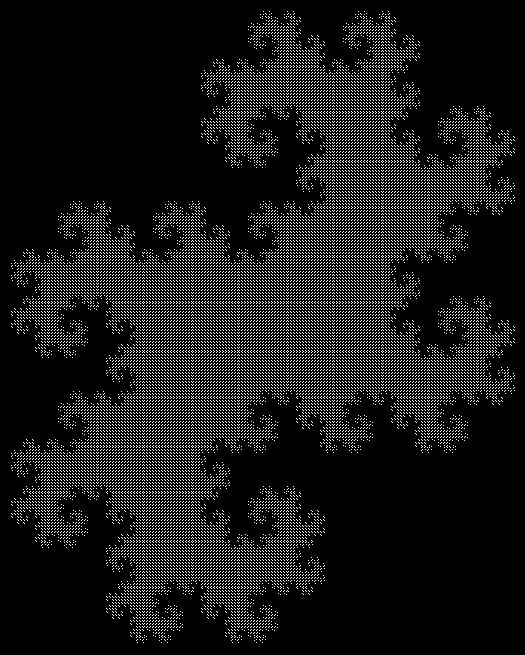
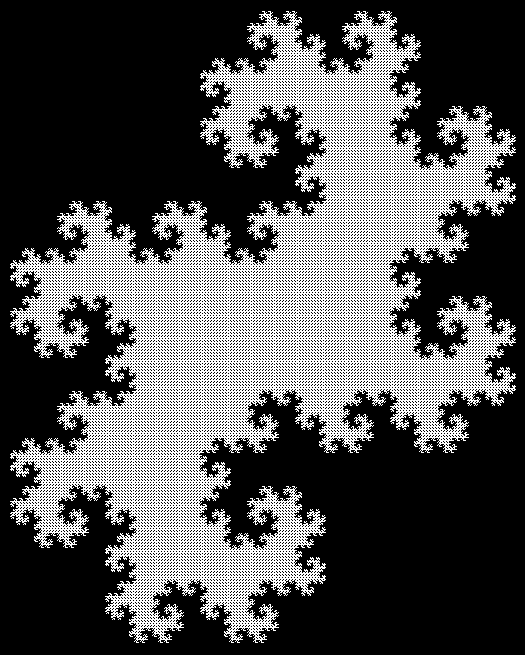
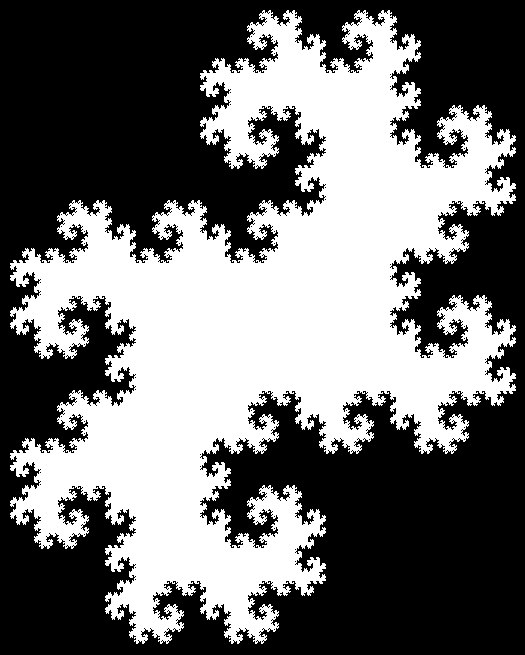
If the point can’t jump towards the vertex two places clockwise of the vertex it’s just jumped towards, this fractal appears (two places clockwise is also two places anticlockwise, i.e. the banned vertex is diagonally opposite):

Fractal #3 — ban on jumping towards vertex vi+2


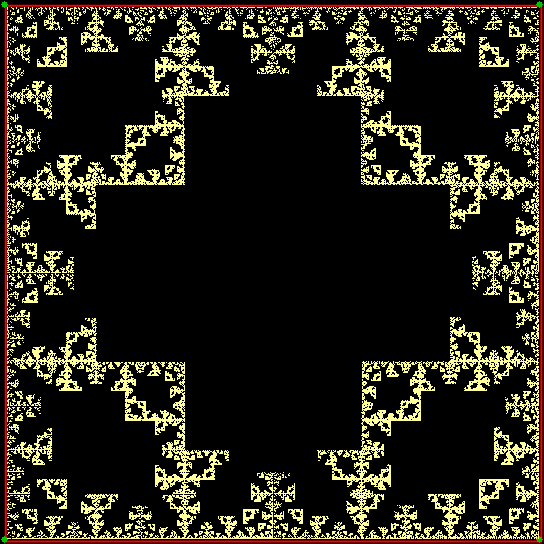
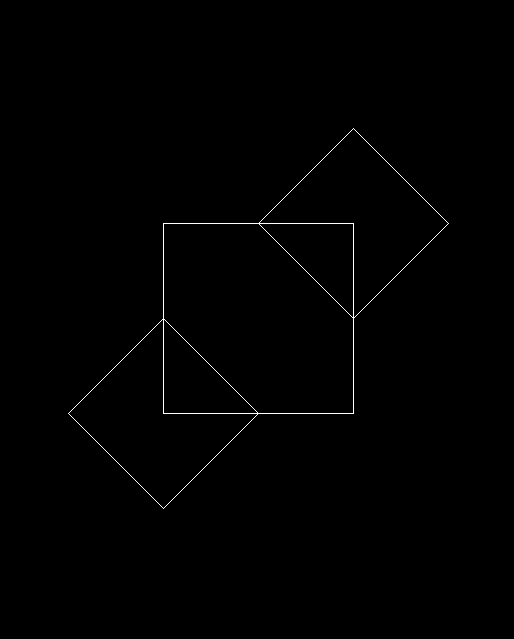
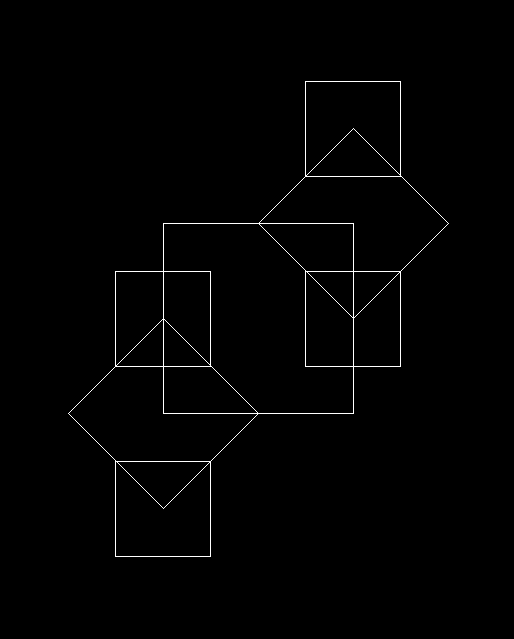
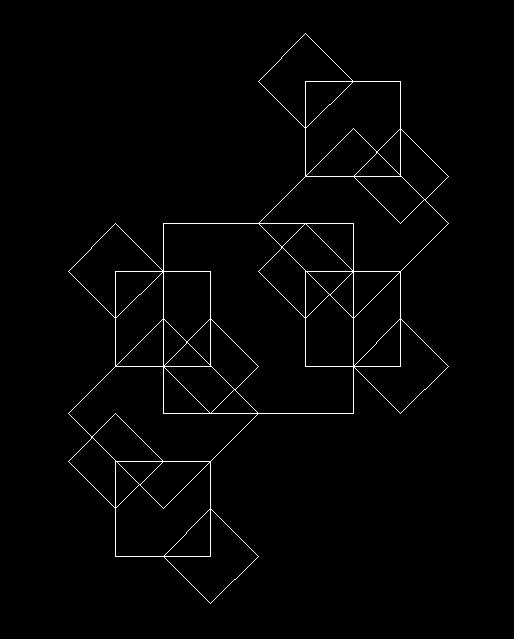
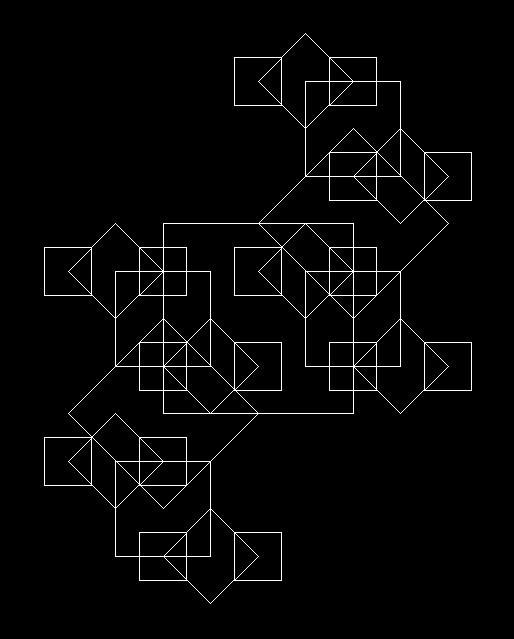
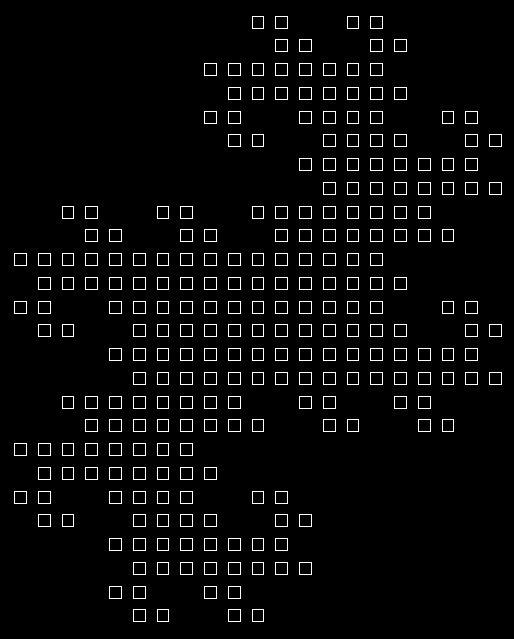
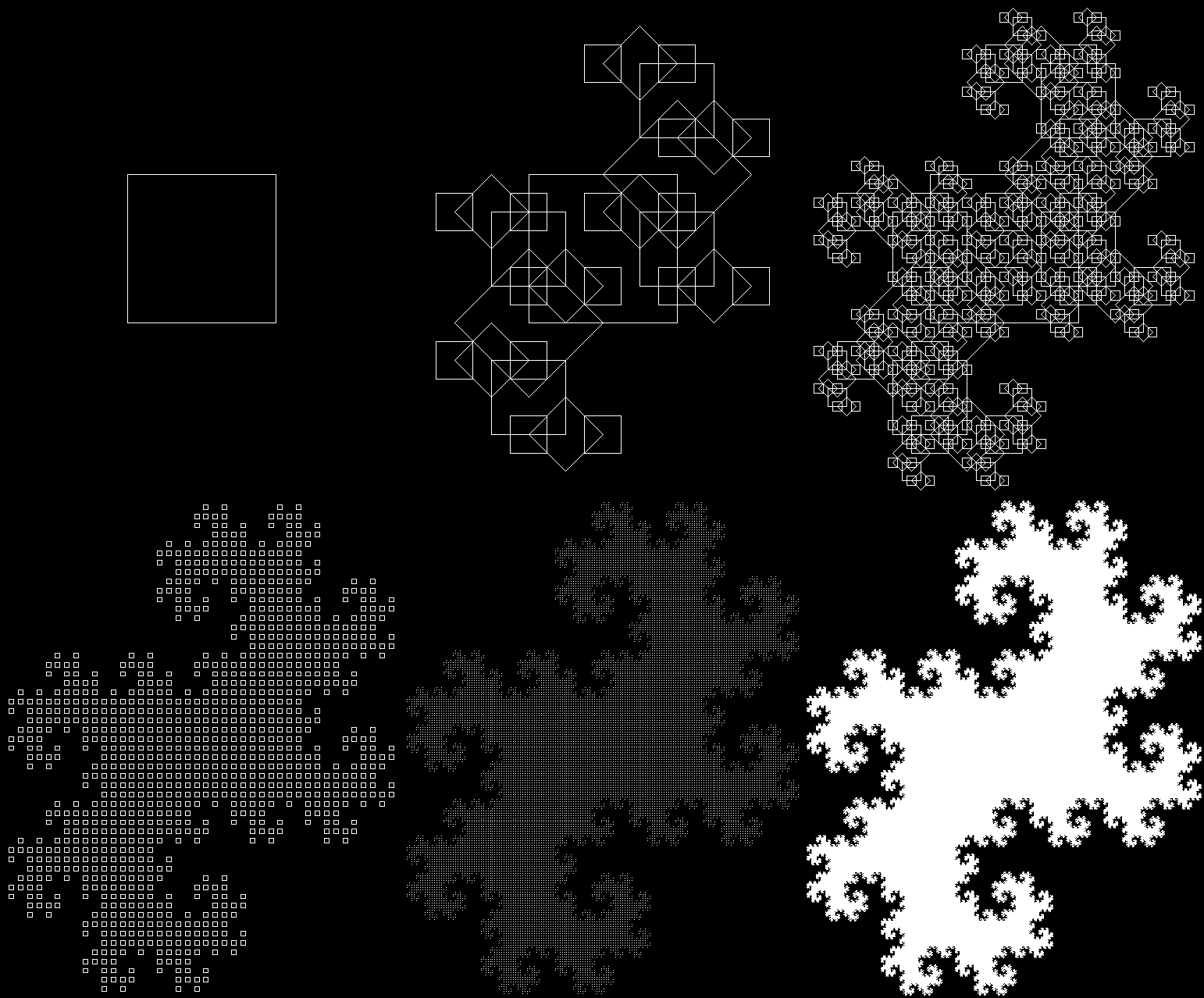
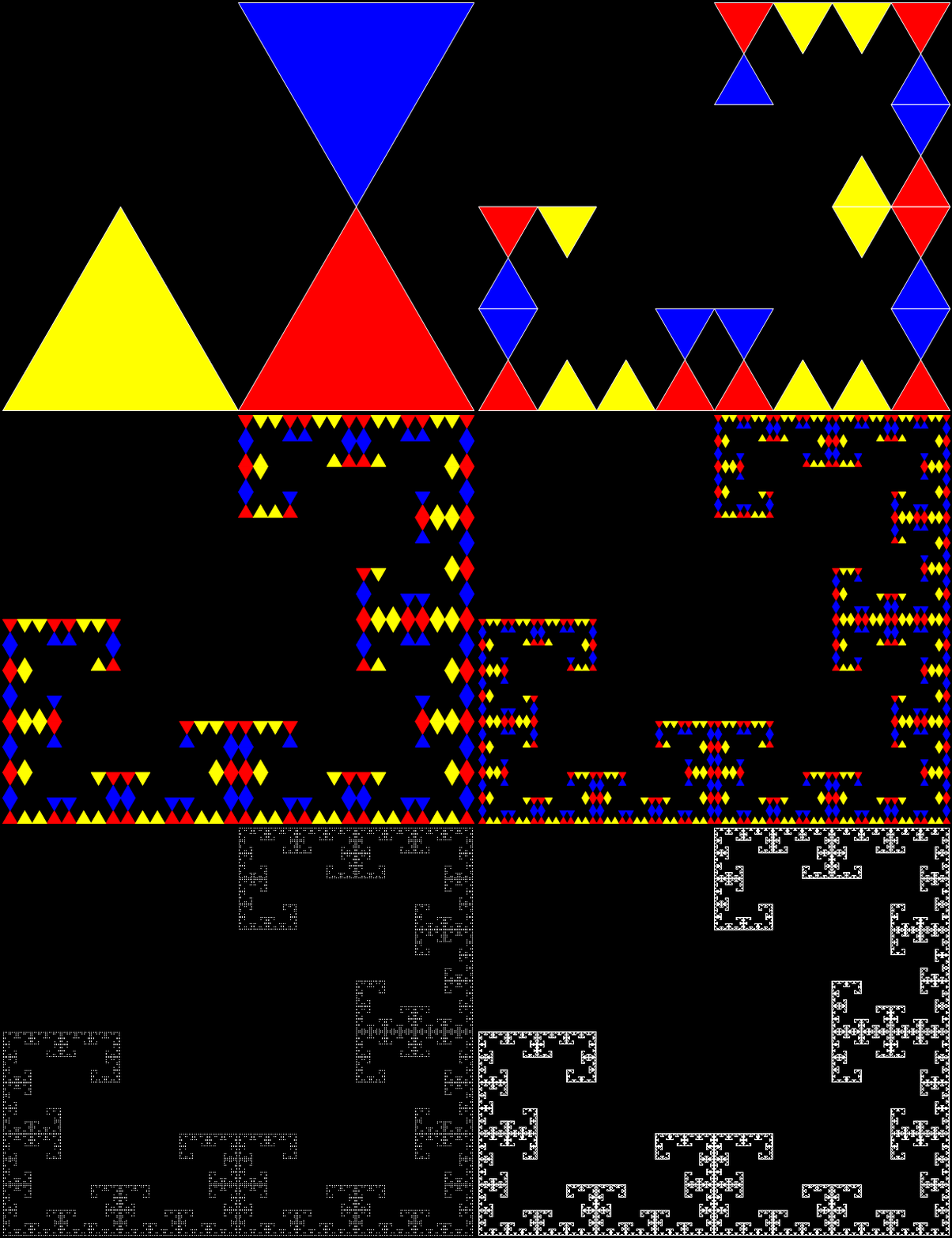
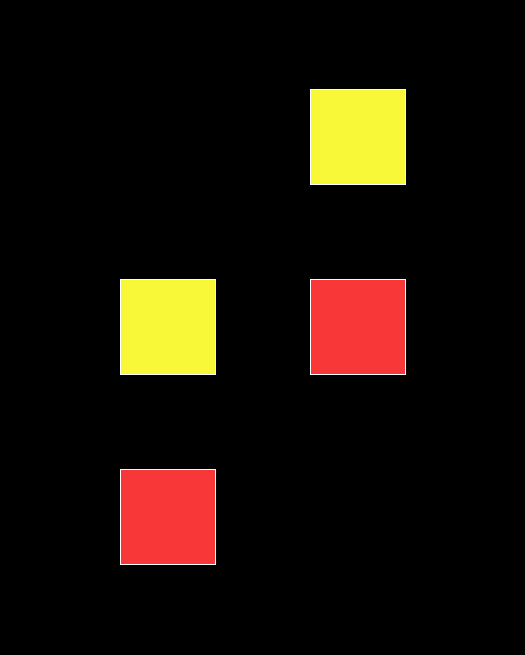
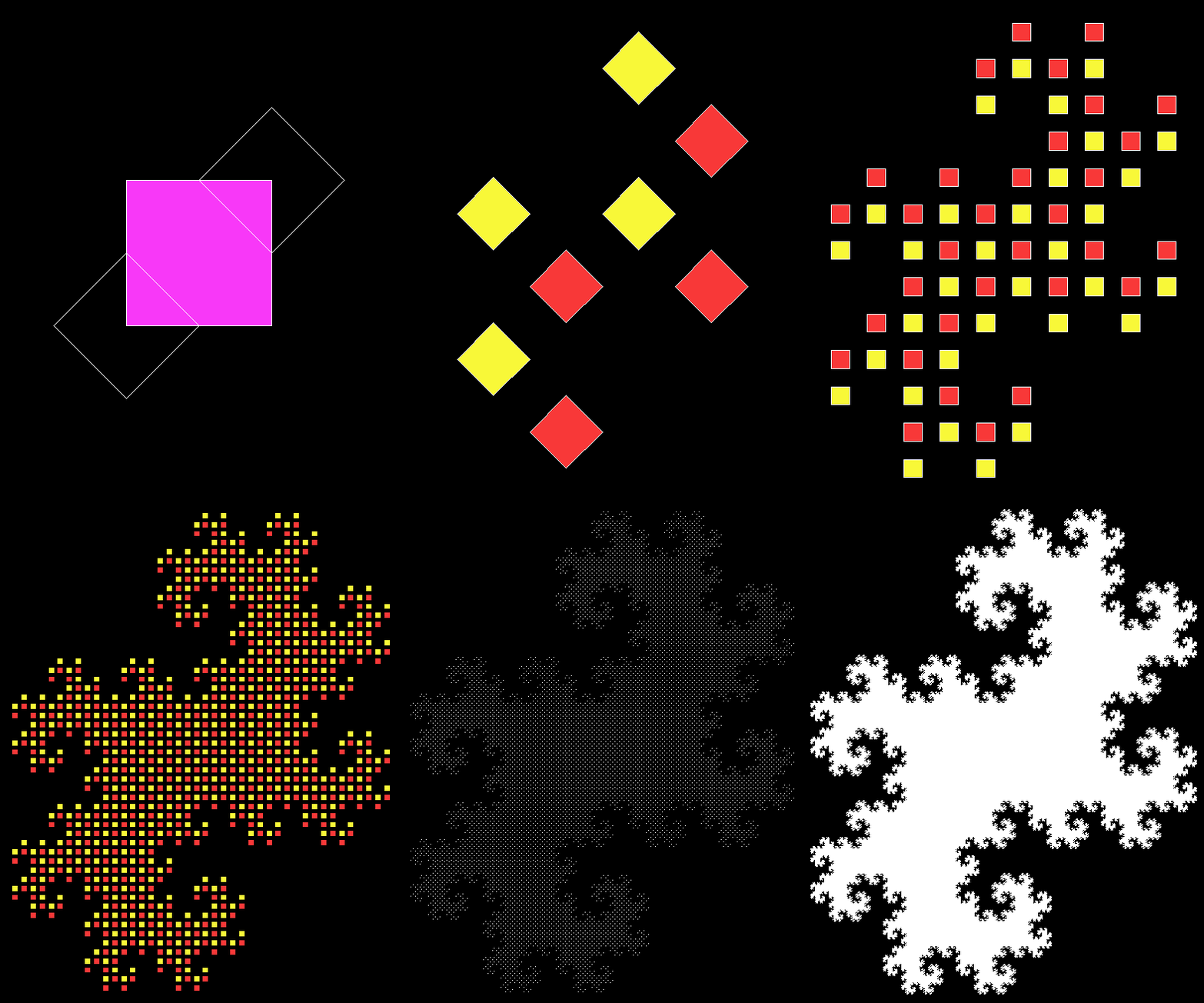
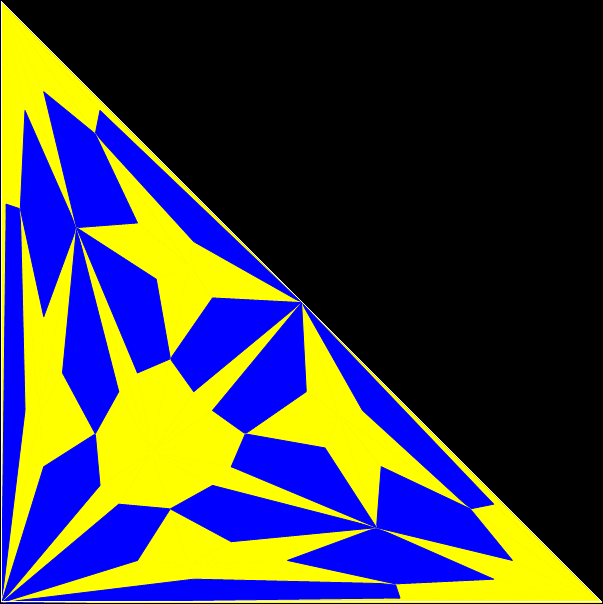
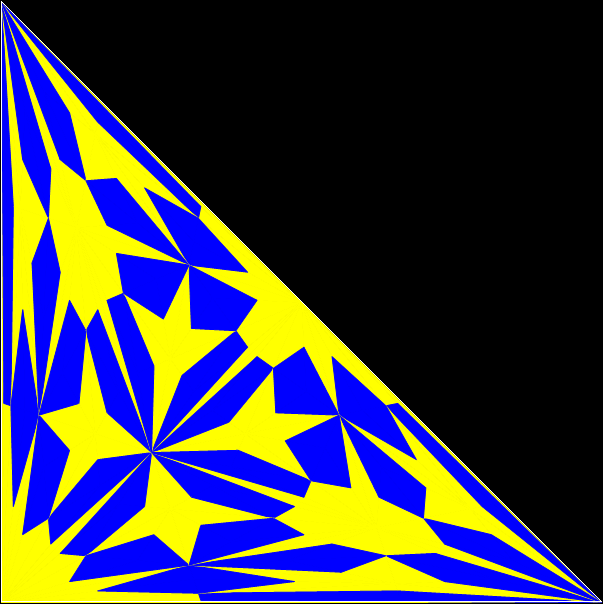
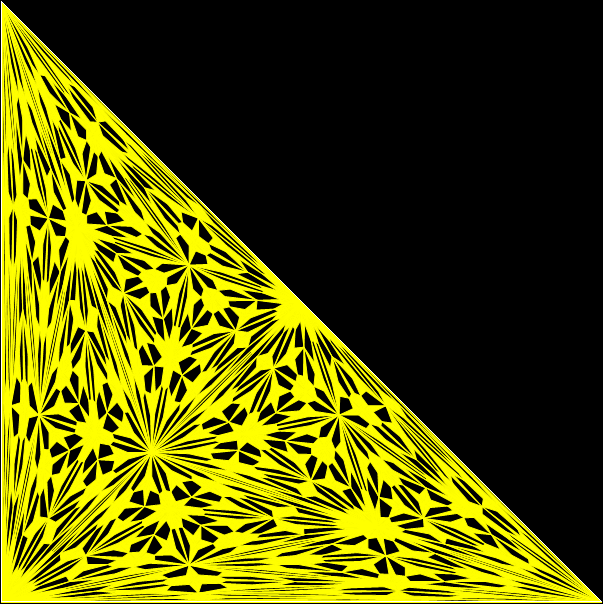
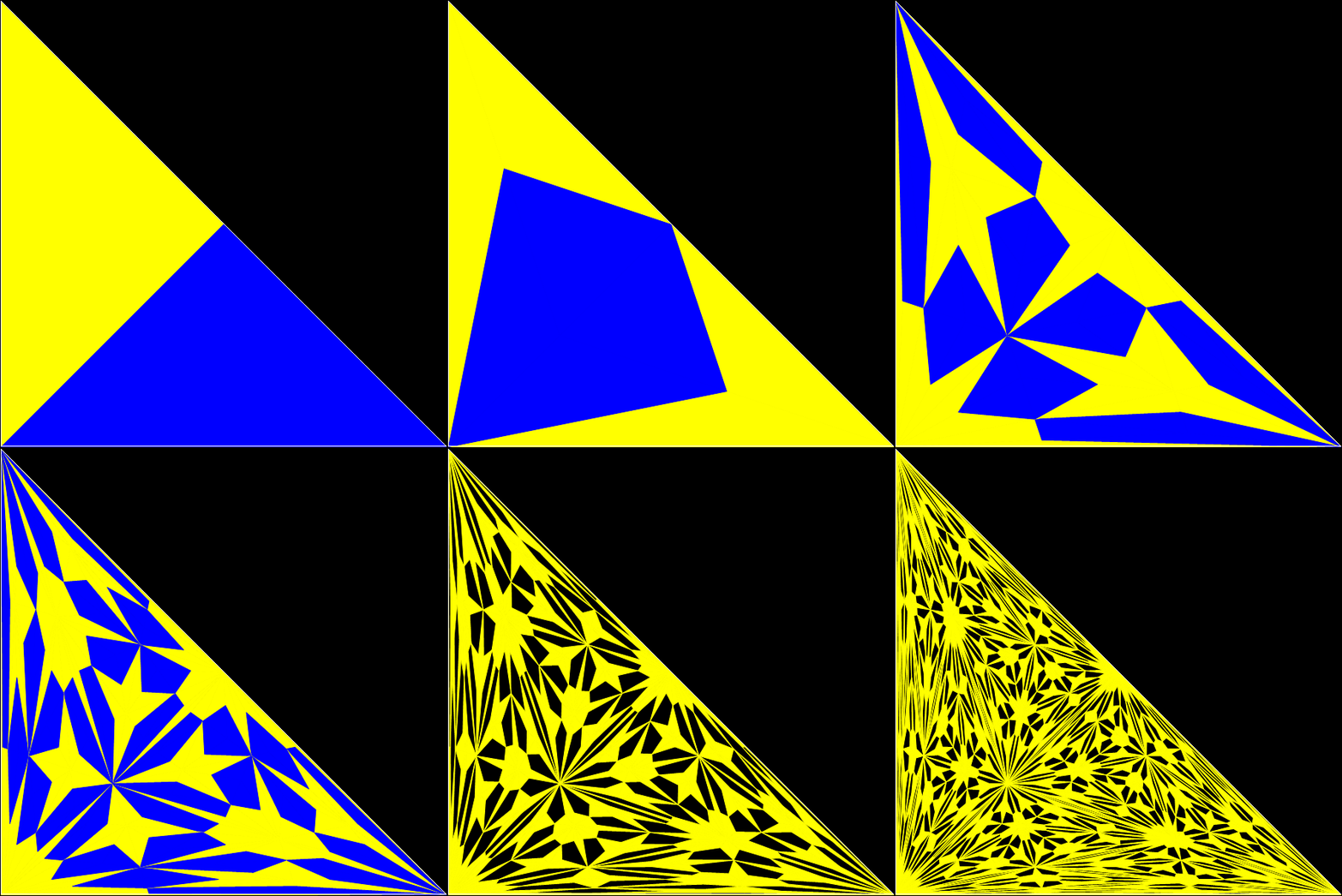
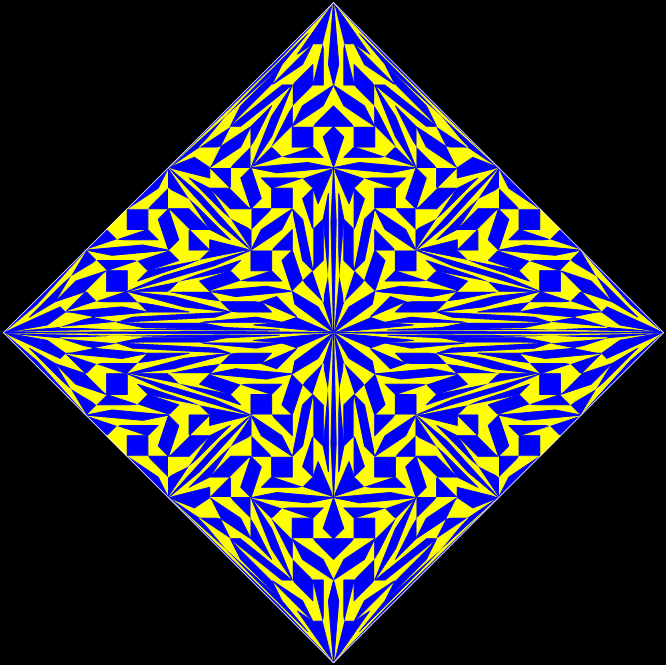
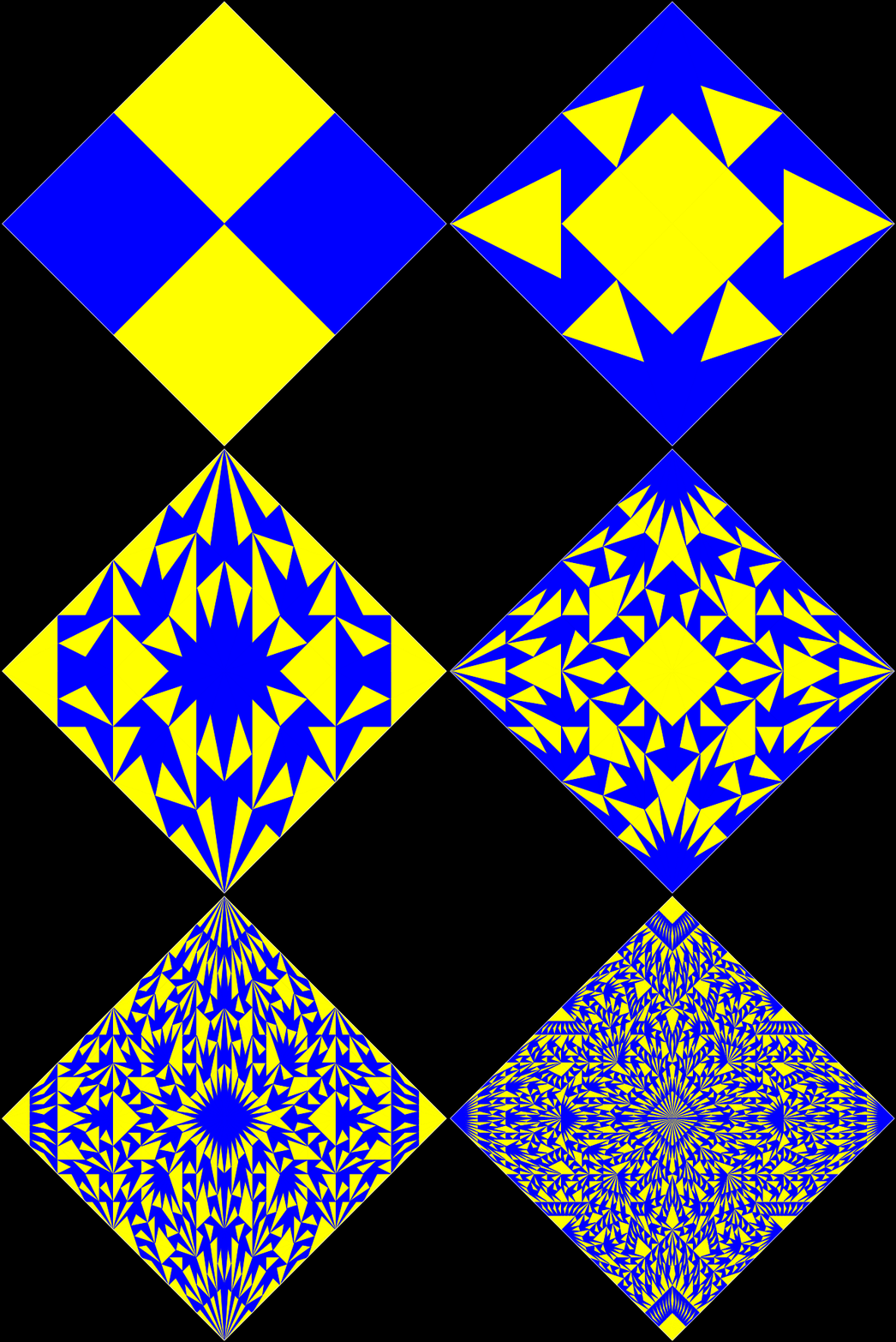
Now I’ve discovered a new way to create these fractals. You take a filled square, divide it into smaller squares, then remove some of them in a systematic way. Then you do the same to the smaller squares that remain. For fractal #1, you do this:
Fractal #1, stage #1


Stage #2


Stage #3


Stage #4


Stage #5


Stage #6


Stage #7


Stage #8


Fractal #1 (animated)


For fractal #2, you do this:

Fractal #2, stage #1


Stage #2


Stage #3


Stage #4


Stage #5


Stage #6


Stage #7


Stage #8


Fractal #2 (animated)


For fractal #3, you do this:

Fractal #3, stage #1


Stage #2


Stage #3


Stage #4


Stage #5


Stage #6


Stage #7


Stage #8


Fractal #3 (animated)


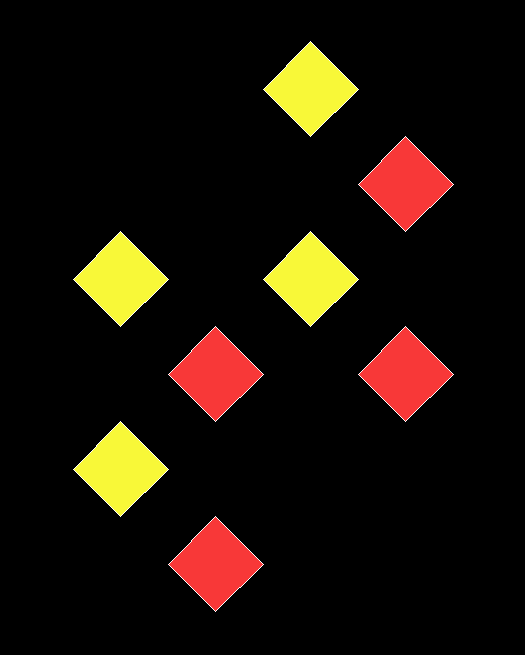
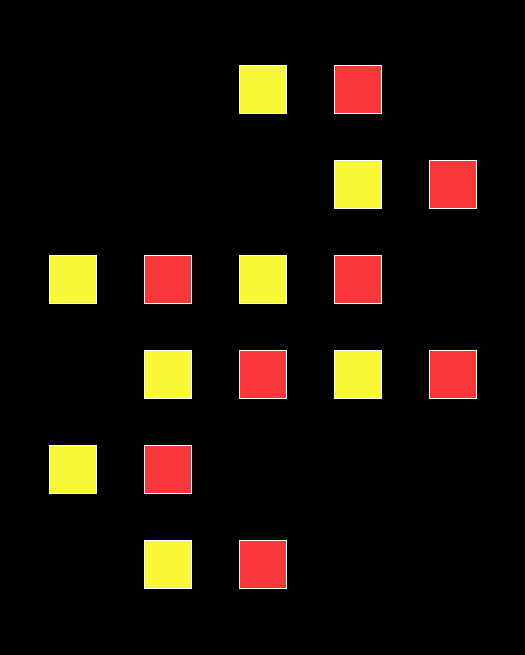
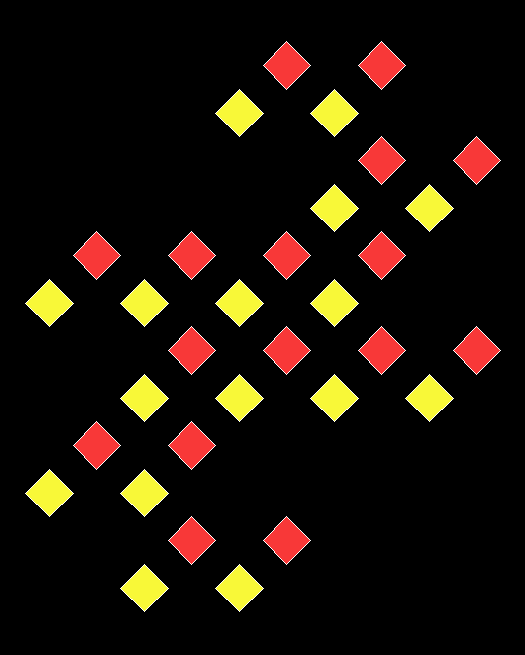
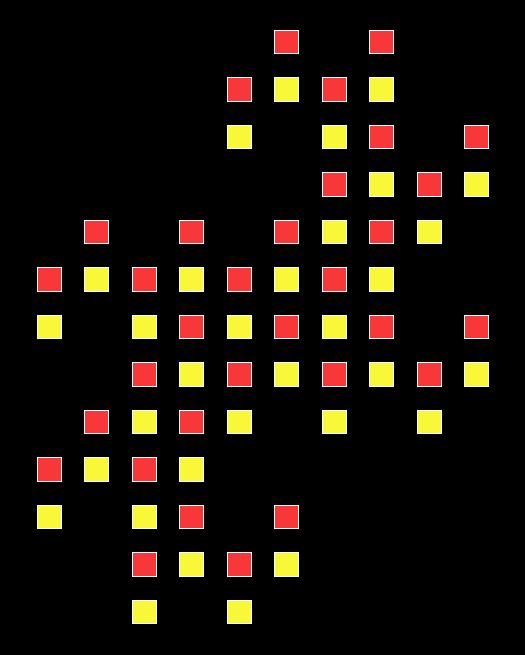
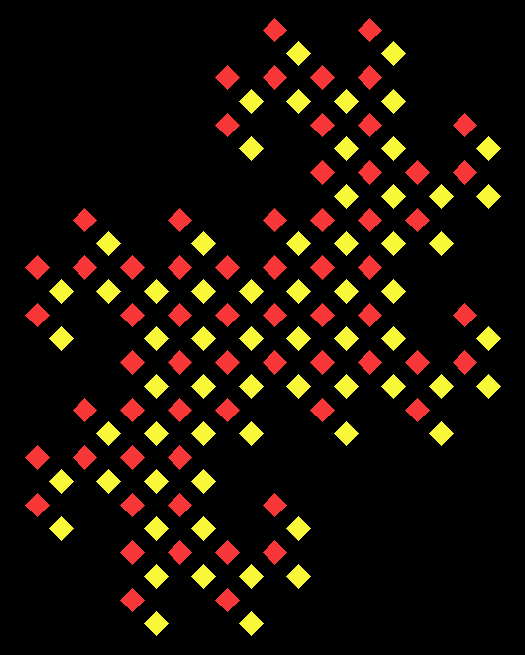
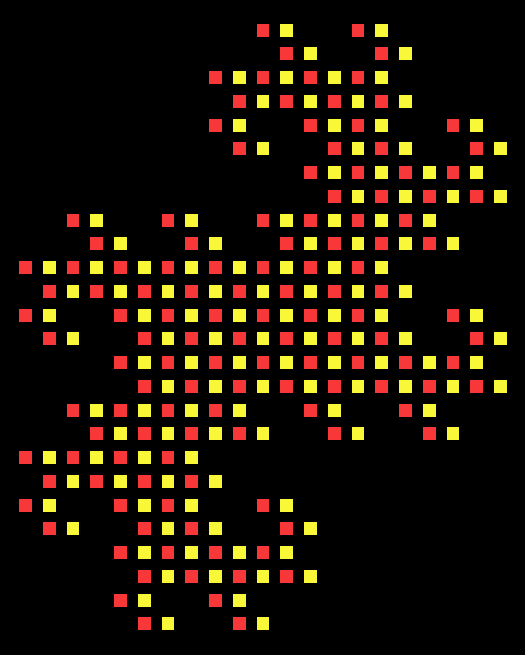
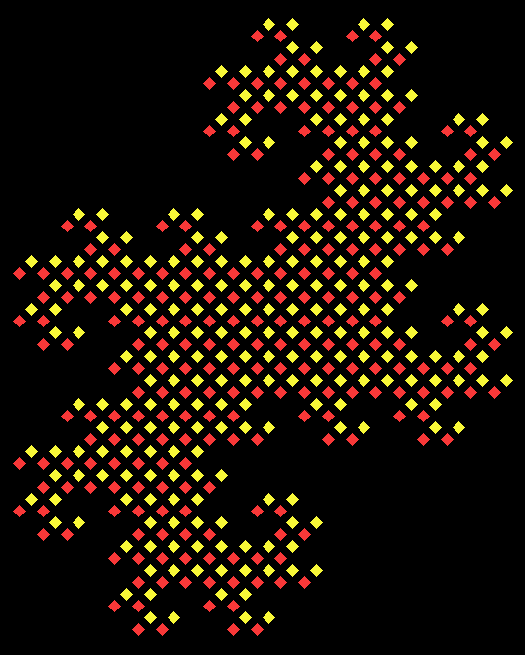
If the sub-squares are coloured, it’s easier to understand how, say, fractal #1 is created:

Fractal #1 (coloured), stage #1


Stage #2


Stage #3


Stage #4


Stage #5


Stage #6


Stage #7


Stage #8


Fractal #1 (coloured and animated)


The fractal is actually being created in quarters, with one quarter rotated to form the second, third and fourth quarters:

Fractal #1, quarter


Here’s an animation of the same process for fractal #3:

Fractal #3 (coloured and animated)


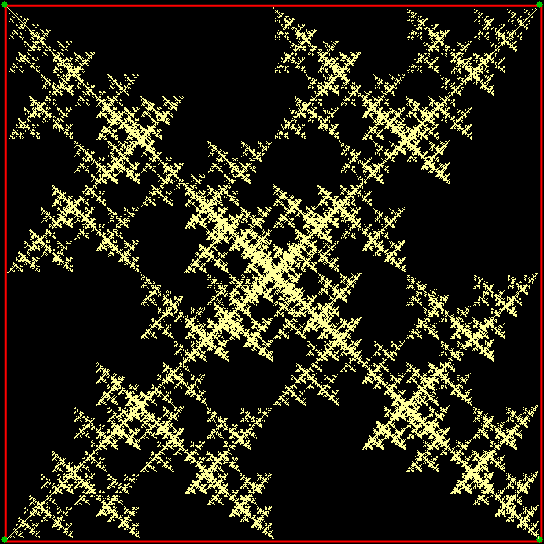
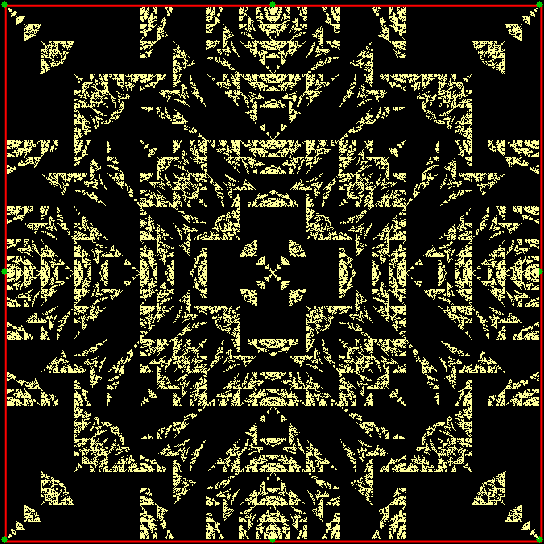
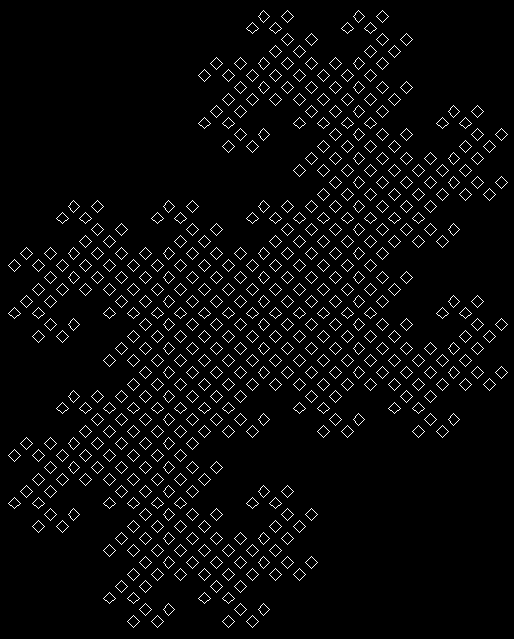
So you can create these fractals either with a jumping point or by subdividing a square. But in fact I discovered the subdivided-square route by looking at a variant of the jumping-point route. I wondered what would happen if you took a point inside a square, allowed it to trace all possible routes towards the vertices without marking its position, then imposed the restriction for Fractal #1 on its final jump, namely, that it couldn’t jump towards the vertex it jumped towards on its previous jump. If the point is marked after its final jump, this is what appears (if the routes chosen had been truly random, the image would be similar but messier):

Fractal #1, restriction on final jump


Then I imposed the same restriction on the point’s final two jumps:

Fractal #1, restriction on final 2 jumps


And final three jumps:

Fractal #1, restriction on final 3 jumps


And so on:

Fractal #1, restriction on final 4 jumps


Fractal #1, restriction on final 5 jumps


Fractal #1, restriction on final 6 jumps


Fractal #1, restriction on final 7 jumps


Here are animations of the same process applied to fractals #2 and #3:

Fractal #2, restrictions on final 1, 2, 3… jumps


Fractal #3, restrictions on final 1, 2, 3… jumps


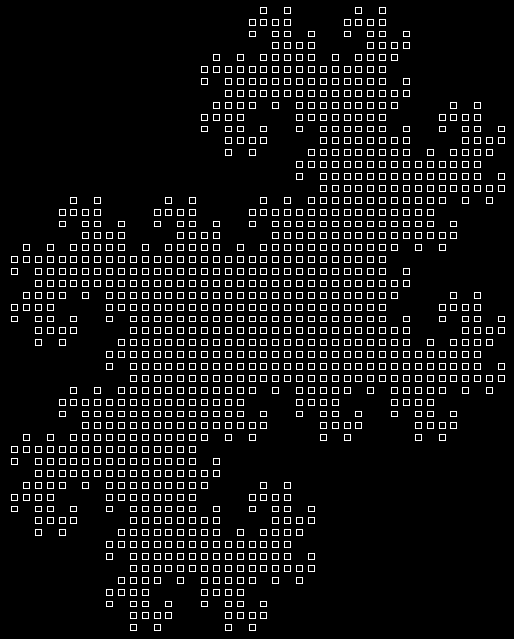
The longer the points are allowed to jump before the final restriction is imposed on their n final jumps, the more densely packed the marked points will be:

Fractal #1, packed points #1


Packed points #2


Packed points #3


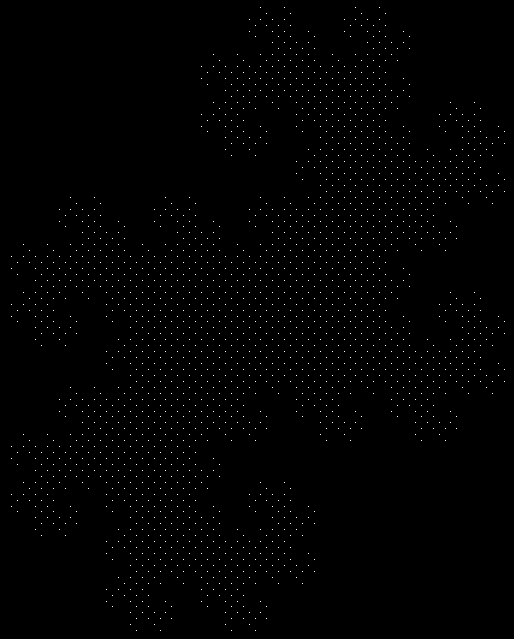
Eventually, the individual points will form a solid mass, like this:

Fractal #1, solid mass of points


Fractal #1, packed points (animated)


Previously pre-posted (please peruse):

Square Routes
Square Routes Revisited
Square Routes Re-Revisited
Square Routes Re-Re-Revisited

Horn Again

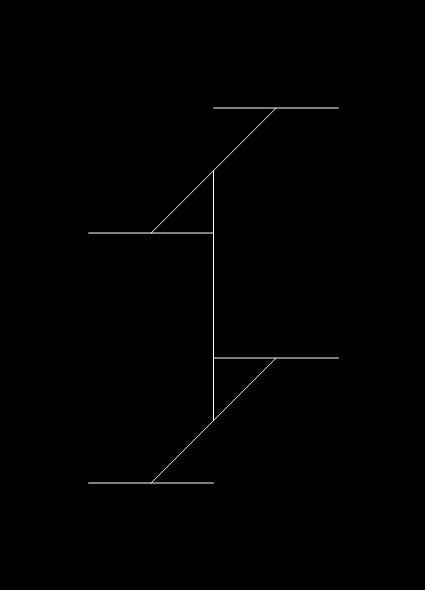
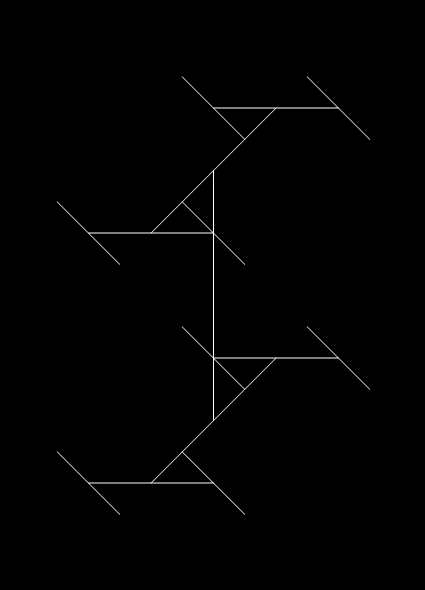
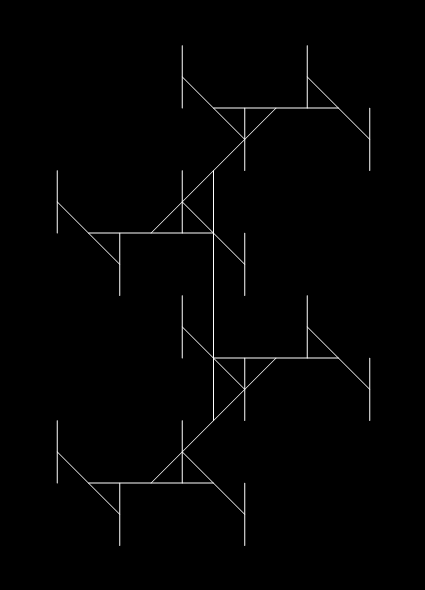
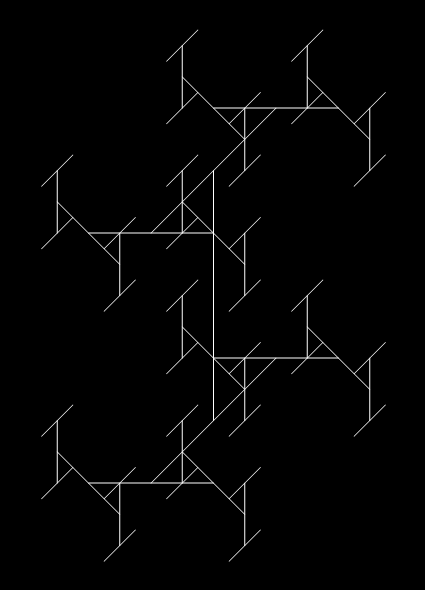
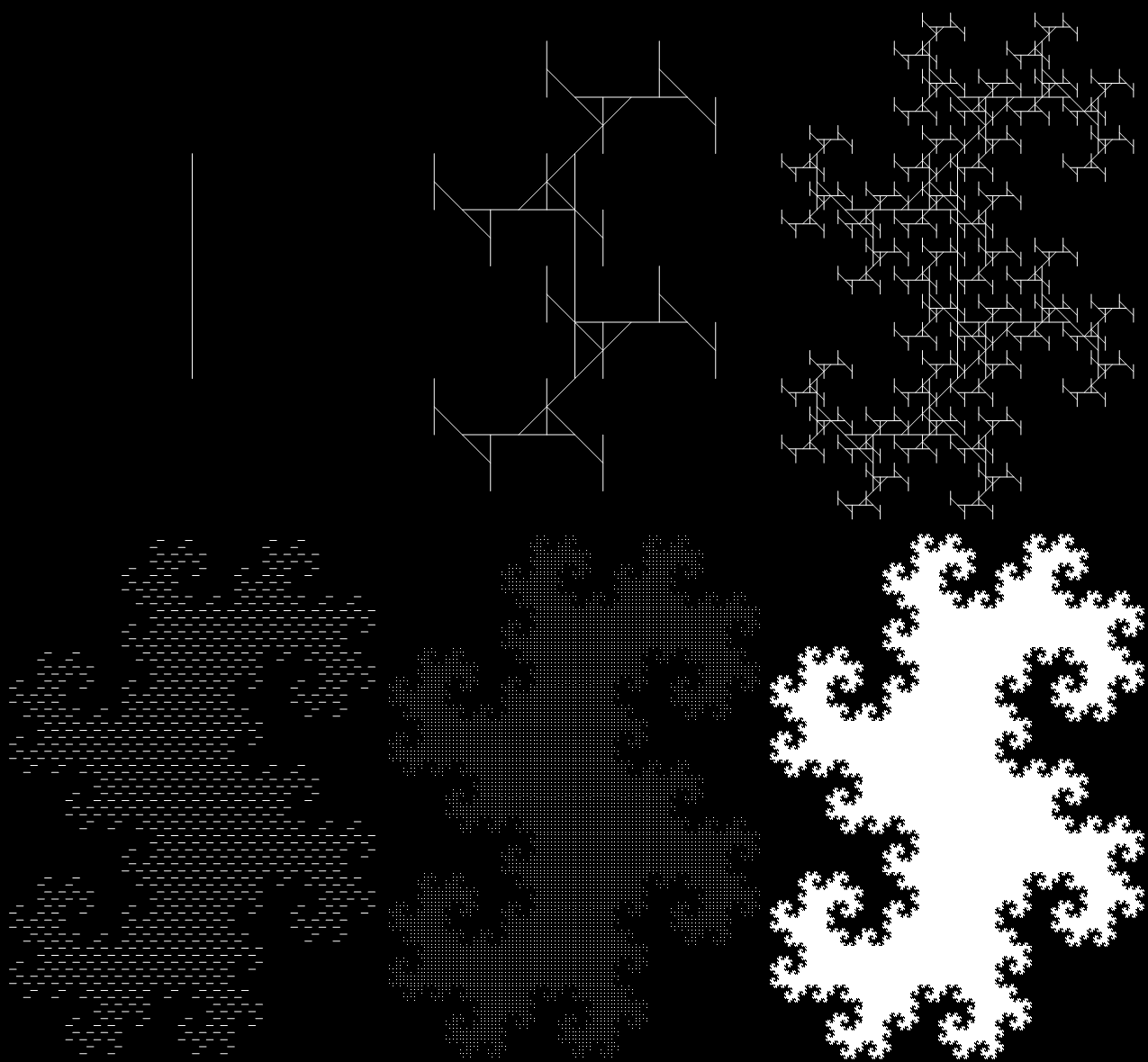
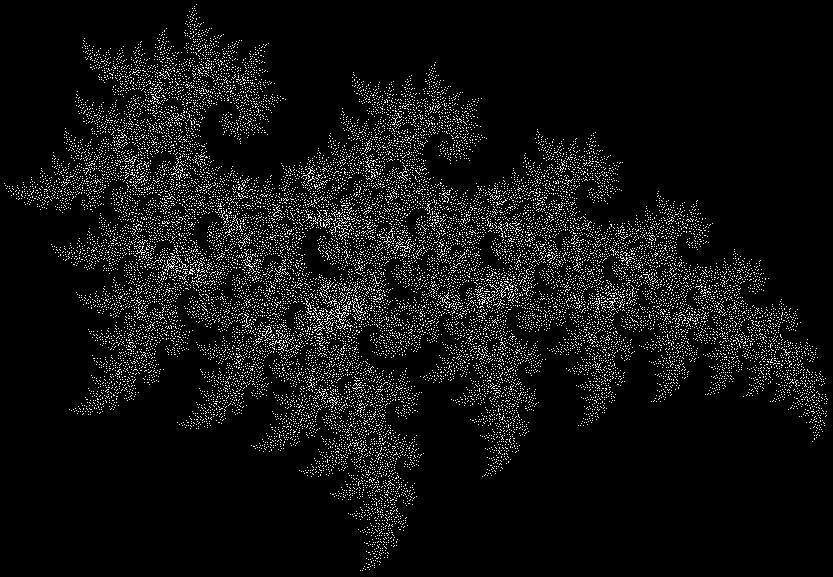
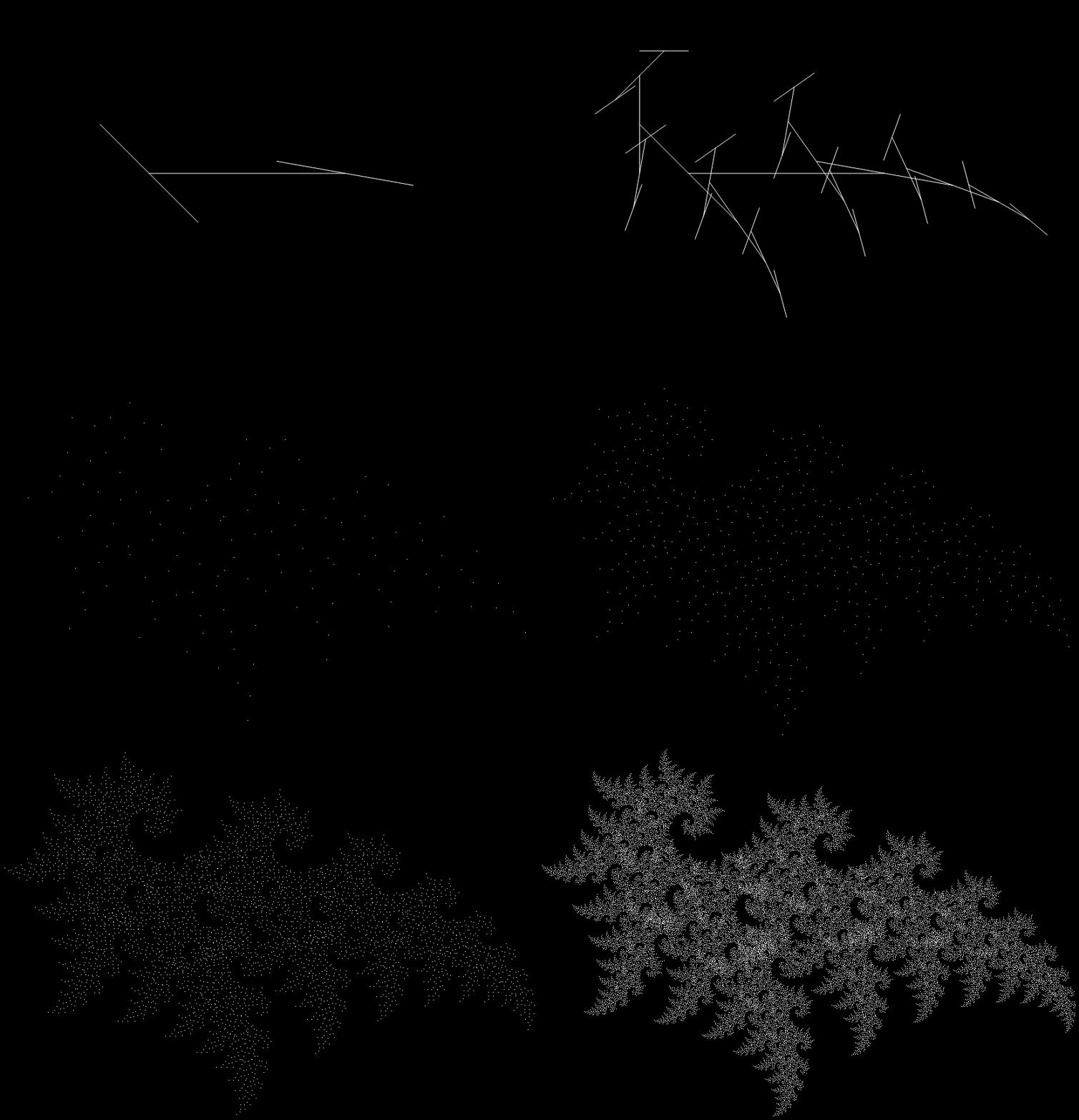
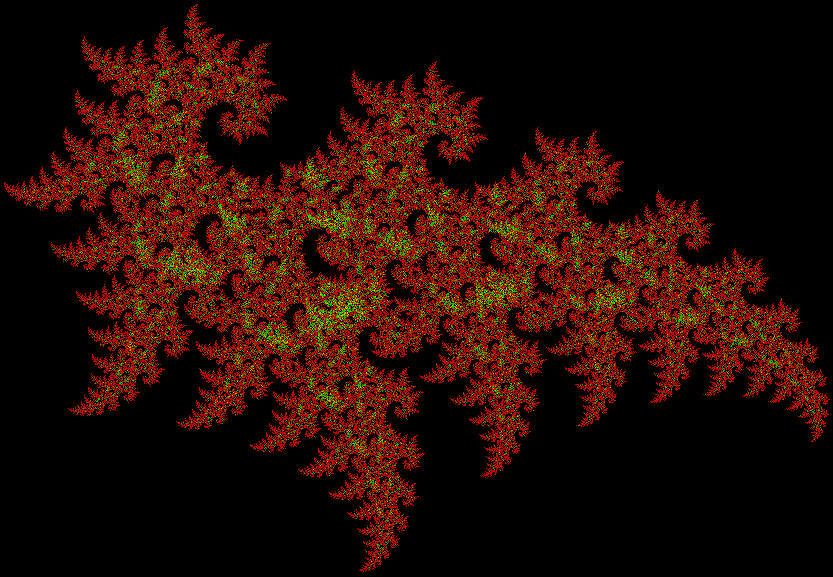
Pre-previously on Overlord-in-terms-of-Core-Issues-around-Maximal-Engagement-with-Key-Notions-of-the-Über-Feral, I interrogated issues around this shape, the horned triangle:

unicorn_reptile_static
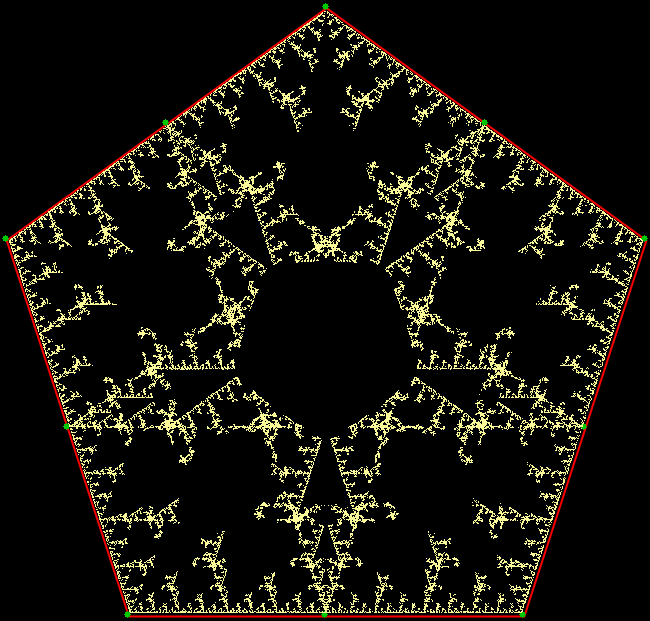
Horned Triangle (more details)


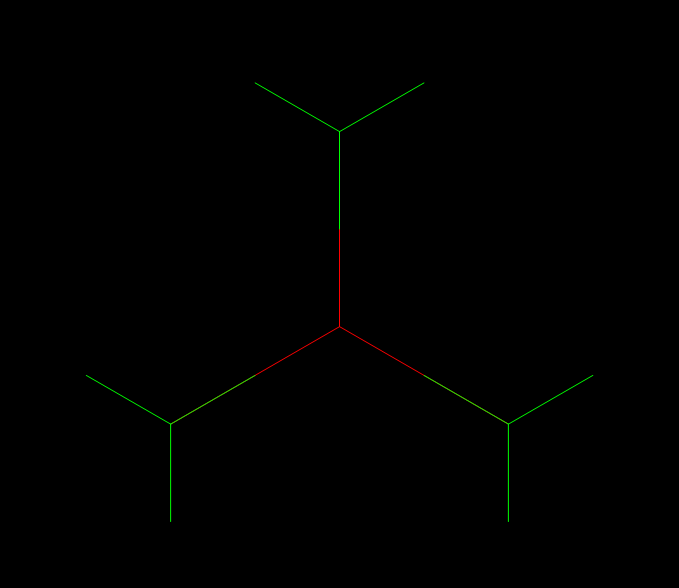
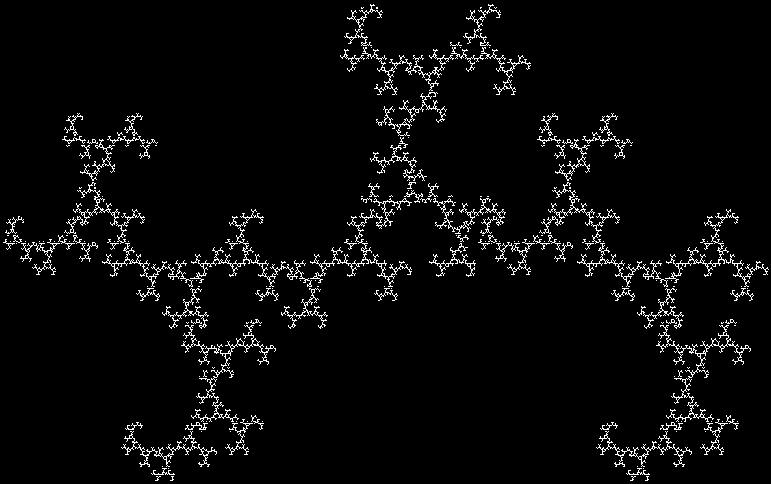
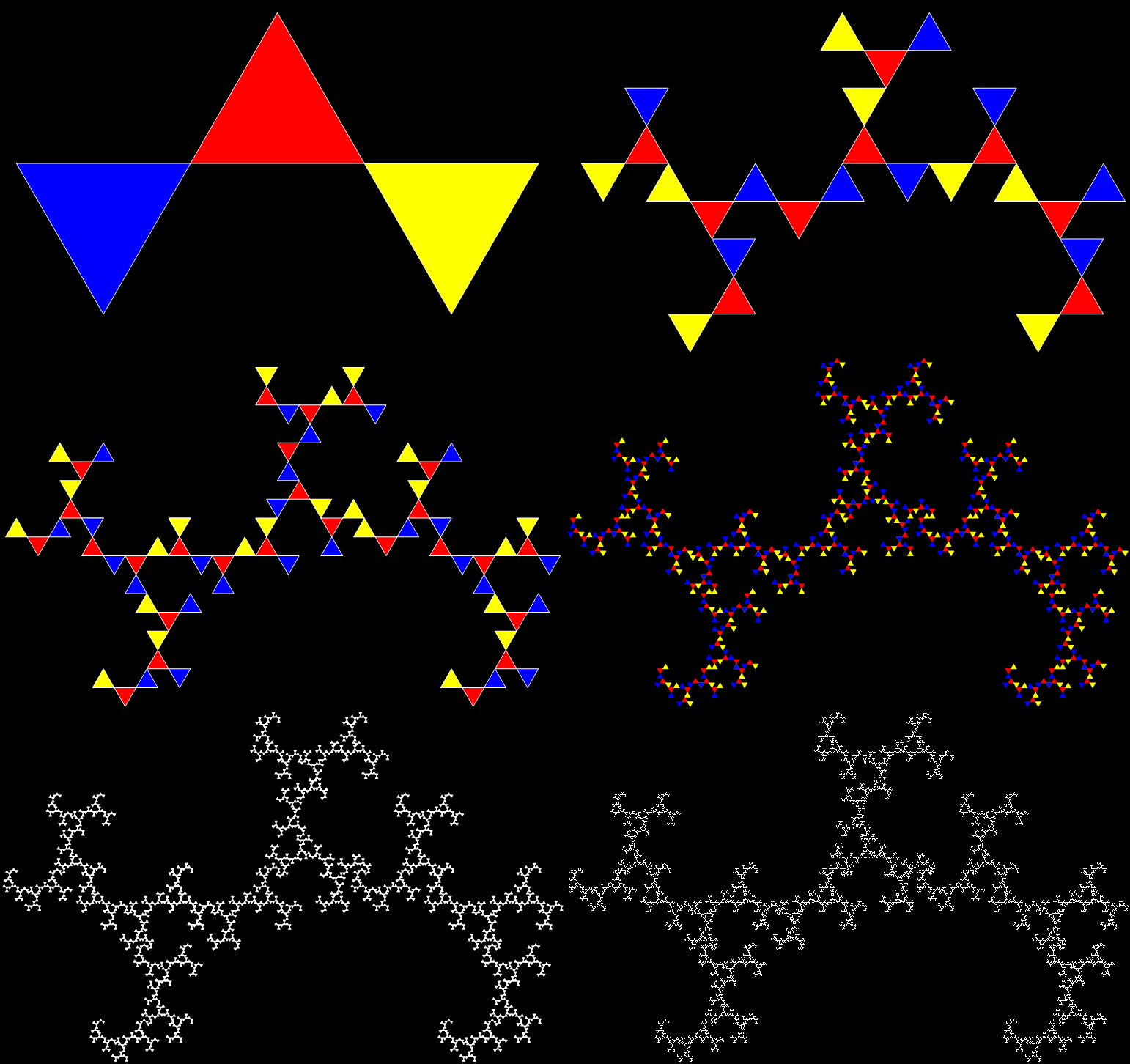
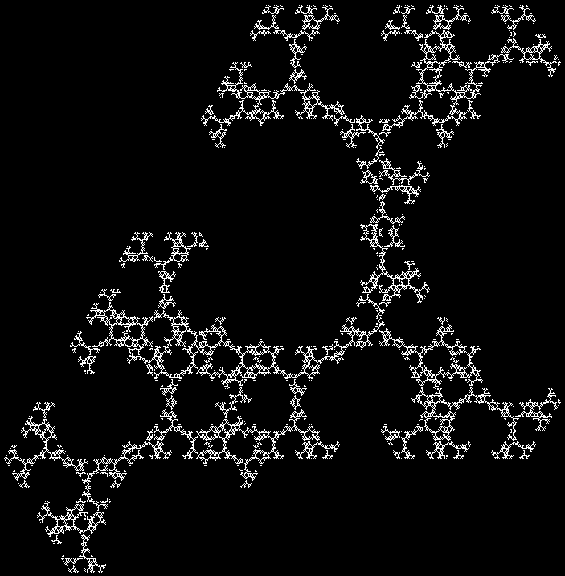
Now I want to look at the tricorn (from Latin tri-, “three”, + -corn, “horn”). It’s like a horned triangle, but has three horns instead of one:

Tricorn, or three-horned triangle


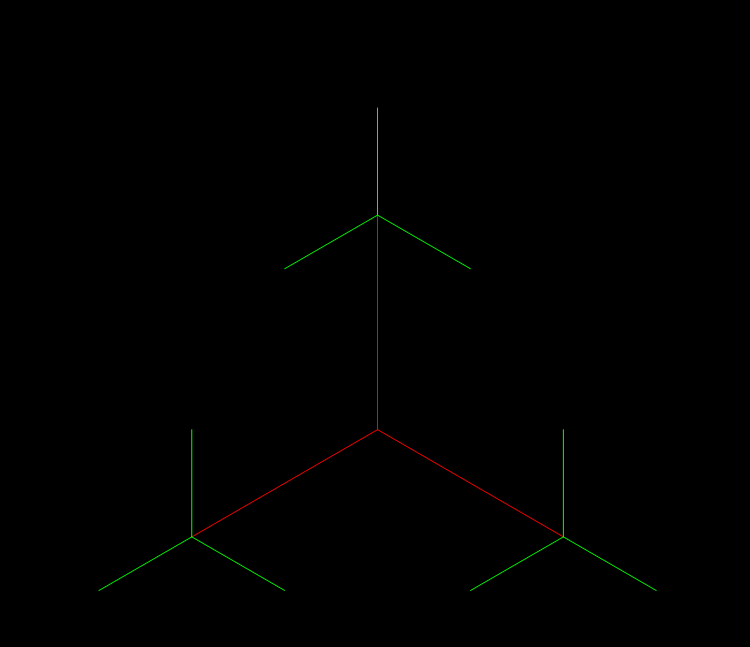
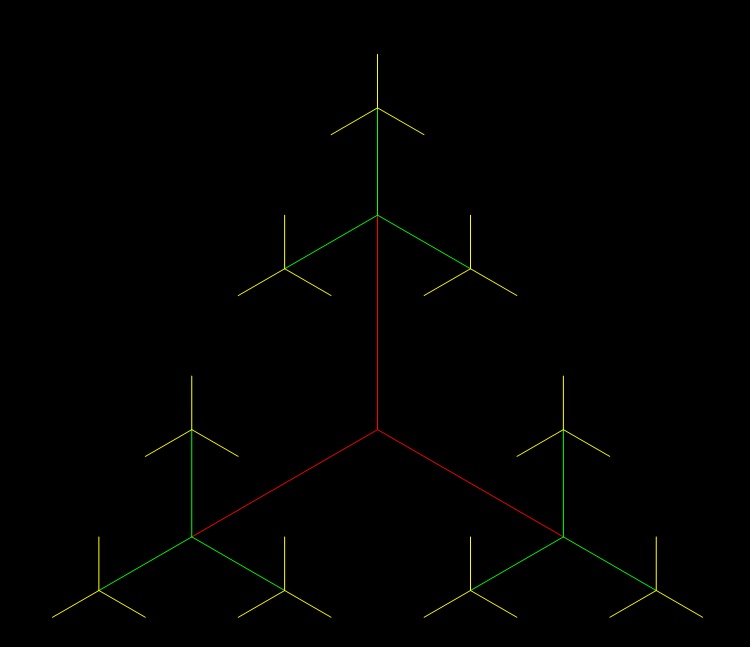
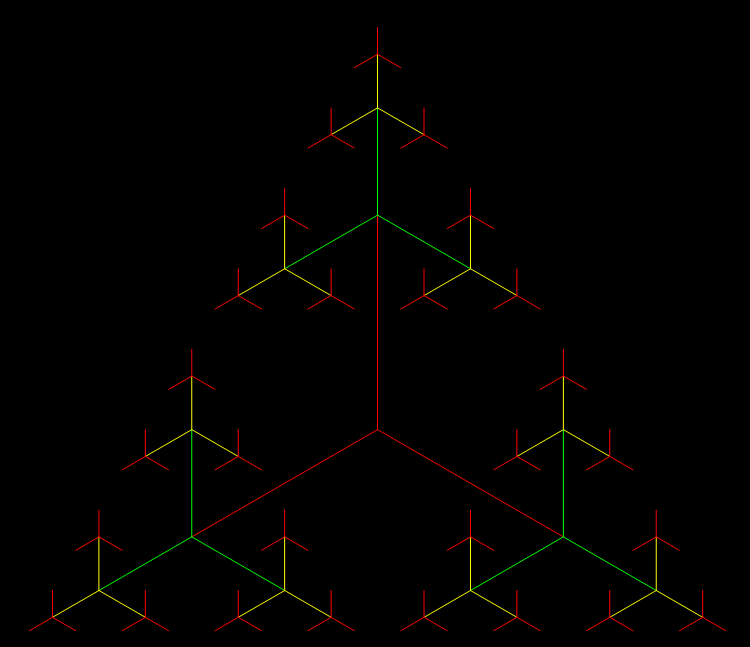
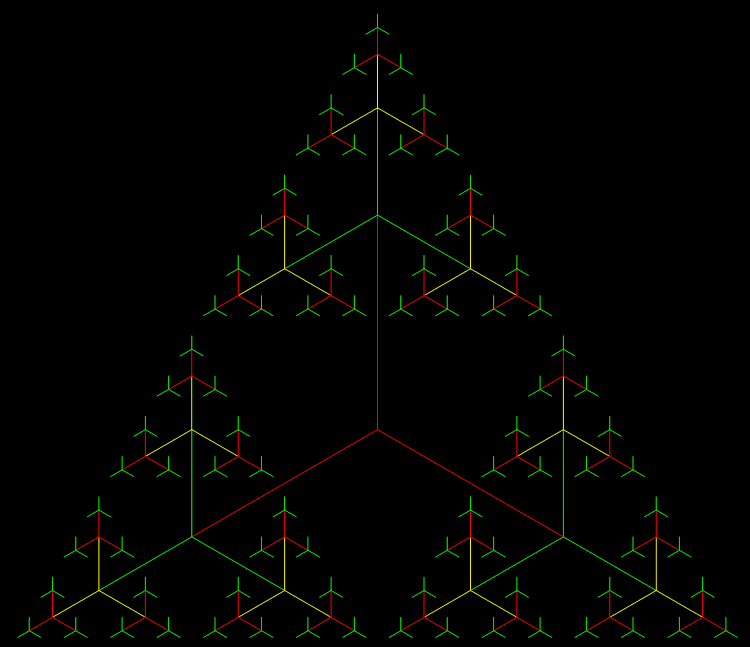
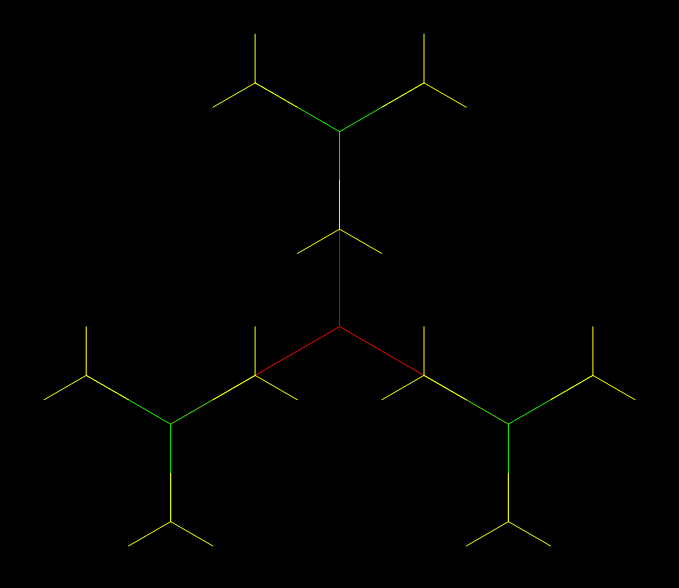
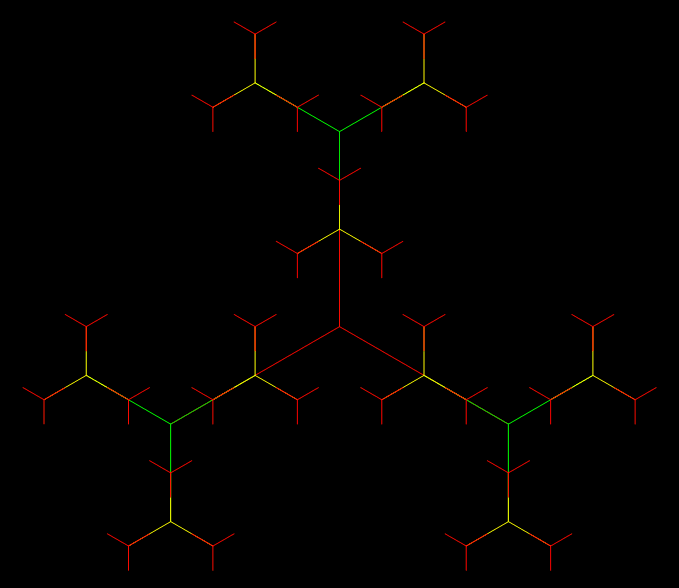
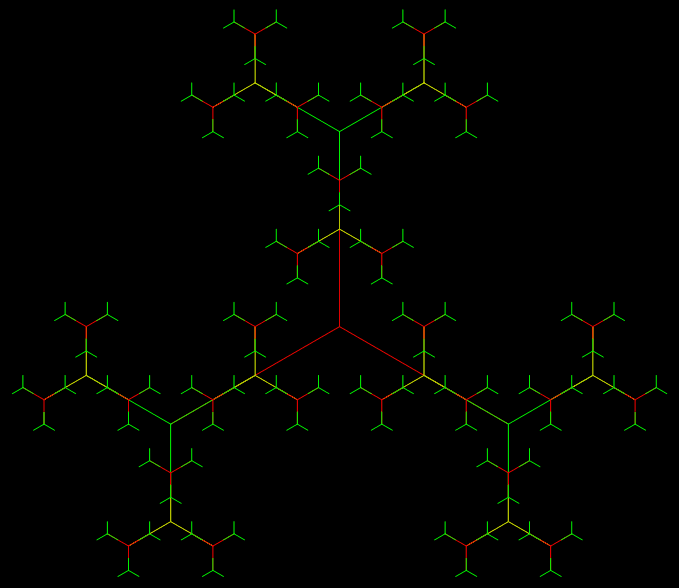
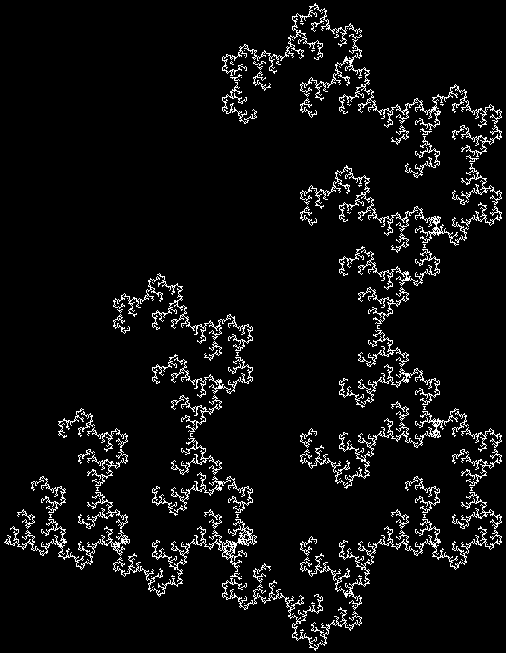
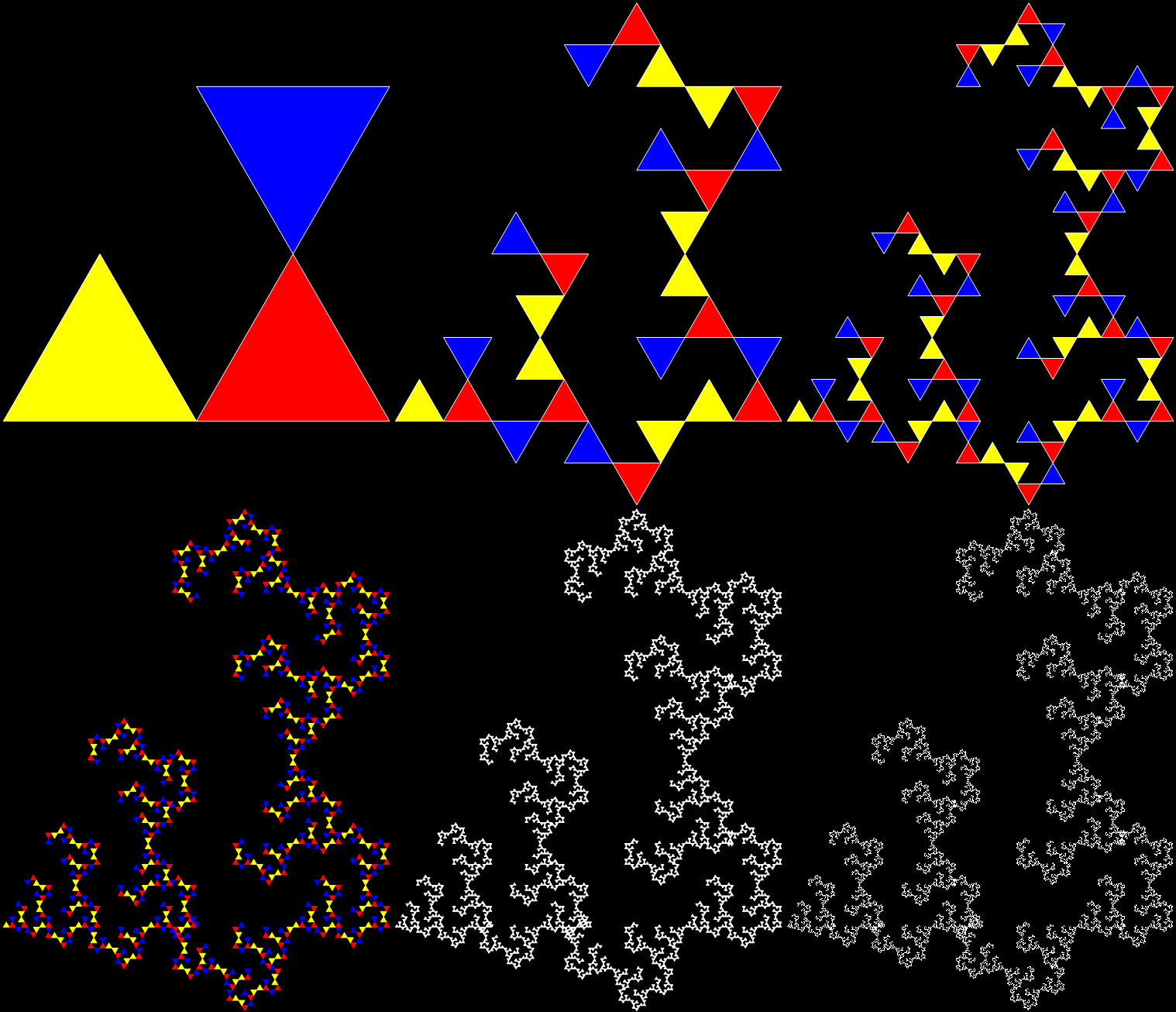
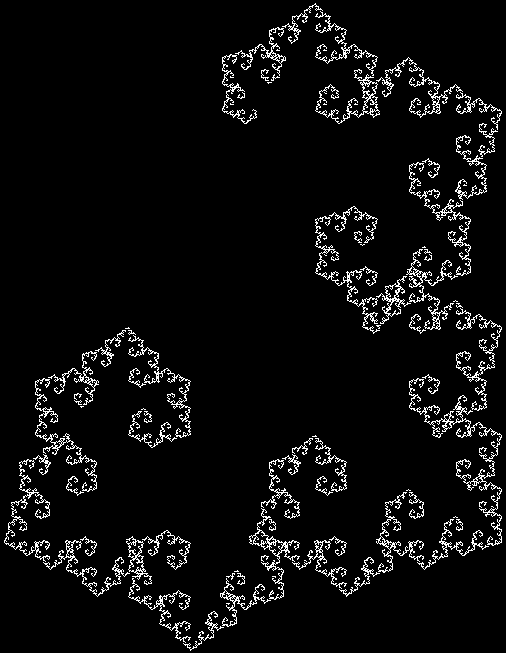
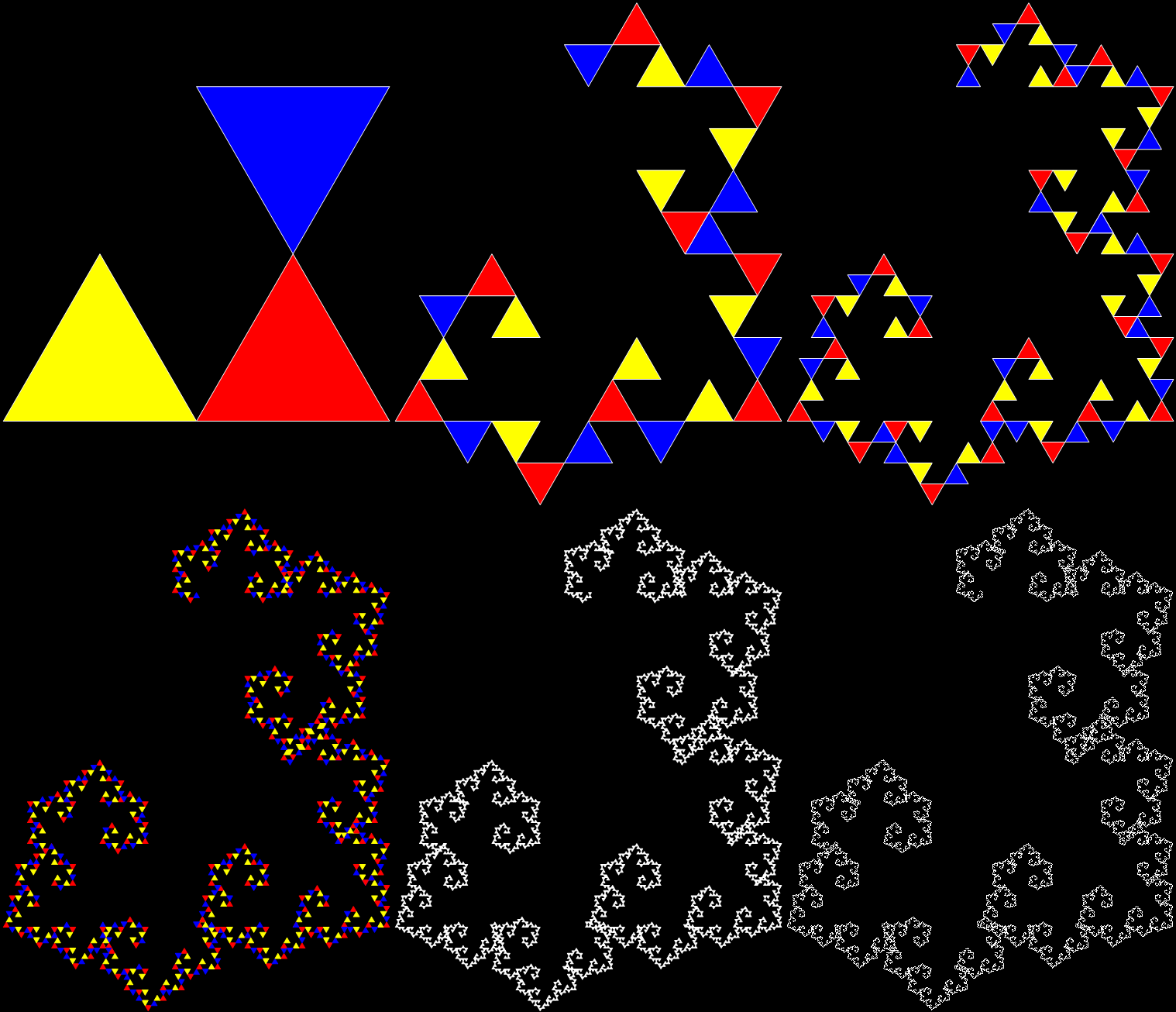
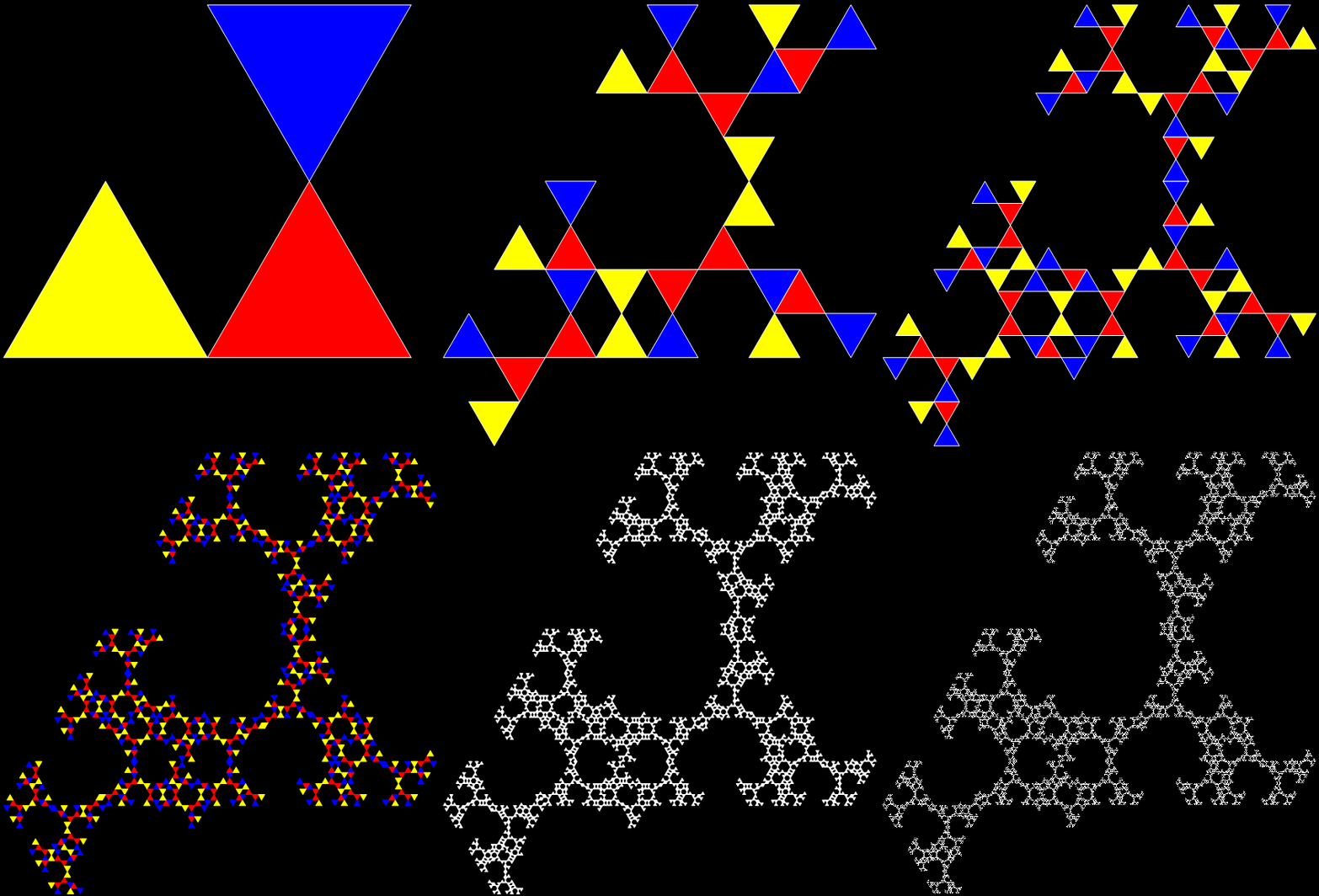
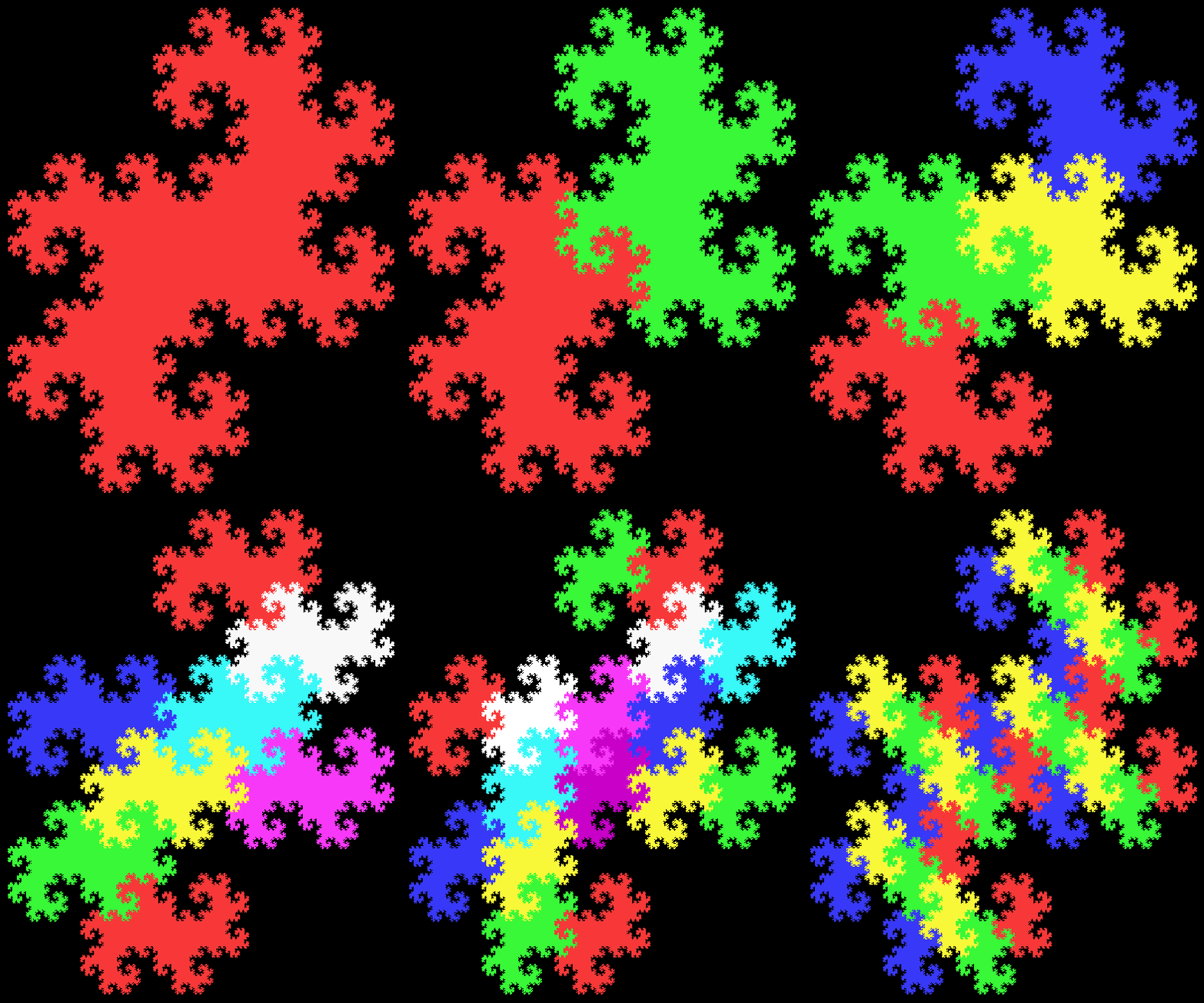
These are the stages that make up the tricorn:

Tricorn (stages)


Tricorn (animated)


And there’s no need to stop at triangles. Here is a four-horned square, or quadricorn:

Quadricorn


Quadricorn (animated)


Quadricorn (coloured)


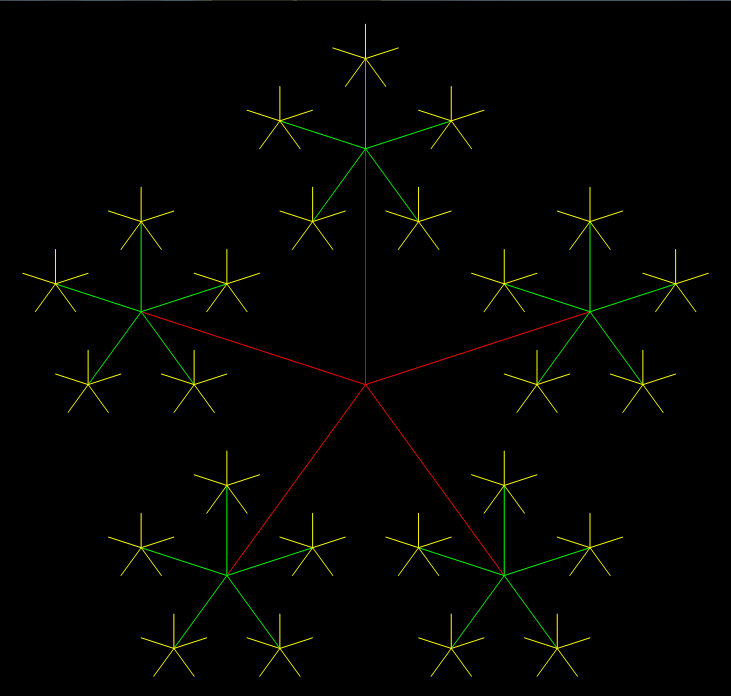
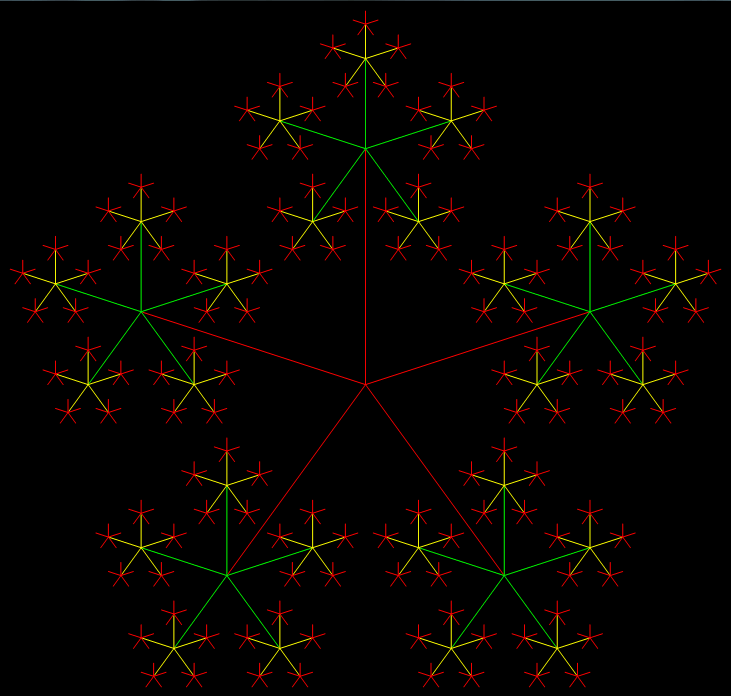
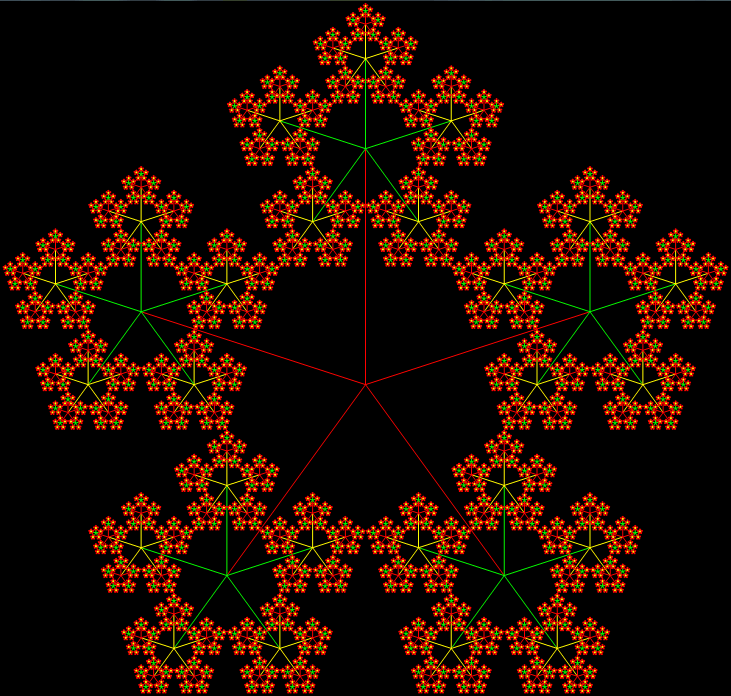
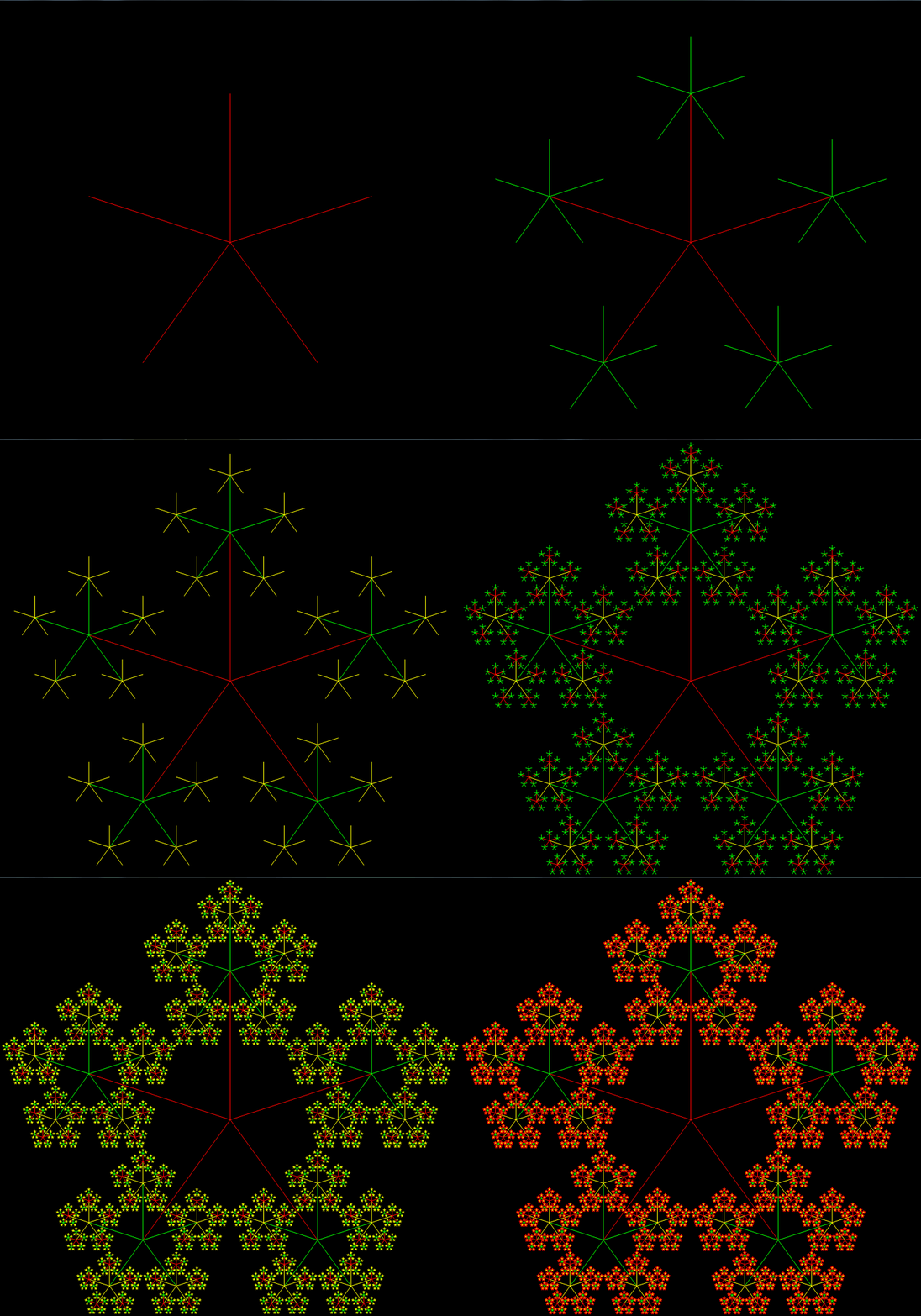
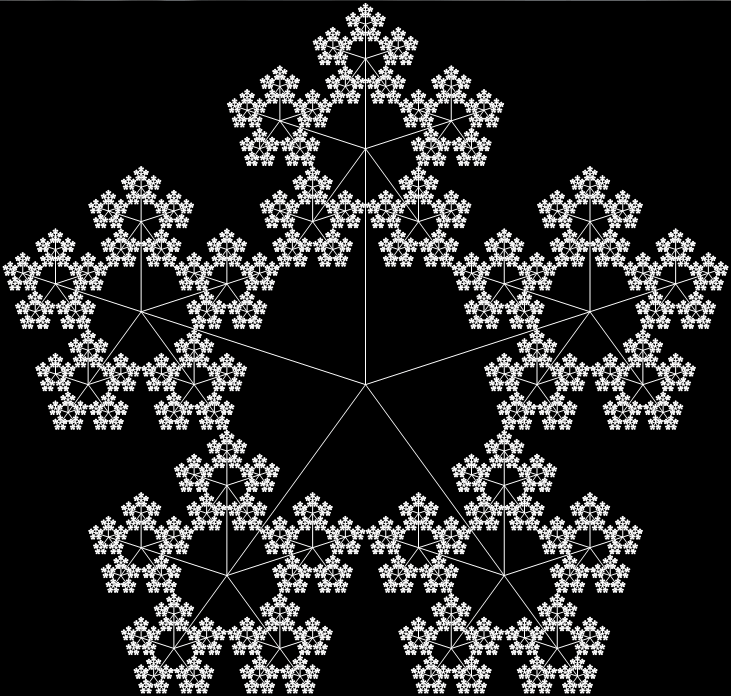
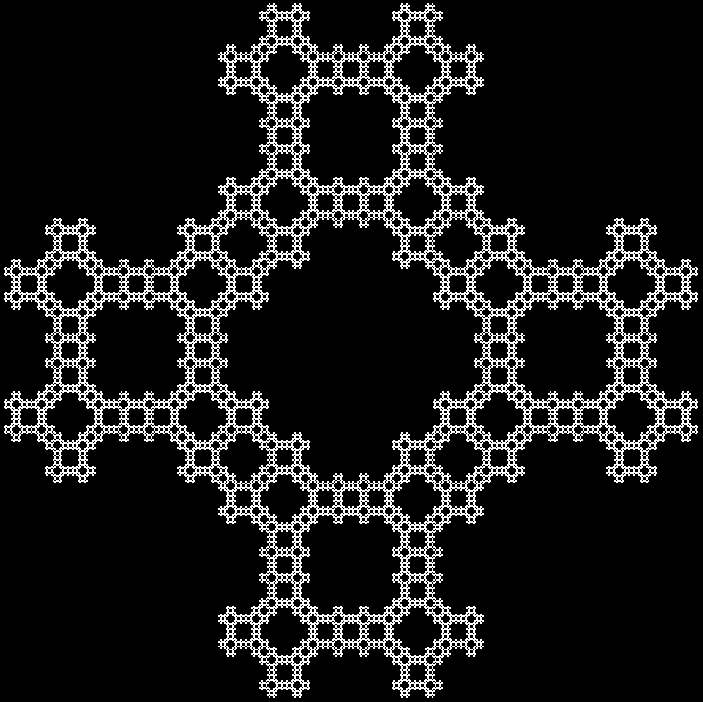
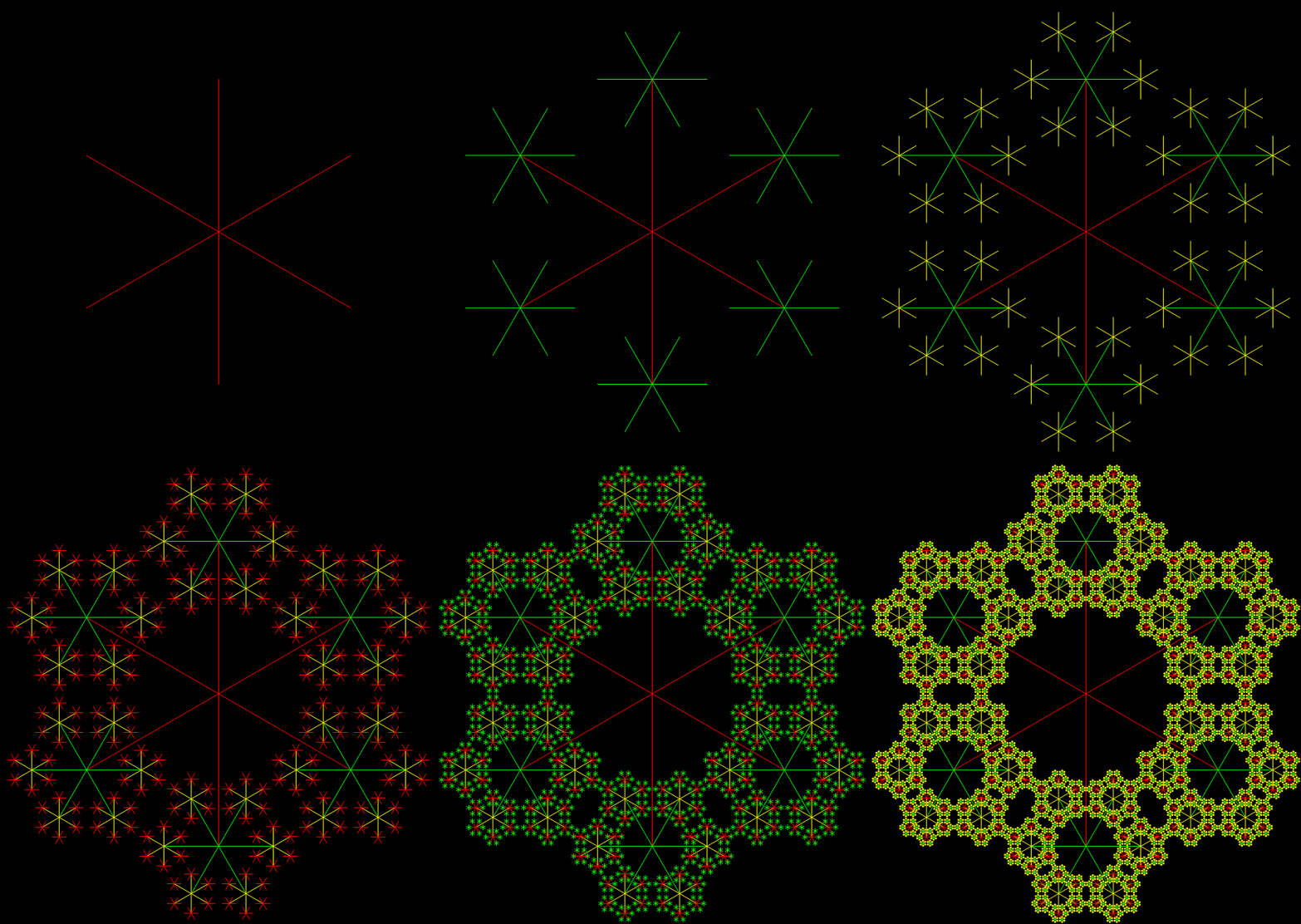
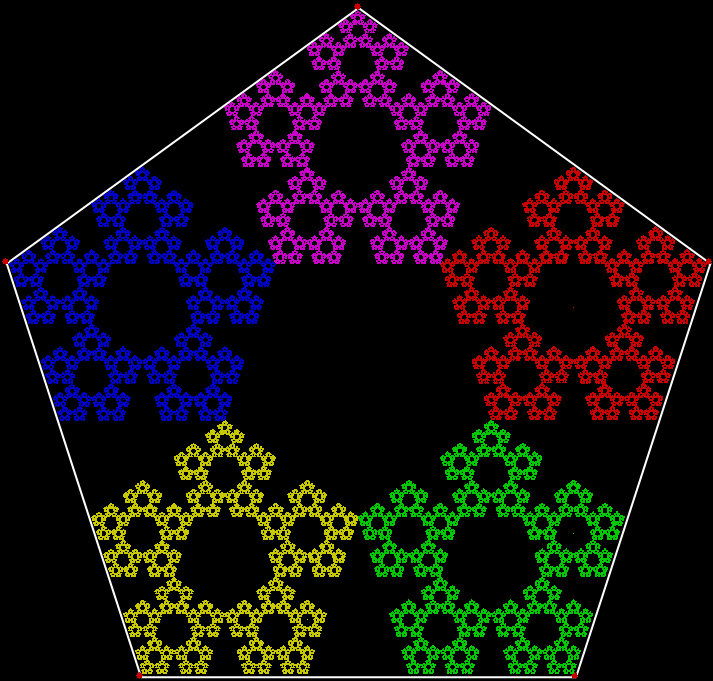
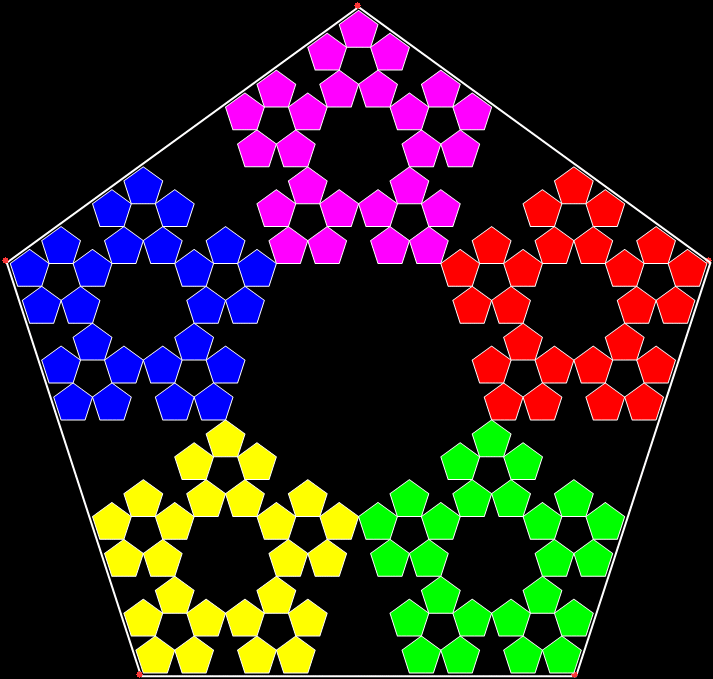
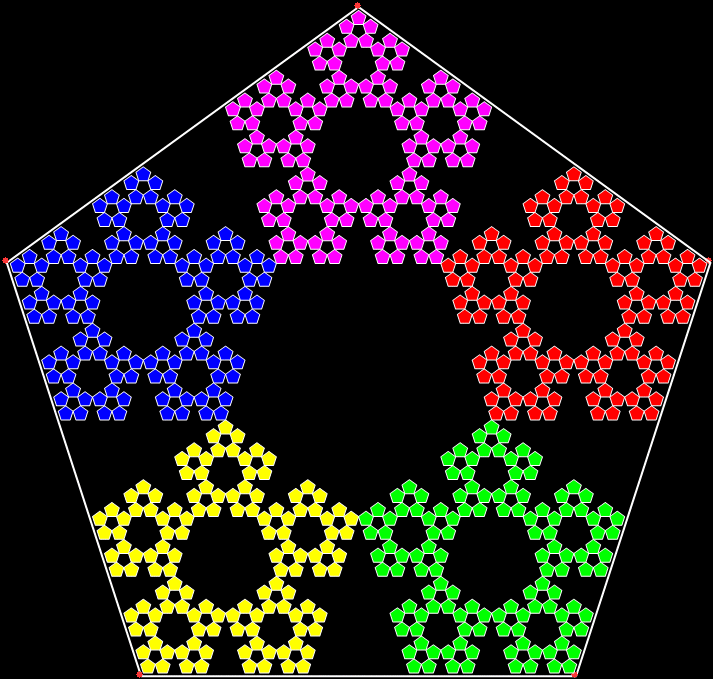
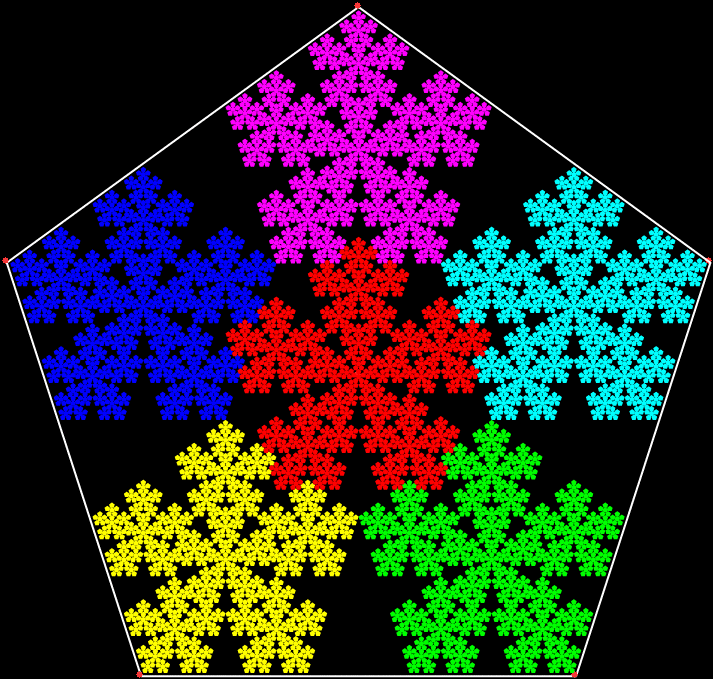
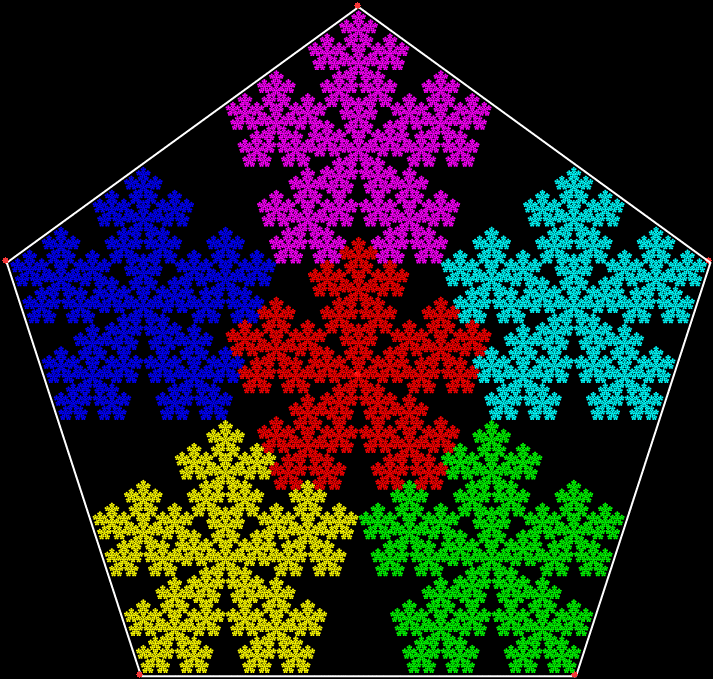
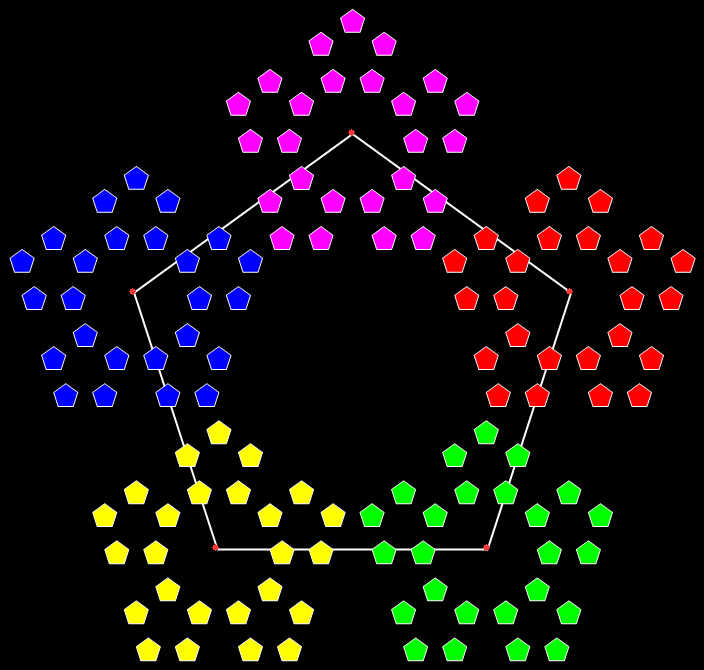
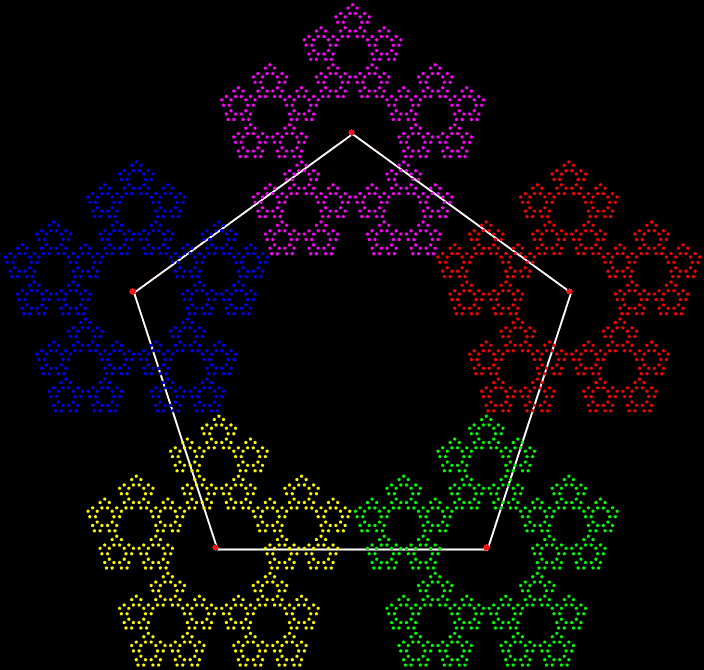
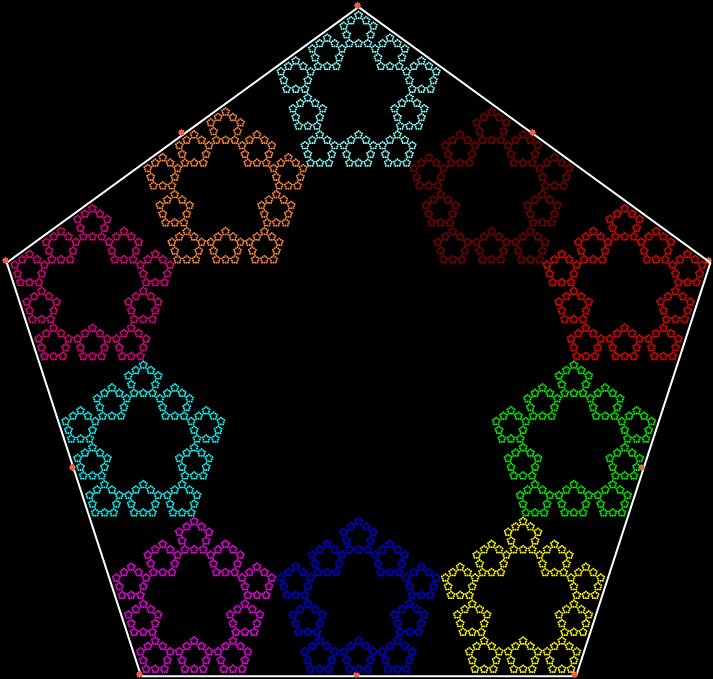
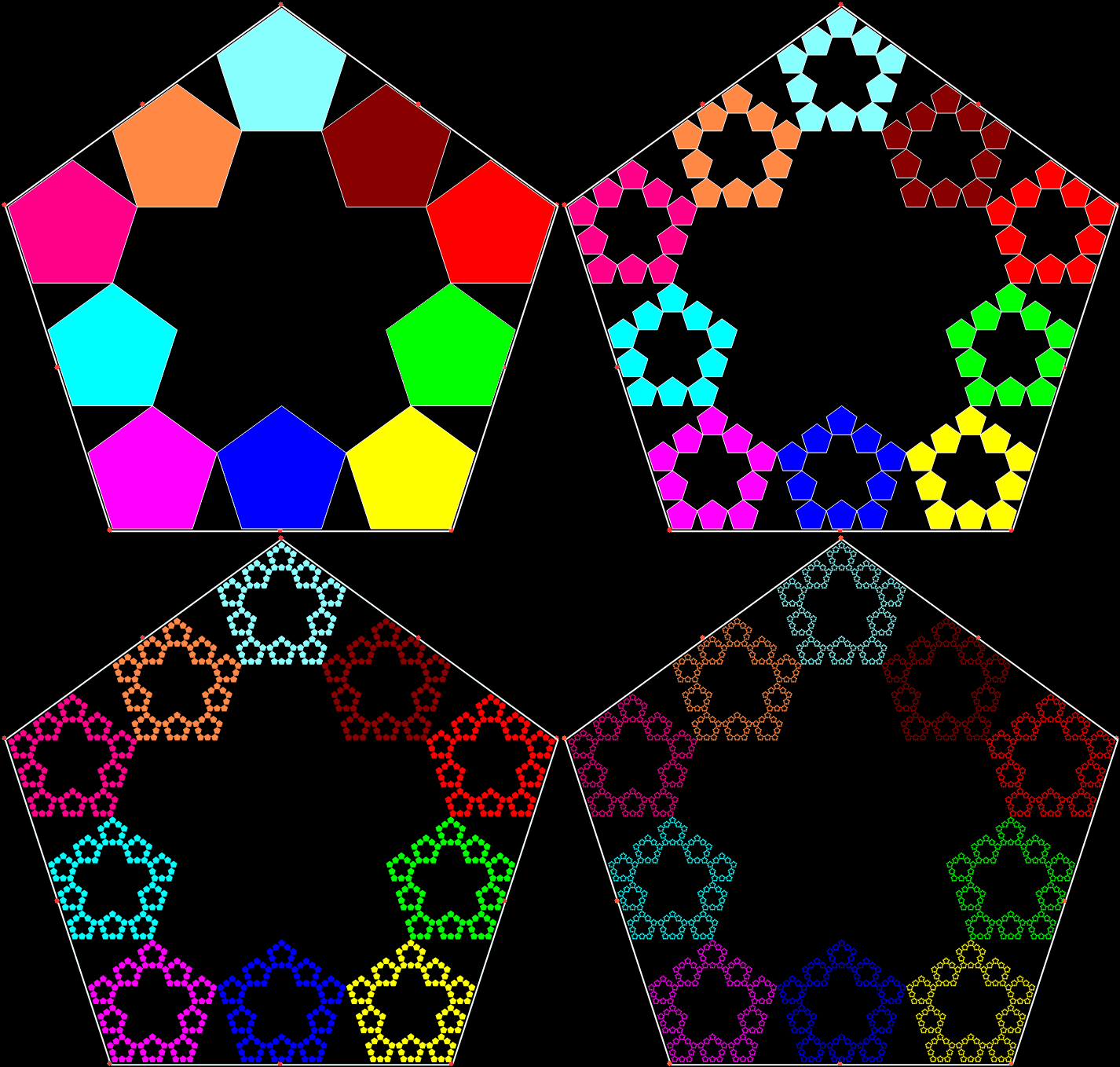
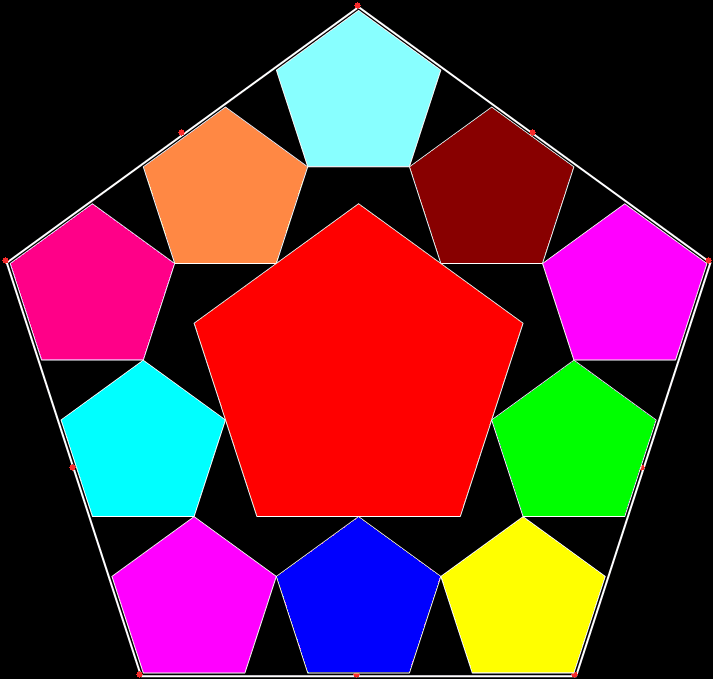
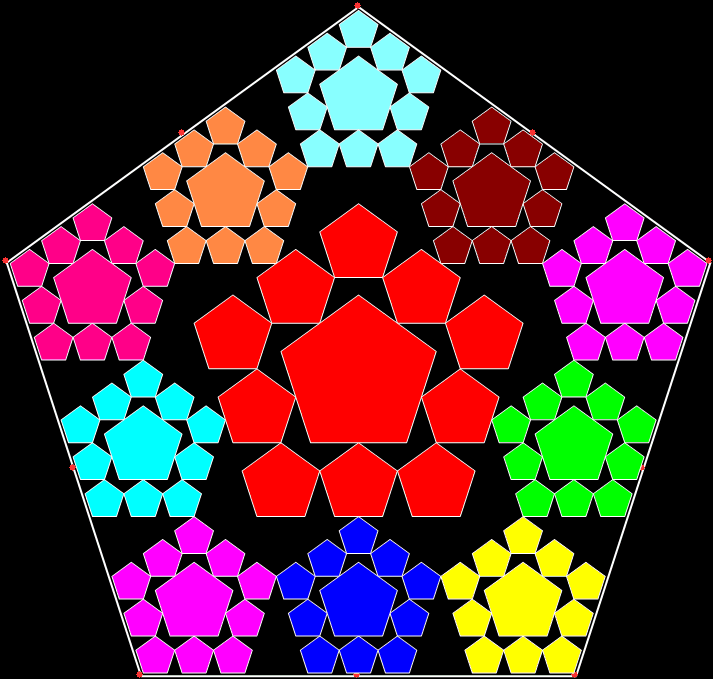
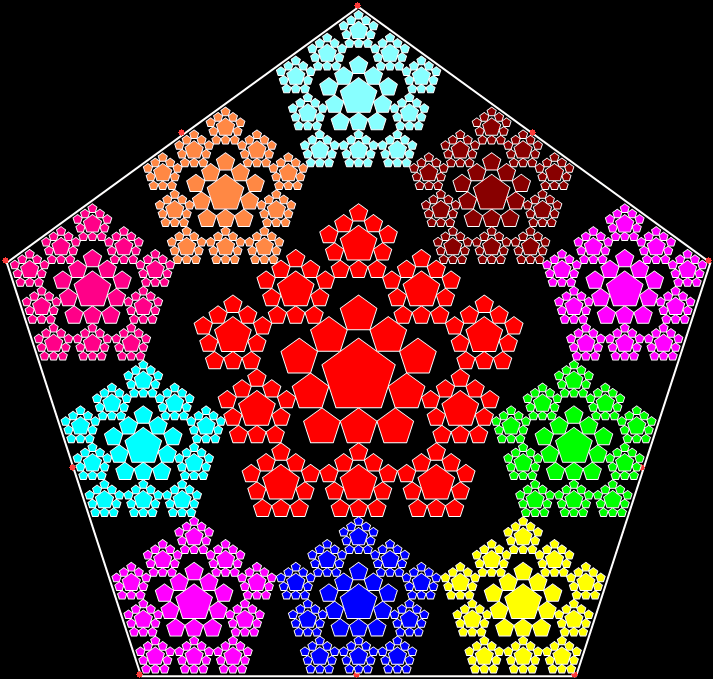
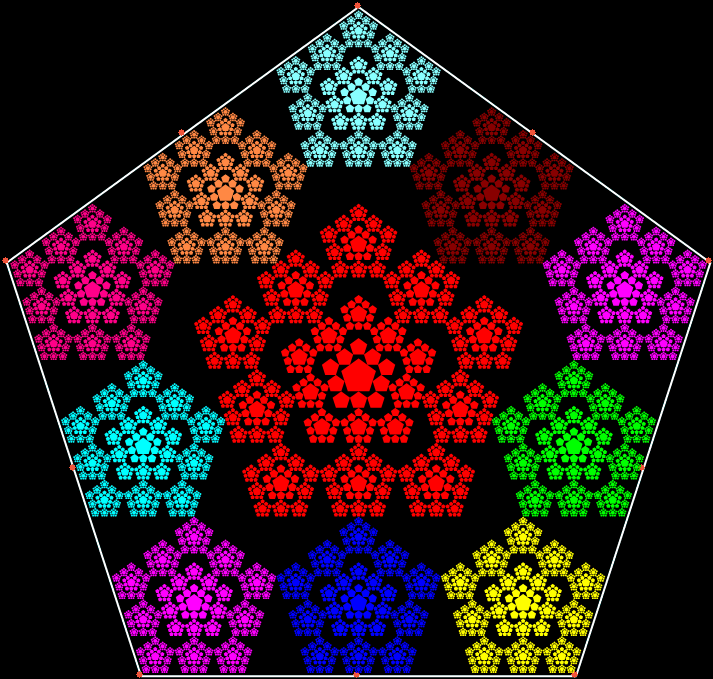
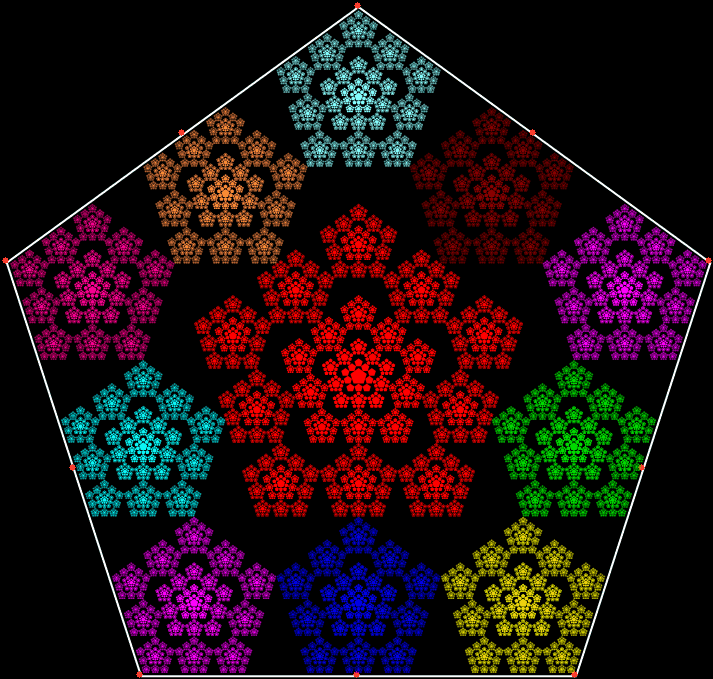
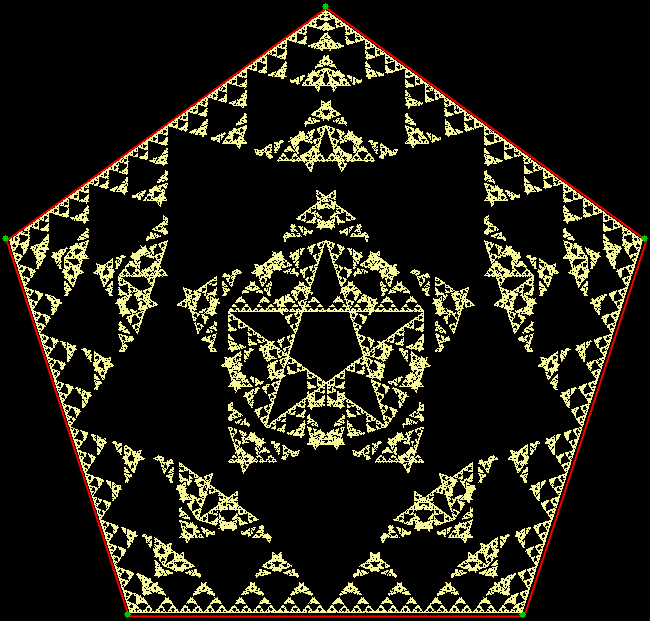
And a five-horned pentagon, or quinticorn:

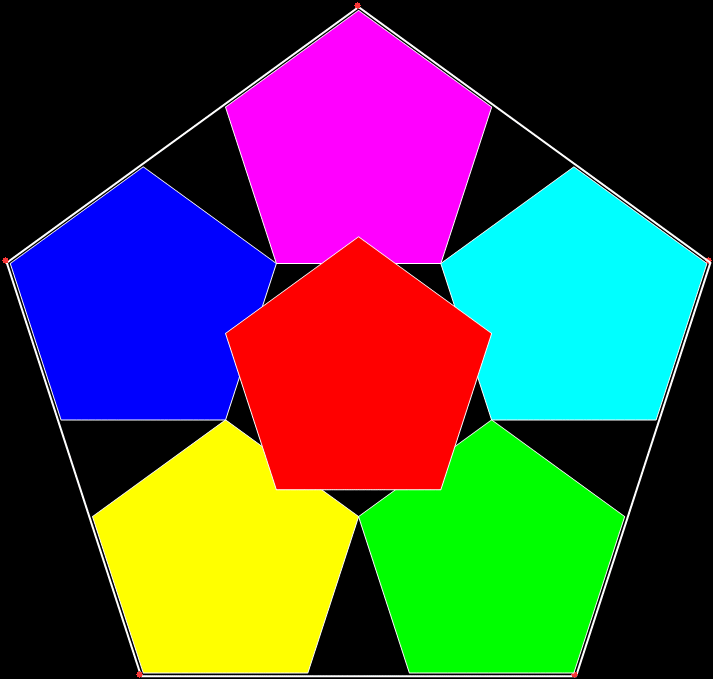
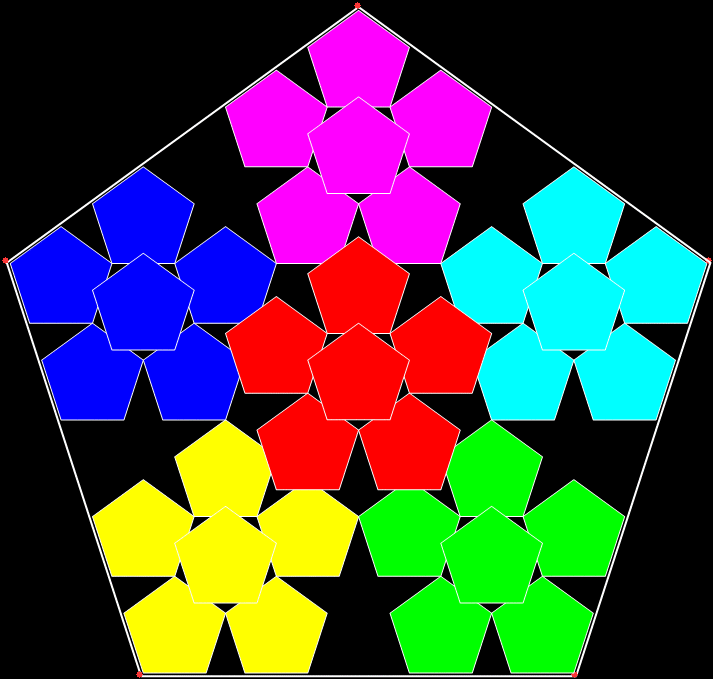
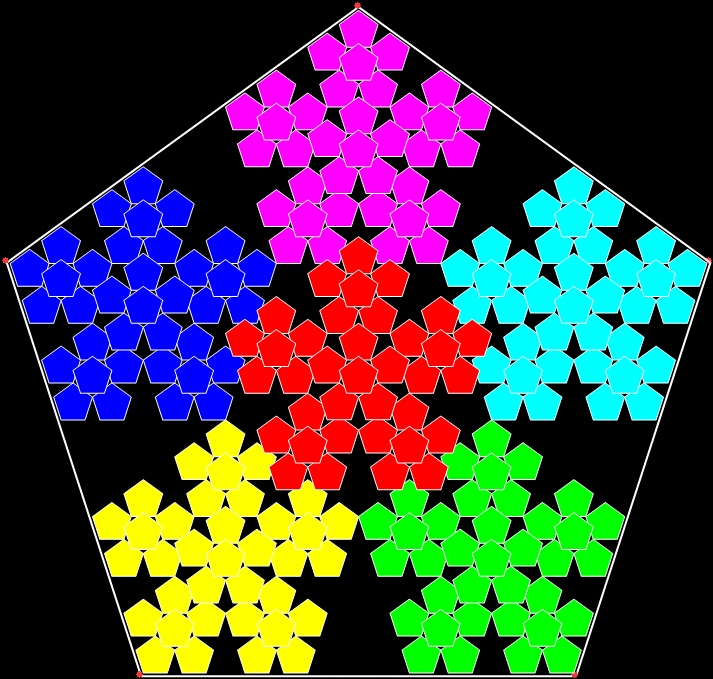
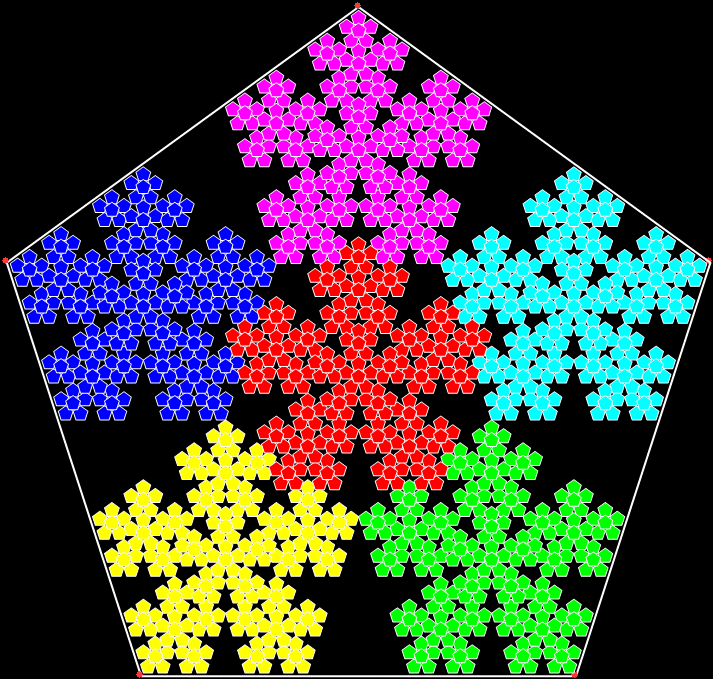
Quinticorn, or five-horned pentagon


Quinticorn (anim)


Quinticorn (col)


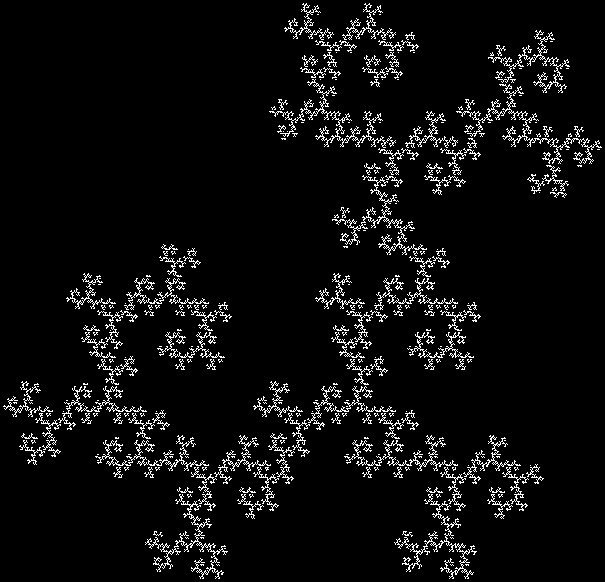
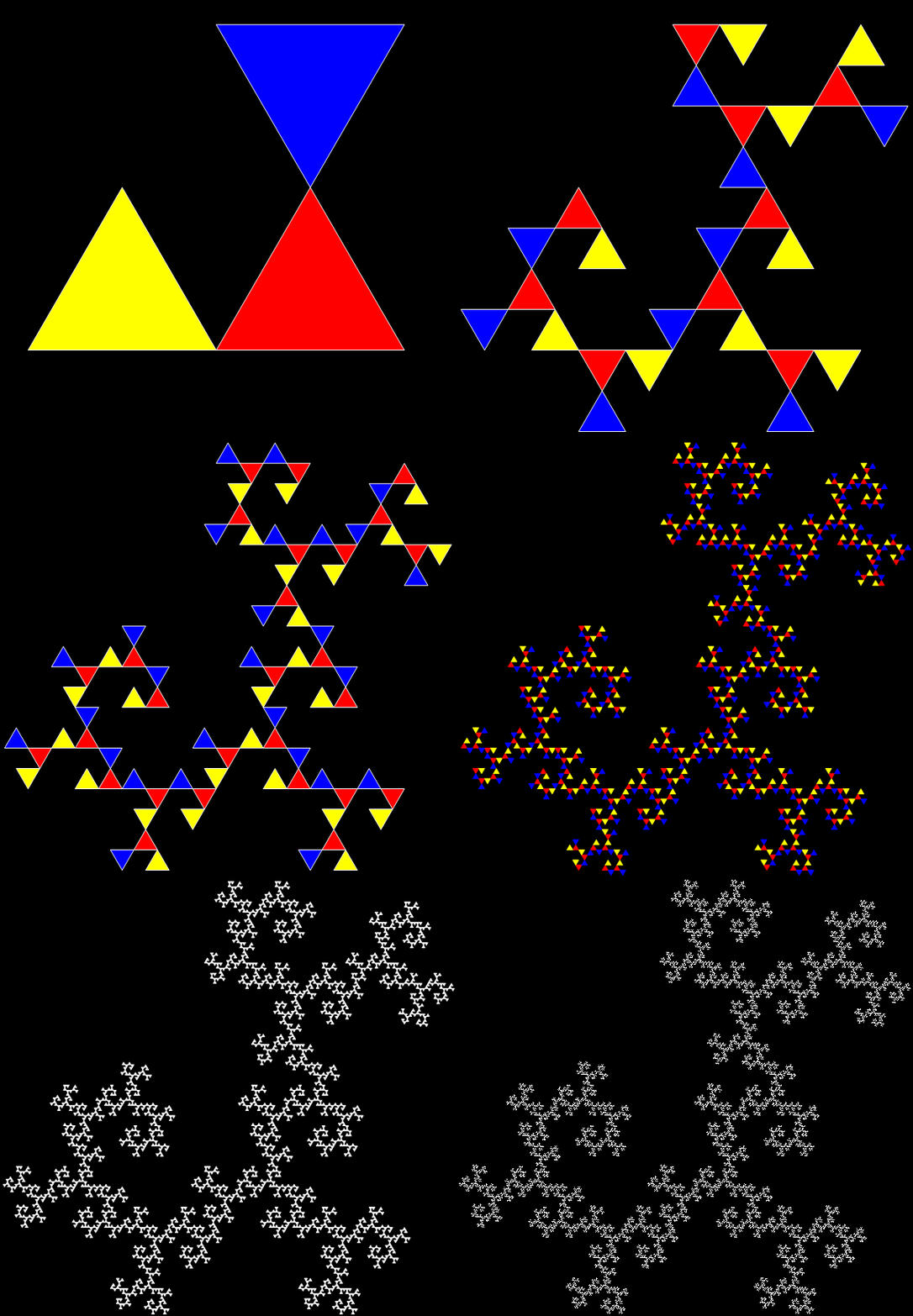
And below are some variants on the shapes above. First, the reversed tricorn:

Reversed Tricorn


Reversed Tricorn (anim)


Reversed Tricorn (col)


The nested tricorn:

Nested Tricorn (anim)


Nested Tricorn (col)


Nested Tricorn (red-green)


Nested Tricorn (variant col)


The nested quadricorn:

Nested Quadricorn (anim)


Nested Quadricorn


Nested Quadricorn (col #1)


Nested Quadricorn (col #2)


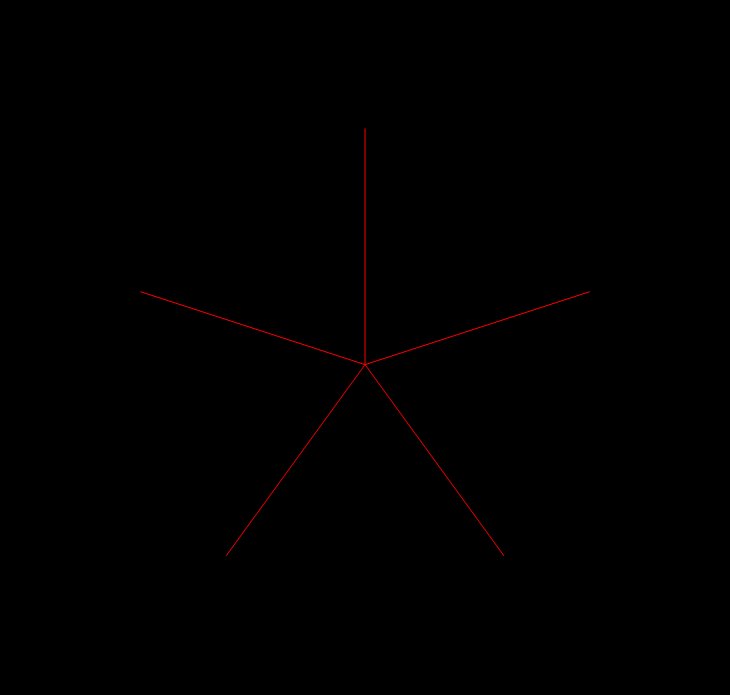
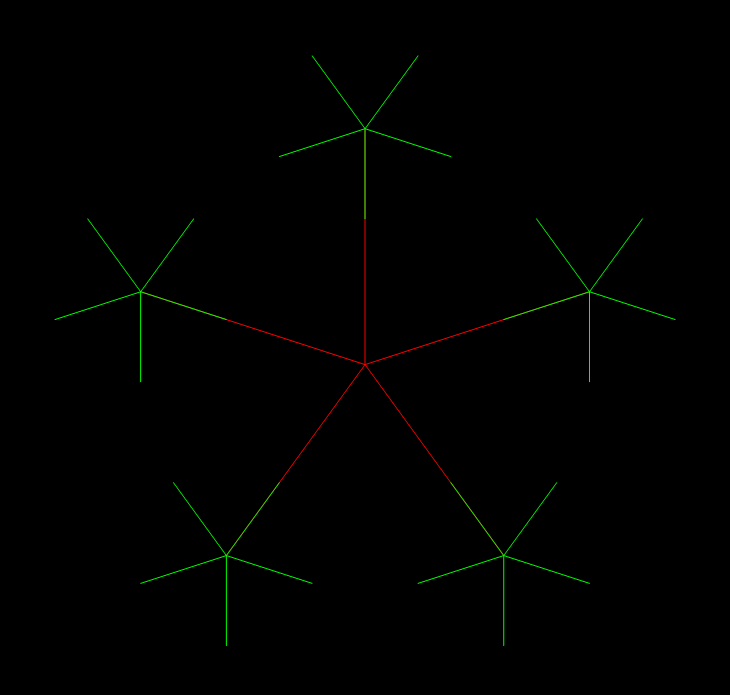
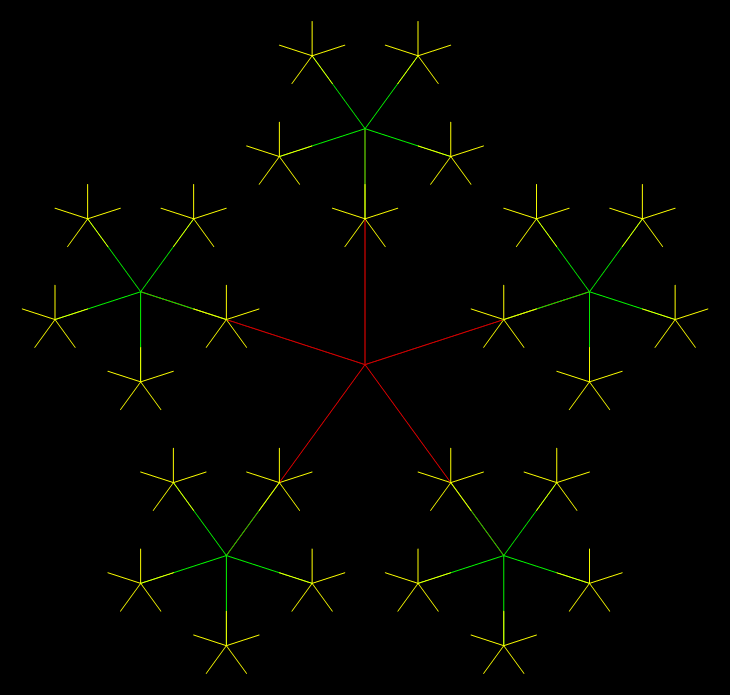
Finally (and ferally), the pentagonal octopus or pentapus:

Pentapus (anim)


Pentapus


Pentapus #2


Pentapus #3


Pentapus #4


Pentapus #5


Pentapus #6


Pentapus (col anim)


Elsewhere other-engageable:

The Art Grows Onda — the horned triangle and Katsushika Hokusai’s painting The Great Wave off Kanagawa (c. 1830)

Fink Frakt

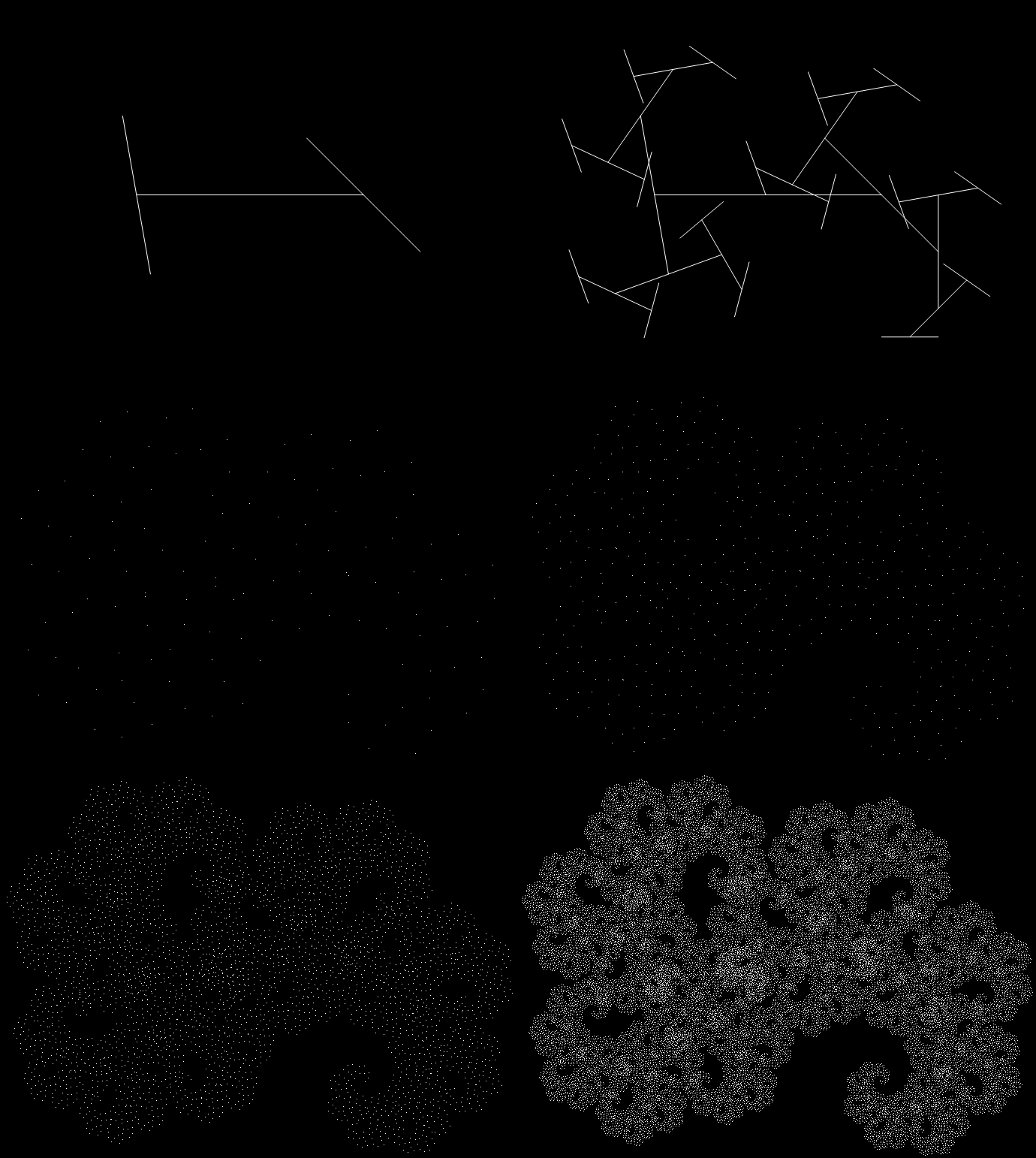
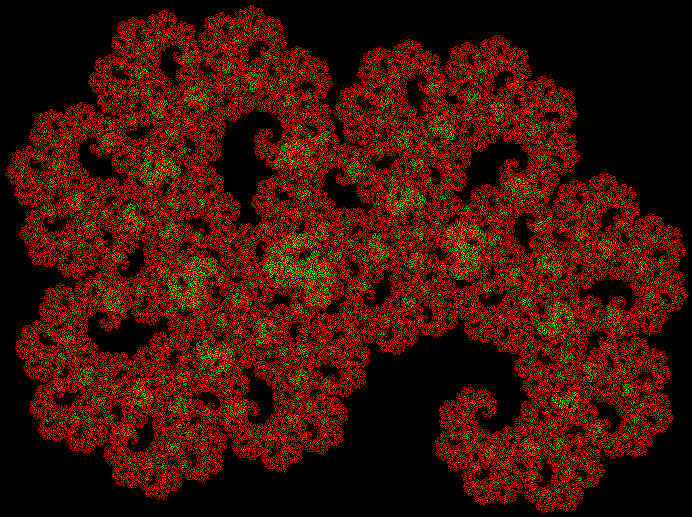
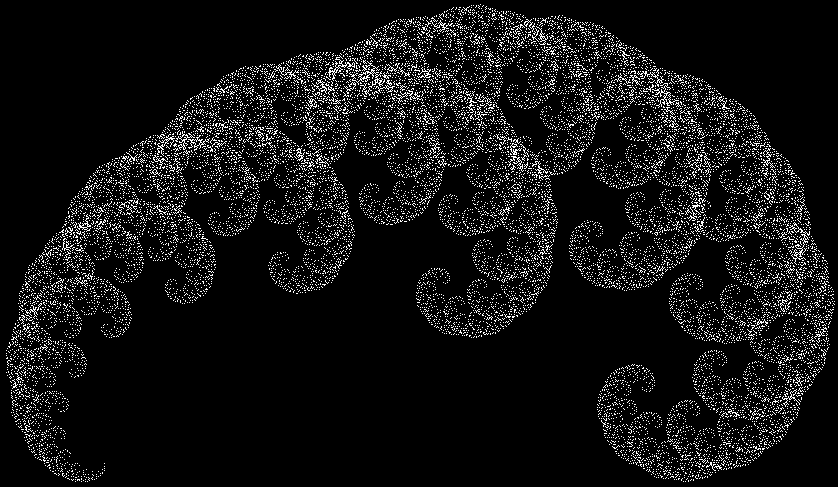
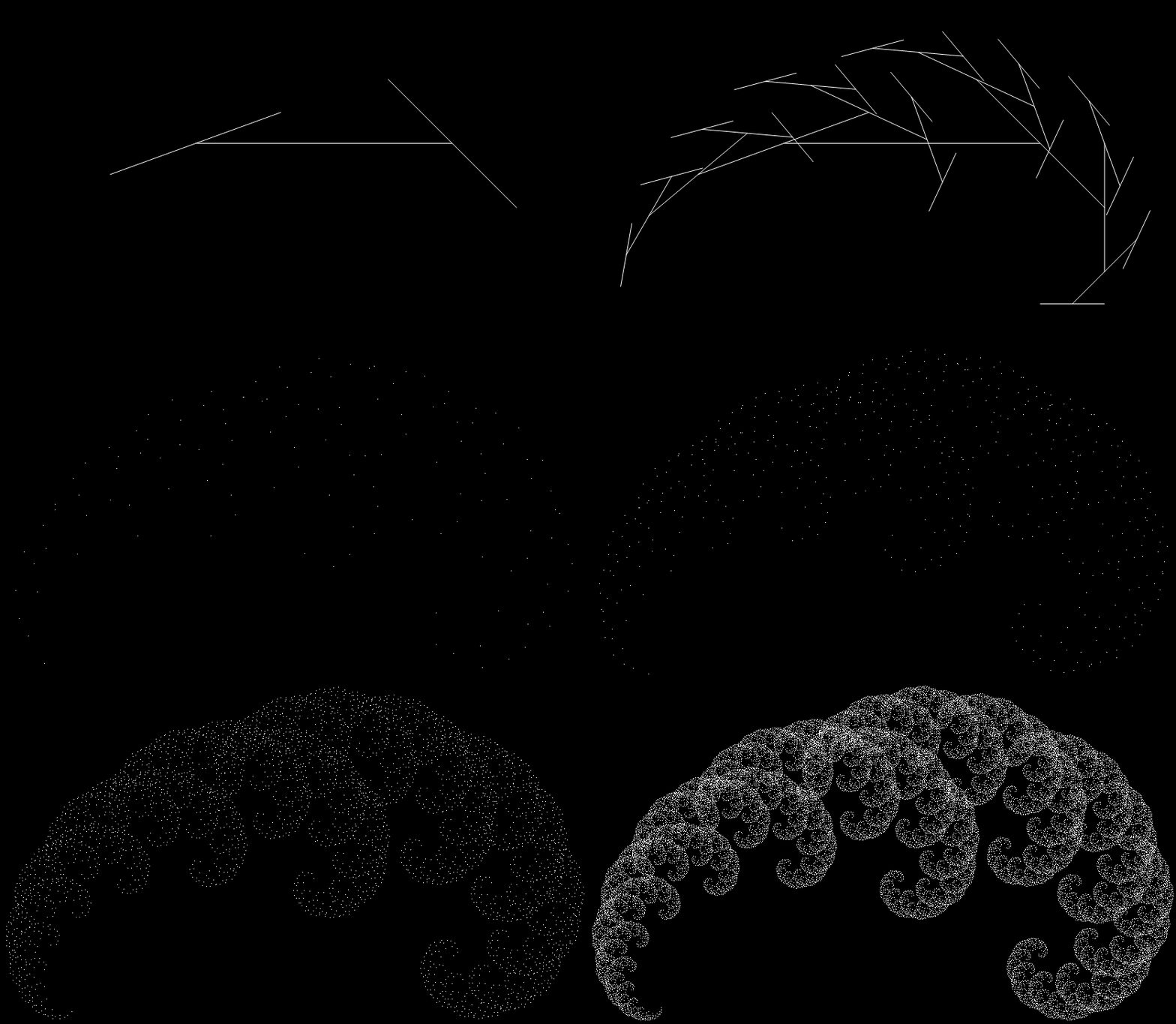
Pre-previously on Overlord-In-Terms-of-Issues-Around-Engagement-with-the-Über-Feral, I’ve looked at various ways of creating fractals by restricting the moves of a point jumping towards the vertices of a polygon. For example, the point can be banned from jumping towards the same vertex twice in a row. This time, I want to look at fractals created not by restriction, but by compulsion. If the point jumps towards vertex v and then tries to jump towards vertex v again, it will be forced to jump towards vertex v+1 instead, and so on.

You could call vv+1 a forced increment or finc. So these are finc fractals. In some cases, restriction and compulsion create the same fractals, but I’ve found some new fractals using compulsion. Consider the fractal created by the rule v[-2]+1, v[-1] → +0,+1, where the subscripts refer to the history of jumps: v[-2] is the jump-before-last, v[-1] is the last jump. If the new vertex, v[0], chosen is the same as v[-2]+1 (e.g., v[0] = 2 = v[-2]+1 = 1+1), then the forced increment is 0, i.e., the point is allowed to choose that jump. However, if v[0] = v[-1], then the forced increment is 1 and the point must jump towards v[-1]+1.

Here is the fractal in question:

v[-2]+1, v[-1] → +0,+1 (black-and-white)


v[-2]+1, v[-1] → +0,+1 (colour)


1,0 → +0,+1 (animated)


1,0 → +1,+0 (bw)


1,0 → +1,+0 (col)


1,0 → +1,+0 (anim)


1,0 → +1,+1 (bw)


1,0 → +1,+1 (col)


1,0 → +1,+1 (animated)


0,1 → +2,+1 (anim)


0,1 → +3,+1


1,0 → +0,+1


1,0 → +1,+0


1,1 → +0,+1


1,1 → +1,+2


1,1 → +1,+3


1,1 → +2,+1


1,2 → +0,+3


1,3 → +0,+1


2,2 → +0,+1


But suppose the history of jumps records not actual jumps, but the jumps the point wanted to make instead. In some cases, the jump made will be the same as the jump originally chosen, but in other cases it won’t. Here are some fractals using this method:

0 → +2


0 → +3


2 → +1


2 → +2


Fract-Hills

The Farey sequence is a fascinating sequence of fractions that divides the interval between 0/1 and 1/1 into smaller and smaller parts. To find the Farey fraction a[i] / b[i], you simply find the mediant of the Farey fractions on either side:

• a[i] / b[i] = (a[i-1] + a[i+1]) / (b[i-1] + b[i+1])

Then, if necessary, you reduce the numerator and denominator to their simplest possible terms. So the sequence starts like this:

• 0/1, 1/1

To create the next stage, find the mediant of the two fractions above: (0+1) / (1+1) = 1/2

• 0/1, 1/2, 1/1

For the next stage, there are two mediants to find: (0+1) / (1+2) = 1/3, (1+1) / (2+3) = 2/3

• 0/1, 1/3, 1/2, 2/3, 1/1

Note that 1/2 is the mediant of 1/3 and 2/3, that is, 1/2 = (1+2) / (3+3) = 3/6 = 1/2. The next stage is this:

• 0/1, 1/4, 1/3, 2/5, 1/2, 3/5, 2/3, 3/4, 1/1

Now 1/2 is the mediant of 2/5 and 3/5, that is, 1/2 = (2+3) / (5+5) = 5/10 = 1/2. Further stages go like this:

• 0/1, 1/5, 1/4, 2/7, 1/3, 3/8, 2/5, 3/7, 1/2, 4/7, 3/5, 5/8, 2/3, 5/7, 3/4, 4/5, 1/1

• 0/1, 1/6, 1/5, 2/9, 1/4, 3/11, 2/7, 3/10, 1/3, 4/11, 3/8, 5/13, 2/5, 5/12, 3/7, 4/9, 1/2, 5/9, 4/7, 7/12, 3/5, 8/13, 5/8, 7/11, 2/3, 7/10, 5/7, 8/11, 3/4, 7/9, 4/5, 5/6, 1/1

• 0/1, 1/7, 1/6, 2/11, 1/5, 3/14, 2/9, 3/13, 1/4, 4/15, 3/11, 5/18, 2/7, 5/17, 3/10, 4/13, 1/3, 5/14, 4/11, 7/19, 3/8, 8/21, 5/13, 7/18, 2/5, 7/17, 5/12, 8/19, 3/7, 7/16, 4/9, 5/11, 1/2, 6/11, 5/9, 9/16, 4/7, 11/19, 7/12, 10/17, 3/5, 11/18, 8/13, 13/21, 5/8, 12/19, 7/11, 9/14, 2/3, 9/13, 7/10, 12/17, 5/7, 13/18, 8/11, 11/15, 3/4, 10/13, 7/9, 11/14, 4/5, 9/11, 5/6, 6/7, 1/1

The Farey sequence is actually a fractal, as you can see more easily when it’s represented as an image:

Farey fractal stage #1, representing 0/1, 1/2, 1/1

Farey fractal stage #2, representing 0/1, 1/3, 1/2, 2/3, 1/1

Farey fractal stage #3, representing 0/1, 1/4, 1/3, 2/5, 1/2, 3/5, 2/3, 3/4, 1/1

Farey fractal stage #4, representing 0/1, 1/5, 1/4, 2/7, 1/3, 3/8, 2/5, 3/7, 1/2, 4/7, 3/5, 5/8, 2/3, 5/7, 3/4, 4/5, 1/1

Farey fractal stage #5

Farey fractal stage #6

Farey fractal stage #7

Farey fractal stage #8

Farey fractal stage #9

Farey fractal stage #10

Farey fractal (animated)

That looks like the slope of a hill to me, so you could call it a Farey fract-hill. But Farey fract-hills or Farey fractals aren’t confined to the unit interval, 0/1 to 1/1. Here are Farey fractals for the intervals 0/1 to n/1, n = 1..10:

Farey fractal for interval 0/1 to 1/1

Farey fractal for interval 0/1 to 2/1, beginning 0/1, 1/4, 1/3, 2/5, 1/2, 3/5, 2/3, 3/4, 1/1, 5/4, 4/3, 7/5, 3/2, 8/5, 5/3, 7/4, 2/1

Farey fractal for interval 0/1 to 3/1, beginning 0/1, 1/3, 1/2, 2/3, 1/1, 5/4, 4/3, 7/5, 3/2, 8/5, 5/3, 7/4, 2/1, 7/3, 5/2, 8/3, 3/1

Farey fractal for interval 0/1 to 4/1, beginning
0/1, 1/3, 1/2, 2/3, 1/1, 4/3, 3/2, 5/3, 2/1, 7/3, 5/2, 8/3, 3/1, 10/3, 7/2, 11/3, 4/1

Farey fractal for interval 0/1 to 5/1, beginning 0/1, 1/1, 5/4, 10/7, 5/3, 7/4, 2/1, 7/3, 5/2, 8/3, 3/1, 13/4, 10/3, 25/7, 15/4, 4/1, 5/1

Farey fractal for interval 0/1 to 6/1, beginning 0/1, 1/2, 1/1, 4/3, 3/2, 5/3, 2/1, 5/2, 3/1, 7/2, 4/1, 13/3, 9/2, 14/3, 5/1, 11/2, 6/1

Farey fractal for interval 0/1 to 7/1, beginning 0/1, 7/5, 7/4, 2/1, 7/3, 21/8, 14/5, 3/1, 7/2, 4/1, 21/5, 35/8, 14/3, 5/1, 21/4, 28/5, 7/1

Farey fractal for interval 0/1 to 8/1, beginning 0/1, 1/2, 1/1, 3/2, 2/1, 5/2, 3/1, 7/2, 4/1, 9/2, 5/1, 11/2, 6/1, 13/2, 7/1, 15/2, 8/1

Farey fractal for interval 0/1 to 9/1, beginning 0/1, 1/1, 3/2, 2/1, 3/1, 7/2, 4/1, 13/3, 9/2, 14/3, 5/1, 11/2, 6/1, 7/1, 15/2, 8/1, 9/1

Farey fractal for interval 0/1 to 10/1, beginning 0/1, 5/4, 5/3, 2/1, 5/2, 3/1, 10/3, 15/4, 5/1, 25/4, 20/3, 7/1, 15/2, 8/1, 25/3, 35/4, 10/1

The shape of the slope is determined by the factorization of n:

n = 12 = 2^2 * 3

n = 16 = 2^4

n = 18 = 2 * 3^2

n = 20 = 2^2 * 5

n = 25 = 5^2

n = 27 = 3^3

n = 32 = 2^5

n = 33 = 3 * 11

n = 42 = 2 * 3 * 7

n = 64 = 2^6

n = 65 = 5 * 13

n = 70 = 2 * 5 * 7

n = 77 = 7 * 11

n = 81 = 3^4

n = 96 = 2^5 * 3

n = 99 = 3^2 * 11

n = 100 = 2^2 * 5^2

Farey fractal-hills, n = various

Jumping Jehosophracts!

As I’ve shown pre-previously on Overlord-in-terms-of-issues-around-the-Über-Feral, you can create interesting fractals by placing restrictions on a point jumping inside a fractal towards a randomly chosen vertex. For example, the point can be banned from jumping towards the same vertex twice in a row, and so on.

But you can use other restrictions. For example, suppose that the point can jump only once or twice towards any vertex, that is, (j = 1,2). It can then jump towards the same vertex again, but not the same number of times as it previously jumped. So if it jumps once, it has to jump twice next time; and vice versa. If you use this rule on a pentagon, this fractal appears:

v = 5, j = 1,2 (black-and-white)


v = 5, j = 1,2 (colour)


If the point can also jump towards the centre of the pentagon, this fractal appears:

v = 5, j = 1,2 (with centre)


And if the point can also jump towards the midpoints of the sides:

v = 5, j = 1,2 (with midpoints)


v = 5, j = 1,2 (with midpoints and centre)


And here the point can jump 1, 2 or 3 times, but not once in a row, twice in a row or thrice in a row:

v = 5, j = 1,2,3


v = 5, j = 1,2,3 (with centre)


Here the point remembers its previous two moves, rather than just its previous move:

v = 5, j = 1,2,3, hist = 2 (black-and-white)


v = 5, j = 1,2,3, hist = 2


v = 5, j = 1,2,3, hist = 2 (with center)


v = 5, j = 1,2,3, hist = 2 (with midpoints)


v = 5, j = 1,2,3, hist = 2 (with midpoints and centre)


And here are hexagons using the same rules:

v = 6, j = 1,2 (black-and-white)


v = 6, j = 1,2


v = 6, j = 1,2 (with centre)


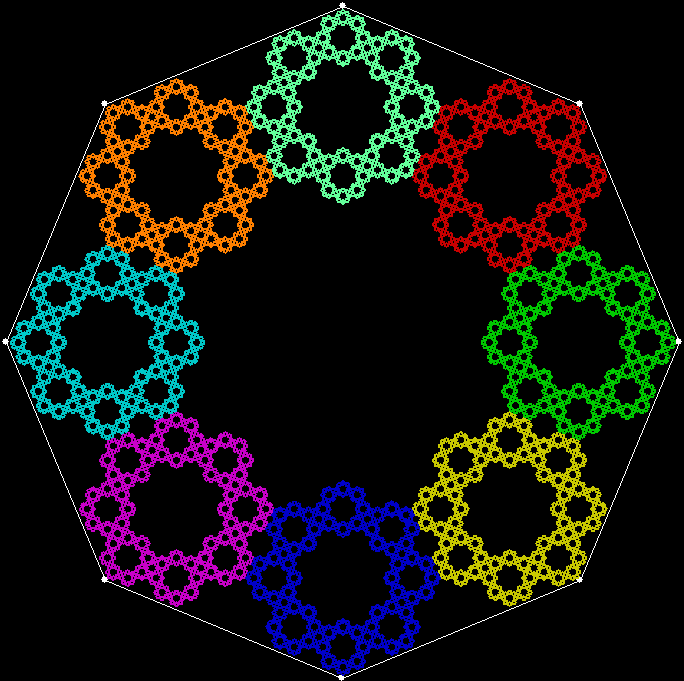
And octagons:

v = 8, j = 1,2


v = 8, j = 1,2 (with centre)


v = 8, j = 1,2,3, hist = 2


v = 8, j = 1,2,3, hist = 2


v = 8, j = 1,2,3,4 hist = 3


v = 8, j = 1,2,3,4 hist = 3 (with center)


The Hex Fractor #2

Pre-previously on Overlord-in-terms-of-issues-around-the-Über-Feral, I looked at the fractals created when various restrictions are placed on a point jumping at random half-way towards the vertices of a square. For example, the point can be banned from jumping towards the same vertex twice in a row or towards the vertex to the left of the vertex it has just jumped towards, and so on.

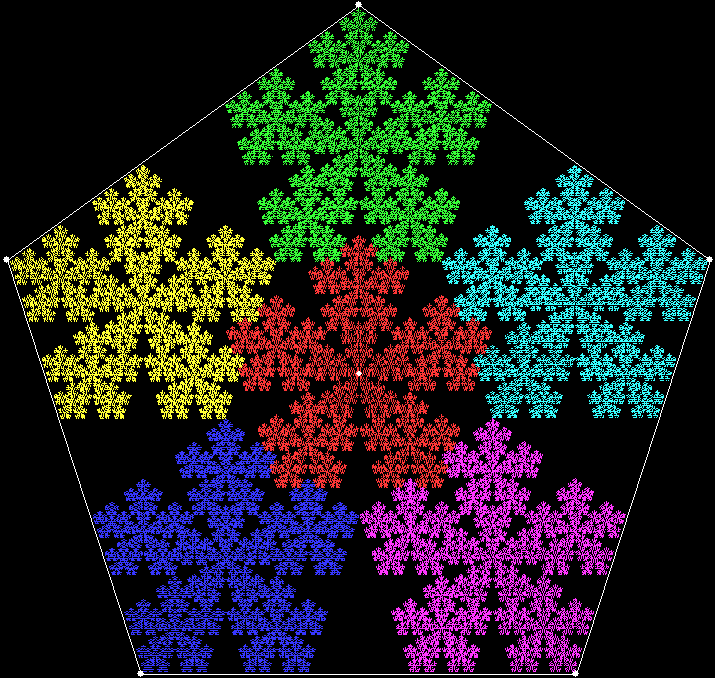
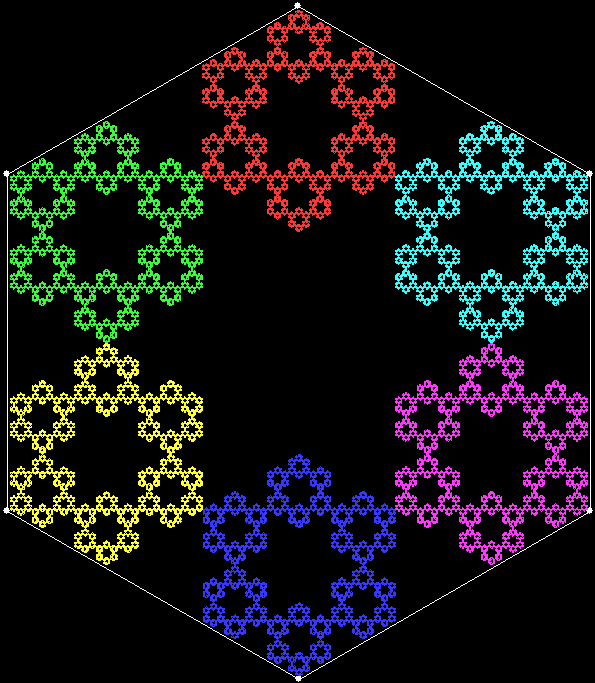
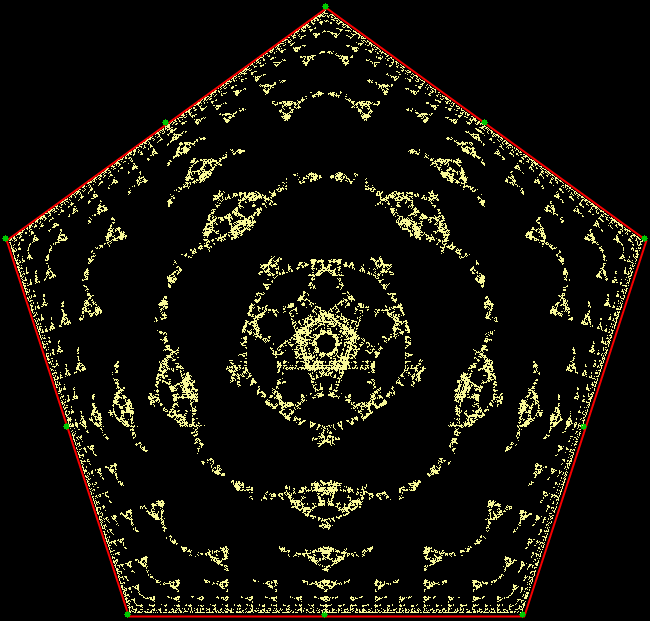
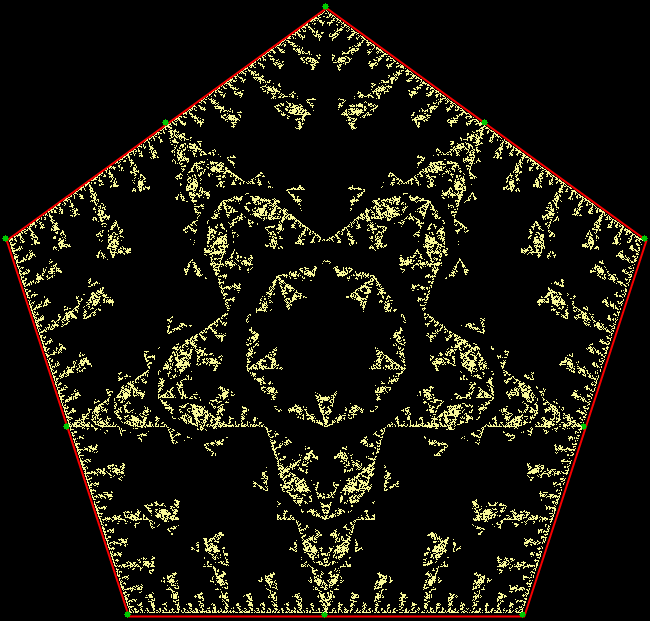
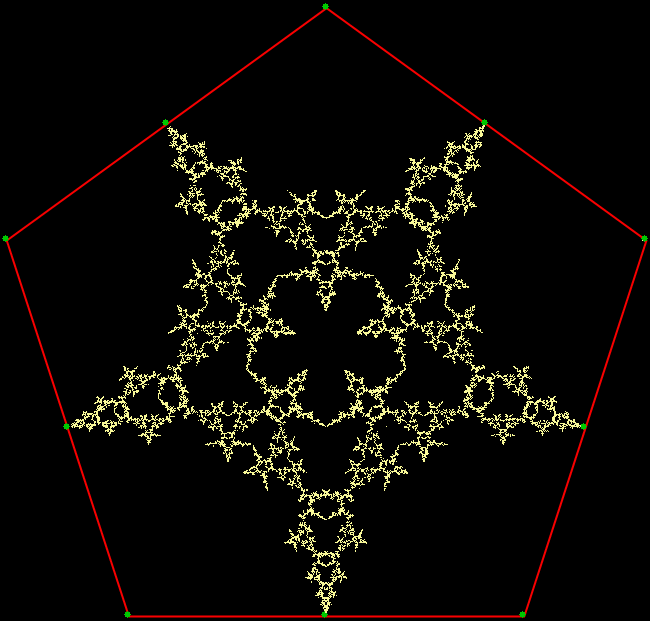
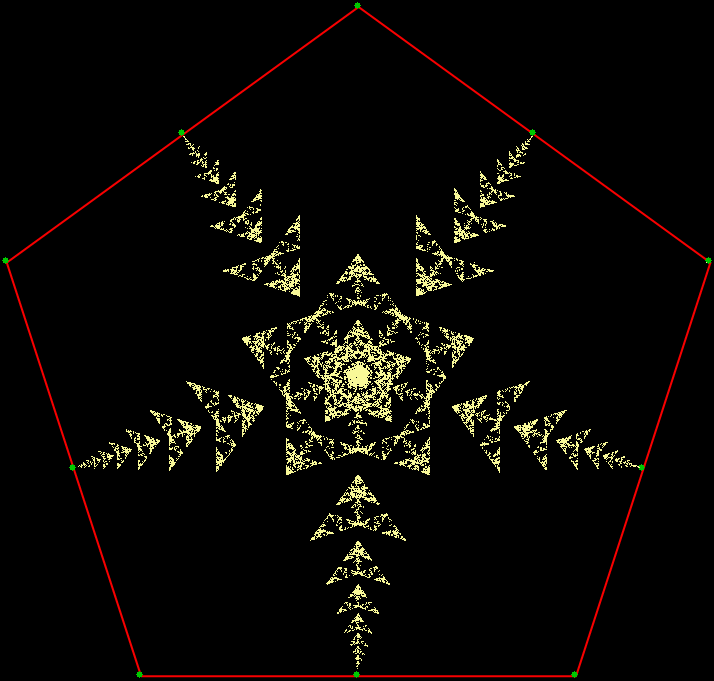
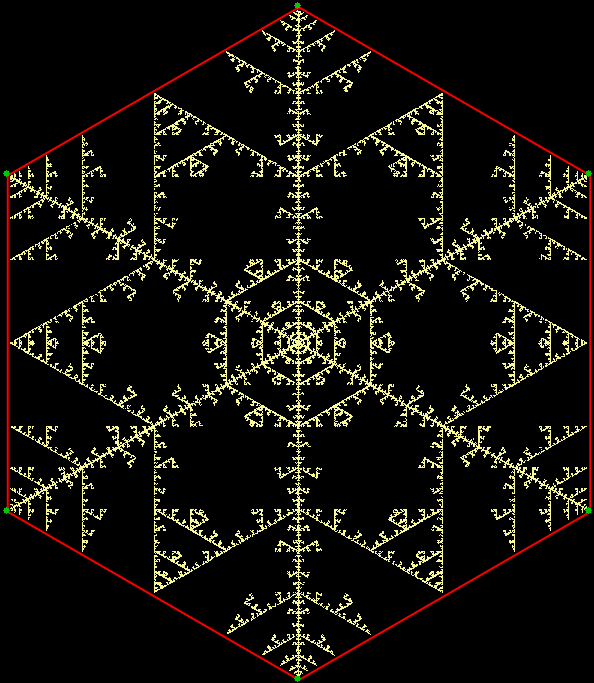
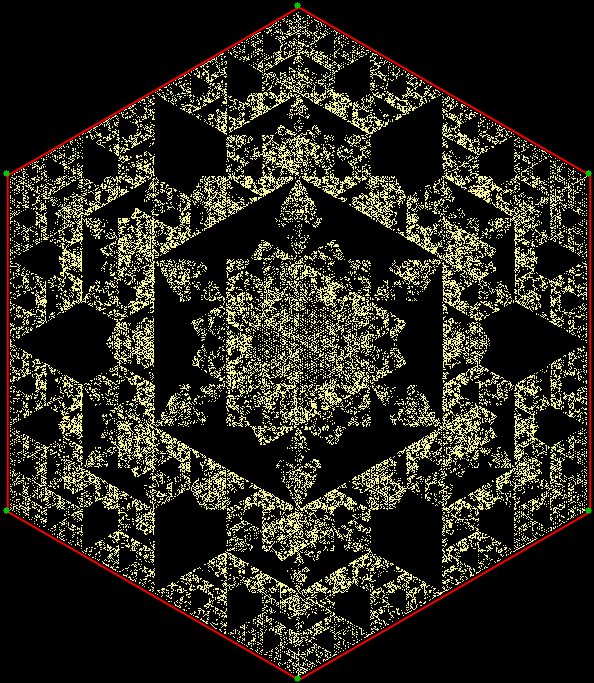
Today I want to look at what happens to a similar point moving inside pentagons and hexagons. If the point can’t jump twice towards the same vertex of a pentagon, this is the fractal that appears:

Ban second jump towards same vertex (v + 0)


Ban second jump towards same vertex (color)


If the point can’t jump towards the vertex immediately to the left of the one it’s just jumped towards, this is the fractal that appears:

Ban jump towards v + 1


Ban jump towards v + 1 (color)


And this is the fractal when the ban is on the vertex two places to the left:

Ban jump towards v + 2


Ban jump towards v + 2 (color)


You can also ban more than one vertex:

Ban jump towards v + 0,1


Ban jump towards v + 1,2


Ban jump towards v + 1,4


Ban jump towards v + 1,4 (color)


Ban jump towards v + 2,3


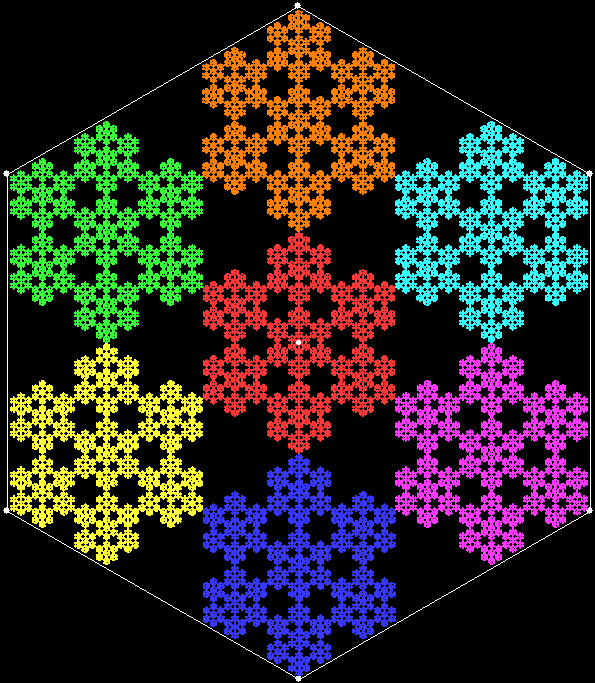
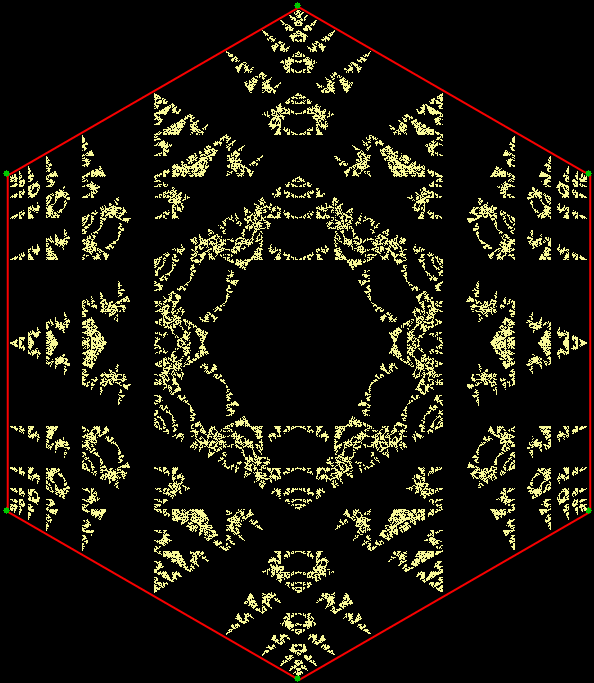
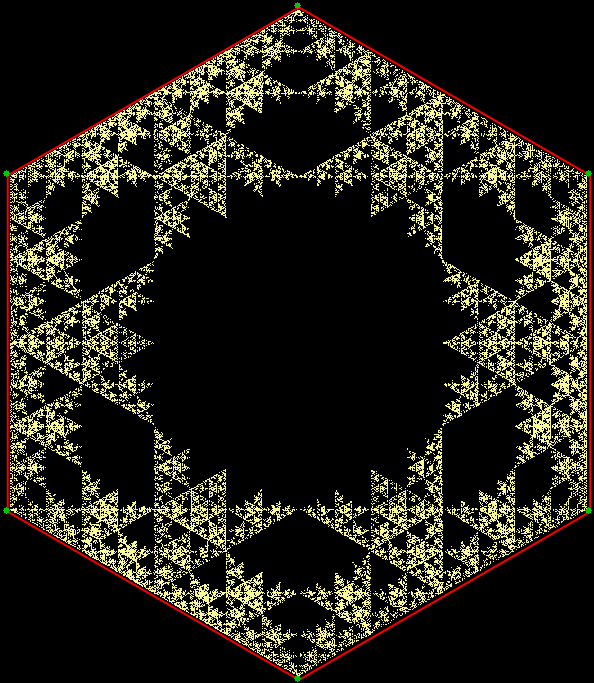
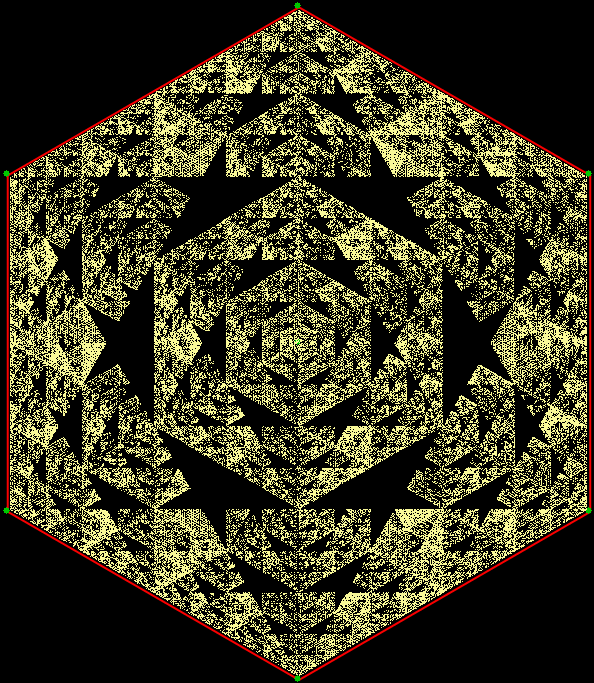
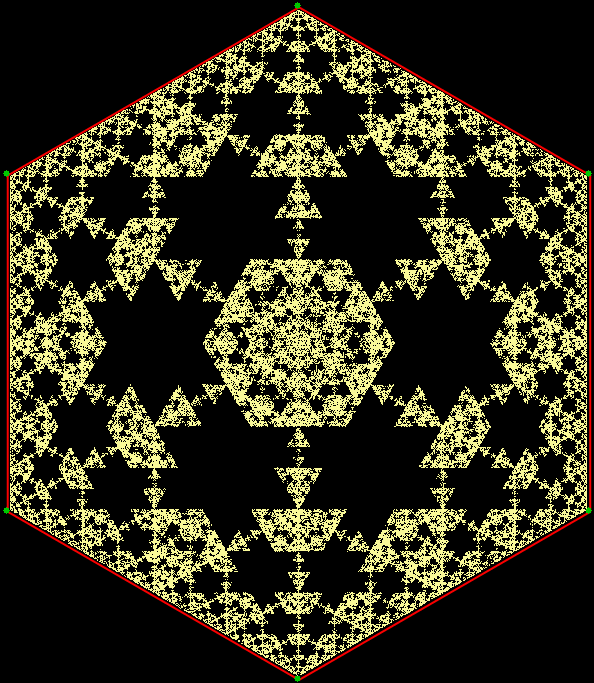
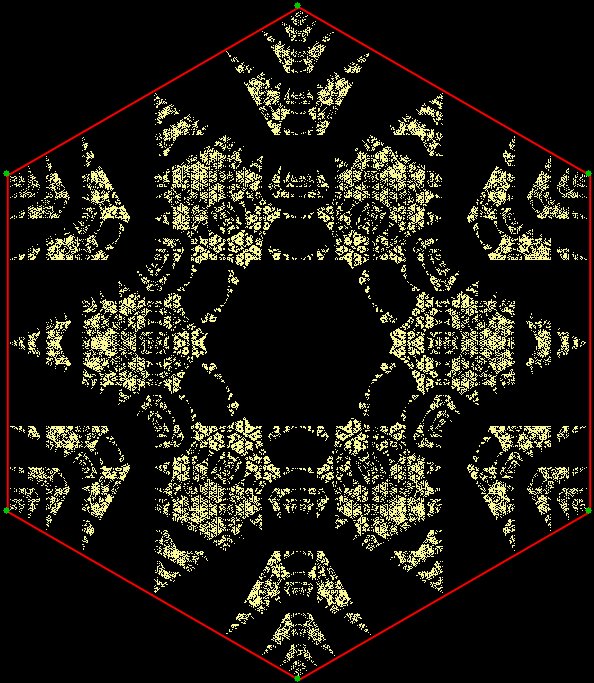
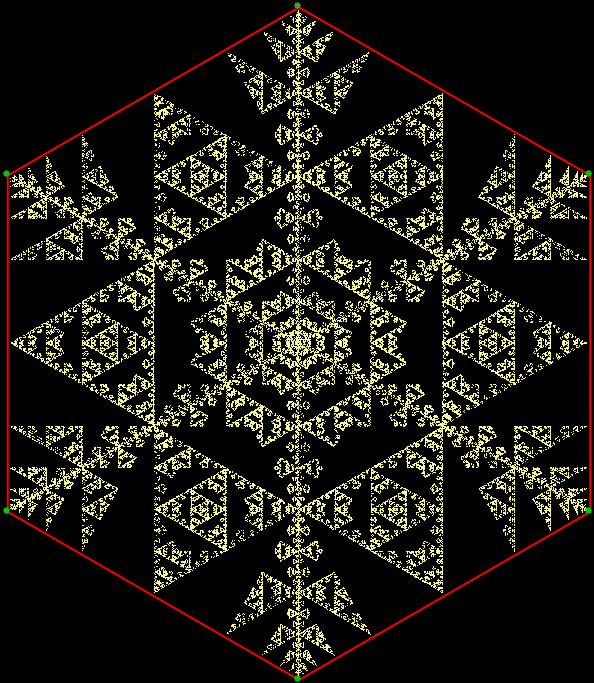
And here are fractals created in similar ways inside hexagons:

Ban jump towards v + 0,1


Ban jump towards v + 0,3


Ban jump towards v + 0,1,2


Ban jump towards v + 0,1,2 (color)


Ban jump towards v + 0,1,4


Ban jump towards v + 0,1,5


Ban jump towards v + 0,2,4


Ban jump towards v + 0,2,4 (color)


Ban jump towards v + 1,2,3


Ban jump towards v + 1,2,3 (color)


Ban jump towards v + 1,2,4


Ban jump towards v + 1,2,4, (color)


Ban jump towards v + 1,3,5


Ban jump towards v + 1,3,5 (color)


Ban jump towards v + 1,2


Ban jump towards v + 1,2


Ban jump towards v + 1,3


Ban jump towards v + 1,3 (color)


Ban jump towards v + 1,5


Ban jump towards v + 1,5 (color)


Ban jump towards v + 2,3


Ban jump towards v + 2,3 (color)


Ban jump towards v + 2,4


Ban jump towards v + 2,4 (color)


Elsewhere other-accessible:

Square Routes Re-Verticed

Square Routes Re-Verticed

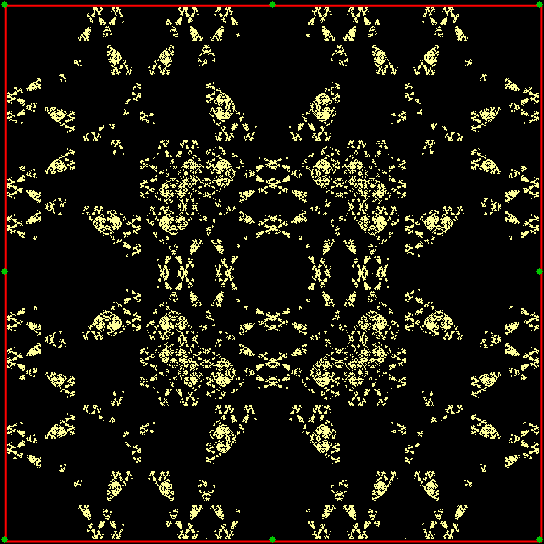
Start with a point in the middle of a square. Allow it to make a series of, say, eight jumps towards the vertices of the square, but with one restriction: it can’t jump towards the same vertex twice in a row. When the point has made the eight jumps, mark its position. If you do this for every possible route, the result will look like this:

Ban jump towards same vertex


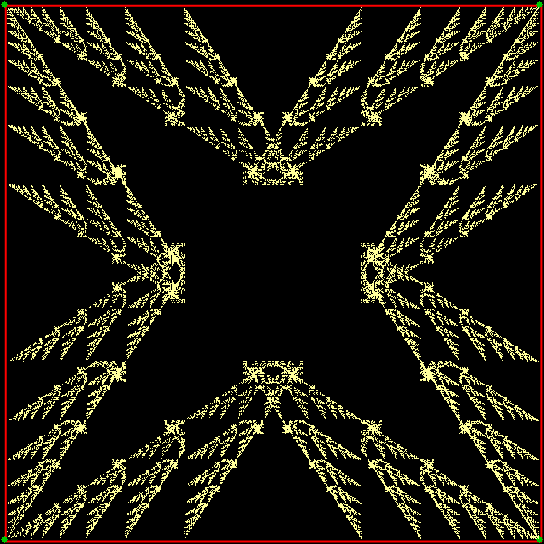
And here’s a different restriction: the point can’t jump towards the vertex immediately to the left of the vertex it has just jumped towards:

Ban jump towards v + 1


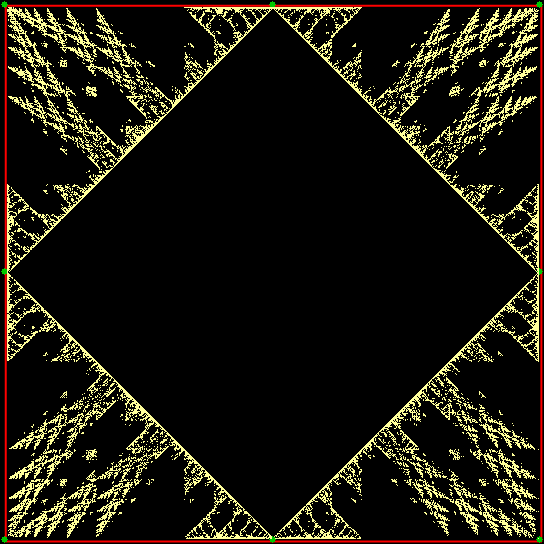
And here it can’t jump towards the vertex diagonally opposite the vertex it has just jumped towards:

Ban jump towards v + 2


Now allow the point to jump not just towards the vertices, but towards points midway between the vertices. And expand and reverse the restrictions: instead of not allowing a jump towards v + i1, v + i2…, only allow a jump towards v + i1, v + i2… Some interesting shapes appear:

Jump must be towards v, v + 1 or v + 2 (one point between vertices)


v, v + 1 or v + 6


v, v + 2 or v + 3


v, v + 2 or v + 4


v, v + 2 or v + 6


v, v + 3 or v + 4


v, v + 3 or v + 5


v, v + 2 or v + 7


v + 1, v + 4 or v + 7


v, v + 1 or v + 6 (two points between vertices)


v, v + 2 or v + 4


v, v + 2 or v + 6


v, v + 2 or v + 9


v, v + 3 or v + 6


v, v + 3 or v + 8


v, v + 4 or v + 8


v, v + 5 or v + 7


v , v + 6 or v + 11


v + 1, v + 5 or v + 6


v + 1, v + 2 or v + 10


v + 1, v + 6 or v + 10


v + 1, v + 6 or v + 11


v + 2, v + 6 or v + 10


Elsewhere other-posted:

Square Routes
Square Routes Revisited
Square Routes Re-Revisited
Square Routes Re-Re-Revisited

Bat out of L

Pre-previously on Overlord-in-terms-of-the-Über-Feral, I’ve looked at intensively interrogated issues around the L-triomino, a shape created from three squares that can be divided into four copies of itself:

An L-triomino divided into four copies of itself


I’ve also interrogated issues around a shape that yields a bat-like fractal:

A fractal full of bats


Bat-fractal (animated)


Now, to end the year in spectacular fashion, I want to combine the two concepts pre-previously interrogated on Overlord-in-terms-of-the-Über-Feral (i.e., L-triominoes and bats). The L-triomino can also be divided into nine copies of itself:

An L-triomino divided into nine copies of itself


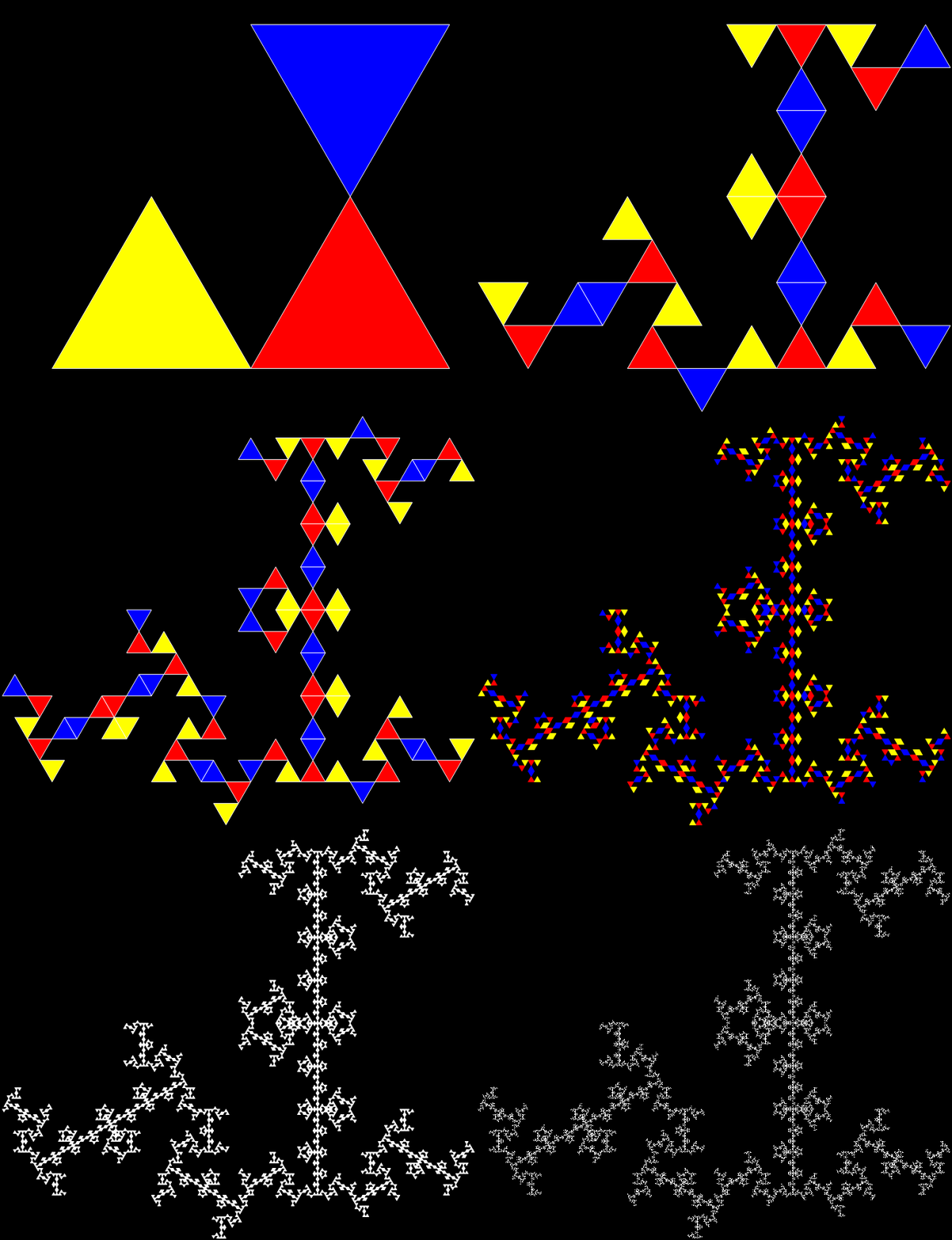
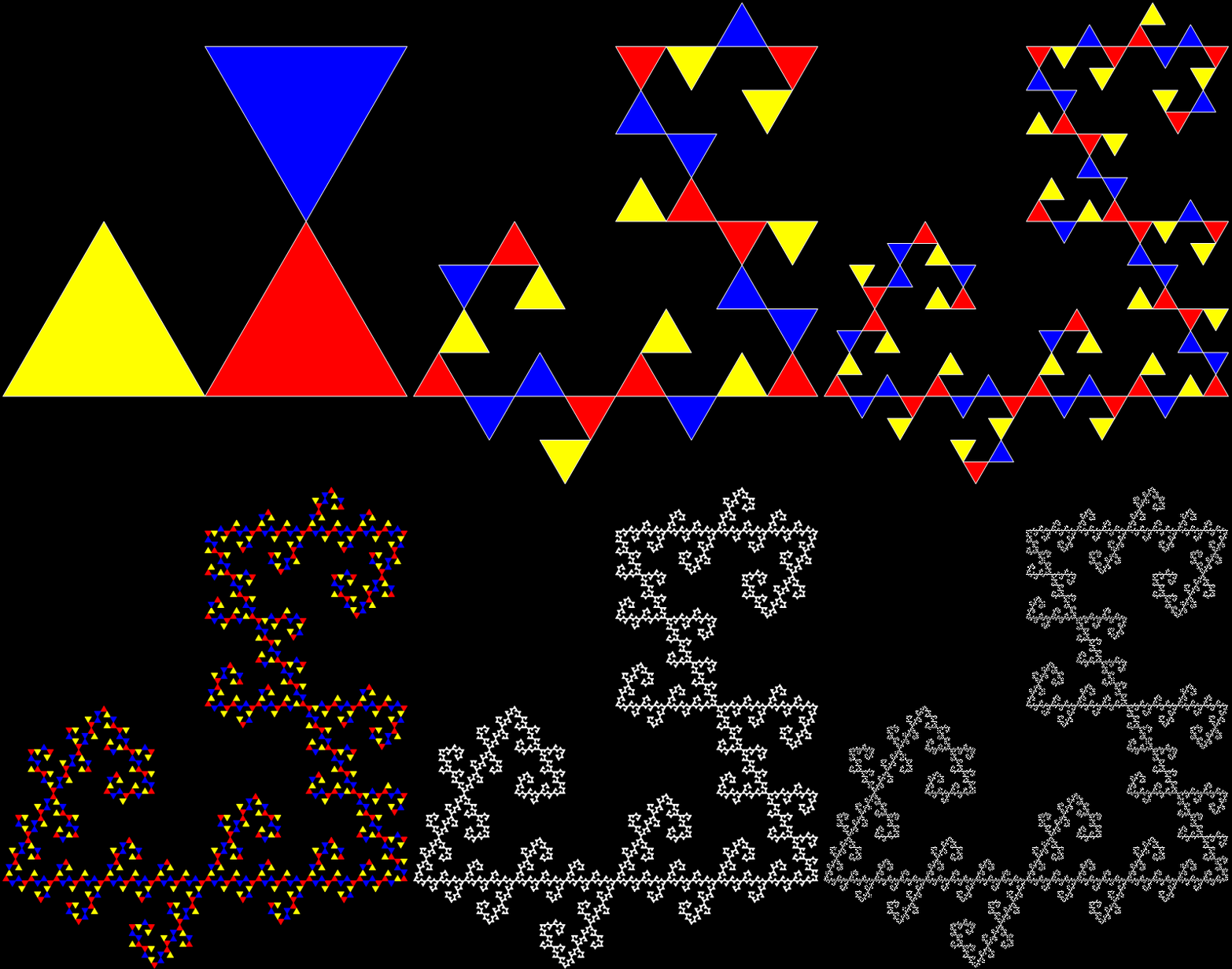
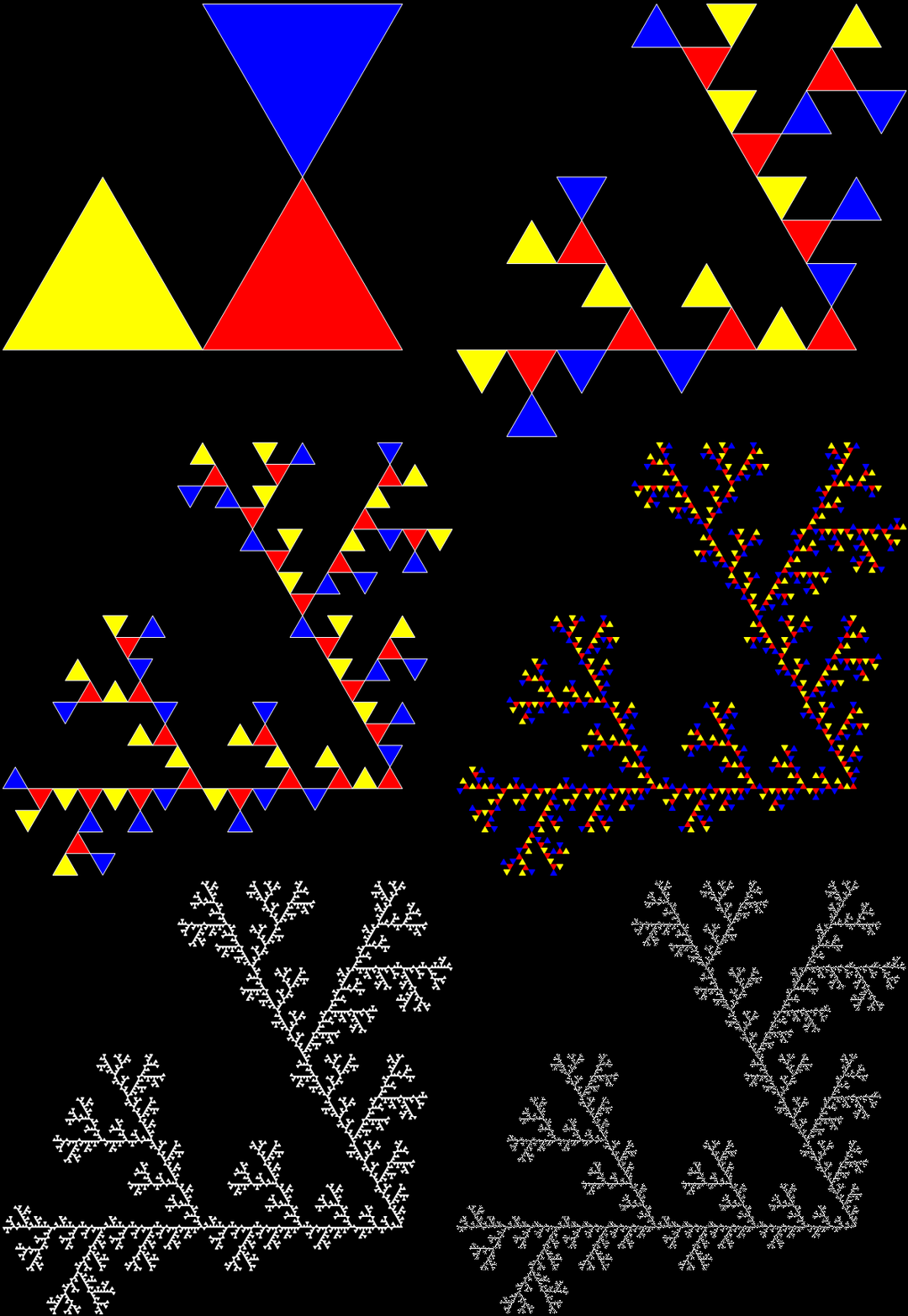
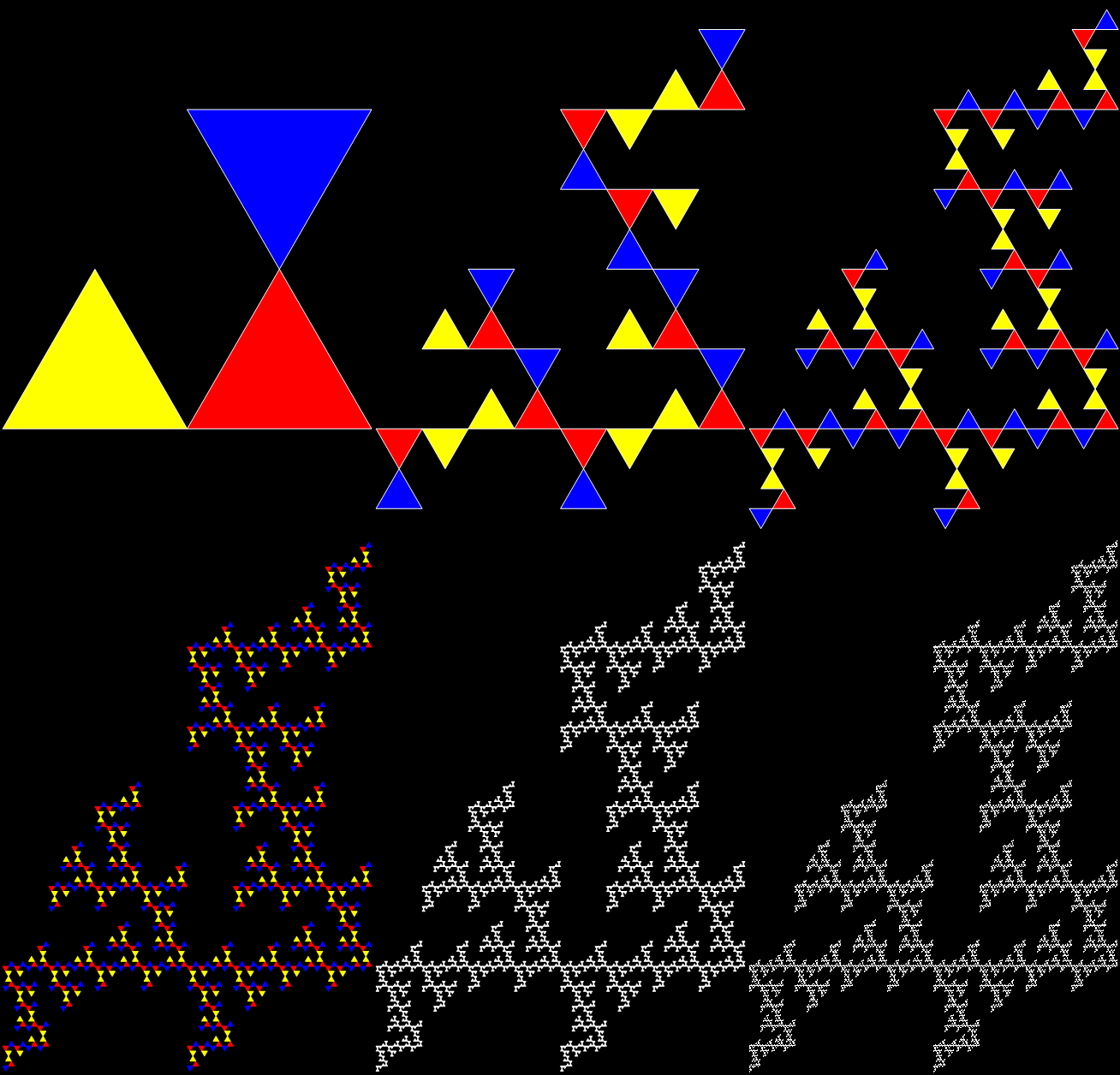
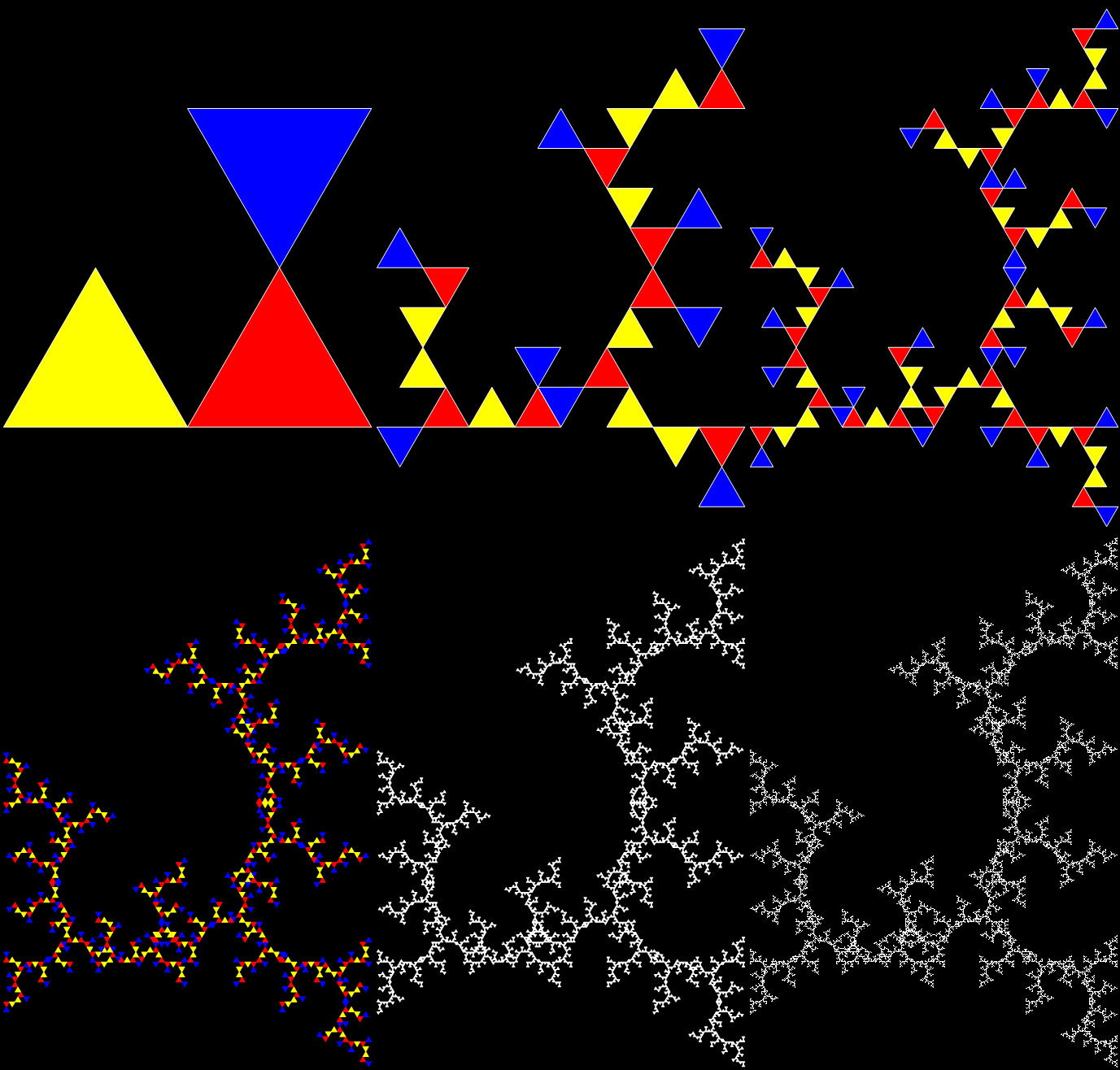
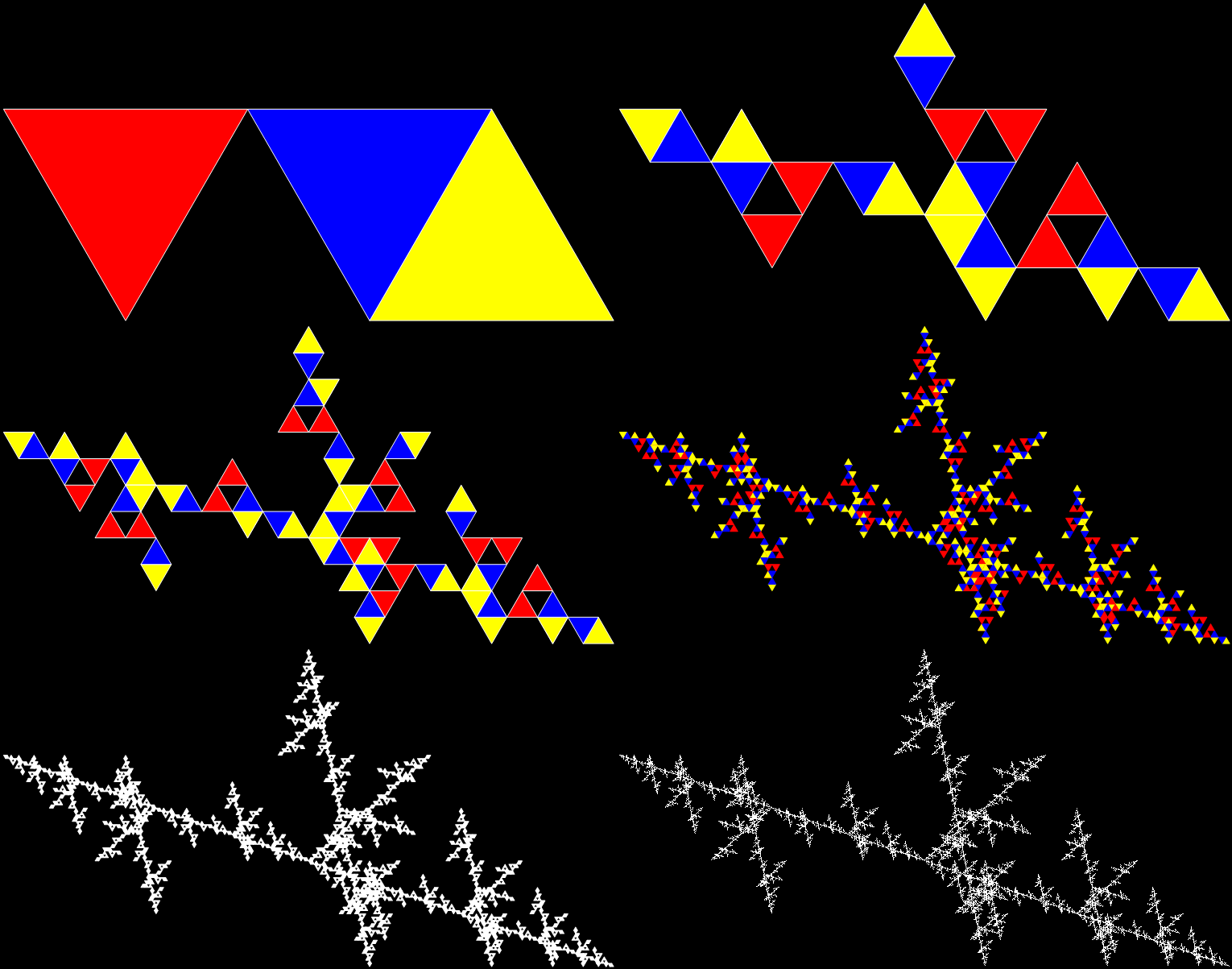
If three of these copies are discarded and each of the remaining six sub-copies is sub-sub-divided again and again, this is what happens:

Fractal stage 1


Fractal stage 2


Fractal #3


Fractal #4


Fractal #5


Fractal #6


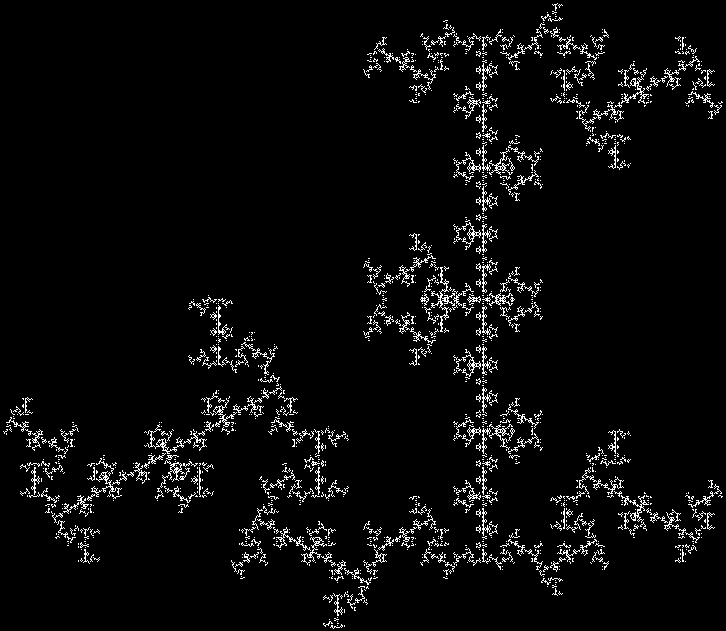
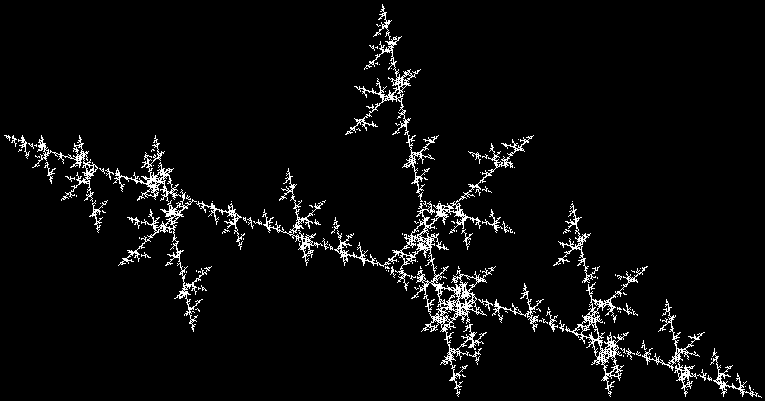
Et voilà, another bat-like fractal:

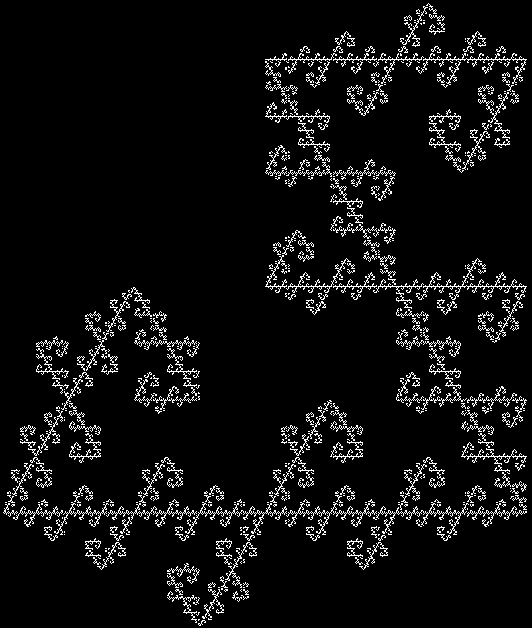
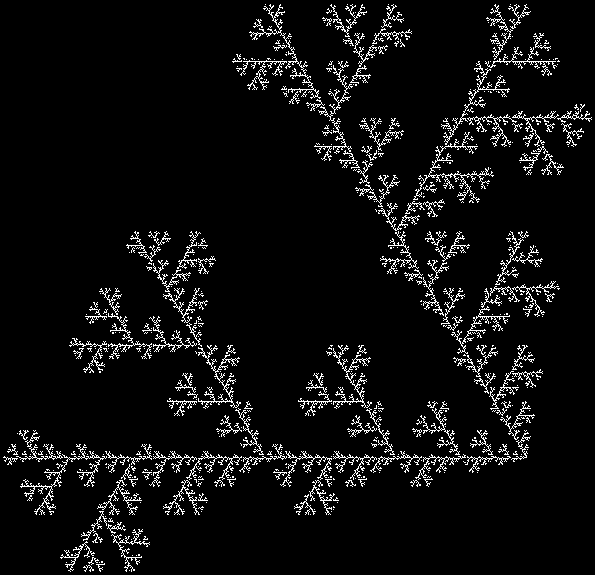
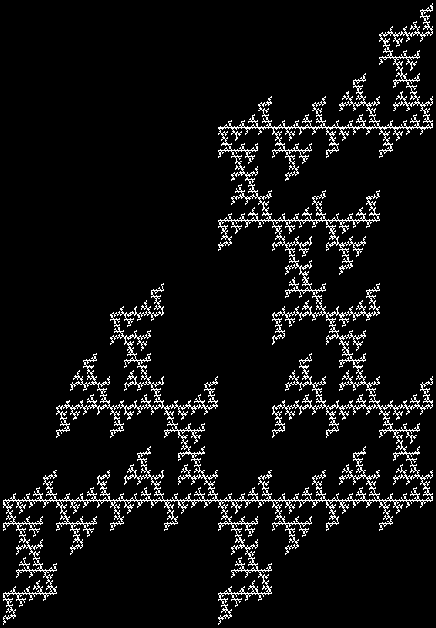
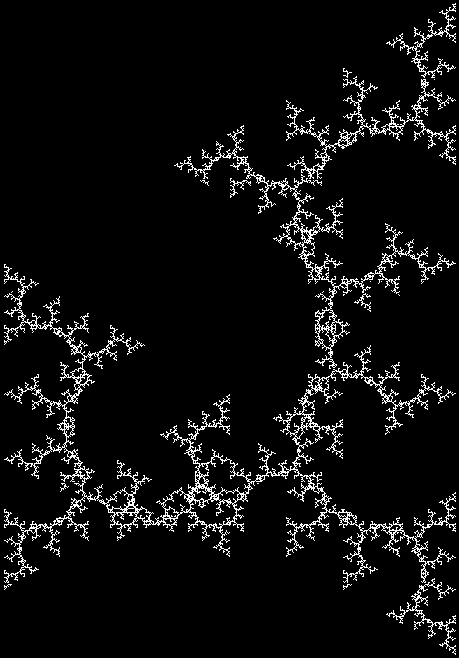
L-triomino bat-fractal (static)


L-triomino bat-fractal (animated)


Elsewhere other-posted:

Tri-Way to L
Bats and Butterflies
Square Routes
Square Routes Revisited
Square Routes Re-Revisited
Square Routes Re-Re-Revisited

Tridentine Math

The Tridentine Mass is the Roman Rite Mass that appears in typical editions of the Roman Missal published from 1570 to 1962. — Tridentine Mass, Wikipedia

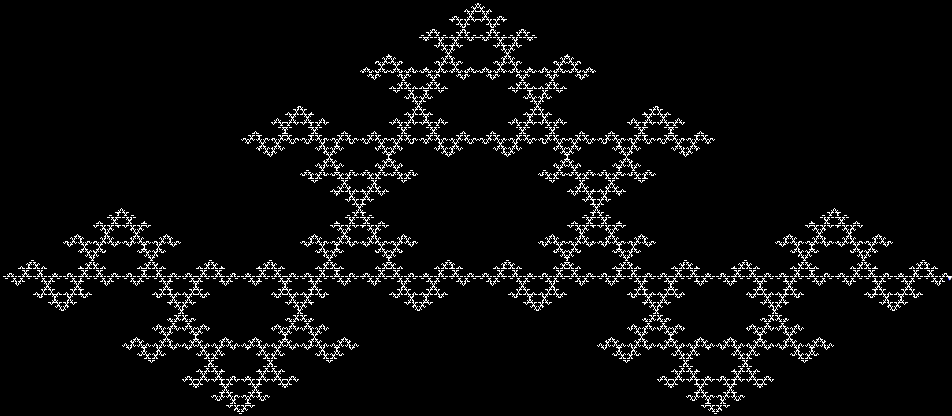
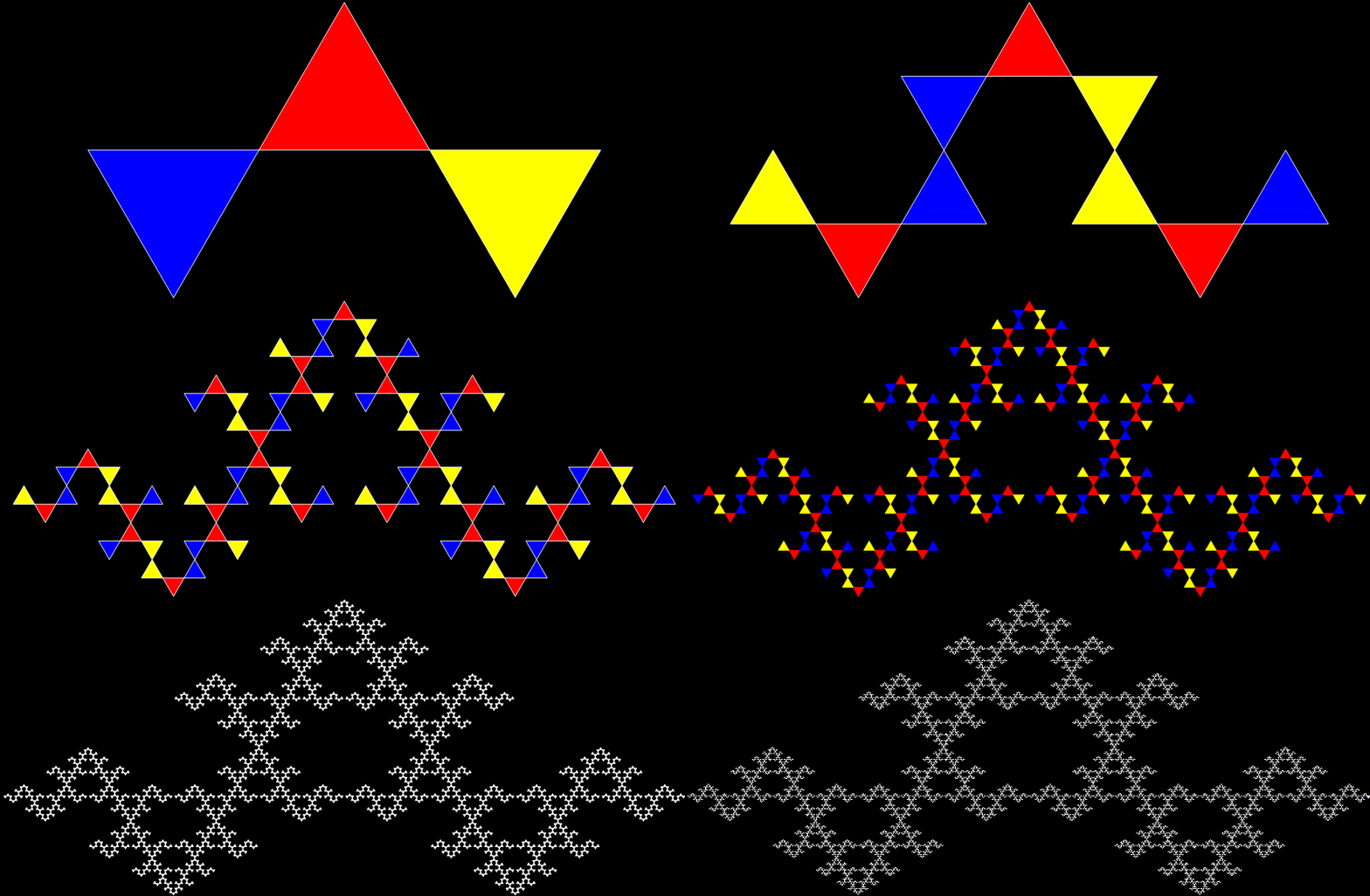
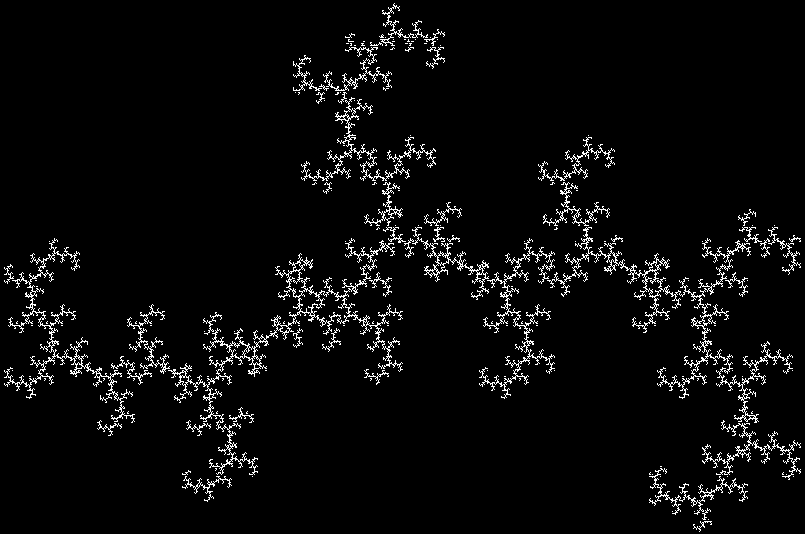
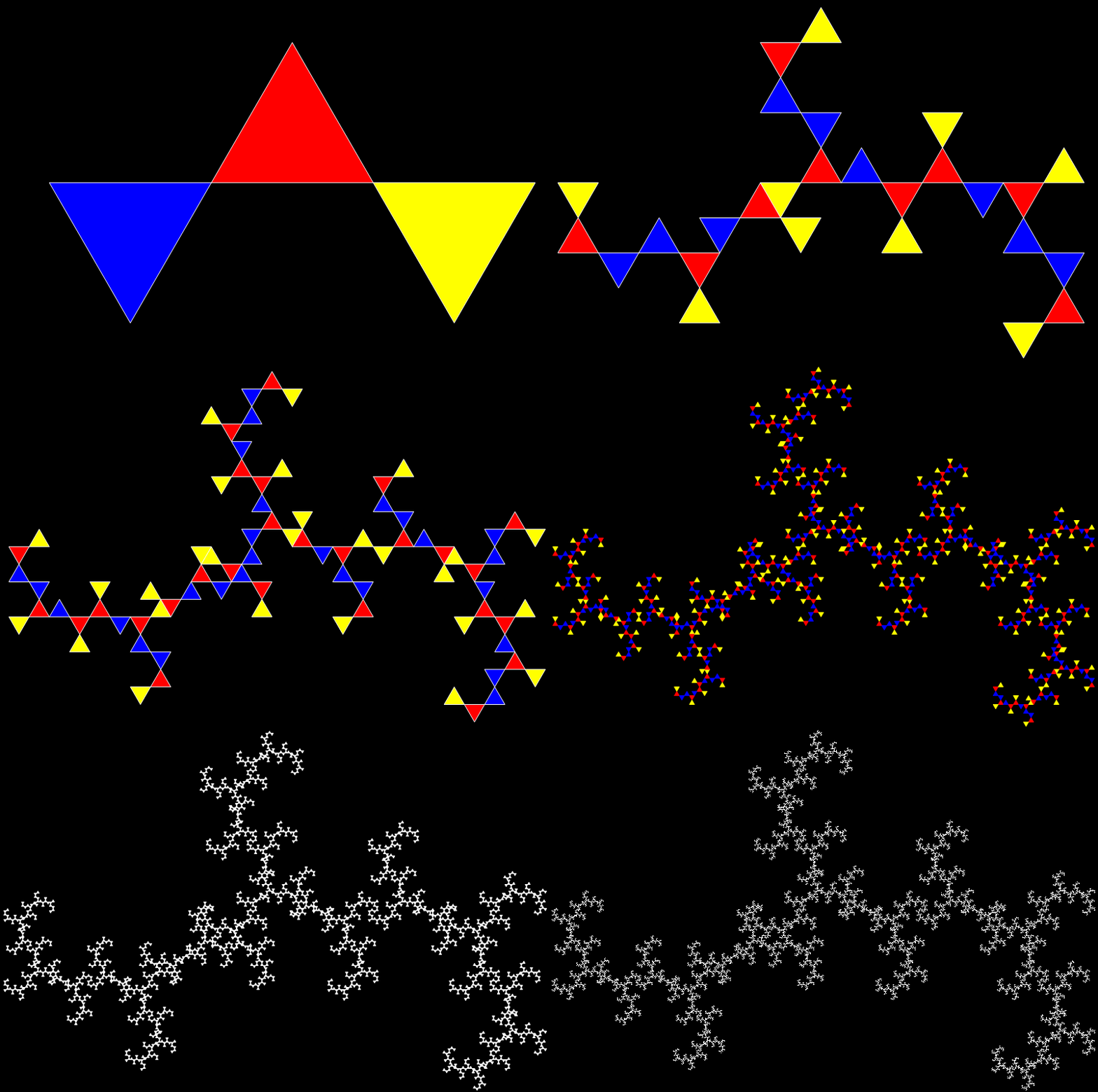
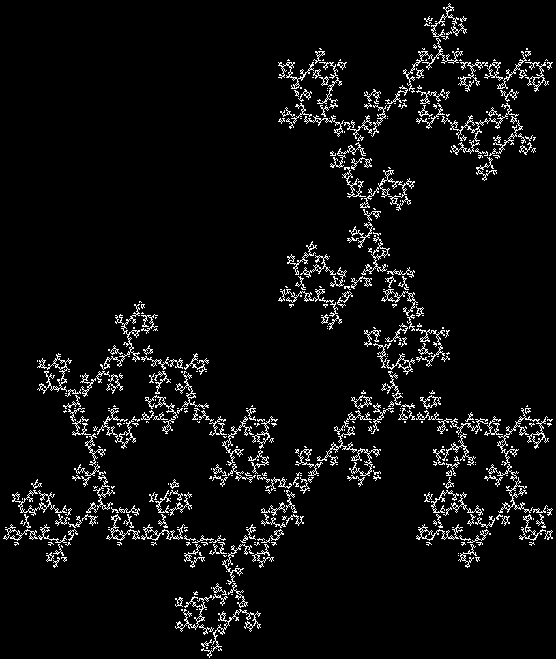
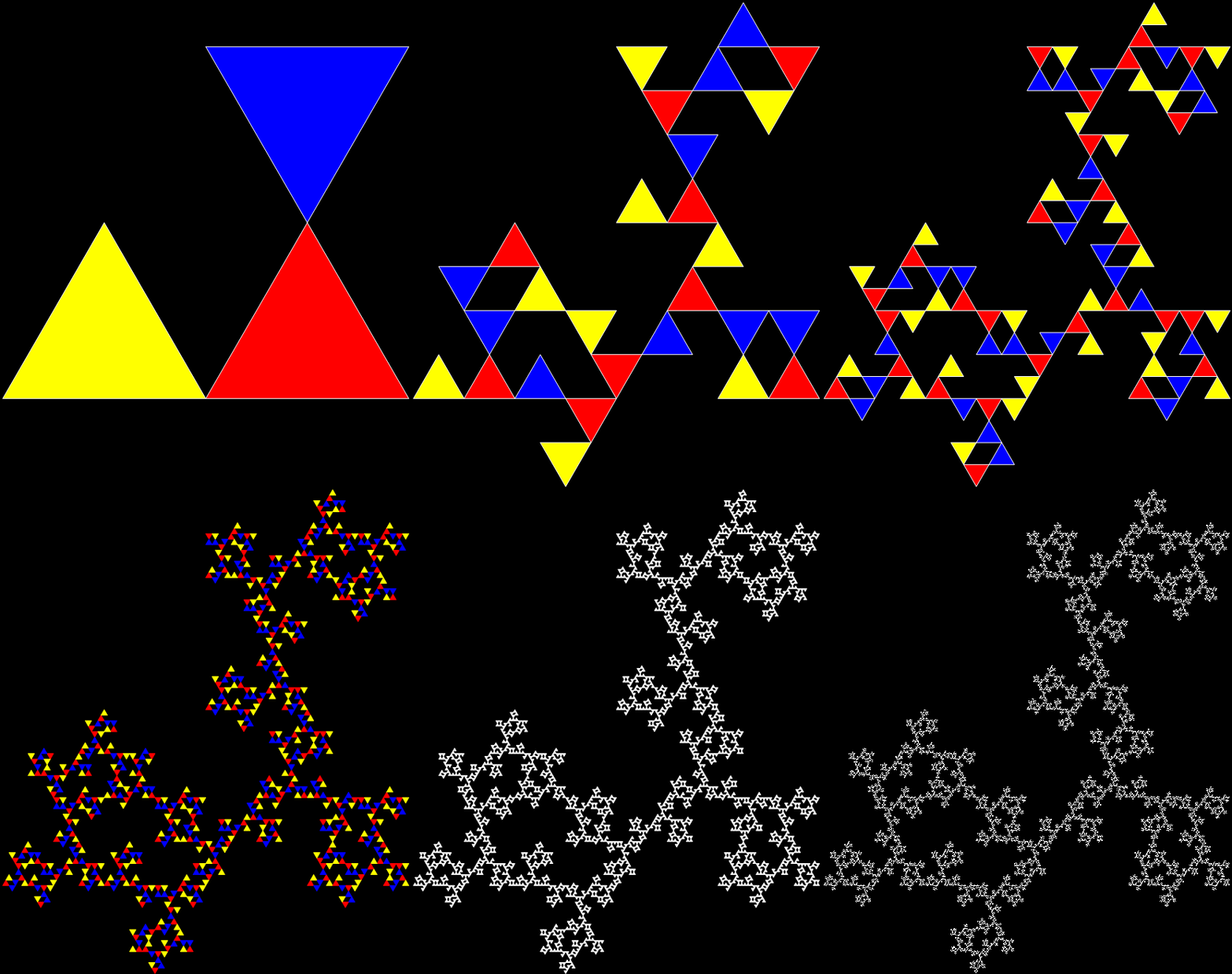
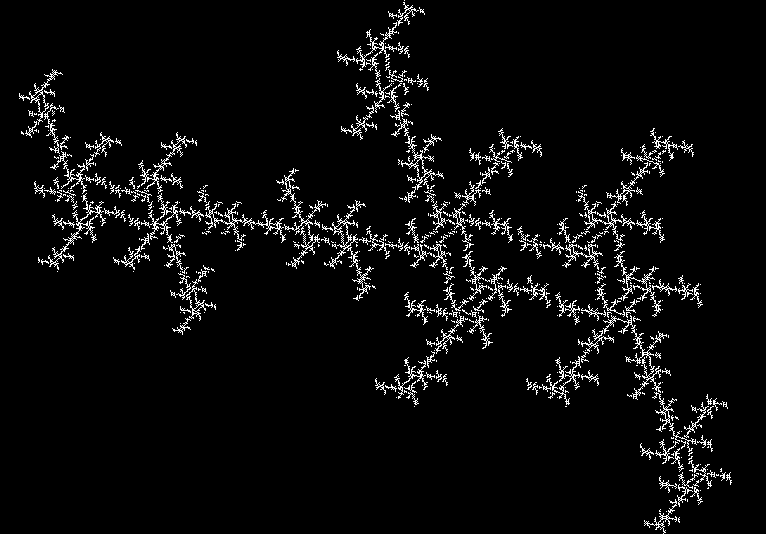
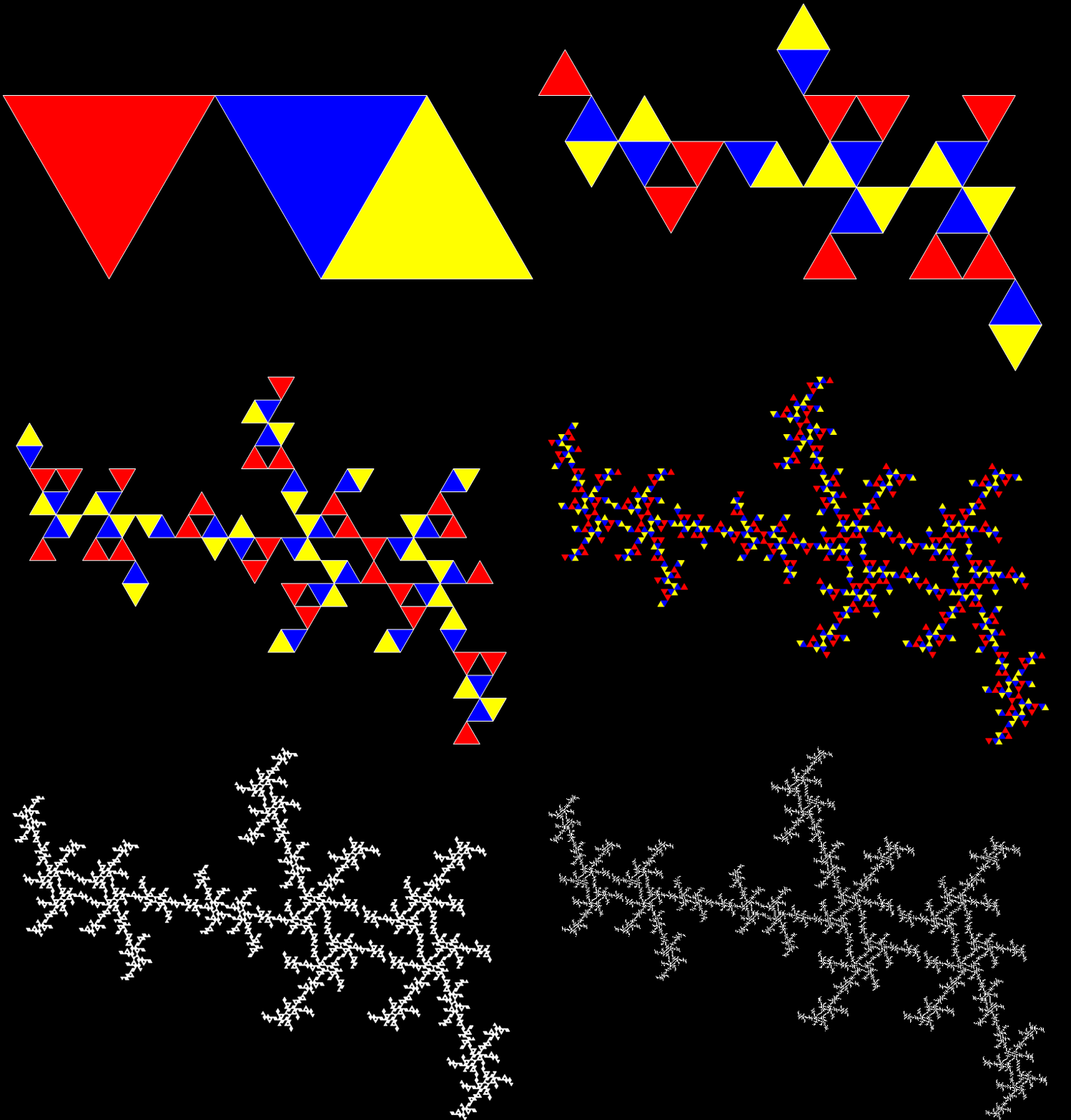
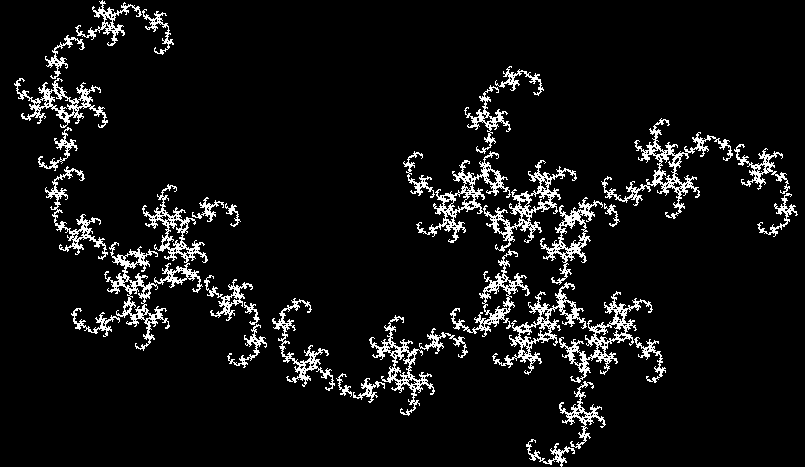
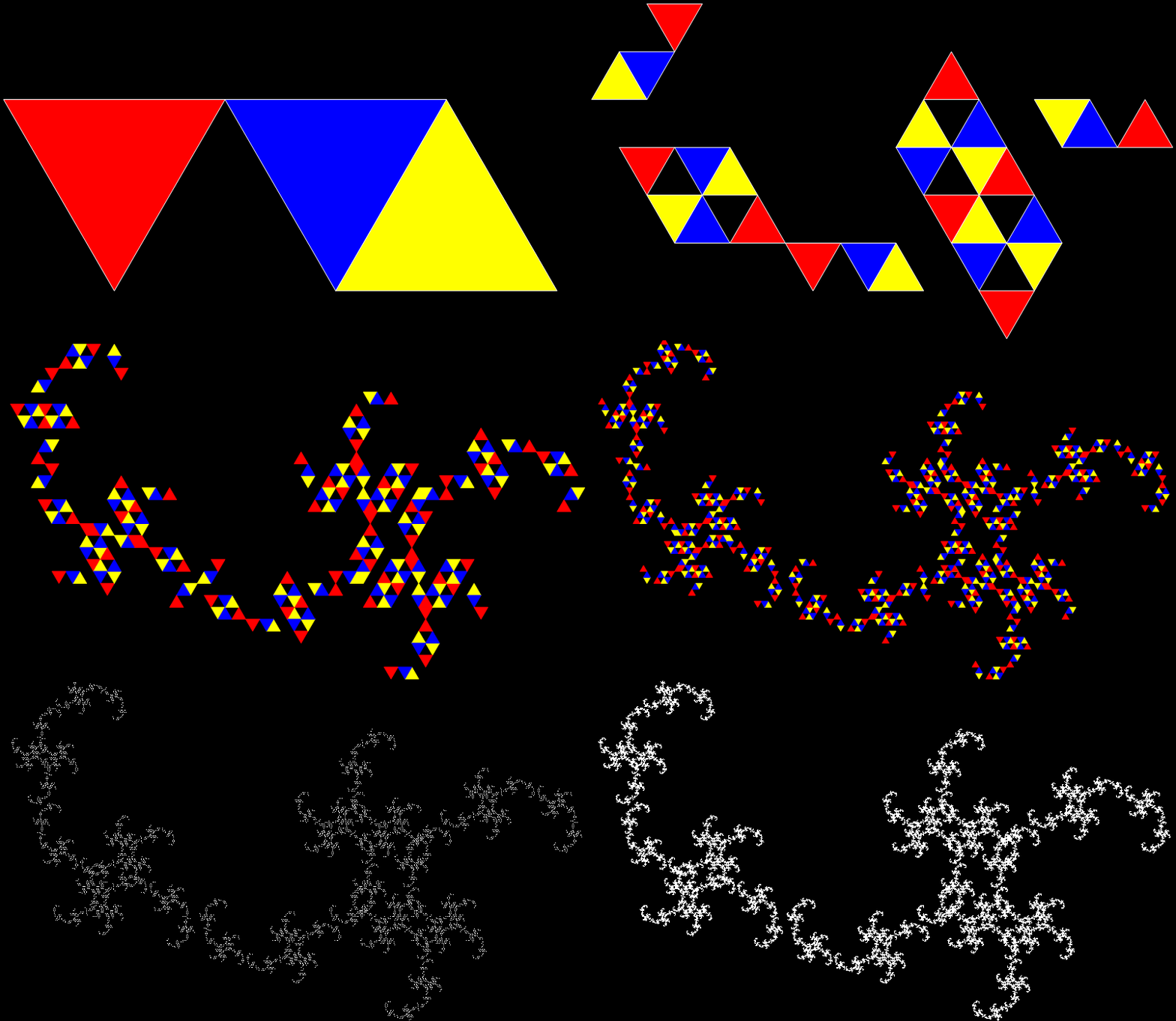
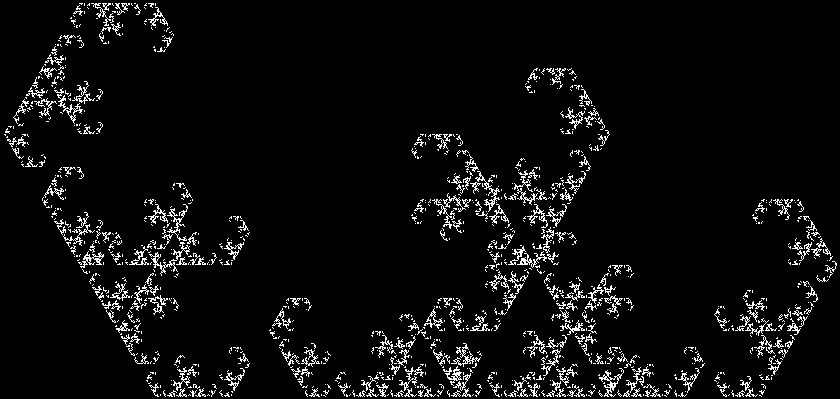
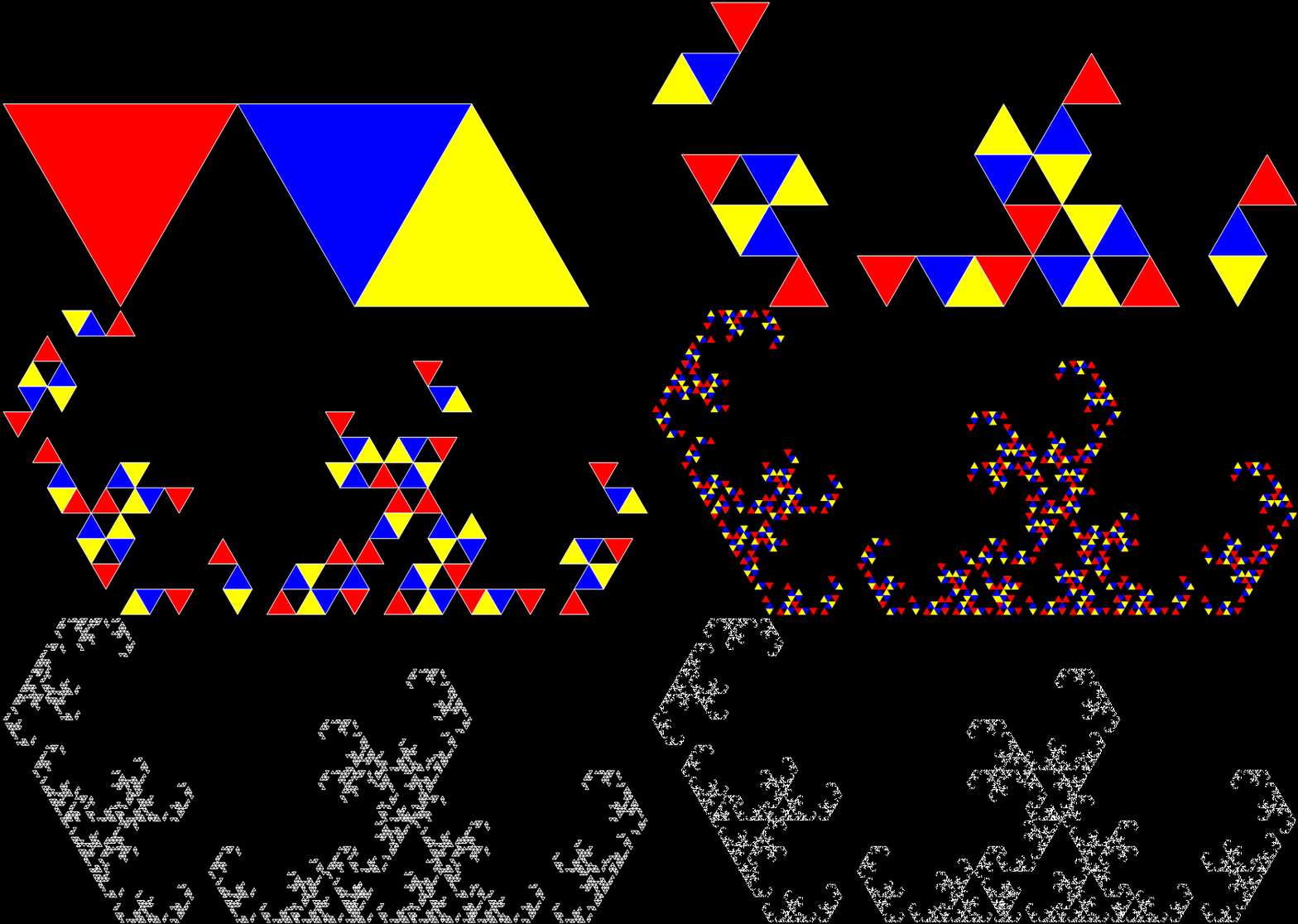
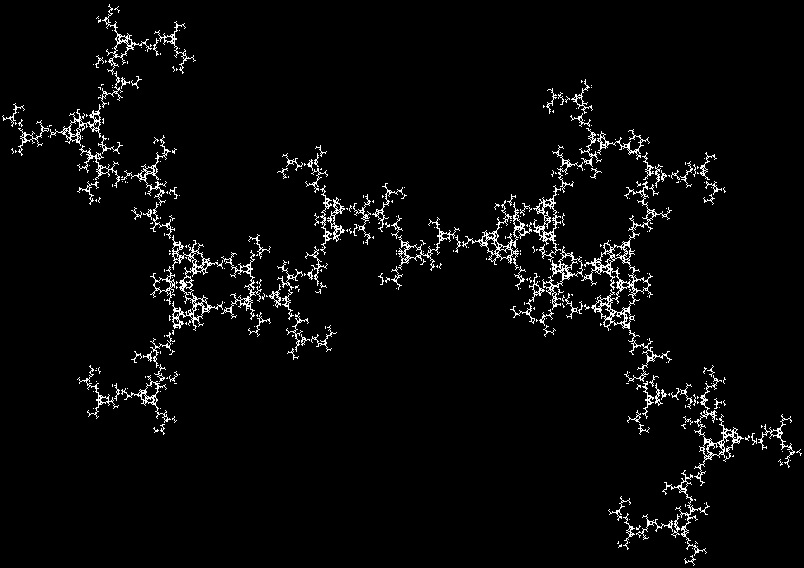
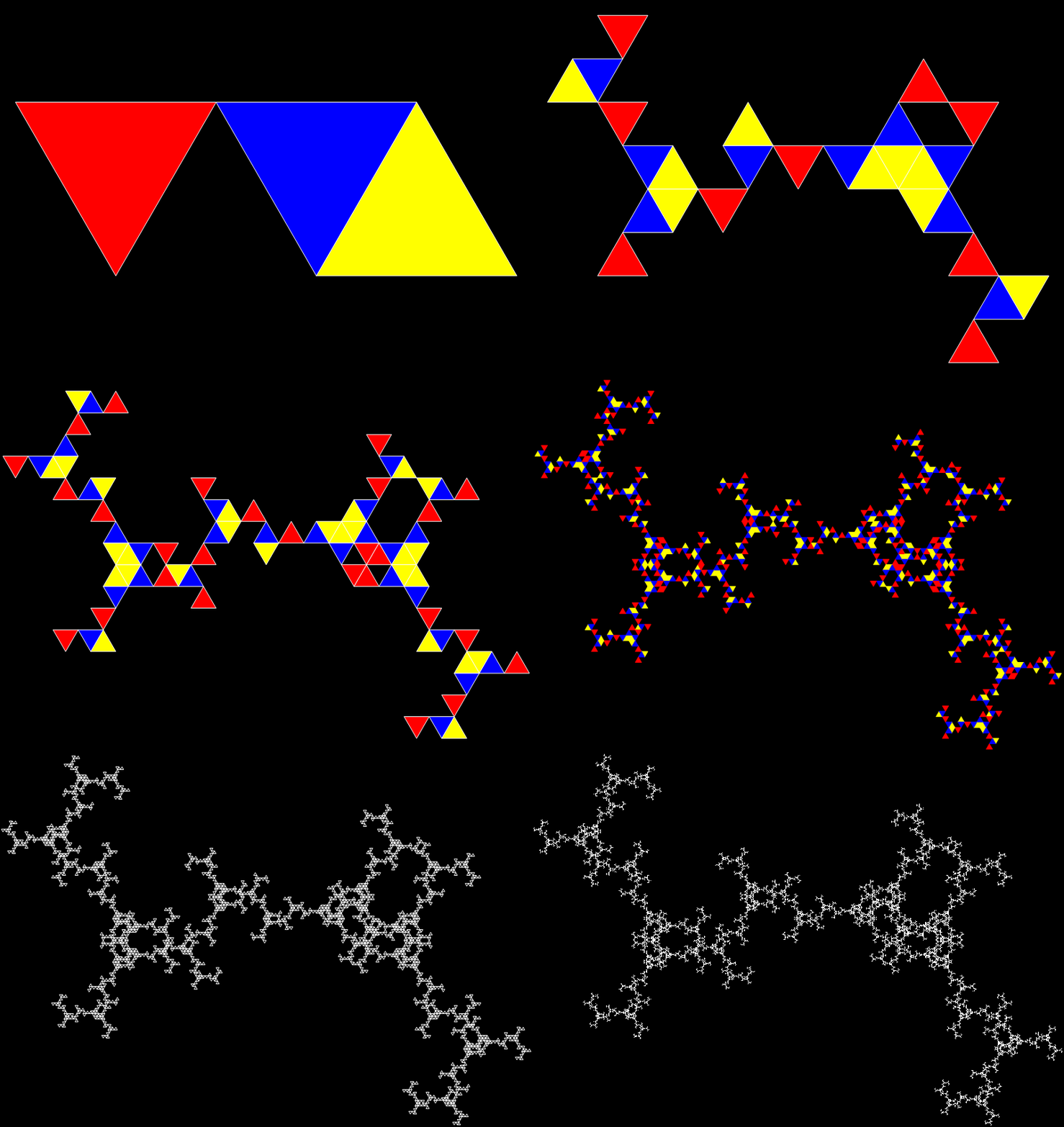
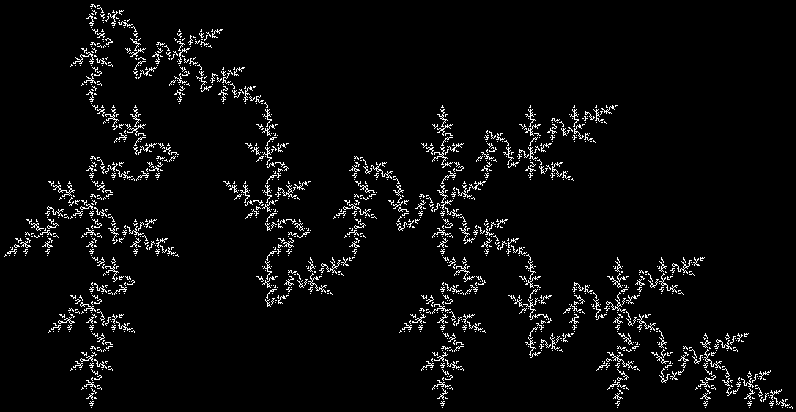
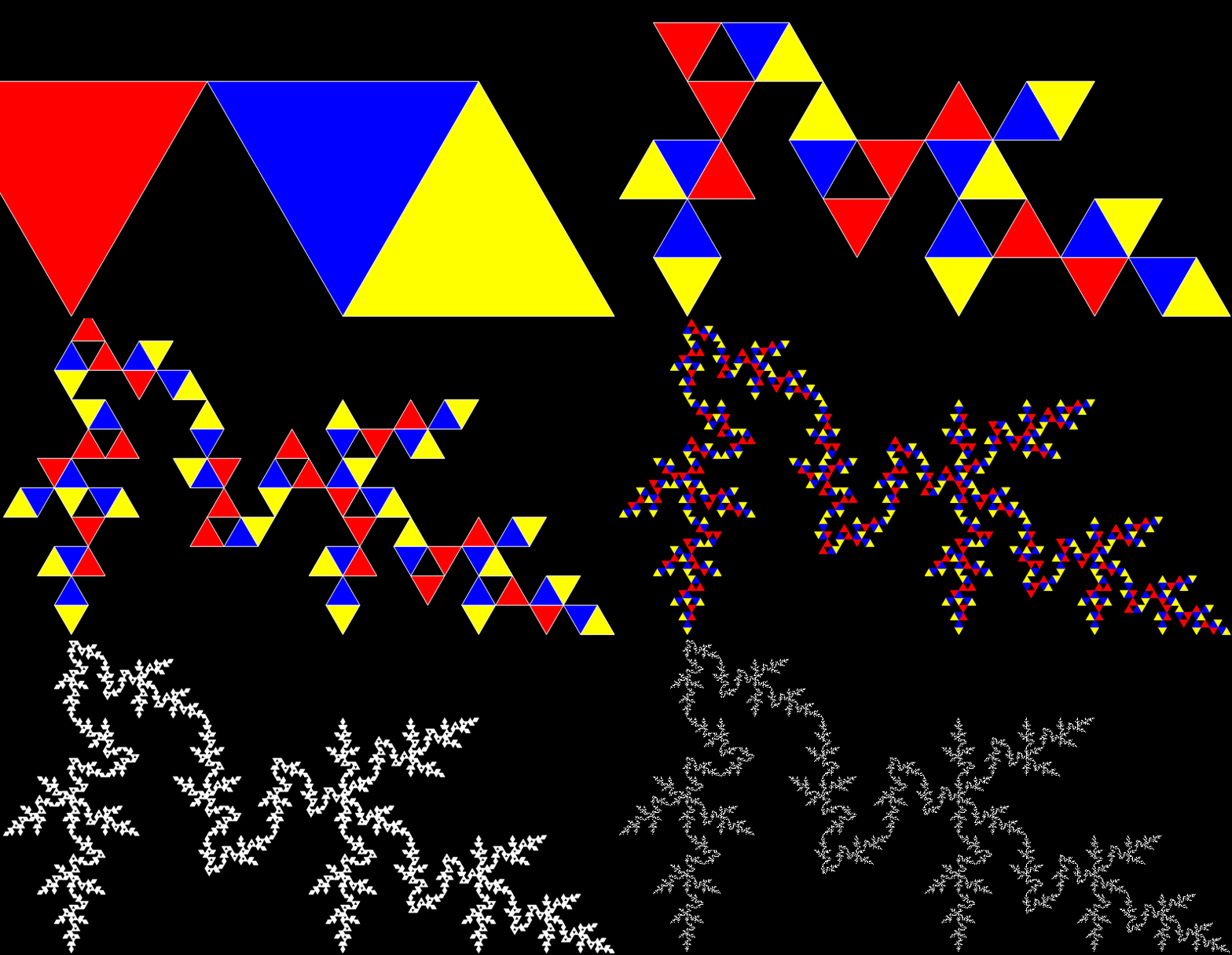
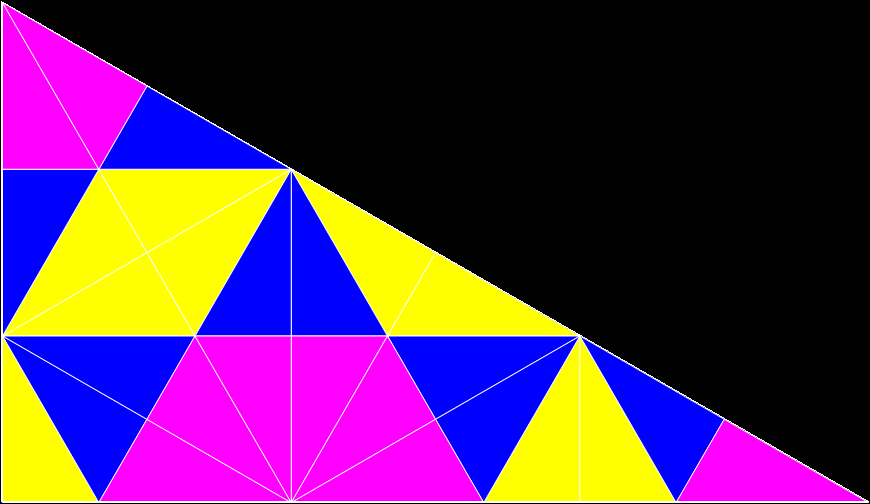
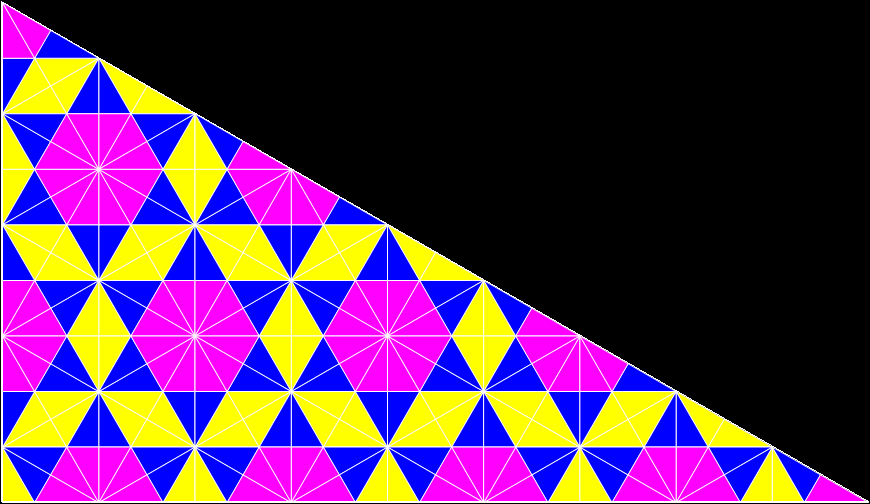
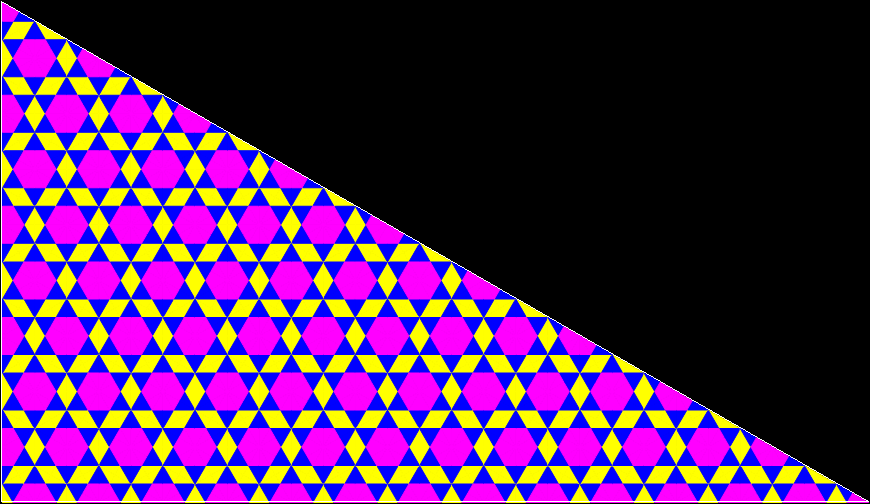
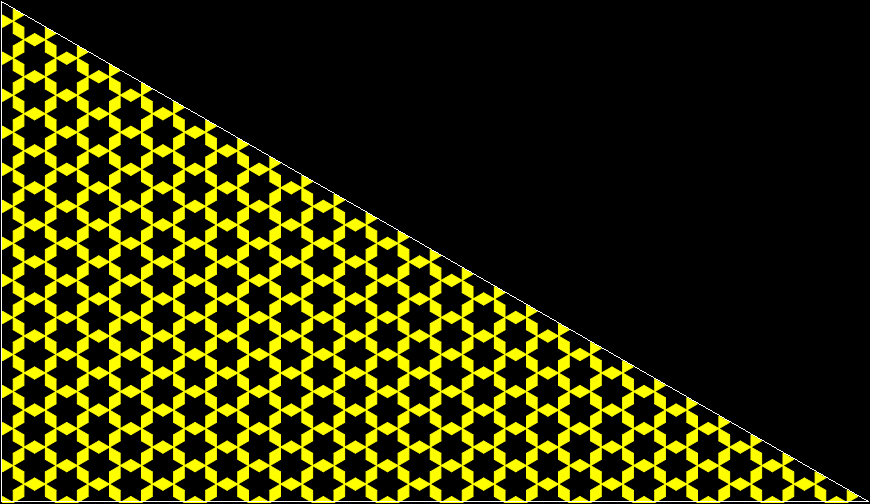
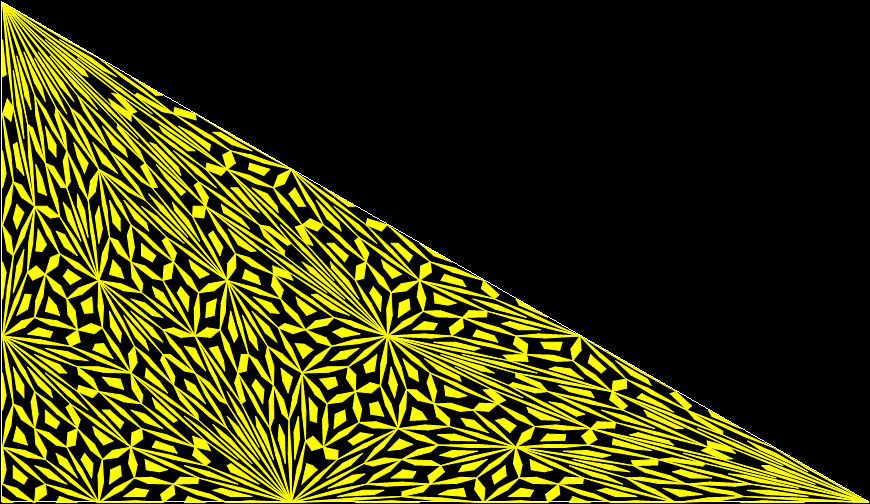
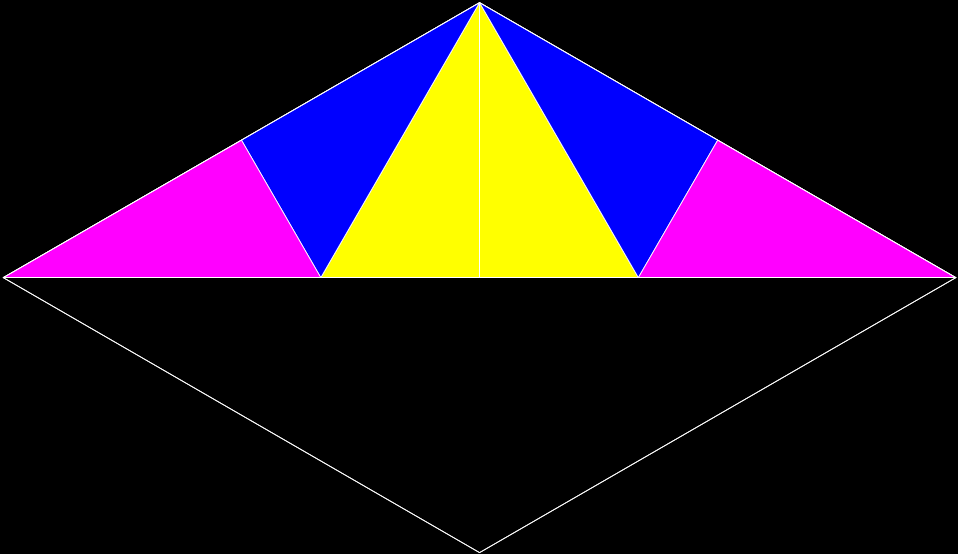
A 30°-60°-90° right triangle, with sides 1 : √3 : 2, can be divided into three identical copies of itself:

30°-60°-90° Right Triangle — a rep-3 rep-tile…


And if it can be divided into three, it can be divided into nine:

…that is also a rep-9 rep-tile


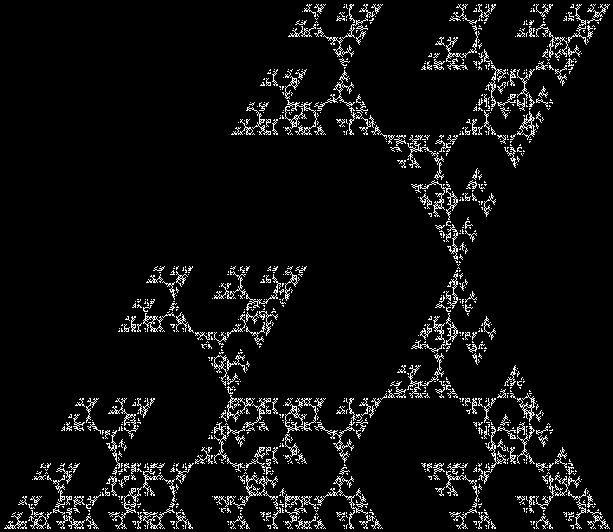
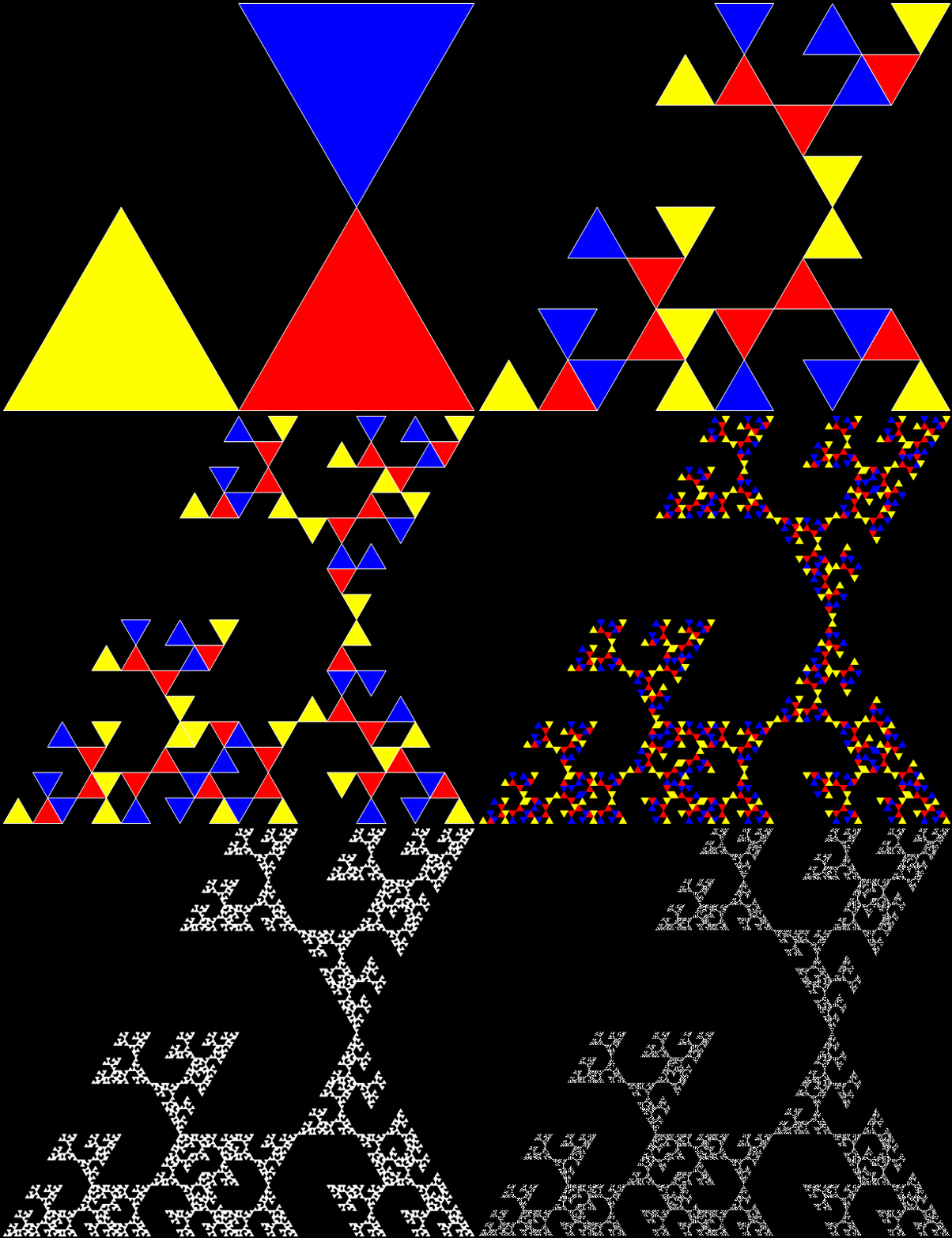
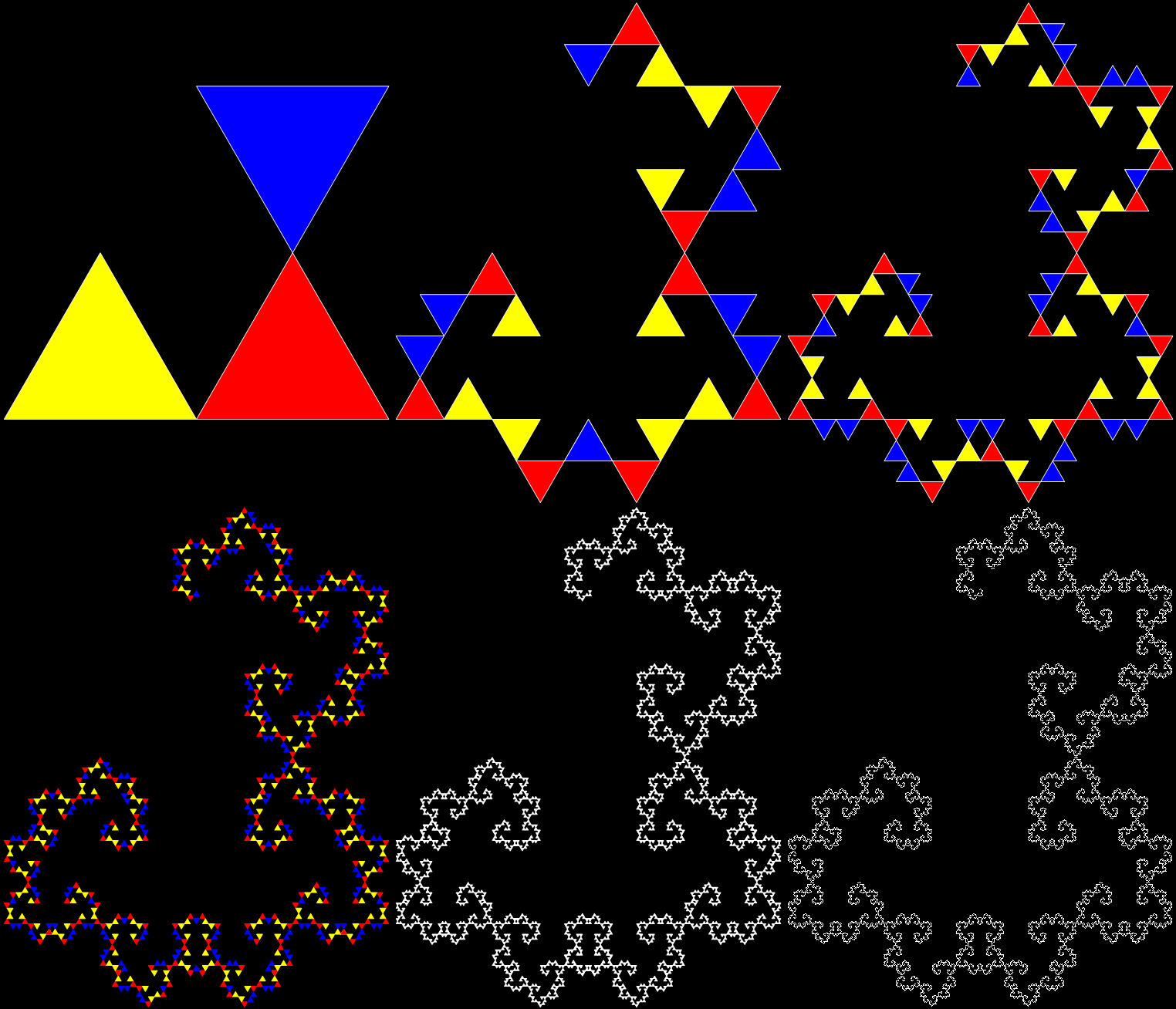
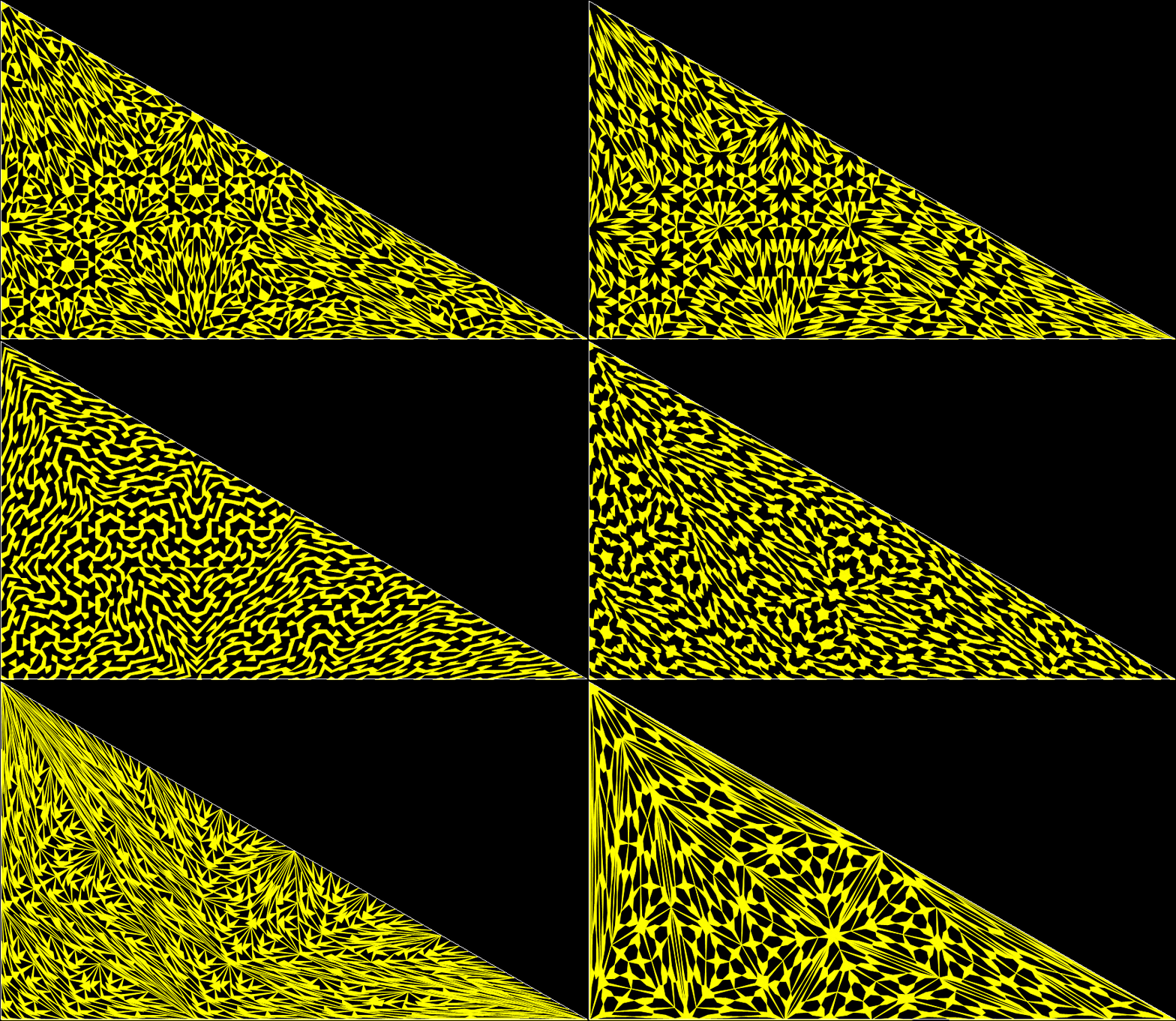
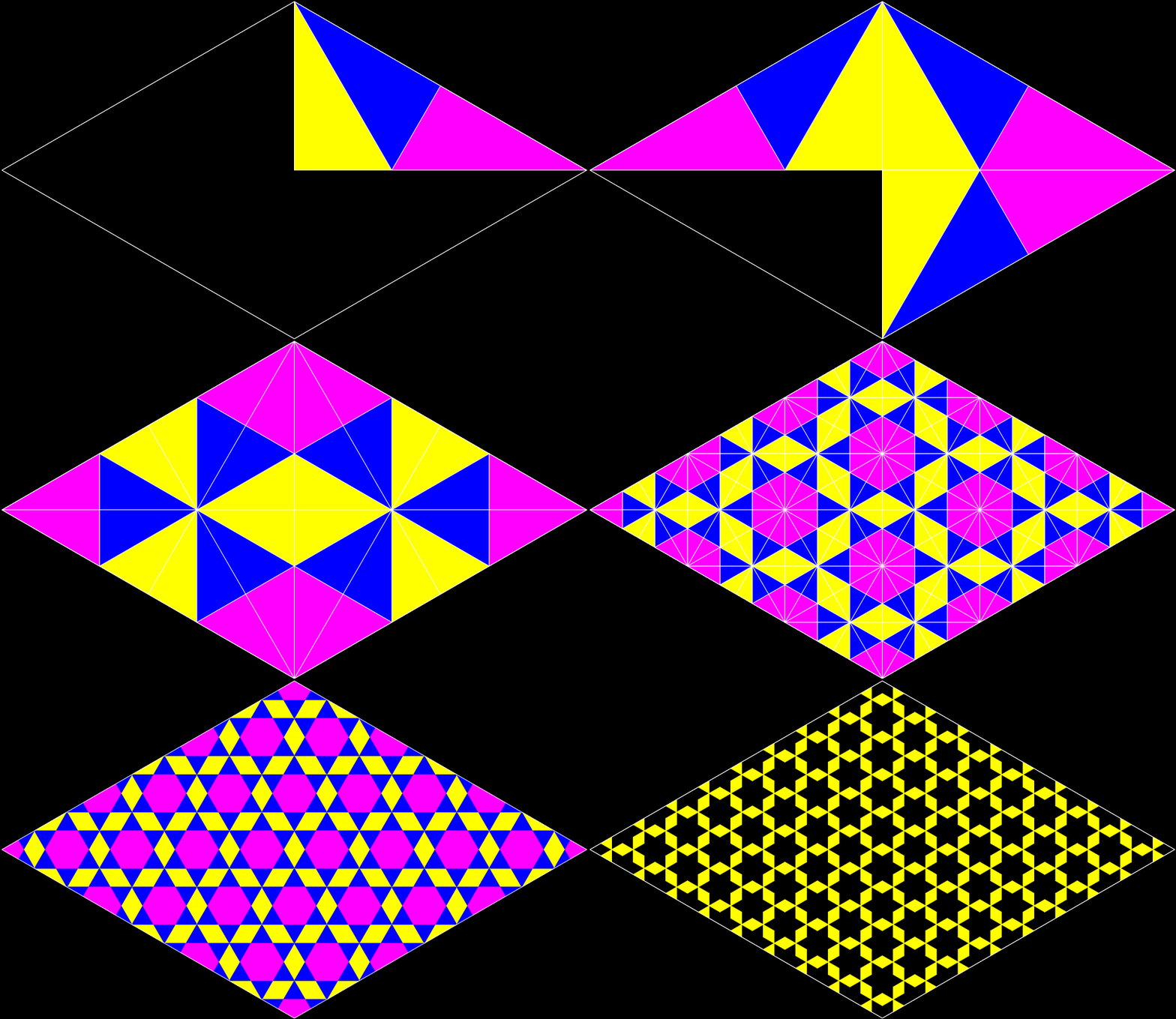
Five of the sub-copies serve as the seed for an interesting fractal:

Fractal stage #1


Fractal stage #2


Fractal stage #3


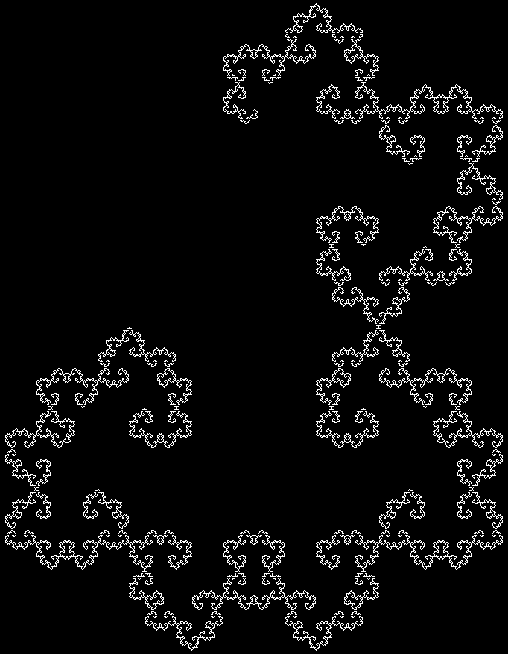
Fractal #4


Fractal #5


Fractal #6


Fractal #6


Tridentine cross (animated)


Tridentine cross (static)


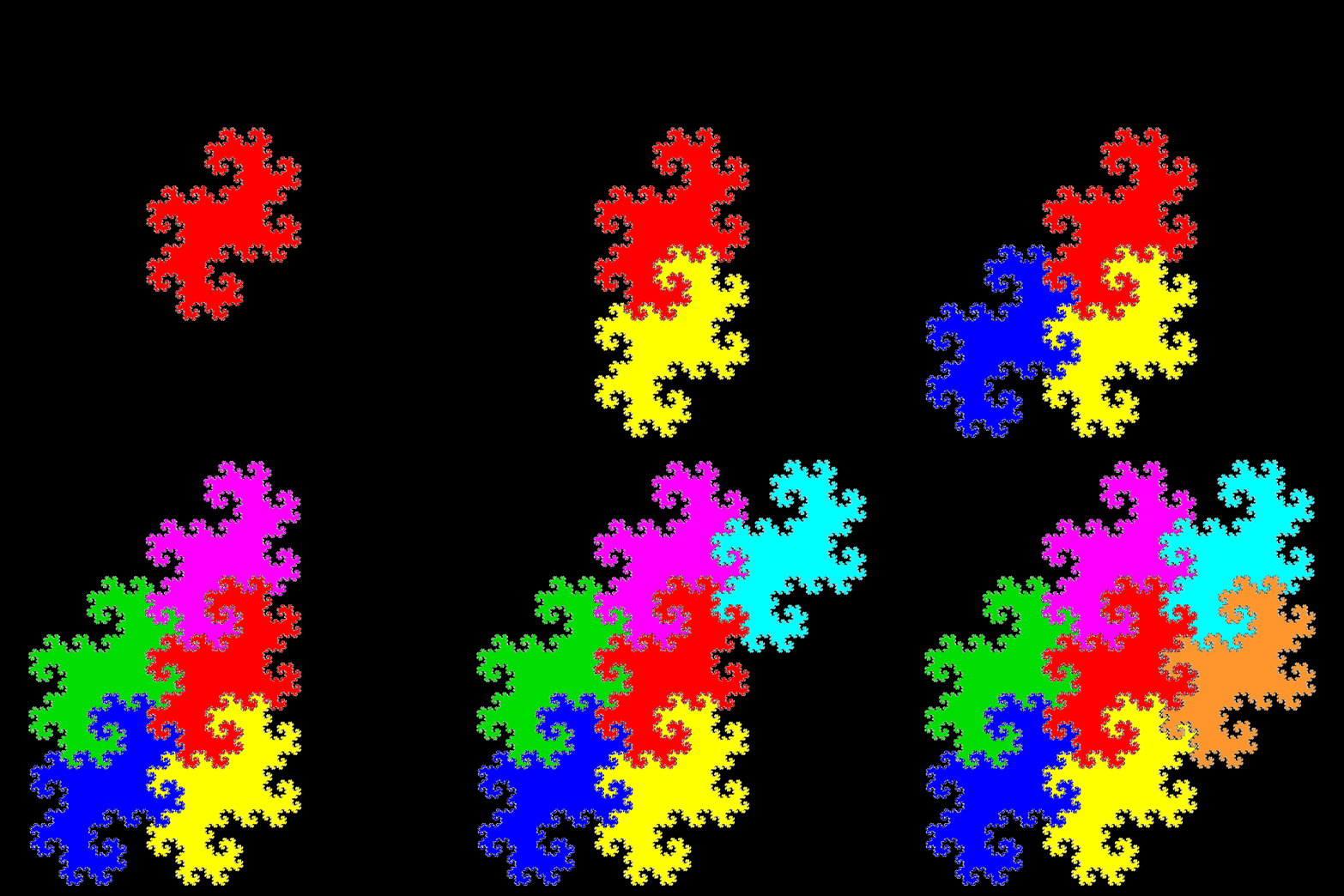
This is a different kind of rep-tile:

Noniamond trapezoid


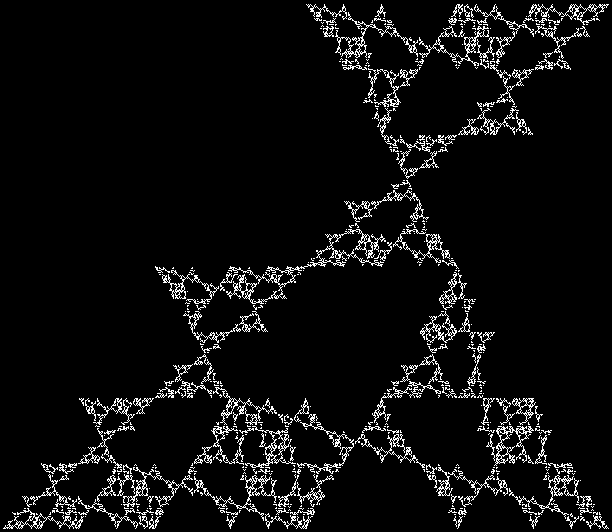
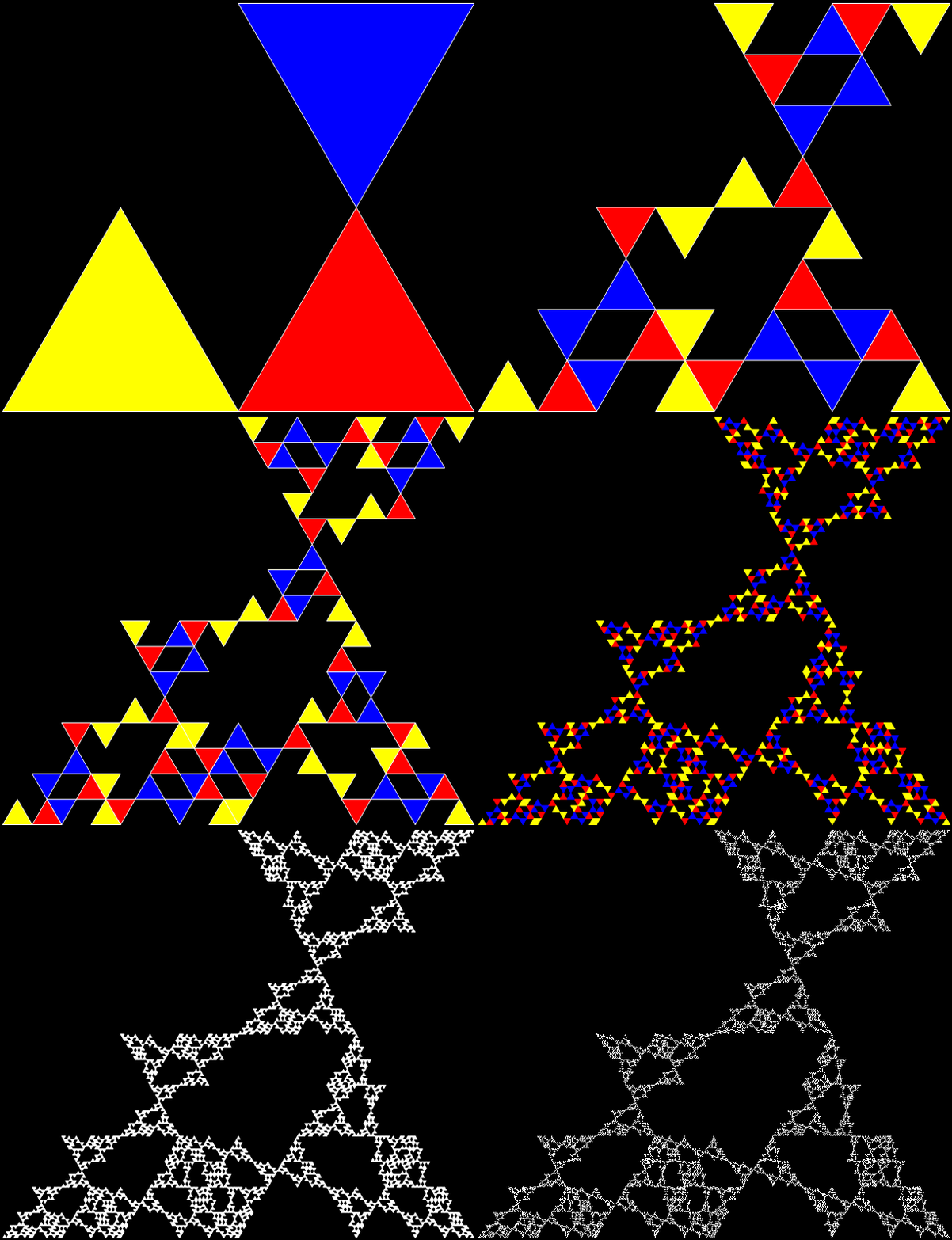
But it yields the same fractal cross:

Fractal #1


Fractal #2


Fractal #3


Fractal #4


Fractal #5


Fractal #6


Tridentine cross (animated)


Tridentine cross (static)


Elsewhere other-available:

Holey Trimmetry — another fractal cross

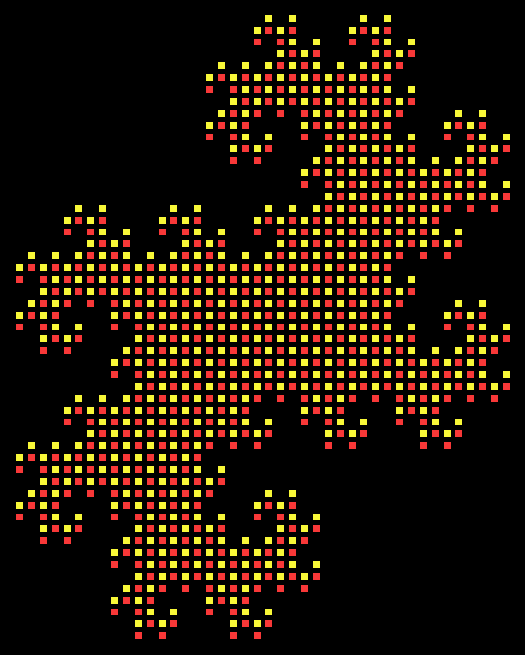
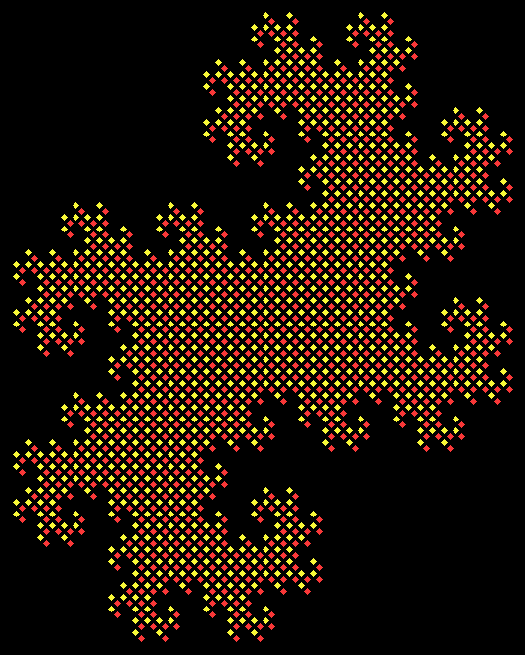
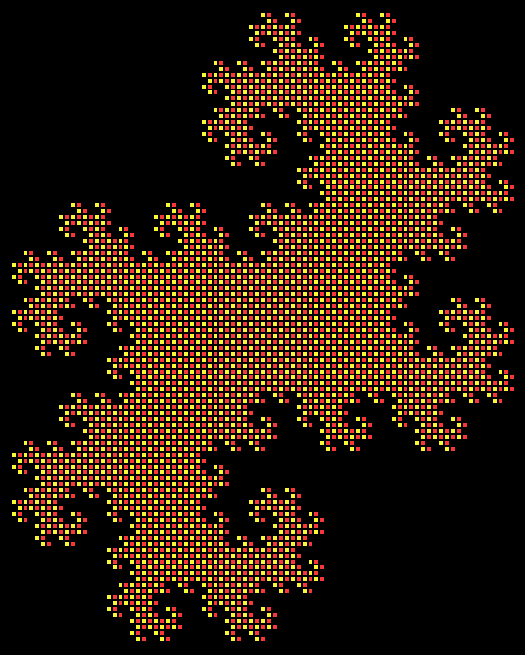
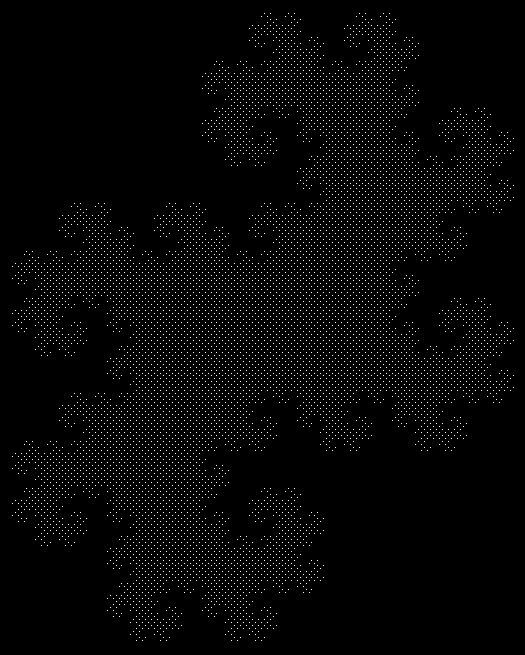
Square Routes Re-Re-Revisited

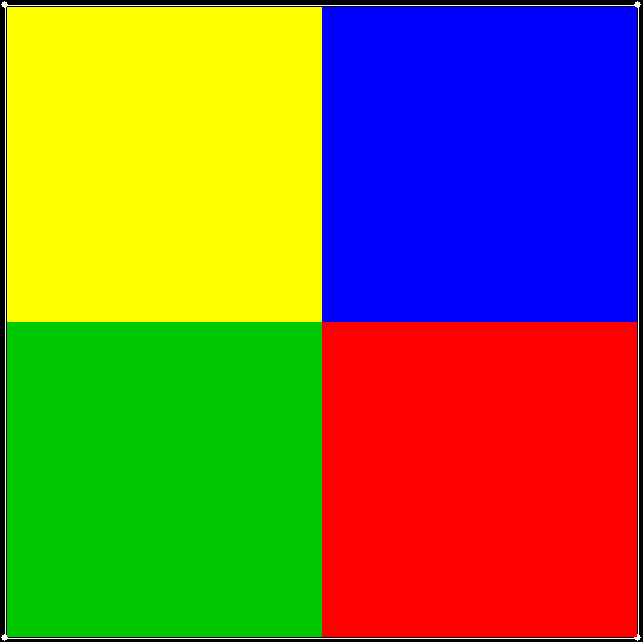
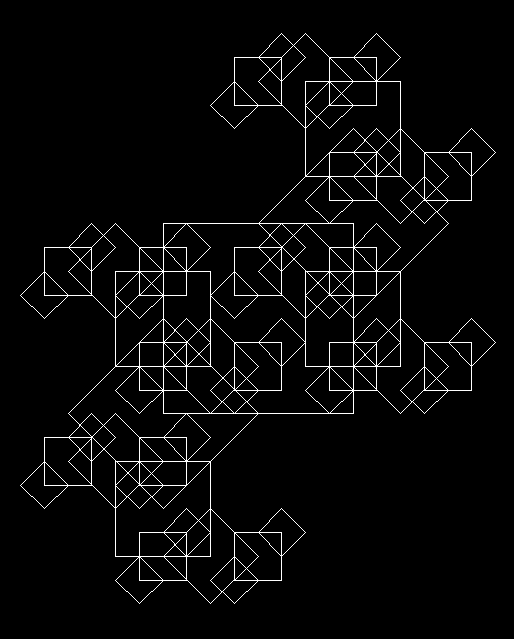
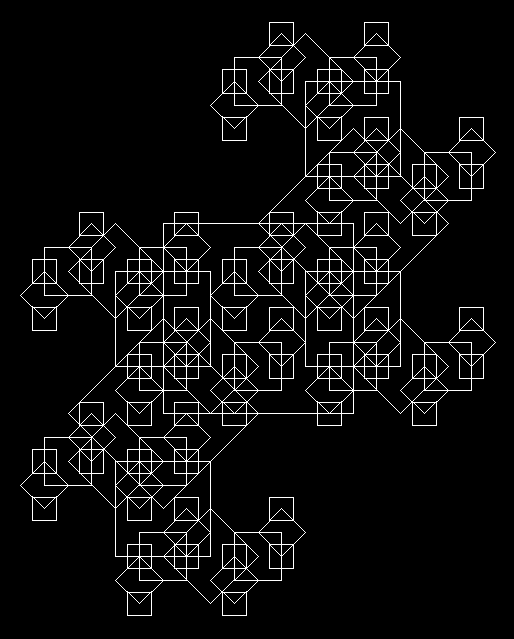
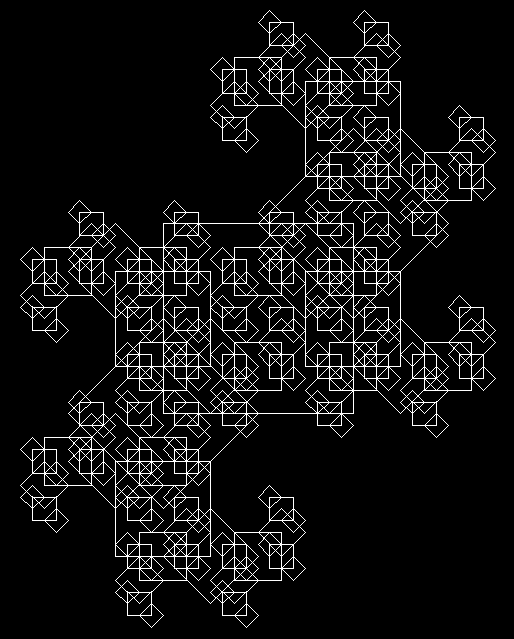
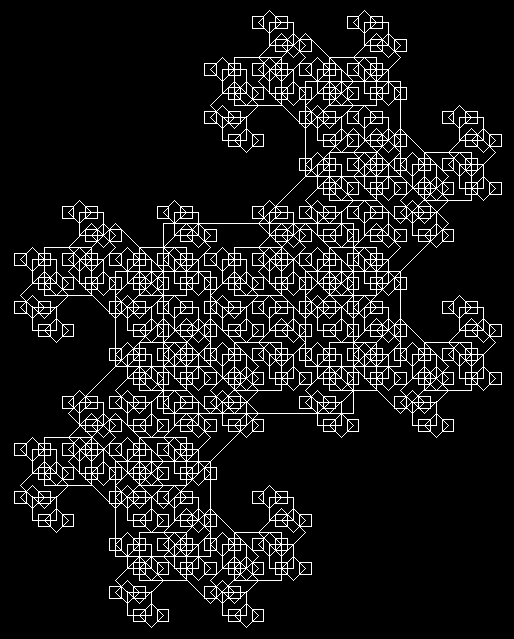
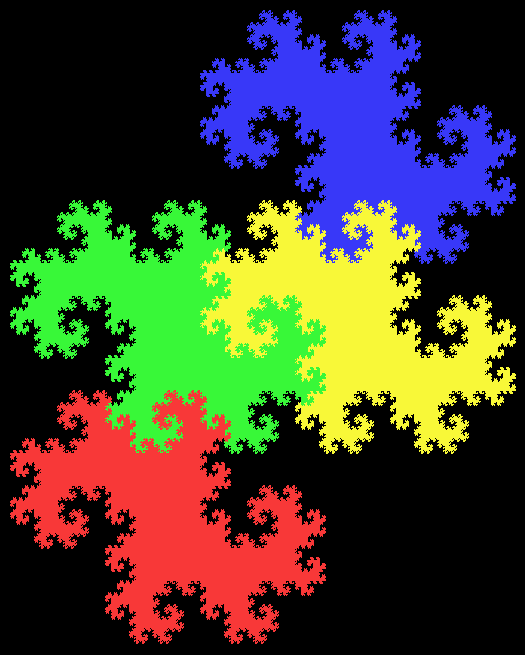
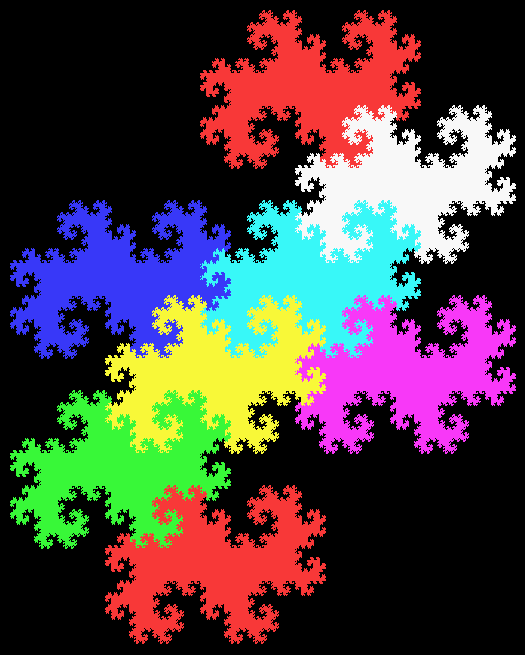
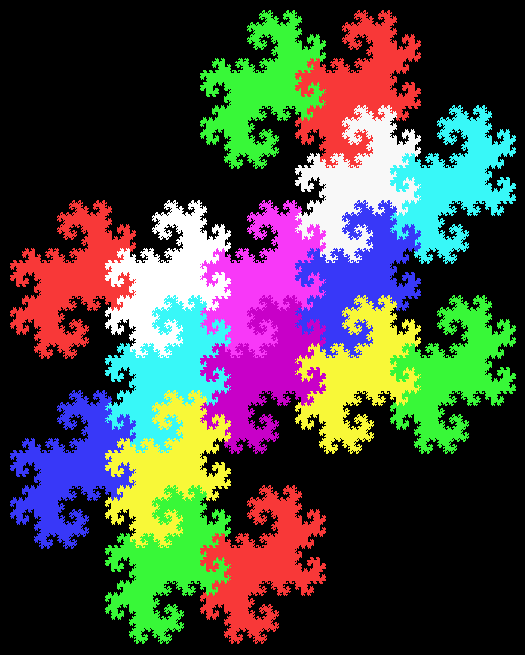
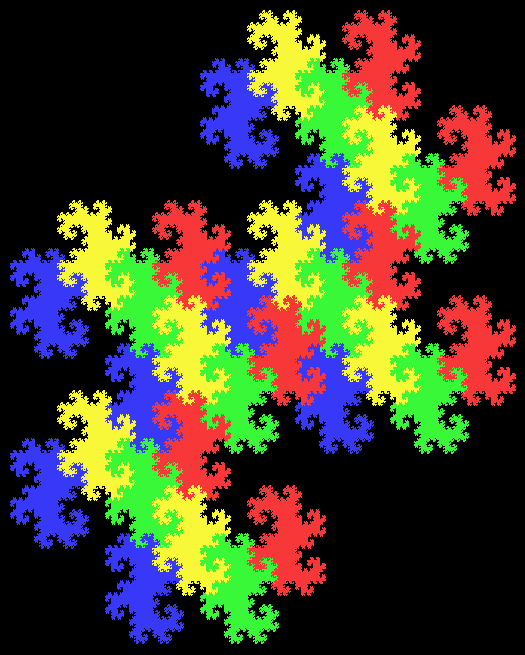
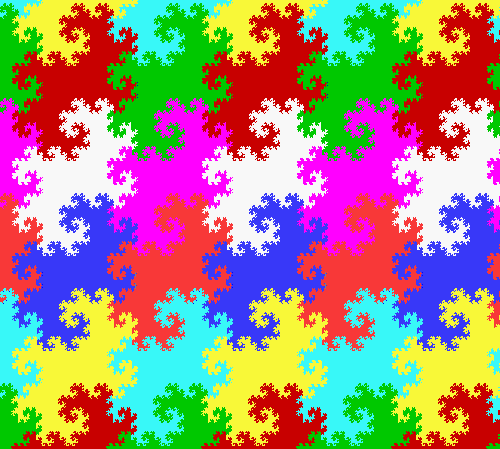
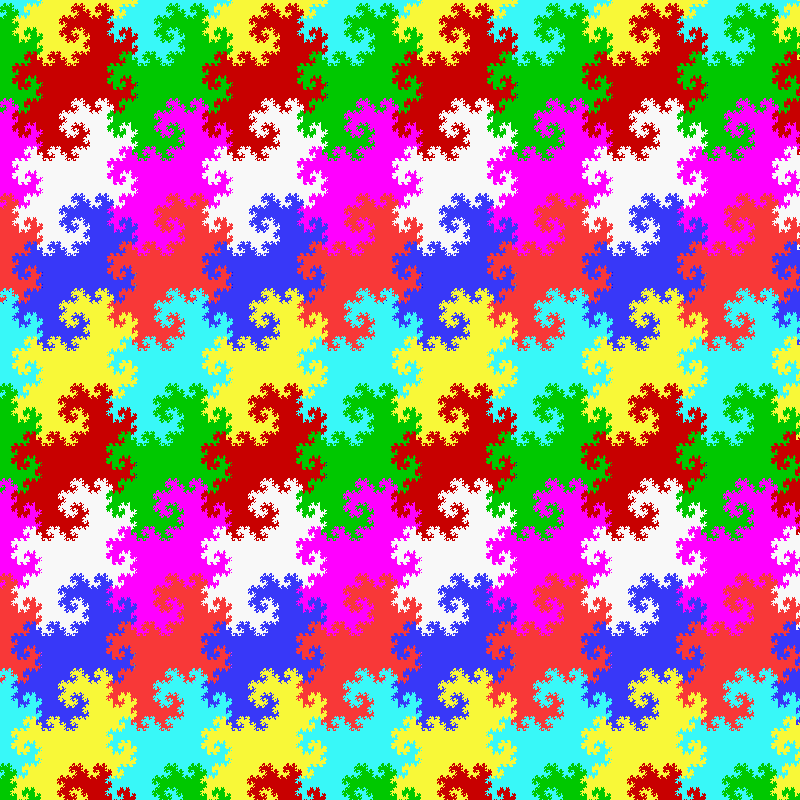
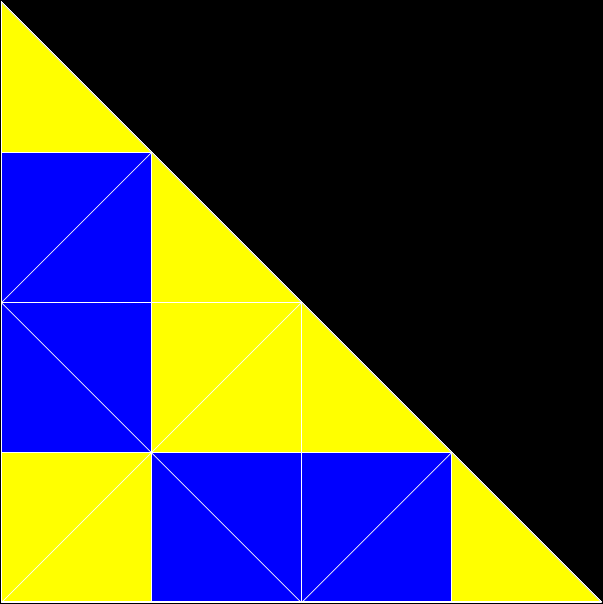
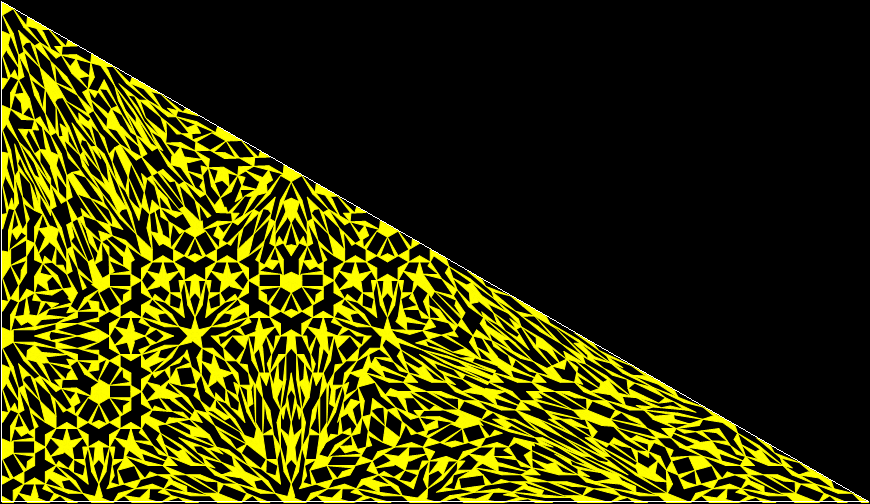
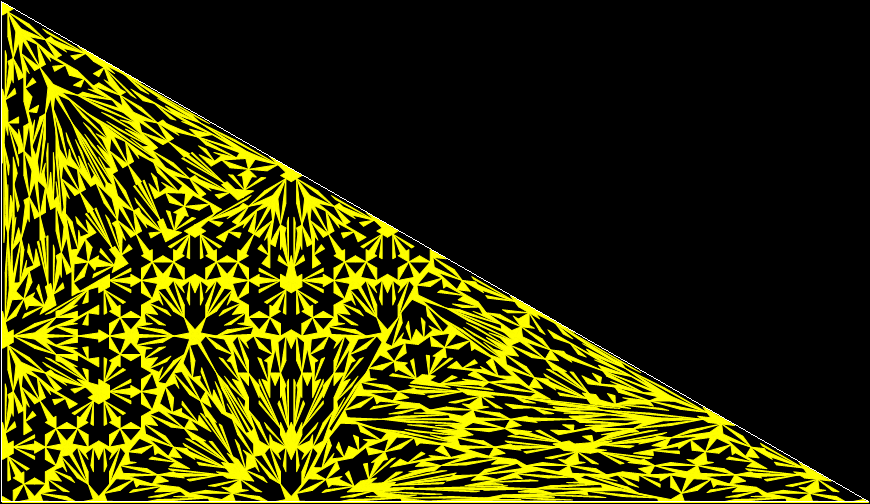
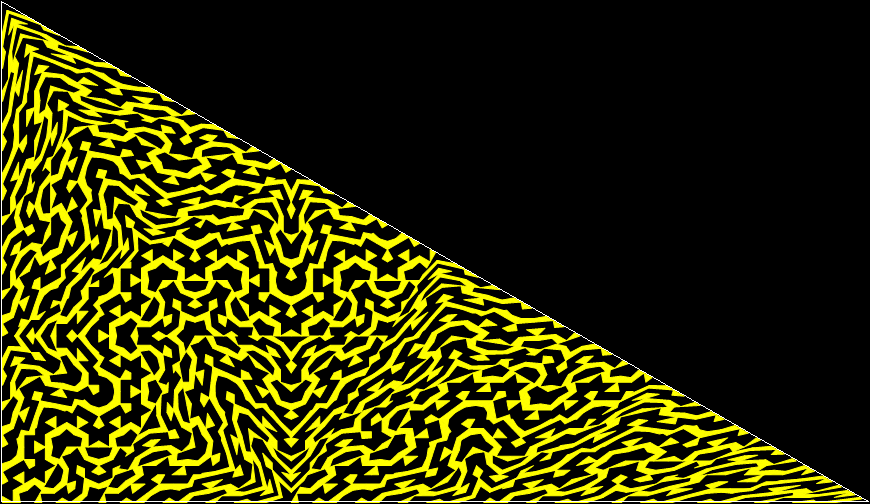
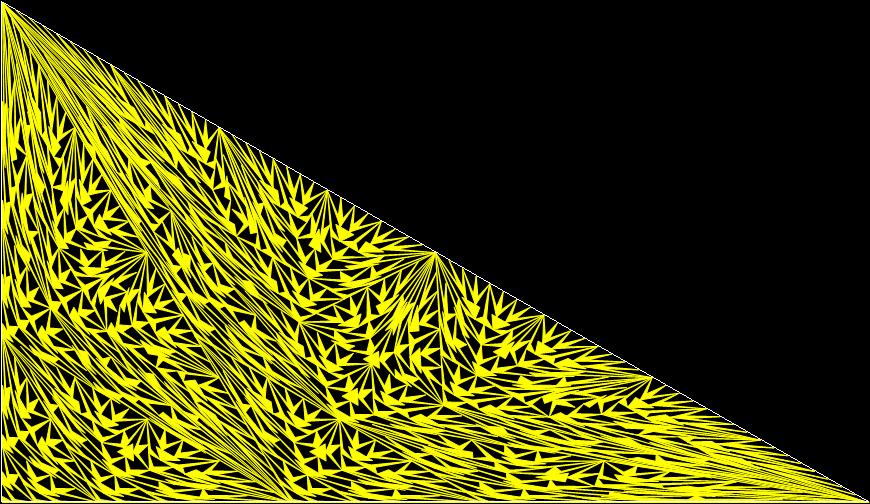
This is an L-triomino, or shape created from three squares laid edge-to-edge:

When you divide each square like this…

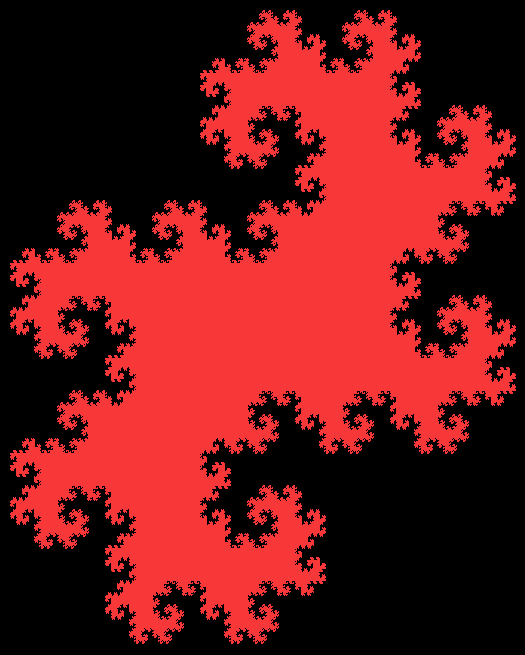
You can create a fractal like this…

Stage #1


Stage #2


Stage #3


Stage #4


Stage #5


Stage #6


Stage #7


Stage #8


Stage #9


Stage #10


Animated fractal


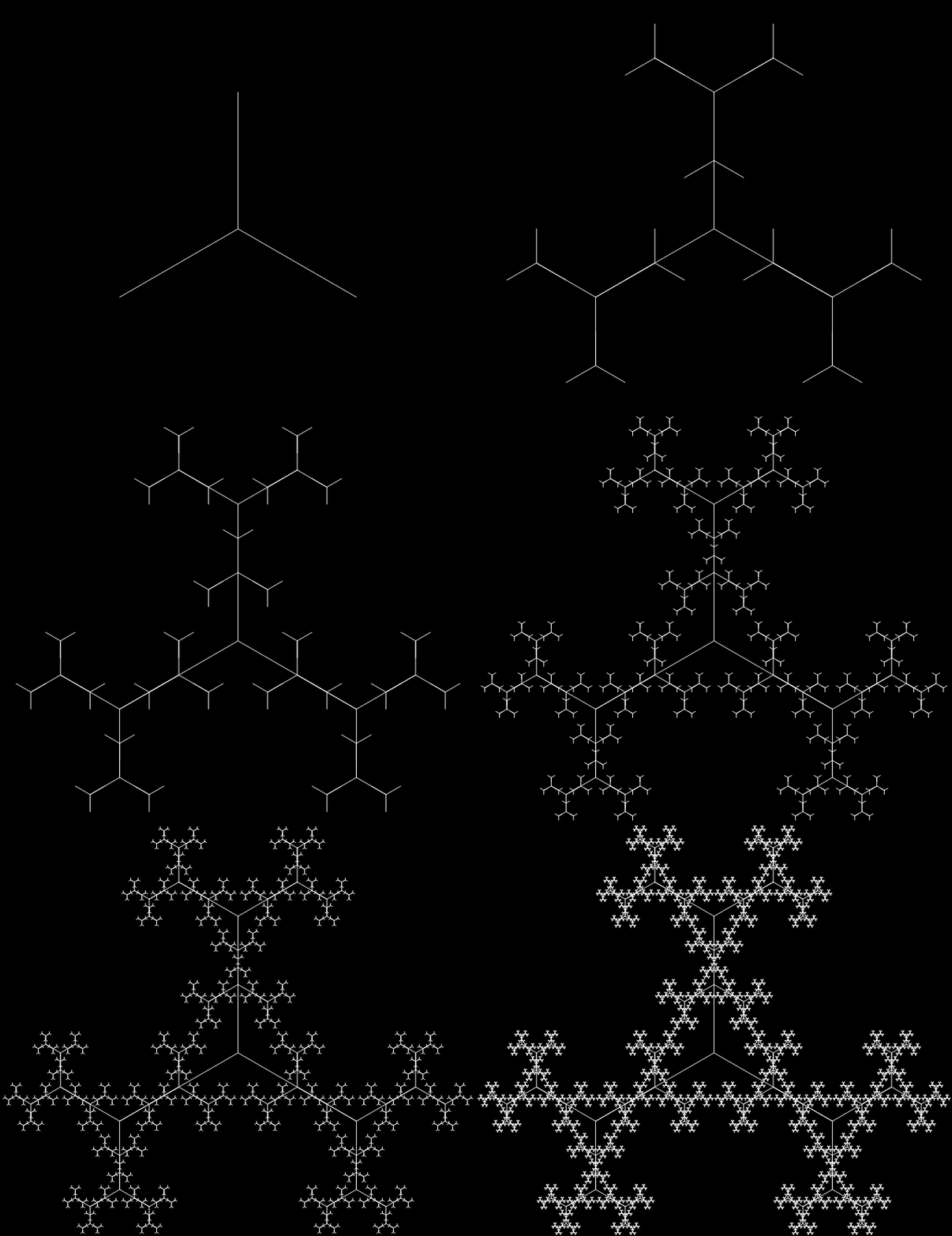
Here are more fractals created from the triomino:

Animated


Static

Animated


Static
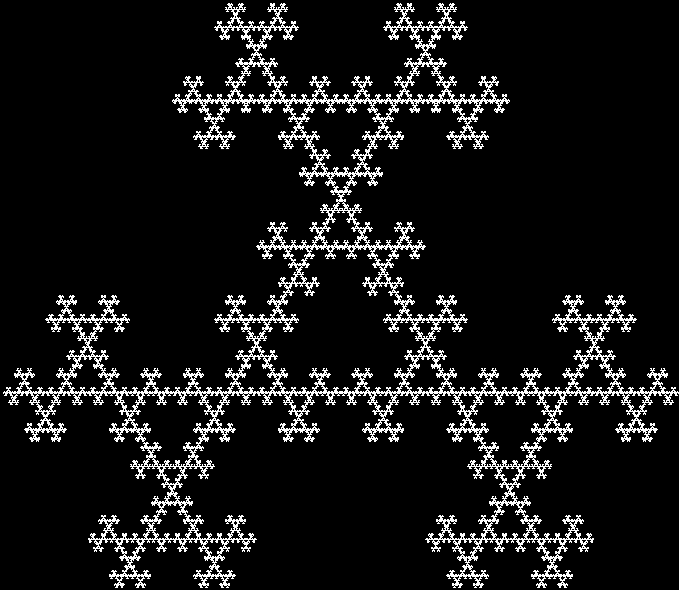

Animated


Static


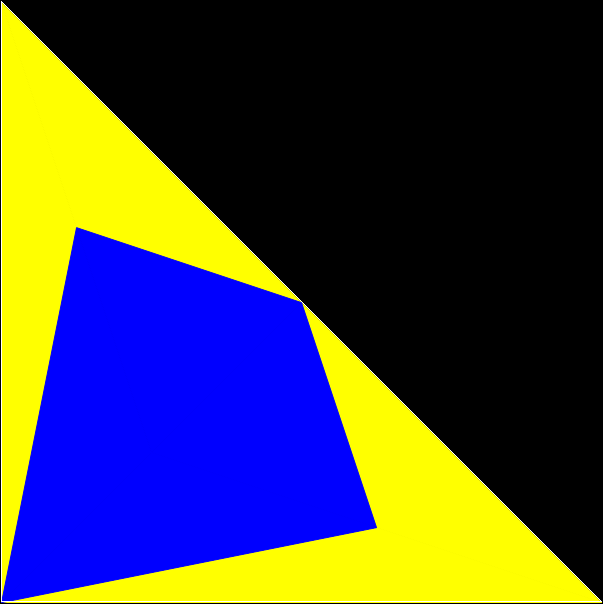
And here is a different shape created from three squares:

And some fractals created from it:

Animated


Static


Animated


Static


Animated


Static


And a third shape created from three squares:

And some fractals created from it:

Animated


Static


Animated


Static


Animated


Static


Animated


Static


Animated


Static


Animated


Static


Animated


Static


Animated


Static


Previously pre-posted (please peruse):

Tri-Way to L
Square Routes
Square Routes Revisited
Square Routes Re-Revisited