Primal Stream

It’s obvious when you think about: an even number can never be the sum of two consecutive integers. Conversely, an odd number (except 1) is always the sum of two consecutive integers: 3 = 1 + 2; 5 = 2 + 3; 7 = 3 + 4; 9 = 4 + 5; and so on. The sum of three consecutive integers can be either odd or even: 6 = 1 + 2 + 3; 9 = 2 + 3 + 4. The sum of four consecutive integers must always be even: 1 + 2 + 3 + 4 = 10; 2 + 3 + 4 + 5 = 14. And so on.

But notice that 9 is the sum of consecutive integers in two different ways: 9 = 4 + 5 = 2 + 3 + 4. Having spotted that, I decided to look for numbers that were the sums of consecutive integers in the most different ways. These are the first few:

3 = 1 + 2 (number of sums = 1)
9 = 2 + 3 + 4 = 4 + 5 (s = 2)
15 = 1 + 2 + 3 + 4 + 5 = 4 + 5 + 6 = 8 + 7 = (s = 3)
45 (s = 5)
105 (s = 7)
225 (s = 8)
315 (s = 11)
945 (s = 15)
1575 (s = 17)
2835 (s = 19)
3465 (s = 23)
10395 (s = 31)


It was interesting that the number of different consecutive-integer sums for n was most often a prime number. Next I looked for the sequence at the Online Encyclopedia of Integer Sequences and discovered something that I hadn’t suspected:

A053624 Highly composite odd numbers: where d(n) increases to a record.

1, 3, 9, 15, 45, 105, 225, 315, 945, 1575, 2835, 3465, 10395, 17325, 31185, 45045, 121275, 135135, 225225, 405405, 675675, 1576575, 2027025, 2297295, 3828825, 6891885, 11486475, 26801775, 34459425, 43648605, 72747675, 130945815 — A053624 at OEIS

The notes add that the sequence is “Also least number k such that the number of partitions of k into consecutive integers is a record. For example, 45 = 22+23 = 14+15+16 = 7+8+9+10+11 = 5+6+7+8+9+10 = 1+2+3+4+5+6+7+8+9, six such partitions, but all smaller terms have fewer such partitions (15 has four).” When you don’t count the number n itself as a partition of n, you get 3 partitions for 15, i.e. consecutive integers sum to 15 in 3 different ways, so s = 3. I looked at more values for s and found that the stream of primes continued to flow:

3 → s = 1
9 = 3^2 → s = 2 (prime)
15 = 3 * 5 → s = 3 (prime)
45 = 3^2 * 5 → s = 5 (prime)
105 = 3 * 5 * 7 → s = 7 (prime)
225 = 3^2 * 5^2 → s = 8 = 2^3
315 = 3^2 * 5 * 7 → s = 11 (prime)
945 = 3^3 * 5 * 7 → s = 15 = 3 * 5
1575 = 3^2 * 5^2 * 7 → s = 17 (prime)
2835 = 3^4 * 5 * 7 → s = 19 (prime)
3465 = 3^2 * 5 * 7 * 11 → s = 23 (prime)
10395 = 3^3 * 5 * 7 * 11 → s = 31 (prime)
17325 = 3^2 * 5^2 * 7 * 11 → s = 35 = 5 * 7
31185 = 3^4 * 5 * 7 * 11 → s = 39 = 3 * 13
45045 = 3^2 * 5 * 7 * 11 * 13 → s = 47 (prime)
121275 = 3^2 * 5^2 * 7^2 * 11 → s = 53 (prime)
135135 = 3^3 * 5 * 7 * 11 * 13 → s = 63 = 3^2 * 7
225225 = 3^2 * 5^2 * 7 * 11 * 13 → s = 71 (prime)
405405 = 3^4 * 5 * 7 * 11 * 13 → s = 79 (prime)
675675 = 3^3 * 5^2 * 7 * 11 * 13 → s = 95 = 5 * 19
1576575 = 3^2 * 5^2 * 7^2 * 11 * 13 → s = 107 (prime)
2027025 = 3^4 * 5^2 * 7 * 11 * 13 → s = 119 = 7 * 17
2297295 = 3^3 * 5 * 7 * 11 * 13 * 17 → s = 127 (prime)
3828825 = 3^2 * 5^2 * 7 * 11 * 13 * 17 → s = 143 = 11 * 13
6891885 = 3^4 * 5 * 7 * 11 * 13 * 17 → s = 159 = 3 * 53
11486475 = 3^3 * 5^2 * 7 * 11 * 13 * 17 → s = 191 (prime)
26801775 = 3^2 * 5^2 * 7^2 * 11 * 13 * 17 → s = 215 = 5 * 43
34459425 = 3^4 * 5^2 * 7 * 11 * 13 * 17 → s = 239 (prime)
43648605 = 3^3 * 5 * 7 * 11 * 13 * 17 * 19 → s = 255 = 3 * 5 * 17
72747675 = 3^2 * 5^2 * 7 * 11 * 13 * 17 * 19 → s = 287 = 7 * 41
130945815 = 3^4 * 5 * 7 * 11 * 13 * 17 * 19 → s = 319 = 11 * 29


I can’t spot any way of predicting when n will yield a primal s, but I like the way that a simple question took an unexpected turn. When a number sets a record for the number of different ways it can be the sum of consecutive integers, that number will also be a highly composite odd number.
You Sixy Beast

666 is the Number of the Beast. But it’s much more than that. After all, it’s a number, so it has mathematical properties (everything has mathematical properties, but it’s a sine-qua-non of numbers). For example, 666 is a palindromic number, reading the same forwards and backwards. And it’s a repdigit, consisting of a single repeated digit. Now try answering this question: how many pebbles are there in this triangle?


••
•••
••••
•••••
••••••
•••••••
••••••••
•••••••••
••••••••••
•••••••••••
••••••••••••
•••••••••••••
••••••••••••••
•••••••••••••••
••••••••••••••••
•••••••••••••••••
••••••••••••••••••
•••••••••••••••••••
••••••••••••••••••••
•••••••••••••••••••••
••••••••••••••••••••••
•••••••••••••••••••••••
••••••••••••••••••••••••
•••••••••••••••••••••••••
••••••••••••••••••••••••••
•••••••••••••••••••••••••••
••••••••••••••••••••••••••••
•••••••••••••••••••••••••••••
••••••••••••••••••••••••••••••
•••••••••••••••••••••••••••••••
••••••••••••••••••••••••••••••••
•••••••••••••••••••••••••••••••••
••••••••••••••••••••••••••••••••••
•••••••••••••••••••••••••••••••••••
••••••••••••••••••••••••••••••••••••


Counting the pebbles one by one would take a long time, but there’s a short-cut. Each line of the triangle after the first is one pebble longer than the previous line. There are 36 lines and therefore 36 pebbles in the final line. So the full number of pebbles = 1 + 2 + 3 + 4 + 5 + 6 + 7 + 8 + 9 + 10 + 11 + 12 + 13 + 14 + 15 + 16 + 17 + 18 + 19 + 20 + 21 + 22 + 23 + 24 + 25 + 26 + 27 + 28 + 29 + 30 + 31 + 32 + 33 + 34 + 35 + 36. And there’s an easy formula for that sum: (36^2 + 36) / 2 = (1296 + 36) / 2 = 1332 / 2 = 666.

So 666 is the 36th triangular number:


1 = 1
1+2 = 3
1+2+3 = 6
1+2+3+4 = 10
1+2+3+4+5 = 15
1+2+3+4+5+6 = 21
1+2+3+4+5+6+7 = 28
1+2+3+4+5+6+7+8 = 36
1+2+3+4+5+6+7+8+9 = 45
1+2+3+4+5+6+7+8+9+10 = 55
[...]
1+2+3+4+5+6+7+8+9+10+11+12+13+14+15+16+17+18+19+20+21+22+23+24+25+26+27+28+29+30+31+32+33+34+35+36 = 666

But what’s tri(666), the 666th triangular number? By the formula above, it equals (666^2 + 666) / 2 = (443556 + 666) / 2 = 444222 / 2 = 222111. But recall something else from above: tri(6) = 1+2+3+4+5+6 = 21. Is it a coincidence that tri(6) = 21 and tri(666) = 222111? No, it isn’t:


tri(6) = 21 = (6^2 + 6) / 2 = (36 + 6) / 2 = 42 / 2
tri(66) = 2211 = (66^2 + 66) / 2 = (4356 + 66) / 2 = 4422 / 2
tri(666) = 222111 = (666^2 + 666) / 2 = (443556 + 666) / 2 = 444222 / 2
tri(6666) = 22221111
tri(66666) = 2222211111
tri(666666) = 222222111111
tri(6666666) = 22222221111111
tri(66666666) = 2222222211111111
tri(666666666) = 222222222111111111
tri(6666666666) = 22222222221111111111
tri(66666666666) = 2222222222211111111111
tri(666666666666) = 222222222222111111111111
tri(6666666666666) = 22222222222221111111111111
tri(66666666666666) = 2222222222222211111111111111
tri(666666666666666) = 222222222222222111111111111111

So we’ve looked at tri(36) = 666 and tri(666) = 222111. Let’s go a step further: tri(222111) = 24666759216. So 666 appears again. And the sixiness carries on here:


tri(36) = 666
tri(3366) = 5666661
tri(333666) = 55666666611
tri(33336666) = 555666666666111
tri(3333366666) = 5555666666666661111
tri(333333666666) = 55555666666666666611111
tri(33333336666666) = 555555666666666666666111111
tri(3333333366666666) = 5555555666666666666666661111111
tri(333333333666666666) = 55555555666666666666666666611111111
tri(33333333336666666666) = 555555555666666666666666666666111111111
tri(3333333333366666666666) = 5555555555666666666666666666666661111111111
tri(333333333333666666666666) = 55555555555666666666666666666666666611111111111
tri(33333333333336666666666666) = 555555555555666666666666666666666666666111111111111
tri(3333333333333366666666666666) = 5555555555555666666666666666666666666666661111111111111
tri(333333333333333666666666666666) = 55555555555555666666666666666666666666666666611111111111111

Agogic Arithmetic

This is one of my favorite integer sequences:

• 1, 3, 6, 10, 15, 21, 28, 36, 45, 55, 66, 78, 91, 105, 120, 136, 153, 171, 190, 210, 231, 253, 276, 300, 325, 351, 378, 406, 435, 465, 496, 528, 561, 595, 630, 666, 703, 741, 780, 820, 861, 903, 946, 990, 1035, 1081, 1128, 1176, 1225, 1275, 1326, 1378, 1431, ... — A000217 at OEIS


And it’s easy to work out the rule that generates the sequence. It’s the sequence of triangular numbers, of course, which you get by summing the integers:

1
1 + 2 = 3
3 + 3 = 6
6 + 4 = 10
10 + 5 = 15
15 + 6 = 21
21 + 7 = 28
28 + 8 = 36
36 + 9 = 45
[...]


I like this sequence too, but it isn’t a sequence of integers and it’s much harder to work out the rule that generates it:

• 1, 3/2, 11/6, 25/12, 137/60, 49/20, 363/140, 761/280, 7129/2520, 7381/2520, 83711/27720, 86021/27720, 1145993/360360, 1171733/360360...


But you could say that it’s the inverse of the triangular numbers, because you generate it like this:

1
1 + 1/2 = 3/2
3/2 + 1/3 = 11/6
11/6 + 1/4 = 25/12
25/12 + 1/5 = 137/60
137/60 + 1/6 = 49/20
49/20 + 1/7 = 363/140
363/140 + 1/8 = 761/280
761/280 + 1/9 = 7129/2520
[...]

It’s the harmonic series, which is defined at Wikipedia as “the infinite series formed by summing all positive unit fractions”. I can’t understand its subtleties or make any important discoveries about it, but I thought I could ask (and begin to answer) a question that perhaps no-one else in history had ever asked: When are the leading digits of the k-th harmonic number, hs(k), equal to the digits of k in base 10?

hs(1) = 1
hs(43) = 4.349...
hs(714) = 7.1487...
hs(715) = 7.1501...
hs(9763) = 9.76362...
hs(122968) = 12.296899...
hs(122969) = 12.296907...
hs(1478366) = 14.7836639...
hs(17239955) = 17.23995590...
hs(196746419) = 19.6746419...
hs(2209316467) = 22.0931646788...


Do those numbers have any true mathematical significance? I doubt it. But they were fun to find, even though I wasn’t the first person in history to ask about them:

• 1, 43, 714, 715, 9763, 122968, 122969, 1478366, 17239955, 196746419, 2209316467, 24499118645, 268950072605 — A337904 at OEIS, Numbers k such that the decimal expansion of the k-th harmonic number starts with the digits of k, in the same order.

Strange “S” in the Light

Unexpected discoveries are one of the joys of mathematics, even for amateurs. And computers help you make more of them, because computers make it easy to adjust variables or search faster and further through math-space than any unaided human ever could (on the downside, computers can make you lazy and blunt your intuition). Here’s an unexpected discovery I made using a computer in November 2020:

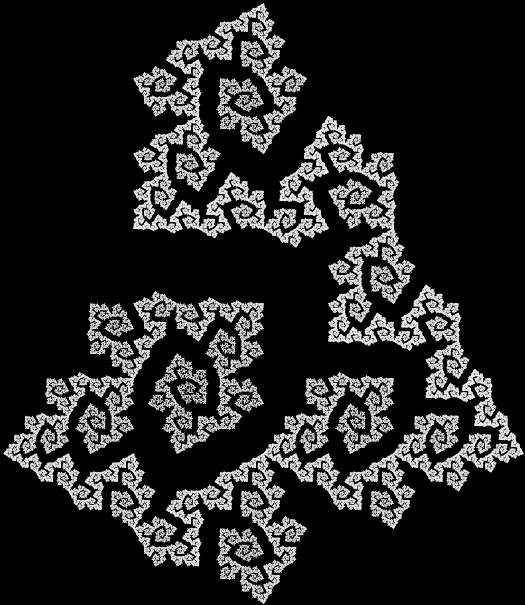
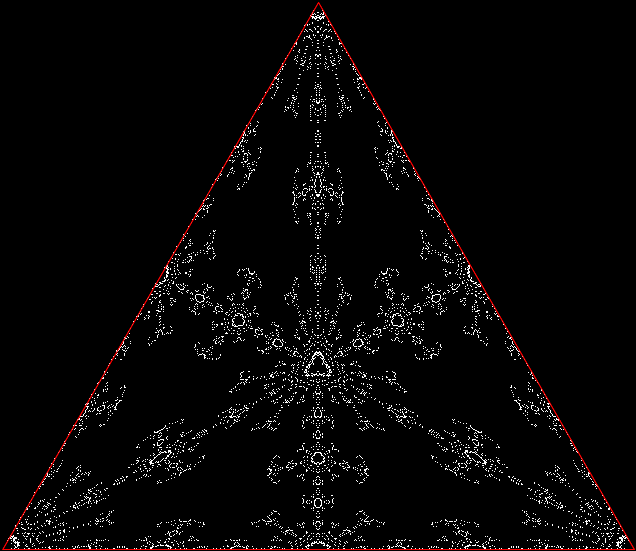
A distorted and dissected capital “S”


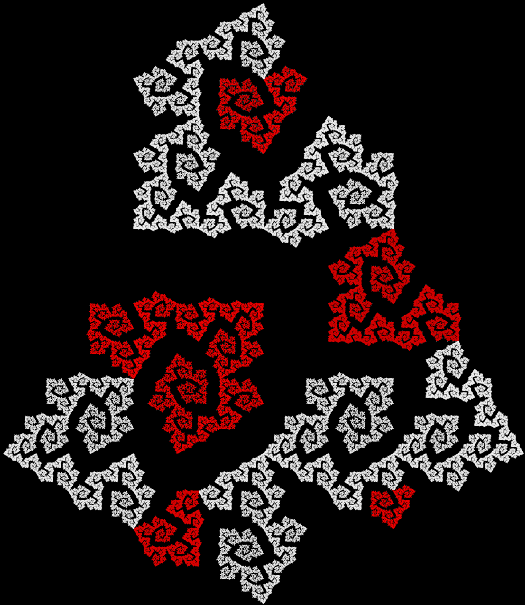
It’s a strange “S” that looks complex but is constructed very easily from three simple lines. And it’s a fractal, a shape that contains copies of itself at smaller and smaller scales:

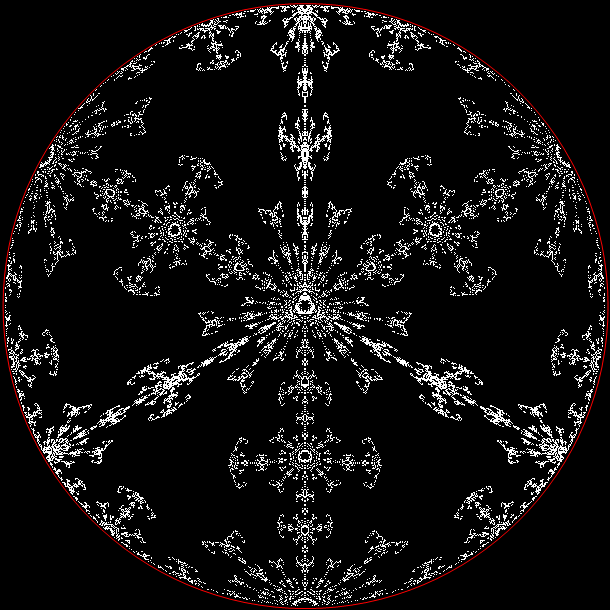
Five sub-fractals of the Strange “S”


Elsewhere Other-Accessible…

Fractangular Frolics — the Strange “S” in more light

We Can Circ It Out

It’s a pretty little problem to convert this triangular fractal…

Sierpiński triangle (Wikipedia)


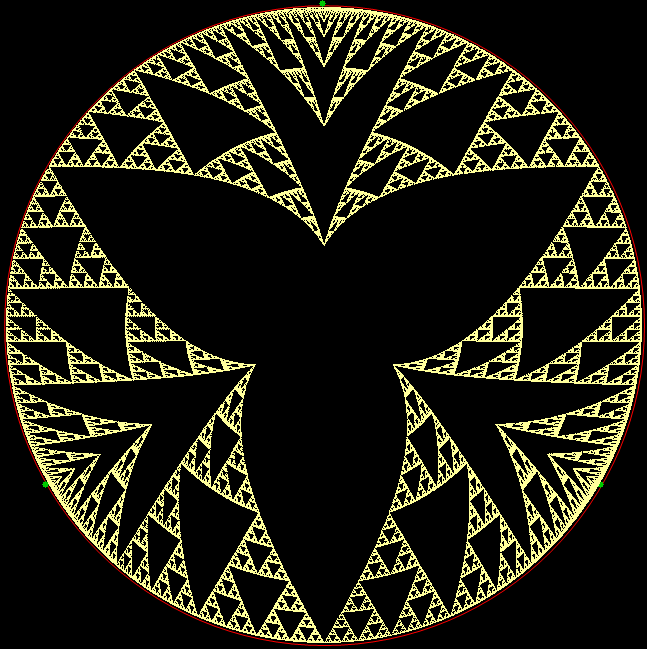
…into its circular equivalent:

Sierpiński triangle as circle


Sierpiński triangle to circle (animated)


But once you’ve circ’d it out, as it were, you can easily adapt the technique to fractals based on other polygons:

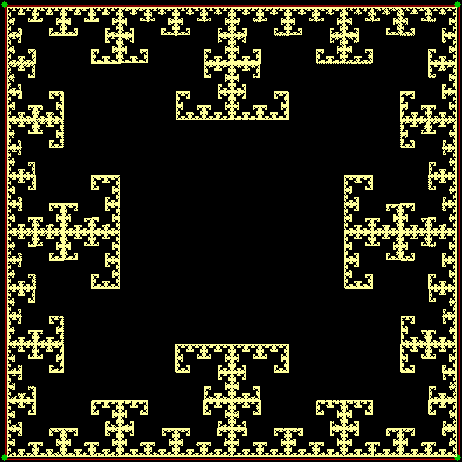
T-square fractal (Wikipedia)

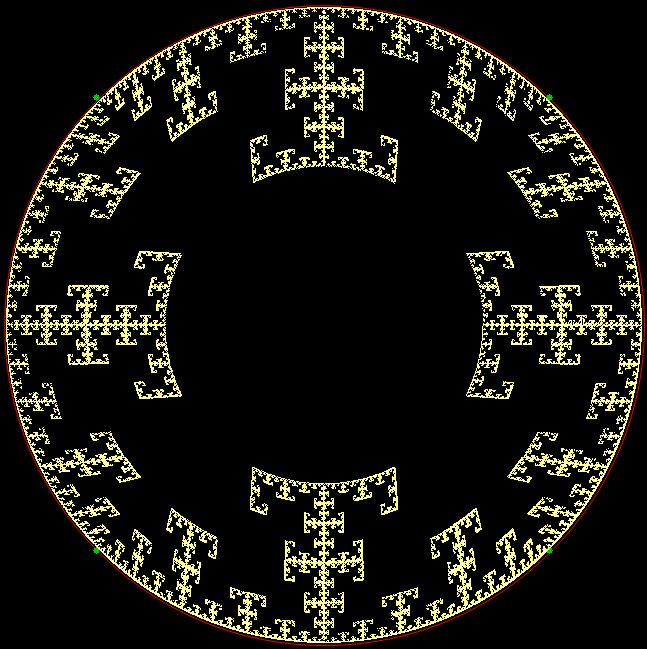
T-square fractal as circle


T-square fractal to circle (animated)


Elsewhere other-accessible…

Dilating the Delta — more on converting polygonic fractals to circles…

The Devil’s Digits

As I’ve said before, I love the way that numbers can come in many different guises. For example, take the number 21. It comes in all these guises:

21 = 10101 in base 2 = 210 in base 3 = 111 in b4 = 41 in b5 = 33 in b6 = 30 in b7 = 25 in b8 = 23 in b9 = 21 in b10 = 1A in b11 = 19 in b12 = 18 in b13 = 17 in b14 = 16 in b15 = 15 in b16 = 14 in b17 = 13 in b18 = 12 in b19 = 11 in b20 = 10 in b21

But I’ve not chosen 21 at random. If you sum the 1s in the representations of 21 in bases 2 to 21, look what you get:

21 = 10101 in base 2 = 210 in base 3 = 111 in b4 = 41 in b5 = 33 in b6 = 30 in b7 = 25 in b8 = 23 in b9 = 21 in b10 = 1A in b11 = 19 in b12 = 18 in b13 = 17 in b14 = 16 in b15 = 15 in b16 = 14 in b17 = 13 in b18 = 12 in b19 = 11 in b20 = 10 in b21


21 = 1s=101s=201s=3 in base 2 = 21s=40 in base 3 = 111s=7 in b4 = 41s=8 in b5 = 33 in b6 = 30 in b7 = 25 in b8 = 23 in b9 = 21s=9 in b10 = 1s=10A in b11 = 1s=119 in b12 = 1s=128 in b13 = 1s=137 in b14 = 1s=146 in b15 = 1s=155 in b16 = 1s=164 in b17 = 1s=173 in b18 = 1s=182 in b19 = 11s=20 in b20 = 1s=210 in b21


In other words, 21 = digcount(21,dig=1,base=2..21). But n = digcount(n,dig,b=2..n) doesn’t happen for any other digit and doesn’t happen often with 1:

3 = digcount(3,d=1,b=2..3) = 11 in b2 = 10 in b3
4 = digcount(4,d=1,b=2..4) = 100 in b2 = 11 in b3 = 10 in b4
6 = digcount(6,d=1,b=2..6) = 110 in b2 = 20 in b3 = 12 in b4 = 11 in b5 = 10 in b6
10 = digcount(10,d=1) = 1010 in b2 = 101 in b3 = 22 in b4 = 20 in b5 = 14 in b6 = 13 in b7 = 12 in b8 = 11 in b9 = 10 in b10
15 = digcount(15,d=1) = 1111 in b2 = 120 in b3 = 33 in b4 = 30 in b5 = 23 in b6 = 21 in b7 = 17 in b8 = 16 in b9 = 15 in b10 = 14 in b11 = 13 in b12 = 12 in b13 = 11 in b14 = 10 in b15
21 = digcount(21,d=1) = 10101 in b2 = 210 in b3 = 111 in b4 = 41 in b5 = 33 in b6 = 30 in b7 = 25 in b8 = 23 in b9 = 21 in b10 = 1A in b11 = 19 in b12 = 18 in b13 = 17 in b14 = 16 in b15 = 15 in b16 = 14 in b17 = 13 in b18 = 12 in b19 = 11 in b20 = 10 in b21


After that, the digcount(n,d=1,b=2..n) → n/2 (see “Digital Dissection” for further discussion). But I decided to look for the first n where digcount(n,dig,b=2..n) = 666:

digcount(1270,1) = 666
digcount(3770,2) = 666
digcount(7667,3) = 666
digcount(12184,4) = 666
digcount(18845,5) = 666
digcount(25806,6) = 666
digcount(34195,7) = 666
digcount(43352,8) = 666
digcount(54693,9) = 666


It doesn’t stop there, of course. You can carry on for ever, looking for digcount(n,A) = 666, digcount(n,B) = 666, digcount(n,C) = 666, where A = 10, B = 11 and C=12, and so on. But it doesn’t start there, either. What about digcount(n,0) = 666? That isn’t easy to find, because 0 usually occurs far less often than other digits in the representation of n. Here are the integers setting records for digcount(n,0,b=2..n):

2 → digcount(2,0) = 1 ← 2= 10 in base 2
4 → digcount(4,0) = 3; ← 4 = 100 in base 2, 11 in base 3, 10 in base 4
8 → digcount(8,0) = 5 ← 8 = 1000 in base 2, 22 in base 3, 20 in base 4, 13 in base 5, 12 in base 6, 11 in base 7, 10 in base 8
12 → digcount(12,0) = 6
16 → digcount(16,0) = 8
18 → digcount(18,0) = 9
32 → digcount(32,0) = 11
36 → digcount(36,0) = 13
64 → digcount(64,0) = 15
72 → digcount(72,0) = 18
128 → digcount(128,0) = 20
144 → digcount(144,0) = 24
252 → digcount(252,0) = 25
264 → digcount(264,0) = 27
288 → digcount(288,0) = 29
360 → digcount(360,0) = 30
504 → digcount(504,0) = 33
540 → digcount(540,0) = 36
720 → digcount(720,0) = 40
900 → digcount(900,0) = 42
1080 → digcount(1080,0) = 47
1680 → digcount(1680,0) = 48
1800 → digcount(1800,0) = 53
2160 → digcount(2160,0) = 56
2520 → digcount(2520,0) = 61
3600 → digcount(3600,0) = 64
4320 → digcount(4320,0) = 66


So what is the first n for which digcount(n,0) = 666? Watch this space.

Reciprocal Recipes

Here’s a sequence. What’s the next number?

1, 1, 1, 1, 1, 1, 1, 1, 1, 1, 1...

Here’s another sequence. What’s the next number?

0, 1, 1, 2, 3, 5, 8, 13, 21, 34...

Those aren’t trick questions, so the answers are 1 and 55, respectively. The second sequence is the famous Fibonacci sequence, where each number after [0,1] is the sum of the previous two numbers.

Now try dividing each of those sequences by powers of 2 and summing the results, like this:

1/2 + 1/4 + 1/8 + 1/16 + 1/32 + 1/64 + 1/128 + 1/256 + 1/512 + 1/1024 + 1/2048 + 1/4096 + 1/8192 + 1/16384 + 1/32768 + 1/65536 + 1/131072 + 1/262144 + 1/524288 + 1/1048576 +... = ?

0/2 + 1/4 + 1/8 + 2/16 + 3/32 + 5/64 + 8/128 + 13/256 + 21/512 + 34/1024 + 55/2048 + 89/4096 + 144/8192 + 233/16384 + 377/32768 + 610/65536 + 987/131072 + 1597/262144 + 2584/524288 + 4181/1048576 +... = ?

What are the sums? I was surprised to learn that they’re identical:

1/2 + 1/4 + 1/8 + 1/16 + 1/32 + 1/64 + 1/128 + 1/256 + 1/512 + 1/1024 + 1/2048 + 1/4096 + 1/8192 + 1/16384 + 1/32768 + 1/65536 + 1/131072 + 1/262144 + 1/524288 + 1/1048576 +... = 1

0/2 + 1/4 + 1/8 + 2/16 + 3/32 + 5/64 + 8/128 + 13/256 + 21/512 + 34/1024 + 55/2048 + 89/4096 + 144/8192 + 233/16384 + 377/32768 + 610/65536 + 987/131072 + 1597/262144 + 2584/524288 + 4181/1048576 +... = 1

I discovered this when I was playing with an old scientific calculator and calculated these sums:

5^2 + 2^2 = 29
5^2 + 4^2 = 41
5^2 + 6^2 = 61
5^2 + 8^2 = 89

The sums are all prime numbers. Then I idly calculated the reciprocal of 1/89:

1/89 = 0·011235955056179775...

The digits 011235… are the start of the Fibonacci sequence. It seems to go awry after that, but I remembered what David Wells had said in his wonderful Penguin Dictionary of Curious and Interesting Numbers (1986): “89 is the 11th Fibonacci number, and the period of its reciprocal is generated by the Fibonacci sequence: 1/89 = 0·11235…” He means that the Fibonacci sequence generates the digits of 1/89 like this, when you sum the columns and move carries left as necessary:

0
1
↓↓1
↓↓↓2
↓↓↓↓3
↓↓↓↓↓5
↓↓↓↓↓↓8
↓↓↓↓↓↓13
↓↓↓↓↓↓↓21
↓↓↓↓↓↓↓↓34
↓↓↓↓↓↓↓↓↓55
↓↓↓↓↓↓↓↓↓↓89...
↓↓↓↓↓↓↓↓↓↓
0112359550...

I tried this method of summing the Fibonacci sequence in other bases. Although it was old, the scientific calculator was crudely programmable. And it helpfully converted the sum into a final fraction once there were enough decimal digits:

0/3 + 1/32 + 1/33 + 2/34 + 3/35 + 5/36 + 8/37 + 13/38 + 21/39 + 34/310 + 55/311 + 89/312 + 144/313 + 233/314 + 377/315 + 610/316 + 987/317 + 1597/318 + 2584/319 + 4181/320 +... = 1/5 = 0·012101210121012101210 in b3


0/4 + 1/42 + 1/43 + 2/44 + 3/45 + 5/46 + 8/47 + 13/48 + 21/49 + 34/410 + 55/411 + 89/412 + 144/413 + 233/414 + 377/415 + 610/416 + 987/417 + 1597/418 + 2584/419 + 4181/420 +... = 1/11 = 0·011310113101131011310 in b4


0/5 + 1/52 + 1/53 + 2/54 + 3/55 + 5/56 + 8/57 + 13/58 + 21/59 + 34/510 + 55/511 + 89/512 + 144/513 + 233/514 + 377/515 + 610/516 + 987/517 + 1597/518 + 2584/519 + 4181/520 +... = 1/19 = 0·011242141011242141011 in b5


0/6 + 1/62 + 1/63 + 2/64 + 3/65 + 5/66 + 8/67 + 13/68 + 21/69 + 34/610 + 55/611 + 89/612 + 144/613 + 233/614 + 377/615 + 610/616 + 987/617 + 1597/618 + 2584/619 + 4181/620 +... = 1/29 = 0·011240454431510112404 in b6


0/7 + 1/72 + 1/73 + 2/74 + 3/75 + 5/76 + 8/77 + 13/78 + 21/79 + 34/710 + 55/711 + 89/712 + 144/713 + 233/714 + 377/715 + 610/716 + 987/717 + 1597/718 + 2584/719 + 4181/720 +... = 1/41 = 0·011236326213520225056 in b7

It was interesting to see that all the reciprocals so far were of primes. I carried on:

0/8 + 1/82 + 1/83 + 2/84 + 3/85 + 5/86 + 8/87 + 13/88 + 21/89 + 34/810 + 55/811 + 89/812 + 144/813 + 233/814 + 377/815 + 610/816 + 987/817 + 1597/818 + 2584/819 + 4181/820 +... = 1/55 = 0·011236202247440451710 in b8

Not a prime reciprocal, but a reciprocal of a Fibonacci number. Here are some more sums:

0/9 + 1/92 + 1/93 + 2/94 + 3/95 + 5/96 + 8/97 + 13/98 + 21/99 + 34/910 + 55/911 + 89/912 + 144/913 + 233/914 + 377/915 + 610/916 + 987/917 + 1597/918 + 2584/919 + 4181/920 +... = 1/71 (another prime) = 0·011236067540450563033 in b9


0/10 + 1/102 + 1/103 + 2/104 + 3/105 + 5/106 + 8/107 + 13/108 + 21/109 + 34/1010 + 55/1011 + 89/1012 + 144/1013 + 233/1014 + 377/1015 + 610/1016 + 987/1017 + 1597/1018 + 2584/1019 + 4181/1020 +... = 1/89 (and another) = 0·011235955056179775280 in b10


0/11 + 1/112 + 1/113 + 2/114 + 3/115 + 5/116 + 8/117 + 13/118 + 21/119 + 34/1110 + 55/1111 + 89/1112 + 144/1113 + 233/1114 + 377/1115 + 610/1116 + 987/1117 + 1597/1118 + 2584/1119 + 4181/1120 +... = 1/109 (and another) = 0·011235942695392022470 in b11


0/12 + 1/122 + 1/123 + 2/124 + 3/125 + 5/126 + 8/127 + 13/128 + 21/129 + 34/1210 + 55/1211 + 89/1212 + 144/1213 + 233/1214 + 377/1215 + 610/1216 + 987/1217 + 1597/1218 + 2584/1219 + 4181/1220 +... = 1/131 (and another) = 0·011235930336A53909A87 in b12


0/13 + 1/132 + 1/133 + 2/134 + 3/135 + 5/136 + 8/137 + 13/138 + 21/139 + 34/1310 + 55/1311 + 89/1312 + 144/1313 + 233/1314 + 377/1315 + 610/1316 + 987/1317 + 1597/1318 + 2584/1319 + 4181/1320 +... = 1/155 (not a prime or a Fibonacci number) = 0·01123591ACAA861794044 in b13

The reciprocals go like this:

1/1, 1/5, 1/11, 1/19, 1/29, 1/41, 1/55, 1/71, 1/89, 1/109, 1/131, 1/155...

And it should be easy to see the rule that generates them:

5 = 1 + 4
11 = 5 + 6
19 = 11 + 8
29 = 19 + 10
41 = 29 + 12
55 = 41 + 14
71 = 55 + 16
89 = 17 + 18
109 = 89 + 20
131 = 109 + 22
155 = 131 + 24
[...]

But I don’t understand why the rule applies, let alone why the Fibonacci sequence generates these reciprocals in the first place.