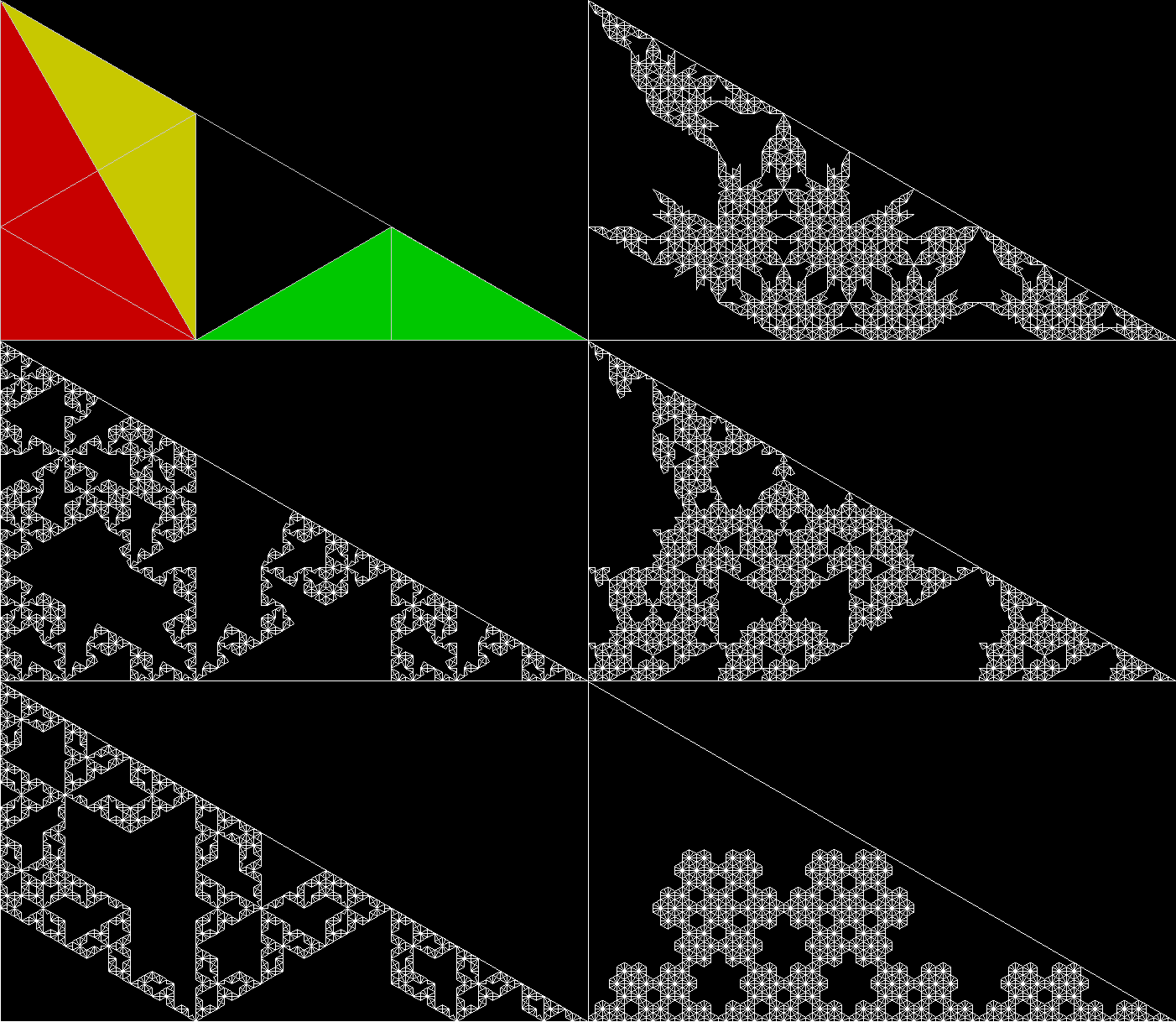
Pre-previously posted (please peruse):

In standard notation, there are two ways to represent 2: 10, in base 2, and 2 in every other base. Accordingly, there are three ways to represent 3: 11 in base 2, 10 in base 3, and 3 in every other base. There are four ways to represent 4, five ways to represent 5, and so on. Now, suppose you sum all the digits of all the representations of n in the bases 2 to n, like this:
Σ(2) = 1+02 = 1
Σ(3) = 1+12 + 1+03 = 3 (+2)
Σ(4) = 1+0+02 + 1+13 + 1+04 = 4 (+1)
Σ(5) = 1+0+12 + 1+23 + 1+14 + 1+05 = 8 (+4)
Σ(6) = 1+1+02 + 2+03 + 1+24 + 1+15 + 1+06 = 10 (+2)
Σ(7) = 1+1+12 + 2+13 + 1+34 + 1+25 + 1+16 + 1+07 = 16 (+6)
Σ(8) = 1+0+0+02 + 2+23 + 2+04 + 1+35 + 1+26 + 1+17 + 1+08 = 17 (+1)
Σ(9) = 1+0+0+12 + 1+0+03 + 2+14 + 1+45 + 1+36 + 1+27 + 1+18 + 1+09 = 21 (+4)
Σ(10) = 1+0+1+02 + 1+0+13 + 2+24 + 2+05 + 1+46 + 1+37 + 1+28 + 1+19 + 1+010 = 25 (+4)
It seems reasonable to suppose that as n increases, so the all-digit-sum of n increases. But that isn’t always the case: occasionally it decreases. Here are the sums for n=11..100 (with prime factors when the sum is composite):
Σ(11) = 35 = 5·7 (+10)
Σ(12) = 34 = 2·17 (-1)
Σ(13) = 46 = 2·23 (+12)
Σ(14) = 52 = 22·13 (+6)
Σ(15) = 60 = 22·3·5 (+8)
Σ(16) = 58 = 2·29 (-2)
Σ(17) = 74 = 2·37 (+16)
Σ(18) = 73 (-1)
Σ(19) = 91 = 7·13 (+18)
Σ(20) = 92 = 22·23 (+1)
Σ(21) = 104 = 23·13 (+12)
Σ(22) = 114 = 2·3·19 (+10)
Σ(23) = 136 = 23·17 (+22)
Σ(24) = 128 = 27 (-8)
Σ(25) = 144 = 24·32 (+16)
Σ(26) = 156 = 22·3·13 (+12)
Σ(27) = 168 = 23·3·7 (+12)
Σ(28) = 171 = 32·19 (+3)
Σ(29) = 199 (+28)
Σ(30) = 193 (-6)
Σ(31) = 223 (+30)
Σ(32) = 221 = 13·17 (-2)
Σ(33) = 241 (+20)
Σ(34) = 257 (+16)
Σ(35) = 281 (+24)
Σ(36) = 261 = 32·29 (-20)
Σ(37) = 297 = 33·11 (+36)
Σ(38) = 315 = 32·5·7 (+18)
Σ(39) = 339 = 3·113 (+24)
Σ(40) = 333 = 32·37 (-6)
Σ(41) = 373 (+40)
Σ(42) = 367 (-6)
Σ(43) = 409 (+42)
Σ(44) = 416 = 25·13 (+7)
Σ(45) = 430 = 2·5·43 (+14)
Σ(46) = 452 = 22·113 (+22)
Σ(47) = 498 = 2·3·83 (+46)
Σ(48) = 472 = 23·59 (-26)
Σ(49) = 508 = 22·127 (+36)
Σ(50) = 515 = 5·103 (+7)
Σ(51) = 547 (+32)
Σ(52) = 556 = 22·139 (+9)
Σ(53) = 608 = 25·19 (+52)
Σ(54) = 598 = 2·13·23 (-10)
Σ(55) = 638 = 2·11·29 (+40)
Σ(56) = 634 = 2·317 (-4)
Σ(57) = 670 = 2·5·67 (+36)
Σ(58) = 698 = 2·349 (+28)
Σ(59) = 756 = 22·33·7 (+58)
Σ(60) = 717 = 3·239 (-39)
Σ(61) = 777 = 3·7·37 (+60)
Σ(62) = 807 = 3·269 (+30)
Σ(63) = 831 = 3·277 (+24)
Σ(64) = 819 = 32·7·13 (-12)
Σ(65) = 867 = 3·172 (+48)
Σ(66) = 861 = 3·7·41 (-6)
Σ(67) = 927 = 32·103 (+66)
Σ(68) = 940 = 22·5·47 (+13)
Σ(69) = 984 = 23·3·41 (+44)
Σ(70) = 986 = 2·17·29 (+2)
Σ(71) = 1056 = 25·3·11 (+70)
Σ(72) = 1006 = 2·503 (-50)
Σ(73) = 1078 = 2·72·11 (+72)
Σ(74) = 1114 = 2·557 (+36)
Σ(75) = 1140 = 22·3·5·19 (+26)
Σ(76) = 1155 = 3·5·7·11 (+15)
Σ(77) = 1215 = 35·5 (+60)
Σ(78) = 1209 = 3·13·31 (-6)
Σ(79) = 1287 = 32·11·13 (+78)
Σ(80) = 1263 = 3·421 (-24)
Σ(81) = 1293 = 3·431 (+30)
Σ(82) = 1333 = 31·43 (+40)
Σ(83) = 1415 = 5·283 (+82)
Σ(84) = 1368 = 23·32·19 (-47)
Σ(85) = 1432 = 23·179 (+64)
Σ(86) = 1474 = 2·11·67 (+42)
Σ(87) = 1530 = 2·32·5·17 (+56)
Σ(88) = 1530 = 2·32·5·17 (=)
Σ(89) = 1618 = 2·809 (+88)
Σ(90) = 1572 = 22·3·131 (-46)
Σ(91) = 1644 = 22·3·137 (+72)
Σ(92) = 1663 (+19)
Σ(93) = 1723 (+60)
Σ(94) = 1769 = 29·61 (+46)
Σ(95) = 1841 = 7·263 (+72)
Σ(96) = 1784 = 23·223 (-57)
Σ(97) = 1880 = 23·5·47 (+96)
Σ(98) = 1903 = 11·173 (+23)
Σ(99) = 1947 = 3·11·59 (+44)
Σ(100) = 1923 = 3·641 (-24)
The sum usually increases, occasionally decreases. In one case, when 87 = n = 88, it stays the same. This also happens when 463 = n = 464, where Σ(463) = Σ(464) = 39,375. Does it happen again? I don’t know. The ratio of sum-ups to sum-downs seems to tend towards 3:1. Is that the exact ratio at infinity? I don’t know. Watch this sbase.
Ken Libbrecht’s Field Guide to Snowflakes, Kenneth Libbrecht (2006)
If you ask someone to draw up a list of inventions that have shaped the modern world, it’s likely that a very important one will get overlooked: the microscope. But where would medicine, science and technology be without it? It opened a door in the cellar of the universe just as the telescope opened a door in the attic. We stepped through each door into a new world of beauty and strangeness. The difference is that, so far, only one of these new worlds has proved to be inhabited: the microscopic one. But snowflakes remind you that the microcosmos can interest physicists and mathematicians as well as biologists and doctors. It should interest artists and aestheticians too: this book will delight the eye as well as challenge and enrich the mind. Snowflakes are among the most beautiful of all natural objects, reminiscent now of ice-stars, now of crystalline trees, now of stained glass, now of surreal swords. Their symmetry is part of their appeal, but I think it’s also important that their symmetry is never complete: snowflakes partake both of mathematical perfection and of biological imperfection. They’re individual not just because no two are identical but because no two arms of a single snowflake are identical either.
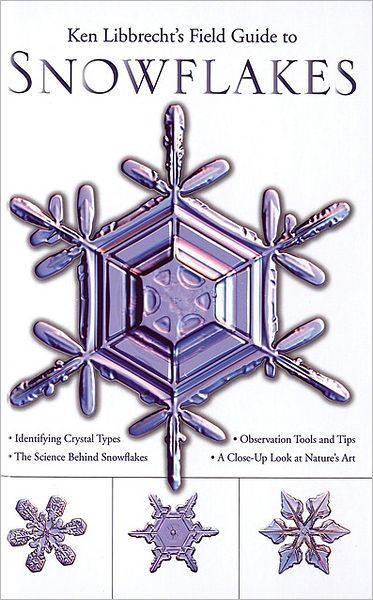
But any two arms can still be very similar, which is an astonishing fact when you consider that they’re laid down blindly by a purely chemico-physical process. How does one arm know what the others are doing? Well, it doesn’t: it’s subject to the same fluctuations of the same environment. As air-currents move a snow-crystal inside a cloud, the temperature and moisture of the air change constantly and so do the crystal’s patterns of growth: “…since no two snowflakes follow exactly the same path, no two are exactly alike.” But snowflakes can be much more unalike than the uninitiated might guess. Some aren’t actually stars, but bullets, needles, columns and “arrowhead twins”. There are also snowflakes with twelve rather than six arms, and snowflakes large enough to have arms on their arms on their arms on their arms. Kenneth Libbrecht, a professor of physics at Caltech, examines all this and more in a book that should appeal to every age, every level of intelligence, and every level of interest in science. You don’t have to read the text that accompanies the beautiful photographs, but if you do you’ll find your appreciation of the photos deepened and enriched.
Either way, spare a thought for the book’s co-author: the humble but hugely powerful microscope. Unlike bacteria and protozoa, snowflakes were known and admired long before the microscope was invented, but they were never known then in their full beauty and wonder. And you don’t have to confine yourself to books like this to experience that for yourself: Libbrecht has a section on “Observing Snowflakes” that demonstrates once again how some of the best things in life are free, or nearly free. For the price of a simple hand-lens you can find new beauty in winter; with a microscope, you can find even more.
Cuneiform, adj. and n. Having the form of a wedge, wedge-shaped. (← Latin cuneus wedge + -form) (Oxford English Dictionary)
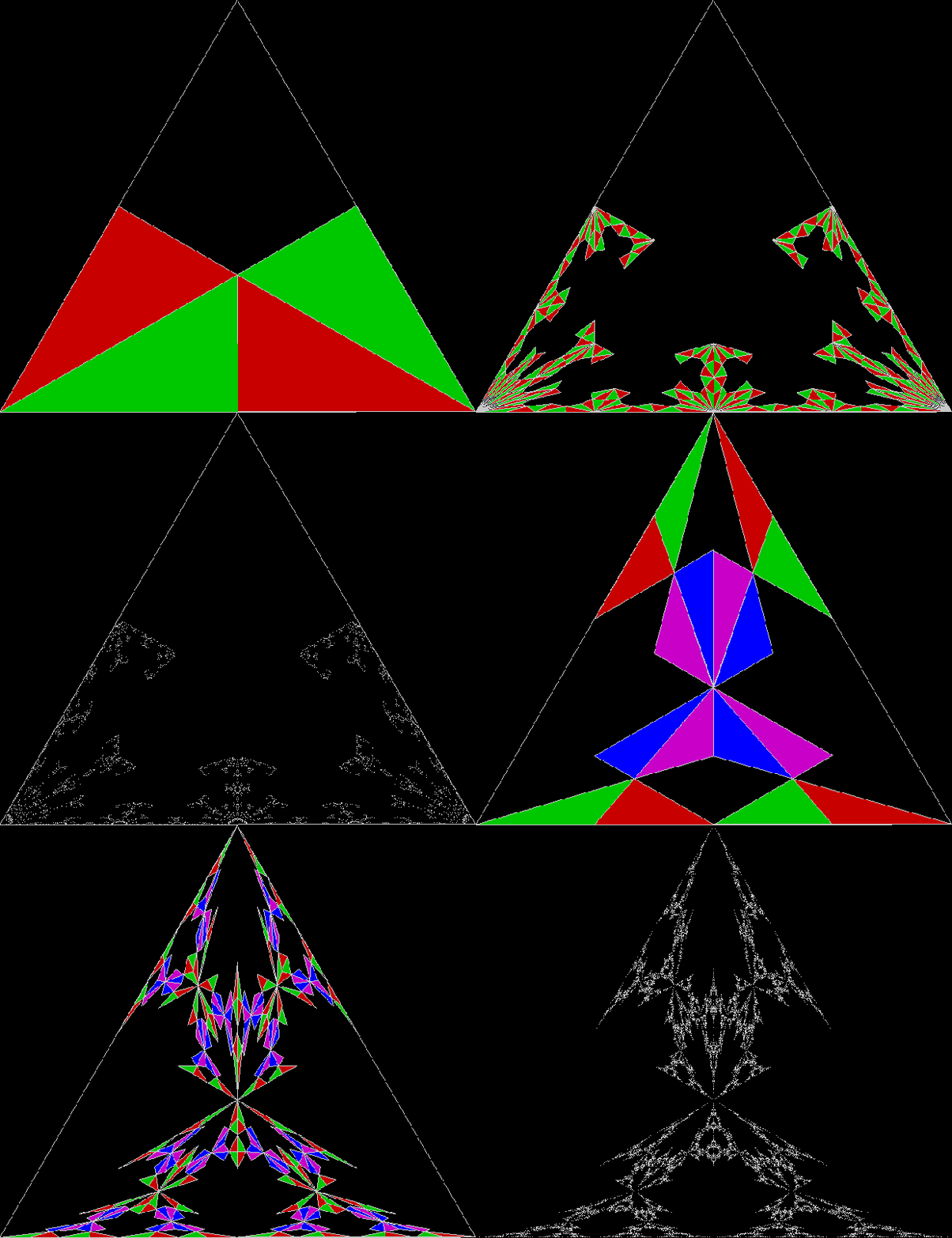
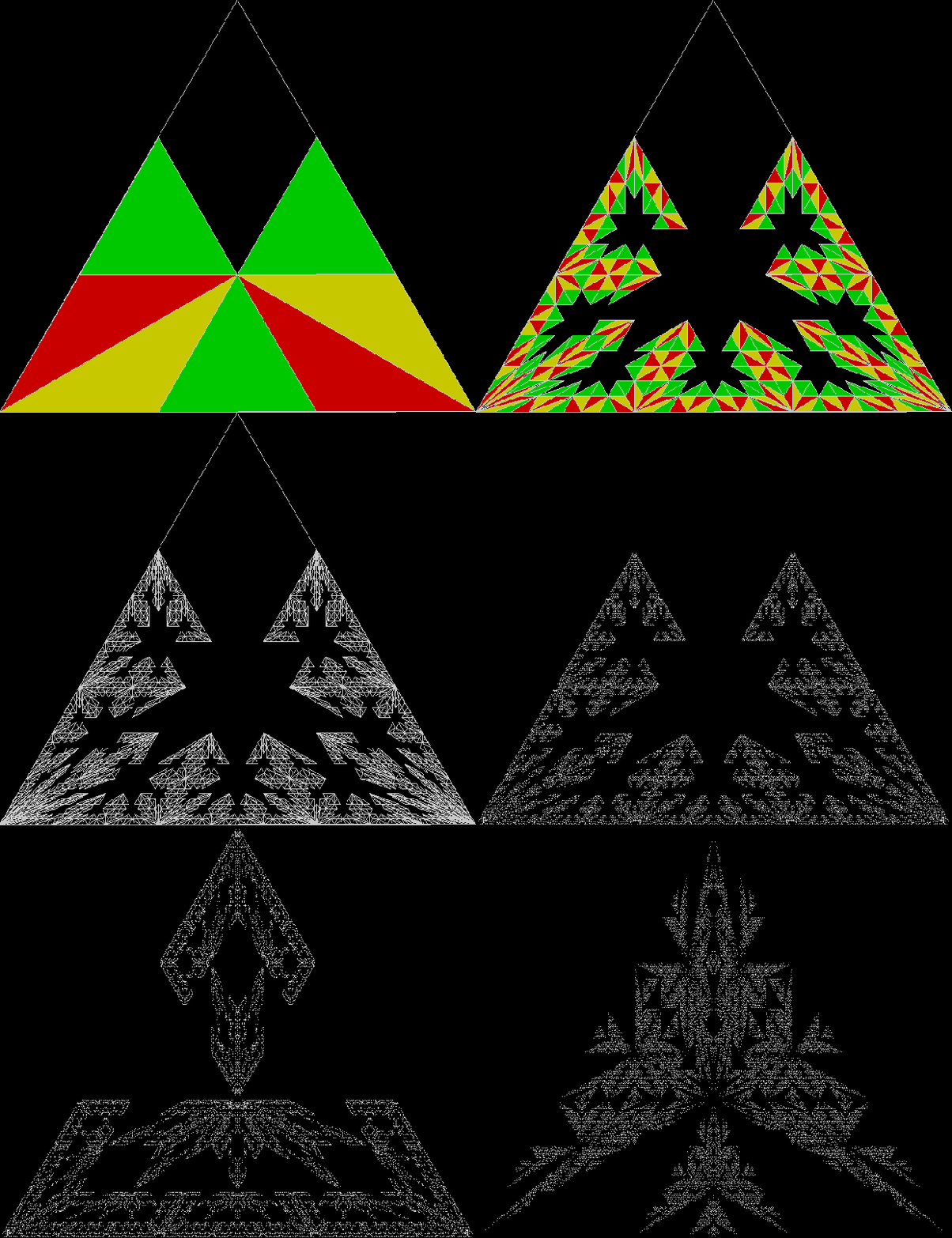
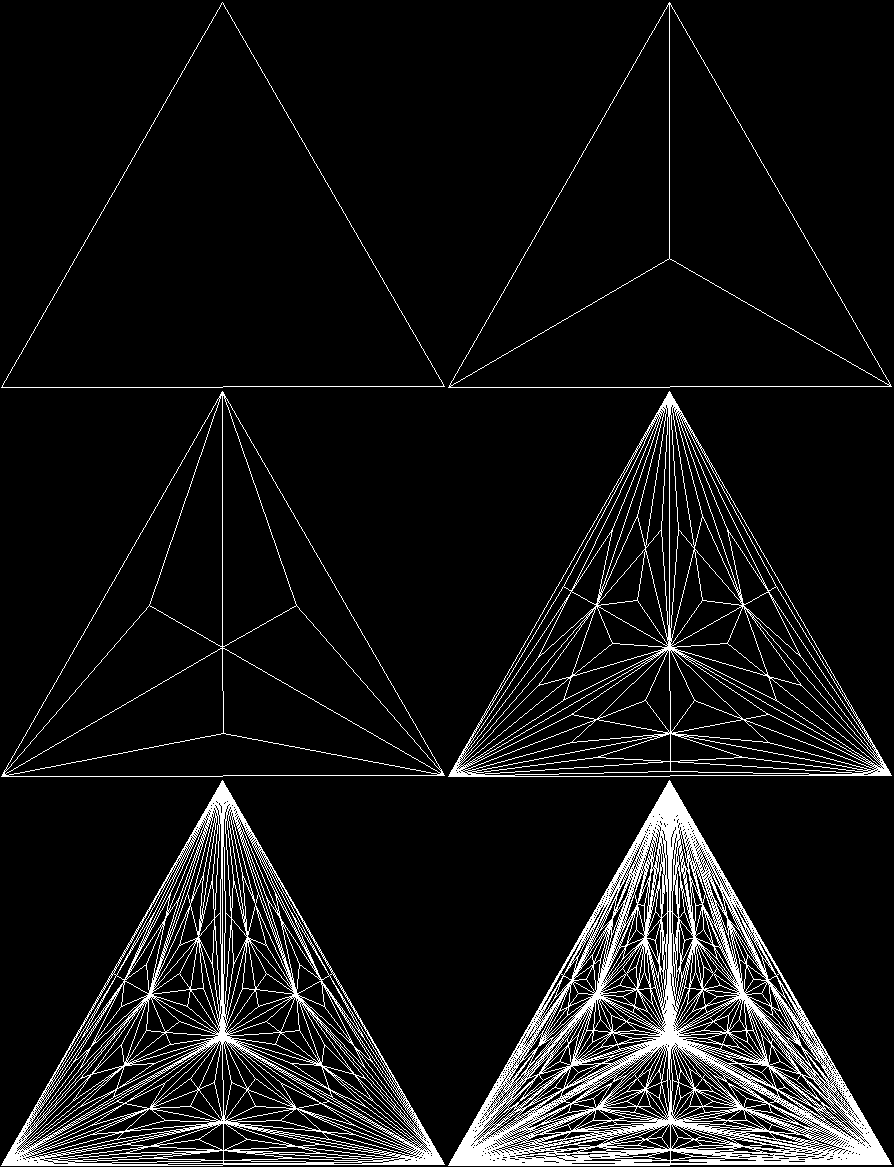
This fractal is created by taking an equilateral triangle and finding the centre and the midpoint of each side. Using all these points, plus the three vertices, six new triangles can be created from the original. The process is then repeated with each new triangle (if the images don’t animate, please try opening them in a new window):
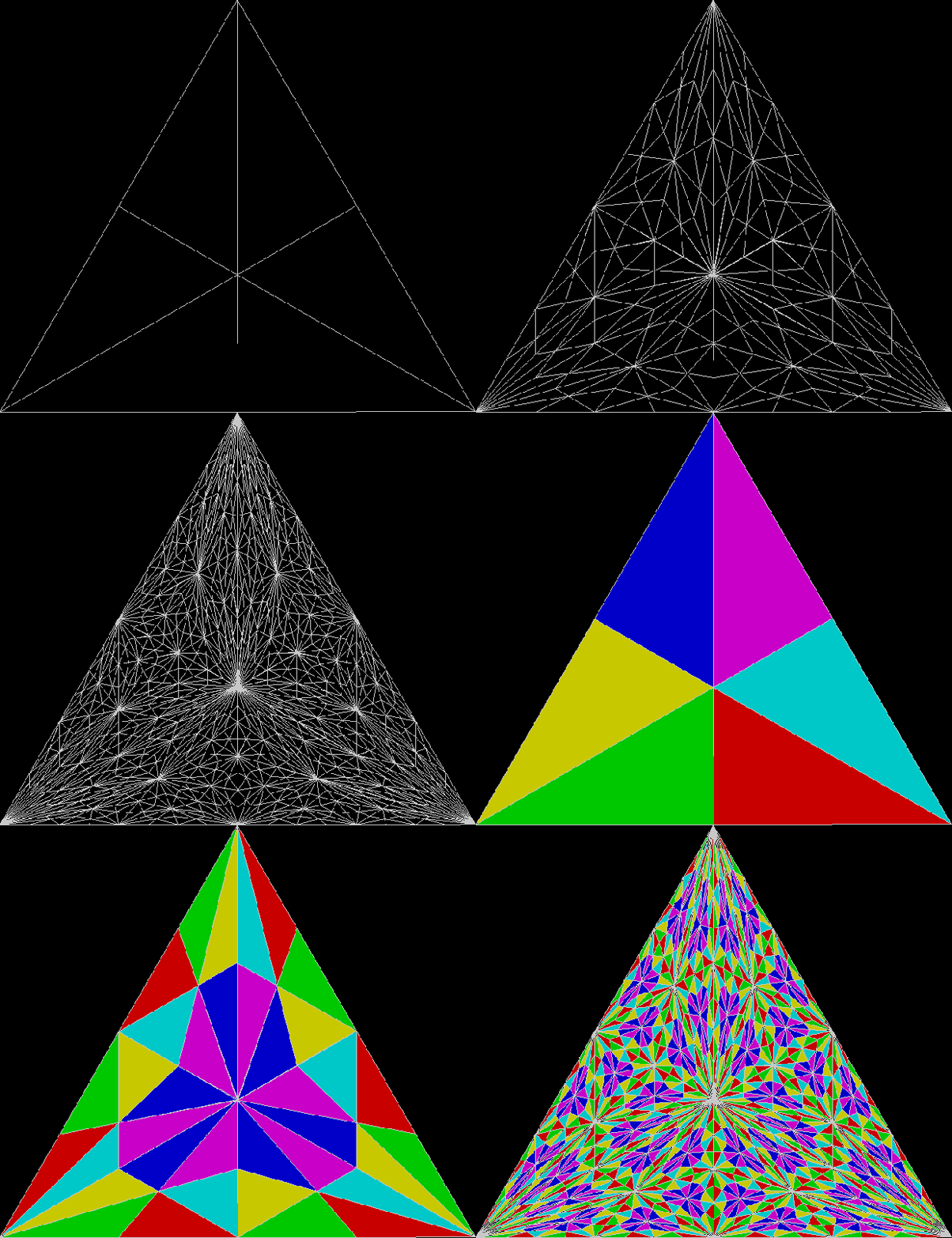
If the centre-point of each triangle is shown, rather than the sides, this is the pattern created:
Triangles in which the sides are divided into thirds and quarters look like this:
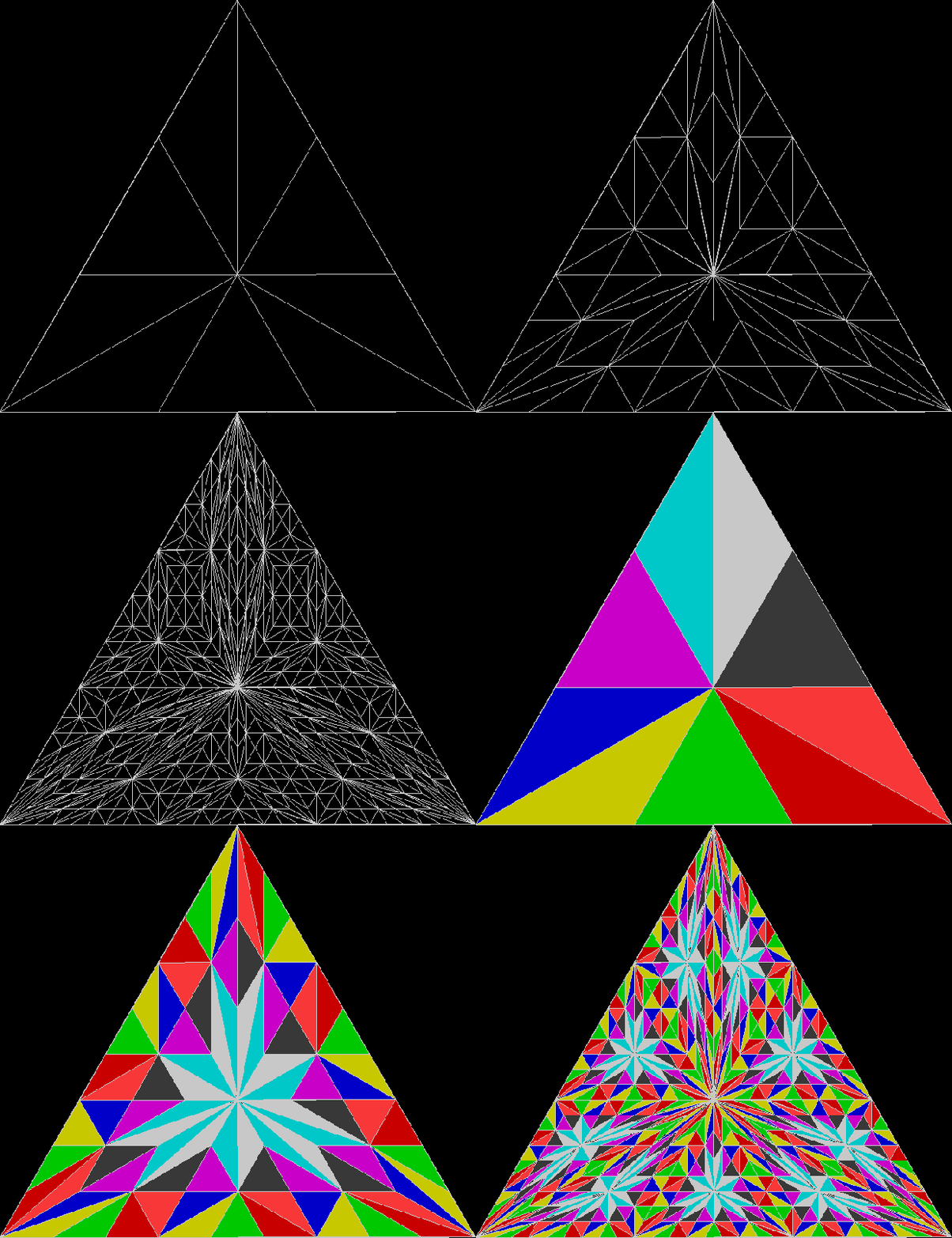
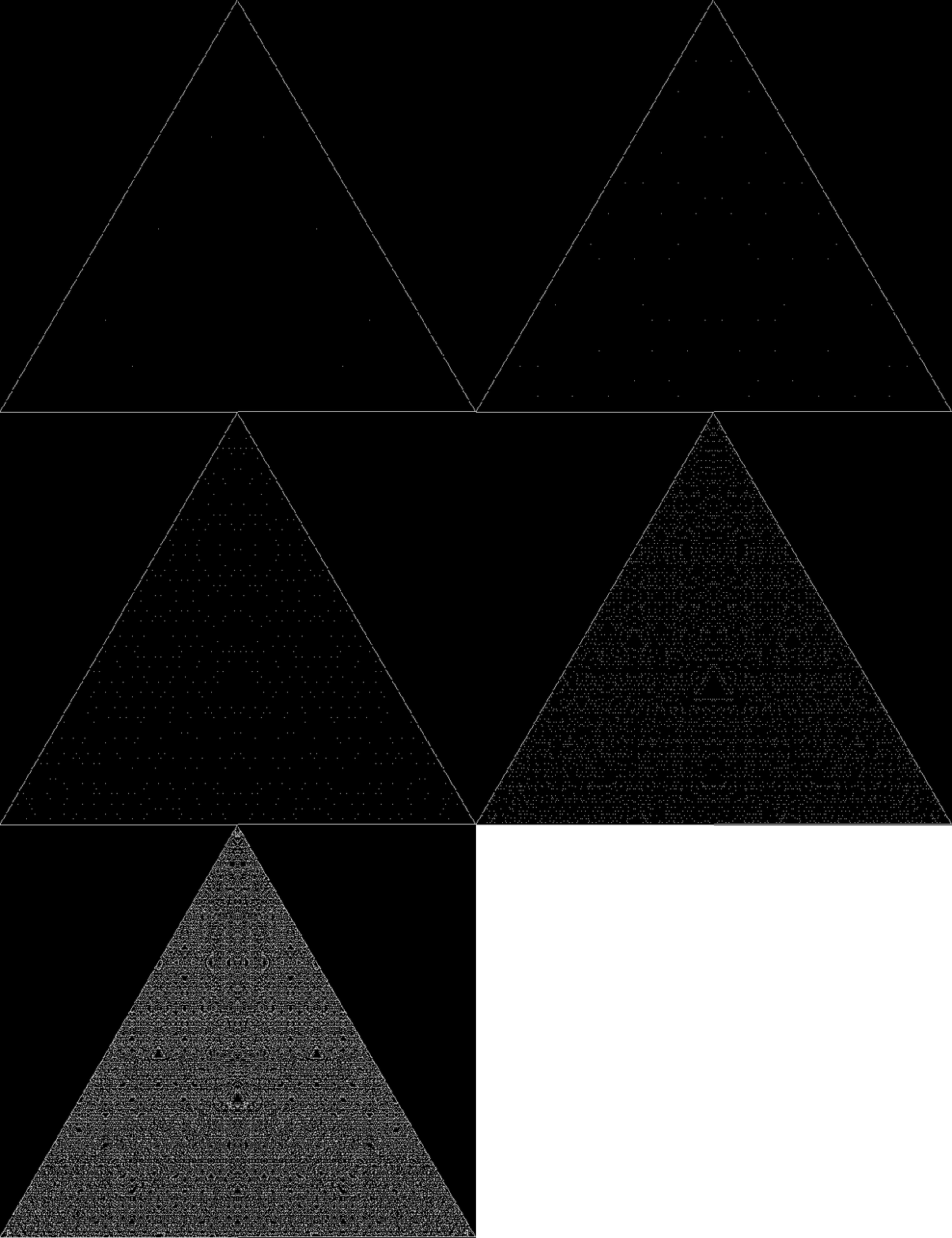
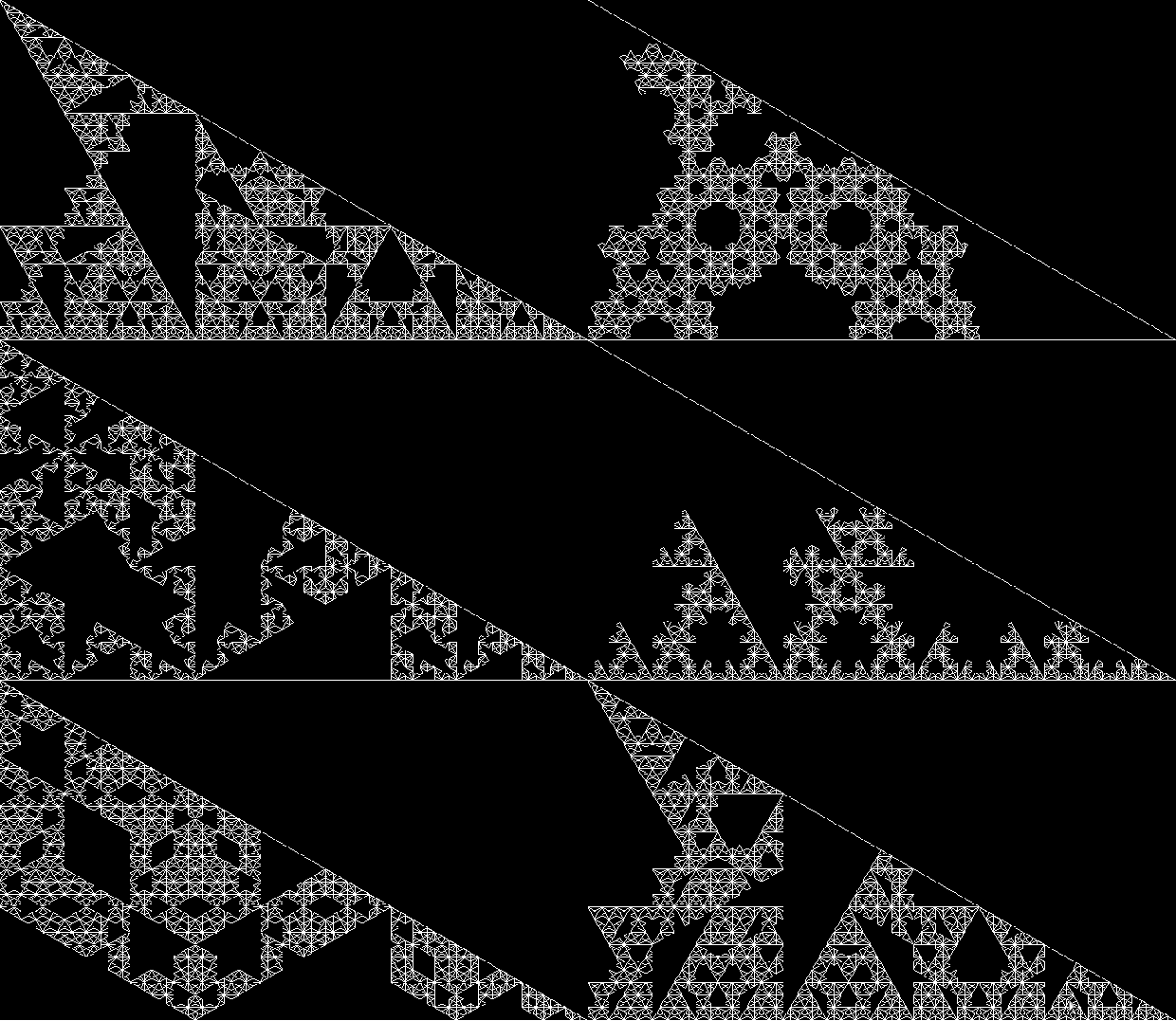
And if sub-triangles are discarded, more obvious fractals appear, some of which look like Lovecraftian deities and owl- or hawk-gods:
Elsewhere Other-Accessible
• Circus Trix — a later and better-illustrated look at these fractals
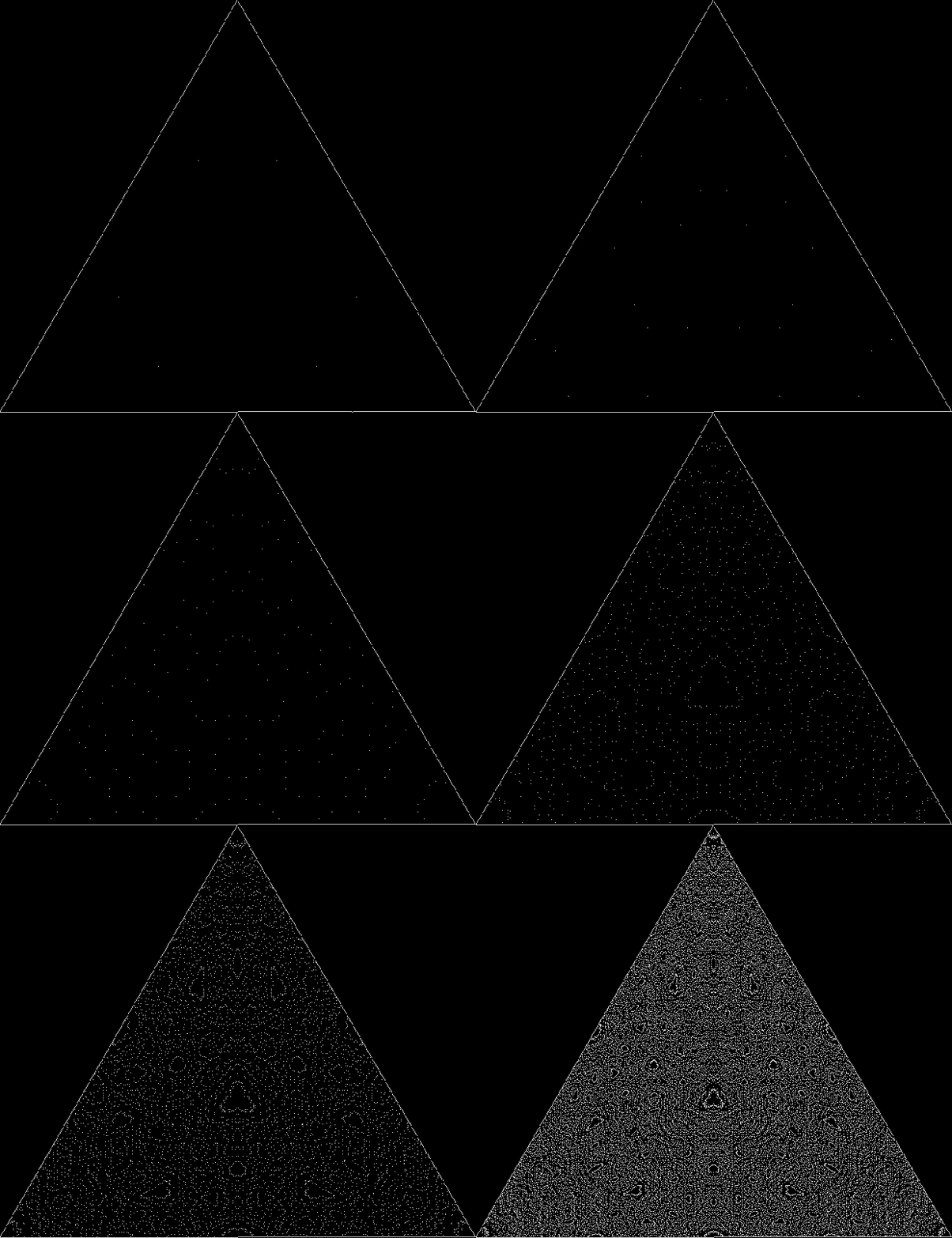
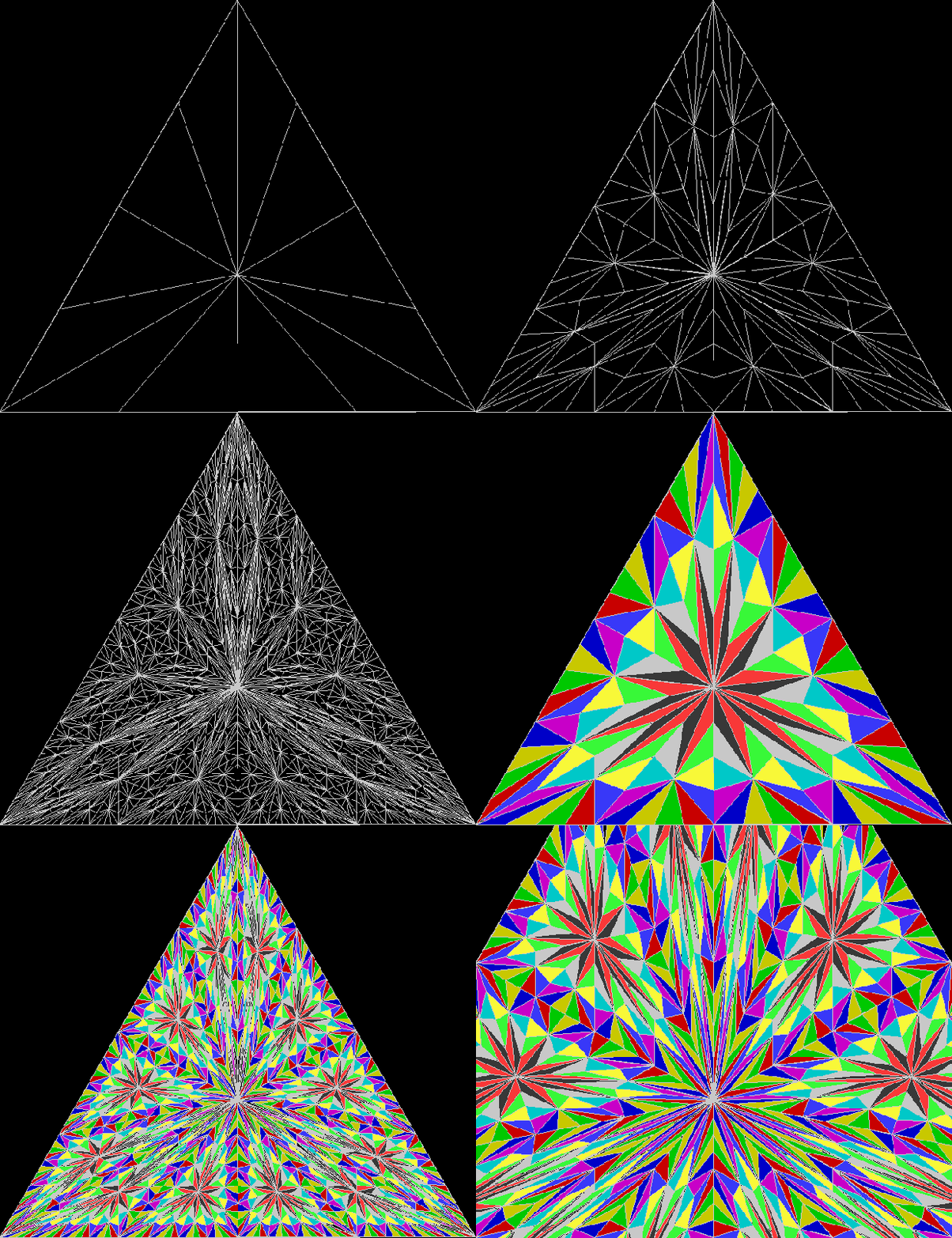
This fractal is created by taking an equilateral triangle, then finding the three points halfway, i.e. d = 0.5, between the centre of the triangle and the midpoint of each side. Using all these points, plus the three vertices, seven new triangles can be created from the original. The process is then repeated with each new triangle:
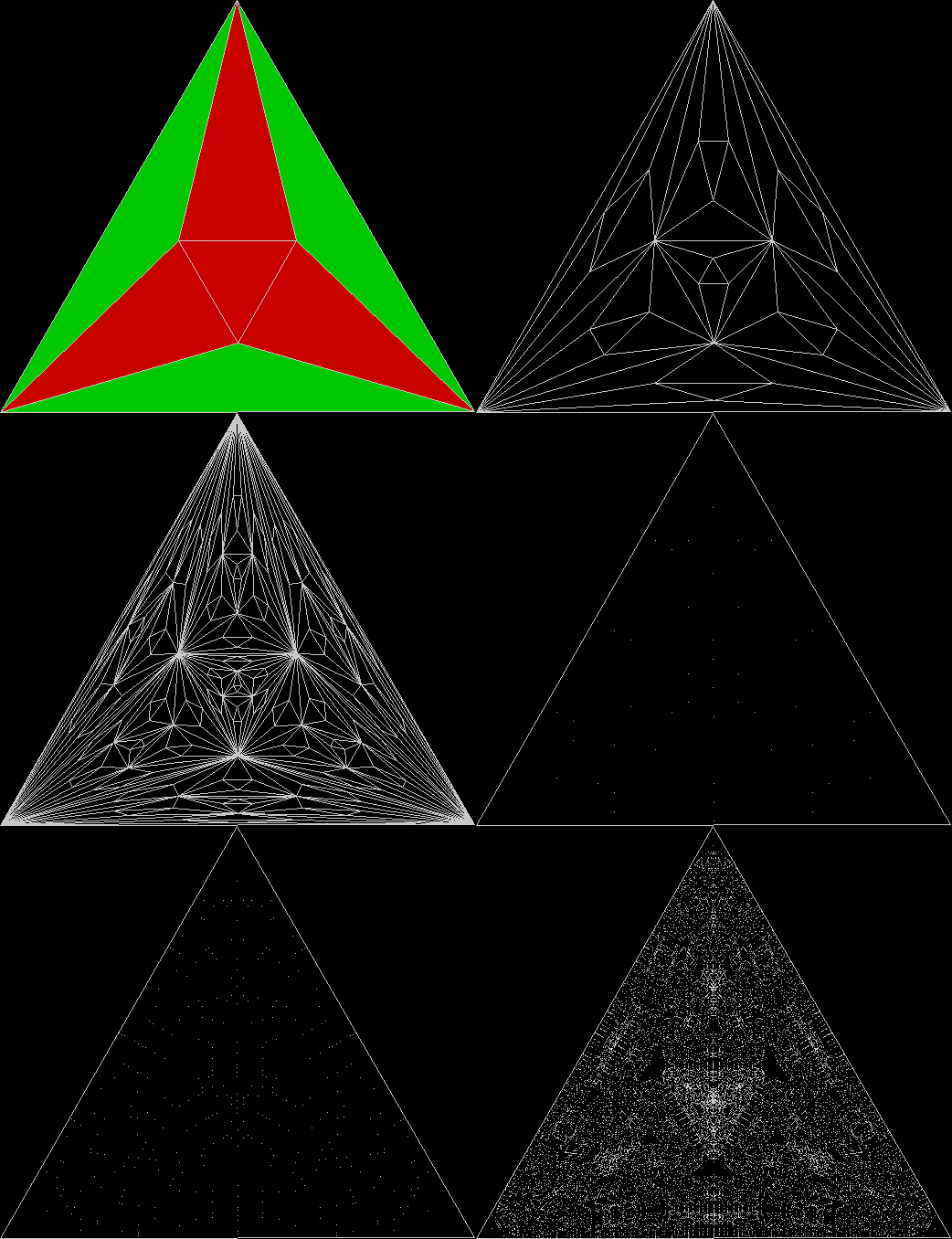
When sub-triangles are discarded, more obvious fractals appear, including this tristar, again using d = 0.5:
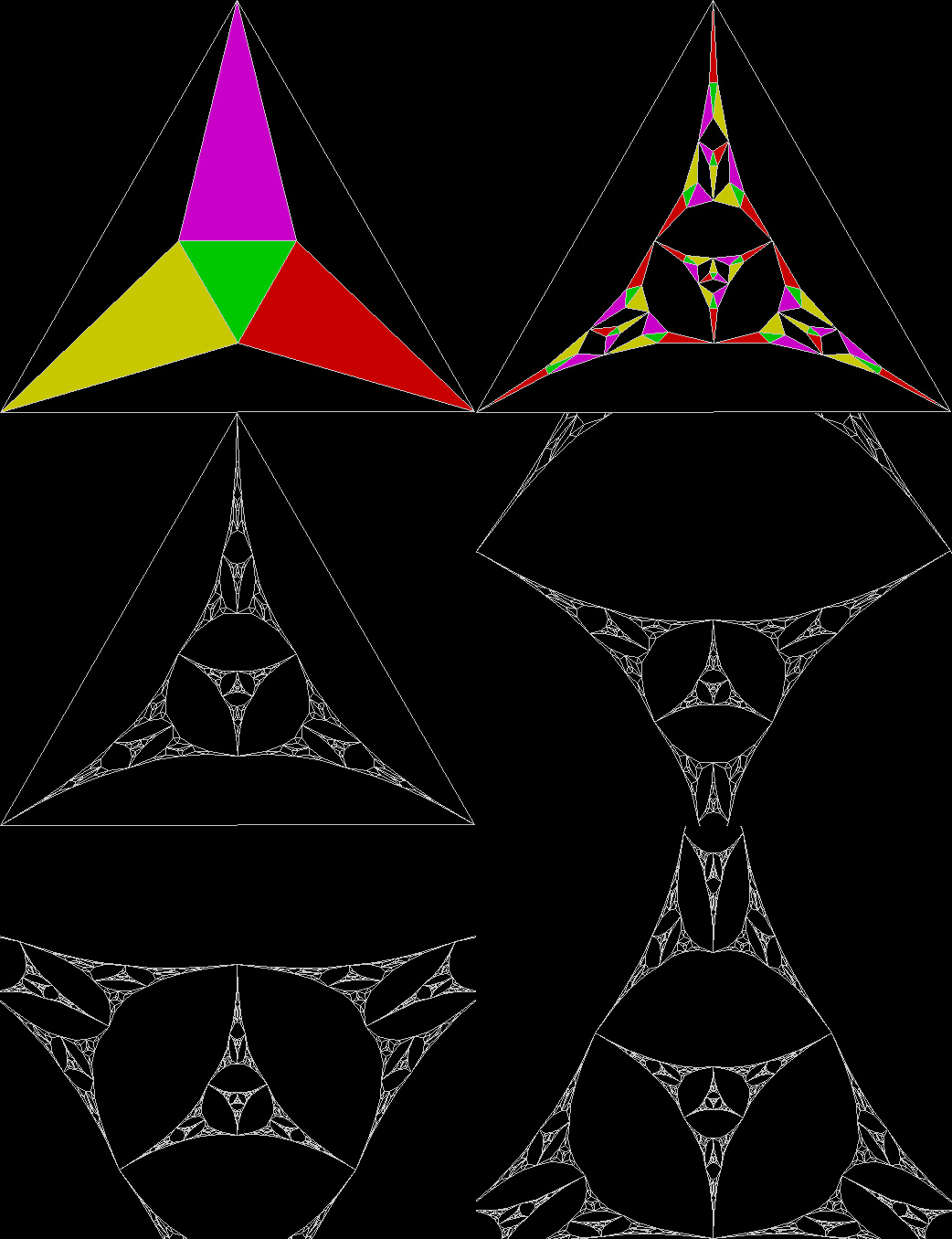
However, a simpler fractal is actually more fertile. This cat’s-cradle is created when d = 0.5:
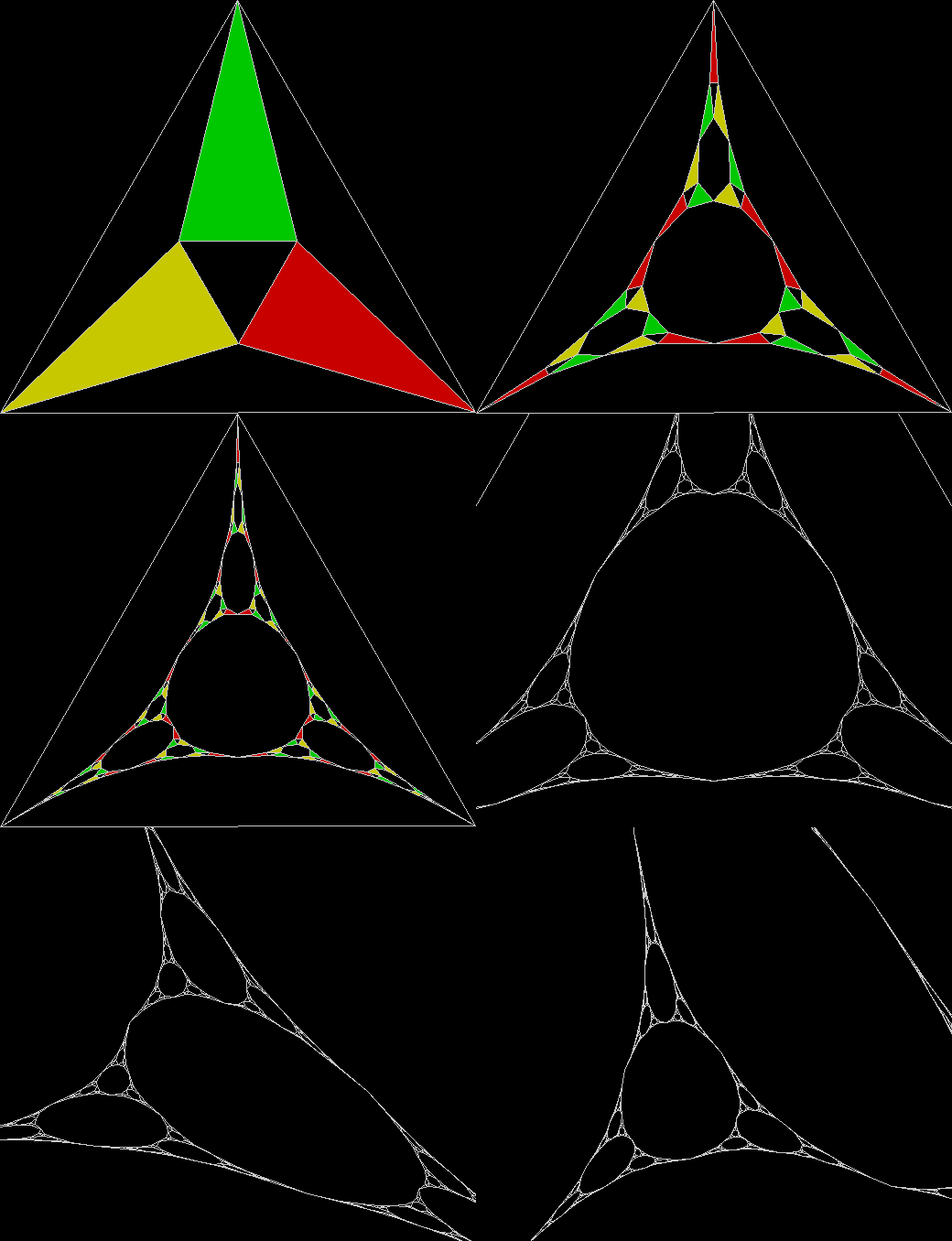
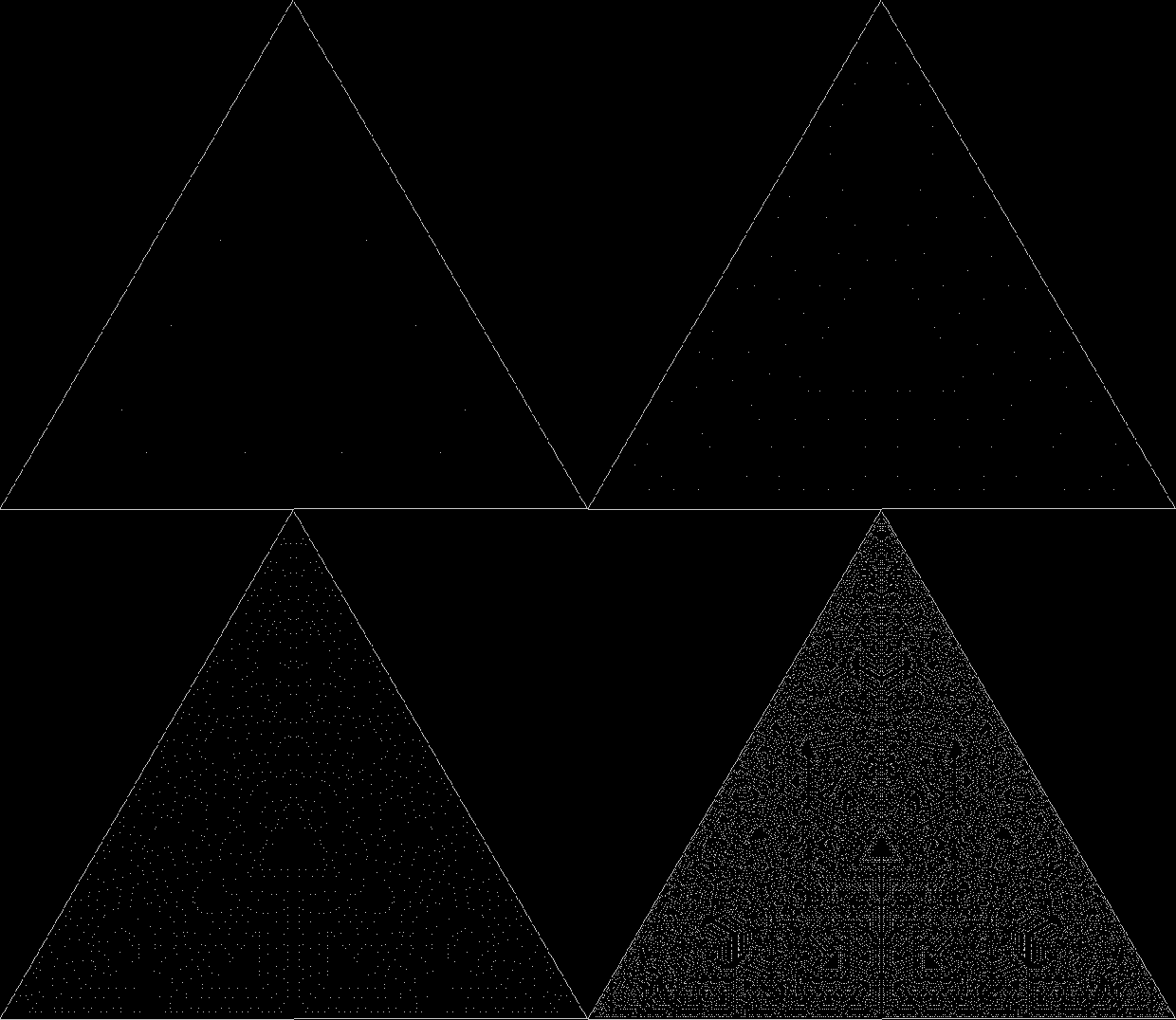
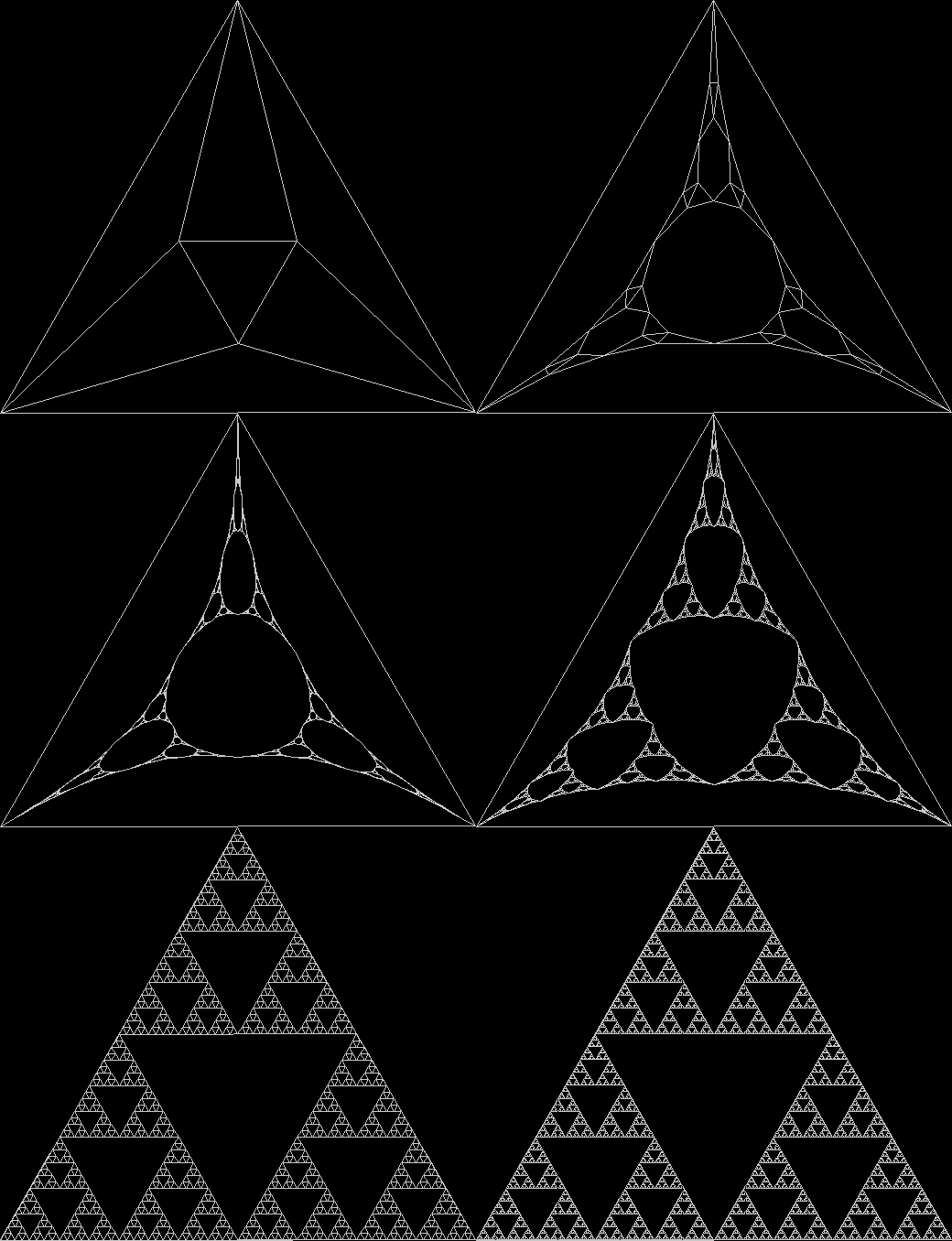
But as d takes values from 0.5 to 0, a very familiar fractal begins to appear: the Sierpiński triangle:
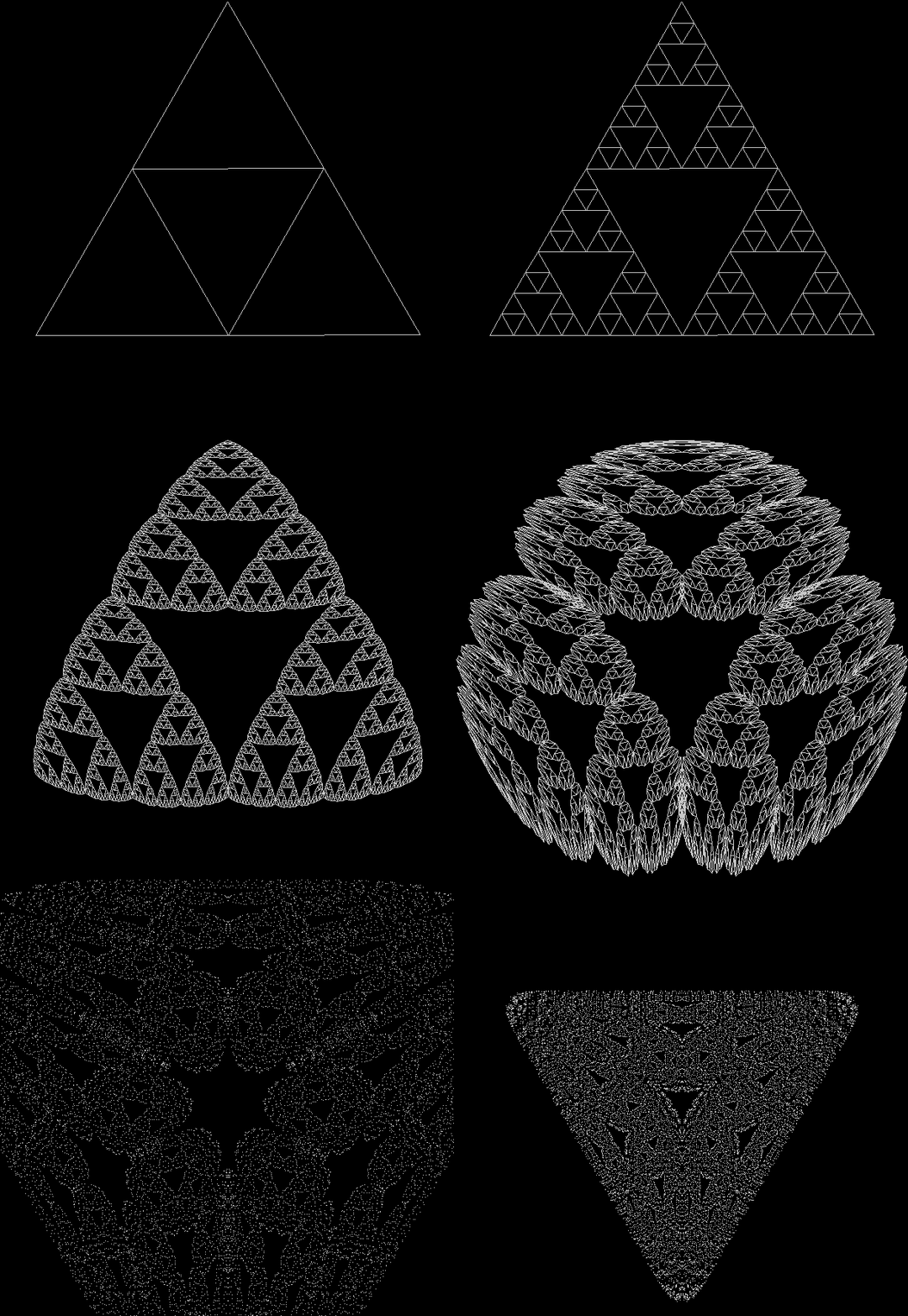
When the values of d become negative, from -0.1 to -1, this is what happens:
Pre-previously posted (please peruse):

Musica est exercitium arithmeticae occultum nescientis se numerare animi. — Leibniz.
Musik ist die versteckte arithmetische Tätigkeit der Seele, die sich nicht dessen bewußt ist, daß sie rechnet.
Music is a hidden arithmetic of the soul, which knows not that it calculates.


(N.B. I am not a mathematician and often make stupid mistakes in my recreational maths. Caveat lector.)
101 isn’t a number, it’s a label for a number. In fact, it’s a label for infinitely many numbers. In base 2, 1012 = 5; in base 3, 1013 = 10; 1014 = 17; 1015 = 26; and so on, for ever. In some bases, like 2 and 4, the number labelled 101 is prime. In other bases, it isn’t. But it is always a palindrome: that is, it’s the same read forward and back. But 101, the number itself, is a palindrome in only two bases: base 10 and base 100.1 Note that 100 = 101-1: with the exception of 2, all integers, or whole numbers, are palindromic in at least one base, the base that is one less than the integer itself. So 3 = 112; 4 = 113; 5 = 114; 101 = 11100; and so on.
Less trivial is the question of which integers set progressive records for palindromicity, or for the number of palindromes they create in bases less than the integers themselves. You might guess that the bigger the integer, the more palindromes it will create, but it isn’t as simple as that. Here is 10 represented in bases 2 through 9:
10102 | 1013* | 224* | 205 | 146 | 137 | 128 | 119*
10 is a palindrome in bases 3, 4, and 9. Now here is 30 represented in bases 2 through 29 (note that a number between square brackets represents a single digit in that base):2
111102 | 10103 | 1324 | 1105 | 506 | 427 | 368 | 339* | 30 | 2811 | 2612 | 2413 | 2214* | 2015 | 1[14]16 | 1[13]17 | 1[12]18 | 1[11]19 | 1[10]20 | 1921 | 1822 | 1723 | 1624 | 1525 | 1426 | 1327 | 1228
| 1129*
30, despite being three times bigger than 10, creates only three palindromes too: in bases 9, 14, and 29. Here is a graph showing the number of palindromes for each number from 3 to 100 (prime numbers are in red):
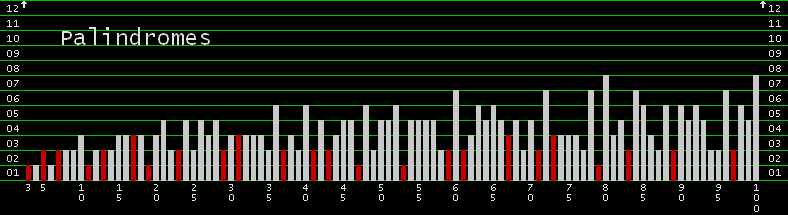
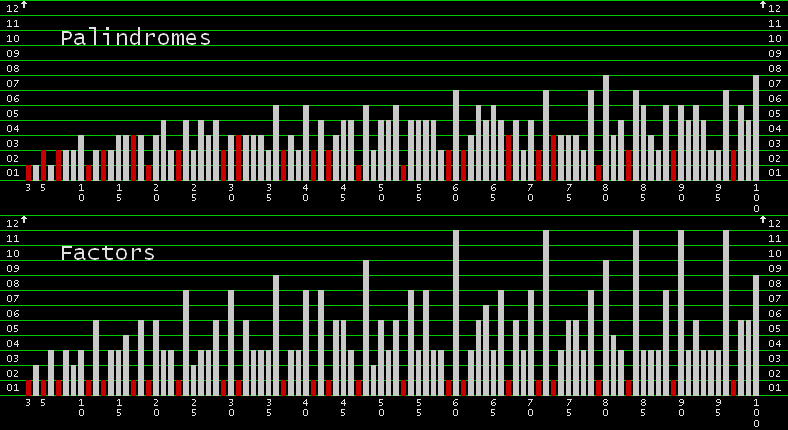
The number of palindromes a number has is related to the number of factors, or divisors, it has. A prime number has only one factor, itself (and 1), so primes tend to be less palindromic than composite numbers. Even large primes can have only one palindrome, in the base b=n-1 (55,440 has 119 factors and 61 palindromes; 65,381 has one factor and one palindrome, 1165380). Here is a graph showing the number of factors for each number from 3 to 100:

And here is an animated gif combining the two previous images:
Here is a graph indicating where palindromes appear when n, along the x-axis, is represented in the bases b=2 to n-1, along the y-axis:
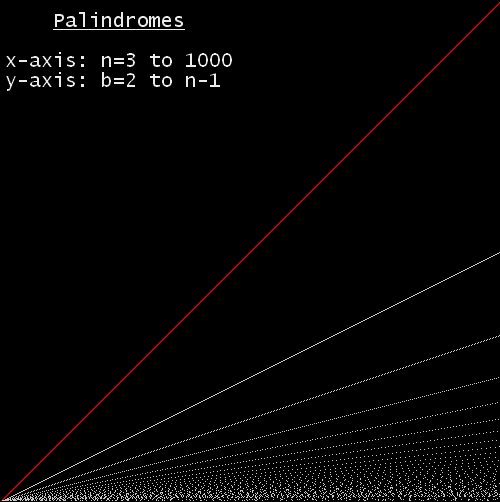
The red line are the palindromes in base b=n-1, which is “11” for every n>2. The lines below it arise because every sufficiently large n with divisor d can be represented in the form d·n1 + d. For example, 8 = 2·3 + 2, so 8 in base 3 = 223; 18 = 3·5 + 3, so 18 = 335; 32 = 4.7 + 4, so 32 = 447; 391 = 17·22 + 17, so 391 = [17][17]22.
And here, finally, is a table showing integers that set progressive records for palindromicity (p = number of palindromes, f = total number of factors, prime and non-prime):
| n | Prime Factors | p | f | n | Prime Factors | p | f | |
| 3 | 3 | 1 | 1 | 2,520 | 23·32·5·7 | 25 | 47 | |
| 5 | 5 | 2 | 1 | 3,600 | 24·32·52 | 26 | 44 | |
| 10 | 2·5 | 3 | 3 | 5,040 | 24·32·5·7 | 30 | 59 | |
| 21 | 3·7 | 4 | 3 | 7,560 | 23·33·5·7 | 32 | 63 | |
| 36 | 22·32 | 5 | 8 | 9,240 | 23·3·5·7·11 | 35 | 63 | |
| 60 | 22·3·5 | 6 | 11 | 10,080 | 25·32·5·7 | 36 | 71 | |
| 80 | 24·5 | 7 | 9 | 12,600 | 23·32·52·7 | 38 | 71 | |
| 120 | 23·3·5 | 8 | 15 | 15,120 | 24·33·5·7 | 40 | 79 | |
| 180 | 22·32·5 | 9 | 17 | 18,480 | 24·3·5·7·11 | 43 | 79 | |
| 252 | 22·32·7 | 11 | 17 | 25,200 | 24·32·52·7 | 47 | 89 | |
| 300 | 22·3·52 | 13 | 17 | 27,720 | 23·32·5·7·11 | 49 | 95 | |
| 720 | 24·32·5 | 16 | 29 | 36,960 | 25·3·5·7·11 | 50 | 95 | |
| 1,080 | 23·33·5 | 17 | 31 | 41,580 | 22·33·5·7·11 | 51 | 95 | |
| 1,440 | 25·32·5 | 18 | 35 | 45,360 | 24·34·5·7 | 52 | 99 | |
| 1,680 | 24·3·5·7 | 20 | 39 | 50,400 | 25·32·52·7 | 54 | 107 | |
| 2,160 | 24·33·5 | 21 | 39 | 55,440 | 24·32·5·7·11 | 61 | 119 |
Notes
1. That is, it’s only a palindrome in two bases less than 101. In higher bases, “101” is a single digit, so is trivially a palindrome (as the numbers 1 through 9 are in base 10).
2. In base b, there are b digits, including 0. So base 2 has two digits, 0 and 1; base 10 has ten digits, 0-9; base 16 has sixteen digits: 0, 1, 2, 3, 4, 5, 6, 7, 8, 9, A, B, C, D, E, F.
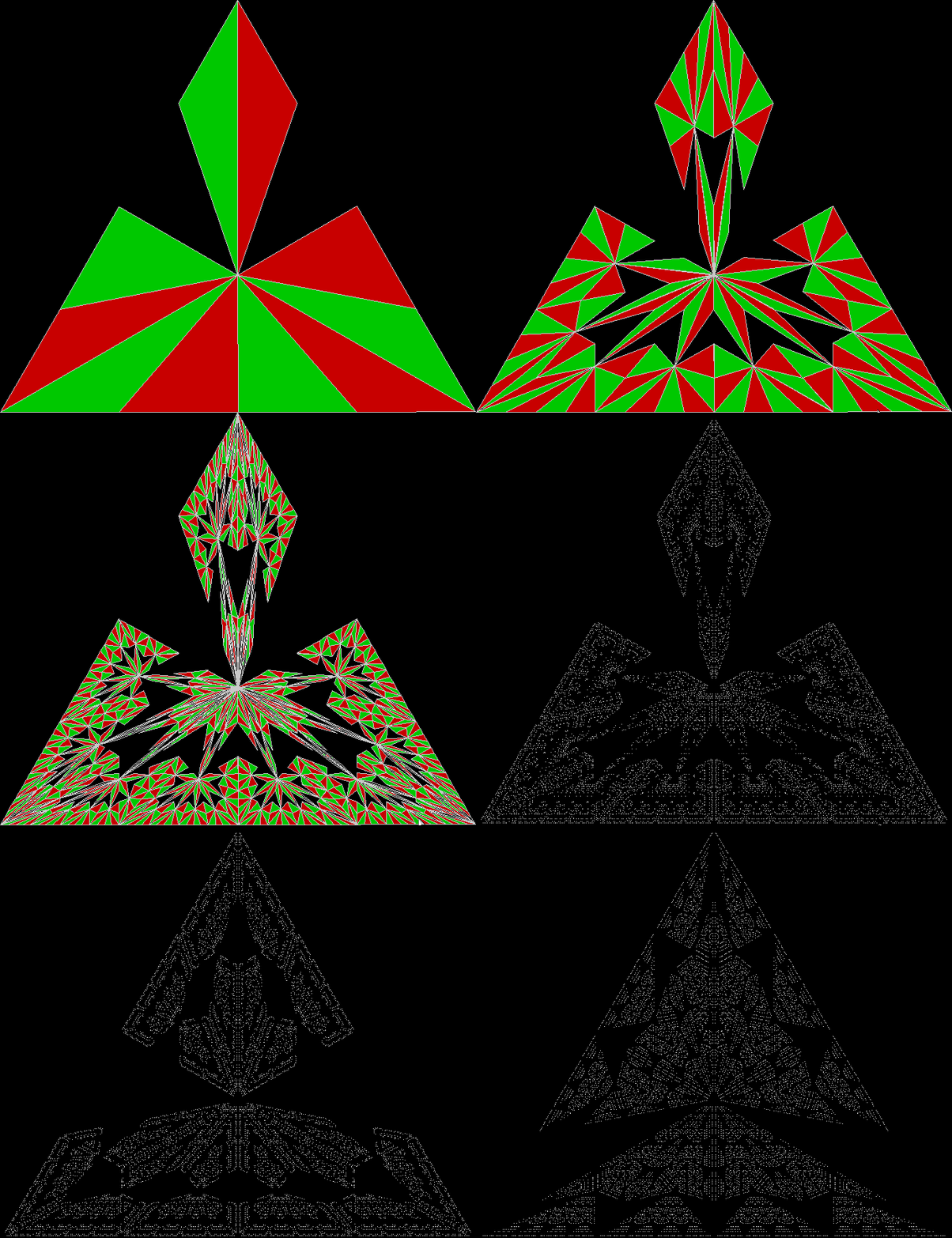
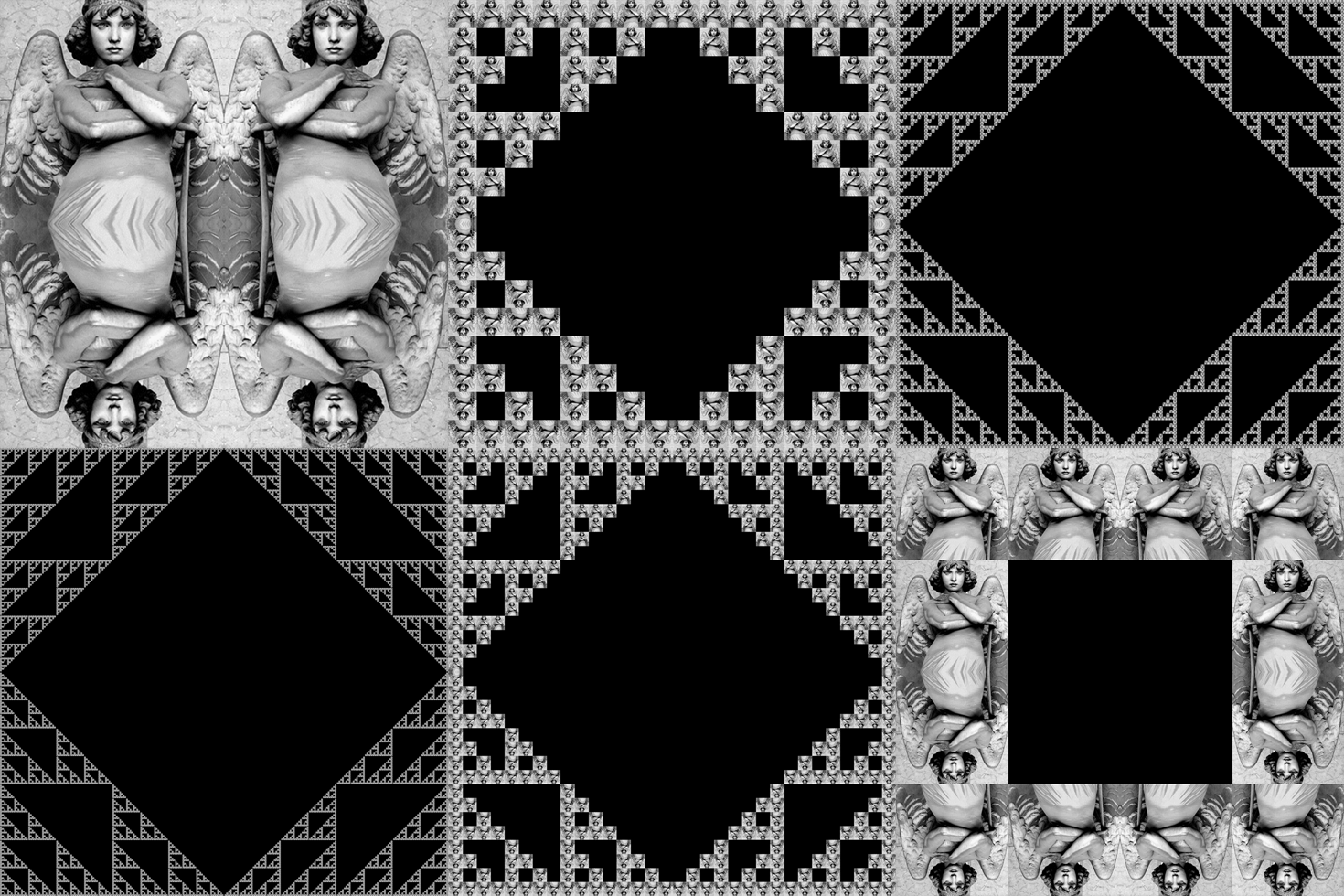
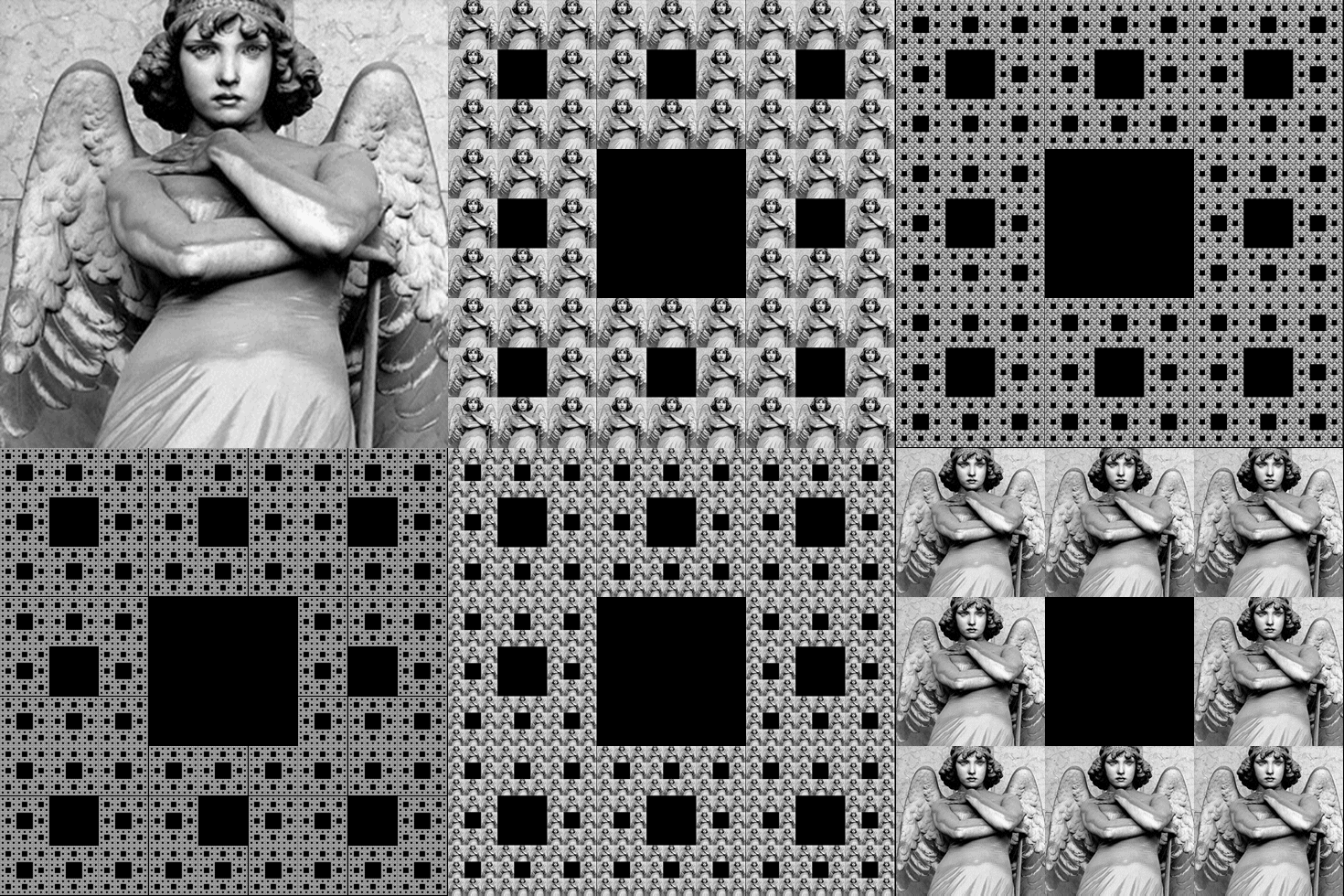
Here are some fractals based on the Angelo di Monteverde or Angelo della Resurrezione carved by the Italian sculptor Giulio Monteverde (1837-1917) for the monumental cemetery of Staglieno in Genoa.




 Overlord In Terms of Core Issues Around Maximal Engagement with Key Notions of the Über-Feral