Mix to the Marx

“And in the global climate of the early 90s, it’s perhaps not surprising that the ANC bent to the neoliberal flood tide, putting its Freedom Charter calls for public ownership and redistribution of land on the back burner.” — Mandela has been sanitised by hypocrites and apologists, Seamus Milne, The Guardian, 12/xii/2013.


Previously pre-posted (please peruse):

Reds under the Thread

Ass You Like It

This is a guest post by Norman Foreman, B.A.


Mediaeval Catholic philosophers wrote about both praying and braying. The braying came from Buridan’s ass, a thought-experiment about choice and free will. Imagine a hungry ass set between two piles of hay that are identical in every way: size, shape, colour, tastiness and so on. Some philosophers argued that, if it had no reason to prefer one pile of hay to the other, the ass would be unable to choose and would therefore starve to death.

I don’t agree: inter alia, nervous systems don’t work symmetrically and we don’t experience objects as fully identical when they’re in different parts of our visual field. However, in a literary sense, I understand what it feels like to be Buridan’s ass. To assify myself, I start by imagining this:

• I’m offered £1000 to read a book by the transgressive author Will Self.

Would I accept? Yes. It would be distasteful, but I’d do it for £1000. Self’s writing is so bad that I might give the money back rather than finish the book, but I’d have a go. Now change the situation:

• I’m offered £1000 to read a book by the transgressive author Stewart Home.

Would I still accept? Yes. Again, it would be distasteful, but I’d do it for the money. Or I’d try, at least. The next step turns me into Buridan’s ass. I imagine this:

• I’m offered £1000 to read a book by either Will Self or Stewart Home (not both). And I have to make the choice for myself.

Now I’m on the horns of a dilemma. I would want the £1000, but I can’t decide which transgressive author I’d rather NOT read. Home is a downmarket version of Self, Self is an upmarket version of Home. It’s Self-as-chav vs Home-as-Oxbridge-grad. And/or vice versâ. They’re both keyly committed core components of the Guardianista community, with all that that implies in terms of issues around bad English, mixed metaphors and “in terms of”. I’m happy to say I’ve never read a book by either of them. So if I were offered £1000 to do so and had to choose either Self or Home, I couldn’t do it. Not unassisted. I’d have to toss a coin. Best of three. Or best of five dot dot dot


Previously pre-posted (please peruse):

Titus Graun
Ex-term-in-ate!
Reds under the Thread

The Term Turns dot dot dot

In Titus Graun, I interrogated issues around the Grauniness, or Guardianisticity, of two keyly committed core components of the counter-cultural community: the semiotician Stewart Home and the æsthetician John Coulthart. Seeking to utilizate their usage-metrics for the core/epicentral Guardianista phrase “in terms of” (i.t.o.), I interrogated their personal websites like this in terms of January 2013:

site:http://www.johncoulthart.com “in terms of”
About 2,180 results

site:http://www.johncoulthart.com “the”
About 8,860 results

site:http://www.johncoulthart.com “and”
About 8,150 results


site:http://www.stewarthomesociety.org “in terms of”
About 123 results

site:http://www.stewarthomesociety.org “the”
About 602 results

site:http://www.stewarthomesociety.org “and”
About 599 results

Noting that Coulthart’s site used “the/and” approximately 14 times more often than Home’s, I adjusted Home’s raw i.t.o.-score accordingly: 123 x 14 = 1722. I concluded that Coulthart, with an i.t.o.-score of 2180, was approximately 26·59% Graunier than Home – exactly as one might have hoped, given that Coulthart is not merely a Guardianista (good), but a gay Guardianista (doubleplusgood). But that was in terms of January. When I re-interrogated their websites in terms of June 2013, I discovered that the semiotic situation had transitioned in a most disturbing and disquieting way:

site:http://www.johncoulthart.com “in terms of”
About 1,080 results

site:http://www.johncoulthart.com “the”
About 8,680 results

site:http://www.johncoulthart.com “and”
About 8,010 results


site:http://www.stewarthomesociety.org “in terms of”
About 119 results

site:http://www.stewarthomesociety.org “the”
About 541 results

site:http://www.stewarthomesociety.org “and”
About 536 results

I was aghast (literally) to see that Coulthart’s i.t.o.-metrics have spiked (in reverse). Other lexicostatistical metrics have transitioned relatively little: his site now seems to use “the/and” approximately 15·5 times more often than Home’s. Home’s raw i.t.o.-score is 119 and 119 x 15·5 = 1844·5. So it is now Home who is approximately 70·78% Graunier than Coulthart.

This can only be described as highly suspicious. What has Coulthart been up to? Has he been spraying his site with verbicide? Has he donned a black Savoy nihilinja-suit™, crept out under cover of darkness and clubbed innocent i.t.o.’s as they lay basking in the feral radiance of Manchester’s Most Maverick Messiahs? If so, this is “‘Pushing the Transgressive Envelope Too Far’ Too Far” too far. Even M.M.M.M. must look askance at behaviour like that. Surely.


Previously pre-posted (please peruse):

Titus Graun
Ex-term-in-ate!
Reds under the Thread

Homotextuality

In terms of the highest levels of the United Kingdom’s counter-cultural community, it seems to be compulsory for non-conformists, mavericks, free-thinkers et al to be committed readers of The Guardian (which was nicknamed The Grauniad by Private Eye in honour of the misspellings once common there). Naturally enough, committed Guardian-readers use the special dialect of English known as Guardianese (which is also found in The Times Literary Supplement, The London Review of Books, etc). And there are a lot of such Guardianistas in the counter-cultural community, trust me. So the obvious question arises:

Myriads, myriads, off the wall,
Who is the Grauniest of them all?

Continue reading Homotextuality

Reds under the Thread

A clue, or clew, was originally a ball of thread, as unwound by the Greek hero Theseus en route to the centre of King Minos’ labyrinth on Crete. When he had found and slain the Minotaur, he used the thread to retrace his steps. So a clue is a guide: Theseus followed a thread to solve a puzzle. Nowadays, scientists are following much finer threads to solve much bigger puzzles: DNA is a microscopic thread of chemicals and the clue to all manner of puzzles. Perhaps the biggest and most important is the puzzle of language. How did it evolve? How is it encoded in our genes? How is it instantiated in the brain? Those are the big problems waiting to be slain at the centre of the labyrinth of human genetics. Without language, we wouldn’t be human and you wouldn’t be reading this essay.

But this essay is a thread too: like DNA, language consists of a string of symbols used to construct something bigger. DNA codes for brains and bodies; language codes for ideas and images. By looking at a sample of DNA, scientists can tell what kind of body it builds: its sex and race, for example. In future, we’ll be able to tell much more: DNA will offer clues to intelligence and personality. Samples of language offer similar clues: we can often deduce a lot about someone from his or her writing. There are already computer programs that claim to be able to identify the sex of a writer by the lexical and grammatical patterns in a text. But I wonder how much more computers will be able to deduce in future and what clues there already are in our language to our intellects and personalities. They might not be obvious ones. Perhaps it will be possible to deduce race or sexuality or political preferences from apparently trivial things. Perhaps libertarians or homosexuals or psychopaths use pronouns in a distinctive way or prefer certain kinds of consonants or vowels.

But those are differences between groups: regardless of politics or personality, it’s certain that every individual uses language in a unique way. In future, it will be possible to track people on the internet even when they’re writing anonymously or under false names. A bloodhound can track people after sniffing something known to belong to them. In future, bloodhound programs will track people after sniffing – statistically analyzing – texts known to have been written by them. It’s a worrying thought in our ever-more authoritarian times. Express anonymous thoughts on-line about a controversial topic and you may find a bloodhound-program sniffing you out and the thought-police knocking on your door. Science will hand totalitarian tools to tyrants and it may not be possible to escape even if you avoid controversial topics and write about innocuous things. If psychopaths use language in distinctive ways, as seems likely, perhaps other warped individuals will inadvertently betray themselves in their language. Going for a government job? Maybe you’ll have to write an essay about your last holiday or your first pet. And an apparently innocent metaphor will reveal that you’re racist or homophobic or sexist. So no job for you (and quite right, too).

I don’t know whether crime-think like that can be identified by linguistic patterns, but I do think that good-think can be. In terms of issues around progressive publications like The Guardian and London Review of Books, I’ve noticed again and again that members of the decent’n’compassionate community engage issues around imagery in a special way. In short, they like to mix their metaphors. The most recent example I’ve come across was in a review of a Derrida biography in The Guardian by the decent’n’compassionate Marxist Terry Eagleton:

Before long, the taciturn, socially gauche young man from the colonies was gracing the dinner tables of a galaxy of French luminaries: Jean Genet, Roland Barthes, Julia Kristeva, Maurice Blanchot and others.[1]

Reading that felt a little like stepping on a stair that wasn’t there: it was jarring to go from the image of “dinner tables” to the image of “a galaxy”, as though giant balls of flaming hydrogen could give dinner-parties. But that’s what a mixed metaphor does: it combines incongruent or incompatible images in a lingustically gauche way. George Orwell provided some good examples in his essay “Politics and the English Language” (1946):

By using stale metaphors, similes and idioms, you save much mental effort at the cost of leaving your meaning vague, not only for your reader but for yourself. This is the significance of mixed metaphors. The sole aim of a metaphor is to call up a visual image. When these images clash – as in the fascist octopus has sung its swan song, the jackboot is thrown into the melting pot – it can be taken as certain that the writer is not seeing a mental image of the objects he is naming; in other words he is not really thinking.[2]

The Eagleton example isn’t particularly egregious: Eagleton is mediocre even as a bad writer. He did a little badder six years ago in the same progressive forum:

This year’s calendar to celebrate Beckett’s 100th anniversary is crammed with literary events celebrating the life of the modern age’s most lovable pessimist, most of them, one imagines, awash with talk of the timeless human condition portrayed in his work… Yet there is also a distinctively Irish quality to Beckett’s deflation of the florid and high-flown, just as there is something recognisably Irish about those starved, stagnant landscapes where, like colonial victims, you do nothing but sit and wait for deliverance.[3]

“Talk” consists of vibrations in the air. Is “awash”, which refers to liquids around one’s feet, the right image for talk? And if the “calendar” is “crammed”, is “awash” not over-egging the pudding? Can landscapes be “stagnant”, like water or air? If they can, can they be “starved” at the same time? Or did Eagleton just want the alliteration and not give a toss about the meaning? I suspect it was the last: Eagleton seems to me a typical example of the progressive prosateur. He writes not to convey meaning or apply reason, but for a higher purpose: to demonstrate his own cleverness and assure other progressives of his goodthinkfulness. The Guardian and LRB are full of similar narcissists and Eagleton isn’t exceptional amongst them. So why did I choose his text to unlock the swamp of progressive windbaggery? Well, first because his review of the Derrida biography finally prompted me to write this essay, which I’ve been planning to write for a long time. And second because I didn’t want to give anyone whiplash. Reading Eagleton is a gentle introduction to the mixed metaphor, like driving slowly down a cobbled street in a car with good suspension. Reading another Guardian regular, on the other hand, is like driving fast through the aftermath of an earthquake in a tank with very bad suspension. But forewarned is forearmed. You’ve seen Eagleton and I doubt you’ve been very impressed. Okay, now marvel at the most magisterial mixed-metaphorizer I’ve ever come across:

But the kernel of a message black Britons had been trying to hammer home for decades suddenly took centre stage.[4]

Gary Younge, the Guardian’s resident race’n’racism-expert, is almost praeternatural in his command of the English language. He can cram more crap into less lexicality than anyone else I’ve ever seen. The mixed metaphor above, from 2005, is a triple-whammy: it manages to get three incongruent images into twenty words. If you think that’s easy, try it for yourself. Younge doesn’t have to try: as a progressive prosateur, he postures and preens without conscious effort. But his postural powers are far greater than those of Terry Eagleton. Beauty poured effortlessly from Mozart’s brain; bollocks pours effortlessly from Gary Younge’s. He rose to similar heights of mixed metaphory in 2012, when he interrogated issues around the shooting of a black teenager in Florida:

Outrage at the death of Trayvon Martin is finally lifting the lid on the US’s racist underbelly[5]

That, at least, was the sub-heading for his article: three incongruent images in seventeen words. If Younge himself wasn’t responsible for it, either he has a disciple almost as rhetorically gifted as he is or a sub-editor was taking the piss of his self-righteous posturing in terms of issues around race. I hope it’s the latter: someone really ought to take a mallet to the anti-racist windbags who litter the florid corridors of The Guardian’s stagnant columns. Not that anyone would dare do so openly. The windbags will be typing their socialist siren-songs for some time to come. Here is someone else who is Younge at heart:

Recognising the Conservatives’ persistent image as the “nasty party”, David Cameron saw her [Baroness Warsi’s] real value as someone who could prop up the image of a modern reformist party comfortable in its multi-cultural skin. The chimaera of an Asian woman influencing the levers of Tory power did prop up this illusion for most of the two-and-a-half years that Warsi was in the Cabinet.[6]

That was Ratna Lachman, the directrix of JUST West Yorkshire, “which promotes racial justice, civil liberties and human rights in the north of England”. Or says it does, at least. The language of Lachman suggests to me that she is not necessarily a trustworthy guide to reality or to its rectification. Like Younge and Eagleton, she habitually uses metaphors that don’t work: as Orwell put it in his essay, “the writer is not seeing a mental image of the objects he is naming; in other words he is not really thinking.” Or observing reality. And I can’t believe that this is irrelevant to the progressive politics persistently pursued and promoted by these posturing, preening paragons of pretension. If their relatively simple and easy-to-correct metaphors don’t work, what does that say about their vastly more ambitious and complicated plans for a fairer, juster, more equal society? I wouldn’t trust any of them to organize a party in a brewery or spot a three-foot needle in a two-foot haystack. Linguistics, as a science, insists on being descriptive rather than prescriptive: it describes what language-users do rather than prescribing what they ought to do.

I see the scientific point, but I don’t fully agree with it. Human beings are born to use language, but that doesn’t mean we always use it well. We are born to use bodies too, but that doesn’t mean we always use our bodies in healthy, sensible, and intelligent ways. Medicine describes bodies both in sickness and in health and linguistics should be more like medicine. Language, like DNA, can go wrong and the cancers created by faulty DNA have their linguistic equivalents in publications like The Guardian and London Review of Books. Eagleton, Younge, Lachman and countless other members of the progressive community produce pathological prose. I think they do so because of their politics. You don’t have to subject their writing to sophisticated statistical analysis to know this: the kernels have taken centre stage and the chimaeras are pulling levers in plain view. Lachman claims in one of her windy, wittering articles that “Tory DNA is in essence white, male, Anglo-Saxon and Protestant to its core”. It’s odd, then, that the first Jewish and first female Prime Ministers were Conservative rather than Labour. But I don’t support the Tories any more than I support Labour, in part because neither of them recognizes the importance of actual rather than metaphorical DNA. Our DNA makes us human, so DNA explains both language and politics, as gross aspects of human behaviour. But I think it also accounts for subtler variations in language and politics, from the Marxist windbaggery of Terry Eagleton to the High Tory clarity of Evelyn Waugh. Or the non-conformist clarity of George Orwell, who was diagnosing diseased English and inventing words to describe it in the middle of the last century:

Ultimately it was hoped to make articulate speech issue from the larynx without involving the higher brain centres at all. This aim was frankly admitted in the Newspeak word duckspeak, meaning “to quack like a duck”. Like various other words in the B vocabulary, duckspeak was ambivalent in meaning. Provided that the opinions which were quacked out were orthodox ones, it implied nothing but praise, and when The Times referred to one of the orators of the Party as a doubleplusgood duckspeaker it was paying a warm and valued compliment.[7]

Eagleton, Younge and Lachman are still quacking out orthodox opinions in The Guardian, but the climate is shifting and duckspeakers don’t have wings to fly away south.


[1] “Champion of ambiguity”: Derrida: A Biography, Benoît Peeters – Terry Eagleton enjoys a superb biography of an original thinker, The Guardian, Wednesday, 14th November, 2012.

[3] “Champion of ambiguity”, Terry Eagleton, The Guardian, Monday, 20th March 2006.

[4] “Riots are a class act — and often they’re the only alternative”, Gary Younge, The Guardian, Monday, 14th November 2005.

[5] “Trayvon Martin: a killing too far”, The Guardian, Wednesday, 21st March, 2012.

[7] Appendix to Orwell’s Nineteen Eighty-Four (1949).

Vermilion Glands

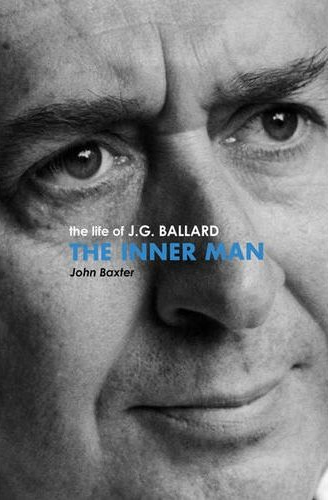
Front cover of The Inner Man The Life of J.G. Ballard by John BaxterReaders’ Advisory: Contains Self-abuse and reference to Mancas.

The Inner Man: The Life of J.G. Ballard, John Baxter (W&N 2011)

“B” is for Bataille, Burroughs, and Ballard. I’ve never read Bataille, I can’t stand Burroughs, I used to love Ballard. Nowadays I have strong doubts about him. Vermilion Sands, yes. Crash, no. Vermilion Sands is surreal, haunting, funny, endlessly inventive, and extravagantly intelligent. Crash, by contrast, is silly and sordid. The last time I tried to read it I quickly gave up. I couldn’t take it seriously any more. It’s a book for pretentious, wanna-be-intellectual adolescents of all ages who like Dark’n’Dangerous Sex’n’Violence. A book for Guardian-readers, in short – the sort of people who continually use and hear the phrase “in terms of”, who believe passionately in Equality, Justice, and the Fight against Hate, and who desperately, desperately, wished they’d been able to stimulate the largest erogenous zone in their bodies by voting for Barack Obama in 2008.

What is that erogenous zone? Well, though not all liberals are Guardianistas, all Guardianistas are liberals, so the largest erogenous zone in a Guardianista’s body is his-or-her narcissism. Guardianistas are also, alas, the sort of people who write biographies of J.G. Ballard. John Baxter is most definitely a committed component of the core community. As a big admirer of Mike Moorcock, Britain’s biggest bearded Burroughsian lit-twat, how could he not be? This is part of why I now have doubts about Ballard. I don’t like liking things that Guardianistas like and I don’t like the fact that Moorcock was mates (on and off) with Ballard. On the other hand, I do like the fact that Moorcock and the Guardian boosted Burroughs big-time back in the day and that the Guardian now bigs up Cormac McCarthy and his Dark’n’Dangerous Sex’n’Violence. Good, I think: they all deserve each other. Perhaps one day, in some drug-stoked, depravity-soaked über-orgy of trans-transgressive hyper-homoeroticism, they’ll all manage to climb up each other’s arseholes and disappear from history.

But Guardianistas don’t just like Burroughs and McCarthy: they like Ballard too. They write books about him. Fortunately, The Inner Man isn’t a good book. That would have been disturbing, believe me. The dedication is by far the best thing in it: “To the insane. I owe them everything.” And guess whose lines those are? After that, it’s mostly Baxter and mostly dull. When it’s not, you’ll usually have Ballard to thank:

Novels sent to him in hope of endorsement got short shrift. He enjoyed describing the satisfying thump of Salman Rushdie’s Midnight’s Children as it hit the bottom of the dustbin. (pg. 47) In September 1995, the Observer, for a piece about odd bequests, invited him to answer the question, “What would you leave to whom, and why?” Jim said, “I would leave Andrea Dworkin my testicles. She could have testicules flambés.” Anti-pornography campaigner Dworkin was a close friend of Mike and Linda Moorcock but a bête noire of Ballard’s. (pg. 308)

I think Ballard was right in his cod-bequest for Dworkin and bum’s-rush for Rushdie. And if Baxter had the same sense of humour and mischief, The Inner Man would have been a much better book. Okay, it’s not that bad, because I managed to finish it, but that was disappointing in its own way. I’d almost have preferred a boldly, flamboyantly pretentious Ballard bio full of solecisms and mixed metaphors to a plodding, mediocre one like this. I like sneering at and feeling sniffily superior to Guardianistas. And all I’ve got to go on here are occasional lines like these:

Like another diligent civil servant, he [Ballard] was Agent 00∞: licensed to chill… (pg. 3) But in surrealism, as in most things, Jim was drawn to the extremity, the dangerous edge, the abyss which, as H.G. Wells warned, will, if you stare into it long enough, stare back at you. (pg. 36)

It’s puzzling that Baxter misattributes such a famous quote and that his editors didn’t spot the misattribution. It’s also puzzling that Baxter doesn’t seem to like Ballard much, to be very interested in Ballard’s life, or to be very enthusiastic about Ballard’s writing. Born in Shanghai, incarcerated (and half-starved) under the Japanese during the war, trained as a doctor: Ballard had an unusual early life for a writer and one can only admire Baxter’s ability to keep the interest out of it. Baxter devotes much more attention to Ballard’s time in advertising and life in suburbia. Yes, the contrast between this apparently staid existence and the wildness of Ballard’s veridically visceral visions is interesting, but it’s obviously related to his early experiences in China. Baxter has got those out of the way within the first 26 pages of a 377-page book. When he himself takes visionary flight, he doesn’t do so to Ballard’s advantage. Why did Ballard turn down the chance to be published in “a series of de luxe limited editions of fantasy classics” by Manchester’s most maverick messiahs, “the radical publishing enterprise of Savoy Books”? Baxter conducts an interview with his own imagination and reports back with this:

He may have felt that involvement with Savoy and [David] Britton – who had already served two prison terms under the Obscene Publications and Dangerous Dogs Acts – risked once again placing him in hazard, as had been the case with “Why I Want to Fuck Ronald Reagan”. (pg. 321)

Eh? Yes, he “may”, but simpler explanations are to hand. Either way, Baxter says the rejection meant that “a sense of grievance” now “permeated his relationship with” the messianic Mancas. Again: Eh? The grievance would have been one-sided, there was never much of a relationship, and although Savoy “put a lot of effort” into persuading Fenella Fielding to record extracts from one of Ballard’s books (no prizes for guessing which), they put in the effort without first asking Ballard if he was interested. When the recordings were made and they did ask, he “refused to cooperate”. It was now that grievance began to permeate the relationship.

Reading about this important episode in Ballard’s career, I felt another feeling begin to permeate me. A familiar feeling. Yes, “S” is for Savoy (B), Sontag (S), and Self (W). All three turn up in this biography, variously offering to publish Ballard, heaping praise on him, and having dinner with him. All three are part of the Guardianista demographic in one way or another: Self nails his colours firmly to the gasbag when he speaks of a “scintilla” of an “affectation” that forms an “armature” (pg. 341). All three add to my doubts about Ballard. If people like that like him, should I like him too, like? I think if Ballard had been born ten or twenty years later, the question wouldn’t arise. A younger Ballard would have been sucked fully into the macroverse of Guardianista subversion, radicalism, and counter-cultural twattishness and I’d never have liked him at all. As it was, he was too big to entirely fit. Crash got sucked and does suck. Vermilion Sands didn’t and doesn’t.

And this biography? Well, it could have been much worse. Yes, it’s dull but that may be partly because Ballard himself is such an interesting and memorable writer. As I’ve pointed out elsewhere, the danger in literary biographies is that the biographee is likely to be a better writer than the biographer. The implicit comparison will always be there and Ballard’s autobiography, Miracles of Life (2008), is likely to remain better, and briefer, than anything a biographer ever turns out. But Baxter tells you about things that Ballard doesn’t, possibly because they’re not true. Like the air of menace Ballard could project and his occasional violence towards his girlfriend Claire Walsh, who “appeared at parties with facial bruises, usually hidden between sunglasses” (pg. 187).

And “girlfriend” is the word: Baxter reports that Ballard “always” and “anachronistically” used it of Walsh (pg. 171), rather than (he implies) the smarmy Guardianista “partner”. Good for Ballard. But bad for Ballard in terms of engagement with issues around the bruises, if true. As George Orwell said:

If Shakespeare returned to the earth to-morrow, and if it were found that his favourite recreation was raping little girls in railway carriages, we should not tell him to go ahead with it on the ground that he might write another King Lear. (“Benefit of Clergy: Some Notes on Salvador Dalí”, 1944)

It would have been better that Ballard hadn’t punched his girlfriend, just as it would have been better that Caravaggio hadn’t been a murderer. But if they hadn’t been violent men, with more than a touch of psychosis, they might not have produced such interesting art. I don’t think Ballard is as significant a figure in European art as Caravaggio, and even if he is, he and his art won’t have as much time to be significant in. One way or another, Europe is now entering its final days. We are about to reap the whirlwinds so diligently sown for us by the Guardianistas and their continental cousins. And science is busy measuring mankind for its coffin. Ballard saw and wrote about parts of this future, but I now prefer his surreal side to his sinister and his dreams to his depravity. It’s bad, v. bad, that Will Self hails Ballard as “My single most important mentor and influence.” But Self (thank Bog) didn’t write this biography. He didn’t write Vermilion Sands either. He couldn’t. Ballard could and did. He could and did write other good stuff. I don’t love him any more, but, despite the Guardian and the Guardianistas, I will continue to read him. Lucky Jim, eh?


Post-Performative Post-Scriptum…

In terms of all Savoy-fans and other non-conformist mavericks, keyly committed core components of the counter-cultural community et al having read this review prior to departing in terms of departure… please can you stop using “in terms of” and “prior to” and stuff? You wouldn’t allow bloated flesh to adversely impact your body, so why do you allow bloated phrases to negatively trajectorize your English?

Ex-term-in-ate! — more on “in terms of”
Prior Analytics — more on “prior to”
Ex-term-in-ate!

In terms of keyly core components of Guardianese, the dialect of those who read and write for The Guardian, Britain’s premier papyrocentric purveyor of progressive performativity, there can be little or no doubt that at the key core is the phrase I began this sentence with: “in terms of”. Arguably it is the keyliest corest component of all. It’s a bad sign if you use it even a little; if you use it a lot, it’s time to mend your ways. Siriusly. But whatever your own issues in terms of usage metrics for I.T.O., you’ll certainly hear this phrase a lot throughout the English-speaking world. In terms of communities / demographics like politics, academia and the media, it’s a kind of linguistic bindweed: a tough, fast-growing weed smothering everything in sight.

Unlike bindweed, however, it doesn’t produce beautiful flowers or grow in interesting ways. What’s wrong with “in terms of” was summed up very well by the Australian comedian and satirist Barry Humphries, the creator of Dame Edna Everage and Sir Les Patterson. He re-wrote the title of a famous film as One Flew Over In Terms of the Cuckoo’s Nest. “In terms of” is beloved of those who want long ways to say short things. Its use is usually unnecessary, never essential. As a keyly committed component of the core I.T.O.phobic community, I never use it except to take the piss of the Guardianista demographic. The mission statement of the Guardian might be “Purveying pretentious prose to pretentious people since 1959.” “In terms of” is corely key to this mission. The lexicographer Robert Burchfield discussed its origins in The New Fowler’s Modern English Usage (1996):

How did this complex preposition come into being? The OED [Oxford English Dictionary] reveals that it has been in use since the mid-18c. as a mathematical expression “said of a series… stated in terms involving some particular (my emphasis) quantity”, and illustrates this technical usage by citing examples from the work of Herbert Spencer (1862), J. F. W. Herschel (1866), and other writers. From this technical use came at first a trickle and, after the 1940s, a flood of imitative uses by non-mathematicians. (Op. cit., entry for “in terms of”).

I suggest that the flood of imitative uses was flattery. Mathematicians are highly intelligent and intellectually rigorous people. Non-mathematicans wanted to pretend to themselves that they were highly intelligent and intellectually rigorous too. “In terms of” lends a judicious, thoughtful air to one’s prose or speech. It’s a good way of disguising the absence of judgment or thought. This is one reason it’s so popular among politicians, who need ways to sound impressive and say little. Burchfield condemns its use as a “vague all-purpose connective” in politics and broadcasting, but concludes, after listing examples of I.T.O. in action, that it may be a “useful particularizing device” in general prose. He’s wrong. All his examples can be re-written to be better English:

The impact of Ibsen… did much to revitalize the degenerate English theatre and force it to think in terms of living ideas and contemporary realities. J. Mulgan and D. M. Davin, 1947. (My suggestion: …force it to use living ideas…)

Dataquest pegs ESRI as the leading GIS company—in terms of both revenue and reputation. Computer Graphics World, 1988. (Dataquest lists ESRI as… in both revenue and reputation)

He deals with the converso judaizing world in terms of its social and religious rituals, births, marriages, deaths, leading to the establishment of the Inquisition. The Bulletin of Hispanic Studies, 1990. (…through its social and religious rituals…)

Rameau… conceived his music precisely in terms of timbres, types of attack, degree of sostenuto. Country Life, 1990. (…in timbre, type of attack…)

Justifying space in terms of material wealth is as ridiculous as saying that man went to the Moon merely to be able to return with velcro zips and non-stick frying pans. New Scientist, 1991. (…space [exploration] by its material benefits…)

The dating of his novels in terms of when they were written rather than when they were published is often uncertain, since in the upheavals of exile some were not published chronologically. New York Review of Books, 1991. (…his novels by when they were written…)

The re-writing makes them better English, but not necessarily good English. Writers who use “in terms of” are generally bad writers. That’s why I’m unsurprised to see The New York Review of Books in the list. Like its twin on this side of the Atlantic, The London Review of Books, its mission statement might be “Purveying Pathological Prose to Pathological People.” A core component of this pathology is “in terms of”. My reaction to I.T.O. is I.T.T.O.! In other words: It’s Time To Obliterate In Terms Of. This lexical bindweed doesn’t flower: pluck it out wherever you find it in your linguistic garden. I’ve allowed other weeds to spring up here and there in terms of issues around the prose of this polemic, but I do my best to keep my bad English deliberate.

Guardianistas and their equivalents overseas produce bad English the way cows produce methane: copiously and unconsciously. And the internet has allowed their bad English to billow forth as never before. Wikipedia, for example, is like an experimental farm on which they can fart all day and every day, polluting the English language in vibrant new ways. “In terms of” is keyly core to their methanogenic mission. I groan when I see it in Wikipedia articles about people like, say, Saki or Clark Ashton Smith. I grin when I see it in articles about people like, say, William S. Burroughs or Alan T. Moore. Some people deserve bad prose. Some people don’t. I hope you and your favourite writers are among the latter. Siriusly. “In terms of” sucks! “Sucks” sucks too! Just say no to I.T.O.!


Proviously post-posted (please peruse):