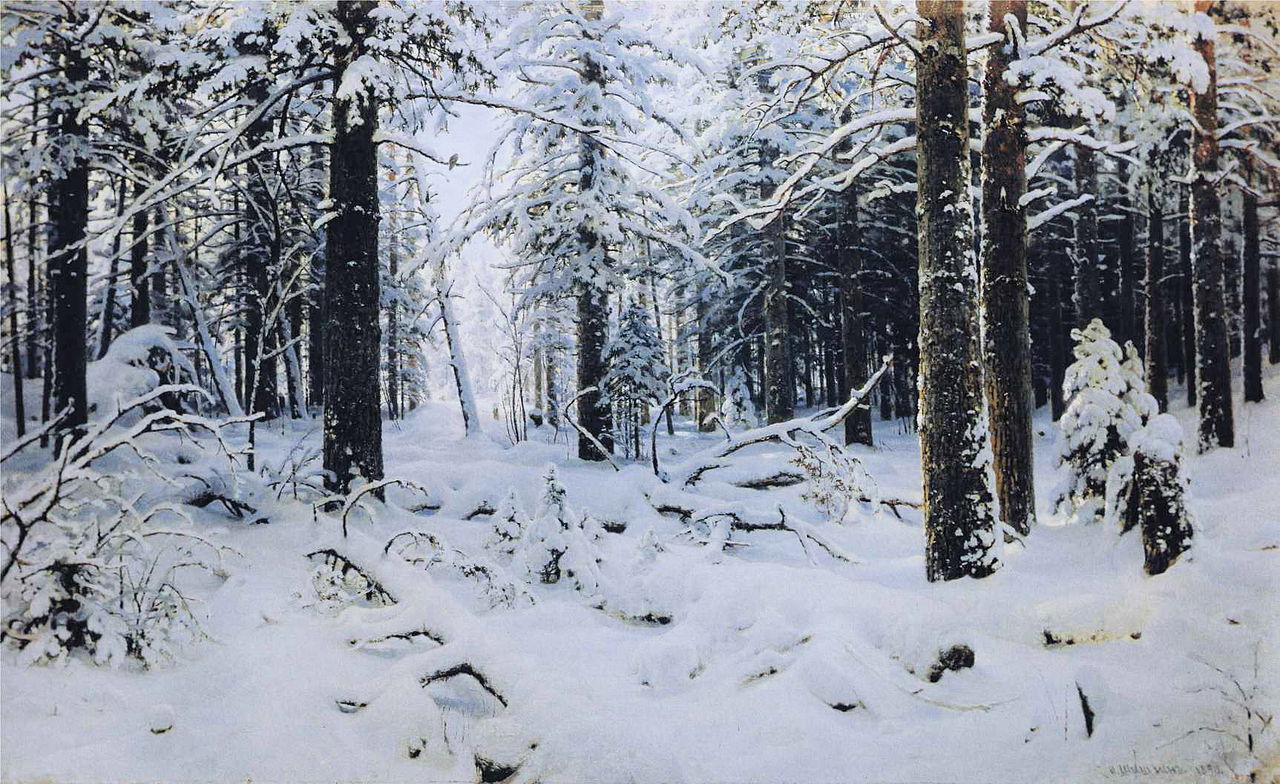
Иван Шишкин, Зима (1890) / Ivan Shishkin, Winter (1890)
(click for larger)
• nix, nivis f., snow — Latin vocab

Иван Шишкин, Зима (1890) / Ivan Shishkin, Winter (1890)
(click for larger)
• nix, nivis f., snow — Latin vocab
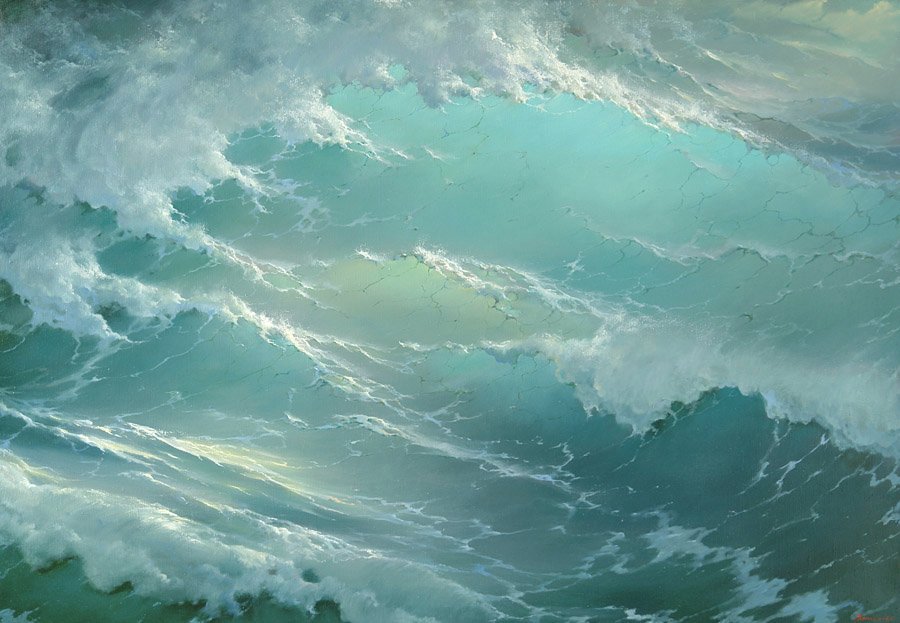
Study of waves, wave-crests and foam by the Armenian artist Ivan Aivazovsky (1817-1900)
Aivazovsky was a citizen of Imperial Russia whose name is Հովհաննես Այվազյան in Armenian and Иван Айвазовский in Russian.

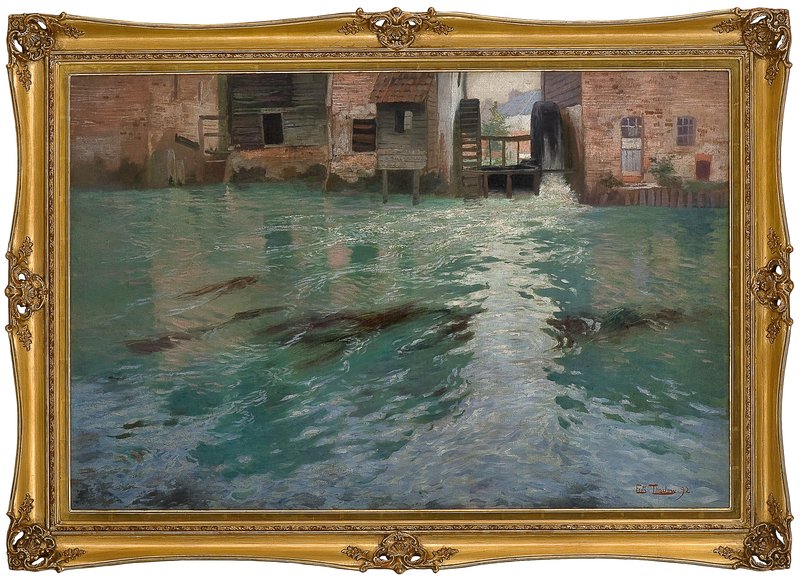
Water Mill (1892) by the Norwegian impressionist Frits Thaulow (1847-1906)
Thaulow painted this almost identical “Bak møllene, Montreuil-sur-Mer” (1892):

Albrecht Dürer, Selbstbildnis (1500)
Post-Performative Post-Scriptum
Christusgleicher Kunstkönig is German for “Christ-like Art-King”, because Dürer represented himself in a way traditionally reserved for images of Christ.

Hans Holbein the Younger, Bildnis eines jungen Kaufmannes (1541) / Portrait of a Young Merchant
Previously pre-posted portrait posts:
• Fur King Hal — Holbein’s portrait of Henry VIII
• Anne’s Hans’ — Holbein’s portrait of Anne Cresacre
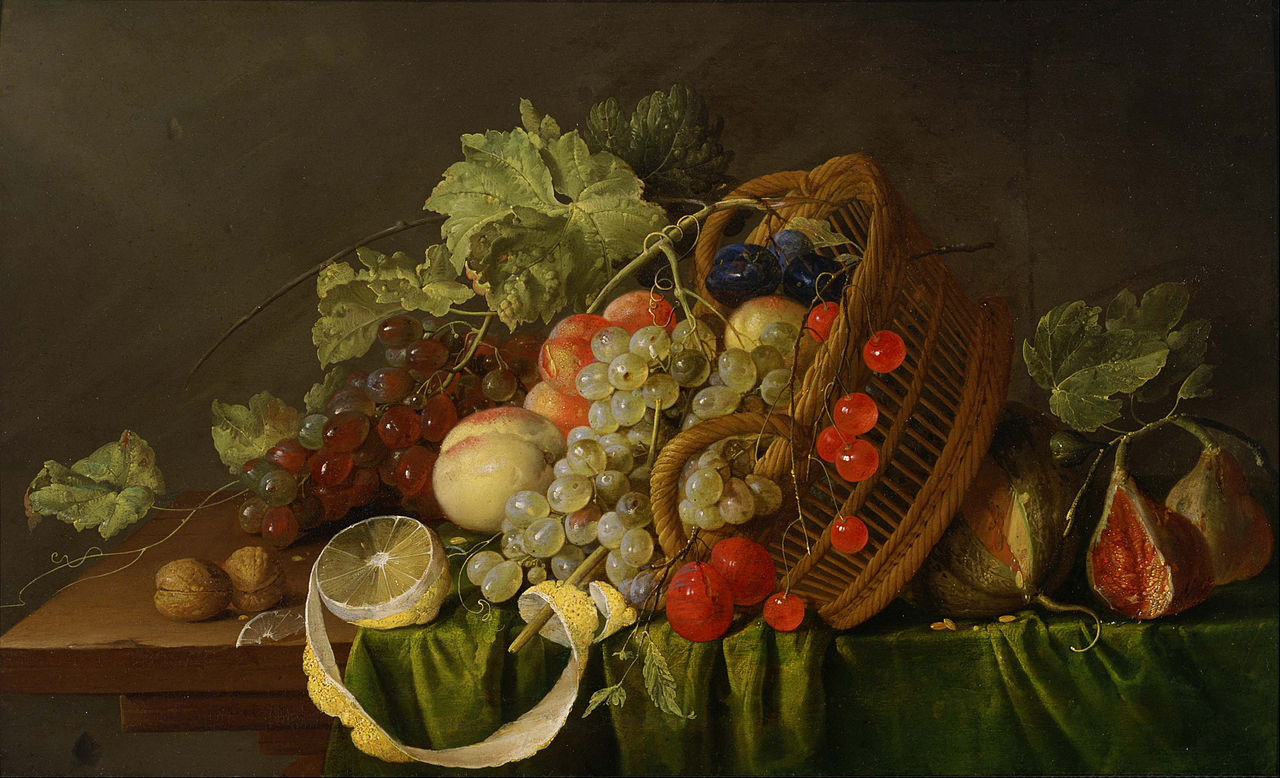
Cornelis de Heem, Stilleven met fruitmand / Still Life with Basket of Fruit (c. 1654)
(click for larger)
Note: The title of this incendiary intervention is a blend (or mash-up, as the non-conformist maverick community might say) of Latin cornucopia, “horn of plenty”, and Greek scopos, σκόπος, “seeing”.
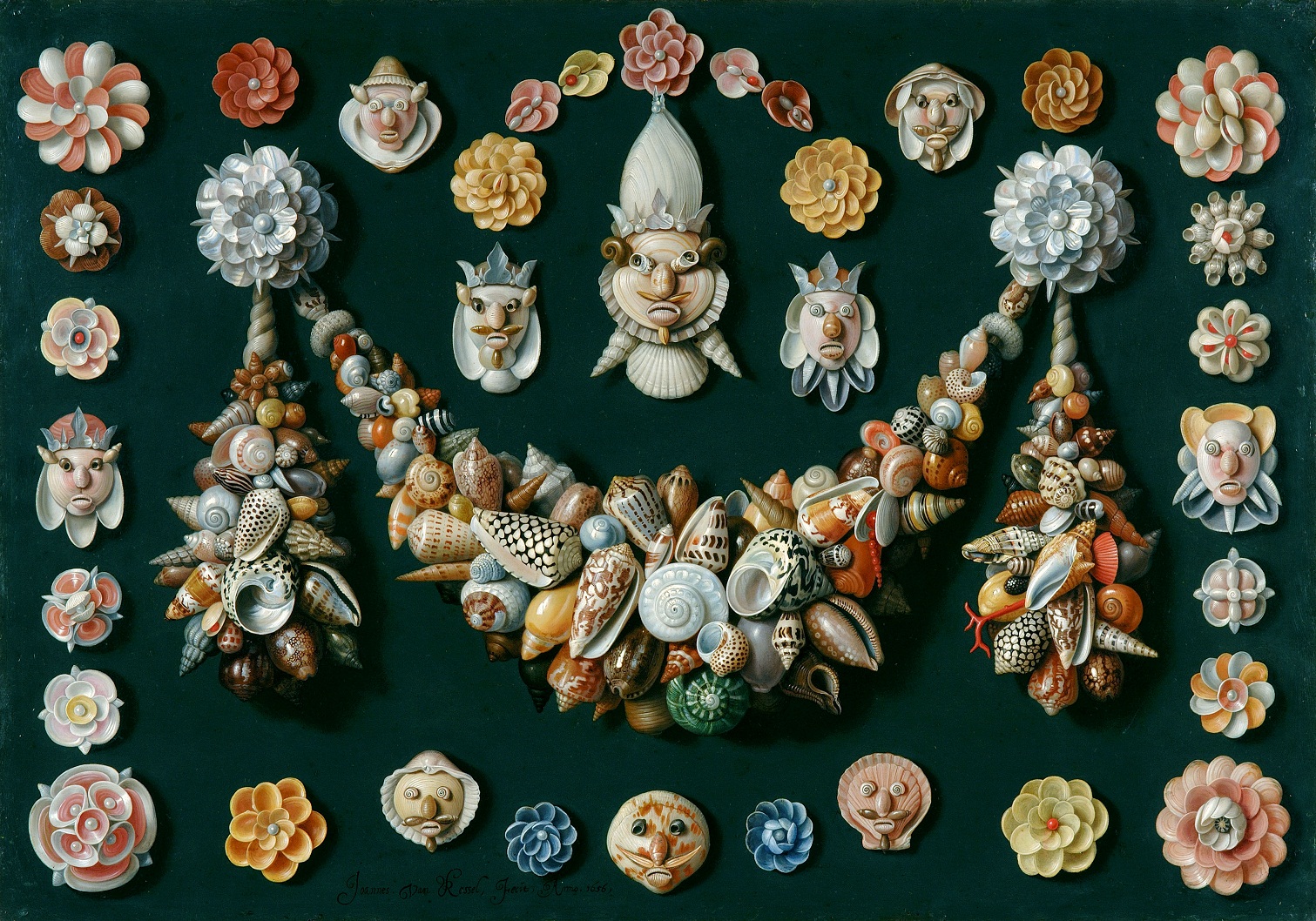
Masques made with Seashells by Jan van Kessel the Elder (1626-79) (click for larger)
Previously pre-posted:
• Eyeway to Ell — a better paronamasia than this one…

Portrait of Henry VIII (1540) by Hans Holbein the Younger (c. 1497-1543)
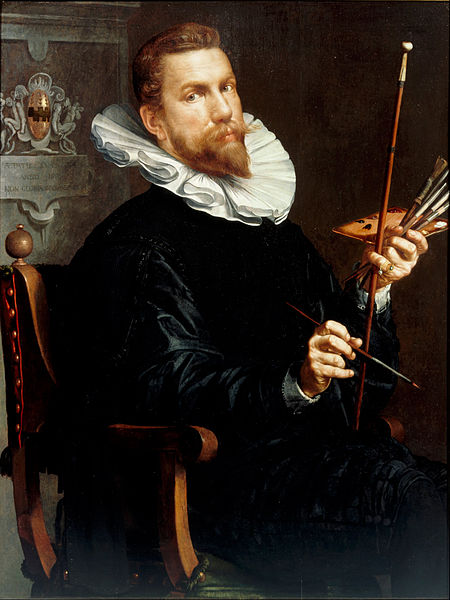
Zelfportret (1601) by Joachim Wtewael (1566-1638) (pron. roughly OO-tuh-vaal), as seen in Phaidon’s 500 Self-Portraits
Previously pre-posted:
• She-Shell — Perseus Rescuing Andromeda (1611) by Wtewael
Q. Each face of a convex polyhedron can serve as a base when the solid is placed on a horizontal plane. The center of gravity of a regular polyhedron is at the center, therefore it is stable on any face. Irregular polyhedrons are easily constructed that are unstable on certain faces; that is, when placed on a table with an unstable face as the base, they topple over. Is it possible to make a model of an irregular convex polyhedron that is unstable on every face?
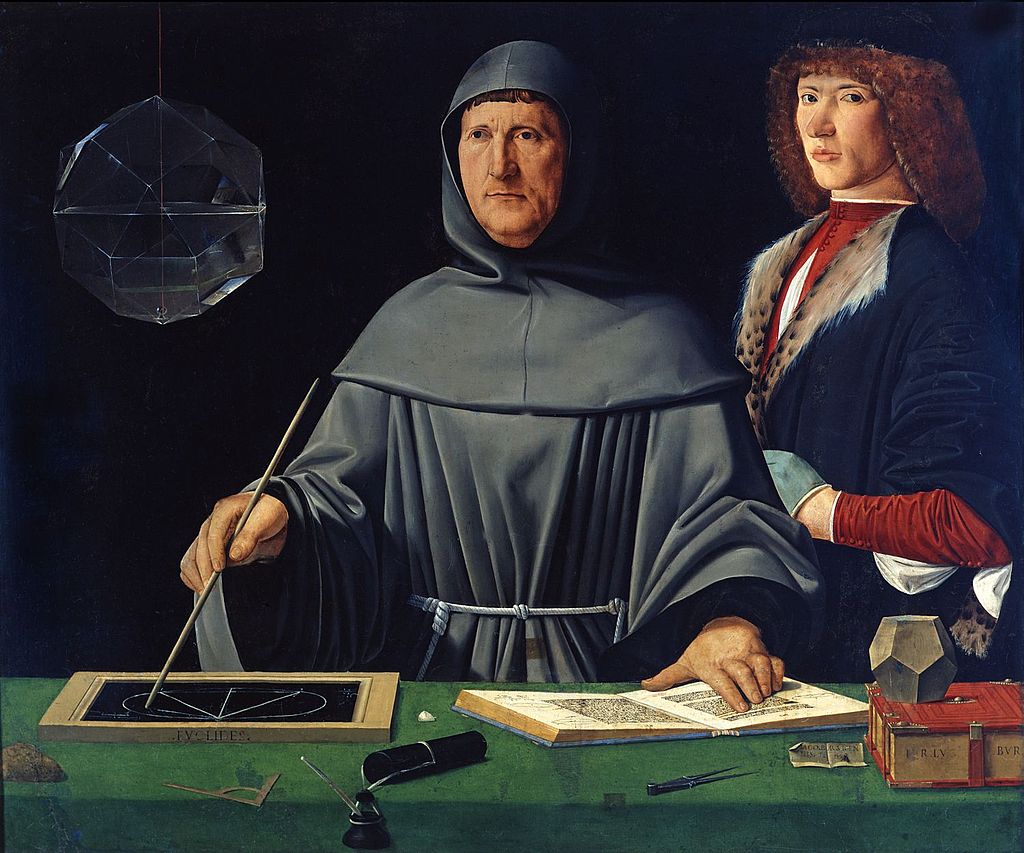
Portrait of Luca Pacioli (1495)
A. No. If a convex polyhedron were unstable on every face, a perpetual motion machine could be built. Each time the solid toppled over onto a new base it would be unstable and would topple over again.
— From “Ridiculous Questions” in Martin Gardner’s Mathematical Magical Show (1965), chapter 10.
 Overlord In Terms of Core Issues Around Maximal Engagement with Key Notions of the Über-Feral
