Fog on a Blog

The Fog Prince: Interrogating Core Themes around Positive Orality and Negative Textuality In Terms Of Evelyn Waugh’s Put Out More Flags (1942)

“This is the only book I have written purely for pleasure.” — Put Out More Flags, Waugh’s preface of 1966.1

It’s an old conceit of fantastic fiction: the library of lost books or of books that never were. If I were ever in a Library of Lost Books, I’d postpone a visit to the B’s, O’s, and S’s, where works by Richard Burton, Wilfred Owen, and Sappho2 would wait, unupburnt3 by wife, mother, and Church, respectively. Instead, I’d proceed direct to the W’s, where Evelyn Waugh’s The Temple at Thatch would wait, unupburnt by the author himself. It was Waugh’s first novel, dealt with madness and black magic,4 and must have cast fascinating light on his early career. Why else should he have burnt it?

As for a Library of Books That Never Were: again I’d proceed direct to the W’s, looking for the further adventures of Basil Seal, Waugh’s most engaging and amoral character. Seal appears in the novels Black Mischief (1932) and Put Out More Flags (1942),5 and the latter tells us that:

From time to time he disappeared from the civilized area and returned with tales to which no one attached much credence – of having worked for the secret police in Bolivia and advised the Emperor of Azania on the modernization of his country. Basil was in the habit, as it were, of conducting his own campaigns, issuing his own ultimatums, disseminating his own propaganda, erecting about himself his own blackout […]6

Black Mischief describes Basil’s adventures in the fictional state of Azania; his adventures in the actual state of Bolivia are known only from fragmentary references in Put Out More Flags. Basil’s brother-in-law, Freddy Sothill, describes him as “living in a gin palace in La Paz and seeing generals shoot one other.”7 Later in the book, Basil himself daydreams of being summoned for special service by “a lean, scarred man with hard grey eyes”, a shadowy intelligence chief who has followed his “movements with interest ever since that affair in La Paz in ’32.”8 In Spanish, La Paz literally means “The Peace.” It is a singularly inappropriate name for anywhere frequented by the mischief-maker Basil, particularly in 1932, when Bolivia went to war with Paraguay over a disputed border region called the Chaco Boreal.9

That is all we know of Basil’s Bolivian adventures, for Waugh never wrote a book about them. Basil himself never wrote a book about anything:

For years now, whenever things were very bad with Basil, he had begun writing a book. It was as near surrender as he ever came and the fact that these books – two novels, a book of travel, a biography, a work of contemporary history – never got beyond the first ten thousand words was testimony to the resilience of his character.10

This description is an important part of Put Out More Flags, which is a text about, inter alia, the power of speech and the impotence of text. Basil cannot complete a book, but he can spin word-webs in many languages. After the outbreak of World War Two, his victim-to-be Ambrose Silk, a homosexual Jewish Sinophile, comes across him in the Ministry of Information. Basil is:

[…]talking a foreign language which sounded like a series of expectorations to a sallow man in a tarboosh.

“That’s not one of my personal friends,” said Mr. Bentley bitterly.

“Does he work here?”

“I don’t suppose so. No one works in the Near East department. They just lounge about talking.”

“The tradition of the bazaar.”

“The tradition of the Civil Service […]”11

But in the “new, busy, secretive world which developed in the first days of the war”, Basil is feeling, “for the first time in his life”, at a disadvantage: “It was like being in Latin America at a time of upheaval, and, instead of being an Englishman, being oneself a Latin American.”12 He has also fallen out with his “remarkably silly”13 girlfriend Poppet Green:

“You’ll be in more danger crossing the Atlantic than staying in London,” said Basil. “There won’t be any air raids on London.”

“For God’s sake don’t say that.” Even as she spoke the sirens wailed. Poppet stood paralysed with horror. “Oh God,” she said. “You’ve done it. They’ve come.”14

This is the first example in the novel of what might be called oral hex. Fear drives the communist Poppet into superstition: Basil has broken a primitive taboo and invoked disaster by speaking of it. Fallen out with Poppet, rejected by officialdom, Basil despairs of London and joins his sister Barbara at Malfrey, his brother-in-law’s sumptuous country-house, whose name means “Bad Brother” in Spanish. He leaves the blackout and arrives with a blankout, “a great fall of snow”15 in which the country is like a vast blank page. The snow prefigures the fate of the “book on strategy”16 he has come to write while Freddy is away serving in the army. Barbara, knowing her brother well, hopes that he doesn’t “have to write the book for long.”17 Nor does he:

That night Basil began his book; that is to say he lay on the rug before the column of smoke that rose from the grate of the octagonal parlour, and typed out a list of possible titles.18

His smoke-presided work is soon interrupted: the Connollies, a grotesque trio of children evacuated from Birmingham to wreak havoc in the country, have been returned to Malfrey from the “institution”19 to which Barbara managed to have them assigned. Basil is eager to see the children, about whom he has already “heard a great deal”,20 but they have disappeared to begin their mischief anew:

The Connollies were found at last and assembled. Doris had been in Barbara’s bedroom trying out her make-up, Micky in the library tearing up a folio, Marlene grovelling under the sink eating the remains of the dogs’ dinner. When they were together again, in the lobby, Basil inspected them. Their appearance exceeded anything
he had been led to expect.21

Micky tears up a text and Basil can now abandon one: he assumes Barbara’s role as “billeting officer”22 and uses the Connollies to extort money from Barbara’s genteel neighbours. His first victims are “the Harknesses of Old Mill House, North Grappling”,23 who have advertised for paying guests. Basil, a “specialist in shocks”,24 delays informing them of his official purpose and Mr. Harkness makes assumptions he is soon to regret:

“[…]You saw our terms in the advertisement?”

“Yes.”

“They may seem to you a little heavy, but you must understand that our guests live exactly as we do ourselves. Fires,” he said, backing slightly from the belch of aromatic smoke which issued into the room as he spoke […]25

Oral hex again. Basil is a man of snow and smoke, of blankness and confusion, and Mr. Harkness has invoked a symbol of his own downfall. Shortly afterwards, Basil springs his shock, overrides all protests, and returns to Malfrey “with a deep interior warmth”26 of fulfilled mischief, having deposited the Connollies on their unwilling hosts. That night there is an “enormous fall of snow”, turning the countryside again into a vast blank page, and North Grappling is “cut off […] from all contact with the modern world.”27 Eight days later, Basil is reading aloud to Barbara from his never-to-be-completed book in the orangery, where “the smoke” from his cigar hangs “on the humid air.” The book sends Barbara to sleep, but she wakes to remark:

“[…]I hear they’ve dug through to North Grappling this morning.”

“There was providence in that fall of snow. It’s let the Connollies and the Harknesses get properly to grips. Otherwise, I feel, one or other side might have despaired.”

“I daresay we shall hear something of the Harknesses shortly.”

And immediately, as though they were on the stage, Benson came to the door and announced that Mr. Harkness was in the little parlour.28

Oral hex: speech has again invoked reality. Basil extorts thirty pounds from the “abject” Mr. Harkness to have the Connollies removed. He makes more money from more unwilling hosts until, sated by a fortuitous adultery and having learnt of Freddy’s and the cuckold’s imminent return, he sells the Connollies at “five pounds a leg”29 and returns to London. Here, by claiming to be a member of “M.I.13”,30 he gains access to the War Office for himself and “the little lunatic with the suitcase”31 whom he first met “hawking bombs” at the Ministry of Information. Inside the War Office, Basil joins Internal Security, exploiting for his own ends first the lunatic, whose bombs nearly account for the Deputy Assistant Chaplain General,32 then his communist ex-girlfriend Poppet Green.33 But spying on lunatics and communists earns him only a second-lieutenancy; his superior Colonel Plum will consider higher rank only if he catches a fascist.34

Basil begins to search for one and learns from Poppet that Ambrose Silk is “bringing out a fascist paper.”35 He investigates further, hunting down Ambrose and his publisher Mr. Bentley in the Café Royal. As he joins them, Ambrose is animadverting on the “decline of England”, which he blames on the lifting of “the splendid, luminous, tawny fogs”36 for which English architecture and literature were designed. Ambrose’s publisher explains the topic to Basil:

“We are talking of fogs,” said Mr. Bentley.

“They’re eaten rotten with communism,” said Basil, introducing himself in the role of agent provocateur. “You can’t stop a rot that’s been going on twenty years by imprisoning a handful of deputies. Half the thinking men in France have begun looking to Germany as their real ally.”

Please Basil,[” said Ambrose. “D]on’t start politics. Anyway, we were talking of Fogs, not Frogs.”37

The mishearing is authorial irony. Basil is a Fog Prince, a master of subterfuge and misdirection, of suppressio veri and suggestio falsi. He soon decides he can exploit Ambrose’s new paper. It is a literary review called The Ivory Tower, espousing “Art for Art’s sake”, seeking a return to “the lily and the lotus”,38 expressing “contempt and abhorrence” for “the military” and “all statesman of an energetic and war-like disposition.”39

But Basil cannot convince Colonel Plum that the review represents fascist subversion. Accordingly, he tries to persuade Ambrose to include “a little poem in praise of Himmler”40 in the first issue. Ambrose doesn’t think this would be a good idea. After all, a poem would be positive text; it is negative text, absent text, that will do for Ambrose. He plans to end the first issue with Monument to a Spartan, a “delicate and precise” record of his doomed love-affair with a naïve young German called Hans, who gives “his simple and generous acceptance to all the nonsense of Nazi leaders.”41 Ambrose describes Hans as

lapped in a kind of benighted chivalry, bemused in a twilight where the demagogues and party hacks loomed and glittered like Wagnerian heroes […] The Wagnerians shone in Ambrose’s story as they did in Hans’ eyes. He austerely denied himself any hint of satire. The blustering, cranky, bone-headed party men were all heroes and philosophers.42

But Hans, despite his Nazism, “remains faithful to his old friend” until his “Storm Troop comrades discover that his friend is a Jew.”43 Hans is despatched to a concentration camp;44 a grieving Ambrose returns by train to England. As it stands in proof, the story will not suit Basil’s purposes: it is a tragedy, a subtle yet powerful indictment of Nazi cruelty, ignorance, and bigotry. Accordingly, Basil tells Ambrose that Monument begins as “a first-class work of art” but “degenerates into mere propaganda”, becoming an “atrocity story – the sort of stuff American journalists turn out by the ream.”45 Ambrose is dismayed by the critique and Basil suggests that he delete the coda, leaving “Hans still full of his illusions, marching into Poland.”46

A week later by the simple process of going to Rampole and Bentley’s office and asking for one, Basil obtained an advance copy of the new magazine. He turned eagerly to the last page and found that Monument to a Spartan now ended as he had suggested; he read it again with relish; to anyone ignorant of Ambrose’s private history it bore one plain character – the triumphant paean of Hitler Youth; Doctor Ley himself might have been the author. Basil took the magazine with him to the War Office; before approaching Colonel Plum he marked with a red chalk the Monument to a Spartan and passages in the preceding articles which cast particular ridicule upon the army and War Cabinet and which urged on the artist the duty of non-resistance to violence.47

Colonel Plum now accepts that The Ivory Tower is the work of a “fifth column nest”48 and begins to organize the arrest of Ambrose and his confederates. But Basil cannot savour the fruit of his trickery. Plum is stealing “all the credit and all the fun”; “being on the side of the law” is “novel to Basil and not the least agreeable”; he realizes that Ambrose will “be allowed to give an account of himself” and will reveal “Basil’s share in editing Monument to a Spartan”; last and least, Ambrose is an old acquaintance and Basil wishes him “well rather than ill”, “other things being equal.”49

Moved by “these considerations, in that order of importance”, Basil visits Ambrose’s flat the same night, warns him of the impending arrests, and oversees his flight to Ireland on a stolen passport. Once there, Ambrose enters a Celtic twilight, a world where “mist and smoke never lifted and the sun never fell direct.”50 He intends to “write a book, to take up the broken fragments of his artistic life”,51 but he is still in thrall to the Fog Prince. In the inn of a “soft, green valley”:

He spread foolscap paper on a dining-room table and the soft, moist air settled on it and permeated it so that when, on the third day, he sat down to make a start, the ink spread and the lines ran together, leaving what might have been a brush stroke of indigo paint where should have been a sentence of prose. Ambrose laid down the pen and because the floor sloped where the house had settled, it rolled down the table, and down the floor-boards and under the mahogany sideboard, and lay there among napkin rings and small coins and corks and the sweepings of half a century. And Ambrose wandered out into the mist and the twilight, stepping soundlessly on the soft, green turf.52

Ambrose is an atheist Jewish intellectual travelling on a passport stolen from a Jesuit priest. He is in Ireland on false pretences and espouses what were, in Waugh’s eyes, false principles: l’art pour l’art, homosexual love, the eremitism of Confucian China rather than the monasticism of Catholic Europe.53 He is helpless at the hands of the Fog Prince, the glib and amoral Basil. A mutilated text worked against him in England; in Ireland he cannot even create a text. This textual negation contrasted Waugh and other Christian artists with atheist intellectuals like Brian Howard, Harold Acton, and Cyril Connolly, the real friends and acquaintances whose lives Waugh drew upon to create Ambrose Silk.54 In the “summer of 1941”,55 as he was writing Put Out More Flags, Nazism stood triumphant across most of Europe and Britain’s defeat seemed more likely than not. His text was militarily impotent and would not contribute materially or measurably to victory. In earthly terms, it was at best a jeu d’esprit, at worst a folly. But Waugh did not think in earthly terms; like Basil’s mother, Lady Seal, he had faith in something transcendent:

England had fought many and recondite enemies with many and various allies, often on quite recondite pretexts, but always justly, chivalrously, and with ultimate success. Often, in Paris, Lady Seal had been proud that her people had never fallen to the habit of naming streets after their feats of arms; that was suitable enough for the short-lived and purely professional triumphs of the French, but to put those great manifestations of divine rectitude which were the victories of England to the use, for their postal addresses, of milliners and chiropodists, would have been a baseness to which even the radicals had not stooped.56

Unlike Lady Seal, Waugh would not, in the first years of the war, have had faith in England’s “ultimate success.” Hitler, that “small and envious mind”, that “creature of the conifers”,57 might have conquered England and begun hunting down the names on the “black list” that so worries Ambrose Silk.58 Whether or not Waugh himself was on the list like H.G. Wells and other prominent writers, he would have been very unlikely to survive Nazi victory. But he had faith, did not despair, and could continue to exercise his God-given literary gifts. Poppet Green and her friends are without faith and react to the war without hope: “It’s the end of my painting […] it’s always been the choice for us between a concentration camp and being blown up, hasn’t it?”59 For Waugh, the Church would survive even total Nazi victory and his faith in the Church allowed him to sustain the “peppercorn lightness of soul”, the “deep unimpressionable frivolity”60 that underlie, in this neglected but far from negligible novel, some of the funniest passages ever written in English.


NOTES

1 pg. 7 of the 1967 Chapman and Hall hardback.


2 The Anglo-Irish explorer Sir Richard Burton (1821-90), the English poet Wilfred Owen (1893-1918), and the Greek poetess Sappho (fl. 7th century BC). Burton’s wife and Owen’s mother made bonfires of much of their work after their deaths; Sappho’s poetry has come down to us through the Christian centuries only in fragments.


3 “NURSE UNUPBLOWN” was a telegram sent by Waugh when he worked as a journalist in Abyssinia during the Italian invasion. He had been unable to substantiate a rumor that an English nurse had been killed in an Italian bombing raid.


4 Waugh’s grandson Alexander admits in Fathers and Sons, his study of five generations of the Waugh family, that it is likely that EW dabbled in black magic as an Oxford undergraduate.


5 And in the short story “The Rake’s Regress”, written in the 1960s.


6 Op. cit., ch. I, “Autumn”, sec. 6, pg. 52-3.


7 Loc. cit., sec. 2, pg. 19.


8 Loc. cit., sec. 6, pg. 54-5.


9 According to the Encarta Encyclopedia, Bolivia set up small forts in the Chaco Boreal from 1906. In response, Paraguay built its own forts and in the 1920s encouraged Canadian Mennonites to settle in the region. The two nations finally went to war in 1932, before agreeing a treaty in 1938 that gave Paraguay three-quarters of the Chaco.


10 Op. cit., ch. II, “Winter”, sec. 1, pg. 81.


11 Op. cit., ch. I, “Autumn”, sec. 7, pg. 66-7. A “tarboosh” is a brimless felt hat with a tassel worn by Muslims.


12 Loc. cit., sec. 6, pg. 53.


13 Loc. cit., sec. 4, pg. 33.


14 Loc. cit., pg. 34.


15 ch. II, “Winter”, sec. 1, pg. 80.


16 Loc. cit., pg. 81.


17 Loc. cit., pg. 82-3.


18 Loc. cit., pg. 83.


19 Loc. cit., pg. 88.


20 Loc. cit., pg. 84.


21 Loc. cit., pg. 89.


22 Loc. cit., pg. 84.


23 Loc. cit., sec. 5, pg. 94.


24 Loc. cit., sec. 3, pg. 101.


25 Loc. cit., pg. 100-1.


26 Loc. cit., pg. 103.


27 Ibid.


28 Loc. cit., sec. 4, pg. 103.


29 ch. III, “Spring”, sec. 1, pg. 148.


30 The British secret service has two arms: MI6, responsible for espionage overseas, and MI5, for counter-espionage at home. M.I. originally stood for “Military Intelligence.” M.I.13 has never existed.


31 ch. III, sec. 2, pg. 152.


32 Loc. cit., pg. 156-7.


33 Loc. cit., pg. 157-8.


34 Loc. cit., pg. 158.


35 Loc. cit., sec. 4, pg. 183.


36 Loc. cit., pg. 184.


37 Loc. cit., pg. 185.


38 ch. II, “Winter”, sec. 6, pg. 117.


39 ch. III, “Spring”, sec. 5, pg. 196-7.


40 Loc. cit., pg. 201.


41 Loc. cit., pg. 197.


42 Loc. cit., pg. 198.


43 Ibid.


44 “And Hans, who at last, after so long a pilgrimage, had seemed to promise rest, Hans so simple and affectionate, like a sturdy young terrier, Hans lay in the unknown horrors of a Nazi concentration camp.” (ch. I, “Autumn”, sec. 5, pg. 45-6.)


45 ch. III, “Spring”, sec. 5, pg. 202.


46 Ibid.


47 Loc. cit., pg. 202-3.


48 Loc. cit., pg. 203.


49 Loc. cit., pg. 204-5.


50 Loc. cit., sec. 5, pg. 215.


51 Ibid.


52 Loc. cit., pg. 215-6.


53 “‘European culture has never lost its monastic character,’ he [Ambrose] said. ‘Chinese scholarship deals with taste and wisdom, not the memorizing of facts […] European culture has become conventual; we must make it hermetic.’” (Loc. cit., sec. 4, pg. 186.)


54 The homosexual Brian Howard had a doomed love-affair with a young German; Harold Acton was learned in Chinese poetry; Cyril Connolly was the editor of the literary journal Horizon during the war.


55 “Preface” of 1966, pg. 7.


56 ch. I, “Autumn”, sec. 2, pg. 22.


57 So Barbara Sothill thinks of Hitler in ch. 1, sec. 1, pg. 11-2.


58 ch. I, “Autumn”, sec. 7, pg. 75.


59 Loc. cit., sec. 4, pg. 34 and 37.


60 Attributes of Lady Seal’s friend and confidant Sir Joseph Mainwaring, “Epilogue: Summer”, pg. 224.


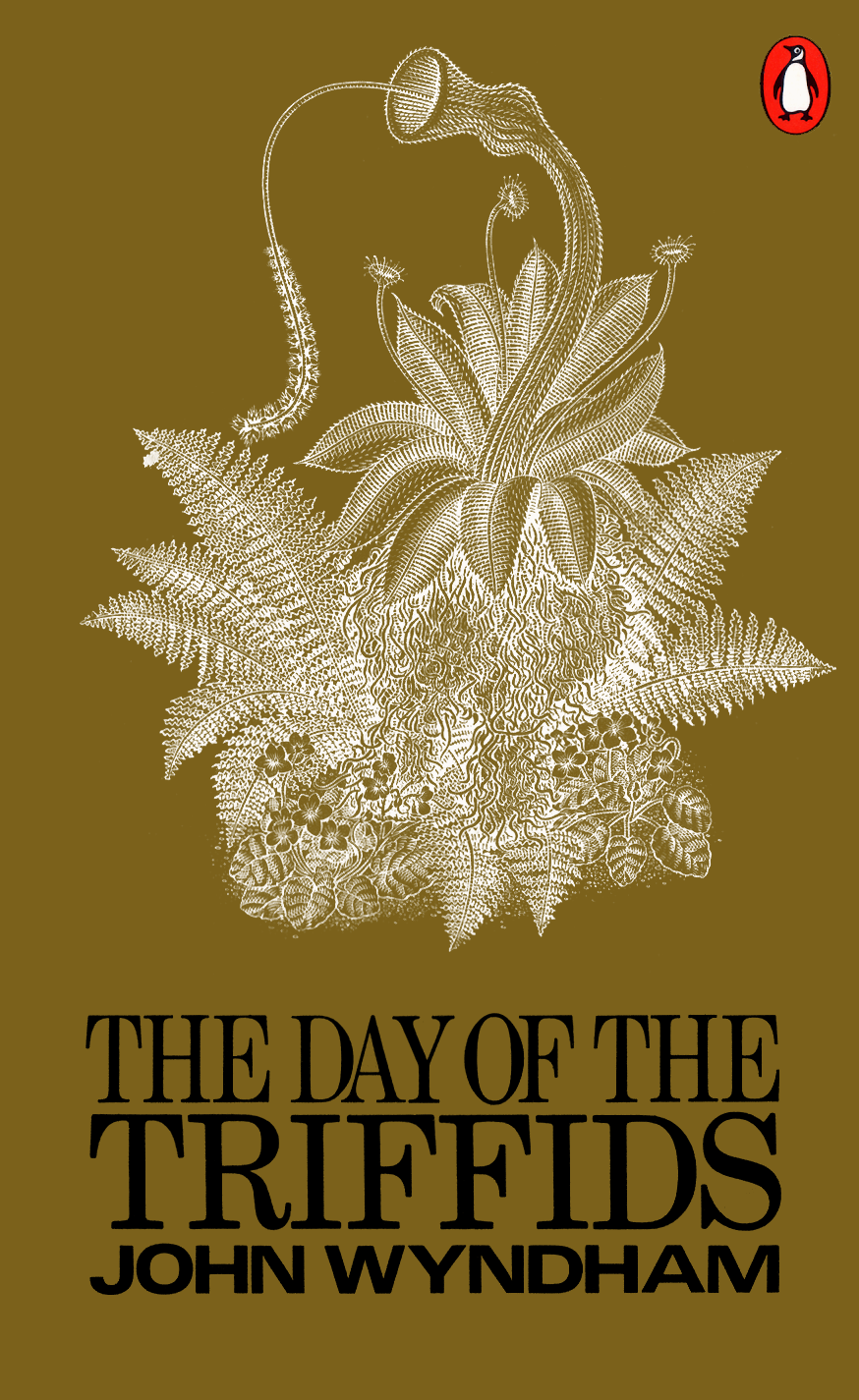
Figure Philia

“I love figures, it gives me an intense satisfaction to deal with them, they’re living things to me, and now that I can handle them all day long I feel myself again.” — the imprisoned accountant Jean Charvin in W. Somerset Maugham’s short-story “A Man with a Conscience” (1939)

The Cruddiness of Cormac (continued)

Cormac McCarthy was a bad writer and an interesting phenomenon. Why did so many people say that he was a great writer, a genius, a giant of American letters? The puzzle isn’t as big as it appears. As with most over-rated artists, some of the people who said they liked him could see or glimpse the truth. They knew that he was pretentious and posturing, that he chose words clumsily and carelessly, had no sense of rhythm or the ridiculous, and wrote with all the natural grace and beauty of a chimpanzee riding a tricycle.

But most of those who saw the truth about Mccarthy didn’t dare to speak it. They stood beside the procession of praise and prizes and stayed shtum, when they should have shouted: “The emperor has no clothes!” A critic called B.R. Myers did dare to speak the truth. He shouted “The emperor has no clothes!” at the Atlantic in 2001:

McCarthy relies more on barrages of hit-and-miss verbiage than on careful use of just the right words. […] No novelist with a sense of the ridiculous would write such nonsense. Although his characters sometimes rib one another, McCarthy is among the most humorless writers in American history. […] It is a rare passage that can make you look up, wherever you may be, and wonder if you are being subjected to a diabolically thorough Candid Camera prank. I can just go along with the idea that horses might mistake human retching for the call of wild animals. But “wild animals” isn’t epic enough: McCarthy must blow smoke about some rude provisional species, as if your average quadruped had impeccable table manners and a pension plan. […] All the Pretty Horses received the National Book Award in 1992. “Not until now,” the judges wrote in their fatuous citation, “has the unhuman world been given its own holy canon.” What a difference a pseudo-biblical style makes; this so-called canon has little more to offer than the conventional belief that horses, like dogs, serve us well enough to merit exemption from an otherwise sweeping disregard for animal life. (No one ever sees a cow’s soul.) – “A Reader’s Manifesto”, The Atlantic (July 2001)

Myers is also right on the money when he says that McCarthy “thinks it more important to sound literary than to make sense.” He lets the gas out of McCarthy’s bloated reputation like a bad simile firing a bazooka into a dead whale. If you can’t see the cruddiness of Cormac, I recommend that you read Myers’ essay. It covers more bad writers than McCarthy, though, so if you’re pressed for time, just search for “Cormac” and have your eyes opened. Or not, as the case may be.

As for me, I’d like to re-quote a passage from McCarthy’s Pulitzer-prize-winning The Road (2006). I’ve already looked at it in “King Cormac”, but I have more to say:

When he woke in the woods in the dark and the cold of the night he’d reach out to touch the child sleeping beside him. Nights dark beyond darkness and the days more gray each one than what had gone before. Like the onset of some cold glaucoma dimming away the world. His hand rose and fell softly with each precious breath. He pushed away the plastic tarpaulin and raised himself in the stinking robes and blankets and looked toward the east for any light but there was none. In the dream from which he’d wakened he had wandered in a cave where the child led him by the hand. Their light playing over the wet flowstone walls. Like pilgrims in a fable swallowed up and lost among the inward parts of some granitic beast.

Is that good writing? No, it’s cruddy writing. Please consider these two sentences:

Like the onset of some cold glaucoma dimming away the world. His hand rose and fell softly with each precious breath.

You’ve got the pretentious and portentous “some cold glaucoma” followed by the hackneyed, Oprah-esque “precious breath”. The noun didn’t need any adjective. This is far stronger:

His hand rose and fell softly with each breath.

With “precious breath”, McCarthy was telling his readers what to think about the feelings of a father for his son. With just “breath”, he would have let his readers think it for themselves. Now look at this sentence:

He pushed away the plastic tarpaulin and raised himself in the stinking robes and blankets and looked toward the east for any light but there was none.

Is that good writing? No, again it’s cruddy writing. The sentence has no grace or rhythm and ends as McCarthy’s sentences so often do: with a bathetic thud. As Myers says of another of Cormac’s cruds: it can’t be “read aloud in a natural fashion.” This re-write of the sentence is stronger:

He pushed away the tarpaulin and raised himself in the stinking blankets and looked toward the east for light. But there was none.

And the re-write can be “read aloud in a natural fashion”. The Road is full of sentences that cry out in vain for a re-write. So are McCarthy’s other books. Not that I’ve read those other books, but I can see it from Myers’ essay and from quotes like this:

You can appreciate the language in McCarthy’s fiction for its lexical richness, gothic rhythms, and descriptive precision. In Suttree, you positively live on the grimy shore of the Tennessee River, where the “water was warm to the touch and had a granular lubricity like graphite.” Same for Blood Meridian. The Southwest desert is your home, or prison. You look up at the night sky. “All night sheetlightning quaked sourceless to the west beyond the midnight thunderheads, making a bluish day of the distant desert, the mountains on the sudden skyline stark and black and livid like a land of some other order out there whose true geology was not stone but fear.” – “a href=”https://www.theparisreview.org/blog/2023/06/16/on-cormac-mccarthy/”>On Cormac McCarthy”, The Paris Review (June 2023)

No, McCarthy’s language did not have “descriptive precision”. As B.R. Myers repeatedly demonstrates, it had the opposite: descriptive imprecision. That bit about the “true geology” being “fear” is, like so much of McCarthy’s writing, unintentionally funny. It suffers from the same fault as A.E. Housman identified in some of Swinburne’s more careless moments:

[M]uch worse can be said of another kind of simile, which grows common in his later writings. When a poet says that hatred is hot as fire or chastity white as snow, we can only object that we have often heard this before and that, considered as ornament, it is rather trite and cheap. But when he inverts his comparison and says that fire is hot as hatred and snow white as chastity, he is a fool for his pains. The heat of fire and the whiteness of snow are so much more sharply perceived than those qualities of hatred and chastity which have heat and whiteness for courtesy titles, that these similes actually blur the image and dilute the force of what is said. – “Swinburne” by A.E. Housman (1910)

A geology of stone is “much more sharply perceived” than a geology of fear. Whatever that is anyway. The cruddiness of Cormac also inspired cruddy writing by others. And still does:

McCarthy wrote figures, like Judge Holden, who were the genocidal tycoons of that brutal machine [of American history] and greased its wheels. Others, like Billy Parham, became its more indirect, melancholic grist. – “On Cormac McCarthy”, The Paris Review (June 2023)

Tycoons don’t grease wheels. That’s a job for underlings, not tycoons. And grist is what’s ground in a mill, not what fuels a brutal machine with wheels. “Indirect grist” doesn’t make sense. What do you do with indirect grist? Pretend to put it in a mill? As for “melancholic grist”: that’s both clumsy and funny. Cormac’s cruddiness continues. Le Roi Est Mort, Vive Le Roi!


Previously Pre-Posted (please peruse)

King Cormac — a look at the malign influence of McCarthy on the far better writer Stephen King

A Poof in a Porker

The great literary scholar and expert psychoanalyst Dr Miriam B. Stimbers has detected castration, clitoridolatry and communal cannibalism in the novels of Jane Austen. I’m not so ambitious. I merely want to detect a poof in a porker’s poetry. Or rather, I want to detect a poof in the poetry of a peer closely associated with a porker.

The porker is Bill Bunter, the fat, lazy and greedy public schoolboy whose misadventures at Greyfriars School were chronicled, under the pseudonym Frank Richards, by the highly prolific Charles Hamilton (1876-1961). One of Bunter’s schoolfellows was the languid and apparently effete peer Lord Mauleverer, who contributed this poem to The Greyfriars Holiday Annual for 1928:

“The Song of the Slacker”, by Lord Mauleverer

Tell me not, in mournful numbers,
Life was meant for toil and hustle;
It was meant for soothing slumbers,
Which relax both mind and muscle.

Life is lovely! Life is topping!
When you lie beneath the shade,
With the ginger-beer corks popping,
And a glorious spread arrayed.

Not enjoyment, and not sorrow,
Is our destined end or way;
But to put off till to-morrow
Work that should be done today!

In the world’s broad field of battle
All wise soldiers take their ease;
And they lie asleep, like cattle,
Underneath the shady trees.

Trust no Future, trust no Present,
Let the dead Past bury its dead!
The only prospect nice and pleasant
Is that of “forty winks” in bed!

“Life is short!” the bards are bawling,
Let’s enjoy it while we may;
On our study sofas sprawling,
Sleeping sixteen hours a day!

Lives of slackers all remind us
We should also rest our limbs;
And, departing, leave behind us,
“Helpful Hints for Tired Tims!”

Helpful hints, at which another
Will, perhaps, just take a peep;
Some exhausted, born-tired brother––
They will send him off to sleep!

While the hustlers are pursuing
Outdoor sports, on land and lake;
Let us, then, be up and doing––
There are several beds to make. – The Greyfriars Holiday Annual for 1928 (1927), Howard Baker abridged edition 1971


I liked the poem when I first read it, but I didn’t spot the parody as soon as I should. It was unexpected, you see, but then it dawned on me that “The Song of the Slacker” must be a parody of a famous poem by the poof-poet A.E. Housman (1859-1936):

REVEILLE

Wake: the silver dusk returning
Up the beach of darkness brims,
And the ship of sunrise burning
Strands upon the eastern rims.

Wake: the vaulted shadow shatters,
Trampled to the floor it spanned,
And the tent of night in tatters
Straws the sky-pavilioned land.

Up, lad, up, ’tis late for lying;
Hear the drums of morning play;
Hark, the empty highways crying
“Who’ll beyond the hills away?”

Towns and countries woo together,
Forelands beacon, belfries call;
Never lad that trod on leather
Lived to feast his heart with all.

Up, lad: thews that lie and cumber
Sunlit pallets never thrive;
Morns abed and daylight slumber
Were not meant for man alive.

Clay lies still, but blood’s a rover;
Breath’s a ware that will not keep.
Up, lad: when the journey’s over
There’ll be time enough to sleep. – A Shropshire Lad (1896), Poem IV


The meter of the two poems is the same, the period is right, and the sentiments of Housman’s call to energy and effort are turned neatly on their heads in Lord Mauleverer’s call to sleep and slackness. And it’s a clever parody, although it’s a little too long. I’m glad to have come across “The Song of the Slacker”, which the second-best parody of Housman I’ve read. Here’s the best:

What, still alive at twenty-two,
A clean, upstanding chap like you?
Sure, if your throat ’tis hard to slit,
Slit your girl’s, and swing for it.

Like enough, you won’t be glad,
When they come to hang you, lad:
But bacon’s not the only thing
That’s cured by hanging from a string.

So, when the spilt ink of the night
Spreads o’er the blotting-pad of light,
Lads whose job is still to do
Shall whet their knives, and think of you.

Hugh Kingsmill’s famous parody of A.E. Housman

Beauties and Beasts

Shardik, Richard Adams (1974)

Is it thirty years since I last read Shardik? No, it think it’s nearer forty. But as I read the book in March this year I began remembering small things before I came to them again. And I realized how deep the characters and story had sunk into my mind on those early readings long ago. Indeed, I felt that coming across the book again in a second-hand shop had been important-with-a-capital-I, as though I’d been meant to meet it again now.

Maybe it wasn’t and maybe I hadn’t. But the opening chapters, in which the simple hunter Kelderek finds and helps to capture the giant bear Shardik, have been some of the most vivid and enjoyable literature I’ve ever read. Adams conjures the forest fire that drives Shardik, burned and near-dead, across the great river Telthearna; brings Kelderek and other characters to life with something like Dickensian vividness and depth; gives them a solid and scented world to inhabit; and evokes a genuine sense of matriarchal mystery and magic around the island of Quiso, where the Tuginda and her priestesses have awaited the return of Shardik for centuries. And Shardik himself is a huge and dangerous presence, slapping a leopard aside like a twig before he collapses and begins to die of his burns. He’s awesome even in his distress:

The bear was still lying among the scarlet trepsis, but already it looked less foul and wretched. Its great wounds had been dressed with some kind of yellow ointment. One girl was keeping the flies from its eyes and ears with a fan of fern-fronds, while another, with a jar of ointment, was working along its back and as much as she could reach of the flank on which it was lying. Two others had brought sand to cover patches of soiled ground which they had already cleaned and hoed with pointed sticks. The Tuginda was holding a soaked cloth to the bear’s mouth, as [Kelderek] himself had done, but was dipping it not in the pool but in a water-jar at her feet. The unhurried bearing of the girls contrasted strangely with the gashed and monstrous body of the creature they were tending. Kelderek watched them pause in their work, waiting as the bear stirred restlessly. Its mouth gaped open and one hind leg kicked weakly before coming to rest once more among the trepsis. – end of chapter 10 in Book I, “Ortelga”

If Shardik continued like that, I think it would be much better-known today. But it doesn’t. It turns not just grimmer, but less well-written and less psychologically plausible. The simple hunter Kelderek, friend of children and awestruck acolyte of Shardik, turns into a ruthless priest-king who cages his bear-god and oversees a trade in child-slaves to finance a war of attrition against the enemies of his tribe. And that small and impoverished tribe, from the half-forgotten river-island of Ortelga in the far north, has overthrown an empire by then. Shardik has given them victory, becoming a literal deus ex machina in a crucial early battle. Or perhaps that should be deus in machina:

Suddenly a snarling roar, louder even than the surrounding din of battle, filled the tunnel-like roadway under the trees. There followed a clanging and clattering of iron, sharp cracks of snapped wood, panic cries and a noise of dragging and scraping. Baltis’ voice shouted, “Let go, you fools!” Then again broke out the snarling, full of savagery and ferocious rage. Kelderek leapt to his feet.

The cage had broken loose and was rushing down the hill, swaying and jumping as the crude wheels ploughed ruts in the mud and struck against protruding stones. The roof had split apart and the bars were hanging outwards, some trailing along the ground, others lashing sideways like a giant’s flails. Shardik was standing upright, surrounded by long, white splinters of wood. Blood was running down one shoulder and he foamed at the mouth, beating the iron bars around him as Baltis’ hammers had never beaten them.

The point of a sharp, splintered stake had pierced his neck and as it swayed up and down, levering itself in the wound, he roared with pain and anger. Red-eyed, frothing and bloody, his head smashing through the flimsy lower branches of the trees overhanging the track, he rode down upon the battle like some beast-god of apocalypse. – Book I, ch. 22, “The Cage”

I don’t like that “splintered stake … levering itself in the wound.” It seems gratuitous. And that kind of thing doesn’t stop. Shardik suffers from beginning to end of the book and at times I felt as though he’d become little more than a punch-bag for the plot. Although many readers will come to this book as young fans of Watership Down (1972), I don’t think it’s a good book for children. There are cruelty and ruthlessness in Watership Down, but they don’t overwhelm the story as they come to do in Shardik. And the characters who suffer in Watership Down are rabbits; in Shardik, they’re children and a giant bear. There was one act of cruelty that struck me with horror when I read it as a teenager, because it suddenly and ruthlessly smashed the hope I had invested in a character.

I barely noticed the incident this time, because I knew it was coming and because I wasn’t captivated by Adams’ prose any more. He starts the book well, but his best here isn’t as good as his best in Watership Down. And his prose gets much less good after Book I. Plus, I could see his influences more clearly: classical myth and history, the Bible, Dickens. The book begins with these lines from Homer:

οἴκτιστον δὴ κεῖνο ἐμοῖς ἴδον ὀφθαλμοῖσι
πάντων, ὅσσ᾽ ἐμόγησα πόρους ἁλὸς ἐξερεείνων.

They’re not translated, but they mean:

It was the most pitiable sight of all I saw exploring the pathways of the sea. – Odyssey XII, 258

Homer’s influence hovers below the surface everywhere in Book I, sometimes bursting through in long and elaborate similes that don’t always work very well. But I think that something else that doesn’t always work very well is part of Adams’ linguistic cleverness rather than his clumsiness. Shardik is set in a fantasy universe with simple technology and some kind of magic. Like many writers before him and after, Adams creates new languages to go with his new world. The hunter Kelderek is nicknamed Zenzuata, meaning “Play-with-children”. Later he becomes Crendrik, the “Eye of God” and high-priest of Shardik, the “Power of God.” When he’s still a simple hunter he hears a song with the refrain “Senandril na kora, senandril na ro”; at another time he marvels at the beauty of a gold-and-purple bird called a kynat; at another he eats the ripe fruit of a tendriona on the island of Quiso, where the high-priestess is called the Tuginda and addressed with the honorific säiyett.

The strange names and words transport you from the here-and-now of reality to the elsewhere-and-elsewhen of fantasy. But what about Kabin, one of the cities of the Beklan Empire, and Deelguy, one of the lands bordering the Empire? Kabin echoes English “cabin” and Deelguy echoes English “deal” and “guy”. They don’t look or sound right (though perhaps Deelguy is meant to be pronounced “deel-goo-ee”). But that’s linguistic cleverness, I think. The paradox is that it’s not right if all the words and names of an invented language sound right to the ears of Anglophones. If they all sound right, that is, if they’re all exotic and alien, it means that they’ve been created with English in mind. So they’re a kind of un-English or anti-English, rather than something existing without any regard to English. In Shardik, it’s as though Kabin echoes English by chance, which is just what you might expect of a truly exotic and alien language. So that’s linguistic cleverness, I think.

And it’s also linguistically clever of Adams to invent an accent within the story for native speakers of Deelguy who are talking Beklan or Ortelgan. Here’s the slimy slave-trader Lalloc speaking to the chief villain of the story, the evil slave-trader Genshed: “I was in Kabin, Gensh, when the Ikats come north. Thought I had plonty of time to gotting back to Bekla, but left it too late – you ever know soldiers go so fost, Gensh, you ever know? Cot off, couldn’t gotting to Bekla […] no governor in Kabin – new governor, man called Mollo, been killed in Bekla, they were saying – the king kill him with his own honds – no one would take money to protect me.” (Book VI, ch. 51, “The Gap of Linsho”) The diminutive “Gensh” used by Lalloc is clever too. Genshed is a monster, but Lalloc thinks that the two of them are friends. His accent works as a kind of fantastic realism: yes, when someone from Deelguy spoke Beklan, he would speak in a strange way. And Adams captures that in English.

However, he puts words into the mouth of another character that are clumsy rather than clever: “the resources of this splendid establishment” (used of an inn); “riparian witch-doctor” (used of Kelderek); “bruin-boys [who] burst on an astonished world” (used of the followers of Shardik); “bear-bemused river-boys” (ditto); “some nice, lonely place with no propinquitous walls or boulders”; and so on. Those are the words of Elleroth, Ban of Sarkid, a “dandified” aristocrat who is secretly working against Kelderek and the Ortelgans. He’s an important character, central to the plot, so it’s a pity that, in part, he’s also a cliché out of old-fashioned boys’ literature. He’s a fop who’s also a fighter and whose languid, drawling irony covers serious purpose and emotion. It’s as though an Old Etonian or Harrovian has suddenly appeared. The way he’s presented is out of place in the fantasy universe of Shardik: “propinquitous” would work in one of Clark Ashton Smith’s Hyperborea stories. But it doesn’t work here as dialogue.

Another aspect of Elleroth’s character does work. Before he appears, we’ve seen Shardik through the eyes of his devoted followers, who swear “by the Bear” and see him triumph over all doubt and lead the Ortelgans to victory. After Elleroth appears, we suddenly see Shardik and his cult through the eyes of someone who despises “the bear” and his followers. To Elleroth, the Ortelgans are ursine swine. Later still, the perspective shifts in another way. The final chapters of the book are partly in the form of home-bound letters by an ambassador from Zakalon, a hitherto unknown land where they swear “by the Cat”. What is that about? What cult is practised in Zakalon? We never learn, but the glimpse of something beyond the story increases the power and reality of Shardik’s world.

And Shardik is, despite its frequent clumsiness, a powerful book. Sometimes its power is beautiful, sometimes it’s horrific, and new readers will remember both the beauty and the horror as I did in all the time that has passed since my last readings. Forty years on, I’m glad to have met it again, read it again, and re-acquainted myself with its power and its beauty. It isn’t as good as Watership Down, but it’s better than The Plague Dogs. And not many books are as good as Watership Down.


Elsewhere other-accessible…

Sward and Sorcery – a review of Watership Down (1972)
Paw is Less – a review of The Plague Dogs (1977)

Scribal Waugh Fare

Because I thought I’d accidentally deleted it, for years I’ve been thinking fondly about a little essay I’d once written comparing errors by scribes in the ancient world with typos in printed copies of Evelyn Waugh’s books. Then I dug up an old CD with back-up copies of various files on it. And it turned out, first, that I hadn’t deleted the little essay and, second, that it wasn’t as good as I remembered it. Here it is anyway, following the essay that originally accompanied it.


The Purloined Letter

The writer and musician Alexander Waugh was once looking through a bound collection of Alastair Graham’s letters to his grandfather Evelyn Waugh.[1] Graham had been Evelyn’s first great love at Oxford, but the letters were not at all diverting and Waugh petit fils had reached a point of tedium at which any interruption was welcome when an interruption fortunately arrived: the collection fell apart revealing that the following words had been concealed along its spine:

RIEN N’EST VRAI QUE LE BEAU.

The words, which mean “Nothing is true but beauty”, were probably taken from the French romantic Alfred de Musset (1810-57),[2] and they are interesting not only for the light they shed on Waugh’s æsthetic attitudes in his youth but also for the way in which they were uncovered: the collection fell apart because a letter had been forcibly removed from it.

Why this should have been done is probably now an unanswerable question, but not beyond all conjecture. Graham was a central model for Sebastian Flyte in Brideshead Revisited (1945), and “Nothing is true but beauty” might be taken as the principle that guides Charles Ryder early in the novel. This is why he falls in love with Sebastian, who is “entrancing, with that epicene beauty which in extreme youth sings aloud for love and withers at the first cold wind.”[3] But the entrancing, epicene Sebastian hints at another famous French saying when he concludes one of his letters to Charles like this: “Love, or what you will. S.”[4]

The valediction may conflate the two great rules of the occultist Aleister Crowley (1875-1947), which appear in Waugh’s short-story “Out of Depth” (1930) when Dr Kakophilos,[5] a black magician based on Crowley, confronts the story’s lapsed Catholic protagonist, Rip Van Winkle:

“Do what thou wilt shall be the whole of the law,” said Dr Kakophilos, in a thin Cockney voice.

“Eh?”

“There is no need to reply. If you wish to, it is correct to say, ‘Love is the Law, Love under will.’”

“I see.”

The famous French saying underlying Crowley’s first law is Rabelais’s Fay Ce Que Vouldras, or “Do What Thou Wilt”, which was written over the entrance to the Abbey of Thélème in Rabelais’s novel Gargantua (1532).[6] It is not an invitation to unbridled hedonism in either Rabelais or Crowley,[7] but it might nevertheless be read as justifying the “silk shirts and liqueurs and cigars and […] naughtiness high in the catalogue of grave sins”[8] of Ryder’s first term at Oxford.

Some of this gravely sinful naughtiness was Waugh’s in reality as well as Ryder’s in fiction, and if Ryder’s naughtiness included dabbling in the occult, perhaps Waugh’s did too. If he was initiated at the country house of his lost novel The Temple at Thatch,[9] perhaps this explains why so many references to the occult are attached to the Flyte family who own the country house at Brideshead. They range from Lady Marchmain’s alleged sanguinivorous “witchcraft” in Book One[10] through Julia’s “magic ring” and “fawning monster” in Book Two[11] to the “wand” Julia wields against Charles on a night of “full and high” moon in Book Three.[12] But one of the references was cut from the revised edition of the novel published in 1960. In the older edition (which is still issued in the United States), Anthony Blanche, who has “practised black art” at Crowley’s Abbey of Thelema “in Cefalù”,[13] says of the Flytes that they are “a subject for the poet — for the poet of the future who is also a psycho-analyst — and perhaps a diabolist too.”[14]

Poet, psycho-analyst, and diabolist are all gone in the revised edition, but Blanche’s insistent warnings against the Flytes’ charm are left untouched: “I warned you expressly and in great detail of the Flyte family. Charm is the great English blight.”[15] Someone as interested in etymology as Waugh almost certainly knew that “charm” was once a supernatural term: it meant a spell cast to control or influence and came from the Latin carmen, meaning “song”. Such echoes of ancient meaning are also apparent in, for example, the names Cordelia and Julia. Cordelia is the exemplar of unselfish Christian love in Brideshead, and her name probably comes from the Latin cor, meaning “heart”; Julia is the exemplar of ultimately sterile beauty and sexual attractiveness, and her name comes from the Julius family of ancient Rome, who were said to be descended from Venus, the goddess of beauty and sex.

The name “Marchmain”, on the other hand, seems much harder to analyze, although it echoes mortmain, literally meaning “dead hand”,[16] and may hint at the impending loss of Brideshead by the Flytes, none of whom has any true heirs. However, its first syllable is also an anagram of “charm” — m-ar-ch <-> ch-ar-m — and “Charmmain” is very like the French charmant, or “charming”. So the Flytes are charming, and perhaps Waugh is hinting that the originals on whom he based them were charming in more senses than one. If so, perhaps that explains why a letter from the original Sebastian is missing from a collection of letters that occultly proclaimed “Nothing is true but beauty”.

However, the phrase also sheds light on Brideshead Revisited itself. Charles Ryder discovered first Sebastian’s beauty and then Julia’s and thought he had discovered truth too. In the end he, like Waugh, concluded that he was wrong. The “beaten-copper lamp” Ryder finds burning anew in the untouched art nouveau Catholic chapel of an otherwise ruined Brideshead is of “deplorable design”, but its pure light, “shining in darkness, uncomprehended”,[17] is beautiful because it is the light of truth.

2. Scribal Waugh Fare

The avant-garde self-publicist Will Self once described the Book of Revelation as “an insemination of older, more primal verities into an as yet fresh dough of syncretism”.[18] One can see what he means, but Evelyn Waugh’s pastiche of Revelation in Decline and Fall (1928) is still much funnier. The novel’s protagonist Paul Pennyfeather is in prison talking with a religious maniac, who describes a vision he has had:

No words can describe the splendour of it. It was all crimson and wet like blood. I saw the whole prison as if it were carved of ruby… And then as I watched all the ruby became soft and wet, like a great sponge soaked in wine, and it was dripping and melting into a great lake of scarlet. […] I sometimes dream of a great red tunnel like the throat of a beast and men running down it […] and the breath of the beast is like the blast of a furnace. D’you ever feel like that?”

I’m afraid not,” said Paul. “Have they given you an interesting library book?”

Lady Almina’s Secret,” said the lion of the Lord’s elect. “Pretty soft stuff, old-fashioned too. But I keep reading the Bible. There’s a lot of killing in that.”[19]

However, the Book of Revelation isn’t always as crazy as it seems:

4:2 And immediately I was in the spirit: and, behold, a throne was set in heaven, and one sat on the throne. 3 And he that sat was to look upon like a jasper and a sardine stone: and […] a rainbow round about the throne, in sight like unto an emerald.

Rainbows that look like emeralds are crazy but priests surrounding an emerald throne are not, and the traditional image may be nothing more than a mistake by a scribe taking dictation: Greek hiereis, “priests”, was pronounced much like Greek iris, “rainbow”.[20].

When scribes were copying texts by eye rather than ear, they made other kinds of mistake, as in Romans 6:5, where two ninth-century codexes[21] have , hama, “together” against a more general , alla, “but”: two lambdas, , are easily mistaken for a mu, M. And perhaps, in the words of Peter Simple, it is a triumph of the rich human past over the tinpot scientific present[22] that more than a thousand years later, despite all advances in the manufacture of books, one can find the same kind of mistake in the Penguin edition of Waugh’s Brideshead Revisited (1945):

We went across the hall to the small drawing-room where luncheon parties used to assemble, and sat on either side of the fireplace. Julia seemed to reflect some of the crimson and gold of the walls and lose some of her warmness.[23]

If the earth is struck by an asteroid and the few copies of Brideshead that survive are in the Penguin edition, the scholars of some future resurrected civilization should be able to reconstruct the “wanness” of the manuscript (even without the assistance of an earlier line that runs “in the gloom of that room she looked like a ghost”).

Those are what are technically known as errors of permutation; elsewhere in Waugh one can match the New Testament’s errors of omission. In 1 Thessalonians 2:7, for example, the egenêthemen êpioi or “we were mild” of later manuscripts seems to be a haplography for the egenêthemen nêpioi or “we were children” of earlier ones.[24] Many centuries later, in the Penguin edition of Helena (1950), we can find this:

Carpicius looked at him without the least awe. Two forms of pride were here irreconcilably opposed; two pigs stood face to face.[25]

Those scholars of our putative post-apocalyptic future should be able to reconstruct the original “prigs”.

NOTES

1. The collection is called Litteræ Wellensis.

2. De Musset continued “rien n’est vrai sans beauté”, “[and] nothing is true without beauty”, but the original phrase seems to have been used first by the classicist Nicolas Boileau (1636-1711), who continued “le vrai seul est aimable”, “[and] truth alone is lovable”.

3. Op. cit., Book I, “Et In Arcadia Ego”, ch. 1, pg. 33 of the 1984 Penguin paperback.

4. Op. cit., Book I, “Et In Arcadia Ego”, ch. 3, pg. 71 of the 1984 Penguin paperback.

5. Greek for “Lover of Evil”.

6. Book I, ch. LVII. Thélème is from the Greek thelema, meaning “will”.

7. Rabelais amplified it thus: parce que gens liberes, bien nez, bien instruictz, conversans en compaignies honnestes, ont par nature un instinct et aguillon, qui tousjours les poulse à faictz vertueux et retire de vice, lequel ilz nommoient honneur: “because free people, well-born, well-taught, living in honest company, have by nature a sharp instinct and spur, which prompts them always towards virtue and away from vice, and which they name honor.”

8. Op. cit., Book I, “Et In Arcadia Ego”, ch. 2, pg. 46 of the 1984 Penguin paperback.

9. See ‘Adam and Evelyn: “The Balance”, The Temple at Thatch, and 666 at http://www.lhup.edu/~jwilson3/Newsletter_33.2.htm.

10. Ch. 1, pg. 56 of the 1984 Penguin paperback.

11. Ch. 2, pg. 56 of the 1984 Penguin paperback.

12. Ch. 3, pg. 277 of the 1984 Penguin paperback.

13. Book I, “Et In Arcadia Ego”, ch. 2, pg. 47 of the 1984 Penguin paperback.

14. Book I, “Et In Arcadia Ego”, ch. 2

15. Book III, “A Twitch Upon The Thread”, ch. 2, pg. 260 of the 1984 Penguin paperback.

16. Referring to land held under impersonal or institutional control by the Church.

17. “In fragments and whispers we get news of other saints in the prison camps of Eastern and South-eastern Europe, of cruelty and degradation more savage than anything in Tudor England, of the same, pure light shining in darkness, uncomprehended”. Introduction to Edmund Campion (1935): the reference is to John v,1: And the light shineth in darkness: and the darkness did not comprehend it. (Authorized Version and Douay).

18. From Self’s introduction, pg. xii, to Revelation, Authorized Version, published in a single book by Canongate, Edinburgh, 1998.

19. Part three, chapter iii.

20. Compare the initial vowels of the English derivates “hierarchy” and “iris”.

21. Augiensis and Boernerianus: see http://www.earlham.edu/~seidti/iam/permutation.html

22. The Stretchford Chronicles: 25 Years of Peter Simple, The Daily Telegraph, Purnell & Sons, Briston, 1980, “1962: Glory”, pg. 60.

23. Op. cit., Book II, “Brideshead Deserted”, ch. 3, pg. 200 of the 1984 Penguin paperback.

24. Haplography is writing once what should be written twice: an original  (egenêthemen nêpioi), meaning “we were children”, may have lost a nu, N, and became  (egenêthemen êpioi), “we were mild”. Alternatively, it may have gained a nu in an error known as dittography, or writing twice what should be written once.

25. Op. cit., ch. 8, “Constantine’s Great Treat”, pp. 107-8 of the 1963 Penguin paperback.

Chlorokill

The Day of the Triffids, John Wyndham (1951)

If you want to know the difference between talent and genius, compare The Day of the Triffids (1951) with the book that obviously inspired it: The War of the Worlds (1897). John Wyndham (1903-69) had talent; H.G. Wells (1866-1946) had genius. But Wyndham had a lot of talent, all the same. And it’s powerfully displayed in The Day of the Triffids. However, although it’s his most famous book, it isn’t his best. I’m not sure what it is. Wyndham was an uneven writer, not very good at dialogue or characterization, and although he was born decades after Wells, in some ways his books have dated more.

And maybe he was better at short stories than novels. Either way, his big ideas were almost always good and so were the titles of his novels. There’s the humanity-hating submarine race in The Kraken Awakes (1953); the mysterious telepathic alien in Chocky (1968); the persecuted telepathic mutants in The Chrysalids (1955); and the world-threatening super-children in The Midwich Cuckoos (1955). In The Day of the Triffids there are really two big ideas: walking plants and worldwide blindness. In the chronology of the book, but not the narration, the walking plants come first: they’re the triffids, three-legged, seven-feet tall and equipped with a deadly whip-sting. Once you’ve mentally pictured them, the triffids will never leave your head. I think they’re a clever, chlorophyllic adaptation of the giant three-legged Martian war-machines in War of the Worlds.

But how can the triffids get loose and wreak havoc on the human race as the Martian war-machines did? Triffids are blind and sense rather than see their targets, so they are no match for sighted humans. Obviously, then, Wyndham had to take sight away from humans to get triffids and humans battling for possession of the earth. He did it in rather contrived but still memorable fashion, recorded like this by the first-person narrator as he lies in a hospital bed with bandaged eyes after a triffid attack:

“The sky’s simply full of shooting stars,” [a nurse] said. “All bright green. They make people’s faces look frightfully ghastly. Everybody’s out there watching them, and sometimes it’s almost as light as day – only all the wrong colour. Every now and then there’s a big one so bright that it hurts to look at it. It’s a marvellous sight. They say there’s never been anything like it before. It’s a pity you can’t see it, isn’t it? (ch. 1, “The End Begins”)

In fact, it isn’t a pity: it saves his life. It’s soon apparent that the green light from the “shooting stars” has destroyed the sight of everyone who watched them. The narrator describes how he takes the bandages off his eyes and discovers that he’s one of the very few sighted people left in a blinded world: London becomes “The Groping City”, as the title of chapter 3 puts it. The blindness would have been bad enough, but the triffids now begin breaking loose from the farms on which they’re being kept. The green light of the meteor-storm, probably an optical weapon accidentally released by a military satellite, has created a world where chlorophyll is king. Triffids don’t need sight to slash and slay, so blinded humans now have a simple choice: stay in hiding or try to find food and risk being stung to death by one of the triffids invading London in search of prey.

In the second chapter, the narrator looks back to describe the origin and spread of the triffids, and how he came to receive that a sight-preserving dose of triffid-poison in his eyes. Those opening few chapters have scenes and images that have always stayed with me since I first read the book as a kid. There’s the wonder and beauty of the meteor-storm; the horror of sudden, near-universal blindness and the first spate of suicides; the strangeness and deadliness of the triffids; and so on. Here’s one of the memorable images Wyndham conjures with words:

Perhaps Umberto’s plane exploded, perhaps it just fell to pieces. Whatever it was, I am sure that when the fragments began their long, long fall towards the sea they left behind them something which looked at first like a white vapour.

It was not vapour. It was a cloud of seeds, floating, so infinitely light they were, even in the rarefied air. Millions of gossamer-slung triffid seeds, free now to drift wherever the winds of the world should take them… (ch. 2, “The Coming of the Triffids”)

The triffids have been created artificially and mysteriously behind the Iron Curtain and yield a highly valuable vegetable oil. But that raises questions that aren’t answered. Why did they need to walk? Why are they equipped with long and deadly stings? Why are they uncannily intelligent? And how do they nourish themselves once they mature and begin walking? Their tripodic roots can’t dig very deep when they’re at rest and although Wyndham describes how they pull pieces of flesh off the decaying bodies of people they’ve killed, he doesn’t describe their digestive systems.

These unanswered questions mean that The Day of the Triffids is sometimes more like magic realism than hard science fiction. Particularly when the triffids show signs of intelligence, coordination and even cunning. But none of that is apparent when the triffids begin to sprout all over the world after the seeds in that “white vapour” reach the ground. The growing triffids attract curiosity but not wonder or fear. And even when they begin walking and stinging, they seem easy to manage. Thanks to that valuable vegetable oil, they’re soon being farmed in huge numbers. Their whip-stings are deadly, of course, and if the stings are docked, triffids yield less oil. But sighted humans can kept triffids under control easily enough, despite an occasional unlucky accident and the triffids’ unsettling ability to communicate between themselves. They have a kind of intelligence even though they don’t have brains. The narrator is a botanist conducting research on triffids and suffers one of the unlucky accidents, when a triffid lashes at the wire-mesh mask covering his face and a few drops from the poison-sacs reach his eyes.

So he’s in hospital when the meteor-storm lights up skies all around the world for a couple of days. He and a few other fortunates can’t watch the storm for one reason or another, so they keep their sight and have to fight the triffids to have a future. Wyndham describes how bands of survivors come together in various ways and decide on different ways of fighting the triffids. And that’s when the quality of the writing and the power of the imagery take a turn for the worse. The opening few chapters of The Day of the Triffids have always stayed with me since that first reading. I’ve re-read the book several times since then, but on this latest re-reading I found I’d almost completely forgotten what happened in the second half of the book.

But I can recommend it highly all the same. It might not be Wyndham’s best, but the triffids and their menacing ways will be with you for life once Wyndham’s words have become pictures in your head. And more than pictures:

The evening was peaceful, almost the only sounds that broke it were the occasional rattlings of the triffids’ little sticks against their stems. Walter [a triffid-researcher] regarded them with his head slightly on one side. He removed his pipe.

“They’re talkative tonight,” he said. (ch. 2)


Elsewhere other-accessible

Reds in the Head — review of H.G. Wells’ The War of the Worlds (1897)

Oh My Guardian #8

“When it comes to Harry Potter, JK Rowling just can’t leave it alone. This is not necessarily a bad thing – fans have got to see Harry and friends all grown-up in the Cursed Child plays – but she’s also managed to muddy the waters by her constant rejigging of the original narrative furniture.” — Fantastic Beasts isn’t racist, but JK Rowling should stop tweaking the source material, Hannah Flint, The Guardian, 28ix2018.


Oh My Guardian #7 — the previous entry in this award-winning series
Reds under the Thread more on mixed metaphors… in terms of The Guardian
All posts interrogating issues around the Guardian-reading community and its affiliates