Trim Pickings

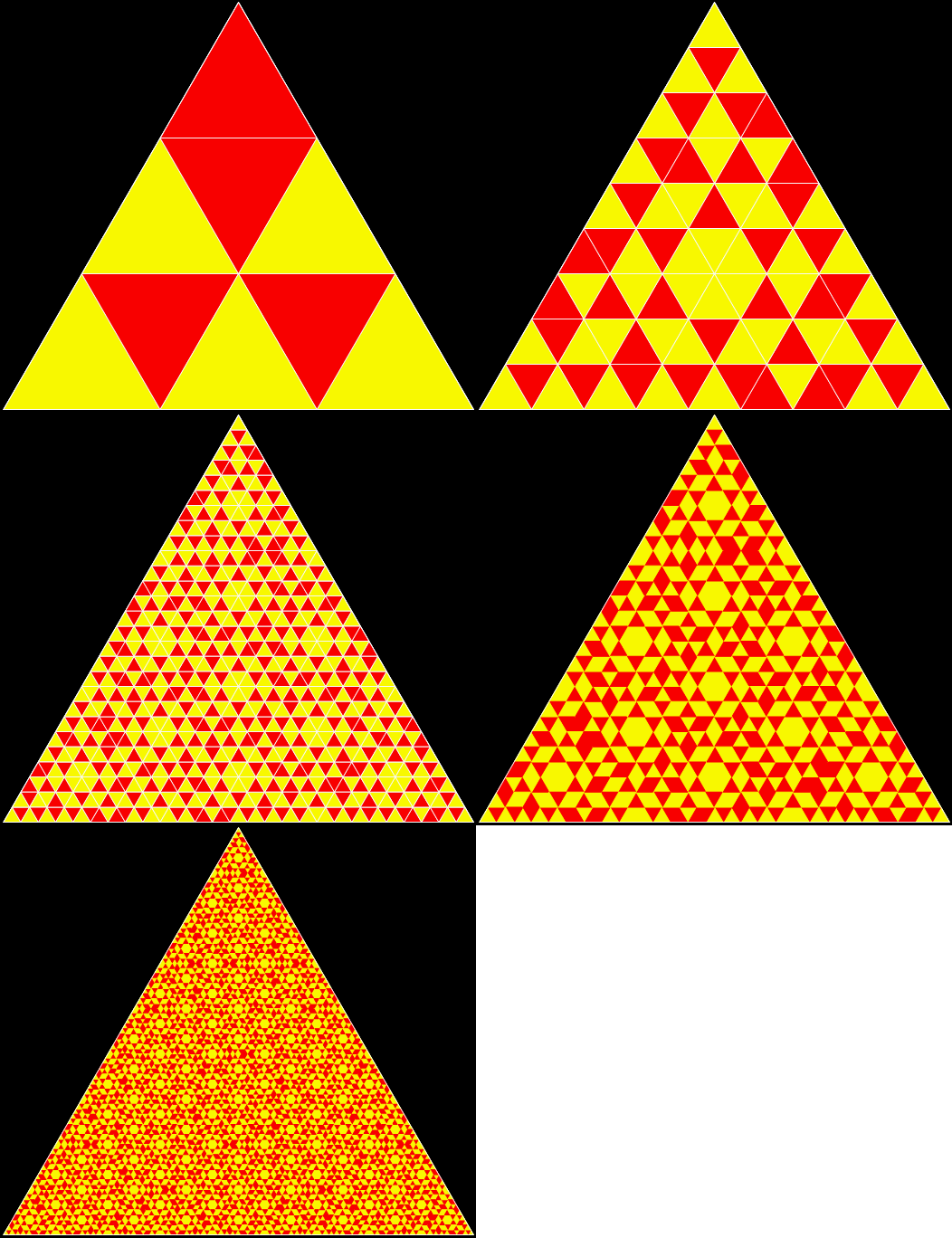
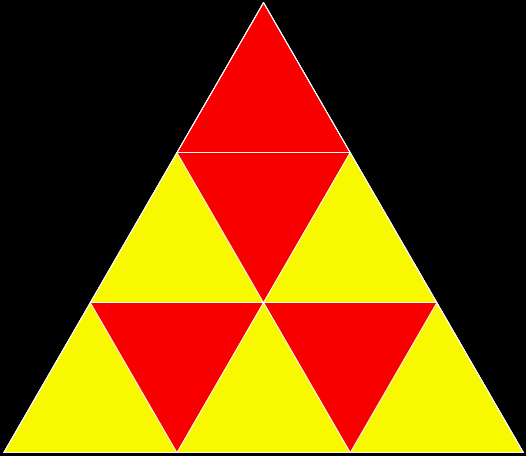
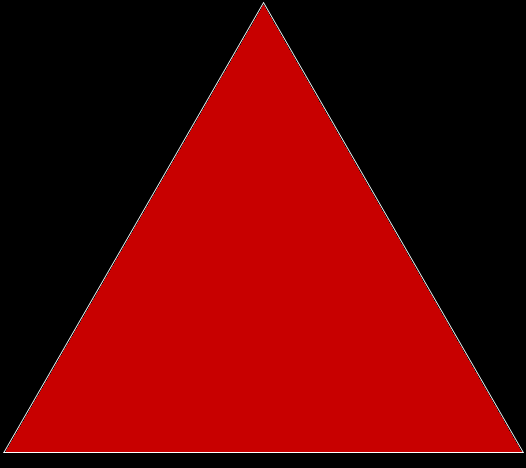
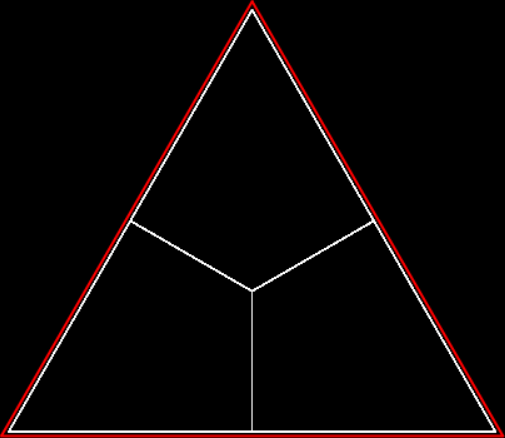
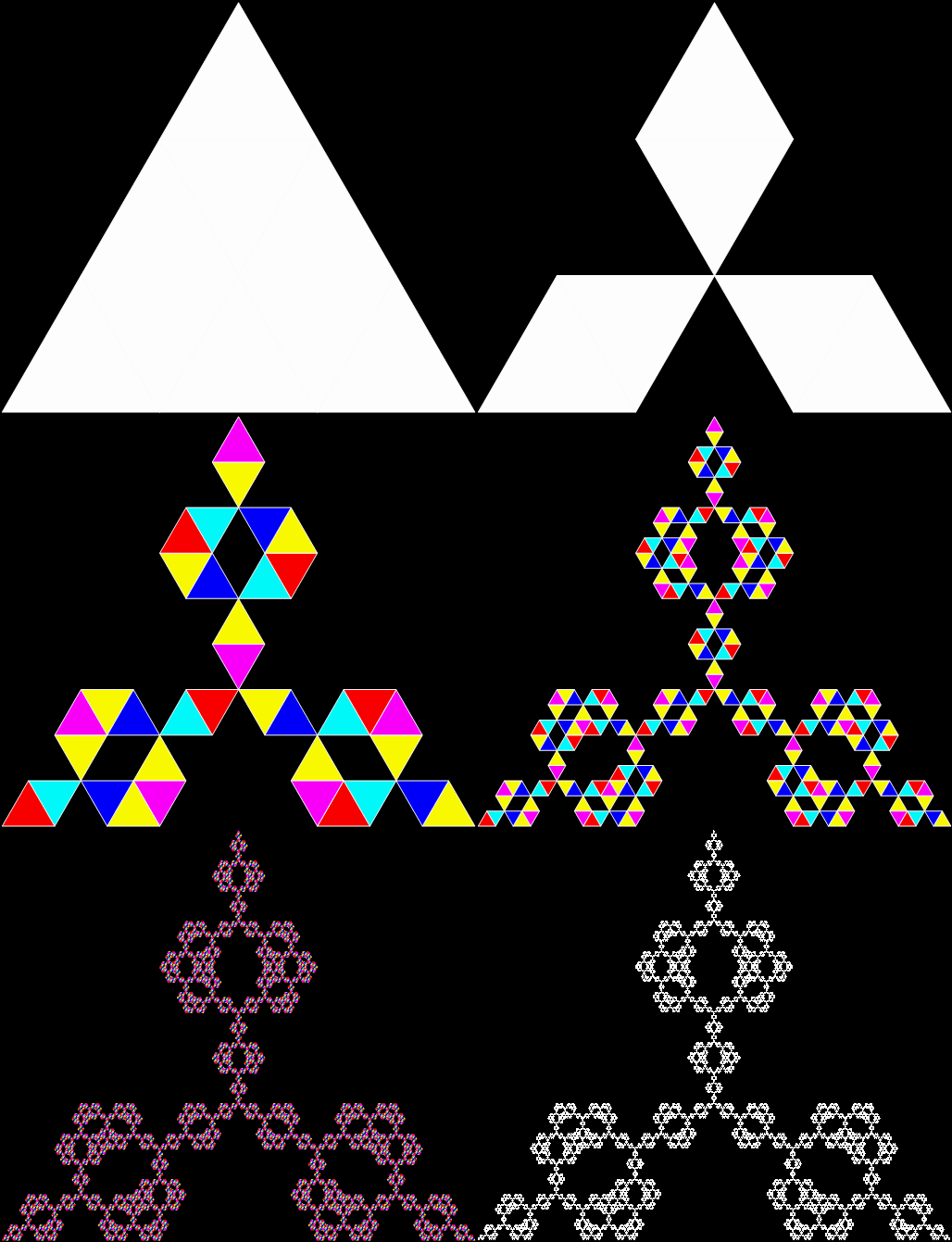
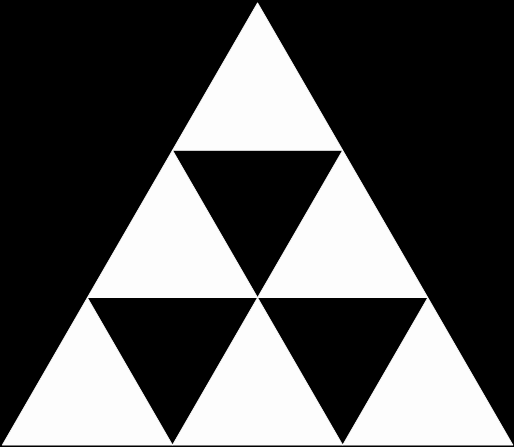
Here is an equilateral triangle divided into nine smaller equilateral triangles:

Rep-9 equilateral triangle


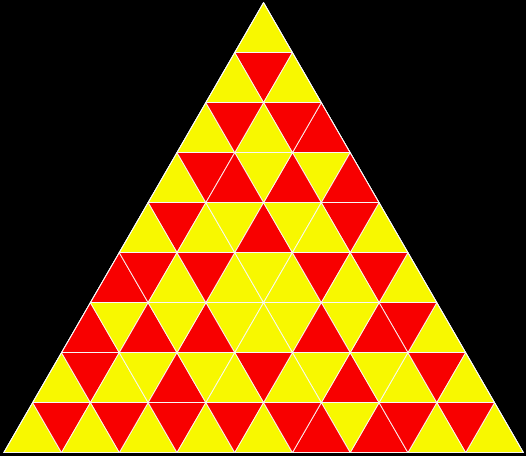
The triangle is a rep-tile — it’s tiled with repeating copies of itself. In this case, it’s a rep-9 triangle. Each of the nine smaller triangles can obviously be divided in their turn:

Rep-81 equilateral triangle


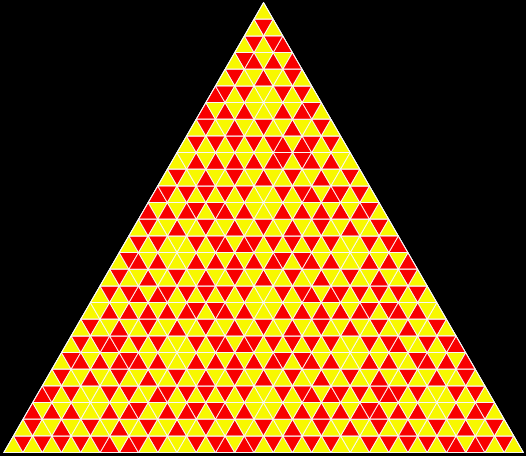
Rep-729 equilateral triangle


Rep-729 equilateral triangle again


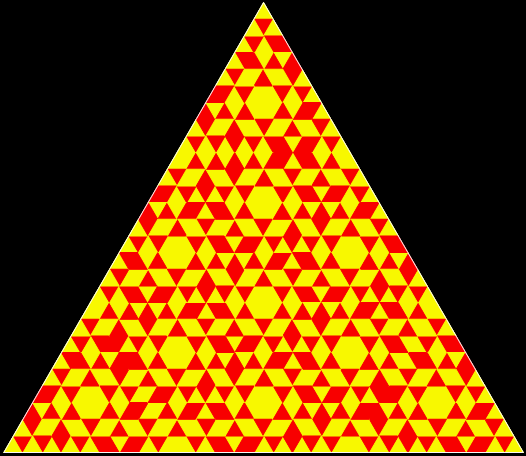
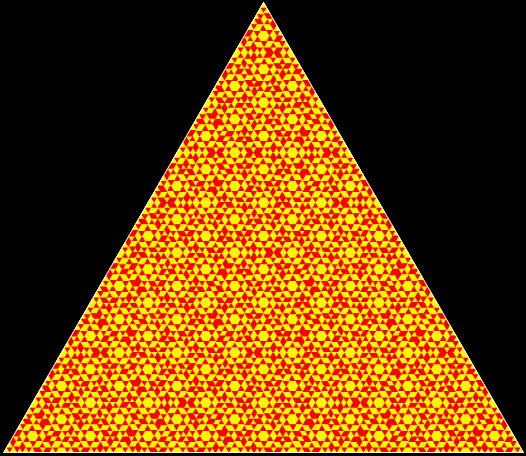
Rep-6561 equilateral triangle


Rep-9 triangle repeatedly subdividing (animated)


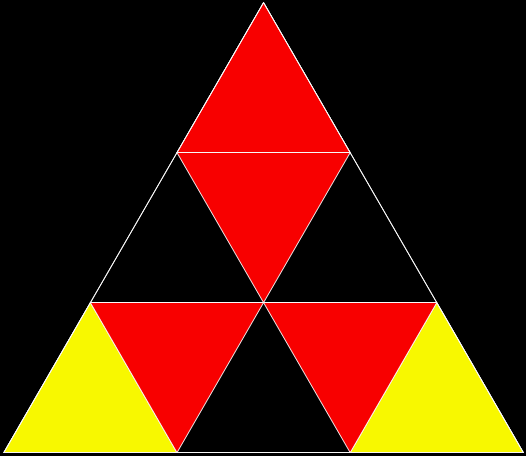
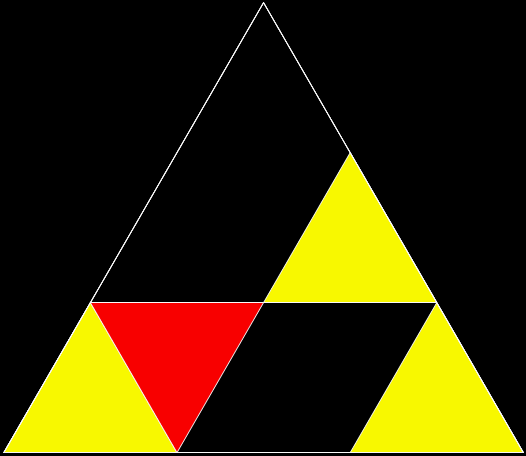
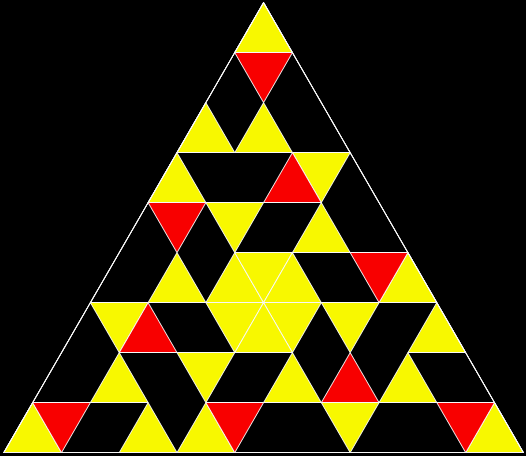
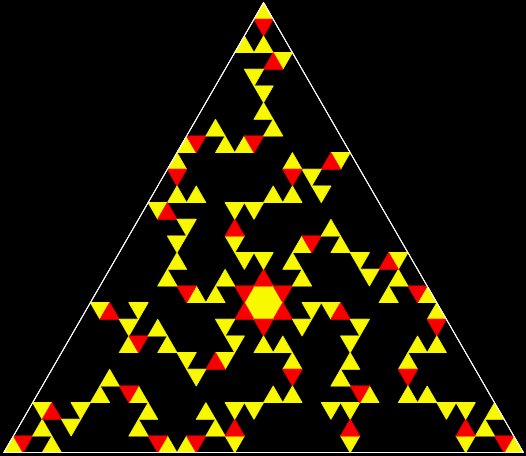
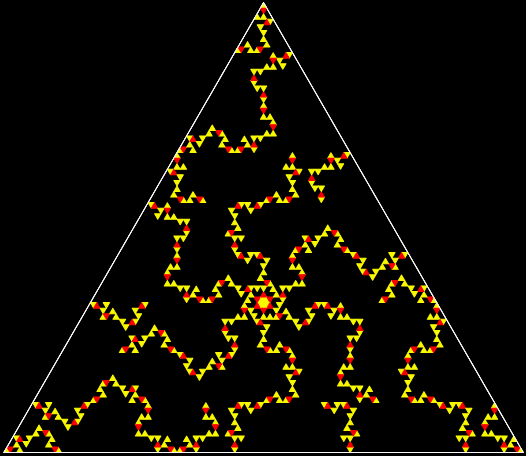
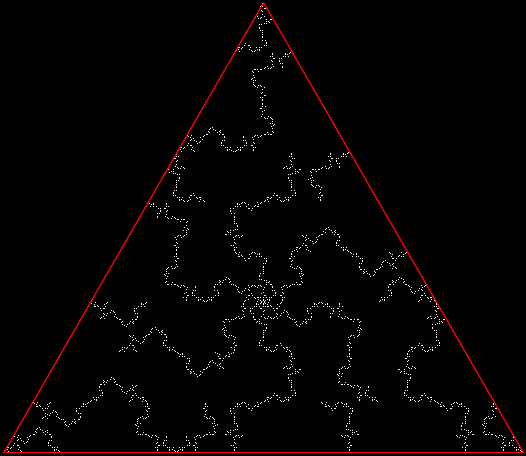
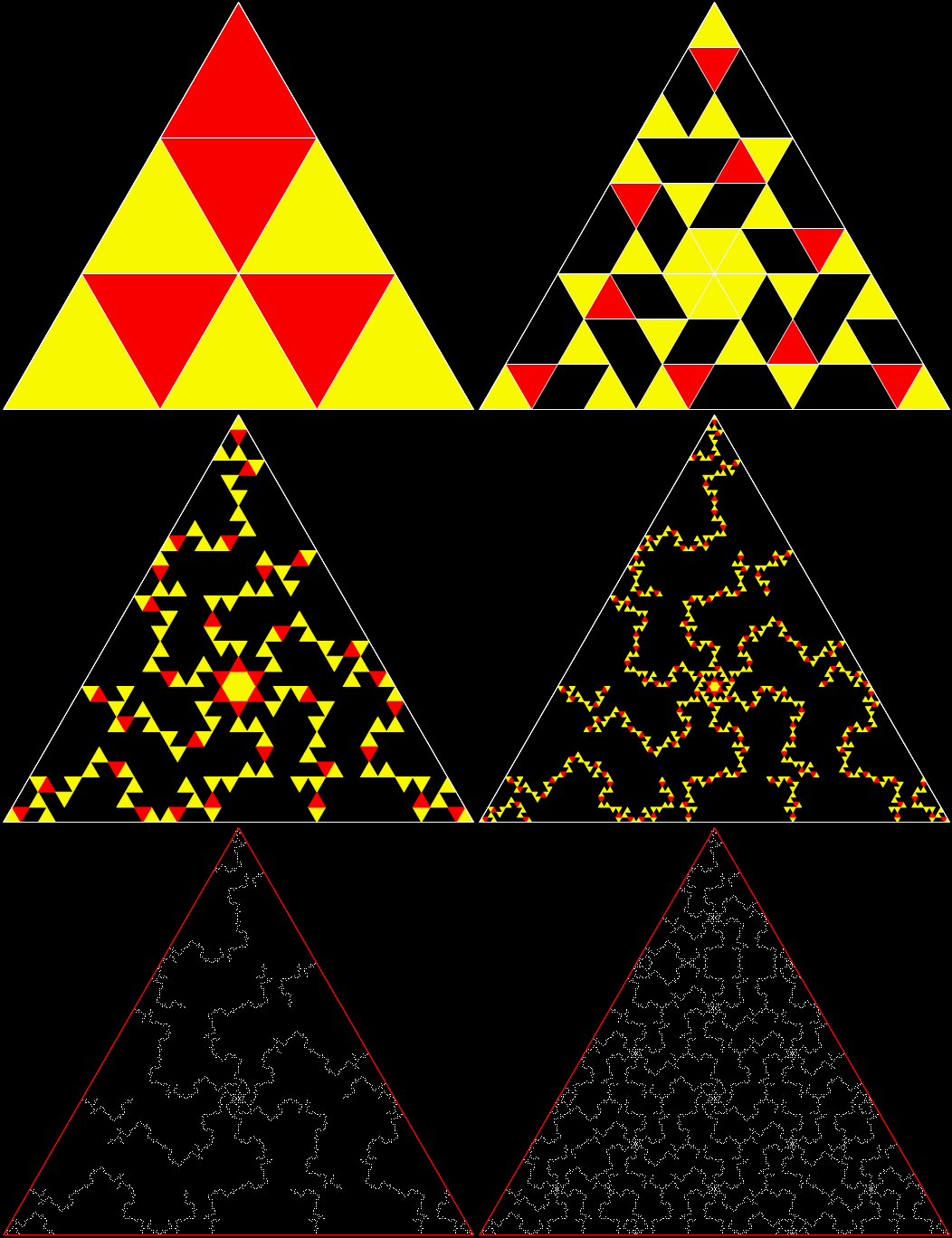
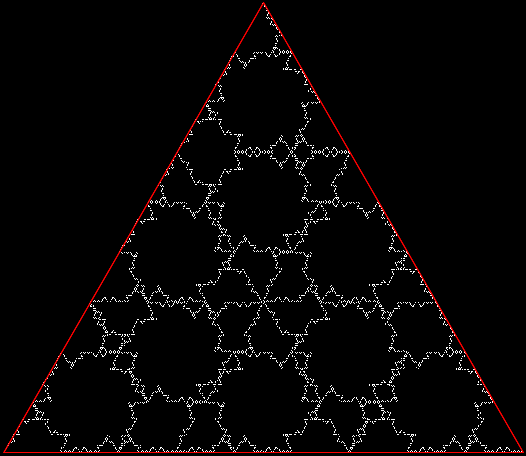
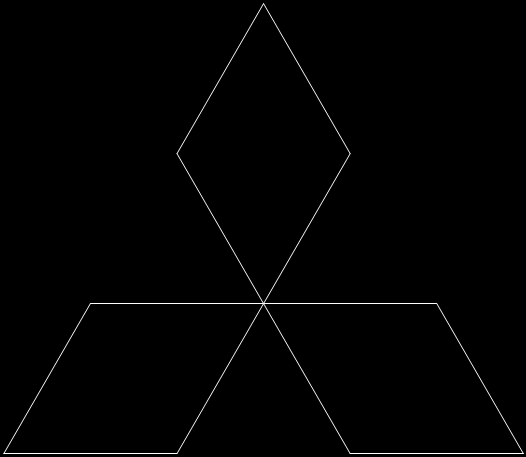
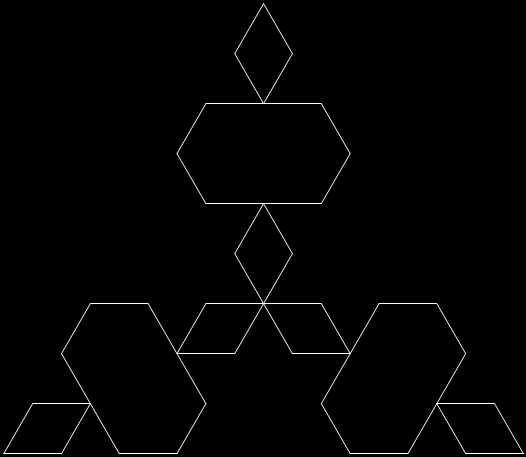
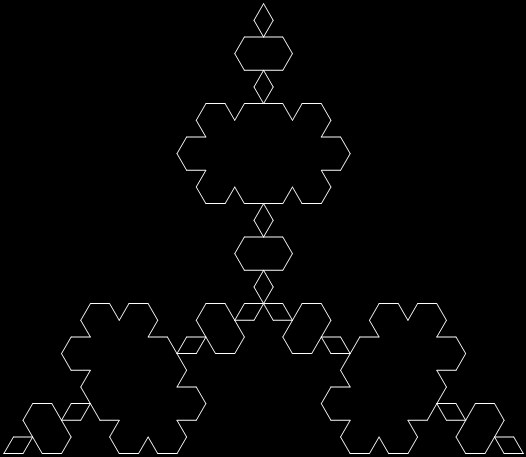
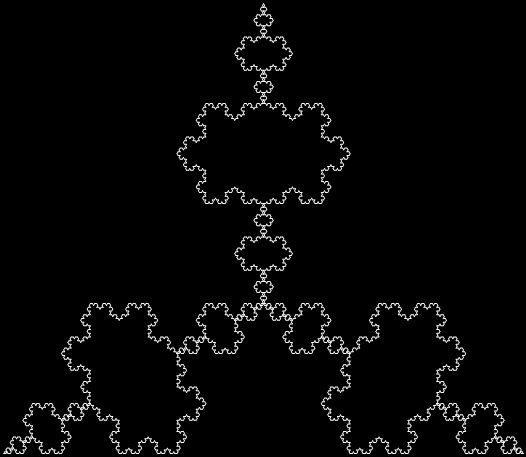
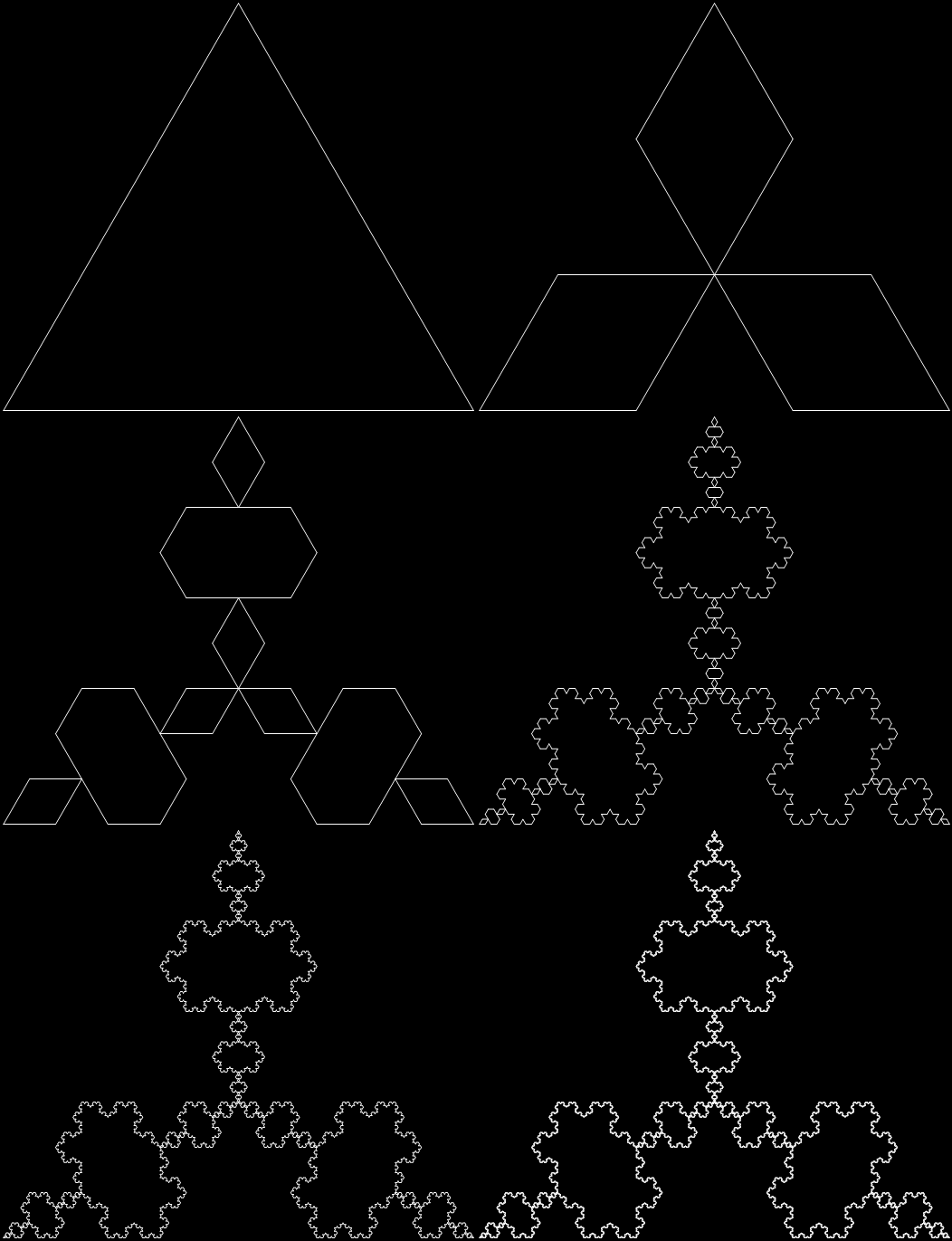
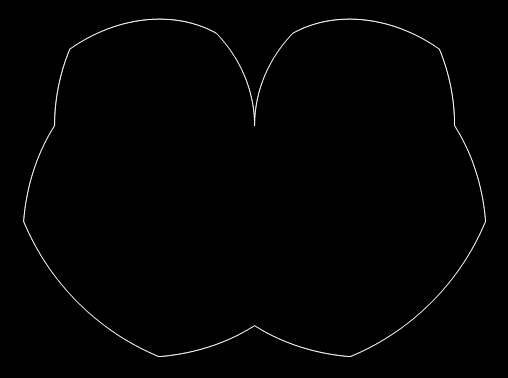
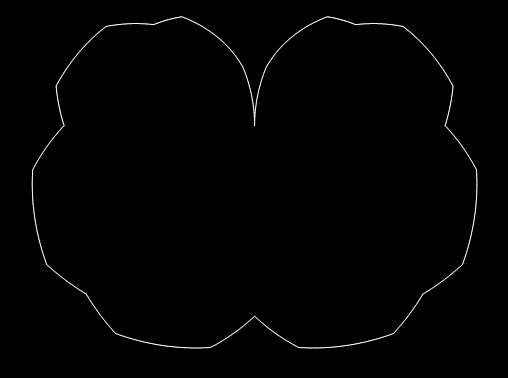
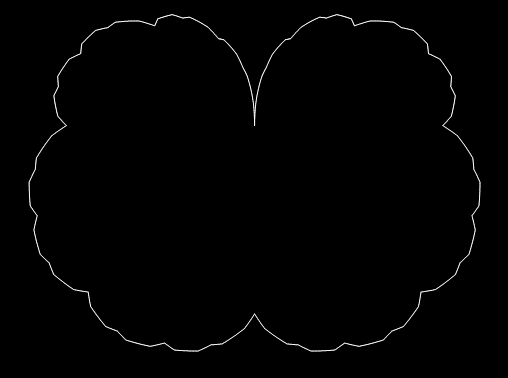
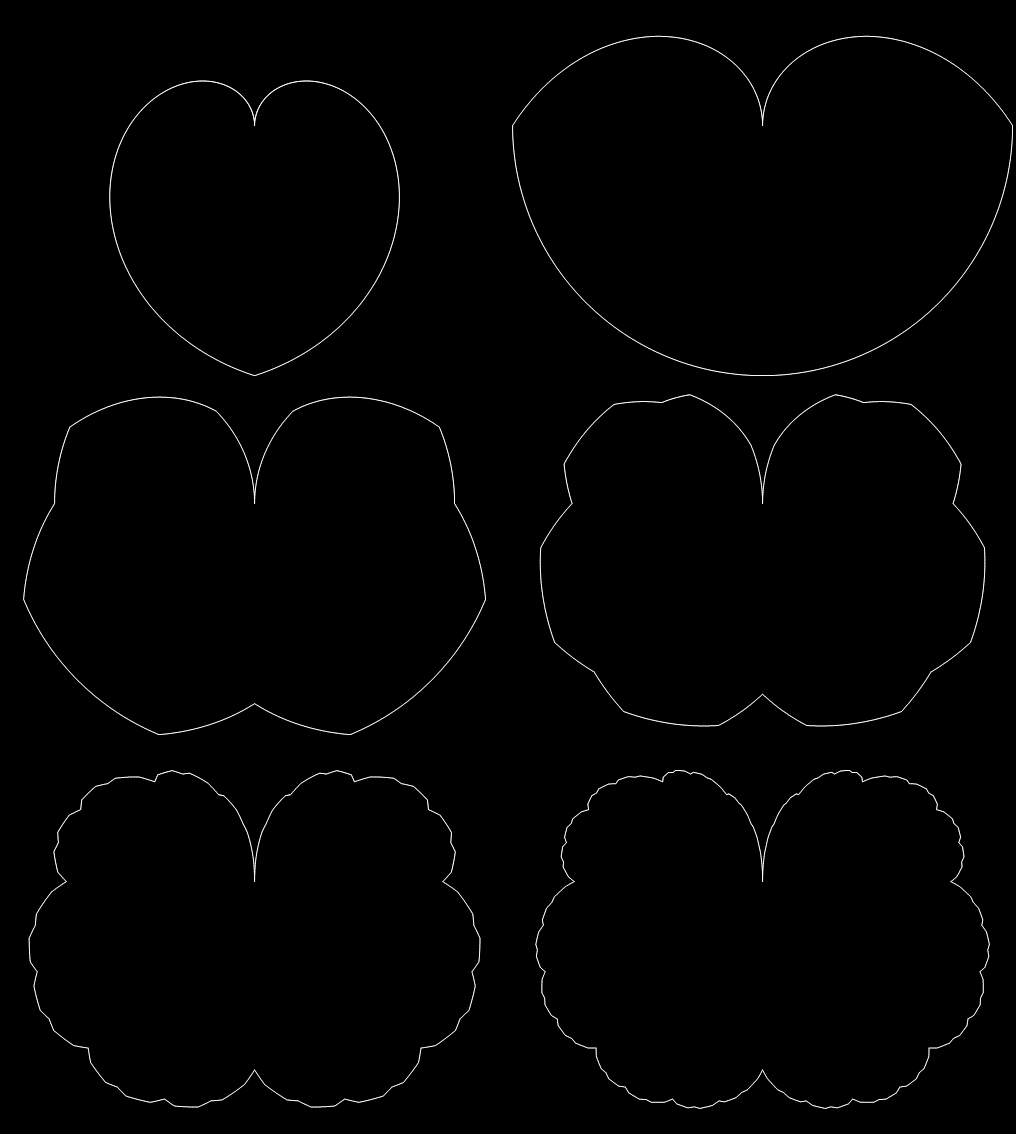
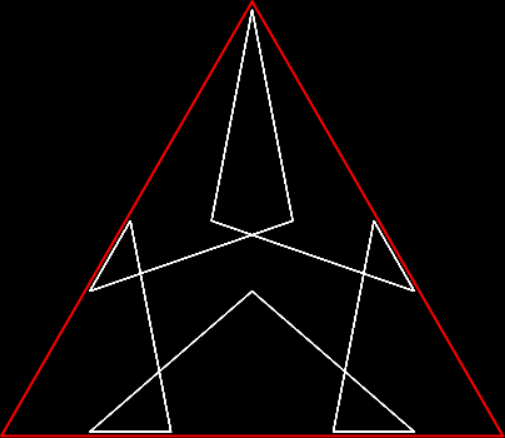
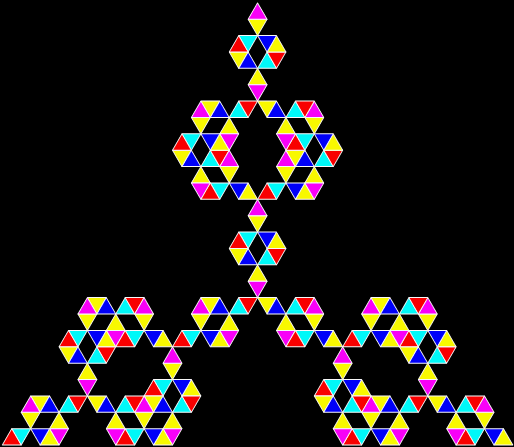
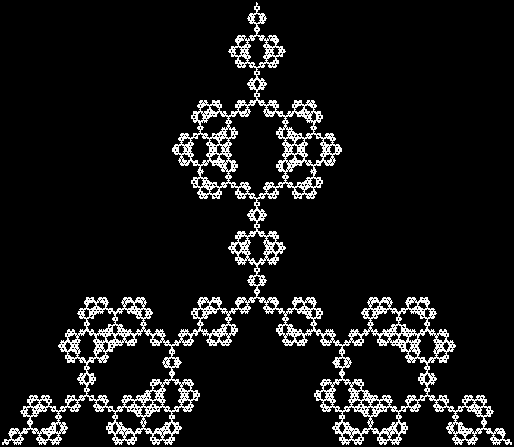
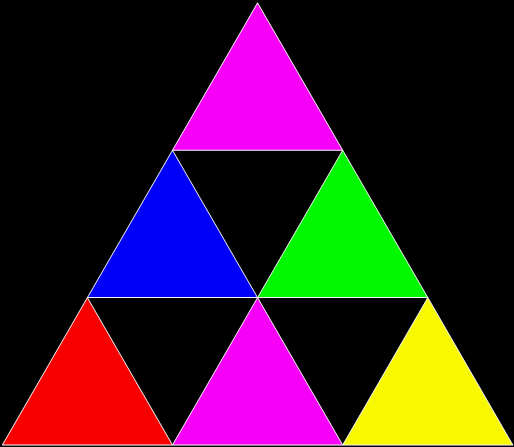
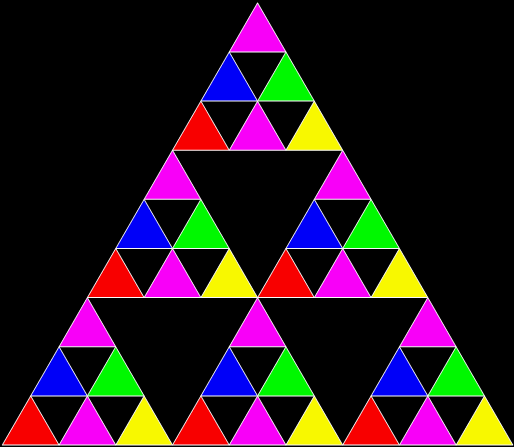
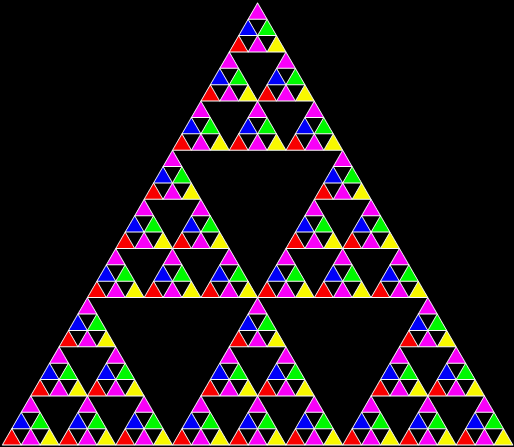
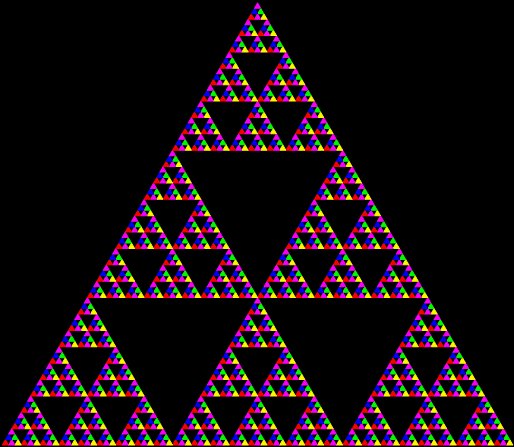
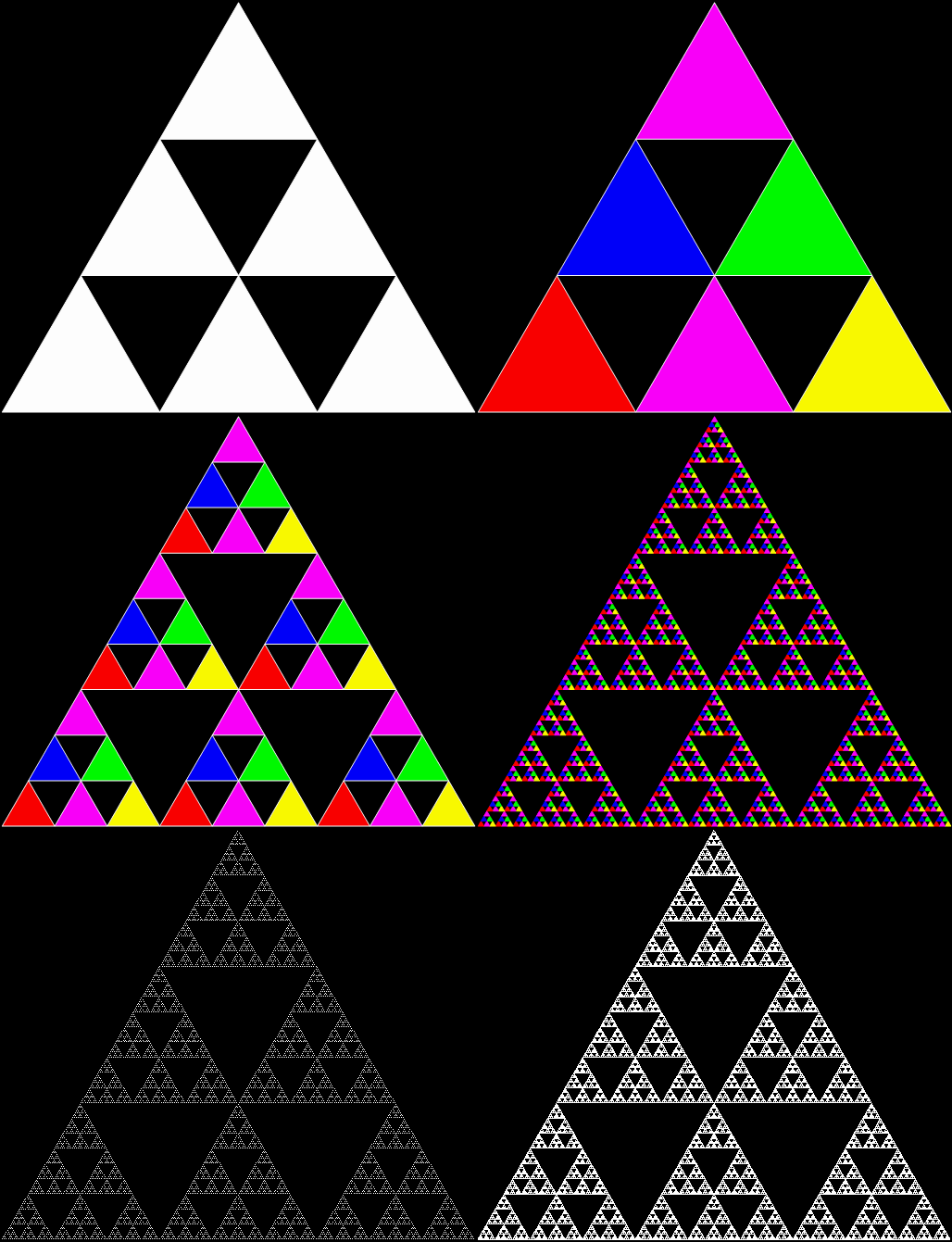
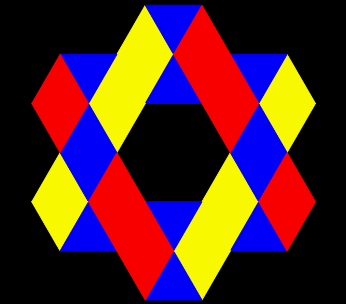
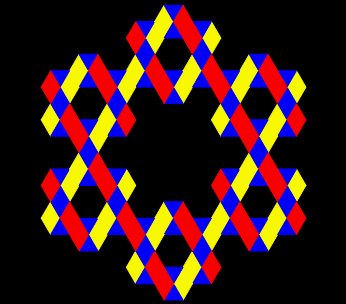
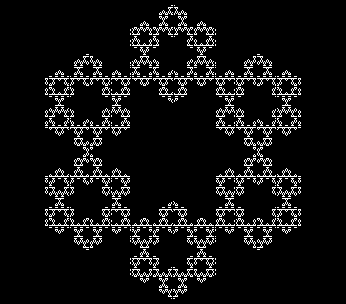
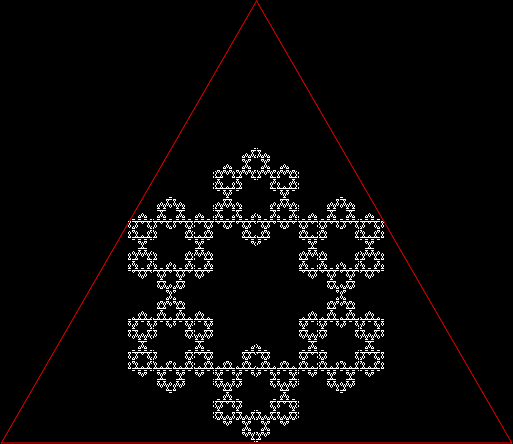
How try trimming the original rep-9 triangle, picking one of the trimmings, and repeating in finer detail. If you choose six triangles in this pattern, you can create a symmetrical braided fractal:

Triangular fractal stage 1


Triangular fractal #2


Triangular fractal #3


Triangular fractal #3 (cleaning up)


Triangular fractal #3 (cleaning up more)


Triangular fractal #4


Triangular fractal #5


Triangular fractal #6


Triangular fractal (animated)


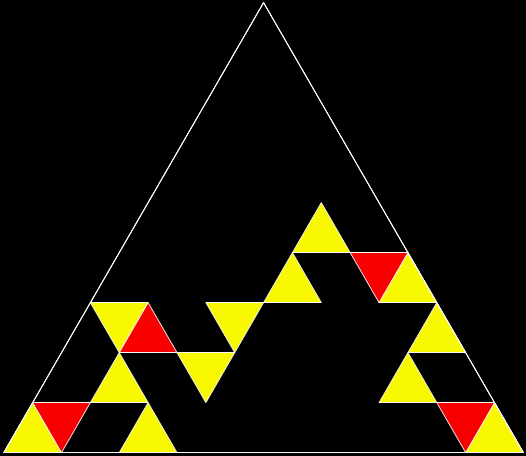
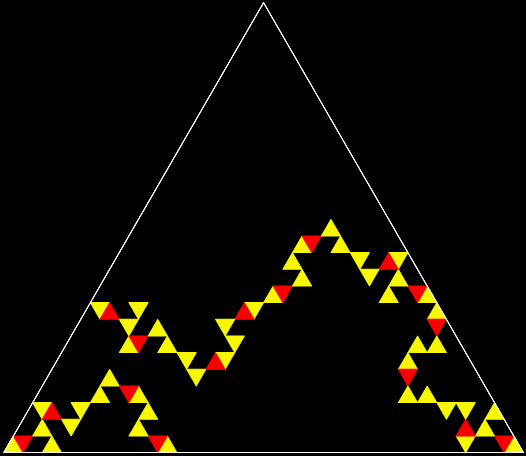
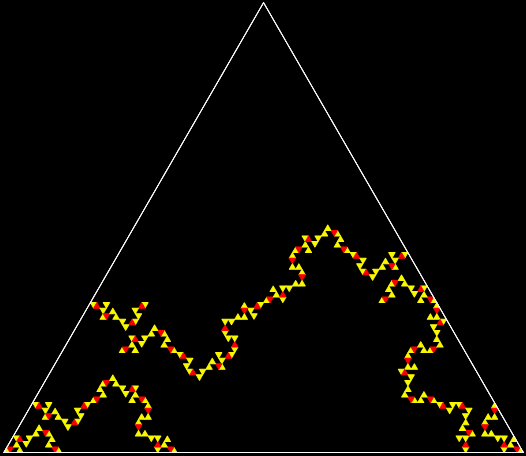
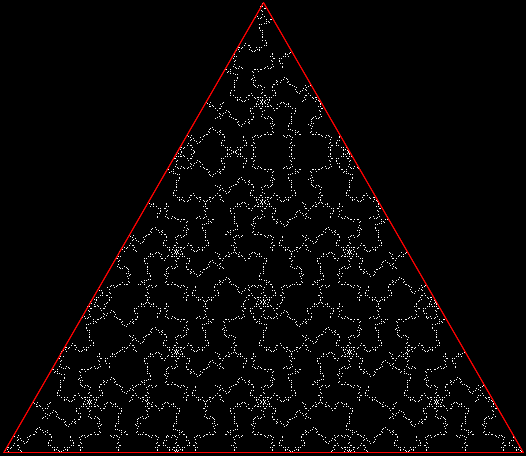
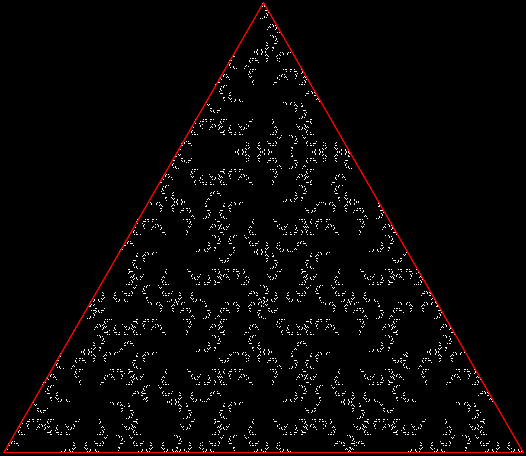
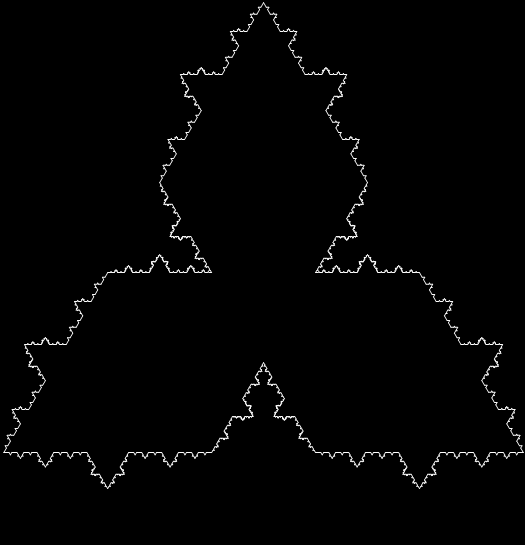
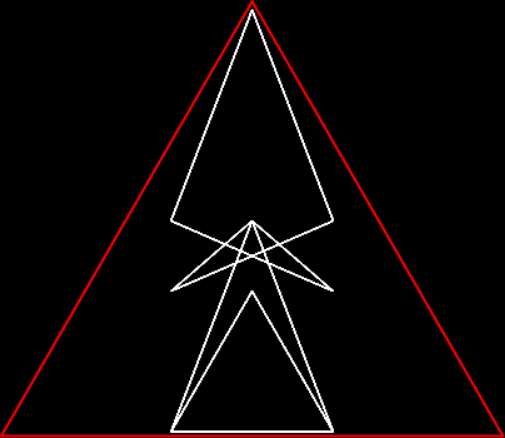
But this fractal using a three-triangle trim-picking isn’t symmetrical:

Trim-picking #1


Trim-picking #2


Trim-picking #3


Trim-picking #4


Trim-picking #5


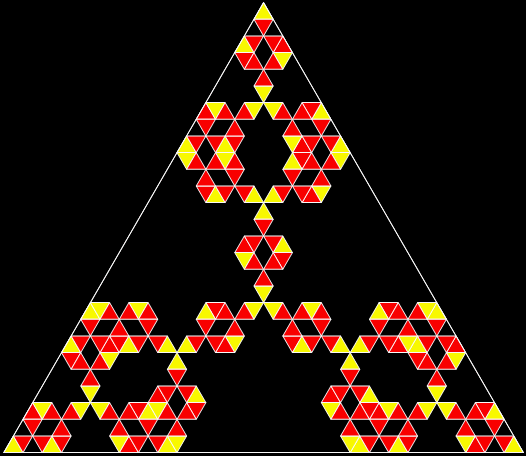
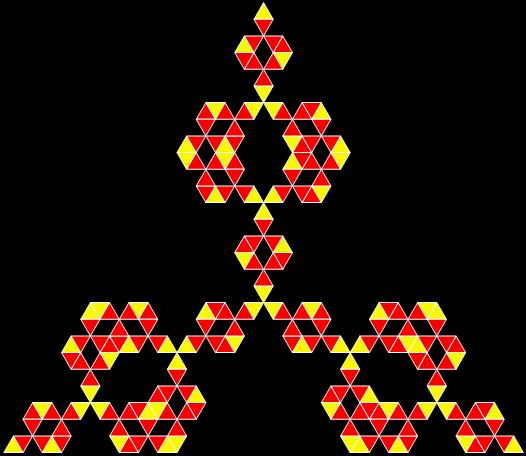
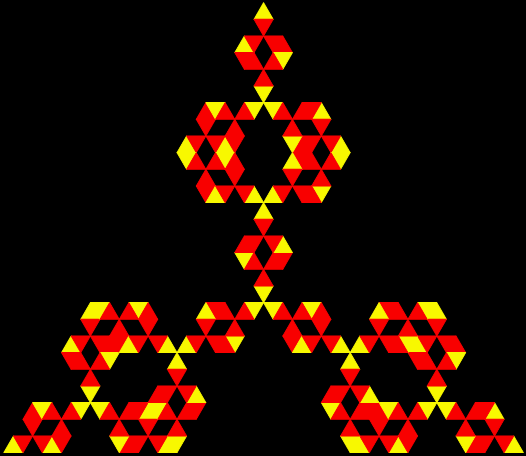
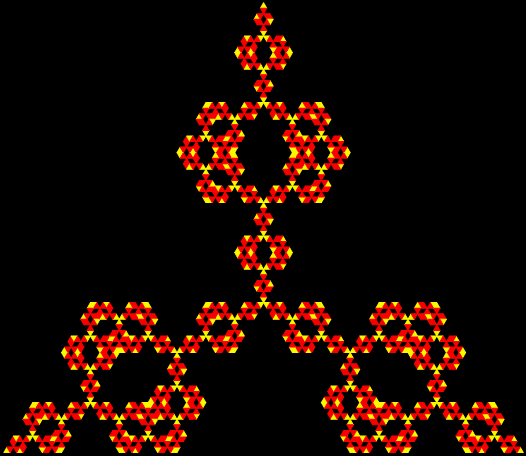
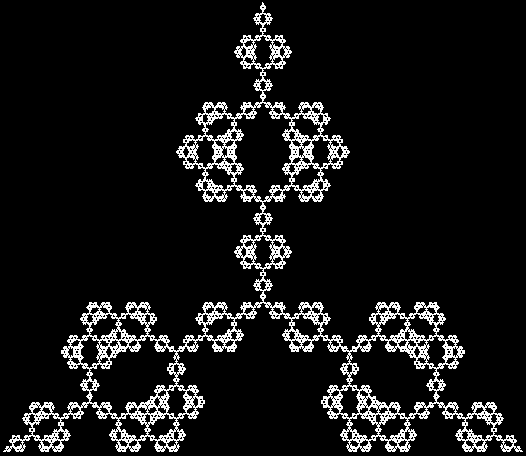
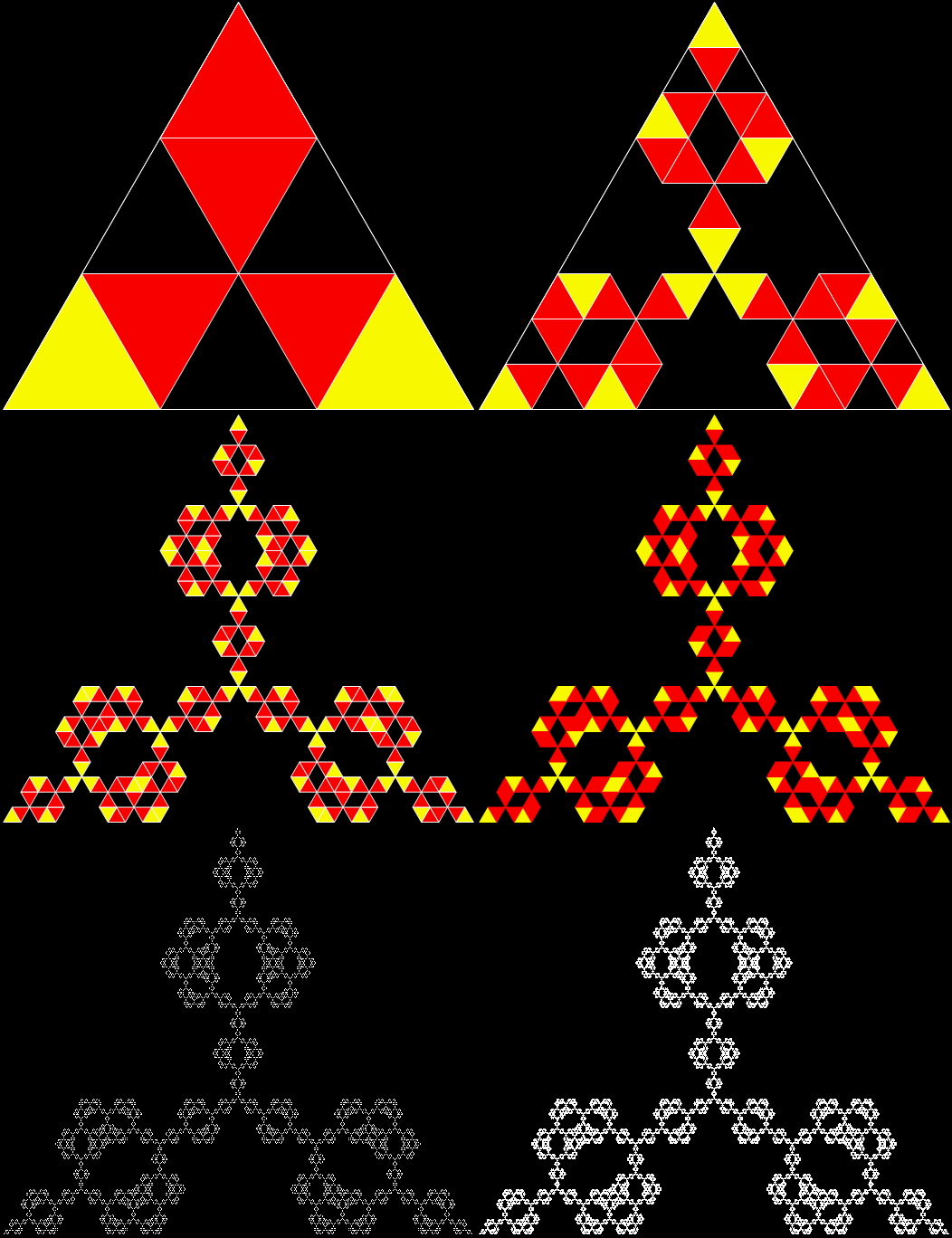
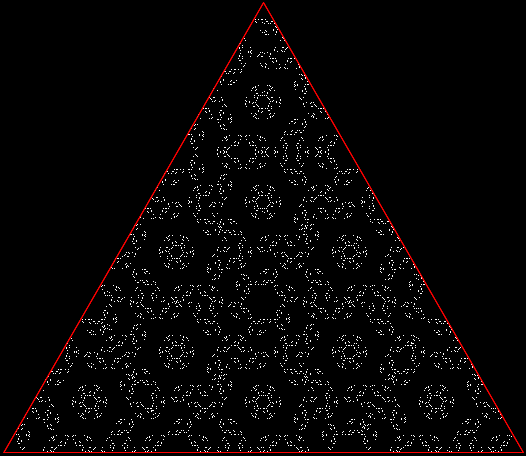
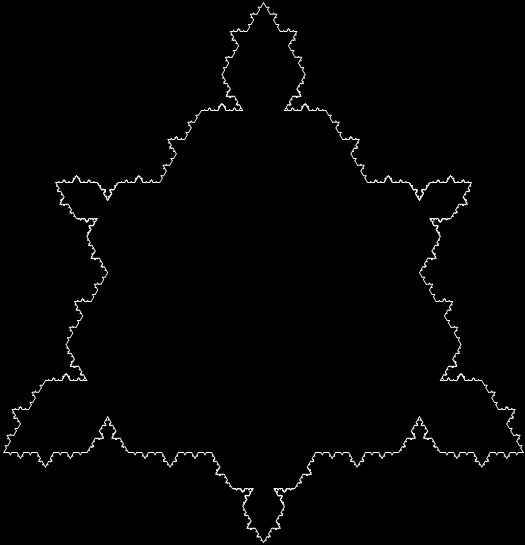
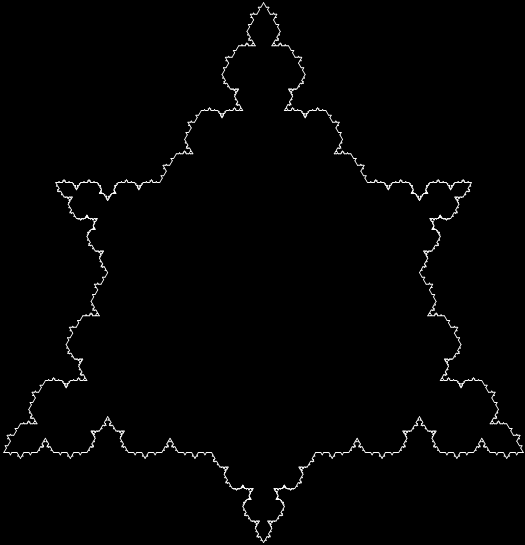
To make it symmetric, you have to delay the trim, using the full rep-9 trim for the first stage:

Delayed trim-picking #1


Delayed trim-picking #2


Delayed trim-picking #3


Delayed trim-picking #4


Delayed trim-picking #5


Delayed trim-picking #6 (with first two stages as rep-9)


Delayed trim-picking (animated)


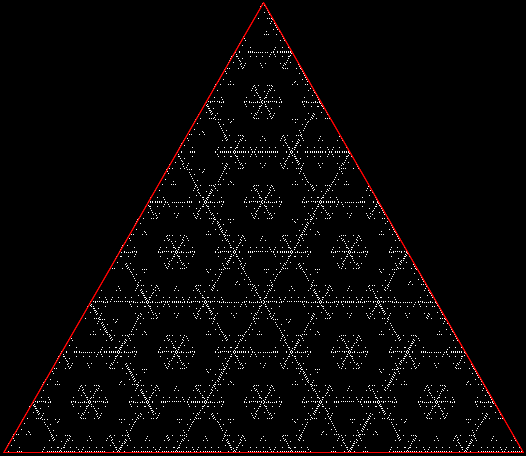
Here are some more delayed trim-pickings used to created symmetrical patterns:


Polykoch (Kontinued)

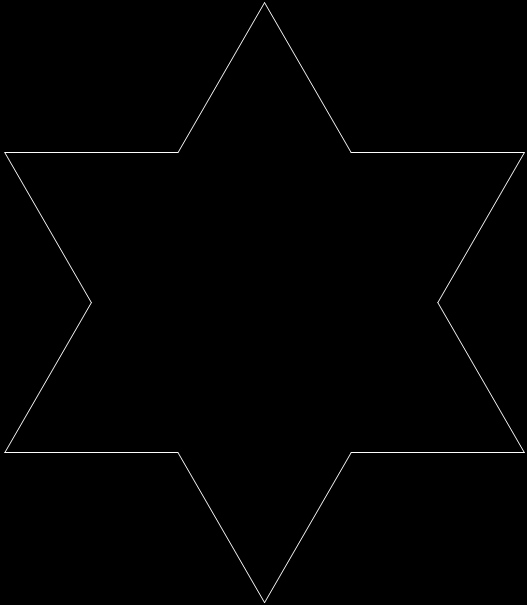
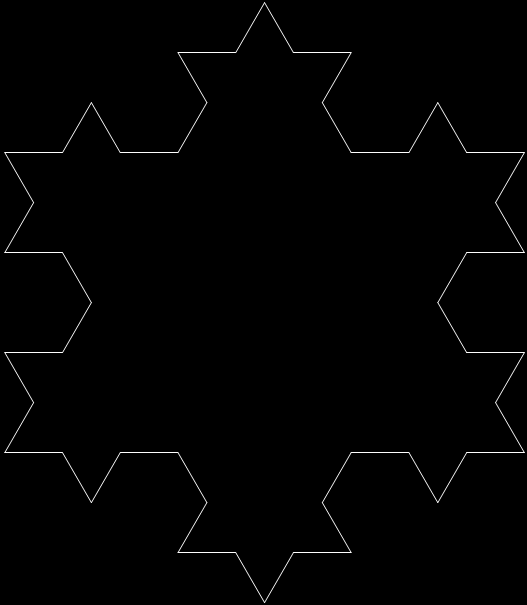
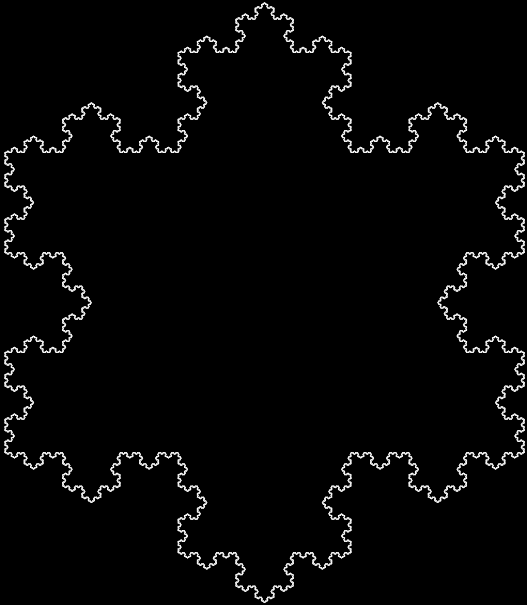
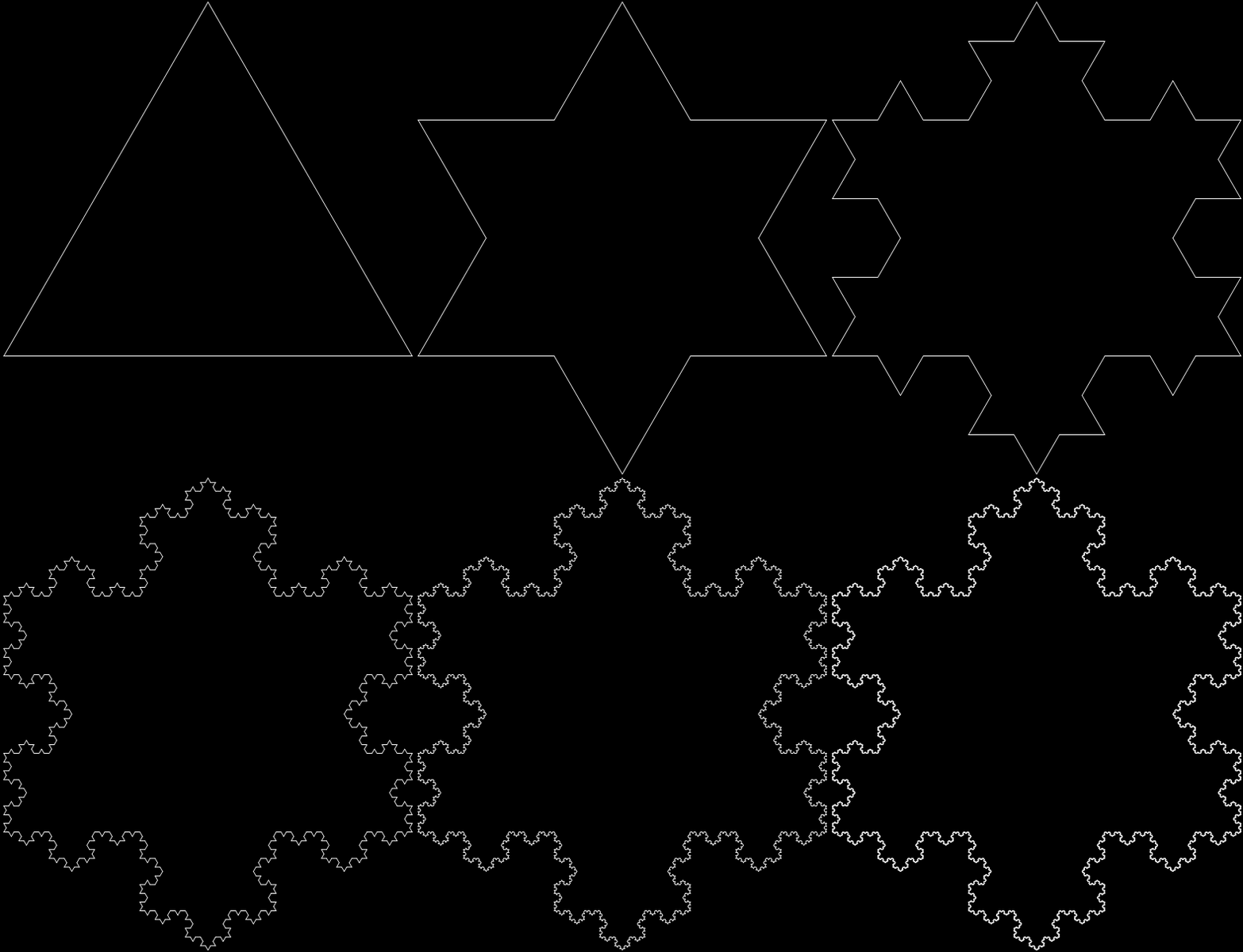
In “Polykoch!”, I looked at variants on the famous Koch snowflake, which is created by erecting new triangles on the sides of an equilaternal triangle, like this:

Koch snowflake #1


Koch snowflake #2


Koch snowflake #3


Koch snowflake #4


Koch snowflake #5


Koch snowflake #6


Koch snowflake #7


Koch snowflake (animated)


One variant is simple: the new triangles move inward rather than outward:

Inverted Koch snowflake #1


Inverted Koch snowflake #2


Inverted Koch snowflake #3


Inverted Koch snowflake #4


Inverted Koch snowflake #5


Inverted Koch snowflake #6


Inverted Koch snowflake #7


Inverted Koch snowflake (animated)


Or you can alternate between moving the new triangles inward and outward. When they always move outward and have sides 1/5 the length of the sides of the original triangle, the snowflake looks like this:


When they move inward, then always outward, the snowflake looks like this:


And so on:


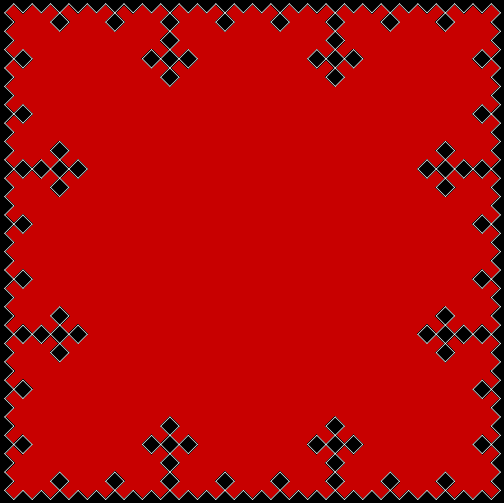
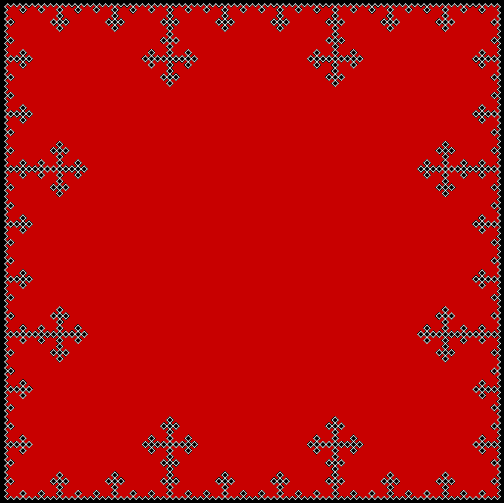
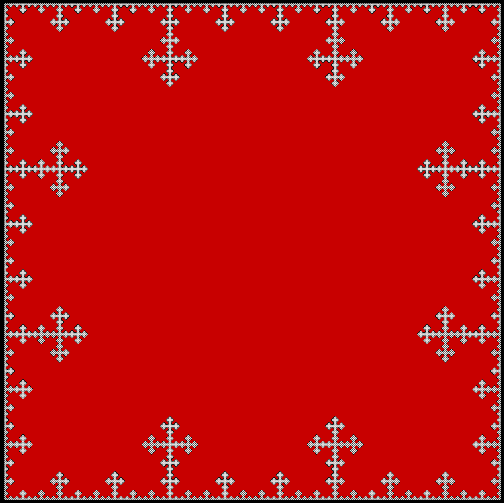
Now here’s a Koch square with its new squares moving inward:

Inverted Koch square #1


Inverted Koch square #2


Inverted Koch square #3


Inverted Koch square #4


Inverted Koch square #5


Inverted Koch square #6


Inverted Koch square (animated)


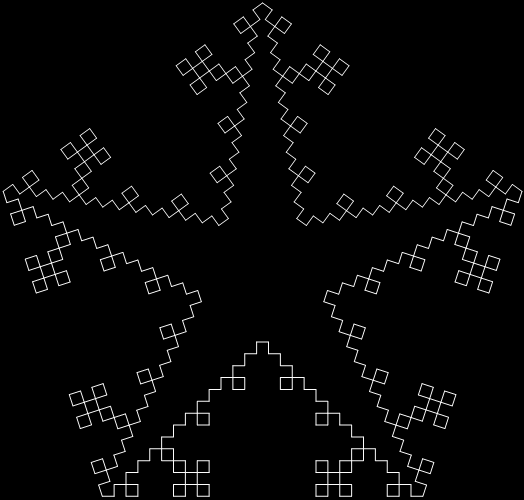
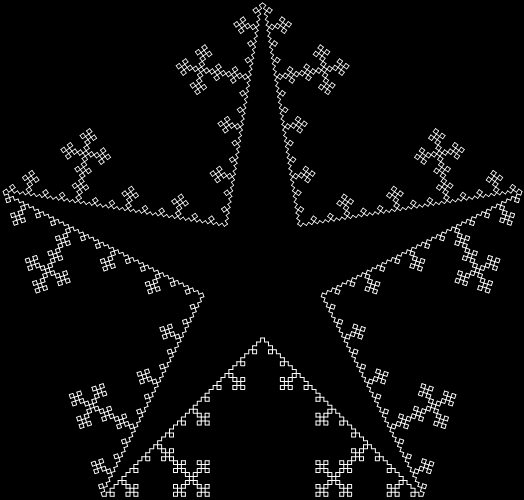
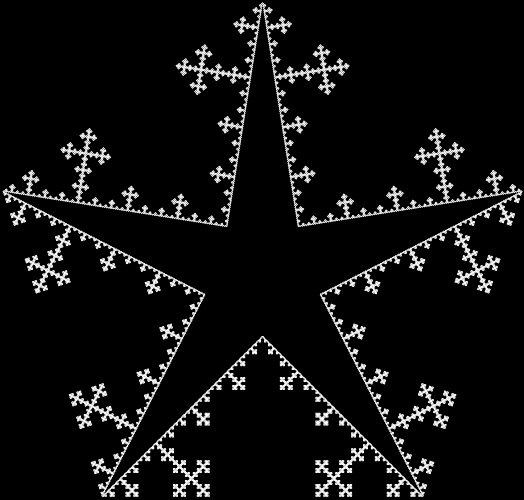
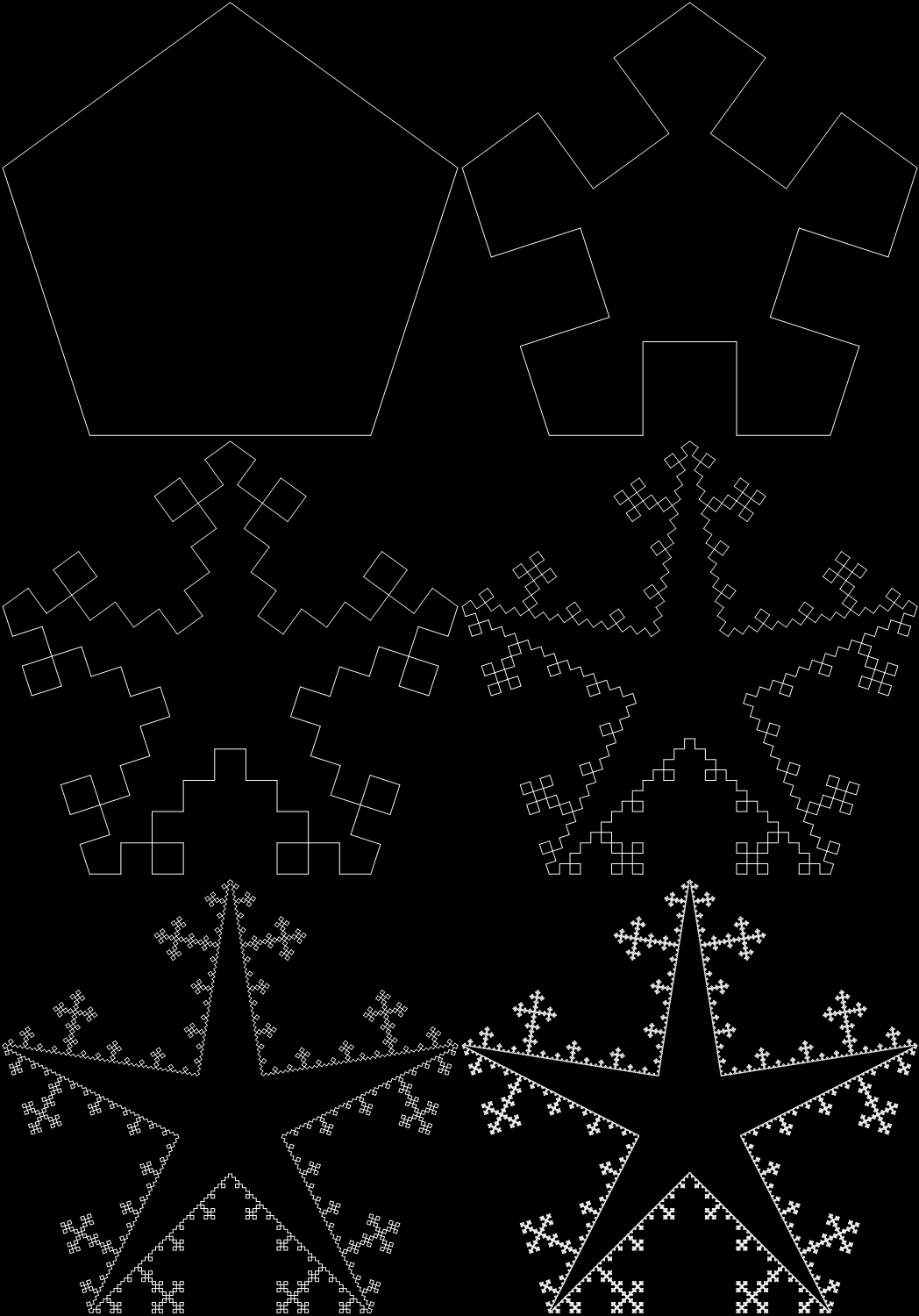
And here’s a pentagon with squares moving inwards on its sides:

Pentagon with squares #1


Pentagon with squares #2


Pentagon with squares #3


Pentagon with squares #4


Pentagon with squares #5


Pentagon with squares #6


Pentagon with squares (animated)


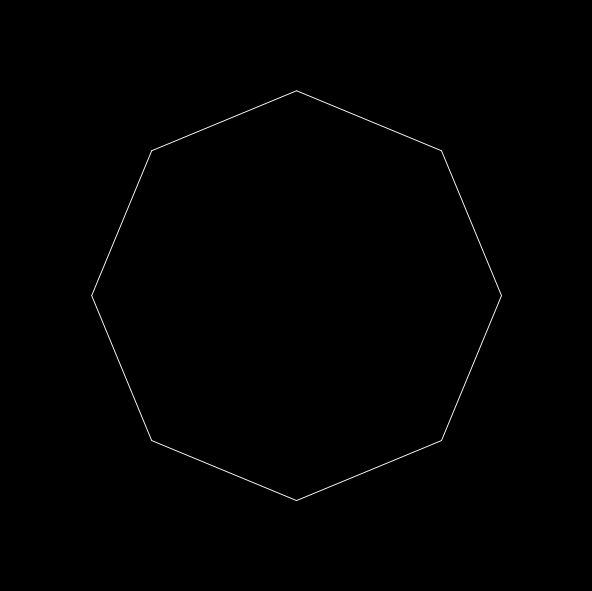
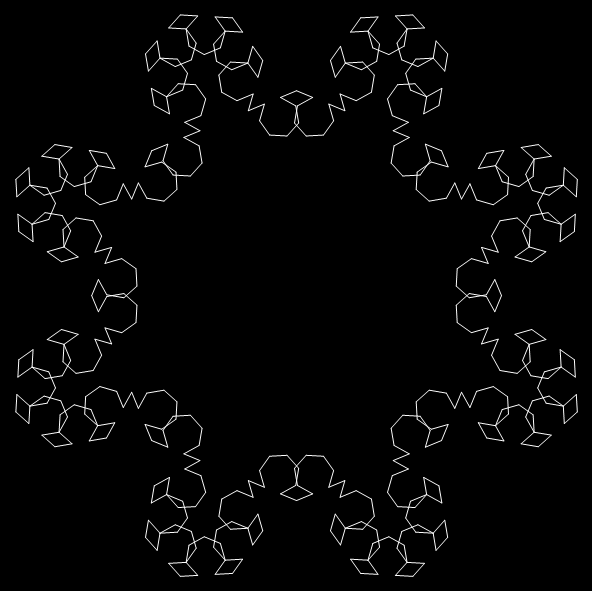
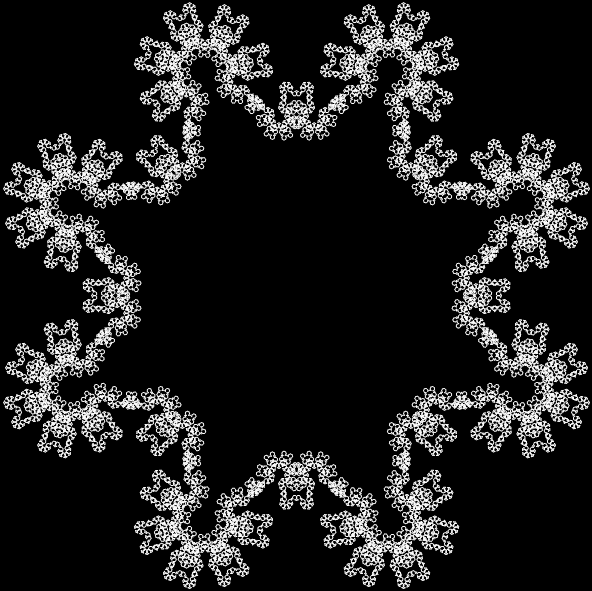
And finally, an octagon with hexagons on its sides. First the hexagons move outward, then inward, then outward, then inward, then outward:

Octagon with hexagons #1


Octagon with hexagons #2


Octagon with hexagons #3


Octagon with hexagons #4


Octagon with hexagons #5


Octagon with hexagons (animated)


Polykoch!

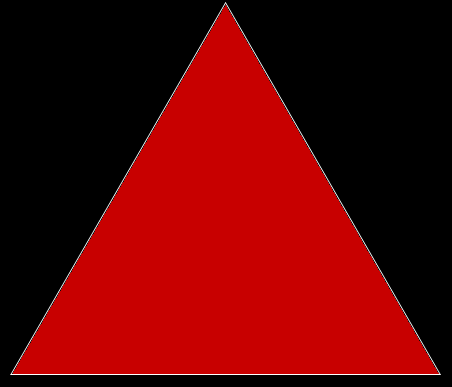
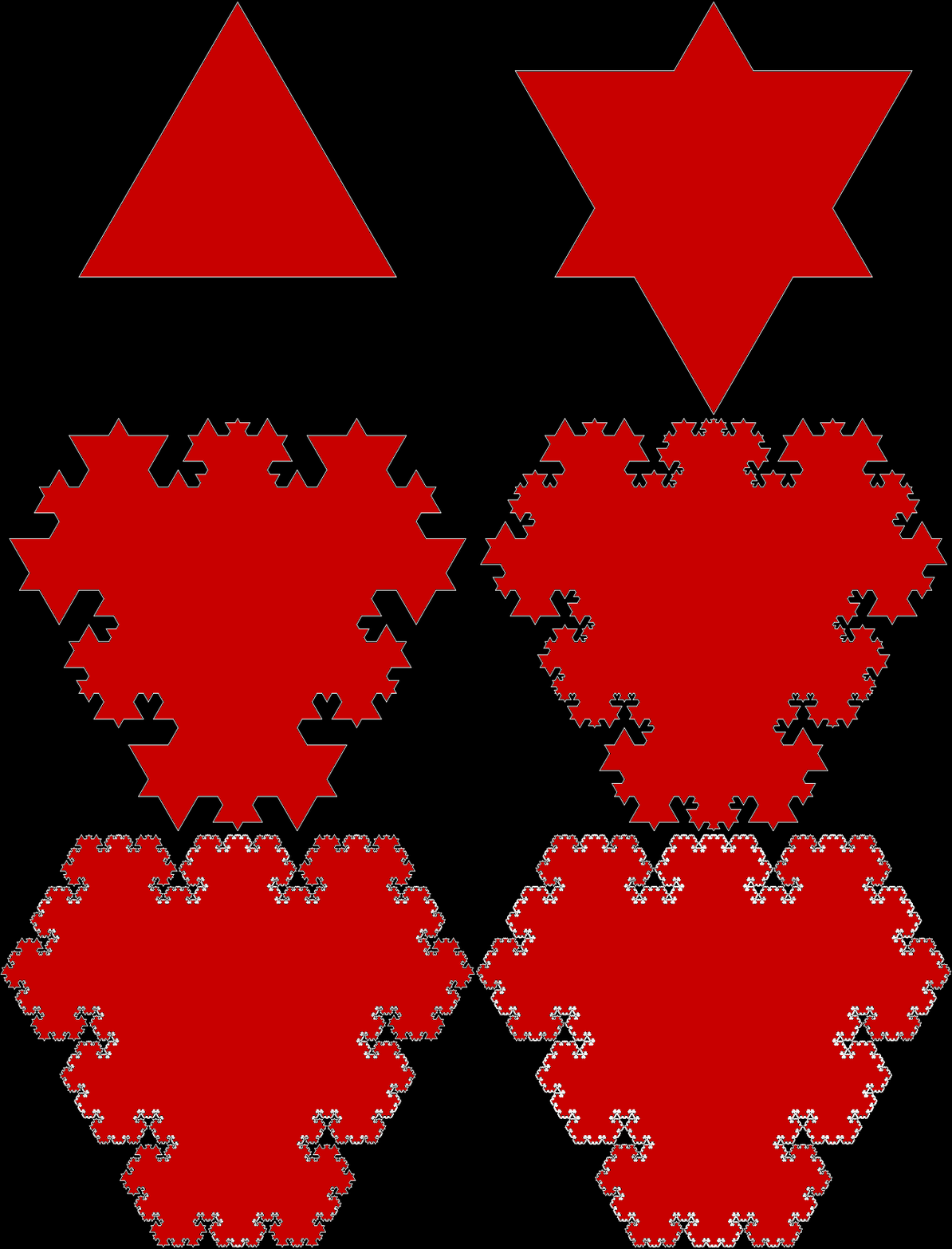
This is how you form the famous Koch snowflake, in which at each stage you erect a new triangle on the middle of each line whose sides are 1/3 the length of the line:

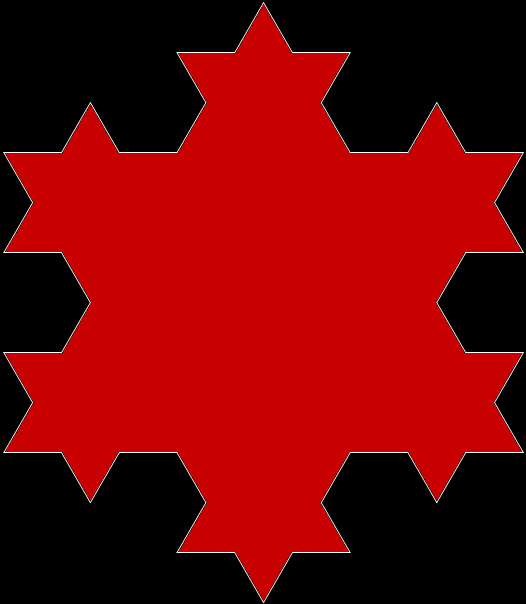
Koch snowflake #1


Koch snowflake #2


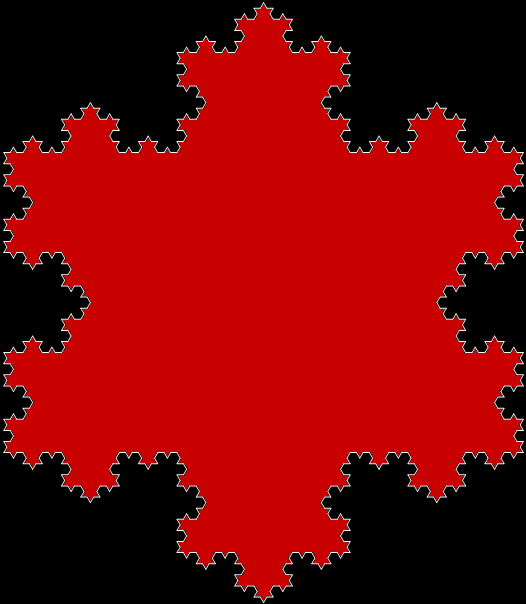
Koch snowflake #3


Koch snowflake #4


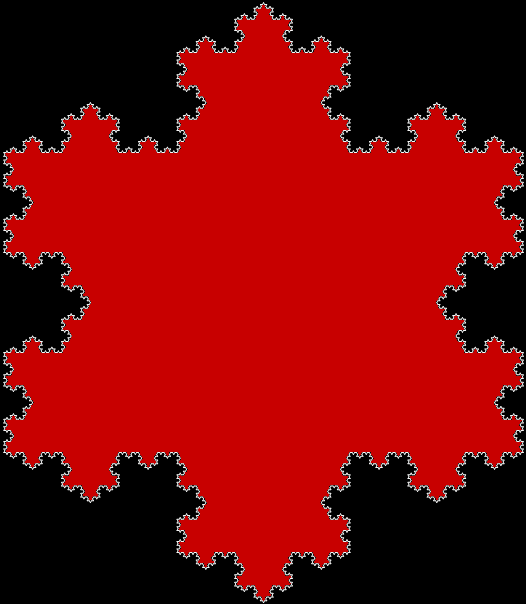
Koch snowflake #5


Koch snowflake #6


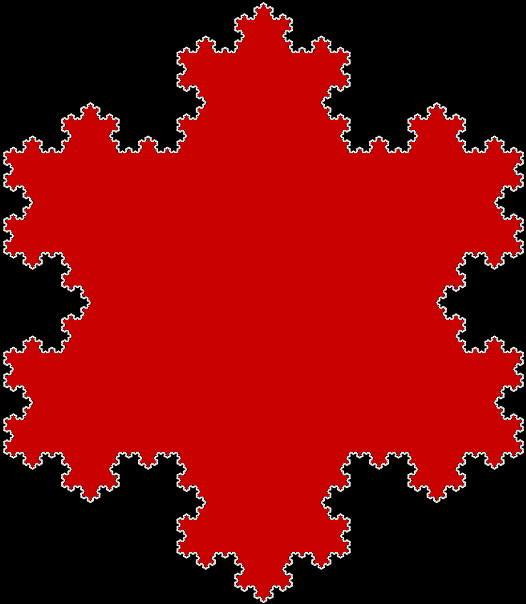
Koch snowflake #7


Koch snowflake (animated)


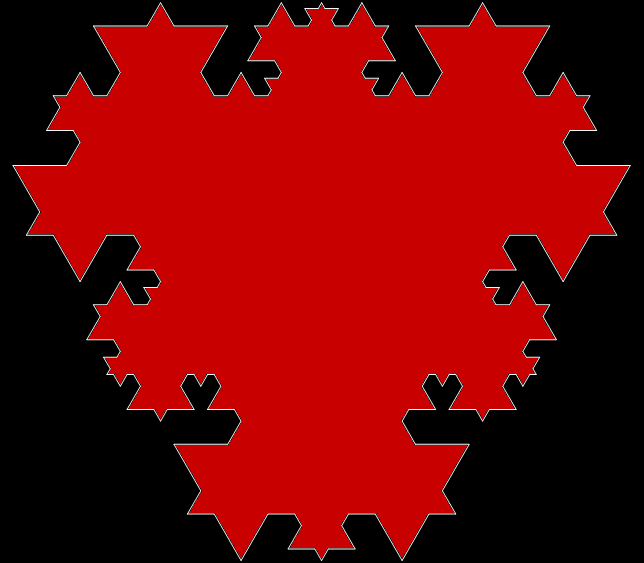
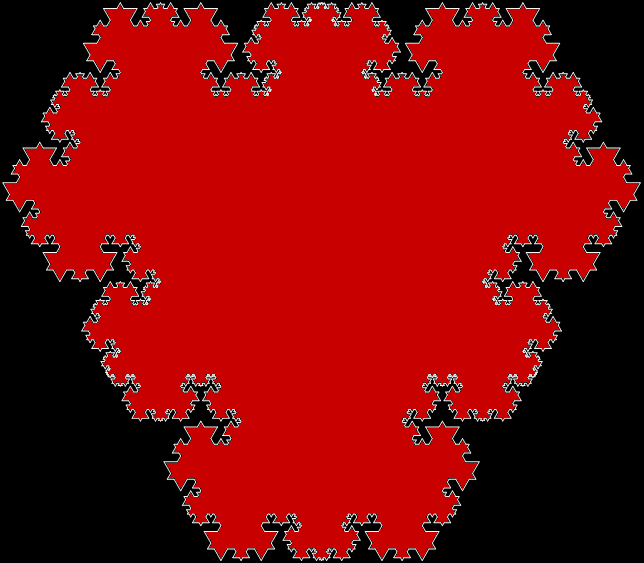
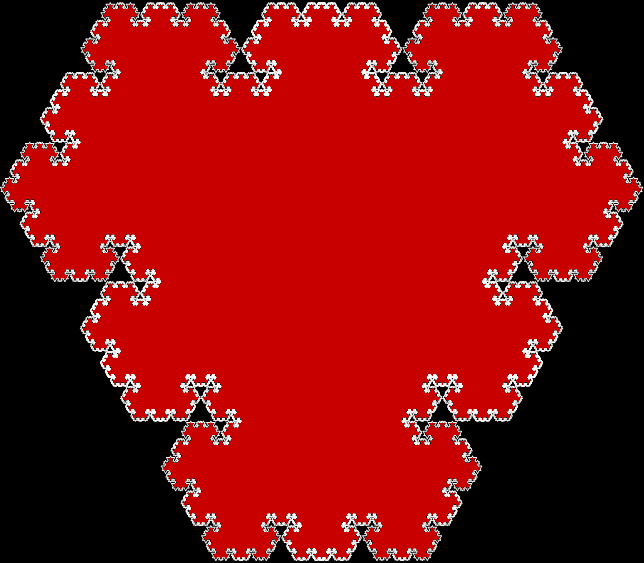
Here’s a variant of the Koch snowflake, with new mid-triangles whose sides are 1/2 the length of the lines:

Koch snowflake (1/2 side) #1


Koch snowflake (1/2 side) #2


Stage #3


Stage #4


Stage #5


Stage #6


Stage #7


Stage #8


Koch snowflake (1/2 side) (animated)


But why stop at triangles? This is a Koch square, in which at each stage you erect a new 1/3 square on the middle of each line:

Koch square #1


Koch square #2


Koch square #3


Koch square #4


Koch square #5


Koch square #6


Koch square (animated)


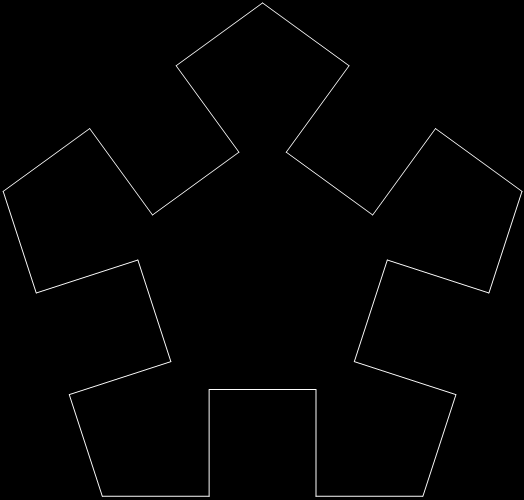
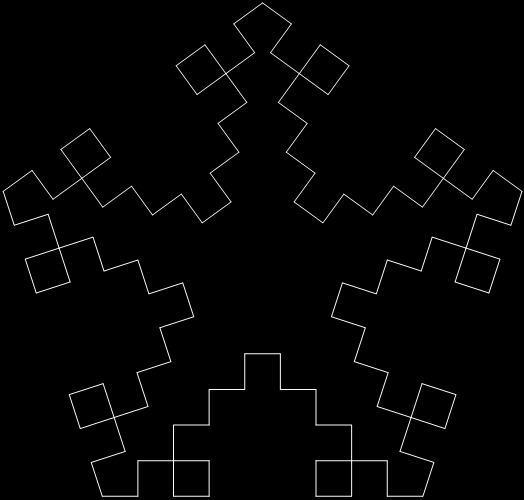
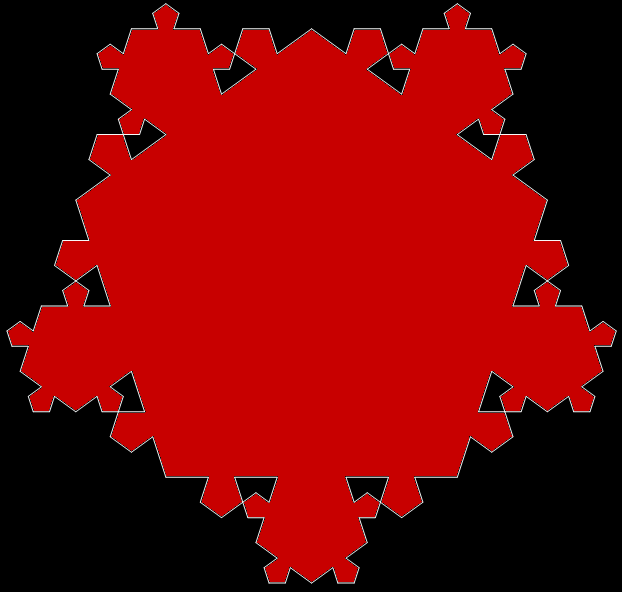
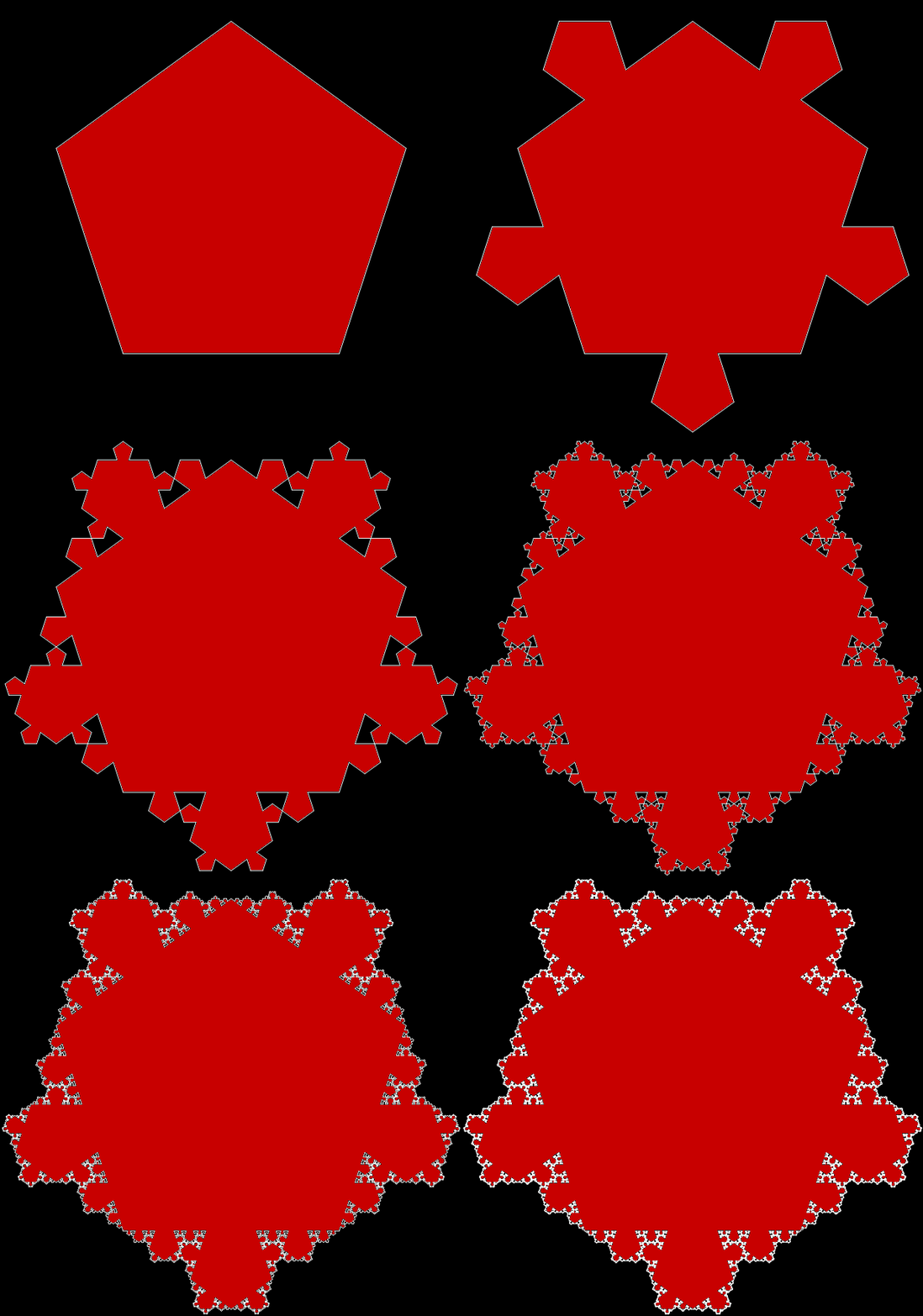
And a Koch pentagon, in which at each stage you erect a pentagon on the middle of each line whose sides are 1 – (1/φ^2 * 2) = 0·236067977… the length of the line (I used 55/144 as an approximation of 1/φ^2):

Koch pentagon (side 55/144) #1


Koch pentagon #2


Koch pentagon #3


Koch pentagon #4


Koch pentagon #5


Koch pentagon #6


Koch pentagon (animated)


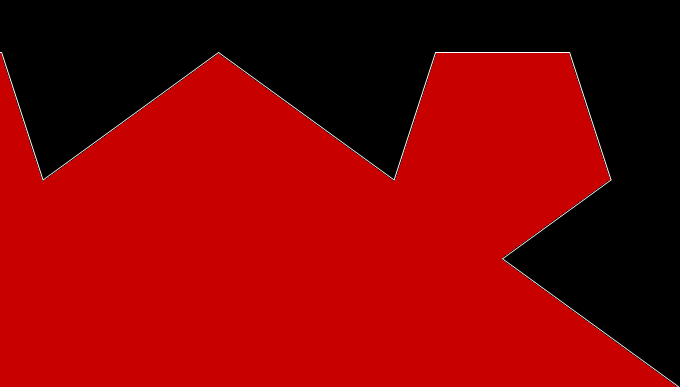
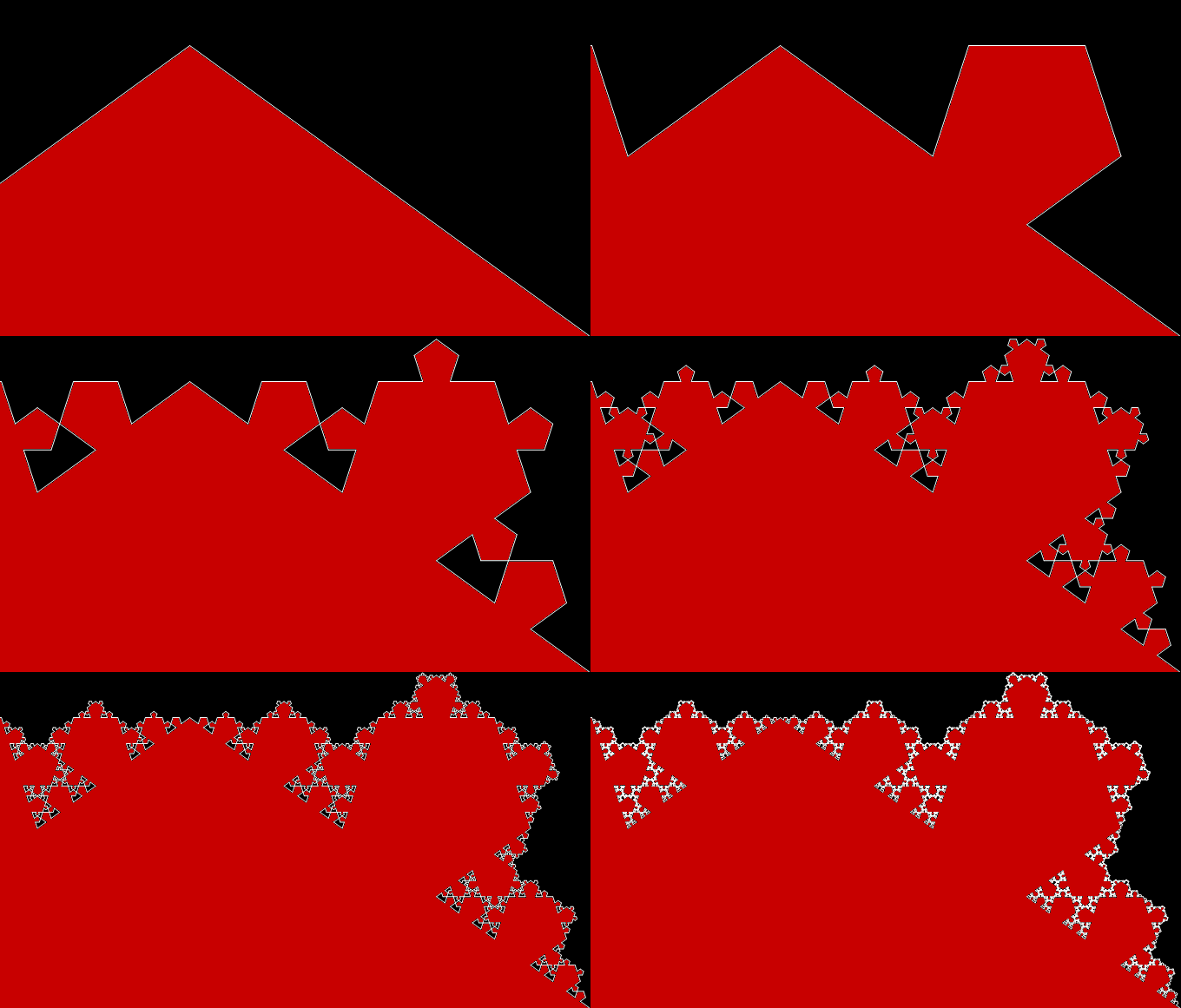
In this close-up, you can see how precisely the sprouting pentagons kiss at each stage:

Koch pentagon (close-up) #1


Koch pentagon (close-up) #2


Koch pentagon (close-up) #3


Koch pentagon (close-up) #4


Koch pentagon (close-up) #5


Koch pentagon (close-up) #6


Koch pentagon (close-up) (animated)


Eternal LIFE

The French mathematician Siméon-Denis Poisson (1781-1840) once said: « La vie n’est bonne qu’à deux choses : à faire des mathématiques et à les professer. » — “Life is good only for two things: doing mathematics and teaching mathematics.” The German philosopher Nietzsche wouldn’t have agreed. He thought (inter alia) that we must learn to accept life as eternally recurring. Everything we do and experience will happen again and again for ever. Can you accept life like that? Then your life is good.

But neither Poisson or Nietzsche knew that Life, with a capital L, would take on a new meaning in the 20th century. It became a mathematical game played on a grid of squares with counters. You start by placing counters in some pattern, regular or random, on the grid, then you add or remove counters according to three simple rules applied to each square of the grid:

1. If an empty square has exactly three counters as neighbors, put a new counter on the square.
2. If a counter has two or three neighbors, leave it where it is.
3. If a counter has less than two or more than three neighbors, remove it from the grid.

And there is a meta-rule: apply all three rules simultaneously. That is, you check all the squares on the grid before you add or remove counters. With these three simple rules, patterns of great complexity and subtlety emerge, growing and dying in a way that reminded the inventor of the game, the English mathematician John Conway, of living organisms. That’s why he called the game Life.

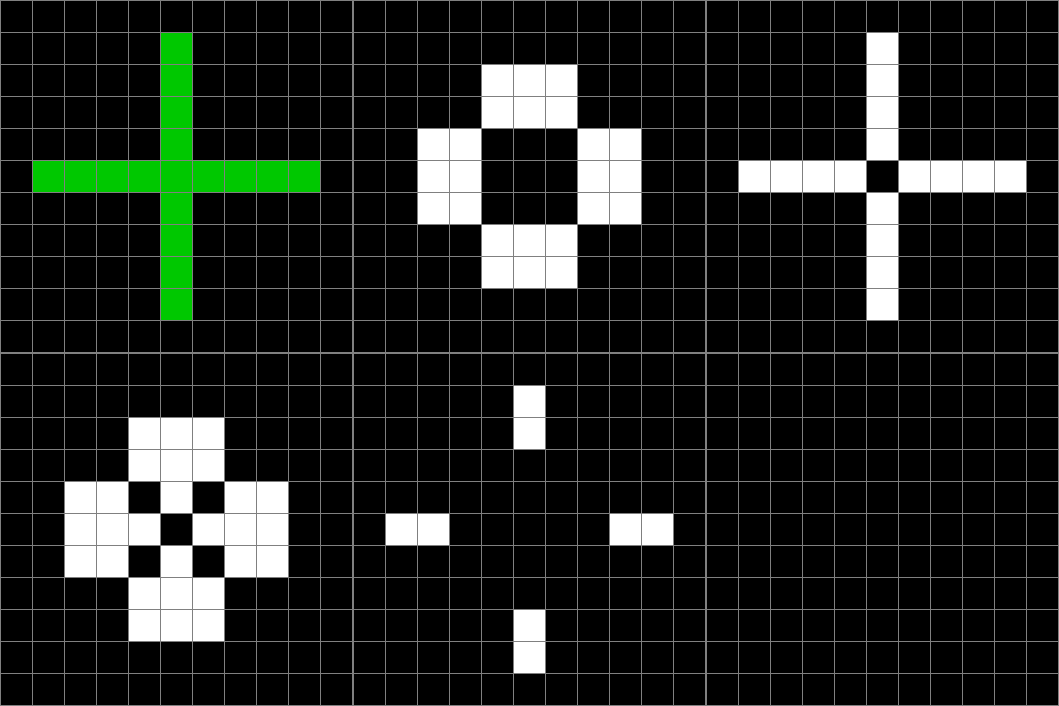
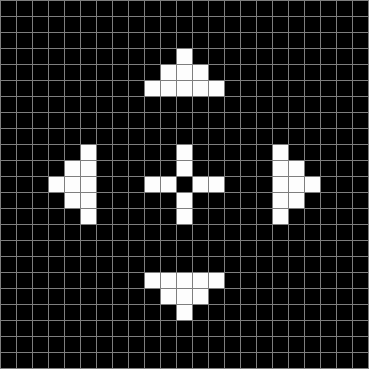
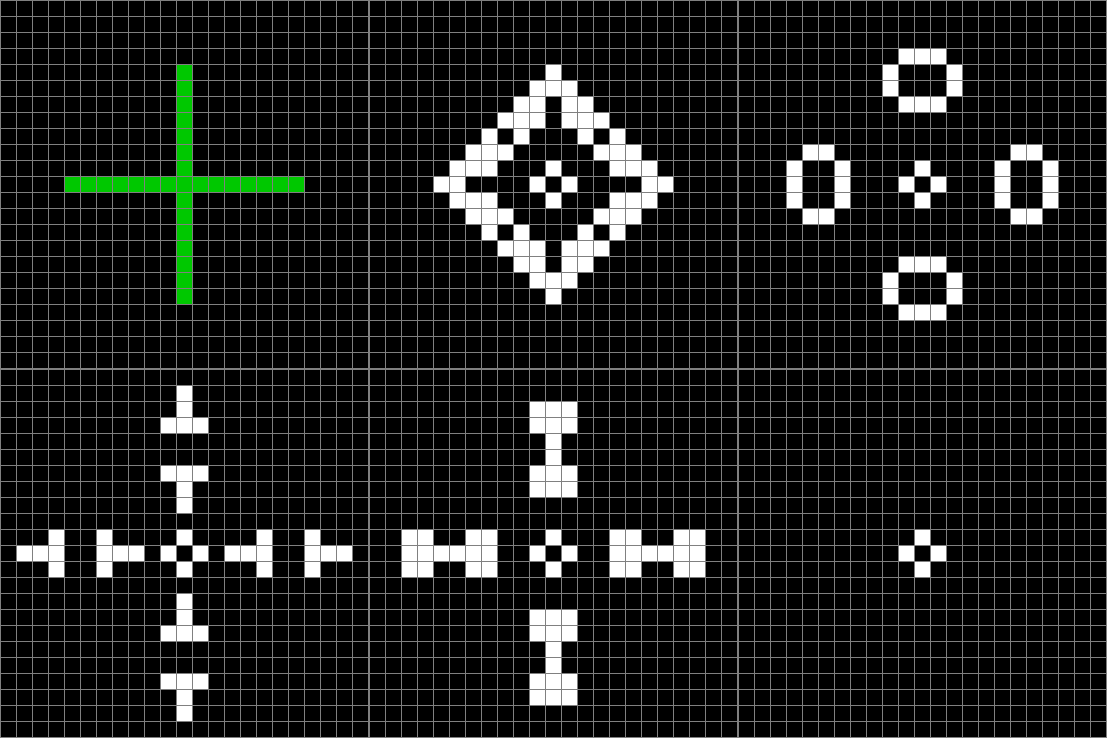
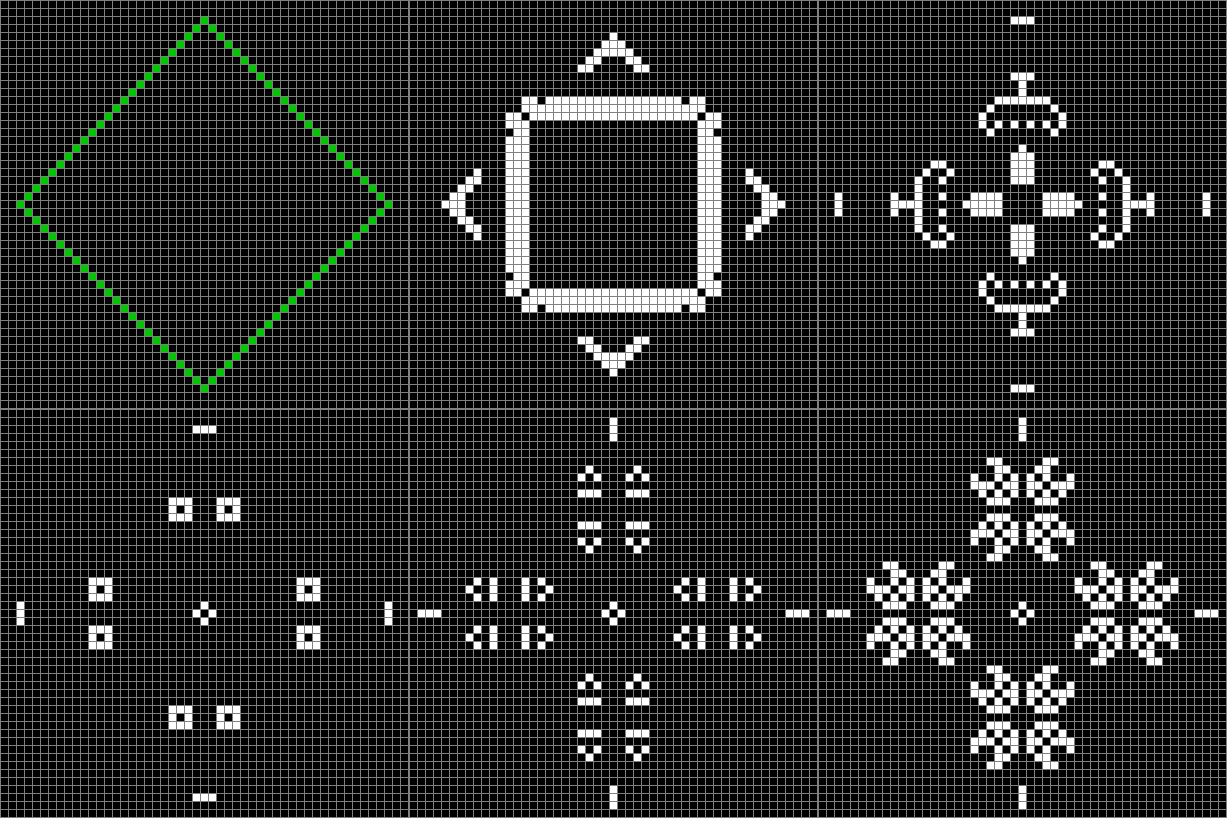
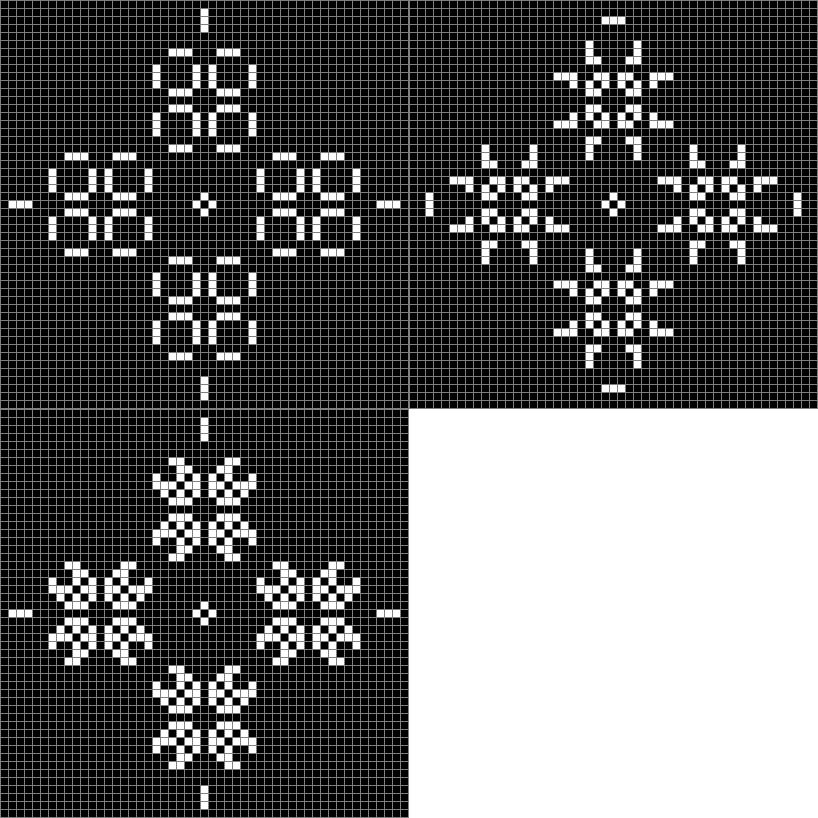
Let’s look at Life in action, with the seeding counters shown in green. Sometimes the seed will evolve and disappear, sometimes it will evolve into one or more fixed shapes, sometimes it will evolve into dynamic shapes that repeat again and again. Here’s an example of a seed that evolves and disappears:

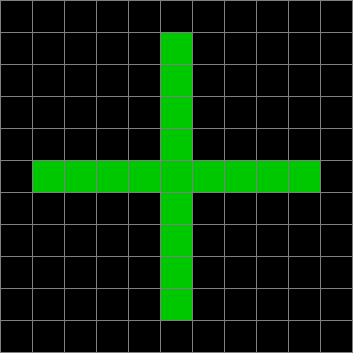
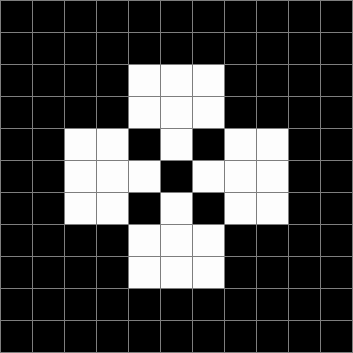
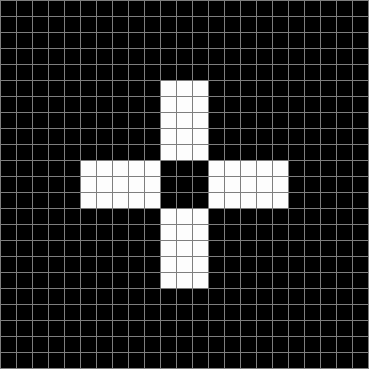
Seeded with cross (arms 4+1+4) stage #1


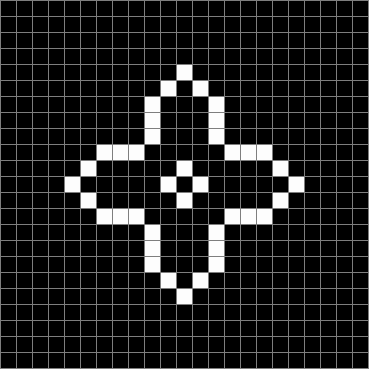
Life stage #2


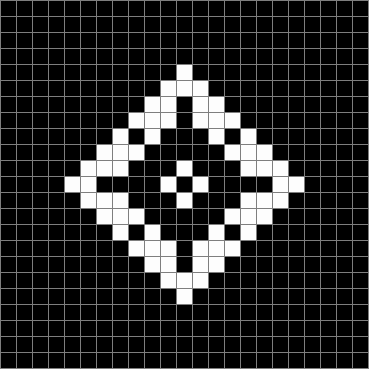
Life stage #3


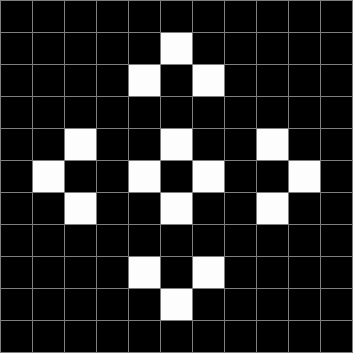
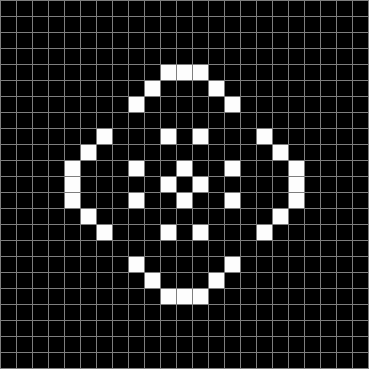
Life stage #4


Life stage #5


Life stage #6


Life stage #7


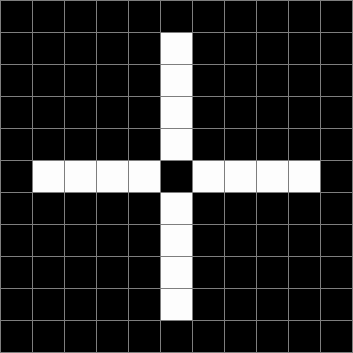
Death at stage #8


Life from cross (animated)


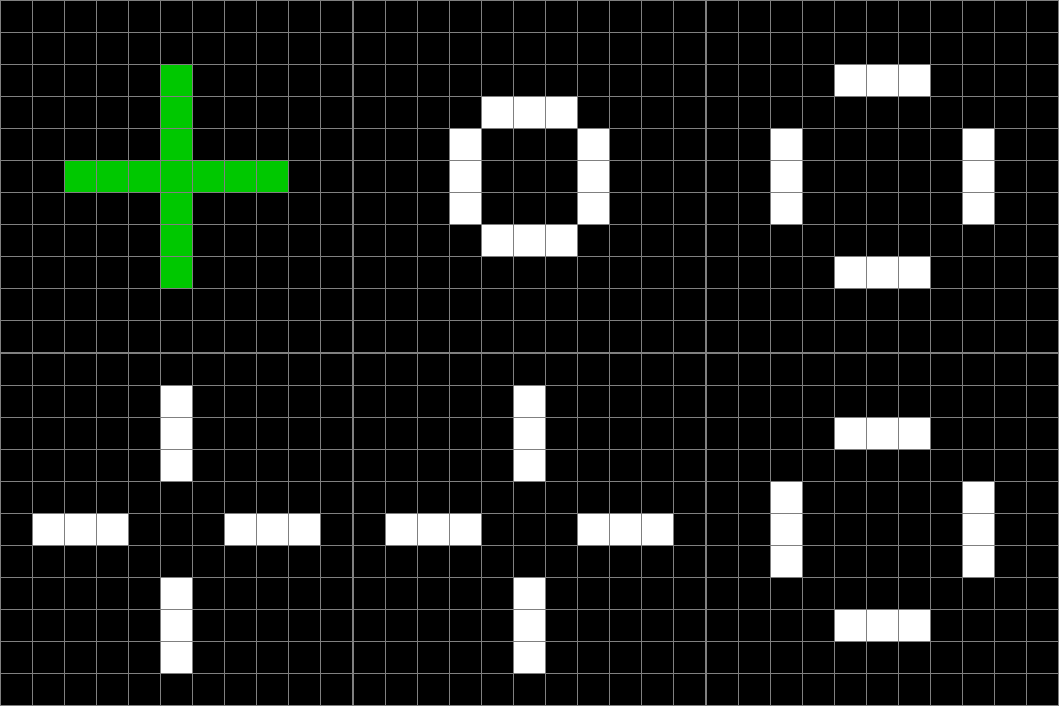
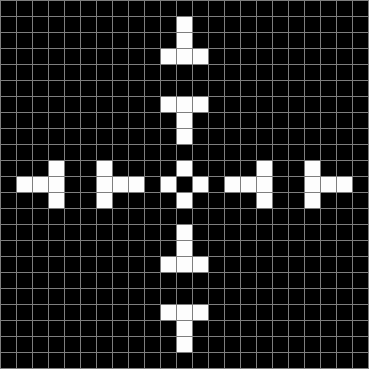
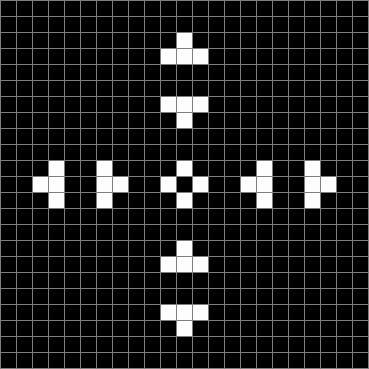
The final stage represents death. Now here’s a cross that evolves towards dynamism:

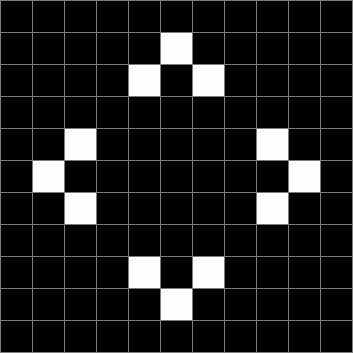
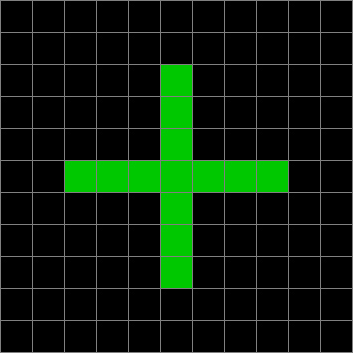
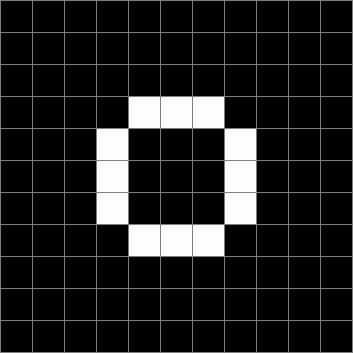
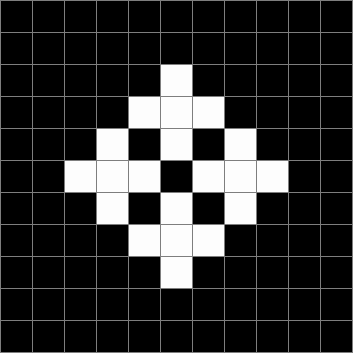
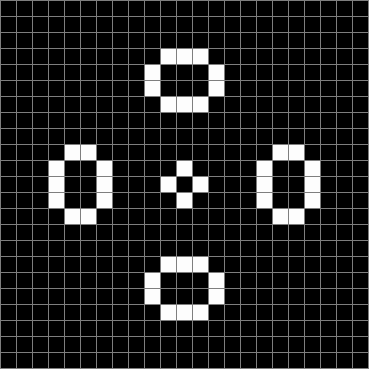
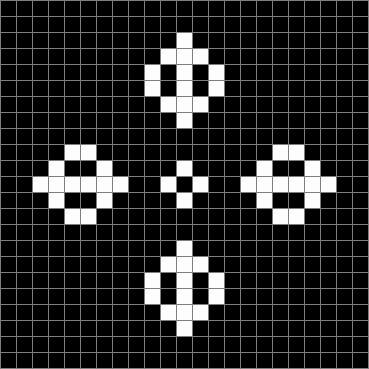
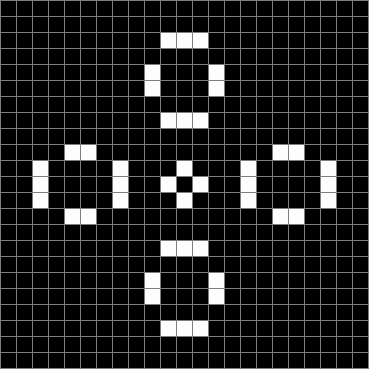
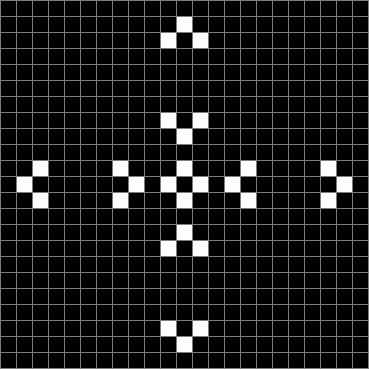
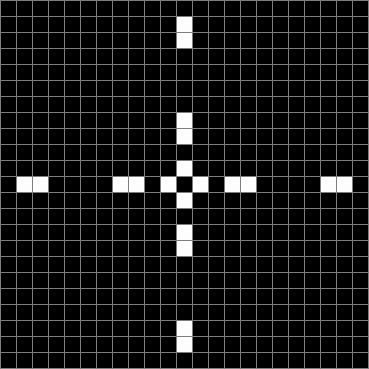
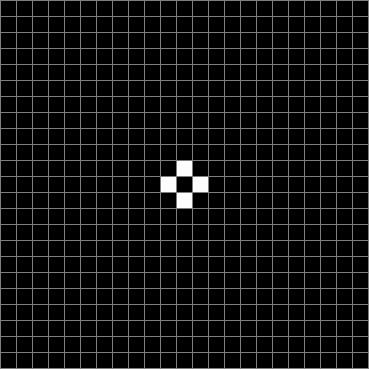
Life seeded with cross (arms 3+1+3) stage #1


Life stage #2


Life stage #3


Life stage #4


Life stage #5


Life stage #6 (same as stage #4)


Life stage #7 (same as stage #5)


Life stage #8 (same as stage #4 again)


Life from cross (animated)


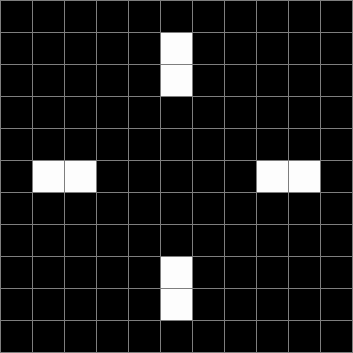
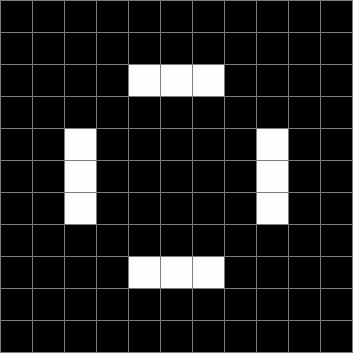
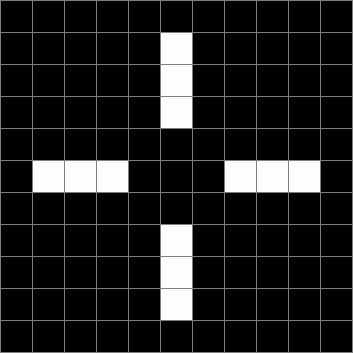
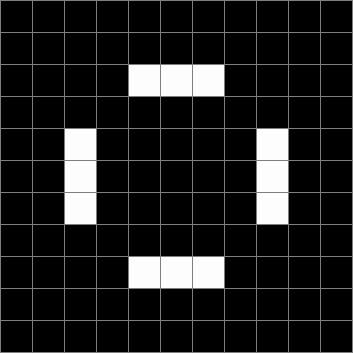
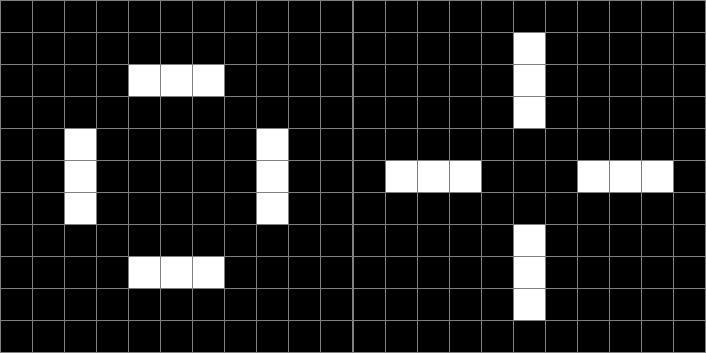
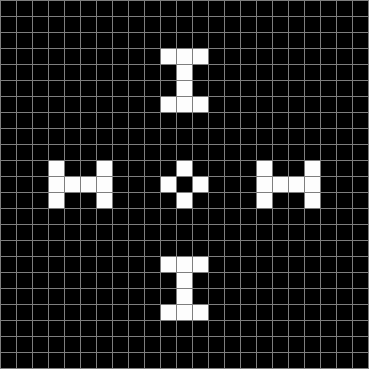
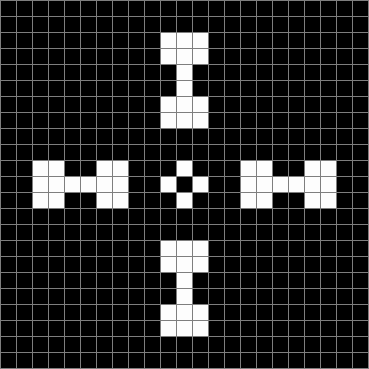
A line of three blocks swinging between horizontal and vertical is called a blinker:

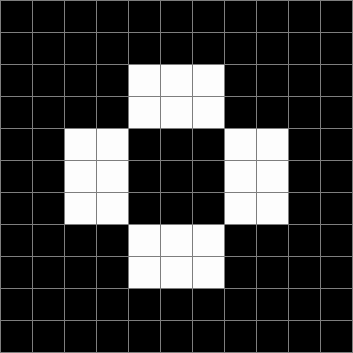
Four blinkers


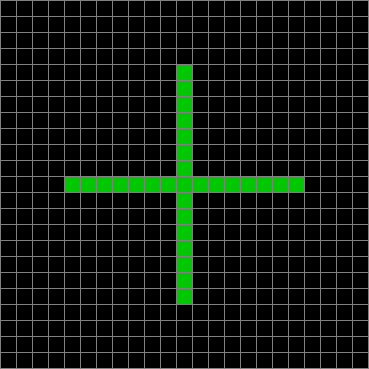
And here’s a larger cross that evolves towards stasis:

Life seeded with cross (arms 7+1+7) stage #1


Life stage #2


Life stage #3


Life stage #4


Life stage #5


Life stage #6


Life stage #7


Life stage #8


Life stage #9


Life stage #10


Life stage #11


Life stage #12


Life stage #13


Life stage #14


Life stage #15


Life stage #16


Life from cross (animated)


This diamond with sides of 24 blocks evolves towards even more dynamism:

Life from 24-sided diamond (animated)


Looping Life from 24-sided diamond (animated)


The game of Life obviously has many variants. In the standard form, you’re checking all eight squares around the square whose fate is in question. If that square is (x,y), these are the eight other squares you check:

(x+1,y+1), (x+0,y+1), (x-1,y+1), (x-1,y+0), (x-1,y-1), (x+0,y-1), (x+1,y-1), (x+1,y+0)

Now trying checking only four squares around (x,y), the ones above and below and to the left and the right:

(x+1,y+1), (x-1,y+1), (x-1,y-1), (x+1,y-1)

And apply a different set of rules:

1. If a square has one or three neighbors, it stays alive or (if empty) comes to life
2. Otherwise the square remains or becomes empty.

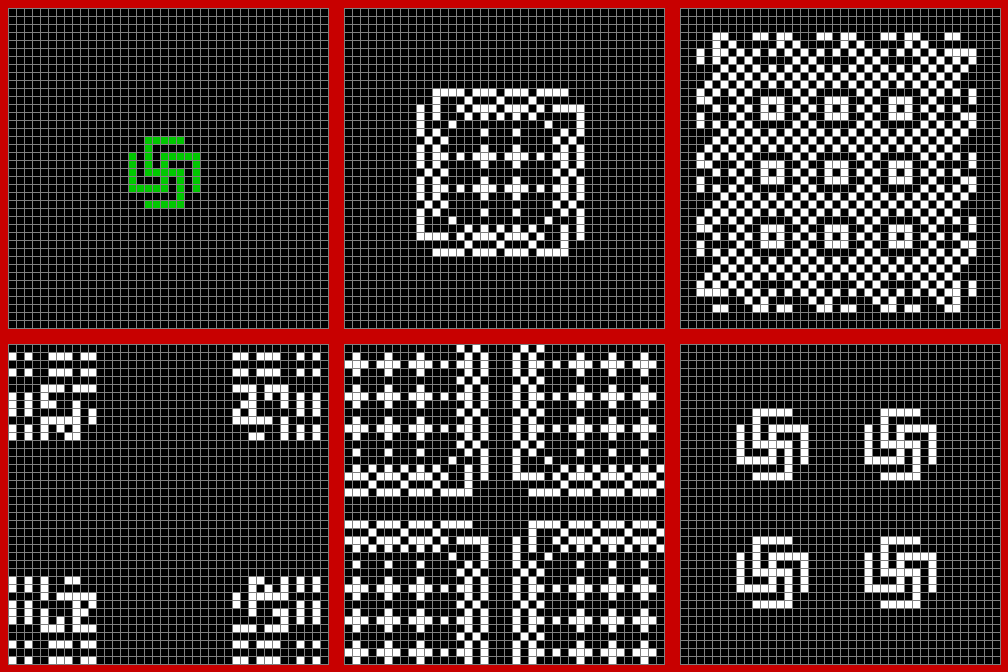
With that check and those rules, the seed first disappears, then re-appears, for ever (note that the game is being played on a torus):

Evolution of spiral seed


Eternally recurring spiral


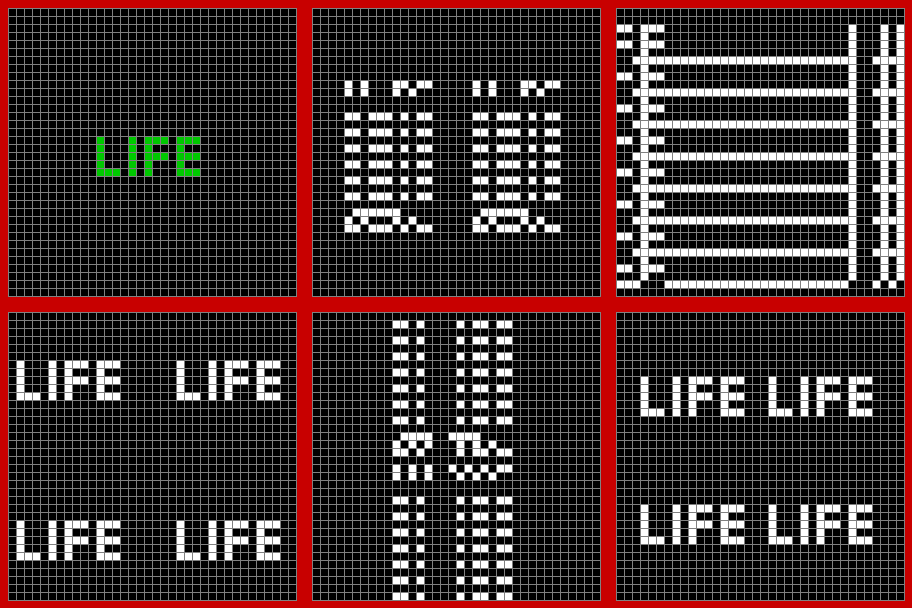
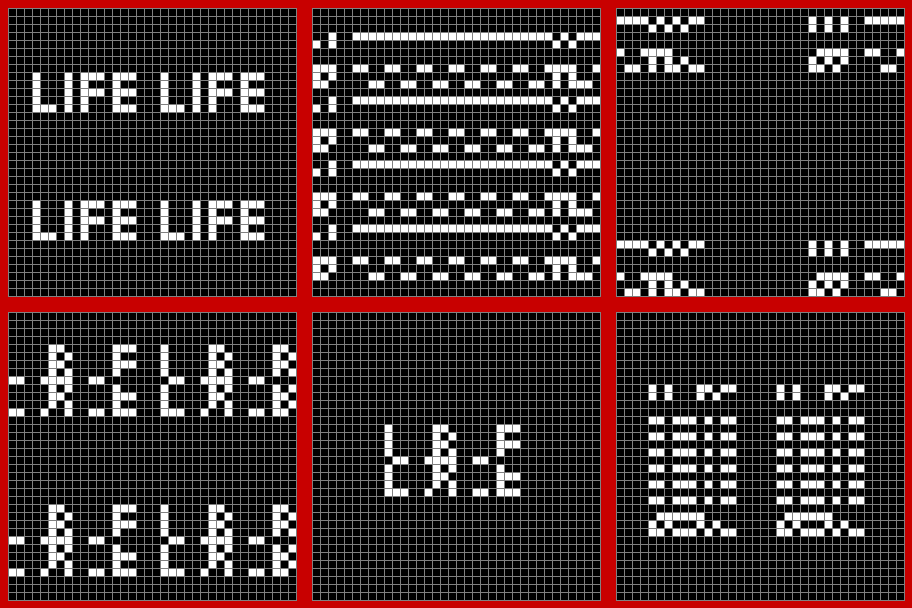
This happens with any seed, so you can use Life to bring Nietzsche’s eternal recurrence to life:

Evolution of LIFE


Eternally recurring LIFE


Blancmange Butterfly

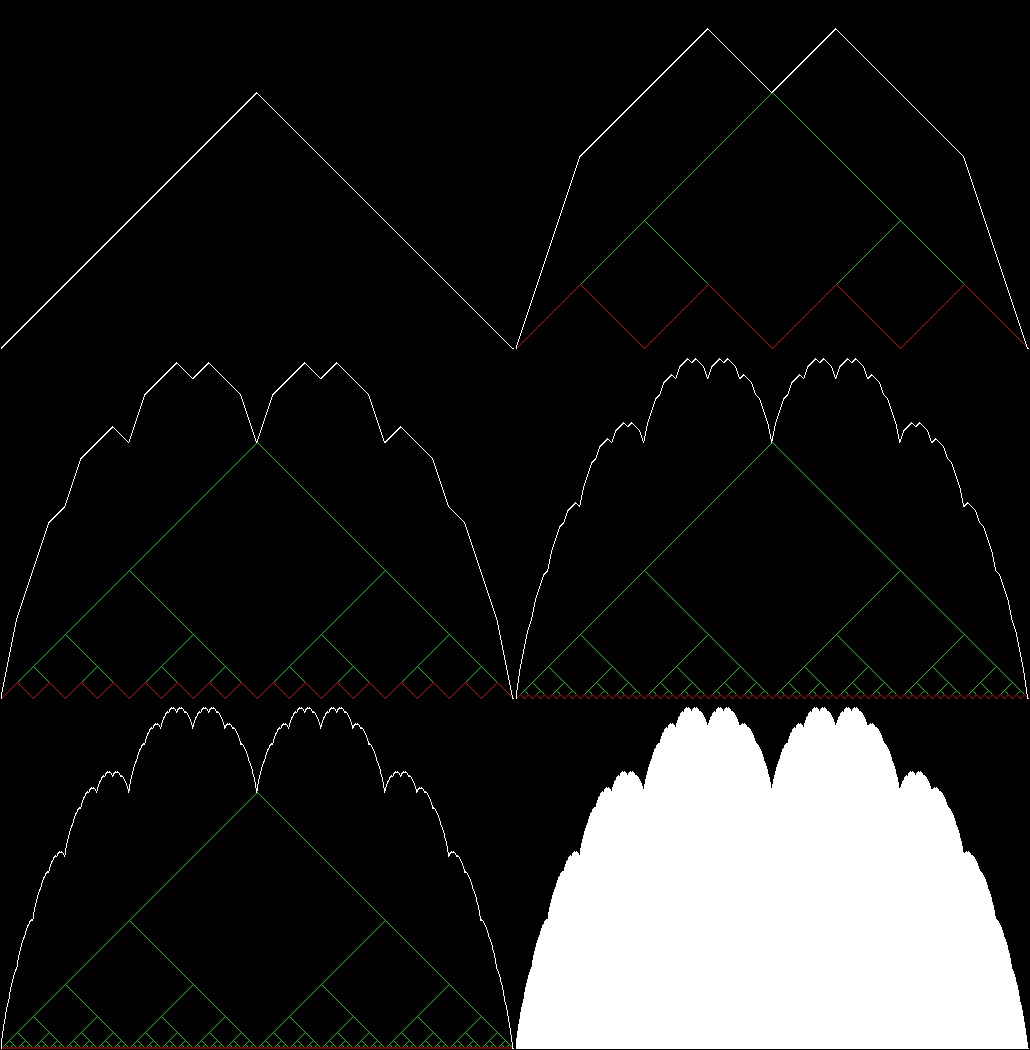
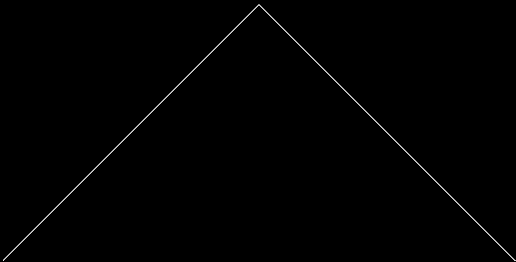
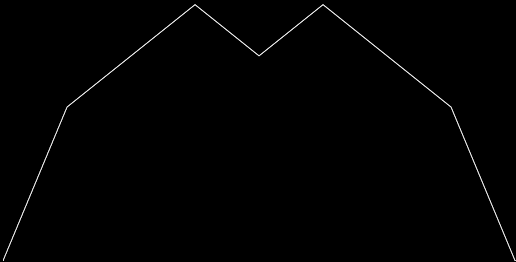
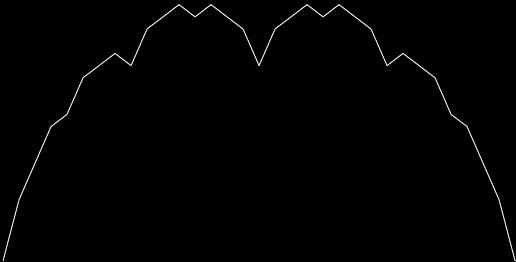
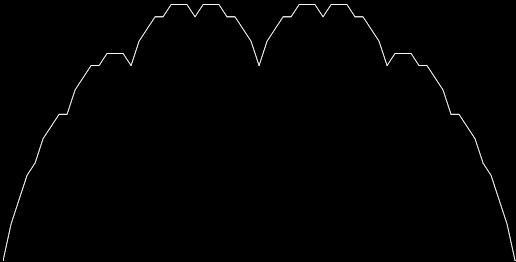
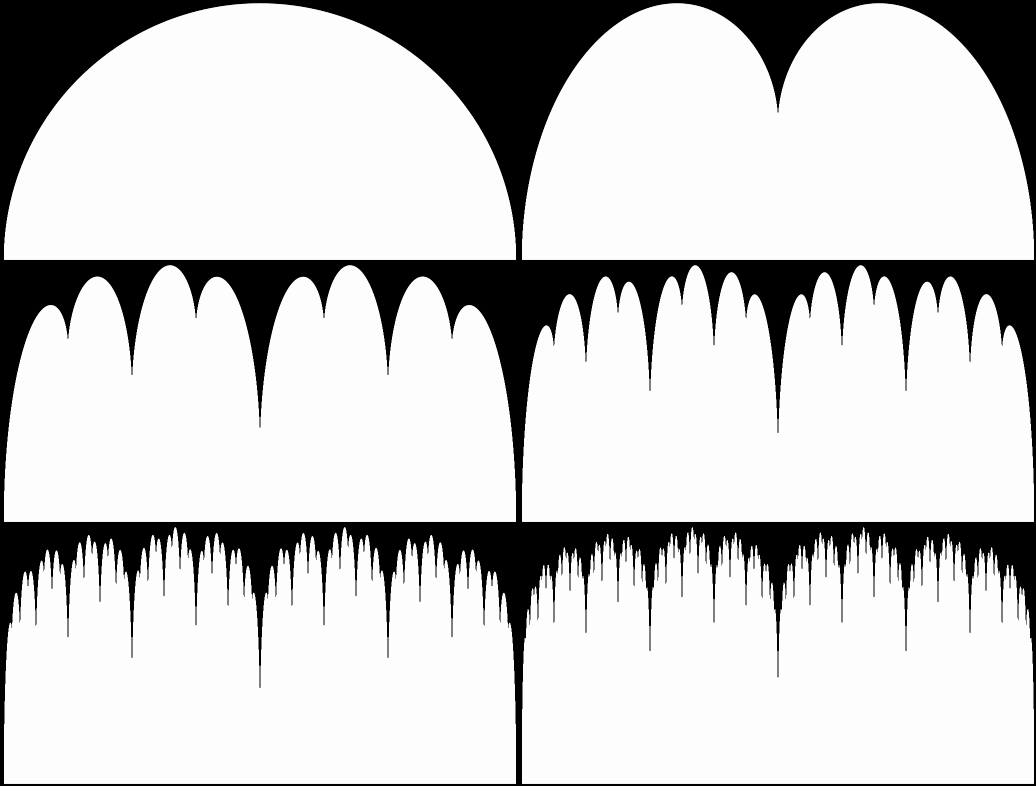
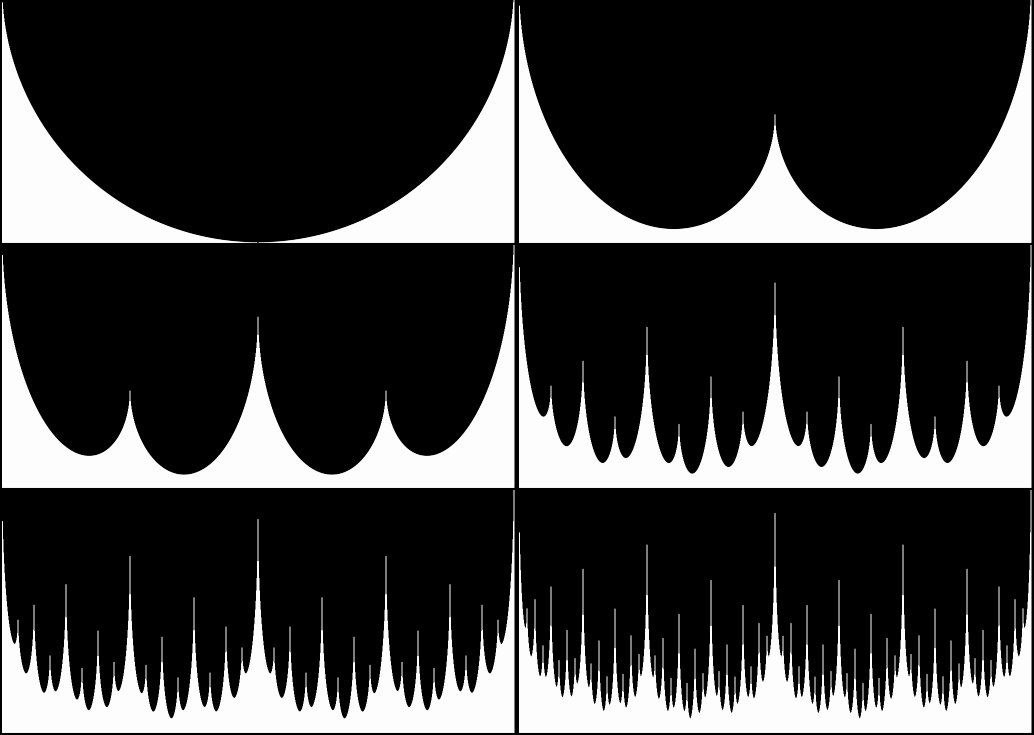
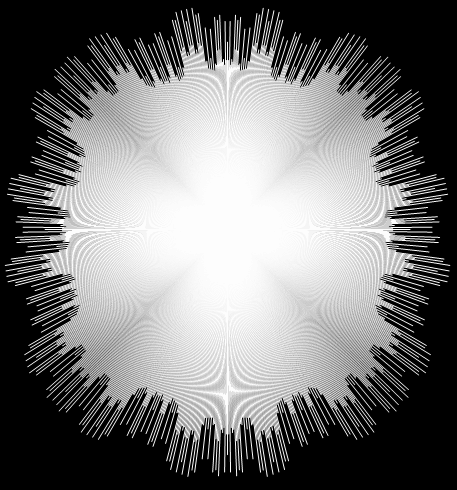
Blancmange butterfly. Is that a ’60s psychedelic band? No, it’s one of the shapes you can get by playing with blancmange curves. As I described in “White Rites”, a blancmange curve is a fractal created by summing the heights of successively smaller and more numerous zigzags, like this:

blanc_all

Zigzags 1 to 10


blancmange_all

Zigzags 1 to 10 (animated)


blanc_solid

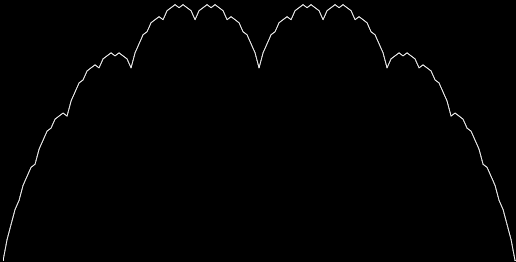
Blancmange curve


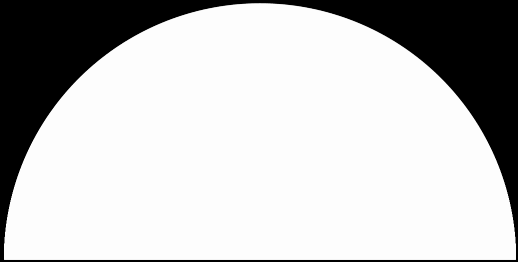
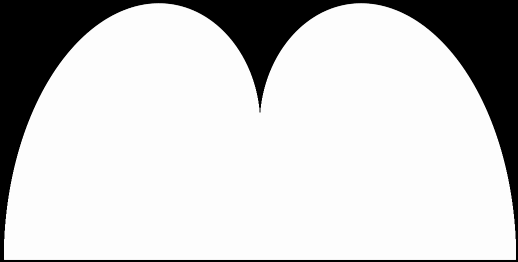
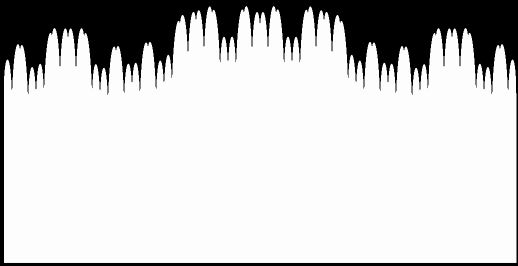
In the blancmange curves below, the height (i.e., the y co-ordinate) has been normalized so that all the images are the same height:


Construction of a normalized blancmange curve (animated)


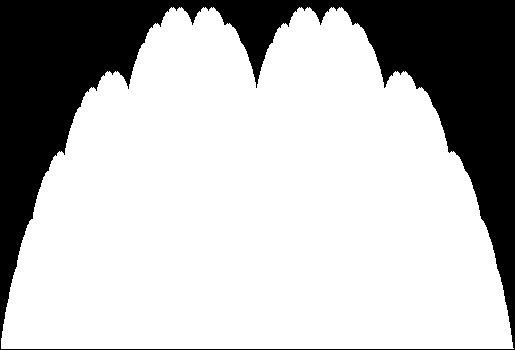
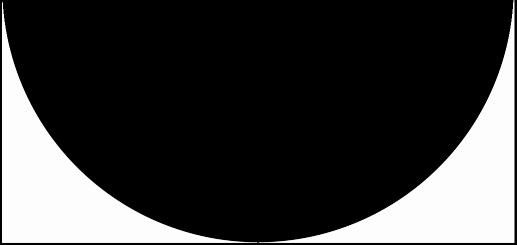
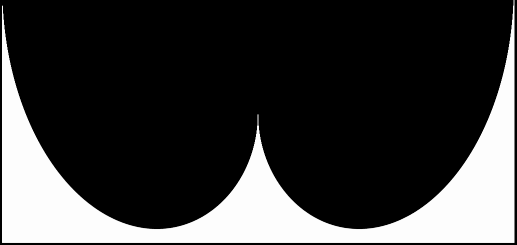
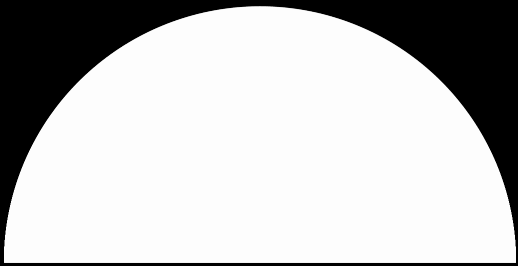
This is the solid version:


Solid normalized blancmange curve (animated)


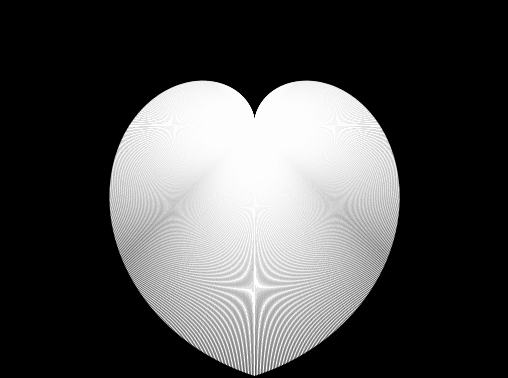
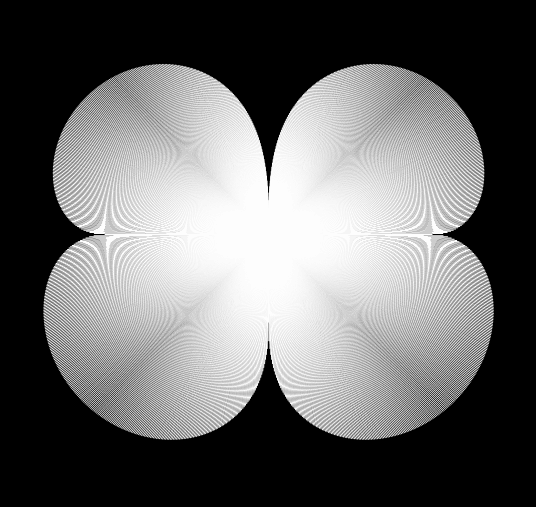
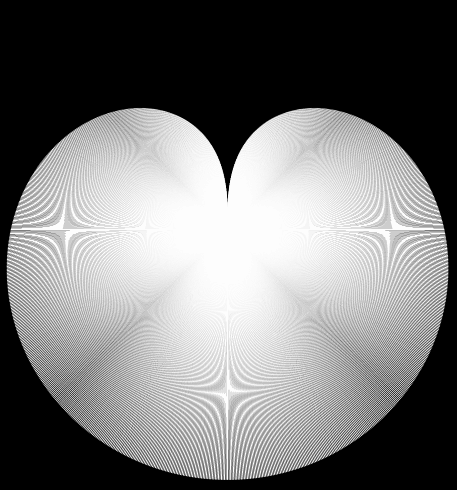
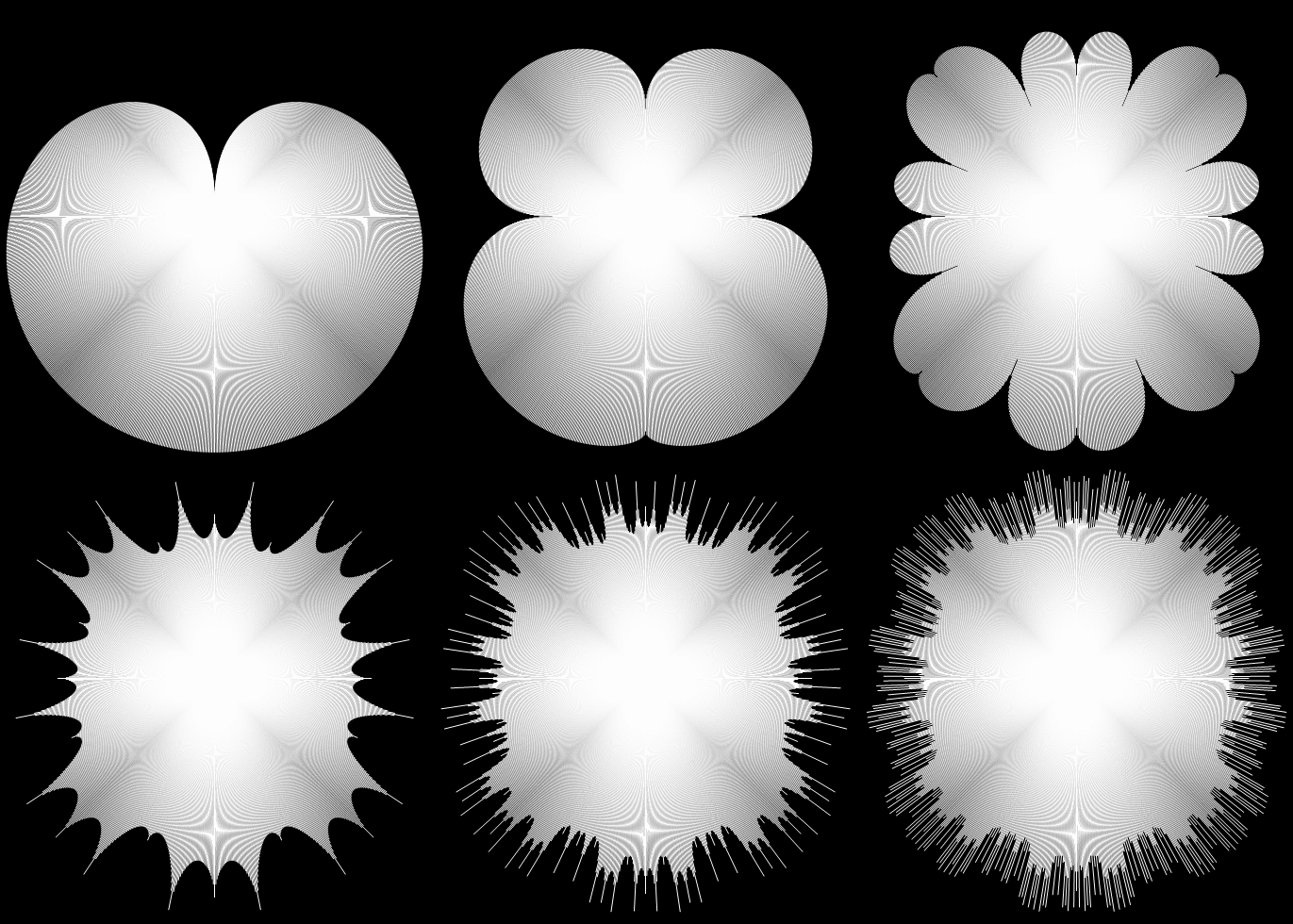
I wondered what happens when you wrap a blancmange curve around a circle. Well, this happens:


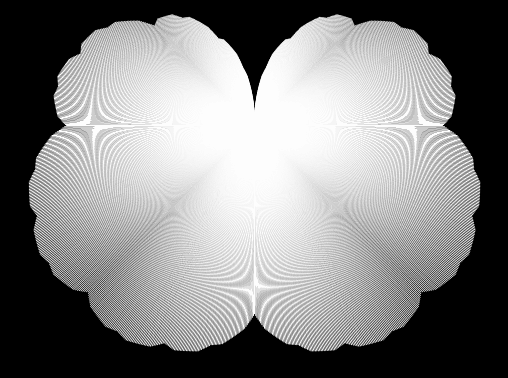
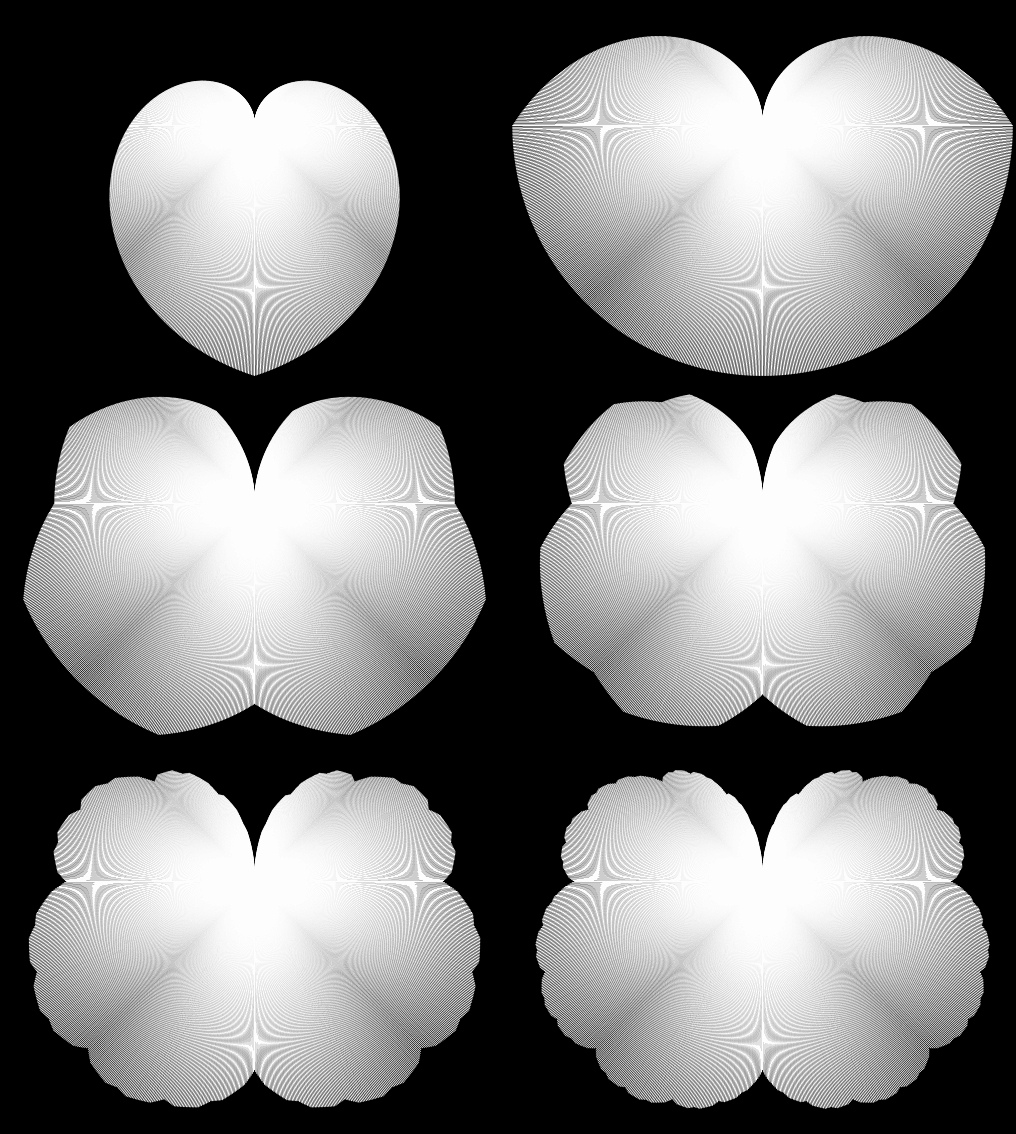
Construction of a blancmange circle (animated)


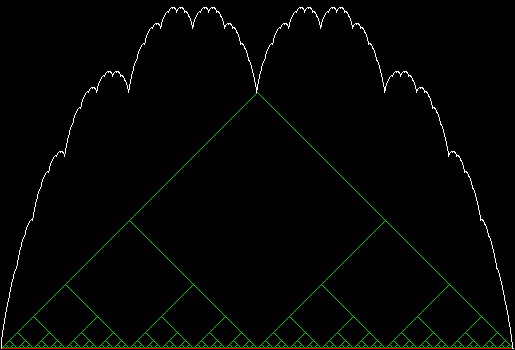
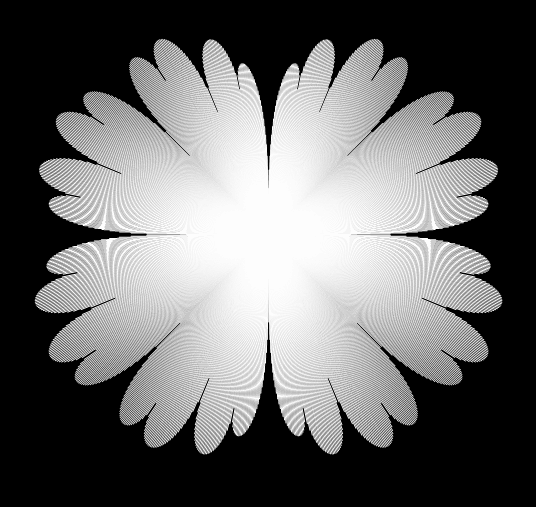
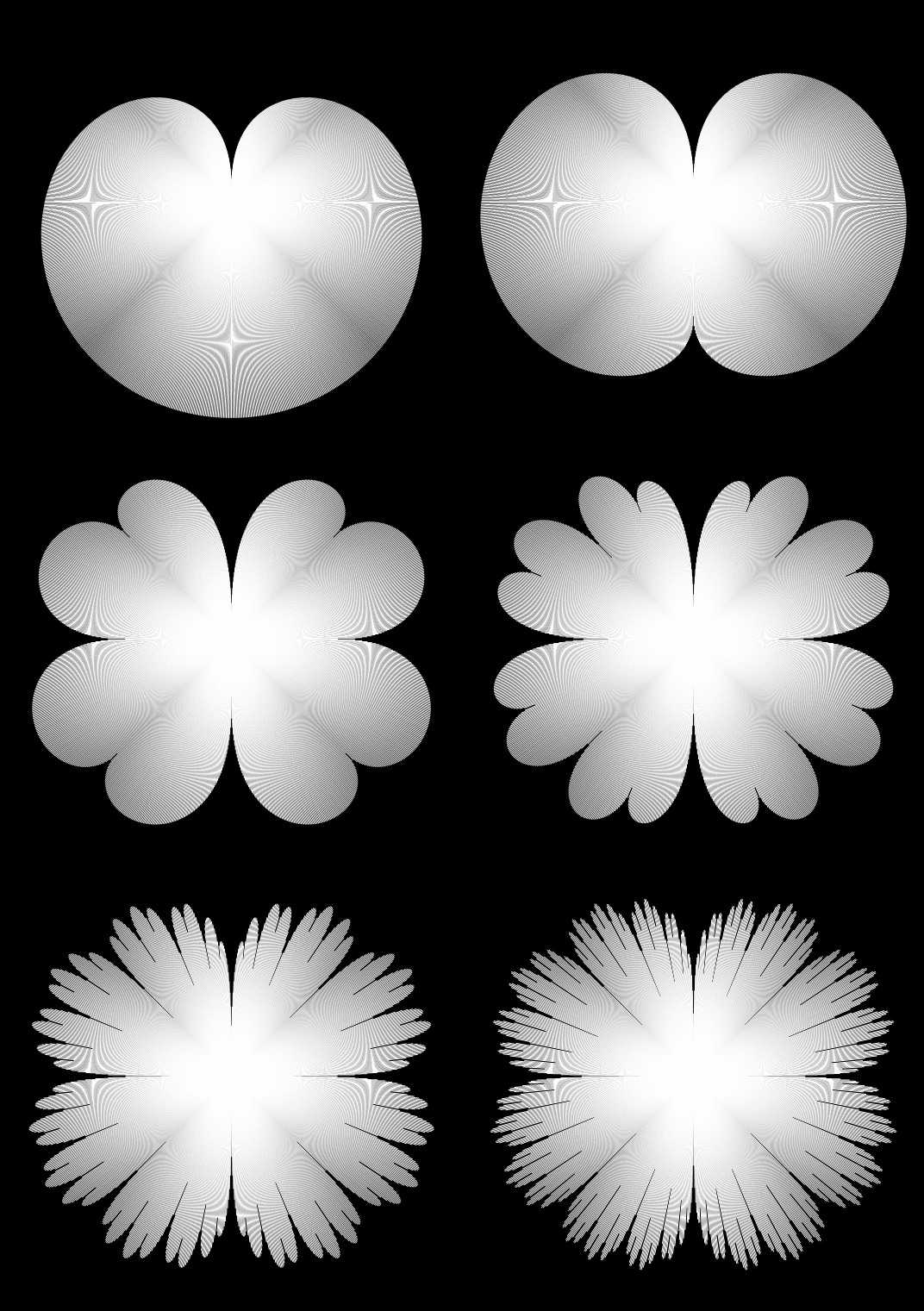
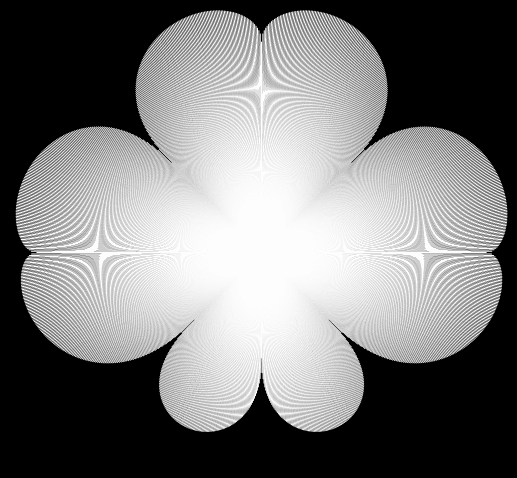
You get what might be called a blancmange butterfly. The solid version looks like this (patterns in the circles are artefacts of the graphics program I used):


Solid blancmange circle (animated)


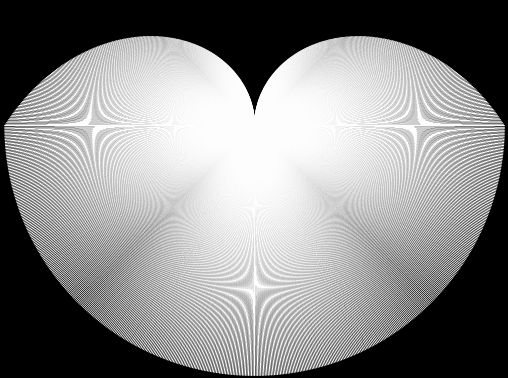
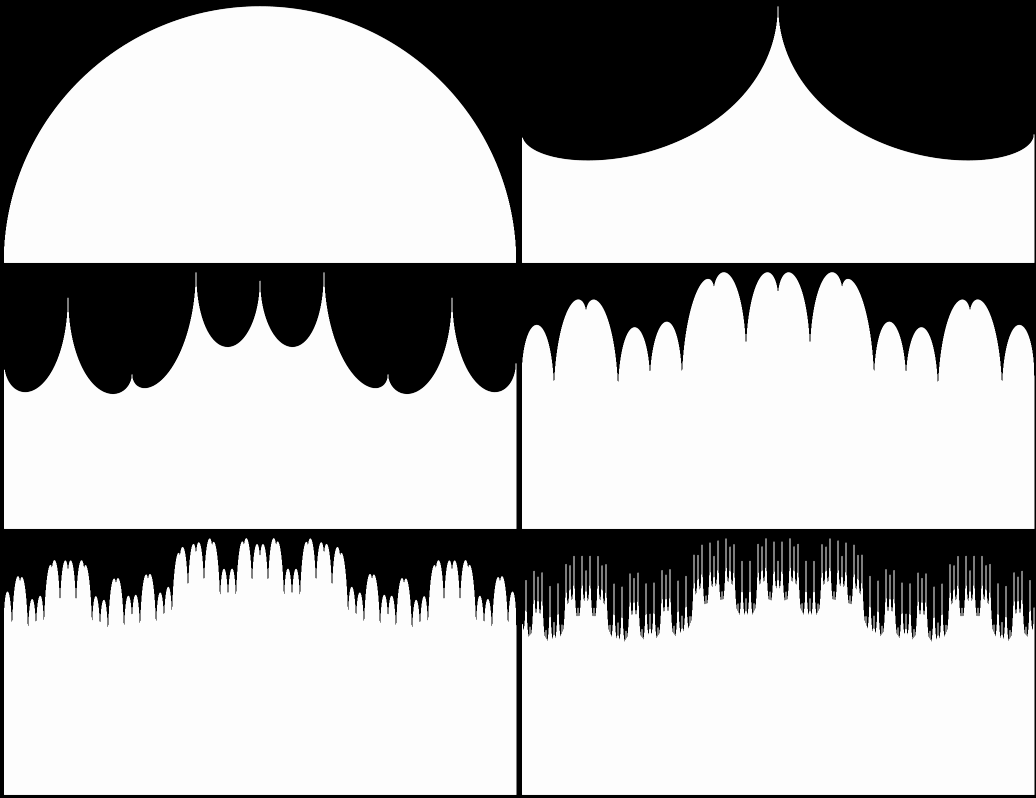
Next I tried using arcs rather zigzags to construct the blancmange curves and blancmange circles:


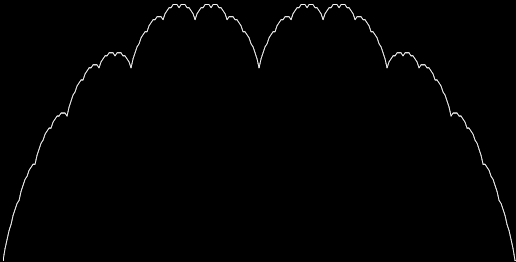
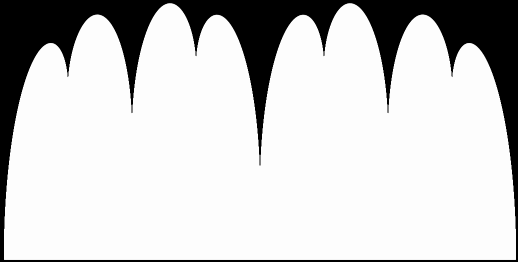
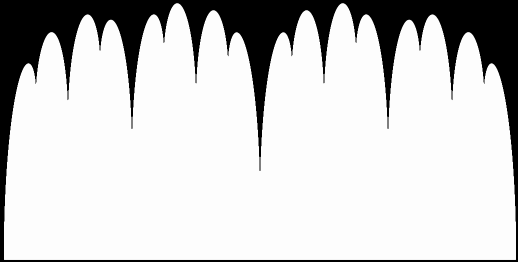
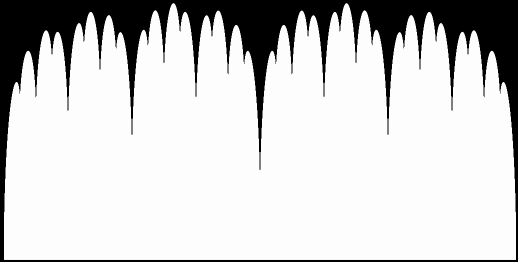
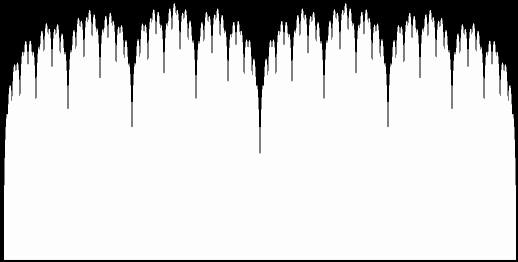
Arching blancmange curve (i.e., constructed with arcs) (animated)


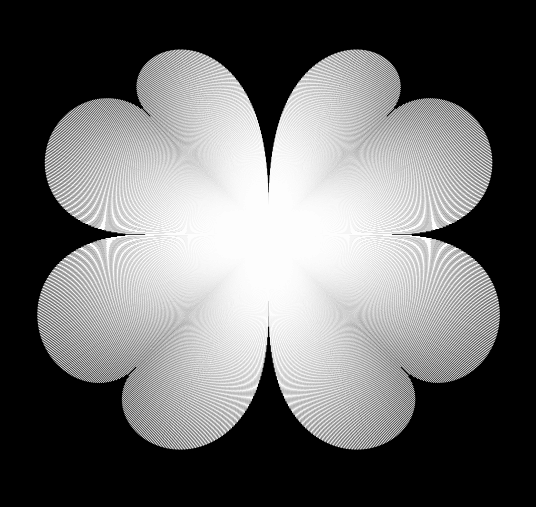
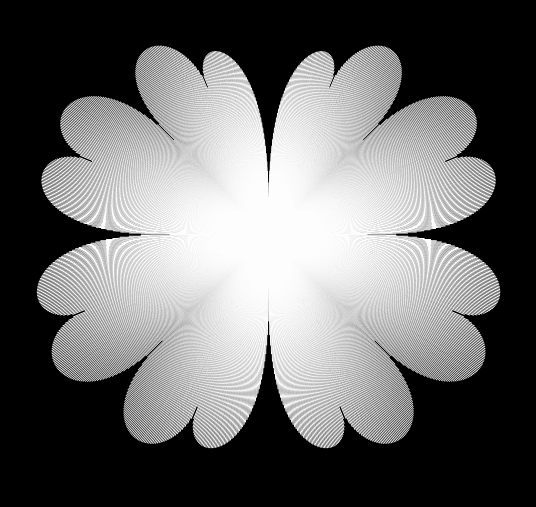
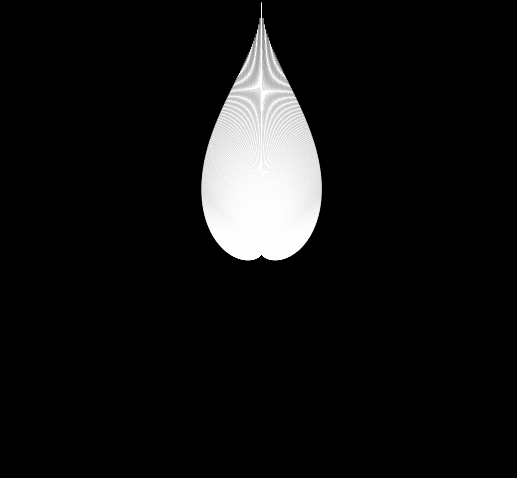
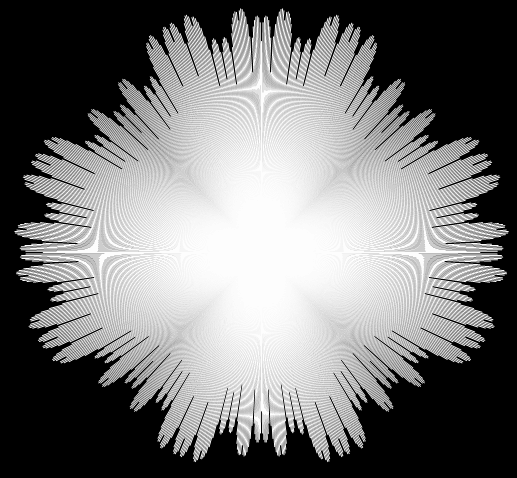
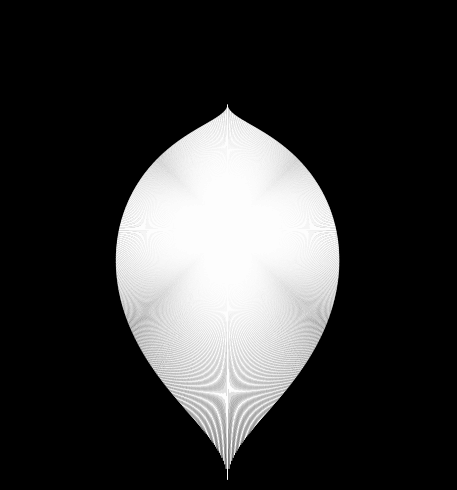
And below is the circular version of a blancmange curve constructed with arcs. The arching circular blancmanges look even more like buttocks and then intestinal villi (the fingerlike projections lining our intestines):


Arching blancmange circle (animated)


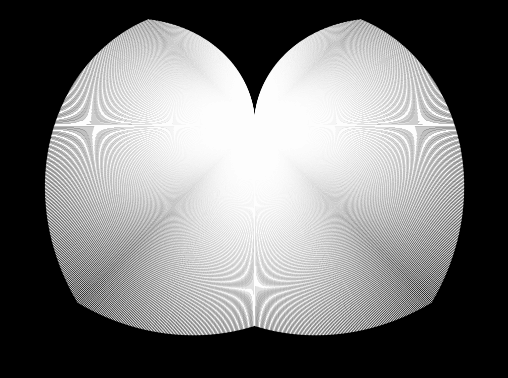
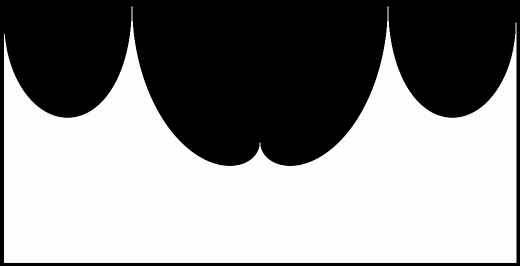
The variations on blancmange curves don’t stop there — in fact, they’re infinite. Below is a negative arching blancmange curve, where the heights of the original arching blancmange curve are subtracted from the (normalized) maximum height:


Negative arching blancmange curve (animated)


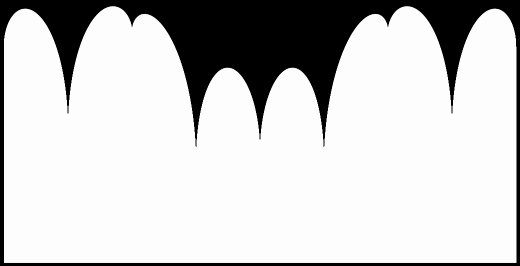
And here’s an arching blancmange curve that’s alternately negative and positive:


Negative-positive arching blancmange curve (animated)


The circular version looks like this:


Negative-positive arching blancmange circle (animated)


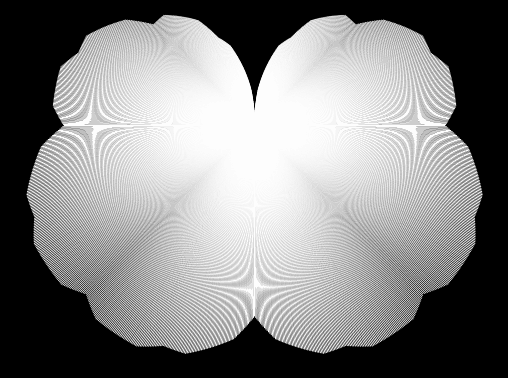
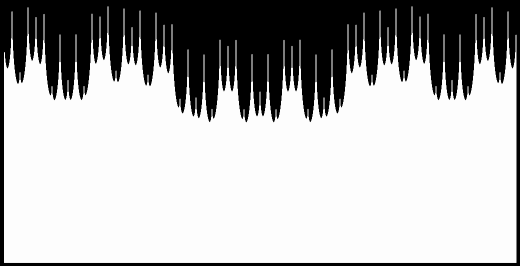
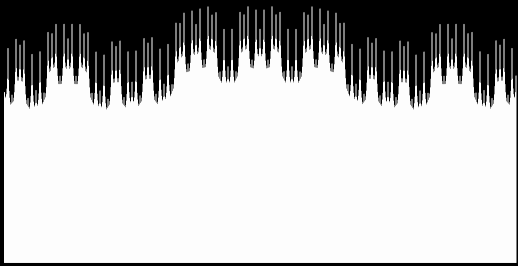
Finally, here’s an arching blancmange curve that’s alternately positive and negative:


Positive-negative arching blancmange curve (animated)


And the circular version:


Positive-negative arching blancmange circle (animated)


Elsewhere Other-Accessible…

White Rites — more variations on blancmange curves

First Whirled Warp

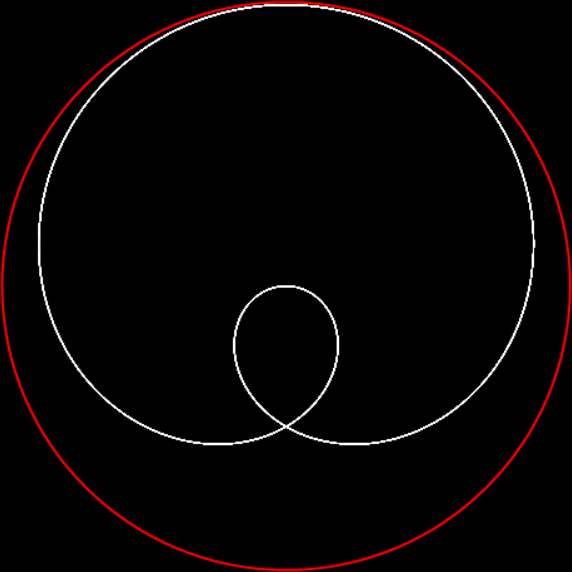
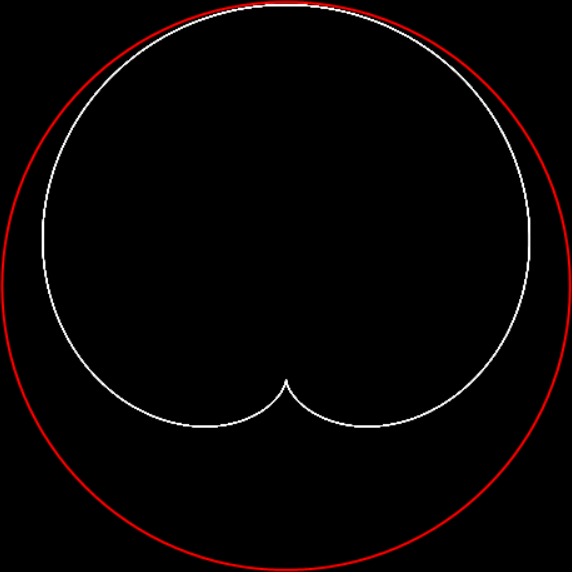
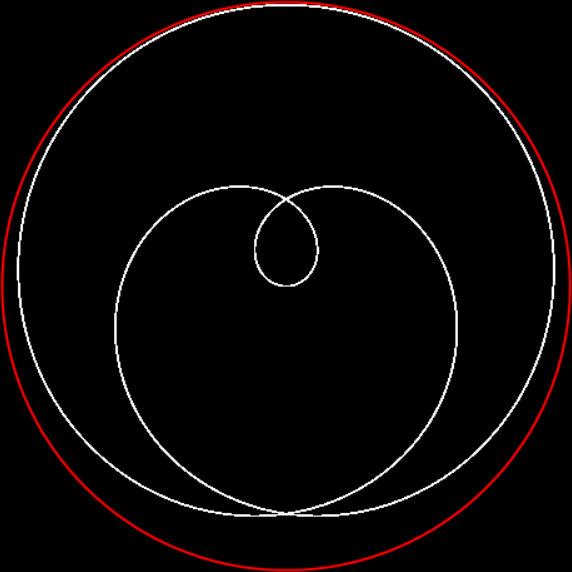
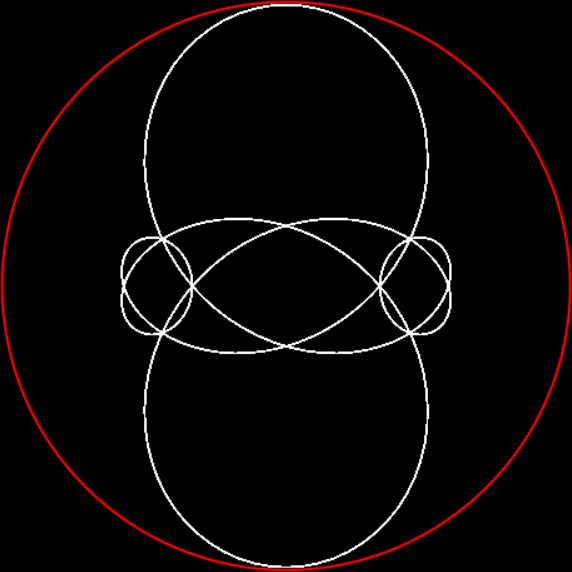
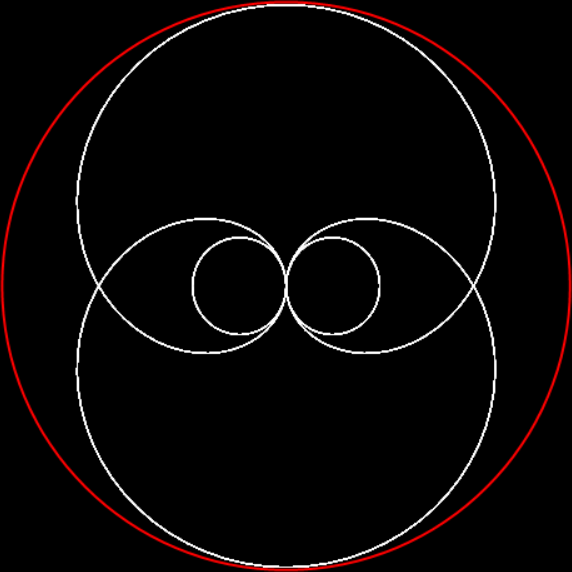
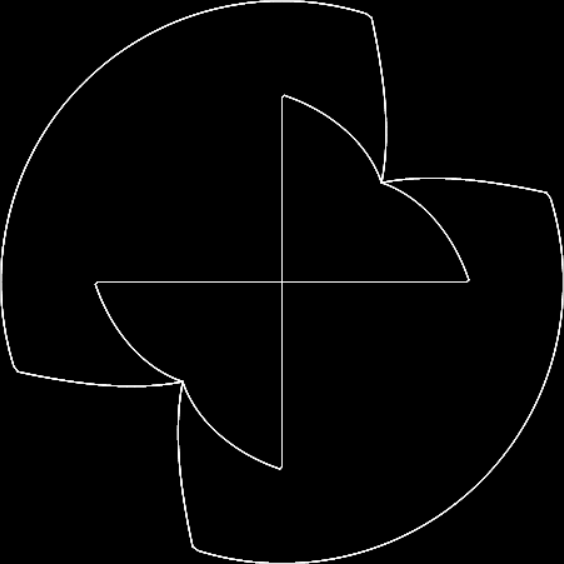
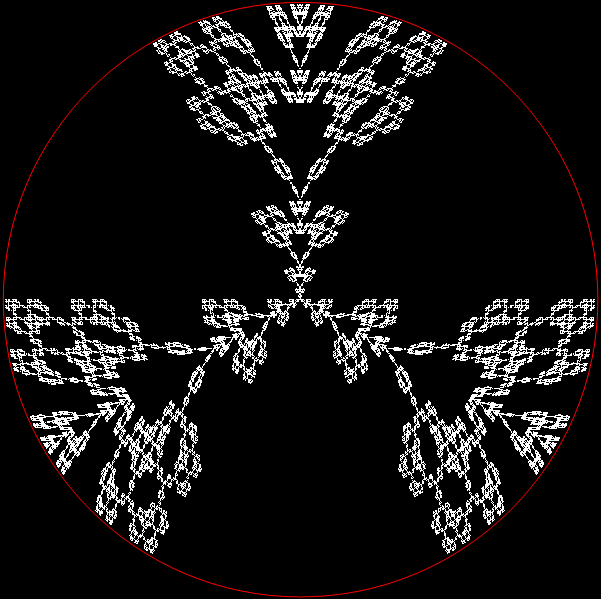
Imagine two points moving clockwise around the circumference of a circle. Find the midpoint between the two points when one point is moving twice as fast as the other. The midpoint will trace this shape:

Midpoint of two points moving around circle at speeds s and s*2

(n.b. to make things easier to see, the red circle shown here and elsewhere is slightly larger than the virtual circle used to calculate the midpoints)


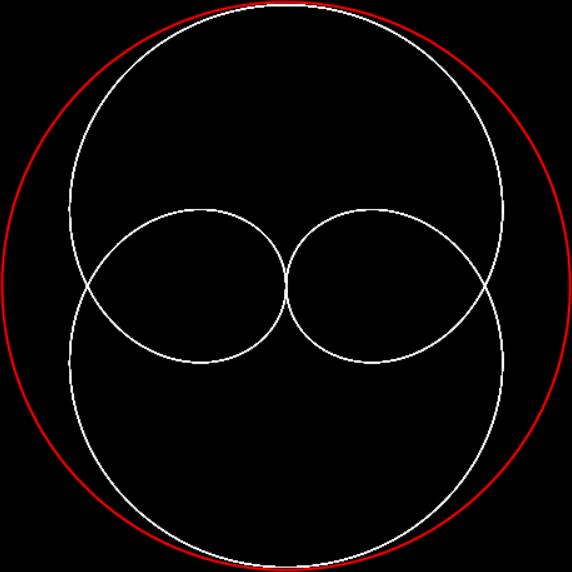
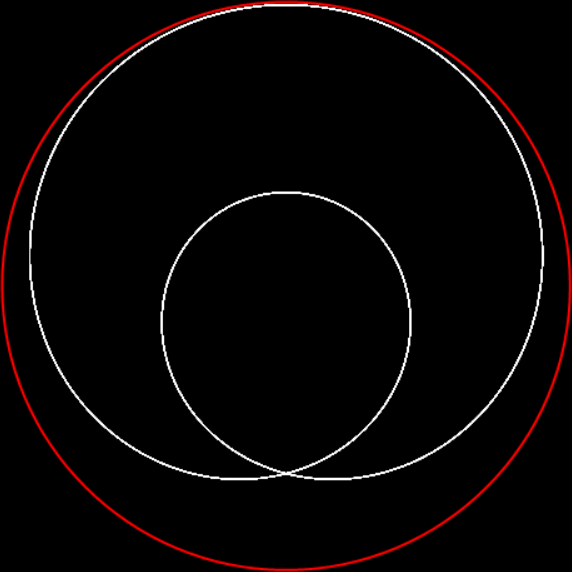
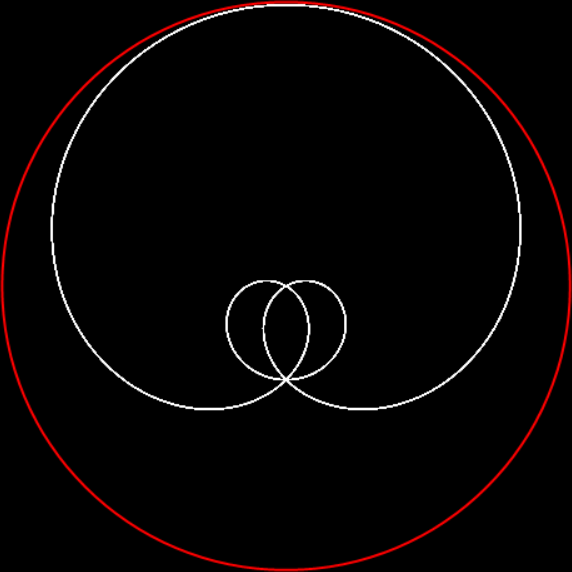
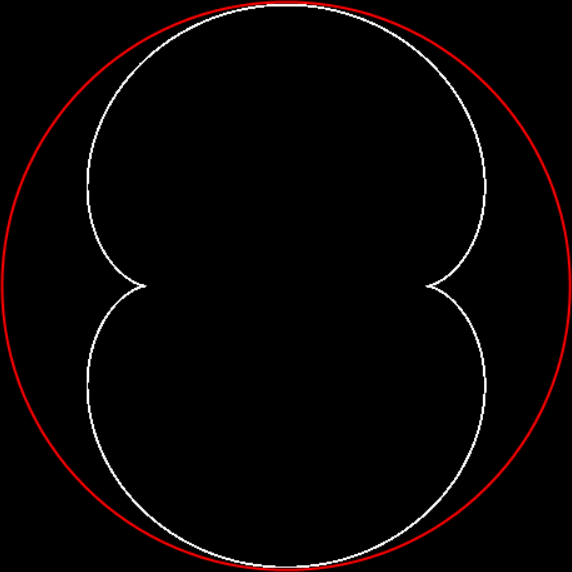
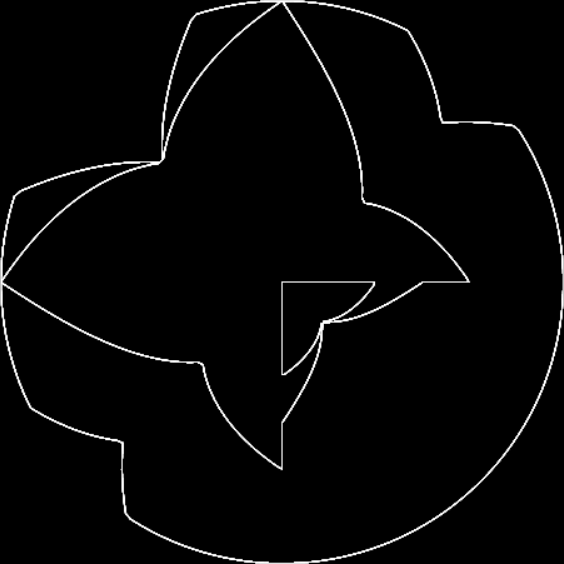
Now suppose that one point is moving anticlockwise. The midpoint will now trace this shape:

Midpoint for s, -s*2


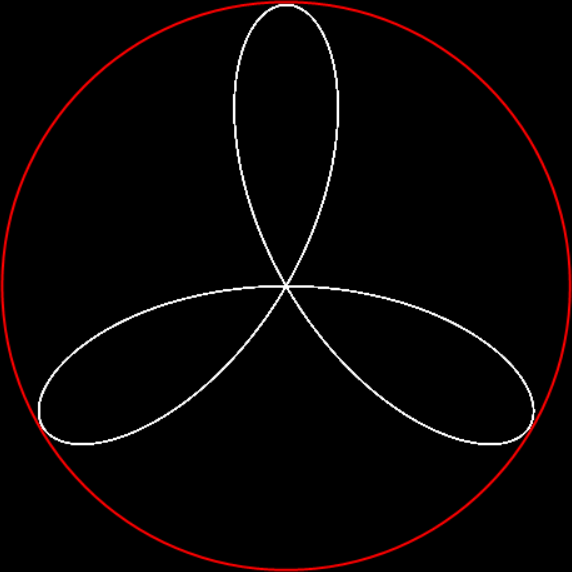
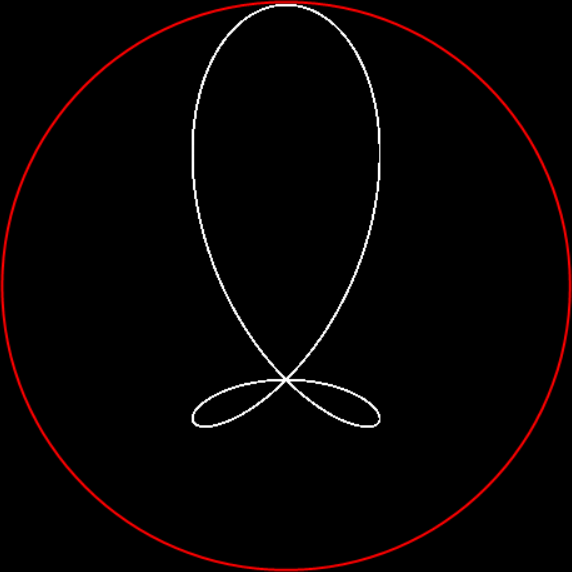
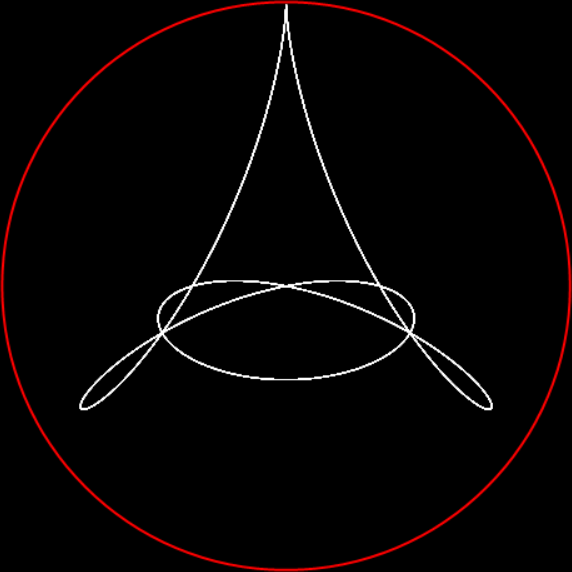
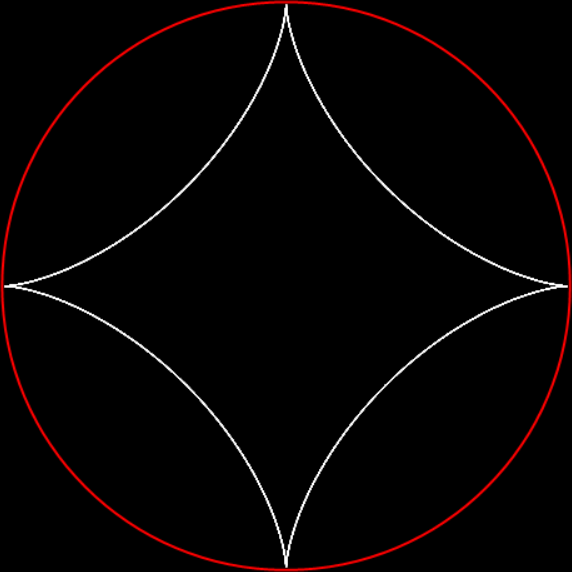
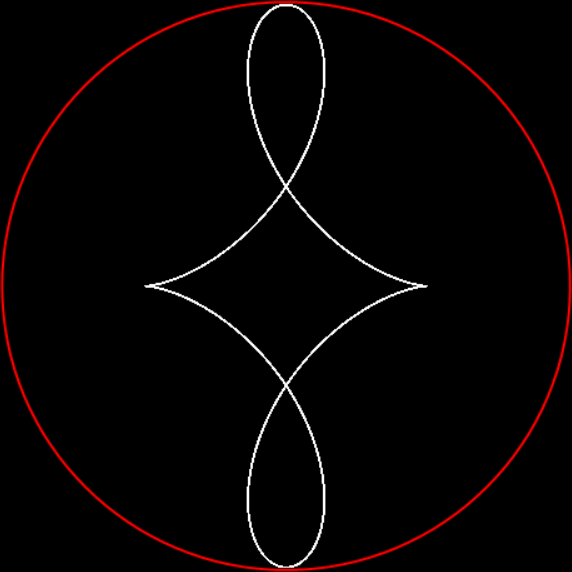
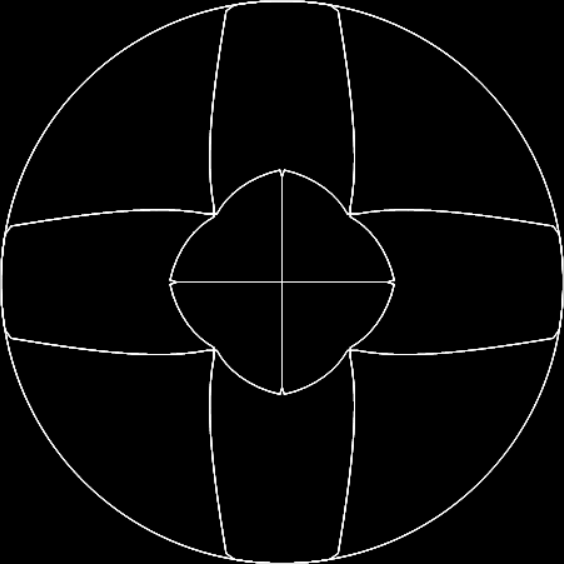
Now try three points, two moving at the same speed and one moving twice as fast:

Midpoint for s, s, s*2


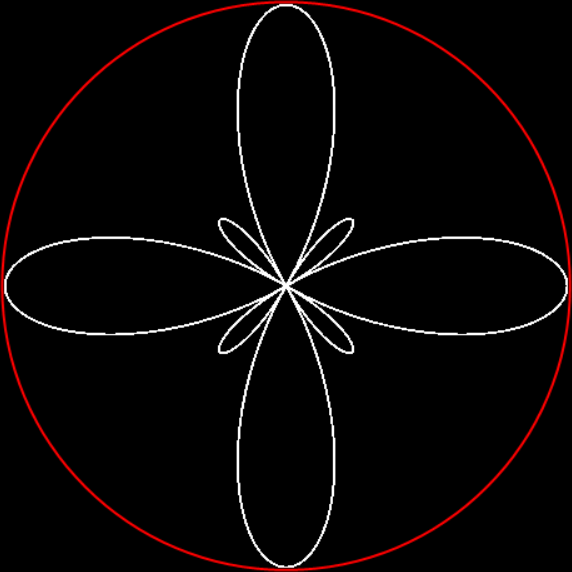
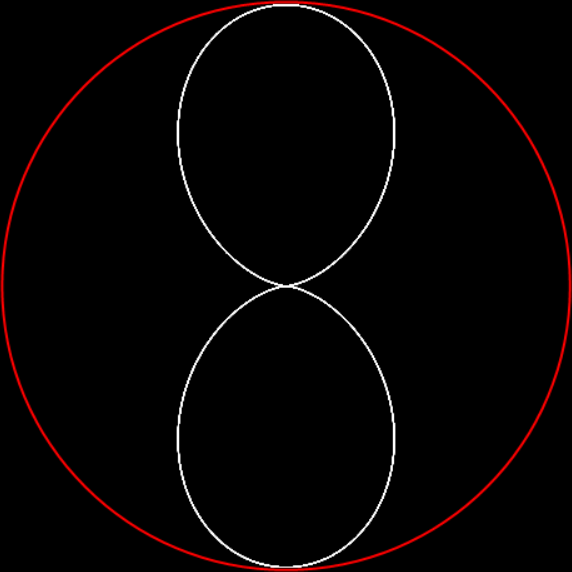
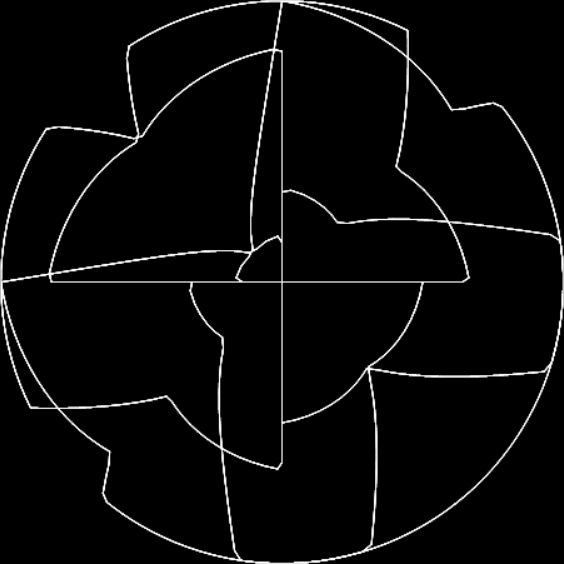
When the point moving twice as fast is moving anticlockwise, this shape appears:

Midpoint for s, s, -s*2


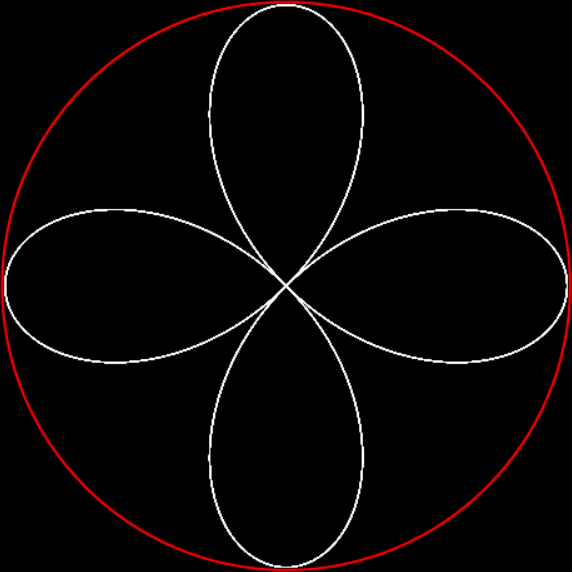
Here are more of these midpoint-shapes:

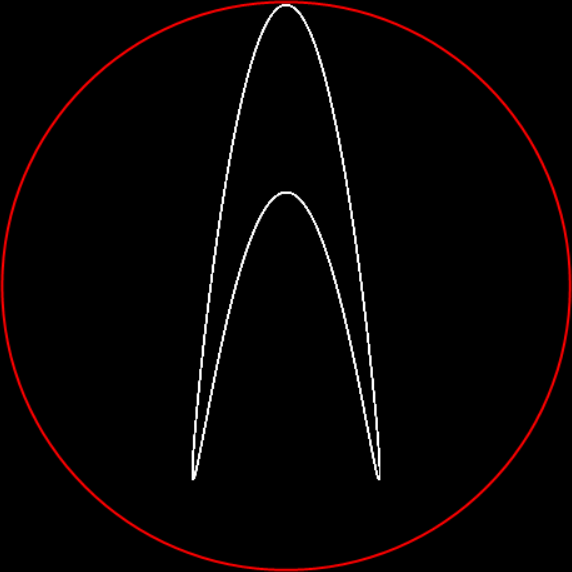
Midpoint for s, s*3


Midpoint for s, -s*3


Midpoint for s*2, s*3


Midpoint for s, -s, s*2


Midpoint for s, s*2, -s*2


Midpoint for s, s*2, s*2


Midpoint for s, -s*3, -s*5


Midpoint for s, s*2, s*3


Midpoint for s, s*2, -s*3


Midpoint for s, -s*3, s*5


Midpoint for s, s*3, s*5


Midpoint for s, s, s, s*3


Midpoint for s, s, s, -s*3


Midpoint for s, s, -s, s*3


Midpoint for s, s, -s, -s*3


But what about points moving around the perimeter of a polygon? Here are the midpoints of two points moving clockwise around the perimeter of a square, with one point moving twice as fast as the other:

Midpoint for square with s, s*2


And when one point moves anticlockwise:

Midpoint for square with s, -s*2


If you adjust the midpoints so that the square fills a circle, they look like this:

Midpoint for square with s, s*2, with square adjusted to fill circle


When the red circle is removed, the midpoint-shape is easier to see:

Midpoint for square with s, s*2, circ-adjusted


Here are more midpoint-shapes from squares:

Midpoint for s, s*3


Midpoint for s, -s*3


Midpoint for s, s*4


And some more circularly adjusted midpoint-shapes from squares:

Midpoint for s, s*3, circ-adjusted


Midpoint for s*2, s*3, circ-adjusted


Midpoint for s, s*5, circ-adjusted


Midpoint for s, s*6, circ-adjusted


Midpoint for s, s*7, circ-adjusted


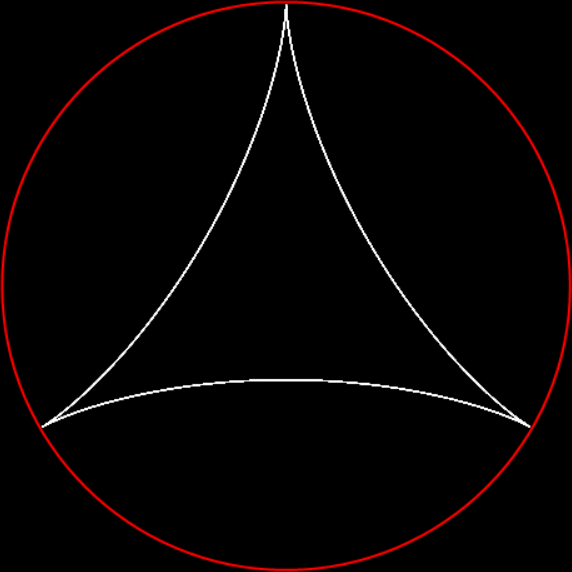
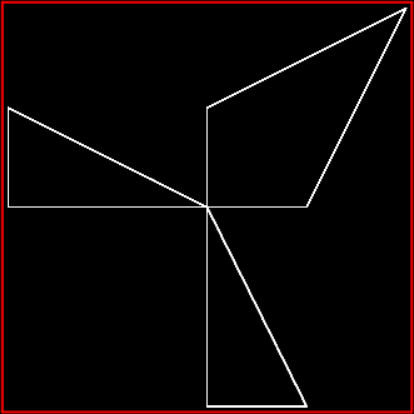
Finally (for now), let’s look at triangles. If three points are moving clockwise around the perimeter of a triangle, one moving four times as fast as the other two, the midpoint traces this shape:

Midpoint for triangle with s, s, s*4


Now try one of the points moving anticlockwise:

Midpoint for s, s, -s*4


Midpoint for s, -s, s*4


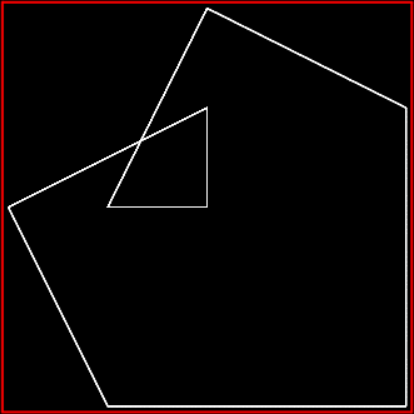
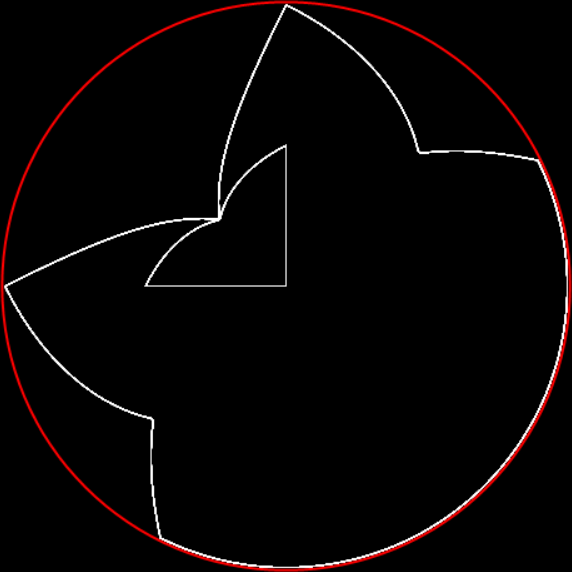
If you adjust the midpoints so that the triangular space fills a circle, they look like this:

Midpoint for s, s, s*4, with triangular space adjusted to fill circle


Midpoint for s, -s, s*4, circ-adjusted


Midpoint for s, s, -s*4, circ-adjusted


There are lots more (infinitely more!) midpoint-shapes to see, so watch this (circularly adjusted) space.


Previously pre-posted (please peruse)

Second Whirled Warp — more on points moving around polygons
We Can Circ It Out — more on converting polygons into circles

We Can Circ It Out

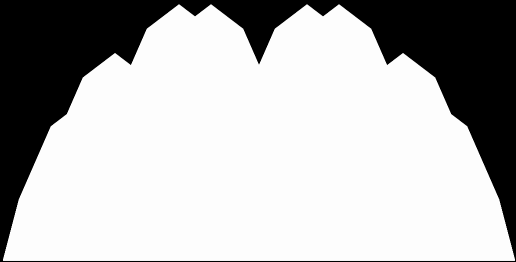
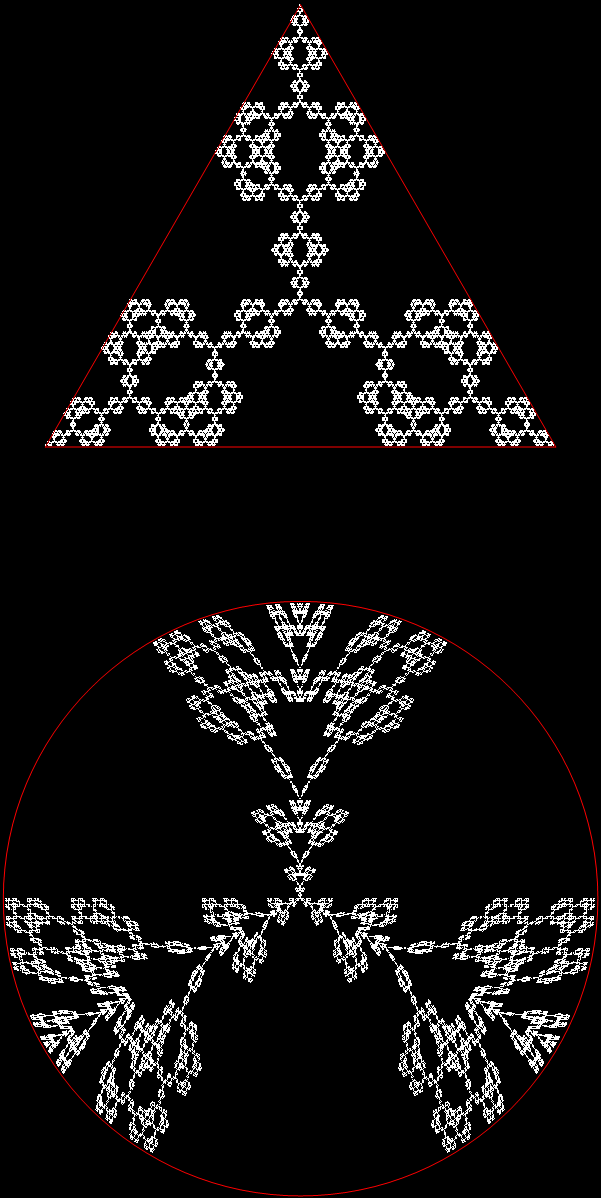
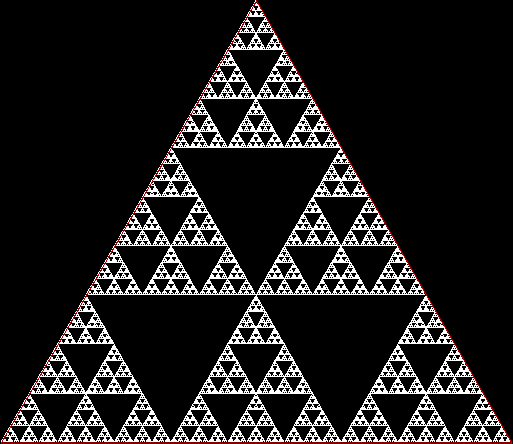
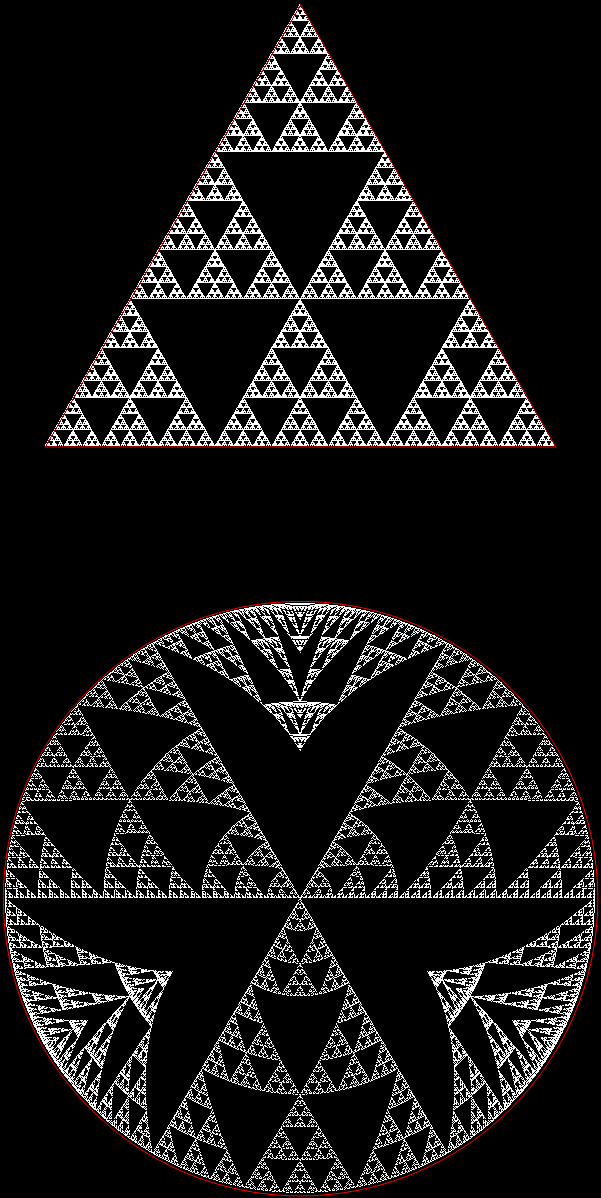
It’s a pretty little problem to convert this triangular fractal…

Sierpiński triangle (Wikipedia)


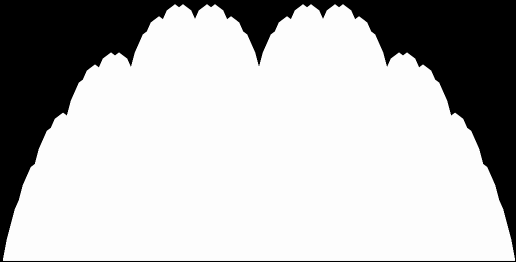
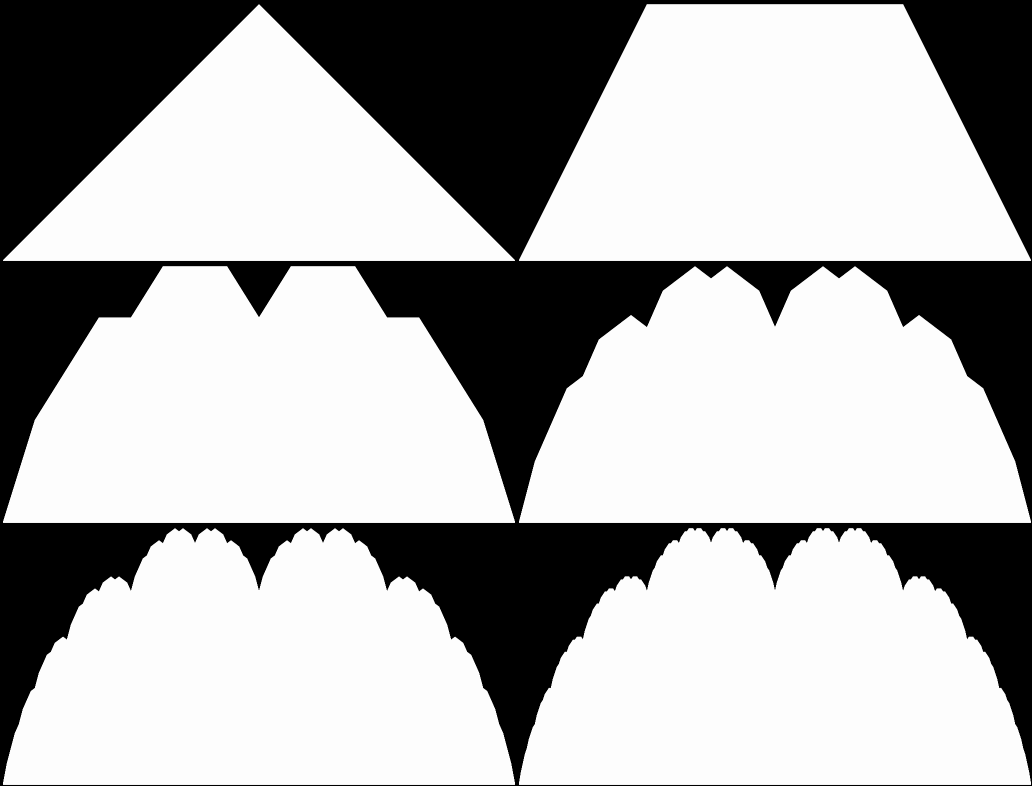
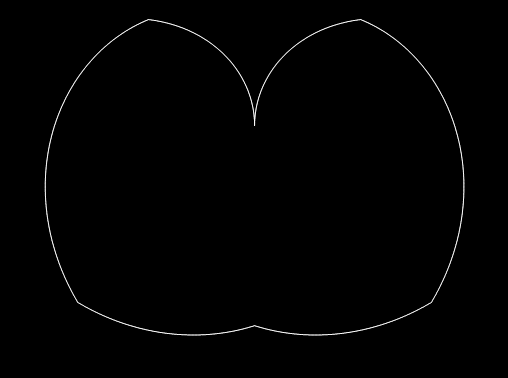
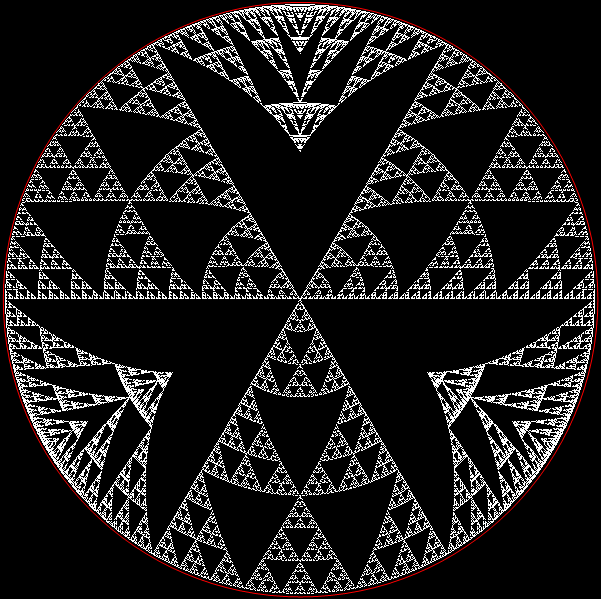
…into its circular equivalent:

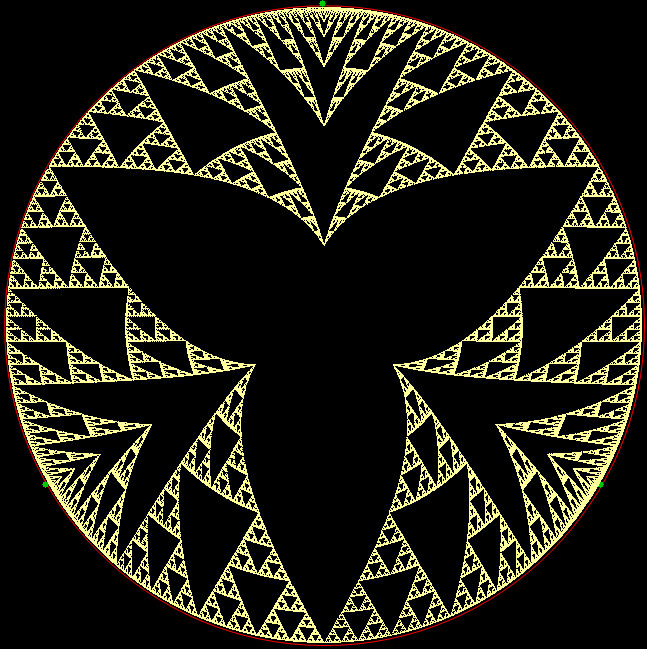
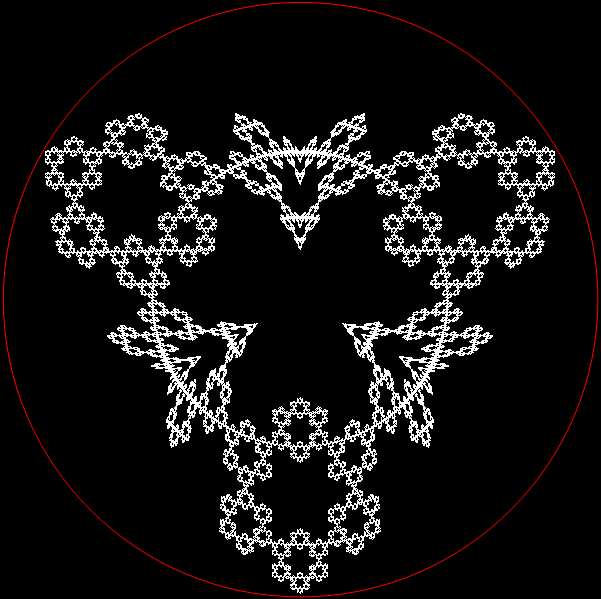
Sierpiński triangle as circle


Sierpiński triangle to circle (animated)


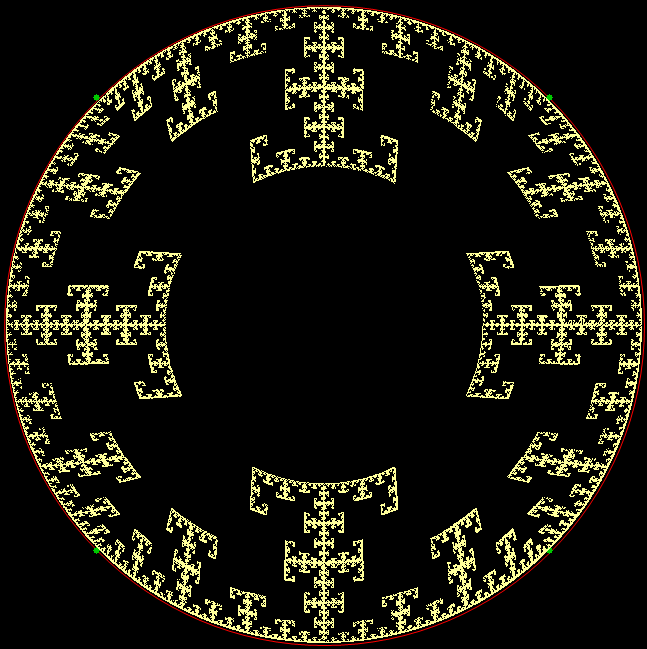
But once you’ve circ’d it out, as it were, you can easily adapt the technique to fractals based on other polygons:

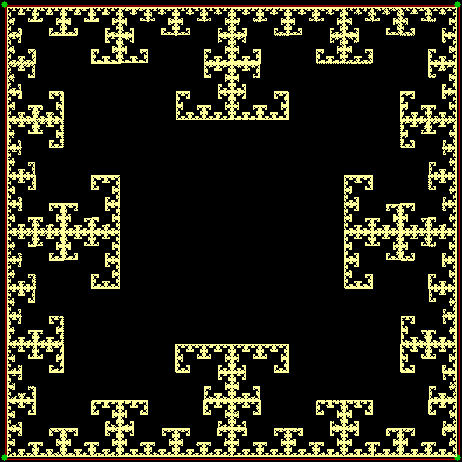
T-square fractal (Wikipedia)

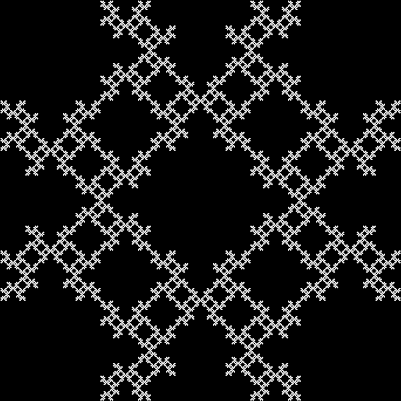
T-square fractal as circle


T-square fractal to circle (animated)


Elsewhere other-accessible…

Dilating the Delta — more on converting polygonic fractals to circles…

The Belles of El

Title page of Sir Henry Billingsley’s first English version of Euclid’s Elements, 1570, with personifications of Geometria, Astronomia, Arithmetica and Musica as beautiful young women


The Elements of Geometrie of the Moſt Aucient Philoſopher Evclide of Megara.

Faithfully (now first) tranʃlated into the Engliʃhe toung, by H. Billingſley, Citizen of London.

Whereunto are annexed certaine Scolies, Annotations, and Inuentions, of the best Mathematiciens, both of times past, and in this our age.

With a very fruitfull Præface made by M.I. Dee, ʃpecifying the chiefe Mathematicall Sciences, what they are, and wherunto commodious: where, alʃo, are diʃcloʃed certaine new Secrets Mathematicall and Mechanicall, untill theʃe our daies, greatly miʃʃed.

Imprinted at London by Iohn Daye.


The title of this incendiary intervention is a paronomasia on “The Bells of Hell…”, a British airmen’s song in terms of core issues around World War I.

Game of Throwns

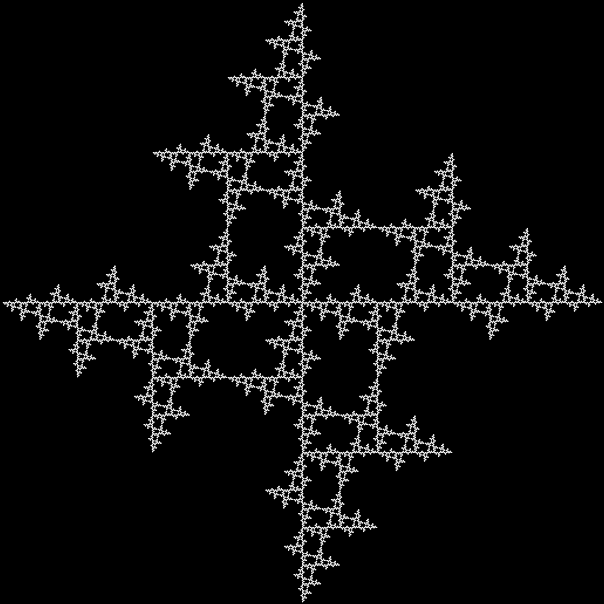
In “Scaffscapes”, I looked at these three fractals and described how they were in a sense the same fractal, even though they looked very different:

Fractal #1

Fractal #2
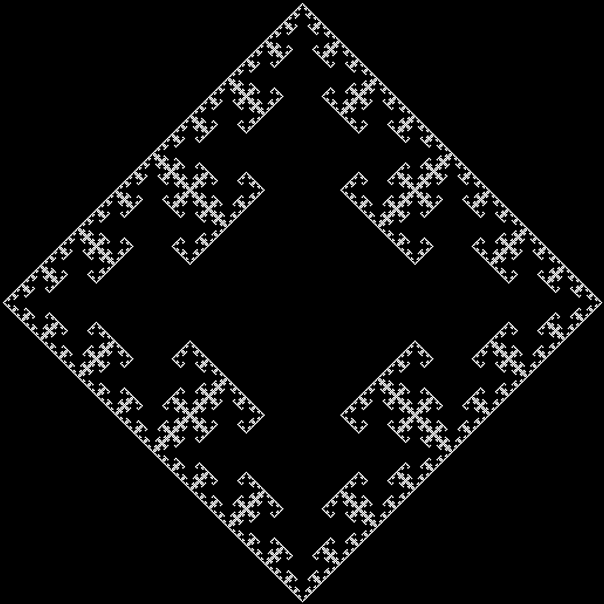

Fractal #3


But even if they are all the same in some mathematical sense, their different appearances matter in an aesthetic sense. Fractal #1 is unattractive and seems uninteresting:

Fractal #1, unattractive, uninteresting and unnamed


Fractal #3 is attractive and interesting. That’s part of why mathematicians have given it a name, the T-square fractal:

Fractal #3 — the T-square fractal


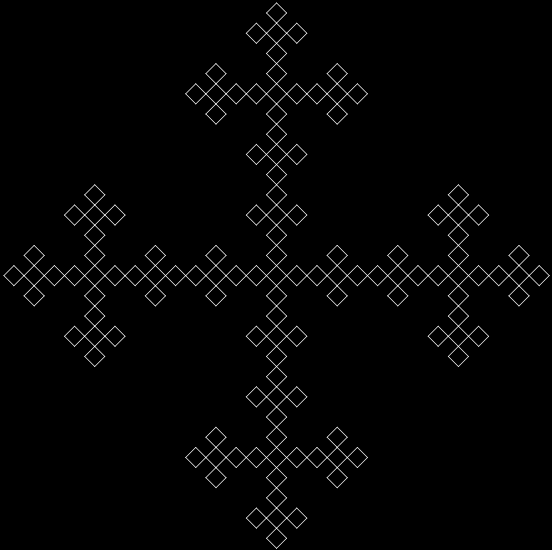
But fractal #2, although it’s attractive and interesting, doesn’t have a name. It reminds me of a ninja throwing-star or shuriken, so I’ve decided to call it the throwing-star fractal or ninja-star fractal:

Fractal #2, the throwing-star fractal


A ninja throwing-star or shuriken


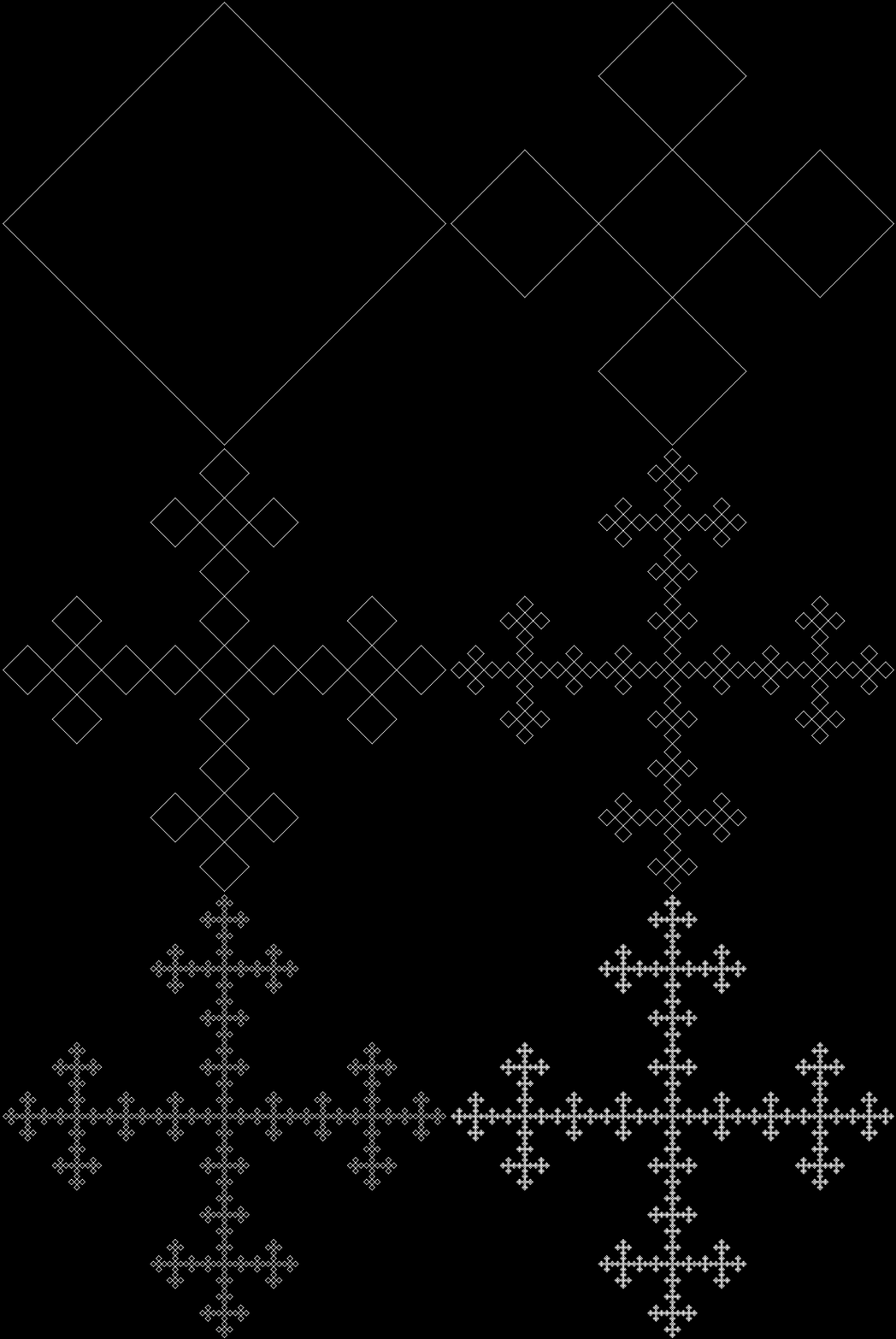
This is one way to construct a throwing-star fractal:
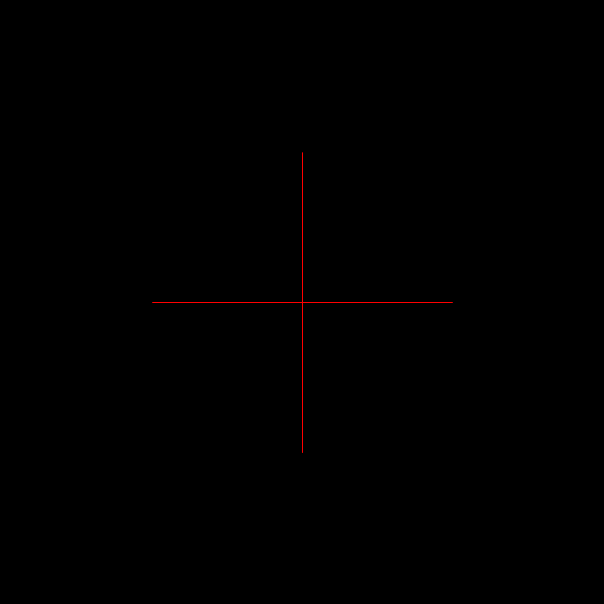
Throwing-star fractal, stage 1
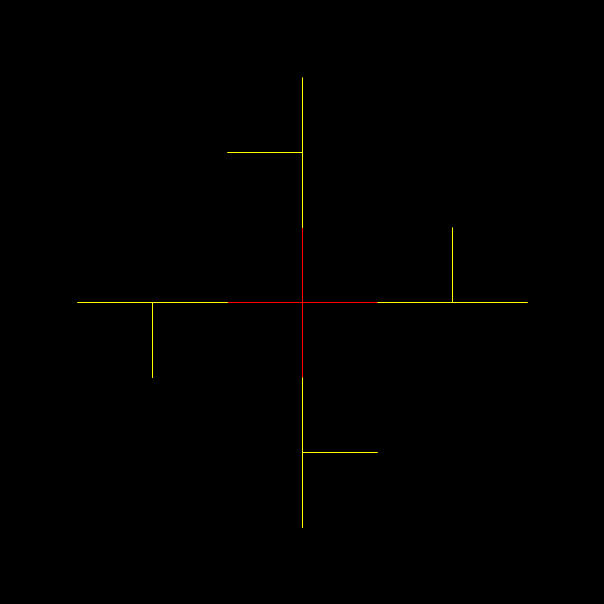

Throwing-star fractal, #2
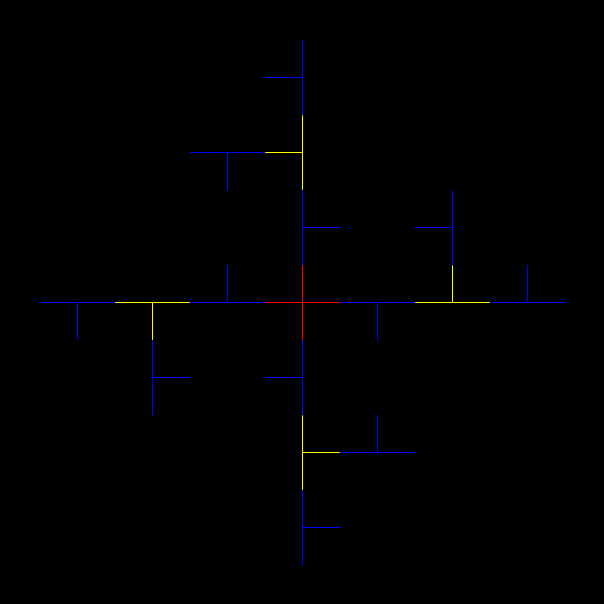

Throwing-star fractal, #3


Throwing-star fractal, #4


Throwing-star fractal, #5
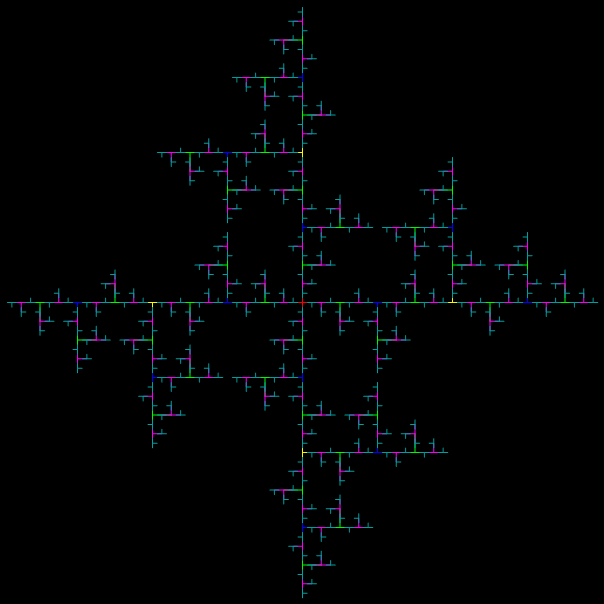

Throwing-star fractal, #6
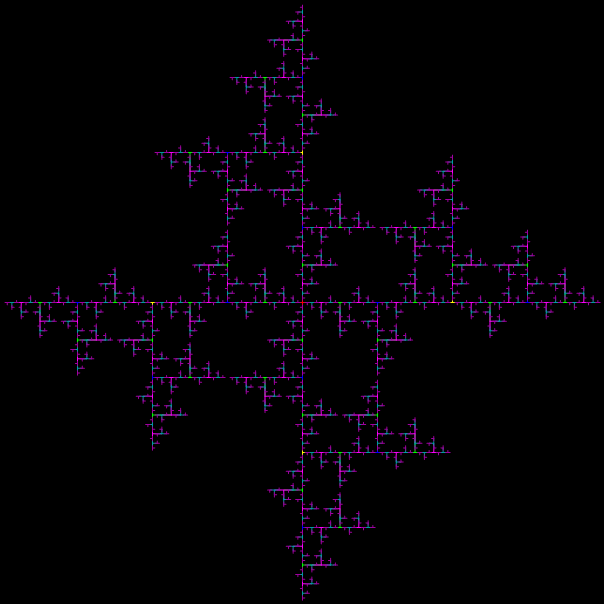

Throwing-star fractal, #7
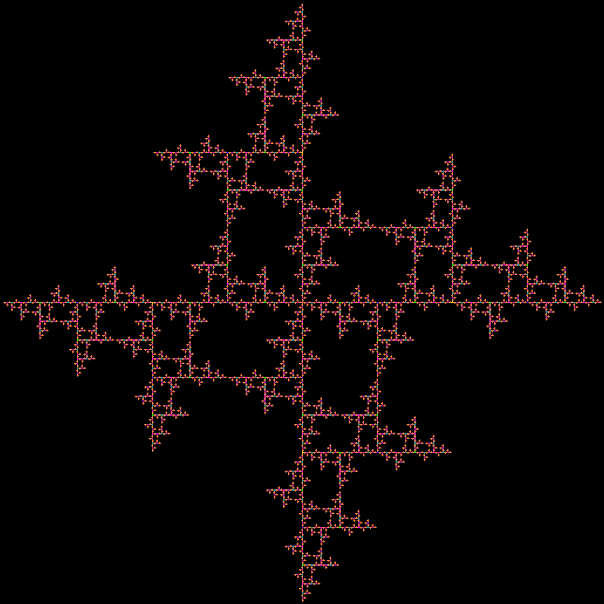

Throwing-star fractal, #8
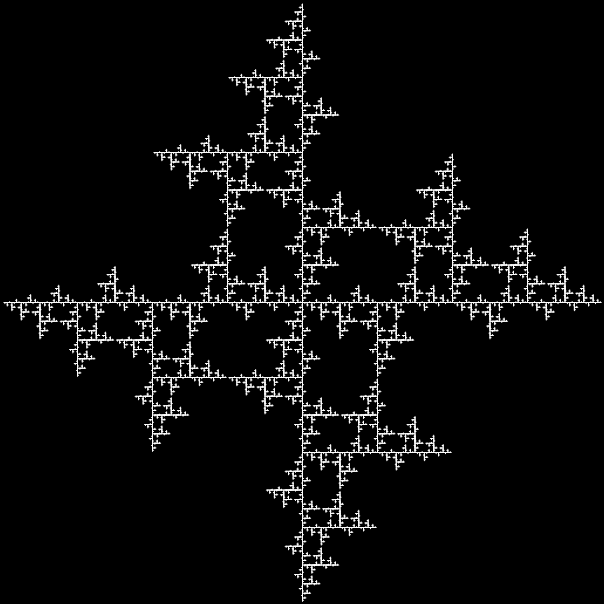

Throwing-star fractal, #9
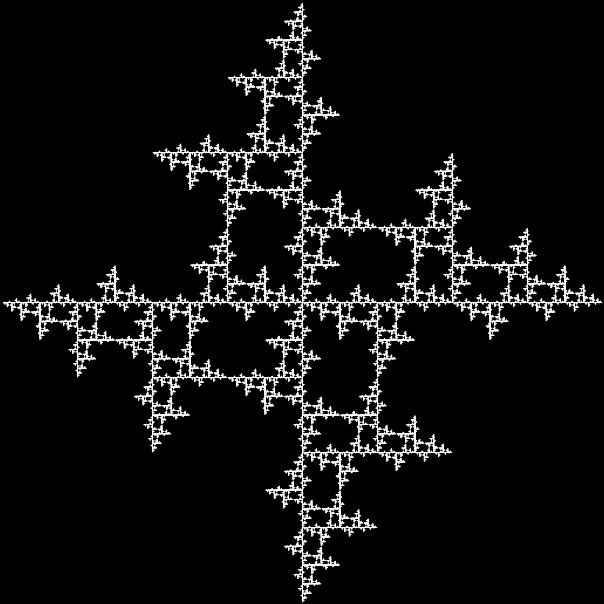

Throwing-star fractal, #10


Throwing-star fractal, #11
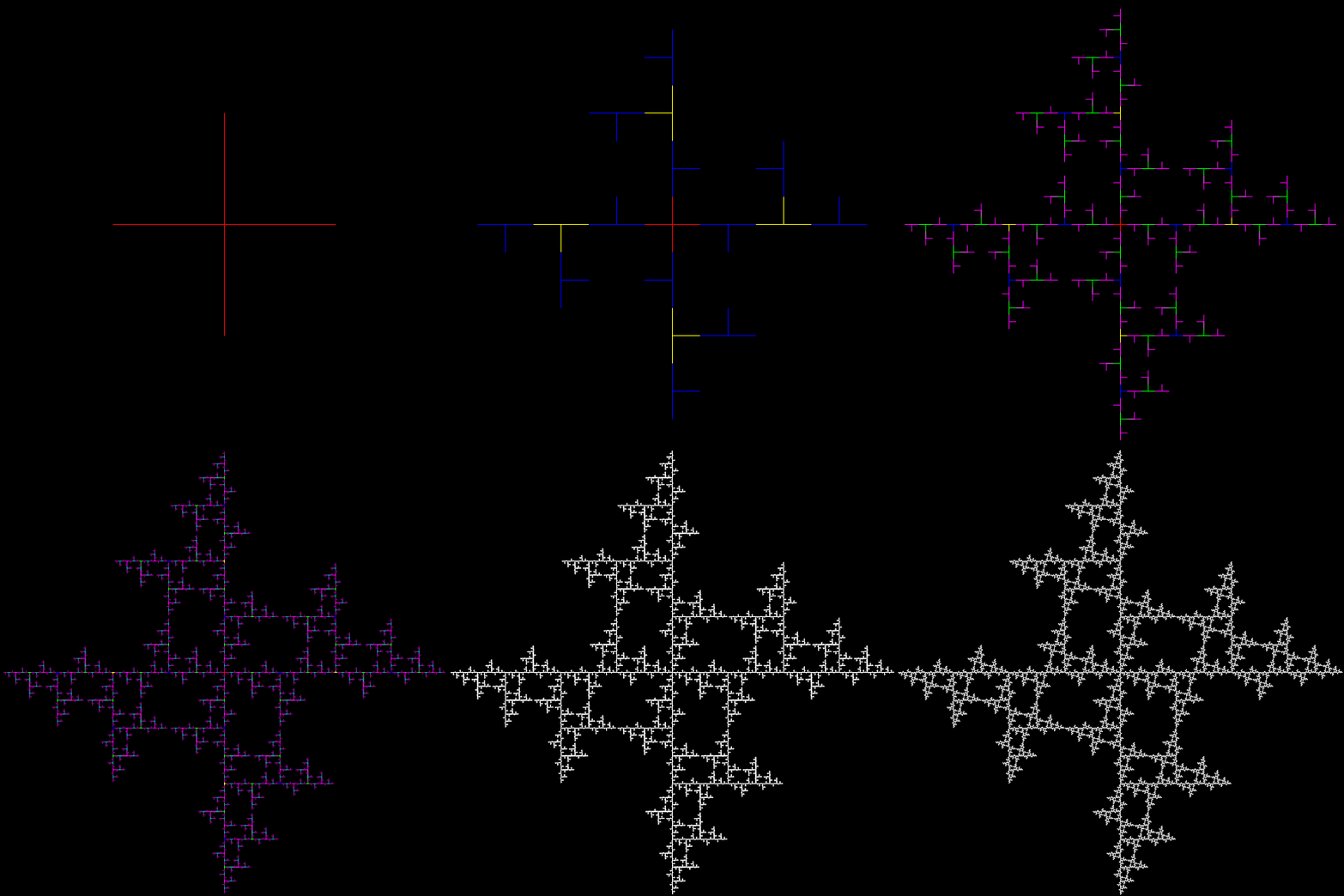

Throwing-star fractal (animated)


But there’s another way to construct a throwing-star fractal. You use what’s called the chaos game. To understand the commonest form of the chaos game, imagine a ninja inside an equilateral triangle throwing a shuriken again and again halfway towards a randomly chosen vertex of the triangle. If you mark each point where the shuriken lands, you eventually get a fractal called the Sierpiński triangle:
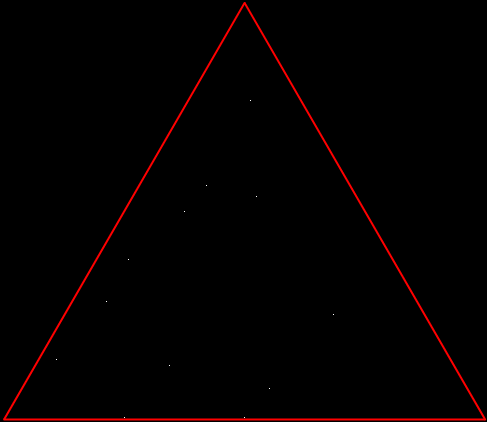
Chaos game with triangle stage 1
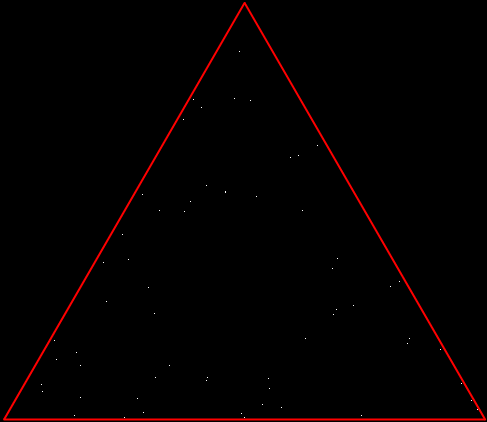

Chaos triangle #2
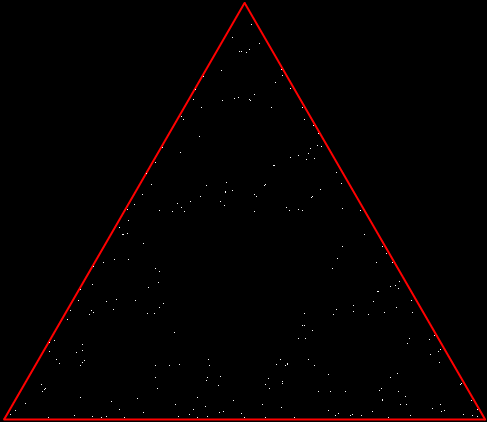

Chaos triangle #3


Chaos triangle #4
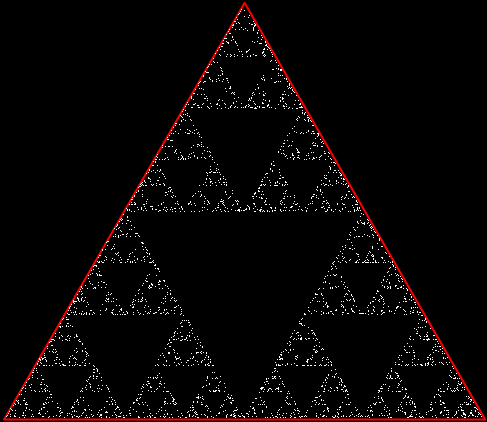

Chaos triangle #5
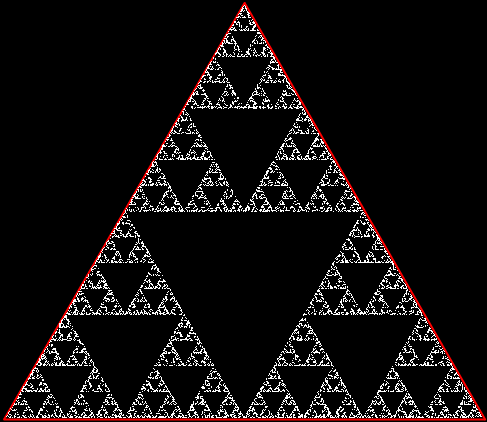

Chaos triangle #6


Chaos triangle #7
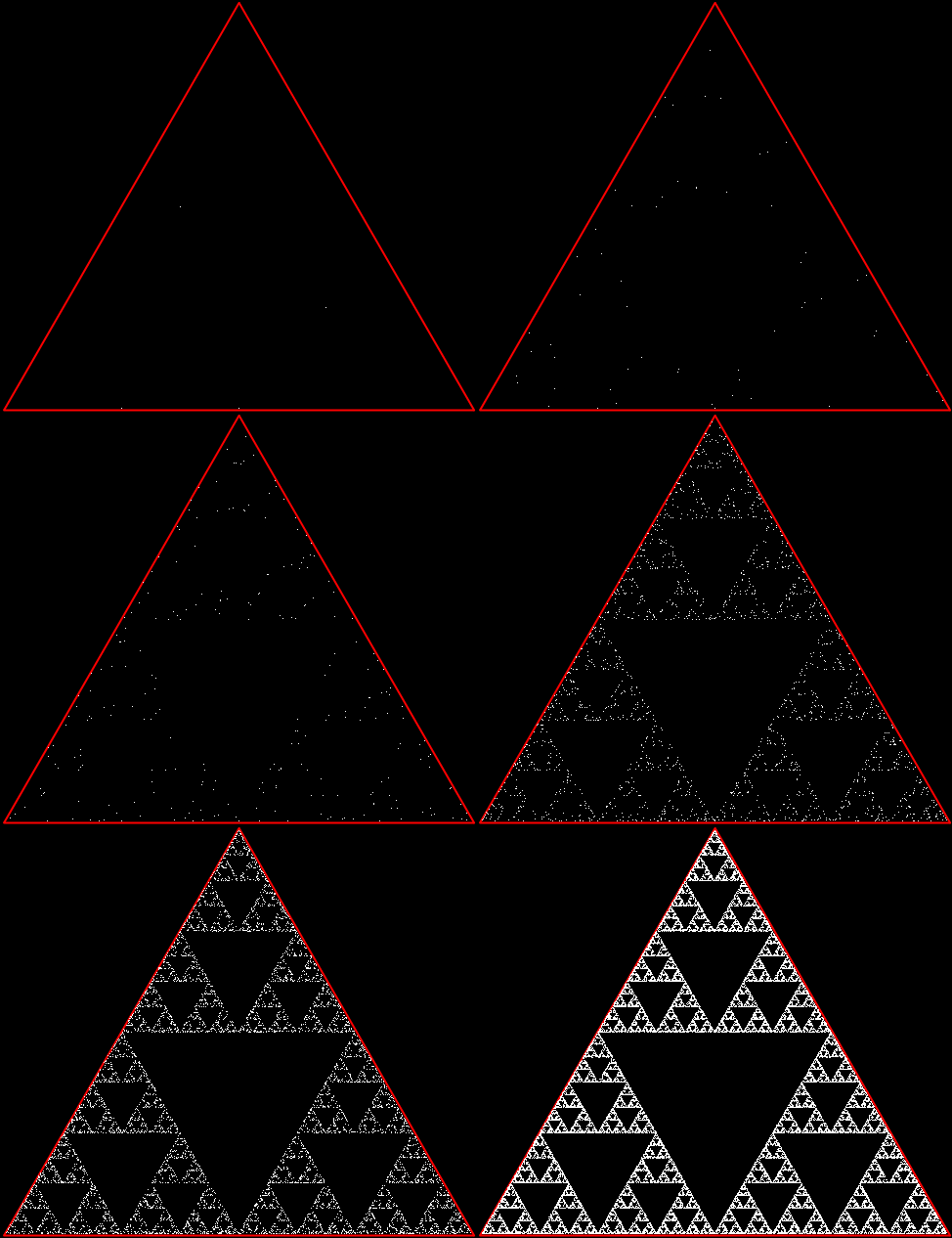

Chaos triangle (animated)


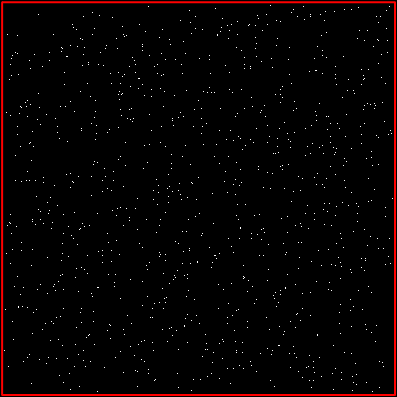
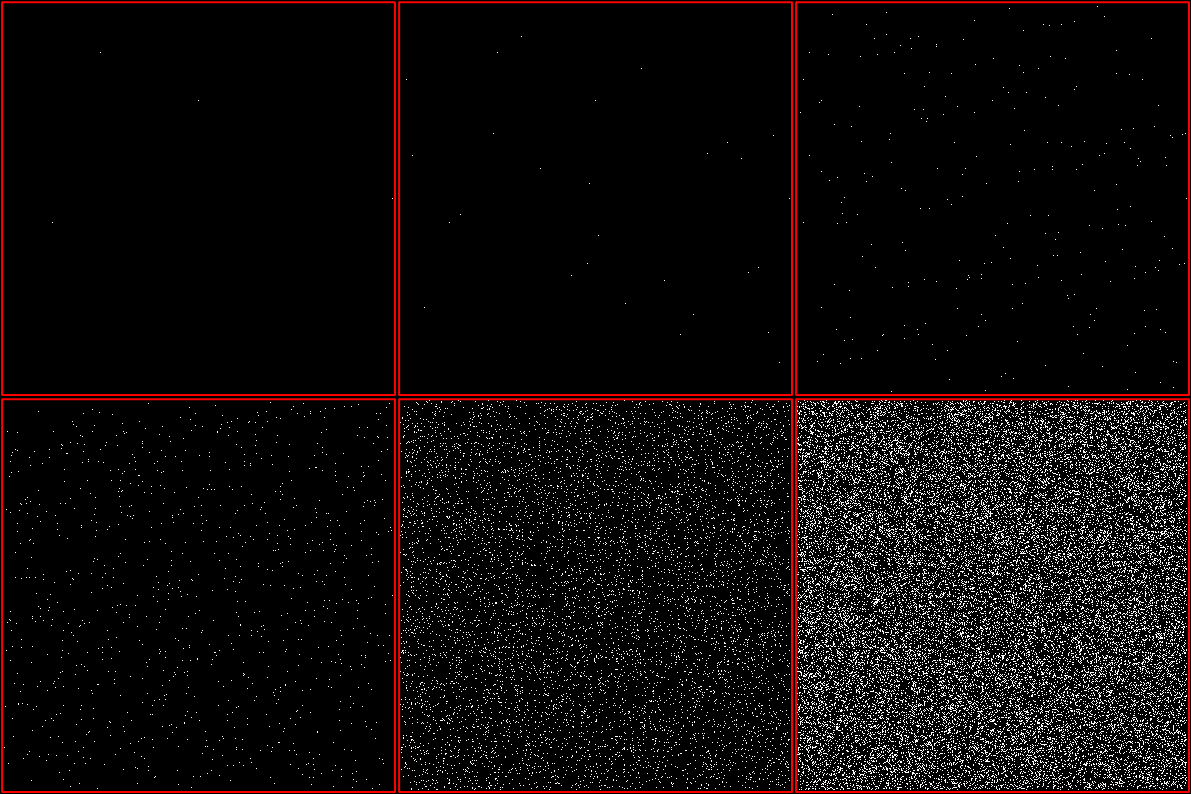
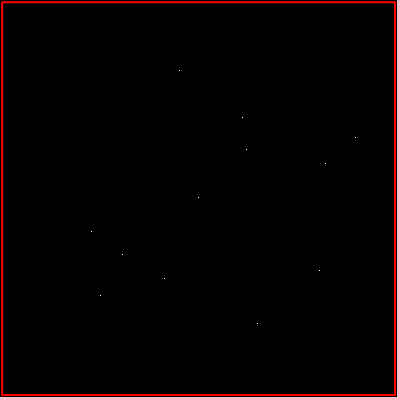
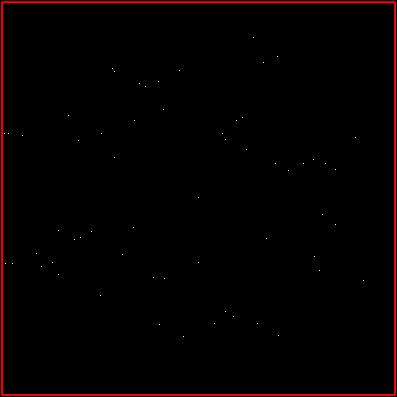
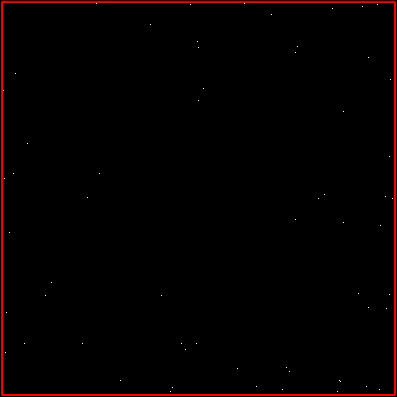
When you try the chaos game with a square, with the ninja throwing the shuriken again and again halfway towards a randomly chosen vertex, you don’t get a fractal. The interior of the square just fills more or less evenly with points:
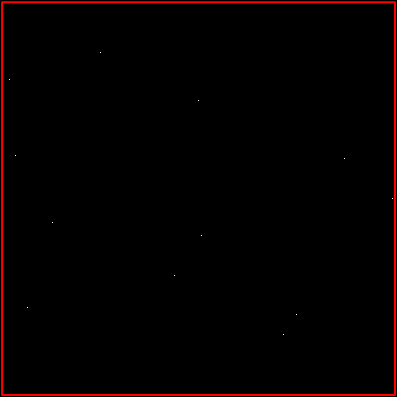
Chaos game with square, stage 1
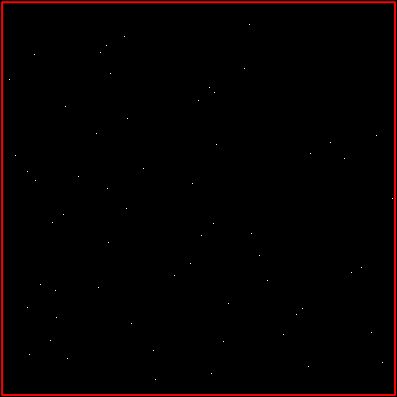

Chaos square #2
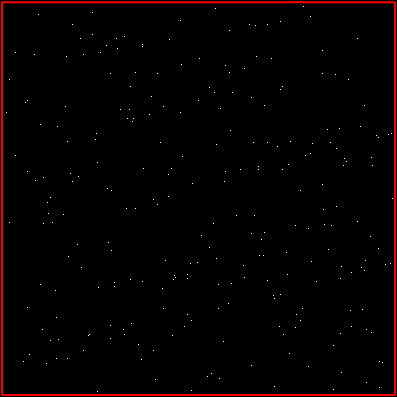

Chaos square #3


Chaos square #4
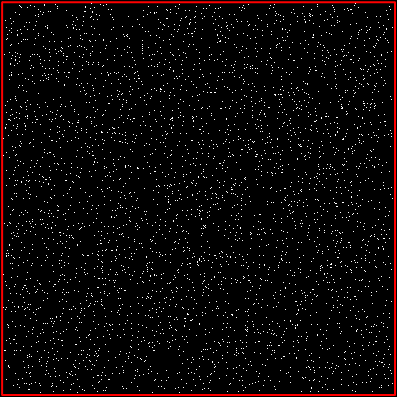

Chaos square #5
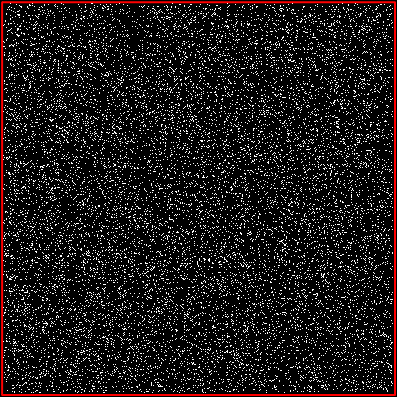

Chaos square #6


Chaos square (anim)


But suppose you restrict the ninja’s throws in some way. If he can’t throw twice or more in a row towards the same vertex, you get a familiar fractal:

Chaos game with square, ban on throwing towards same vertex, stage 1


Chaos square, ban = v+0, #2
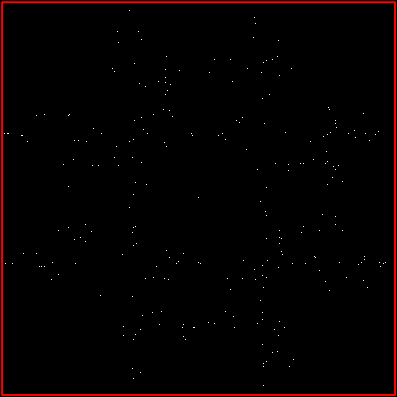

Chaos square, ban = v+0, #3


Chaos square, ban = v+0, #4
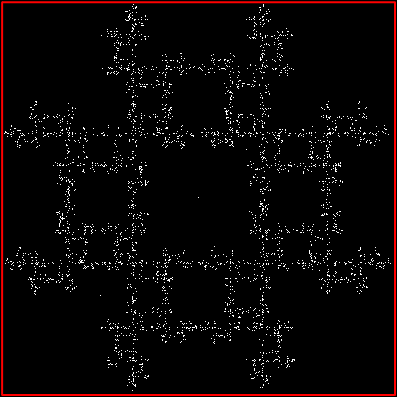

Chaos square, ban = v+0, #5
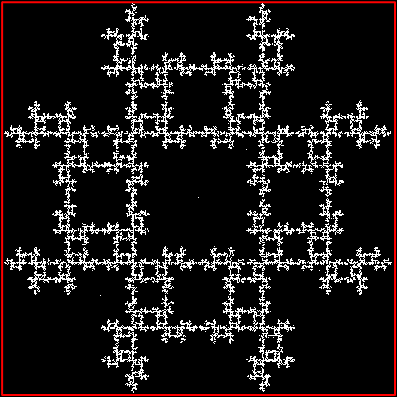

Chaos square, ban = v+0, #6
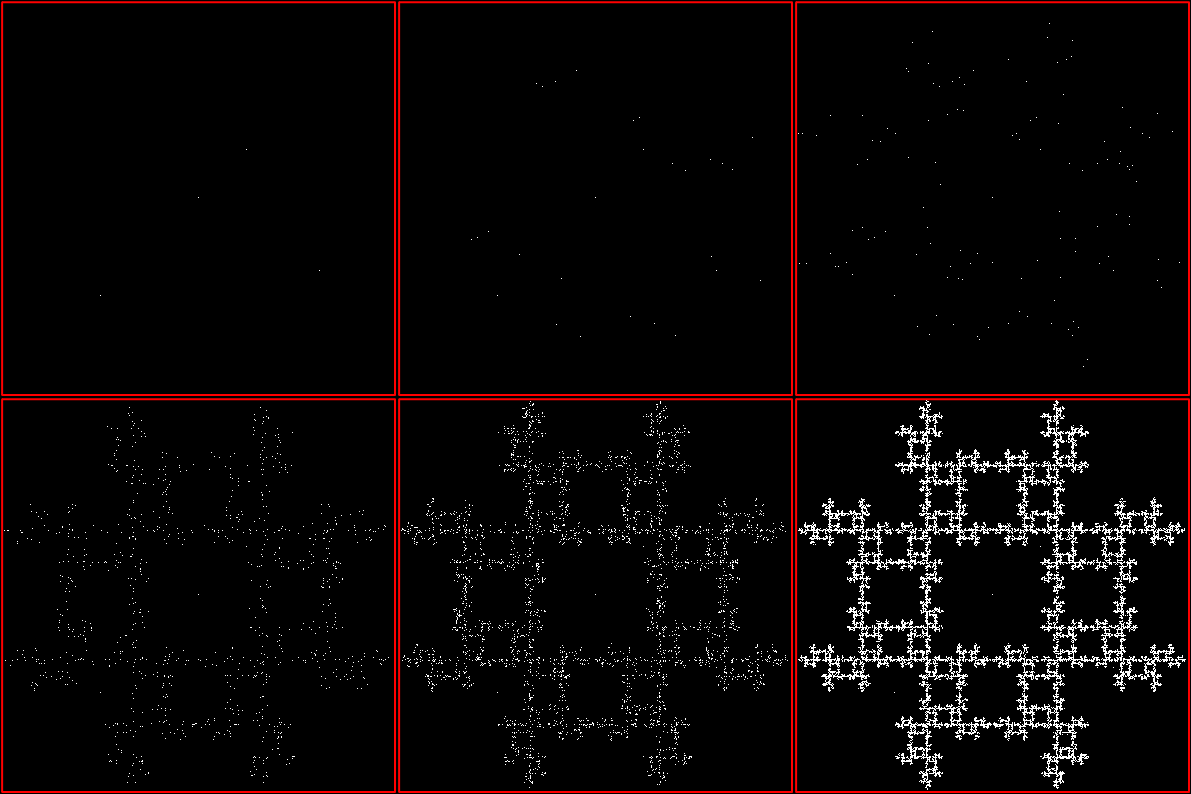

Chaos square, ban = v+0 (anim)


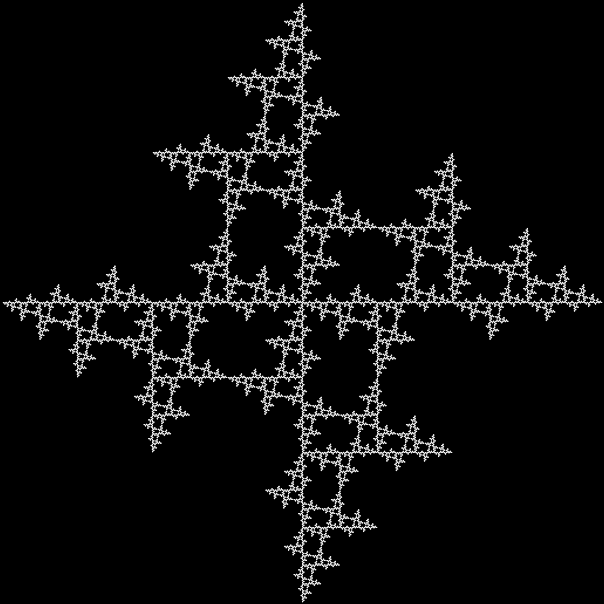
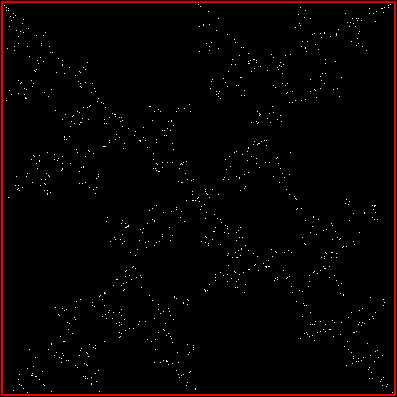
But what if the ninja can’t throw the shuriken towards the vertex one place anti-clockwise of the vertex he’s just thrown it towards? Then you get another familiar fractal — the throwing-star fractal:
Chaos square, ban = v+1, stage 1


Chaos square, ban = v+1, #2
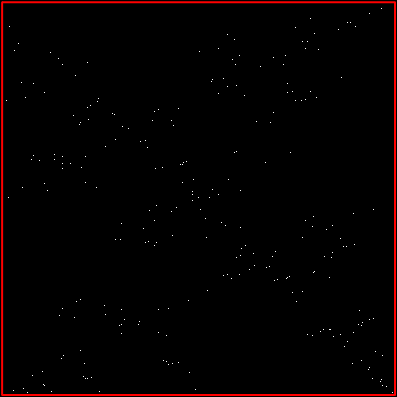

Chaos square, ban = v+1, #3


Chaos square, ban = v+1, #4
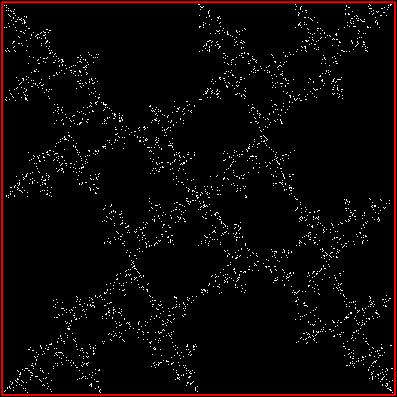

Chaos square, ban = v+1, #5
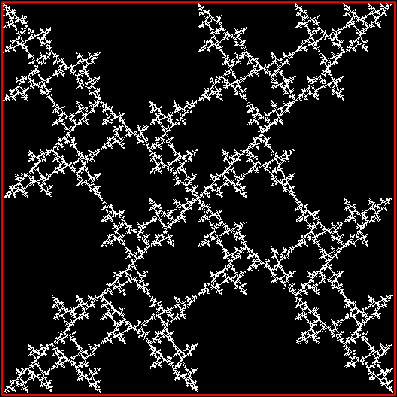

Game of Throwns — throwing-star fractal from chaos game (static)
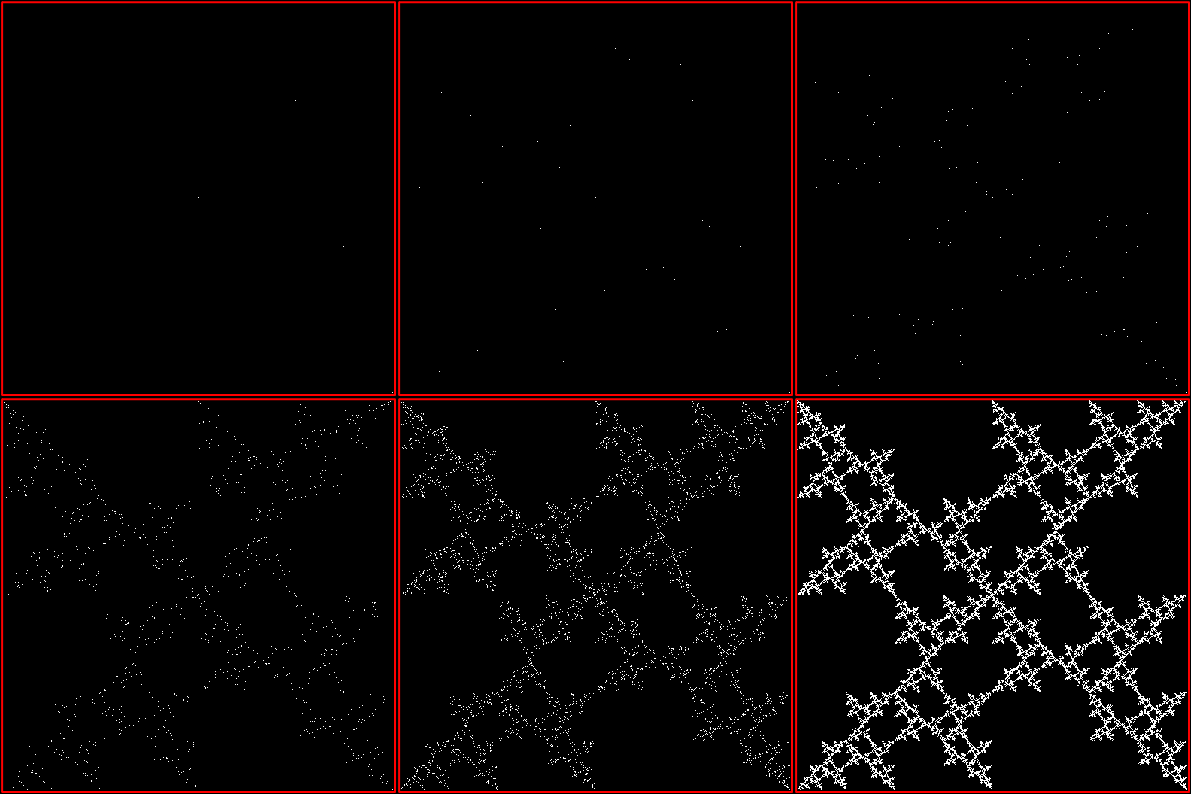

Game of Throwns — throwing-star fractal from chaos game (anim)


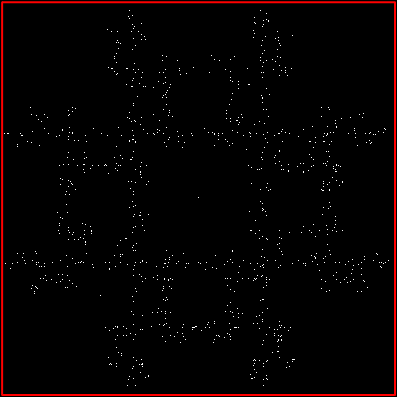
And what if the ninja can’t throw towards the vertex two places anti-clockwise (or two places clockwise) of the vertex he’s just thrown the shuriken towards? Then you get a third familiar fractal — the T-square fractal:
Chaos square, ban = v+2, stage 1


Chaos square, ban = v+2, #2
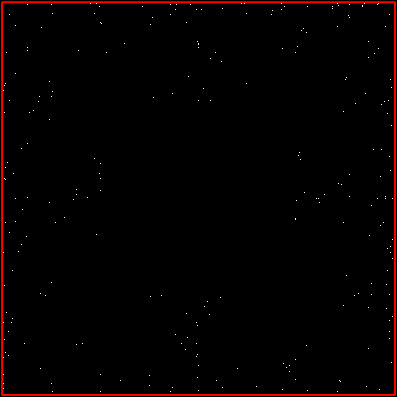

Chaos square, ban = v+2, #3
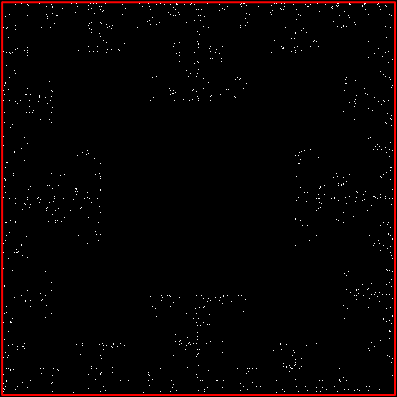

Chaos square, ban = v+2, #4


Chaos square, ban = v+2, #5
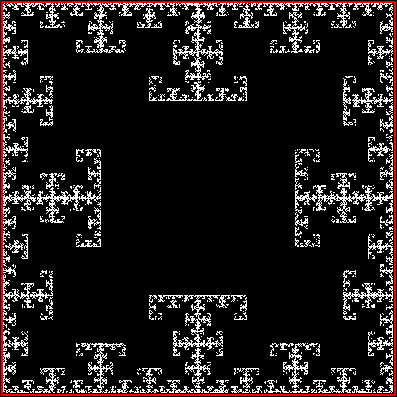

T-square fractal from chaos game (static)
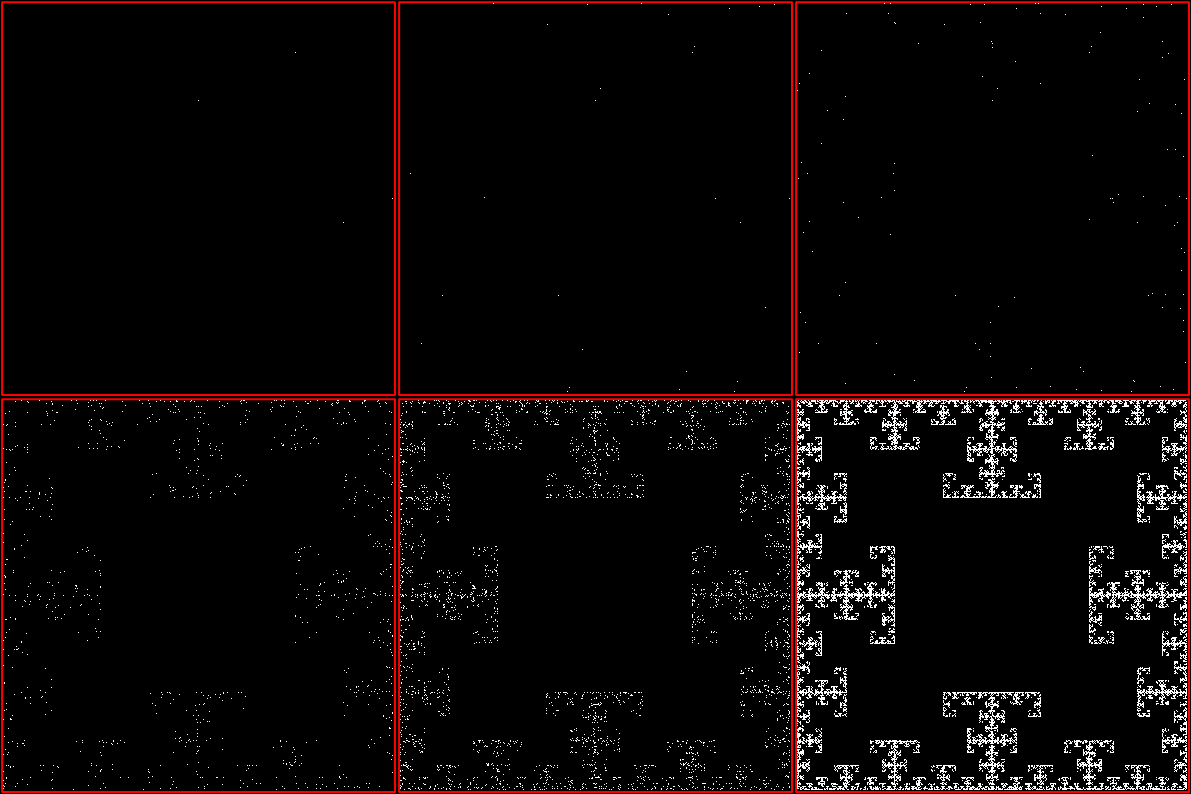

T-square fractal from chaos game (anim)


Finally, what if the ninja can’t throw towards the vertex three places anti-clockwise, or one place clockwise, of the vertex he’s just thrown the shuriken towards? If you can guess what happens, your mathematical intuition is much better than mine.

Post-Performative Post-Scriptum

I am not now and never have been a fan of George R.R. Martin. He may be a good author but I’ve always suspected otherwise, so I’ve never read any of his books or seen any of the TV adaptations.