Arty Fish Haul

When is a fish a reptile? When it looks like this:

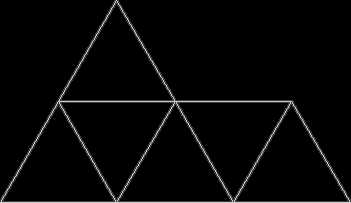
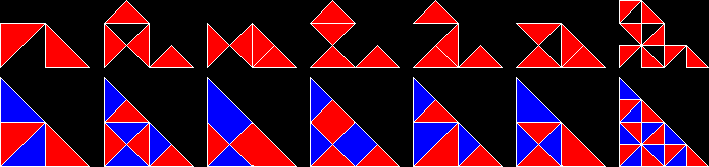
Fish from four isosceles right triangles


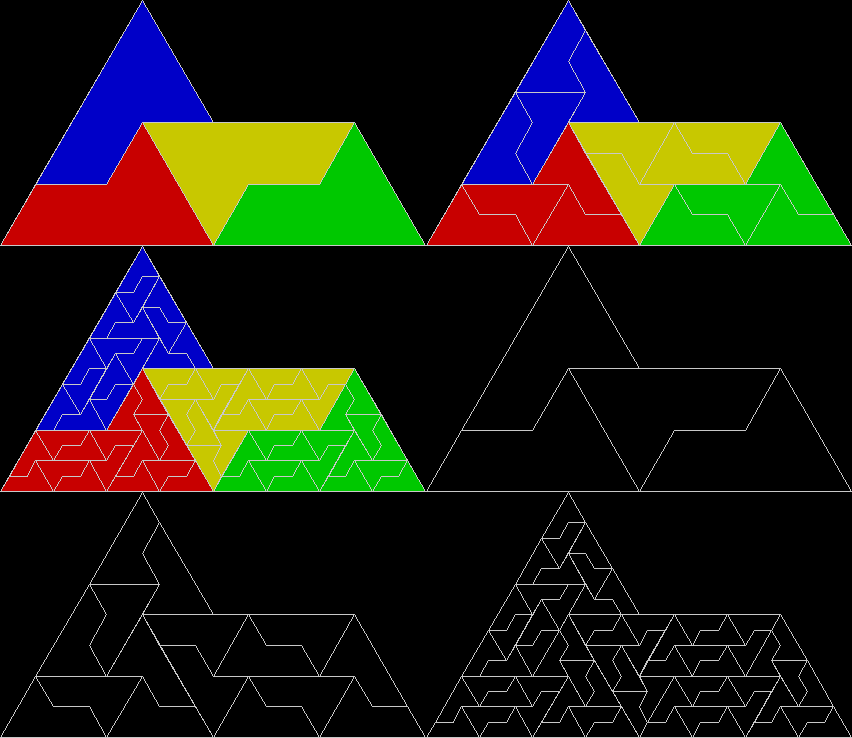
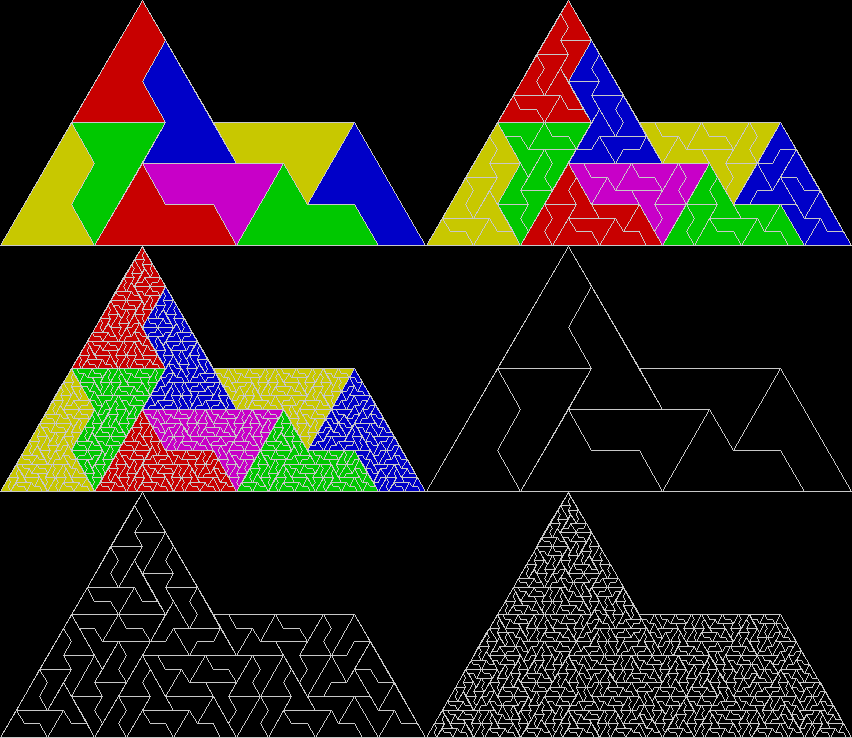
The fish-shape can be divided into eight identical sub-copies of itself. That is, it can be repeatedly tiled with copies of itself, so it’s an example of what geometry calls a rep-tile:
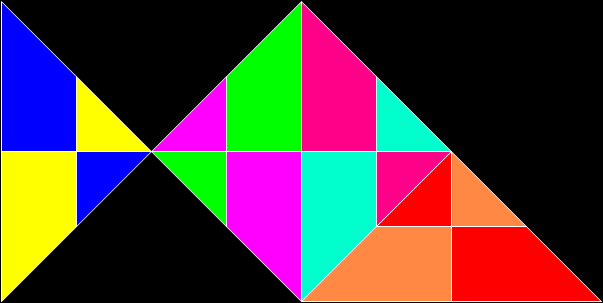
Fish divided into eight identical sub-copies
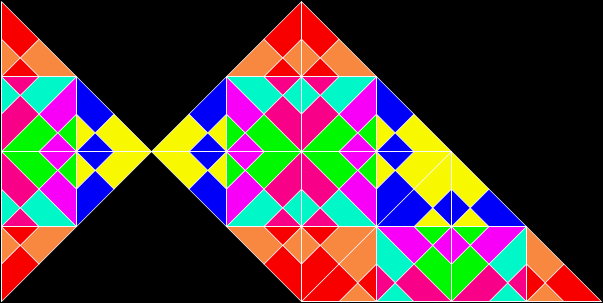

Fish divided again
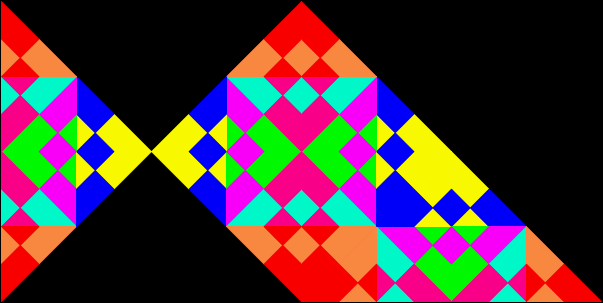

Fish divided #4
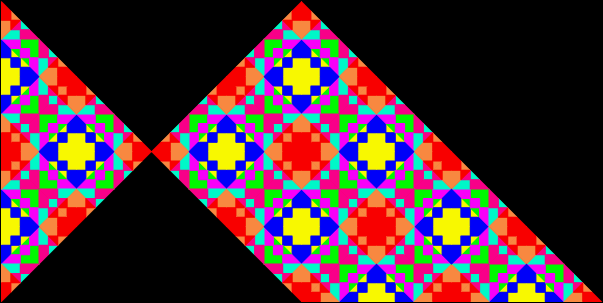

Fish divided #5
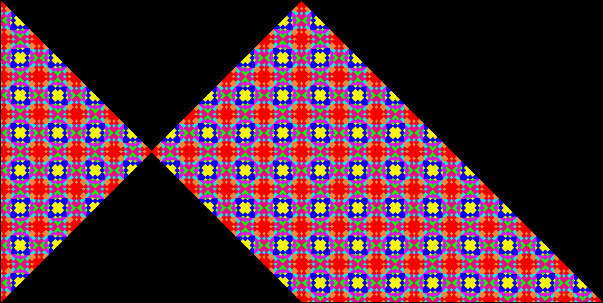

Fish divided #6


Fish (animated rep-tiling)


Now suppose you divide the fish, then discard one of the sub-copies. And carry on dividing-and-discarding like that:
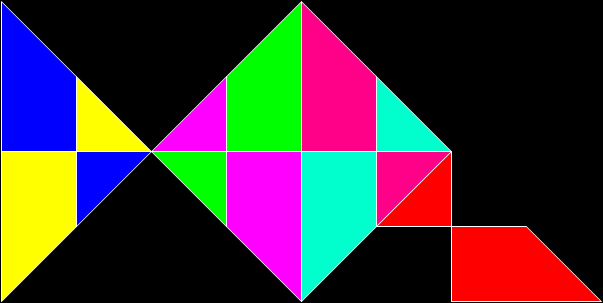
Fish discarding sub-copy 7 (#1)
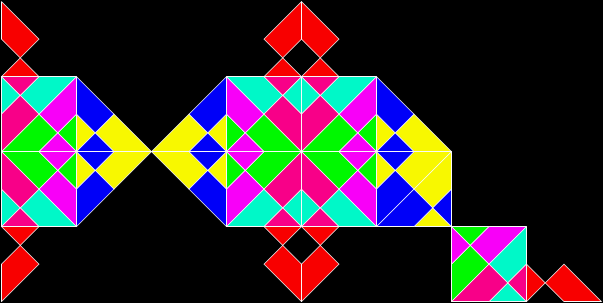

Fish discarding sub-copy 7 (#2)
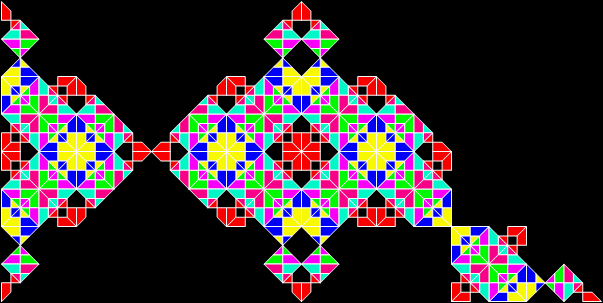

Fish discarding sub-copy 7 (#3)
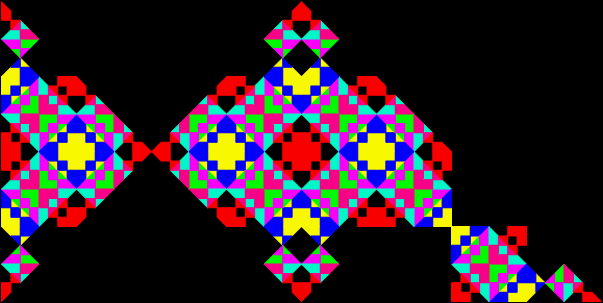

Fish discarding sub-copy 7 (#4)
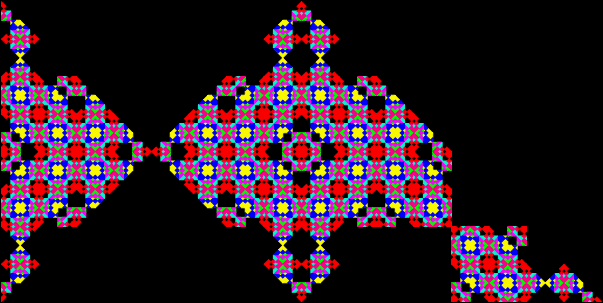

Fish discarding sub-copy 7 (#5)
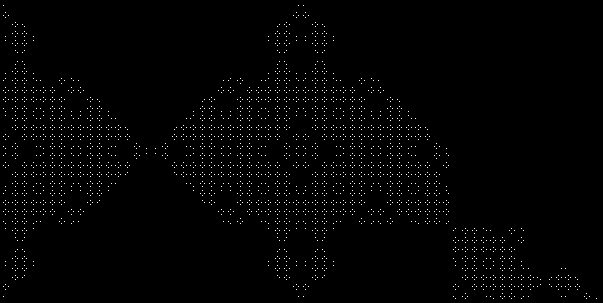

Fish discarding sub-copy 7 (#6)
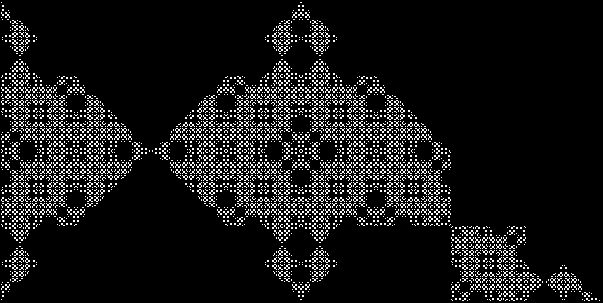

Fish discarding sub-copy 7 (#7)
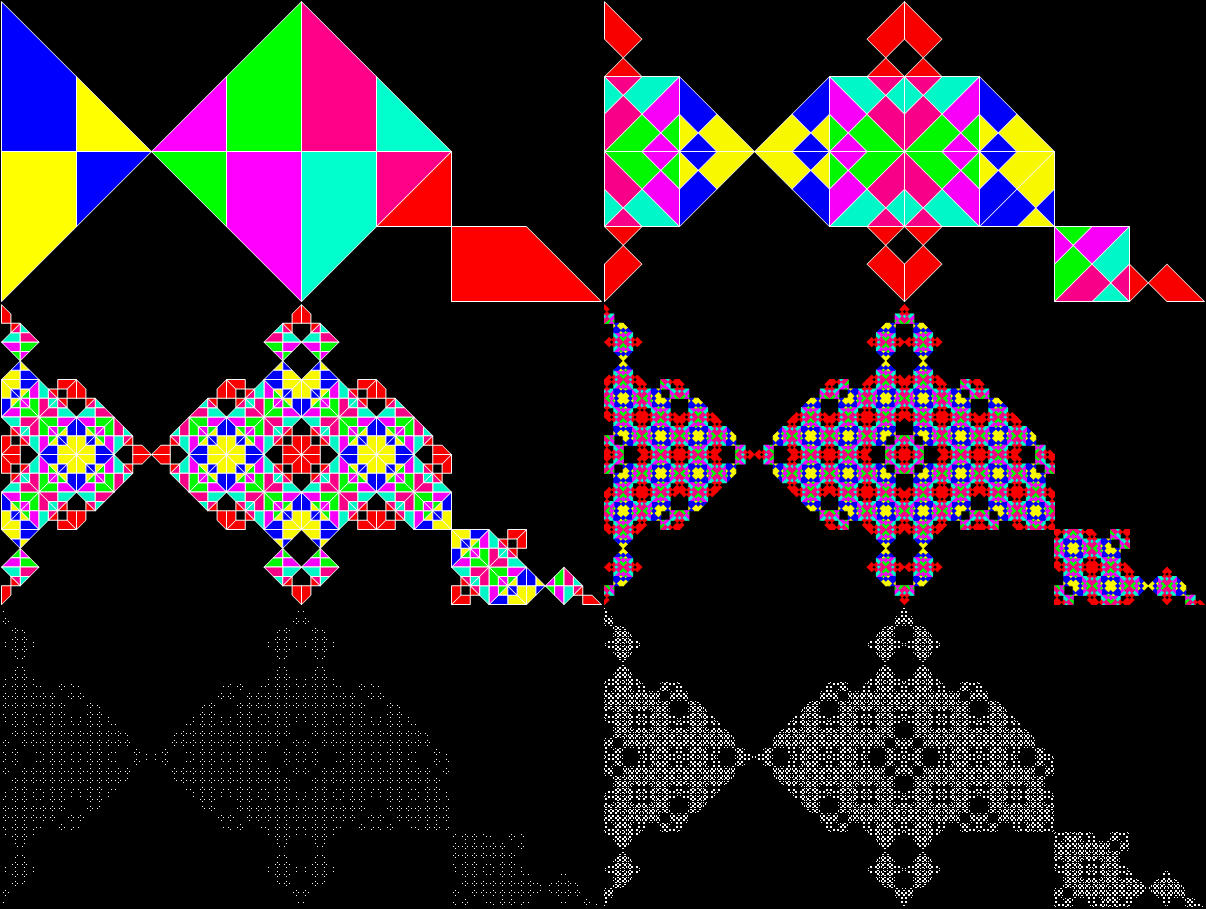

Fish discarding sub-copy 7 (animated)


Here are more examples of the fish sub-dividing, then discarding sub-copies:
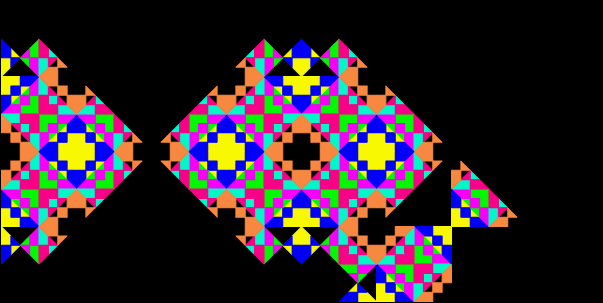
Fish discarding sub-copy #1


Fish discarding sub-copy #2
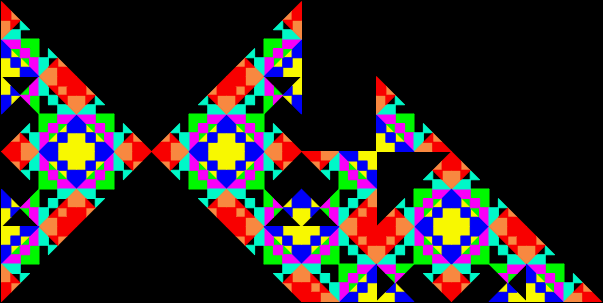

Fish discarding sub-copy #3
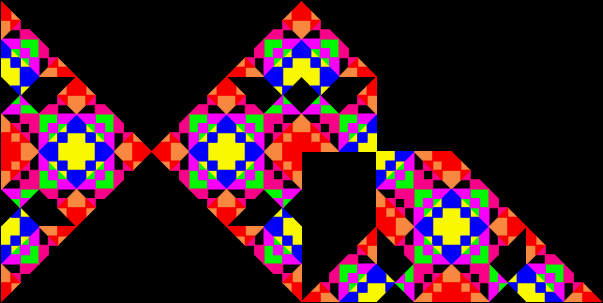

Fish discarding sub-copy #4
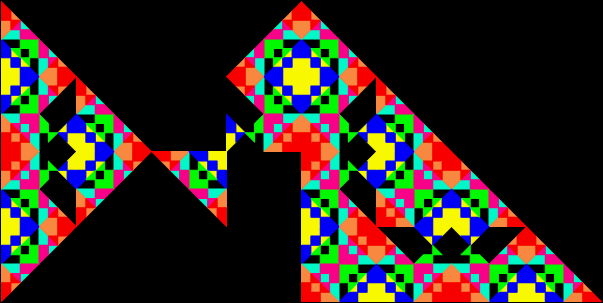

Fish discarding sub-copy #5
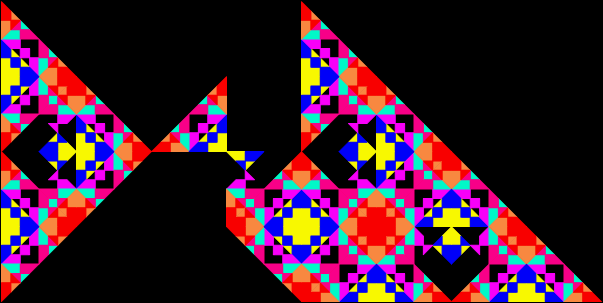

Fish discarding sub-copy #6
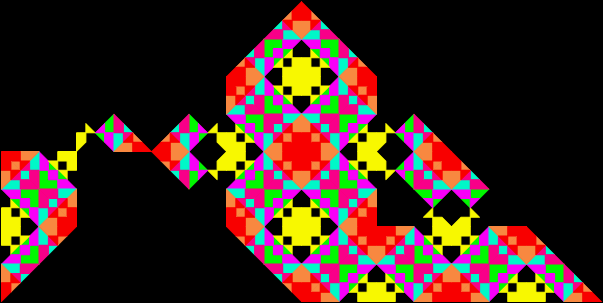

Fish discarding sub-copy #7
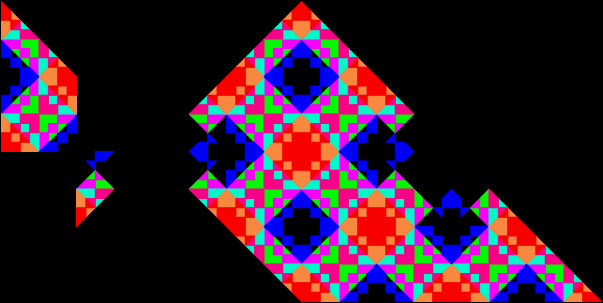

Fish discarding sub-copy #8
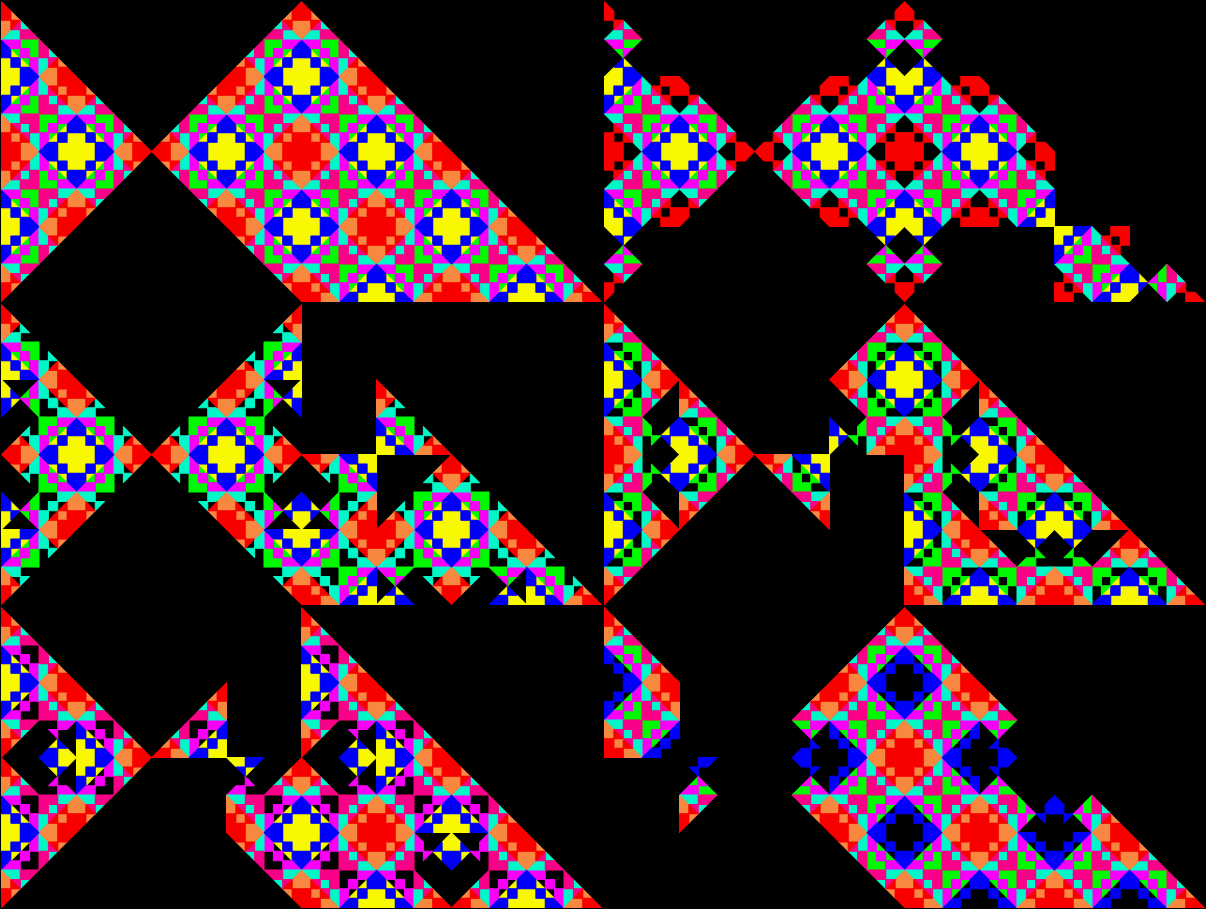

Fish discarding sub-copies (animated)


Now try a square divided into four copies of the fish, then sub-divided again and again:

Fish-square #1
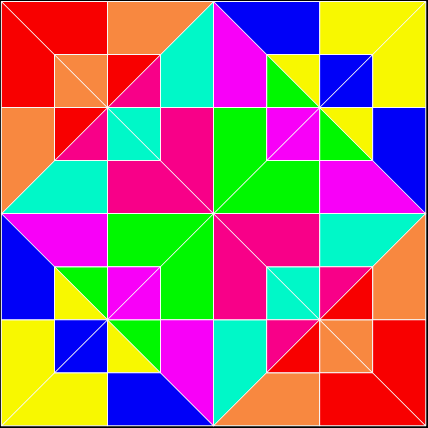

Fish-square #2
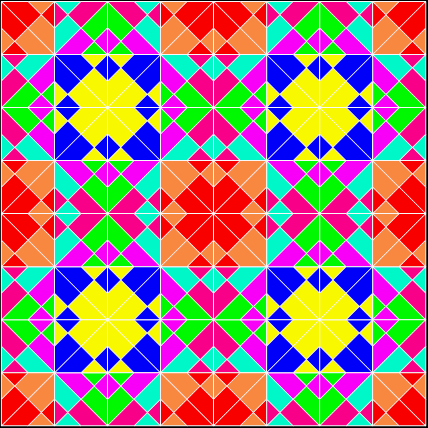

Fish-square #3
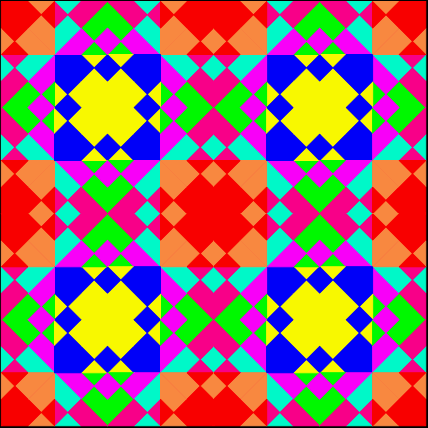

Fish-square #4
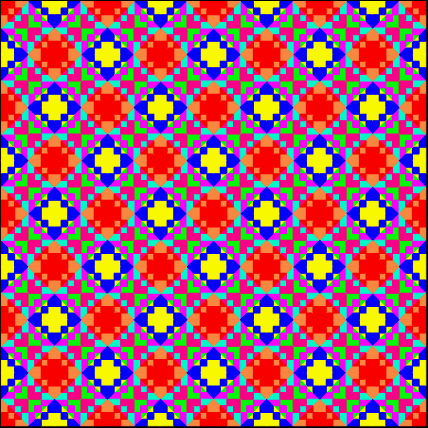

Fish-square #5

Fish-square #6
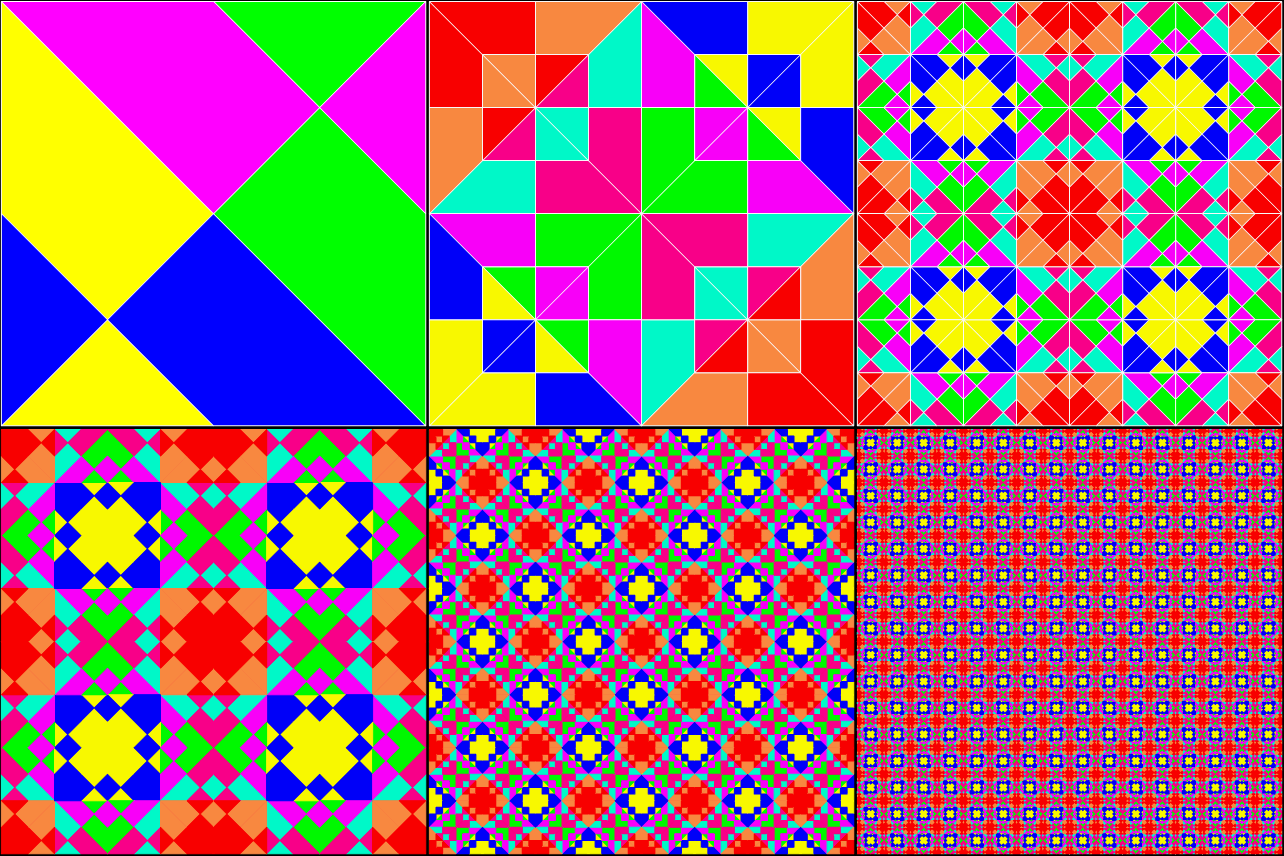

Fish-square (animated)


The fish-square can be used to create more symmetrical patterns when the divide-and-discard rule is applied. Here’s the pattern created by dividing-and-discarded two of the sub-copies:
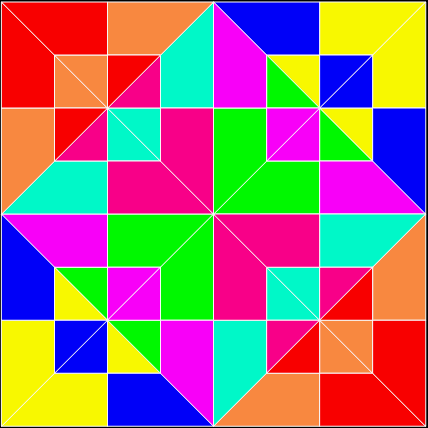
Fish-square divide-and-discard #1


Fish-square divide-and-discard #2
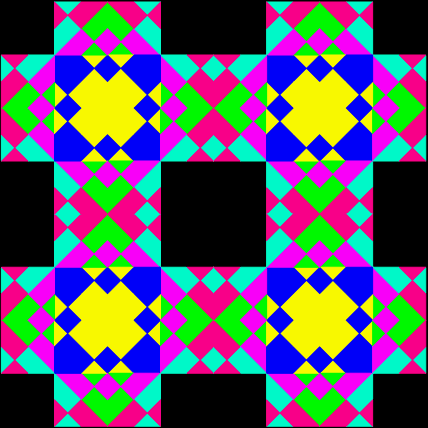

Fish-square divide-and-discard #3


Fish-square divide-and-discard #4


Fish-square divide-and-discard #5


Fish-square divide-and-discard #6
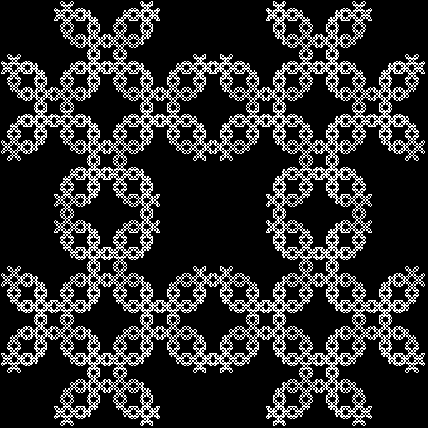

Fish-square divide-and-discard #7
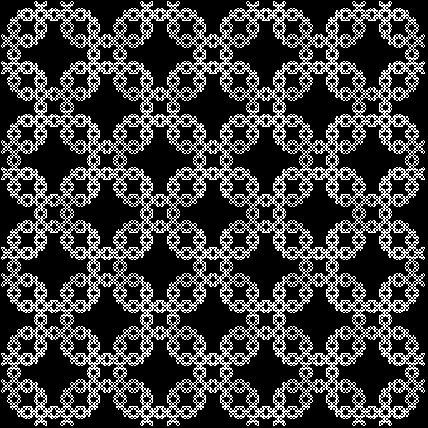

Fish-square divide-and-discard #8 (delayed discard)
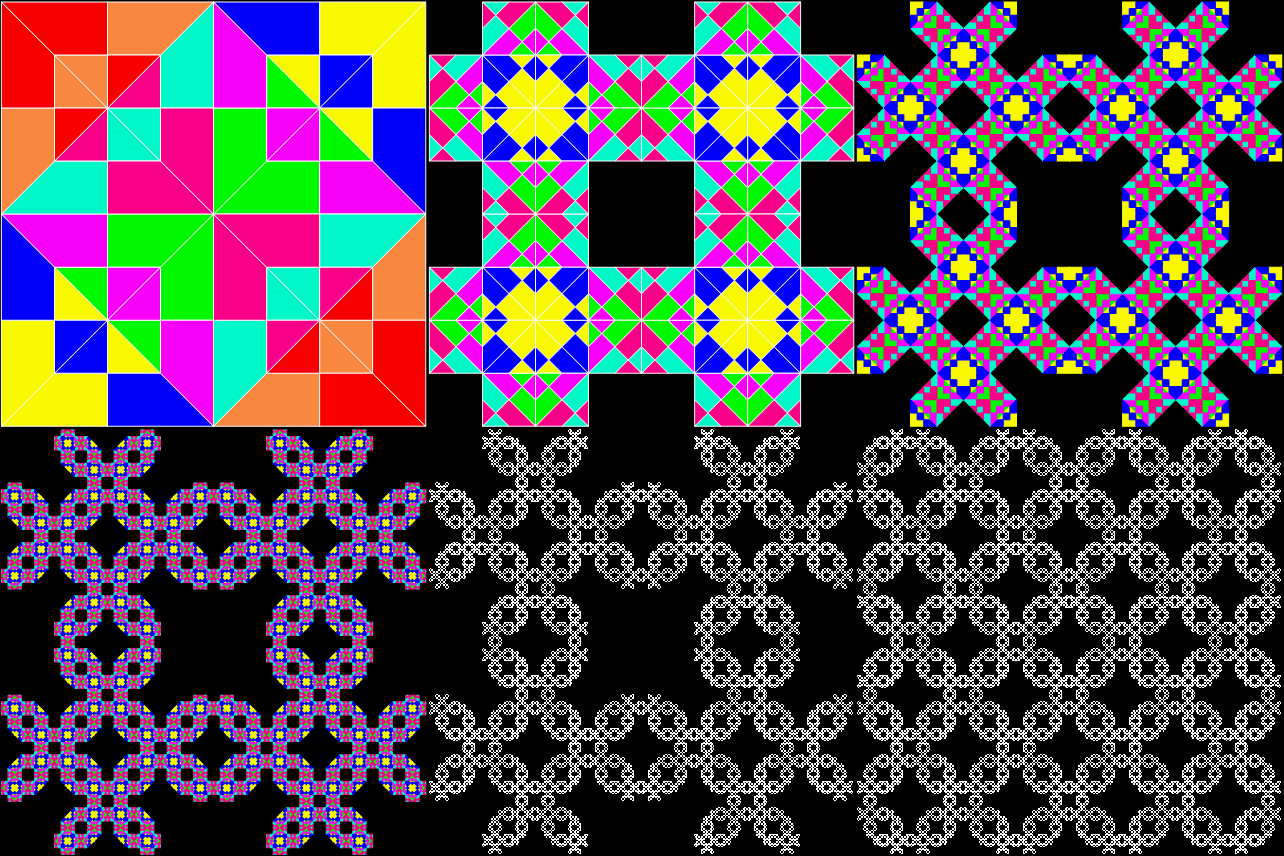

Fish-square divide-and-discard (animated)


Using simple trigonometry, you can convert the square pattern into a circular pattern:
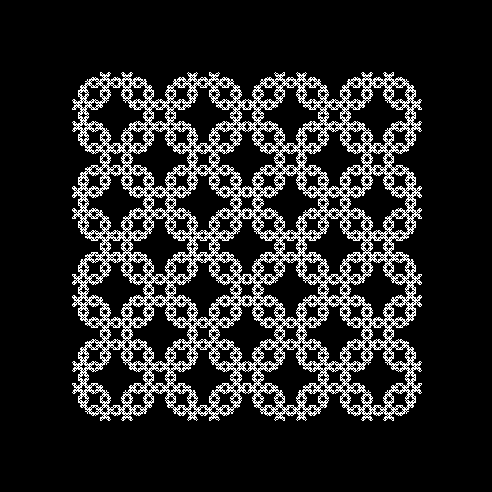
Circular version


Square to circle (animated)


Here are more examples of divide-and-discard fish-squares:
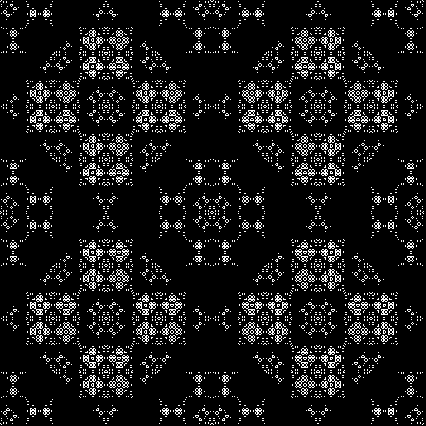
Fish-square divide-and-discard #1
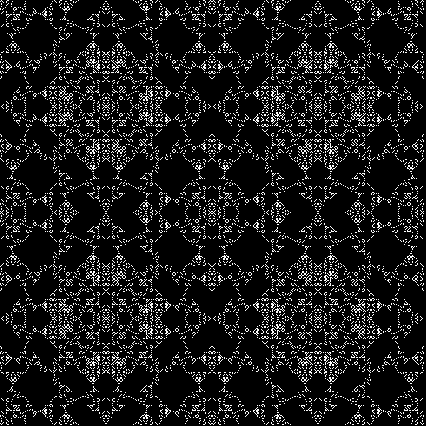

Fish-square divide-and-discard #2
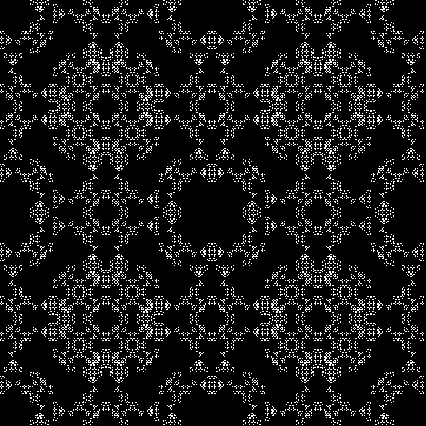

Fish-square divide-and-discard #3
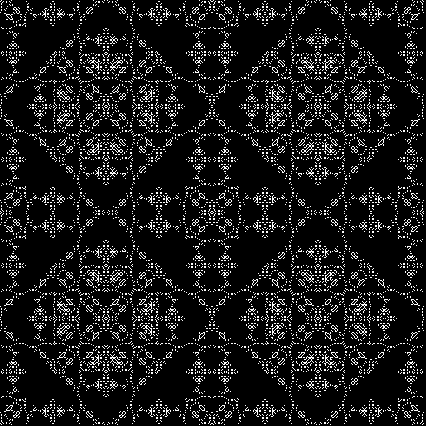

Fish-square divide-and-discard #4
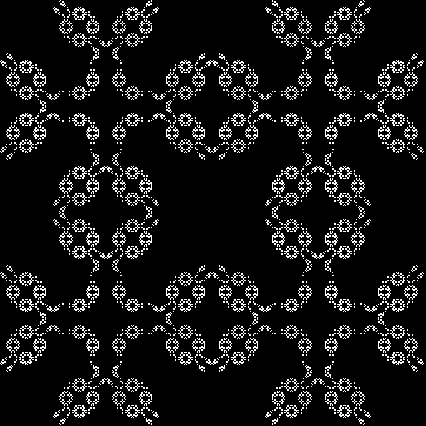

Fish-square divide-and-discard #5
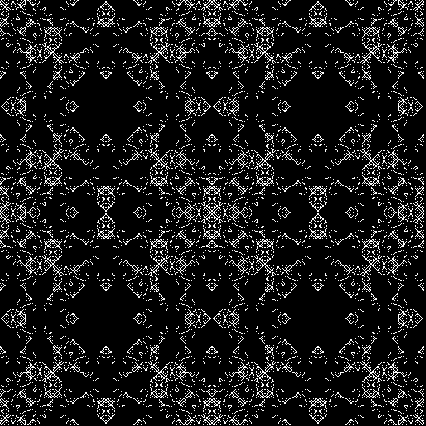

Fish-square divide-and-discard #6


And more examples of fish-squares being converted into circles:
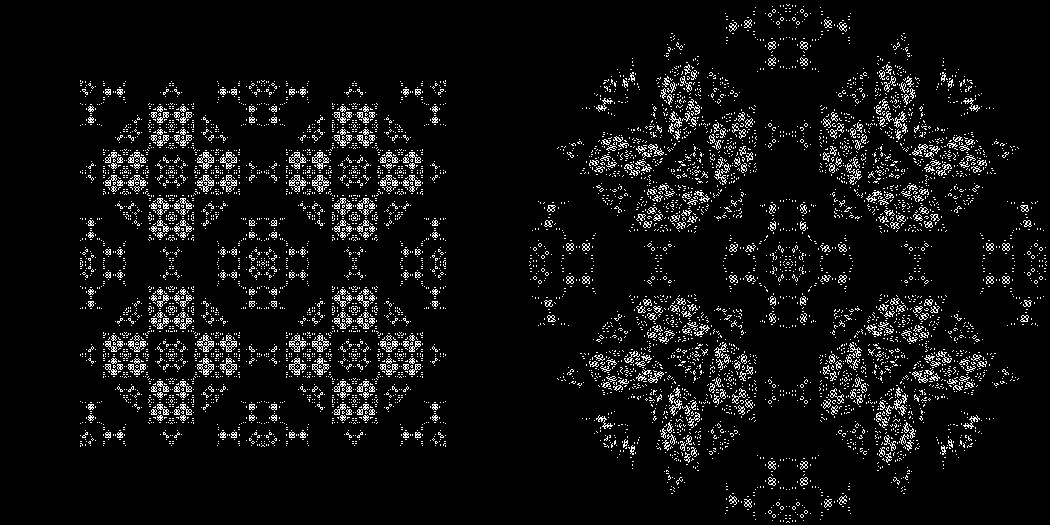
Fish-square to circle #1 (animated)


Fish-square to circle #2
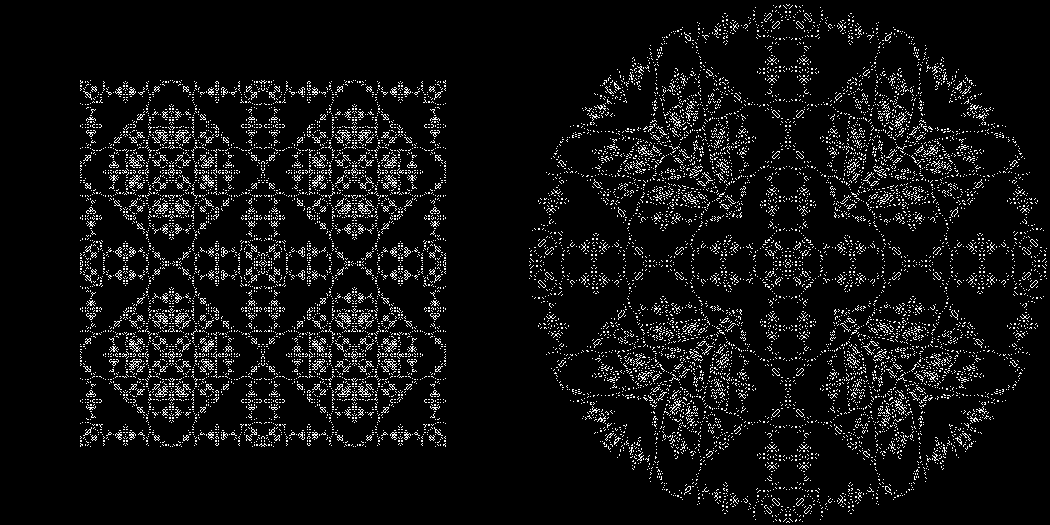

Fish-square to circle #3
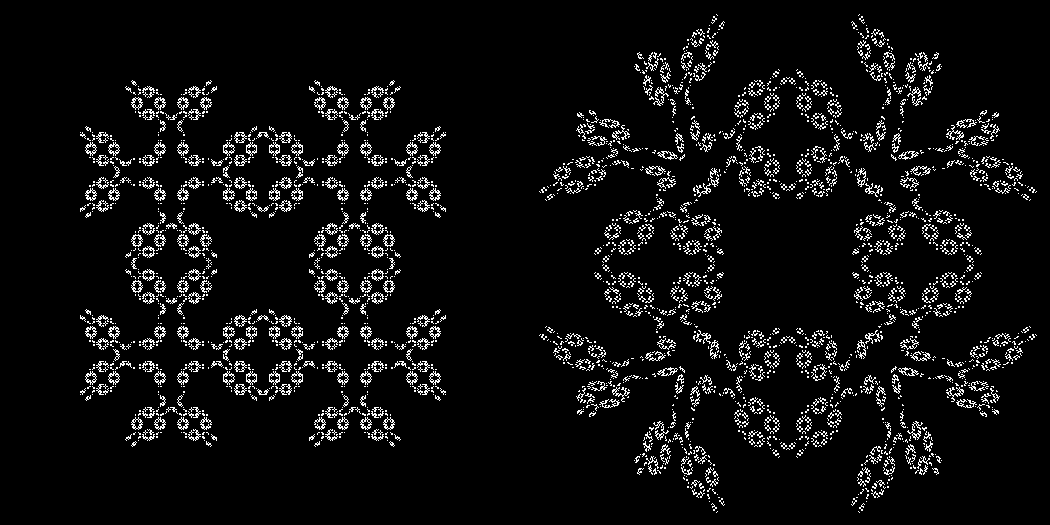

Fish-square to circle #4
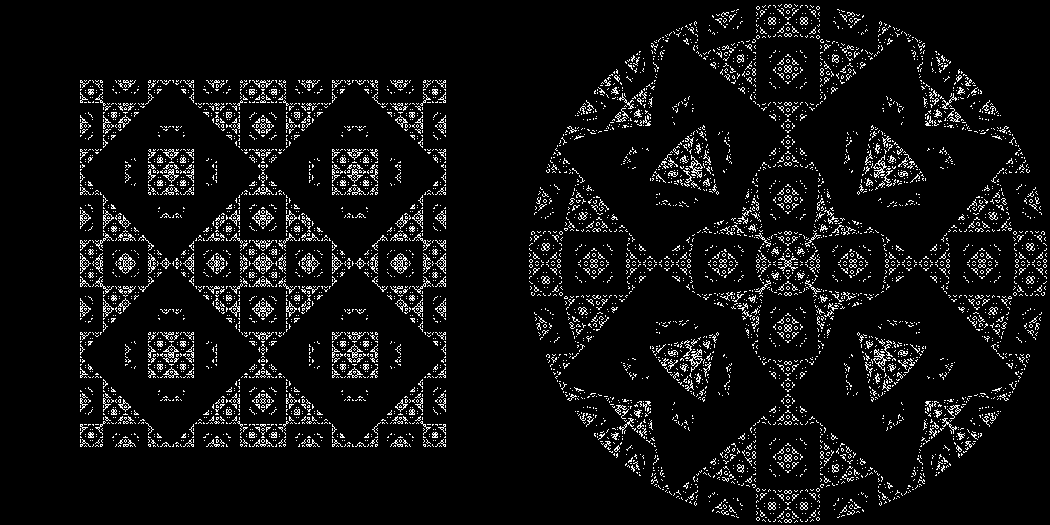

Fish-square to circle #5
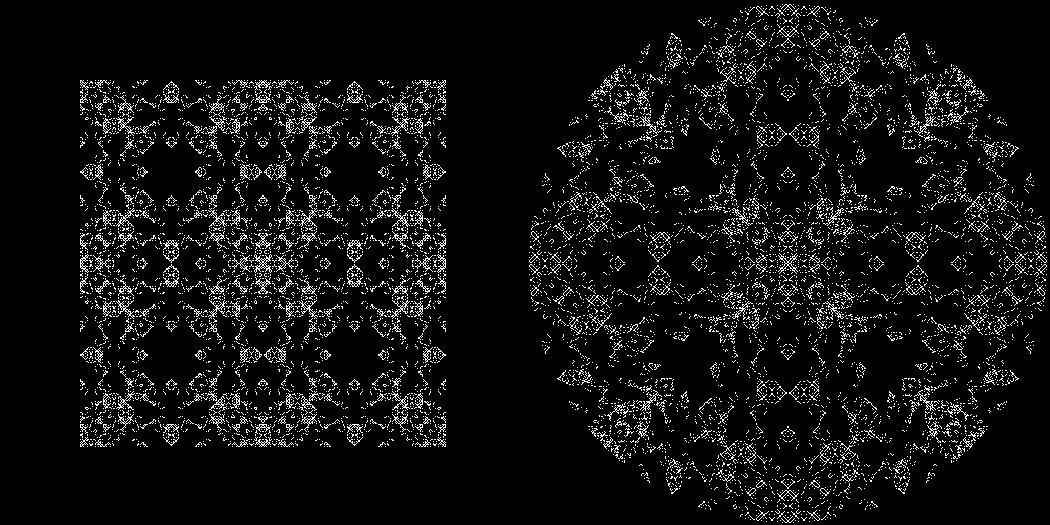

Fish-square to circle #6


Tri Again (Again)

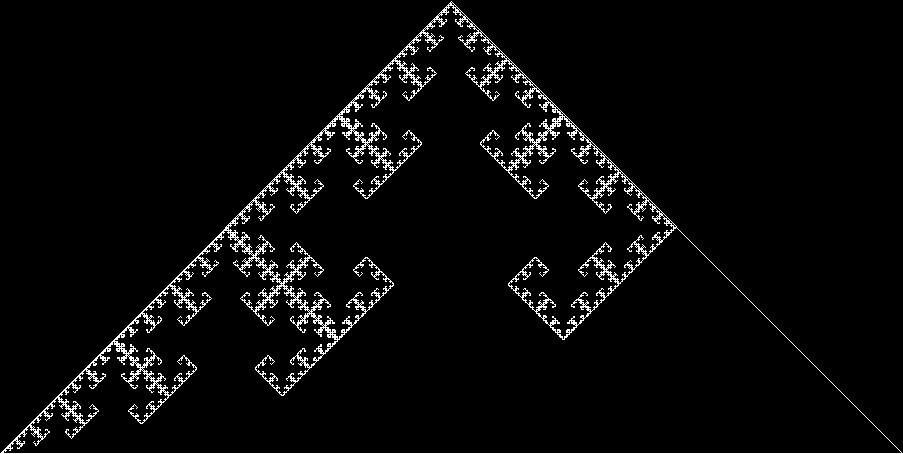
I didn’t expect to find the hourglass fractal playing with squares. I even less expected it playing with triangles. Isosceles right triangles, to be precise. Then again, I found it first playing with the L-triomino, which is composed of three squares. And an isosceles triangle is half of a square. So it all fits. This is an isosceles right triangle:
isosceles_right_triangle

Isosceles right triangle


It’s mirror-symmetrical, so it looks the same in a mirror unless you label one of the acute-angled corners in some way, like this:

right_triangle_chiral_1

Right triangle with labelled corner


right_triangle_chiral_2

Right triangle reflected


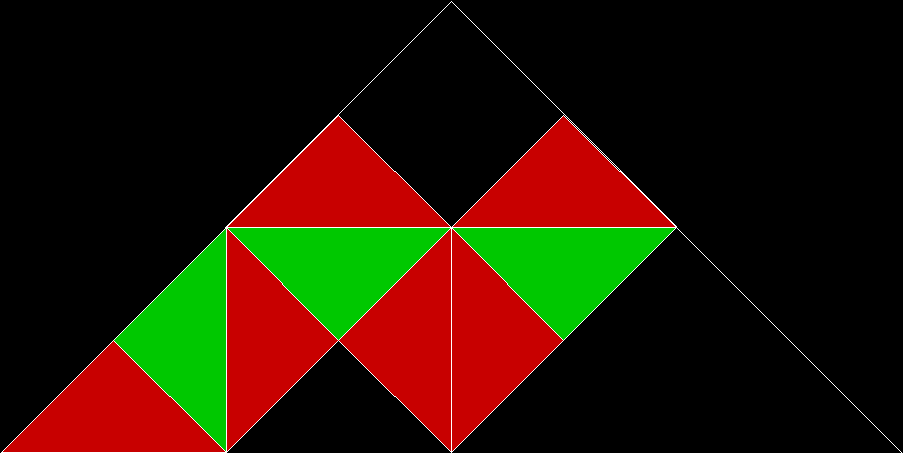
Reflection is how you find the hourglass fractal. First, divide a right triangle into four smaller right triangles.

right_triangle_div4

Right triangle rep-tiled


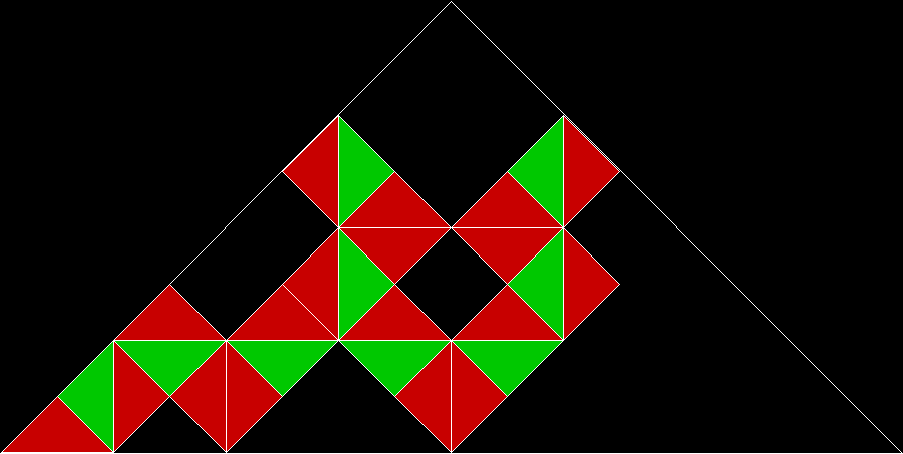
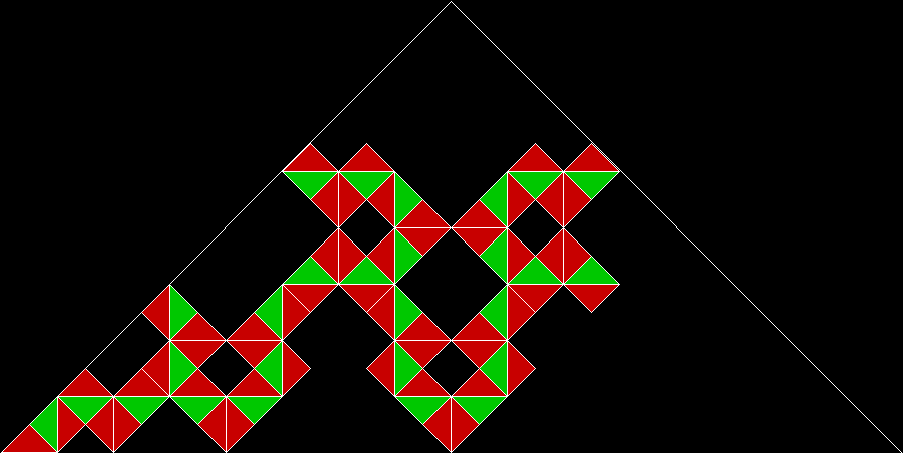
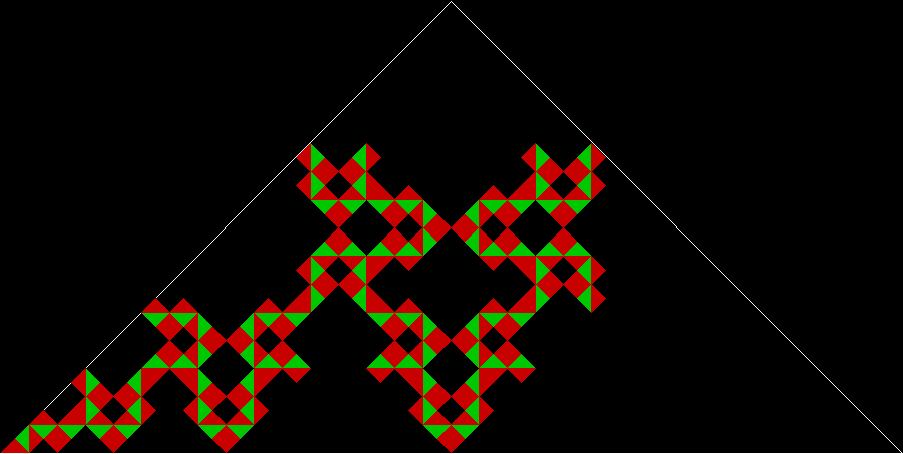
Then discard one of the smaller triangles and repeat. If the acute corners of the smaller triangles have different orientations, one of the permutations creates the hourglass fractal, like this:

right_triangle_div4_1

Hourglass #1


right_triangle_div4_2

Hourglass #2


right_triangle_div4_3

Hourglass #3


right_triangle_div4_4

Hourglass #4


right_triangle_div4_5

Hourglass #5


right_triangle_div4_6

Hourglass #6


right_triangle_div4_7

Hourglass #7


right_triangle_div4_8

Hourglass #8


right_triangle_div4_9

Hourglass #9


right_triangle_div4_123_010

Hourglass animated


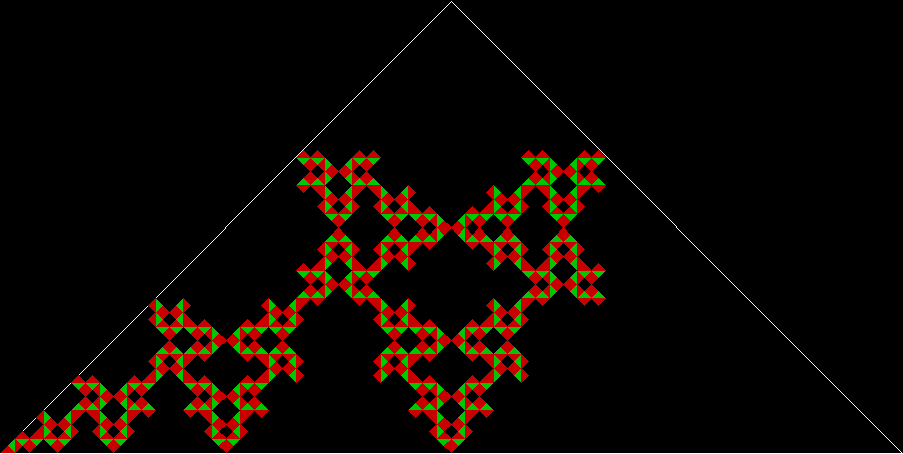
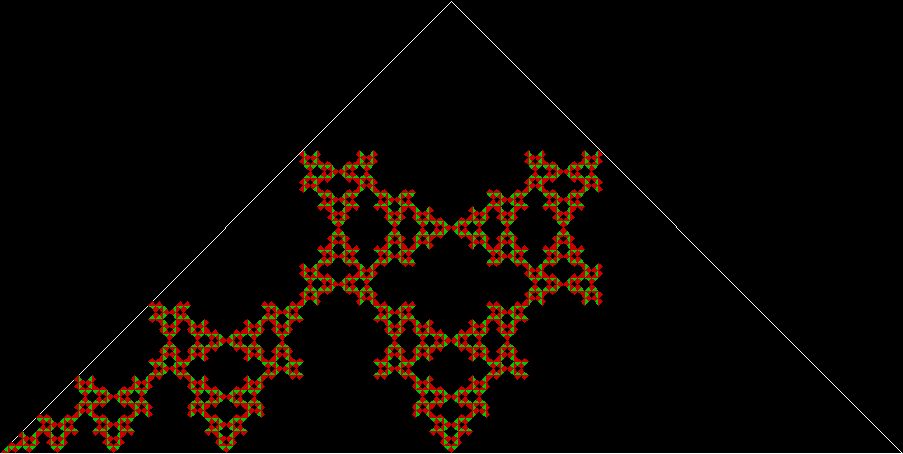
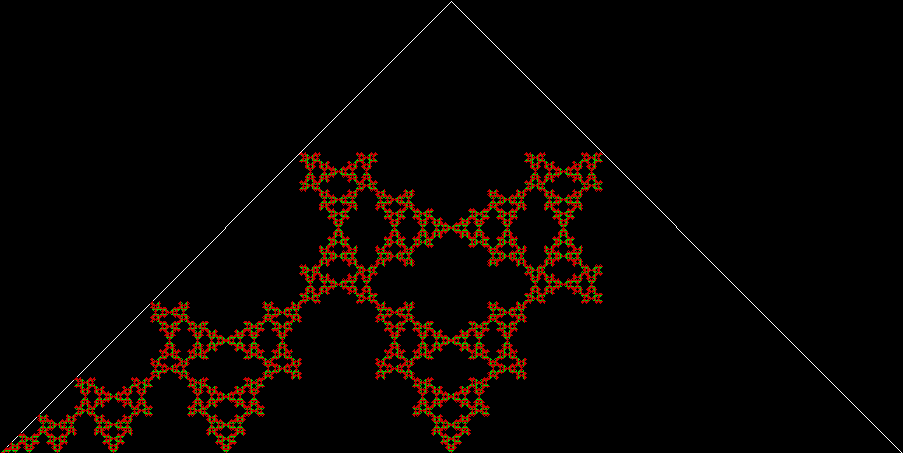
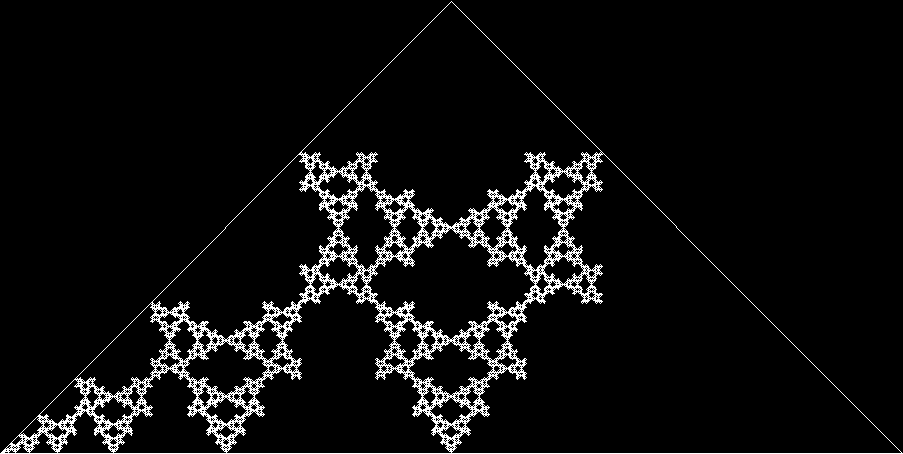
Another permutation of corners creates what I’ve decided to call the crane fractal, like this:
right_triangle_div4_123_001

Crane fractal animated


right_triangle_div4_123_001_static

Crane fractal (static)


The crane fractal is something else that I first found playing with the L-triomino:

l-triomino_234

Crane fractal from L-triomino


Previously pre-posted:

Square Routes
Tri Again

Hex Appeal

A polyiamond is a shape consisting of equilateral triangles joined edge-to-edge. There is one moniamond, consisting of one equilateral triangle, and one diamond, consisting of two. After that, there are one triamond, three tetriamonds, four pentiamonds and twelve hexiamonds. The most famous hexiamond is known as the sphinx, because it’s reminiscent of the Great Sphinx of Giza:

sphinx_hexiamond

It’s famous because it is the only known pentagonal rep-tile, or shape that can be divided completely into smaller copies of itself. You can divide a sphinx into either four copies of itself or nine copies, like this (please open images in a new window if they fail to animate):

sphinx4

sphinx9

So far, no other pentagonal rep-tile has been discovered. Unless you count this double-triangle as a pentagon:

double_triangle_rep-tile

It has five sides, five vertices and is divisible into sixteen copies of itself. But one of the vertices sits on one of the sides, so it’s not a normal pentagon. Some might argue that this vertex divides the side into two, making the shape a hexagon. I would appeal to these ancient definitions: a point is “that which has no part” and a line is “a length without breadth” (see Neuclid on the Block). The vertex is a partless point on the breadthless line of the side, which isn’t altered by it.

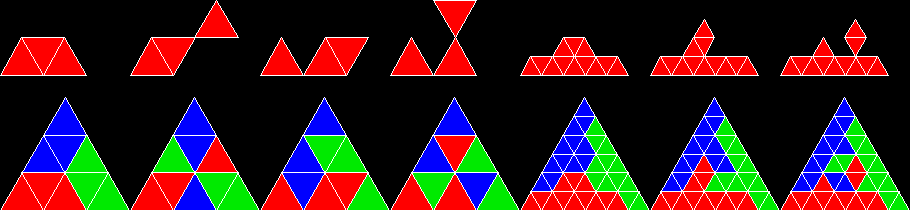
But, unlike the sphinx, the double-triangle has two internal areas, not one. It can be completely drawn with five continuous lines uniting five unique points, but it definitely isn’t a normal pentagon. Even less normal are two more rep-tiles that can be drawn with five continuous lines uniting five unique points: the fish that can be created from three equilateral triangles and the fish that can be created from four isosceles right triangles:

equilateral_triangle_fish_rep-tile

right_triangle_fish_rep-tile

Rep It Up

When I started to look at rep-tiles, or shapes that can be divided completely into smaller copies of themselves, I wanted to find some of my own. It turns out that it’s easy to automate a search for the simpler kinds, like those based on equilateral triangles and right triangles.

right triangle rep-tiles

right_triangle_fish

equilateral_triangle_reptiles

equilateral_triangle_rocket

(Please open the following images in a new window if they fail to animate)

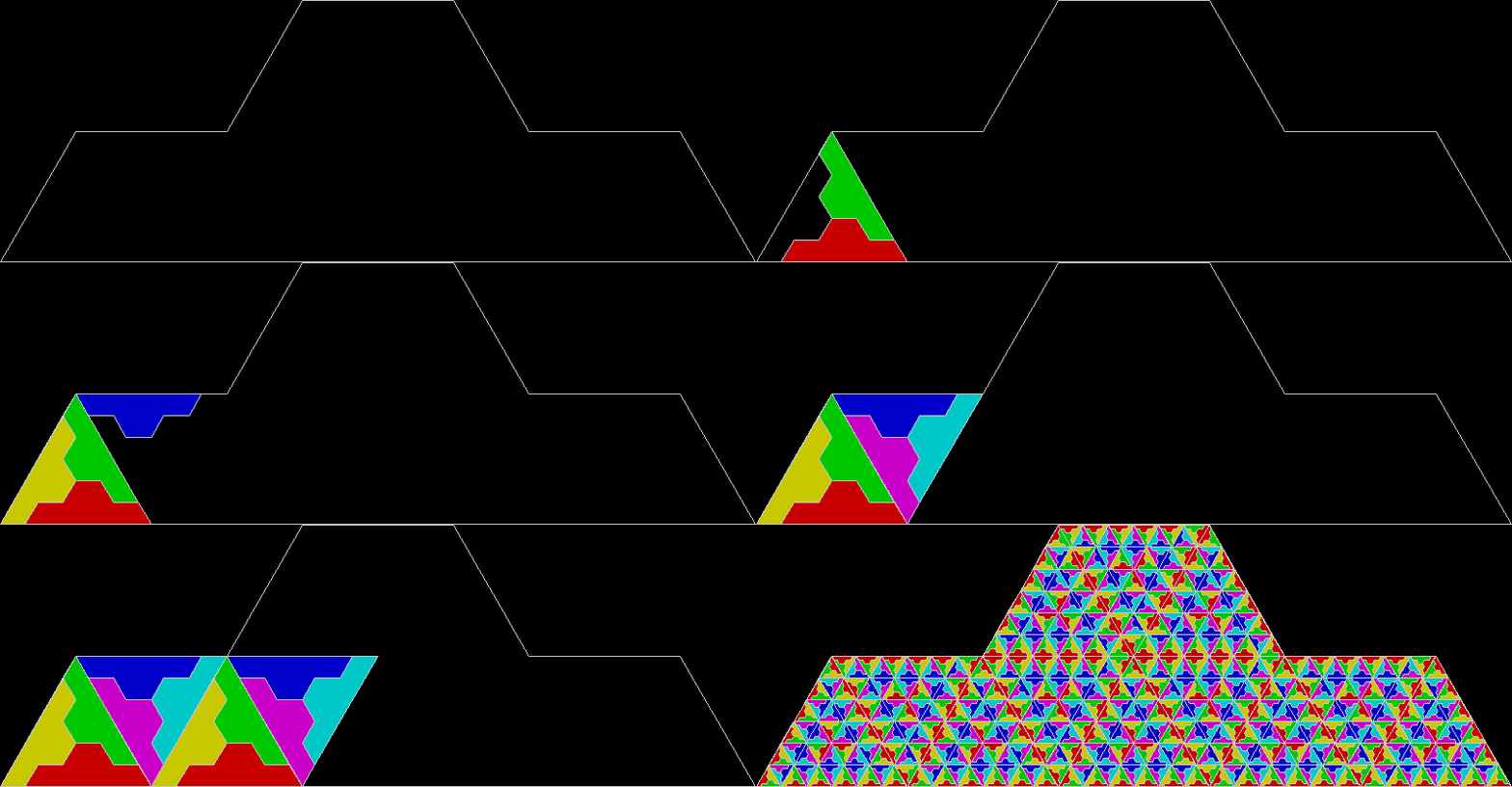
duodeciamond

triangle mosaic


Previously pre-posted (please peruse):

Rep-Tile Reflections