Snow No

XXXI

On Wenlock Edge the wood’s in trouble;
   His forest fleece the Wrekin heaves;
The gale, it plies the saplings double,
   And thick on Severn strew the leaves.

’Twould blow like this through holt and hanger
   When Uricon the city stood:
’Tis the old wind in the old anger,
   But then it threshed another wood.

Then, ’twas before my time, the Roman
   At yonder heaving hill would stare:
The blood that warms an English yeoman,
   The thoughts that hurt him, they were there.

There, like the wind through woods in riot,
   Through him the gale of life blew high;
The tree of man was never quiet:
   Then ’twas the Roman, now ’tis I.

The gale, it plies the saplings double,
   It blows so hard, ’twill soon be gone:
To-day the Roman and his trouble
   Are ashes under Uricon. — from A.E. Housman’s A Shropshire Lad (1896)


Post-Performative Post-Scriptum

If you were already familiar with the poem, you may have noticed that I replaced “snow” with “strew” in line four. I don’t think the original “snow” works, because leaves don’t fall like snow or look anything like snow. Plus, leaves don’t melt like snowflakes when they land on water. Plus plus, the consonant-cluster of “strew” works well with the idea of leaves coating the water.

Back to LIFE

As pre-previously described on OotÜ-F, the English mathematician John Conway invented the Game of Life. It’s played on a grid of squares with counters. First you put counters on the grid in any pattern you please, random or regular, then you add or remove counters according to three simple rules applied to each square of the grid:

1. If an empty square has exactly three counters as neighbors, put a new counter on the square.
2. If a counter has two or three neighbors, leave it where it is.
3. If a counter has less than two or more than three neighbors, remove it from the grid.

There are lots of variants on Life and I wondered what would happen if you turned the grid into a kind of two-dimensional Pascal’s triangle. You start with 1 in the central square, then apply this rule to each square, [x,y], of the grid:

1. Add all numbers in the eight squares surrounding [x,y], then put that value in [x,y] (as soon as you’ve summed all other squares).

When a square is on the edge of the grid, its [x] or [y] value wraps to the opposite edge. Here’s this Pascal’s Life in action:

0 0 0 0 0 0 0
0 0 0 0 0 0 0
0 0 0 0 0 0 0
0 0 0 1 0 0 0
0 0 0 0 0 0 0
0 0 0 0 0 0 0
0 0 0 0 0 0 0

Pascal's square #1


0 0 0 0 0 0 0
0 0 0 0 0 0 0
0 0 1 1 1 0 0
0 0 1 0 1 0 0
0 0 1 1 1 0 0
0 0 0 0 0 0 0
0 0 0 0 0 0 0

Pascal's square #2


0 0 0 0 0 0 0
0 1 2 3 2 1 0
0 2 2 4 2 2 0
0 3 4 8 4 3 0
0 2 2 4 2 2 0
0 1 2 3 2 1 0
0 0 0 0 0 0 0

Pascal's square #3


01 03 06 07 06 03 01
03 06 12 12 12 06 03
06 12 27 27 27 12 06
07 12 27 24 27 12 07
06 12 27 27 27 12 06
03 06 12 12 12 06 03
01 03 06 07 06 03 01

Pascal's square #4


021 038 056 067 056 038 021
038 070 100 124 100 070 038
056 100 132 168 132 100 056
067 124 168 216 168 124 067
056 100 132 168 132 100 056
038 070 100 124 100 070 038
021 038 056 067 056 038 021

Pascal's square #5


0285 0400 0560 0615 0560 0400 0285
0400 0541 0755 0811 0755 0541 0400
0560 0755 1070 1140 1070 0755 0560
0615 0811 1140 1200 1140 0811 0615
0560 0755 1070 1140 1070 0755 0560
0400 0541 0755 0811 0755 0541 0400
0285 0400 0560 0615 0560 0400 0285

Pascal's square #6


2996 3786 4697 5176 4697 3786 2996
3786 4785 5892 6525 5892 4785 3786
4697 5892 7153 7941 7153 5892 4697
5176 6525 7941 8840 7941 6525 5176
4697 5892 7153 7941 7153 5892 4697
3786 4785 5892 6525 5892 4785 3786
2996 3786 4697 5176 4697 3786 2996

Pascal's square #7


As you can see, the numbers quickly get big, so I adjusted the rule: sum the eight neighbors of [x,y], then put sum modulo 10 in [x,y]. The modulus of a number, n is its remainder when it’s divided by another number. For example, 3 modulo 10 = 3, 7 modulo 10 = 7, 10 modulo 10 = 0, 24 modulo 10 = 4, and so on. Pascal’s Life modulo 10 looks like this:

0 0 0 0 0 0 0
0 0 0 0 0 0 0
0 0 0 0 0 0 0
0 0 0 1 0 0 0
0 0 0 0 0 0 0
0 0 0 0 0 0 0
0 0 0 0 0 0 0

Pascal's square (n mod 10) #1


0 0 0 0 0 0 0
0 0 0 0 0 0 0
0 0 1 1 1 0 0
0 0 1 0 1 0 0
0 0 1 1 1 0 0
0 0 0 0 0 0 0
0 0 0 0 0 0 0

Pascal's square (n mod 10) #2


0 0 0 0 0 0 0
0 1 2 3 2 1 0
0 2 2 4 2 2 0
0 3 4 8 4 3 0
0 2 2 4 2 2 0
0 1 2 3 2 1 0
0 0 0 0 0 0 0

Pascal's square (n mod 10) #3


1 3 6 7 6 3 1
3 6 2 2 2 6 3
6 2 7 7 7 2 6
7 2 7 4 7 2 7
6 2 7 7 7 2 6
3 6 2 2 2 6 3
1 3 6 7 6 3 1

Pascal's square (n mod 10) #4


1 8 6 7 6 8 1
8 0 0 4 0 0 8
6 0 2 8 2 0 6
7 4 8 6 8 4 7
6 0 2 8 2 0 6
8 0 0 4 0 0 8
1 8 6 7 6 8 1

Pascal's square (n mod 10) #5


5 0 0 5 0 0 5
0 1 5 1 5 1 0
0 5 0 0 0 5 0
5 1 0 0 0 1 5
0 5 0 0 0 5 0
0 1 5 1 5 1 0
5 0 0 5 0 0 5

Pascal's square (n mod 10) #6


6 6 7 6 7 6 6
6 5 2 5 2 5 6
7 2 3 1 3 2 7
6 5 1 0 1 5 6
7 2 3 1 3 2 7
6 5 2 5 2 5 6
6 6 7 6 7 6 6

Pascal's square (n mod 10) #7


7 5 3 3 3 5 7
5 9 5 1 5 9 5
3 5 1 7 1 5 3
3 1 7 6 7 1 3
3 5 1 7 1 5 3
5 9 5 1 5 9 5
7 5 3 3 3 5 7

Pascal's square (n mod 10) #8


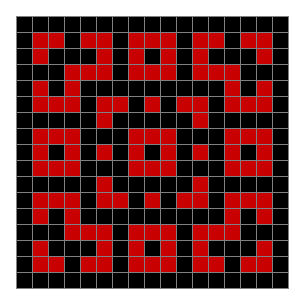
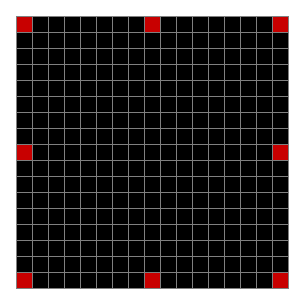
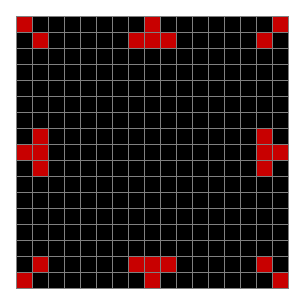
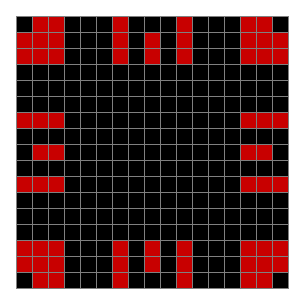
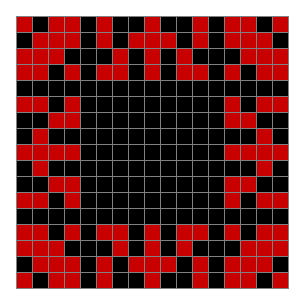
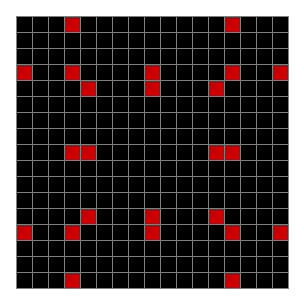
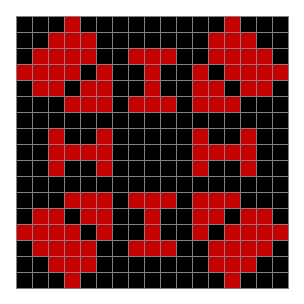
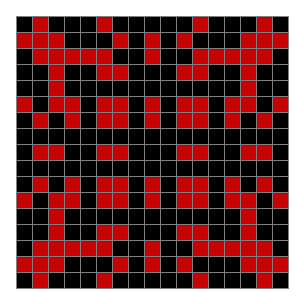
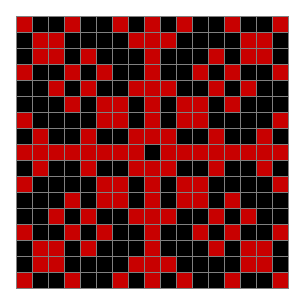
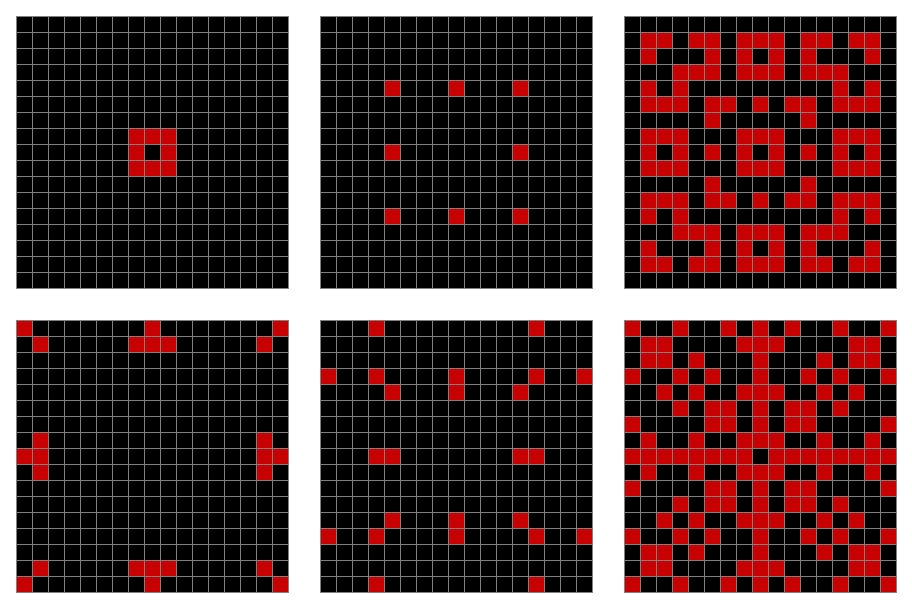
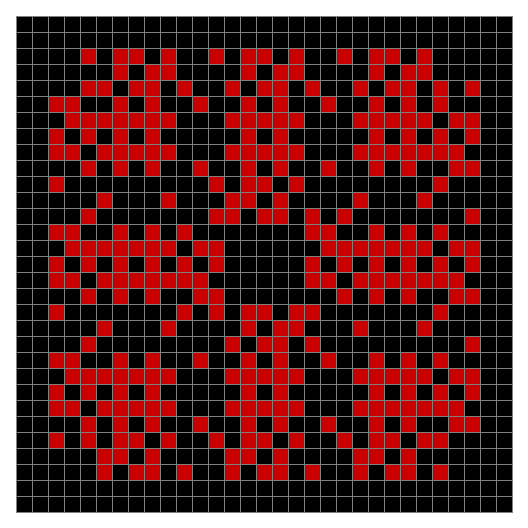
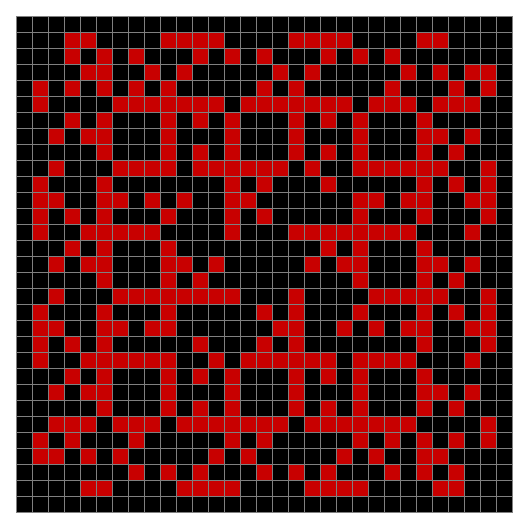
Now add graphics and use n modulo 2 (where all even numbers → 0 and all odd numbers → 1). If you start with a 17×17 square with a square pattern of 1s, you’ll see it evolve like this when 0s are represented in black and 1s are represented in red:

n mod 2 on 17×17 square #1
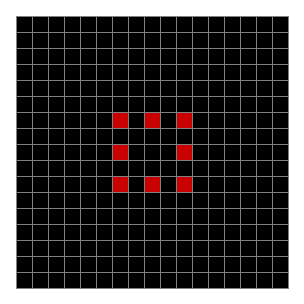

n mod 2 #2
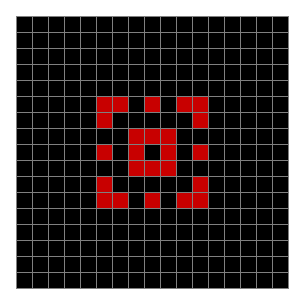

n mod 2 #3
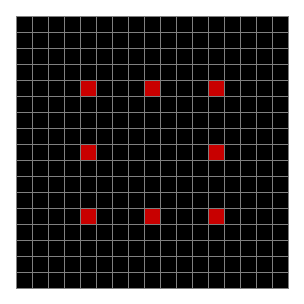

n mod 2 #4


n mod 2 #5
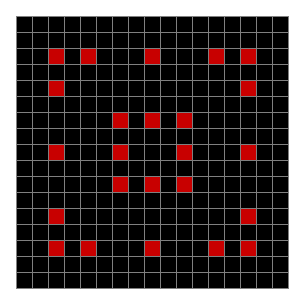

n mod 2 #6

n mod 2 #7

n mod 2 #8

n mod 2 #9

n mod 2 #10

n mod 2 #11

n mod 2 #12

n mod 2 #13

n mod 2 #14

n mod 2 #15


n mod 2 #16

n mod 2 (animated)


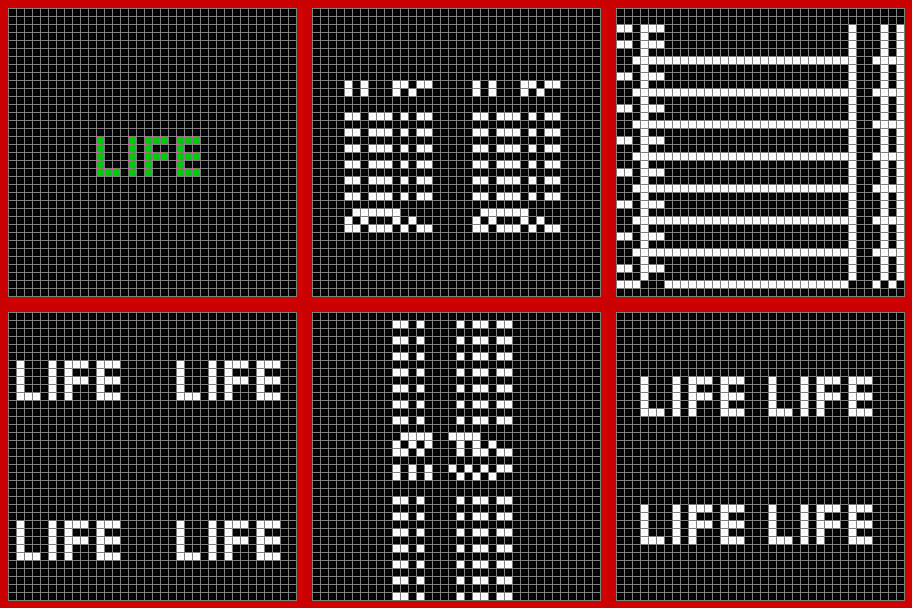
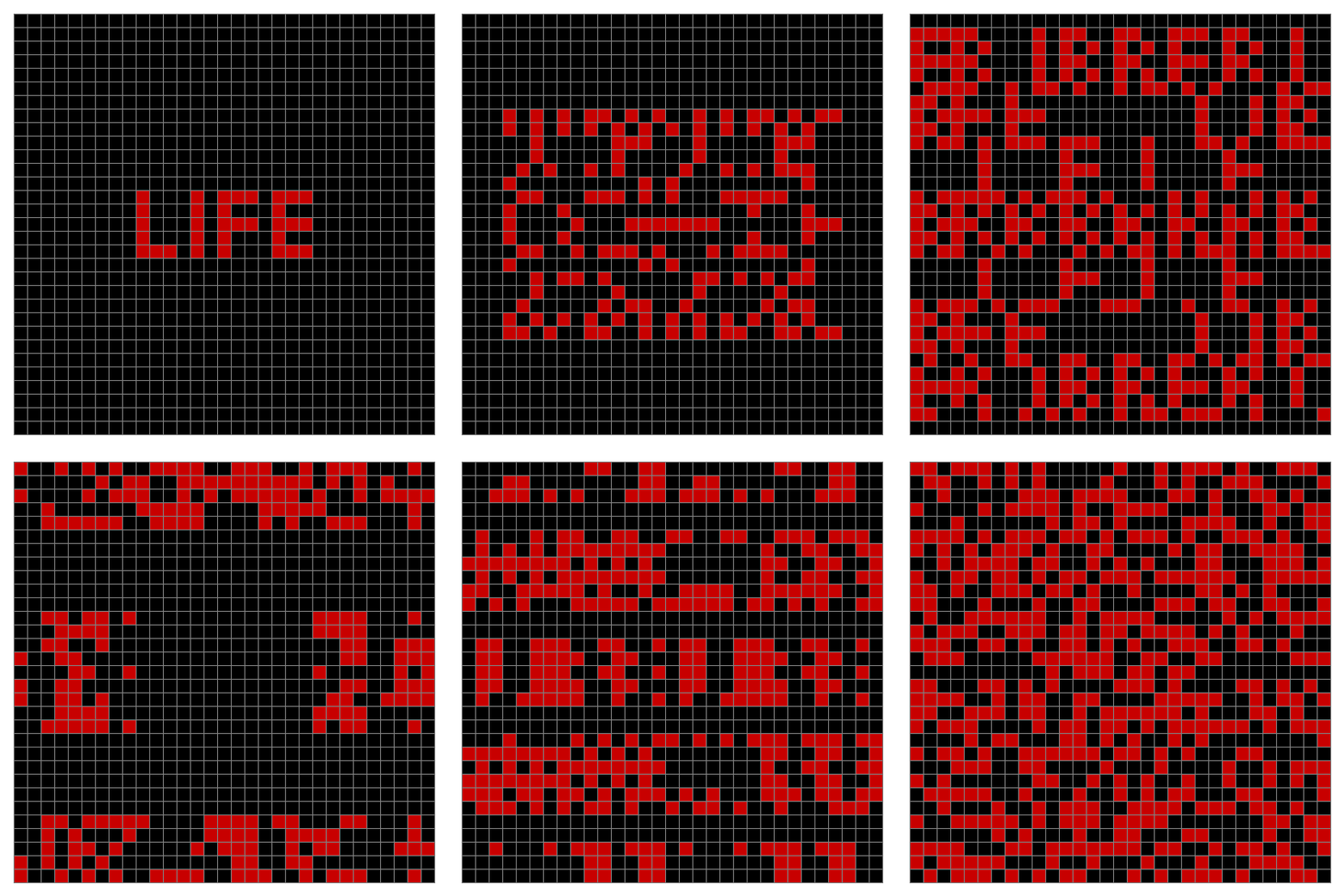
As you can see, the original square re-appears. So do other patterns. Here’s an animated gif for n modulo 2 seeded with a pattern of 1s spelling LIFE:

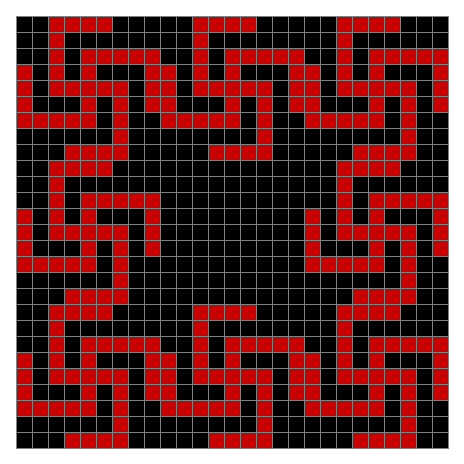
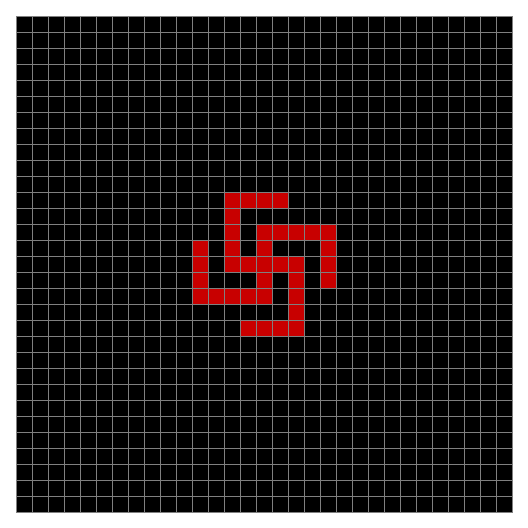
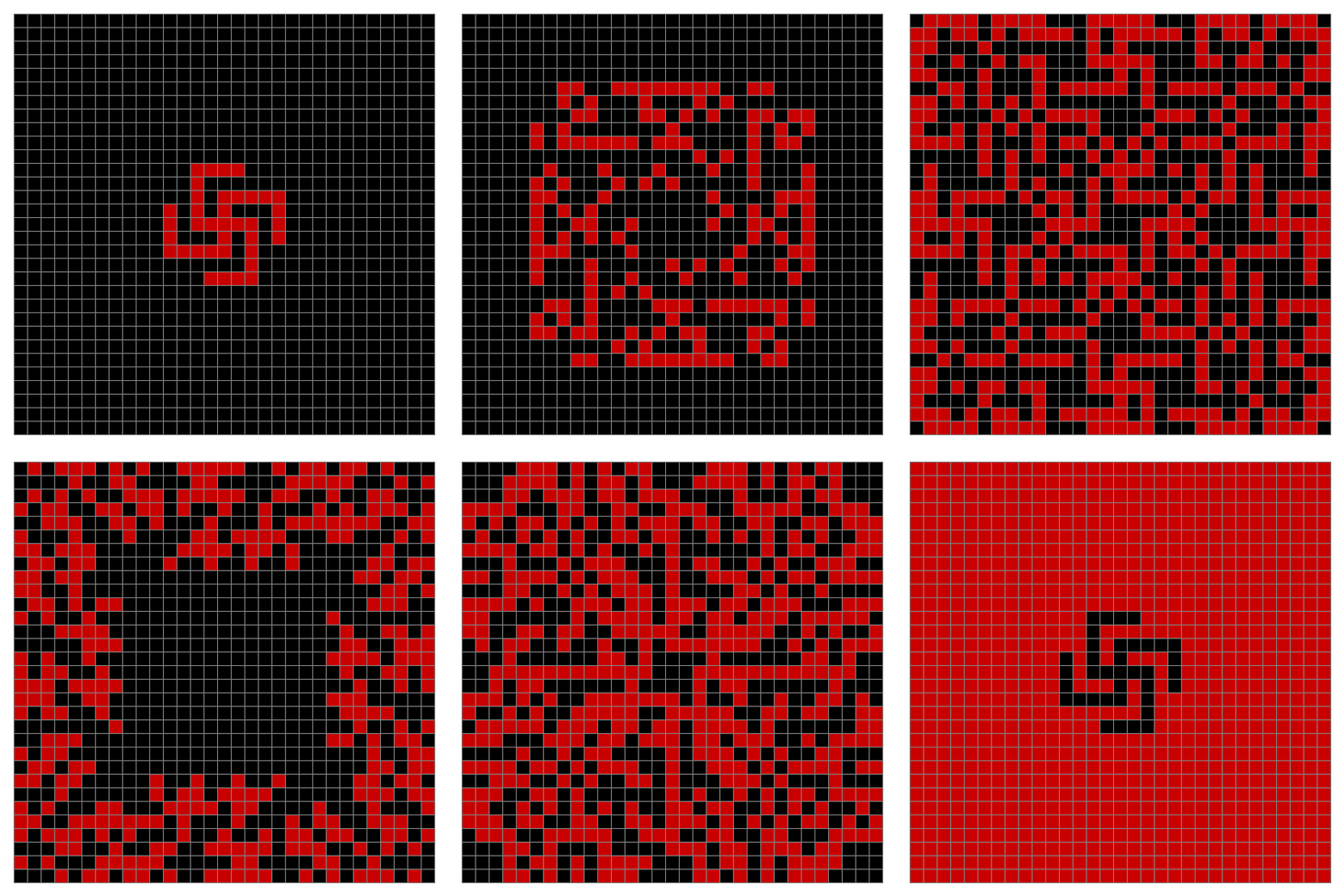
Now try a spiral as the seed:
Spiral with n mod 2 #1
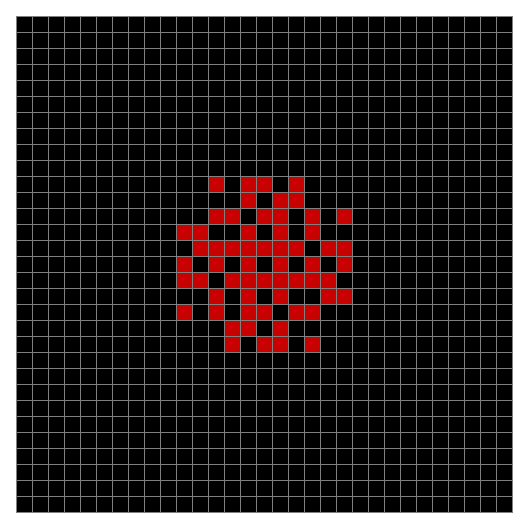

Spiral with n mod 2 #2
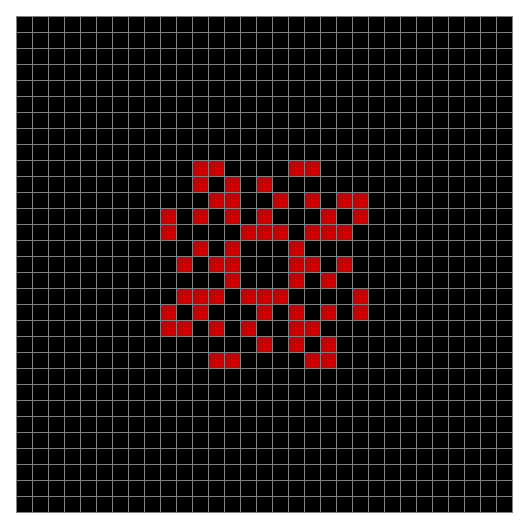

Spiral with n mod 2 #3
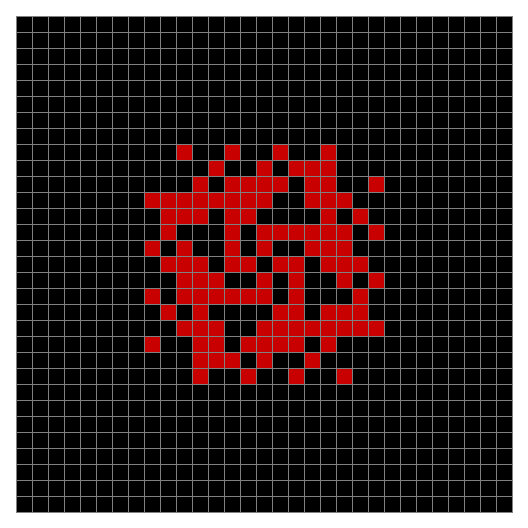

Spiral with n mod 2 #4
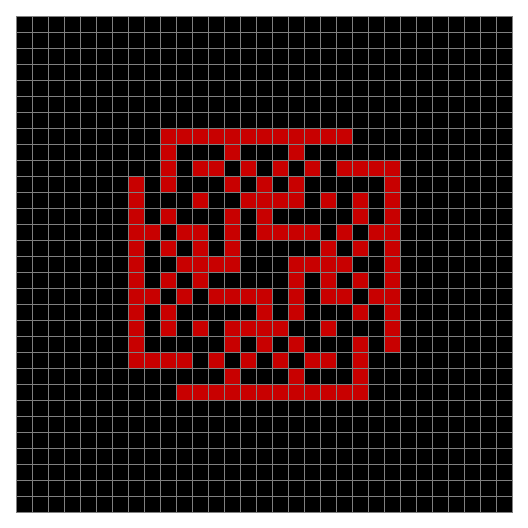

Spiral with n mod 2 #5
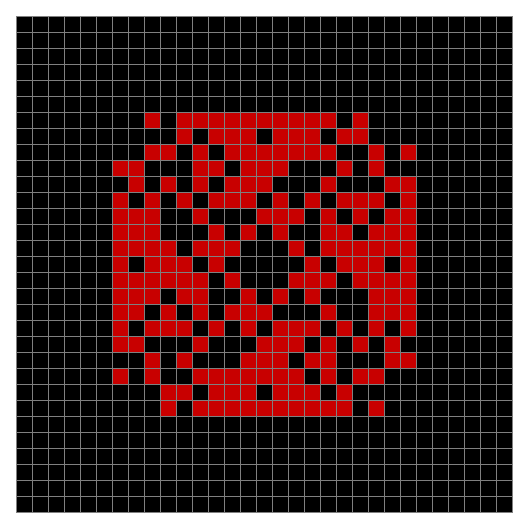

Spiral with n mod 2 #6
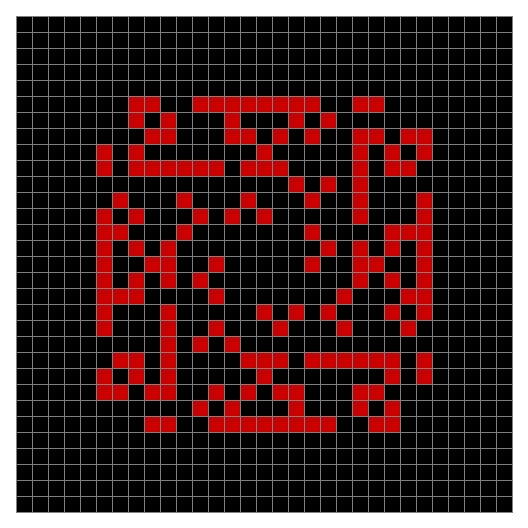

Spiral with n mod 2 #7
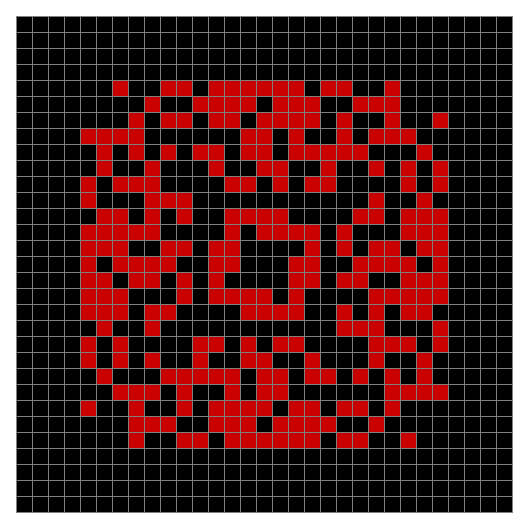

Spiral with n mod 2 #8
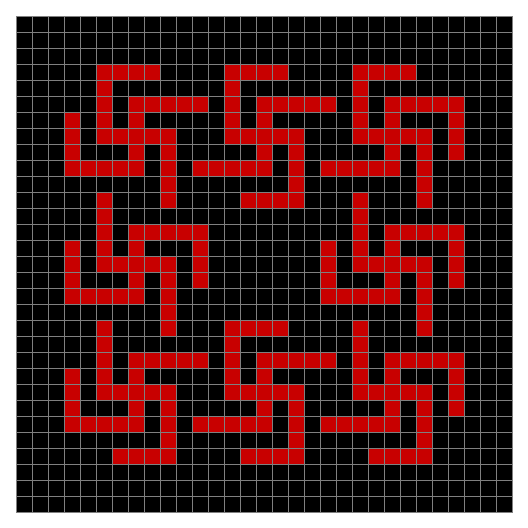

Spiral with n mod 2 #9

Spiral with n mod 2 #10

Spiral with n mod 2 #11

Spiral mod 2 (animated)


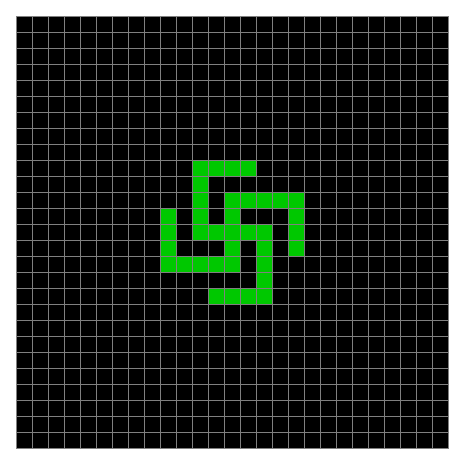
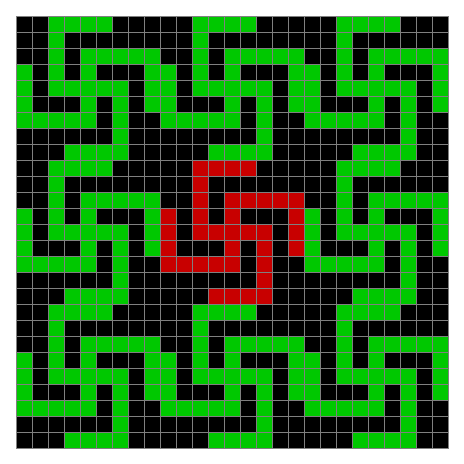
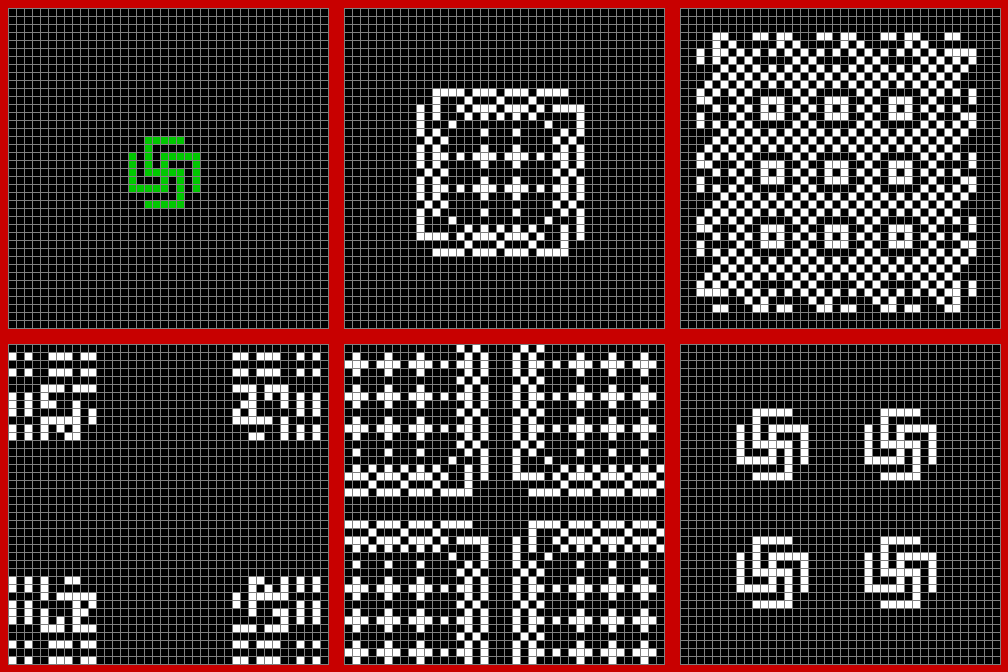
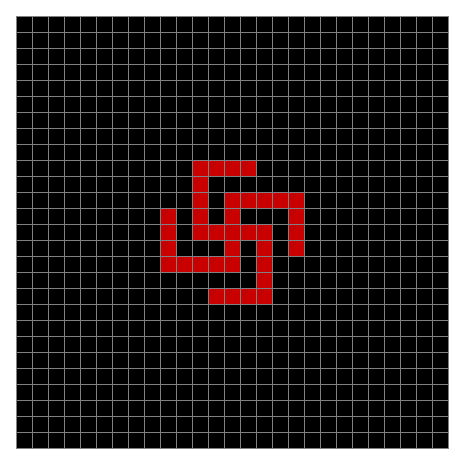
Now try the same pattern using modulo 3, where 0s are represented in black, 1s are represented in red and 2s in green. The pattern returns with different colors, i.e. with different underlying digits:
Spiral mod 3 on 27×27 square #1
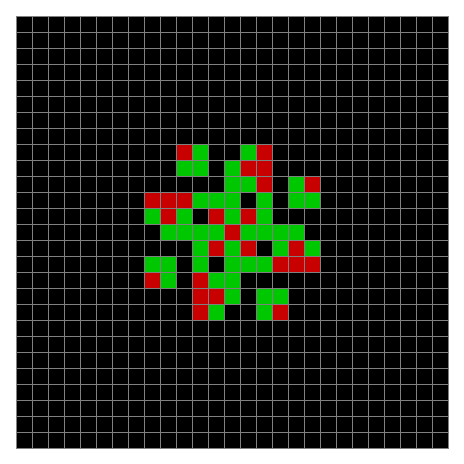

Spiral mod 3 #2


Spiral mod 3 #3
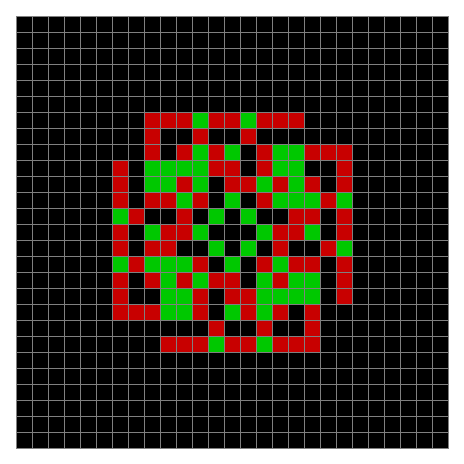

Spiral mod 3 #4
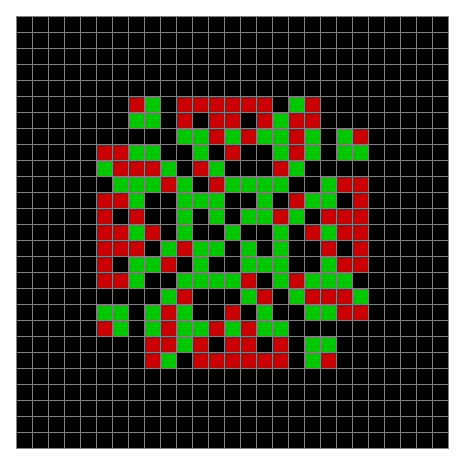

Spiral mod 3 #5
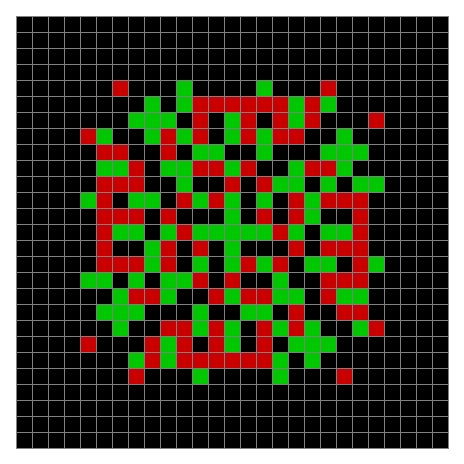

Spiral mod 3 #6
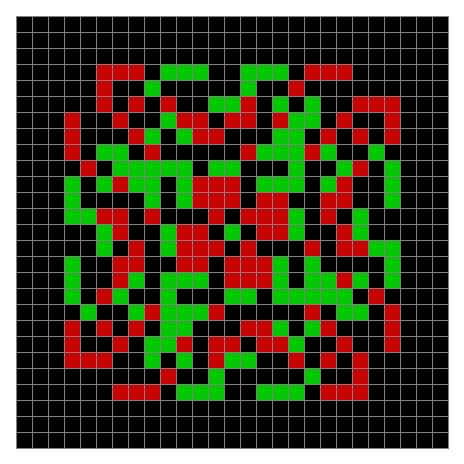

Spiral mod 3 #7


Spiral mod 3 #8
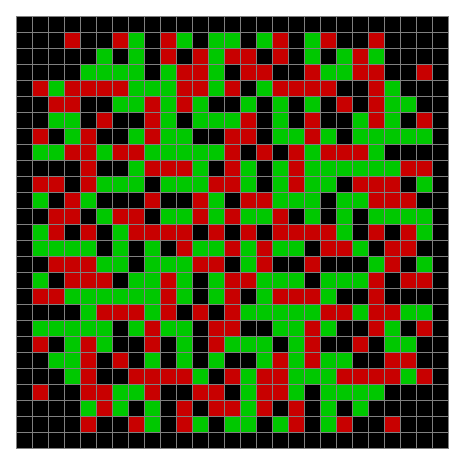

Spiral mod 3 #9


Spiral mod 3 #10


Spiral mod 3 #11

[…]

Spiral mod 3 #19

[…]

Spiral mod 3 #28

[…]

Spiral mod 3 #37

[…]

Spiral mod 3 #46


Spiral mod 3 (animated)
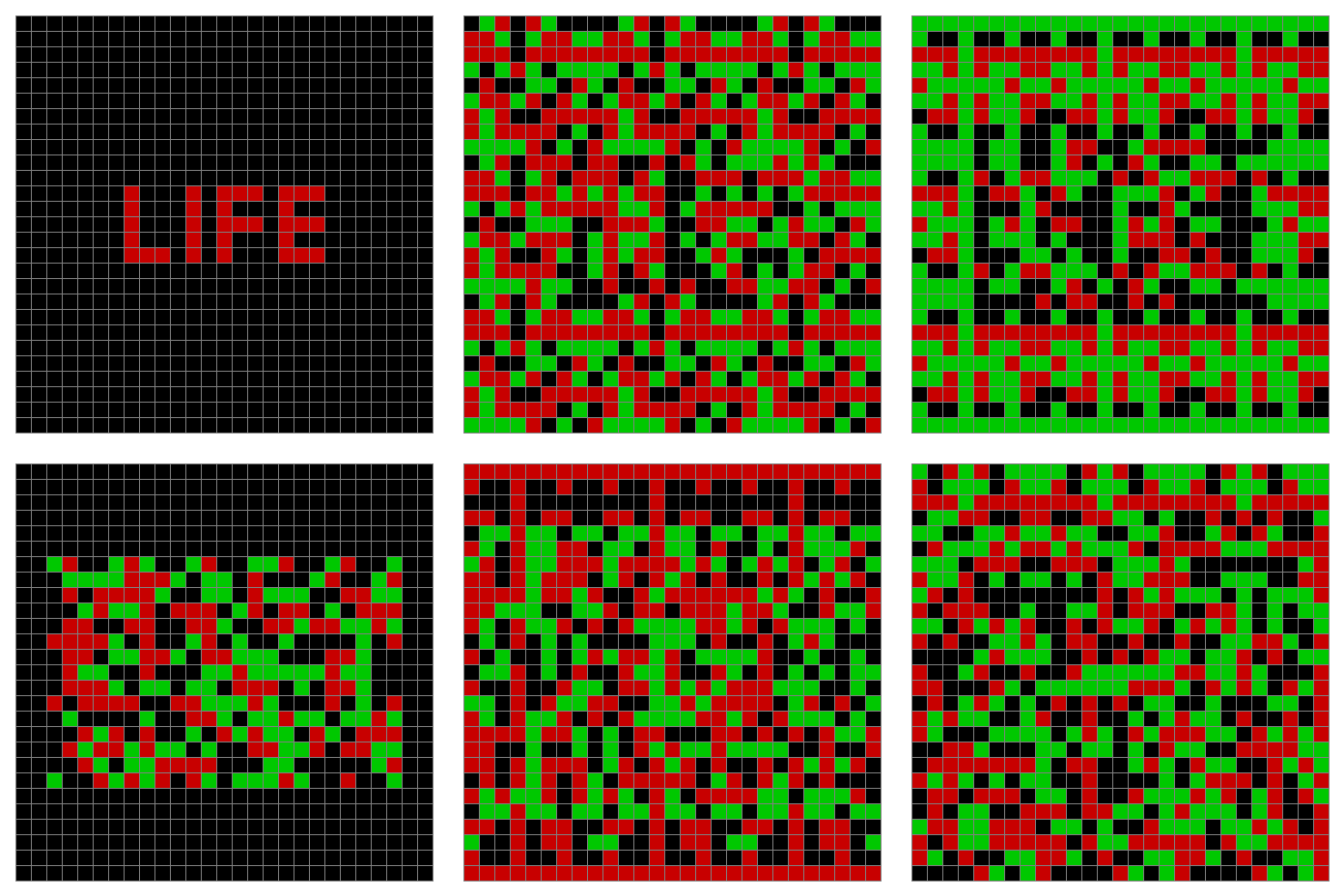

LIFE mod 3 (animated)


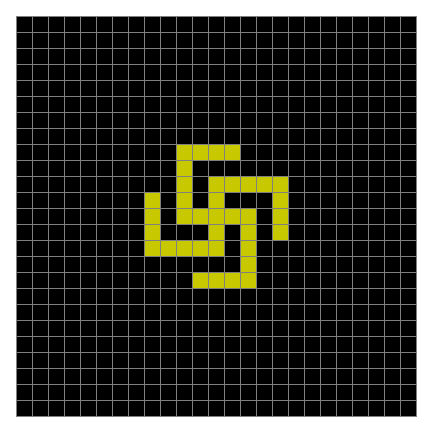
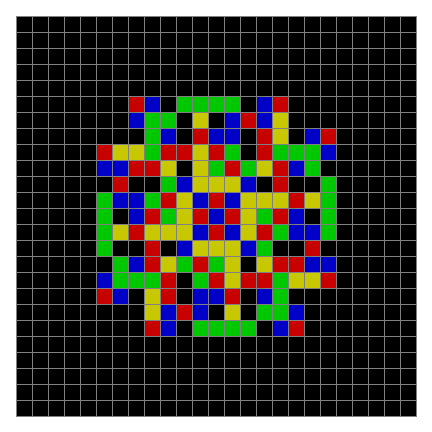
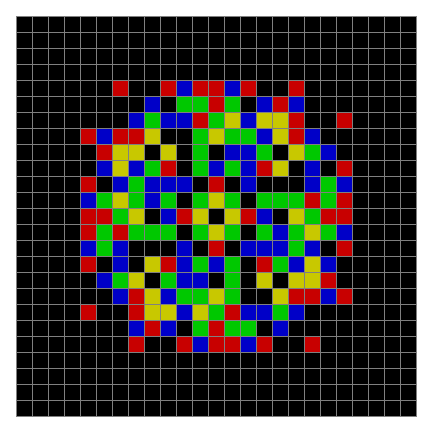
Now try n modulo 5, with 0s represented in black, 1s represented in red, 2s in green, 3s in yellow and 4s in dark blue. Again the pattern returns in different colors:
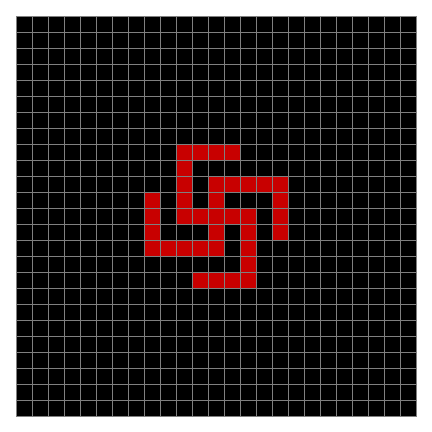
Spiral mod 5 on 25×25 square #1


Spiral mod 5 #2
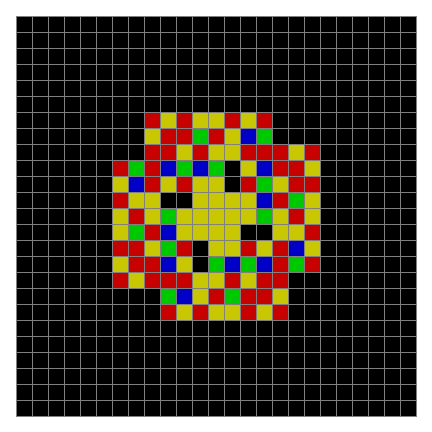

Spiral mod 5 #3


Spiral mod 5 #4


Spiral mod 5 #5
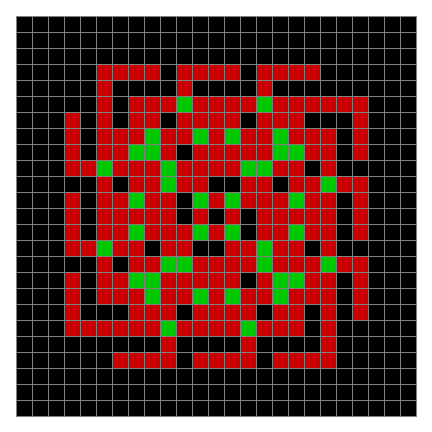

Spiral mod 5 #6

[…]

Spiral mod 5 #26

[…]

Spiral mod 5 #31

[…]

Spiral mod 5 #76

[…]

Spiral mod 5 #81


Spiral mod 5 (animated)


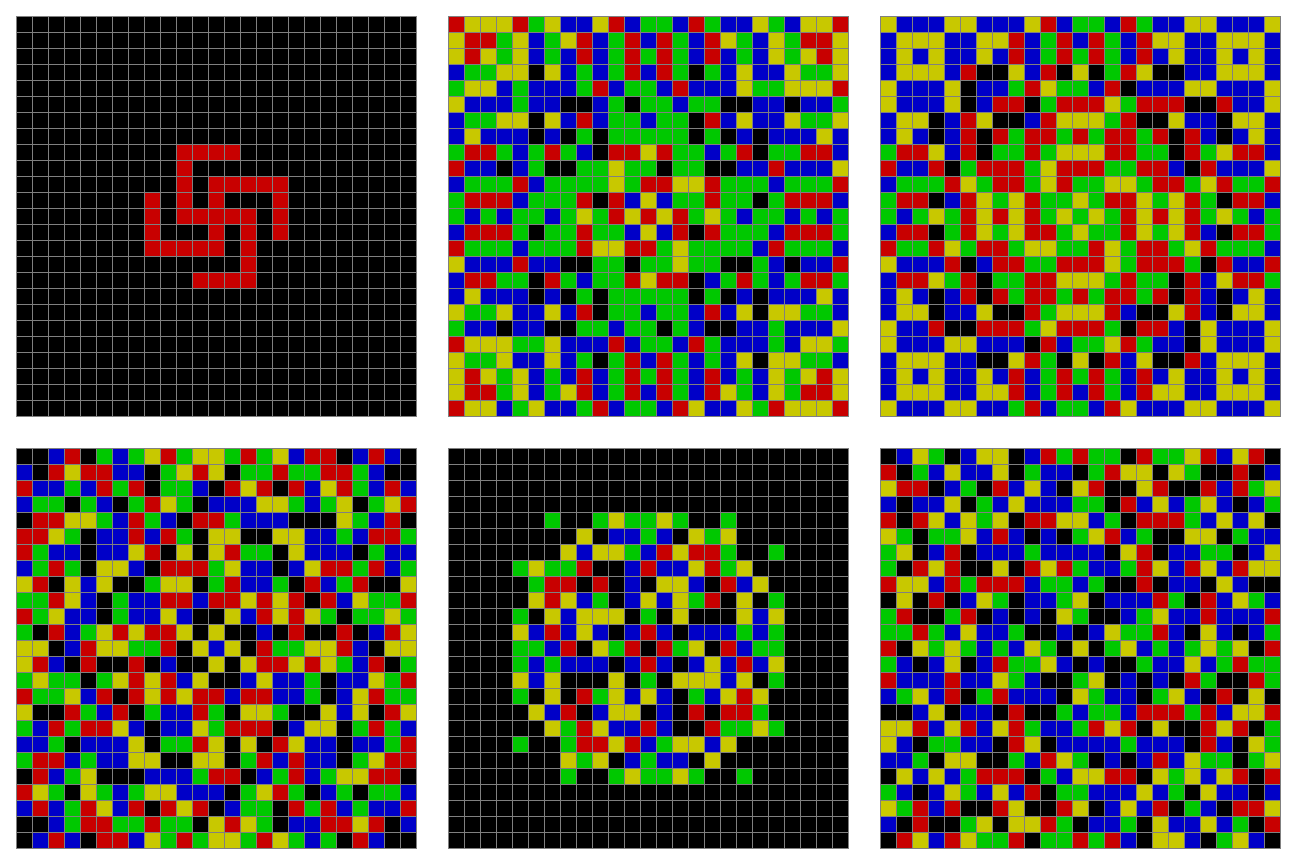
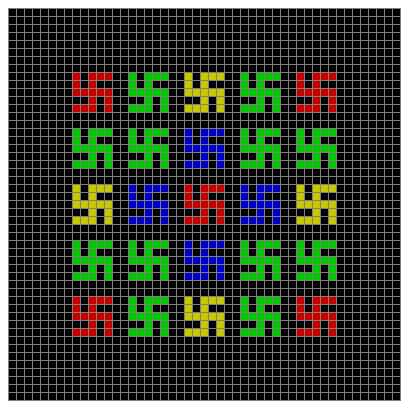
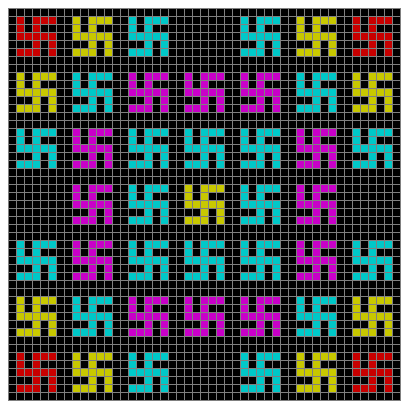
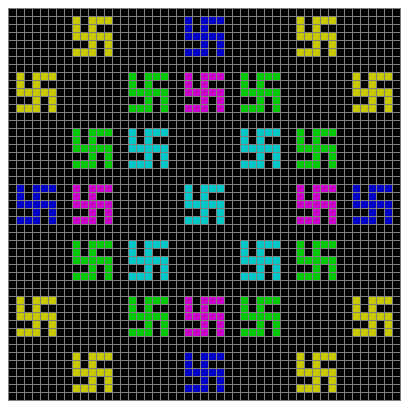
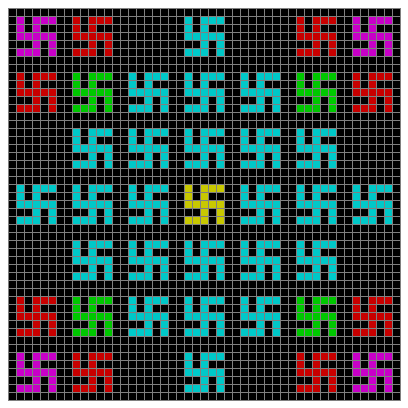
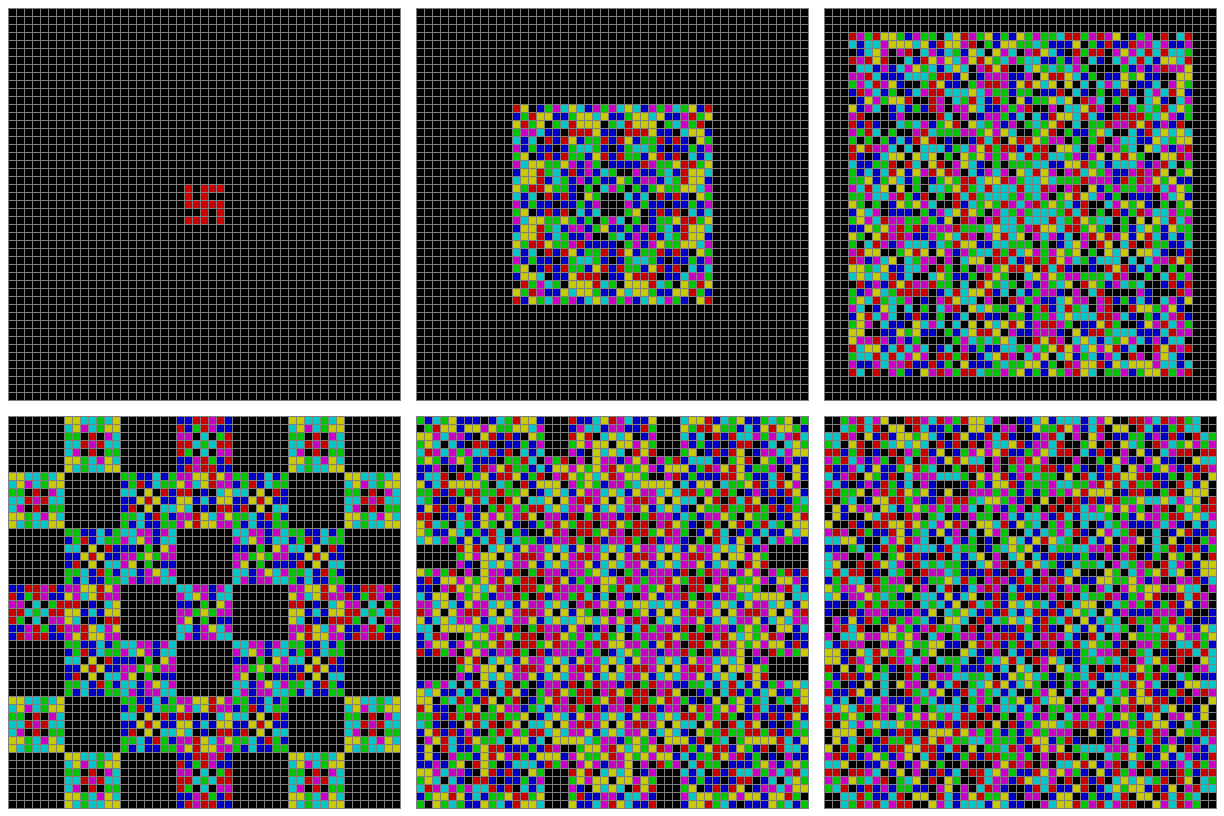
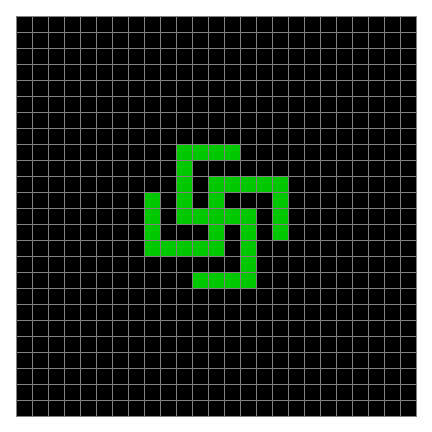
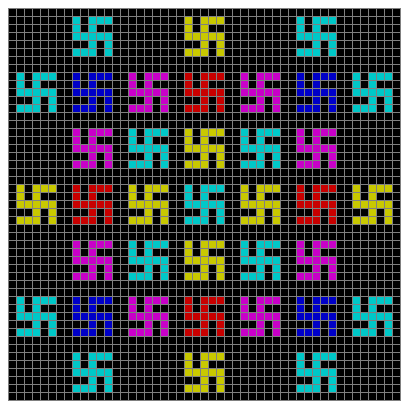
Finally, try a svastika modulo 7, with 0s represented in black, 1s represented in red, 2s in green, 3s in yellow, 4s in dark blue, 5s in purple and 6s in light blue:
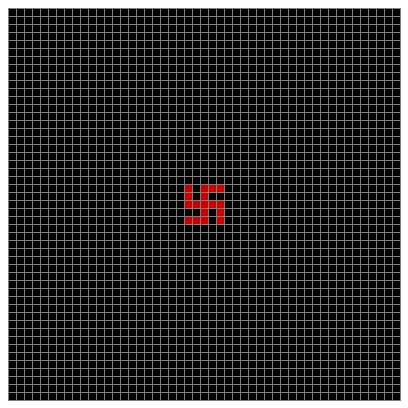
Svastika mod 7 on 49×49 square #1
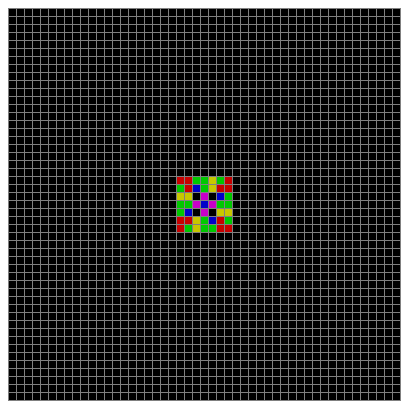

Svastika mod 7 #2
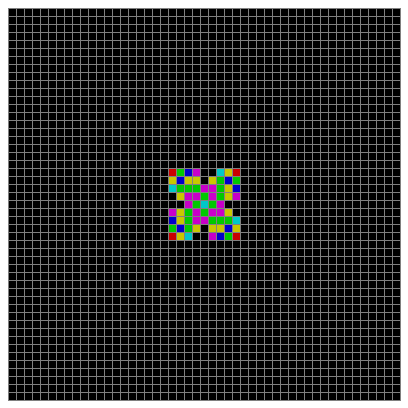

Svastika mod 7 #3
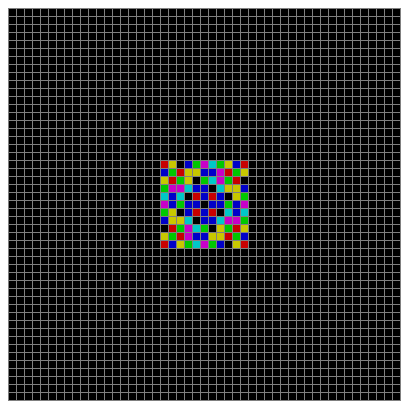

Svastika mod 7 #4
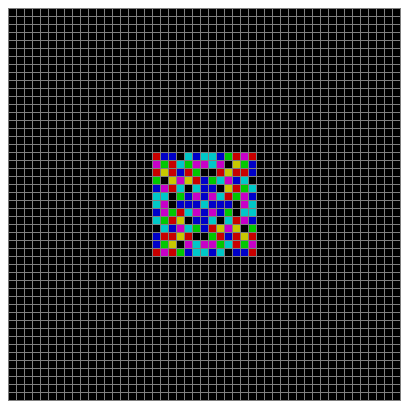

Svastika mod 7 #5
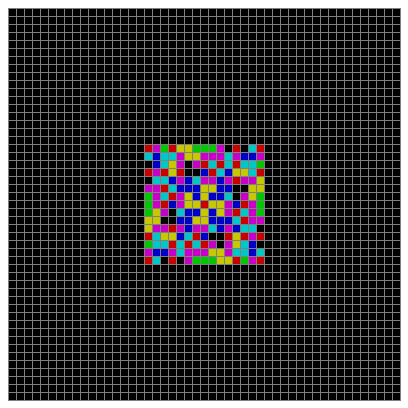

Svastika mod 7 #6
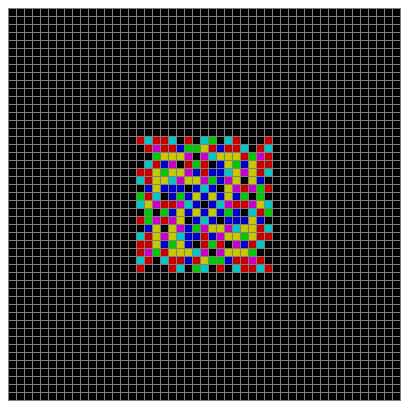

Svastika mod 7 #7
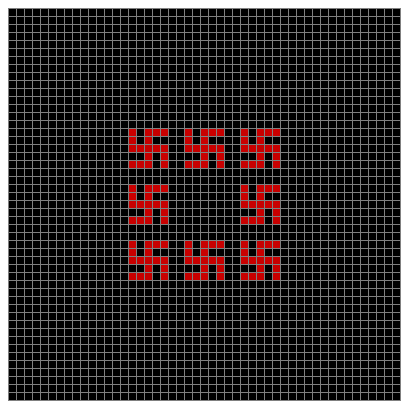

Svastika mod 7 #8

[…]

Svastika mod 7 #15

[…]

Svastika mod 7 #22

[…]

Svastika mod 7 #29

[…]

Svastika mod 7 #36

[…]

Svastika mod 7 #43


Svastika mod 7 (animated)


Previously Pre-Posted…

Eternal LIFE — a first look at the Game of Life

Eternal LIFE

The French mathematician Siméon-Denis Poisson (1781-1840) once said: « La vie n’est bonne qu’à deux choses : à faire des mathématiques et à les professer. » — “Life is good only for two things: doing mathematics and teaching mathematics.” The German philosopher Nietzsche wouldn’t have agreed. He thought (inter alia) that we must learn to accept life as eternally recurring. Everything we do and experience will happen again and again for ever. Can you accept life like that? Then your life is good.

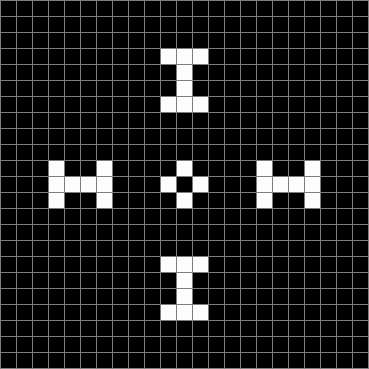
But neither Poisson or Nietzsche knew that Life, with a capital L, would take on a new meaning in the 20th century. It became a mathematical game played on a grid of squares with counters. You start by placing counters in some pattern, regular or random, on the grid, then you add or remove counters according to three simple rules applied to each square of the grid:

1. If an empty square has exactly three counters as neighbors, put a new counter on the square.
2. If a counter has two or three neighbors, leave it where it is.
3. If a counter has less than two or more than three neighbors, remove it from the grid.

And there is a meta-rule: apply all three rules simultaneously. That is, you check all the squares on the grid before you add or remove counters. With these three simple rules, patterns of great complexity and subtlety emerge, growing and dying in a way that reminded the inventor of the game, the English mathematician John Conway, of living organisms. That’s why he called the game Life.

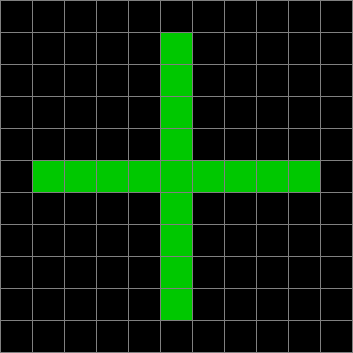
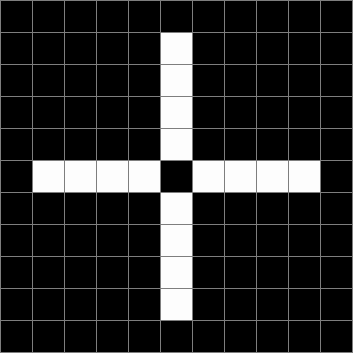
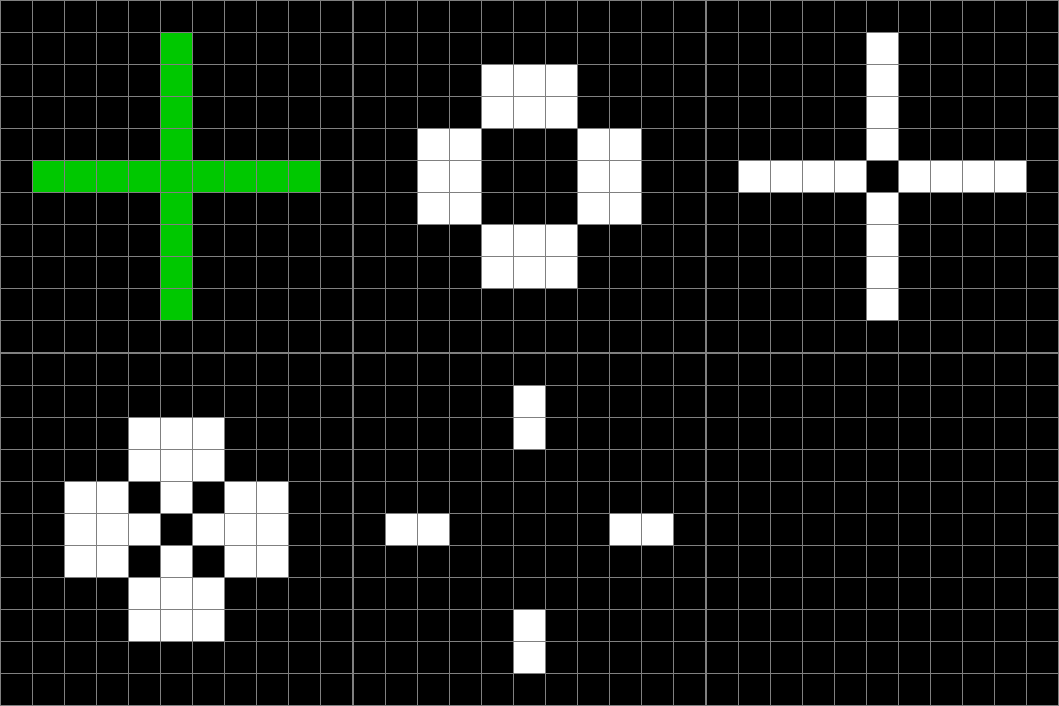
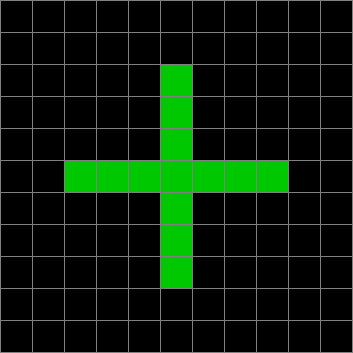
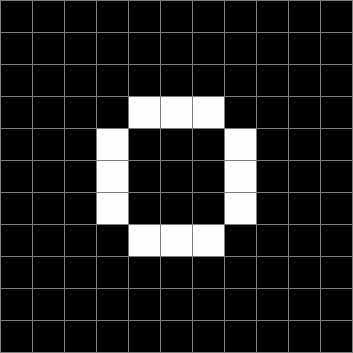
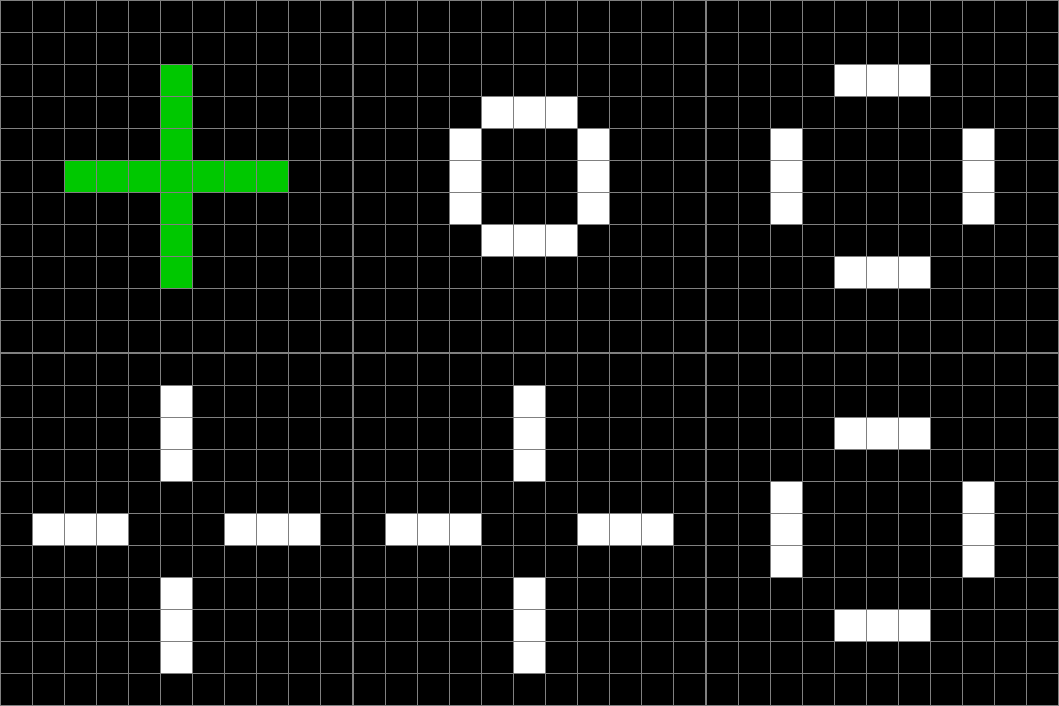
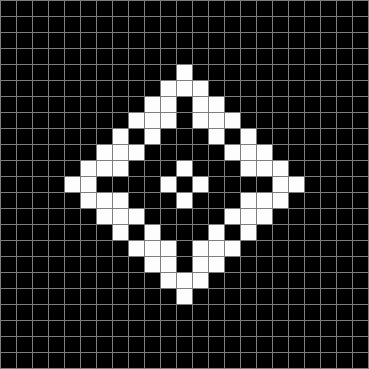
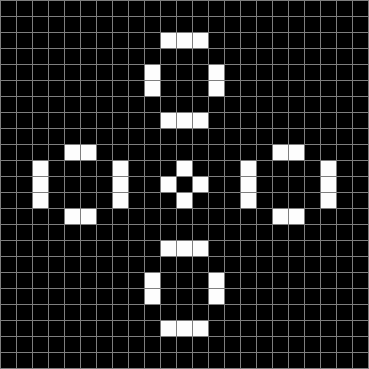
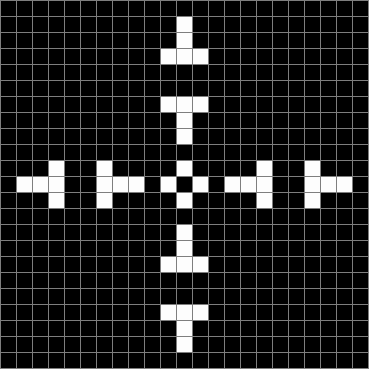
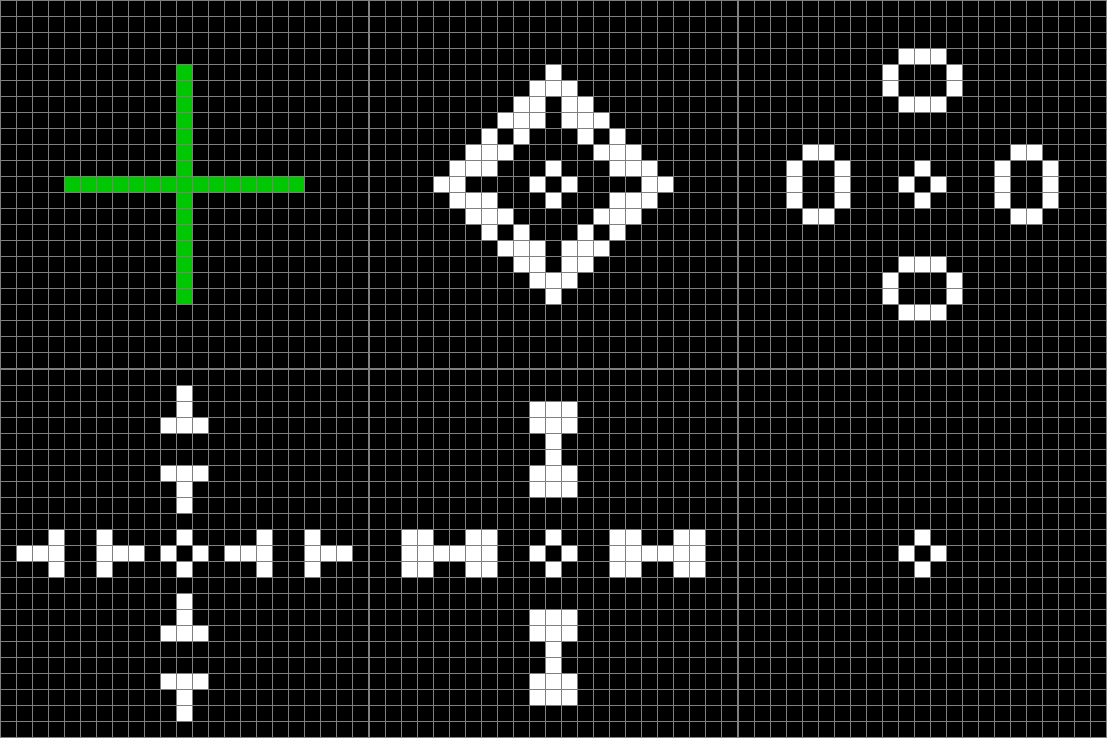
Let’s look at Life in action, with the seeding counters shown in green. Sometimes the seed will evolve and disappear, sometimes it will evolve into one or more fixed shapes, sometimes it will evolve into dynamic shapes that repeat again and again. Here’s an example of a seed that evolves and disappears:

Seeded with cross (arms 4+1+4) stage #1


Life stage #2


Life stage #3


Life stage #4


Life stage #5


Life stage #6


Life stage #7


Death at stage #8


Life from cross (animated)


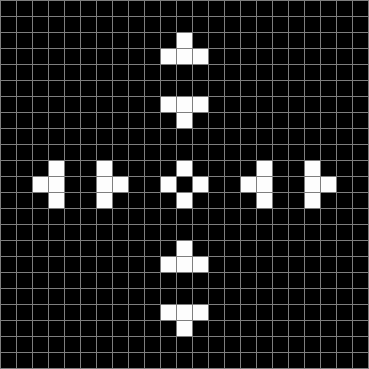
The final stage represents death. Now here’s a cross that evolves towards dynamism:

Life seeded with cross (arms 3+1+3) stage #1


Life stage #2


Life stage #3


Life stage #4


Life stage #5


Life stage #6 (same as stage #4)


Life stage #7 (same as stage #5)


Life stage #8 (same as stage #4 again)


Life from cross (animated)


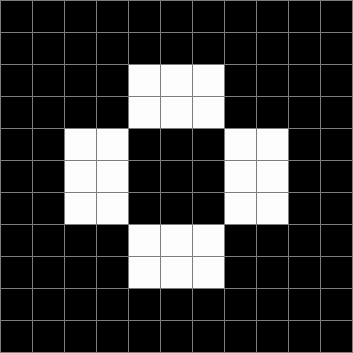
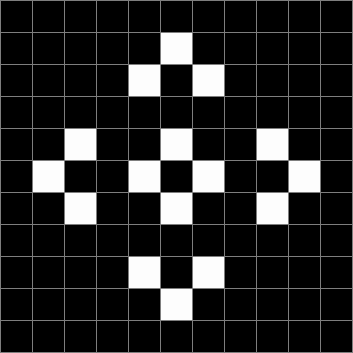
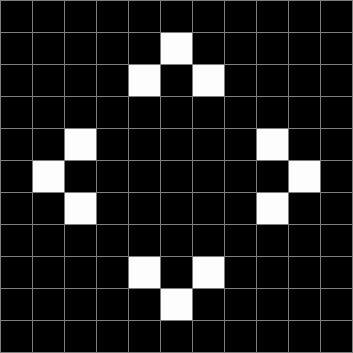
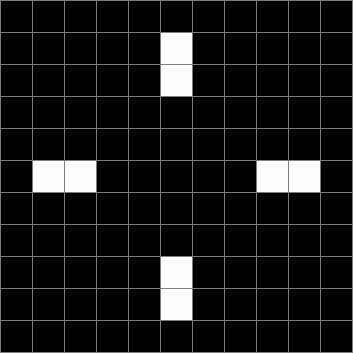
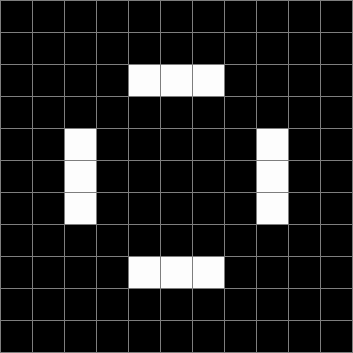
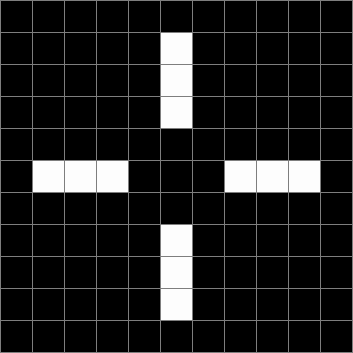
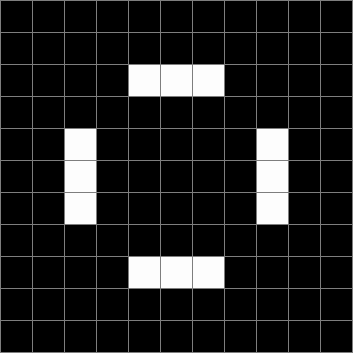
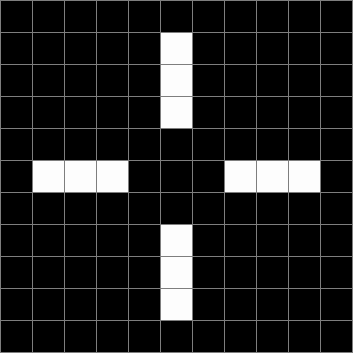
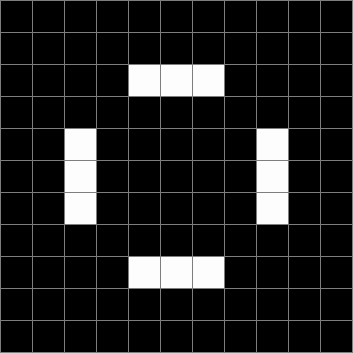
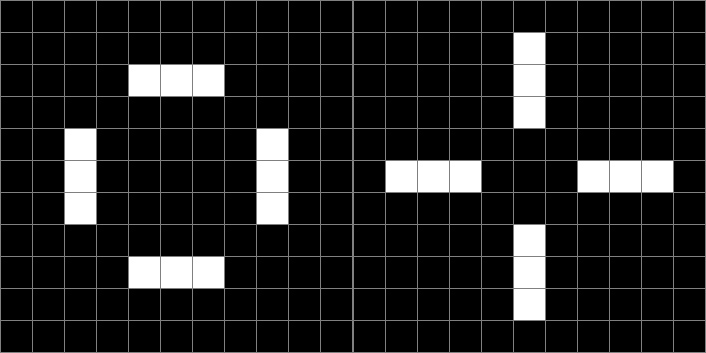
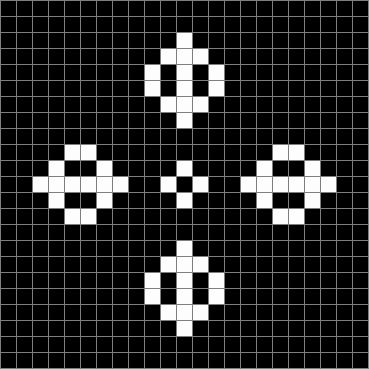
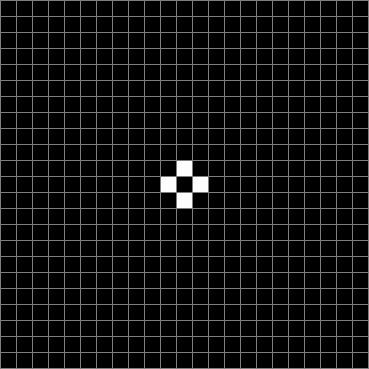
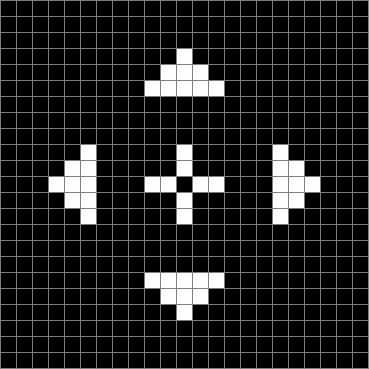
A line of three blocks swinging between horizontal and vertical is called a blinker:

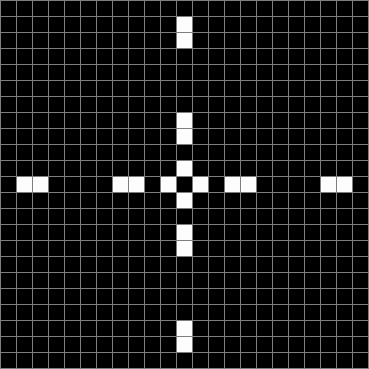
Four blinkers


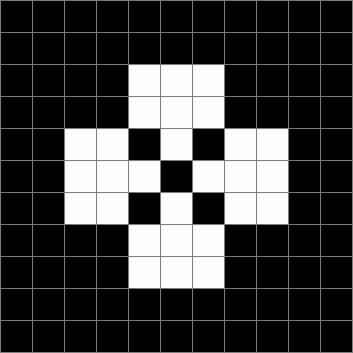
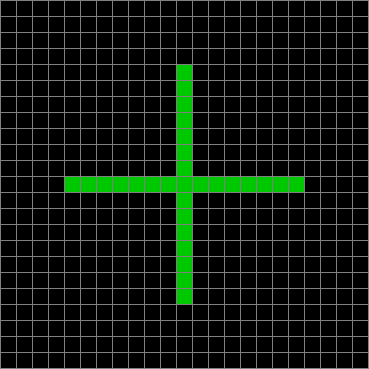
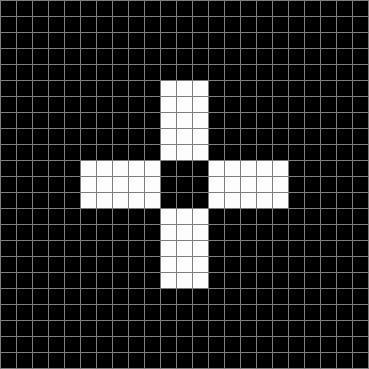
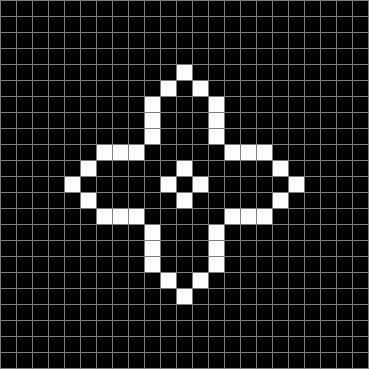
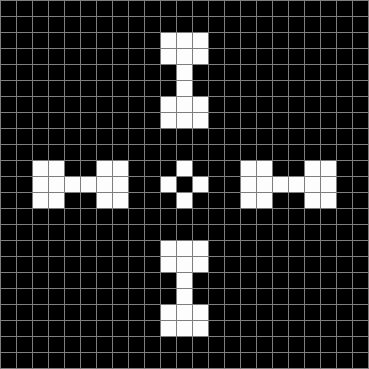
And here’s a larger cross that evolves towards stasis:

Life seeded with cross (arms 7+1+7) stage #1


Life stage #2


Life stage #3


Life stage #4


Life stage #5


Life stage #6


Life stage #7


Life stage #8


Life stage #9


Life stage #10


Life stage #11


Life stage #12


Life stage #13


Life stage #14


Life stage #15


Life stage #16


Life from cross (animated)


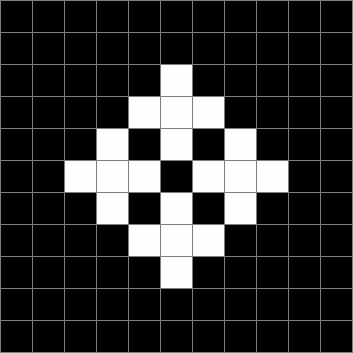
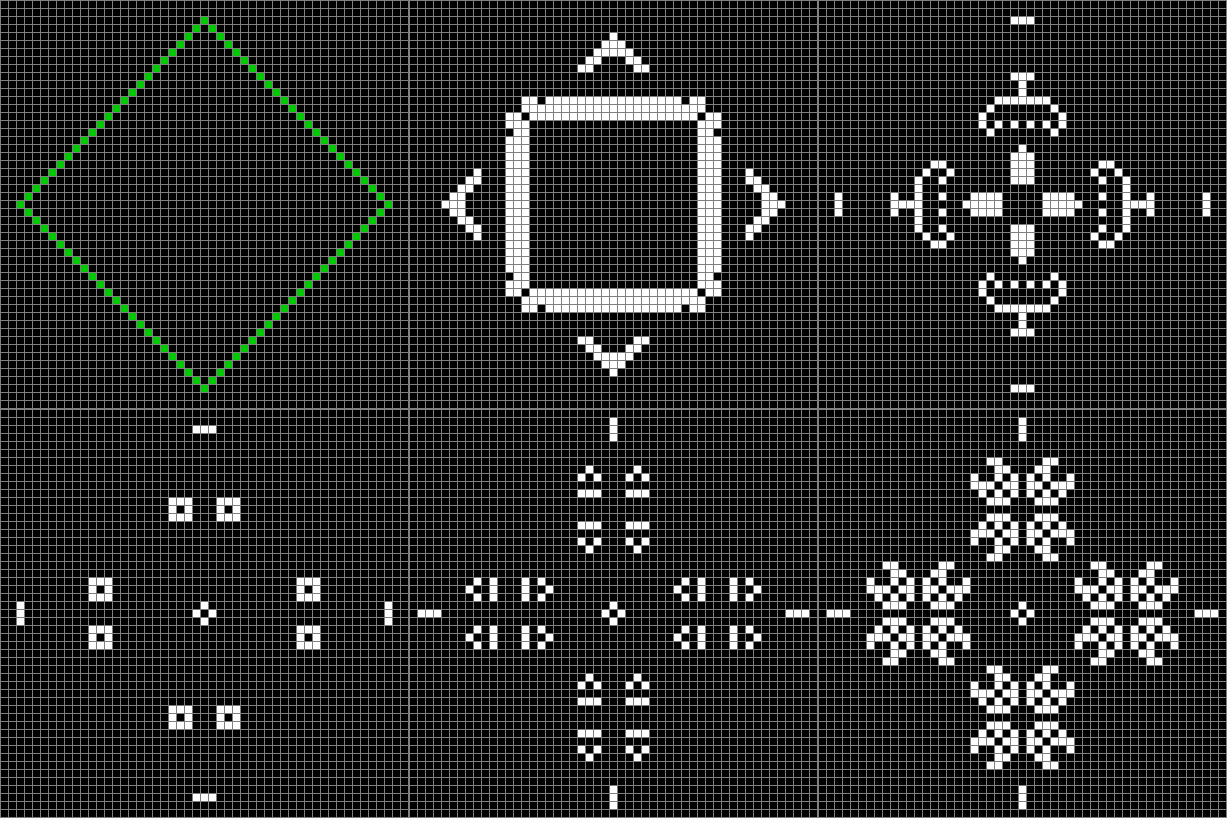
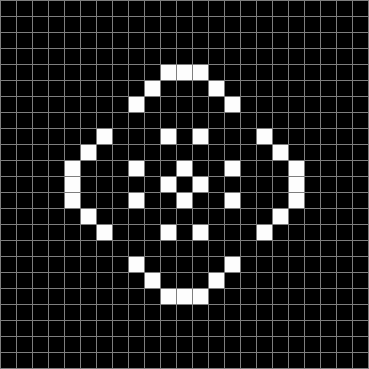
This diamond with sides of 24 blocks evolves towards even more dynamism:

Life from 24-sided diamond (animated)


Looping Life from 24-sided diamond (animated)


The game of Life obviously has many variants. In the standard form, you’re checking all eight squares around the square whose fate is in question. If that square is (x,y), these are the eight other squares you check:

(x+1,y+1), (x+0,y+1), (x-1,y+1), (x-1,y+0), (x-1,y-1), (x+0,y-1), (x+1,y-1), (x+1,y+0)

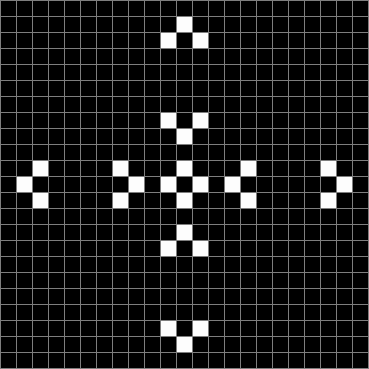
Now trying checking only four squares around (x,y), the ones above and below and to the left and the right:

(x+1,y+1), (x-1,y+1), (x-1,y-1), (x+1,y-1)

And apply a different set of rules:

1. If a square has one or three neighbors, it stays alive or (if empty) comes to life
2. Otherwise the square remains or becomes empty.

With that check and those rules, the seed first disappears, then re-appears, for ever (note that the game is being played on a torus):

Evolution of spiral seed


Eternally recurring spiral


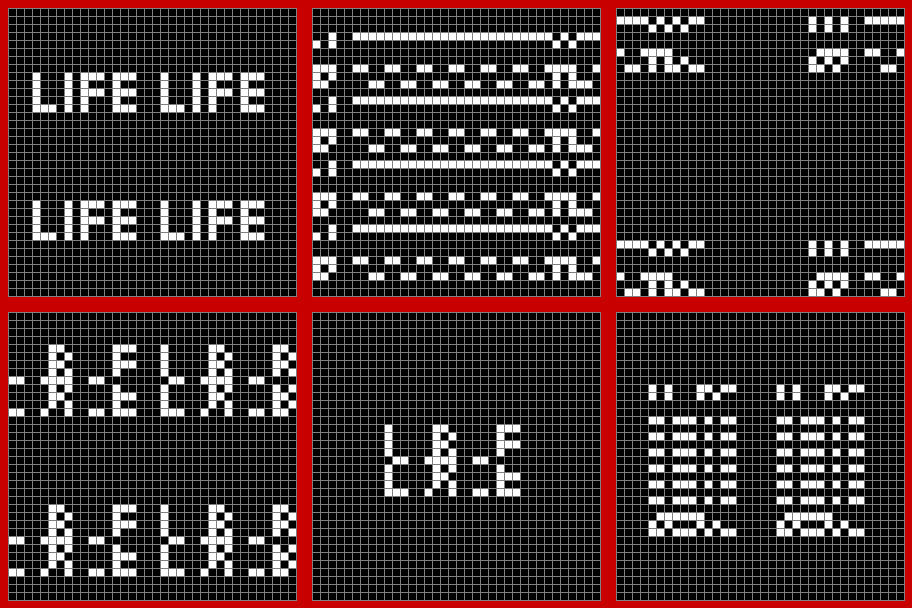
This happens with any seed, so you can use Life to bring Nietzsche’s eternal recurrence to life:
Evolution of LIFE


Eternally recurring LIFE


Nice Von

“If people do not believe that mathematics is simple, it is only because they do not realize how complicated life is.” — John von Neumann

This quote is popular on web pages about von Neumann, and about computing and mathematics generally. It is apparently not from a published work of von Neumann’s, but Franz L. Alt recalls it as a remark made from the podium by von Neumann as keynote speaker at the first national meeting of the Association for Computing Machinery in 1947. The exchange at that meeting is described at the end of Alt’s brief article “Archaeology of computers: Reminiscences, 1945–1947”, Communications of the ACM, volume 15, issue 7, July 1972, special issue: Twenty-fifth anniversary of the Association for Computing Machinery, p. 694. Alt recalls that von Neumann “mentioned the ‘new programming method’ for ENIAC and explained that its seemingly small vocabulary was in fact ample: that future computers, then in the design stage, would get along on a dozen instruction types, and this was known to be adequate for expressing all of mathematics…. Von Neumann went on to say that one need not be surprised at this small number, since about 1,000 words were known to be adequate for most situations of real life, and mathematics was only a small part of life, and a very simple part at that. This caused some hilarity in the audience, which provoked von Neumann to say: ‘If people do not believe that mathematics is simple, it is only because they do not realize how complicated life is.’ ”
Source of John von Neumann quote

He Say, He Sigh, He Sow #36

• “By the time I was twenty-four I had constructed a complete system of philosophy. It rested on two principles: The Relativity of Things and The Circumferentiality of Man. I have since discovered that the first was not a very original discovery. It may be that the other was profound, but though I have racked my brains I cannot for the life of me remember what it was.” — W. Somerset Maugham, The Summing Up (1938), sec. 66.
This Mortal Doyle

Challenger chopped and changed. That is to say, in one important respect, Arthur Conan Doyle’s character Professor Challenger lacked continuity. His philosophical views weren’t consistent. At one time he espoused materialism, at another he opposed it. He espoused it in “The Land of Mist” (1927):

“Don’t tell me, Daddy, that you with all your complex brain and wonderful self are a thing with no more life hereafter than a broken clock!”
“Four buckets of water and a bagful of salts,” said Challenger as he smilingly detached his daughter’s grip. “That’s your daddy, my lass, and you may as well reconcile your mind to it.”
But earlier, in “The Poison Belt” (1913), he had opposed it:

“No, Summerlee, I will have none of your materialism, for I, at least, am too great a thing to end in mere physical constituents, a packet of salts and three bucketfuls of water. Here ― here” ― and he beat his great head with his huge, hairy fist ― “there is something which uses matter, but is not of it ― something which might destroy death, but which death can never destroy.”

That story was published just over a century ago, but Challenger’s boast has not been vindicated in the meantime. So far as science can see, matter rules mind, not vice versa. Conan Doyle thought the same as the earlier Challenger, but Conan Doyle’s rich and teeming brain seems to have ended in “mere physical constituents”. To all appearances, when the organization of his brain broke down, so did his consciousness. And that concluded the cycle described by A.E. Housman in “Poem XXXII” of A Shropshire Lad (1896):

From far, from eve and morning
  And yon twelve-winded sky,
The stuff of life to knit me
  Blew hither: here am I.

Now – for a breath I tarry
  Nor yet disperse apart –
Take my hand quick and tell me,
  What have you in your heart.

Speak now, and I will answer;
  How shall I help you, say;
Ere to the wind’s twelve quarters
  I take my endless way. (ASL, XXXII)

Continue reading This Mortal Doyle

Lute to Kill

A little-known Housman poem that should be better-known:


Breathe, my lute, beneath my fingers
    One regretful breath,
One lament for life that lingers
    Round the doors of death.
For the frost has killed the rose,
And our summer dies in snows,
    And our morning once for all
    Gathers to the evenfall.

Hush, my lute, return to sleeping,
    Sing no songs again.
For the reaper stays his reaping
    On the darkened plain;
And the day has drained its cup,
And the twilight cometh up;
    Song and sorrow all that are
    Slumber at the even-star.

A.E. Housman (1859-1936) — see also Breathe, my lute at Wikilivres.

Lit Is It

You know, I’m getting worried at my inability to have unmediated experiences. Everything reminds me of something in literature. It reminds me of this passage in Brideshead Revisited (1945):

“Oh, don’t talk in that damned bounderish way. Why must you see everything second-hand? Why must this be a play? Why must my conscience be a Pre-Raphaelite picture?”

“It’s a way I have.”

“I hate it.” (Op. cit.)