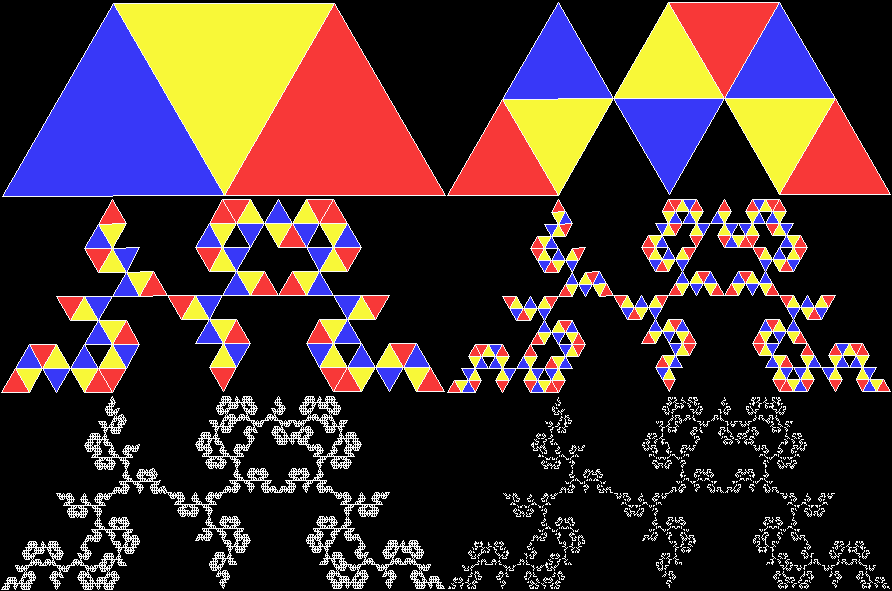
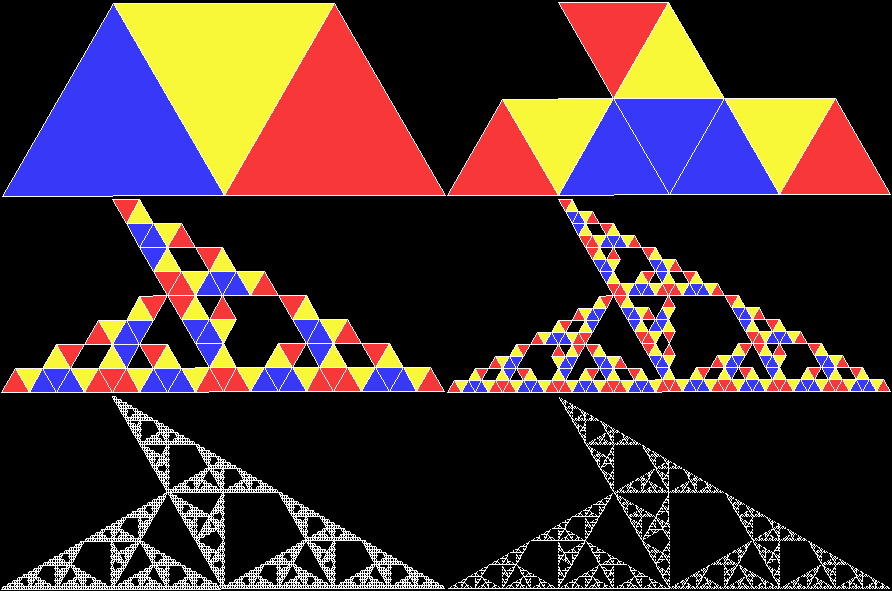
The Call of Cthuneus

Cuneiform, adj. and n. Having the form of a wedge, wedge-shaped. (← Latin cuneus wedge + -form) (Oxford English Dictionary)

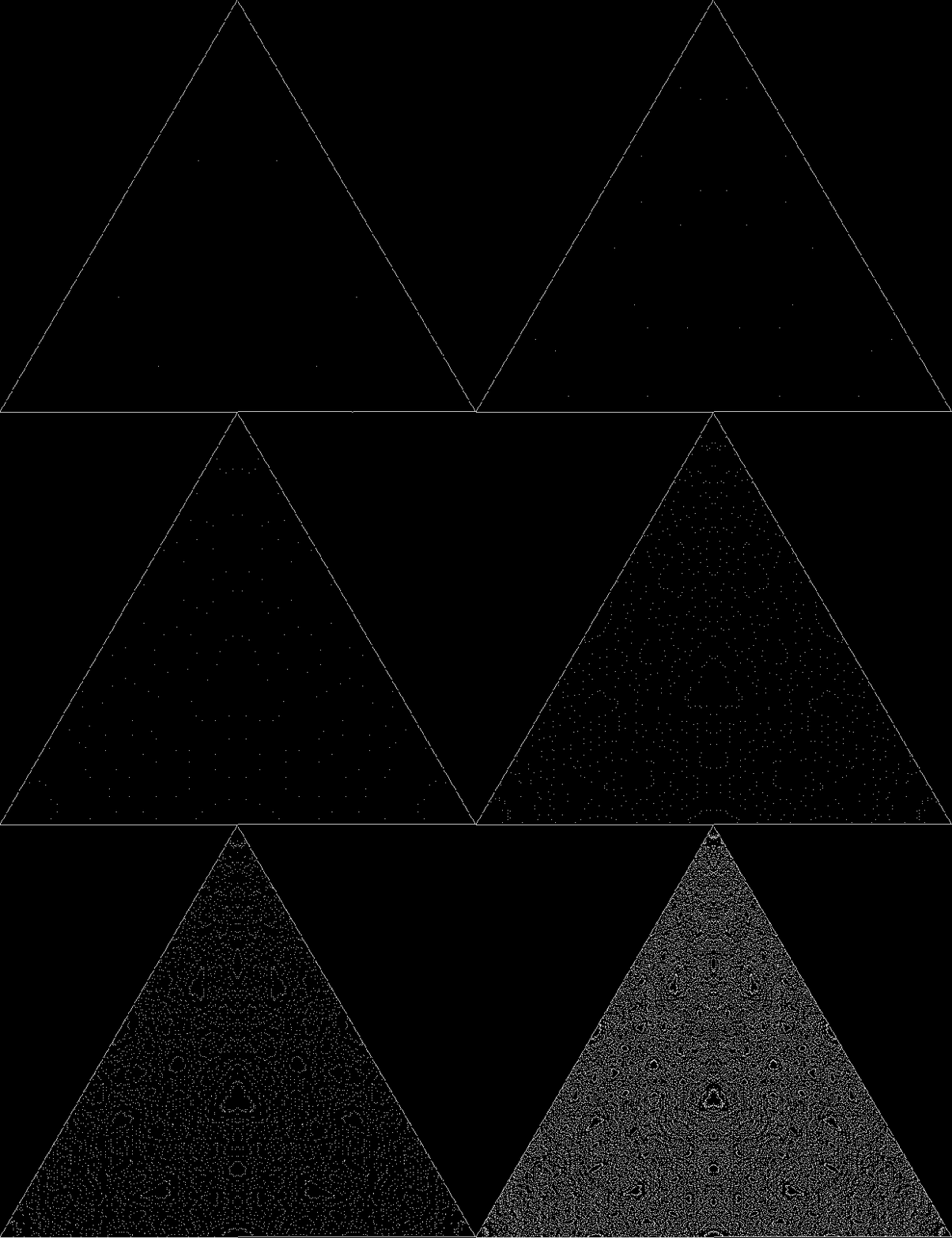
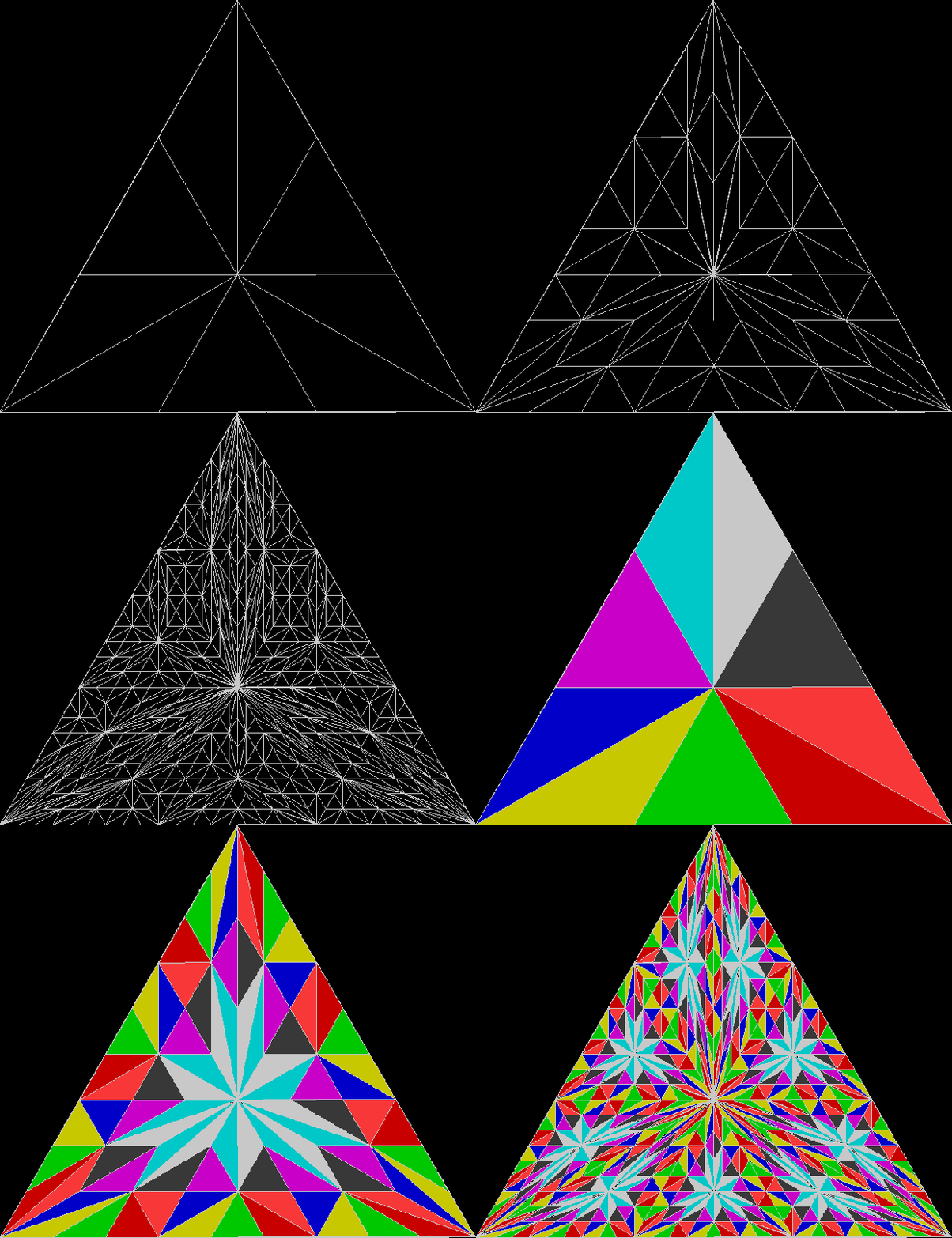
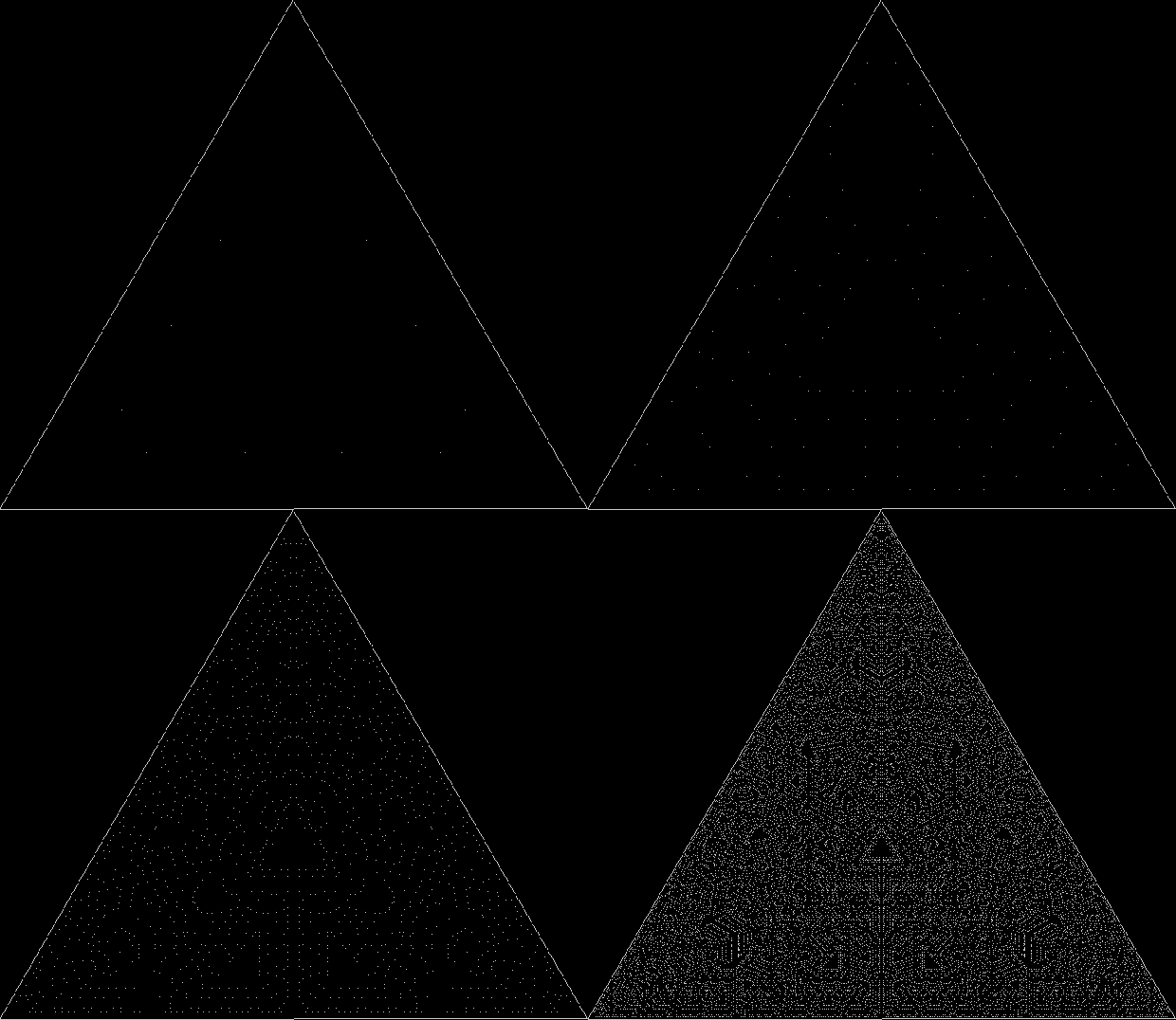
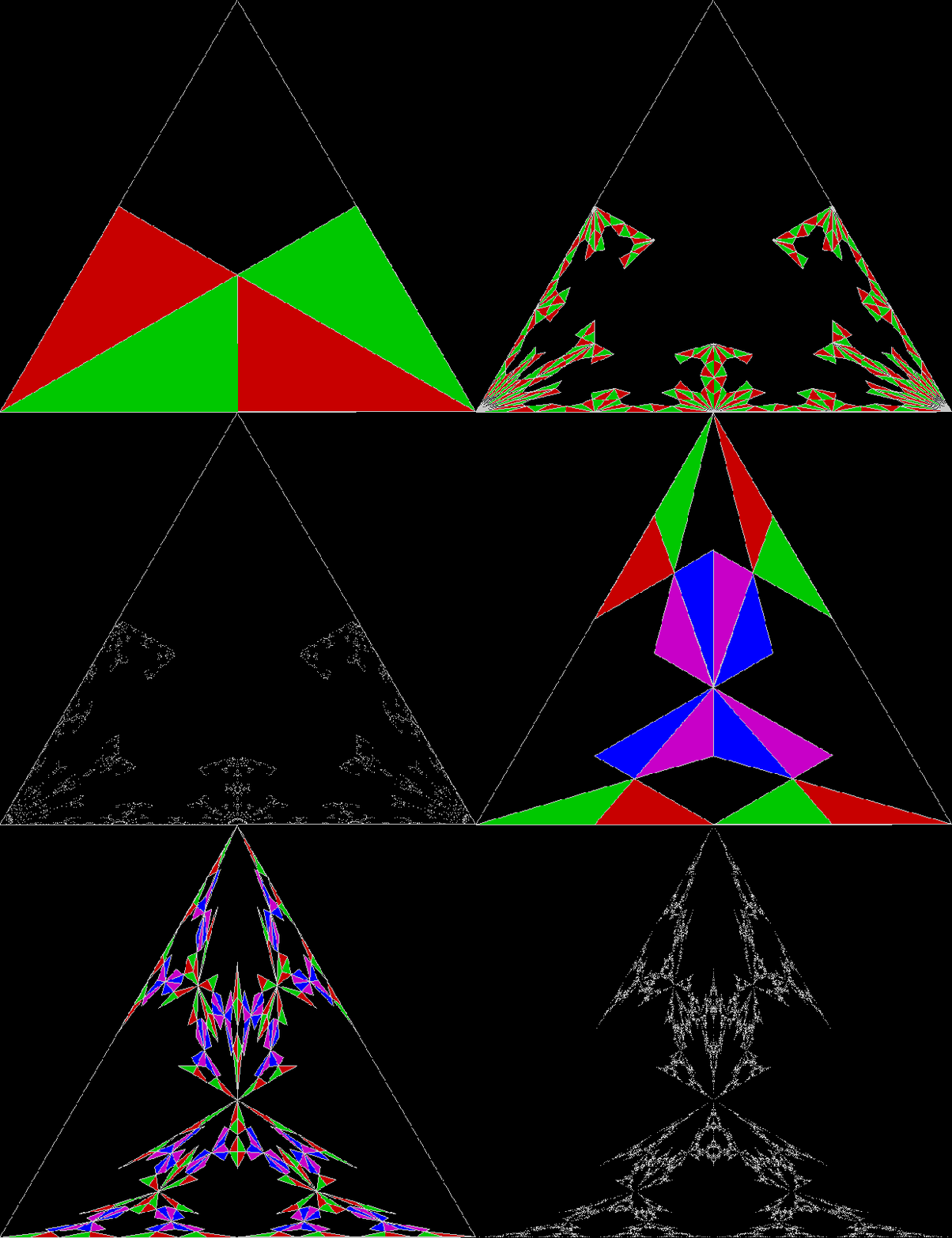
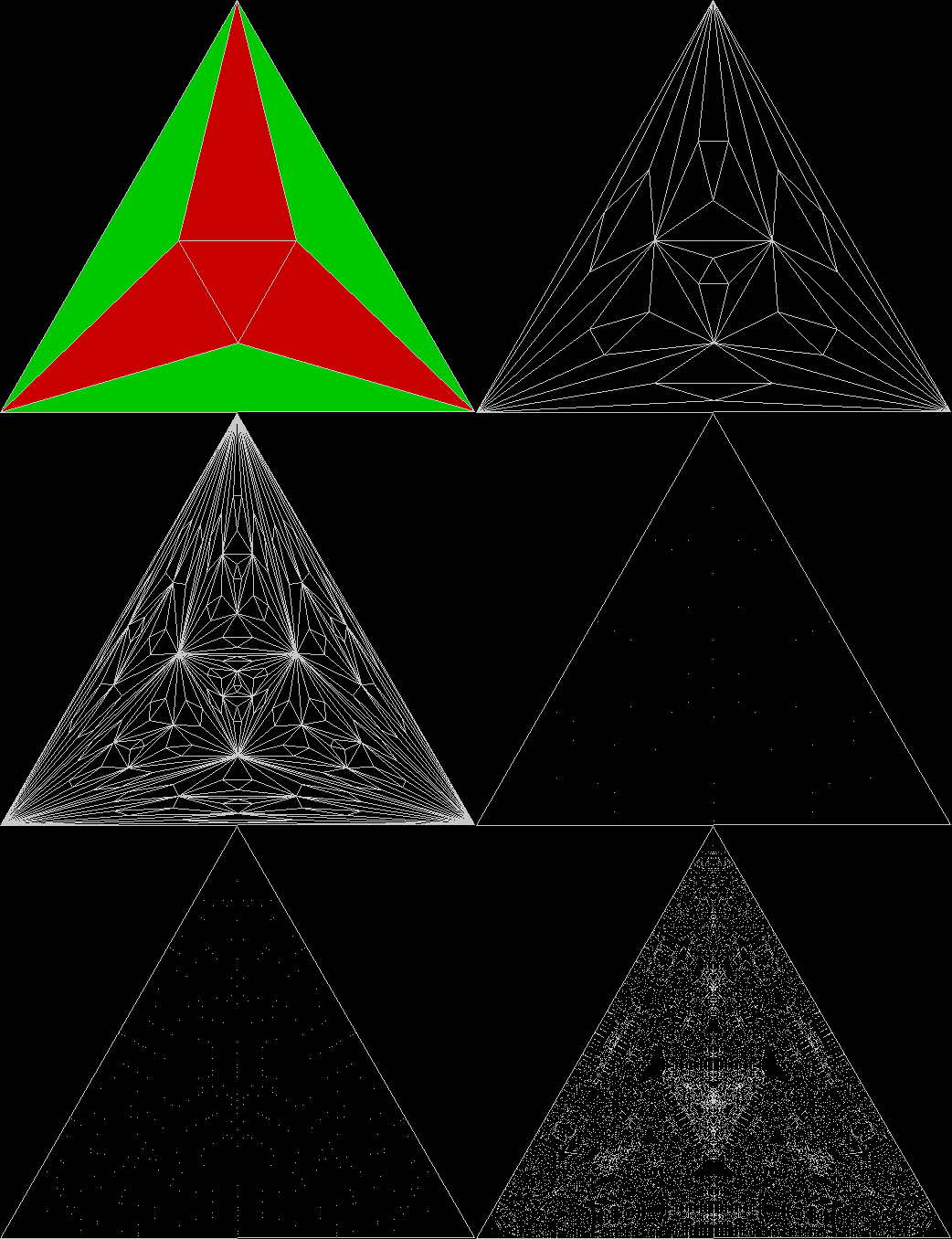
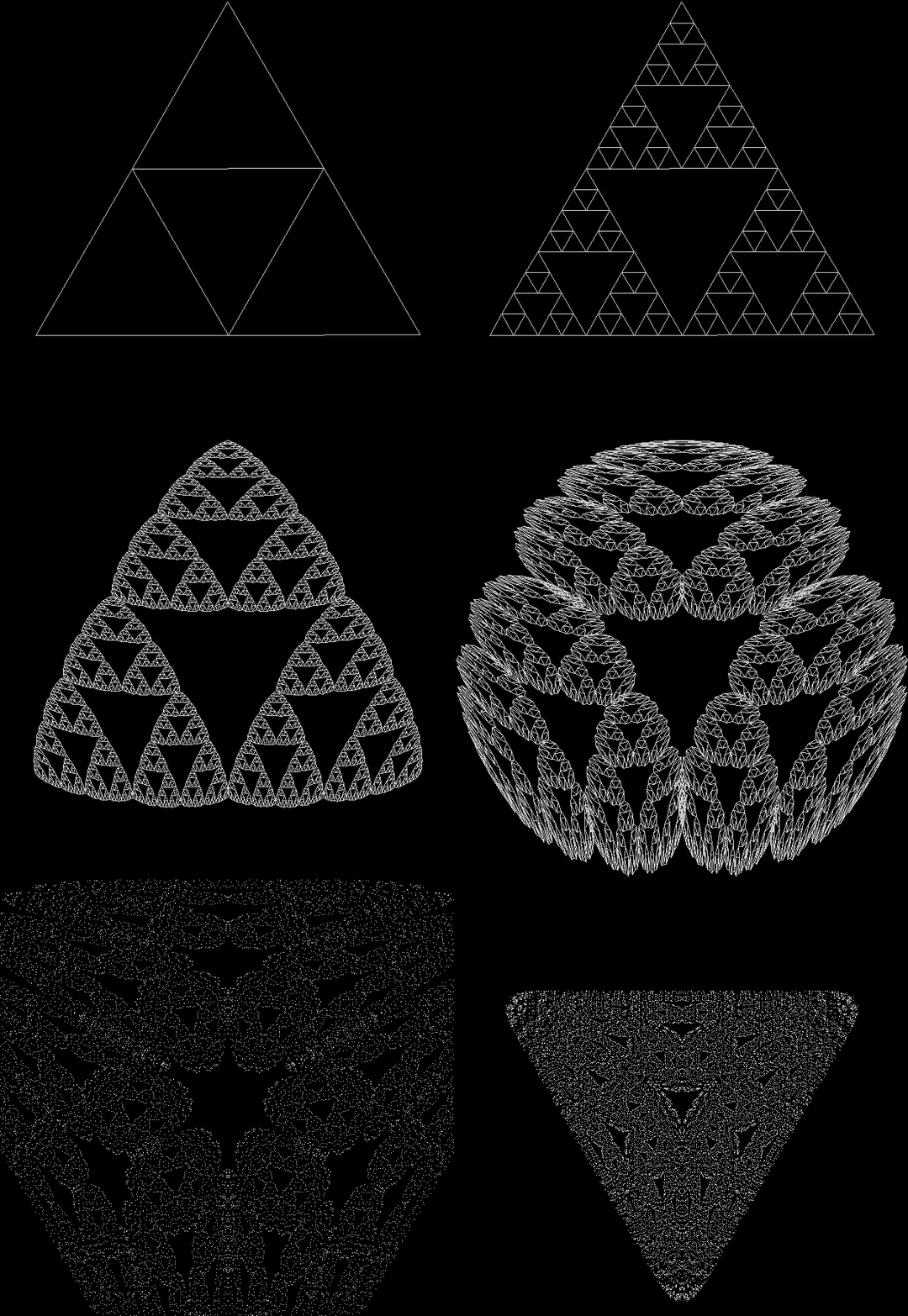
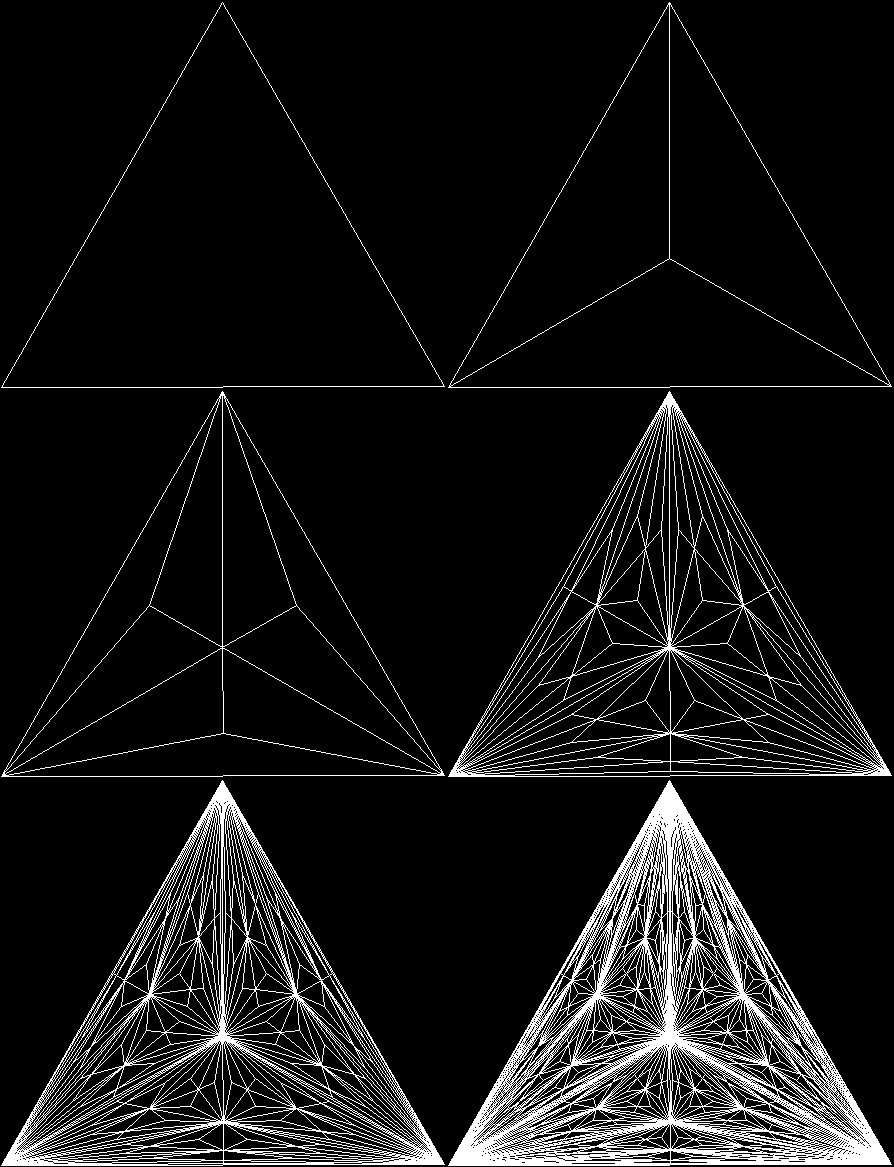
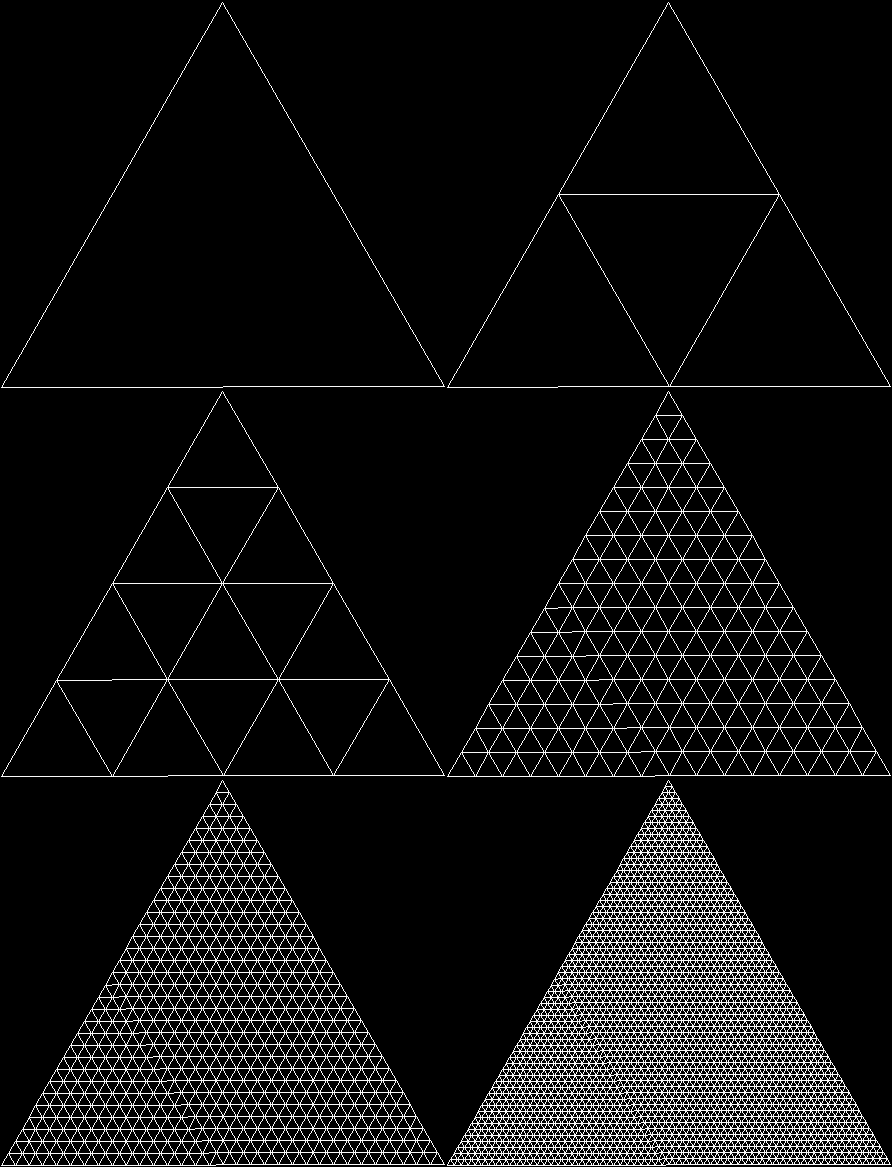
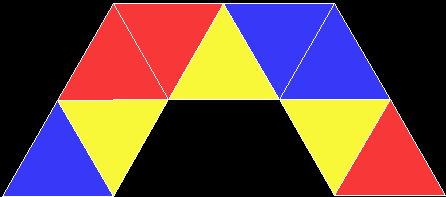
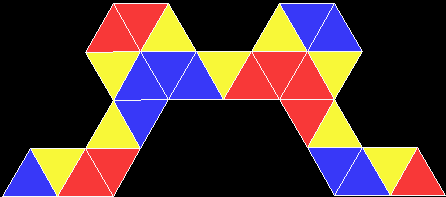
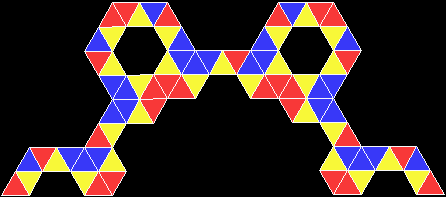
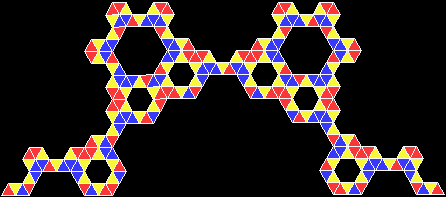
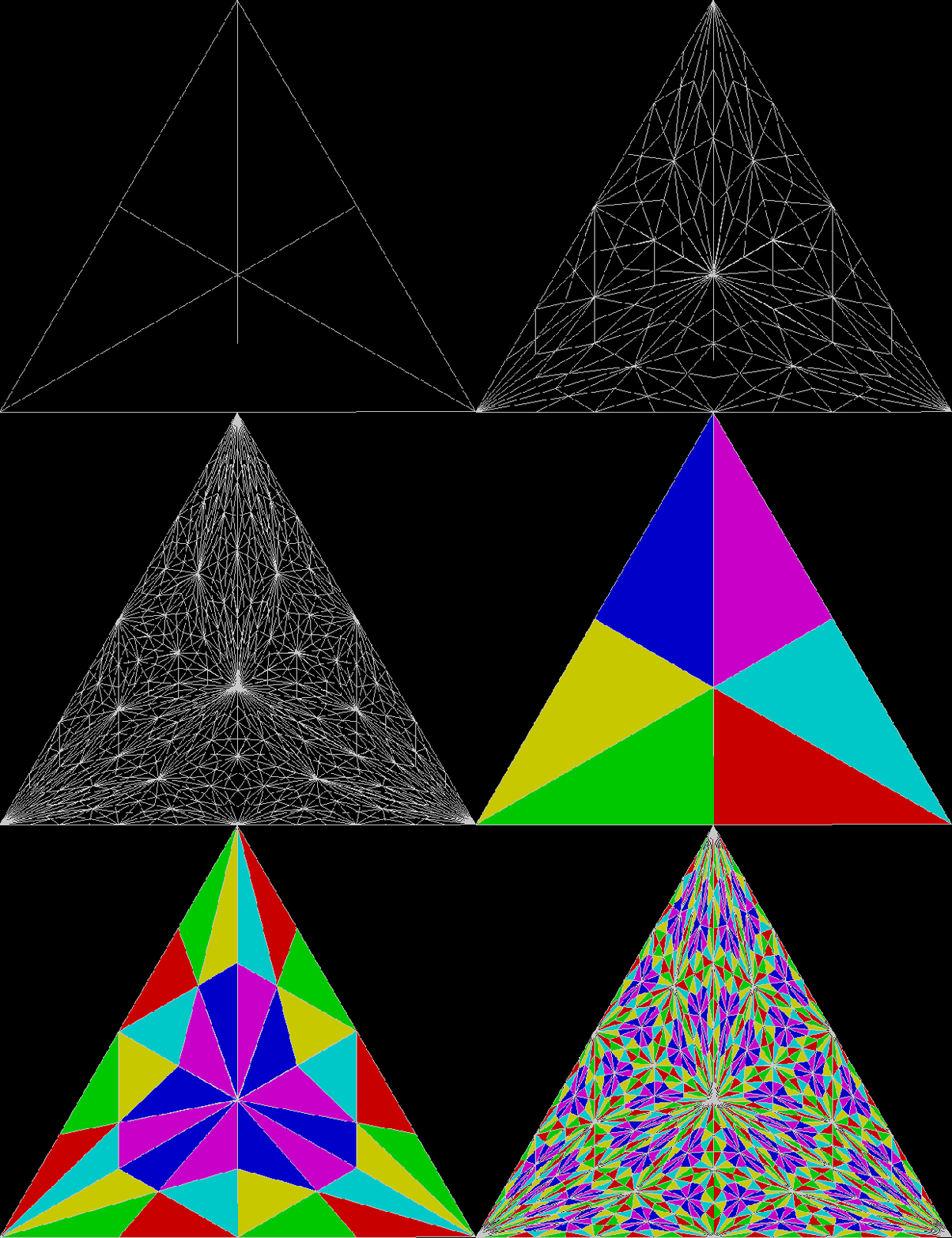
This fractal is created by taking an equilateral triangle and finding the centre and the midpoint of each side. Using all these points, plus the three vertices, six new triangles can be created from the original. The process is then repeated with each new triangle (if the images don’t animate, please try opening them in a new window):

triangle_div2

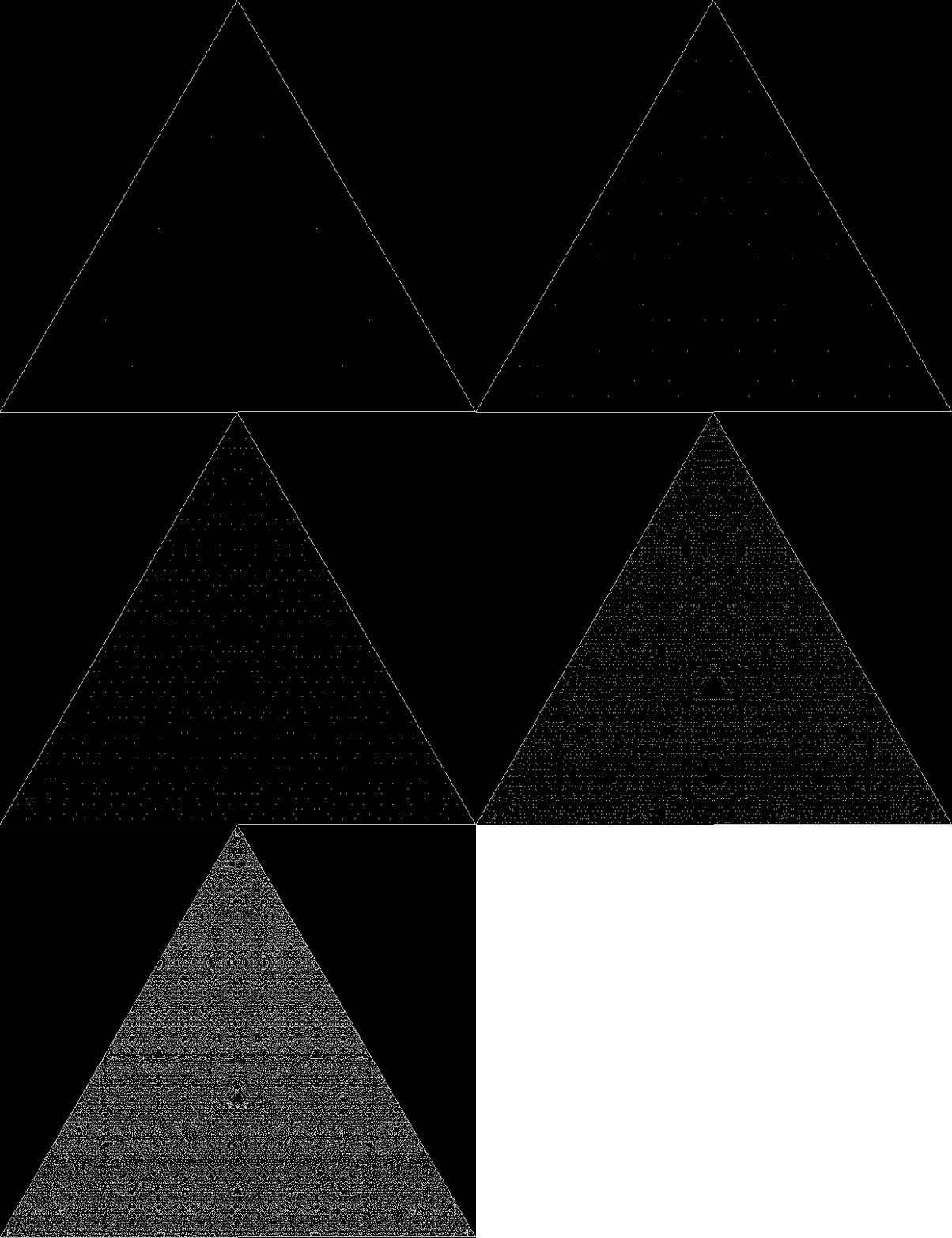
If the centre-point of each triangle is shown, rather than the sides, this is the pattern created:

triangle_div2_dots

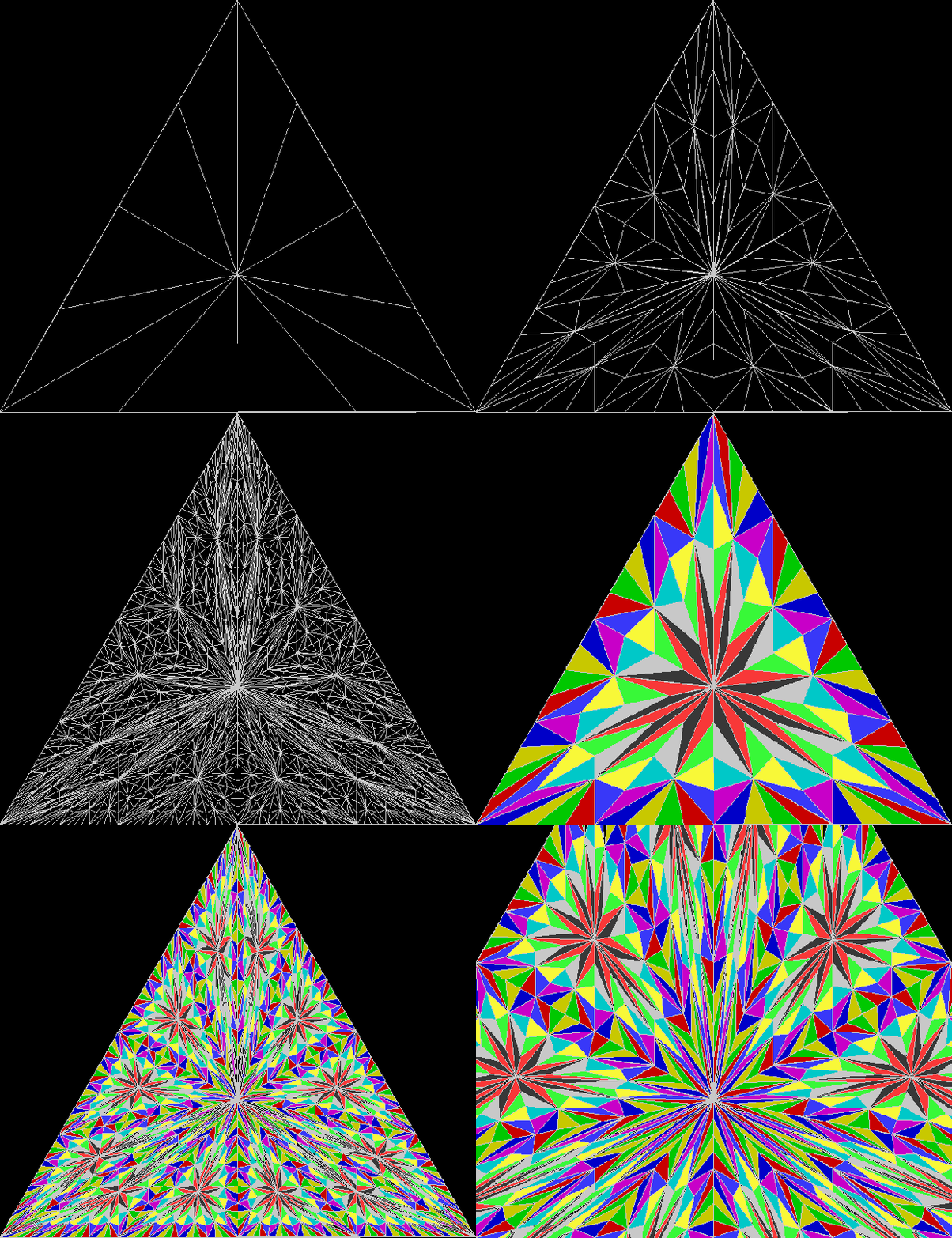
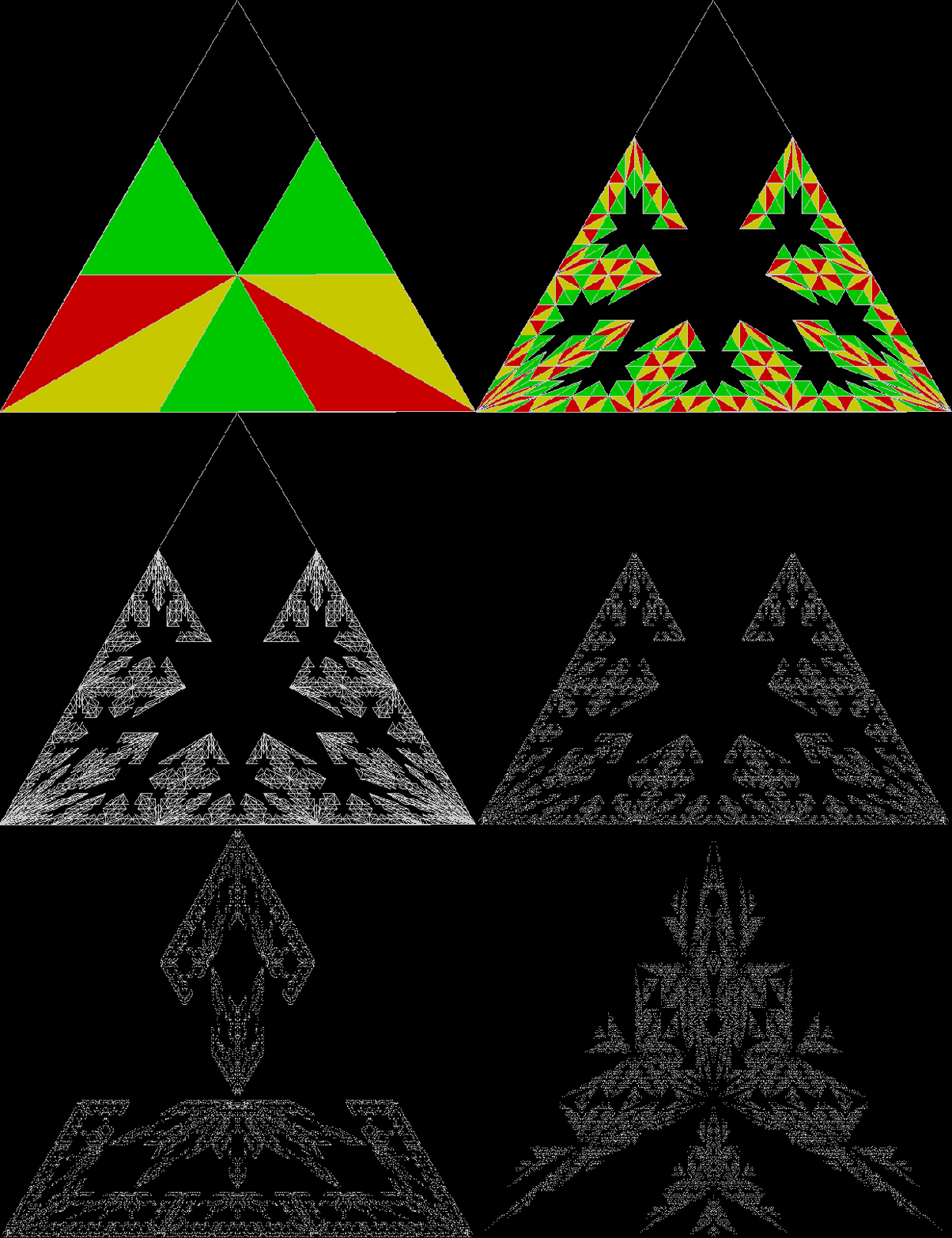
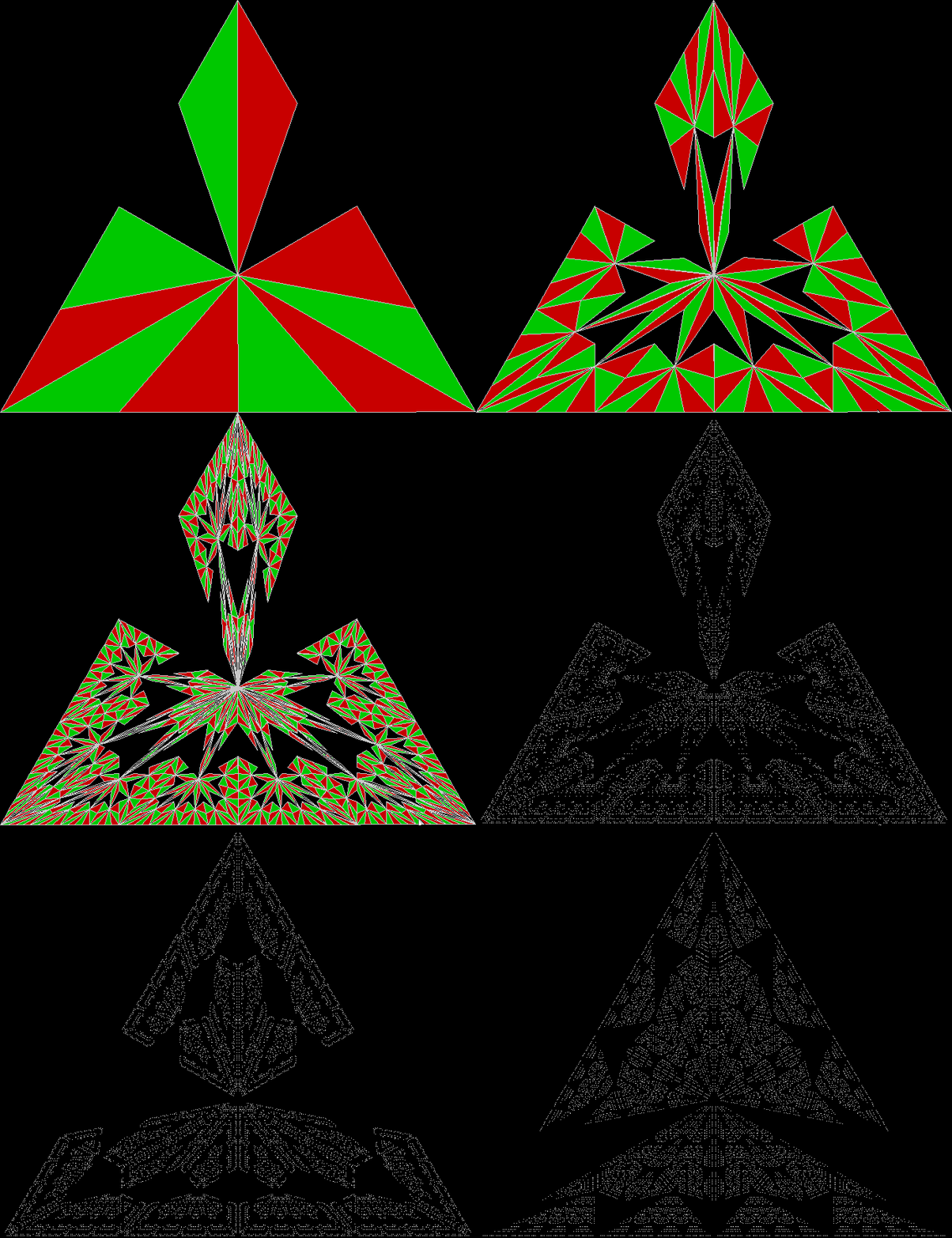
Triangles in which the sides are divided into thirds and quarters look like this:

triangle_div3

triangle_div3_dots

triangle_div4

triangle_div4_dots

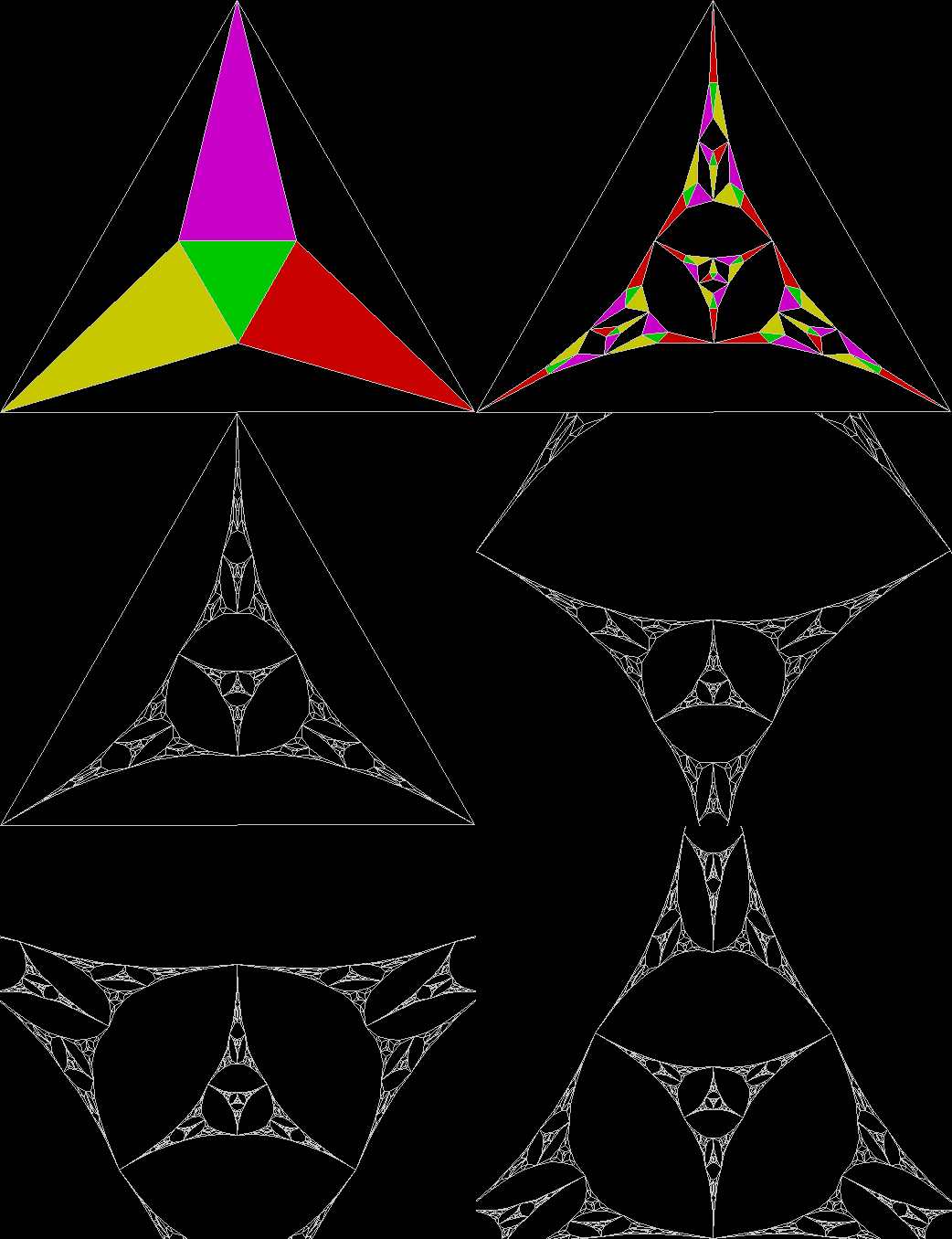
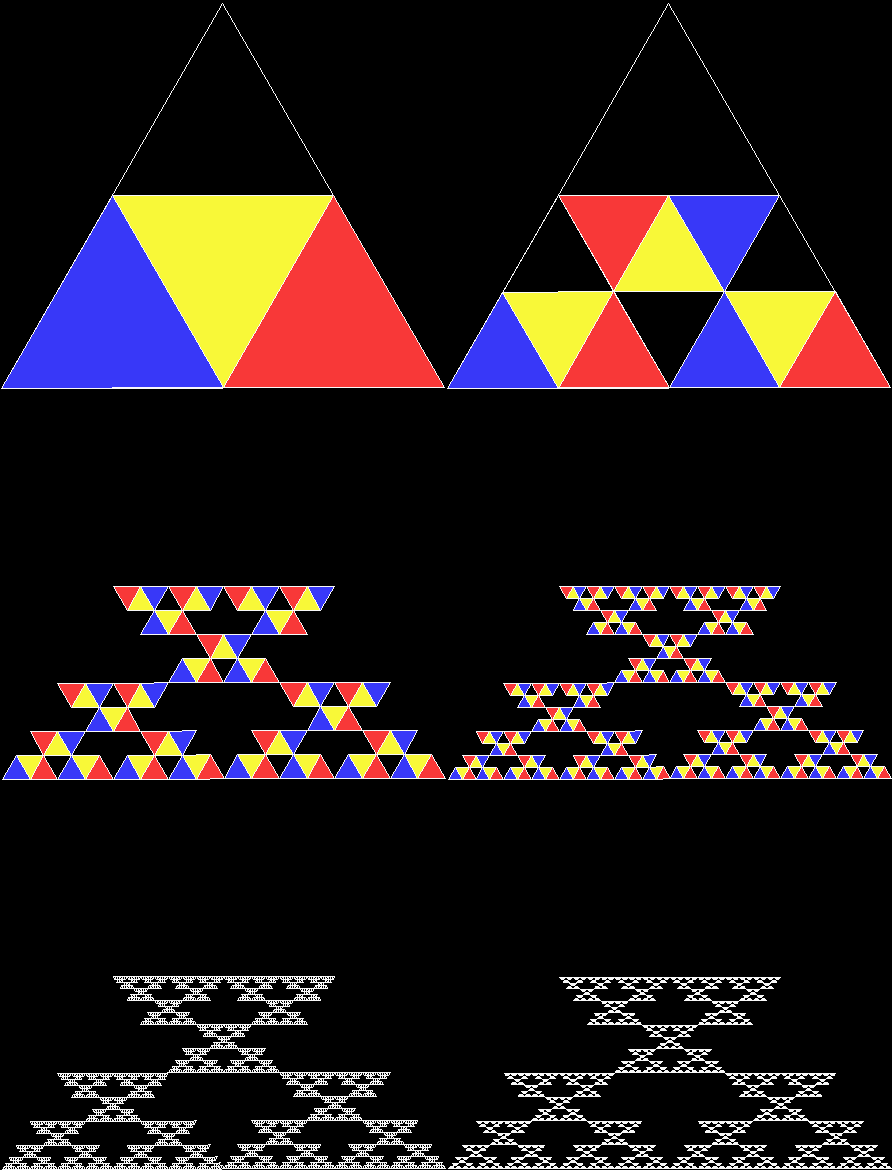
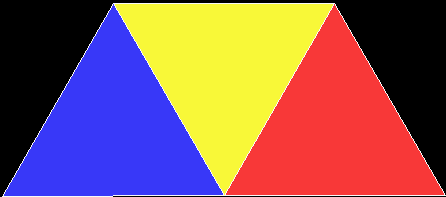
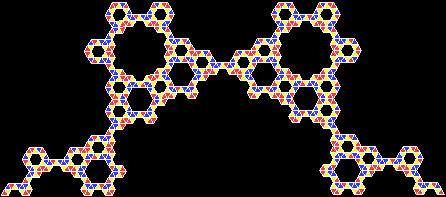
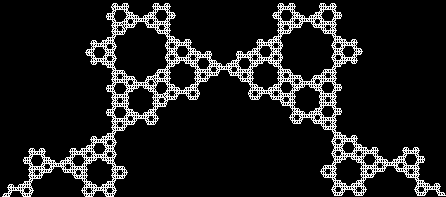
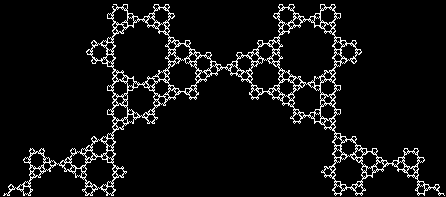
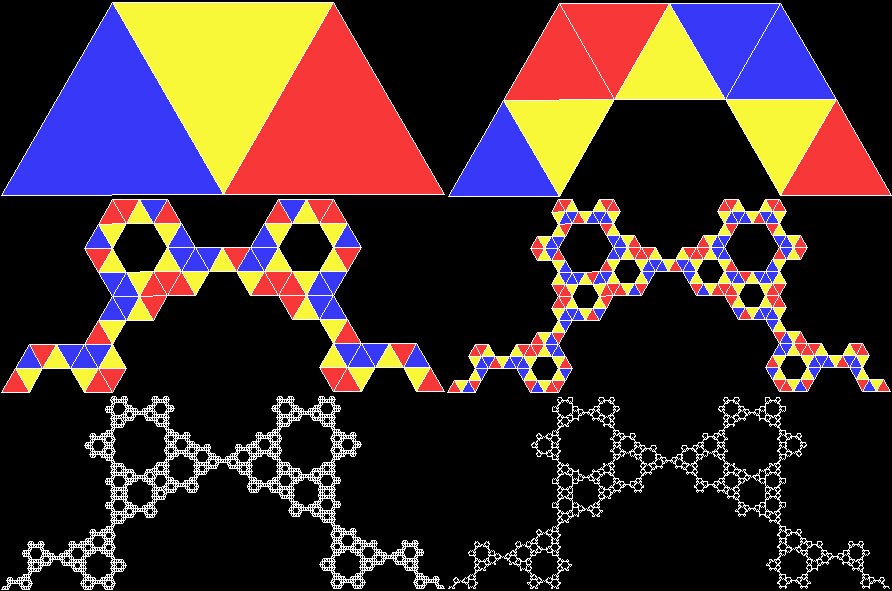
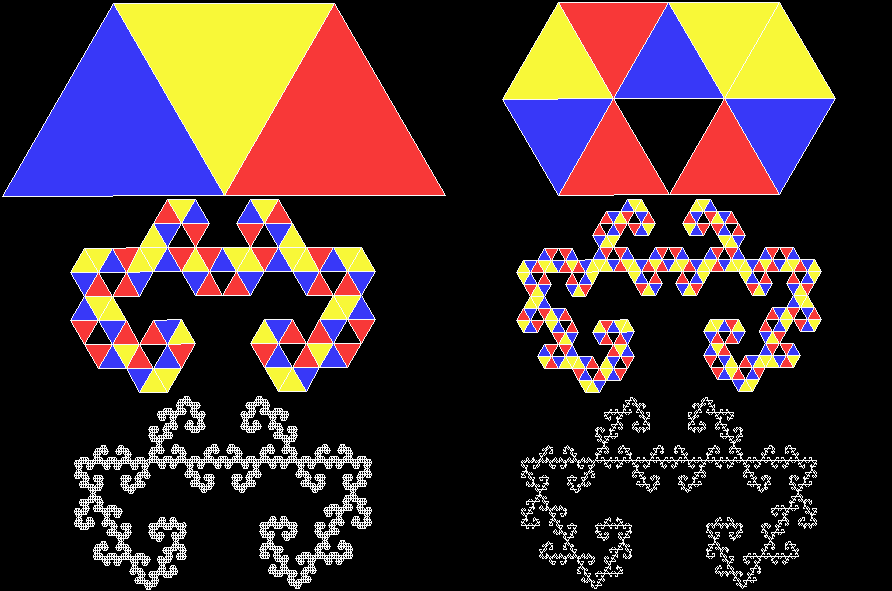
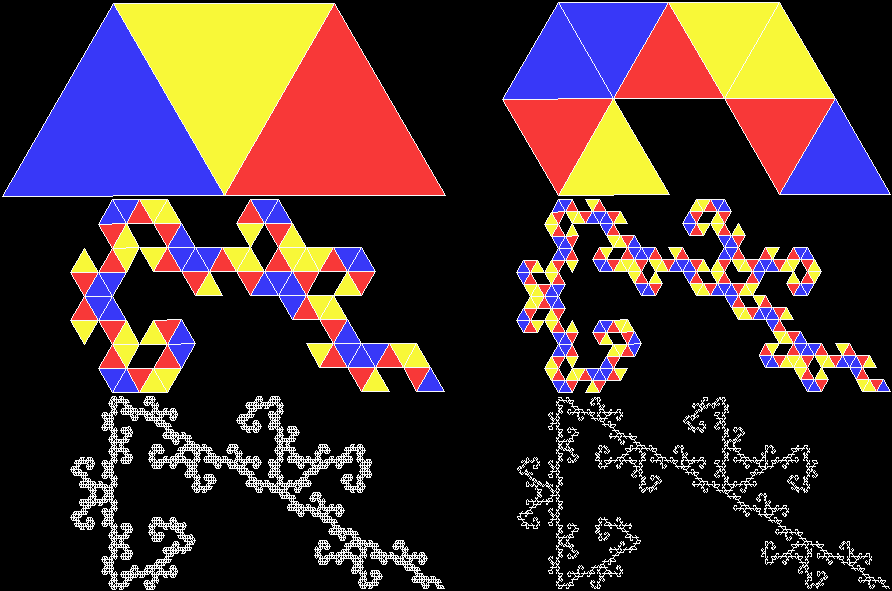
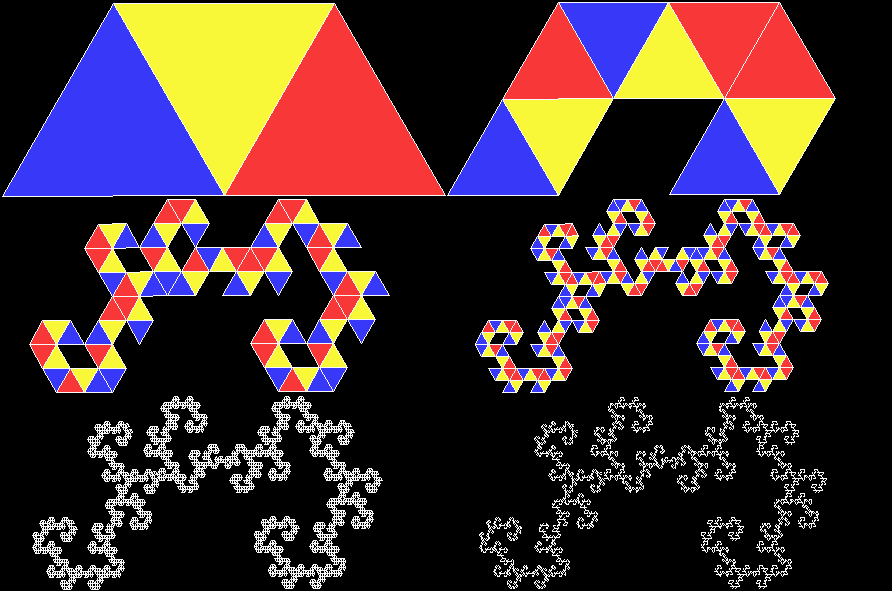
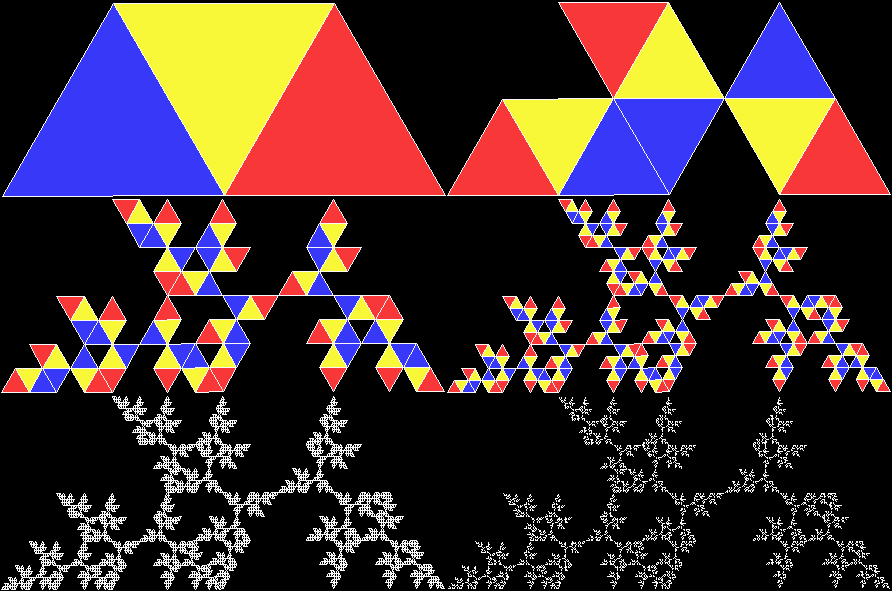
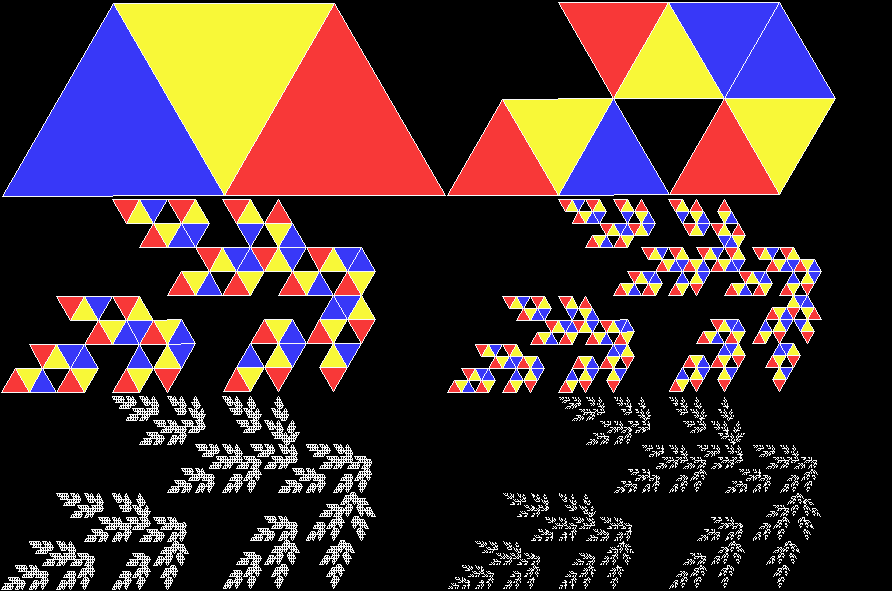
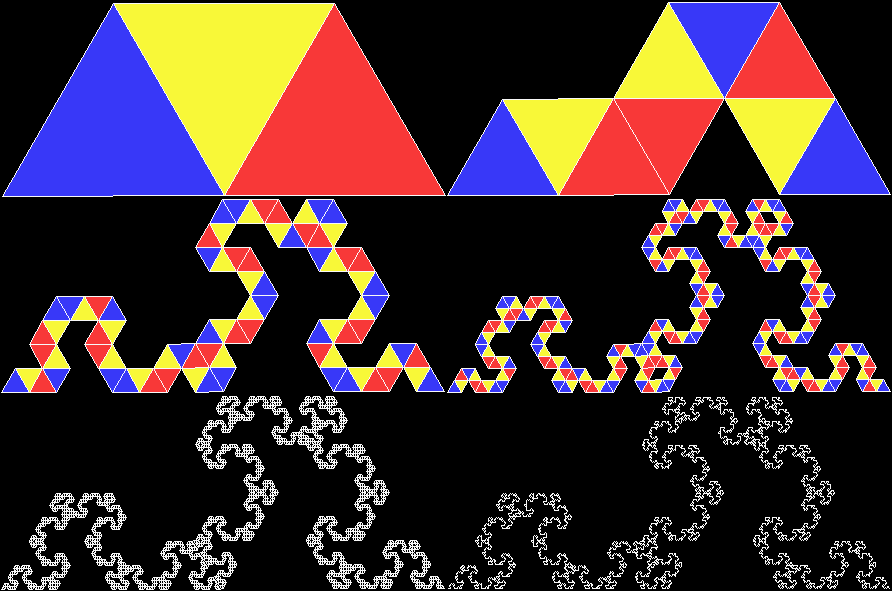
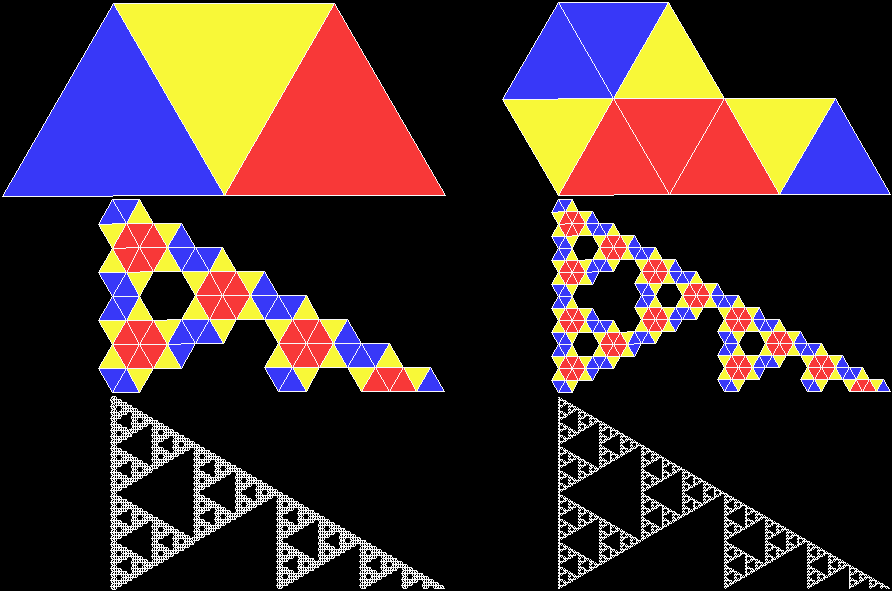
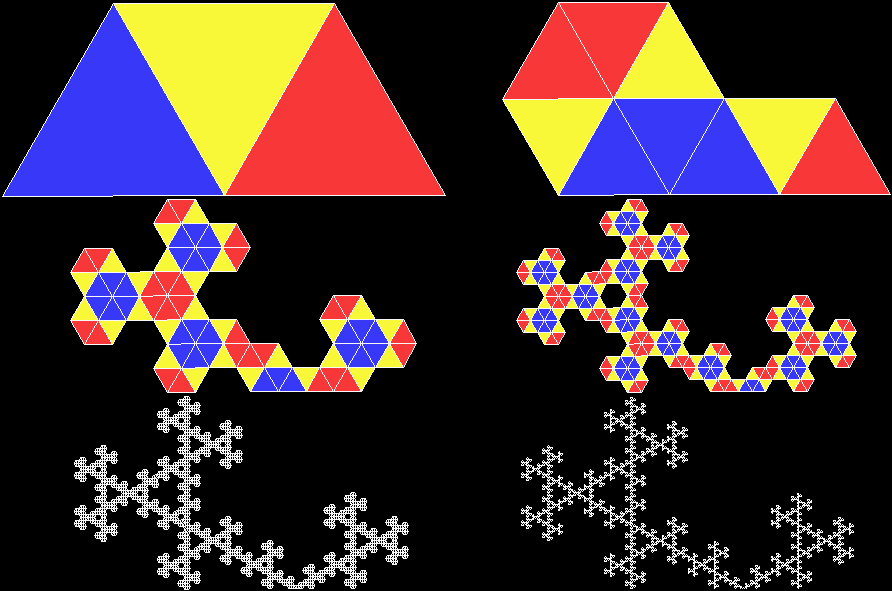
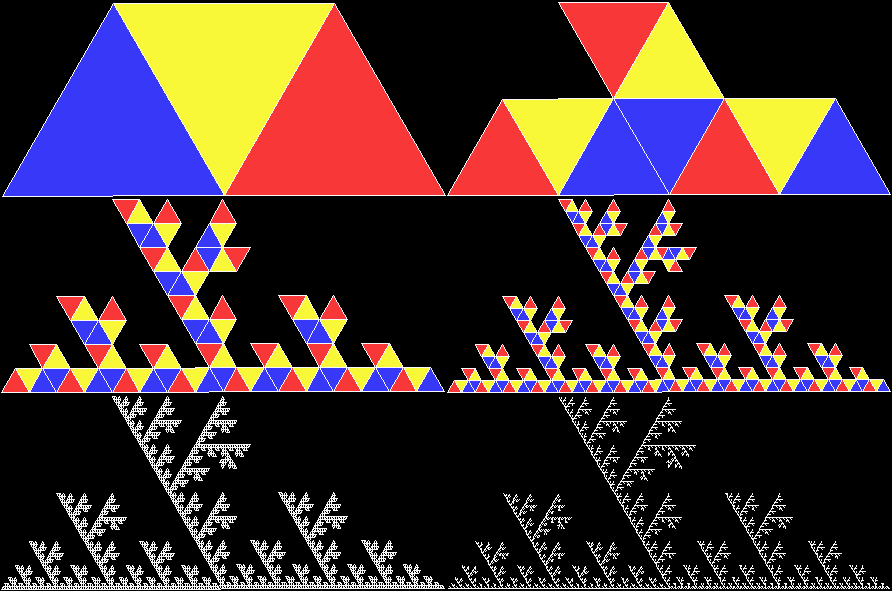
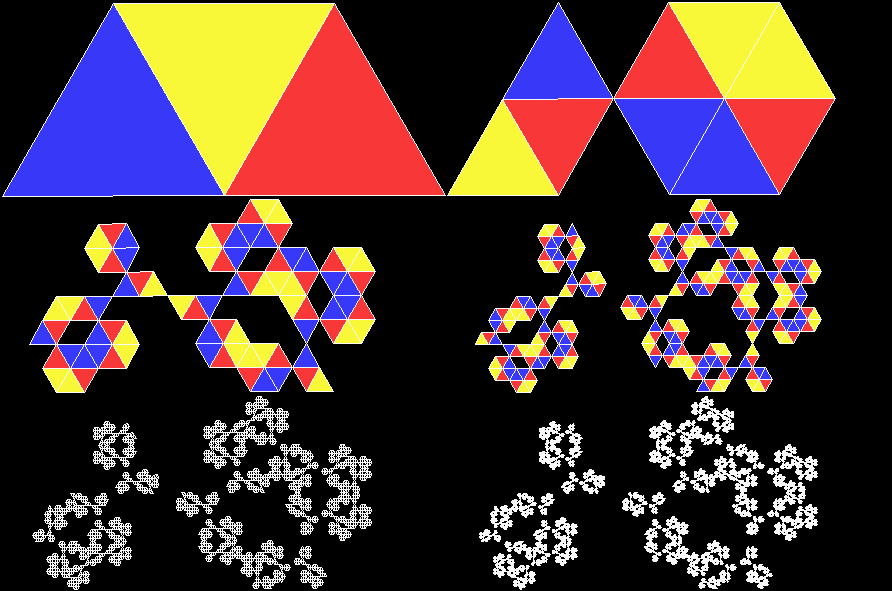
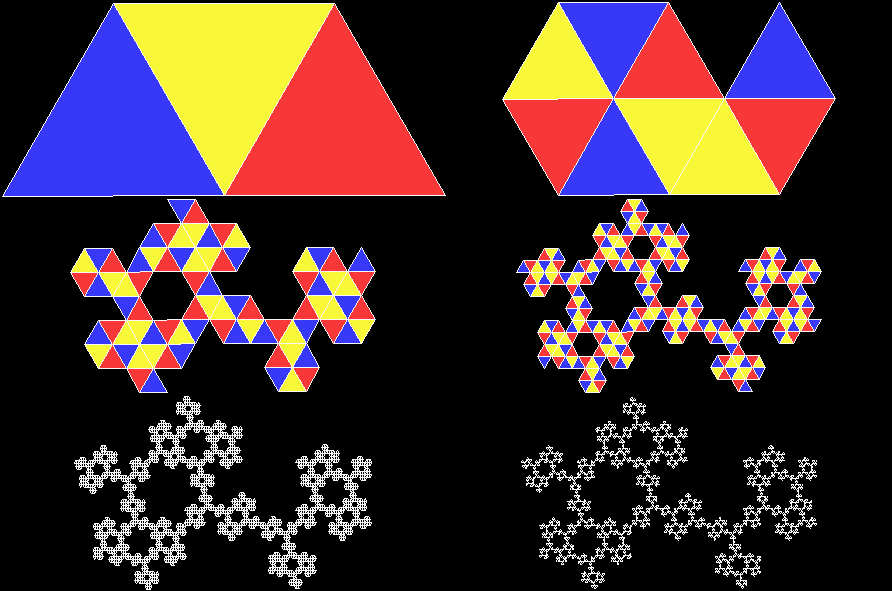
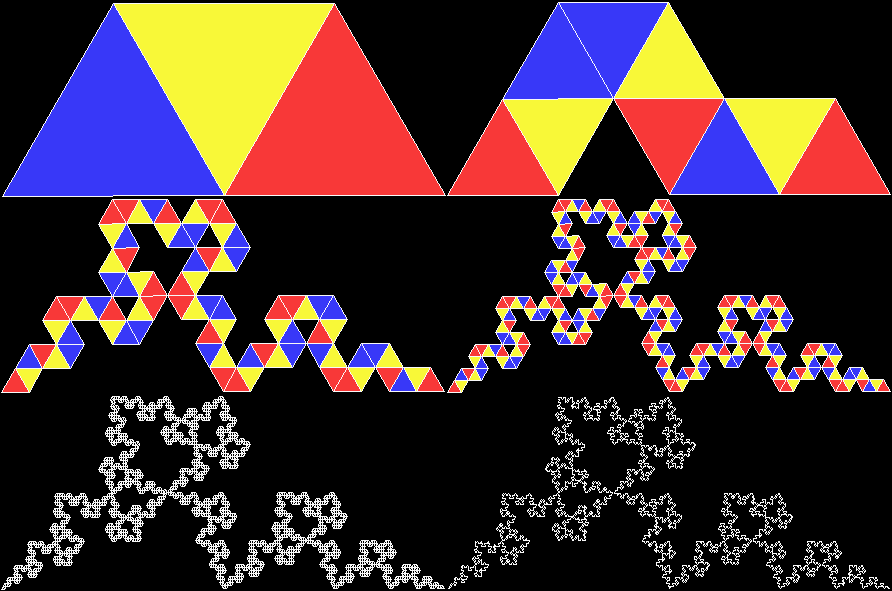
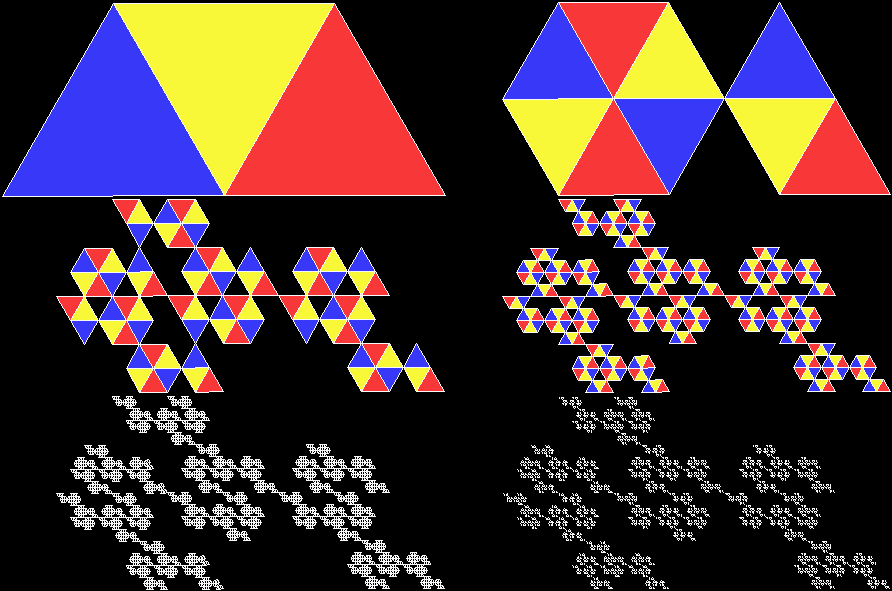
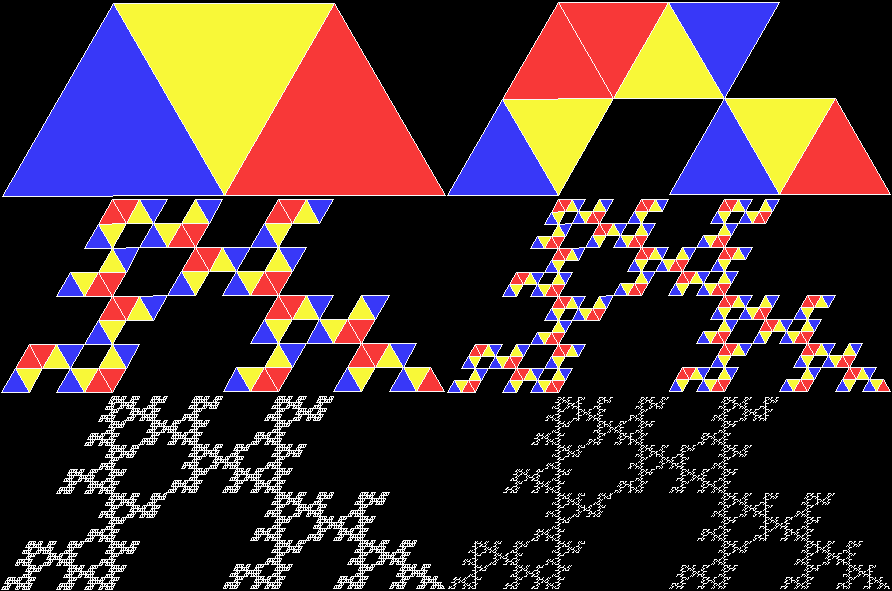
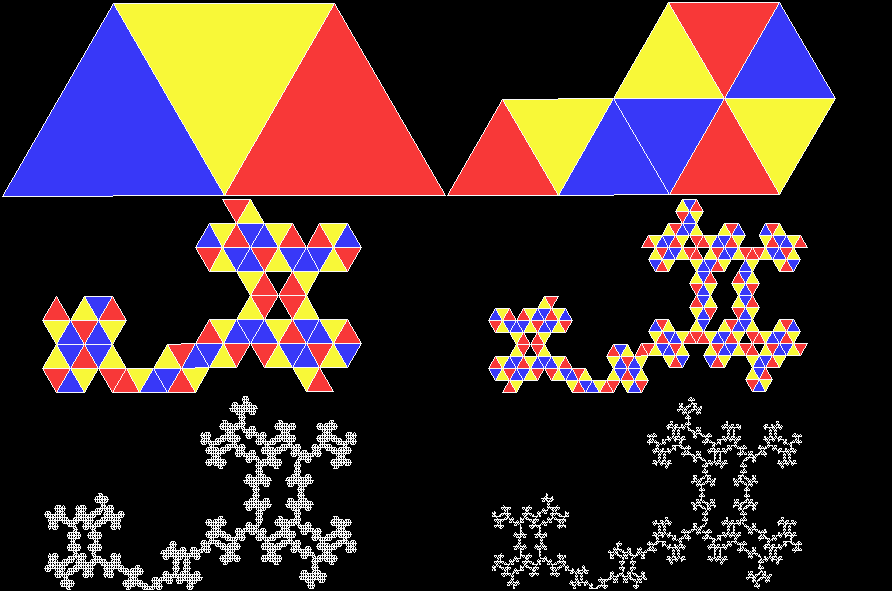
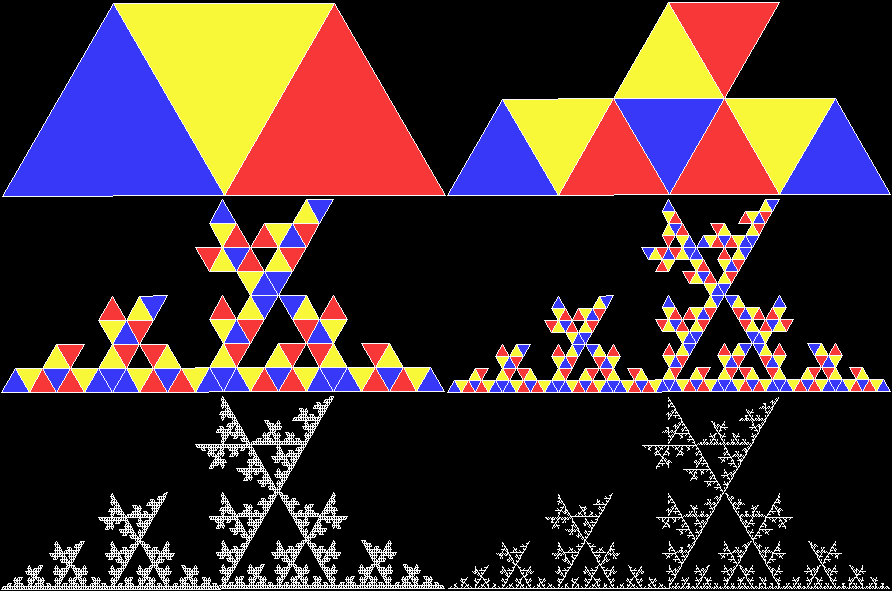
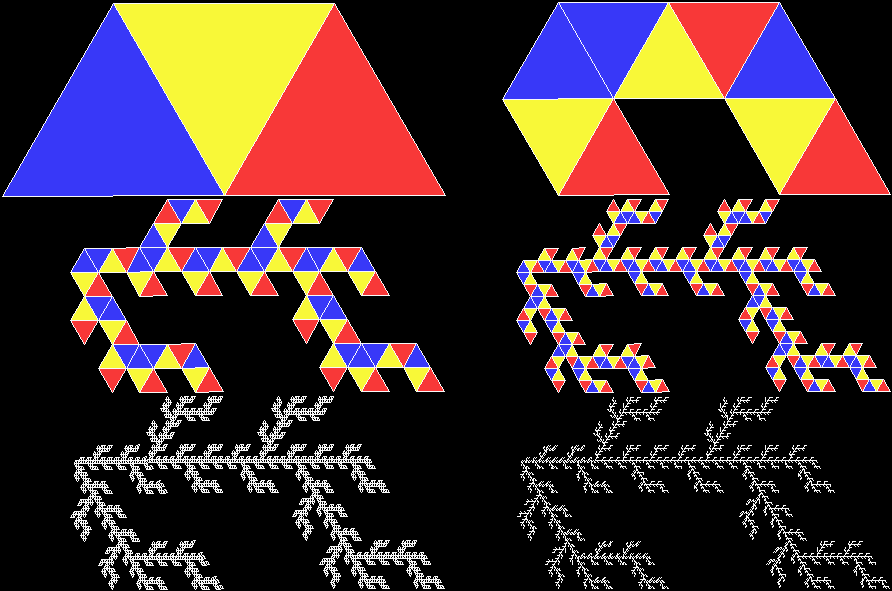
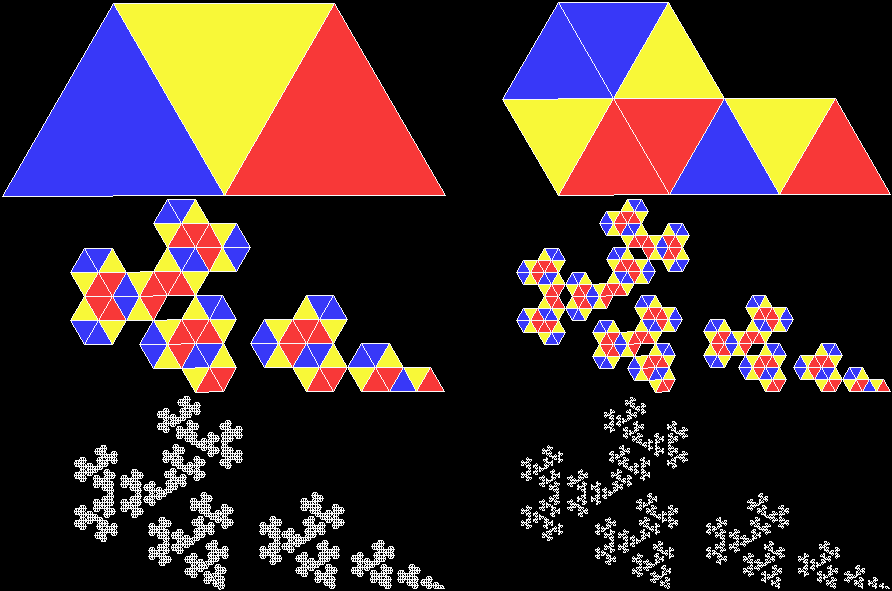
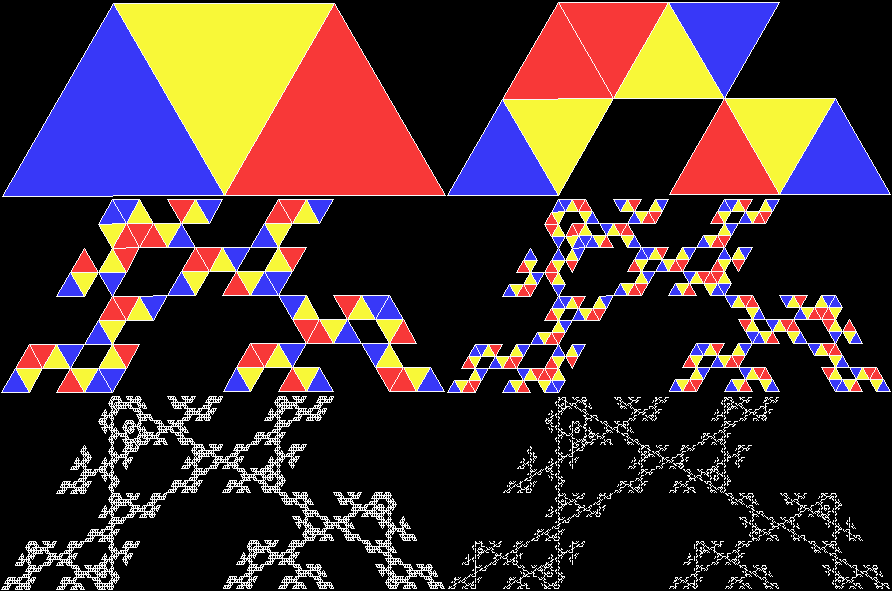
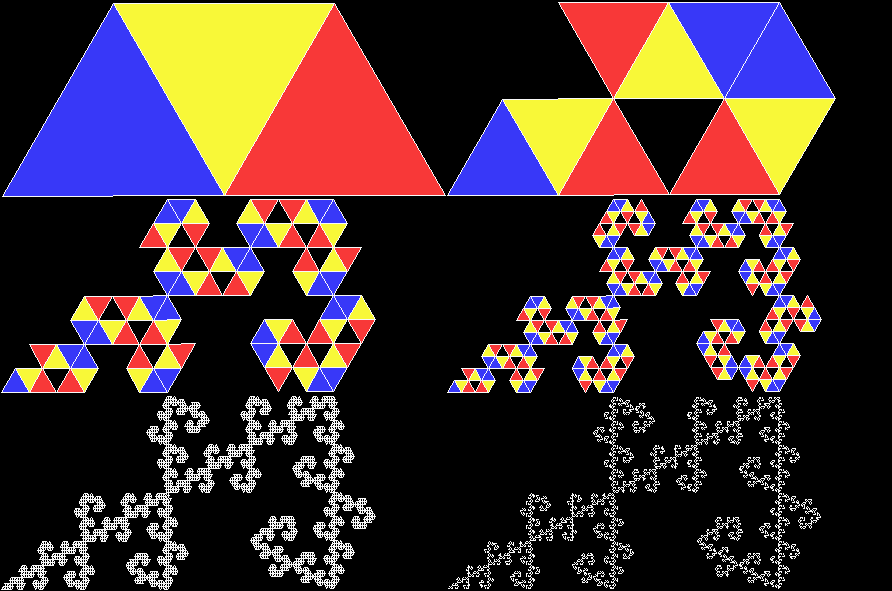
And if sub-triangles are discarded, more obvious fractals appear, some of which look like Lovecraftian deities and owl- or hawk-gods:


cthuneus1

cthuneus2

cthuneus3


Elsewhere Other-Accessible

Circus Trix — a later and better-illustrated look at these fractals

Curiouser and Cuneuser

This fractal is created by taking an equilateral triangle, then finding the three points halfway, i.e. d = 0.5, between the centre of the triangle and the midpoint of each side. Using all these points, plus the three vertices, seven new triangles can be created from the original. The process is then repeated with each new triangle:

7triangle

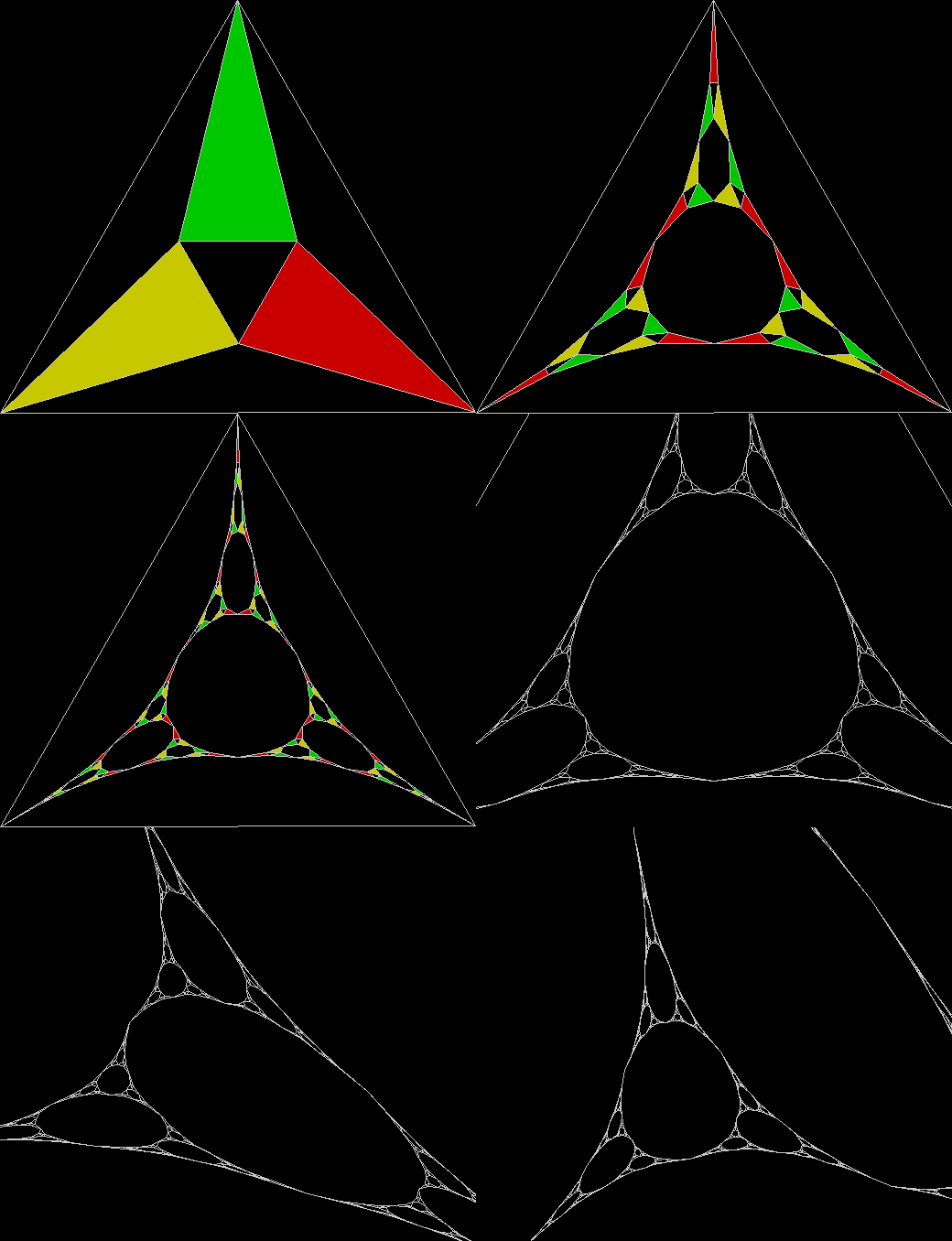
When sub-triangles are discarded, more obvious fractals appear, including this tristar, again using d = 0.5:

tristar

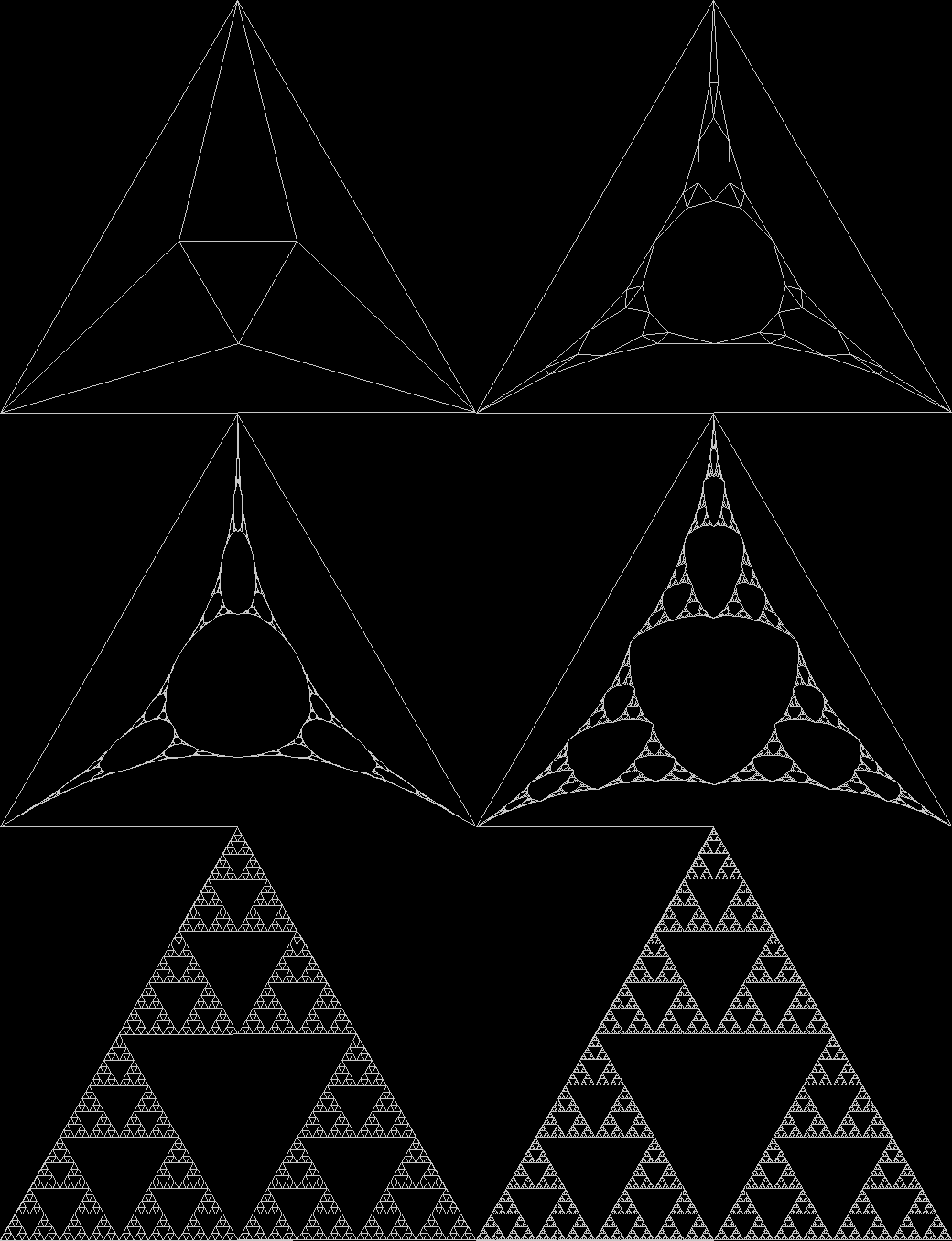
However, a simpler fractal is actually more fertile. This cat’s-cradle is created when d = 0.5:

catscradle

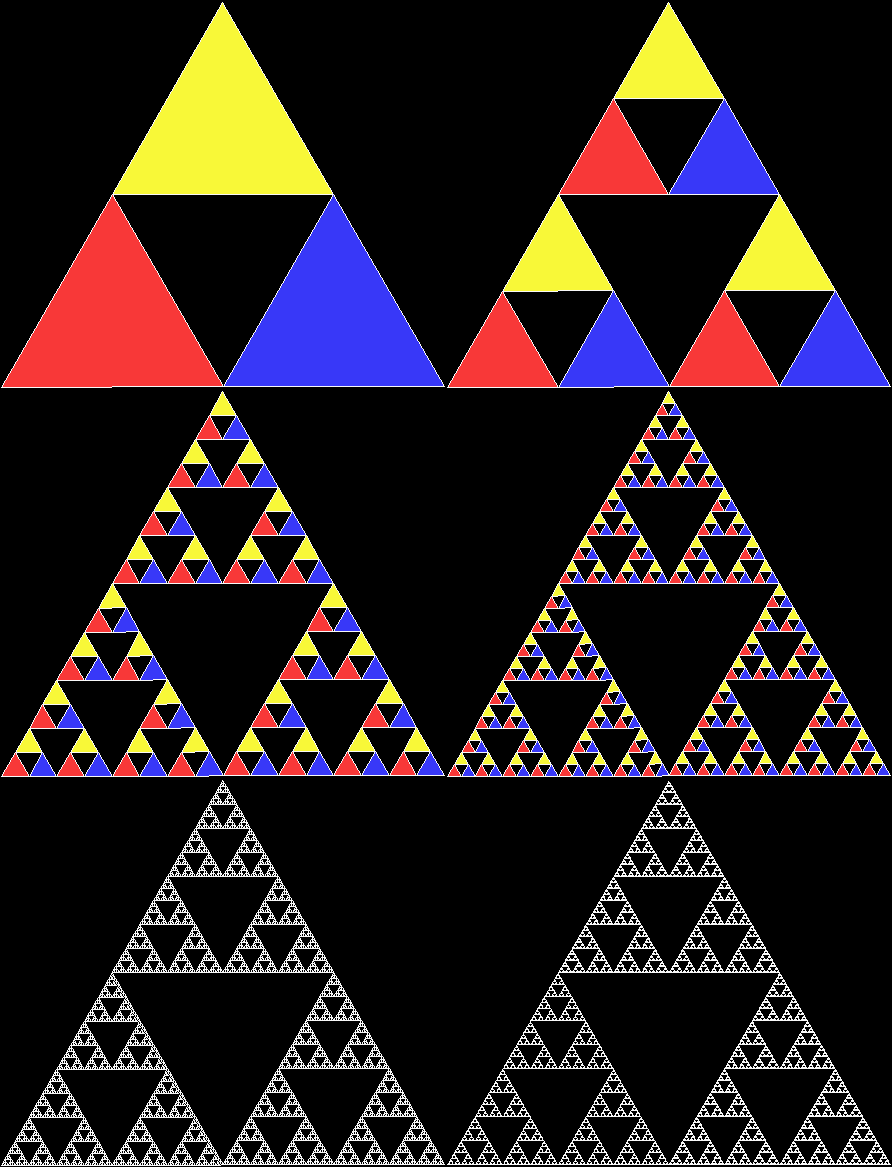
But as d takes values from 0.5 to 0, a very familiar fractal begins to appear: the Sierpiński triangle:

catscradle_expanding

When the values of d become negative, from -0.1 to -1, this is what happens:

catscradle_expanding_to_cuneus

Pre-previously posted (please peruse):

Curious Cuneus

Beyond Gold: A Weevil

Cover of Living Jewels by Poul Beckmann

Living Jewels: The Natural Design of Beetles, Poul Beckmann (2001)

Richard Dawkins wrote about the Blind Watchmaker, but the Blind Watchmaker often works in collaboration. This book is about his brother, the Blind Jeweller, who creates the cases for the watchwork of beetles. Sometimes those cases are gorgeous, sometimes they’re grotesque, and sometimes they’re both at once. Beetle #77 in this survey, Phanaeus igneus floridanus, is a squat giant with a huge curving horn on its head, but its thorax and abdomen shimmer with metallic purple, green, red, and gold. If that beetle’s a glam-rock sumo-wrestler, then beetle #49, Julodis hiritiventris sanguinipilig (sic – should be hirtiventris sanguinipilis), is pure punk: green legs and a long dark-blue body scattered with tufts of yellow-orange bristles. Elsewhere you’ve got New Romantics with elaborately patterned bodies and sweeping, dandyish antennae (Rosenbergia straussi and Batus barbicornis), death-metal-heads with gleaming black bodies and fearsome-looking but completely harmless horns (Xylotrupes gideon and Allomyr(r?)hina dichotomus taiwana), and even Status-Quo-ites wearing what looks like worn, work-stained denim (various Eupholus species).

It’s entertaining to look through this book and imagine whose backing band or album cover a particular beetle should play in or sit on, but sometimes you won’t be able to match a beetle to a band, because there are more kinds of beetle than musical genres. Beetles, or rather evolution, has invented more than human beings have, but the same forces have been at work. Topologically speaking, a doughnut is identical to a tea-cup, because one is a distorted variant of the other. Similarly, all the beetles in this book are distorted topological variants of each other: like genres of popular music, they’re variants on a theme. Evolution hasn’t altered the ingredients of beetles, just the quantities used to cook each species: changing the width and shape of the thorax, the length and design of the antennae and legs, and so on. But topology isn’t psychology, and just as glam-rock sounds quite different to punk, though the common ancestor is clearly there if you listen, so a doughnut looks quite different to a teacup and Phanaeus igneus floridanus looks quite different to Julodis hirtiventris sanguipilis.

There’s much more to beetles than their appearance, of course, but one of this book’s shortcomings, because it’s a coffee-table conversation-piece rather than a scientific survey, is that it tells you almost nothing about the ecology and behaviour behind the photographs. And the book’s title is misleading, in fact, because the jewels aren’t living: all the photos are of dead beetles on white backgrounds. The book also tells you very little about the meaning and history of the (sometimes misspelt) scientific names, even though these are fascinating, beautiful, and grotesque in their own right. Instead, there’s a brief but interesting – and occasionally wrong: Chrysophora isn’t Latin – introduction, then page after page of the gorgeous and grotesque photographs people will be buying this book for. Finally, there are some brief “Beetle Profiles”, describing where individual species were caught and how their family lives and feeds. I would have liked to know much more, though the beetles’ beauty is in some ways increased by its mystery and by what might be called the futility of its appearance. Countless millions of these beetles have lived and died without any human brain ever appreciating their beauty and strangeness, and if human beings disappeared from the planet they would continue to live and die unappreciated. They’re not here for us, but without us they could never be recognized as the living jewels they are. Some might draw metaphysical conclusions from that and conclude that they are here for us after all, but I draw a mathematical conclusion: mathematics governs the evolution of both beetles and brains, which is why beetles can appeal to us so strongly.

Living Jewels – Website accompanying the book and its sequel.

Cover of Living Jewels 2 by Poul Beckmann

He Say, He Sigh, He Sow #2

Musica est exercitium arithmeticae occultum nescientis se numerare animi. — Leibniz.

Musik ist die versteckte arithmetische Tätigkeit der Seele, die sich nicht dessen bewußt ist, daß sie rechnet.

Music is a hidden arithmetic of the soul, which knows not that it calculates.

Back to Bases

(N.B. I am not a mathematician and often make stupid mistakes in my recreational maths. Caveat lector.)

101 isn’t a number, it’s a label for a number. In fact, it’s a label for infinitely many numbers. In base 2, 1012 = 5; in base 3, 1013 = 10; 1014 = 17; 1015 = 26; and so on, for ever. In some bases, like 2 and 4, the number labelled 101 is prime. In other bases, it isn’t. But it is always a palindrome: that is, it’s the same read forward and back. But 101, the number itself, is a palindrome in only two bases: base 10 and base 100.1 Note that 100 = 101-1: with the exception of 2, all integers, or whole numbers, are palindromic in at least one base, the base that is one less than the integer itself. So 3 = 112; 4 = 113; 5 = 114; 101 = 11100; and so on.

Less trivial is the question of which integers set progressive records for palindromicity, or for the number of palindromes they create in bases less than the integers themselves. You might guess that the bigger the integer, the more palindromes it will create, but it isn’t as simple as that. Here is 10 represented in bases 2 through 9:

10102 | 1013* | 224* | 205 | 146 | 137 | 128 | 119*

10 is a palindrome in bases 3, 4, and 9. Now here is 30 represented in bases 2 through 29 (note that a number between square brackets represents a single digit in that base):2

111102 | 10103 | 1324 | 1105 | 506 | 427 | 368 | 339* | 30 | 2811 | 2612 | 2413 | 2214* | 2015 | 1[14]16 | 1[13]17 | 1[12]18 | 1[11]19 | 1[10]20 | 1921 | 1822 | 1723 | 1624 | 1525 | 1426 | 1327 | 1228
| 1129*

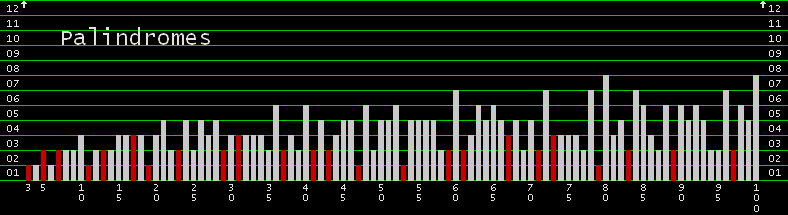
30, despite being three times bigger than 10, creates only three palindromes too: in bases 9, 14, and 29. Here is a graph showing the number of palindromes for each number from 3 to 100 (prime numbers are in red):
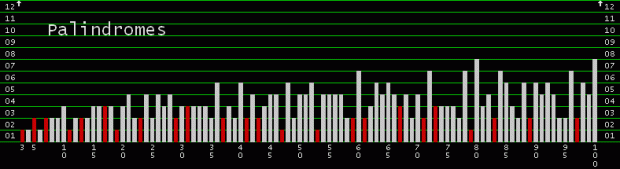
Graph of palindromes in various bases for n=3 to 100

The number of palindromes a number has is related to the number of factors, or divisors, it has. A prime number has only one factor,  itself (and 1), so primes tend to be less palindromic than composite numbers. Even large primes can have only one palindrome, in the base b=n-1 (55,440 has 119 factors and 61 palindromes; 65,381 has one factor and one palindrome, 1165380). Here is a graph showing the number of factors for each number from 3 to 100:

Graph of number of factors for n = 3 to 100

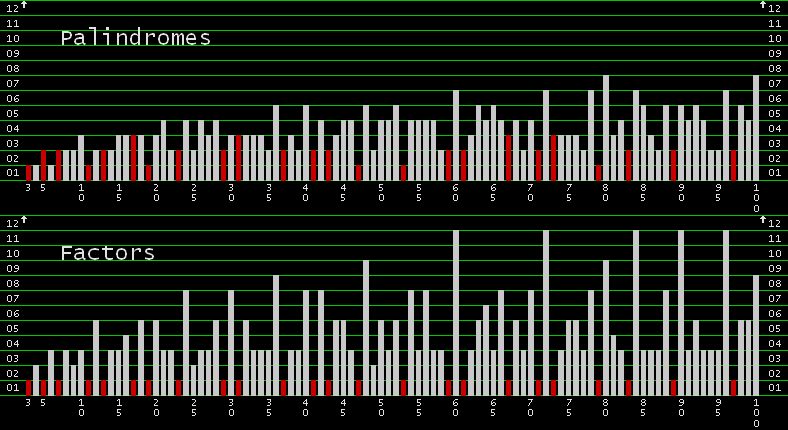
And here is an animated gif combining the two previous images:

Animated gif of number of palindromes and factors, n=3 to 100

Here is a graph indicating where palindromes appear when n, along the x-axis, is represented in the bases b=2 to n-1, along the y-axis:
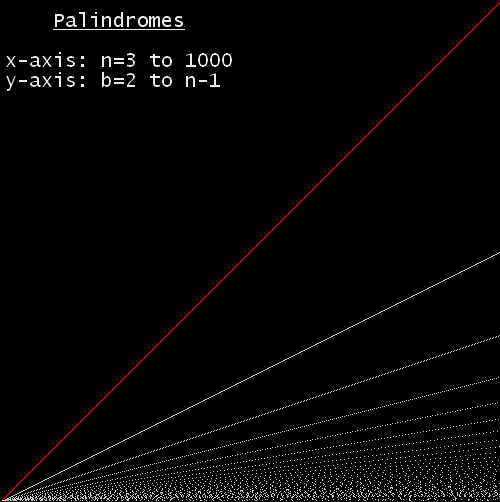
Graph showing where palindromes occur in various bases for n = 3 to 1000

The red line are the palindromes in base b=n-1, which is “11” for every n>2. The lines below it arise because every sufficiently large n with divisor d can be represented in the form d·n1 + d. For example, 8 = 2·3 + 2, so 8 in base 3 = 223; 18 = 3·5 + 3, so 18 = 335; 32 = 4.7 + 4, so 32 = 447; 391 = 17·22 + 17, so 391 = [17][17]22.

And here, finally, is a table showing integers that set progressive records for palindromicity (p = number of palindromes, f = total number of factors, prime and non-prime):

n Prime Factors p f    n Prime Factors p f
3 3 1 1    2,520 23·32·5·7 25 47
5 5 2 1    3,600 24·32·52 26 44
10 2·5 3 3    5,040 24·32·5·7 30 59
21 3·7 4 3    7,560 23·33·5·7 32 63
36 22·32 5 8    9,240 23·3·5·7·11 35 63
60 22·3·5 6 11    10,080 25·32·5·7 36 71
80 24·5 7 9    12,600 23·32·52·7 38 71
120 23·3·5 8 15    15,120 24·33·5·7 40 79
180 22·32·5 9 17    18,480 24·3·5·7·11 43 79
252 22·32·7 11 17    25,200 24·32·52·7 47 89
300 22·3·52 13 17    27,720 23·32·5·7·11 49 95
720 24·32·5 16 29    36,960 25·3·5·7·11 50 95
1,080 23·33·5 17 31    41,580 22·33·5·7·11 51 95
1,440 25·32·5 18 35    45,360 24·34·5·7 52 99
1,680 24·3·5·7 20 39    50,400 25·32·52·7 54 107
2,160 24·33·5 21 39    55,440 24·32·5·7·11 61 119

Notes

1. That is, it’s only a palindrome in two bases less than 101. In higher bases, “101” is a single digit, so is trivially a palindrome (as the numbers 1 through 9 are in base 10).

2. In base b, there are b digits, including 0. So base 2 has two digits, 0 and 1; base 10 has ten digits, 0-9; base 16 has sixteen digits: 0, 1, 2, 3, 4, 5, 6, 7, 8, 9, A, B, C, D, E, F.

Monteverde’s Mathemorphosis

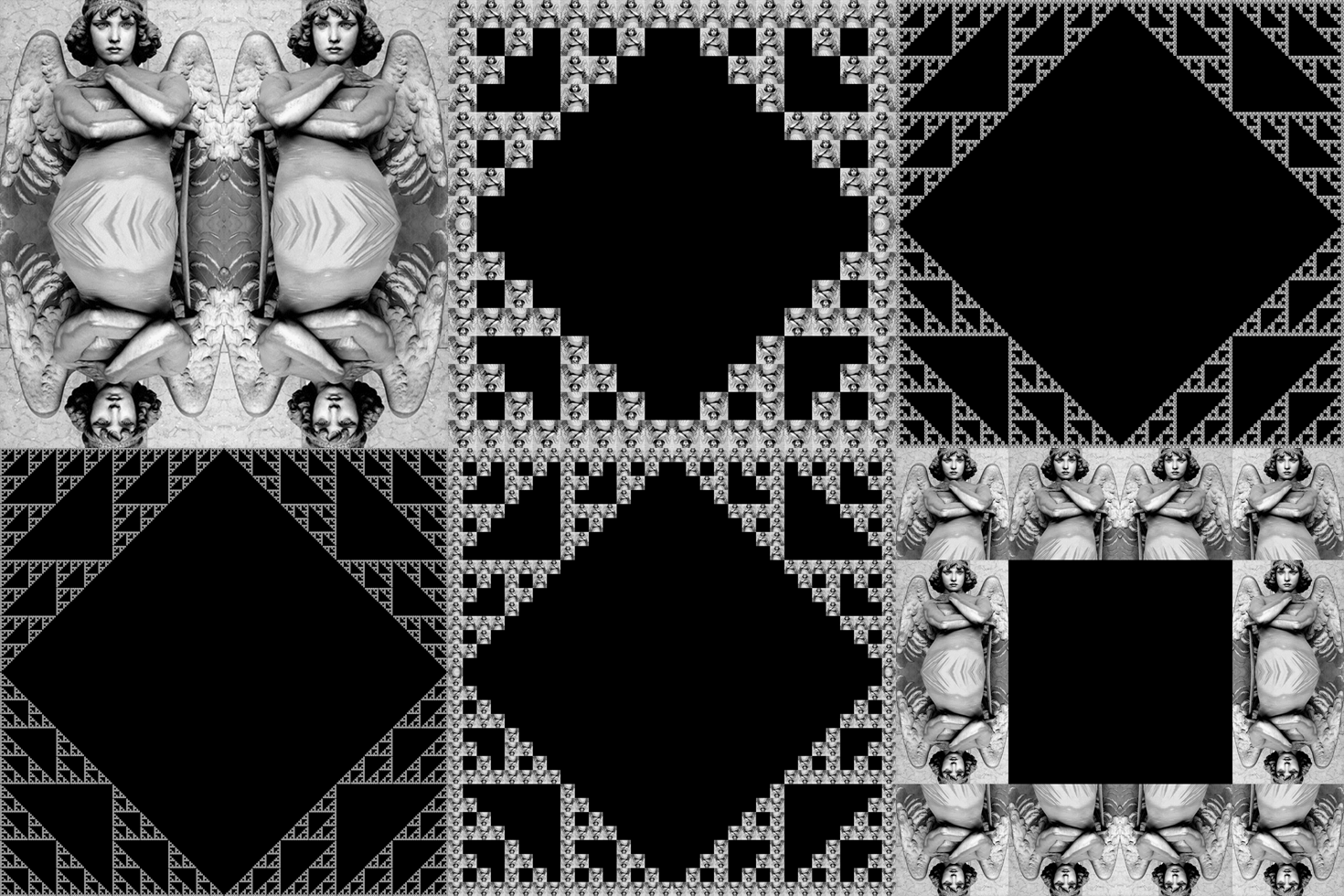
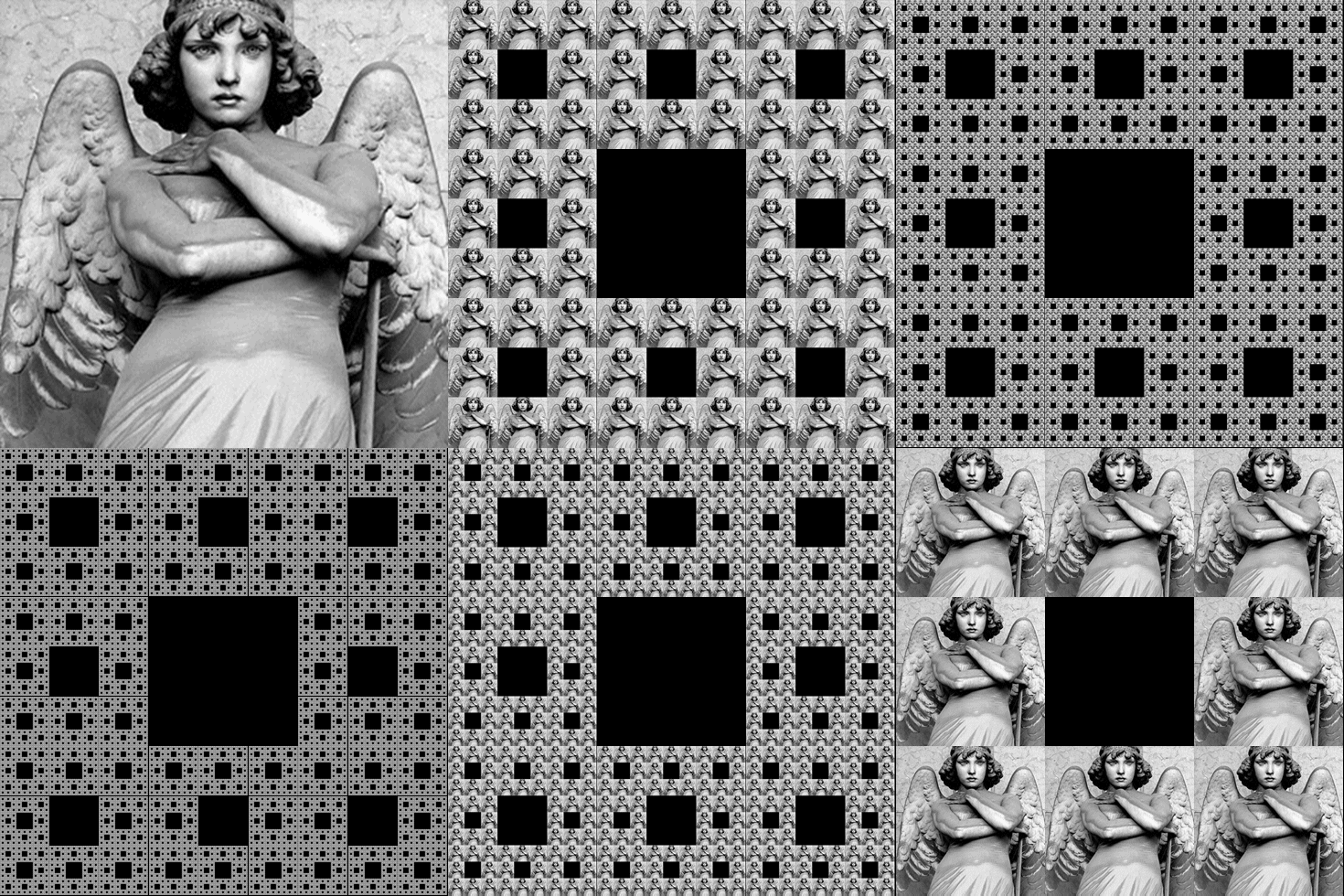
Here are some fractals based on the Angelo di Monteverde or Angelo della Resurrezione carved by the Italian sculptor Giulio Monteverde (1837-1917) for the monumental cemetery of Staglieno in Genoa.
A fractal based on an angel carved by Giulio Monteverde

A fractal based on an angel carved by Giulio Monteverde

A fractal based on an angel carved by Giulio Monteverde

A fractal based on an angel carved by Giulio Monteverde

A fractal based on an angel carved by Giulio Monteverde

A fractal based on an angel carved by Giulio Monteverde

A fractal based on an angel carved by Giulio Monteverde

Jug is the Drug

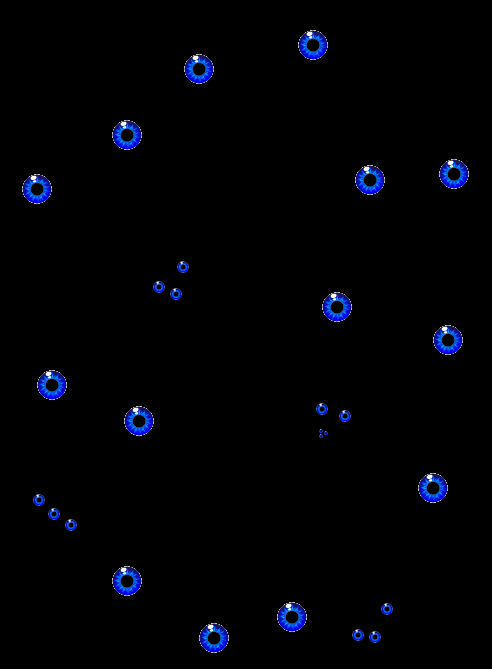
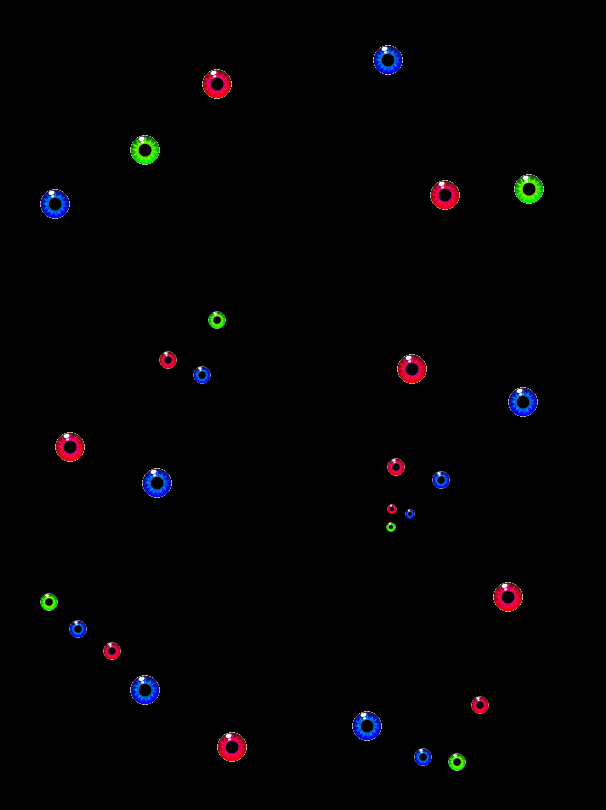
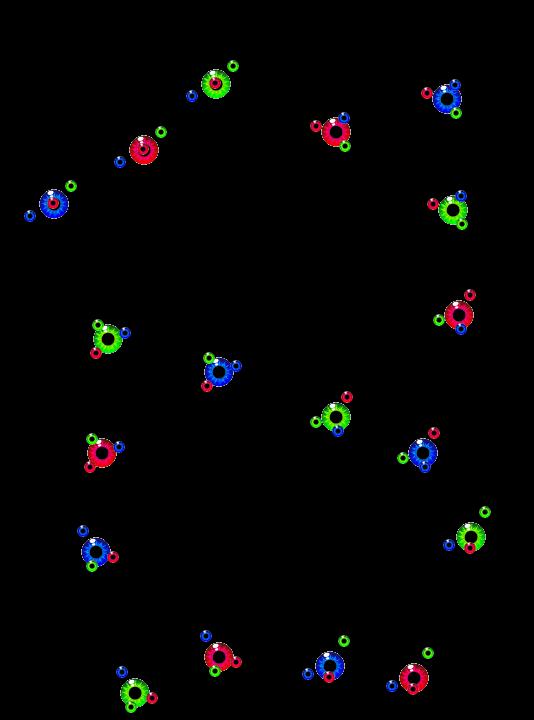
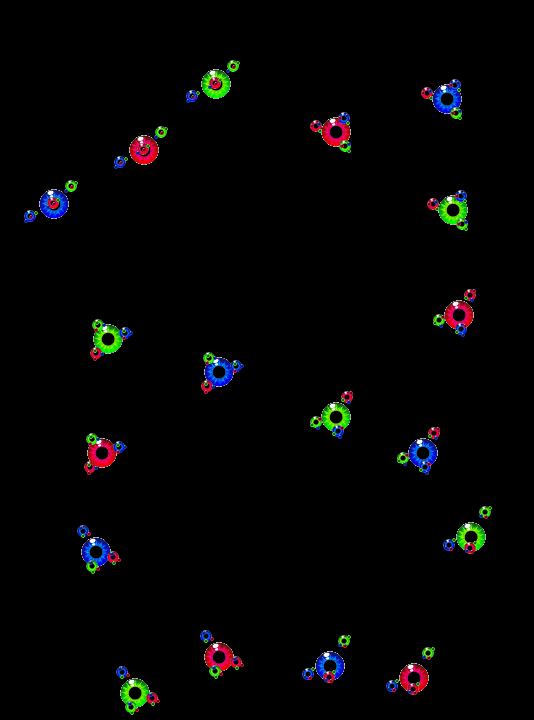
In “The Gems of Rebbuqqa”, I interrogated notions around the concept of priestesses who permanently juggle three giant eye-like gems, a ruby, a sapphire, and an emerald, atop a sandstone altar. In “The Schismatarch” (forthcoming), I will interrogate notions around the concept of a Himalayan sect that believes this universe is one of three juggled by a god called Nganāma. Each of these universes contains a smaller Nganāma who juggles three dwarf universes; et sic ad infinitum. Moreover, the Nganāma juggling our universe sits in a larger universe, one of three juggled by a giant Nganāma in a larger universe still, which is one of three on a higher plane; et sic ad infinitum. The cosmology of the Nganāma-sect is fractal: ut supra, sic infra: as above, so below. Here are some animated gifs inspired by these two stories and based on juggled eye-gem fractals.

A fractal of three juggled blue eyes

 A fractal comprising three juggled eyes

A fractal of three sets of three juggled eyes

A fractal comprising three sets of three sets (sic) of three juggled eyes

A fractal based on juggled eyeballs

A fractal of three juggled eyes, in front of each of which three more eyes are juggled

A fractal of 27 juggled eyes

A Feast of Fractiles

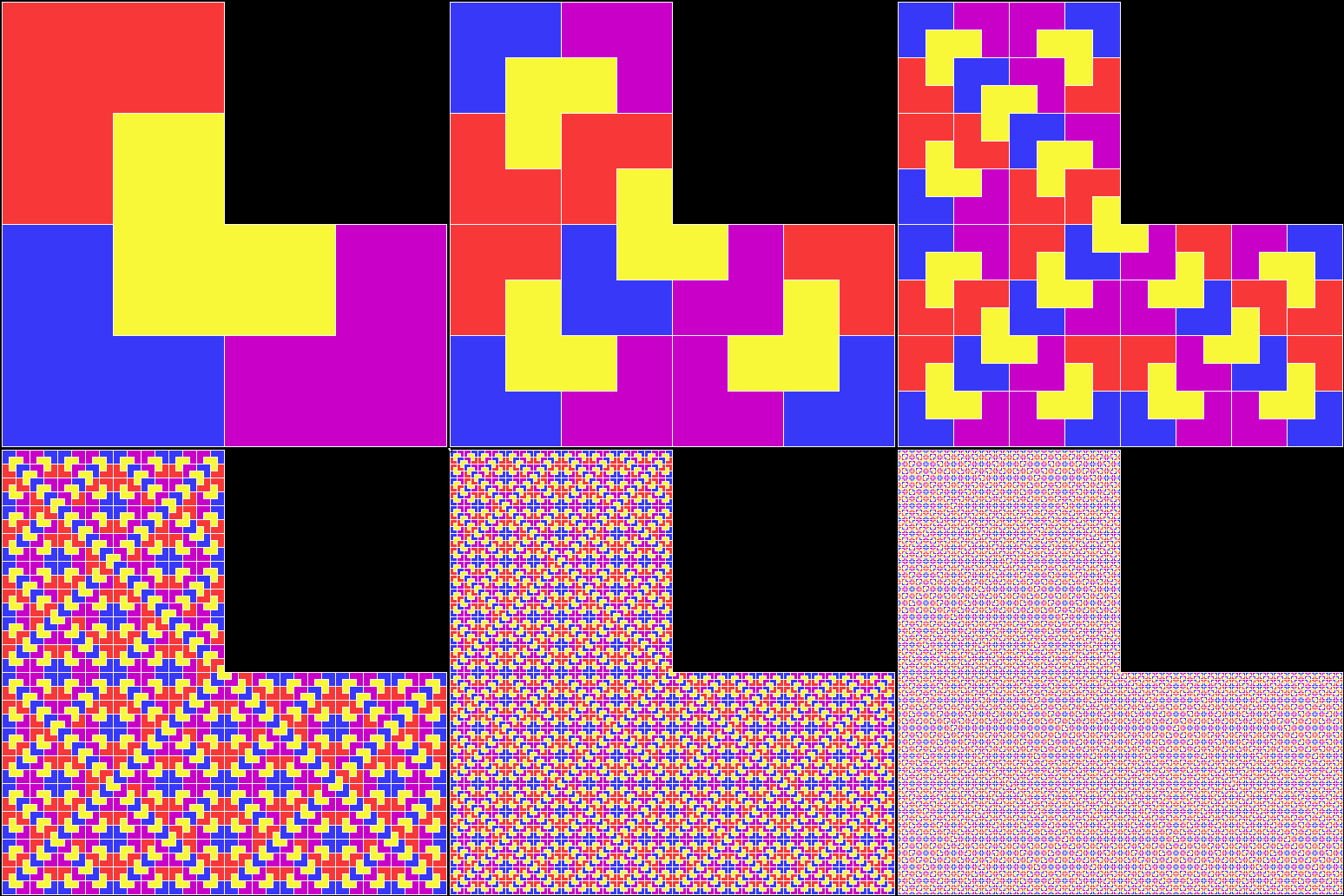
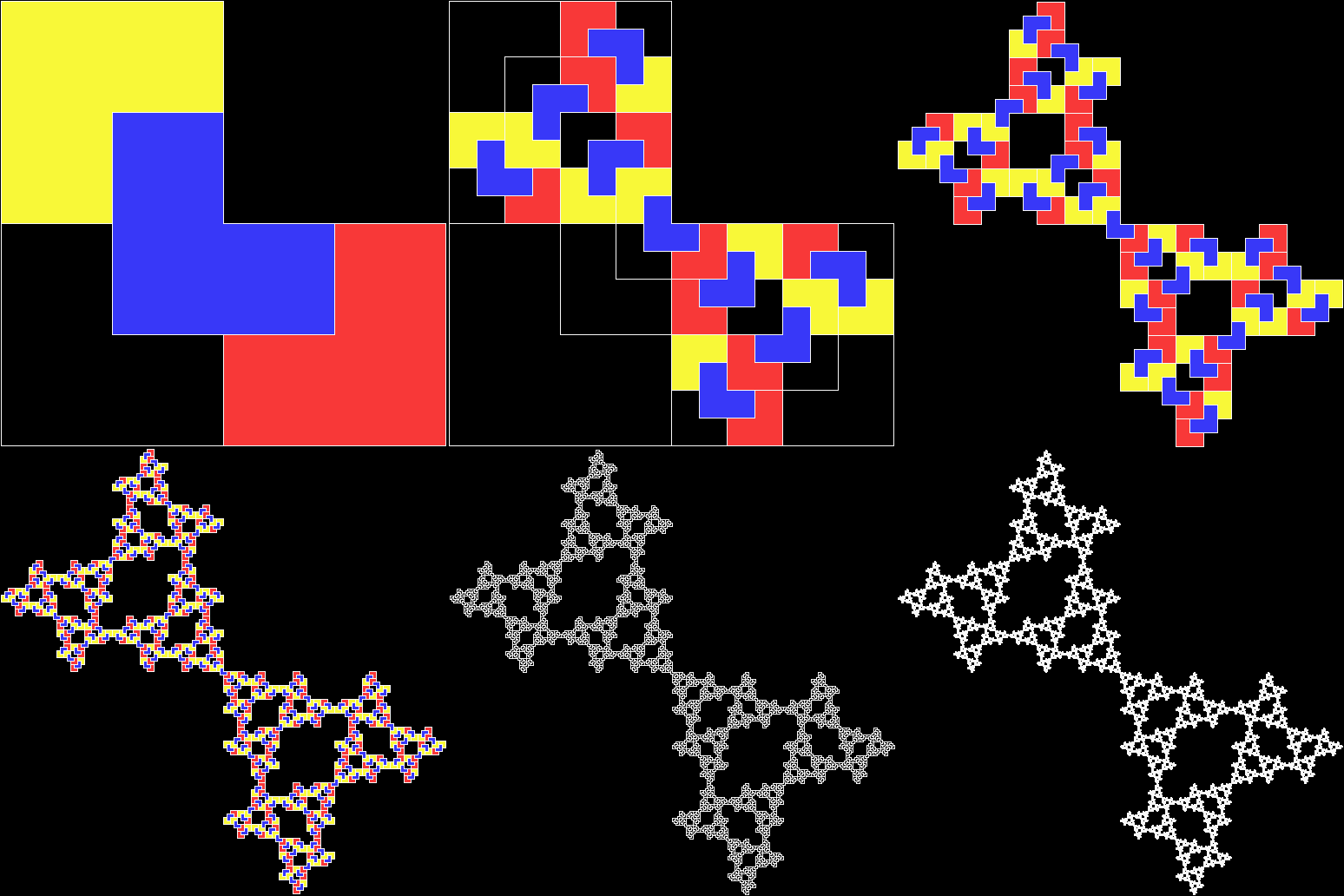
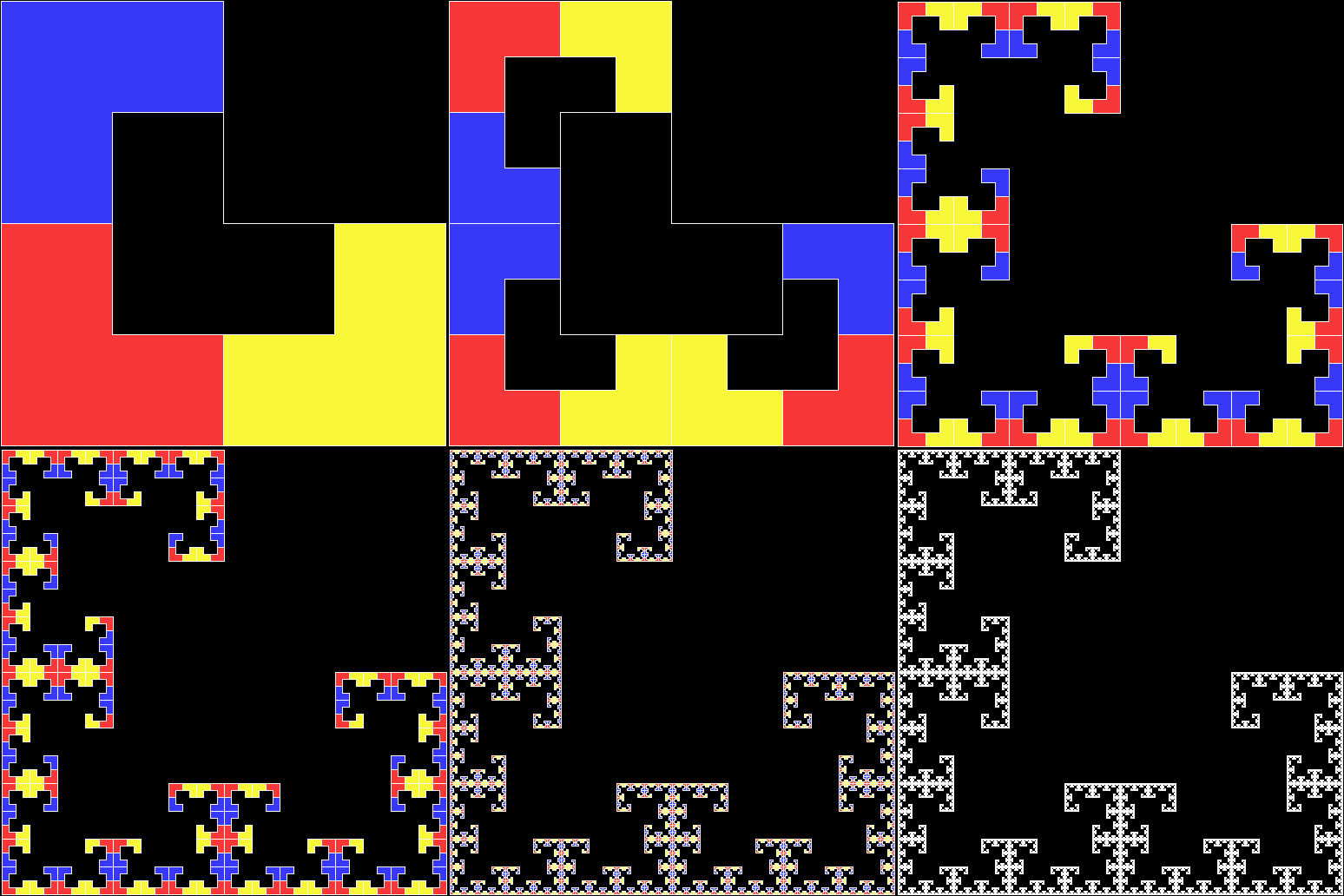
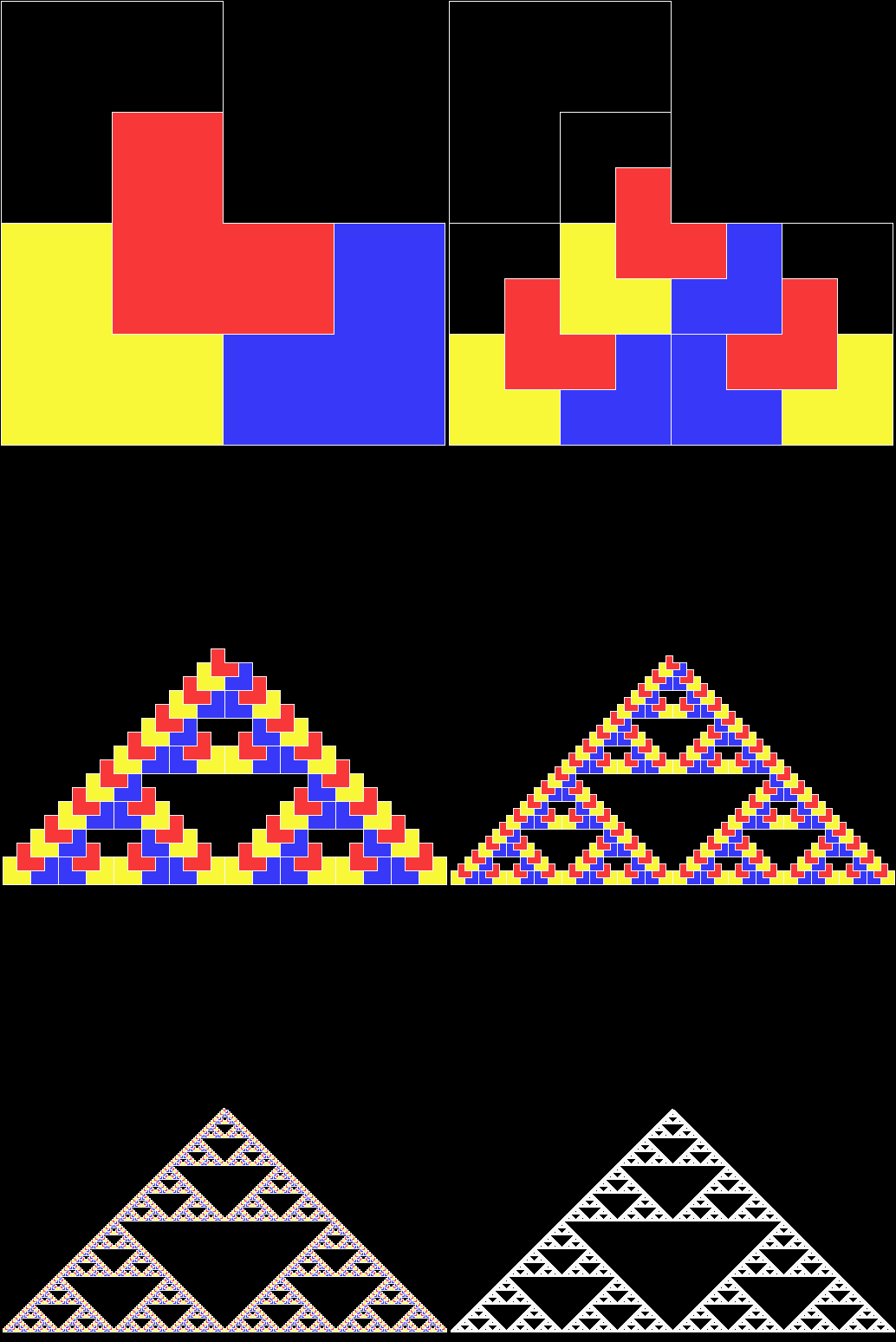
A rep-tile is a shape that can be divided into copies of itself. One of the simplest rep-tiles is the equilateral triangle, which can be divided into four copies of itself, like this:

Self-dividing equilateral triangle

If, on the other hand, the triangle is subdivided and then one of the copies is discarded, many interesting fractals can be made from this very simple shape:

Fractal triangle creating Sierpinski gasket

Triangle fractal 2

This sequence illustrates how a more complex fractal is created:

Triangle fractal 3 split image 1

Triangle fractal 3 split image 2

Triangle fractal 3 split image 3

Triangle fractal 3 split image 4

Triangle fractal 3 split image 5

Triangle fractal 3 split image 6

Triangle fractal 3 split image 7

Triangle fractal 3 split image 8

And here is the sequence in a single animated gif:

Triangle fractal 3

Triangle fractal 4

Triangle fractal 5

Triangle fractal 6

Triangle fractal 7

Triangle fractal 8

Triangle fractal 9

Triangle fractal 10

Triangle fractal 11

Triangle fractal 12

Triangle fractal 13

Triangle fractal 15

Triangle fractal 16

Triangle fractal 17

Triangle fractal 18

Triangle fractal 19

Triangle fractal 20

Triangle fractal 21

Triangle fractal 22

Triangle fractal 23

Triangle fractal 24

Triangle fractal 25

Triangle fractal 26