Hex Appeal

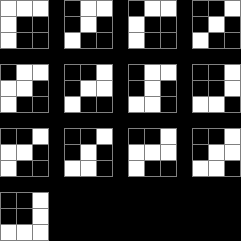
A polyiamond is a shape consisting of equilateral triangles joined edge-to-edge. There is one moniamond, consisting of one equilateral triangle, and one diamond, consisting of two. After that, there are one triamond, three tetriamonds, four pentiamonds and twelve hexiamonds. The most famous hexiamond is known as the sphinx, because it’s reminiscent of the Great Sphinx of Giza:

sphinx_hexiamond

It’s famous because it is the only known pentagonal rep-tile, or shape that can be divided completely into smaller copies of itself. You can divide a sphinx into either four copies of itself or nine copies, like this (please open images in a new window if they fail to animate):

sphinx4

sphinx9

So far, no other pentagonal rep-tile has been discovered. Unless you count this double-triangle as a pentagon:

double_triangle_rep-tile

It has five sides, five vertices and is divisible into sixteen copies of itself. But one of the vertices sits on one of the sides, so it’s not a normal pentagon. Some might argue that this vertex divides the side into two, making the shape a hexagon. I would appeal to these ancient definitions: a point is “that which has no part” and a line is “a length without breadth” (see Neuclid on the Block). The vertex is a partless point on the breadthless line of the side, which isn’t altered by it.

But, unlike the sphinx, the double-triangle has two internal areas, not one. It can be completely drawn with five continuous lines uniting five unique points, but it definitely isn’t a normal pentagon. Even less normal are two more rep-tiles that can be drawn with five continuous lines uniting five unique points: the fish that can be created from three equilateral triangles and the fish that can be created from four isosceles right triangles:

equilateral_triangle_fish_rep-tile

right_triangle_fish_rep-tile

Rep It Up

When I started to look at rep-tiles, or shapes that can be divided completely into smaller copies of themselves, I wanted to find some of my own. It turns out that it’s easy to automate a search for the simpler kinds, like those based on equilateral triangles and right triangles.

right triangle rep-tiles

right_triangle_fish

equilateral_triangle_reptiles

equilateral_triangle_rocket

(Please open the following images in a new window if they fail to animate)

duodeciamond

triangle mosaic


Previously pre-posted (please peruse):

Rep-Tile Reflections

Hextra Texture

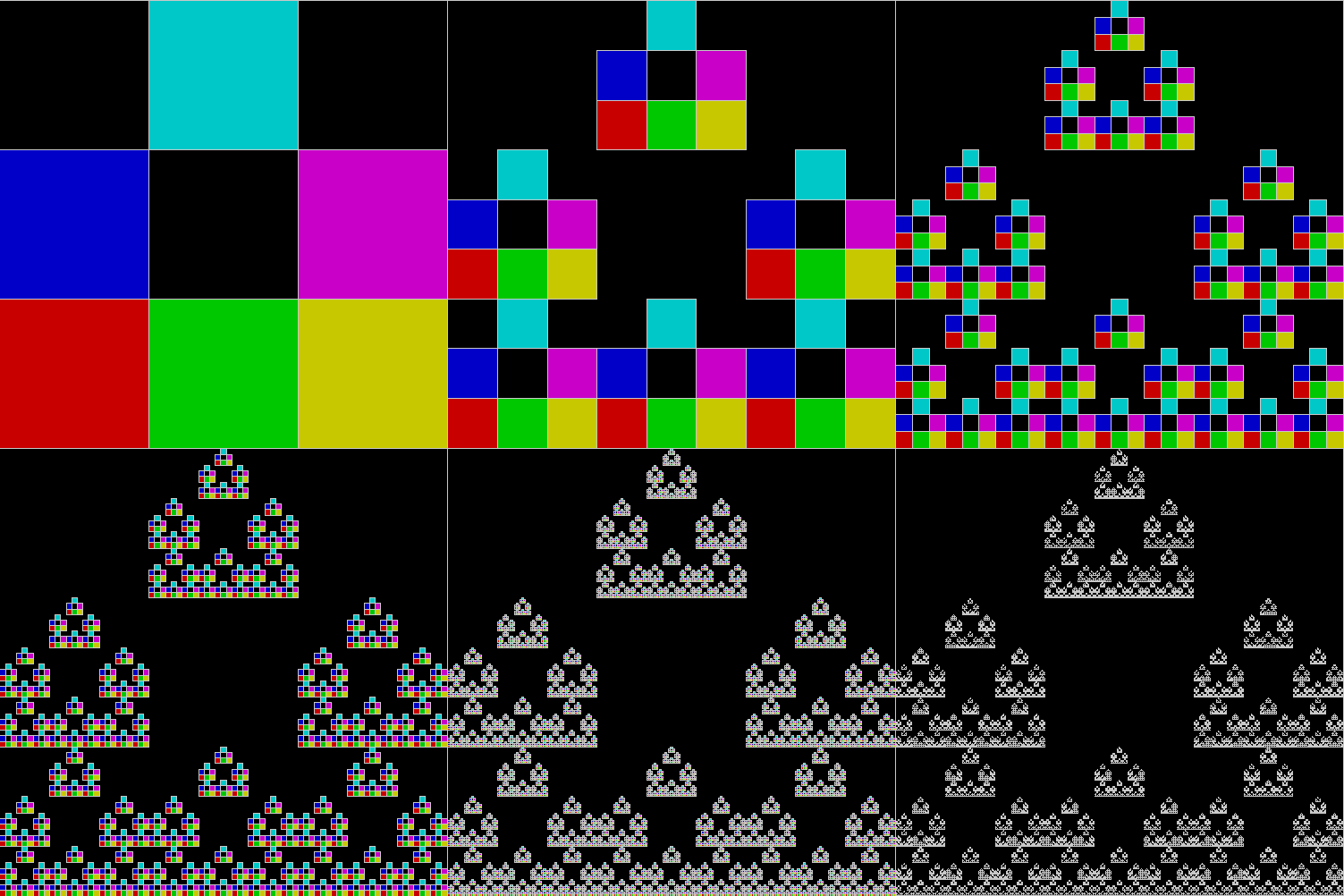
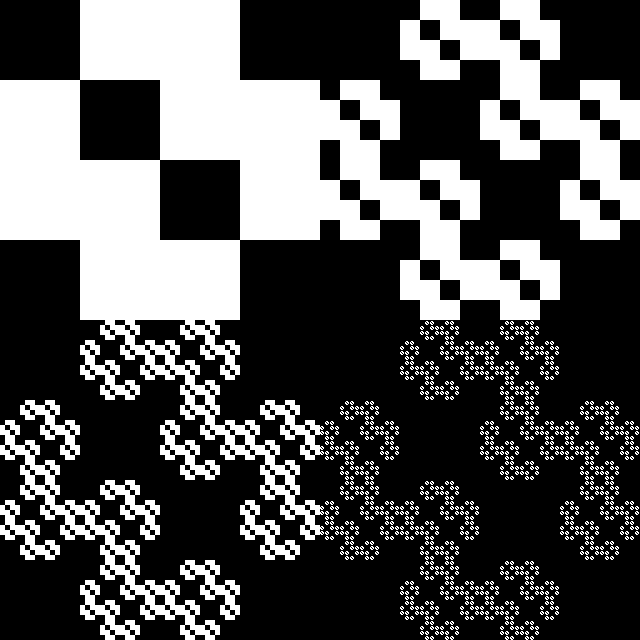
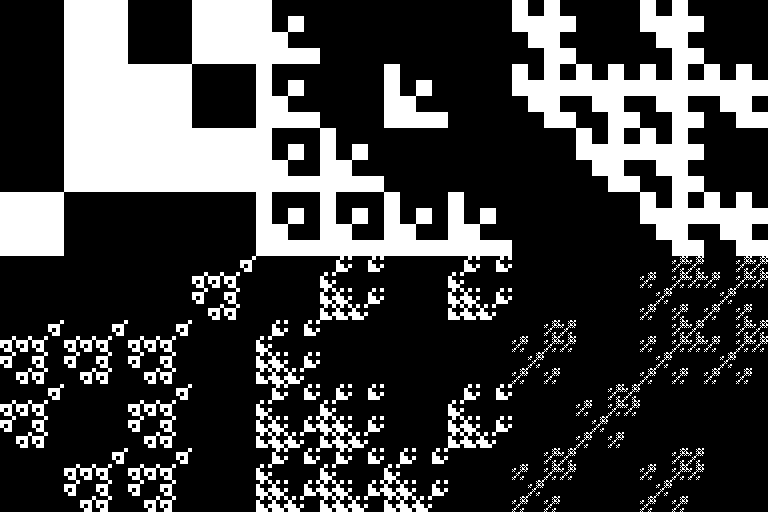
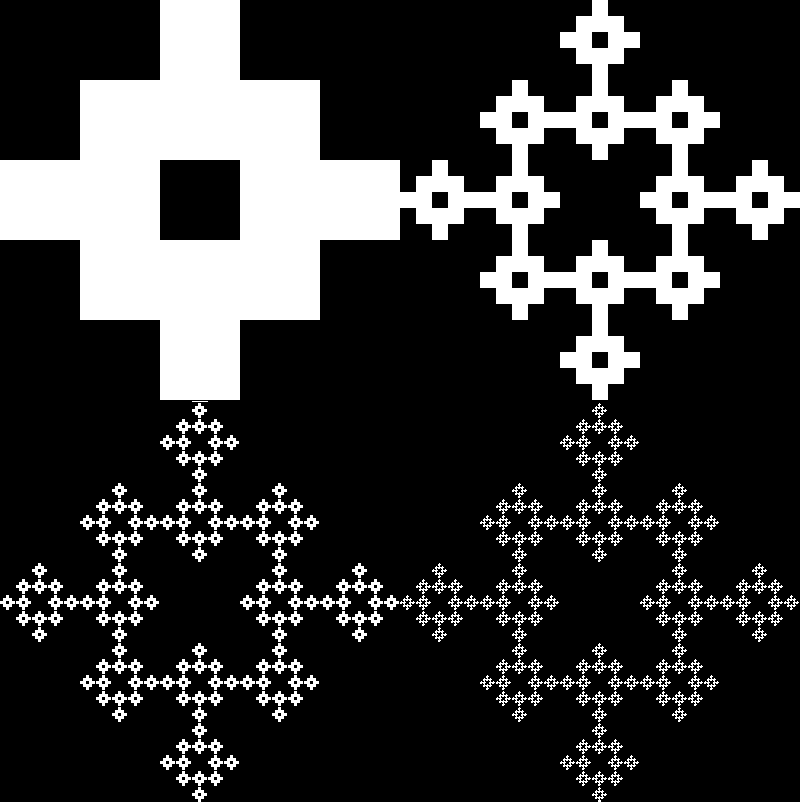
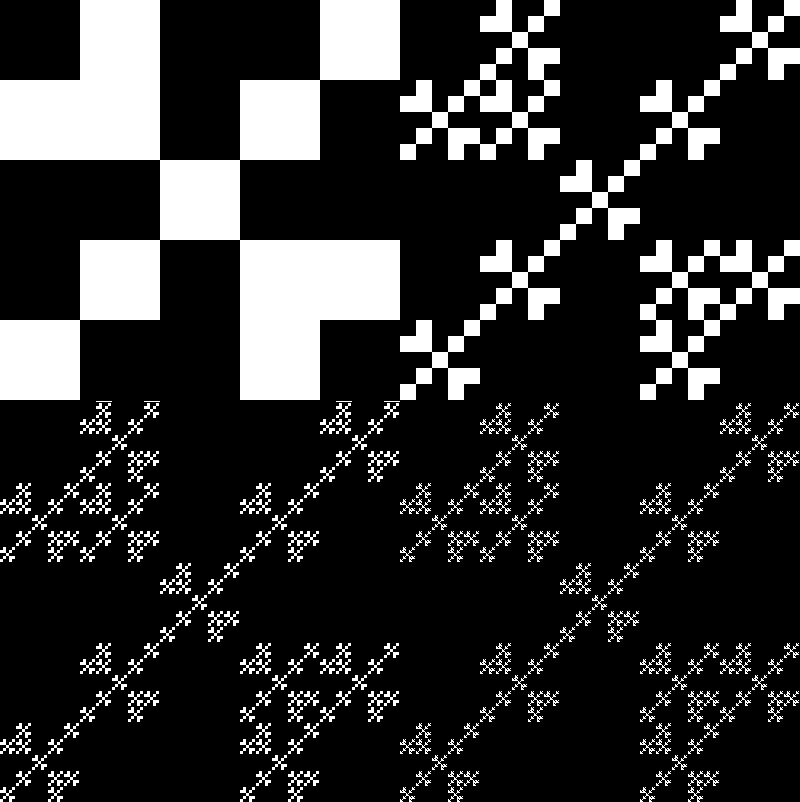
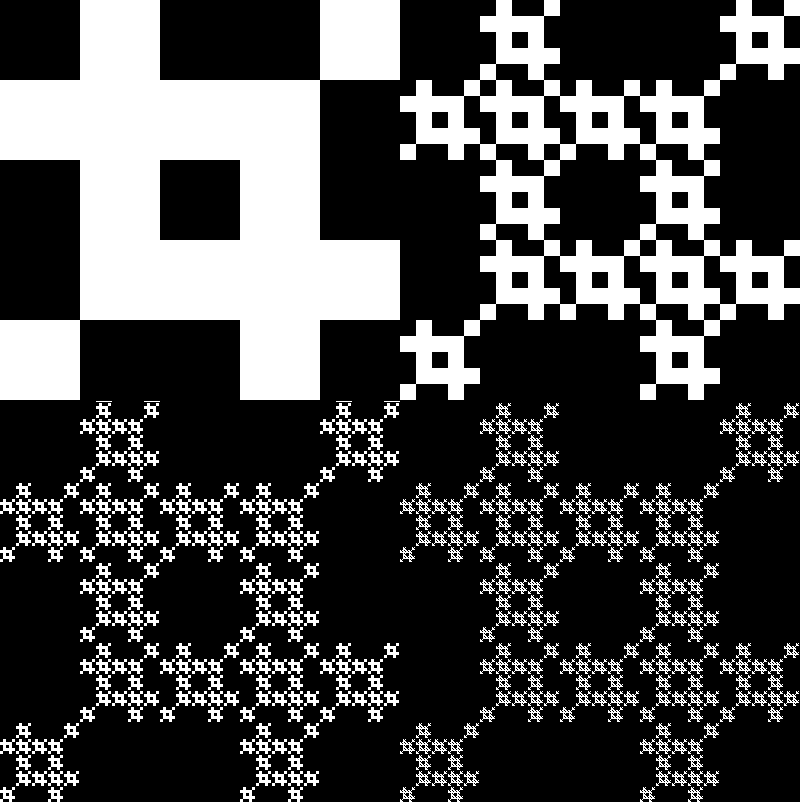
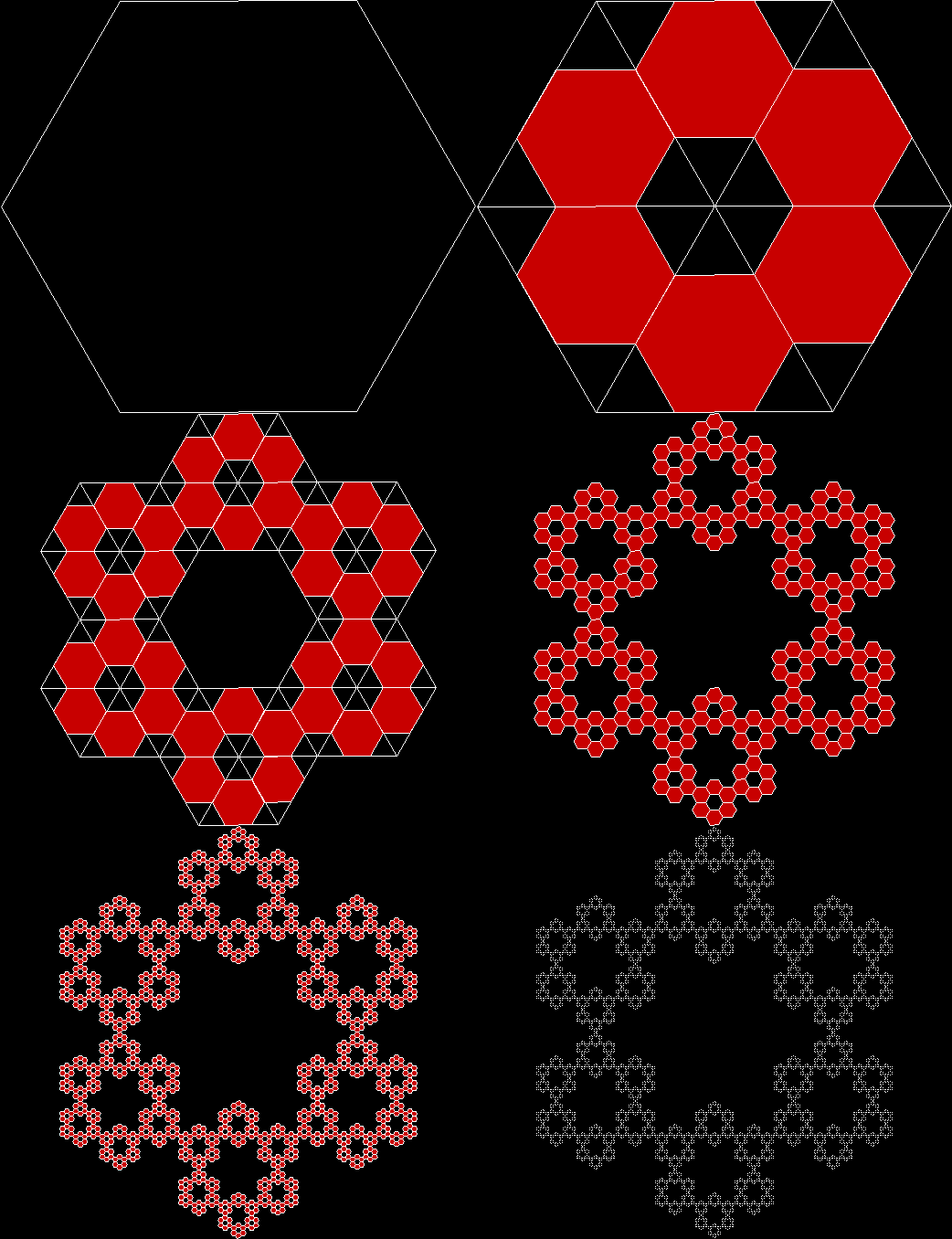
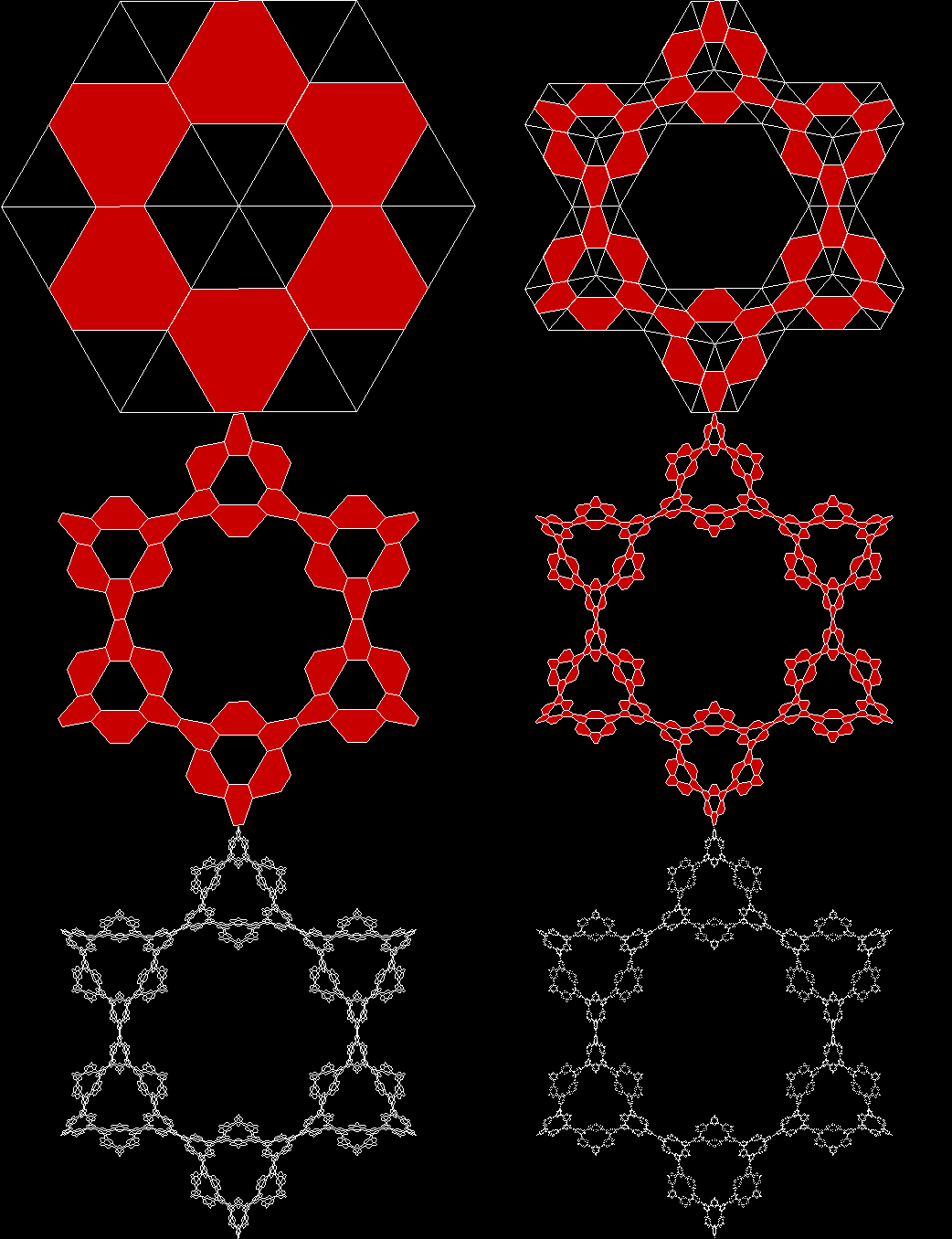
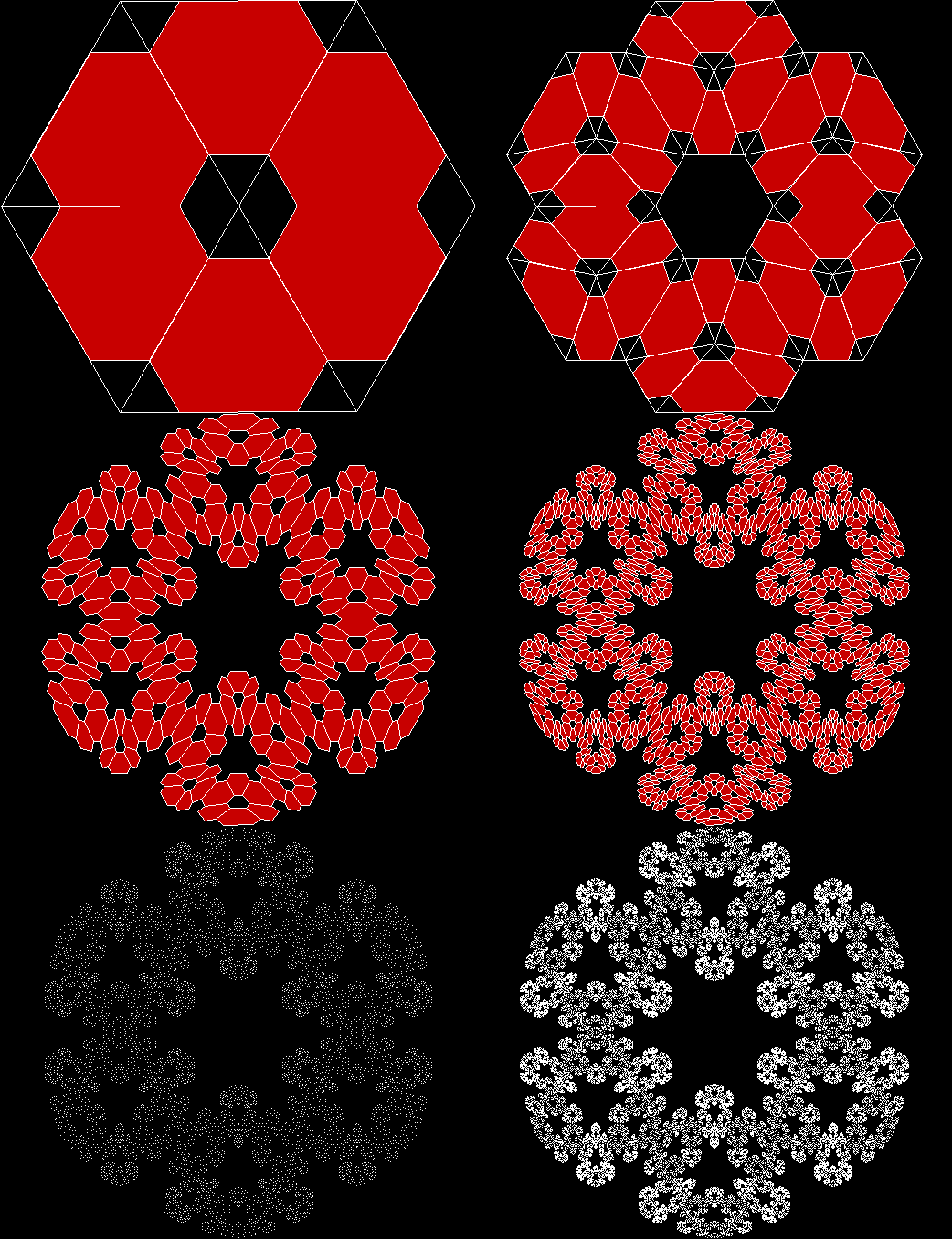
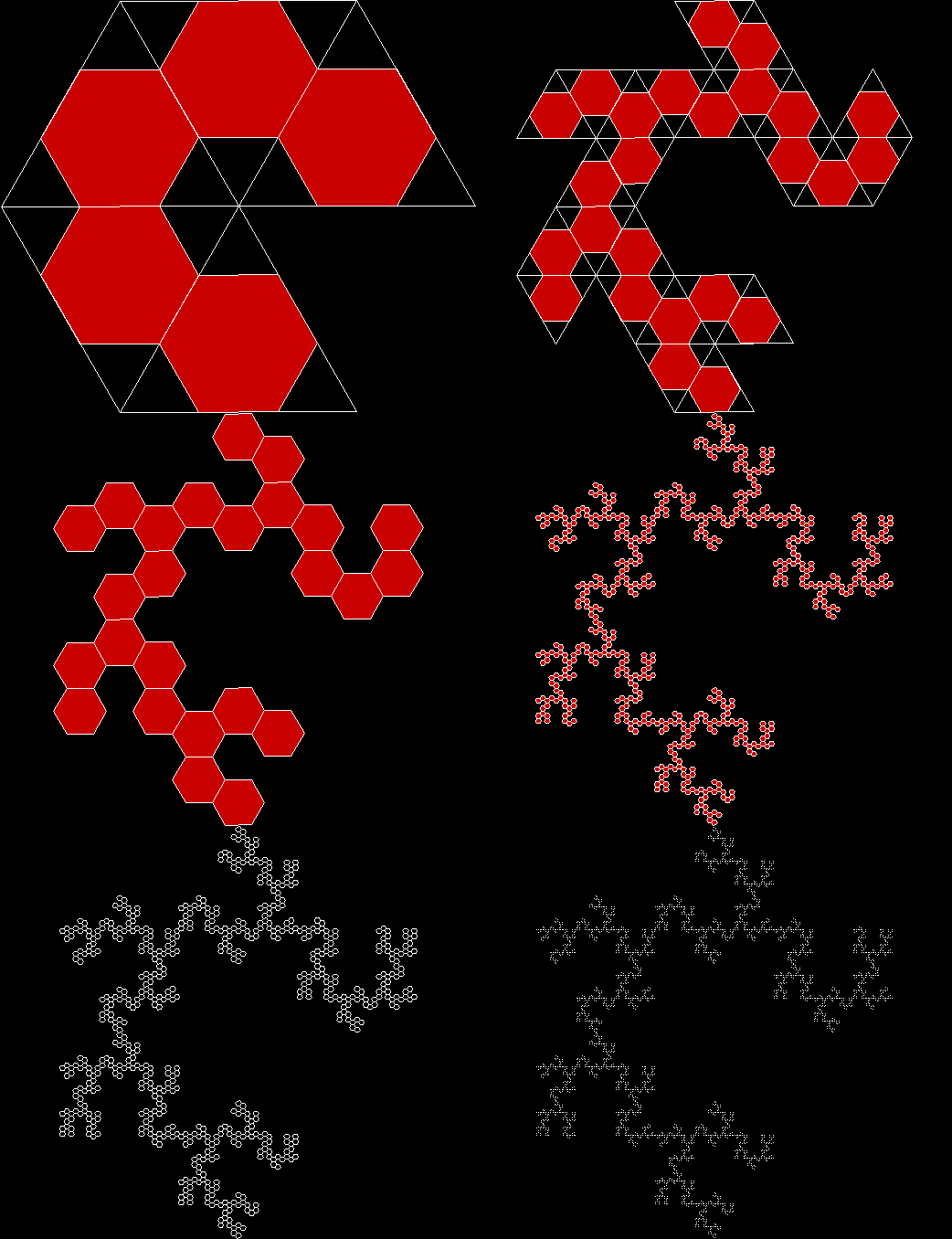
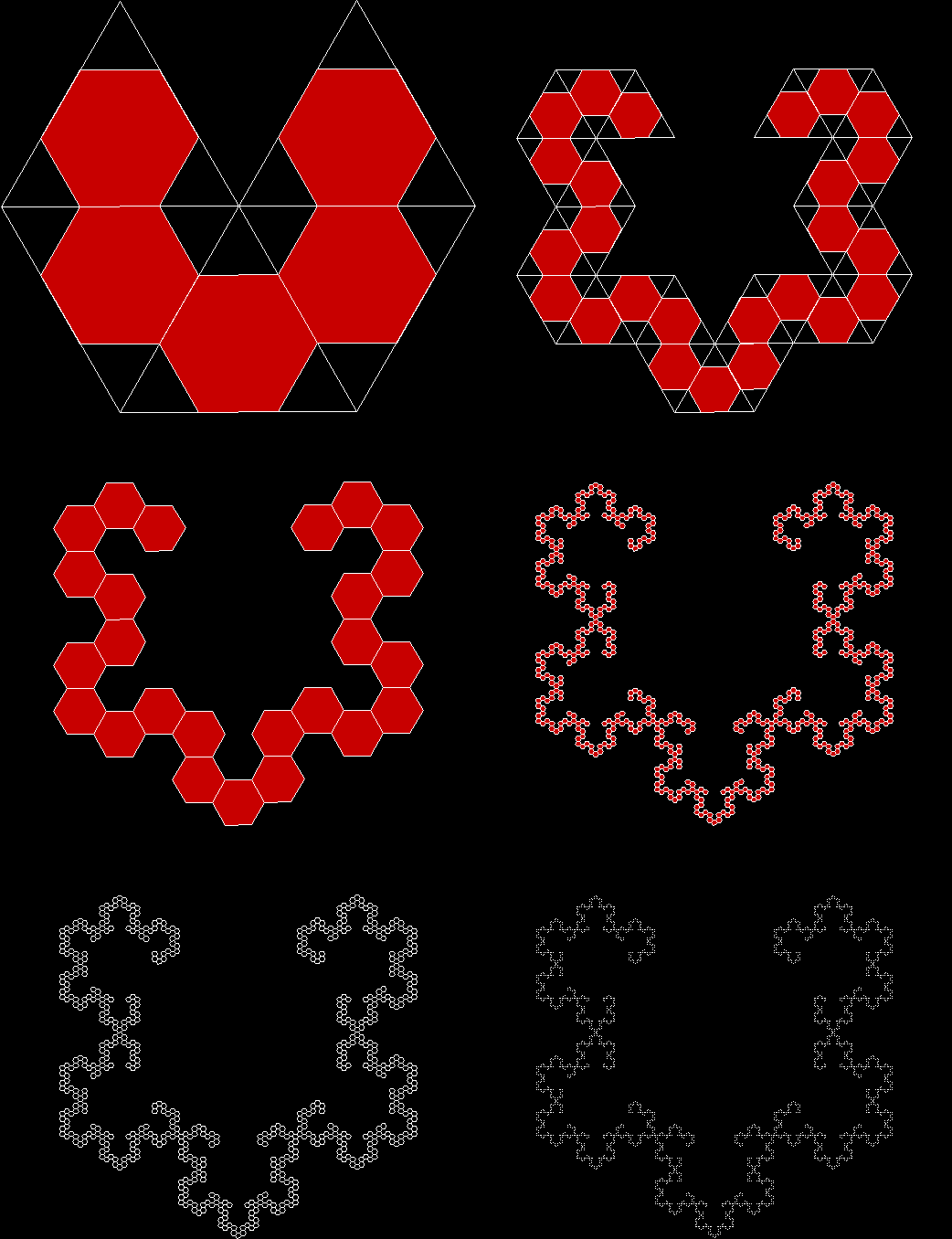
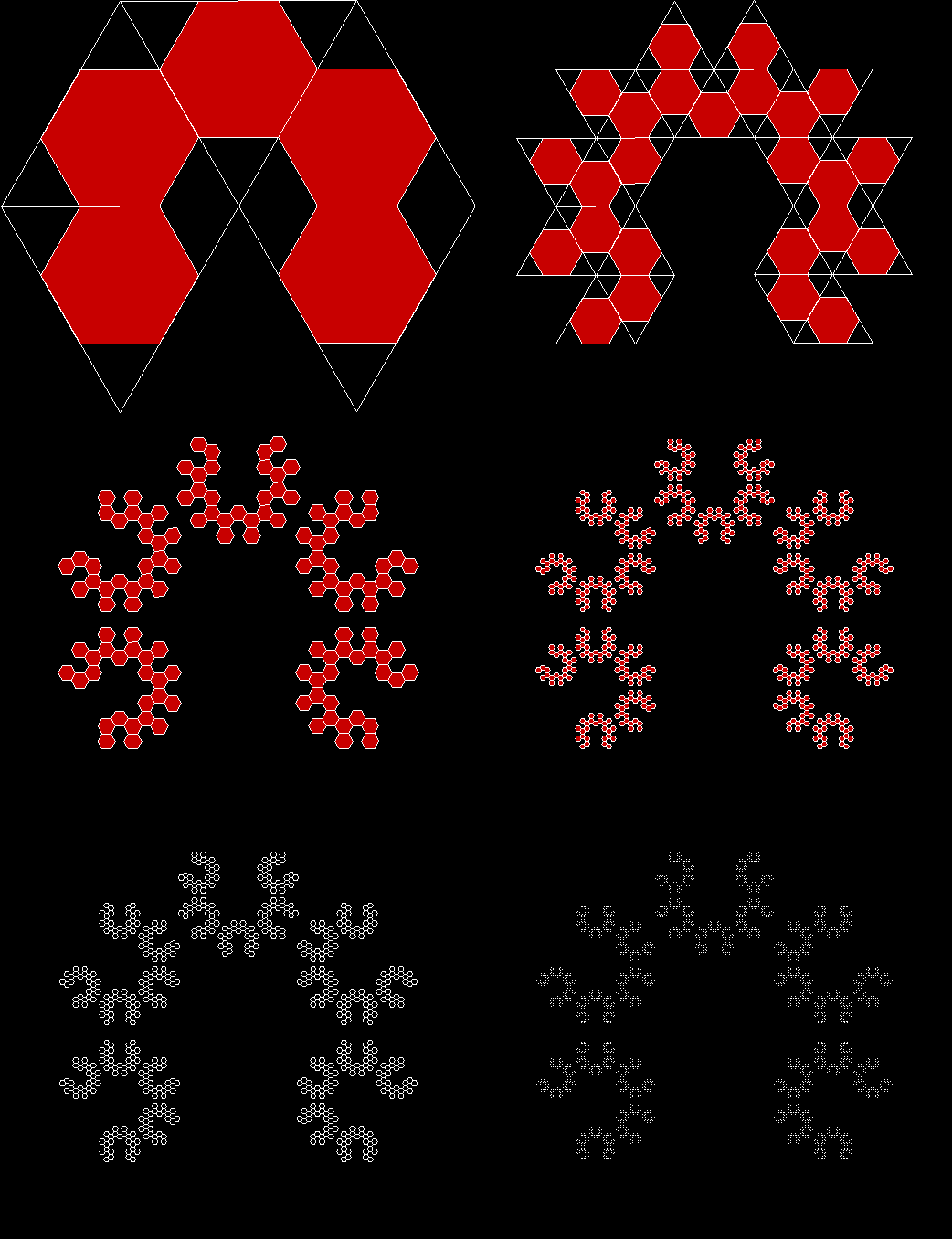
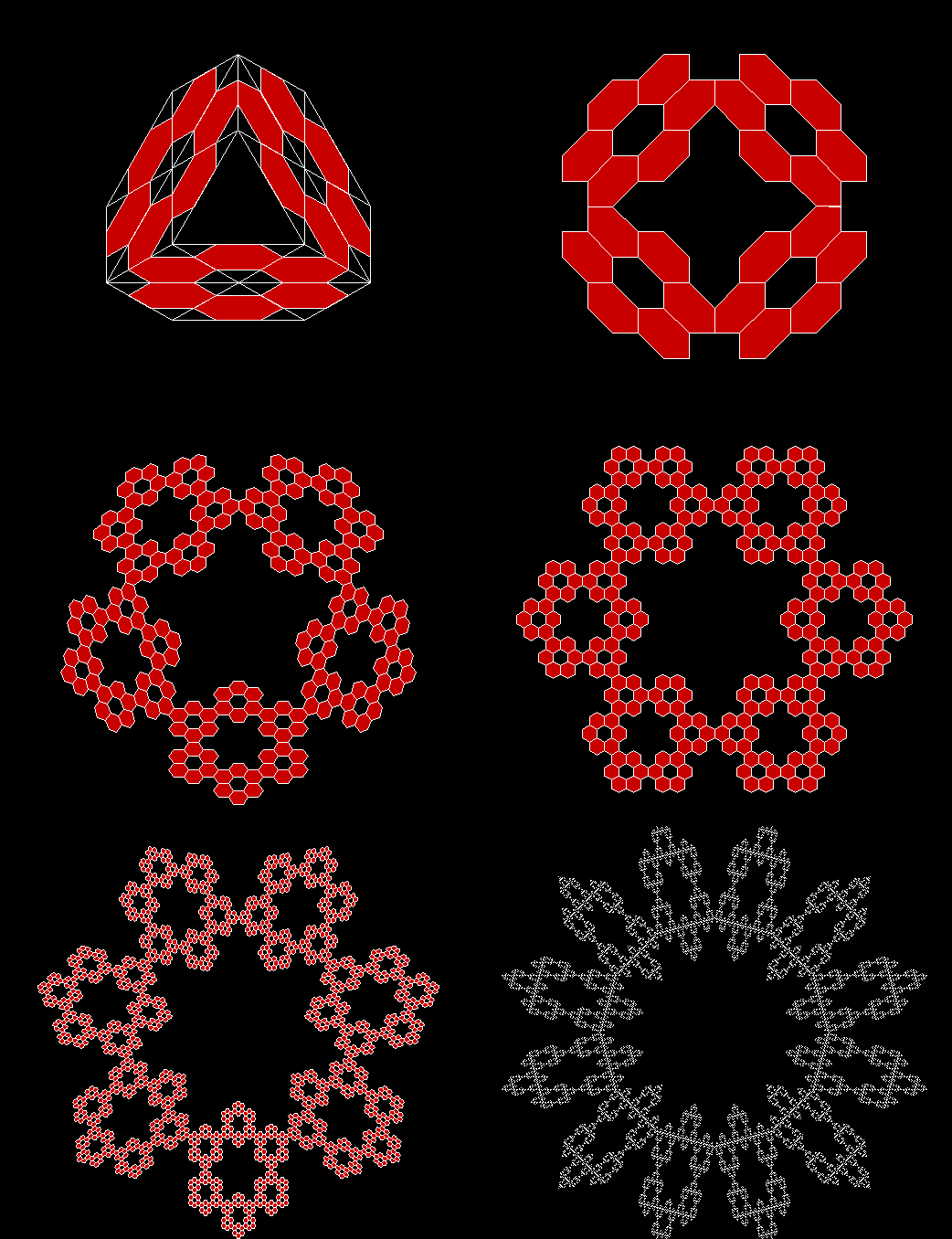
A hexagon can be divided into six equilateral triangles. An equilateral triangle can be divided into a hexagon and three more equilateral triangles. These simple rules, applied again and again, can be used to create fractals, or shapes that echo themselves on smaller and smaller scales.

hextriangle

hextriangle2

hextriangle1


Previously pre-posted (please peruse):

Fractal Fourmulas

Prime Time

1/29[b=2] = 0·0000100011010011110111001011… (l=28)
1/29[b=3] = 0·0002210102011122200121202111… (l=28)
1/29[b=5] = 0·00412334403211… (l=14)
1/29[b=7] = 0·0145536… (l=7)
1/29[b=11] = 0·04199534608387[10]69115764[10]2723… (l=28)
1/29[b=13] = 0·05[10]9[11]28[12]7231[10]4… (l=14)
1/29[b=17] = 0·09[16]7… (l=4)
1/29[b=19] = 0·0[12]89[15][13][14]7[16]73[17][13]1[18]6[10]9354[11]2[11][15]15[17]… (l=28)
1/29[b=23] = 0·0[18]5[12][15][19][19]… (l=7)
1/29[b=29] = 0·1 (l=1)
1/29[b=31] = 0·1248[17]36[12][25][20]9[19]7[14][29][28][26][22][13][27][24][18]5[10][21][11][23][16]… (l=28)
1/29[b=37] = 0·1[10]7[24]8[34][16][21][25][19]53[30][22][35][26][29][12][28]2[20][15][11][17][31][33]6[14]… (l=28)
1/29[b=41] = 0·1[16][39][24]… (l=4)
1/29[b=43] = 0·1[20][32][26][29][28]7[17][34]4[19][11][37]2[41][22][10][16][13][14][35][25]8[38][23][31]5[40]… (l=28)
1/29[b=47] = 0·1[29]84[40][24][14][27][25][43][35][30][37][12][45][17][38][42]6[22][32][19][21]3[11][16]9[34]… (l=28)
1/29[b=53] = 0·1[43][45][36][29][12][42]… (l=7)
1/29[b=59] = 0·2… (l=1)
1/29[b=61] = 0·26[18][56][48][23]8[25][14][44][10][31][33][39][58][54][42]4[12][37][52][35][46][16][50][29][27][21]… (l=28)
1/29[b=67] = 0·2[20][53]9[16][11][36][64][46][13][57][50][55][30]… (l=14)
1/29[b=71] = 0·2[31][58][53][61][14][48][68][39][12][17]9[56][22]… (l=14)
1/29[b=73] = 0·2[37][55][27][50][25][12][42][57][65][32][52][62][67][70][35][17][45][22][47][60][30][15]7[40][20][10]5… (l=28)
1/29[b=79] = 0·2[57][16][27][19]5[35][32][54][38][10][70][65][29][76][21][62][51][59][73][43][46][24][40][68]8[13][49]… (l=28)
1/29[b=83] = 0·2[71][45][65][68][57][20]… (l=7)
1/29[b=89] = 0·36[12][24][49]9[18][36][73][58][27][55][21][42][85][82][76][64][39][79][70][52][15][30][61][33][67][46]… (l=28)
1/29[b=97] = 0·3[33][43][46][80][26][73][56][83][60][20]6[66][86][93][63][53][50][16][70][23][40][13][36][76][90][30][10]… (l=28)

Fractal Fourmulas

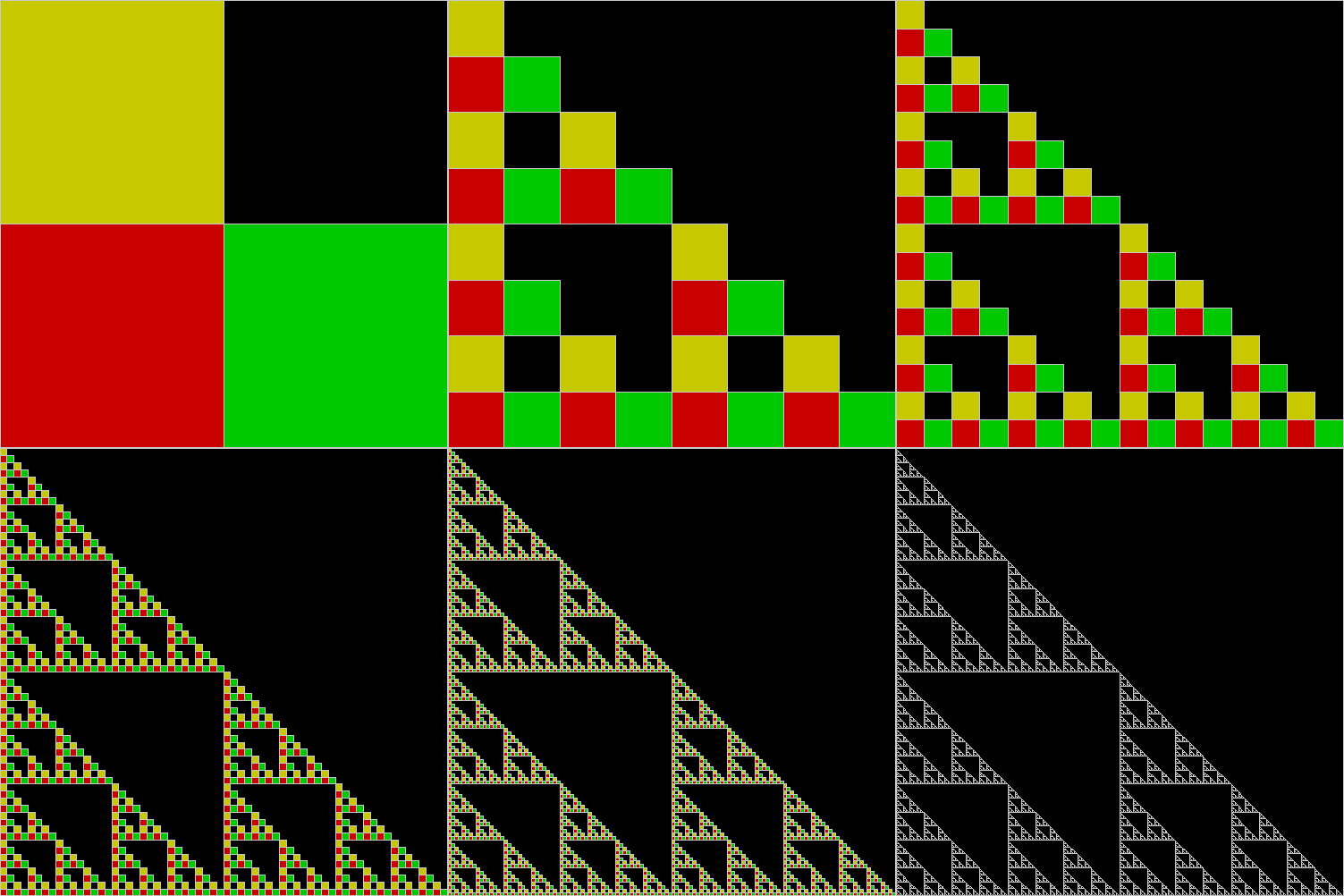
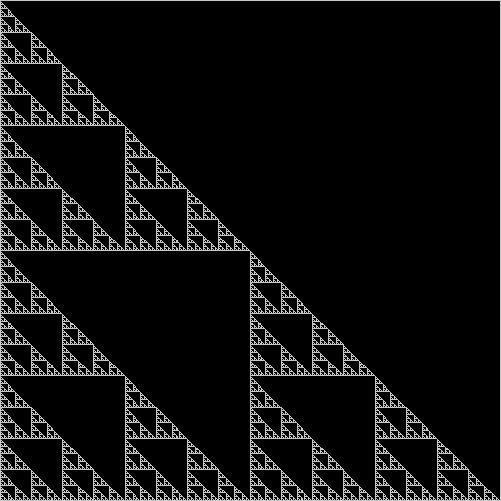
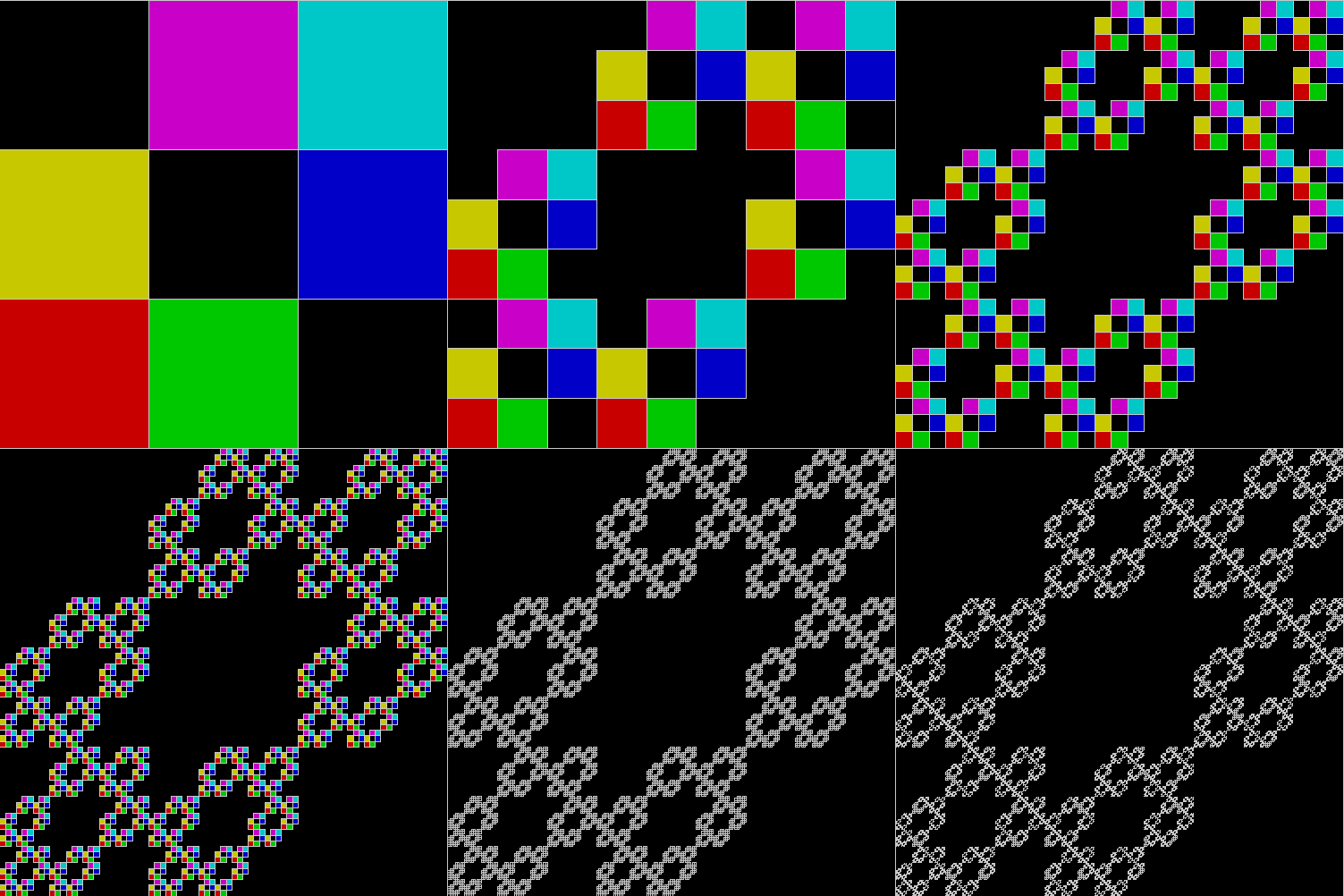
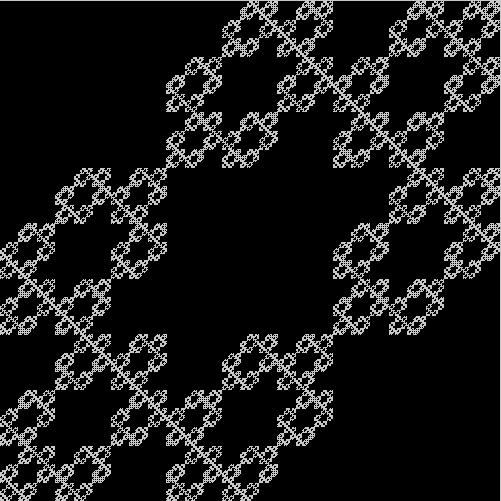
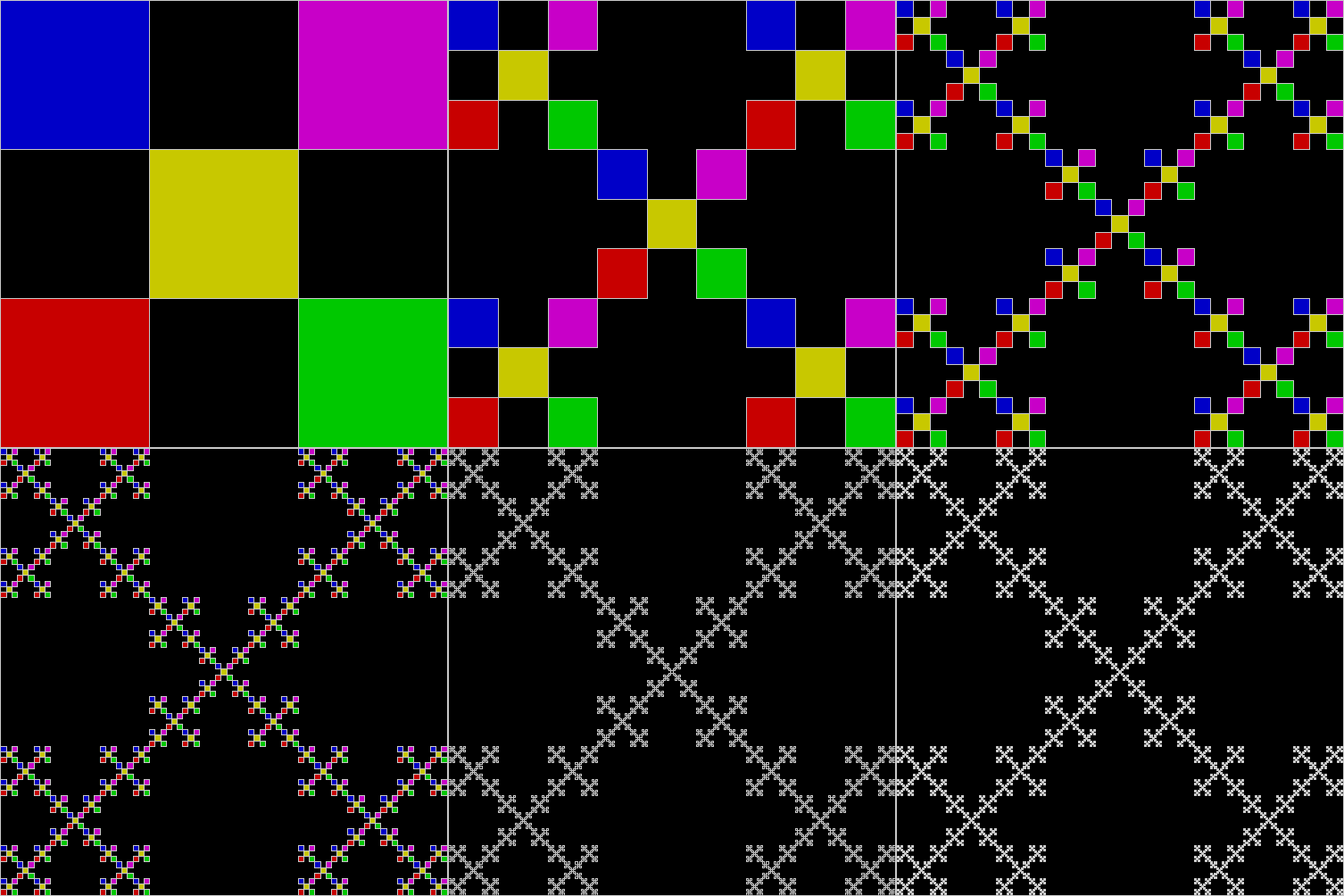
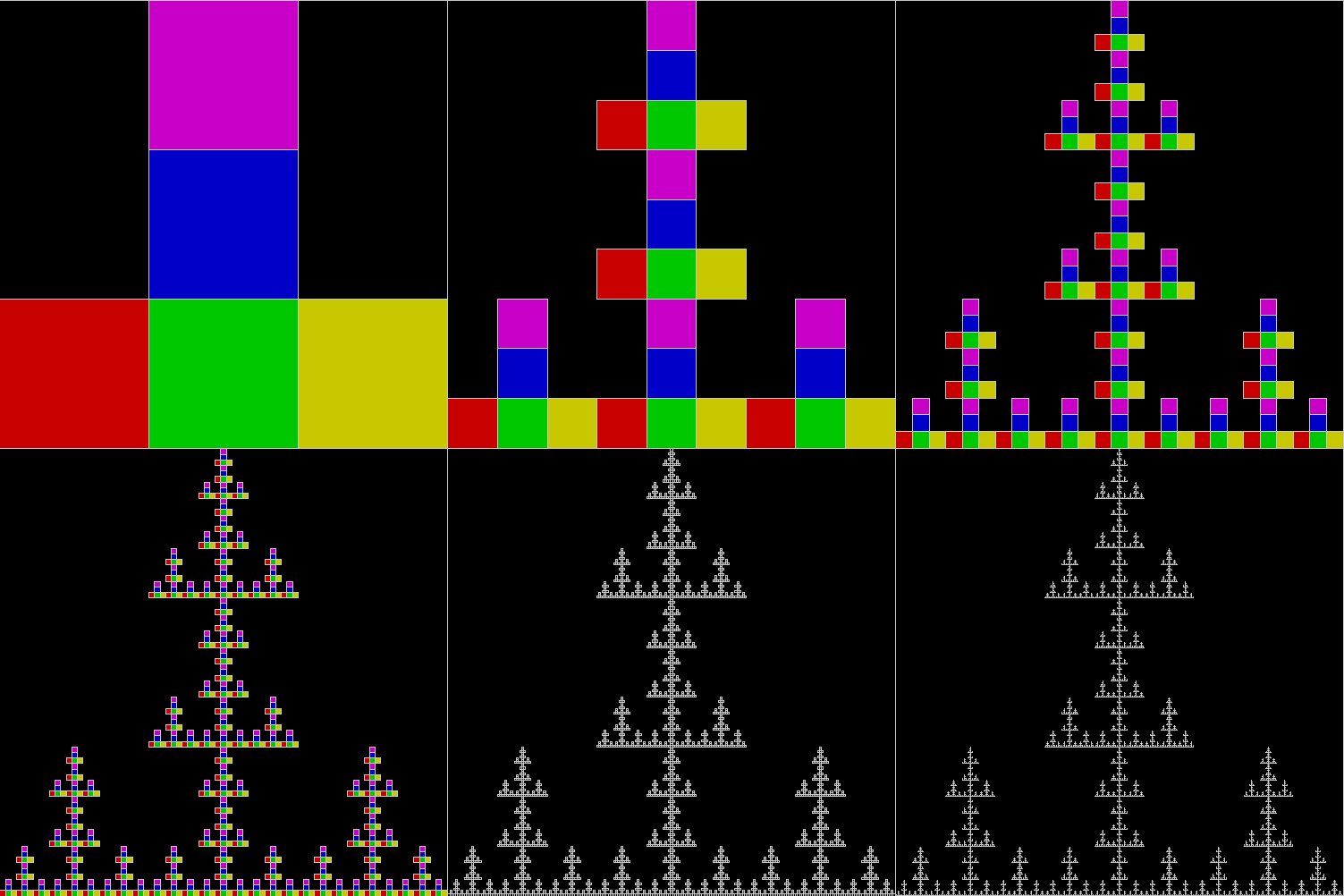
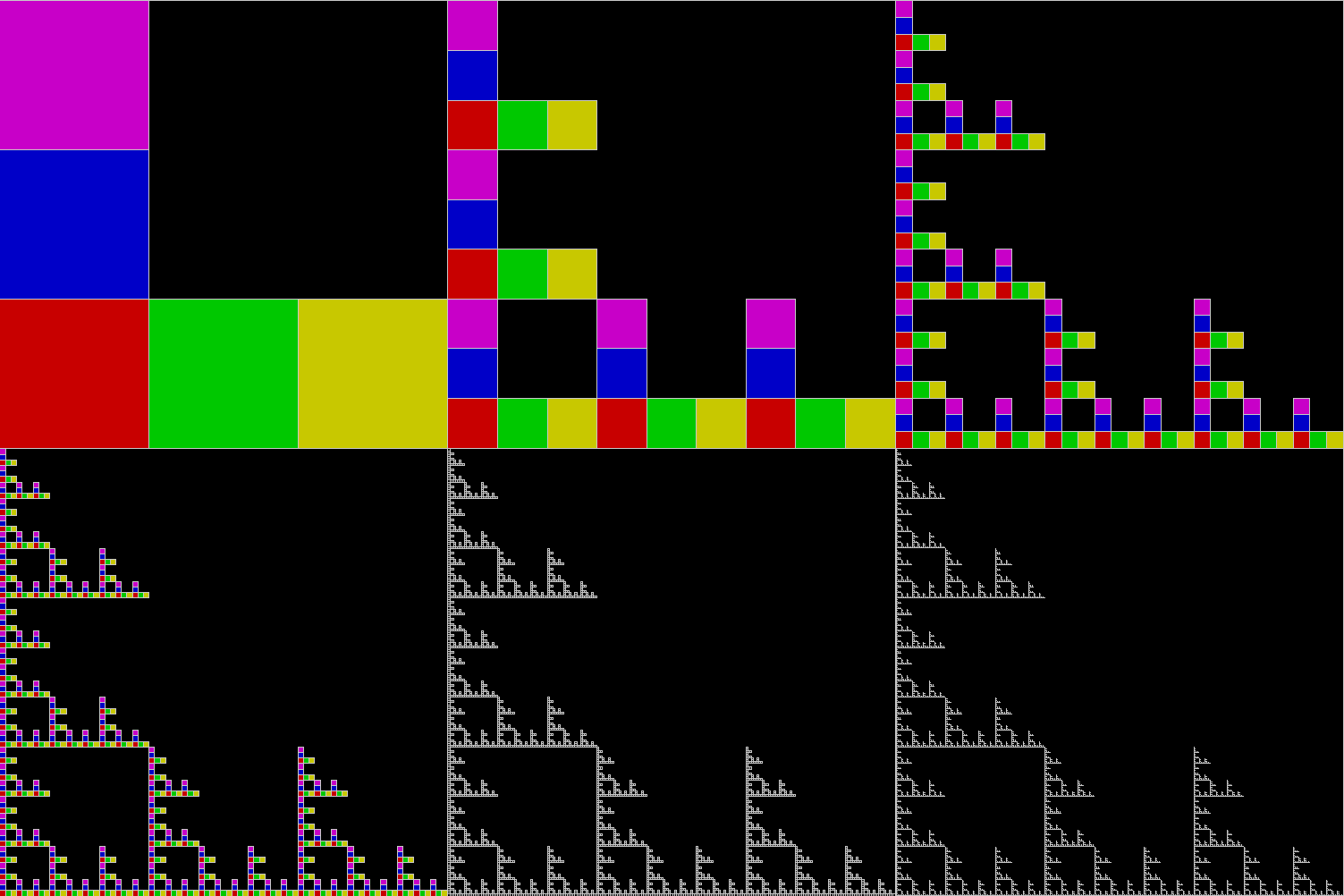
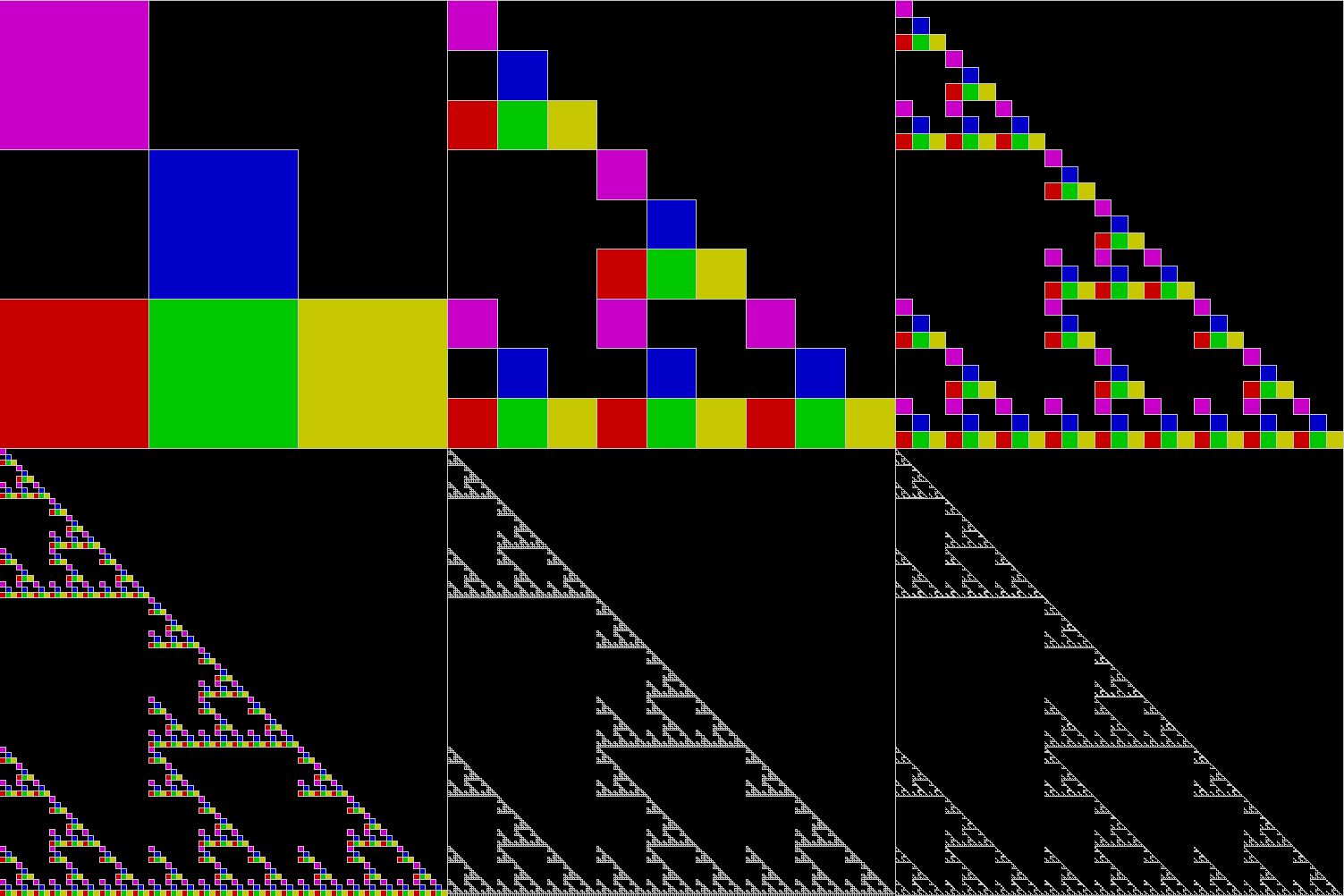
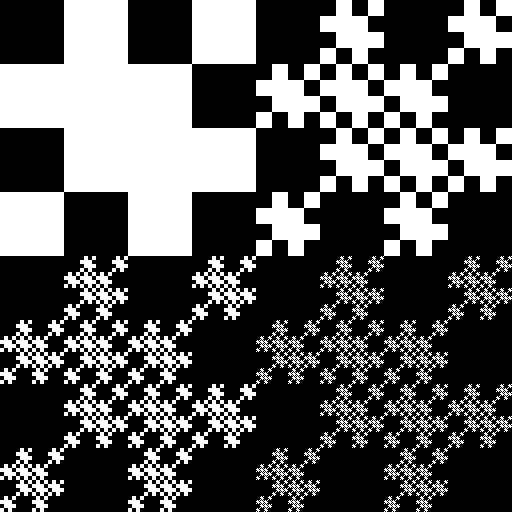
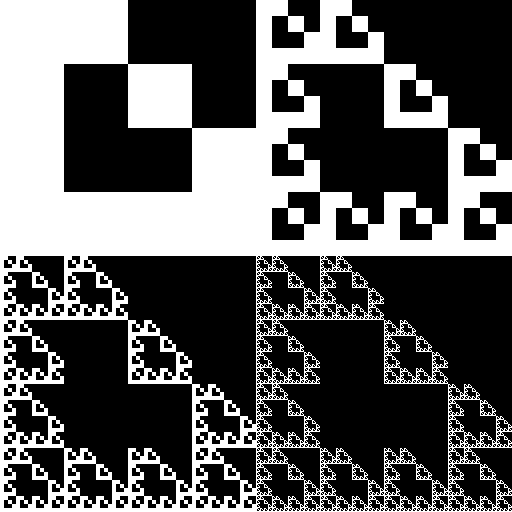
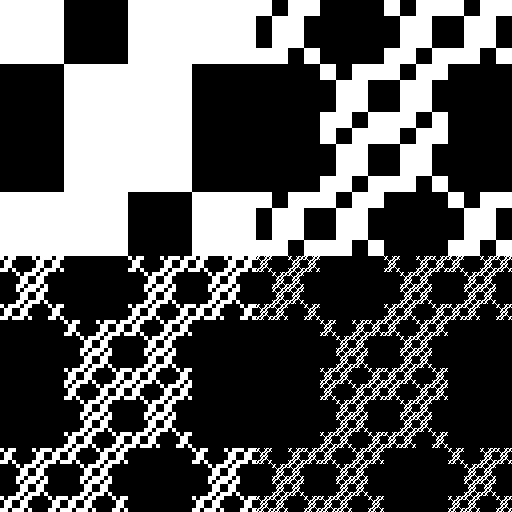
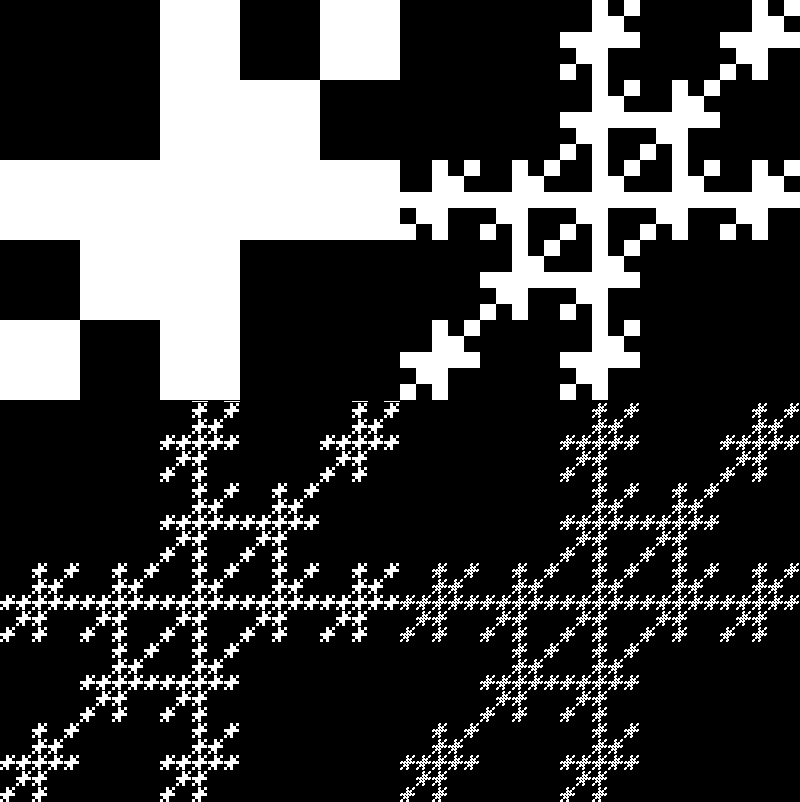
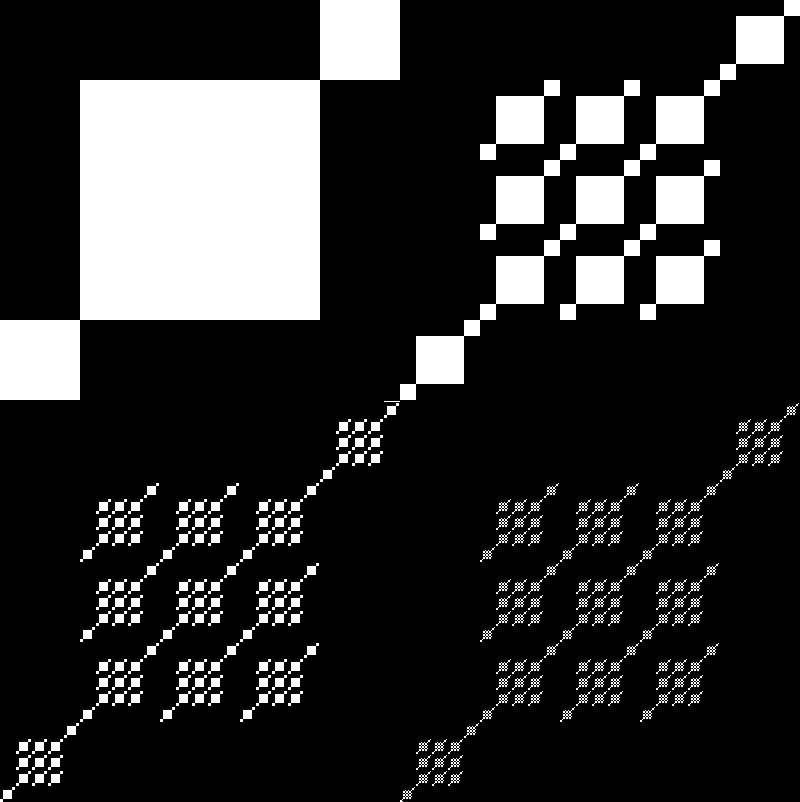
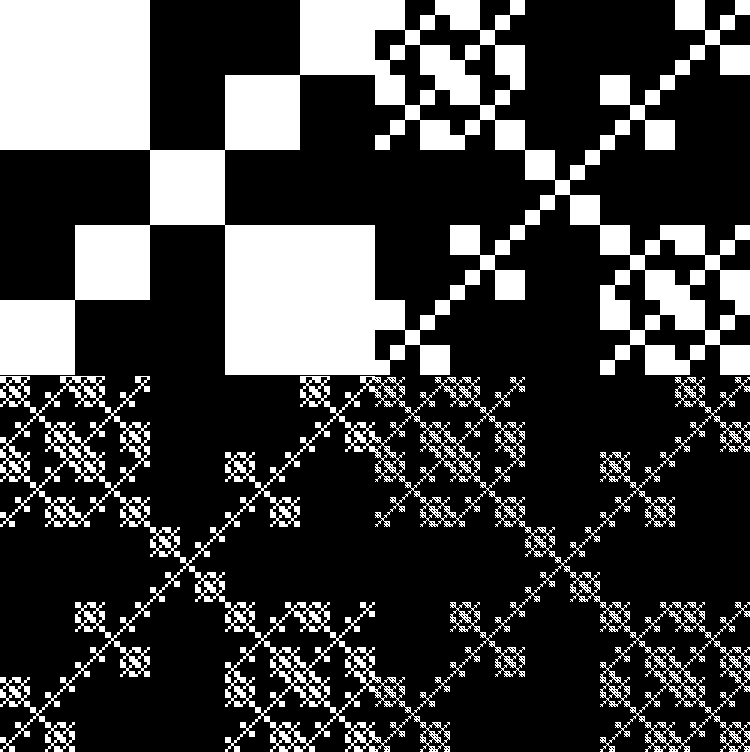
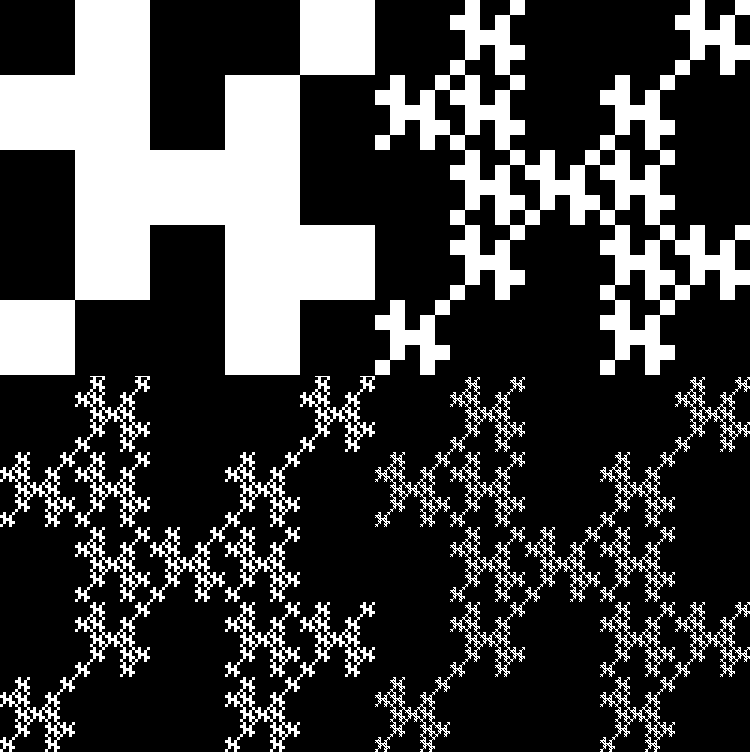
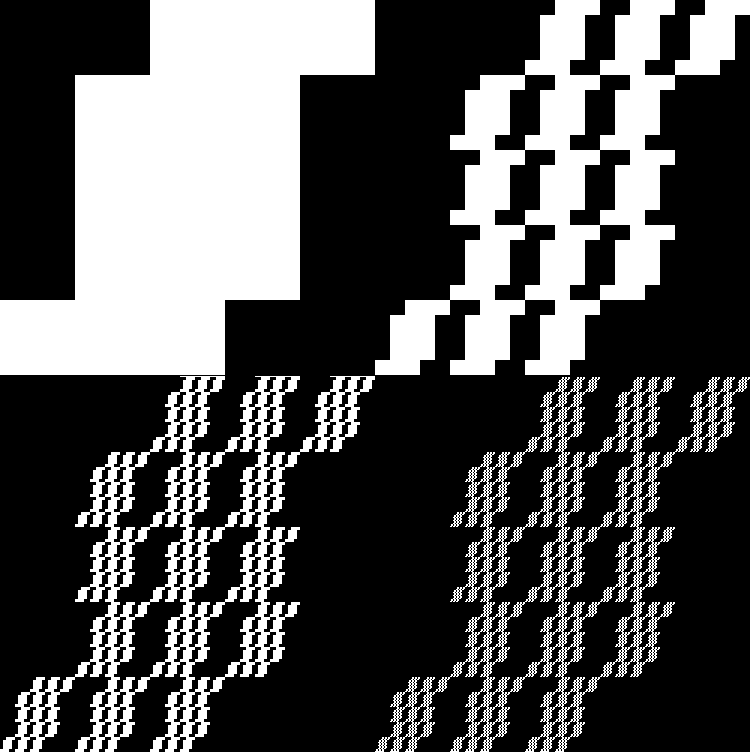
A square can be divided into four right triangles. A right triangle can be divided into a square and two more right triangles. These simple rules, applied again and again, can be used to create fractals, or shapes that echo themselves on smaller and smaller scales.

trisquare5

trisquare3

trisquare4

trisquare2

trisquare6

trisquare7

trisquare1

Breeding Bunnies

Front cover of The Golden Ratio by Mario Livio
The Golden Ratio: The Story of Phi, the Extraordinary Number of Nature, Art and Beauty, Mario Livio (Headline Review 2003)

A good short popular guide to perhaps the most interesting, and certainly the most irrational, of all numbers: the golden ratio or phi (φ), which is approximately equal to 1·6180339887498948482… Prominent in mathematics since at least the ancient Greeks and Euclid, phi is found in many places in nature too, from pineapples and sunflowers to the flight of hawks. Livio catalogues its appearances in both maths and nature, looking closely at the Fibonacci sequence and rabbit-breeding, before going on to debunk mistaken claims that phi also appears a lot in art, music and poetry. Dalí certainly used it, but da Vinci, Debussy and Virgil almost certainly didn’t. Nor, almost certainly, did the builders of the Parthenon and pyramids. Finally, he examines what has famously been called (by the physicist Eugene Wiegner) the unreasonable effectiveness of mathematics: why is this human invention so good at describing the behaviour of the Universe? Livio quotes one of the best short answers I’ve seen:
Human logic was forced on us by the physical world and is therefore consistent with it. Mathematics derives from logic. That is why mathematics is consistent with the physical world. (ch. 9, “Is God a mathematician?”, pg. 252)

It’s not hard to recommend a book that quotes everyone from Johannes Kepler and William Blake to Lewis Carroll, Christopher Marlowe and Jef Raskin, “the creator of the Macintosh computer”, whose answer is given above. Recreational mathematicians should also find lots of ideas for further investigation, from fractal strings to the fascinating number patterns governed by Benford’s law. It isn’t just human beings who look after number one: as a leading figure, 1 turns up much more often in data from the real world, and in mathematical constructs like the Fibonacci sequence, than intuition would lead you to expect. If you’d like to learn more about that and about many other aspects of mathematics, hunt down a copy of this book.


Elsewhere other-posted:

Roses Are Golden – φ and floral homicide

DeVil to Power

666 is the Number of the Beast described in the Book of Revelation:

13:18 Here is wisdom. Let him that hath understanding count the number of the beast: for it is the number of a man; and his number is Six hundred threescore and six.

But 666 is not just diabolic: it’s narcissistic too. That is, it mirrors itself using arithmetic, like this:

666^47 =

5,049,969,684,420,796,753,173,148,798,405,
  564,772,941,516,295,265,408,188,117,632,
  668,936,540,446,616,033,068,653,028,889,
  892,718,859,670,297,563,286,219,594,665,
  904,733,945,856 → 5 + 0 + 4 + 9 + 9 + 6 + 9 + 6 + 8 + 4 + 4 + 2 + 0 + 7 + 9 + 6 + 7 + 5 + 3 + 1 + 7 + 3 + 1 + 4 + 8 + 7 + 9 + 8 + 4 + 0 + 5 + 5 + 6 + 4 + 7 + 7 + 2 + 9 + 4 + 1 + 5 + 1 + 6 + 2 + 9 + 5 + 2 + 6 + 5 + 4 + 0 + 8 + 1 + 8 + 8 + 1 + 1 + 7 + 6 + 3 + 2 + 6 + 6 + 8 + 9 + 3 + 6 + 5 + 4 + 0 + 4 + 4 + 6 + 6 + 1 + 6 + 0 + 3 + 3 + 0 + 6 + 8 + 6 + 5 + 3 + 0 + 2 + 8 + 8 + 8 + 9 + 8 + 9 + 2 + 7 + 1 + 8 + 8 + 5 + 9 + 6 + 7 + 0 + 2 + 9 + 7 + 5 + 6 + 3 + 2 + 8 + 6 + 2 + 1 + 9 + 5 + 9 + 4 + 6 + 6 + 5 + 9 + 0 + 4 + 7 + 3 + 3 + 9 + 4 + 5 + 8 + 5 + 6 = 666

666^51 =

993,540,757,591,385,940,334,263,511,341,
295,980,723,858,637,469,431,008,997,120,
691,313,460,713,282,967,582,530,234,558,
214,918,480,960,748,972,838,900,637,634,
215,694,097,683,599,029,436,416 → 9 + 9 + 3 + 5 + 4 + 0 + 7 + 5 + 7 + 5 + 9 + 1 + 3 + 8 + 5 + 9 + 4 + 0 + 3 + 3 + 4 + 2 + 6 + 3 + 5 + 1 + 1 + 3 + 4 + 1 + 2 + 9 + 5 + 9 + 8 + 0 + 7 + 2 + 3 + 8 + 5 + 8 + 6 + 3 + 7 + 4 + 6 + 9 + 4 + 3 + 1 + 0 + 0 + 8 + 9 + 9 + 7 + 1 + 2 + 0 + 6 + 9 + 1 + 3 + 1 + 3 + 4 + 6 + 0 + 7 + 1 + 3 + 2 + 8 + 2 + 9 + 6 + 7 + 5 + 8 + 2 + 5 + 3 + 0 + 2 + 3 + 4 + 5 + 5 + 8 + 2 + 1 + 4 + 9 + 1 + 8 + 4 + 8 + 0 + 9 + 6 + 0 + 7 + 4 + 8 + 9 + 7 + 2 + 8 + 3 + 8 + 9 + 0 + 0 + 6 + 3 + 7 + 6 + 3 + 4 + 2 + 1 + 5 + 6 + 9 + 4 + 0 + 9 + 7 + 6 + 8 + 3 + 5 + 9 + 9 + 0 + 2 + 9 + 4 + 3 + 6 + 4 + 1 + 6 = 666

But those are tiny numbers compared to 6^(6^6). That means 6^46,656 and equals roughly 2·6591… x 10^36,305. It’s 36,306 digits long and its full digit-sum is 162,828. However, 666 lies concealed in those digits too. To see how, consider the function Σ(x1,xn), which returns the sum of digits 1 to n of x. For example, π = 3·14159265…, so Σ(π14) = 3 + 1 + 4 + 1 = 9. The first 150 digits of 6^(6^6) are these:

26591197721532267796824894043879185949053422002699
24300660432789497073559873882909121342292906175583
03244068282650672342560163577559027938964261261109
… (150 digits)

If x = 6^(6^6), then Σ(x1,x146) = 666, Σ(x2,x148) = 666, and Σ(x2,x149) = 666.

There’s nothing special about these patterns: infinitely many numbers are narcissistic in similar ways. However, 666 has a special cultural significance, so people pay it more attention and look for patterns related to it more carefully. Who cares, for example, that 667 = digit-sum(667^48) = digit-sum(667^54) = digit-sum(667^58)? Fans of recreational maths will, but not very much. The Number of the Beast is much more fun, narcissistically and otherwise:

666 = digit-sum(6^194)
666 = digit-sum(6^197)

666 = digit-sum(111^73)
666 = digit-sum(111^80)

666 = digit-sum(222^63)
666 = digit-sum(222^66)

666 = digit-sum(333^58)
666 = digit-sum(444^53)
666 = digit-sum(777^49)
666 = digit-sum(999^49)


Previously pre-posted (please peruse):

More Narcissisum
Digital Disfunction
The Hill to Power
Narcissarithmetic #1
Narcissarithmetic #2

More Narcissisum

The number 23 is special, inter alia, because it’s prime, divisible by only itself and 1. It’s also special because its reciprocal has maximum period. That is, the digits of 1/23 come in repeated blocks of 22, like this:

1/23 = 0·0434782608695652173913  0434782608695652173913  0434782608695652173913…

But 1/23 fails to be special in another way: you can’t sum its digits and get 23:

0 + 4 + 3 + 4 + 7 = 18
0 + 4 + 3 + 4 + 7 + 8 = 26
0 + 4 + 3 + 4 + 7 + 8 + 2 + 6 + 0 + 8 + 6 + 9 + 5 + 6 + 5 + 2 + 1 + 7 + 3 + 9 + 1 + 3 = 99

1/7 is different:

1/7 = 0·142857… → 1 + 4 + 2 = 7

This means that 7 is narcissistic: it reflects itself by manipulation of the digits of 1/7. But that’s in base ten. If you try base eight, 23 becomes narcissistic too (note that 23 = 2 x 8 + 7, so 23 in base eight is 27):

1/27 = 0·02620544131… → 0 + 2 + 6 + 2 + 0 + 5 + 4 + 4 = 27 (base=8)

Here are more narcissistic reciprocals in base ten:

1/3 = 0·3… → 3 = 3
1/7 = 0·142857… → 1 + 4 + 2 = 7
1/8 = 0·125 → 1 + 2 + 5 = 8
1/13 = 0·076923… → 0 + 7 + 6 = 13
1/14 = 0·0714285… → 0 + 7 + 1 + 4 + 2 = 14
1/34 = 0·02941176470588235… → 0 + 2 + 9 + 4 + 1 + 1 + 7 + 6 + 4 = 34
1/43 = 0·023255813953488372093… → 0 + 2 + 3 + 2 + 5 + 5 + 8 + 1 + 3 + 9 + 5 = 43
1/49 = 0·020408163265306122448979591836734693877551… → 0 + 2 + 0 + 4 + 0 + 8 + 1 + 6 + 3 + 2 + 6 + 5 + 3 + 0 + 6 + 1 + 2 = 49
1/51 = 0·0196078431372549… → 0 + 1 + 9 + 6 + 0 + 7 + 8 + 4 + 3 + 1 + 3 + 7 + 2 = 51
1/76 = 0·01315789473684210526… → 0 + 1 + 3 + 1 + 5 + 7 + 8 + 9 + 4 + 7 + 3 + 6 + 8 + 4 + 2 + 1 + 0 + 5 + 2 = 76
1/83 = 0·01204819277108433734939759036144578313253… → 0 + 1 + 2 + 0 + 4 + 8 + 1 + 9 + 2 + 7 + 7 + 1 + 0 + 8 + 4 + 3 + 3 + 7 + 3 + 4 + 9 = 83
1/92 = 0·010869565217391304347826… → 0 + 1 + 0 + 8 + 6 + 9 + 5 + 6 + 5 + 2 + 1 + 7 + 3 + 9 + 1 + 3 + 0 + 4 + 3 + 4 + 7 + 8 = 92
1/94 = 0·01063829787234042553191489361702127659574468085… → 0 + 1 + 0 + 6 + 3 + 8 + 2 + 9 + 7 + 8 + 7 + 2 + 3 + 4 + 0 + 4 + 2 + 5 + 5 + 3 + 1 + 9 + 1 + 4 = 94
1/98 = 0·0102040816326530612244897959183673469387755… → 0 + 1 + 0 + 2 + 0 + 4 + 0 + 8 + 1 + 6 + 3 + 2 + 6 + 5 + 3 + 0 + 6 + 1 + 2 + 2 + 4 + 4 + 8 + 9 + 7 + 9 + 5 = 98


Previously pre-posted (please peruse):

Digital Disfunction
The Hill to Power
Narcissarithmetic #1
Narcissarithmetic #2

Digital Disfunction

It’s fun when functions disfunc. The function digit-sum(n^p) takes a number, raises it to the power of p and sums its digits. If p = 1, n is unchanged. So digit-sum(1^1) = 1, digit-sum(11^1) = 2, digit-sum(2013^1) = 6. The following numbers set records for the digit-sum(n^1) from 1 to 1,000,000:

digit-sum(n^1): 1, 2, 3, 4, 5, 6, 7, 8, 9, 19, 29, 39, 49, 59, 69, 79, 89, 99, 199, 299, 399, 499, 599, 699, 799, 899, 999, 1999, 2999, 3999, 4999, 5999, 6999, 7999, 8999, 9999, 19999, 29999, 39999, 49999, 59999, 69999, 79999, 89999, 99999, 199999, 299999, 399999, 499999, 599999, 699999, 799999, 899999, 999999.

The pattern is easy to predict. But the function disfuncs when p = 2. Digit-sum(3^2) = 9, which is more than digit-sum(4^2) = 1 + 6 = 7 and digit-sum(5^2) = 2 + 5 = 7. These are the records from 1 to 1,000,000:

digit-sum(n^2): 1, 2, 3, 7, 13, 17, 43, 63, 83, 167, 264, 313, 707, 836, 1667, 2236, 3114, 4472, 6833, 8167, 8937, 16667, 21886, 29614, 32617, 37387, 39417, 42391, 44417, 60663, 63228, 89437, 141063, 221333, 659386, 791833, 976063, 987917.

Higher powers are similarly disfunctional:

digit-sum(n^3): 1, 2, 3, 4, 9, 13, 19, 53, 66, 76, 92, 132, 157, 353, 423, 559, 842, 927, 1192, 1966, 4289, 5826, 8782, 10092, 10192, 10275, 10285, 10593, 11548, 11595, 12383, 15599, 22893, 31679, 31862, 32129, 63927, 306842, 308113.

digit-sum(n^4): 1, 2, 3, 4, 6, 8, 13, 16, 18, 23, 26, 47, 66, 74, 118, 256, 268, 292, 308, 518, 659, 1434, 1558, 1768, 2104, 2868, 5396, 5722, 5759, 6381, 10106, 12406, 14482, 18792, 32536, 32776, 37781, 37842, 47042, 51376, 52536, 84632, 255948, 341156, 362358, 540518, 582477.

digit-sum(n^5): 1, 2, 3, 5, 6, 14, 15, 18, 37, 58, 78, 93, 118, 131, 139, 156, 179, 345, 368, 549, 756, 1355, 1379, 2139, 2759, 2779, 3965, 4119, 4189, 4476, 4956, 7348, 7989, 8769, 9746, 10566, 19199, 19799, 24748, 31696, 33208, 51856, 207198, 235846, 252699, 266989, 549248, 602555, 809097, 814308, 897778.

You can also look for narcissistic numbers with this function, like digit-sum(9^2) = 8 + 1 = 9 and digit-sum(8^3) = 5 + 1 + 2 = 8. 9^2 is the only narcissistic square in base ten, but 8^3 has these companions:

17^3 = 4913 → 4 + 9 + 1 + 3 = 17
18^3 = 5832 → 5 + 8 + 3 + 2 = 18
26^3 = 17576 → 1 + 7 + 5 + 7 + 6 = 26
27^3 = 19683 → 1 + 9 + 6 + 8 + 3 = 27

Twelfth powers are as unproductive as squares:

108^12 = 2518170116818978404827136 → 2 + 5 + 1 + 8 + 1 + 7 + 0 + 1 + 1 + 6 + 8 + 1 + 8 + 9 + 7 + 8 + 4 + 0 + 4 + 8 + 2 + 7 + 1 + 3 + 6 = 108

But thirteenth powers are fertile:

20 = digit-sum(20^13)
40 = digit-sum(40^13)
86 = digit-sum(86^13)
103 = digit-sum(103^13)
104 = digit-sum(104^13)
106 = digit-sum(106^13)
107 = digit-sum(107^13)
126 = digit-sum(126^13)
134 = digit-sum(134^13)
135 = digit-sum(135^13)
146 = digit-sum(146^13)

There are also numbers that are narcissistic with different powers, like 90:

90^19 = 1·350851717672992089 x 10^37 → 1 + 3 + 5 + 0 + 8 + 5 + 1 + 7 + 1 + 7 + 6 + 7 + 2 + 9 + 9 + 2 + 0 + 8 + 9 = 90
90^20 = 1·2157665459056928801 x 10^39 → 1 + 2 + 1 + 5 + 7 + 6 + 6 + 5 + 4 + 5 + 9 + 0 + 5 + 6 + 9 + 2 + 8 + 8 + 0 + 1 = 90
90^21 = 1·09418989131512359209 x 10^41 → 1 + 0 + 9 + 4 + 1 + 8 + 9 + 8 + 9 + 1 + 3 + 1 + 5 + 1 + 2 + 3 + 5 + 9 + 2 + 0 + 9 = 90
90^22 = 9·84770902183611232881 x 10^42 → 9 + 8 + 4 + 7 + 7 + 0 + 9 + 0 + 2 + 1 + 8 + 3 + 6 + 1 + 1 + 2 + 3 + 2 + 8 + 8 + 1 = 90
90^28 = 5·23347633027360537213511521 x 10^54 → 5 + 2 + 3 + 3 + 4 + 7 + 6 + 3 + 3 + 0 + 2 + 7 + 3 + 6 + 0 + 5 + 3 + 7 + 2 + 1 + 3 + 5 + 1 + 1 + 5 + 2 + 1 = 90

One of the world’s most famous numbers is also multi-narcissistic:

666 = digit-sum(666^47)
666 = digit-sum(666^51)

1423 isn’t multi-narcissistic, but I like the way it’s a prime that’s equal to the sum of the digits of its power to 101, which is also a prime:

1423^101 = 2,
976,424,759,070,864,888,448,625,568,610,774,713,351,233,339,
006,775,775,271,720,934,730,013,444,193,709,672,452,482,197,
898,160,621,507,330,824,007,863,598,230,100,270,989,373,401,
979,514,790,363,102,835,678,646,537,123,754,219,728,748,171,
764,802,617,086,504,534,229,621,770,717,299,909,463,416,760,
781,260,028,964,295,036,668,773,707,186,491,056,375,768,526,
306,341,717,666,810,190,220,650,285,746,057,099,312,179,689,
423 →

2 + 9 + 7 + 6 + 4 + 2 + 4 + 7 + 5 + 9 + 0 + 7 + 0 + 8 + 6 + 4 + 8 + 8 + 8 + 4 + 4 + 8 + 6 + 2 + 5 + 5 + 6 + 8 + 6 + 1 + 0 + 7 + 7 + 4 + 7 + 1 + 3 + 3 + 5 + 1 + 2 + 3 + 3 + 3 + 3 + 9 + 0 + 0 + 6 + 7 + 7 + 5 + 7 + 7 + 5 + 2 + 7 + 1 + 7 + 2 + 0 + 9 + 3 + 4 + 7 + 3 + 0 + 0 + 1 + 3 + 4 + 4 + 4 + 1 + 9 + 3 + 7 + 0 + 9 + 6 + 7 + 2 + 4 + 5 + 2 + 4 + 8 + 2 + 1 + 9 + 7 + 8 + 9 + 8 + 1 + 6 + 0 + 6 + 2 + 1 + 5 + 0 + 7 + 3 + 3 + 0 + 8 + 2 + 4 + 0 + 0 + 7 + 8 + 6 + 3 + 5 + 9 + 8 + 2 + 3 + 0 + 1 + 0 + 0 + 2 + 7 + 0 + 9 + 8 + 9 + 3 + 7 + 3 + 4 + 0 + 1 + 9 + 7 + 9 + 5 + 1 + 4 + 7 + 9 + 0 + 3 + 6 + 3 + 1 + 0 + 2 + 8 + 3 + 5 + 6 + 7 + 8 + 6 + 4 + 6 + 5 + 3 + 7 + 1 + 2 + 3 + 7 + 5 + 4 + 2 + 1 + 9 + 7 + 2 + 8 + 7 + 4 + 8 + 1 + 7 + 1 + 7 + 6 + 4 + 8 + 0 + 2 + 6 + 1 + 7 + 0 + 8 + 6 + 5 + 0 + 4 + 5 + 3 + 4 + 2 + 2 + 9 + 6 + 2 + 1 + 7 + 7 + 0 + 7 + 1 + 7 + 2 + 9 + 9 + 9 + 0 + 9 + 4 + 6 + 3 + 4 + 1 + 6 + 7 + 6 + 0 + 7 + 8 + 1 + 2 + 6 + 0 + 0 + 2 + 8 + 9 + 6 + 4 + 2 + 9 + 5 + 0 + 3 + 6 + 6 + 6 + 8 + 7 + 7 + 3 + 7 + 0 + 7 + 1 + 8 + 6 + 4 + 9 + 1 + 0 + 5 + 6 + 3 + 7 + 5 + 7 + 6 + 8 + 5 + 2 + 6 + 3 + 0 + 6 + 3 + 4 + 1 + 7 + 1 + 7 + 6 + 6 + 6 + 8 + 1 + 0 + 1 + 9 + 0 + 2 + 2 + 0 + 6 + 5 + 0 + 2 + 8 + 5 + 7 + 4 + 6 + 0 + 5 + 7 + 0 + 9 + 9 + 3 + 1 + 2 + 1 + 7 + 9 + 6 + 8 + 9 + 4 + 2 + 3 = 1423


Previously pre-posted (please peruse):

The Hill to Power
Narcissarithmetic #1
Narcissarithmetic #2

Go with the Floe

Fractals are shapes that contain copies of themselves on smaller and smaller scales. There are many of them in nature: ferns, trees, frost-flowers, ice-floes, clouds and lungs, for example. Fractals are also easy to create on a computer, because you all need do is take a single rule and repeat it at smaller and smaller scales. One of the simplest fractals follows this rule:

1. Take a line of length l and find the midpoint.
2. Erect a new line of length l x lm on the midpoint at right angles.
3. Repeat with each of the four new lines (i.e., the two halves of the original line and the two sides of the line erected at right angles).

When lm = 1/3, the fractal looks like this:

stick1

(Please open image in a new window if it fails to animate)

When lm = 1/2, the fractal is less interesting:

stick2

But you can adjust rule 2 like this:

2. Erect a new line of length l x lm x lm1 on the midpoint at right angles.

When lm1 = 1, 0.99, 0.98, 0.97…, this is what happens:

stick3

The fractals resemble frost-flowers on a windowpane or ice-floes on a bay or lake. You can randomize the adjustments and angles to make the resemblance even stronger:

frostfloe

Ice floes (see Owen Kanzler)

Ice floes (see Owen Kanzler)

Frost on window (see Kenneth G. Libbrecht, )

Frost on window (see Kenneth G. Libbrecht)