
While I play New Order, let’s view order. Below are some rational fractions ordered by increasing size of denominator (the lower part of the fraction, e.g. the 7 in 3/7) and numerator (the upper part of the fraction, e.g. the 5 in 5/9). Note the positions of 1/2 and 1/7:
1/2, 1/3, 2/3, 1/4, 3/4, 1/5, 2/5, 3/5, 4/5, 1/6, 5/6, 1/7, 2/7, 3/7, 4/7, 5/7, 6/7, 1/8, 3/8, 5/8, 7/8, 1/9, 2/9, 4/9, 5/9, 7/9, 8/9, 1/10, 3/10, 7/10, 9/10
Now let’s plot fractions ordered like that on a fract-L, a graph whose axes represent numbers < 1. If both x and y = 1/2, 1/3, 2/3, 1/4, 3/4, 1/5…, you get a line at 45°:
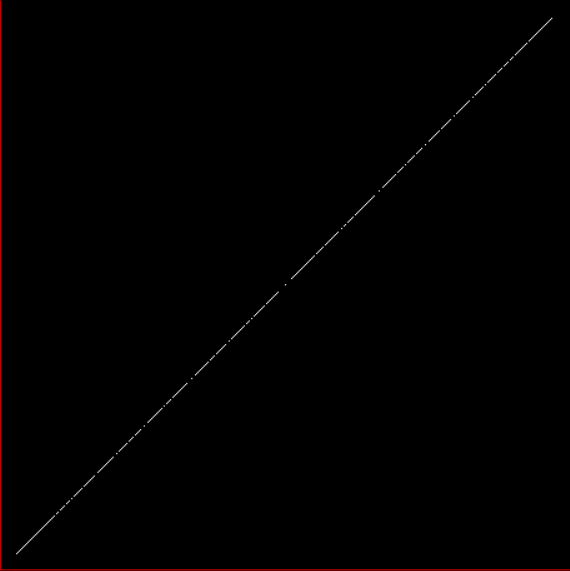
fract-L for x = 1/2, 1/3, 2/3…, y = 1/2, 1/3, 2/3…
If the fractions went to infinity, you’d get a solid line. As it is, you get some interesting splits in the 45° line. And when you plot the fractions like that, it’s easy to see that each point, (x,y), has a unique x and a unique y. But there are other ways to order the rational fractions. Try the same set ordered by the size of the decimal, not the denominator and numerator. In the previous set, 1/2 came before 1/7. Now 1/2 comes after 1/7, because 0.5 = 1/2 > 0.142857… = 1/7:
1/10, 1/9, 1/8, 1/7, 1/6, 1/5, 2/9, 1/4, 2/7, 3/10, 1/3, 3/8, 2/5, 3/7, 4/9, 1/2, 5/9, 4/7, 3/5, 5/8, 2/3, 7/10, 5/7, 3/4, 7/9, 4/5, 5/6, 6/7, 7/8, 8/9, 9/10
Now let’s plot x as the first set of fractions, ordered by size of denominator-and-numerator, and y as the second set of fractions, ordered by the size of the decimal. You’ll see that this kind of size scatters:
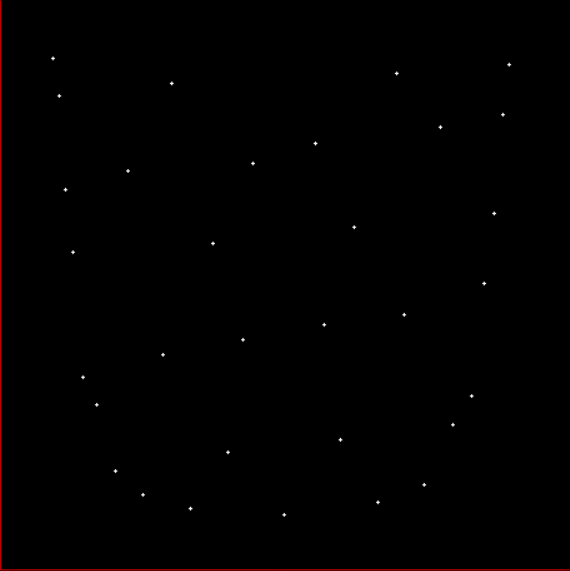
fract-L for x = 1/2, 1/3, 2/3, 1/4, 3/4, 1/5…, y = 1/10, 1/9, 1/8, 1/7, 1/6, 1/5, 2/9…
Now the points aren’t compressed into a 1-d line, but beginning to spread in 2-d space. The more fractions you use, the more the points spread. They remind me of papillae on a fractal tongue:
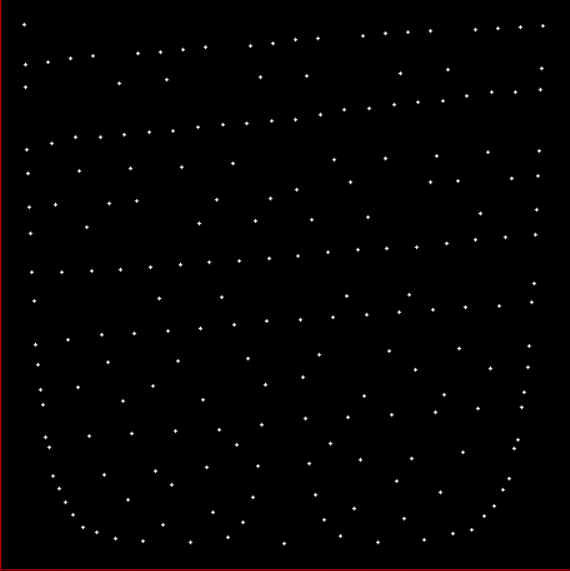
x = 1/2, 1/3, 2/3, 1/4, 3/4, 1/5… < 1/26, y = sizesort(1/2..1/26)

Papillae on a human tongue (image courtesy chatGPT)
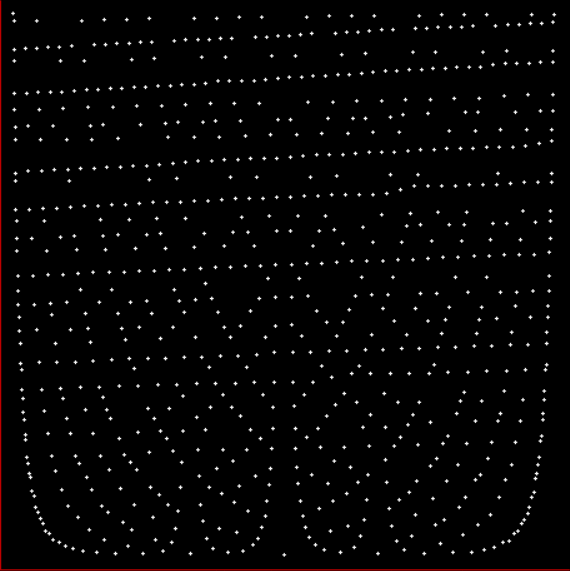
x = denumsort(1/2..1/51), y = sizesort(1/2..1/51)
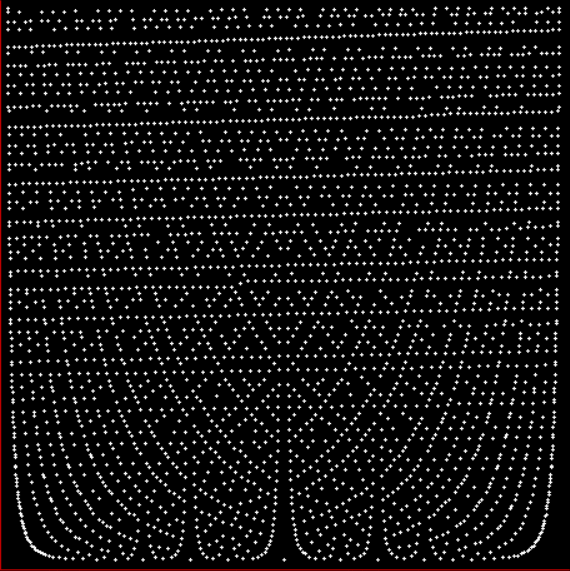
x = denumsort(1/2..101/), y = sizesort(1/2..1/101)
And the points seem to be occurring at the same x or y value. But that’s an artefact of a screen with limited pixels. On an impossible screen with infinite pixels, each (x,y) still has a unique x and unique y. Here are more fract-Ls with more fractions:
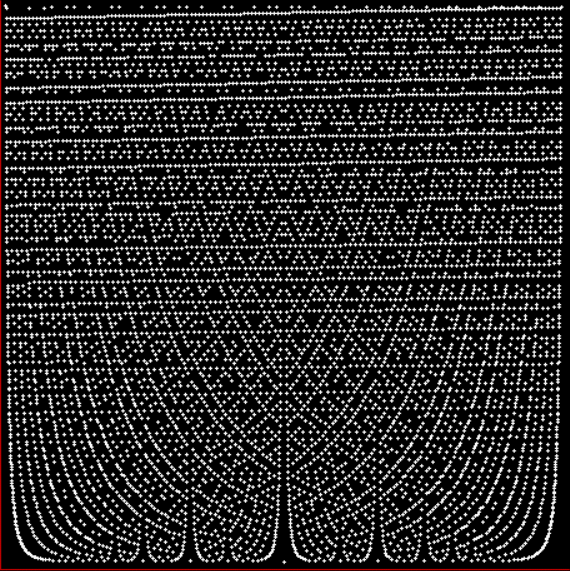
x = denumsort(1/2..1/151), y = sizesort(1/2..1/151)
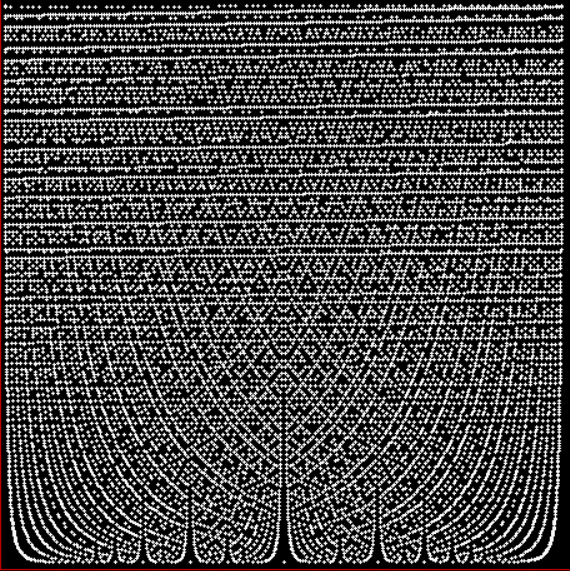
x = denumsort(1/2..1/201), y = sizesort(1/2..1/201)
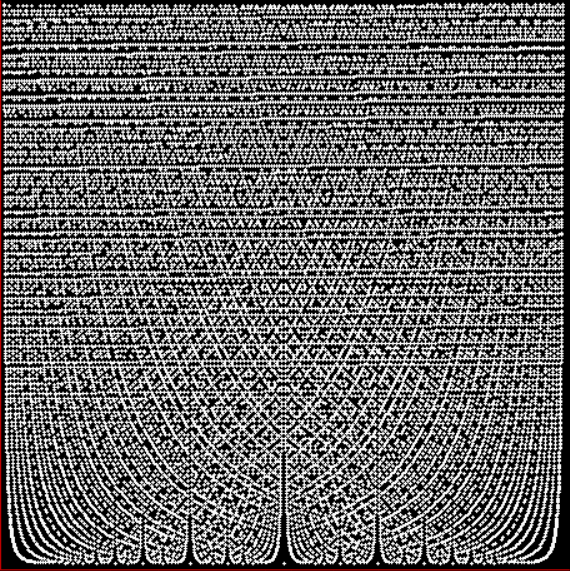
x = denumsort(1/2..1/251), y = sizesort(1/2..1/251)
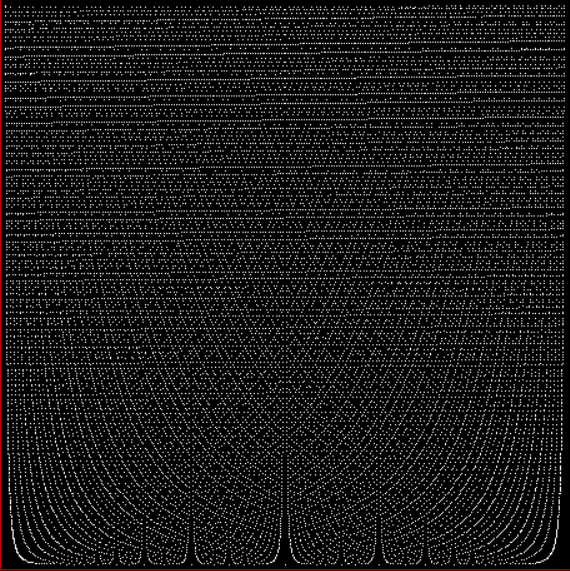
finer detail for x = denumsort(1/2..1/251), y = sizesort(1/2..1/251)
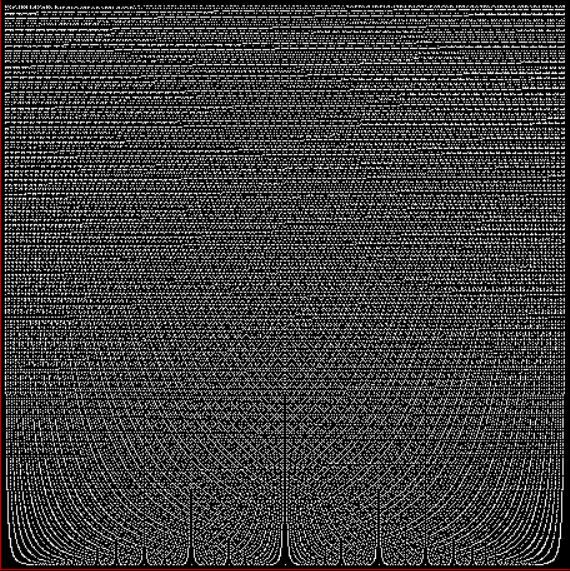
x = denumsort(1/2..37/406), y = sizesort(1/2..37/406)
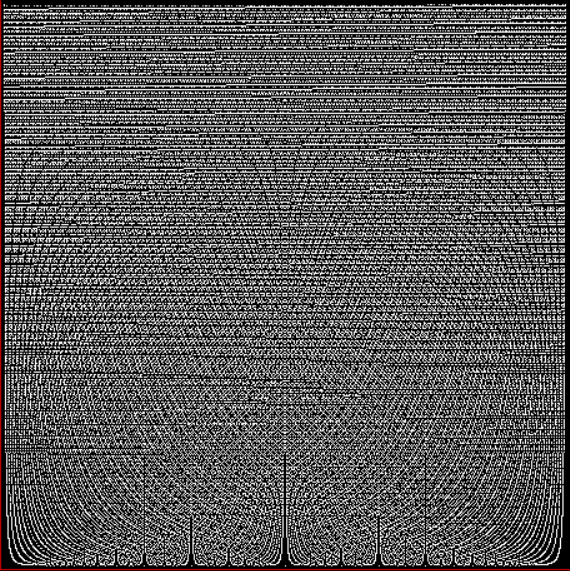
x = denumsort(1/2..1/501), y = sizesort(1/2..1/501)
Finally, to the closing bars of New Order, let’s view order in an animated gif:
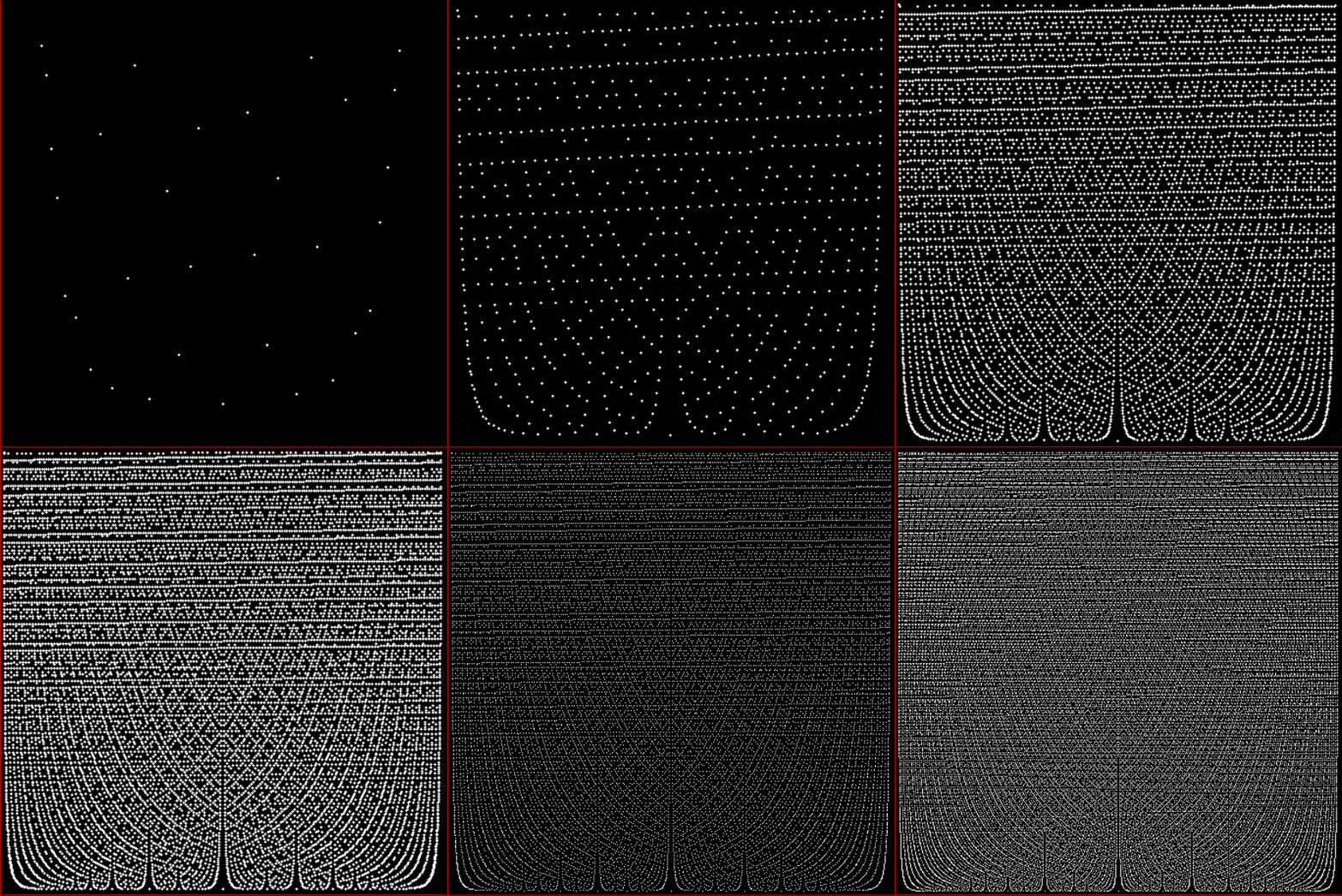
x = denumsort(a/b), y = sizesort(a/b) (animated at EZgif)
Post-Performative Post-Scriptum…
In fact, I wasn’t listening to New Order to view order. I’m not a fan of New Order, just a fan of assonance.

