Block’n’Role

How low can you go? When it comes to standard bases in mathematics, you can’t go lower than 2. But base 2, or binary, is unsurpassable for simplicity and beauty. With only two digits, 1 and 0, you can capture any integer you like:

• 0, 1, 2, 3, 4, 5... -> 0, 1, 10, 11, 100, 101, 110, 111, 1000, 1001, 1010, 1011, 1100, 1101, 1110, 1111, 10000, 10001, 10010, 10011, 10100, 10101, 10110, 10111, 11000, 11001, 11010, 11011, 11100, 11101, 11110, 11111, 100000, 100001, 100010, 100011, 100100, 100101, 100110, 100111, 101000, 101001, 101010, 101011, 101100, 101101, 101110, 101111, 110000, 110001, 110010, 110011, 110100, 110101, 110110, 110111, 111000, 111001, 111010, 111011, 111100, 111101, 111110, 111111...


Here are a few famous decimal numbers in binary:

• 23 = 10111 in binary
• 666 = 1010011010 in binary
• 1492 = 10111010100 in binary
• 2001 = 11111010001 in binary

As you can see, there’s a problem with binary for human beings. It takes up a lot of space and doesn’t look very distinctive. But that’s easy to solve by converting binary into octal (base 8) or hexadecimal (base 16). One digit in octal is worth three digits in binary and one digit in hexadecimal is worth four digits in binary. So the conversion back and forth is very easy:

• 23 = 10111 → (010,111) → 27 in octal
• 23 = 10111 → (0001,0111) → 17 in hexadecimal
• 666 = 1010011010 → (001,010,011,010) → 1232 in octal
• 666 = 1010011010 → (0010,1001,1010) → 29A in hexademical
• 1492 = 10111010100 → (010,111,010,100) → 2724 in octal
• 1492 = 10111010100 → (0101,1101,0100) → 5D4 in hexademical
• 2001 = 11111010001 → (011,111,010,001) → 3721 in octal
• 2001 = 11111010001 → (0111,1101,0001) → 7D1 in hexademical

But there’s another way to compress a binary number: count the lengths of the runs of 1 and 0. For example, 23 = 10111 and 10111 → one 1, one 0, three 1s → (1,1,3) → 113. That’s not much of a compression, but it usually gets better as the numbers get bigger:

• 2001 = 11111010001 → (5,1,1,3,1) → 51131

From the compressed form you can easily re-create the binary number:

• 51131 → (5,1,1,3,1) → (11111,0,1,000,1) → 11111010001

This block-compression doesn’t work with any other standard base. For example, the compressed form (1,2) in ternary, or base 3, is ambiguous:

• (1,2) → (1,00) → 100 in base 3 = 09 in decimal
• (1,2) → (1,22) → 122 in base 3 = 17 in decimal
• (1,2) → (2,00) → 200 in base 3 = 18 in decimal
• (1,2) → (2,11) → 211 in base 3 = 22 in decimal

The higher the base, the bigger the ambiguity. But ambiguity exists with binary block-compressions too. Look at 51131 ← 11111010001 = 2001 in decimal. Out of context, 51131 is infinitely ambiguous. It could represent a number in any base higher than 5:

• 51131 in base 06 = 006751 in base 10
• 51131 in base 07 = 012419 in base 10
• 51131 in base 08 = 021081 in base 10
• 51131 in base 09 = 033643 in base 10
• 51131 in base 10 = 051131 in base 10
• 51131 in base 11 = 074691 in base 10
• 51131 in base 12 = 105589 in base 10
• 51131 in base 13 = 145211 in base 10
• 51131 in base 14 = 195063 in base 10
• 51131 in base 15 = 256771 in base 10
• 51131 in base 16 = 332081 in base 10
• 51131 in base 17 = 422859 in base 10
• 51131 in base 18 = 531091 in base 10
• 51131 in base 19 = 658883 in base 10
• 51131 in base 20 = 808461 in base 10...

But that ambiguity raises an interesting question. Does the binary block-compression of n ever match the digits of n in another base? Yes, it does:

• 23 = 10111 in base 2 → (1,1,3) and 113 in base 4 = 10111 in base 2 = 23 in base 10

113 in base 4 = 1*4^2 + 1*4 + 3*4^0 = 16+4+3 = 23. You could call this “Block’n’Role”, because the blocks of 1 and 0 allow a binary number to retain its identity but take on a different role, that is, represent a number in a different base. Here’s a list of binary block-numbers that match the digits of n in another base:

• 10111 → (1,1,3) = 113 in base 4 (n=23)
• 11001 → (2,2,1) = 221 in base 3 (n=25)
• 101100 → (1,1,2,2) = 1122 in base 3 (n=44)
• 111001 → (3,2,1) = 321 in base 4 (n=57)
• 1011111 → (1,1,5) = 115 in base 9 (n=95)
• 1100001 → (2,4,1) = 241 in base 6 (n=97)
• 11100001 → (3,4,1) = 341 in base 8 (n=225)
• 100110000 → (1,2,2,4) = 1224 in base 6 (n=304)
• 101110111 → (1,1,3,1,3) = 11313 in base 4 (n=375)
• 111111001 → (6,2,1) = 621 in base 9 (n=505)
• 1110010111 → (3,2,1,1,3) = 32113 in base 4 (n=919)
• 10000011111 → (1,5,5) = 155 in base 30 (n=1055)
• 11111100001 → (6,4,1) = 641 in base 18 (n=2017)
• 1011101110111 → (1,1,3,1,3,1,3) = 1131313 in base 4 (n=6007)
• 11100101110111 → (3,2,1,1,3,1,3) = 3211313 in base 4 (n=14711)
• 10111011101110111 → (1,1,3,1,3,1,3,1,3) = 113131313 in base 4 (n=96119)
• 111001011101110111 → (3,2,1,1,3,1,3,1,3) = 321131313 in base 4 (n=235383)
• 100000111111111000001 → (1,5,9,5,1) = 15951 in base 31 (n=1081281)
• 101110111011101110111 → 11313131313 in b4 = 1537911
• 1110010111011101110111 → 32113131313 in b4 = 3766135
• 1011101110111011101110111 → 1131313131313 in b4 = 24606583
• 11100101110111011101110111 → 3211313131313 in b4 = 60258167
• 10111011101110111011101110111 → 113131313131313 in b4 = 393705335
• 111001011101110111011101110111 → 321131313131313 in b4 = 964130679

The list of block-nums is incomplete, because I’ve skipped some trivial examples where, for all powers 2^p > 2^2, the block-num is “1P” in base b = (2^p – p). For example:

• 2^3 = 08 = 1000 in base 2 → (1,3) and 13 in base 5 = 8, where 5 = 2^3-3 = 8-3
• 2^4 = 16 = 10000 in base 2 → (1,4) and 14 in base 12 = 16, where 12 = 2^4-4 = 16-4
• 2^5 = 32 = 100000 in base 2 → (1,5) and 15 in base 27 = 32, where 27 = 2^5-5 = 32-5
• 2^6 = 64 = 1000000 in base 2 → (1,6) and 16 in base 58 = 64, where 58 = 2^6-6 = 64-6

And note that the block-num matches in base 4 continue for ever, because the pairs 113… and 321… generate their successors using simple formulae in base 4:

• 113... * 100 + 13
• 321... * 100 + 13

For example, 113 and 321 are the first pair of matches:

• 10111 → (1,1,3) = 113 in base 4 (n=23)
• 111001 → (3,2,1) = 321 in base 4 (n=57)

In base 4, 113 * 100 + 13 = 11313 and 321 * 100 + 13 = 32113:

• 101110111 → (1,1,3,1,3) = 11313 in base 4 (n=375)
• 1110010111 → (3,2,1,1,3) = 32113 in base 4 (n=919)

Next, 11313 * 100 + 13 = 1131313 and 32113 * 100 + 13 = 3211313:

• 1011101110111 → (1,1,3,1,3,1,3) = 1131313 in base 4 (n=6007)
• 11100101110111 → (3,2,1,1,3,1,3) = 3211313 in base 4 (n=14711)

And so on.

Weight-Botchers

Suppose you have a balance scale and four weights of 1 unit, 2 units, 4 units and 8 units. How many different weights can you match? If you know binary arithmetic, it’s easy to see that you can match any weight up to fifteen units inclusive. With the object in the left-hand pan of the scale and the weights in the right-hand pan, these are the matches:

01 = 1
02 = 2
03 = 2+1
04 = 4
05 = 4+1
06 = 4+2
07 = 4+2+1
08 = 8
09 = 8+1
10 = 8+2
11 = 8+2+1
12 = 8+4
13 = 8+4+1
14 = 8+4+2
15 = 8+4+2+1

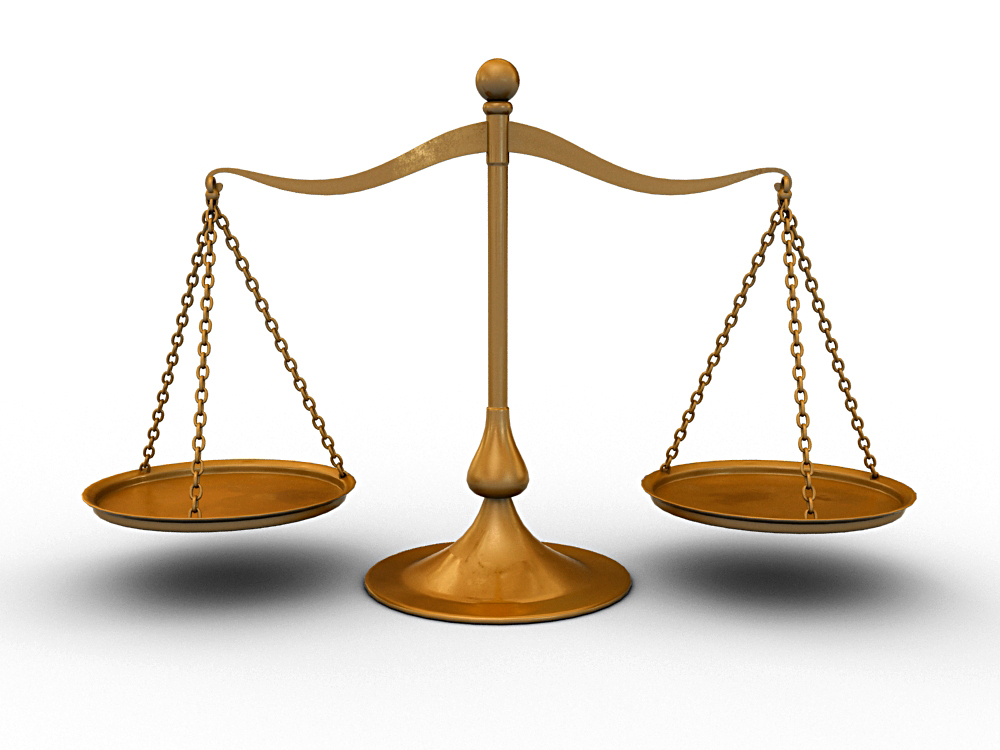
Balance scale


The weights that sum to n match the 1s in the digits of n in binary.

01 = 0001 in binary
02 = 0010 = 2
03 = 0011 = 2+1
04 = 0100 = 4
05 = 0101 = 4+1
06 = 0110 = 4+2
07 = 0111 = 4+2+1
08 = 1000 = 8
09 = 1001 = 8+1
10 = 1010 = 8+2
11 = 1011 = 8+2+1
12 = 1100 = 8+4
13 = 1101 = 8+4+1
14 = 1110 = 8+4+2
15 = 1111 = 8+4+2+1

But there’s another set of four weights that will match anything from 1 unit to 40 units. Instead of using powers of 2, you use powers of 3: 1, 3, 9, 27. But how would you match an object weighing 2 units using these weights? Simple. You put the object in the left-hand scale, the 3-weight in the right-hand scale, and then add the 1-weight to the left-hand scale. In other words, 2 = 3-1. Similarly, 5 = 9-3-1, 6 = 9-3 and 7 = 9-3+1. When the power of 3 is positive, it’s in the right-hand pan; when it’s negative, it’s in the left-hand pan.

This system is actually based on base 3 or ternary, which uses three digits, 0, 1 and 2. However, the relationship between ternary numbers and the sums of positive and negative powers of 3 is more complicated than the relationship between binary numbers and sums of purely positive powers of 2. See if you can work out how to derive the sums in the middle from the ternary numbers on the right:

01 = 1 = 1 in ternary
02 = 3-1 = 2
03 = 3 = 10
04 = 3+1 = 11
05 = 9-3-1 = 12
06 = 9-3 = 20
07 = 9-3+1 = 21
08 = 9-1 = 22
09 = 9 = 100
10 = 9+1 = 101
11 = 9+3-1 = 102
12 = 9+3 = 110
13 = 9+3+1 = 111
14 = 27-9-3-1 = 112
15 = 27-9-3 = 120
16 = 27-9-3+1 = 121
17 = 27-9-1 = 122
18 = 27-9 = 200
19 = 27-9+1 = 201
20 = 27-9+3-1 = 202
21 = 27-9+3 = 210
22 = 27-9+3+1 = 211
23 = 27-3-1 = 212
24 = 27-3 = 220
25 = 27-3+1 = 221
26 = 27-1 = 222
27 = 27 = 1000
28 = 27+1 = 1001
29 = 27+3-1 = 1002
30 = 27+3 = 1010
31 = 27+3+1 = 1011
32 = 27+9-3-1 = 1012
33 = 27+9-3 = 1020
34 = 27+9-3+1 = 1021
35 = 27+9-1 = 1022
36 = 27+9 = 1100
37 = 27+9+1 = 1101
38 = 27+9+3-1 = 1102
39 = 27+9+3 = 1110
40 = 27+9+3+1 = 1111

To begin understanding the sums, consider those ternary numbers containing only 1s and 0s, like n = 1011[3], which equals 31 in decimal. The sum of powers is straightforward, because all of them are positive and they’re easy to work out from the digits of n in ternary: 1011 = 1*3^3 + 0*3^2 + 1*3^1 + 1*3^0 = 27+3+1. Now consider n = 222[3] = 26 in decimal. Just as a decimal number consisting entirely of 9s is always 1 less than a power of 10, so a ternary number consisting entirely of 2s is always 1 less than a power of three:

999 = 1000 - 1 = 10^3 - 1 (decimal)
222 = 1000[3] - 1 (ternary) = 26 = 27-1 = 3^3 - 1 (decimal)

If a ternary number contains only 2s and is d digits long, it will be equal to 3^d – 1. But what about numbers containing a mixture of 2s, 1s and 0s? Well, all ternary numbers containing at least one 2 will have a negative power of 3 in the sum. You can work out the sum by using the following algorithm. Suppose the number is five digits long and the rightmost digit is digit #1 and the leftmost is digit #5:

01. i = 1, sum = 0, extra = 0, posi = true.
02. if posi = false, goto step 07.
03. if digit #i = 0, sum = sum + 0.
04. if digit #i = 1, sum = sum + 3^(i-1).
05. if digit #i = 2, sum = sum - 3^(i-1), extra = 3^5, posi = false.
06. goto step 10.
07. if digit #i = 0, sum = sum + 3^(i-1), extra = 0, posi = true.
08. if digit #i = 1, sum = sum - 3^(i-1).
09. if digit #i = 2, sum = sum + 0.
10. i = i+1. if i <= 5, goto step 2.
11. print sum + extra.

As the number of weights grows, the advantages of base 3 get bigger:

With 02 weights, base 3 reaches 04 and base 2 reaches 3: 04-3 = 1.
With 03 weights, base 3 reaches 13 and base 2 reaches 7: 13-7 = 6.
With 04 weights, 000040 - 0015 = 000025
With 05 weights, 000121 - 0031 = 000090
With 06 weights, 000364 - 0063 = 000301
With 07 weights, 001093 - 0127 = 000966
With 08 weights, 003280 - 0255 = 003025
With 09 weights, 009841 - 0511 = 009330
With 10 weights, 029524 - 1023 = 028501
With 11 weights, 088573 - 2047 = 086526
With 12 weights, 265720 - 4095 = 261625...

But what about base 4, or quaternary? With four weights of 1, 4, 16 and 64, representing powers of 4 from 4^0 to 4^3, you should be able to weigh objects from 1 to 85 units using sums of positive and negative powers. In fact, some weights can’t be matched. As you can see below, if n in base 4 contains a 2, it usually can’t be represented as a sum of positive and negative powers of 4 (one exception is 23 = 2*4 + 3 = 11 in base 10). Certain other numbers are also impossible to represent as that kind of sum:

1 = 1 ← 1
2 has no sum = 2
3 = 4-1 ← 3
4 = 4 ← 10 in base 4
5 = 4+1 ← 11 in base 4
6 has no sum = 12 in base 4
7 has no sum = 13
8 has no sum = 20
9 has no sum = 21
10 has no sum = 22
11 = 16-4-1 ← 23
12 = 16-4 ← 30
13 = 16-4+1 ← 31
14 has no sum = 32
15 = 16-1 ← 33
16 = 16 ← 100
17 = 16+1 ← 101
18 has no sum = 102
19 = 16+4-1 ← 103
20 = 16+4 ← 110
21 = 16+4+1 ← 111
22 has no sum = 112
23 has no sum = 113
24 has no sum = 120
25 has no sum = 121
26 has no sum = 122
27 has no sum = 123
[...]

With a more complicated balance scale, it’s possible to use weights representing powers of base 4 and base 5 (use two pans on each arm of the scale instead of one, placing the extra pan at the midpoint of the arm). But with a standard balance scale, base 3 is the champion. However, there is a way to do slightly better than standard base 3. You do it by botching the weights. Suppose you have four weights of 1, 4, 10 and 28 (representing 1, 3+1, 9+1 and 27+1). There are some weights n you can’t match, but because you can match n-1 and n+1, you know what these unmatchable weights are. Accordingly, while weights of 1, 3, 9 and 27 can measure objects up to 40 units, weights of 1, 4, 10 and 28 can measure objects up to 43 units:

1 = 1 ← 1
2 has no sum = 2
3 = 4-1 ← 10 in base 3
4 = 4 ← 11 in base 3
5 = 4+1 ← 12 in base 3
6 = 10-4 ← 20
7 = 10-4+1 ← 21
8 has no sum = 22
9 = 10-1 ← 100
10 = 10 ← 101
11 = 10+1 ← 102
12 has no sum = 110
13 = 10+4-1 ← 111
14 = 10+4 ← 112
15 = 10+4+1 ← 120
16 has no sum = 121
17 = 28-10-1 ← 122
18 = 28-10 ← 200
19 = 28-10+1 ← 201
20 has no sum = 202
21 = 28-10+4-1 ← 210
22 = 28-10+4 ← 211
23 = 28-4-1 ← 212
24 = 28-4 ← 220
25 = 28-4+1 ← 221
26 has no sum = 222
27 = 28-1 ← 1000
28 = 28 ← 1001
29 = 28+1 ← 1002
30 has no sum = 1010
31 = 28+4-1 ← 1011
32 = 28+4 ← 1012
33 = 28+4+1 ← 1020
34 = 28+10-4 ← 1021
35 = 28+10-4+1 ← 1022
36 has no sum = 1100
37 = 28+10-1 ← 1101
38 = 28+10 ← 1102
39 = 28+10+1 ← 1110
40 = has no sum = 1111*
41 = 28+10+4-1 ← 1112
42 = 28+10+4 ← 1120
43 = 28+10+4+1 ← 1121


*N.B. 40 = 82-28-10-4, i.e. has a sum when another botched weight, 82 = 3^4+1, is used.

WhirlpUlam

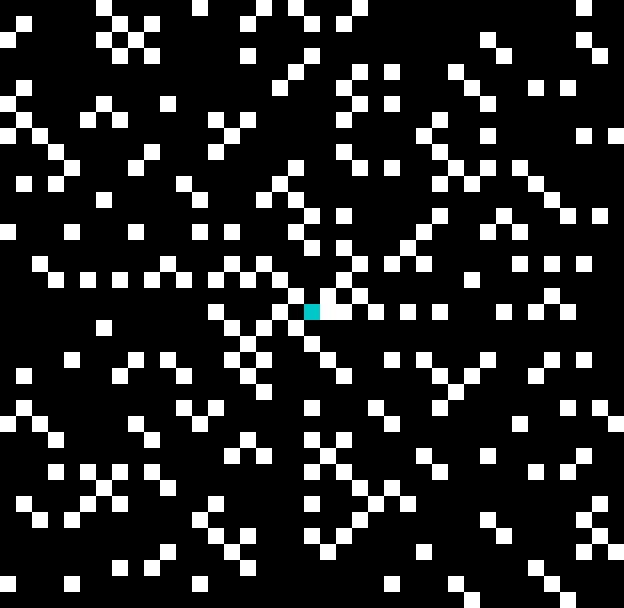
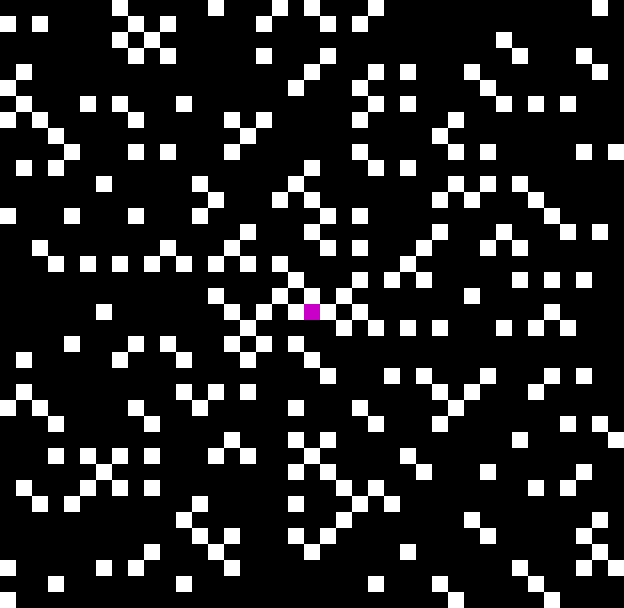
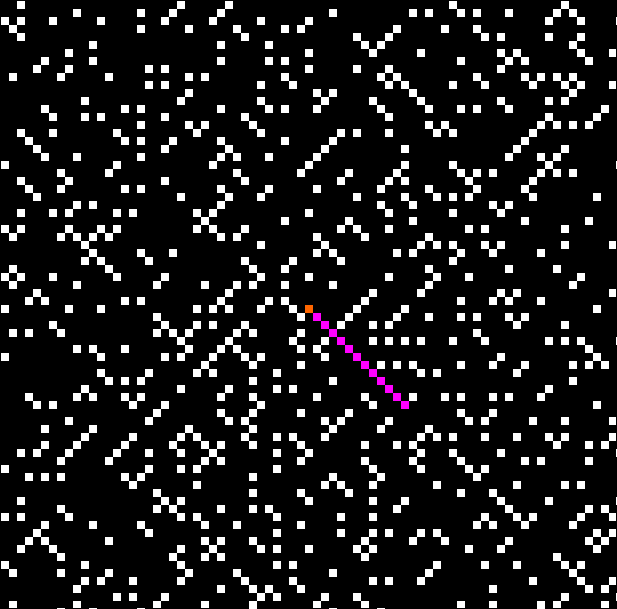
Stanislaw Ulam (pronounced OO-lam) was an American mathematician who was doodling one day in 1963 and created what is now called the Ulam spiral. It’s a spiral of integers on a square grid with the prime squares filled in and the composite squares left empty. At the beginning it looks like this (the blue square is the integer 1, with 2 to the east, 3 to the north-east, 4 to the north, 5 to the north-west, 6 to the west, and so on):

Ulam spiral


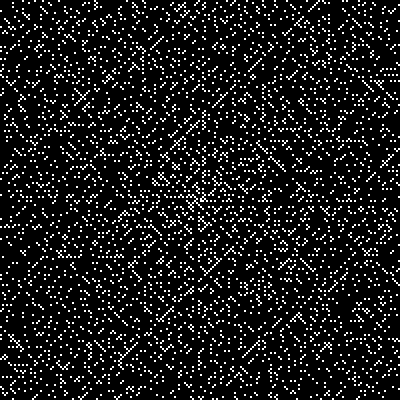
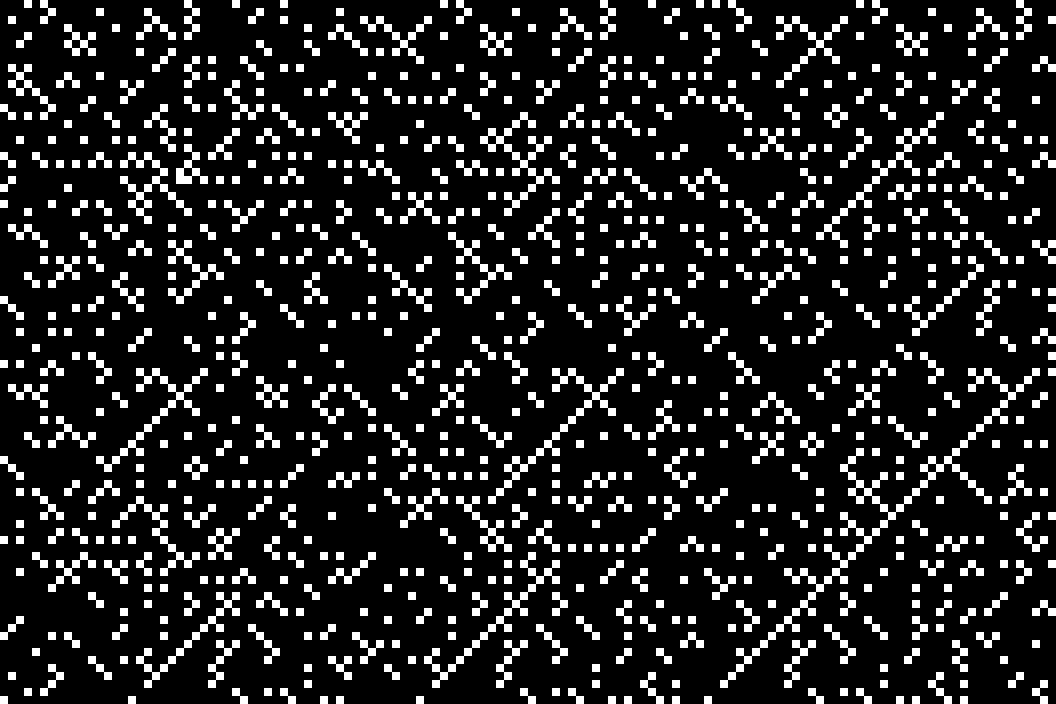
And here’s an Ulam spiral with more integers:

Ulam spiral at higher resolution


The primes aren’t scattered at random over the spiral: they often fall into lines that are related to what are called polynomial functions, such as n2 + n + 1. To understand polynomial functions better, let’s look at how the Ulam spiral is made. Here is a text version with the primes underlined:


Here’s an animated version:


Here’s the true spiral again with 1 marked as a blue square:

Ulam spiral centred on 1


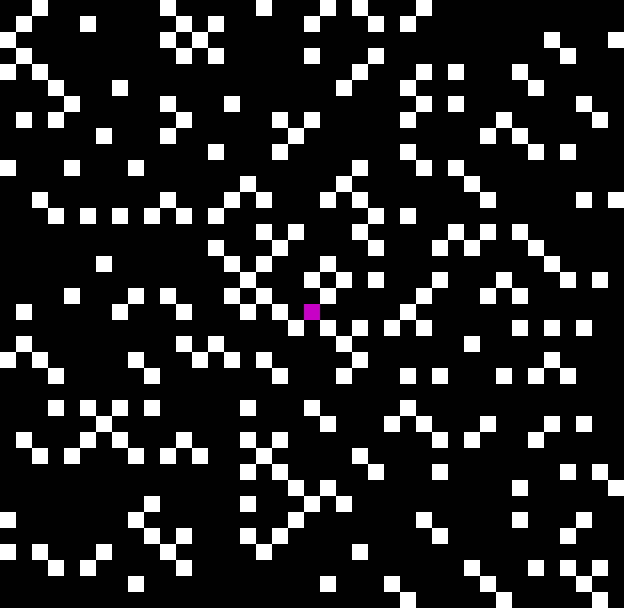
What happens when you try other numbers at the centre? Here’s 2 at the centre as a purple square, because it’s prime:

Ulam spiral centred on 2


And 3 at the centre, also purple because it’s also prime:

Ulam spiral centred on 3


And 4 at the centre, blue again because 4 = 2^2:

Ulam spiral centred on 4


And 5 at the centre, prime and purple:

Ulam spiral centred on 5


Each time the central number changes, the spiral shifts fractionally. Here’s an animation of the central number shifting from 1 to 41. If you watch, you’ll see patterns remaining stable, then breaking up as the numbers shift towards the center and disappear (the central number is purple if prime, blue if composite):

Ulam whirlpool, or WhirlpUlam


I think the animation looks like a whirlpool or whirlpUlam (prounced whirlpool-am), as numbers spiral towards the centre and disappear. You can see the whirlpUlam more clearly here:

An animated Ulam Spiral pausing at n=11, 17, 41


WhirlpUlam again


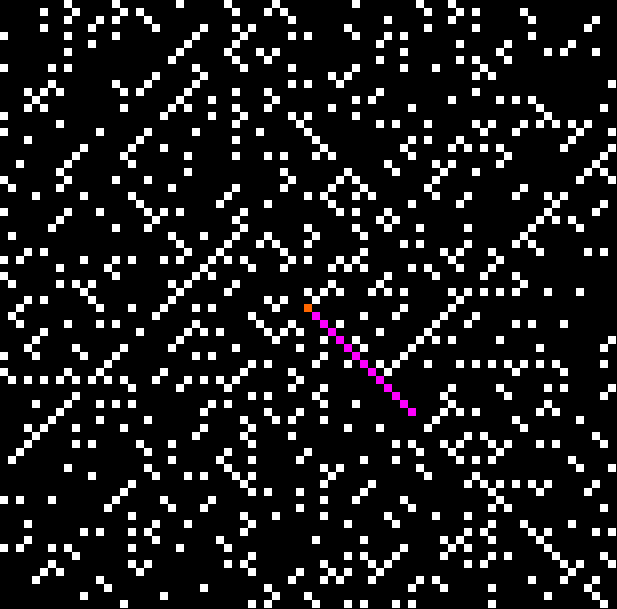
Note that something interesting happens when the central number is 41. The spiral is bisected by a long line of prime squares, like this:

Ulam spiral centred on 41


The line is actually a visual representation of something David Wells wrote about in The Penguin Dictionary of Curious and Interesting Numbers (1986):

Euler discovered the excellent and famous formula x2 + x + 41, which gives prime values for x = 0 to 39.

Here are the primes generated by the formula:

41, 43, 47, 53, 61, 71, 83, 97, 113, 131, 151, 173, 197, 223, 251, 281, 313, 347, 383, 421, 461, 503, 547, 593, 641, 691, 743, 797, 853, 911, 971, 1033, 1097, 1163, 1231, 1301, 1373, 1447, 1523, 1601

You’ll see other lines appear and disappear as the whirlpUlam whirls:

Ulam spiral centred on 17


Primes in line: 17, 19, 23, 29, 37, 47, 59, 73, 89, 107, 127, 149, 173, 199, 227, 257 (n=0..15)


Ulam spiral centred on 59


Primes in line: 59, 67, 83, 107, 139, 179, 227, 283, 347, 419, 499, 587, 683, 787 (n=0..13)


Ulam spiral centred on 163


Primes in line: 163, 167, 179, 199, 227, 263, 307, 359, 419, 487, 563, 647, 739, 839, 947, 1063, 1187, 1319, 1459, 1607 (n=0..19)


Ulam spiral centred on 233


Primes in line: 233, 241, 257, 281, 313, 353, 401, 457, 521, 593, 673, 761, 857 ((n=0..12)


Ulam spiral centred on 653


Primes in line: 653, 661, 677, 701, 733, 773, 821, 877, 941, 1013, 1093, 1181, 1277, 1381, 1493, 1613, 1741, 1877 (n=0..17)


Ulam spiral centred on 409,333


Primes in line: 409,333, 409337, 409349, 409369, 409397, 409433, 409477, 409529, 409589, 409657, 409733, 409817, 409909, 410009, 410117, 410233 (n=0..15)


Some bisect the centre, some don’t, because you could say that the Ulam spiral has six diagonals, two that bisect the centre (top-left-to-bottom-right and bottom-left-to-top-right) and four that don’t. You could also call them spokes:


If you look at the integers in the spokes, you can see that they’re generated by polynomial functions in which c stands for the central number:

North-west spoke: 1, 5, 17, 37, 65, 101, 145, 197, 257, 325, 401, 485, 577, 677, 785, 901, 1025, 1157, 1297, 1445, 1601, 1765, 1937, 2117, 2305, 2501, 2705, 2917... = c + (2n)^2


South-east spoke: 1, 9, 25, 49, 81, 121, 169, 225, 289, 361, 441, 529, 625, 729, 841, 961, 1089, 1225, 1369, 1521, 1681, 1849, 2025, 2209, 2401, 2601, 2809, 3025, 3249, 3481, 3721, 3969, 4225, 4489, 4761, 5041, 5329, 5625... = c+(2n+1)^2-1


NW-SE diagonal: 1, 5, 9, 17, 25, 37, 49, 65, 81, 101, 121, 145, 169, 197, 225, 257, 289, 325, 361, 401, 441, 485, 529, 577, 625, 677, 729, 785, 841, 901, 961, 1025, 1089, 1157, 1225, 1297, 1369, 1445, 1521, 1601, 1681 = c + n^2 + 1 - (n mod 2)


North-east spoke: 1, 3, 13, 31, 57, 91, 133, 183, 241, 307, 381, 463, 553, 651, 757, 871, 993, 1123, 1261, 1407, 1561, 1723, 1893, 2071... = c + (n+1)^2 - n - 1


South-west spoke: 1, 7, 21, 43, 73, 111, 157, 211, 273, 343, 421, 507, 601, 703, 813, 931, 1057, 1191, 1333, 1483, 1641, 1807, 1981, 2163... = c + (2n)^2 + 2n


SW-NE diagonal: 1, 3, 7, 13, 21, 31, 43, 57, 73, 91, 111, 133, 157, 183, 211, 241, 273, 307, 343, 381, 421, 463, 507, 553, 601, 651, 703, 757, 813, 871, 931, 993, 1057, 1123, 1191, 1261, 1333, 1407, 1483, 1561, 1641... = c + n^2 + n


Elsewhere other-engageable:

All posts interrogating issues around the Ulam spiral

Performativizing Papyrocentricity #64

Papyrocentric Performativity Presents:

God GuideA Guide to Tolkien, David Day (Octopus 1993)

The Catcher and the RyeThe Biology of Flowers, Eigil Holm, ill. by Thomas Bredsdorff and Peter Nielsen (Penguin Nature Guides 1979)

Dayzed and ContusedThe Greatest Footballer You Never Saw: The Robin Friday Story, Paul McGuigan and Paolo Hewitt (Mainstream 1997)


Or Read a Review at Random: RaRaR

Oh My Guardianisticity!

He’s been mixing with the wrong people:

“Our supporters and our country has had a long time suffering in terms of football. […] Our country has been through some difficult moments recently in terms of unity but sport has the power to unite — and football in particular has the power to do that.” — England manager Gareth Southgate, BBC Sport, 10vii2018.


Elsewhere other-engageable:

Oh My Guardian #6 — the latest in the award-winning series
All posts interrogating issues around the Guardian-reading community and its affiliates
Ex-term-in-ate! — interrogating arguably the keyliest and coreliest Guardianista phrase
All posts interrogating issues around “in terms of”

Mice Thrice

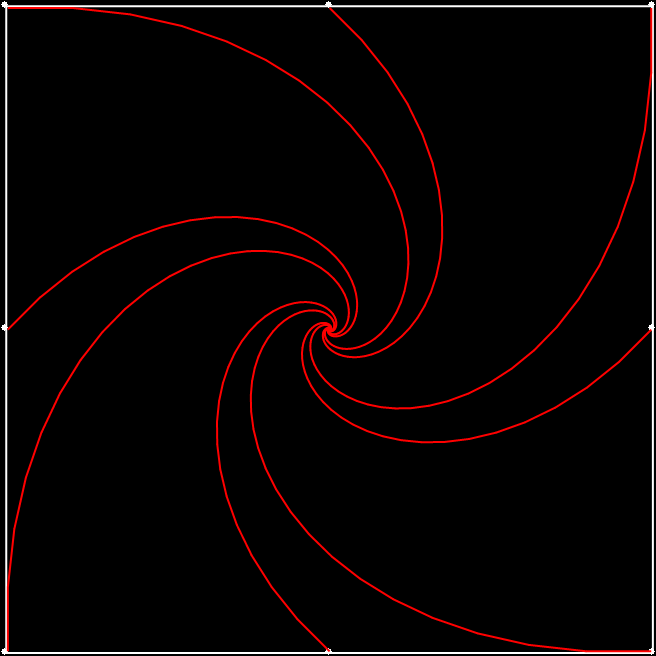
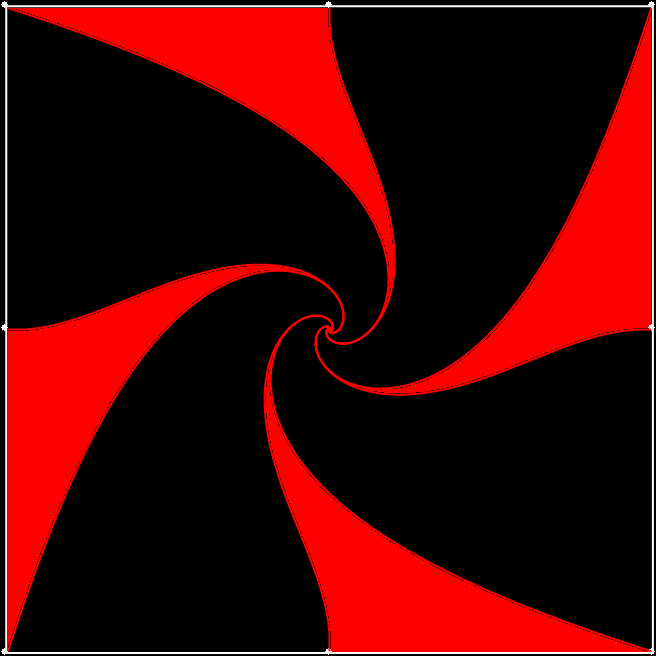
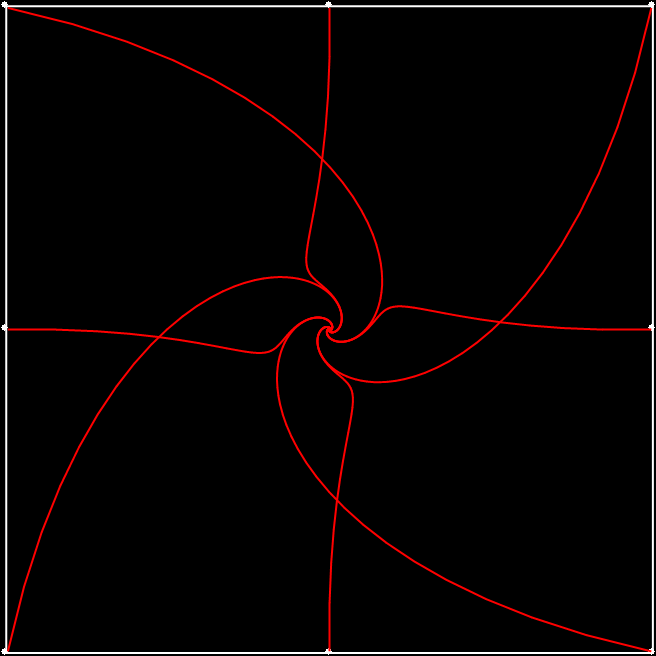
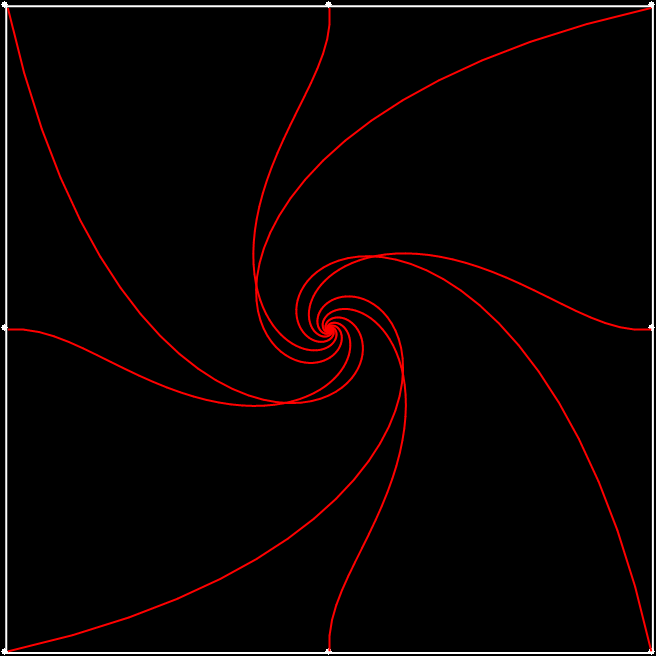
Twice before on Overlord-in-terms-of-Core-Issues-around-Maximal-Engagement-with-Key-Notions-of-the-Über-Feral, I’ve interrogated issues around pursuit curves. Imagine four mice or four beetles each sitting on one corner of a square and looking towards the centre of the square. If each mouse or beetle begins to run towards the mouse or beetle to its left, it will follow a curving path that takes it to the centre of the square, like this:

vertices = 4, pursuit = +1


The paths followed by the mice or beetles are pursuit curves. If you arrange eight mice clockwise around a square, with a mouse on each corner and a mouse midway along each side, you get a different set of pursuit curves:

v = 4 + 1 on the side, p = +1


Here each mouse is pursuing the mouse two places to its left:

v = 4+s1, p = +2


And here each mouse is pursuing the mouse three places to its left:

v = 4+s1, p = +3


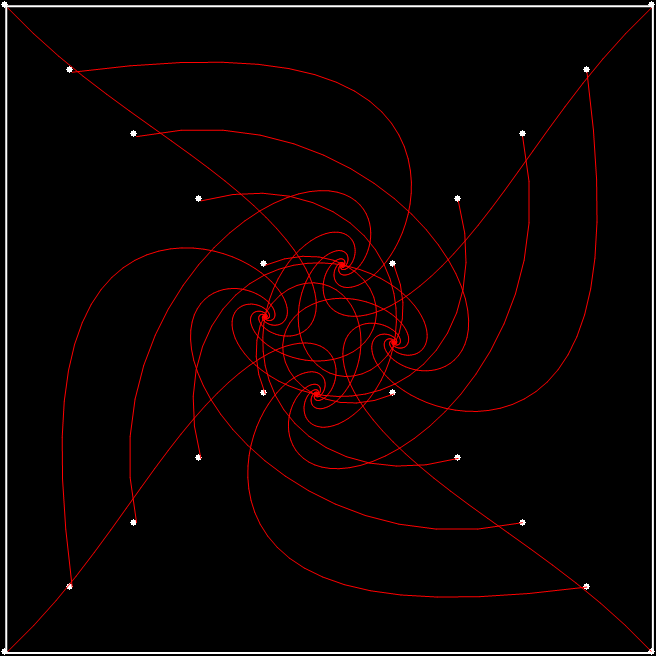
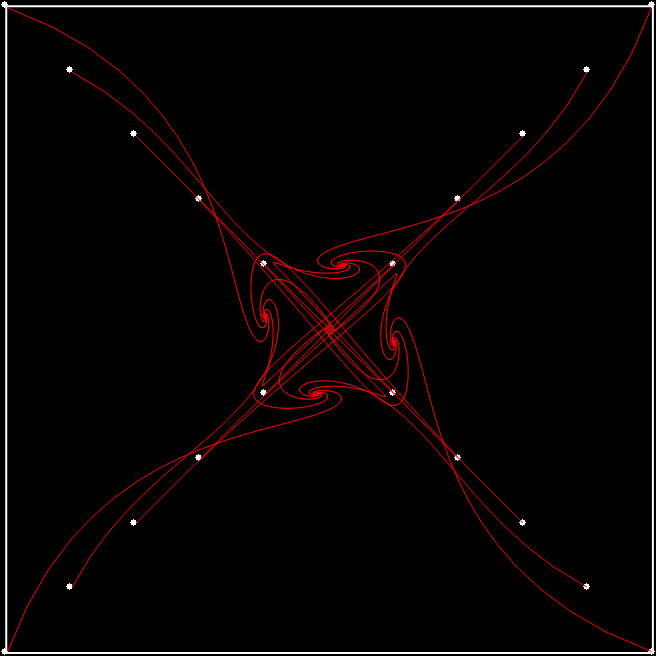
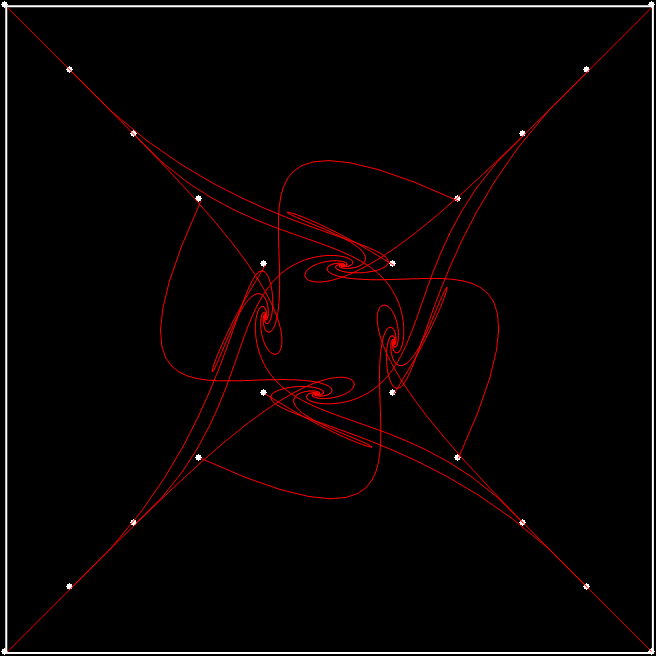
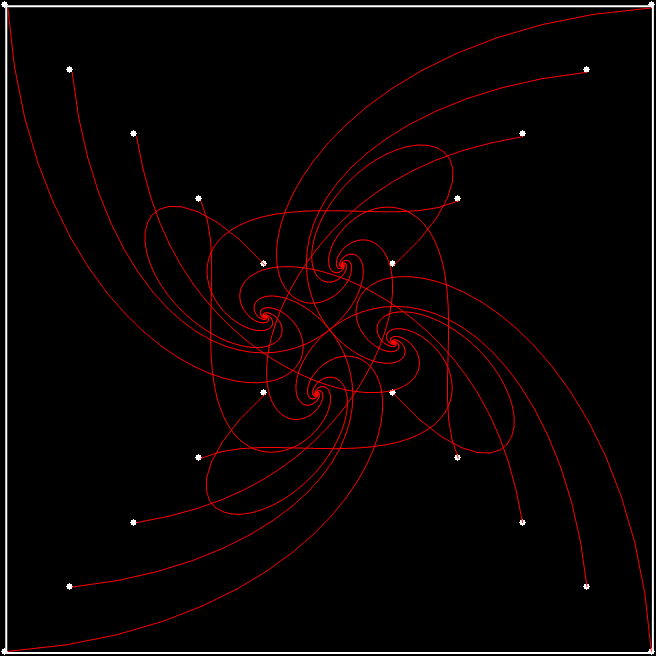
Now try a different arrangement of the mice. In the square below, the mice are arranged clockwise in rows from the bottom right-hand corner. That is, mouse #1 begins on the bottom left-hand corner, mouse #2 begins between that corner and the centre, mouse #3 begins on the bottom left-hand corner, and so on. When each mice runs towards the mouse three places away, these pursuit curves appear:
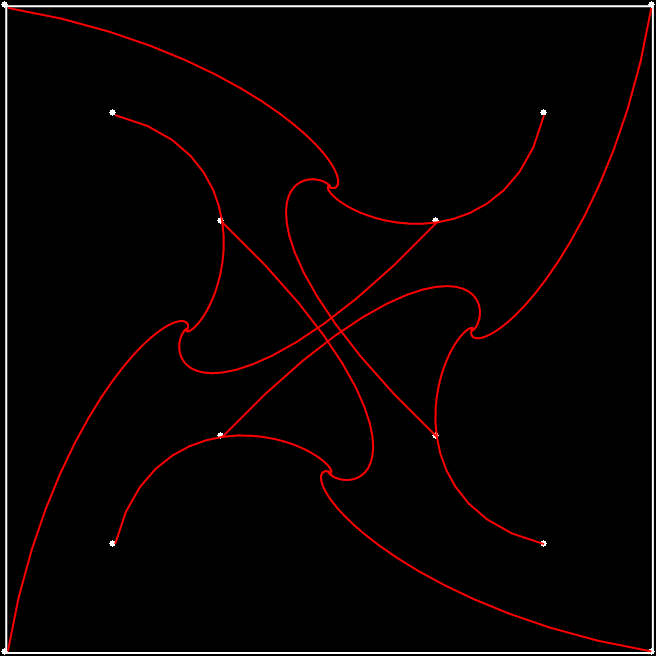
v = 4 + 1 internally, p = +3


Here are some more:

v = 4 + i1, p = +5


v = 4 + i2, p = +1


v = 4 + i2, p = +2


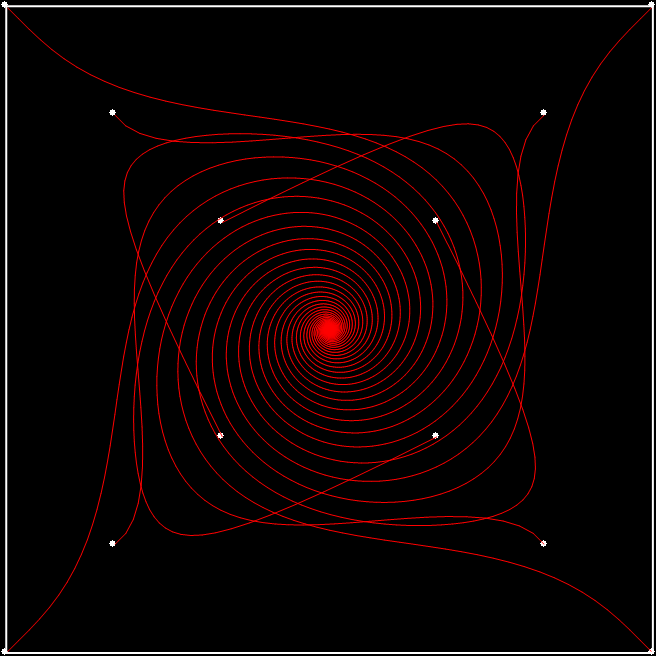
So far, all the mice have eventually run to the centre of the square, but that doesn’t happen here:

v = 4 + i2, p = 4


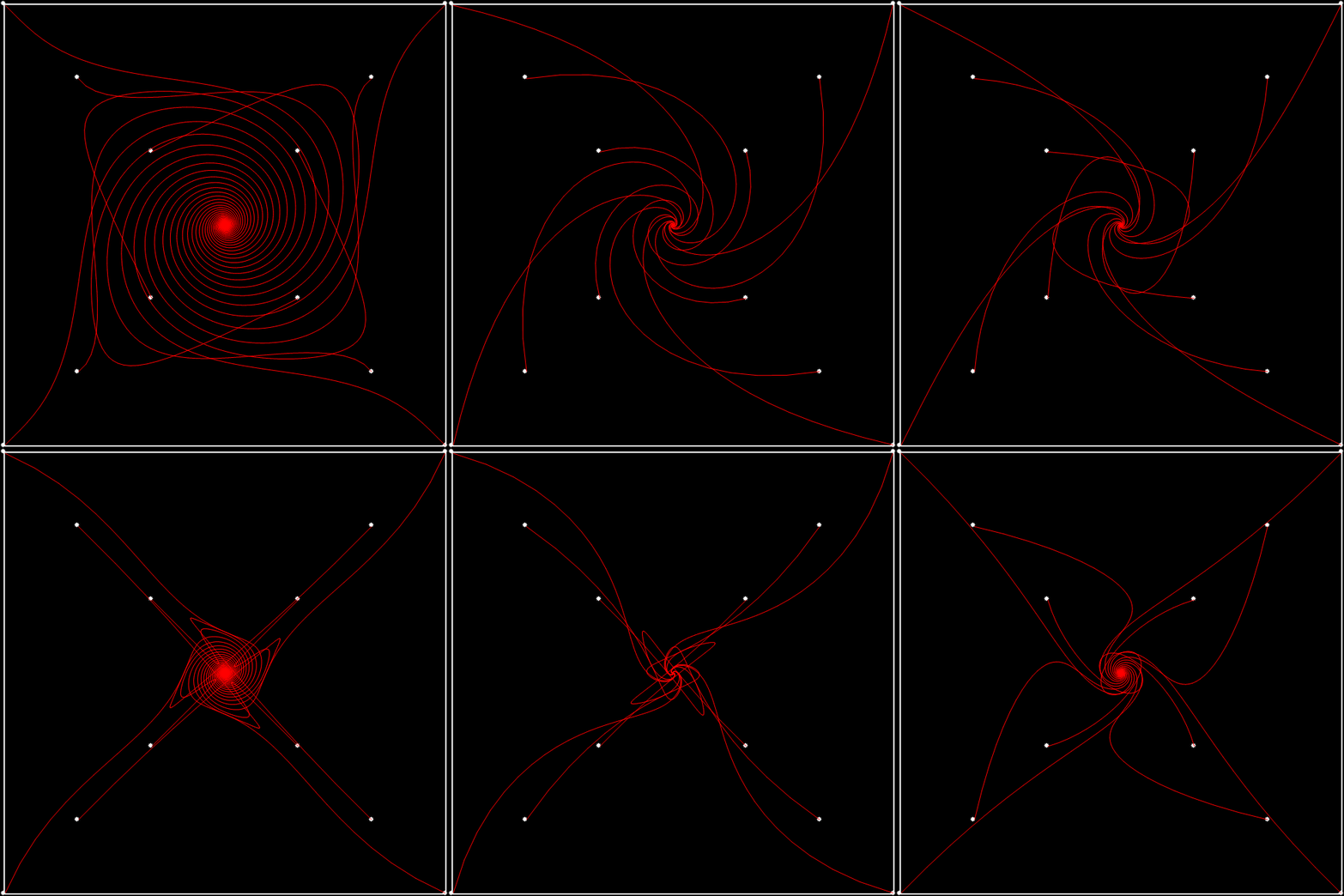
Here are more pursuit curves for the v4+i2 mice, using an animated gif:

v = 4 + i2, p = various (animated — open in new tab for clearer image)


And here are more pursuit curves that don’t end in the centre of the square:

v = 4 + i4, p = 4


v = 4 + i4, p = 8


v = 4 + i4, p = 12


v = 4 + i4, p = 16


But the v4+i4 pursuit curves more usually look like this:

v = 4 + i4, p = 7


Now try adapting the rules so that mice don’t run directly towards another mouse, but towards the point midway between two other mice. In this square, the odd- and even-numbered mice follow different rules. Mice #1, #3, #5 and #7 run towards the point midway between the mice one and two places away, while ice #2, #4, #6 and #8 run towards the point midway between the mice two and seven places away:

v = 4 + s1, p(1,3,5,7) = 1,2, p(2,4,6,8) = 2,7


I think the curves are very elegant. Here’s a slight variation:

v = 4 + s1, p1 = 1,3, p2 = 2,7


Now try solid curves:

v = 4 + s1, p1 = 1,3, p2 = 2,7 (red)


v = 4 + s1, p1 = 1,3, p2 = 2,7 (yellow-and-blue)


And some variants:

v = 4 + s1, p1 = 1,7, p2 = 1,2


v = 4 + s1, p1 = 2,3, p2 = 2,5


v = 4 + s1, p1 = 5,6, p2 = 1,3


v = 4 + s1, p1 = 5,6, p2 = 1,4


v = 4 + s1, p1 = 5,6, p2 = 1,6


Elsewhere other-posted:

Polymorphous Pursuit
Persecution Complex

Toxic Turntable #14

Currently listening…

• Pigiz Ligiz, Pigs and Grapes (2003)
• Jag Rote Kill, West by West (1972)
• Ziel Lovkopf, Wir Dulder (1980)
• Louve (+), Tb Rehearsal Tapes (1993)
• Hord Voe, Nord/Sud (1966)
• Ozark Swamphony, Sonic Remedies (1960)
• Blutfloh, Die Zauberflohte (2000)
• Zwoir, Oromig (1996)
• Flitwick Youth, Six Sieves (1989)
• Iuscaic, L2-B3/J7 (1995)
• Tiertochter, Elmsfeuer EP (2005)
• Eothorn, Duchess Esmeralda (1973)
• E.F. Dall’Abaco, 12 Concerti (1972)
• Jamie Hendrix XPRNS, Mosaïk (1996)


Previously pre-posted:

Toxic Turntable #1#2#3#4#5#6#7#8#9#10#11#12#13 •