O Apollo

One of Swinburne’s most powerful, but least-known, poems is “The Last Oracle”, from Poems and Ballads, Second Series (1878). A song in honour of the god Apollo, it begins in lamentation:

Years have risen and fallen in darkness or in twilight,
   Ages waxed and waned that knew not thee nor thine,
While the world sought light by night and sought not thy light,
   Since the sad last pilgrim left thy dark mid shrine.
Dark the shrine and dumb the fount of song thence welling,
   Save for words more sad than tears of blood, that said:
Tell the king, on earth has fallen the glorious dwelling,
   And the watersprings that spake are quenched and dead.
Not a cell is left the God, no roof, no cover
   In his hand the prophet laurel flowers no more.

And ends in exultation:

         For thy kingdom is past not away,
            Nor thy power from the place thereof hurled;
         Out of heaven they shall cast not the day,
            They shall cast not out song from the world.
         By the song and the light they give
         We know thy works that they live;
         With the gift thou hast given us of speech
         We praise, we adore, we beseech,
         We arise at thy bidding and follow,
            We cry to thee, answer, appear,
   O father of all of us, Paian, Apollo,
            Destroyer and healer, hear! (“The Last Oracle”)

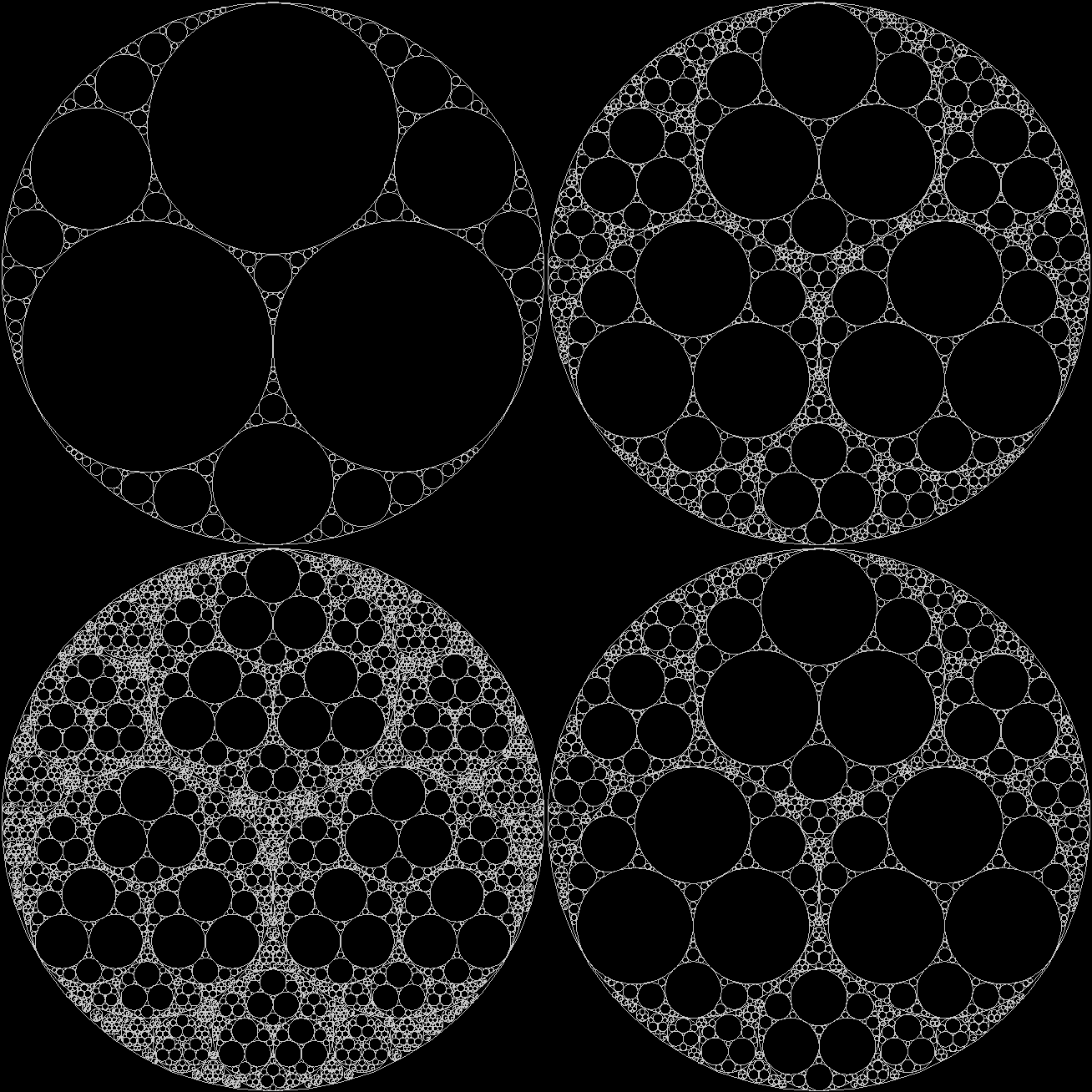
The power, grandeur and beauty of this poem remind me of the music of Beethoven. Swinburne is also, on a smaller scale and in a different medium, one of the geniuses of European art. He and Beethoven were both touched by Apollo, but Apollo was more than the god of music and poetry: he also presided mathematics. But then mathematics is much more visible, or audible, in music and poetry than it is in other arts. Rhythm, harmony, scansion, melody and rhyme are mathematical concepts. Music is built of notes, poetry of stresses and rhymes, and the rules governing them are easier to formalize than those governing, say, sculpture or prose.  Nor do poetry and music have to make sense or convey explicit meaning like other arts. That’s why I think a shape like this is closer to poetry or music than it is to painting:

Apollonian gasket (Wikipedia)

(Image from Wikipedia.)

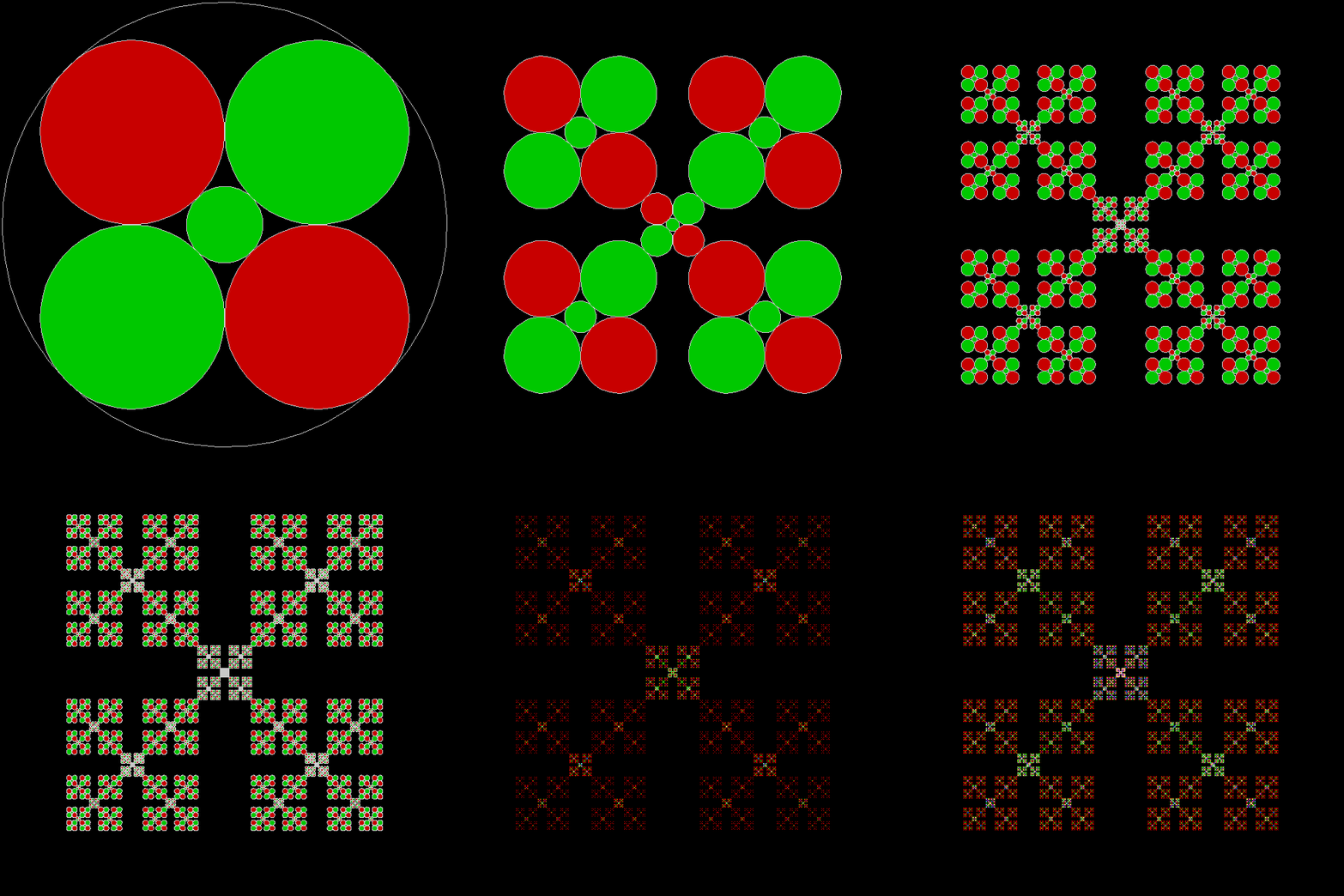
This shape has formal structure and beauty, but it has no explicit meaning. Its name has a divine echo: the Apollonian gasket or net, named after the Greek mathematician Apollonius of Perga (c.262 BC–c.190 BC), who was named after Apollo, god of music, poetry and mathematics. The Apollonian gasket is a fractal, but the version above is not as fractal as it could be. I wondered what it would look like if, like fleas preying on fleas, circles appeared inside circles, gaskets within gaskets. I haven’t managed to program the shape properly yet, but here is my first effort at an Intra-Apollonian gasket:

Apollonian gasket

(If the image does not animate or looks distorted, please try opening it in a new window)

When the circles are solid, they remind me of ice-floes inside ice-floes:

Apollonian gasket (solid)

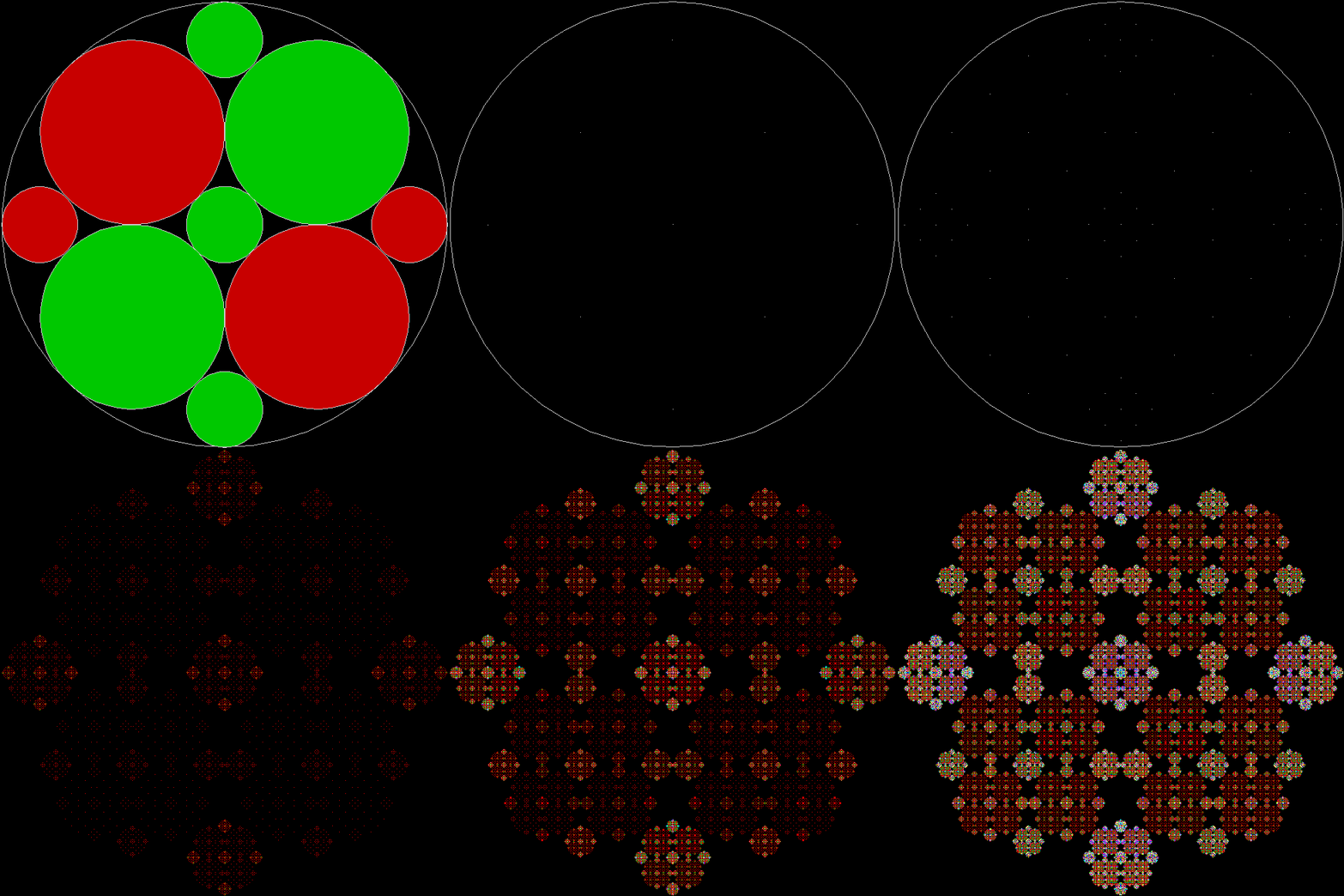
Simpler gaskets can be interesting too:

five-circle gasket


five+four-circle gasket


nine-circle gasket

Tri Again

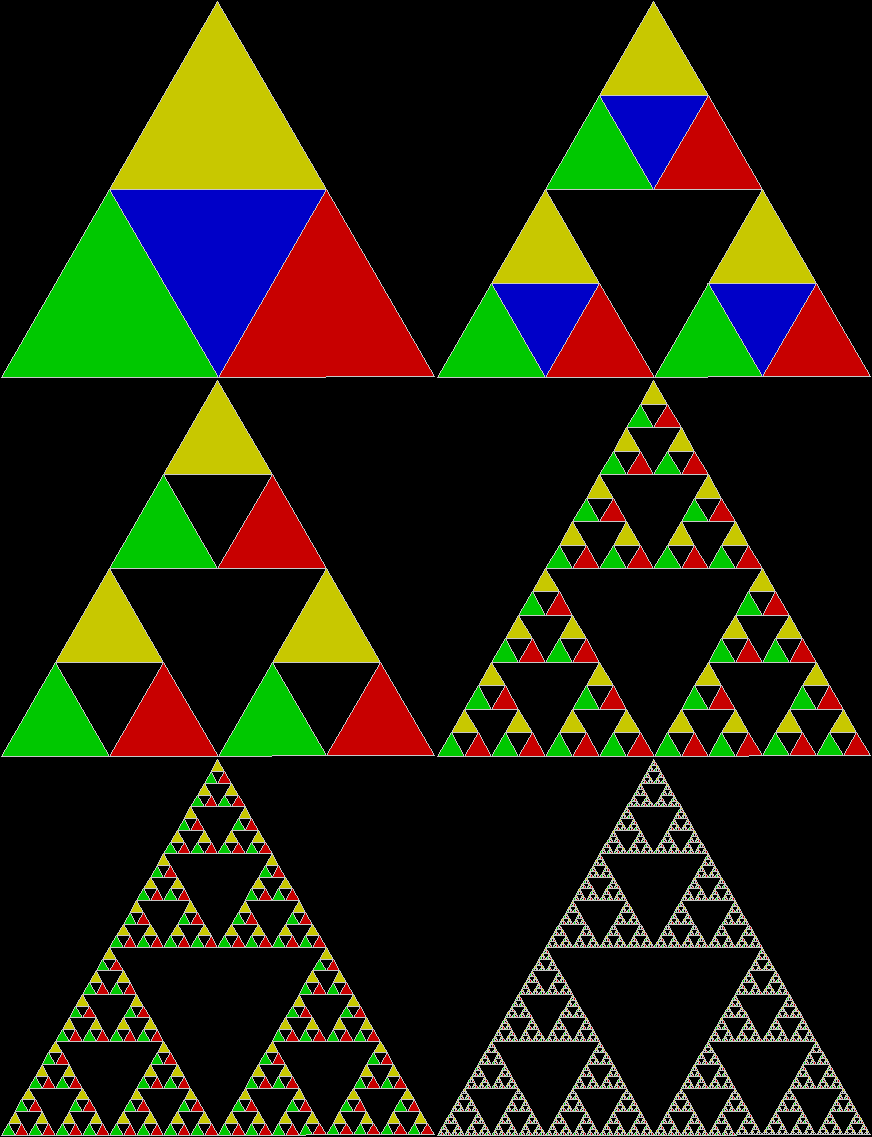
All roads lead to Rome, so the old saying goes. But you may get your feet wet, so try the Sierpiński triangle instead. This fractal is named after the Polish mathematician Wacław Sierpiński (1882-1969) and quite a few roads lead there too. You can create it by deleting, jumping or bending, inter alia. Here is method #1:

Sierpinski middle delete

Divide an equilateral triangle into four, remove the central triangle, do the same to the new triangles.

Here is method #2:

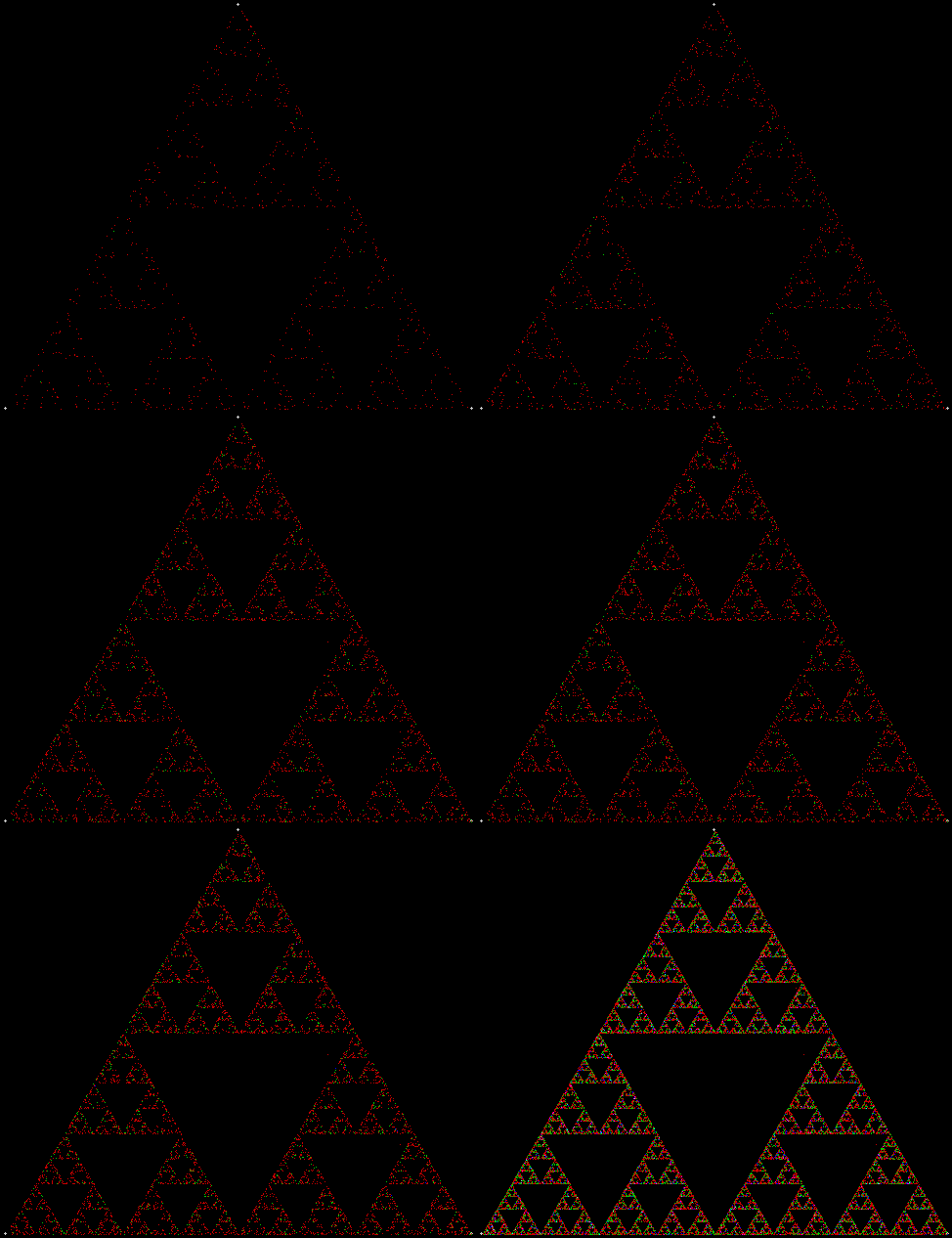
Sierpinski random jump

Pick a corner at random, jump half-way towards it, mark the spot, repeat.

And here is method #3:

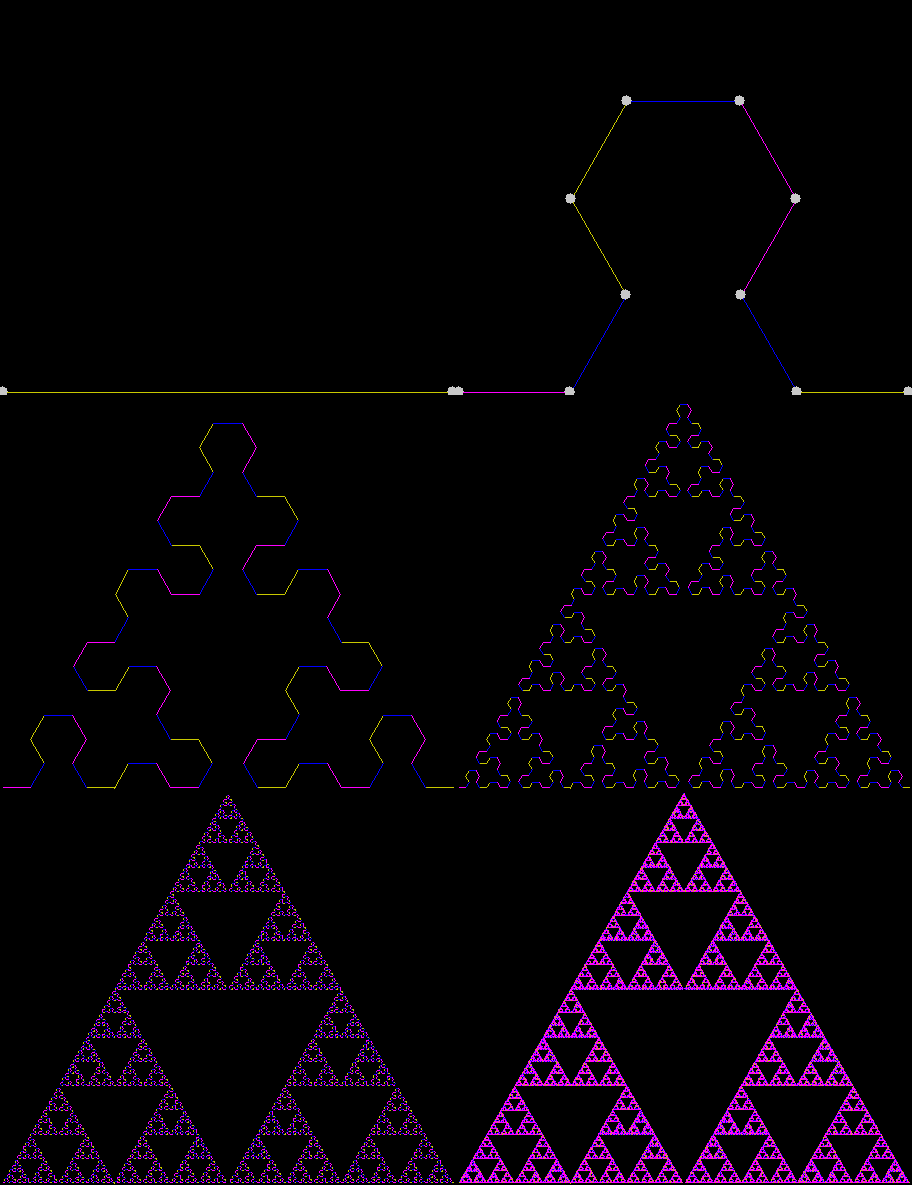
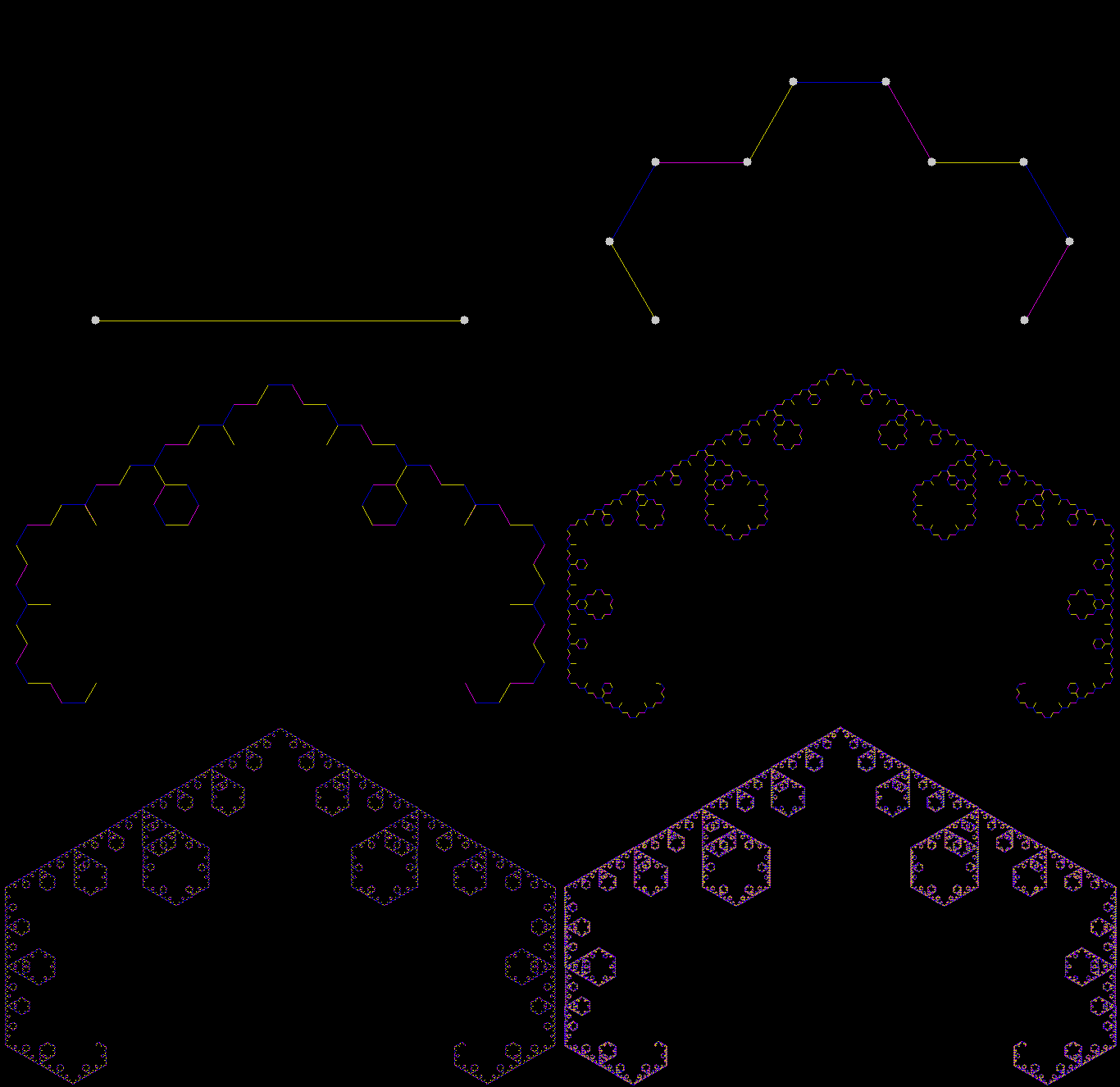
Sierpinski arrowhead

Bend a straight line into a hump consisting of three straight lines, then repeat with each new line.

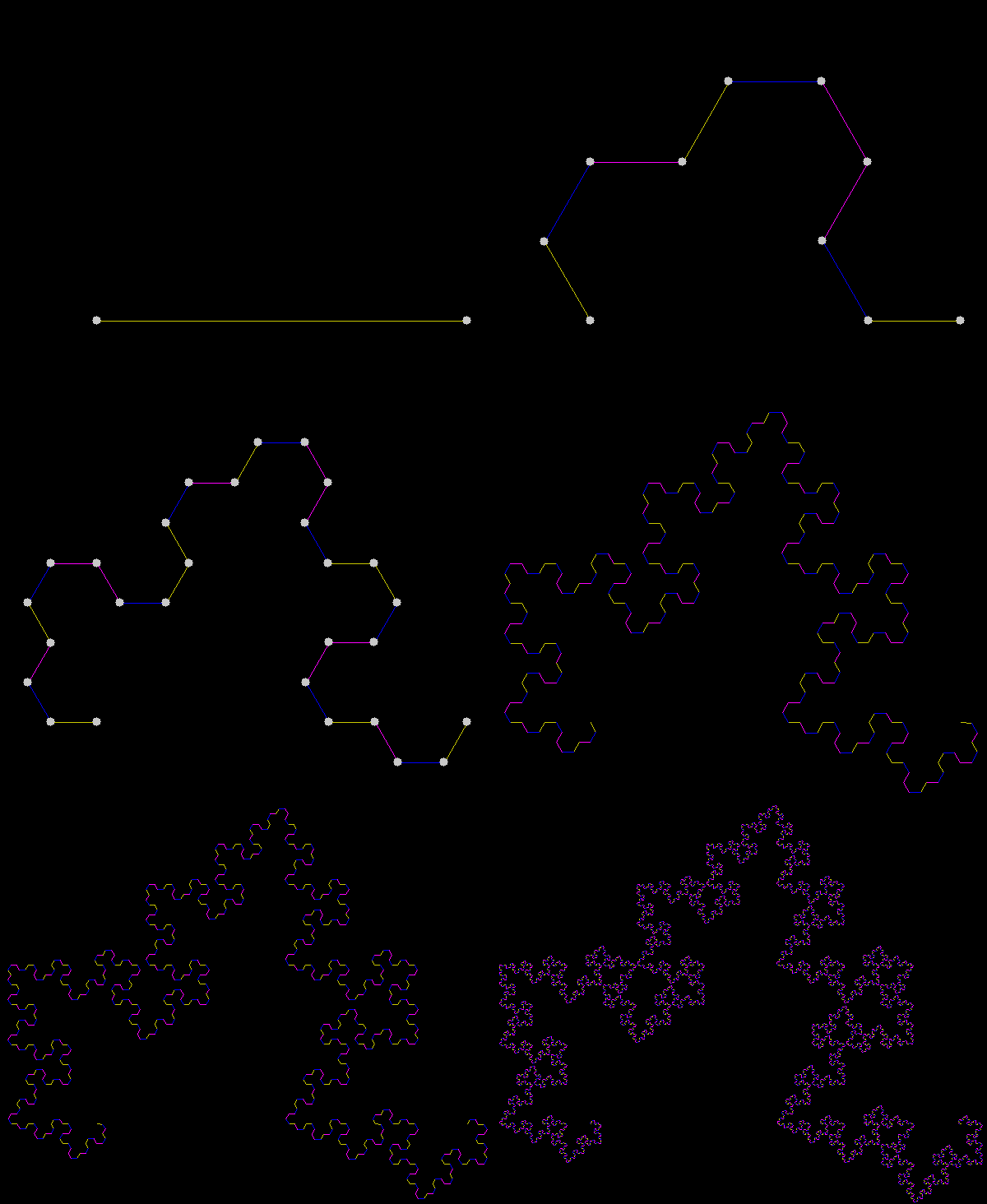
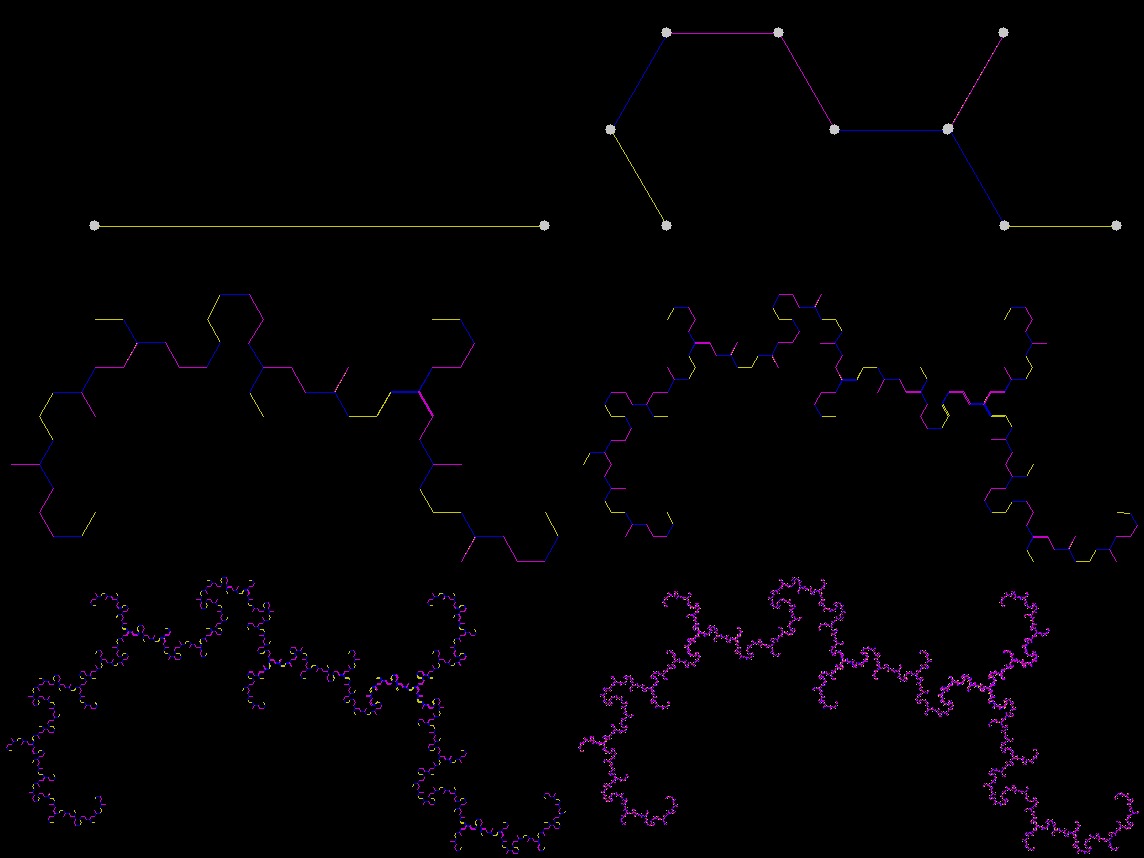
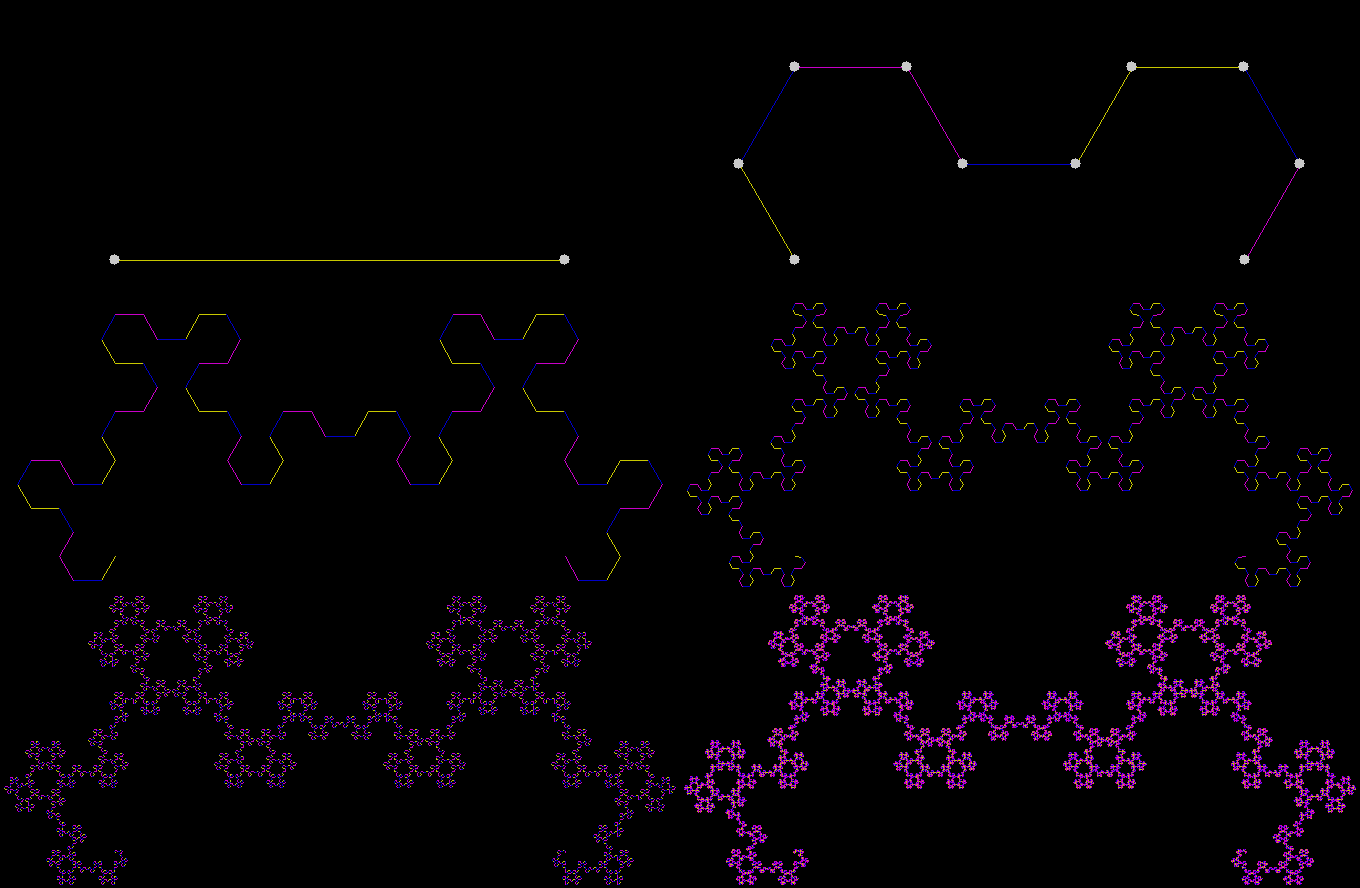
Each method can be varied to create new fractals. Method #3, which is also known as the arrowhead fractal, depends on the orientation of the additional humps, as you can see from the animated gif above. There are eight, or 2 x 2 x 2, ways of varying these three orientations, so eight fractals can be produced if the same combination of orientations is kept at each stage, like this (some are mirror images — if an animated gif doesn’t work, please open it in a new window):

arrowhead1

arrowhead2

arrowhead3

arrowhead4

arrowhead5

If different combinations are allowed at different stages, the number of different fractals gets much bigger:

• Continuing viewing Tri Again.

V for Vertex

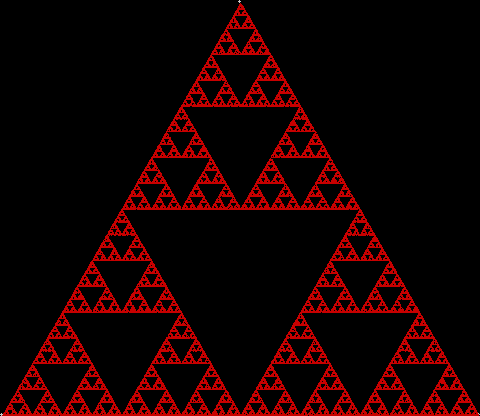
To create a simple fractal, take an equilateral triangle and divide it into four more equilateral triangles. Remove the middle triangle. Repeat the process with each new triangle and go on repeating it. You’ll end up with a shape like this, which is known as the Sierpiński triangle, after the Polish mathematician Wacław Sierpiński (1882-1969):

Sierpinski triangle

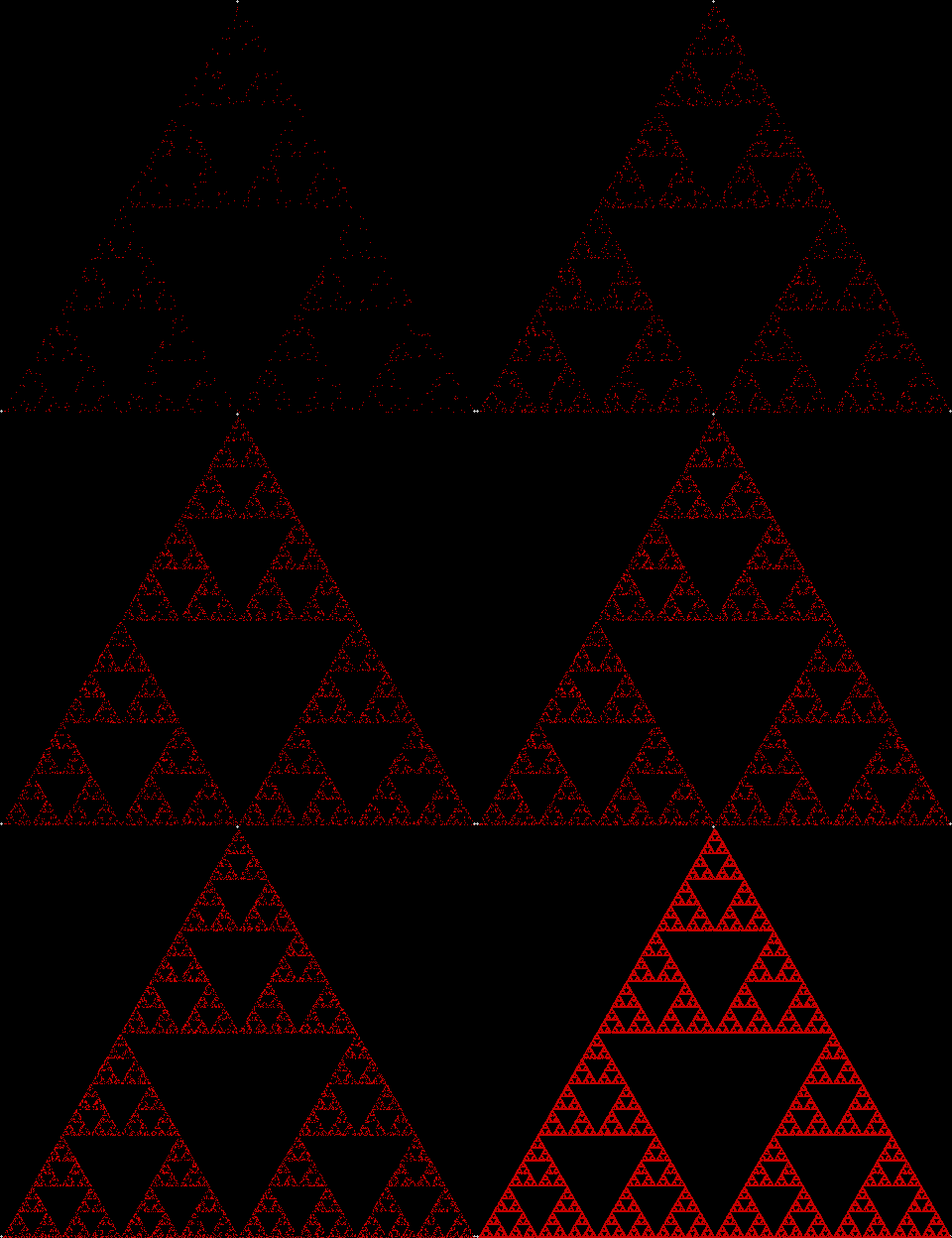
But you can also create the Sierpiński triangle one pixel at a time. Choose any point inside an equilateral triangle. Pick a corner of the triangle at random and move half-way towards it. Mark this spot. Then pick a corner at random again and move half-way towards the corner. And repeat. The result looks like this:

triangle

A simple program to create the fractal looks like this:

initial()
repeat
  fractal()
  altervariables()
until false

function initial()
  v = 3 [v for vertex]
  r = 500
  lm = 0.5
endfunc

function fractal()
  th = 2 * pi / v
[the following loop creates the corners of the triangle]
  for l = 1 to v
    x[l]=xcenter + sin(l*th) * r
    y[l]=ycenter + cos(l*th) * r
  next l
  fx = xcenter
  fy = ycenter
  repeat
    rv = random(v)
    fx = fx + (x[rv]-fx) * lm
    fy = fy + (y[rv]-fy) * lm
    plot(fx,fy)
  until keypressed
endfunc

function altervariables()
[change v, lm, r etc]
endfunc

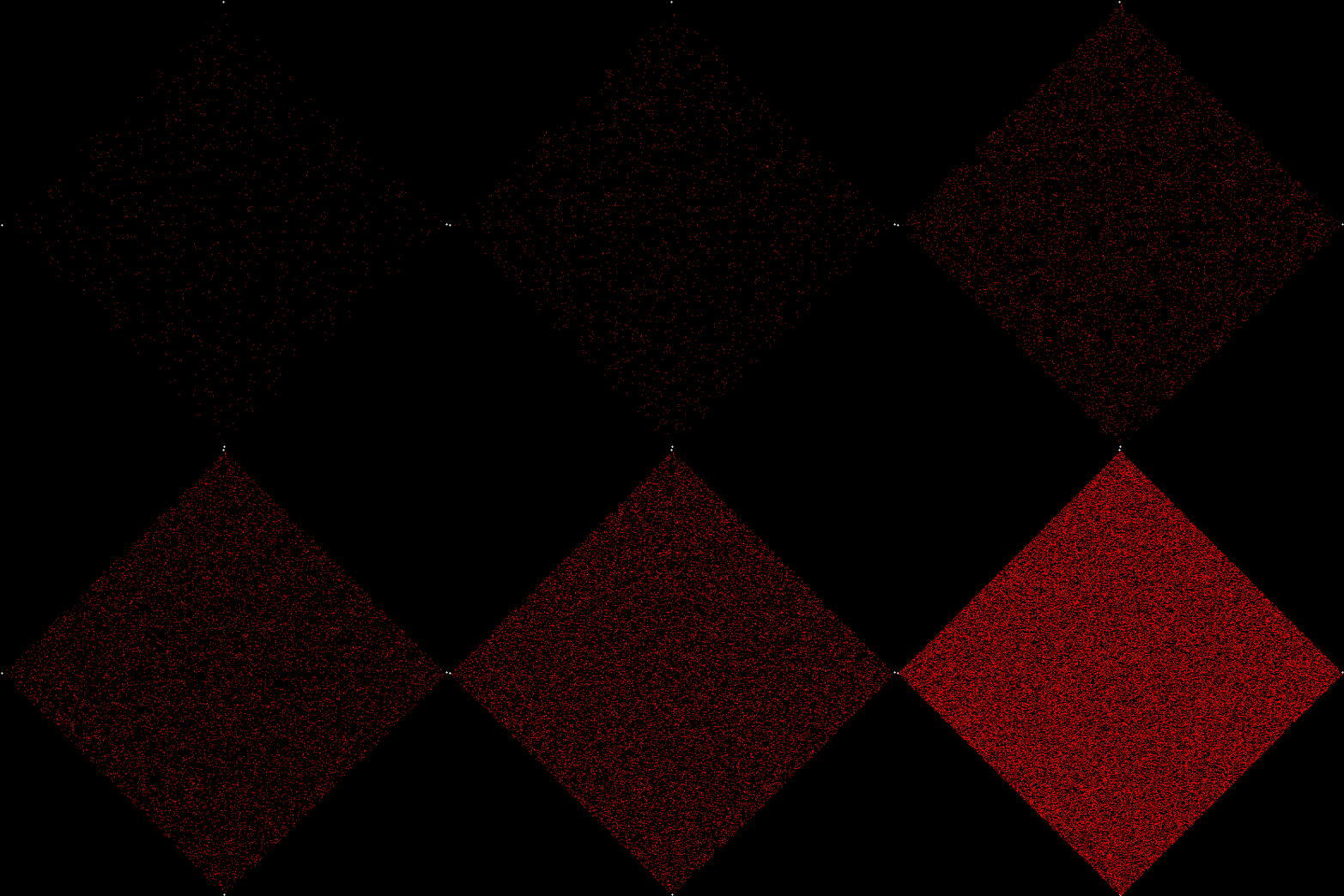
In this case, more is less. When v = 4 and the shape is a square, there is no fractal and plot(fx,fy) covers the entire square.

square

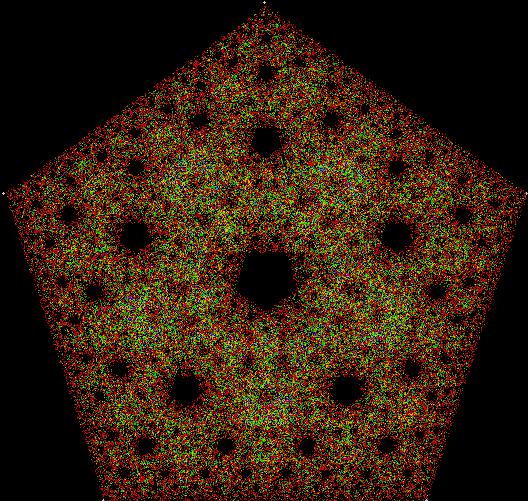
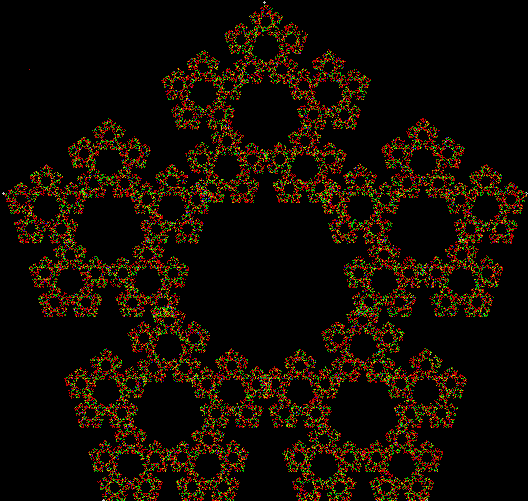
When v = 5 and the shape is a pentagon, this fractal appears:

pentagon

But v = 4 produces a fractal if a simple change is made in the program. This time, a corner cannot be chosen twice in a row:

square_used1

function initial()
  v = 4
  r = 500
  lm = 0.5
  ci = 1 [i.e, number of iterations since corner previously chosen]
endfunc

function fractal()
  th = 2 * pi / v
  for l = 1 to v
    x[l]=xcenter + sin(l*th) * r
    y[l]=ycenter + cos(l*th) * r
    chosen[l]=0
  next l
  fx = xcenter
  fy = ycenter
  repeat
    repeat
      rv = random(v)
    until chosen[rv]=0
    for l = 1 to v
      if chosen[l]>0 then chosen[l] = chosen[l]-1
    next l
    chosen[rv] = ci
    fx = fx + (x[rv]-fx) * lm
    fy = fy + (y[rv]-fy) * lm
    plot(fx,fy)
  until keypressed
endfunc

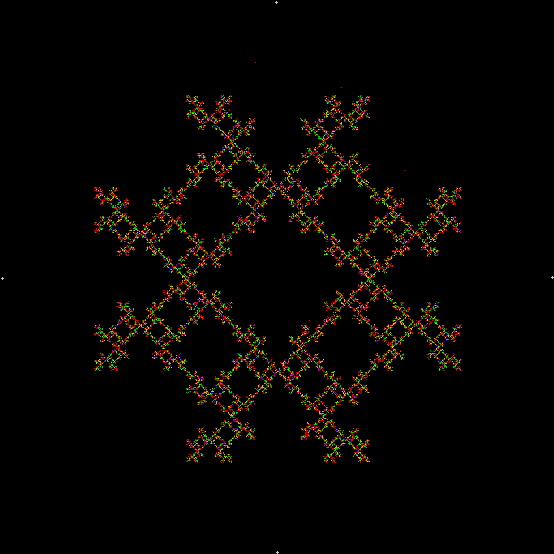
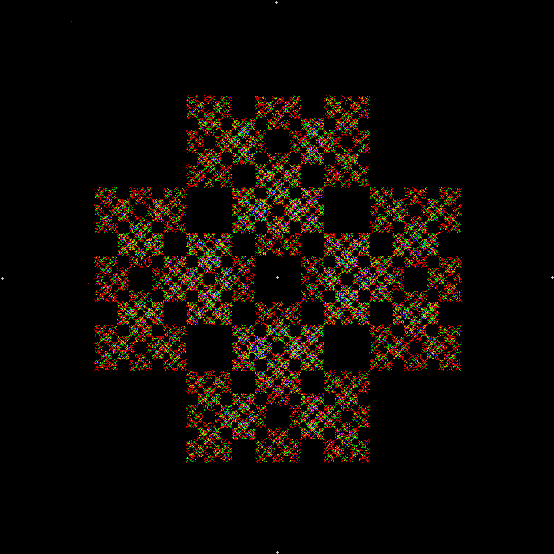
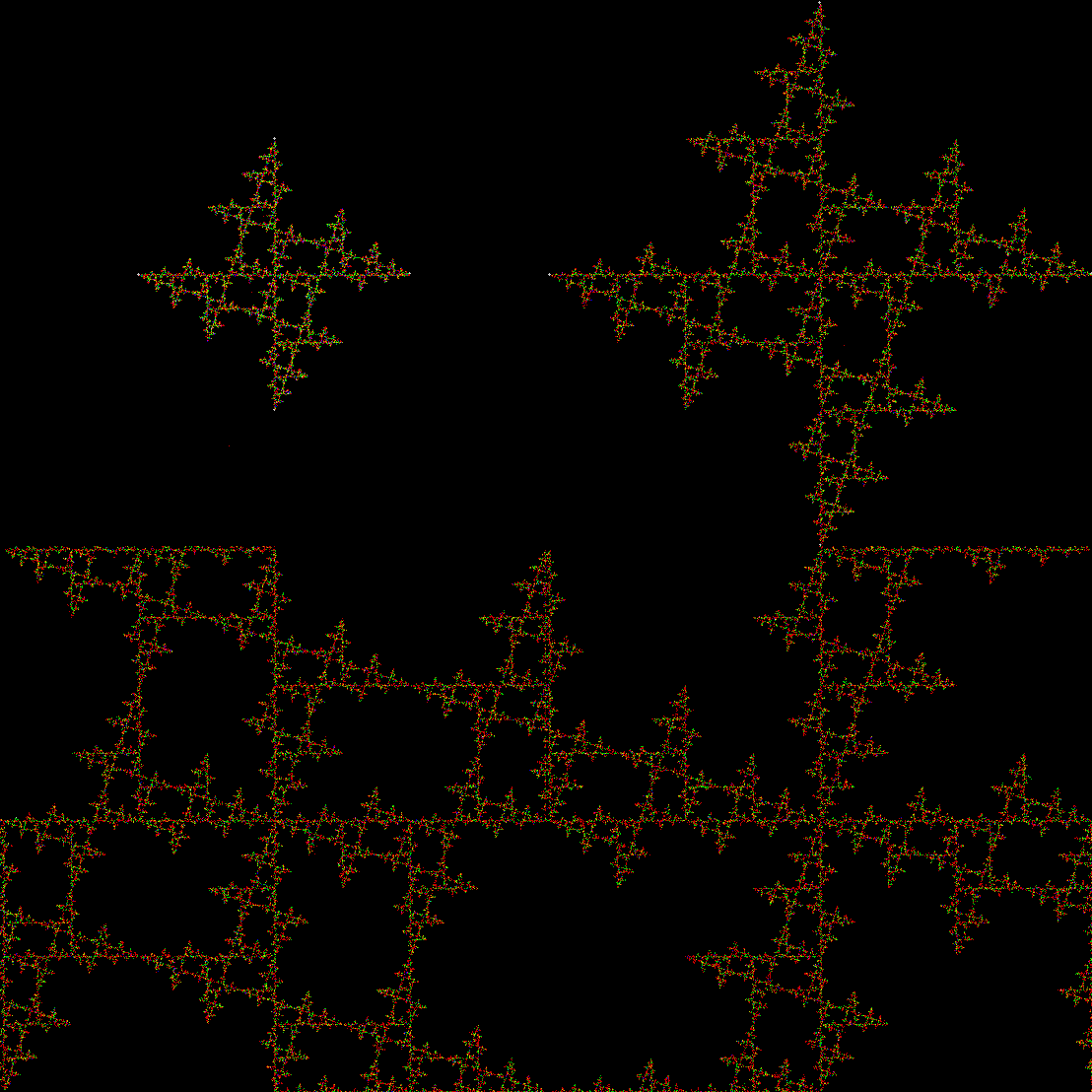
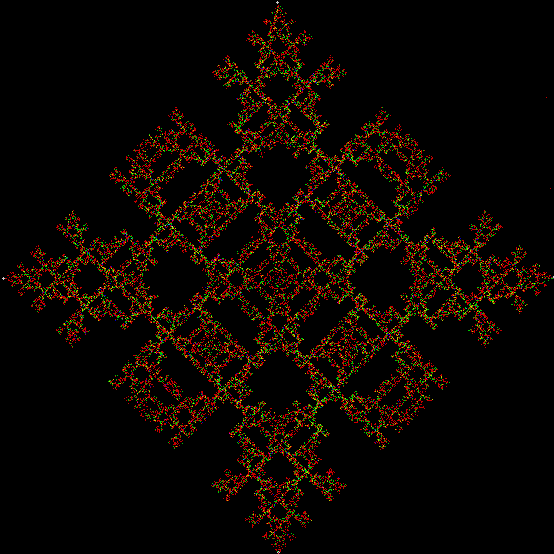
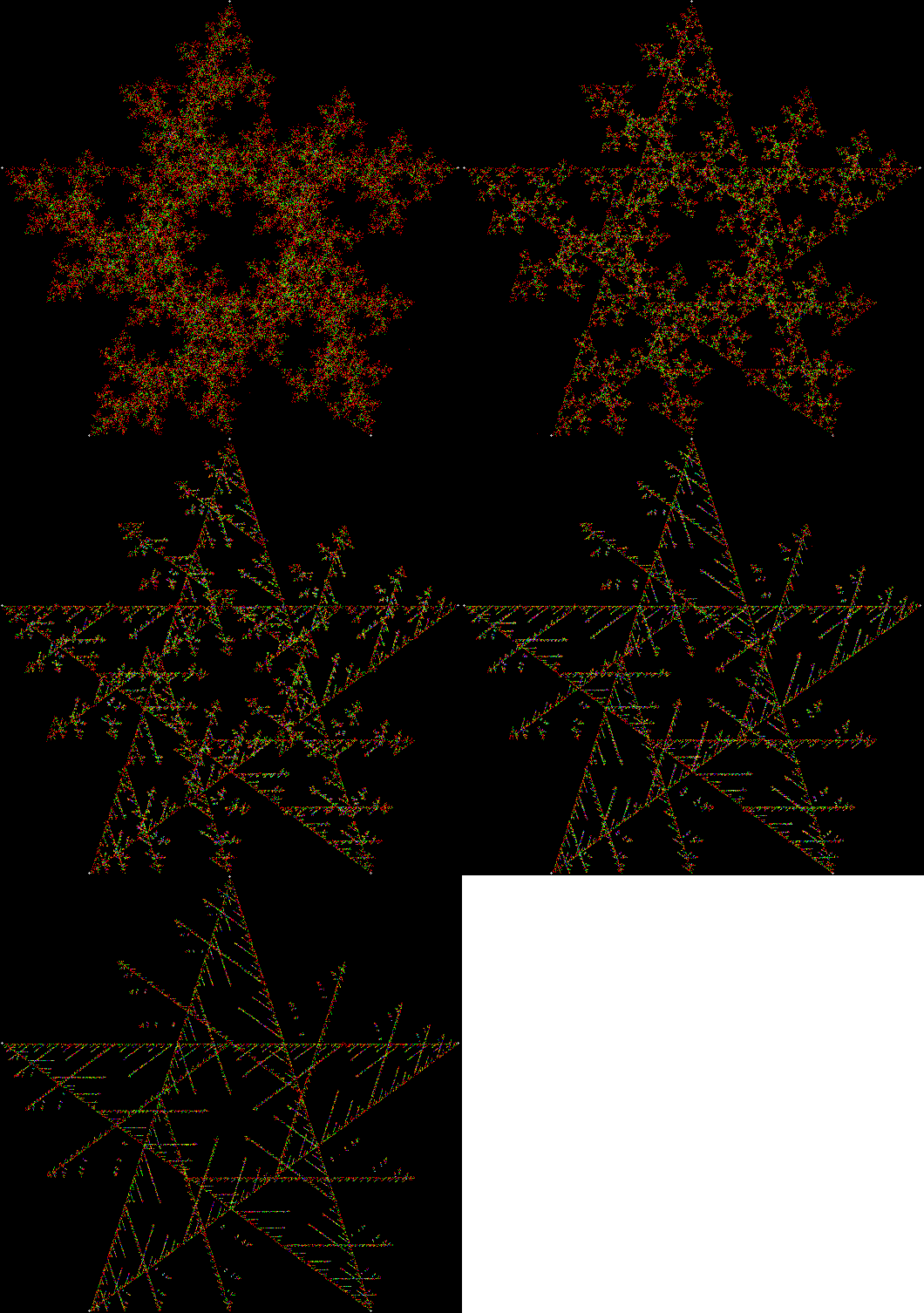
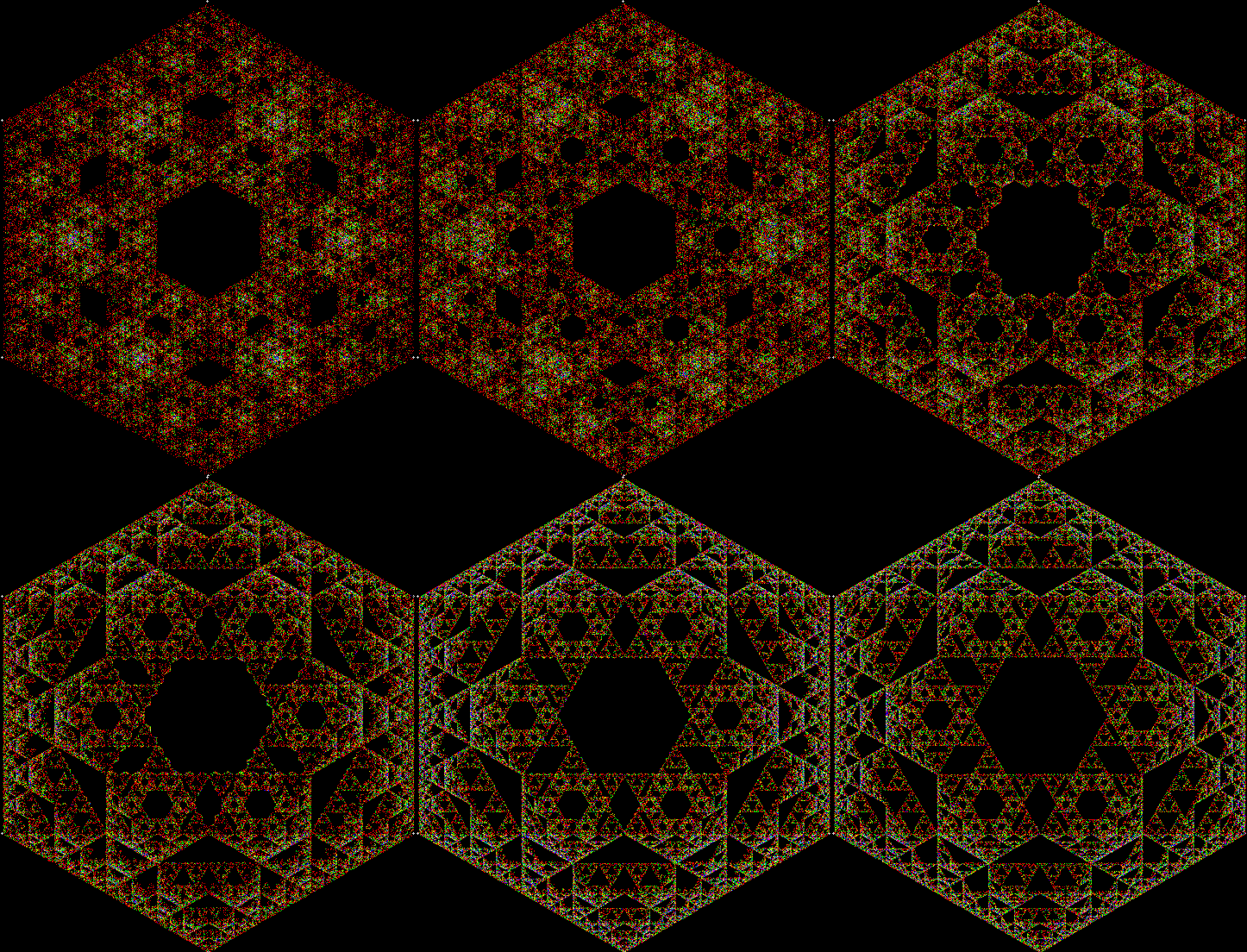
One can also disallow a corner if the corner next to it has been chosen previously, adjust the size of the movement towards the chosen corner, add a central point to the polygon, and so on. Here are more fractals created with such variations:

square_used1_center

square_used1_vi1

square_used1_vi2

square_used2

pentagon_lm0.6

pentagon_used1_5_vi1

hexagon_used1_6_vi3

Live and Let Dice

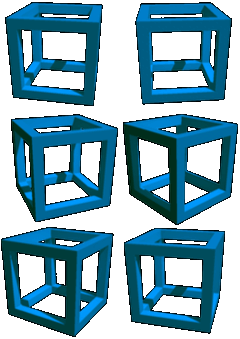
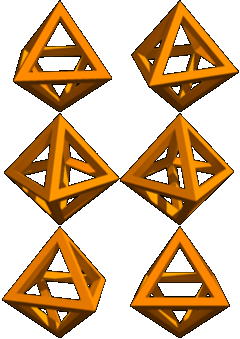
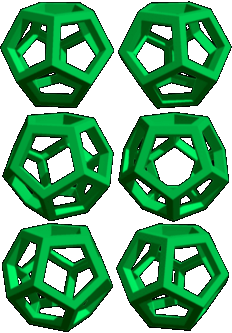
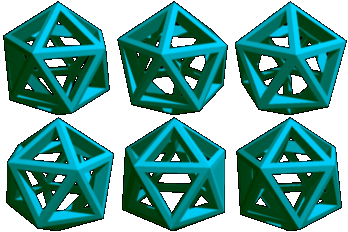
How many ways are there to die? The answer is actually five, if by “die” you mean “roll a die” and by “rolled die” you mean “Platonic polyhedron”. The Platonic polyhedra are the solid shapes in which each polygonal face and each vertex (meeting-point of the edges) are the same. There are surprisingly few. Search as long and as far as you like: you’ll find only five of them in this or any other universe. The standard cubic die is the most familiar: each of its six faces is square and each of its eight vertices is the meeting-point of three edges. The other four Platonic polyhedra are the tetrahedron, with four triangular faces and four vertices; the octahedron, with eight triangular faces and six vertices; the dodecahedron, with twelve pentagonal faces and twenty vertices; and the icosahedron, with twenty triangular faces and twelve vertices. Note the symmetries of face- and vertex-number: the dodecahedron can be created inside the icosahedron, and vice versa. Similarly, the cube, or hexahedron, can be created inside the octahedron, and vice versa. The tetrahedron is self-spawning and pairs itself. Plato wrote about these shapes in his Timaeus (c. 360 B.C.) and based a mathemystical cosmology on them, which is why they are called the Platonic polyhedra.

An animated gif of a tetrahedron

Tetrahedron


An animated gif of a hexahedron

Hexahedron

An animated gif of an octahedron

Octahedron


An animated gif of a dodecahedron

Dodecahedron

An animated gif of an icosahedron

Icosahedron

They make good dice because they have no preferred way to fall: each face has the same relationship with the other faces and the centre of gravity, so no face is likelier to land uppermost. Or downmost, in the case of the tetrahedron, which is why it is the basis of the caltrop. This is a spiked weapon, used for many centuries, that always lands with a sharp point pointing upwards, ready to wound the feet of men and horses or damage tyres and tracks. The other four Platonic polyhedra don’t have a particular role in warfare, as far as I know, but all five might have a role in jurisprudence and might raise an interesting question about probability. Suppose, in some strange Tycholatric, or fortune-worshipping, nation, that one face of each Platonic die represents death. A criminal convicted of a serious offence has to choose one of the five dice. The die is then rolled f times, or as many times as it has faces. If the death-face is rolled, the criminal is executed; if not, he is imprisoned for life.

The question is: Which die should he choose to minimize, or maximize, his chance of getting the death-face? Or doesn’t it matter? After all, for each die, the odds of rolling the death-face are 1/f and the die is rolled f times. Each face of the tetrahedron has a 1/4 chance of being chosen, but the tetrahedron is rolled only four times. For the icosahedron, it’s a much smaller 1/20 chance, but the die is rolled twenty times. Well, it does matter which die is chosen. To see which offers the best odds, you have to raise the odds of not getting the death-face to the power of f, like this:

3/4 x 3/4 x 3/4 x 3/4 = 3/4 ^4 = 27/256 = 0·316…

5/6 ^6 = 15,625 / 46,656 = 0·335…

7/8 ^8 = 5,764,801 / 16,777,216 = 0·344…

11/12 ^12 = 3,138,428,376,721 / 8,916,100,448,256 = 0·352…

19/20 ^20 = 37,589,973,457,545,958,193,355,601 / 104,857,600,000,000,000,000,000,000 = 0·358…

Those represent the odds of avoiding the death-face. Criminals who want to avoid execution should choose the icosahedron. For the odds of rolling the death-face, simply subtract the avoidance-odds from 1, like this:

1 – 3/4 ^4 = 0·684…

1 – 5/6 ^6 = 0·665…

1 – 7/8 ^8 = 0·656…

1 – 11/12 ^12 = 0·648…

1 – 19/20 ^20 = 0·642…

So criminals who prefer execution to life-imprisonment should choose the tetrahedron. If the Tycholatric nation offers freedom to every criminal who rolls the same face of the die f times, then the tetrahedron is also clearly best. The odds of rolling a single specified face f times are 1/f ^f:

1/4 x 1/4 x 1/4 x 1/4 = 1/4^4 = 1 / 256

1/6^6 = 1 / 46,656

1/8^8 = 1 / 16,777,216

1/12^12 = 1 / 8,916,100,448,256

1/20^20 = 1 / 104,857,600,000,000,000,000,000,000

But there are f faces on each polyhedron, so the odds of rolling any face f times are 1/f ^(f-1). On average, of every sixty-four (256/4) criminals who choose to roll the tetrahedron, one will roll the same face four times and be reprieved. If a hundred criminals face the death-penalty each year and all choose to roll the tetrahedron, one criminal will be reprieved roughly every eight months. But if all criminals choose to roll the icosahedron and they have been rolling since the Big Bang, just under fourteen billion years ago, it is very, very, very unlikely that any have yet been reprieved.

Rep-Tile Reflections

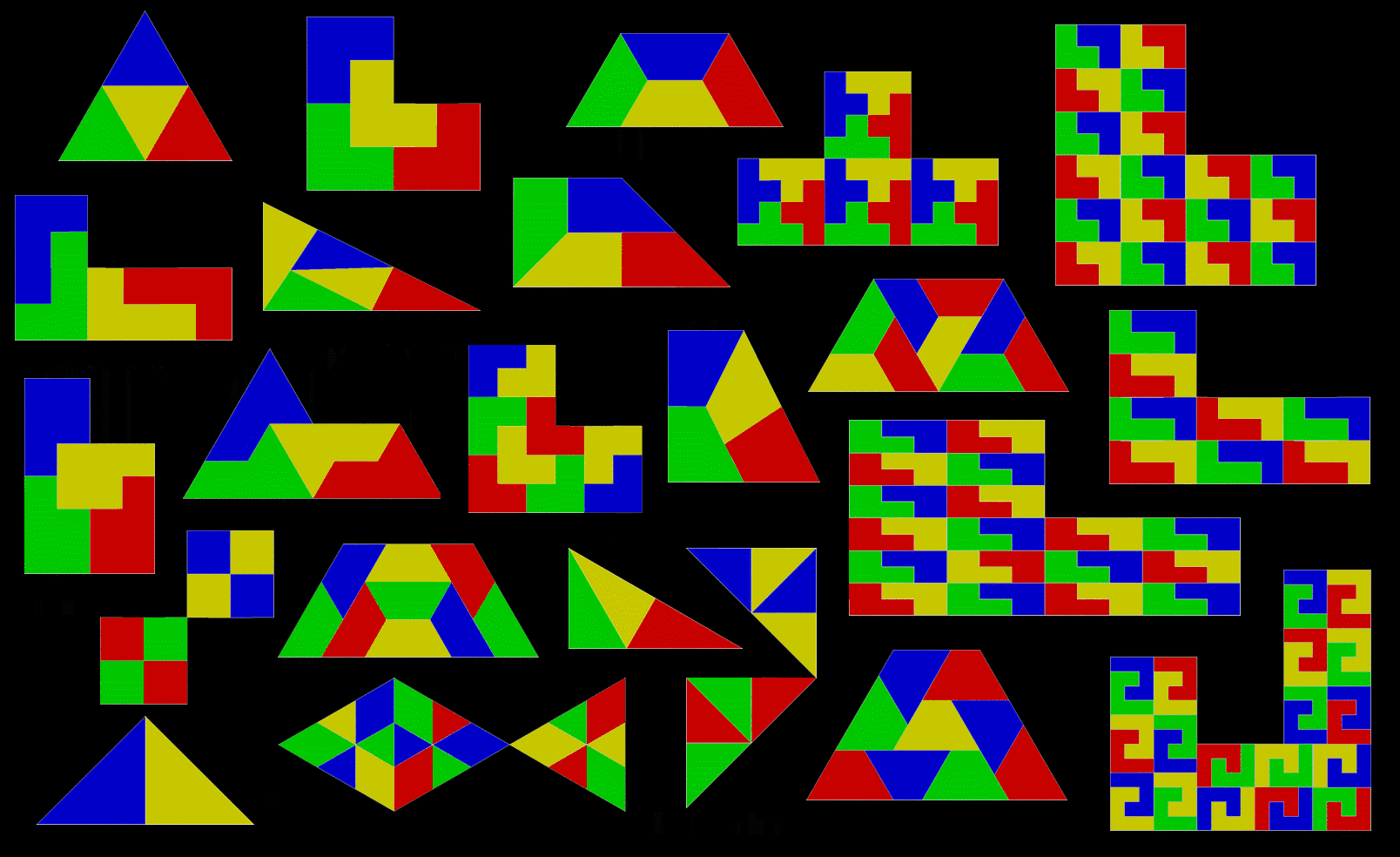
A rep-tile, or repeat-tile, is a two-dimensional shape that can be divided completely into copies of itself. A square, for example, can be divided into smaller squares: four or nine or sixteen, and so on. Rectangles are the same. Triangles can be divided into two copies or three or more, depending on their precise shape. Here are some rep-tiles, including various rep-triangles:

Various rep-tiles

Various rep-tiles — click for larger image

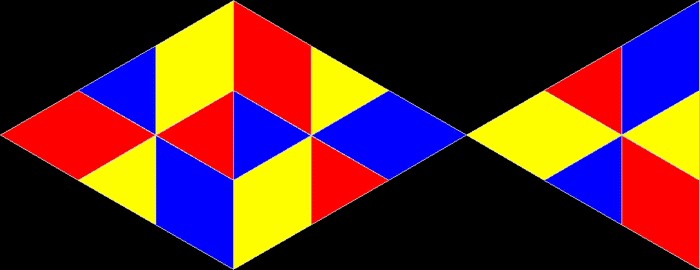
Some are simple, some are complex. Some have special names: the sphinx and the fish are easy to spot. I like both of those, particularly the fish. It would make a good symbol for a religion: richly evocative of life, eternally sub-divisible of self: 1, 9, 81, 729, 6561, 59049, 531441… I also like the double-square, the double-triangle and the T-tile in the top row. But perhaps the most potent, to my mind, is the half-square in the bottom left-hand corner. A single stroke sub-divides it, yet its hypotenuse, or longer side, represents the mysterious and mind-expanding √2, a number that exists nowhere in the physical universe. But the half-square itself is mind-expanding. All rep-tiles are. If intelligent life exists elsewhere in the universe, perhaps other minds are contemplating the fish or the sphinx or the half-square and musing thus: “If intelligent life exists elsewhere in the universe, perhaps…”

Mathematics unites human minds across barriers of language, culture and politics. But perhaps it unites minds across barriers of biology too. Imagine a form of life based on silicon or gas, on unguessable combinations of matter and energy in unreachable, unobservable parts of the universe. If it’s intelligent life and has discovered mathematics, it may also have discovered rep-tiles. And it may be contemplating the possibility of other minds doing the same. And why confine these speculations to this universe and this reality? In parallel universes, in alternative realities, minds may be contemplating rep-tiles and speculating in the same way. If our universe ends in a Big Crunch and then explodes again in a Big Bang, intelligent life may rise again and discover rep-tiles again and speculate again on their implications. The wildest speculation of all would be to hypothesize a psycho-math-space, a mental realm beyond time and matter where, in mathemystic communion, suitably attuned and aware minds can sense each other’s presence and even communicate.

The rep-tile known as the fish

Credo in Piscem…

So meditate on the fish or the sphinx or the half-square. Do you feel the tendrils of an alien mind brush your own? Are you in communion with a stone-being from the far past, a fire-being from the far future, a hive-being from a parallel universe? Well, probably not. And even if you do feel those mental tendrils, how would you know they’re really there? No, I doubt that the psycho-math-space exists. But it might and science might prove its existence one day. Another possibility is that there is no other intelligent life, never has been, and never will be. We may be the only ones who will ever muse on rep-tiles and other aspects of mathematics. Somehow, though, rep-tiles themselves seem to say that this isn’t so. Particularly the fish. It mimics life and can spawn itself eternally. As I said, it would make a good symbol for a religion: a mathemysticism of trans-biological communion. Credo in Piscem, Unum et Infinitum et Æternum. “I believe in the Fish, One, Unending, Everlasting.” That might be the motto of the religion. If you want to join it, simply wish upon the fish and muse on other minds, around other stars, who may be doing the same.