Thrice Dice Twice

A once very difficult but now very simple problem in probability from Ian Stewart’s Do Dice Play God? (2019):

For three dice [Girolamo] Cardano solved a long-standing conundrum [in the sixteenth century]. Gamblers had long known from experience that when throwing three dice, a total of 10 is more likely than 9. This puzzled them, however, because there are six ways to get a total of 10:

1+4+5; 1+3+6; 2+4+4; 2+2+6; 2+3+5; 3+3+4

But also six ways to get a total of 9:

1+2+6; 1+3+5; 1+4+4; 2+2+5; 2+3+4; 3+3+3

So why does 10 occur more often?

To see the answer, imagine throwing three dice of different colors: red, blue and yellow. How many ways can you get 9 and how many ways can you get 10?

Roll Total=9 Dice #1 (Red) Dice #2 (Blue) Dice #3 (Yellow)
01 9 = 1 2 6
02 9 = 1 3 5
03 9 = 1 4 4
04 9 = 1 5 3
05 9 = 1 6 2
06 9 = 2 1 6
07 9 = 2 2 5
08 9 = 2 3 4
09 9 = 2 4 3
10 9 = 2 5 2
11 9 = 2 6 1
12 9 = 3 1 5
13 9 = 3 2 4
14 9 = 3 3 3
15 9 = 3 4 2
16 9 = 3 5 1
17 9 = 4 1 4
18 9 = 4 2 3
19 9 = 4 3 2
20 9 = 4 4 1
21 9 = 5 1 3
22 9 = 5 2 2
23 9 = 5 3 1
24 9 = 6 1 2
25 9 = 6 2 1
Roll Total=10 Dice #1 (Red) Dice #2 (Blue) Dice #3 (Yellow)
01 10 = 1 3 6
02 10 = 1 4 5
03 10 = 1 5 4
04 10 = 1 6 3
05 10 = 2 2 6
06 10 = 2 3 5
07 10 = 2 4 4
08 10 = 2 5 3
09 10 = 2 6 2
10 10 = 3 1 6
11 10 = 3 2 5
12 10 = 3 3 4
13 10 = 3 4 3
14 10 = 3 5 2
15 10 = 3 6 1
16 10 = 4 1 5
17 10 = 4 2 4
18 10 = 4 3 3
19 10 = 4 4 2
20 10 = 4 5 1
21 10 = 5 1 4
22 10 = 5 2 3
23 10 = 5 3 2
24 10 = 5 4 1
25 10 = 6 1 3
26 10 = 6 2 2
27 10 = 6 3 1

Back to Drac’ #2

Boring, dull, staid, stiff, everyday, ordinary, unimaginative, unexceptional, crashingly conventional — the only interesting thing about squares is the number of ways you can say how uninteresting they are. Unlike triangles, which vary endlessly and entertainingly, squares are square in every sense of the word.

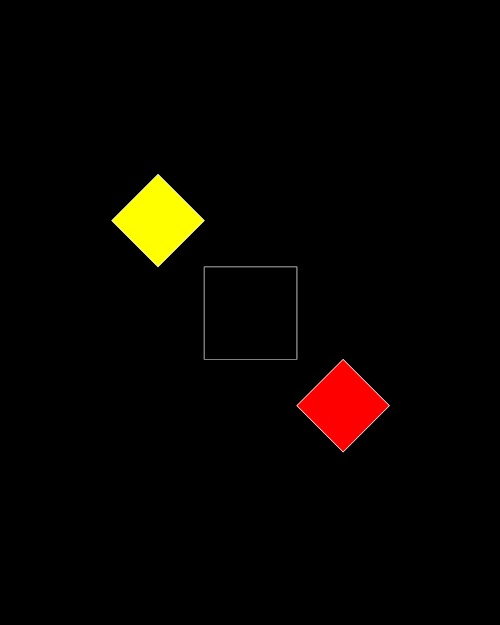
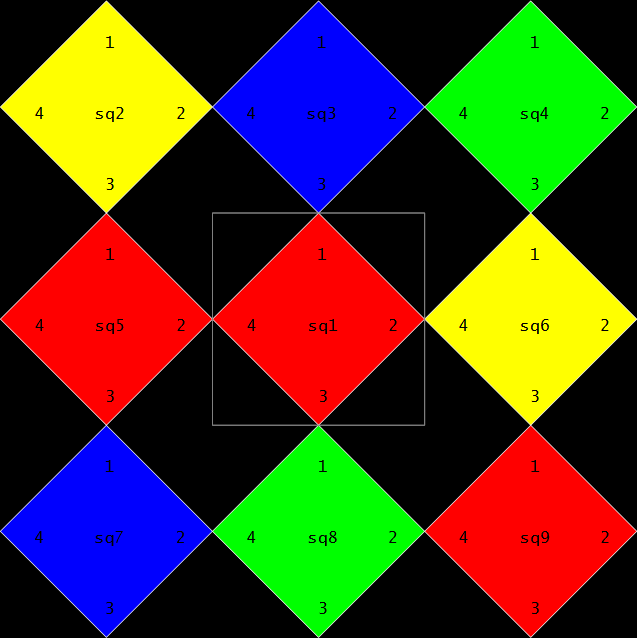
And they don’t get any better if you tilt them, as here:

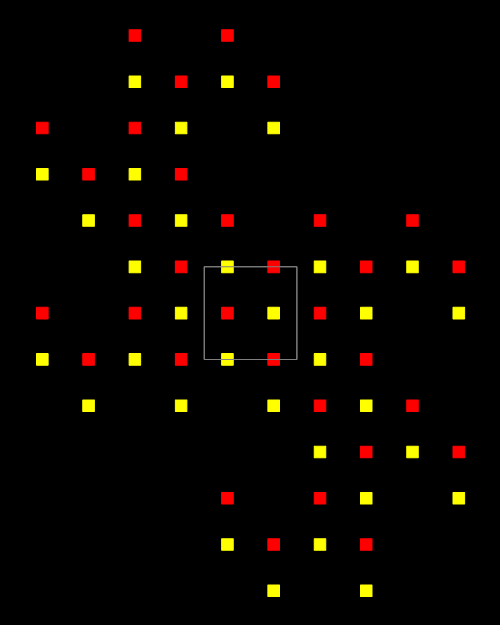
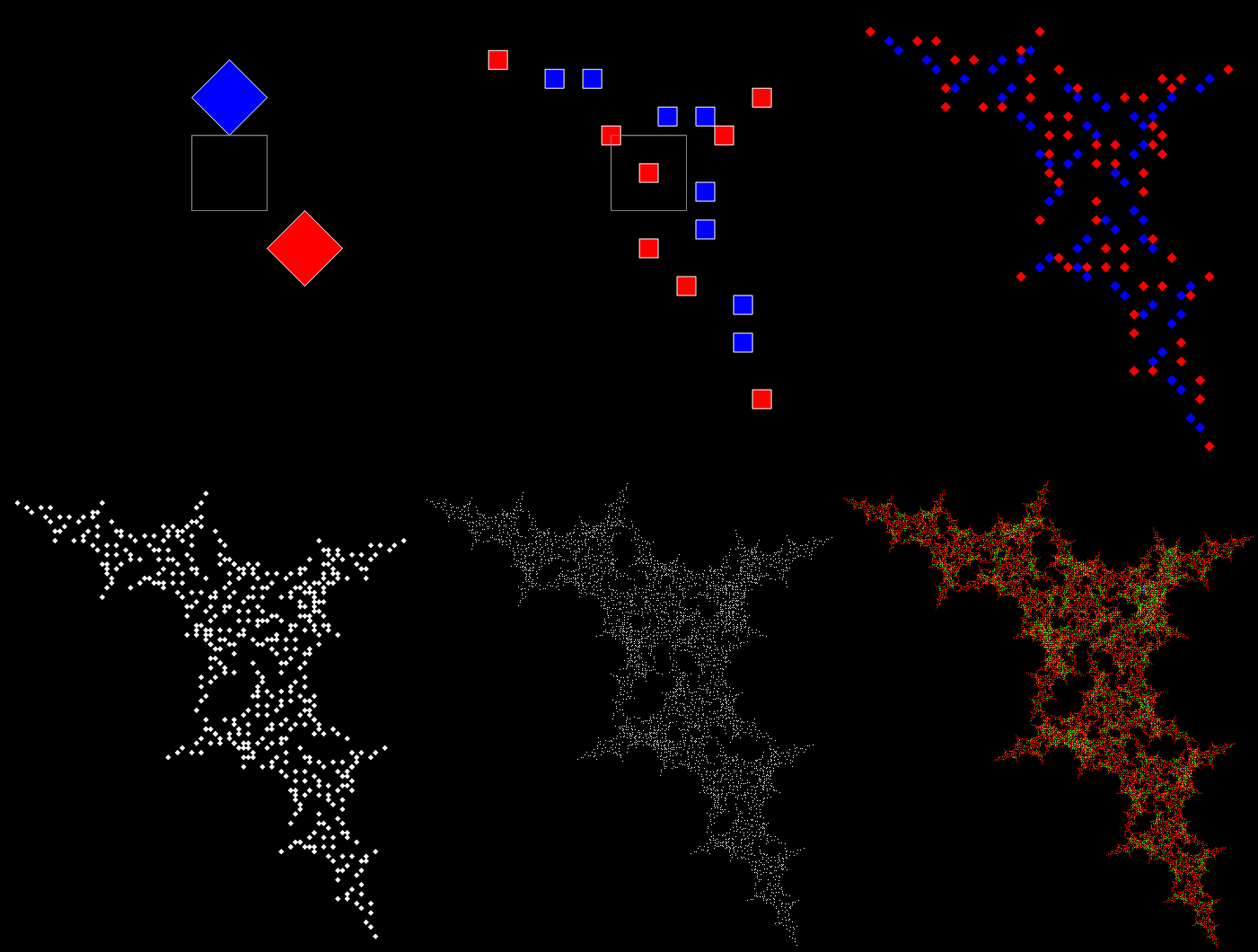
Sub-squares from gray square (with corner-numbers)


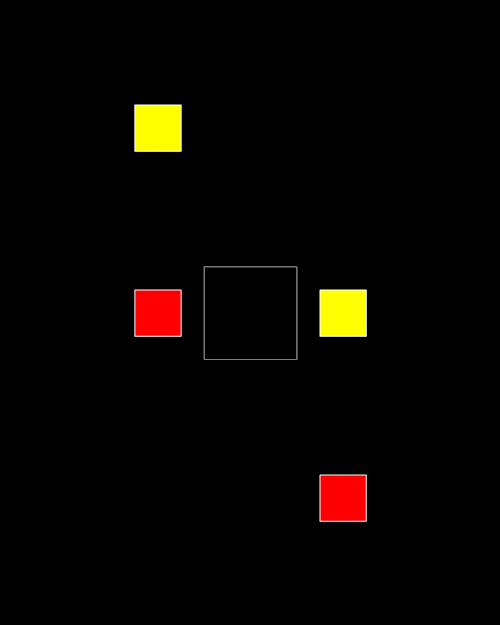
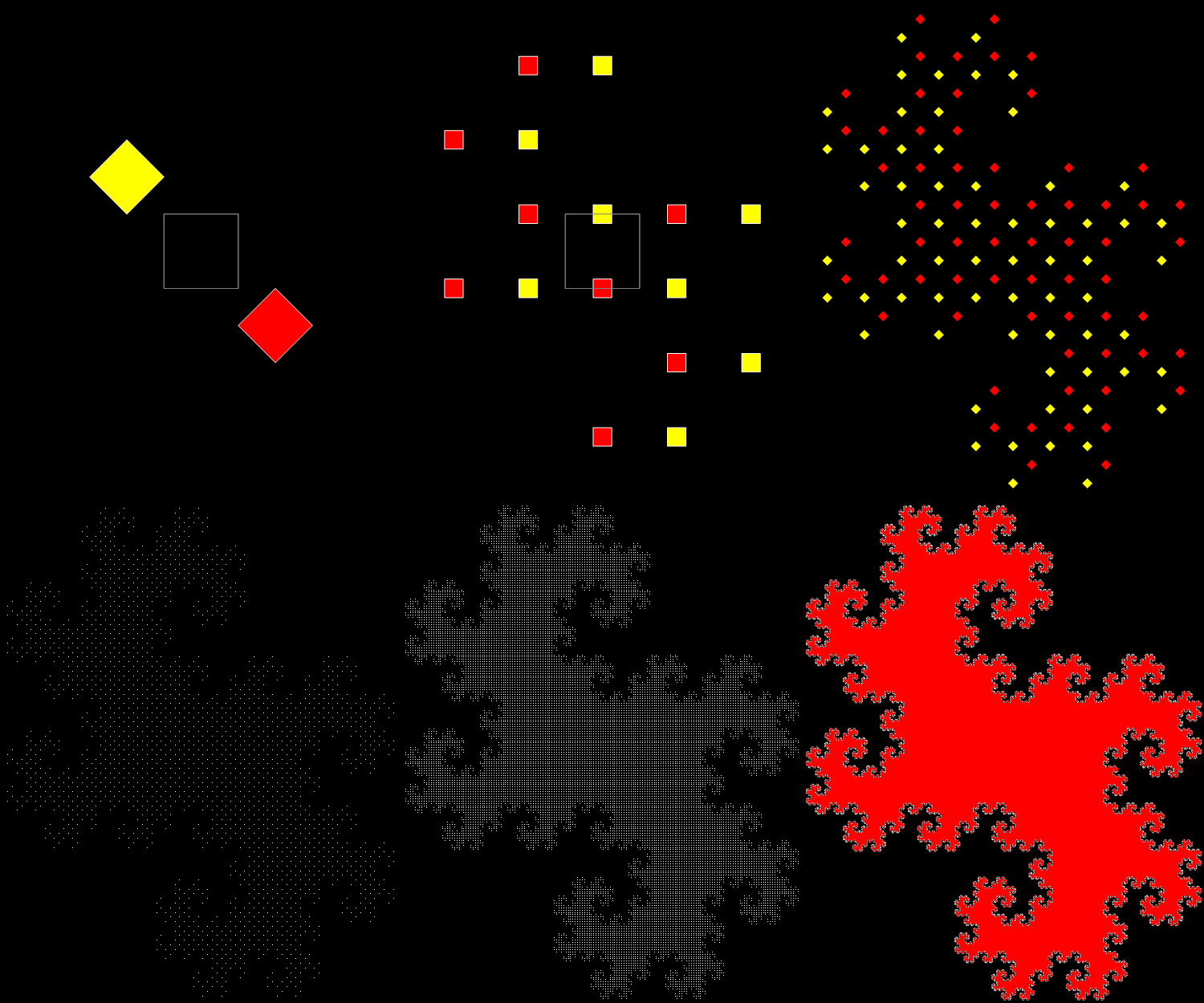
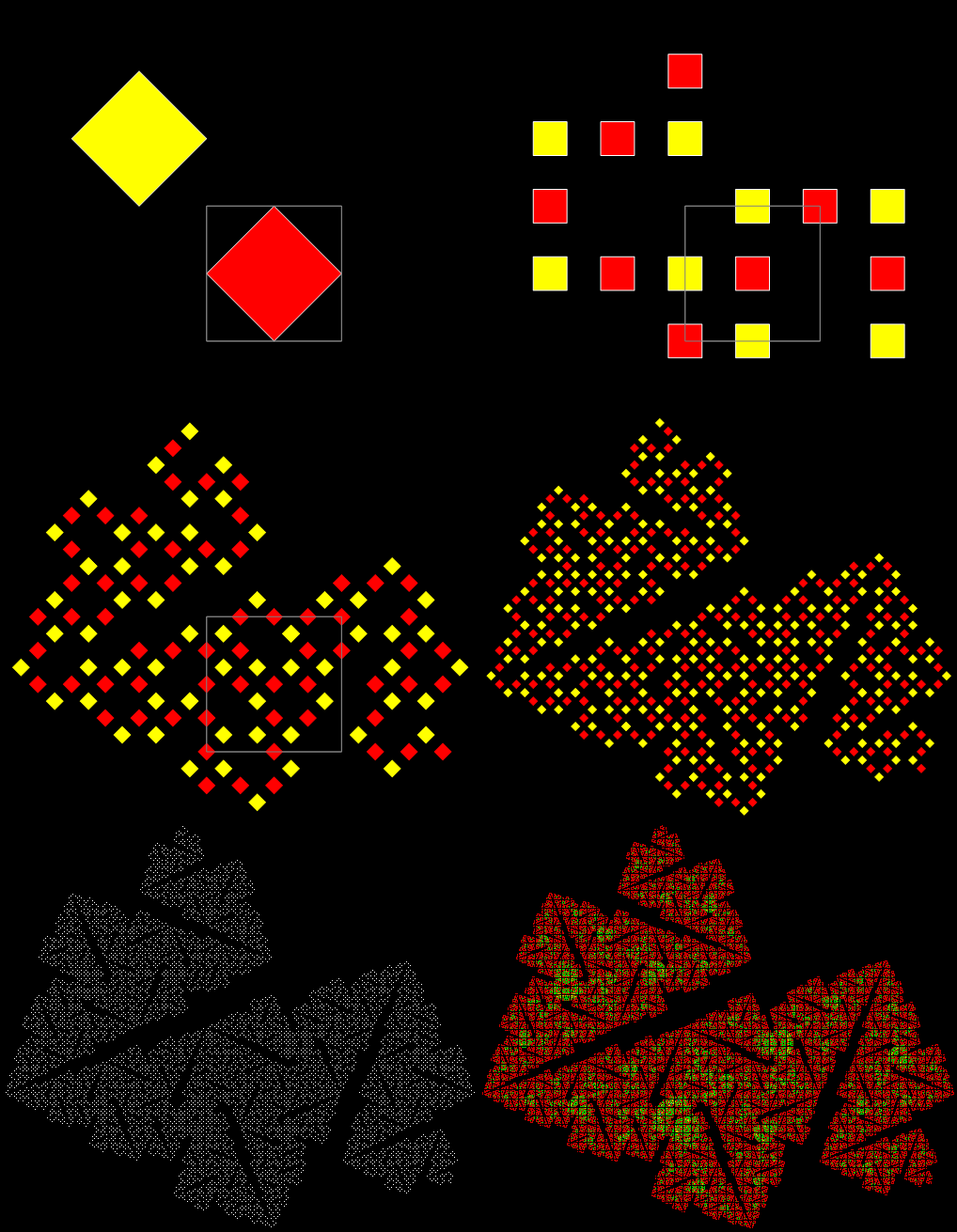
Nothing interesting can emerge from that set of squares. Or can it? As I showed in Curvous Energy, it can. Suppose that the gray square is dividing into the colored squares like a kind of amoeba. And suppose that the colored squares divide in their turn. So square divides into sub-squares and sub-squares divide into sub-sub-squares. And so on. And all the squares keep the same relative orientation.

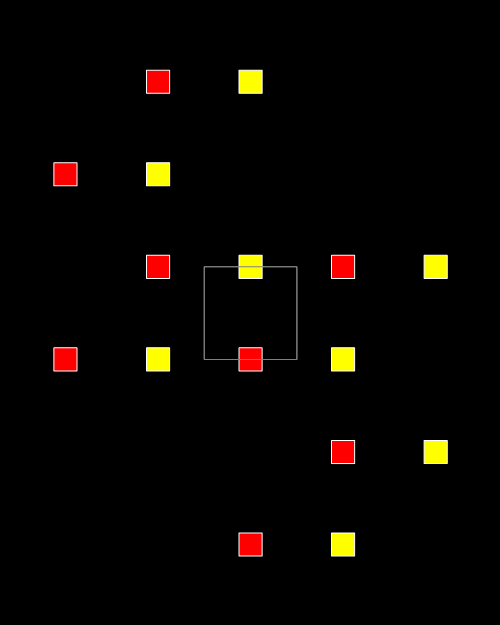
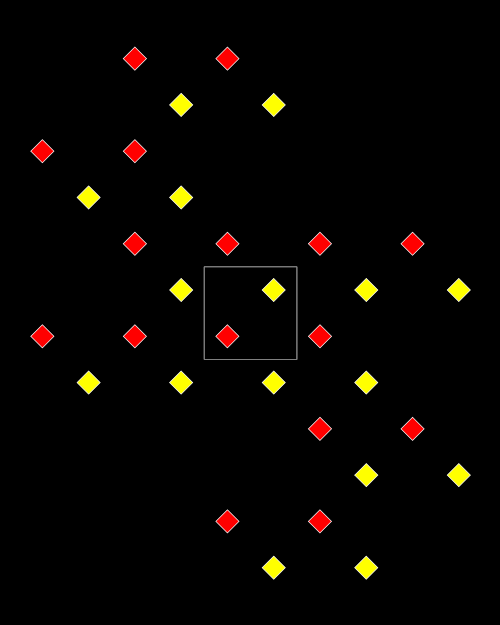
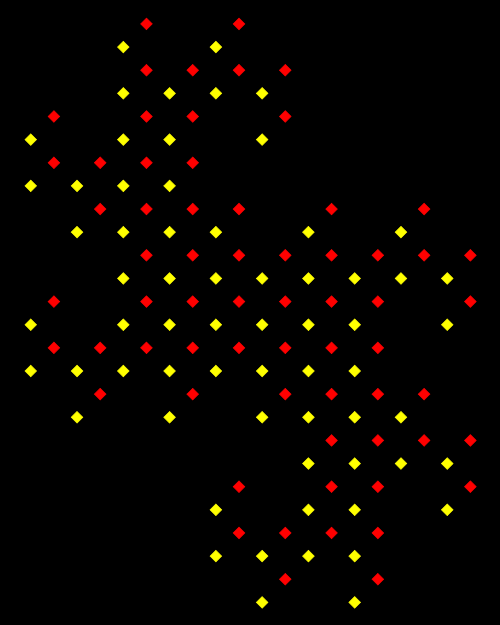
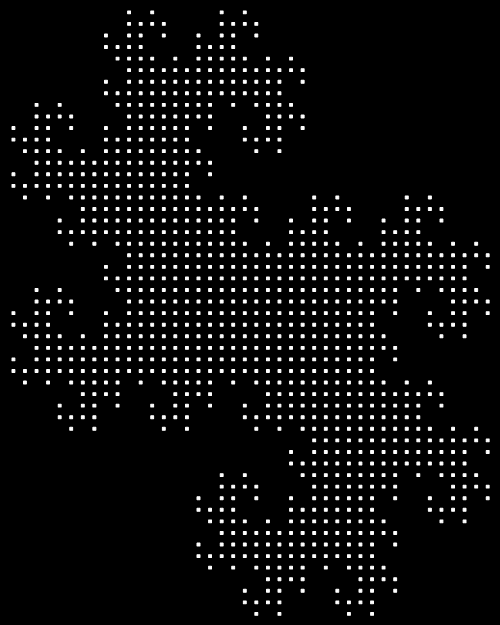
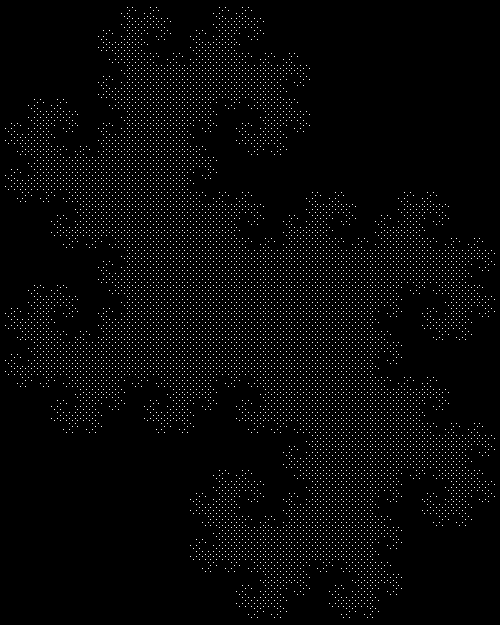
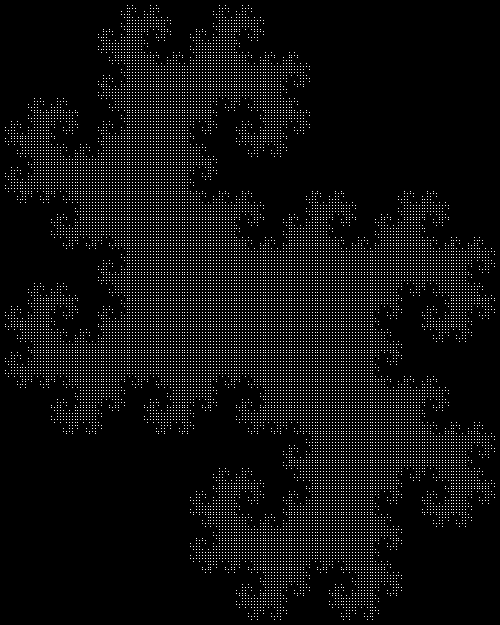
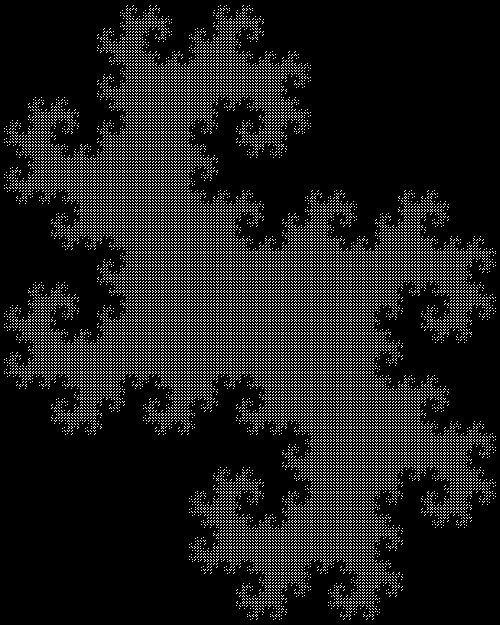
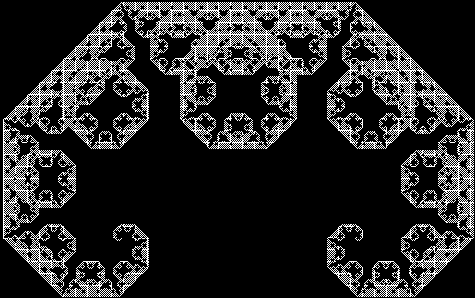
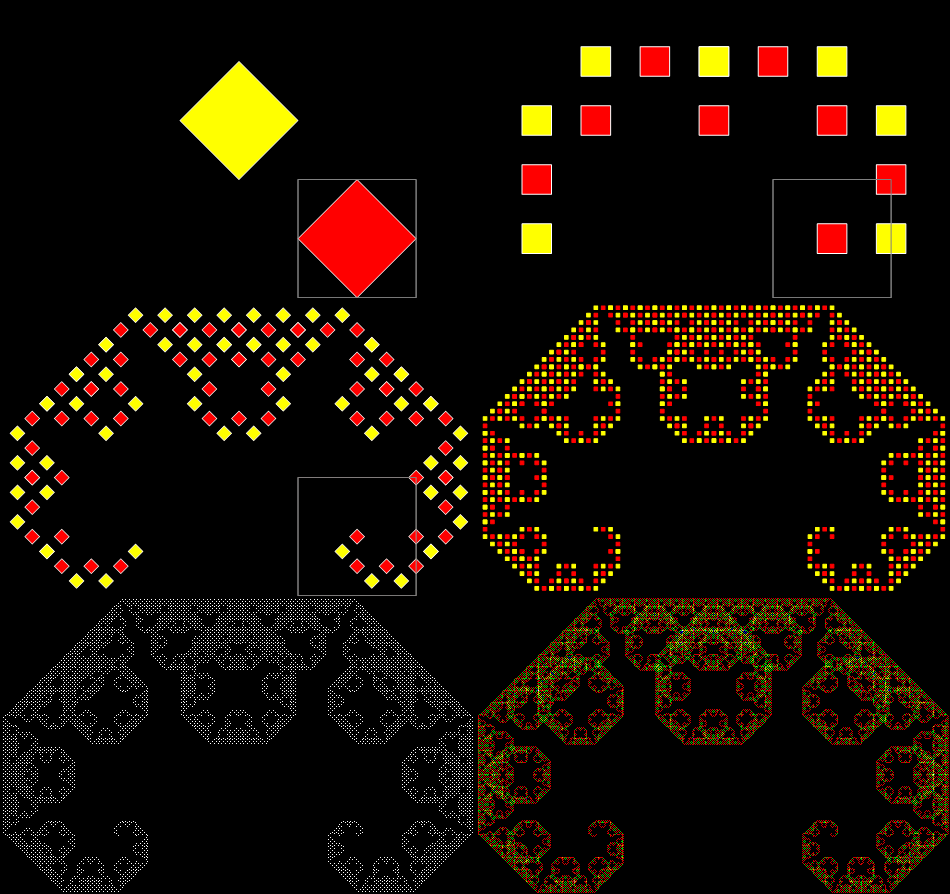
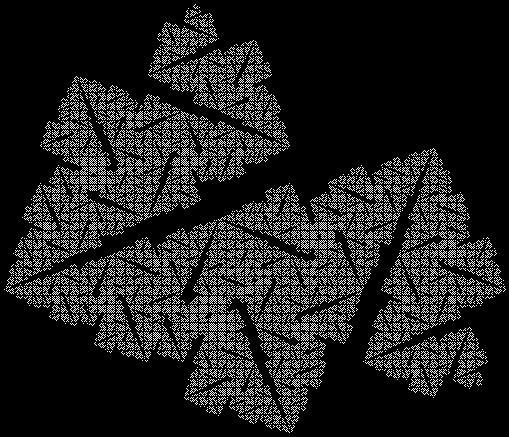
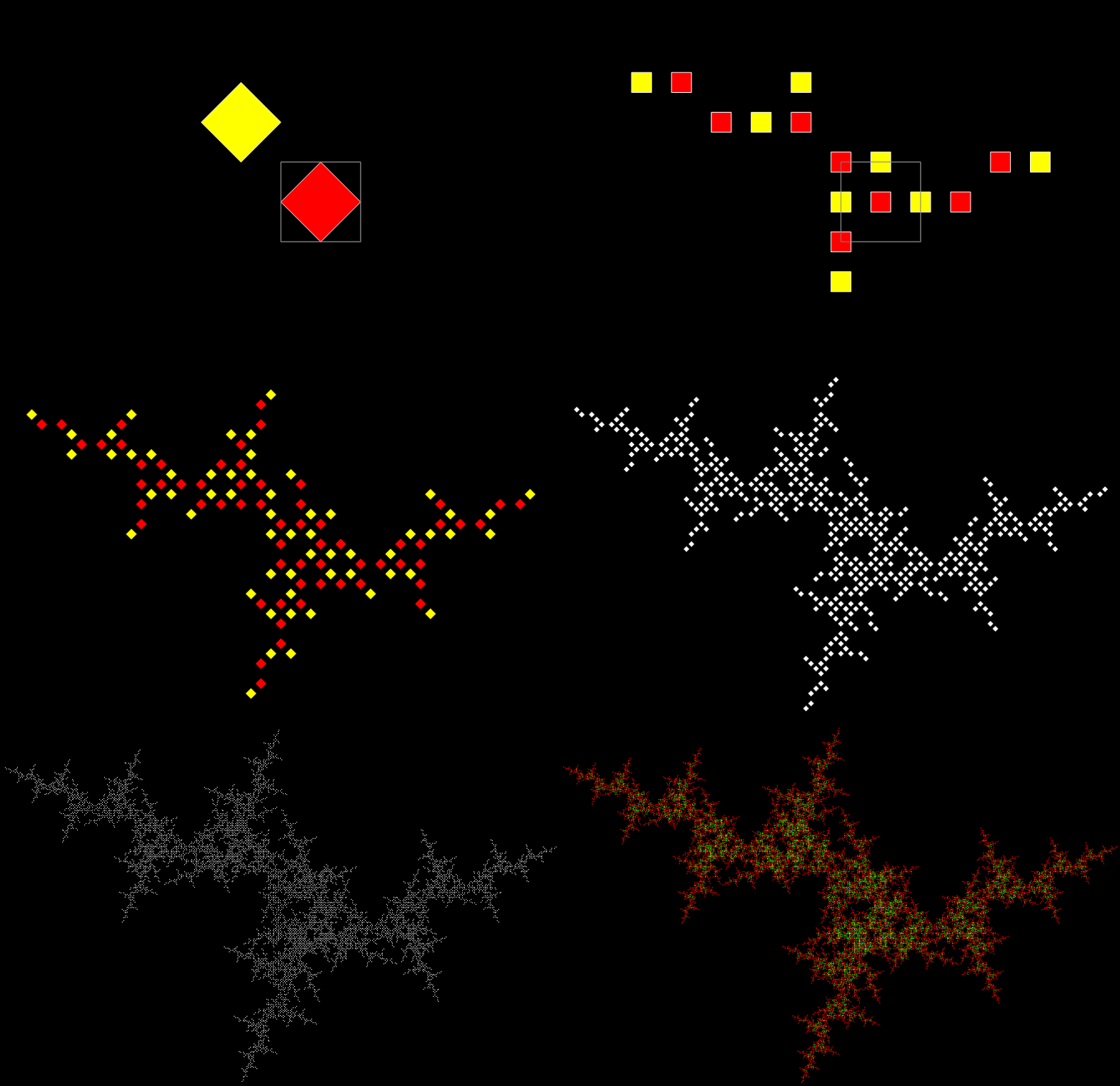
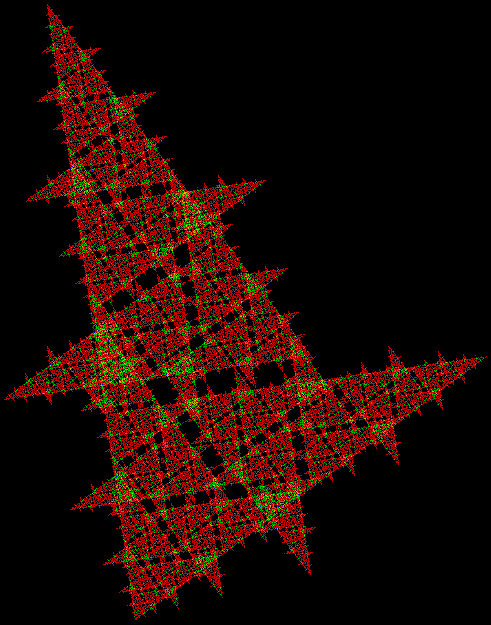
What happens if the gray square divides into sub-squares sq2 and sq9? And then sq2 and sq9 each divide into their own sq2 and sq9? And so on. Something very unsquare-like happens:

Square-split stage #1


Stage #2


Square-split #3


Square-split #4


Square-split #5


Square-split #6


Square-split #7


Square-split #8


Square-split #9


Square-split #10


Square-split #11


Square-split #12


Square-split #13


Square-split #14


Square-split #15


Square-split #16


Square-split (animated)


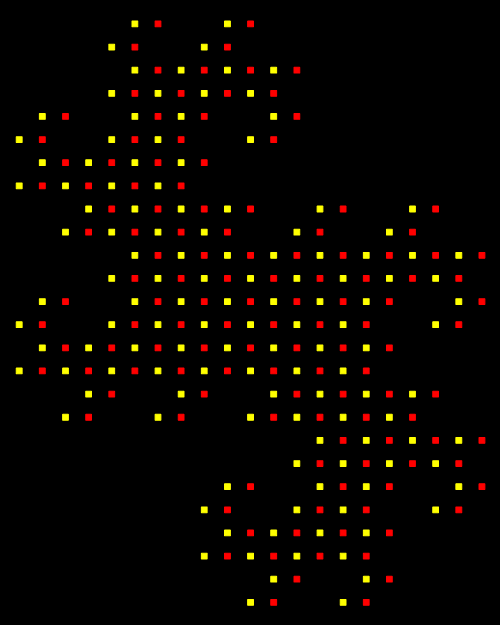
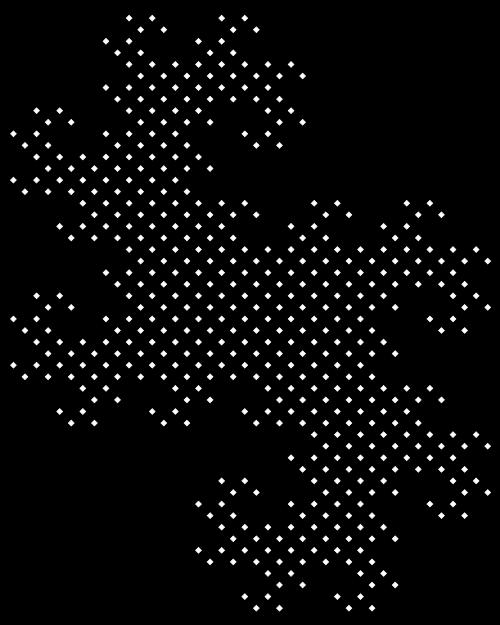
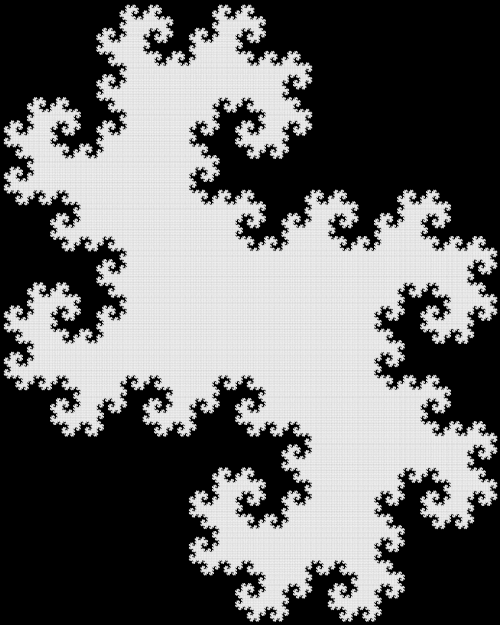
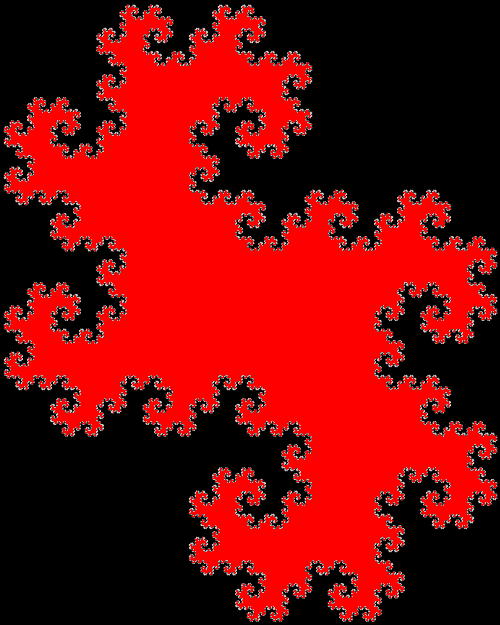
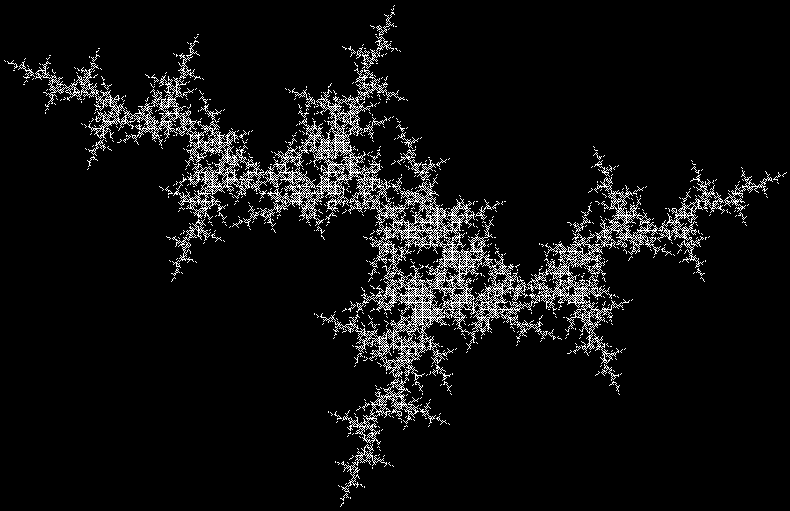
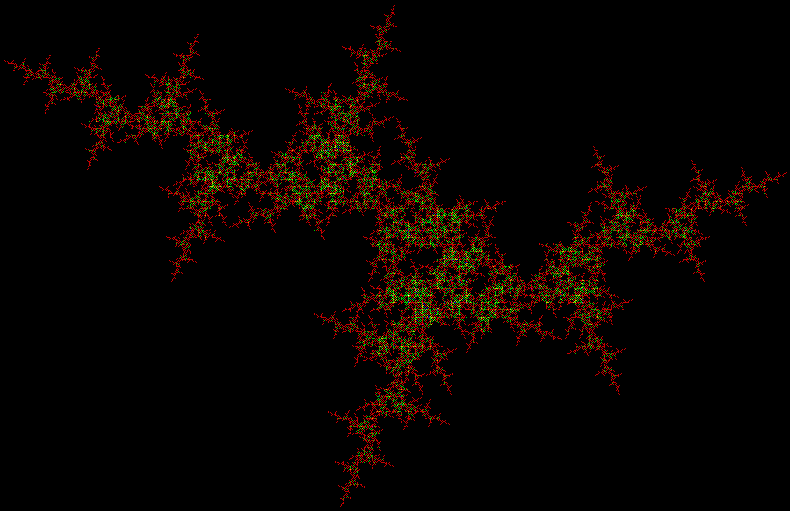
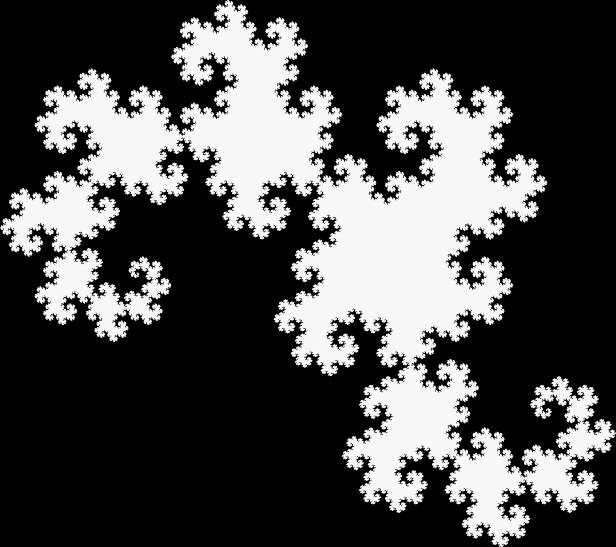
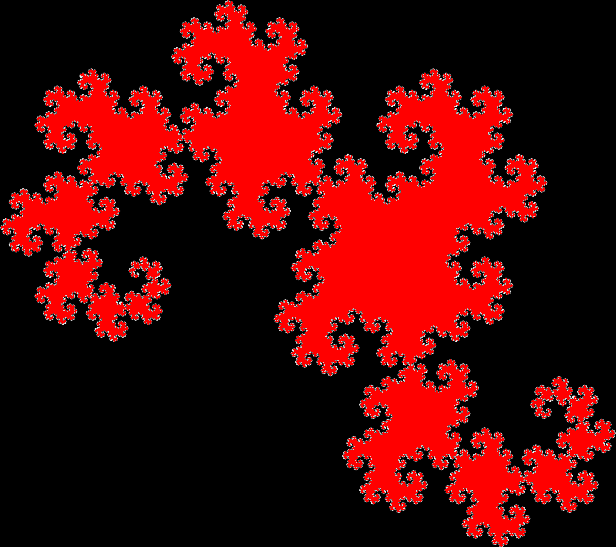
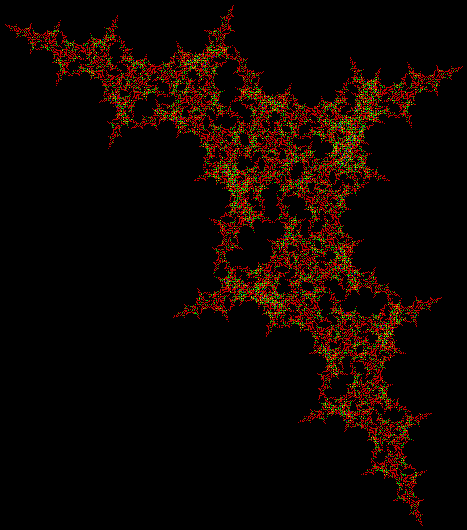
The square-split creates a beautiful fractal known as a dragon-curve:

Dragon-curve


Dragon-curve (red)


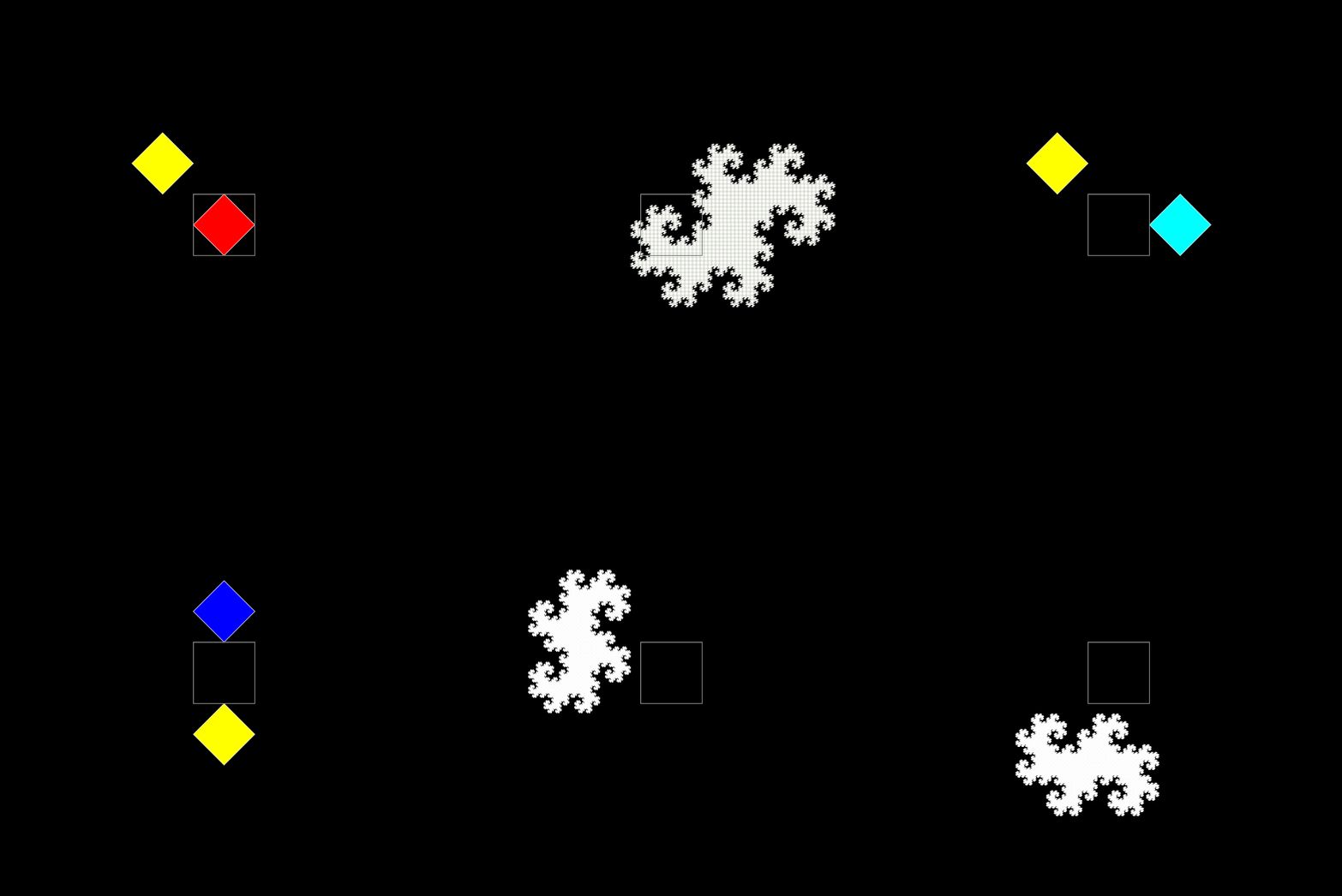
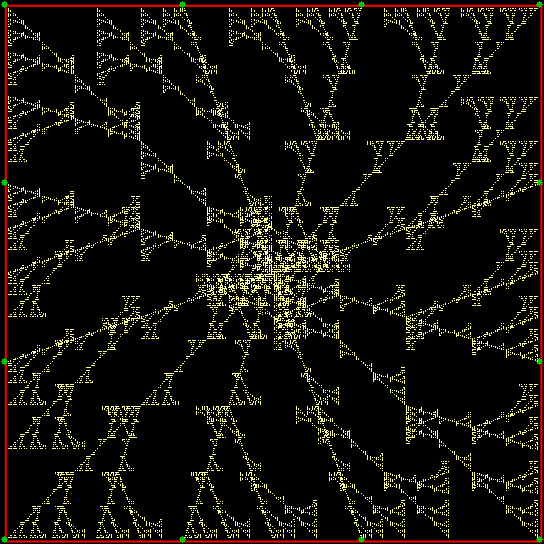
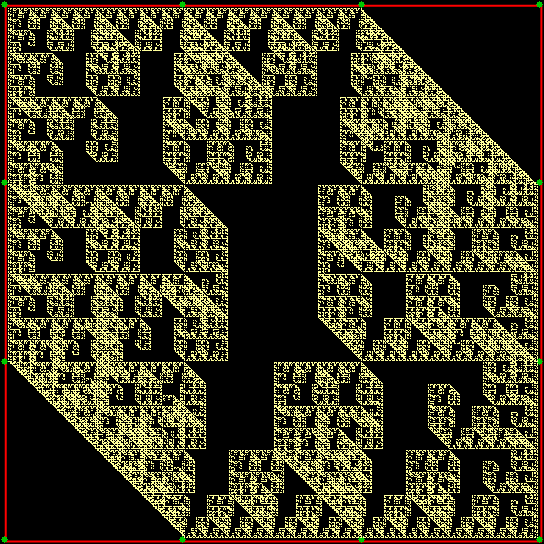
And dragon-curves, at various angles and in various sizes, emerge from every other possible pair of sub-squares:

Lots of dragon-curves


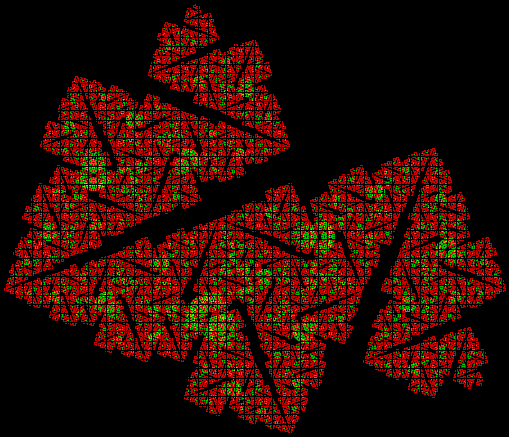
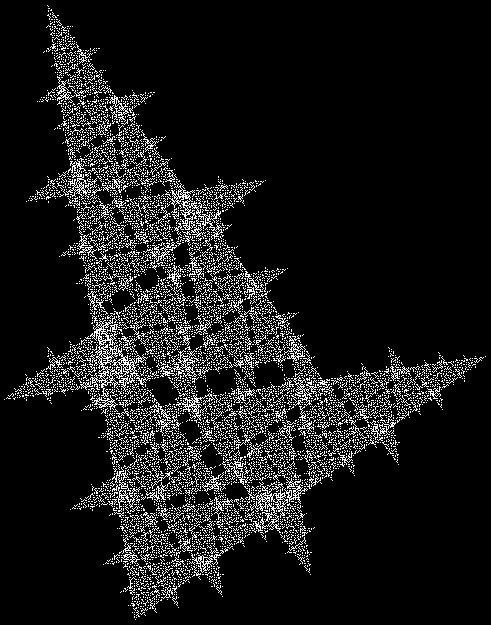
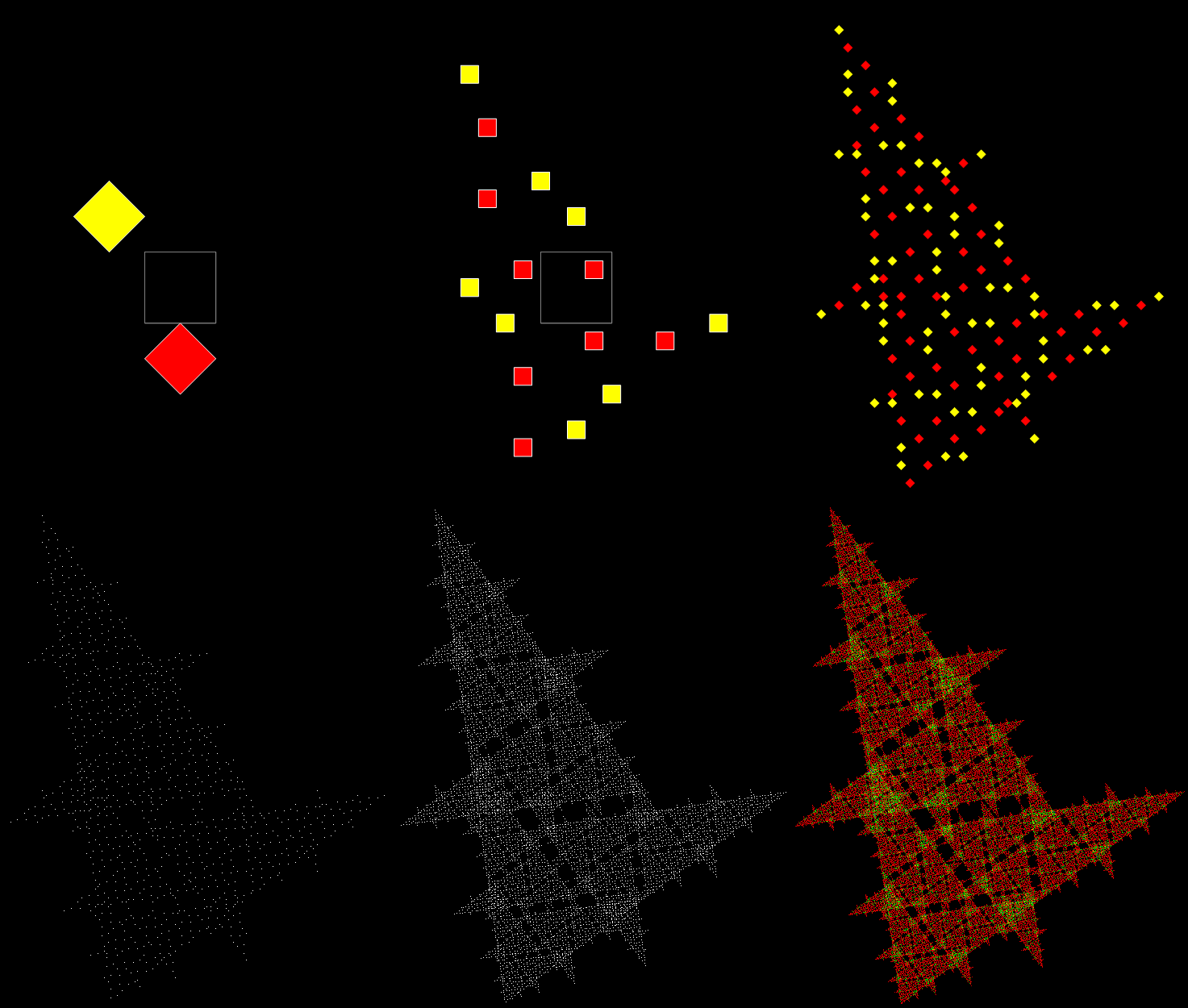
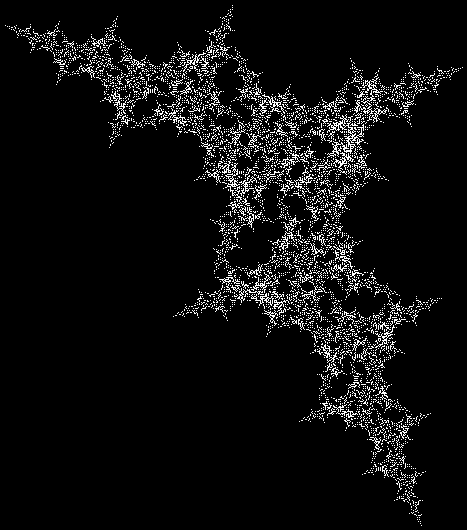
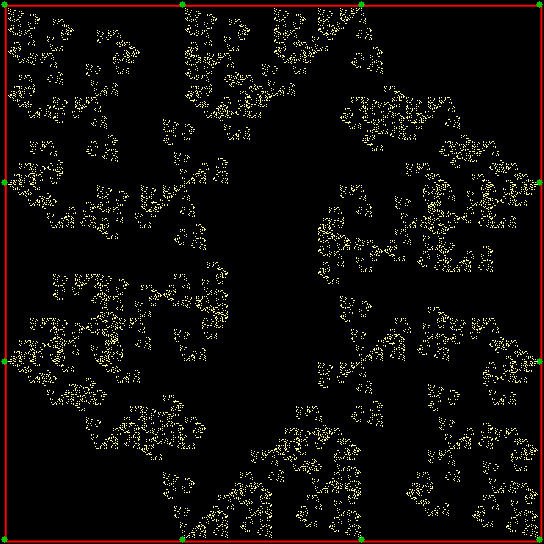
And you get other fractals if you manipulate the sub-squares, so that the corners are rotated or reverse-rotated:

Rotation = 1,2 (sub-square #1 unchanged, in sub-square #2 corner 1 becomes corner 2, 2 → 3, 3 → 4, 4 → 1)


rot = 1,2 (animated)


rot = 1,2 (colored)


rot = 1,5 (in sub-square #2 corner 1 stays the same, 4 → 2, 3 stays the same, 2 → 4)


rot = 1,5 (anim)


rot = 4,7 (sub-square #2 flipped and rotated)


rot = 4,7 (anim)


rot = 4,7 (col)


rot = 4,8


rot = 4,8 (anim)


rot = 4,8 (col)


sub-squares = 2,8; rot = 5,6


sub-squares = 2,8; rot = 5,6 (anim)


sub-squares = 2,8; rot = 5,6 (col)


Another kind of dragon-curve — rot = 3,2


rot = 3,2 (anim)


rot = 3,2 (col)


sub-squares = 4,5; rot = 3,9


sub-squares = 4,5; rot = 3,9 (anim)


sub-squares = 4,5; rot = 3,9 (col)


Elsewhere other-accessible…

Curvous Energy — a first look at dragon-curves
Back to Drac’ — a second look at dragon-curves

Multimo Mondo Macca

Strange. But. True. Many keyly committed core components of the counter-cultural community feel a reluctant reverence for core ’60s icon Paul Sir McCartney. Beneath that sentimentally saccharine surface, that merry “Macca” mask, they sense something deeper… darker… dangerouser

“He ain’t as appallingly unesoteric as he appears, man,” these keyly committed core components of the counter-cultural community mutter meaningly…

I’ve tried to capture something of this Morbid Mac in a series of animated gifs that display Macca mise en abîme or “sent into the abyss” (pronounced “meez on abeem”, roughly speaking). That’s the artistic term for the way some images contain smaller and smaller versions of themselves.

Here’s Macca at stage one:

Maccabisso #1

And stage two:

Maccabisso #2

And further stages:

Maccabisso #3

Maccabisso #4

Maccabisso #5

Here’s a Maccabisso using a bit of negative:

Maccabisso #3

And finally, here’s Macca playing a bit of rock’n’roll…

Macca rock’n’rolling

Rollercoaster Rules

n += digsum(n). It’s one of my favorite integer sequences — a rollercoaster to infinity. It works like this: you take a number, sum its digits, add the sum to the original number, and repeat:


1 → 2 → 4 → 8 → 16 → 23 → 28 → 38 → 49 → 62 → 70 → 77 → 91 → 101 → 103 → 107 → 115 → 122 → 127 → 137 → 148 → 161 → 169 → 185 → 199 → 218 → 229 → 242 → 250 → 257 → 271 → 281 → 292 → 305 → 313 → 320 → 325 → 335 → 346 → 359 → 376 → 392 → 406 → 416 → 427 → 440 → 448 → 464 → 478 → 497 → 517 → 530 → 538 → 554 → 568 → 587 → 607 → 620 → 628 → 644 → 658 → 677 → 697 → 719 → 736 → 752 → 766 → 785 → 805 → 818 → 835 → 851 → 865 → 884 → 904 → 917 → 934 → 950 → 964 → 983 → 1003 → 1007 → 1015 → 1022 → 1027 → 1037 → 1048 → 1061 → 1069 → 1085 → 1099 → 1118 → 1129 → 1142 → 1150 → 1157 → 1171 → 1181 → 1192 → 1205 → ...

I call it a rollercoaster to infinity because the digit-sum constantly rises and falls as n gets bigger and bigger. The most dramatic falls are when n gets one digit longer (except on the first occasion):


... → 8 (digit-sum=8) → 16 (digit-sum=7) → ...
... → 91 (ds=10) → 101 (ds=2) → ...
... → 983 (ds=20) → 1003 (ds=4) → ...
... → 9968 (ds=32) → 10000 (ds=1) → ...
... → 99973 (ds=37) → 100010 (ds=2) → ...
... → 999959 (ds=50) → 1000009 (ds=10) → ...
... → 9999953 (ds=53) → 10000006 (ds=7) → ...
... → 99999976 (ds=67) → 100000043 (ds=8) → ...
... → 999999980 (ds=71) → 1000000051 (ds=7) → ...
... → 9999999962 (ds=80) → 10000000042 (ds=7) → ...
... → 99999999968 (ds=95) → 100000000063 (ds=10) → ...
... → 999999999992 (ds=101) → 1000000000093 (ds=13) → ...

Look at 9968 → 10000, when the digit-sum goes from 32 to 1. That’s only the second time that digsum(n) = 1 in the sequence. Does it happen again? I don’t know.

And here’s something else I don’t know. Suppose you introduce a rule for the rollercoaster of n += digsum(n). You buy a ticket with a number on it: 1, 2, 3, 4, 5… Then you get on the rollercoaster powered by with that number. Now here’s the rule: Your ride on the rollercoaster ends when n += digsum(n) yields a rep-digit, i.e., a number whose digits are all the same. Here are the first few rides on the rollercoaster:


1 → 2 → 4 → 8 → 16 → 23 → 28 → 38 → 49 → 62 → 70 → 77
2 → 4 → 8 → 16 → 23 → 28 → 38 → 49 → 62 → 70 → 77
3 → 6 → 12 → 15 → 21 → 24 → 30 → 33
4 → 8 → 16 → 23 → 28 → 38 → 49 → 62 → 70 → 77
5 → 10 → 11
6 → 12 → 15 → 21 → 24 → 30 → 33
7 → 14 → 19 → 29 → 40 → 44
8 → 16 → 23 → 28 → 38 → 49 → 62 → 70 → 77
9 → 18 → 27 → 36 → 45 → 54 → 63 → 72 → 81 → 90 → 99
10 → 11
11 → 13 → 17 → 25 → 32 → 37 → 47 → 58 → 71 → 79 → 95 → 109 → 119 → 130 → 134 → 142 → 149 → 163 → 173 → 184 → 197 → 214 → 221 → 226 → 236 → 247 → 260 → 268 → 284 → 298 → 317 → 328 → 341 → 349 → 365 → 379 → 398 → 418 → 431 → 439 → 455 → 469 → 488 → 508 → 521 → 529 → 545 → 559 → 578 → 598 → 620 → 628 → 644 → 658 → 677 → 697 → 719 → 736 → 752 → 766 → 785 → 805 → 818 → 835 → 851 → 865 → 884 → 904 → 917 → 934 → 950 → 964 → 983 → 1003 → 1007 → 1015 → 1022 → 1027 → 1037 → 1048 → 1061 → 1069 → 1085 → 1099 → 1118 → 1129 → 1142 → 1150 → 1157 → 1171 → 1181 → 1192 → 1205 → 1213 → 1220 → 1225 → 1235 → 1246 → 1259 → 1276 → 1292 → 1306 → 1316 → 1327 → 1340 → 1348 → 1364 → 1378 → 1397 → 1417 → 1430 → 1438 → 1454 → 1468 → 1487 → 1507 → 1520 → 1528 → 1544 → 1558 → 1577 → 1597 → 1619 → 1636 → 1652 → 1666 → 1685 → 1705 → 1718 → 1735 → 1751 → 1765 → 1784 → 1804 → 1817 → 1834 → 1850 → 1864 → 1883 → 1903 → 1916 → 1933 → 1949 → 1972 → 1991 → 2011 → 2015 → 2023 → 2030 → 2035 → 2045 → 2056 → 2069 → 2086 → 2102 → 2107 → 2117 → 2128 → 2141 → 2149 → 2165 → 2179 → 2198 → 2218 → 2231 → 2239 → 2255 → 2269 → 2288 → 2308 → 2321 → 2329 → 2345 → 2359 → 2378 → 2398 → 2420 → 2428 → 2444 → 2458 → 2477 → 2497 → 2519 → 2536 → 2552 → 2566 → 2585 → 2605 → 2618 → 2635 → 2651 → 2665 → 2684 → 2704 → 2717 → 2734 → 2750 → 2764 → 2783 → 2803 → 2816 → 2833 → 2849 → 2872 → 2891 → 2911 → 2924 → 2941 → 2957 → 2980 → 2999 → 3028 → 3041 → 3049 → 3065 → 3079 → 3098 → 3118 → 3131 → 3139 → 3155 → 3169 → 3188 → 3208 → 3221 → 3229 → 3245 → 3259 → 3278 → 3298 → 3320 → 3328 → 3344 → 3358 → 3377 → 3397 → 3419 → 3436 → 3452 → 3466 → 3485 → 3505 → 3518 → 3535 → 3551 → 3565 → 3584 → 3604 → 3617 → 3634 → 3650 → 3664 → 3683 → 3703 → 3716 → 3733 → 3749 → 3772 → 3791 → 3811 → 3824 → 3841 → 3857 → 3880 → 3899 → 3928 → 3950 → 3967 → 3992 → 4015 → 4025 → 4036 → 4049 → 4066 → 4082 → 4096 → 4115 → 4126 → 4139 → 4156 → 4172 → 4186 → 4205 → 4216 → 4229 → 4246 → 4262 → 4276 → 4295 → 4315 → 4328 → 4345 → 4361 → 4375 → 4394 → 4414 → 4427 → 4444

The 11-ticket is much better value than the tickets for 1..10. Bigger numbers behave like this:


1252 → 4444
1253 → 4444
1254 → 888888
1255 → 4444
1256 → 4444
1257 → 888888
1258 → 4444
1259 → 4444
1260 → 9999
1261 → 4444
1262 → 4444
1263 → 888888
1264 → 4444
1265 → 4444
1266 → 888888
1267 → 4444
1268 → 4444
1269 → 9999
1270 → 4444
1271 → 4444
1272 → 888888
1273 → 4444
1274 → 4444

Then all at once, a number-ticket turns golden and the rollercoaster-ride doesn’t end. So far, at least. I’ve tried, but I haven’t been able to find a rep-digit for 3515 and 3529 = 3515+digsum(3515) and so on:


3509 → 4444
3510 → 9999
3511 → 4444
3512 → 4444
3513 → 888888
3514 → 4444
3515 → ?
3516 → 888888
3517 → 4444
3518 → 4444
3519 → 9999
3520 → 4444
3521 → 4444
3522 → 888888
3523 → 4444
3524 → 4444
3525 → 888888
3526 → 4444
3527 → 4444
3528 → 9999
3529 → ?
3530 → 4444
3531 → 888888
3532 → 4444

Does 3515 ever yield a rep-digit for n += digsum(n)? It’s hard to believe it doesn’t, but I’ve no idea how to prove that it does. Except by simply riding the rollercoaster. And if the ride with the 3515-ticket never reaches a rep-digit, the rollercoaster will never let you know. How could it?

But here’s an example in base 23 of how a ticket for n+1 can give you a dramatically longer ride than a ticket for n and n+2:


MI → EEE (524 → 7742)
MJ → EEE (525 → 7742)
MK → 444 (526 → 2212)
ML → 444 (527 → 2212)
MM → MMMMMM (528 → 148035888)
100 → 444 (529 → 2212)
101 → 444 (530 → 2212)
102 → EEE (531 → 7742)
103 → 444 (532 → 2212)
104 → 444 (533 → 2212)
105 → EEE (534 → 7742)
106 → EEE (535 → 7742)
107 → 444 (536 → 2212)
108 → EEE (537 → 7742)
109 → 444 (538 → 2212)
10A → MMMMMM (539 → 148035888)
10B → EEE (540 → 7742)
10C → EEE (541 → 7742)
10D → EEE (542 → 7742)
10E → EEE (543 → 7742)
10F → 444 (544 → 2212)
10G → EEE (545 → 7742)
10H → EEE (546 → 7742)
10I → EEE (547 → 7742)
10J → 444 (548 → 2212)
10K → 444 (549 → 2212)
10L → MMMMMM (550 → 148035888)
10M → EEE (551 → 7742)
110 → EEE (552 → 7742)

More Mythical Mathicality

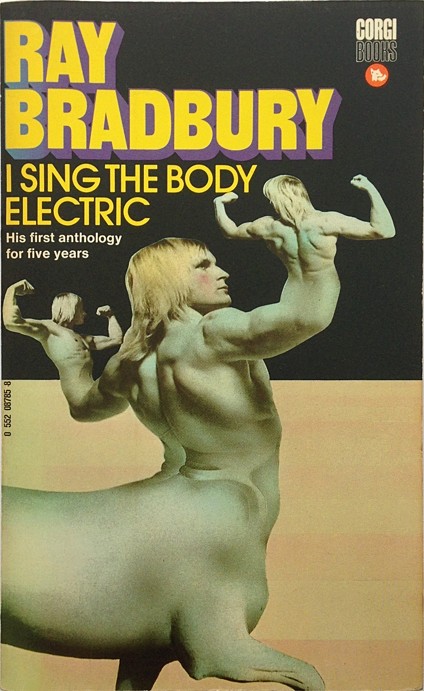
In a prev-previous post, I looked at this interesting fractal image on the front cover of a Ray Bradbury book:

Cover of Ray Bradbury’s I Sing the Body Electric (1969)

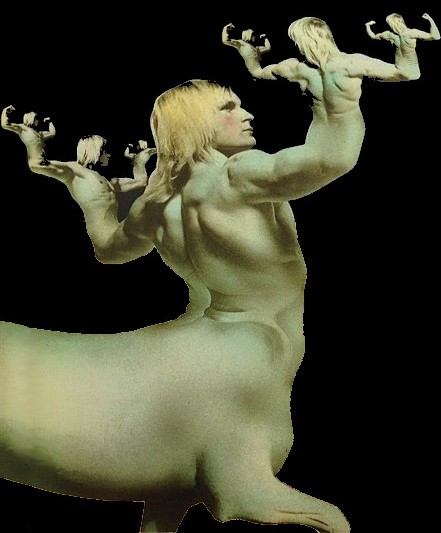
It seems obvious that the image is created from photographs: only the body of the centaur is drawn by hand. And here’s my attempt at extending the fractality of the image:

Further fractality for the centaur

Elsewhere other-accessible

Mythical Mathical — Man-Horse! — the pre-previous post about the fractal centaur

Think Inc #2

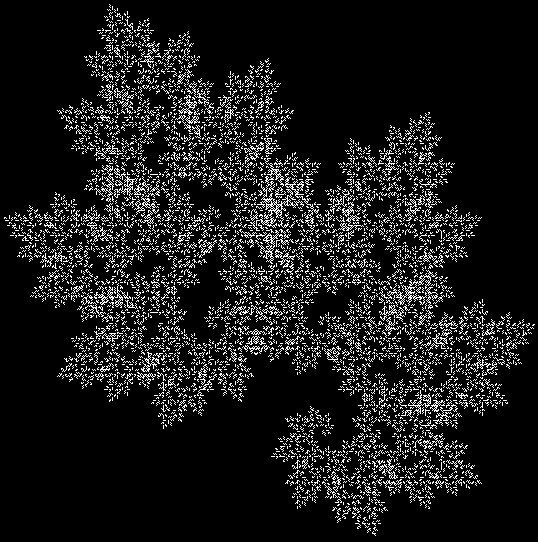
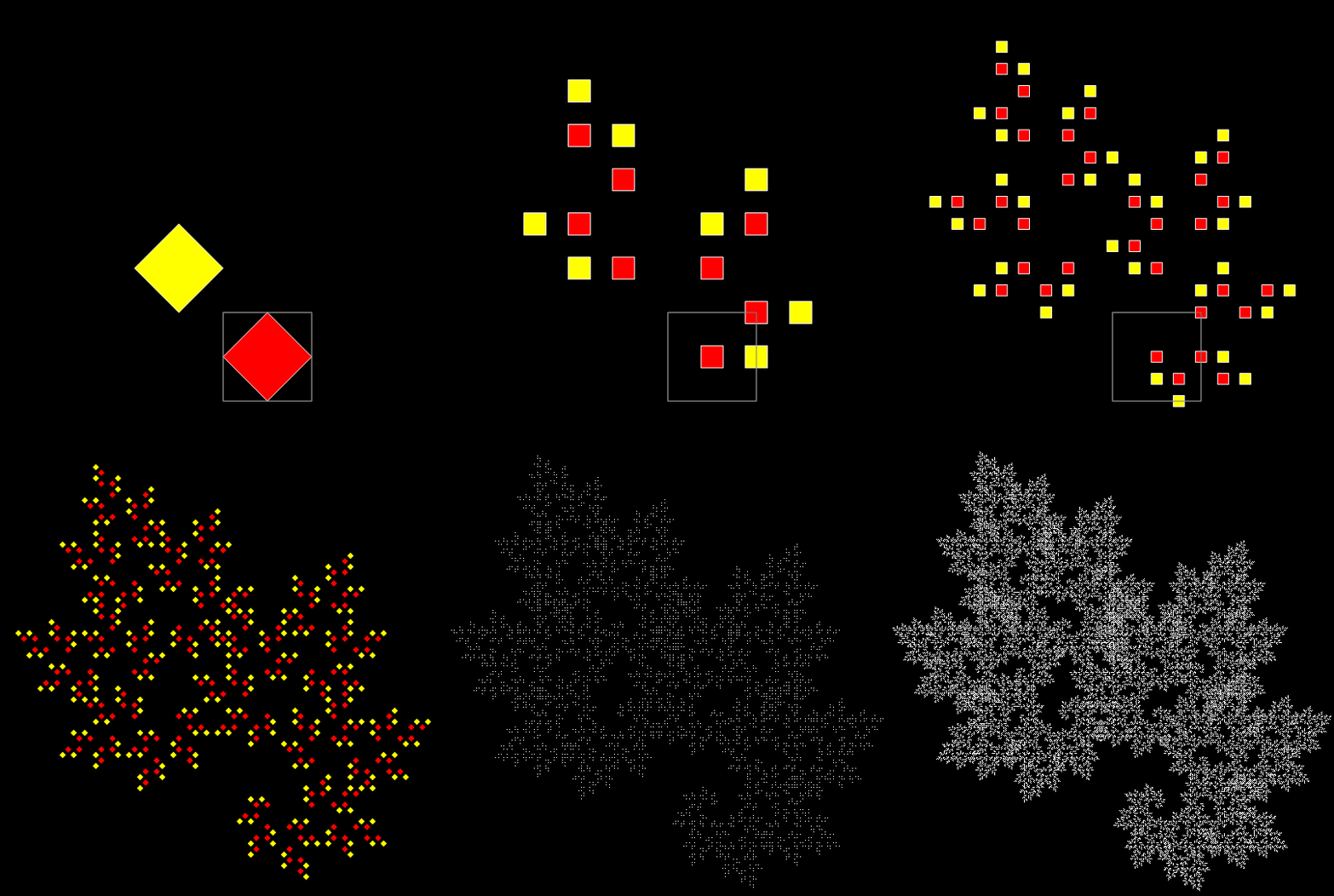
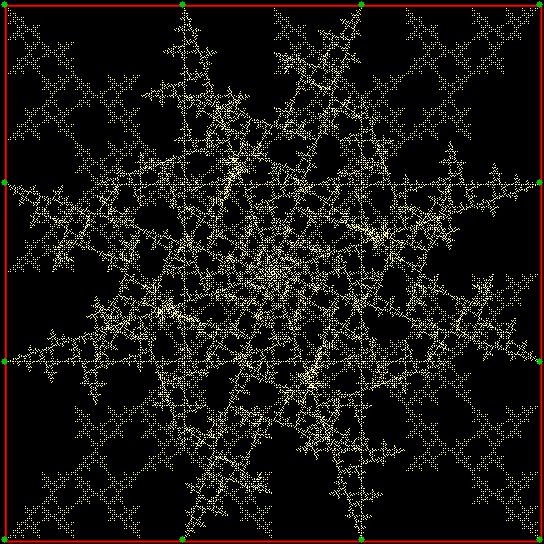
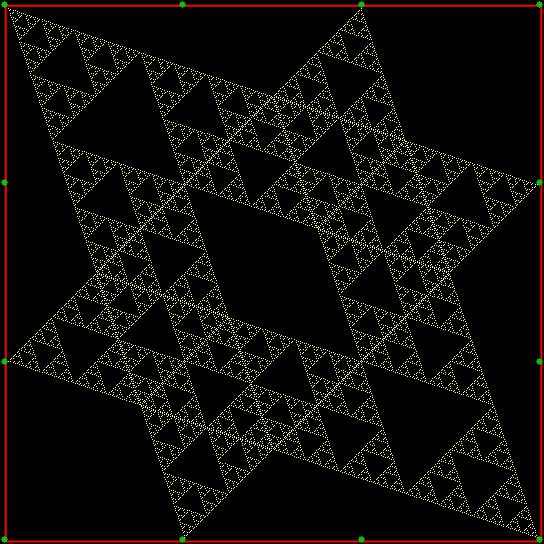
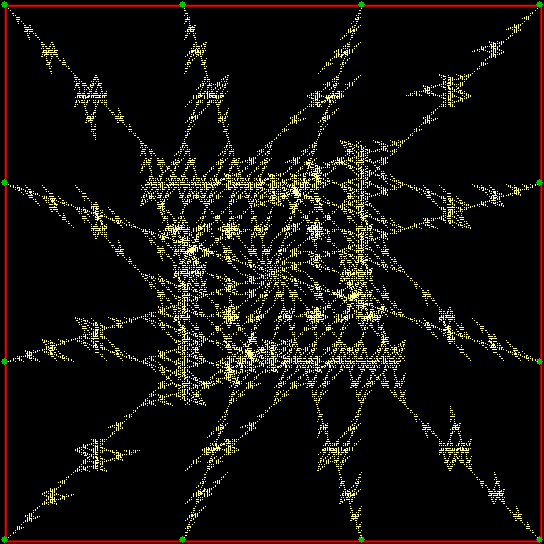
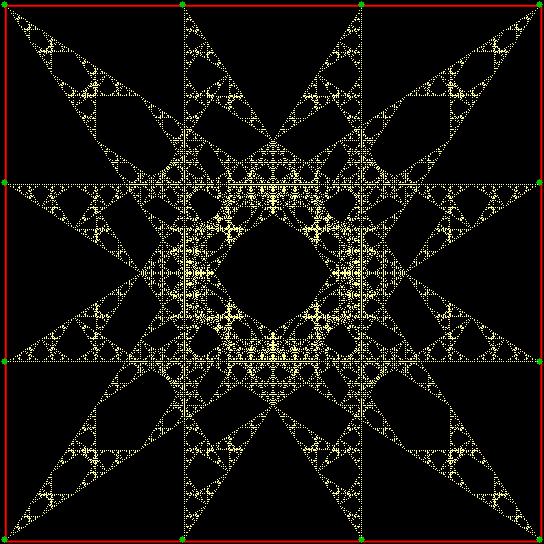
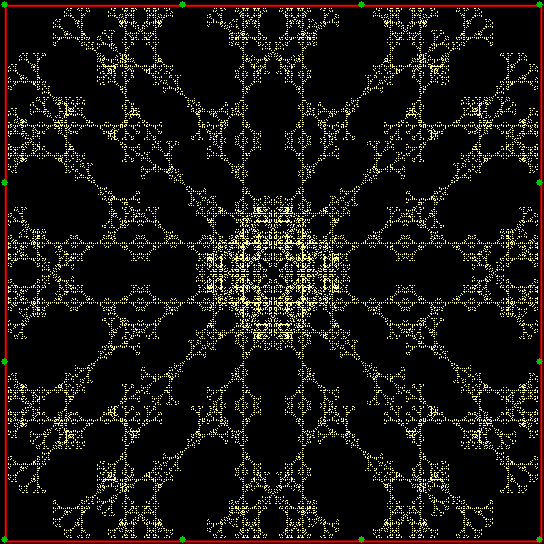
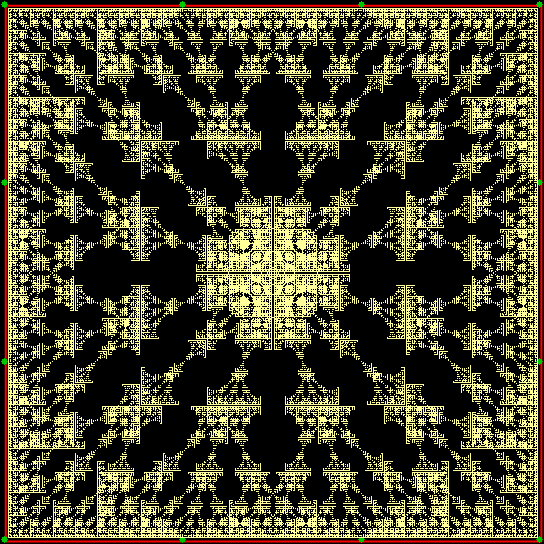
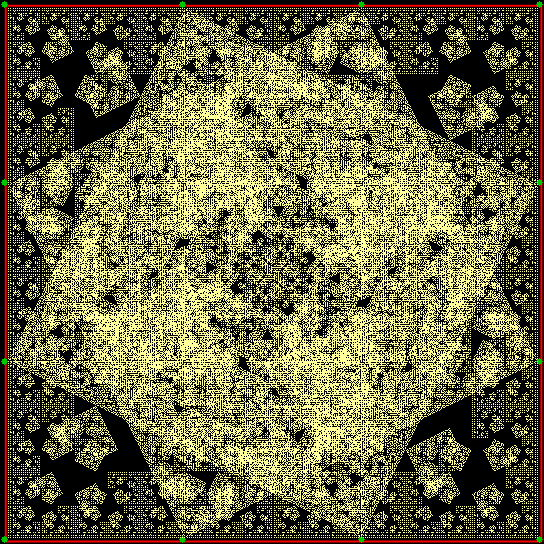
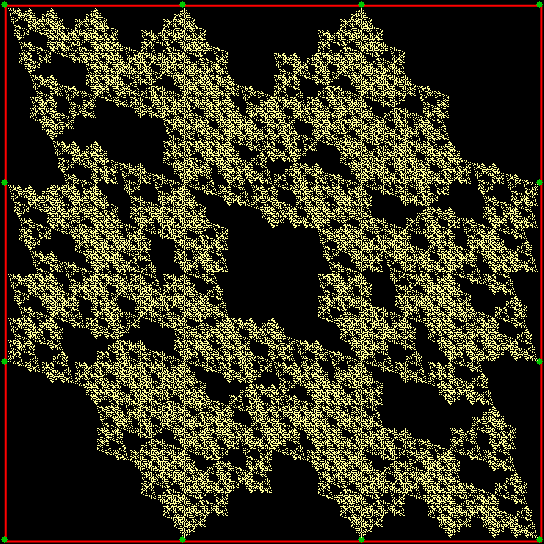
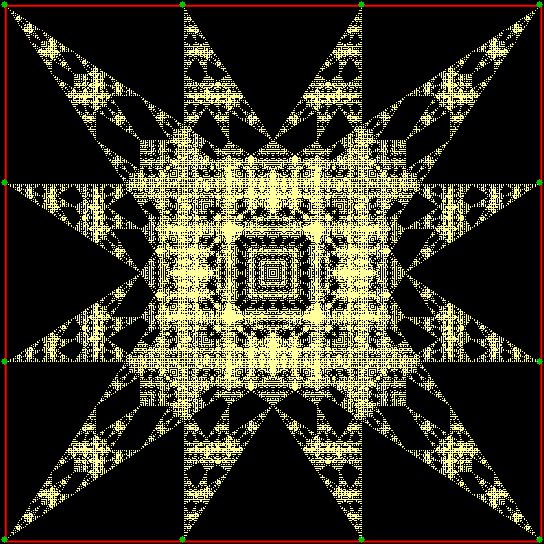
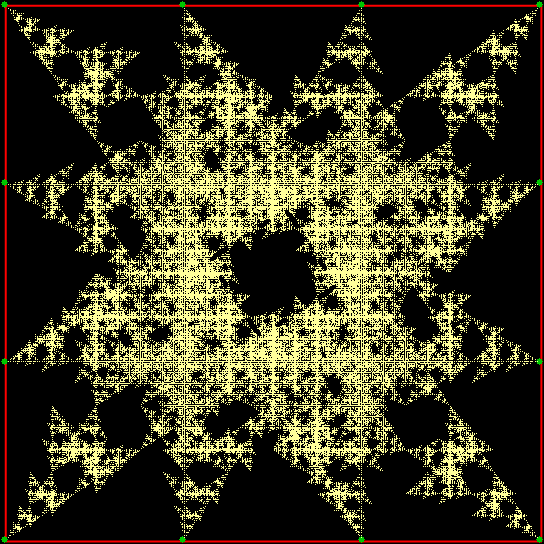
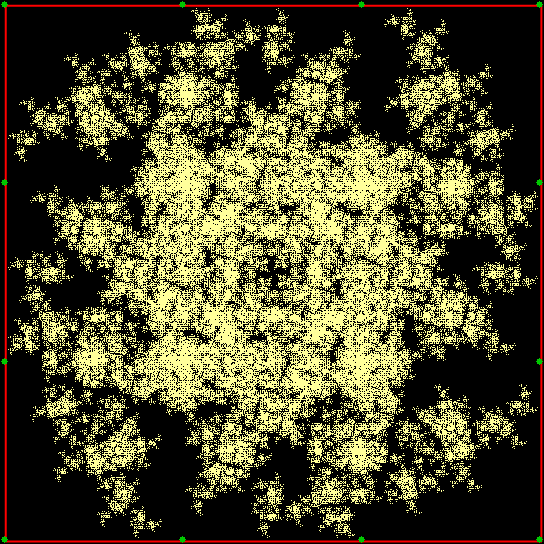
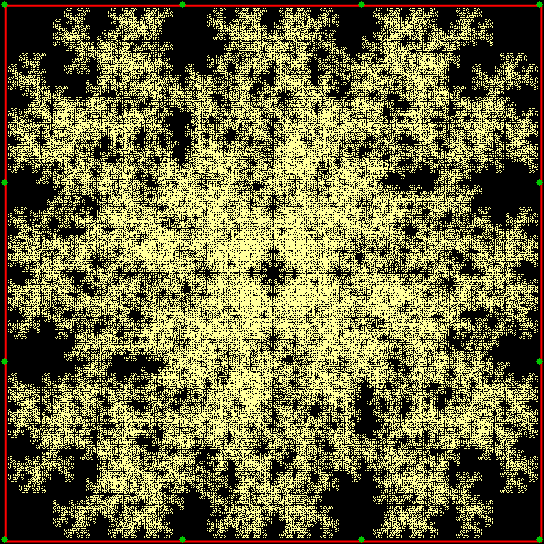
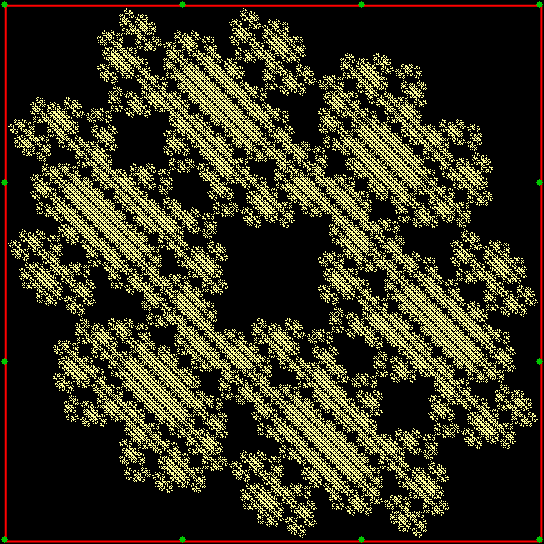
In a pre-previous post called “Think Inc”, I looked at the fractals created by a point first jumping halfway towards the vertex of a square, then using a set of increments to decide which vertex to jump towards next. For example, if the inc-set was [0, 1, 3], the point would jump next towards the same vertex, v[i]+0, or the vertex immediately clockwise, v[i]+1, or the vertex immediately anti-clockwise, v[i]+3. And it would trace all possible routes using that inc-set. Then I added refinements to the process like giving the point extra jumping-targets half-way along each side.

Here are some more variations on the inc-set theme using two and three extra jumping-targets along each side of the square. First of all, try two extra jumping-targets along each side and a set of three increments:

inc = 0, 1, 6


inc = 0, 2, 6


inc = 0, 2, 8


inc = 0, 3, 6


inc = 0, 3, 9


inc = 0, 4, 8


inc = 0, 5, 6


inc = 0, 5, 7


inc = 1, 6, 11


inc = 2, 6, 10


inc = 3, 6, 9


Now try two extra jumping-targets along each side and a set of four increments:

inc = 0, 1, 6, 11


inc = 0, 2, 8, 10


inc = 0, 3, 7, 9


inc = 0, 4, 8, 10


inc = 0, 5, 6, 7


inc = 0, 5, 7, 8


inc = 1, 6, 7, 9


inc = 1, 4, 6, 11


inc = 1, 5, 7, 11


inc = 2, 4, 8, 10


inc = 3, 5, 7, 9


And finally, three extra jumping-targets along each side and a set of three increments:

inc = 0, 3, 13


inc = 0, 4, 8


inc = 0, 4, 12


inc = 0, 5, 11

inc = 0, 6, 9


inc = 0, 7, 9


Previously Pre-Posted

Think Inc — an earlier look at inc-set fractals

Mythical Mathical — Man-Horse!

Cover of Ray Bradbury’s I Sing the Body Electric (1969), published by Corgi in 1972

That’s a striking cover — and more than that. The blog where I found the cover says this: “This very odd cover clearly features a heavily rouged glam rock centaur with a rather natty feather-cut hairstyle flexing his biceps, his forearms transmogrifying into miniature bicep flexing glam rock figures. I think I’m slowly losing the plot here.”

Losing the plot? No, losing the mathical in the mythical. The artist has started to make the centaur into a fractal. Or rather, the artist has started to make more explicit what is already there in the human body. As I wrote pre-previously:

Fingers are fractal. Where a tree has a trunk, branches and twigs, a human being has a torso, arms and fingers. And human beings move in fractal ways. We use our legs to move large distances, then reach out with our arms over smaller distances, then move our fingers over smaller distances still. We’re fractal beings, inside and out, brains and blood-vessels, fingers and toes. — “Fingering the Frigit

Here’s my attempt at extending the fractality of the centaur:

Further fractality for the centaur

Elsewhere Other-Accessible

More Mythical Mathicality

Sliv and Let Tri

Fluvius, planus et altus, in quo et agnus ambulet et elephas natet,” wrote Pope Gregory the Great (540-604). “There’s a river, wide and deep, where a lamb may wade and an elephant swim.” He was talking about the Word of God, but you can easily apply his words to mathematics. However, in the river of mathematics, the very shallow and the very deep are often a single step apart.

Here’s a good example. Take the integer 2. How many different ways can it be represented as an sum of separate integers? Easy. First of all it can be represented as itself: 2 = 2. Next, it can be represented as 2 = 1 + 1. And that’s it. There are two partitions of 2, as mathematicians say:

2 = 2 = 1+1 (p=2)


Now try 3, 4, 5, 6:

3 = 3 = 1+2 = 1+1+1 (p=3)
4 = 4 = 1+3 = 2+2 = 1+1+2 = 1+1+1+1 (p=5)
5 = 5 = 1+4 = 2+3 = 1+1+3 = 1+2+2 = 1+1+1+2 = 1+1+1+1+1 (p=7)
6 = 6 = 1+5 = 2+4 = 3+3 = 1+1+4 = 1+2+3 = 2+2+2 = 1+1+1+3 = 1+1+2+2 = 1+1+1+1+2 = 1+1+1+1+1+1 (p=11)


So the partitions of 2, 3, 4, 5, 6 are 2, 3, 5, 7, 11. That’s interesting — the partition-counts are the prime numbers in sequence. So you might conjecture that p(7) = 13 and p(8) = 17. Alas, you’d be wrong. Here are the partitions of n = 1..10:

1 = 1 (p=1)
2 = 2 = 1+1 (p=2)
3 = 3 = 1+2 = 1+1+1 (p=3)
4 = 4 = 1+3 = 2+2 = 1+1+2 = 1+1+1+1 (p=5)
5 = 5 = 1+4 = 2+3 = 1+1+3 = 1+2+2 = 1+1+1+2 = 1+1+1+1+1 (p=7)
6 = 6 = 1+5 = 2+4 = 3+3 = 1+1+4 = 1+2+3 = 2+2+2 = 1+1+1+3 = 1+1+2+2 = 1+1+1+1+2 = 1+1+1+1+1+1 (p=11)
7 = 7 = 1+6 = 2+5 = 3+4 = 1+1+5 = 1+2+4 = 1+3+3 = 2+2+3 = 1+1+1+4 = 1+1+2+3 = 1+2+2+2 = 1+1+1+1+3 = 1+1+1+2+2 = 1+1+1+1+1+2 = 1+1+1+1+1+1+1 (p=15)
8 = 8 = 1+7 = 2+6 = 3+5 = 4+4 = 1+1+6 = 1+2+5 = 1+3+4 = 2+2+4 = 2+3+3 = 1+1+1+5 = 1+1+2+4 = 1+1+3+3 = 1+2+2+3 = 2+2+2+2 = 1+1+1+1+4 = 1+1+1+2+3 = 1+1+2+2+2 = 1+1+1+1+1+3 = 1+1+1+1+2+2 = 1+1+1+1+1+1+2 = 1+1+1+1+1+1+1+1 (p=22)
9 = 9 = 1+8 = 2+7 = 3+6 = 4+5 = 1+1+7 = 1+2+6 = 1+3+5 = 1+4+4 = 2+2+5 = 2+3+4 = 3+3+3 = 1+1+1+6 = 1+1+2+5 = 1+1+3+4 = 1+2+2+4 = 1+2+3+3 = 2+2+2+3 = 1+1+1+1+5 = 1+1+1+2+4 = 1+1+1+3+3 = 1+1+2+2+3 = 1+2+2+2+2 = 1+1+1+1+1+4 = 1+1+1+1+2+3 = 1+1+1+2+2+2 = 1+1+1+1+1+1+3 = 1+1+1+1+1+2+2 = 1+1+1+1+1+1+1+2 = 1+1+1+1+1+1+1+1+1 (p=30)
10 = 10 = 1+9 = 2+8 = 3+7 = 4+6 = 5+5 = 1+1+8 = 1+2+7 = 1+3+6 = 1+4+5 = 2+2+6 = 2+3+5 = 2+4+4 = 3+3+4 = 1+1+1+7 = 1+1+2+6 = 1+1+3+5 = 1+1+4+4 = 1+2+2+5 = 1+2+3+4 = 1+3+3+3 = 2+2+2+4 = 2+2+3+3 = 1+1+1+1+6 = 1+1+1+2+5 = 1+1+1+3+4 = 1+1+2+2+4 = 1+1+2+3+3 = 1+2+2+2+3 = 2+2+2+2+2 = 1+1+1+1+1+5 = 1+1+1+1+2+4 = 1+1+1+1+3+3 = 1+1+1+2+2+3 = 1+1+2+2+2+2 = 1+1+1+1+1+1+4 = 1+1+1+1+1+2+3 = 1+1+1+1+2+2+2 = 1+1+1+1+1+1+1+3 = 1+1+1+1+1+1+2+2 = 1+1+1+1+1+1+1+1+2 = 1+1+1+1+1+1+1+1+1+1 (p=42)


It’s very simple to understand what a partition is, but very difficult to say how many partitions, p(n), a particular number will have. Here’s a partition: 11 = 4 + 3 + 2 + 2. But what is p(11)? Is there a formula for the sequence of p(n)?

1, 2, 3, 5, 7, 11, 15, 22, 30, 42, 56, 77, 101, 135, 176, 231, 297, 385, 490, 627, 792, 1002, 1255, 1575, 1958, 2436, 3010, 3718, 4565, 5604, 6842, 8349, 10143, 12310, 14883, 17977, 21637, 26015, 3118 5, 37338, 44583, 53174, 63261... (A000041 at the OEIS)

Yes, there is a formula, but it is very difficult to understand the Partition function that supplies it. So that part of the river of mathematics is very deep. But a step away the river of mathematics is very shallow. Here’s another question: If you multiply the numbers in a partition of n, what’s the largest possible product? Try using the partitions of 5:

4 = 1 * 4
6 = 2 * 3
3 = 1 * 1 * 3
4 = 1 * 2 * 2
2 = 1 * 1 * 1 * 2
1 = 1 * 1 * 1 * 1 * 1

The largest product is 6 = 2 * 3. So the answer is easy for n = 5, but I assumed that as n got bigger, the largest product got more interesting, using a subtler and subtler mix of prime factors. I was wrong. You don’t have to struggle to find a formula for what you might call the maximum multiplicity of the partitions of n:

1 = 1 (n=1)
2 = 2 (n=2)
3 = 3 (n=3)
4 = 2 * 2 (n=4)
6 = 2 * 3 (n=5)
9 = 3 * 3 (n=6)
12 = 2 * 2 * 3 (n=7)
18 = 2 * 3 * 3 (n=8)
27 = 3 * 3 * 3 (n=9)
36 = 2 * 2 * 3 * 3 (n=10)
54 = 2 * 3 * 3 * 3 (n=11)
81 = 3 * 3 * 3 * 3 (n=12)
108 = 2 * 2 * 3 * 3 * 3 (n=13)
162 = 2 * 3 * 3 * 3 * 3 162(n=14)
243 = 3 * 3 * 3 * 3 * 3 (n=15)
324 = 2 * 2 * 3 * 3 * 3 * 3 (n=16)
486 = 2 * 3 * 3 * 3 * 3 * 3 (n=17)
729 = 3 * 3 * 3 * 3 * 3 * 3 (n=18)


It’s easy to see why the greatest prime factor is always 3. If you use 5 or 7 as a factor, the product can always be beaten by splitting the 5 into 2*3 or the 7 into 2*2*3:

15 = 3 * 5 < 18 = 3 * 2*3 (n=8)
14 = 2 * 7 < 24 = 2 * 2*2*3 (n=9)
35 = 5 * 7 < 72 = 2*3 * 2*2*3 (n=12)

And if you’re using 7 → 2*2*3 as factors, you can convert them to 1*3*3, then add the 1 to another factor to make a bigger product still:

14 = 2 * 7 < 24 = 2 * 2*2*3 < 27 = 3 * 3 * 3 (n=9)
35 = 5 * 7 < 72 = 2*3 * 2*2*3 < 81 = 3 * 3 * 3 * 3 (n=12)


Post-Performative Post-Scriptum

The title of this post is, of course, a paronomasia on core Beatles album Live and Let Die (1954). But what does it mean? Well, if you think of the partitions of n as slivers of n, then you sliv n to find its partitions:

9 = 9 = 1+8 = 2+7 = 3+6 = 4+5 = 1+1+7 = 1+2+6 = 1+3+5 = 1+4+4 = 2+2+5 = 2+3+4 = 3+3+3 = 1+1+1+6 = 1+1+2+5 = 1+1+3+4 = 1+2+2+4 = 1+2+3+3 = 2+2+2+3 = 1+1+1+1+5 = 1+1+1+2+4 = 1+1+1+3+3 = 1+1+2+2+3 = 1+2+2+2+2 = 1+1+1+1+1+4 = 1+1+1+1+2+3 = 1+1+1+2+2+2 = 1+1+1+1+1+1+3 = 1+1+1+1+1+2+2 = 1+1+1+1+1+1+1+2 = 1+1+1+1+1+1+1+1+1 (p=30)

And when you find the greatest product among those partitions, you let 3 or “tri” work its multiplicative magic. So you “Sliv and Let Tri”:

8 = 1 * 8
14 = 2 * 7
18 = 3 * 6
20 = 4 * 5
7 = 1 * 1 * 7
12 = 1 * 2 * 6
15 = 1 * 3 * 5
16 = 1 * 4 * 4
20 = 2 * 2 * 5
24 = 2 * 3 * 4
27 = 3 * 3 * 3 ←
6 = 1 * 1 * 1 * 6
10 = 1 * 1 * 2 * 5
12 = 1 * 1 * 3 * 4
16 = 1 * 2 * 2 * 4
12 = 1 * 2 * 3 * 3
24 = 2 * 2 * 2 * 3
5 = 1 * 1 * 1 * 1 * 5
8 = 1 * 1 * 1 * 2 * 4
9 = 1 * 1 * 1 * 3 * 3
12 = 1 * 1 * 2 * 2 * 3
16 = 1 * 2 * 2 * 2 * 2
4 = 1 * 1 * 1 * 1 * 1 * 4
6 = 1 * 1 * 1 * 1 * 2 * 3
8 = 1 * 1 * 1 * 2 * 2 * 2
3 = 1 * 1 * 1 * 1 * 1 * 1 * 3
4 = 1 * 1 * 1 * 1 * 1 * 2 * 2
2 = 1 * 1 * 1 * 1 * 1 * 1 * 1 * 2
1 = 1 * 1 * 1 * 1 * 1 * 1 * 1 * 1 * 1

Sampled (Underfoot)

Some interesting statistics from the American sociologist Elizabeth Wrigley-Field:

Here are three puzzles.

• American fertility fluctuated dramatically in the decades surrounding the Second World War. Parents created the smallest families during the Great Depression, and the largest families during the postwar Baby Boom. Yet children born during the Great Depression came from larger families than those born during the Baby Boom. How can this be?

• About half of the prisoners released in any given year in the United States will end up back in prison within five years. Yet the proportion of prisoners ever released who will ever end up back in prison, over their whole lifetime, is just one third. How can this be?

• People whose cancers are caught early by random screening often live longer than those whose cancers are detected later, after they are symptomatic. Yet those same random screenings might not save any lives. How can this be?

And here is a twist: these are all the same puzzle.

• Answers here: Length-Biased Sampling by Elizabeth Wrigley-Field

Proxi-Performative Post-Scriptum

The title of this post is, of course, a radical reference to core Led Zeppelin track “Trampled Underfoot” (1975).