Prime Times

The factorial of an integer is equal to that that integer multiplied by all the integers smaller than it. For example, this is factorial(7) or 7!:

7! = 7 * 6 * 5 * 4 * 3 * 2 * 1 = 5040

The primorial of a prime is equal to that that prime multiplied by all the primes smaller than it. For example, this is primorial(7):

primorial(7) = 7 * 5 * 3 * 2 = 210 = 4# (the product of the first four primes)

Here’s an interesting set of primorials incremented-by-one:

primorial(2) + 1 = 2 + 1 = 3 (prime)
primorial(3) + 1 = 2*3 + 1 = 7 (prime)
primorial(5) + 1 = 2*3*5 + 1 = 31 (prime)
primorial(7) + 1 = 2*3*5*7 + 1 = 211 (prime)
primorial(11) + 1 = 2*3*5*7*11 + 1 = 2311 (prime)
primorial(31) + 1 = 2*3*5*7*11*13*17*19*23*29*31 + 1 = 200560490131 (prime)
primorial(379) + 1 = 1,719,620,105,458,406,433,483,340,568,317,543,019,584,575,635,895,742,560,438,771,105,058,321,655,238,562,613,083,979,651,479,555,788,009,994,557,822,024,565,226,932,906,295,208,262,756,822,275,663,694,111 (prime)
primorial(1019) + 1 = 20,404,068,993,016,374,194,542,464,172,774,607,695,659,797,117,423,121,913,227,131,032,339,026,169,175,929,902,244,453,757,410,468,728,842,929,862,271,605,567,818,821,685,490,676,661,985,389,839,958,622,802,465,986,881,376,139,404,138,376,153,096,103,140,834,665,563,646,740,160,279,755,212,317,501,356,863,003,638,612,390,661,668,406,235,422,311,783,742,390,510,526,587,257,026,500,302,696,834,793,248,526,734,305,801,634,165,948,702,506,367,176,701,233,298,064,616,663,553,716,975,429,048,751,575,597,150,417,381,063,934,255,689,124,486,029,492,908,966,644,747,931 (prime)
primorial(1021) + 1 = 20,832,554,441,869,718,052,627,855,920,402,874,457,268,652,856,889,007,473,404,900,784,018,145,718,728,624,430,191,587,286,316,088,572,148,631,389,379,309,284,743,016,940,885,980,871,887,083,026,597,753,881,317,772,605,885,038,331,625,282,052,311,121,306,792,193,540,483,321,703,645,630,071,776,168,885,357,126,715,023,250,865,563,442,766,366,180,331,200,980,711,247,645,589,424,056,809,053,468,323,906,745,795,726,223,468,483,433,625,259,000,887,411,959,197,323,973,613,488,345,031,913,058,775,358,684,690,576,146,066,276,875,058,596,100,236,112,260,054,944,287,636,531 (prime)
primorial(2657) + 1 = 78,244,737,296,323,701,708,091,142,569,062,680,832,012,147,734,404,650,078,590,391,114,054,859,290,061,421,837,516,998,655,549,776,972,299,461,276,876,623,748,922,539,131,984,799,803,433,363,562,299,977,701,808,549,255,204,262,920,151,723,624,296,938,777,341,738,751,806,450,993,015,446,712,522,509,989,316,673,420,506,749,359,414,629,957,842,716,112,900,306,643,009,542,215,969,000,431,330,219,583,111,410,996,807,066,475,261,560,303,182,609,636,056,108,367,412,324,508,444,341,178,028,289,201,803,518,093,842,982,877,662,621,552,756,279,669,241,303,362,152,895,160,479,720,040,128,335,518,247,125,849,521,099,841,272,983,588,935,580,888,630,036,283,712,163,901,558,436,498,481,482,160,712,530,124,868,714,141,094,634,892,999,056,865,426,200,254,647,241,979,548,935,087,621,308,526,547,138,125,987,102,062,688,568,486,250,939,447,065,798,353,626,745,169,380,579,442,233,006,898
,444,700,264,240,321,482,823,859,842,044,524,114,576,784,795,294,818,755,525,169,192,652,108,755,230,262,128,210,258,672,754,900,845,837,728,345,782,457,465,793,874,408,469,588,052,577,208,643,754,019,053,756,394,151,041,512,099,598,925,557,724,343,099,264,685,155,934,891,439,161,866,250,113,047,185,553,511,797,406,764,115,907,248,713,405,817,594,729,550,600,082,808,324,331,387,143,679,800,355,356,811,873,430,669,962,333,651,282,822,030,473,702,042,073,141,618,450,021,084,993,659,382,646,598,194,115,178,864,433,545,186,250,667,775,794,249,961,932,761,063,071,117,967,553,887,984,011,652,643,245,393,971 (prime)
primorial(3229) + 1 = 689,481,240,122,180,255,681,227,812,346,871,771,457,221,628,238,467,511,261,402,638,443,056,696,165,896,544,725,098,860,107,293,247,422,610,010,824,870,599,655,026,129,367,004,672,337,297,193,288,816,463,520,704,235,722,580,204,218,943,598,425,089,855,869,341,564,771,022,924,163,236,141,415,235,947,085,902,422,536,824,665,765,244,189,167,643,048,218,572,769,125,400,511,177,245,717,452,516,267,205,786,258,497,574,258,715,214,994,129,786,103,824,740,384,634,788,909,041,221,747,073,062,941,769,355,745,272,170,421,584,636,198,911,899,164,272,930,590,704,655,882,680,817,754,473,306,122,122,423,384,160,639,995,940,152,584,830,810,911,265,680,382,263,051,658,031,509,463,010,733,595,465,426,943,956,643,445,876,702,680,730,987,739,513,538,299,069,540,636,616,098,525,527,546,435,002,783,615,353,417,794,625,251,129,892,373,849,727,119,530,335,366,131,575,986,221,685,088,118,143,088,371,896,087,248,659,669,154,564,925,048,225,211,644,681,303,874,490,648,860,319,990,785,185,350,796,853,298,548,942,407,689,617,641,587,755,314,125,485,345,107,782,298,938,892,240,282,038,605,672,241,010,302,874,153,509,795,545,077,305,234,459,038,983,235,361,138,814,897,166,376,363,090,128,647,084,552,385,969,054,439,430,382,421,762,883,708,894,899,853,286,109,068,224,980,793,075,241,538,872,287,253,835,877,394,821,667,363,465,425,187,353,453,157,415,169,810,167,271,517,665,273,484,442,461,468,031,313,956,356,871,467,191,959,110,440,864,194,544,244,079,053,955,897,287,010,339,385,419,923,838,571,256,564,818,350,769,518,898,003,780,557,167,344,272,499,224,580,817,920,441,512,610,104,625,622,872,289,967,615,843,092,782,763,554,732,404,239,287,463,466,833,602,966,629,613,502,579,134,371,295,289,680,374,088,987,611,189,907,873,072,122,808,833,765,972,650,050,982,877,578,244,899,073,193,043,546,490,795,625,023,568,563,926,988,371 (prime)


Elsewhere Other-Accessible

A005234 at the Online Encylopedia of Integer Sequences — “Primorial plus 1 primes: primes p such that 1 + product of primes up to p is prime”.

Fib and Let Tri

It’s a simple sequence with hidden depths:

1, 1, 2, 3, 5, 8, 13, 21, 34, 55, 89, 144, 233, 377, 610, 987, 1597, 2584, 4181, 6765, 10946, 17711, 28657, 46368, 75025, 121393, 196418, 317811, 514229, 832040, 1346269, 2178309, 3524578, 5702887, 9227465, 14930352, 24157817, 39088169, 63245986, 102334155... — A000045 at OEIS

That’s the Fibonacci sequence, probably the most famous of all integer sequences after the integers themselves (1, 2, 3, 4, 5…) and the primes (2, 3, 5, 7, 11…). It has a very simple definition: if fib(fi) is the fi-th number in the Fibonacci sequence, then fib(fi) = fib(fi-1) + fib(fi-2). By definition, fib(1) = fib(2) = 1. After that, it’s easy to generate new numbers:

2 = fib(3) = fib(1) + fib(2) = 1 + 1
3 = fib(4) = fib(2) + fib(3) = 1 + 2
5 = fib(5) = fib(3) + fib(4) = 2 + 3
8 = fib(6) = fib(4) + fib(5) = 3 + 5
13 = fib(7) = fib(5) + fib(6) = 5 + 8
21 = fib(8) = fib(6) + fib(7) = 8 + 13
34 = fib(9) = fib(7) + fib(8) = 13 + 21
55 = fib(10) = fib(8) + fib(9) = 21 + 34
89 = fib(11) = fib(9) + fib(10) = 34 + 55
144 = fib(12) = fib(10) + fib(11) = 55 + 89
233 = fib(13) = fib(11) + fib(12) = 89 + 144
377 = fib(14) = fib(12) + fib(13) = 144 + 233
610 = fib(15) = fib(13) + fib(14) = 233 + 377
987 = fib(16) = fib(14) + fib(15) = 377 + 610
[...]
How to create the Fibonacci sequence is obvious. But it’s not obvious that fib(fi) / fib(fi-1) gives you ever-better approximations to a fascinating constant called φ, the golden ratio, which is 1.618033988749894…:

1/1 = 1
2/1 = 2
3/2 = 1.5
5/3 = 1.66666...
8/5 = 1.6
13/8 = 1.625
21/13 = 1.615384...
34/21 = 1.619047...
55/34 = 1.6176470588235294117647058823...
89/55 = 1.618181818...
144/89 = 1.617977528089887640...
233/144 = 1.6180555555...
377/233 = 1.618025751072961...
610/377 = 1.618037135278514...
987/610 = 1.618032786885245...
[...]
And that’s just the start of the hidden depths in the Fibonacci sequence. I stumbled across another interesting pattern for myself a few days ago. I was looking at the sequence and one of the numbers caught my eye:

1, 1, 2, 3, 5, 8, 13, 21, 34, 55, 89, 144, 233, 377, 610, 987, 1597...

55 is a palindrome, reading the same forward and backwards. I wondered whether there were any other palindromes in the sequence (apart from the trivial single-digit palindromes 1, 1, 2, 3…). I couldn’t find any more. Nor can anyone else, apparently. But that’s in base 10. Other bases are more productive. For example, in bases 2, 3 and 4, you get this:

11 in b2 = 3
101 in b2 = 5
10101 in b2 = 21


22 in b3 = 8
111 in b3 = 13
22122 in b3 = 233


11 in b4 = 5
111 in b4 = 21
202 in b4 = 34
313 in b4 = 55


I decided to concentrate on tripals, or palindromes with three digits. I started looking at bases that set records for the greatest number of tripals. And there are some interesting patterns in the digits of the tripals in these bases (when a digit > 9, the digit is represented inside square brackets — see base-29 and higher). See how quickly you can spot the patterns:

Palindromic Fibonacci numbers in base-4

111 in b4 (fib=21, fi=8)
202 in b4 (fib=34, fi=9)
313 in b4 (fib=55, fi=10)

4 = 2^2 (pal=3)


Palindromic Fibonacci numbers in base-11

121 in b11 (fib=144, fi=12)
313 in b11 (fib=377, fi=14)
505 in b11 (fib=610, fi=15)
818 in b11 (fib=987, fi=16)

11 is prime (pal=4)


Palindromic Fibonacci numbers in base-29

151 in b29 (fib=987, fi=16)
323 in b29 (fib=2584, fi=18)
818 in b29 (fib=6765, fi=20)
[13]0[13] in b29 (fib=10946, fi=21)
[21]1[21] in b29 (fib=17711, fi=22)

29 is prime (pal=5)


Palindromic Fibonacci numbers in base-76

1[13]1 in b76 (fib=6765, fi=20)
353 in b76 (fib=17711, fi=22)
828 in b76 (fib=46368, fi=24)
[21]1[21] in b76 (fib=121393, fi=26)
[34]0[34] in b76 (fib=196418, fi=27)
[55]1[55] in b76 (fib=317811, fi=28)

76 = 2^2 * 19 (pal=6)


Palindromic Fibonacci numbers in base-199

1[34]1 in b199 (fib=46368, fi=24)
3[13]3 in b199 (fib=121393, fi=26)
858 in b199 (fib=317811, fi=28)
[21]2[21] in b199 (fib=832040, fi=30)
[55]1[55] in b199 (fib=2178309, fi=32)
[89]0[89] in b199 (fib=3524578, fi=33)
[144]1[144] in b199 (fib=5702887, fi=34)

199 is prime (pal=7)


Palindromic Fibonacci numbers in base-521

1[89]1 in b521 (fib=317811, fi=28)
3[34]3 in b521 (fib=832040, fi=30)
8[13]8 in b521 (fib=2178309, fi=32)
[21]5[21] in b521 (fib=5702887, fi=34)
[55]2[55] in b521 (fib=14930352, fi=36)
[144]1[144] in b521 (fib=39088169, fi=38)
[233]0[233] in b521 (fib=63245986, fi=39)
[377]1[377] in b521 (fib=102334155, fi=40)

521 is prime (pal=8)


Palindromic Fibonacci numbers in base-1364

1[233]1 in b1364 (fib=2178309, fi=32)
3[89]3 in b1364 (fib=5702887, fi=34)
8[34]8 in b1364 (fib=14930352, fi=36)
[21][13][21] in b1364 (fib=39088169, fi=38)
[55]5[55] in b1364 (fib=102334155, fi=40)
[144]2[144] in b1364 (fib=267914296, fi=42)
[377]1[377] in b1364 (fib=701408733, fi=44)
[610]0[610] in b1364 (fib=1134903170, fi=45)
[987]1[987] in b1364 (fib=1836311903, fi=46)

1364 = 2^2 * 11 * 31 (pal=9)


Two patterns are quickly obvious. Every digit in the tripals is a Fibonacci number. And the middle digit of one Fibonacci tripal, fib(fi), becomes fib(fi-2) in the next tripal, while fib(fi), the first and last digits (which are identical), becomes fib(fi+2) in the next tripal.

But what about the bases? If you’re an expert in the Fibonacci sequence, you’ll spot the pattern at work straight away. I’m not an expert, but I spotted it in the end. Here are the first few bases setting records for the numbers of Fibonacci tripals:

4, 11, 29, 76, 199, 521, 1364, 3571, 9349, 24476, 64079, 167761, 439204, 1149851, 3010349, 7881196...

These numbers come from the Lucas sequence, which is closely related to the Fibonacci sequence. But where fib(1) = fib(2) = 1, luc(1) = 1 and luc(2) = 3. After that, luc(li) = luc(li-2) + luc(li-1):

1, 3, 4, 7, 11, 18, 29, 47, 76, 123, 199, 322, 521, 843, 1364, 2207, 3571, 5778, 9349, 15127, 24476, 39603, 64079, 103682, 167761, 271443, 439204, 710647, 1149851, 1860498, 3010349, 4870847, 7881196... — A000204 at OEIS

It seems that every second number from 4 in the Lucas sequence supplies a base in which 1) the number of Fibonacci tripals sets a new record; 2) every digit of the Fibonacci tripals is itself a Fibonacci number.

But can I prove that this is always true? No. And do I understand why these patterns exist? No. My simple search for palindromes in the Fibonacci sequence soon took me far out of my mathematical depth. But it’s been fun to find huge bases like this in which every digit of every Fibonacci tripal is itself a Fibonacci number:

Palindromic Fibonacci numbers in base-817138163596

1[139583862445]1 in b817138163596 (fib=781774079430987230203437, fi=116)
3[53316291173]3 in b817138163596 (fib=2046711111473984623691759, fi=118)
8[20365011074]8 in b817138163596 (fib=5358359254990966640871840, fi=120)
[21][7778742049][21] in b817138163596 (fib=14028366653498915298923761, fi=122)
[55][2971215073][55] in b817138163596 (fib=36726740705505779255899443, fi=124)
[144][1134903170][144] in b817138163596 (fib=96151855463018422468774568, fi=126)
[377][433494437][377] in b817138163596 (fib=251728825683549488150424261, fi=128)
[987][165580141][987] in b817138163596 (fib=659034621587630041982498215, fi=130)
[2584][63245986][2584] in b817138163596 (fib=1725375039079340637797070384, fi=132)
[6765][24157817][6765] in b817138163596 (fib=4517090495650391871408712937, fi=134)
[17711][9227465][17711] in b817138163596 (fib=11825896447871834976429068427, fi=136)
[46368][3524578][46368] in b817138163596 (fib=30960598847965113057878492344, fi=138)
[121393][1346269][121393] in b817138163596 (fib=81055900096023504197206408605, fi=140)
[317811][514229][317811] in b817138163596 (fib=212207101440105399533740733471, fi=142)
[832040][196418][832040] in b817138163596 (fib=555565404224292694404015791808, fi=144)
[2178309][75025][2178309] in b817138163596 (fib=1454489111232772683678306641953, fi=146)
[5702887][28657][5702887] in b817138163596 (fib=3807901929474025356630904134051, fi=148)
[14930352][10946][14930352] in b817138163596 (fib=9969216677189303386214405760200, fi=150)
[39088169][4181][39088169] in b817138163596 (fib=26099748102093884802012313146549, fi=152)
[102334155][1597][102334155] in b817138163596 (fib=68330027629092351019822533679447, fi=154)
[267914296][610][267914296] in b817138163596 (fib=178890334785183168257455287891792, fi=156)
[701408733][233][701408733] in b817138163596 (fib=468340976726457153752543329995929, fi=158)
[1836311903][89][1836311903] in b817138163596 (fib=1226132595394188293000174702095995, fi=160)
[4807526976][34][4807526976] in b817138163596 (fib=3210056809456107725247980776292056, fi=162)
[12586269025][13][12586269025] in b817138163596 (fib=8404037832974134882743767626780173, fi=164)
[32951280099]5[32951280099] in b817138163596 (fib=22002056689466296922983322104048463, fi=166)
[86267571272]2[86267571272] in b817138163596 (fib=57602132235424755886206198685365216, fi=168)
[225851433717]1[225851433717] in b817138163596 (fib=150804340016807970735635273952047185, fi=170)
[365435296162]0[365435296162] in b817138163596 (fib=244006547798191185585064349218729154, fi=171)
[591286729879]1[591286729879] in b817138163596 (fib=394810887814999156320699623170776339, fi=172)

817138163596 = 2^2 * 229 * 9349 * 95419 (pal=30)

Six Mix Trix

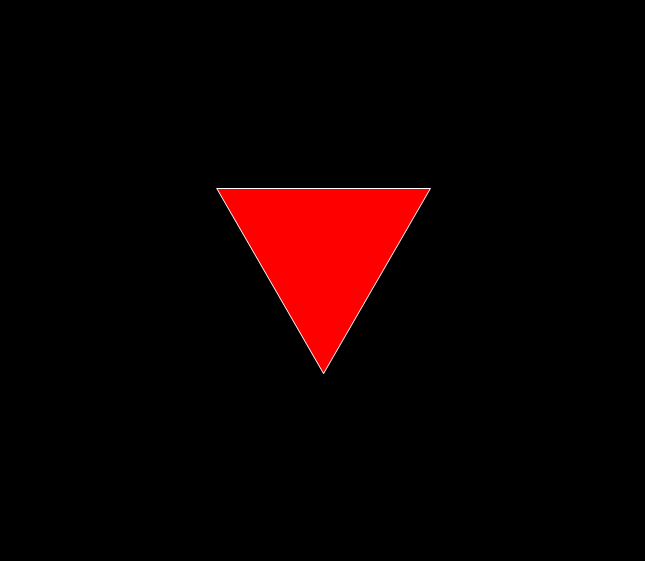
Here’s an equilateral triangle divided into six smaller triangles:

Equilateral triangle divided into six irregular triangles (Stage #1)


Now keep on dividing:

Stage #2


Stage #3


Stage #4


Stage #5


Equilateral triangle dividing into six irregular triangles (animated)


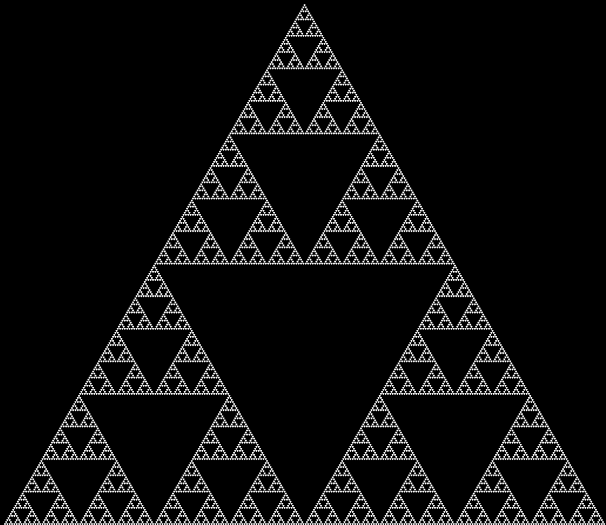
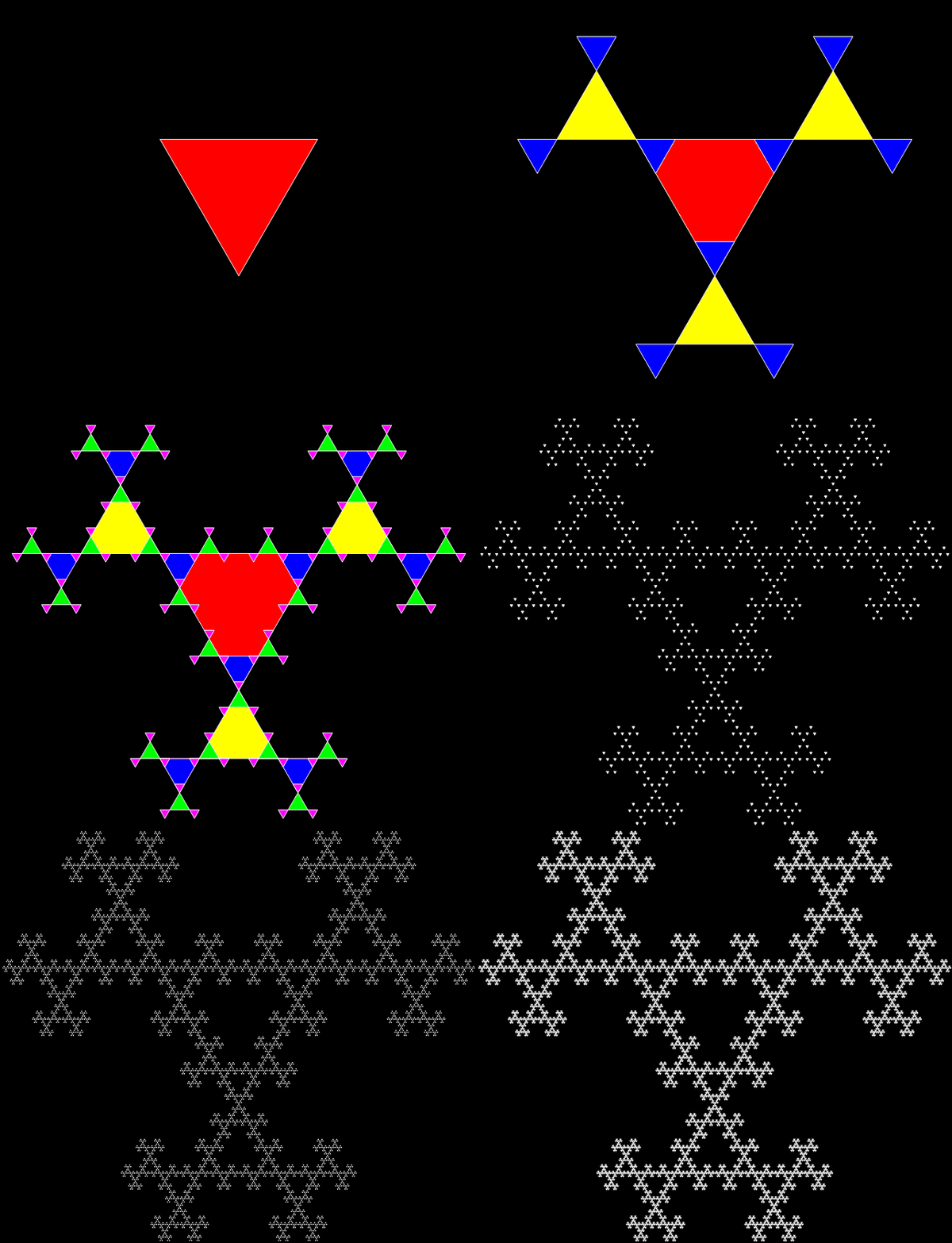
But what happens if you divide the triangle, then discard some of the sub-triangles, then repeat? You get a self-similar shape called a fractal:

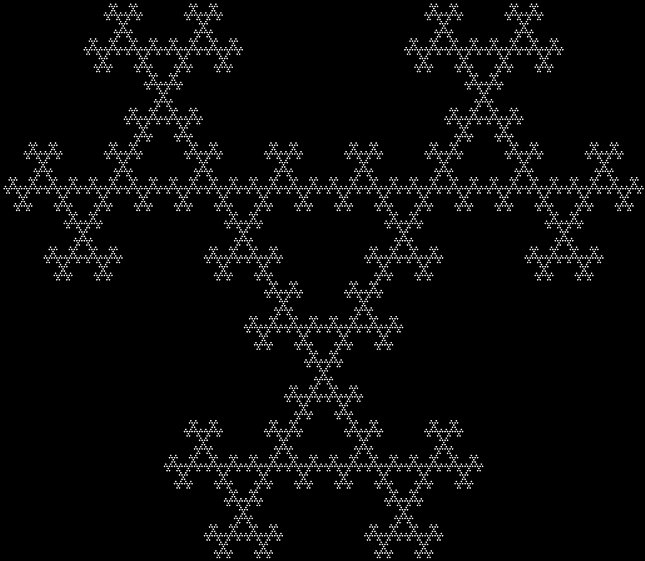
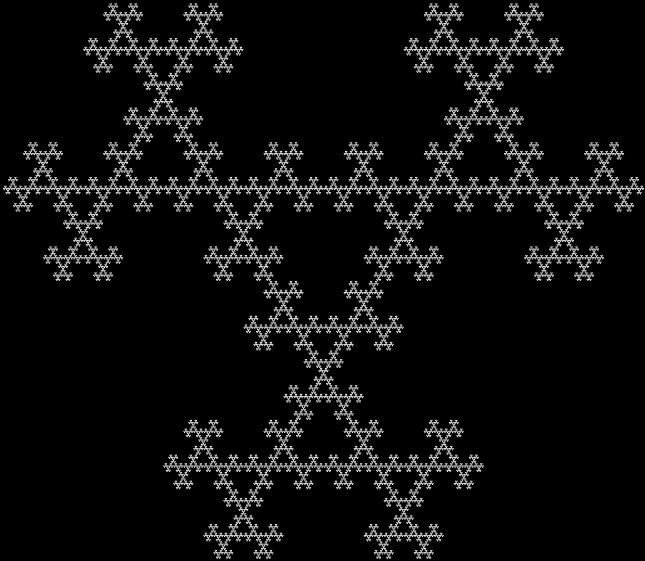
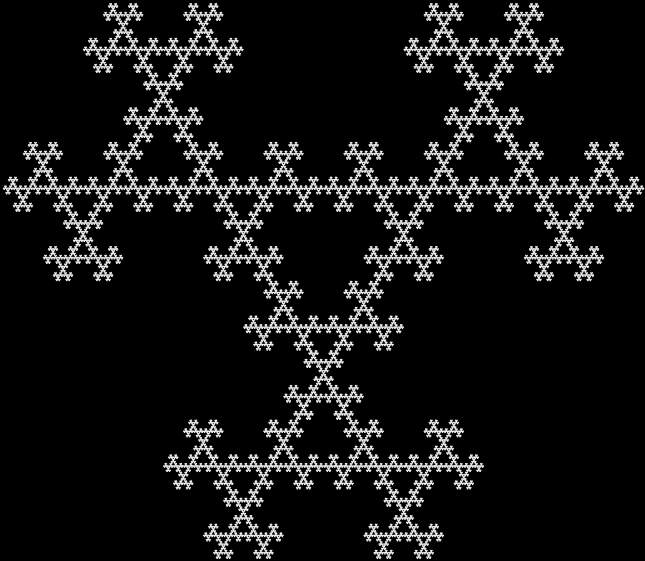
Divide-and-discard stage #1


Stage #2


Stage #3


Stage #4


Stage #5


Stage #6


Triangle fractal (animated)


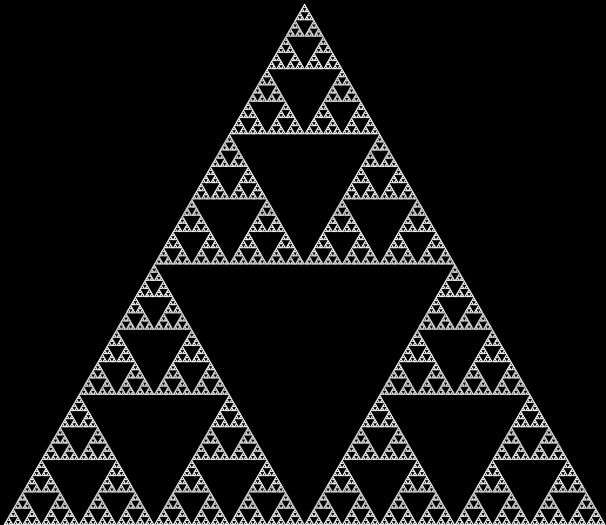
Here’s another example:

Divide-and-discard stage #1


Stage #2


Stage #3


Stage #4


Stage #5


Stage #6


Stage #7


Triangle fractal (animated)


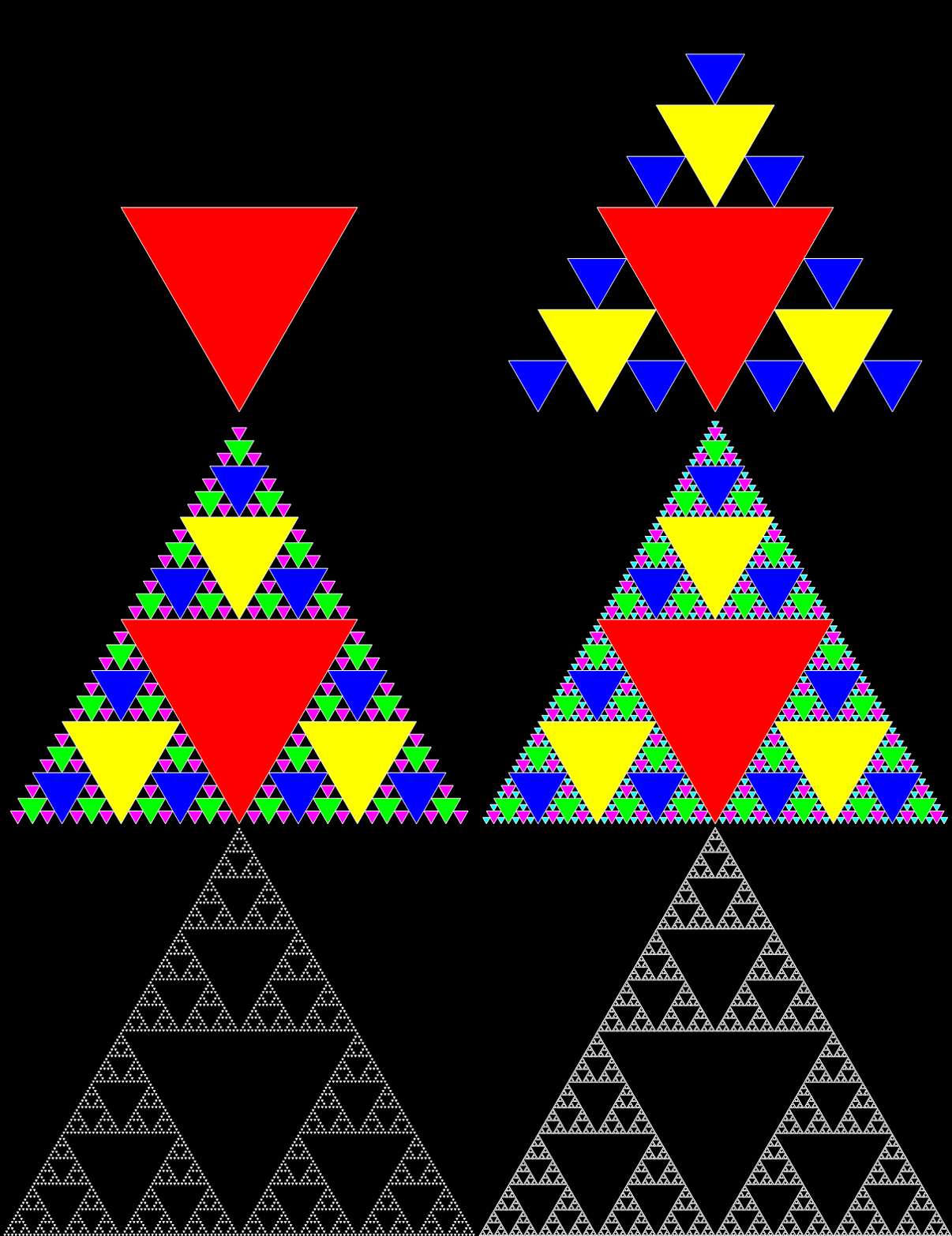
You can also delay the divide-and-discard to create a more symmetrical fractal, like this:

Delayed divide-and-discard stage #1


Stage #2


Stage #3


Stage #4


Stage #5


Stage #6


Stage #7


Triangle fractal (animated)


What next? You can use trigonometry to turn the cramped triangle into a circle:

Triangular fractal

Circular fractal
(Open in new window for full image)


Triangle-to-circle (animated)


Here’s another example:

Triangular fractal

Circular fractal


Triangle-to-circle (animated)


And below are some more circular fractals converted from triangular fractals. Some of them look like distorted skulls or transdimensional Lovecraftian monsters:

(Open in new window for full image)


Previous Pre-Posted

Circus Trix — an earlier look at sextally-divided-equilateral-triangle fractals

Square’s Flair

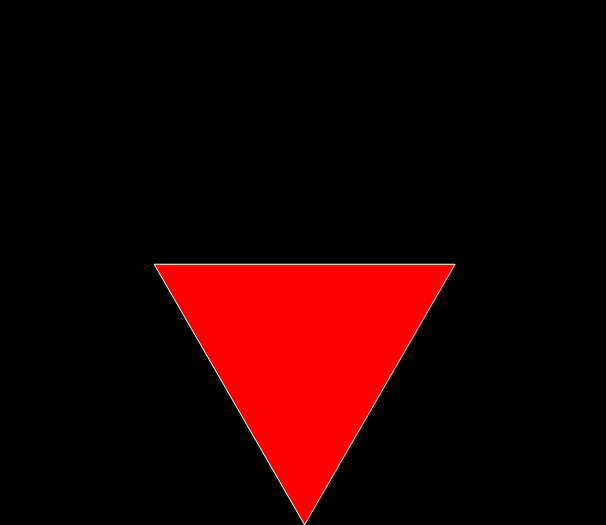
If you want to turn banality into beauty, start here with three staid and static squares:

Stage #1


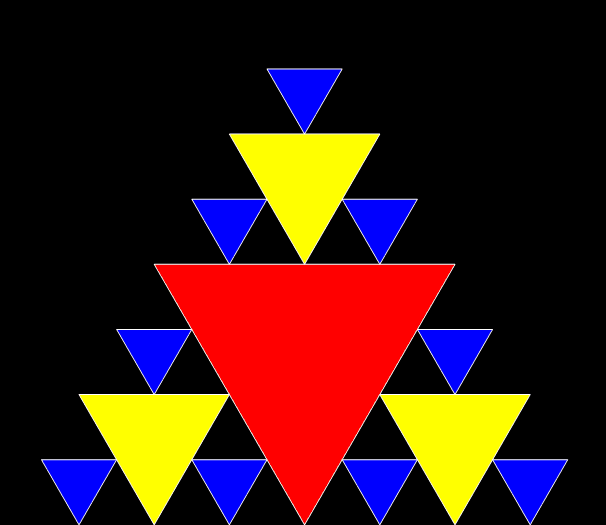
Now replace each red and yellow square with two new red and yellow squares orientated in the same way to the original square:

Stage #2


And repeat:

Stage #3


Stage #4


Stage #5


Stage #6


Stage #7


Stage #8


Stage #9


Stage #10


Stage #11


Stage #12


Stage #13


Stage #14


Stage #15


Stage #16


Stage #17


Stage #18


And you arrive in the end at a fractal called a dragon curve:

Dragon curve


Dragon curve (animated)


Elsewhere other-engageable

Curvous Energy — an introduction to dragon curves
All Posts — about dragon curves

Power Trap

Back in 2015, in an article called “Power Trip”, I looked at an unfamiliar sequence created by deleting zeroes from a familiar sequence. And I made a serious but fortunately-not-fatal error in my reasoning. The familiar sequence was powers of 2:

• 2, 4, 8, 16, 32, 64, 128, 256, 512, 1024, 2048, 4096, 8192, 16384, 32768, 65536, 131072, 262144, 524288, 1048576…

This is what happens when you delete the zeroes from the powers of 2 (and carry on multiplying by two):

2 * 2 = 4
4 * 2 = 8
8 * 2 = 16
16 * 2 = 32
32 * 2 = 64
64 * 2 = 128
128 * 2 = 256
256 * 2 = 512
512 * 2 = 1024 → 124
124 * 2 = 248
248 * 2 = 496
496 * 2 = 992
992 * 2 = 1984
1984 * 2 = 3968
3968 * 2 = 7936
7936 * 2 = 15872
15872 * 2 = 31744
31744 * 2 = 63488
63488 * 2 = 126976
126976 * 2 = 253952
253952 * 2 = 507904 → 5794
5794 * 2 = 11588
11588 * 2 = 23176
23176 * 2 = 46352
46352 * 2 = 92704 → 9274…


I pointed out that this new sequence has to repeat, because deleting zeroes prevents n growing beyond a certain size. Eventually, then, a number will repeat and the sequence will fall into a loop: “This happens at step 526 with 366784, which matches 366784 at step 490.”

But that’s deleting every zero. What happens if you delete every second zero? That is, you start with a zero-count, zc, of 0. When you meet the first zero in the sequence, zc = zc + 1 = 1. When you meet the second zero in the sequence, zc = zc + 1 = 2. So you delete that second zero and reset zc to 0. The first zero occurs when 1024 = 2 * 512, so 1024 is left as it is. The second zero occurs when 2 * 1024 = 2048, so 2048 becomes 248. The sequence for zc=2 looks like this:

1 * 2 = 2
2 * 2 = 4
4 * 2 = 8
8 * 2 = 16
16 * 2 = 32
32 * 2 = 64
64 * 2 = 128
128 * 2 = 256
256 * 2 = 512
512 * 2 = 1024 → 1024
1024 * 2 = 2048 → 248
248 * 2 = 496
496 * 2 = 992
992 * 2 = 1984
1984 * 2 = 3968
3968 * 2 = 7936
7936 * 2 = 15872
15872 * 2 = 31744
31744 * 2 = 63488
63488 * 2 = 126976
126976 * 2 = 253952
253952 * 2 = 507904 → 50794
50794 * 2 = 101588 → 101588
101588 * 2 = 203176 → 23176
23176 * 2 = 46352
46352 * 2 = 92704 → 92704
92704 * 2 = 185408 → 18548

Again, the sequence has to repeat and I claimed that it did so “at step 9134 with 5458864, which matches 5458864 at step 4166”. I also said that I hadn’t found the loop for the delete-every-third-zero sequence, where zc=3. Coming back to this type of sequence in 2021, I wrote a much faster machine-code program to see if I could find the answer for zc=3. And I thought that I had. My program said that the sequence for zc=3 repeats at step 166369 with 6138486272, which matches 6138486272 at step 25429.

Or does it repeat? Does it match? In 2021 I suddenly realized that I had neglected to consider something vital back in 2015: whether the zero-count was the same when the sequence appeared to repeat. Take the zc=2 sequence. If zc=0 at at step 4166 and zc=1 at 9134 (or vice versa), the sequence isn’t in a loop, because it will be deleting a different set of zeroes after step 4166 than it is after step 9134.

I checked whether the zero-count for that sequence is the same when the sequence appears to repeat. Fortunately, it is the same and the zero-delete sequence for zc=2 does indeed begin looping “at step 9134 with 5458864, which matches 5458864 at step 4166”.

So my error wasn’t fatal for the zc=2 sequence. But what about the zc=3 sequence? Alas, the zero-count is different for 6138486272 at step 166369 than for 6138486272 at step 25429. The sequence doesn’t behave the same after those steps and hasn’t looped. I needed to find the n1 = n2 for steps s1 and s2 where zc1 = zc2. And even with the much faster machine-code program it took some time. But I can now say that 958718377984 at step 379046, with zc=0, matches 958718377984 at step 200906, with zc=0.

Spiral Artefact

What’s the next number in this sequence of integers?


5, 14, 19, 23, 28, 32, 37, 41, 46, 50, 55... (A227793 at the OEIS)

It shouldn’t be hard to work out that it’s 64 — the sum-of-digits of n is divisible by 5, i.e., digsum(n) mod 5 = 0. Now try summing the numbers in that sequence:


5 + 14 = 19
19 + 19 = 38
38 + 23 = 61
61 + 28 = 89
89 + 32 = 121
121 + 37 = 158
158 + 41 = 199
199 + 46 = 245
[...]
Here are the cumulative sums as another sequence:


5, 19, 38, 61, 89, 121, 158, 199, 245, 295, 350, 414, 483, 556, 634, 716, 803, 894, 990, 1094, 1203, 1316, 1434, 1556, 1683, 1814, 1950, 2090, 2235, 2389, 2548, 2711, 2879, 3051, 3228, 3409, 3595, 3785, 3980, 4183, 4391, 4603, 4820, 5041, 5267, 5497, 5732, 5976, 6225...

And there’s that cumulative-sum sequence represented as a spiral:

Spiral for cumulative sum of n where digsum(n) mod 5 = 0


You can see how the spiral is created by following 0,1,2,3,4,5,6,7,8,9,A,B,C,D,E… from the center:


ZYXWVU
GFEDCT
H432BS
I501AR
J6789Q
KLMNOP

What about other values for the cumulative sums of digsum(n) mod m = 0? Here’s m = 2,3,4,5,6,7:

Spiral for cumulative sum of n where digsum(n) mod 2 = 0
s1 = 2, 4, 6, 8, 11, 13, 15, 17, 19, 20, 22…
s2 = 2, 6, 12, 20, 31, 44, 59, 76, 95, 115… (cumulative sum of s1)


sum of digsum(n) mod 3 = 0
s1 = 3, 6, 9, 12, 15, 18, 21, 24, 27, 30, 33…
s2 = 3, 9, 18, 30, 45, 63, 84, 108, 135, 165…


sum of digsum(n) mod 4 = 0
s1 = 4, 8, 13, 17, 22, 26, 31, 35, 39, 40, 44…
s2 = 4, 12, 25, 42, 64, 90, 121, 156, 195, 235…


sum of digsum(n) mod 5 = 0
s1 = 5, 14, 19, 23, 28, 32, 37, 41, 46, 50, 55…
s2 = 5, 19, 38, 61, 89, 121, 158, 199, 245, 295…


sum of digsum(n) mod 6 = 0
s1 = 6, 15, 24, 33, 39, 42, 48, 51, 57, 60, 66…
s2 = 6, 21, 45, 78, 117, 159, 207, 258, 315, 375…


sum of digsum(n) mod 7 = 0
s1 = 7, 16, 25, 34, 43, 52, 59, 61, 68, 70, 77…
s2 = 7, 23, 48, 82, 125, 177, 236, 297, 365, 435…


The spiral for m = 2 is strange, but the spirals are similar after that. Until m = 8, when something strange happens again:

sum of digsum(n) mod 8 = 0
s1 = 8, 17, 26, 35, 44, 53, 62, 71, 79, 80, 88…
s2 = 8, 25, 51, 86, 130, 183, 245, 316, 395, 475…


Then the spirals return to normal for m = 9, 10:

sum of digsum(n) mod 9 = 0
s1 = 9, 18, 27, 36, 45, 54, 63, 72, 81, 90, 99…
s2 = 9, 27, 54, 90, 135, 189, 252, 324, 405, 495…


sum of digsum(n) mod 10 = 0
s1 = 19, 28, 37, 46, 55, 64, 73, 82, 91, 109, 118…
s2 = 19, 47, 84, 130, 185, 249, 322, 404, 495, 604…


Here’s an animated gif of m = 8 at higher and higher resolution:

sum of digsum(n) mod 8 = 0 (animated gif)


You might think this strange behavior is dependant on the base in which the dig-sum is calculated. It isn’t. Here’s an animated gif for other bases in which the mod-8 spiral behaves strangely:

sum of digsum(n) mod 8 = 0 in base b = 5, 6, 7, 9, 11, 12, 13 (animated gif)


But the mod-8 spiral stops behaving strangely when the spiral is like this, as a diamond:


   W
  XIV
 YJ8HU
ZK927GT
LA3016FS
 MB45ER
  NCDQ
   OP

Now the mod-8 spiral looks like this:

sum of digsum(n) mod 8 = 0 (diamond spiral)


But the mod-4 and mod-9 spirals look like this:

sum of digsum(n) mod 4 = 0 (diamond spiral)


sum of digsum(n) mod 9 = 0 (diamond spiral)


You can also construct the spirals as a triangle, like this:


     U
    VCT
   WD2CS
  XE301AR
 YF456789Q
ZGHIJKLMNOP

Here’s the beginning of the mod-5 triangular spiral:

sum of digsum(n) mod 5 = 0 (triangular spiral) (open in new window for full size)


And the beginning of the mod-8 triangular spiral:

sum of digsum(n) mod 8 = 0 (triangular spiral) (open in new window for full size)


The mod-8 spiral is behaving strangely again. So the strangeness is partly an artefact of the way the spirals are constructed.


Post-Performative Post-Scriptum

“Spiral Artefact”, the title of this incendiary intervention, is of course a tip-of-the-hat to core Black-Sabbath track “Spiral Architect”, off core Black-Sabbath album Sabbath Bloody Sabbath, issued in core Black-Sabbath success-period of 1973.

There are 719 errors in this sentence

Here’s a famous paradox (or a variant of it at least):

• There are two errers in this sentence.

The only visible error is the misspelt “errers”. But if the sentence claims to have two errors while having only one, that is another error and there are two errors after all.

Now for another variant. I’m not sure if I’ve thought this up for myself, but try this sentence:

• There are three errors in this sentence.

There are no visible errors in the sentence. Therefore it has one error: the claim that it has three errors when there is in fact no error. But if it has one error, it’s in error to claim that it has three errors. Therefore the sentence has two errors. And if it has two errors, again it’s in error, because it claims to have three errors while having only two. Therefore it has three errors after all.

The same reasoning can be applied to any integral number of errors:

• There are five errors in this sentence.
• There are 719 errors in this sentence.
• There are 1,000,000 errors in this sentence.
• There are 1,000,000,000 errors in this sentence.

No matter how large the number of errors, the sentence becomes true instantly, because each time the sentence makes a false claim, it makes another error. But those “times of error” don’t take place in time, any more than this equation does:

• 2 = 1 + 1/2 + 1/4 + 1/8 + 1/16…

So I think these sentences are instantly true:

• There are infinitely many errors in this sentence.
• There are ∞ errors in this sentence.

But there are infinitely many infinities. Ordinary infinity, the infinity of 1,2,3…, is called ℵ0 or aleph-zero. It’s a countable infinity. Above that comes ℵ1, an uncountable infinity. So does this sentence instantly become true?

• There are ℵ1 errors in this sentence.

I’m not sure. But I think I can argue for the validity of sentences claiming fractional or irrational number of errors:

• There is 1.5 errors in this sentence.
• There are π errors in this sentence.

Let’s have a look at “There is 1.5 errors in this sentence”. There are no visible errors, so there’s one error: the claim that sentence contains 1.5 errors. So now there seems to be another error: the sentence has one error but claims to have 1.5 errors. But does it therefore have two errors? No, because if it has two errors, it’s still in error and has three errors. And that generates another error and another and another, and so on for ever. The sentence becomes unstoppably and infinitely false.

So let’s go back to the point at which the sentence contains one error. Now, the difference between 1 error and 1.5 errors is small — less than a full error. So how big is the error of claiming to have 1.5 errors when having 1 error? Well, it’s obviously 0.5 of an error. So the sentence contains 1.5 errors after all.

Now for “There are π errors in this sentence”. There are no visible errors, so there’s one error: the claim that the sentence contains π errors. Therefore it contains one error. But it claims to have π errors, so it has another error. And if it has 2 errors and claims to have π errors, it has another and third error. But if it has three errors and claims to have π error, it’s still in error. But only slightly — it’s now committing a small amount of an error. How much? It can only be 0.14159265… of an error. Therefore it’s committing 3.14159265… = π errors and is a true sentence.

Now try:

• There is -1 error in this sentence.

What is a negative error? A truth. So I think that sentence is valid too. But I can’t think of how to use i, or the square root of -1, in a sentence like that.

H₂Oenometry

You have two glasses each filled with exactly the same amount of liquid. One contains water, the other contains wine. First, take a teaspoon of water from the water glass and pour it into the wine glass. Next stir the wine and water until well mixed. Then take a teaspoon of the water-and-wine mixture and pour it into the glass of water.

The question now is: Is there more wine in the water glass than water in the wine glass, or is there less? (from World’s Most Baffling Puzzles, Charles Barry Townsend, Sterling, New York, 1991)

(Scroll down for answer)


Post-Performative Post-Scriptum

Oenometry means “wine-measurement”, from ancient Greek οἶνος, oinos, “wine”, + μετρία, metria, “measurement”. Its standard pronunciation would be “ee-NOM-ett-ry”, but you could conceivably say “oh-een-NOM-ett-ry” or “oi-NOM-ett-ry”.


Discussion of the answer

The original question is fair but worded to send you astray. By using the words “glass” and “teaspoon”, it creates distinct images in your mind: those of an unvarying teaspoon and of two glasses with identical-but-varying amounts of wine and water in them. So you’re guided away from considering that the contents of the glasses can be measured in teaspoons too. If you think not in teaspoons but in unspecified units (of liquid measure), it’s easier to see the truth.

If the two glasses each contain n units of liquid, by transferring water to the wine you’re adding 1 unit of water to n units of wine.

Therefore the wine glass contains n+1 units of mixed wine-and-water, of which n units are wine and 1 unit is water. Let’s say n+1 = n1.

Consider that 1 unit of that mixture contains n/n1 parts of wine and 1/n1 parts of water: n/n1 + 1/n1 = (n+1)/n1 = n1/n1 = 1 unit.

Now, if one unit of the mixture is transferred to the water glass, you take n/n1 units of wine from n units of wine in the wine glass: n – n/n1 = n-1 + 1/n1. You also take 1/n1 units of water from 1 unit of water in the wine glass: 1 – 1/n1 = (n1-1)/n1 = n/n1. So the wine glass now contains n-1 + 1/n1 units of wine and n/n1 of a unit of water.

When you add that unit to the (n-1) units of water in the water glass, it will contain (n-1) + 1/n1 units of water and n/n1 of unit of wine:

Wine glass: n-1 + 1/n1 units of wine and n/n1 of a unit of water
Water glass: n-1 + 1/n1 units of water and n/n1 of a unit of wine

Therefore, however much water and wine you start with, in the end there will be as much water in the wine glass as there is wine in the water glass. For some concrete examples:

Example #1

1. Start

Water glass: 2 teaspoons of water
Wine glass: 2 teaspoons of wine

2. Transfer water to wine glass and mix:

Water glass: 2 tsp of water – 1 tsp = 1 tsp of water
Wine glass: 2 tsp of wine + 1 tsp of water = 3 tsp of which 2/3 is wine, 1/3 is water

3. Transfer wine-and-water mixture to water glass:

One tsp of wine-and-water mixture = 2/3 tsp of wine + 1/3 tsp of water

Therefore:

Wine glass: 2 tsp of wine – 2/3 tsp of wine = 1 and 1/3 tsp of wine; 1 tsp of water – 1/3 tsp of water = 2/3 tsp of water
Water glass: 1 tsp of water + 1/3 tsp of water = 1 and 1/3 tsp of water; 0 tsp of wine + 2/3 tsp of wine = 2/3 tsp of wine

4. Finish

Wine glass contains: 1 and 1/3 tsp of wine, 2/3 tsp of water
Water glass contains: 1 and 1/3 tsp of water, 2/3 tsp of wine


Example #2

1. Start

Water glass: 10 teaspoons of water
Wine glass: 10 teaspoons of wine

Transfer water to wine glass and mix:

Water glass: 10 tsp of water – 1 tsp = 9 tsp of water
Wine glass: 10 tsp of wine + 1 tsp of water = 11 tsp of liquid of which 10/11 is wine, 1/11 is water

Transfer wine-and-water mixture to water glass:

One tsp of wine-and-water mixture = 10/11 tsp of wine + 1/11 tsp of water

Therefore:

Wine glass: 10 tsp of wine – 10/11 tsp of wine = 9 and 1/11 tsp of wine; 1 tsp of water – 1/11 tsp of water = 10/11 tsp of water
Water glass: 9 tsp of water + 1/11 tsp of water = 9 and 1/11 tsp of water; 0 tsp of wine + 10/11 tsp of wine = 10/11 tsp of wine

4. Finish

Wine glass contains: 9 and 1/11 tsp of wine, 10/11 tsp of water
Water glass contains: 9 and 1/11 tsp of water, 10/11 tsp of wine

RevNumSum

If you take an integer, n, and reverse its digits to get the integer r, there are three possibilities:


n > r (e.g. 85236 > 63258)
n < r (e.g. 17783 < 38771)
n = r (e.g. 45154 = 45154)

If n = r, n is a palindrome. If n > r, I call n a major number. If n < r, I call n a minor number. And here are the minor and major numbers represented as white squares on an Ulam-like spiral (the negative of a minor spiral is a major spiral, and vice versa — sometimes one looks better than the other):

b=2 (minor numbers)


b=3


b=4


b=5


b=6


b=7 (major numbers)


b=8 (minor numbers)


b=9 (mjn)


b=10 (mjn)


b=11 (mjn)


b=12 (mjn)


b=13 (mjn)


b=14 (mjn)


b=15 (mjn)


b=16 (mjn)


b=17 (mjn)


b=18 (mjn)


b=19 (mjn)


b=20 (mjn)


Minor numbers, b=2..20 (animated)


Now let’s look at a sequence formed by summing the reversed numbers, minor ones, major ones and palindromes. Here are the standard integers:


1, 2, 3, 4, 5, 6, 7, 8, 9, 10, 11, 12, 13, 14, 15, 16, 17...

If you sum the integers, you get what are called the triangular numbers:


1 = 1
3 = 1 + 2
6 = 1 + 2 + 3
10 = 1 + 2 + 3 + 4
15 = 1 + 2 + 3 + 4 + 5
21 = 1 + 2 + 3 + 4 + 5 + 6
28 = 1 + 2 + 3 + 4 + 5 + 6 + 7
36 = 1 + 2 + 3 + 4 + 5 + 6 + 7 + 8
45 = 1 + 2 + 3 + 4 + 5 + 6 + 7 + 8 + 9
55 = 1 + 2 + 3 + 4 + 5 + 6 + 7 + 8 + 9 + 10
66 = 1 + 2 + 3 + 4 + 5 + 6 + 7 + 8 + 9 + 10 + 11
78 = 1 + 2 + 3 + 4 + 5 + 6 + 7 + 8 + 9 + 10 + 11 + 12
91 = 1 + 2 + 3 + 4 + 5 + 6 + 7 + 8 + 9 + 10 + 11 + 12 + 13
105 = 1 + 2 + 3 + 4 + 5 + 6 + 7 + 8 + 9 + 10 + 11 + 12 + 13 + 14
120 = 1 + 2 + 3 + 4 + 5 + 6 + 7 + 8 + 9 + 10 + 11 + 12 + 13 + 14 + 15
136 = 1 + 2 + 3 + 4 + 5 + 6 + 7 + 8 + 9 + 10 + 11 + 12 + 13 + 14 + 15 + 16
153 = 1 + 2 + 3 + 4 + 5 + 6 + 7 + 8 + 9 + 10 + 11 + 12 + 13 + 14 + 15 + 16 + 17
171 = 1 + 2 + 3 + 4 + 5 + 6 + 7 + 8 + 9 + 10 + 11 + 12 + 13 + 14 + 15 + 16 + 17 + 18
190 = 1 + 2 + 3 + 4 + 5 + 6 + 7 + 8 + 9 + 10 + 11 + 12 + 13 + 14 + 15 + 16 + 17 + 18 + 19
210 = 1 + 2 + 3 + 4 + 5 + 6 + 7 + 8 + 9 + 10 + 11 + 12 + 13 + 14 + 15 + 16 + 17 + 18 + 19 + 20

But what happens if you reverse the integers before summing them? Here side-by-side are the triangular numbers and the underlined revnumsums (as they might be called):


45 = 1 + 2 + 3 + 4 + 5 + 6 + 7 + 8 + 9
45 = 1 + 2 + 3 + 4 + 5 + 6 + 7 + 8 + 9
55 = 1 + 2 + 3 + 4 + 5 + 6 + 7 + 8 + 9 + 10
46 = 1 + 2 + 3 + 4 + 5 + 6 + 7 + 8 + 9 + 1
66 = 1 + 2 + 3 + 4 + 5 + 6 + 7 + 8 + 9 + 10 + 11
57 = 1 + 2 + 3 + 4 + 5 + 6 + 7 + 8 + 9 + 1 + 11
78 = 1 + 2 + 3 + 4 + 5 + 6 + 7 + 8 + 9 + 10 + 11 + 12
78 = 1 + 2 + 3 + 4 + 5 + 6 + 7 + 8 + 9 + 1 + 11 + 21
91 = 1 + 2 + 3 + 4 + 5 + 6 + 7 + 8 + 9 + 10 + 11 + 12 + 13
109 = 1 + 2 + 3 + 4 + 5 + 6 + 7 + 8 + 9 + 1 + 11 + 21 + 31
105 = 1 + 2 + 3 + 4 + 5 + 6 + 7 + 8 + 9 + 10 + 11 + 12 + 13 + 14
150 = 1 + 2 + 3 + 4 + 5 + 6 + 7 + 8 + 9 + 1 + 11 + 21 + 31 + 41
120 = 1 + 2 + 3 + 4 + 5 + 6 + 7 + 8 + 9 + 10 + 11 + 12 + 13 + 14 + 15
201 = 1 + 2 + 3 + 4 + 5 + 6 + 7 + 8 + 9 + 1 + 11 + 21 + 31 + 41 + 51
136 = 1 + 2 + 3 + 4 + 5 + 6 + 7 + 8 + 9 + 10 + 11 + 12 + 13 + 14 + 15 + 16
262 = 1 + 2 + 3 + 4 + 5 + 6 + 7 + 8 + 9 + 1 + 11 + 21 + 31 + 41 + 51 + 61
153 = 1 + 2 + 3 + 4 + 5 + 6 + 7 + 8 + 9 + 10 + 11 + 12 + 13 + 14 + 15 + 16 + 17
333 = 1 + 2 + 3 + 4 + 5 + 6 + 7 + 8 + 9 + 1 + 11 + 21 + 31 + 41 + 51 + 61 + 71
171 = 1 + 2 + 3 + 4 + 5 + 6 + 7 + 8 + 9 + 10 + 11 + 12 + 13 + 14 + 15 + 16 + 17 + 18
414 = 1 + 2 + 3 + 4 + 5 + 6 + 7 + 8 + 9 + 1 + 11 + 21 + 31 + 41 + 51 + 61 + 71 + 81
190 = 1 + 2 + 3 + 4 + 5 + 6 + 7 + 8 + 9 + 10 + 11 + 12 + 13 + 14 + 15 + 16 + 17 + 18 + 19
505 = 1 + 2 + 3 + 4 + 5 + 6 + 7 + 8 + 9 + 1 + 11 + 21 + 31 + 41 + 51 + 61 + 71 + 81 + 91
210 = 1 + 2 + 3 + 4 + 5 + 6 + 7 + 8 + 9 + 10 + 11 + 12 + 13 + 14 + 15 + 16 + 17 + 18 + 19 + 20
507 = 1 + 2 + 3 + 4 + 5 + 6 + 7 + 8 + 9 + 1 + 11 + 21 + 31 + 41 + 51 + 61 + 71 + 81 + 91
+ 2

Unlike triangular numbers, revnumsums are dependent on the base they’re calculated in. In base 2, the revnumsum is always smaller than the triangular number, except at step 1. In base 3, the revnumsum is equal to the triangular number at steps 1, 2 and 15 (= 120 in base 3). Otherwise it’s smaller than the triangular number.

And in higher bases? In bases > 3, the revnumsum rises and falls above the equivalent triangular number. When it’s higher, it tends towards a maximum height of (base+1)/4 * triangular number.