

Category Archives: Mathematics
Ace Base
Strange “S” in the Light
Unexpected discoveries are one of the joys of mathematics, even for amateurs. And computers help you make more of them, because computers make it easy to adjust variables or search faster and further through math-space than any unaided human ever could (on the downside, computers can make you lazy and blunt your intuition). Here’s an unexpected discovery I made using a computer in November 2020:
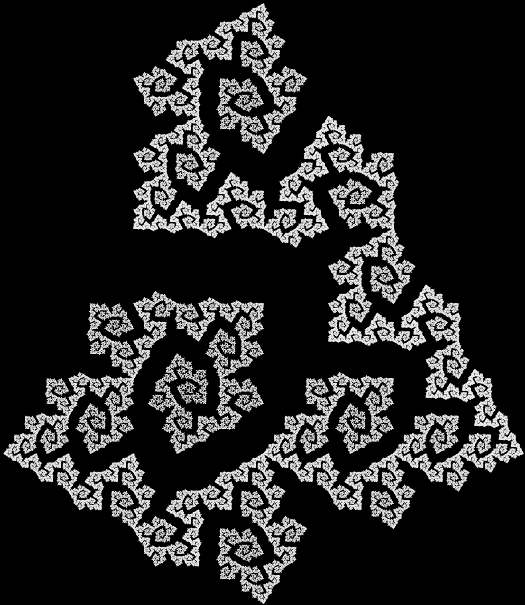
A distorted and dissected capital “S”
It’s a strange “S” that looks complex but is constructed very easily from three simple lines. And it’s a fractal, a shape that contains copies of itself at smaller and smaller scales:
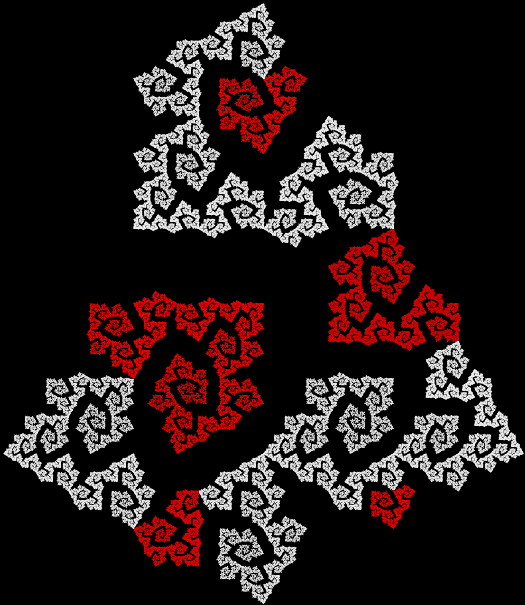
Five sub-fractals of the Strange “S”
Elsewhere Other-Accessible…
• Fractangular Frolics — the Strange “S” in more light
Jay Jay Say
“Mathematics is the music of reason.” — James Joseph Sylvester (1814-97)
We Can Circ It Out
It’s a pretty little problem to convert this triangular fractal…

Sierpiński triangle (Wikipedia)
…into its circular equivalent:
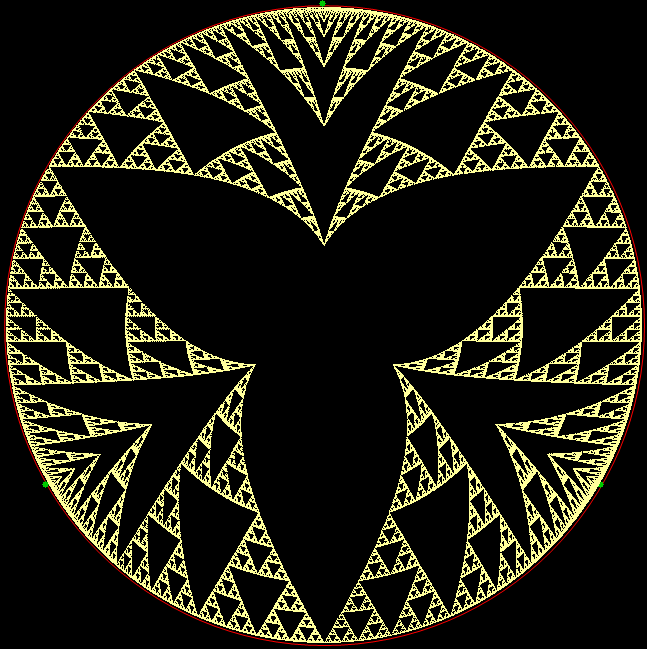
Sierpiński triangle as circle

Sierpiński triangle to circle (animated)
But once you’ve circ’d it out, as it were, you can easily adapt the technique to fractals based on other polygons:
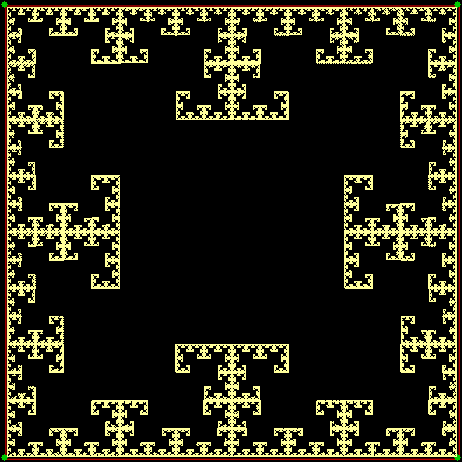
T-square fractal (Wikipedia)
⇓
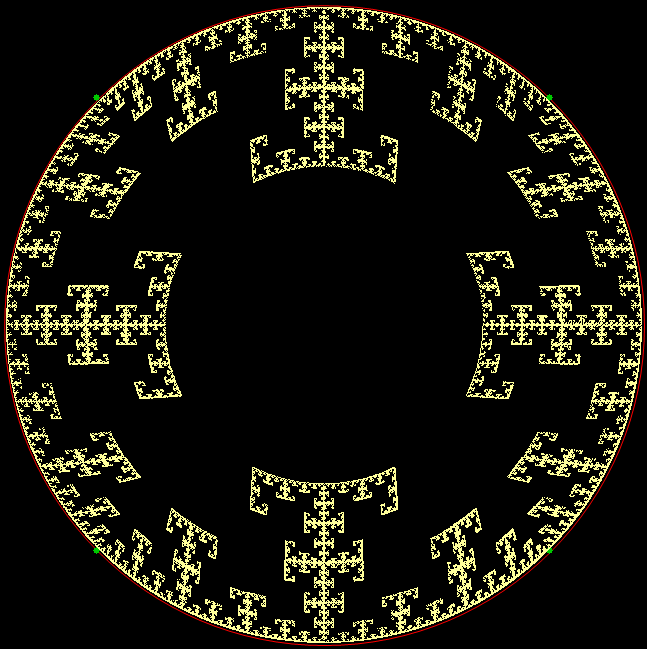
T-square fractal as circle

T-square fractal to circle (animated)
Elsewhere other-accessible…
• Dilating the Delta — more on converting polygonic fractals to circles…
The Devil’s Digits
As I’ve said before, I love the way that numbers can come in many different guises. For example, take the number 21. It comes in all these guises:
21 = 10101 in base 2 = 210 in base 3 = 111 in b4 = 41 in b5 = 33 in b6 = 30 in b7 = 25 in b8 = 23 in b9 = 21 in b10 = 1A in b11 = 19 in b12 = 18 in b13 = 17 in b14 = 16 in b15 = 15 in b16 = 14 in b17 = 13 in b18 = 12 in b19 = 11 in b20 = 10 in b21
But I’ve not chosen 21 at random. If you sum the 1s in the representations of 21 in bases 2 to 21, look what you get:
21 = 10101 in base 2 = 210 in base 3 = 111 in b4 = 41 in b5 = 33 in b6 = 30 in b7 = 25 in b8 = 23 in b9 = 21 in b10 = 1A in b11 = 19 in b12 = 18 in b13 = 17 in b14 = 16 in b15 = 15 in b16 = 14 in b17 = 13 in b18 = 12 in b19 = 11 in b20 = 10 in b21
21 = 1s=101s=201s=3 in base 2 = 21s=40 in base 3 = 111s=7 in b4 = 41s=8 in b5 = 33 in b6 = 30 in b7 = 25 in b8 = 23 in b9 = 21s=9 in b10 = 1s=10A in b11 = 1s=119 in b12 = 1s=128 in b13 = 1s=137 in b14 = 1s=146 in b15 = 1s=155 in b16 = 1s=164 in b17 = 1s=173 in b18 = 1s=182 in b19 = 11s=20 in b20 = 1s=210 in b21
In other words, 21 = digcount(21,dig=1,base=2..21). But n = digcount(n,dig,b=2..n) doesn’t happen for any other digit and doesn’t happen often with 1:
3 = digcount(3,d=1,b=2..3) = 11 in b2 = 10 in b3
4 = digcount(4,d=1,b=2..4) = 100 in b2 = 11 in b3 = 10 in b4
6 = digcount(6,d=1,b=2..6) = 110 in b2 = 20 in b3 = 12 in b4 = 11 in b5 = 10 in b6
10 = digcount(10,d=1) = 1010 in b2 = 101 in b3 = 22 in b4 = 20 in b5 = 14 in b6 = 13 in b7 = 12 in b8 = 11 in b9 = 10 in b10
15 = digcount(15,d=1) = 1111 in b2 = 120 in b3 = 33 in b4 = 30 in b5 = 23 in b6 = 21 in b7 = 17 in b8 = 16 in b9 = 15 in b10 = 14 in b11 = 13 in b12 = 12 in b13 = 11 in b14 = 10 in b15
21 = digcount(21,d=1) = 10101 in b2 = 210 in b3 = 111 in b4 = 41 in b5 = 33 in b6 = 30 in b7 = 25 in b8 = 23 in b9 = 21 in b10 = 1A in b11 = 19 in b12 = 18 in b13 = 17 in b14 = 16 in b15 = 15 in b16 = 14 in b17 = 13 in b18 = 12 in b19 = 11 in b20 = 10 in b21
After that, the digcount(n,d=1,b=2..n) → n/2 (see “Digital Dissection” for further discussion). But I decided to look for the first n where digcount(n,dig,b=2..n) = 666:
digcount(1270,1) = 666
digcount(3770,2) = 666
digcount(7667,3) = 666
digcount(12184,4) = 666
digcount(18845,5) = 666
digcount(25806,6) = 666
digcount(34195,7) = 666
digcount(43352,8) = 666
digcount(54693,9) = 666
It doesn’t stop there, of course. You can carry on for ever, looking for digcount(n,A) = 666, digcount(n,B) = 666, digcount(n,C) = 666, where A = 10, B = 11 and C=12, and so on. But it doesn’t start there, either. What about digcount(n,0) = 666? That isn’t easy to find, because 0 usually occurs far less often than other digits in the representation of n. Here are the integers setting records for digcount(n,0,b=2..n):
2 → digcount(2,0) = 1 ← 2= 10 in base 2
4 → digcount(4,0) = 3; ← 4 = 100 in base 2, 11 in base 3, 10 in base 4
8 → digcount(8,0) = 5 ← 8 = 1000 in base 2, 22 in base 3, 20 in base 4, 13 in base 5, 12 in base 6, 11 in base 7, 10 in base 8
12 → digcount(12,0) = 6
16 → digcount(16,0) = 8
18 → digcount(18,0) = 9
32 → digcount(32,0) = 11
36 → digcount(36,0) = 13
64 → digcount(64,0) = 15
72 → digcount(72,0) = 18
128 → digcount(128,0) = 20
144 → digcount(144,0) = 24
252 → digcount(252,0) = 25
264 → digcount(264,0) = 27
288 → digcount(288,0) = 29
360 → digcount(360,0) = 30
504 → digcount(504,0) = 33
540 → digcount(540,0) = 36
720 → digcount(720,0) = 40
900 → digcount(900,0) = 42
1080 → digcount(1080,0) = 47
1680 → digcount(1680,0) = 48
1800 → digcount(1800,0) = 53
2160 → digcount(2160,0) = 56
2520 → digcount(2520,0) = 61
3600 → digcount(3600,0) = 64
4320 → digcount(4320,0) = 66
So what is the first n for which digcount(n,0) = 666? Watch this space.
Reciprocal Recipes
Here’s a sequence. What’s the next number?
1, 1, 1, 1, 1, 1, 1, 1, 1, 1, 1...
Here’s another sequence. What’s the next number?
0, 1, 1, 2, 3, 5, 8, 13, 21, 34...
Those aren’t trick questions, so the answers are 1 and 55, respectively. The second sequence is the famous Fibonacci sequence, where each number after [0,1] is the sum of the previous two numbers.
Now try dividing each of those sequences by powers of 2 and summing the results, like this:
1/2 + 1/4 + 1/8 + 1/16 + 1/32 + 1/64 + 1/128 + 1/256 + 1/512 + 1/1024 + 1/2048 + 1/4096 + 1/8192 + 1/16384 + 1/32768 + 1/65536 + 1/131072 + 1/262144 + 1/524288 + 1/1048576 +... = ?
0/2 + 1/4 + 1/8 + 2/16 + 3/32 + 5/64 + 8/128 + 13/256 + 21/512 + 34/1024 + 55/2048 + 89/4096 + 144/8192 + 233/16384 + 377/32768 + 610/65536 + 987/131072 + 1597/262144 + 2584/524288 + 4181/1048576 +... = ?
What are the sums? I was surprised to learn that they’re identical:
1/2 + 1/4 + 1/8 + 1/16 + 1/32 + 1/64 + 1/128 + 1/256 + 1/512 + 1/1024 + 1/2048 + 1/4096 + 1/8192 + 1/16384 + 1/32768 + 1/65536 + 1/131072 + 1/262144 + 1/524288 + 1/1048576 +... = 1
0/2 + 1/4 + 1/8 + 2/16 + 3/32 + 5/64 + 8/128 + 13/256 + 21/512 + 34/1024 + 55/2048 + 89/4096 + 144/8192 + 233/16384 + 377/32768 + 610/65536 + 987/131072 + 1597/262144 + 2584/524288 + 4181/1048576 +... = 1
I discovered this when I was playing with an old scientific calculator and calculated these sums:
5^2 + 2^2 = 29
5^2 + 4^2 = 41
5^2 + 6^2 = 61
5^2 + 8^2 = 89
The sums are all prime numbers. Then I idly calculated the reciprocal of 1/89:
1/89 = 0·011235955056179775...
The digits 011235… are the start of the Fibonacci sequence. It seems to go awry after that, but I remembered what David Wells had said in his wonderful Penguin Dictionary of Curious and Interesting Numbers (1986): “89 is the 11th Fibonacci number, and the period of its reciprocal is generated by the Fibonacci sequence: 1/89 = 0·11235…” He means that the Fibonacci sequence generates the digits of 1/89 like this, when you sum the columns and move carries left as necessary:
0
↓1
↓↓1
↓↓↓2
↓↓↓↓3
↓↓↓↓↓5
↓↓↓↓↓↓8
↓↓↓↓↓↓13
↓↓↓↓↓↓↓21
↓↓↓↓↓↓↓↓34
↓↓↓↓↓↓↓↓↓55
↓↓↓↓↓↓↓↓↓↓89...
↓↓↓↓↓↓↓↓↓↓
0112359550...
I tried this method of summing the Fibonacci sequence in other bases. Although it was old, the scientific calculator was crudely programmable. And it helpfully converted the sum into a final fraction once there were enough decimal digits:
0/3 + 1/32 + 1/33 + 2/34 + 3/35 + 5/36 + 8/37 + 13/38 + 21/39 + 34/310 + 55/311 + 89/312 + 144/313 + 233/314 + 377/315 + 610/316 + 987/317 + 1597/318 + 2584/319 + 4181/320 +... = 1/5 = 0·012101210121012101210 in b3
0/4 + 1/42 + 1/43 + 2/44 + 3/45 + 5/46 + 8/47 + 13/48 + 21/49 + 34/410 + 55/411 + 89/412 + 144/413 + 233/414 + 377/415 + 610/416 + 987/417 + 1597/418 + 2584/419 + 4181/420 +... = 1/11 = 0·011310113101131011310 in b4
0/5 + 1/52 + 1/53 + 2/54 + 3/55 + 5/56 + 8/57 + 13/58 + 21/59 + 34/510 + 55/511 + 89/512 + 144/513 + 233/514 + 377/515 + 610/516 + 987/517 + 1597/518 + 2584/519 + 4181/520 +... = 1/19 = 0·011242141011242141011 in b5
0/6 + 1/62 + 1/63 + 2/64 + 3/65 + 5/66 + 8/67 + 13/68 + 21/69 + 34/610 + 55/611 + 89/612 + 144/613 + 233/614 + 377/615 + 610/616 + 987/617 + 1597/618 + 2584/619 + 4181/620 +... = 1/29 = 0·011240454431510112404 in b6
0/7 + 1/72 + 1/73 + 2/74 + 3/75 + 5/76 + 8/77 + 13/78 + 21/79 + 34/710 + 55/711 + 89/712 + 144/713 + 233/714 + 377/715 + 610/716 + 987/717 + 1597/718 + 2584/719 + 4181/720 +... = 1/41 = 0·011236326213520225056 in b7
It was interesting to see that all the reciprocals so far were of primes. I carried on:
0/8 + 1/82 + 1/83 + 2/84 + 3/85 + 5/86 + 8/87 + 13/88 + 21/89 + 34/810 + 55/811 + 89/812 + 144/813 + 233/814 + 377/815 + 610/816 + 987/817 + 1597/818 + 2584/819 + 4181/820 +... = 1/55 = 0·011236202247440451710 in b8
Not a prime reciprocal, but a reciprocal of a Fibonacci number. Here are some more sums:
0/9 + 1/92 + 1/93 + 2/94 + 3/95 + 5/96 + 8/97 + 13/98 + 21/99 + 34/910 + 55/911 + 89/912 + 144/913 + 233/914 + 377/915 + 610/916 + 987/917 + 1597/918 + 2584/919 + 4181/920 +... = 1/71 (another prime) = 0·011236067540450563033 in b9
0/10 + 1/102 + 1/103 + 2/104 + 3/105 + 5/106 + 8/107 + 13/108 + 21/109 + 34/1010 + 55/1011 + 89/1012 + 144/1013 + 233/1014 + 377/1015 + 610/1016 + 987/1017 + 1597/1018 + 2584/1019 + 4181/1020 +... = 1/89 (and another) = 0·011235955056179775280 in b10
0/11 + 1/112 + 1/113 + 2/114 + 3/115 + 5/116 + 8/117 + 13/118 + 21/119 + 34/1110 + 55/1111 + 89/1112 + 144/1113 + 233/1114 + 377/1115 + 610/1116 + 987/1117 + 1597/1118 + 2584/1119 + 4181/1120 +... = 1/109 (and another) = 0·011235942695392022470 in b11
0/12 + 1/122 + 1/123 + 2/124 + 3/125 + 5/126 + 8/127 + 13/128 + 21/129 + 34/1210 + 55/1211 + 89/1212 + 144/1213 + 233/1214 + 377/1215 + 610/1216 + 987/1217 + 1597/1218 + 2584/1219 + 4181/1220 +... = 1/131 (and another) = 0·011235930336A53909A87 in b12
0/13 + 1/132 + 1/133 + 2/134 + 3/135 + 5/136 + 8/137 + 13/138 + 21/139 + 34/1310 + 55/1311 + 89/1312 + 144/1313 + 233/1314 + 377/1315 + 610/1316 + 987/1317 + 1597/1318 + 2584/1319 + 4181/1320 +... = 1/155 (not a prime or a Fibonacci number) = 0·01123591ACAA861794044 in b13
The reciprocals go like this:
1/1, 1/5, 1/11, 1/19, 1/29, 1/41, 1/55, 1/71, 1/89, 1/109, 1/131, 1/155...
And it should be easy to see the rule that generates them:
5 = 1 + 4
11 = 5 + 6
19 = 11 + 8
29 = 19 + 10
41 = 29 + 12
55 = 41 + 14
71 = 55 + 16
89 = 17 + 18
109 = 89 + 20
131 = 109 + 22
155 = 131 + 24
[...]
But I don’t understand why the rule applies, let alone why the Fibonacci sequence generates these reciprocals in the first place.
Dicing with Danger
“In no other branch of mathematics is it so easy for experts to blunder as in probability theory.” — Martin Gardner (1914-2010)
Diamonds to Dust
It’s one of the most famous and easily recognizable logos in the world:

The Mitsubishi diamonds (source)
Those are the three diamonds of Mitsubishi, whose name itself means “three diamonds” or “three rhombi” in Japanese (see 三菱). But if you look at the Mitsubishi diamonds with a mathematical eye, you can see how to create them in two simple steps. First, you divide an equilateral triangle into nine smaller equilateral triangles. Then you discard three of the sub-triangles, like this:

Equilateral triangle divided into nine sub-triangles
↓

Six sub-triangles left after three are discarded

↓

But why stop there? Once you’ve discarded three triangles, six triangles are left. Now do the same to the remaining six: divide each into nine sub-triangles and discard three of the sub-triangles. Then do it again and again. When you’ve reduced the diamonds to dust, you’ve got a fractal, a shape that repeats itself at smaller and smaller scales:
Diamond fractal stage #1

Diamond fractal stage #2
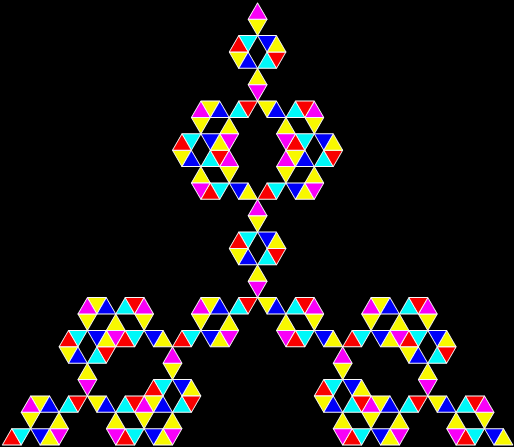
Diamond fractal stage #3

Diamond fractal stage #4

Diamond fractal stage #5
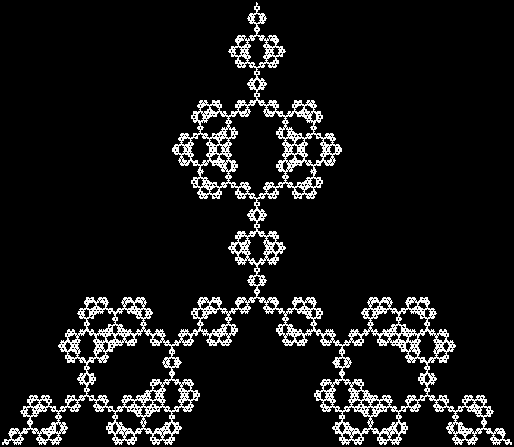
Diamond fractal stage #6

Diamond fractal (animated)
After that, you can convert the fractal-within-a-triangle into a fractal-within-a-circle:

↓
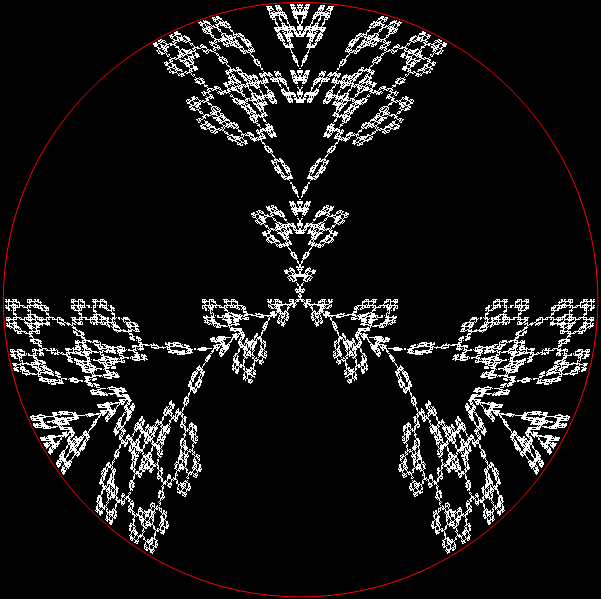
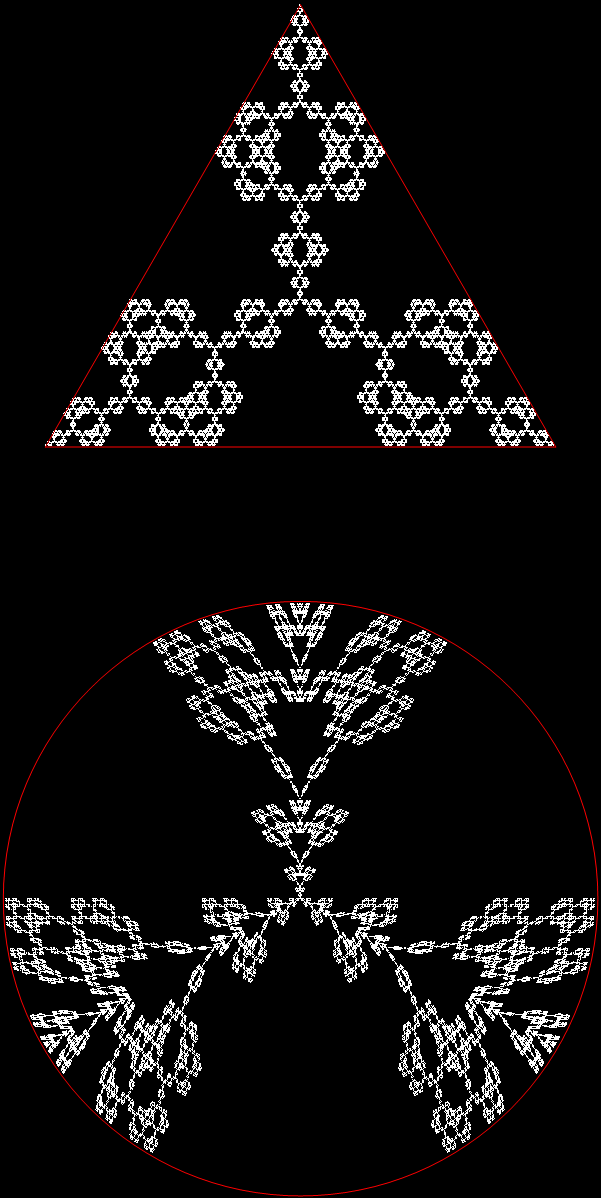
Diamond fractal, triangular to circular (animated)
You can create other fractals by dividing-and-discarding sub-triangles from a rep-9 equilaterial triangle. Here’s what I call a rep9-tri grid fractal:

Grid fractal stage #1
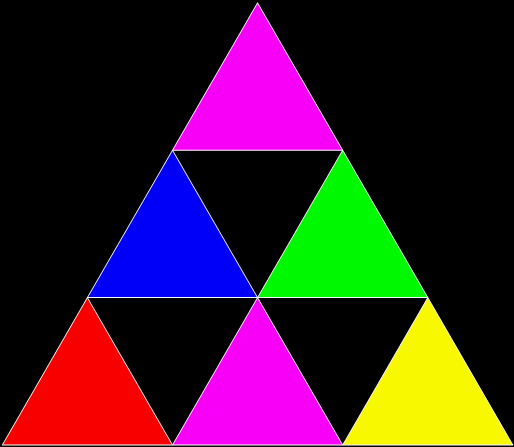
Grid fractal stage #2
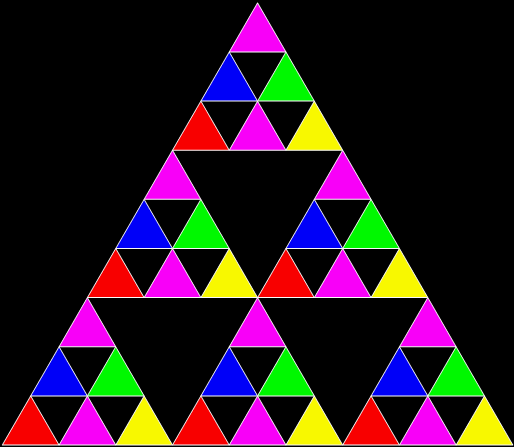
Grid fractal stage #3
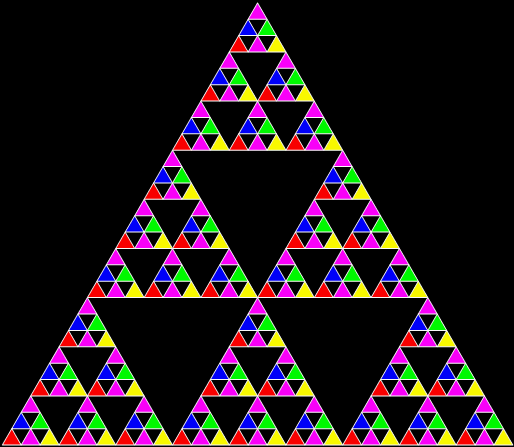
Grid fractal stage #4
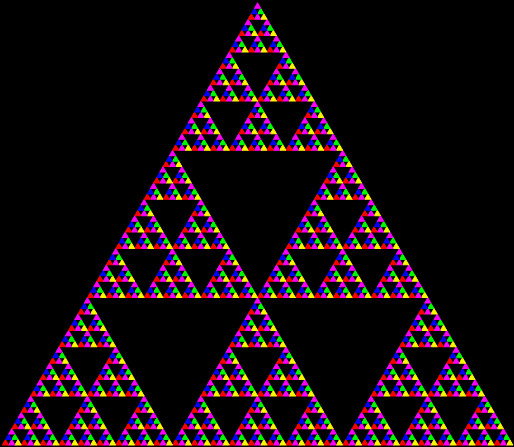
Grid fractal stage #5
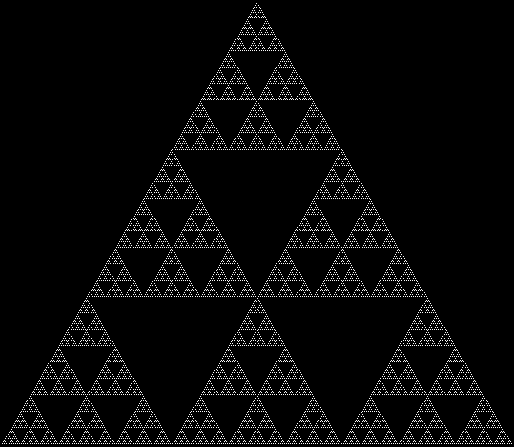
Grid fractal stage #6

Grid fractal stage #7

Grid fractal (animated)
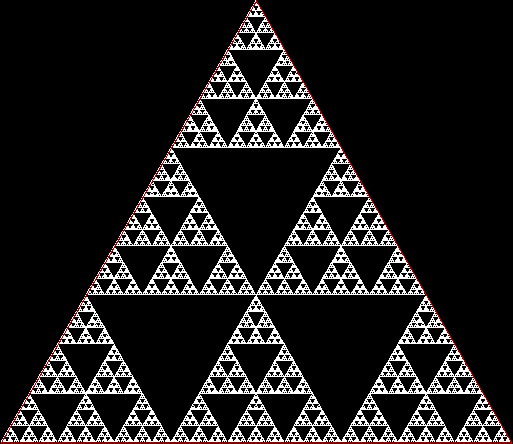
↓
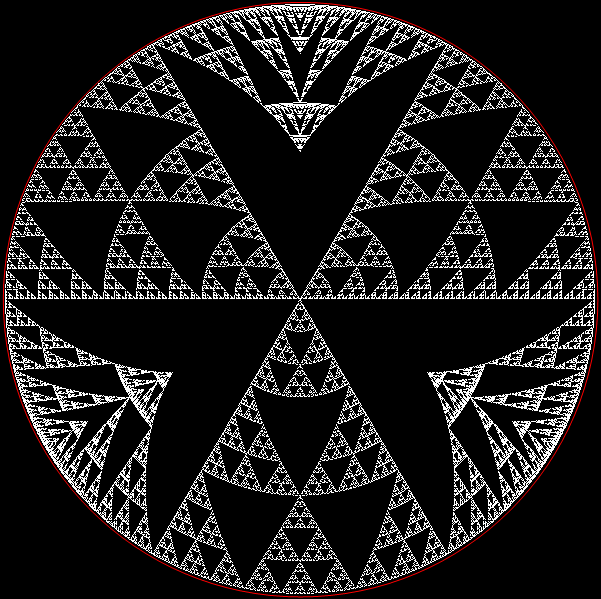
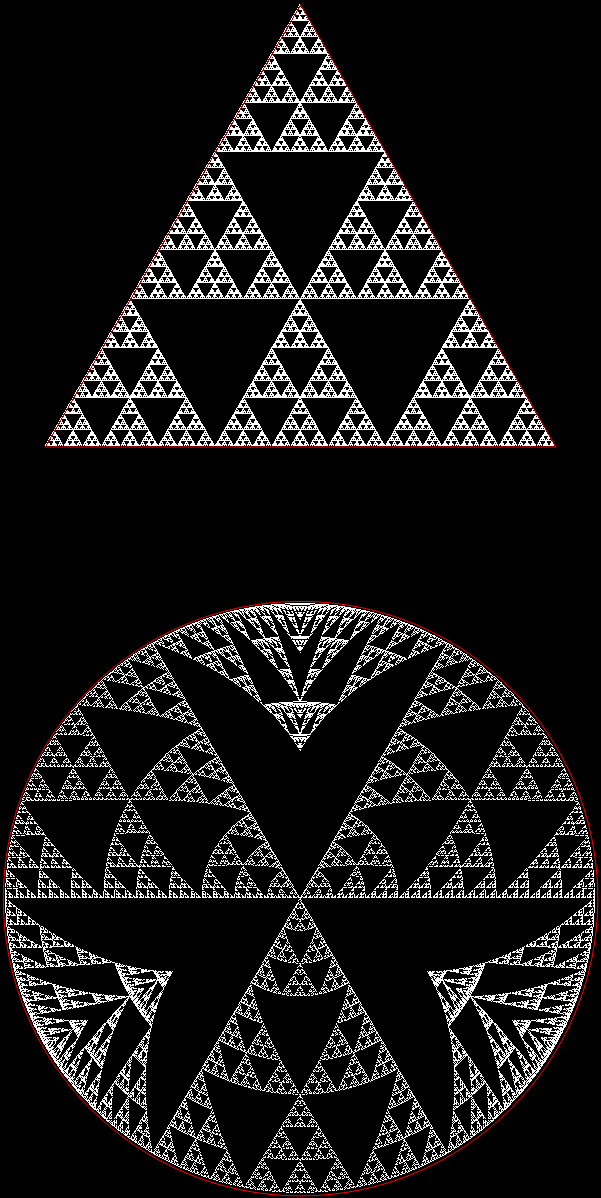
Grid fractal, triangular to circular (animated)
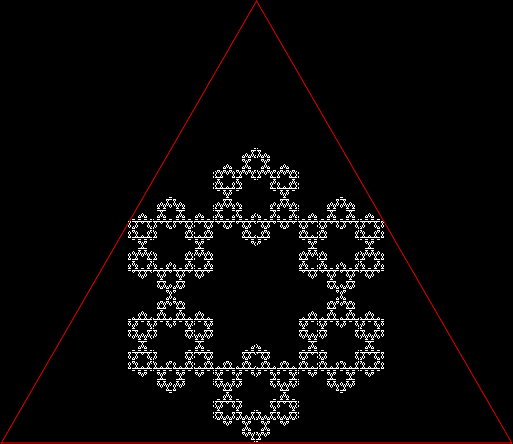
And here’s a rep9-tri hexagon fractal:
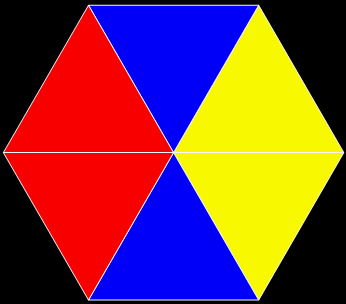
Hexagon fractal (initial form)

Hexagon fractal stage #1
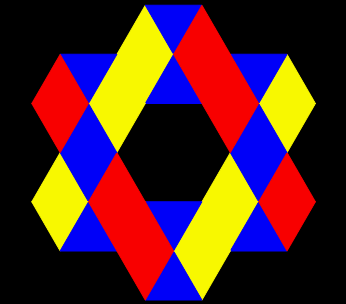
Hexagon fractal stage #2

Hexagon fractal stage #3

Hexagon fractal stage #4

Hexagon fractal stage #5
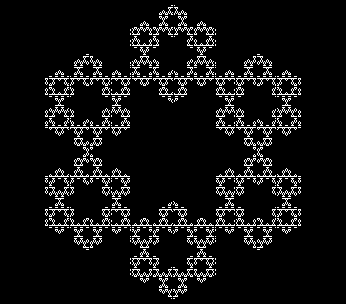
Hexagon fractal stage #6

Hexagon fractal (animated)
↓
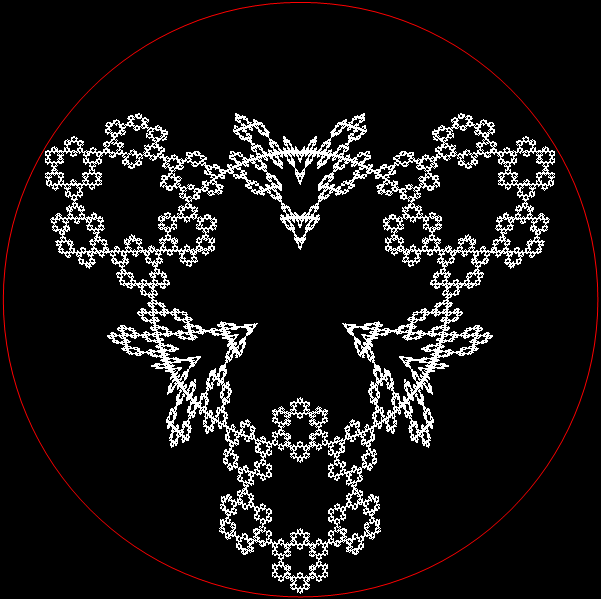

Hexagon fractal, triangular to circular (animated)
The Belles of El

Title page of Sir Henry Billingsley’s first English version of Euclid’s Elements, 1570, with personifications of Geometria, Astronomia, Arithmetica and Musica as beautiful young women
The Elements of Geometrie of the Moſt Aucient Philoſopher Evclide of Megara.
Faithfully (now first) tranʃlated into the Engliʃhe toung, by H. Billingſley, Citizen of London.
Whereunto are annexed certaine Scolies, Annotations, and Inuentions, of the best Mathematiciens, both of times past, and in this our age.
With a very fruitfull Præface made by M.I. Dee, ʃpecifying the chiefe Mathematicall Sciences, what they are, and wherunto commodious: where, alʃo, are diʃcloʃed certaine new Secrets Mathematicall and Mechanicall, untill theʃe our daies, greatly miʃʃed.
Imprinted at London by Iohn Daye.
The title of this incendiary intervention is a paronomasia on “The Bells of Hell…”, a British airmen’s song in terms of core issues around World War I.
Primal Stream
• 3, 7, 31, 127, 8191, 131071, 524287, 2147483647, 2305843009213693951, 618970019642690137449562111, 162259276829213363391578010288127, 170141183460469231731687303715884105727 — A000668, Mersenne primes (primes of the form 2^n – 1), at the Online Encyclopedia of Integer Sequences
• 2, 3, 5, 7, 13, 17, 19, 31, 61, 89, 107, 127, 521, 607, 1279, 2203, 2281, 3217, 4253, 4423, 9689, 9941, 11213, 19937, 21701, 23209, 44497, 86243, 110503, 132049, 216091, 756839, 859433, 1257787, 1398269, 2976221, 3021377, 6972593, 13466917, 20996011, 24036583, 25964951, 30402457, 32582657, 37156667, 42643801, 43112609, 57885161, 74207281, 77232917, 82589933 — A000043, Mersenne exponents: primes p such that 2^p – 1 is prime. Then 2^p – 1 is called a Mersenne prime. […] It is believed (but unproved) that this sequence is infinite. The data suggest that the number of terms up to exponent N is roughly K log N for some constant K.
• The largest known prime number (as of May 2022) is 282,589,933 − 1, a number which has 24,862,048 digits when written in base 10. It was found via a computer volunteered by Patrick Laroche of the Great Internet Mersenne Prime Search (GIMPS) in 2018. — Largest known prime number

