Performativizing Polyhedra

Τα Στοιχεία του Ευκλείδου, ια΄

κεʹ. Κύβος ἐστὶ σχῆμα στερεὸν ὑπὸ ἓξ τετραγώνων ἴσων περιεχόμενον.
κϛʹ. ᾿Οκτάεδρόν ἐστὶ σχῆμα στερεὸν ὑπὸ ὀκτὼ τριγώνων ἴσων καὶ ἰσοπλεύρων περιεχόμενον.
κζʹ. Εἰκοσάεδρόν ἐστι σχῆμα στερεὸν ὑπὸ εἴκοσι τριγώνων ἴσων καὶ ἰσοπλεύρων περιεχόμενον.
κηʹ. Δωδεκάεδρόν ἐστι σχῆμα στερεὸν ὑπὸ δώδεκα πενταγώνων ἴσων καὶ ἰσοπλεύρων καὶ ἰσογωνίων περιεχόμενον.

Euclid’s Elements, Book 11

25. A cube is a solid figure contained by six equal squares.
26. An octahedron is a solid figure contained by eight equal and equilateral triangles.
27. An icosahedron is a solid figure contained by twenty equal and equilateral triangles.
28. A dodecahedron is a solid figure contained by twelve equal, equilateral, and equiangular pentagons.

Sprime Time

All fans of recreational math love palindromic numbers. It’s mandatory, man. 101, 727, 532235, 8810188, 1367755971795577631 — I love ’em! But where can you go after palindromes? Well, you can go to palindromes in a higher dimension. Numbers like 101, 727, 532235 and 8810188 are 1-d palindromes. That is, they’re palindromic in one dimension: backwards and forwards. But numbers like 181818189 and 646464640 aren’t palindromic in one dimension. They’re palindromic in two dimensions:


1 8 1
8 9 8
1 8 1

n=181818189


6 4 6
4 0 4
6 4 6

n=646464640


They’re 2-d palindromes or spiral numbers, that is, numbers that are symmetrical when written as a spiral. You start with the first digit on the top left, then spiral inwards to the center, like this for a 9-digit spiral (9 = 3×3):


And this for a 36-digit spiral (36 = 6×6):


Spiral numbers are easy to construct, because you can reflect and rotate the numbers in one triangular slice of the spiral to find all the others:


You could say that the seed for the spiral number above is 7591310652, because you can write that number in descending lines, left-to-right, as a triangle.

Here are some palindromic numbers with nine digits in base 3 — as you can see, some are both palindromic numbers and spiral numbers. That is, some are palindromic in both one and two dimensions:

1  0  1

0  1  0

1  0  1

n=101010101


1  0  1

0  2  0

1  0  1

n=101010102


1  1  1

1  0  1

1  1  1

n=111111110


1  1  1

1  1  1

1  1  1

n=111111111


2  0  2

0  1  0

2  0  2

n=202020201


2  0  2

0  2  0

2  0  2

n=202020202


2  2  2

2  1  2

2  2  2

n=222222221


2  2  2

2  2  2

2  2  2

n=222222222


But palindromic primes are even better than ordinary palindromes. Here are a few 1-d palindromic primes in base 10:

101
151
73037
7935397
97356765379
1091544334334451901
1367755971795577631
70707270707
39859395893
9212129
7436347
166000661
313
929


And after 1-d palindromic primes, you can go to 2-d palindromic primes. That is, to spiral primes or sprimes — primes that are symmetrical when written as a spiral:

3 6 3
6 7 6
3 6 3

n=363636367 (prime)
seed=367 (see definition above)


9 1 9
1 3 1
9 1 9

n=919191913 (prime)
seed=913


3 7 8 6 3 6 8 7 3
7 9 1 8 9 8 1 9 7
8 1 9 0 9 0 9 1 8
6 8 0 5 5 5 0 8 6
3 9 9 5 7 5 9 9 3
6 8 0 5 5 5 0 8 6
8 1 9 0 9 0 9 1 8
7 9 1 8 9 8 1 9 7
3 7 8 6 3 6 8 7 3

n=378636873786368737863687378636879189819189819189819189819090909090909090555555557 (prime)
seed=378639189909557 (l=15)


And why stop with spiral numbers — and sprimes — in two dimensions? 363636367 is a 2-sprime, being palindromic in two dimensions. But the digits of a number could be written to form a symmetrical cube in three, four, five and more dimensions. So I assume that there are 3-sprimes, 4-sprimes, 5-sprimes and more out there. Watch this space.

The Power of Powder

• Racine carrée de 2, c’est 1,414 et des poussières… Et quelles poussières ! Des grains de sable qui empêchent d’écrire racine de 2 comme une fraction. Autrement dit, cette racine n’est pas dans Q. — Rationnel mon Q: 65 exercices de styles, Ludmilla Duchêne et Agnès Leblanc (2010)

• The square root of 2 is 1·414 and dust… And what dust! Grains of sand that stop you writing the root of 2 as a fraction. Put another way, this root isn’t in Q [the set of rational numbers].

Thrice Dice Twice

A once very difficult but now very simple problem in probability from Ian Stewart’s Do Dice Play God? (2019):

For three dice [Girolamo] Cardano solved a long-standing conundrum [in the sixteenth century]. Gamblers had long known from experience that when throwing three dice, a total of 10 is more likely than 9. This puzzled them, however, because there are six ways to get a total of 10:

1+4+5; 1+3+6; 2+4+4; 2+2+6; 2+3+5; 3+3+4

But also six ways to get a total of 9:

1+2+6; 1+3+5; 1+4+4; 2+2+5; 2+3+4; 3+3+3

So why does 10 occur more often?

To see the answer, imagine throwing three dice of different colors: red, blue and yellow. How many ways can you get 9 and how many ways can you get 10?

Roll Total=9 Dice #1 (Red) Dice #2 (Blue) Dice #3 (Yellow)
01 9 = 1 2 6
02 9 = 1 3 5
03 9 = 1 4 4
04 9 = 1 5 3
05 9 = 1 6 2
06 9 = 2 1 6
07 9 = 2 2 5
08 9 = 2 3 4
09 9 = 2 4 3
10 9 = 2 5 2
11 9 = 2 6 1
12 9 = 3 1 5
13 9 = 3 2 4
14 9 = 3 3 3
15 9 = 3 4 2
16 9 = 3 5 1
17 9 = 4 1 4
18 9 = 4 2 3
19 9 = 4 3 2
20 9 = 4 4 1
21 9 = 5 1 3
22 9 = 5 2 2
23 9 = 5 3 1
24 9 = 6 1 2
25 9 = 6 2 1
Roll Total=10 Dice #1 (Red) Dice #2 (Blue) Dice #3 (Yellow)
01 10 = 1 3 6
02 10 = 1 4 5
03 10 = 1 5 4
04 10 = 1 6 3
05 10 = 2 2 6
06 10 = 2 3 5
07 10 = 2 4 4
08 10 = 2 5 3
09 10 = 2 6 2
10 10 = 3 1 6
11 10 = 3 2 5
12 10 = 3 3 4
13 10 = 3 4 3
14 10 = 3 5 2
15 10 = 3 6 1
16 10 = 4 1 5
17 10 = 4 2 4
18 10 = 4 3 3
19 10 = 4 4 2
20 10 = 4 5 1
21 10 = 5 1 4
22 10 = 5 2 3
23 10 = 5 3 2
24 10 = 5 4 1
25 10 = 6 1 3
26 10 = 6 2 2
27 10 = 6 3 1

Back to Drac’ #2

Boring, dull, staid, stiff, everyday, ordinary, unimaginative, unexceptional, crashingly conventional — the only interesting thing about squares is the number of ways you can say how uninteresting they are. Unlike triangles, which vary endlessly and entertainingly, squares are square in every sense of the word.

And they don’t get any better if you tilt them, as here:

Sub-squares from gray square (with corner-numbers)


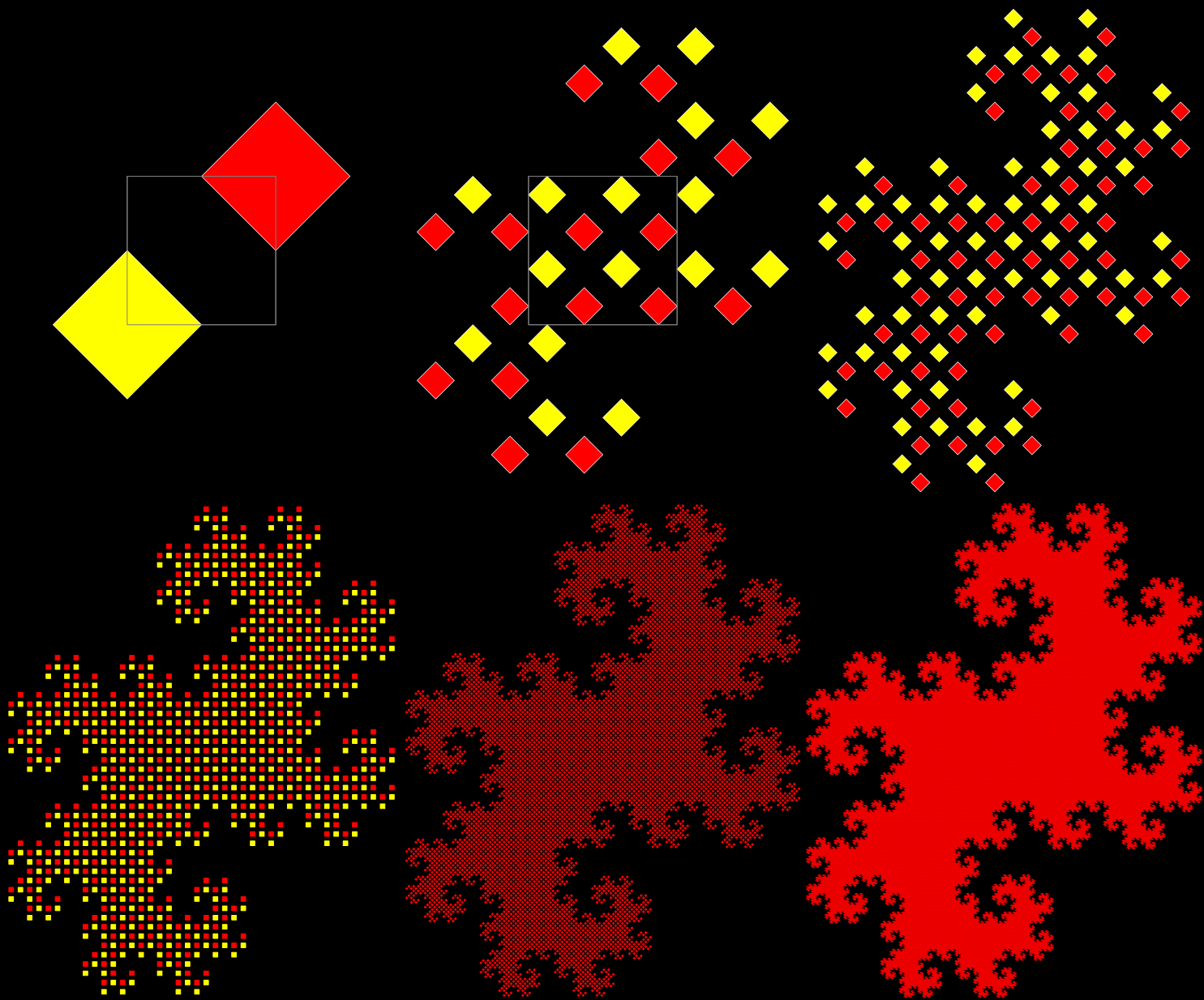
Nothing interesting can emerge from that set of squares. Or can it? As I showed in Curvous Energy, it can. Suppose that the gray square is dividing into the colored squares like a kind of amoeba. And suppose that the colored squares divide in their turn. So square divides into sub-squares and sub-squares divide into sub-sub-squares. And so on. And all the squares keep the same relative orientation.

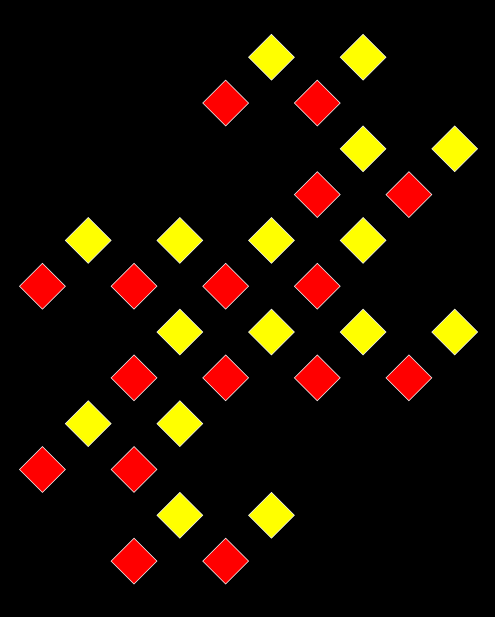
What happens if the gray square divides into sub-squares sq2 and sq9? And then sq2 and sq9 each divide into their own sq2 and sq9? And so on. Something very unsquare-like happens:

Square-split stage #1


Stage #2


Square-split #3


Square-split #4


Square-split #5


Square-split #6


Square-split #7


Square-split #8


Square-split #9


Square-split #10


Square-split #11


Square-split #12


Square-split #13


Square-split #14


Square-split #15


Square-split #16


Square-split (animated)

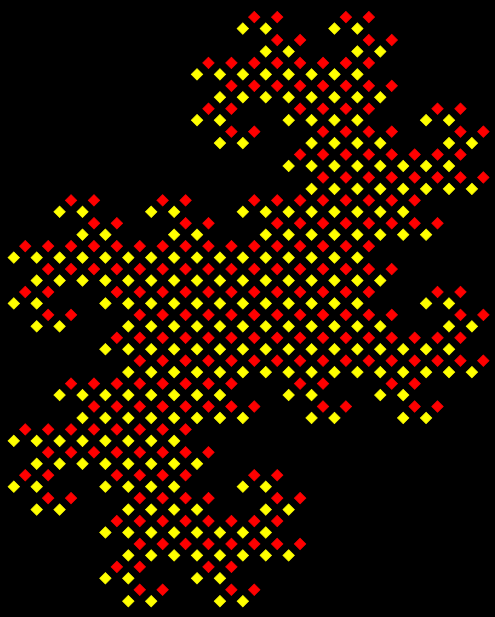
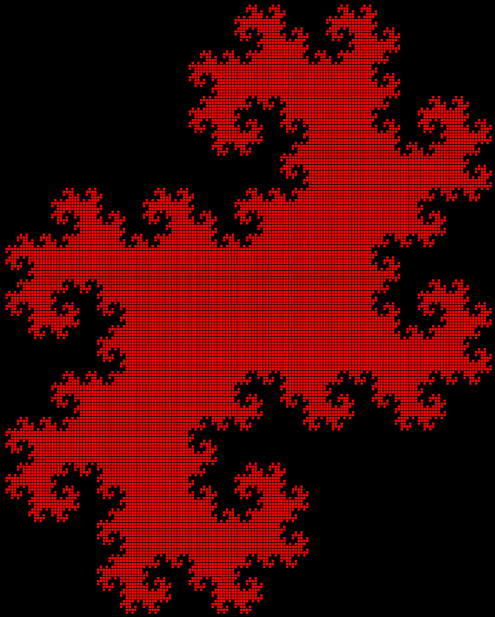
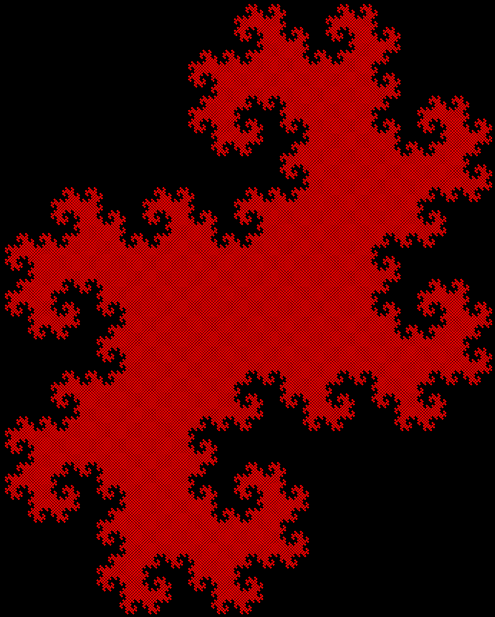
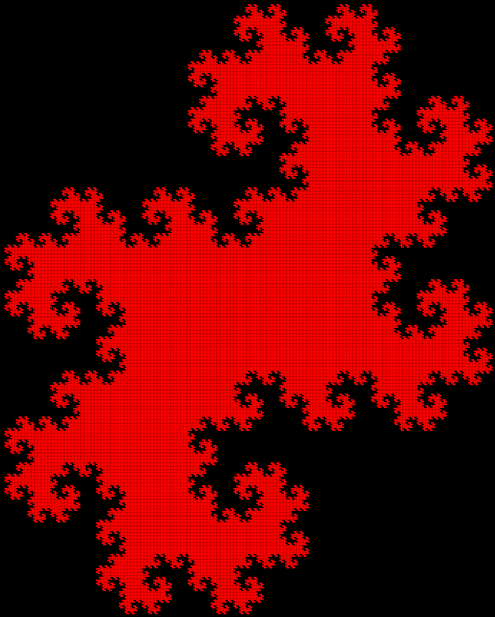
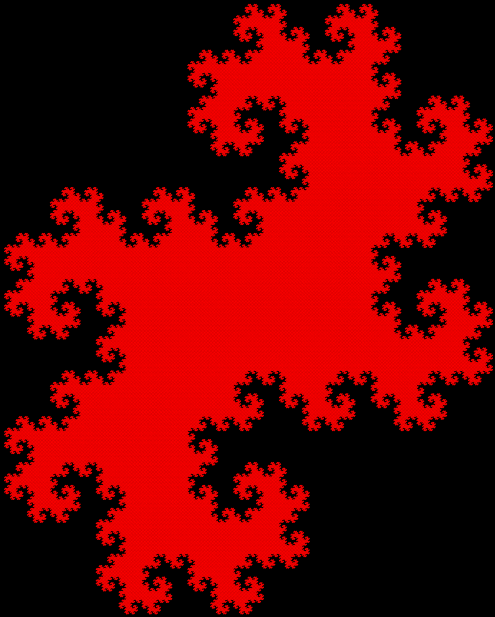
The square-split creates a beautiful fractal known as a dragon-curve:

Dragon-curve


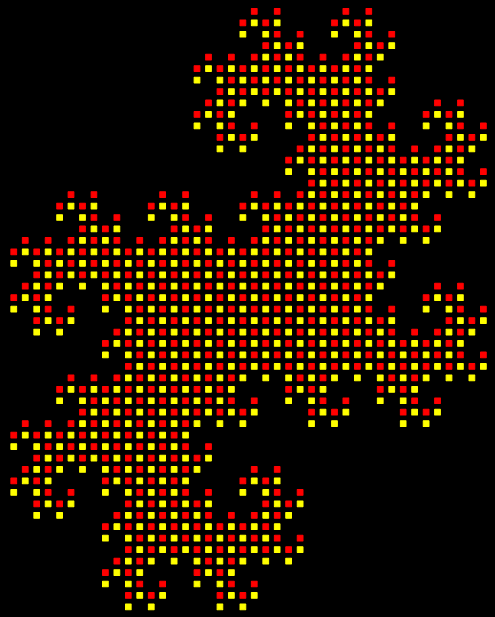
Dragon-curve (red)


And dragon-curves, at various angles and in various sizes, emerge from every other possible pair of sub-squares:

Lots of dragon-curves


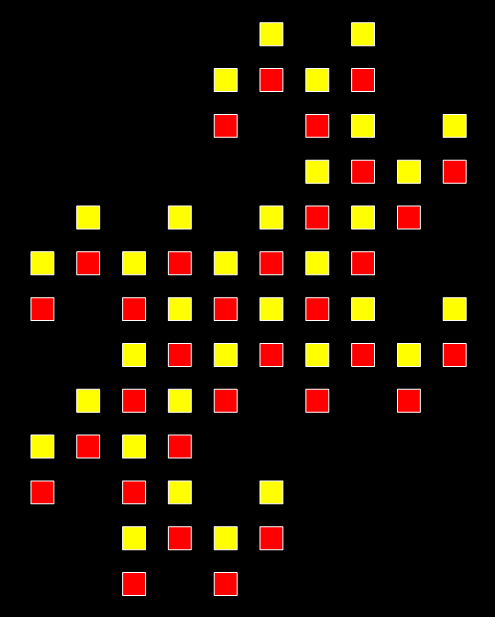
And you get other fractals if you manipulate the sub-squares, so that the corners are rotated or reverse-rotated:

Rotation = 1,2 (sub-square #1 unchanged, in sub-square #2 corner 1 becomes corner 2, 2 → 3, 3 → 4, 4 → 1)


rot = 1,2 (animated)
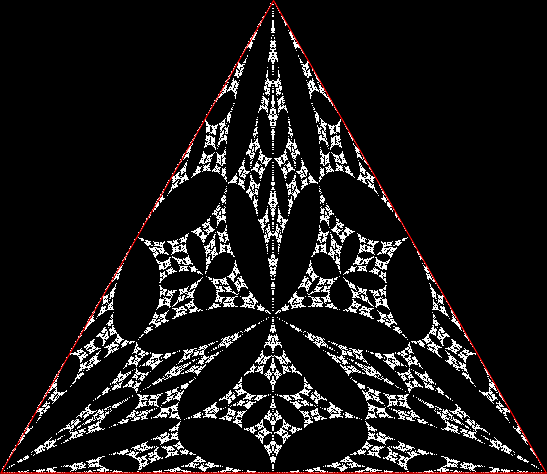

rot = 1,2 (colored)


rot = 1,5 (in sub-square #2 corner 1 stays the same, 4 → 2, 3 stays the same, 2 → 4)


rot = 1,5 (anim)


rot = 4,7 (sub-square #2 flipped and rotated)


rot = 4,7 (anim)
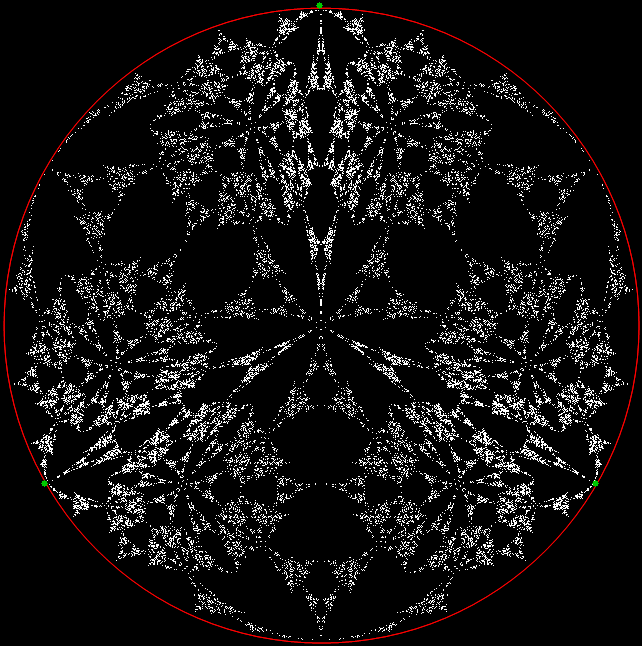

rot = 4,7 (col)


rot = 4,8


rot = 4,8 (anim)


rot = 4,8 (col)


sub-squares = 2,8; rot = 5,6


sub-squares = 2,8; rot = 5,6 (anim)


sub-squares = 2,8; rot = 5,6 (col)


Another kind of dragon-curve — rot = 3,2


rot = 3,2 (anim)


rot = 3,2 (col)


sub-squares = 4,5; rot = 3,9


sub-squares = 4,5; rot = 3,9 (anim)


sub-squares = 4,5; rot = 3,9 (col)


Elsewhere other-accessible…

Curvous Energy — a first look at dragon-curves
Back to Drac’ — a second look at dragon-curves

Multimo Mondo Macca

Strange. But. True. Many keyly committed core components of the counter-cultural community feel a reluctant reverence for core ’60s icon Paul Sir McCartney. Beneath that sentimentally saccharine surface, that merry “Macca” mask, they sense something deeper… darker… dangerouser

“He ain’t as appallingly unesoteric as he appears, man,” these keyly committed core components of the counter-cultural community mutter meaningly…

I’ve tried to capture something of this Morbid Mac in a series of animated gifs that display Macca mise en abîme or “sent into the abyss” (pronounced “meez on abeem”, roughly speaking). That’s the artistic term for the way some images contain smaller and smaller versions of themselves.

Here’s Macca at stage one:

Maccabisso #1

And stage two:

Maccabisso #2

And further stages:

Maccabisso #3

Maccabisso #4

Maccabisso #5

Here’s a Maccabisso using a bit of negative:

Maccabisso #3

And finally, here’s Macca playing a bit of rock’n’roll…

Macca rock’n’rolling

Rollercoaster Rules

n += digsum(n). It’s one of my favorite integer sequences — a rollercoaster to infinity. It works like this: you take a number, sum its digits, add the sum to the original number, and repeat:


1 → 2 → 4 → 8 → 16 → 23 → 28 → 38 → 49 → 62 → 70 → 77 → 91 → 101 → 103 → 107 → 115 → 122 → 127 → 137 → 148 → 161 → 169 → 185 → 199 → 218 → 229 → 242 → 250 → 257 → 271 → 281 → 292 → 305 → 313 → 320 → 325 → 335 → 346 → 359 → 376 → 392 → 406 → 416 → 427 → 440 → 448 → 464 → 478 → 497 → 517 → 530 → 538 → 554 → 568 → 587 → 607 → 620 → 628 → 644 → 658 → 677 → 697 → 719 → 736 → 752 → 766 → 785 → 805 → 818 → 835 → 851 → 865 → 884 → 904 → 917 → 934 → 950 → 964 → 983 → 1003 → 1007 → 1015 → 1022 → 1027 → 1037 → 1048 → 1061 → 1069 → 1085 → 1099 → 1118 → 1129 → 1142 → 1150 → 1157 → 1171 → 1181 → 1192 → 1205 → ...

I call it a rollercoaster to infinity because the digit-sum constantly rises and falls as n gets bigger and bigger. The most dramatic falls are when n gets one digit longer (except on the first occasion):


... → 8 (digit-sum=8) → 16 (digit-sum=7) → ...
... → 91 (ds=10) → 101 (ds=2) → ...
... → 983 (ds=20) → 1003 (ds=4) → ...
... → 9968 (ds=32) → 10000 (ds=1) → ...
... → 99973 (ds=37) → 100010 (ds=2) → ...
... → 999959 (ds=50) → 1000009 (ds=10) → ...
... → 9999953 (ds=53) → 10000006 (ds=7) → ...
... → 99999976 (ds=67) → 100000043 (ds=8) → ...
... → 999999980 (ds=71) → 1000000051 (ds=7) → ...
... → 9999999962 (ds=80) → 10000000042 (ds=7) → ...
... → 99999999968 (ds=95) → 100000000063 (ds=10) → ...
... → 999999999992 (ds=101) → 1000000000093 (ds=13) → ...

Look at 9968 → 10000, when the digit-sum goes from 32 to 1. That’s only the second time that digsum(n) = 1 in the sequence. Does it happen again? I don’t know.

And here’s something else I don’t know. Suppose you introduce a rule for the rollercoaster of n += digsum(n). You buy a ticket with a number on it: 1, 2, 3, 4, 5… Then you get on the rollercoaster powered by with that number. Now here’s the rule: Your ride on the rollercoaster ends when n += digsum(n) yields a rep-digit, i.e., a number whose digits are all the same. Here are the first few rides on the rollercoaster:


1 → 2 → 4 → 8 → 16 → 23 → 28 → 38 → 49 → 62 → 70 → 77
2 → 4 → 8 → 16 → 23 → 28 → 38 → 49 → 62 → 70 → 77
3 → 6 → 12 → 15 → 21 → 24 → 30 → 33
4 → 8 → 16 → 23 → 28 → 38 → 49 → 62 → 70 → 77
5 → 10 → 11
6 → 12 → 15 → 21 → 24 → 30 → 33
7 → 14 → 19 → 29 → 40 → 44
8 → 16 → 23 → 28 → 38 → 49 → 62 → 70 → 77
9 → 18 → 27 → 36 → 45 → 54 → 63 → 72 → 81 → 90 → 99
10 → 11
11 → 13 → 17 → 25 → 32 → 37 → 47 → 58 → 71 → 79 → 95 → 109 → 119 → 130 → 134 → 142 → 149 → 163 → 173 → 184 → 197 → 214 → 221 → 226 → 236 → 247 → 260 → 268 → 284 → 298 → 317 → 328 → 341 → 349 → 365 → 379 → 398 → 418 → 431 → 439 → 455 → 469 → 488 → 508 → 521 → 529 → 545 → 559 → 578 → 598 → 620 → 628 → 644 → 658 → 677 → 697 → 719 → 736 → 752 → 766 → 785 → 805 → 818 → 835 → 851 → 865 → 884 → 904 → 917 → 934 → 950 → 964 → 983 → 1003 → 1007 → 1015 → 1022 → 1027 → 1037 → 1048 → 1061 → 1069 → 1085 → 1099 → 1118 → 1129 → 1142 → 1150 → 1157 → 1171 → 1181 → 1192 → 1205 → 1213 → 1220 → 1225 → 1235 → 1246 → 1259 → 1276 → 1292 → 1306 → 1316 → 1327 → 1340 → 1348 → 1364 → 1378 → 1397 → 1417 → 1430 → 1438 → 1454 → 1468 → 1487 → 1507 → 1520 → 1528 → 1544 → 1558 → 1577 → 1597 → 1619 → 1636 → 1652 → 1666 → 1685 → 1705 → 1718 → 1735 → 1751 → 1765 → 1784 → 1804 → 1817 → 1834 → 1850 → 1864 → 1883 → 1903 → 1916 → 1933 → 1949 → 1972 → 1991 → 2011 → 2015 → 2023 → 2030 → 2035 → 2045 → 2056 → 2069 → 2086 → 2102 → 2107 → 2117 → 2128 → 2141 → 2149 → 2165 → 2179 → 2198 → 2218 → 2231 → 2239 → 2255 → 2269 → 2288 → 2308 → 2321 → 2329 → 2345 → 2359 → 2378 → 2398 → 2420 → 2428 → 2444 → 2458 → 2477 → 2497 → 2519 → 2536 → 2552 → 2566 → 2585 → 2605 → 2618 → 2635 → 2651 → 2665 → 2684 → 2704 → 2717 → 2734 → 2750 → 2764 → 2783 → 2803 → 2816 → 2833 → 2849 → 2872 → 2891 → 2911 → 2924 → 2941 → 2957 → 2980 → 2999 → 3028 → 3041 → 3049 → 3065 → 3079 → 3098 → 3118 → 3131 → 3139 → 3155 → 3169 → 3188 → 3208 → 3221 → 3229 → 3245 → 3259 → 3278 → 3298 → 3320 → 3328 → 3344 → 3358 → 3377 → 3397 → 3419 → 3436 → 3452 → 3466 → 3485 → 3505 → 3518 → 3535 → 3551 → 3565 → 3584 → 3604 → 3617 → 3634 → 3650 → 3664 → 3683 → 3703 → 3716 → 3733 → 3749 → 3772 → 3791 → 3811 → 3824 → 3841 → 3857 → 3880 → 3899 → 3928 → 3950 → 3967 → 3992 → 4015 → 4025 → 4036 → 4049 → 4066 → 4082 → 4096 → 4115 → 4126 → 4139 → 4156 → 4172 → 4186 → 4205 → 4216 → 4229 → 4246 → 4262 → 4276 → 4295 → 4315 → 4328 → 4345 → 4361 → 4375 → 4394 → 4414 → 4427 → 4444

The 11-ticket is much better value than the tickets for 1..10. Bigger numbers behave like this:


1252 → 4444
1253 → 4444
1254 → 888888
1255 → 4444
1256 → 4444
1257 → 888888
1258 → 4444
1259 → 4444
1260 → 9999
1261 → 4444
1262 → 4444
1263 → 888888
1264 → 4444
1265 → 4444
1266 → 888888
1267 → 4444
1268 → 4444
1269 → 9999
1270 → 4444
1271 → 4444
1272 → 888888
1273 → 4444
1274 → 4444

Then all at once, a number-ticket turns golden and the rollercoaster-ride doesn’t end. So far, at least. I’ve tried, but I haven’t been able to find a rep-digit for 3515 and 3529 = 3515+digsum(3515) and so on:


3509 → 4444
3510 → 9999
3511 → 4444
3512 → 4444
3513 → 888888
3514 → 4444
3515 → ?
3516 → 888888
3517 → 4444
3518 → 4444
3519 → 9999
3520 → 4444
3521 → 4444
3522 → 888888
3523 → 4444
3524 → 4444
3525 → 888888
3526 → 4444
3527 → 4444
3528 → 9999
3529 → ?
3530 → 4444
3531 → 888888
3532 → 4444

Does 3515 ever yield a rep-digit for n += digsum(n)? It’s hard to believe it doesn’t, but I’ve no idea how to prove that it does. Except by simply riding the rollercoaster. And if the ride with the 3515-ticket never reaches a rep-digit, the rollercoaster will never let you know. How could it?

But here’s an example in base 23 of how a ticket for n+1 can give you a dramatically longer ride than a ticket for n and n+2:


MI → EEE (524 → 7742)
MJ → EEE (525 → 7742)
MK → 444 (526 → 2212)
ML → 444 (527 → 2212)
MM → MMMMMM (528 → 148035888)
100 → 444 (529 → 2212)
101 → 444 (530 → 2212)
102 → EEE (531 → 7742)
103 → 444 (532 → 2212)
104 → 444 (533 → 2212)
105 → EEE (534 → 7742)
106 → EEE (535 → 7742)
107 → 444 (536 → 2212)
108 → EEE (537 → 7742)
109 → 444 (538 → 2212)
10A → MMMMMM (539 → 148035888)
10B → EEE (540 → 7742)
10C → EEE (541 → 7742)
10D → EEE (542 → 7742)
10E → EEE (543 → 7742)
10F → 444 (544 → 2212)
10G → EEE (545 → 7742)
10H → EEE (546 → 7742)
10I → EEE (547 → 7742)
10J → 444 (548 → 2212)
10K → 444 (549 → 2212)
10L → MMMMMM (550 → 148035888)
10M → EEE (551 → 7742)
110 → EEE (552 → 7742)

More Mythical Mathicality

In a prev-previous post, I looked at this interesting fractal image on the front cover of a Ray Bradbury book:

Cover of Ray Bradbury’s I Sing the Body Electric (1969)

It seems obvious that the image is created from photographs: only the body of the centaur is drawn by hand. And here’s my attempt at extending the fractality of the image:

Further fractality for the centaur

Elsewhere other-accessible

Mythical Mathical — Man-Horse! — the pre-previous post about the fractal centaur

Think Inc #2

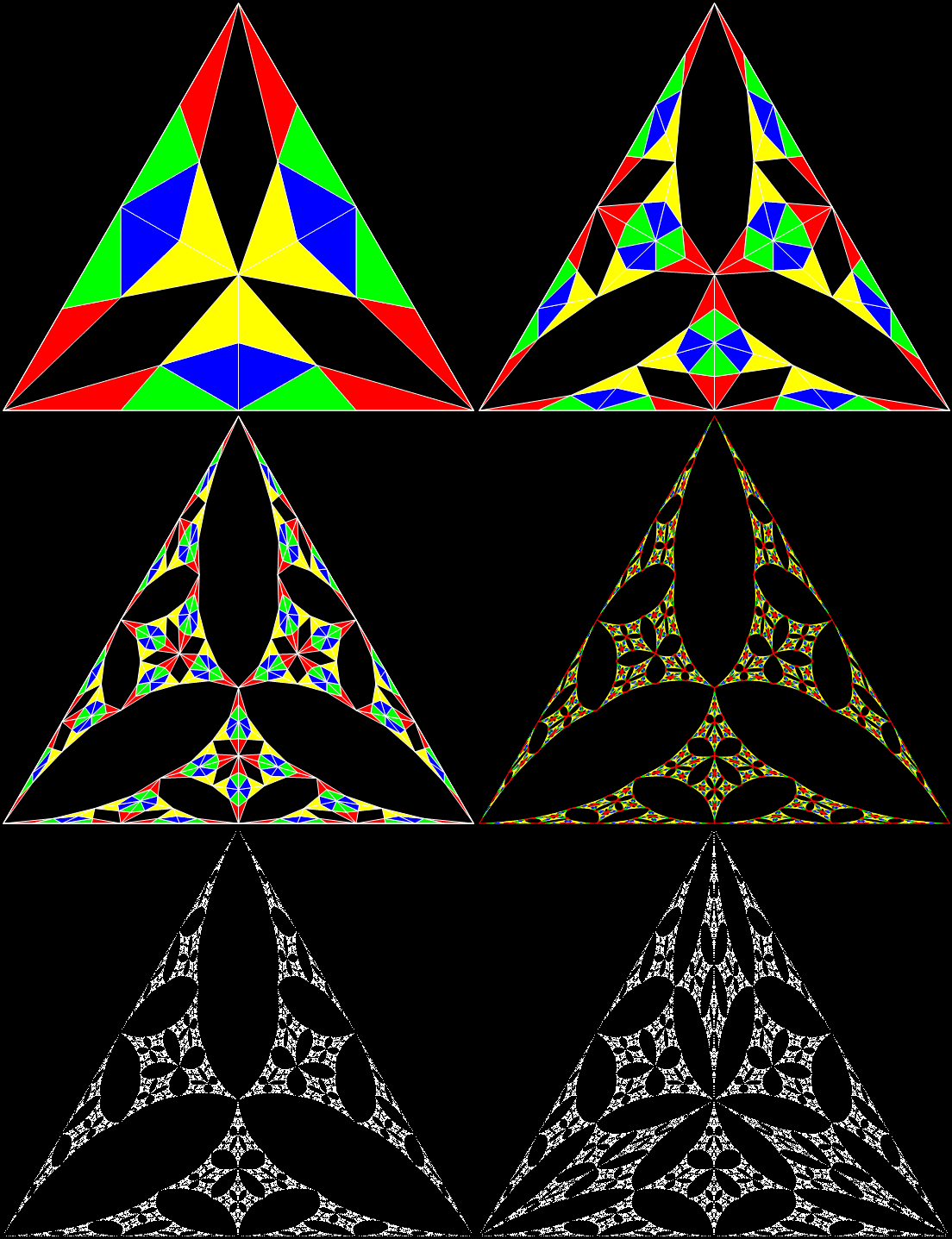
In a pre-previous post called “Think Inc”, I looked at the fractals created by a point first jumping halfway towards the vertex of a square, then using a set of increments to decide which vertex to jump towards next. For example, if the inc-set was [0, 1, 3], the point would jump next towards the same vertex, v[i]+0, or the vertex immediately clockwise, v[i]+1, or the vertex immediately anti-clockwise, v[i]+3. And it would trace all possible routes using that inc-set. Then I added refinements to the process like giving the point extra jumping-targets half-way along each side.

Here are some more variations on the inc-set theme using two and three extra jumping-targets along each side of the square. First of all, try two extra jumping-targets along each side and a set of three increments:

inc = 0, 1, 6


inc = 0, 2, 6


inc = 0, 2, 8


inc = 0, 3, 6


inc = 0, 3, 9


inc = 0, 4, 8


inc = 0, 5, 6


inc = 0, 5, 7


inc = 1, 6, 11


inc = 2, 6, 10


inc = 3, 6, 9


Now try two extra jumping-targets along each side and a set of four increments:

inc = 0, 1, 6, 11


inc = 0, 2, 8, 10


inc = 0, 3, 7, 9


inc = 0, 4, 8, 10


inc = 0, 5, 6, 7


inc = 0, 5, 7, 8


inc = 1, 6, 7, 9


inc = 1, 4, 6, 11


inc = 1, 5, 7, 11


inc = 2, 4, 8, 10


inc = 3, 5, 7, 9


And finally, three extra jumping-targets along each side and a set of three increments:

inc = 0, 3, 13


inc = 0, 4, 8


inc = 0, 4, 12


inc = 0, 5, 11

inc = 0, 6, 9


inc = 0, 7, 9


Previously Pre-Posted

Think Inc — an earlier look at inc-set fractals