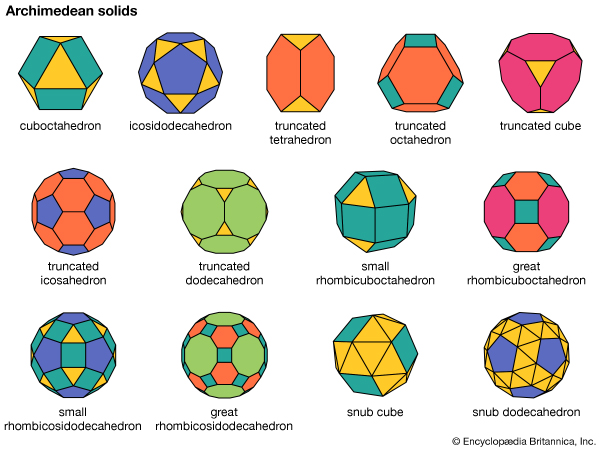
The 13 Archimedean solids (also known as Archimedean polyhedra)

The 13 Archimedean solids (also known as Archimedean polyhedra)
You have two glasses each filled with exactly the same amount of liquid. One contains water, the other contains wine. First, take a teaspoon of water from the water glass and pour it into the wine glass. Next stir the wine and water until well mixed. Then take a teaspoon of the water-and-wine mixture and pour it into the glass of water.
The question now is: Is there more wine in the water glass than water in the wine glass, or is there less? (from World’s Most Baffling Puzzles, Charles Barry Townsend, Sterling, New York, 1991)
(Scroll down for answer)
Post-Performative Post-Scriptum
Oenometry means “wine-measurement”, from ancient Greek οἶνος, oinos, “wine”, + μετρία, metria, “measurement”. Its standard pronunciation would be “ee-NOM-ett-ry”, but you could conceivably say “oh-een-NOM-ett-ry” or “oi-NOM-ett-ry”.
Discussion of the answer
The original question is fair but worded to send you astray. By using the words “glass” and “teaspoon”, it creates distinct images in your mind: those of an unvarying teaspoon and of two glasses with identical-but-varying amounts of wine and water in them. So you’re guided away from considering that the contents of the glasses can be measured in teaspoons too. If you think not in teaspoons but in unspecified units (of liquid measure), it’s easier to see the truth.
If the two glasses each contain n units of liquid, by transferring water to the wine you’re adding 1 unit of water to n units of wine.
Therefore the wine glass contains n+1 units of mixed wine-and-water, of which n units are wine and 1 unit is water. Let’s say n+1 = n1.
Consider that 1 unit of that mixture contains n/n1 parts of wine and 1/n1 parts of water: n/n1 + 1/n1 = (n+1)/n1 = n1/n1 = 1 unit.
Now, if one unit of the mixture is transferred to the water glass, you take n/n1 units of wine from n units of wine in the wine glass: n – n/n1 = n-1 + 1/n1. You also take 1/n1 units of water from 1 unit of water in the wine glass: 1 – 1/n1 = (n1-1)/n1 = n/n1. So the wine glass now contains n-1 + 1/n1 units of wine and n/n1 of a unit of water.
When you add that unit to the (n-1) units of water in the water glass, it will contain (n-1) + 1/n1 units of water and n/n1 of unit of wine:
Wine glass: n-1 + 1/n1 units of wine and n/n1 of a unit of water
Water glass: n-1 + 1/n1 units of water and n/n1 of a unit of wine
Therefore, however much water and wine you start with, in the end there will be as much water in the wine glass as there is wine in the water glass. For some concrete examples:
Example #1
1. Start
Water glass: 2 teaspoons of water
Wine glass: 2 teaspoons of wine
2. Transfer water to wine glass and mix:
Water glass: 2 tsp of water – 1 tsp = 1 tsp of water
Wine glass: 2 tsp of wine + 1 tsp of water = 3 tsp of which 2/3 is wine, 1/3 is water
3. Transfer wine-and-water mixture to water glass:
One tsp of wine-and-water mixture = 2/3 tsp of wine + 1/3 tsp of water
Therefore:
Wine glass: 2 tsp of wine – 2/3 tsp of wine = 1 and 1/3 tsp of wine; 1 tsp of water – 1/3 tsp of water = 2/3 tsp of water
Water glass: 1 tsp of water + 1/3 tsp of water = 1 and 1/3 tsp of water; 0 tsp of wine + 2/3 tsp of wine = 2/3 tsp of wine
4. Finish
Wine glass contains: 1 and 1/3 tsp of wine, 2/3 tsp of water
Water glass contains: 1 and 1/3 tsp of water, 2/3 tsp of wine
Example #2
1. Start
Water glass: 10 teaspoons of water
Wine glass: 10 teaspoons of wine
Transfer water to wine glass and mix:
Water glass: 10 tsp of water – 1 tsp = 9 tsp of water
Wine glass: 10 tsp of wine + 1 tsp of water = 11 tsp of liquid of which 10/11 is wine, 1/11 is water
Transfer wine-and-water mixture to water glass:
One tsp of wine-and-water mixture = 10/11 tsp of wine + 1/11 tsp of water
Therefore:
Wine glass: 10 tsp of wine – 10/11 tsp of wine = 9 and 1/11 tsp of wine; 1 tsp of water – 1/11 tsp of water = 10/11 tsp of water
Water glass: 9 tsp of water + 1/11 tsp of water = 9 and 1/11 tsp of water; 0 tsp of wine + 10/11 tsp of wine = 10/11 tsp of wine
4. Finish
Wine glass contains: 9 and 1/11 tsp of wine, 10/11 tsp of water
Water glass contains: 9 and 1/11 tsp of water, 10/11 tsp of wine
If you take an integer, n, and reverse its digits to get the integer r, there are three possibilities:
n > r (e.g. 85236 > 63258)
n < r (e.g. 17783 < 38771)
n = r (e.g. 45154 = 45154)
If n = r, n is a palindrome. If n > r, I call n a major number. If n < r, I call n a minor number. And here are the minor and major numbers represented as white squares on an Ulam-like spiral (the negative of a minor spiral is a major spiral, and vice versa — sometimes one looks better than the other):
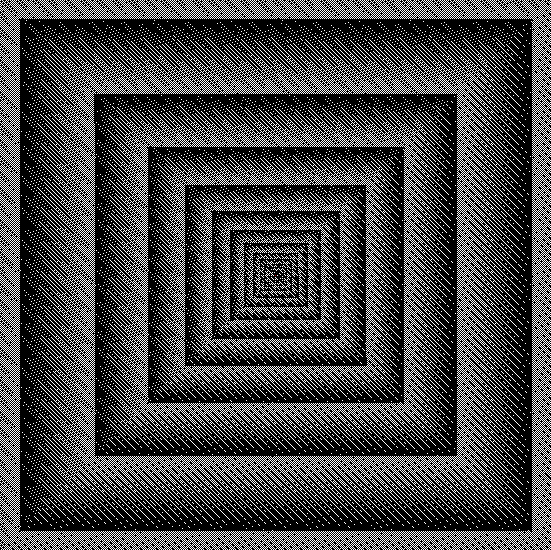
b=2 (minor numbers)
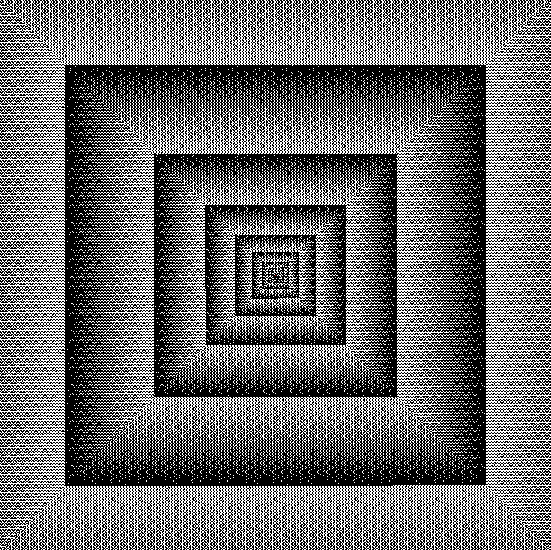
b=3
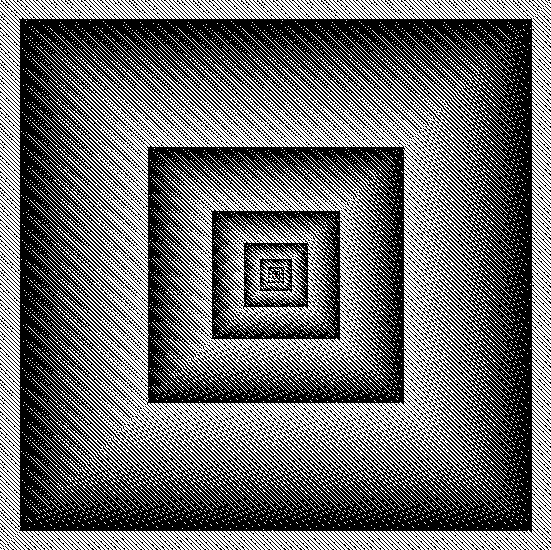
b=4
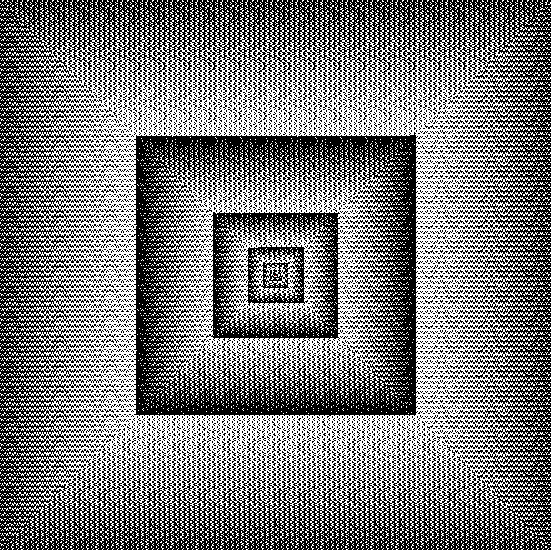
b=5
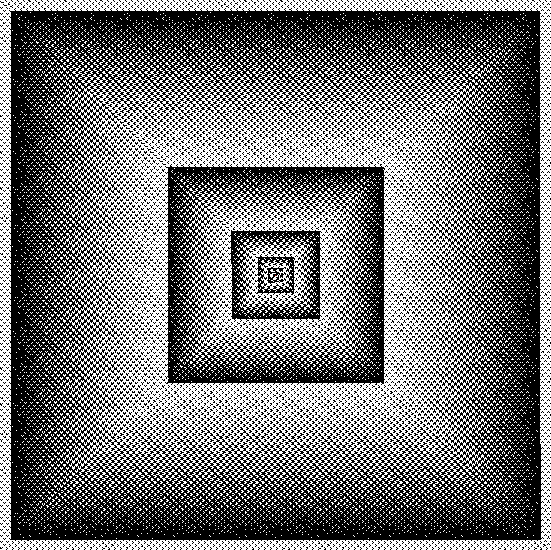
b=6
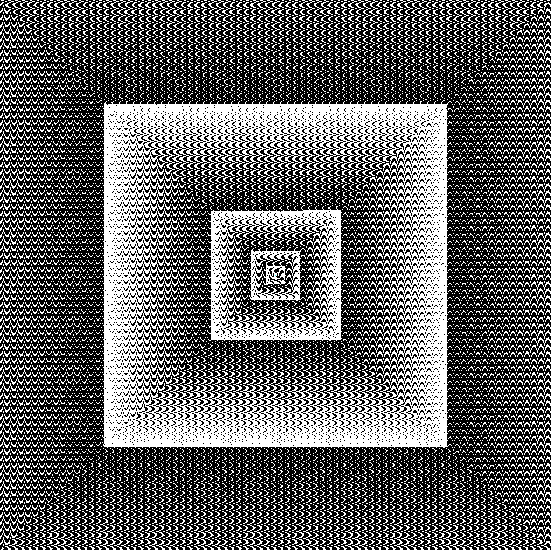
b=7 (major numbers)

b=8 (minor numbers)
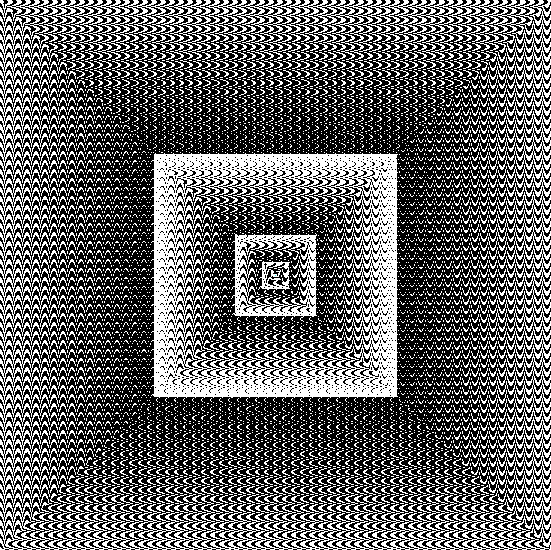
b=9 (mjn)
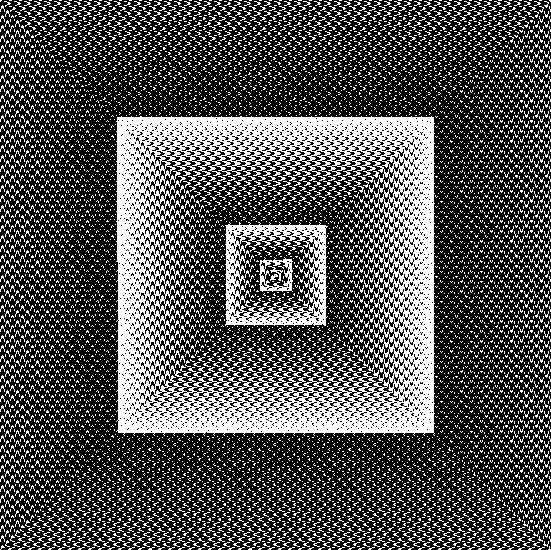
b=10 (mjn)

b=11 (mjn)

b=12 (mjn)

b=13 (mjn)
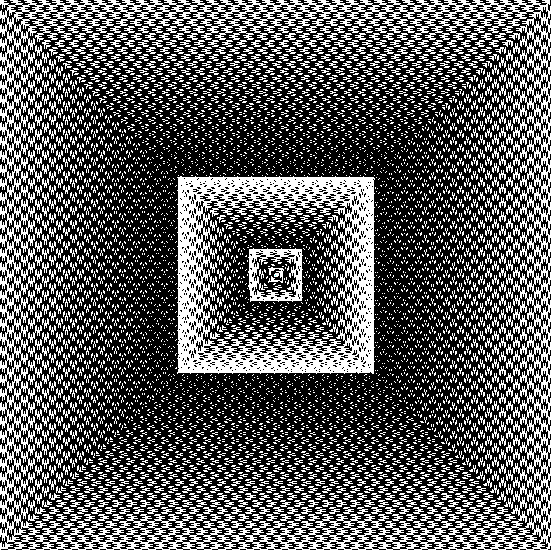
b=14 (mjn)
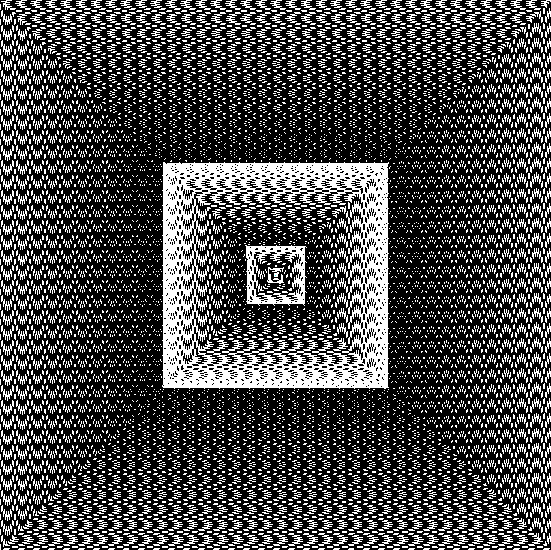
b=15 (mjn)

b=16 (mjn)
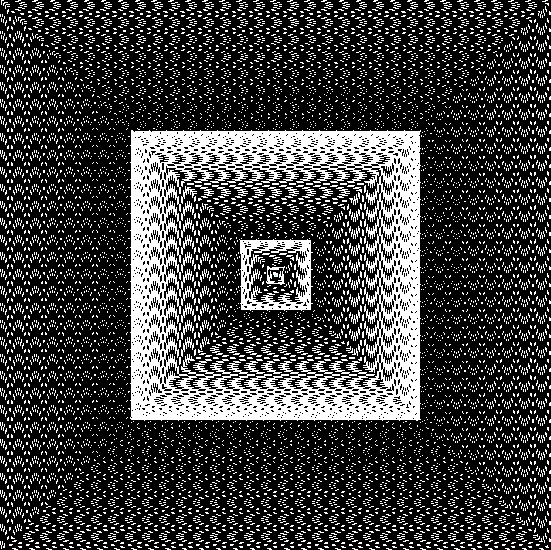
b=17 (mjn)

b=18 (mjn)
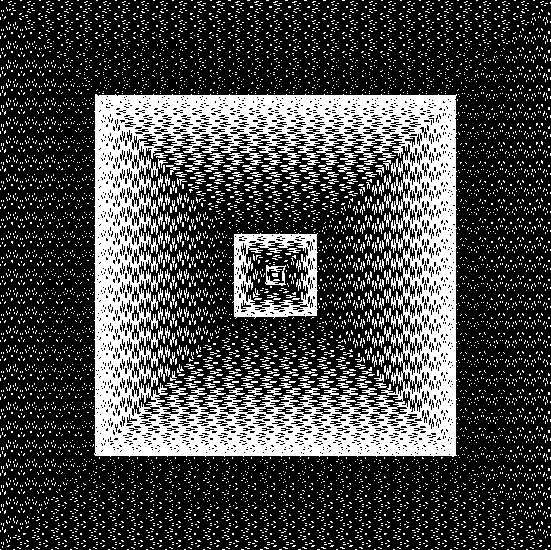
b=19 (mjn)
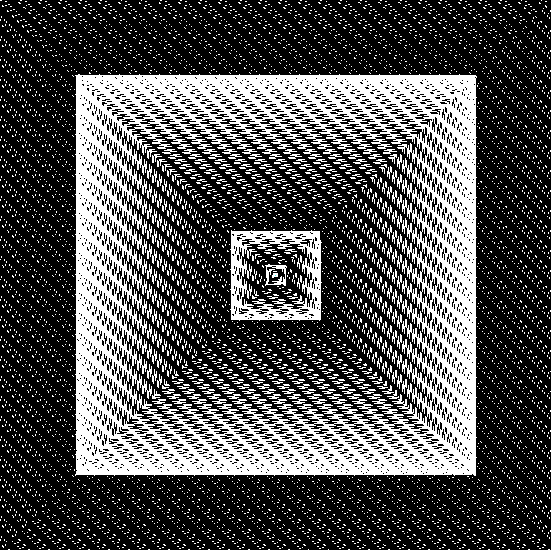
b=20 (mjn)

Minor numbers, b=2..20 (animated)
Now let’s look at a sequence formed by summing the reversed numbers, minor ones, major ones and palindromes. Here are the standard integers:
1, 2, 3, 4, 5, 6, 7, 8, 9, 10, 11, 12, 13, 14, 15, 16, 17...
If you sum the integers, you get what are called the triangular numbers:
1 = 1
3 = 1 + 2
6 = 1 + 2 + 3
10 = 1 + 2 + 3 + 4
15 = 1 + 2 + 3 + 4 + 5
21 = 1 + 2 + 3 + 4 + 5 + 6
28 = 1 + 2 + 3 + 4 + 5 + 6 + 7
36 = 1 + 2 + 3 + 4 + 5 + 6 + 7 + 8
45 = 1 + 2 + 3 + 4 + 5 + 6 + 7 + 8 + 9
55 = 1 + 2 + 3 + 4 + 5 + 6 + 7 + 8 + 9 + 10
66 = 1 + 2 + 3 + 4 + 5 + 6 + 7 + 8 + 9 + 10 + 11
78 = 1 + 2 + 3 + 4 + 5 + 6 + 7 + 8 + 9 + 10 + 11 + 12
91 = 1 + 2 + 3 + 4 + 5 + 6 + 7 + 8 + 9 + 10 + 11 + 12 + 13
105 = 1 + 2 + 3 + 4 + 5 + 6 + 7 + 8 + 9 + 10 + 11 + 12 + 13 + 14
120 = 1 + 2 + 3 + 4 + 5 + 6 + 7 + 8 + 9 + 10 + 11 + 12 + 13 + 14 + 15
136 = 1 + 2 + 3 + 4 + 5 + 6 + 7 + 8 + 9 + 10 + 11 + 12 + 13 + 14 + 15 + 16
153 = 1 + 2 + 3 + 4 + 5 + 6 + 7 + 8 + 9 + 10 + 11 + 12 + 13 + 14 + 15 + 16 + 17
171 = 1 + 2 + 3 + 4 + 5 + 6 + 7 + 8 + 9 + 10 + 11 + 12 + 13 + 14 + 15 + 16 + 17 + 18
190 = 1 + 2 + 3 + 4 + 5 + 6 + 7 + 8 + 9 + 10 + 11 + 12 + 13 + 14 + 15 + 16 + 17 + 18 + 19
210 = 1 + 2 + 3 + 4 + 5 + 6 + 7 + 8 + 9 + 10 + 11 + 12 + 13 + 14 + 15 + 16 + 17 + 18 + 19 + 20
But what happens if you reverse the integers before summing them? Here side-by-side are the triangular numbers and the underlined revnumsums (as they might be called):
45 = 1 + 2 + 3 + 4 + 5 + 6 + 7 + 8 + 9
45 = 1 + 2 + 3 + 4 + 5 + 6 + 7 + 8 + 9
55 = 1 + 2 + 3 + 4 + 5 + 6 + 7 + 8 + 9 + 10
46 = 1 + 2 + 3 + 4 + 5 + 6 + 7 + 8 + 9 + 1
66 = 1 + 2 + 3 + 4 + 5 + 6 + 7 + 8 + 9 + 10 + 11
57 = 1 + 2 + 3 + 4 + 5 + 6 + 7 + 8 + 9 + 1 + 11
78 = 1 + 2 + 3 + 4 + 5 + 6 + 7 + 8 + 9 + 10 + 11 + 12
78 = 1 + 2 + 3 + 4 + 5 + 6 + 7 + 8 + 9 + 1 + 11 + 21
91 = 1 + 2 + 3 + 4 + 5 + 6 + 7 + 8 + 9 + 10 + 11 + 12 + 13
109 = 1 + 2 + 3 + 4 + 5 + 6 + 7 + 8 + 9 + 1 + 11 + 21 + 31
105 = 1 + 2 + 3 + 4 + 5 + 6 + 7 + 8 + 9 + 10 + 11 + 12 + 13 + 14
150 = 1 + 2 + 3 + 4 + 5 + 6 + 7 + 8 + 9 + 1 + 11 + 21 + 31 + 41
120 = 1 + 2 + 3 + 4 + 5 + 6 + 7 + 8 + 9 + 10 + 11 + 12 + 13 + 14 + 15
201 = 1 + 2 + 3 + 4 + 5 + 6 + 7 + 8 + 9 + 1 + 11 + 21 + 31 + 41 + 51
136 = 1 + 2 + 3 + 4 + 5 + 6 + 7 + 8 + 9 + 10 + 11 + 12 + 13 + 14 + 15 + 16
262 = 1 + 2 + 3 + 4 + 5 + 6 + 7 + 8 + 9 + 1 + 11 + 21 + 31 + 41 + 51 + 61
153 = 1 + 2 + 3 + 4 + 5 + 6 + 7 + 8 + 9 + 10 + 11 + 12 + 13 + 14 + 15 + 16 + 17
333 = 1 + 2 + 3 + 4 + 5 + 6 + 7 + 8 + 9 + 1 + 11 + 21 + 31 + 41 + 51 + 61 + 71
171 = 1 + 2 + 3 + 4 + 5 + 6 + 7 + 8 + 9 + 10 + 11 + 12 + 13 + 14 + 15 + 16 + 17 + 18
414 = 1 + 2 + 3 + 4 + 5 + 6 + 7 + 8 + 9 + 1 + 11 + 21 + 31 + 41 + 51 + 61 + 71 + 81
190 = 1 + 2 + 3 + 4 + 5 + 6 + 7 + 8 + 9 + 10 + 11 + 12 + 13 + 14 + 15 + 16 + 17 + 18 + 19
505 = 1 + 2 + 3 + 4 + 5 + 6 + 7 + 8 + 9 + 1 + 11 + 21 + 31 + 41 + 51 + 61 + 71 + 81 + 91
210 = 1 + 2 + 3 + 4 + 5 + 6 + 7 + 8 + 9 + 10 + 11 + 12 + 13 + 14 + 15 + 16 + 17 + 18 + 19 + 20
507 = 1 + 2 + 3 + 4 + 5 + 6 + 7 + 8 + 9 + 1 + 11 + 21 + 31 + 41 + 51 + 61 + 71 + 81 + 91
+ 2
Unlike triangular numbers, revnumsums are dependent on the base they’re calculated in. In base 2, the revnumsum is always smaller than the triangular number, except at step 1. In base 3, the revnumsum is equal to the triangular number at steps 1, 2 and 15 (= 120 in base 3). Otherwise it’s smaller than the triangular number.
And in higher bases? In bases > 3, the revnumsum rises and falls above the equivalent triangular number. When it’s higher, it tends towards a maximum height of (base+1)/4 * triangular number.
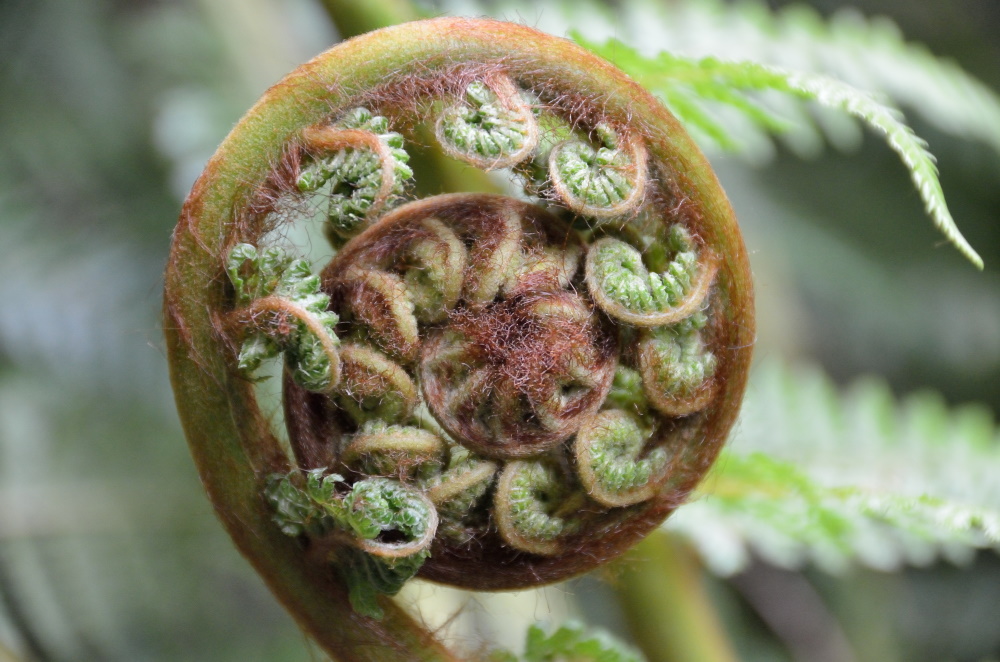
Photo of unrolling fern frond, frondlets and frontletlets (from Free Photos)
Elsewhere Other-Engageable
• Farnsicht — beautiful black-and-white photograph of ferns by Karl Blossfeldt
Post-Performative Post-Scriptum
“Free-Wheel Ferning” is a pun on the title of core Judas-Priest track “Free-Wheel Burning”, off core Judas-Priest album Defenders of the Faith, issued in core Judas-Priest success-period of 1984.
The alchemists dreamed of turning dross into gold. In mathematics, you can actually do that, metaphorically speaking. If palindromes are gold and non-palindromes are dross, here is dross turning into gold:
22 = 10 + 12
222 = 10 + 12 + 13 + 14 + 15 + 16 + 17 + 18 + 19 + 20 + 23 + 24
484 = 10 + 12 + 13 + 14 + 15 + 16 + 17 + 18 + 19 + 20 + 21 + 23 + 24 + 25 + 26 + 27 + 28 + 29 + 30 + 31 + 32 + 34
555 = 10 + 12 + 13 + 14 + 15 + 16 + 17 + 18 + 19 + 20 + 21 + 23 + 24 + 25 + 26 + 27 + 28 + 29 + 30 + 31 + 32 + 34 + 35 + 36
2002 = nonpalsum(10,67)
36863 = nonpalsum(10,286)
45954 = nonpalsum(10,319)
80908 = nonpalsum(10,423)
113311 = nonpalsum(10,501)
161161 = nonpalsum(10,598)
949949 = nonpalsum(10,1417)
8422248 = nonpalsum(10,4136)
13022031 = nonpalsum(10,5138)
14166141 = nonpalsum(10,5358)
16644661 = nonpalsum(10,5806)
49900994 = nonpalsum(10,10045)
464939464 = nonpalsum(10,30649)
523434325 = nonpalsum(10,32519)
576656675 = nonpalsum(10,34132)
602959206 = nonpalsum(10,34902)
[...]
The palindromes don’t seem to stop arriving. But something unexpected happens when you try to turn gold into gold. If you sum palindromes to get palindromes, you’re soon hit by what you might call a palindrought, where no palindromes appear:
1 = 1
3 = 1 + 2
6 = 1 + 2 + 3
111 = 1 + 2 + 3 + 4 + 5 + 6 + 7 + 8 + 9 + 11 + 22 + 33
353 = 1 + 2 + 3 + 4 + 5 + 6 + 7 + 8 + 9 + 11 + 22 + 33 + 44 + 55 + 66 + 77
7557 = 1 + 2 + 3 + 4 + 5 + 6 + 7 + 8 + 9 + 11 + 22 + 33 + 44 + 55 + 66 + 77 + 88 + 99 + 101 + 111 + 121 + 131 + 141 + 151 + 161 + 171 + 181 + 191 + 202 + 212 + 222 + 232 + 242 + 252 + 262 + 272 + 282 + 292 + 303 + 313 + 323 + 333 + 343 + 353 + 363 + 373 + 383
2376732 = palsum(1,21512)
That’s sequence A046488 at the OEIS. And I suspect that the sequence is complete and that the palindrought never ends. For some evidence of that, here’s an interesting pattern that emerges if you look at palsums of 1 to repdigits 9[…]9:
50045040 = palsum(1,99999)
50045045040 = palsum(1,9999999)
50045045045040 = palsum(1,999999999)
50045045045045040 = palsum(1,99999999999)
50045045045045045040 = palsum(1,9999999999999)
50045045045045045045040 = palsum(1,999999999999999)
50045045045045045045045040 = palsum(1,99999999999999999)
50045045045045045045045045040 = palsum(1,9999999999999999999)
50045045045045045045045045045040 = palsum(1,999999999999999999999)
As the sums get bigger, the carries will stop sweeping long enough and the sums may fall into semi-regular patterns of non-palindromic numbers like 50045040. If you try higher bases like base 909, you get more palindromes by summing palindromes, but a palindrought arrives in the end there too:
1 = palsum(1)
3 = palsum(1,2)
6 = palsum(1,3)
A = palsum(1,4)
[...]
66 = palsum(1,[104]) (palindromes = 43)
LL = palsum(1,[195]) (44)
[37][37] = palsum(1,[259]) (45)
[73][73] = palsum(1,[364]) (46)
[114][114] = palsum(1,[455]) (47)
[172][172] = palsum(1,[559]) (48)
[369][369] = palsum(1,[819]) (49)
6[466]6 = palsum(1,[104][104]) (50)
L[496]L = palsum(1,[195][195]) (51)
[37][528][37] = palsum(1,[259][259]) (52)
[73][600][73] = palsum(1,[364][364]) (53)
[114][682][114] = palsum(1,[455][455]) (54)
[172][798][172] = palsum(1,[559][559]) (55)
[291][126][291] = palsum(1,[726][726]) (56)
[334][212][334] = palsum(1,[778][778]) (57)
[201][774][830][774][201] = palsum(1,[605][707][605]) (58)
[206][708][568][708][206] = palsum(1,[613][115][613]) (59)
[456][456][569][569][456][456] = palsum(1,11[455]11) (60)
22[456][454][456]22 = palsum(1,21012) (61)
Note the palindrome for palsum(1,21012). All odd bases higher than 3 seem to produce a palindrome for 1 to 21012 in that base (21012 in base 5 = 1382 in base 10, 2012 in base 7 = 5154 in base 10, and so on):
2242422 = palsum(1,21012) (base=5)
2253522 = palsum(1,21012) (b=7)
2275722 = palsum(1,21012) (b=11)
2286822 = palsum(1,21012) (b=13)
2297922 = palsum(1,21012) (b=15)
22A8A22 = palsum(1,21012) (b=17)
22B9B22 = palsum(1,21012) (b=19)
22CAC22 = palsum(1,21012) (b=21)
22DBD22 = palsum(1,21012) (b=23)
And here’s another interesting pattern created by summing squares in base 9 (where 17 = 16 in base 10, 40 = 36 in base 10, and so on):
1 = squaresum(1)
5 = squaresum(1,4)
33 = squaresum(1,17)
111 = squaresum(1,40)
122221 = squaresum(1,4840)
123333321 = squaresum(1,503840)
123444444321 = squaresum(1,50483840)
123455555554321 = squaresum(1,5050383840)
123456666666654321 = squaresum(1,505048383840)
123456777777777654321 = squaresum(1,50505038383840)
123456788888888887654321 = squaresum(1,5050504838383840)
Then a palindrought strikes again. But you don’t get a palindrought in the triangular numbers, or numbers created by summing the integers, palindromic and non-palindromic alike:
1 = 1
3 = 1 + 2
6 = 1 + 2 + 3
55 = 1 + 2 + 3 + 4 + 5 + 6 + 7 + 8 + 9 + 10
66 = 1 + 2 + 3 + 4 + 5 + 6 + 7 + 8 + 9 + 10 + 11
171 = 1 + 2 + 3 + 4 + 5 + 6 + 7 + 8 + 9 + 10 + 11 + 12 + 13 + 14 + 15 + 16 + 17 + 18
595 = 1 + 2 + 3 + 4 + 5 + 6 + 7 + 8 + 9 + 10 + 11 + 12 + 13 + 14 + 15 + 16 + 17 + 18 + 19 + 20 + 21 + 22 + 23 + 24 + 25 + 26 + 27 + 28 + 29 + 30 + 31 + 32 + 33 + 34
666 = 1 + 2 + 3 + 4 + 5 + 6 + 7 + 8 + 9 + 10 + 11 + 12 + 13 + 14 + 15 + 16 + 17 + 18 + 19 + 20 + 21 + 22 + 23 + 24 + 25 + 26 + 27 + 28 + 29 + 30 + 31 + 32 + 33 + 34 + 35 + 36
3003 = palsum(1,77)
5995 = palsum(1,109)
8778 = palsum(1,132)
15051 = palsum(1,173)
66066 = palsum(1,363)
617716 = palsum(1,1111)
828828 = palsum(1,1287)
1269621 = palsum(1,1593)
1680861 = palsum(1,1833)
3544453 = palsum(1,2662)
5073705 = palsum(1,3185)
5676765 = palsum(1,3369)
6295926 = palsum(1,3548)
35133153 = palsum(1,8382)
61477416 = palsum(1,11088)
178727871 = palsum(1,18906)
1264114621 = palsum(1,50281)
1634004361 = palsum(1,57166)
5289009825 = palsum(1,102849)
6172882716 = palsum(1,111111)
13953435931 = palsum(1,167053)
16048884061 = palsum(1,179158)
30416261403 = palsum(1,246642)
57003930075 = palsum(1,337650)
58574547585 = palsum(1,342270)
66771917766 = palsum(1,365436)
87350505378 = palsum(1,417972)
[...]
If 617716 = palsum(1,1111) and 6172882716 = palsum(1,111111), what is palsum(1,11111111)? Try it for yourself — there’s an easy formula for the triangular numbers.
I hadn’t realized that sudokus could be witty until earlier this year, when I did one that literally made me laugh, because the solutions were so clever and quirky. Foolishly, I neglected to make a note of the sudoku so I could reproduce it. But I haven’t made that mistake with this futoshiki:
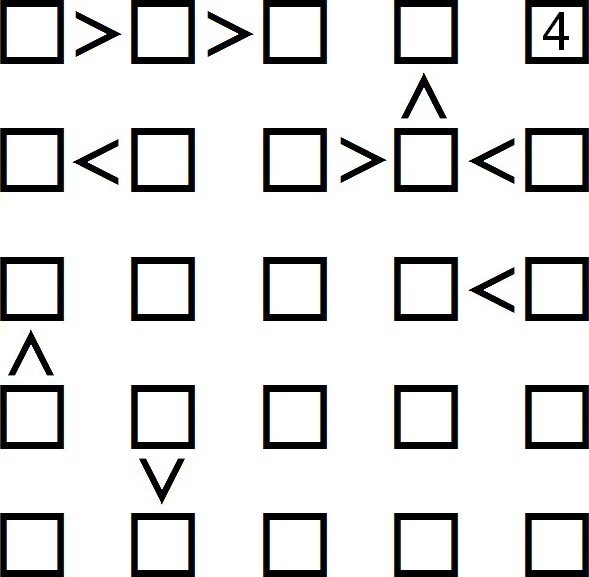
Using more-than and less-than signs to deduce values, fill each line and column with the numbers 1 to 5 so that no number occurs twice in the same row or column
It’s not witty like that lost sudoku, but I think futoshikis are even more beautiful and enjoyable than sudokus, because they’re even more elemental. They’re also rooted in the magic of binary, thanks to the more-than / less-than clues. And when there’s only one number on the original grid, completing them feels like growing a flower from a seed.
The factorial function, n!, is easy to understand. You simply take an integer and multiply it by all integers smaller than it (by convention, 0! = 1):
0! = 1
1! = 1
2! = 2 = 2*1
3! = 6 = 3*2*1
4! = 24 = 4*3*2*1
5! = 120 = 5*4*3*2*1
6! = 720 = 6*120 = 6*5!
7! = 5040
8! = 40320
9! = 362880
10! = 3628800
11! = 39916800
12! = 479001600
13! = 6227020800
14! = 87178291200
15! = 1307674368000
16! = 20922789888000
17! = 355687428096000
18! = 6402373705728000
19! = 121645100408832000
20! = 2432902008176640000
The gamma function, Γ(n), isn’t so easy to understand. It allows you to find the factorials of not just the integers, but everything between the integers, like fractions, square roots, and transcendental numbers like π. Don’t ask me how! And don’t ask me how you get this very beautiful and unexpected result:
Γ(1/2) = √π = 1.77245385091...
But a blog called Mathematical Enchantments can tell you more:
Post-Performative Post-Scriptum
glamour | glamor, n. Originally Scots, introduced into the literary language by Scott. A corrupt form of grammar n.; for the sense compare gramarye n. (and French grimoire ), and for the form glomery n. 1. Magic, enchantment, spell; esp. in the phrase to cast the glamour over one. 2. a. A magical or fictitious beauty attaching to any person or object; a delusive or alluring charm. b. Charm; attractiveness; physical allure, esp. feminine beauty; frequently attributive colloquial (originally U.S.). — Oxford English Dictionary
“Ordinary language is totally unsuited for expressing what physics really asserts, since the words of everyday life are not sufficiently abstract. Only mathematics and mathematical logic can say as little as the physicist means to say.” — Bertrand Russell, The Scientific Outlook (1931)
Previously pre-posted
• Russell in Your Head-Roe — Bertrand Russell on mathematics
• A Ladd Inane — Bertrand Russell on solipsism
• Math Matters — Bertrand Russell on math and physics
• Whip Poor Wilhelm — Bertrand Russell on Friedrich Nietzsche
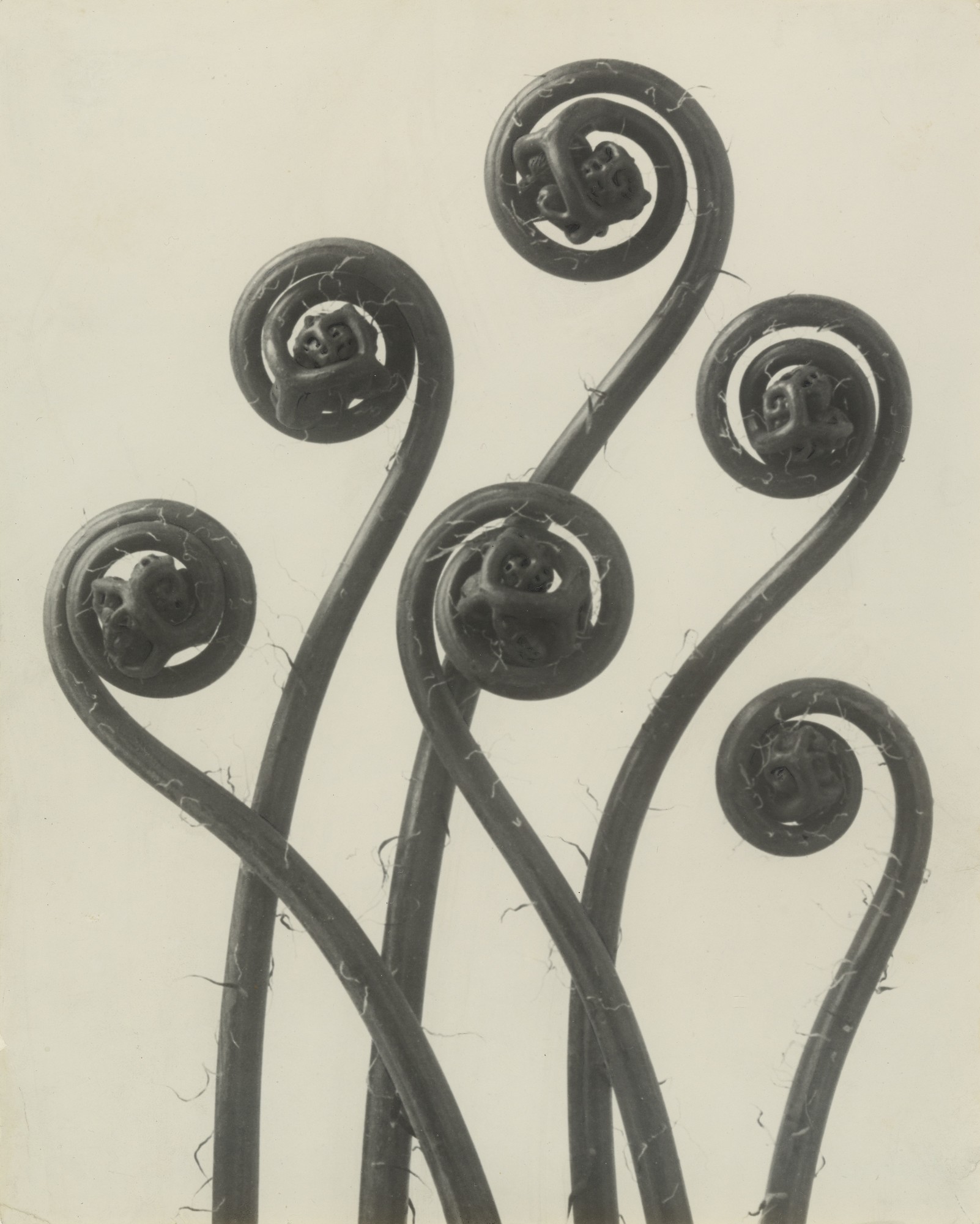
Photo of developing ferns by the German nature photographer Karl Blossfeldt (1866-1932)
(open in new window for full image)
Post-Performative Post-Scriptum
“Farnsicht” is a pun on German Farn, meaning “fern”, and Fernsicht, meaning “view” or “visibility” (literally fern, “far”, + Sicht, “visibility”).
Do you want a haunting literary image? You’ll find one of the strangest and strongest in Borges’ “La Biblioteca de Babel” (1941), which is narrated by a librarian in an infinite library. The librarian anticipates the end of his life:
Muerto, no faltarán manos piadosas que me tiren por la baranda; mi sepultura será el aire insondable; mi cuerpo se hundirá largamente y se corromperá y disolverá en el viento engenerado por la caída, que es infinita. — “La Biblioteca de Babel”
When I am dead, compassionate hands will throw me over the railing; my tomb will be the unfathomable air, my body will sink for ages, and will decay and dissolve in the wind engendered by my fall, which shall be infinite. — “The Library of Babel” (translation by Andrew Hurley)
The infinite fall is the haunting image. Falling is powerful; falling for ever is more powerful still. But it can’t happen in reality: soon or later a fall has to end. Objects crash to earth or splash into the ocean. Of course, you could call being in orbit a kind of infinite fall, but it doesn’t have the same power.
However, there’s more kinds of falling than one and I think the arithmophile Borges would have liked one of the other kinds a lot. Numbers can fall — you sum their digits, take the sum from the original number, and repeat. That is, n = n – digsum(n). Here are some examples:
10 → 9 → 0
100 → 99 → 81 → 72 → 63 → 54 → 45 → 36 → 27 → 18 → 9 → 0
1000 → 999 → 972 → 954 → 936 → 918 → 900 → 891 → 873 → 855 → 837 → 819 → 801 → 792 → 774 → 756 → 738 → 720 → 711 → 702 → 693 → 675 → 657 → 639 → 621 → 612 → 603 → 594 → 576 → 558 → 540 → 531 → 522 → 513 → 504 → 495 → 477 → 459 → 441 → 432 → 423 → 414 → 405 → 396 → 378 → 360 → 351 → 342 → 333 → 324 → 315 → 306 → 297 → 279 → 261 → 252 → 243 → 234 → 225 → 216 → 207 → 198 → 180 → 171 → 162 → 153 → 144 → 135 → 126 → 117 → 108 → 99 → 81 → 72 → 63 → 54 → 45 → 36 → 27 → 18 → 9 → 0
The details are different in other bases, like 2 or 16, but the destination is the same. The number falls to zero and the fall stops, because digsum(0) = 0:
102 → 1 → 0 (n=2)
100 → 11 → 1 → 0 (n=4)
1000 → 111 → 100 → 11 → 1 → 0 (n=8)
10000 → 1111 → 1011 → 1000 → 111 → 100 → 11 → 1 → 0 (n=16)
100000 → 11111 → 11010 → 10111 → 10011 → 10000 → 1111 → 1011 → 1000 → 111 → 100 → 11 → 1 → 0 (n=32)
1000000 → 111111 → 111001 → 110101 → 110001 → 101110 → 101010 → 100111 → 100011 → 100000 → 11111 → 11010 → 10111 → 10011 → 10000 → 1111 → 1011 → 1000 → 111 → 100 → 11 → 1 → 0 (n=64)
1013 → C → 0 (n=13)
100 → CC → B1 → A2 → 93 → 84 → 75 → 66 → 57 → 48 → 39 → 2A → 1B → C → 0 (n=169)
1000 → CCC → CA2 → C84 → C66 → C48 → C2A → C0C → BC1 → BA3 → B85 → B67 → B49 → B2B → B10 → B01 → AC2 → AA4 → A86 → A68 → A4A → A2C → A11 → A02 → 9C3 → 9A5 → 987 → 969 → 94B → 930 → 921 → 912 → 903 → 8C4 → 8A6 → 888 → 86A → 84C → 831 → 822 → 813 → 804 → 7C5 → 7A7 → 789 → 76B → 750 → 741 → 732 → 723 → 714 → 705 → 6C6 → 6A8 → 68A → 66C → 651 → 642 → 633 → 624 → 615 → 606 → 5C7 → 5A9 → 58B → 570 → 561 → 552 → 543 → 534 → 525 → 516 → 507 → 4C8 → 4AA → 48C → 471 → 462 → 453 → 444 → 435 → 426 → 417 → 408 → 3C9 → 3AB → 390 → 381 → 372 → 363 → 354 → 345 → 336 → 327 → 318 → 309 → 2CA → 2AC → 291 → 282 → 273 → 264 → 255 → 246 → 237 → 228 → 219 → 20A → 1CB → 1B0 → 1A1 → 192 → 183 → 174 → 165 → 156 → 147 → 138 → 129 → 11A → 10B → CC → B1 → A2 → 93 → 84 → 75 → 66 → 57 → 48 → 39 → 2A → 1B → C → 0 (n=2197)
But the fall to 0 made me think of another kind of number-fall. What if you count the 0s in a number, take that count away from the original number, and repeat? You could call this a z-fall (pronounced zee-fall). But unlike free-fall, z-fall doesn’t last long:
10 → 9
100 → 98
1000 → 997
10000 → 9996
And the number always comes to rest far above the ground, as it were. In a fall using digsum(n), the number descends to 0. In a fall using zerocount(n), the number never even reaches 1. At least, never in any base higher than 2. But in base-2, you get this:
10 → 1 (n=2)
100 → 10 → 1 (n=4)
1000 → 101 → 100 → 10 → 1 (n=8)
10000 → 1100 → 1010 → 1000 → 101 → 100 → 10 → 1 (n=16)
100000 → 11011 → 11010 → 11000 → 10101 → 10011 → 10001 → 1110 → 1101 → 1100 → 1010 → 1000 → 101 → 100 → 10 → 1 (n=32)
1000000 → 111010 → 111000 → 110101 → 110011 → 110001 → 101110 → 101100 → 101001 → 100110 → 100011 → 100000 → 11011 → 11010 → 11000 → 10101 → 10011 → 10001 → 1110 → 1101 → 1100 → 1010 → 1000 → 101 → 100 → 10 → 1 (n=64)
When I saw that, I had a wonderful vision of how even the biggest numbers in base 2 could z-fall all the way to 1. Almost all binary numbers contain 0, after all. So the z-falls would get longer and longer, paying tribute to la caída infinita, the infinite fall, of the librarian in Borges’ Library of Babel. Alas, binary numbers don’t behave like that. The highest number in base 2 that z-falls to 1 is this:
1010001 → 1001101 → 1001010 → 1000110 → 1000010 → 111101 → 111100 → 111010 → 111000 → 110101 → 110011 → 110001 → 101110 → 101100 → 101001 → 100110 → 100011 → 100000 → 11011 → 11010 → 11000 → 10101 → 10011 → 10001 → 1110 → 1101 → 1100 → 1010 → 1000 → 101 → 100 → 10 → 1 (n=81)
Above that, binary numbers land on what you might call a shelf:
1010010=82 → 1001110=78 → 1001011=75 → 1001000=72 → 1000011=67 → 111111=63 (n=82)
If binary numbers are an infinite tall mountain, 1 is at the foot of the mountain. 111111 = 63 is like a shelf a little way above the foot. But I conjecture that arbitrarily large binary numbers will z-fall to 63. For example, no matter how large the power of 2, I conjecture that it will z-fall to 63:
10 → 1 : 2 → 1 (count of steps=2)
100 ... → 1 : 4 ... → 1 (c=3)
1000 ... → 1 : 8 ... → 1 (c=5)
10000 ... → 1 : 16 ... → 1 (c=8)
100000 ... → 1 : 32 ... → 1 (c=16)
1000000 ... → 1 : 64 ... → 1 (c=27)
10000000 ... → 111111 : 128 ... → 63 (c=21)
100000000 ... → 111111 : 256 ... → 63 (c=60)
1000000000 ... → 111111 : 512 ... → 63 (c=130)
10000000000 ... → 111111 : 1024 ... → 63 (c=253)
100000000000 ... → 111111 : 2048 ... → 63 (c=473)
1000000000000 ... → 111111 : 4096 ... → 63 (c=869)
10000000000000 ... → 111111 : 8192 ... → 63 (c=1586)
100000000000000 ... → 111111 : 16384 ... → 63 (c=2899)
1000000000000000 ... → 111111 : 32768 ... → 63 (c=5327)
10000000000000000 ... → 111111 : 65536 ... → 63 (c=9851)
100000000000000000 ... → 111111 : 131072 ... → 63 (c=18340)
1000000000000000000 ... → 111111 : 262144 ... → 63 (c=34331)
10000000000000000000 ... → 111111 : 524288 ... → 63 (c=64559)
100000000000000000000 ... → 111111 : 1048576 ... → 63 (c=121831)
1000000000000000000000 ... → 111111 : 2097152 ... → 63 (c=230573)
10000000000000000000000 ... → 111111 : 4194304 ... → 63 (c=437435)
100000000000000000000000 ... → 111111 : 8388608 ... → 63 (c=831722)
1000000000000000000000000 ... → 111111 : 16777216 ... → 63 (c=1584701)
10000000000000000000000000 ... → 111111 : 33554432 ... → 63 (c=3025405)
100000000000000000000000000 ... → 111111 : 67108864 ... → 63 (c=5787008)
1000000000000000000000000000 ... → 111111 : 134217728 ... → 63 (c=11089958)
10000000000000000000000000000 ... → 111111 : 268435456 ... → 63 (c=21290279)
100000000000000000000000000000 ... → 111111 : 536870912 ... → 63 (c=40942711)
1000000000000000000000000000000 ... → 111111 : 1073741824 ... → 63 (c=78864154)
So the z-falls get longer and longer. But z-falling to 63 doesn’t have the power of z-falling to 1.

