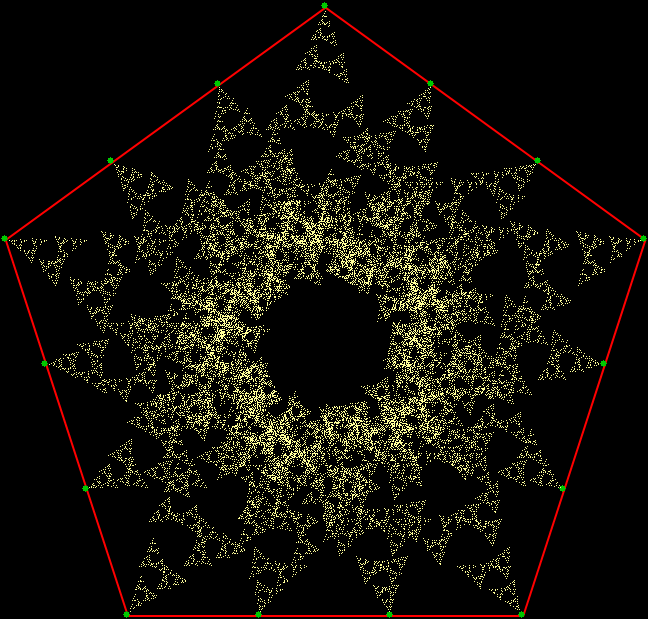
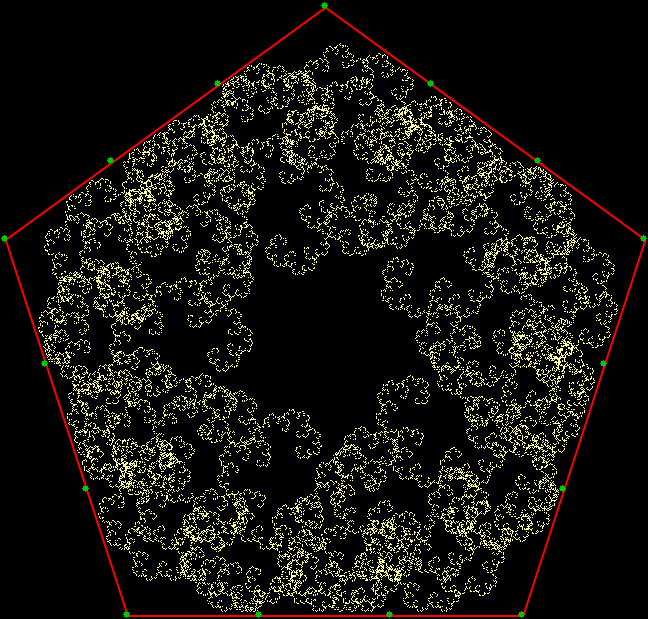
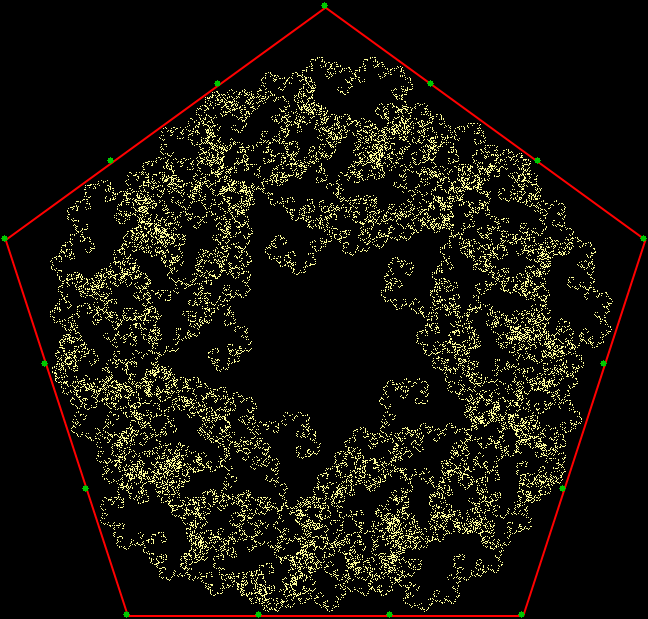
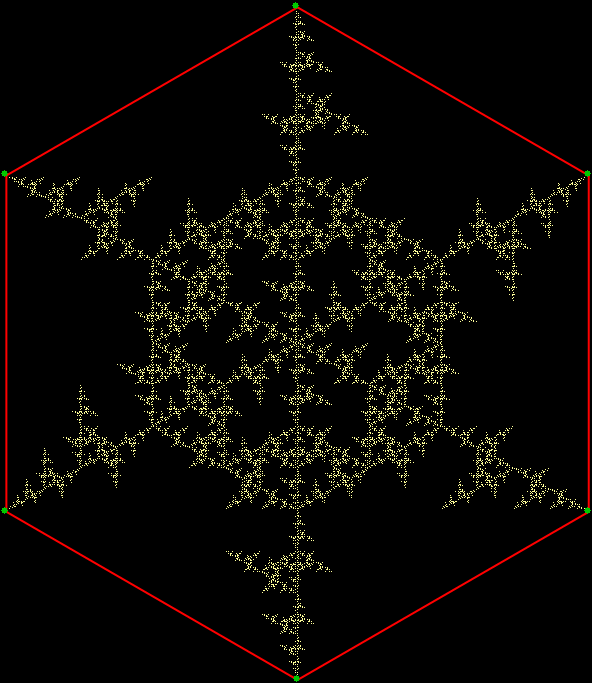
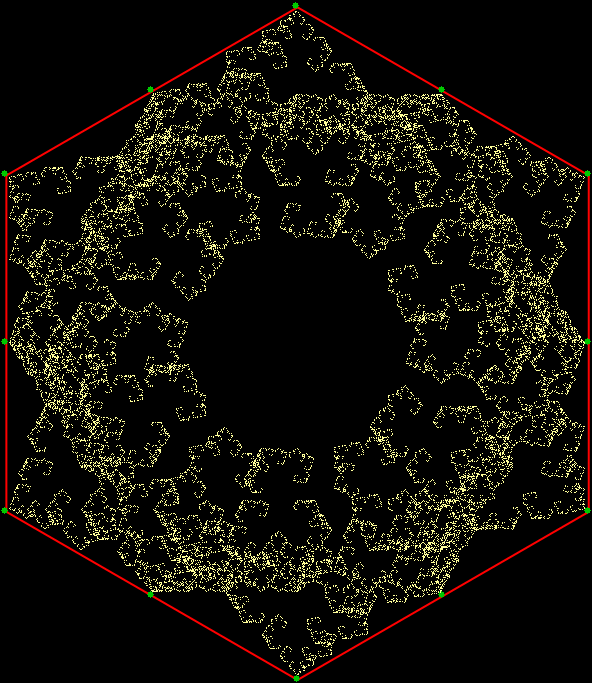
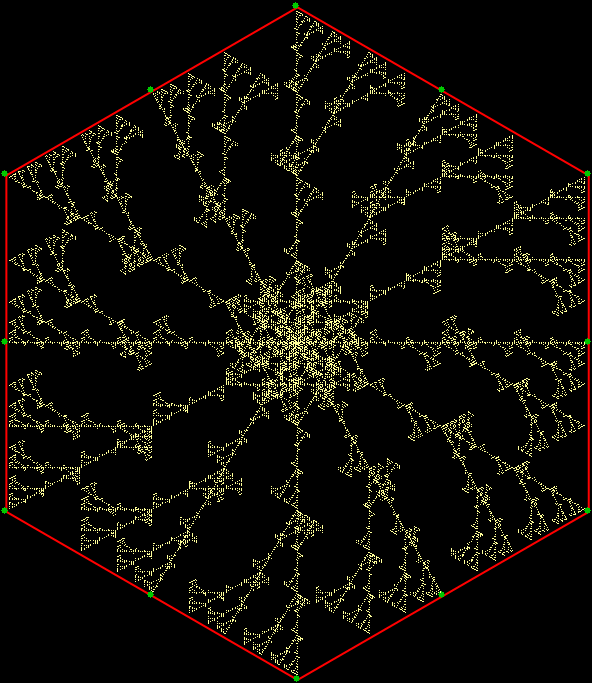
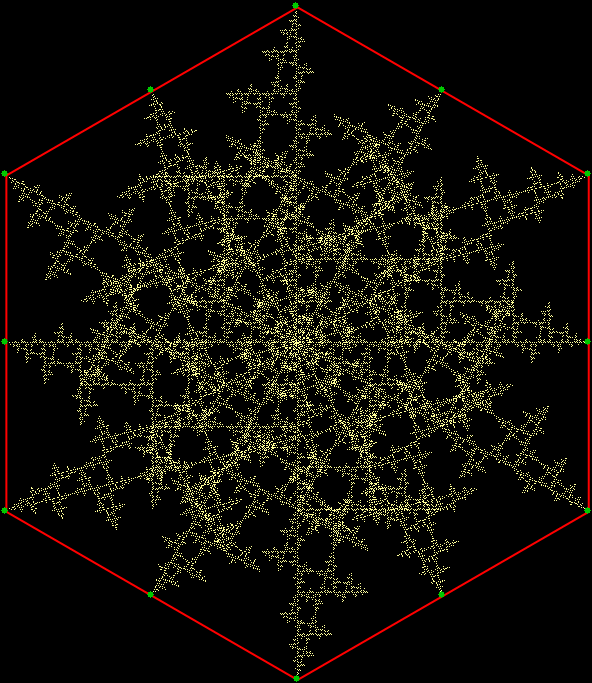
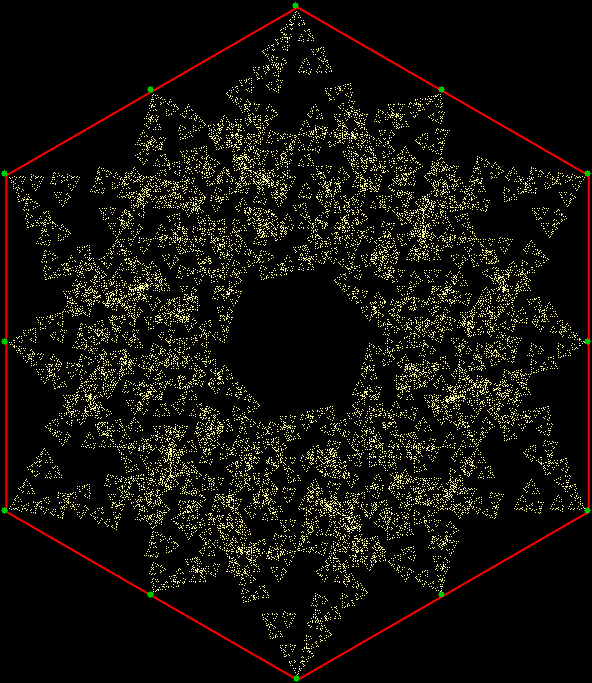
Square Routes Re-Re-Re-Re-Re-Re-Revisited

Suppose you trace all possible routes followed by a point inside a triangle jumping halfway towards one or another of the three vertices of the triangle. If you mark each jump, you get a famous geometrical shape called the Sierpiński triangle (or Sierpiński sieve).

Sierpiński triangle found by tracing all possible routes for a point jumping halfway towards the vertices of a triangle


The Sierpiński triangle is a fractal, because it contains copies of itself at smaller and smaller scales. Now try the same thing with a square. If you trace all possible routes followed by a point inside a square jumping halfway towards one or another of the four vertices of the square, you don’t get an obvious fractal. Instead, the interior of the square fills steadily (and will eventually be completely solid):
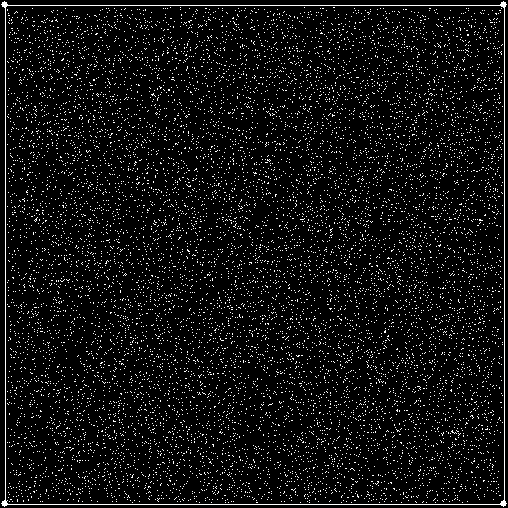
Routes of a point jumping halfway towards vertices of a square


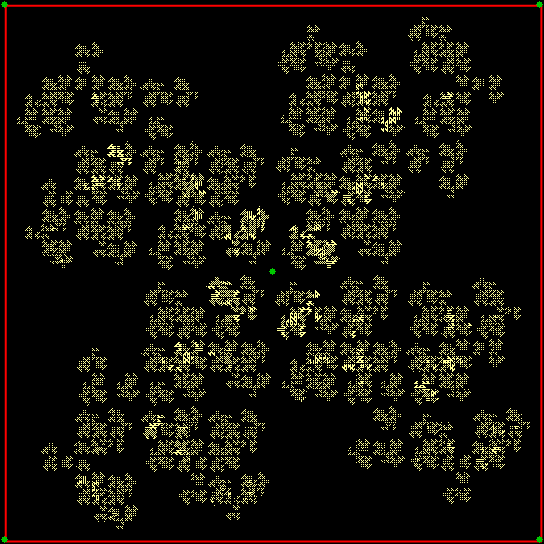
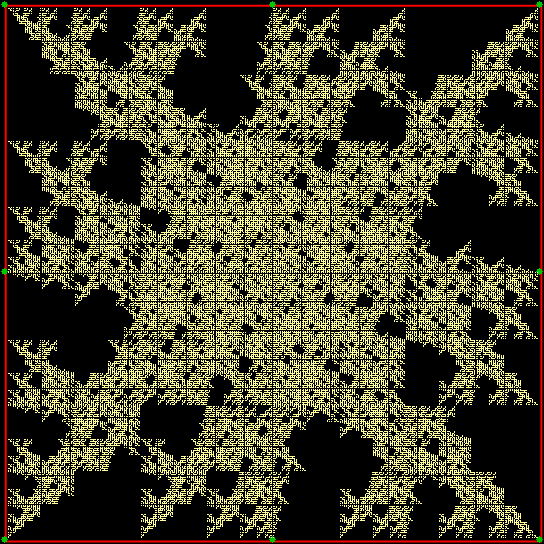
Try a variant. If the point is banned from jumping towards the same vertex twice or more in a row, the routes trace out a fractal that looks like this:
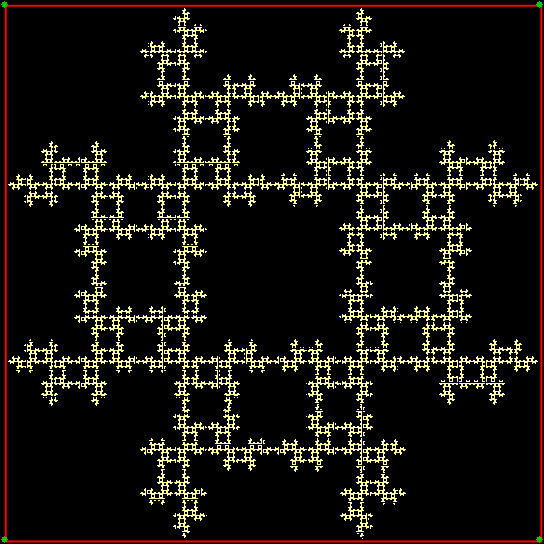
Ban on choosing same vertex twice or more in a row


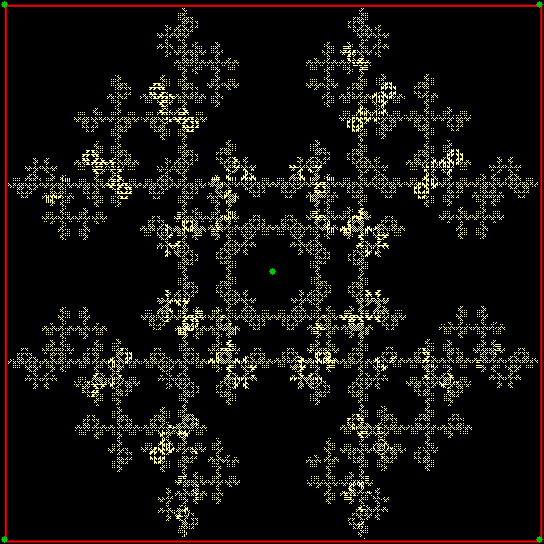
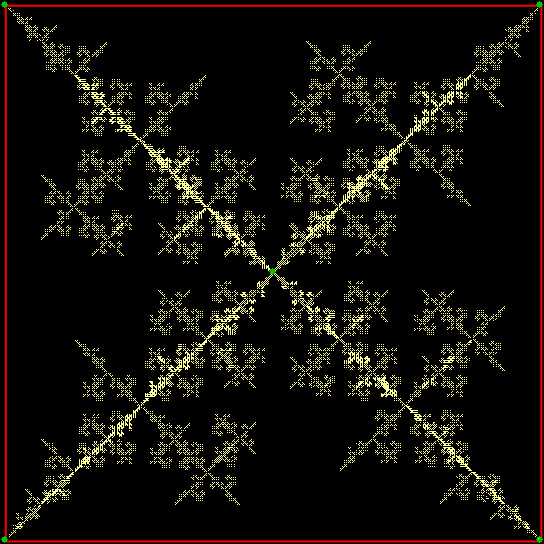
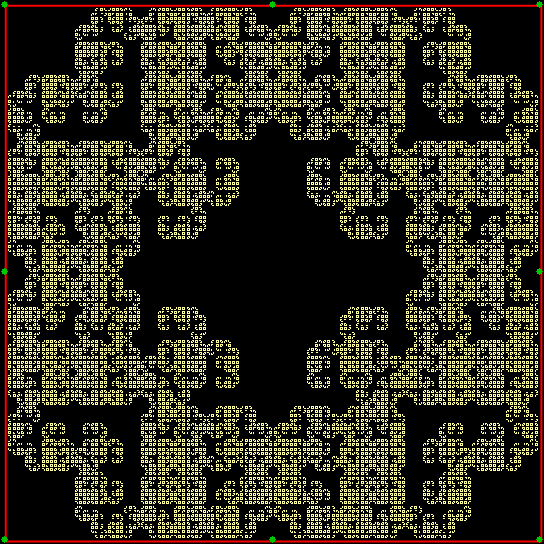
If the point is banned from jumping towards the vertex one place anti-clockwise of the vertex it’s just jumped towards, you get a fractal like this:
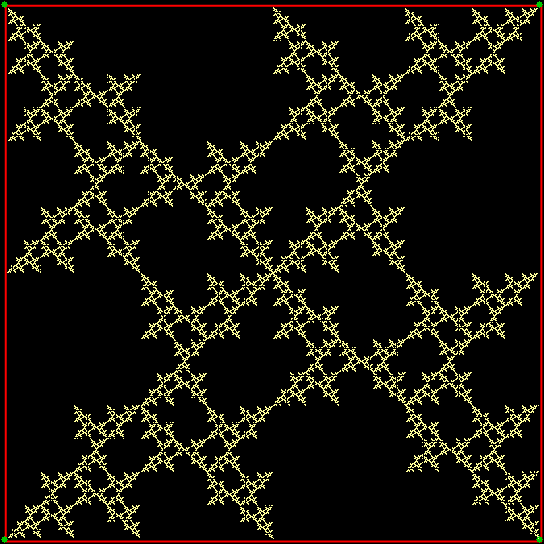
Ban on jumping towards vertex one place anti-clockwise of previously chosen vertex


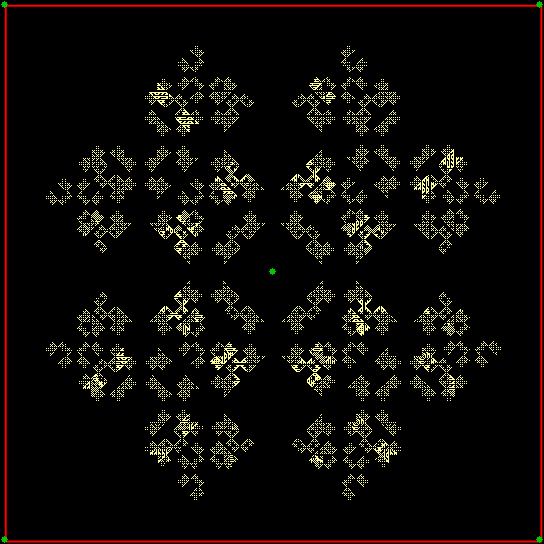
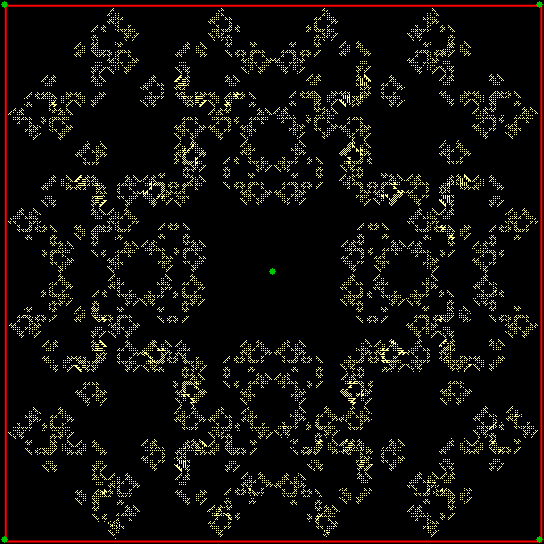
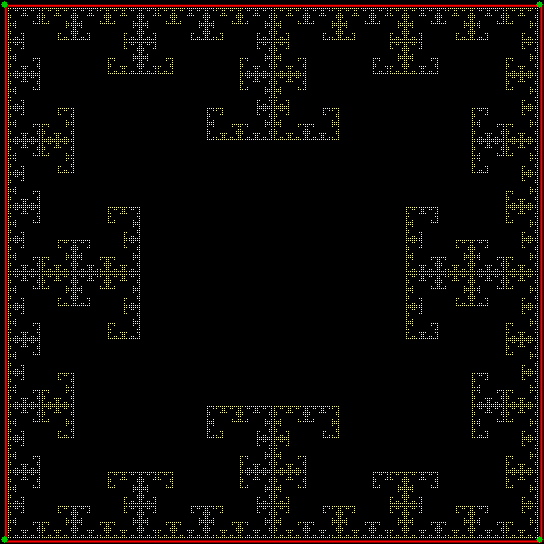
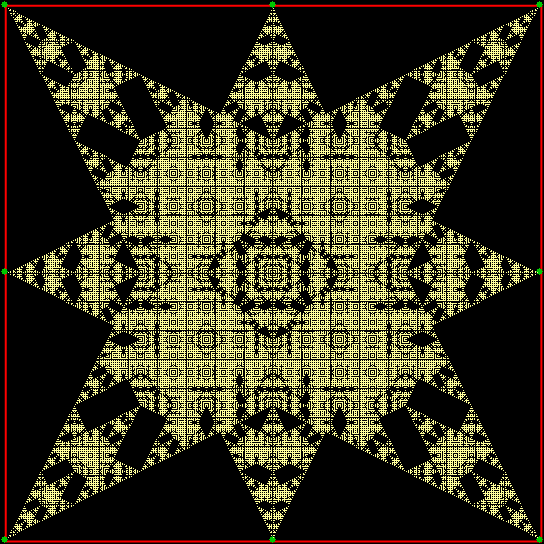
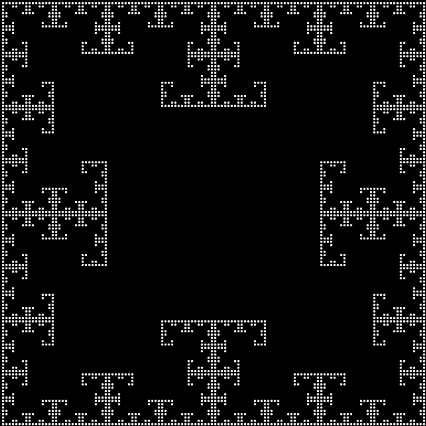
And if the point can’t jump towards two places clockwise or anti-clockwise of the currently chosen vertex, this fractal appears (called a T-square fractal):

Ban on jumping towards the vertex diagonally opposite of the previously chosen vertex


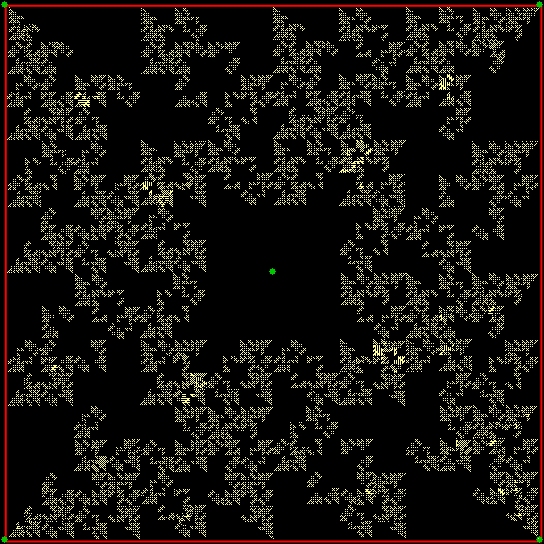
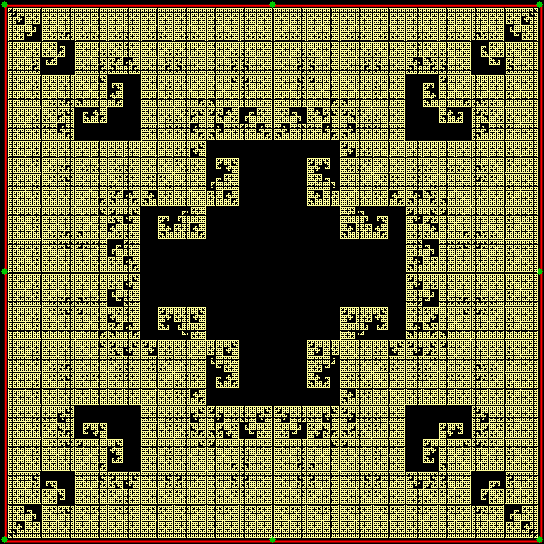
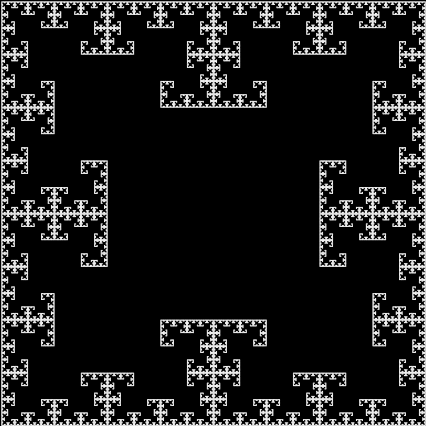
That ban is equivalent to banning the point from jumping from the vertex diagonally opposite to the vertex it’s just jumped towards. Finally, here’s the fractal created when you ban the point from jumping towards the vertex one place clockwise of the vertex it’s just jumped towards:

Ban on jumping towards vertex one place clockwise of previously chosen vertex


As you can see, the fractal is a mirror-image of the one-place-anti-clockwise-ban fractal.

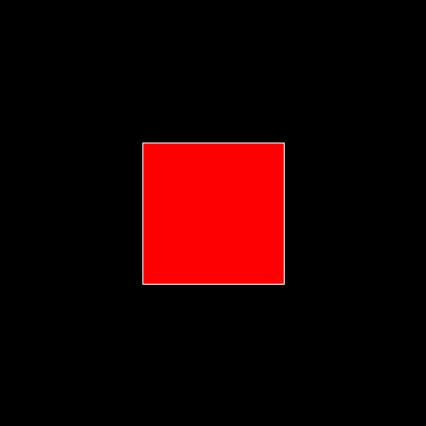
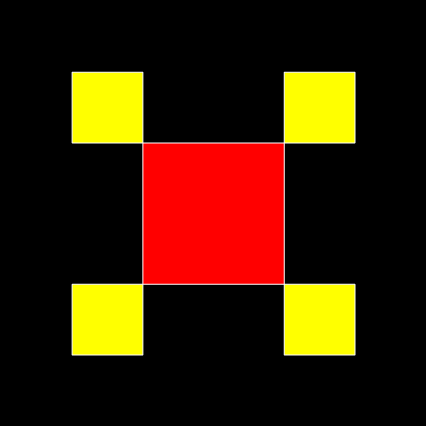
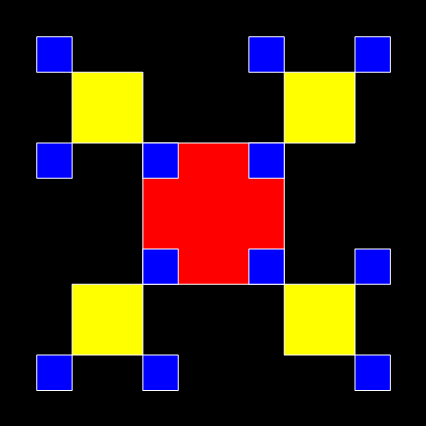
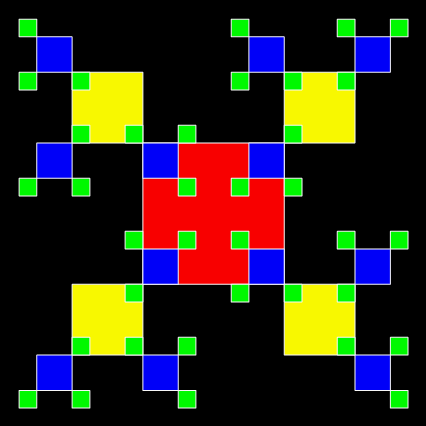
I discovered the ban-construction of those fractals more than twenty years ago. Then I found that I was re-discovering the same fractals when I looked at what first seemed like completely different ways of constructing fractals. There are lots of different routes to the same result. I’ve recently discovered yet another route. Let’s try what seems like an entirely different way of constructing fractals. Take a square and erect four new half-sized squares, sq1, sq2, sq3, sq4, on each corner. Then erect three more quarter-sized squares on the outward facing corners of sq1, sq2, sq3 and sq4. Carry on doing that and see what happens at the end when you remove all the previous stages of construction:
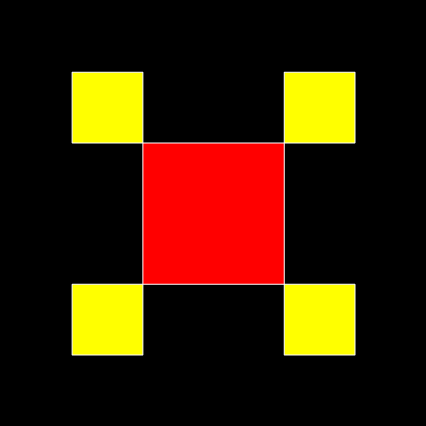
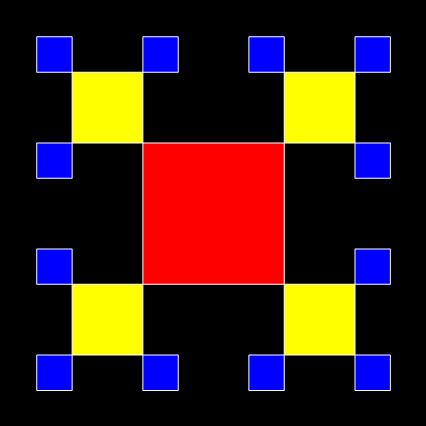
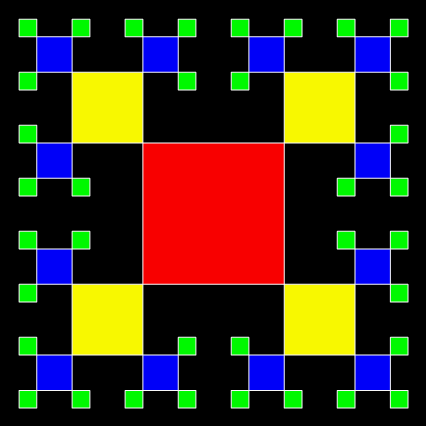
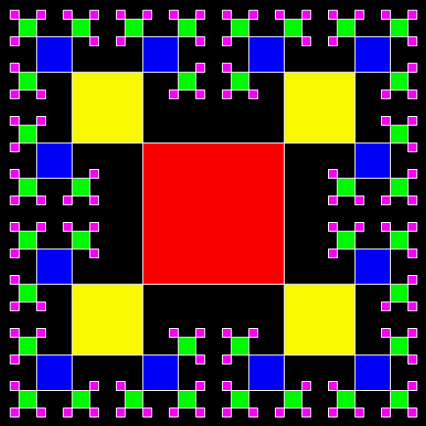
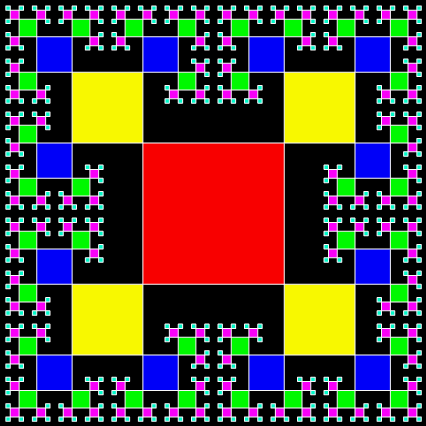
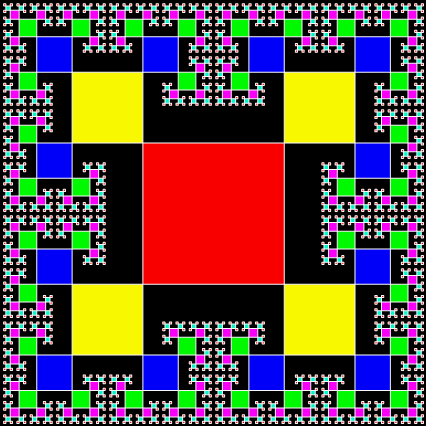
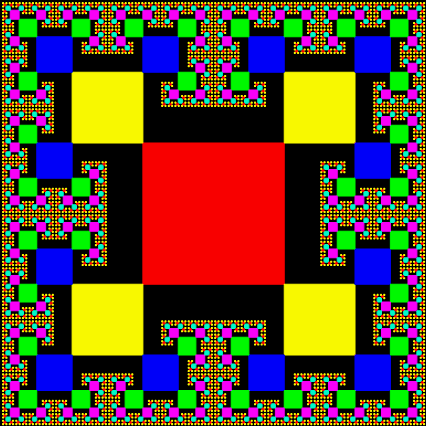
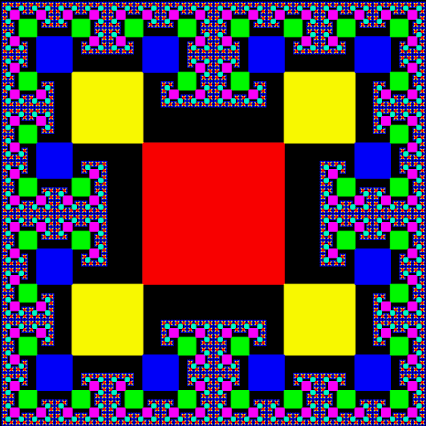

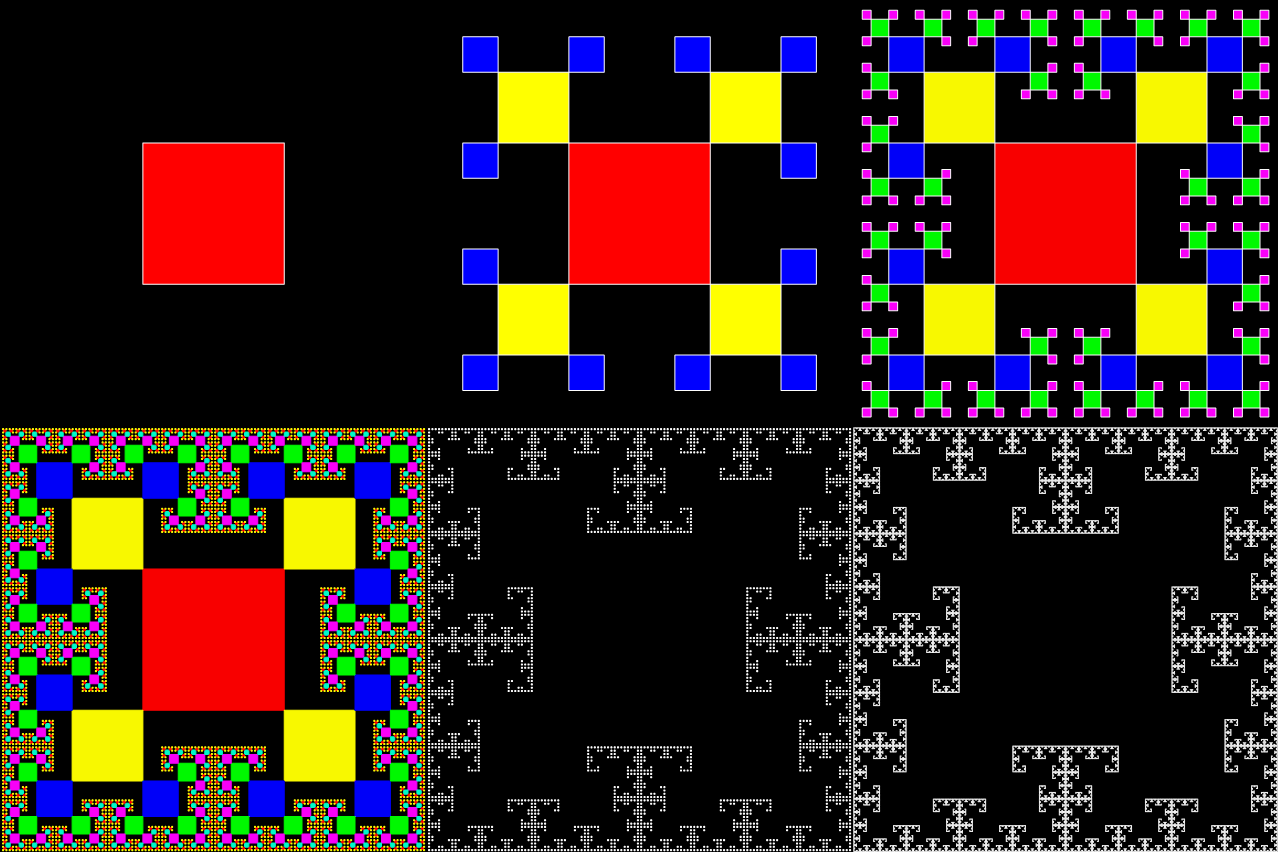
Animation of the new construction
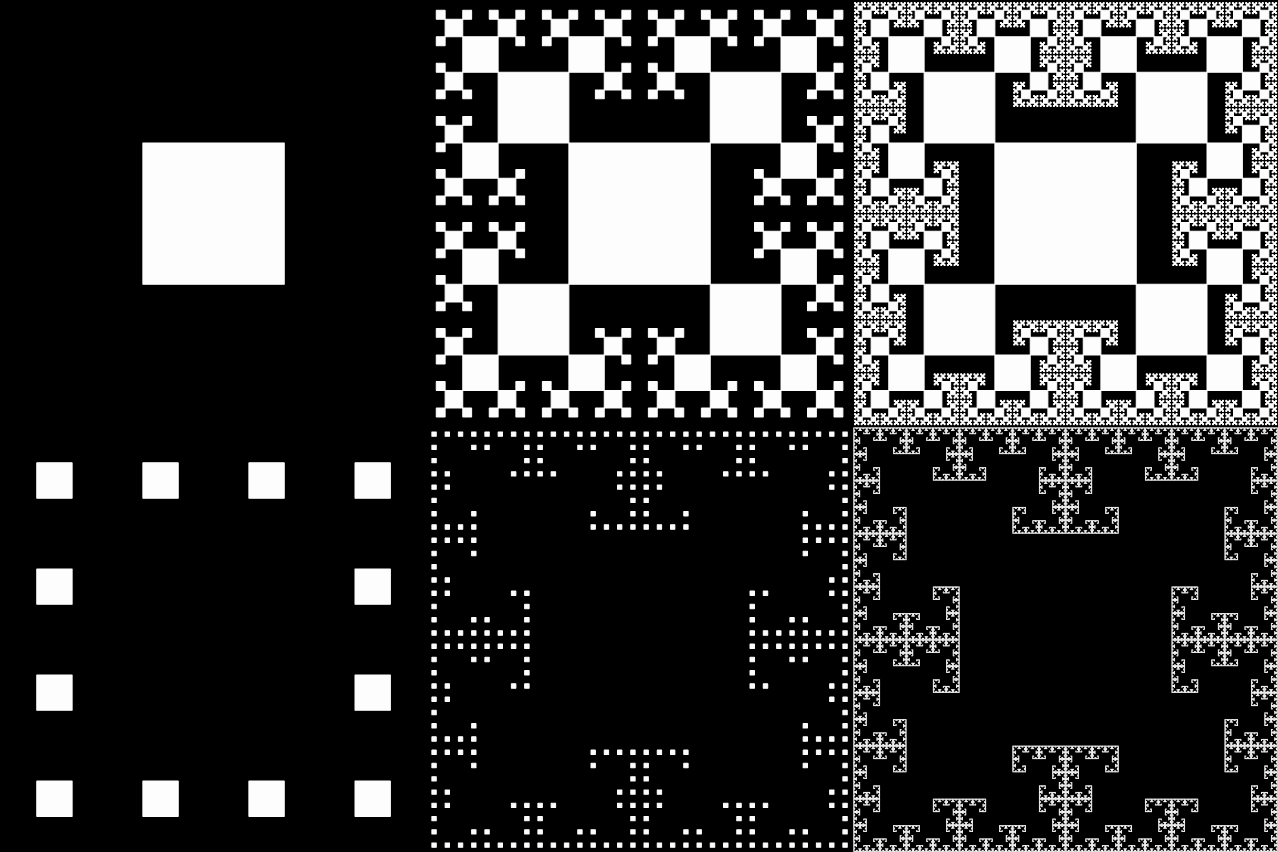

Animation in black-and-white


It’s the T-square fractal again. Now try rotating the squares you add at stage 3 and see what happens (the rotation means that two new squares are added on adjacent outward-facing corners and one new square on the inward-facing corner):

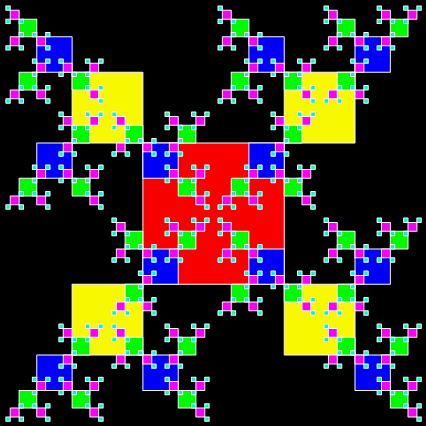
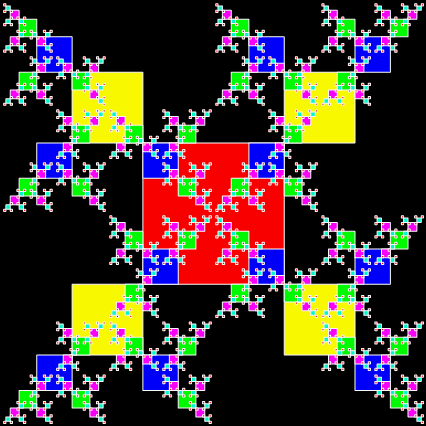

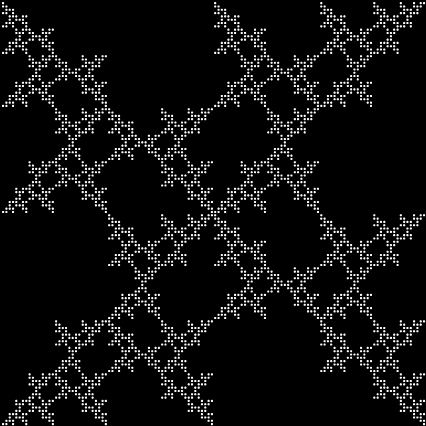
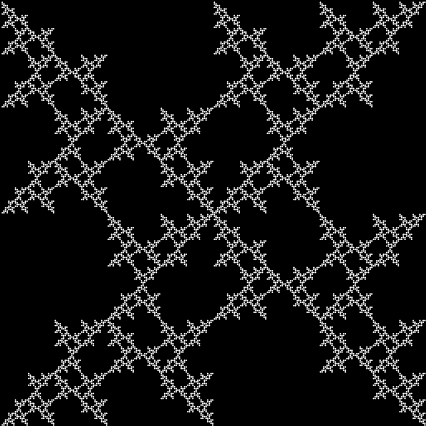
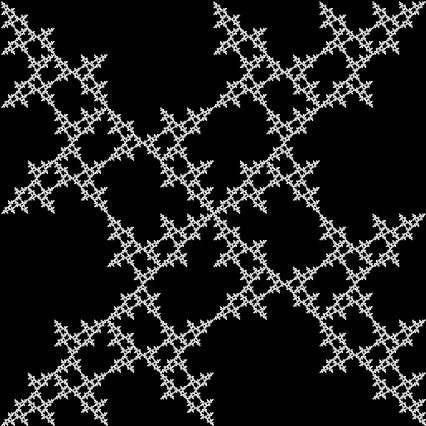
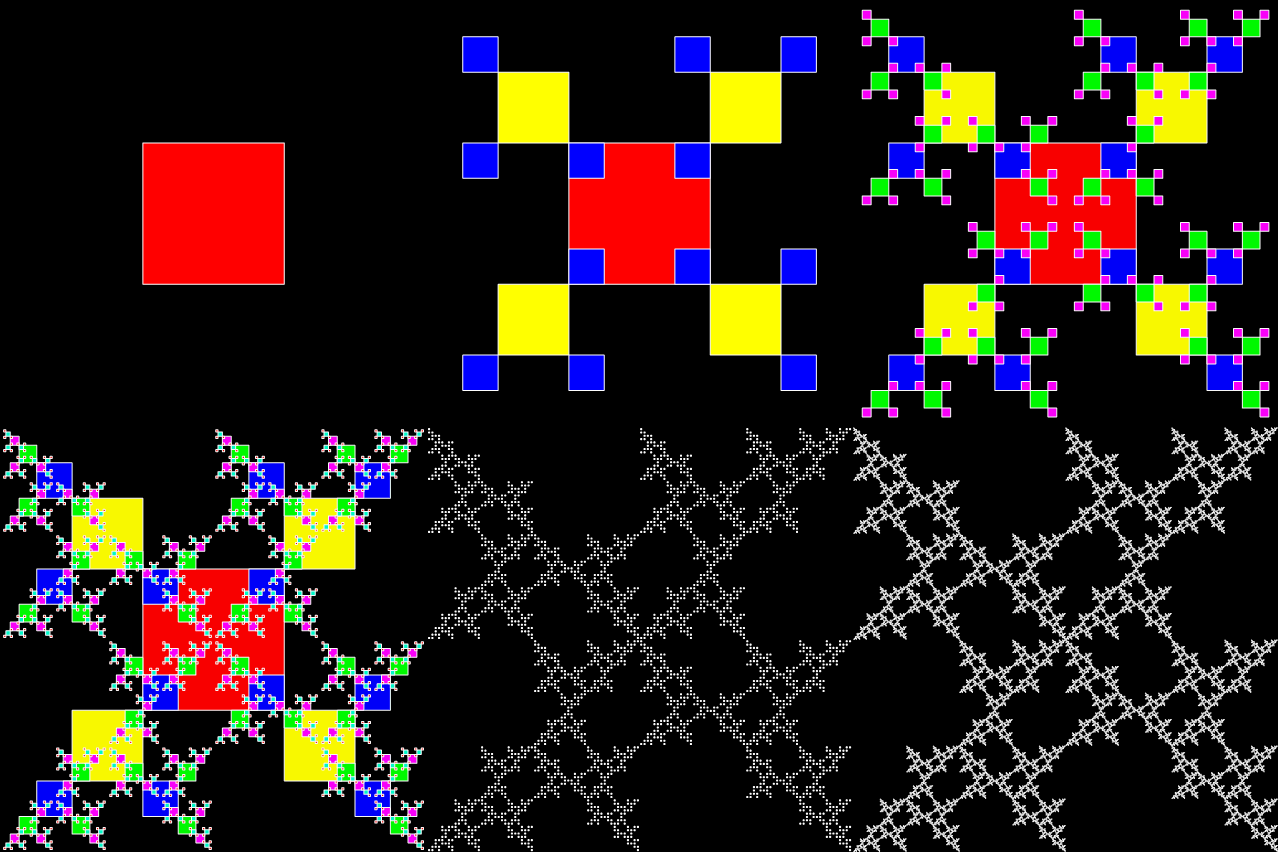
Animation of the construction


It’s the one-place-clockwise-ban fractal again. Now try rotating the squares two places, so that two new squares are added on diagonally opposite outward-facing corners and one new square on the inward-facing corner:
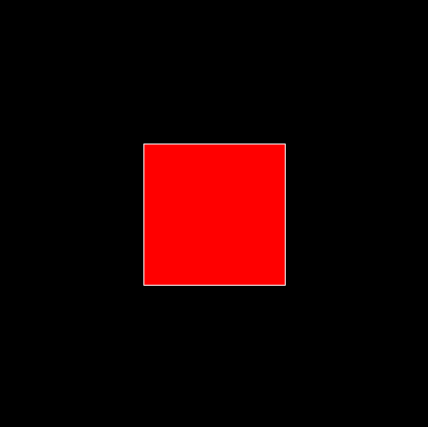
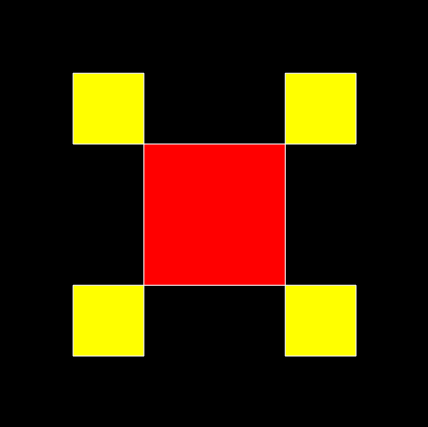

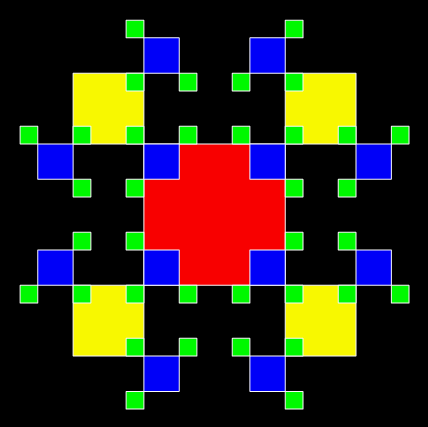
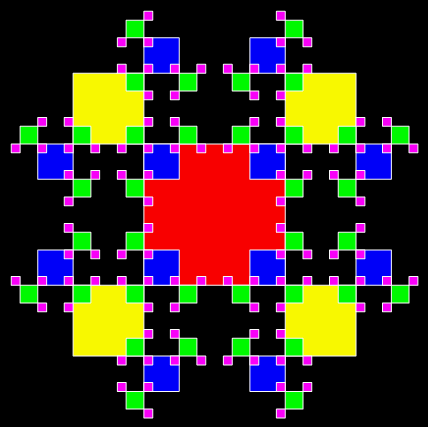
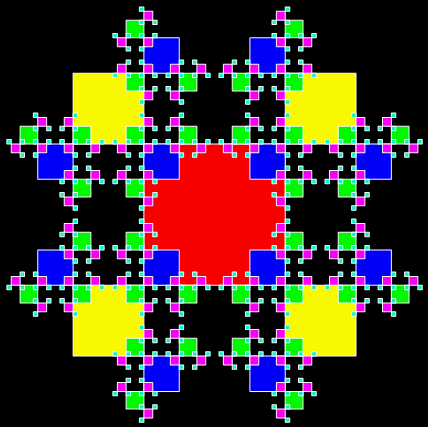
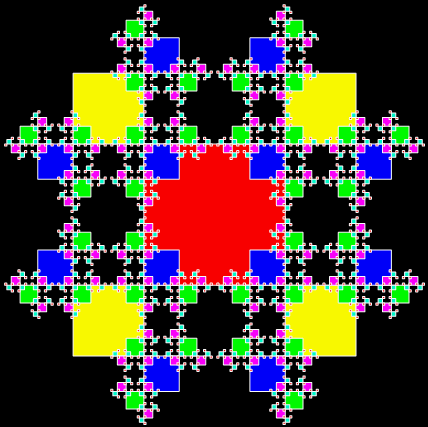

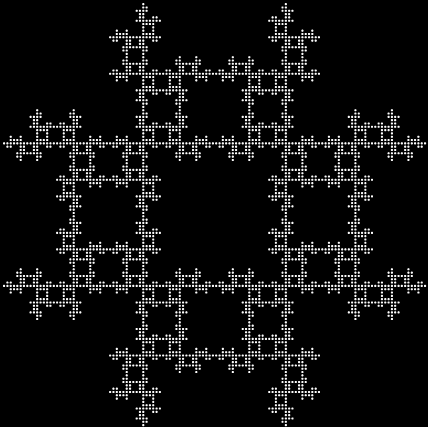


Animation of the construction


It’s the same-vertex-ban fractal again. Finally, rotate squares one place more:

Animation of the construction
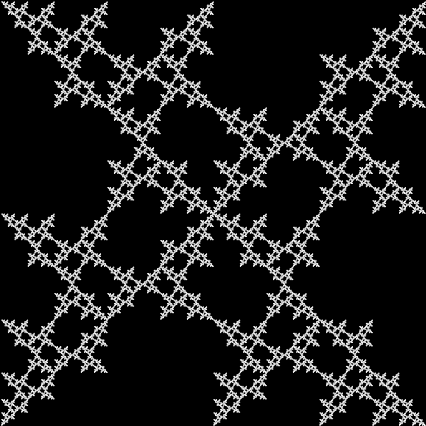


It’s the one-place-clockwise-ban fractal again. And this method isn’t confined to squares. Here’s what happens when you add 5/8th-sized triangles to the corners of triangles:


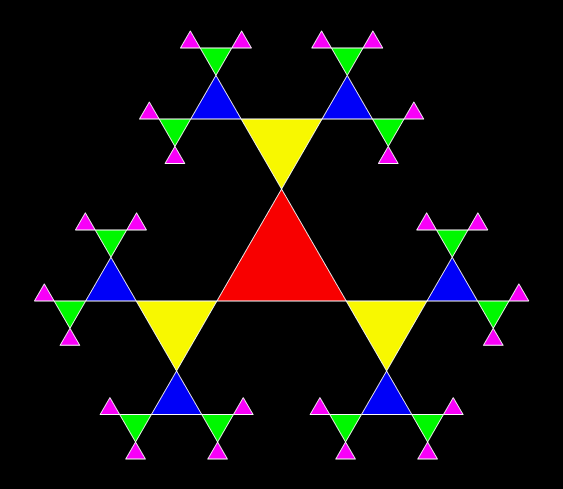


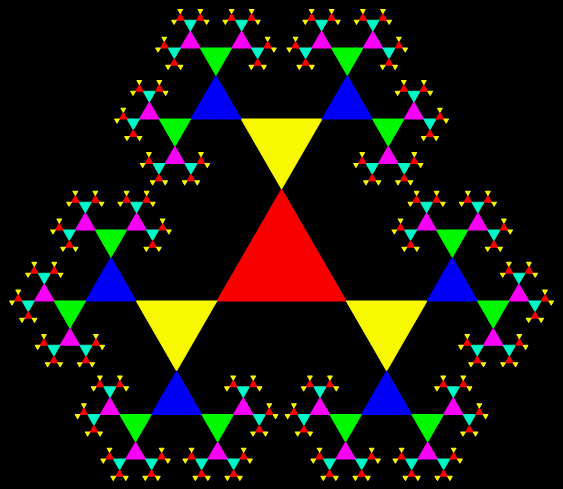
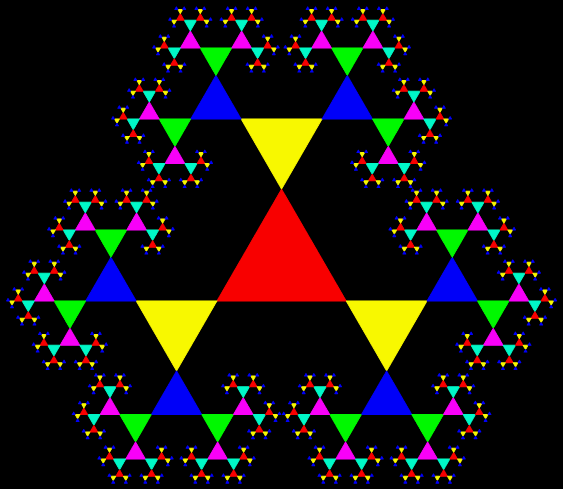
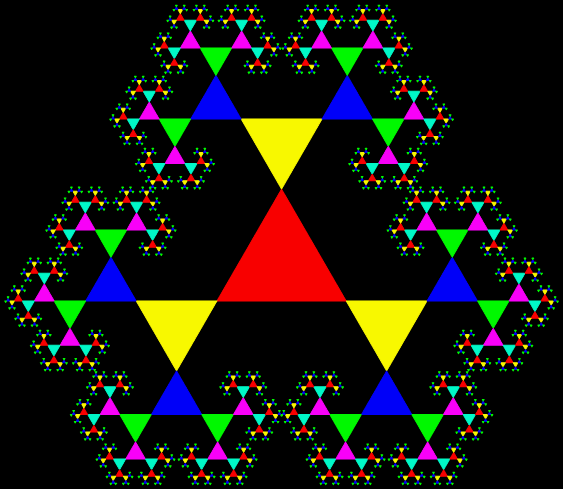
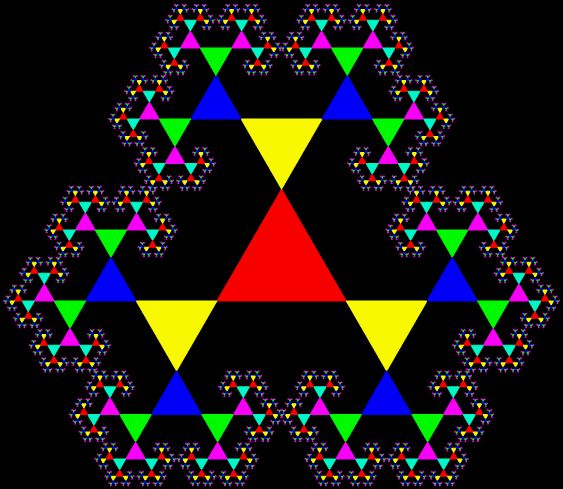

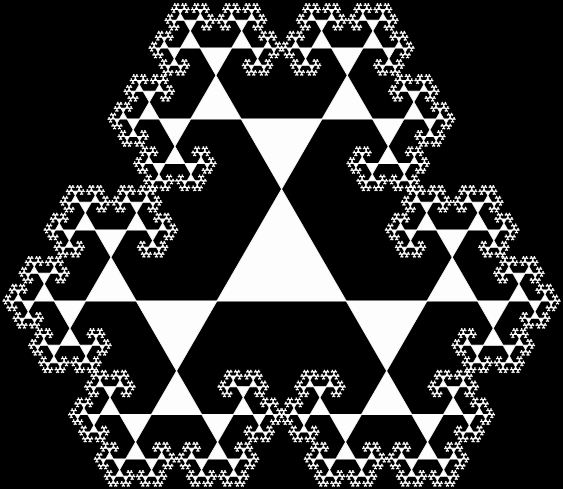

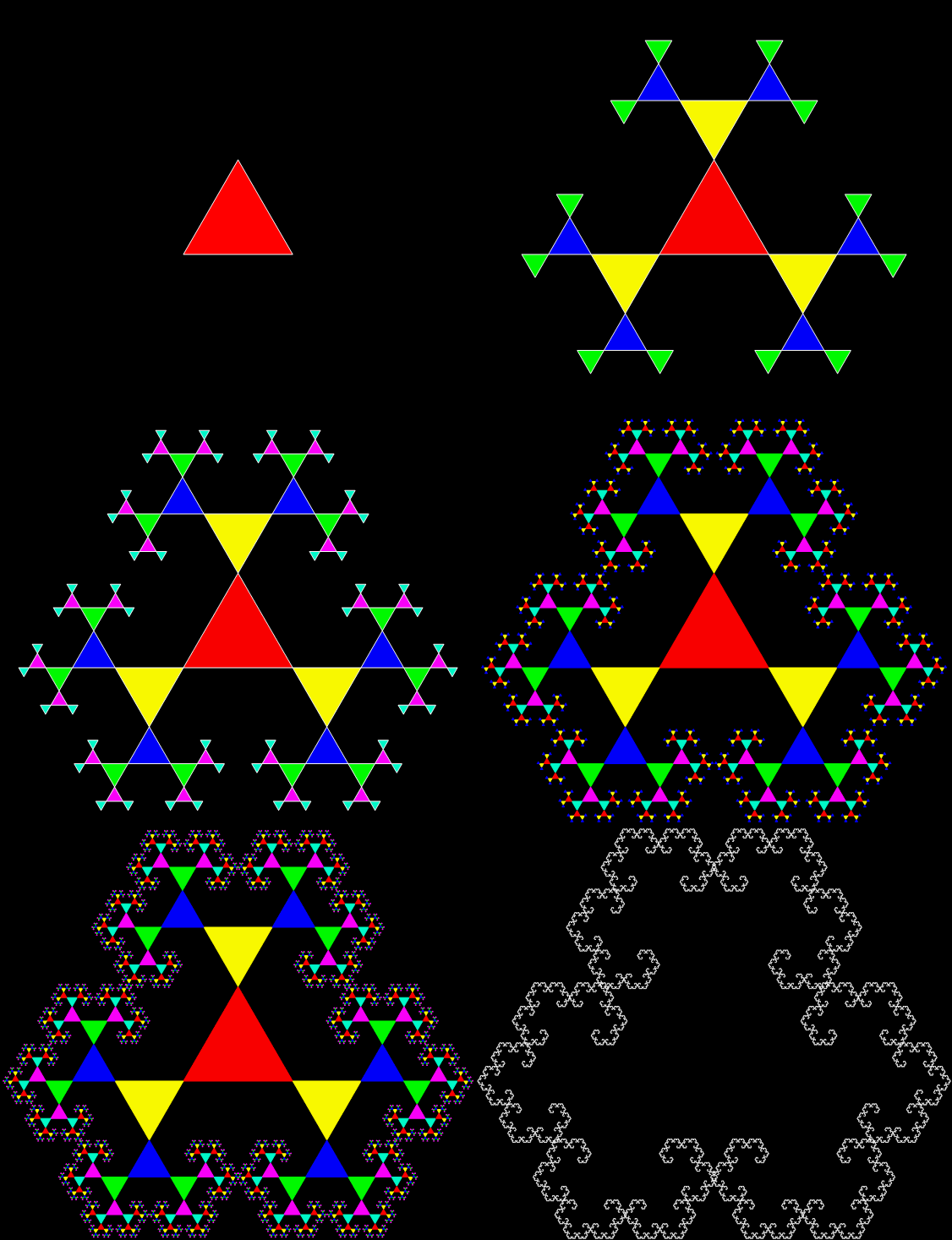
Animation of the construction


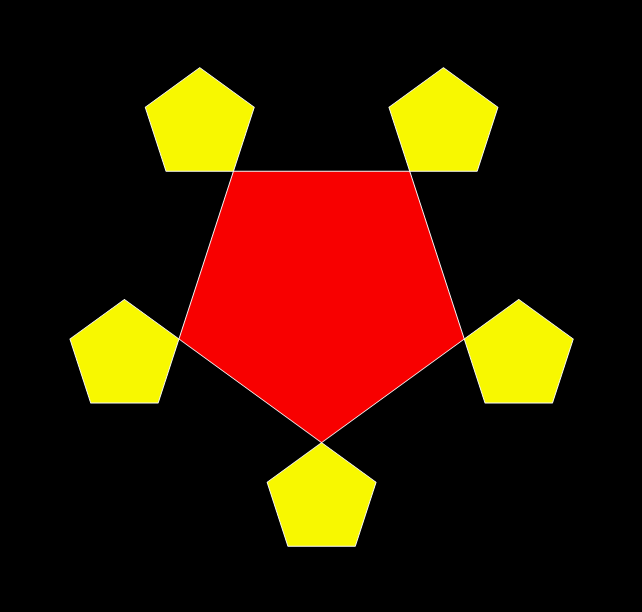
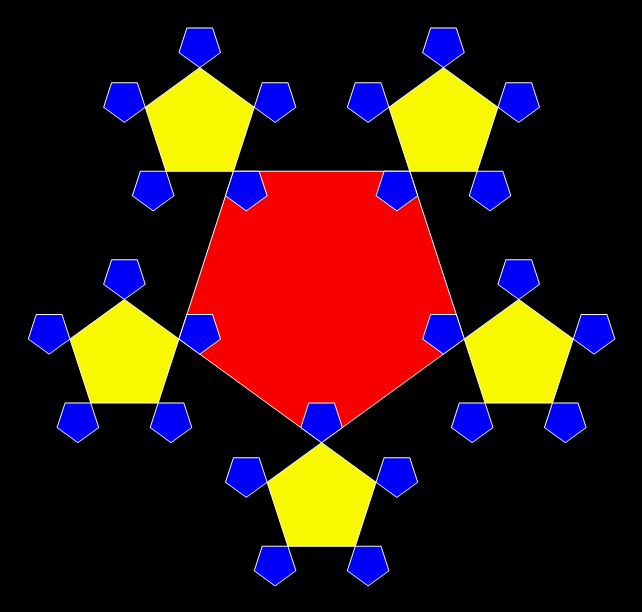
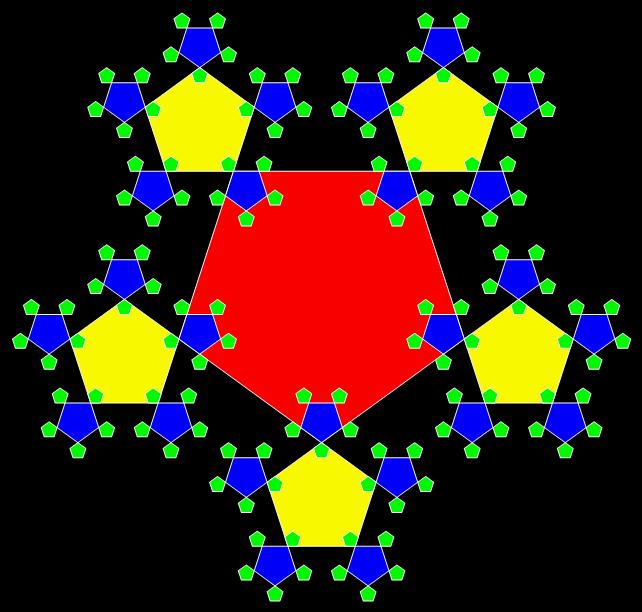
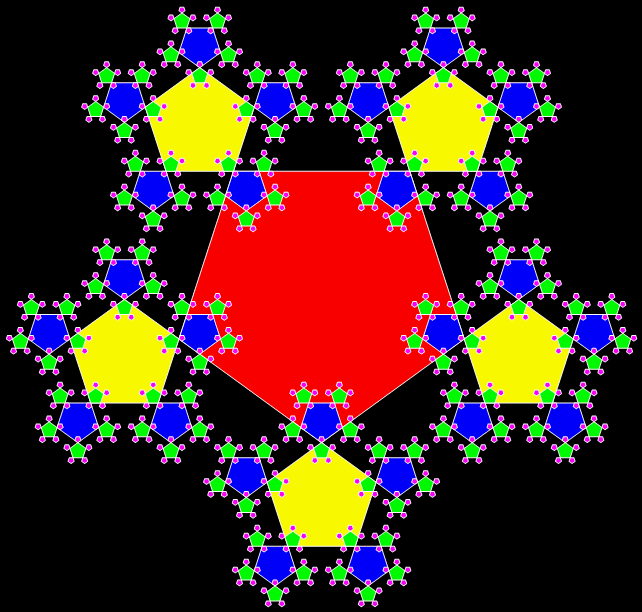
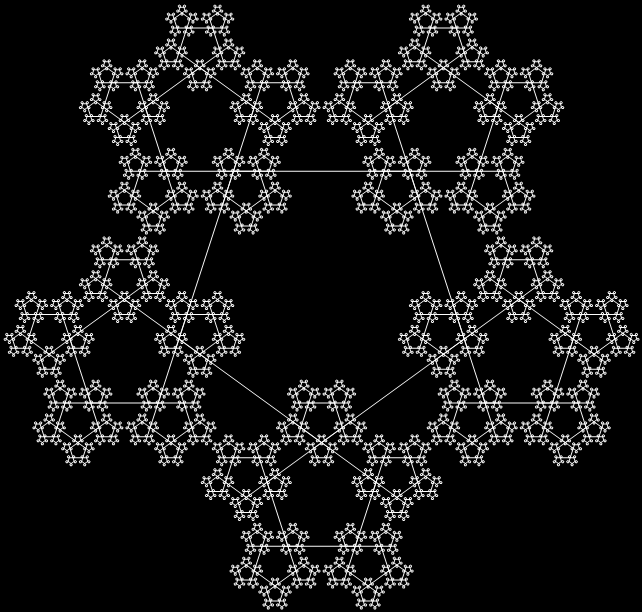
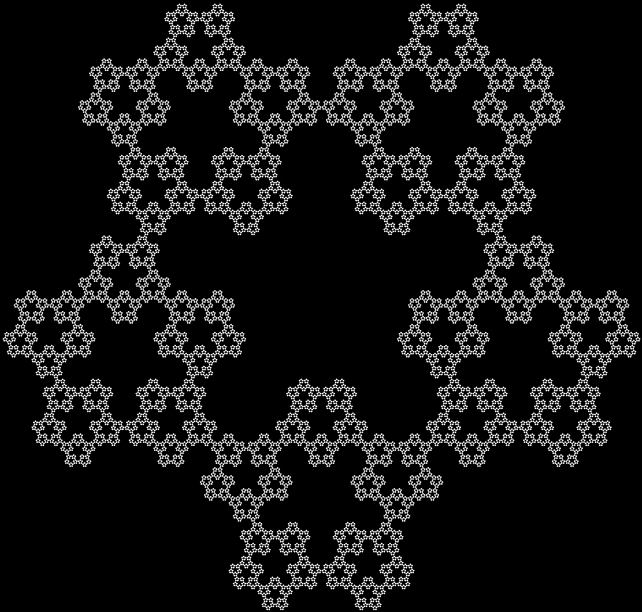
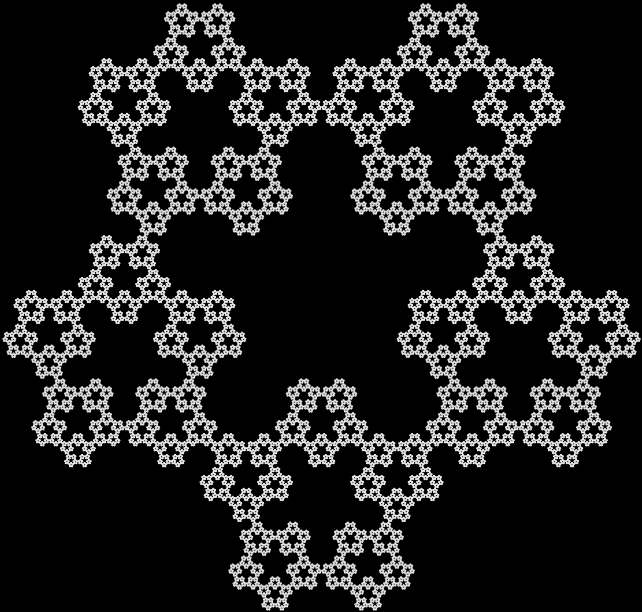
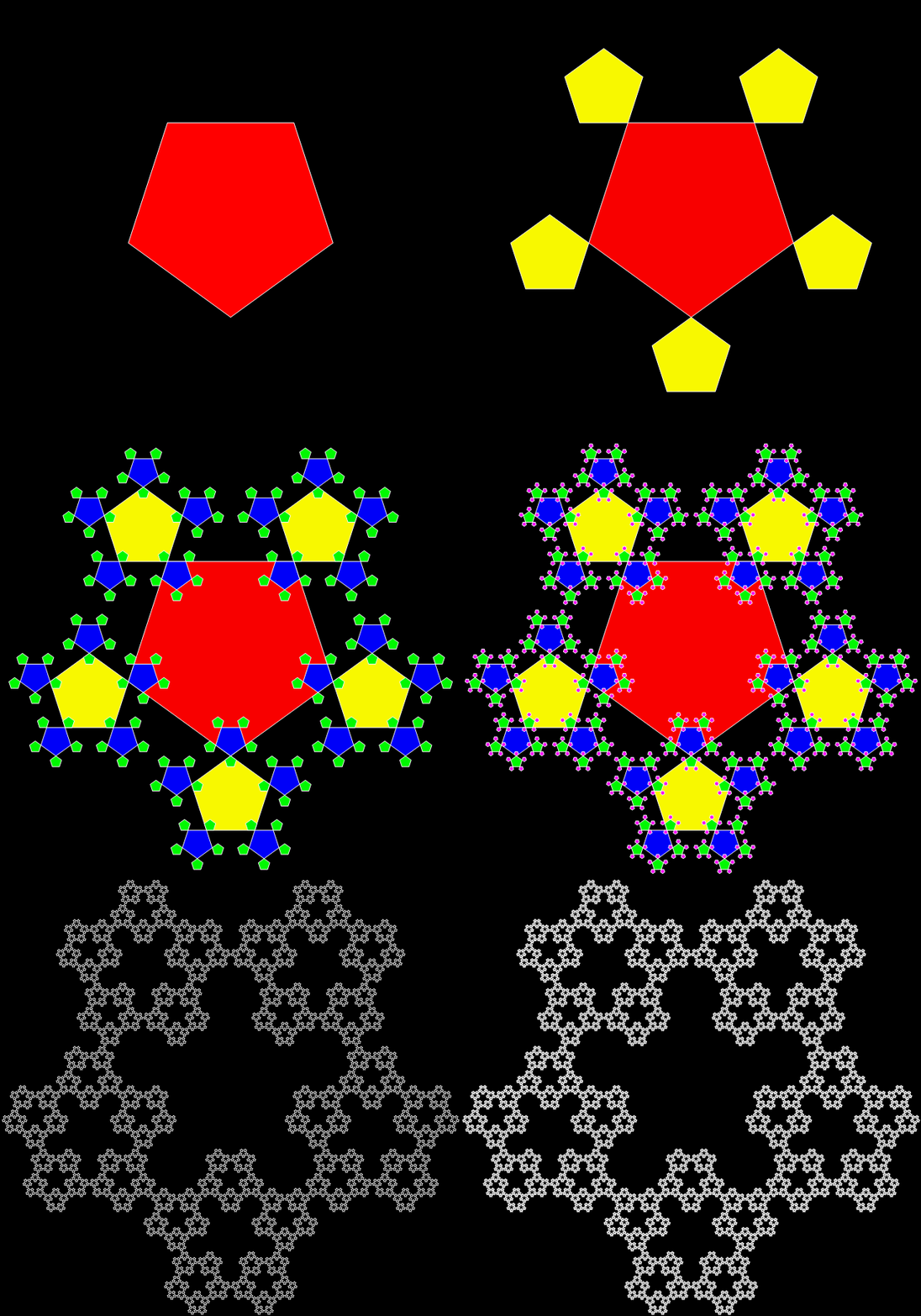
And here’s what happens when you add 5/13th-sized pentagons to the corners of pentagons:
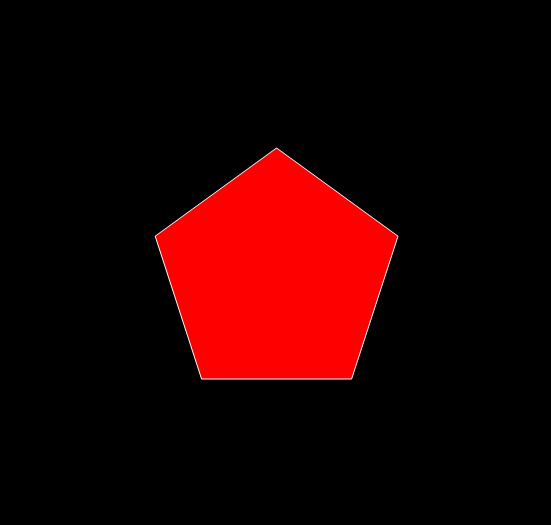


Animation of the construction


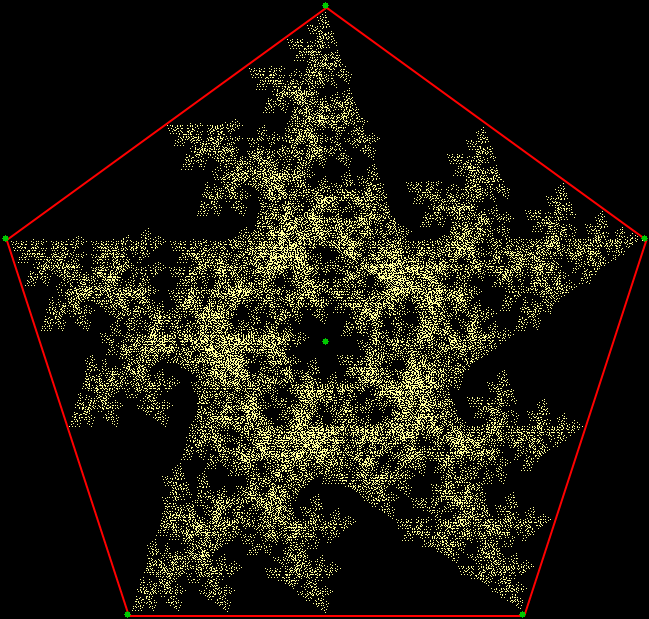
Finally, here’s a variant on that pentagonal fractal (adding two rather than four pentagons at stage 3 and higher):
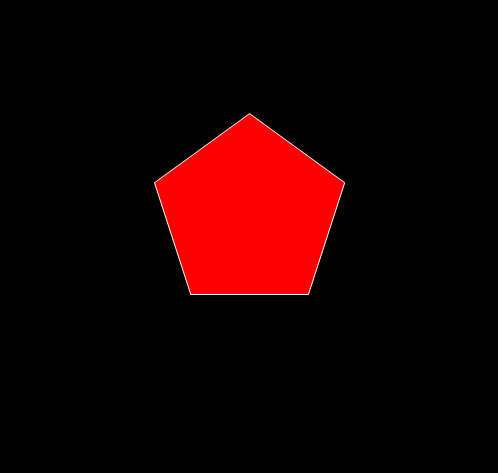
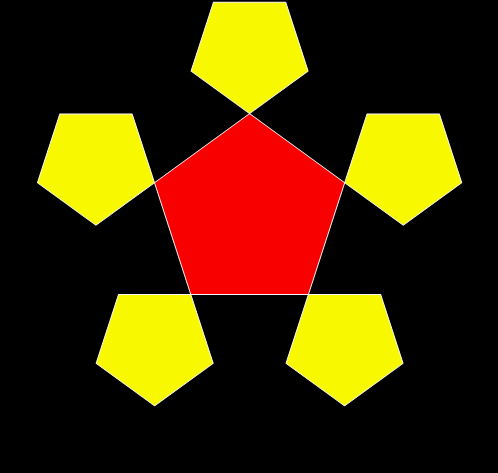
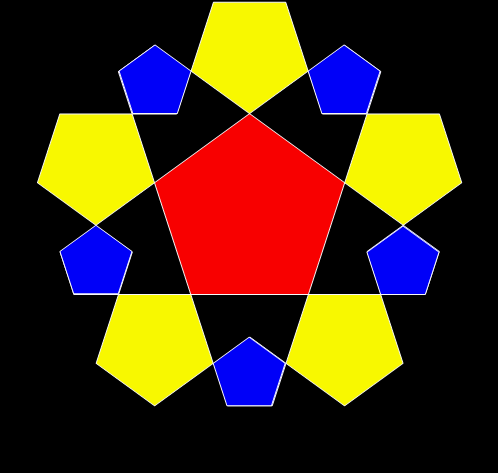
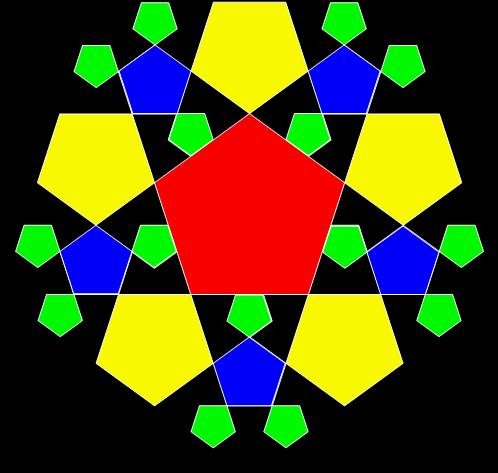


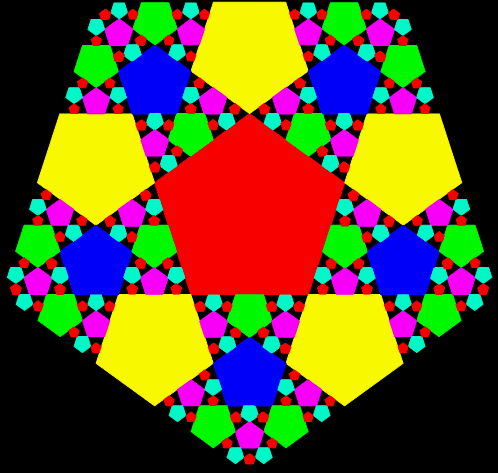

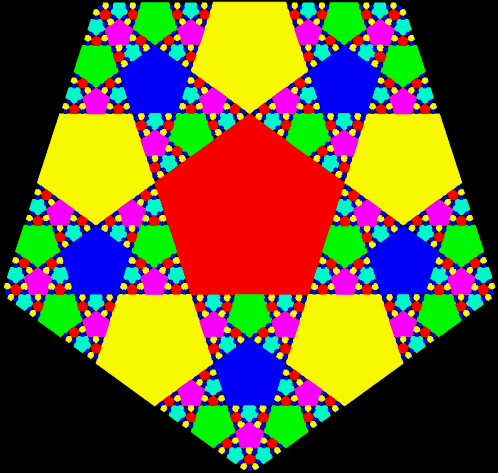
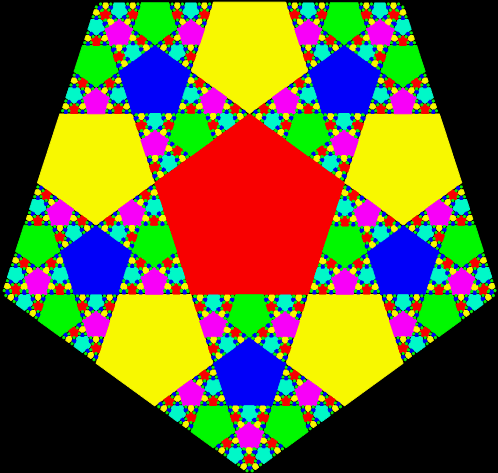

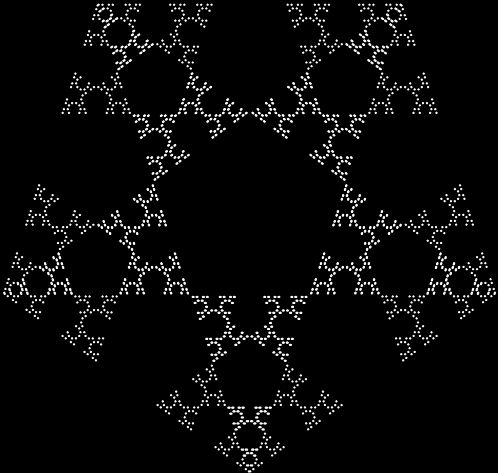
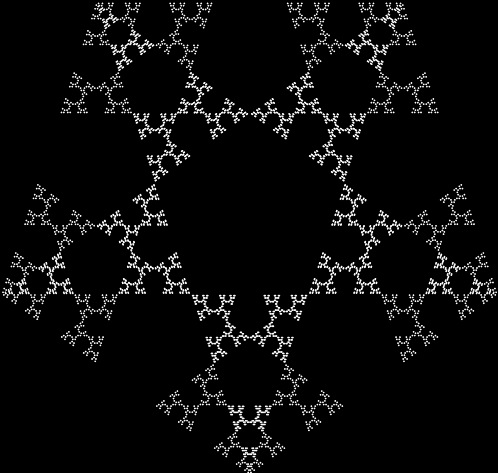

Animation of the construction


Previously pre-posted (please peruse):

Square Routes
Square Routes Revisited
Square Routes Re-Revisited
Square Routes Re-Re-Revisited
Square Routes Re-Re-Re-Revisited
Square Routes Re-Re-Re-Re-Revisited
Square Routes Re-Re-Re-Re-Re-Revisited
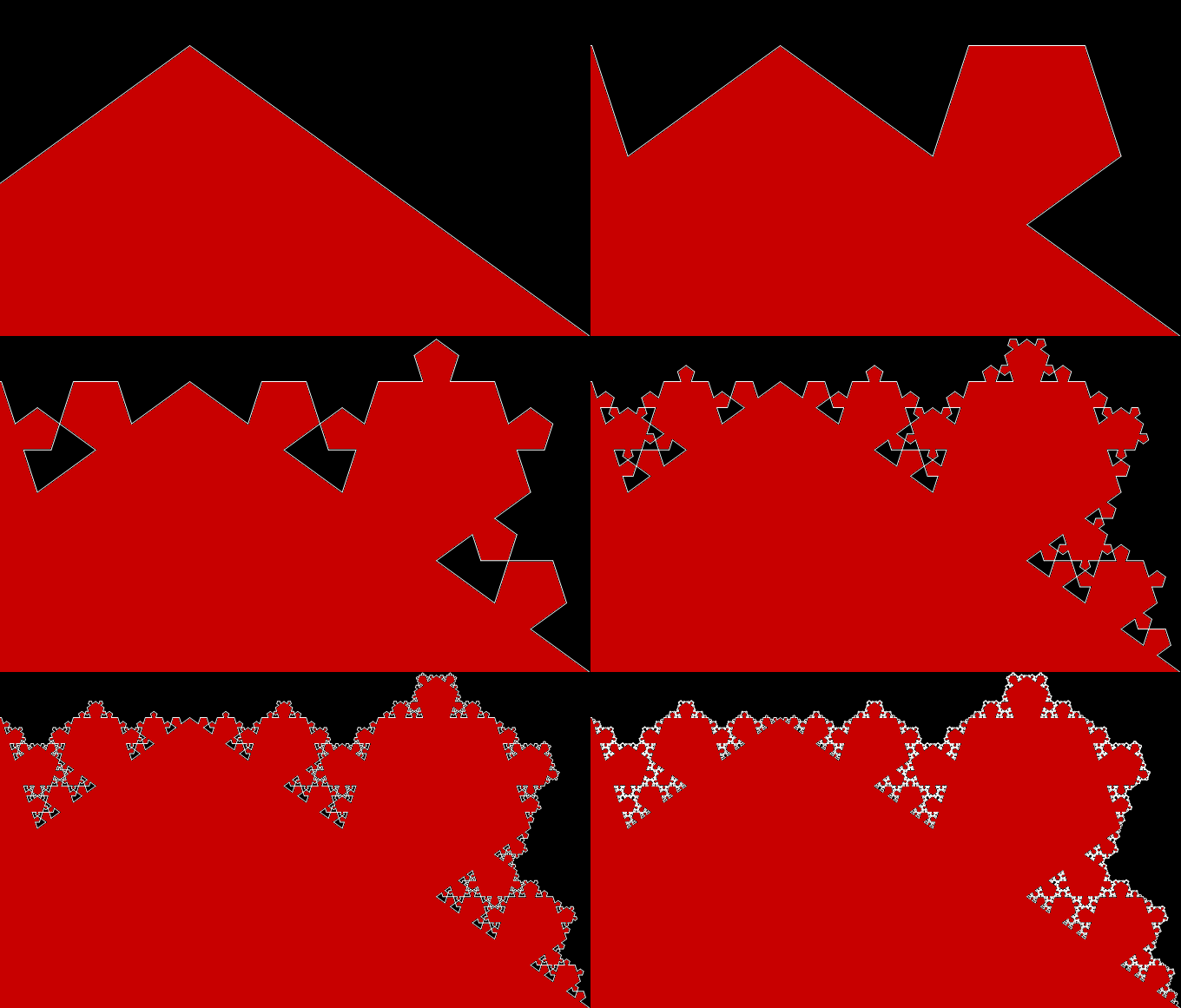
Polykoch!

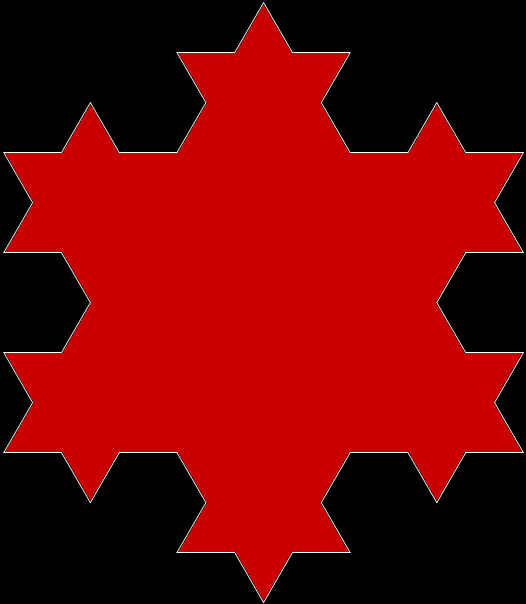
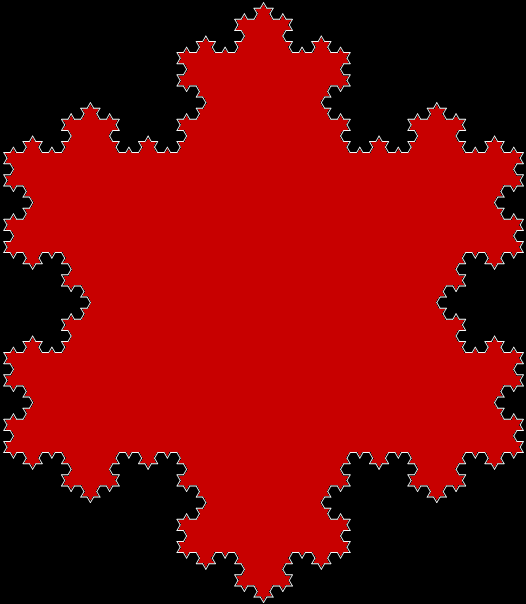
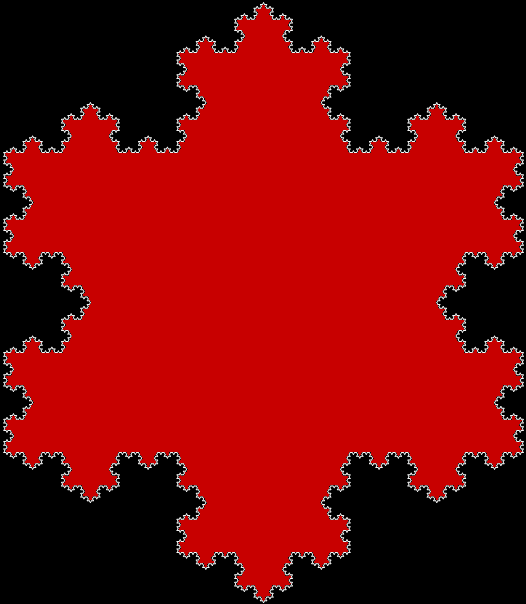
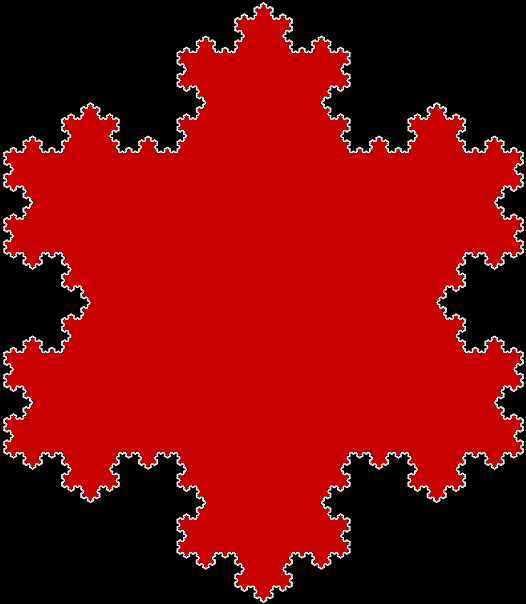
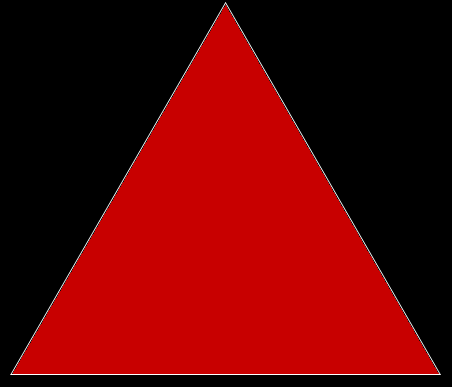
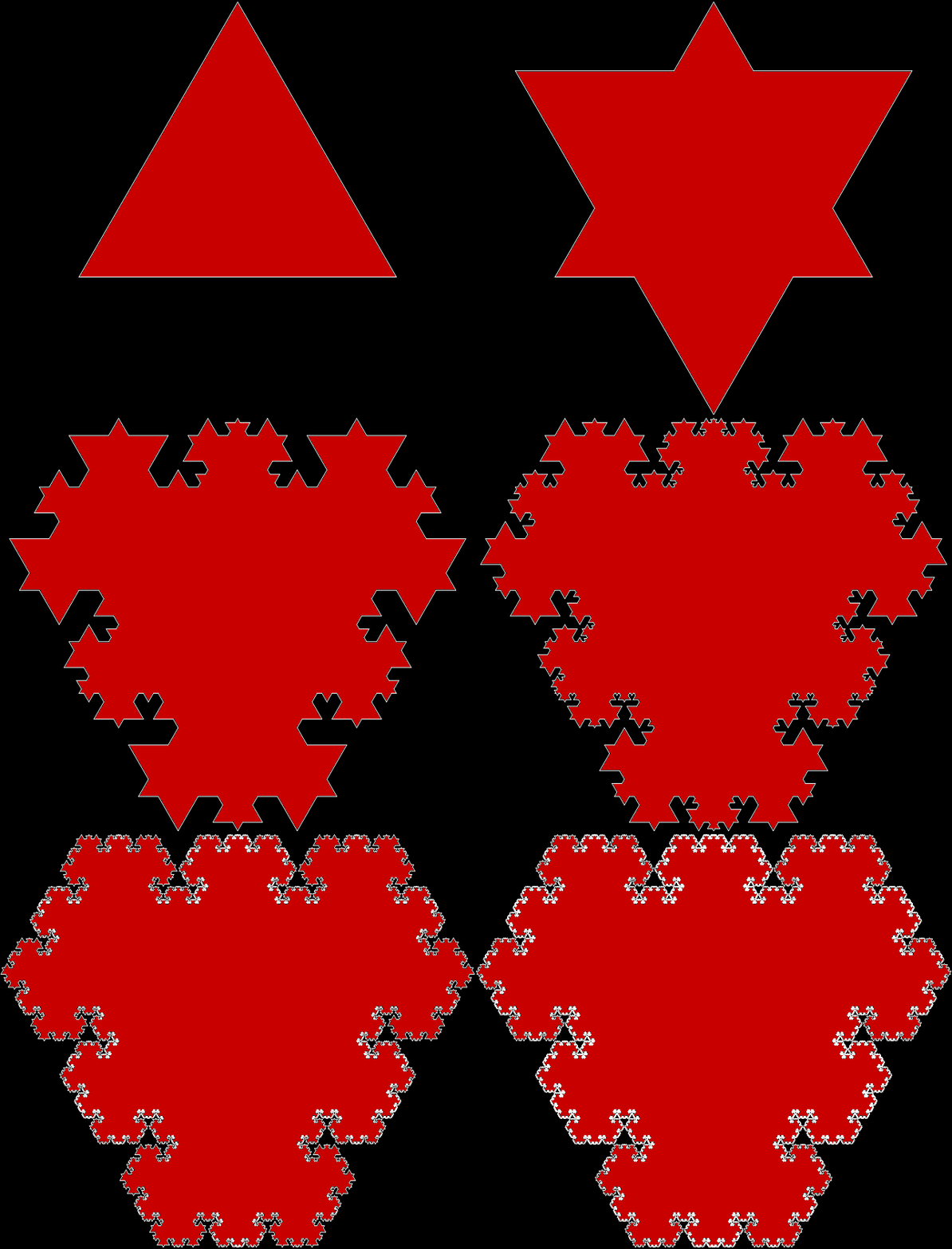
This is how you form the famous Koch snowflake, in which at each stage you erect a new triangle on the middle of each line whose sides are 1/3 the length of the line:

Koch snowflake #1


Koch snowflake #2


Koch snowflake #3


Koch snowflake #4


Koch snowflake #5


Koch snowflake #6


Koch snowflake #7


Koch snowflake (animated)


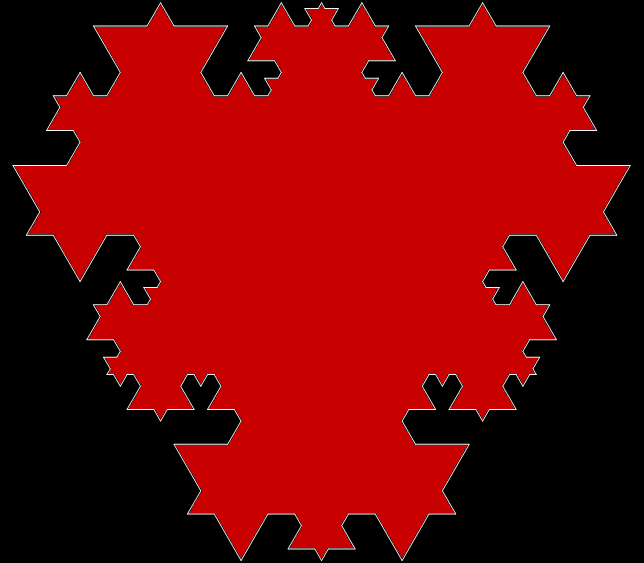
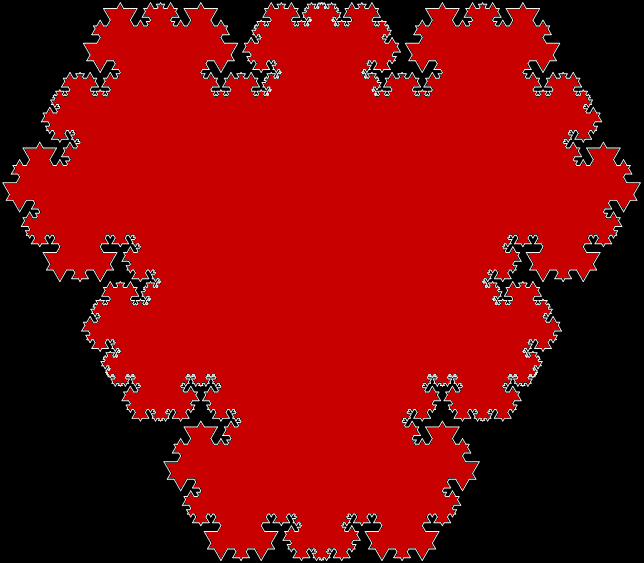
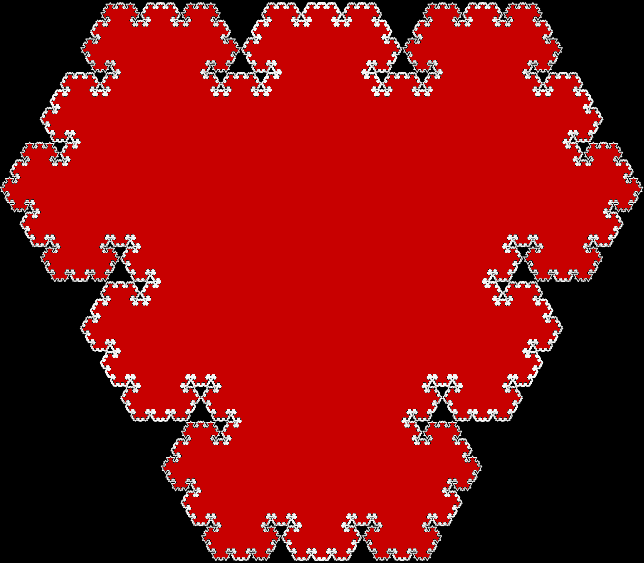
Here’s a variant of the Koch snowflake, with new mid-triangles whose sides are 1/2 the length of the lines:

Koch snowflake (1/2 side) #1


Koch snowflake (1/2 side) #2


Stage #3


Stage #4


Stage #5


Stage #6


Stage #7


Stage #8


Koch snowflake (1/2 side) (animated)


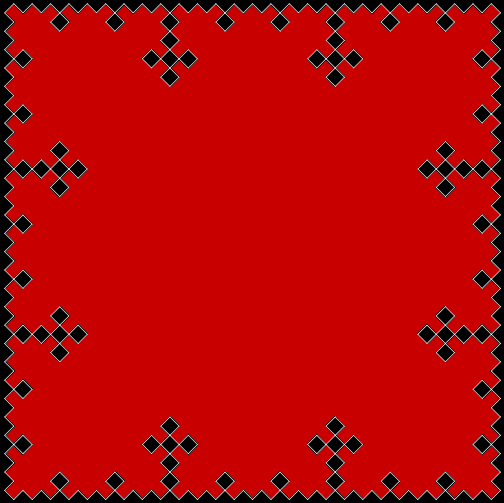
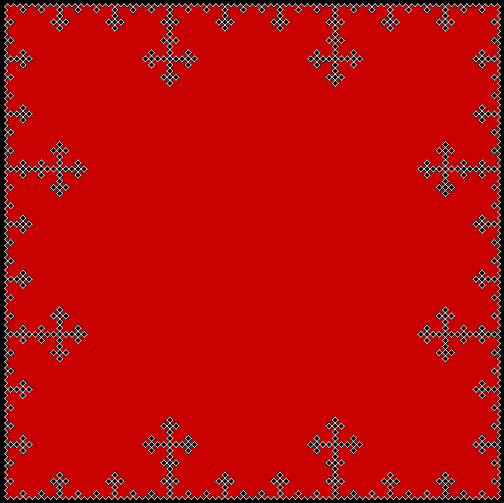
But why stop at triangles? This is a Koch square, in which at each stage you erect a new 1/3 square on the middle of each line:

Koch square #1


Koch square #2


Koch square #3


Koch square #4


Koch square #5


Koch square #6


Koch square (animated)


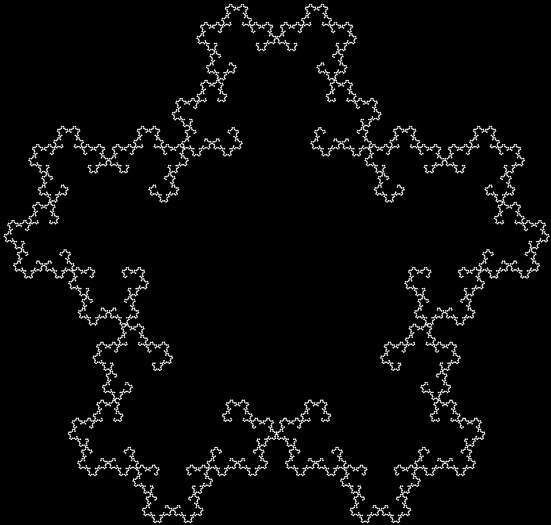
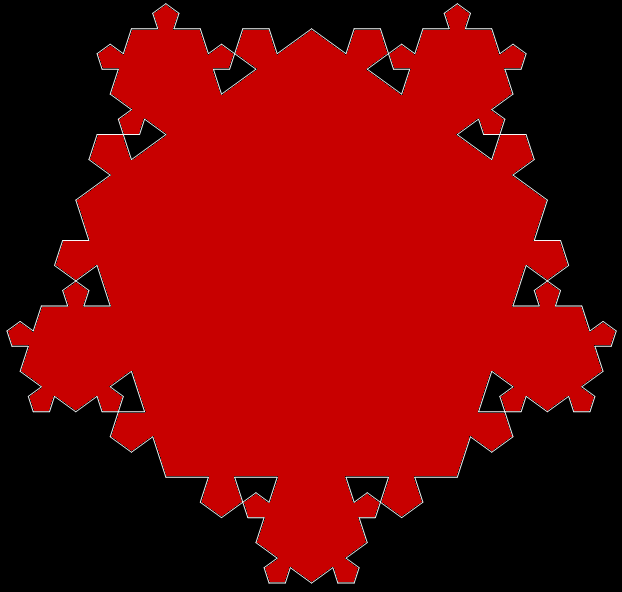
And a Koch pentagon, in which at each stage you erect a pentagon on the middle of each line whose sides are 1 – (1/φ^2 * 2) = 0·236067977… the length of the line (I used 55/144 as an approximation of 1/φ^2):

Koch pentagon (side 55/144) #1


Koch pentagon #2


Koch pentagon #3


Koch pentagon #4


Koch pentagon #5


Koch pentagon #6


Koch pentagon (animated)


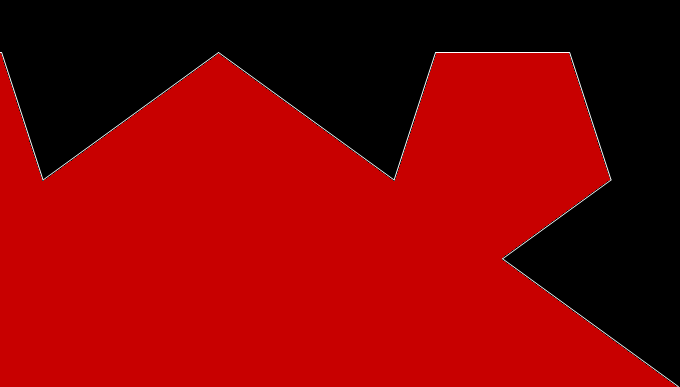
In this close-up, you can see how precisely the sprouting pentagons kiss at each stage:

Koch pentagon (close-up) #1


Koch pentagon (close-up) #2


Koch pentagon (close-up) #3


Koch pentagon (close-up) #4


Koch pentagon (close-up) #5


Koch pentagon (close-up) #6


Koch pentagon (close-up) (animated)


Twi-Phi

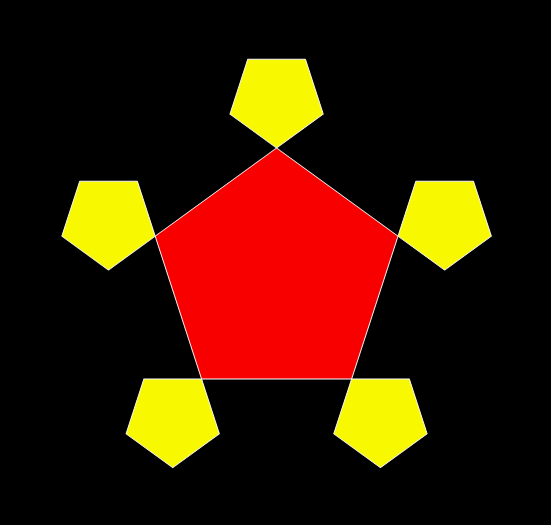
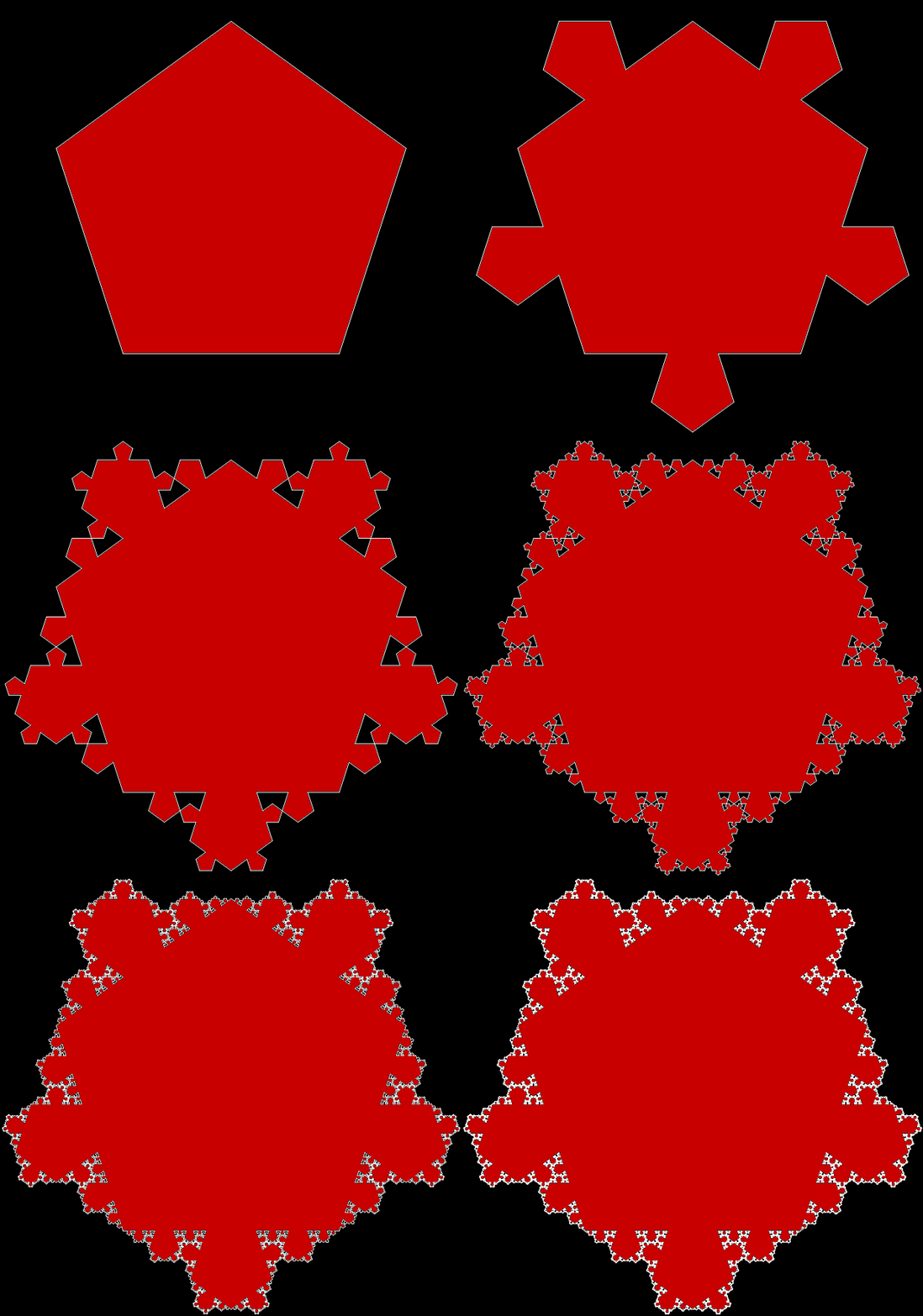
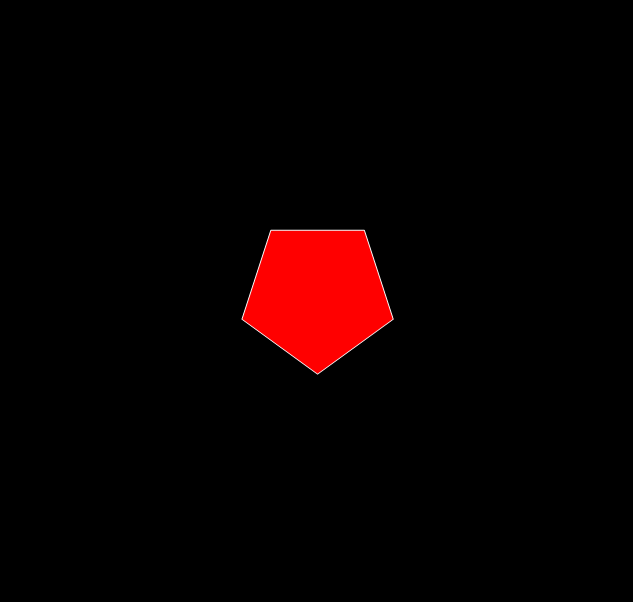
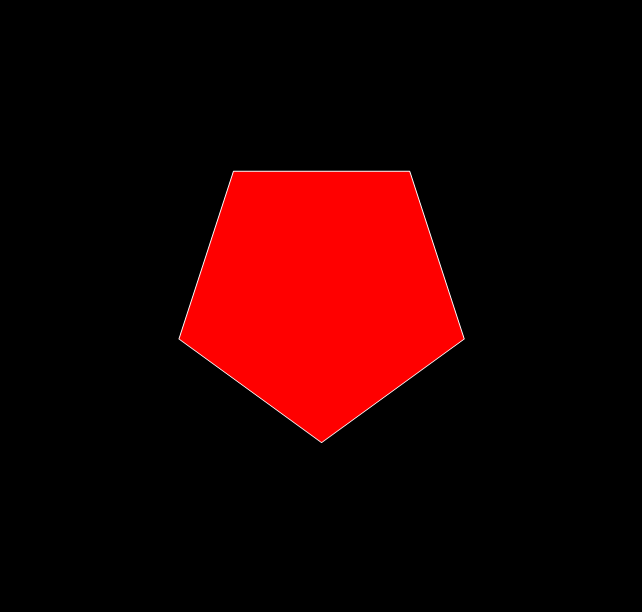
Here’s a pentagon:

Stage #1


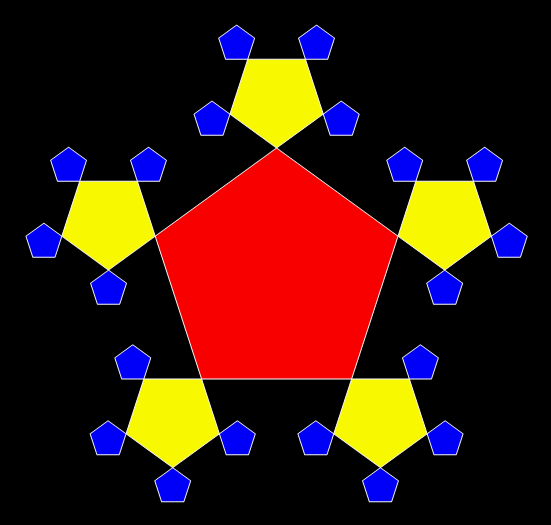
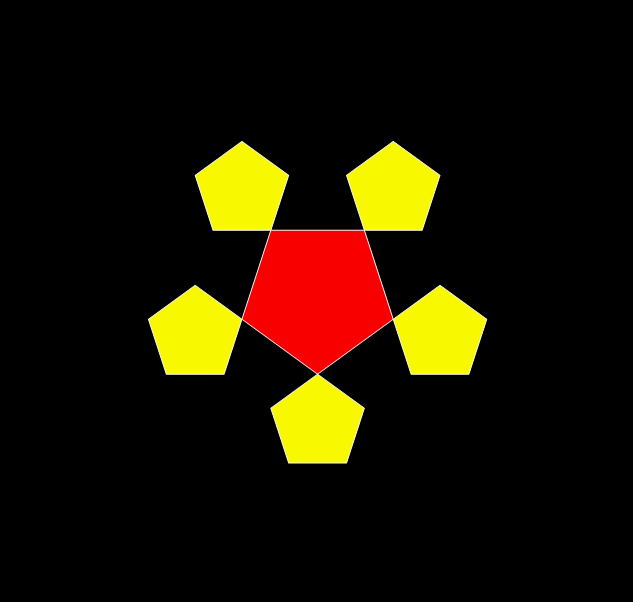
And here’s the pentagon with smaller pentagons on its vertices:

Stage #2


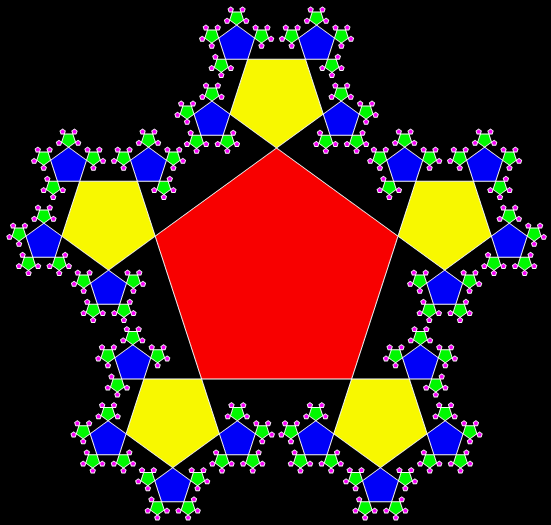
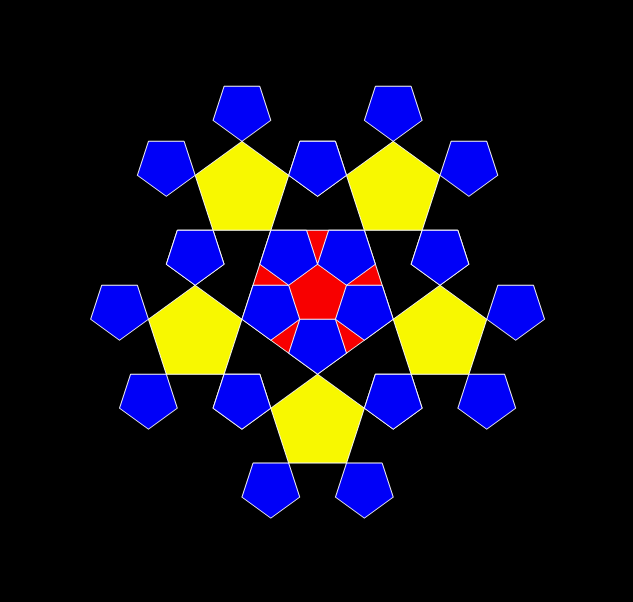
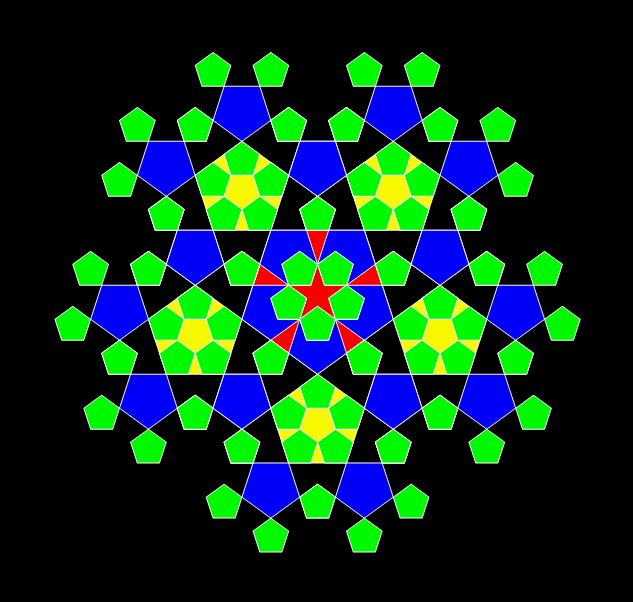
And here’s more of the same:

Stage #3


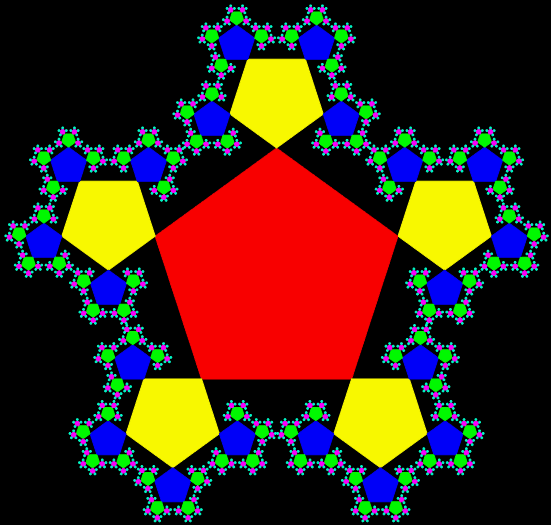
Stage #4


Stage #5


Stage #6


Stage #7


Stage #8


Animated fractal


At infinity, the smaller pentagons have reached out like arms to exactly fill the gaps between themselves without overlapping. But how much smaller is each set of smaller pentagons than its mother-pentagon when the gaps are exactly filled? Well, if the radius of the mother-pentagon is r, then the radius of each daughter-pentagon is r * 1/(φ^2) = r * 0·38196601125…
But what happens if the radius relationship of mother to daughter is r * 1/φ = r * 0·61803398874 = r * (φ-1)? Then you get this fractal:

Stage #1


Stage #2


Stage #3


Stage #4


Stage #5


Stage #6


Stage #7


Stage #8


Stage #9


Animated fractal

Middlemath

Suppose you start at the middle of a triangle, then map all possible ways you can jump eight times half-way towards one or another of the vertices of the triangle. At the end of the eight jumps, you mark your final position with a dot. You could jump eight times towards the same vertex, or once towards vertex 1, once towards vertex 2, and once again towards vertex 1. And so on. If you do this, the record of your jumps looks something like this:


The shape is a fractal called the Sierpiński triangle. But if you try the same thing with a square — map all possible jumping-routes you can follow towards one or another of the four vertices — you simply fill the interior of the square. There’s no interesting fractal:


So you need a plan with a ban. Try mapping all possible routes where you can’t jump towards the same vertex twice in a row. And you get this:

Ban on jumping towards same vertex twice in a row, v(t) ≠ v(t-1)


If you call the current vertex v(t) and the previous vertex v(t-1), the ban says that v(t) ≠ v(t-1). Now suppose you can’t jump towards the vertex one place clockwise of the previous vertex. Now the ban is v(t)-1 ≠ v(t-1) or v(t) ≠ v(t-1)+1 and this fractal appears:

v(t) ≠ v(t-1)+1


And here’s a ban on jumping towards the vertex two places clockwise (or counterclockwise) of the vertex you’ve just jumped towards:

v(t) ≠ v(t-1)+2


And finally the ban on jumping towards the vertex three places clockwise (or one place counterclockwise) of the vertex you’ve just jumped towards:

v(t) ≠ v(t-1)+3 (a mirror-image of v(t) ≠ v(t-1)+1, as above)


Now suppose you introduce a new point to jump towards at the middle of the square. You can create more fractals, but you have to adjust the kind of ban you use. The central point can’t be included in the ban or the fractal will be asymmetrical. So you continue taking account of the vertices, but if the previous jump was towards the middle, you ignore that jump. At least, that’s what I intended, but I wonder whether my program works right. Anyway, here are some of the fractals that it produces:

v(t) ≠ v(t-1) with central point (wcp)


v(t) ≠ v(t-1)+1, wcp


v(t) ≠ v(t-1)+2, wcp


And here are some bans taking account of both the previous vertex and the pre-previous vertex:

v(t) ≠ v(t-1) & v(t) ≠ v(t-2), wcp


v(t) ≠ v(t-1) & v(t-2)+1, wcp


v(t) ≠ v(t-1)+2 & v(t-2), wcp


v(t) ≠ v(t-1) & v(t-2)+1, wcp


v(t) ≠ v(t-1)+1 & v(t-2)+1, wcp


v(t) ≠ v(t-1)+2 & v(t-2)+1, wcp


v(t) ≠ v(t-1)+3 & v(t-2)+1, wcp


v(t) ≠ v(t-1) & v(t-2)+2, wcp


v(t) ≠ v(t-1)+1 & v(t-2)+2, wcp


v(t) ≠ v(t-1)+2 & v(t-2)+2, wcp


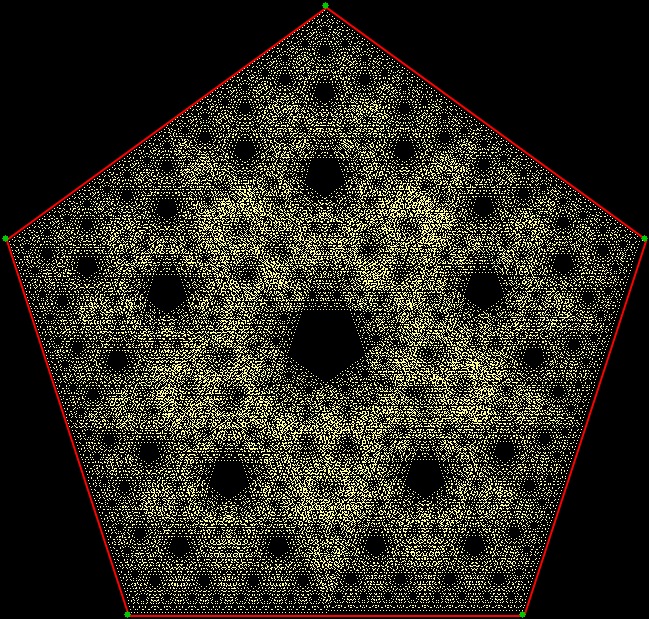
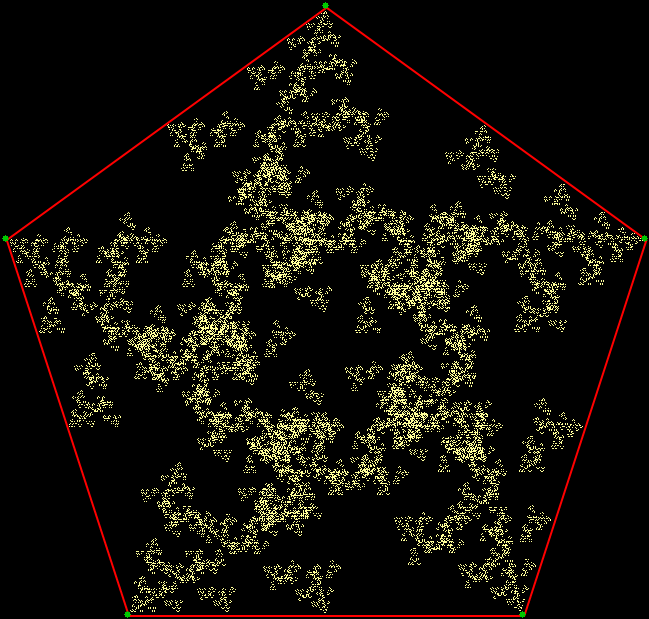
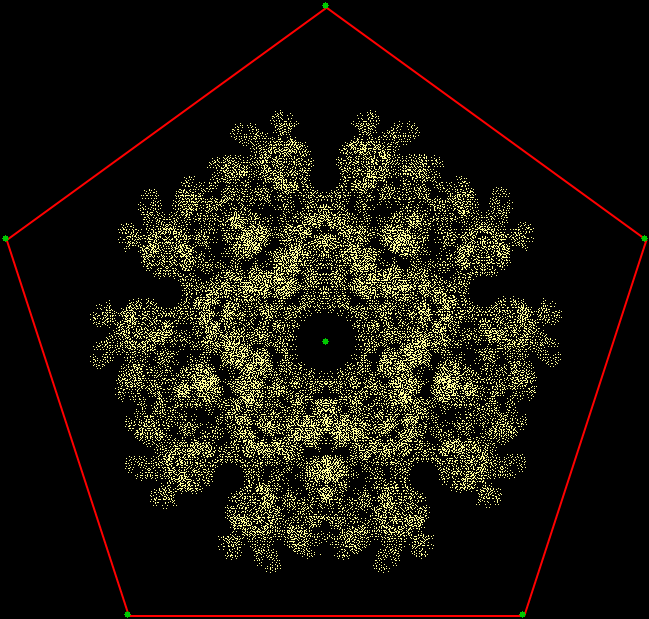
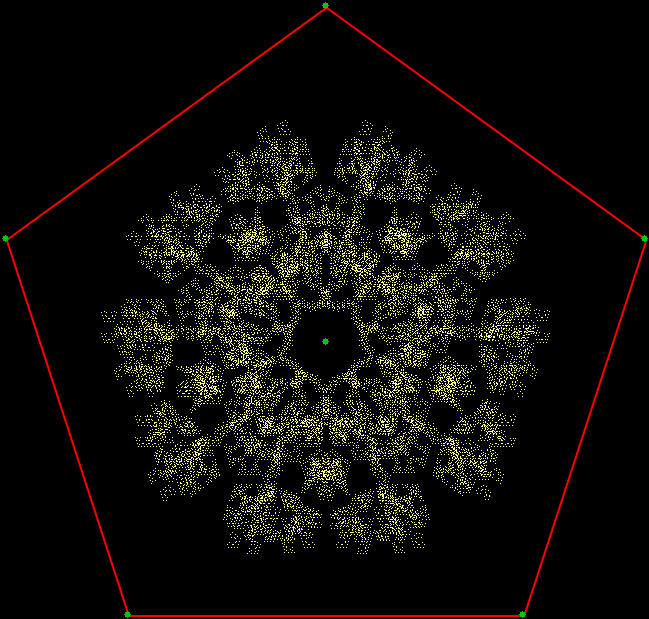
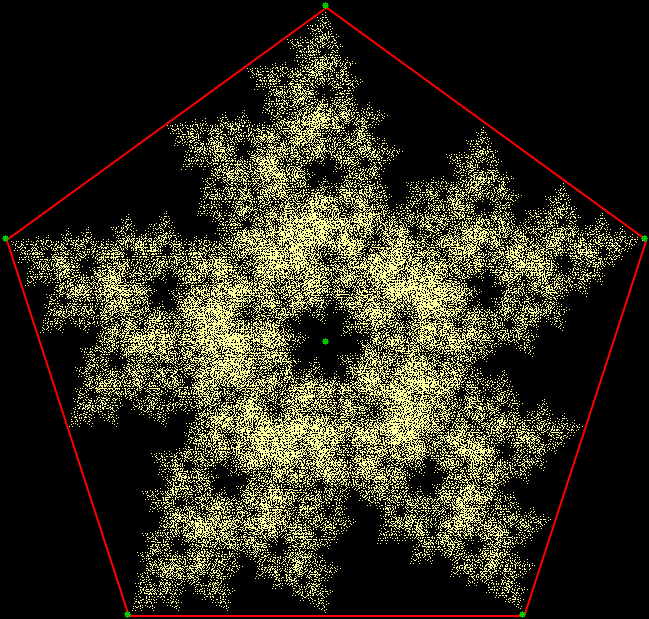
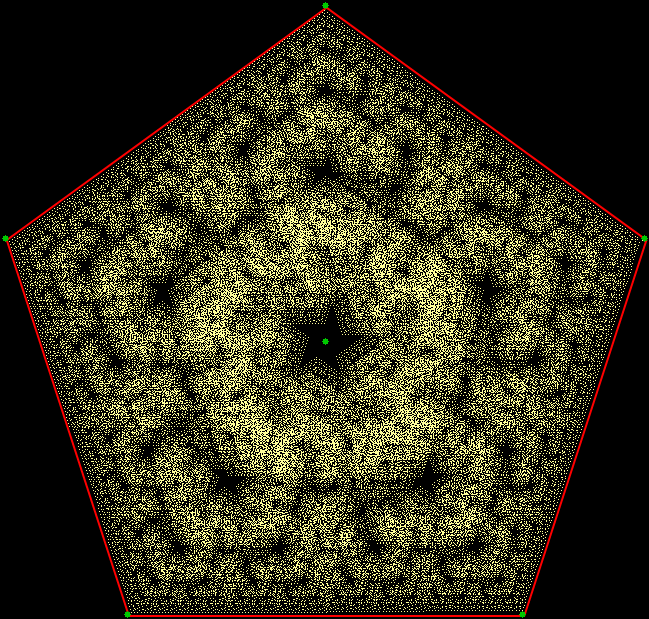
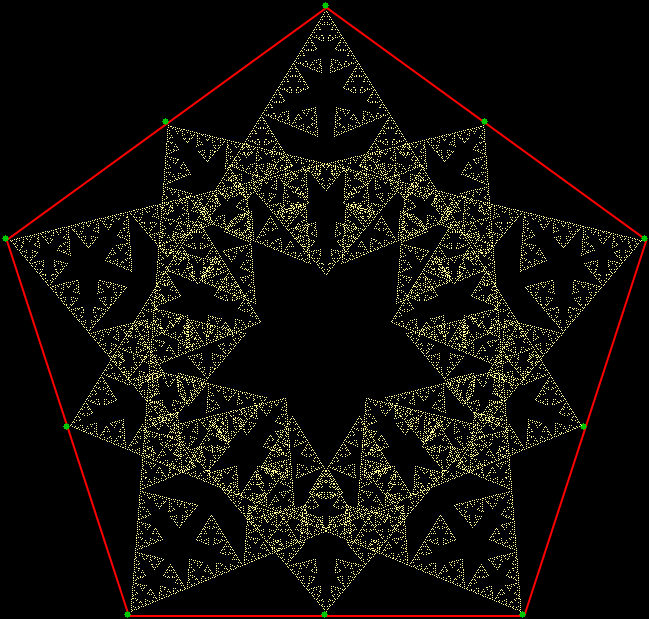
Now look at pentagons. They behave more like triangles than squares when you map all possible jumping-routes towards one or another of the five vertices. That is, a fractal appears:

All possible jumping-routes towards the vertices of a pentagon


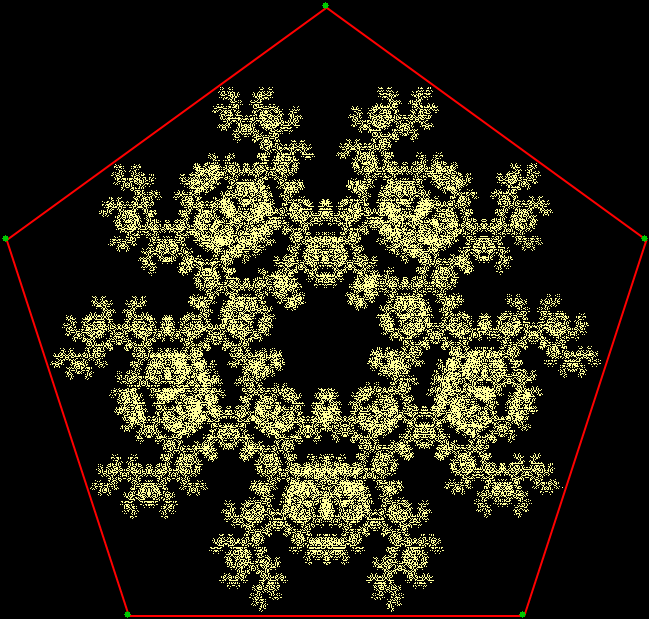
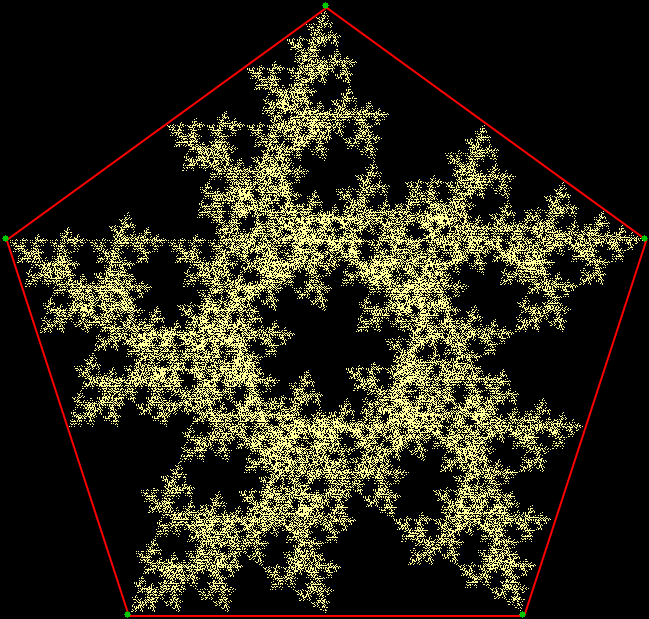
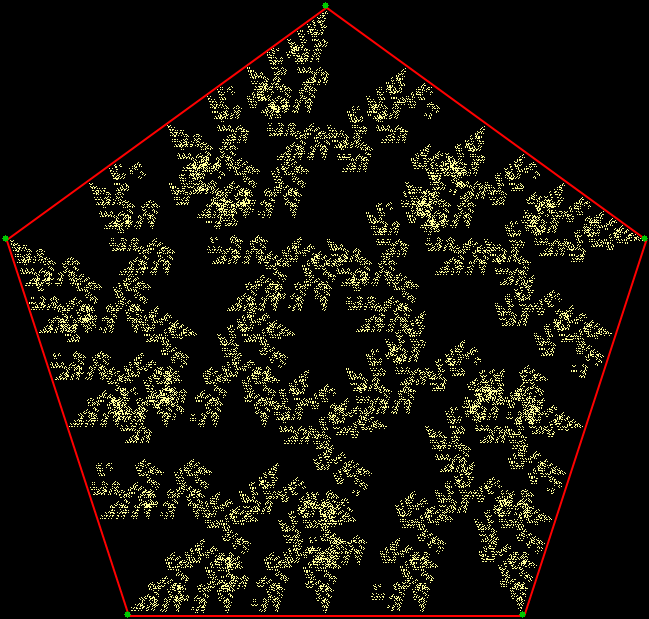
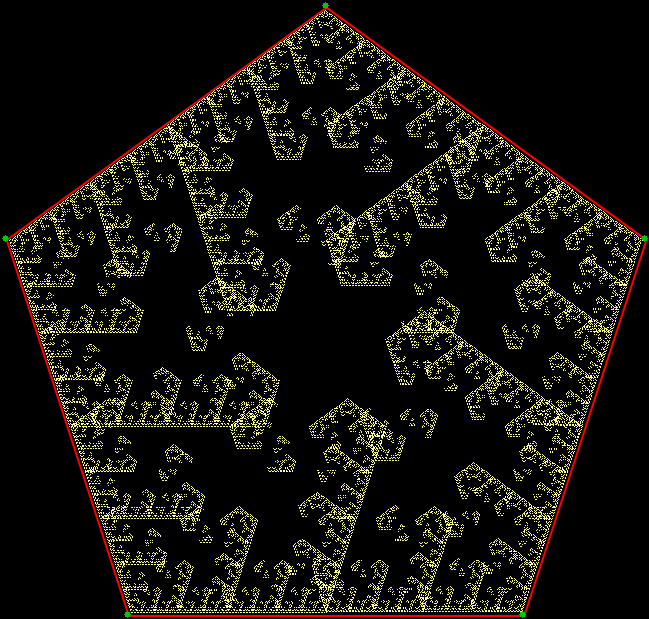
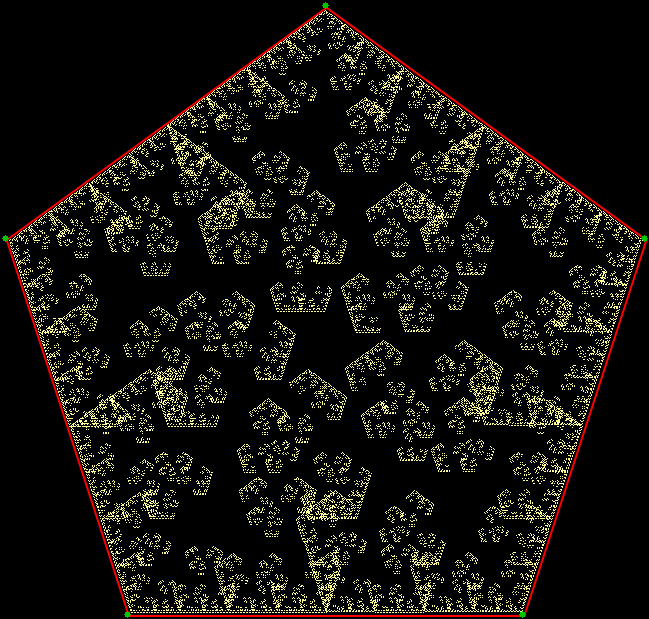
But the pentagonal-jump fractals get more interesting when you introduce jump-bans:

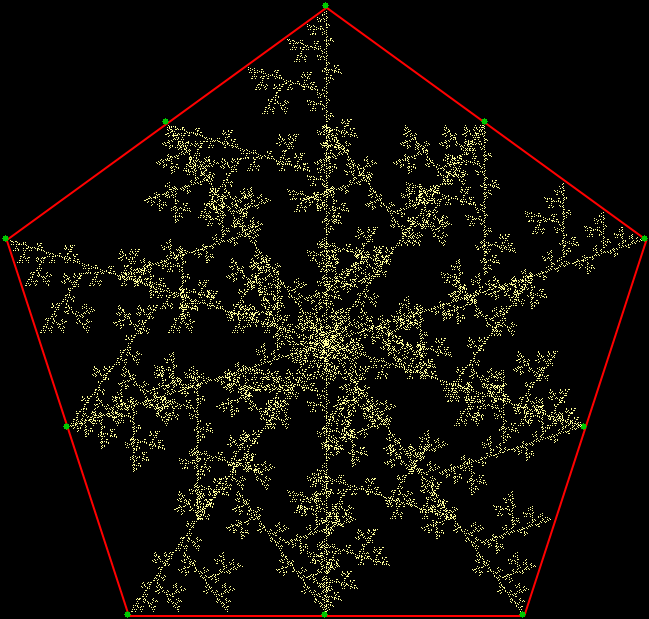
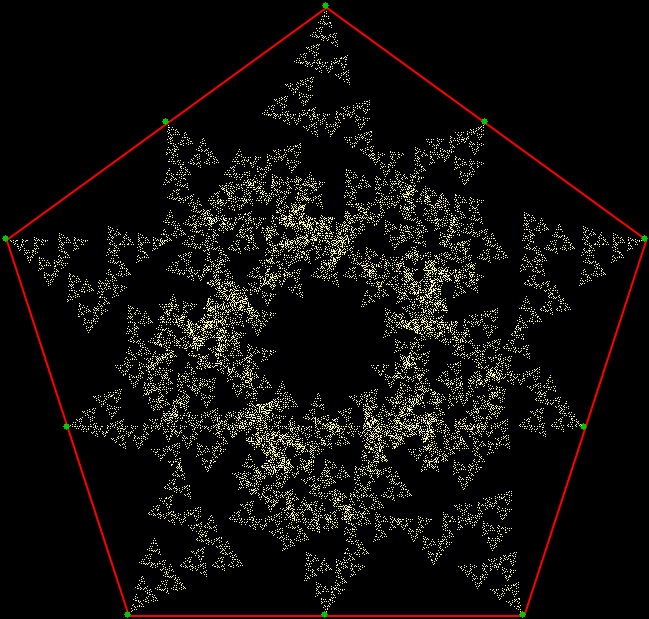
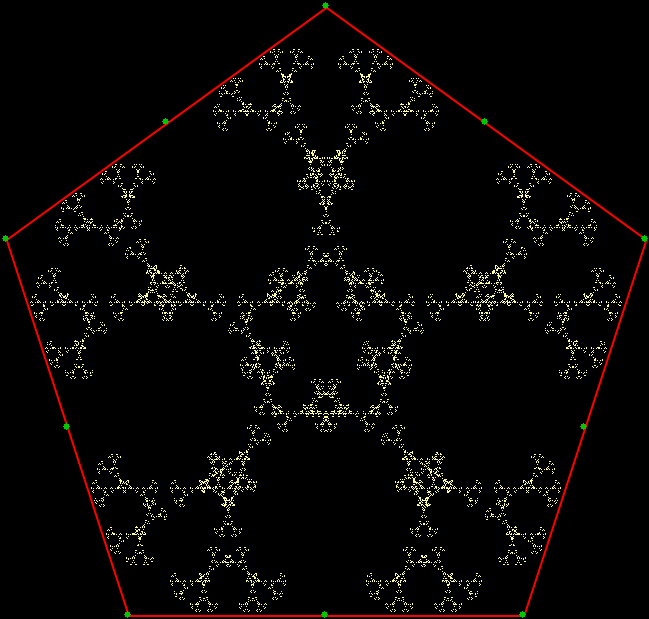
v(t) ≠ v(t-1)


v(t) ≠ v(t-1)+1


v(t) ≠ v(t-1)+2


v(t) ≠ v(t-1) & v(t-2)


v(t) ≠ v(t-1)+2 & v(t-2)


v(t) ≠ v(t-1)+1 & v(t-2)+1


v(t) ≠ v(t-1)+3 & v(t-2)+1


v(t) ≠ v(t-1)+1 & v(t-2)+2


v(t) ≠ v(t-1)+2 & v(t-2)+2


v(t) ≠ v(t-1)+3 & v(t-2)+2


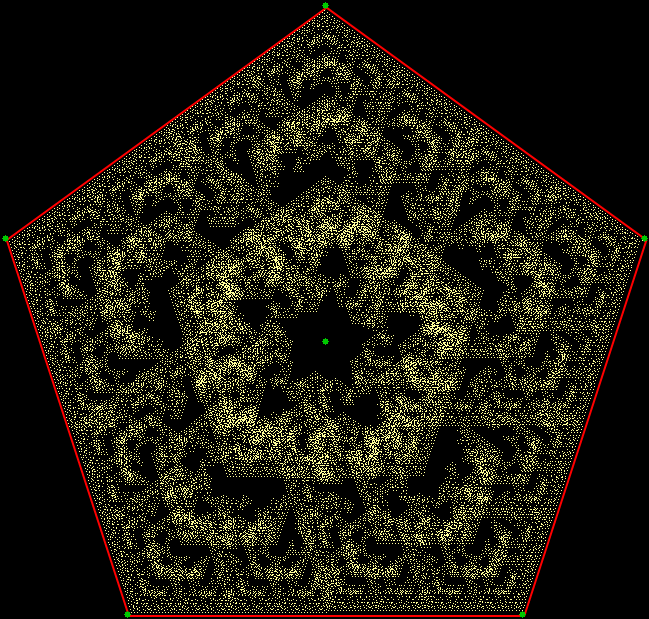
Finally, here are some pentagonal-jump fractals using a central point:


Post-Performative Post-Scriptum

I’m not sure if I’ve got the order of some bans right above. For example, should v(t) ≠ v(t-1)+1 & v(t-2)+2 really be v(t) ≠ v(t-1)+2 & v(t-2)+1? I don’t know and I’m not going to check. But the idea of jumping-point bans is there and that’s all you need if you want to experiment with these fractal methods for yourself.

Bent Pent

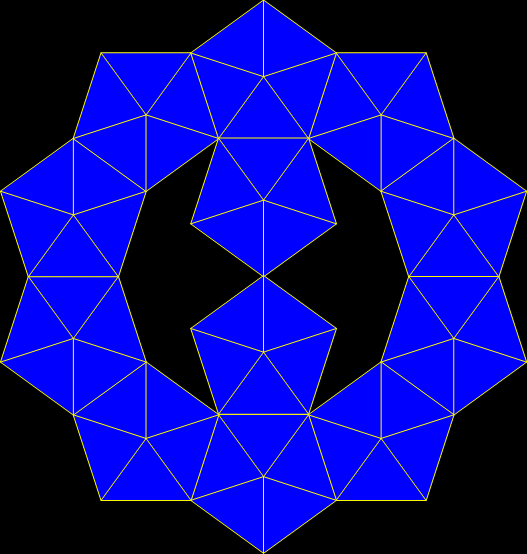
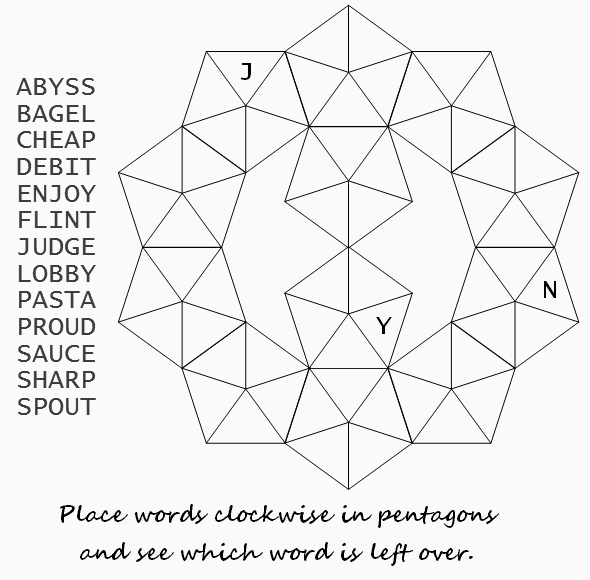
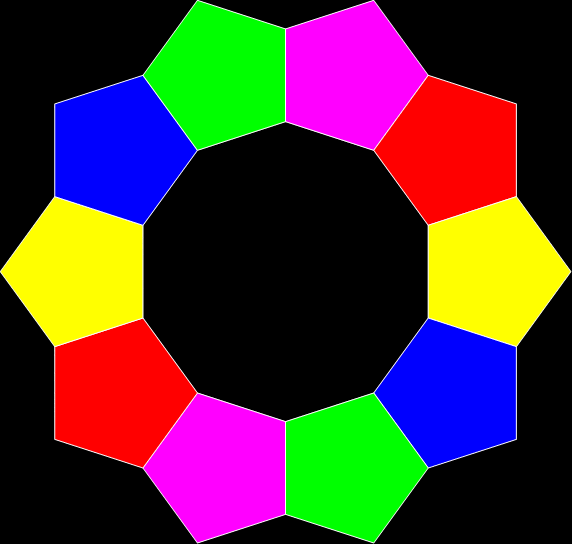
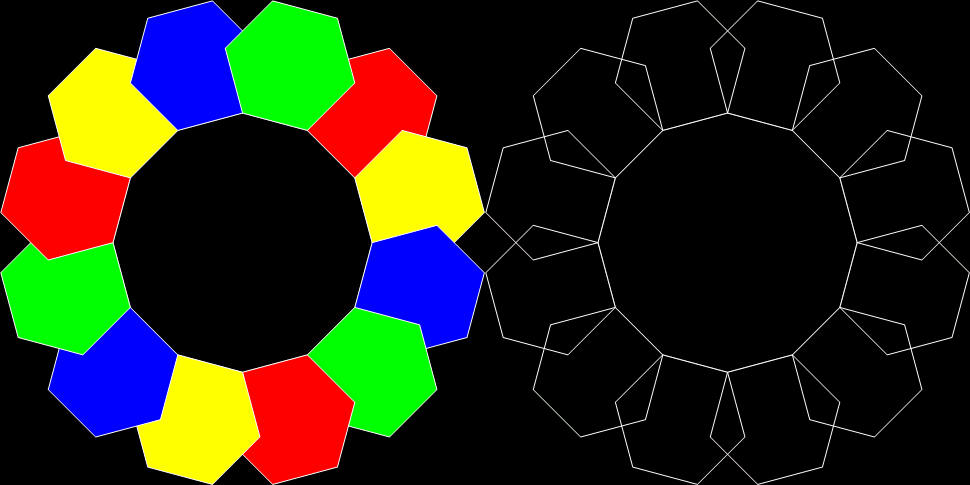
This is a beautiful and interesting shape, reminiscent of a piece of jewellery:

Pentagons in a ring


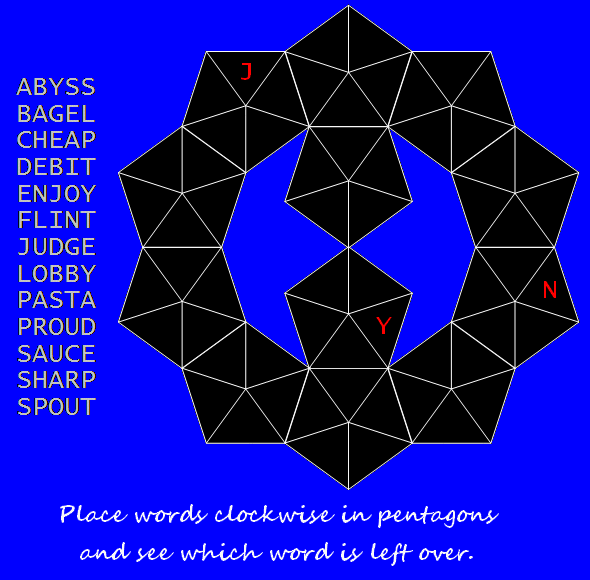
I came across it in this tricky little word-puzzle:

Word puzzle using pentagon-ring


Here’s a printable version of the puzzle:

Printable puzzle


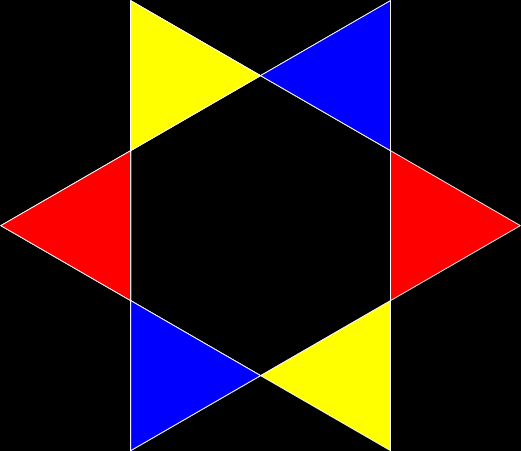
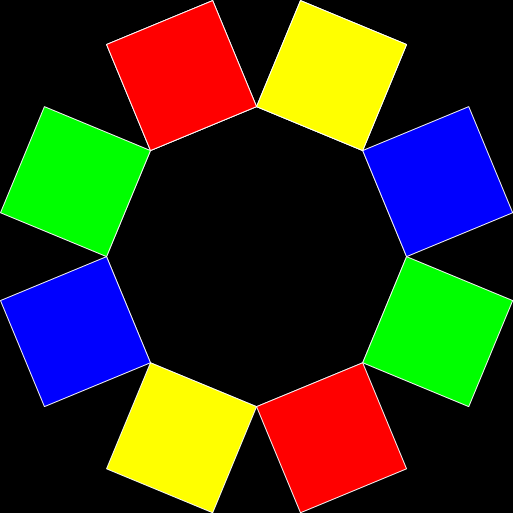
Let’s try placing some other regular polygons with s sides around regular polygons with s*2 sides:

Hexagonal ring of triangles


Octagonal ring of squares


Decagonal ring of pentagons


Dodecagonal ring of hexagons


Only regular pentagons fit perfectly, edge-to-edge, around a regular decagon. But all these polygonal-rings can be used to create interesting and beautiful fractals, as I hope to show in a future post.

Think Inc

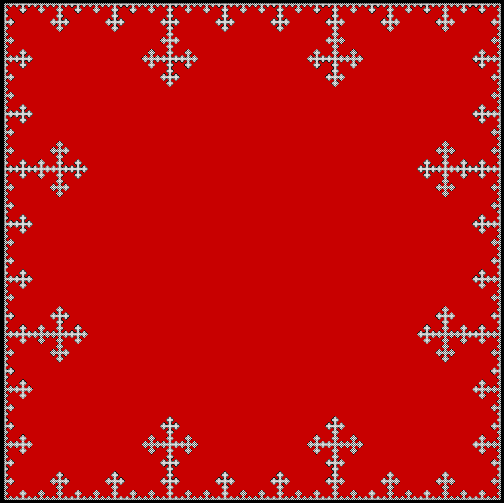
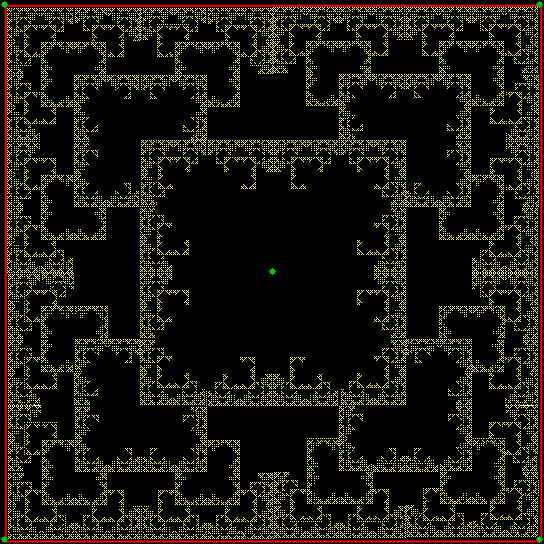
This is a T-square fractal:

T-square fractal


Or you could say it’s a T-square fractal with the scaffolding taken away, because there’s nothing to show how it was made. And how is a T-square fractal made? There are many ways. One of the simplest is to set a point jumping 1/2 of the way towards one or another of the four vertices of a square. If the point is banned from jumping towards the vertex two places clockwise (or counter-clockwise) of the vertex, v[i=1..4], it’s just jumped towards, you get a T-square fractal by recording each spot where the point lands.

You also get a T-square if the point is banned from jumping towards the vertex most distant from the vertex, v[i], it’s just jumped towards. The most distant vertex will always be the diagonally opposite vertex, or the vertex, v[i+2], two places clockwise of v[i]. So those two bans are functionally equivalent.

But what if you don’t talk about bans at all? You can also create a T-square fractal by giving the point three choices of increment, [0,1,3], after it jumps towards v[i]. That is, it can jump towards v[i+0], v[i+1] or v[i+3] (where 3+2 = 5 → 5-4 = 1; 3+3 = 6 → 2; 4+1 = 5 → 1; 4+2 = 6 → 2; 4+3 = 7 → 3). Vertex v[i+0] is the same vertex, v[i+1] is the vertex one place clockwise of v[i], and v[i+3] is the vertex two places clockwise of v[i].

So this method is functionally equivalent to the other two bans. But it’s easier to calculate, because you can take the current vertex, v[i], and immediately calculate-and-use the next vertex, without having to check whether the next vertex is forbidden. In other words, if you want speed, you just have to Think Inc!

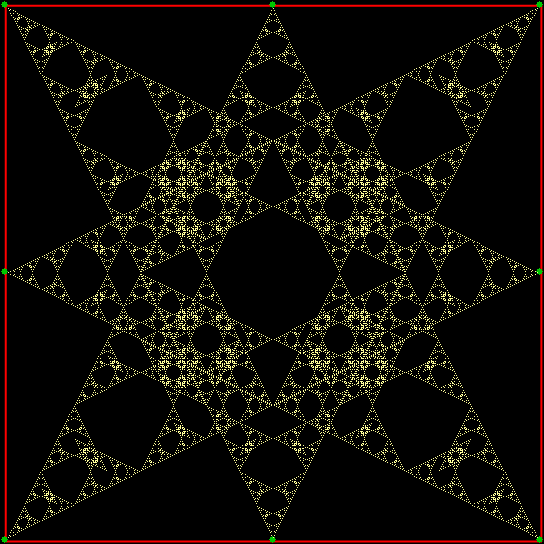
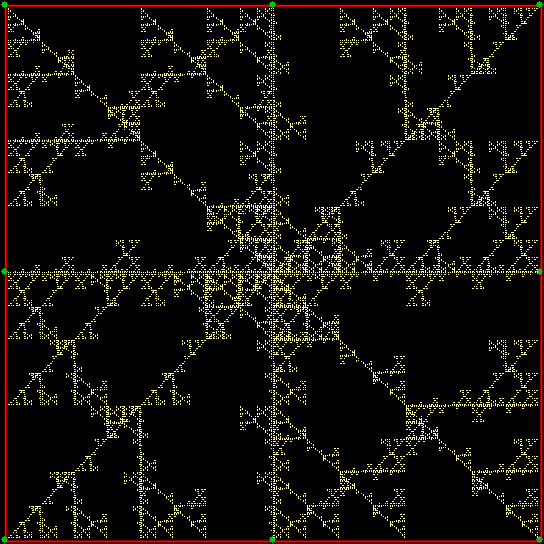
Speed becomes important when you add a new jumping-target to each side of the square. Now the point has 8 possible targets to jump towards. If you impose several bans on the next jump, e.g the point can’t jump towards v[i+2], v[i+3], v[i+5], v[i+6] and v[i+7], you will have to check for five forbidden targets. But using the increment-set [0,1,4] you don’t have to check for anything. You just inc-and-go:

inc = 0, 1, 4


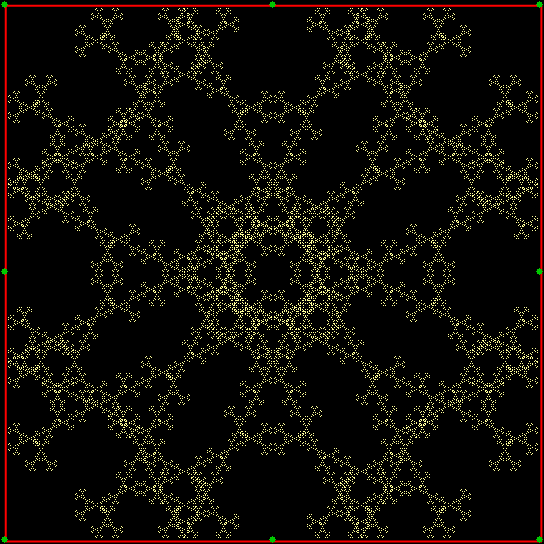
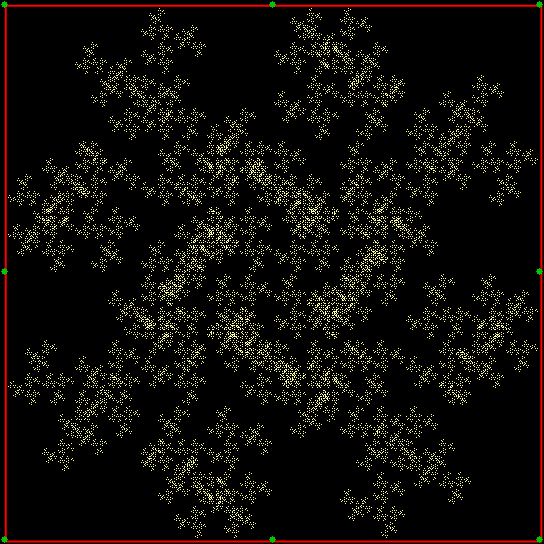
Here are more fractals created with the speedy inc-and-go method:
inc = 0, 2, 3


inc = 0, 2, 5


inc = 0, 3, 4


inc = 0, 3, 5


inc = 1, 4, 7


inc = 2, 4, 7


inc = 0, 1, 4, 7


inc = 0, 3, 4, 5


inc = 0, 3, 4, 7


inc = 0, 4, 5, 7


inc = 1, 2, 6, 7


With more incs, there are more possible paths for the jumping point and the fractals become more “solid”:
inc = 0, 1, 2, 4, 5


inc = 0, 1, 2, 6, 7


inc = 0, 1, 3, 5, 7


Now try applying inc-and-go to a pentagon:

inc = 0, 1, 2

(open in new window if blurred)


inc = 0, 2, 3


And add a jumping-target to each side of the pentagon:

inc = 0, 2, 5


inc = 0, 3, 6


inc = 0, 3, 7


inc = 1, 5, 9


inc = 2, 5, 8


inc = 5, 6, 9


And add two jumping-targets to each side of the pentagon:

inc = 0, 1, 7


inc = 0, 2, 12


inc = 0, 3, 11


inc = 0, 3, 12


inc = 0, 4, 11


inc = 0, 5, 9


inc = 0, 5, 10


inc = 2, 7, 13


inc = 2, 11, 13


inc = 3, 11, 13


After the pentagon comes the hexagon:

inc = 0, 1, 2


inc = 0, 1, 5


inc = 0, 3, 4


inc = 0, 3, 5


inc = 1, 3, 5


inc = 2, 3, 4


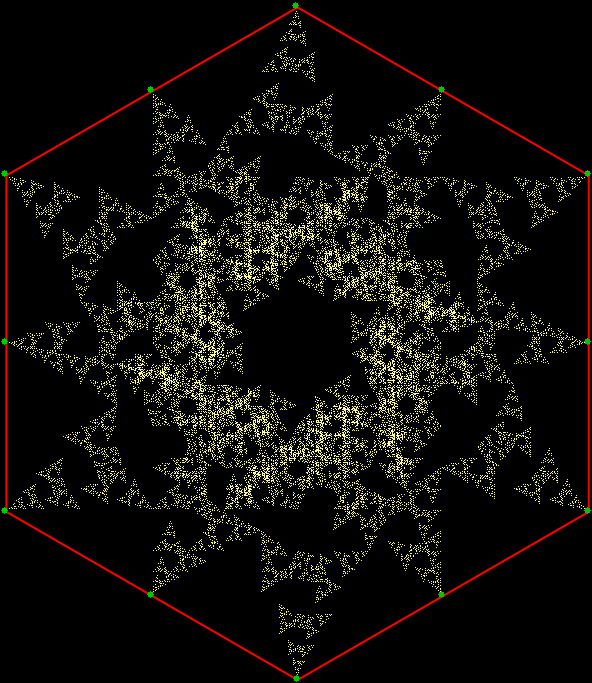
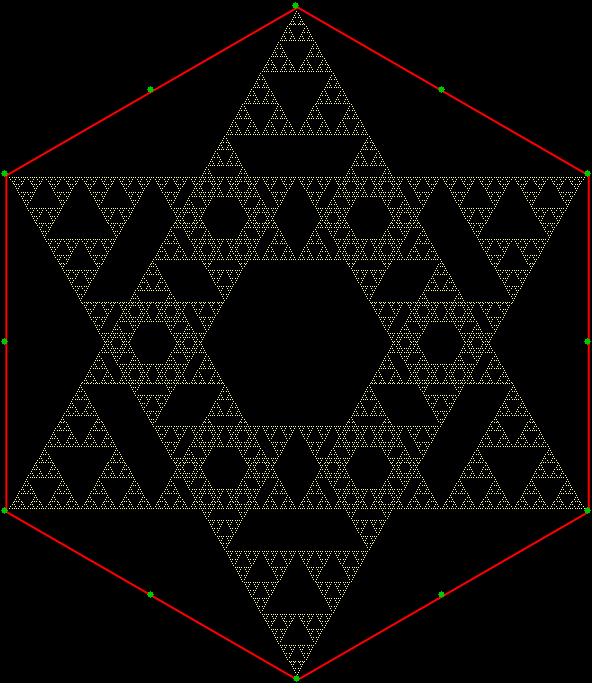
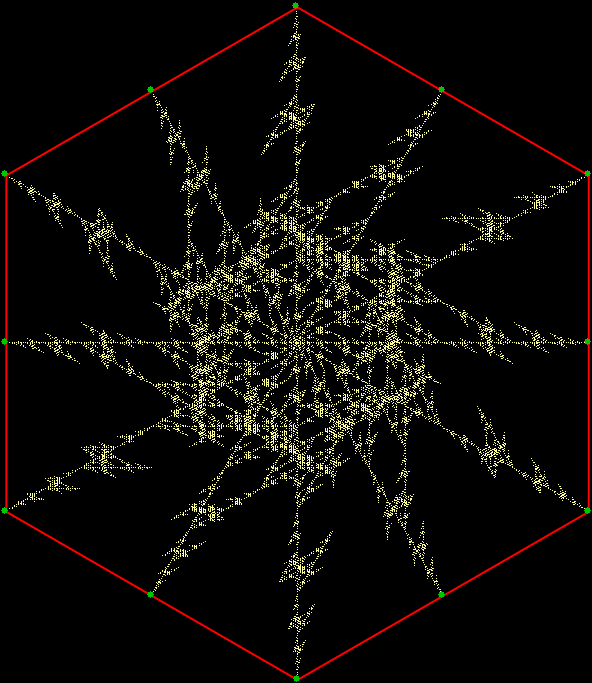
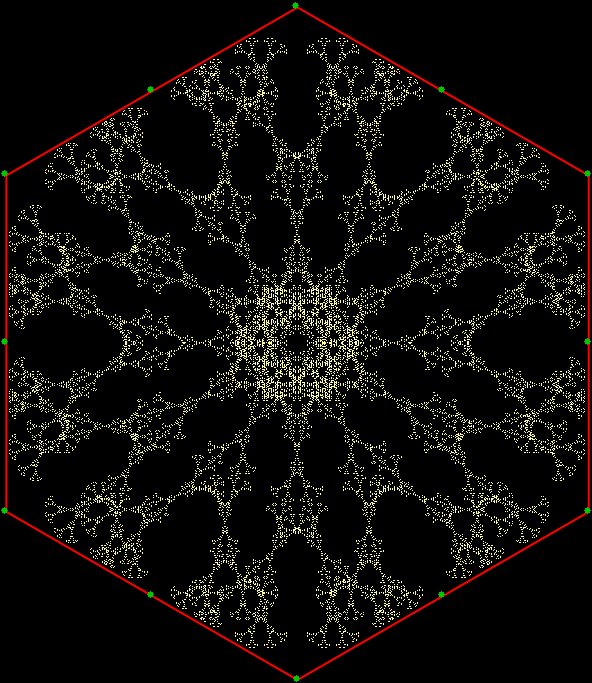
Add a jumping-target to each side of the hexagon:

inc = 0, 2, 5


inc = 0, 2, 9


inc = 0, 6, 11


inc = 0, 3, 6


inc = 0, 3, 8


inc = 0, 3, 9


inc = 0, 4, 7


inc = 0, 4, 8


inc = 0, 5, 6


inc = 0, 5, 8


inc = 1, 5, 9


inc = 1, 6, 10


inc = 1, 6, 11


inc = 2, 6, 8


inc = 2, 6, 10


inc = 3, 5, 7


inc = 3, 6, 9


inc = 6, 7, 11