
“Consciousness is a fascinating but elusive phenomenon; it is impossible to specify what it is, what it does, or why it evolved. Nothing worth reading has been written on it.” — Stuart Sutherland (1927-98), in The International Dictionary of Psychology (1995), entry on “Consciousness”
Category Archives: Philosophy
Stu’s Views
Carved Cascade

Woodcut of a waterfall by Reynolds Stone (1909-79)
It’s the wrong kind of waterfall to go with this passage from Nietzsche, but that can’t be helped dot dot dot colon
Am Wasserfall. — Beim Anblick eines Wasserfalles meinen wir in den zahllosen Biegungen, Schlängelungen, Brechungen der Wellen Freiheit des Willens und Belieben zu sehen; aber Alles ist nothwendig, jede Bewegung mathematisch auszurechnen. So ist es auch bei den menschlichen Handlungen; man müsste jede einzelne Handlung vorher ausrechnen können, wenn man allwissend wäre, ebenso jeden Fortschritt der Erkenntniss, jeden Irrthum, jede Bosheit. Der Handelnde selbst steckt freilich in der Illusion der Willkür; wenn in einem Augenblick das Rad der Welt still stände und ein allwissender, rechnender Verstand da wäre, um diese Pausen zu benützen, so könnte er bis in die fernsten Zeiten die Zukunft jedes Wesens weitererzählen und jede Spur bezeichnen, auf der jenes Rad noch rollen wird. Die Täuschung des Handelnden über sich, die Annahme des freien Willens, gehört mit hinein in diesen auszurechnenden Mechanismus. — Friedrich Nietzsche, Menschliches, Allzumenschliches: Ein Buch für freie Geister (1878)
AT THE WATERFALL.—In looking at a waterfall we imagine that there is freedom of will and fancy in the countless turnings, twistings, and breakings of the waves ; but everything is compulsory, every movement can be mathematically calculated. So it is also with human actions ; one would have to be able to calculate every single action beforehand if one were all-knowing ; equally so all progress of knowledge, every error, all malice. The one who acts certainly labours under the illusion of voluntariness ; if the world’s wheel were to stand still for a moment and an all-knowing, calculating reason were there to make use of this pause, it could foretell the future of every creature to the remotest times, and mark out every track upon which that wheel would continue to roll. The delusion of the acting agent about himself, the supposition of a free will, belongs to this mechanism which still remains to be calculated. — Friedrich Nietzsche, Human, All-Too Human: A Book for Free Spirits (1908)
Lesz is More
• Matematyka jest najpotężniejszym intelektualnym wehikułem, jaki kiedykolwiek został skonstruowany, za pomocą którego uciekamy przed czasem, lecz nie ma powodu przypuszczać, że mogłaby kiedyś umożliwić tego rodzaju ucieczkę, jaką ucieleśnia pogoń za Absolutem. — Leszek Kołakowski
• Mathematics is the most powerful intellectual vehicle that has ever been constructed, by means of which we flee ahead of time, but there is no reason to suppose that it could someday enable the kind of escape embodied by the pursuit of the Absolute. — Leszek Kołakowski
A Clockwork Orang
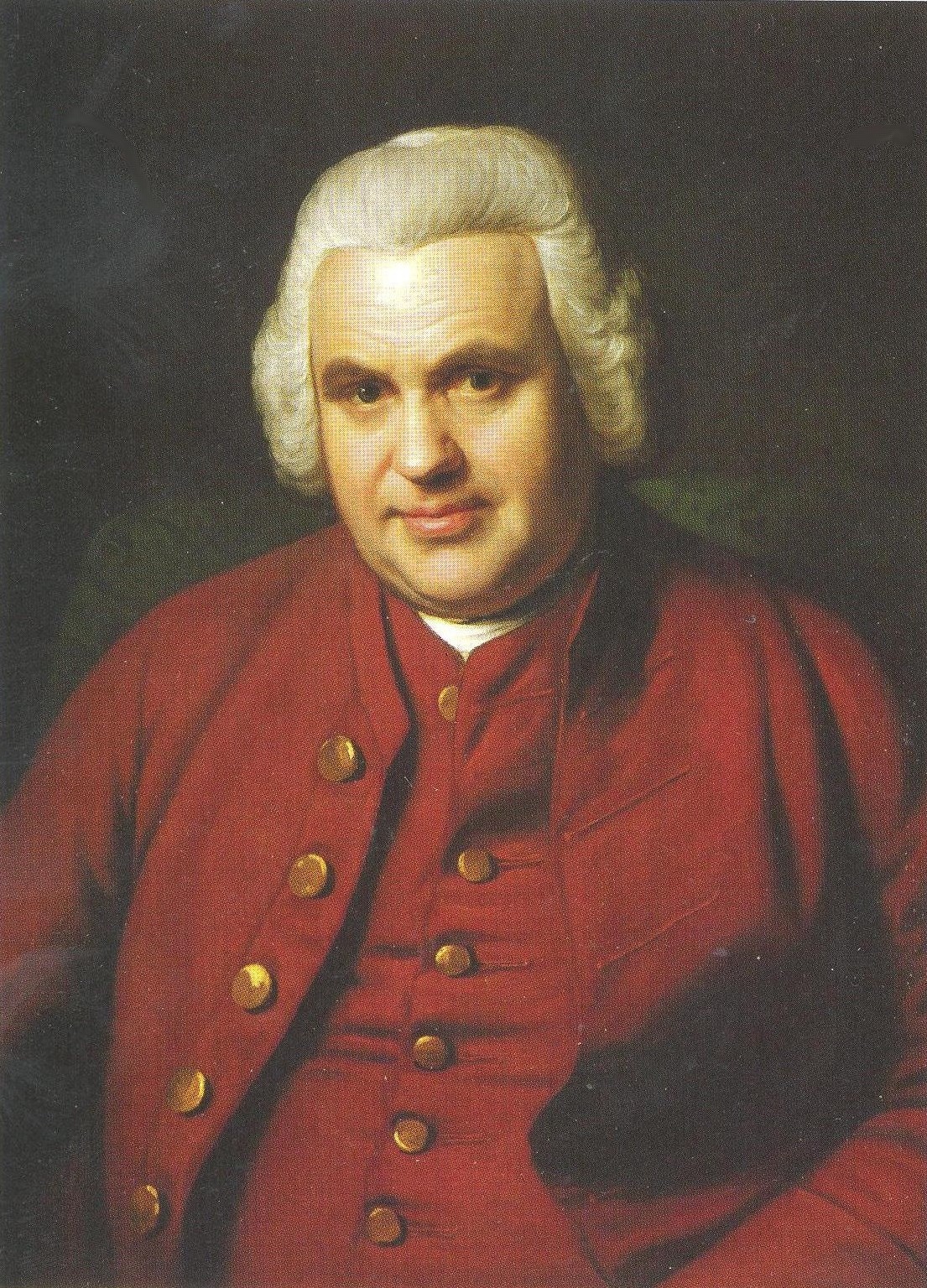
A portrait of the clockmaker Thomas Mudge by Sir Nathaniel Dance-Holland (1772)
Note: The title of this incendiary intervention was buried by Anthony Burgess in the title of his magisterial A Clockwork Orange (1962): in Malay, orang means “man” (as in orangutan, “man of the forest”). The book asks whether man is clockwork or has free will. Obviously, Thomas Mudge was a “clockwork orang” in another sense.
Sphere Hear
οὐσίαν θεοῦ σφαιροειδῆ, μηδὲν ὅμοιον ἔχουσαν ἀνθρώπωι· ὅλον δὲ ὁρᾶν καὶ ὅλον ἀκούειν, μὴ μέντοι ἀναπνεῖν· σύμπαντά τε εἶναι νοῦν καὶ φρόνησιν καὶ ἀίδιον. — Διογένης Λαέρτιος, Βίοι καὶ γνῶμαι τῶν ἐν φιλοσοφίᾳ εὐδοκιμησάντων
“The substance of God is spherical, in no way resembling man. He is all eye and all ear, but does not breathe; he is the totality of mind and thought, and is eternal.” — Xenophanes’ concept of God in Diogenes Laërtius’ Lives of Eminent Philosophers (c. 280-320 AD), Book IX, chapter 2 (translated by R.D. Hicks, 1925)
Spinnietzsche
• An der Trauerfeier war im Sinn Nietzsches die sonnige Stille dieser Natureinsamkeit; das Licht spielte durch die Pflaumenbäume an die Kirchmauer und bis in die helle Gruft hinein; eine grosse Spinne spann ihre Gewebe über das Grab von Ästchen zu Ästchen in einem Sonnenstrahl. — Harry Graf Kessler
• What was Nietzschean in the service was the sunny stillness of this natural solitude: the light playing through the plum trees on the church wall and even in the grave; a large spider spinning her web over the grave from branch to branch in a sunbeam. — Nietzsche is Dead
He Say, He Sigh, He Sow #36
• “By the time I was twenty-four I had constructed a complete system of philosophy. It rested on two principles: The Relativity of Things and The Circumferentiality of Man. I have since discovered that the first was not a very original discovery. It may be that the other was profound, but though I have racked my brains I cannot for the life of me remember what it was.” — W. Somerset Maugham, The Summing Up (1938), sec. 66.
Performativizing Papyrocentricity #40
Papyrocentric Performativity Presents:
• Humanist Hubris – The Wreck of Western Culture: Humanism Revisited, John Carroll (Scribe 2010)
• Paw is Less – The Plague Dogs, Richard Adams (Penguin 1977)
• I Like Bike – Fifty Bicycles That Changed the World, Alex Newson (Conran Octopus 2013)
• Morc is Less – The Weird Shadow Over Morecambe, Edmund Glasby (Linford 2013)
• Nekro-a-Kokoa – Comfort Corps: Cuddles, Calmatives and Cosy Cups of Cocoa in the Music of Korpse-Hump Kannibale, Dr Miriam B. Stimbers (University of Nebraska Press 2015)
Or Read a Review at Random: RaRaR
Pair on a D-String
What’s special about the binary number 10011 and the ternary number 1001120221? To answer the question, you have to see double. 10011 contains all possible pairs of numbers created from 0 and 1, just as 1001120221 contains all possible pairs created from 0, 1 and 2. And each pair appears exactly once. Now try the quaternary number 10011202130322331. That contains exactly one example of all possible pairs created from 0, 1, 2 and 3.
But there’s something more: in each case, the number is the smallest possible number with that property. As the bases get higher, that gets less obvious. In quinary, or base 5, the smallest number containing all possible pairs is 10011202130314042232433441. The digits look increasingly random. And what about base 10? There are 100 possible pairs of numbers created from the digits 0 to 9, starting with 00, 01, 02… and ending with …97, 98, 99. To accommodate 100 pairs, the all-pair number in base 10 has to be 101 digits long. It’s a string of digits, so let’s call it a d-string:
1, 0, 0, 1, 1, 2, 0, 2, 1, 3, 0, 3, 1, 4, 0, 4, 1, 5, 0, 5, 1, 6, 0, 6, 1, 7, 0, 7, 1, 8, 0, 8, 1, 9, 0, 9, 2, 2, 3, 2, 4, 2, 5, 2, 6, 2, 7, 2, 8, 2, 9, 3, 3, 4, 3, 5, 3, 6, 3, 7, 3, 8, 3, 9, 4, 4, 5, 4, 6, 4, 7, 4, 8, 4, 9, 5, 5, 6, 5, 7, 5, 8, 5, 9, 6, 6, 7, 6, 8, 6, 9, 7, 7, 8, 7, 9, 8, 8, 9, 9, 1
Again, the digits look increasingly random. They aren’t: they’re strictly determined. The d-string is in harmony. As the digits are generated from the left, they impose restrictions on the digits that appear later. It might appear that you could shift larger digits to the right and make the number smaller, but if you do that you no longer meet the conditions and the d-string collapses into dischord.
Now examine d-strings containing all possible triplets created from the digits of bases 2, 3 and 4:
1, 0, 0, 0, 1, 0, 1, 1, 1, 0 in base 2 = 558 in base 10
1, 0, 0, 0, 1, 0, 1, 1, 0, 2, 0, 0, 2, 1, 1, 1, 2, 0, 1, 2, 1, 2, 2, 0, 2, 2, 2, 1, 0 in base 3 = 23203495920756 in base 10
1, 0, 0, 0, 1, 0, 1, 1, 0, 2, 0, 0, 2, 1, 0, 3, 0, 0, 3, 1, 1, 1, 2, 0, 1, 2, 1, 1, 3, 0, 1, 3, 1, 2, 2, 0, 2, 2, 1, 2, 3, 0, 2, 3, 1, 3, 2, 0, 3, 2, 1, 3, 3, 0, 3, 3, 2, 2, 2, 3, 2, 3, 3, 3, 1, 0 in base 4 = 1366872334420014346556556812432766057460 in base 10
Note that there are 8 possible triplets in base 2, so the all-triplet number has to be 10 digits long. In base 10, there are 1000 possible triplets, so the all-triplet number has to be 1002 digits long. Here it is:
1, 0, 0, 0, 1, 0, 1, 1, 0, 2, 0, 0, 2, 1, 0, 3, 0, 0, 3, 1, 0, 4, 0, 0, 4, 1, 0, 5, 0, 0, 5, 1, 0, 6, 0, 0, 6, 1, 0, 7, 0, 0, 7, 1, 0, 8, 0, 0, 8, 1, 0, 9, 0, 0, 9, 1, 1, 1, 2, 0, 1, 2, 1, 1, 3, 0, 1, 3, 1, 1, 4, 0, 1, 4, 1, 1, 5, 0, 1, 5, 1, 1, 6, 0, 1, 6, 1, 1, 7, 0, 1, 7, 1, 1, 8, 0, 1, 8, 1, 1, 9, 0, 1, 9, 1, 2, 2, 0, 2, 2, 1, 2, 3, 0, 2, 3, 1, 2, 4, 0, 2, 4, 1, 2, 5, 0, 2, 5, 1, 2, 6, 0, 2, 6, 1, 2, 7, 0, 2, 7, 1, 2, 8, 0, 2, 8, 1, 2, 9, 0, 2, 9, 1, 3, 2, 0, 3, 2, 1, 3, 3, 0, 3, 3, 1, 3, 4, 0, 3, 4, 1, 3, 5, 0, 3, 5, 1, 3, 6, 0, 3, 6, 1, 3, 7, 0, 3, 7, 1, 3, 8, 0, 3, 8, 1, 3, 9, 0, 3, 9, 1, 4, 2, 0, 4, 2, 1, 4, 3, 0, 4, 3, 1, 4, 4, 0, 4, 4, 1, 4, 5, 0, 4, 5, 1, 4, 6, 0, 4, 6, 1, 4, 7, 0, 4, 7, 1, 4, 8, 0, 4, 8, 1, 4, 9, 0, 4, 9, 1, 5, 2, 0, 5, 2, 1, 5, 3, 0, 5, 3, 1, 5, 4, 0, 5, 4, 1, 5, 5, 0, 5, 5, 1, 5, 6, 0, 5, 6, 1, 5, 7, 0, 5, 7, 1, 5, 8, 0, 5, 8, 1, 5, 9, 0, 5, 9, 1, 6, 2, 0, 6, 2, 1, 6, 3, 0, 6, 3, 1, 6, 4, 0, 6, 4, 1, 6, 5, 0, 6, 5, 1, 6, 6, 0, 6, 6, 1, 6, 7, 0, 6, 7, 1, 6, 8, 0, 6, 8, 1, 6, 9, 0, 6, 9, 1, 7, 2, 0, 7, 2, 1, 7, 3, 0, 7, 3, 1, 7, 4, 0, 7, 4, 1, 7, 5, 0, 7, 5, 1, 7, 6, 0, 7, 6, 1, 7, 7, 0, 7, 7, 1, 7, 8, 0, 7, 8, 1, 7, 9, 0, 7, 9, 1, 8, 2, 0, 8, 2, 1, 8, 3, 0, 8, 3, 1, 8, 4, 0, 8, 4, 1, 8, 5, 0, 8, 5, 1, 8, 6, 0, 8, 6, 1, 8, 7, 0, 8, 7, 1, 8, 8, 0, 8, 8, 1, 8, 9, 0, 8, 9, 1, 9, 2, 0, 9, 2, 1, 9, 3, 0, 9, 3, 1, 9, 4, 0, 9, 4, 1, 9, 5, 0, 9, 5, 1, 9, 6, 0, 9, 6, 1, 9, 7, 0, 9, 7, 1, 9, 8, 0, 9, 8, 1, 9, 9, 0, 9, 9, 2, 2, 2, 3, 2, 2, 4, 2, 2, 5, 2, 2, 6, 2, 2, 7, 2, 2, 8, 2, 2, 9, 2, 3, 3, 2, 3, 4, 2, 3, 5, 2, 3, 6, 2, 3, 7, 2, 3, 8, 2, 3, 9, 2, 4, 3, 2, 4, 4, 2, 4, 5, 2, 4, 6, 2, 4, 7, 2, 4, 8, 2, 4, 9, 2, 5, 3, 2, 5, 4, 2, 5, 5, 2, 5, 6, 2, 5, 7, 2, 5, 8, 2, 5, 9, 2, 6, 3, 2, 6, 4, 2, 6, 5, 2, 6, 6, 2, 6, 7, 2, 6, 8, 2, 6, 9, 2, 7, 3, 2, 7, 4, 2, 7, 5, 2, 7, 6, 2, 7, 7, 2, 7, 8, 2, 7, 9, 2, 8, 3, 2, 8, 4, 2, 8, 5, 2, 8, 6, 2, 8, 7, 2, 8, 8, 2, 8, 9, 2, 9, 3, 2, 9, 4, 2, 9, 5, 2, 9, 6, 2, 9, 7, 2, 9, 8, 2, 9, 9, 3, 3, 3, 4, 3, 3, 5, 3, 3, 6, 3, 3, 7, 3, 3, 8, 3, 3, 9, 3, 4, 4, 3, 4, 5, 3, 4, 6, 3, 4, 7, 3, 4, 8, 3, 4, 9, 3, 5, 4, 3, 5, 5, 3, 5, 6, 3, 5, 7, 3, 5, 8, 3, 5, 9, 3, 6, 4, 3, 6, 5, 3, 6, 6, 3, 6, 7, 3, 6, 8, 3, 6, 9, 3, 7, 4, 3, 7, 5, 3, 7, 6, 3, 7, 7, 3, 7, 8, 3, 7, 9, 3, 8, 4, 3, 8, 5, 3, 8, 6, 3, 8, 7, 3, 8, 8, 3, 8, 9, 3, 9, 4, 3, 9, 5, 3, 9, 6, 3, 9, 7, 3, 9, 8, 3, 9, 9, 4, 4, 4, 5, 4, 4, 6, 4, 4, 7, 4, 4, 8, 4, 4, 9, 4, 5, 5, 4, 5, 6, 4, 5, 7, 4, 5, 8, 4, 5, 9, 4, 6, 5, 4, 6, 6, 4, 6, 7, 4, 6, 8, 4, 6, 9, 4, 7, 5, 4, 7, 6, 4, 7, 7, 4, 7, 8, 4, 7, 9, 4, 8, 5, 4, 8, 6, 4, 8, 7, 4, 8, 8, 4, 8, 9, 4, 9, 5, 4, 9, 6, 4, 9, 7, 4, 9, 8, 4, 9, 9, 5, 5, 5, 6, 5, 5, 7, 5, 5, 8, 5, 5, 9, 5, 6, 6, 5, 6, 7, 5, 6, 8, 5, 6, 9, 5, 7, 6, 5, 7, 7, 5, 7, 8, 5, 7, 9, 5, 8, 6, 5, 8, 7, 5, 8, 8, 5, 8, 9, 5, 9, 6, 5, 9, 7, 5, 9, 8, 5, 9, 9, 6, 6, 6, 7, 6, 6, 8, 6, 6, 9, 6, 7, 7, 6, 7, 8, 6, 7, 9, 6, 8, 7, 6, 8, 8, 6, 8, 9, 6, 9, 7, 6, 9, 8, 6, 9, 9, 7, 7, 7, 8, 7, 7, 9, 7, 8, 8, 7, 8, 9, 7, 9, 8, 7, 9, 9, 8, 8, 8, 9, 8, 9, 9, 9, 1, 0
Consider the quadruplet number in base 10. There are 10000 possible quadruplets, so the all-quadruplet number is 10003 digits long. And so on. In general, the “all n-tuplet” number in base b contains b^n n-tuplets and is (b^n + n-1) digits long. If b = 10 and n = 4, the d-string starts like this:
1, 0, 0, 0, 0, 1, 0, 0, 1, 1, 0, 0, 2, 0, 0, 0, 2, 1, 0, 0, 3, 0, 0, 0, 3, 1, 0, 0, 4, 0, 0, 0, 4, 1, 0, 0, 5, 0, 0, 0, 5, 1, 0, 0, 6, 0, 0, 0, 6, 1, 0, 0, 7, 0, 0, 0, 7, 1, 0, 0, 8, 0, 0, 0, 8, 1, 0, 0, 9, 0, 0, 0, 9, 1, 0, 1, 0, 1, 1, 1, 0, 1, 2, 0, 0, 1, 2, 1, 0, 1, 3, 0, 0, 1, 3, 1, 0, 1, 4, 0, 0, 1, 4, 1, 0, 1, 5, 0, 0, 1, 5, 1, 0, 1, 6, 0, 0, 1, 6, 1, 0, 1, 7, 0, 0, 1, 7, 1, 0, 1, 8, 0, 0, 1, 8, 1, 0, 1, 9, 0, 0, 1, 9, 1, 0, 2, 0, 1, 0, 2, 1, 1, 0, 2, 2, 0, 0, 2, 2, 1, 0, 2, 3, 0, 0, 2, 3, 1, 0, 2, 4, 0, 0, 2, 4, 1, 0, 2, 5, 0, 0, 2, 5, 1, 0, 2, 6…
What about when n = 100? Now the d-string is ungraspably huge – too big to fit in the known universe. But it starts with 1 followed by a hundred 0s and every digit after that is entirely determined. Perhaps there’s a simple way to calculate any given digit, given its position in the d-string. Either way, what is the ontological status of the d-string for n=100? Does it exist in some Platonic realm of number, independent of physical reality?
Some would say that it does, just like √2 or π or e. I disagree. I don’t believe in a Platonic realm. If the universe or multiverse ceased to exist, numbers and mathematics in general would also cease to exist. But this isn’t to say that mathematics depends on physical reality. It doesn’t. Nor does physical reality depend on mathematics. Rather, physical reality necessarily embodies mathematics, which might be defined as “entity in interrelation”. Humans have invented small-m mathematics, a symbolic way of expressing the physical embodiment of big-m mathematics.
But small-m mathematics is actually more powerful and far-ranging, because it increases the number, range and power of entities and their interaction. Where are √2 and π in physical reality? Nowhere. You could say that early mathematicians saw their shadows, cast from a Platonic realm, and deduced their existence in that realm, but that’s a metaphor. Do all events, like avalanches or thunderstorms, exist in some Platonic realm before they are realized? No, they arise as physical entities interact according to laws of physics. In a more abstract way, √2 and π arise as entities of another kind interact according to laws of logic: the concepts of a square and its diagonal, of a circle and its diameter.
The d-strings discussed above arise from the interaction of simpler concepts: the finite set of digits in a base and the ways in which they can be combined. Platonism is unnecessary: the arc and spray of a fountain are explained by the pressure of the water, the design of the pipes, the arrangement of the nozzles, not by reference to an eternal archetype of water and spray. In small-m mathematics, there are an infinite number of fountains, because small-m mathematics opens a door to a big-U universe, infinitely larger and richer than the small-u universe of physical reality.
The Mill to Power
Reading about Searle’s Chinese Room Argument at the Stanford Encyclopedia of Philosophy, I came across “Leibniz’s Mill” for the first time. At least, I think it was the first time:
It must be confessed, however, that perception, and that which depends upon it, are inexplicable by mechanical causes, that is to say, by figures and motions. Supposing that there were a machine whose structure produced thought, sensation, and perception, we could conceive of it as increased in size with the same proportions until one was able to enter into its interior, as he would into a mill. Now, on going into it he would find only pieces working upon one another, but never would he find anything to explain perception. It is accordingly in the simple substance, and not in the compound nor in a machine that the perception is to be sought. Furthermore, there is nothing besides perceptions and their changes to be found in the simple substance. And it is in these alone that all the internal activities of the simple substance can consist. (Monadology, 1714, section #17)
Andererseits muß man gestehen, daß die Vorstellungen, und Alles, was von ihnen abhängt, aus mechanischen Gründen, dergleichen körperliche Gestalten und Bewegungen sind, unmöglich erklärt werden können. Man stelle sich eine Maschine vor, deren Structur so eingerichtet sei, daß sie zu denken, zu fühlen und überhaupt vorzustellen vermöge und lasse sie unter Beibehaltung derselben Verhältnisse so anwachsen, daß man hinein, wie in das Gebäude einer Mühle eintreten kann. Dies vorausgesetzt, wird man bei Besichtigung des Innern nichts Anderes finden, als etliche Triebwerke, deren eins das andere bewegt, aber gar nichts, was hinreichen würde, den Grund irgend einer Vorstellung abzugeben. Die letztere gehört ausschließlich der einfachen Substanz an, nicht der zusammengesetzten, und dort, nicht hier, muß man sie suchen. Auch sind Vorstellungen und ihre Veränderungen zugleich das Einzige, was man in der einfachen Substanz antrifft. (Monadologie, 1714)
We can see that Leibniz’s argument applies to mechanism in general, not simply to the machines he could conceive in his own day. He’s claiming that consciousness isn’t corporeal. It can’t generated by interacting parts or particles. And intuitively, he seems to be right. How could a machine or mechanism, however complicated, be conscious? Intuition would say that it couldn’t. But is intuition correct? If we examine the brain, we see that consciousness begins with mechanism. Vision and the other senses are certainly electro-chemical processes in the beginning. Perhaps in the end too.
Some puzzles arise if we assume otherwise. If consciousness isn’t mechanistic, how does it interact with mechanism? If it’s immaterial, how does it interact with matter? But those questions go back much further, to Greek atomists like Democritus (c. 460-370 BC):
Δοκεῖ δὲ αὐτῶι τάδε· ἀρχὰς εἶναι τῶν ὅλων ἀτόμους καὶ κενόν, τὰ δ’ἀλλα πάντα νενομίσθαι.
He taught that the first principles of the universe are atoms and void; everything else is merely thought to exist.
Νόμωι (γάρ φησι) γλυκὺ καὶ νόμωι πικρόν, νόμωι θερμόν, νόμωι ψυχρόν, νόμωι χροιή, ἐτεῆι δὲ ἄτομα καὶ κενόν.
By convention sweet is sweet, bitter is bitter, hot is hot, cold is cold, color is color; but in truth there are only atoms and the void. (Democritus at Wikiquote)
Patterns of unconscious matter and energy influence consciousness and are perhaps entirely responsible for it. The patterns are tasteless, soundless, colourless, scentless, neither hot nor cold – in effect, units of information pouring through the circuits of reality. But are qualia computational? I think they are. I don’t think it’s possible to escape matter or mechanism and I certainly don’t think it’s possible to escape mathematics. But someone who thinks it’s possible to escape at least the first two is the Catholic philosopher Edward Feser. I wish I had come across his work a long time ago, because he raises some very interesting questions in a lucid way and confirms the doubts I’ve had for a long time about Richard Dawkins and other new atheists. His essay “Schrödinger, Democritus, and the paradox of materialism” (2009) is a good place to start.
Elsewhere other-posted:
• Double Bubble
• This Mortal Doyle
• The Brain in Pain
• The Brain in Train
 Overlord In Terms of Core Issues Around Maximal Engagement with Key Notions of the Über-Feral