The Call of Cthuneus

Cuneiform, adj. and n. Having the form of a wedge, wedge-shaped. (← Latin cuneus wedge + -form) (Oxford English Dictionary)

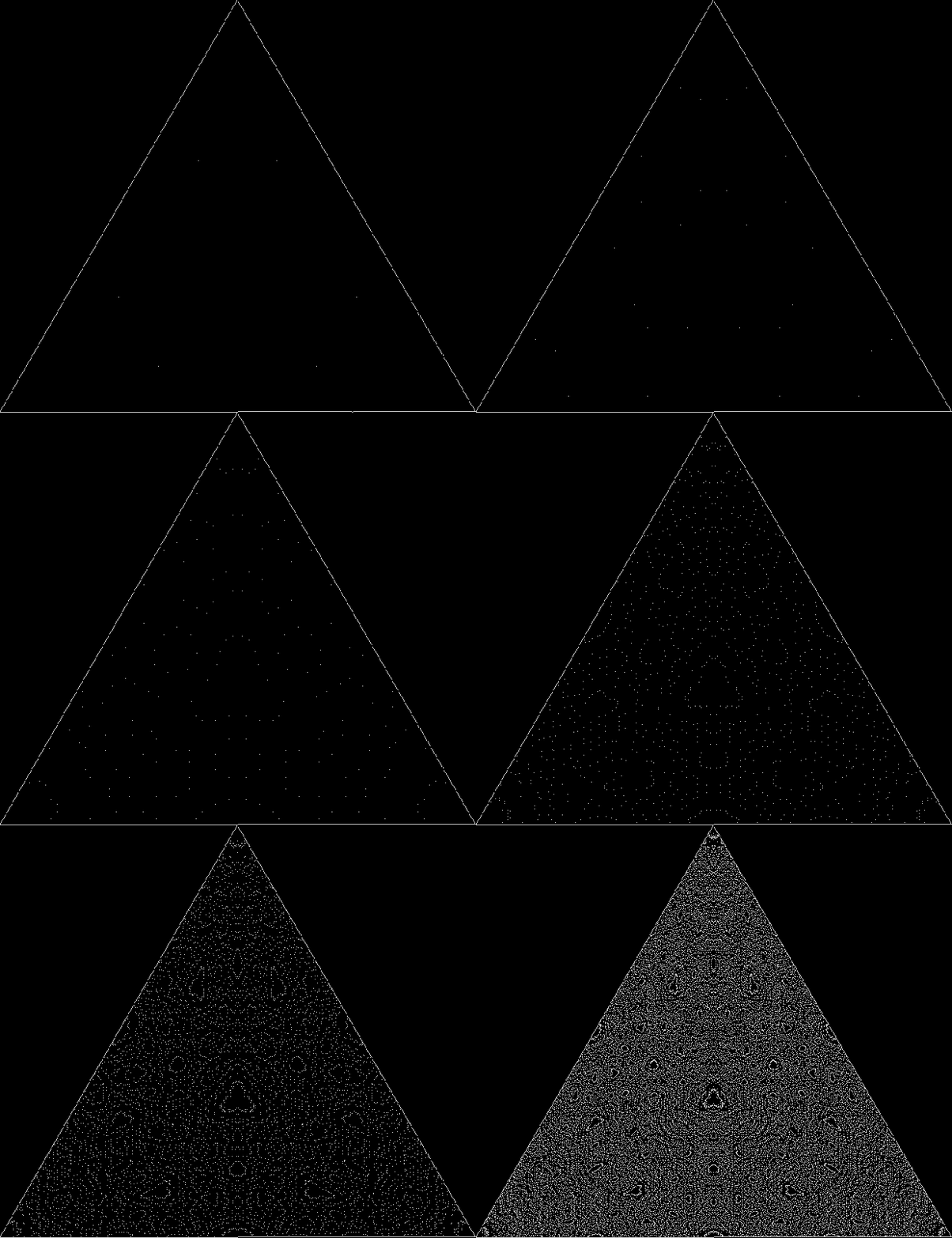
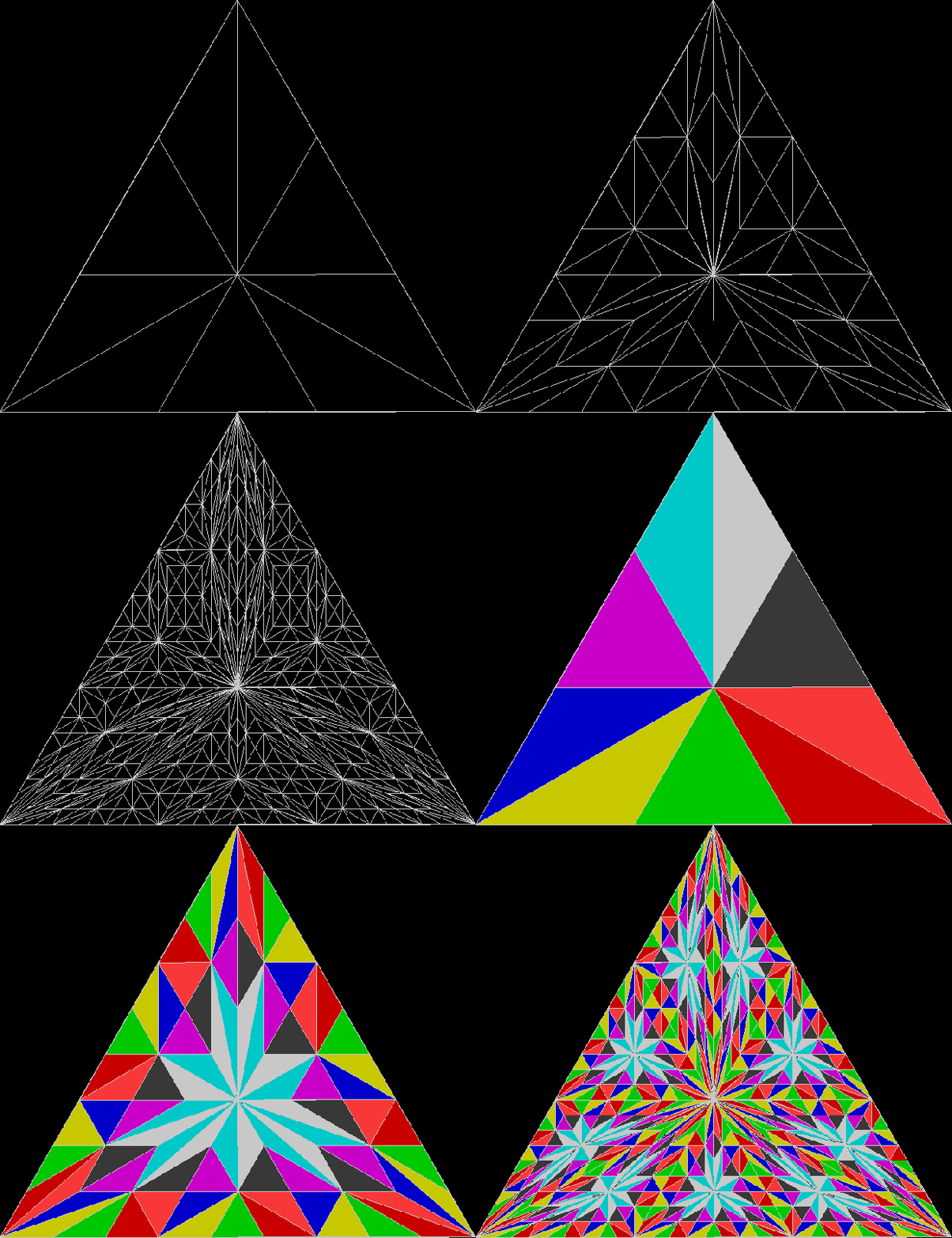
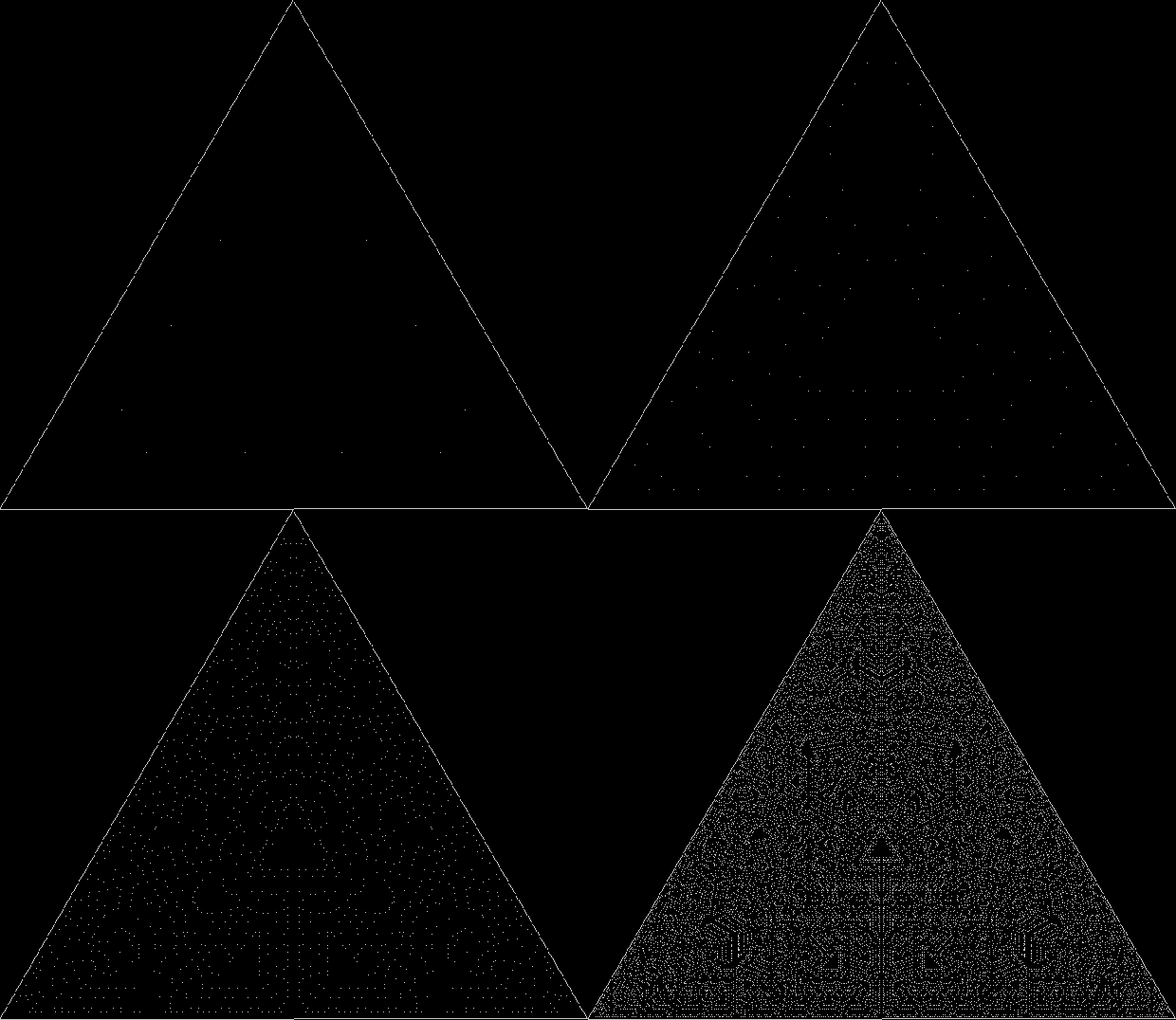
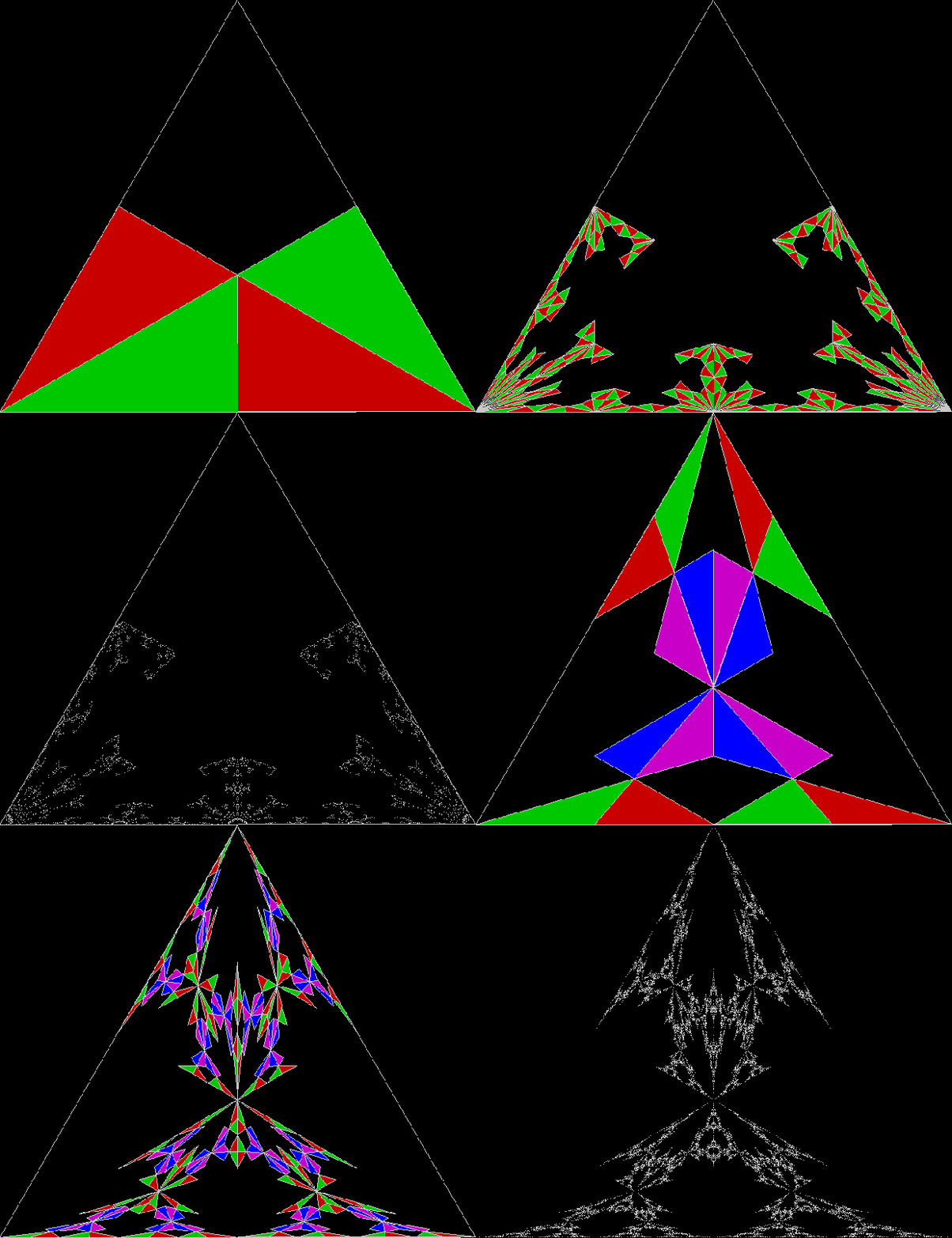
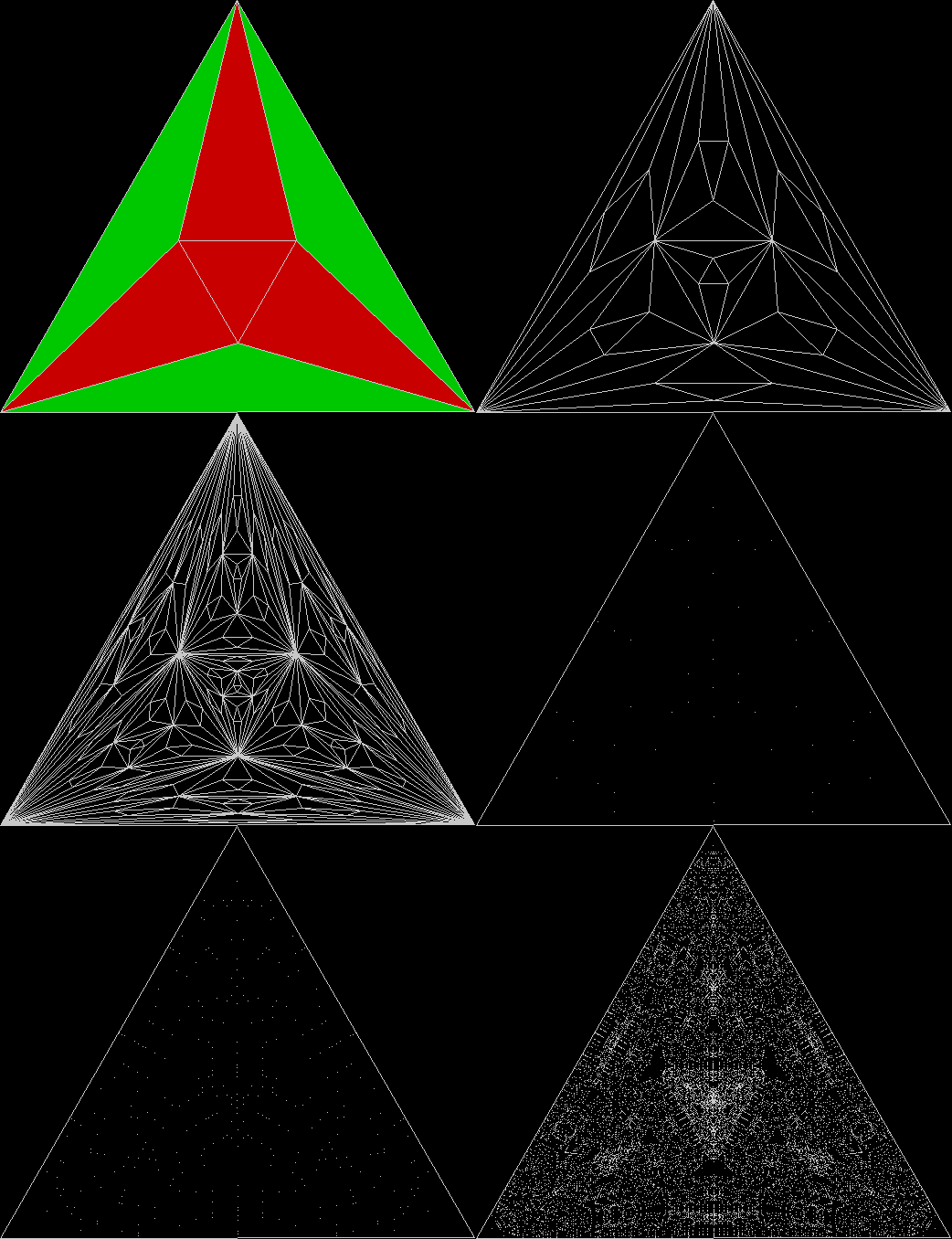
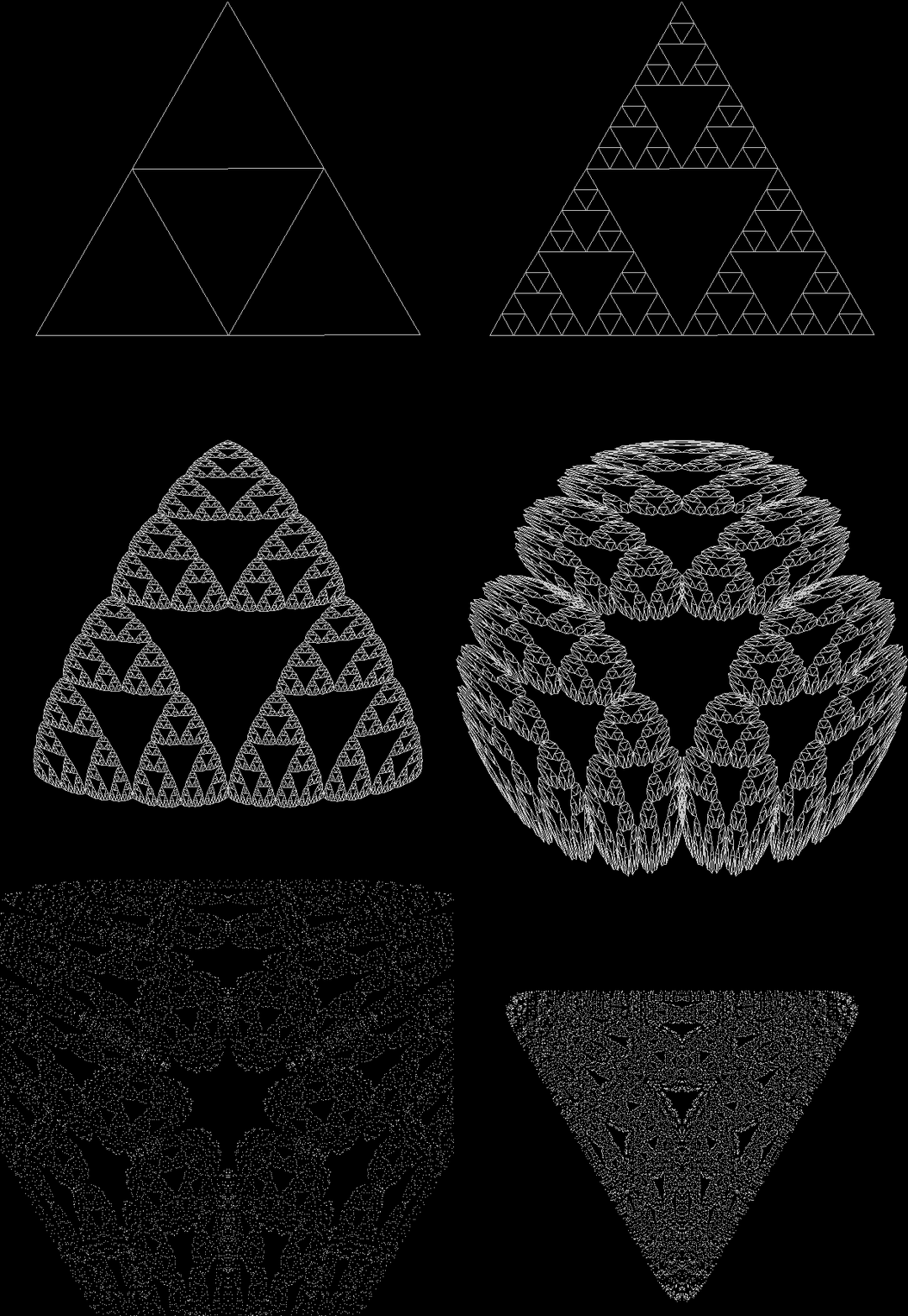
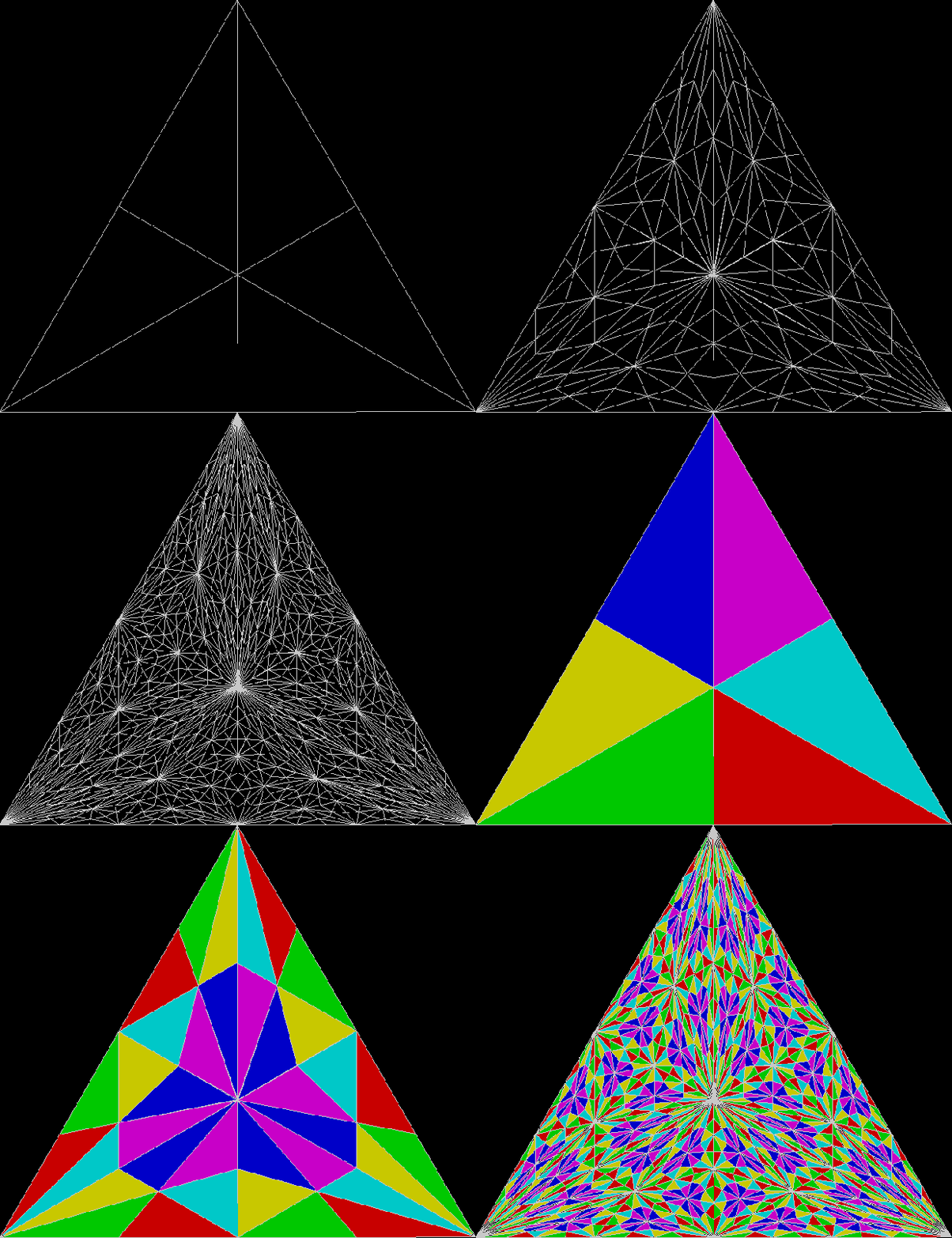
This fractal is created by taking an equilateral triangle and finding the centre and the midpoint of each side. Using all these points, plus the three vertices, six new triangles can be created from the original. The process is then repeated with each new triangle (if the images don’t animate, please try opening them in a new window):

triangle_div2

If the centre-point of each triangle is shown, rather than the sides, this is the pattern created:

triangle_div2_dots

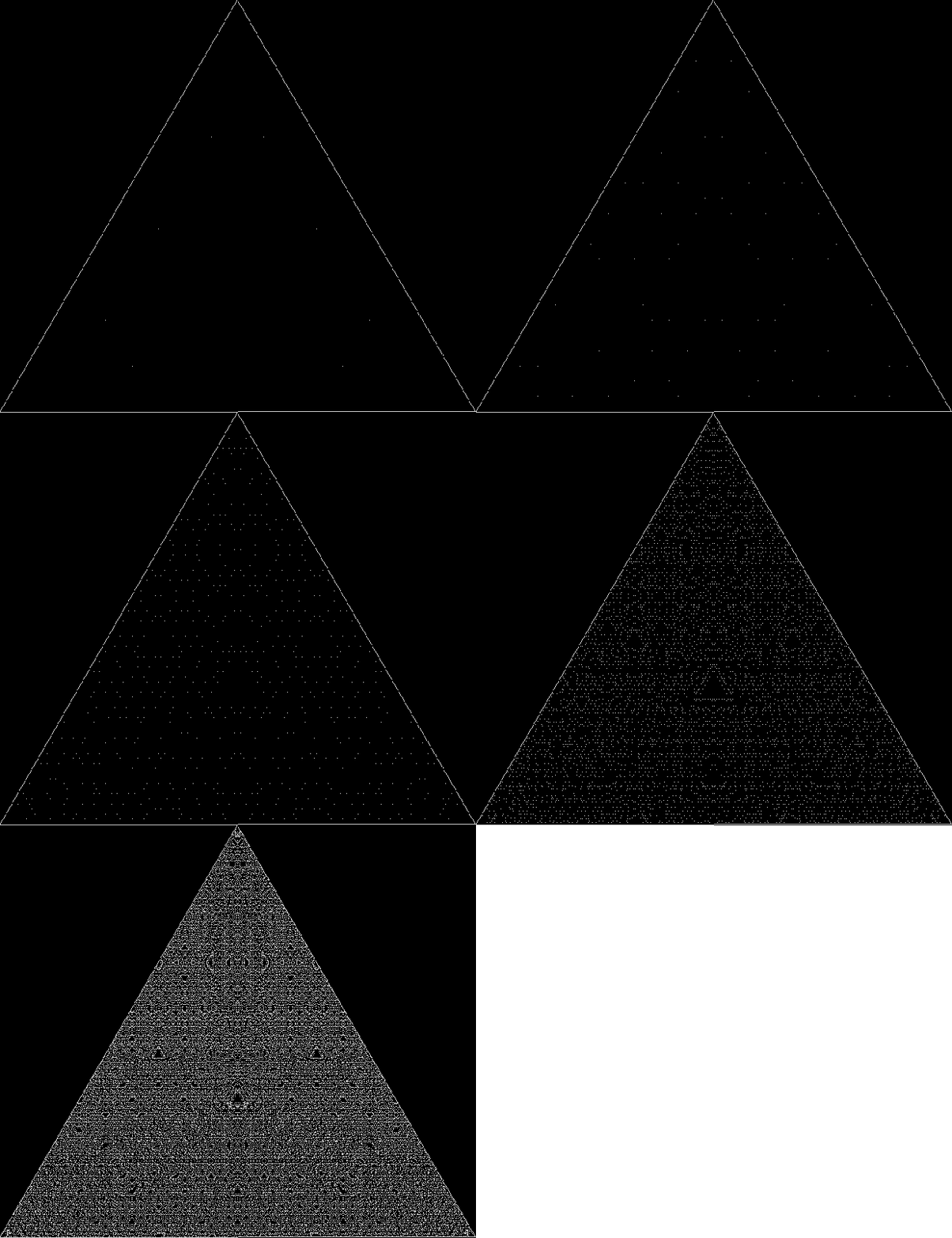
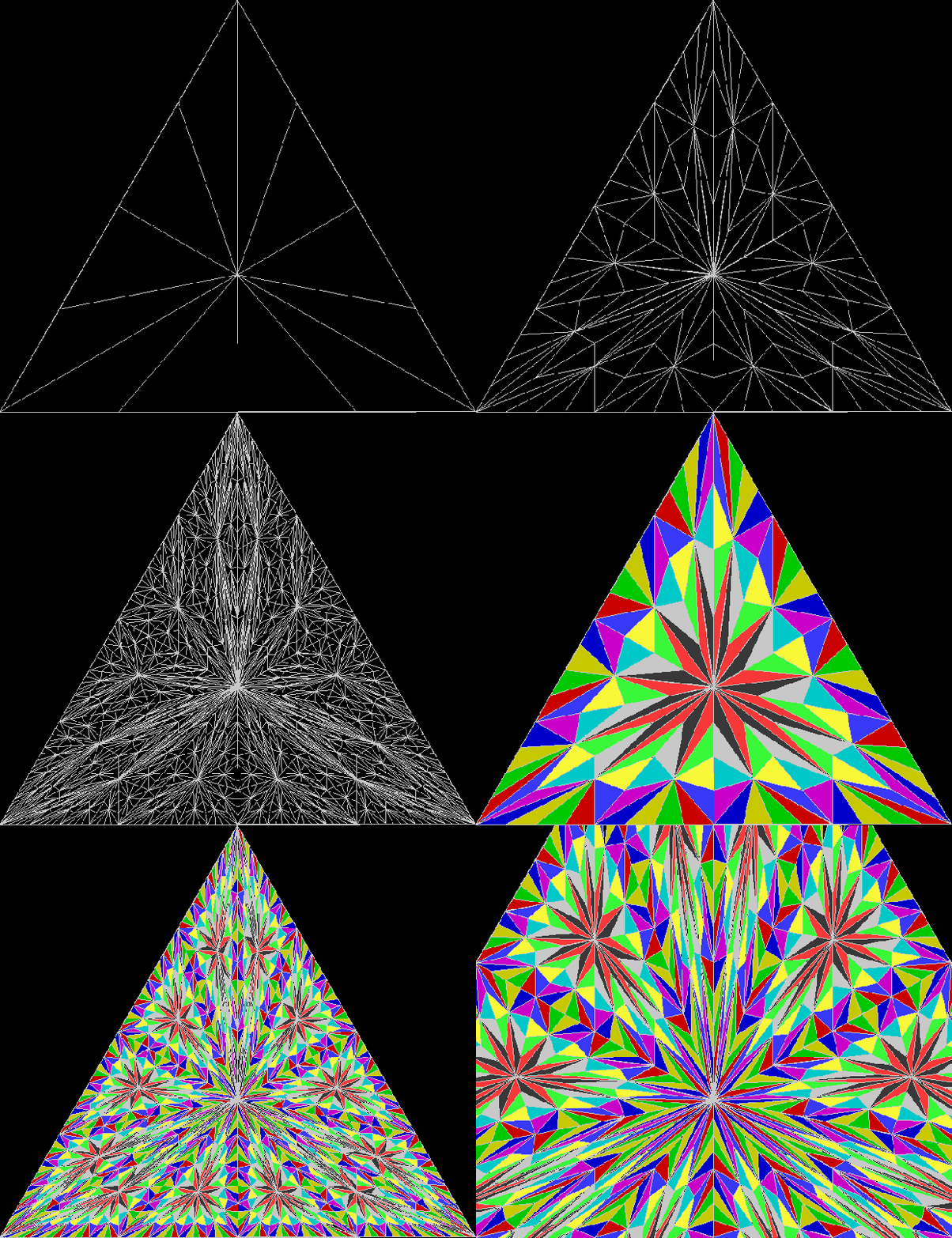
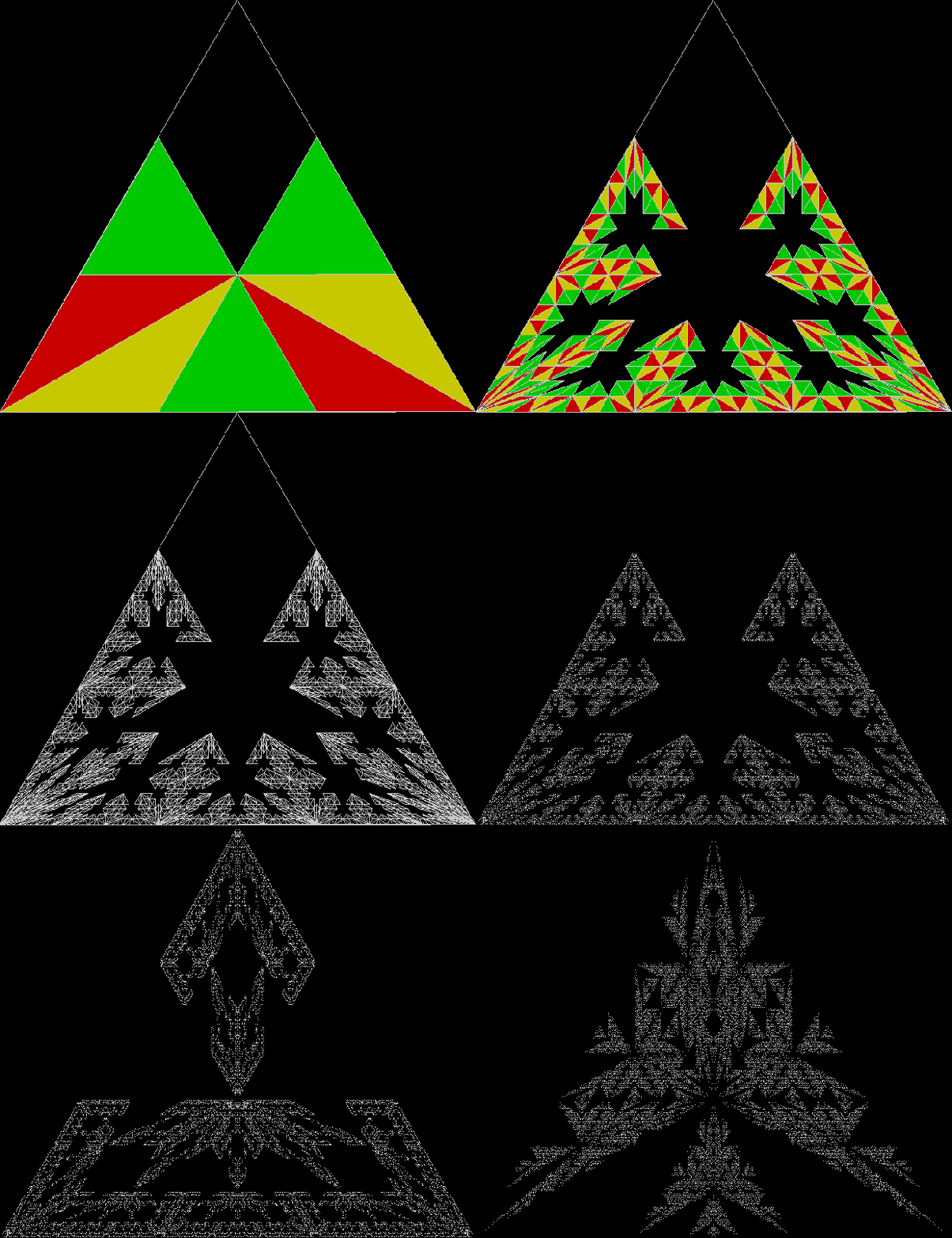
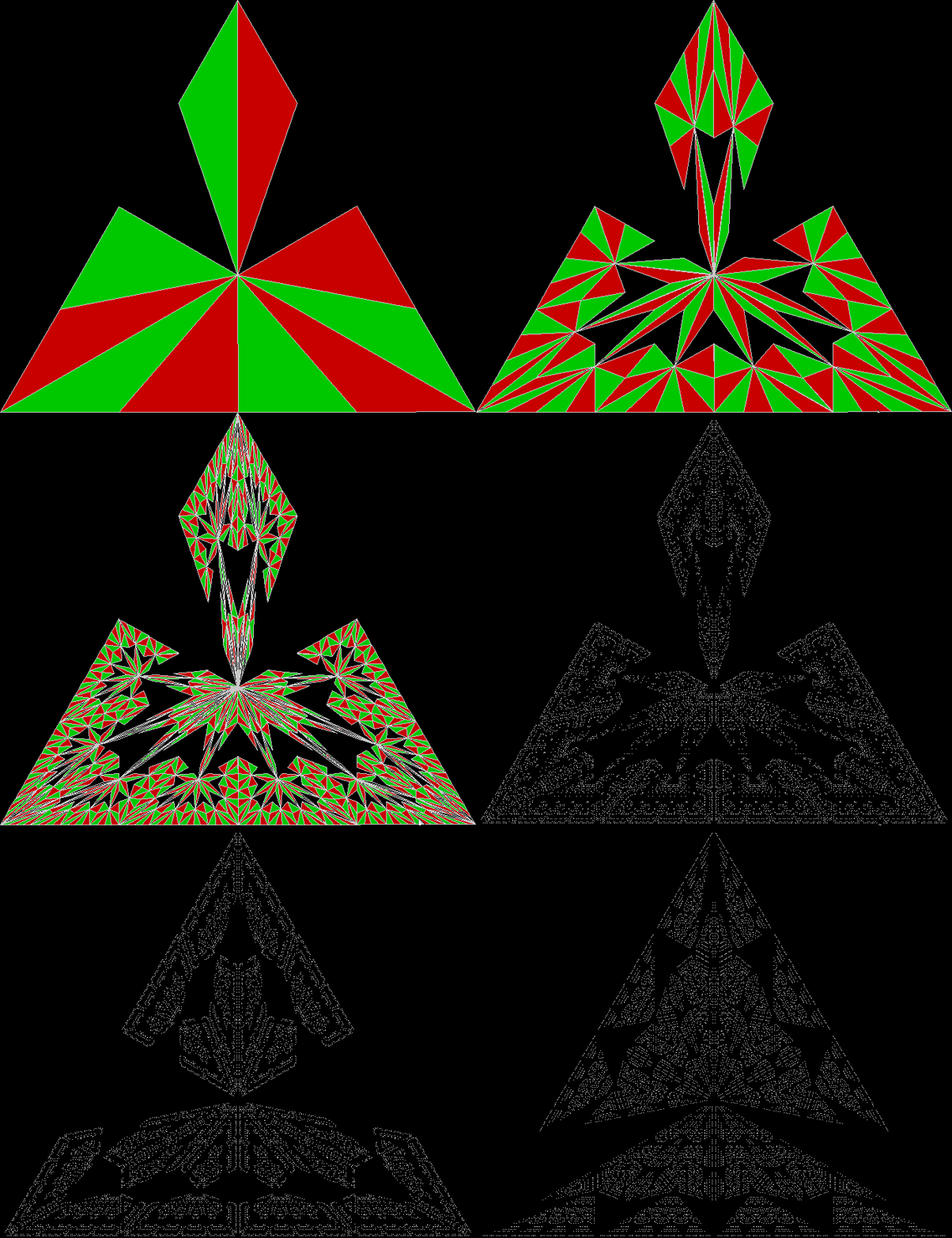
Triangles in which the sides are divided into thirds and quarters look like this:

triangle_div3

triangle_div3_dots

triangle_div4

triangle_div4_dots

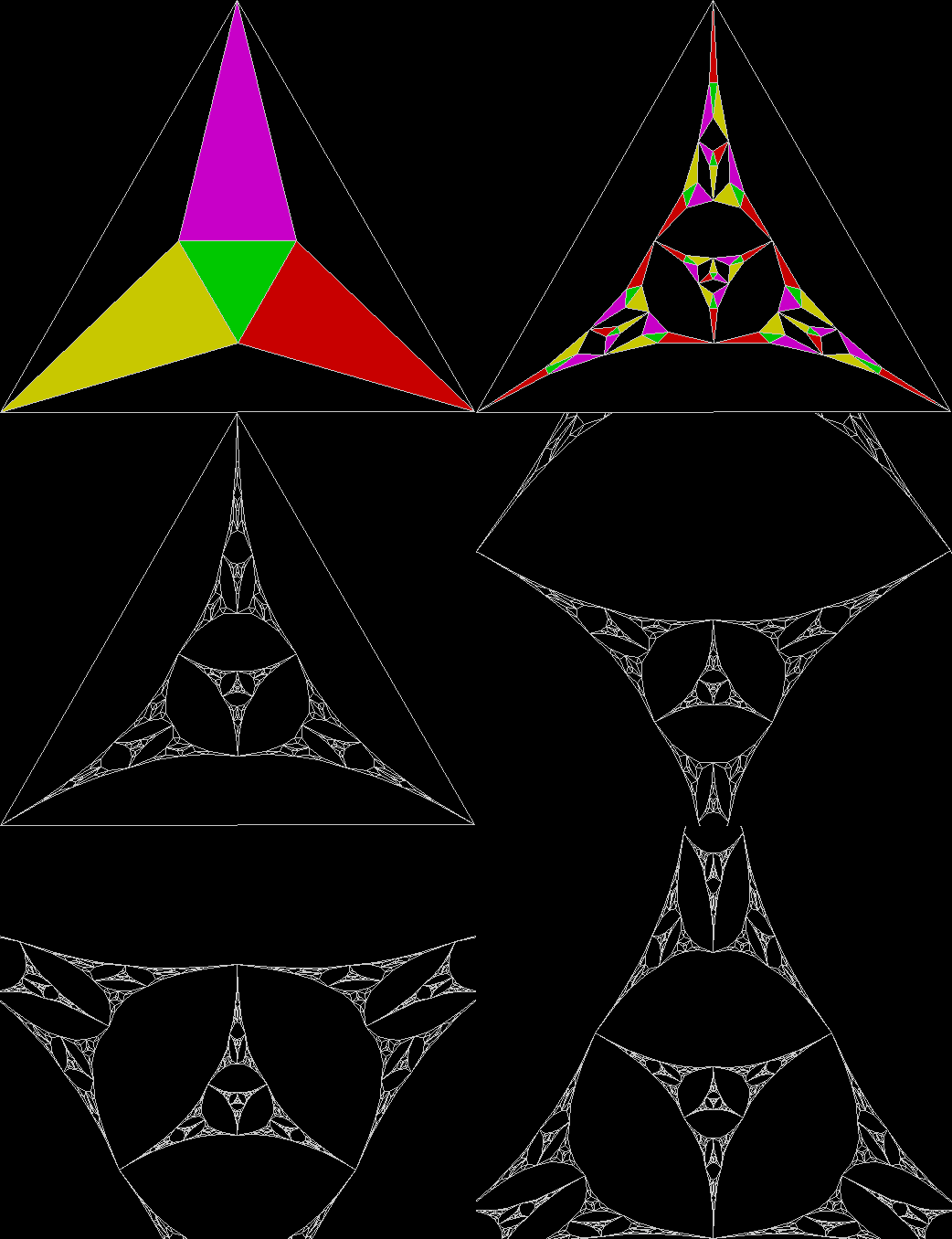
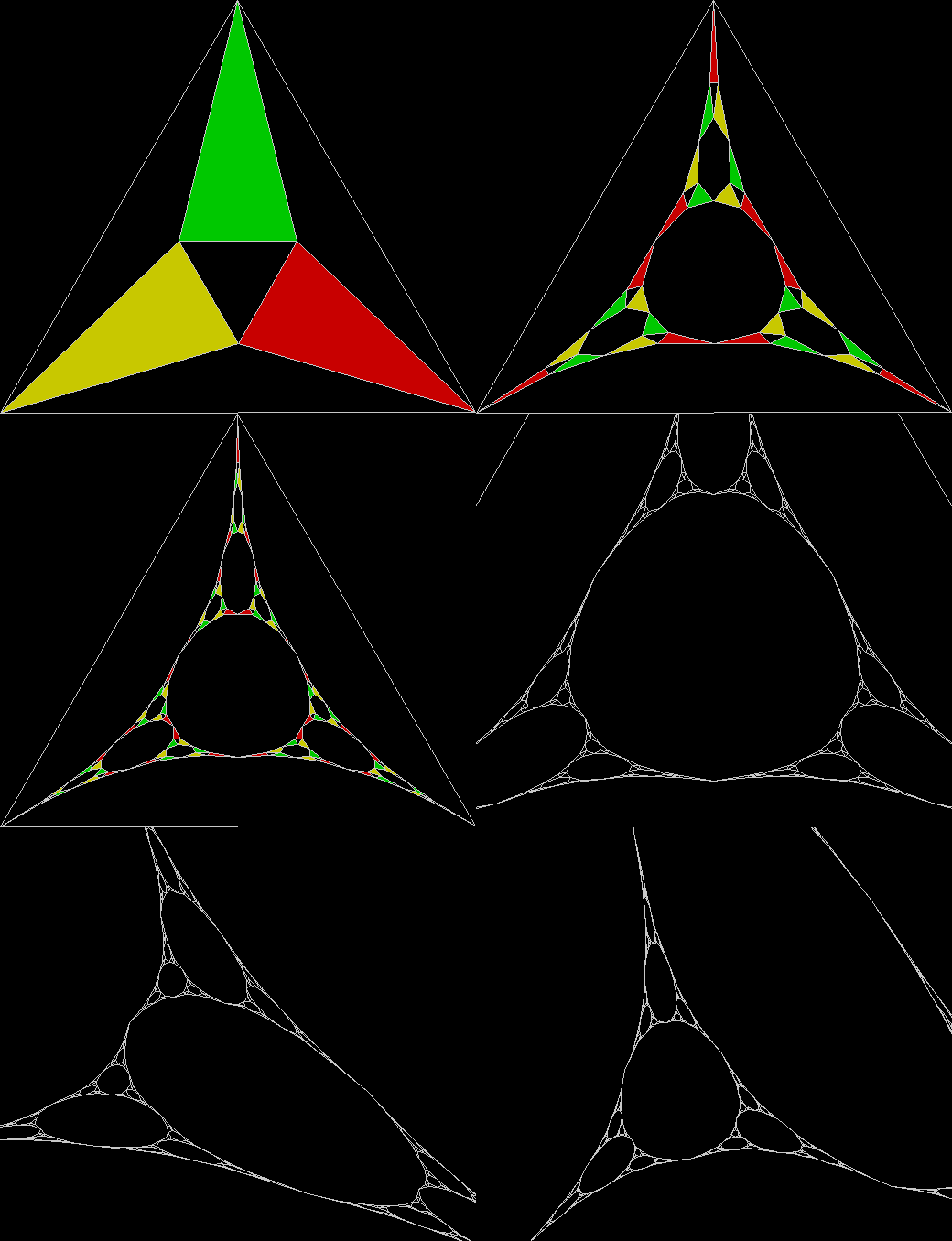
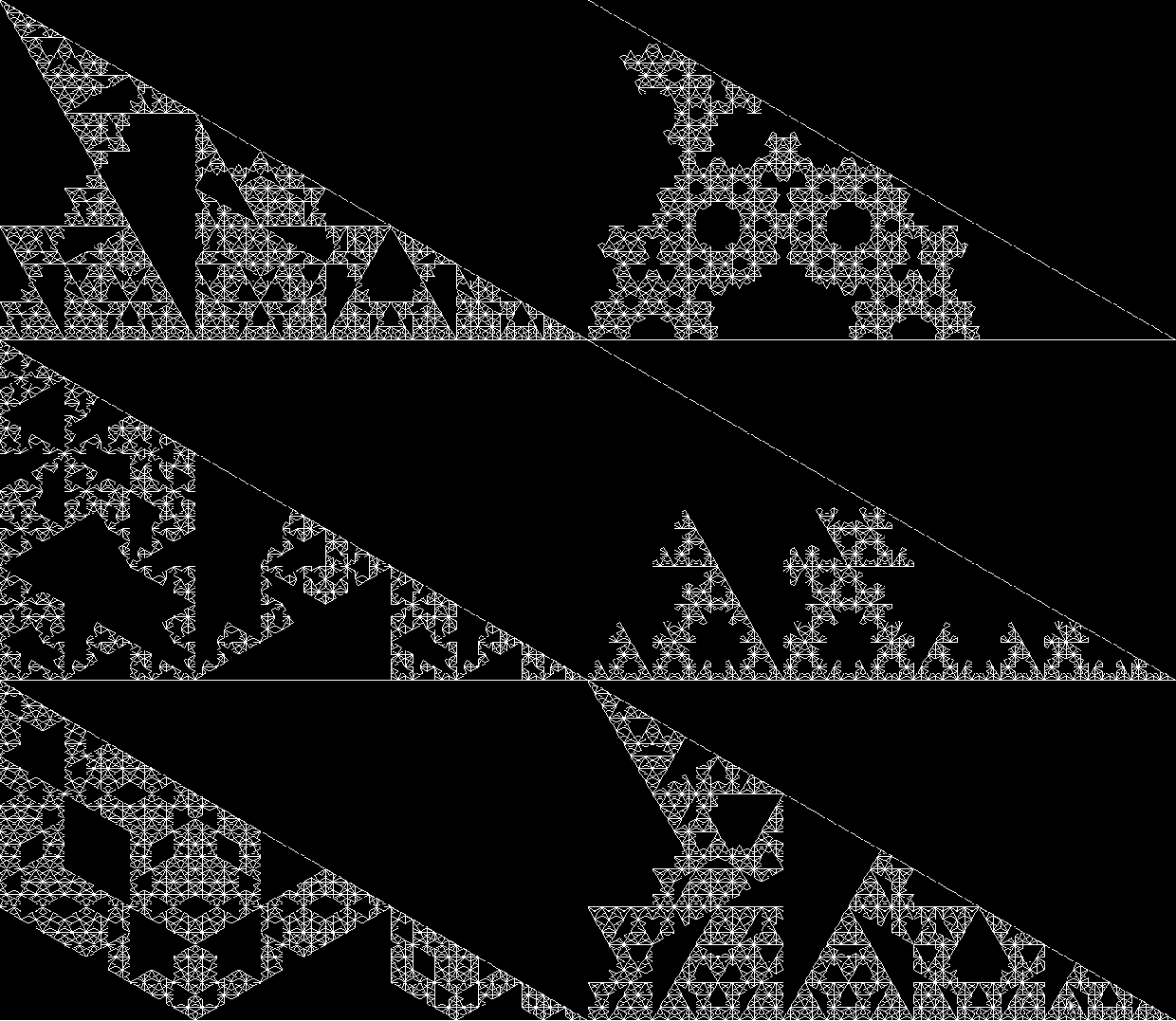
And if sub-triangles are discarded, more obvious fractals appear, some of which look like Lovecraftian deities and owl- or hawk-gods:


cthuneus1

cthuneus2

cthuneus3


Elsewhere Other-Accessible

• Circus Trix — a later and better-illustrated look at these fractals

For the Love of Mycology

Mushrooms, Roger Phillips, assisted by Derek Reid, Ronald Rayner, Geoffrey Kibby, and Alick Henrici, designed by Jill Bryan (MacMillan 2006)

In 1981, Roger Phillips began his career in natural history publishing with a book on mushrooms. In 2006, he was back for another bite at the chanterelle. And it would have been a fitting way to end his career, because this is one of the most important books ever published on fungi. It puts its best photo forward for hundreds of pages and hundreds of species, all the way from the massive, like the Giant Puffball, Calvatia gigantea, which can be bigger than a man’s head, to the minute, like the Conifer Disco, Lachnellula subtilissima, which is smaller than a baby’s fingernail. En route, it takes in the gorgeous, the gaudy, and the grotesque, like the Angel’s Wings, Pleurocybella porrigens, the Vermilion Waxcap, Hygrocybe miniata, and the Goliath Webcap, Cortarius praestans. With the g-crew come the delicious, the deadly, and the delicate: the Oyster Mushroom, Pleurotus ostreatus, the Destroying Angel, Amanita virosa, and the Milky Bonnet, Hemimycena lactea. And let’s not forget the phantasmagoric, the phosphorescent, and the phallic: the Devil’s Fingers, Clathrus archeri, the Jack O’ Lantern, Omphalotus illudens, and the Stinkhorn, Phallus impudicus. Which is Latin for “shameless dick”. Fungi can also look like ears, brains, and birds’-nests: the Jelly Ear, Auricularia auricula-judaei, the Morel, Morchella esculenta, and the Common Bird’s Nest, Crucibulum laeve. Oh, and they can look like cages, clubs, and coral too: the Red Cage, Clathrus ruber, the Giant Club, Clavariadelphus pistillarius, and the Violet Coral, Clavaria zollingeri.

And that covers only their appeal, or offence, to the eye and the taste-buds: they can also appeal to, or offend, the nose and fingertips. On olfactory side there are the Coconut Milkcap, Lactarius glyciosmus, the Pear Fibrecap, Inocybe fraudans, the Geranium Brittlegill, Russula fellea, the Mousepee Pinkgill, Entoloma incanum, the Iodine Bolete and Bonnet, Bolitus impolitus and Mycena filopes, and the “Stinking” set: the Brittlegill, Russula foetens, the Dapperling pair Lepiota cristata and L. felina, and the Earthfan, Thelephora palmata. On the tactile side, there are the various Velvets: the Bolete, Suillus variegatus, the Brittlegill, Russula violeipes, the Shank, Flammulina velvutipes, the Shield, Pluteus umbrosus, the Tooth, Hydnellum spongiosipes, and the Toughshank, Kuehneromyces mutabilis. There are too many shaggies, slimies, and slipperies to list, like the Shaggy Parasol, Macrolepiota rhadoces, the Slimy Waxcap, Hygrocybe irrigata, and the Slippery Jack, Suillus luteus. All in all, mushrooms make me muse on Middle-earth. Tolkien’s world is full of richness and variety. So is the world of fungi. The folk and things of Middle-earth can be beautiful or ugly, delicate or sturdy, colourful or drab, tasty or deadly, lovers of light or dwellers in dark. Mushrooms, toadstools, and their smaller relatives are the same. You could find one or more species in this book to match all of Tolkien’s creations: men, wizards, hobbits, elves, dwarves, orcs, trolls, ents, and more. The Cortinarius genus is hobbit-like, for example: stocky, sturdy, and coloured mostly in earthy ochres, yellows, and reds. More elf- and wizard-like are the genera Lepiota and Macrolepiota: these mushrooms are taller and more attractively proportioned. For pre-Tolkienean elves, look to the small and slender Micromphale, Omphalina and Mycena genera, shaped like little umbrellas, bonnets, and parachutes.

For the dark side of Tolkien’s world, look everywhere: almost every group of fungi can supply poisons and sicken or slay the incautious or ignorant. But the deadliest of all are the Amanitas. There’s something suitably and sardonically Sauronic about the modus operandi of the Deathcap, Amanita phalloides:

Poisoning by the Deathcap is characterized by a delay of 6 to 24 hours between ingestion and the onset of symptoms, during which time the cells of the liver and kidney are attacked… The next stage is one of prolonged and violent vomiting and diarrhoea accompanied by severe abdominal pains, lasting for a day or more. Typically this is followed by an apparent recovery, when the victim may be released from hospital or think their ordeal is over, but death results from kidney and liver failure in a few days. (pg. 144-45)

No antidote has yet been discovered to the amatoxins, as the most dangerous compounds are called, and the mortality rate from Amanita poisoning is “still up to 90%”. The Fly Agaric, Amanita muscaria, with its red, white-spotted cap, is the most famous in the genus, but not responsible for the most fatalities. It’s trippily toxic: “a strong hallucinogen and intoxicant, and used as such by the Sami of northern Scandinavia” (pg. 140). Phillips suggests that the Sami began to use A. muscaria by “observing its effects on reindeer”, which “like it so much that all one has to do to round up a wandering herd is to scatter pieces of Fly Agaric on the ground.” Elsewhere in Europe, it was used against flies: the common English name “comes from the practice of breaking the cap into platefuls of milk… to stupefy flies.” Fungi are not plants and form a separate kingdom in biological classification, but they are like plants in the way they can be either delicious, deadly, or dementing.

But if some weren’t so delicious, some others wouldn’t have dealt death so often: the Amanitas are similar in appearance to the Wood mushrooms in the genus Agaricus and can be found in similar places. Agaricus contains some of the most widely eaten of all mushrooms, including the Cultivated Mushroom, A. bisporus, “believed to be the wild form of the many cultivated crop varieties” (pg. 242). But literally cultivated mushrooms don’t compare to wild-grown: I can still remember the richness and flavour of some Field Mushrooms, A. campestris, I picked near the witches’ haunt of Pendle Hill in Lancashire. My other gastro-mycological excursions have included wild-grown puffball and a large Oyster Mushroom that had sprouted from the wood of a sea-side ice-cream stand. It fell off under its own weight, or I wouldn’t have carried it off: Oyster Mushrooms aren’t just good to eat, they’re also good to look at and I would have left it undisturbed otherwise. But picking a mushroom is rather like picking an apple or pear: the visible part is a fruiting body that sprouts from the thread-like hyphae growing in soil, wood, compost, or dung. So you don’t necessarily kill a fungus by picking the part you can see, though you do obviously interfere with its reproduction. The part you can see is what this book is about: unlike David N. Pegler’s Pocket Guide to Mushrooms and Toadstools, there are no drawings of the microscopic spores, merely descriptions: for example, “9-12×5-7μ, elliptical to almond-shaped. Spore-print dark purplish-brown. Chrysocystidia absent. Cheilocystidia lageniform, thin-walled” is in the entry for the Blueleg Brownie, Psilocybe cyanescens.

The fungus itself is described as “hallucinogenic” and “said to be extremely strong” (pg. 253). This book isn’t just for those seeking succulence: it can guide the searcher for synaesthesia too. The Liberty Cap or Magic Mushroom, Psilocybe semilanceata, doesn’t just open the doors of perception: it can throw down the walls of the senses too and make you hear sights or taste colours. The psycho-active psilocybes are all covered and described, but I’ve preferred to leave psycho-mycology alone and get my mental thrills from the look of, and language about, fungi. The scientific names, as always, are interesting, informative, and occasionally uninspired: with a common name like Angel’s Wings, Pleurocybella porrigens has a disappointing scientific name. But there’s a surprisingly complex descriptive vocabulary to learn if you’re interested in acquiring an expertise in these apparently primitive plant-alikes. You’ll even have to dabble in chemistry: the simplest way to distinguish some species is to dip them. The “chrysocystidia” mentioned above are cells “that turn yellowish” – Greek chrysos, “golden”, is hyperbolic – in “alkali solutions”. That’s from the glossary on page 13, but the weird and wonderful words – chlamydospore, dendrophyses, gloeocystidia, lageniform, merulioid, sphaeropedunculate – aren’t illustrated, only defined. This isn’t a textbook of mycology, but an identification guide. And I wouldn’t say it was a work of art like Pegler’s Pocket Guide. It’s well-designed and aesthetically pleasing, but photographs have a superficiality, even a triviality, that Pegler’s drawings don’t. Yes, you can see exactly how the fungi look from a photograph, but there’s no room for the wit and quirkiness I described in my review of the Pocket Guide: the closest you get to the extra-mycological touches I described there is an occasional pine-cone, as in the photos for the Pine Milkcap, Lactarius musteus, the Pinecone Cap, Strobilurus tenacellus, and the Rosy Spike, Gomphidius roseus.

But David Pegler covered far fewer species in a smaller and more subjective book. His science was stronger because he included images of spores, but Roger Phillips has contributed more to mycology, let alone to other fields of natural history. If I had to choose between the two books, I would choose the Pocket Guide, because it’s richer and earthier, and also more minor, in a way that suits its topic better. Fortunately, I don’t have to choose: both books are available for mycophiles and both help explain what is fascinating about fungi. But there are universal aspects to their appeal, beside the particularity of their fungality: maths, the Magistra Mundi, or Mistress of the World, reigns among mushrooms as She reigns everywhere else. Like beetles, though rather more so, fungi are topological variants on a theme: evolution has shaped, squeezed, slendered, squattened, and swollen them over millions of years to produce the huge variety on display in this book. I think architecture can illuminate how they grow: fungi face some of the same problems as architects in erecting and securing their fruiting bodies, but they’re working with less sturdy material. Fungal flesh doesn’t have the toughness and flexibility of wood or the solidity and sturdiness of stone, but it can do surprising things: the Pavement Mushroom, Agaricus bitorquis, is “sometimes found growing through asphalt” (pg. 241).

“Pavement Mushroom”, like “Orange Peel Fungus”, “Purple Stocking Webcap”, “Rooting Poisonpie”, and “Snaketongue Truffleclub”, is one of the odd common names that may catch your eye in the detailed index, which offers specific and generic names, including the outmoded ones that Phillips wanted to update from his early book. But he’s expanded as well as revised, adding some oversea species that “travellers might find on their visits abroad” (introduction, pg. 6). Or might find unexpectedly at home: the Plantpot Dapperling, Leucocoprinus birnbaumii, is a “tropical species that can be found in heated greenhouses” and is shown growing with a potted cactus on page 135. Not illustrated, but mentioned in the entry for the Deathcap, is the “tropical fungus Galerina sulcipes”, which “has a higher α-amanitin content” and is “occasionally found in hothouses” (pg. 145). That would be a sinister note to end on, so instead I’ll end on the Scarlet Elfcup, Sacroscypha austriaca. This is one of my favourite fungi in the book. It is indeed scarlet, it does indeed look like a cup, in the early stages of its growth at least, and its common name is a reminder of why mushrooms are associated with magic and fungi with the fantastic. They can appear very suddenly in unexpected places and have a special association with the melancholy and mystery of autumn. The more elaborate and evolved plant and animal kingdoms are more obvious and found in more places, but they couldn’t exist without fungi, which “break down leaf litter and dead wood and thus ensure that the surface of the world has a fertile layer of soil rather than being a heap of detritus” (pg. 6). In other words: no fungi, no flowers, firs, or figs. In short: no mushrooms, no man. The fungal kingdom isn’t, and can’t be, conscious of the debt owed to it by the other two kingdoms, but this book can be seen as part payment. To see the inhabitants of that mycological Middle-earth in all their variety and strangeness, look no further, because you’ll find no fungaller.

Curiouser and Cuneuser

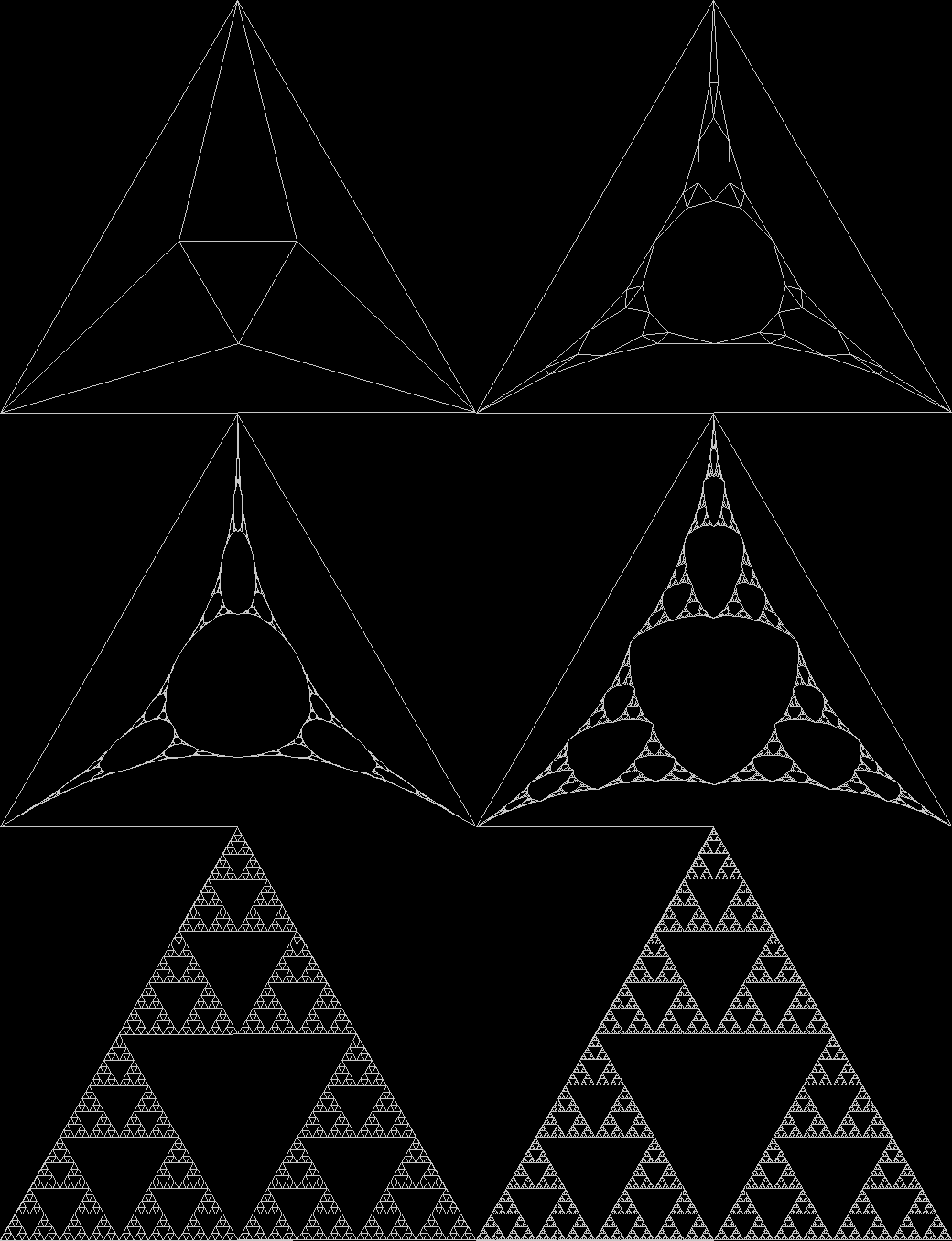
This fractal is created by taking an equilateral triangle, then finding the three points halfway, i.e. d = 0.5, between the centre of the triangle and the midpoint of each side. Using all these points, plus the three vertices, seven new triangles can be created from the original. The process is then repeated with each new triangle:

7triangle

When sub-triangles are discarded, more obvious fractals appear, including this tristar, again using d = 0.5:

tristar

However, a simpler fractal is actually more fertile. This cat’s-cradle is created when d = 0.5:

catscradle

But as d takes values from 0.5 to 0, a very familiar fractal begins to appear: the Sierpiński triangle:

catscradle_expanding

When the values of d become negative, from -0.1 to -1, this is what happens:

catscradle_expanding_to_cuneus

Pre-previously posted (please peruse):

Curious Cuneus

Beyond Gold: A Weevil

Cover of Living Jewels by Poul Beckmann

Living Jewels: The Natural Design of Beetles, Poul Beckmann (2001)

Richard Dawkins wrote about the Blind Watchmaker, but the Blind Watchmaker often works in collaboration. This book is about his brother, the Blind Jeweller, who creates the cases for the watchwork of beetles. Sometimes those cases are gorgeous, sometimes they’re grotesque, and sometimes they’re both at once. Beetle #77 in this survey, Phanaeus igneus floridanus, is a squat giant with a huge curving horn on its head, but its thorax and abdomen shimmer with metallic purple, green, red, and gold. If that beetle’s a glam-rock sumo-wrestler, then beetle #49, Julodis hiritiventris sanguinipilig (sic – should be hirtiventris sanguinipilis), is pure punk: green legs and a long dark-blue body scattered with tufts of yellow-orange bristles. Elsewhere you’ve got New Romantics with elaborately patterned bodies and sweeping, dandyish antennae (Rosenbergia straussi and Batus barbicornis), death-metal-heads with gleaming black bodies and fearsome-looking but completely harmless horns (Xylotrupes gideon and Allomyr(r?)hina dichotomus taiwana), and even Status-Quo-ites wearing what looks like worn, work-stained denim (various Eupholus species).

It’s entertaining to look through this book and imagine whose backing band or album cover a particular beetle should play in or sit on, but sometimes you won’t be able to match a beetle to a band, because there are more kinds of beetle than musical genres. Beetles, or rather evolution, has invented more than human beings have, but the same forces have been at work. Topologically speaking, a doughnut is identical to a tea-cup, because one is a distorted variant of the other. Similarly, all the beetles in this book are distorted topological variants of each other: like genres of popular music, they’re variants on a theme. Evolution hasn’t altered the ingredients of beetles, just the quantities used to cook each species: changing the width and shape of the thorax, the length and design of the antennae and legs, and so on. But topology isn’t psychology, and just as glam-rock sounds quite different to punk, though the common ancestor is clearly there if you listen, so a doughnut looks quite different to a teacup and Phanaeus igneus floridanus looks quite different to Julodis hirtiventris sanguipilis.

There’s much more to beetles than their appearance, of course, but one of this book’s shortcomings, because it’s a coffee-table conversation-piece rather than a scientific survey, is that it tells you almost nothing about the ecology and behaviour behind the photographs. And the book’s title is misleading, in fact, because the jewels aren’t living: all the photos are of dead beetles on white backgrounds. The book also tells you very little about the meaning and history of the (sometimes misspelt) scientific names, even though these are fascinating, beautiful, and grotesque in their own right. Instead, there’s a brief but interesting – and occasionally wrong: Chrysophora isn’t Latin – introduction, then page after page of the gorgeous and grotesque photographs people will be buying this book for. Finally, there are some brief “Beetle Profiles”, describing where individual species were caught and how their family lives and feeds. I would have liked to know much more, though the beetles’ beauty is in some ways increased by its mystery and by what might be called the futility of its appearance. Countless millions of these beetles have lived and died without any human brain ever appreciating their beauty and strangeness, and if human beings disappeared from the planet they would continue to live and die unappreciated. They’re not here for us, but without us they could never be recognized as the living jewels they are. Some might draw metaphysical conclusions from that and conclude that they are here for us after all, but I draw a mathematical conclusion: mathematics governs the evolution of both beetles and brains, which is why beetles can appeal to us so strongly.

Living Jewels – Website accompanying the book and its sequel.

Cover of Living Jewels 2 by Poul Beckmann

He Say, He Sigh, He Sow #2

Musica est exercitium arithmeticae occultum nescientis se numerare animi. — Leibniz.

Musik ist die versteckte arithmetische Tätigkeit der Seele, die sich nicht dessen bewußt ist, daß sie rechnet.

Music is a hidden arithmetic of the soul, which knows not that it calculates.

Performativizing Papyrocentricity #3

Papyrocentric Performativity Presents…

Socks-Appeal — How Many Socks Make a Pair? Surprisingly Interesting Everyday Maths, Rob Eastaway (2008)

Def and the Maiden — Rock Chronicles: A Visual History of the World’s Greatest 250 Rock Acts, general editor David Roberts, foreword by Alice Cooper (2012)

Double WHAMmy — The Reversal, Michael Connelly (2010)

Reds under the Thread

A clue, or clew, was originally a ball of thread, as unwound by the Greek hero Theseus en route to the centre of King Minos’ labyrinth on Crete. When he had found and slain the Minotaur, he used the thread to retrace his steps. So a clue is a guide: Theseus followed a thread to solve a puzzle. Nowadays, scientists are following much finer threads to solve much bigger puzzles: DNA is a microscopic thread of chemicals and the clue to all manner of puzzles. Perhaps the biggest and most important is the puzzle of language. How did it evolve? How is it encoded in our genes? How is it instantiated in the brain? Those are the big problems waiting to be slain at the centre of the labyrinth of human genetics. Without language, we wouldn’t be human and you wouldn’t be reading this essay.

But this essay is a thread too: like DNA, language consists of a string of symbols used to construct something bigger. DNA codes for brains and bodies; language codes for ideas and images. By looking at a sample of DNA, scientists can tell what kind of body it builds: its sex and race, for example. In future, we’ll be able to tell much more: DNA will offer clues to intelligence and personality. Samples of language offer similar clues: we can often deduce a lot about someone from his or her writing. There are already computer programs that claim to be able to identify the sex of a writer by the lexical and grammatical patterns in a text. But I wonder how much more computers will be able to deduce in future and what clues there already are in our language to our intellects and personalities. They might not be obvious ones. Perhaps it will be possible to deduce race or sexuality or political preferences from apparently trivial things. Perhaps libertarians or homosexuals or psychopaths use pronouns in a distinctive way or prefer certain kinds of consonants or vowels.

But those are differences between groups: regardless of politics or personality, it’s certain that every individual uses language in a unique way. In future, it will be possible to track people on the internet even when they’re writing anonymously or under false names. A bloodhound can track people after sniffing something known to belong to them. In future, bloodhound programs will track people after sniffing – statistically analyzing – texts known to have been written by them. It’s a worrying thought in our ever-more authoritarian times. Express anonymous thoughts on-line about a controversial topic and you may find a bloodhound-program sniffing you out and the thought-police knocking on your door. Science will hand totalitarian tools to tyrants and it may not be possible to escape even if you avoid controversial topics and write about innocuous things. If psychopaths use language in distinctive ways, as seems likely, perhaps other warped individuals will inadvertently betray themselves in their language. Going for a government job? Maybe you’ll have to write an essay about your last holiday or your first pet. And an apparently innocent metaphor will reveal that you’re racist or homophobic or sexist. So no job for you (and quite right, too).

I don’t know whether crime-think like that can be identified by linguistic patterns, but I do think that good-think can be. In terms of issues around progressive publications like The Guardian and London Review of Books, I’ve noticed again and again that members of the decent’n’compassionate community engage issues around imagery in a special way. In short, they like to mix their metaphors. The most recent example I’ve come across was in a review of a Derrida biography in The Guardian by the decent’n’compassionate Marxist Terry Eagleton:

Before long, the taciturn, socially gauche young man from the colonies was gracing the dinner tables of a galaxy of French luminaries: Jean Genet, Roland Barthes, Julia Kristeva, Maurice Blanchot and others.[1]

Reading that felt a little like stepping on a stair that wasn’t there: it was jarring to go from the image of “dinner tables” to the image of “a galaxy”, as though giant balls of flaming hydrogen could give dinner-parties. But that’s what a mixed metaphor does: it combines incongruent or incompatible images in a lingustically gauche way. George Orwell provided some good examples in his essay “Politics and the English Language” (1946):

By using stale metaphors, similes and idioms, you save much mental effort at the cost of leaving your meaning vague, not only for your reader but for yourself. This is the significance of mixed metaphors. The sole aim of a metaphor is to call up a visual image. When these images clash – as in the fascist octopus has sung its swan song, the jackboot is thrown into the melting pot – it can be taken as certain that the writer is not seeing a mental image of the objects he is naming; in other words he is not really thinking.[2]

The Eagleton example isn’t particularly egregious: Eagleton is mediocre even as a bad writer. He did a little badder six years ago in the same progressive forum:

This year’s calendar to celebrate Beckett’s 100th anniversary is crammed with literary events celebrating the life of the modern age’s most lovable pessimist, most of them, one imagines, awash with talk of the timeless human condition portrayed in his work… Yet there is also a distinctively Irish quality to Beckett’s deflation of the florid and high-flown, just as there is something recognisably Irish about those starved, stagnant landscapes where, like colonial victims, you do nothing but sit and wait for deliverance.[3]

“Talk” consists of vibrations in the air. Is “awash”, which refers to liquids around one’s feet, the right image for talk? And if the “calendar” is “crammed”, is “awash” not over-egging the pudding? Can landscapes be “stagnant”, like water or air? If they can, can they be “starved” at the same time? Or did Eagleton just want the alliteration and not give a toss about the meaning? I suspect it was the last: Eagleton seems to me a typical example of the progressive prosateur. He writes not to convey meaning or apply reason, but for a higher purpose: to demonstrate his own cleverness and assure other progressives of his goodthinkfulness. The Guardian and LRB are full of similar narcissists and Eagleton isn’t exceptional amongst them. So why did I choose his text to unlock the swamp of progressive windbaggery? Well, first because his review of the Derrida biography finally prompted me to write this essay, which I’ve been planning to write for a long time. And second because I didn’t want to give anyone whiplash. Reading Eagleton is a gentle introduction to the mixed metaphor, like driving slowly down a cobbled street in a car with good suspension. Reading another Guardian regular, on the other hand, is like driving fast through the aftermath of an earthquake in a tank with very bad suspension. But forewarned is forearmed. You’ve seen Eagleton and I doubt you’ve been very impressed. Okay, now marvel at the most magisterial mixed-metaphorizer I’ve ever come across:

But the kernel of a message black Britons had been trying to hammer home for decades suddenly took centre stage.[4]

Gary Younge, the Guardian’s resident race’n’racism-expert, is almost praeternatural in his command of the English language. He can cram more crap into less lexicality than anyone else I’ve ever seen. The mixed metaphor above, from 2005, is a triple-whammy: it manages to get three incongruent images into twenty words. If you think that’s easy, try it for yourself. Younge doesn’t have to try: as a progressive prosateur, he postures and preens without conscious effort. But his postural powers are far greater than those of Terry Eagleton. Beauty poured effortlessly from Mozart’s brain; bollocks pours effortlessly from Gary Younge’s. He rose to similar heights of mixed metaphory in 2012, when he interrogated issues around the shooting of a black teenager in Florida:

Outrage at the death of Trayvon Martin is finally lifting the lid on the US’s racist underbelly[5]

That, at least, was the sub-heading for his article: three incongruent images in seventeen words. If Younge himself wasn’t responsible for it, either he has a disciple almost as rhetorically gifted as he is or a sub-editor was taking the piss of his self-righteous posturing in terms of issues around race. I hope it’s the latter: someone really ought to take a mallet to the anti-racist windbags who litter the florid corridors of The Guardian’s stagnant columns. Not that anyone would dare do so openly. The windbags will be typing their socialist siren-songs for some time to come. Here is someone else who is Younge at heart:

Recognising the Conservatives’ persistent image as the “nasty party”, David Cameron saw her [Baroness Warsi’s] real value as someone who could prop up the image of a modern reformist party comfortable in its multi-cultural skin. The chimaera of an Asian woman influencing the levers of Tory power did prop up this illusion for most of the two-and-a-half years that Warsi was in the Cabinet.[6]

That was Ratna Lachman, the directrix of JUST West Yorkshire, “which promotes racial justice, civil liberties and human rights in the north of England”. Or says it does, at least. The language of Lachman suggests to me that she is not necessarily a trustworthy guide to reality or to its rectification. Like Younge and Eagleton, she habitually uses metaphors that don’t work: as Orwell put it in his essay, “the writer is not seeing a mental image of the objects he is naming; in other words he is not really thinking.” Or observing reality. And I can’t believe that this is irrelevant to the progressive politics persistently pursued and promoted by these posturing, preening paragons of pretension. If their relatively simple and easy-to-correct metaphors don’t work, what does that say about their vastly more ambitious and complicated plans for a fairer, juster, more equal society? I wouldn’t trust any of them to organize a party in a brewery or spot a three-foot needle in a two-foot haystack. Linguistics, as a science, insists on being descriptive rather than prescriptive: it describes what language-users do rather than prescribing what they ought to do.

I see the scientific point, but I don’t fully agree with it. Human beings are born to use language, but that doesn’t mean we always use it well. We are born to use bodies too, but that doesn’t mean we always use our bodies in healthy, sensible, and intelligent ways. Medicine describes bodies both in sickness and in health and linguistics should be more like medicine. Language, like DNA, can go wrong and the cancers created by faulty DNA have their linguistic equivalents in publications like The Guardian and London Review of Books. Eagleton, Younge, Lachman and countless other members of the progressive community produce pathological prose. I think they do so because of their politics. You don’t have to subject their writing to sophisticated statistical analysis to know this: the kernels have taken centre stage and the chimaeras are pulling levers in plain view. Lachman claims in one of her windy, wittering articles that “Tory DNA is in essence white, male, Anglo-Saxon and Protestant to its core”. It’s odd, then, that the first Jewish and first female Prime Ministers were Conservative rather than Labour. But I don’t support the Tories any more than I support Labour, in part because neither of them recognizes the importance of actual rather than metaphorical DNA. Our DNA makes us human, so DNA explains both language and politics, as gross aspects of human behaviour. But I think it also accounts for subtler variations in language and politics, from the Marxist windbaggery of Terry Eagleton to the High Tory clarity of Evelyn Waugh. Or the non-conformist clarity of George Orwell, who was diagnosing diseased English and inventing words to describe it in the middle of the last century:

Ultimately it was hoped to make articulate speech issue from the larynx without involving the higher brain centres at all. This aim was frankly admitted in the Newspeak word duckspeak, meaning “to quack like a duck”. Like various other words in the B vocabulary, duckspeak was ambivalent in meaning. Provided that the opinions which were quacked out were orthodox ones, it implied nothing but praise, and when The Times referred to one of the orators of the Party as a doubleplusgood duckspeaker it was paying a warm and valued compliment.[7]

Eagleton, Younge and Lachman are still quacking out orthodox opinions in The Guardian, but the climate is shifting and duckspeakers don’t have wings to fly away south.


[1] “Champion of ambiguity”: Derrida: A Biography, Benoît Peeters – Terry Eagleton enjoys a superb biography of an original thinker, The Guardian, Wednesday, 14th November, 2012.

[3] “Champion of ambiguity”, Terry Eagleton, The Guardian, Monday, 20th March 2006.

[4] “Riots are a class act — and often they’re the only alternative”, Gary Younge, The Guardian, Monday, 14th November 2005.

[5] “Trayvon Martin: a killing too far”, The Guardian, Wednesday, 21st March, 2012.

[7] Appendix to Orwell’s Nineteen Eighty-Four (1949).