Post-Performative Post-Scriptum…
osmic adj. Of or relating to the sense of smell. Also: relating to odour. [ancient Greek ὀσμή, osmē, smell, odour + ‑ic suffix] — Oxford English Dictionary

Post-Performative Post-Scriptum…
osmic adj. Of or relating to the sense of smell. Also: relating to odour. [ancient Greek ὀσμή, osmē, smell, odour + ‑ic suffix] — Oxford English Dictionary
You can get a glimpse of the gorgeous very easily. After all, you can work out the following sum in your head: 1 + 2 + 3 + 4 + 5 = ?
The answer is… 1 + 2 + 3 + 4 + 5 = 15. So that sum is example of this pattern: n1:n2 = sum(n1..n2). A simple computer program will soon supply other sums of consecutive numbers following the same pattern. I think these patterns based on the pair n1 and n2 are beautiful, so I’d call them fair pairs:
15 = sum(1..5)
27 = sum(2..7)
429 = sum(4..29)
1353 = sum(13..53)
1863 = sum(18..63)
3388 = sum(33..88)
3591 = sum(35..91)
7119 = sum(7..119)
78403 = sum(78..403)
133533 = sum(133..533)
178623 = sum(178..623)
2282148 = sum(228..2148)
2732353 = sum(273..2353)
3882813 = sum(388..2813)
7103835 = sum(710..3835)
13335333 = sum(1333..5333)
17016076 = sum(1701..6076)
17786223 = sum(1778..6223)
I went looking for variants on that pattern. If the function rev(n) reverses the digits of n, here’s n1:rev(n2) = sum(n1..n2):
155975 = sum(155..579)
223407 = sum(223..704)
4957813 = sum(495..3187)
I like that pattern, but it doesn’t seem beautiful like n1:n2 = sum(n1..n2). Nor does rev(n1):n2 = sum(n1..n2):
1575 = sum(51..75)
96444 = sum(69..444)
304878 = sum(403..878)
392933 = sum(293..933)
3162588 = sum(613..2588)
3252603 = sum(523..2603)
3642738 = sum(463..2738)
3772853 = sum(773..2853)
6653691 = sum(566..3691)
8714178 = sum(178..4178)
But rev(n1):rev(n2) = sum(n1..n2) is beautiful again, in a twisted kind of way:
97944 = sum(79..449)
452489 = sum(254..984)
3914082 = sum(193..2804)
6097063 = sum(906..3607)
6552663 = sum(556..3662)
Now try swapping n1 and n2. Here’s n2:n1 = sum(n1..n2):
204 = sum(4..20)
216 = sum(6..21)
20328 = sum(28..203)
21252 = sum(52..212)
21762 = sum(62..217)
23287 = sum(87..232)
23490 = sum(90..234)
2006118 = sum(118..2006)
2077402 = sum(402..2077)
2132532 = sum(532..2132)
2177622 = sum(622..2177)
Do I find the pattern beautiful? Yes, but it’s not as beautiful as n1:n2 = sum(n1..n2). The beauty disappears in n2:rev(n1) = sum(n1..n2):
21074 = sum(47..210)
21465 = sum(56..214)
22797 = sum(79..227)
2013561 = sum(165..2013)
2046803 = sum(308..2046)
2099754 = sum(457..2099)
2145065 = sum(560..2145)
And rev(n2):n1 = sum(n1..n2):
638 = sum(8..36)
2952 = sum(52..92)
21252 = sum(52..212)
23287 = sum(87..232)
66341 = sum(41..366)
208477 = sum(477..802)
2522172 = sum(172..2252)
2852982 = sum(982..2582)
7493772 = sum(772..3947)
8714178 = sum(178..4178)
Finally, and fairly again, rev(n2):rev(n1) = sum(n1..n2):
638 = sum(8..36)
125541 = sum(145..521)
207972 = sum(279..702)
158046 = sum(640..851)
9434322 = sum(223..4349)
The beauty’s back. And it has almost become self-aware. In rev(n2):rev(n1) = sum(n1..n2), each side of the equation seems to be looking at the other half as those it’s looking into a mirror.
Previously Pre-Posted (Please Peruse)…
• Nuts for Numbers — looking at patterns like 2772 = sum(22..77)
«У Менделеева две жены, но Менделеев-то у меня один!» — Царь Алекса́ндр II
• “Yes, Mendeleev has two wives, but I have only one Mendeleev!” — Tsar Alexander II responds to a complaint about Mendeleev’s bigamy
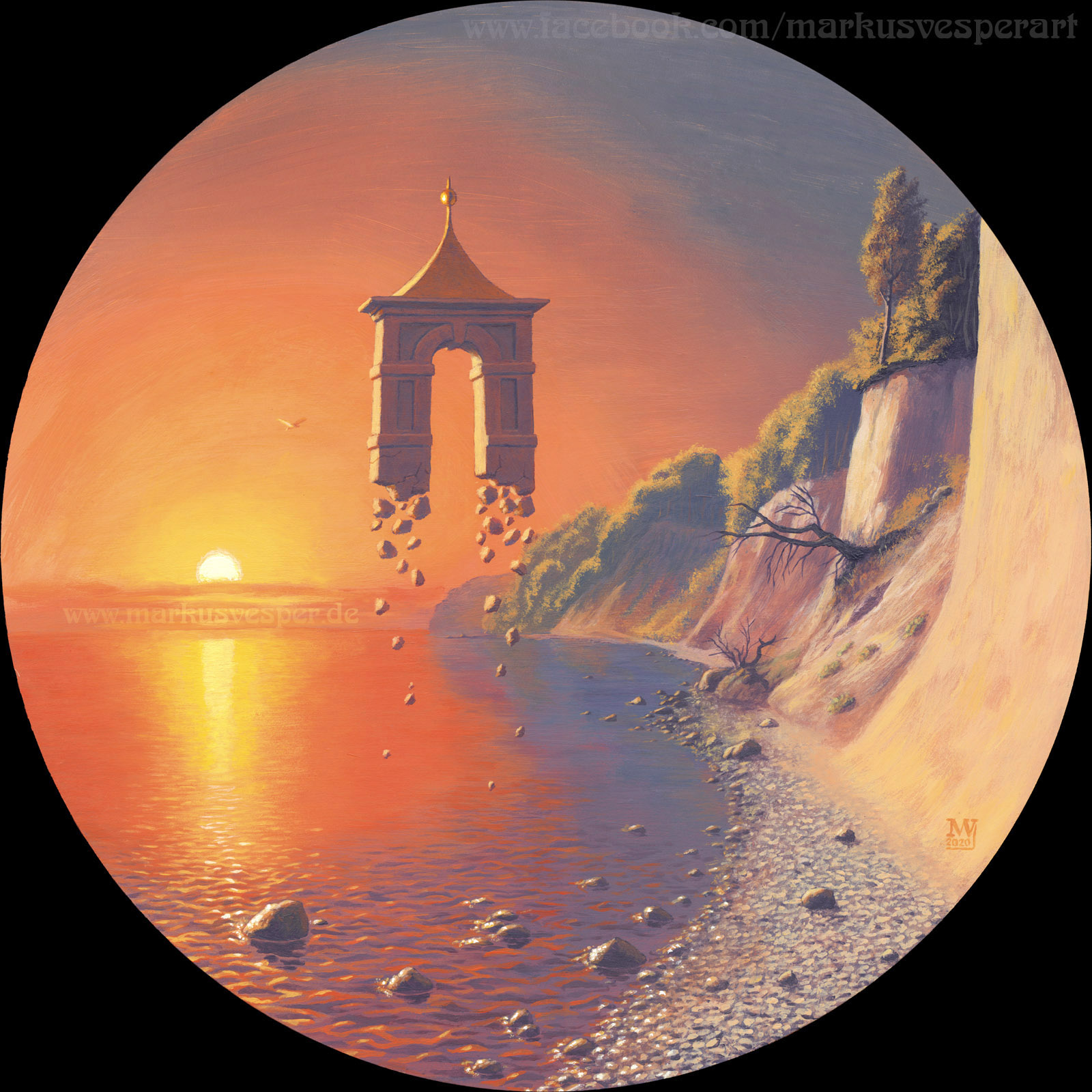
A surreal arch by the German artist Markus Vesper
(click for larger)
XXXI
On Wenlock Edge the wood’s in trouble;
His forest fleece the Wrekin heaves;
The gale, it plies the saplings double,
And thick on Severn strew the leaves.
’Twould blow like this through holt and hanger
When Uricon the city stood:
’Tis the old wind in the old anger,
But then it threshed another wood.
Then, ’twas before my time, the Roman
At yonder heaving hill would stare:
The blood that warms an English yeoman,
The thoughts that hurt him, they were there.
There, like the wind through woods in riot,
Through him the gale of life blew high;
The tree of man was never quiet:
Then ’twas the Roman, now ’tis I.
The gale, it plies the saplings double,
It blows so hard, ’twill soon be gone:
To-day the Roman and his trouble
Are ashes under Uricon. — from A.E. Housman’s A Shropshire Lad (1896)
Post-Performative Post-Scriptum
If you were already familiar with the poem, you may have noticed that I replaced “snow” with “strew” in line four. I don’t think the original “snow” works, because leaves don’t fall like snow or look anything like snow. Plus, leaves don’t melt like snowflakes when they land on water. Plus plus, the consonant-cluster of “strew” works well with the idea of leaves coating the water.
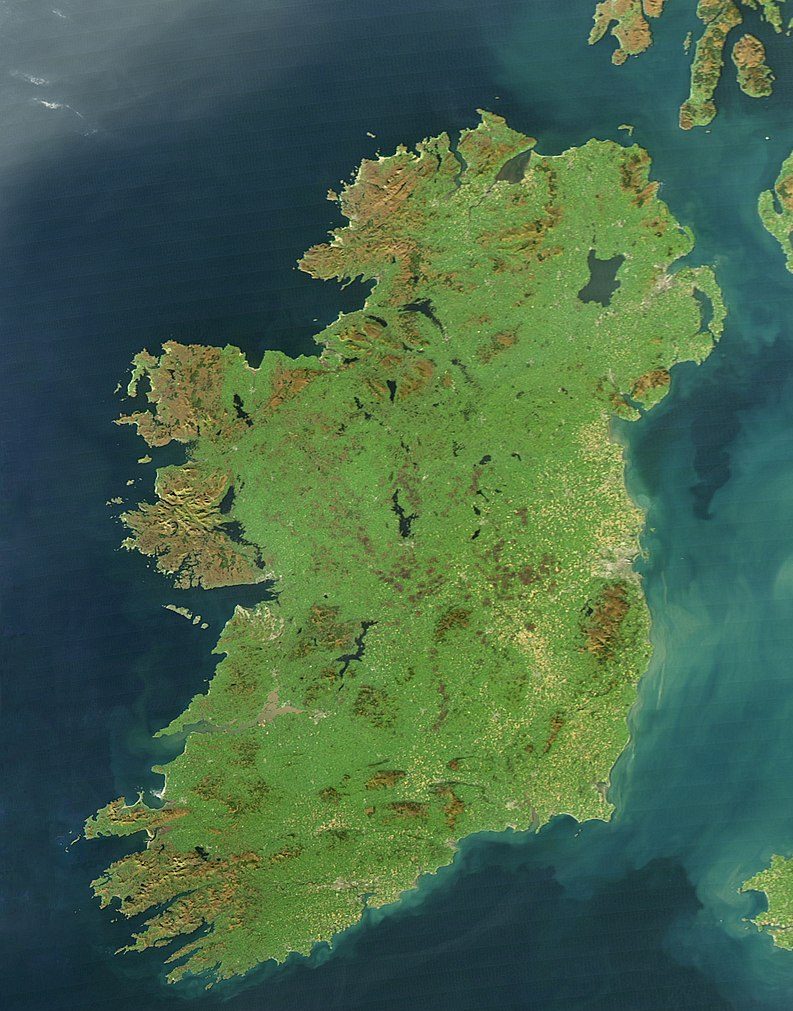
Satellite image of Ireland
Currently listening…
• Yewshade, Præternatural (1971)
• Lherzolith, Corvinus Necandus Est (1993)
• Nmuirruniumh, Undersea (2015)
• Decapod 77, Immaterialist (2018)
• Máscara Marfileña, Gatera (2019)
• Sentinel Youth, Noctilucence (1995)
• Tantalizor, √83 (1996)
• L.D. Cadáver, Psicolingüística (1992)
• Donna Quail, Nettles by the Well (2022)
• Altair Altar, Stellare (2009)
• Felissity, Caithness (1986)
• BeGuLD, Spark in the Dark (2013)
• Julie Vendet, Seven-Second Sessions EP (1987)
• Acúfeno Lobuno, Hijos del Sol (1969)
• Hammer and the Hatchets, Sancta Isidora (1990)
• यह घोड़ा, इस्प्रामा की आँखें (2012)
• Chancel, Red Widow (1977)
• Icarus Bees, Live in Carlisle (1998)
• Rick Cumberton, City of Forgotten Light (1978)
• Martillo de Marte, Y Los Dignos (2008)
• Sazaqud, Ilseb Niir Gank (1984)
• Mandrakes in Asperity, TQB (Live & Languid) (2014)
Previously pre-posted:
Toxic Turntable #1 • #2 • #3 • #4 • #5 • #6 • #7 • #8 • #9 • #10 • #11 • #12 • #13 • #14 • #15 • #16 • #17 • #18 • #19 • #20 • #21 • #22 • #23 • #24 • #25 • #26 • #27 •
A fractal is a shape in which a part looks like the whole. Trees are fractals. And lungs. And clouds. But there are man-made fractals too and probably the most famous of them all is the Sierpiński triangle, invented by the Polish mathematician Wacław Sierpiński (1882-1969):

Sierpiński triangle
There are many ways to create a Sierpiński triangle, but one of the simplest is to trace all possible routes followed by a point jumping halfway towards the vertices of an equilateral triangle. If you mark the endpoint of the jumps, the Sierpiński triangle appears as the routes get longer and longer, like this:
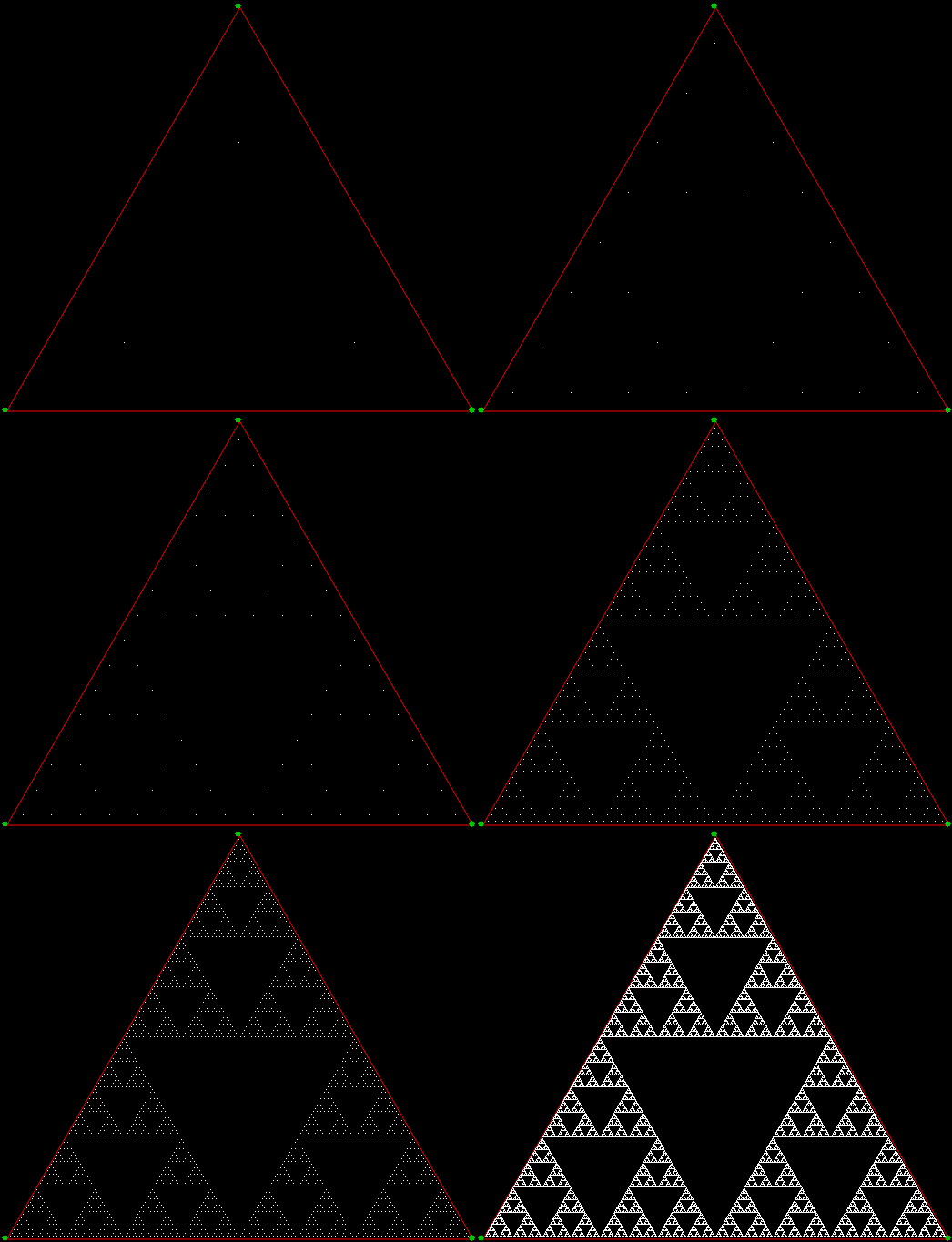
Point jumping 1/2 way towards vertices of an equilateral triangle (animated)
Once you’ve created a Sierpiński triangle like that, you can play with it. For example, you can use simple trigonometry to stretch the triangle into a circle:
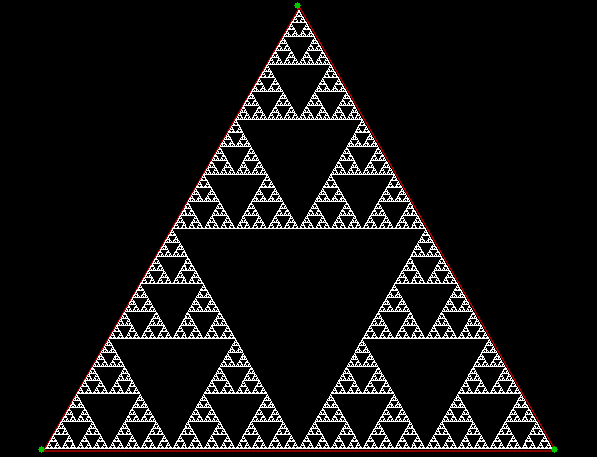
Sierpiński triangle to circle stage #1
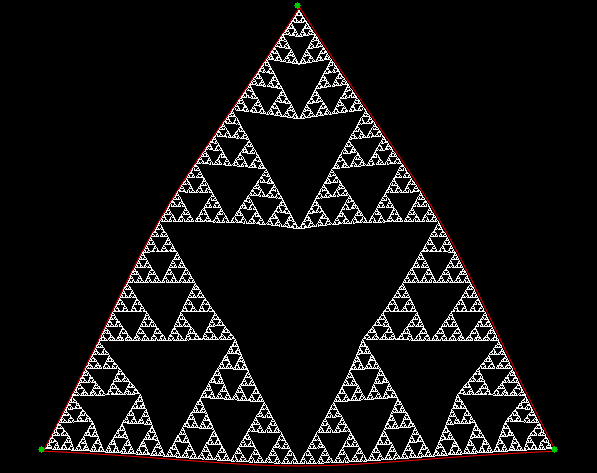
Sierpiński triangle to circle #2
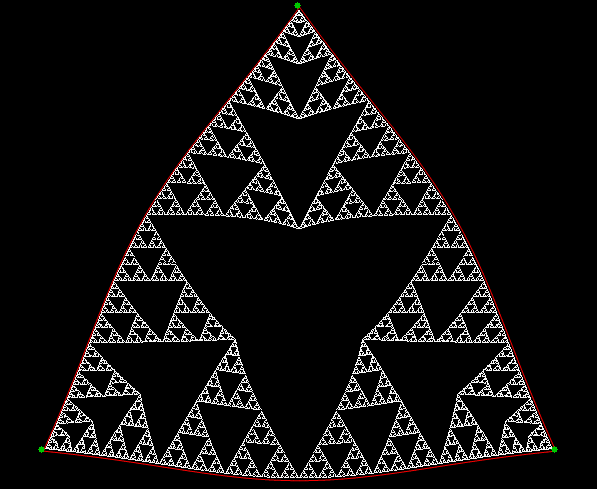
Sierpiński triangle to circle #3
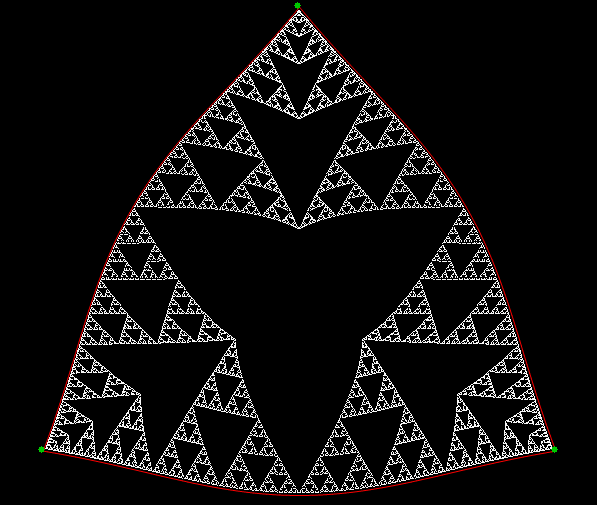
Sierpiński triangle to circle #4
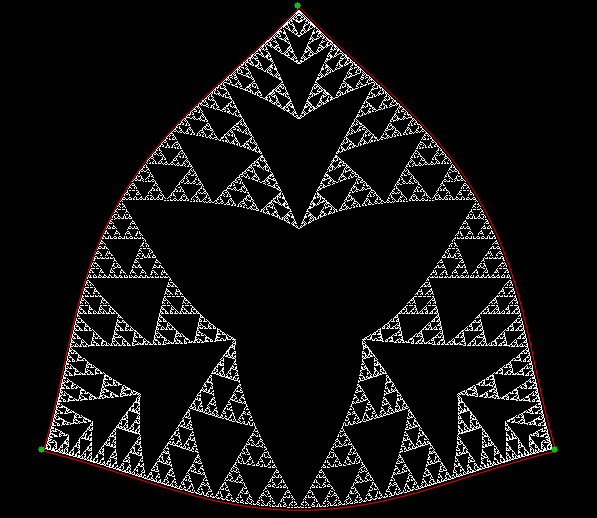
Sierpiński triangle to circle #5
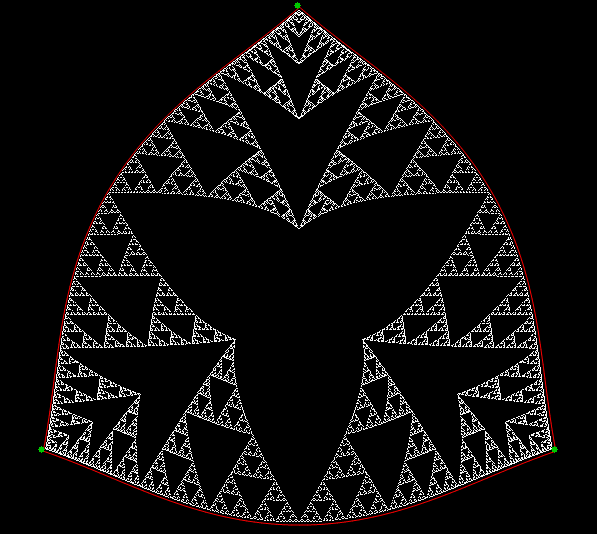
Sierpiński triangle to circle #6
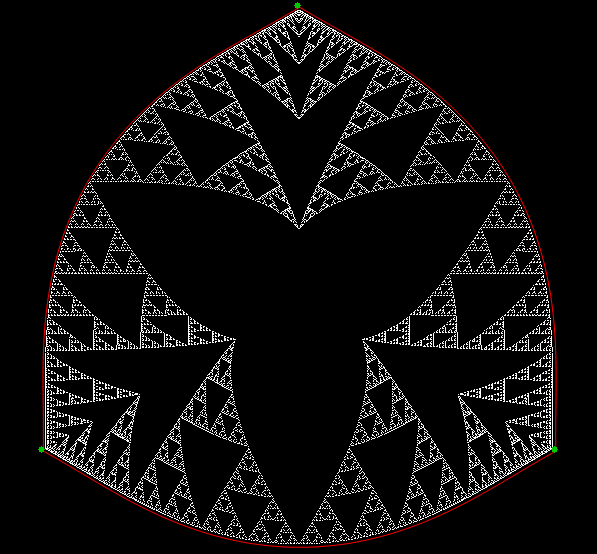
Sierpiński triangle to circle #7
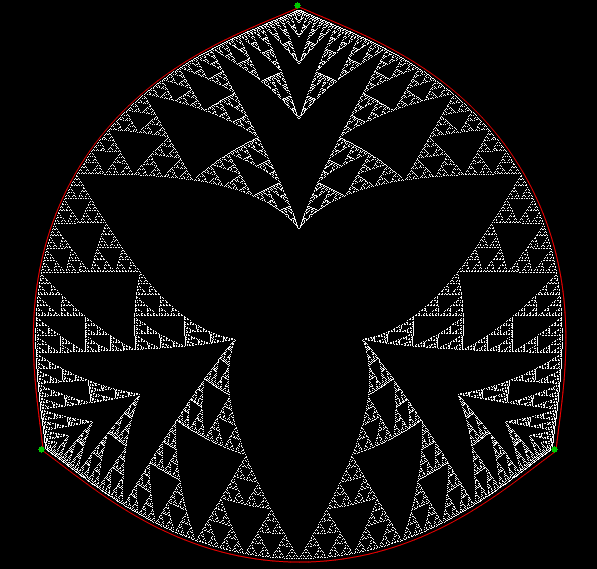
Sierpiński triangle to circle #8
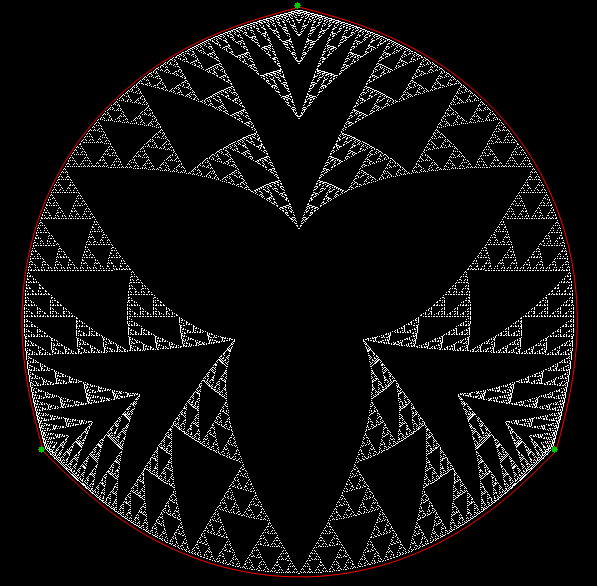
Sierpiński triangle to circle #9
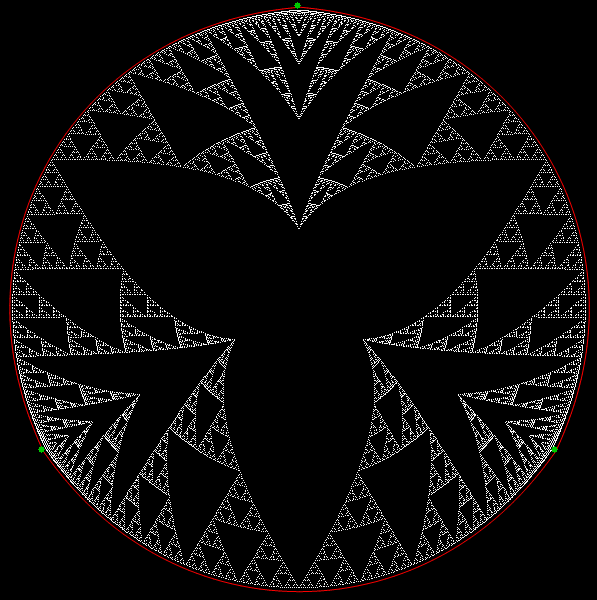
Sierpiński triangle to circle #10
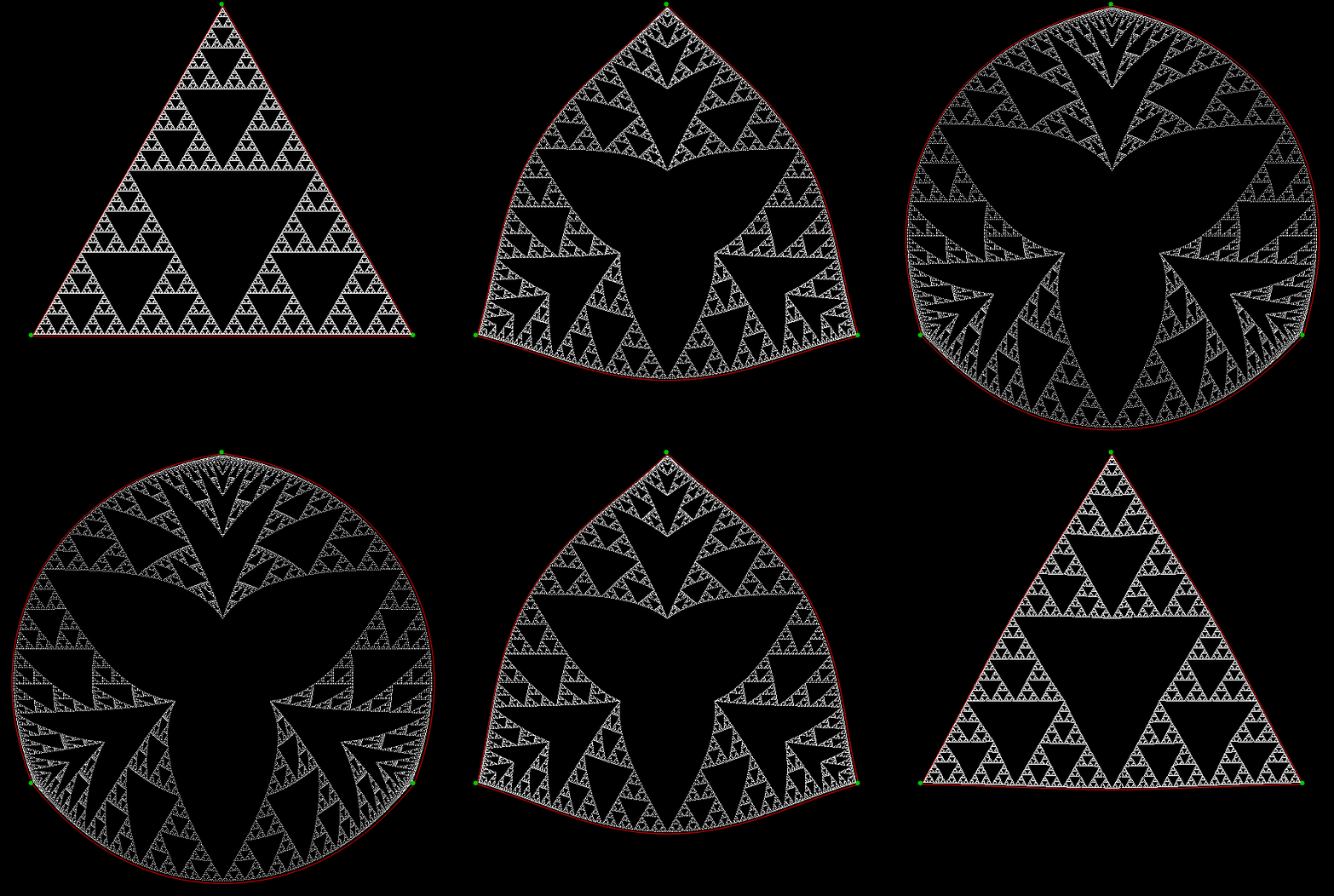
Sierpiński triangle to Sierpiński circle (animated)
But the trigging of the triangle can go further. You can expand the Sierpiński circle further, like this:
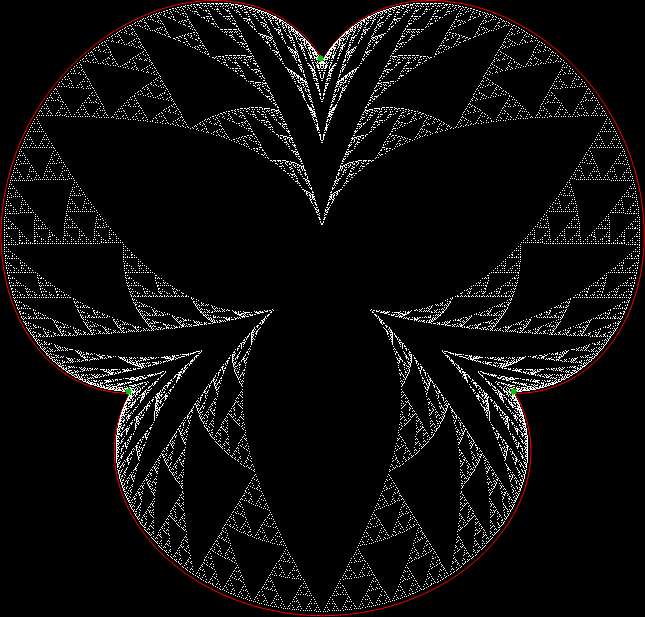
Sierpiński circle expanded
Or shrink the Sierpiński triangle like this:
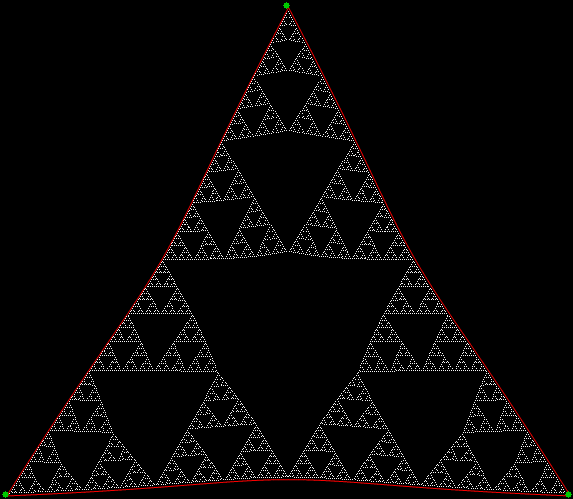
Shrinking Sierpiński triangle stage #1
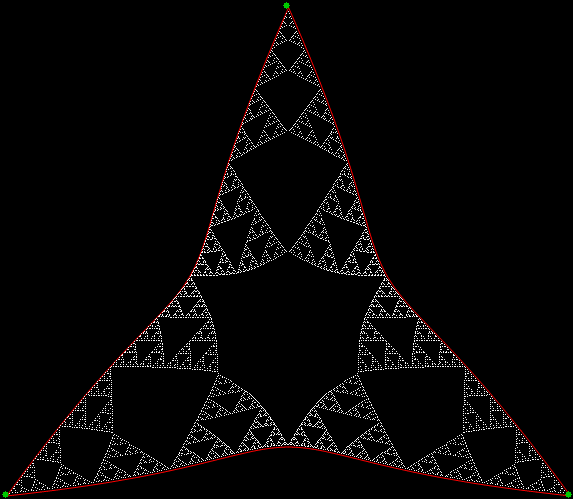
Shrinking Sierpiński triangle #2
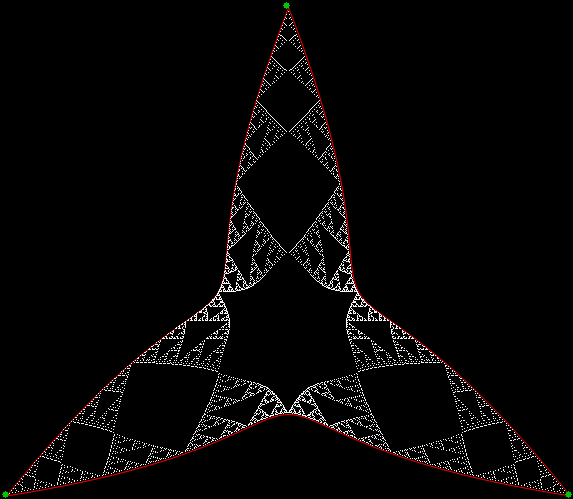
Shrinking Sierpiński triangle #3
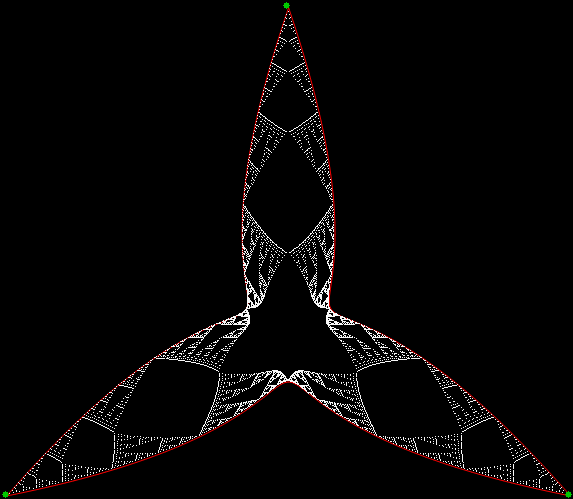
Shrinking Sierpiński triangle #4
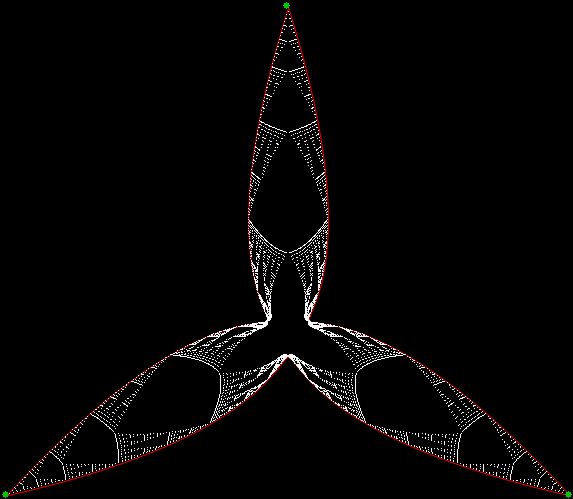
Shrinking Sierpiński triangle #5
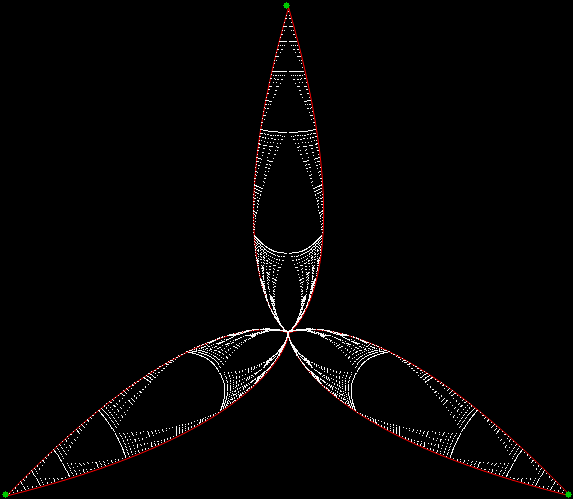
Shrinking Sierpiński triangle #6
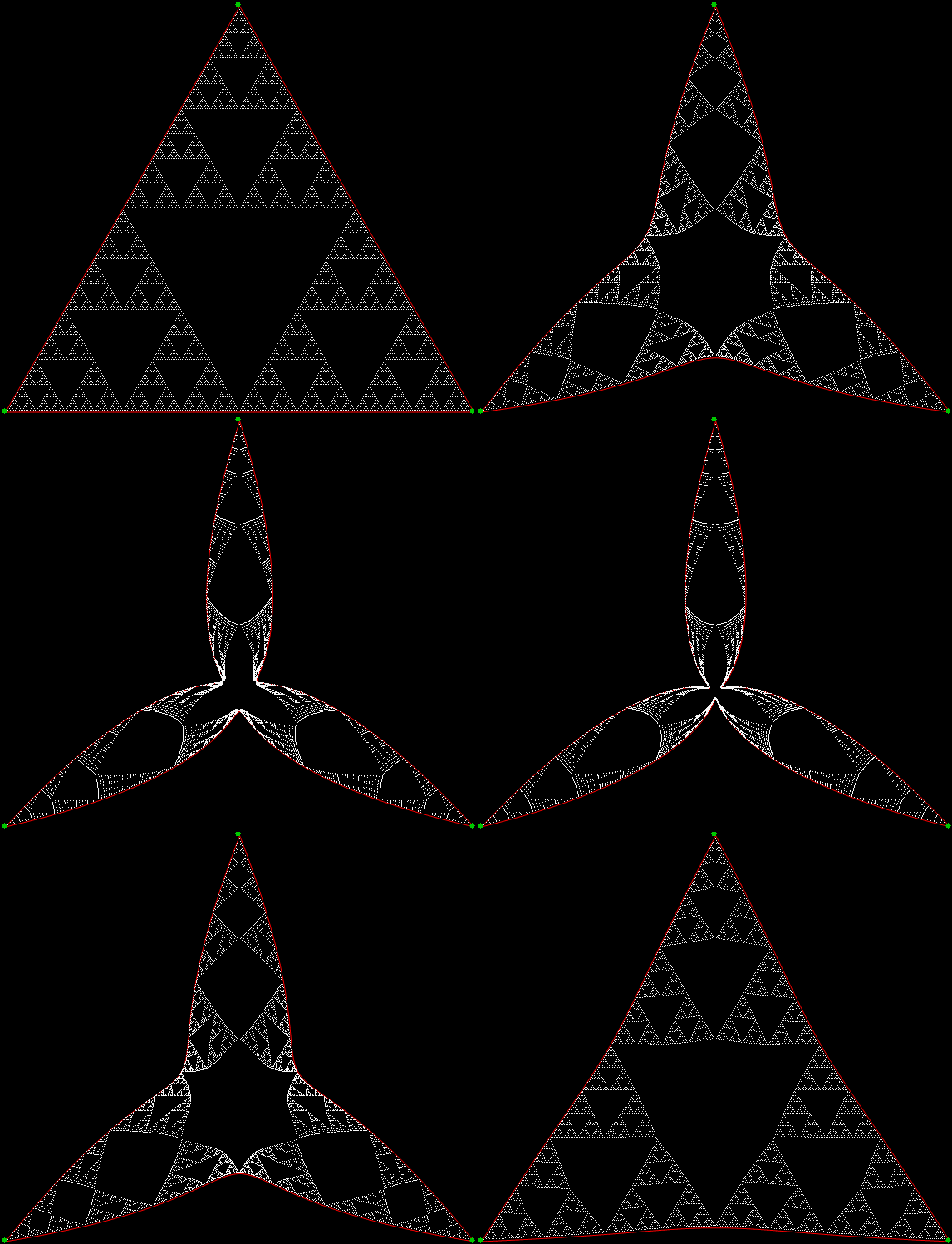
Shrinking Sierpiński triangle (animated)
You can also create new shapes using the jumping-point technique. Suppose that, as the point is jumping, you adjust its position outwards into the circumscribed circle whenever it lands within the boundaries of the governing triangle. But if the point lands outside those boundaries, you leave it alone. Using this adapted technique, you get a shape like this:
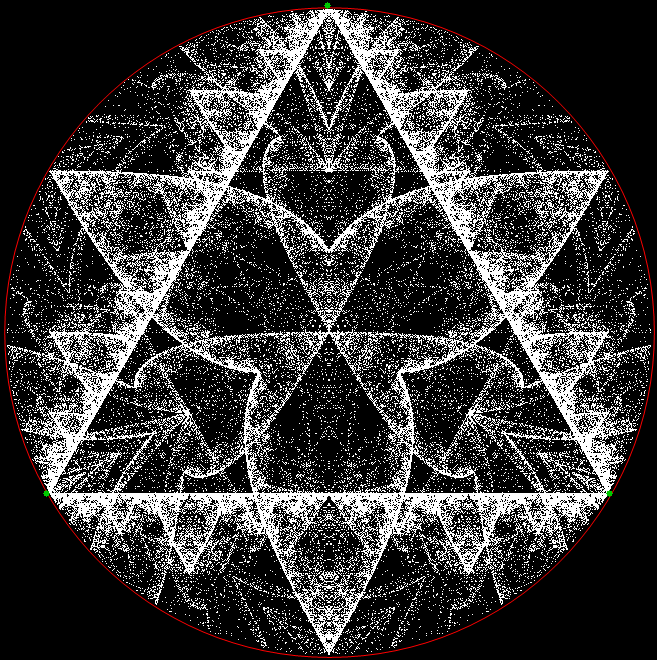
Adjusted Sierpiński circle
And if the point is swung by 60° after it’s adjusted into the circle, you get a shape like this:
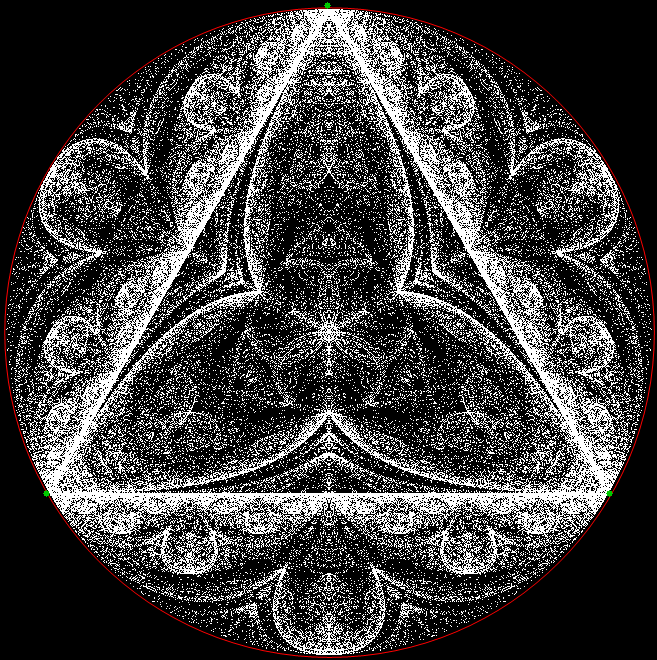
Adjusted Sierpiński circle (60° swing)
Here are some animated gifs showing these shapes rotating in a full circle at various speeds:

Adjusted Sierpiński circle (swinging animation) (fast)
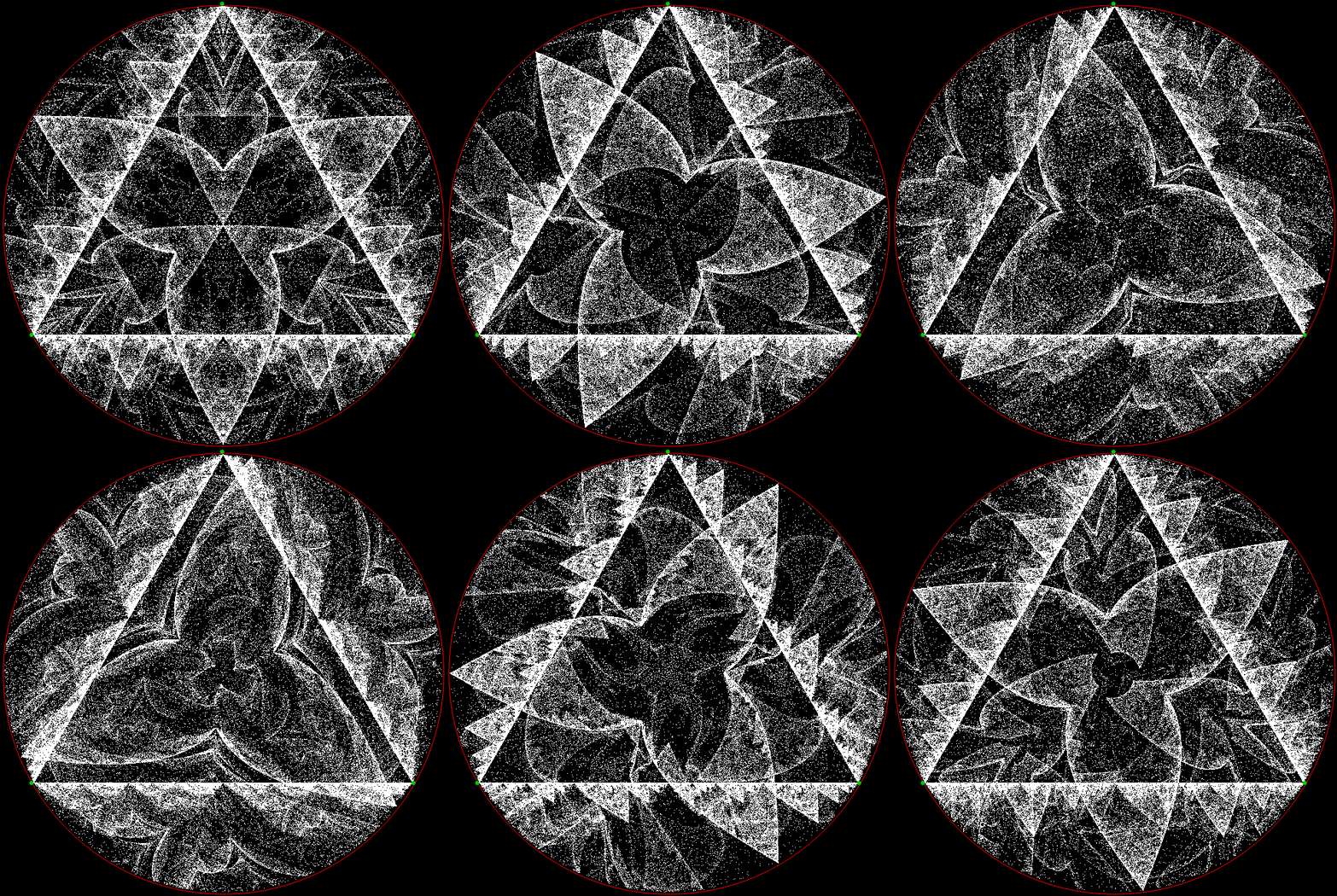
Adjusted Sierpiński circle (swinging animation) (medium)
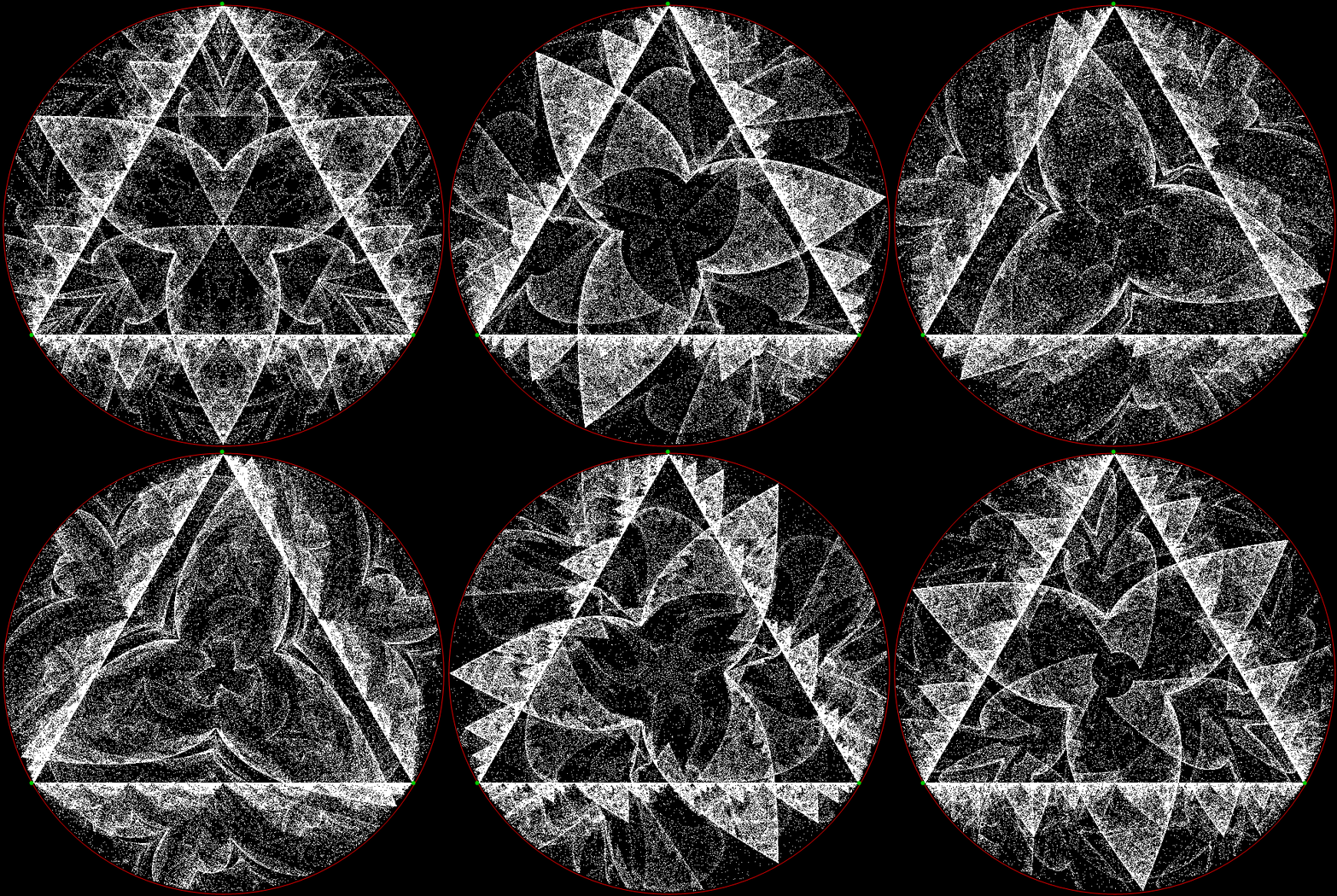
Adjusted Sierpiński circle (swinging animation) (slow)
“I love figures, it gives me an intense satisfaction to deal with them, they’re living things to me, and now that I can handle them all day long I feel myself again.” — the imprisoned accountant Jean Charvin in W. Somerset Maugham’s short-story “A Man with a Conscience” (1939)
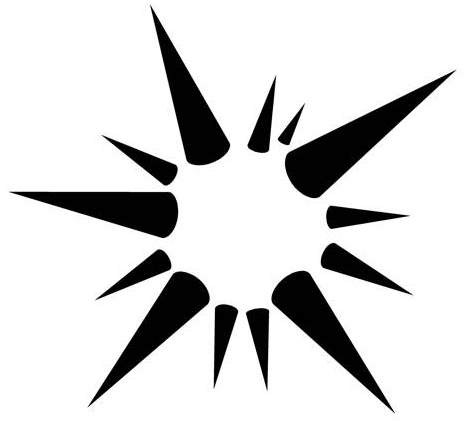
A perceived sphere (image from AnOpticalIllusion.com)
 Overlord In Terms of Core Issues Around Maximal Engagement with Key Notions of the Über-Feral