
“My only drugs are silence and solitude.” — Frederick Forsyth in The Outsider: My Life in Intrigue (2015)
Still-Popper
Arty Fish Haul
When is a fish a reptile? When it looks like this:
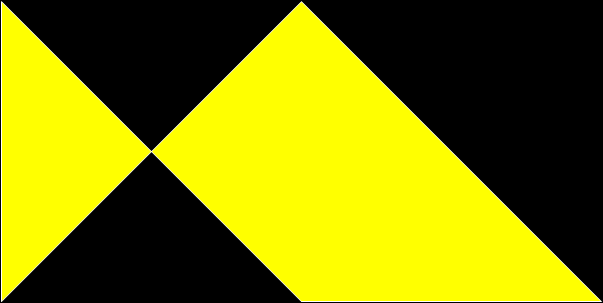
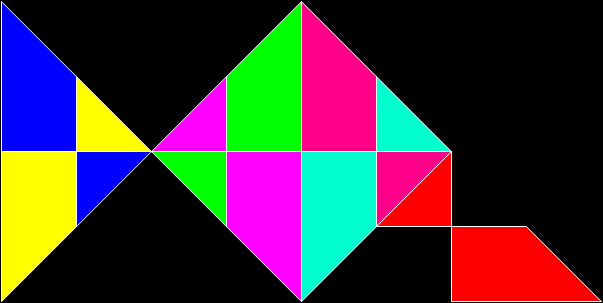
Fish from four isosceles right triangles
The fish-shape can be divided into eight identical sub-copies of itself. That is, it can be repeatedly tiled with copies of itself, so it’s an example of what geometry calls a rep-tile:
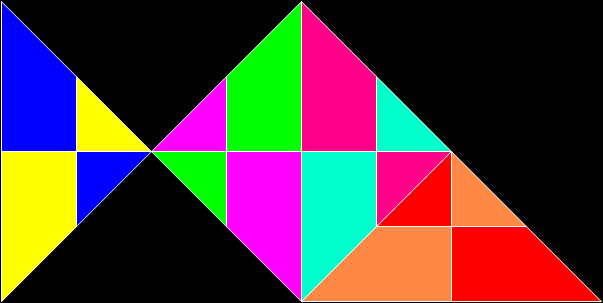
Fish divided into eight identical sub-copies
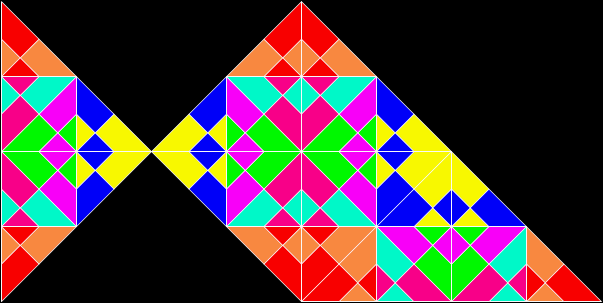
Fish divided again
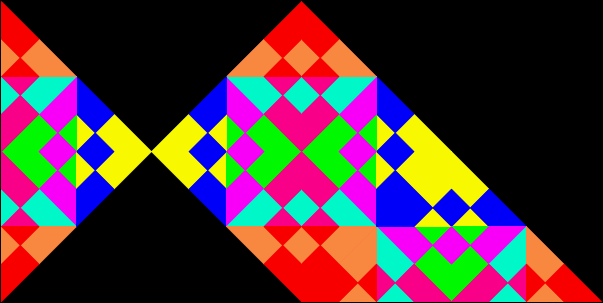
Fish divided #4
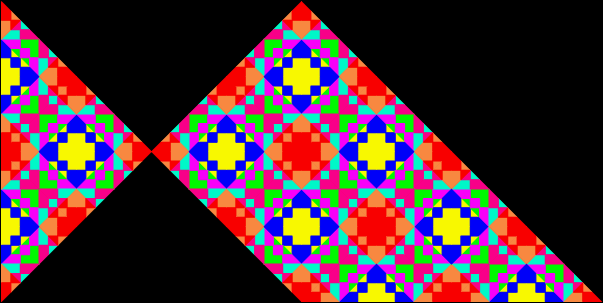
Fish divided #5
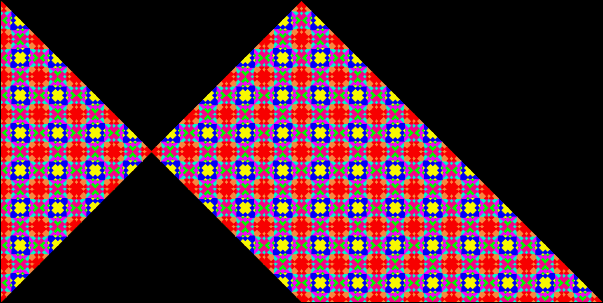
Fish divided #6
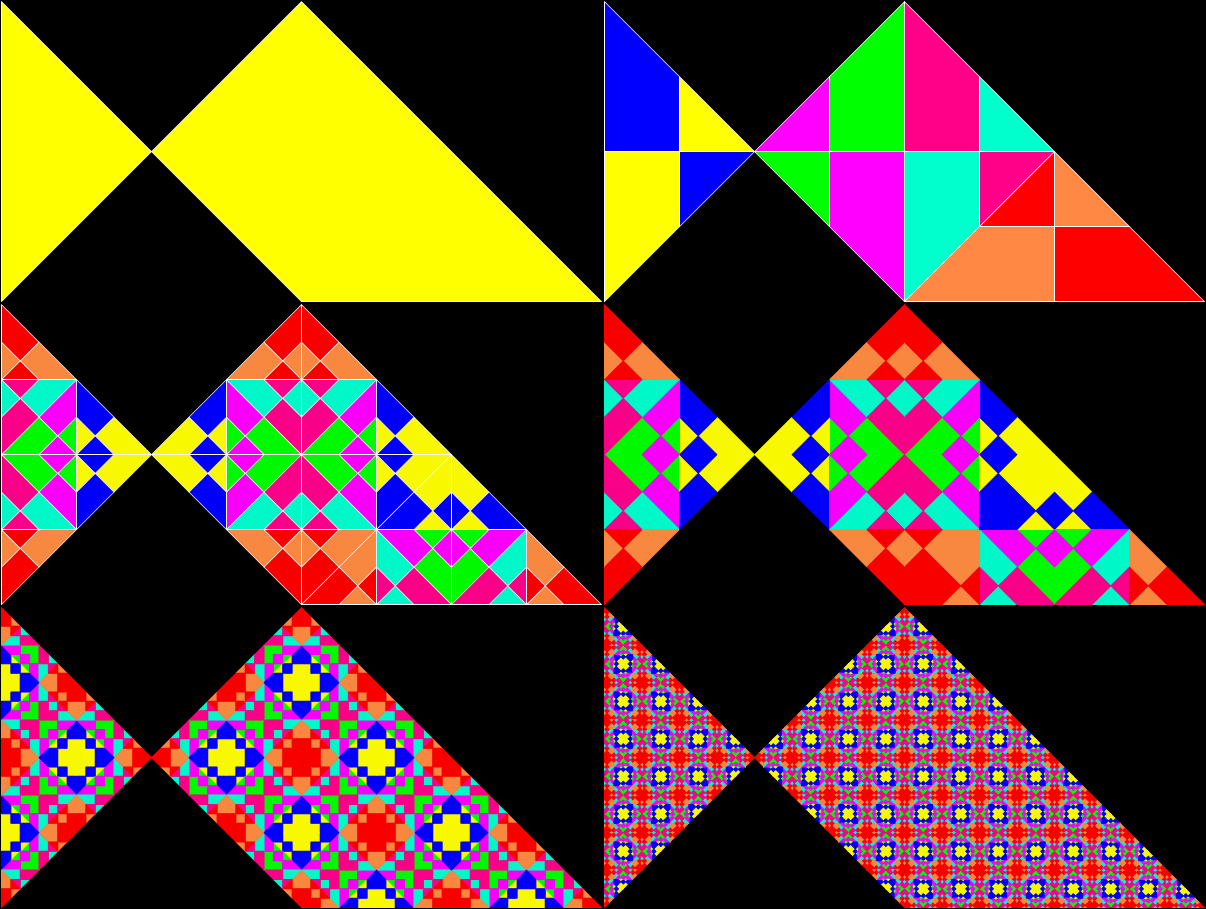
Fish (animated rep-tiling)
Now suppose you divide the fish, then discard one of the sub-copies. And carry on dividing-and-discarding like that:
Fish discarding sub-copy 7 (#1)
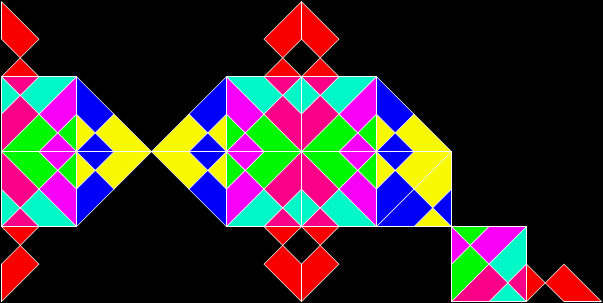
Fish discarding sub-copy 7 (#2)
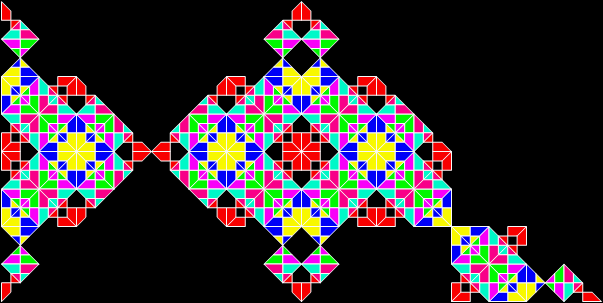
Fish discarding sub-copy 7 (#3)
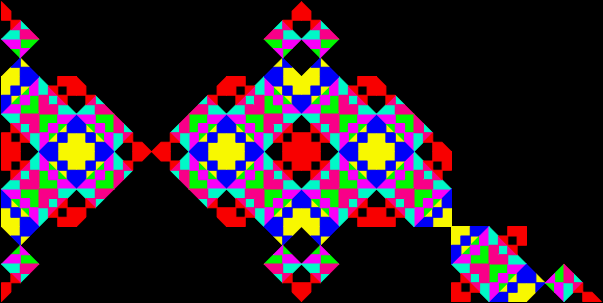
Fish discarding sub-copy 7 (#4)
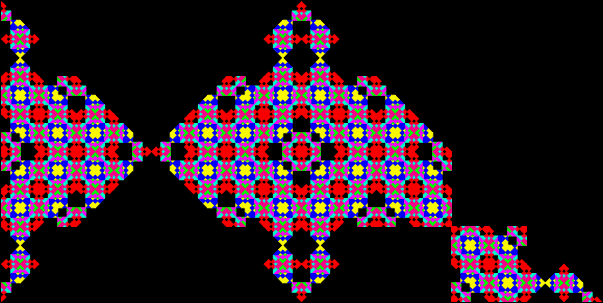
Fish discarding sub-copy 7 (#5)
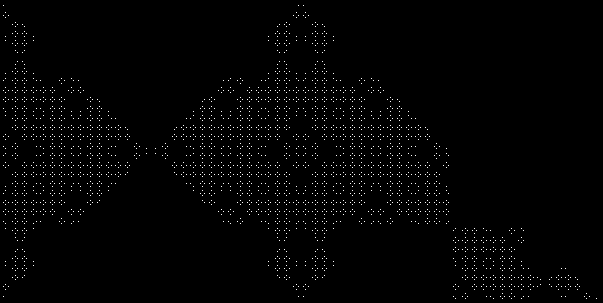
Fish discarding sub-copy 7 (#6)
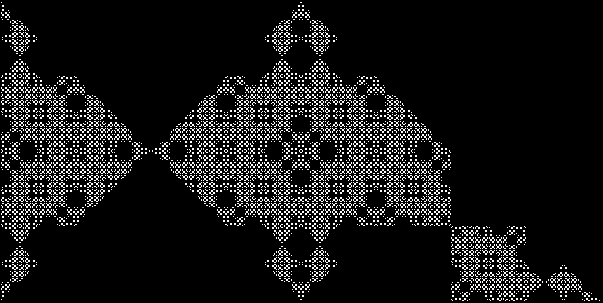
Fish discarding sub-copy 7 (#7)
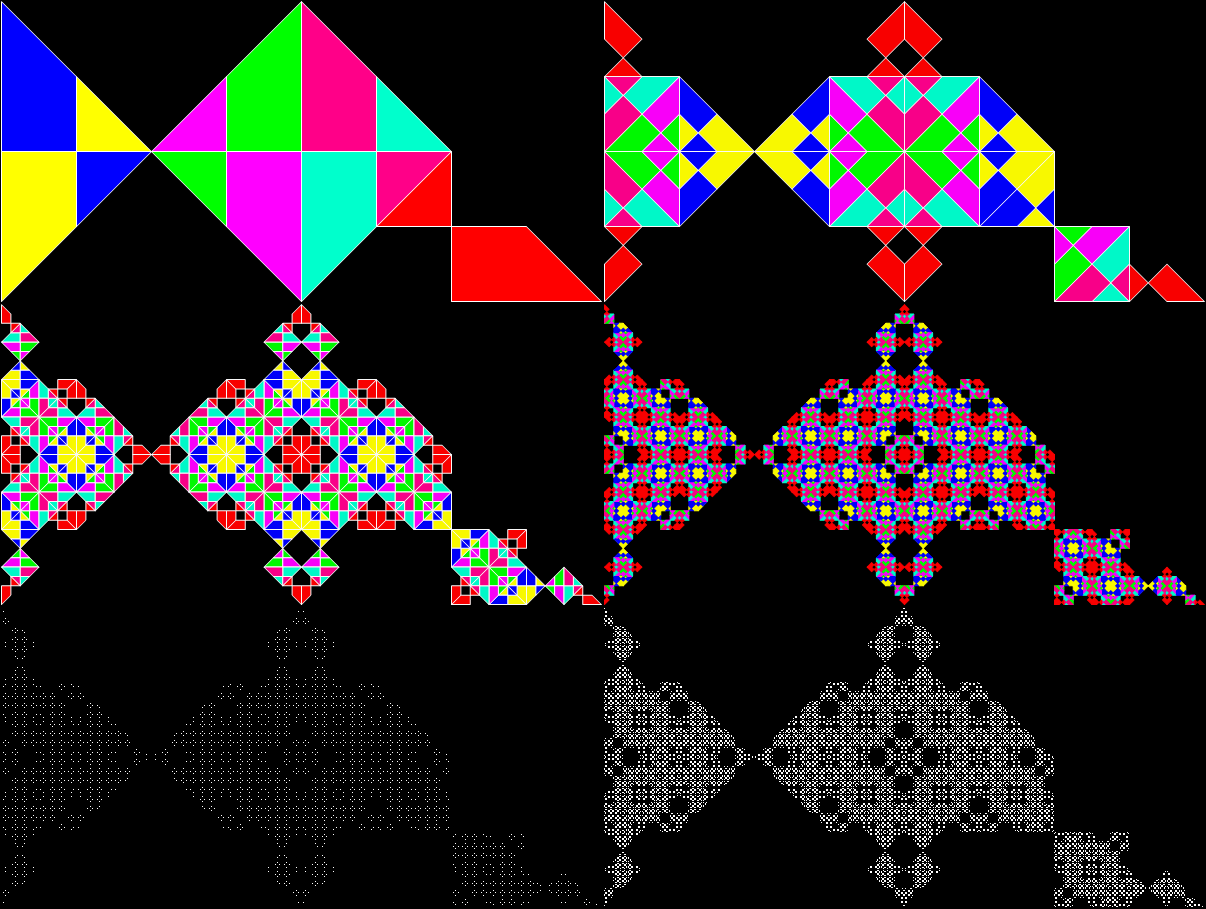
Fish discarding sub-copy 7 (animated)
Here are more examples of the fish sub-dividing, then discarding sub-copies:
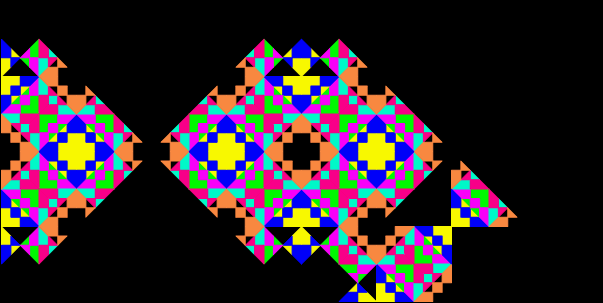
Fish discarding sub-copy #1

Fish discarding sub-copy #2
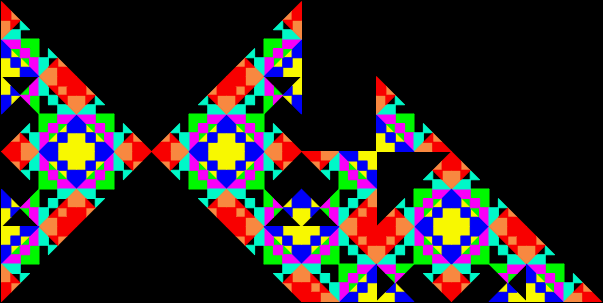
Fish discarding sub-copy #3
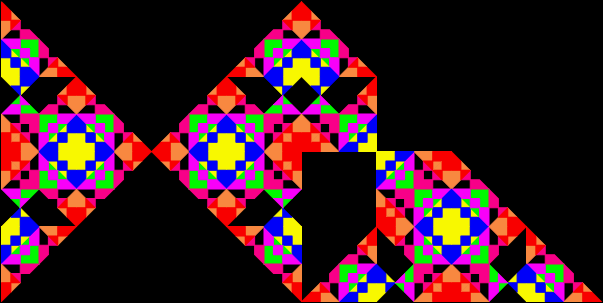
Fish discarding sub-copy #4
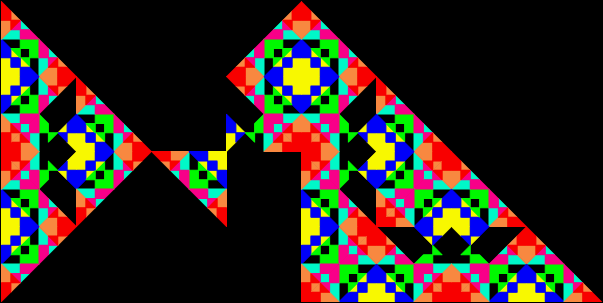
Fish discarding sub-copy #5
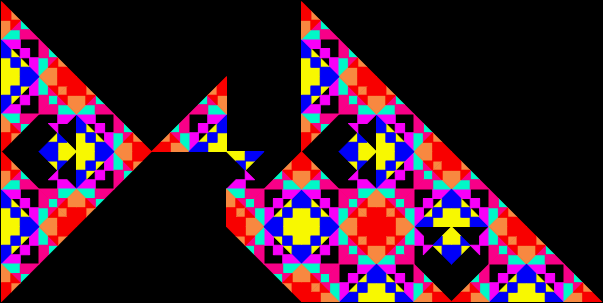
Fish discarding sub-copy #6
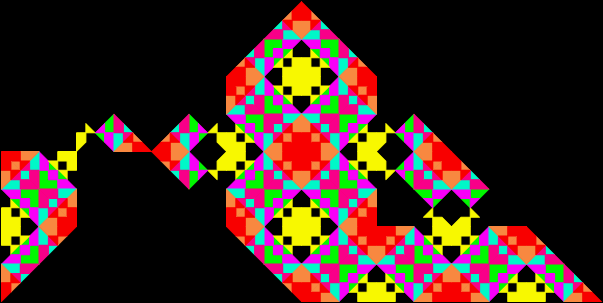
Fish discarding sub-copy #7
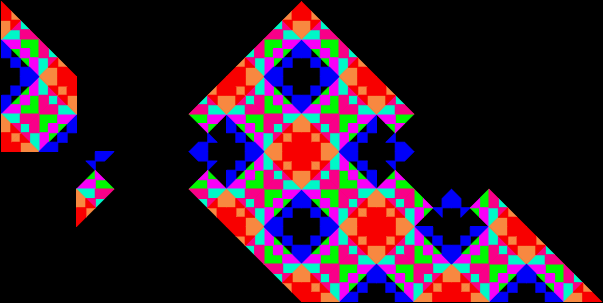
Fish discarding sub-copy #8
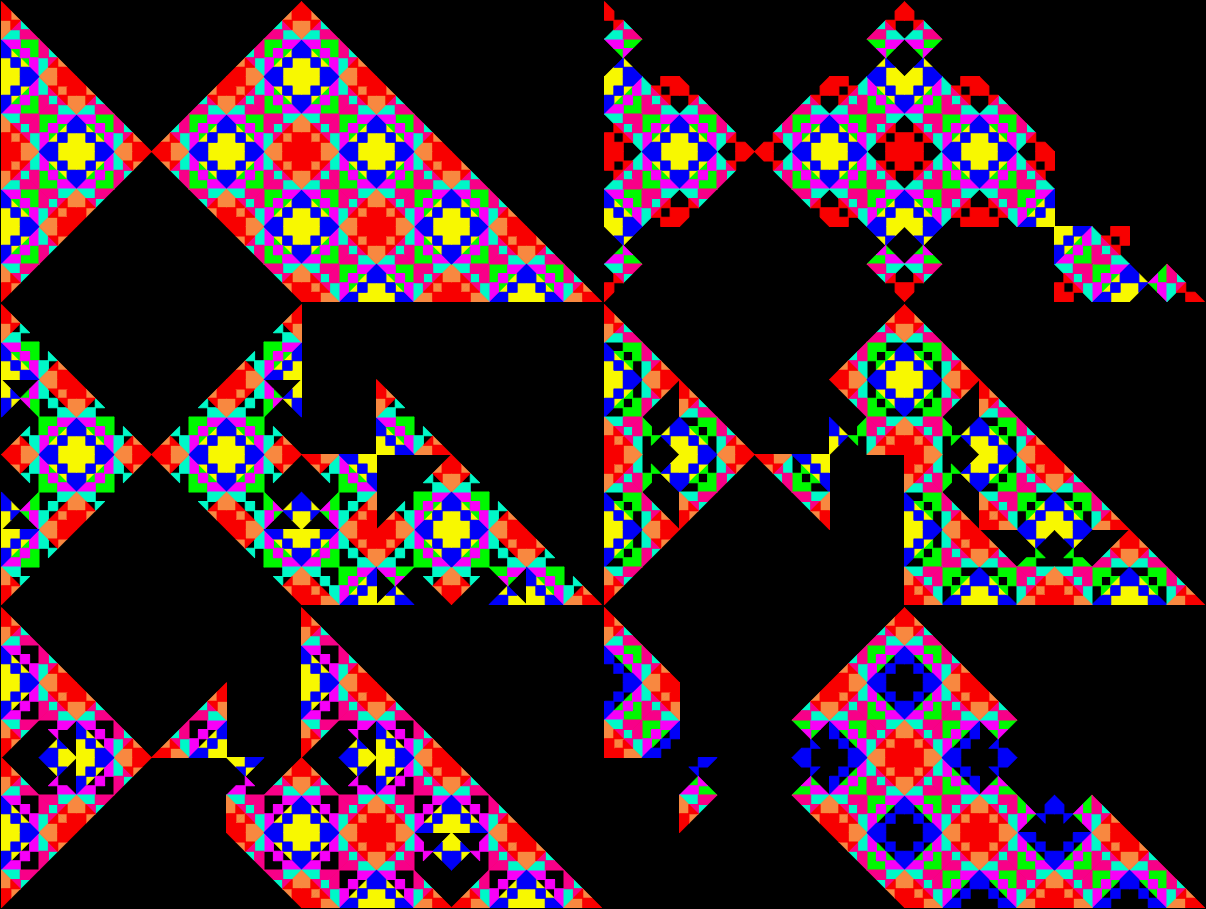
Fish discarding sub-copies (animated)
Now try a square divided into four copies of the fish, then sub-divided again and again:

Fish-square #1
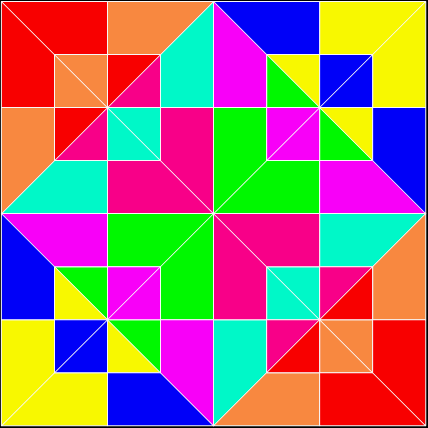
Fish-square #2
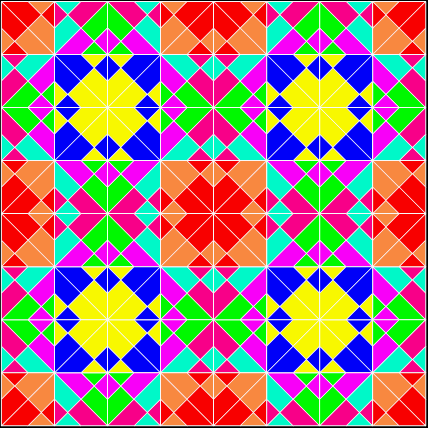
Fish-square #3
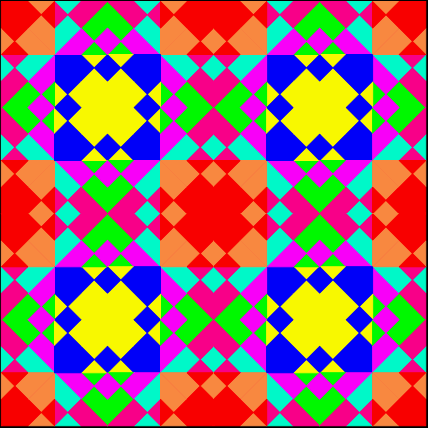
Fish-square #4
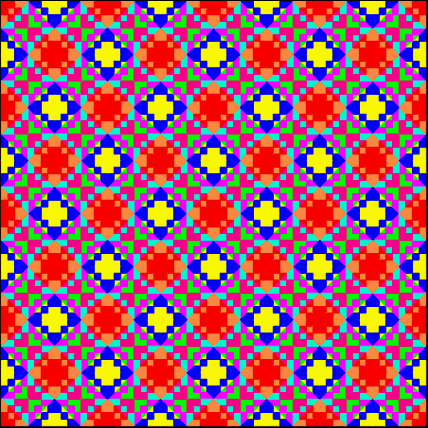
Fish-square #5
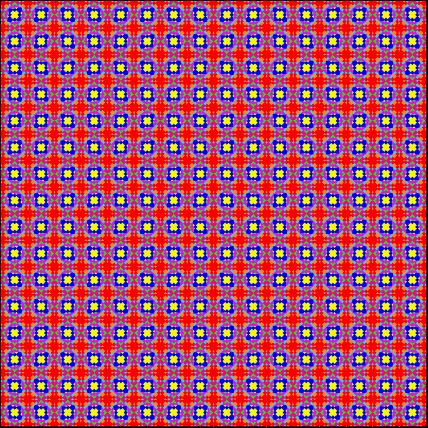
Fish-square #6
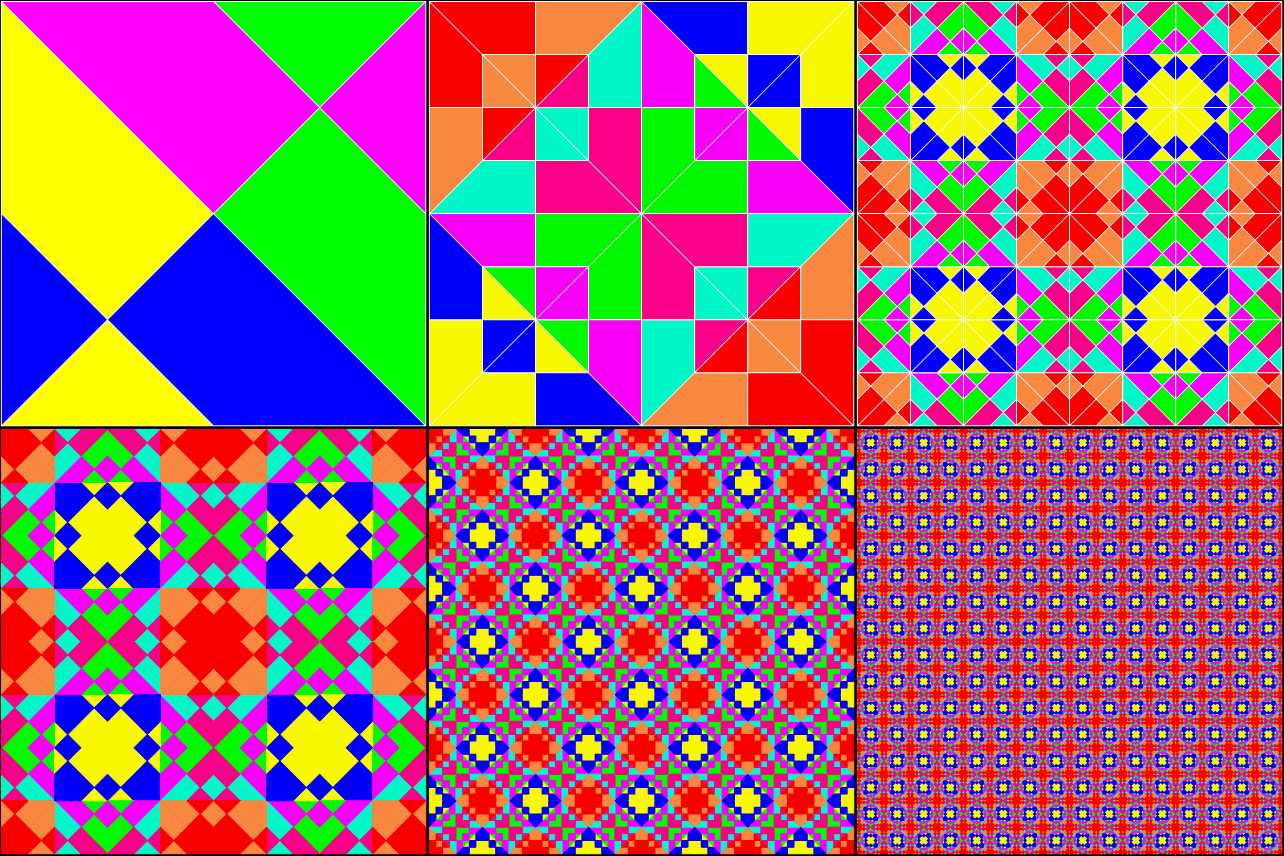
Fish-square (animated)
The fish-square can be used to create more symmetrical patterns when the divide-and-discard rule is applied. Here’s the pattern created by dividing-and-discarded two of the sub-copies:
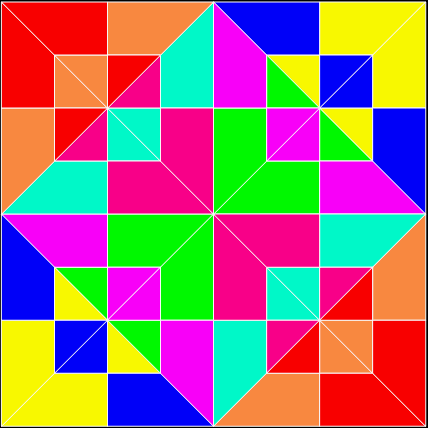
Fish-square divide-and-discard #1

Fish-square divide-and-discard #2
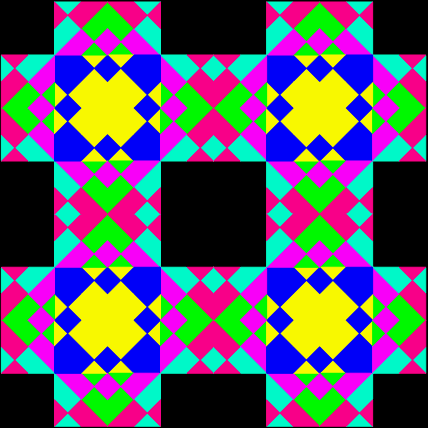
Fish-square divide-and-discard #3

Fish-square divide-and-discard #4

Fish-square divide-and-discard #5

Fish-square divide-and-discard #6
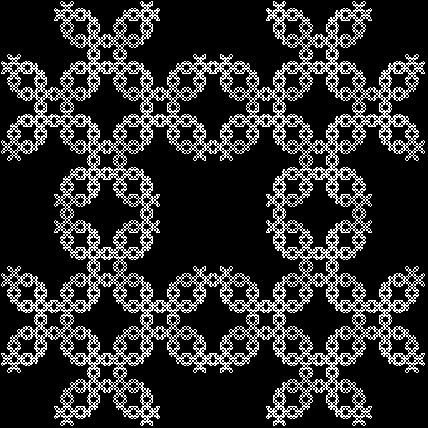
Fish-square divide-and-discard #7
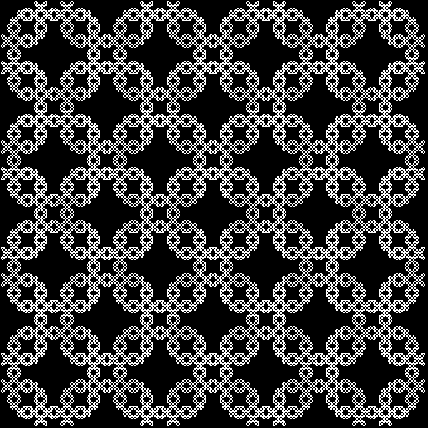
Fish-square divide-and-discard #8 (delayed discard)
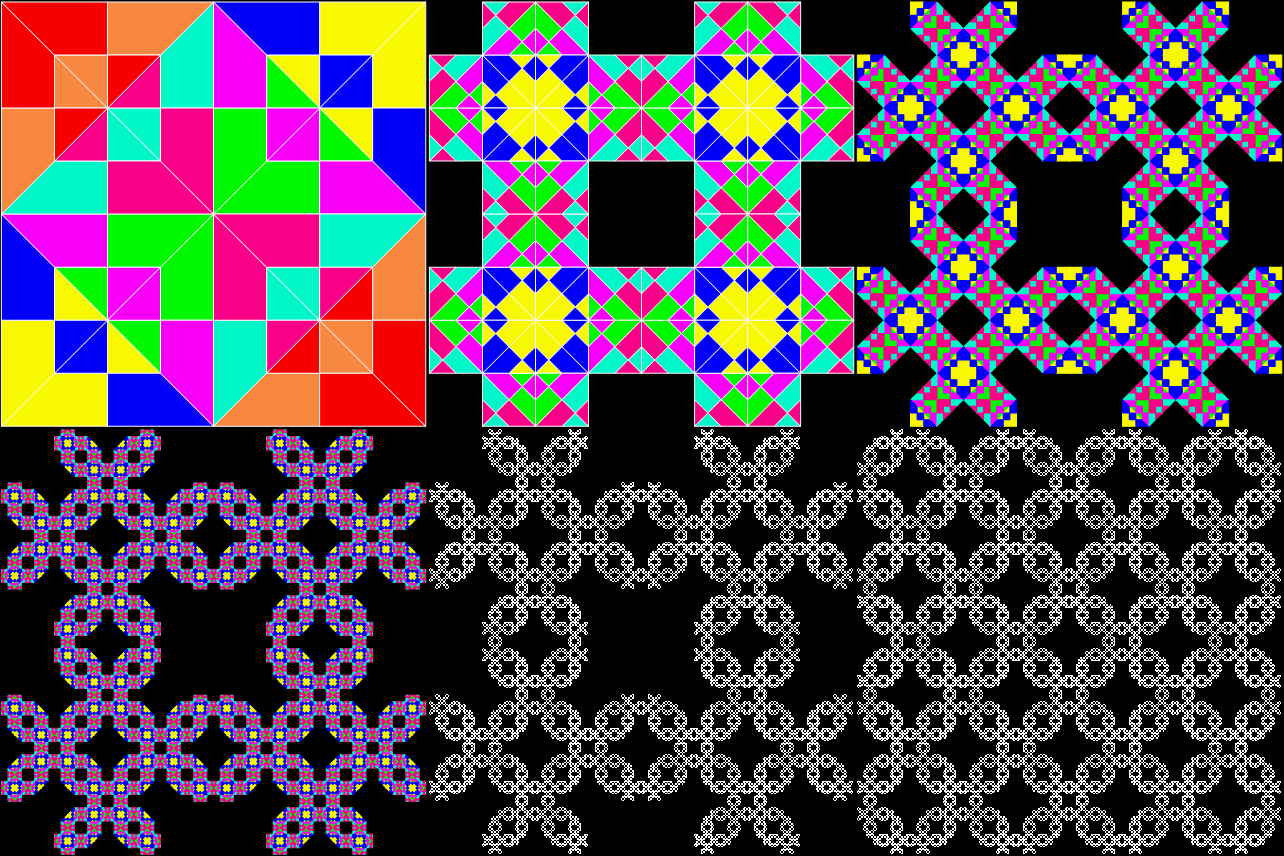
Fish-square divide-and-discard (animated)
Using simple trigonometry, you can convert the square pattern into a circular pattern:
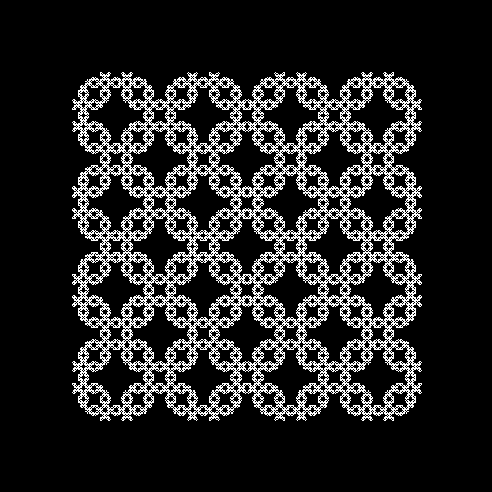
↓

Circular version

Square to circle (animated)
Here are more examples of divide-and-discard fish-squares:
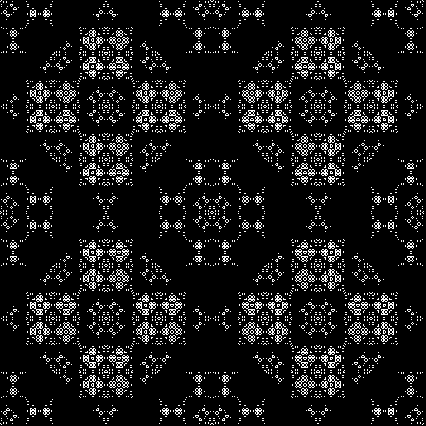
Fish-square divide-and-discard #1
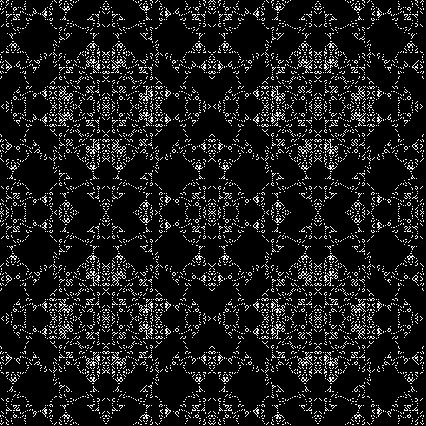
Fish-square divide-and-discard #2
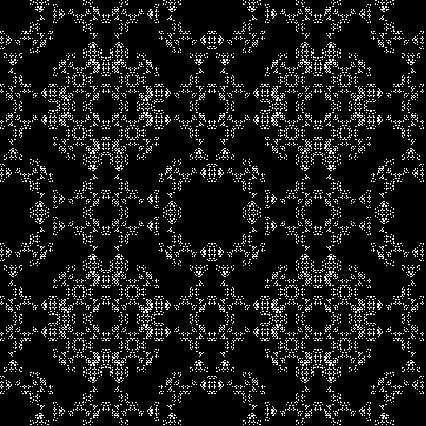
Fish-square divide-and-discard #3
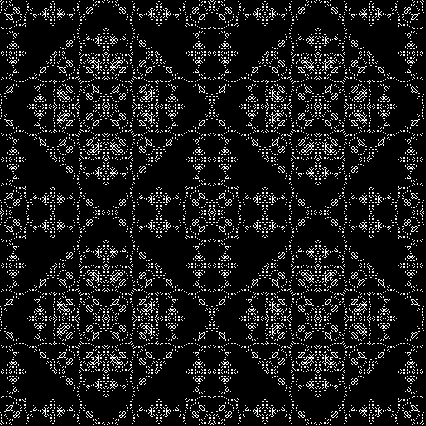
Fish-square divide-and-discard #4
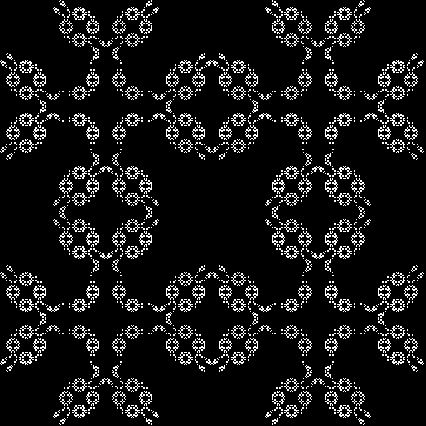
Fish-square divide-and-discard #5
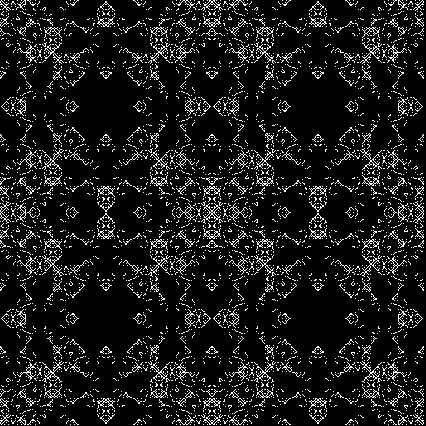
Fish-square divide-and-discard #6
And more examples of fish-squares being converted into circles:
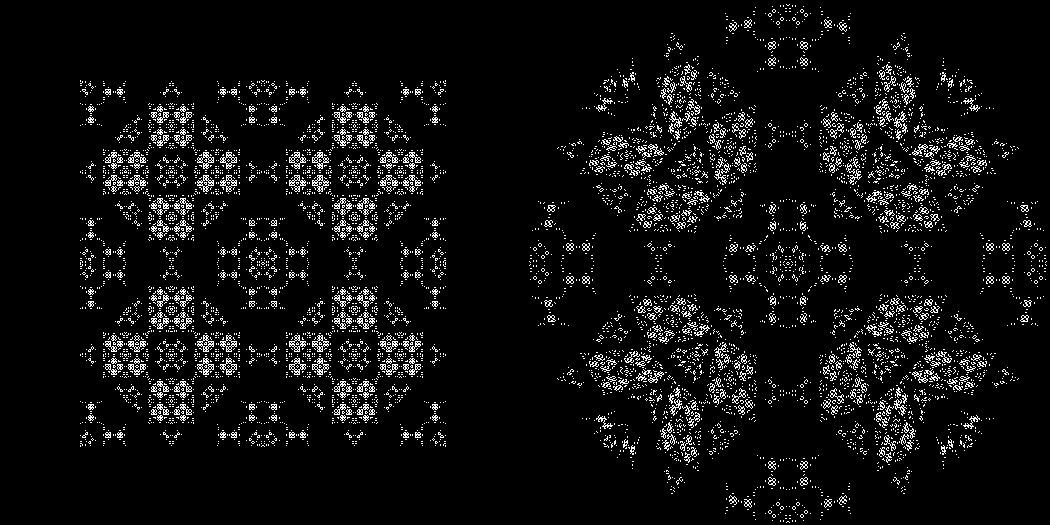
Fish-square to circle #1 (animated)

Fish-square to circle #2
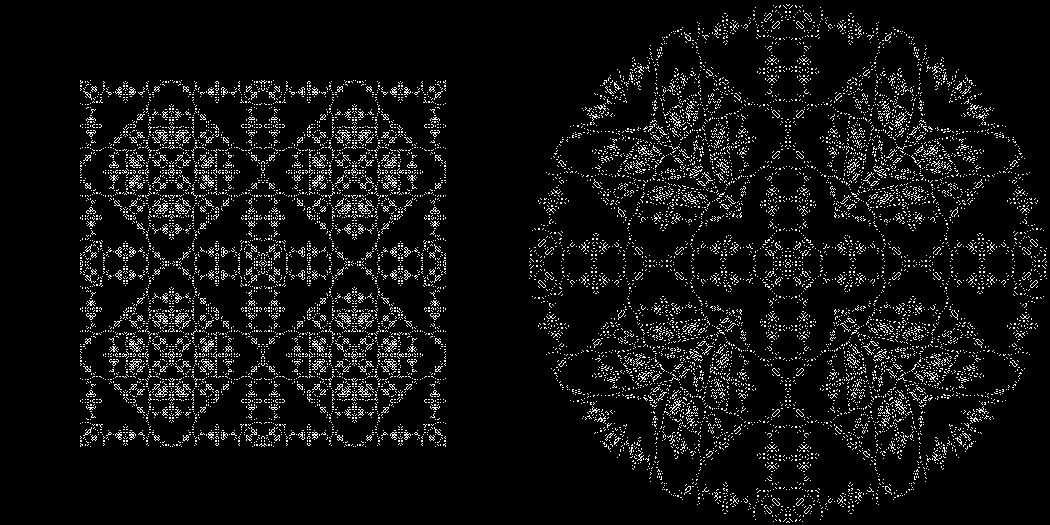
Fish-square to circle #3
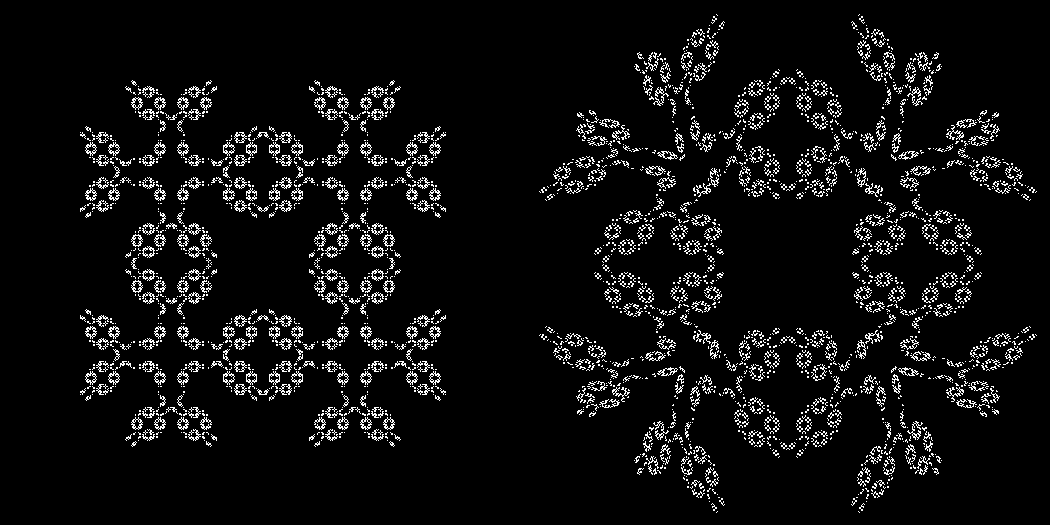
Fish-square to circle #4
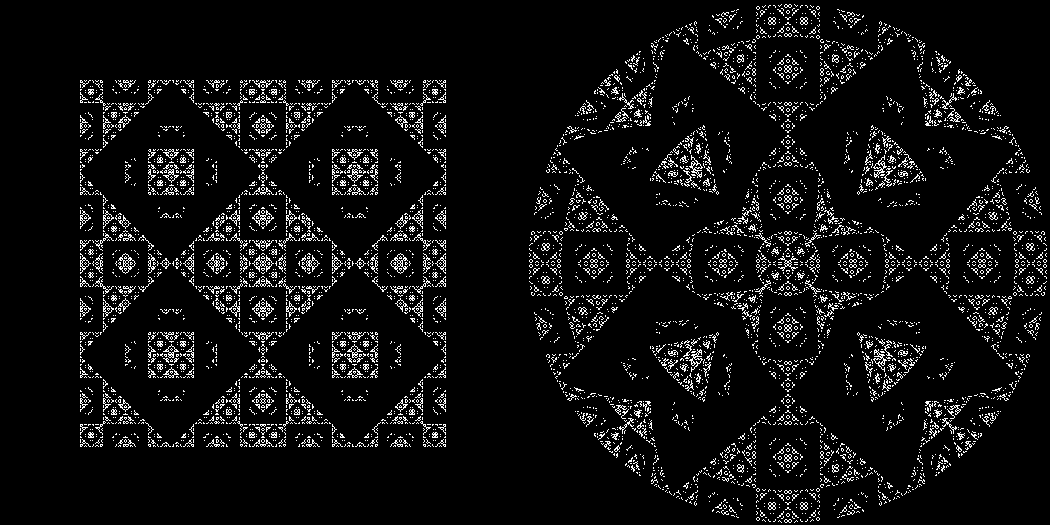
Fish-square to circle #5
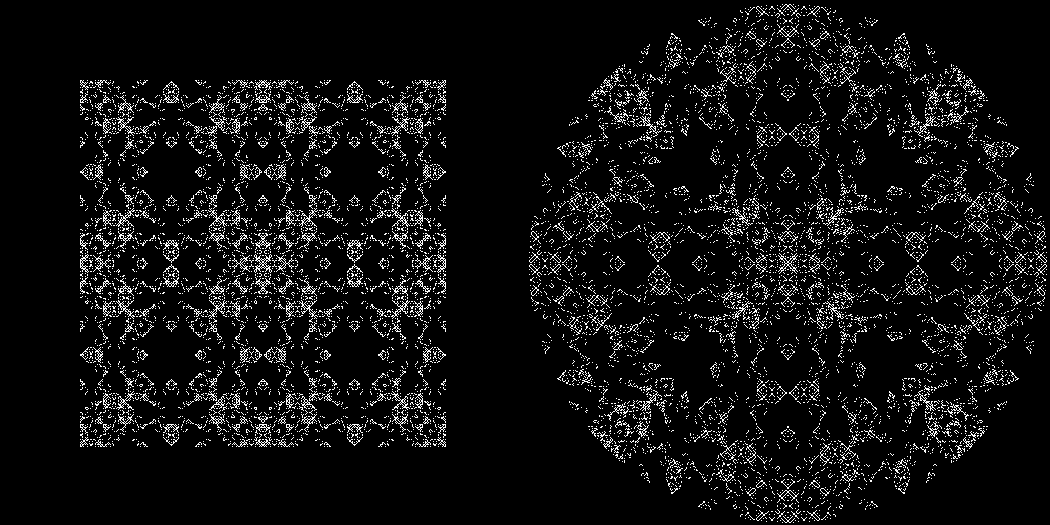
Fish-square to circle #6
Gamma Gamma Hey!

Silver Y Moth, Autographa gamma (Linnaeus 1758)
Less Is Cor
The splendor falls on castle walls
And snowy summits old in story;
The long light shakes across the lakes,
And the wild cataract leaps in glory.
Blow, bugle, blow, set the wild echoes flying,
Blow, bugle; answer, echoes, dying, dying, dying.
O, hark, O, hear! how thin and clear,
And thinner, clearer, farther going!
O, sweet and far from cliff and scar
The horns of Elfland faintly blowing!
Blow, let us hear the purple glens replying,
Blow, bugles; answer, echoes, dying, dying, dying.
O love, they die in yon rich sky,
They faint on hill or field or river;
Our echoes roll from soul to soul,
And grow forever and forever.
Blow, bugle, blow, set the wild echoes flying,
And answer, echoes, answer, dying, dying, dying.
• From Tennyson’s The Princess (1847)
I’m a Beweaver
Here are some examples of what I call woven sums for sum(n1..n2), where the digits of n1 are interwoven with the digits of n2:
1599 = sum(19..59) = 19 + 20 + 21 + 22 + 23 + 24 + 25 + 26 + 27 + 28 + 29 + 30 + 31 + 32 + 33 + 34 + 35 + 36 + 37 + 38 + 39 + 40 + 41 + 42 + 43 + 44 + 45 + 46 + 47 + 48 + 49 + 50 + 51 + 52 + 53 + 54 + 55 + 56
2716 = sum(21..76)
159999 = sum(199..599)
275865 = sum(256..785)
289155 = sum(295..815)
15050747 = sum(1004..5577)
15058974 = sum(1087..5594)
15999999 = sum(1999..5999)
39035479 = sum(3057..9349)
In other words, the digits of n1 occupy digit-positions 1,3,5… and the digits of n2 occupy dig-pos 2,4,6…
But I can’t find woven sums where the digits of n2 are interwoven with the digits of n1, i.e. the digits of n2 occupy dig-pos 1,3,5… and the digits of n1 occupy dig-pos 2,4,6… Except when n1 has fewer digits than n2, e.g. 210 = sum(1..20).
Elsewhere Other-Accessible…
• Nuts for Numbers — a look at numbers like 2772 = sum(22..77) and 10470075 = sum(1075..4700).
The Comatose Never Knows
“What’s it like to be in a coma?”
“How the fuck do I know? I was in a coma.” — stunt-rider Evel Knievel (1938-2007)
Square Routes Re-Re-Re-Re-Re-Re-Revisited
Suppose you trace all possible routes followed by a point inside a triangle jumping halfway towards one or another of the three vertices of the triangle. If you mark each jump, you get a famous geometrical shape called the Sierpiński triangle (or Sierpiński sieve).

Sierpiński triangle found by tracing all possible routes for a point jumping halfway towards the vertices of a triangle
The Sierpiński triangle is a fractal, because it contains copies of itself at smaller and smaller scales. Now try the same thing with a square. If you trace all possible routes followed by a point inside a square jumping halfway towards one or another of the four vertices of the square, you don’t get an obvious fractal. Instead, the interior of the square fills steadily (and will eventually be completely solid):
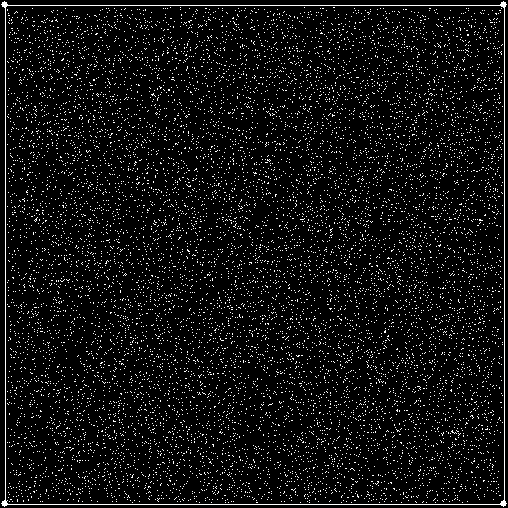
Routes of a point jumping halfway towards vertices of a square
Try a variant. If the point is banned from jumping towards the same vertex twice or more in a row, the routes trace out a fractal that looks like this:
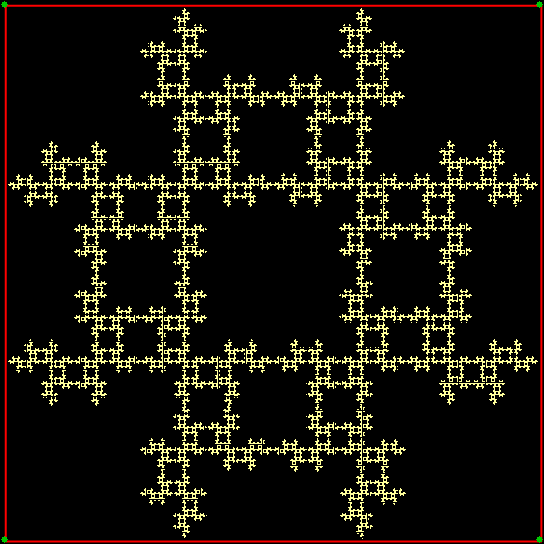
Ban on choosing same vertex twice or more in a row
If the point is banned from jumping towards the vertex one place anti-clockwise of the vertex it’s just jumped towards, you get a fractal like this:
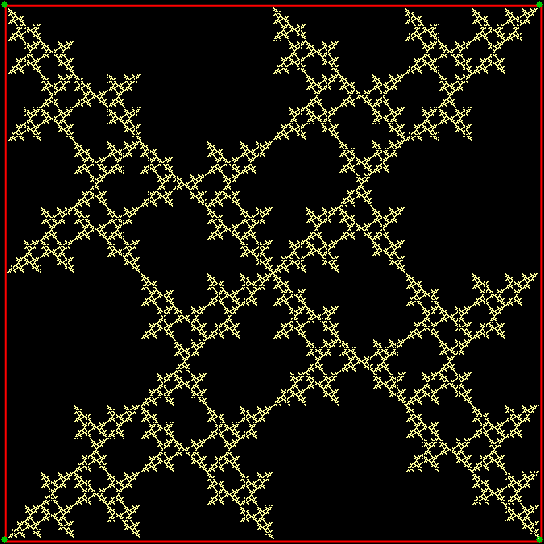
Ban on jumping towards vertex one place anti-clockwise of previously chosen vertex
And if the point can’t jump towards two places clockwise or anti-clockwise of the currently chosen vertex, this fractal appears (called a T-square fractal):

Ban on jumping towards the vertex diagonally opposite of the previously chosen vertex
That ban is equivalent to banning the point from jumping from the vertex diagonally opposite to the vertex it’s just jumped towards. Finally, here’s the fractal created when you ban the point from jumping towards the vertex one place clockwise of the vertex it’s just jumped towards:

Ban on jumping towards vertex one place clockwise of previously chosen vertex
As you can see, the fractal is a mirror-image of the one-place-anti-clockwise-ban fractal.
I discovered the ban-construction of those fractals more than twenty years ago. Then I found that I was re-discovering the same fractals when I looked at what first seemed like completely different ways of constructing fractals. There are lots of different routes to the same result. I’ve recently discovered yet another route. Let’s try what seems like an entirely different way of constructing fractals. Take a square and erect four new half-sized squares, sq1, sq2, sq3, sq4, on each corner. Then erect three more quarter-sized squares on the outward facing corners of sq1, sq2, sq3 and sq4. Carry on doing that and see what happens at the end when you remove all the previous stages of construction:
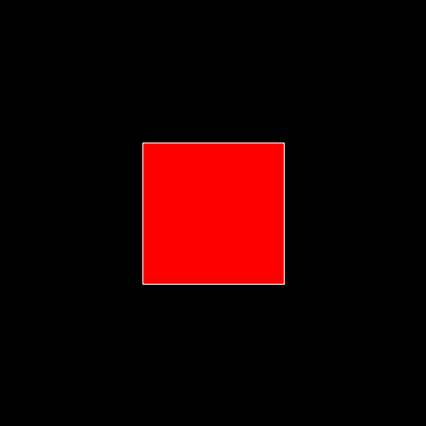
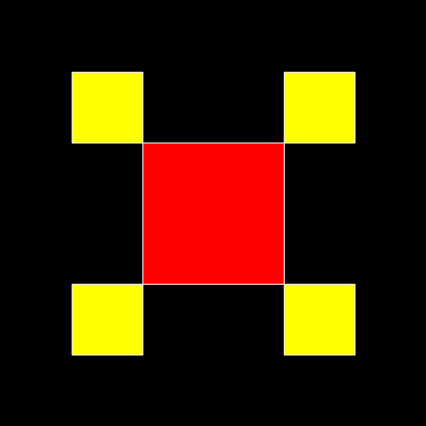
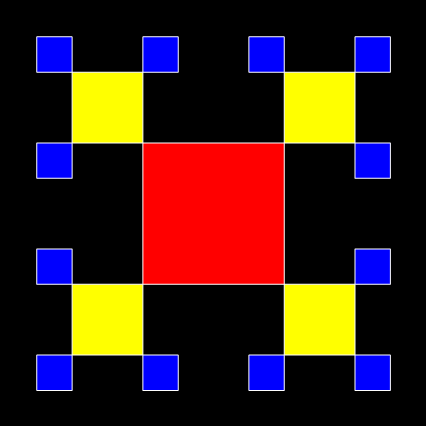
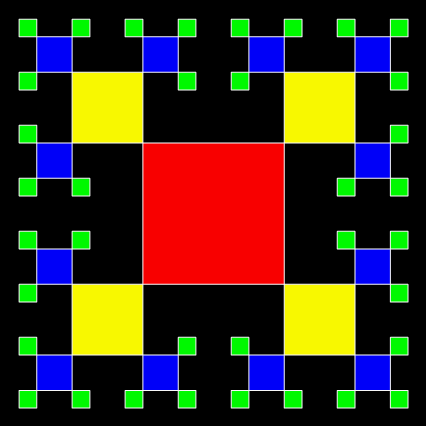
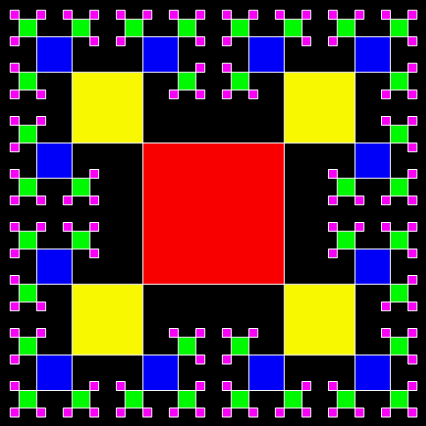
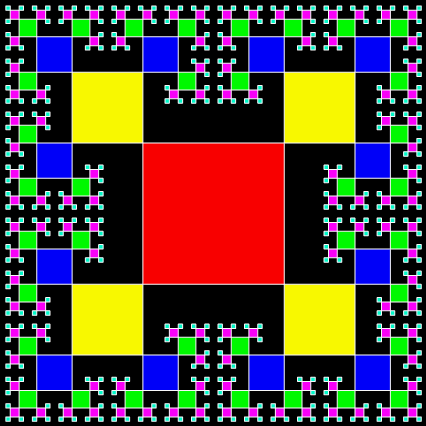
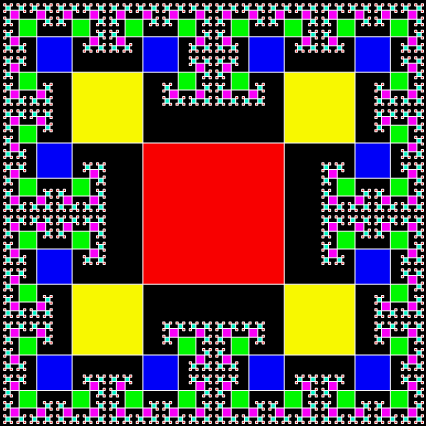
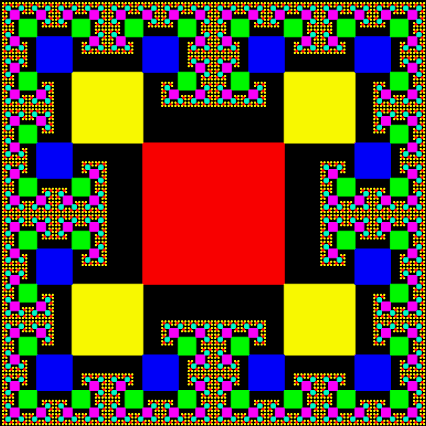
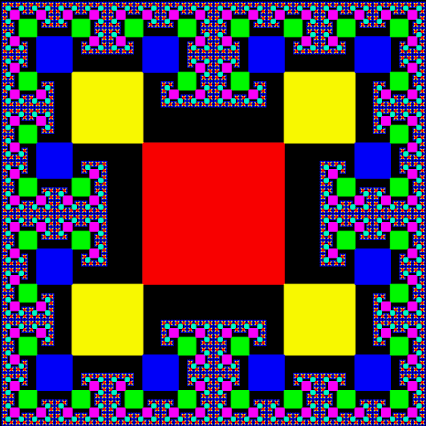
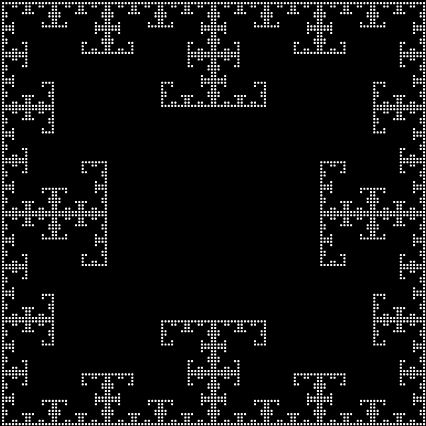

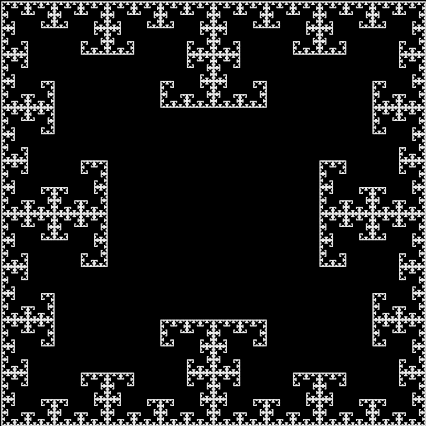
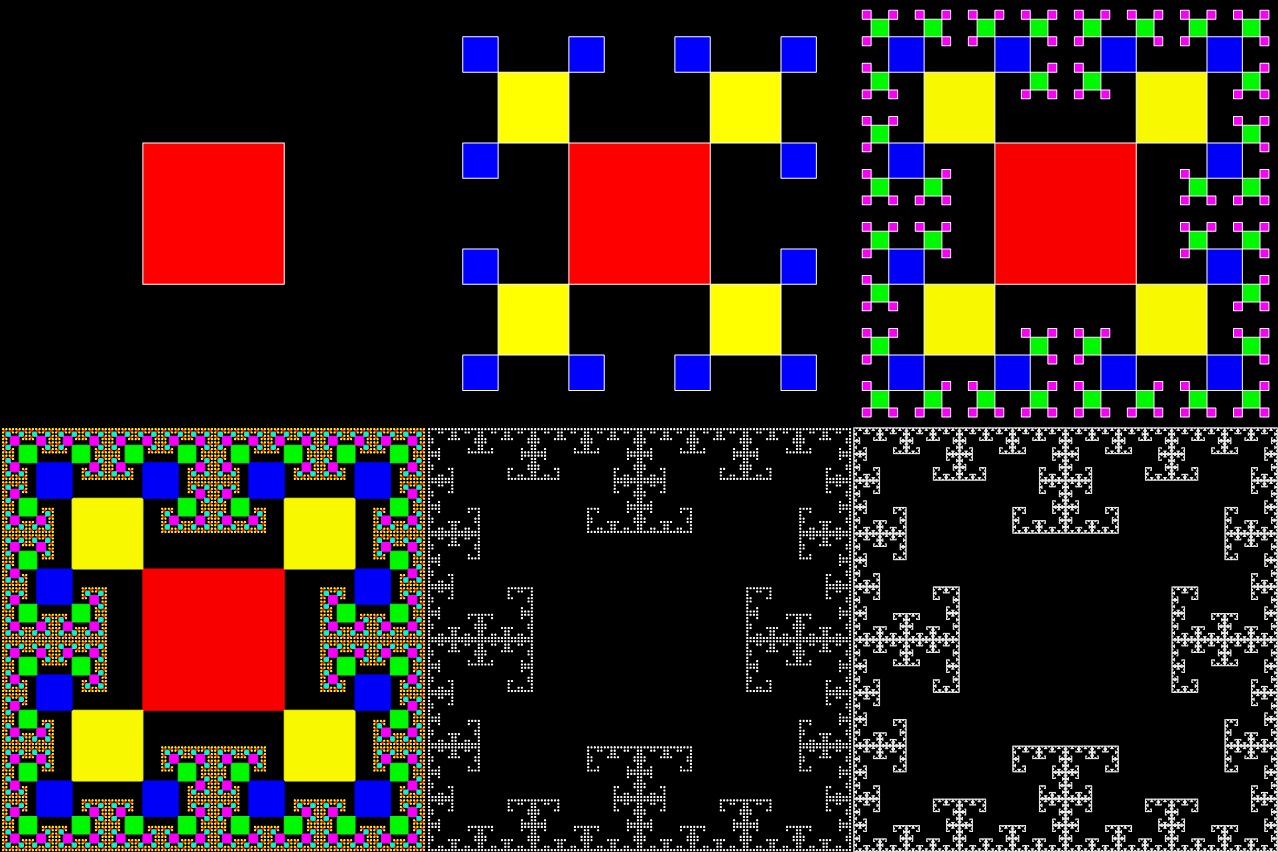
Animation of the new construction
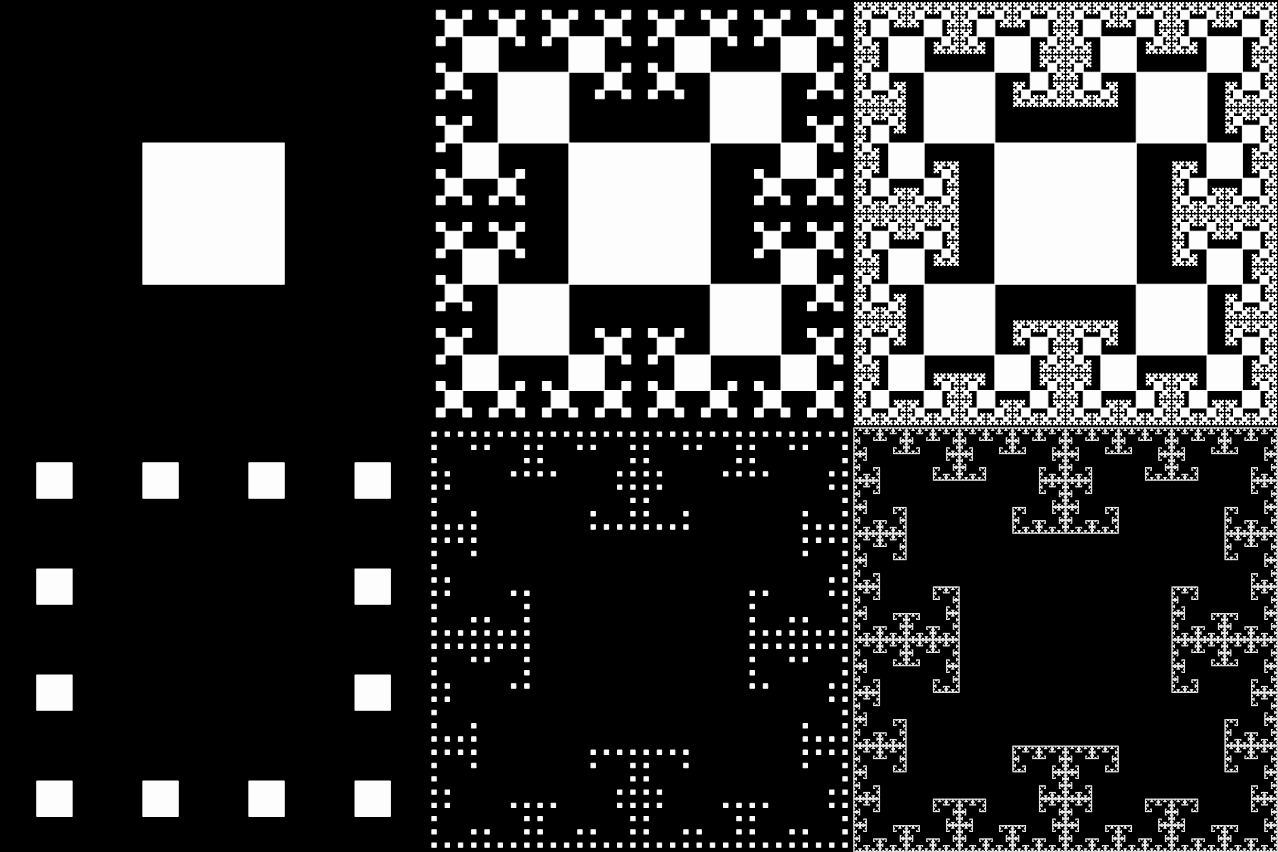
Animation in black-and-white
It’s the T-square fractal again. Now try rotating the squares you add at stage 3 and see what happens (the rotation means that two new squares are added on adjacent outward-facing corners and one new square on the inward-facing corner):
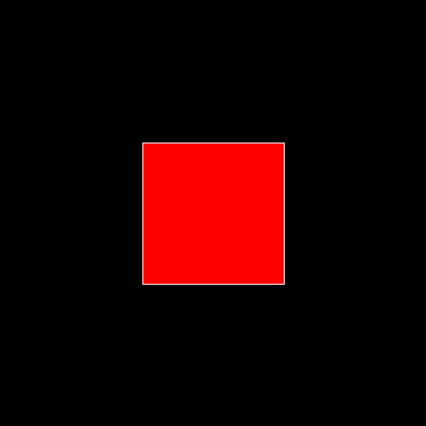
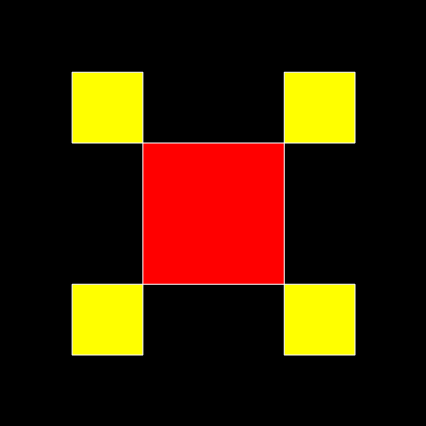
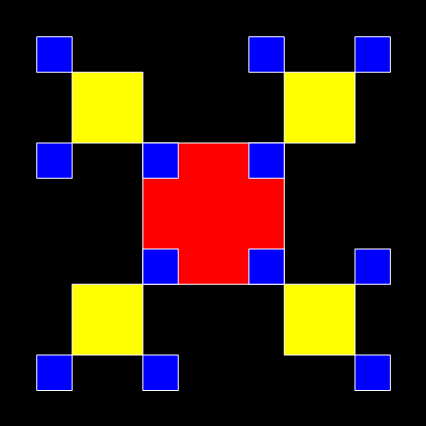
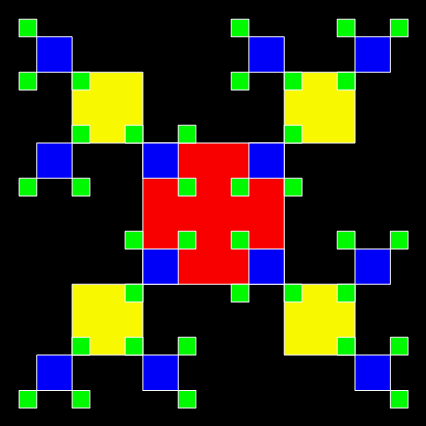

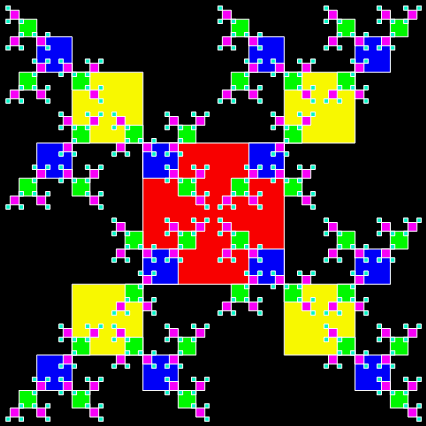
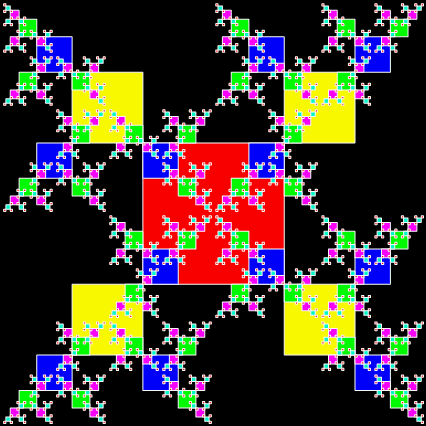

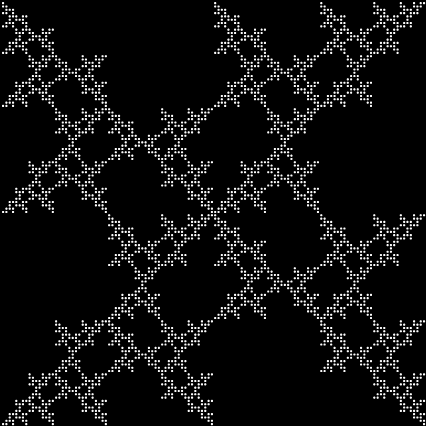
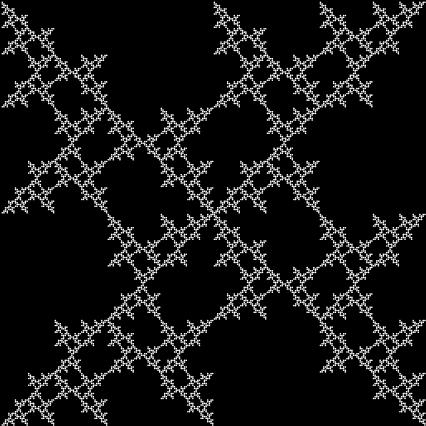
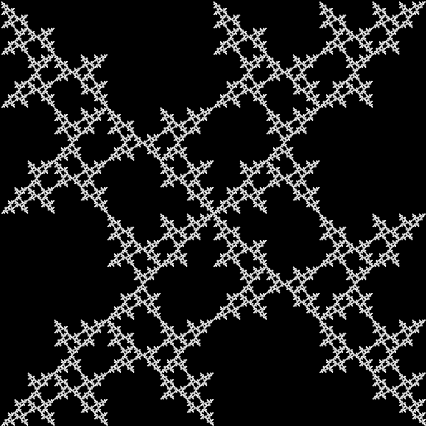
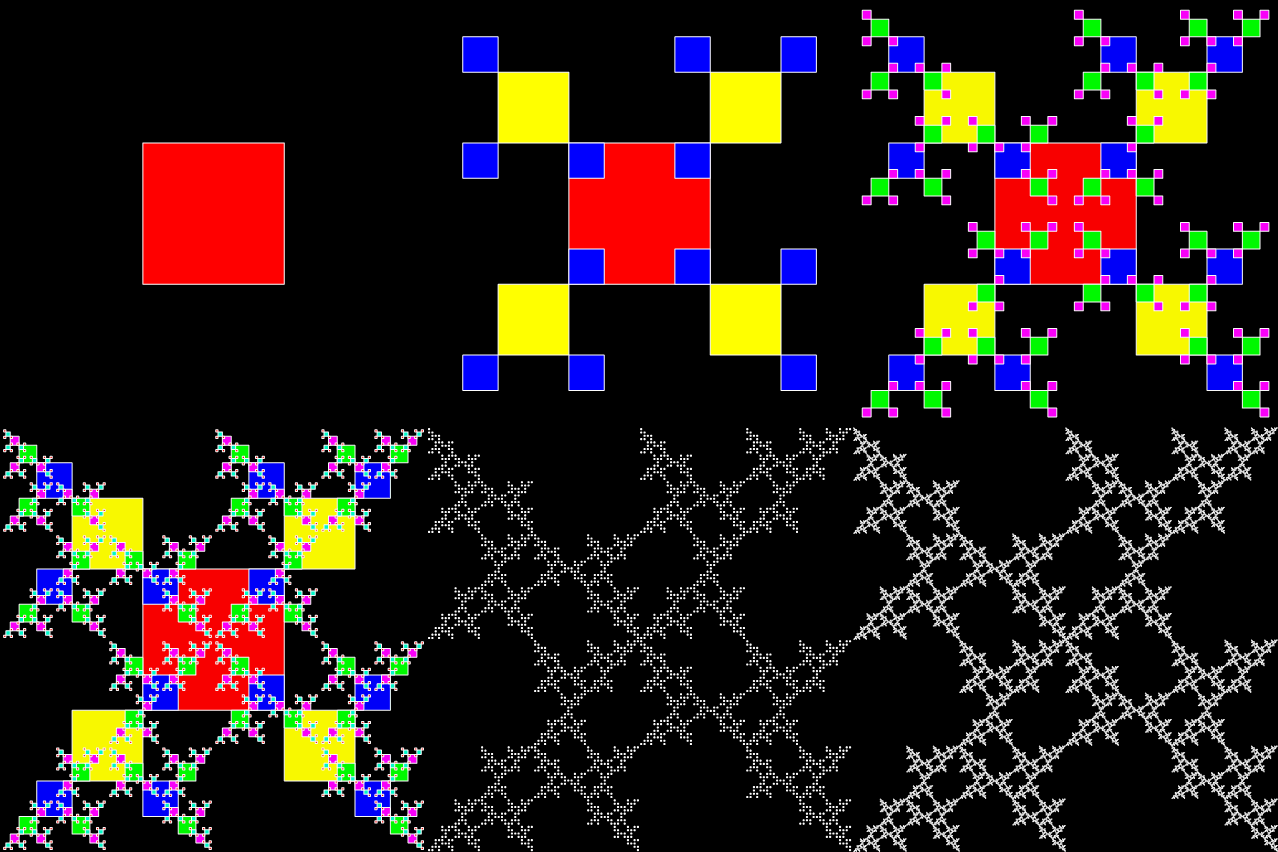
Animation of the construction
It’s the one-place-clockwise-ban fractal again. Now try rotating the squares two places, so that two new squares are added on diagonally opposite outward-facing corners and one new square on the inward-facing corner:
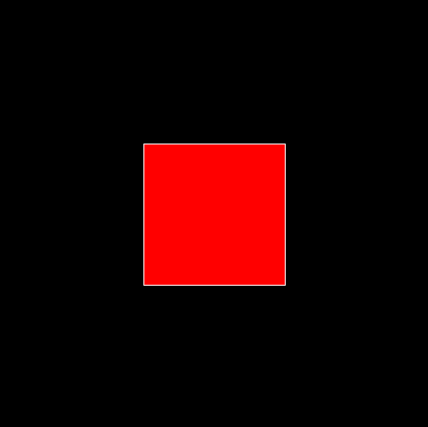
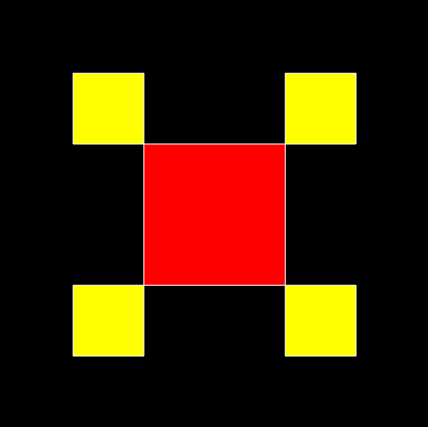

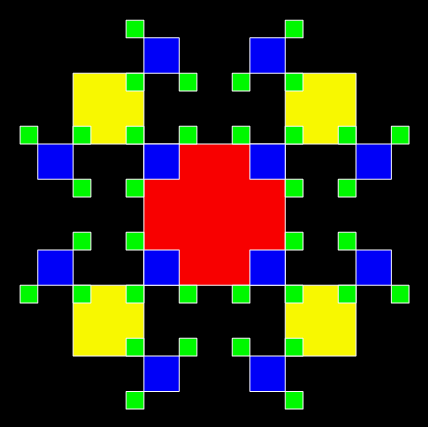
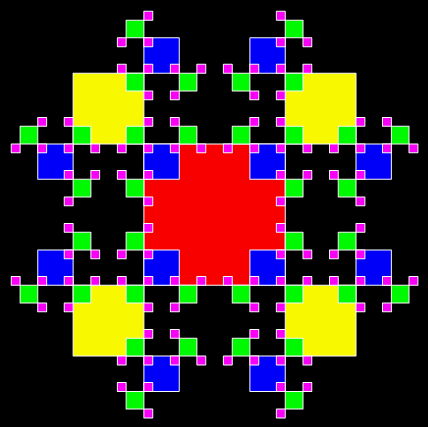
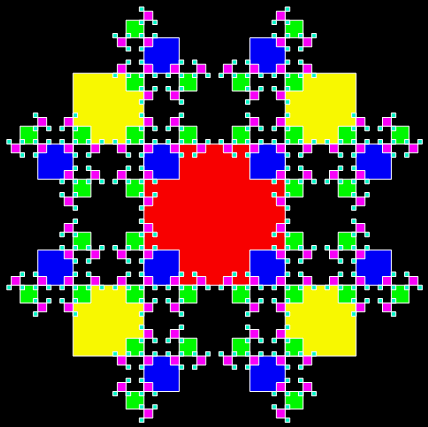
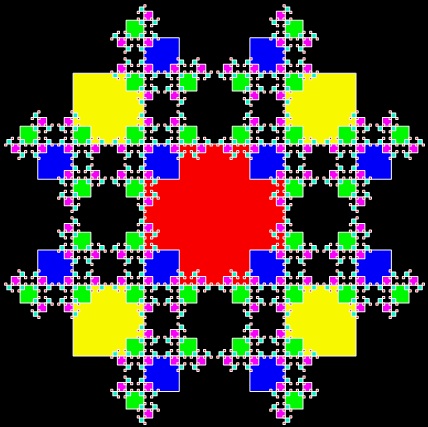

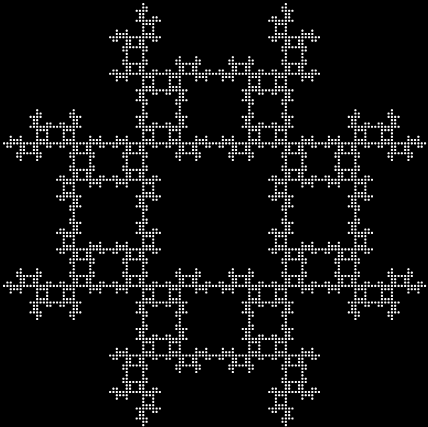


Animation of the construction
It’s the same-vertex-ban fractal again. Finally, rotate squares one place more:

Animation of the construction
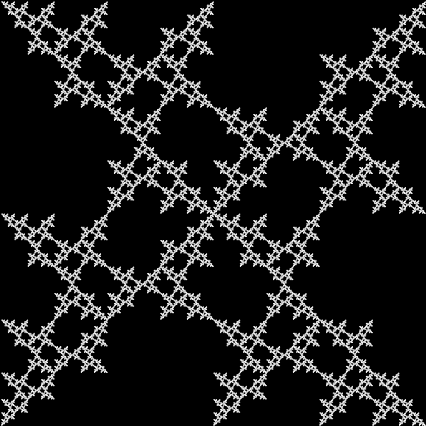
It’s the one-place-clockwise-ban fractal again. And this method isn’t confined to squares. Here’s what happens when you add 5/8th-sized triangles to the corners of triangles:


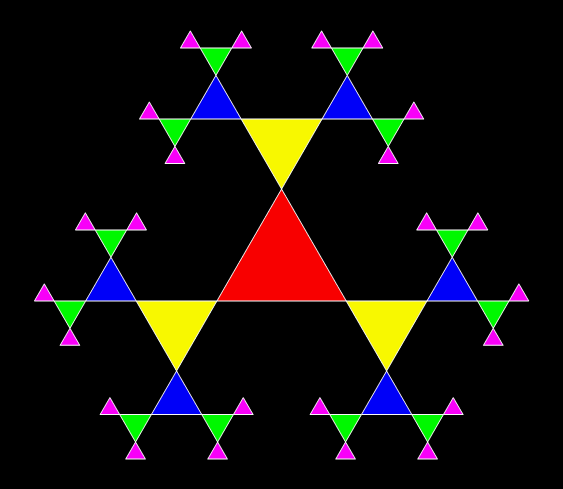


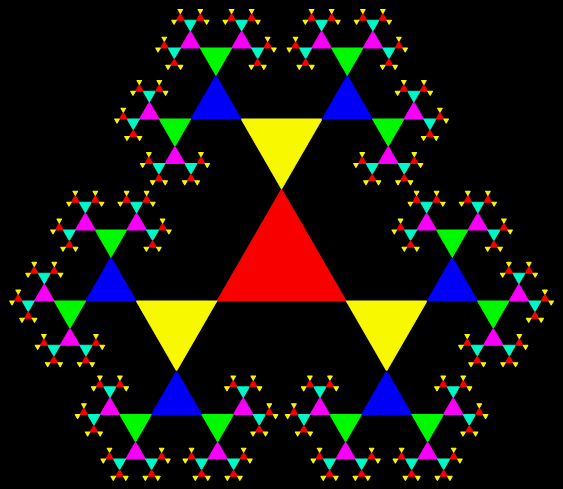
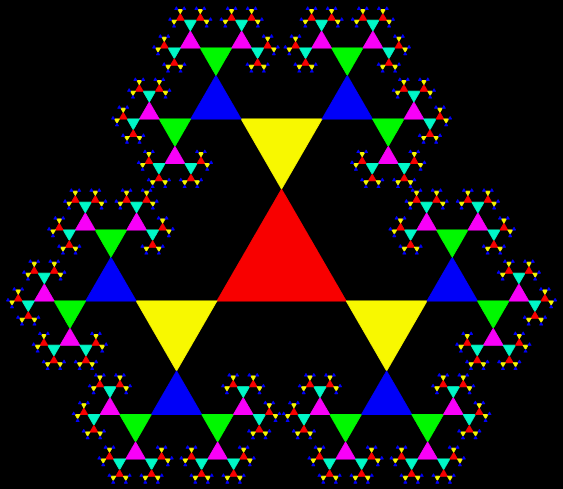
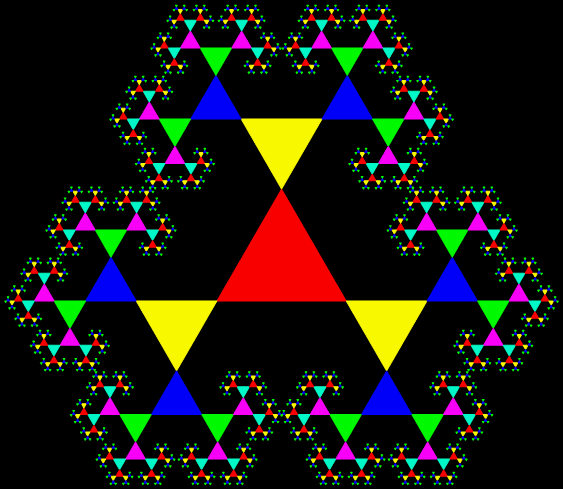
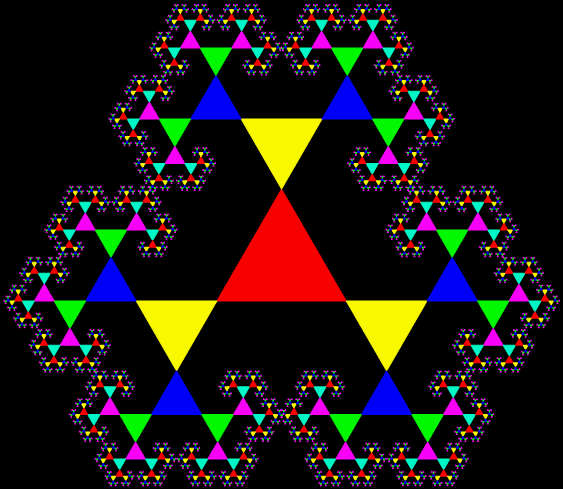

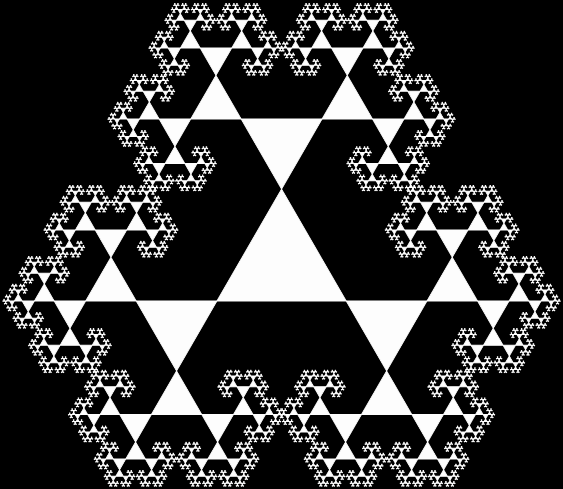

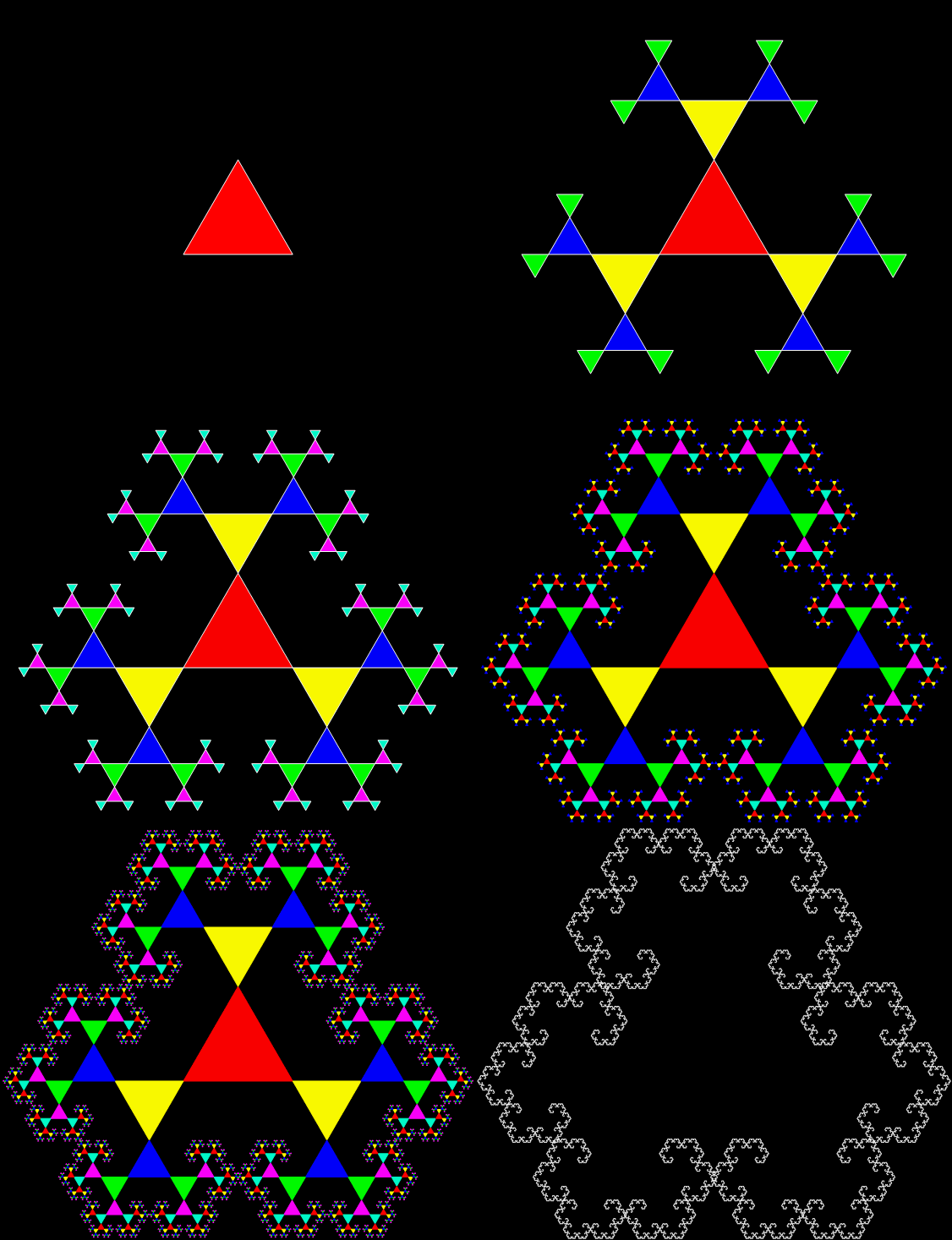
Animation of the construction
And here’s what happens when you add 5/13th-sized pentagons to the corners of pentagons:
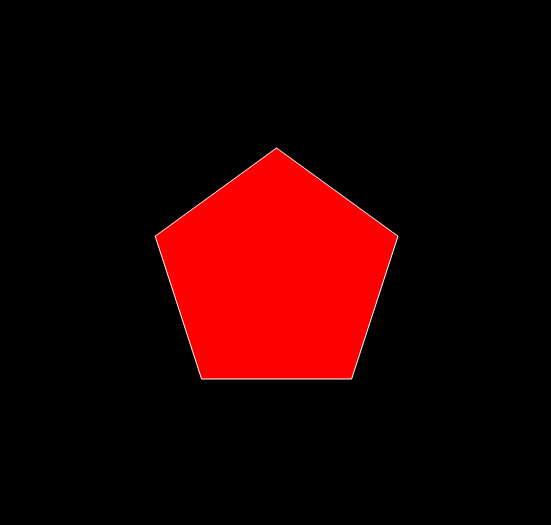
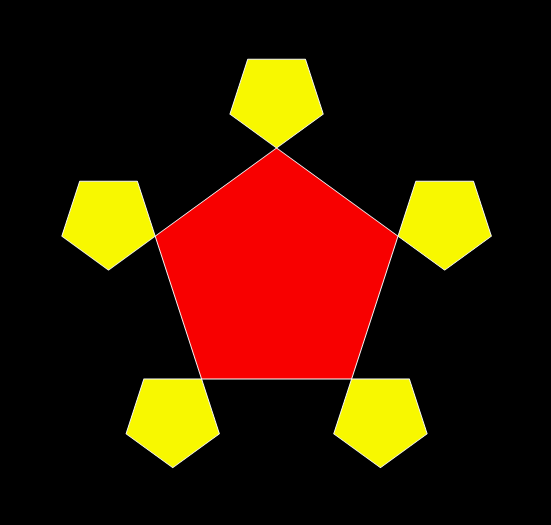
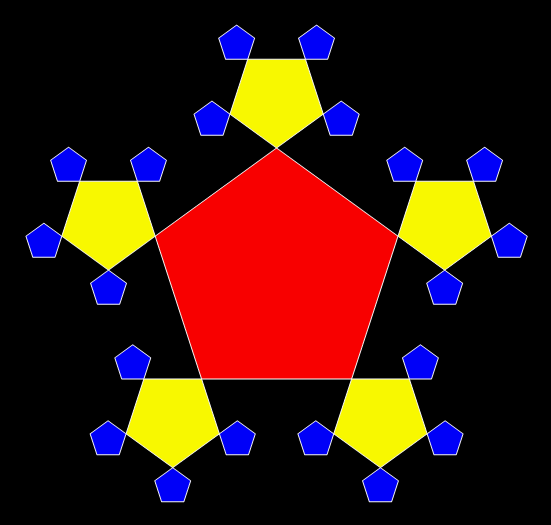

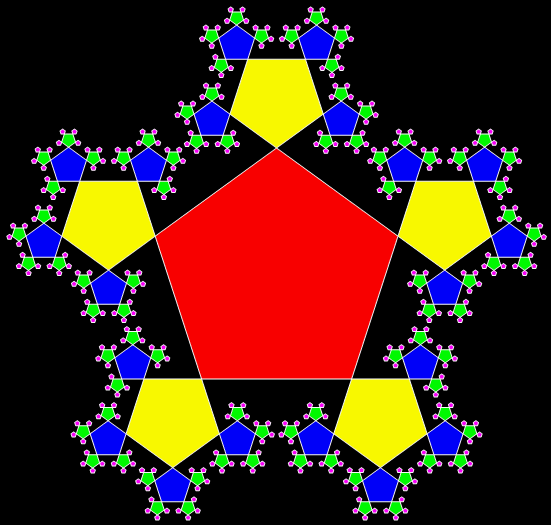
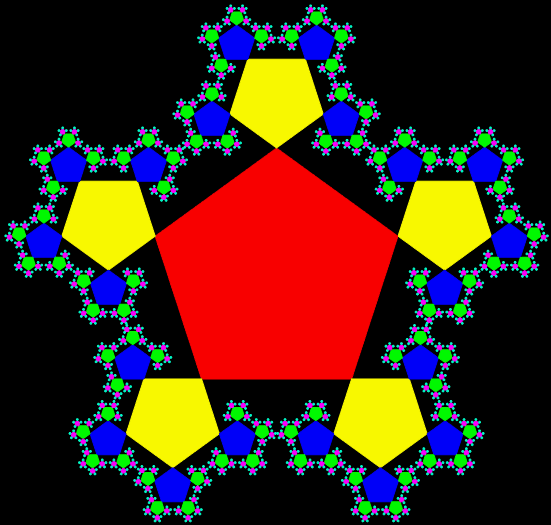

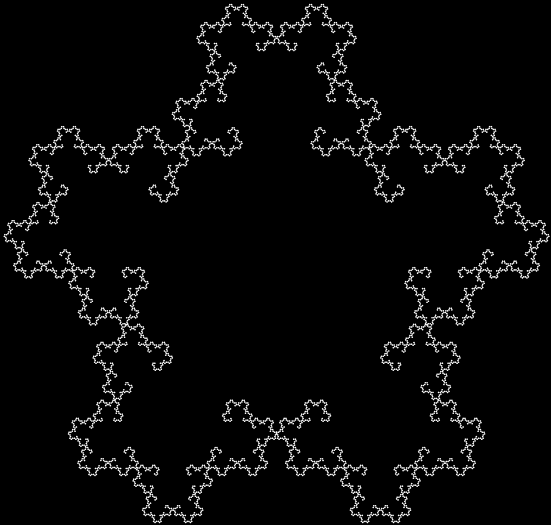


Animation of the construction
Finally, here’s a variant on that pentagonal fractal (adding two rather than four pentagons at stage 3 and higher):
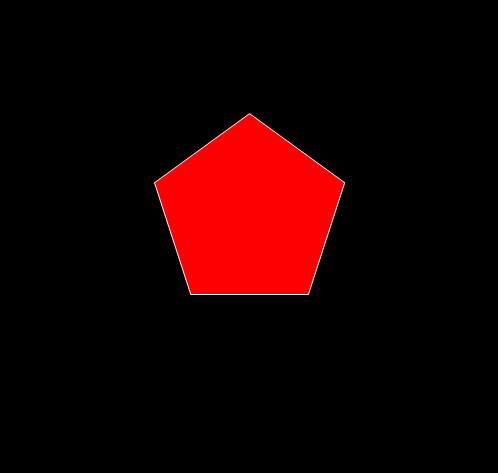
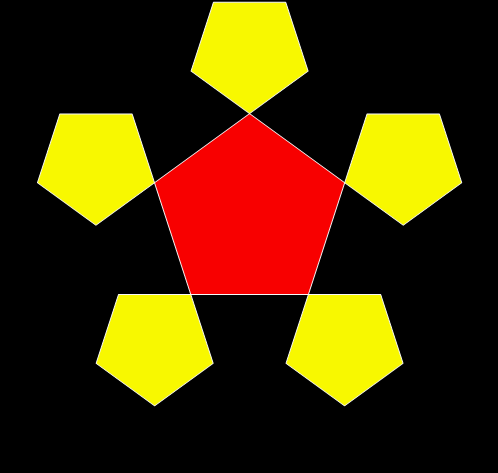
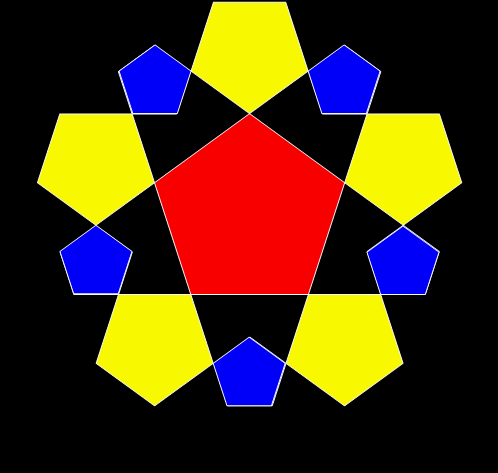
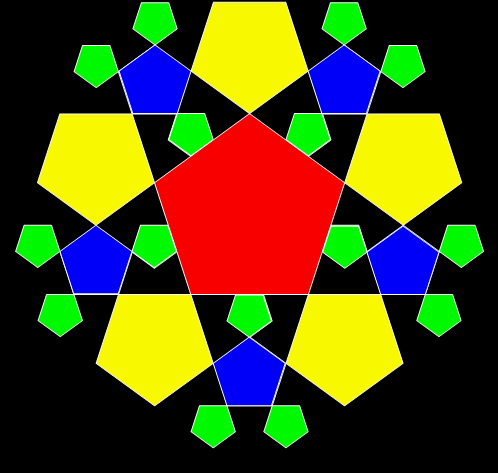


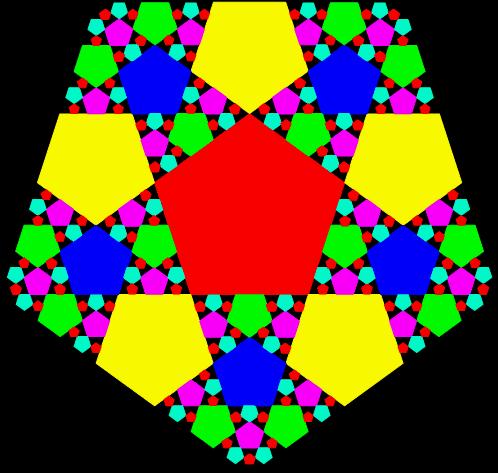

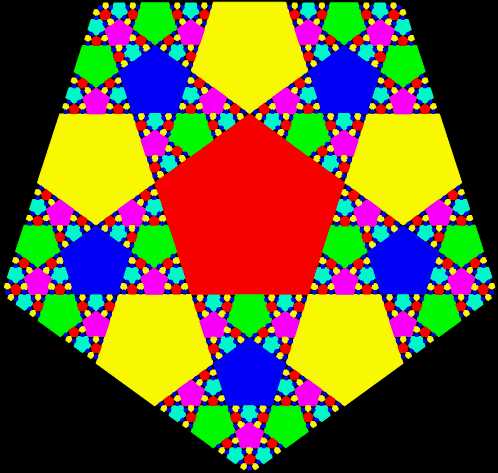
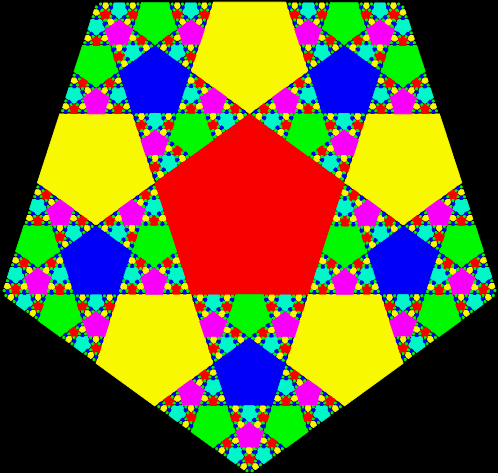

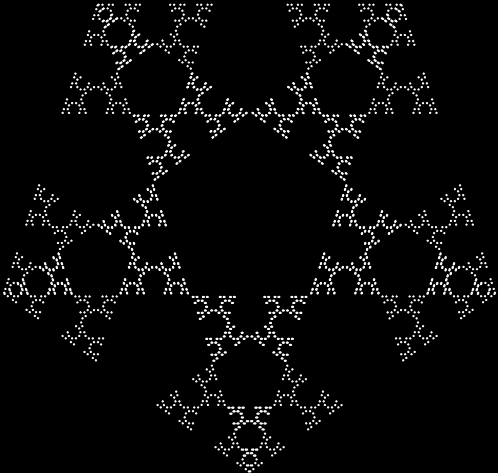
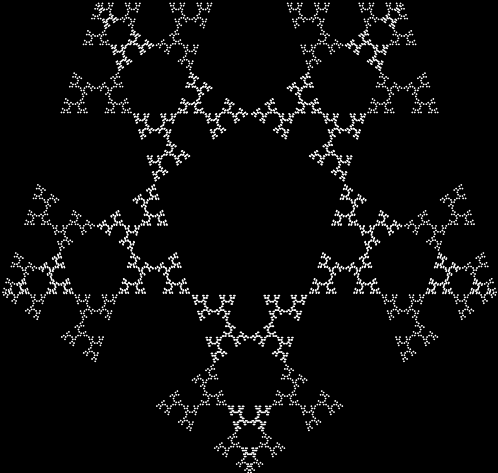

Animation of the construction
Previously pre-posted (please peruse):
• Square Routes
• Square Routes Revisited
• Square Routes Re-Revisited
• Square Routes Re-Re-Revisited
• Square Routes Re-Re-Re-Revisited
• Square Routes Re-Re-Re-Re-Revisited
• Square Routes Re-Re-Re-Re-Re-Revisited
Sóccrates Says…
“A beleza vem primeiro. A vitória é secundária. O que importa é a alegria.” — Sócrates, o futebolista brasileiro
• “Beauty comes first. Victory is secondary. What matters is joy.” — Brazilian footballer Sócrates
I’ve also found the quote as:
“A beleza está primeiro. A vitória é secundária. O que é interessa é o prazer.”
• “Beauty comes first. Victory is secondary. What matters is pleasure.”
Spiral Artefact #3
What’s the next number in this sequence?
1, 3, 0, 4, 9, 15, 8, 0, 9, 19, 30, 42, 29, 15, 0, 16, 33, 51, 70, 90, 69, 47, 24, 0, 25, ?
Even if you can’t work out the full rule generating the sequence, you may be able to deduce that the next number is… 51. There’s a pattern involving 0:
1, 3, 0, 4, 9, 15, 8, 0, 9, 19, 30, 42, 29, 15, 0, 16, 33, 51, 70, 90, 69, 47, 24, 0, 25... → 3, 0, 4, 9, [...] 8, 0, 9, 19, [...] 15, 0, 16, 33, [...] 24, 0, 25...
The first number after each 0 is 1 more than the first number before the 0. The second number after the 0 is equal to 2 * (first-number-after 0) + 1. So:
1, 3, 0, 4, 2*4+1 = 9, [...] 8, 0, 9, 2*9+1 = 19, [...] 15, 0, 16, 2*16+1 = 33, [...] 24, 0, 25, 2*25+1 = 51...
But what is the full rule for generating the sequence? It’s based on this pattern of sums I noticed:
1+2 = 3
4+5+6 = 7+8 = 15
9+10+11+12 = 13+14+15 = 42
16+17+18+19+20 = 21+22+23+24 = 90
25+26+27+28+29+30 = 31+32+33+34+35 = 165
36+37+38+39+40+41+42 = 43+44+45+46+47+48 = 273
49+50+51+52+53+54+55+56 = 57+58+59+60+61+62+63 = 420
64+65+66+67+68+69+70+71+72 = 73+74+75+76+77+78+79+80 = 612 — See A059270 at the OEIS
The sum of the first two integers (1+2) equals the next integer (3). The sum of the next three integers (4+5+6) equals the sum of the next two integers (7+8). The sum of the next four integers (9+10+11+12) equals the sum of the next three integers (13+14+15). And so on. The sequence is based on an adaptation of that pattern:
1 + 2 - 3 = 0
4 + 5 + 6 - 7 - 8 = 0
9 + 10 + 11 + 12 - 13 - 14 - 15 = 0
16 + 17 + 18 + 19 + 20 - 21 - 22 - 23 - 24 = 0
25 + 26 + 27 + 28 + 29 + 30 - 31 - 32 - 33 - 34 - 35 = 0↓
1 + 2 - 3 + 4 + 5 + 6 - 7 - 8 + 9 + 10 + 11 + 12 - 13 - 14 - 15 + 16 + 17 + 18 + 19 + 20 - 21 - 22 - 23 - 24 + 25 + 26 + 27 + 28 + 29 + 30 - 31 - 32 - 33 - 34 - 35...
If you work out the partial sums of the additions and subtractions, you get the sequence I started with, which regularly rises to a new high, then falls back to 0:
1, 3, 0, 4, 9, 15, 8, 0, 9, 19, 30, 42, 29, 15, 0, 16, 33, 51, 70, 90, 69, 47, 24, 0, 25, 51, 78, 106, 135, 165, 134, 102, 69, 35, 0, 36, 73, 111, 150, 190, 231, 273, 230, 186, 141, 95, 48, 0, 49, 99, 150, 202, 255, 309, 364, 420, 363, 305, 246, 186, 125, 63, 0, 64, 129, 195, 262, 330, 399, 469, 540, 612, 539, 465, 390, 314, 237, 159, 80, 0, 8
1, 163, 246, 330, 415, 501, 588, 676, 765, 855, 764, 672, 579, 485, 390, 294, 197, 99, 0, 100...
When you represent the numbers of the sequence on an Ulam-like spiral, you get this pattern of lines (and zigzags) against a haze of less regular points:
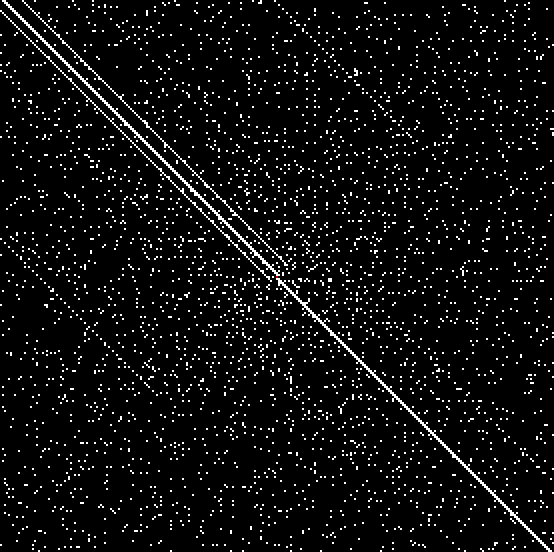
Spiral for pos2neg1 = 1, 3, 0, 4, 9, 15, 8, 0, 9, 19, 30, 42, 29, 15, 0, 16, 33…
I’ll call the lines spiral artefacts. I don’t know what generates all of them, but the zigzag diagonal from top left to bottom right is partly created by the square numbers. Here’s the spiral at higher resolutions:
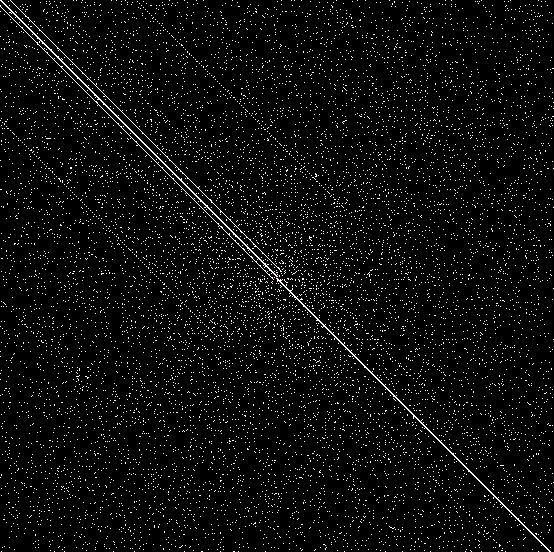
Spiral for pos2neg1 (x2)
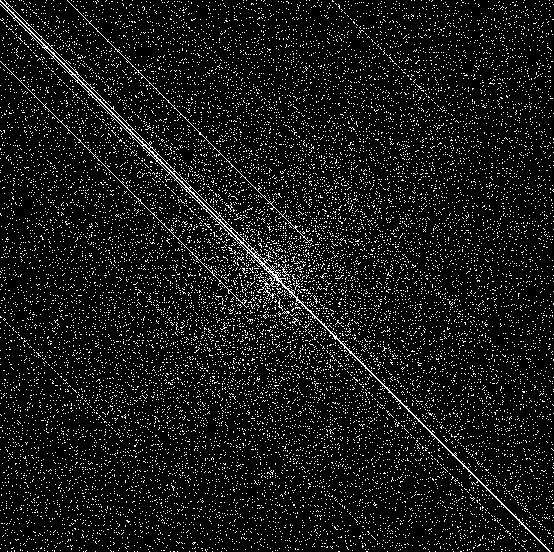
Spiral for pos2neg1 (x4)
You’ll find more of the lines if you look at Ulam-like spirals for adaptations of the original sequence. Suppose you add the first three integers, then take away the next two, then add the next four integers, then take away the next three, and so on: 1 + 2 + 3 – 4 – 5 + 6 + 7 + 8 + 9 – 10 – 11 – 12 + 13 + 14… Here are the partials sums of these additions and subtractions:
1, 3, 6, 2, -3, 3, 10, 18, 27, 17, 6, -6, 7, 21, 36, 52, 69, 51, 32, 12, -9, 13, 36, 60, 85, 111, 138, 110, 81, 51, 20, -12, 21, 55, 90, 126, 163, 201, 240, 200, 159, 117, 74, 30, -15, 31, 78, 126, 175, 225, 276, 328, 381, 327, 272, 216, 159, 101, 42, -18, 43, 105, 168, 232, 297, 363, 430, 498, 567, 497, 426, 354, 281, 207, 132, 56, -21, 57, 136, 216, 297, 379, 462, 546, 631, 717, 804, 716, 627, 537, 446, 354, 261, 167, 72, -24, 73, 171, 270, 370...
If the original sequence is pos2neg1 (add first two integers, take away next one integer, etc), this adapted sequence is pos3neg2 (add first three integers, take away next two, etc). Here’s the spiral for pos3neg2 (with negative numbers represented as positive):

Spiral for pos3neg2 = 1, 3, 6, 2, -3, 3, 10, 18, 27, 17, 6, -6, 7, 21, 36, 52,
69, 51, 32, 12…
Note that the spiral is incomplete and some of the lines not fully extended, because the lines are easier to see when the sequence doesn’t carry on too long and clutter the screen. Here are more adapted sequences shown on Ulam-like spirals (again, some of the spirals are incomplete):
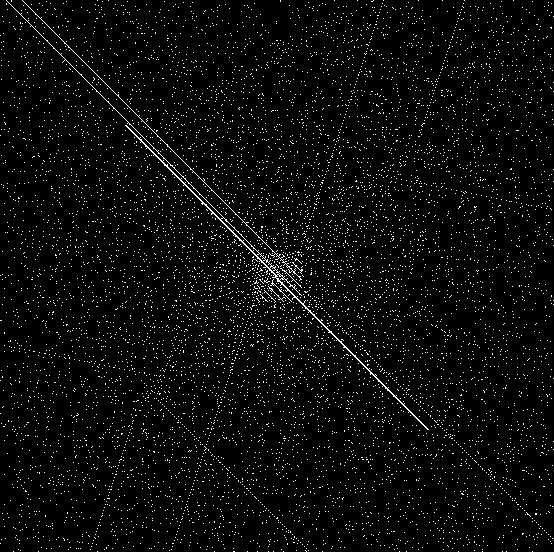
Spiral for pos4neg3 = 1, 3, 6, 10, 5, -1, -8, 0, 9, 19, 30, 42, 29, 15, 0, -16, 1, 19, 38, 58…
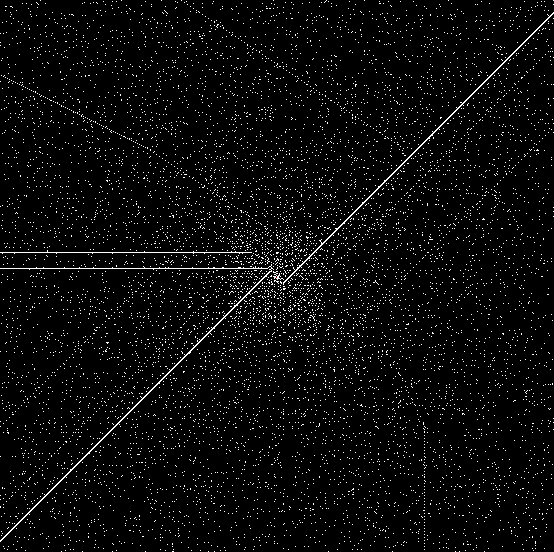
Spiral for pos5neg4 = 1, 3, 6, 10, 15, 9, 2, -6, -15, -5, 6, 18, 31, 45, 60, 44, 27, 9, -10, -30…
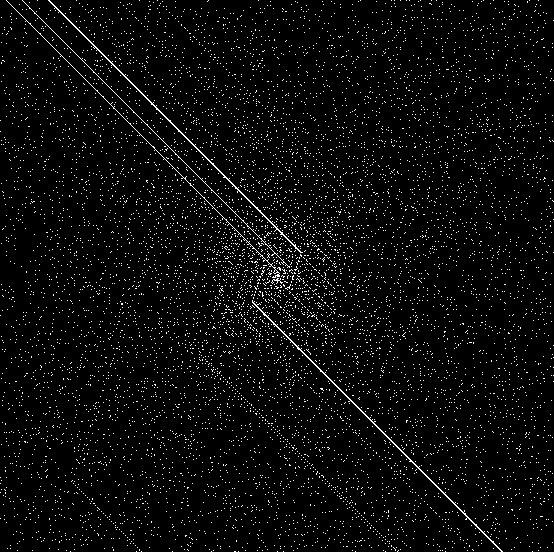
Spiral for pos6neg5 = 1, 3, 6, 10, 15, 21, 14, 6, -3, -13, -24, -12, 1, 15, 30, 46, 63, 81, 62, 42…
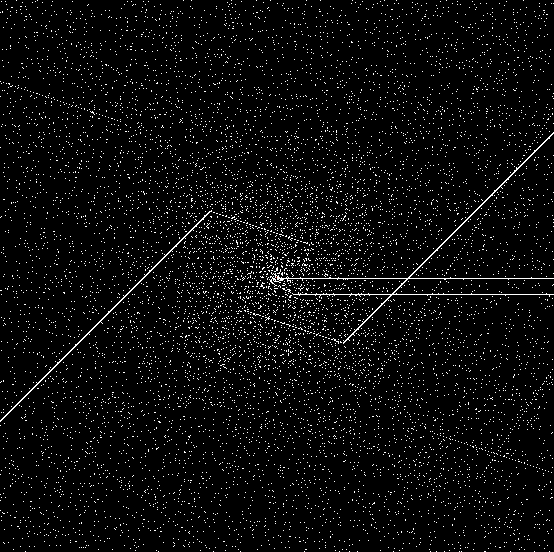
Spiral for pos7neg6 = 1, 3, 6, 10, 15, 21, 28, 20, 11, 1, -10, -22, -35, -21, -6, 10, 27, 45, 64, 84…
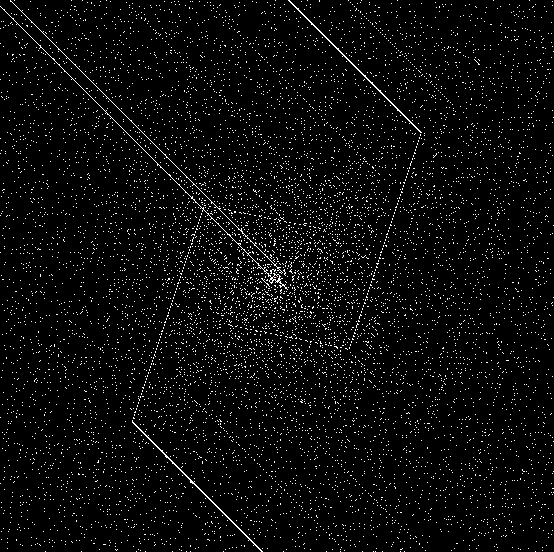
Spiral for pos8neg7 = 1, 3, 6, 10, 15, 21, 28, 36, 27, 17, 6, -6, -19, -33, -48, -32, -15, 3, 22, 42…
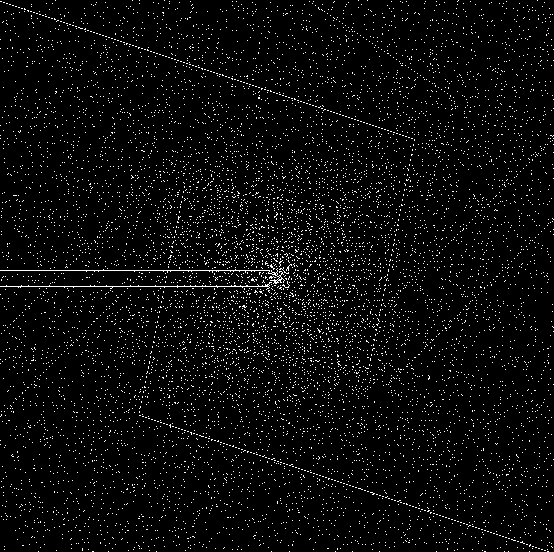
Spiral for pos9neg8 = 1, 3, 6, 10, 15, 21, 28, 36, 45, 35, 24, 12, -1, -15, -30, -46, -63, -45, -26, -6…
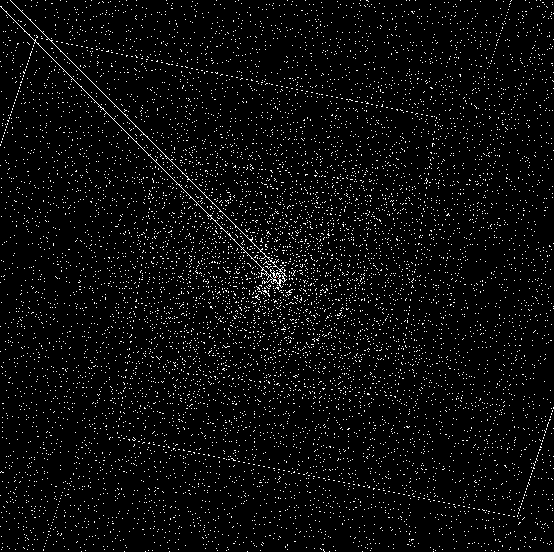
Spiral for pos10neg9 = 1, 3, 6, 10, 15, 21, 28, 36, 45, 55, 44, 32, 19, 5, -10, -26, -43, -61, -80, -60…
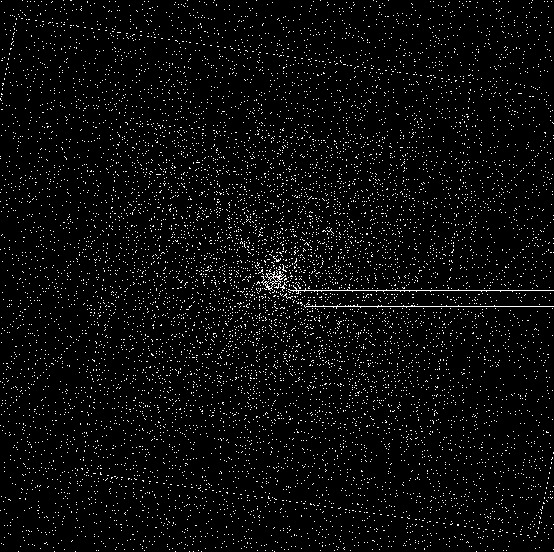
Spiral for pos11neg10 = 1, 3, 6, 10, 15, 21, 28, 36, 45, 55, 66, 54, 41, 27, 12, -4, -21, -39, -58, -78…
Elsewhere Other-Engageable
• Spiral Artefact #1 — different patterns on an Ulam-like spiral
• Spiral Artefact #2 — more different patterns
Fractal-Ize!
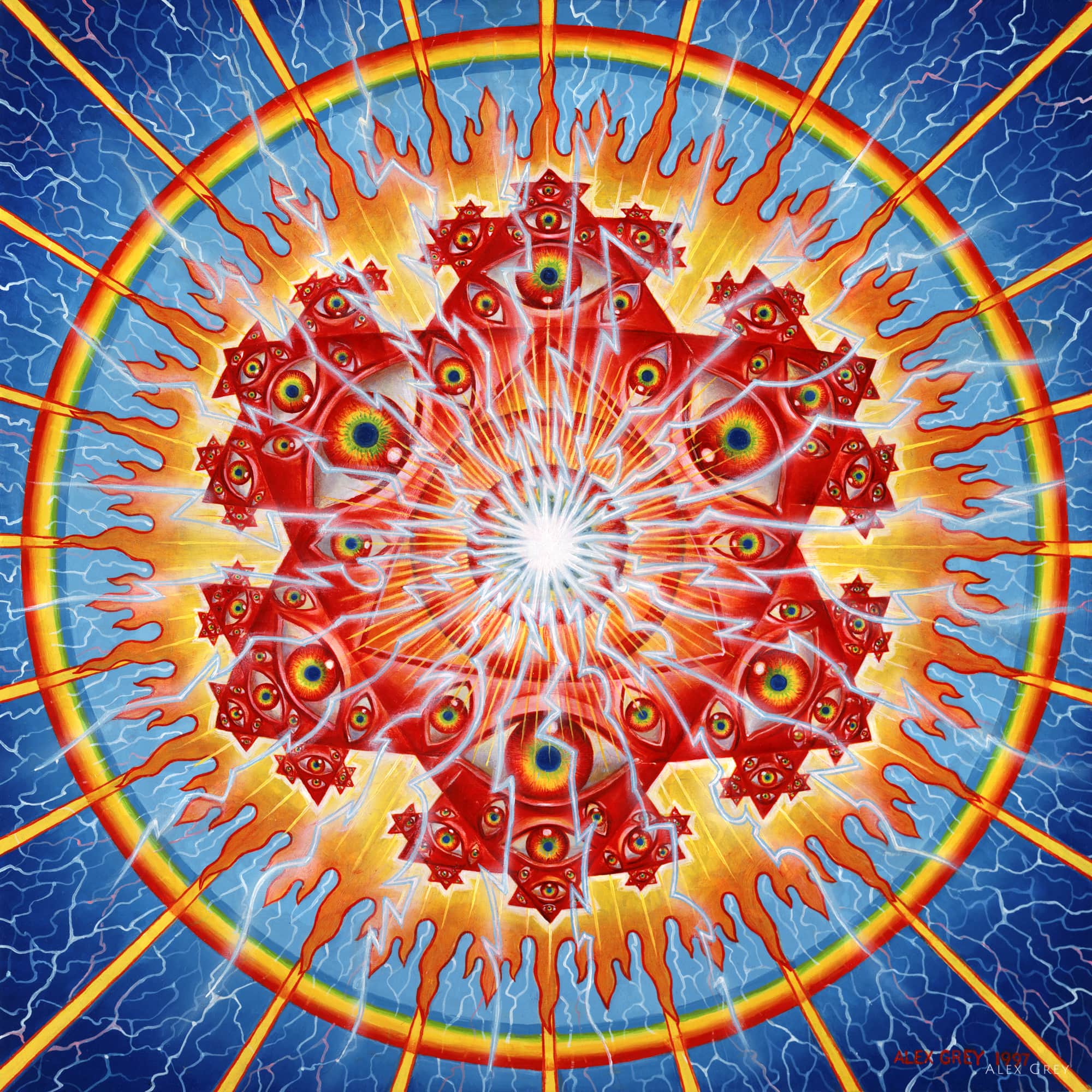
Vision Crystal by the American artist Alex Grey (born November 29, 1953)
 Overlord In Terms of Core Issues Around Maximal Engagement with Key Notions of the Über-Feral