Phil’ Kill Kult

Lucretius (1869)

by Alfred Tennyson

Lucilla, wedded to Lucretius, found
Her master cold; for when the morning flush
Of passion and the first embrace had died
Between them, tho’ he loved her none the less,
Yet often when the woman heard his foot
Return from pacings in the field, and ran
To greet him with a kiss, the master took
Small notice, or austerely, for his mind
Half buried in some weightier argument,
Or fancy-borne perhaps upon the rise
And long roll of the hexameter — he past
To turn and ponder those three hundred scrolls
Left by the Teacher, whom he held divine.
She brook’d it not, but wrathful, petulant
Dreaming some rival, sought and found a witch
Who brew’d the philtre which had power, they said
To lead an errant passion home again.
And this, at times, she mingled with his drink,
And this destroy’d him; for the wicked broth
Confused the chemic labor of the blood,
And tickling the brute brain within the man’s
Made havoc among those tender cells, and check’d
His power to shape. He loathed himself, and once
After a tempest woke upon a morn
That mock’d him with returning calm, and cried:

“Storm in the night! for thrice I heard the rain
Rushing; and once the flash of a thunderbolt —
Methought I never saw so fierce a fork —
Struck out the streaming mountain-side, and show’d
A riotous confluence of watercourses
Blanching and billowing in a hollow of it,
Where all but yester-eve was dusty-dry.

“Storm, and what dreams, ye holy Gods, what dreams!
For thrice I waken’d after dreams. Perchance
We do but recollect the dreams that come
Just ere the waking. Terrible: for it seem’d
A void was made in Nature, all her bonds
Crack’d; and I saw the flaring atom-streams
And torrents of her myriad universe,
Ruining along the illimitable inane,
Fly on to clash together again, and make
Another and another frame of things
For ever. That was mine, my dream, I knew it —
Of and belonging to me, as the dog
With inward yelp and restless forefoot plies
His function of the woodland; but the next!
I thought that all the blood by Sylla shed
Came driving rainlike down again on earth,
And where it dash’d the reddening meadow, sprang
No dragon warriors from Cadmean teeth,
For these I thought my dream would show to me,
But girls, Hetairai, curious in their art,
Hired animalisms, vile as those that made
The mulberry-faced Dictator’s orgies worse
Than aught they fable of the quiet Gods.
And hands they mixt, and yell’d and round me drove
In narrowing circles till I yell’d again
Half-suffocated, and sprang up, and saw —
Was it the first beam of my latest day?

“Then, then, from utter gloom stood out the
The breasts of Helen, and hoveringly a sword
Now over and now under, now direct,
Pointed itself to pierce, but sank down shamed
At all that beauty; and as I stared, a fire,
The fire that left a roofless Ilion,
Shot out of them, and scorch’d me that I woke.

“Is this thy vengeance, holy Venus, thine,
Because I would not one of thine own doves,
Not even a rose, were offered to thee? thine,
Forgetful how my rich proemion makes
Thy glory fly along the Italian field,
In lays that will outlast thy deity?

“Deity? nay, thy worshippers. My tongue
Trips, or I speak profanely. Which of these
Angers thee most, or angers thee at all?
Not if thou be’st of those who, far aloof
From envy, hate and pity, and spite and scorn,
Live the great life which all our greatest fain
Would follow, centred in eternal calm.

“Nay, if thou canst,
Goddess, like ourselves
Touch, and be touch’d, then would I cry to thee
To kiss thy Mavors, roll thy tender arms
Round him, and keep him from the lust of blood
That makes a steaming slaughter-house of Rome.

“Ay, but I meant not thee; I meant riot her
Whom all the pines of Ida shook to see
Slide from that quiet heaven of hers, and tempt
The Trojan, while his neatherds were abroad
Nor her that o’er her wounded hunter wept
Her deity false in human-amorous tears;
Nor whom her beardless apple-arbiter
Decided fairest. Rather, O ye Gods,
Poet-like, as the great Sicilian called
Calliope to grace his golden verse —
Ay, and this Kypris also — did I take
That popular name of thine to shadow forth
The all-generating powers and genial heat
Of Nature, when she strikes thro’ the thick blood
Of cattle, and light is large, and lambs are glad
Nosing the mother’s udder, and the bird
Makes his heart voice amid the blaze of flowers;
Which things appear the work of mighty Gods.

“The Gods! and if I go my work is left
Unfinish’d — if I go. The Gods, who haunt
The lucid interspace of world and world,
Where never creeps a cloud, or moves a wind,
Nor ever falls the least white star of snow
Nor ever lowest roll of thunder moans,
Nor sound of human sorrow mounts to mar
Their sacred everlasting calm! and such,
Not all so fine, nor so divine a calm
Not such, nor all unlike it, man may gain
Letting his own life go. The Gods, the Godsl
If all be atoms, how then should the Gods
Being atomic not be dissoluble,
Not follow the great law? My master held
That Gods there are, for all men so believe.
I prest my footsteps into his, and meant
Surely to lead my Memmius in a train
Of fiowery clauses onward to the proof
That Gods there are, and deathless. Meant? I meant?
I have forgotten what I meant, my mind
Stumbles, and all my faculties are lamed.

“Look where another of our Gods, the Sun
Apollo, Delius, or of older use
All-seeing Hyperion — what you will —
Has mounted yonder; since he never sware,
Except his wrath were wreak’d on wretched man,
That he would only shine among the dead
Hereafter — tales! for never yet on earth
Could dead flesh creep, or bits of roasting ox
Moan round the spit — nor knows he what he sees;
King of the East altho’ he seem, and girt
With song and flame and fragrance, slowly lifts
His golden feet on those empurpled stairs
That climb into the windy halls of heaven
And here he glances on an eye new-born,
And gets for greeting but a wail of pain;
And here he stays upon a freezing orb
That fain would gaze upon him to the last;
And here upon a yellow eyelid fallen
And closed by those who mourn a friend in vain,
Not thankful that his troubles are no more.
And me, altho’ his fire is on my face
Blinding, he sees not, nor at all can tell
Whether I mean this day to end myself.
Or lend an ear to Plato where he says,
That men like soldiers may not quit the post
Allotted by the Gods. But he that holds
The Gods are careless, wherefore need he care
Greatly for them, nor rather plunge at once,
Being troubled, wholly out of sight, and sink
Past earthquake — ay, and gout and stone, that break
Body toward death, and palsy, death-in-life,
And wretched age — and worst disease of all,
These prodigies of myriad nakednesses,
And twisted shapes of lust, unspeakable,
Abominable, strangers at my hearth
Not welcome, harpies miring every dish,
The phantom husks of something foully done,
And fleeting thro’ the boundless universe,
And blasting the long quiet of my breast
With animal heat and dire insanity?

“How should the mind, except it loved them, clasp
These idols to herself? or do they fly
Now thinner, and now thicker, like the flakes
In a fall of snow, and so press in, perforce
Of multitude, as crowds that in an hour
Of civic tumult jam the doors, and bear
The keepers down, and throng, their rags and the
The basest, far into that council-hall
Where sit the best and stateliest of the land?

“Can I not fling this horror off me again,
Seeing with how great ease Nature can smile
Balmier and nobler from her bath of storm,
At random ravage? and how easily
The mountain there has cast his cloudy slough,
Now towering o’er him in serenest air,
A mountain o’er a mountain, — ay, and within
All hollow as the hopes and fears of men?

“But who was he that in the garden snared
Picus and Faunus, rustic Gods? a tale
To laugh at — more to laugh at in myself —
For look! what is it? there? yon arbutus
Totters; a noiseless riot underneath
Strikes through the wood, sets all the tops quivering —;
The mountain quickens into Nymph and Faun,
And here an Oread — how the sun delights
To glance and shift about her slippery sides,
And rosy knees and supple roundedness,
And budded bosom-peaks — who this way runs
Before the rest! — a satyr, a satyr, see,
Follows; but him I proved impossible
Two-natured is no nature. Yet he draws
Nearer and nearer, and I scan him now
Beastlier than any phantom of his kind
That ever butted his rough brother-brute
For lust or lusty blood or provender.
I hate, abhor, spit, sicken at him; and she
Loathes him as well; such a precipitate heel,
Fledged as it were with Mercury’s ankle-wing,
Whirls her to me —; but will she fling herself
Shameless upon me? Catch her, goatfoot! nay,
Hide, hide them, million-myrtled wilderness,

And cavern-shadowing laurels, hide! do I wish —
What? —; that the bush were leafless? or to whelm
All of them in one massacre? O ye Gods
I know you careless, yet, behold, to you
From childly wont and ancient use I call —
I thought I lived securely as yourselves —
No lewdness, narrowing envy, monkey-spite,
No madness of ambition, avarice, none;
No larger feast than under plane or pine
With neighbors laid along the grass, to take
Only such cups as left us friendly-warm,
Affirming each his own philosophy
Nothing to mar the sober majesties
Of settled, sweet, Epicurean life.
But now it seems some unseen monster lays
His vast and filthy hands upon my will,
Wrenching it backward into his, and spoils
My bliss in being; and it was not great,
For save when shutting reasons up in rhythm,
Or Heliconian honey in living words,
To make a truth less harsh, I often grew
Tired of so much within our little life
Or of so little in our little life —
Poor little life that toddles half an hour
Crown’d with a flower or two, and there an end —
And since the nobler pleasure seems to fade,
Why should I, beastlike as I find myself,
Not manlike end myself? — our privilege —;
What beast has heart to do it? And what man
What Roman would be dragg’d in triumph thus?
Not I; not he, who bears one name with her
Whose death-blow struck the dateless doom of kings,
When, brooking not the Tarquin in her veins,
She made her blood in sight of Collatine
And all his peers, flushing the guiltless air,
Spout from the maiden fountain in her heart.
And from it sprang the Commonwealth, which breaks
As I am breaking now!

“And therefore now
Let her, that is the womb and tomb of all
Great Nature, take, and forcing far apart
Those blind beginnings that have made me man,
Dash them anew together at her will
Thro’ all her cycles — into man once more,
Or beast or bird or fish, or opulent flower.
But till this cosmic order everywhere
Shatter’d into one earthquake in one day
Cracks all to pieces, — and that hour perhaps
Is not so far when momentary man
Shall seem no more a something to himself,
But he, his hopes and hates, his homes and fanes
And even his bones long laid within the grave,
The very sides of the grave itself shall pass,
Vanishing, atom and void, atom and void,
Into the unseen for ever, — till that hour,
My golden work in which I told a truth
That stays the rolling Ixionian wheel,
And numbs the Fury’s ringlet-snake, and plucks
The mortal soul from out immortal hell
Shall stand. Ay, surely; then it fails at last
And perishes as I must, for O Thou
Passionless bride, divine Tranquillity,
Yearn’d after by the wisest of the wise
Who fail to find thee, being as thou art
Without one pleasure and without one pain,
Howbeit I know thou surely must be mine
Or soon or late, yet out of season, thus
I woo thee roughly, for thou carest not
How roughly men may woo thee so they win —;
Thus — thus — the soul flies out and dies in the air.”

With that he drove the knife into his side.
She heard him raging, heard him fall, ran in,
Beat breast, tore hair, cried out upon herself
As having fail’d in duty to him, shriek’d
That she but meant to win him back, fell on him
Clasp’d, kiss’d him, wail’d. He answer’d, “Care not thou!
Thy duty? What is duty? Fare thee well!”


Bong of Bongs

Dopelord, Polish stoner-doom band (photo by Marcin Pawłowski)


“Navigator” by Dopelord from Children of the Haze (2017)

Leaf burns to ashes — Hail the Holy Smoke!
Deepspace traveller, folding time with bong;
Green smoke inhaler — space defeated bends.
Skilled time deflector, holding bong in hand
Holding bong in hand…

Slowly he’s dying,
Slowly he’s turning,
Into stones and into ashes:
Slowly gets high.

Galaxy raider flights the mothership;
Mind decompressor on eternal trip;
Green smoke inhaler — space defeated bends.
Skilled time deflector, holding bong in hand
Holding bong in hand…


Elsewhere Other-Accessible…

Dopelord at Bandcamp

Post-Performative Post-Scriptum

The title of this incendiary intervention is a paronomasia on Song of Songs, the Biblical book traditionally ascribed to King Solomon and known in Hebrew as שִׁיר הַשִּׁירִים Šīr hašŠīrīm and in Polish as Pieśń nad Pieśniami. Please note that the Overlord of the Über-Feral abhors and abominates the taking of all and any drugs. Except the purest and most potent: water, language, mathematics and music dot dot dot

Golden Goat-God’s Gateway


Although this blog stands strongly and sternly against the use of any drugs weaker than water (which is all of ’em), some interesting art has been inspired by those weaker drugs. The front cover of Bongzilla’s Gateway (2002) by Malleus Rock Art Lab is a good and skilful example. Please be aware, however, that smoking grass is more likely to induce psychosis than turn you into a golden goat-god. Especially coz artificially strengthened varieties of grass are not what Gaia intended. (dot dot dot)


Post-Performative Post-Scriptum

Yes, the horns on the album-cover are those of a bovid, not a caprid, but I like to think of the image being that of a goat-god rather than a bull-god.

Methylomania

अभि द्यां महिना भुवमभीमां पृथिवीं महीम् ।
कुवित्सोमस्यापामिति ॥८॥
हन्ताहं पृथिवीमिमां नि दधानीह वेह वा ।
कुवित्सोमस्यापामिति ॥९॥ — ऋग्वेदः सूक्तं १०.११९

“In my vastness, I surpassed the sky and this vast earth. Have I not drunk Soma? / Yes! I will place the earth here, or perhaps there. Have I not drunk Soma?” — Ṛg Veda, Mandala 10, Hymn 119, lines 8-9, translated by Wendy Doniger


Note: The title of this incendiary intervention is a portmanteau of “methylated” and “megalomania”. “Methylated” comes from the ancient Greek μέθυ, meaning “wine” and related to μέθυστος “drunk, intoxicated” (OED).

Can You Dij It? #1

The most powerful drug in the world is water. The second most powerful is language. But everyone’s on them, so nobody realizes how powerful they are. Well, you could stop drinking water. Then you’d soon realize its hold on the body and the brain.

But you can’t stop using language. Try it. No, the best way to realize the power of language is to learn a new one. Each is a feast with different flavours. New alphabets are good too. The Devanagari alphabet is one of the strongest, but if you want it in refined form, try the phonetic alphabet. It will transform the way you see the world. That’s because it will make you conscious of what you’re already subconsciously aware of.

But “language” is a bigger category that it used to be. Nowadays we have computer languages too. Learning one is another way of transforming the way you see the world. And like natural languages – French, Georgian, Tagalog – they come in different flavours. Pascal is not like Basic is not like C is not like Prolog. But all of them seem to put you in touch with some deeper aspect of reality. Computer languages are like mathemagick: a way to give commands to something immaterial and alter the world by the application of will.

That feeling is at its strongest when you program with machine code, the raw instructions used by the electronics of a computer. At its most fundamental, machine code is simply a series of binary numbers controlling how a computer processes other binary numbers. You can memorize and use those code-numbers, but it’s easier to use something like assembly language, which makes machine-code friendlier for human beings. But it still looks very odd to the uninitiated:

setupnum:
xor ax,ax
xor bp,bp
mov cx,20
clearloop:
mov [di+bp],ax
add bp,2
loop clearloop
ret

That’s almost at the binary bedrock. And machine code is fast. If a fast higher-level language like C feels like flying a Messerschmitt 262, which was a jet-plane, machine-code feels like flying a Messerschmitt 163, which was a rocket-plane. A very fast and very dangerous rocket-plane.

I’m not good at programming languages, least of all machine code, but they are fun to use, quite apart from the way they make you feel as though you’re in touch with a deeper aspect of reality. They do that because the world is mathematics at its most fundamental level, I think, and computer languages are a form of mathematics.

Their mathematical nature is disguised in a lot of what they’re used for, but I like to use them for recreational mathematics. Machine-code is useful when you need a lot of power and speed. For example, look at these digits:

1, 2, 3, 4, 5, 6, 7, 8, 9, 1*, 0*, 1, 1, 1, 2, 1, 3, 1, 4, 1, 5, 1, 6, 1, 7, 1, 8, 1, 9, 2, 0, 2, 1, 2, 2, 2, 3, 2, 4, 2, 5, 2, 6, 2, 7, 2, 8, 2, 9, 3, 0, 3, 1, 3, 2, 3, 3, 3, 4, 3, 5, 3, 6*, 3*, 7, 3, 8, 3, 9, 4, 0, 4, 1, 4, 2, 4…

They’re what the Online Encyclopedia of Integer Sequences (OEIS) calls “the almost natural numbers” (sequence A007376) and you generate them by writing the standard integers – 1, 2, 3, 4, 5, 6, 7, 8, 9, 10, 11, 12, 13… – and then separating each digit with a comma: 1, 2, 3, 4, 5, 6, 7, 8, 9, 1, 0, 1, 1, 1, 2, 1, 3… The commas give them some interesting twists. In a list of the standard integers, the 1st entry is 1, the 10th entry is 10, the 213rd entry is 213, the 987,009,381th entry is 987,009,381, and so on.

But that doesn’t work with the almost natural numbers. The 10th entry is 1, not 10, and the 11th entry is 0, not 11. But the 10th entry does begin the sequence (1, 0). I wondered whether that happened again. It does. The 63rd entry in the almost natural numbers begins the sequence (6, 3) – see the asterisks in the sequence above.

This happens again at the 3105th entry, which begins the sequence (3, 1, 0, 5). After that the gaps get bigger, which is where machine code comes in. An ordinary computer-language takes a long time to reach the 89,012,345,679th entry in the almost natural numbers. Machine code is much quicker, which is why I know that the 89,012,345,679th entry begins the sequence (8, 9, 0, 1, 2, 3, 4, 5, 6, 7, 9):

1, 2, 3, 4, 5, 6, 7, 8, 9, 10, 63, 3105, 43108, 77781, 367573, 13859021, 77911127, 911360799, 35924813703, 74075186297, 89012345679…

And an ordinary computer-language might give you the impression that base 9 doesn’t have numbers like these (apart from the trivial 1, 2, 3, 4, 5, 6, 7, 8, 10…). But it does. 63 in base 10 is a low-hanging fruit: you could find it working by hand. In base 9, the fruit are much higher-hanging. But machine code plucks them with almost ridiculous ease:

1, 2, 3, 4, 5, 6, 7, 8, 10, 570086565, 655267526, 2615038272, 4581347024, 5307541865, 7273850617, 7801234568…

He Say, He Sigh, He Sow #31

“SSV are not the Sisters. Their official full name is SSV-NSMABAAOTWMODAACOTIATW. Could this possibly stand for ‘Screw Shareholder Value — not so much a band as another opportunity to waste money on drugs and ammunition, courtesy of the idiots at Time Warner’? Surely not. That would require a comma.” — Andrew Eldritch.

He Say, He Sigh, He Sow #22 & #23

“After a million years or so, those screens are about to be removed, and once they have gone, then, for the first time, men will really know what it is to be alive.” — Extreme Metaphors: Collected Interviews with J.G. Ballard, 1967-2008, ed. Simon Sellars and Dan O’Hara (2012).

“A fertile imagination is better than any drug.” — Ibid.


Elsewhere other-posted:

Vermilion Glands — review of The Inner Man: The Life of J.G. Ballard (W&N 2011)

Bill Self

I would be disturbed and dismayed if Will Self ever wrote an essay on Evelyn Waugh or Clark Ashton Smith. In fact, I hope he has never even heard of CAS. But I’m happy to see Self writing in the Guardian on William Burroughs. It’s a perfect setting for a perfect pairing. And Self, like Christopher Hitchens, raises a very interesting question. What is his mother-tongue? Quechua? Tagalog? Sumerian? Whatever it is, it’s not even remotely related to English.


William Burroughs — the original Junkie — Will Self, The Guardian, 1/ii/2014.

Entitled Junkie: Confessions of an Unredeemed Drug Addict and authored pseudonymously by “William Lee” (Burroughs’ mother’s maiden name – he didn’t look too far for a nom de plume) …

[Self missed his chance there: nom de guerre would have been much better.]

The two-books-in-one format was not uncommon in 1950s America …

Despite its subhead, Wyn did think the book had a redemptive capability …

Both Junkie and Narcotic Agent have covers of beautiful garishness, featuring 1950s damsels in distress. On the cover of Junkie a craggy-browed man is grabbing a blond lovely from behind; one of his arms is around her neck, while the other grasps her hand, within which is a paper package. The table beside them has been knocked in the fray, propelling a spoon, a hypodermic, and even a gas ring, into inner space.

This cover illustration is, in fact, just that: an illustration of a scene described by Burroughs in the book. “When my wife saw I was getting the habit again, she did something she had never done before. I was cooking up a shot two days after I’d connected with Old Ike. My wife grabbed the spoon and threw the junk on the floor. I slapped her twice across the face and she threw herself on the bed, sobbing …” That this uncredited and now forgotten hack artist should have chosen one of the few episodes featuring the protagonist’s wife to use for the cover illustration represents one of those nastily serendipitous ironies that Burroughs himself almost always chose to view as evidence of the magical universe. …

… if you turn to his glossary of junk lingo and jive talk – you will see how many arcane drug terms have metastasised into the vigorous language. …

Burroughs viewed the postwar era as a Götterdämmerung and a convulsive re-evaluation of values. …

An open homosexual and a drug addict, his quintessentially Midwestern libertarianism led him to eschew any command economy of ethics …

For Burroughs, the re-evaluation was both discount and markup …

… and perhaps it was this that made him such a great avatar of the emergent counterculture. …

Janus-faced, and like some terminally cadaverous butler, Burroughs ushers in the new society of kicks for insight as well as kicks’ sake. …

Let’s return to that cover illustration with its portrayal of “William Lee” as Rock Hudson and his common-law wife, Joan Vollmer, as Kim Novak.

When I say Burroughs himself must have regarded the illustration – if he thought of it at all – as evidence of the magical universe he conceived of as underpinning and interpenetrating our own …

Much has been written and even more conjectured about the killing. Burroughs himself described it as “the accidental shooting death”; and although he jumped bail, he was only convicted – in absentia by the Mexican court – of homicide. …

When Burroughs was off heroin he was a bad, blackout drunk (for evidence you need look no further than his own confirmation in Junky). …

By the time Burroughs was living in Tangier in the late 1950s, his sense of being little more than a cipher, or a fictional construct, had become so plangent …

Burroughs was the perfect incarnation of late 20th-century western angst precisely because he was an addict. Self-deluding, vain, narcissistic, self-obsessed, and yet curiously perceptive about the sickness of the world if not his own malaise, Burroughs both offered up and was compelled to provide his psyche as a form of Petri dish, within which were cultured the obsessive and compulsive viruses of modernity. …

In a thin-as-a-rake’s progress …

… a deceptively thin, Pandora’s portfolio of an idea …

It is Burroughs’ own denial of the nature of his addiction that makes this book capable of being read as a fiendish parable of modern alienation. …

For, in describing addiction as “a way of life”, Burroughs makes of the hypodermic a microscope, through which he can examine the soul of man under late 20th-century capitalism.

William Burroughs – the original Junkie, The Guardian, 1/ii/2014.


The big disappointment is that he didn’t use in terms of.

Guns’n’Gladioli

Front cover of A Light That Never Goes Out by Tony FletcherA Light That Never Goes Out: The Enduring Saga of the Smiths, Tony Fletcher (Windmill Books 2013)

Coke, booze, earsplitting volume. Not a combination you associate with the Smiths. But it was there, as you’ll learn from this book. Towards the end, they were almost turning into Guns’n’Gladioli. Morrissey, of course, was the odd one out: he wasn’t battering his brain-cells with drink and drugs on their final American tour. But back home his Lichtmusik was also lout-music: the Smiths didn’t just appeal to bedsit miserabilists in rain-hammered humdrum towns. No, they appealed to some football hooligans too, including a Chelsea fan who didn’t mind being asked, “You still wanking off over that miserable northern poof?” as he travelled north by train to do battle with Manchester United and Manchester City, who also supplied hoolifans to the Smiths (pp. 509-10). So did football clubs in Glasgow and Edinburgh. The Smiths are easy to caricature, but the caricatures don’t capture their complexity.

Tony Fletcher does capture it: the band, their music, their fans, friends, producers, studio-engineers and record-labels. He’s definitely a Guardianista, but his prose is plodding rather than painful and he does a good job of putting the poof and his partners into context. The 1980s is one important part of that context. So are Irish Catholicism and Manchester. When you look at pictures of the Smiths, you can see two clear divisions. One of them separates the singer, guitarist and drummer from the bassist: the dark-haired, bushy-browed, strong-faced Morrissey, Johnny Marr and Andy Rourke clearly belong to one race and the light-haired, lesser-browed, milder-faced Mike Joyce to another. They’re Irish and he’s English: the British Isles are rich in language and rich in biology too. But Morrissey’s height and handsomeness also separate him from Marr, Rourke and Joyce, like his polysyllabic name. Both must be related to his intelligence, his creativity and his ability to turn himself into the Pope of Mope and become much more famous than any of the other three. Fletcher doesn’t talk about this biology – as I said, he’s a Guardianista – but it’s implicit in his descriptions of Irish settlement in Manchester and of Morrissey’s genius.

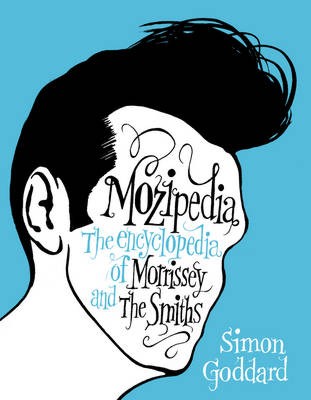
Is that too strong a word? Maybe. Morrissey is certainly the interesting and original one in this book and it ends with his story only just beginning. You can feel the tug of his later career throughout the book: it’s not discussed, but you know it’s there. But Fletcher isn’t concentrating on Morrissey and doesn’t seem very interested in Carry On and Brit-film in the 1960s, so he’s less good on what might be called the Smythos: the world created by Morrissey in his lyrics and interviews. Morrissey’s influences are better explained in Simon Goddard’s Mozipedia (2009), which isn’t just about the New York Dolls, the Cockney Rejects and vegetarianism. It has also entries for everyone from Hawtrey and Housman to Williams and Wilde by way of Sandy Shaw, Shelagh Delaney and Jobriath. No-one will ever devote an encyclopaedia to Marr like that: music doesn’t have as much meaning and metaphor in it. It has emotion and beauty instead and Fletcher is good at describing how Marr created a lot of both on albums like Meat Is Murder and Strangeways Here We Come.

Front cover of Mozipedia by Simon Goddard

Front cover of Mozipedia by Simon Goddard

I’ve never liked him much, though. I like what he did with the guitar and in the studio, but I don’t like what he did to his body and mind. Or what he put on his body: he didn’t have Mozza’s way with weeds either. In the photos, you can clearly see Morrissey’s narcissism and Marr’s weediness. It’s no surprise that Marr smoked a lot of marijuana, preferred working at night and didn’t eat properly. But he’s weedy in more ways than the physical: there’s also a photo of him with Billy Bragg, the committed socialist behind Red Wedge. This was a collective of musicians and bands who wanted to make the world a better place by fighting Fatcher, fascism and free speech with their fantastic music. Morrissey had his lefty opinions too, but he didn’t like collectives and he didn’t scorn just Margaret Thatcher and the Queen: Bob Geldof and Live Aid got the sharp side of his tongue too. Which is good. Mozza is worshipped by Guardianistas, but he’s not a Guardianista himself.

Or not wholly. The hive-mind hasn’t been able to hum him fully into line, unlike Marr and Bragg. As for Rourke and Joyce: their politics don’t matter and the most interesting thing one of them does in this book is get stung by a sting-ray (pp. 539-40). They were competent musicians, but they weren’t essential to the Smiths. Joyce is most important for causing trouble, not for strumming his bass: first there was the heroin addiction, then the 21st-century court-case in which he sued for more money and earnt Morrissey’s undying enmity. Fletcher barely mentions the court-case and ends the book in the 1980s, with the Smiths exhausted, antagonistic and unfulfilled. They never achieved their full potential and though few bands do, few bands have had more to offer than the Smiths. The Beatles were one and managed to offer it from the nearby northern city of Liverpool. They were Irish Catholic too. But, like the Smiths, they achieved success in England, not Ireland. That’s important and the younger band captured it in their name. “Smiths” is an Anglo-Saxon word with ancient roots and difficult phonetics. It seems simple, but it isn’t. Rather like light.