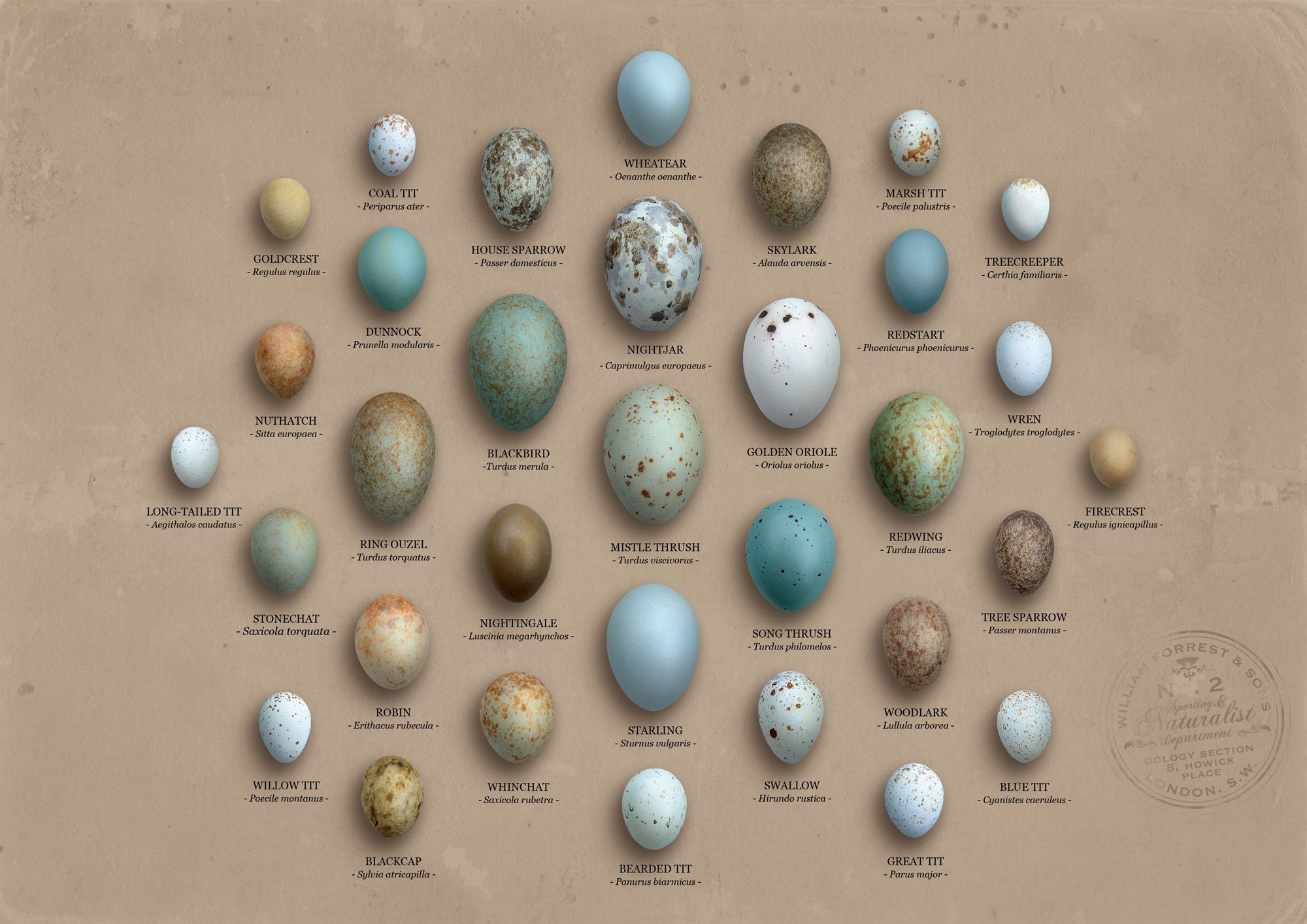
Eggs of various common species of British wild bird
(click for larger image)

Eggs of various common species of British wild bird
(click for larger image)
A once very difficult but now very simple problem in probability from Ian Stewart’s Do Dice Play God? (2019):
For three dice [Girolamo] Cardano solved a long-standing conundrum [in the sixteenth century]. Gamblers had long known from experience that when throwing three dice, a total of 10 is more likely than 9. This puzzled them, however, because there are six ways to get a total of 10:
1+4+5; 1+3+6; 2+4+4; 2+2+6; 2+3+5; 3+3+4
But also six ways to get a total of 9:
1+2+6; 1+3+5; 1+4+4; 2+2+5; 2+3+4; 3+3+3
So why does 10 occur more often?
To see the answer, imagine throwing three dice of different colors: red, blue and yellow. How many ways can you get 9 and how many ways can you get 10?
| Roll | Total=9 | Dice #1 (Red) | Dice #2 (Blue) | Dice #3 (Yellow) |
| 01 | 9 = | 1 | 2 | 6 |
| 02 | 9 = | 1 | 3 | 5 |
| 03 | 9 = | 1 | 4 | 4 |
| 04 | 9 = | 1 | 5 | 3 |
| 05 | 9 = | 1 | 6 | 2 |
| 06 | 9 = | 2 | 1 | 6 |
| 07 | 9 = | 2 | 2 | 5 |
| 08 | 9 = | 2 | 3 | 4 |
| 09 | 9 = | 2 | 4 | 3 |
| 10 | 9 = | 2 | 5 | 2 |
| 11 | 9 = | 2 | 6 | 1 |
| 12 | 9 = | 3 | 1 | 5 |
| 13 | 9 = | 3 | 2 | 4 |
| 14 | 9 = | 3 | 3 | 3 |
| 15 | 9 = | 3 | 4 | 2 |
| 16 | 9 = | 3 | 5 | 1 |
| 17 | 9 = | 4 | 1 | 4 |
| 18 | 9 = | 4 | 2 | 3 |
| 19 | 9 = | 4 | 3 | 2 |
| 20 | 9 = | 4 | 4 | 1 |
| 21 | 9 = | 5 | 1 | 3 |
| 22 | 9 = | 5 | 2 | 2 |
| 23 | 9 = | 5 | 3 | 1 |
| 24 | 9 = | 6 | 1 | 2 |
| 25 | 9 = | 6 | 2 | 1 |
| Roll | Total=10 | Dice #1 (Red) | Dice #2 (Blue) | Dice #3 (Yellow) |
| 01 | 10 = | 1 | 3 | 6 |
| 02 | 10 = | 1 | 4 | 5 |
| 03 | 10 = | 1 | 5 | 4 |
| 04 | 10 = | 1 | 6 | 3 |
| 05 | 10 = | 2 | 2 | 6 |
| 06 | 10 = | 2 | 3 | 5 |
| 07 | 10 = | 2 | 4 | 4 |
| 08 | 10 = | 2 | 5 | 3 |
| 09 | 10 = | 2 | 6 | 2 |
| 10 | 10 = | 3 | 1 | 6 |
| 11 | 10 = | 3 | 2 | 5 |
| 12 | 10 = | 3 | 3 | 4 |
| 13 | 10 = | 3 | 4 | 3 |
| 14 | 10 = | 3 | 5 | 2 |
| 15 | 10 = | 3 | 6 | 1 |
| 16 | 10 = | 4 | 1 | 5 |
| 17 | 10 = | 4 | 2 | 4 |
| 18 | 10 = | 4 | 3 | 3 |
| 19 | 10 = | 4 | 4 | 2 |
| 20 | 10 = | 4 | 5 | 1 |
| 21 | 10 = | 5 | 1 | 4 |
| 22 | 10 = | 5 | 2 | 3 |
| 23 | 10 = | 5 | 3 | 2 |
| 24 | 10 = | 5 | 4 | 1 |
| 25 | 10 = | 6 | 1 | 3 |
| 26 | 10 = | 6 | 2 | 2 |
| 27 | 10 = | 6 | 3 | 1 |

Multicolored rock strata at Zhangye National Geopark, 張掖國家地質公園, China
Currently listening…
• Dźmutia Zirih, Plz Yrslf (1976)
• Far Beyond Xanadu, Dionysus’ Holy Name (1992)
• Yolanda Grovedrew, Not for Duke War (1997)
• Egzotiq, Vous N’Êtes Que (1984)
• Doctor Yacht, Invoke the Geigar (2009)
• Forschung-239, Jisirlo (1995)
• Gary Jophe, Silver Sands (1992)
• მზის მგელი, მგლისთვალება (2008)
• Helios Epoch, Nahtloser Neuntöter (2009)
• WihlhiW, Gaze Fix (1996)
• Ossafracht, Lokomotiv Zinken (2002)
• Vora xMqa, Future Is An Asylum (2015)
• հաց և գինի, Պետրիկոր (2020)
• Floris Nox, God is Caffeinated (1988)
• Phonophoro L.G., El Coro del Abismo (1988)
• Oscar’s Vital Glove, We Hate Tweeve (2003)
• Ecofoxes, When the Hen (1994)
• ბვემწა, ფვიტი ჰმრე (2017)
• Aoatt Leit, Trey Drake (1993)
• Audiosun, Lucus (Non Lucendo) (1995)
• Hildegard von Bingen, Hortus Deliciarum (2018)
• Ikexon, H.M.T. (2014)
Previously pre-posted
Toxic Turntable #1 • #2 • #3 • #4 • #5 • #6 • #7 • #8 • #9 • #10 • #11 • #12 • #13 • #14 • #15 • #16 • #17 • #18 • #19 • #20 • #21 •
“A formal manipulator in mathematics often experiences the discomforting feeling that his pencil surpasses him in intelligence.” — Howard Whitley Eves (1911-2004)
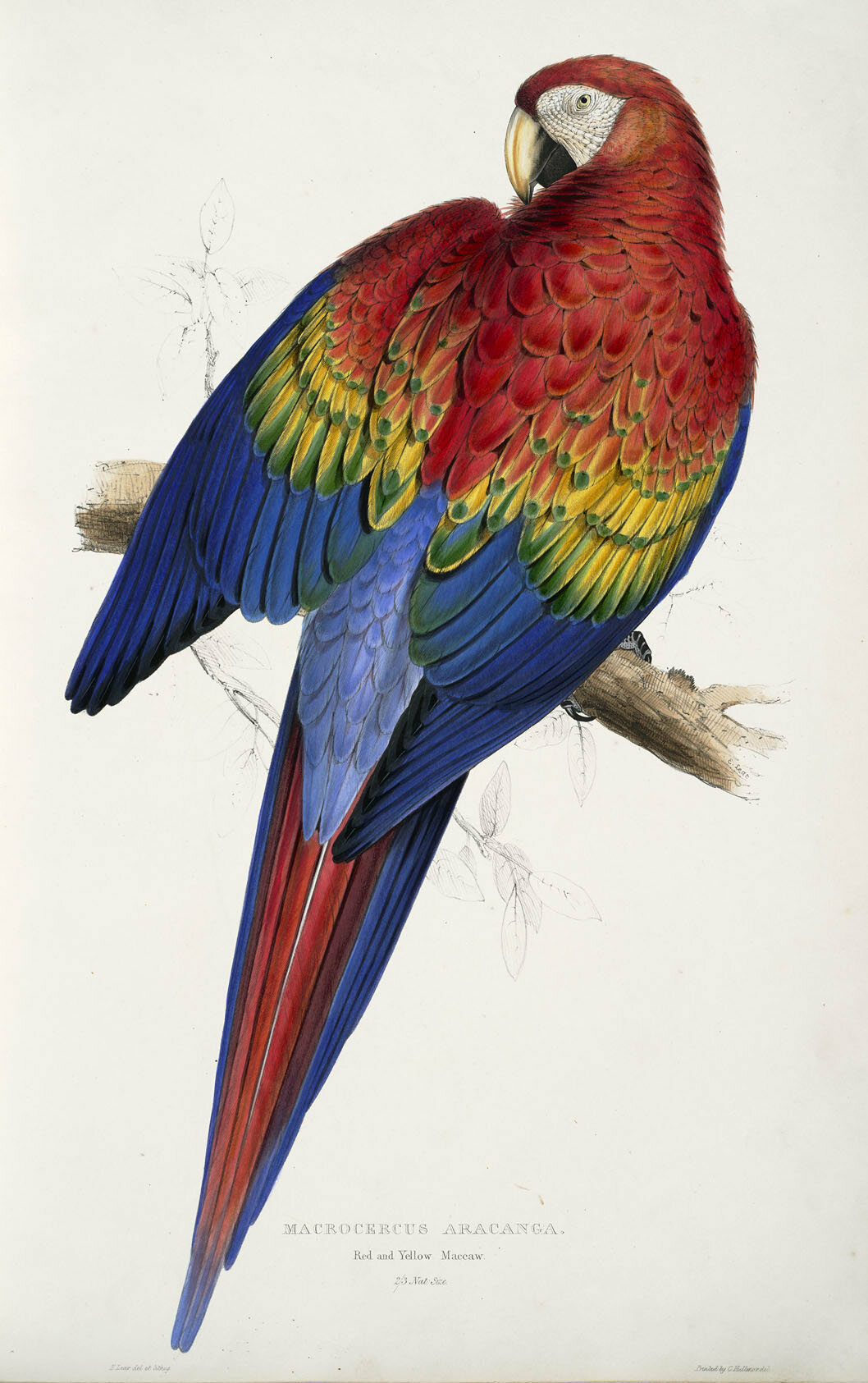
Red and yellow maccaw, Macrocercus aracanga, by Edward Lear (1812-1888)
(Open in new window for larger image)
(Now Scarlet Macaw, Ara macao)
Elsewhere other-accessible…
Papyrocentric Performativity Presents:
• Powerful in Patches – The Kraken Wakes (1953) and The Midwich Cuckoos (1957), John Wyndham
• Twists in the Tale – No Comebacks: Collected Short Stories, Frederick Forsyth (1972)
• A Hundred Heresiarchs – Bowie’s Books: The Hundred Literary Heroes Who Changed His Life, John O’Connell (Bloomsbury 2020)
Posted at Overlord of the Über-Feral
• Chlorokill – The Day of the Triffids, John Wyndham (1951)
Boring, dull, staid, stiff, everyday, ordinary, unimaginative, unexceptional, crashingly conventional — the only interesting thing about squares is the number of ways you can say how uninteresting they are. Unlike triangles, which vary endlessly and entertainingly, squares are square in every sense of the word.
And they don’t get any better if you tilt them, as here:

Sub-squares from gray square (with corner-numbers)
Nothing interesting can emerge from that set of squares. Or can it? As I showed in Curvous Energy, it can. Suppose that the gray square is dividing into the colored squares like a kind of amoeba. And suppose that the colored squares divide in their turn. So square divides into sub-squares and sub-squares divide into sub-sub-squares. And so on. And all the squares keep the same relative orientation.
What happens if the gray square divides into sub-squares sq2 and sq9? And then sq2 and sq9 each divide into their own sq2 and sq9? And so on. Something very unsquare-like happens:
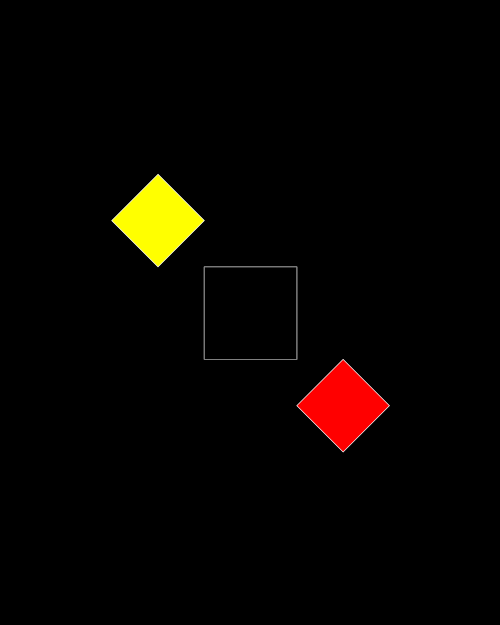
Square-split stage #1
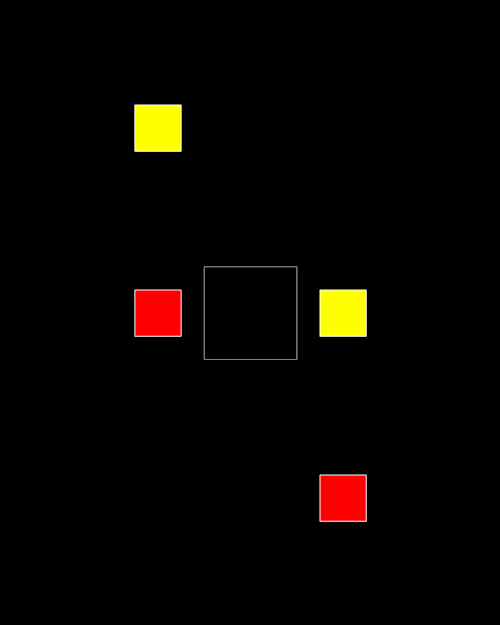
Stage #2
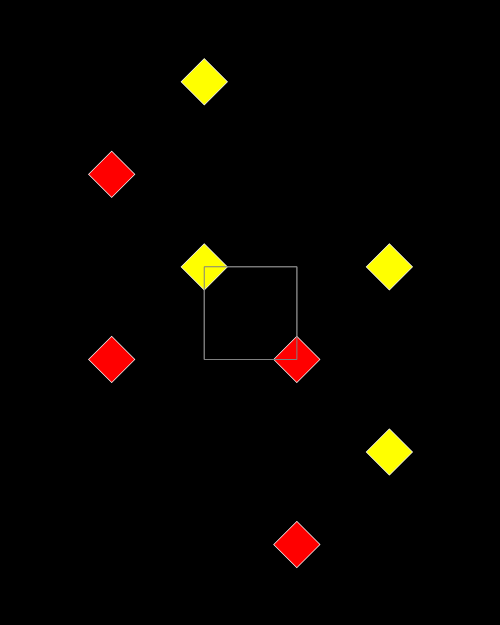
Square-split #3
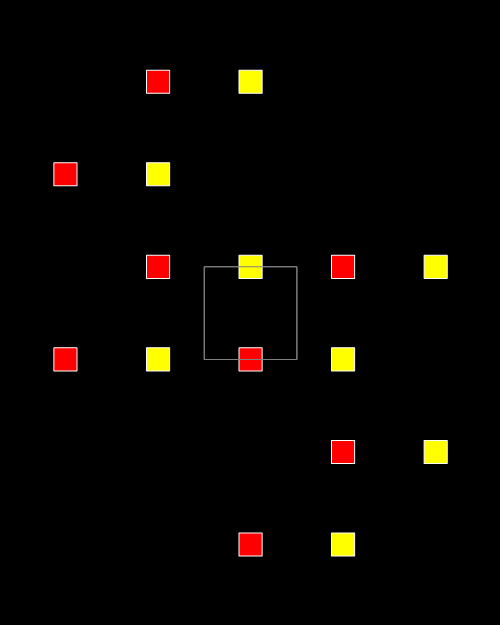
Square-split #4

Square-split #5
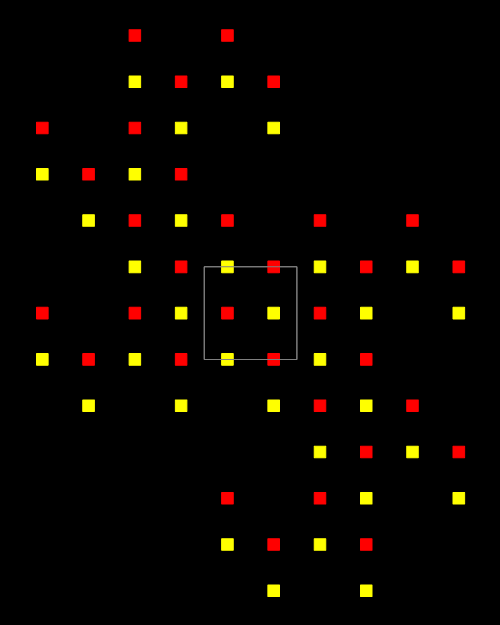
Square-split #6
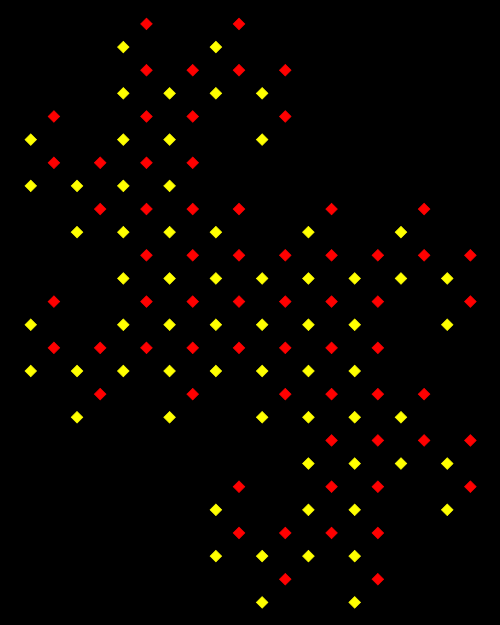
Square-split #7

Square-split #8
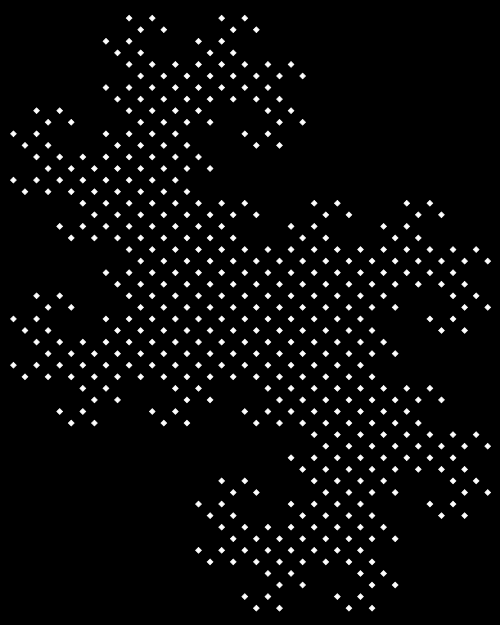
Square-split #9
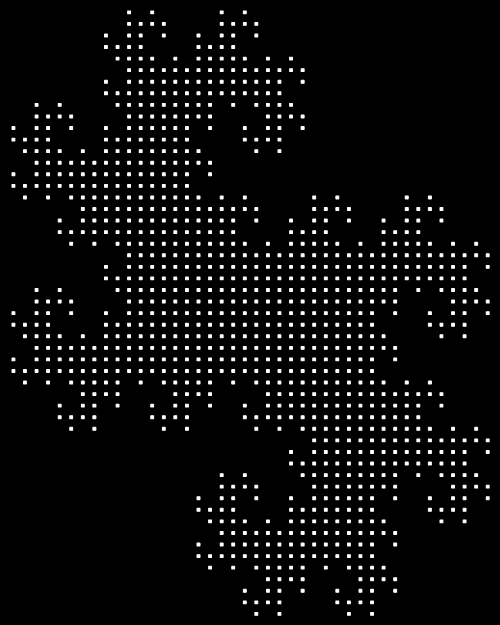
Square-split #10

Square-split #11
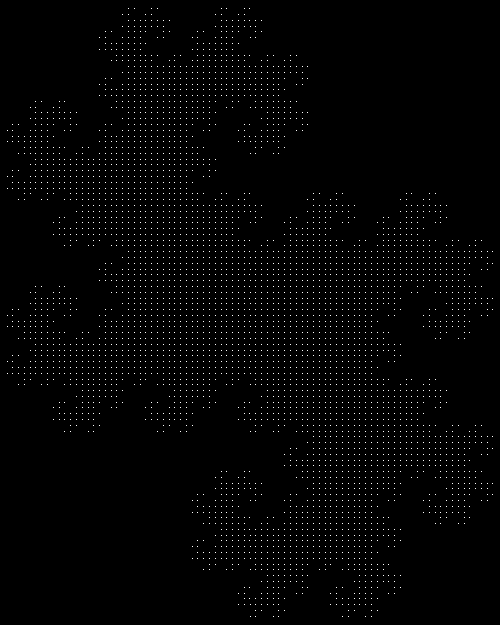
Square-split #12
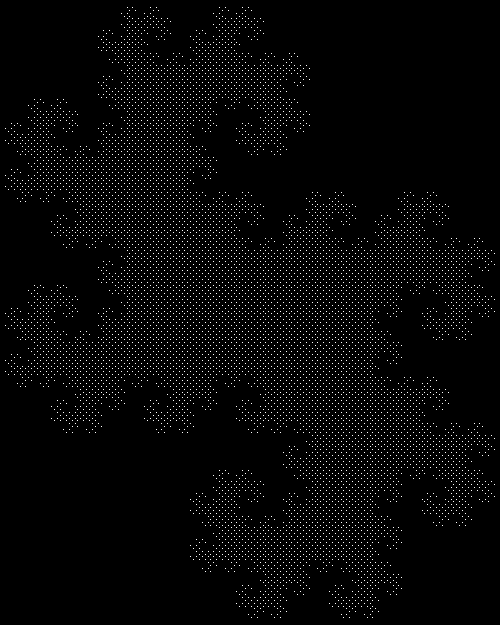
Square-split #13
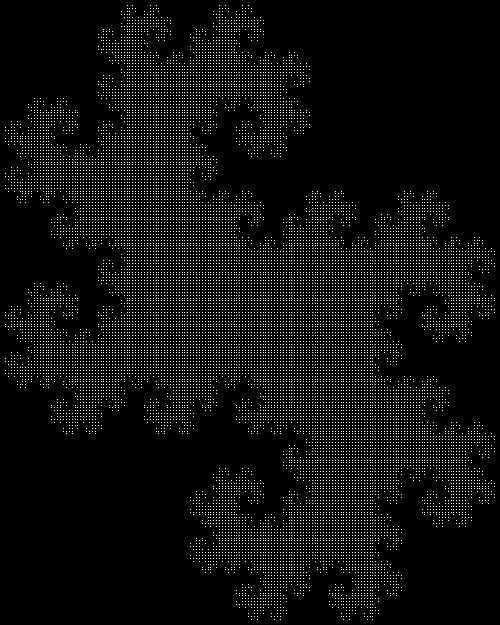
Square-split #14
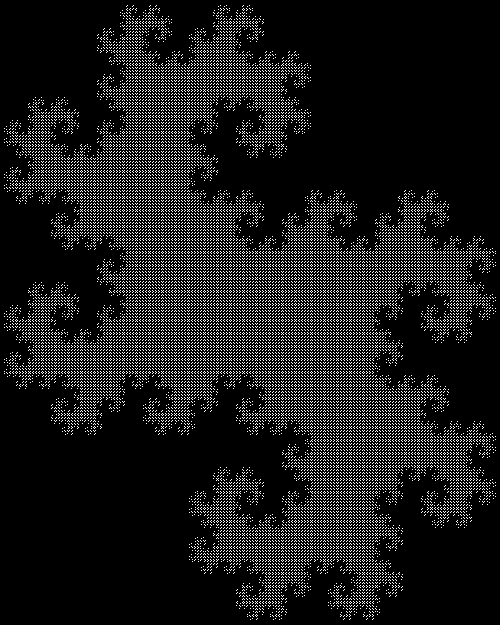
Square-split #15
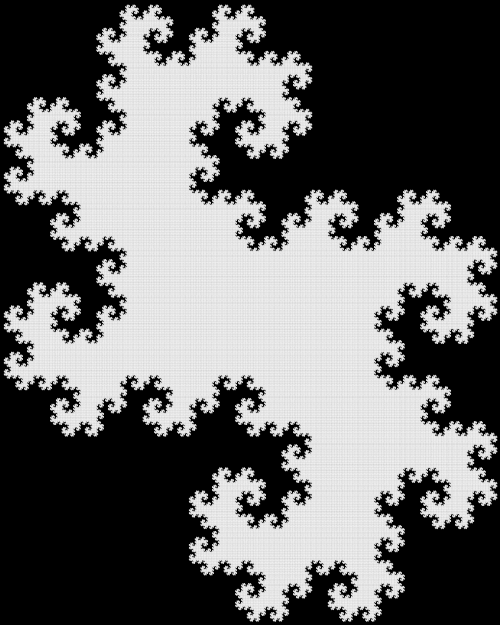
Square-split #16

Square-split (animated)
The square-split creates a beautiful fractal known as a dragon-curve:
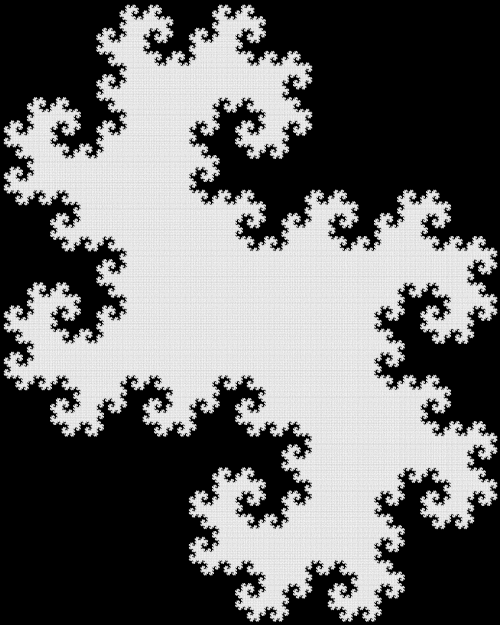
Dragon-curve
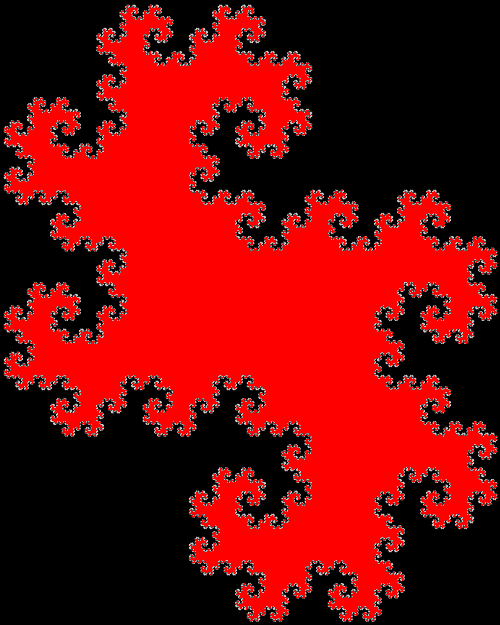
Dragon-curve (red)
And dragon-curves, at various angles and in various sizes, emerge from every other possible pair of sub-squares:
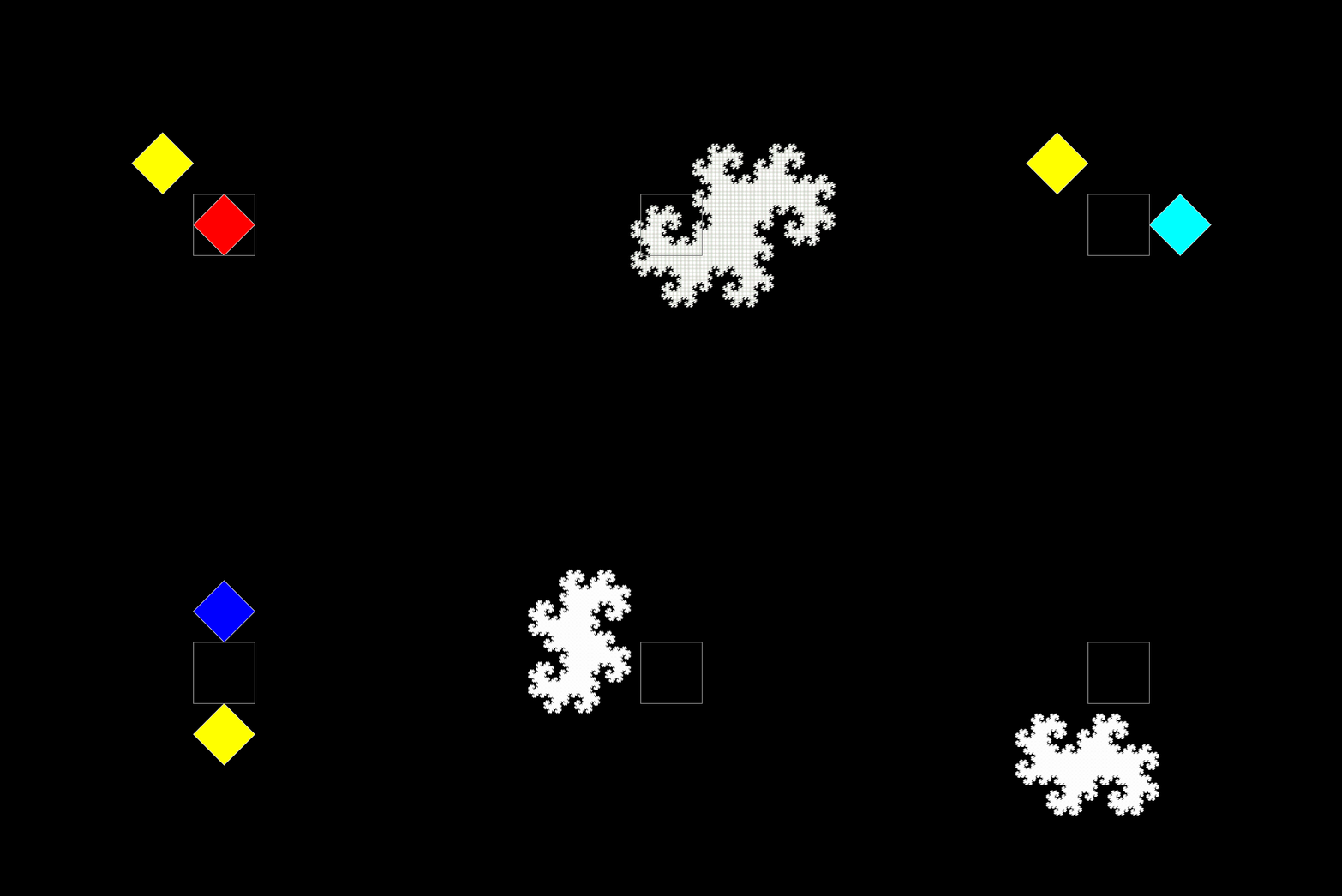
Lots of dragon-curves
And you get other fractals if you manipulate the sub-squares, so that the corners are rotated or reverse-rotated:
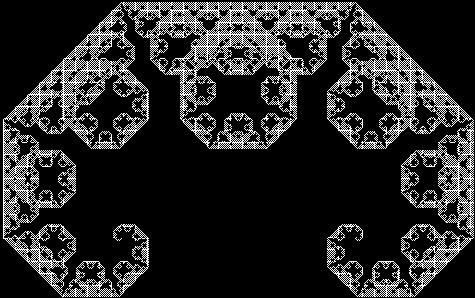
Rotation = 1,2 (sub-square #1 unchanged, in sub-square #2 corner 1 becomes corner 2, 2 → 3, 3 → 4, 4 → 1)
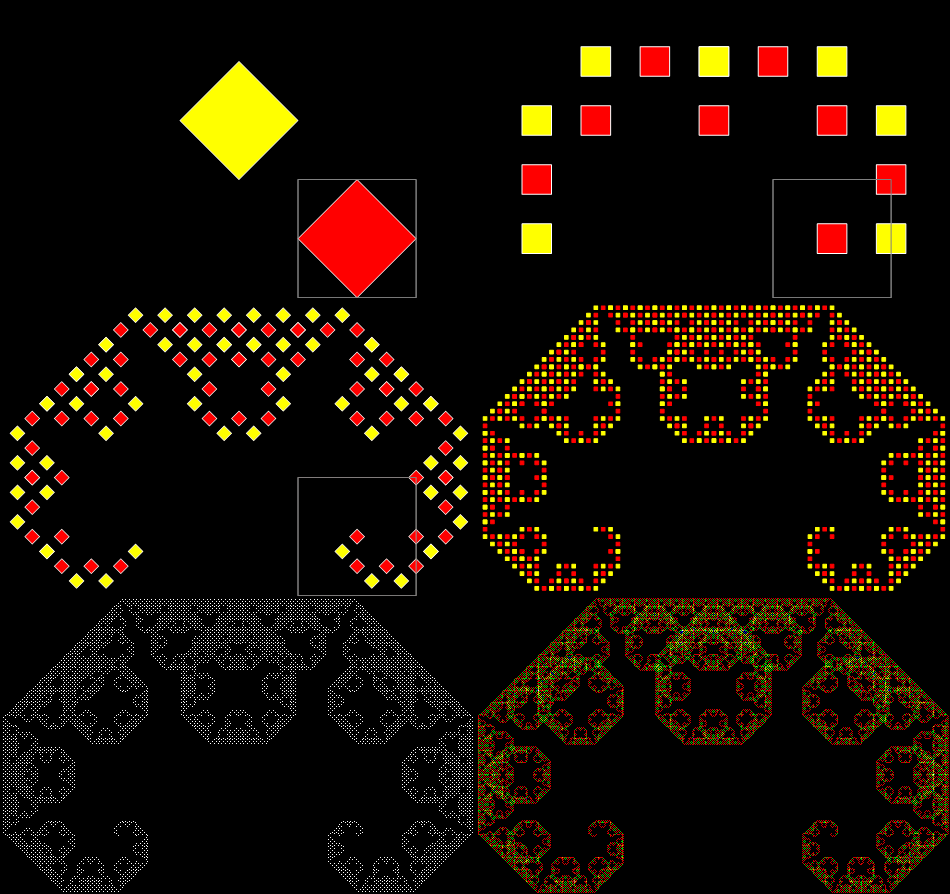
rot = 1,2 (animated)
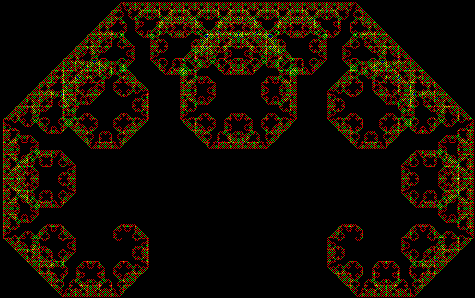
rot = 1,2 (colored)

rot = 1,5 (in sub-square #2 corner 1 stays the same, 4 → 2, 3 stays the same, 2 → 4)
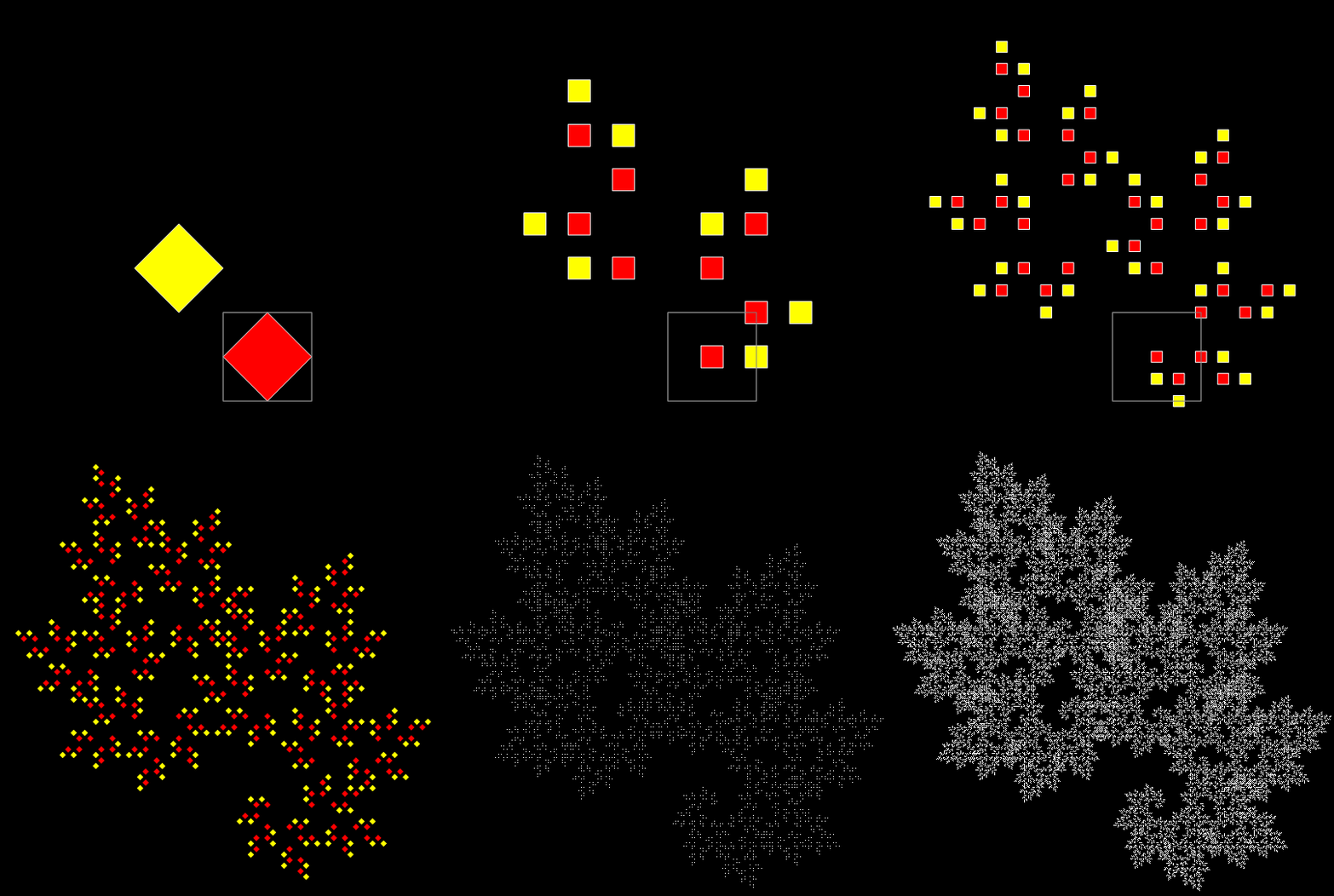
rot = 1,5 (anim)

rot = 4,7 (sub-square #2 flipped and rotated)
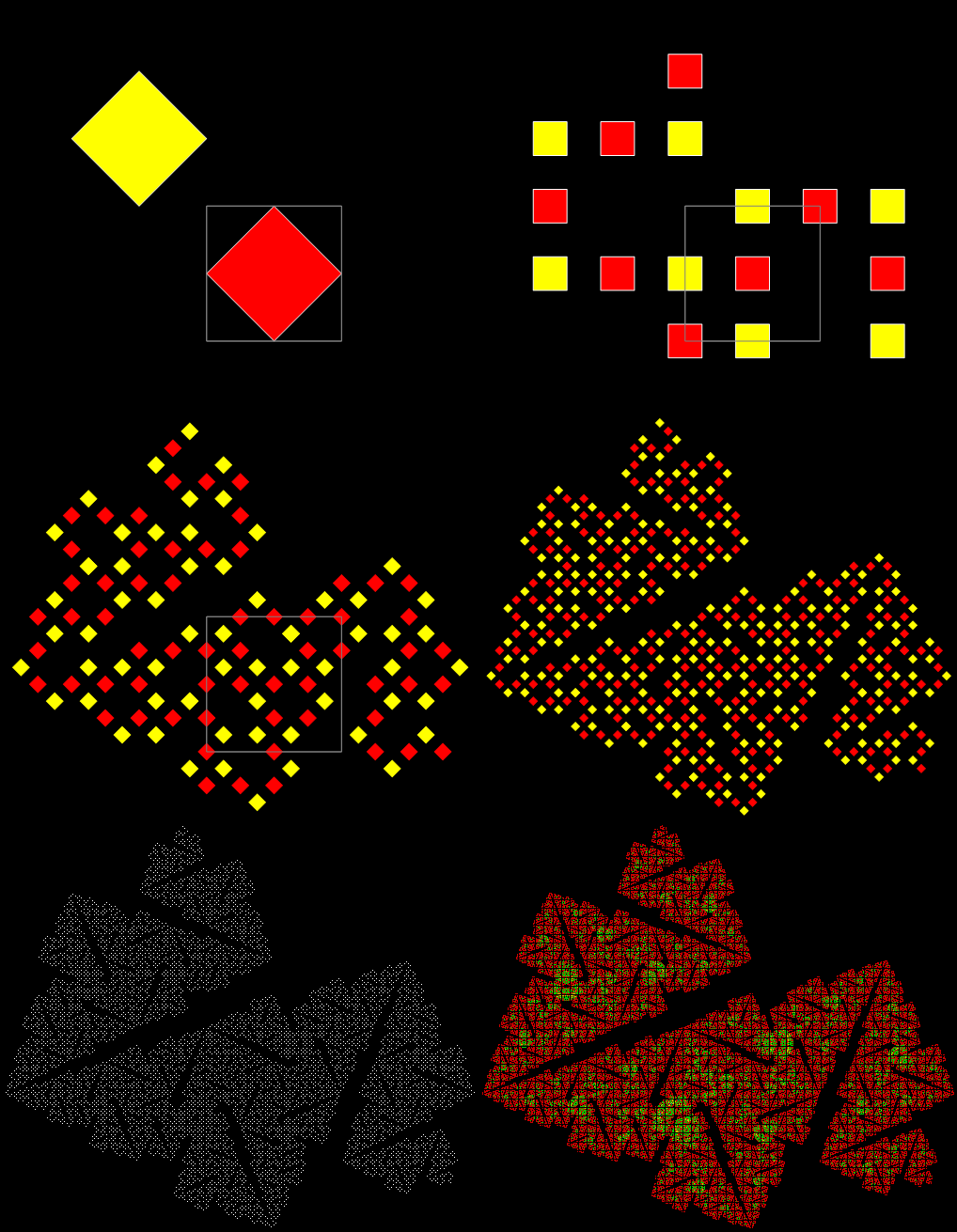
rot = 4,7 (anim)

rot = 4,7 (col)
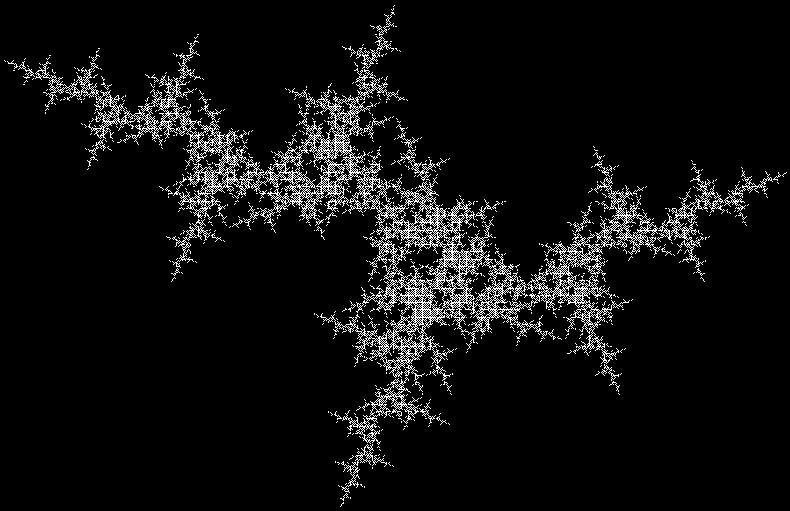
rot = 4,8

rot = 4,8 (anim)
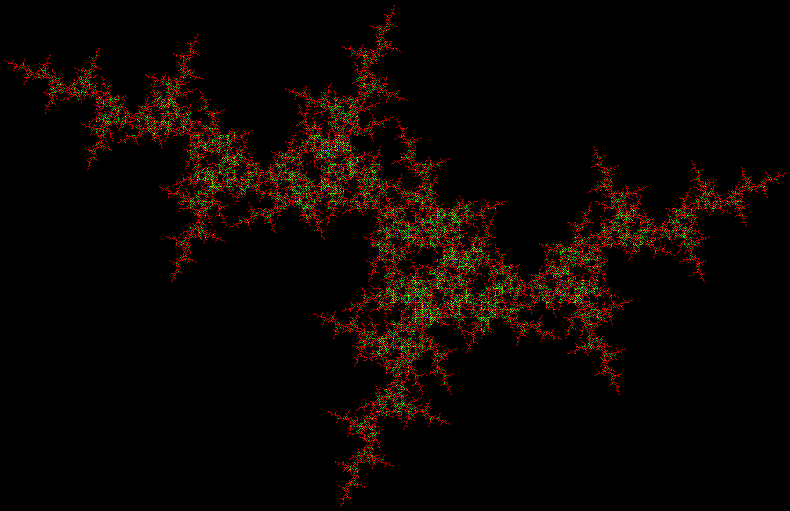
rot = 4,8 (col)
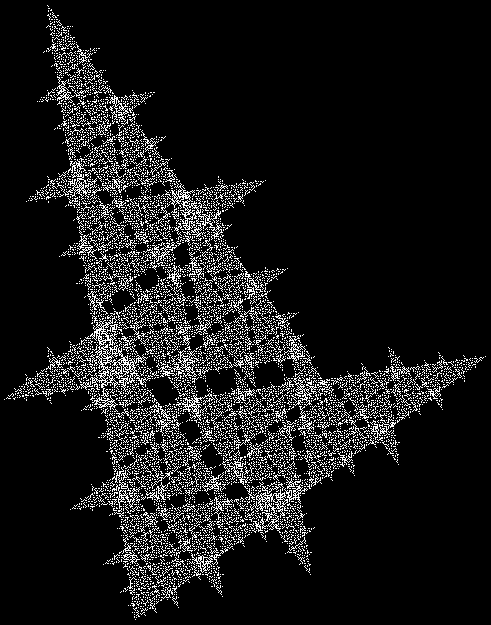
sub-squares = 2,8; rot = 5,6
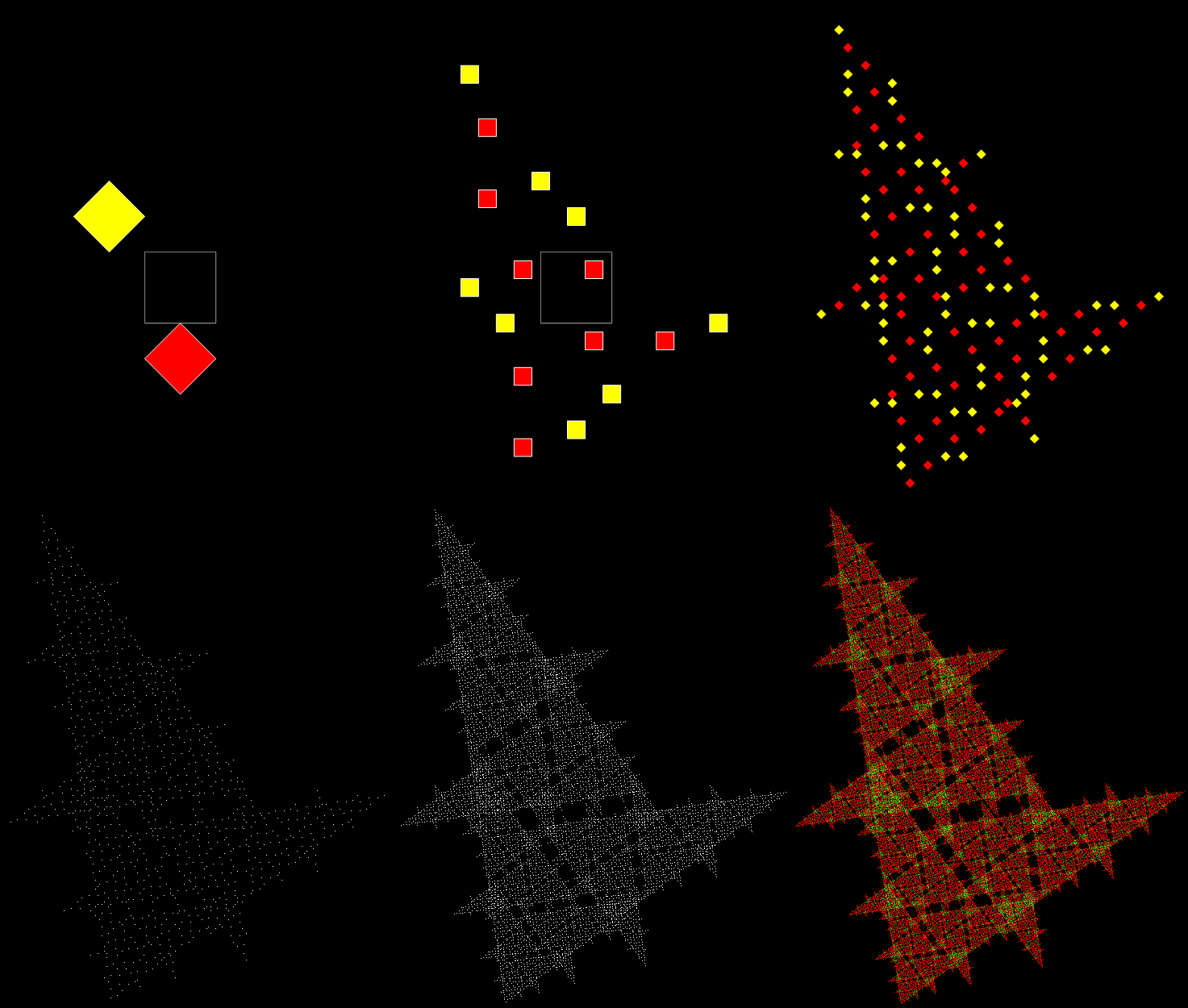
sub-squares = 2,8; rot = 5,6 (anim)
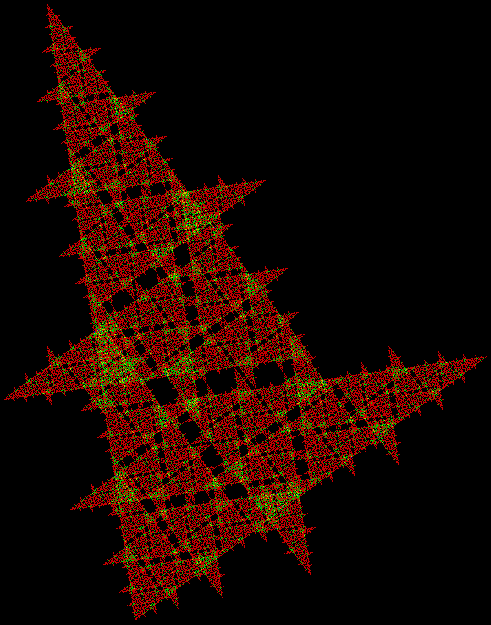
sub-squares = 2,8; rot = 5,6 (col)
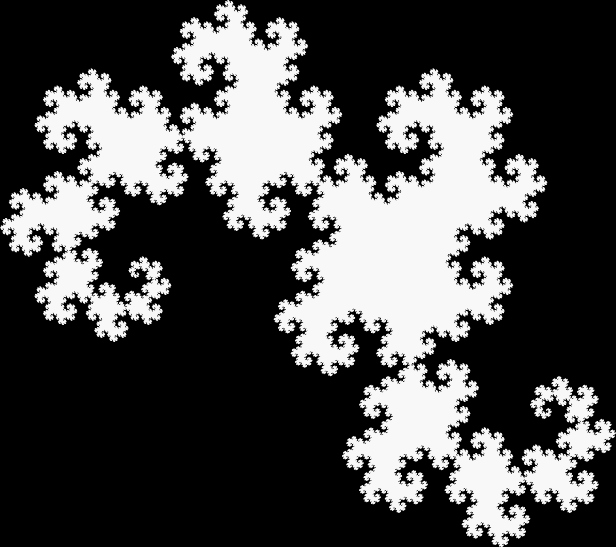
Another kind of dragon-curve — rot = 3,2

rot = 3,2 (anim)
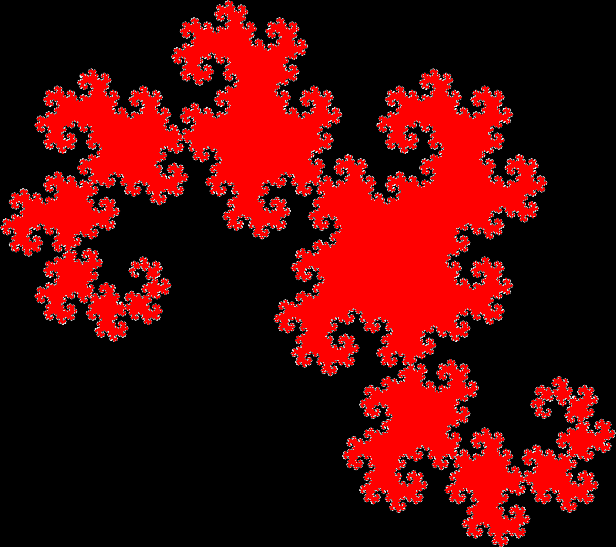
rot = 3,2 (col)
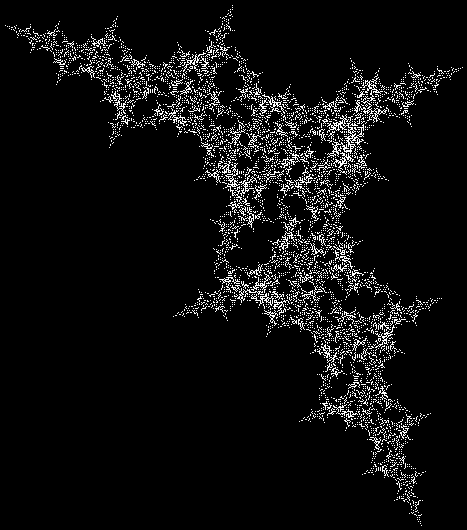
sub-squares = 4,5; rot = 3,9

sub-squares = 4,5; rot = 3,9 (anim)
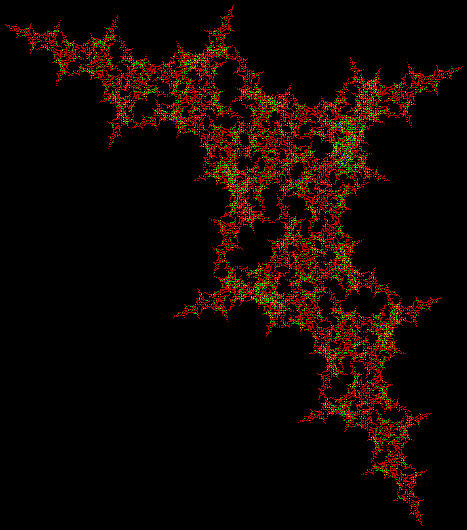
sub-squares = 4,5; rot = 3,9 (col)
Elsewhere other-accessible…
• Curvous Energy — a first look at dragon-curves
• Back to Drac’ — a second look at dragon-curves
From Intellectual Impostures (1998) by Alan Sokal and Jean Bricmont:
To conclude, let us quote a brief excerpt from the book Chaosmosis, written by Guattari alone. This passage contains the most brilliant melange of scientific, pseudo-scientific, and philosophical jargon that we have ever encountered; only a genius could have written it.
We can clearly see that there is no bi-univocal correspondence between linear signifying links or archi-writing, depending on the author, and this multireferential, multidimensional machinic catalysis. The symmetry of scale, the transversality, the pathic non-discursive character of their expansion: all these dimensions remove us from the logic of the excluded middle and reinforce us in our dismissal of the ontological binarism we criticised previously. A machinic assemblage, through its diverse components, extracts its consistency by crossing ontological thresholds, non-linear thresholds of irreversibility, ontological and phylogenetic thresholds, creative thresholds of heterogenesis and autopoiesis. The notion of scale needs to be expanded to consider fractal symmetries in ontological terms.
What fractal machines traverse are substantial scales. They traverse them in engendering them. But, and this should be noted, the existential ordinates that they “invent” were always already there. How can this paradox be sustained? It’s because everything becomes possible (including the recessive smoothing of time, evoked by Rene Thom) the moment one allows the assemblage to escape from energetico-spatiotemporal coordinates. And, here again, we need to rediscover a manner of being of Being — before, after, here and everywhere else — without being, however, identical to itself; a processual, polyphonic Being singularisable by infinitely complexifiable textures, according to the infinite speeds which animate its virtual compositions.
The ontological relativity advocated here is inseparable from an enunciative relativity. Knowledge of a Universe (in an astrophysical or axiological sense) is only possible through the mediation of autopoietic machines. A zone of self-belonging needs to exist somewhere for the coming into cognitive existence of any being or any modality of being. Outside of this machine/Universe coupling, beings only have the pure status of a virtual entity. And it is the same for their enunciative coordinates. The biosphere and mecanosphere, coupled on this planet, focus a point of view of space, time and energy. They trace an angle of the constitution of our galaxy. Outside of this particularised point of view, the rest of the Universe exists (in the sense that we understand existence here-below) only through the virtual existence of other autopoietic machines at the heart of other bio-mecanospheres scattered throughout the cosmos. The relativity of points of view of space, time and energy do not, for all that, absorb the real into the dream. The category of Time dissolves into cosmological reflections on the Big Bang even as the category of irreversibility is affirmed. Residual objectivity is what resists scanning by the infinite variation of points of view constitutable upon it. Imagine an autopoietic entity whose particles are constructed from galaxies. Or, conversely, a cognitivity constituted on the scale of quarks. A different panorama, another ontological consistency. The mecanosphere draws out and actualises configurations which exist amongst an infinity of others in fields of virtuality. Existential machines are at the same level as being in its intrinsic multiplicity. They are not mediated by transcendent signifiers and subsumed by a univocal ontological foundation. They are to themselves their own material of semiotic expression. Existence, as a process of deterritorialisation, is a specific inter-machinic operation which superimposes itself on the promotion of singularised existential intensities. And, I repeat, there is no generalised syntax for these deterritorialisations. Existence is not dialectical, not representable. It is hardly livable! (Félix Guattari 1995, pp. 50-52)
Strange. But. True. Many keyly committed core components of the counter-cultural community feel a reluctant reverence for core ’60s icon Paul Sir McCartney. Beneath that sentimentally saccharine surface, that merry “Macca” mask, they sense something deeper… darker… dangerouser…
“He ain’t as appallingly unesoteric as he appears, man,” these keyly committed core components of the counter-cultural community mutter meaningly…
I’ve tried to capture something of this Morbid Mac in a series of animated gifs that display Macca mise en abîme or “sent into the abyss” (pronounced “meez on abeem”, roughly speaking). That’s the artistic term for the way some images contain smaller and smaller versions of themselves.
Here’s Macca at stage one:

And stage two:

And further stages:





 Overlord In Terms of Core Issues Around Maximal Engagement with Key Notions of the Über-Feral