
Flat periwinkle, Littorina obtusa (Linnaeus, 1758)*
*Possibly.

Papyrocentric Performativity Presents:
• Clarke’s Sparks – The Collected Stories, Arthur C. Clarke (Victor Gollancz 2000)
• Deeper and Down – Blind Descent: The Quest to Discover the Deepest Place on Earth, James M. Tabor (Random House 2010)
• Manchester’s Mozzerabilist Messiah – Morrissey: The Pageant of His Bleeding Heart, Gavin Hopps (Continuum Books 2012)
• Or Read a Review at Random: RaRaR
Boustrophedon (pronounced “bough-stra-FEE-dun” or “boo-stra-FEE-dun”) is an ancient Greek word literally meaning “as the ox turns (in ploughing)”, that is, moving left-right, right-left, and so on. The word is used of writing that runs down the page in the same way. To see what that means, examine two versions of the first paragraph of Clark Ashton Smith’s story “The Demon of the Flower” (1933). The first is written in the usual way, the second is written boustrophedon:
Not as the plants and flowers of Earth, growing peacefully beneath a simple sun, were the blossoms of the planet Lophai. Coiling and uncoiling in double dawns; tossing tumultuously under vast suns of jade green and balas-ruby orange; swaying and weltering in rich twilights, in aurora-curtained nights, they resembled fields of rooted servants that dance eternally to an other-worldly music.
Not as the plants and flowers of Earth, growing peacefully
.iahpoL tenalp eht fo smossolb eht erew ,nus elpmis a htaeneb
Coiling and uncoiling in double dawns; tossing tumultuously
;egnaro ybur-salab dna neerg edaj fo snus tsav rednu
swaying and weltering in rich twilights, in aurora-curtained
ecnad taht stnavres detoor fo sdleif delbmeser yeht ,sthgin
eternally to an other-worldly music.
Boustrophedon writing was once common and sometimes the left-right lines would also be mirror-reversed, like this:

You could also use the term “boustrophedon” to describe the way this table of numbers is filled:

The table begins with “1” in the top left-hand corner, then moves right for “2”, then down for “3”, then right-and-up for “4”, “5” and “6”, then right for “7”, then left-and-down for “8”, “9” and “10”, and so on. You could also say that the numbers snake through the table. I’ve marked the primes among them, because I was interested in the patterns made by the primes when the numbers were represented as blocks on a grid, like this:
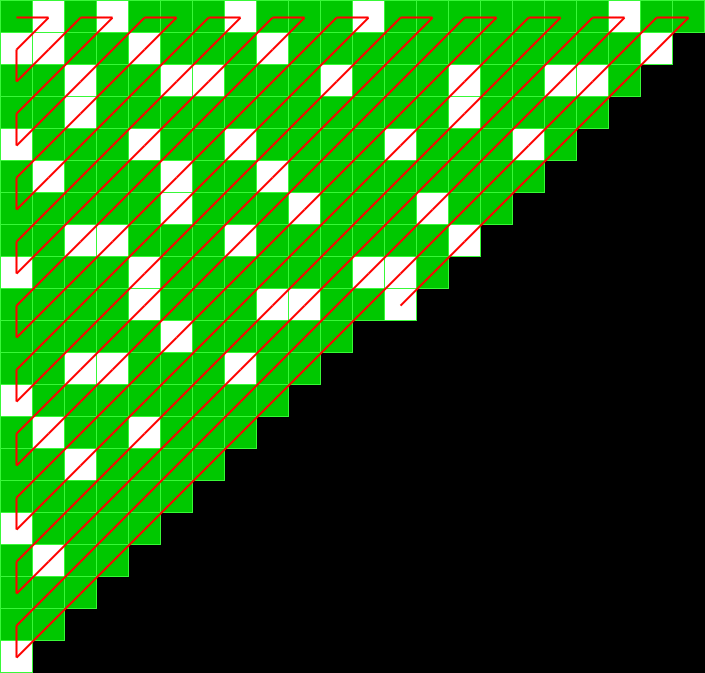
Primes are in solid white (compare the Ulam spiral). Here’s the boustrophedon prime-grid on a finer scale:

(click for full image)
And what about other number-tests? Here are the even numbers marked on the grid (i.e. n mod 2 = 0):

n mod 2 = 0
And here are some more examples of a modulus test:

n mod 3 = 0
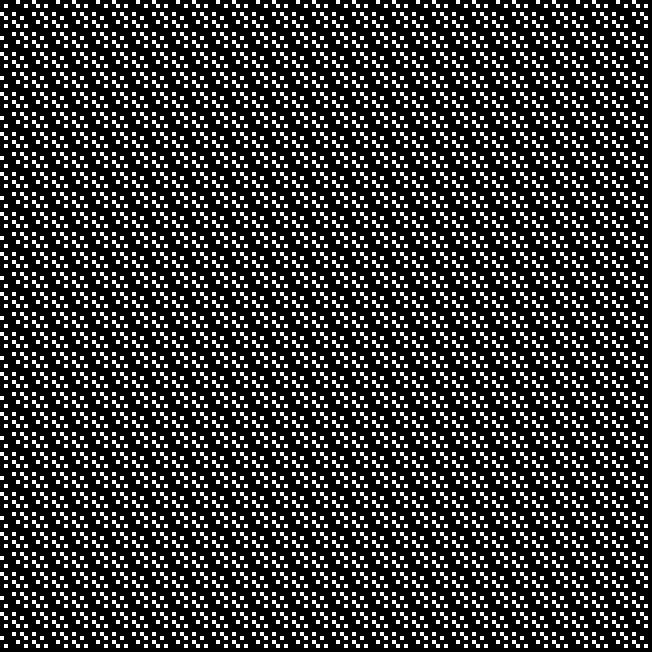
n mod 5 = 0
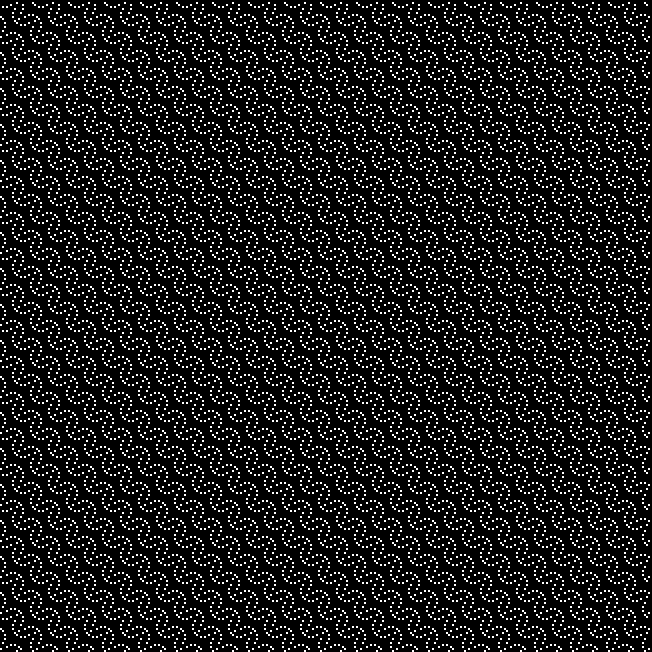
n mod 9 = 0
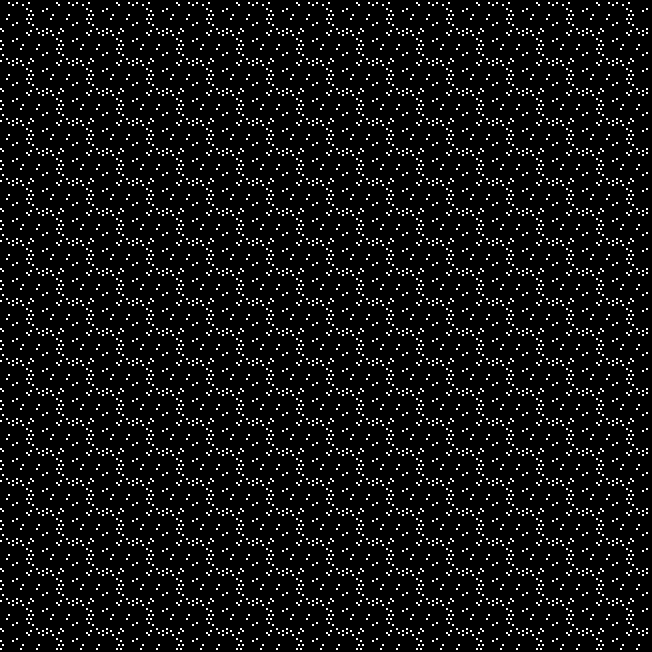
n mod 15 = 0

n mod various = 0 (animated gif)
Next I looked at reciprocals (numbers divided into 1) marked on the grid, with the digits of a reciprocal marking the number of blank squares before a square is filled in (if the digit is “0”, the square is filled immediately). For example, in base ten 1/7 = 0.142857142857142857…, where the block “142857” repeats for ever. When represented on the grid, 1/7 has 1 blank square, then a filled square, then 4 blank squares, then a filled square, then 2 blank squares, then a filled square, and so on:
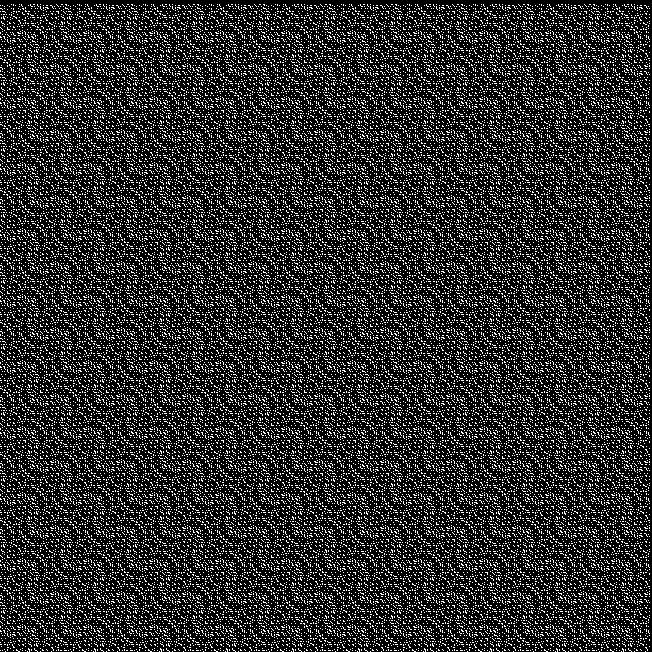
1/7 in base 10
And here are some more reciprocals (click for full images):

1/9 in base 2
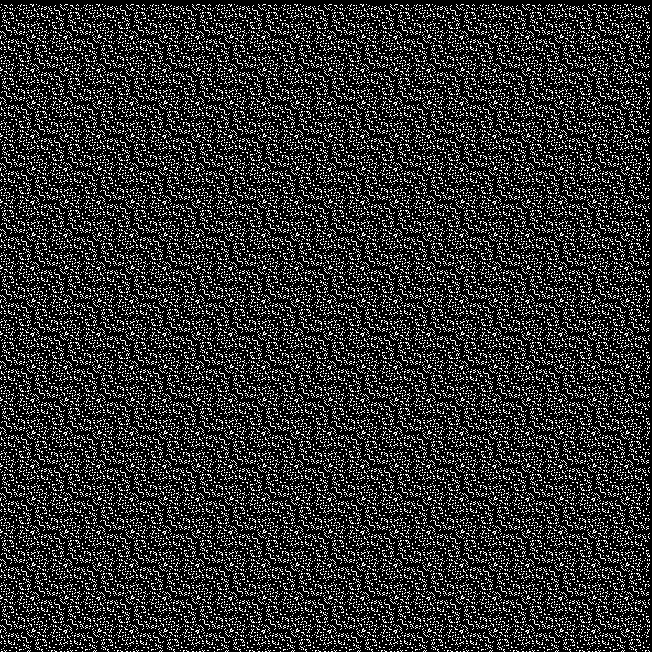
1/13 in base 10

1/27 in base 10

1/41 in base 10

1/63 in base 10

1/82 in base 10

1/101 in base 10

1/104 in base 10

1/124 in base 10
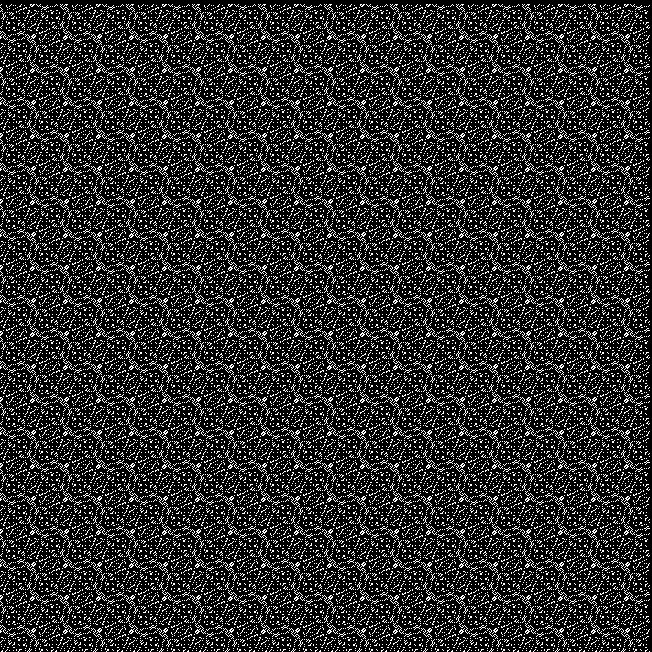
1/143 in base 10

1/175 in base 10

1/604 in base 8

1/n in various bases (animated gif)
• An der Trauerfeier war im Sinn Nietzsches die sonnige Stille dieser Natureinsamkeit; das Licht spielte durch die Pflaumenbäume an die Kirchmauer und bis in die helle Gruft hinein; eine grosse Spinne spann ihre Gewebe über das Grab von Ästchen zu Ästchen in einem Sonnenstrahl. — Harry Graf Kessler
• What was Nietzschean in the service was the sunny stillness of this natural solitude: the light playing through the plum trees on the church wall and even in the grave; a large spider spinning her web over the grave from branch to branch in a sunbeam. — Nietzsche is Dead
Serendipity is the art of making happy discoveries by accident. I made a mistake writing a program to create fractals and made the happy discovery of an attractive new fractal. And also of a new version of an attractive fractal I had seen before.
As I described in Get Your Prox Off, you can create a fractal by 1) moving a point towards a randomly chosen vertex of a polygon, but 2) forbidding a move towards the nearest vertex or the second-nearest vertex or third-nearest, and so on. If the polygon is a square, the four possible basic fractals look like this (note that the first fractal is also produced by banning a move towards a vertex that was chosen in the previous move):
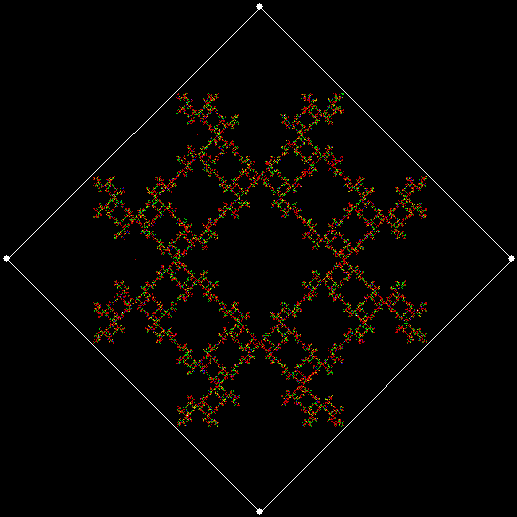
v = 4, ban = prox(1)
(ban move towards nearest vertex)
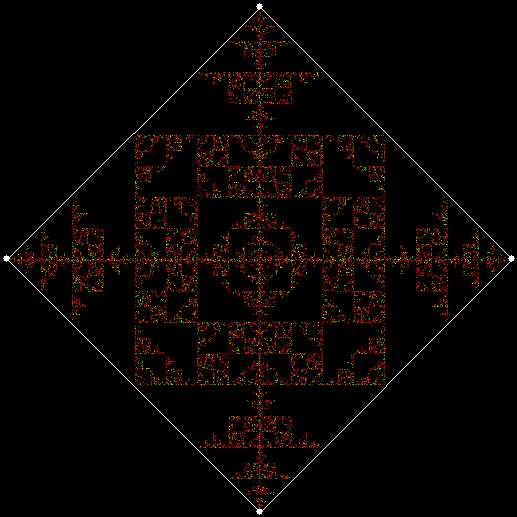
v = 4, ban = prox(2)
(ban move towards second-nearest vertex)
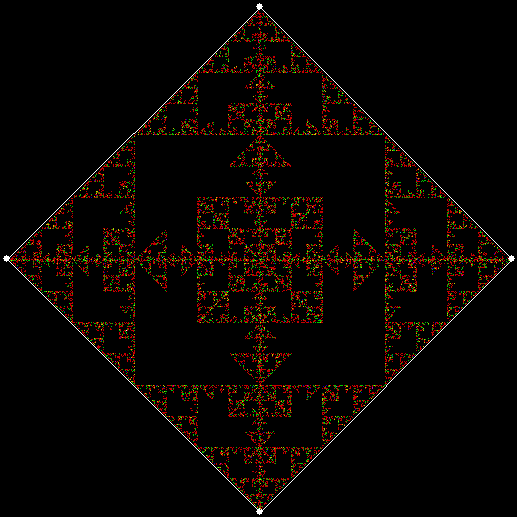
v = 4, ban = prox(3)
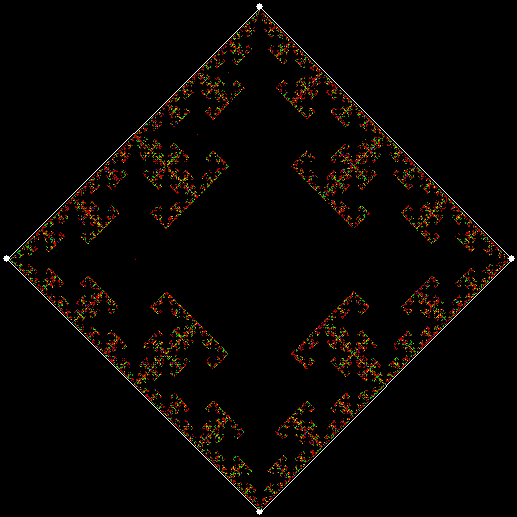
v = 4, ban = prox(4)
This program has to calculate what might be called the order of proximity: that is, it creates an array of distances to each vertex, then sorts the array by increasing distance. I was using a bubble-sort, but made a mistake so that the program ran through the array only once and didn’t complete the sort. If this happens, the fractals look like this (note that vertex 1 is on the right, with vertex 2, 3 and 4 clockwise from it):
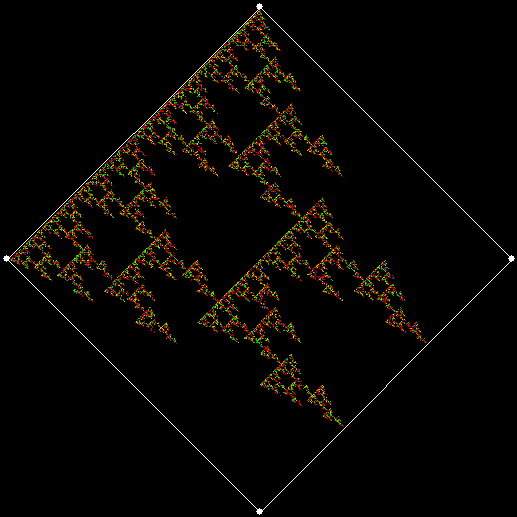
v = 4, ban = prox(1), sweep = 1
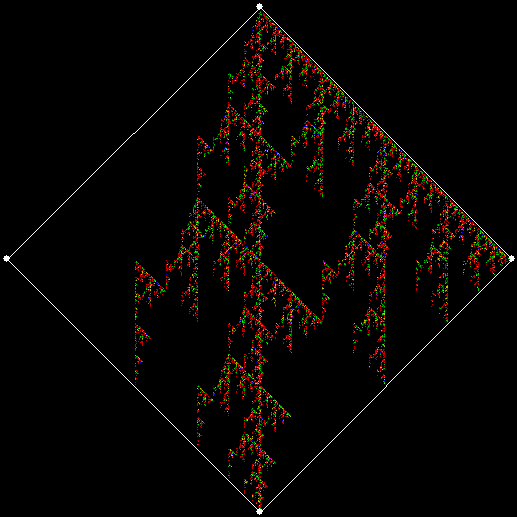
v = 4, ban = prox(2), sweep = 1
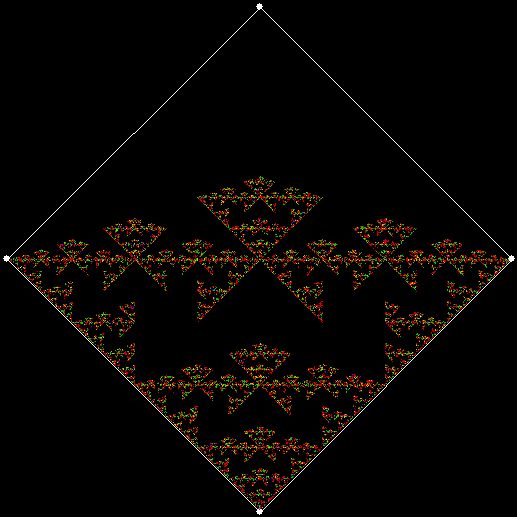
v = 4, ban = prox(3), sweep = 1
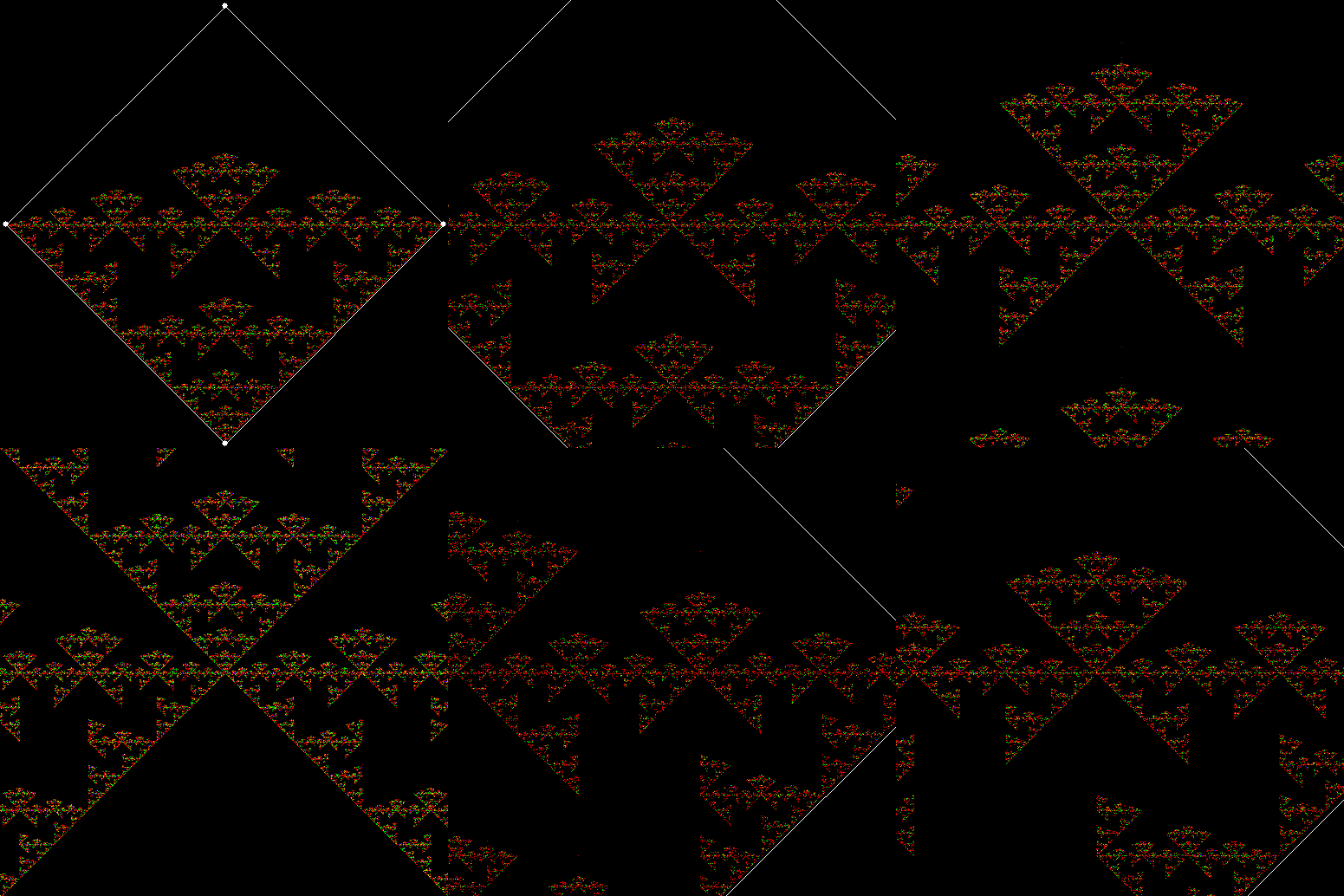
(Animated version of v4, ban(prox(3)), sw=1)
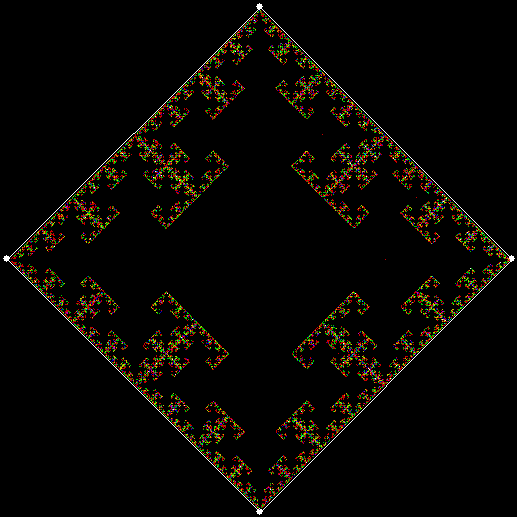
v = 4, ban = prox(4), sweep = 1
Note that in the last case, where ban = prox(4), a bubble-sort needs only one sweep to identify the most distant vertex, so the fractal looks the same as it does with a complete bubble-sort.
These new fractals looked interesting, so I had the idea of adjusting the number of sweeps in the incomplete bubble-sort: one sweep or two or three and so on (with enough sweeps, the bubble-sort becomes complete, but more sweeps are needed to complete a sort as the number of vertices increases). If there are two sweeps, then ban(prox(1)) and ban(prox(2)) look like this:
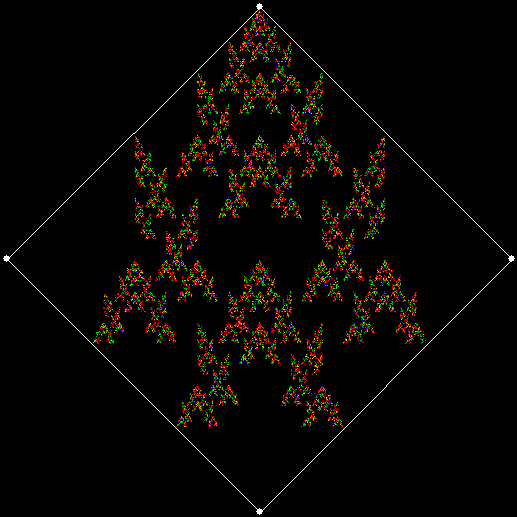
v = 4, ban = prox(1), sweep = 2
v = 4, ban = prox(2), sweep = 2
But the fractals produced by sweep = 2 for ban(prox(3)) and ban(prox(4)) are identical to the fractals produced by a complete bubble sort. Now, suppose you add a central point to the polygon and treat that as an additional vertex. If the bubble-sort is incomplete, a ban(prox(1)) fractal with a central point looks like this:
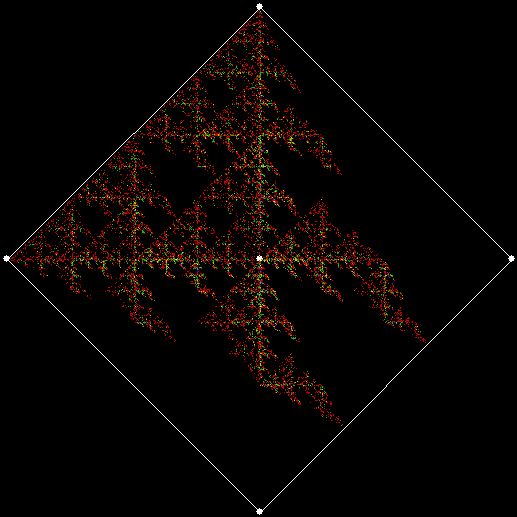
v = 4+c, ban = prox(1), sw = 1
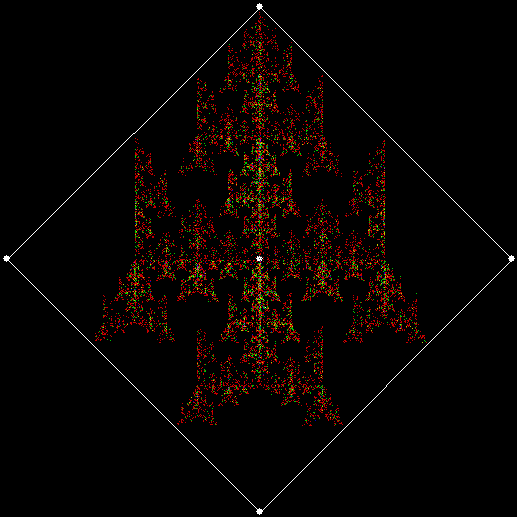
v = 4+c, ban = prox(1), sw = 2
When sweep = 3, an attractive new fractal appears:
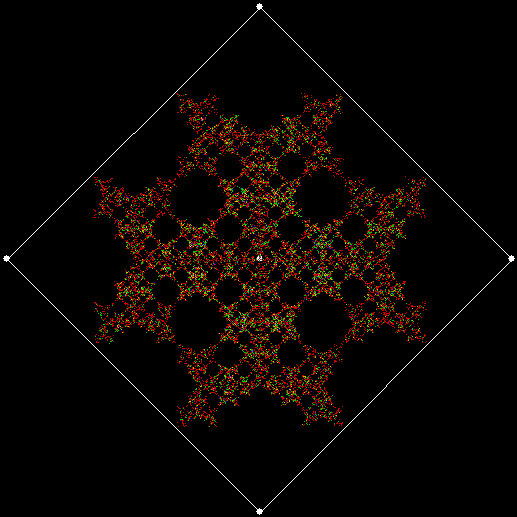
v = 4+c, ban = prox(1), sw = 3
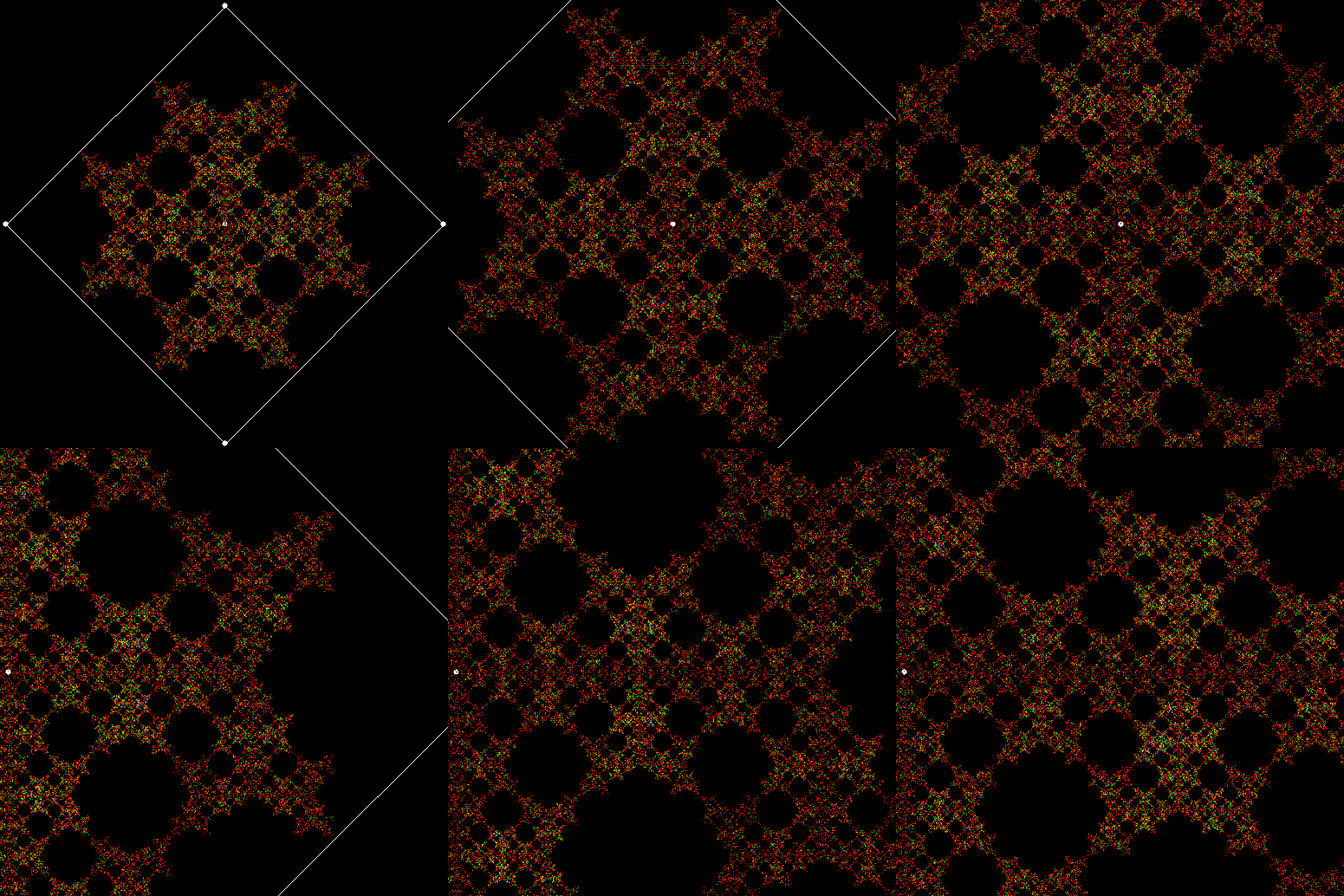
v = 4+c, ban = prox(1), sw = 3 (animated)
If you ban two vertices, the nearest and second-nearest, i.e. ban(prox(1), prox(2)), a complete bubble-sort produces a familiar fractal:
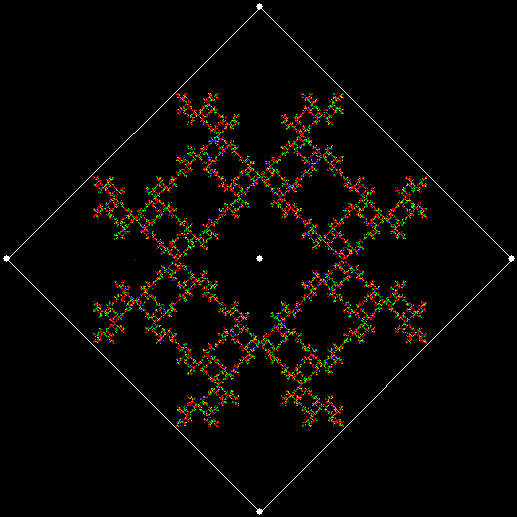
v = 4+c, ban = prox(1), prox(2)
And here is ban(prox(2), prox(4)), with a complete bubble-sort:
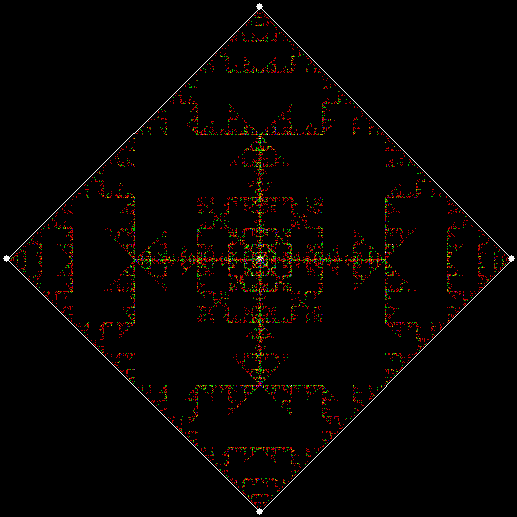
v = 4, ban = prox(2), prox(4)
If the bubble-sort is incomplete, sweep = 1 and sweep = 2 produce these fractals for ban(prox(1), prox(2)):
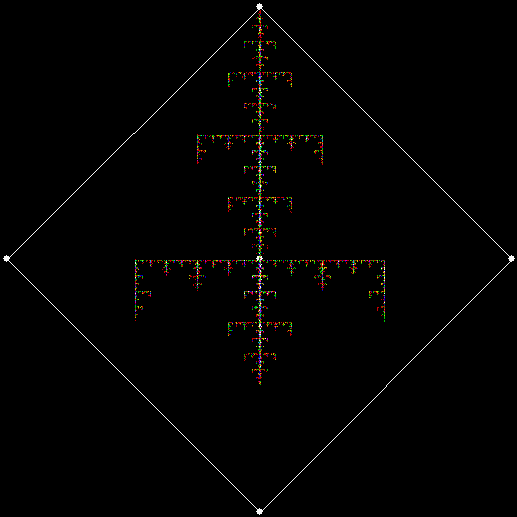
v = 4, ban = prox(1), prox(2), sw = 1
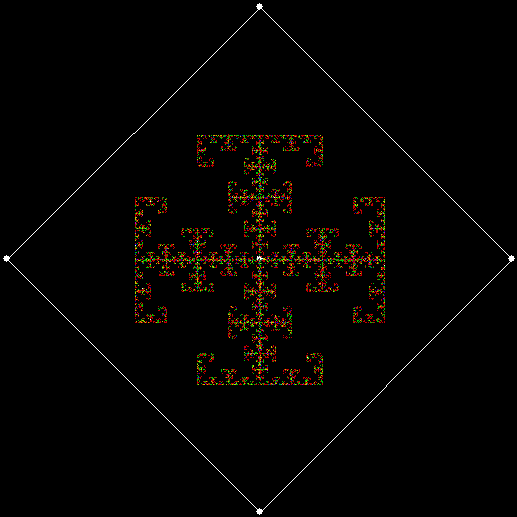
v = 4, ban = prox(1), prox(2), sw = 2*
*The second of those fractals is identical to v = 4, ban(prox(2), prox(3)) with a complete bubble-sort.
Here is ban(prox(1), prox(5)) with a complete bubble-sort:

v = 4, ban = prox(1), prox(5)
Now try ban(prox(1), prox(5)) with an incomplete bubble-sort:
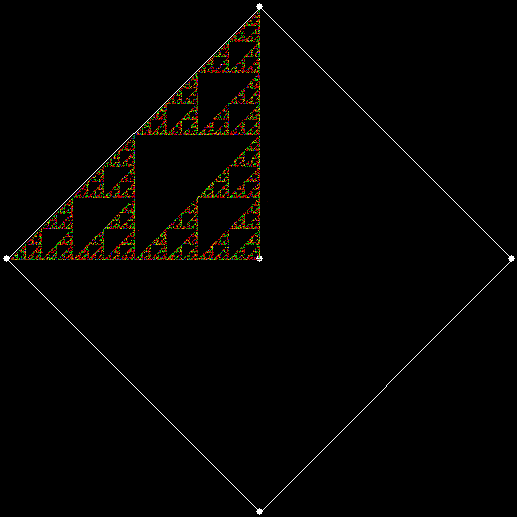
v = 4, ban = prox(1), prox(5), sw = 1
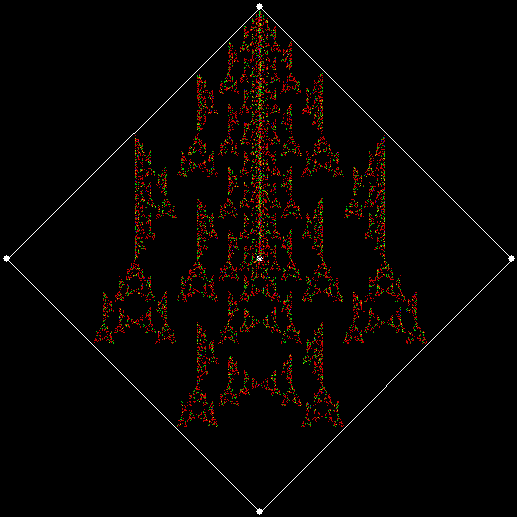
v = 4, ban = prox(1), prox(5), sw = 2
When sweep = 3, the fractal I had seen before appears:

v = 4, ban = prox(1), prox(5), sw = 3
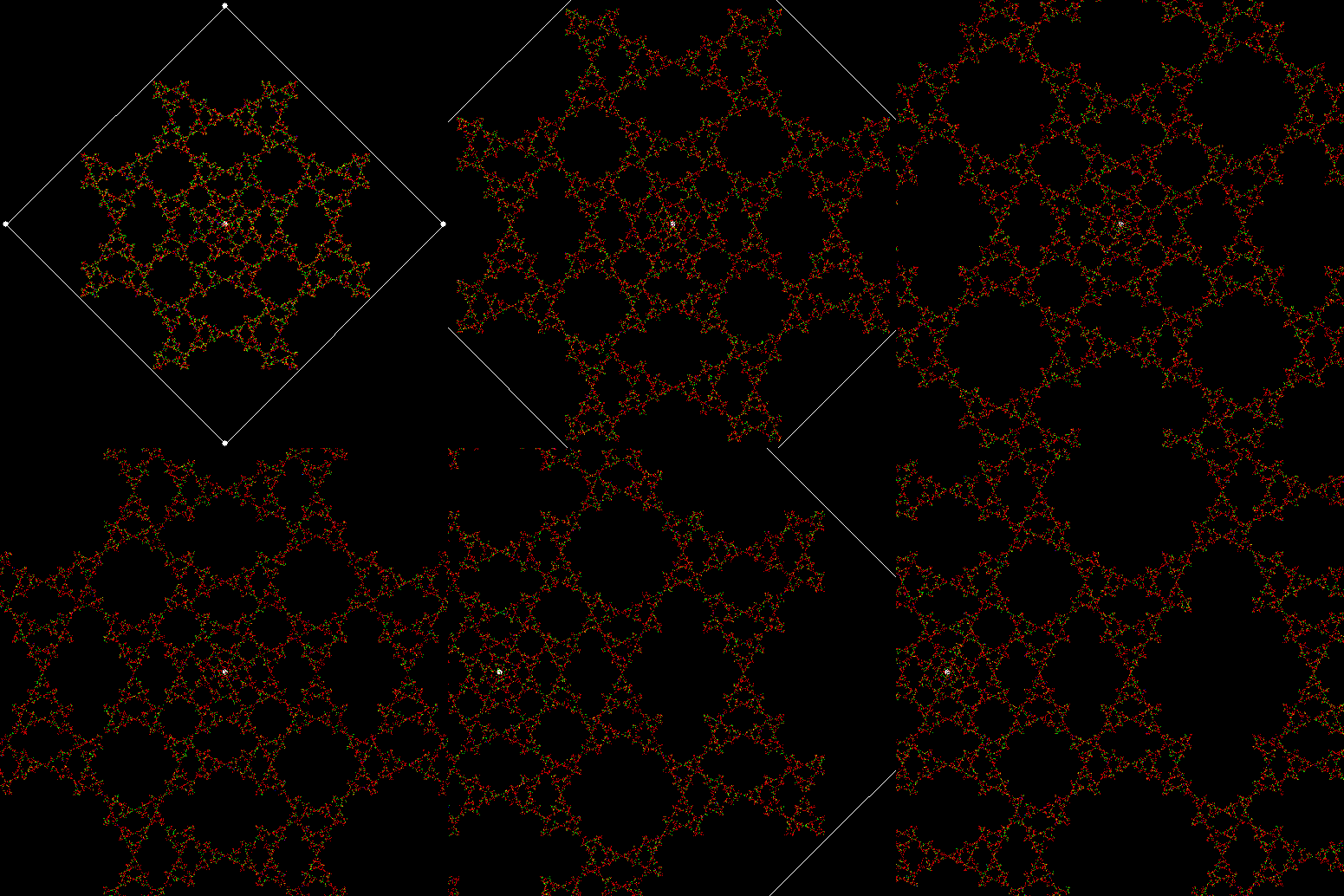
v = 4, ban = prox(1), prox(5), sw = 3 (animated)
Where had I seen it before? While investigating this rep-tile (a shape that can be tiled with smaller versions of itself):
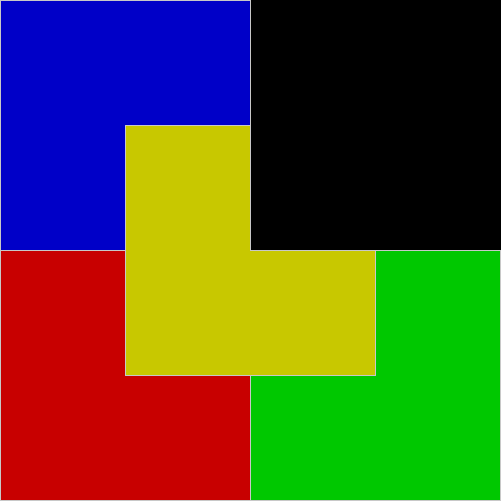
L-triomino rep-tile
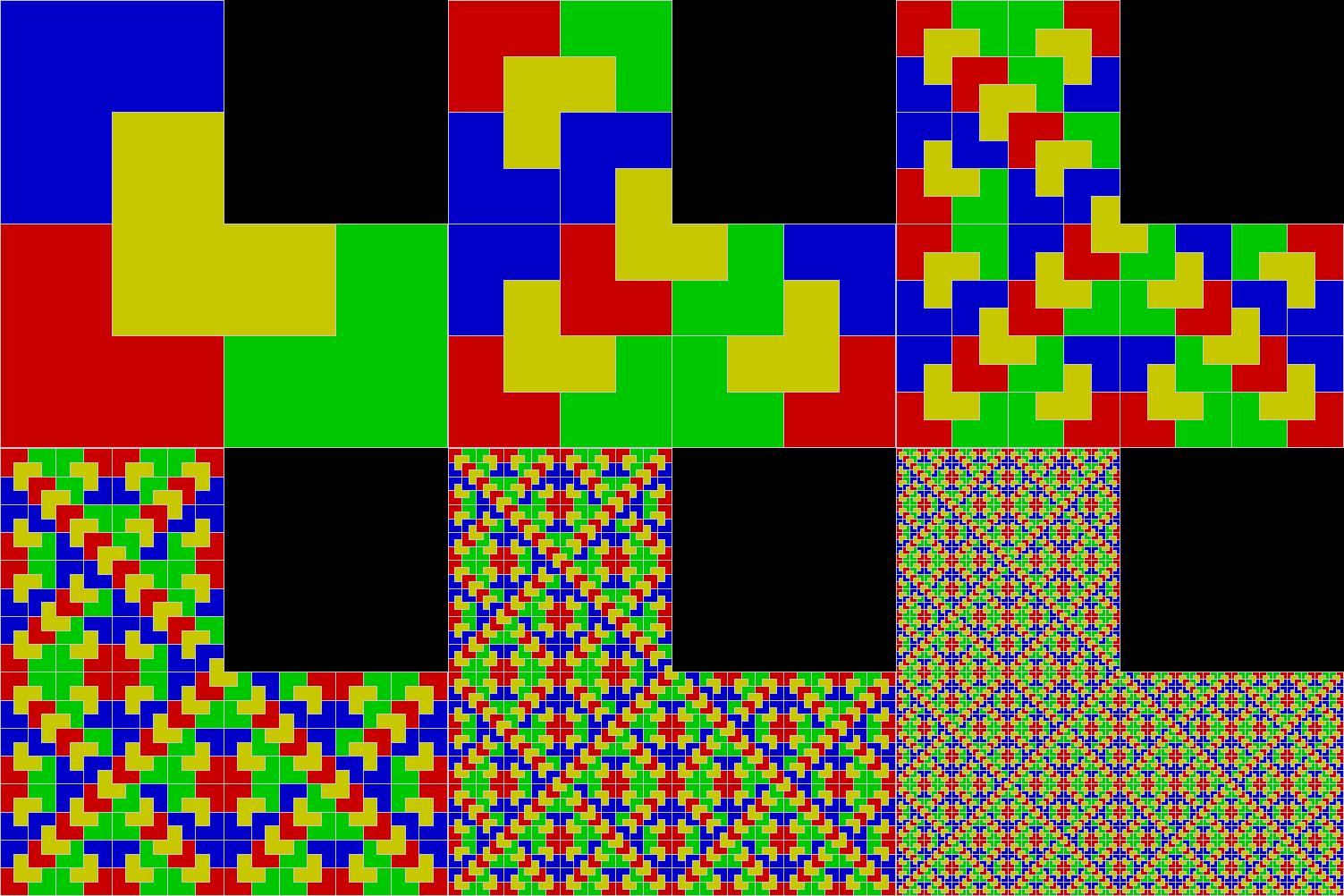
L-triomino rep-tile (animated)
The rep-tile is technically called an L-triomino, because it looks like a capital L and is one of the two distinct shapes you can create by joining three squares at the edges. You can create fractals from an L-triomino by dividing it into four copies, discarding one of the copies, then repeating the divide-and-discard at smaller and smaller scales:
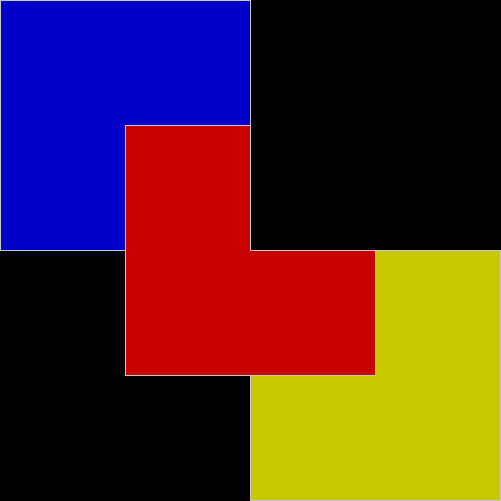
L-triomino fractal stage #1
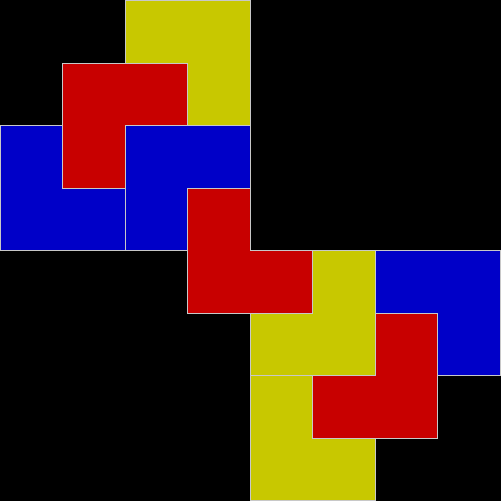
L-triomino fractal stage #2
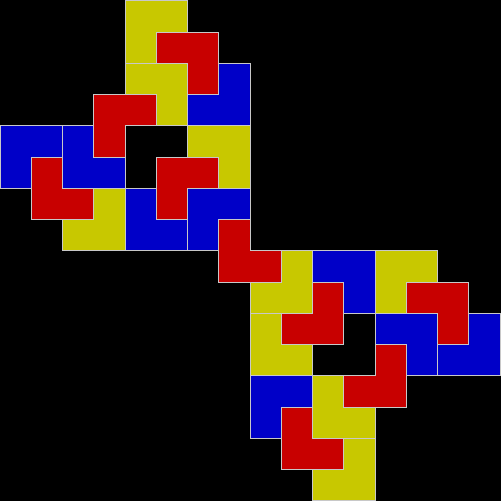
L-triomino fractal stage #3
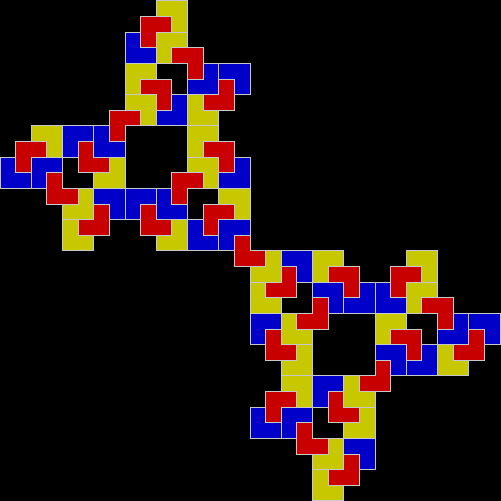
L-triomino fractal stage #4
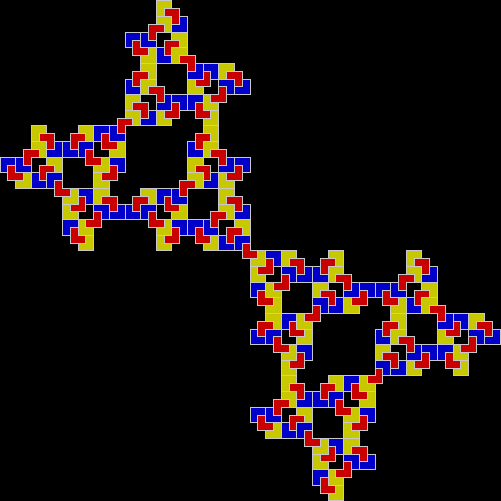
L-triomino fractal stage #5
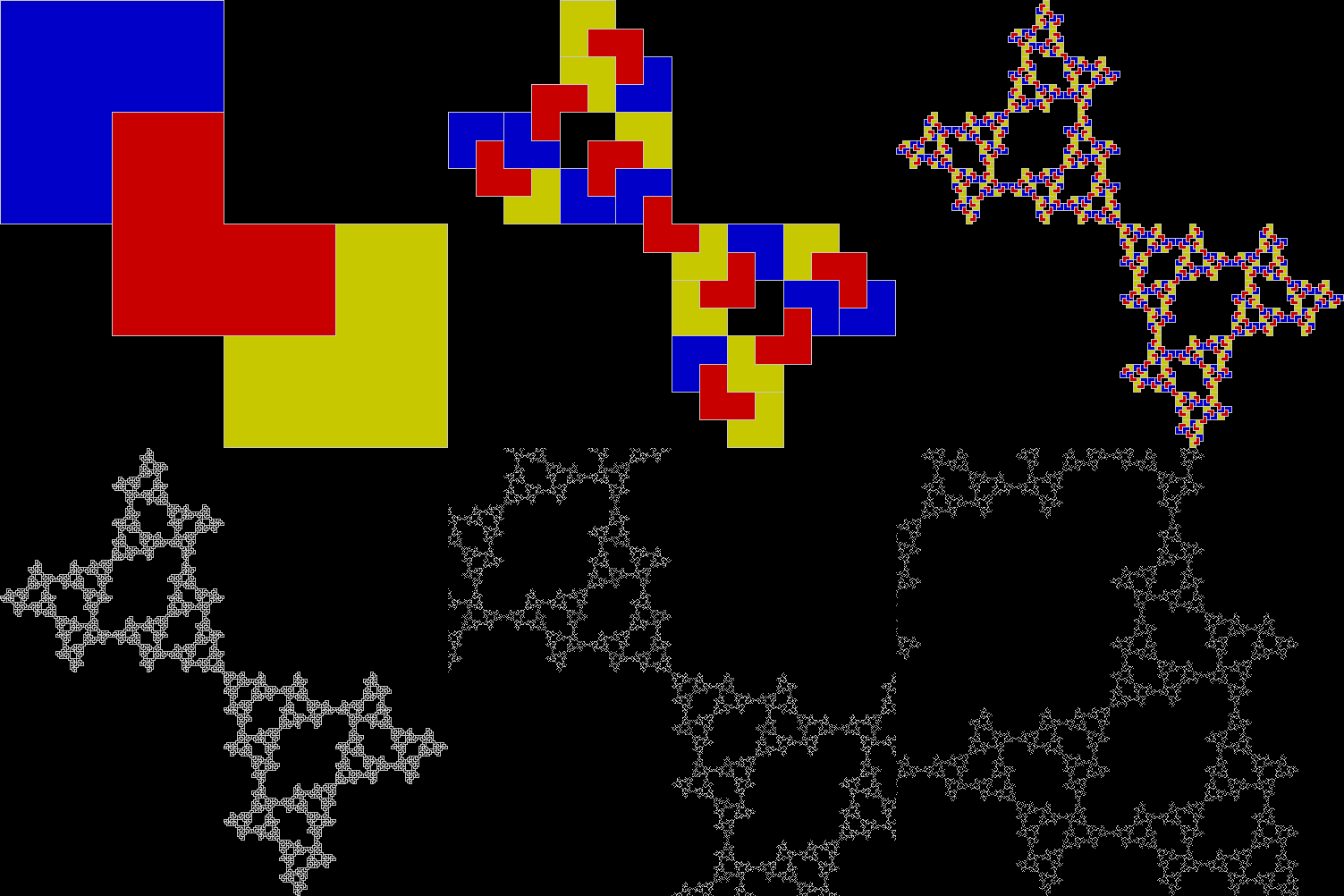
L-triomino fractal (animated)
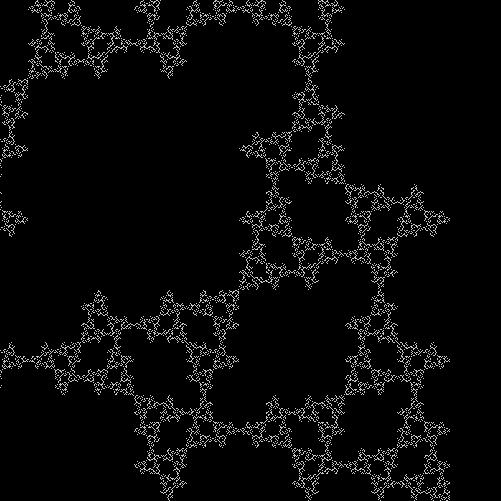
L-triomino fractal (close-up)
And here’s part of the ban(prox(1), prox(5)) fractal for comparison:
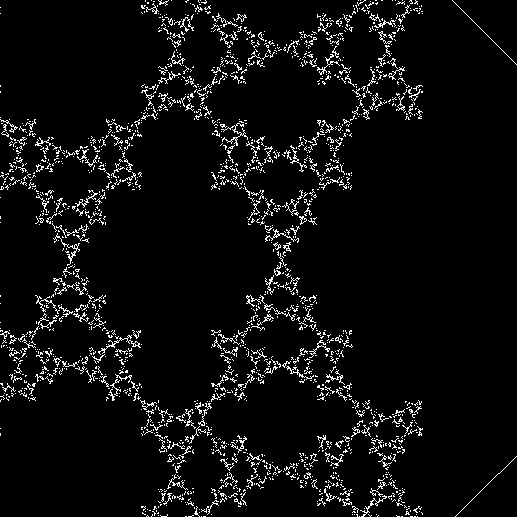
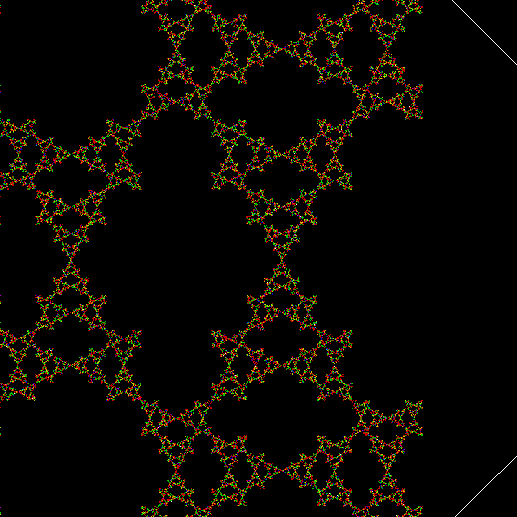
So you can get to the same fractal (or versions of it), by two apparently different routes: random movement of a point inside a square or repeatedly dividing-and-discarding the sub-copies of an L-triomino. That’s serendipity!
Previously pre-posted:
Papyrocentric Performativity Presents:
• Vois la Reine – Philip’s Moon Observer’s Guide, Peter Grego (Philip’s 2015)
• Gods of Fire – Volcano Discoveries: A Photographic Journey around the World, Tom Pfeiffer and Ingrid Smet (New Holland 2015)
• Chemical Tales – Rocks and Minerals, Ronald Louis Bonewitz (Dorling Kindersley 2012)
• Knyghtes of the Royalme – Malory: Works, ed. Eugène Vinaver (Oxford University Press 1977)
• Alfredo to Zinedine – Football’s Great Heroes and Entertainers, Jimmy Greaves with Norman Giller (Hodder & Stoughton 2007)
Or Read a Review at Random: RaRaR
• Il sole, con tutti quei pianeti che girano intorno ad esso e da esso dipendono, può ancora maturare un grappolo d’uva come se non vi fosse nient’altro da fare in tutto l’universo. — Galileo Galilei, 1564-1642.
• “The sun, with all those planets turning around it and dependent on it, can still ripen a bunch of grapes as if it had nothing else in the universe to do.”
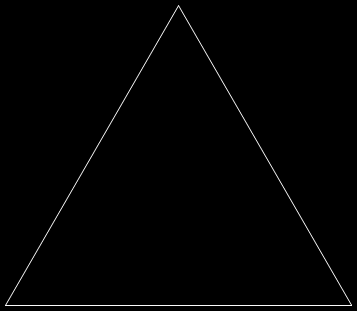
Some interesting shapes are mentioned in Derrick Niederman’s Number Freak (2010). Using identical matchsticks, what’s the smallest fully connected shape you can make in which two matches meet at every vertex? That is, what is the smallest 2-regular matchstick graph?
It’s an equilateral triangle:
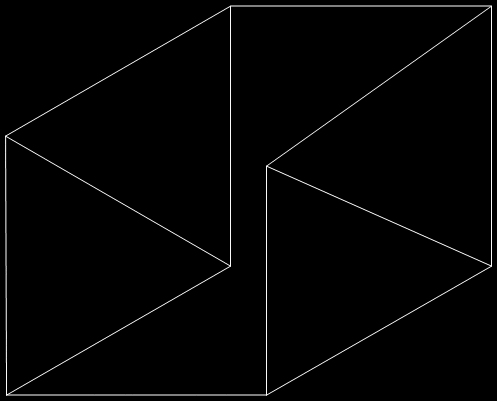
Now, what is the smallest fully connected shape you can make in which three matches meet at every vertex? That is, what is the smallest 3-regular matchstick graph? It uses twelve identical matches and looks like this:
And here is the smallest known 4-regular matchstick graph, discovered by the German mathematician Heiko Harborth and using 104 identical matches:
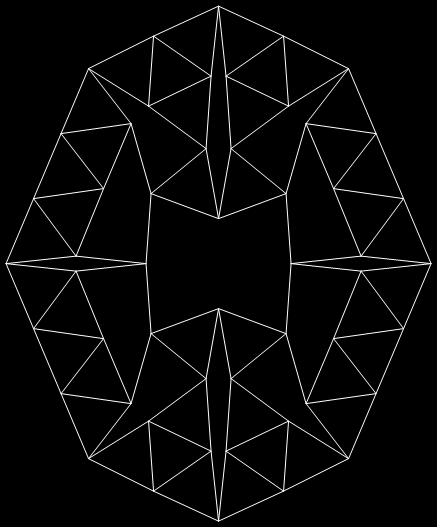
But Niederman says that “it’s impossible to create any arrangement in which five or more matchsticks meet at every vertex” (entry for “104”, pg. 230 of the 2012 paperback).
 Overlord In Terms of Core Issues Around Maximal Engagement with Key Notions of the Über-Feral