The Number of the Creased

Here’s an idea for a story à la M.R. James. A middle-aged scholar opens some mail one morning and finds nothing inside one envelope but a strip of paper with the numbers 216348597 written on it in sinister red ink. Someone has folded the strip several times so that there are creases between groups of numbers, like this: 216|348|5|97. Wondering what the significance of the creases is, the scholar hits on the step of adding the numbers created by them:


216 + 348 + 5 + 97 = 666

After that… Well, I haven’t written the story yet. But that beginning raises an obvious question. Is there any other way of getting a Number of the Creased from 216348597? That is, can you get 666, the Number of the Beast, by dividing 216348597 in another way? Yes, you can. In fact, there are six ways of creating 666 by dividing-and-summing 216348597:


666 = 2 + 1 + 634 + 8 + 5 + 9 + 7
666 = 2 + 163 + 485 + 9 + 7
666 = 216 + 348 + 5 + 97
666 = 21 + 63 + 485 + 97
666 = 21 + 6 + 34 + 8 + 597
666 = 2 + 16 + 3 + 48 + 597


216348597 is a permutation of 123456789, so does 123456789 yield a Number of the Creased? Yes. Two of them, in fact:


666 = 123 + 456 + 78 + 9
666 = 1 + 2 + 3 + 4 + 567 + 89


And 987654321 yields another:


666 = 9 + 87 + 6 + 543 + 21


And what about other permutations of 123456789? These are the successive records:

Using 123456789

666 = 123 + 456 + 78 + 9
666 = 1 + 2 + 3 + 4 + 567 + 89 (c=2)


Using 123564789

666 = 12 + 3 + 564 + 78 + 9
666 = 123 + 56 + 478 + 9
666 = 1 + 2 + 3 + 564 + 7 + 89 (c=3)


Using 125463978

666 = 1 + 2 + 5 + 4 + 639 + 7 + 8
666 = 12 + 546 + 3 + 97 + 8
666 = 1 + 254 + 6 + 397 + 8
666 = 1 + 2 + 546 + 39 + 78 (c=4)


Using 139462578

666 = 13 + 9 + 4 + 625 + 7 + 8
666 = 139 + 462 + 57 + 8
666 = 1 + 394 + 6 + 257 + 8
666 = 1 + 39 + 46 + 2 + 578
666 = 13 + 9 + 4 + 62 + 578 (c=5)


Using 216348597

666 = 2 + 1 + 634 + 8 + 5 + 9 + 7
666 = 2 + 163 + 485 + 9 + 7
666 = 216 + 348 + 5 + 97
666 = 21 + 63 + 485 + 97
666 = 21 + 6 + 34 + 8 + 597
666 = 2 + 16 + 3 + 48 + 597 (c=6)


216348597 is the best of the bestial. No other permutation of 123456789 yields as many as six Numbers of the Creased.

Fair Pairs

You can get a glimpse of the gorgeous very easily. After all, you can work out the following sum in your head: 1 + 2 + 3 + 4 + 5 = ?

The answer is… 1 + 2 + 3 + 4 + 5 = 15. So that sum is example of this pattern: n1:n2 = sum(n1..n2). A simple computer program will soon supply other sums of consecutive numbers following the same pattern. I think these patterns based on the pair n1 and n2 are beautiful, so I’d call them fair pairs:


15 = sum(1..5)
27 = sum(2..7)
429 = sum(4..29)
1353 = sum(13..53)
1863 = sum(18..63)
3388 = sum(33..88)
3591 = sum(35..91)
7119 = sum(7..119)
78403 = sum(78..403)
133533 = sum(133..533)
178623 = sum(178..623)
2282148 = sum(228..2148)
2732353 = sum(273..2353)
3882813 = sum(388..2813)
7103835 = sum(710..3835)
13335333 = sum(1333..5333)
17016076 = sum(1701..6076)
17786223 = sum(1778..6223)


I went looking for variants on that pattern. If the function rev(n) reverses the digits of n, here’s n1:rev(n2) = sum(n1..n2):


155975 = sum(155..579)
223407 = sum(223..704)
4957813 = sum(495..3187)


I like that pattern, but it doesn’t seem beautiful like n1:n2 = sum(n1..n2). Nor does rev(n1):n2 = sum(n1..n2):


1575 = sum(51..75)
96444 = sum(69..444)
304878 = sum(403..878)
392933 = sum(293..933)
3162588 = sum(613..2588)
3252603 = sum(523..2603)
3642738 = sum(463..2738)
3772853 = sum(773..2853)
6653691 = sum(566..3691)
8714178 = sum(178..4178)


But rev(n1):rev(n2) = sum(n1..n2) is beautiful again, in a twisted kind of way:


97944 = sum(79..449)
452489 = sum(254..984)
3914082 = sum(193..2804)
6097063 = sum(906..3607)
6552663 = sum(556..3662)


Now try swapping n1 and n2. Here’s n2:n1 = sum(n1..n2):


204 = sum(4..20)
216 = sum(6..21)
20328 = sum(28..203)
21252 = sum(52..212)
21762 = sum(62..217)
23287 = sum(87..232)
23490 = sum(90..234)
2006118 = sum(118..2006)
2077402 = sum(402..2077)
2132532 = sum(532..2132)
2177622 = sum(622..2177)


Do I find the pattern beautiful? Yes, but it’s not as beautiful as n1:n2 = sum(n1..n2). The beauty disappears in n2:rev(n1) = sum(n1..n2):


21074 = sum(47..210)
21465 = sum(56..214)
22797 = sum(79..227)
2013561 = sum(165..2013)
2046803 = sum(308..2046)
2099754 = sum(457..2099)
2145065 = sum(560..2145)


And rev(n2):n1 = sum(n1..n2):


638 = sum(8..36)
2952 = sum(52..92)
21252 = sum(52..212)
23287 = sum(87..232)
66341 = sum(41..366)
208477 = sum(477..802)
2522172 = sum(172..2252)
2852982 = sum(982..2582)
7493772 = sum(772..3947)
8714178 = sum(178..4178)


Finally, and fairly again, rev(n2):rev(n1) = sum(n1..n2):


638 = sum(8..36)
125541 = sum(145..521)
207972 = sum(279..702)
158046 = sum(640..851)
9434322 = sum(223..4349)


The beauty’s back. And it has almost become self-aware. In rev(n2):rev(n1) = sum(n1..n2), each side of the equation seems to be looking at the other half as those it’s looking into a mirror.


Previously Pre-Posted (Please Peruse)…

Nuts for Numbers — looking at patterns like 2772 = sum(22..77)

Period Panes

In his Penguin Dictionary of Curious and Interesting Numbers (1986), David Wells says that 142857 is “beloved of all recreational mathematicians”. He then says it’s the decimal period of the reciprocal of the fourth prime: “1/7 = 0·142857142857142…” And the reciprocal has maximum period. There are 6 = 7-1 digits before repetition begins, unlike the earlier prime reciprocals:


1/2 = 0·5
1/3 = 0·333...
1/5 = 0·2
1/7 = 0·142857 142857 142...

In other words, all possible remainders appear when you calculate the decimals of 1/7:


1*10 / 7 = 1 remainder 3 → 0·1
3*10 / 7 = 4 remainder 2 → 0·14
2*10 / 7 = 2 remainder 6 → 0·142
6*10 / 7 = 8 remainder 4 → 0·1428
4*10 / 7 = 5 remainder 5 → 0·14285
5*10 / 7 = 7 remainder 1 → 0·142857
1*10 / 7 = 1 remainder 3 → 0·142857 1
3*10 / 7 = 4 remainder 2 → 0·142857 14
2*10 / 7 = 2 remainder 6 → 0·142857 142...

That happens again with 1/17 and 1/19, but Wells says that “surprisingly, there is no known method of predicting which primes have maximum period.” It’s a simple question that involves some deep mathematics. Looking at prime reciprocals is like peering through a small window into a big room. Some things are easy to see, some are difficult and some are presently impossible.

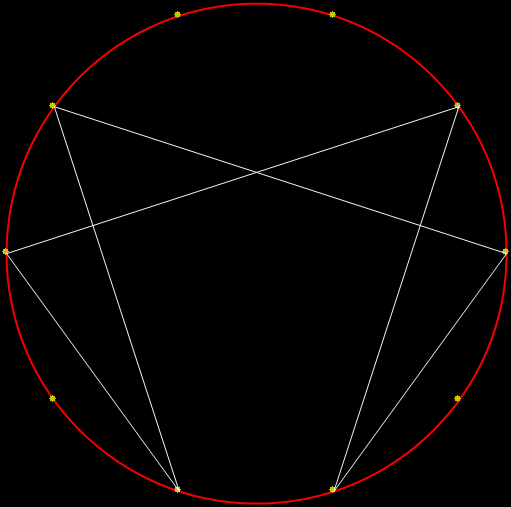
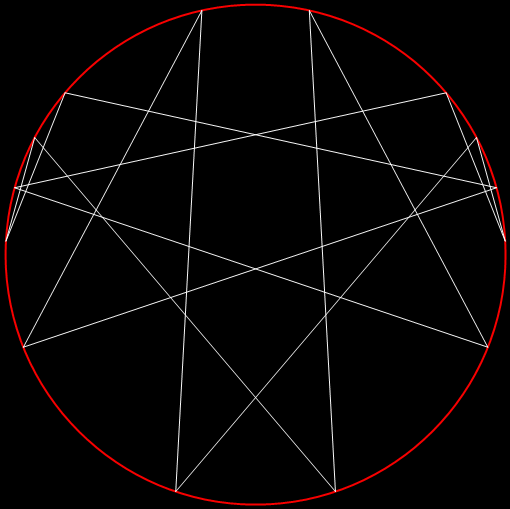
In his discussion of 142857, Wells mentions one way of peering through a period pane: “The sequence of digits also makes a striking pattern when the digits are arranged around a circle.” Here is the pattern, with ten points around the circle representing the digits 0 to 9:

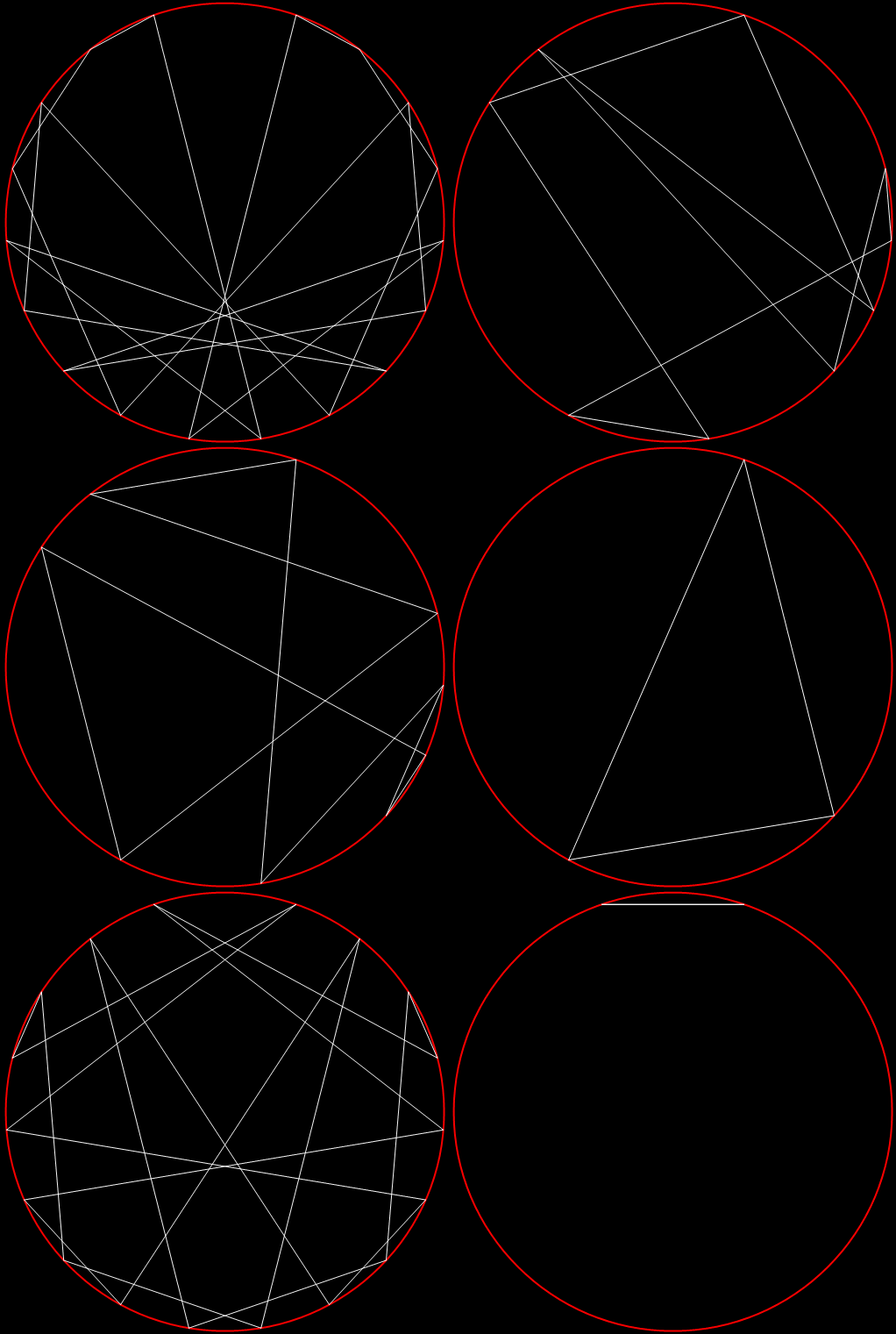
The digits of 1/7 = 0·142857142…


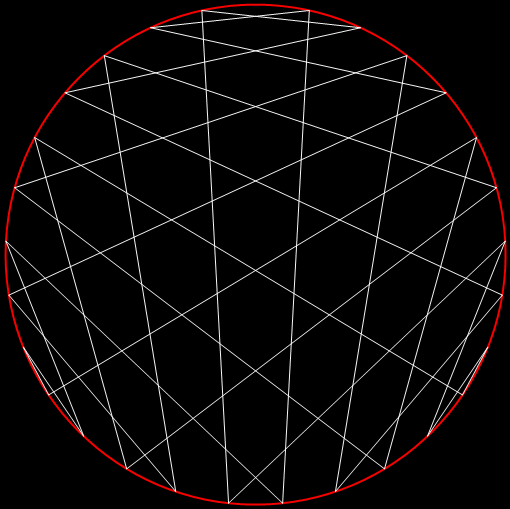
But I prefer, for further peers through the period-panes, to create the period-panes using remainders rather than digits. That is, the number of points around the circle is determined by the prime itself rather than the base in which the reciprocal is calculated:
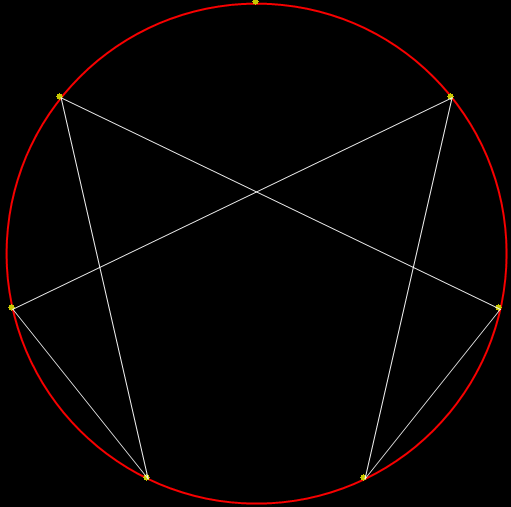
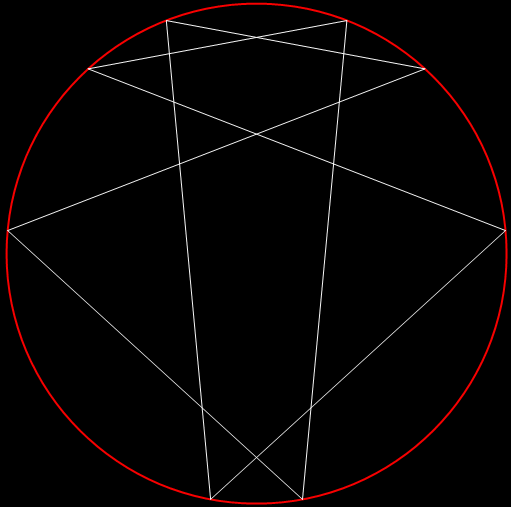
The remainders of 1/7 = 1, 3, 2, 6, 4, 5…


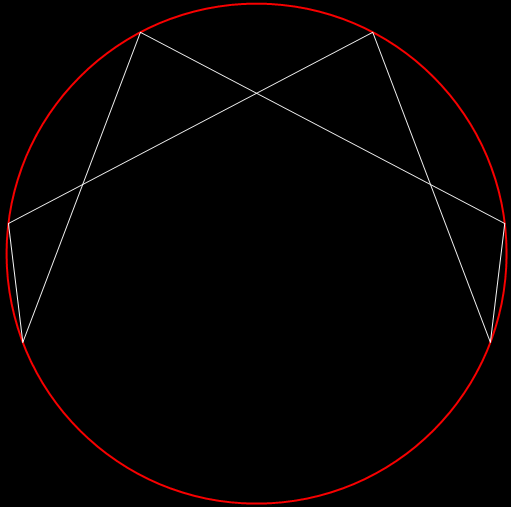
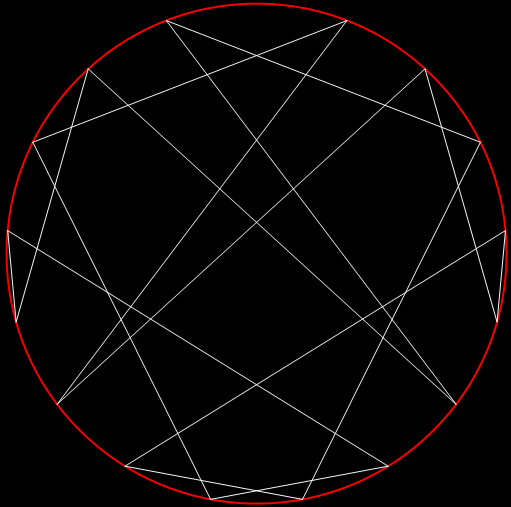
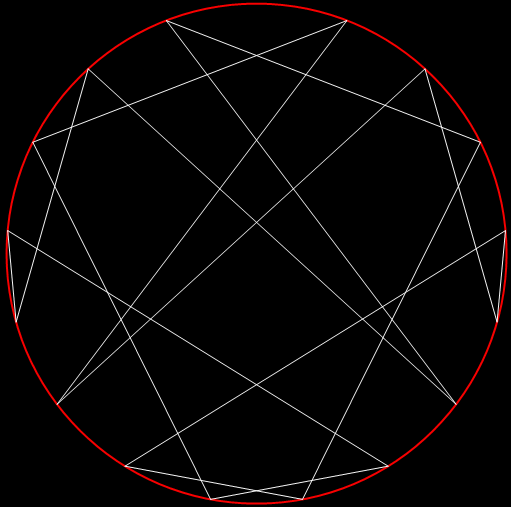
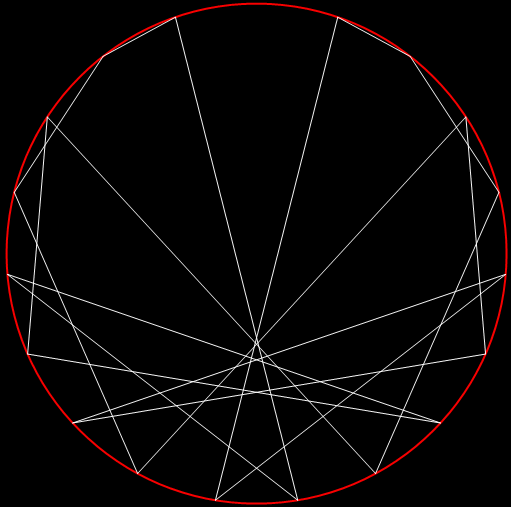
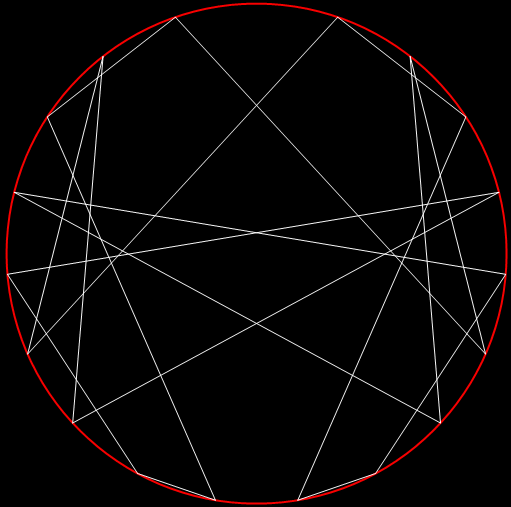
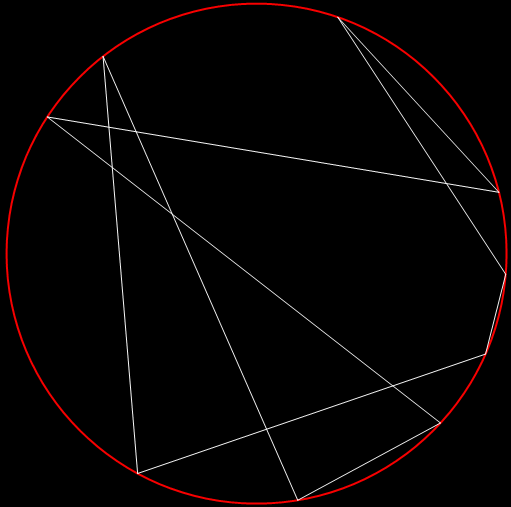
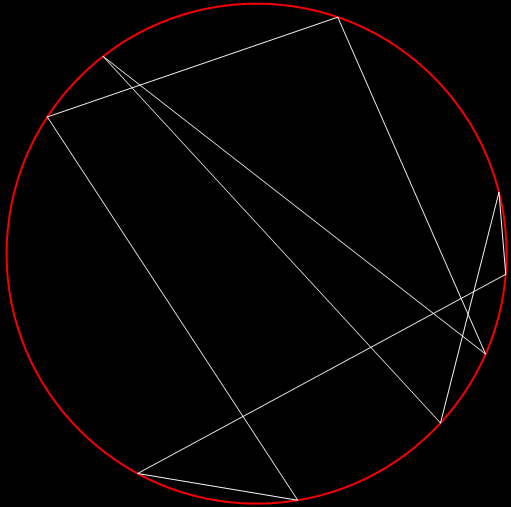
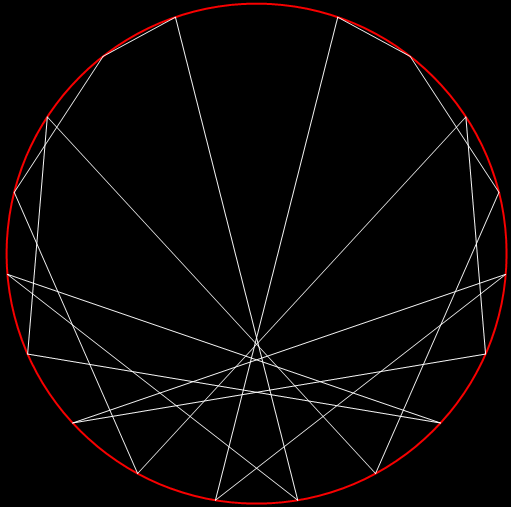
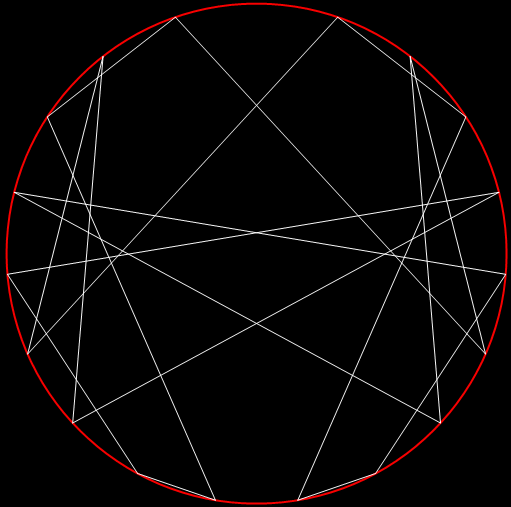
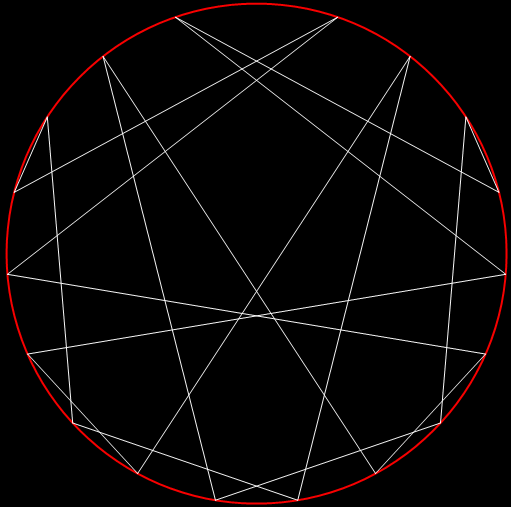
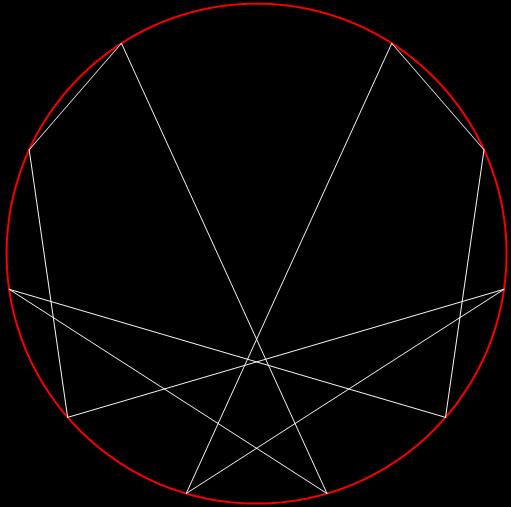
Period-panes can look like butterflies or bats or bivalves or spiders or crabs or even angels. Try the remainders of 1/13. This prime reciprocal doesn’t have maximum period: 1/13 = 0·076923 076923 076923… So there are only six remainders, creating this pattern:

remainders(1/13) = 1, 10, 9, 12, 3, 4


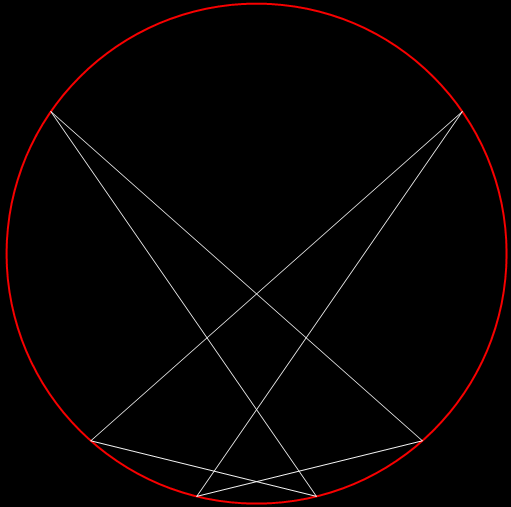
The multiple 2/13 has different remainders and creates a different pattern:

remainders(2/13) = 2, 7, 5, 11, 6, 8


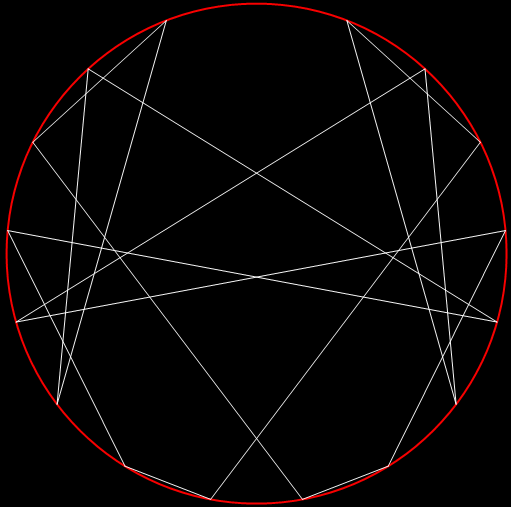
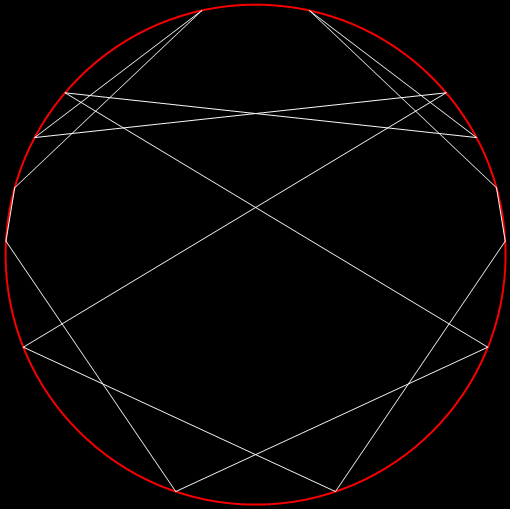
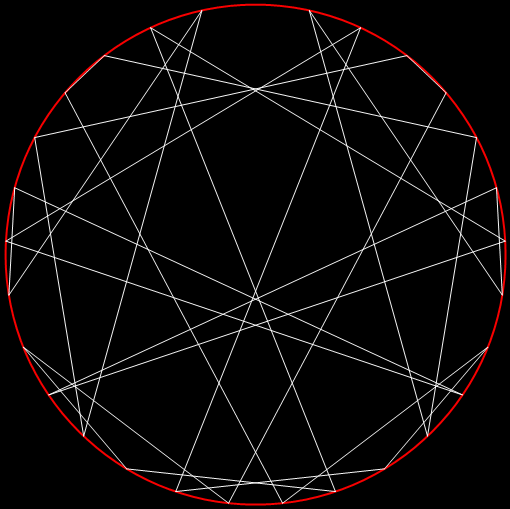
But 1/17, 1/19 and 1/23 all have maximum period and yield these period-panes:
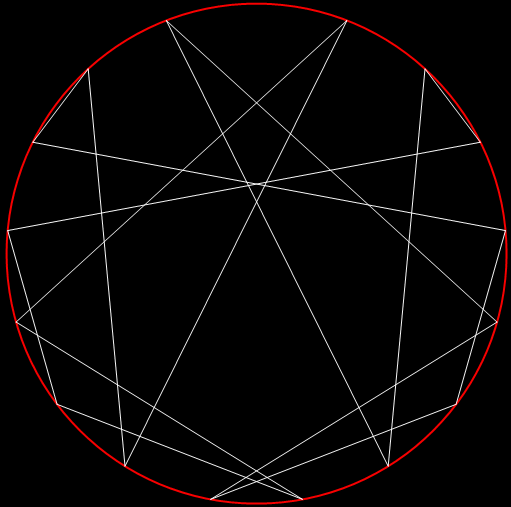
remainders(1/17) = 1, 10, 15, 14, 4, 6, 9, 5, 16, 7, 2, 3, 13, 11, 8, 12
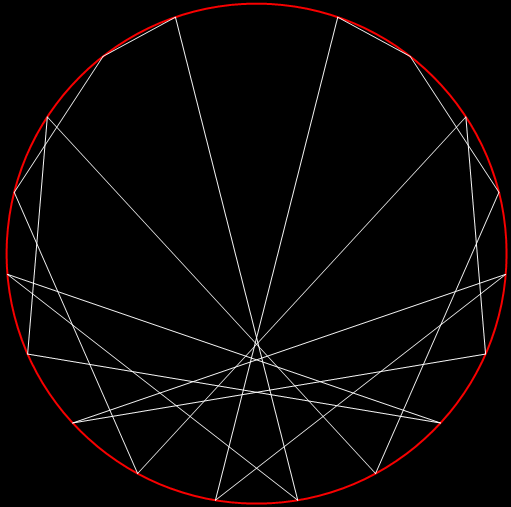

remainders(1/19) = 1, 10, 5, 12, 6, 3, 11, 15, 17, 18, 9, 14, 7, 13, 16, 8, 4, 2
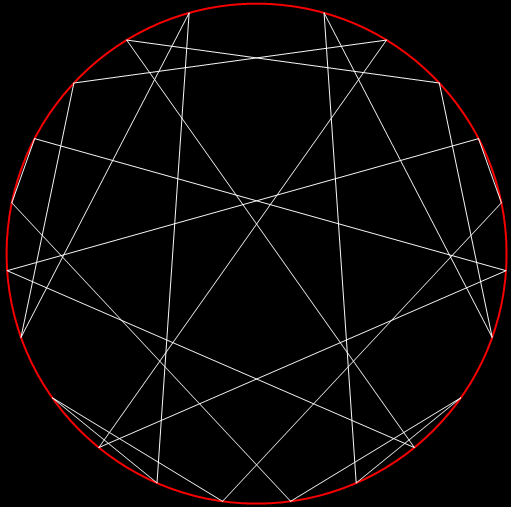

remainders(1/23) = 1, 10, 8, 11, 18, 19, 6, 14, 2, 20, 16, 22, 13, 15, 12, 5, 4, 17, 9, 21, 3, 7


It gets mixed again with the prime 73, which doesn’t have maximum period and yields a plethora of period-panes (some patterns repeat with different n * 1/73, so I haven’t included them):
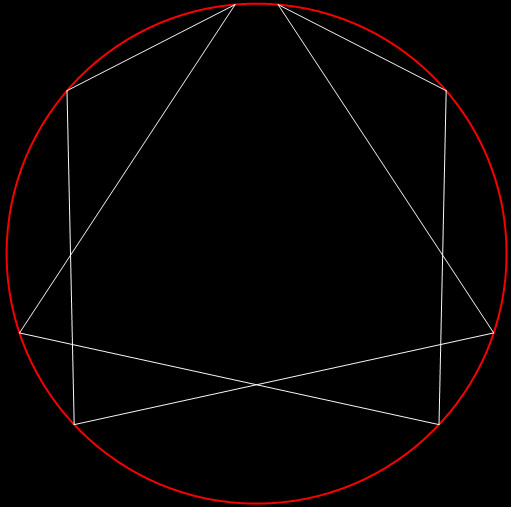
remainders(1/73)


remainders(2/73)
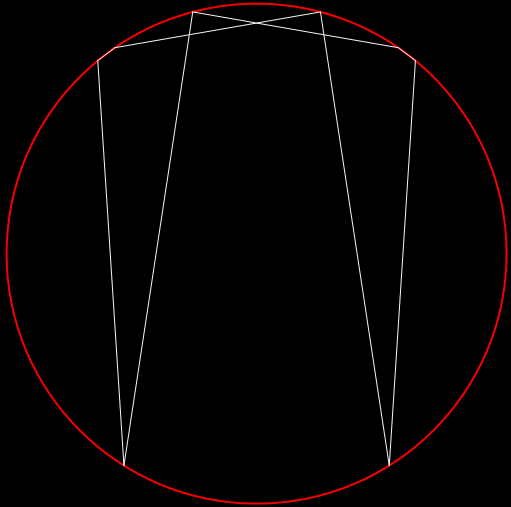

remainders(3/73)
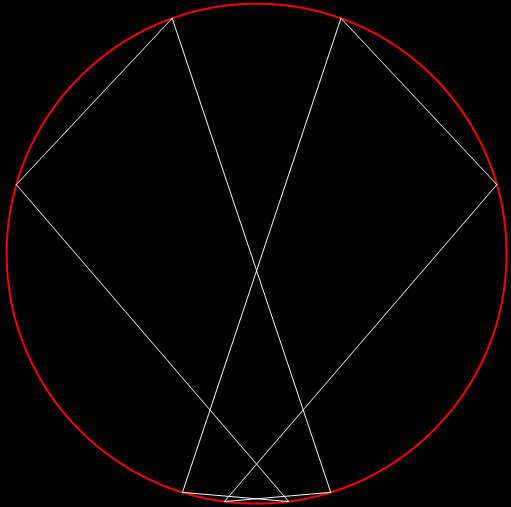

remainders(4/73)
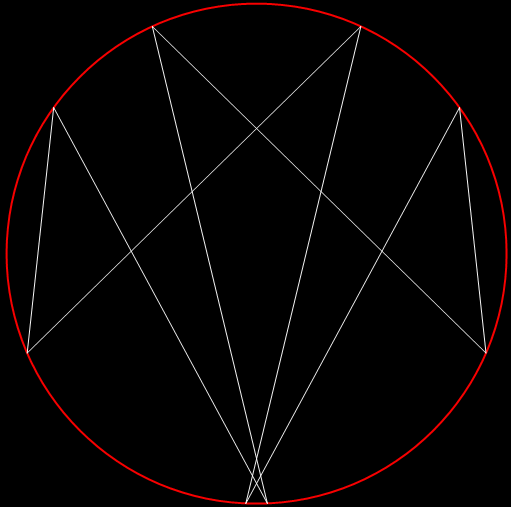

remainders(5/73)
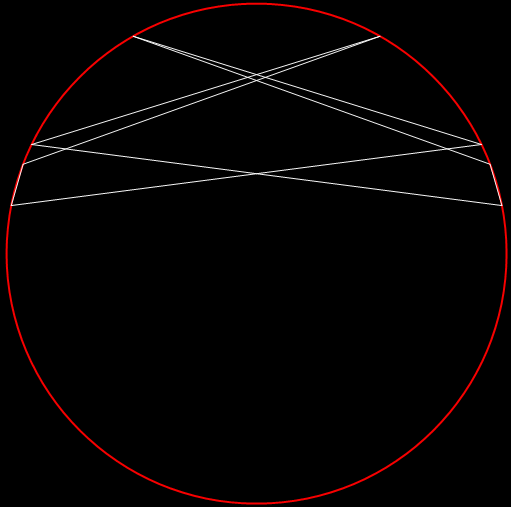

remainders(6/73)
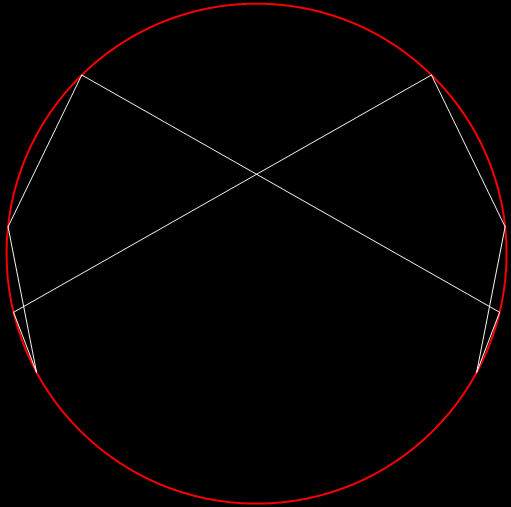

remainders(9/73)
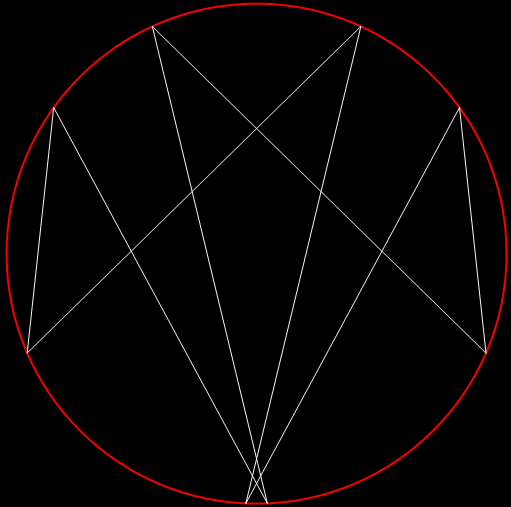

remainders(11/73) (identical to pattern of 5/73)
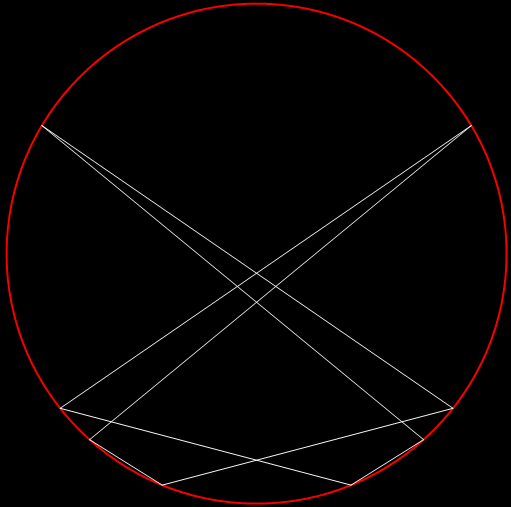

remainders(12/73)


remainders(18/73)


101 yields a plethora of period-panes, but they’re variations on a simple theme. They look like flapping wings in this animated gif:
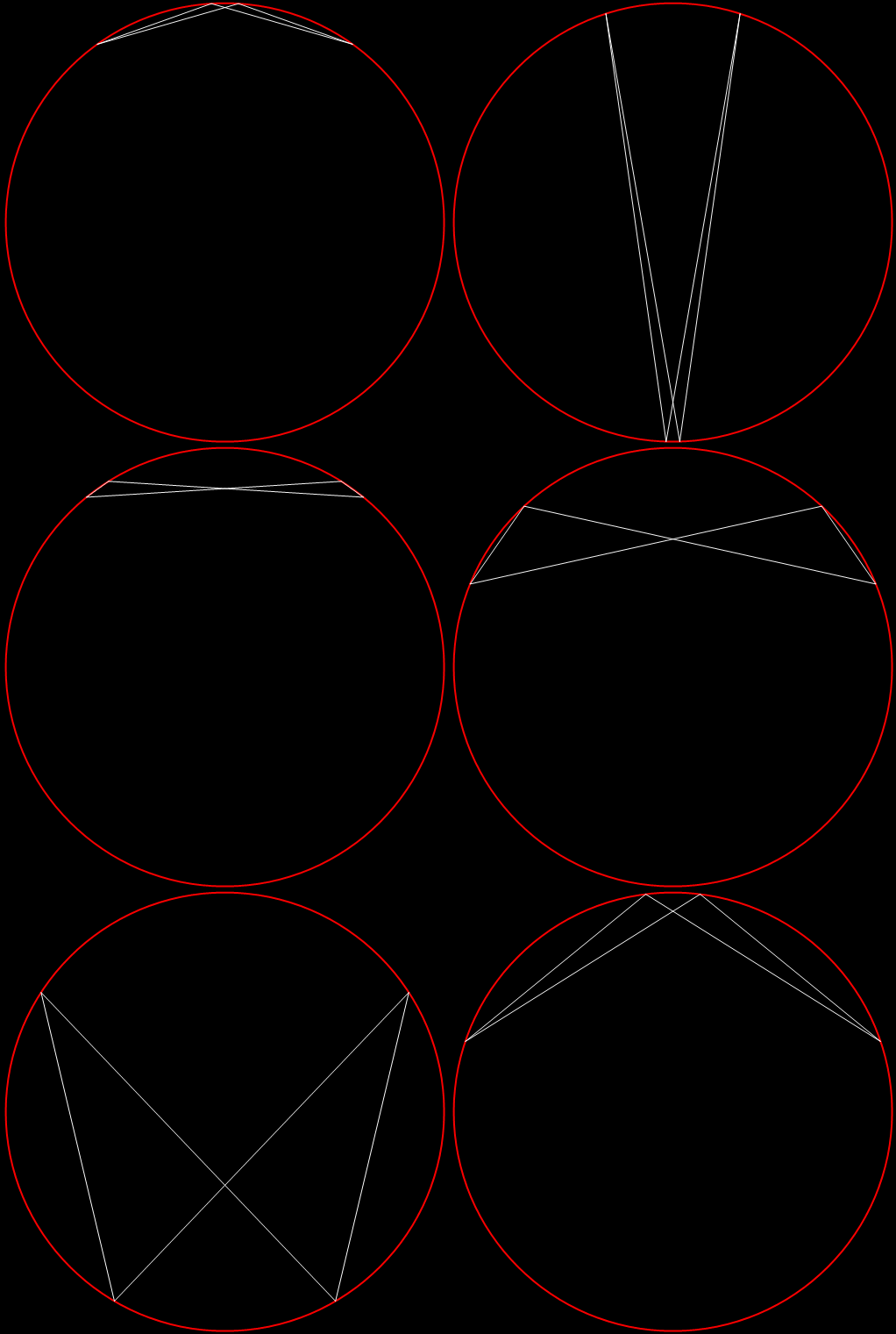
remainders of n/101 (animated)


The remainders of 137 yield more complex period-panes:

remainders of n/137 (animated)


And what about different bases? Here are period-panes for the remainders of 1/17 in bases 2 to 16:
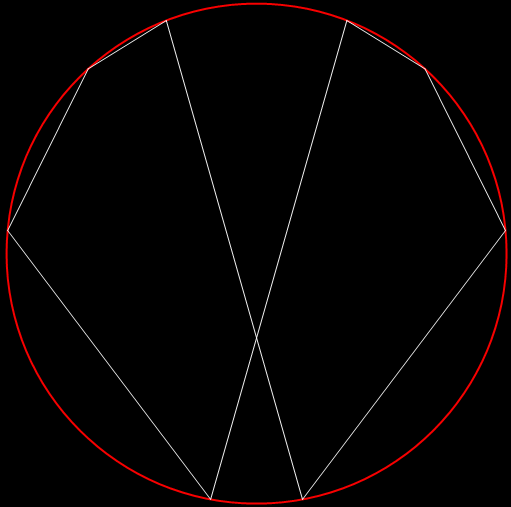
remainders(1/17) in base 2


remainders(1/17) in b3


remainders(1/17) in b4


remainders(1/17) in b5


remainders(1/17) in b6


remainders(1/17) in b7


remainders(1/17) in b8


remainders(1/17) in b9


remainders(1/17) in b10


remainders(1/17) in b11


remainders(1/17) in b12


remainders(1/17) in b13


remainders(1/17) in b14


remainders(1/17) in b15
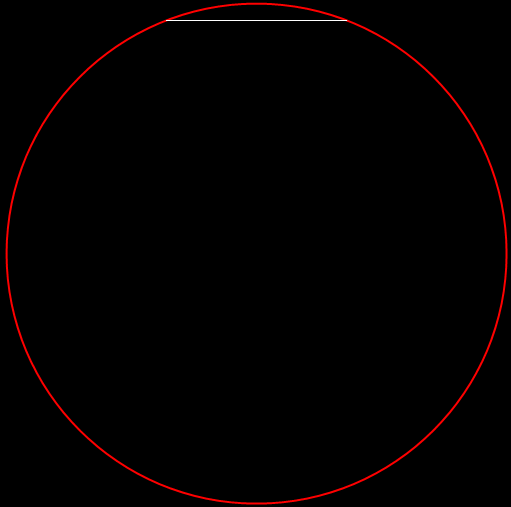

remainders(1/17) in b16
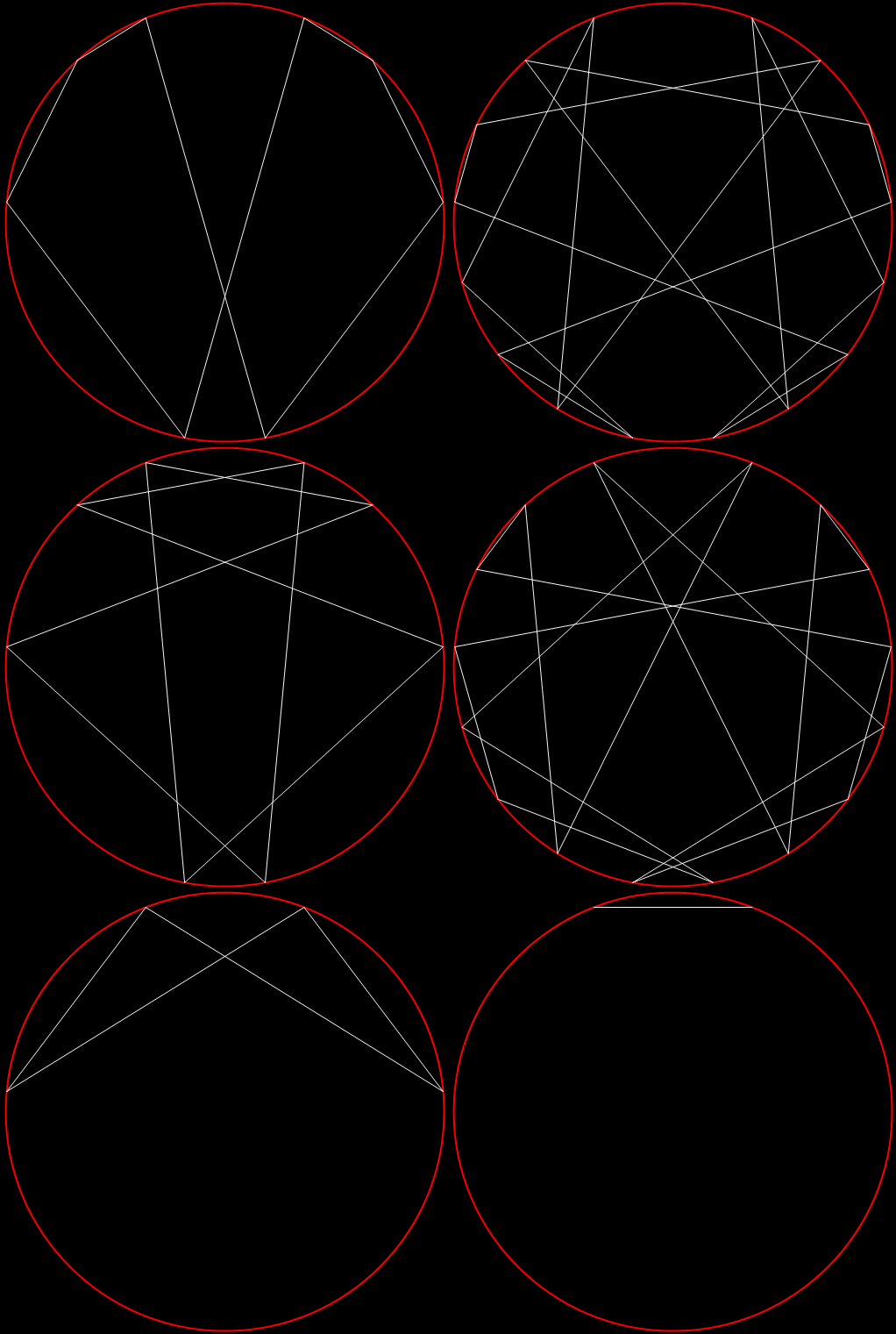

remainders(1/17) in bases 2 to 16 (animated)


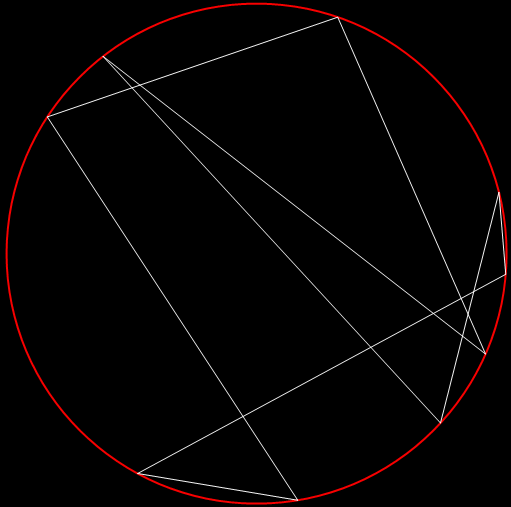
But the period-panes so far have given a false impression. They’ve all been symmetrical. That isn’t the case with all the period-panes of n/19:

remainders(1/19) in b2


remainders(1/19) in b3


remainders(1/19) in b4 = 1, 4, 16, 7, 9, 17, 11, 6, 5 (asymmetrical)


remainders(1/19) in b5 = 1, 5, 6, 11, 17, 9, 7, 16, 4 (identical pattern to that of b4)


remainders(1/19) in b6
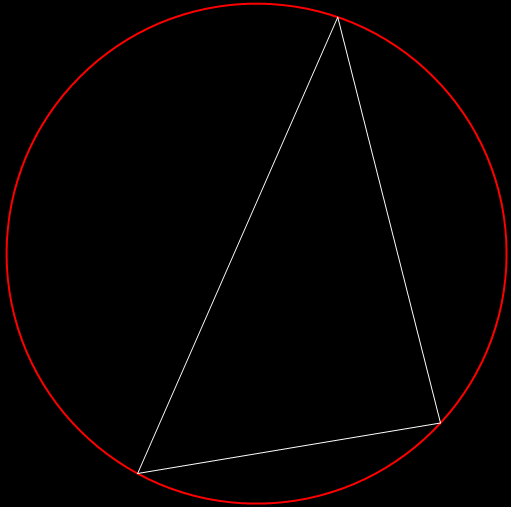

remainders(1/19) in b7
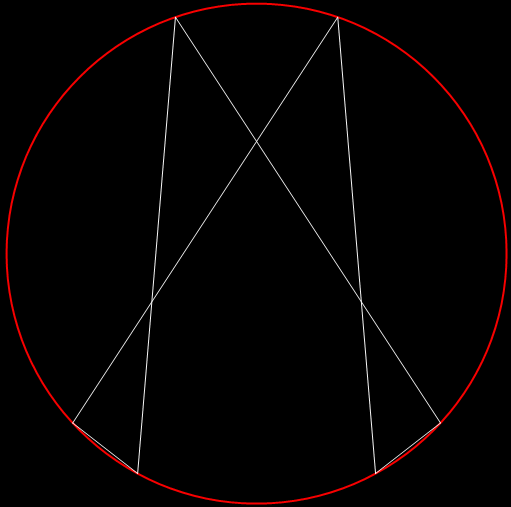

remainders(1/19) in b8
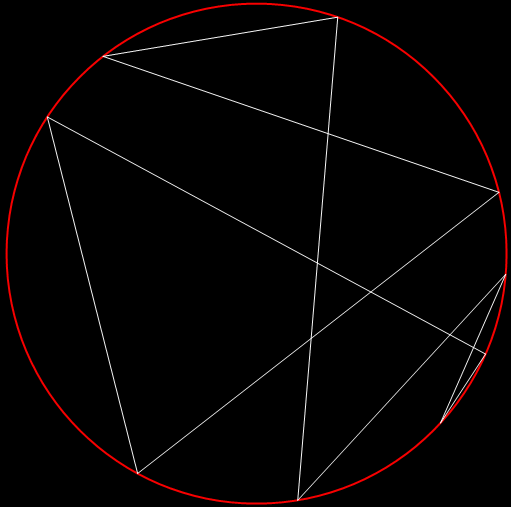

remainders(1/19) in b9


remainders(1/19) in b10 (identical pattern to that of b2)


remainders(1/19) in b11
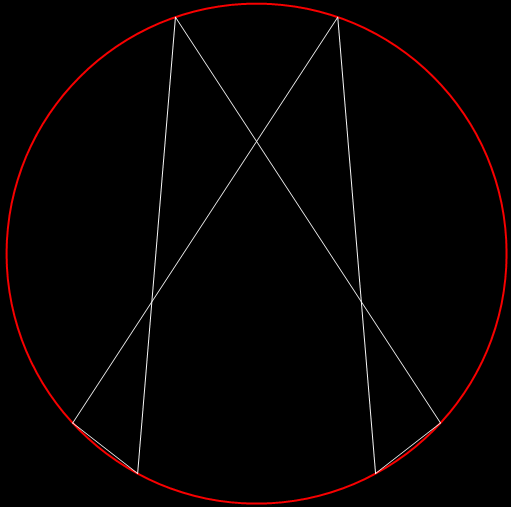

remainders(1/19) in b12


remainders(1/19) in b13


remainders(1/19) in b14


remainders(1/19) in b15


remainders(1/19) in b16
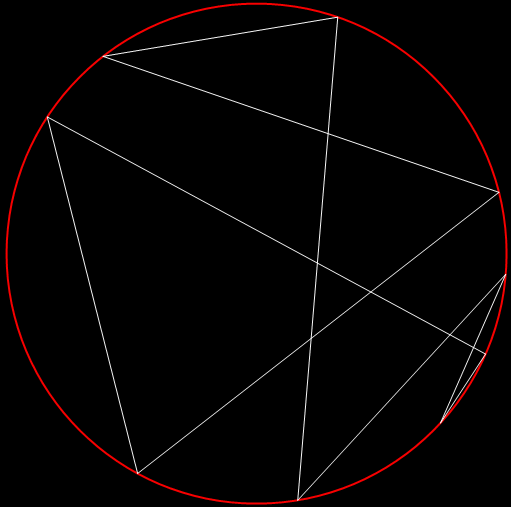

remainders(1/19) in b17


remainders(1/19) in b18


remainders(1/19) in bases 2 to 18 (animated)


Here are a few more period-panes in different bases:

remainders(1/11) in b2
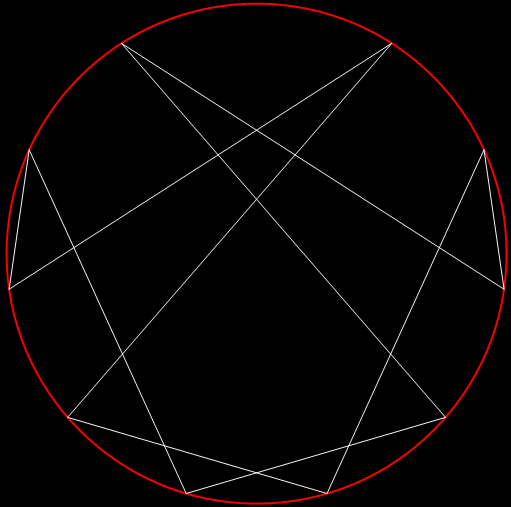

remainders(1/11) in b7


remainders(1/13) in b6


remainders(1/43) in b6
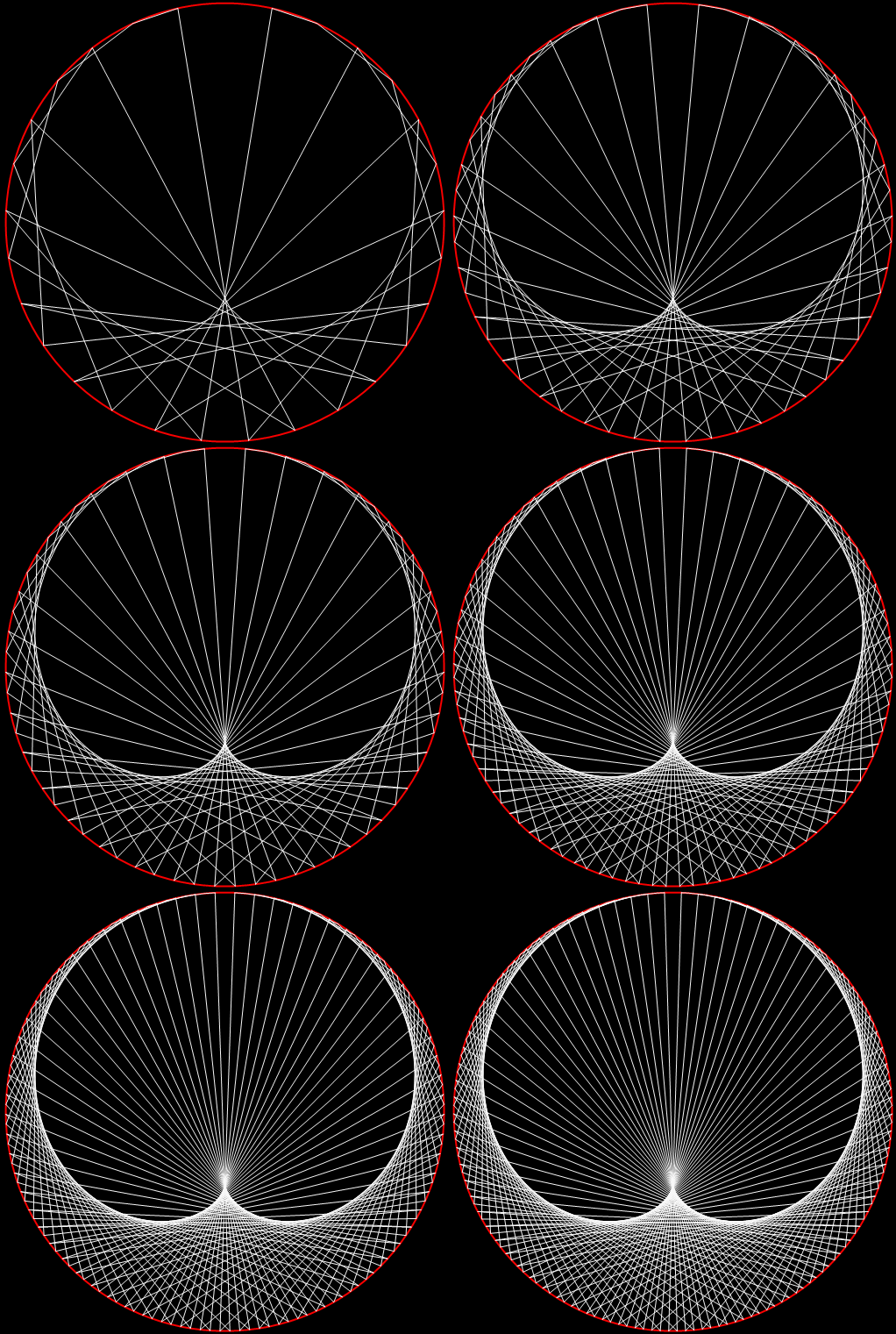

remainders in b2 for reciprocals of 29, 37, 53, 59, 61, 67, 83, 101, 107, 131, 139, 149 (animated)


And finally, to performativize the pun of “period pane”, here are some period-panes for 1/29, whose maximum period will be 28 (NASA says that the “Moon takes about one month to orbit Earth … 27.3 days to complete a revolution, but 29.5 days to change from New Moon to New Moon”):
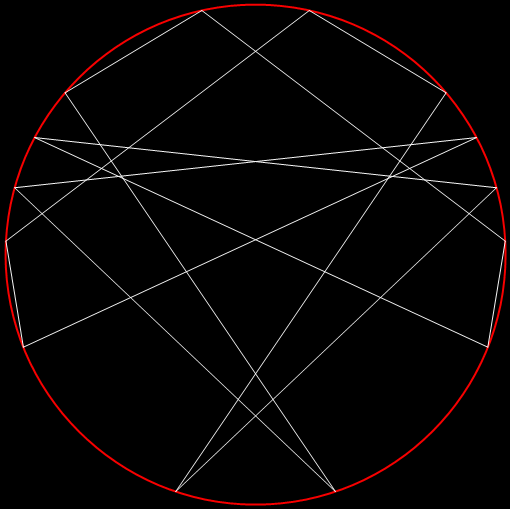
remainders(1/29) in b4


remainders(1/29) in b5


remainders(1/29) in b8


remainders(1/29) in b9


remainders(1/29) in b11


remainders(1/29) in b13


remainders(1/29) in b14
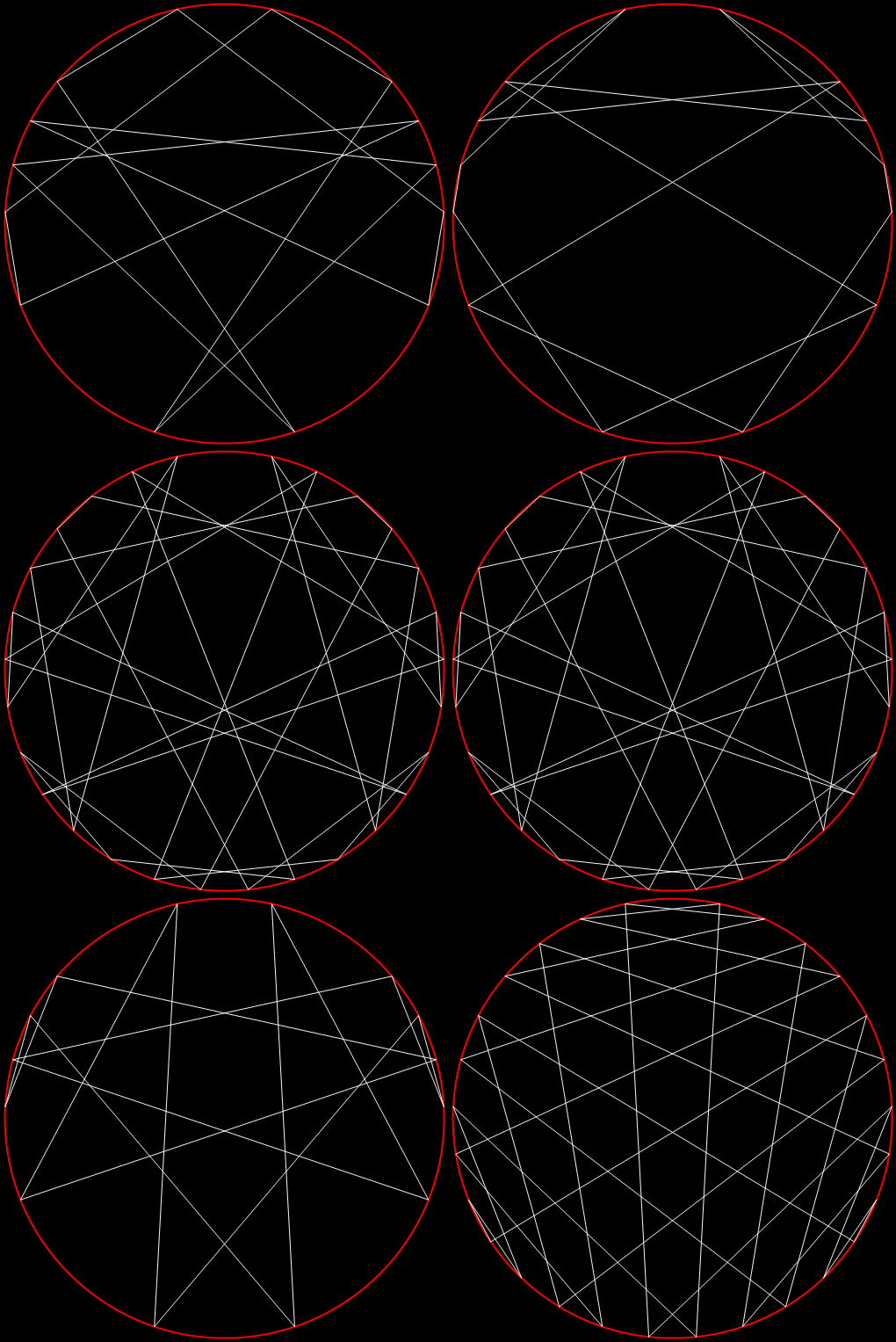

remainders(1/29) in various bases (animated)


Grow Fourth

Write the integers in groups of one, two, three, four… numbers like this:

1, 2,3, 4,5,6, 7,8,9,10, 11,12,13,14,15, 16,17,18,19,20,21, 22,23,24,25,26,27,28, 29,30,31,32,33,34,35,36, 37,38,39,40,41,42,43,44,45, 46,47,48,49,50,51,52,53,54,55, 56,57,58,59,60,61,62,63,64,65,66


Now delete every second group:

1, 2,3, 4,5,6, 7,8,9,10, 11,12,13,14,15, 16,17,18,19,20,21, 22,23,24,25,26,27,28, 29,30,31,32,33,34,35,36, 37,38,39,40,41,42,43,44,45, 46,47,48,49,50,51,52,53,54,55, 56,57,58,59,60,61,62,63,64,65,66…

↓↓↓

1, 4,5,6, 11,12,13,14,15, 22,23,24,25,26,27,28, 37,38,39,40,41,42,43,44,45, 56,57,58,59,60,61,62,63,64,65,66…


The sum of the first n remaining groups equals n^4:

1 = 1 = 1^4

1 + 4+5+6 = 16 = 2^4

1 + 4+5+6 + 11+12+13+14+15 = 81 = 3^4

1 + 4+5+6 + 11+12+13+14+15 + 22+23+24+25+26+27+28 = 256 = 4^4

1 + 4+5+6 + 11+12+13+14+15 + 22+23+24+25+26+27+28 + 37+38+39+40+41+42+43+44+45 = 625 = 5^4

1 + 4+5+6 + 11+12+13+14+15 + 22+23+24+25+26+27+28 + 37+38+39+40+41+42+43+44+45 + 56+57+58+59+60+61+62+63+64+65+66 = 1296 = 6^4

1 + 4+5+6 + 11+12+13+14+15 + 22+23+24+25+26+27+28 + 37+38+39+40+41+42+43+44+45 + 56+57+58+59+60+61+62+63+64+65+66 + 79+80+81+82+83+84+85+86+87+88+89+90+91 = 2401 = 7^4

1 + 4+5+6 + 11+12+13+14+15 + 22+23+24+25+26+27+28 + 37+38+39+40+41+42+43+44+45 + 56+57+58+59+60+61+62+63+64+65+66 + 79+80+81+82+83+84+85+86+87+88+89+90+91 + 106+107+108+109+110+111+112+113+114+115+116+117+118+119+120 = 4096 = 8^4

1 + 4+5+6 + 11+12+13+14+15 + 22+23+24+25+26+27+28 + 37+38+39+40+41+42+43+44+45 + 56+57+58+59+60+61+62+63+64+65+66 + 79+80+81+82+83+84+85+86+87+88+89+90+91 + 106+107+108+109+110+111+112+113+114+115+116+117+118+119+120 + 137+138+139+140+141+142+143+144+145+146+147+148+149+150+151+152+153 = 6561 = 9^4


From David Wells’ Penguin Dictionary of Curious and Interesting Numbers (1986), entry for “81”

Nuts for Numbers

I was looking at palindromes created by sums of consecutive integers. And I came across this beautiful result:

2772 = sum(22..77)


2772 = 22 + 23 + 24 + 25 + 26 + 27 + 28 + 29 + 30 + 31 + 32 + 33 + 34 + 35 + 36 + 37 + 38 + 39 + 40 + 41 + 42 + 43 + 44 + 45 + 46 + 47 + 48 + 49 + 50 + 51 + 52 + 53 + 54 + 55 + 56 + 57 + 58 + 59 + 60 + 61 + 62 + 63 + 64 + 65 + 66 + 67 + 68 + 69 + 70 + 71 + 72 + 73 + 74 + 75 + 76 + 77

You could call 2772 a nutty sum, because 77 is held inside 22 like a kernel inside a nutshell. Here some more nutty sums, sum(n1..n2), where n2 is a kernel in the shell of n1:

1599 = sum(19..59)
2772 = sum(22..77)
22113 = sum(23..211)
159999 = sum(199..599)
277103 = sum(203..771)
277722 = sum(222..777)
267786 = sum(266..778)
279777 = sum(277..797)
1152217 = sum(117..1522)
1152549 = sum(149..1525)
1152767 = sum(167..1527)
4296336 = sum(436..2963)
5330303 = sum(503..3303)
6235866 = sum(626..3586)
8418316 = sum(816..4183)
10470075 = sum(1075..4700)
11492217 = sum(1117..4922)
13052736 = sum(1306..5273)
13538277 = sum(1377..5382)
14557920 = sum(1420..5579)
15999999 = sum(1999..5999)
25175286 = sum(2516..7528)
26777425 = sum(2625..7774)
27777222 = sum(2222..7777)
37949065 = sum(3765..9490)
53103195 = sum(535..10319)
111497301 = sum(1101..14973)

Of course, you can go the other way and find nutty sums where sum(n1..n2) produces n1 as a kernel inside the shell of n2:

147 = sum(4..17)
210 = sum(1..20)
12056 = sum(20..156)
13467 = sum(34..167)
22797 = sum(79..227)
22849 = sum(84..229)
26136 = sum(61..236)
1145520 = sum(145..1520)
1208568 = sum(208..1568)
1334667 = sum(334..1667)
1540836 = sum(540..1836)
1931590 = sum(315..1990)
2041462 = sum(414..2062)
2041863 = sum(418..2063)
2158083 = sum(158..2083)
2244132 = sum(244..2132)
2135549 = sum(554..2139)
2349027 = sum(902..2347)
2883558 = sum(883..2558)
2989637 = sum(989..2637)

When you look at nutty sums in other bases, you’ll find that the number “210” is always triangular and always a nutty sum in bases > 2:

210 = sum(1..20) in b3 → 21 = sum(1..6) in b10
210 = sum(1..20) in b4 → 36 = sum(1..8) in b10
210 = sum(1..20) in b5 → 55 = sum(1..10) in b10
210 = sum(1..20) in b6 → 78 = sum(1..12) in b10
210 = sum(1..20) in b7 → 105 = sum(1..14) in b10
210 = sum(1..20) in b8 → 136 = sum(1..16) in b10
210 = sum(1..20) in b9 → 171 = sum(1..18) in b10
210 = sum(1..20) in b10
210 = sum(1..20) in b11 → 253 = sum(1..22) in b10
210 = sum(1..20) in b12 → 300 = sum(1..24) in b10
210 = sum(1..20) in b13 → 351 = sum(1..26) in b10
210 = sum(1..20) in b14 → 406 = sum(1..28) in b10
210 = sum(1..20) in b15 → 465 = sum(1..30) in b10
210 = sum(1..20) in b16 → 528 = sum(1..32) in b10
210 = sum(1..20) in b17 → 595 = sum(1..34) in b10
210 = sum(1..20) in b18 → 666 = sum(1..36) in b10
210 = sum(1..20) in b19 → 741 = sum(1..38) in b10
210 = sum(1..20) in b20 → 820 = sum(1..40) in b10
[…]

Why is 210 always a nutty sum like that? Because the formula for sum(n1..n2) is (n1*n2) * (n2-n1+1) / 2. In all bases > 2, the sum of 1 to 20 (where 20 = 2 * b) is therefore:

(1+20) * (20-1+1) / 2 = 21 * 20 / 2 = 21 * 10 = 210

And here are nutty sums of both kinds (n1 inside n2 and n2 inside n1) for base 8:

210 = sum(1..20) in b8 → 136 = sum(1..16) in b10
12653 = sum(26..153) → 5547 = sum(22..107)
23711 = sum(71..231) → 10185 = sum(57..153)
2022323 = sum(223..2023) → 533715 = sum(147..1043)
2032472 = sum(247..2032) → 537914 = sum(167..1050)
2271564 = sum(715..2264) → 619380 = sum(461..1204)
2307422 = sum(742..2302) → 626450 = sum(482..1218)
125265253 = sum(2526..15253) → 22375083 = sum(1366..6827)


3246710 = sum(310..2467) in b8 → 871880 = sum(200..1335)
in b10
5326512 = sum(512..3265) → 1420618 = sum(330..1717)
15540671 = sum(1571..5406) → 3588537 = sum(889..2822)
21625720 = sum(2120..6257) → 4664272 = sum(1104..3247)

And for base 9:

125 = sum(2..15) in b9 → 104 = sum(2..14) in b10
210 = sum(1..20) → 171 = sum(1..18)
12858 = sum(28..158) → 8720 = sum(26..134)
1128462 = sum(128..1462) → 609824 = sum(107..1109)
1288588 = sum(288..1588) → 708344 = sum(242..1214)
1475745 = sum(475..1745) → 817817 = sum(392..1337)
2010707 = sum(107..2007) → 1070017 = sum(88..1465)
2034446 = sum(344..2046) → 1085847 = sum(283..1500)
2040258 = sum(402..2058) → 1089341 = sum(326..1511)
2063410 = sum(341..2060) → 1104768 = sum(280..1512)
2215115 = sum(215..2115) → 1191281 = sum(176..1553)
2255505 = sum(555..2205) → 1217840 = sum(455..1625)
2475275 = sum(475..2275) → 1348880 = sum(392..1688)
2735455 = sum(735..2455) → 1499927 = sum(599..1832)


1555 = sum(15..55) in b9 → 1184 = sum(14..50) in b10
155858 = sum(158..558) → 96200 = sum(134..458)
1148181 = sum(181..1481) → 622720 = sum(154..1126)
2211313 = sum(213..2113) → 1188525 = sum(174..1551)
2211747 = sum(247..2117) → 1188880 = sum(205..1555)
6358585 = sum(685..3585) → 3404912 = sum(563..2669)
7037453 = sum(703..3745) → 3745245 = sum(570..2795)
7385484 = sum(784..3854) → 3953767 = sum(643..2884)
13518167 = sum(1367..5181) → 6685072 = sum(1033..3799)
15588588 = sum(1588..5588) → 7794224 = sum(1214..4130)
17603404 = sum(1704..6034) → 8859865 = sum(1300..4405)
26750767 = sum(2667..7507) → 13201360 = sum(2005..5515)


Post-Performative Post-Scriptum…

Viz ’s Mr Logic would be a fan of nutty sums. And unlike real nuts, they wouldn’t prove fatal:

Mr Logic Goes Nuts (strip from Viz comic)

(click for full-size)

The Odd Couple

12,285

Together with 14,595 the smallest pair of odd amicable numbers, discovered by [the American mathematician] B.H. Brown in 1939. — The Penguin Dictionary of Curious and Interesting Numbers, David Wells (1986)

A Walk on the Wide Side

How wide is a number? The obvious answer is to count digits and say that 1 and 9 are one digit wide, 11 and 99 are two digits wide, 111 and 999 are three digits wide, and so on. But that isn’t a very good answer. 111 and 999 are both three digits wide, but 999 is nine larger times than 111. And although 111 and 999 are both one digit wider than 11 and 99, 111 is much closer to 99 than 999 is to 111.

So there’s got to be a better answer to the question. I came across it indirectly, when I started looking at carries in powers. I wanted to know how fast a number grew in digit-width as it was multiplied repeatedly by, say, 2. For example, 2^3 = 8 and 2^4 = 16, so there’s been a carry at the far left and 2^4 = 16 has increased in digit-width by 1 over 2^3 = 8. After that, 2^6 = 64 and 2^7 = 128, so there’s another carry and another increase in digit-width. I wrote a program to sum the carries and divide them by the power. If I were better at math, I would’ve known what the value of carries / power was going to be. Here’s the program beginning to find it (it begins with a carry of 1, to mark 2^0 = 1 as creating a digit ex nihilo, as it were):


8 = 2^3
16 = 2^4 → 2 / 4 = 0.5
64 = 2^6
128 = 2^7 → 3 / 7 = 0.4285714285714285714285714286
512 = 2^9
1024 = 2^10 → 4 / 10 = 0.4
8192 = 2^13
16384 = 2^14 → 5 / 14 = 0.3571428571428571428571428571
65536 = 2^16
131072 = 2^17 → 6 / 17 = 0.3529411764705882352941176471
524288 = 2^19
1048576 = 2^20 → 7 / 20 = 0.35
8388608 = 2^23
16777216 = 2^24 → 8 / 24 = 0.3...
67108864 = 2^26
134217728 = 2^27 → 9 / 27 = 0.3...
536870912 = 2^29
1073741824 = 2^30 → 10 / 30 = 0.3...
8589934592 = 2^33
17179869184 = 2^34 → 11 / 34 = 0.3235294117647058823529411765
68719476736 = 2^36
137438953472 = 2^37 → 12 / 37 = 0.3243243243243243243243243243
549755813888 = 2^39
1099511627776 = 2^40 → 13 / 40 = 0.325
8796093022208 = 2^43
17592186044416 = 2^44 → 14 / 44 = 0.318...
70368744177664 = 2^46
140737488355328 = 2^47 → 15 / 47 = 0.3191489361702127659574468085
562949953421312 = 2^49
1125899906842624 = 2^50 → 16 / 50 = 0.32
9007199254740992 = 2^53
18014398509481984 = 2^54 → 17 / 54 = 0.3148...
72057594037927936 = 2^56
144115188075855872 = 2^57 → 18 / 57 = 0.3157894736842105263157894737
576460752303423488 = 2^59
1152921504606846976 = 2^60 → 19 / 60 = 0.316...
9223372036854775808 = 2^63
18446744073709551616 = 2^64 → 20 / 64 = 0.3125
73786976294838206464 = 2^66
147573952589676412928 = 2^67 → 21 / 67 = 0.3134328358208955223880597015
590295810358705651712 = 2^69
1180591620717411303424 = 2^70 → 22 / 70 = 0.3142857...
9444732965739290427392 = 2^73
18889465931478580854784 = 2^74 → 23 / 74 = 0.3108...
75557863725914323419136 = 2^76
151115727451828646838272 = 2^77 → 24 / 77 = 0.3116883...
604462909807314587353088 = 2^79
1208925819614629174706176 = 2^80 → 25 / 80 = 0.3125
9671406556917033397649408 = 2^83
19342813113834066795298816 = 2^84 → 26 / 84 = 0.3095238095238095238095238095
77371252455336267181195264 = 2^86
154742504910672534362390528 = 2^87 → 27 / 87 = 0.3103448275862068965517241379
618970019642690137449562112 = 2^89
1237940039285380274899124224 = 2^90 → 28 / 90 = 0.31...
9903520314283042199192993792 = 2^93
19807040628566084398385987584 = 2^94 → 29 / 94 = 0.3085106382978723404255319149
79228162514264337593543950336 = 2^96
158456325028528675187087900672 = 2^97 → 30 / 97 = 0.3092783505154639175257731959
633825300114114700748351602688 = 2^99
1267650600228229401496703205376 = 2^100 → 31 / 100 = 0.31

After calculating 2^p higher and higher (I discarded trailing digits of 2^p), I realized that the answer — carries / power — was converging on a value of slightly less than 0.30103. In the end (doh!), I realized that what I was calculating was the logarithm of 2 in base 10:


log(2) = 0.3010299956639811952137388947...
10^0.301029995663981... = 2

You can use then same carries-and-powers method to approximate the values of other logarithms:


log(1) = 0
log(2) = 0.3010299956639811952137388947...
log(3) = 0.4771212547196624372950279033...
log(4) = 0.6020599913279623904274777894...
log(5) = 0.6989700043360188047862611053...
log(6) = 0.7781512503836436325087667980...
log(7) = 0.8450980400142568307122162586...
log(8) = 0.9030899869919435856412166842...
log(9) = 0.9542425094393248745900558065...

I also realized logarithms are a good answer to the question I raised above: How wide is a number? The logs of the powers of 2 are multiples of log(2):


    log(2^1) = log(2) = 0.301029995663981195213738894
    log(2^2) = log(4) = 0.602059991327962390427477789 = 2 * log(2)
    log(2^3) = log(8) = 0.903089986991943585641216684 = 3 * log(2)
   log(2^4) = log(16) = 1.204119982655924780854955579 = 4 * log(2)
   log(2^5) = log(32) = 1.505149978319905976068694474 = 5 * log(2)
   log(2^6) = log(64) = 1.806179973983887171282433368 = 6 * log(2)
  log(2^7) = log(128) = 2.107209969647868366496172263 = 7 * log(2)
  log(2^8) = log(256) = 2.408239965311849561709911158 = 8 * log(2)
  log(2^9) = log(512) = 2.709269960975830756923650053 = 9 * log(2)
log(2^10) = log(1024) = 3.010299956639811952137388947 = 10 * log(2)

4 is 2 times larger than 2 and, in a sense, the width of 4 is 0.301029995663981… greater than the width of 2. As you can see, when the integer part of the log-sum increases by 1, so does the digit-width of the power:


 log(2^3) = log(8) = 0.903089986991943585641216684 = 3 * log(2)
log(2^4) = log(16) = 1.204119982655924780854955579 = 4 * log(2)

[...]

 log(2^6) = log(64) = 1.806179973983887171282433368 = 6 * log(2)
log(2^7) = log(128) = 2.107209969647868366496172263 = 7 * log(2)

[...]

  log(2^9) = log(512) = 2.709269960975830756923650053 = 9 * log(2)
log(2^10) = log(1024) = 3.01029995663981195213738894 = 10 * log(2)

In other words, powers of 2 are increasing in width by 0.301029995663981… units. When the increase flips the integer part of the log-sum up by 1, the digit-width or digit-count also increases by 1. To find the digit-count of a number, n, in a particular base, you simply take the integer part of log(n,b) and add 1. In base 10, the log of 123456789 is 8.091514… The integer part is 8 and 8+1 = 9. But it also makes perfect sense that log(1) = 0. No matter how many times you multiply a number by 1, the number never changes. That is, its width stays the same. So you can say that 1 has a width of 0, while 2 has a width of 0.301029995663981…

Logarithms also answer a question pre-previously raised on Overlord of the Über-Feral: Why are the Fibonacci numbers so productive in base 11 for digsum(fib(k)) = k? In base 10, such numbers are quickly exhausted:


digsum(fib(1)) = 1 = digsum(1)
digsum(fib(5)) = 5 = digsum(5)
digsum(fib(10)) = 10 = digsum(55)
digsum(fib(31)) = 31 = digsum(1346269)
digsum(fib(35)) = 35 = digsum(9227465)
digsum(fib(62)) = 62 = digsum(4052739537881)
digsum(fib(72)) = 72 = digsum(498454011879264)
digsum(fib(175)) = 175 = digsum(1672445759041379840132227567949787325)
digsum(fib(180)) = 180 = digsum(18547707689471986212190138521399707760)
digsum(fib(216)) = 216 = digsum(619220451666590135228675387863297874269396512)
digsum(fib(251)) = 251 = digsum(12776523572924732586037033894655031898659556447352249)
digsum(fib(252)) = 252 = digsum(20672849399056463095319772838289364792345825123228624)
digsum(fib(360)) = 360
digsum(fib(494)) = 494
digsum(fib(540)) = 540
digsum(fib(946)) = 946
digsum(fib(1188)) = 1188
digsum(fib(2222)) = 2222

In base 11, such numbers go on and on:


digsum(fib(1),b=11) = 1 = digsum(1) (k=1)
digsum(fib(5),b=11) = 5 = digsum(5) (k=5)
digsum(fib(12),b=11) = 12 = digsum(1A2) (k=13)
digsum(fib(38),b=11) = 38 = digsum(855138A1) (k=41)
digsum(fib(49)) = 49 = digsum(2067A724762) (k=53) (c=5)
digsum(fib(50)) = 50 = digsum(542194A6905) (k=55)
digsum(fib(55)) = 55 = digsum(54756364A280) (k=60)
digsum(fib(56)) = 56 = digsum(886283256841) (k=61)
digsum(fib(82)) = 82 = digsum(57751318A9814A6410) (k=90)
digsum(fib(89)) = 89 = digsum(140492673676A06482A2) (k=97)
digsum(fib(144)) = 144 = digsum(401631365A48A784A09392136653457871) (k=169) (c=10)
digsum(fib(159)) = 159 = digsum(67217257641069185100889658A1AA72A0805) (k=185)
digsum(fib(166)) = 166 = digsum(26466A3A88237918577363A2390343388205432) (k=193)
digsum(fib(186)) = 186 = digsum(6A963147A9599623A20A05390315140A21992A96005) (k=215)
digsum(fib(221)) = 221 (k=265) (c=15)
digsum(fib(225)) = 225 (k=269)
digsum(fib(2A1)) = 2A1 (k=353)
digsum(fib(2A3)) = 2A3 (k=355)

[...]

digsum(fib(39409)) = 39409 (k=56395)
digsum(fib(3958A)) = 3958A (k=56605) (c=295)
digsum(fib(3965A)) = 3965A (k=56693)
digsum(fib(3A106)) = 3A106 (k=57360)
digsum(fib(3AA46)) = 3AA46 (k=58493)
digsum(fib(40140)) = 40140 (k=58729)
digsum(fib(4222A)) = 4222A (k=61500) (c=300)
digsum(fib(42609)) = 42609 (k=61961)
digsum(fib(42775)) = 42775 (k=62155)
digsum(fib(4287A)) = 4287A (k=62281)
digsum(fib(430A2)) = 430A2 (k=62669)
digsum(fib(43499)) = 43499 (k=63149) (c=305)
digsum(fib(435A9)) = 435A9 (k=63281)

[...]

digsum(fib(157476)) = 157476 (k=244140) (c=525)
digsum(fib(158470)) = 158470 (k=245465)
digsum(fib(159037)) = 159037 (k=246275)
digsum(fib(159285)) = 159285 (k=246570)
digsum(fib(159978)) = 159978 (k=247409)
digsum(fib(162993)) = 162993 (k=252750) (c=530)
digsum(fib(163A32)) = 163A32 (k=254135)
digsum(fib(164918)) = 164918 (k=255329)
digsum(fib(166985)) = 166985 (k=258065)
digsum(fib(167234)) = 167234 (k=258493)
digsum(fib(167371)) = 167371 (k=258655) (c=535)
digsum(fib(1676A5)) = 1676A5 (k=259055)
digsum(fib(16992A)) = 16992A (k=261997)

[...]

When do these numbers run out in base 11? I don’t know, but I do know why there are so many of them. The answer involves the logarithm of a special number. The most famous aspect of Fibonacci numbers is that the ratio, fib(k) / fib(k-1), of successive numbers converges on an irrational constant known as Φ. Here are the first Fibonacci numbers, where fib(k) = fib(k-2) + fib(k-1) (in other words, 1+1 = 2, 1+2 = 3, 2+3 = 5, and so on):


1, 1, 2, 3, 5, 8, 13, 21, 34, 55, 89, 144, 233, 377, 610, 987, 1597, 2584, 4181, 6765, ...

And here are the first ratios:


1 / 1 = 1
2 / 1 = 2
3 / 2 = 1.5
5 / 3 = 1.6...
8 / 5 = 1.6
13 / 8 = 1.625
21 / 13 = 1.6153846...
34 / 21 = 1.619047...
55 / 34 = 1.617647058823529411764705882
89 / 55 = 1.618...
144 / 89 = 1.617977528089887640449438202
233 / 144 = 1.61805...
377 / 233 = 1.618025751072961373390557940
610 / 377 = 1.618037135278514588859416446
987 / 610 = 1.618032786885245901639344262
1597 / 987 = 1.618034447821681864235055724
2584 / 1597 = 1.618033813400125234815278648
4181 / 2584 = 1.618034055727554179566563468
6765 / 4181 = 1.618033963166706529538387946
[...]

The ratios get closer and closer to Φ = 1.618033988749894848204586834… = (√5 + 1) / 2. In other words, fib(k) ≈ fib(k-1) * Φ = fib(k-1) * 1.618… in base 10. This means that the digit-length of fib(k) ≈ integer(k * log(&Phi)) + 1. In base b, the average value of a digit in a Fibonacci number is (b^2-b) / 2b. Therefore in base 10, the average value of a digit is (10^2-10) / 20 = 90 / 20 = 4.5. The average value of digsum(fib(k)) ≈ 4.5 * log(&Phi) * k = 4.5 * 0.20898764… * k = 0.940444… * k. It isn’t surprising that as fib(k) gets larger, digsum(fib(k)) tends to get smaller than k.

In base 10, anyway. But what about base 11? In base 11, log(Φ) = 0.20068091818623… and the average value of a base-11 digit in fib(k) is 5 = 110 / 22 = (11^2 – 11) / 22. Therefore the average value of digsum(fib(k)) in base 11 is 5 * log(&Phi) * k = 5 * 0.20068091818623… * k = 1.00340459… * k. The average value of digsum(fib(k)) is much closer to k and it’s not surprising that for so many fib(k) in base 11, digsum(fib(k)) = k. In base 11, log(Φ) ≈ 1/5 and because the average digval is 5, digsum(fib(k)) ≈ 5 * 1/5 * k = 1 * k = k. As we’ve seen, that isn’t true in base 10. Nor is it true in base 12, where log(Φ) = 0.1936538843826… and average digval is 5.5 = (12^2 – 12) / 24 = 132 / 24. Therefore the average value in base 12 of digsum(fib(k)) = 1.0650963641… * k. The function digsum(fib(k)) = k rapidly dries up in base 12, just as it does in base 10:


digsum(fib(1),b=12) = 1 = digsum(1) (k=1)
digsum(fib(5),b=12) = 5 = digsum(5) (k=5)
digsum(fib(11) = 11 = digsum(175) (k=13)
digsum(fib(12) = 12 = digsum(275) (k=14)
digsum(fib(75) = 75 = digsum(976446538A0863811) (k=89) (c=5)
digsum(fib(80) = 80 = digsum(1B3643B50939808B400) (k=96)
digsum(fib(A3) = A3 = digsum(35147A566682BB9529034402) (k=123)
digsum(fib(165) = 165 (k=221)
digsum(fib(283) = 283 (k=387)
digsum(fib(2AB) = 2AB (k=419) (c=10)
digsum(fib(39A) = 39A (k=550)
digsum(fib(460) = 460 (k=648)
digsum(fib(525) = 525 (k=749)
digsum(fib(602) = 602 (k=866)
digsum(fib(624) = 624 (k=892) (c=15)
digsum(fib(781) = 781 (k=1105)
digsum(fib(1219) = 1219 (k=2037)


Previously Pre-Posted…

Mötley Vüe — more on digsum(fib(k)) = k

You Sixy Beast

666 is the Number of the Beast. But it’s much more than that. After all, it’s a number, so it has mathematical properties (everything has mathematical properties, but it’s a sine-qua-non of numbers). For example, 666 is a palindromic number, reading the same forwards and backwards. And it’s a repdigit, consisting of a single repeated digit. Now try answering this question: how many pebbles are there in this triangle?


••
•••
••••
•••••
••••••
•••••••
••••••••
•••••••••
••••••••••
•••••••••••
••••••••••••
•••••••••••••
••••••••••••••
•••••••••••••••
••••••••••••••••
•••••••••••••••••
••••••••••••••••••
•••••••••••••••••••
••••••••••••••••••••
•••••••••••••••••••••
••••••••••••••••••••••
•••••••••••••••••••••••
••••••••••••••••••••••••
•••••••••••••••••••••••••
••••••••••••••••••••••••••
•••••••••••••••••••••••••••
••••••••••••••••••••••••••••
•••••••••••••••••••••••••••••
••••••••••••••••••••••••••••••
•••••••••••••••••••••••••••••••
••••••••••••••••••••••••••••••••
•••••••••••••••••••••••••••••••••
••••••••••••••••••••••••••••••••••
•••••••••••••••••••••••••••••••••••
••••••••••••••••••••••••••••••••••••


Counting the pebbles one by one would take a long time, but there’s a short-cut. Each line of the triangle after the first is one pebble longer than the previous line. There are 36 lines and therefore 36 pebbles in the final line. So the full number of pebbles = 1 + 2 + 3 + 4 + 5 + 6 + 7 + 8 + 9 + 10 + 11 + 12 + 13 + 14 + 15 + 16 + 17 + 18 + 19 + 20 + 21 + 22 + 23 + 24 + 25 + 26 + 27 + 28 + 29 + 30 + 31 + 32 + 33 + 34 + 35 + 36. And there’s an easy formula for that sum: (36^2 + 36) / 2 = (1296 + 36) / 2 = 1332 / 2 = 666.

So 666 is the 36th triangular number:


1 = 1
1+2 = 3
1+2+3 = 6
1+2+3+4 = 10
1+2+3+4+5 = 15
1+2+3+4+5+6 = 21
1+2+3+4+5+6+7 = 28
1+2+3+4+5+6+7+8 = 36
1+2+3+4+5+6+7+8+9 = 45
1+2+3+4+5+6+7+8+9+10 = 55
[...]
1+2+3+4+5+6+7+8+9+10+11+12+13+14+15+16+17+18+19+20+21+22+23+24+25+26+27+28+29+30+31+32+33+34+35+36 = 666

But what’s tri(666), the 666th triangular number? By the formula above, it equals (666^2 + 666) / 2 = (443556 + 666) / 2 = 444222 / 2 = 222111. But recall something else from above: tri(6) = 1+2+3+4+5+6 = 21. Is it a coincidence that tri(6) = 21 and tri(666) = 222111? No, it isn’t:


tri(6) = 21 = (6^2 + 6) / 2 = (36 + 6) / 2 = 42 / 2
tri(66) = 2211 = (66^2 + 66) / 2 = (4356 + 66) / 2 = 4422 / 2
tri(666) = 222111 = (666^2 + 666) / 2 = (443556 + 666) / 2 = 444222 / 2
tri(6666) = 22221111
tri(66666) = 2222211111
tri(666666) = 222222111111
tri(6666666) = 22222221111111
tri(66666666) = 2222222211111111
tri(666666666) = 222222222111111111
tri(6666666666) = 22222222221111111111
tri(66666666666) = 2222222222211111111111
tri(666666666666) = 222222222222111111111111
tri(6666666666666) = 22222222222221111111111111
tri(66666666666666) = 2222222222222211111111111111
tri(666666666666666) = 222222222222222111111111111111

So we’ve looked at tri(36) = 666 and tri(666) = 222111. Let’s go a step further: tri(222111) = 24666759216. So 666 appears again. And the sixiness carries on here:


tri(36) = 666
tri(3366) = 5666661
tri(333666) = 55666666611
tri(33336666) = 555666666666111
tri(3333366666) = 5555666666666661111
tri(333333666666) = 55555666666666666611111
tri(33333336666666) = 555555666666666666666111111
tri(3333333366666666) = 5555555666666666666666661111111
tri(333333333666666666) = 55555555666666666666666666611111111
tri(33333333336666666666) = 555555555666666666666666666666111111111
tri(3333333333366666666666) = 5555555555666666666666666666666661111111111
tri(333333333333666666666666) = 55555555555666666666666666666666666611111111111
tri(33333333333336666666666666) = 555555555555666666666666666666666666666111111111111
tri(3333333333333366666666666666) = 5555555555555666666666666666666666666666661111111111111
tri(333333333333333666666666666666) = 55555555555555666666666666666666666666666666611111111111111

Root Pursuit

Roots are hard, powers are easy. For example, the square root of 2, or √2, is the mysterious and never-ending number that is equal to 2 when multiplied by itself:

• √2 = 1·414213562373095048801688724209698078569671875376948073...

It’s hard to calculate √2. But the powers of 2, or 2^p, are the straightforward numbers that you get by multiplying 2 repeatedly by itself. It’s easy to calculate 2^p:

• 2 = 2^1
• 4 = 2^2
• 8 = 2^3
• 16 = 2^4
• 32 = 2^5
• 64 = 2^6
• 128 = 2^7
• 256 = 2^8
• 512 = 2^9
• 1024 = 2^10
• 2048 = 2^11
• 4096 = 2^12
• 8192 = 2^13
• 16384 = 2^14
• 32768 = 2^15
• 65536 = 2^16
• 131072 = 2^17
• 262144 = 2^18
• 524288 = 2^19
• 1048576 = 2^20
[...]

But there is a way to find √2 by finding 2^p, as I discovered after I asked a simple question about 2^p and 3^p. What are the longest runs of matching digits at the beginning of each power?

131072 = 2^17
129140163 = 3^17
1255420347077336152767157884641... = 2^193
1214512980685298442335534165687... = 3^193
2175541218577478036232553294038... = 2^619
2177993962169082260270654106078... = 3^619
7524389324549354450012295667238... = 2^2016
7524012611682575322123383229826... = 3^2016

There’s no obvious pattern. Then I asked the same question about 2^p and 5^p. And an interesting pattern appeared:

32 = 2^5
3125 = 5^5
316912650057057350374175801344 = 2^98
3155443620884047221646914261131... = 5^98
3162535207926728411757739792483... = 2^1068
3162020133383977882730040274356... = 5^1068
3162266908803418110961625404267... = 2^127185
3162288411569894029343799063611... = 5^127185

The digits 31622 rang a bell. Isn’t that the start of √10? Yes, it is:

• √10 = 3·1622776601683793319988935444327185337195551393252168268575...

I wrote a fast machine-code program to find even longer runs of matching initial digits. Sure enough, the pattern continued:

• 316227... = 2^2728361
• 316227... = 5^2728361
• 3162277... = 2^15917834
• 3162277... = 5^15917834
• 31622776... = 2^73482154
• 31622776... = 5^73482154
• 3162277660... = 2^961700165
• 3162277660... = 5^961700165

But why are powers of 2 and 5 generating the digits of √10? If you’re good at math, that’s a trivial question about a trivial discovery. Here’s the answer: We use base ten and 10 = 2 * 5, 10^2 = 100 = 2^2 * 5^2 = 4 * 25, 10^3 = 1000 = 2^3 * 5^3 = 8 * 125, and so on. When the initial digits of 2^p and 5^p match, those matching digits must come from the digits of √10. Otherwise the product of 2^p * 5^p would be too large or too small. Here are the records for matching initial digits multiplied by themselves:

32 = 2^5
3125 = 5^5
• 3^2 = 9

316912650057057350374175801344 = 2^98
3155443620884047221646914261131... = 5^98
• 31^2 = 961

3162535207926728411757739792483... = 2^1068
3162020133383977882730040274356... = 5^1068
• 3162^2 = 9998244

3162266908803418110961625404267... = 2^127185
3162288411569894029343799063611... = 5^127185
• 31622^2 = 999950884

• 316227... = 2^2728361
• 316227... = 5^2728361
• 316227^2 = 99999515529

• 3162277... = 2^15917834
• 3162277... = 5^15917834
• 3162277^2 = 9999995824729

• 31622776... = 2^73482154
• 31622776... = 5^73482154
• 31622776^2 = 999999961946176

• 3162277660... = 2^961700165
• 3162277660... = 5^961700165
• 3162277660^2 = 9999999998935075600

The square of each matching run falls short of 10^p. And so when the digits of 2^p and 5^p stop matching, one power must fall below √10, as it were, and one must rise above:

3 162266908803418110961625404267... = 2^127185
3·162277660168379331998893544432... = √10
3 162288411569894029343799063611... = 5^127185

In this way, 2^p * 5^p = 10^p. And that’s why matching initial digits of 2^p and 5^p generate the digits of √10. The same thing, mutatis mutandis, happens in base 6 with 2^p and 3^p, because 6 = 2 * 3:

• 2.24103122055214532500432040411... = √6 (in base 6)

24 = 2^4
213 = 3^4
225522024 = 2^34 in base 6 = 2^22 in base 10
22225525003213 = 3^34 (3^22)
2241525132535231233233555114533... = 2^1303 (2^327)
2240133444421105112410441102423... = 3^1303 (3^327)
2241055222343212030022044325420... = 2^153251 (2^15007)
2241003215453455515322105001310... = 3^153251 (3^15007)
2241032233315203525544525150530... = 2^233204 (2^20164)
2241030204225410320250422435321... = 3^233204 (3^20164)
2241031334114245140003252435303... = 2^2110415 (2^102539)
2241031103430053425141014505442... = 3^2110415 (3^102539)

And in base 30, where 30 = 2 * 3 * 5, you can find the digits of √30 in three different ways, because 30 = 2 * 15 = 3 * 10 = 5 * 6:

• 5·E9F2LE6BBPBF0F52B7385PE6E5CLN... = √30 (in base 30)

55AA4 = 2^M in base 30 = 2^22 in base 10
5NO6CQN69C3Q0E1Q7F = F^M = 15^22
5E63NMOAO4JPQD6996F3HPLIMLIRL6F... = 2^K6 (2^606)
5ECQDMIOCIAIR0DGJ4O4H8EN10AQ2GR... = F^K6 (15^606)
5E9DTE7BO41HIQDDO0NB1MFNEE4QJRF... = 2^B14 (2^9934)
5E9G5SL7KBNKFLKSG89J9J9NT17KHHO... = F^B14 (15^9934)
[...]
5R4C9 = 3^E in base 30 = 3^14 in base 10
52CE6A3L3A = A^E = 10^14
5E6SOQE5II5A8IRCH9HFBGO7835KL8A = 3^3N (3^113)
5EC1BLQHNJLTGD00SLBEDQ73AH465E3... = A^3N (10^113)
5E9FI455MQI4KOJM0HSBP3GG6OL9T8P... = 3^EJH (3^13187)
5E9EH8N8D9TR1AH48MT7OR3MHAGFNFQ... = A^EJH (10^13187)
[...]
5OCNCNRAP = 5^I in base 30 = 5^18 in base 10
54NO22GI76 = 6^I (6^18)
5EG4RAMD1IGGHQ8QS2QR0S0EH09DK16... = 5^1M7 (5^1567)
5E2PG4Q2G63DOBIJ54E4O035Q9TEJGH... = 6^1M7 (6^1567)
5E96DB9T6TBIM1FCCK8A8J7IDRCTM71... = 5^F9G (5^13786)
5E9NM222PN9Q9TEFTJ94261NRBB8FCH... = 6^F9G (6^13786)
[...]

So that’s √10, √6 and √30. But I said at the beginning that you can find √2 by finding 2^p. How do you do that? By offsetting the powers, as it were. With 2^p and 5^p, you can find the digits of √10. With 2^(p+1) and 5^p, you can find the digits of √2 and √20, because 2^(p+1) * 5^p = 2 * 2^p * 5^p = 2 * 10^p:

•  √2 = 1·414213562373095048801688724209698078569671875376948073...
• √20 = 4·472135954999579392818347337462552470881236719223051448...

16 = 2^4
125 = 5^3
140737488355328 = 2^47
142108547152020037174224853515625 = 5^46
1413... = 2^243
1414... = 5^242
14141... = 2^6651
14142... = 5^6650
141421... = 2^35389
141420... = 5^35388
4472136... = 2^162574
4472135... = 5^162573
141421359... = 2^3216082
141421352... = 5^3216081
447213595... = 2^172530387
447213595... = 5^172530386
[...]

God Give Me Benf’

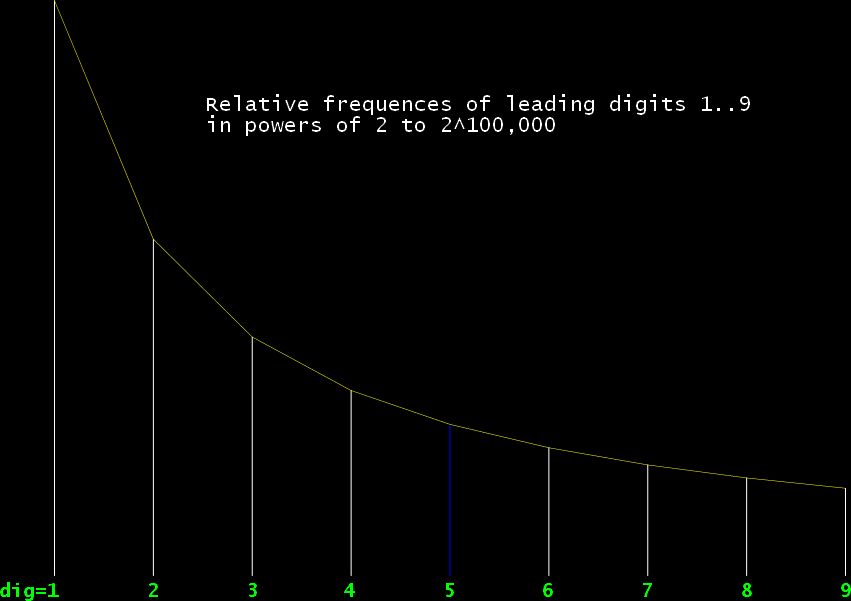
In “Wake the Snake”, I looked at the digits of powers of 2 and mentioned a fascinating mathematical phenomenon known as Benford’s law, which governs — in a not-yet-fully-explained way — the leading digits of a wide variety of natural and human statistics, from the lengths of rivers to the votes cast in elections. Benford’s law also governs a lot of mathematical data. It states, for example, that the first digit, d, of a power of 2 in base b (except b = 2, 4, 8, 16…) will occur with the frequency logb(1 + 1/d). In base 10, therefore, Benford’s law states that the digits 1..9 will occur with the following frequencies at the beginning of 2^p:

1: 30.102999%
2: 17.609125%
3: 12.493873%
4: 09.691001%
5: 07.918124%
6: 06.694678%
7: 05.799194%
8: 05.115252%
9: 04.575749%

Here’s a graph of the actual relative frequencies of 1..9 as the leading digit of 2^p (open images in a new window if they appear distorted):


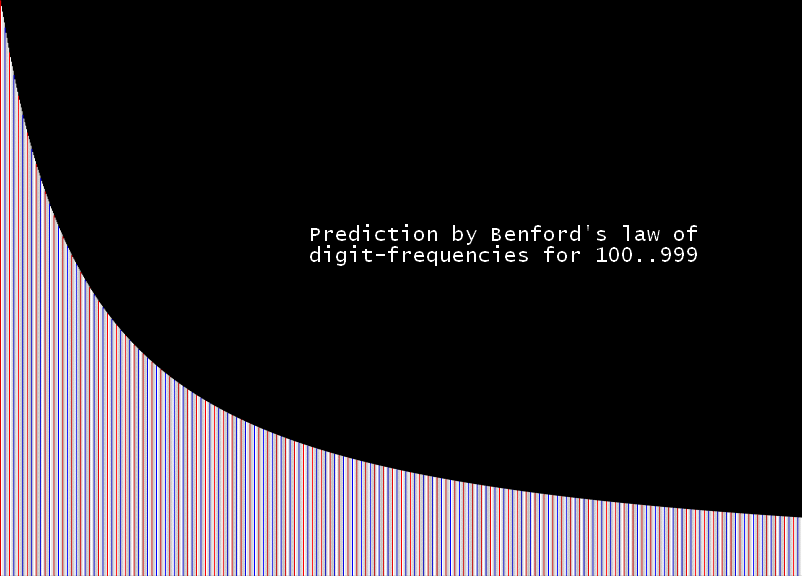
And here’s a graph for the predicted frequencies of 1..9 as the leading digit of 2^p, as calculated by the log(1+1/d) of Benford’s law:


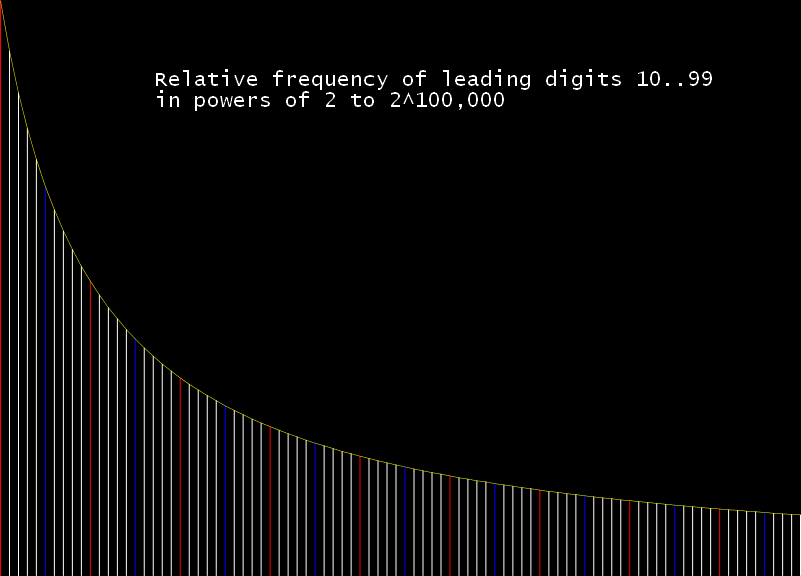
The two graphs agree very well. But Benford’s law applies to more than one leading digit. Here are actual and predicted graphs for the first two leading digits of 2^p, 10..99:


And actual and predicted graphs for the first three leading digits of 2^p, 100..999:


But you can represent the leading digit of 2^p in another way: using an adaptation of the famous Ulam spiral. Suppose powers of 2 are represented as a spiral of squares that begins like this, with 2^0 in the center, 2^1 to the right of center, 2^2 above 2^1, and so on:

←←←⮲
432↑
501↑
6789

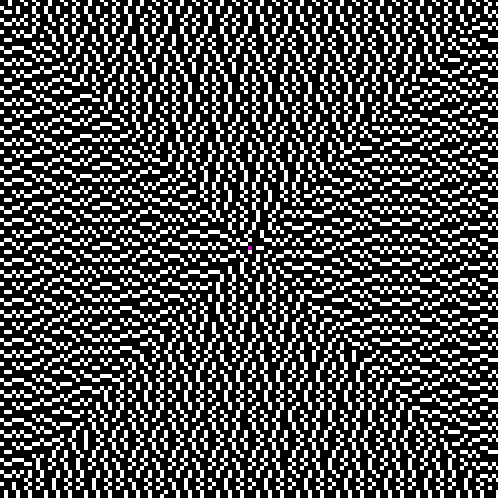
If the digits of 2^p start with 1, fill the square in question; if the digits of 2^p don’t start with 1, leave the square empty. When you do this, you get this interesting pattern (the purple square at the very center represents 2^0):

Ulam-like power-spiral for 2^p where 1 is the leading digit


Here’s a higher-resolution power-spiral for 1 as the leading digit:

Power-spiral for 2^p, leading-digit = 1 (higher resolution)


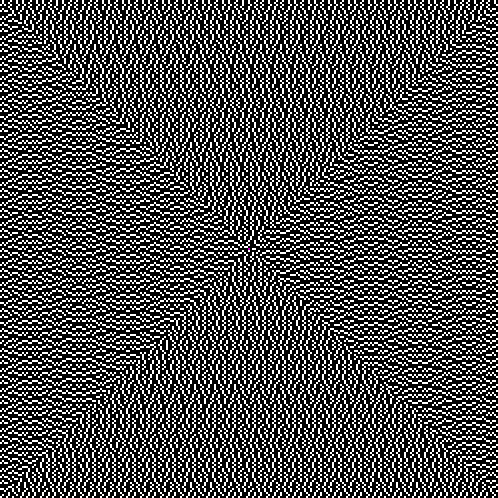
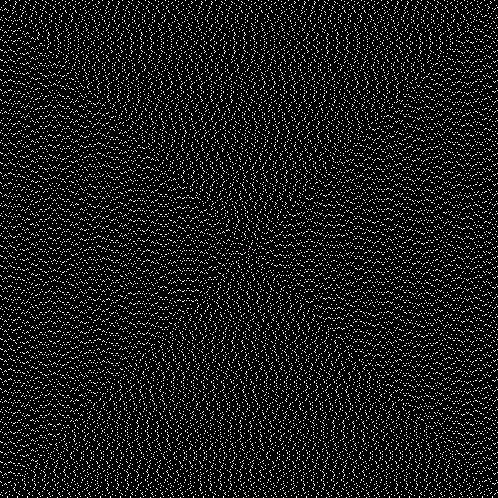
And here, at higher resolution still, are power-spirals for all the possible leading digits of 2^p, 1..9 (some spirals look very similar, so you have to compare those ones carefully):

Power-spiral for 2^p, leading-digit = 1 (very high resolution)


Power-spiral for 2^p, leading-digit = 2


Power-spiral for 2^p, ld = 3


Power-spiral for 2^p, ld = 4


Power-spiral for 2^p, ld = 5


Power-spiral for 2^p, ld = 6


Power-spiral for 2^p, ld = 7


Power-spiral for 2^p, ld = 8


Power-spiral for 2^p, ld = 9


Power-spiral for 2^p, ld = 1..9 (animated)
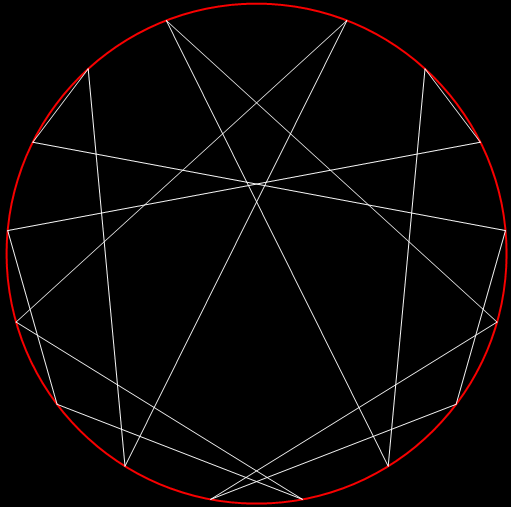

Now try the power-spiral of 2^p, ld = 1, in some other bases:

Power-spiral for 2^p, leading-digit = 1, base = 9


Power-spiral for 2^p, ld = 1, b = 15


You can also try power-spirals for other n^p. Here’s 3^p:

Power-spiral for 3^p, ld = 1, b = 10


Power-spiral for 3^p, ld = 2, b = 10


Power-spiral for 3^p, ld = 1, b = 4


Power-spiral for 3^p, ld = 1, b = 7


Power-spiral for 3^p, ld = 1, b = 18


Elsewhere Other-Accessible…

Wake the Snake — an earlier look at the digits of 2^p