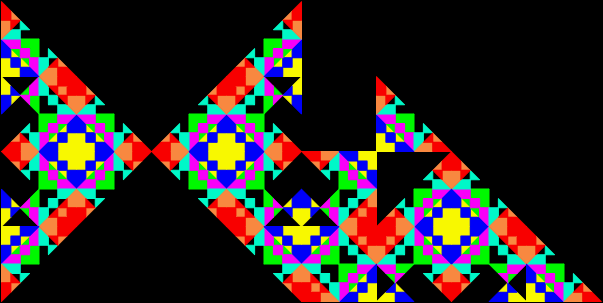
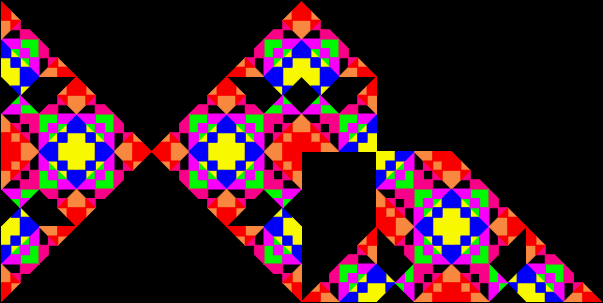
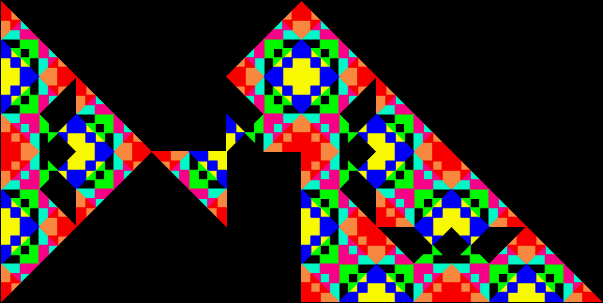
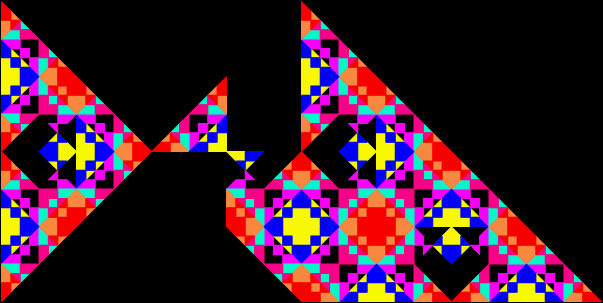
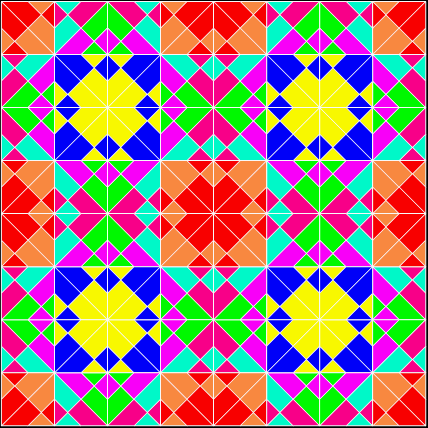
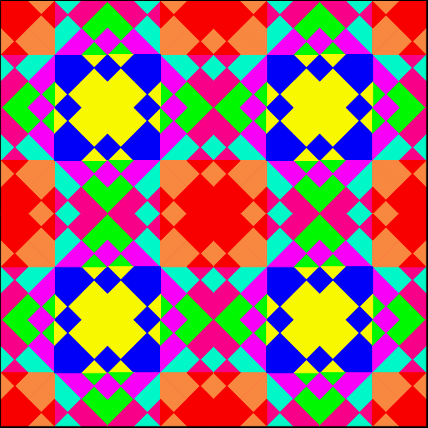
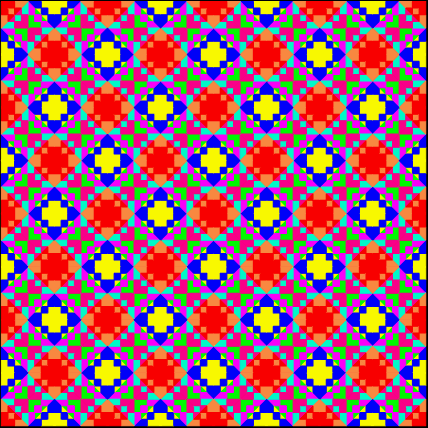
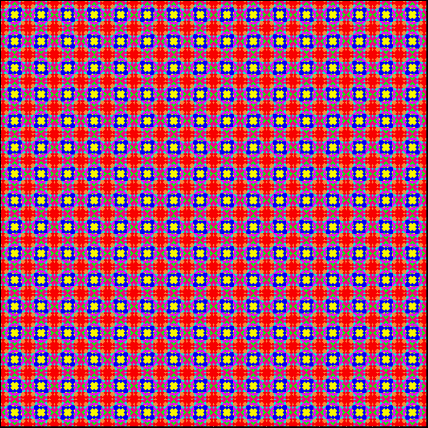
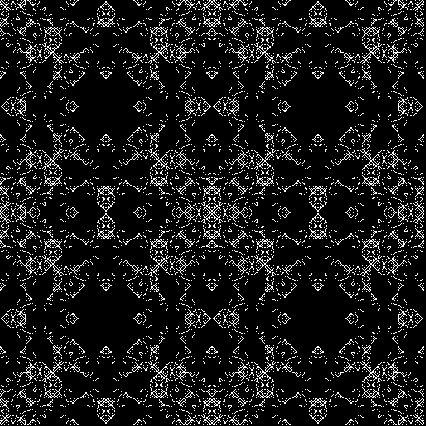
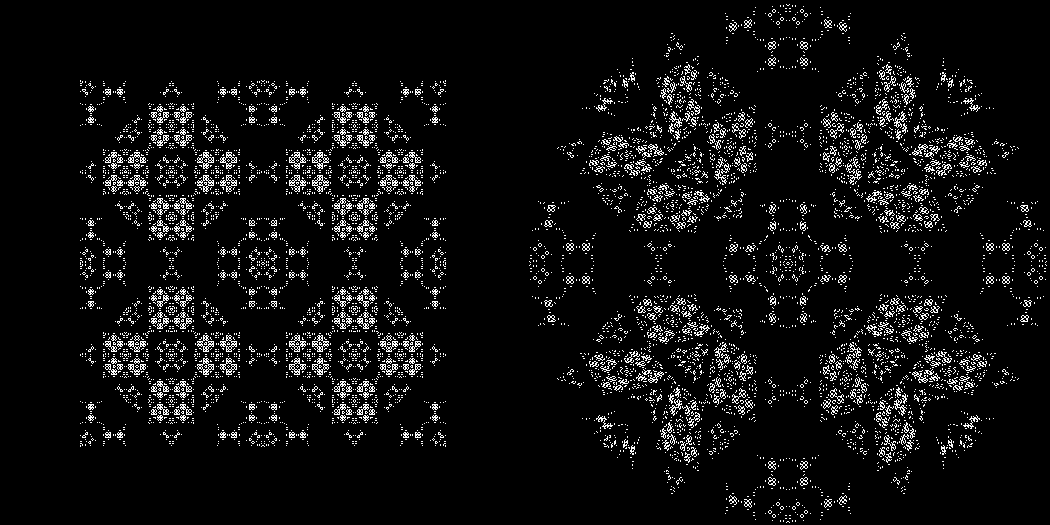
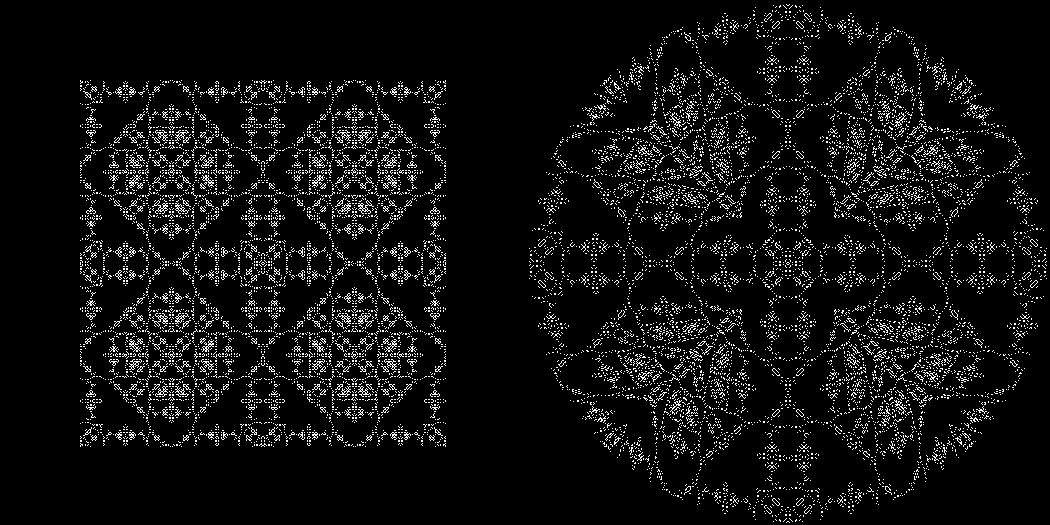
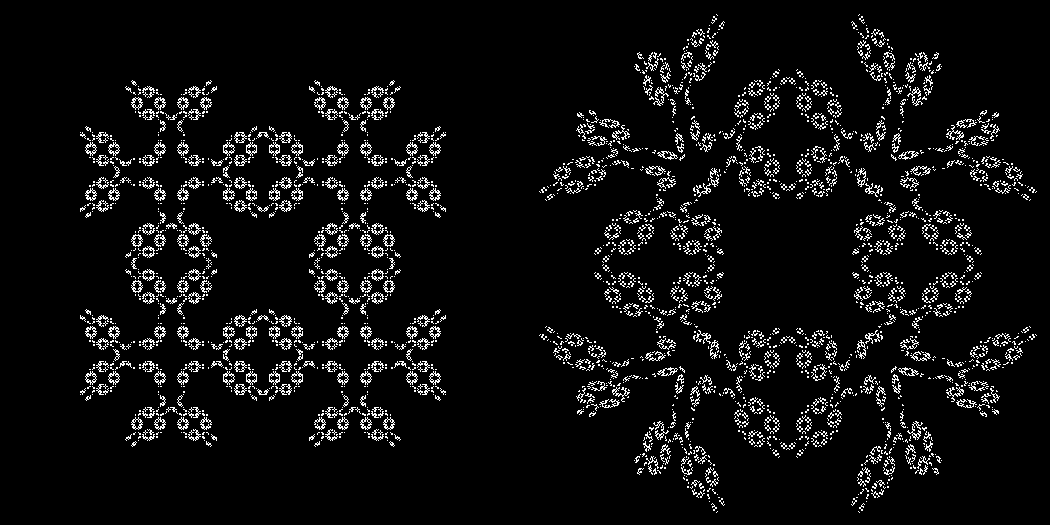
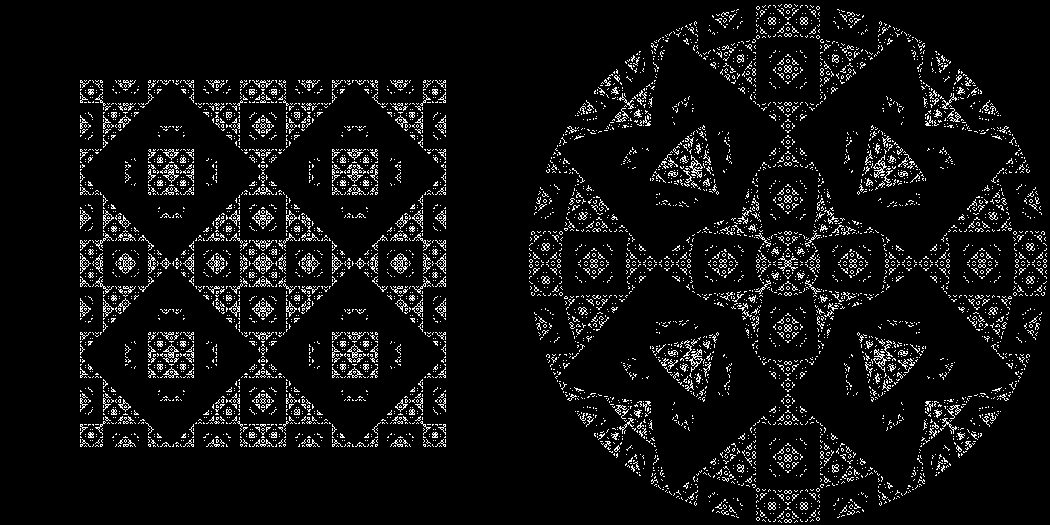
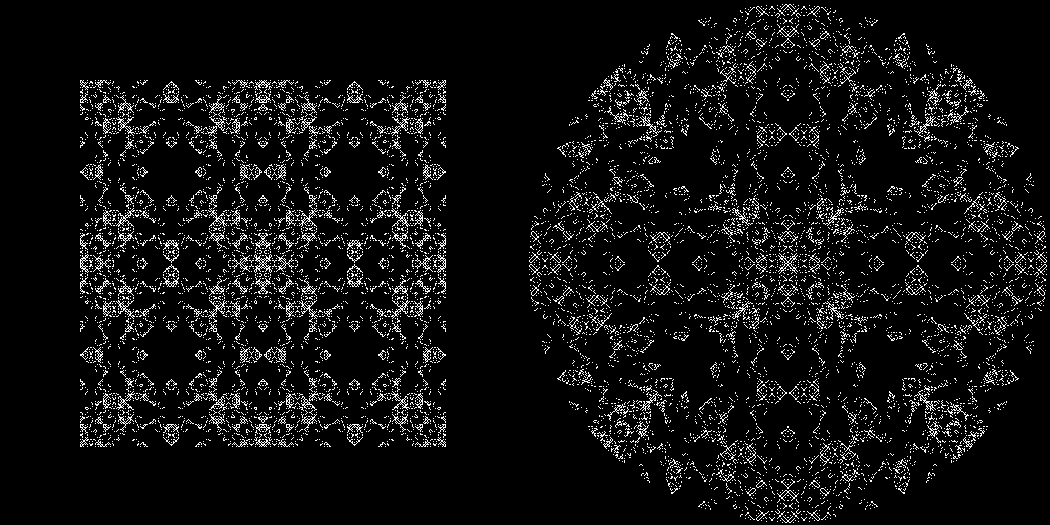
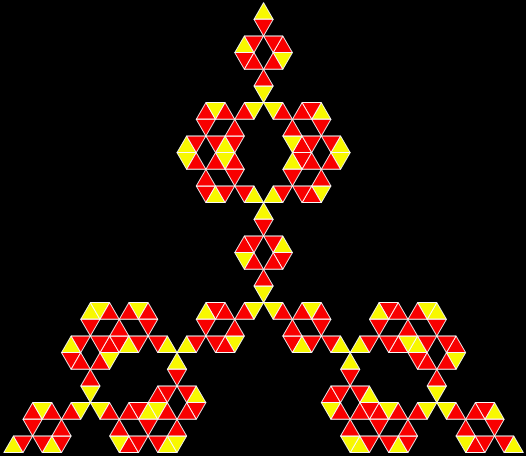
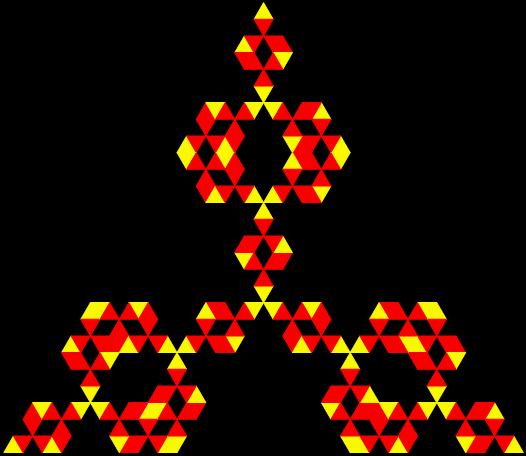
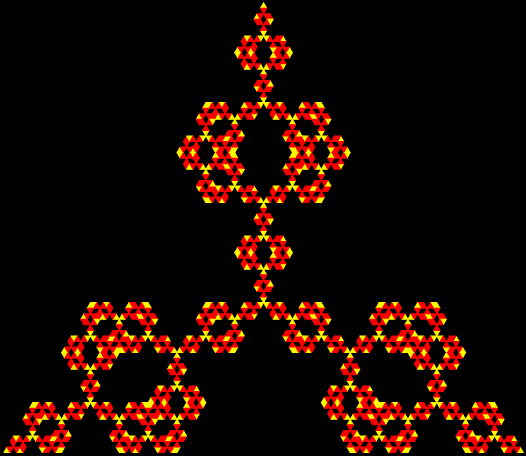
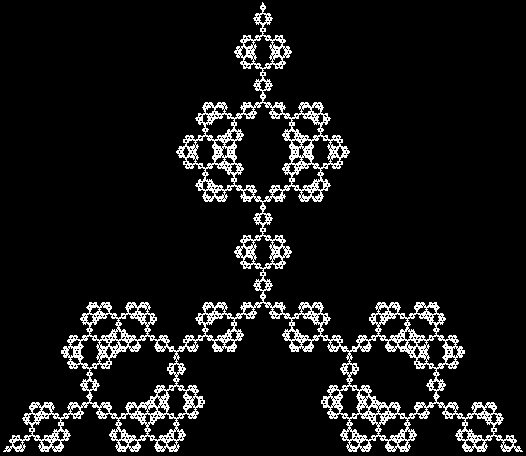
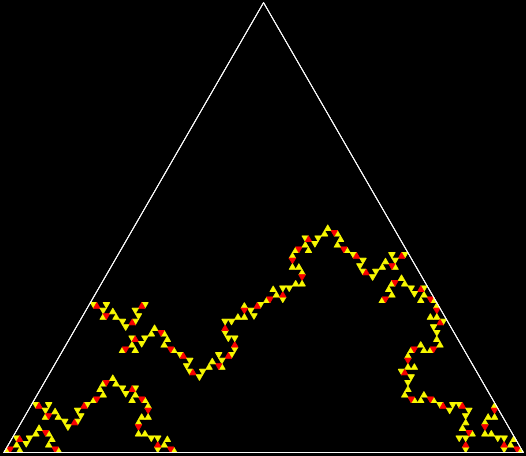
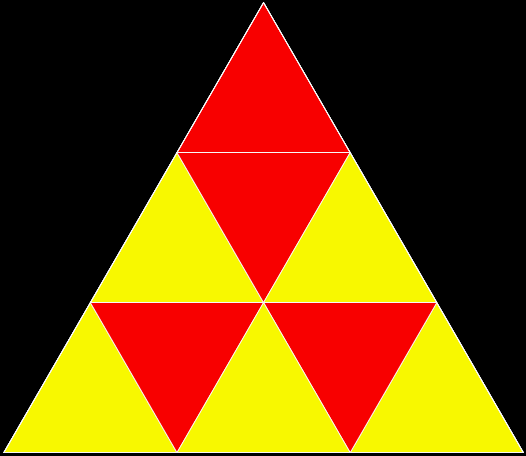
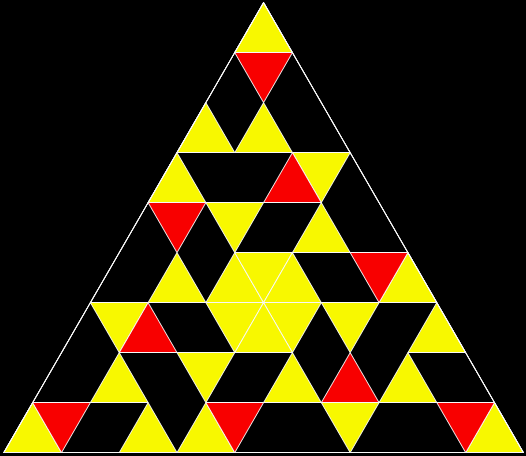
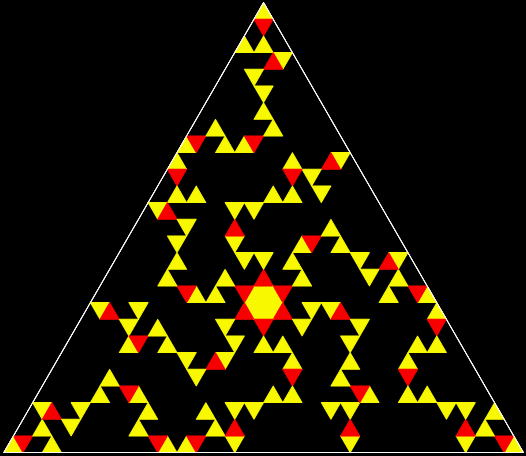
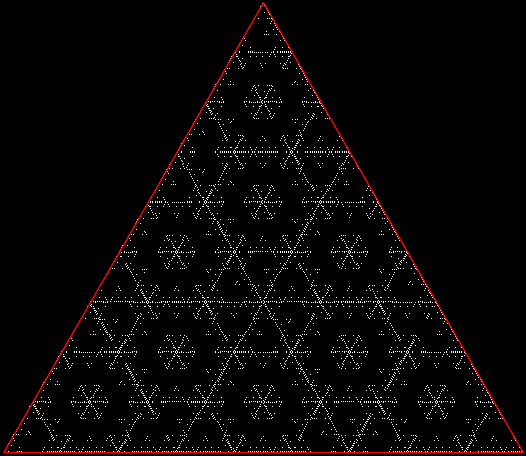
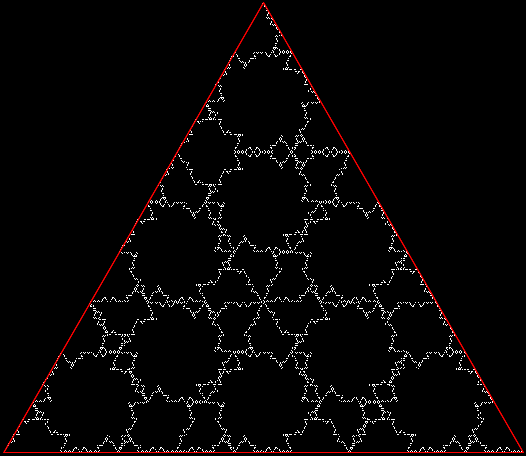
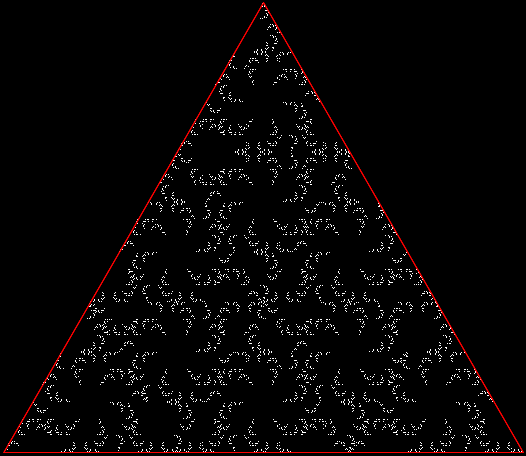
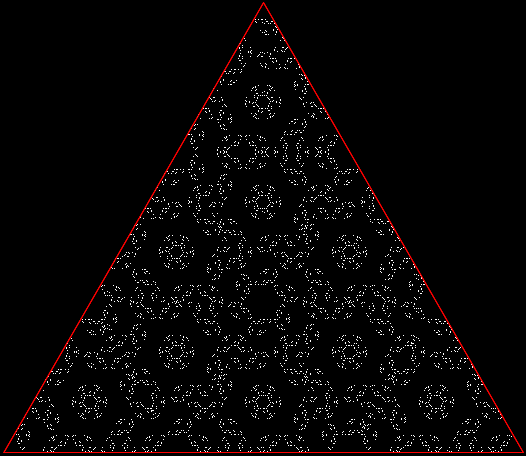
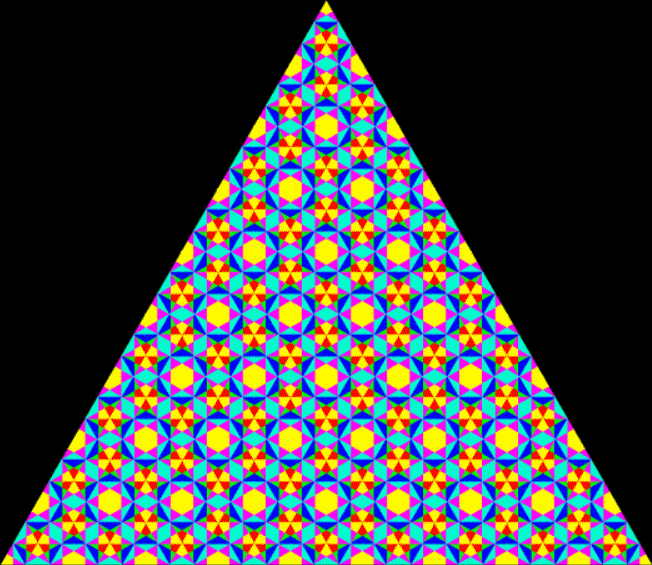
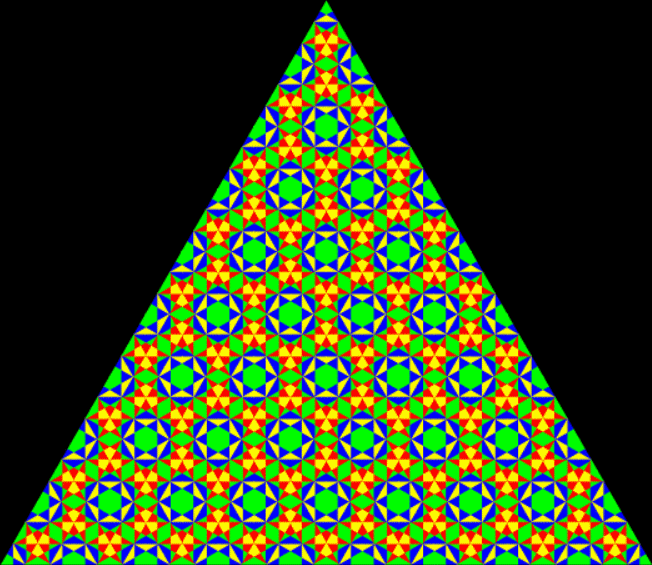
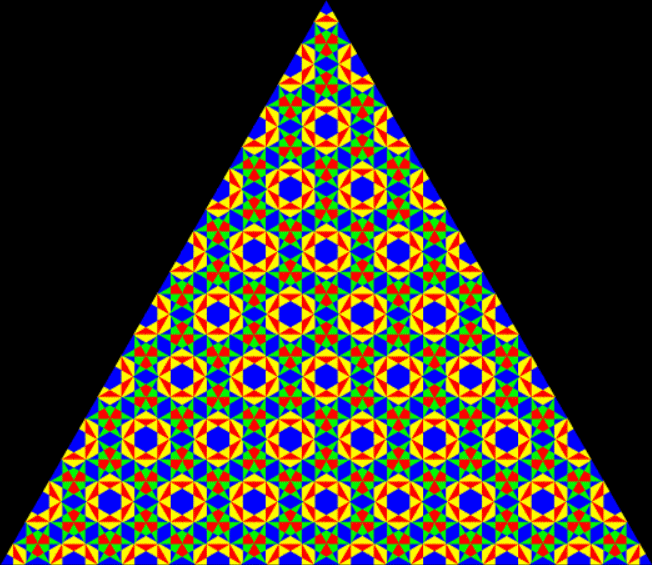
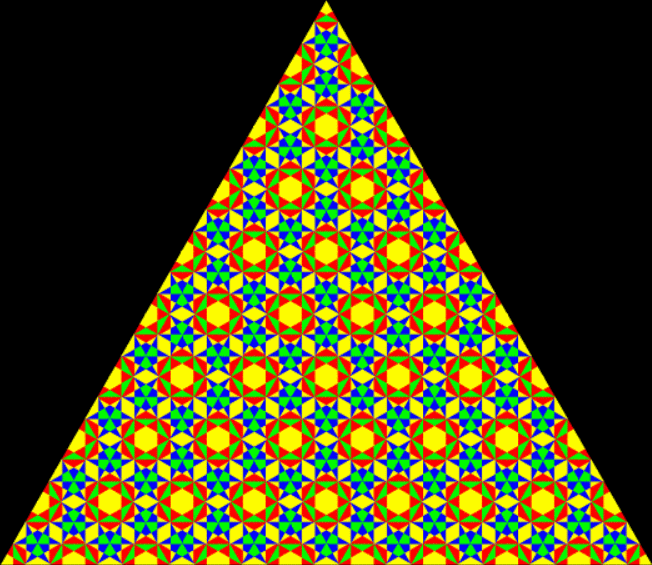
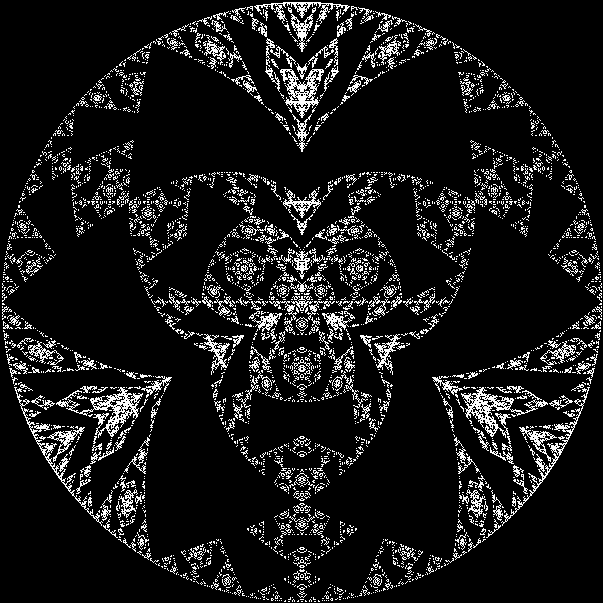
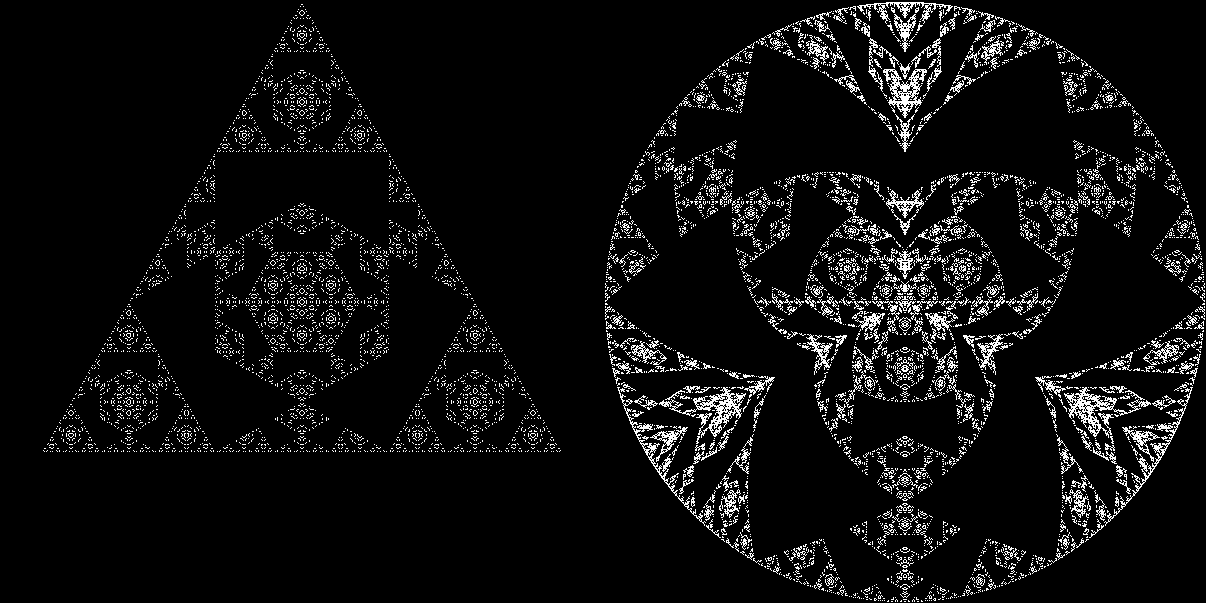
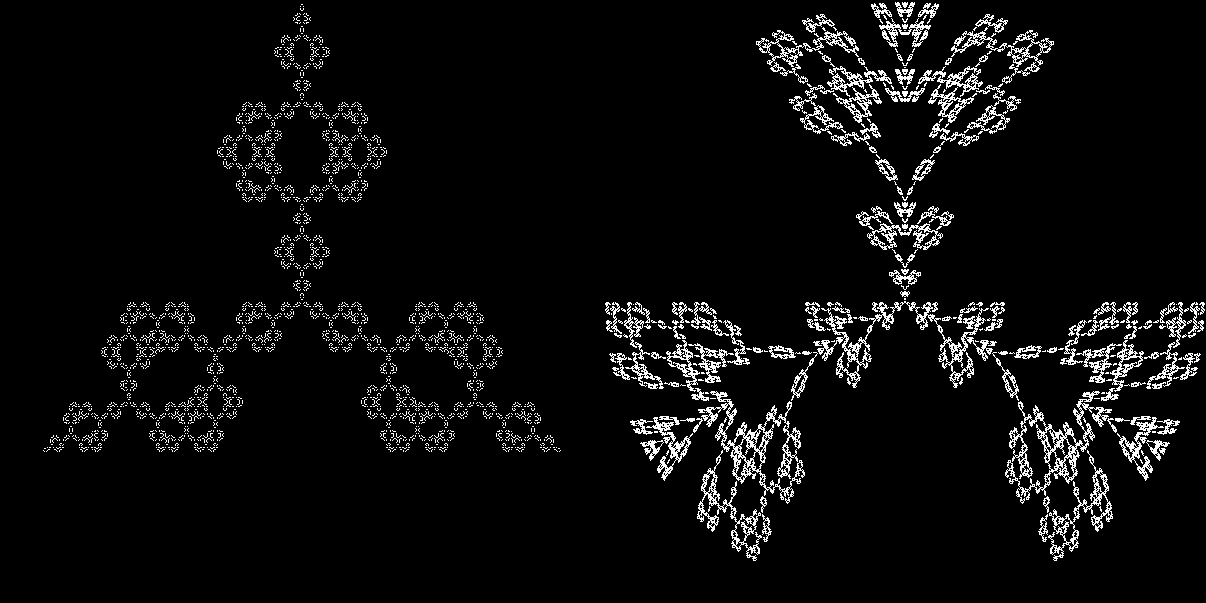
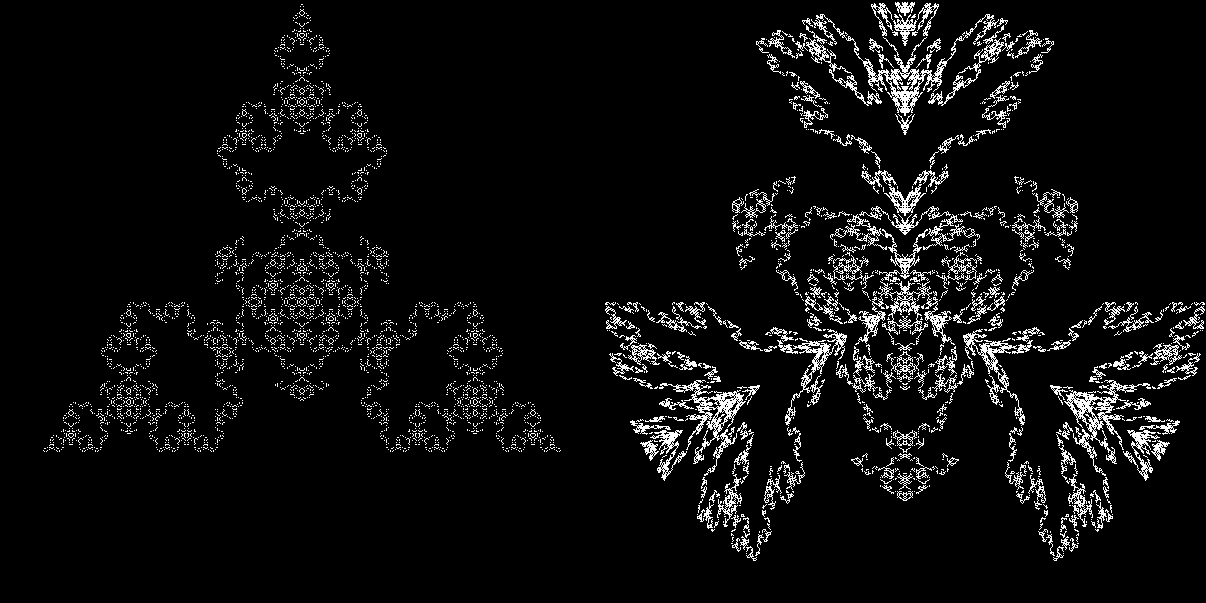
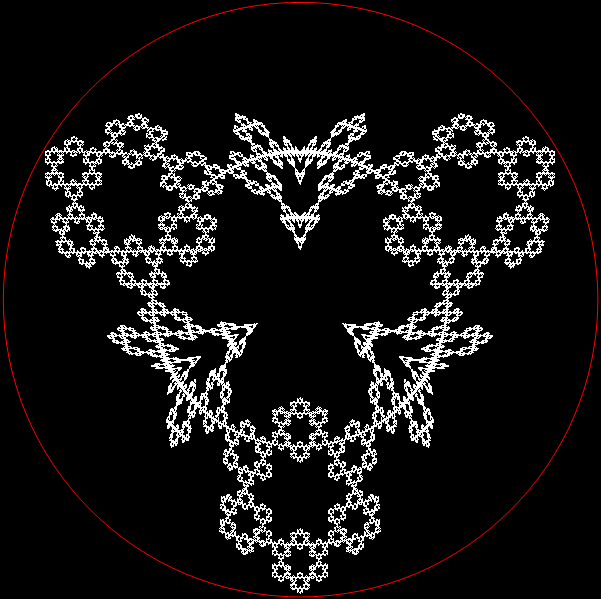
The Hex Fractor #3

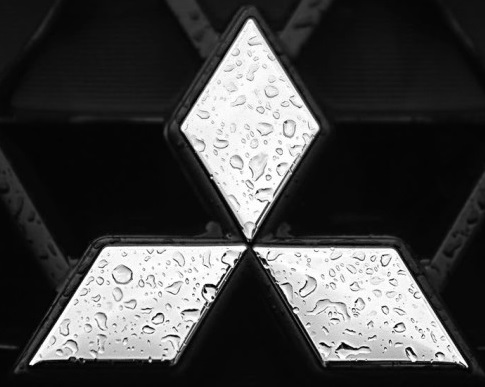
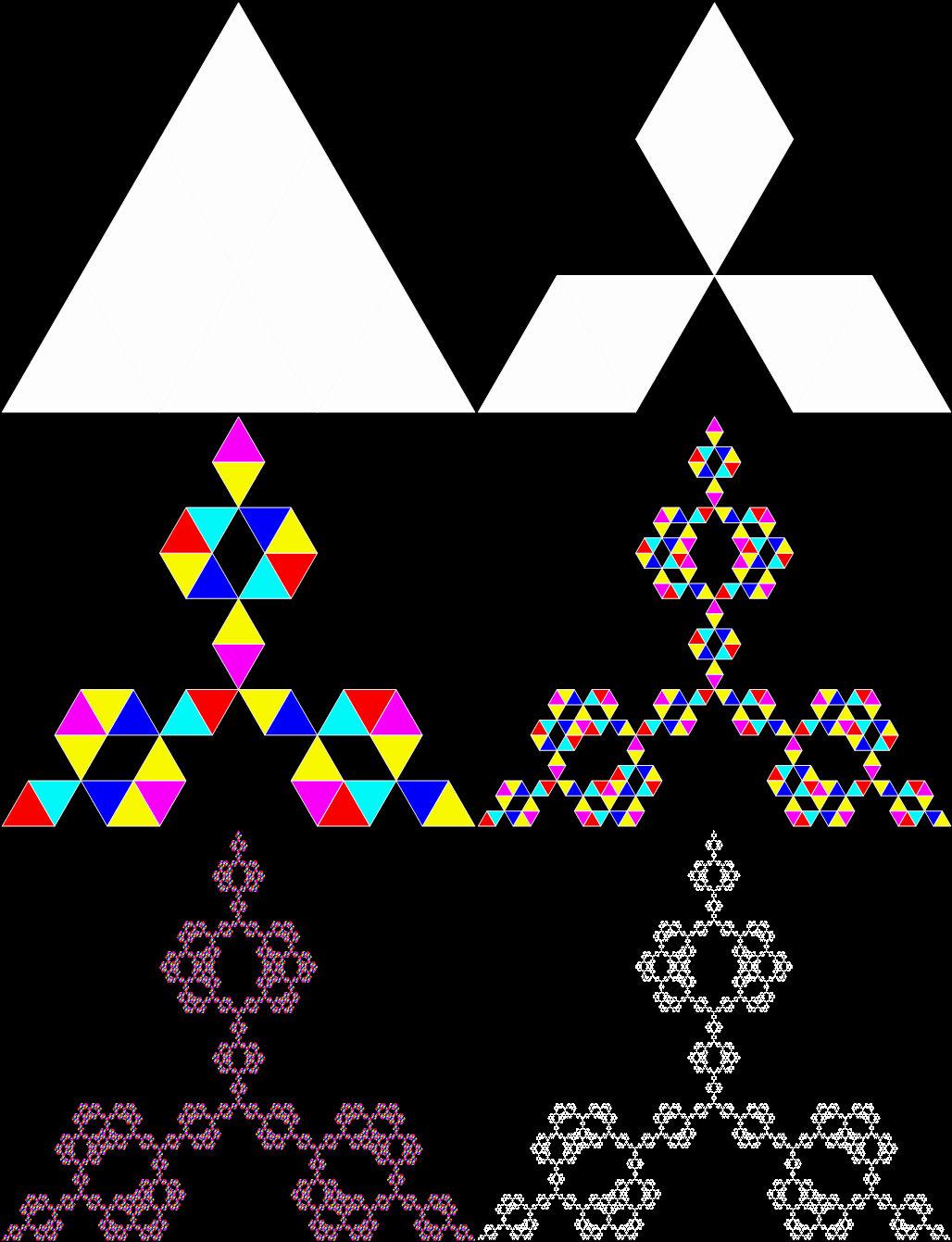
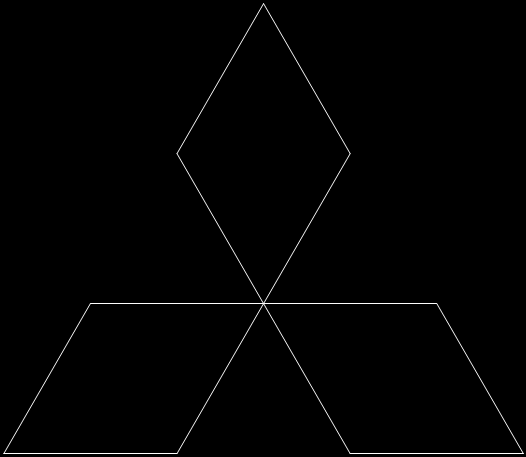
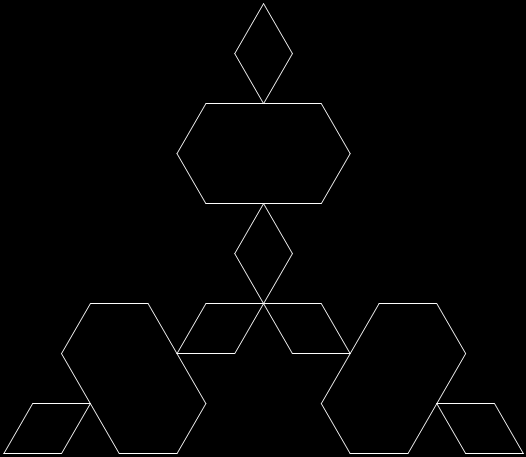
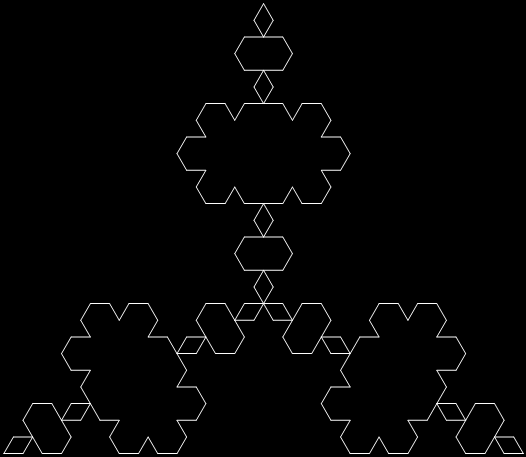
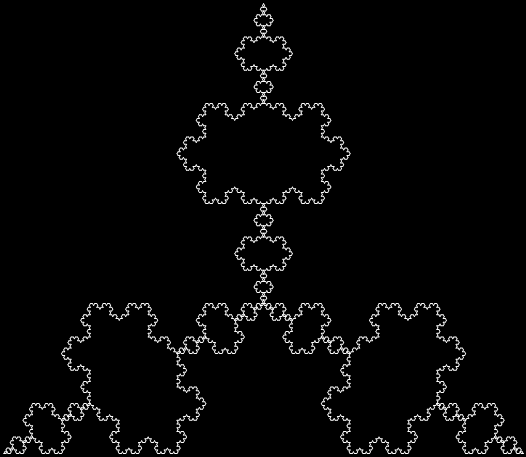
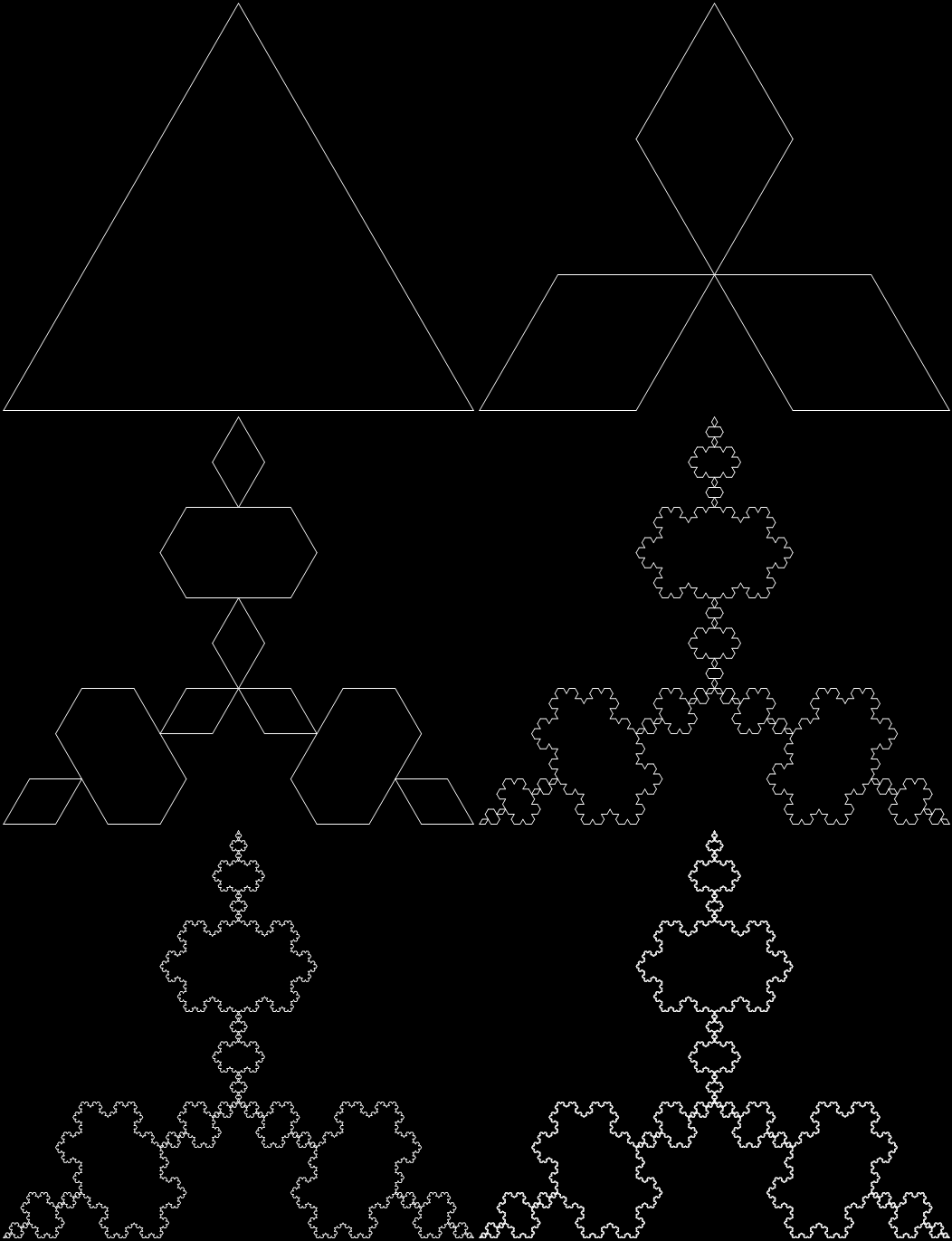
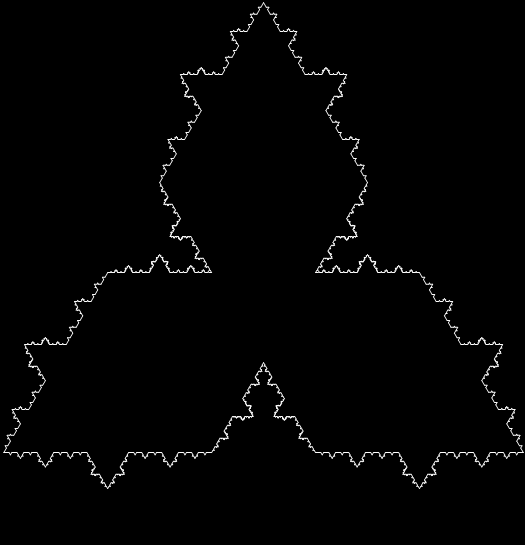
In “Diamonds to Dust”, I showed how the Mitsubishi logo could be turned into a fractal, like this:

The Mitsubishi diamonds (source)


Mitsubishi logo to fractal (animated)


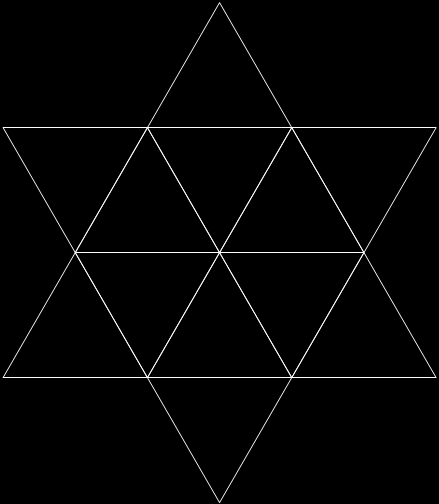
Now I want to look at another famous symbol and its fractalization. Here’s the symbol, the hexagram:

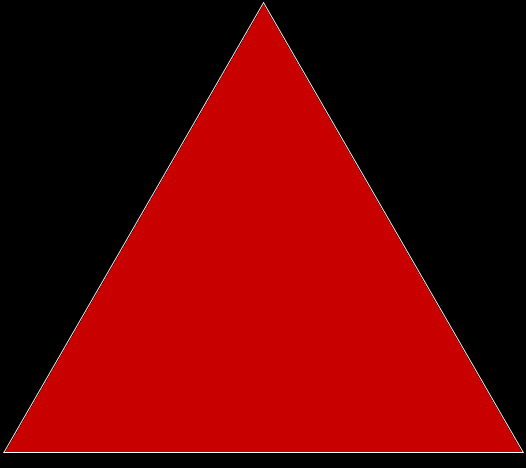
Hexagram, a six-pointed star


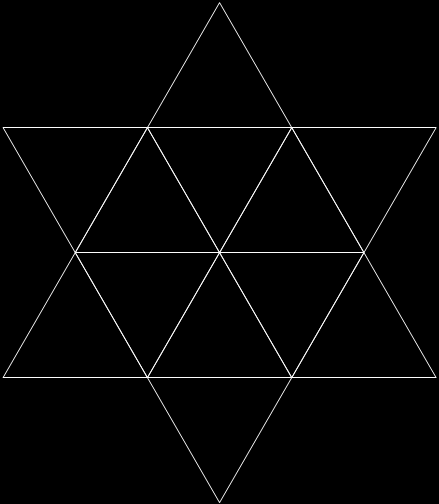
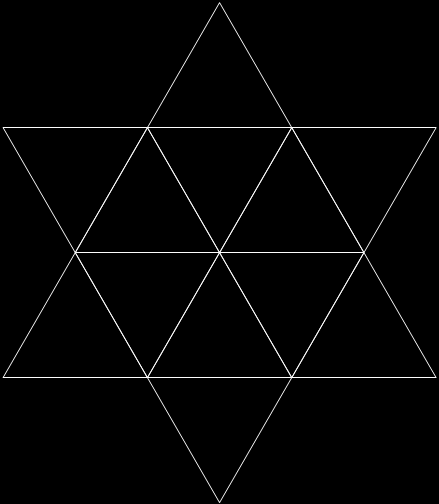
The hexagram can be dissected into twelve equilateral triangles like this:

Hexagram dissected into 12 equilateral triangles


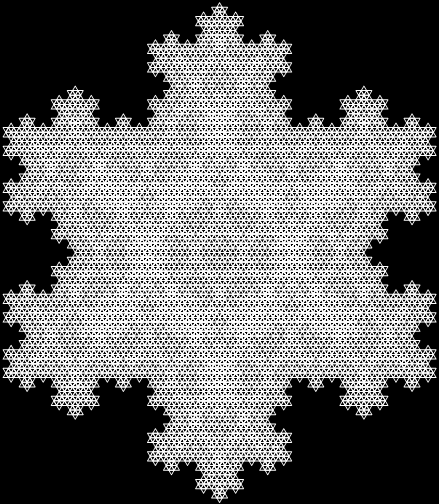
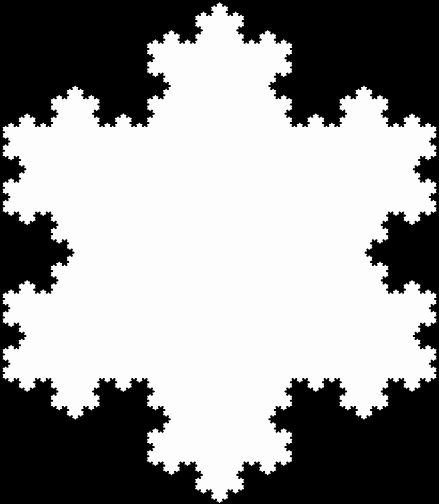
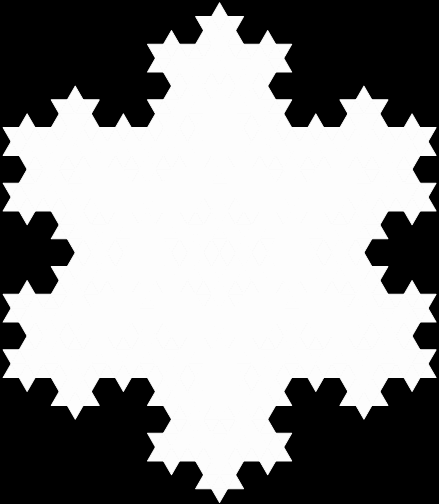
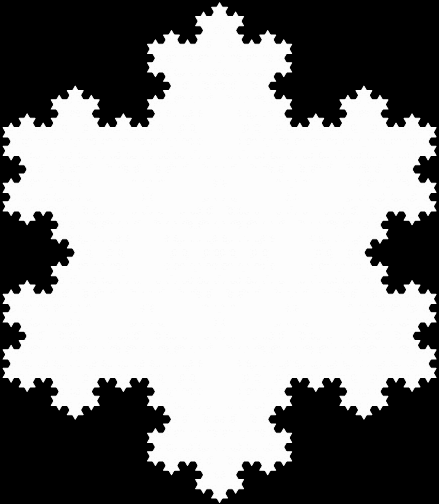
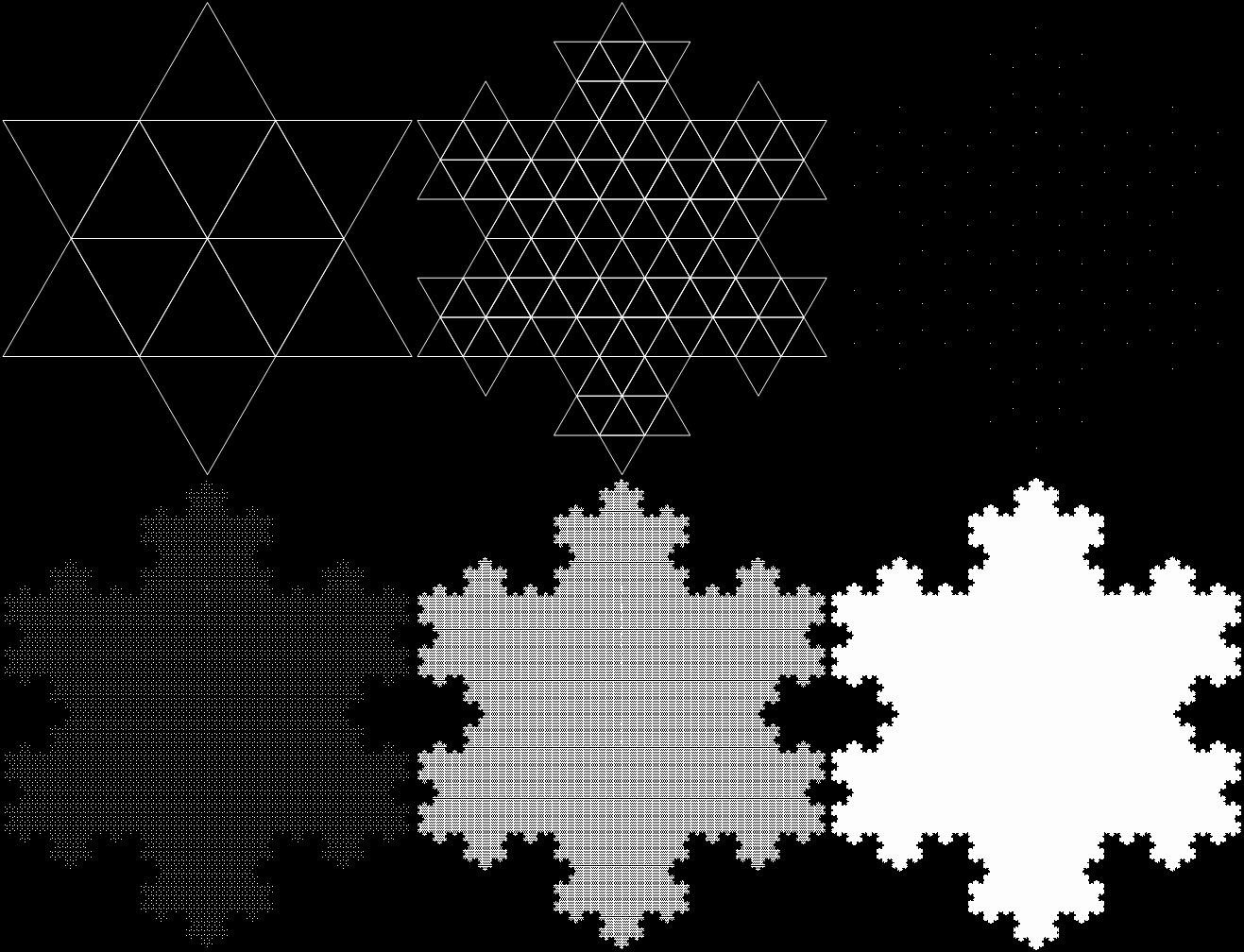
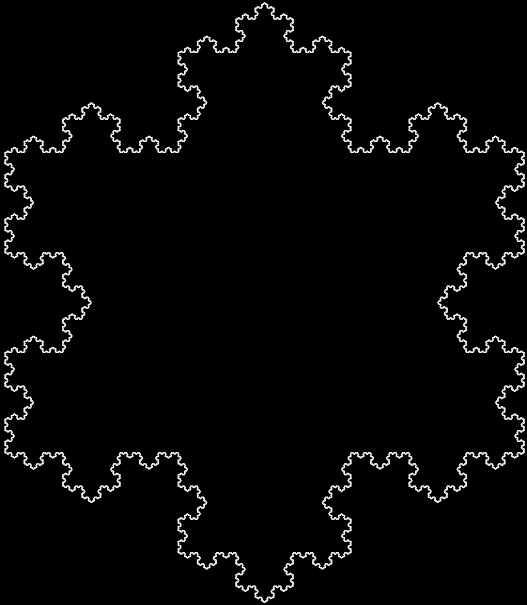
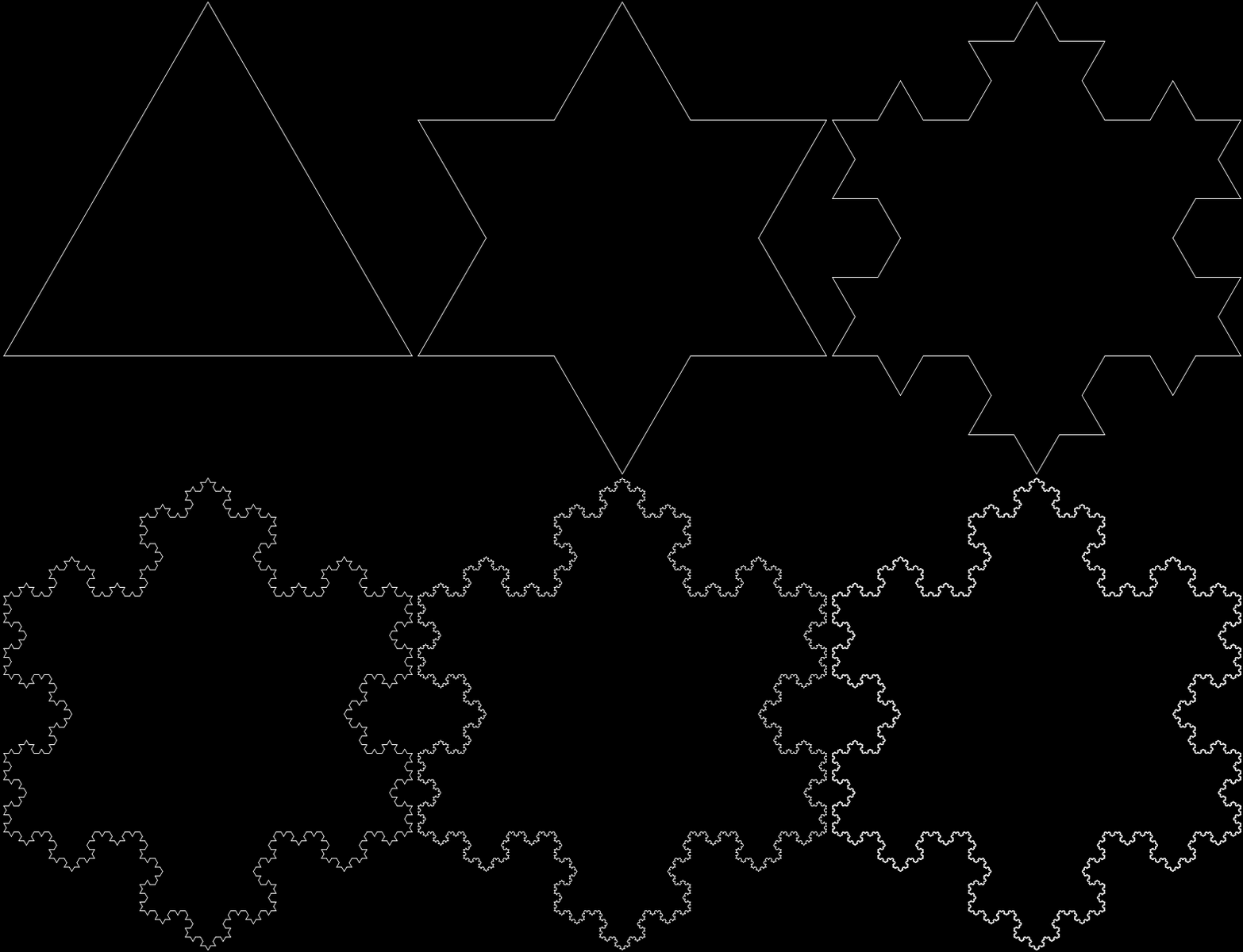
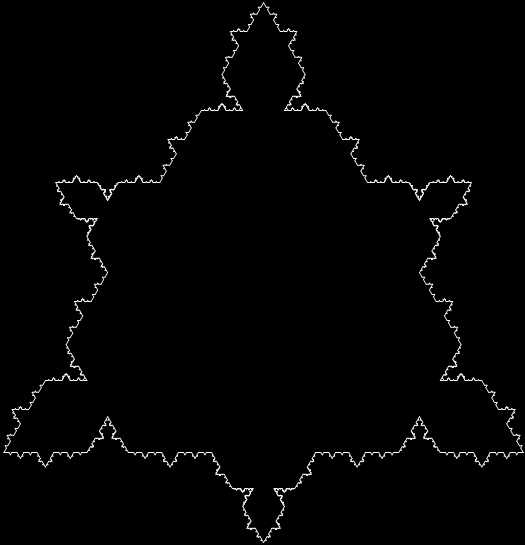
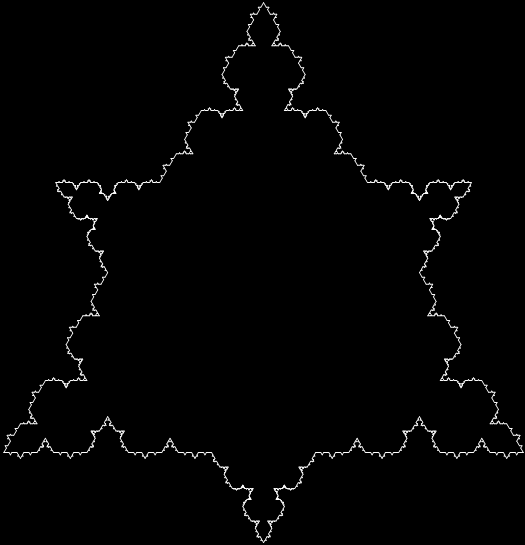
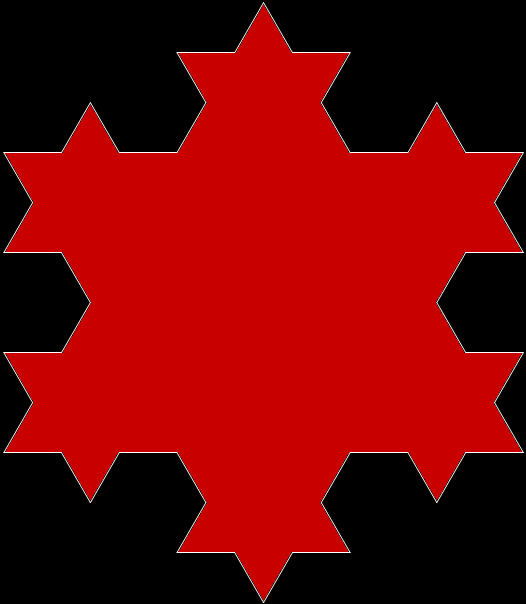
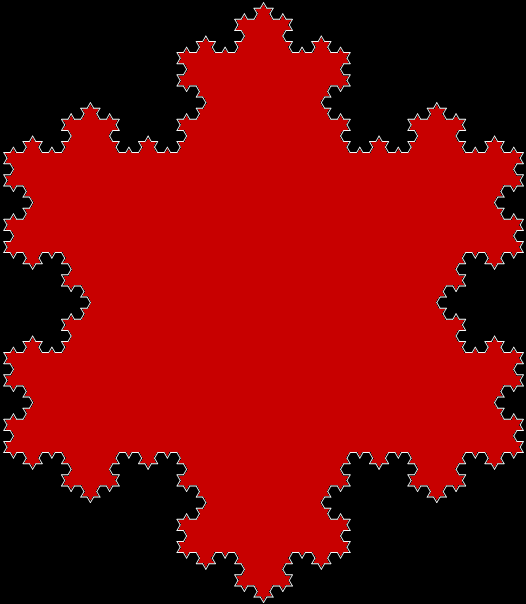
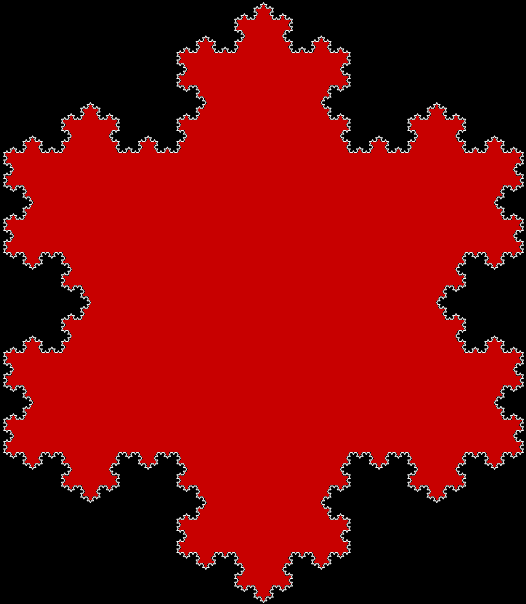
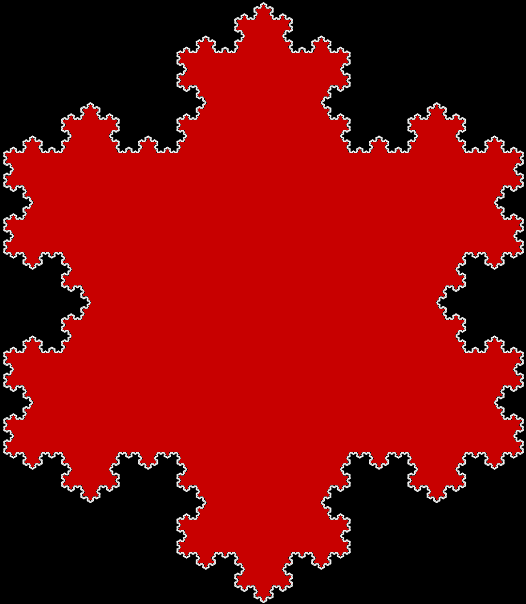
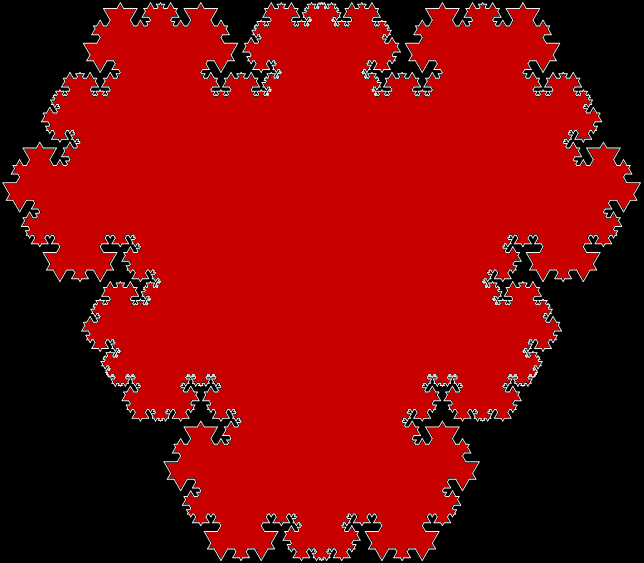
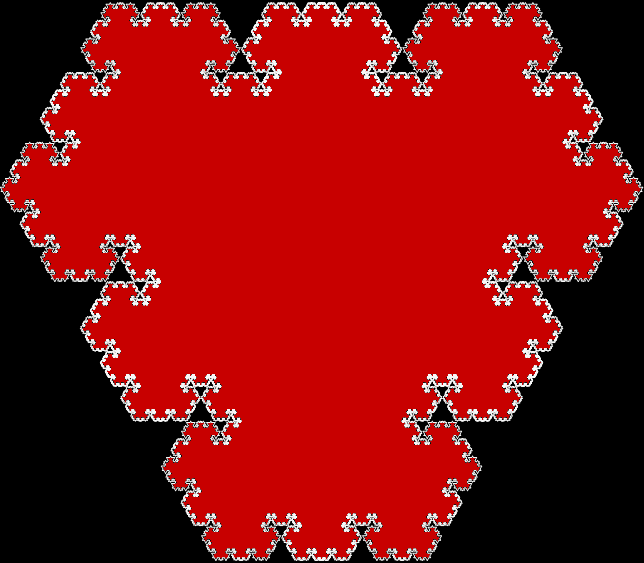
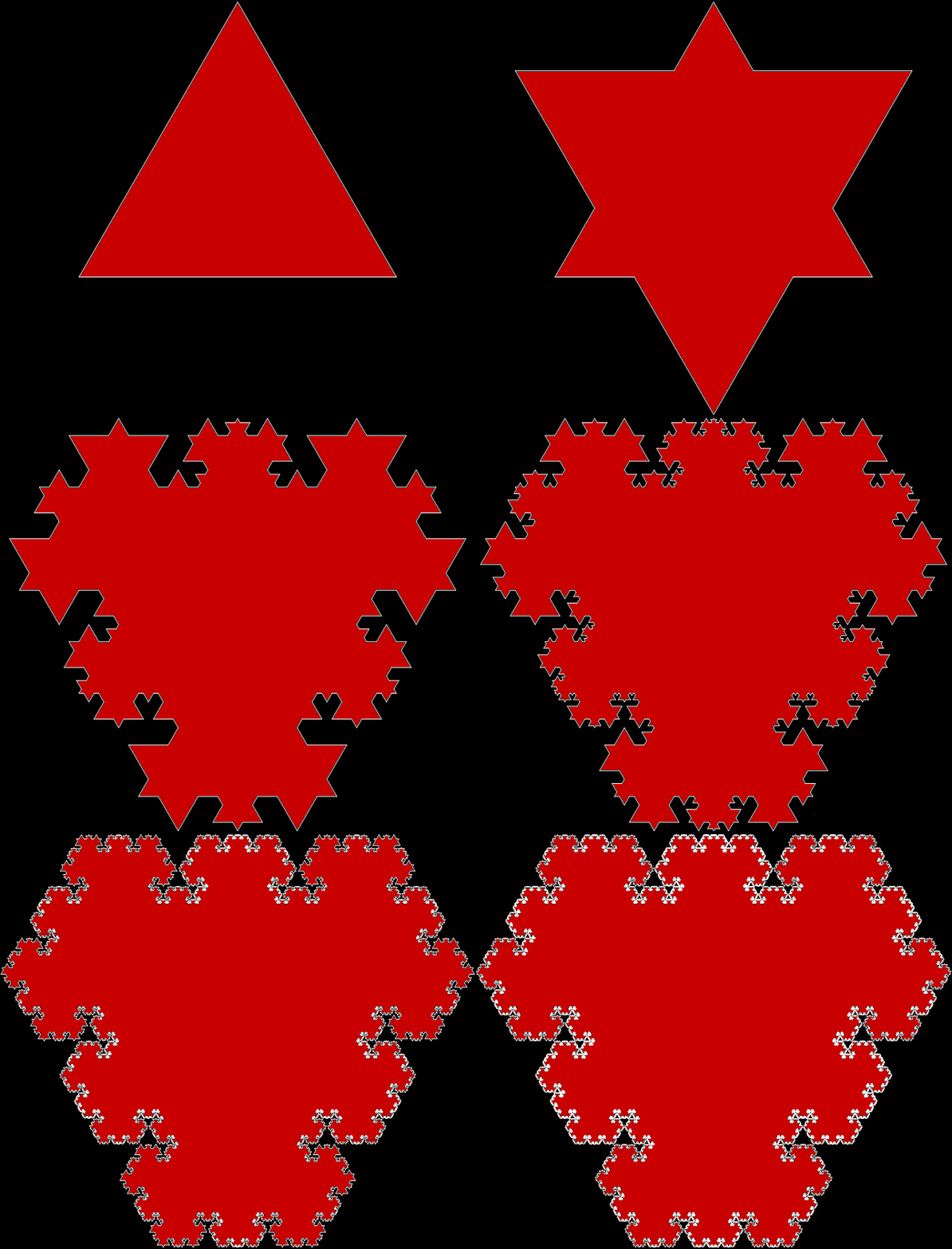
If each triangle in the dissection is replaced by a hexagram, then the hexagram is dissected again into twelve triangles, you get a famous fractal, the Koch snowflake:


The Koch snowflake


The Koch snowflake again


Hexagram to Koch snowflake (animated)


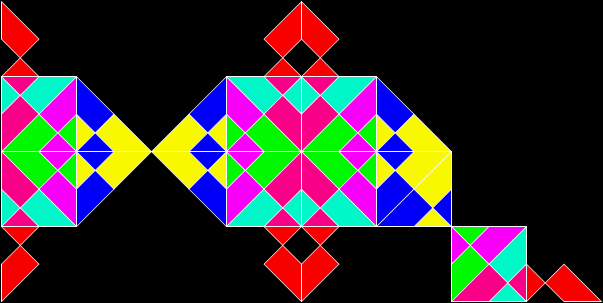
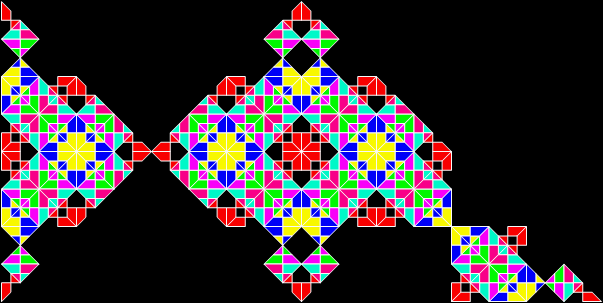
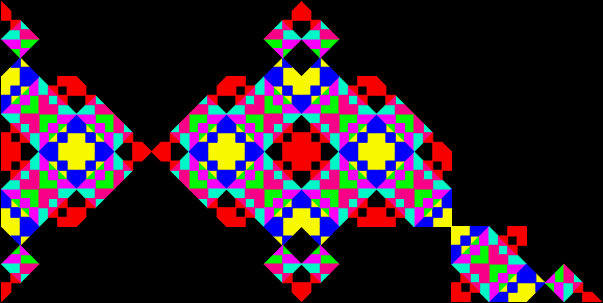
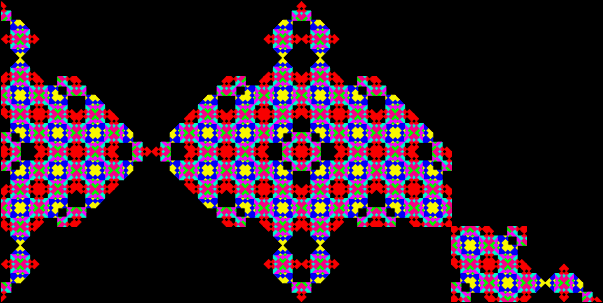
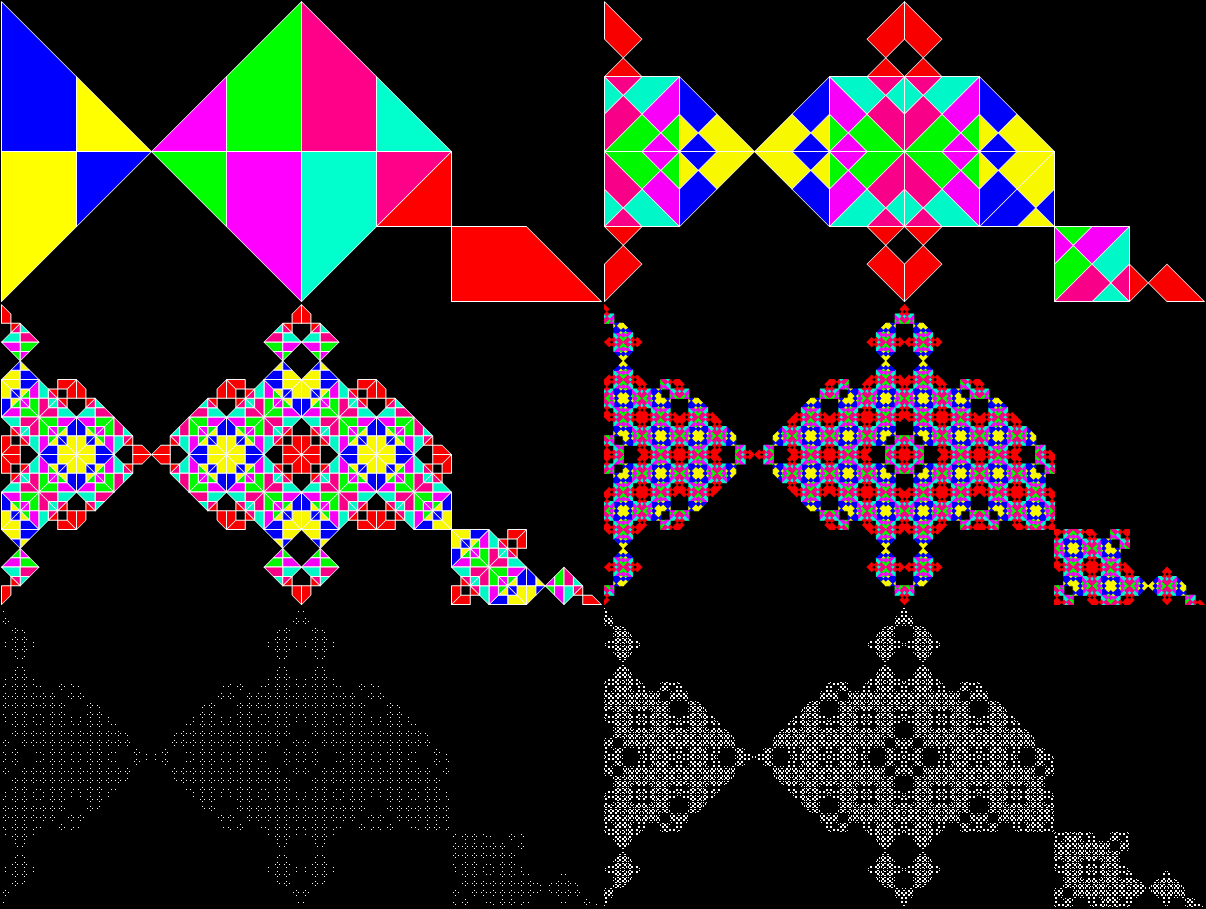
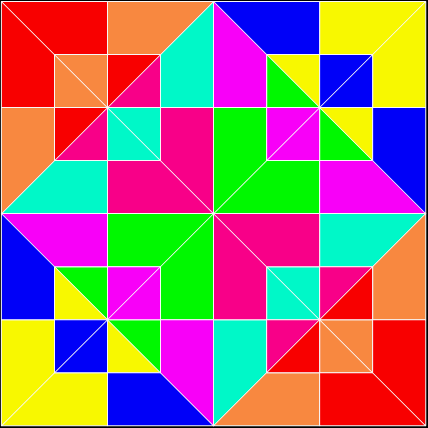
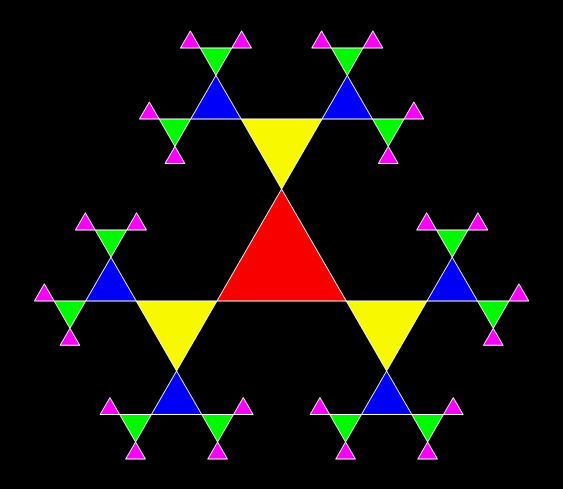
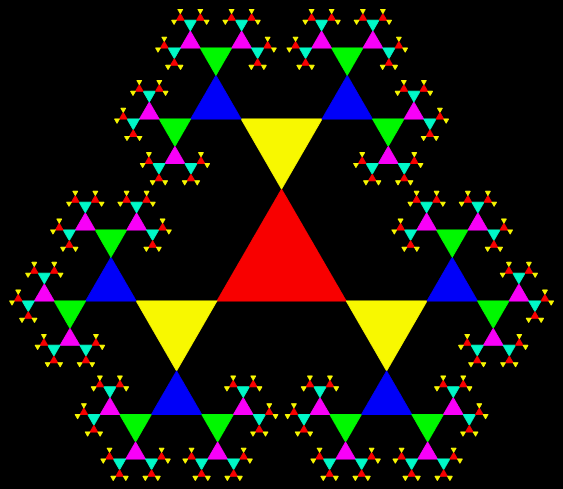
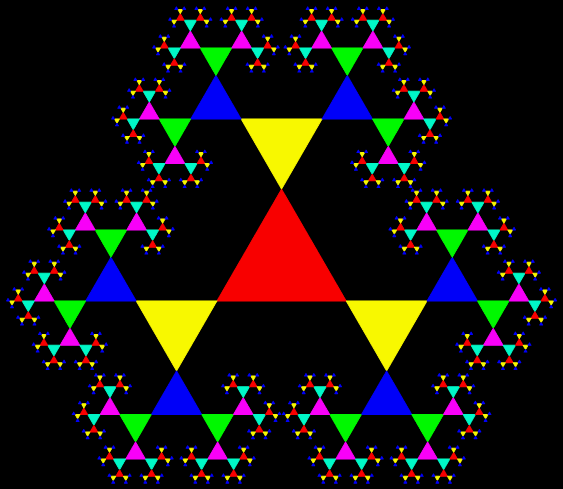
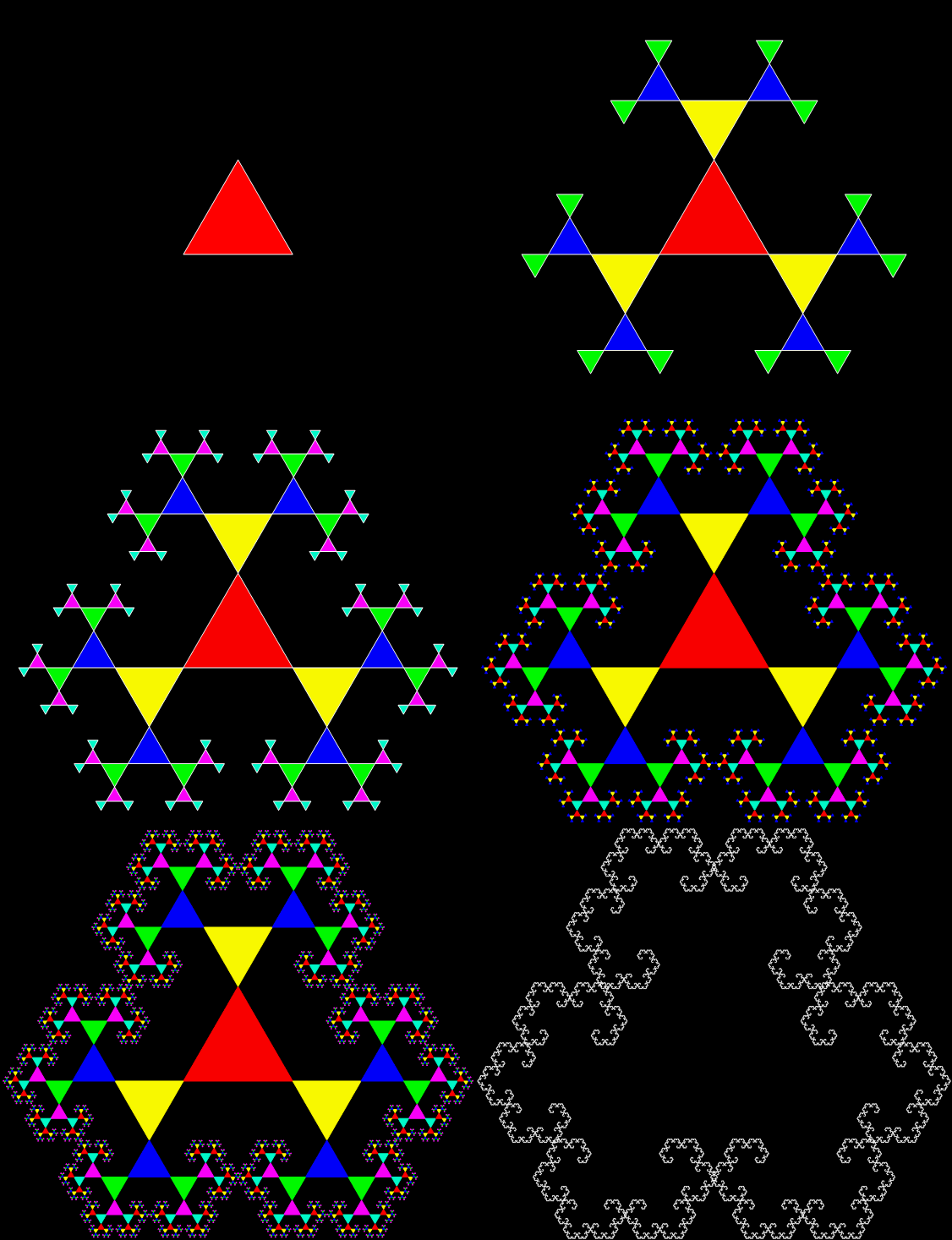
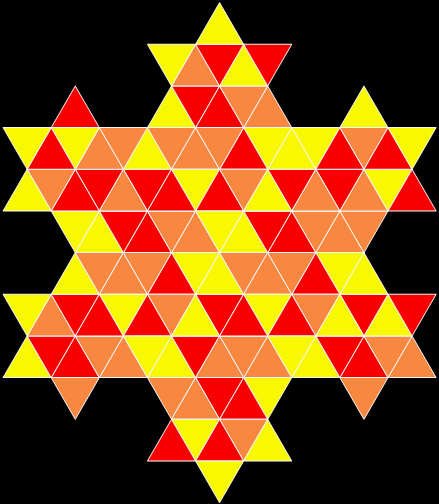
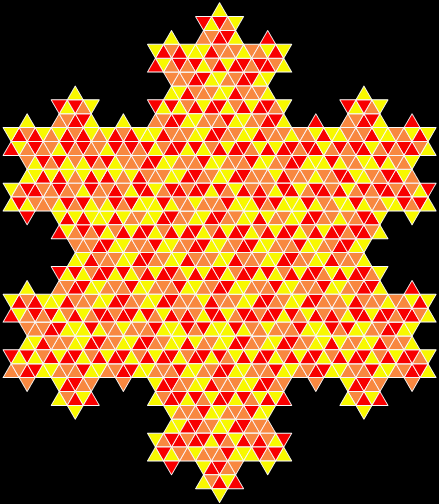
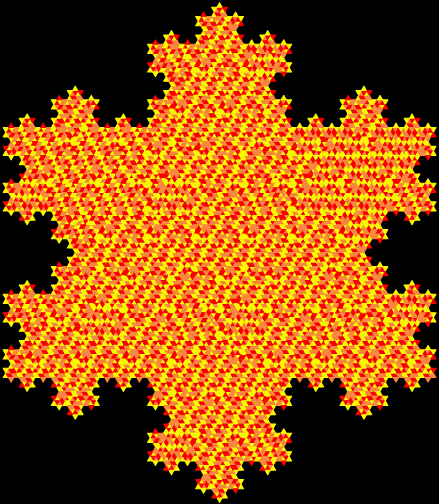
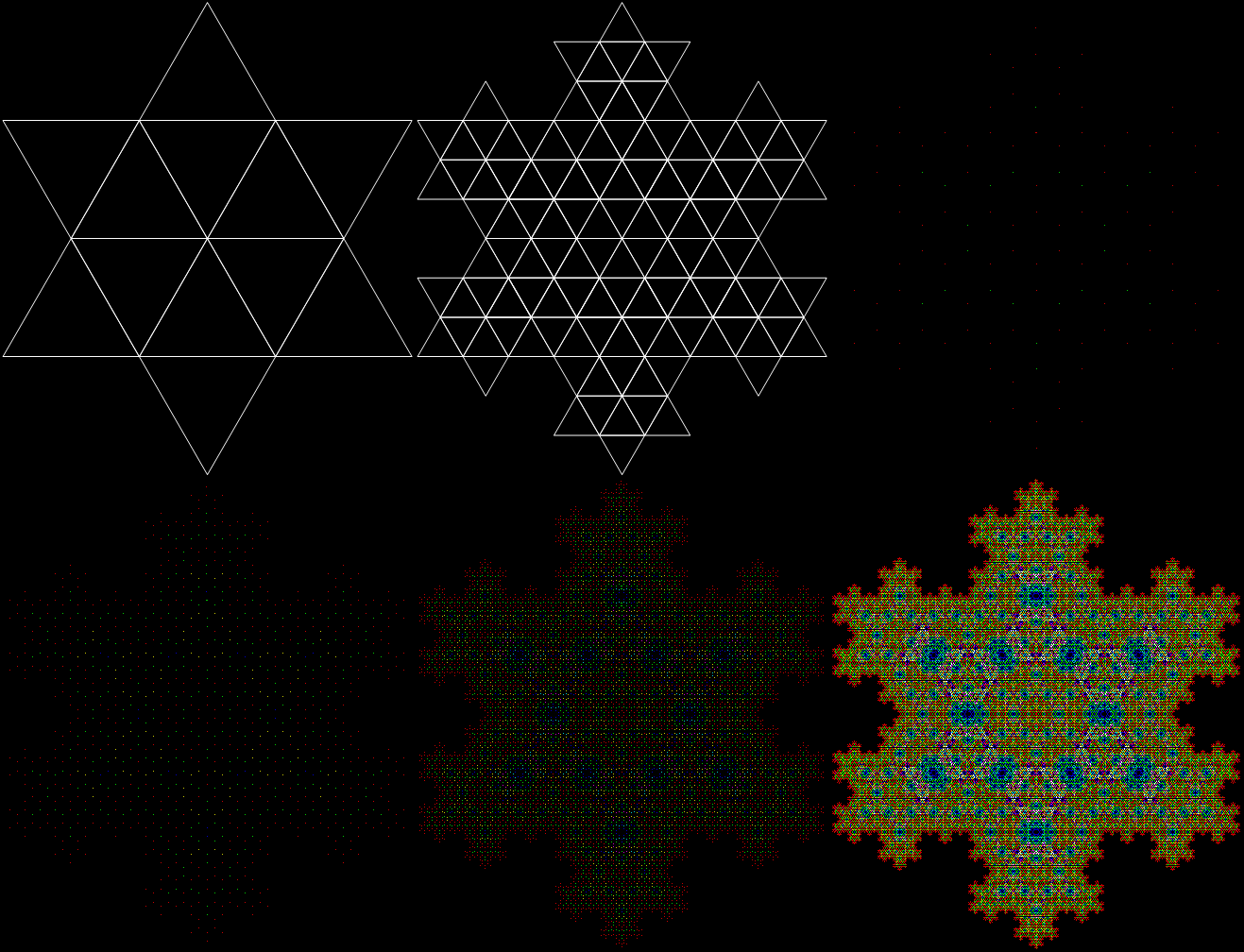
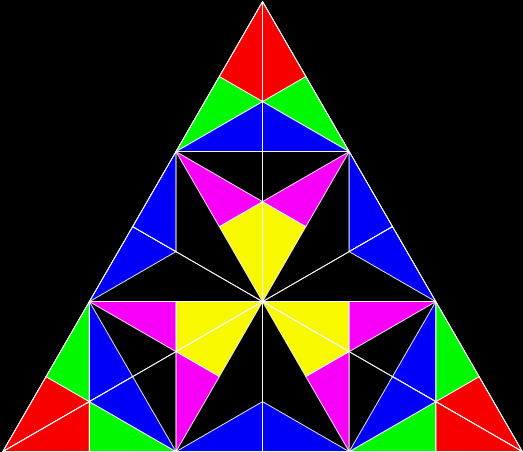
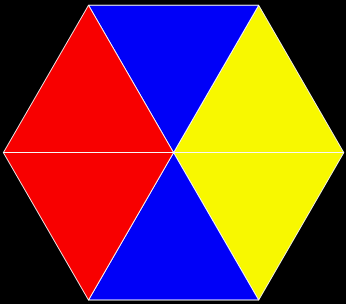
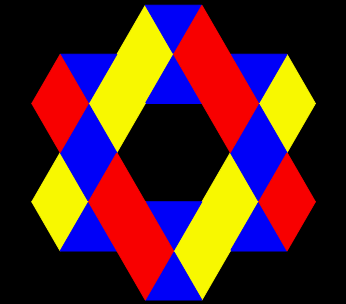
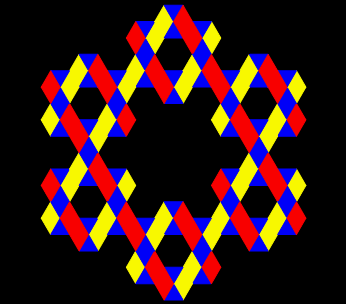
If you color the triangles, you get something like this:


Colored hexagram to fractal (animated)


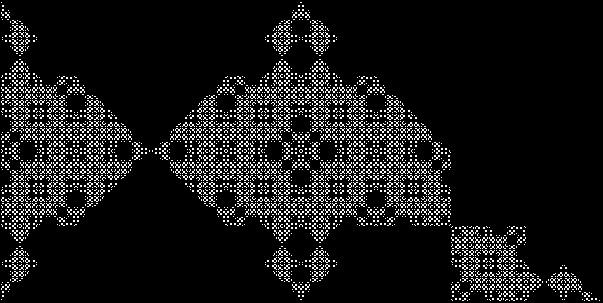
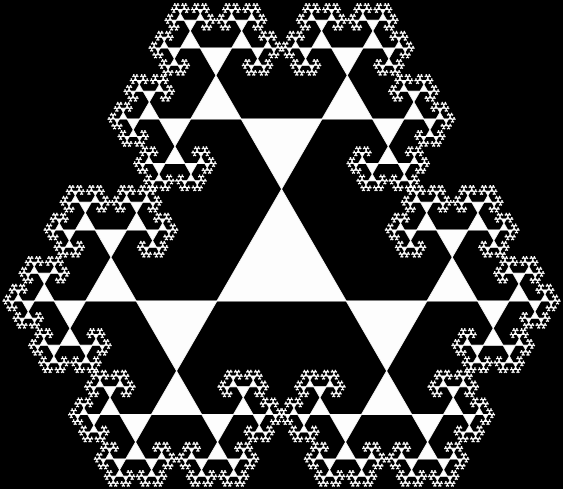
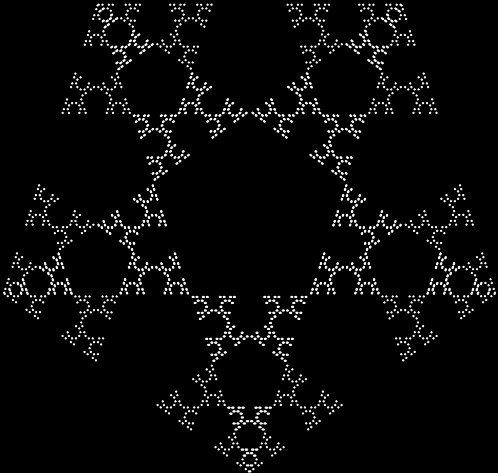
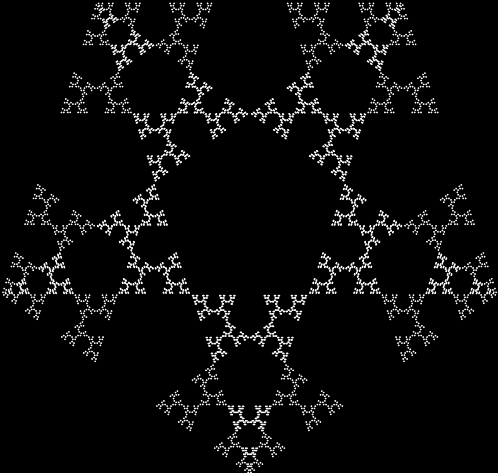
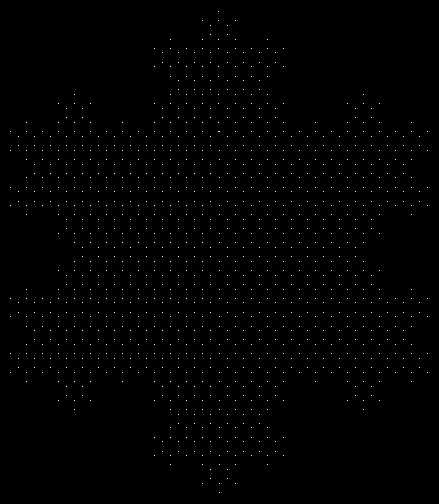
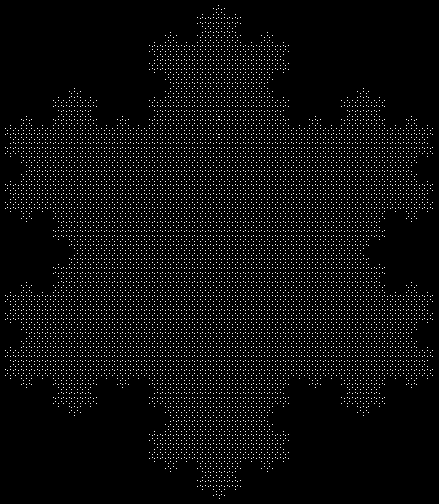
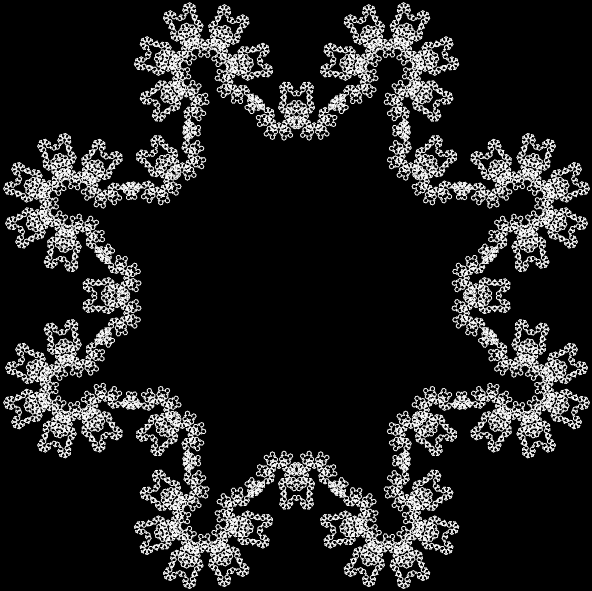
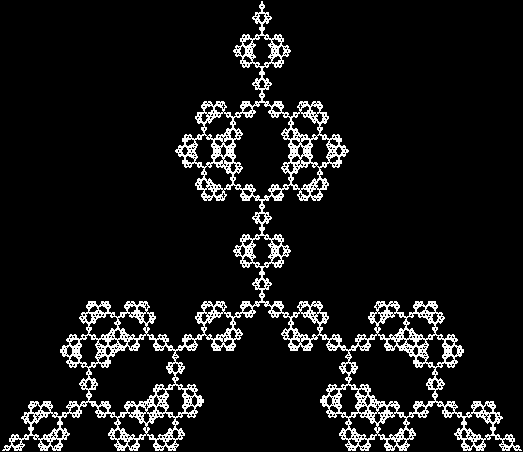
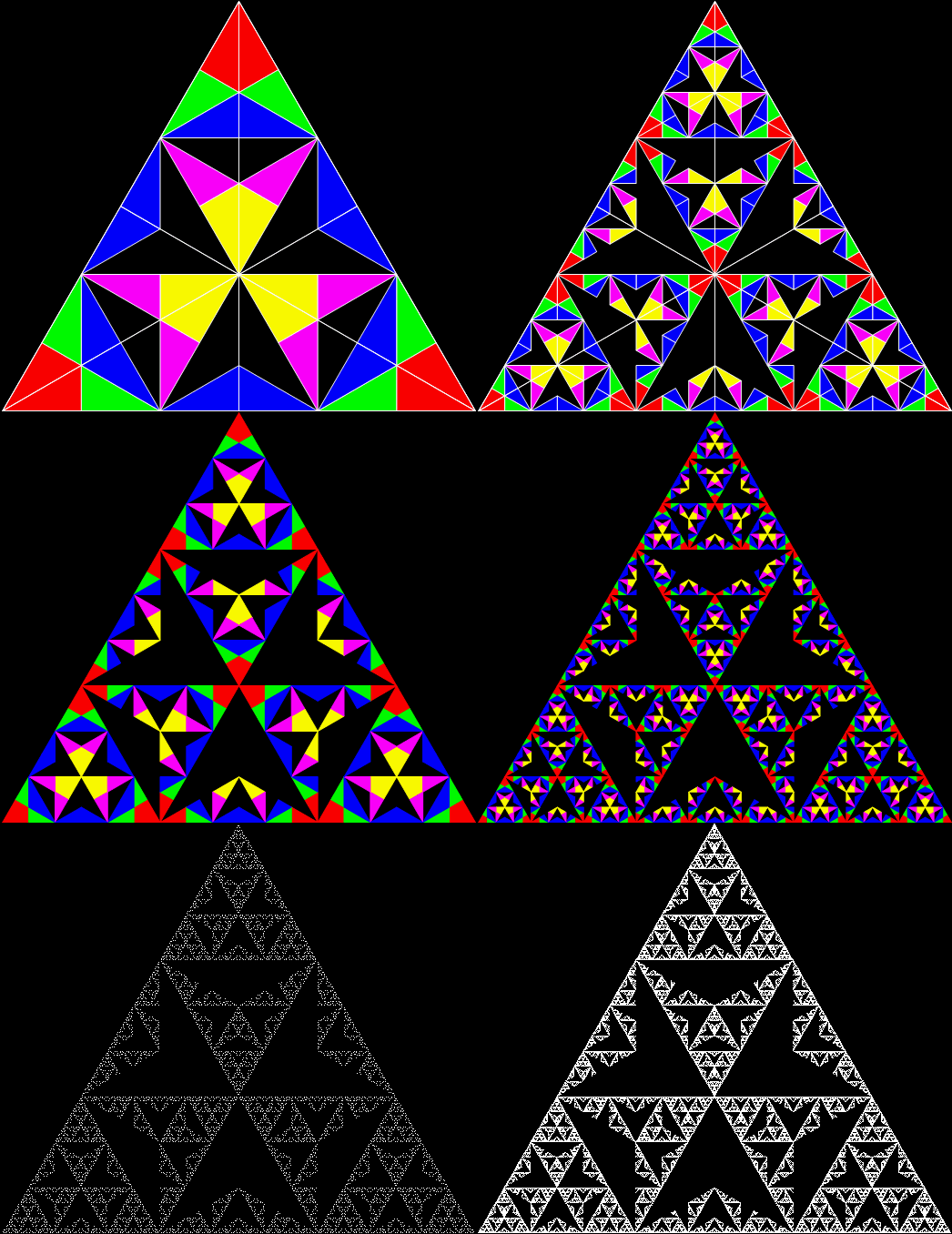
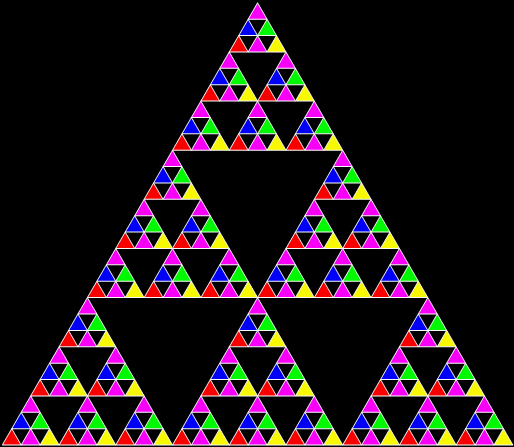
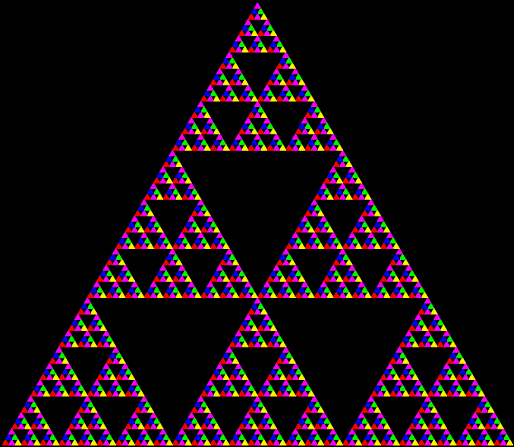
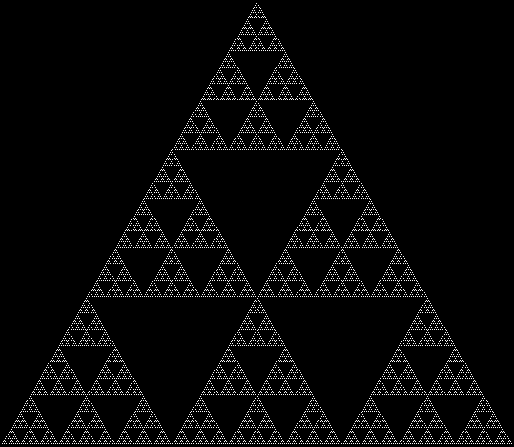
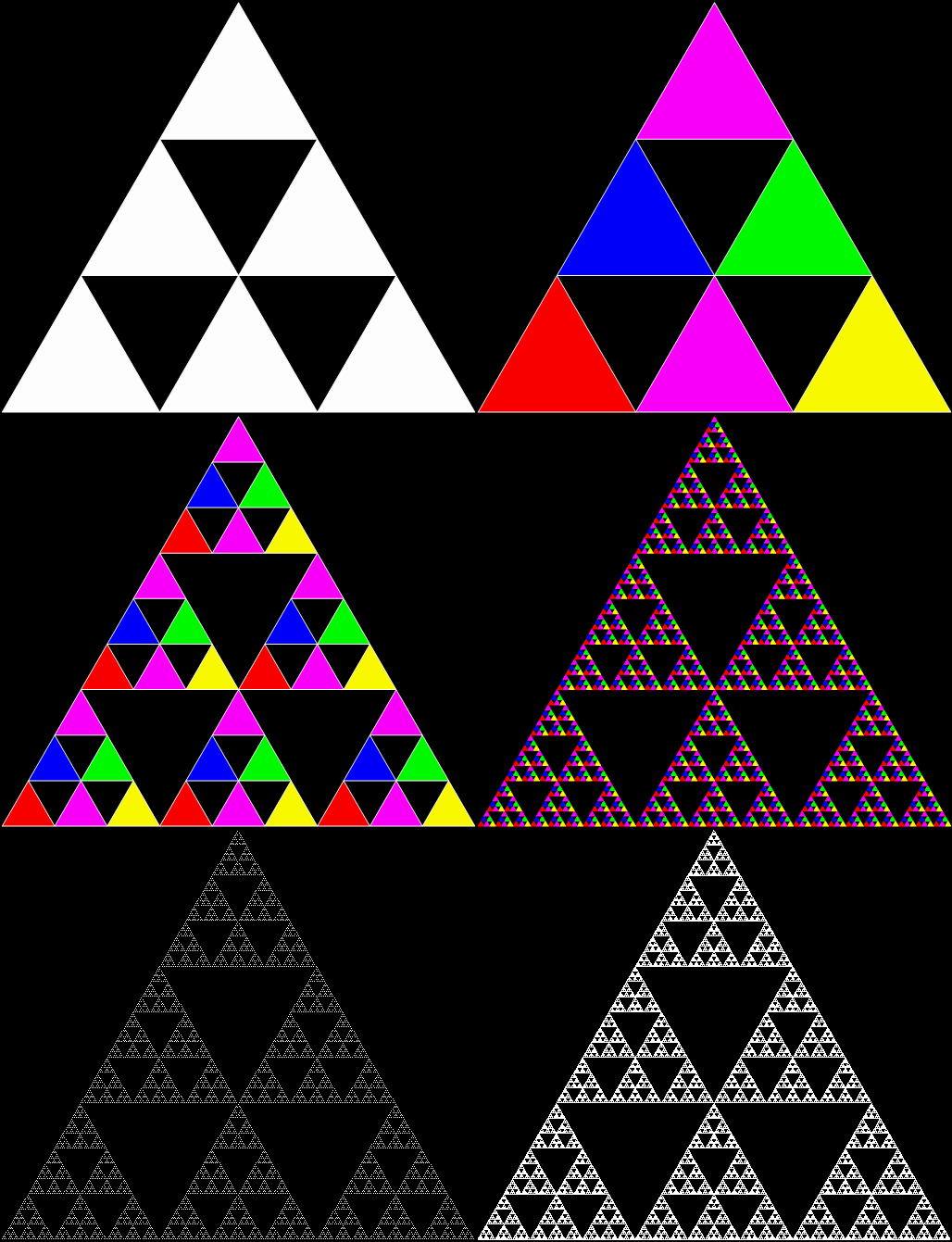
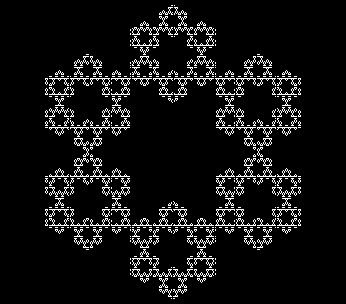
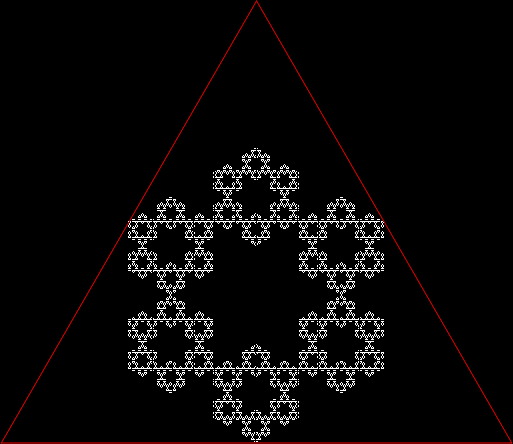
Of course, this is a very inefficient way to create a Koch snowflake, because the interior hexagrams consume processing time while not contributing to the fractal boundary of the snowflake. But in a way you can fully fractalize the hexagram if you draw only the point at the center of each triangle and then color it according to how many times the pixel in question has been drawn on before. To see how this works, first look at what happens when the center-points are represented in white:


White center-points (animated)


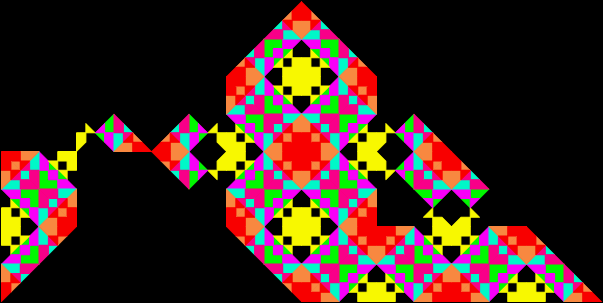
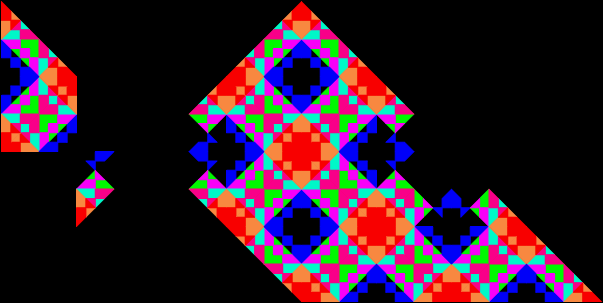
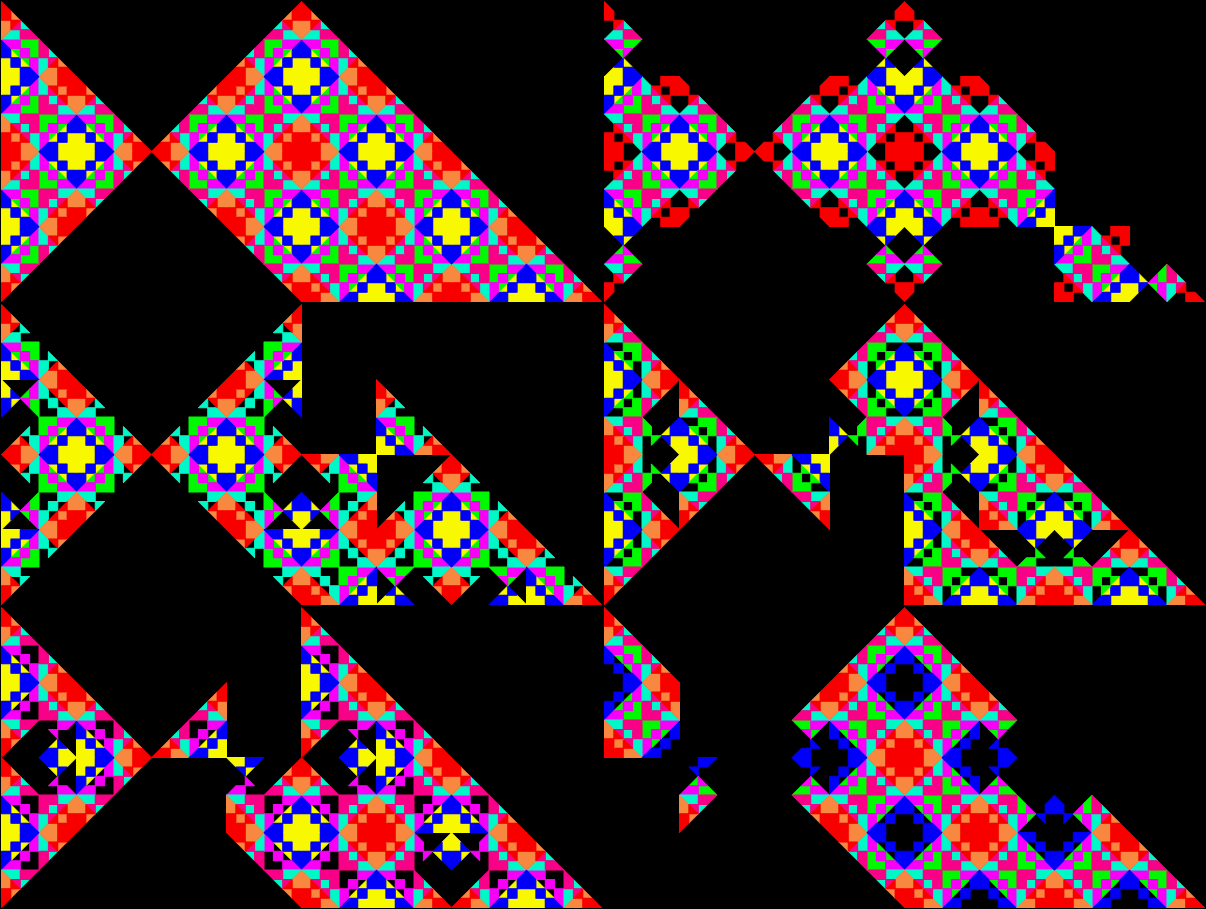
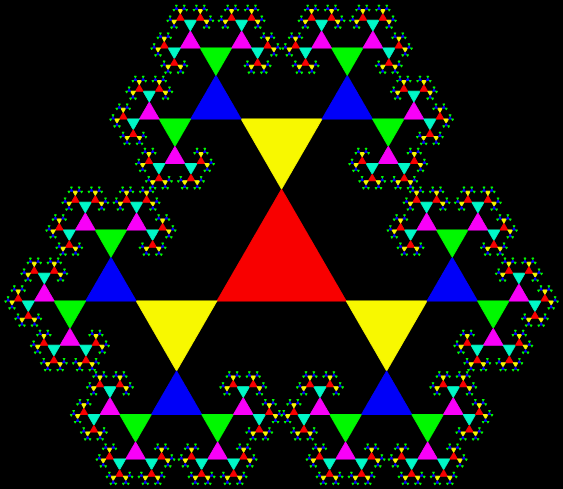
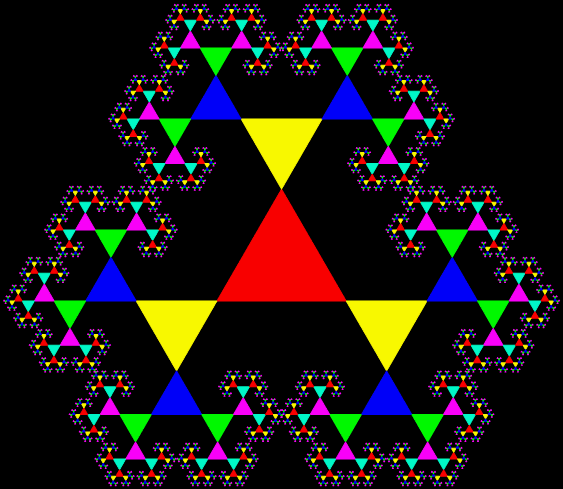
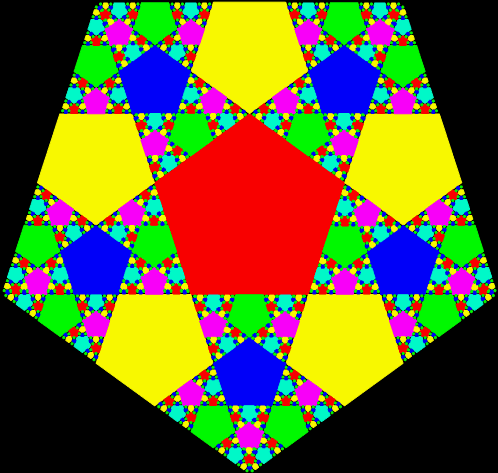
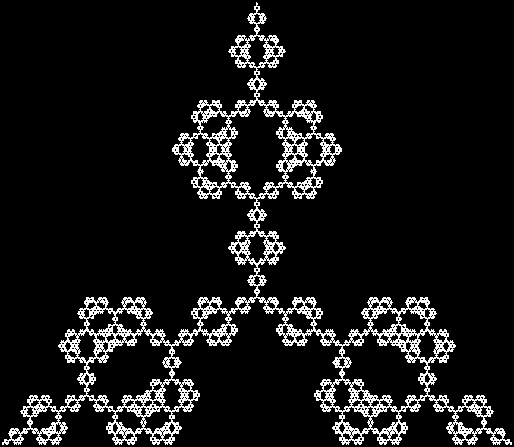
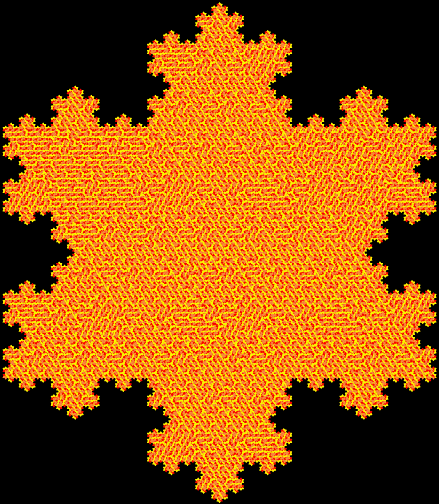
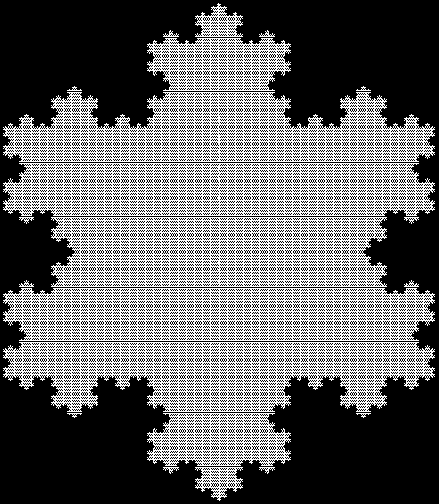
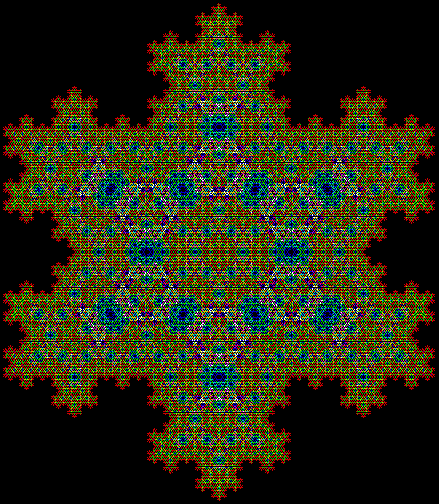
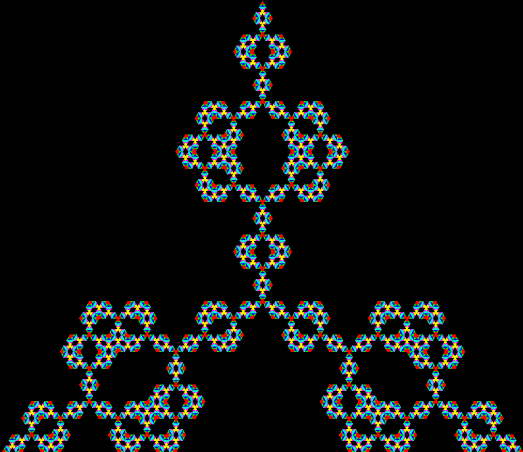
And here’s the fully fractalized hexagram, with colored center-points:


Colored center-points (animated)


Previously Pre-Posted…

The Hex Fractor #1 — hexagons and fractals
The Hex Fractor #2 — hexagons and fractals again
Diamonds to Dust — turning the Mitsubishi logo into a fractal

Trim Pickings

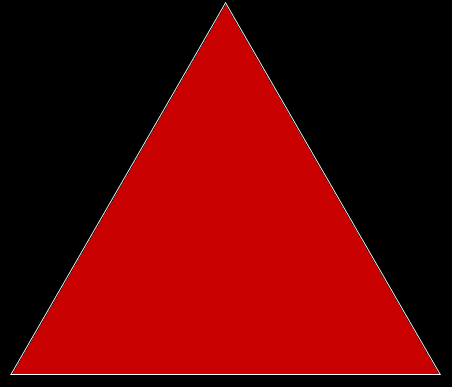
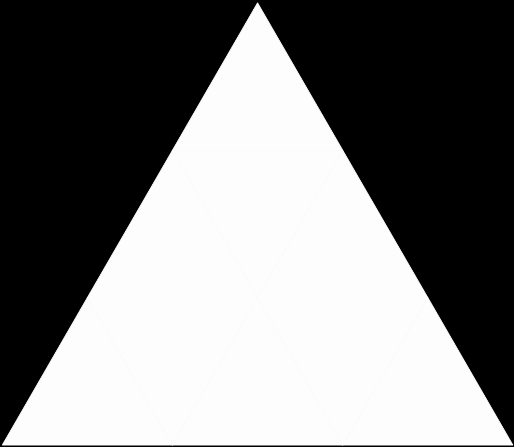
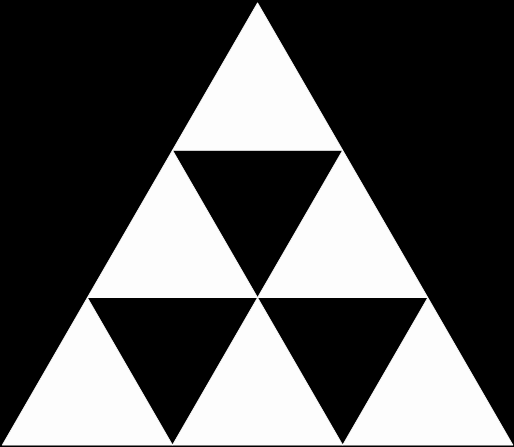
Here is an equilateral triangle divided into nine smaller equilateral triangles:

Rep-9 equilateral triangle


The triangle is a rep-tile — it’s tiled with repeating copies of itself. In this case, it’s a rep-9 triangle. Each of the nine smaller triangles can obviously be divided in their turn:

Rep-81 equilateral triangle


Rep-729 equilateral triangle


Rep-729 equilateral triangle again


Rep-6561 equilateral triangle


Rep-9 triangle repeatedly subdividing (animated)


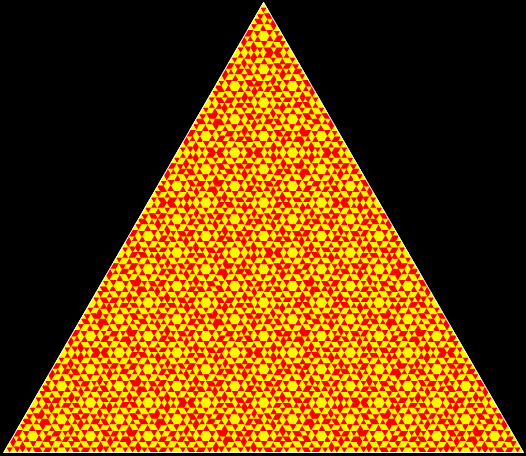
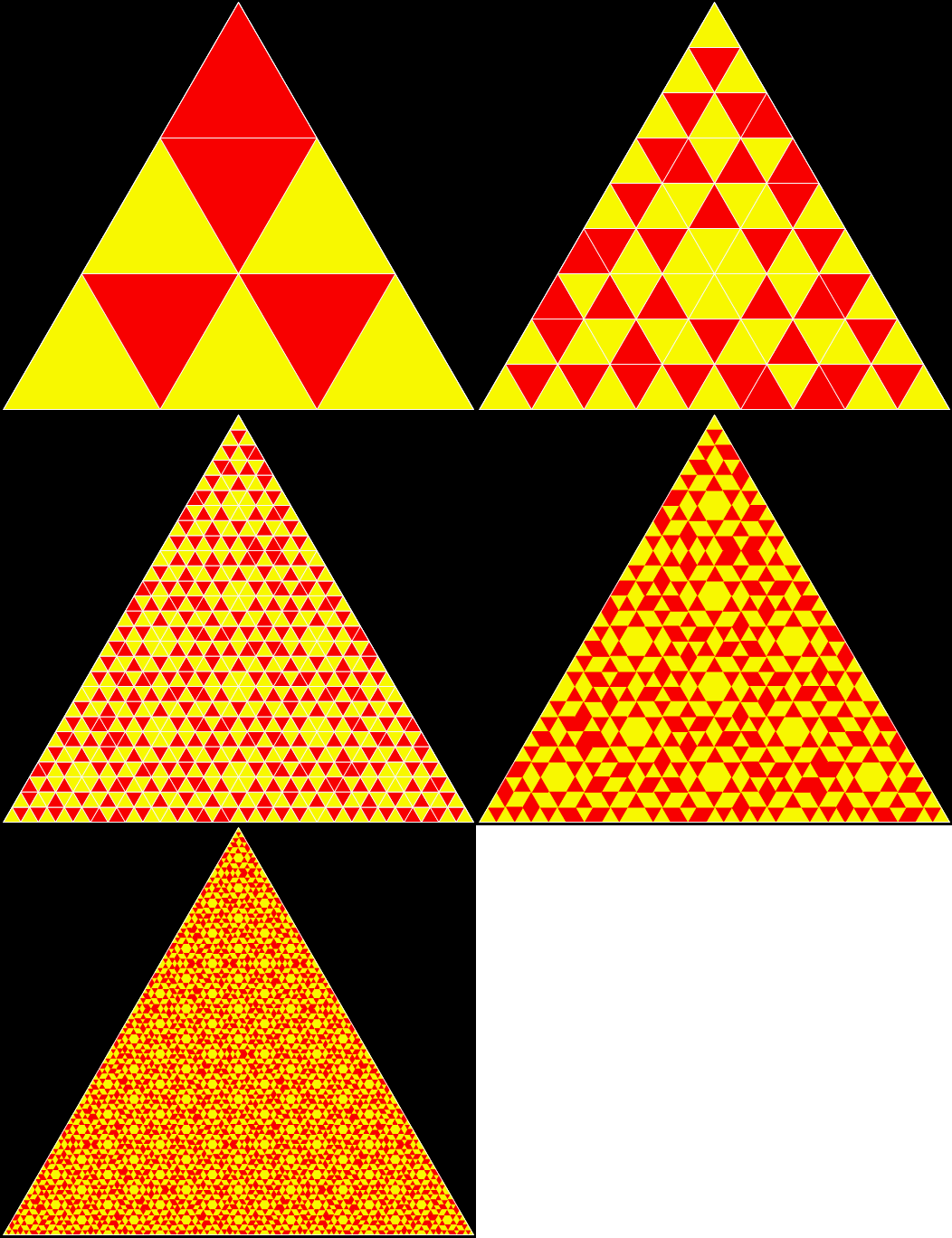
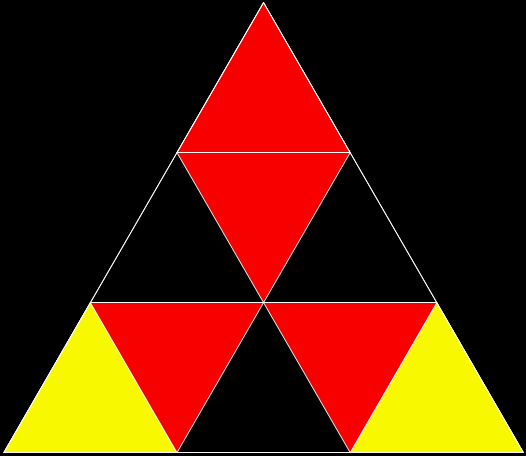
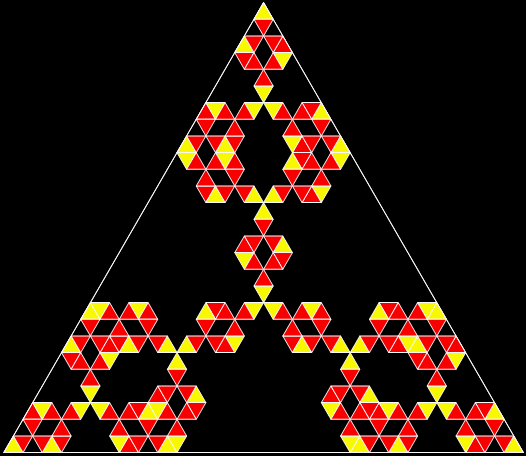
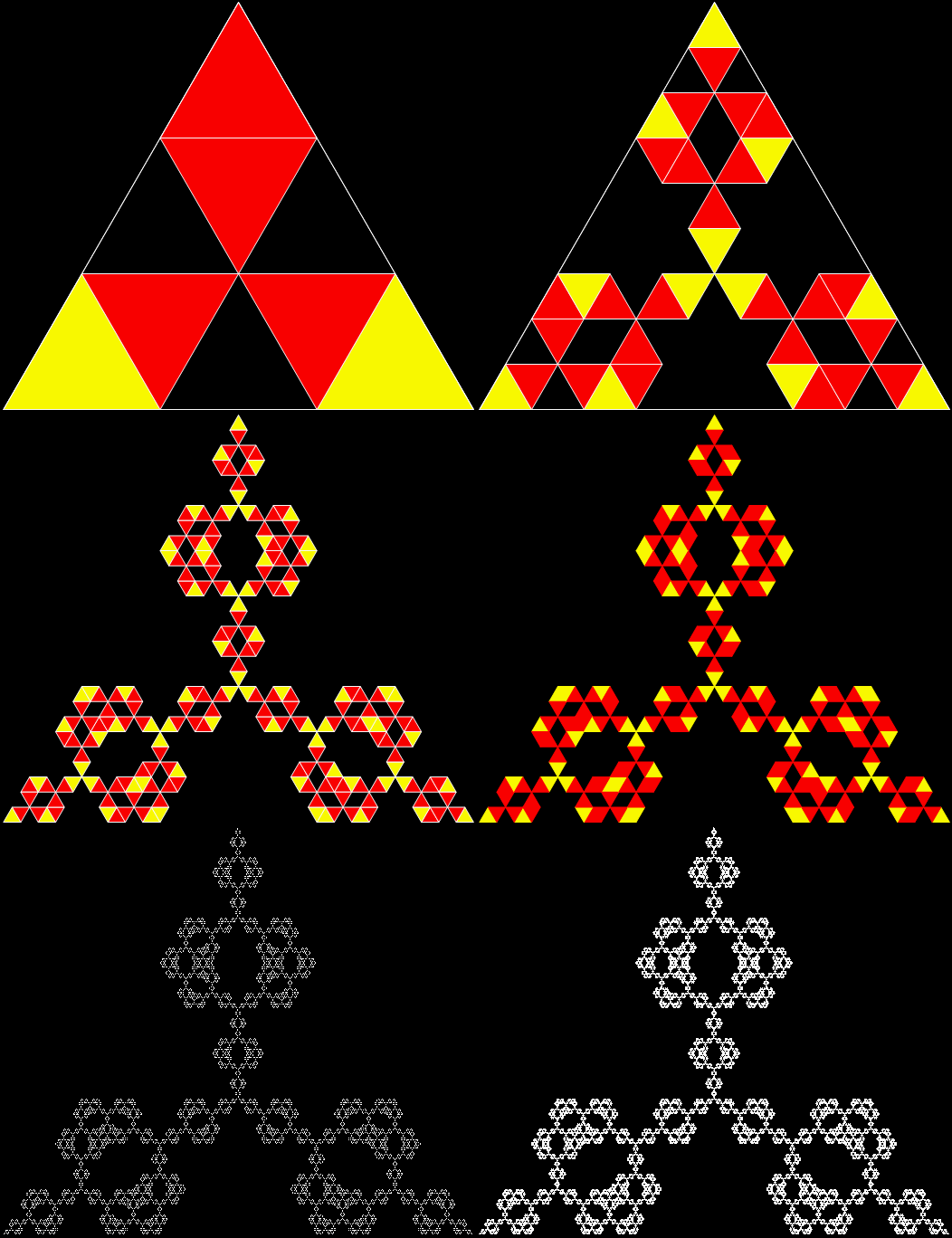
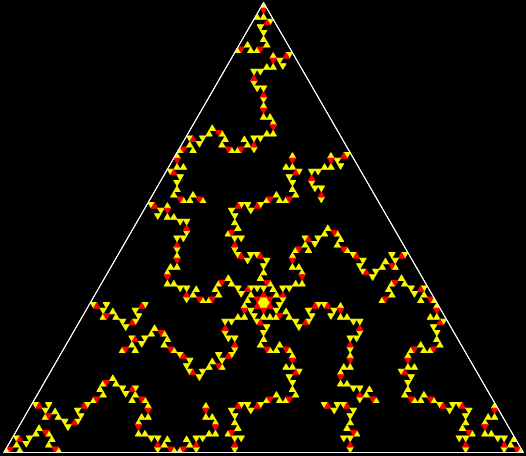
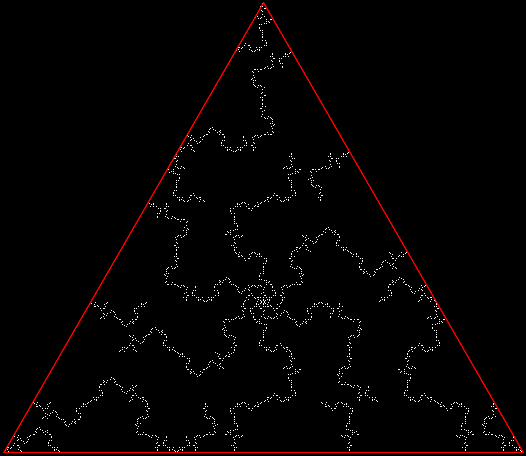
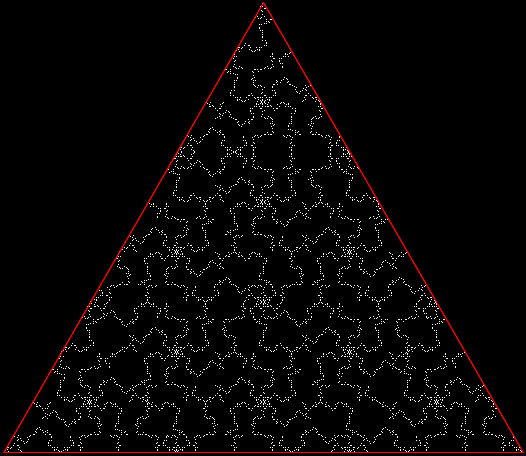
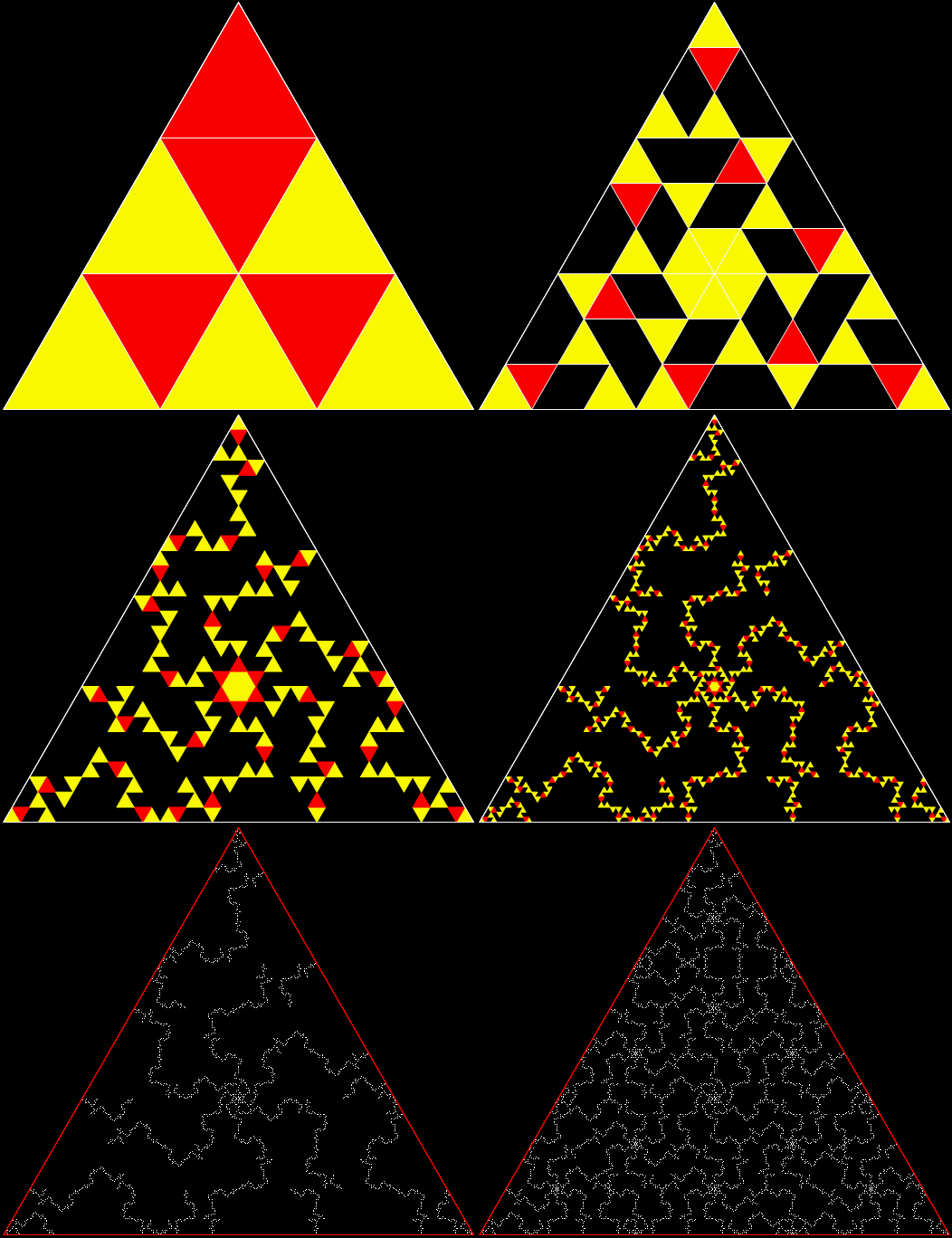
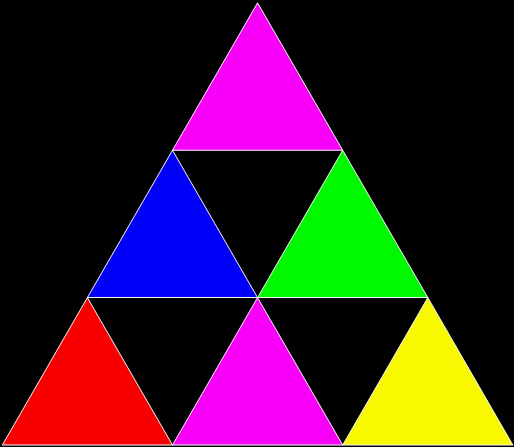
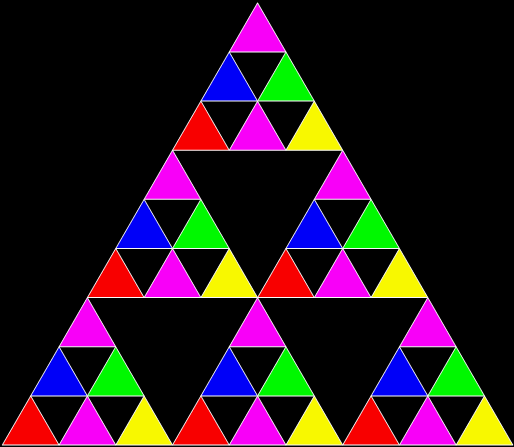
How try trimming the original rep-9 triangle, picking one of the trimmings, and repeating in finer detail. If you choose six triangles in this pattern, you can create a symmetrical braided fractal:

Triangular fractal stage 1


Triangular fractal #2


Triangular fractal #3


Triangular fractal #3 (cleaning up)


Triangular fractal #3 (cleaning up more)


Triangular fractal #4


Triangular fractal #5


Triangular fractal #6


Triangular fractal (animated)


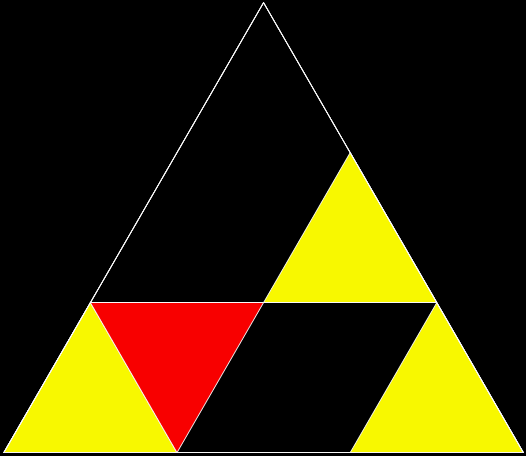
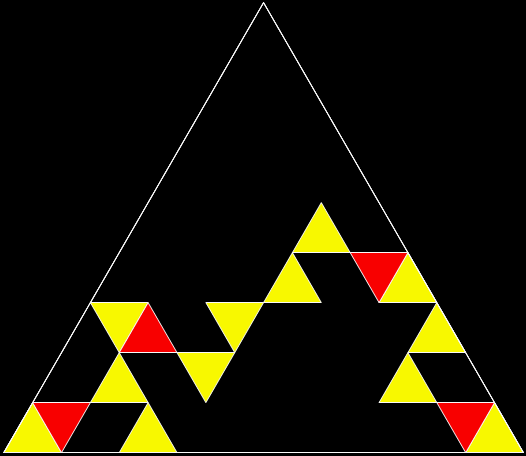
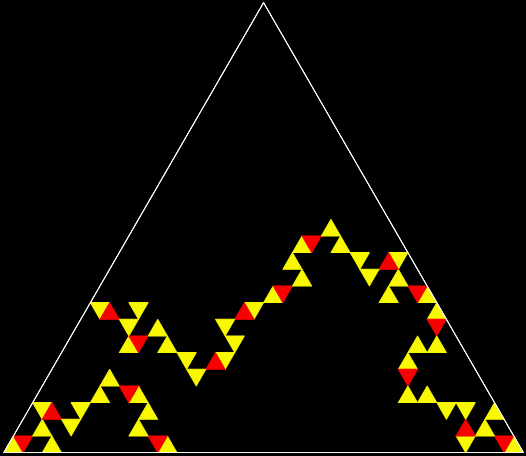
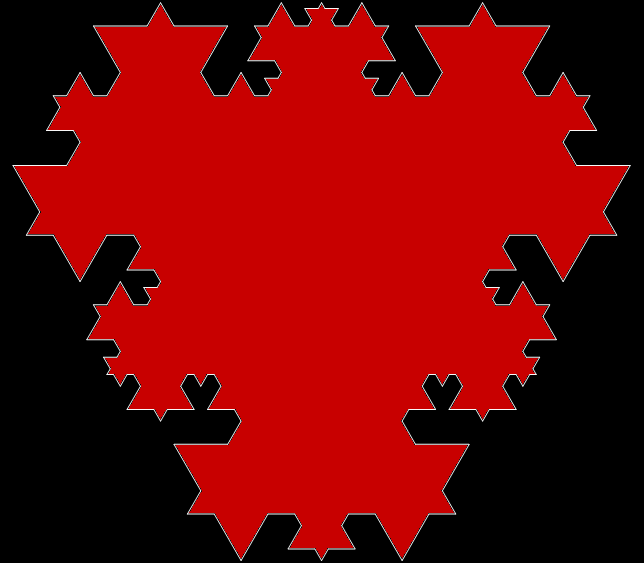
But this fractal using a three-triangle trim-picking isn’t symmetrical:

Trim-picking #1


Trim-picking #2


Trim-picking #3


Trim-picking #4


Trim-picking #5


To make it symmetric, you have to delay the trim, using the full rep-9 trim for the first stage:

Delayed trim-picking #1


Delayed trim-picking #2


Delayed trim-picking #3


Delayed trim-picking #4


Delayed trim-picking #5


Delayed trim-picking #6 (with first two stages as rep-9)


Delayed trim-picking (animated)


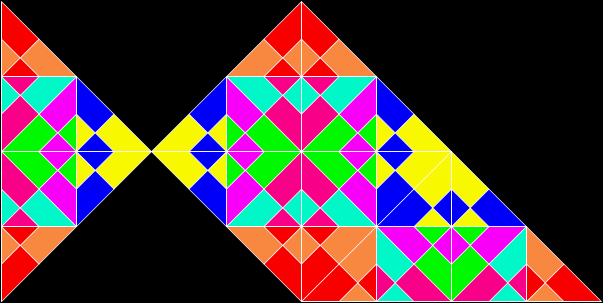
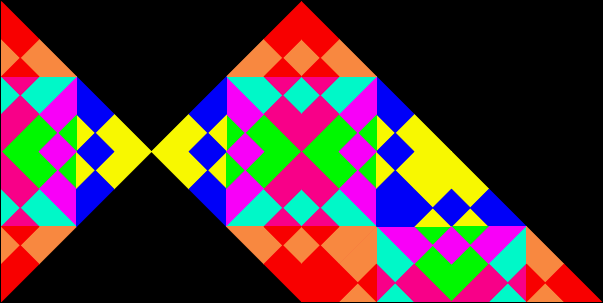
Here are some more delayed trim-pickings used to created symmetrical patterns:


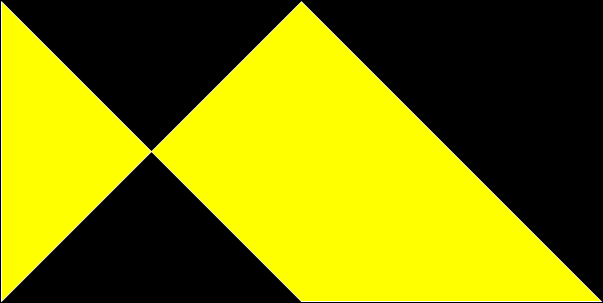
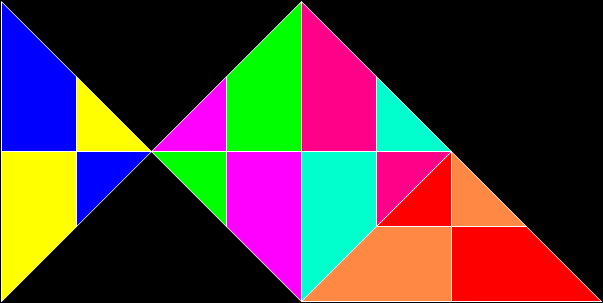
Polykoch (Kontinued)

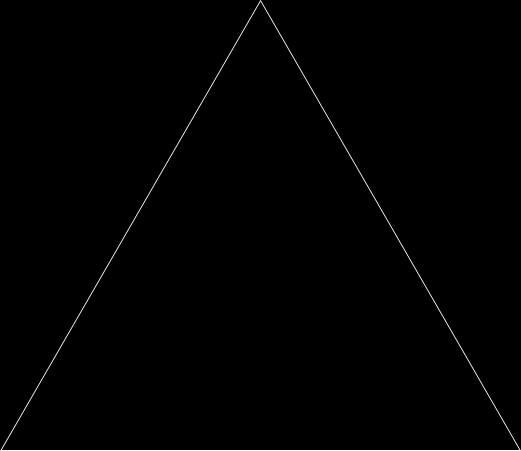
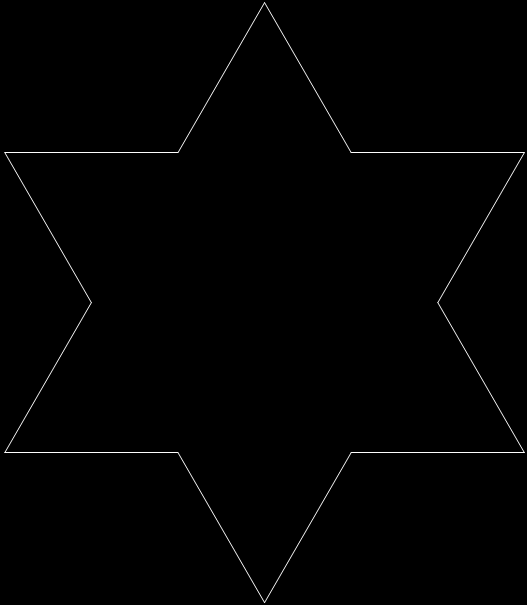
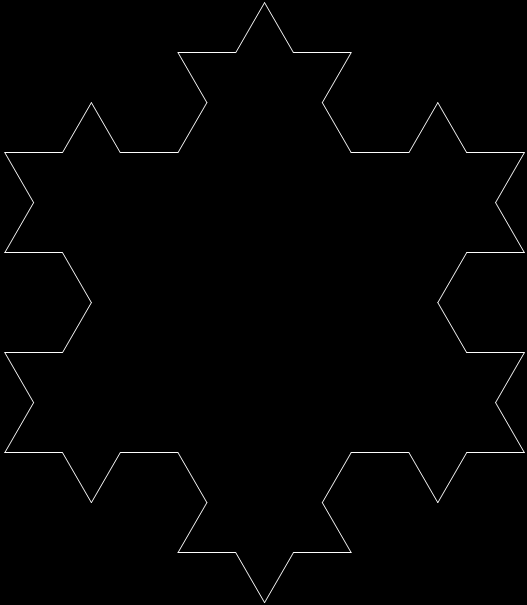
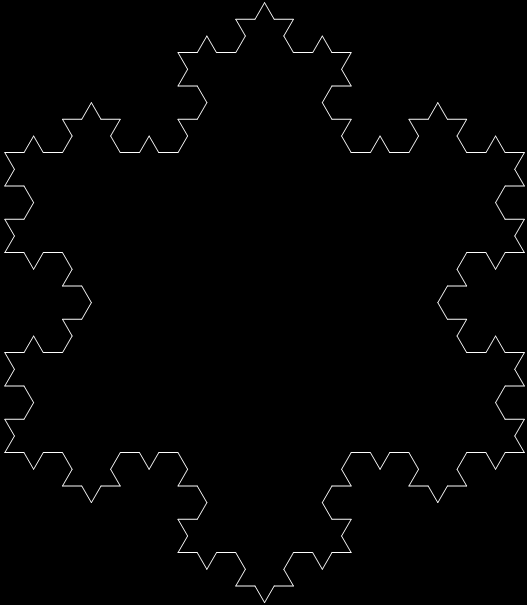
In “Polykoch!”, I looked at variants on the famous Koch snowflake, which is created by erecting new triangles on the sides of an equilaternal triangle, like this:

Koch snowflake #1


Koch snowflake #2


Koch snowflake #3


Koch snowflake #4


Koch snowflake #5


Koch snowflake #6


Koch snowflake #7


Koch snowflake (animated)


One variant is simple: the new triangles move inward rather than outward:

Inverted Koch snowflake #1


Inverted Koch snowflake #2


Inverted Koch snowflake #3


Inverted Koch snowflake #4


Inverted Koch snowflake #5


Inverted Koch snowflake #6


Inverted Koch snowflake #7


Inverted Koch snowflake (animated)


Or you can alternate between moving the new triangles inward and outward. When they always move outward and have sides 1/5 the length of the sides of the original triangle, the snowflake looks like this:


When they move inward, then always outward, the snowflake looks like this:


And so on:


Now here’s a Koch square with its new squares moving inward:

Inverted Koch square #1


Inverted Koch square #2


Inverted Koch square #3


Inverted Koch square #4


Inverted Koch square #5


Inverted Koch square #6


Inverted Koch square (animated)


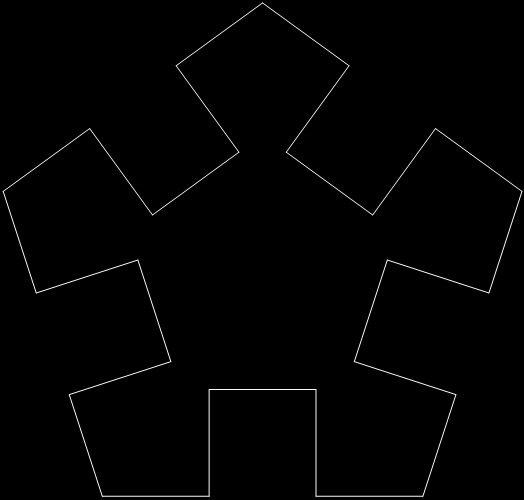
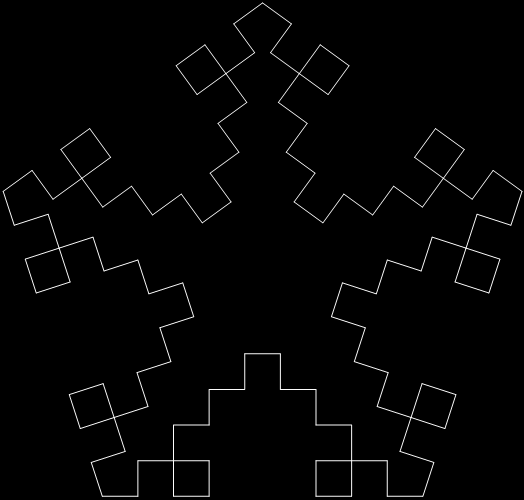
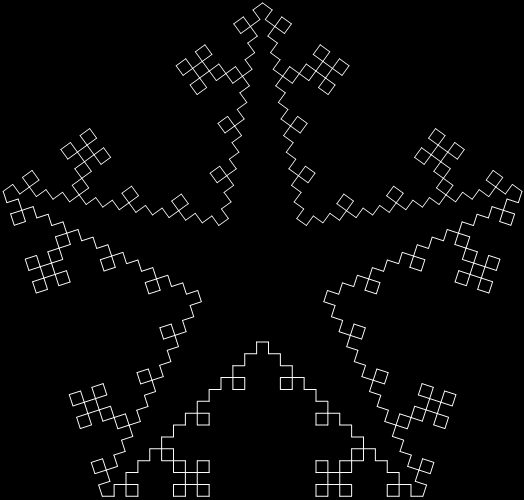
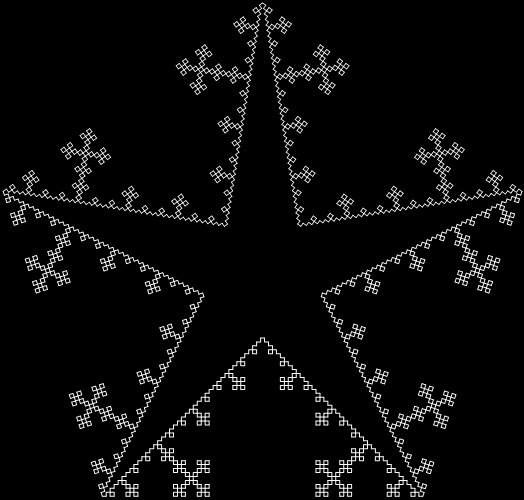
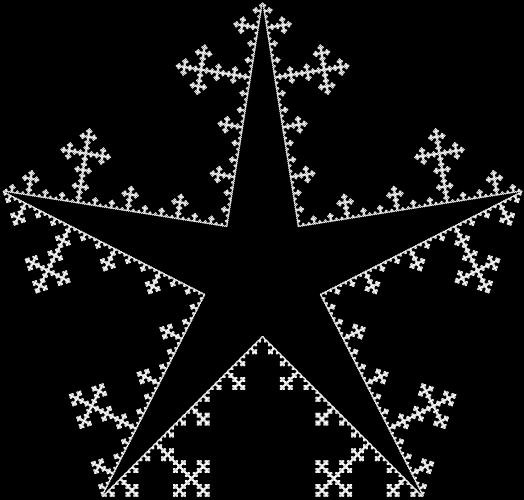
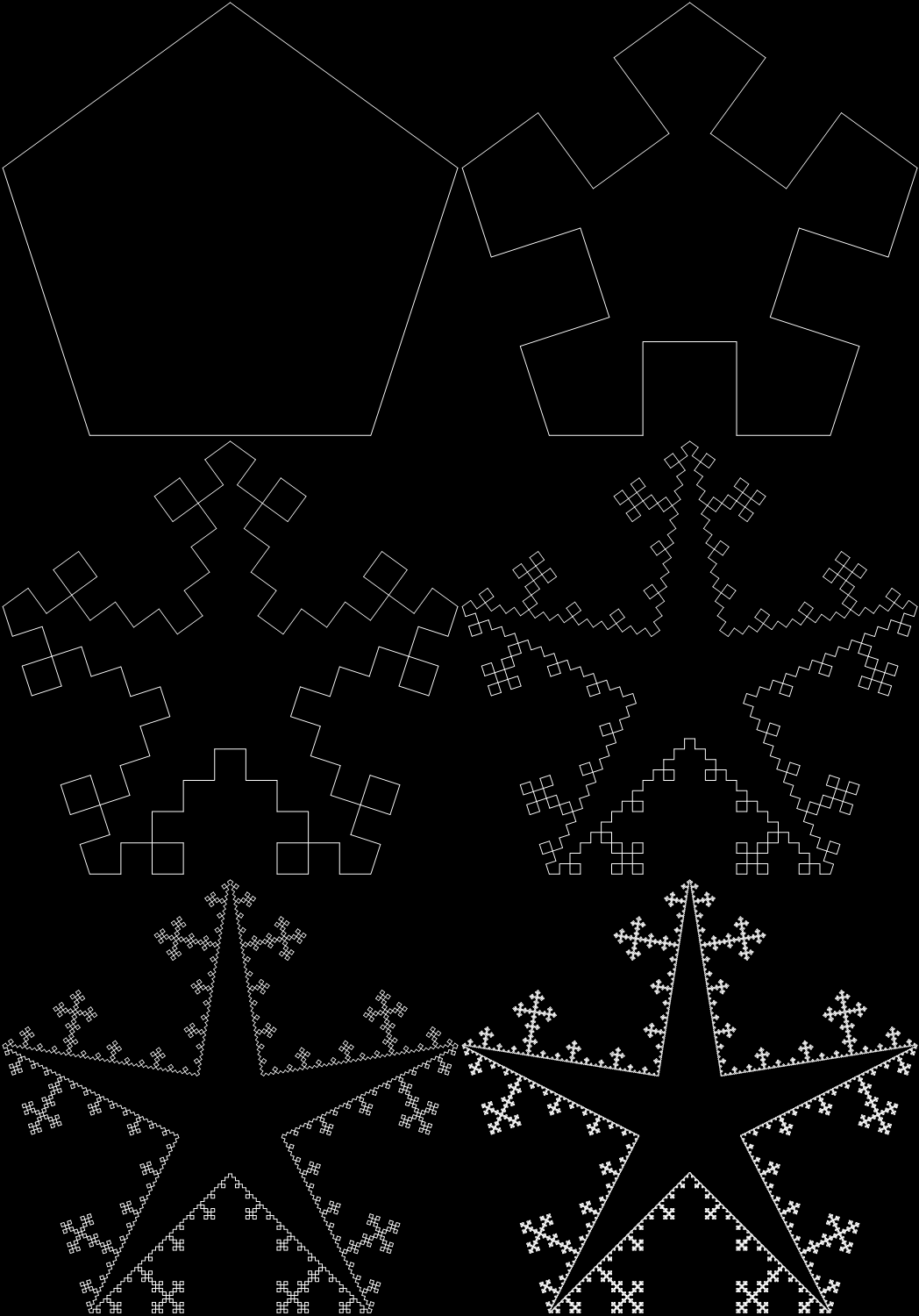
And here’s a pentagon with squares moving inwards on its sides:

Pentagon with squares #1


Pentagon with squares #2


Pentagon with squares #3


Pentagon with squares #4


Pentagon with squares #5


Pentagon with squares #6


Pentagon with squares (animated)


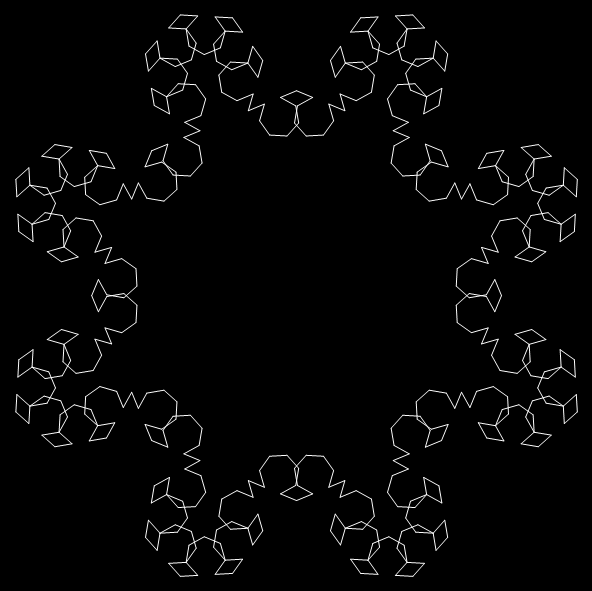
And finally, an octagon with hexagons on its sides. First the hexagons move outward, then inward, then outward, then inward, then outward:

Octagon with hexagons #1


Octagon with hexagons #2


Octagon with hexagons #3


Octagon with hexagons #4


Octagon with hexagons #5


Octagon with hexagons (animated)


Polykoch!

This is how you form the famous Koch snowflake, in which at each stage you erect a new triangle on the middle of each line whose sides are 1/3 the length of the line:

Koch snowflake #1


Koch snowflake #2


Koch snowflake #3


Koch snowflake #4


Koch snowflake #5


Koch snowflake #6


Koch snowflake #7


Koch snowflake (animated)


Here’s a variant of the Koch snowflake, with new mid-triangles whose sides are 1/2 the length of the lines:

Koch snowflake (1/2 side) #1


Koch snowflake (1/2 side) #2


Stage #3


Stage #4


Stage #5


Stage #6


Stage #7


Stage #8


Koch snowflake (1/2 side) (animated)


But why stop at triangles? This is a Koch square, in which at each stage you erect a new 1/3 square on the middle of each line:

Koch square #1


Koch square #2


Koch square #3


Koch square #4


Koch square #5


Koch square #6


Koch square (animated)


And a Koch pentagon, in which at each stage you erect a pentagon on the middle of each line whose sides are 1 – (1/φ^2 * 2) = 0·236067977… the length of the line (I used 55/144 as an approximation of 1/φ^2):

Koch pentagon (side 55/144) #1


Koch pentagon #2


Koch pentagon #3


Koch pentagon #4


Koch pentagon #5


Koch pentagon #6


Koch pentagon (animated)


In this close-up, you can see how precisely the sprouting pentagons kiss at each stage:

Koch pentagon (close-up) #1


Koch pentagon (close-up) #2


Koch pentagon (close-up) #3


Koch pentagon (close-up) #4


Koch pentagon (close-up) #5


Koch pentagon (close-up) #6


Koch pentagon (close-up) (animated)


Blancmange Butterfly

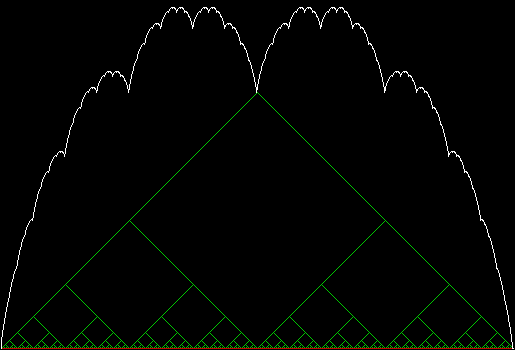
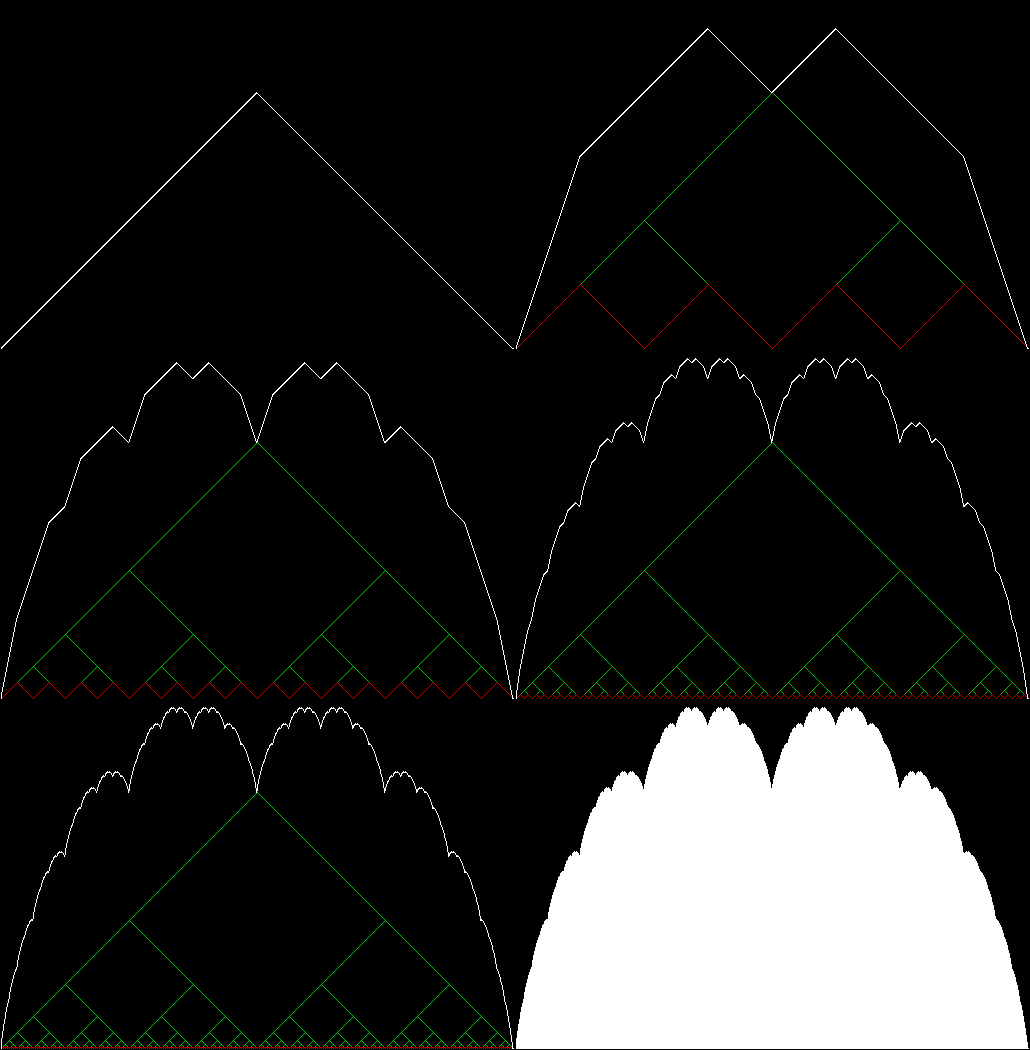
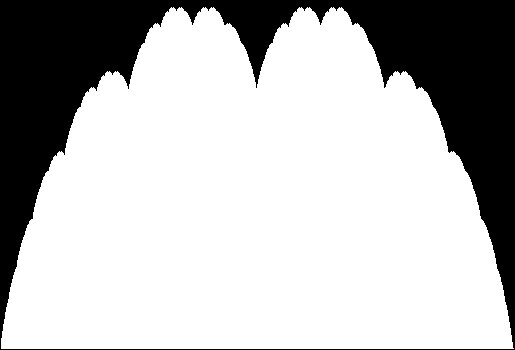
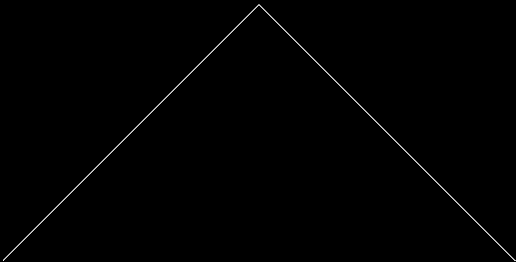
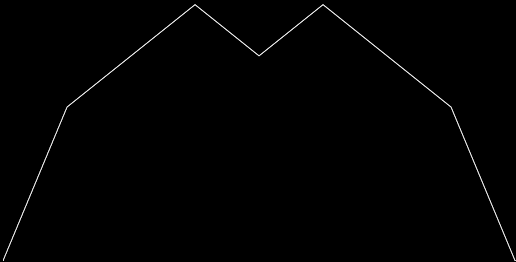
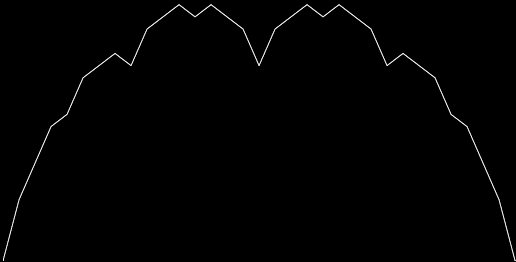
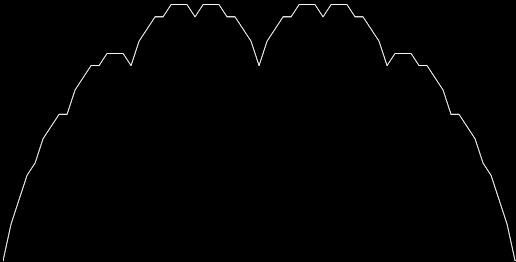
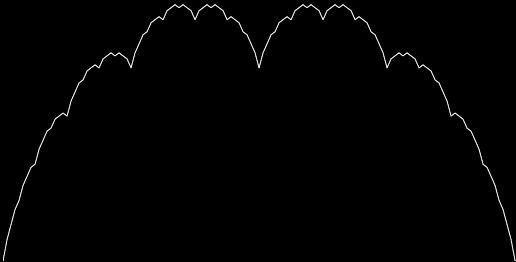
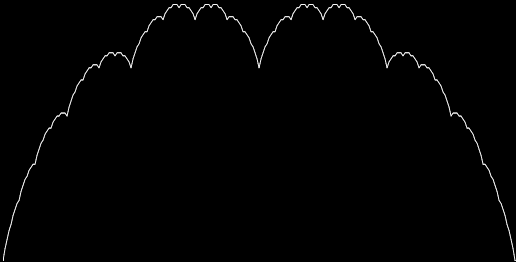
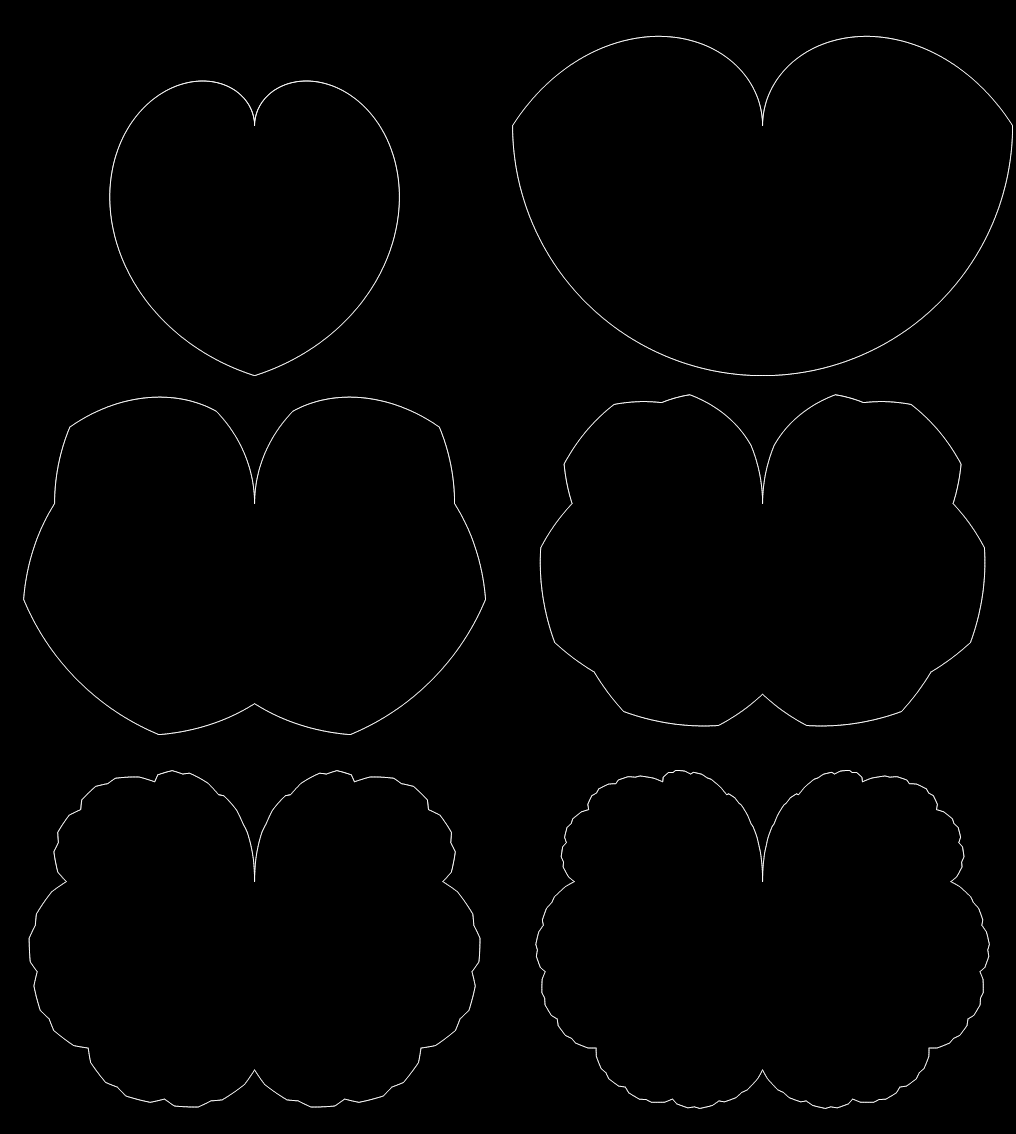
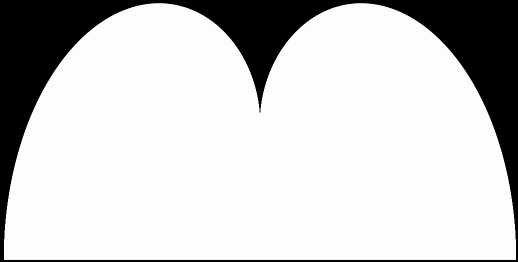
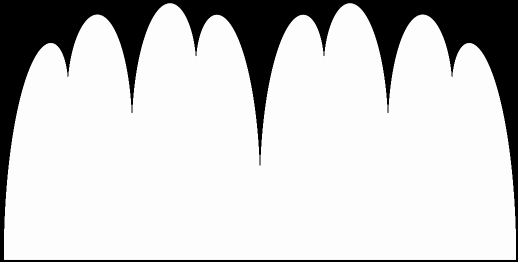
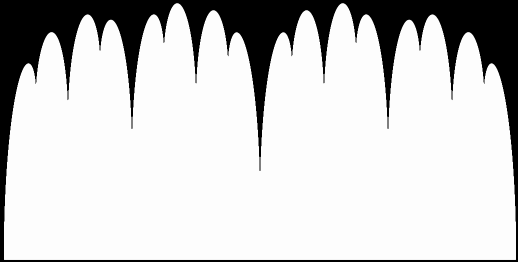
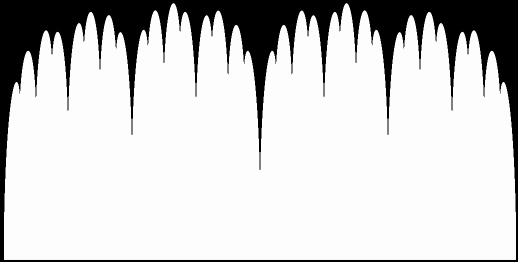
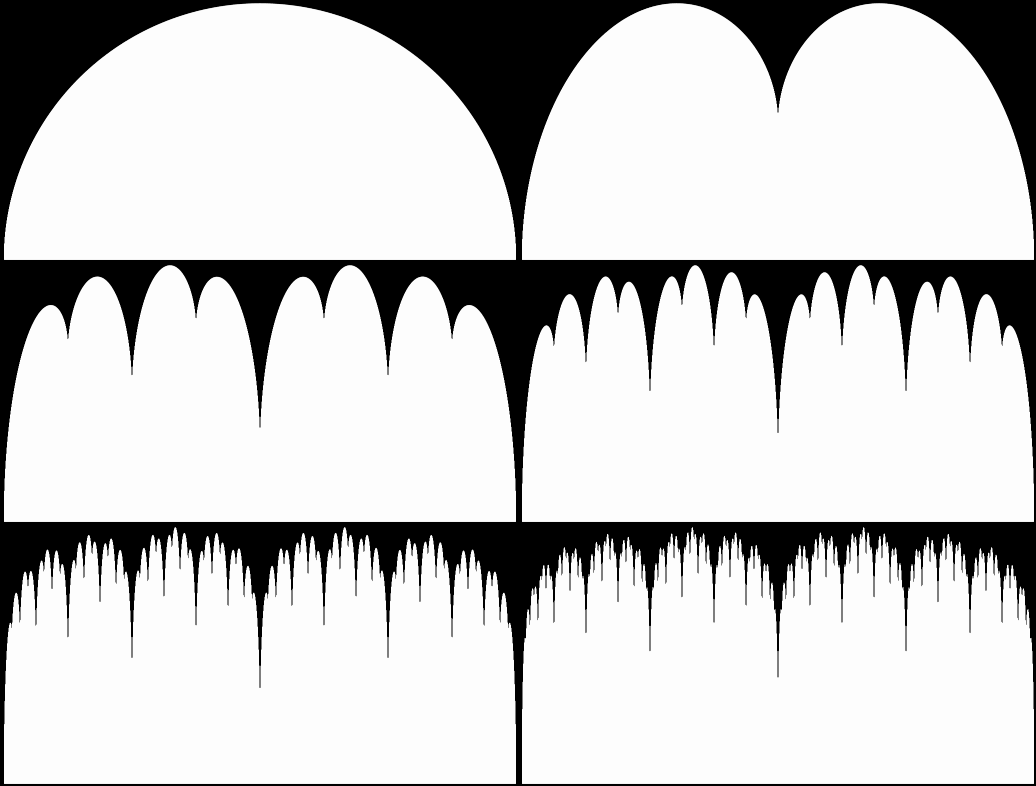
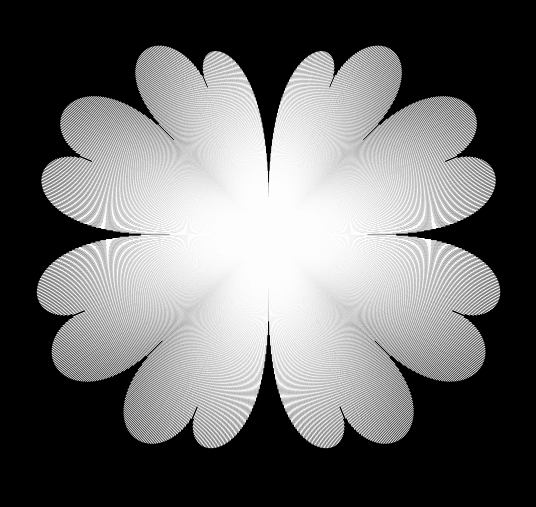
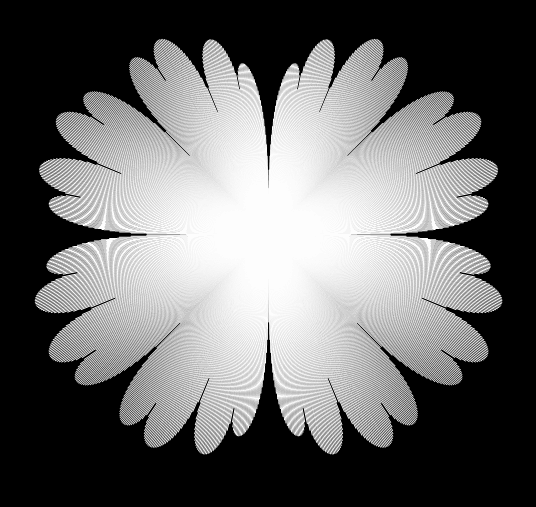
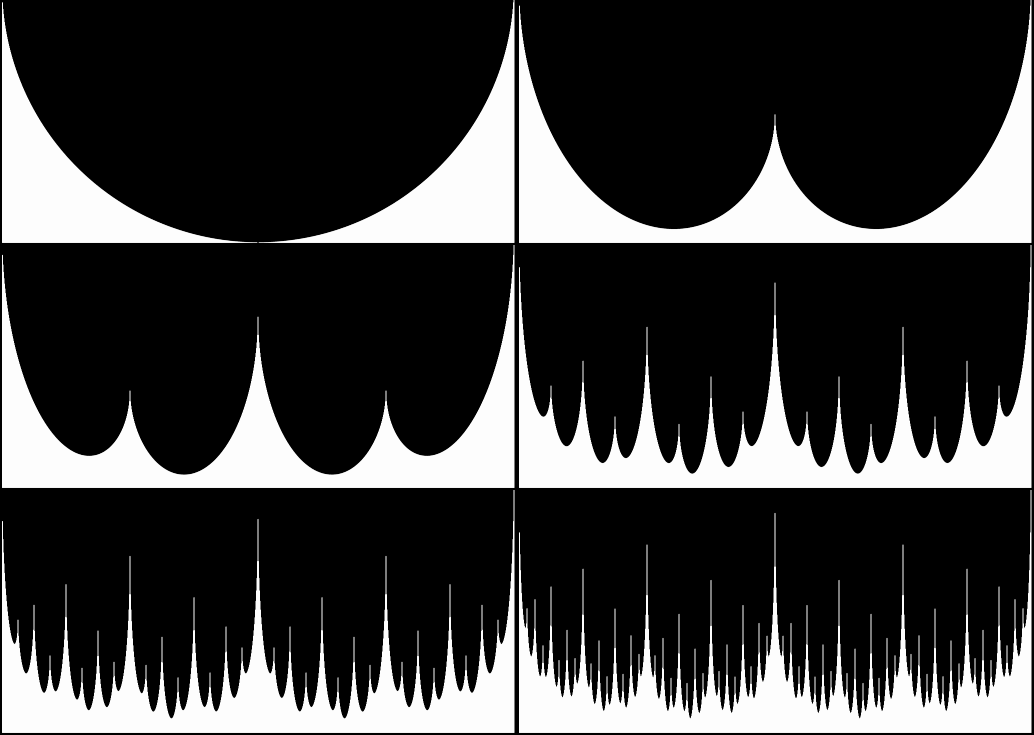
Blancmange butterfly. Is that a ’60s psychedelic band? No, it’s one of the shapes you can get by playing with blancmange curves. As I described in “White Rites”, a blancmange curve is a fractal created by summing the heights of successively smaller and more numerous zigzags, like this:

blanc_all

Zigzags 1 to 10


blancmange_all

Zigzags 1 to 10 (animated)


blanc_solid

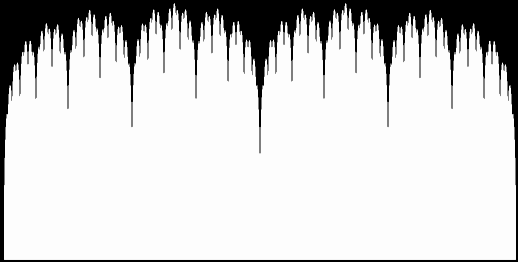
Blancmange curve


In the blancmange curves below, the height (i.e., the y co-ordinate) has been normalized so that all the images are the same height:


Construction of a normalized blancmange curve (animated)


This is the solid version:


Solid normalized blancmange curve (animated)


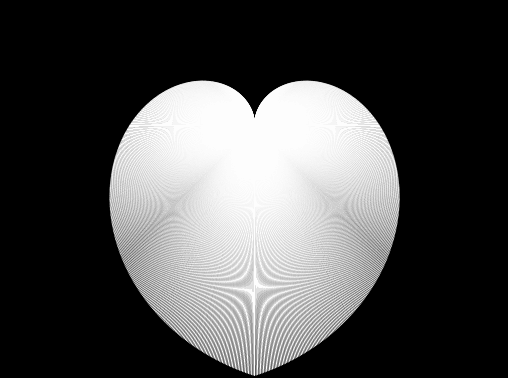
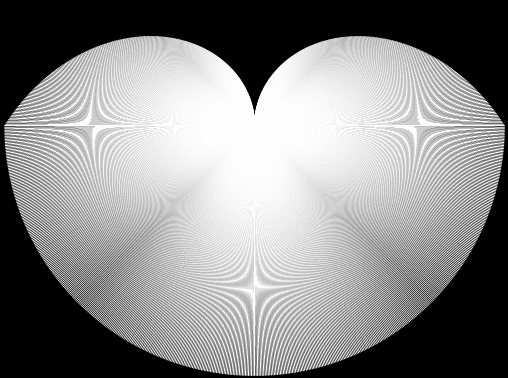
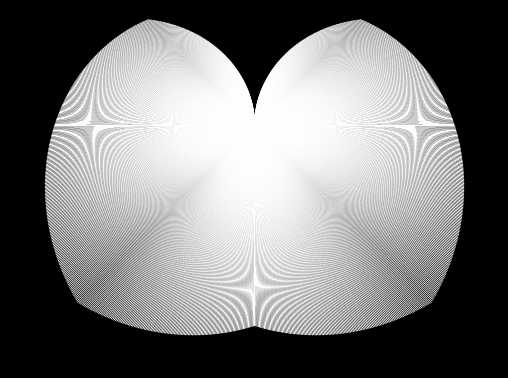
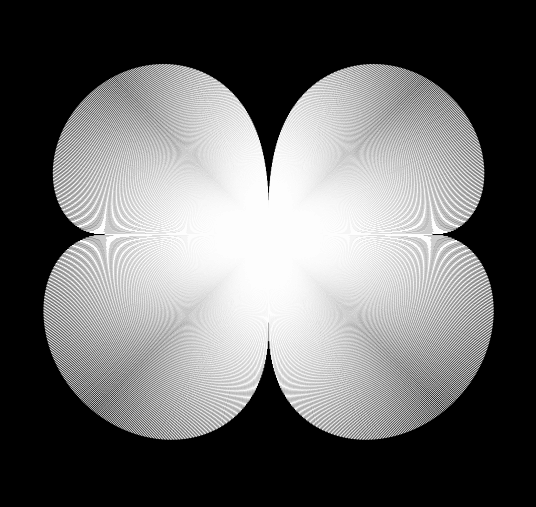
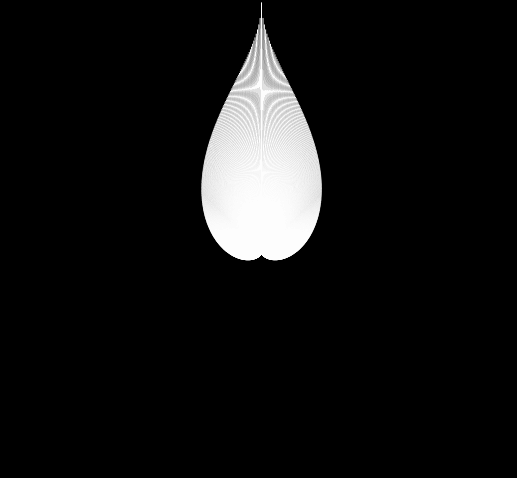
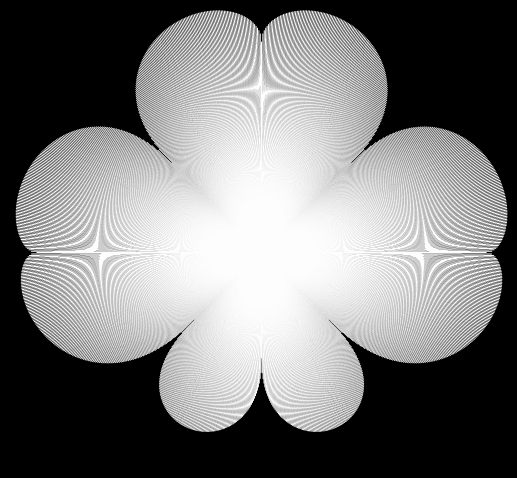
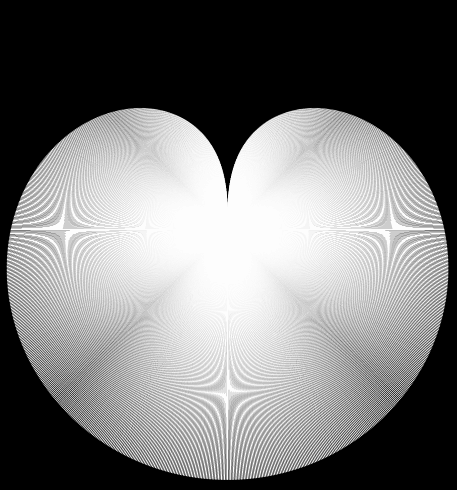
I wondered what happens when you wrap a blancmange curve around a circle. Well, this happens:


Construction of a blancmange circle (animated)


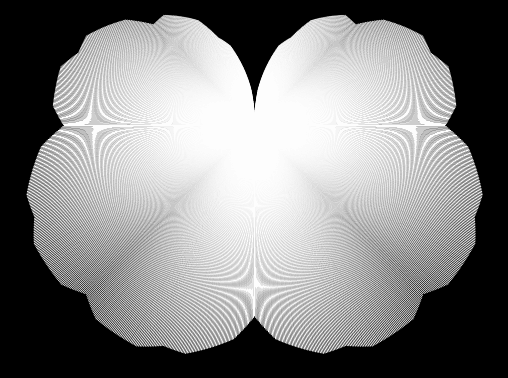
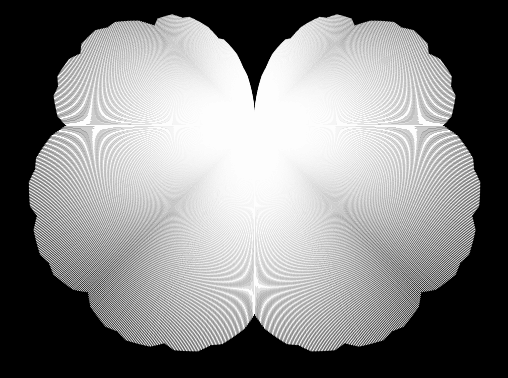
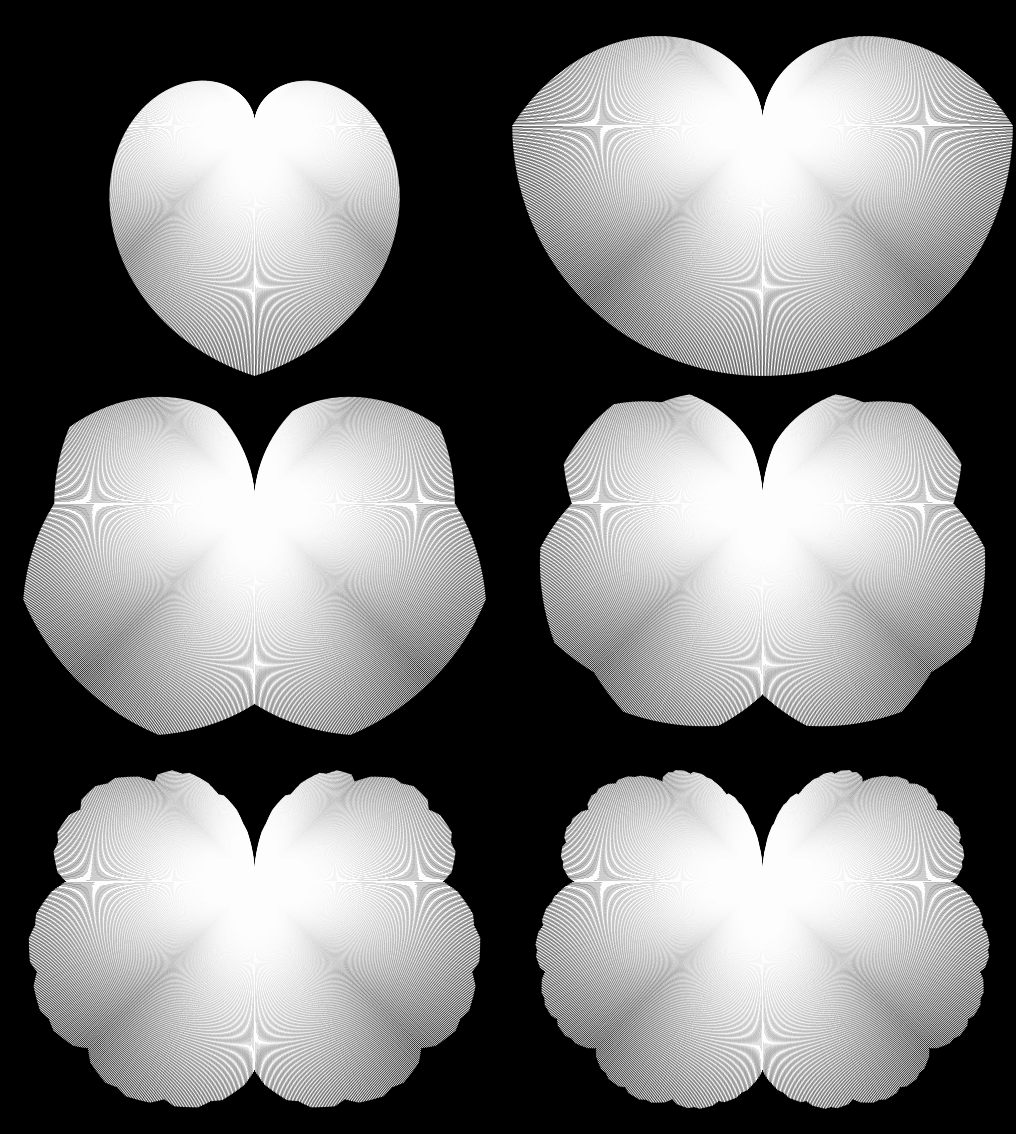
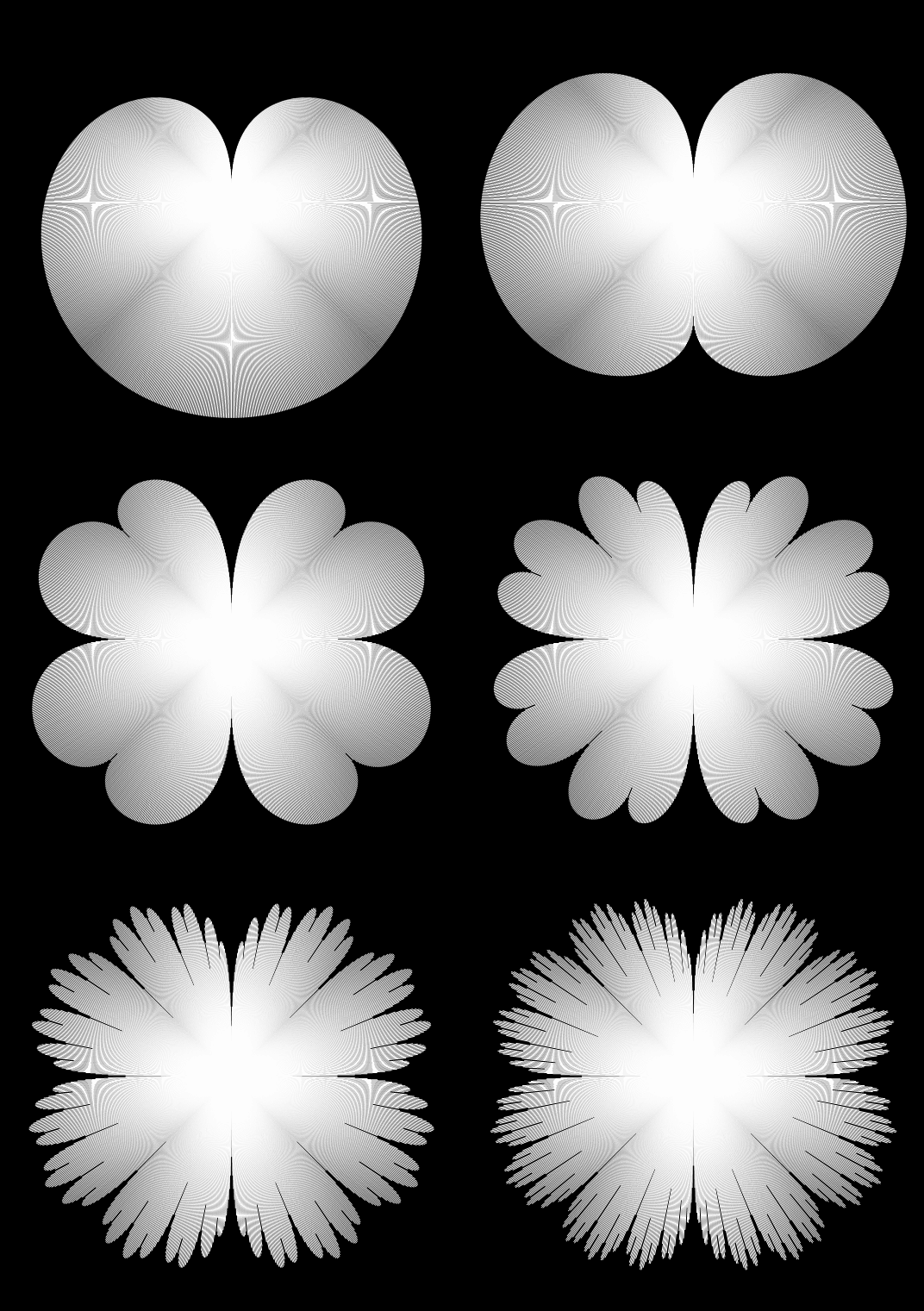
You get what might be called a blancmange butterfly. The solid version looks like this (patterns in the circles are artefacts of the graphics program I used):


Solid blancmange circle (animated)


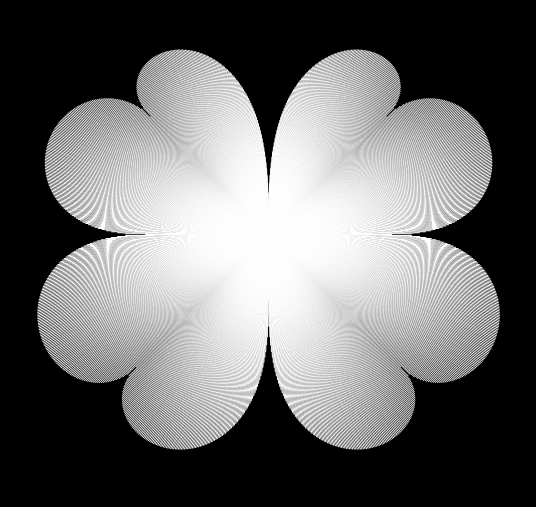
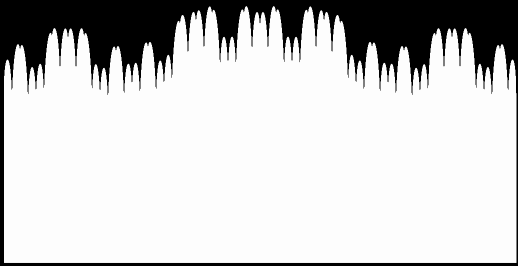
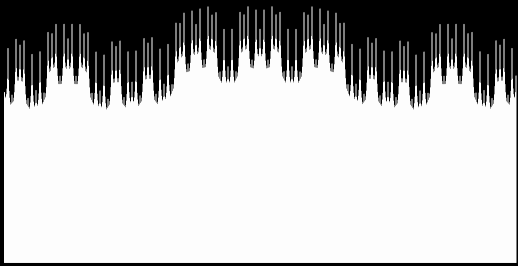
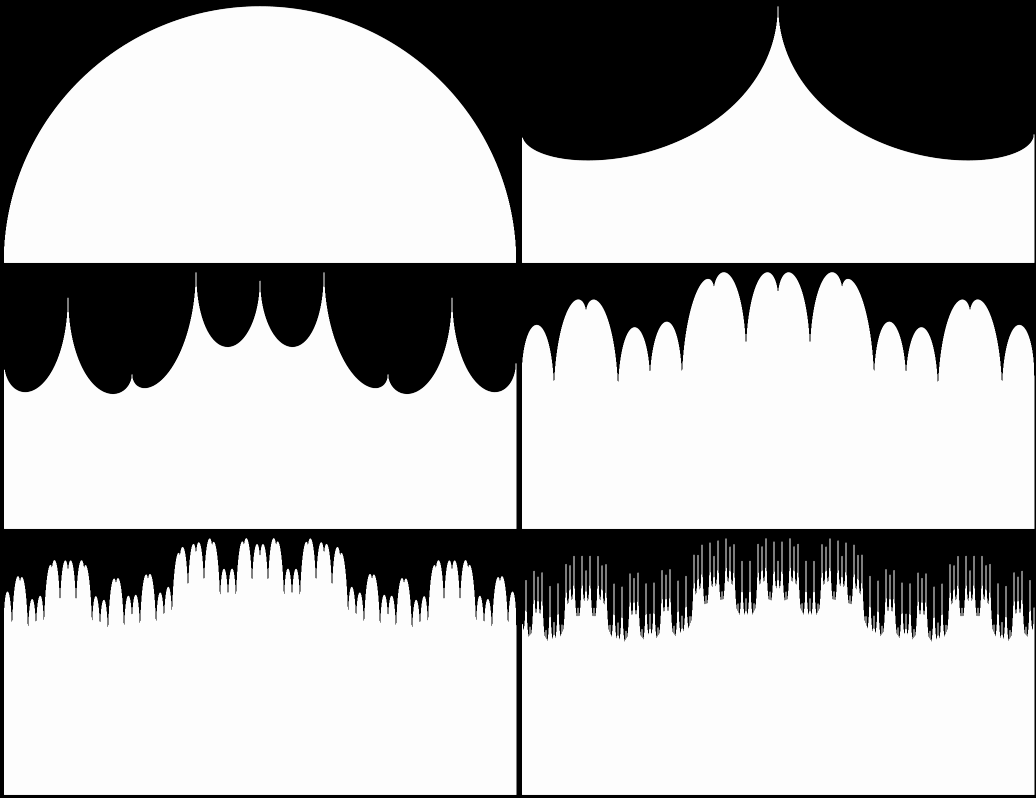
Next I tried using arcs rather zigzags to construct the blancmange curves and blancmange circles:


Arching blancmange curve (i.e., constructed with arcs) (animated)


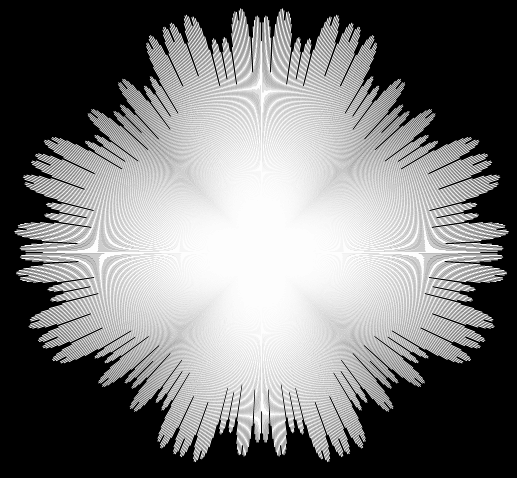
And below is the circular version of a blancmange curve constructed with arcs. The arching circular blancmanges look even more like buttocks and then intestinal villi (the fingerlike projections lining our intestines):


Arching blancmange circle (animated)


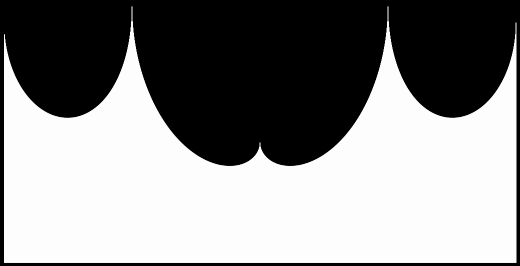
The variations on blancmange curves don’t stop there — in fact, they’re infinite. Below is a negative arching blancmange curve, where the heights of the original arching blancmange curve are subtracted from the (normalized) maximum height:


Negative arching blancmange curve (animated)


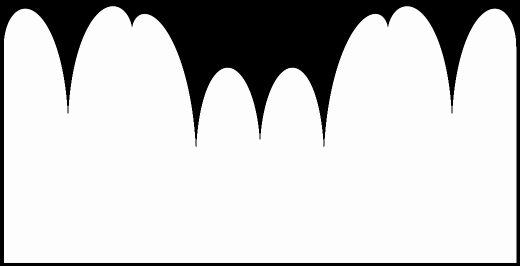
And here’s an arching blancmange curve that’s alternately negative and positive:


Negative-positive arching blancmange curve (animated)


The circular version looks like this:


Negative-positive arching blancmange circle (animated)


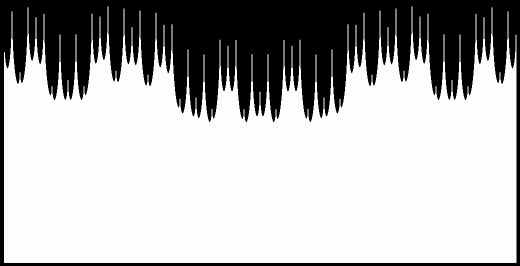
Finally, here’s an arching blancmange curve that’s alternately positive and negative:


Positive-negative arching blancmange curve (animated)


And the circular version:


Positive-negative arching blancmange circle (animated)


Elsewhere Other-Accessible…

White Rites — more variations on blancmange curves

Tright Sights

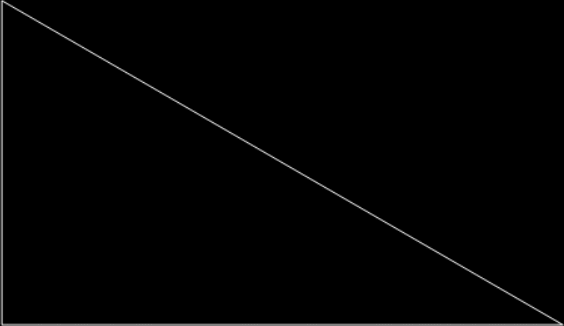
Here’s a right triangle, where a^2 + b^2 = c^2. But what are the exact values of a, b, and c?


You might be able to guess by eye, but could you prove your guess? Now try the same right triangle tiled with three identical copies of itself:

1-√3-2 triangle as rep3 rep-tile


Now you can prove the exact values of a, b, and c. If the vertical side, a, is 1, then the hypotenuse, c, is 2, because the length that fits once into a fits twice into c. Therefore 2^2 = 1^2 + b^2 → 4 = 1 + b^2 → 4-1 = b^2 → 3 = b^2 → √3 = b. The horizontal side, b, has a length of √3 = 1.73205080757… So the right triangle is 1-√3-2. And if it’s rep3, that is, can be divided into three identical copies of itself, then it’s also rep9, rep27, and so on:

1-√3-2 triangle as rep9 rep-tile


1-√3-2 triangle as rep27 rep-tile


1-√3-2 triangle as rep81 rep-tile


1-√3-2 triangle as rep243 rep-tile


1-√3-2 triangle as rep729 rep-tile


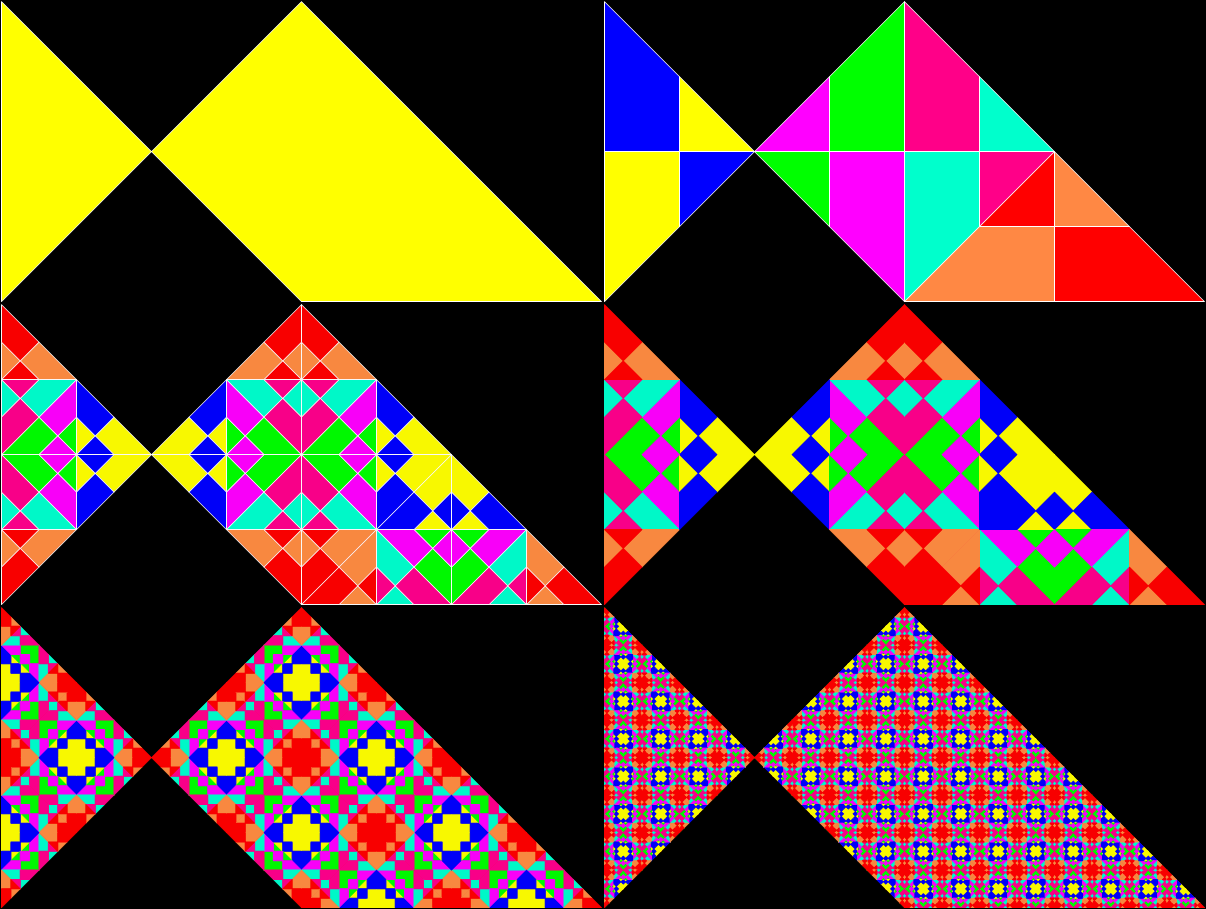
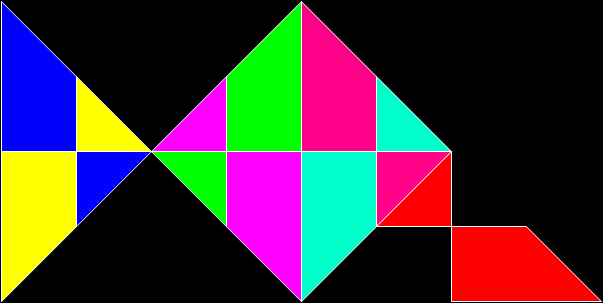
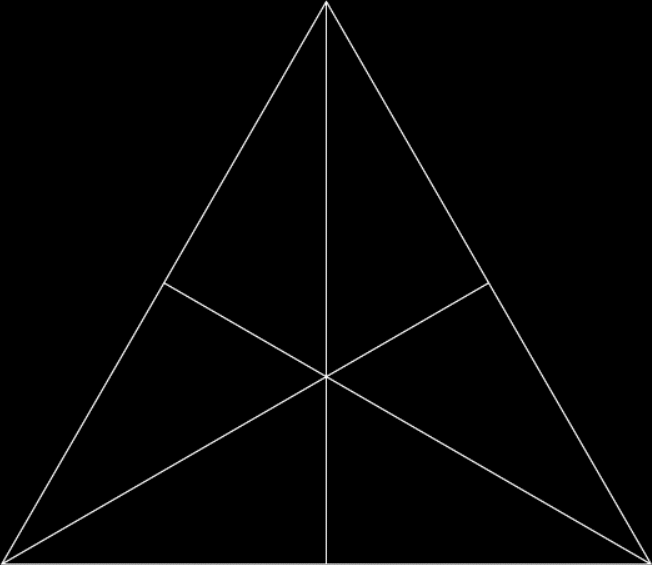
Once you’ve got a rep-tile, you can create fractals. But the 1-√3-2 triangle is cramped. You need more space to work with. And it’s easy to find that space when you realize that a standard equilateral triangle can be divided into six 1-√3-2 triangles:

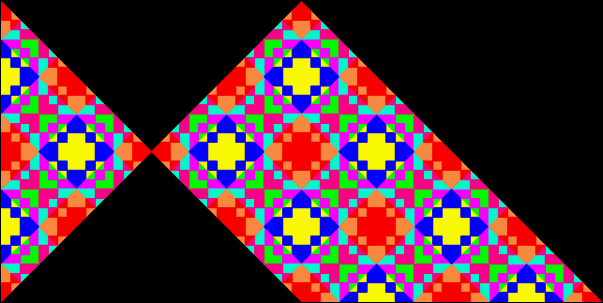
Equilateral triangle divided into six 1-√3-2 triangles


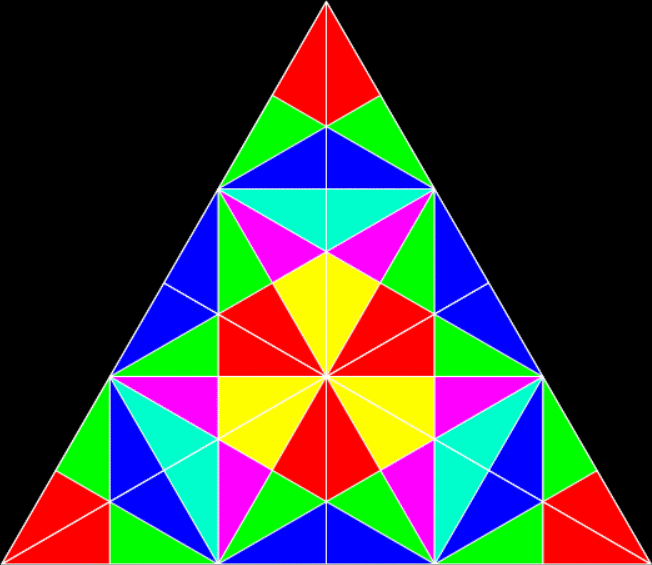
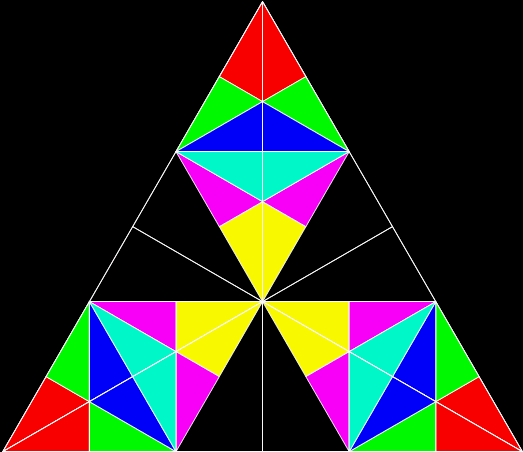
Equilateral triangle tiled with 1-√3-2 triangles (stage 1)

(please open in new window if image is distorted)


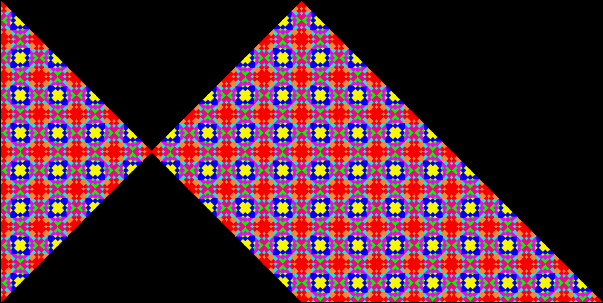
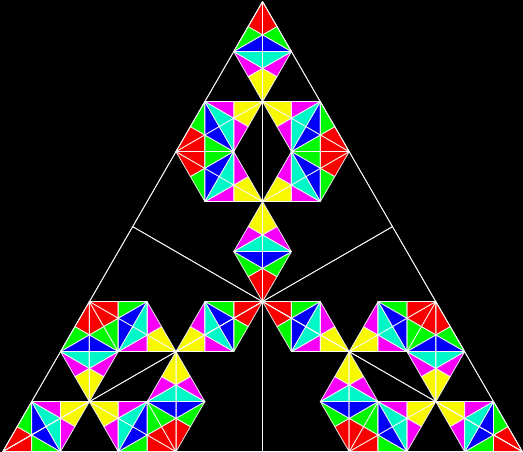
Equilateral triangle tiled with 1-√3-2 triangles (stage 2)


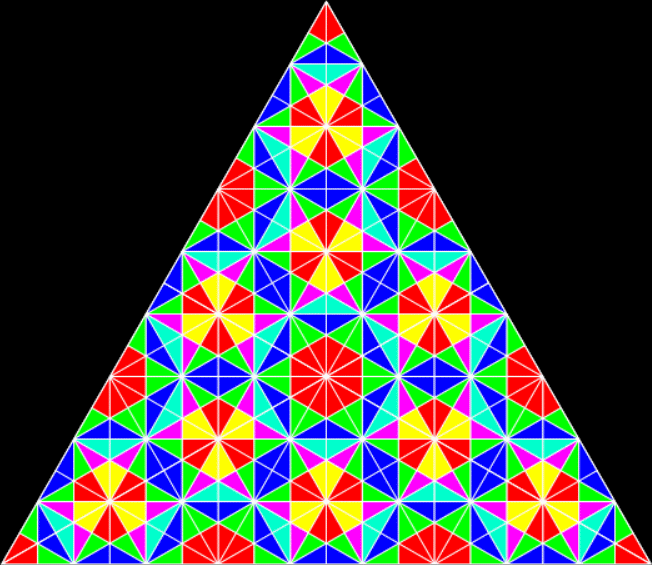
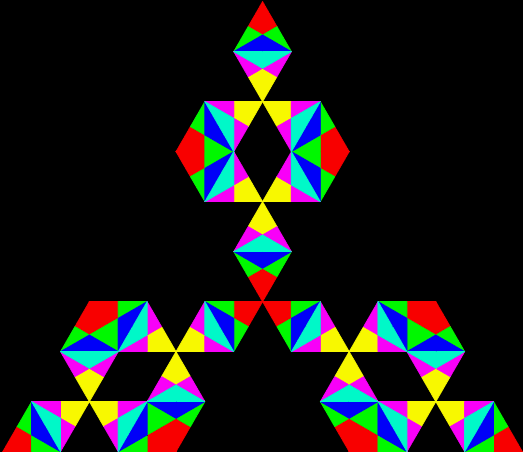
Equilateral triangle tiled with 1-√3-2 triangles (stage 3)


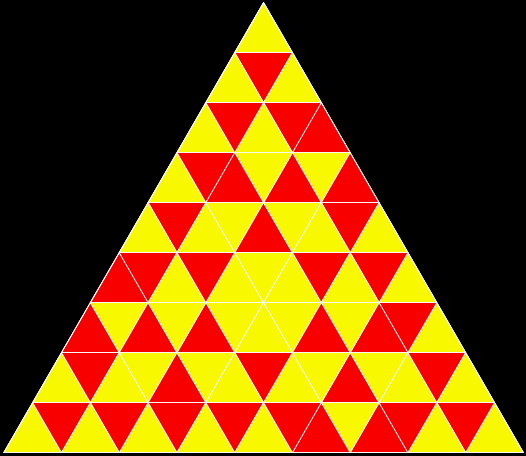
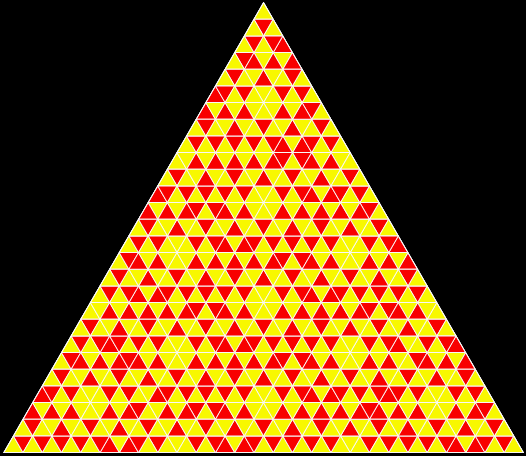
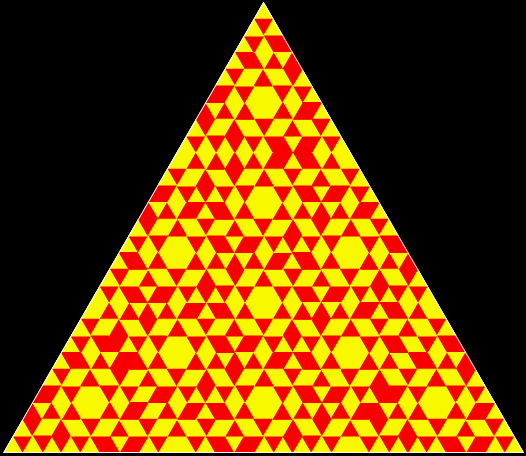
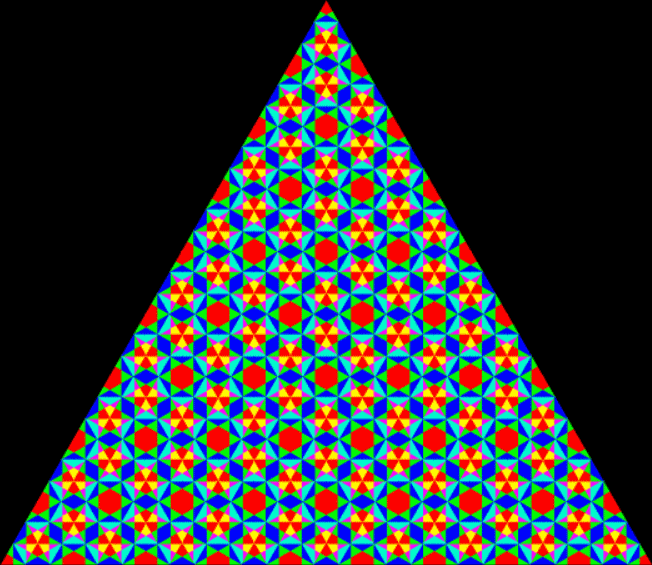
Here are variant colorings of the stage-3 tiled triangle:


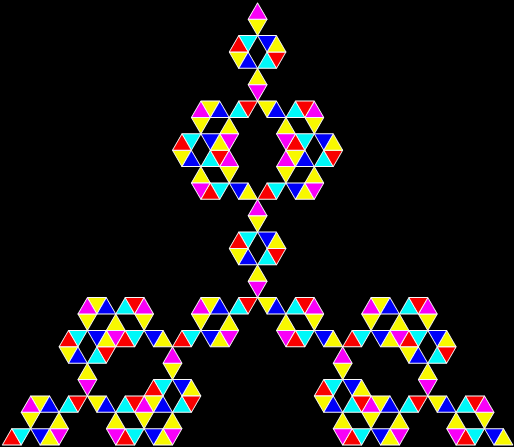
But where are the fractals? In one way, you’ve already seen them. But they get more obvious like this:

Fractal stage 1


Fractal #2


Fractal #3


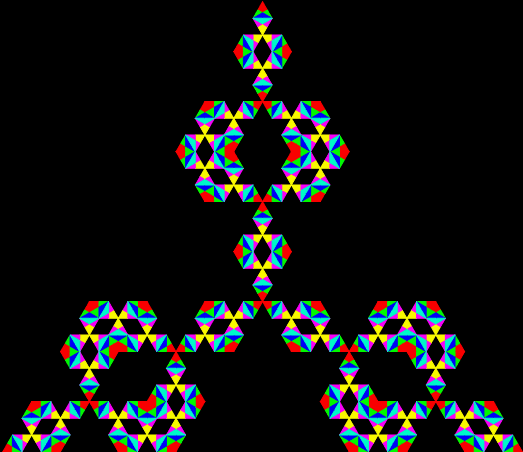
Fractal #4


Fractal #5


Fractal #6


Fractal #7


Fractal #8


Fractal (animated)


Another fractal stage 1

[…]

[…]

Another fractal #8


Another fractal (animated)


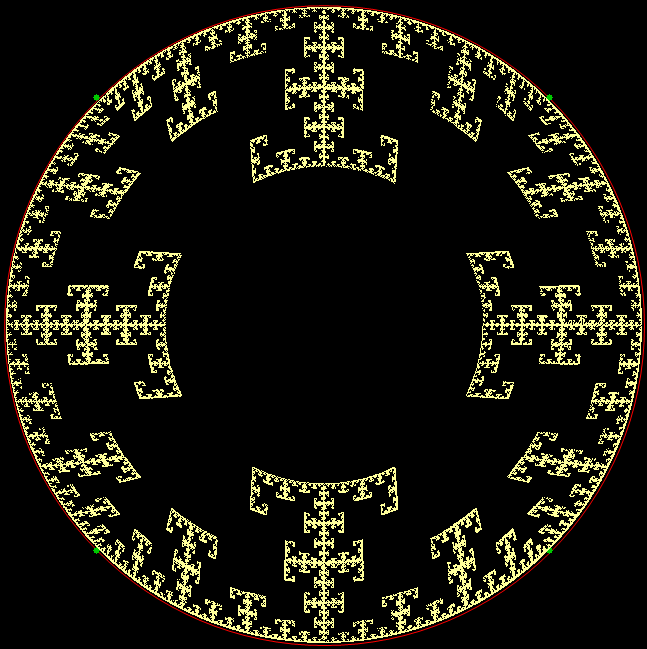
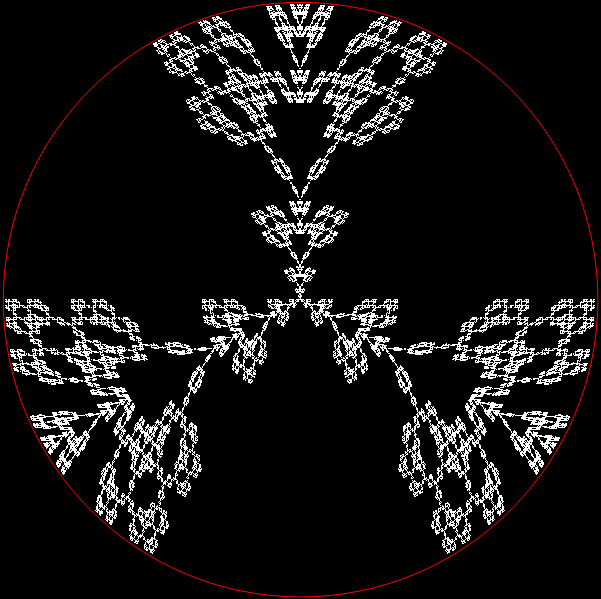
And when you have a fractal created using an equilateral triangle, it’s easy to expand the fractal into a circle, like this:

Original fractal

Fractal expanded into circle


Triangular fractal to circular fractal (animated)


We Can Circ It Out

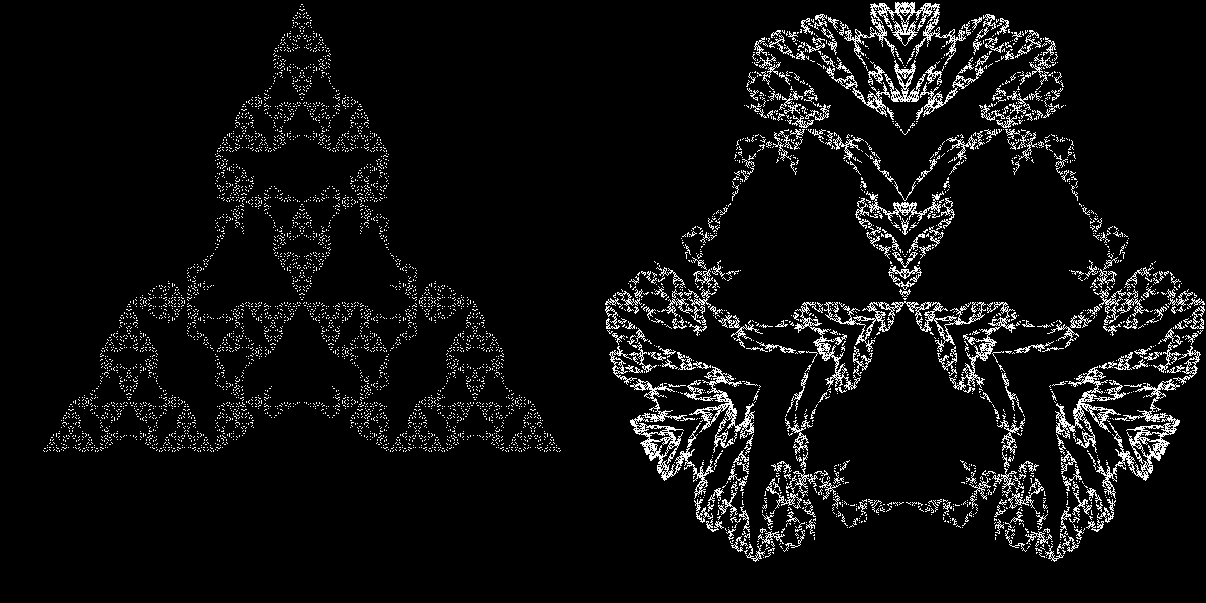
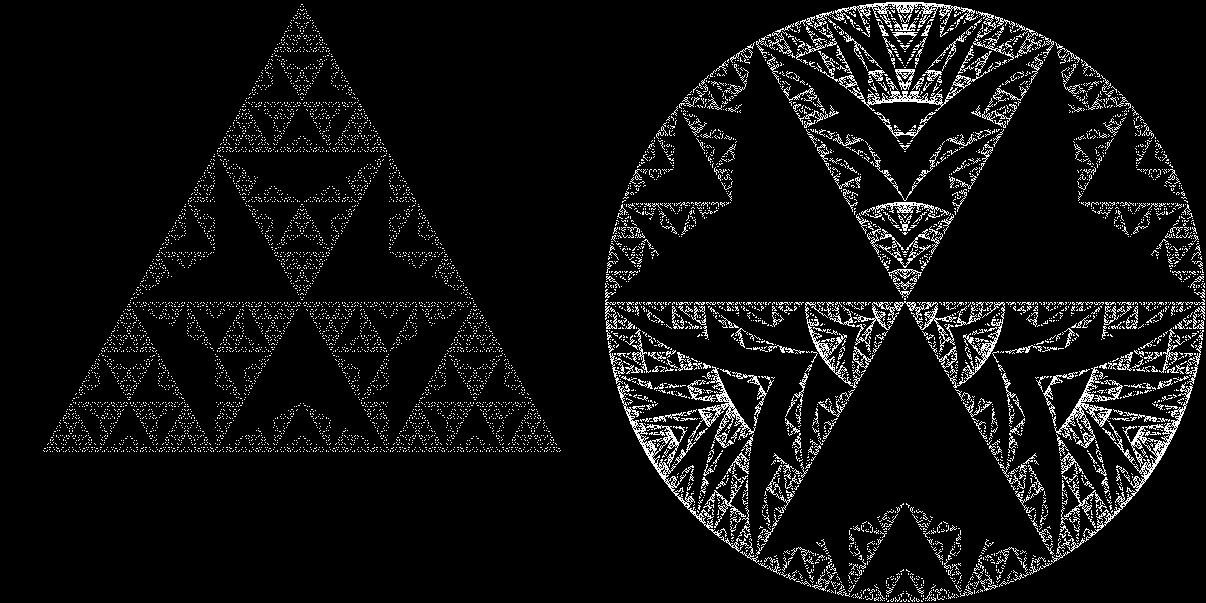
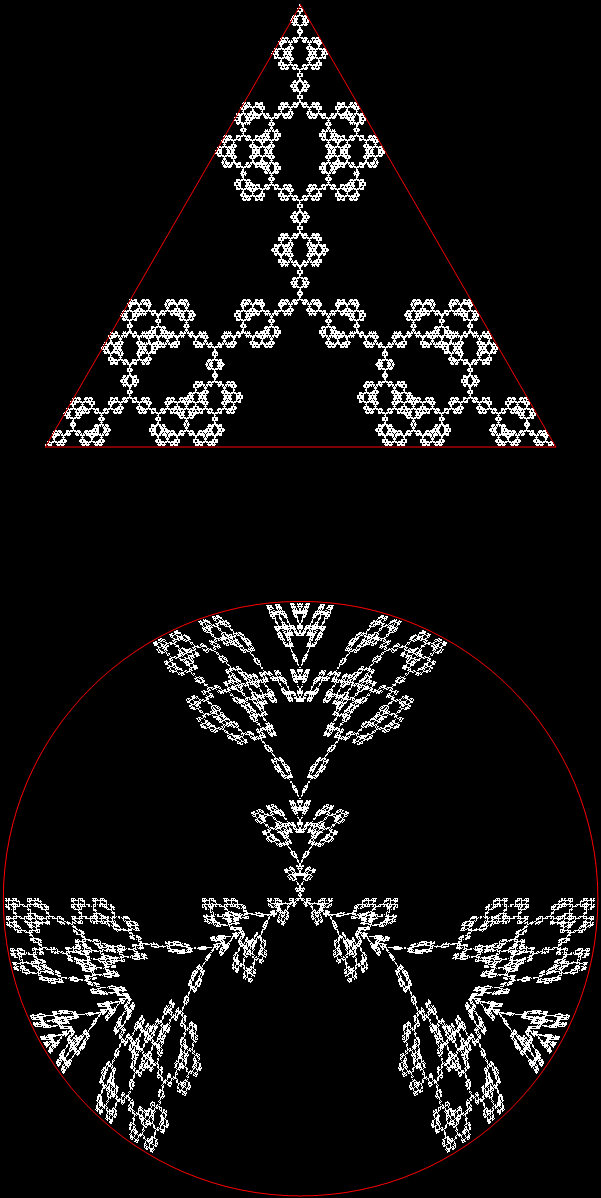
It’s a pretty little problem to convert this triangular fractal…

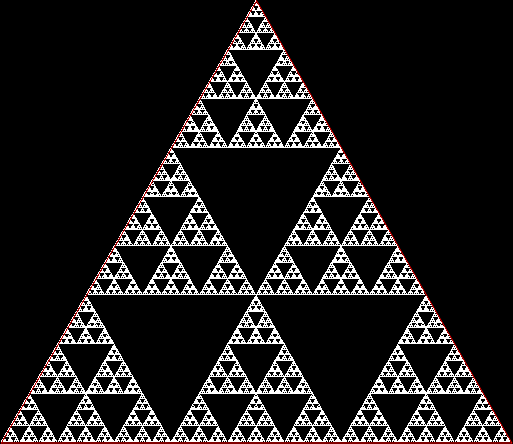
Sierpiński triangle (Wikipedia)


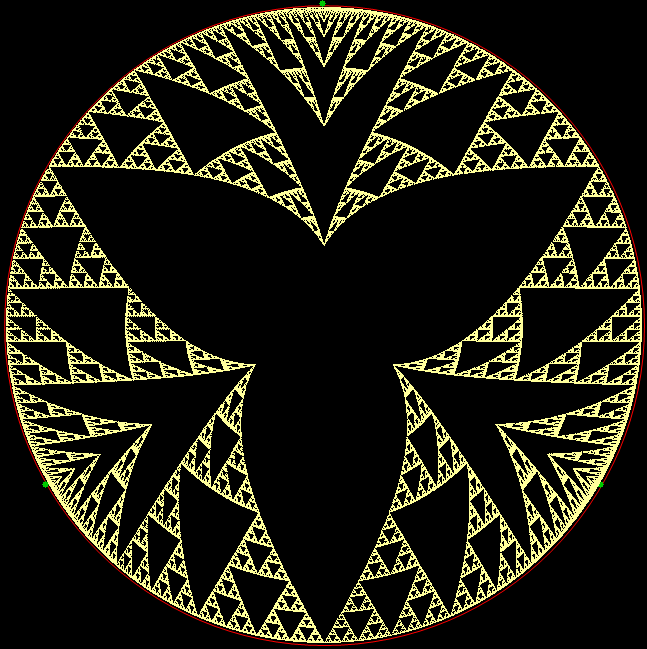
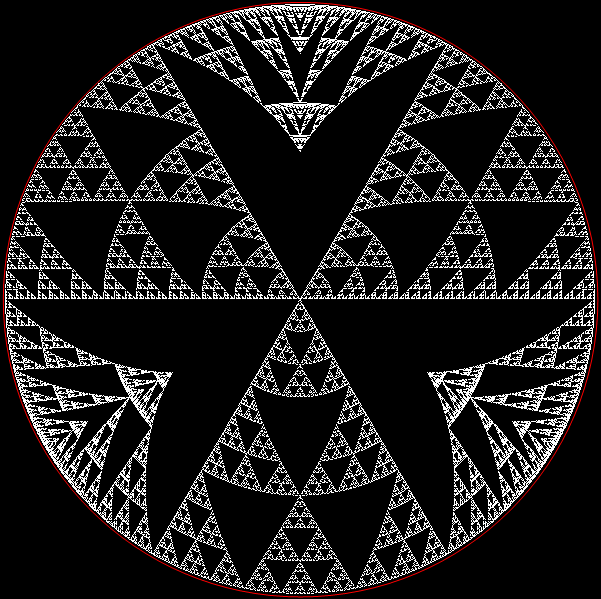
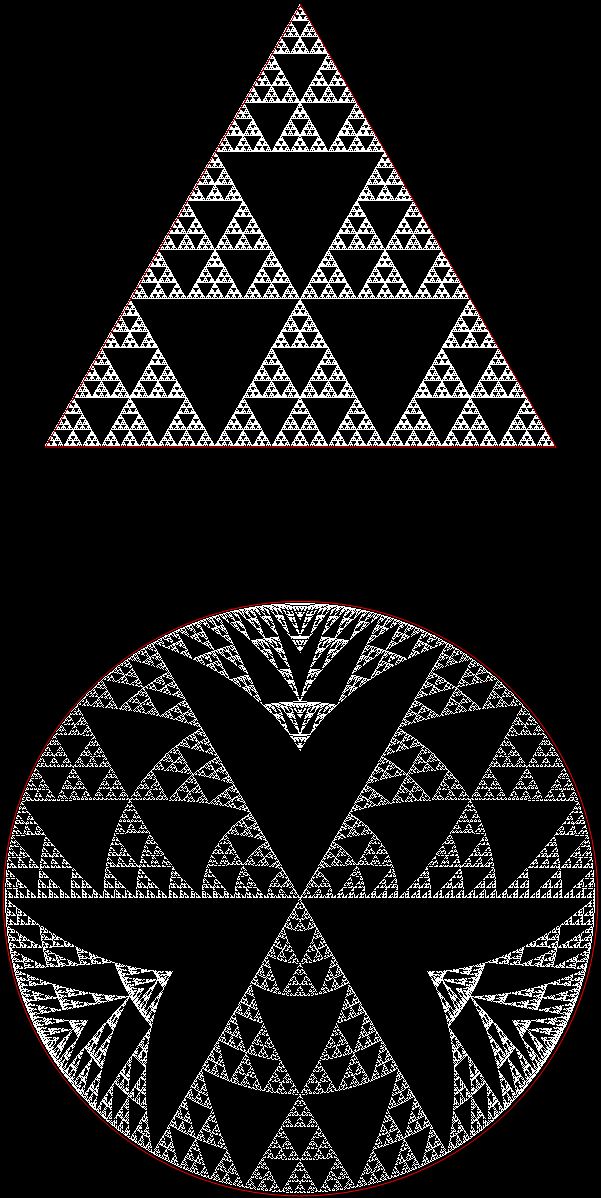
…into its circular equivalent:

Sierpiński triangle as circle


Sierpiński triangle to circle (animated)


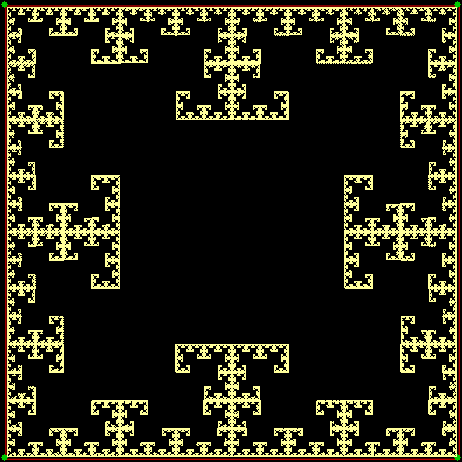
But once you’ve circ’d it out, as it were, you can easily adapt the technique to fractals based on other polygons:

T-square fractal (Wikipedia)

T-square fractal as circle


T-square fractal to circle (animated)


Elsewhere other-accessible…

Dilating the Delta — more on converting polygonic fractals to circles…

Game of Throwns

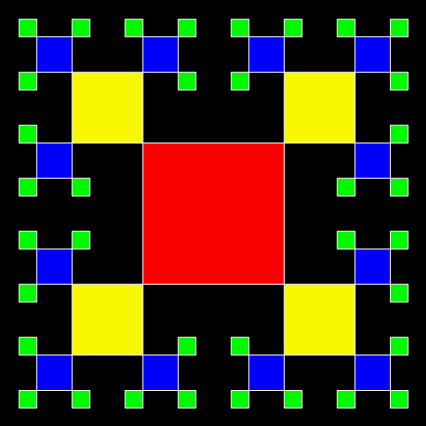
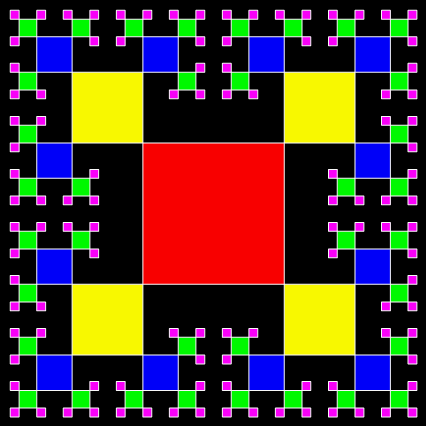
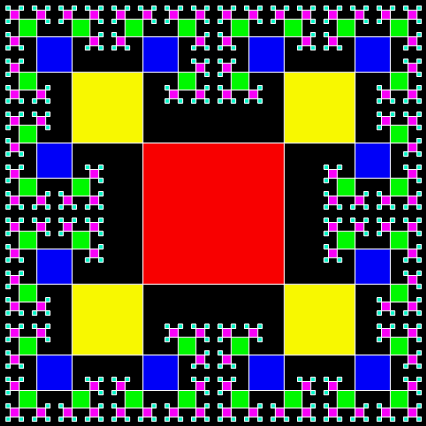
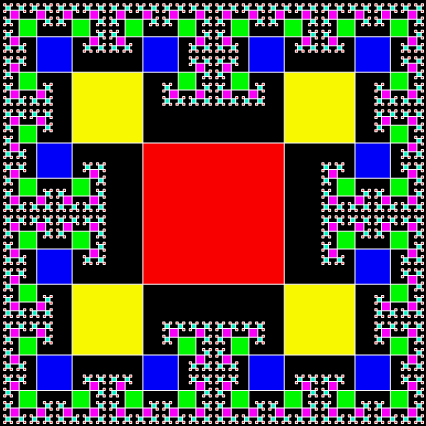
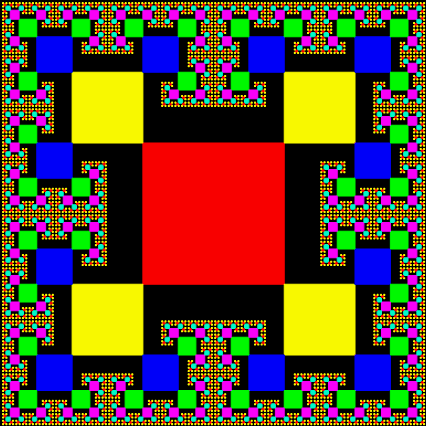
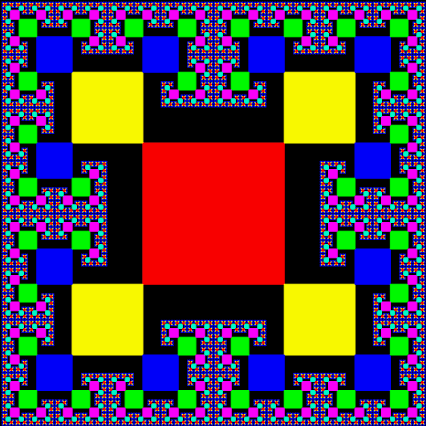
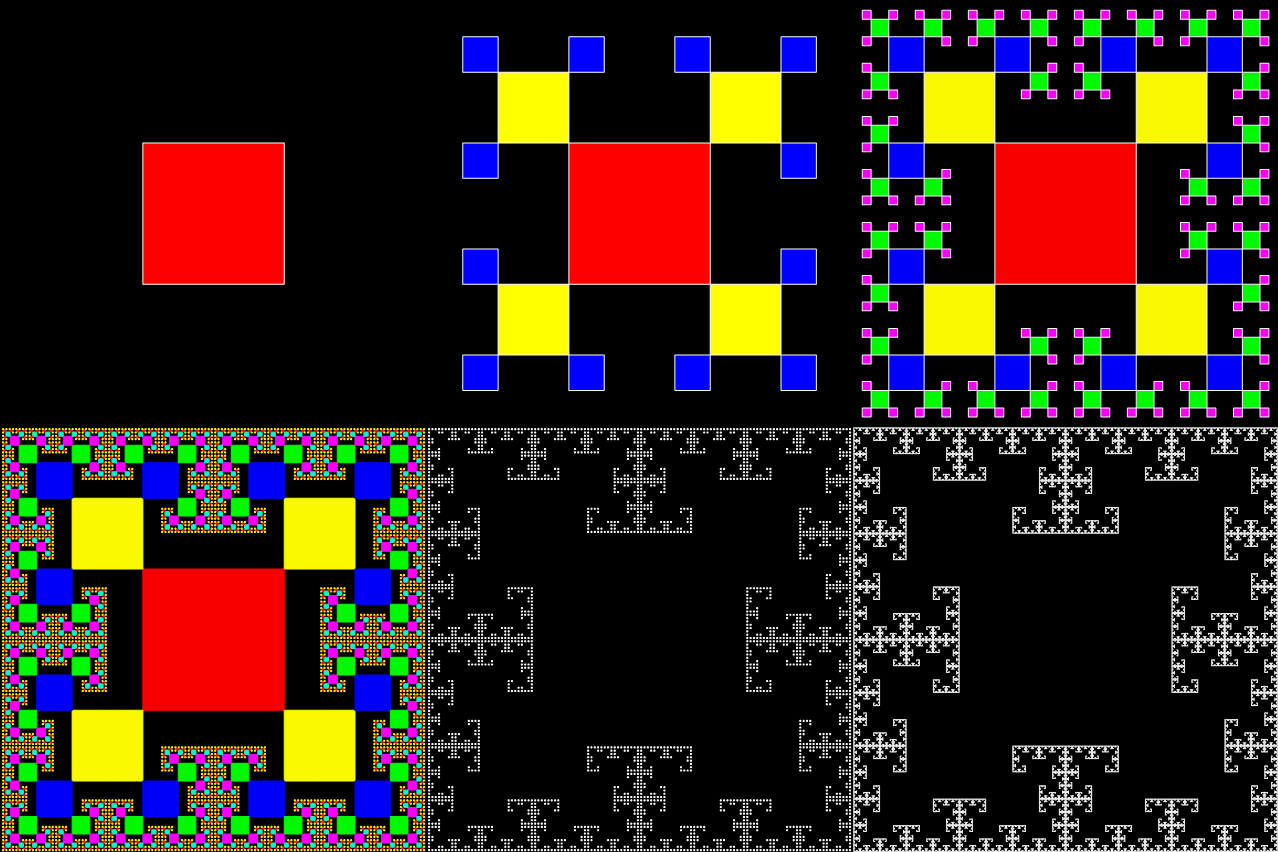
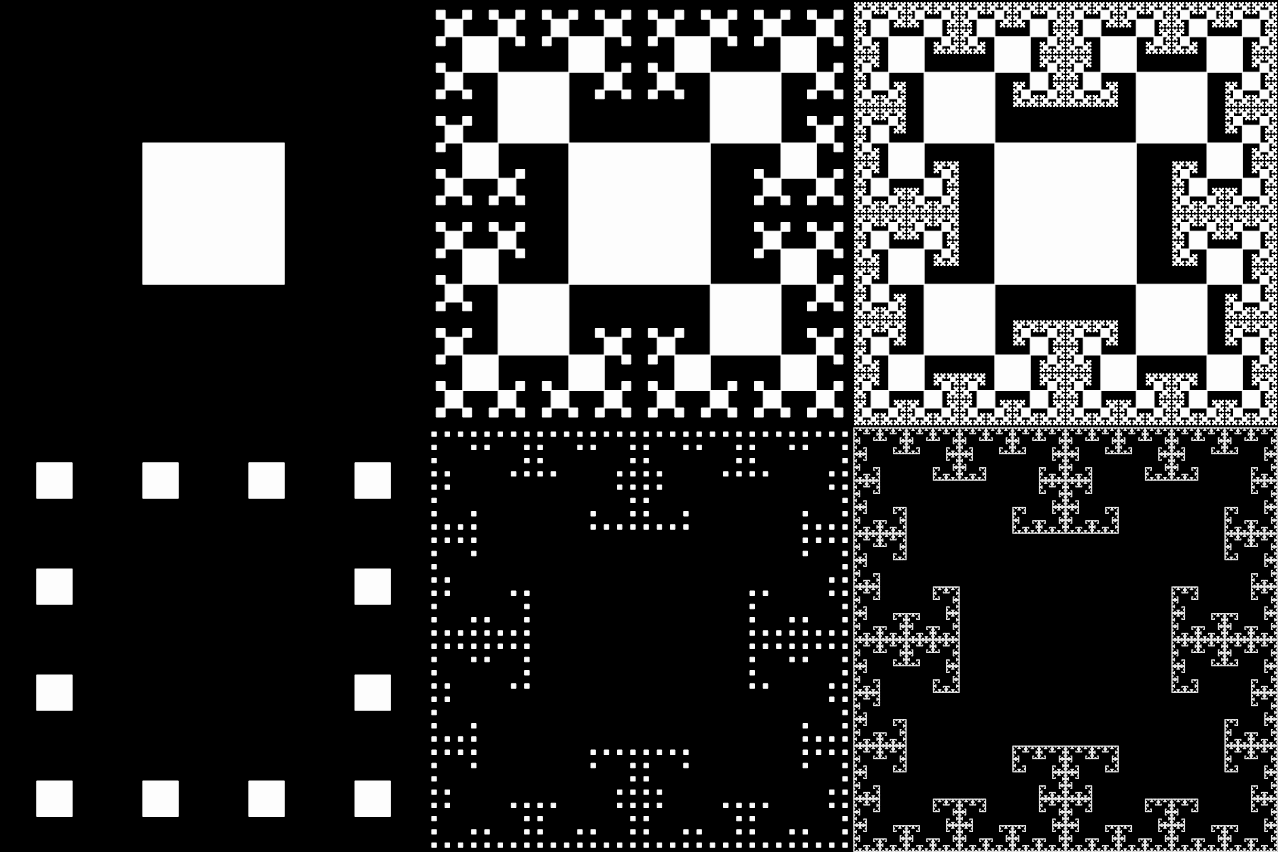
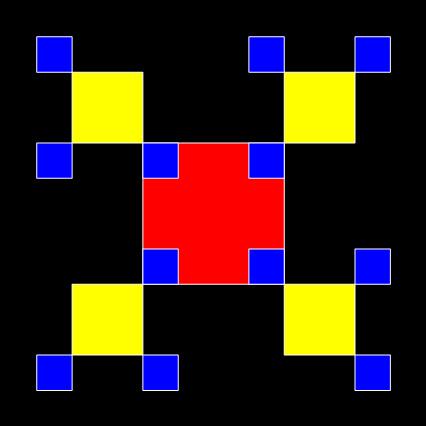
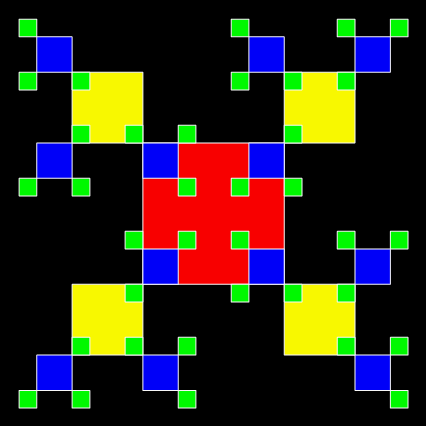
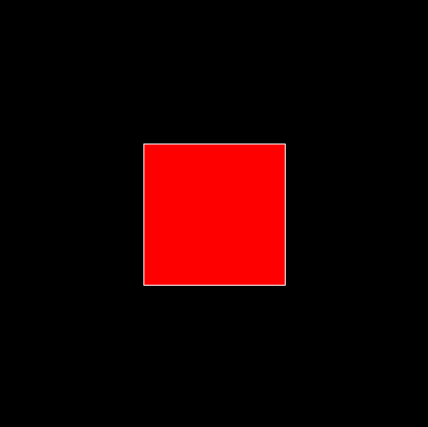
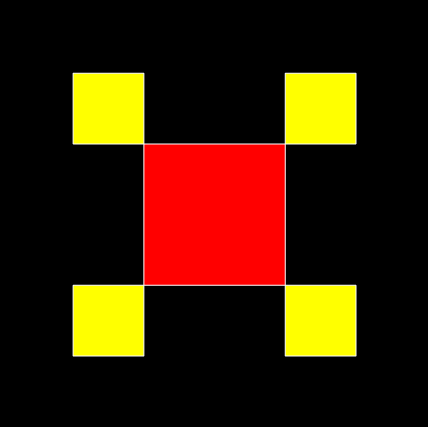
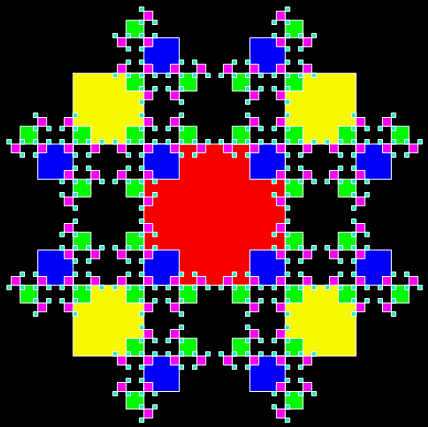
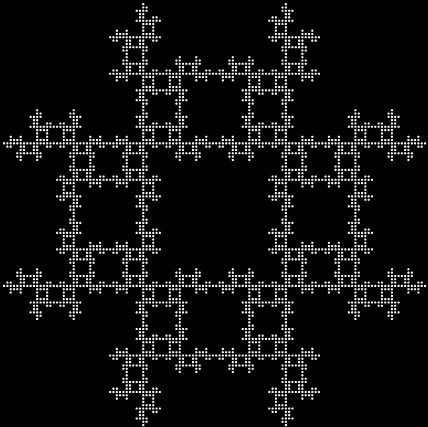
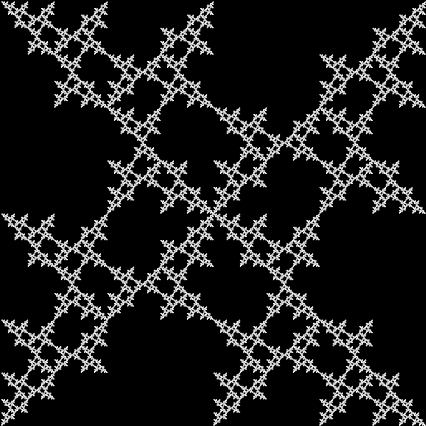
In “Scaffscapes”, I looked at these three fractals and described how they were in a sense the same fractal, even though they looked very different:

Fractal #1


Fractal #2


Fractal #3


But even if they are all the same in some mathematical sense, their different appearances matter in an aesthetic sense. Fractal #1 is unattractive and seems uninteresting:

Fractal #1, unattractive, uninteresting and unnamed


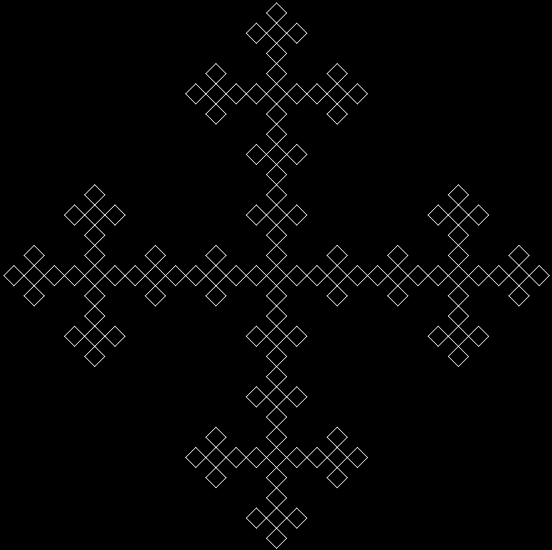
Fractal #3 is attractive and interesting. That’s part of why mathematicians have given it a name, the T-square fractal:

Fractal #3 — the T-square fractal


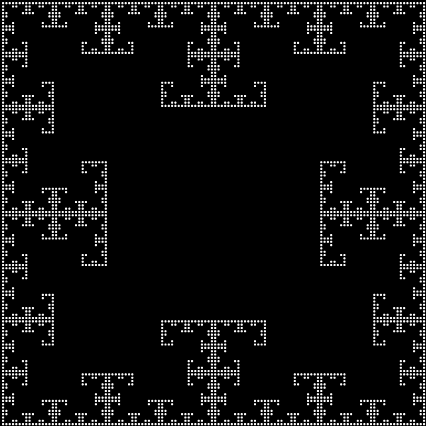
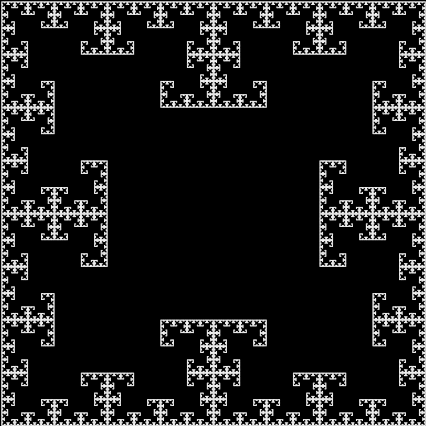
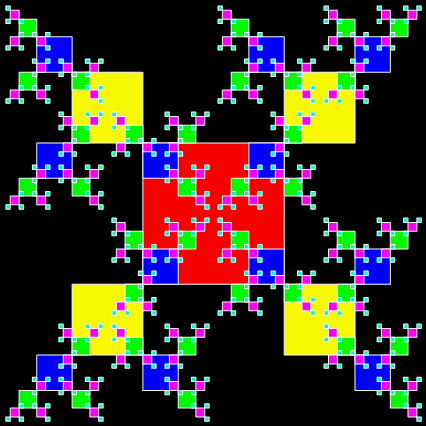
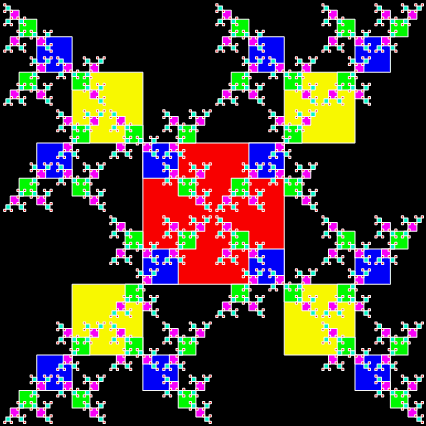
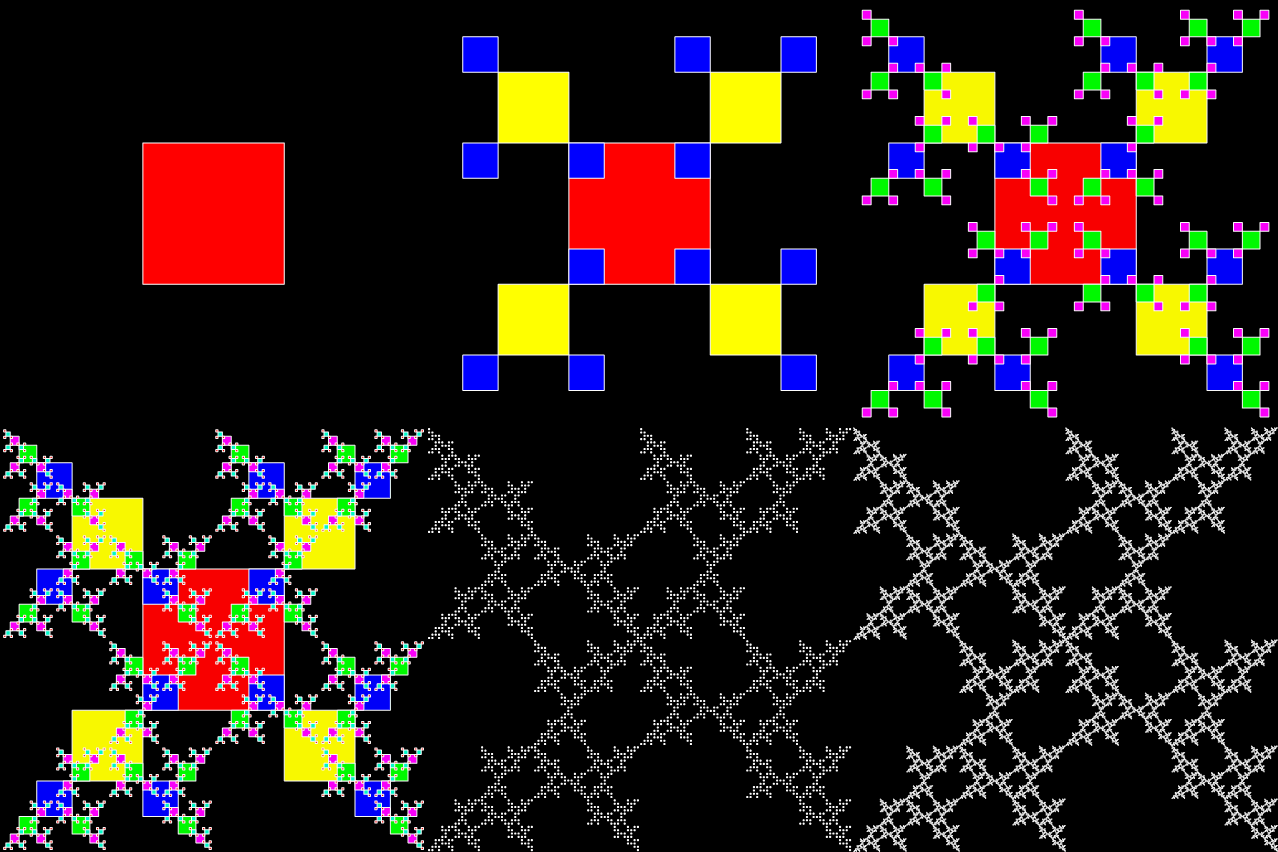
But fractal #2, although it’s attractive and interesting, doesn’t have a name. It reminds me of a ninja throwing-star or shuriken, so I’ve decided to call it the throwing-star fractal or ninja-star fractal:

Fractal #2, the throwing-star fractal


A ninja throwing-star or shuriken


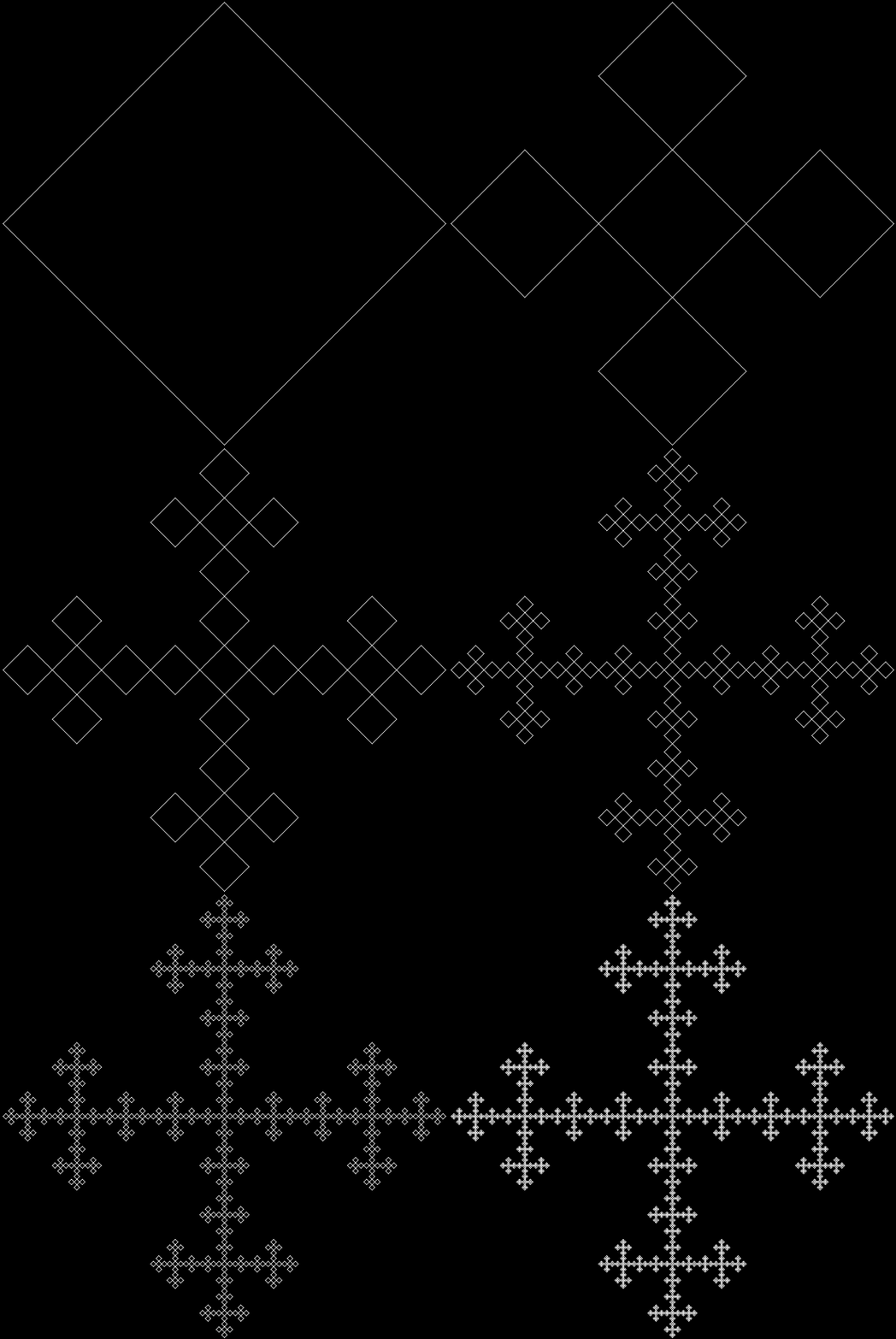
This is one way to construct a throwing-star fractal:

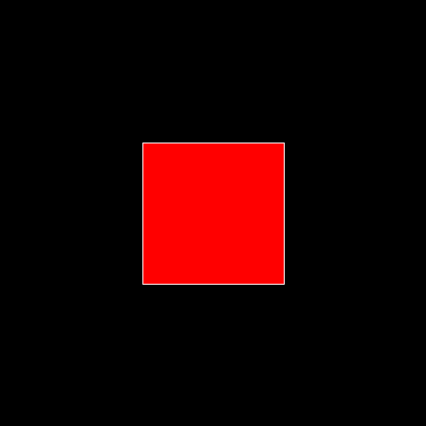
Throwing-star fractal, stage 1


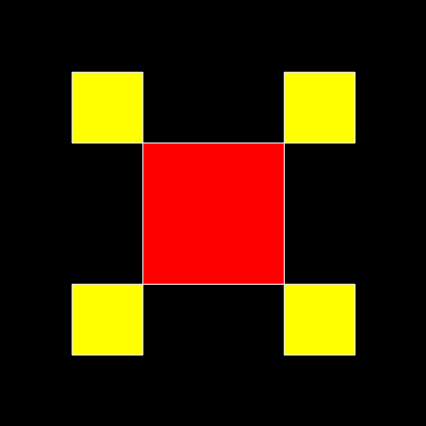
Throwing-star fractal, #2


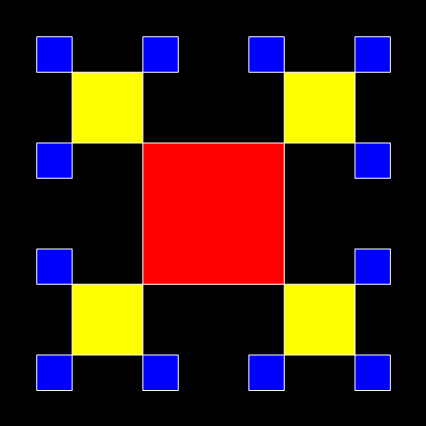
Throwing-star fractal, #3


Throwing-star fractal, #4


Throwing-star fractal, #5


Throwing-star fractal, #6


Throwing-star fractal, #7


Throwing-star fractal, #8


Throwing-star fractal, #9


Throwing-star fractal, #10


Throwing-star fractal, #11


Throwing-star fractal (animated)


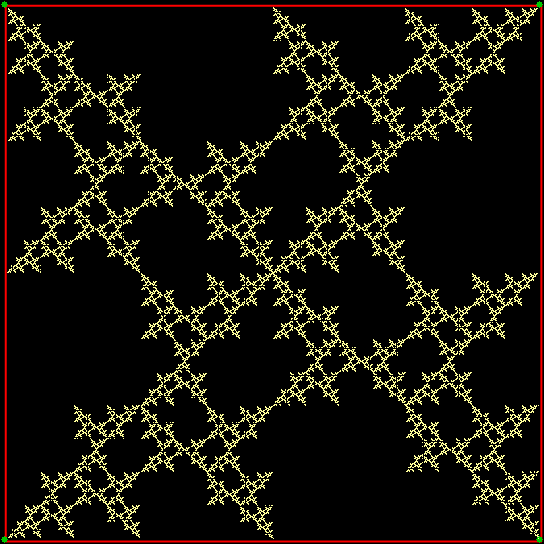
But there’s another way to construct a throwing-star fractal. You use what’s called the chaos game. To understand the commonest form of the chaos game, imagine a ninja inside an equilateral triangle throwing a shuriken again and again halfway towards a randomly chosen vertex of the triangle. If you mark each point where the shuriken lands, you eventually get a fractal called the Sierpiński triangle:

Chaos game with triangle stage 1


Chaos triangle #2


Chaos triangle #3


Chaos triangle #4


Chaos triangle #5


Chaos triangle #6


Chaos triangle #7


Chaos triangle (animated)


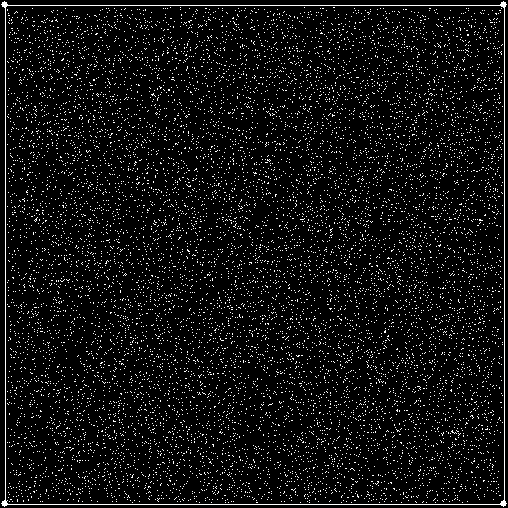
When you try the chaos game with a square, with the ninja throwing the shuriken again and again halfway towards a randomly chosen vertex, you don’t get a fractal. The interior of the square just fills more or less evenly with points:

Chaos game with square, stage 1


Chaos square #2


Chaos square #3


Chaos square #4


Chaos square #5


Chaos square #6
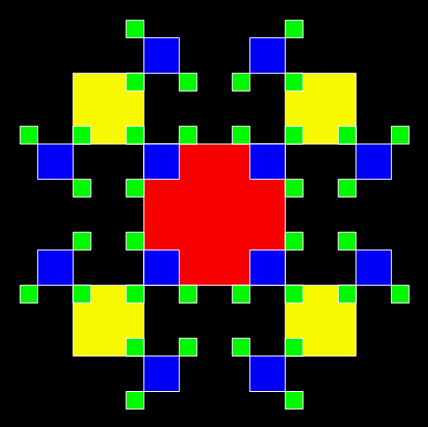

Chaos square (anim)


But suppose you restrict the ninja’s throws in some way. If he can’t throw twice or more in a row towards the same vertex, you get a familiar fractal:

Chaos game with square, ban on throwing towards same vertex, stage 1


Chaos square, ban = v+0, #2


Chaos square, ban = v+0, #3


Chaos square, ban = v+0, #4


Chaos square, ban = v+0, #5


Chaos square, ban = v+0, #6
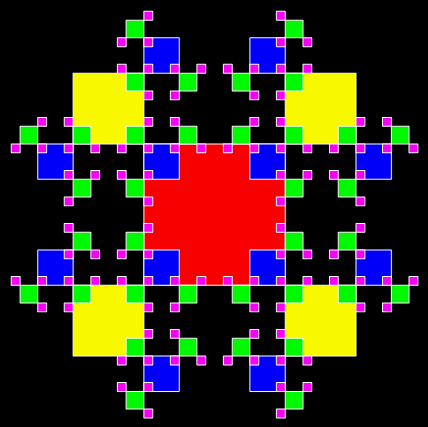

Chaos square, ban = v+0 (anim)


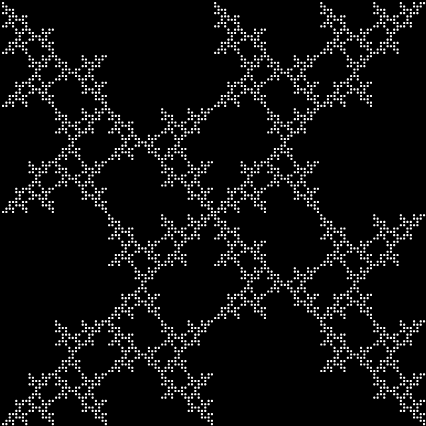
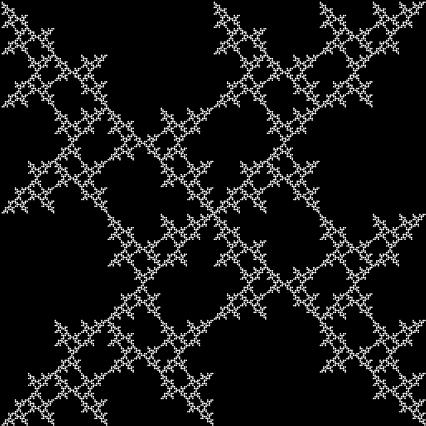
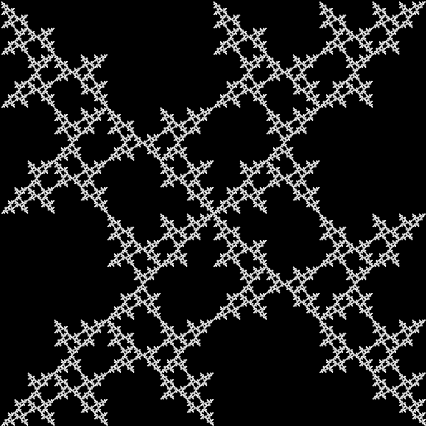
But what if the ninja can’t throw the shuriken towards the vertex one place anti-clockwise of the vertex he’s just thrown it towards? Then you get another familiar fractal — the throwing-star fractal:

Chaos square, ban = v+1, stage 1


Chaos square, ban = v+1, #2


Chaos square, ban = v+1, #3


Chaos square, ban = v+1, #4


Chaos square, ban = v+1, #5


Game of Throwns — throwing-star fractal from chaos game (static)


Game of Throwns — throwing-star fractal from chaos game (anim)


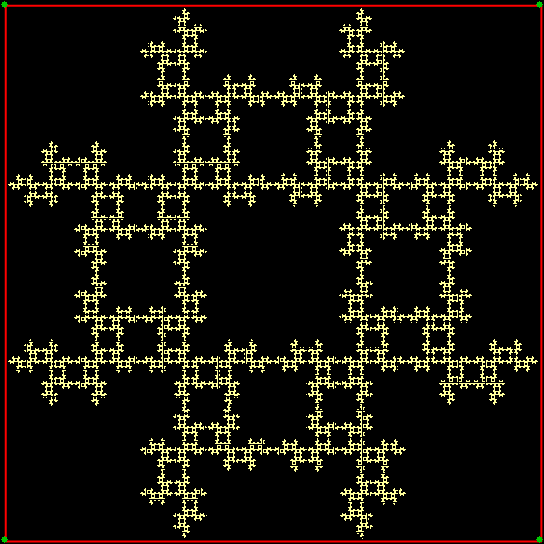
And what if the ninja can’t throw towards the vertex two places anti-clockwise (or two places clockwise) of the vertex he’s just thrown the shuriken towards? Then you get a third familiar fractal — the T-square fractal:

Chaos square, ban = v+2, stage 1


Chaos square, ban = v+2, #2


Chaos square, ban = v+2, #3


Chaos square, ban = v+2, #4


Chaos square, ban = v+2, #5


T-square fractal from chaos game (static)


T-square fractal from chaos game (anim)


Finally, what if the ninja can’t throw towards the vertex three places anti-clockwise, or one place clockwise, of the vertex he’s just thrown the shuriken towards? If you can guess what happens, your mathematical intuition is much better than mine.


Post-Performative Post-Scriptum

I am not now and never have been a fan of George R.R. Martin. He may be a good author but I’ve always suspected otherwise, so I’ve never read any of his books or seen any of the TV adaptations.

Scaffscapes

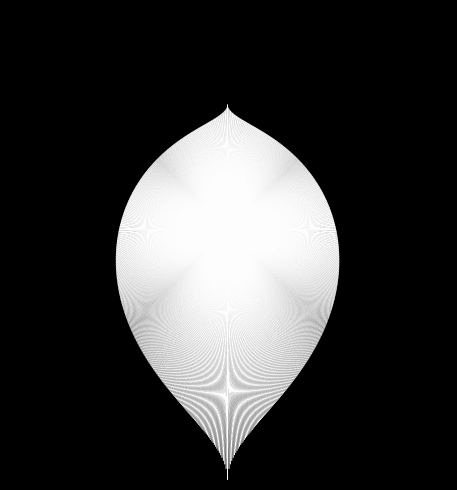
A fractal is a shape that contains copies of itself on smaller and smaller scales. You can find fractals everywhere in nature. Part of a fern looks like the fern as a whole:

Fern as fractal (source)


Part of a tree looks like the tree as a whole:

Tree as fractal (source)


Part of a landscape looks like the landscape as a whole:

Landscape as fractal (source)


You can also create fractals for yourself. Here are three that I’ve constructed:

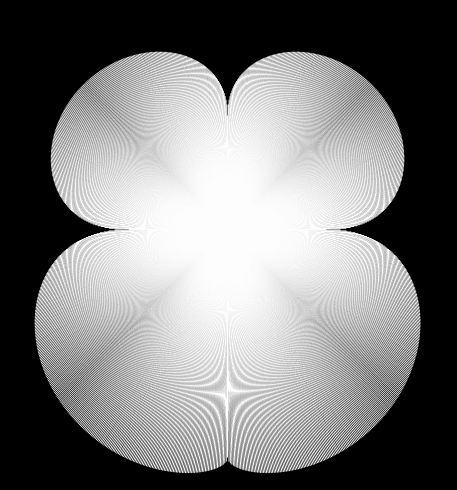
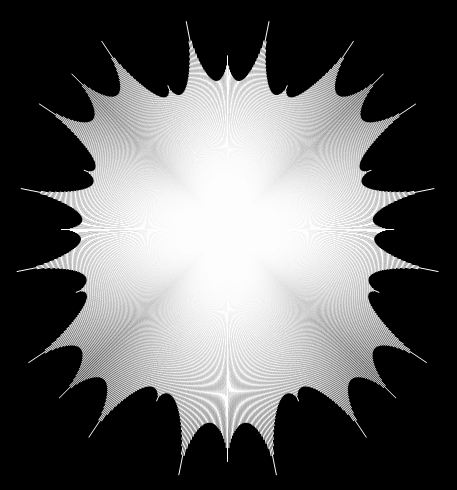
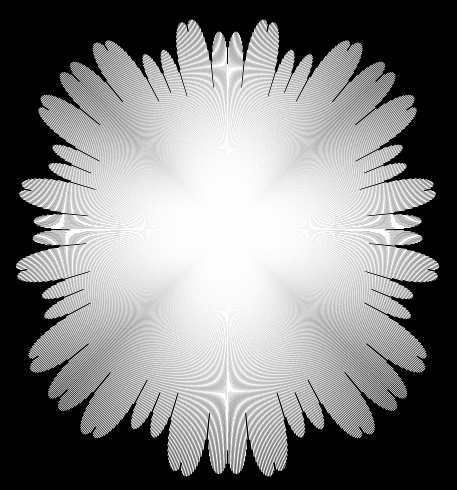
Fractal #1


Fractal #2


Fractal #3 — the T-square fractal


The three fractals look very different and, in one sense, that’s exactly what they are. But in another sense, they’re the same fractal. Each can morph into the other two:

Fractal #1 → fractal #2 → fractal #3 (animated)


Here are two more fractals taken en route from fractal #2 to fractal #3, as it were:

Fractal #4


Fractal #5


To understand how the fractals belong together, you have to see what might be called the scaffolding. The construction of fractal #3 is the easiest to understand. First you put up the scaffolding, then you take it away and leave the final fractal:

Fractal #3, scaffolding stage 1


Fractal #3, stage 2


Fractal #3, stage 3


Fractal #3, stage 4


Fractal #3, stage 5


Fractal #3, stage 6
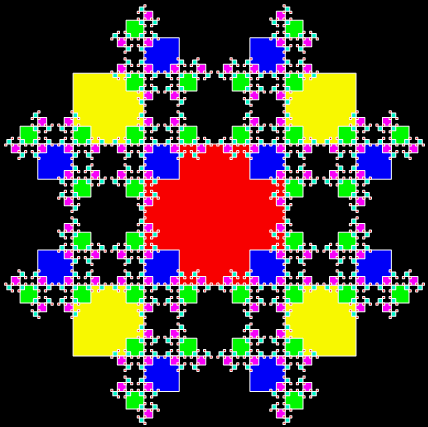

Fractal #3, stage 7


Fractal #3, stage 8


Fractal #3, stage 9


Fractal #3, stage 10


Fractal #3 (scaffolding removed)


Construction of fractal #3 (animated)


Now here’s the construction of fractal #1:

Fractal #1, stage 1


Fractal #1, stage 2


Fractal #1, stage 3

Construction of fractal #1 (animated)


Fractal #1 (static)


And the constructions of fractals #2, #4 and #5:

Fractal #2, stage 1


Fractal #2, stage 2


Fractal #2, stage 3

Fractal #2 (animated)


Fractal #2 (static)


Fractal #4, stage 1


Fractal #4, stage 2


Fractal #4, stage 3

Fractal #4 (animated)


Fractal #4 (static)


Fractal #5, stage 1


Fractal #5, stage 2


Fractal #5, stage 3

Fractal #5 (animated)


Fractal #5