Weird Tails

Squirrel

Meaning

One or other of various species of slender, graceful, agile rodents (characterized by a long bushy tail, furry coat, and bright eyes), belonging to the genus Sciurus, or to the widely-distributed sub-family Sciurina including this; esp. the common species Sciurus vulgaris, native to Britain, Europe, and parts of Asia.

Etymology

Anglo-Norman esquirel, Old French esquireul, escureul, ‑ol, etc. (modern French écureuil), = Provençal escurols, Spanish esquirol, medieval Latin (e)scurellus, scurellius, scuriolus, diminutives from popular Latin *scūrius, for Latin sciūrus, < Greek σκίουρος, apparently < σκιά shade + οὐρά tail.

Oxford English Dictionary, entry for “Squirrel”.

Omnia e Tarot

« Une personne emprisonnée sans autre livre que le Tarot, s’il savait comment l’utiliser, pourrait dans quelques années acquérir une connaissance universelle et pourrait s’exprimer sur tous les sujets avec un savoir inégalé et une éloquence inépuisable. » – Éliphas Lévi (1810-75)

• “An imprisoned person, with no other book than the Tarot, if he knew how to use it, could in a few years acquire universal knowledge, and would be able to speak on all subjects with unequalled learning and inexhaustible eloquence.” – Éliphas Lévi


Post-Performative Post-Scriptum

I’m not sure if the above is the French original. It might be a back-translation of the English translation of the French original, because I found it here, not in any online French texts by Lévi.

Drain Brain

Eh bien, avant-hier 17 mars 1838, cet homme est mort. Des médecins sont venus, et ont embaumé le cadavre. Pour cela, à la manière des Égyptiens, ils ont retiré les entrailles du ventre et le cerveau du crâne. La chose faite, après avoir transformé le prince de Talleyrand en momie et cloué cette momie dans une bière tapissée de satin blanc, ils se sont retirés, laissant sur une table la cervelle, cette cervelle qui avait pensé tant de choses, inspiré tant d’hommes, construit tant d’édifices, conduit deux révolutions, trompé vingt rois, contenu le monde.

Les médecins partis, un valet est entré, il a vu ce qu’ils avaient laissé : Tiens ! ils ont oublié cela. Qu’en faire ? Il s’est souvenu qu’il y avait un égout dans la rue, il y est allé, et a jeté ce cerveau dans cet égout. — Victor Hugo, Choses vues: Talleyrand, 1838


And so, the day before yesterday, March 17, 1838, this man died. Doctors came and embalmed the corpse. They did this like the Egyptians, removing the entrails from the stomach and the brain from the skull. When they were done, having transformed Prince Talleyrand into a mummy and nailing this mummy in a bier lined with white satin, they withdrew, leaving the brain on a table, this brain that had thought so many things, inspired so many men, built so many buildings, led two revolutions, deceived twenty kings, had contained the world.

With the doctors gone, a valet came in and saw what they had left: Hey! they forgot that. What shall I do with it? He remembered that there was a sewer in the street, so he went out and threw the brain into the sewer. — Victor Hugo, Things Seen, 1838

Mot d’un Moucheron

« Que me proposent-ils là, les imprudents ! Parce que j’ai remué quelques grains de sable sur le rivage, suis-je en état de connaître les abîmes océaniques ? La vie a des secrets, insondables. Le savoir humain sera rayé des archives du monde avant que nous ayons le dernier mot d’un moucheron. » — Souvenirs entomologiques de Jean-Henri Fabre (1823-1915)

— “What do they want from me, those imprudent ones? Because I’ve lifted a few grains of sand on the shore, am I ready to sound the ocean’s depths? Life has secrets, unfathomable secrets. Human knowledge will be erased from the world’s archives before we have the last word on a gnat.”

Performativizing Papyrocentricity #77

Papyrocentric Performativity Presents…

Bestial at the FestivalThe Festival, D.M. Mitchell (2021)

Linkin’ LawyerResurrection Walk, Michael Connelly (2023)

Mini MikiMaximal Mikita: The Mostly Morbid Memoirs of Mikita Brottman, Mikita Brottman (2024)

Spider GuiderBritain’s Spiders: A Field Guide, Lawrence Bee, Geoff Oxford and Helen Smith (2020)

Gnostalgie du PerduGnosticism: An Anthology, ed. Robert M. Grant (1961)


Or Read a Review at Random: RaRaR

Eternal LIFE

The French mathematician Siméon-Denis Poisson (1781-1840) once said: « La vie n’est bonne qu’à deux choses : à faire des mathématiques et à les professer. » — “Life is good only for two things: doing mathematics and teaching mathematics.” The German philosopher Nietzsche wouldn’t have agreed. He thought (inter alia) that we must learn to accept life as eternally recurring. Everything we do and experience will happen again and again for ever. Can you accept life like that? Then your life is good.

But neither Poisson or Nietzsche knew that Life, with a capital L, would take on a new meaning in the 20th century. It became a mathematical game played on a grid of squares with counters. You start by placing counters in some pattern, regular or random, on the grid, then you add or remove counters according to three simple rules applied to each square of the grid:

1. If an empty square has exactly three counters as neighbors, put a new counter on the square.
2. If a counter has two or three neighbors, leave it where it is.
3. If a counter has less than two or more than three neighbors, remove it from the grid.

And there is a meta-rule: apply all three rules simultaneously. That is, you check all the squares on the grid before you add or remove counters. With these three simple rules, patterns of great complexity and subtlety emerge, growing and dying in a way that reminded the inventor of the game, the English mathematician John Conway, of living organisms. That’s why he called the game Life.

Let’s look at Life in action, with the seeding counters shown in green. Sometimes the seed will evolve and disappear, sometimes it will evolve into one or more fixed shapes, sometimes it will evolve into dynamic shapes that repeat again and again. Here’s an example of a seed that evolves and disappears:
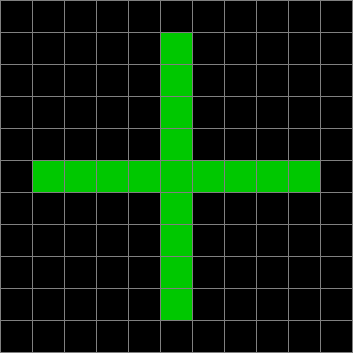
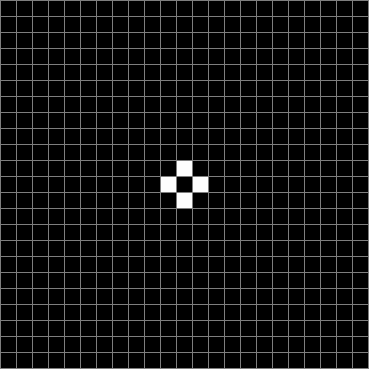
Seeded with cross (arms 4+1+4) stage #1


Life stage #2
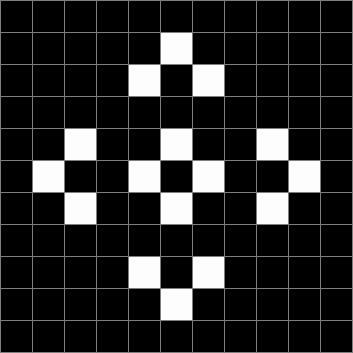

Life stage #3
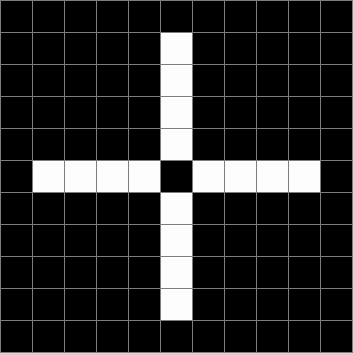

Life stage #4


Life stage #5
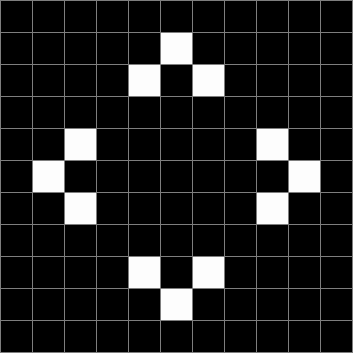

Life stage #6


Life stage #7

Death at stage #8
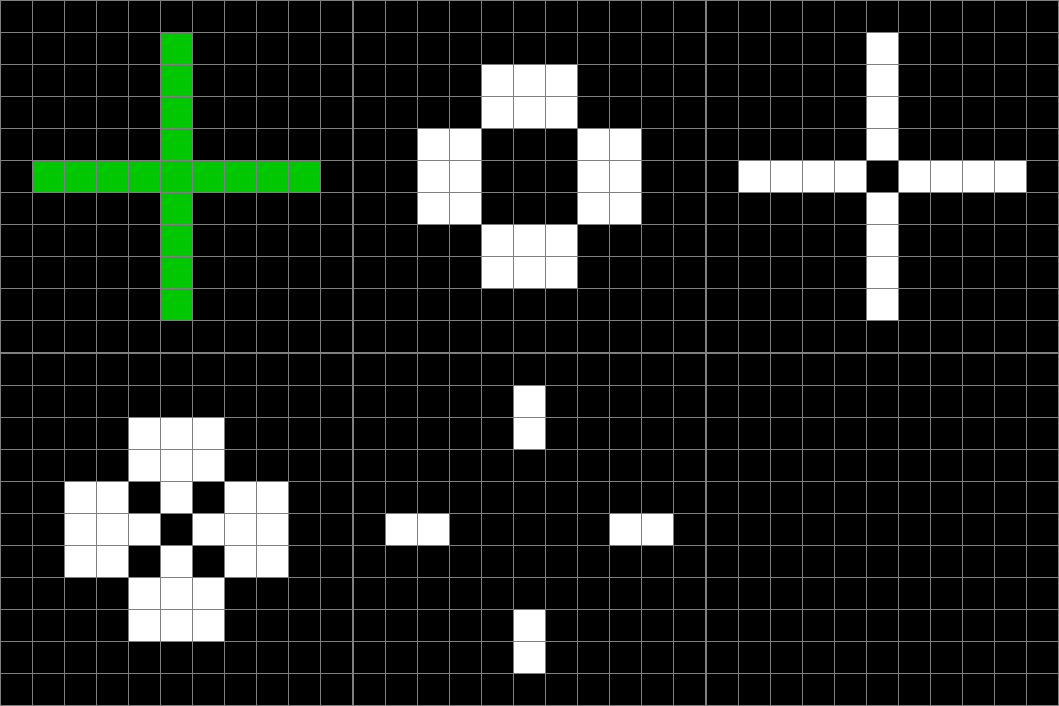

Life from cross (animated)


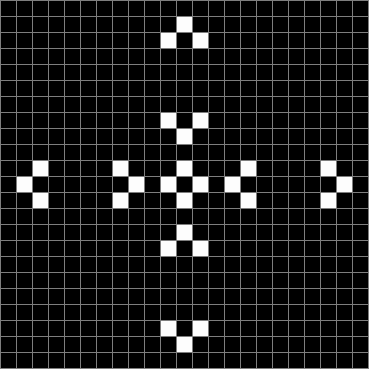
The final stage represents death. Now here’s a cross that evolves towards dynamism:

Life seeded with cross (arms 3+1+3) stage #1


Life stage #2
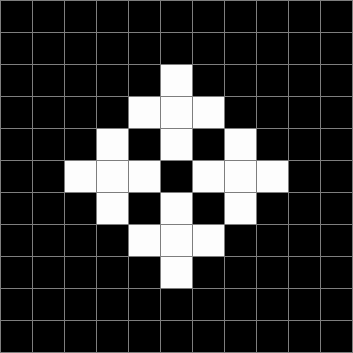

Life stage #3
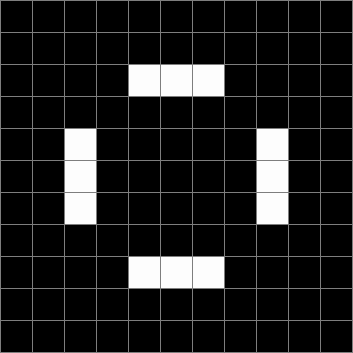

Life stage #4
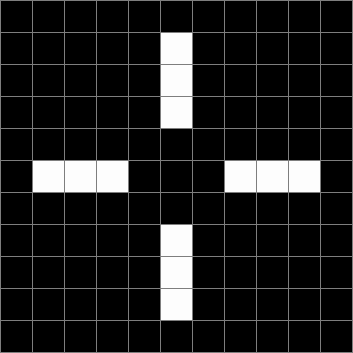

Life stage #5
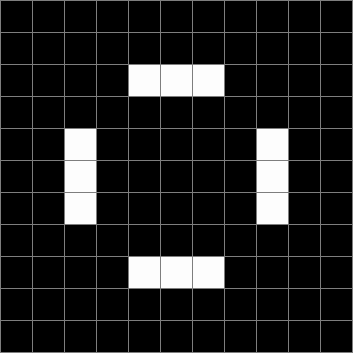

Life stage #6 (same as stage #4)
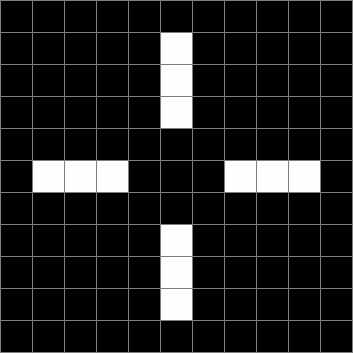

Life stage #7 (same as stage #5)
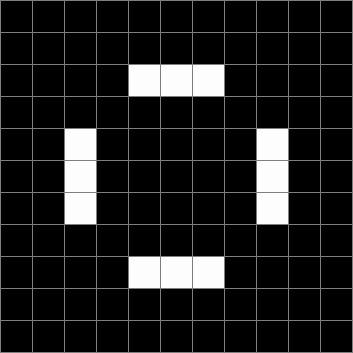

Life stage #8 (same as stage #4 again)
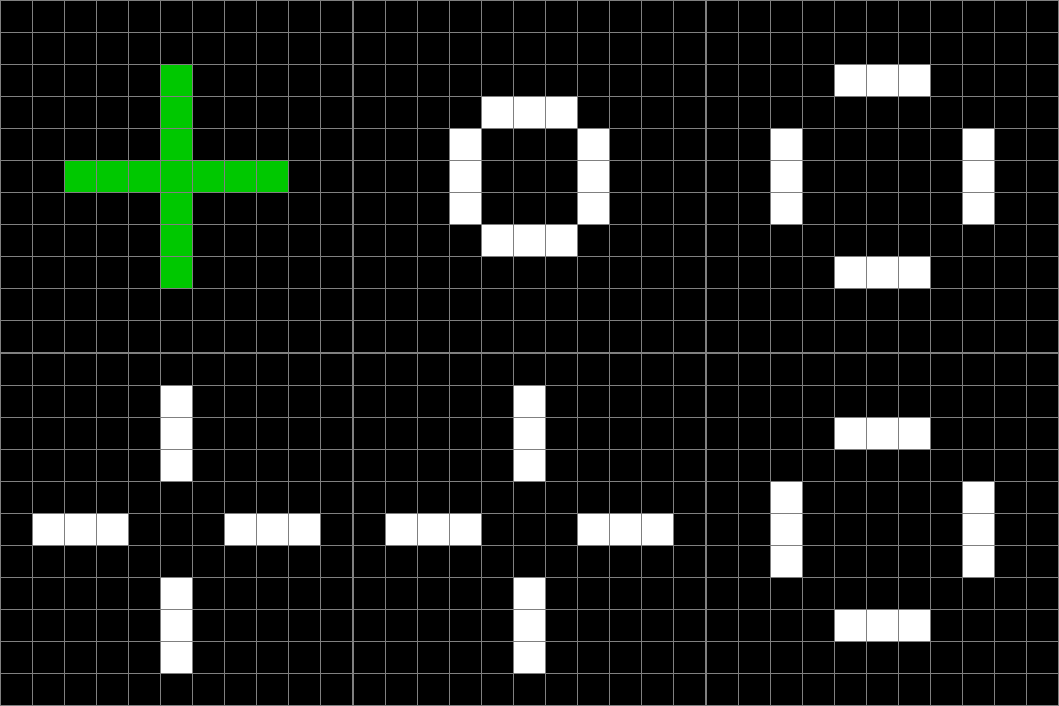

Life from cross (animated)


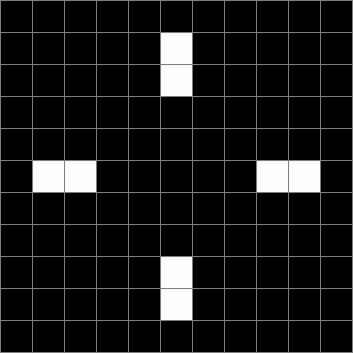
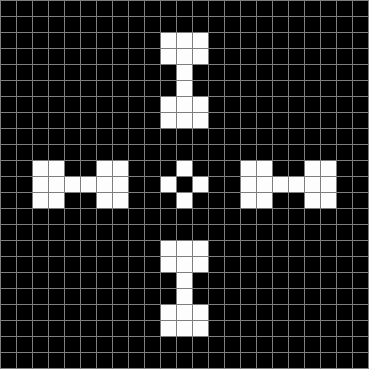
A line of three blocks swinging between horizontal and vertical is called a blinker:
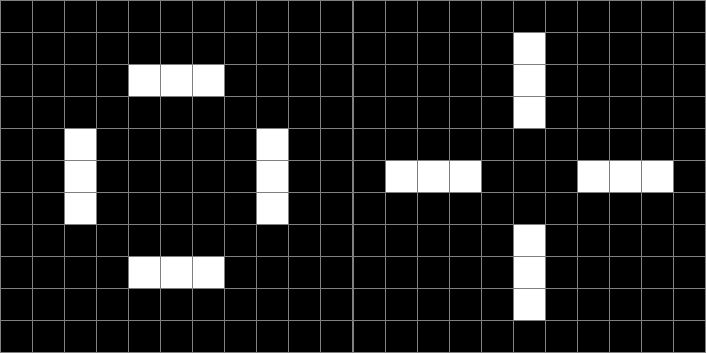
Four blinkers


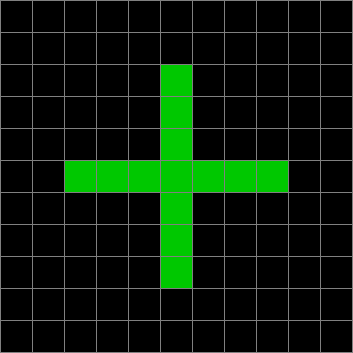
And here’s a larger cross that evolves towards stasis:
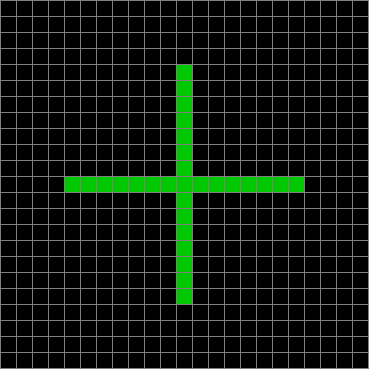
Life seeded with cross (arms 7+1+7) stage #1
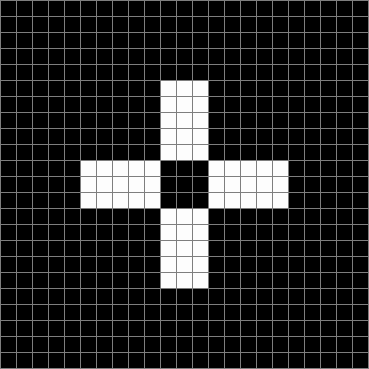

Life stage #2


Life stage #3
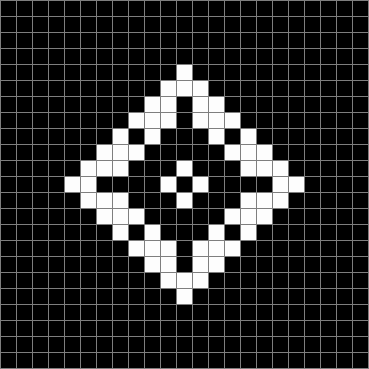

Life stage #4


Life stage #5
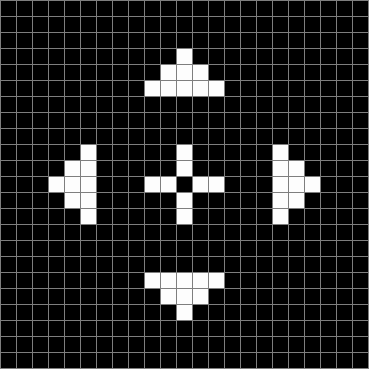

Life stage #6
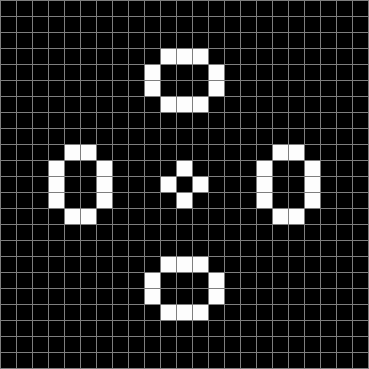

Life stage #7


Life stage #8
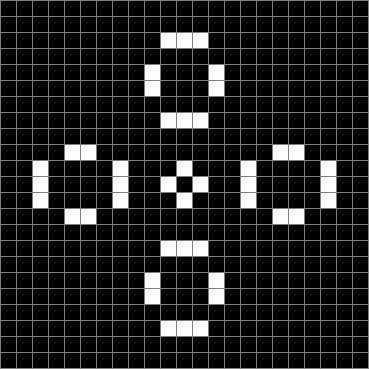

Life stage #9
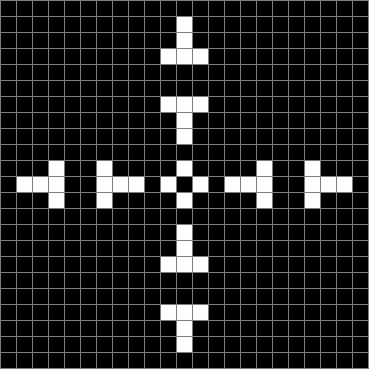

Life stage #10
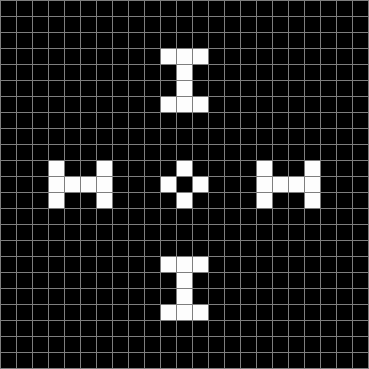

Life stage #11


Life stage #12


Life stage #13


Life stage #14


Life stage #15


Life stage #16
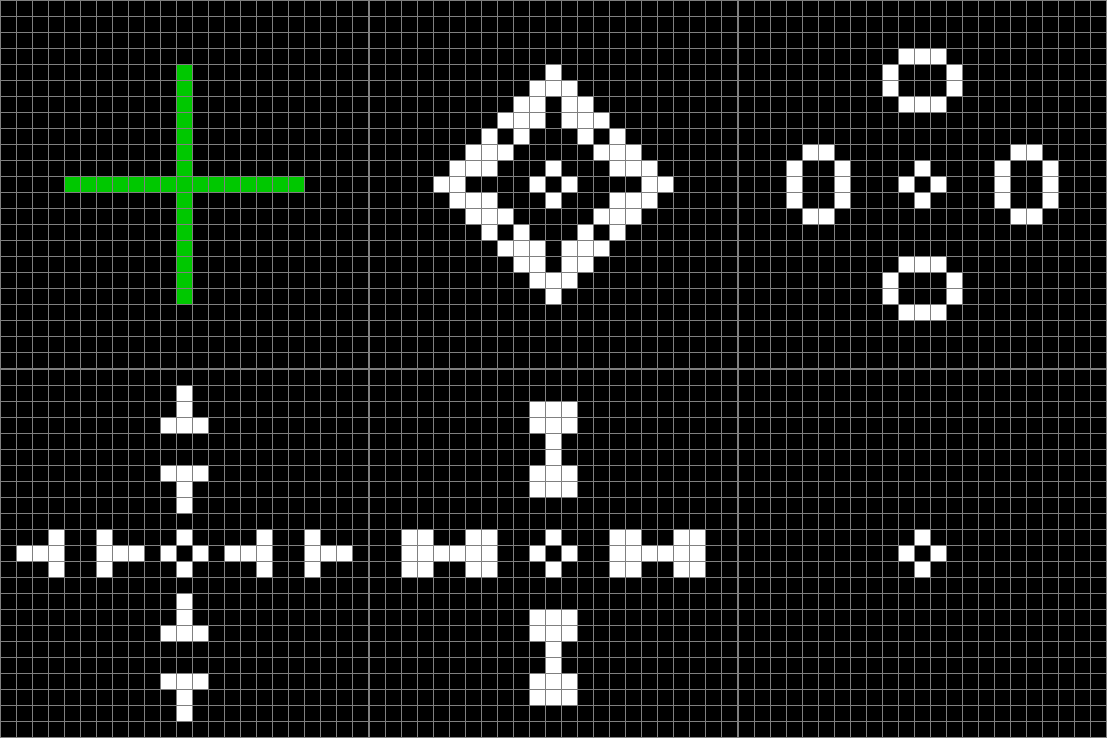

Life from cross (animated)


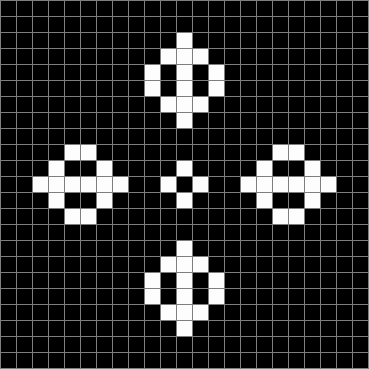
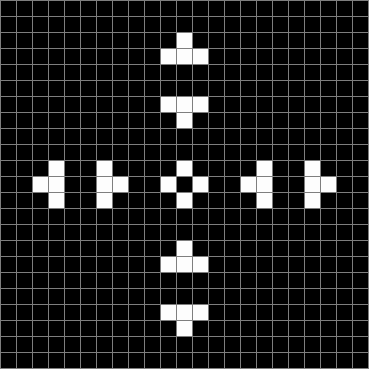
This diamond with sides of 24 blocks evolves towards even more dynamism:
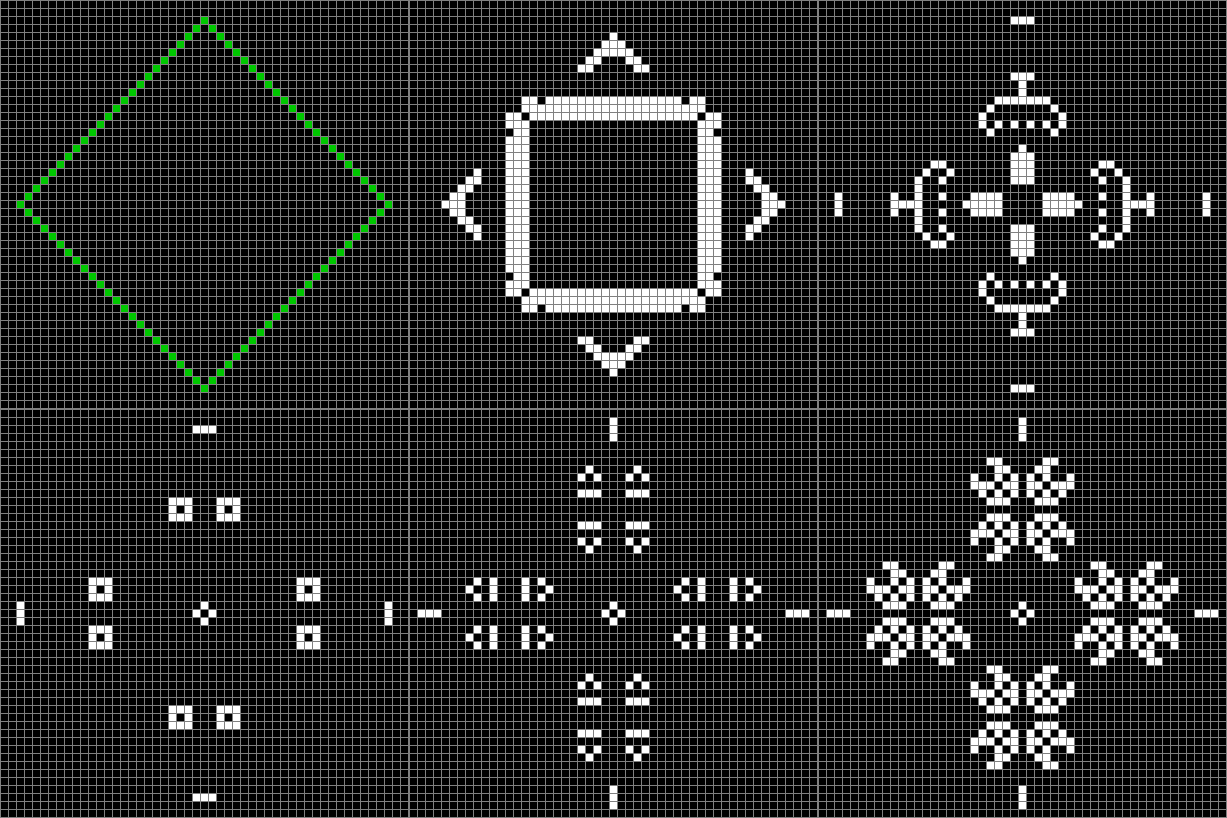
Life from 24-sided diamond (animated)
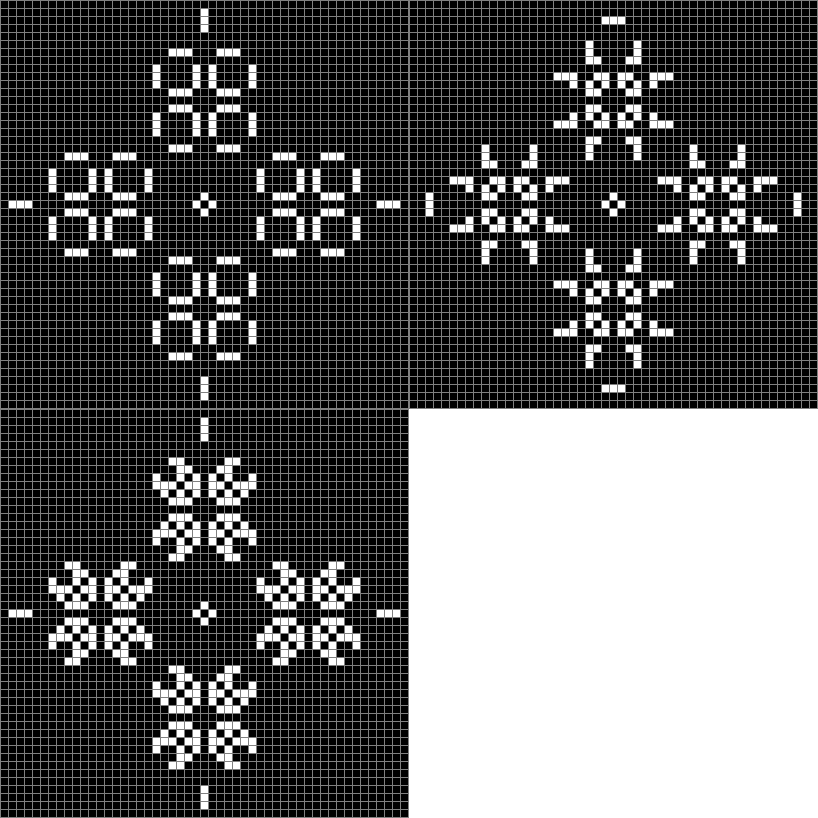

Looping Life from 24-sided diamond (animated)


The game of Life obviously has many variants. In the standard form, you’re checking all eight squares around the square whose fate is in question. If that square is (x,y), these are the eight other squares you check:

(x+1,y+1), (x+0,y+1), (x-1,y+1), (x-1,y+0), (x-1,y-1), (x+0,y-1), (x+1,y-1), (x+1,y+0)

Now trying checking only four squares around (x,y), the ones above and below and to the left and the right:

(x+1,y+1), (x-1,y+1), (x-1,y-1), (x+1,y-1)

And apply a different set of rules:

1. If a square has one or three neighbors, it stays alive or (if empty) comes to life
2. Otherwise the square remains or becomes empty.

With that check and those rules, the seed first disappears, then re-appears, for ever (note that the game is being played on a torus):

Evolution of spiral seed


Eternally recurring spiral


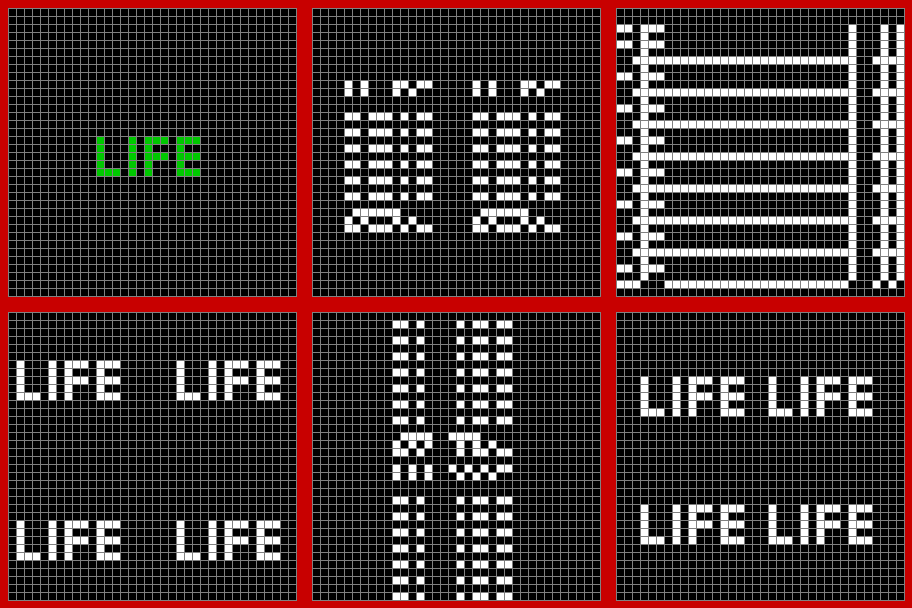
This happens with any seed, so you can use Life to bring Nietzsche’s eternal recurrence to life:

Evolution of LIFE
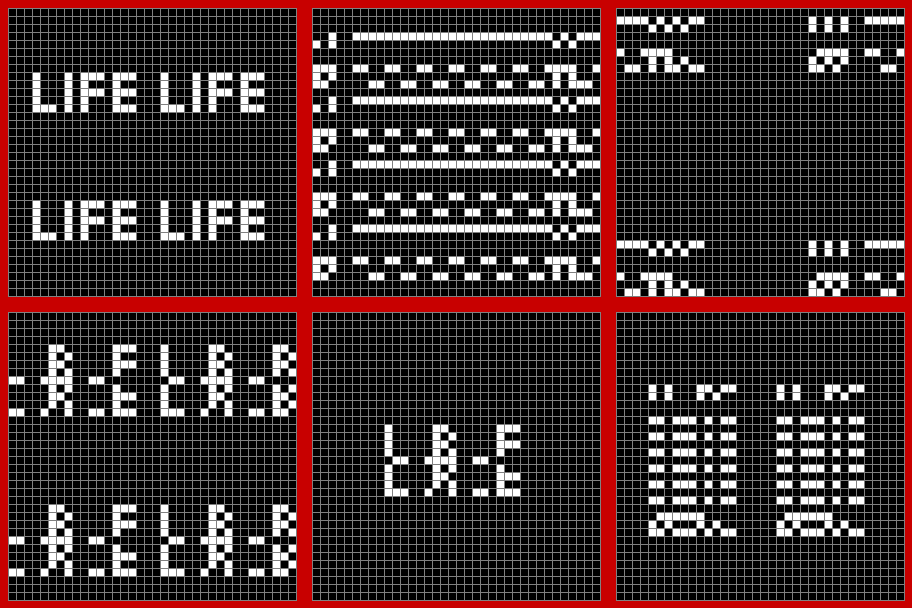

Eternally recurring LIFE


Performativizing Papyrocentricity #76

Papyrocentric Performativity Presents…

Tight-Trope ManThe Tightrope Men, Desmond Bagley (1973)

Primal Scheme – The Boy Who Was Afraid, Armstrong Sperry (1941)

Verre If On N’estMots d’Heures: Gousses, Rames: The d’Antin Manuscript, edited and annoted by Luis d’Antin van Rooten (1967)

Grim PickingsDesert Star, Michael Connelly (2022)

Leaves on the Life-Tree – The Seduction of Solitude, Kim Dallesandro (Incunabula Media 2022)

Thirsk for KnowledgeA Yorkshire Vet Through the Seasons, Julian Norton (Michael O’Mara 2017)

In League with Spandex – Denim and Leather: The Rise and Fall of the New Wave of British Heavy Metal, Michael Hann (Constable 2022)


Or Read a Review at Random: RaRaR

Troicronyme

• R I O A E T L U
→ Herriot a été élu.


• L N N E O P Y I A V Q E I E D C D

→ Hélène est née au pay grec, y a vécu et y est décédée.


• J J A D I D A C K O T L A H E T D B K C D G A L E V D I N C P I E D F I J E C O Q P D B B A J T

→ Gigi a des idées assez cahotées: elle a acheté des bécasses et des geais, a élevé des hyènes, s’est payé des effigies et s’est occupée des bébés agités.

• From John Julius Norwich’s More Christmas Crackers (1990)

Limerique Ophtalmodontique

Il était un gendarme à Nanteuil,
Qui n’avait qu’une dent et qu’un oeil;
    Mais cet oeil solitaire
    Était plein de mystère;
Cette dent, d’importance et d’orgueil. — George du Maurier (1834-96)


Elsewhere other-accessible

Vers Nonsensiques — more by du Maurier