Mathemorchids

Flowers are modified leaves. That’s a scientific fact. And it must depend on the way the genetic program of a plant allows for change in variables of growth — in the relative dimensions, directions and forms of various collections of cells.

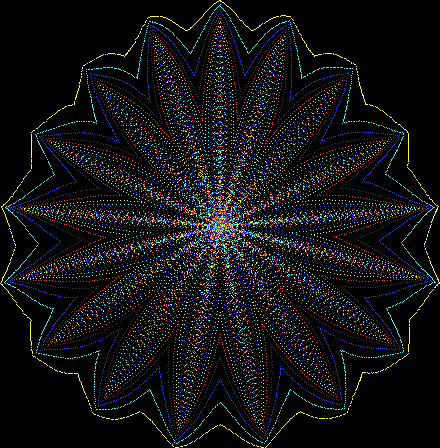
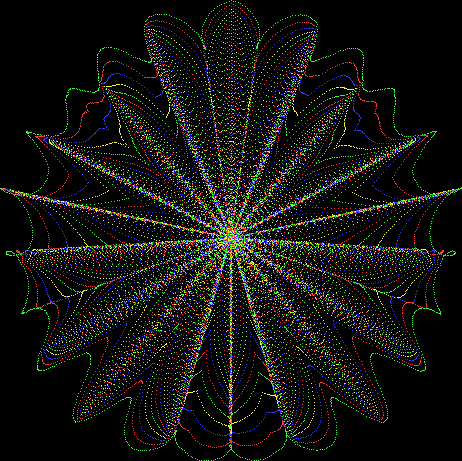
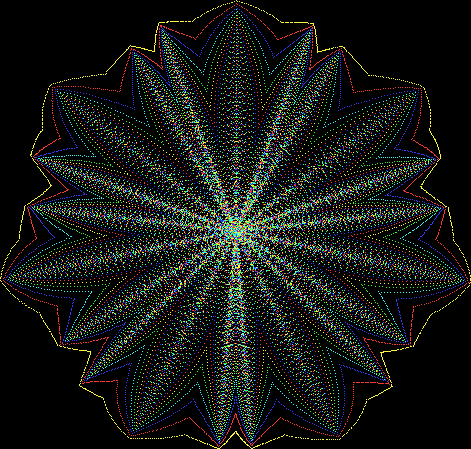
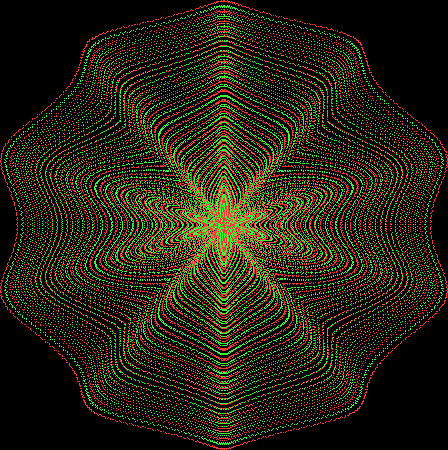
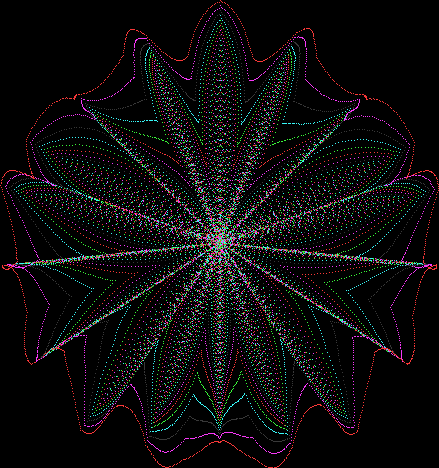
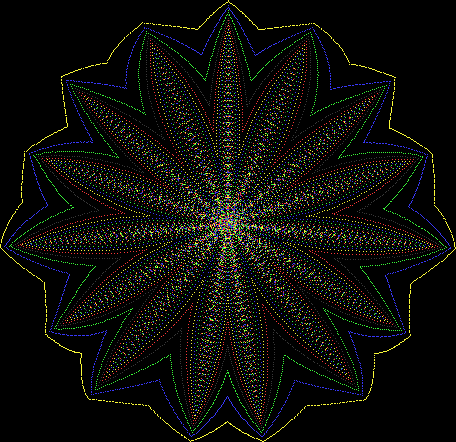
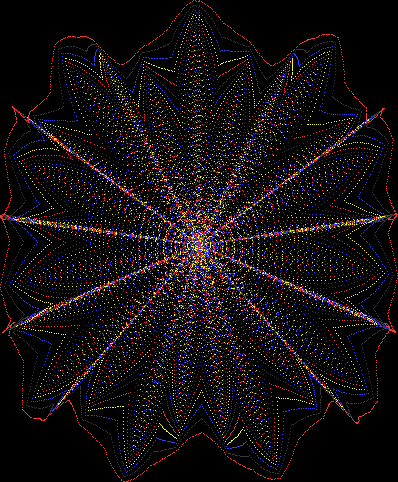
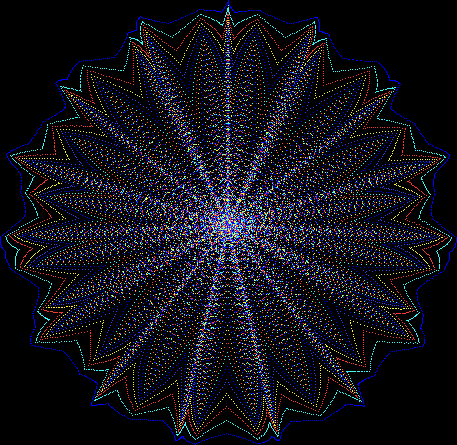
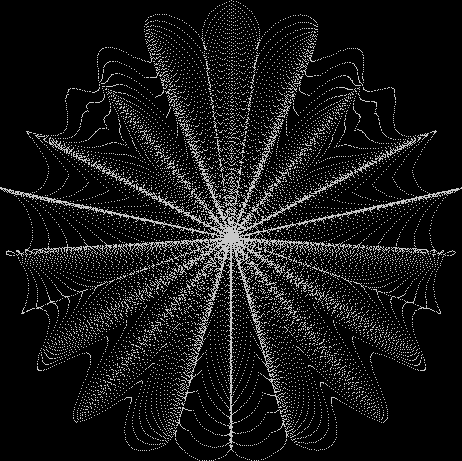
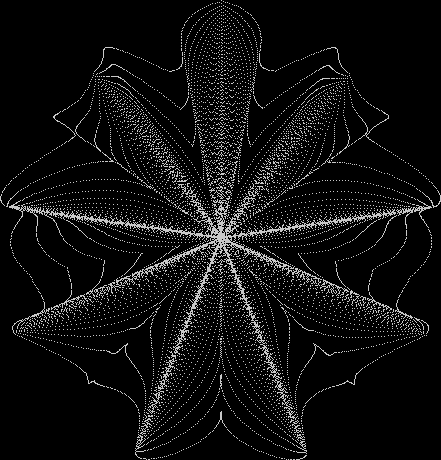
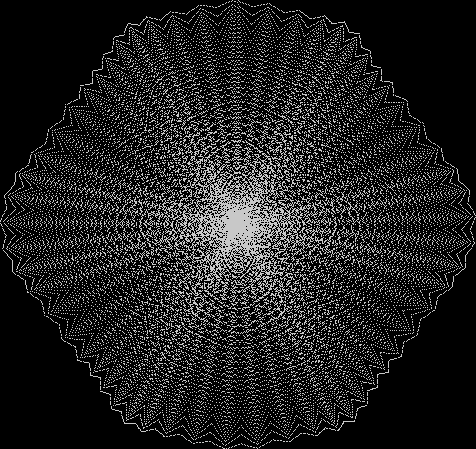
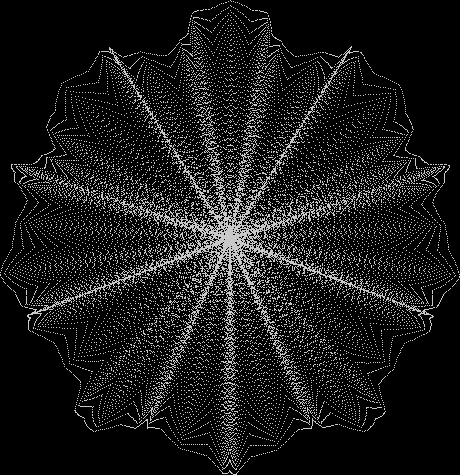
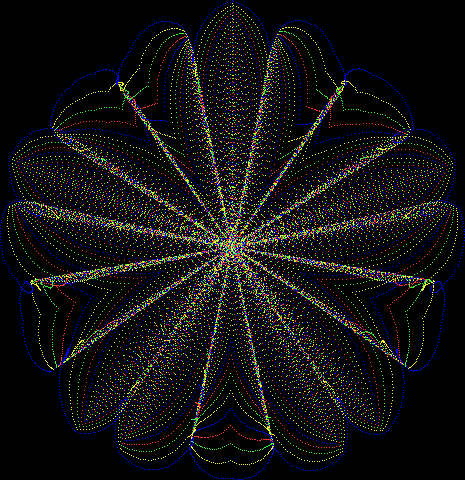
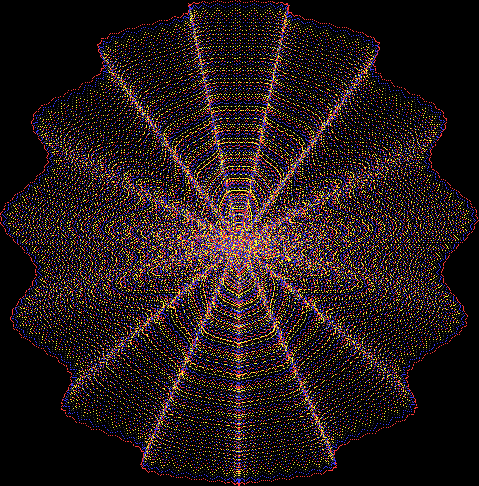
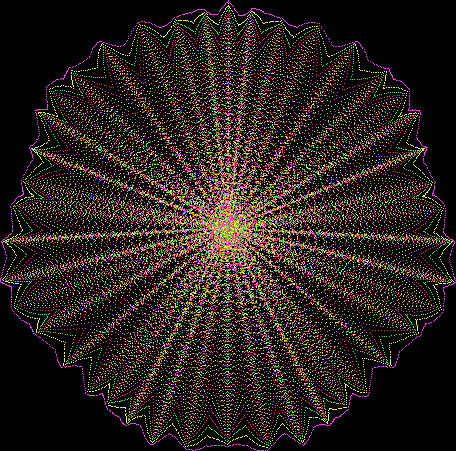
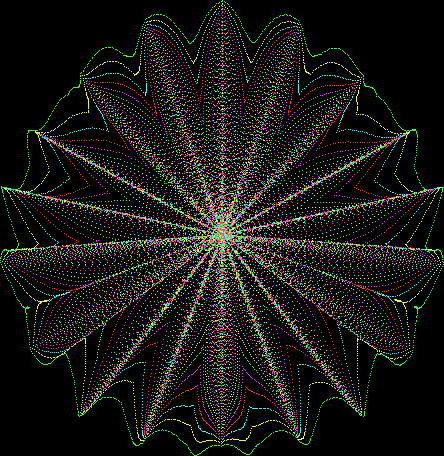
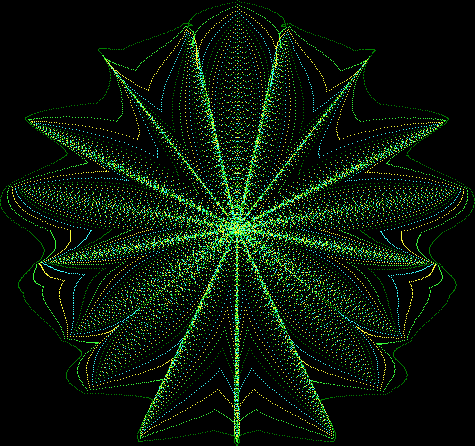
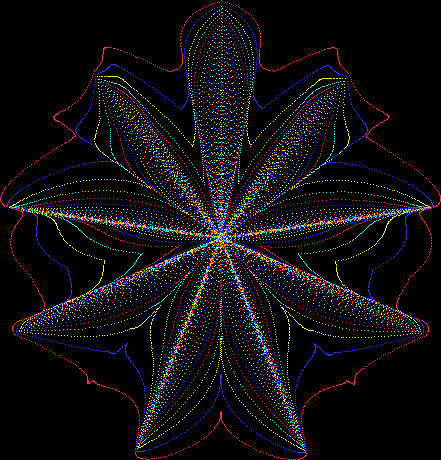
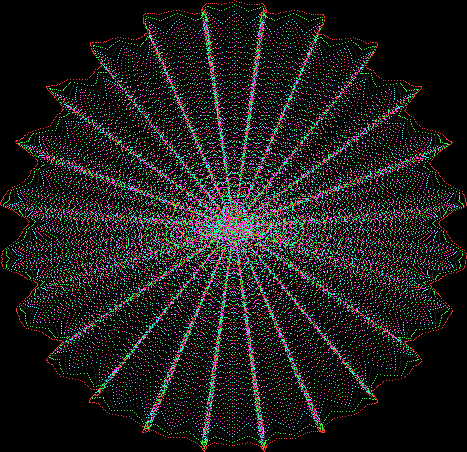
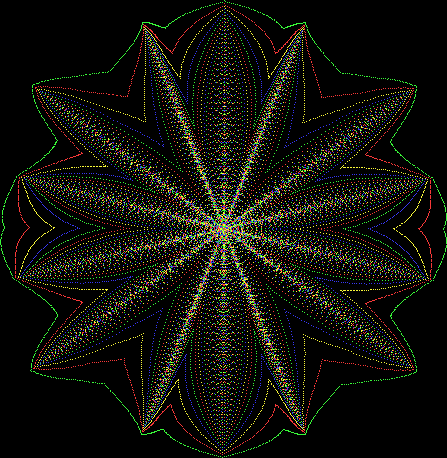
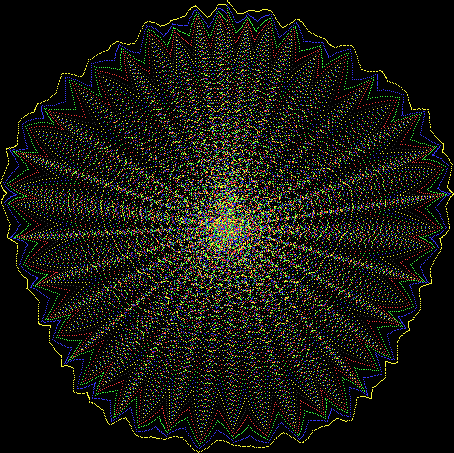
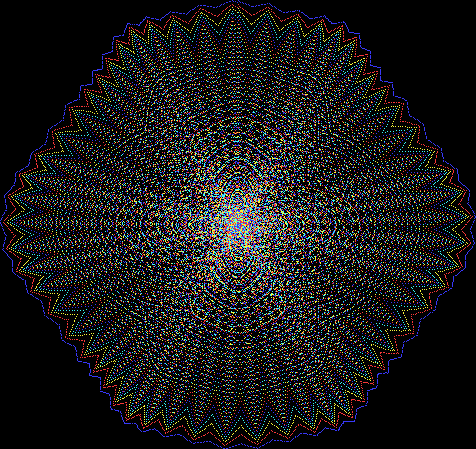
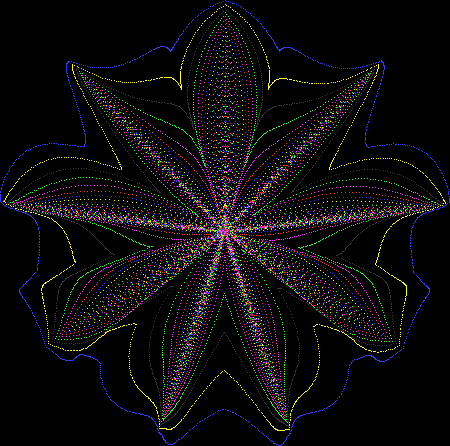
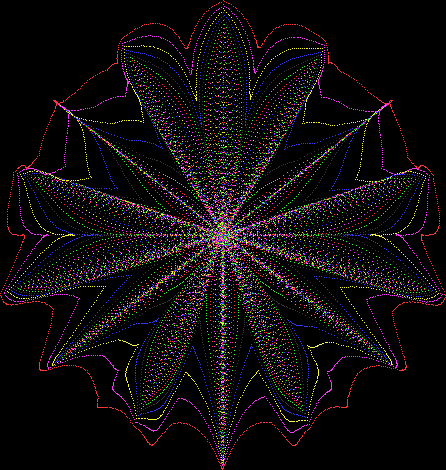
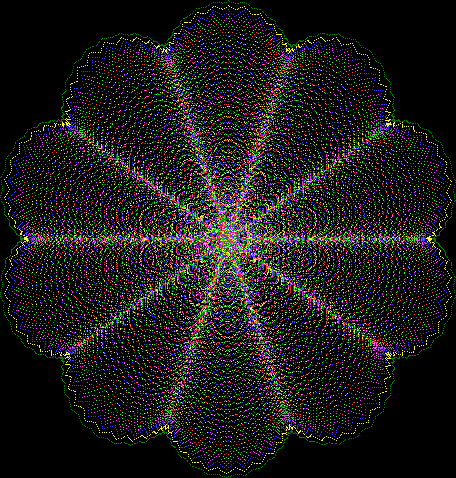
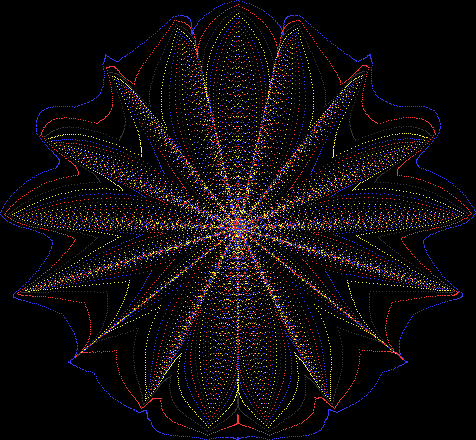
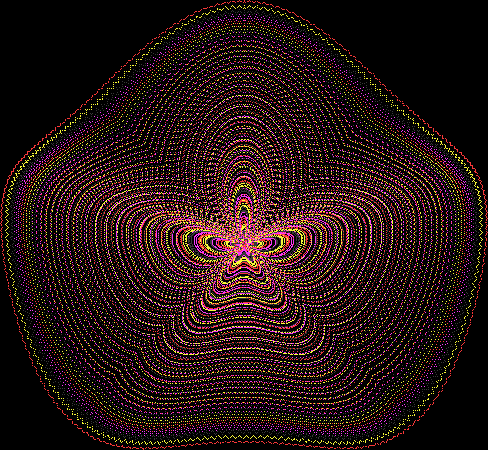
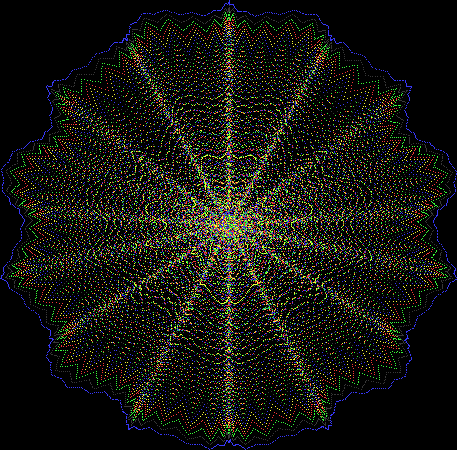
But I wasn’t thinking of flowers or leaves or botany when I wrote a program to trace the path taken by a point moving in various ways between the center and perimeter of a circle. After I’d run the program, I was definitely thinking of flowers and leaves. How could I not be, when they appeared on the screen in front of my eyes? By adjusting variables in the program, I could produce either flowers or leaves or something between the two:
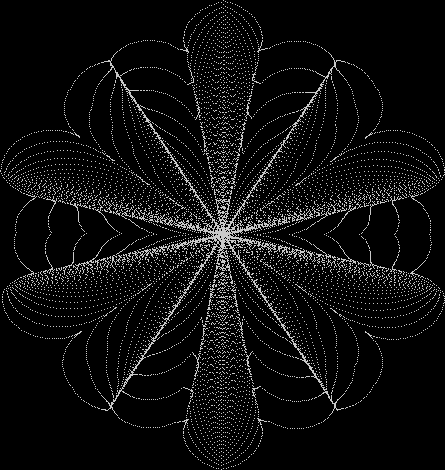
Flower without color
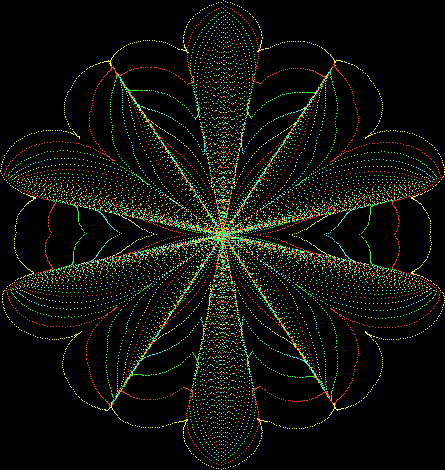

Flower with color
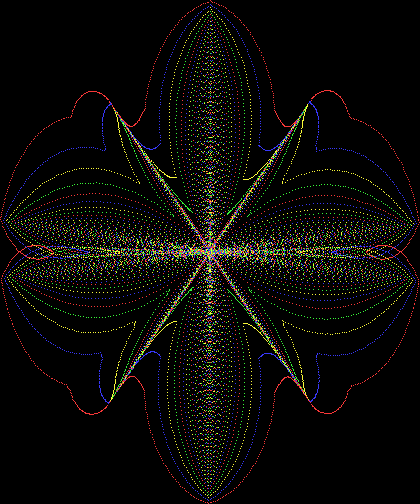


Some of the flower-shapes reminded me of orchids, so I called them mathemorchids. The variables I used governed this procedure:

defprocmathemorchid
rd = 0
jump = jmin
jinc = +1
repeat
xr = xc + int(sin(rd) * rdius + sin(rd * xmult) * xminl)
yr = yc + int(cos(rd) * rdius + cos(rd * ymult) * yminl)
jump = jump + jinc
if(jump = jmin) or (jump >= jmax) then jinc = -jinc
procDrawLine(xr,yr,xc,yc,jump)
rd = rd + rdinc
until rd > maxrd
endproc

Here are explanations of the variables:

rd — short for radian and setting the angle of the point, 0 to maxrd = pi * 2, as it moves between the center and perimeter of the circle
rdinc — the amount by which rd is incremented
xc, yc — the center of the circle
rdius — the radius of the circle
xr, yr — the adjustable radiuses used in trigonometric calculations for the x and y dimensions
xmult, ymult — used to multiply rd for further trig-calcs using…
xminl, yminl — the lengths by which xr and yr are adjusted
jmin, jmax — these are the lower and upper bounds for a rising and falling variable called jump, which determines how far the point moves before it’s marked on the screen

If you look at the use of the sine and cosine functions, you’ll see that the point can swing back on its path or swing ahead of itself, as it were. That’s how the path of the point can simulate three-dimensionality as it lays down thicker or thinner patches of pixels.

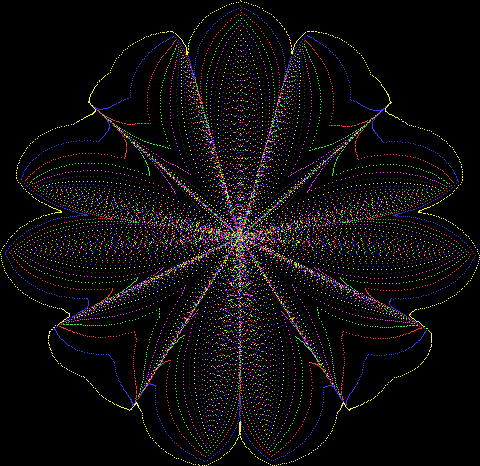
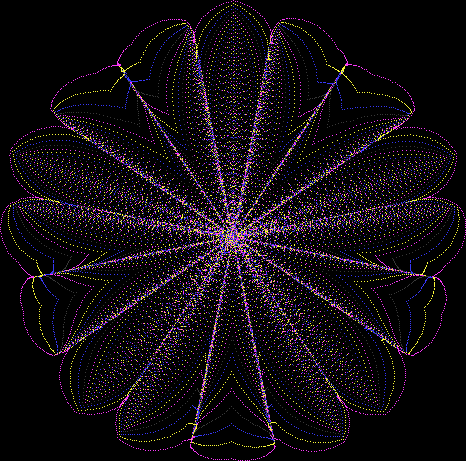
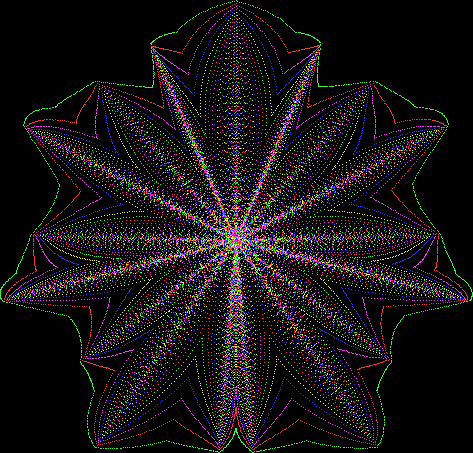
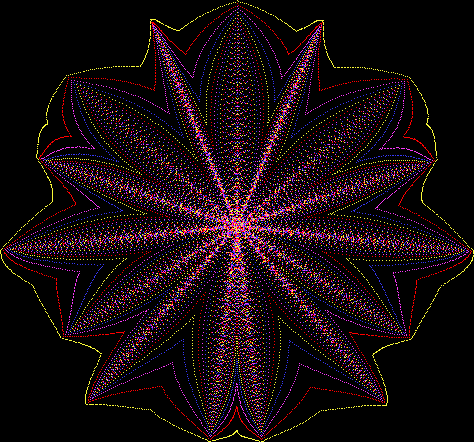
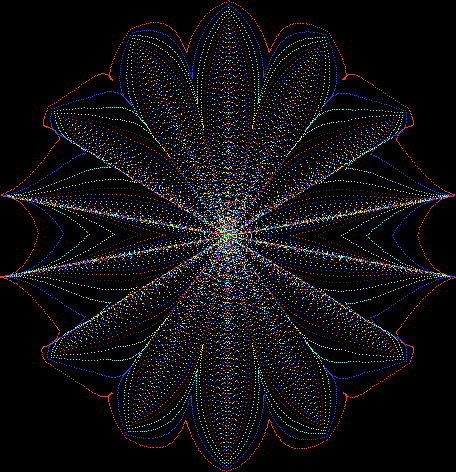
Here are the mathemorchids, leaves, scallops and other shapes created by adjusting the variables described above (with more of the generating program as an appendix):

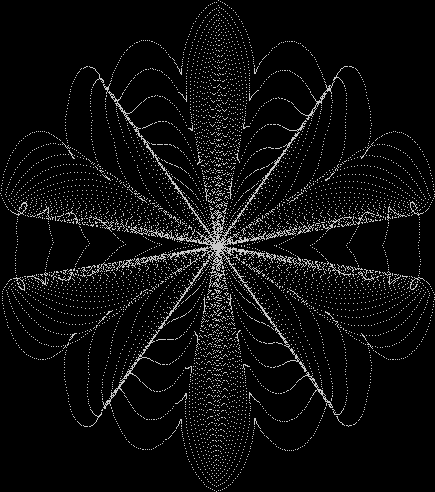
Mathemorchid for jmin = 6, jmax = 69, xmult = 7, ymult = 7, xminl = 40, yminl = 88 (see file-name)
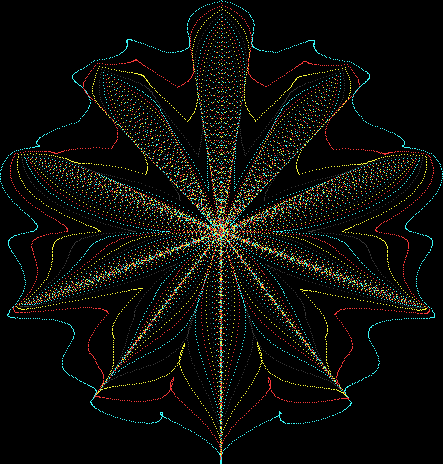
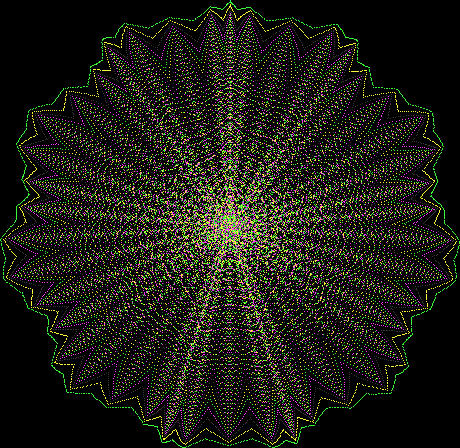
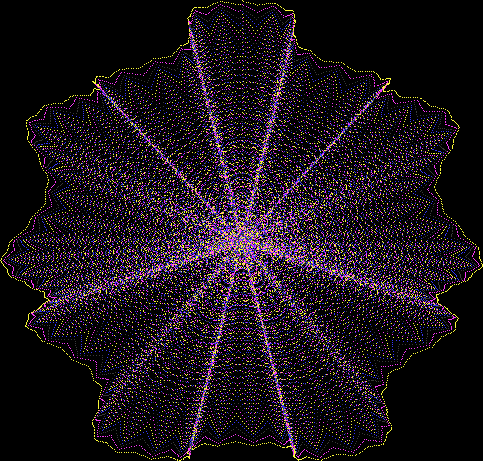
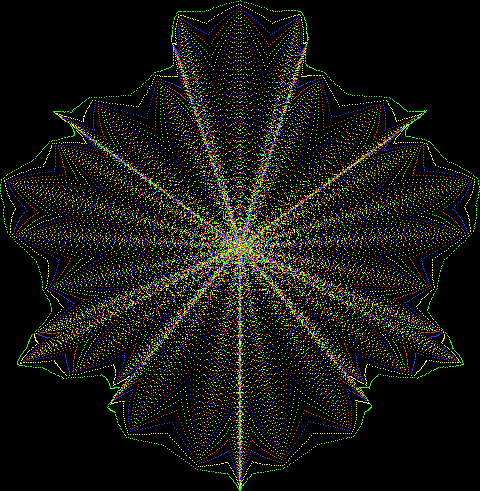
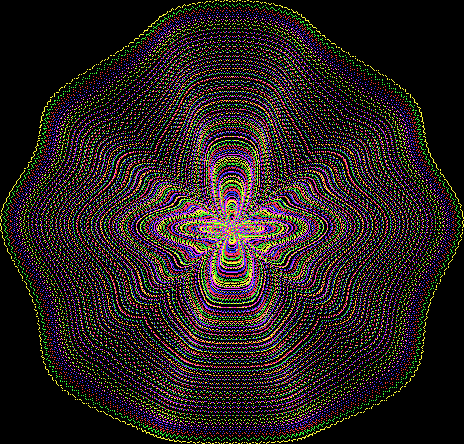

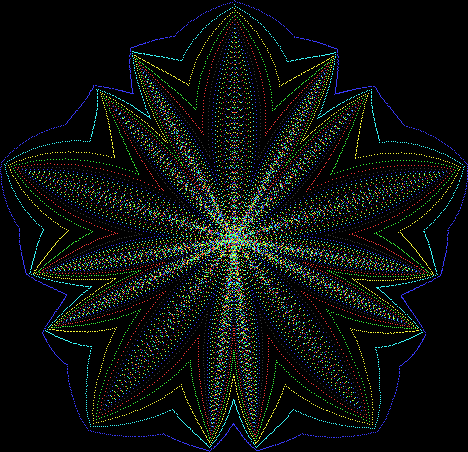
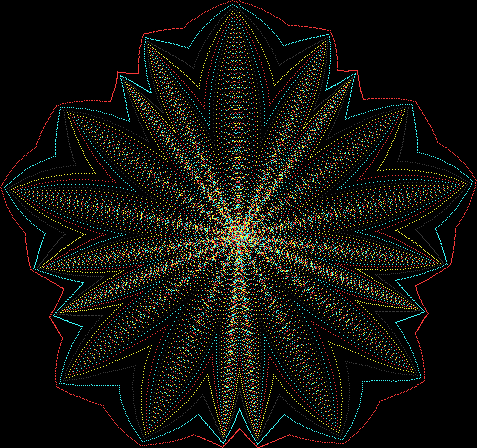

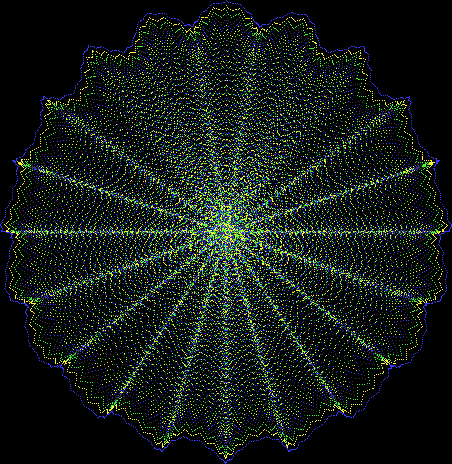
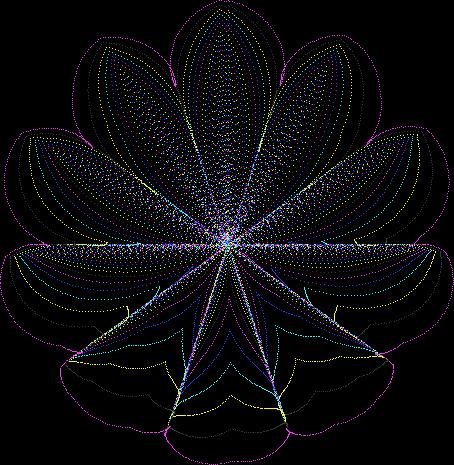


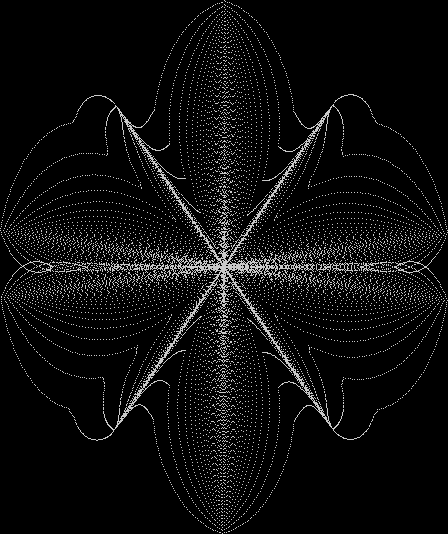
And here are a few more examples of the mathemorchids and other shapes look like without color:


Code for creating the Mathemorchids

defprocmathemorchid
rd = 0
rd = 0
jump = jmin
jinc = +1
repeat
xr = xc + int(sin(rd) * rdius + sin(rd * xmult) * xminl)
yr = yc + int(cos(rd) * rdius + cos(rd * ymult) * yminl)
jump = jump + jinc
if(jump = jmin) or (jump >= jmax) then jinc = -jinc
procDrawLine(xr,yr,xc,yc,jump)
rd = rd + rdinc
k=inkey(0)
until rd > maxrd or k > -1
endproc

defprocDrawLine(x1,y1,x2,y2,puttest)
xdiff = x1 – x2
ydiff = y1 – y2
if abs(xdiff) > abs(ydiff) then
yinc = -ydiff / abs(xdiff)
if xdiff < 0 then xinc = +1 else xinc = -1
else
xinc = -xdiff / abs(ydiff)
if ydiff colrmx then col = 1
put = 0
endif
if int(x) x2 then x = x + xinc
if int(y) y2 then y = y + yinc
iffunc=2then
ifx<x_lo x_lo=x
ifyx_hi x_hi=x
ify>y_hi y_hi=y
endif
until fnreached
endproc

deffnreached
if xinc > 0 then
xreached = int(x) >= x2
else
xreached = int(x) 0 then
yreached = int(y) >= y2
else
yreached = int(y) <= y2
endif
= xreached and yreached
end

Snow No

XXXI

On Wenlock Edge the wood’s in trouble;
   His forest fleece the Wrekin heaves;
The gale, it plies the saplings double,
   And thick on Severn strew the leaves.

’Twould blow like this through holt and hanger
   When Uricon the city stood:
’Tis the old wind in the old anger,
   But then it threshed another wood.

Then, ’twas before my time, the Roman
   At yonder heaving hill would stare:
The blood that warms an English yeoman,
   The thoughts that hurt him, they were there.

There, like the wind through woods in riot,
   Through him the gale of life blew high;
The tree of man was never quiet:
   Then ’twas the Roman, now ’tis I.

The gale, it plies the saplings double,
   It blows so hard, ’twill soon be gone:
To-day the Roman and his trouble
   Are ashes under Uricon. — from A.E. Housman’s A Shropshire Lad (1896)


Post-Performative Post-Scriptum

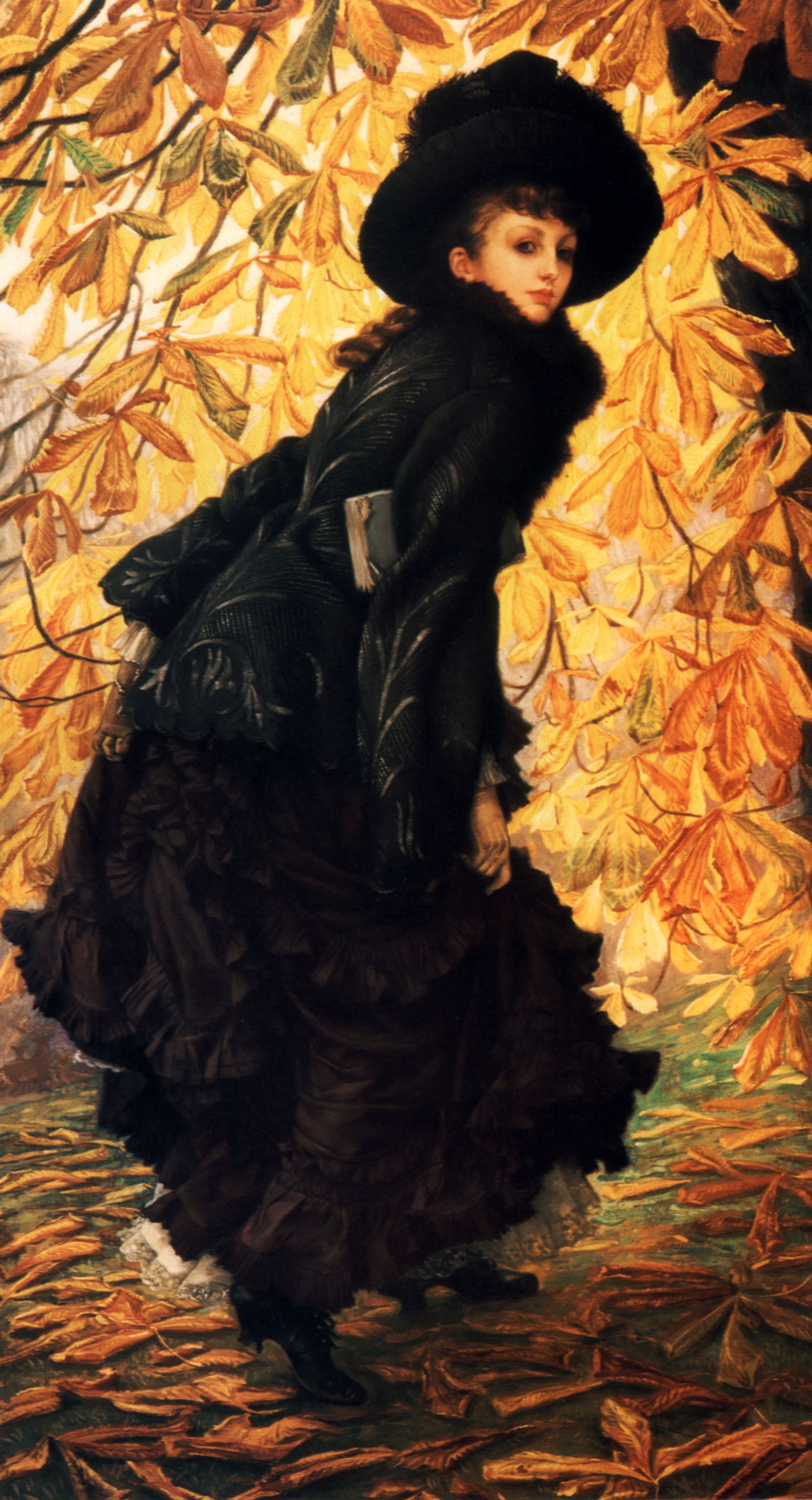
If you were already familiar with the poem, you may have noticed that I replaced “snow” with “strew” in line four. I don’t think the original “snow” works, because leaves don’t fall like snow or look anything like snow. Plus, leaves don’t melt like snowflakes when they land on water. Plus plus, the consonant-cluster of “strew” works well with the idea of leaves coating the water.

Verbol

Green on green on green
The light befalls me clean,
Beneath the birds.

And how I can capture
This mute green rapture
In blinded words? (7viii21)


Post-Performative Post-Scriptum

This poem is an attempt to describe the impossibility of describing the green light I saw falling through the leaf-layers of a chestnut-tree a few days ago. I wanted a title that compressed the most important images in the poem — trees and greenness — and I remembered a clever portmanteau I’d seen in a Spanish translation of Lord of the Rings. In the translation, the Ent Treebeard, a walking-and-talking tree, was called Bárbol, which is a blend of the Spanish words barba, “beard”, and árbol, “tree”. I’ve tried to blend Spanish verde, “green”, and arbol. The resulting portmanteau contained more than I planned: it’s also got ver, Spanish for “to see”, and vēr, Latin for “spring, youth”. And it’s almost “verbal”, but with the “a” replaced by an “o”, representing the sun and its indescribable light. And come to think of it, there’s an important chestnut-tree in Lord of the Rings:

A little way beyond the battle-field they made their camp under a spreading tree: it looked like a chestnut, and yet it still bore many broad brown leaves of a former year, like dry hands with long splayed fingers; they rattled mournfully in the night-breeze. — The Two Towers, ch. 11

That’s when Aragorn, Legolas and Gimli are camping on the edge of Fangorn, the ancient forest where Treebeard dwells. The broadness of chestnut-leaves is why the light that falls through them is greened and cleaned in a special way.

Yew and Me

The Pocket Guide to The Trees of Britain and Northern Europe, Alan Mitchell, illustrated by David More (1990)

Leafing through this book after I first bought it, I suddenly grabbed at it, because I thought one of the illustrations was real and that a leaf was about to slide off the page and drop to the floor. It was an easy mistake to make, because David More is a good artist. That isn’t surprising: good artists are often attracted to trees. I think it’s a mathemattraction. Trees are one of the clearest and commonest examples of natural fractals, or shapes that mirror themselves on smaller and smaller scales. In trees, trunks divide into branches into branchlets into twigs into twiglets, where the leaves, well distributed in space, wait to eat the sun.

When deciduous, or leaf-dropping, trees go hungry during the winter, this fractal structure is laid bare. And when you look at a bare tree, you’re looking at yourself, because humans are fractals too. Our torsos sprout arms sprout hands sprout fingers. Our veins become veinlets become capillaries. Ditto our lungs and nervous systems. We start big and get small, mirroring ourselves on smaller and smaller scales. Fractals make maximum and most efficient use of space and what’s found in me or thee is also found in a tree, both above and below ground. The roots of a tree are also fractals. But one big difference between trees and people is that trees are much freer to vary their general shape. Trees aren’t mirror-symmetrical like animals and that’s another thing that attracts human eyes and human artists. Each tree is unique, shaped by the chance of its seeding and setting, though each species has its characteristic silhouette. David More occasionally shows that bare winter silhouette, but usually draws the trees in full leaf, disposed to eat the sun. Trees can also be identified by their leaves alone and leaves too are fractals. The veins of a leaf divide and sub-divide, carrying the raw materials and the finished products of photosynthesis to and from the trunk and roots. Trees are giants that work on a microscopic scale, manufacturing themselves from photons and molecules of water and carbon dioxide.

We eat or sculpt what they manufacture, as Alan Mitchell describes in the text of this book:

The name “Walnut” comes from the Anglo-Saxon for “foreign nut” and was in use before the Norman Conquest, probably dating from Roman times. It may refer to the fruit rather than the tree but the Common Walnut, Juglans regia, has been grown in Britain for a very long time. The Romans associated their god Jupiter (Jove) with this tree, hence the Latin name juglans, “Jove’s acorn (glans) or nut”… The wood [of Black Walnut, Juglans nigra] is like that of Common Walnut and both are unsurpassed for use as gunstocks because, once seasoned and worked, neither moves at all and they withstand shock particularly well. They are also valued in furniture for their good colour and their ability to take a high polish. (entry for “Walnuts”, pg. 18)
That’s from the first and longer section, devoted to “Broadleaved Trees and Palms”; in the second section, “Conifers”, devoted to pines and their relatives, maths appears in a new form. Pine-cones embody the Fibonacci sequence, one of the most famous of all number sequences or series. Start with 1 and 1, then add the pair and go on adding pairs: 1, 1, 2, 3, 5, 8, 13, 21, 34, 55, 89, 144… That’s the Fibonacci sequence, named after the Italian mathematician Leonardo Fibonacci (c.1170-c.1245). And if you examine the two spirals created by the scales of a pine-cone, clockwise and counter-clockwise, you’ll find that there are, say, five spirals in one direction and eight in another, or eight and thirteen. The scales of a pineapple and petals of many flowers behave in a similar way. These patterns aren’t fractals like branches and leaves, but they’re also about distributing living matter efficiently through space. Mitchell doesn’t discuss any of this mathematics, but it’s there implicitly in the illustrations and underlies his text. Even the toxicity of the yew is ultimately mathematical, because the effect of toxins is determined by their chemical shape and its interaction with the chemicals in our bodies. Micro-geometry can be noxious. Or nourishing:

The Yews are a group of conifers, much more primitive than those which bear cones. Each berry-like fruit has a single large seed, partially enclosed in a succulent red aril which grows up around it. The seed is, like the foliage, very poisonous to people and many animals, but deer and rabbits eat the leaves without harm. Yew has extremely strong and durable wood [and the] Common Yew, Taxus baccata, is nearly immortal, resistant to almost every pest and disease of importance, and immune to stress from exposure, drought and cold. It is by a long way the longest-living tree we have and many in country churchyards are certainly much older than the churches, often thousands of years old. Since the yews pre-date the churches, the sites may have been holy sites and the yews sacred trees, possibly symbols of immortality, under which the Elders met. (entry for “Yews”, pg. 92)

This isn’t a big book, but there’s a lot to look at and read. I’d like a doubtful etymology to be true: some say “book” is related to “beech”, because beech-bark or beech-leaves were used for writing on. Bark is another way of identifying a tree and another aspect of their dendro-mathematics, in its texture, colours and patterns. But trees can please the ear as well as the eye: the dendrophile A.E. Housman (1859-1936) recorded how “…overhead the aspen heaves / Its rainy-sounding silver leaves” (A Shropshire Lad, XXVI). There’s maths there too. An Aspen sounds like rain in part because its many leaves, which tremble even in the lightest breeze, are acting like many rain-drops. That trembling is reflected in the tree’s scientific name: Populus tremula, “trembling poplar”. Housman, a Latin professor as well as an English poet, could have explained how tree-nouns in Latin are masculine in form: Alnus, Pinus, Ulmus; but feminine in gender: A. glutinosa, P. contorta, U. glabra (Common Alder, Lodgepole Pine, Wych-Elm). He also sums up why trees please in these simple and ancient words of English:

Give me a land of boughs in leaf,
A land of trees that stand;
Where trees are fallen, there is grief;
I love no leafless land.

More Poems, VIII.