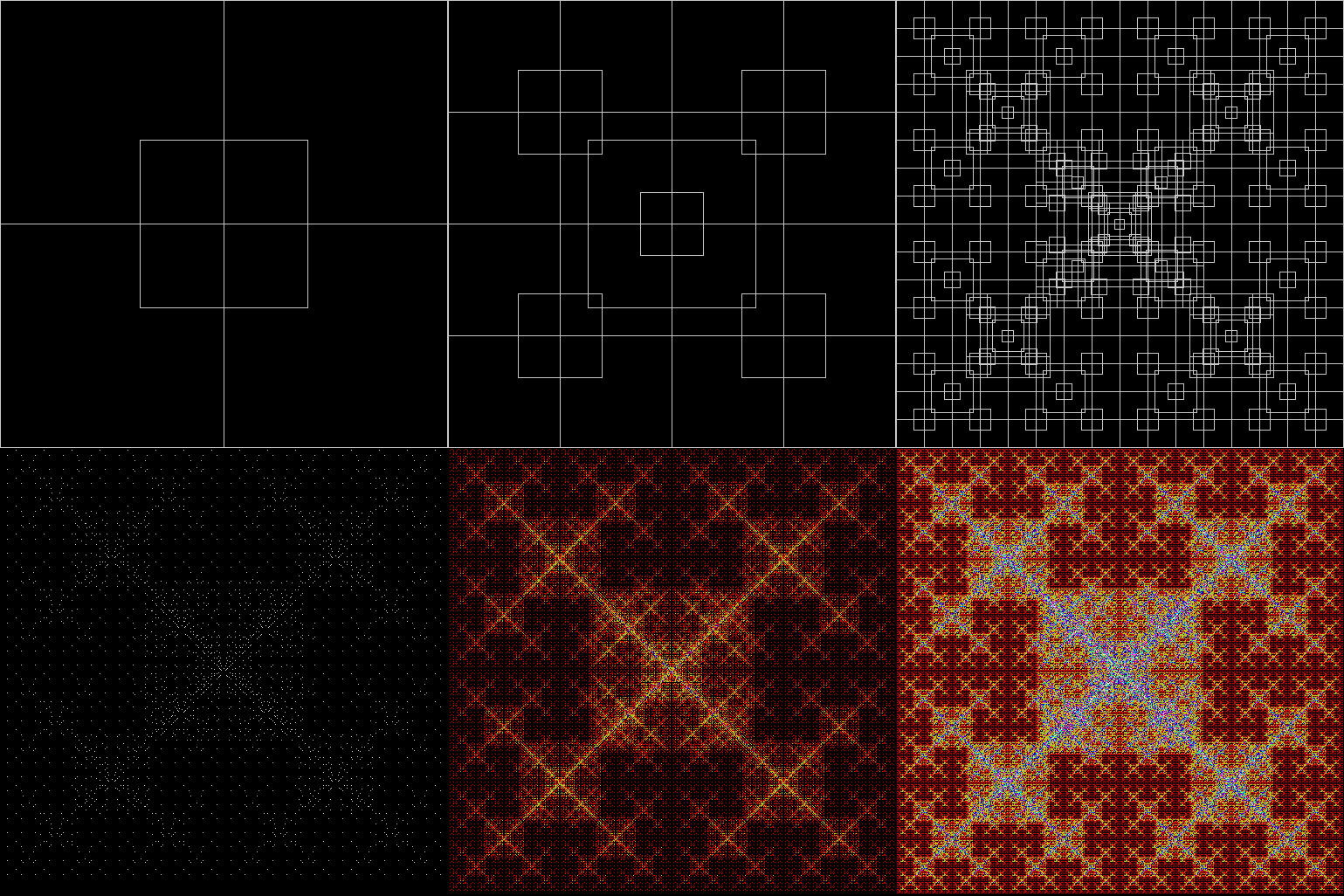
Square Routes

One of the pleasures of exploring an ancient city like York or Chester is that of learning new routes to the same destination. There are byways and alleys, short-cuts and diversions. You set off intending to go to one place and end up in another.

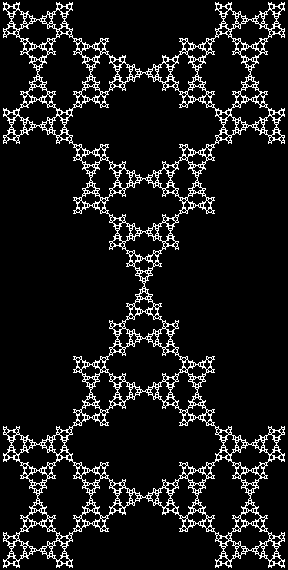
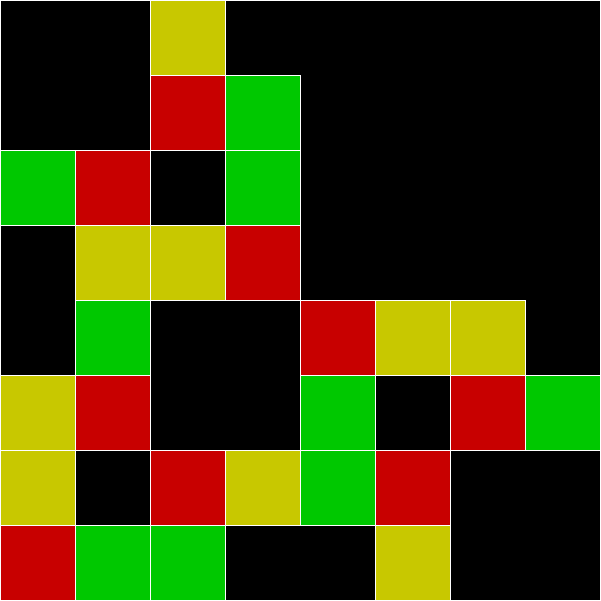
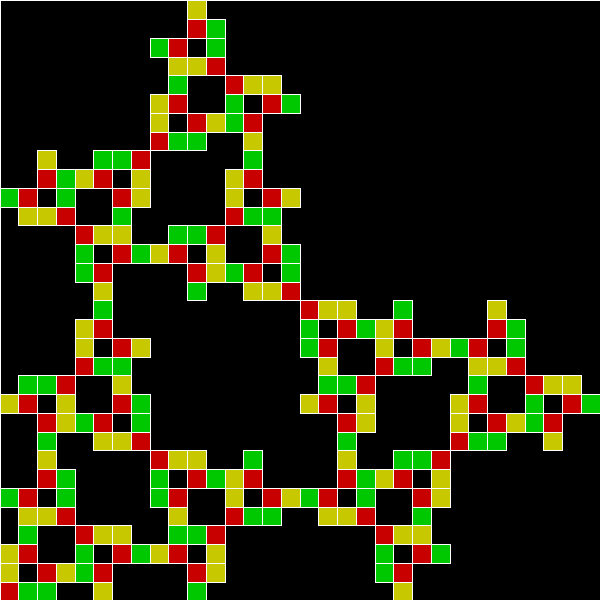
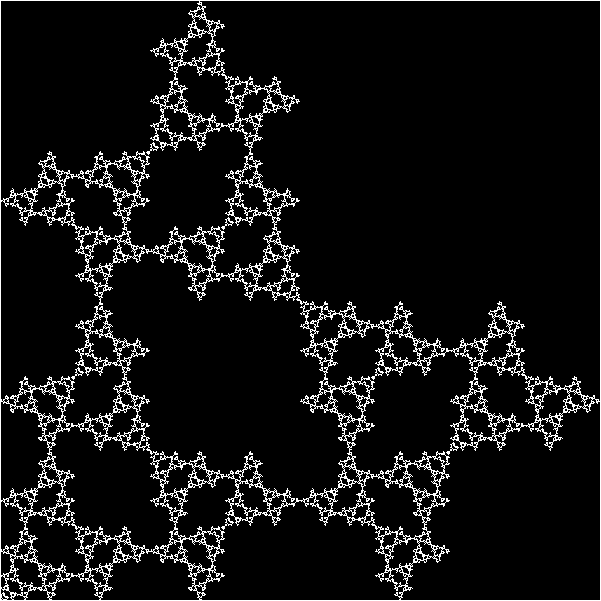
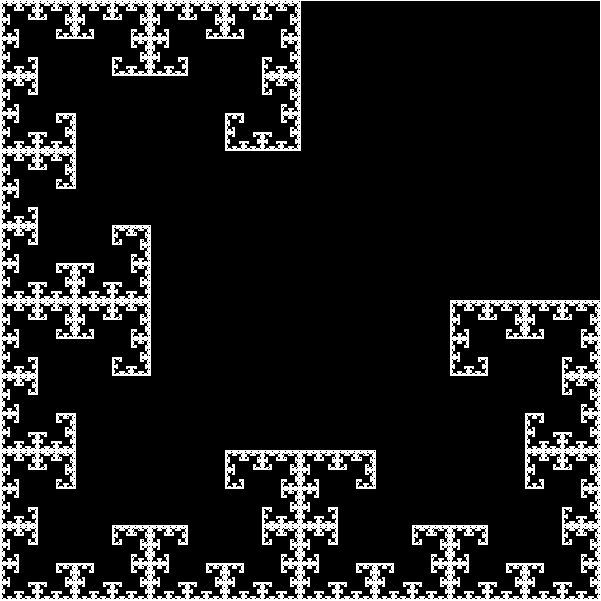
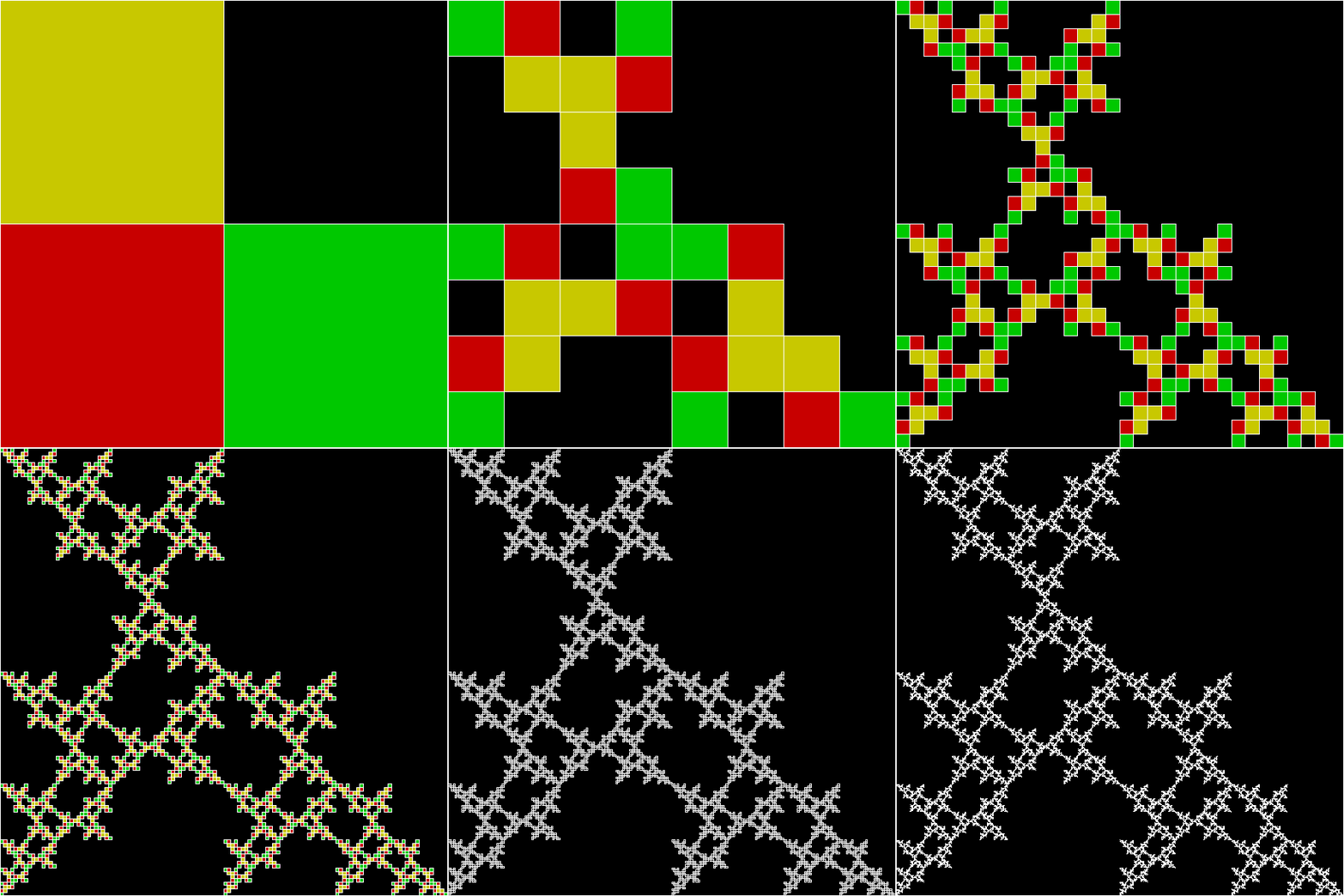
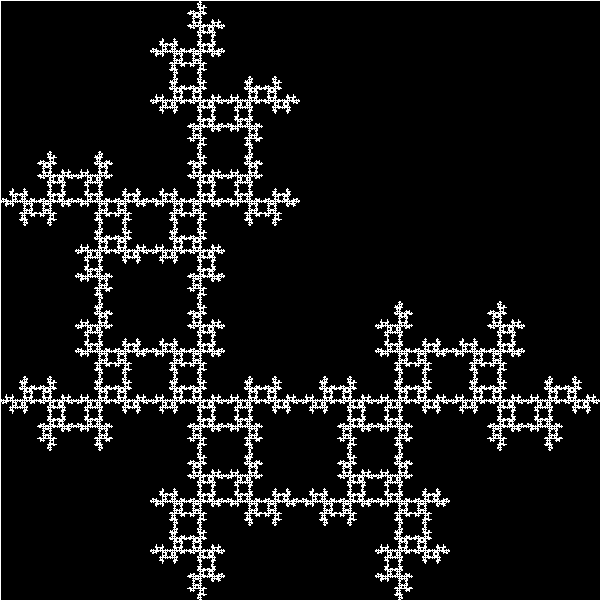
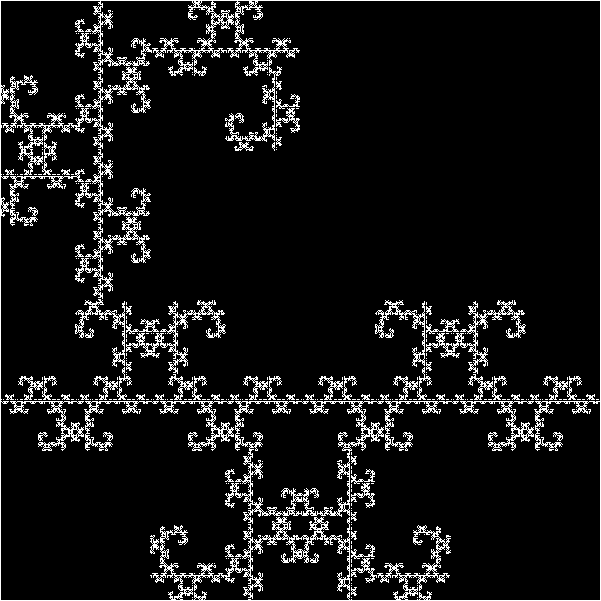
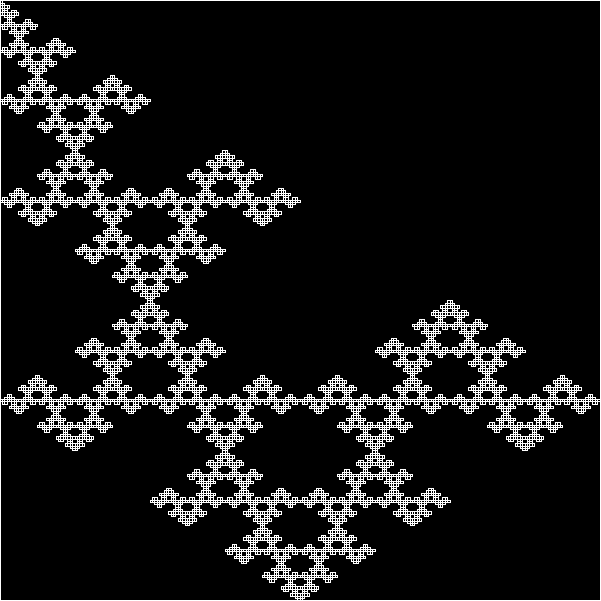
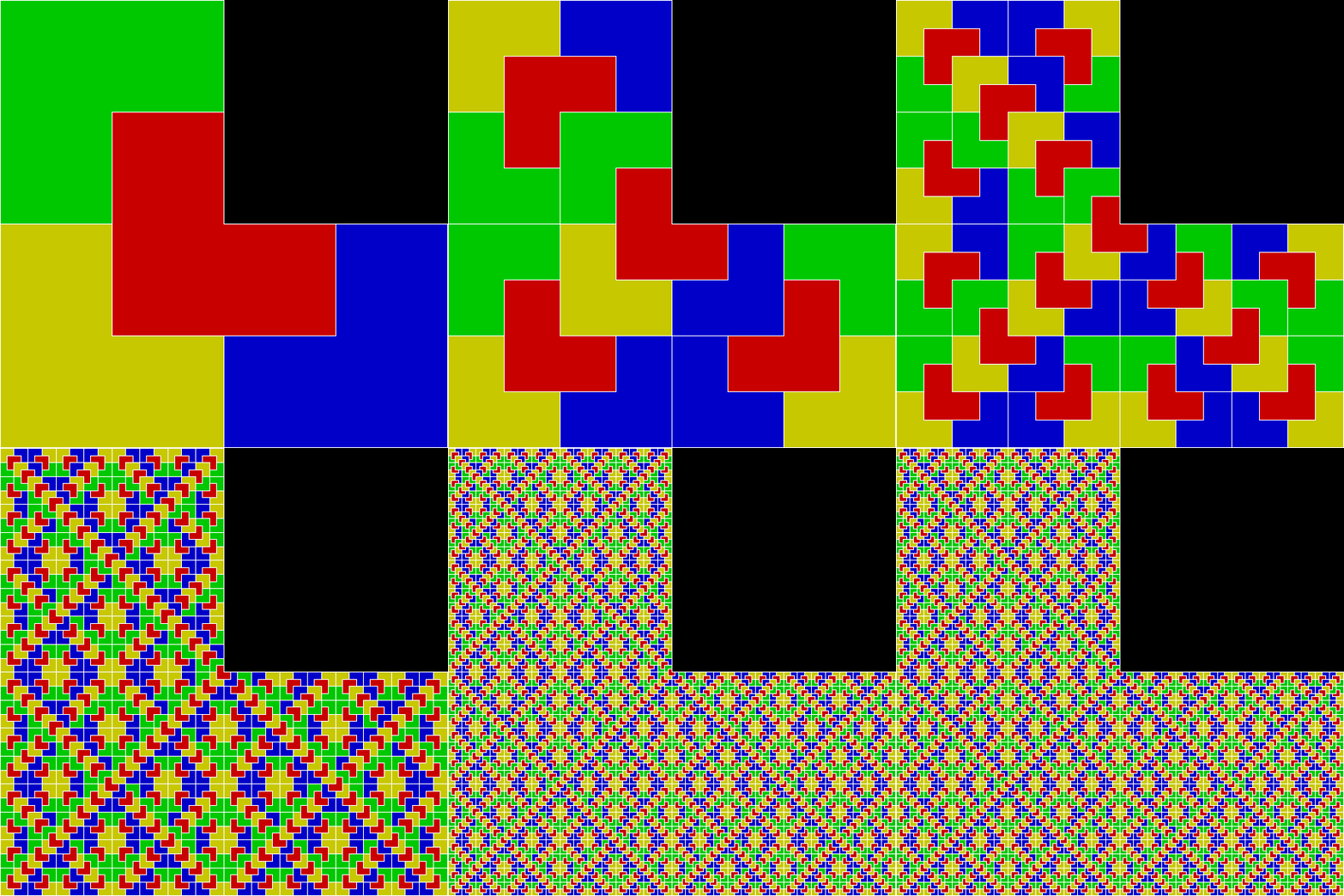
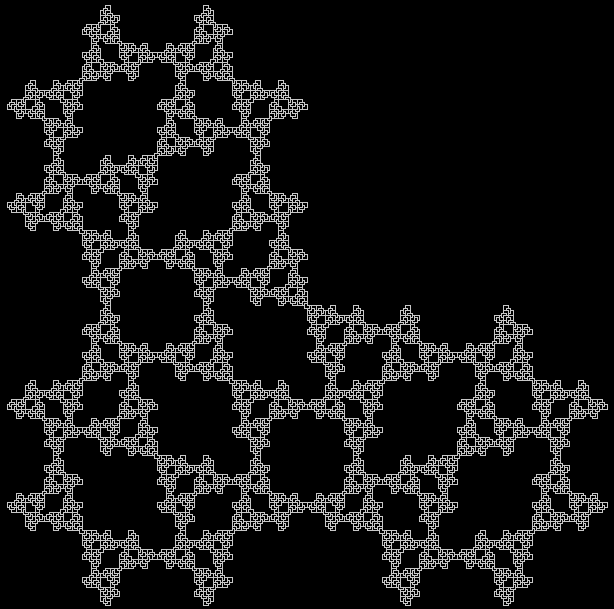
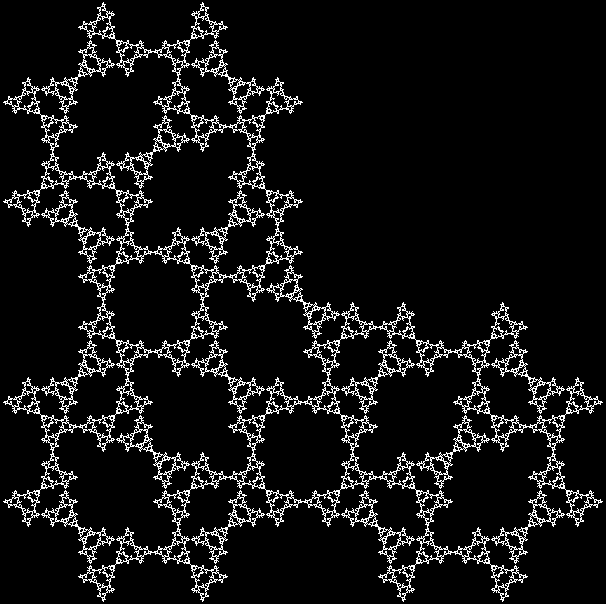
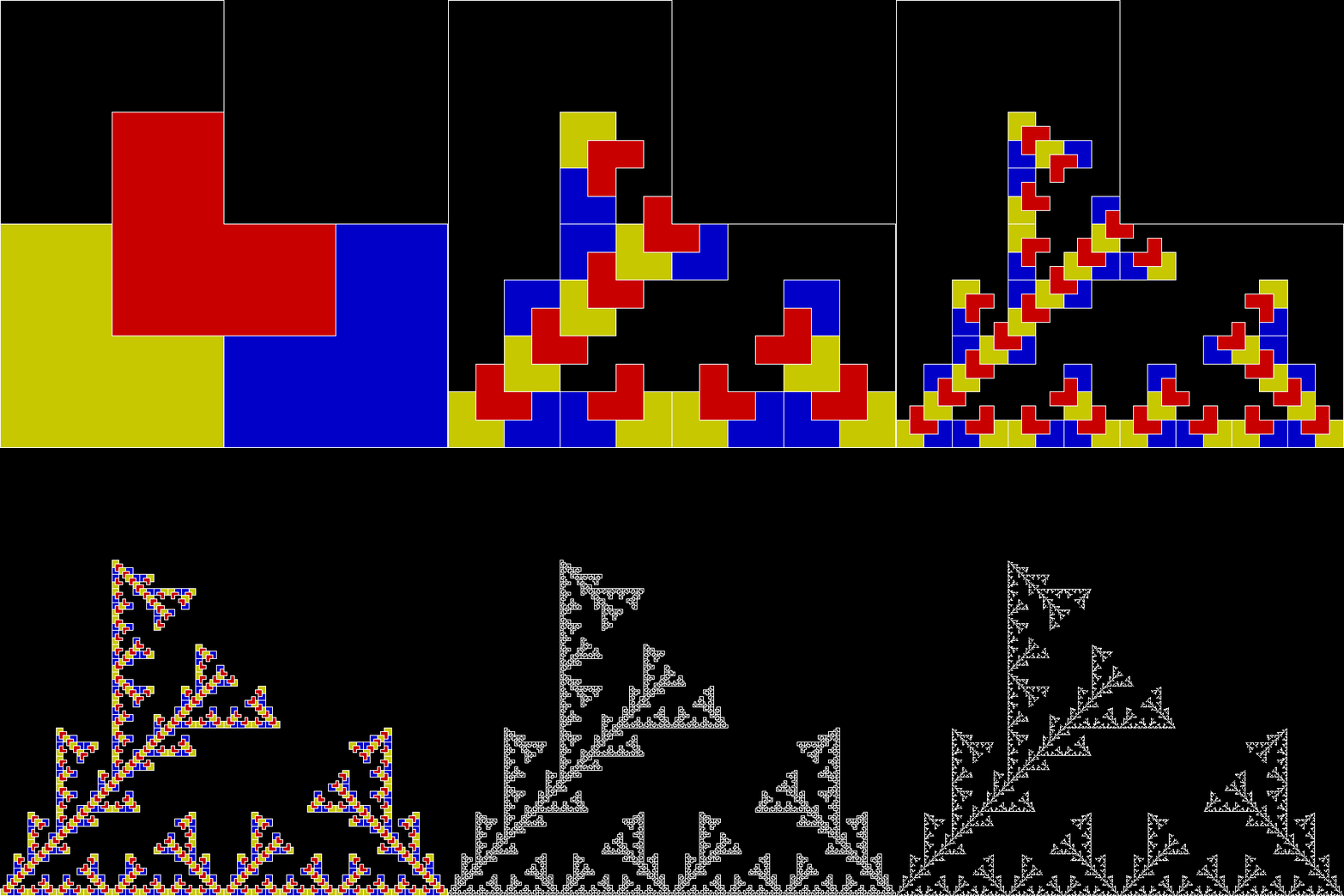
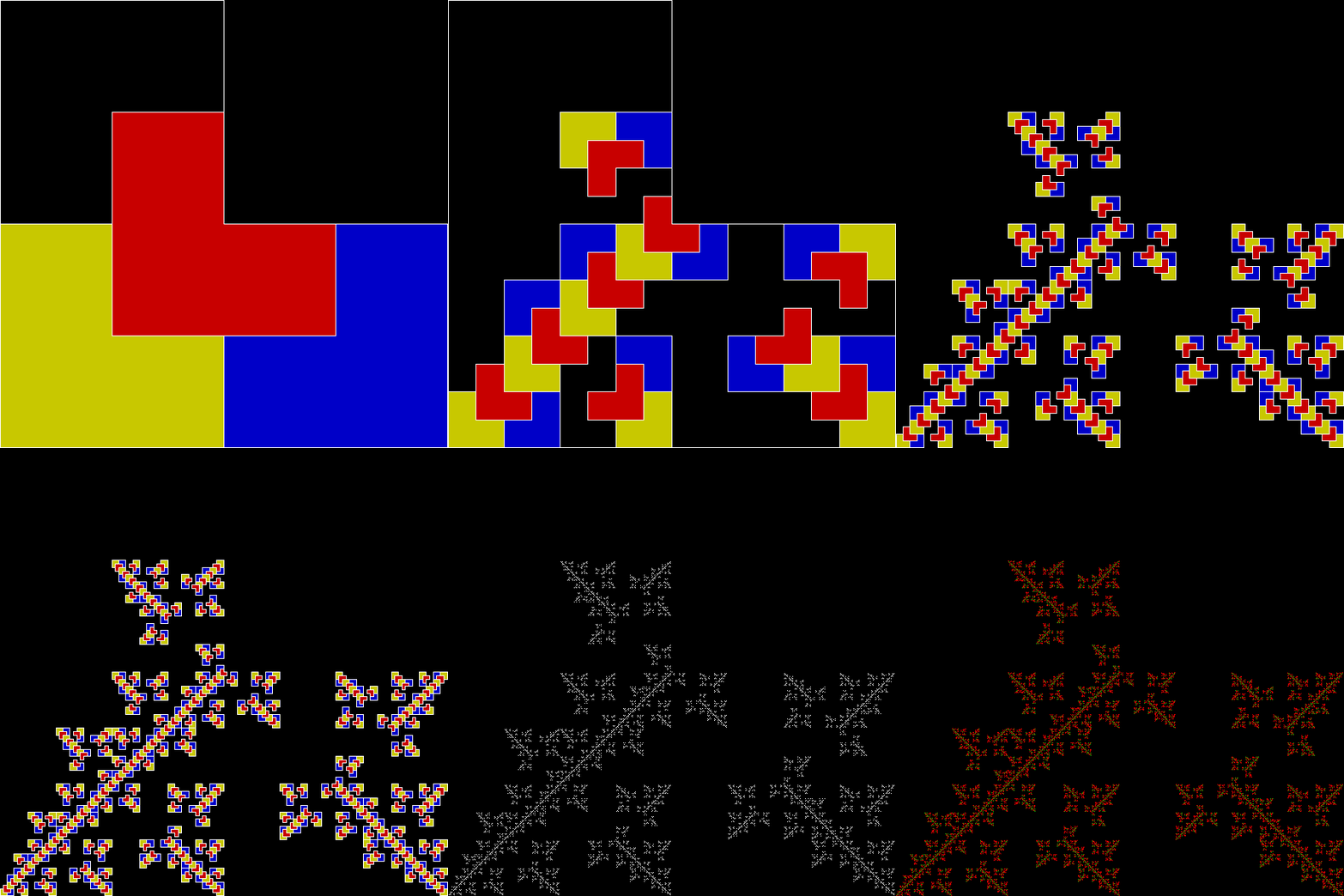
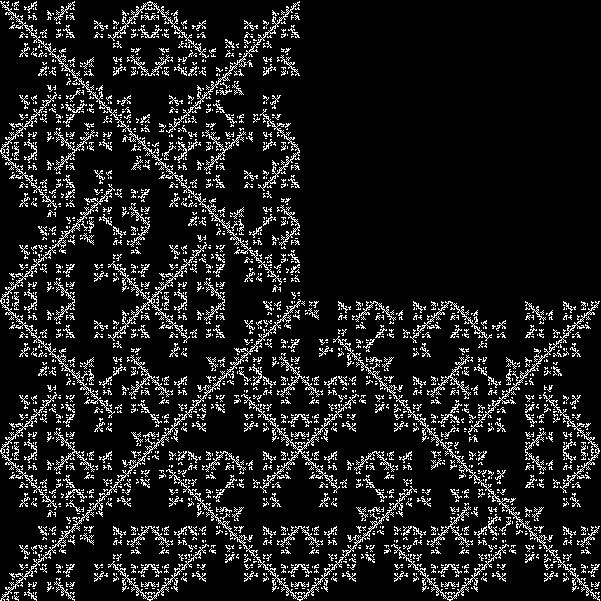
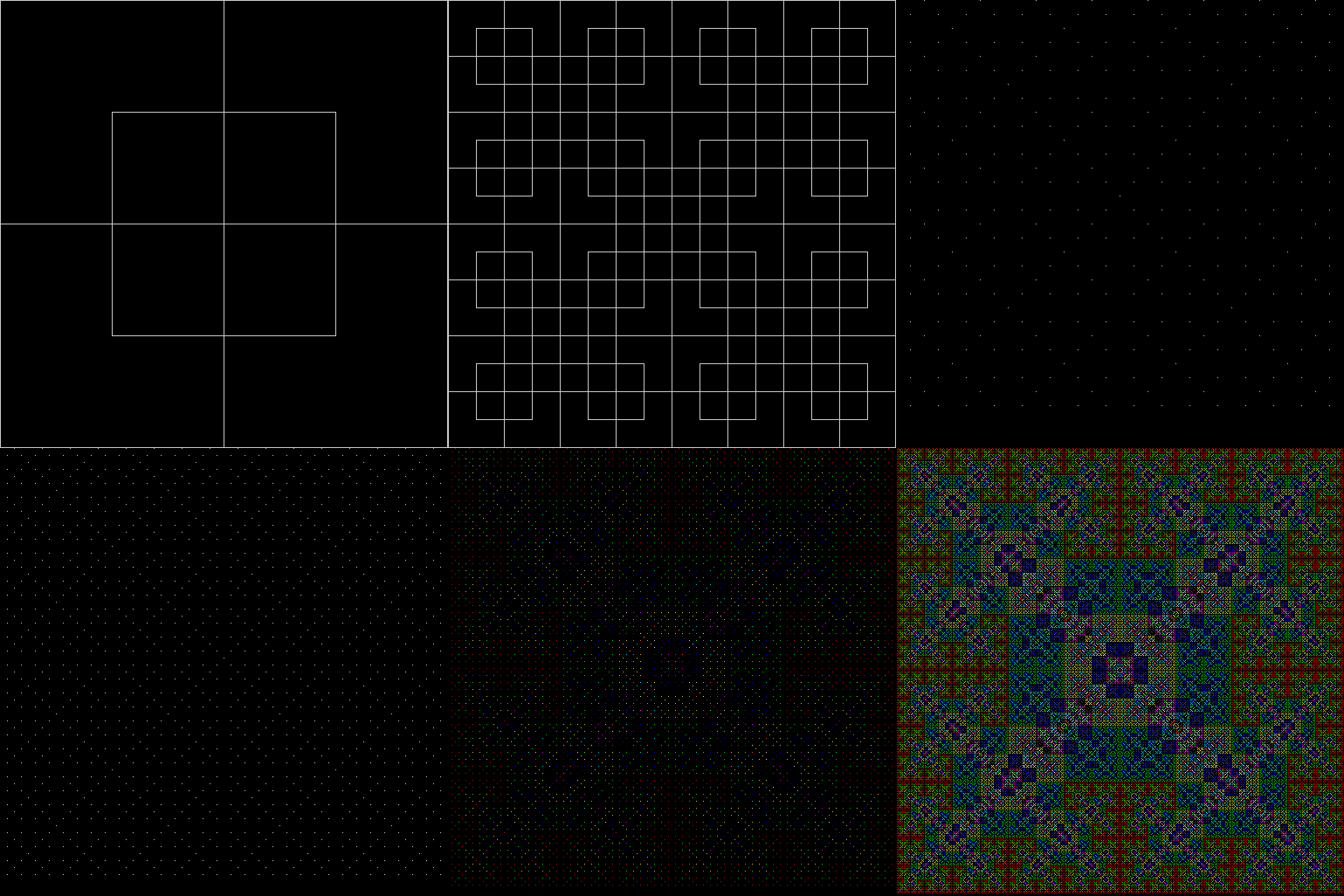
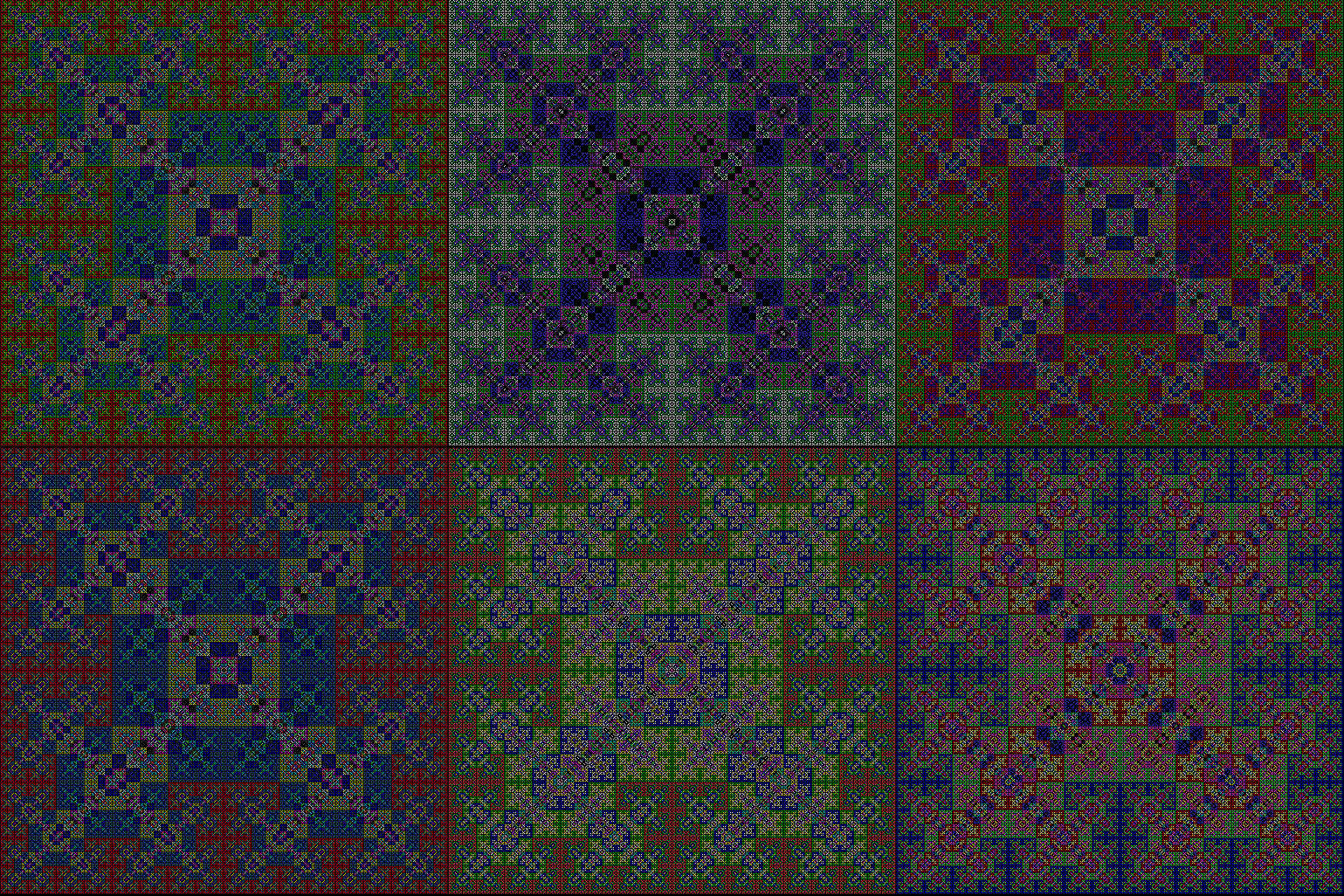
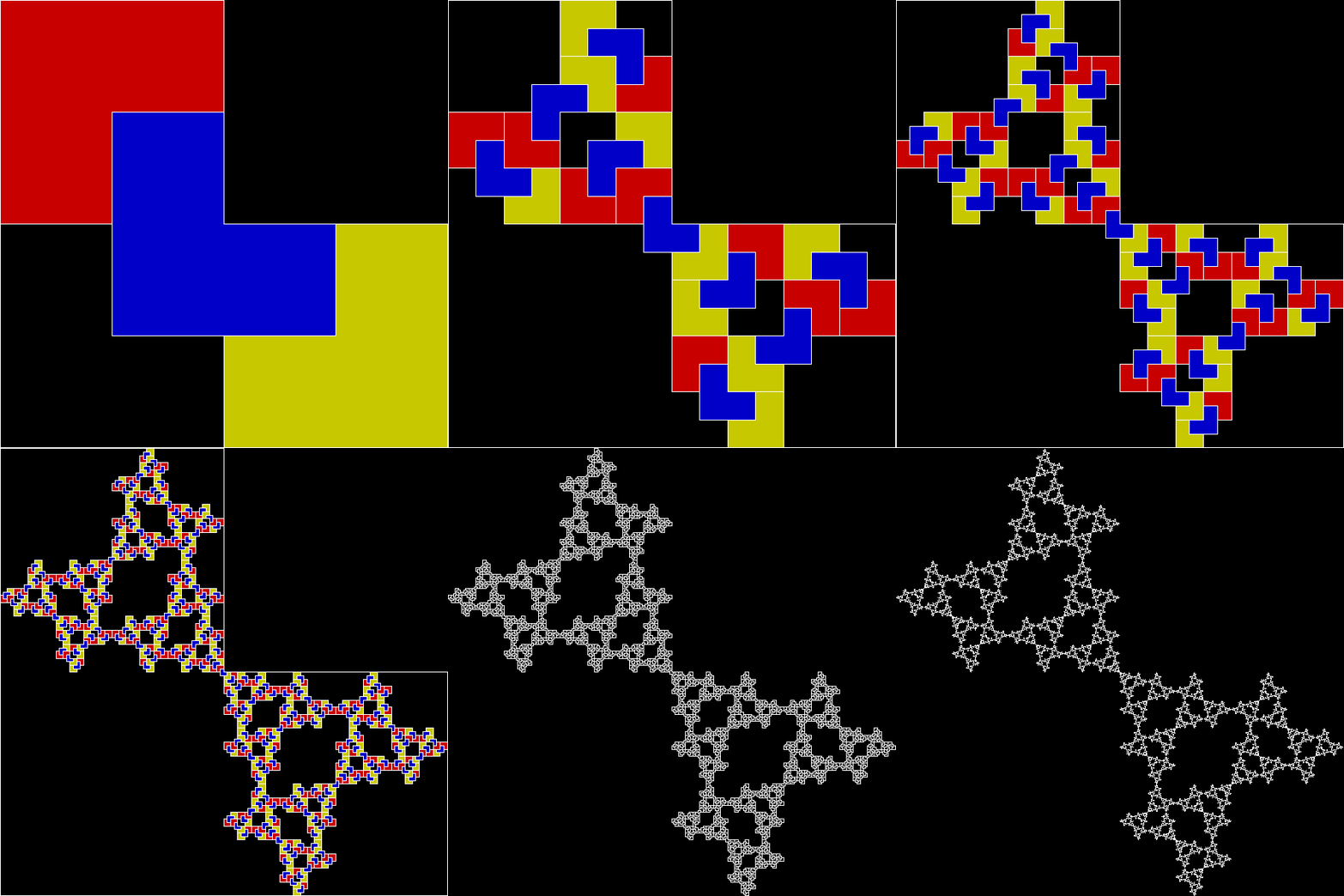
Maths is like that, even at its simplest. There are many routes to the same destination. I first found the fractal below by playing with the L-triomino, or the shape created by putting three squares in the shape of an L. You can divide it into four copies of the same shape and discard one copy, then do the same to each of the sub-copies, then repeat. I’ve decided to call it the hourglass fractal:
l-triomino_124

Hourglass fractal (animated)


l-triomino_124_upright_static1

Hourglass fractal (static)


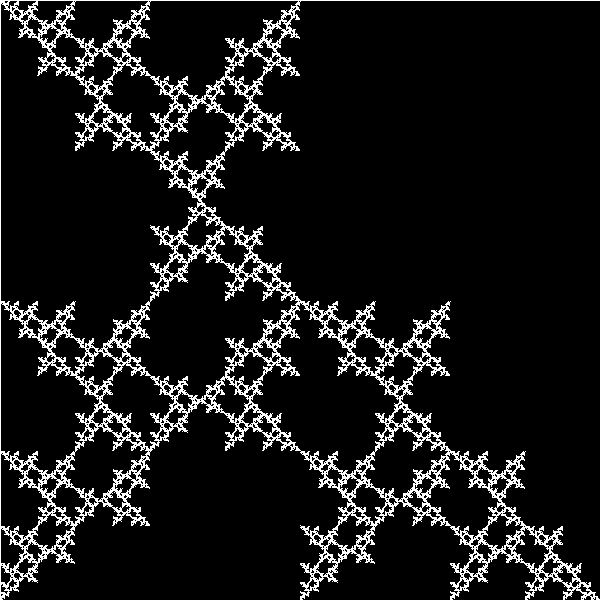
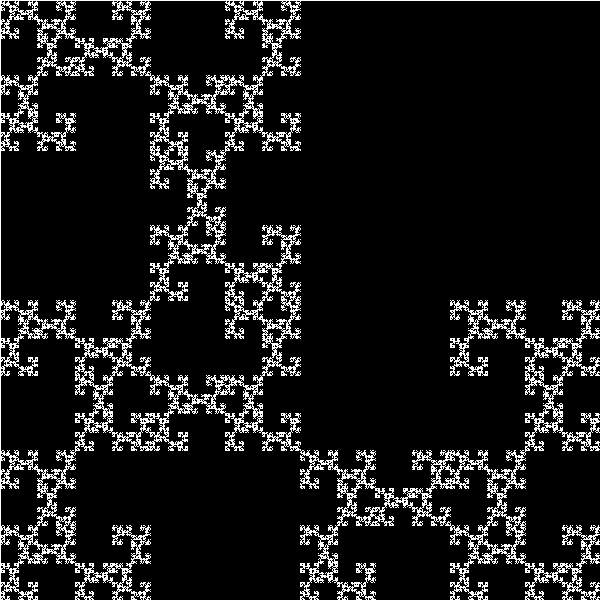
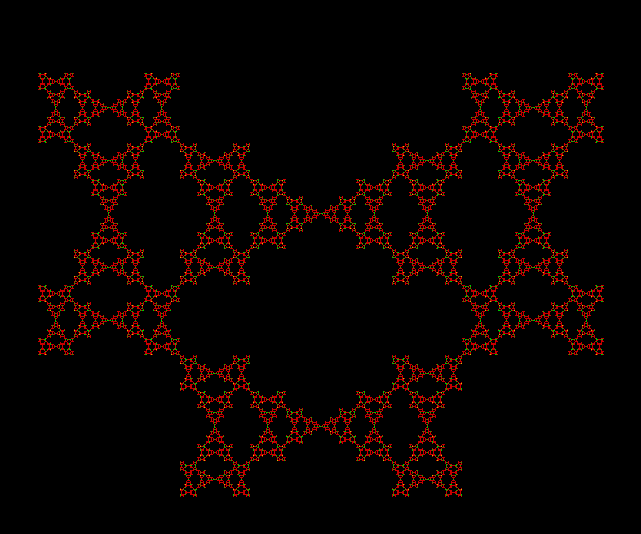
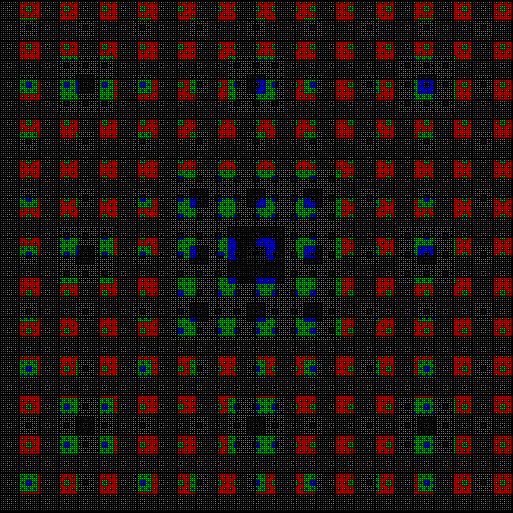
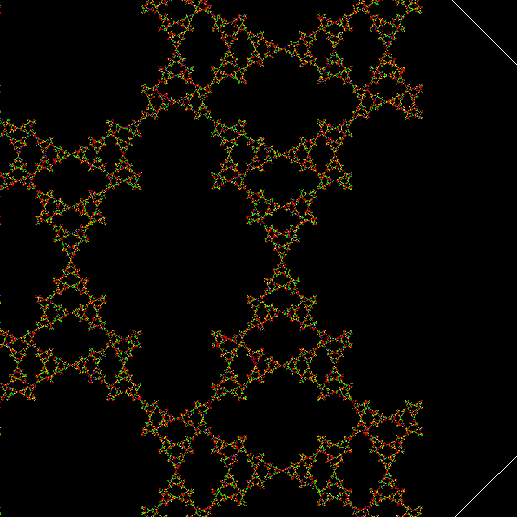
Then I unexpectedly came across the fractal again when playing with what I call a proximity fractal:
v4_ban15_sw3_anim

Hourglass animated (proximity fractal)

v4_ban15_sw3_col

(Static image)


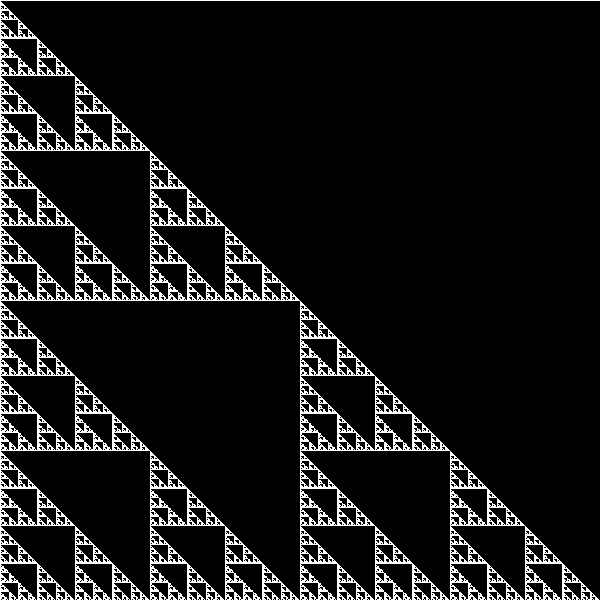
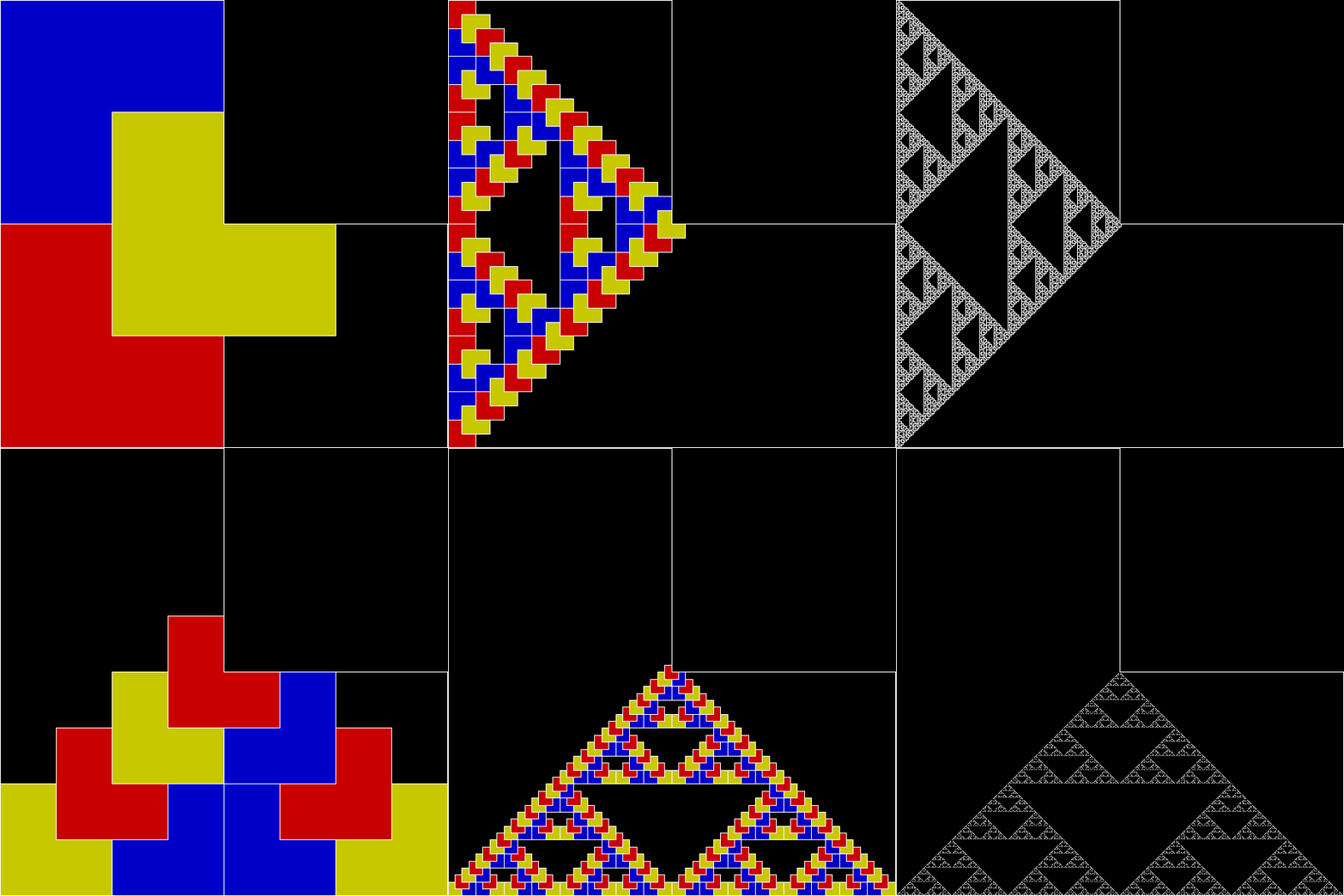
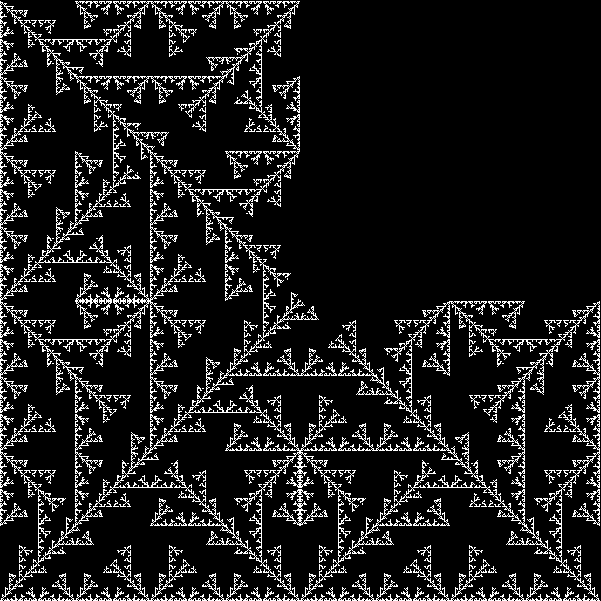
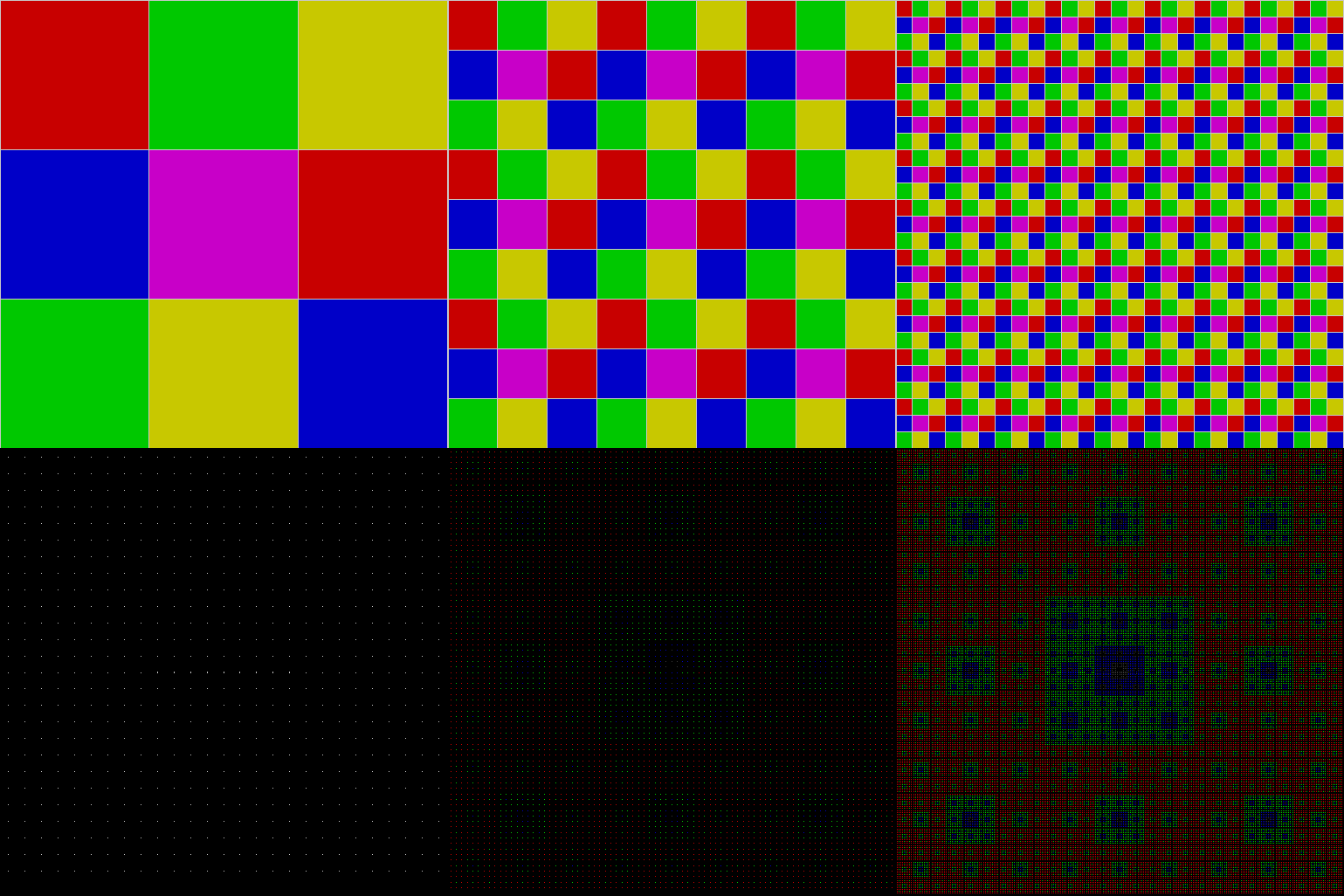
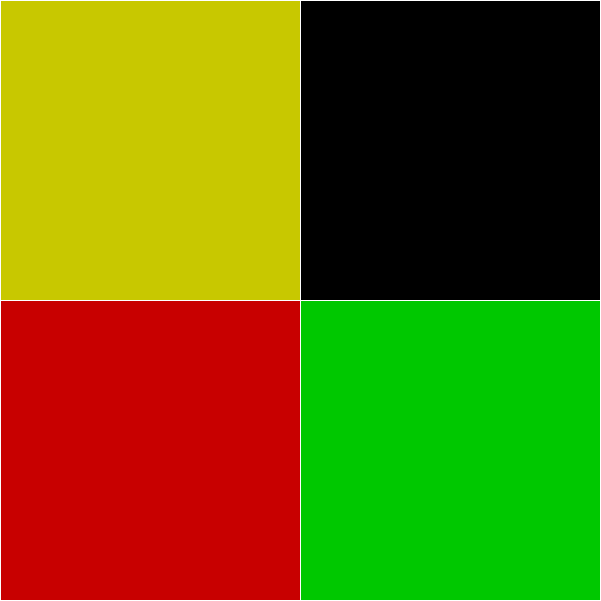
Now I’ve unexpectedly come across it for a third time, playing with a very simple fractal based on a 2×2 square. At first glance, the 2×2 square yields only one interesting fractal. If you divide the square into four smaller squares and discard one square, then do the same to each of the three sub-copies, then repeat, you get a form of the Sierpiński triangle, like this:
sq2x2_123_1

Sierpiński triangle stage 1


sq2x2_123_2

Sierpiński triangle #2


sq2x2_123_3

Sierpiński triangle #3


sq2x2_123_4

Sierpiński triangle #4


sq2x2_123

Sierpiński triangle animated


sq2x2_123_static

(Static image)


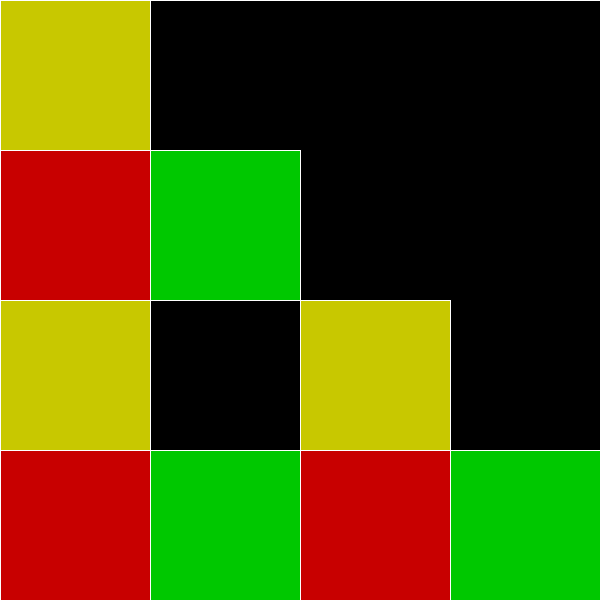
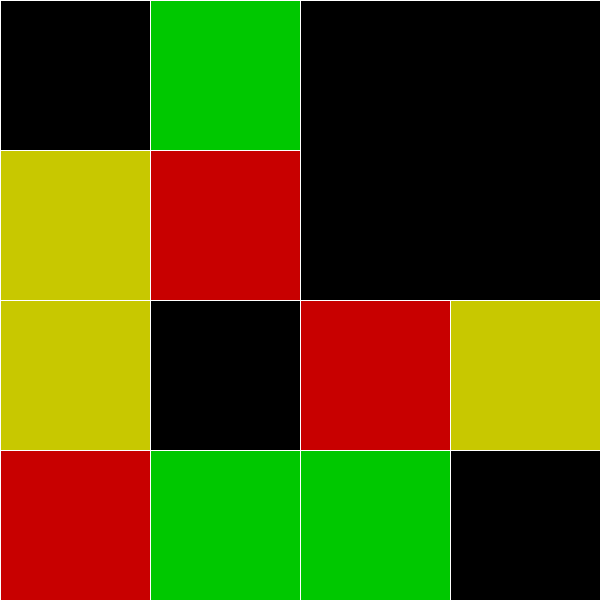
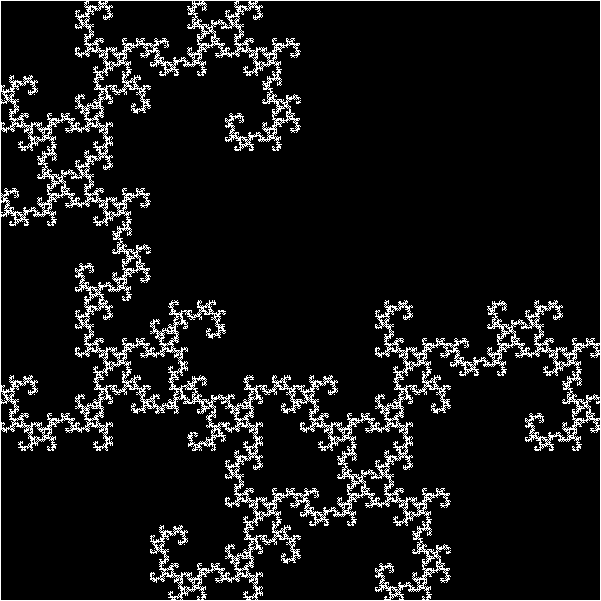
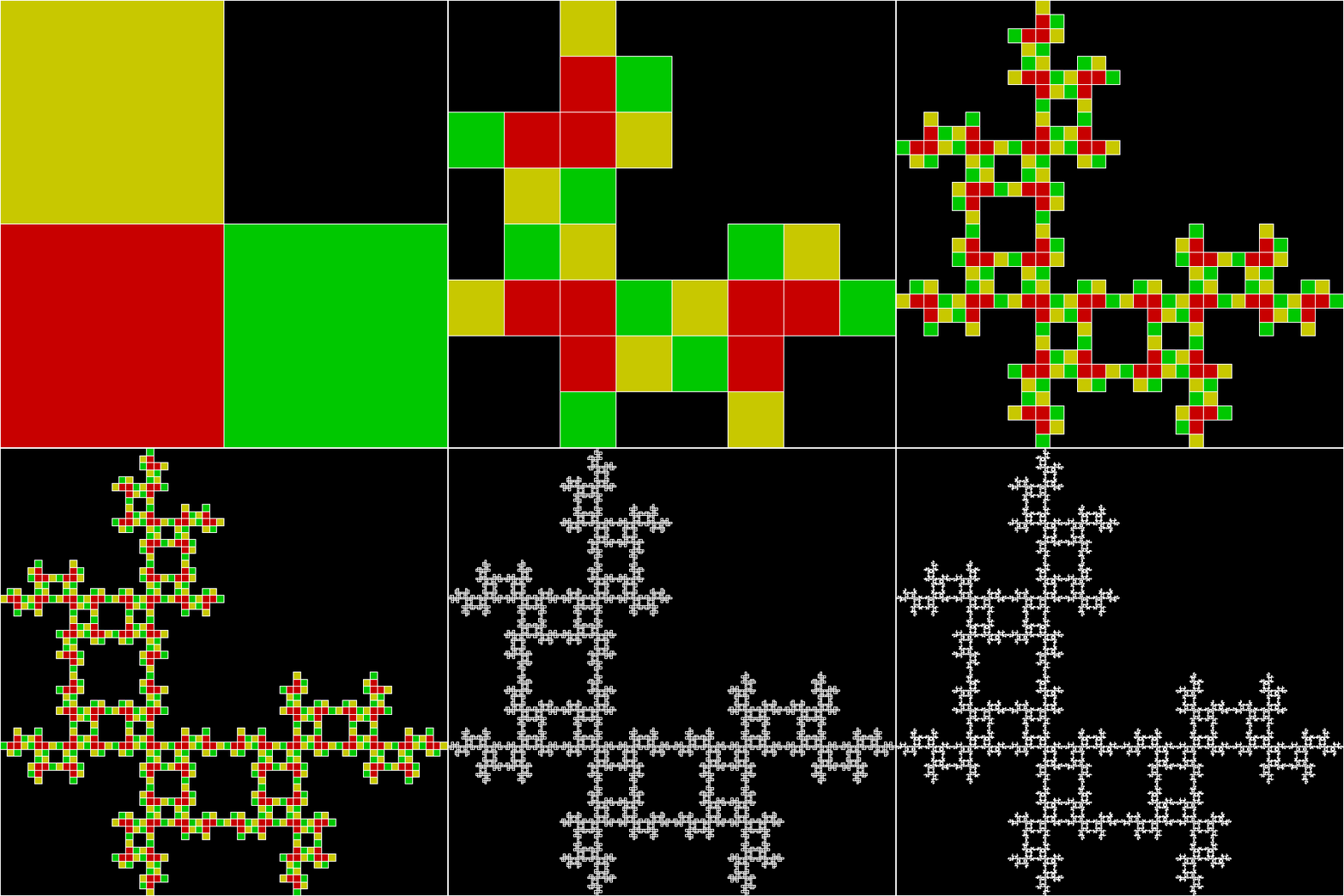
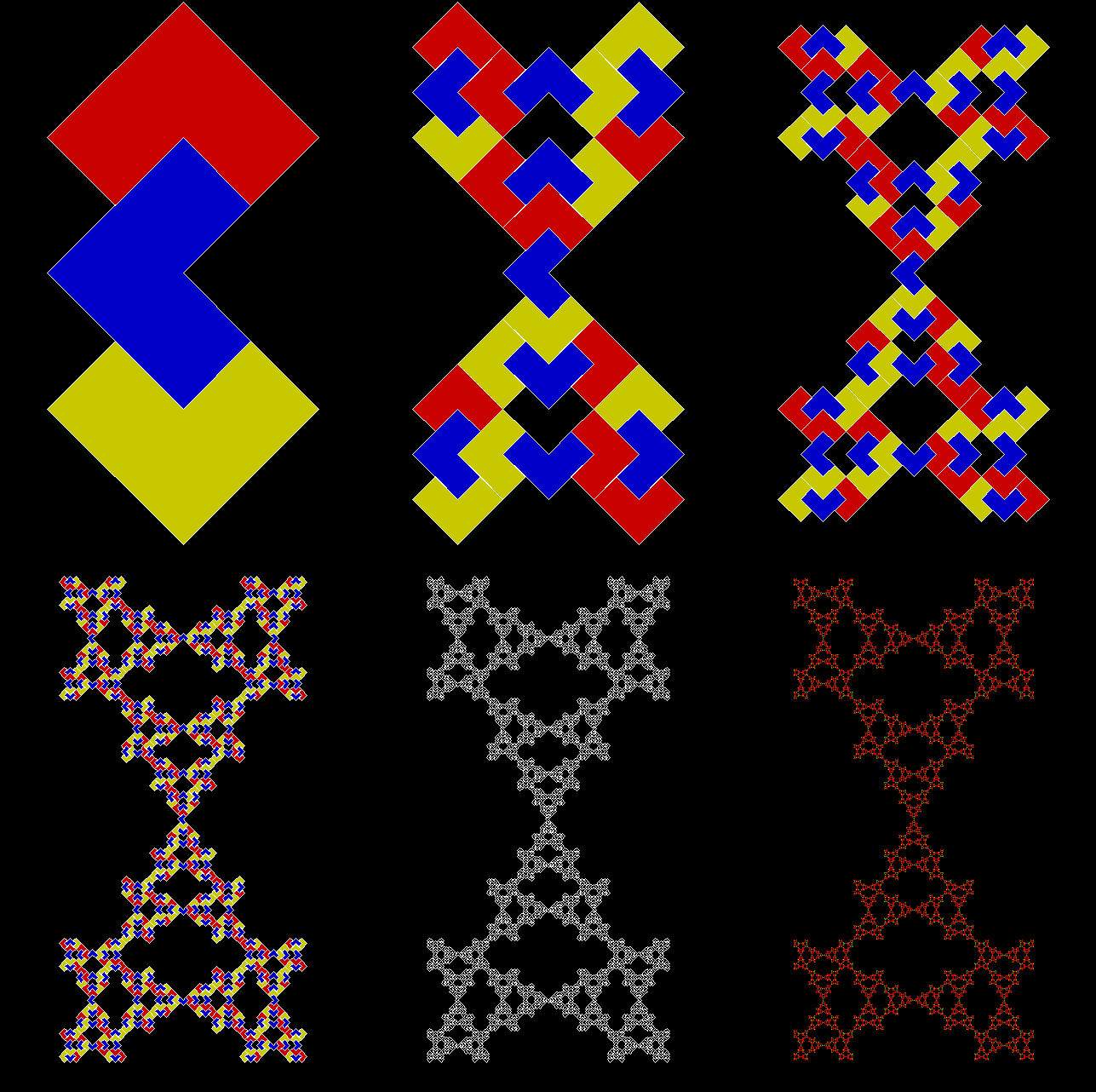
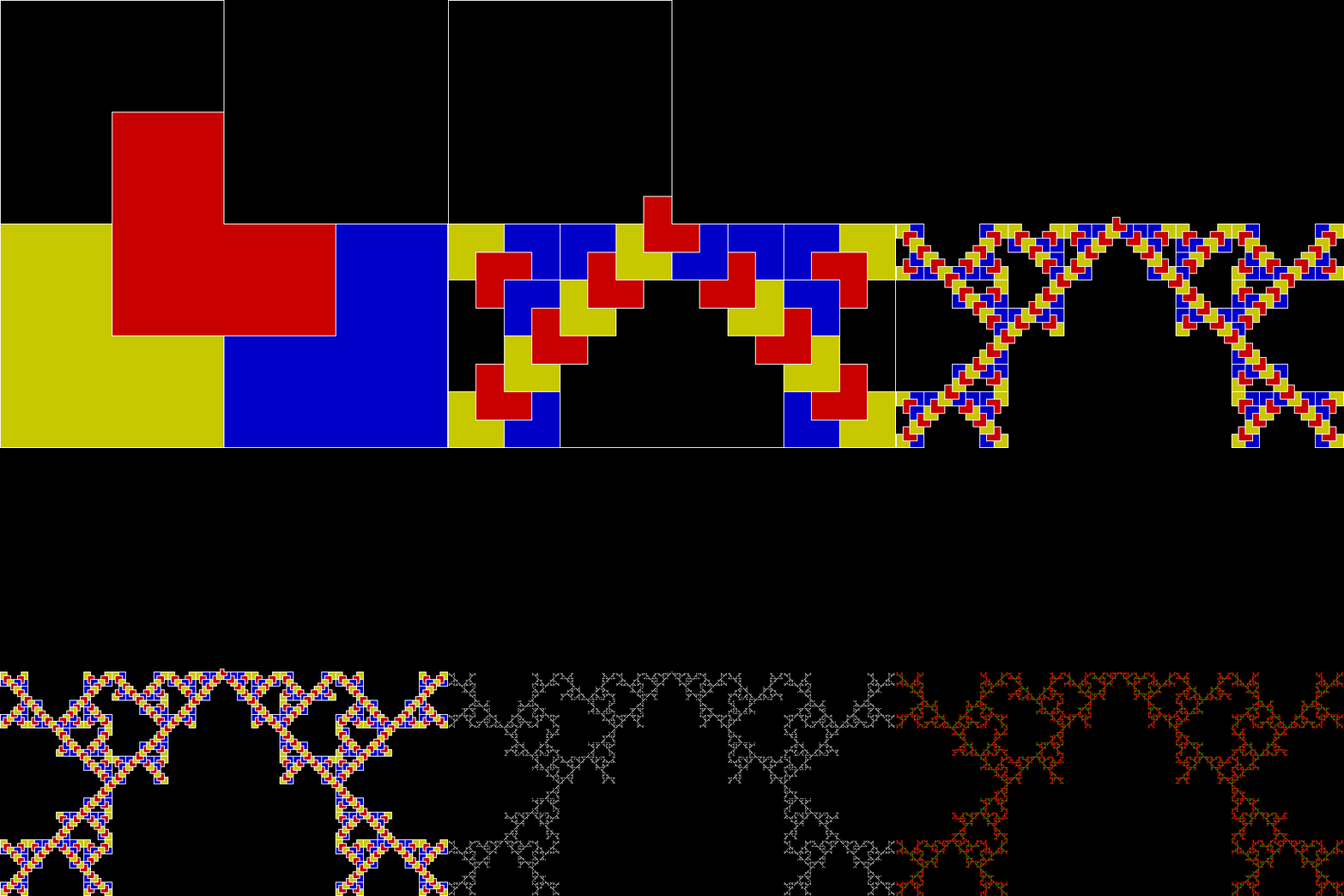
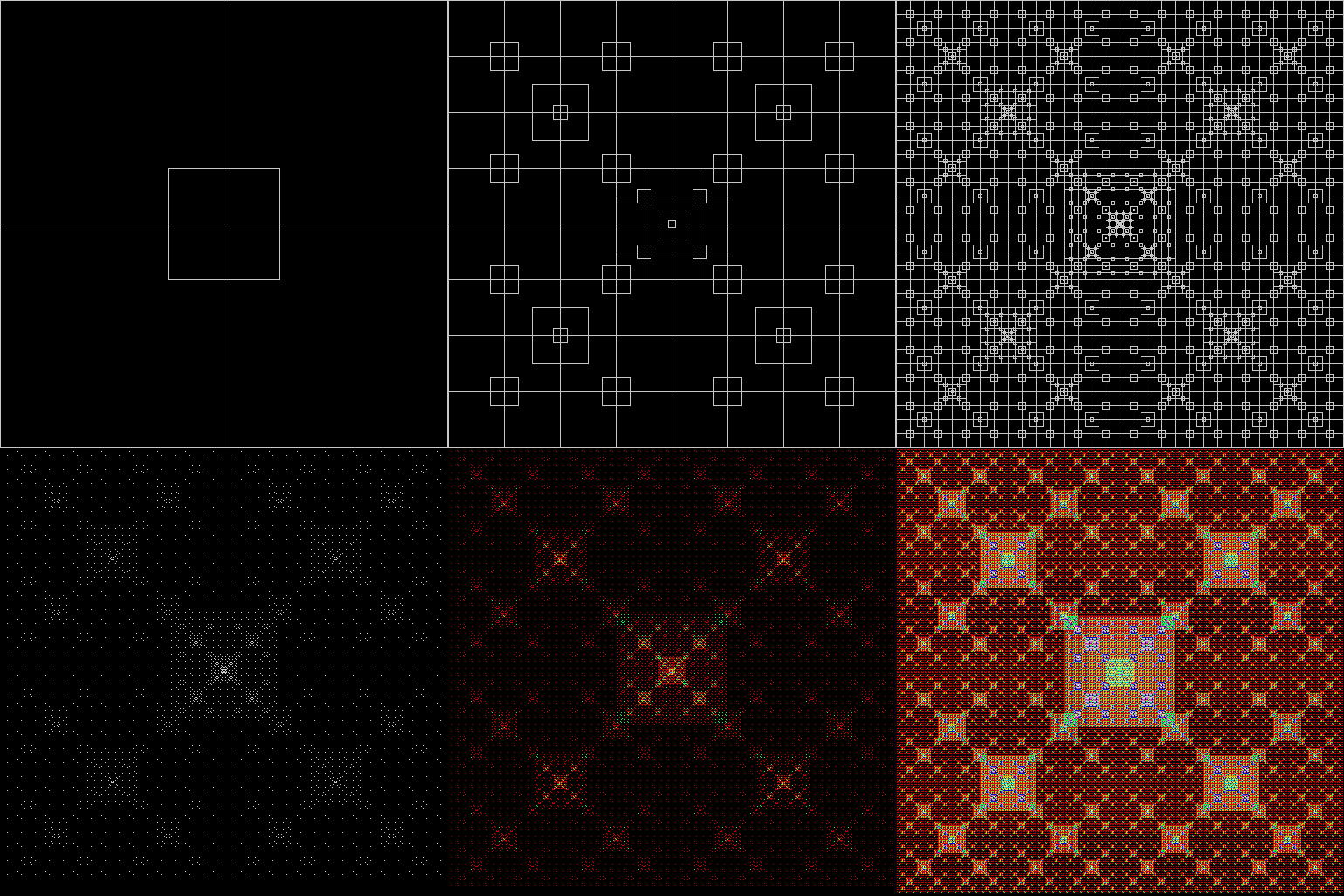
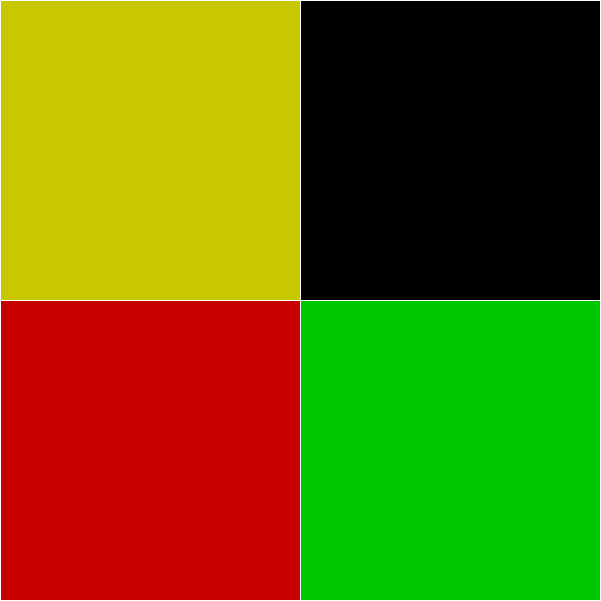
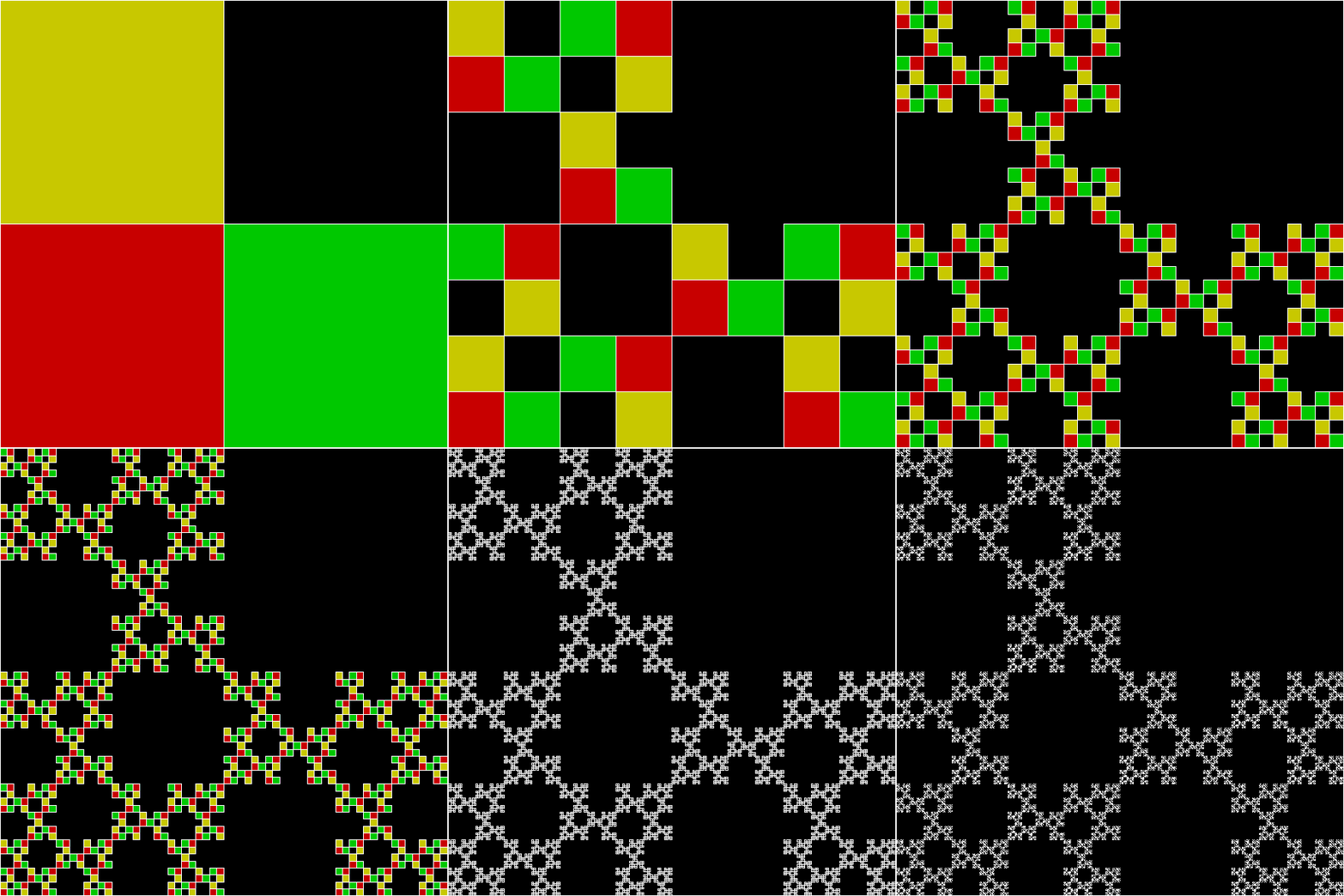
The 2×2 square seems too simple for anything more, but there’s a simple way to enrich it: label the corners of the sub-squares so that you can, as it were, individually rotate them 0°, 90°, 180°, or 270°. One set of rotations produces the hourglass fractal, like this:
sq2x2_123_013_1

Hourglass stage 1


sq2x2_123_013_2

Hourglass #2


sq2x2_123_013_3

Fractal #3


sq2x2_123_013_4

Hourglass #4


sq2x2_123_013_5

Hourglass #5


sq2x2_123_013_6

Hourglass #6


sq2x2_123_013

Hourglass animated


sq2x2_123_013_static

(Static image)


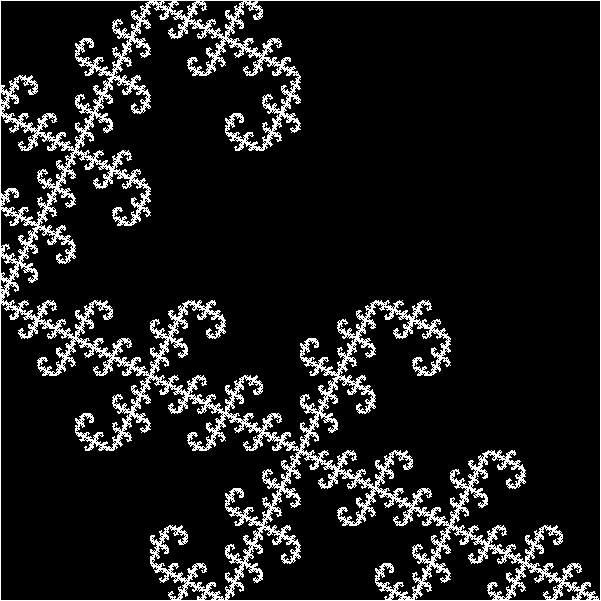
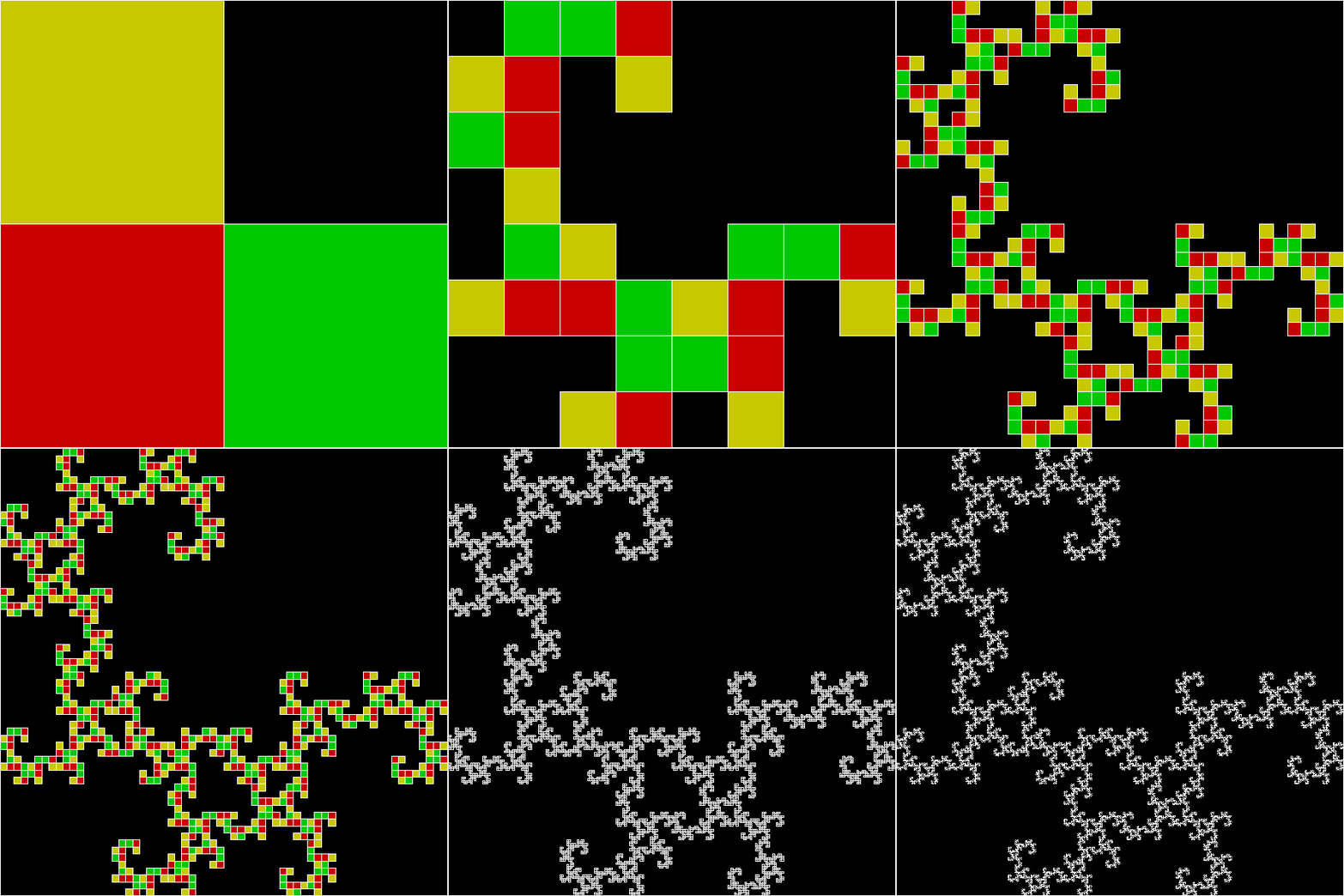
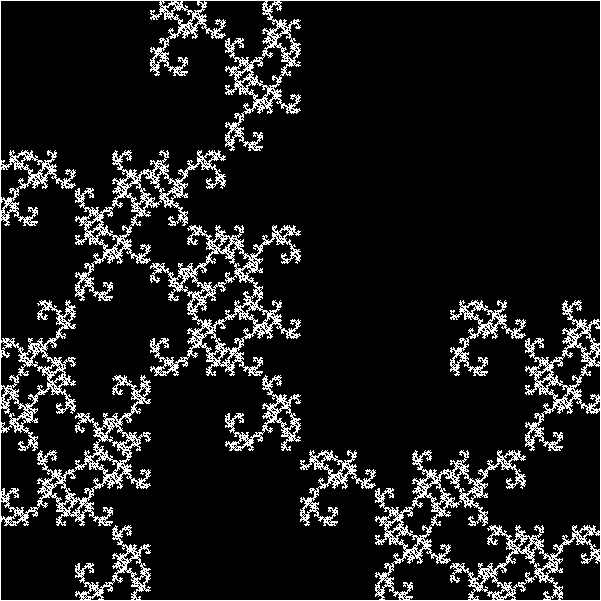
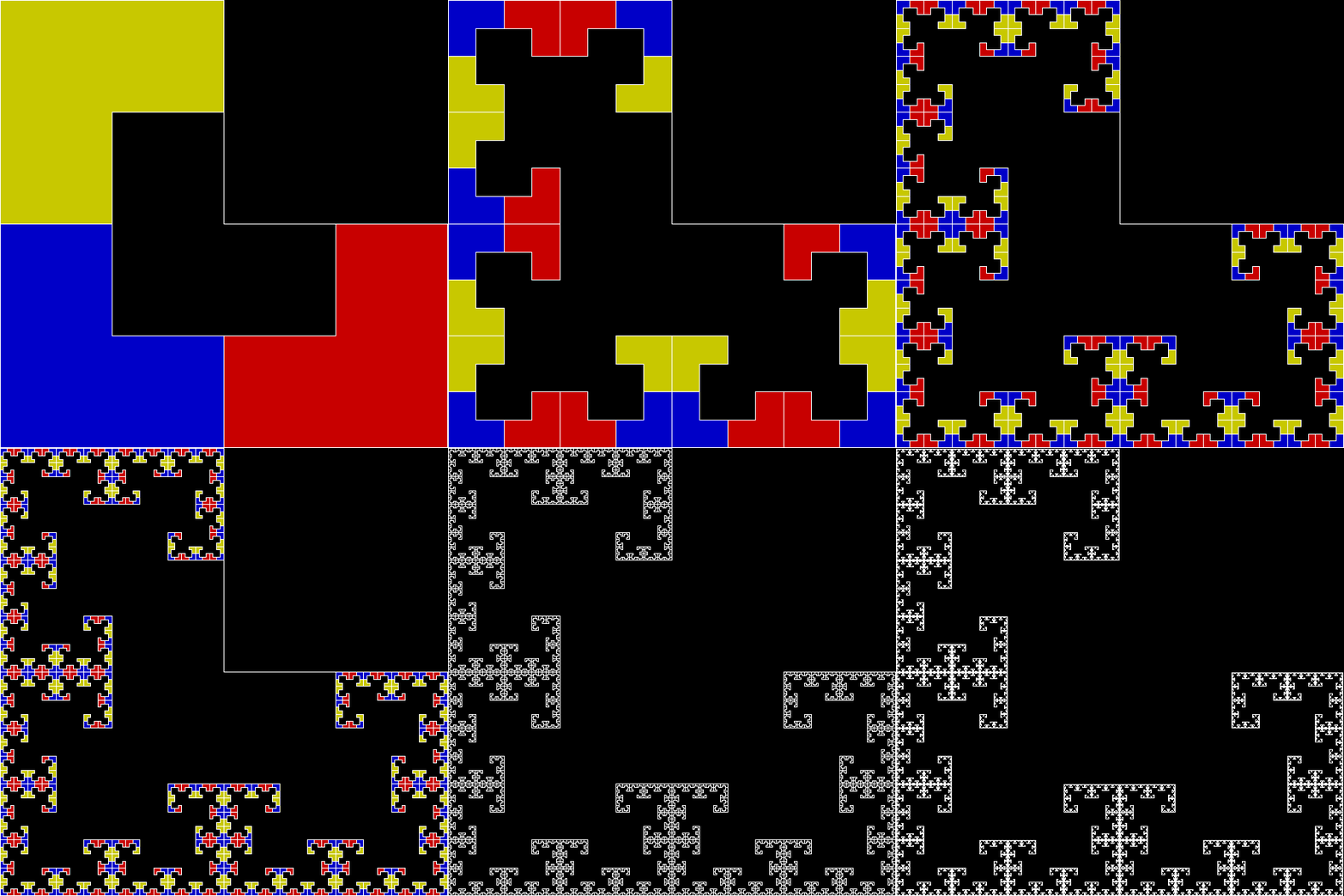
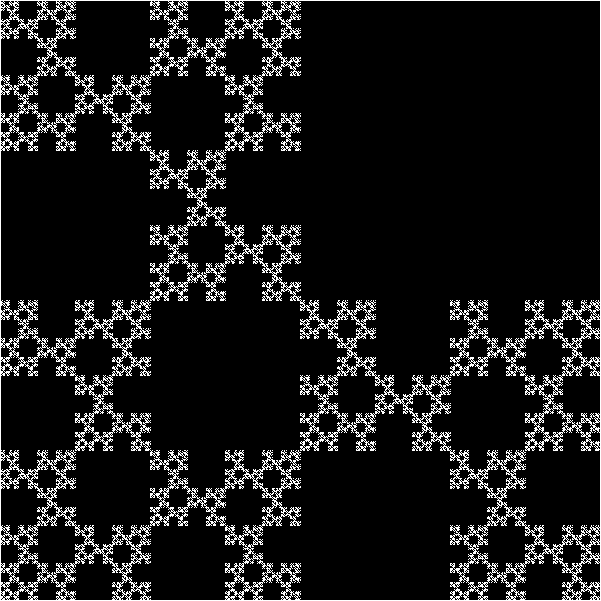
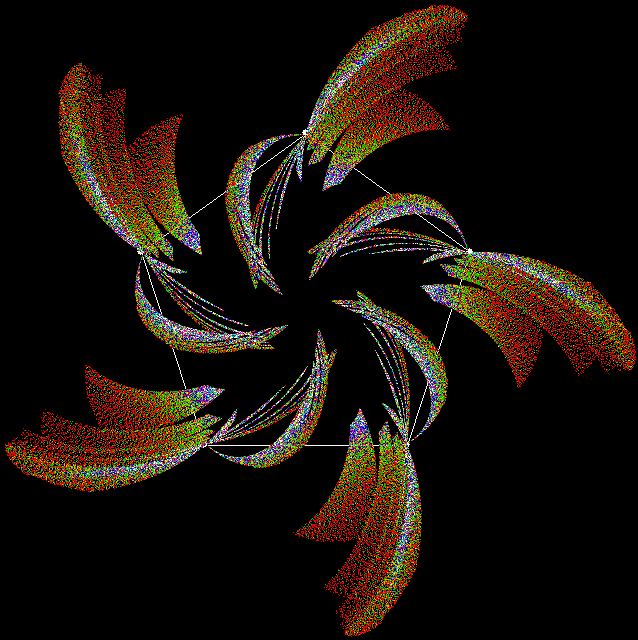
Here are some more fractals from the 2×2 square created using this technique (I’ve found some of them previously by other routes):
sq2x2_123_022


sq2x2_123_022_static

(Static image)

sq2x2_123_031


sq2x2_123_031_static

(Static image)
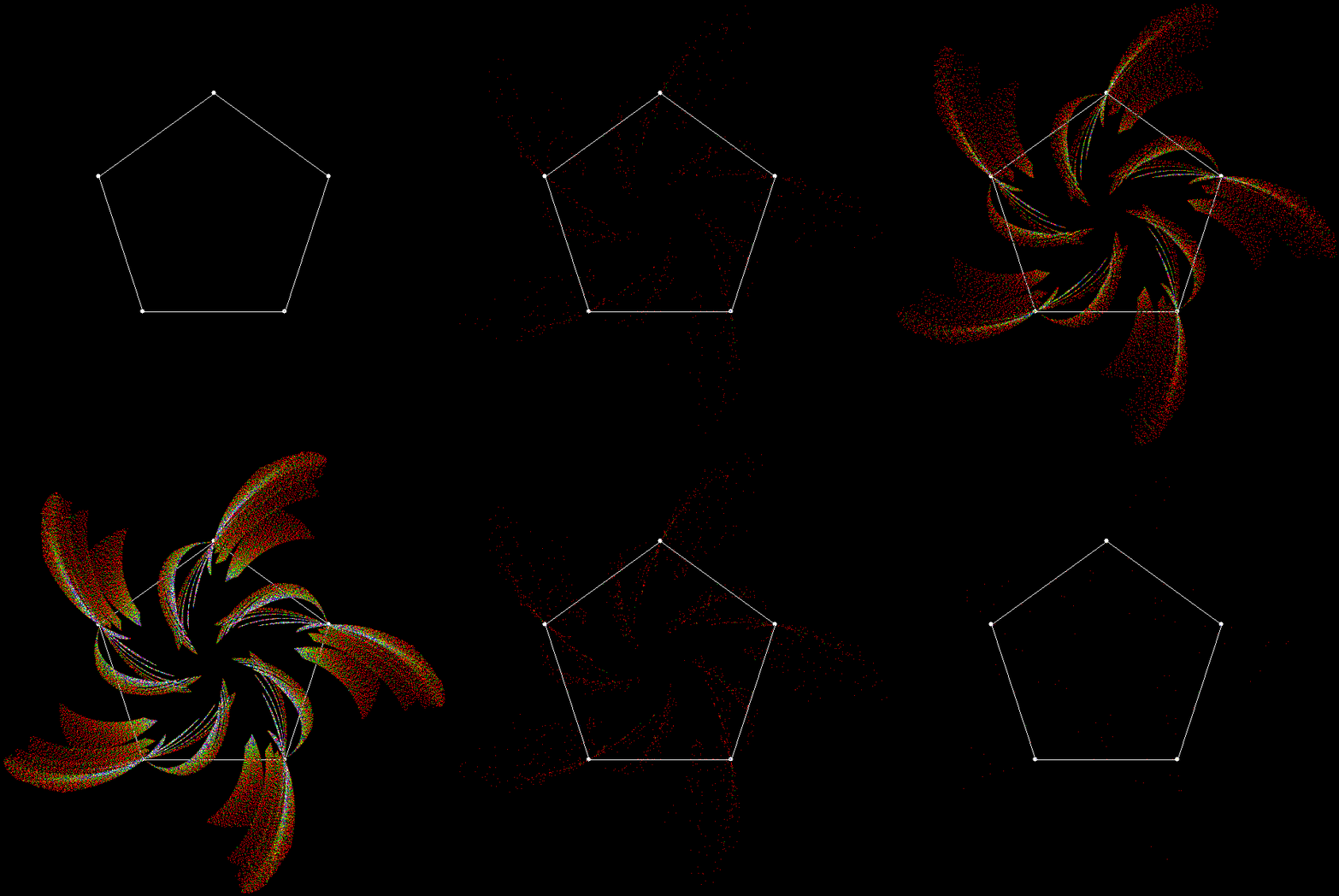

sq2x2_123_102


sq2x2_123_102_static

(Static image)


sq2x2_123_2011


sq2x2_123_201_static

(Static image)


sq2x2_123_211


sq2x2_123_211_static

(Static image)


sq2x2_123_213


sq2x2_123_213_static

(Static image)


sq2x2_123_033_-111


sq2x2_123_033_-111_static

(Static image)


sq2x2_123_201_1-11_static

(Static image)


sq2x2_200_1-11_static

(Static image)


sq2x2_123_132

(Static image)



He Say, He Sigh, He Sow #41

κατ’ ἐπακολούθημα δὲ καὶ περὶ τῆς ἐγκυκλίου καλουμένης παιδείας, εἰς ὅσα εὔχρηστος, περί τε ἀστρολογικῆς καὶ μαθηματικῆς καὶ μαγικῆς γοητείας τε ἐπιδραμητέον. αὐχοῦσι γὰρ δὴ καὶ ἐπὶ ταῖσδε οἱ Πανέλληνες ὡς μεγίσταις ἐπιστήμαις. — Κλήμης ὁ Ἀλεξανδρεύς, Στρώματα.

   “By consequence, also we must treat of what is called the curriculum of study — how far it is serviceable; and of astrology, and mathematics, and magic, and sorcery. For all the Greeks boast of these as the highest sciences.” — Clement of Alexandria, The Stromata, Book II.

T4K1NG S3LF13S

It’s like watching a seed grow. You take a number and count how many 0s it contains, then how many 1s, how many 2s, 3s, 4s and so on. Then you create a new number by writing the count of each digit followed by the digit itself. Then you repeat the process with the new number.

Here’s how it works if you start with the number 1:

1

The count of digits is one 1, so the new number is this:

→ 11

The count of digits for 11 is two 1s, so the next number is:

→ 21

The count of digits for 21 is one 1, one 2, so the next number is:

→ 1112

The count of digits for 1112 is three 1s, one 2, so the next number is:

→ 3112

The count of digits for 3112 is two 1s, one 2, one 3, so the next number is:

→ 211213

What happens after that? Here are the numbers as a sequence:

1 → 11 → 21 → 1112 → 3112 → 211213 → 312213 → 212223 → 114213 → 31121314 → 41122314 → 31221324 → 21322314

That’s all you need, because something interesting happens with 21322314. The digit count is two 1s, three 2s, two 3s, one 4, so the next number is:

→ 21322314

In other words, 21322314 is what might be called a self-descriptive number: it describes the count of its own digits. That’s why I think this procedure is like watching a seed grow. You start with the tiny seed of 1 and end in the giant oak of 21322314, whose factorization is 2 * 3^2 * 13 * 91121. But there are many more self-descriptive numbers in base ten and some of them are much bigger than 21322314. A047841 at the Online Encyclopedia of Integer Sequences lists all 109 of them (and calls them “autobiographical numbers”). Here are a few, starting with the simplest possible:

22 → two 2s → 22
10213223 → one 0, two 1s, three 2s, two 3s → 10213223
10311233 → one 0, three 1s, one 2, three 3s → 10311233
21322314 → two 1s, three 2s, two 3s, one 4 → 21322314
21322315 → two 1s, three 2s, two 3s, one 5 → 21322315
21322316 → two 1s, three 2s, two 3s, one 6 → 21322316*
1031223314 → one 0, three 1s, two 2s, three 3s, one 4 → 10
31223314
3122331415 → three 1s, two 2s, three 3s, one 4, one 5
→ 3122331415
3122331416 → three 1s, two 2s, three 3s, one 4, one 6
→ 3122331416*

*And for 21322317, 21322318, 21322319; 3122331417, 3122331418, 3122331419.


And here’s what happens when you seed a sequence with a number containing all possible digits in base ten:

1234567890 → 10111213141516171819 → 101111213141516171819 → 101211213141516171819 → 101112213141516171819

That final number is self-descriptive:

101112213141516171819 → one 0, eleven 1s, two 2s, one 3, one 4, one 5, one 6, one 7, one 8, one 9 → 101112213141516171819

So some numbers are self-descriptive and some start a sequence that ends in a self-descriptive number. But that doesn’t exhaust the possibilities. Some numbers are part of a loop:

103142132415 → 104122232415 → 103142132415
104122232415 → 103142132415 → 104122232415
1051421314152619 → 1061221324251619 → 1051421314152619…
5142131415261819 → 6122132425161819 → 5142131415261819
106142131416271819 → 107122132426171819 → 106142131416271819


10512223142518 → 10414213142518 → 10512213341518 → 10512223142518
51222314251718 → 41421314251718 → 51221334151718 →
51222314251718

But all that is base ten. What about other bases? In fact, nearly all self-descriptive numbers in base ten are also self-descriptive in other bases. An infinite number of other bases, in fact. 22 is a self-descriptive number for all b > 2. The sequence seeded with 1 is identical in all b > 4:

1 → 11 → 21 → 1112 → 3112 → 211213 → 312213 → 212223 → 114213 → 31121314 → 41122314 → 31221324 → 2132231421322314

In bases 2, 3 and 4, the sequence seeded with 1 looks like this:

1 → 11 → 101 → 10101 → 100111 → 1001001 → 1000111 → 11010011101001… (b=2) (1101001[2] = 105 in base 10)
1 → 11 → 21 → 1112 → 10112 → 1010112 → 2011112 → 10111221011122… (b=3) (1011122[3] = 854 in base 10)
1 → 11 → 21 → 1112 → 3112 → 211213 → 312213 → 212223 → 1110213 → 101011213 → 201111213 → 101112213101112213… (b=4) (101112213[4] = 71079 in base 10)

In base 2 there are only two self-descriptive numbers (and no loops):

111 → three 1s → 111… (b=2) (111 = 7 in base 10)
1101001 → three 0s, four 1s → 1101001… (b=2) (1101001 = 105 in base 10)

So if you apply the “count digits” procedure in base 2, all numbers, except 111, begin a sequence that ends in 1101001. Base 3 has a few more self-descriptive numbers and also some loops:

2222… (b >= 3)
10111 → one 0, four 1s → 10111… (b=3)
11112 → four 1s, one 2 → 11112
100101 → three 0s, three 1s → 100101… (b=3)
1011122 → one 0, four 1s, two 2s → 1011122… (b=3)
2021102 → two 0s, two 1s, three 2s → 2021102… (b=3)
10010122 → three 0s, three 1s, two 2s → 10010122


2012112 → 10101102 → 10011112 → 2012112
10011112 → 2012112 → 10101102 → 10011112
10101102 → 10011112 → 2012112 → 10101102

A question I haven’t been able to answer: Is there a base in which loops can be longer than these?

103142132415 → 104122232415 → 103142132415
10512223142518 → 10414213142518 → 10512213341518 → 10512223142518

A question I have been able to answer: What is the sequence when it’s seeded with the title of this blog-post? T4K1NGS3LF13S is a number in all bases >= 30 and its base-30 form equals 15,494,492,743,722,316,018 in base 10 (with the factorization 2 * 72704927 * 106557377767). If T4K1NGS3LF13S seeds a sequence in any b >= 30, the result looks like this:

T4K1NGS3LF13S → 2123141F1G1K1L1N2S1T → 813213141F1G1K1L1N1S1T → A1122314181F1G1K1L1N1S1T → B1221314181A1F1G1K1L1N1S1T → C1221314181A1B1F1G1K1L1N1S1T → D1221314181A1B1C1F1G1K1L1N1S1T → E1221314181A1B1C1D1F1G1K1L1N1S1T → F1221314181A1B1C1D1E1F1G1K1L1N1S1T → G1221314181A1B1C1D1E2F1G1K1L1N1S1T → F1321314181A1B1C1D1E1F2G1K1L1N1S1T → F1222314181A1B1C1D1E2F1G1K1L1N1S1T → E1421314181A1B1C1D1E2F1G1K1L1N1S1T → F1221324181A1B1C1D2E1F1G1K1L1N1S1T → E1421314181A1B1C1D1E2F1G1K1L1N1S1T

Tri-Way to L

The name is more complicated than the shape: L-triomino. The shape is simply three squares forming an L. And it’s a rep-tile — it can be divided into four smaller copies of itself.

l-triomino

An L-triomino — three squares forming an L


l-triomino_anim

L-triomino as rep-tile


That means it can also be turned into a fractal, as I’ve shown in Rep-Tiles Revisited and Get Your Prox Off #2. First you divide an L-triomino into four sub-copies, then discard one sub-copy, then repeat. Here are the standard L-triomino fractals produced by this technique:

l-triomino_123_134

Fractal from L-triomino — divide and discard


l-triomino_234


l-triomino_124


l-triomino_124_upright


l-triomino_124_upright_static1

(Static image)


l-triomino_124_upright_static2

(Static image)


But those fractals don’t exhaust the possibilities of this very simple shape. The standard L-triomino doesn’t have true chirality. That is, it doesn’t come in left- and right-handed forms related by mirror-reflection. But if you number its corners for the purposes of sub-division, you can treat it as though it comes in two distinct orientations. And when the orientations are different in the different sub-copies, new fractals appear. You can also delay the stage at which you discard the first sub-copy. For example, you can divide the L-triomino into four sub-copies, then divide each sub-copy into four more sub-copies, and only then begin discarding.

Here are the new fractals that appear when you apply these techniques:

l-triomino_124_exp

Delay before discarding


l-triomino_124_exp_static

(Static image)

l-triomino_124_tst2_static1

(Static image)

l-triomino_124_tst2_static2

(Static image)

l-triomino_124_tst1


l-triomino_124_tst1_static1

(Static image)

l-triomino_124_tst1_static2

(Static image)


l-triomino_134_adj1

Adjust orientation


l-triomino_134_adj2


l-triomino_134_adj3


l-triomino_134_adj3_tst3

(Static image)


l-triomino_134_adj4


l-triomino_134_exp_static

(Static image)


l-triomino_234_exp

Can You Dij It? #2

It’s very simple, but I’m fascinated by it. I’m talking about something I call the digit-line, or the stream of digits you get when you split numbers in a particular base into individual digits. For example, here are the numbers one to ten in bases 2 and 3:

Base = 2: 1, 10, 11, 100, 101, 110, 111, 1000, 1001, 1010…
Base = 3: 1, 2, 10, 11, 12, 20, 21, 22, 100, 101…


If you turn them into digit-lines, they look like this:

Base = 2: 1, 1, 0, 1, 1, 1, 0, 0, 1, 0, 1, 1, 1, 0, 1, 1, 1, 1, 0, 0, 0, 1, 0, 0, 1, 1, 0, 1, 0… (A030190 in the Online Encyclopedia of Integer Sequences)
Base = 3: 1, 2, 1, 0, 1, 1, 1, 2, 2, 0, 2, 1, 2, 2, 1, 0, 0, 1, 0, 1… (A003137 in the OEIS)


At the tenth digit of the two digit-lines, both digits equal zero for the first time:

Base = 2: 1, 1, 0, 1, 1, 1, 0, 0, 1, 0
Base = 3: 1, 2, 1, 0, 1, 1, 1, 2, 2, 0


When the binary and ternary digits are represented together, the digit-lines look like this:

(1,1), (1,2), (0,1), (1,0), (1,1), (1,1), (0,1), (0,2), (1,2), (0,0)


But in base 4, the tenth digit of the digit-line is 1. So when do all the digits of the digit-line first equal zero for bases 2 to 4? Here the early integers in those bases:

Base 2: 1, 10, 11, 100, 101, 110, 111, 1000, 1001, 1010, 1011, 1100, 1101, 1110, 1111, 10000, 10001, 10010, 10011, 10100, 10101…

Base 3: 1, 2, 10, 11, 12, 20, 21, 22, 100, 101, 102, 110, 111, 112, 120, 121, 122, 200, 201, 202, 210, 211, 212, 220, 221, 222, 1000, 1001, 1002…

Base 4: 1, 2, 3, 10, 11, 12, 13, 20, 21, 22, 23, 30, 31, 32, 33, 100, 101, 102, 103, 110, 111, 112, 113, 120, 121, 122, 123, 130, 131, 132, 133, 200…


And here are the digits of the digit-line in bases 2 to 4 represented together:

(1,1,1), (1,2,2), (0,1,3), (1,0,1), (1,1,0), (1,1,1), (0,1,1), (0,2,1), (1,2,2), (0,0,1), (1,2,3), (1,1,2), (1,2,0), (0,2,2), (1,1,1), (1,0,2), (1,0,2), (1,1,2), (0,0,3), (0,1,3), (0,1,0), (1,0,3), (0,2,1), (0,1,3), (1,1,2), (1,0,3), (0,1,3), (1,1,1), (0,1,0), (1,1,0), (0,1,1), (1,2,0), (1,1,1), (1,2,1), (1,0,0), (0,1,2), (0,2,1), (1,1,0), (1,1,3), (0,2,1), (1,2,1), (1,2,0), (1,0,1), (1,0,1), (0,2,1), (1,0,1), (1,1,1), (1,2,2), (1,0,1), (1,2,1), (0,2,3), (0,1,1), (0,0,2), (0,2,0), (1,1,1), (0,1,2), (0,2,1), (0,1,1), (1,2,2), (1,2,2), (0,2,1), (0,0,2), (1,2,3), (0,2,1), (1,1,3), (0,2,0), (0,2,1), (1,2,3), (1,1,1), (1,0,1), (0,0,3), (1,0,2), (0,1,1), (0,0,3), (1,0,3), (0,1,2), (1,1,0), (0,0,0)

At the 78th digit, all three digits equal zero. But the 78th digit of the digit-line in base 5 is 1. So when are the digits first equal to zero in bases 2 to 5? It’s not difficult to find out, but the difficulty of the search increases fast as the bases get bigger. Here are the results up to base 13 (note that bases 11 and 12 both have zeroes at digit 103721663):

dig=0 in bases 2 to 3 at the 10th digit of the digit-line
dig=0 in bases 2 to 4 at the 78th digit of the digit-line
dig=0 in bases 2 to 5 at the 182nd digit of the digit-line
dig=0 in bases 2 to 6 at the 302nd digit of the digit-line
dig=0 in bases 2 to 7 at the 12149th digit of the digit-line
dig=0 in bases 2 to 8 at the 45243rd digit of the digit-line
dig=0 in bases 2 to 9 at the 255261st digit of the digit-line
dig=0 in bases 2 to 10 at the 8850623rd digit of the digit-line
dig=0 in bases 2 to 12 at the 103721663rd digit of the digit-line
dig=0 in bases 2 to 13 at the 807778264th digit of the digit-line


I assume that, for any base b > 2, you can find some point in the digit-line at which d = 0 for all bases 2 to b. Indeed, I assume that this happens infinitely often. But I don’t know any short-cut for finding the first digit at which this occurs.


Previously pre-posted:

Can You Dij It? #1

Dice in the Witch House

“Who could associate mathematics with horror?”

John Buchan answered that question in “Space” (1911), long before H.P. Lovecraft wrote masterpieces like “The Call of Cthulhu” (1926) and “Dreams in the Witchhouse” (1933). But Lovecraft’s use of mathematics is central to his genius. So is his recognition of both the importance and the strangeness of mathematics. Weird fiction and maths go together very well.

But weird fiction is about the intrusion or eruption of the Other into the everyday. Maths can teach you that the everyday is already Other. In short, reality is weird — the World is a Witch House. Let’s start with a situation that isn’t obviously weird. Suppose you had three six-sided dice, A, B and C, each with different set of numbers, like this:

Die A = (1, 2, 3, 6, 6, 6)
Die B = (1, 2, 3, 4, 6, 6)
Die C = (1, 2, 3, 4, 5, 6)

If the dice are fair, i.e. each face has an equal chance of appearing, then it’s clear that, on average, die A will beat both die B and die C, while die B will beat die C. The reasoning is simple: if die A beats die B and die B beats die C, then surely die A will beat die C. It’s a transitive relationship: If Jack is taller than Jim and Jim is taller than John, then Jack is taller than John.

Now try another set of dice with different arrangements of digits:

Die A = (1, 2, 2, 5, 6, 6)
Die B = (1, 1, 4, 5, 5, 5)
Die C = (3, 3, 3, 3, 4, 6)

If you roll the dice, on average die A beats die B and die B beats die C. Clearly, then, die A will also beat die C. Or will it? In fact, it doesn’t: the dice are what is called non-transitive. Die A beats die B and die B beats die C, but die C beats die A.

But how does that work? To see a simpler example of non-transitivity, try a simpler set of random-number generators. Suppose you have a triangle with a short rod passing through its centre at right angles to the plane of the triangle. Now imagine numbering the edges of the triangles (1, 2, 3) and throwing it repeatedly so that it spins in the air before landing on a flat surface. It should be obvious that it will come to rest with one edge facing downward and that each edge has a 1/3 chance of landing like that.

In other words, you could use such a spiked triangle as a random-number generator — you could call it a “trie”, plural “trice”. Examine the set of three trice below. You’ll find that they have the same paradoxical property as the second set of six-sided dice above. Trie A beats trie B, trie B beats trie C, but trie C beats trie A:

Trie A = (1, 5, 8)
Trie B = (3, 4, 7)
Trie C = (2, 3, 9)

When you throw two of the trice, there are nine possible outcomes, because each of three edges on one trie can be matched with three possible edges on the other. The results look like this:

Trie A beats Trie B 5/9ths of the time.
Trie B beats Trie C 5/9ths of the time.
Trie C beats Trie A 5/9ths of the time.

To see how this works, here are the results throw-by-throw:

Trie A = (1, 5, 8)
Trie B = (3, 4, 7)

When Trie A rolls 1…

…and Trie B rolls 3, Trie B wins (Trie A has won 0 out of 1)
…and Trie B rolls 4, Trie B wins (0 out of 2)
…and Trie B rolls 7, Trie B wins (0 out of 3)

When Trie A rolls 5…

…and Trie B rolls 3, Trie A wins (1/4)
…and Trie B rolls 4, Trie A wins (2/5)
…and Trie B rolls 7, Trie B wins (2/6)

When Trie A rolls 8…

…and Trie B rolls 3, Trie A wins (3/7)
…and Trie B rolls 4, Trie A wins (4/8)
…and Trie B rolls 7, Trie A wins (5/9)


Trie B = (3, 4, 7)
Trie C = (2, 3, 9)

When Trie B rolls 3…

…and Trie C rolls 2, Trie B wins (Trie B has won 1 out of 1)
…and Trie C rolls 3, it’s a draw (1 out of 2)
…and Trie C rolls 9, Trie C wins (1 out of 3)

When Trie B rolls 4…

…and Trie C rolls 2, Trie B wins (2/4)
…and Trie C rolls 3, Trie B wins (3/5)
…and Trie C rolls 9, Trie C wins (3/6)

When Trie B rolls 7…

…and Trie C rolls 2, Trie B wins (4/7)
…and Trie C rolls 3, Trie B wins (5/8)
…and Trie C rolls 9, Trie C wins (5/9)


Trie C = (2, 3, 9)
Trie A = (1, 5, 8)

When Trie C rolls 2…

…and Trie A rolls 1, Trie C wins (Trie C has won 1 out of 1)
…and Trie A rolls 5, Trie A wins (1 out of 2)
…and Trie A rolls 8, Trie A wins (1 out of 3)

When Trie C rolls 3…

…and Trie A rolls 1, Trie C wins (2/4)
…and Trie A rolls 5, Trie A wins (2/5)
…and Trie A rolls 8, Trie A wins (2/6)

When Trie C rolls 9…

…and Trie A rolls 1, Trie C wins (3/7)
…and Trie A rolls 5, Trie C wins (4/8)
…and Trie A rolls 8, Trie C wins (5/9)


The same reasoning can be applied to the six-sided non-transitive dice, but there are 36 possible outcomes when two of the dice are thrown against each other, so I won’t list them.

Die A = (1, 2, 2, 5, 6, 6)
Die B = (1, 1, 4, 5, 5, 5)
Die C = (3, 3, 3, 3, 4, 6)


Elsewhere other-posted:

At the Mountains of Mathness
Simpson’s Paradox — a simple situation with a very weird outcome

De Pluribus Unum

A beautifully subtle puzzle:

Scrambled Box Tops

Imagine you have three boxes, one containing two black marbles, one containing two white marbles, and the third, one black and one white marble. The boxes are labelled according to their contents — BB, WW, and BW — but someone has switched the labels so that every box is now incorrectly labelled. You are allowed to take one marble at a time out of any box, without looking inside, and by this process of sampling you are to determine the contents of all three boxes. What is the smallest number of drawings needed to do this? — Martin Gardner, Mathematical Puzzles and Diversions (1959), chapter 3, “Nine Problems”, #5.

Bald eagle, Haliaeetus leucocephalus (Linnaeus 1776)

Bald eagle, Haliaeetus leucocephalus (Linnaeus 1776)

Answer: You can learn the contents of all three boxes by drawing just one marble. The key to the solution is your knowledge that the labels on all three boxes are incorrect. You must draw a marble from the box labelled “black-white”. Assume that the marble drawn is black. You know then that the other marble in the box must be black also, otherwise the label on the box would be correct. Since you have now identified the box containing two black marbles, you can tell at once the contents of the box labelled “white-white”: you know it cannot contain two white marbles, because its label has to be wrong; it cannot contain two black marbles, because you have identified that box; therefore it must contain one black and one white marble. The third box, of course, must then be the one containing two white marbles. You can solve the puzzle by the same reasoning if the marble you draw from the “black-white” box happens to be white instead of black.

For Revver and Fevver

This shape reminds me of the feathers on an exotic bird:

feathers

(click or open in new window for full size)


feathers_anim

(animated version)


The shape is created by reversing the digits of a number, so you could say it involves revvers and fevvers. I discovered it when I was looking at the Halton sequence. It’s a sequence of fractions created according to a simple but interesting rule. The rule works like this: take n in base b, reverse it, and divide reverse(n) by the first power of b that is greater than n.

For example, suppose n = 6 and b = 2. In base 2, 6 = 110 and reverse(110) = 011 = 11 = 3. The first power of 2 that is greater than 6 is 2^3 or 8. Therefore, halton(6) in base 2 equals 3/8. Here is the same procedure applied to n = 1..20:

1: halton(1) = 1/10[2] → 1/2
2: halton(10) = 01/100[2] → 1/4
3: halton(11) = 11/100[2] → 3/4
4: halton(100) = 001/1000[2] → 1/8
5: halton(101) = 101/1000[2] → 5/8
6: halton(110) = 011/1000 → 3/8
7: halton(111) = 111/1000 → 7/8
8: halton(1000) = 0001/10000 → 1/16
9: halton(1001) = 1001/10000 → 9/16
10: halton(1010) = 0101/10000 → 5/16
11: halton(1011) = 1101/10000 → 13/16
12: halton(1100) = 0011/10000 → 3/16
13: halton(1101) = 1011/10000 → 11/16
14: halton(1110) = 0111/10000 → 7/16
15: halton(1111) = 1111/10000 → 15/16
16: halton(10000) = 00001/100000 → 1/32
17: halton(10001) = 10001/100000 → 17/32
18: halton(10010) = 01001/100000 → 9/32
19: halton(10011) = 11001/100000 → 25/32
20: halton(10100) = 00101/100000 → 5/32…

Note that the sequence always produces reduced fractions, i.e. fractions in their lowest possible terms. Once 1/2 has appeared, there is no 2/4, 4/8, 8/16…; once 3/4 has appeared, there is no 6/8, 12/16, 24/32…; and so on. If the fractions are represented as points in the interval [0,1], they look like this:

line1_1_2

point = 1/2


line2_1_4

point = 1/4


line3_3_4

point = 3/4


line4_1_8

point = 1/8


line5_5_8

point = 5/8


line6_3_8

point = 3/8


line7_7_8

point = 7/8


line_b2_anim

(animated line for base = 2, n = 1..63)


It’s apparent that Halton points in base 2 will evenly fill the interval [0,1]. Now compare a Halton sequence in base 3:

1: halton(1) = 1/10[3] → 1/3
2: halton(2) = 2/10[3] → 2/3
3: halton(10) = 01/100[3] → 1/9
4: halton(11) = 11/100[3] → 4/9
5: halton(12) = 21/100[3] → 7/9
6: halton(20) = 02/100 → 2/9
7: halton(21) = 12/100 → 5/9
8: halton(22) = 22/100 → 8/9
9: halton(100) = 001/1000 → 1/27
10: halton(101) = 101/1000 → 10/27
11: halton(102) = 201/1000 → 19/27
12: halton(110) = 011/1000 → 4/27
13: halton(111) = 111/1000 → 13/27
14: halton(112) = 211/1000 → 22/27
15: halton(120) = 021/1000 → 7/27
16: halton(121) = 121/1000 → 16/27
17: halton(122) = 221/1000 → 25/27
18: halton(200) = 002/1000 → 2/27
19: halton(201) = 102/1000 → 11/27
20: halton(202) = 202/1000 → 20/27
21: halton(210) = 012/1000 → 5/27
22: halton(211) = 112/1000 → 14/27
23: halton(212) = 212/1000 → 23/27
24: halton(220) = 022/1000 → 8/27
25: halton(221) = 122/1000 → 17/27
26: halton(222) = 222/1000 → 26/27
27: halton(1000) = 0001/10000 → 1/81
28: halton(1001) = 1001/10000 → 28/81
29: halton(1002) = 2001/10000 → 55/81
30: halton(1010) = 0101/10000 → 10/81

And here is an animated gif representing the Halton sequence in base 3 as points in the interval [0,1]:

line_b3_anim


Halton points in base 3 also evenly fill the interval [0,1]. What happens if you apply the Halton sequence to a two-dimensional square rather a one-dimensional line? Suppose the bottom left-hand corner of the square has the co-ordinates (0,0) and the top right-hand corner has the co-ordinates (1,1). Find points (x,y) inside the square, with x supplied by the Halton sequence in base 2 and y supplied by the Halton sequence in base 3. The square will gradually fill like this:

square1

x = 1/2, y = 1/3


square2

x = 1/4, y = 2/3


square3

x = 3/4, y = 1/9


square4

x = 1/8, y = 4/9


square5

x = 5/8, y = 7/9


square6

x = 3/8, y = 2/9


square7

x = 7/8, y = 5/9


square8

x = 1/16, y = 8/9


square9

x = 9/16, y = 1/27…


square_anim

animated square


Read full page: For Revver and Fevver

Pigmental Paradox

From Raymond Smullyan’s Logical Labyrinths (2009):

We now visit another knight/knave island on which, like on the first one, all knights tell the truth and all knaves lie. But now there is another complication! For some reason, the natives refuse to speak to strangers, but they are willing to answer yes/no questions using a secret sign language that works like this:

Each native carries two cards on his person; one is red and the other is black. One of them means yes and the other means no, but you are not told which color means what. If you ask a yes/no question, the native will flash one of the two cards, but unfortunately, you will not know whether the card means yes or no!

Problem 3.1. Abercrombie, who knew the rules of this island, decided to pay it a visit. He met a native and asked him: “Does a red card signify yes?” The native then showed him a red card.

From this, is it possible to deduce what a red card signifies? Is it possible to deduce whether the native was a knight or a knave?

Problem 3.2. Suppose one wishes to find out whether it is a red card or a black card that signifies yes. What simple yes/no question should one ask?

Fragic Carpet

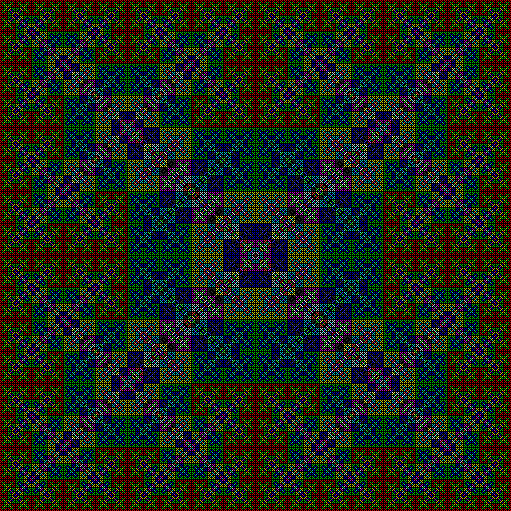
Maths is like a jungle: rich, teeming and full of surprises. A waterfall here, a glade of butterflies there, a bank of orchids yonder. There is always something new to see and a different route to try. But sometimes a different route will take you to the same place. I’ve already found two ways to reach this fractal (see Fingering the Frigit and Performativizing the Polygonic):

carpet2x2

Fractal Carpet


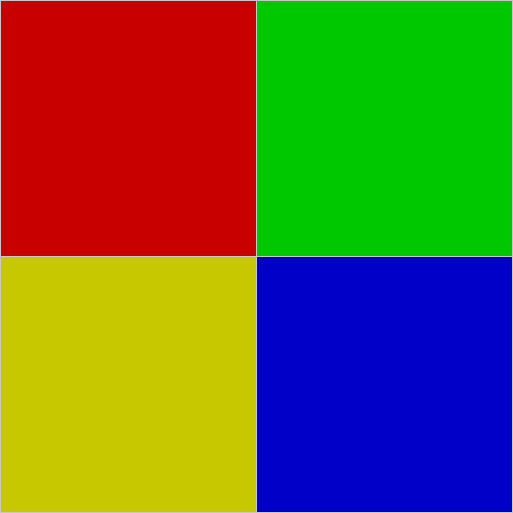
Now I’ve found a third way. You could call it the rep-tile route. Divide a square into four smaller squares:

square2x2

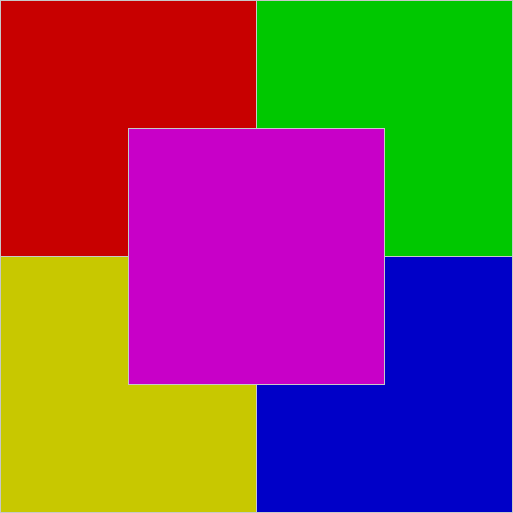
Add an extra square over the centre:

square2x2_1

Then keep dividing the squares in the same way:

carpet2x2_anim_1

Animated carpet (with coloured blocks)


carpet2x2_anim_2

Animated carpet (with empty blocks)


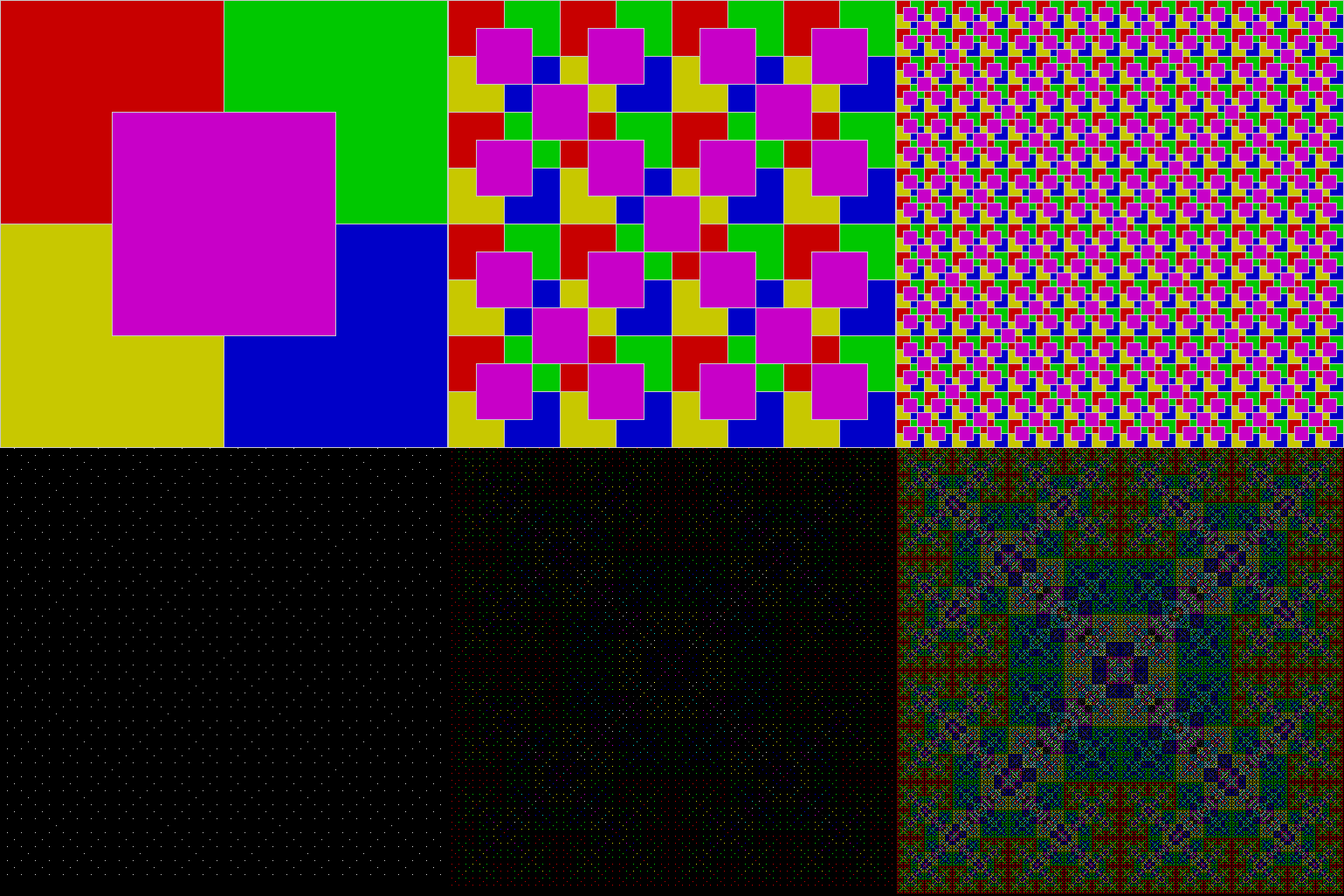
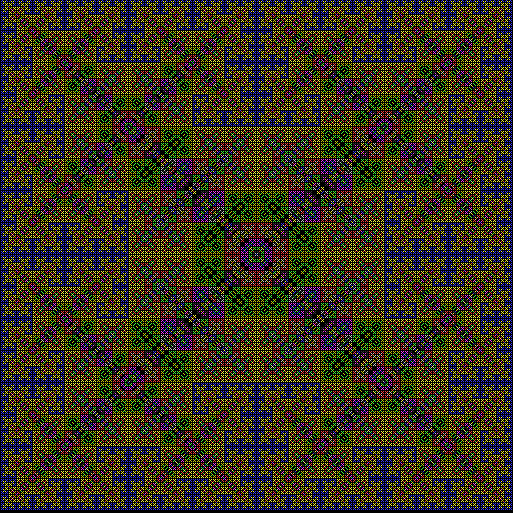
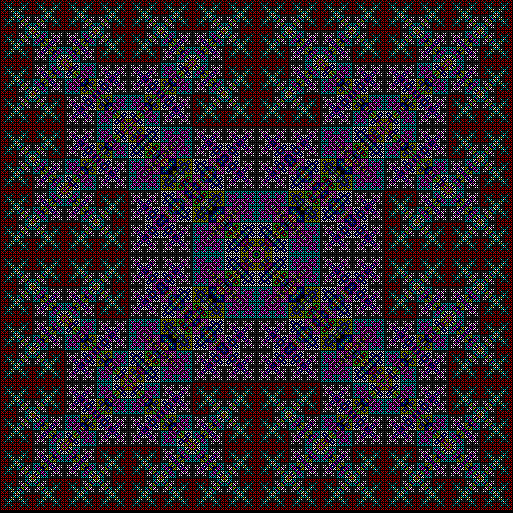
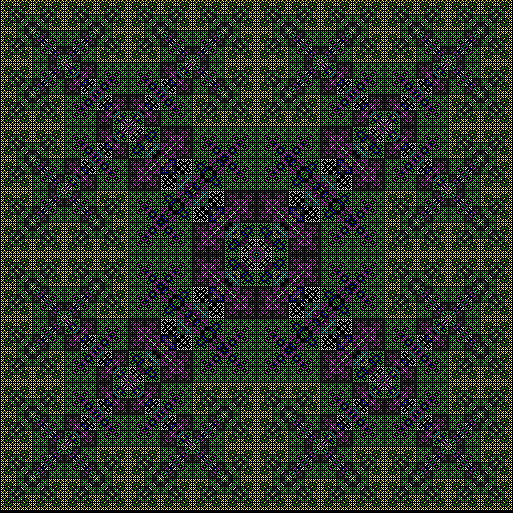
The colours of the fractal appear when the same pixel is covered repeatedly: first it’s red, then green, yellow, blue, purple, and so on. Because the colours and their order are arbitrary, you can use different colour schemes:

carpet2x2_col1

Colour scheme #1


carpet2x2_col2

Colour scheme #2


carpet2x2_col3

Colour scheme #3


Here are more colour-schemes in an animated gif:

carpet2x2_col

Various colour-schemes


Now try dividing the square into nine and sixteen, with an extra square over the centre:

carpet3x3

3×3 square + central square


carpet3x3_anim

3×3 square + central square (animated)


carpet4x4

4×4 square + central square


carpet4x4_anim

4×4 square + central square (animated)


You can also adjust the size of the square added to the 2×2 subdivision:

carpet2x2_1_2

2×2 square + 1/2-sized central square


carpet2x2_3_4

2×2 square + 3/4-sized central square


Elsewhere Other-Posted:

Fingering the Frigit
Performativizing the Polygonic