Apostrophizing Andy

If you get it, you’ll laugh. If you don’t, you won’t:

Eee, I know what you mean. Shine’s gone off this government faster than gravy off chips, as we say up here in the North, where I authentically am. What t’party needs is a leader who’s reet proper connected with t’working man. In terms of names, we’ll see to that when dog’s in t’barn, as Northerners like me say up here in the North. — “Mandelson: Let’s chat about Keir…”, 29ix25

Well, I laughed anyway. That’s Robert Hutton in The Critic joking about the prime-ministerial ambitions of Andy Burnham, the mayor of Manchester. And I’m wondering about the “In terms of names…” I think it’s there for deliberate contrast. As I’ve endlessly adumbrated in terms of Overlord-of-theÜber-Feral, “in terms of” is an ugly, pretentious piece of bureaucratese that’s keyly characteristic of politicians, lawyers, academics in the humanities, and other core communities of windbags. In short, it’s highly bourgeois.

And I reckon that’s why Hutton put it into his mockery of Burnham, who’s pretending to be reet down-to-earth but can’t help letting his true nature coom through. Whatever his roots, he’s a bourgeois bureaucrat now. If I’m right, then Hutton recognizes the rebarbativity of “in terms of”. Good on ya, Bob. But bad on ya for getting the northern accent wrong. The apostrophe’s in the wrong place: “t’party” and “t’working man” should be “’t party” and “’t working man”, because that northern form of the definite article doesn’t represent thet’ but that’t (in Old English þæt was the neuter form of the definite article, while the masculine and feminine forms were and sēo). You can hear the truth in the glottal stop, which is sometimes all that’s left of the original “that”. In fact, that’s what “t’” is generally a bad transcription of — a glottal stop, “ʔ” in phonetic transcription. But in some dialects of northern English, the glottal stop disappears too, so there’s no definite article and English weirdly seems like Latin or Russian or some other language that doesn’t use definite articles.

You can see Mancunian English moving towards no-definite-article with “Shine’s gone off this government…” But the most natural way to read that line is with a glottal stop: “ʔShine’s gone off this government…” If Hutton meant it to be read like that, he’s implicitly recognizing that “t’” is a bad transcription. “T’shine’s gone off…” would sound like “Chine’s gone off…” But no Mancunian would say it like that. Something else that no Mancunian would say is that the Fat Slags are from Newcastle. But that’s a story for another day.


Peri-Performative Post-Scriptum

As is usual with sociology or biology, the story of the northern definite article is much more complicated than a short discussion can cover. And I can’t remember where I read about its true origins and can’t find anything online at the moment. But this supports what I’m saying:

The phenomenon of Definite Article Reduction (DAR) is the realization of the definite article in northern British English dialects in a range of vowel-less forms, usually written t’ in literature. The origin of DAR is assumed to be the assimilation of the initial fricative of the Middle English definite article þe to produce a te form, a sound change recorded for many dialects of Middle English. This article examines the validity of this hypothesis by analysing the distribution of fricative allomorphs in the modern dialects in comparison with the details of the Middle English change. The predicted distribution of fricative forms is not found at most localities, indicating that the development hypothesis is incorrect, but the available data are too scanty to suggest an alternative model. — “The origin of Definite Article Reduction in northern English dialects: evidence from dialect allomorphy, Mark J. Jones in English Language and Linguistics, November 2002

Maximal Mensual Metrics

Like all minimally decent and politically aware people, I am keyly — and corely — committed to anti-racism on a maximal basis by any means necessary. Monkey-funker.

This is also why I am a corely — and keyly — committed member of the Guardian-reading community. If I am ever tempted to relent a micrometre in terms of the maximality of the metrics of my core commitment to anti-racism, the Guardian is there to remind me of what anti-racism is corely committed to achieving…

It’s been a turbulent year for race in Britain. So what next? — At the end of Black History Month, we ask prominent Black British figures to assess where the UK stands in terms of equality and cohesion, The Guardian, 30×21

Maximal Moz

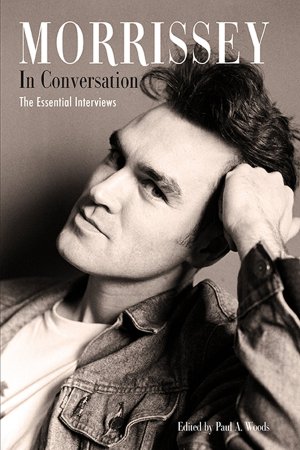
Morrissey in Conversation: The Essential Interviews, ed. Paul A. Woods (Plexus 2016)

It’s very Mozzean that one of the most Mozzean things in this book is marginal. That is, it’s not in the interviews or anything Moz himself says: it’s in the mini-bios of the “Contributors” section at the end of the book. For example, Dave McCullough interviewed Moz for the long-defunct Sounds in 1983. And I thought it was a joke when McCullough’s mini-bio ended with “His current whereabouts are unknown.”

But it happened again for Shaun Philips, who interviewed Moz, again for Sounds, in 1988: “His
current whereabouts are unknown.” And again for Elissa Van Poznak, who interviewed Moz for The Face in 1984: “Her current whereabouts are unknown.” And that sentence is the last in the book, apart from the acknowledgements. What happened to these three journalists? They had lives and careers, friends and family. Their writing was once regularly read by many thousands or even millions of people. And then read again in this book. But “Their current whereabouts are unknown.” They’ve dropped out of sight, even maybe out of life, and the editor of the book, Paul A. Woods, hasn’t been able to find out what happened to them. Not even in this ultra-connected internet age.

That’s very Mozzean. You could even wonder whether they’ve succumbed to a belated form of the Curse of Moz, or the career-failure that strikes bands after Morrissey praises them or takes them on tour as support. Or you could wonder whether, like Morrissey himself for so long, they were struggling with depression and an urge-to-self-annihilation even as they achieved professional success. You’d certainly expect the first publication of this book in 2007 to have flushed them out. But it didn’t. Nor did the second publication in 2011. But perhaps the third publication did in 2016.

I don’t know and I’d rather not know. I like the Mozzeanism of three missing journalists. And I liked this book too. A lot. Obviously a lot of other people did too, or it wouldn’t have been printed three times. But I suspect it won’t be re-printed again. Why not? Coz of Moz on Muz. Guardian-readers were not pleased by Morrissey’s comments on Muslims and Muslim immigration after the Manchester bombing in 2017 or by his support for Brexit and the “far-right” For Britain party. You can get T-shirts now that say “Shut Up, Morrissey!” and there have been a string of anathemas and excommunications issued at Moz from woke bastions like the Quietus (where bad English goes to die). Guardian-readers feel deeply betrayed by Morrissey, who once said all the right things about economics, animal rights, vegetarianism, and the evilness of the Conservative and Republican parties – as you can read here.

But you’ll also read here about disturbing early signs – or sounds – that Moz wasn’t prepared to buzz with the hive-mind on everything. After he began his solo career in 1988 he released songs with titles like “The National Front Disco” and “Bengali in Platforms”, the latter of which opined “Life is hard enough when you belong here.” But there was enough ambiguity and authorial distance in the songs for him to deny plausibly that he was being racist or sympathizing with racism. And he still had a whole heap of good-will from the Smiths, so he survived the first campaign to cancel him and came back as strong as ever.

Well, the good-will has disappeared now. Moz has burned all his bridges to the Guardian and I don’t think there’s any chance of this book being re-re-re-printed. Indeed, I bet a lot of former fans have thrown out their copies or even ritually burned them. It’s their loss, because Morrissey is one of the wittiest, most interesting, and most intelligent interviewees who ever lived. As the back cover says of an earlier edition of Morrissey: In Conversation:

It’s proof, lest we forget, that in terms of great copy, Morrissey has rarely been anything other than interview gold. – Q magazine

But that quote itself needs trimming of its Guardianist fat: “It’s proof, lest we forget, that Morrissey has rarely been anything other than interview gold.” Moz himself is rarely guilty of saying more than he needs to. He’s both articulate and acute. It’s hard to believe that he came from a big working-class Irish family in Manchester and spent years on the dole after being shunted into a bad school by failing his eleven-plus. If he’d passed that selective exam he would have gone to a better school and most probably on to university. But I think university would have been bad for him. He probably wouldn’t have had a career in music and he certainly wouldn’t have become the Morrissey that millions of people either love or loathe.

But he would have become someone who habitually said “in terms of” and “prior to”. Alas, he does sometimes say “in terms of” in later interviews here, but it’s a minor blemish and I read everything in the book. Except – speak of “in terms of” and the windbag appears – Will Self’s “The King of Bedsit Angst Grows Up” from 1995. As usual with Self, I began losing the will to live half-a-paragraph in and gave up. If it had been a proper interview rather than Self blotivating on themes Mozzean, I might have persevered. But it wasn’t, so I didn’t.

Most of the other pieces were proper interviews, but either way I always persevered. You can read how Moz’s ideas and allegiances changed. And you can also see how Moz himself changed, because there are some good photos too. I bet some of the interviewers now regret their association with Morrissey and their appearance in this book, but that adds to its appeal for me. Moz has bitten the hands that typed about him and they’ll never forgive him for it. But they were warned:

Are you a bad man?

Only inwardly. (“The Importance of Being Morrissey”, Jennifer Nine for Melody Maker, August 1997)

And here’s more from the man himself:

What else could you do [besides perform]?

Nothing. I’m entirely talentless… it was all a great big accident – I just came out of the wrong lift. (“Mr Smith: All Mouth and Trousers”, Dylan Jones for i-D magazine, October 1987)


What does your music do to your fans?

Well, they wear heavy overcoats and stare at broken lightbulbs. That’s the way it’s always been for me! (“Wilde Child”, Paul Morley for Blitz, April 1988)

“I often pass a mirror,” he confides, loving the attention he’s getting, “and I glance into it slightly, and I don’t really recognize myself at all. You can look into a mirror and wonder – where have I seen that person before? And then you remember. It was at a neighbour’s funeral, and it was the corpse.” (“Wilde Child”)


What was it like playing live again when you appeared in Wolverhampton in December [1988]?

It was nice. I did enjoy it. It was nice to be fondled.

Was it good to be back on stage again?

No, it was just nice to be fondled. (“Playboy of the Western World”, Eleanor Levy, Q magazine, January 1989)


My perfect audience are skinheads in nail varnish. And I’m not trying to be funny, that really is the perfect audience for me. But I am incapable of racism, and the people who say I am racist are basically just the people who can’t stand the sight of my physical frame. I don’t think we should flatter them with our attention. (“Morrissey Comes Out (For a Drink)”, Stuart Maconie for New Musical Express, May 1991)


I would rather eat my own testicles than reform the Smiths – and that’s saying something for a vegetarian. (“The Last Temptation of Morrissey”, Paul Morley for Uncut, May 2006)


My best friend is myself. I look after myself very, very well. I can rely on myself never to let myself down. I’m the last person I want to see at night and the first in the morning. I am endlessly fascinating – at eight o’clock at night, at midnight, I’m fascinated. It’s a lifelong relationship and divorce will never come into it. That’s why, as I say, I feel privileged. And that is an honest reply. (“The man with the thorn in his side”, Lynn Barber for The Observer, September 2002)


Favourite shop?

Rymans, the stationers. To me it’s like a sweetshop. I go in there for hours, smelling the envelopes. As I grew up I used to love stationery and pens and booklets and binders. I can get incredibly erotic about blotting paper. So for me, going into Rymans is the most extreme sexual experience one could ever have. (“Morrissey Answers Twenty Questions”, Smash Hits Collection, 1985)

Bash the Pash

An heretical Guardianista keyly critiquizes a core component of Guardianese:

I recently considered nominating for a board position on a professional association to which I belong, so I had a look at the biographical statements of the incumbents. One claimed to be “passionate about helping individuals, businesses, and communities thrive”, another declared “a particular passion for thought leadership and executive profiling”, and another revealed “a passion for social inclusion”. Yet another claimed “a passion about creating valuable career development opportunities for the profession”. The best was the one that stated, without irony, “a passion for working on meaningful projects”.

In days gone by, job applicants listed hobbies. These days, it appears candidates are expected to declare, not merely interests or things they like doing, but things they are allegedly passionate about. — Being enthusiastic is no longer enough. Now we must all be passionate, Paul Begley, The Guardian, 13/vii/2016.


Elsewhere other-engageable:

Ex-term-in-ate!
Reds under the Thread
Titus Graun — Heresy, Homotextuality, Hive-Mind
Oh My Guardian

Performativizing Papyrocentricity #44

Papyrocentric Performativity Presents:

Lesser LettersYou’ve Had Your Time: Being the Second Part of the Confessions of Anthony Burgess, Anthony Burgess (Heinemann 1990)

The Light of DaySJWs Always Lie: Taking Down the Thought Police, Vox Day (Castalia House 2015)

Sextual KeelingSextant: A Voyage Guided by the Stars and the Men Who Mapped the World’s Oceans, David Barrie (William Collins 2014)

Twy Defy the EyeThe World of Visual Illusions: Optical Tricks That Defy Belief!, Gianni A. Sarcone and Marie-Jo Waeber (Arcturus 2012)


Or Read a Review at Random: RaRaR

Term-in-ator!

V. disappointed by China Miéville on BBC Radio 4’s Book Club (Sunday 1st November). It took him eight minutes to say “in terms of”.

Metricizing Michael…

All right-thinking folk are agreed that the Peckham-based author and visionary Michael Moorcock is a core colossus of the counter-culture. As the Guardian put it in 2007, he’s “the incendiary keystone of the visionary vortex that crystallized around New Worlds magazine in the 1960s, sparking a transgressive tornado that has sculpted paradigm-defying narratives of mutant sexuality, psychology and politics on an almost daily basis for over fifty years.”

But how often have keyly committed components of the Moorcock-fan community wished they had some objective mode of metricizing the coreness of the colossusness of his counter-culturality?

Well, the wait is over dot dot dot

site:http://www.multiverse.org/ “in terms of”

About 4,910 results (0.56 seconds)

• in terms of sci-fi recommendations, I gotta go — Moorcock’s
• They’re really rebellious in terms of gender, in terms of sex, in terms of politics, the portrayal of society and race, and I really want that to be …
• In terms of games I am rediscovering Zelda: Majora’s Mask with updated graphics and sound.
• … and to describe such elements in terms of Good and Evil seems (as I hope I demonstrate) a rather useless way of looking at our problems.
• We’ve reached a point, in this new century, that can be identified as both technologically and sociologically, futuristic, even in terms of the very recent past and …
• I’m wondering about stillborn-siblings in terms of esoterica: are they the next sibling born after the stillbirth, making a short appearance (i.e. is …
• I can say I’ve had one good experience with a press release distribution service, in terms of acquiring reviews.
• In terms of chronology, however, it would have to fit in somewhere between the novels The Fortress of the Pearl and The Sailor on the Seas of [Fate]


Elsewhere other-posted:

Ex-term-in-ate!

Terminal Logorrhoea

An SJW with a PhD writes:

It’s probably about time to collect all the issues and discussion of the 2015 Hugo Awards into one big post that is, at least in terms of what I have to say, a definitive take on it…. Three days after unveiling his slate of nominees, Torgersen wrote an essay explaining the necessity of the slate in terms of the “unreliability” of contemporary science fiction… The easiest mistake to make when trying to understand fascists is to think that they are best described in terms of a philosophy…. As a PhD in English with no small amount of training in postmodernism[,] I feel some qualification to speak here… and he does explain his beliefs in part in terms of a religious experience… Let us view it this way, since, in terms of the Hugos, we now have no other choice…. That covers the actual response in terms of the Hugos…. Your beliefs are horrible. You’re horrible. You’re a nasty, cruel little bully, and I do not like you…. in terms of brilliant, Hugo-worthy stuff that spits in the face of everything Theodore Beale loves… Norman Spinrad’s 1972 novel The Iron Dream, which imagines an alternate history where Hitler became a hack sci-fi writer in America, is probably the most notable in terms of just how much it anticipates this mess… afrofuturism, an artistic movement that uses the imaginative possibilities of science fiction to try to conceive of the African Diaspora not in terms of its tragic past but in terms of the generative potential of the future…. As a song, “Electric Lady” is an anthem in praise of Cindi Mayweather, long on braggadocio, but framed in terms of Monáe’s carefully worked out vision of black female sexuality… — Guided by the Beauty of Their Weapons: An Analysis of Theodore Beale and his Supporters, Philip Sandifer, 21/iv/2015.


Elsewhere other-posted:

Ex-term-in-ate!

Vibe Alibe

“The recent election of Syriza in Greece offers a vibrant glimmer of hope for the future of social and economic democracy in Europe.” — from a letter to The Guardian by Judith Butler, Slavoj Žižek, Jacqueline Rose, et al.

The Verm Terms

“Our relationship with Saudi Arabia is vitally important for our country in terms of counter-terrorism, in terms of the broader Middle East, in terms of helping in respect of Israel and Palestine.” — Tony Blair hits back at criticism…, BBC News, 15/xii/2006.


Elsewhere other-posted:

Ex-term-in-ate!