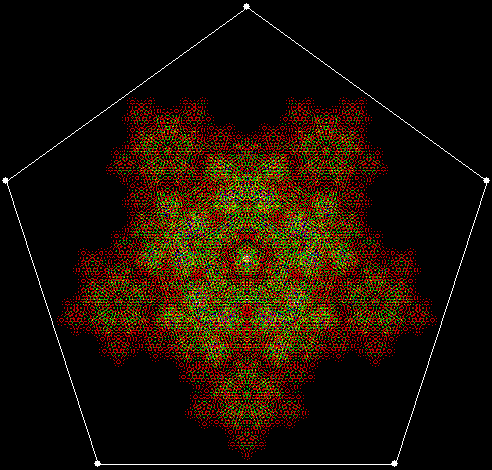
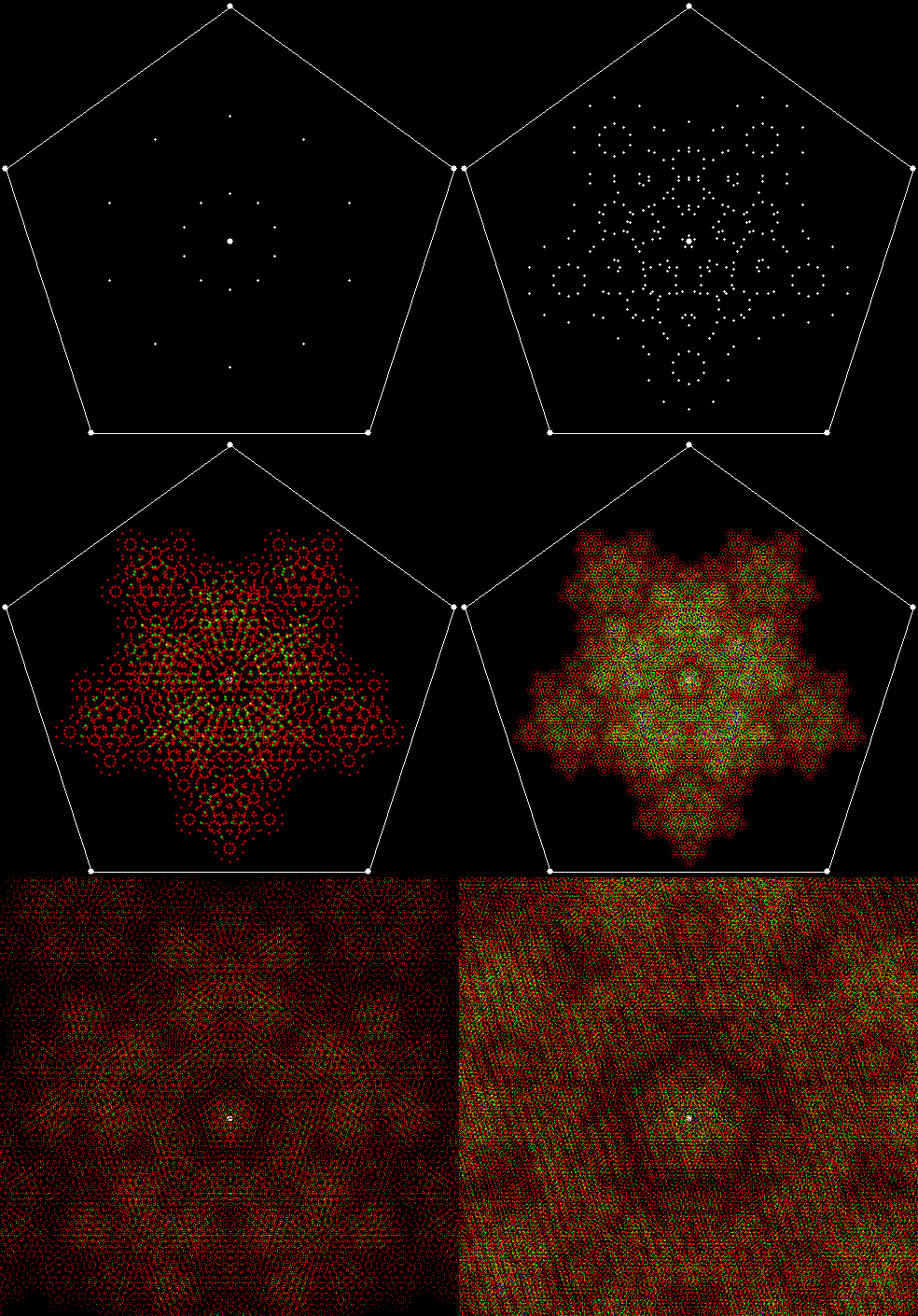
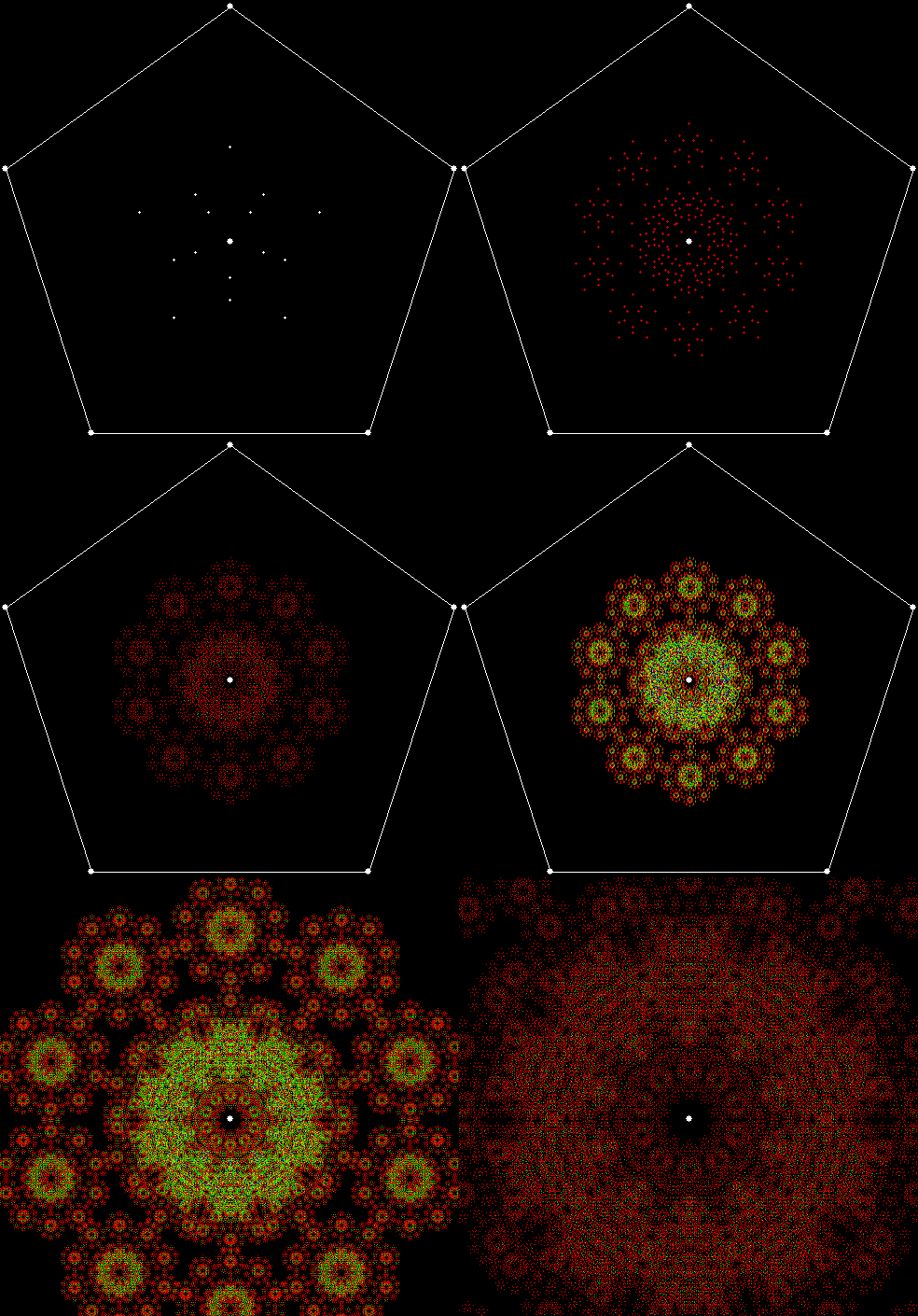
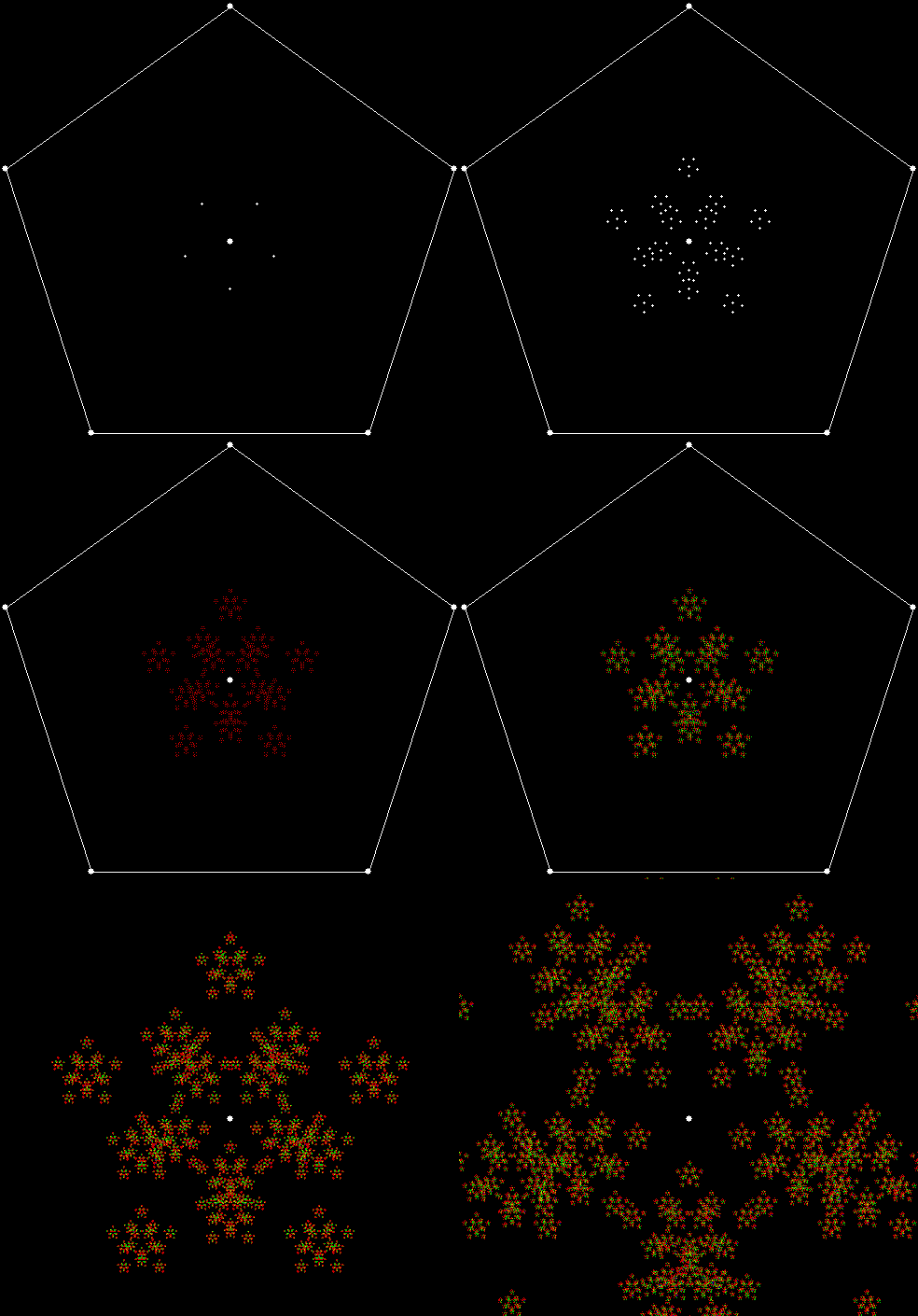
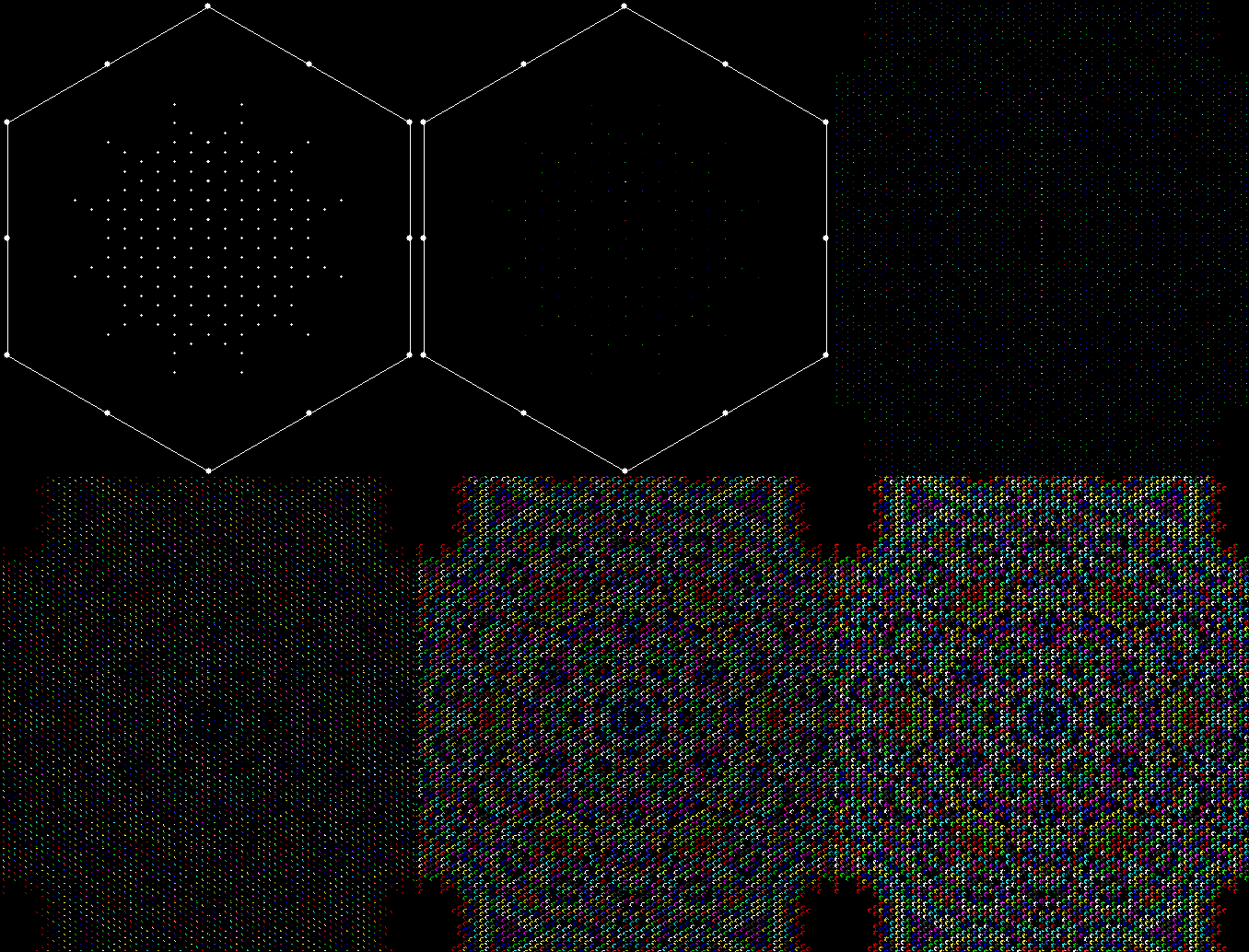
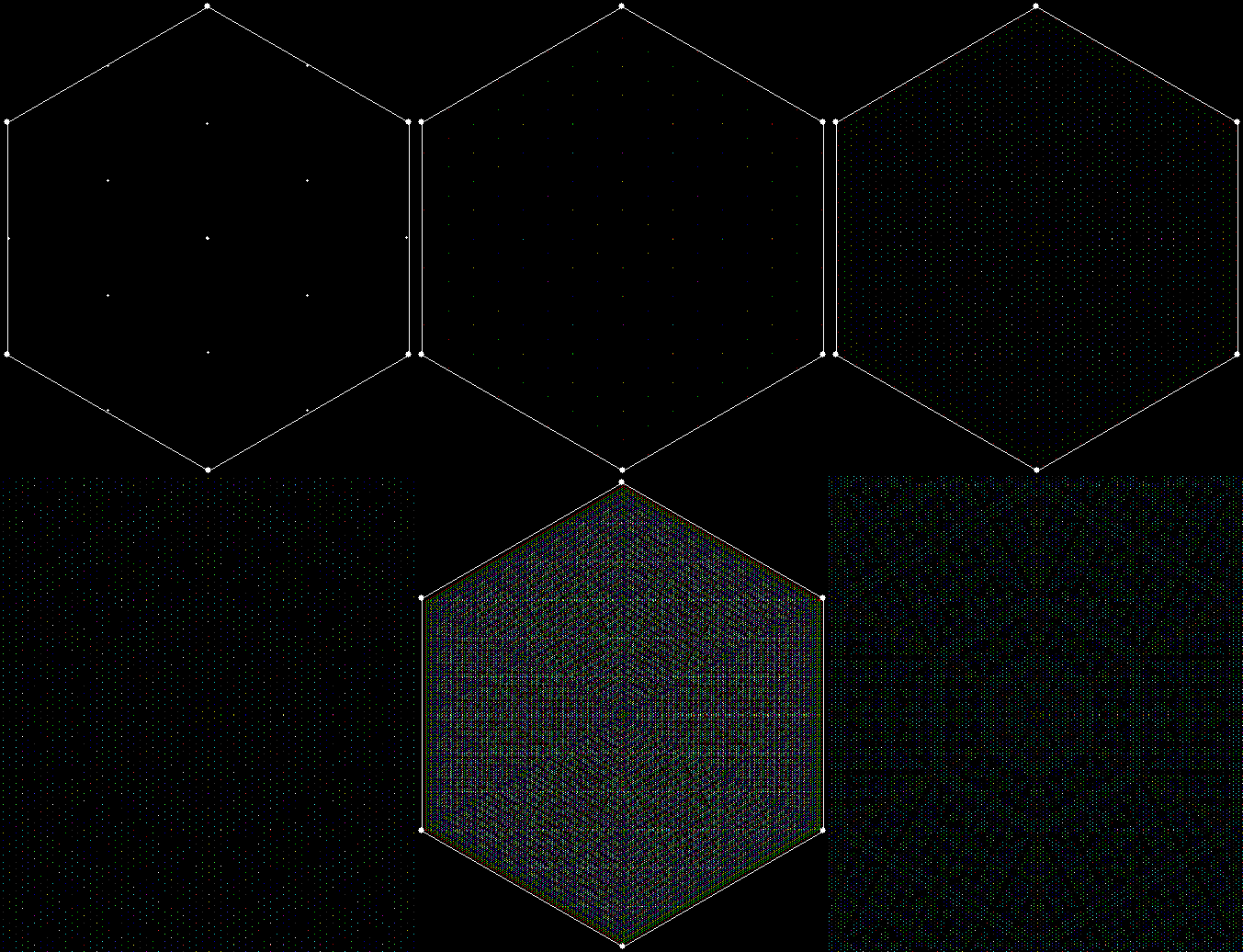
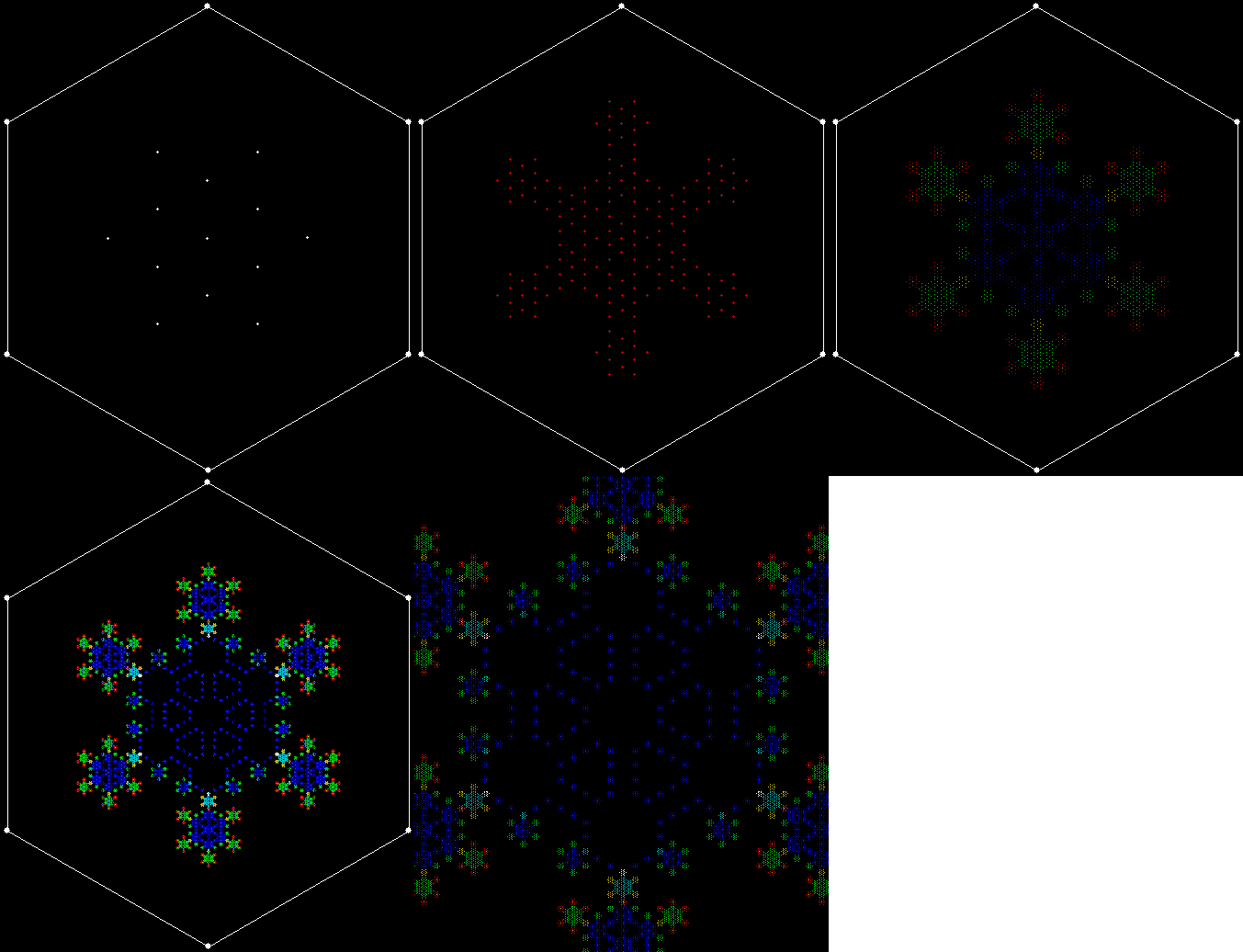
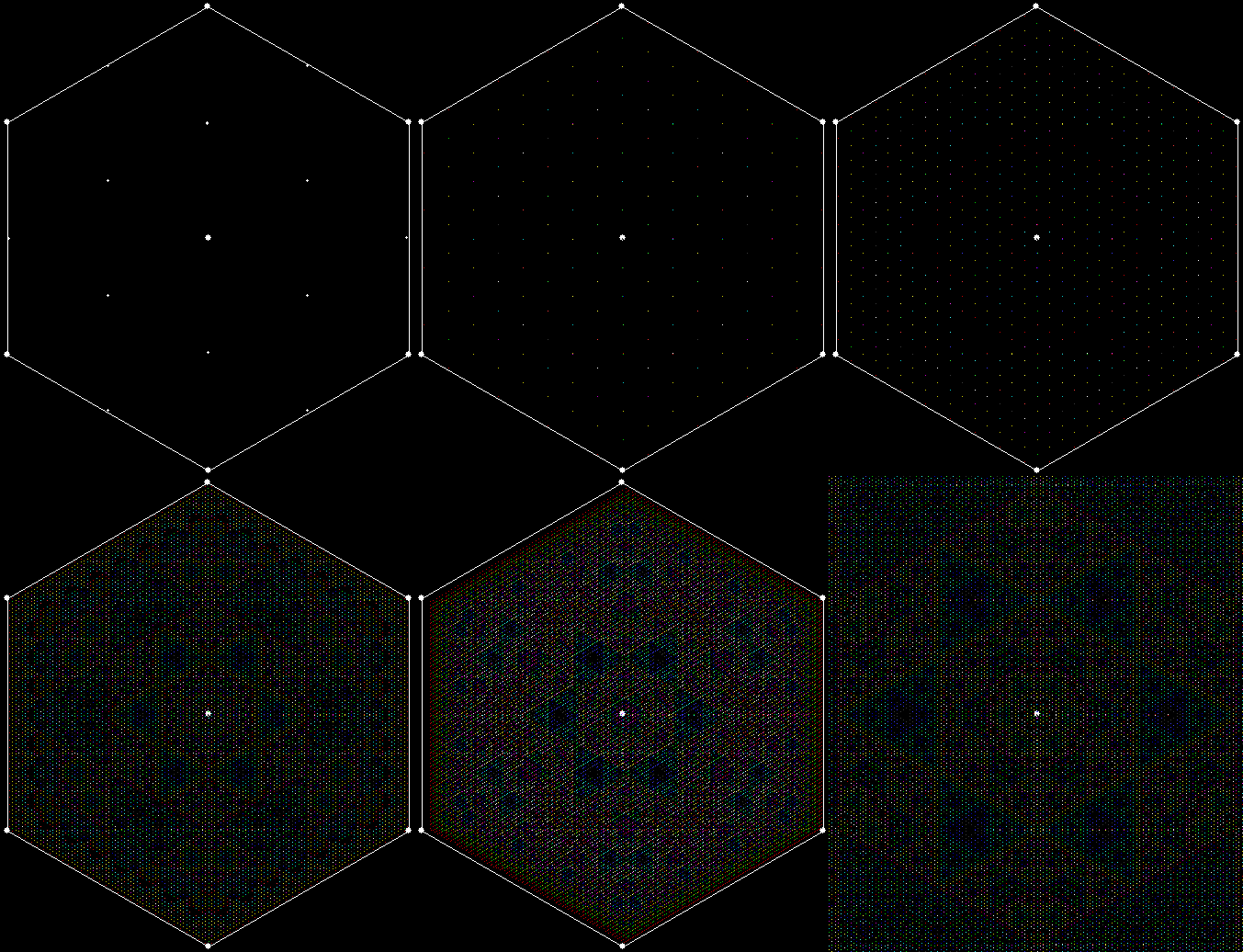
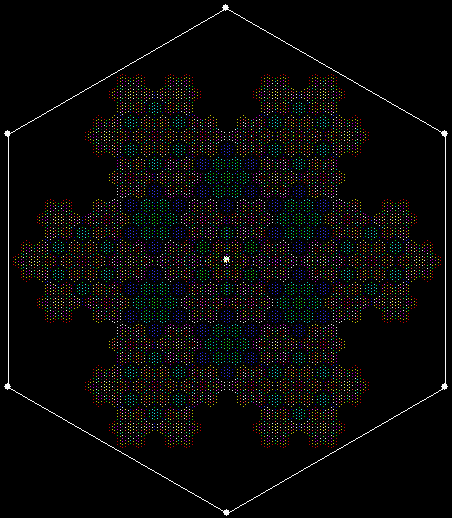
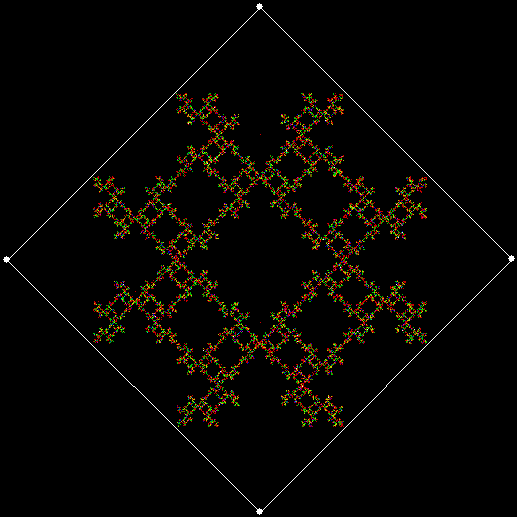
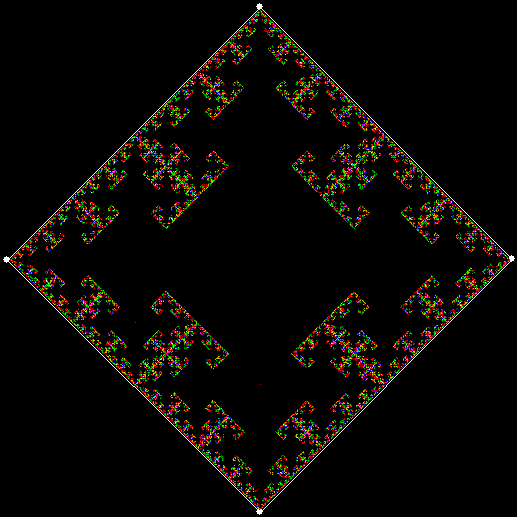
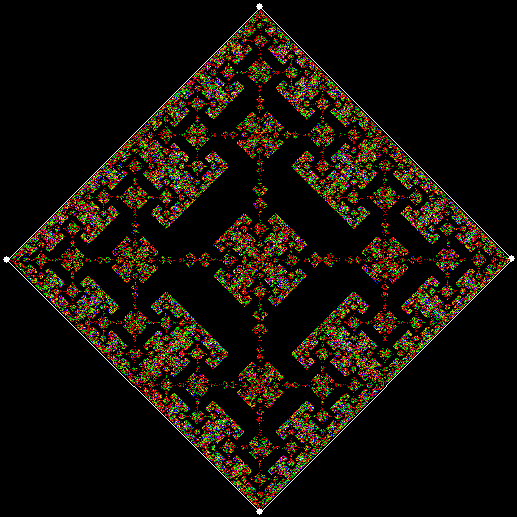
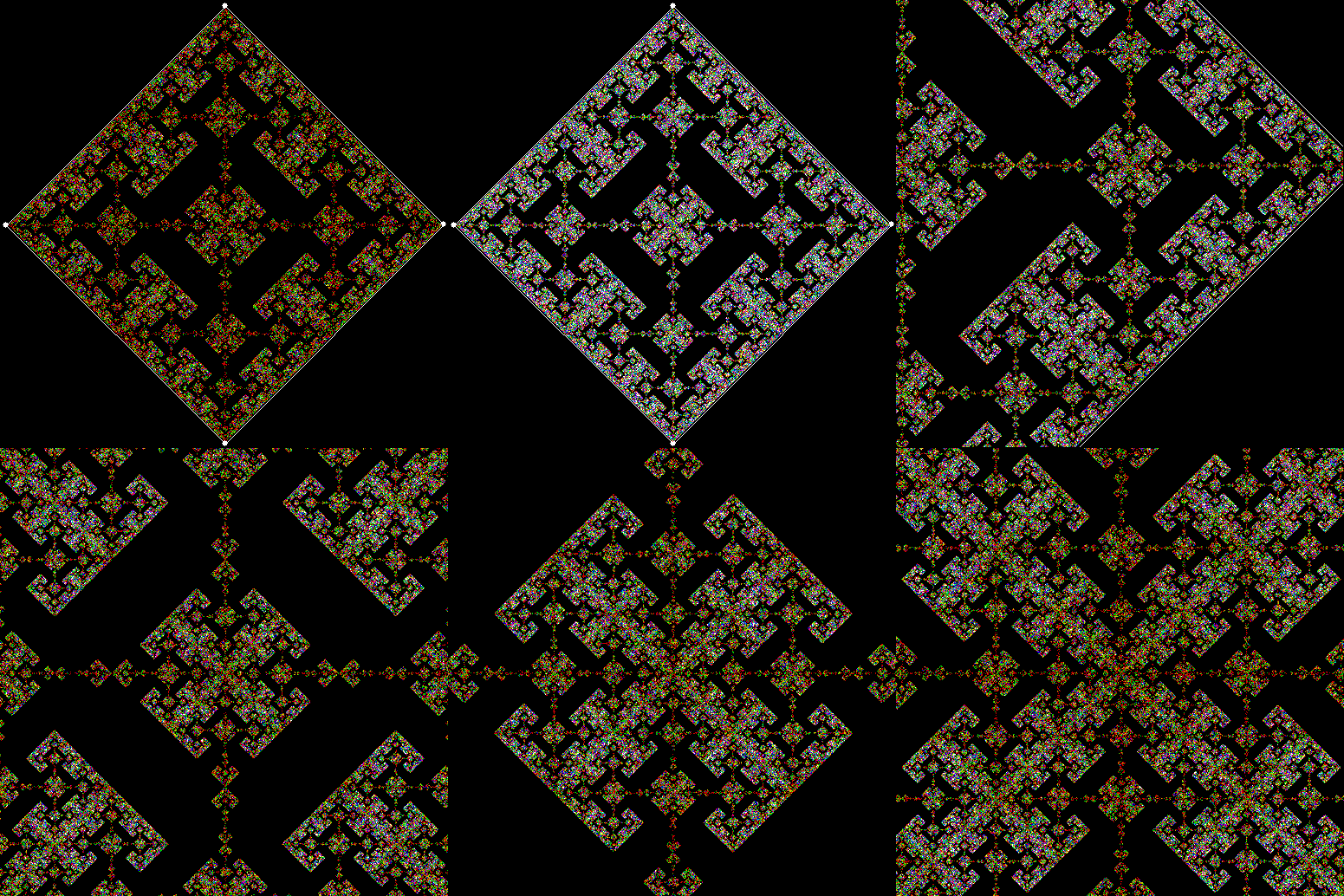
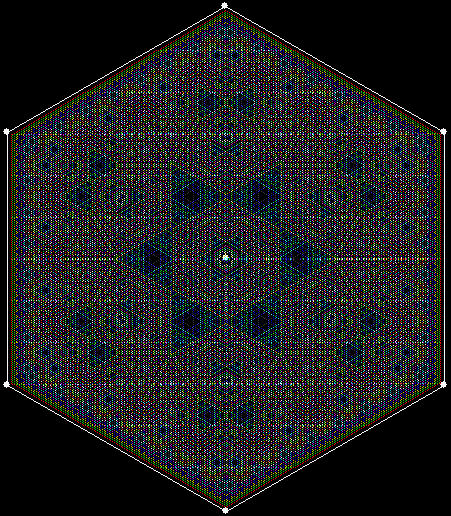
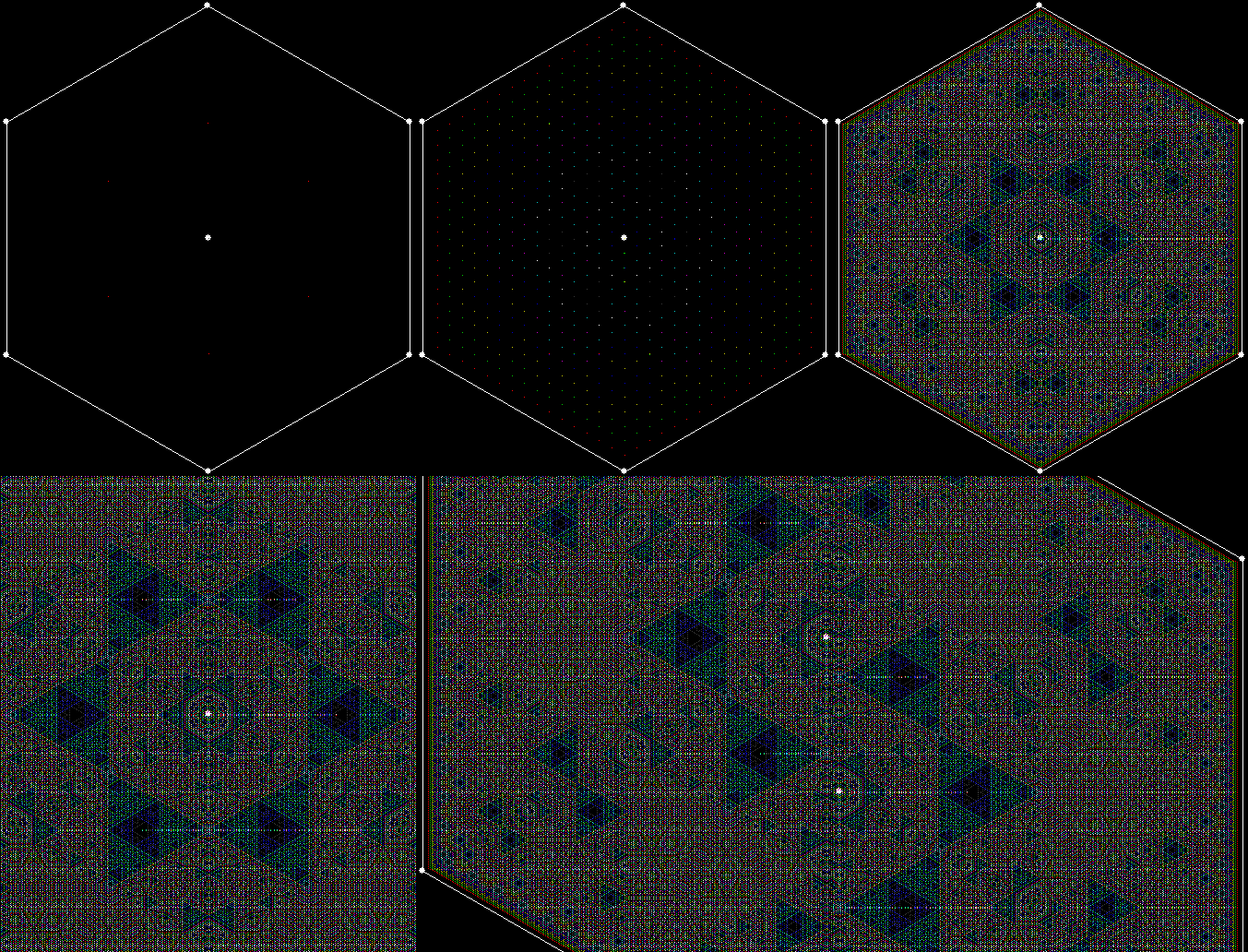
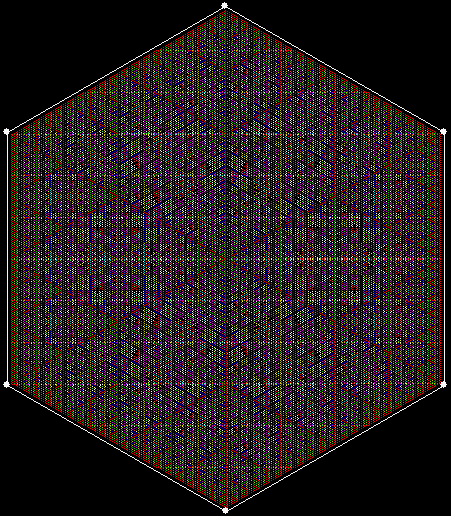
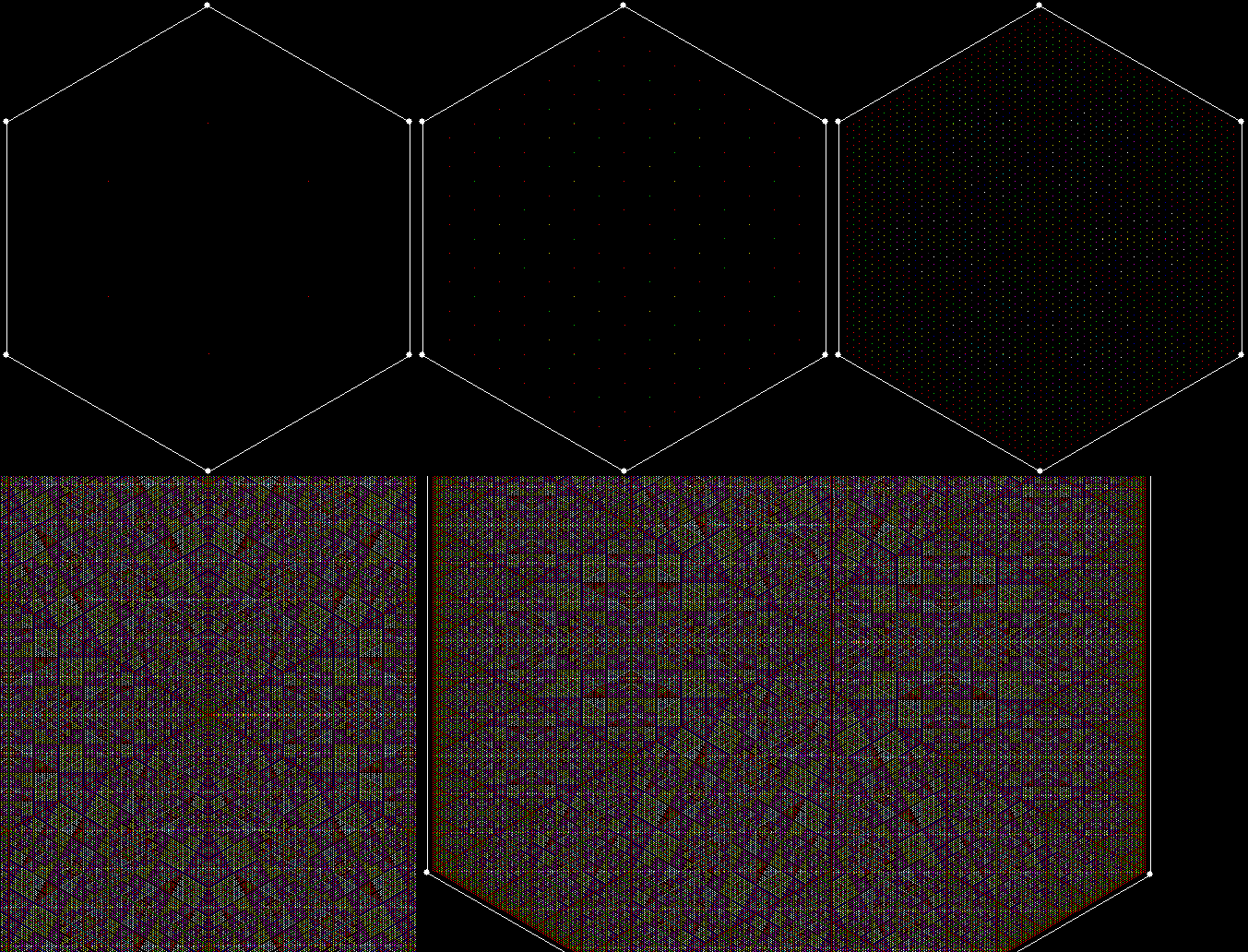
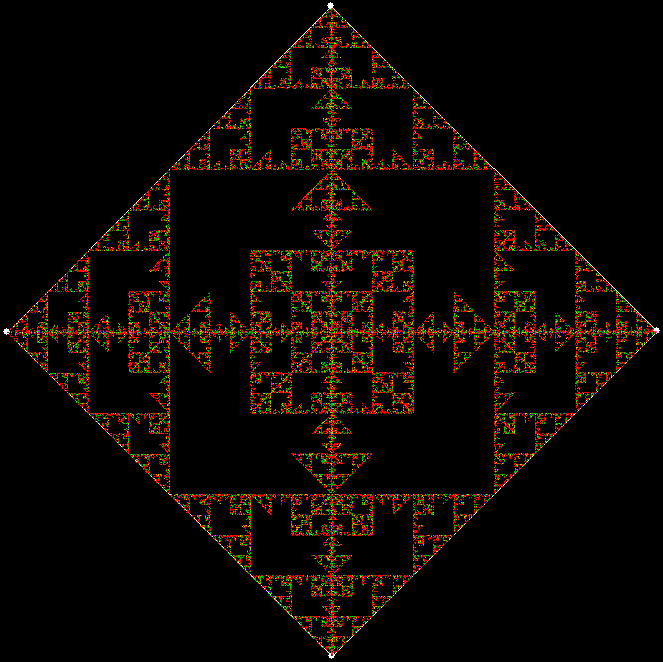
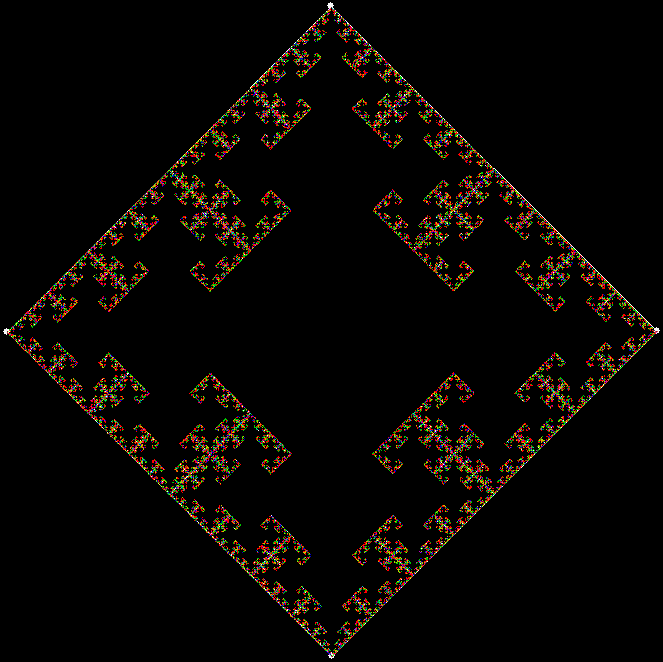
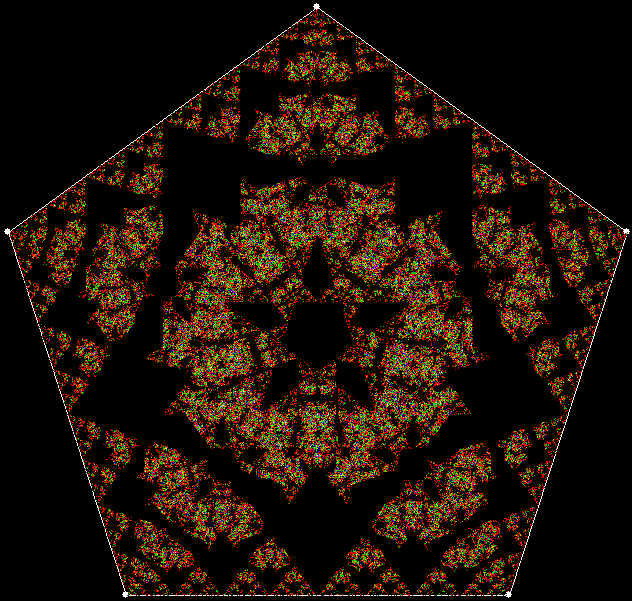
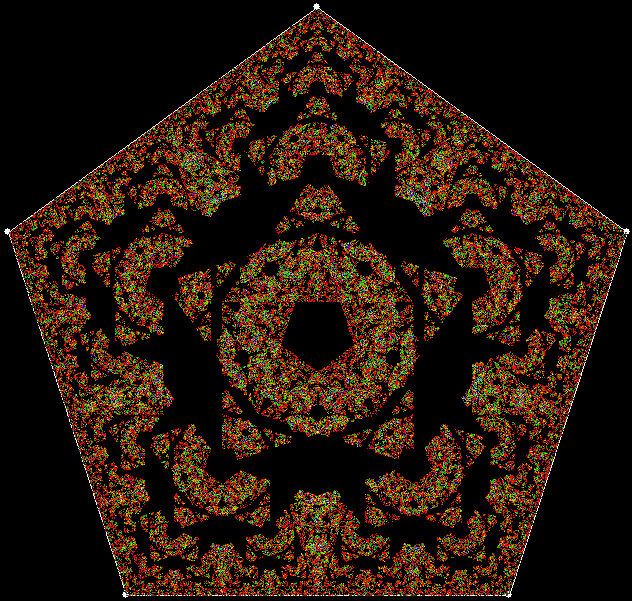
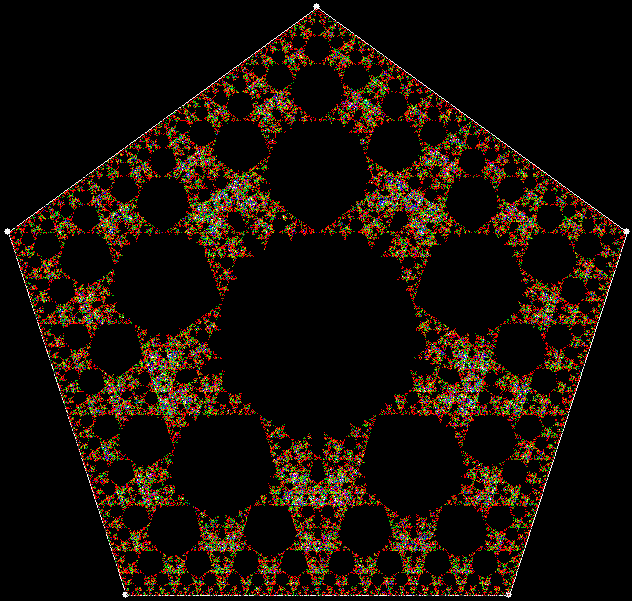
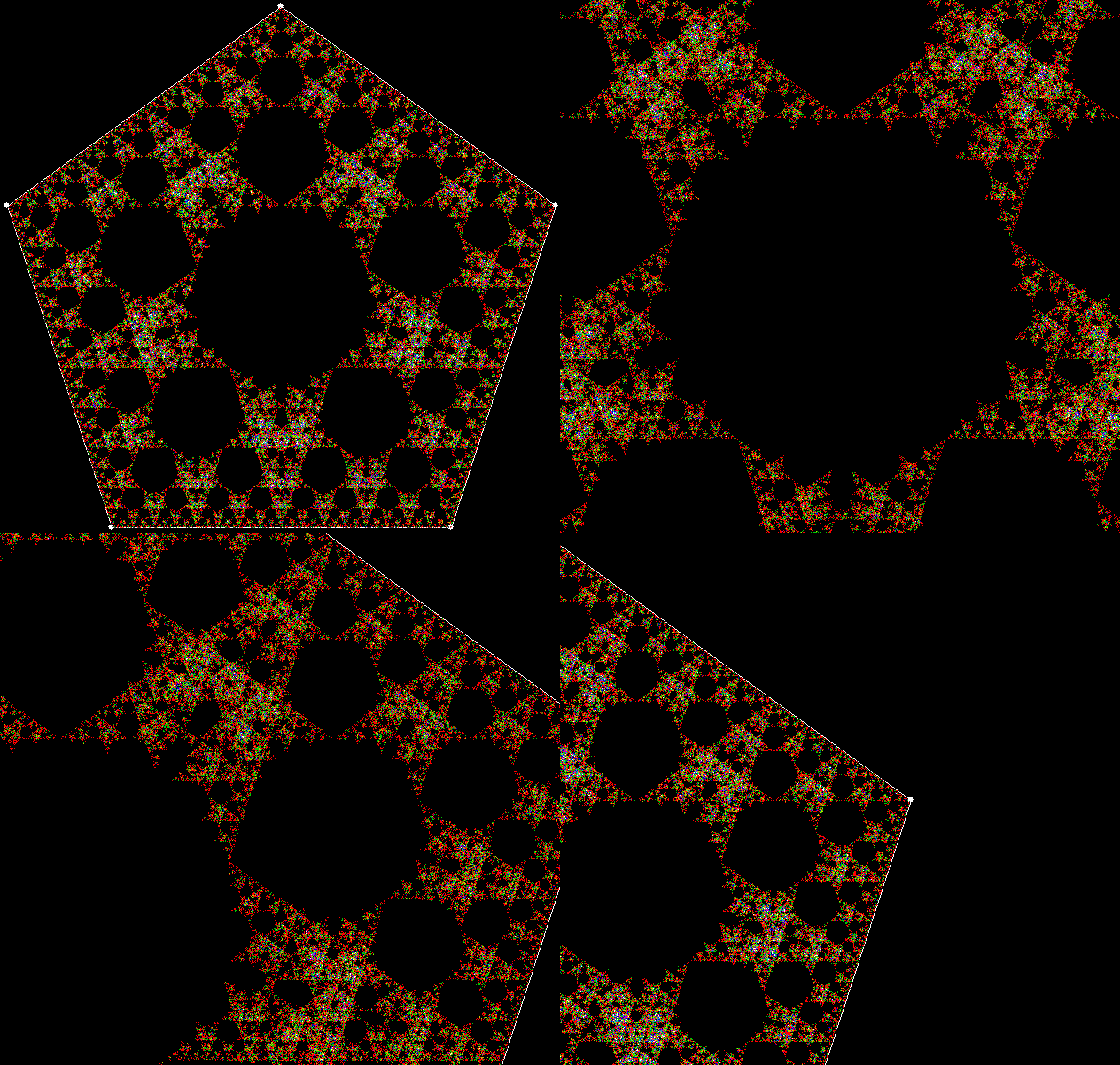
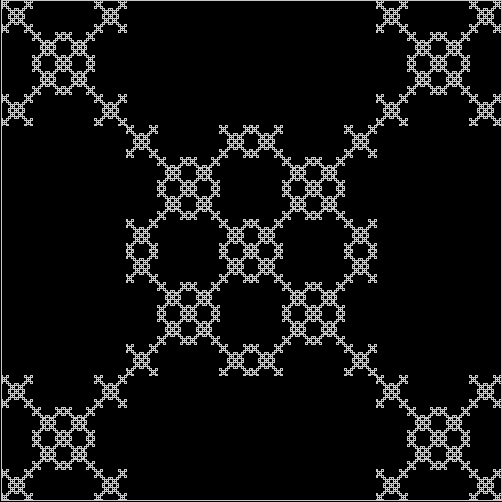
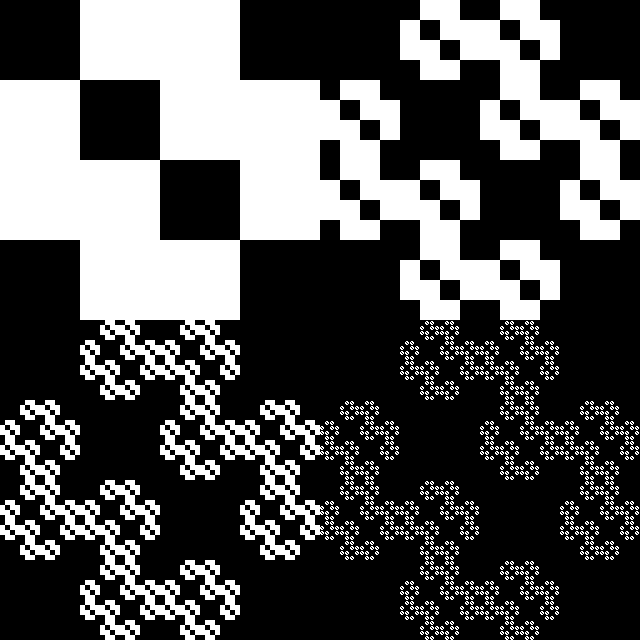
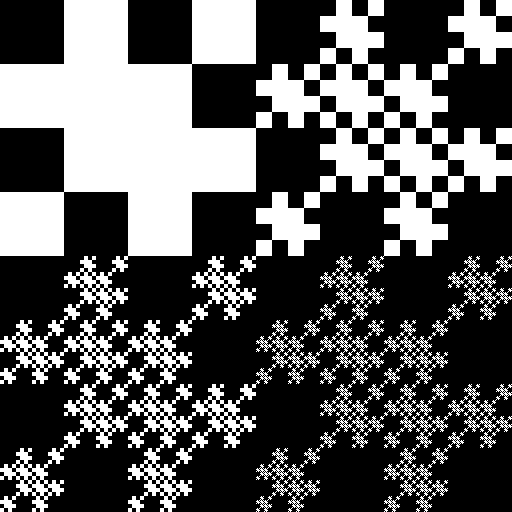
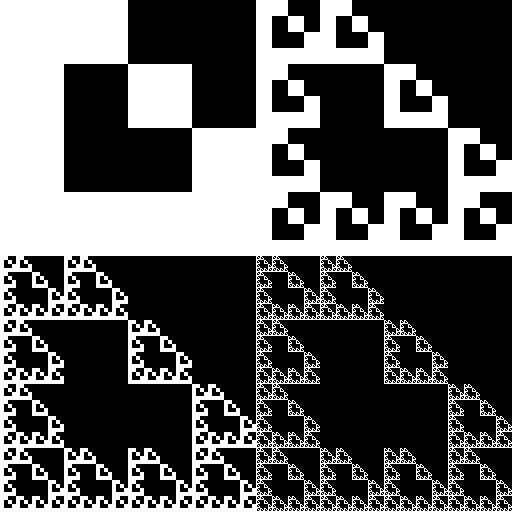
Get Your Prox Off #2

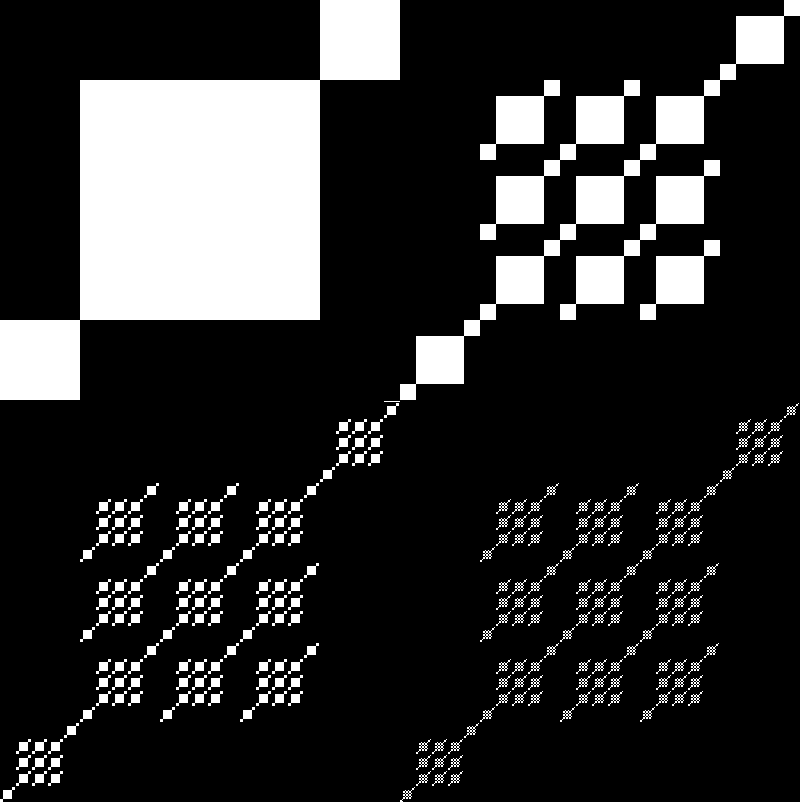
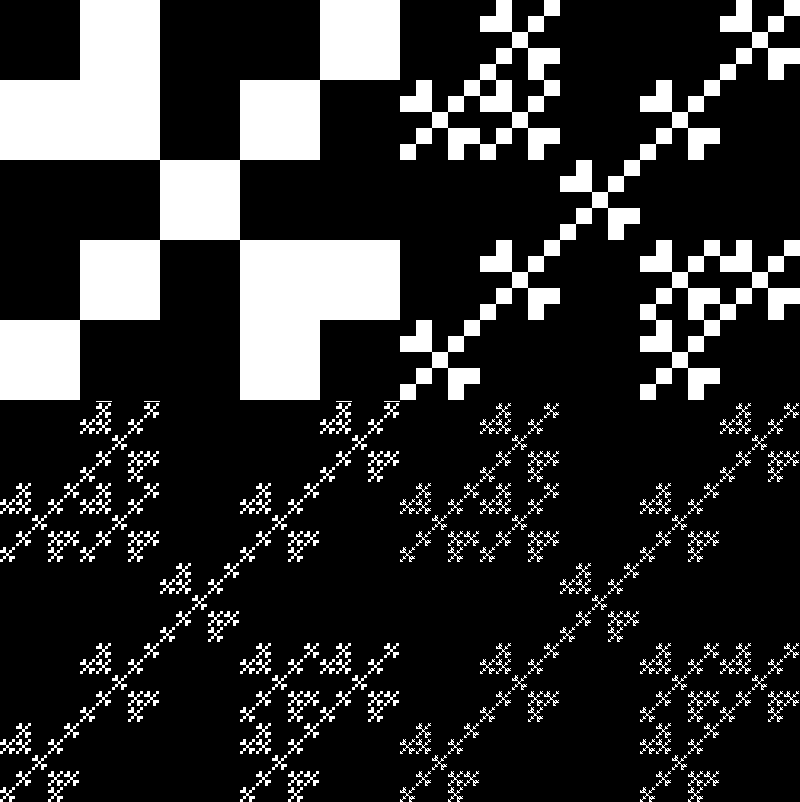
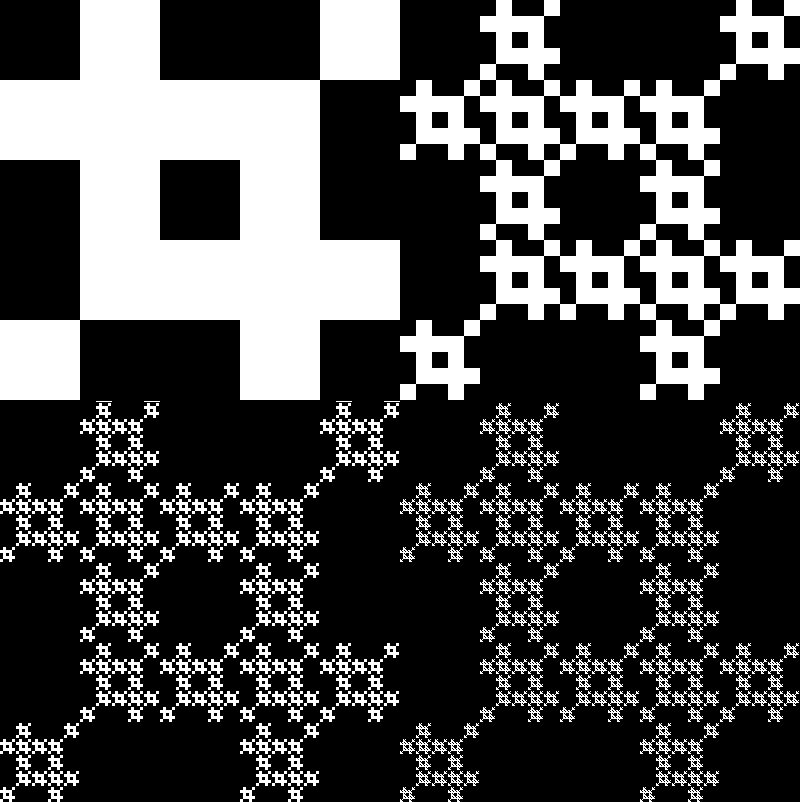
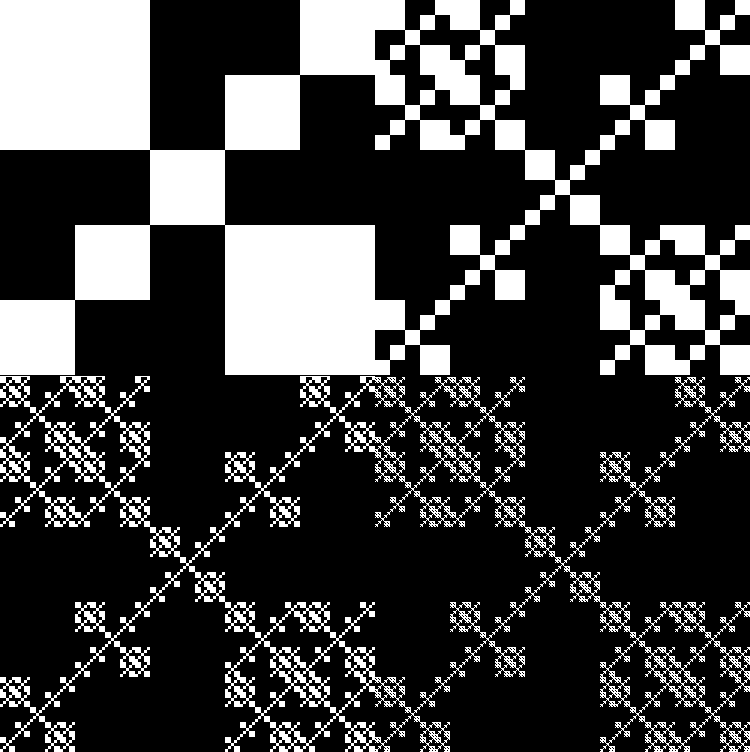
Serendipity is the art of making happy discoveries by accident. I made a mistake writing a program to create fractals and made the happy discovery of an attractive new fractal. And also of a new version of an attractive fractal I had seen before.

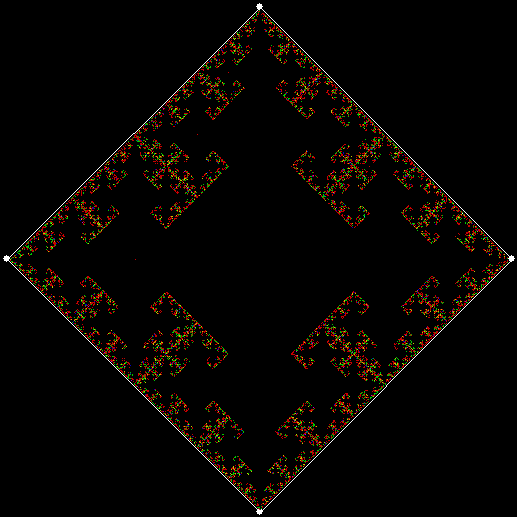
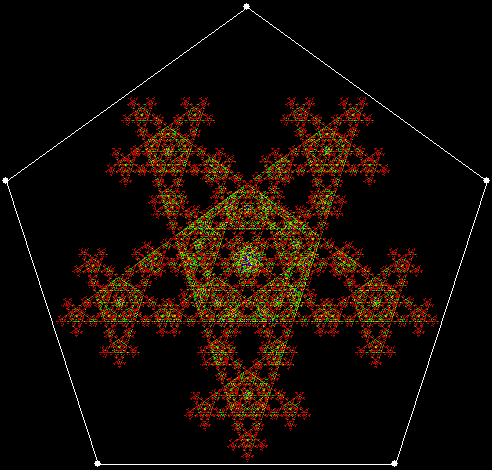
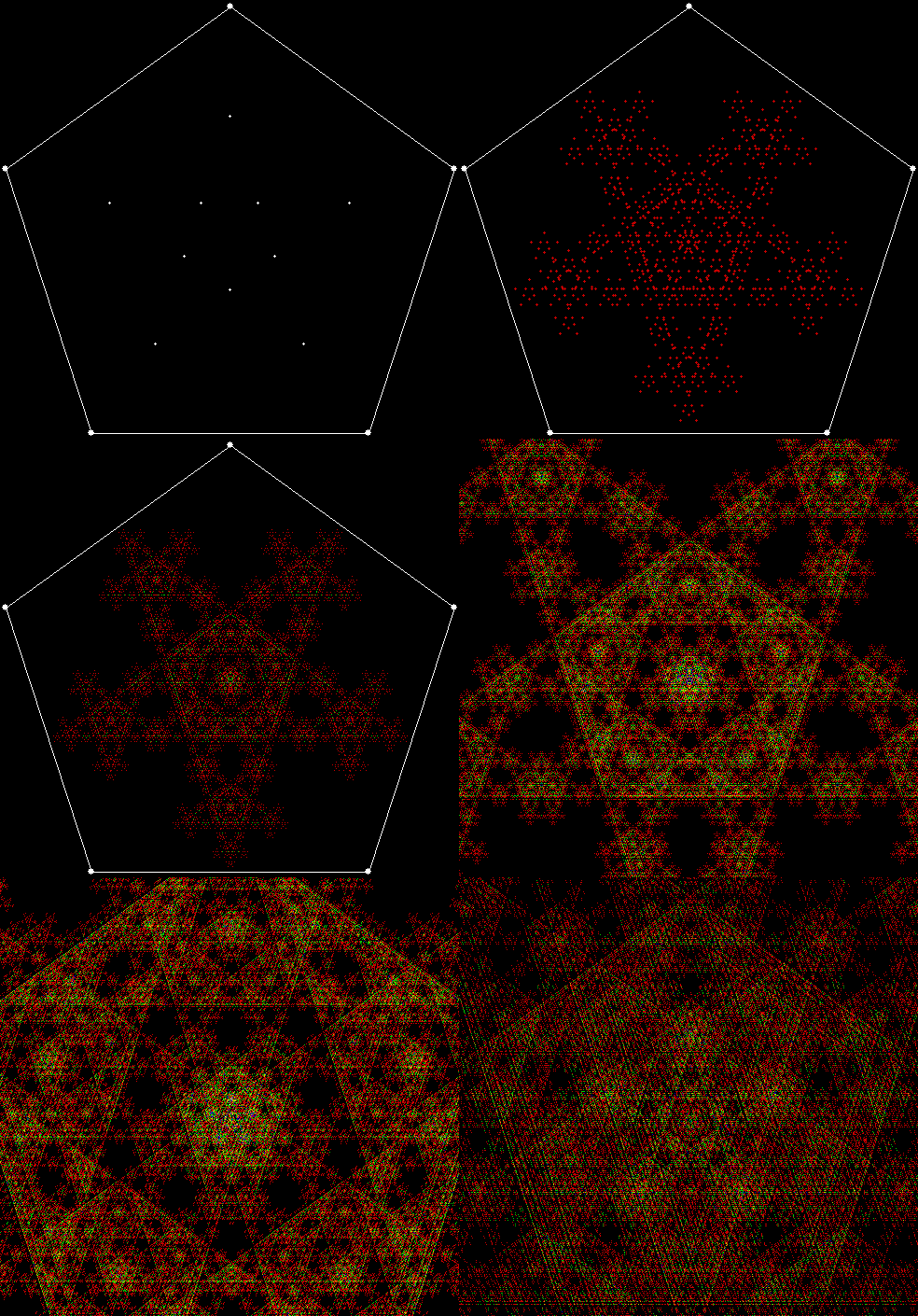
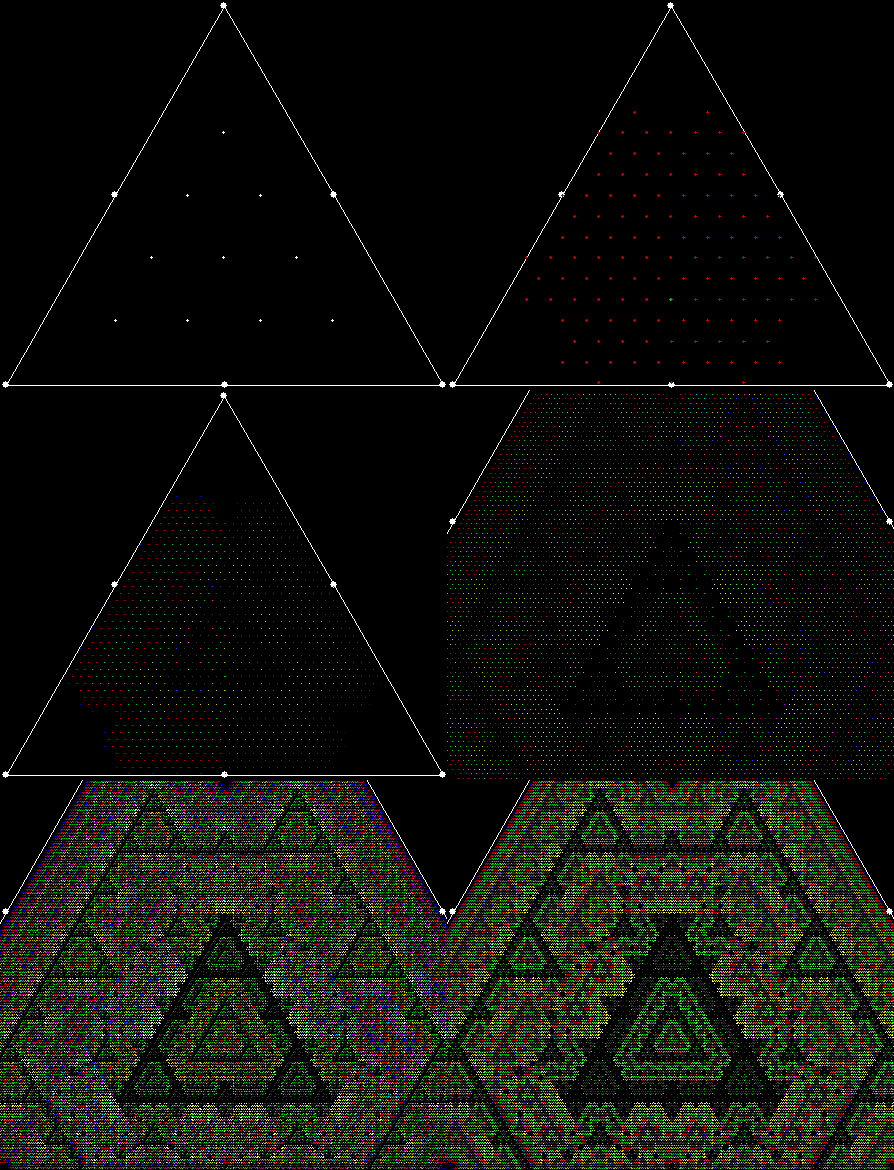
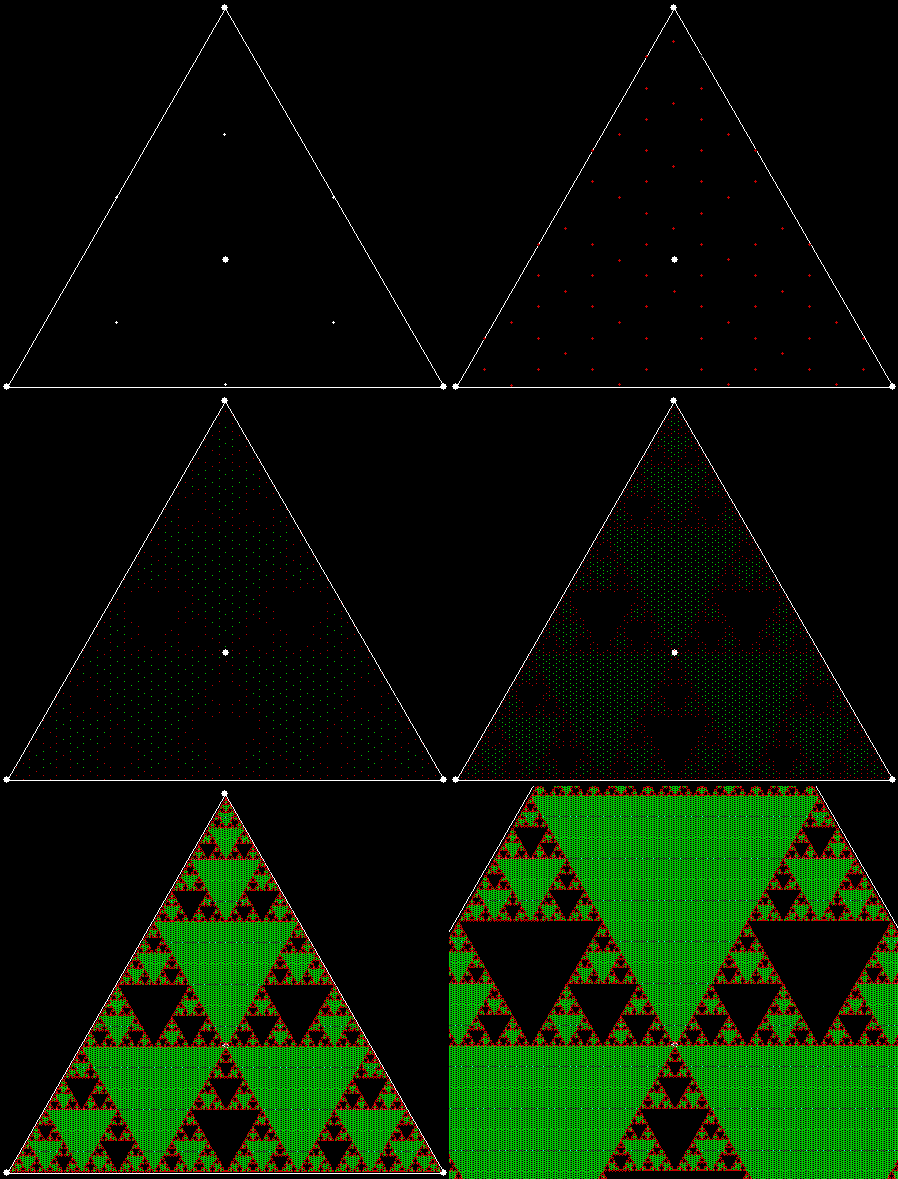
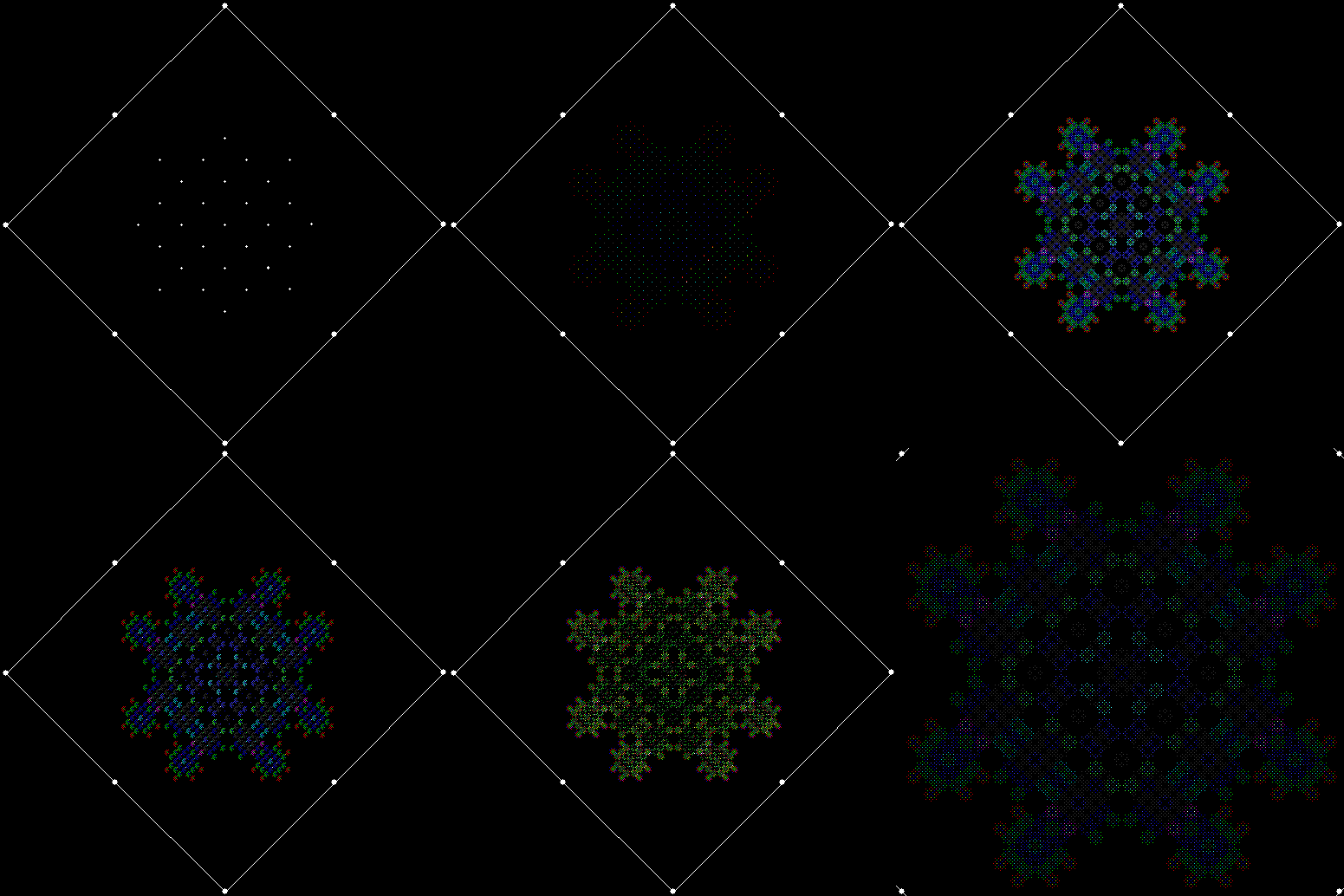
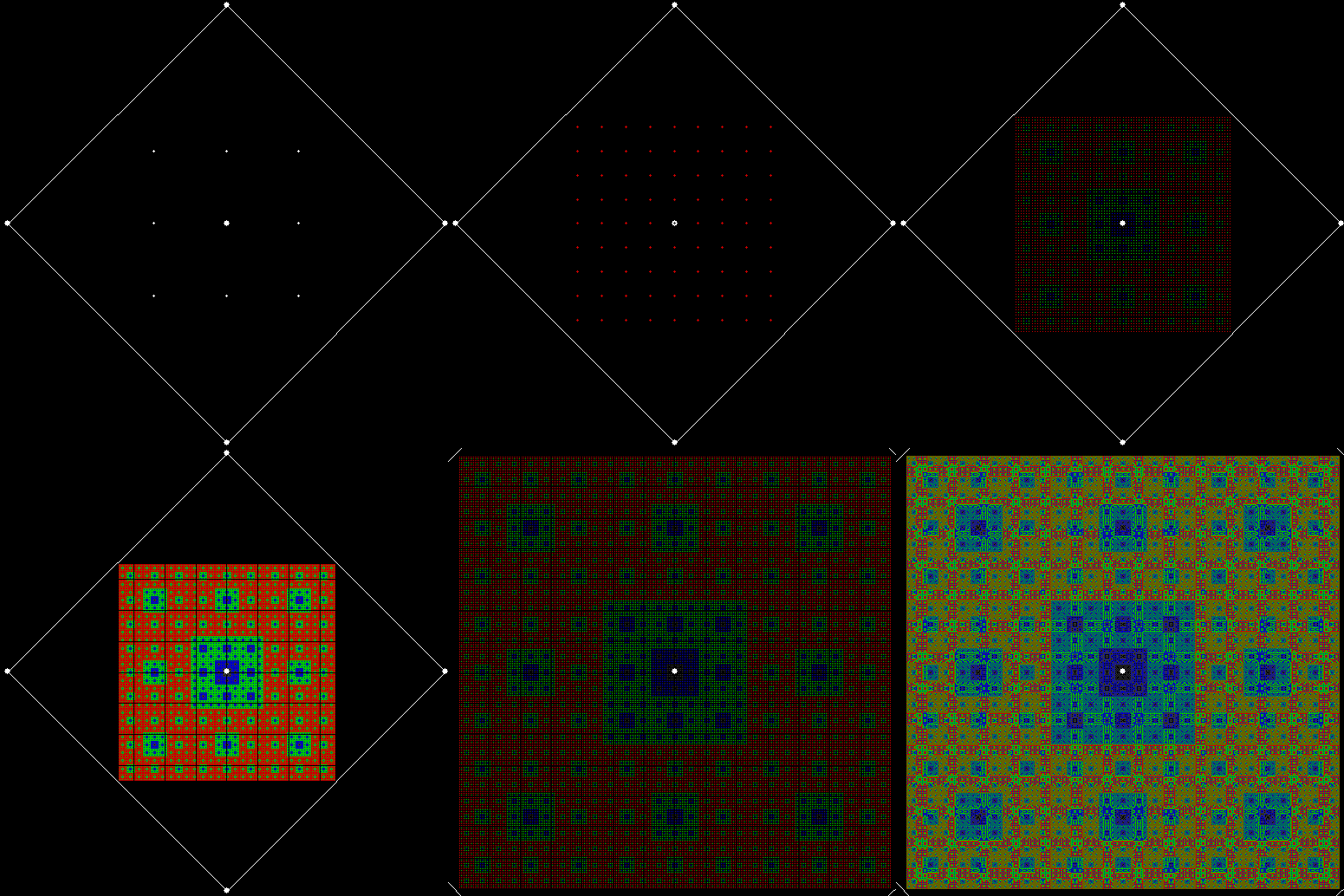
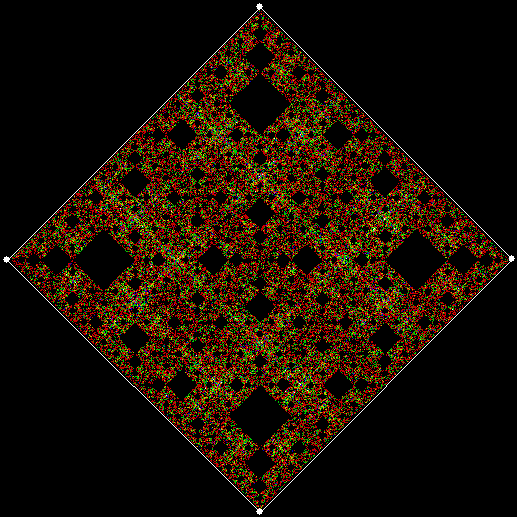
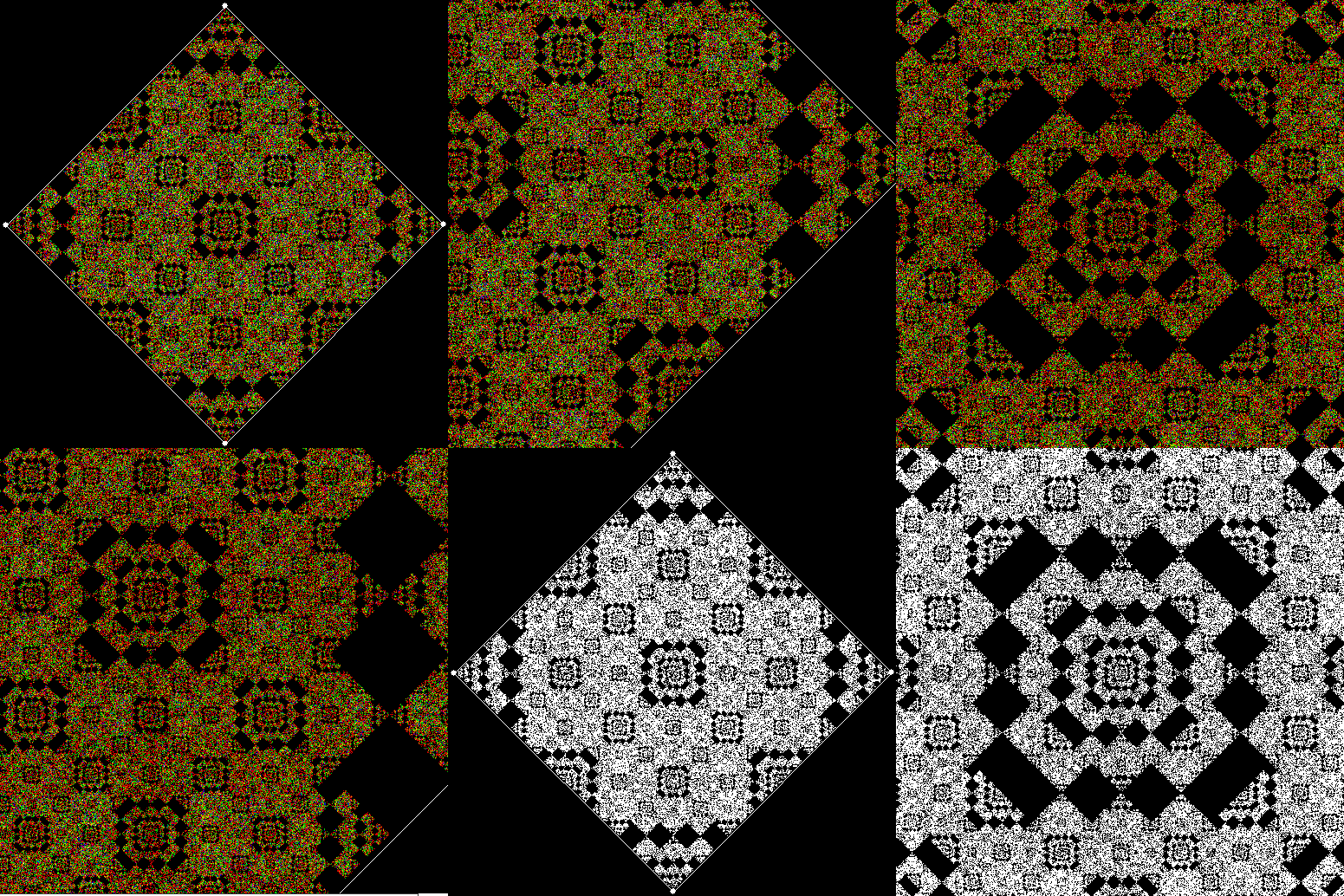
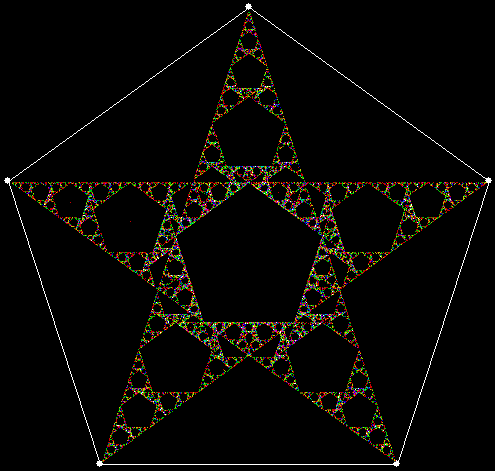
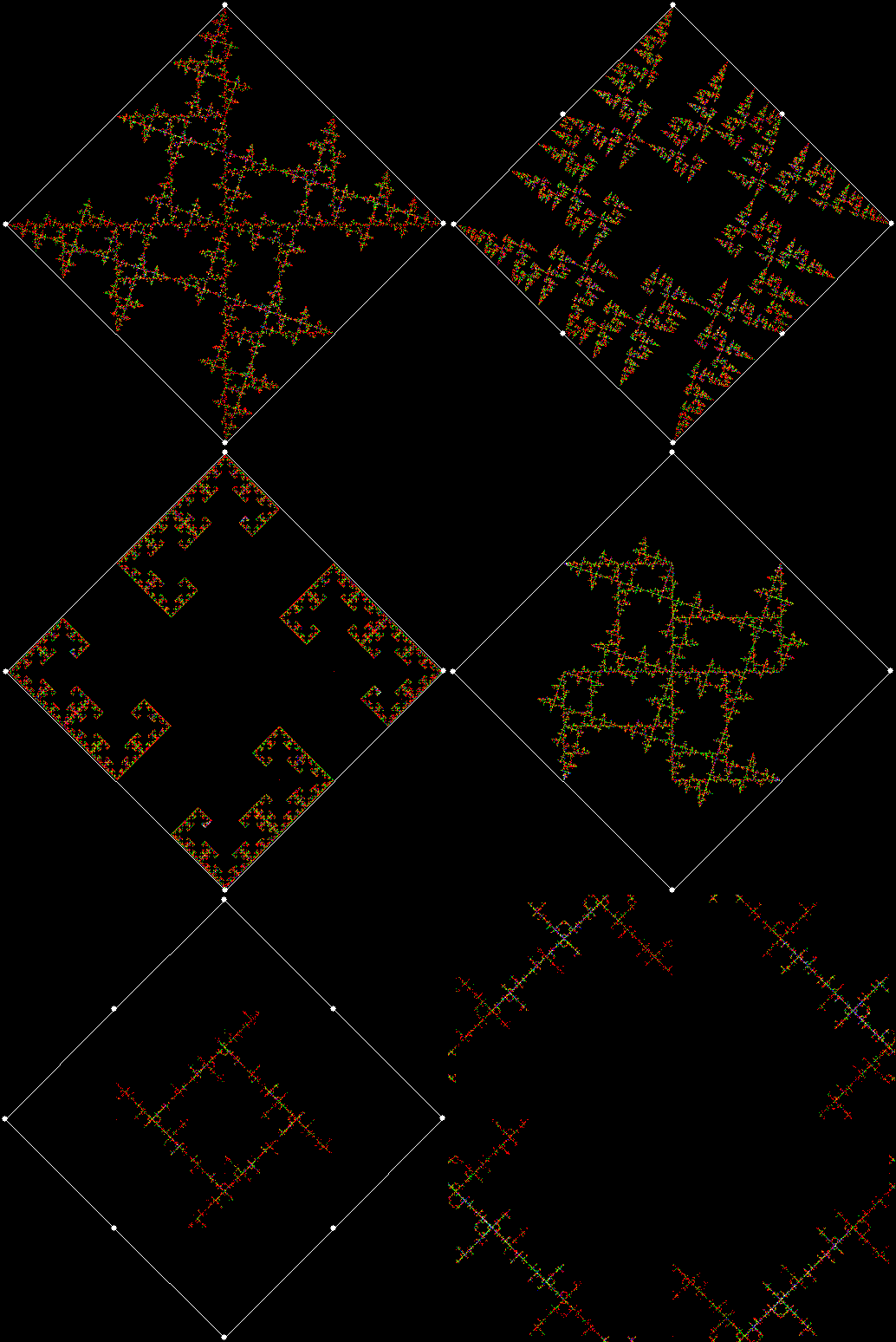
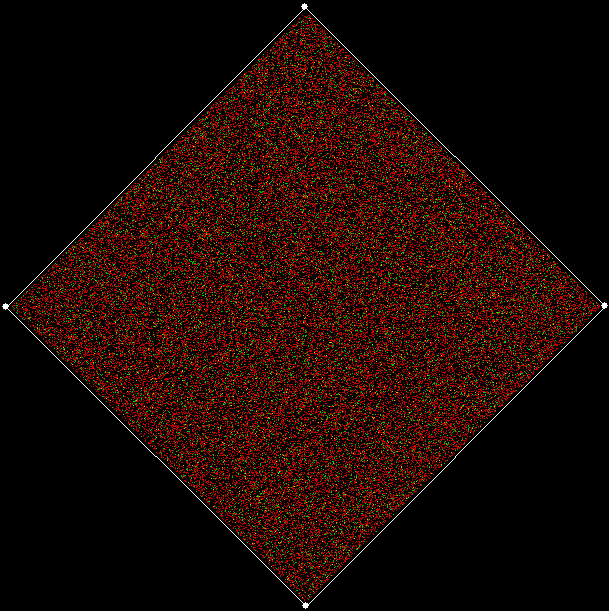
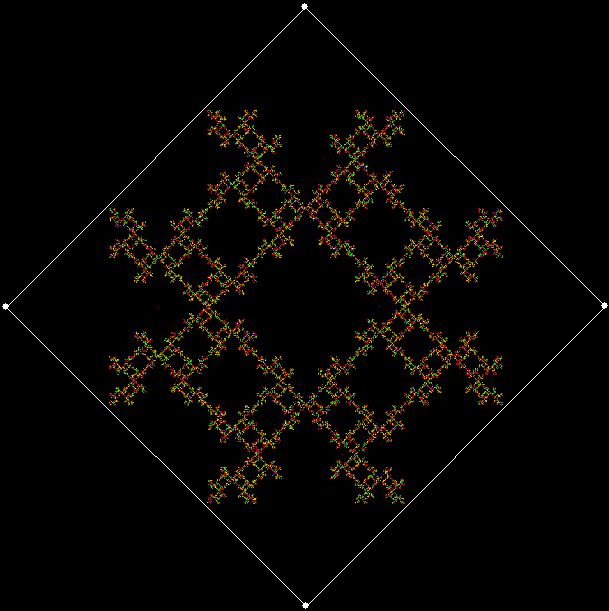
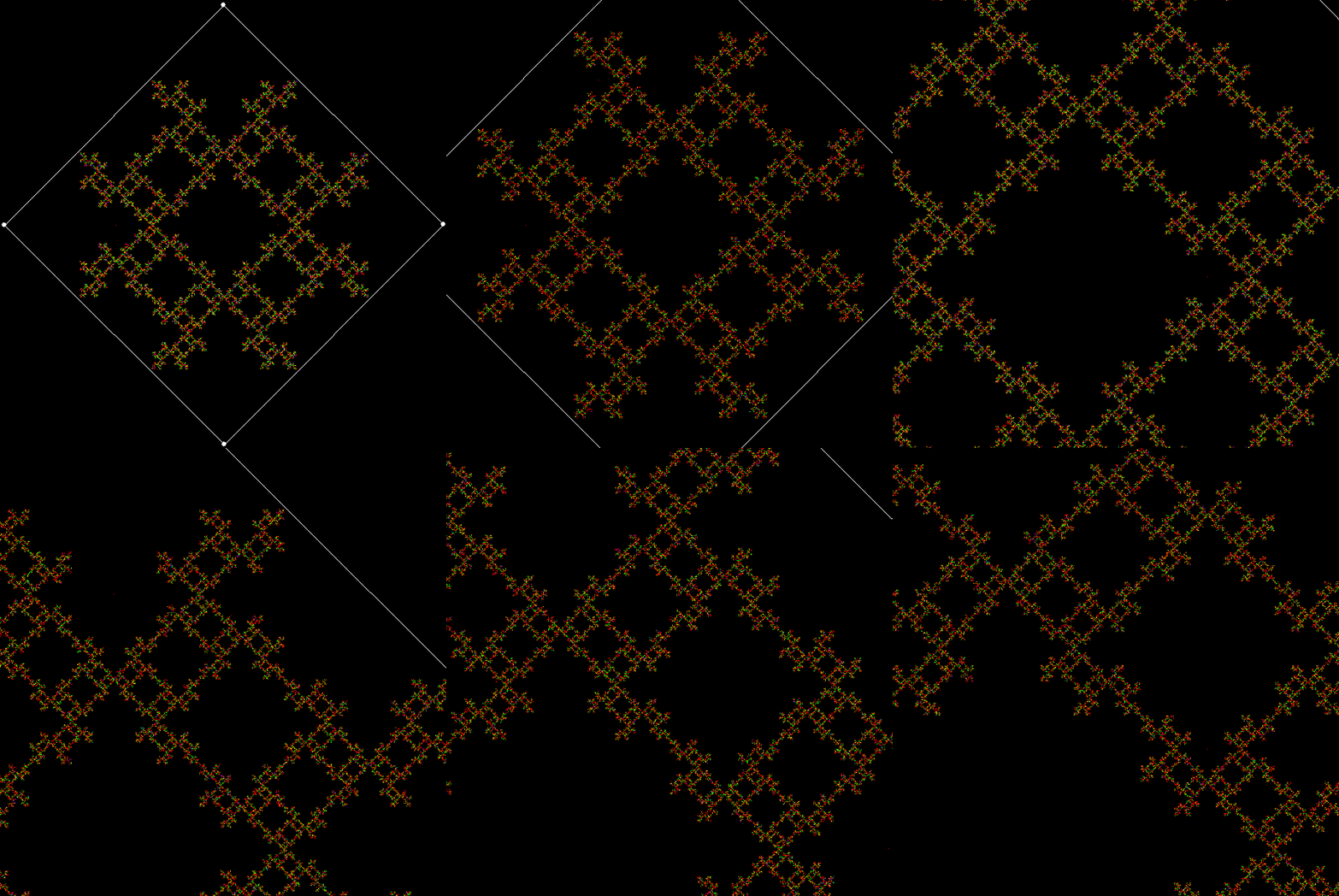
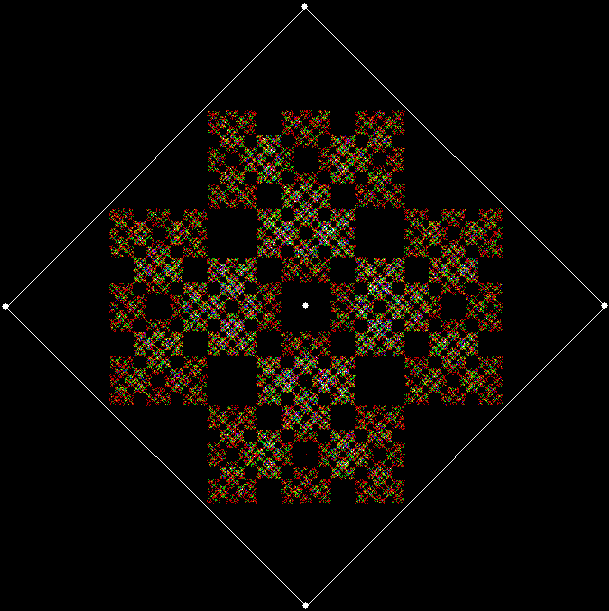
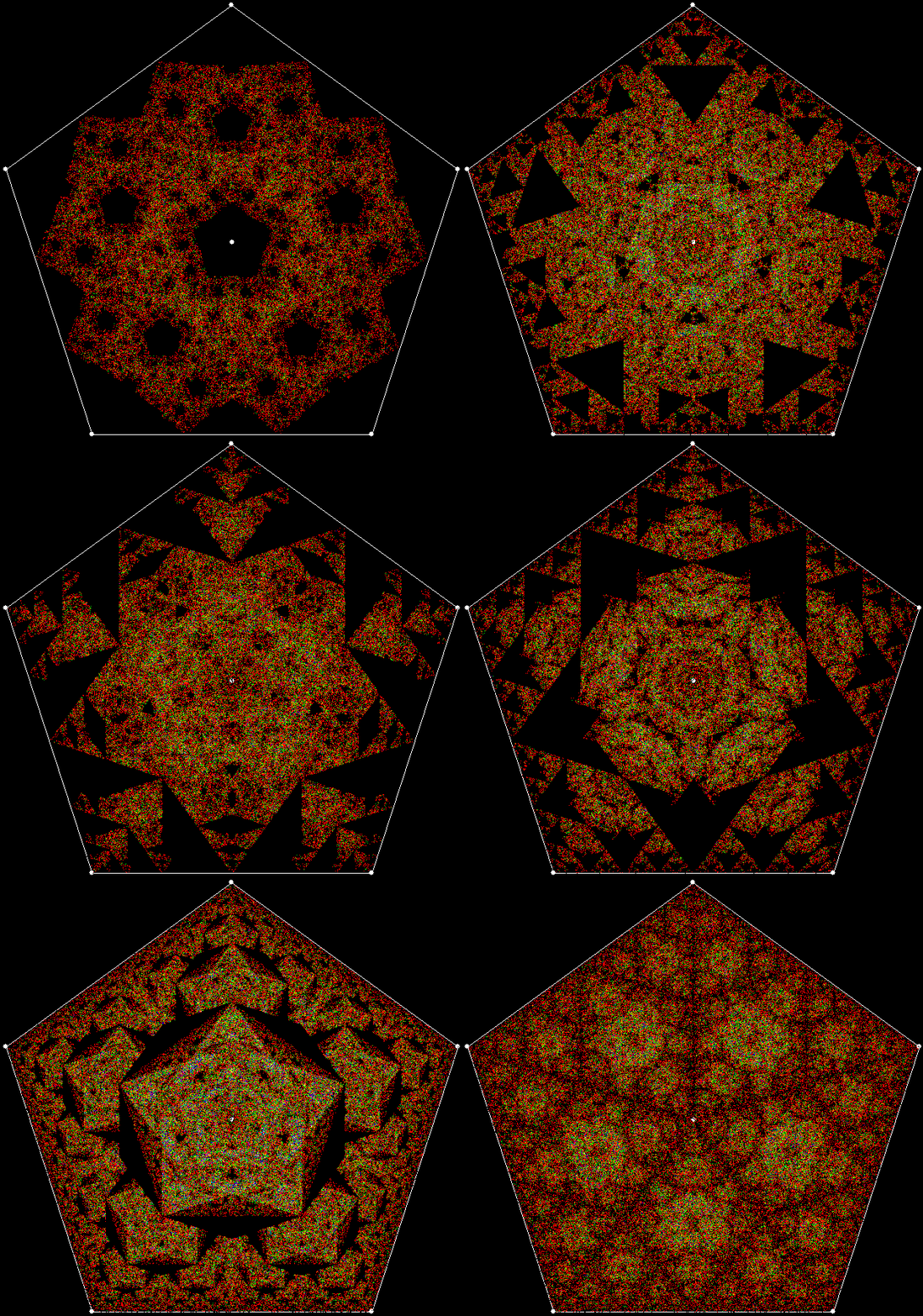
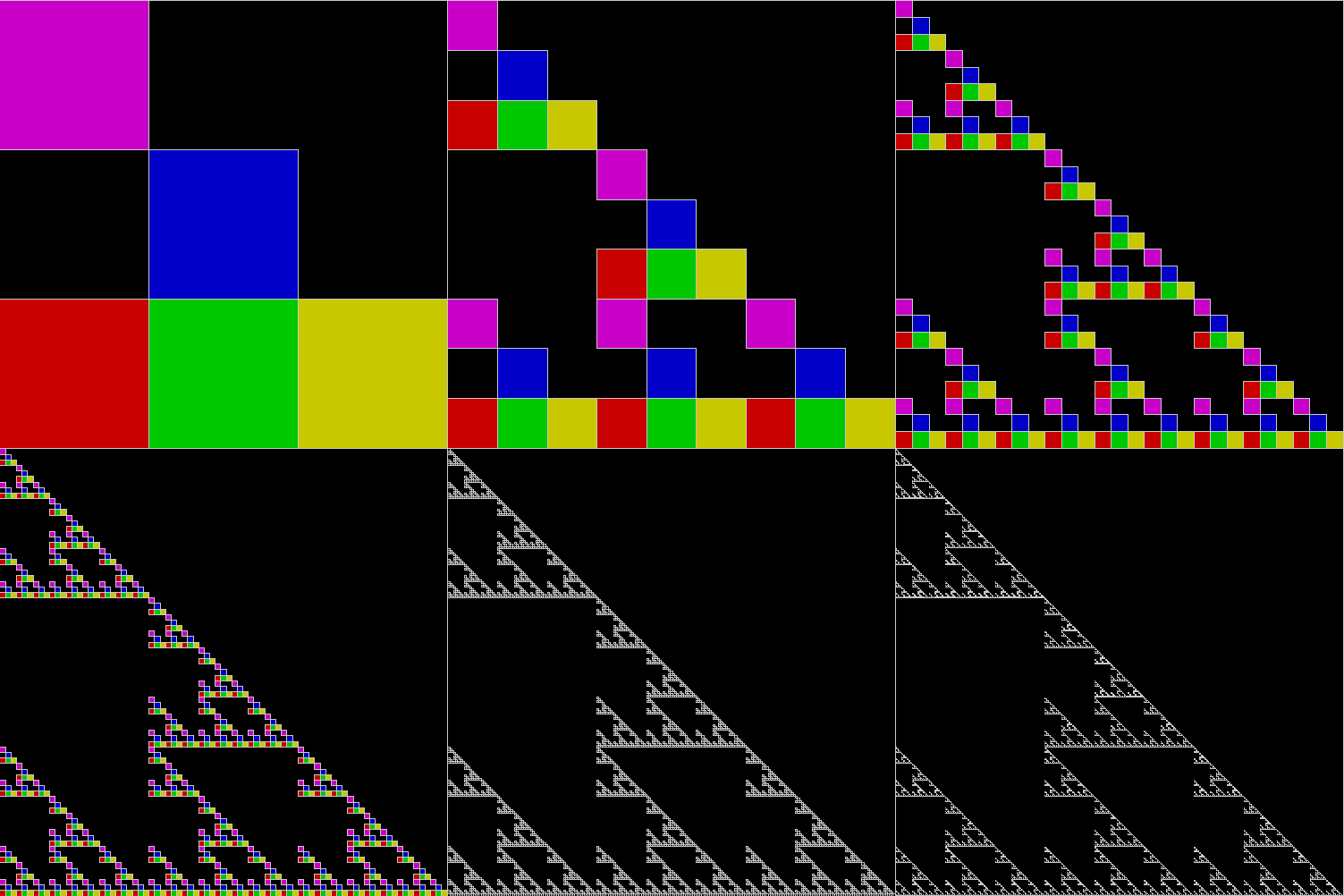
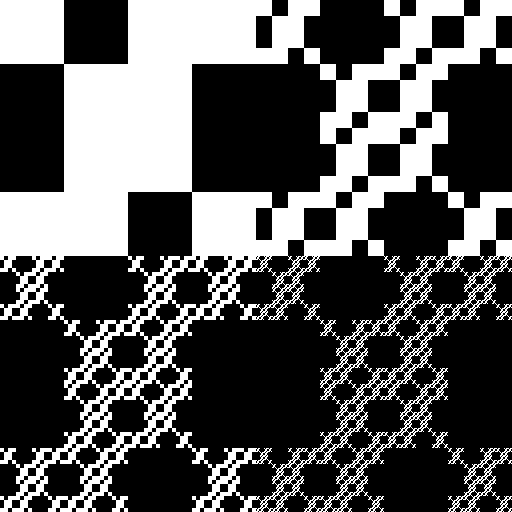
As I described in Get Your Prox Off, you can create a fractal by 1) moving a point towards a randomly chosen vertex of a polygon, but 2) forbidding a move towards the nearest vertex or the second-nearest vertex or third-nearest, and so on. If the polygon is a square, the four possible basic fractals look like this (note that the first fractal is also produced by banning a move towards a vertex that was chosen in the previous move):
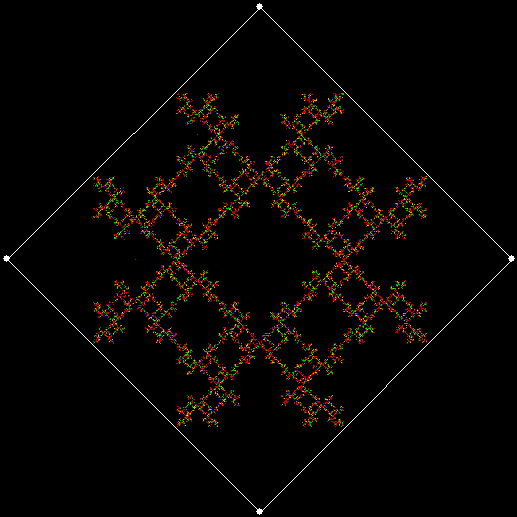
v4_ban1

v = 4, ban = prox(1)
(ban move towards nearest vertex)
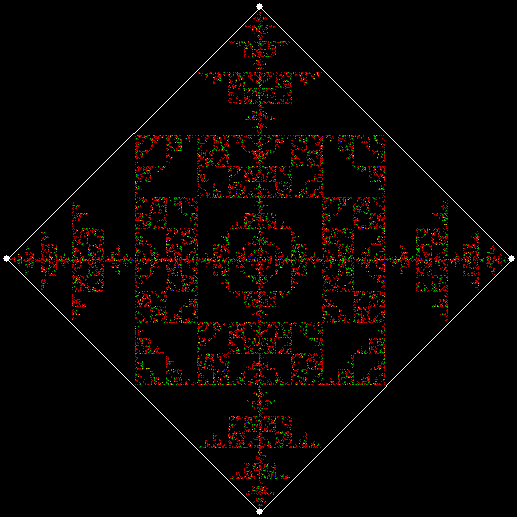

v4_ban2

v = 4, ban = prox(2)
(ban move towards second-nearest vertex)
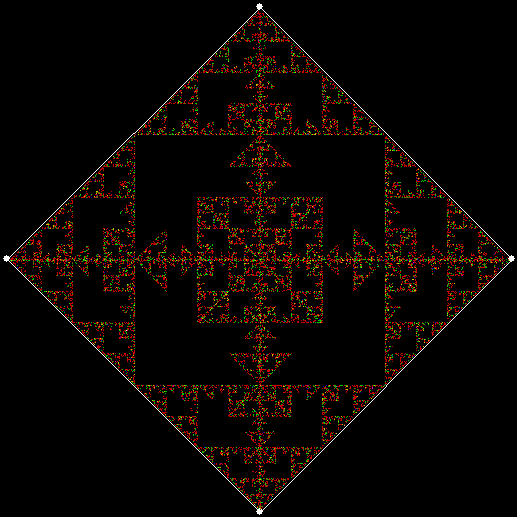

v4_ban3

v = 4, ban = prox(3)


v4_ban4

v = 4, ban = prox(4)


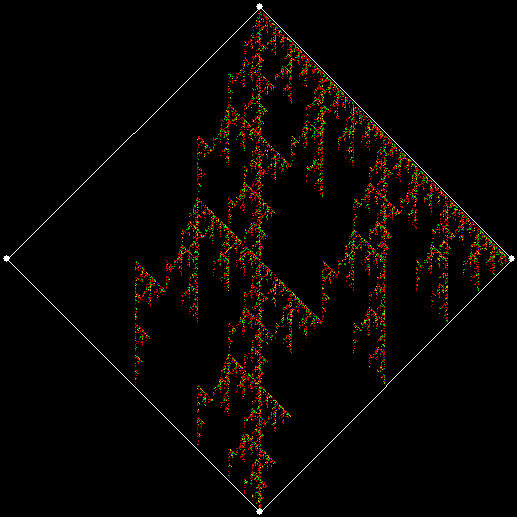
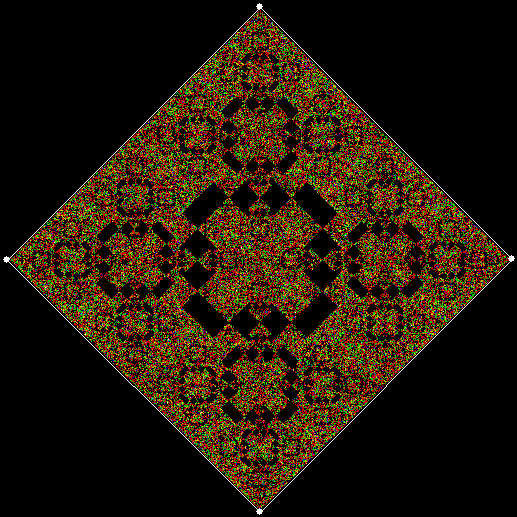
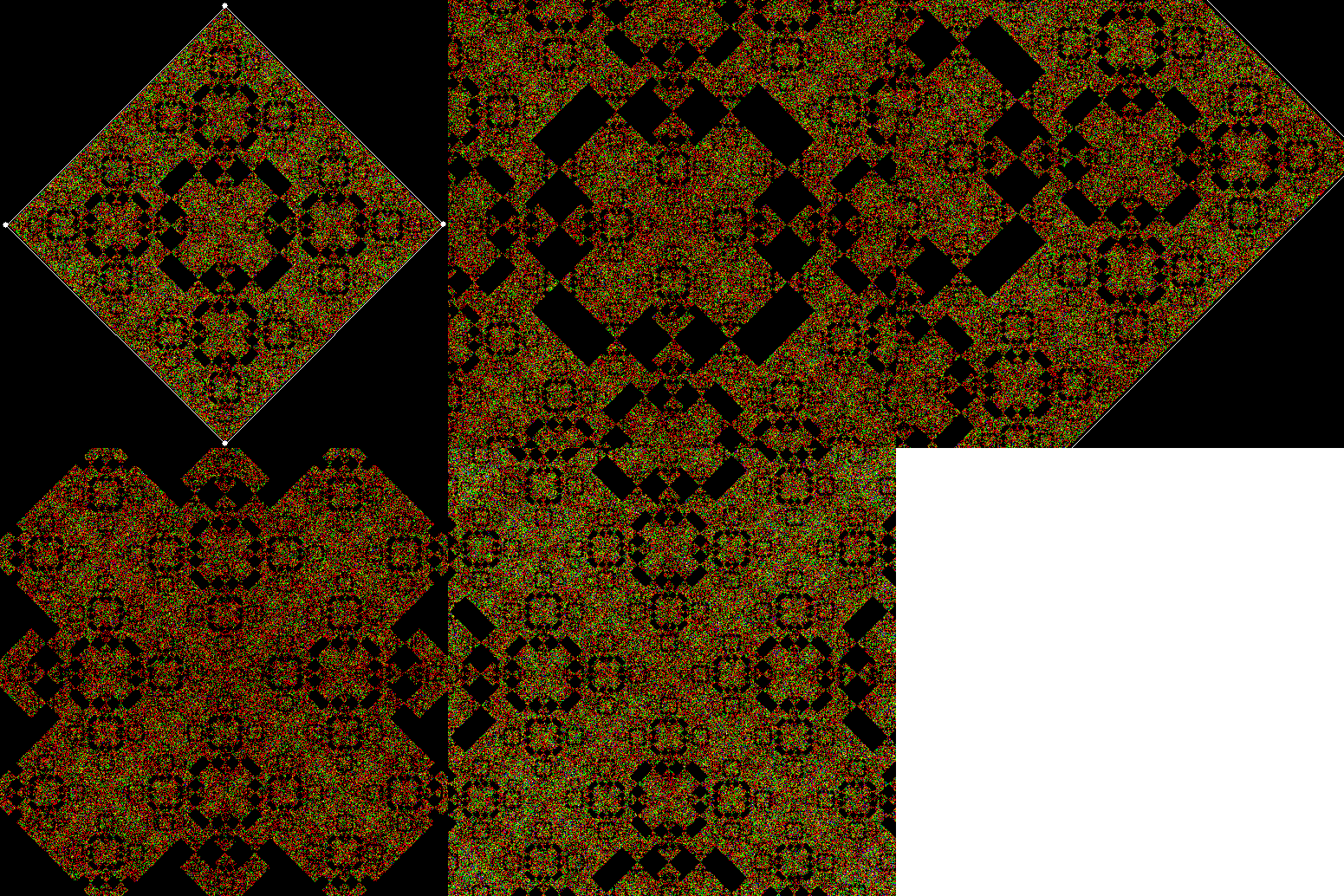
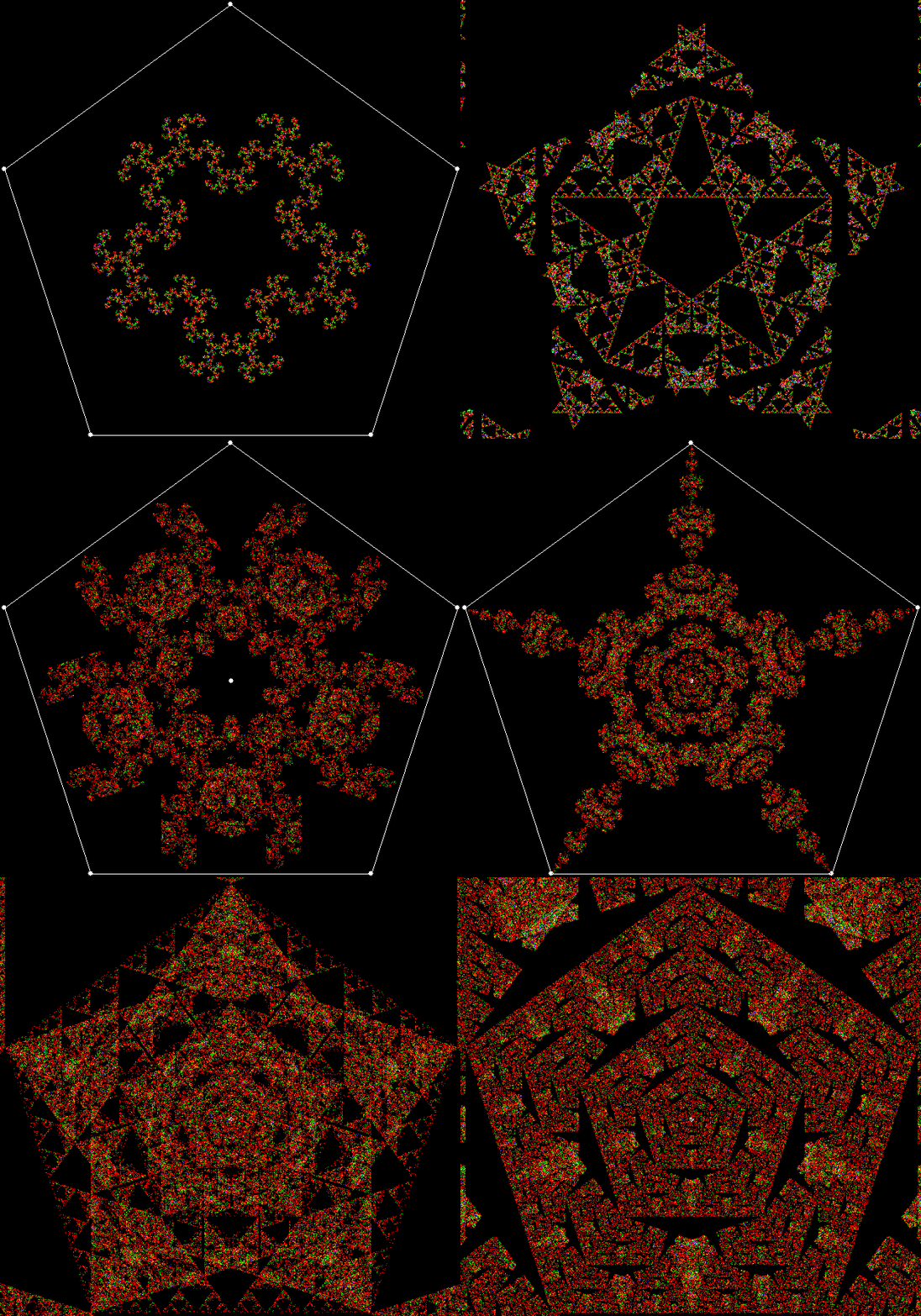
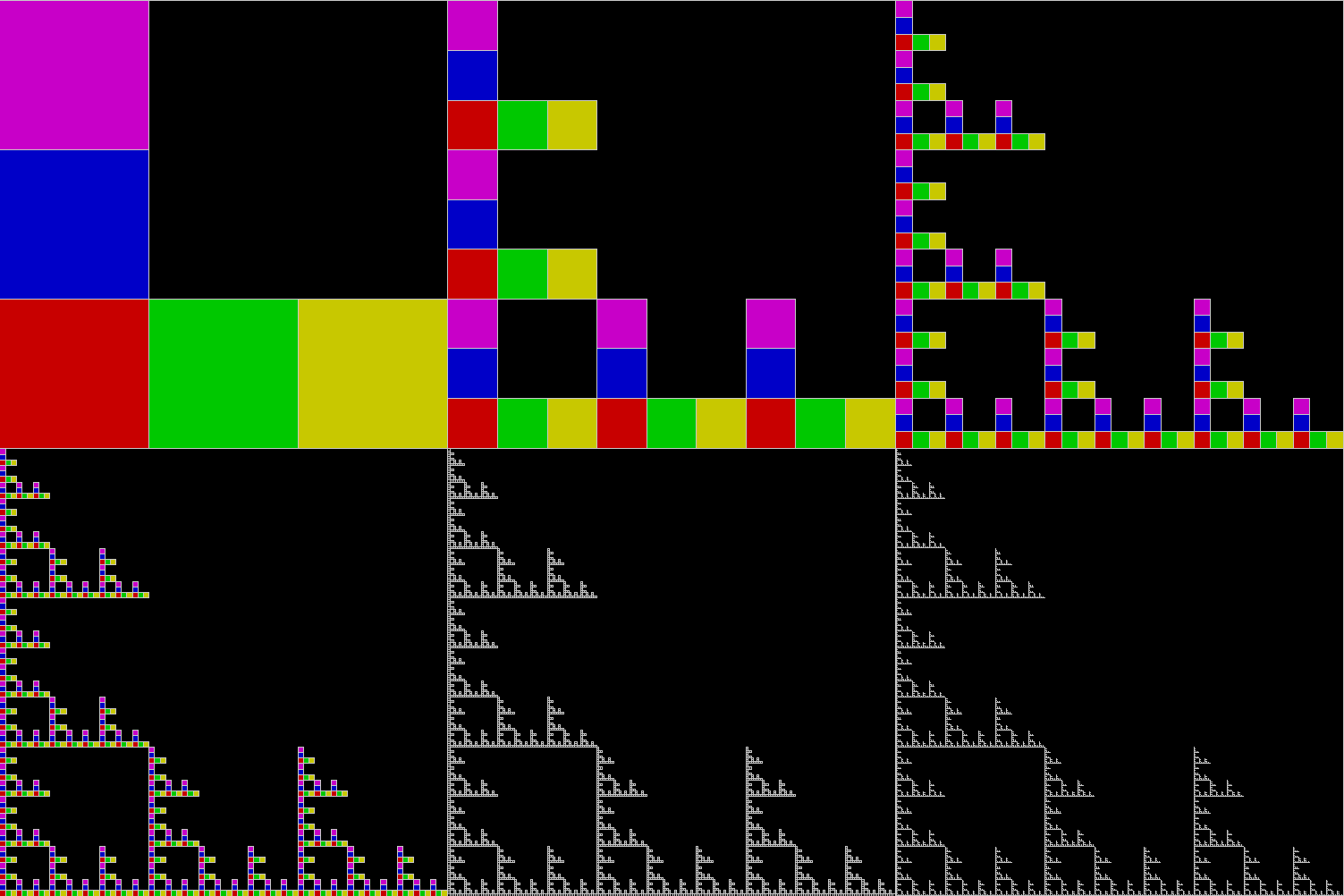
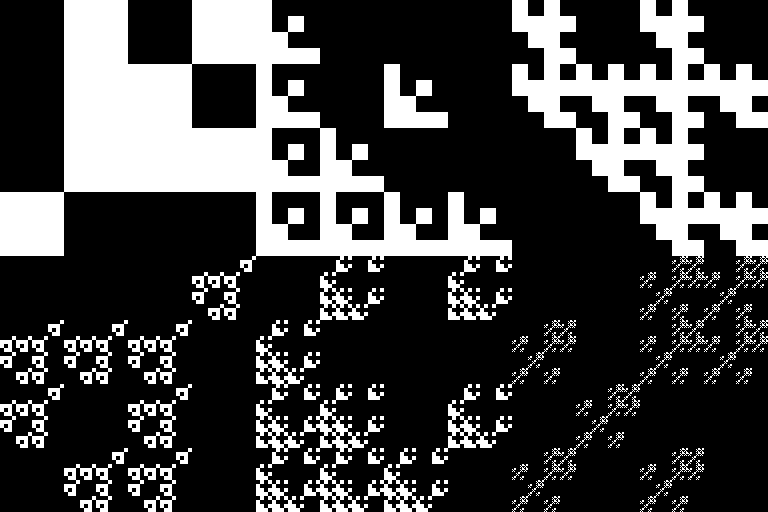
This program has to calculate what might be called the order of proximity: that is, it creates an array of distances to each vertex, then sorts the array by increasing distance. I was using a bubble-sort, but made a mistake so that the program ran through the array only once and didn’t complete the sort. If this happens, the fractals look like this (note that vertex 1 is on the right, with vertex 2, 3 and 4 clockwise from it):
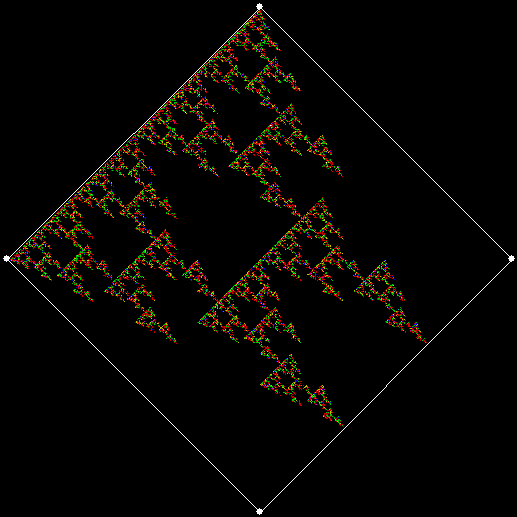
v4_ban1_sw1

v = 4, ban = prox(1), sweep = 1


v4_ban2_sw1

v = 4, ban = prox(2), sweep = 1


v4_ban3_sw1

v = 4, ban = prox(3), sweep = 1


v4_ban3_sw1_anim

(Animated version of v4, ban(prox(3)), sw=1)
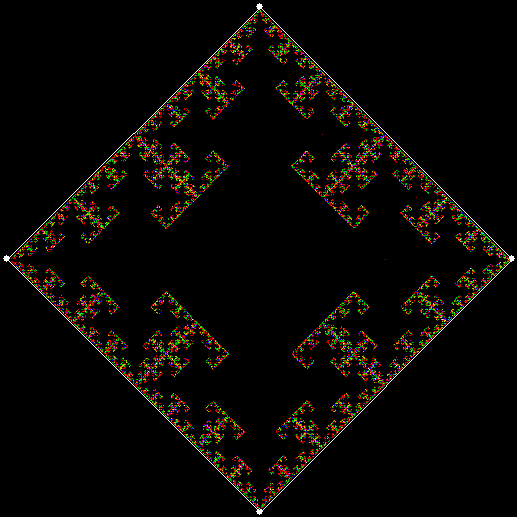

v4_ban4_sw1

v = 4, ban = prox(4), sweep = 1


Note that in the last case, where ban = prox(4), a bubble-sort needs only one sweep to identify the most distant vertex, so the fractal looks the same as it does with a complete bubble-sort.

These new fractals looked interesting, so I had the idea of adjusting the number of sweeps in the incomplete bubble-sort: one sweep or two or three and so on (with enough sweeps, the bubble-sort becomes complete, but more sweeps are needed to complete a sort as the number of vertices increases). If there are two sweeps, then ban(prox(1)) and ban(prox(2)) look like this:
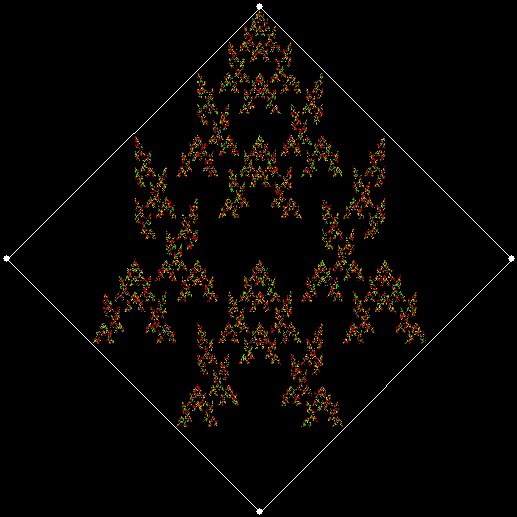
v4_ban1_sw2

v = 4, ban = prox(1), sweep = 2


v4_ban2_sw1

v = 4, ban = prox(2), sweep = 2


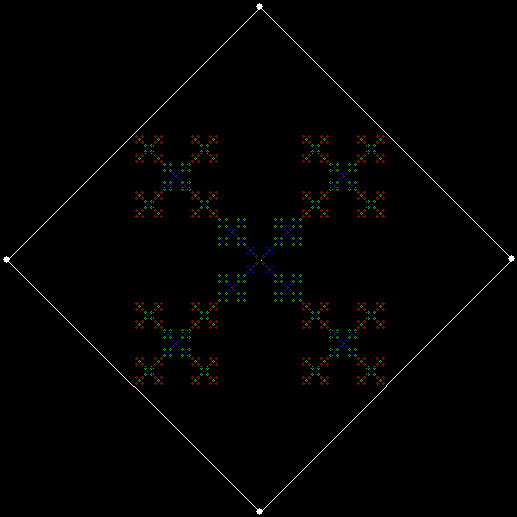
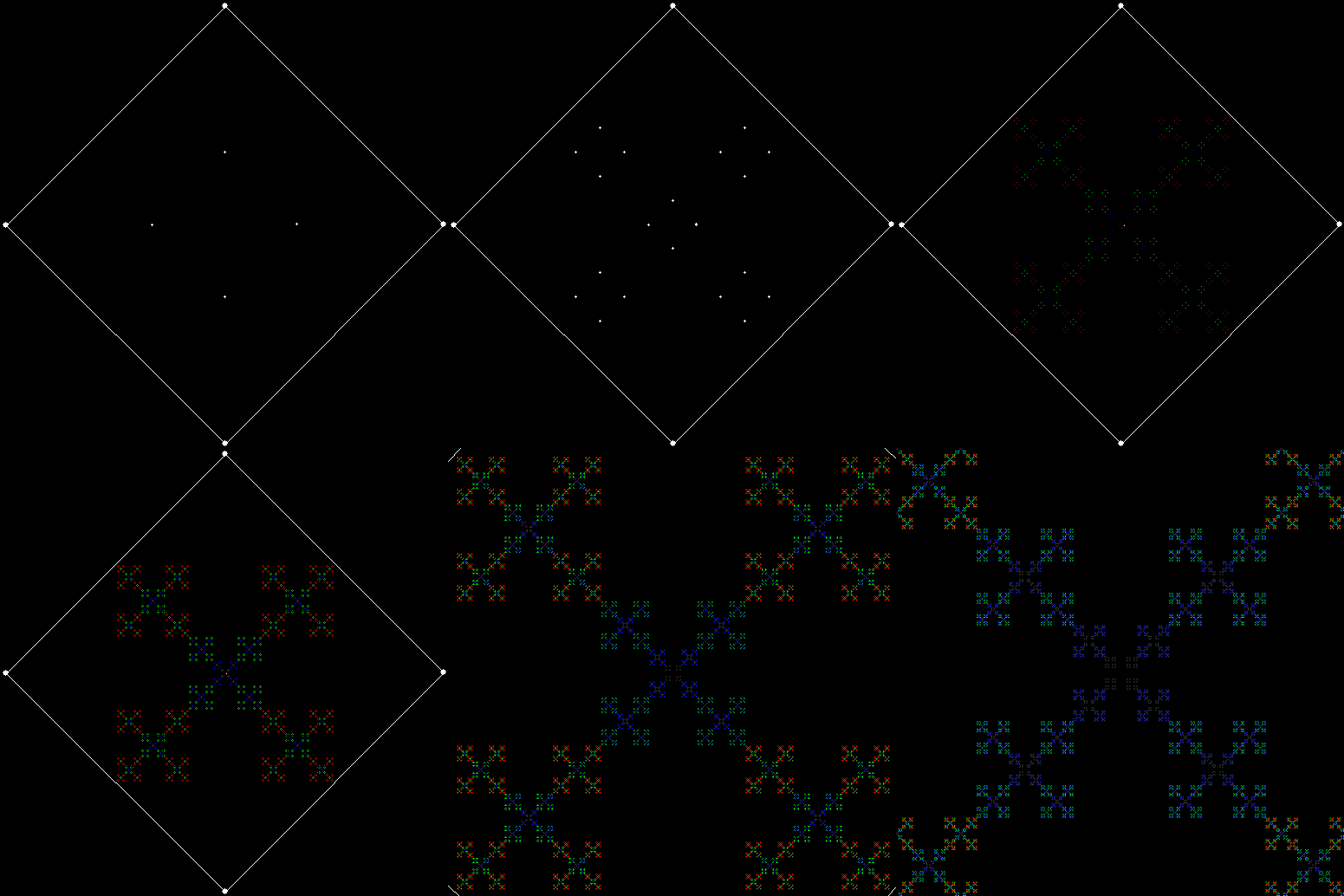
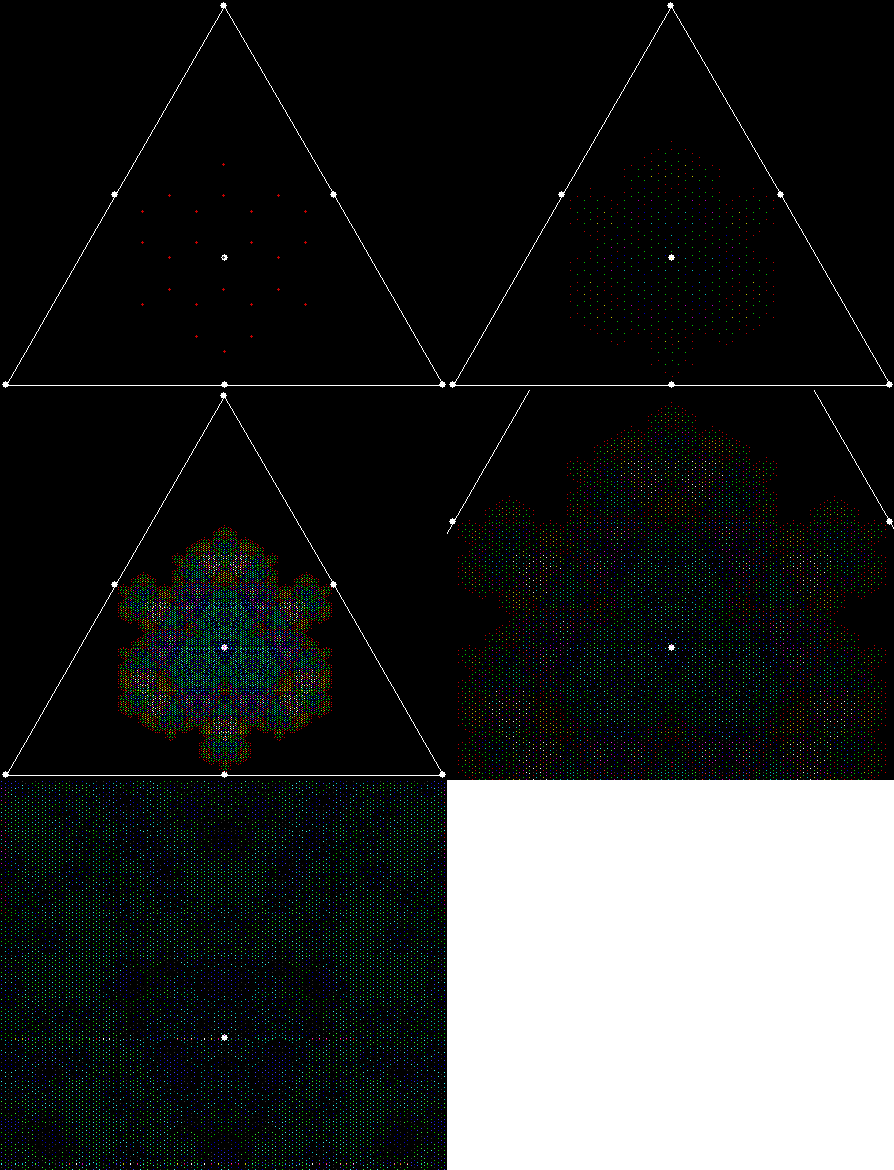
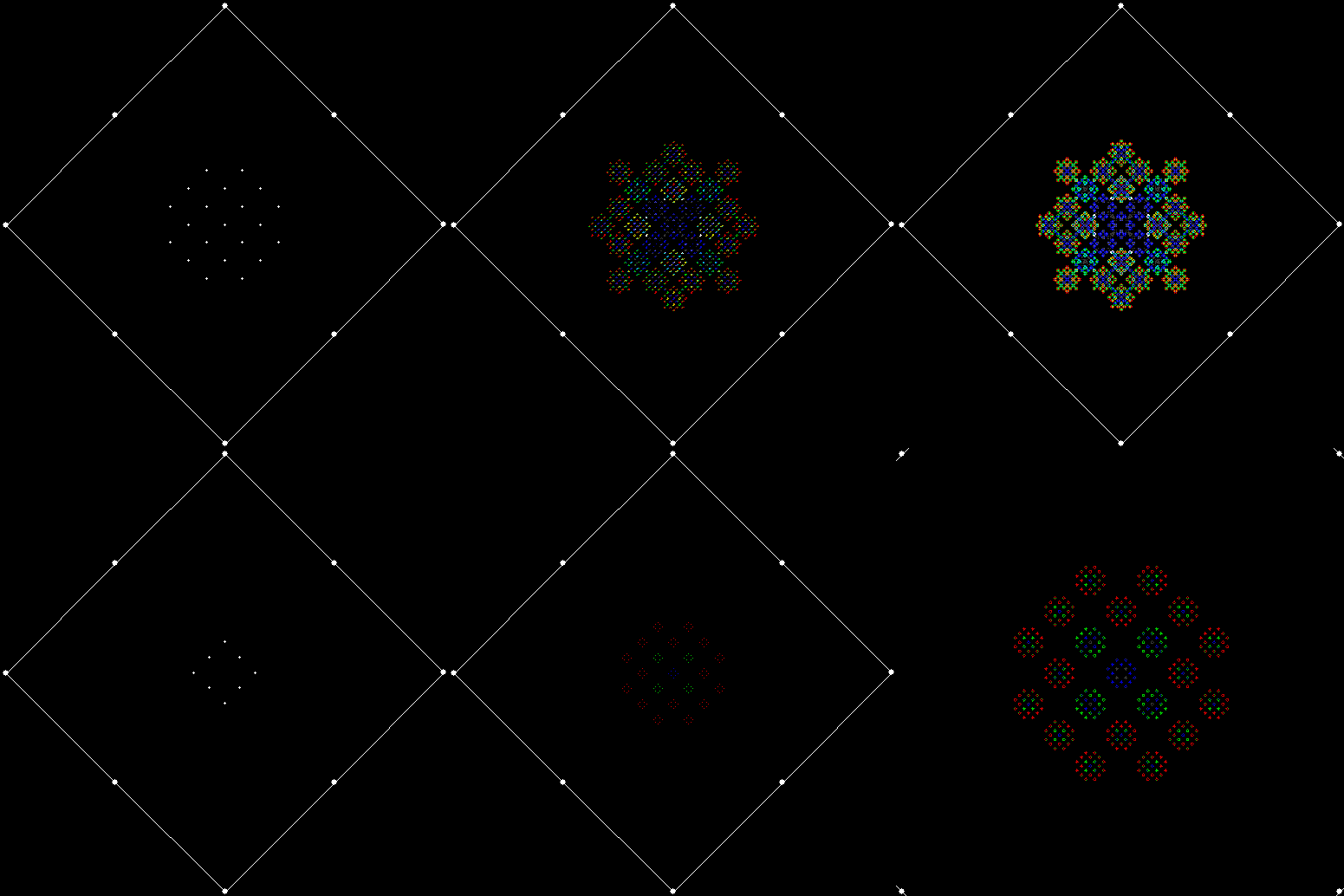
But the fractals produced by sweep = 2 for ban(prox(3)) and ban(prox(4)) are identical to the fractals produced by a complete bubble sort. Now, suppose you add a central point to the polygon and treat that as an additional vertex. If the bubble-sort is incomplete, a ban(prox(1)) fractal with a central point looks like this:
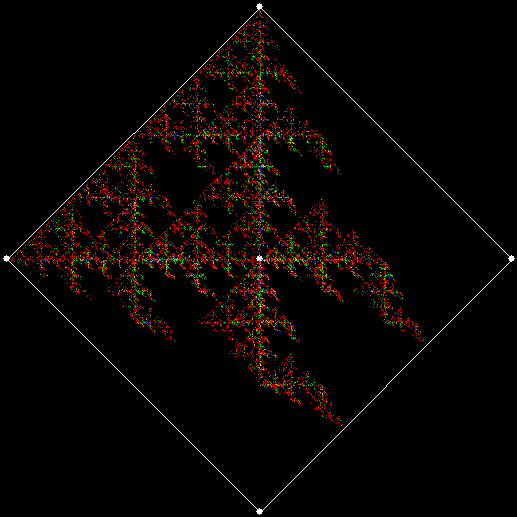
v4c_ban1_sw1

v = 4+c, ban = prox(1), sw = 1


v4c_ban1_sw2

v = 4+c, ban = prox(1), sw = 2


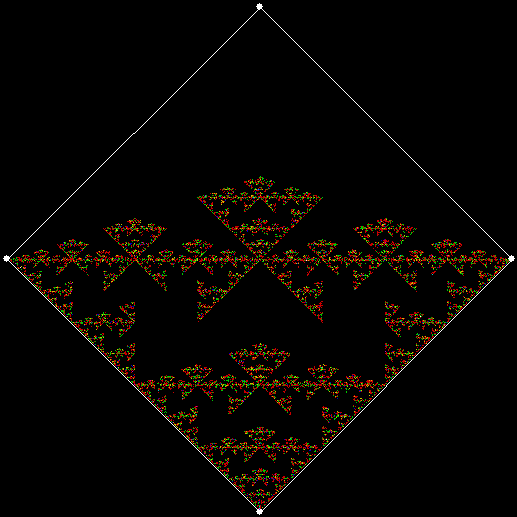
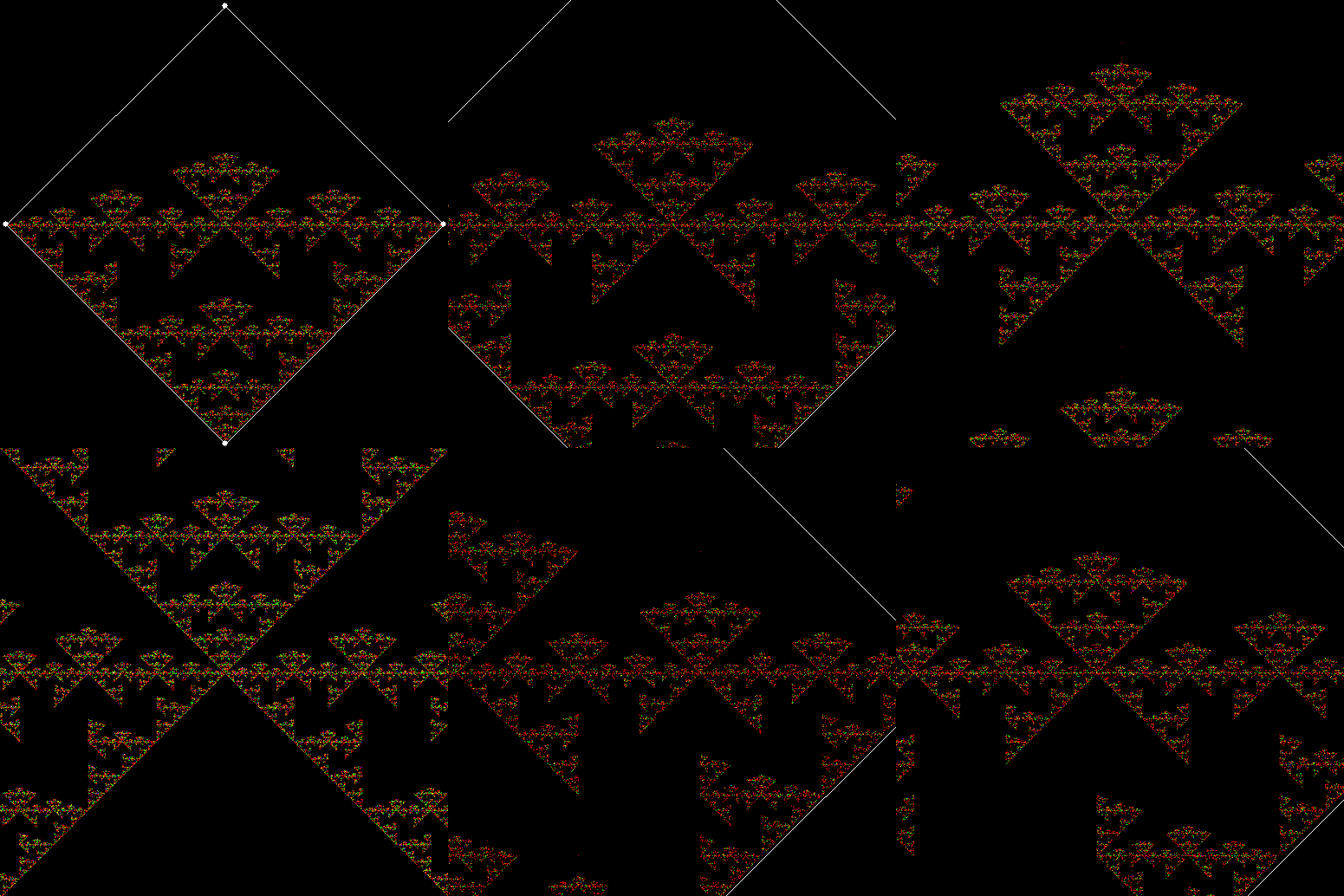
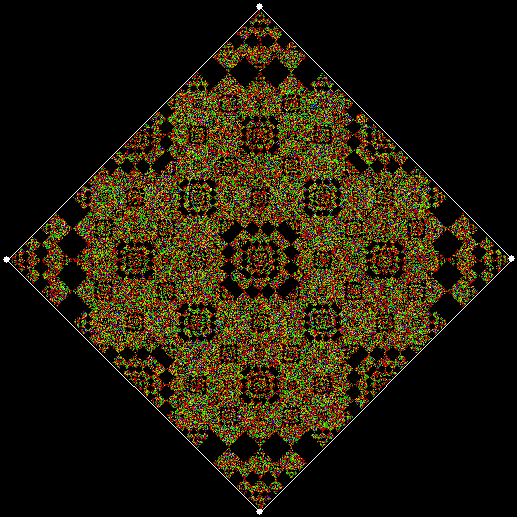
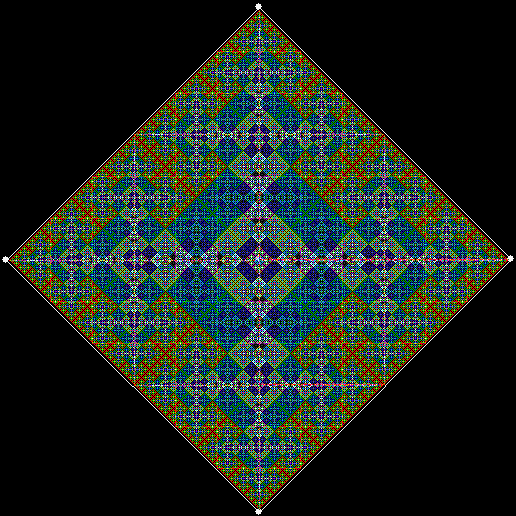
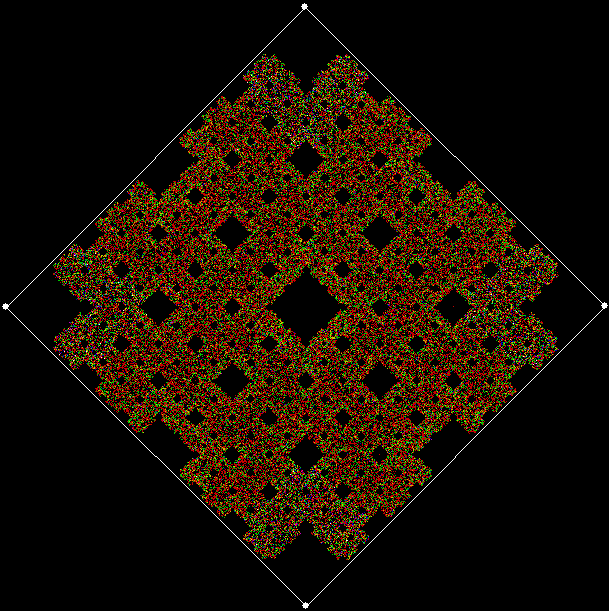
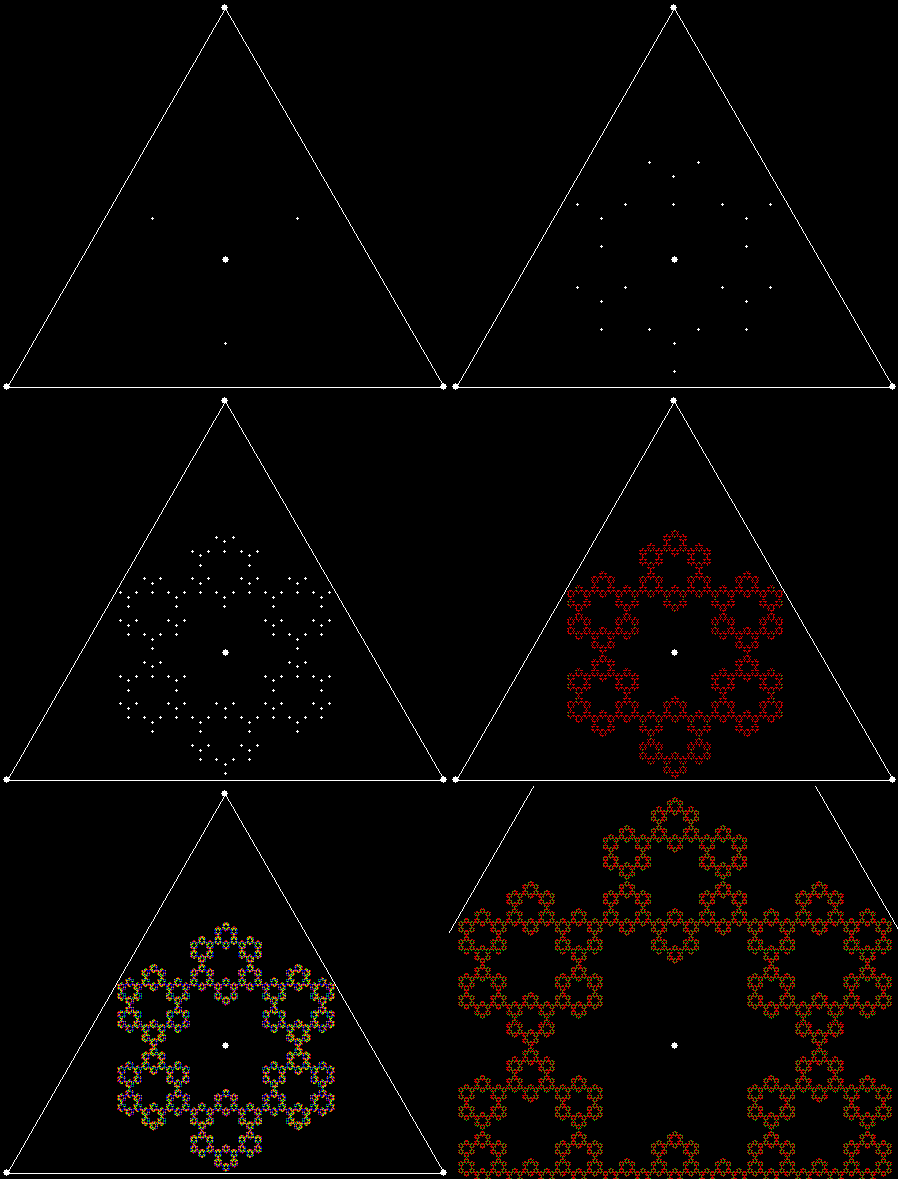
When sweep = 3, an attractive new fractal appears:
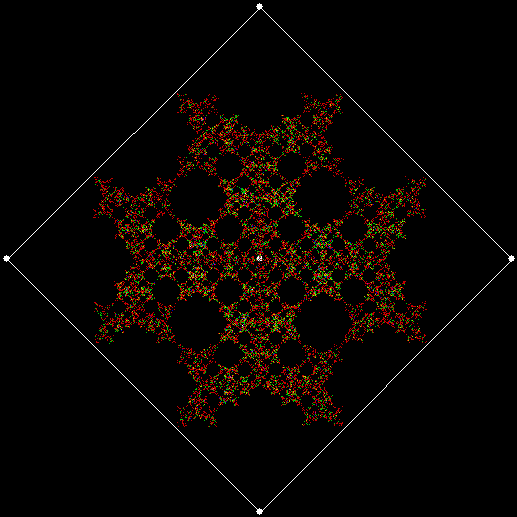
v4c_ban1_sw3

v = 4+c, ban = prox(1), sw = 3


v4c_ban1_sw3_anim

v = 4+c, ban = prox(1), sw = 3 (animated)


If you ban two vertices, the nearest and second-nearest, i.e. ban(prox(1), prox(2)), a complete bubble-sort produces a familiar fractal:
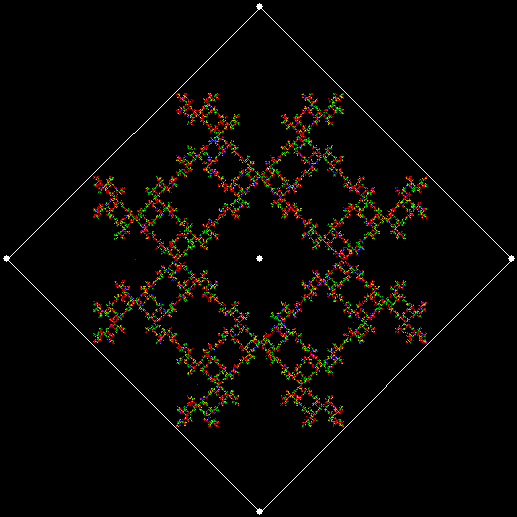
v4_ban12

v = 4+c, ban = prox(1), prox(2)


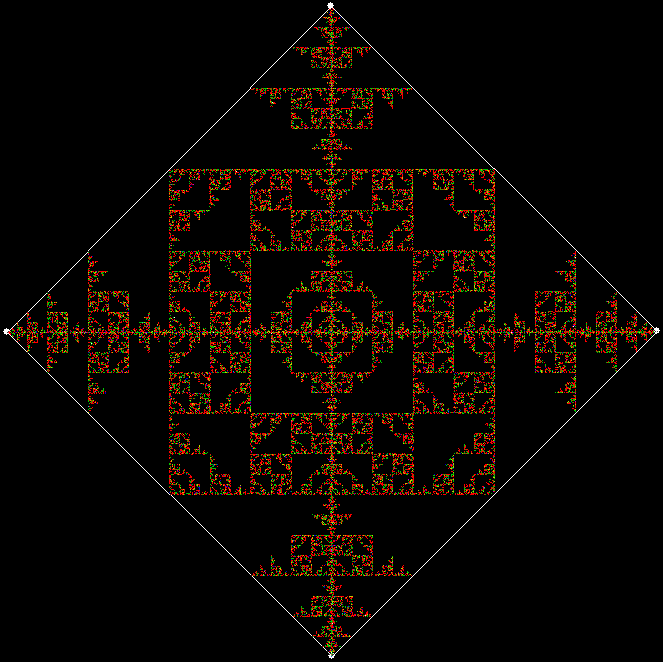
And here is ban(prox(2), prox(4)), with a complete bubble-sort:
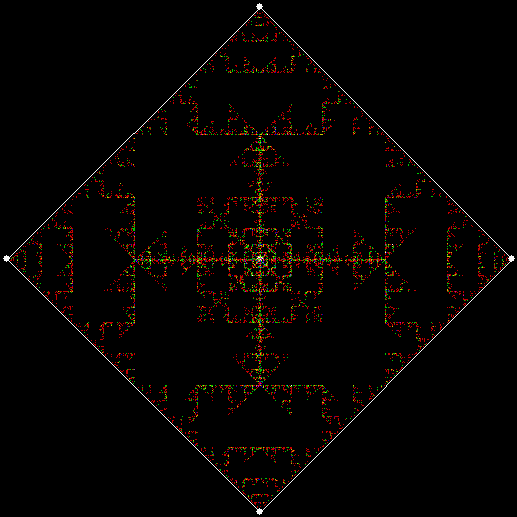
v4c_ban24

v = 4, ban = prox(2), prox(4)


If the bubble-sort is incomplete, sweep = 1 and sweep = 2 produce these fractals for ban(prox(1), prox(2)):
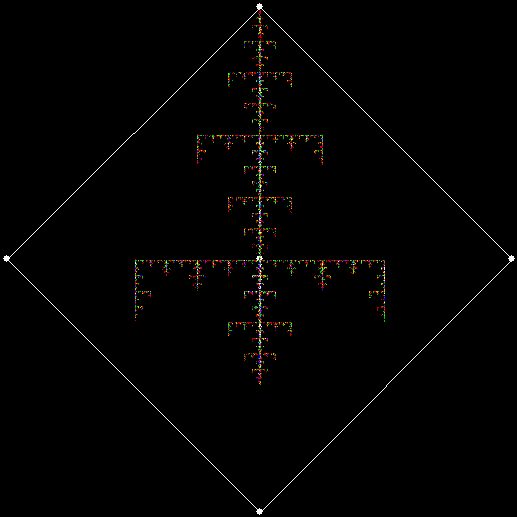
v4_ban12_sw1

v = 4, ban = prox(1), prox(2), sw = 1
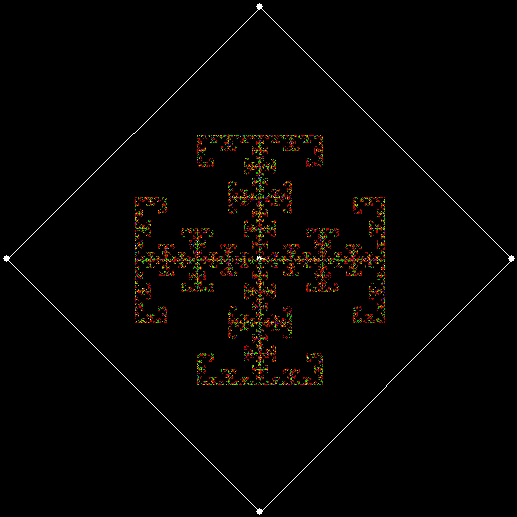

v4_ban12_sw2

v = 4, ban = prox(1), prox(2), sw = 2*

*The second of those fractals is identical to v = 4, ban(prox(2), prox(3)) with a complete bubble-sort.


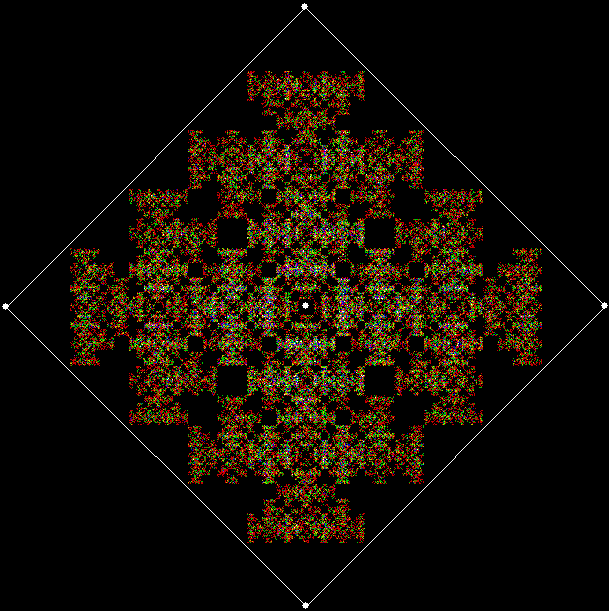
Here is ban(prox(1), prox(5)) with a complete bubble-sort:

4c_ban15

v = 4, ban = prox(1), prox(5)


Now try ban(prox(1), prox(5)) with an incomplete bubble-sort:
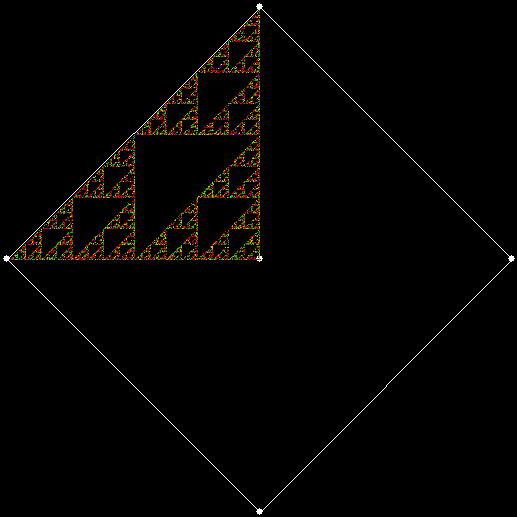
v4_ban15_sw1

v = 4, ban = prox(1), prox(5), sw = 1
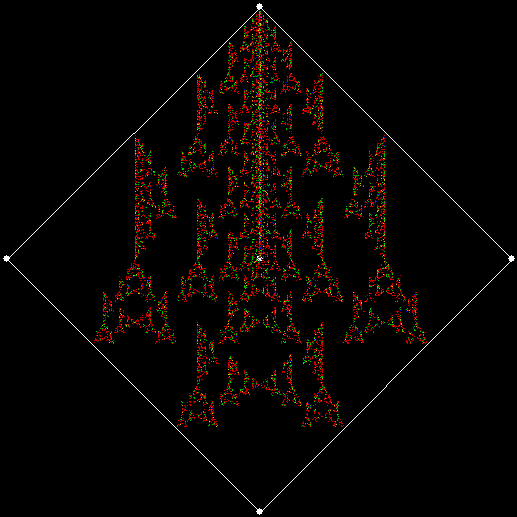

v4_ban15_sw2

v = 4, ban = prox(1), prox(5), sw = 2


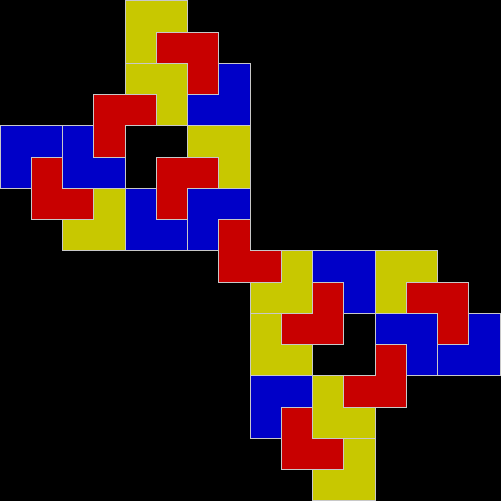
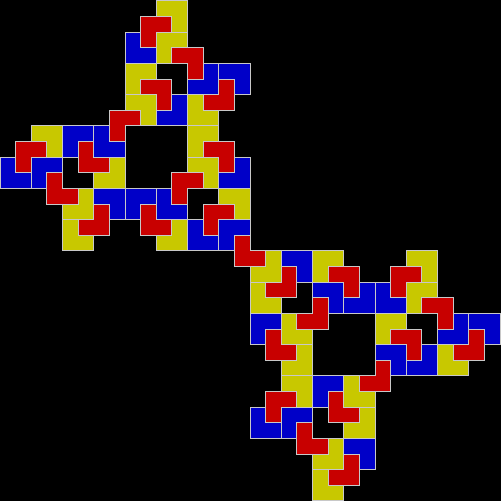
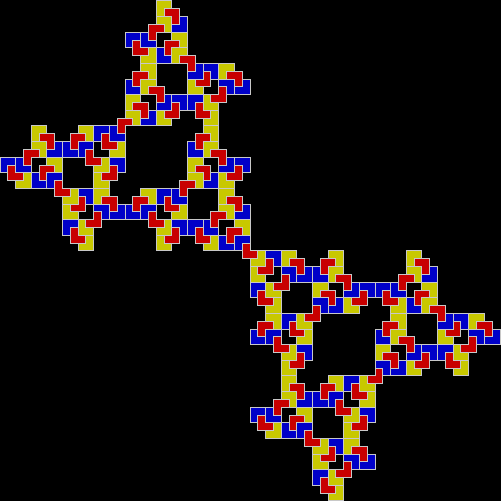
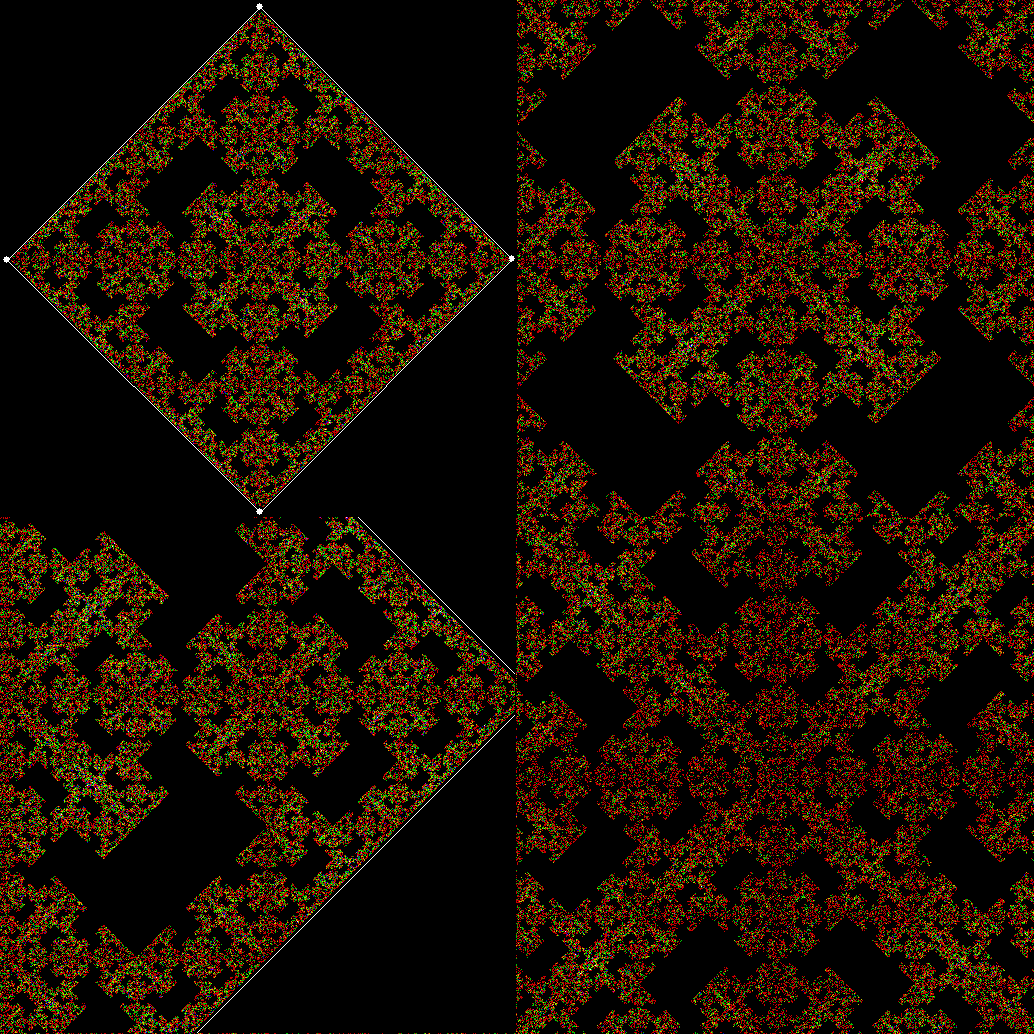
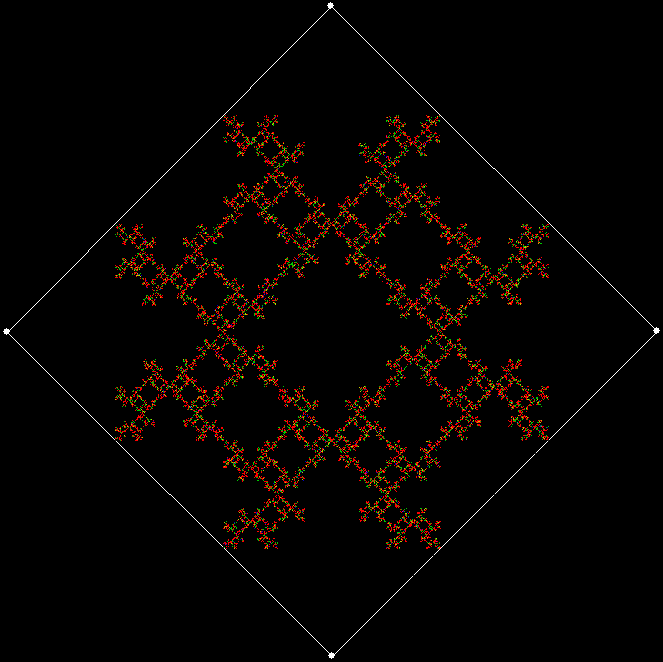
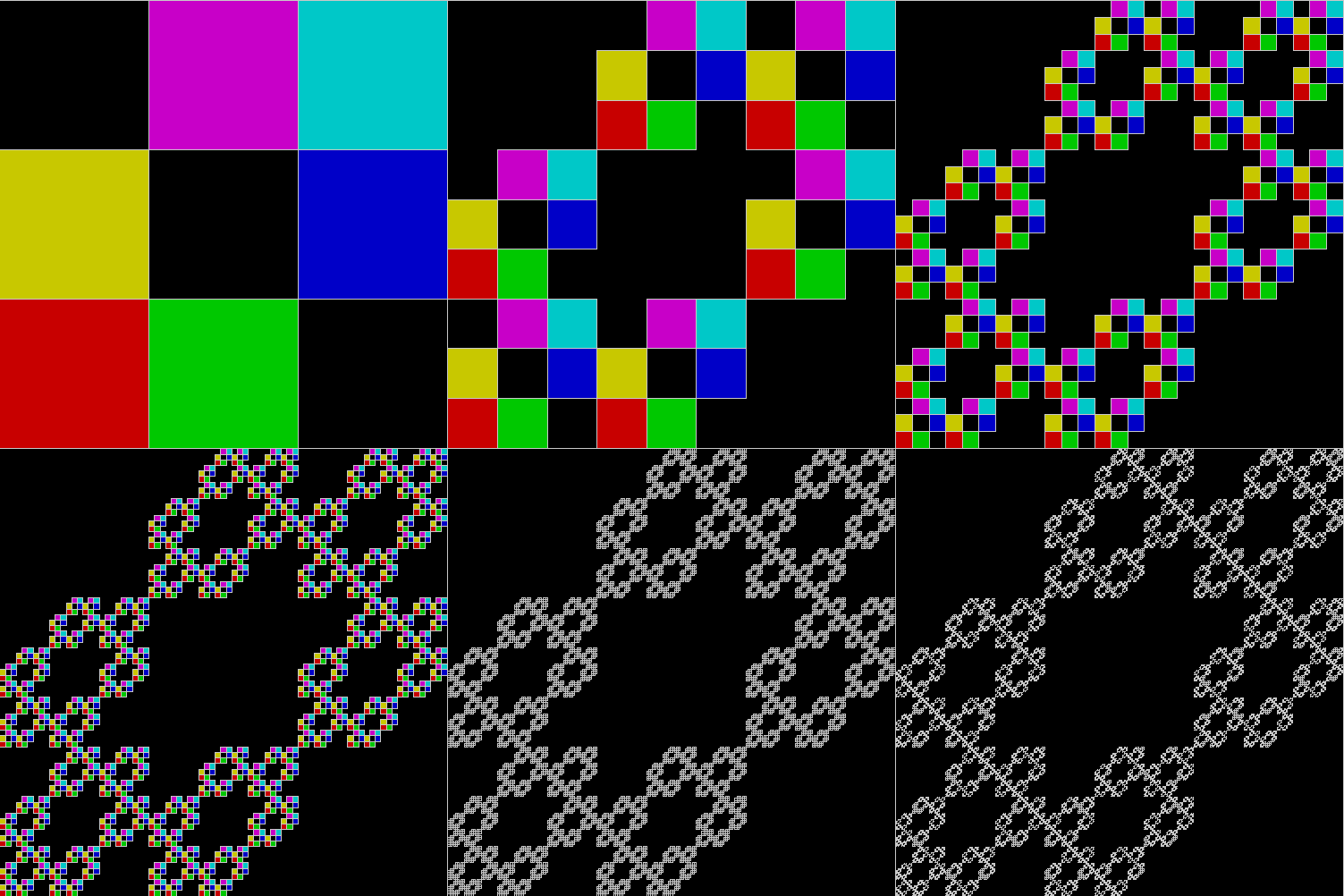
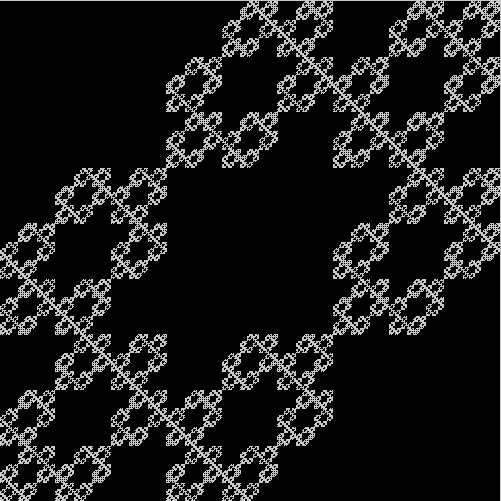
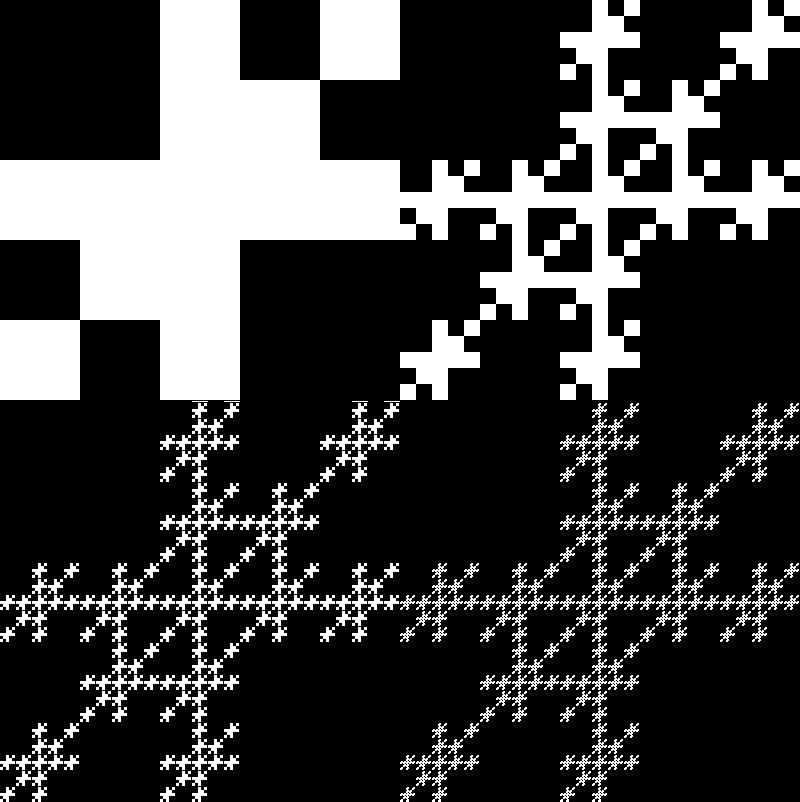
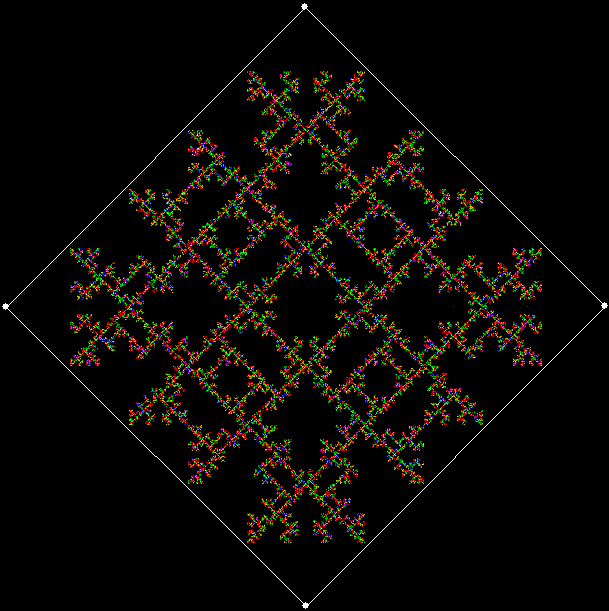
When sweep = 3, the fractal I had seen before appears:

v4_ban15_sw3

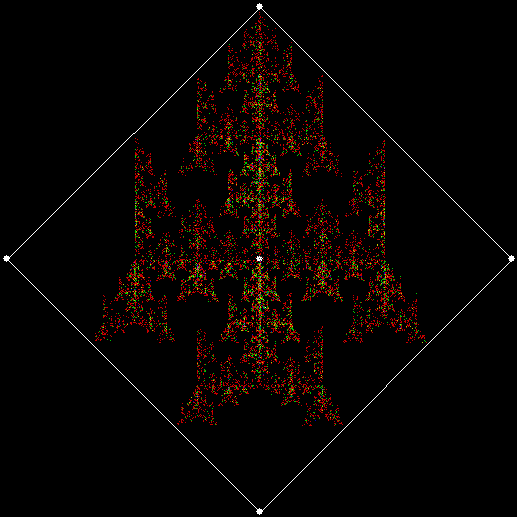
v = 4, ban = prox(1), prox(5), sw = 3
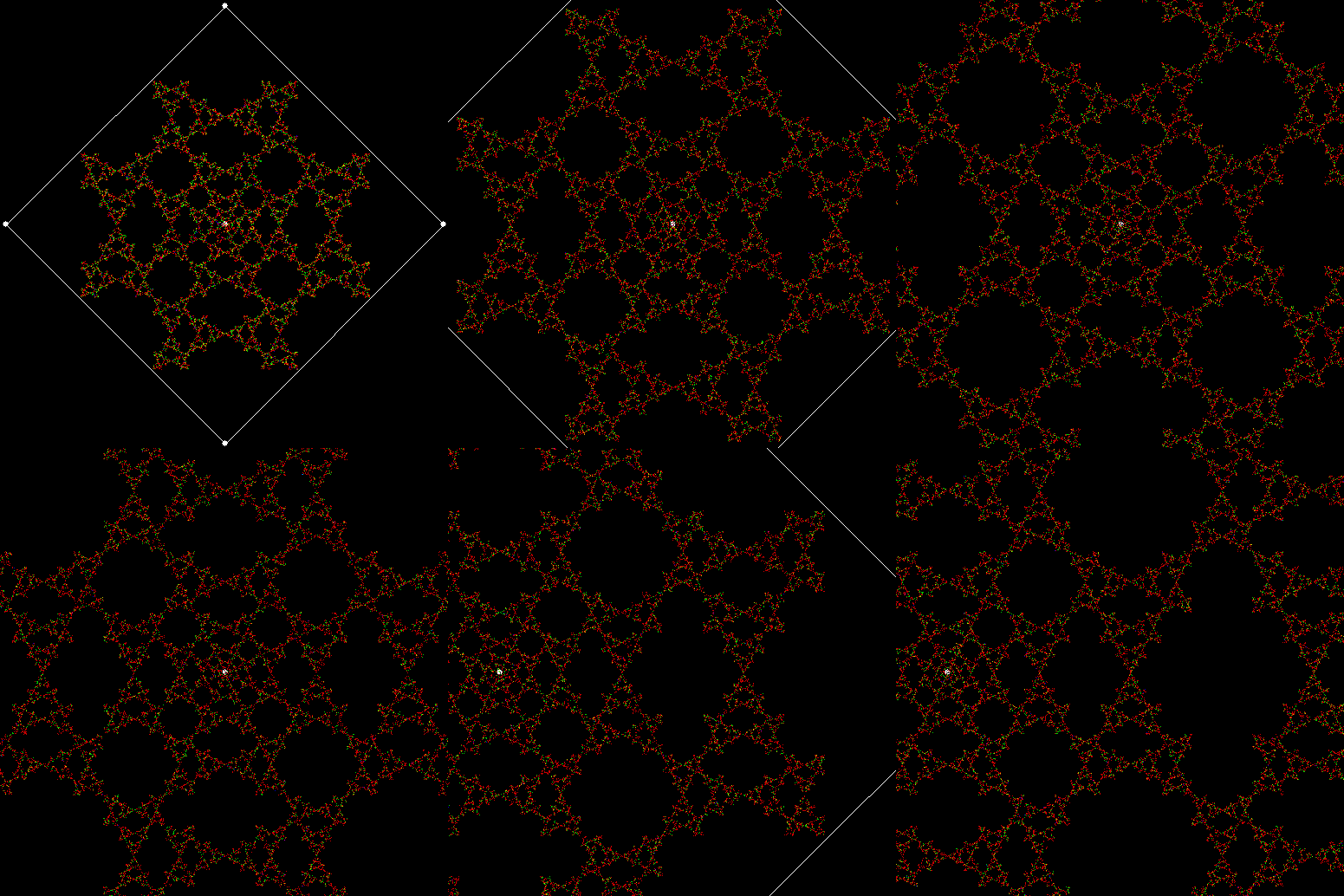

v4_ban15_sw3_anim

v = 4, ban = prox(1), prox(5), sw = 3 (animated)


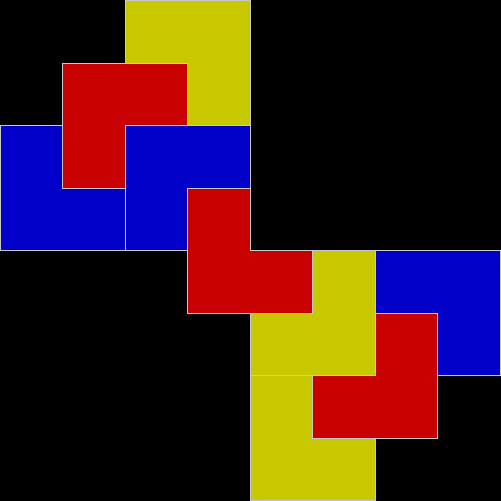
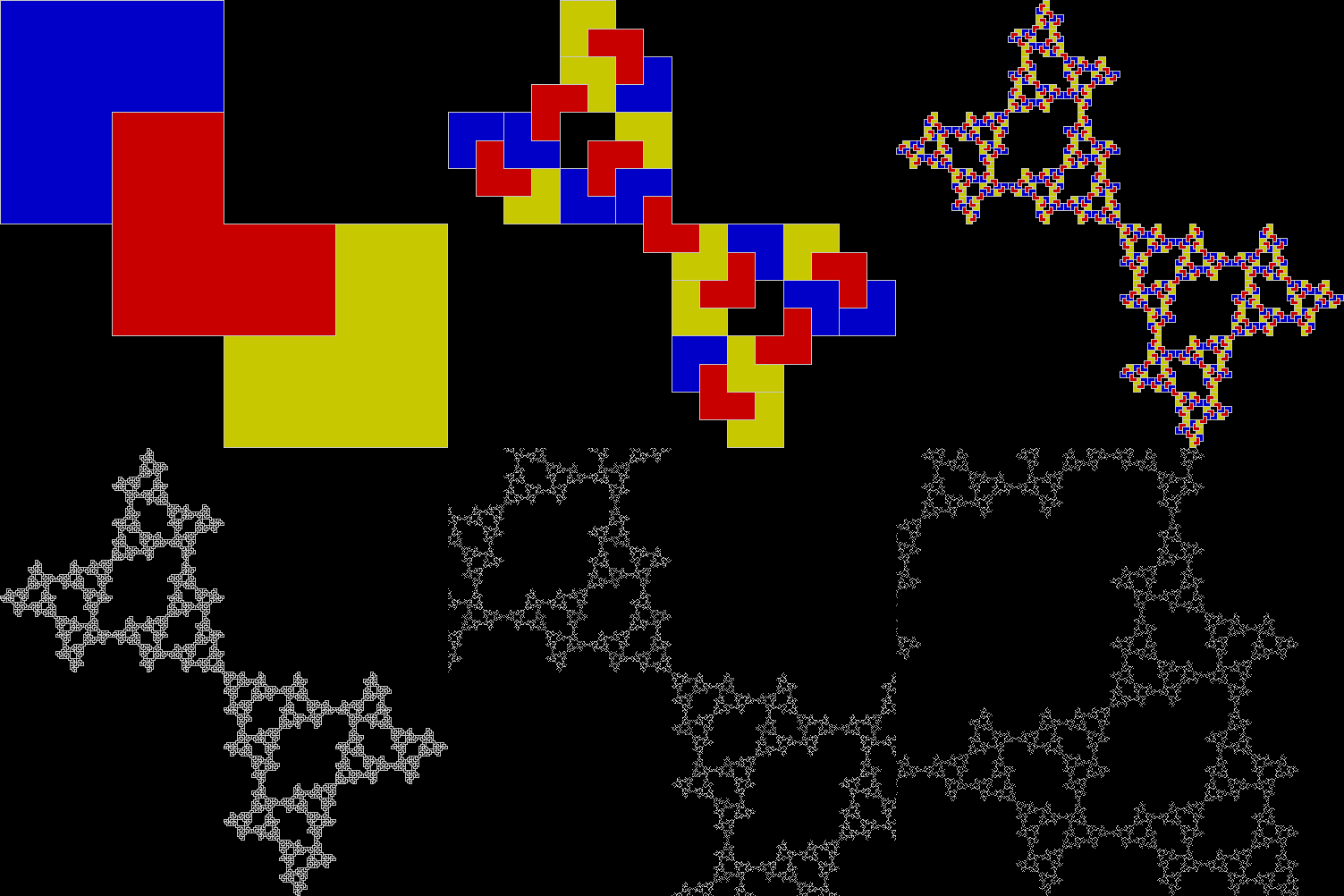
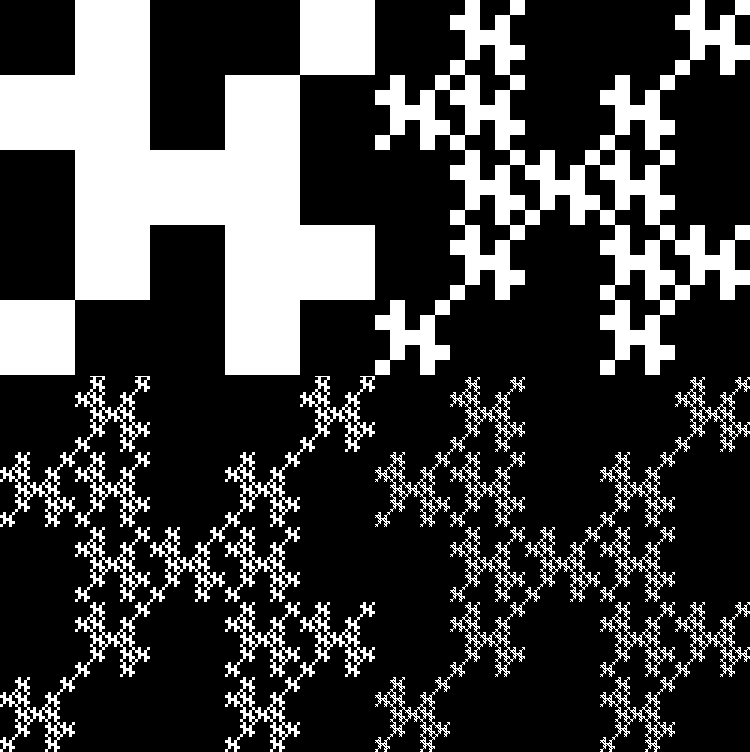
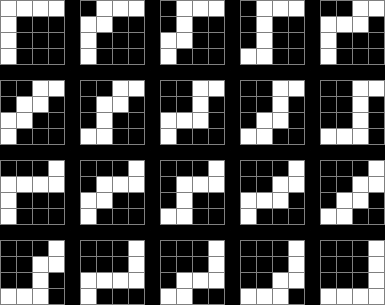
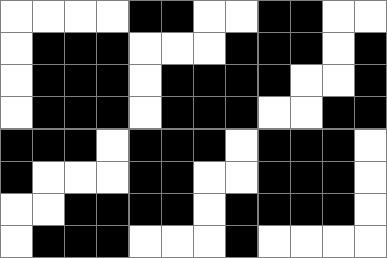
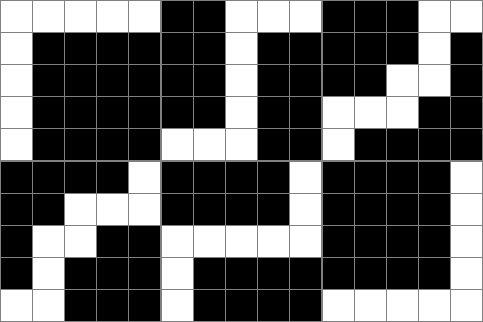
Where had I seen it before? While investigating this rep-tile (a shape that can be tiled with smaller versions of itself):
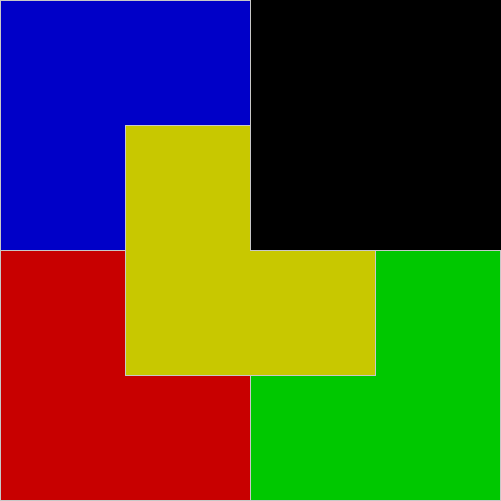
L-reptile

L-triomino rep-tile


L-reptile_anim

L-triomino rep-tile (animated)


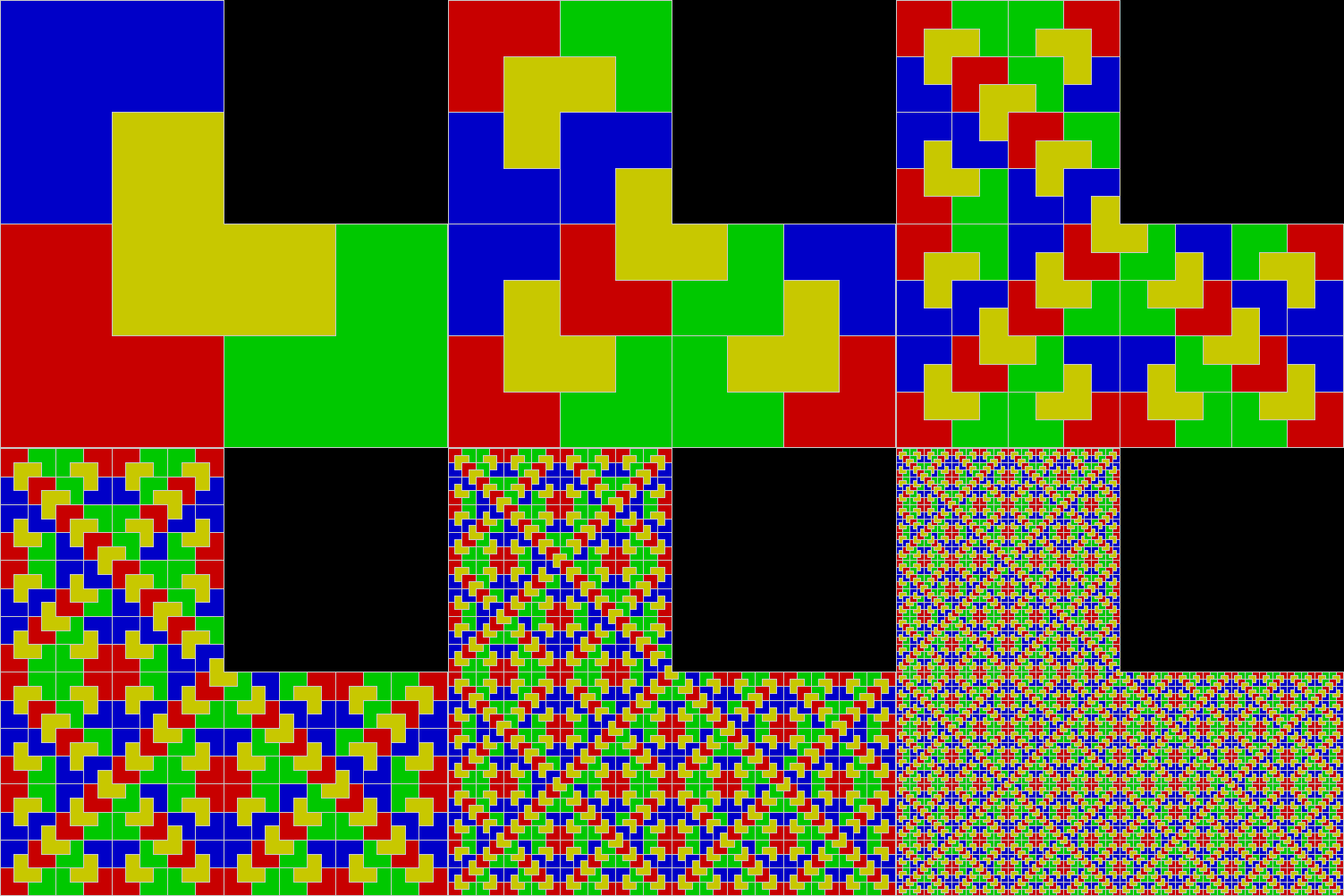
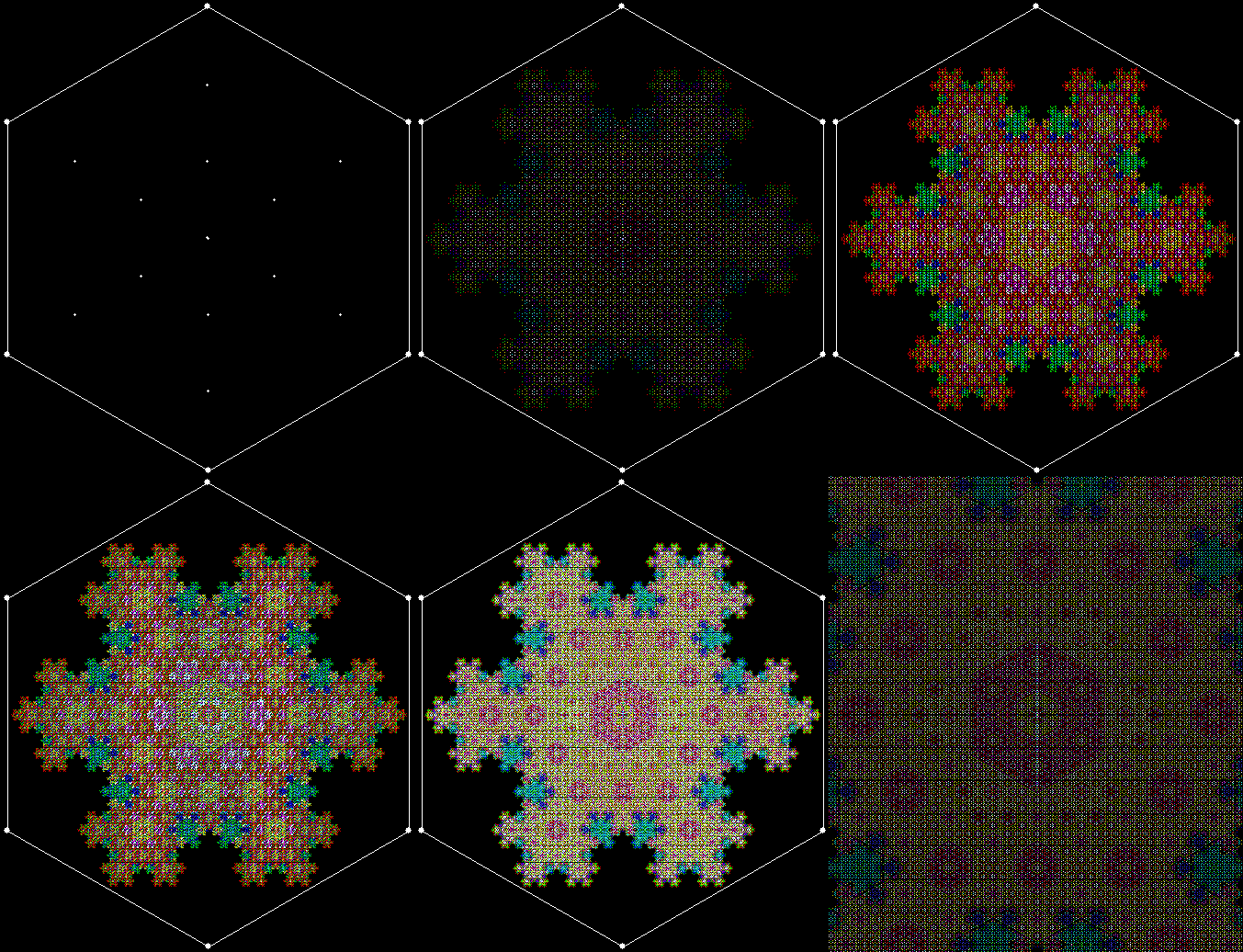
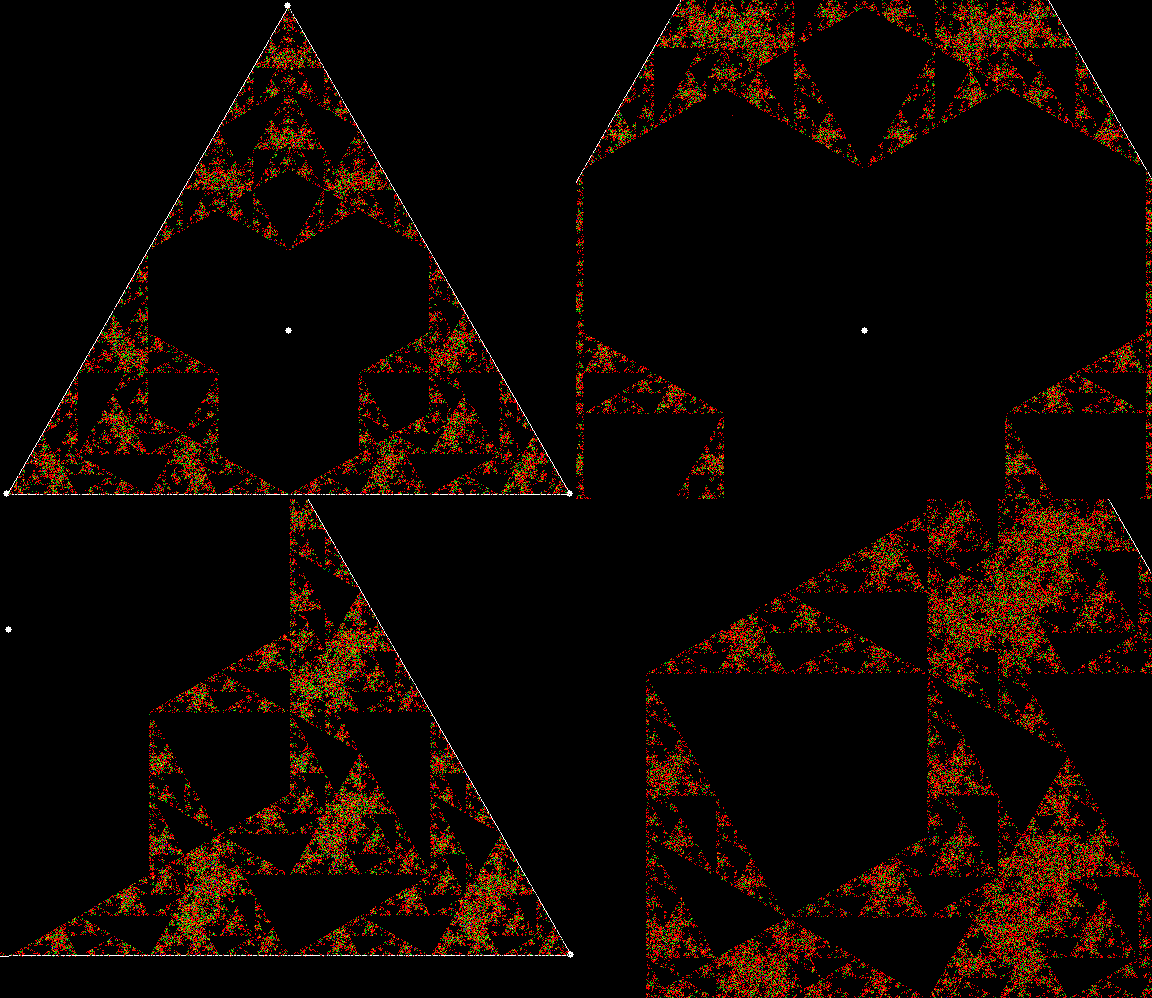
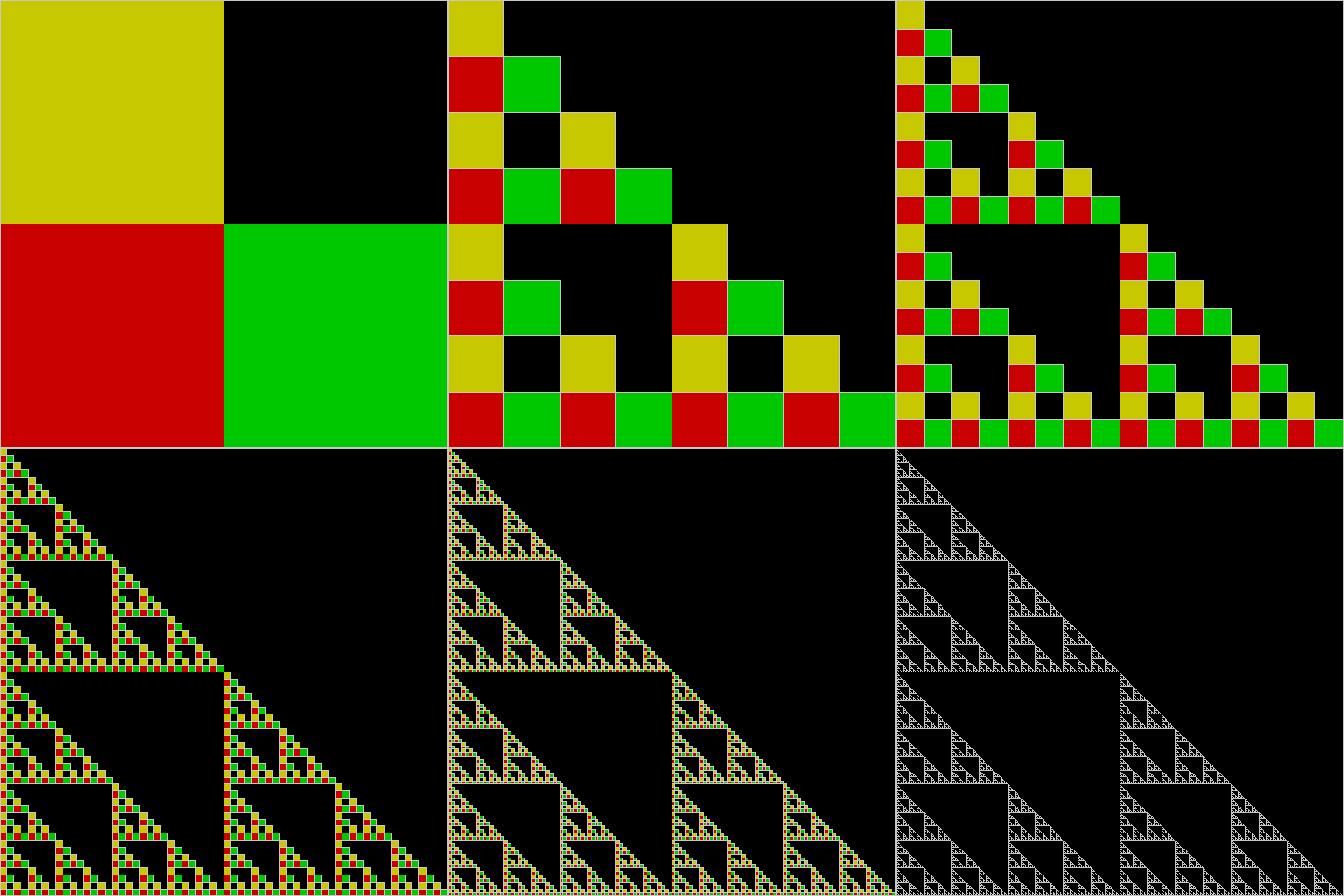
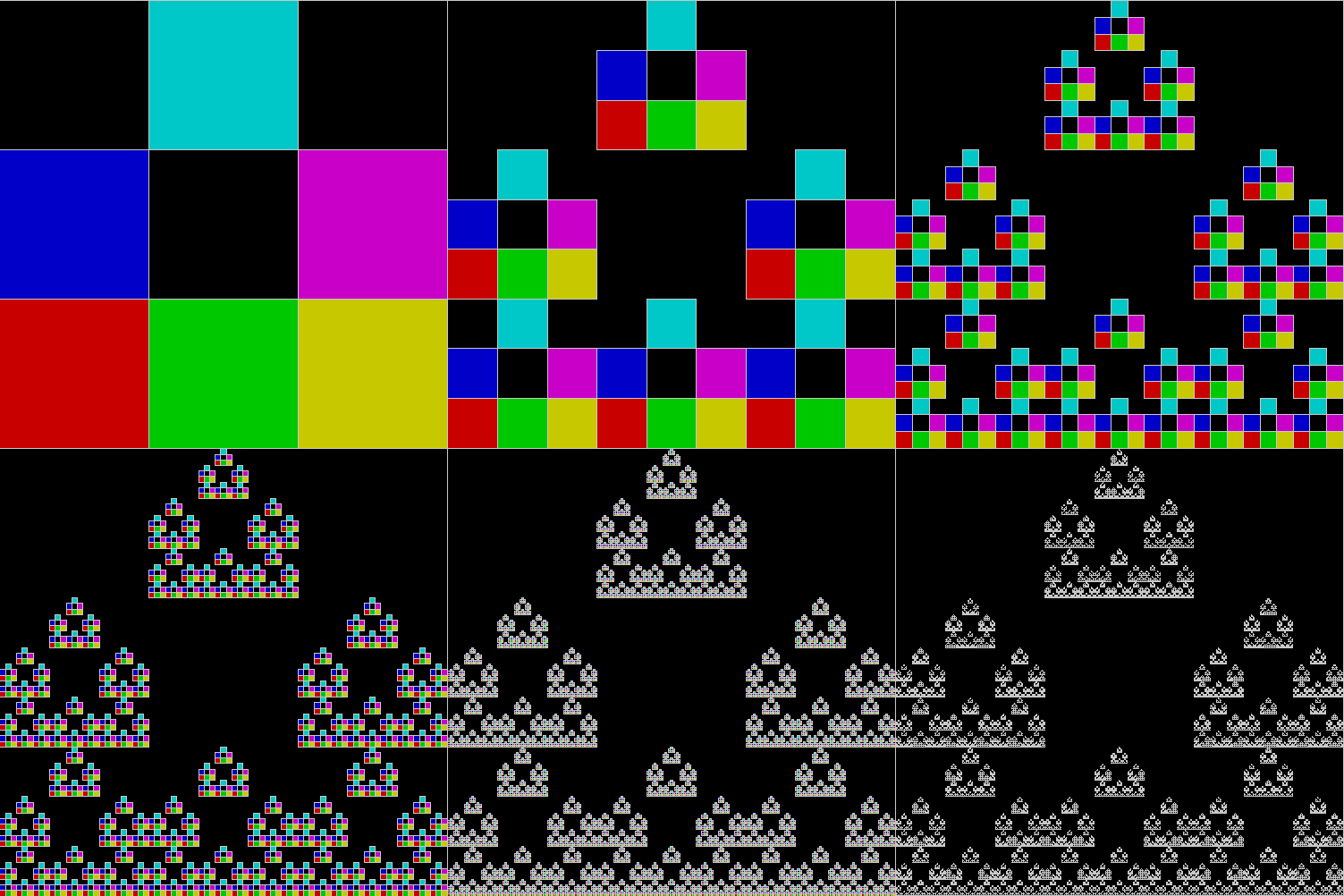
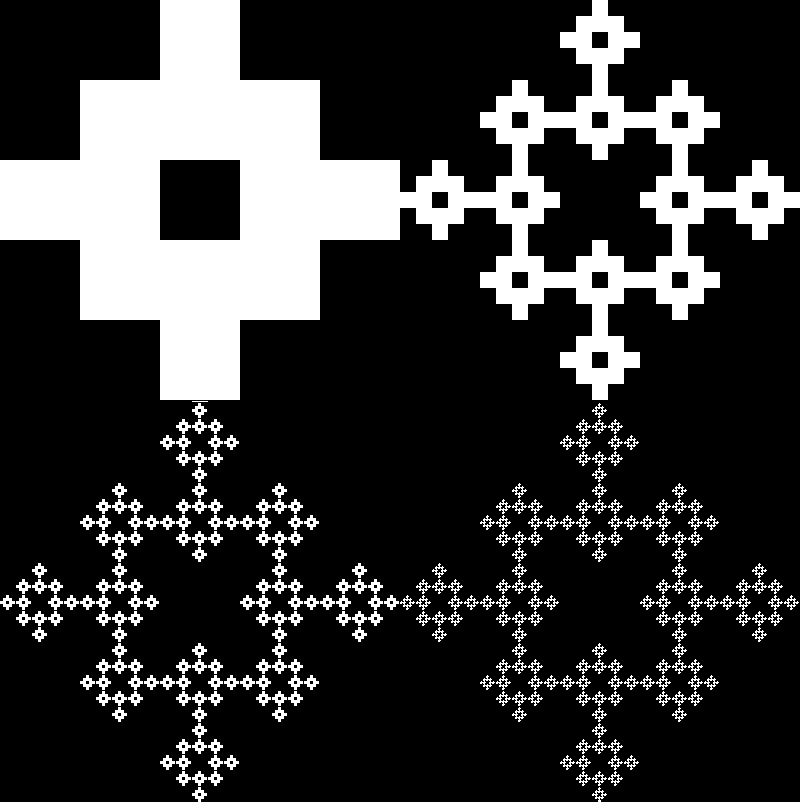
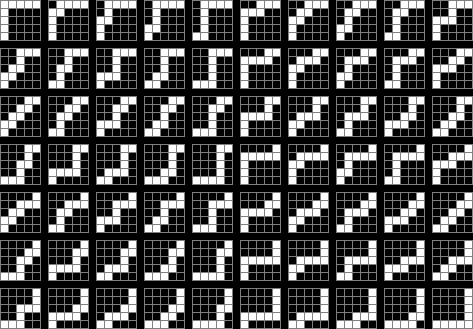
The rep-tile is technically called an L-triomino, because it looks like a capital L and is one of the two distinct shapes you can create by joining three squares at the edges. You can create fractals from an L-triomino by dividing it into four copies, discarding one of the copies, then repeating the divide-and-discard at smaller and smaller scales:
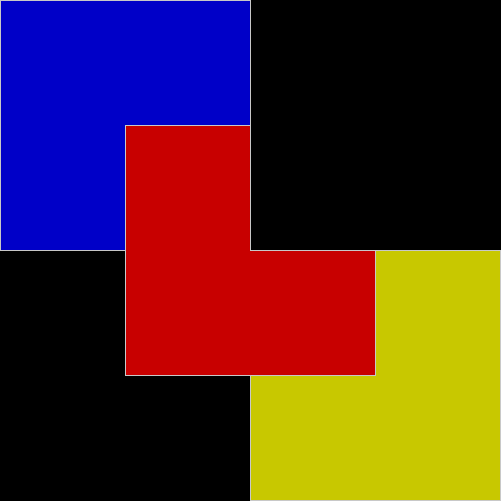
L-reptile_1

L-triomino fractal stage #1


L-reptile_2

L-triomino fractal stage #2


L-reptile_3

L-triomino fractal stage #3


L-reptile_4

L-triomino fractal stage #4


L-reptile_5

L-triomino fractal stage #5


L-reptile_fractal_anim

L-triomino fractal (animated)

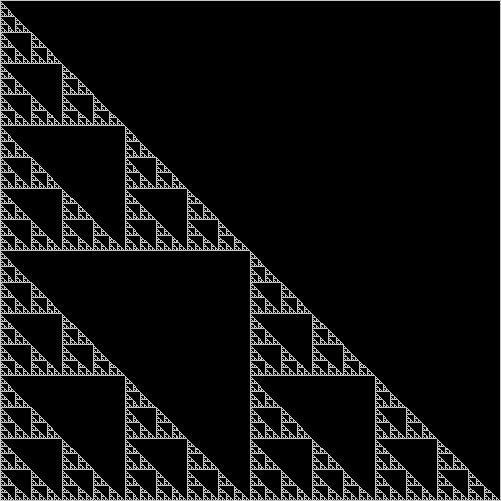
L-reptile_fractal_static

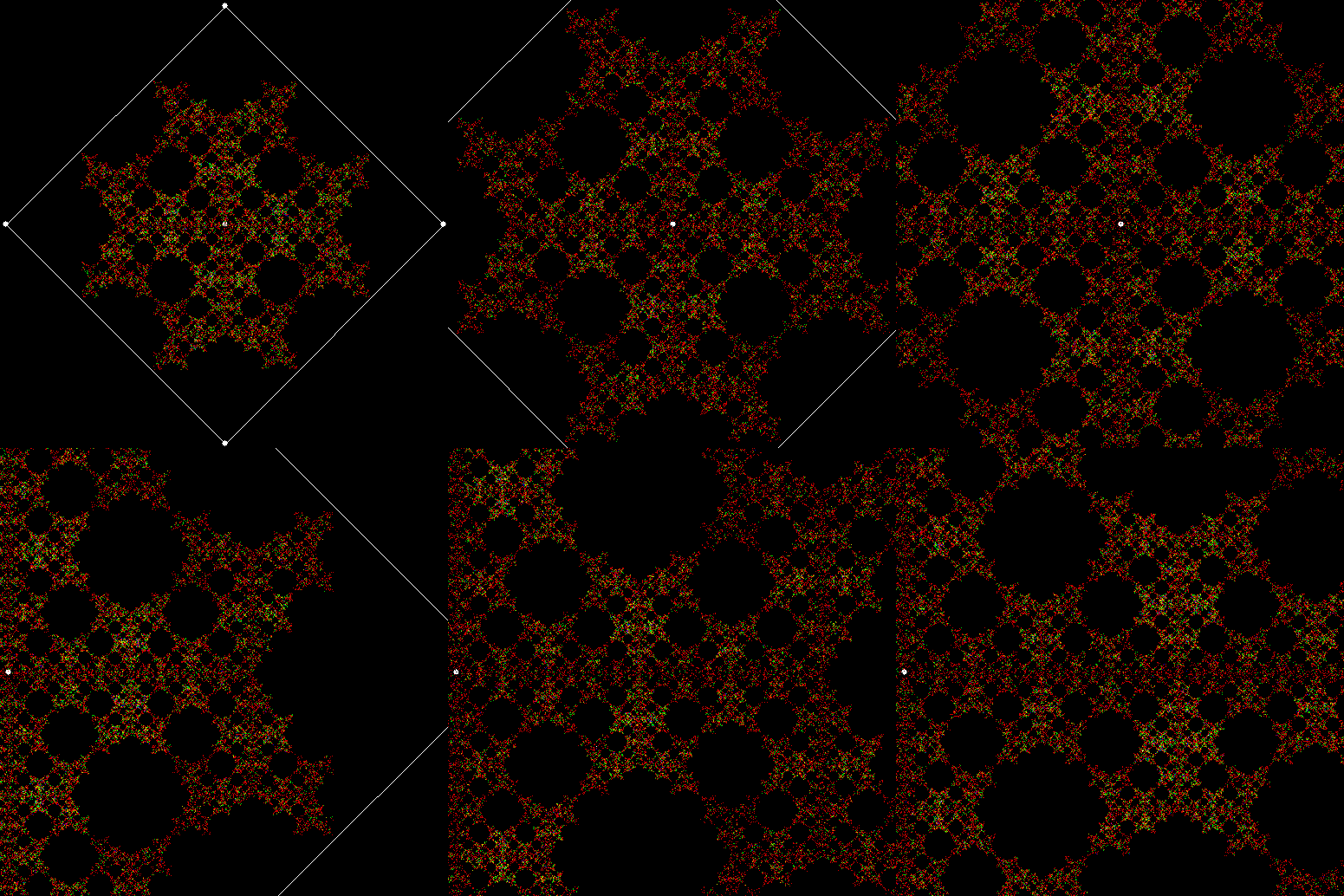
L-triomino fractal (close-up)

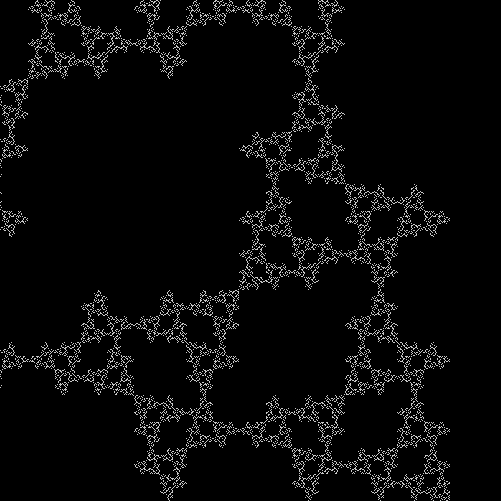
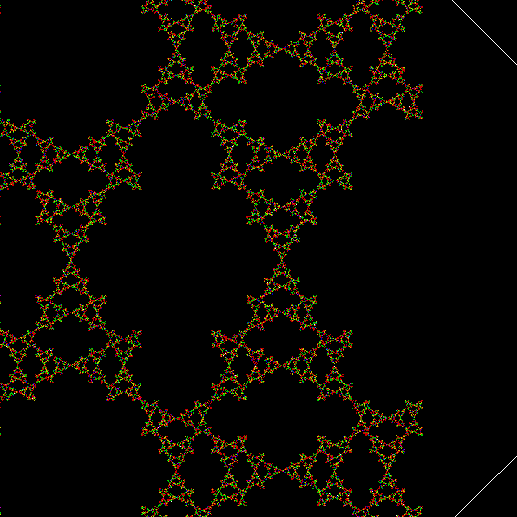
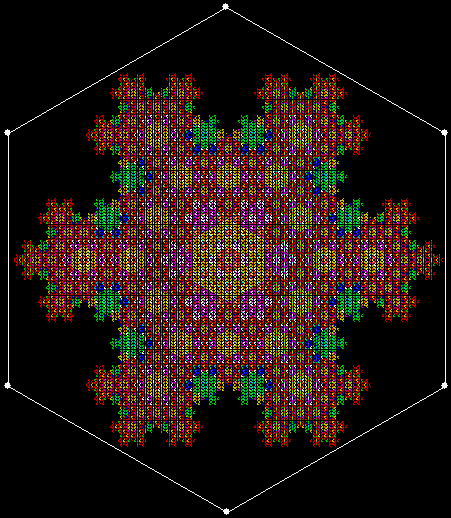
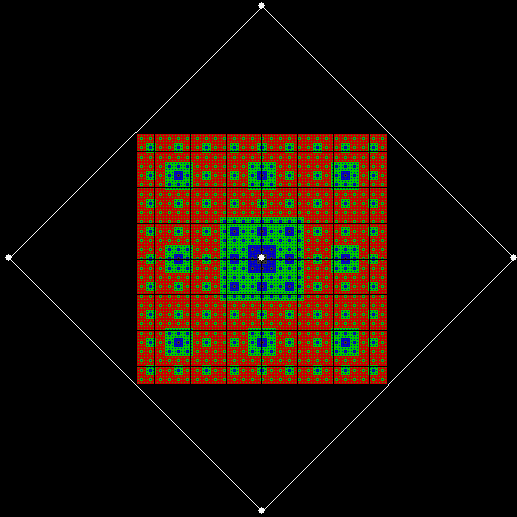
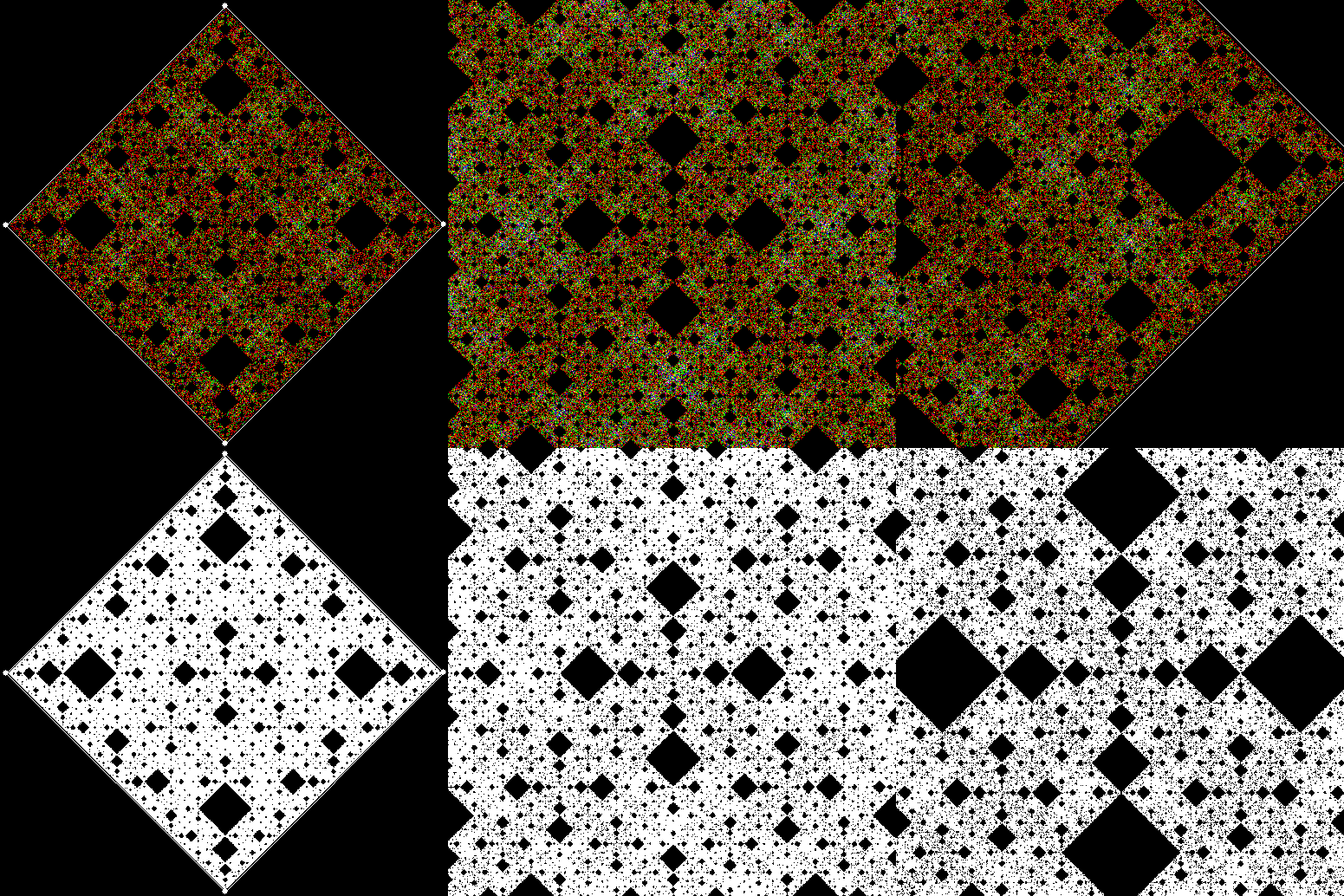
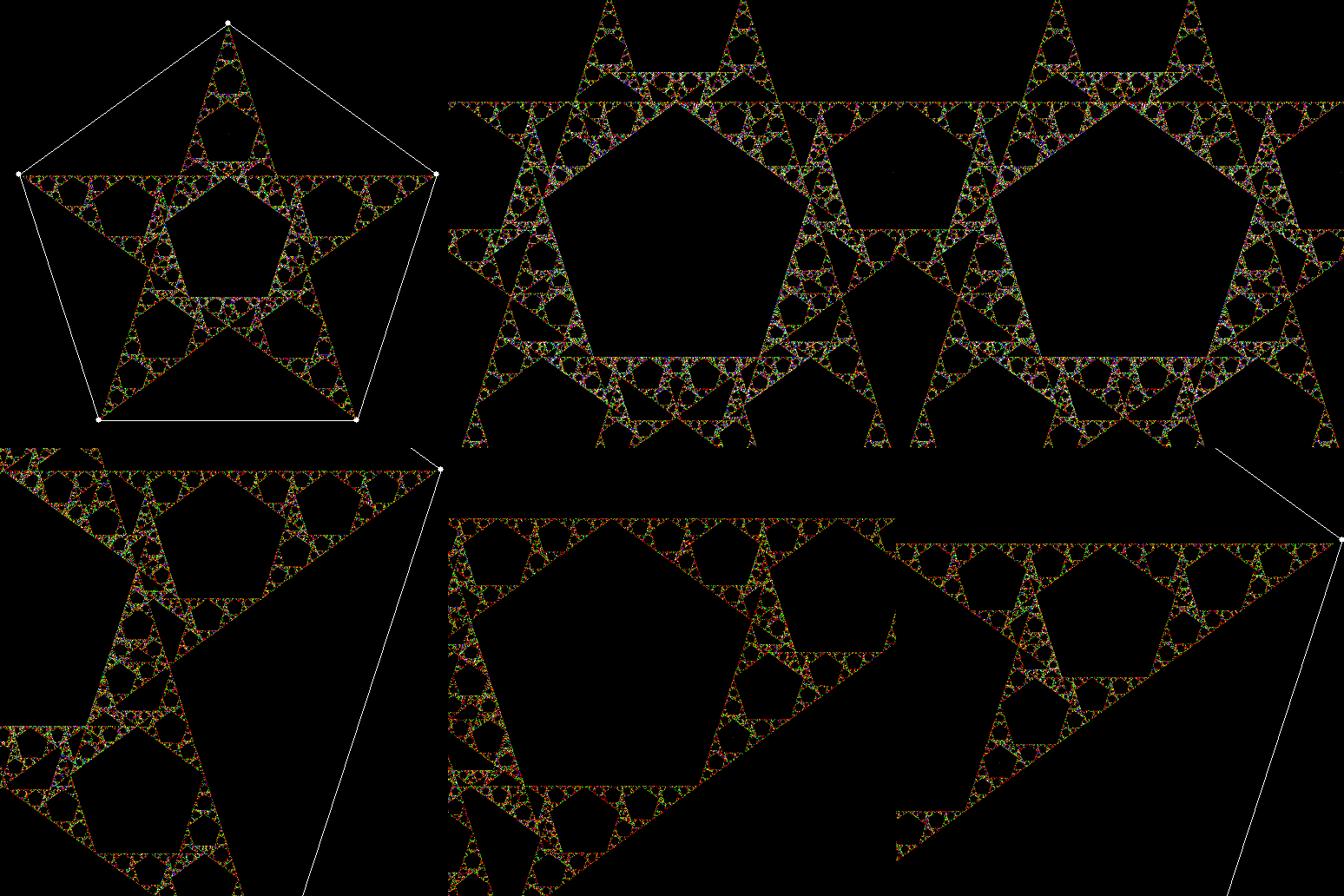
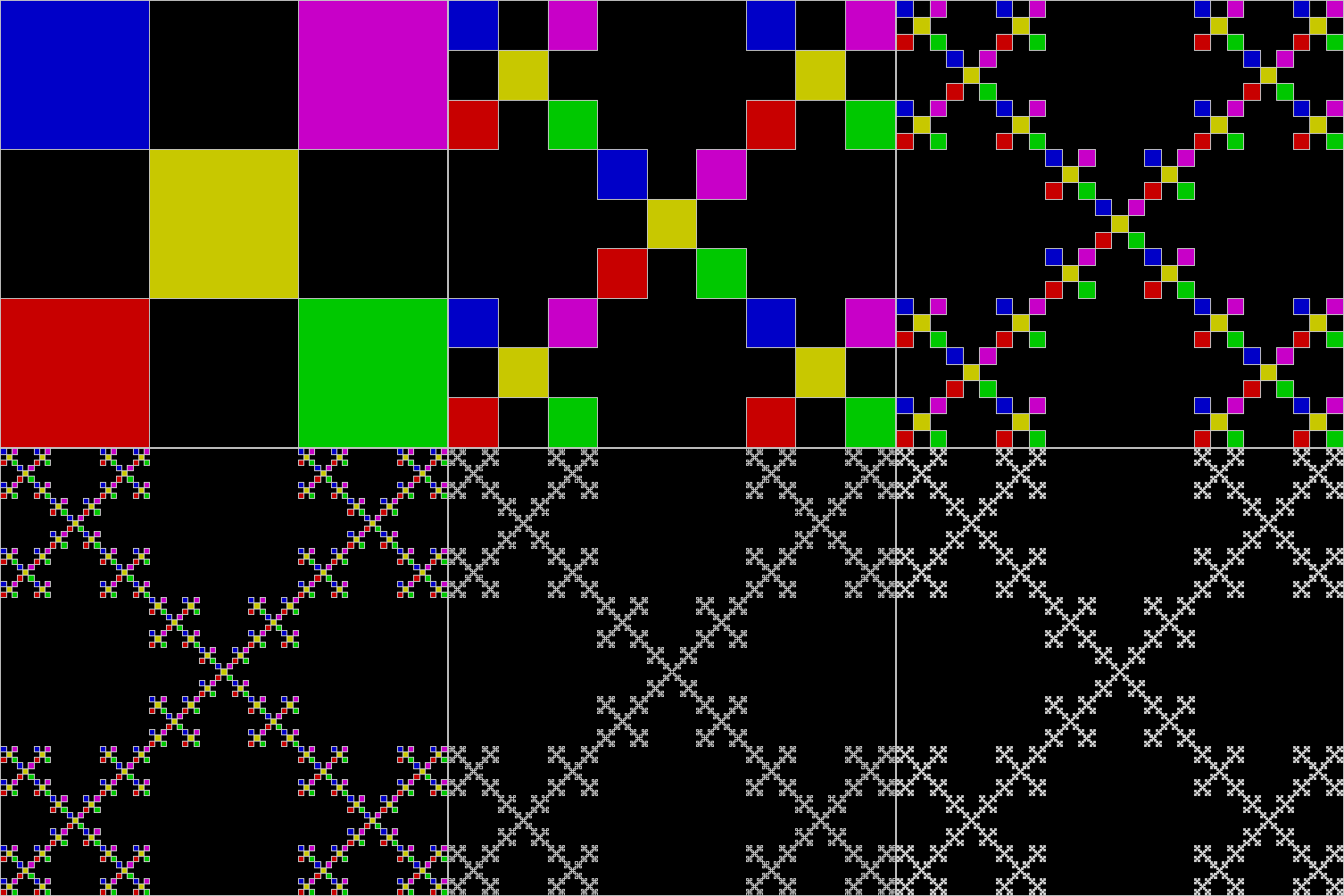
And here’s part of the ban(prox(1), prox(5)) fractal for comparison:
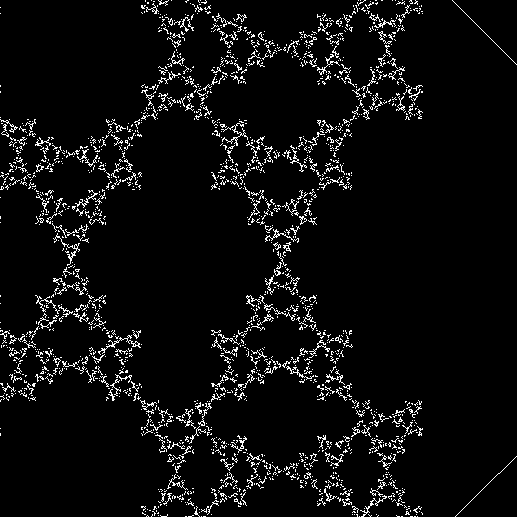
v4_ban15_sw3_mono


v4_ban15_sw3_col

So you can get to the same fractal (or versions of it), by two apparently different routes: random movement of a point inside a square or repeatedly dividing-and-discarding the sub-copies of an L-triomino. That’s serendipity!


Previously pre-posted:
Get Your Prox Off

Performativizing the Polygonic

Maths is a mountain: you can start climbing in different places and reach the same destination. There are many ways of proving the irrationality of √2 or the infinitude of the primes, for example. But you can also arrive at the same destination by accident. I’ve found that when I use different methods of creating fractals. The same fractals appear, because apparently different algorithms are actually the same underneath.

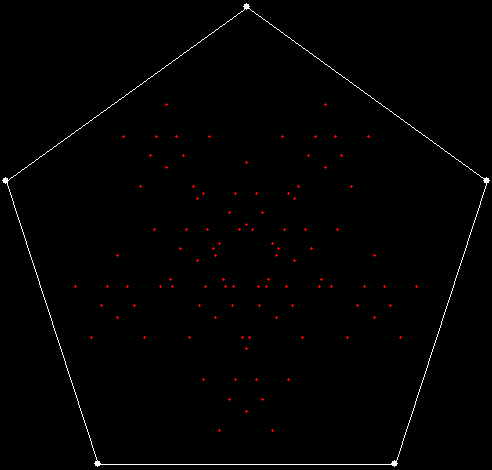
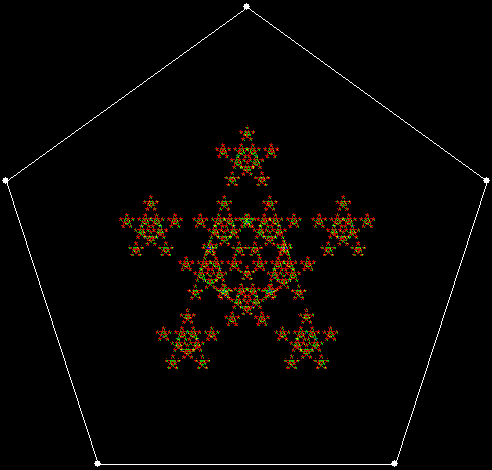
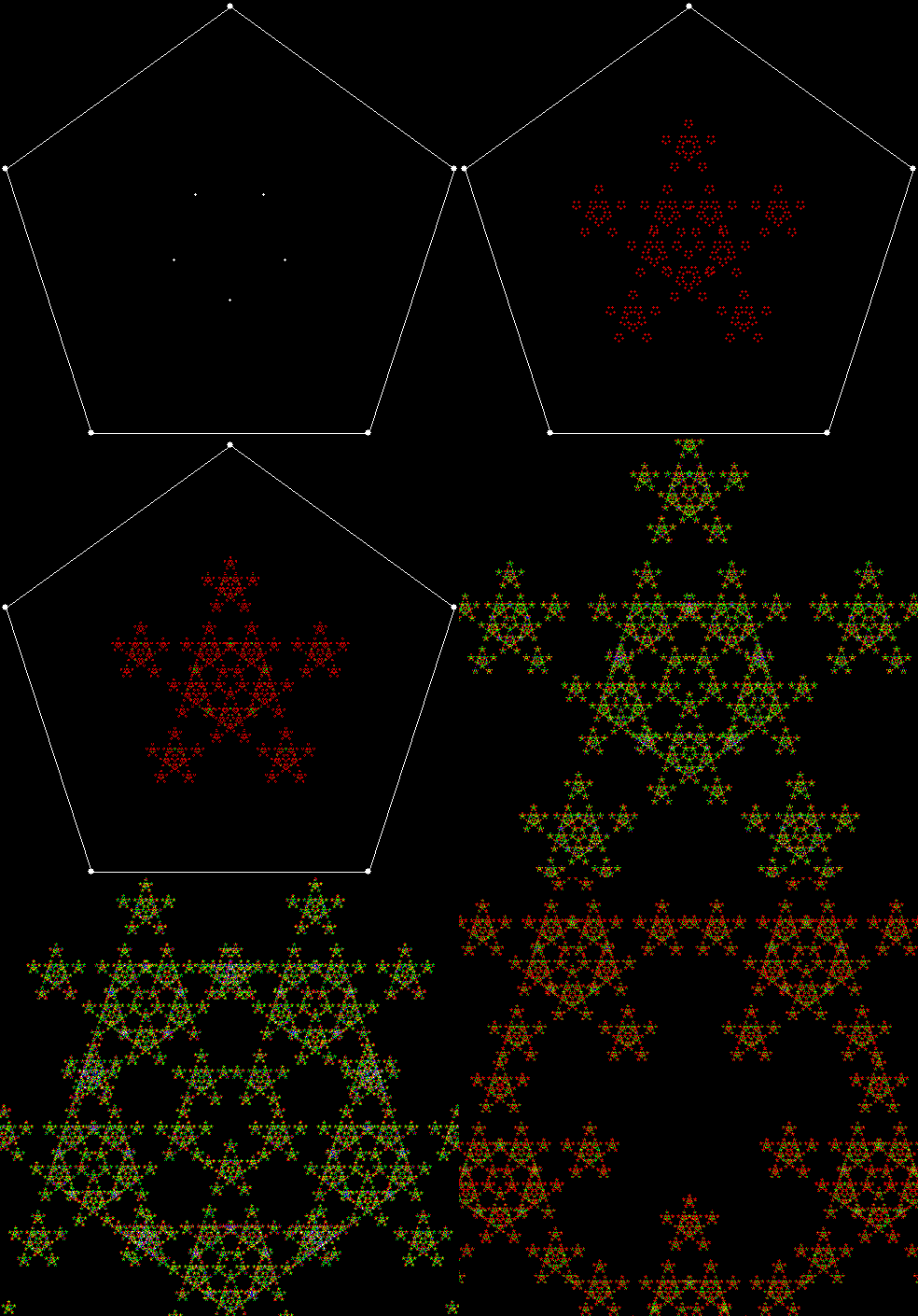
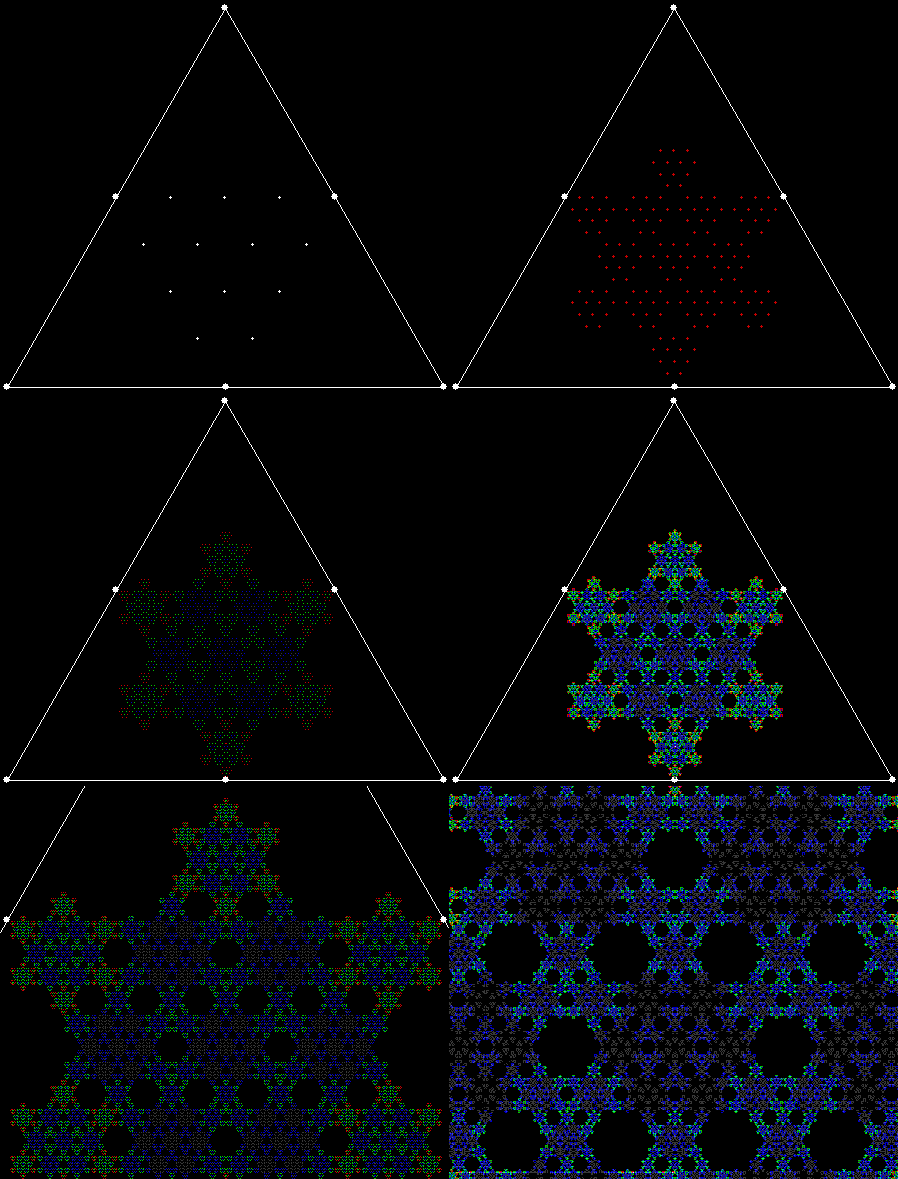
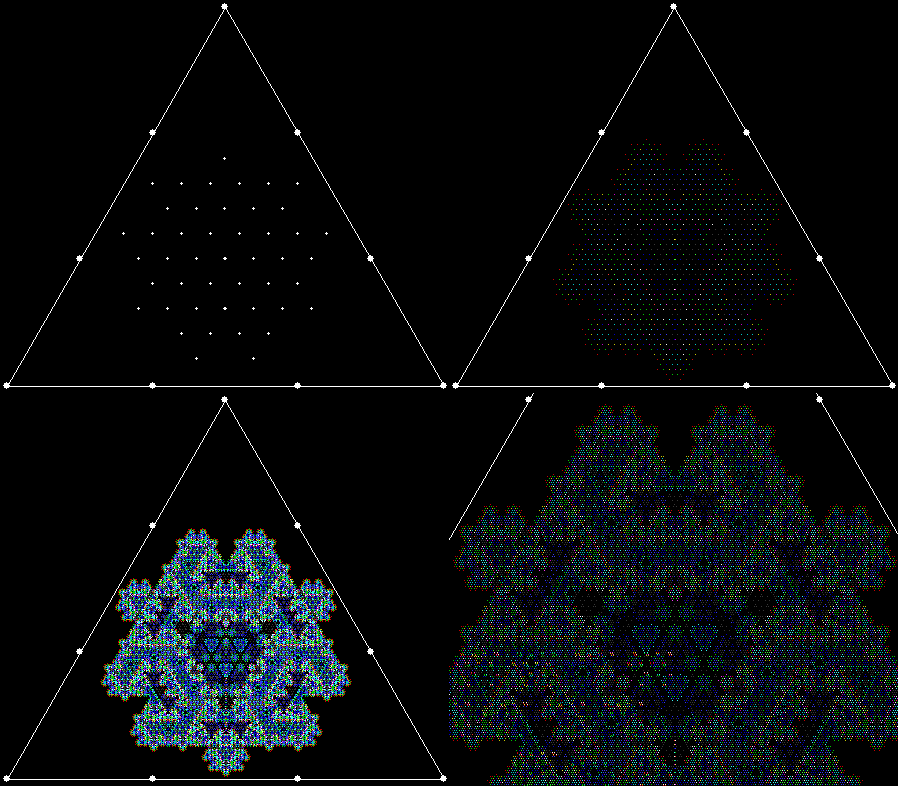
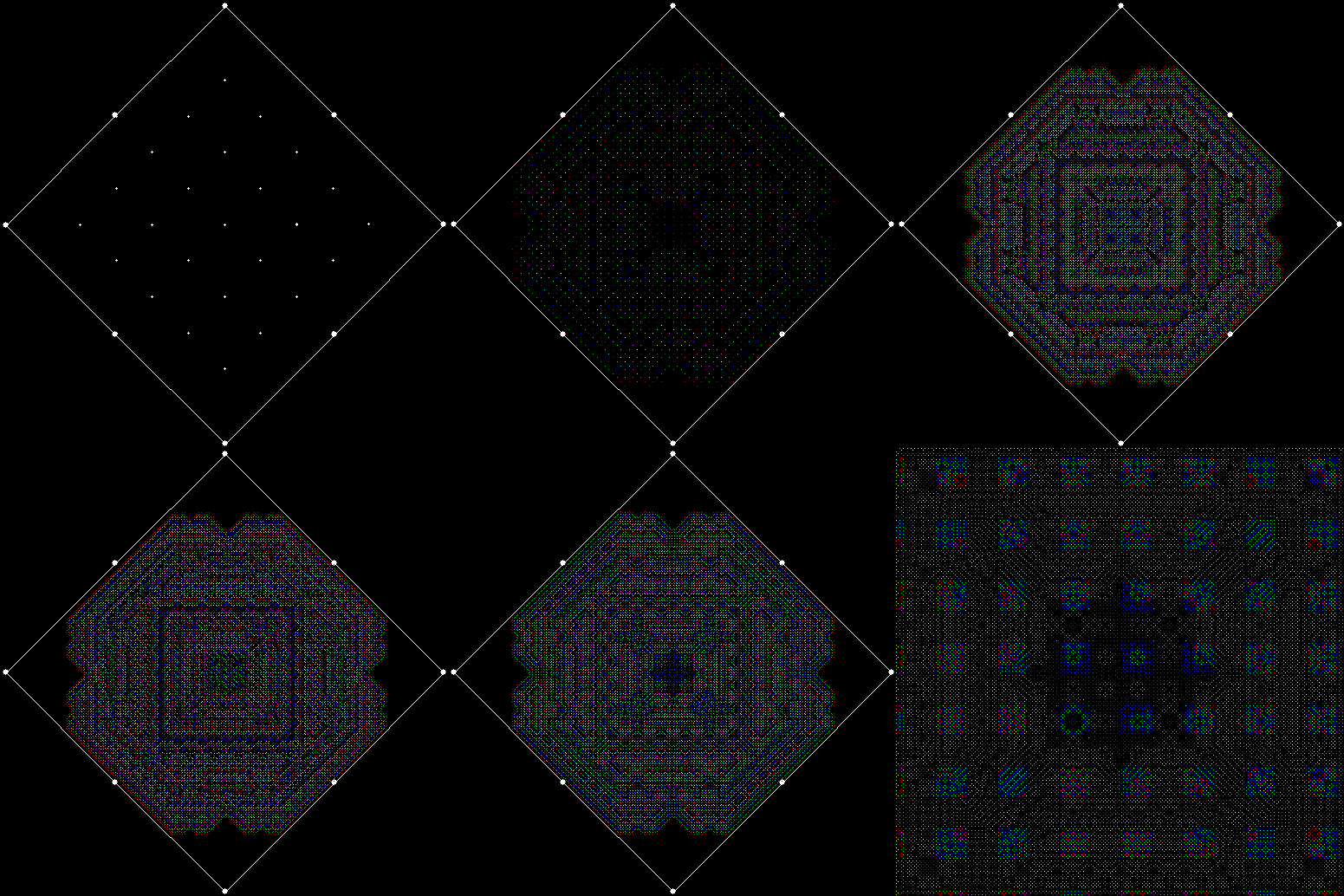
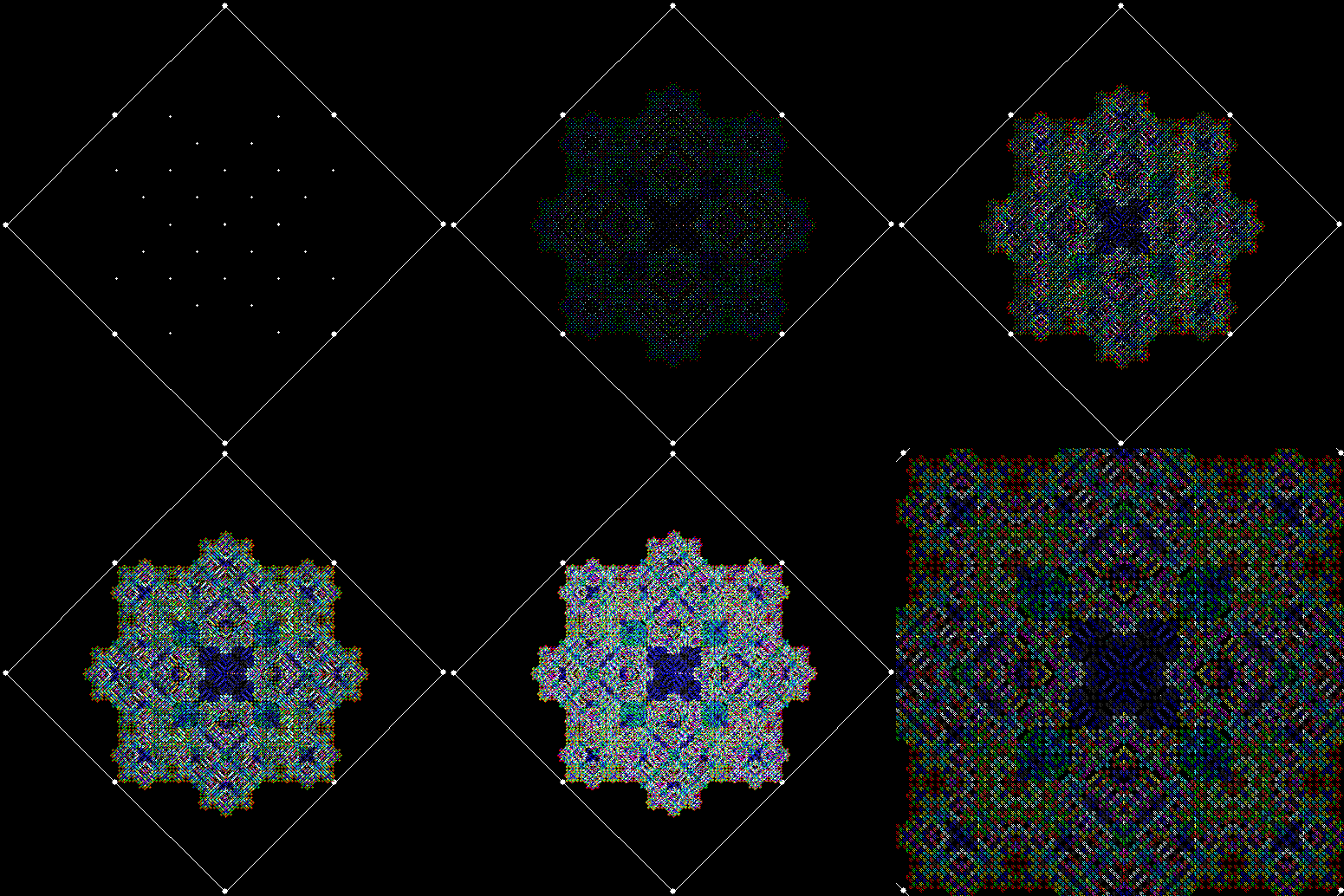
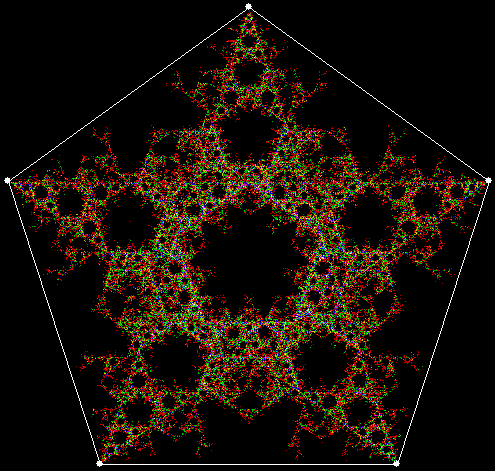
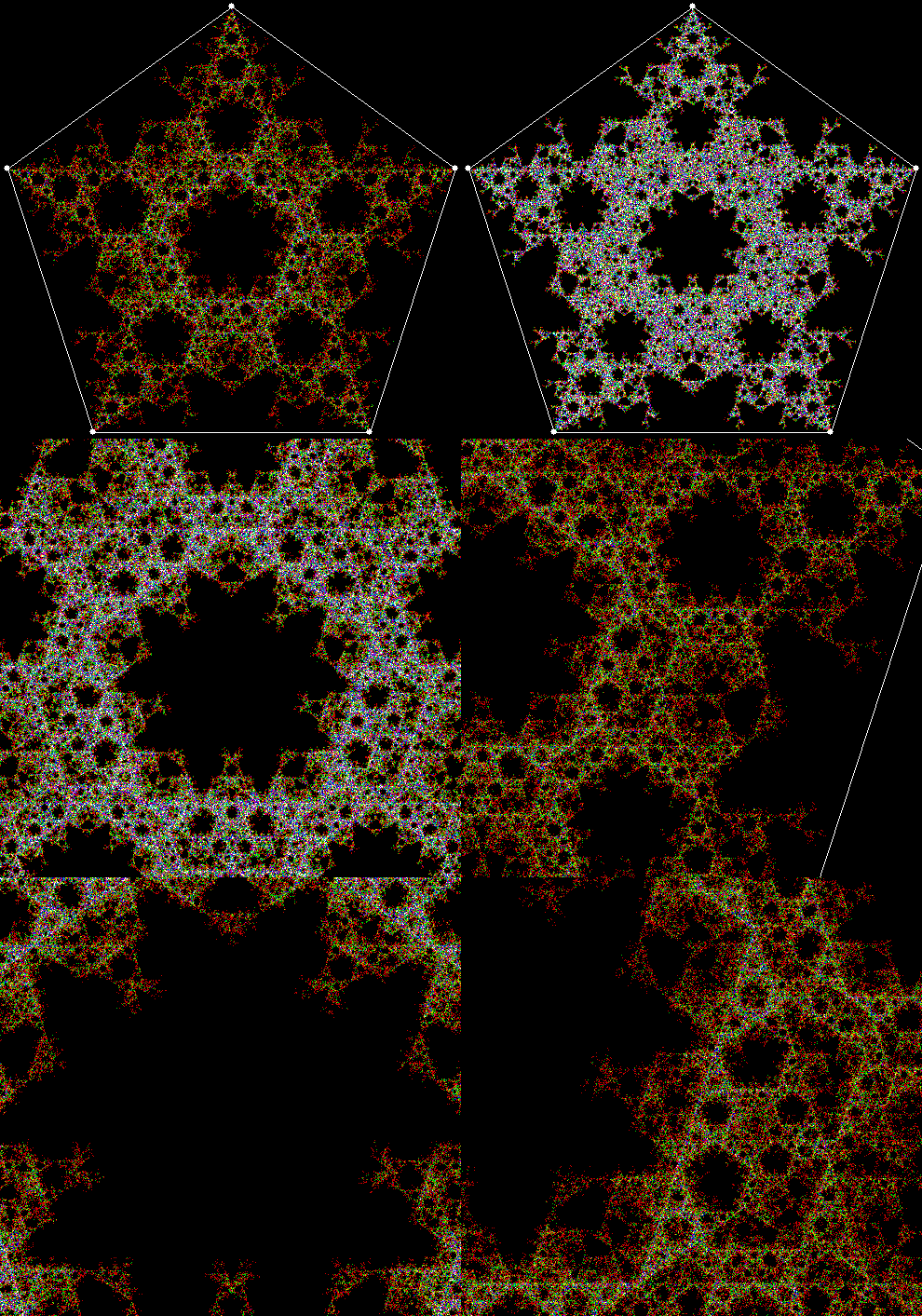
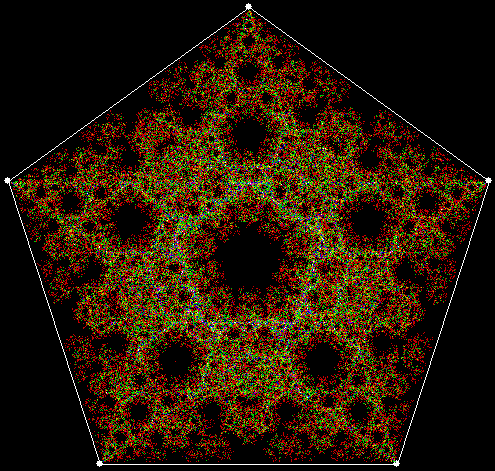
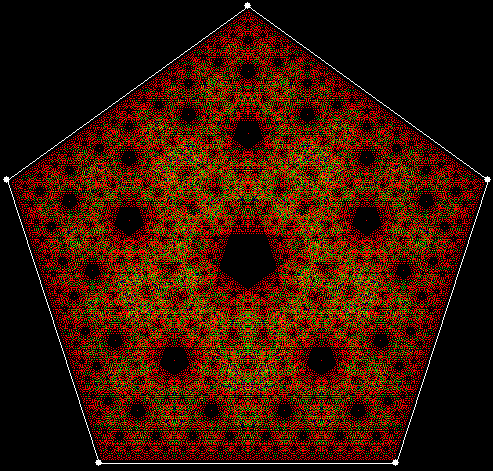
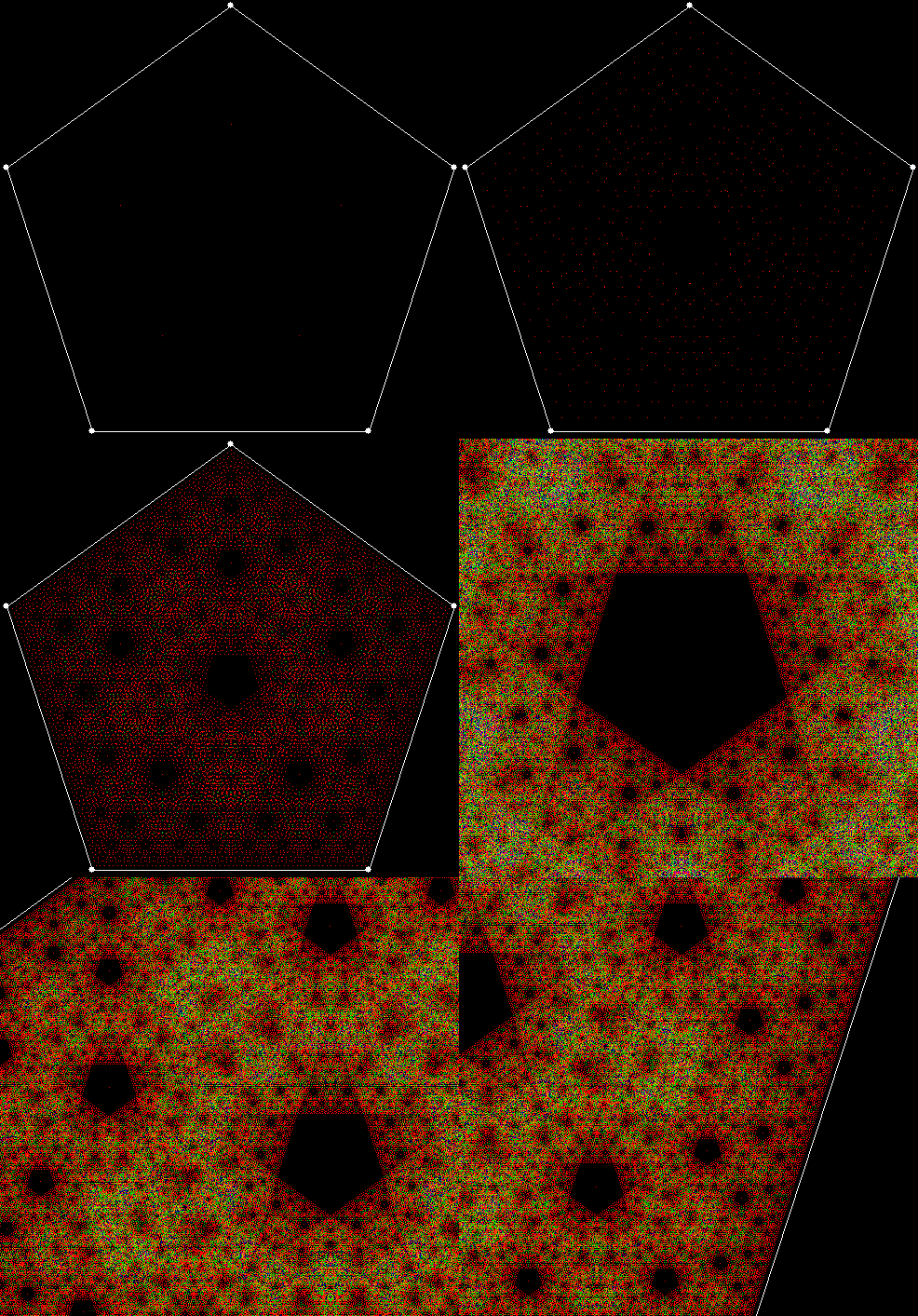
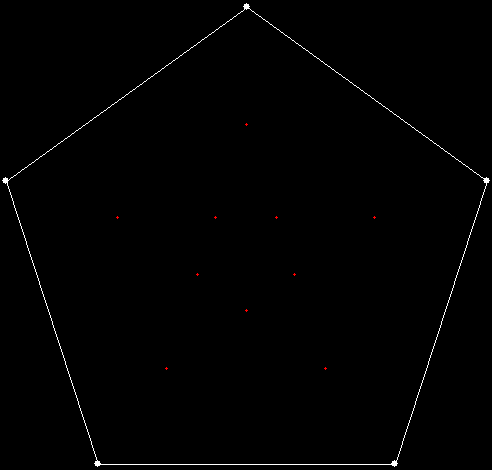
But different methods can create unique fractals too. I’ve found some new ones by using what might be called point-to-point recursion. For example, there are ten ways to select three vertices from the five vertices of a pentagon: (1, 2, 3), (1, 2, 4), (1, 2, 5), (1, 3, 4), (1, 3, 5), (1, 4, 5), (2, 3, 4), (2, 3, 5), (2, 4, 5), (3, 4, 5). Find the midpoint of the first three-point set, (1, 2, 3). Then select two vertices to go with this midpoint, creating a new three-point set, and find the midpoint again. And so on. The process looks like this, with the midpoints shown for all the three-point sets found at each stage:

v5_p3_stage1

vertices = 5, choose sets of 3 points, find mid-point of each

v5_p3_stage2

v5_p3_stage3


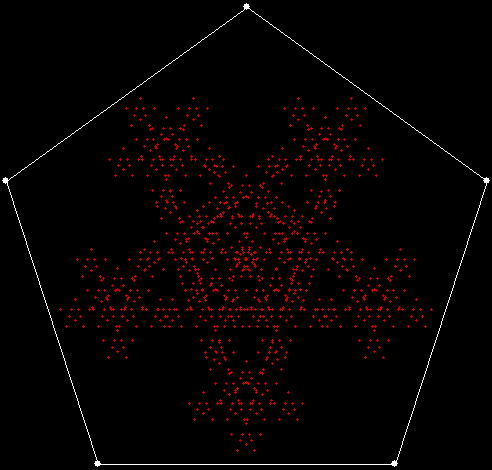
At stage 5, the fractal looks like this:

v5_p3_static

v = 5, p = 3


Note that when pixels are used again, the colour changes. That’s another interesting thing about maths: limits can sometimes produce deeper results. If these fractals were drawn at very high resolution, pixels would only be used once and the colour would never change. As it is, low resolution means that pixels are used again and again. But some are used more than others, which is why interesting colour effects appear.

If the formation of the fractal is animated, it looks like this (with close-ups of even deeper stages):
v5_p3


Here are some more examples:

v4c_p2_static

v = 4 + central point, p = 2 (cf. Fingering the Frigit)

v4c_p2

v = 4c, p = 2 (animated)


v4_p3_static

v = 4, p = 3

v4_p3


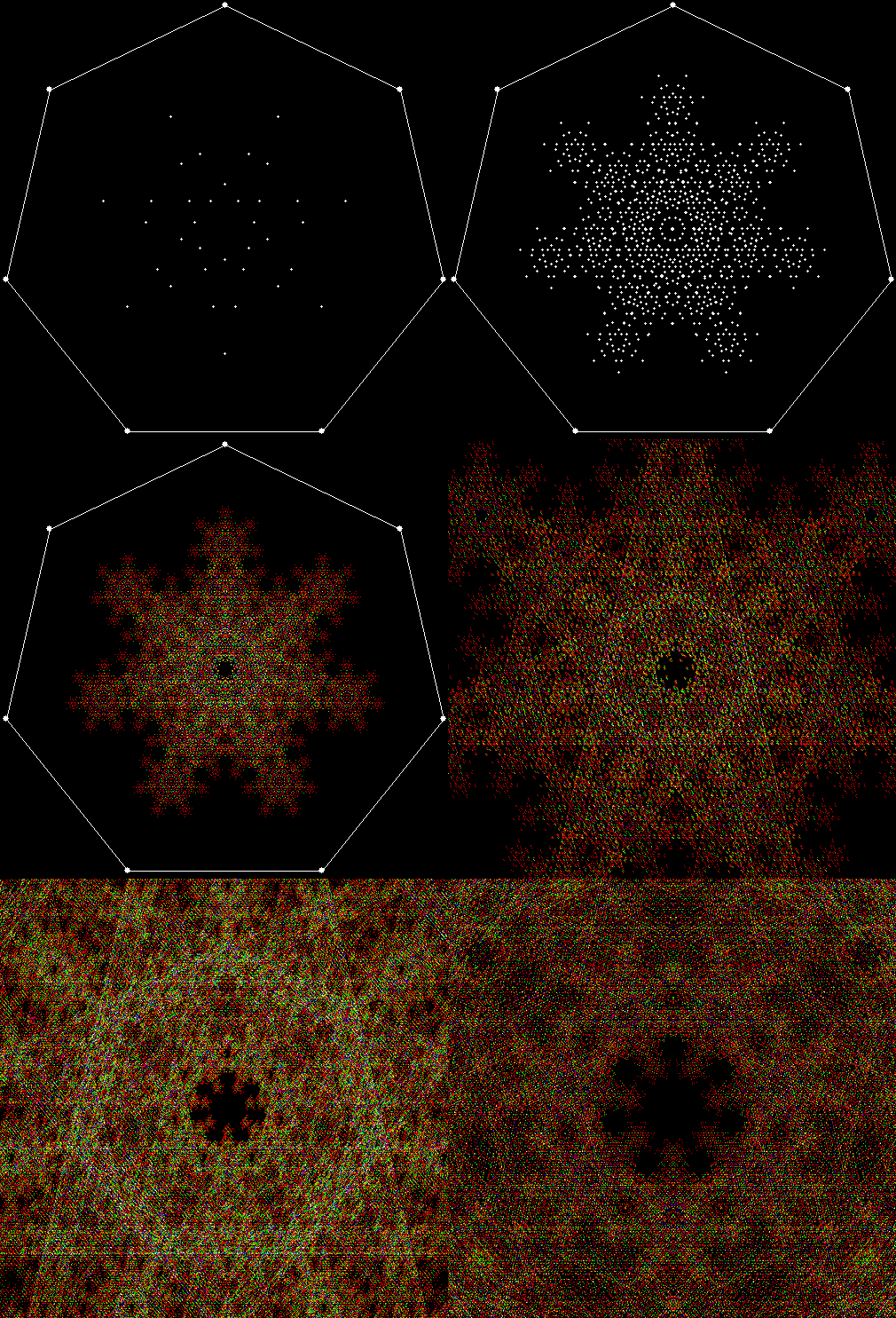
v5_p4_static

v = 5, p = 4

v5_p4


v5c_p3_static

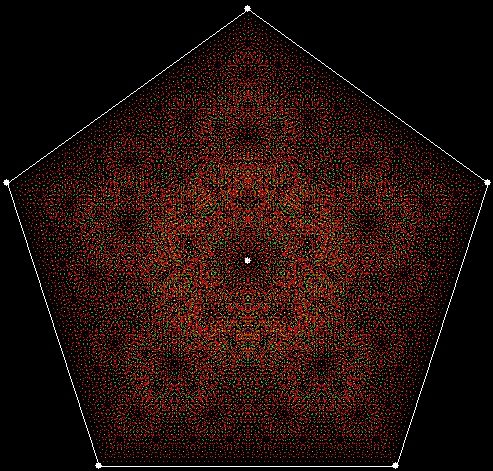
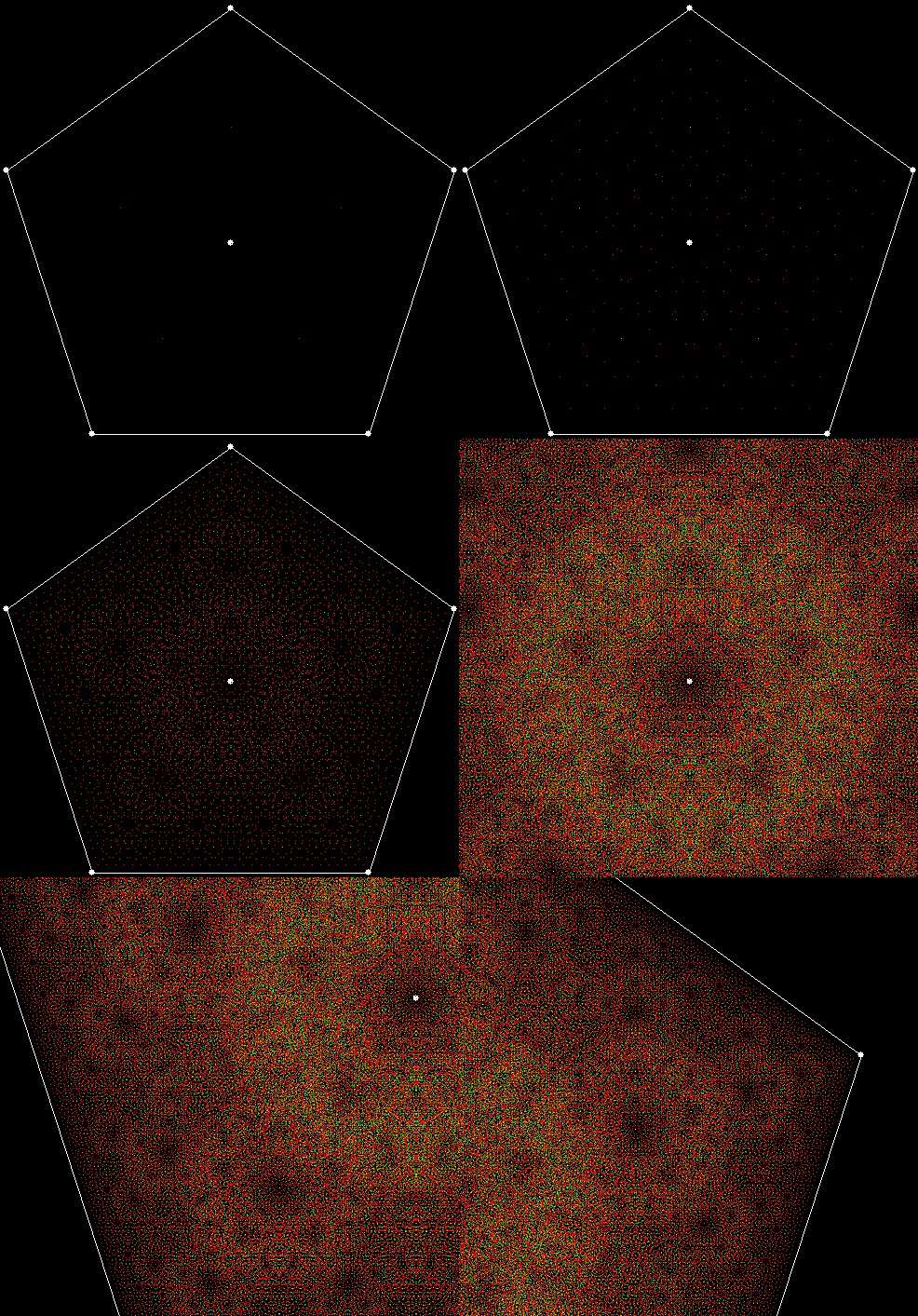
v = 5 + central point, p = 3

v5c_p3


v5c_p4

v = 5c, p = 4


v5c_p5

v = 5c, p = 5


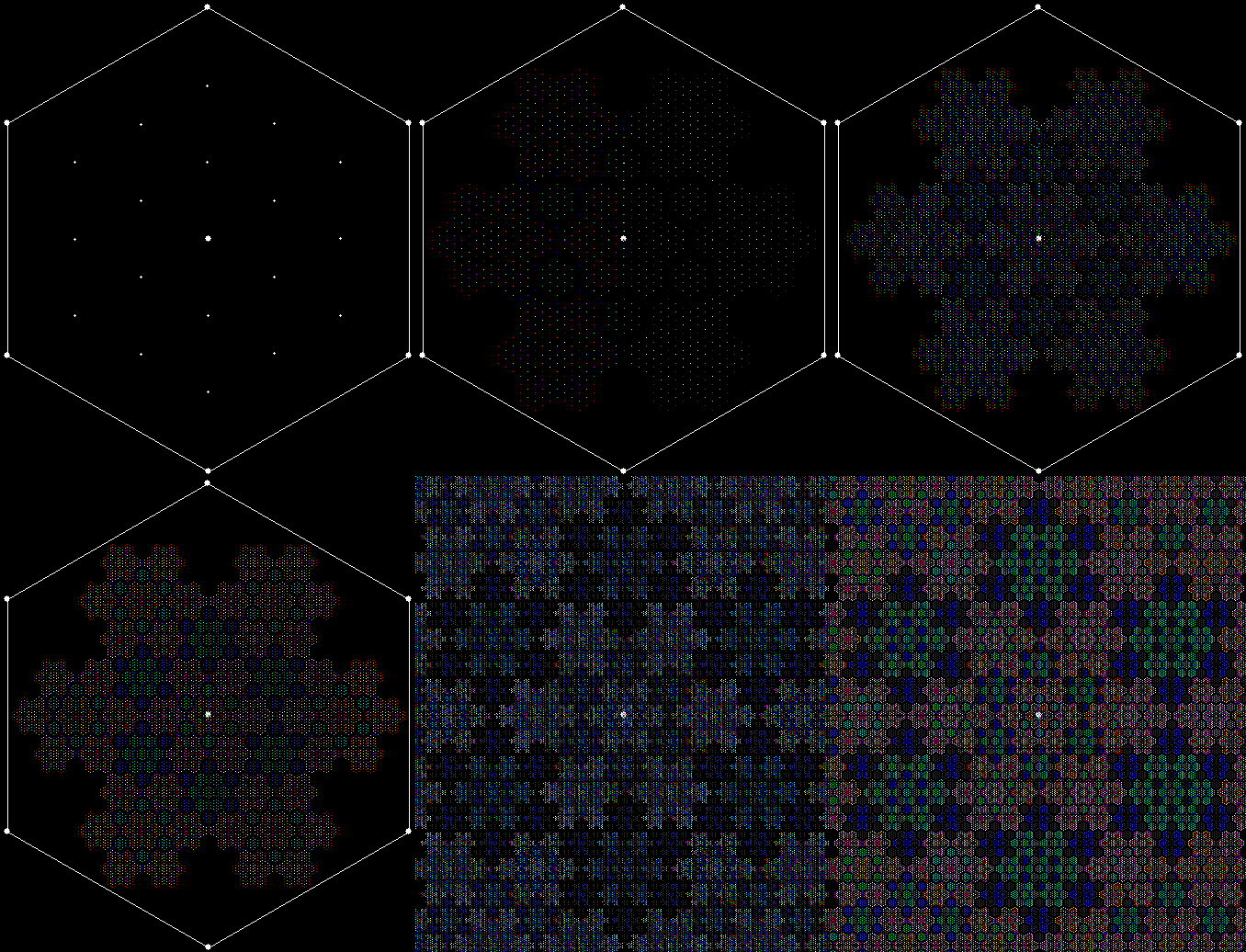
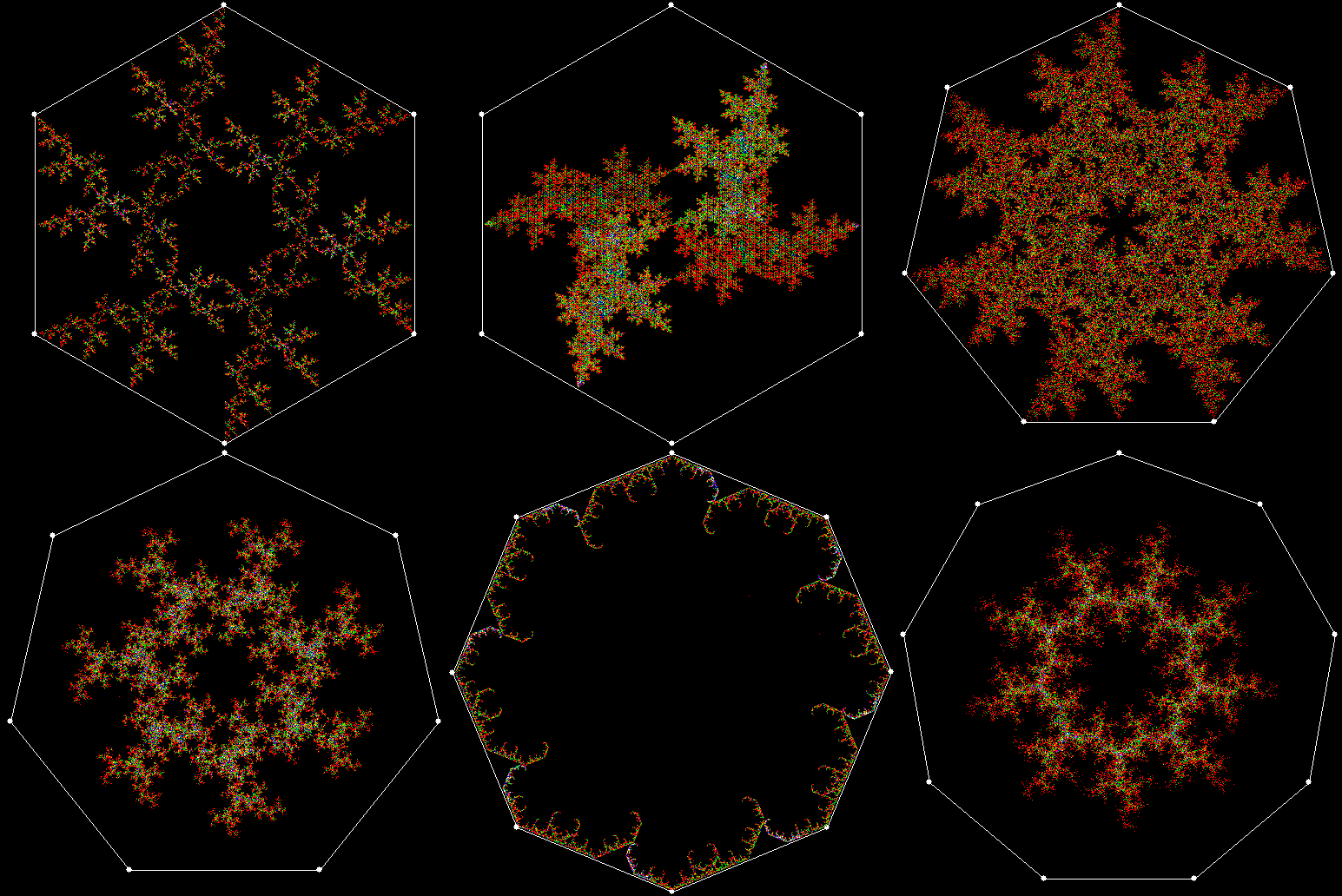
v6_1_p6

v = 6 + 1 point between each pair of vertices, p = 6


v6_p2

v = 6, p = 2


v6_p3_static

v = 6, p = 3

v6_p3


v6_p4

v = 6, p = 4


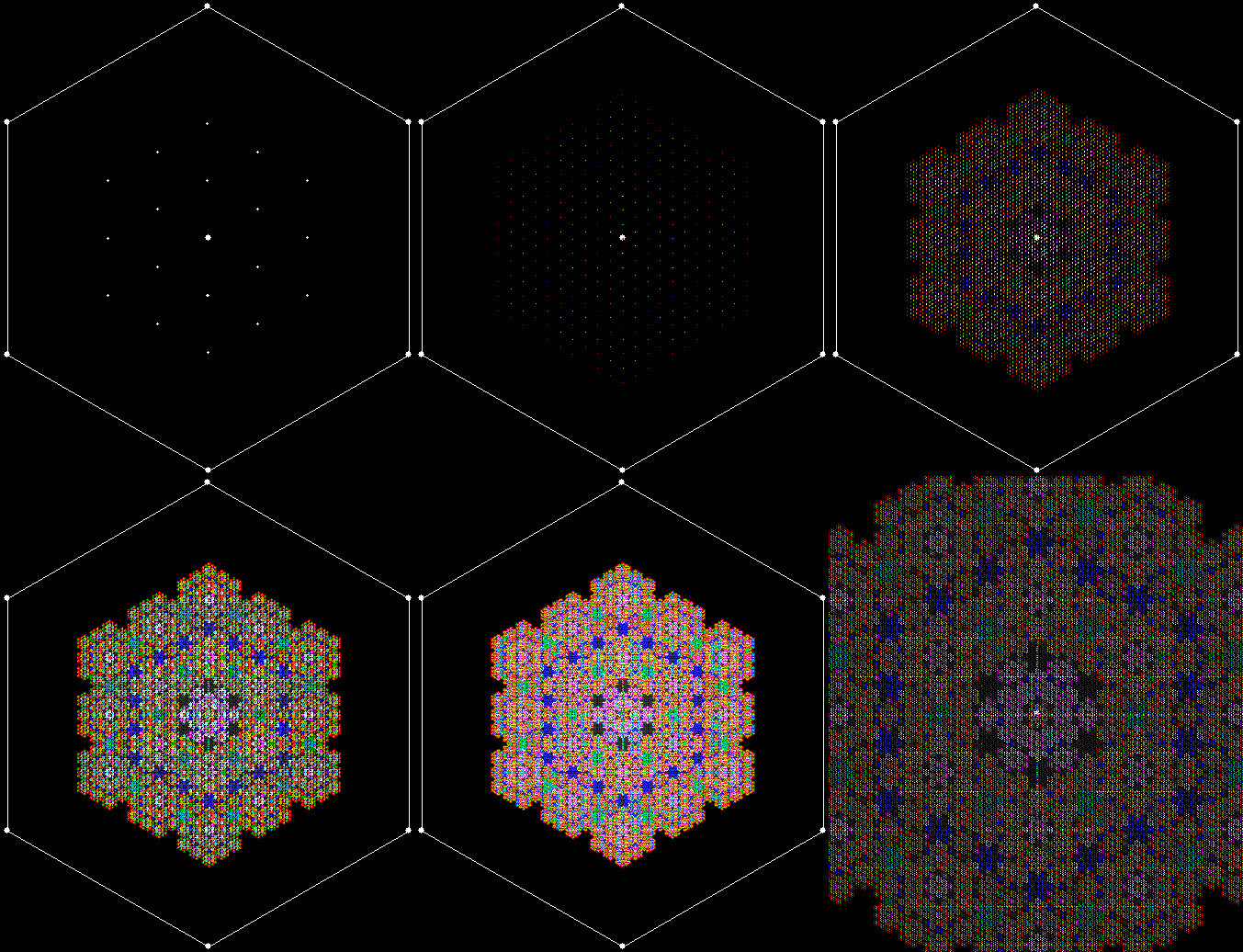
v6c_p2_static

v = 6c, p = 2 (cf. Fingering the Frigit)

v6c_p2


v6c_p3_static

v = 6c, p = 3

v6c_p3


v6c_p4

v = 6c, p = 4


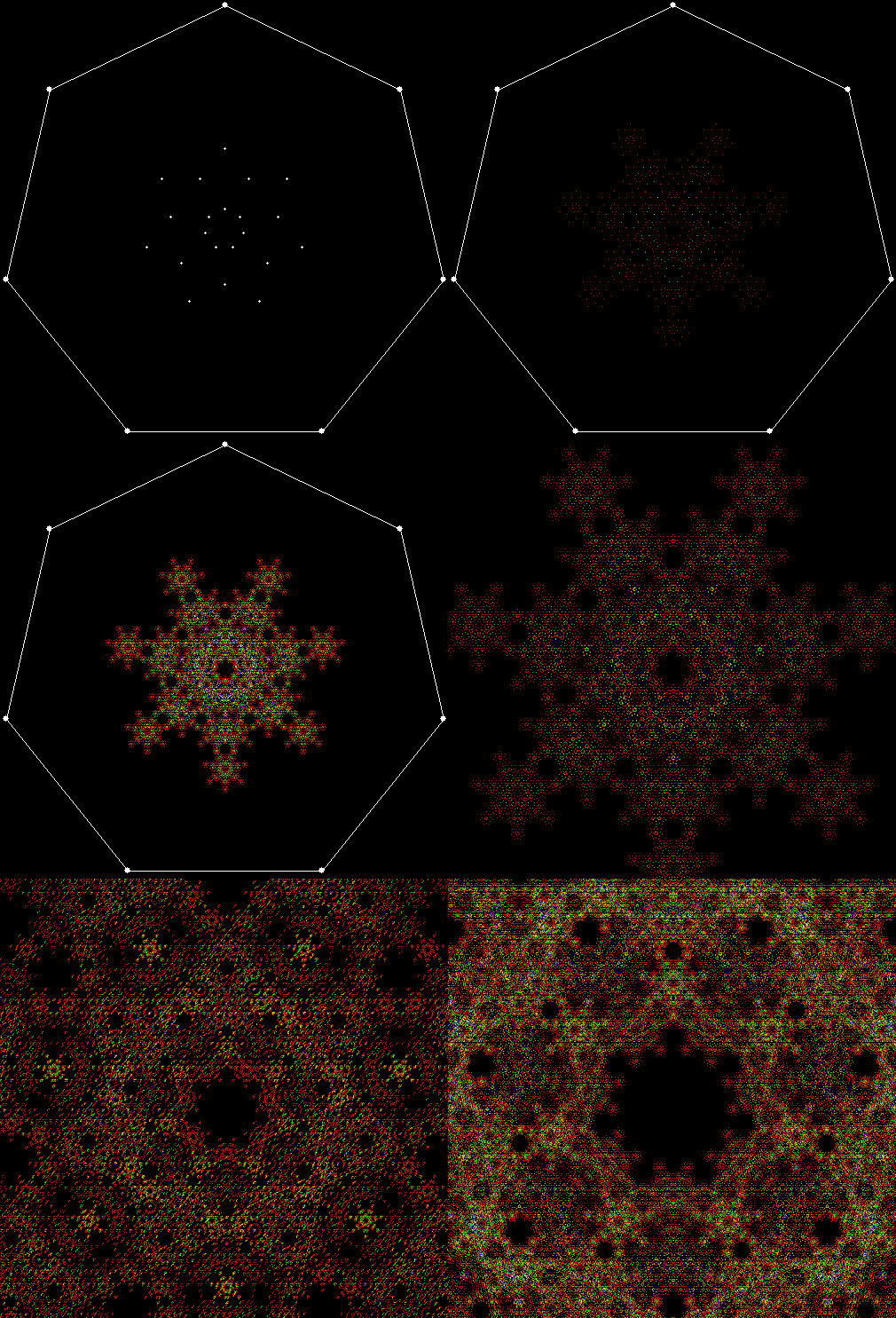
v7_p3

v = 7, p = 3


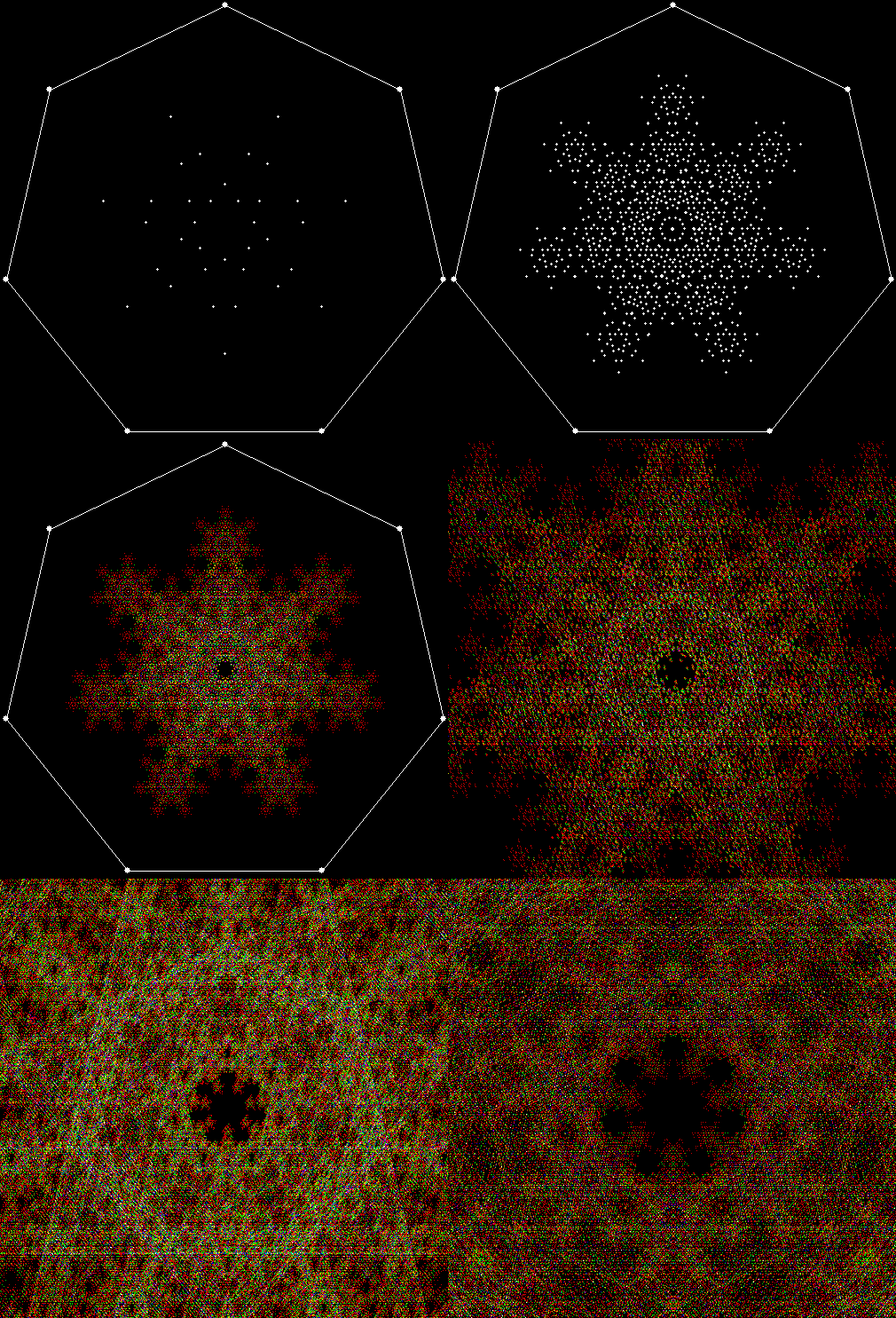
v7_p4_static

v = 7, p = 4

v7_p4


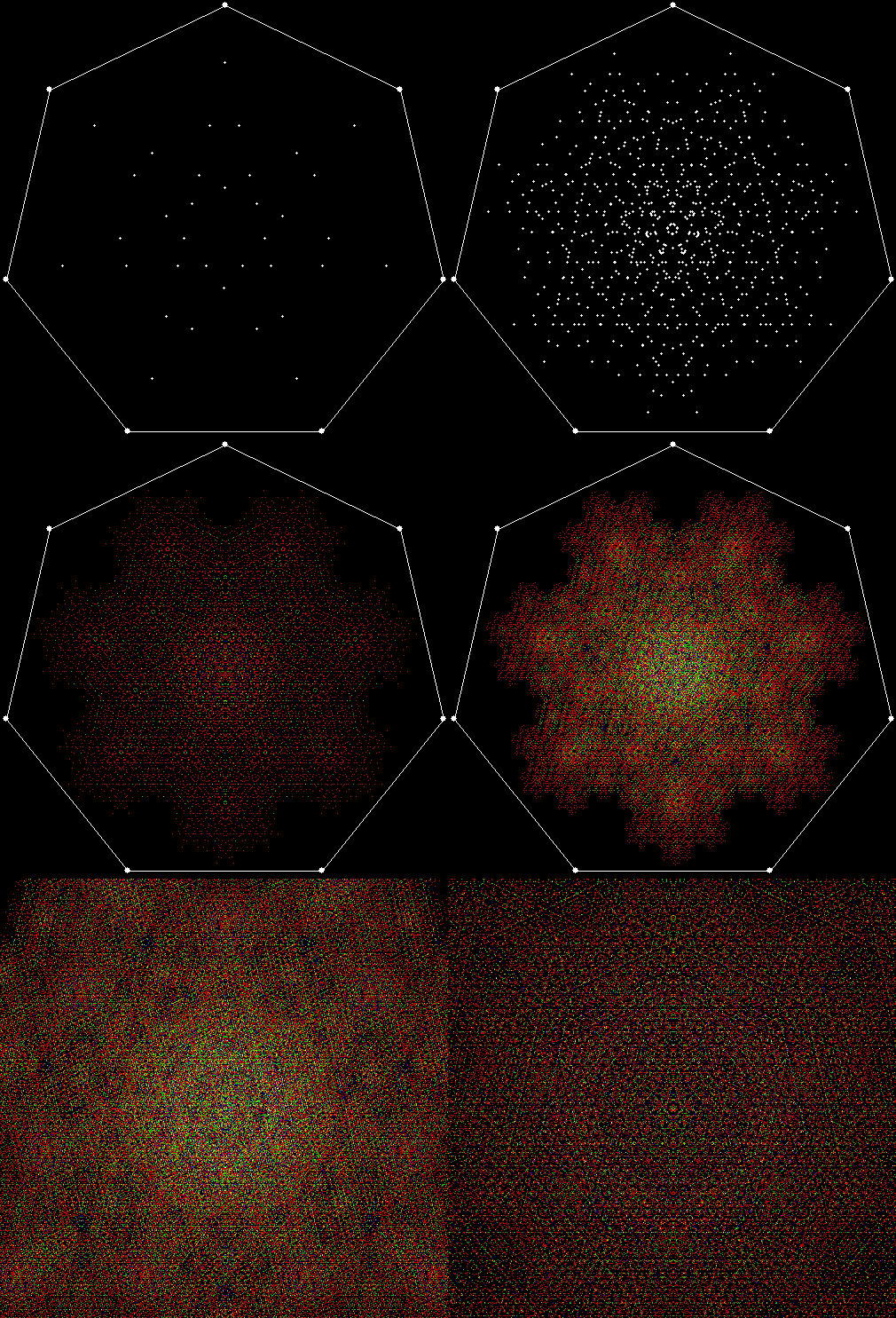
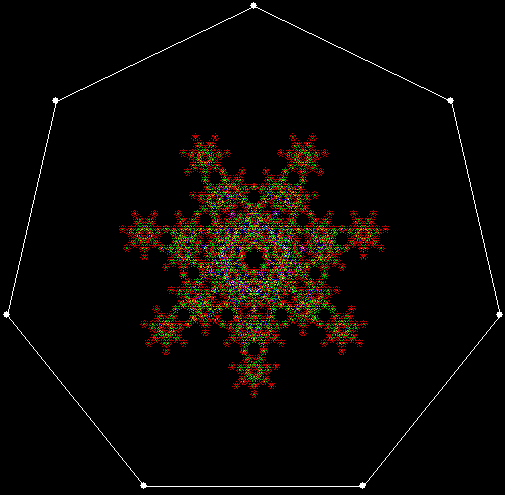
v7_p5_static

v = ,7 p = 5

v7_p5


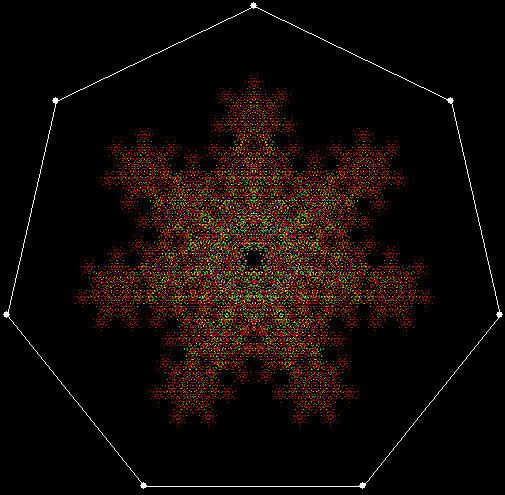
v7_p4

v = 7c, p = 4


v3_1_p2

v = 3+1, p = 2


v3_1_p3

v = 3+1, p = 3


v3_1_p4

v = 3+1, p = 4


v3_2_p5

v = 3+2, p = 5


v3c_1_p2

v = 3c+1, p = 2


v3c_1_p4

v = 3c+1, p = 4


v3c_p2

v = 3c, p = 2


v3c_p3

v = 3c, p = 3


v4_1_p3

v = 4+1, p = 3


v4_1_p4

v = 4+1, p = 4


v4_1_p5

v = 4+1, p = 6


v4_1_p6

v = 4+1, p = 2


v4c_1_p4

v = 4c+1, p = 4


v4c_p3_static

v = 4c, p = 3

v4c_p3


v5_1_p4_va

v = 5+1, p = 4 (and more)


v5_p2

v = 5, p = 2


Polymorphous Perverticity

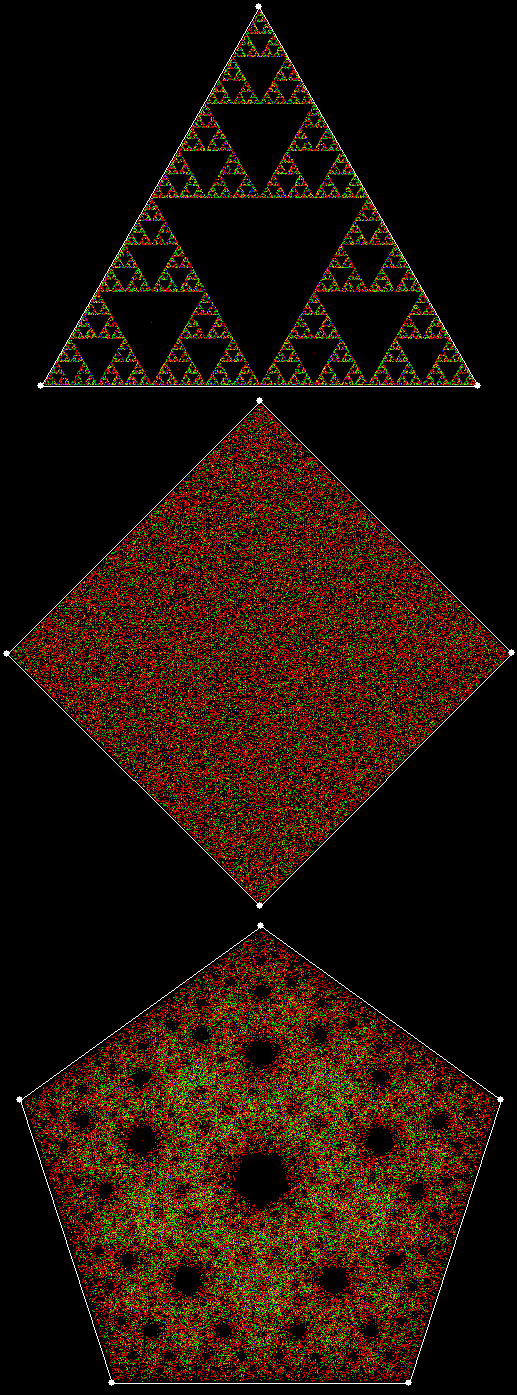
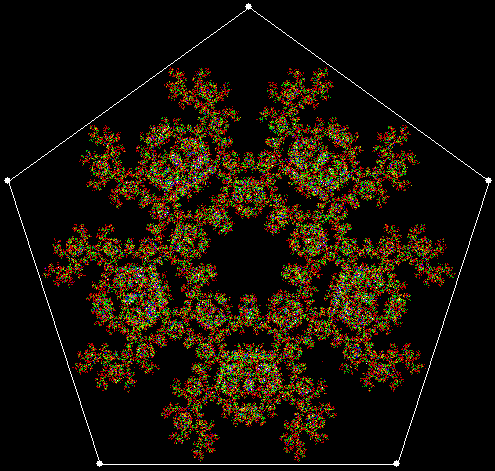
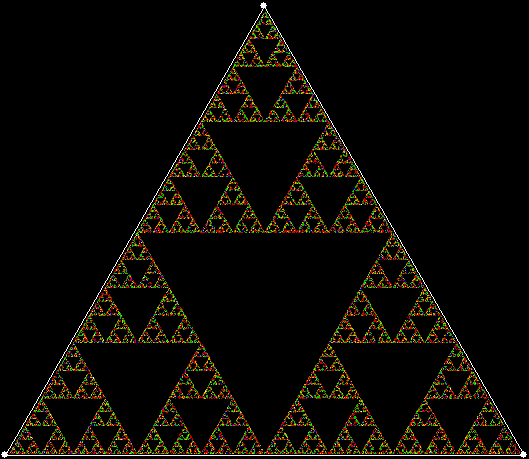
As I’ve explained before on Overlord of the Über-Feral, the planet’s premier purveyor of polygonic performativity (probably (possibly (perspectivistically))), it works with triangles and pentagons, but not with squares. And what is “it”? A simple procedure in which you create a polygon, choose a point inside it, then repeatedly move half-way towards a vertex chosen at random, marking each new position as you go.

pol3_4_5

When the polygon has three vertices, you get a Sierpiński triangle. When it has five, you get what might be called a  Sierpiński pentagon. When it has four, you get nothing. Or rather: you get everything, because the whole interior of the square gradually fills with points. But, as I’ve also explained before, there’s a simple way to change this. You can adapt the procedure so that a vertex can’t be chosen twice in a row, and so on.

When the rule is “No vertex twice in a row”, you get this fractal (colours change as a pixel is selected again):

pol4_0

But you can also use what might be a vertex increment, or vi, whereby you disallow vertices that are next to the previously chosen vertex, or two positions away, and so on. When the rule is “No vertex twice in a row”, the disallowed vertex is (v + 0), that is, vi = 0. If vi = 2 and the rule is disallow(v + 2), this fractal appears (when vi = 1, there’s no fractal):

pol4_2

v = 4, vi = 2

pol4_2_anim


You can extend these rules to apply not just to the previously chosen vertex, but also to the vertex chosen before that. Here are some fractals produced by the rule disallow(v[1] + vi[1], v[2] + vi[2]), where v[1] is the vertex previously chosen and v[2] is the vertex chosen before that:

pol4_1_2

v = 4, vi[1] = 1, vi[2] = 2

pol4_1_2_anim


pol4_2_0

v = 4, vi[1] = 2, vi[2] = 0

pol4_2_0_anim

pol4_2_0_white


pol4_2_1

v = 4, vi[1] = 2, vi[2] = 1

pol4_2_1_anim


pol4_2_2

v = 4, vi[1] = 2, vi[2] = 2

pol4_2_2_anim


And here are some fractals produced by the rule disallow(v[1] + vi[1], v[2] + vi[2], v[3] + vi[3]):

pol4_1_1_0

v = 4, vi[1] = 1, vi[2] = 1, vi[3] = 0

pol4_1_1_0_anim


pol4_1_1_2

v = 4, vi[1] = 1, vi[2] = 1, vi[3] = 2

pol4_1_1_2_anim


Applying these rules to pentagons rather than squares doesn’t produce such a dramatic difference, because the original procedure – choose any vertex at random, taking no account of previous choices – produces a fractal when v = 5, as noted above, but not when v = 4. Nevertheless, here are some fractals for v > 4:

pol5_0

v = 5, vi = 0


pol5_1

v = 5, vi = 1

pol5_1_anim


pol5_2

v = 5, vi = 2

pol5_2_anim


pol5_0_0

v = 5, vi[1] = 0, vi[2] = 0


pol5_1_0

v = 5, vi[1] = 1, vi[2] = 0


pol5_2_0

v = 5, vi[1] = 2, vi[2] = 0

pol5_2_0_anim


pol5_1_1

v = 5, vi[1] = 1, vi[2] = 1

pol5_1_1_anim


pol5_1_1_1

v = 5, vi[1] = 1, vi[2] = 1, vi[3] = 1


pol5_va2

v = 5, vi = various


pol6_1

v = 6, vi = 1

pol6_1_anim

Fingering the Frigit

Fingers are fractal. Where a tree has a trunk, branches and twigs, a human being has a torso, arms and fingers. And human beings move in fractal ways. We use our legs to move large distances, then reach out with our arms over smaller distances, then move our fingers over smaller distances still. We’re fractal beings, inside and out, brains and blood-vessels, fingers and toes.

But fingers are fractal are in another way. A digit – digitus in Latin – is literally a finger, because we once counted on our fingers. And digits behave like fractals. If you look at numbers, you’ll see that they contain patterns that echo each other and, in a sense, recur on smaller and smaller scales. The simplest pattern in base 10 is (0, 1, 2, 3, 4, 5, 6, 7, 8, 9). It occurs again and again at almost very point of a number, like a ten-hour clock that starts at zero-hour:

0, 1, 2, 3, 4, 5, 6, 7, 8, 9…
10, 11, 12, 13, 14, 15, 16, 17, 18, 19…
200… 210… 220… 230… 240… 250… 260… 270… 280… 290…

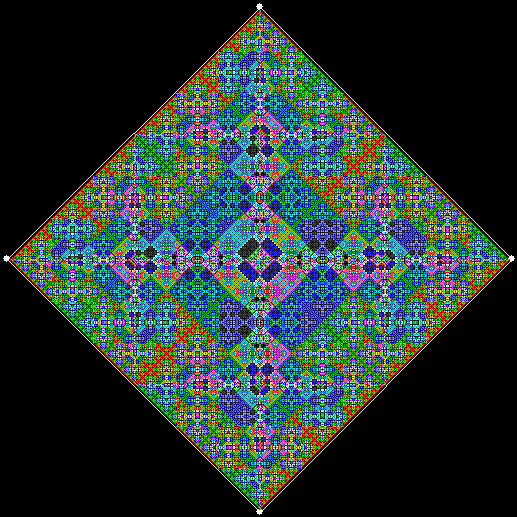
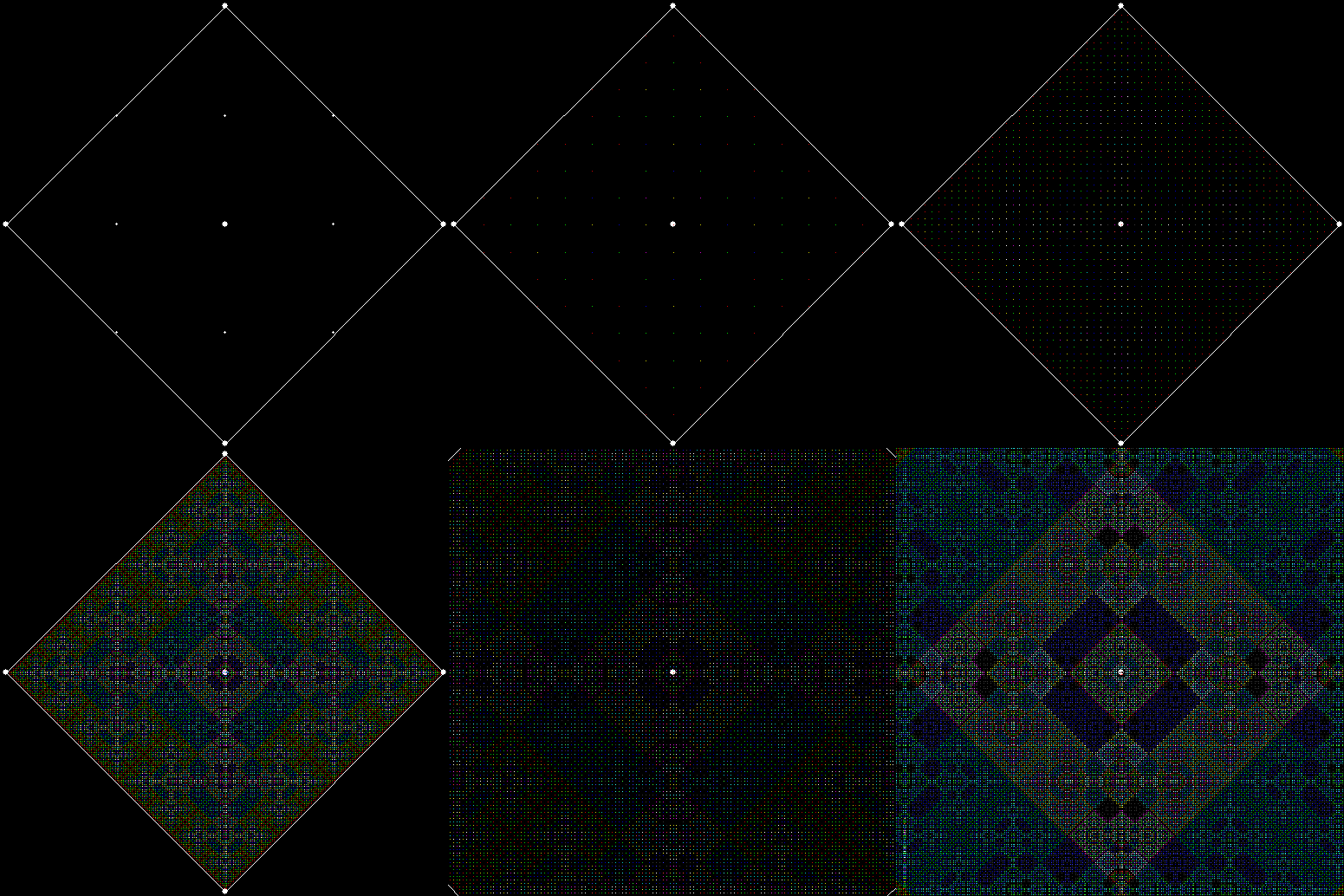
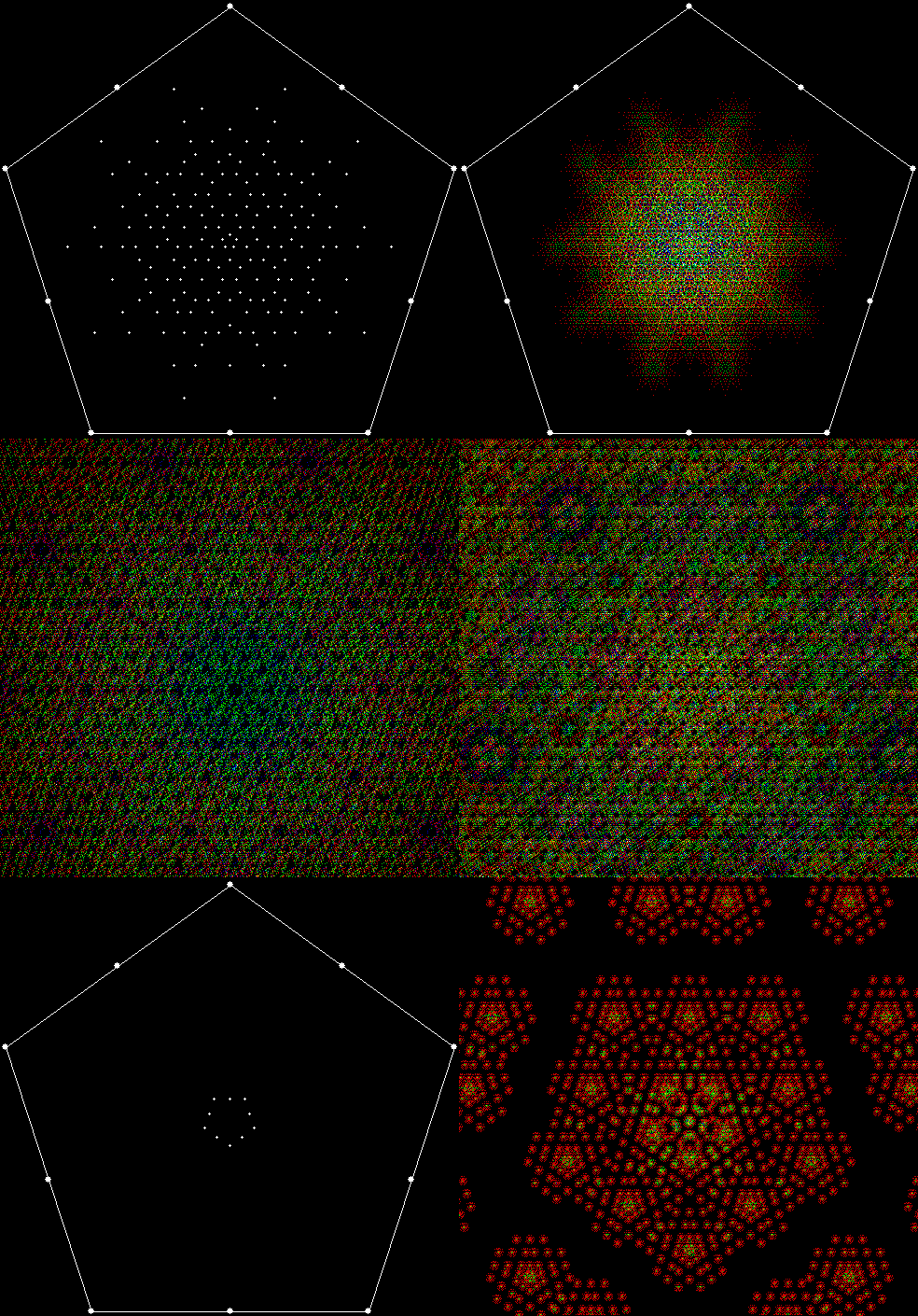
These fractal patterns become visible if you turn numbers into images. Suppose you set up a square with four fixed points on its corners and a fixed point at its centre. Let the five points correspond to the digits (1, 2, 3, 4, 5) of numbers in base 6 (not using 0, to simplify matters):

1, 2, 3, 4, 5, 11, 12, 13, 14, 15, 21, 22, 23, 24, 25, 31, 32, 33, 34, 35, 41, 42, 43, 44, 45, 51, 52, 53, 54, 55, 61, 62, 63, 64, 65… 2431, 2432, 2433, 2434, 2435, 2441, 2442, 2443, 2444, 2445, 2451, 2452…

Move between the five points of the square by stepping through the individual digits of the numbers in the sequence. For example, if the number is 2451, the first set of successive digits is (2, 4), so you move to a point half-way between point 2 and point 4. Next come the successive digits (4, 5), so you move to a point half-way between point 4 and point 5. Then come (5, 1), so you move to a point half-way between point 5 and point 1.

When you’ve exhausted the digits (or frigits) of a number, mark the final point you moved to (changing the colour of the pixel if the point has been occupied before). If you follow this procedure using a five-point square, you will create a fractal something like this:
fractal4_1single

fractal4_1
A pentagon without a central point using numbers in a zero-less base 7 looks like this:
fractal5_0single

fractal5_0
A pentagon with a central point looks like this:
fractal5_1single

fractal5_1
Hexagons using a zero-less base 8 look like this:
fractal6_1single

fractal6_1


fractal6_0single

fractal6_0
But the images above are just the beginning. If you use a fixed base while varying the polygon and so on, you can create images like these (here is the program I used):
fractal4


fractal5


fractal6789

Get Your Prox Off

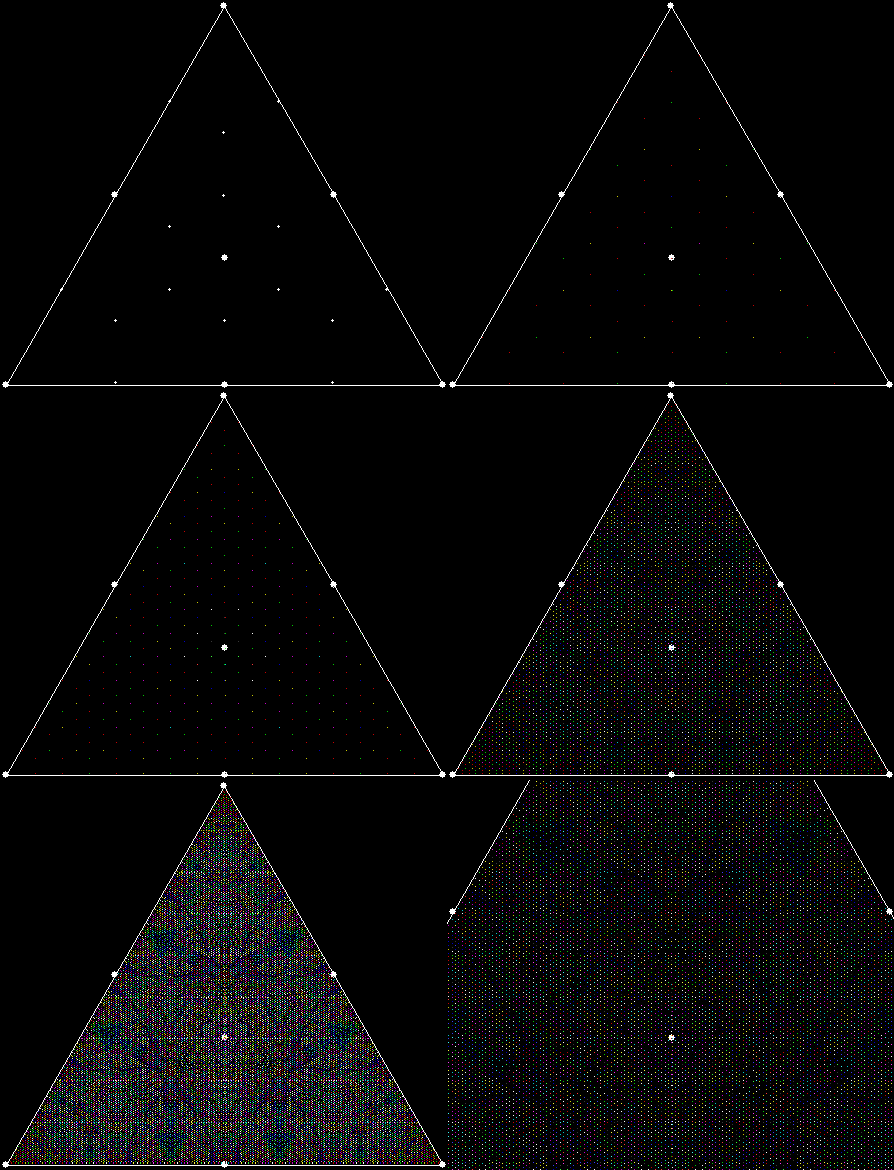
Create a triangle. Find a point somewhere inside it. Choose a corner at random and move halfway towards it. Mark the new point. Repeat the procedure: choose, move, mark. Repeat again and again. In time, a fractal will appear:

siertri

However, if you try the same thing with a square – choose a corner at random, move halfway towards it, mark the new point, repeat – no fractal appears. Instead, the points fill the interior of the square:

sierquad

But what happens if you impose restrictions on the randomly chosen corner (or chorner)? Suppose you can’t choose the same corner twice in a row. If this rule is applied to the square, this fractal appears:

restrict4_T


restrict4_Tanim

Now apply the no-corner-twice-in-a-row rule to a square that contains a central chorner. This fractal appears:

restrict4_Tc

And if the rule is that you can choose a corner twice in a row but not thrice? This fractal appears:

restrict4FT


restrict4FTc


Here is the rule is that a corner can’t be chosen if it was chosen two moves ago:

restrict4_3F

But what if the restriction is based not on how often or when a corner is chosen, but on its proximity, i.e. how near it is to the marked point? If the nearest corner can’t be chosen, the result is the same as the no-corner-twice-in-a-row rule:

prox4_1

But if the second-nearest corner can’t be chosen, this fractal appears:

prox4_2

This is the fractal when the third-nearest corner can’t be chosen:

prox4_3

And this is the fractal when the fourth-nearest, or most distant, corner can’t be chosen:

prox4_4

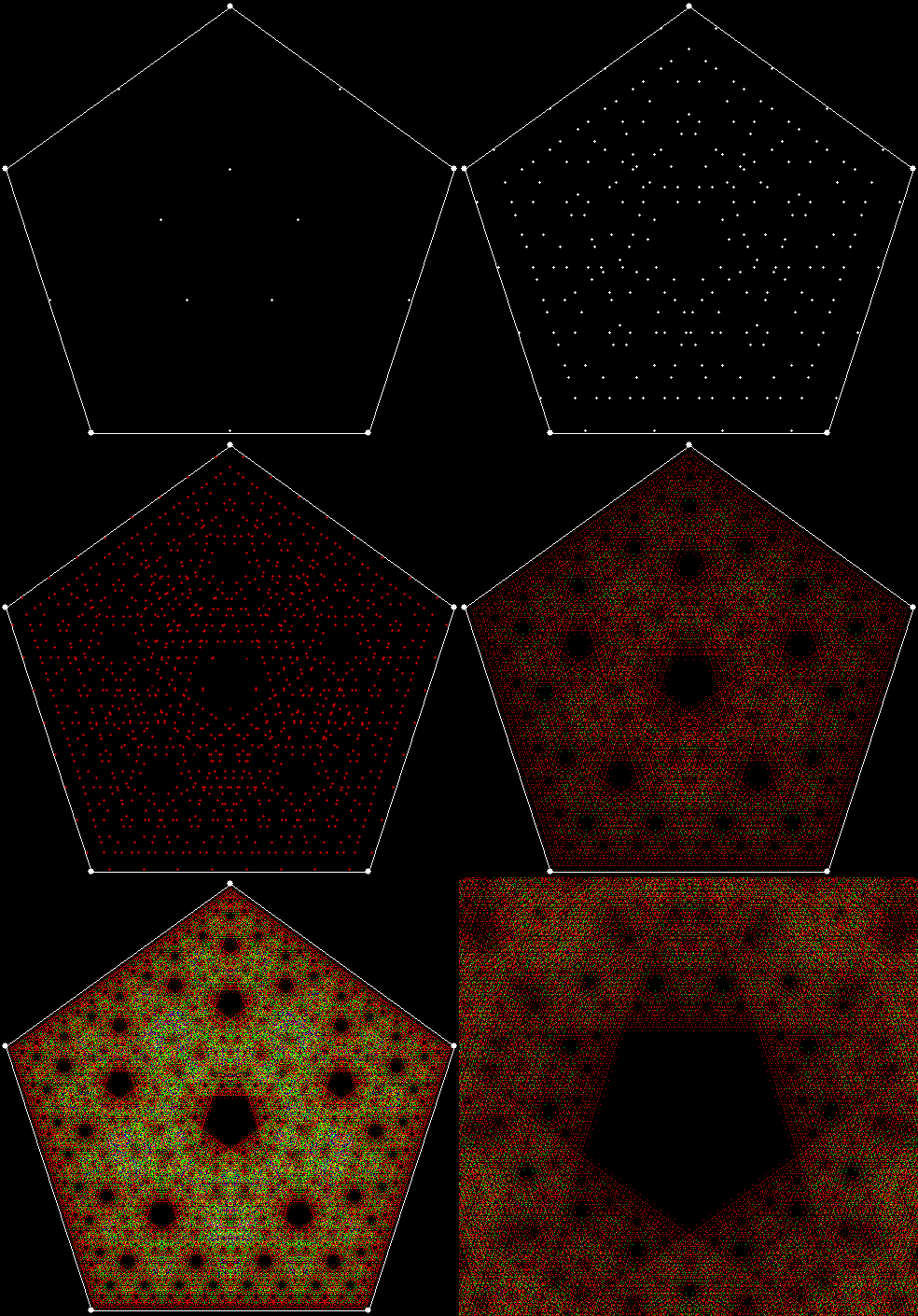
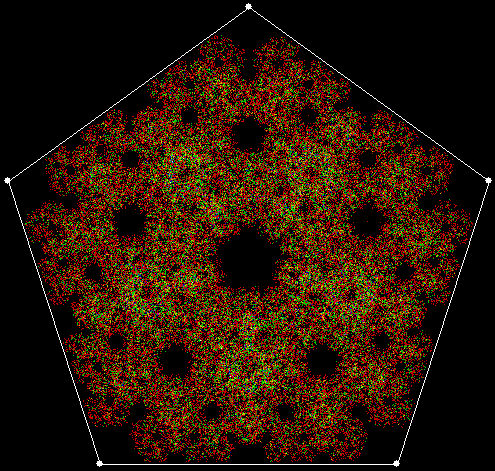
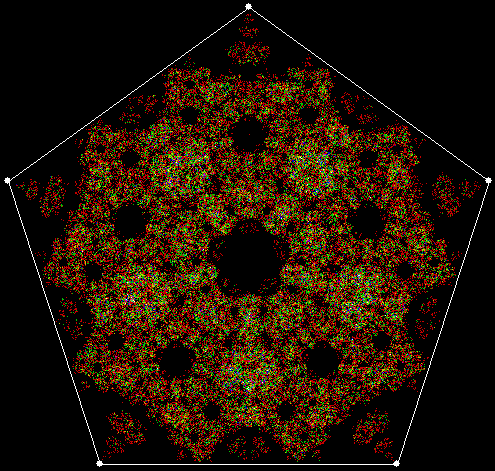
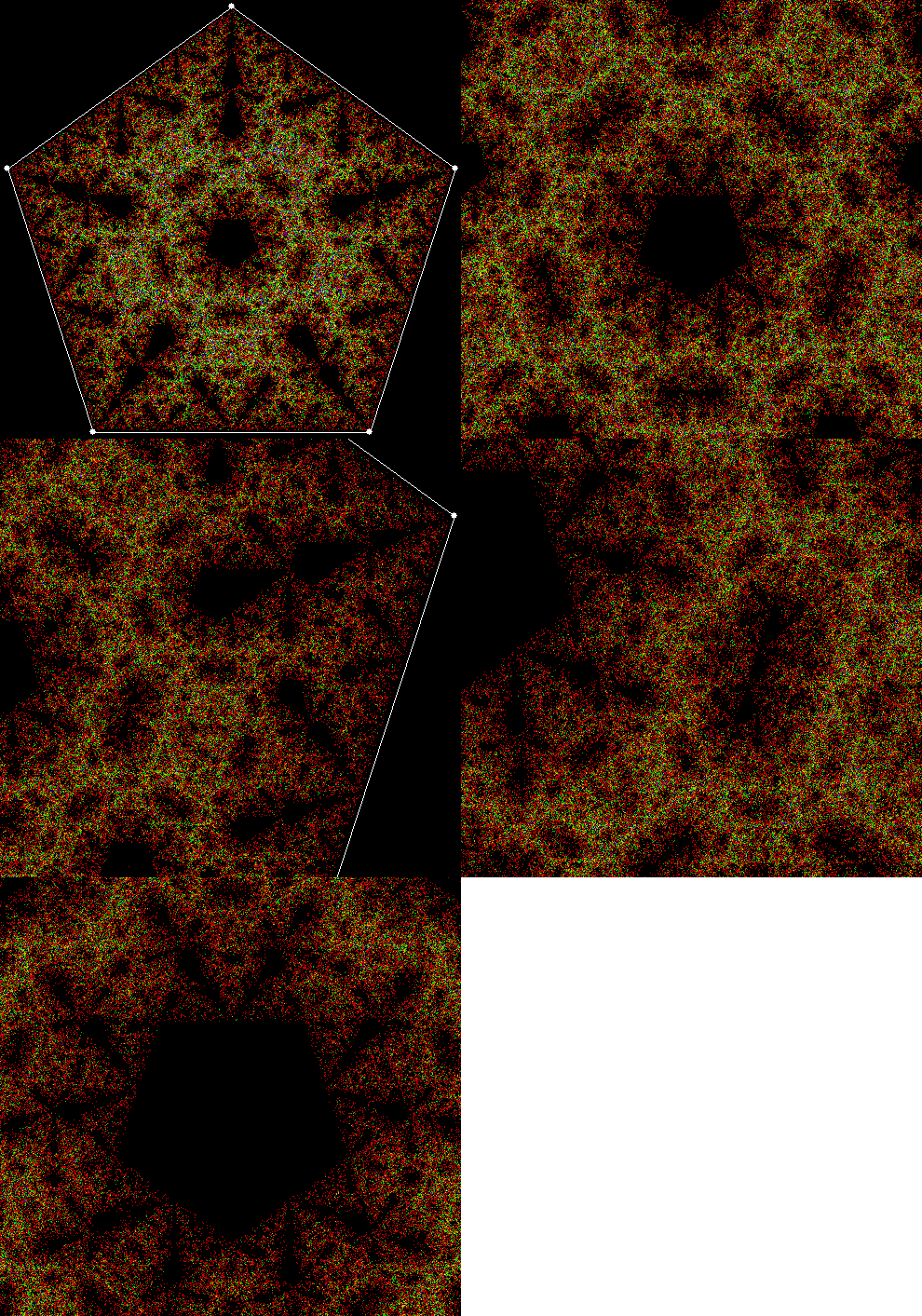
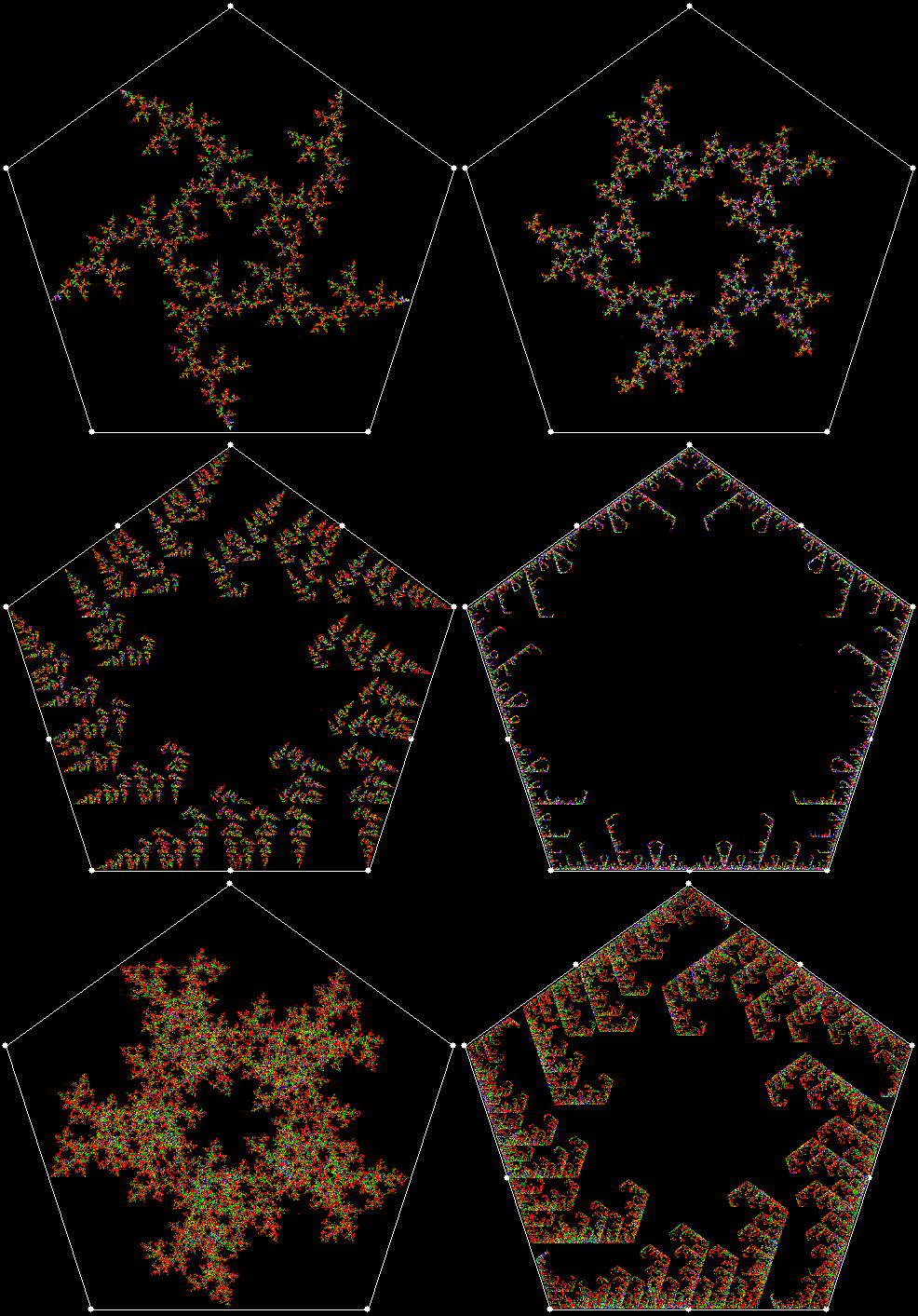
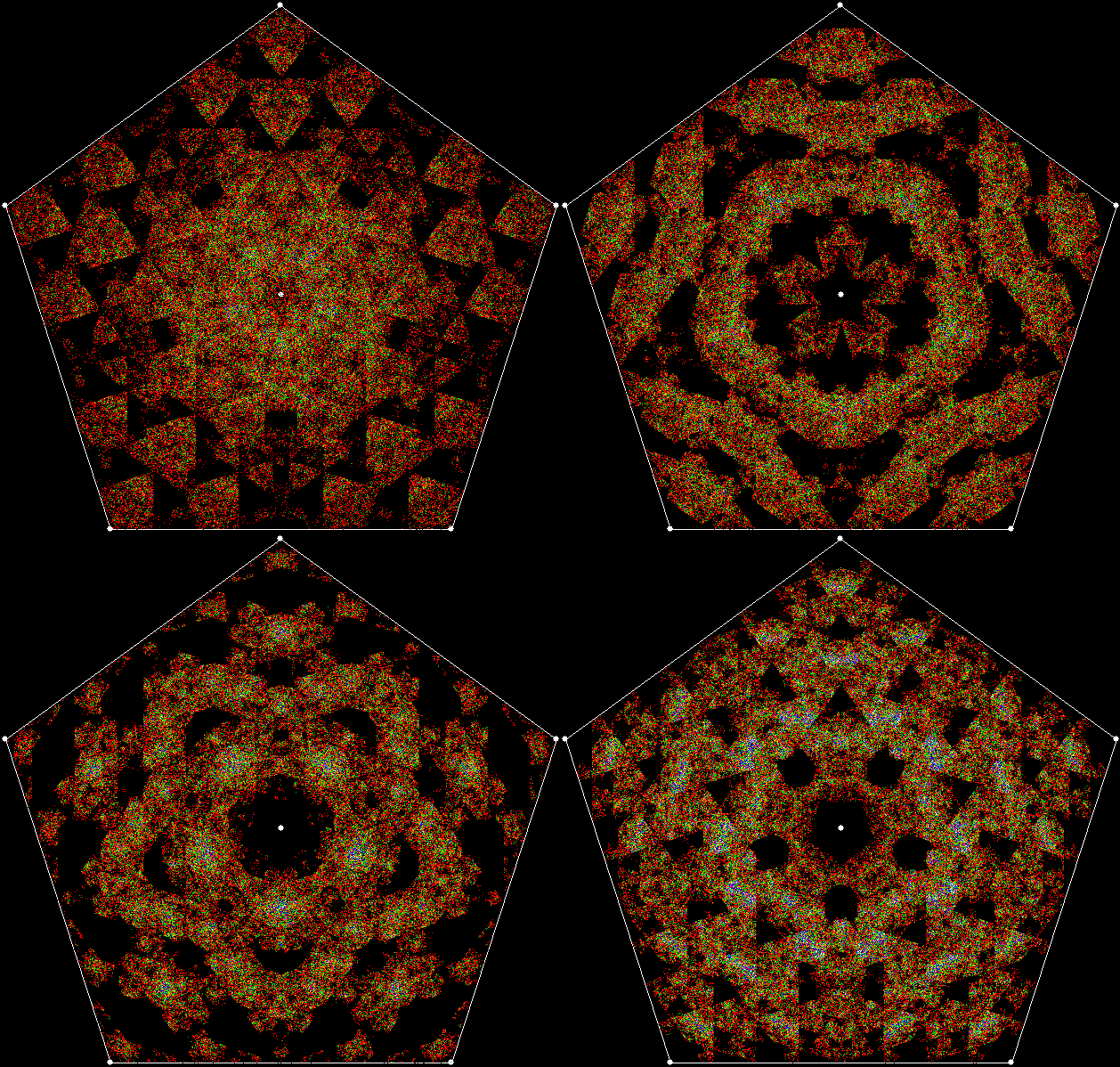
Here are the same restrictions applied to a pentagon:

prox5_1

Nearest corner forbidden


prox5_2

Second-nearest corner forbidden


prox5_3

Third corner forbidden


prox5_4

Fourth corner forbidden


prox5_5

Fifth corner forbidden


prox5_5anim

Fifth corner forbidden (animated)

And a pentagon with a central chorner:

prox5_anim_c

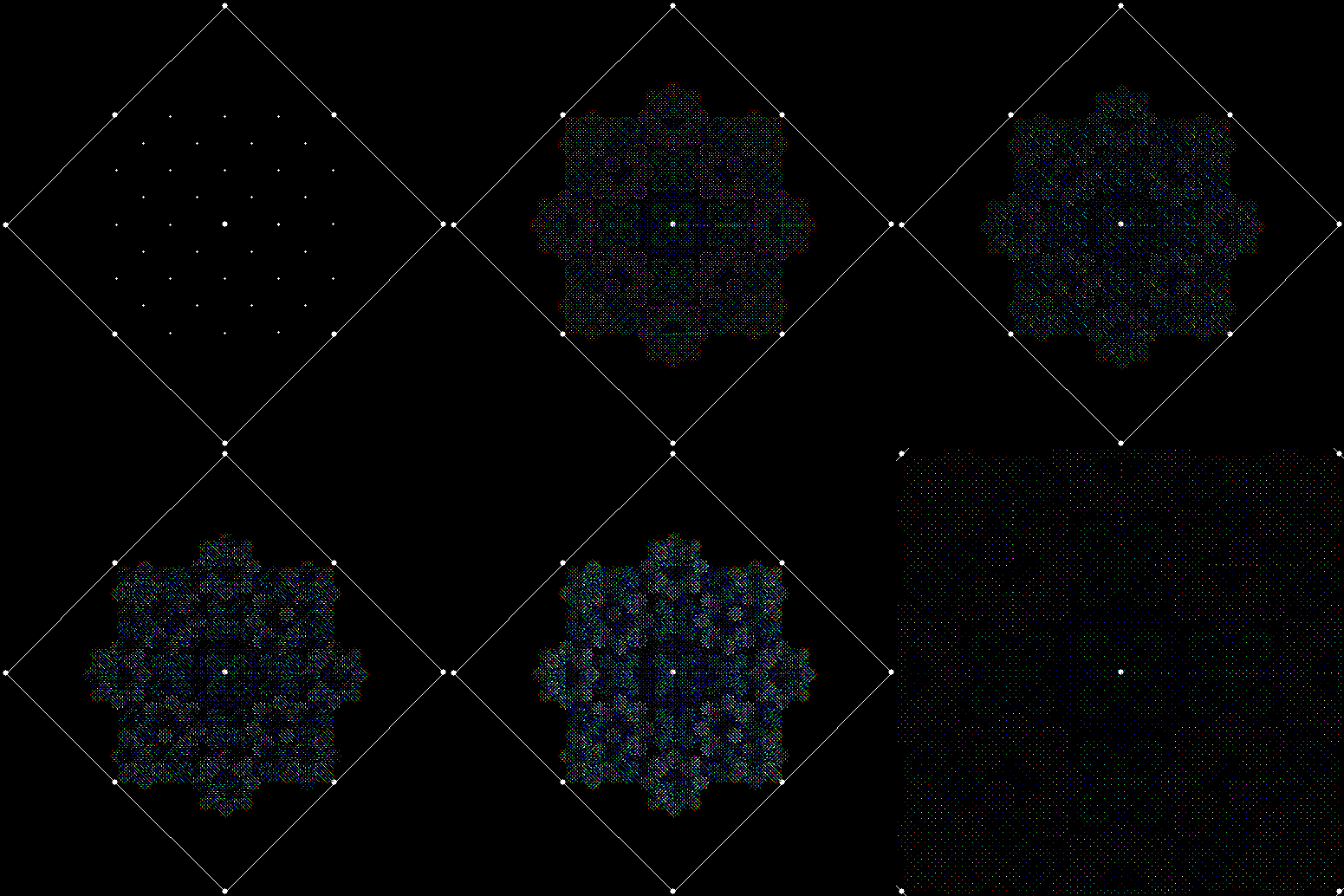
Now try excluding more than one corner. Here are pentagons excluding the n-nearest and n+1-nearest corners (for example, the nearest and second-nearest corners; the second-nearest and third-nearest; and so on):

prox5n_n1_anim

But what if the moving point is set equal to the n-nearest corner before it moves again? If the corner is the second-nearest and the shape is a triangle with a central chorner, this is the fractal that appears:

prox3_set2c


prox3_set2c_anim

Animated version

And here is the same rule applied to various n-nearest corners in a pentagon:

prox5_set_anim

Boldly Breaking the Boundaries

In “M.I.P. Trip”, I looked at fractals like this, in which a square is divided repeatedly into a pattern of smaller squares:
2x2inner

2x2inner_static


3x3innera

3x3innera_static


3x3innerb

3x3innerb_static


As you can see, the sub-squares appear within the bounds of the original square. But what if some of the sub-squares appear beyond the bounds of the original square? Then a new family of fractals is born, the over-fractals:

fractal2x2a

fractal2x2a_static


fractal2x2b

fractal2x2b_static


fractal2x2c

fractal2x2c_static


fractal2x2d

fractal2x2d_static


fractal2x2e

fractal2x2e_static


fractal3x3a

fractal3x3a_static


fractal3x3b

fractal3x3b_static


fractal3x3c

fractal3x3c_static


fractal3x3d


fractal3x3e


fractal3x3f


fractal3x3g


fractal3x3h


fractal3x3i


fractal3x3j


fractal3x3k


fractal3x3l


fractal3x3m


fractal3x3n


fractal4x4a


fractal4x4c


fractal4x4b

Magistra Rules the Waves

One of my favourite integer sequences has the simple formula n(i) = n(i-1) + digitsum(n(i-1)). If it’s seeded with 1, its first few terms go like this:

n(1) = 1
n(2) = n(1) + digitsum(n(1)) = 1 + digitsum(1) = 2
n(3) = 2 + digitsum(2) = 4
n(4) = 4 + digitsum(4) = 8
n(5) = 8 + digitsum(8) = 16
n(6) = 16 + digitsum(16) = 16 + 1+6 = 16 + 7 = 23
n(7) = 23 + digitsum(23) = 23 + 2+3 = 23 + 5 = 28
n(8) = 28 + digitsum(28) = 28 + 2+8 = 28 + 10 = 38

As a sequence, it looks like this:

1, 2, 4, 8, 16, 23, 28, 38, 49, 62, 70, 77, 91, 101, 103, 107, 115, 122, 127, 137, 148, 161, 169, 185, 199, 218, 229, 242, 250, 257, 271, 281, 292, 305, 313, 320, 325, 335, 346, 359, 376, 392, 406, 416, 427, 440, 448, 464, 478, 497, 517, 530, 538, 554, 568, 587, 607, 620, 628, 644, 658, 677, 697, 719, 736, 752, 766, 785, 805, 818, 835, 851, 865, 884, 904, 917, 934, 950, 964, 983, 1003…

Given a number at random, is there a quick way to say whether it appears in the sequence seeded with 1? Not that I know, with one exception. If the number is divisible by 3, it doesn’t appear, at least in base 10. In base 2, that rule doesn’t apply:

n(1) = 1
n(2) = 1 + digitsum(1) = 10 = 1 + 1 = 2
n(3) = 10 + digitsum(10) = 10 + 1 = 11 = 2 + 1 = 3
n(4) = 11 + digitsum(11) = 11 + 1+1 = 101 = 3 + 2 = 5
n(5) = 101 + digitsum(101) = 101 + 1+0+1 = 111 = 5 + 2 = 7
n(6) = 111 + digitsum(111) = 111 + 11 = 1010 = 7 + 3 = 10
n(7) = 1010 + digitsum(1010) = 1010 + 10 = 1100 = 10 + 2 = 12
n(8) = 1100 + digitsum(1100) = 1100 + 10 = 1110 = 12 + 2 = 14

1, 2, 3, 5, 7, 10, 12, 14, 17, 19, 22, 25, 28, 31, 36, 38, 41, 44, 47, 52, 55, 60, 64, 65, 67, 70, 73, 76, 79, 84, 87, 92, 96, 98, 101, 105, 109, 114, 118, 123, 129, 131, 134, 137, 140, 143, 148, 151, 156, 160, 162, 165, 169, 173, 178, 182, 187, 193, 196, 199, 204, 208, 211, 216, 220, 225, 229, 234, 239, 246, 252, 258, 260, 262, 265, 268, 271, 276, 279, 284, 288, 290, 293, 297, 301, 306, 310, 315, 321, 324, 327, 332, 336, 339, 344, 348, 353, 357, 362, 367, 374…

What patterns are there in these sequences? It’s easier to check when they’re represented graphically, so I converted them into patterns à la the Ulam spiral, where n is represented as a dot on a spiral of integers. This is the spiral for base 10:

ulambase10Base 10


And these are the spirals for bases 2 and 3:

ulambase2

Base 2


ulambase3

Base 3


These sequences look fairly random to me: there are no obvious patterns in the jumps from n(i) to n(i+1), i.e. in the values for digitsum(n(i)). Now try the spirals for bases 9 and 33:

ulambase9

Base 9


ulambase33

Base 33


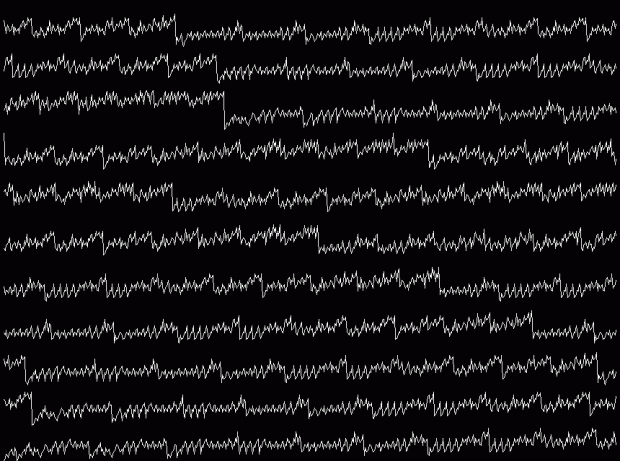
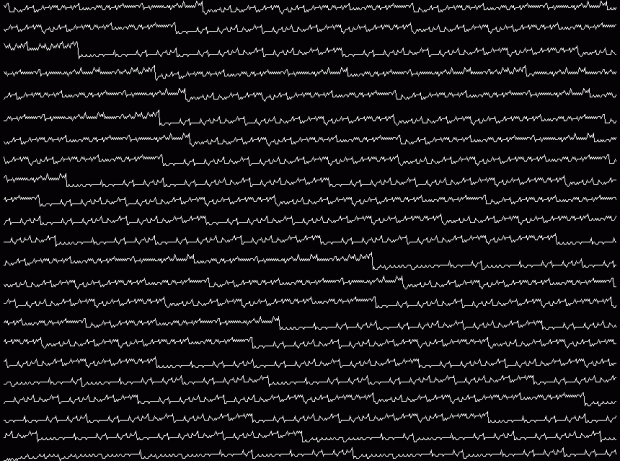
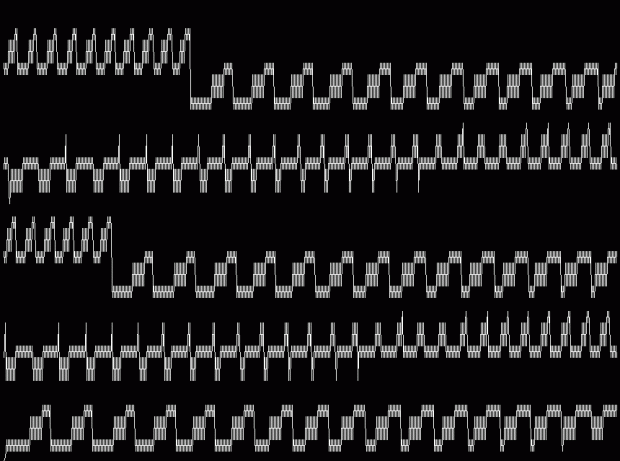
Patterns have appeared: there is some regularity in the jumps. You can see these regularities more clearly if you represent digitsum(n(i)) as a graph, with n(i) on the x axis and digitsum(n(i)) on the y axis. If the graph starts with n(i) = 1 on the lower left and proceeds left-right, left-right up the screen, it looks like this in base 10:

base10

Base 10 (click to enlarge)


Here are bases 2 and 3:

base2

Base 2


base3

Base 3


The jumps seem fairly random. Now try bases 9, 13, 16, 17, 25, 33 and 49:

base9

Base 9


base13

Base 13


base16

Base 16


base17

Base 17


base25

Base 25


base33

Base 33


base49

Base 49


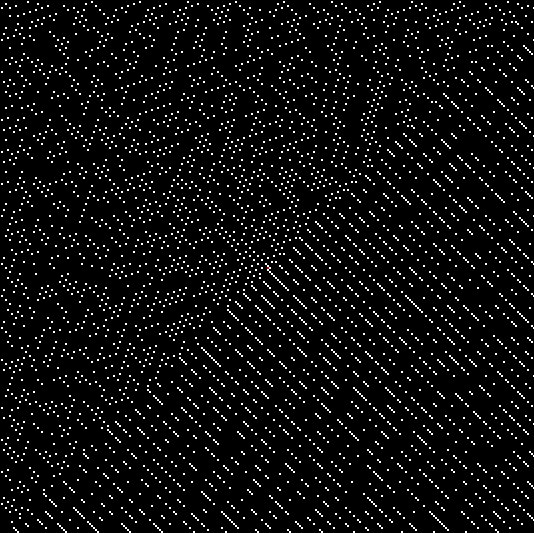
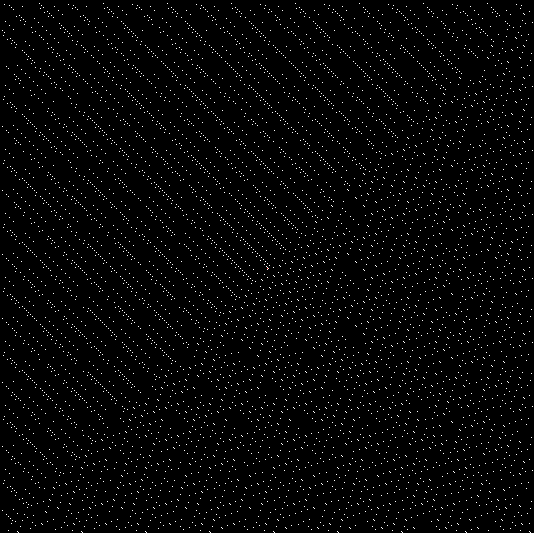
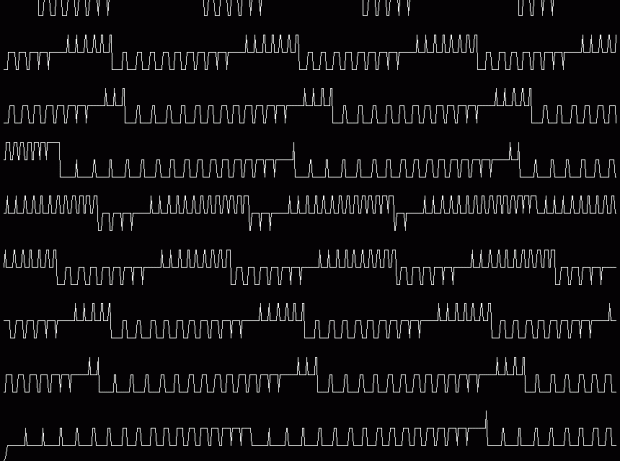
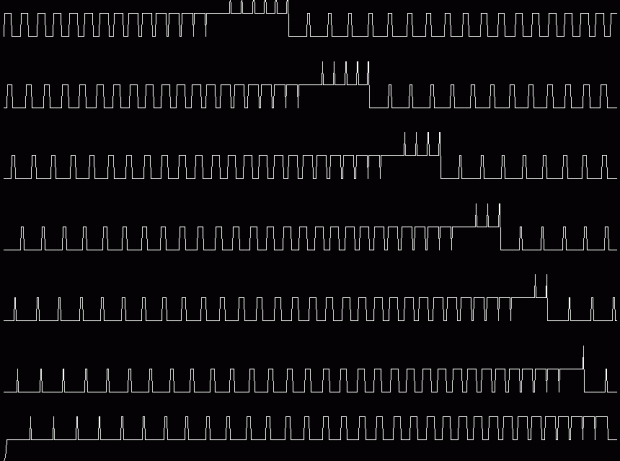
In some bases, the formula n(i) = n(i-1) + digitsum(n(i-1)) generates mild randomness. In others, it generates strong regularity, like waves rolling ashore under a steady wind. I don’t understand why, but regularity seems to occur in bases that are one more than a power of 2 and also in some bases that are primes or squares.


Elsewhere other-posted:
Mathematica Magistra Mundi
8200_idf_insignia

M.i.P. Trip

The Latin phrase multum in parvo means “much in little”. It’s a good way of describing the construction of fractals, where the application of very simple rules can produce great complexity and beauty. For example, what could be simpler than dividing a square into smaller squares and discarding some of the smaller squares?

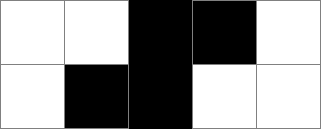
Yet repeated applications of divide-and-discard can produce complexity out of even a 2×2 square. Divide a square into four squares, discard one of the squares, then repeat with the smaller squares, like this:
2x2square2


2x2square3


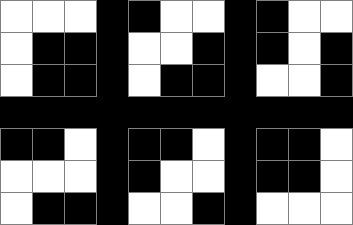
Increase the sides of the square by a little and you increase the number of fractals by a lot. A 3×3 square yields these fractals:
3x3square2


3x3square3


3x3square6


3x3square7


3x3square8


3x3square9


3x3square10


And the 4×4 and 5×5 fractals yield more:
4x4square1


4x4square2


4x4square4


4x4square5


4x4square6


4x4square7


4x4square8


5x5square1


5x5square2


5x5square3


5x5square4


5x5square5


5x5square6


5x5square7


N-route

In maths, one thing leads to another. I wondered whether, in a spiral of integers, any number was equal to the digit-sum of the numbers on the route traced by moving to the origin first horizontally, then vertically. To illustrate the procedure, here is a 9×9 integer spiral containing 81 numbers:

| 65 | 64 | 63 | 62 | 61 | 60 | 59 | 58 | 57 |
| 66 | 37 | 36 | 35 | 34 | 33 | 32 | 31 | 56 |
| 67 | 38 | 17 | 16 | 15 | 14 | 13 | 30 | 55 |
| 68 | 39 | 18 | 05 | 04 | 03 | 12 | 29 | 54 |
| 69 | 40 | 19 | 06 | 01 | 02 | 11 | 28 | 53 |
| 70 | 41 | 20 | 07 | 08 | 09 | 10 | 27 | 52 |
| 71 | 42 | 21 | 22 | 23 | 24 | 25 | 26 | 51 |
| 72 | 43 | 44 | 45 | 46 | 47 | 48 | 49 | 50 |
| 73 | 74 | 75 | 76 | 77 | 78 | 79 | 80 | 81 |

Take the number 21, which is three places across and up from the bottom left corner of the spiral. The route to the origin contains the numbers 21, 22, 23, 8 and 1, because first you move right two places, then up two places. And 21 is what I call a route number, because 21 = 3 + 4 + 5 + 8 + 1 = digitsum(21) + digitsum(22) + digitsum(23) + digitsum(8) + digitsum(1). Beside the trivial case of 1, there are two more route numbers in the spiral:

58 = 13 + 14 + 6 + 7 + 7 + 6 + 4 + 1 = digitsum(58) + digitsum(59) + digitsum(60) + digitsum(61) + digitsum(34) + digitsum(15) + digitsum(4) + digitsum(1).

74 = 11 + 12 + 13 + 14 + 10 + 5 + 8 + 1 = digitsum(74) + digitsum(75) + digitsum(76) + digitsum(77) + digitsum(46) + digitsum(23) + digitsum(8) + digitsum(1).

Then I wondered about other possible routes to the origin. Think of the origin as one corner of a rectangle and the number being tested as the diagonal corner. Suppose that you always move away from the starting corner, that is, you always move up or right (or up and left, and so on, depending on where the corners lie). In a x by y rectangle, how many routes are there between the diagonal corners under those conditions?

It’s an interesting question, but first I’ve looked at the simpler case of an n by n square. You can encode each route as a binary number, with 0 representing a vertical move and 1 representing a horizontal move. The problem then becomes equivalent to finding the number of distinct ways you can arrange equal numbers of 1s and 0s. If you use this method, you’ll discover that there are two routes across the 2×2 square, corresponding to the binary numbers 01 and 10:

2x2

Across the 3×3 square, there are six routes, corresponding to the binary numbers 0011, 0101, 0110, 1001, 1010 and 1100:

3x3

Across the 4×4 square, there are twenty routes:
4x4

(Please open in new window if it fails to animate)

(Please open in new window if it fails to animate)

Across the 5×5 square, there are 70 routes:

5x5

(Please open in new window etc)

(Please open in new window etc)

Across the 6×6 and 7×7 squares, there are 252 and 924 routes:

6x6

7x7

After that, the routes quickly increase in number. This is the list for n = 1 to 14:

1, 2, 6, 20, 70, 252, 924, 3432, 12870, 48620, 184756, 705432, 2704156, 10400600… (see A000984 at the Online Encyclopedia of Integer Sequences)

After that you can vary the conditions. What if you can move not just vertically and horizontally, but diagonally, i.e. vertically and horizontally at the same time? Now you can encode the route with a ternary number, or number in base 3, with 0 representing a vertical move, 1 a horizontal move and 2 a diagonal move. As before, there is one route across a 1×1 square, but there are three across a 2×2, corresponding to the ternary numbers 01, 2 and 10:

3x3t

There are 13 routes across a 3×3 square, corresponding to the ternary numbers 0011, 201, 021, 22, 0101, 210, 1001, 120, 012, 102, 0110, 1010, 1100:

4x4t

And what about cubes, hypercubes and higher?

Fractal Fourmulas

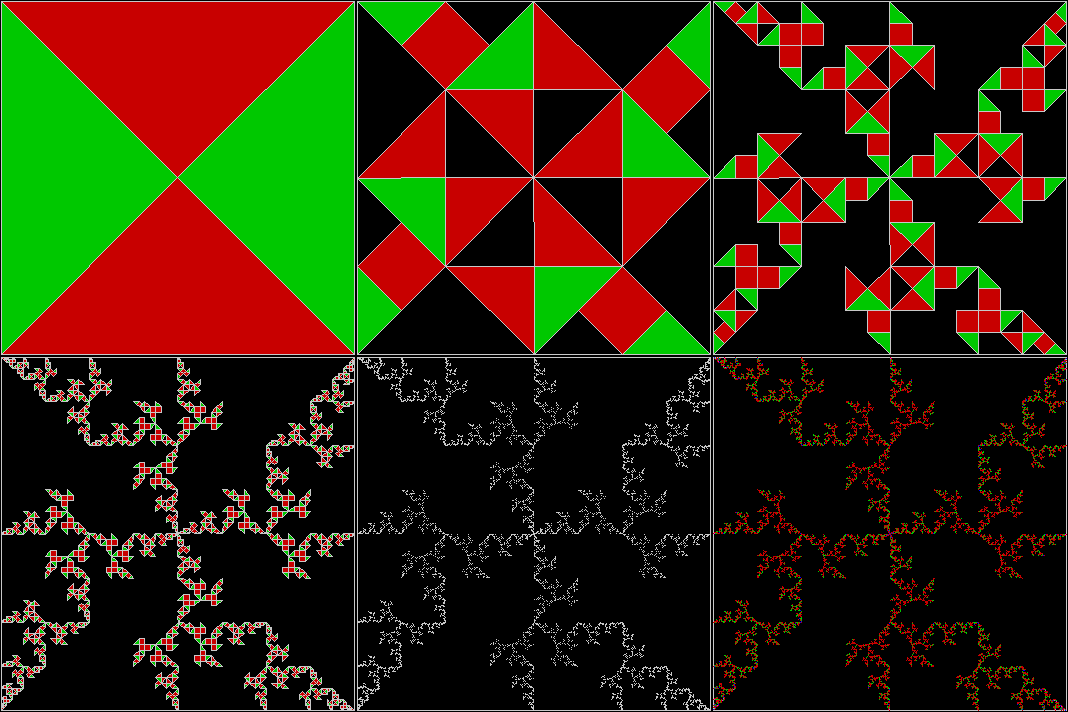
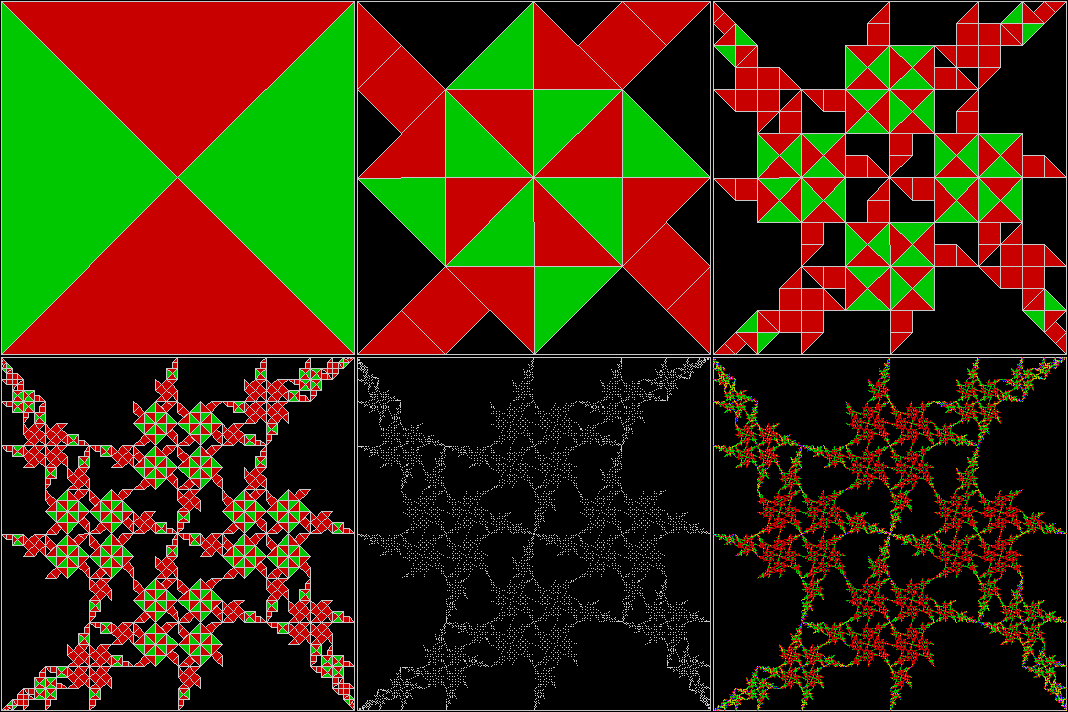
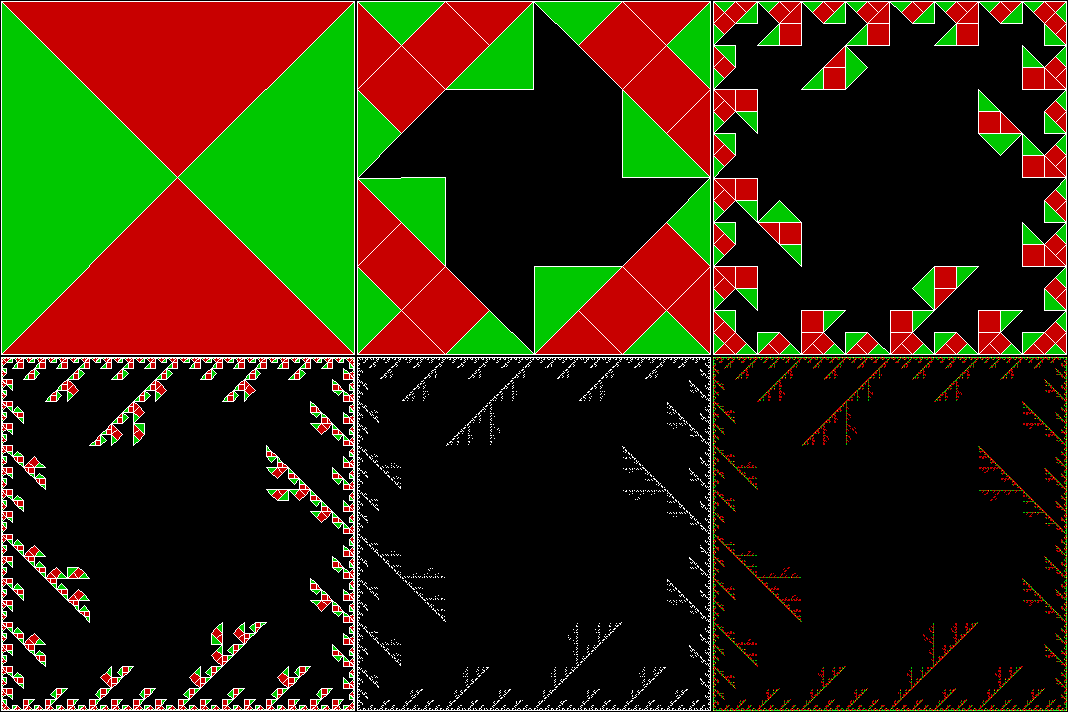
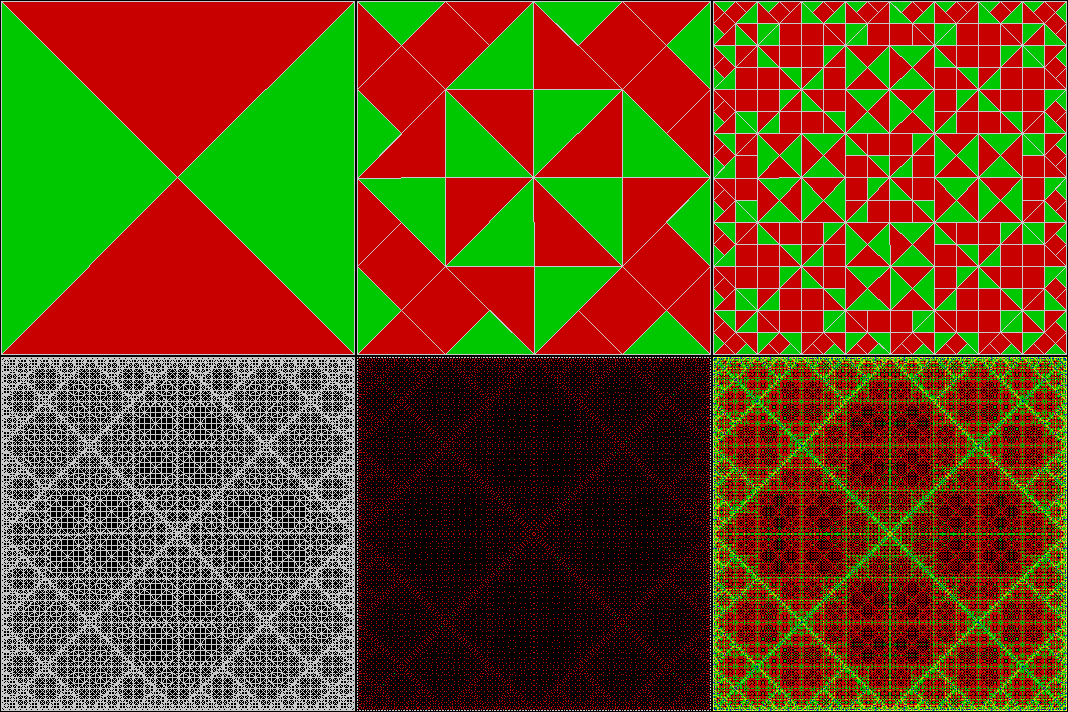
A square can be divided into four right triangles. A right triangle can be divided into a square and two more right triangles. These simple rules, applied again and again, can be used to create fractals, or shapes that echo themselves on smaller and smaller scales.

trisquare5

trisquare3

trisquare4

trisquare2

trisquare6

trisquare7

trisquare1