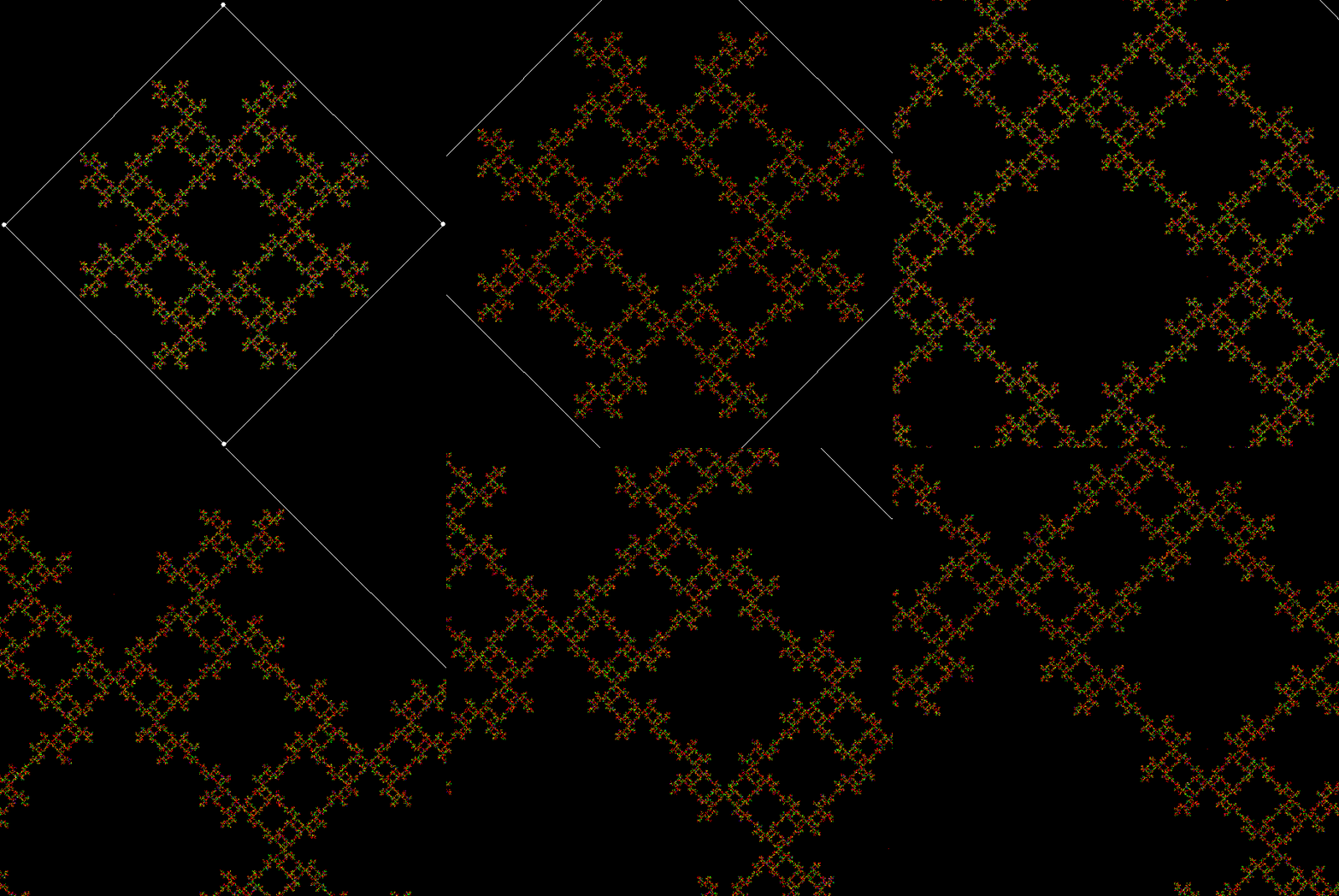
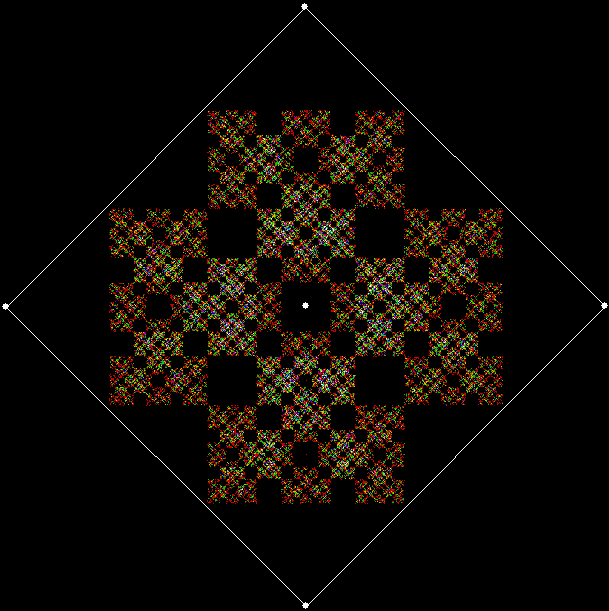
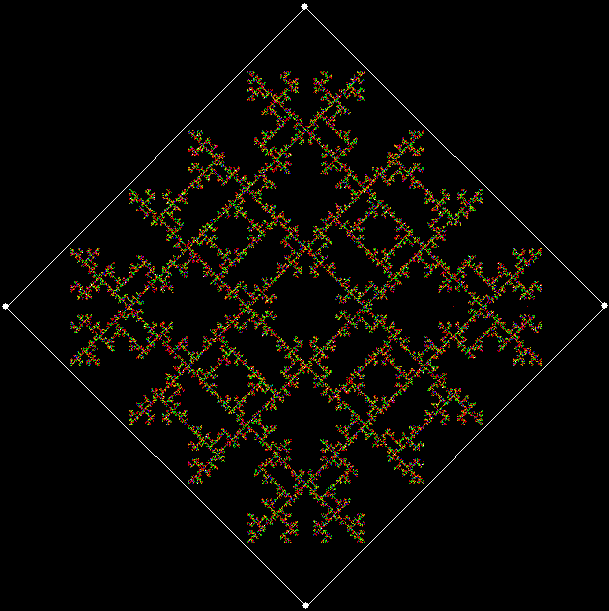
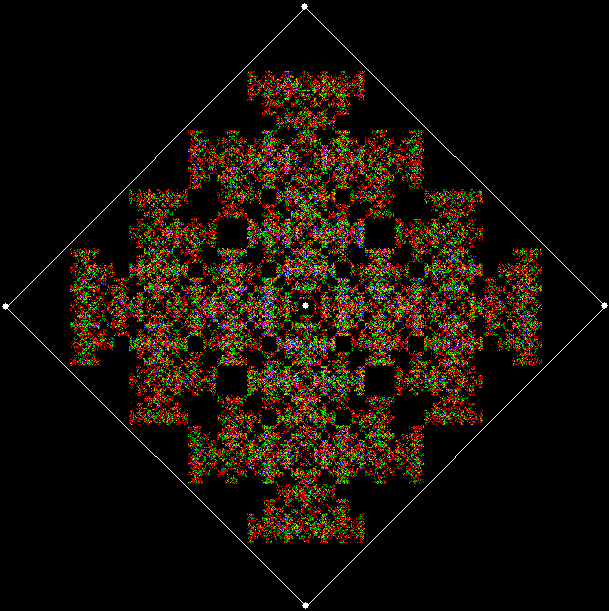
The Art Grows Onda

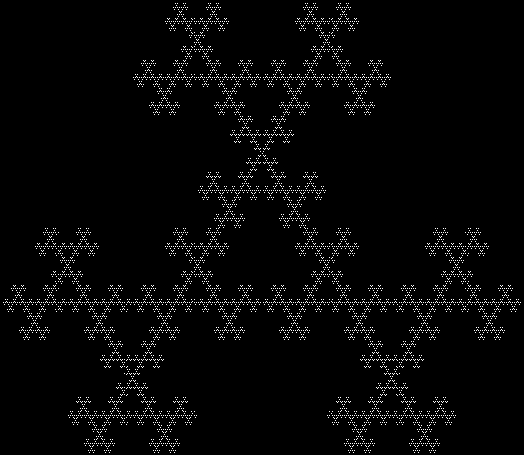
Anyone interested in recreational mathematics should seek out three compendiums by Ian Stewart: Professor Stewart’s Cabinet of Mathematical Curiosities (2008), Professor Stewart’s Hoard of Mathematical Treasures (2009) and Professor Stewart’s Casebook of Mathematical Mysteries (2014). They’re full of ideas and puzzles and are excellent introductions to the scope and subtlety of maths. I first came across Alexander’s Horned Sphere in one of them. I also came across this simpler shape that packs infinity into a finite area:

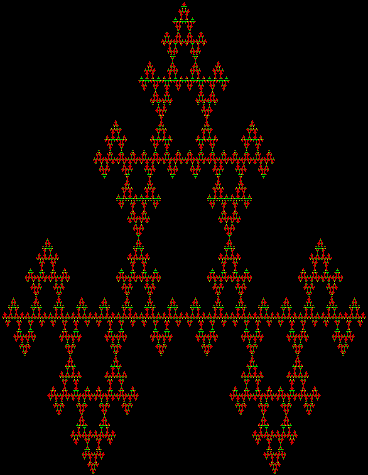
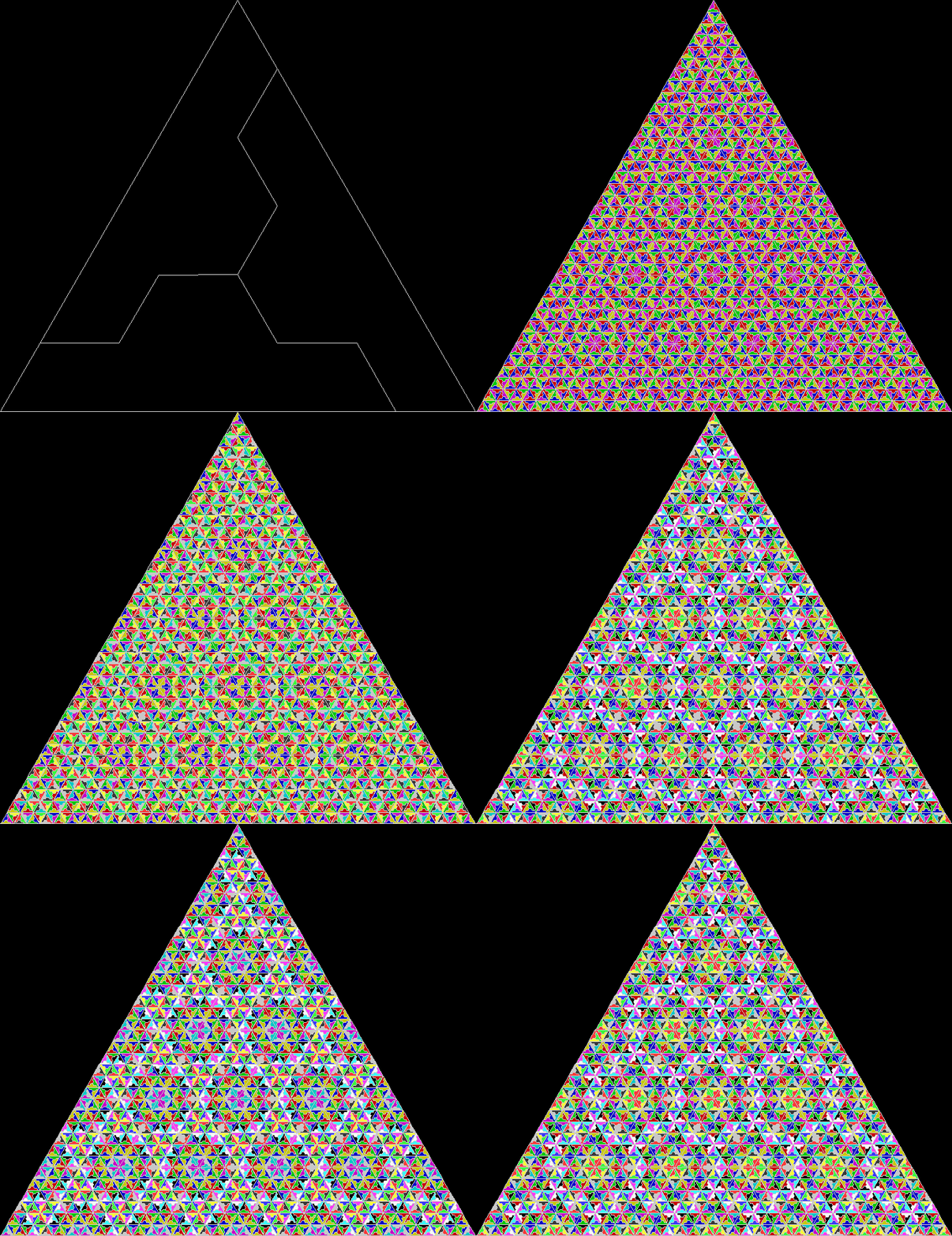
unicorn_triangle

I call it a horned triangle or unicorn triangle and it reminds me of a wave curling over, like Katsushika Hokusai’s The Great Wave off Kanagawa (c. 1830) (“wave” is unda in Latin and onda in Spanish).
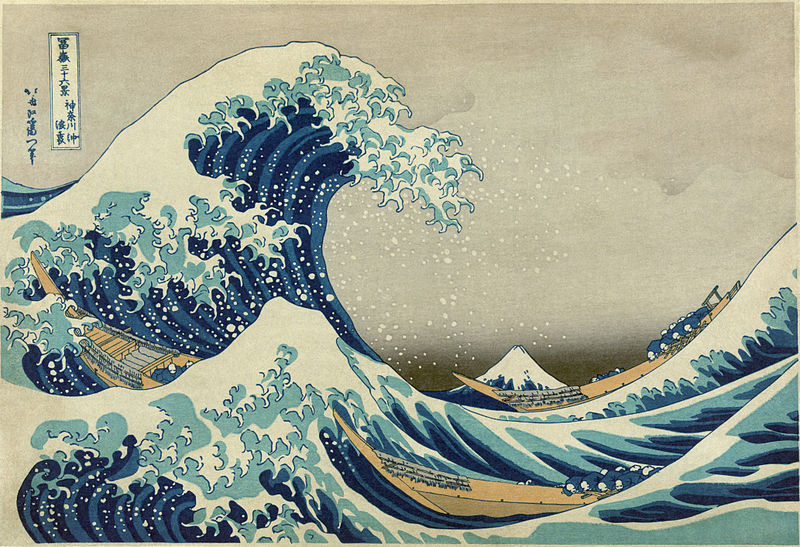
The Great Wave off Kanagawa by Katsushika Hokusai (1760–1849)

The Great Wave off Kanagawa by Katsushika Hokusai (1760–1849)

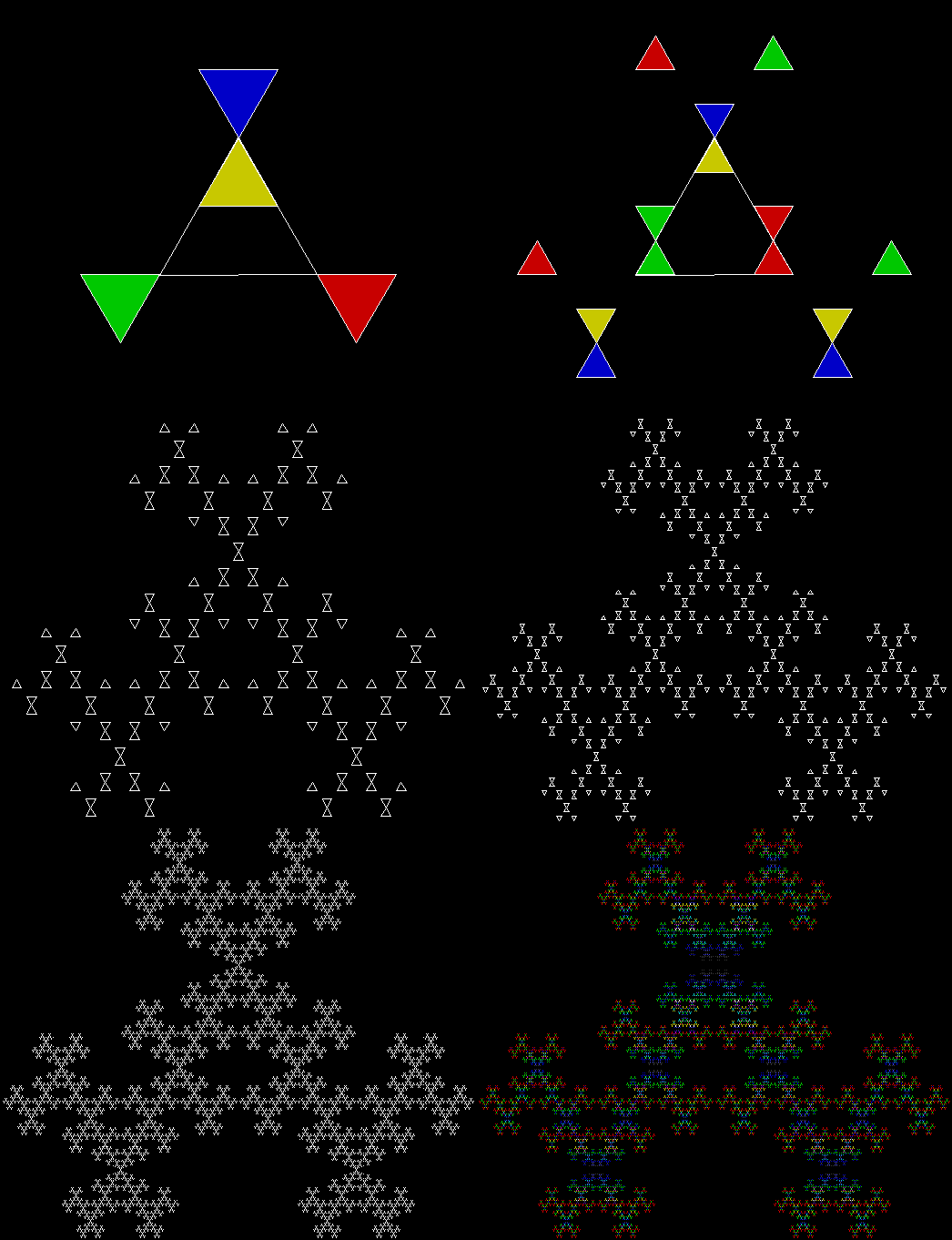
To construct the unicorn triangle, you take an equilateral triangle with sides of length 1 and erect a triangle with sides of length 0.5 on one of its corners. Then on the corresponding corner of the new triangle you erect a triangle with sides of length 0.25. And so on, for ever.
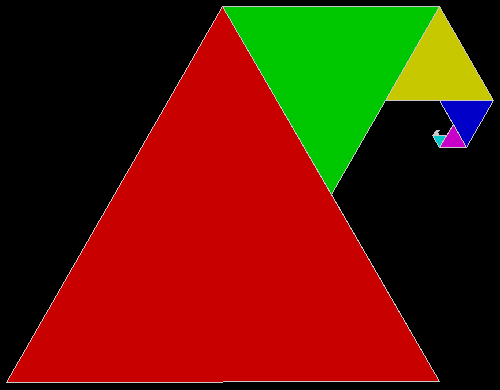
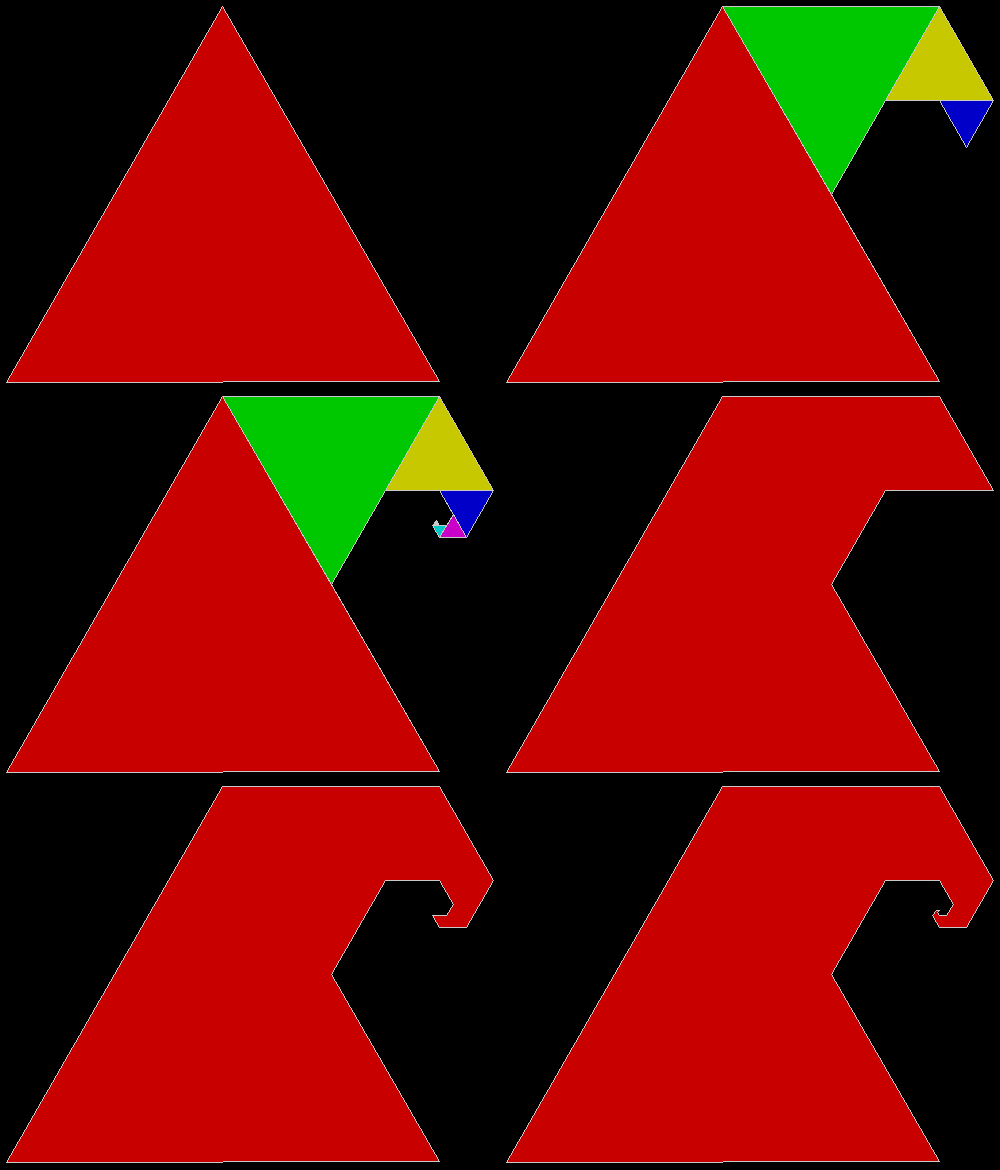
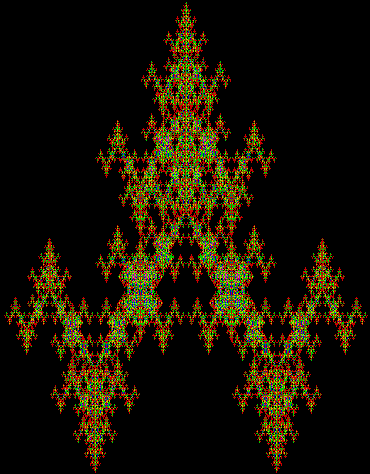
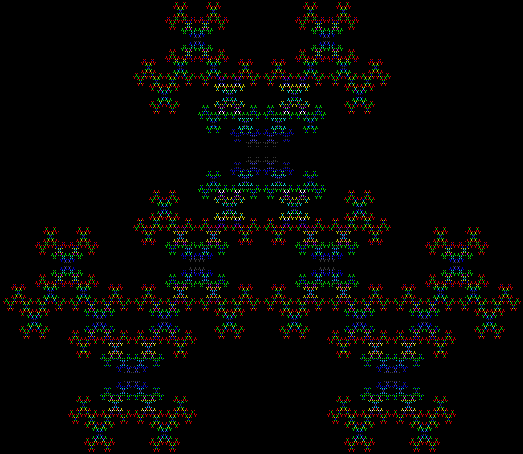
unicorn_multicolor

unicorn_animated

When you double the sides of a polygon, you quadruple the area: a 1×1 square has an area of 1, a 2×2 square has an area of 4. Accordingly, when you halve the sides of a polygon, you quarter the area: a 1×1 square has an area of 1, a 0.5 x 0.5 square has an area of 0.25 or 1/4. So if the original triangle of the unicorn triangle above has an area of 1 rather than sides of 1, the first triangle added has an area of 0.25 = 1/4, the next an area of 0.0625 = 1/16, and so on. The infinite sum is this:

1/4 + 1/16 + 1/256 + 1/1024 + 1/4096 + 1/16384…

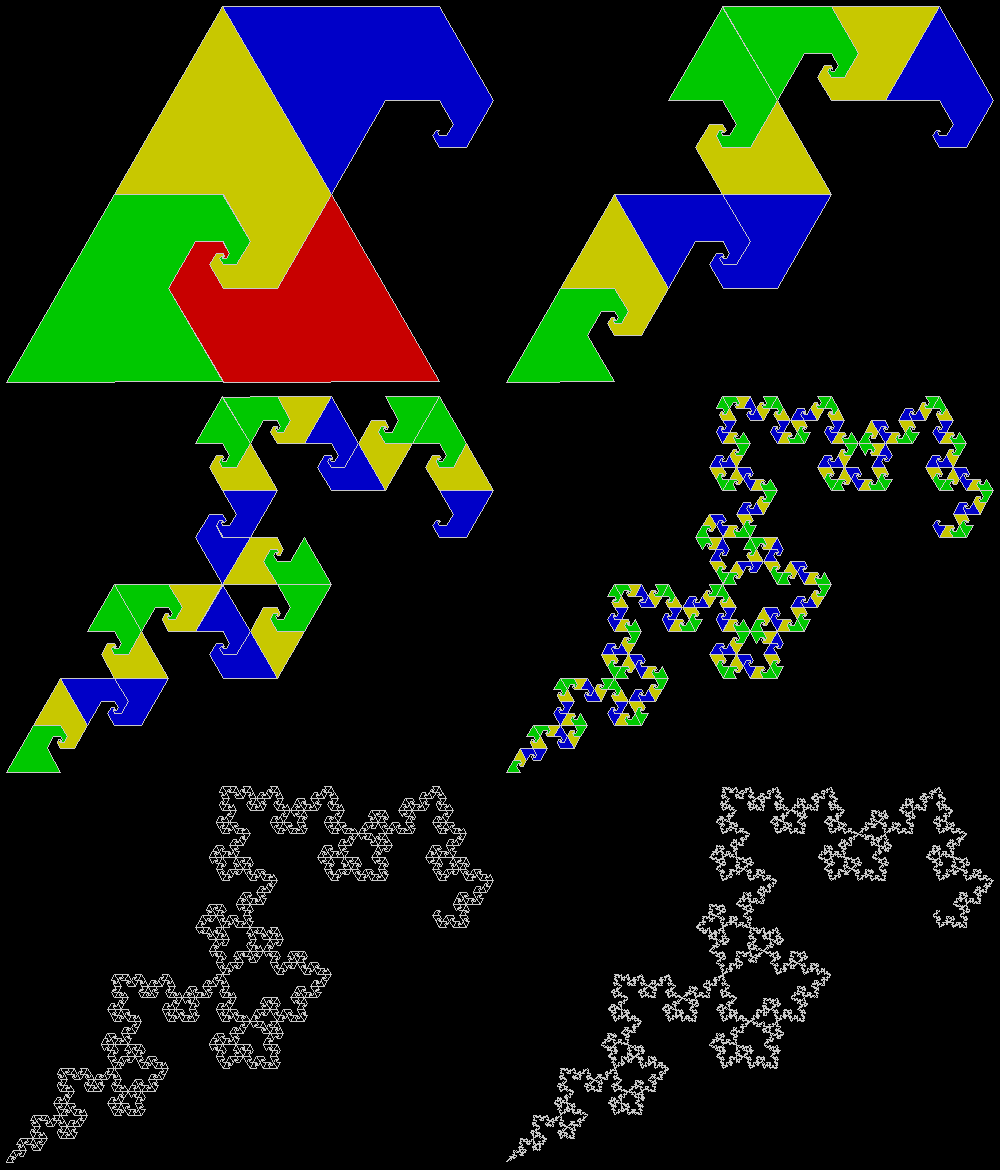
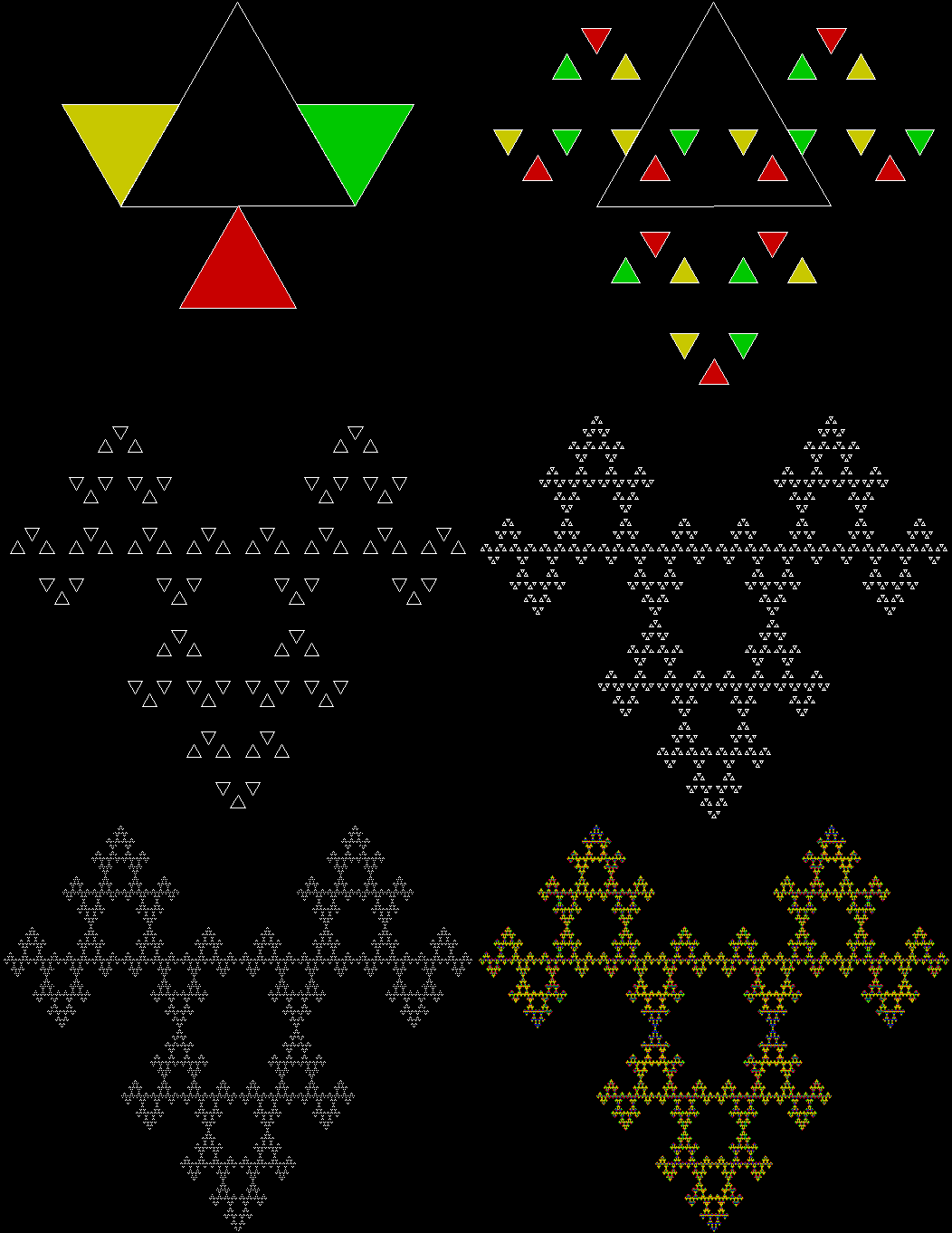
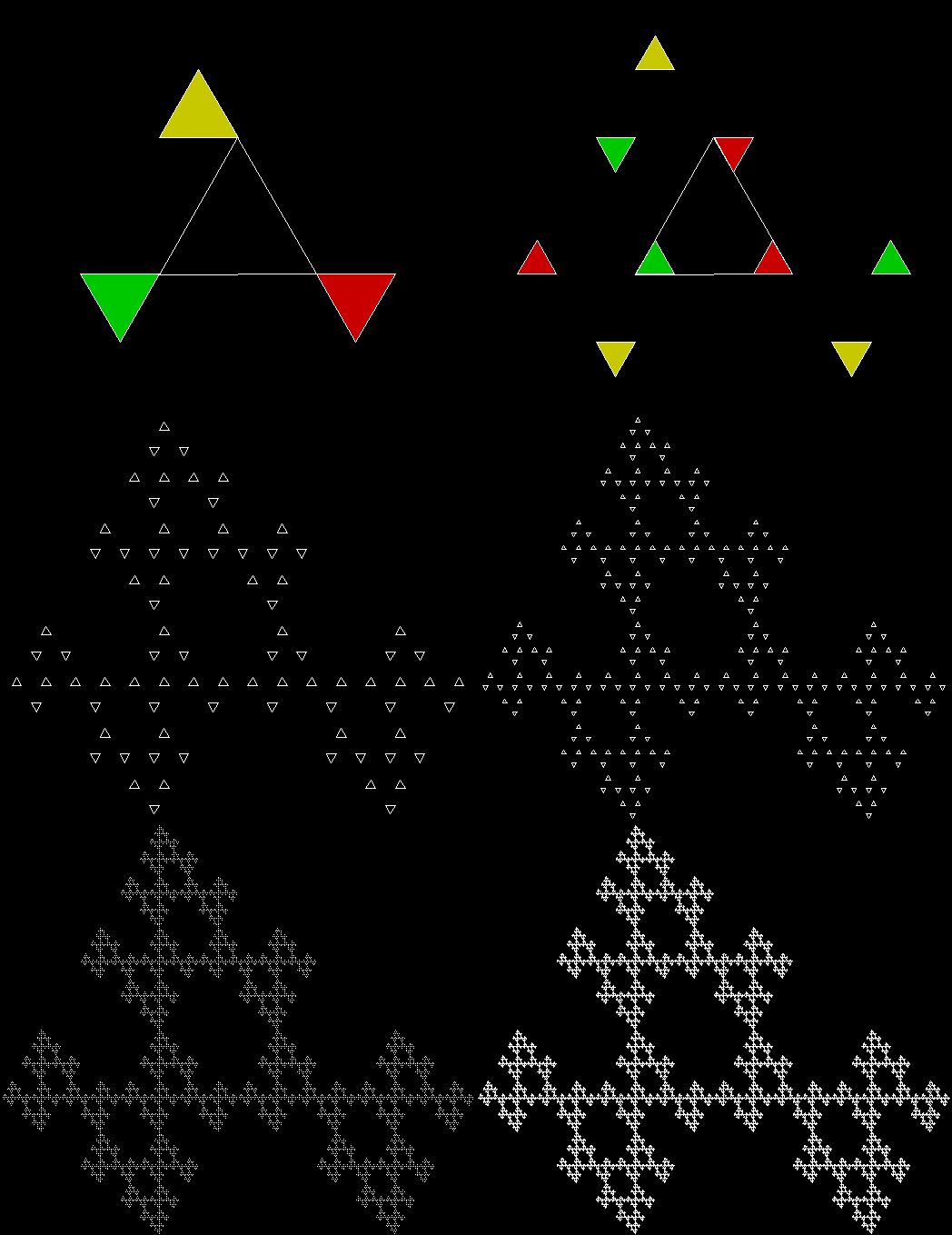
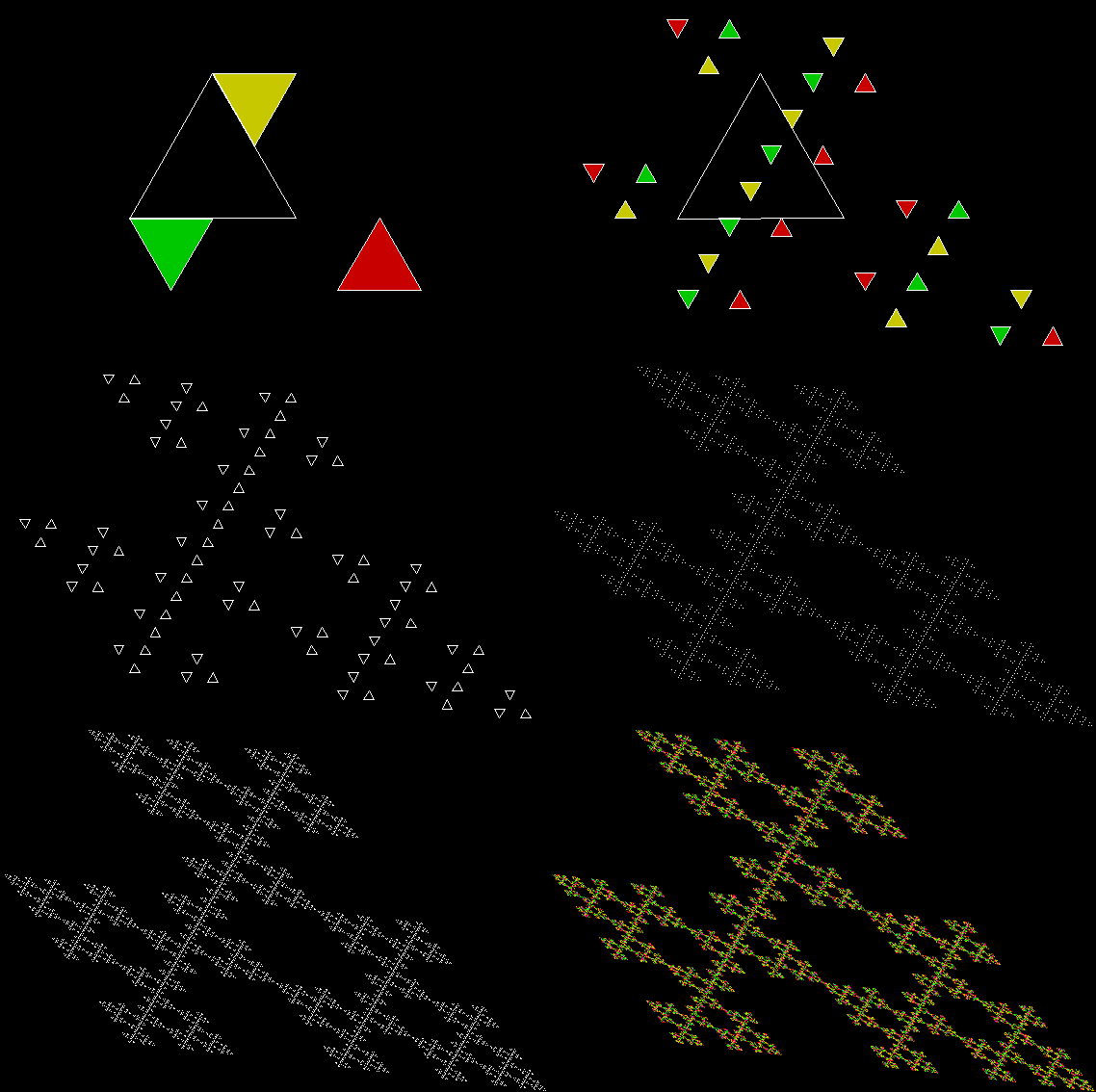
Which equals 1/3. This becomes important when you see the use made of the shape in Stewart’s book. The unicorn triangle is a rep-tile, or a shape that can be divided into smaller copies of the same shape:
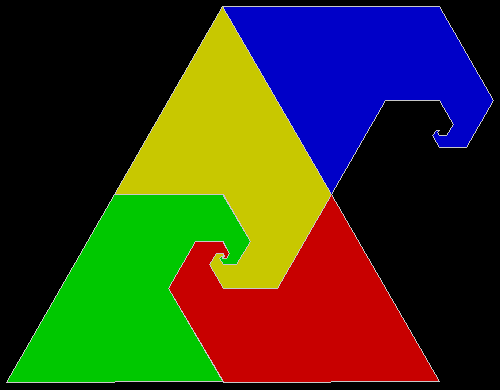

unicorn_reptile_static

unicorn_reptile

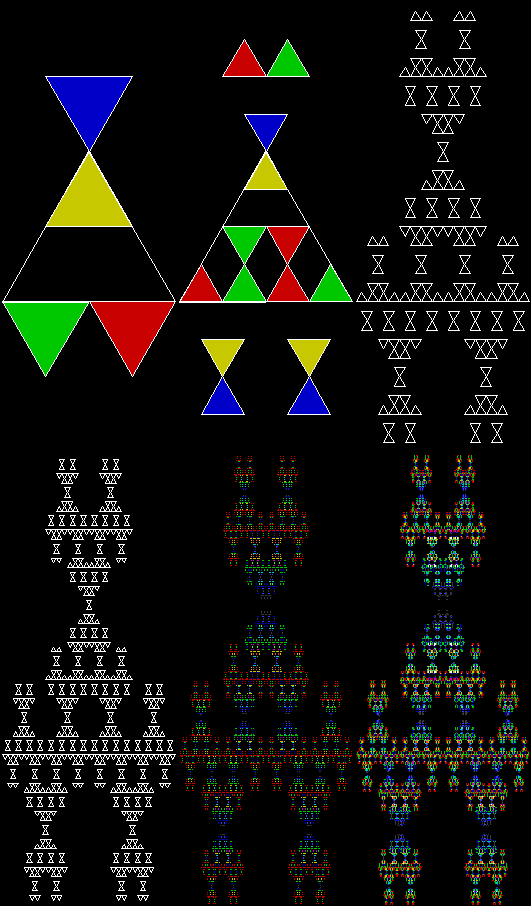
An equilateral triangle can be divided into four copies of itself, each 1/4 of the original area. If an equilateral triangle with an area of 4 is divided into three unicorn triangles, each unicorn has an area of 1 + 1/3 and 3 * (1 + 1/3) = 4.

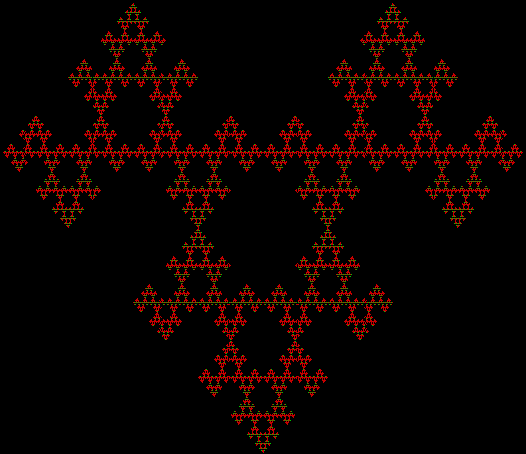
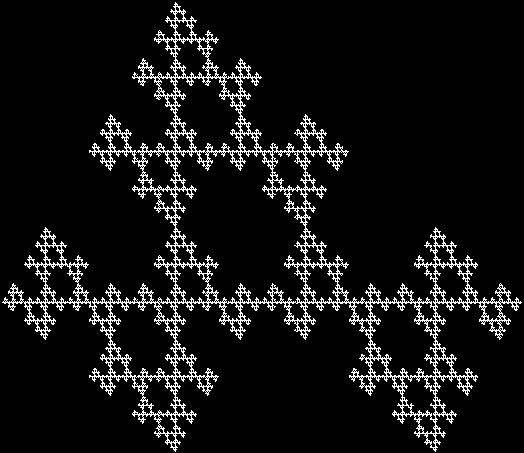
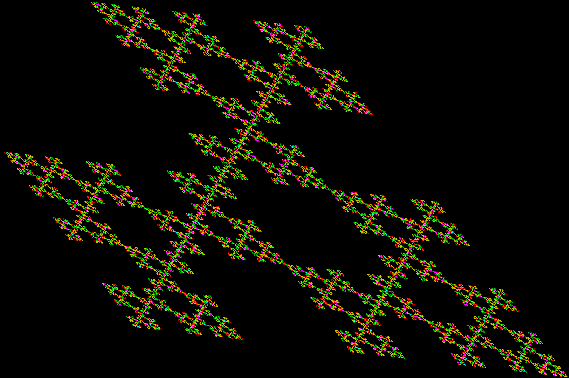
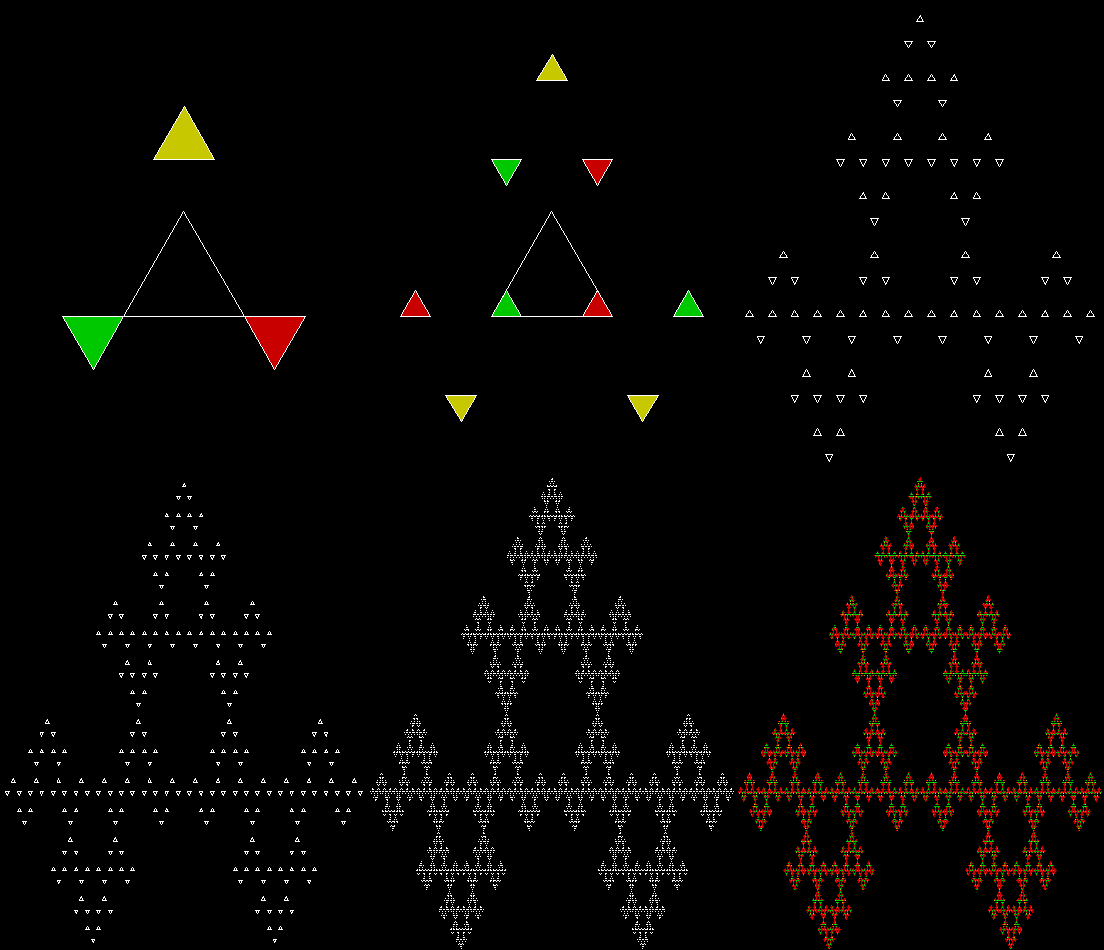
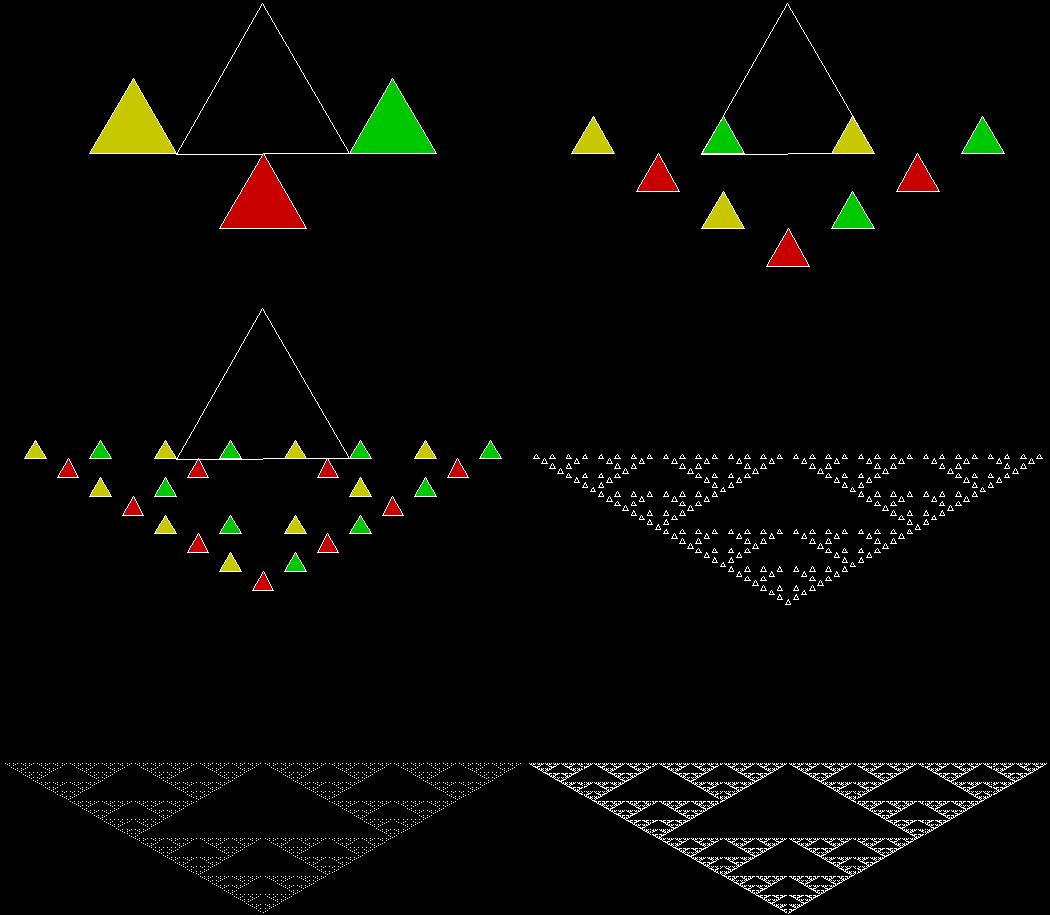
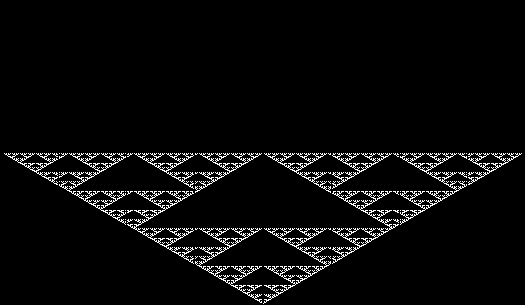
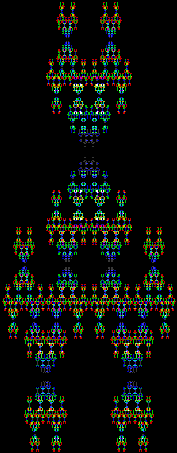
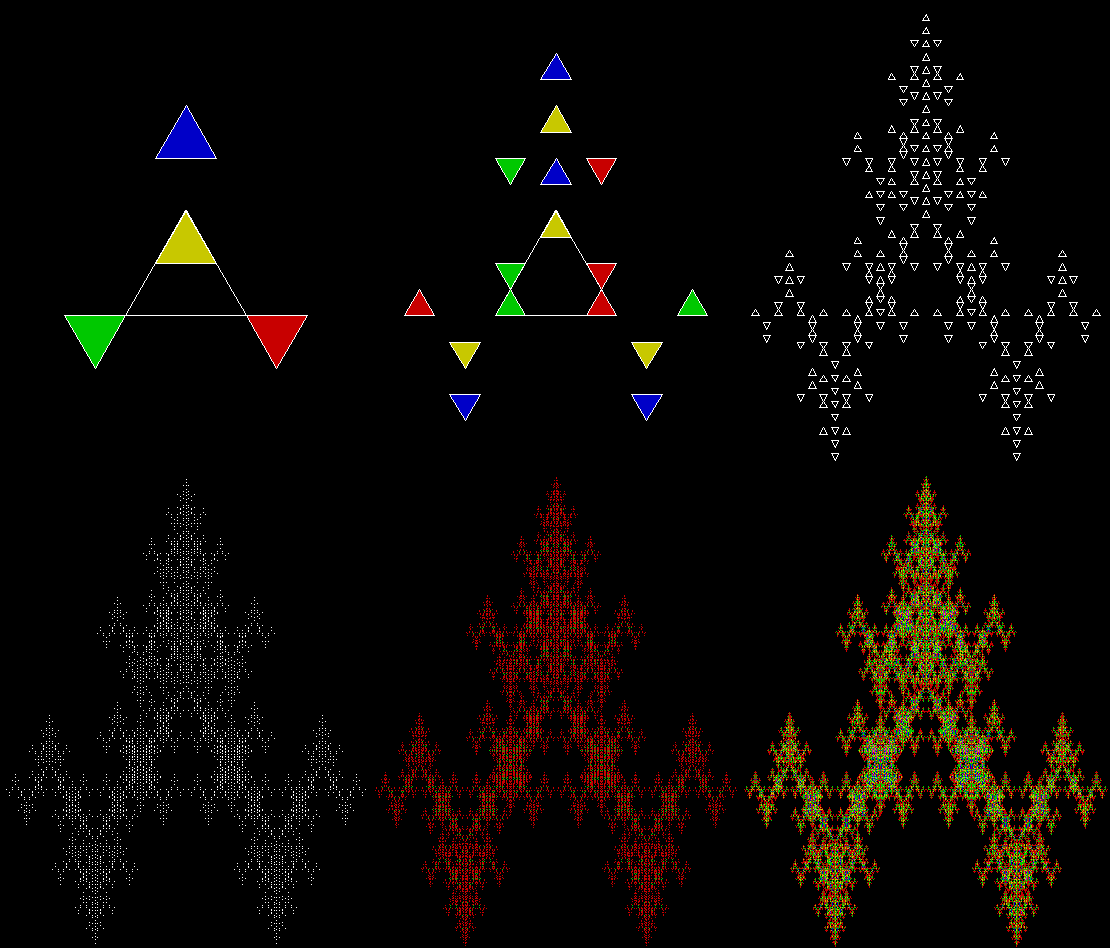
Because it’s a rep-tile, a unicorn triangle is also a fractal, a shape that is self-similar at smaller and smaller scales. When one of the sub-unicorns is dropped, the fractals become more obvious:
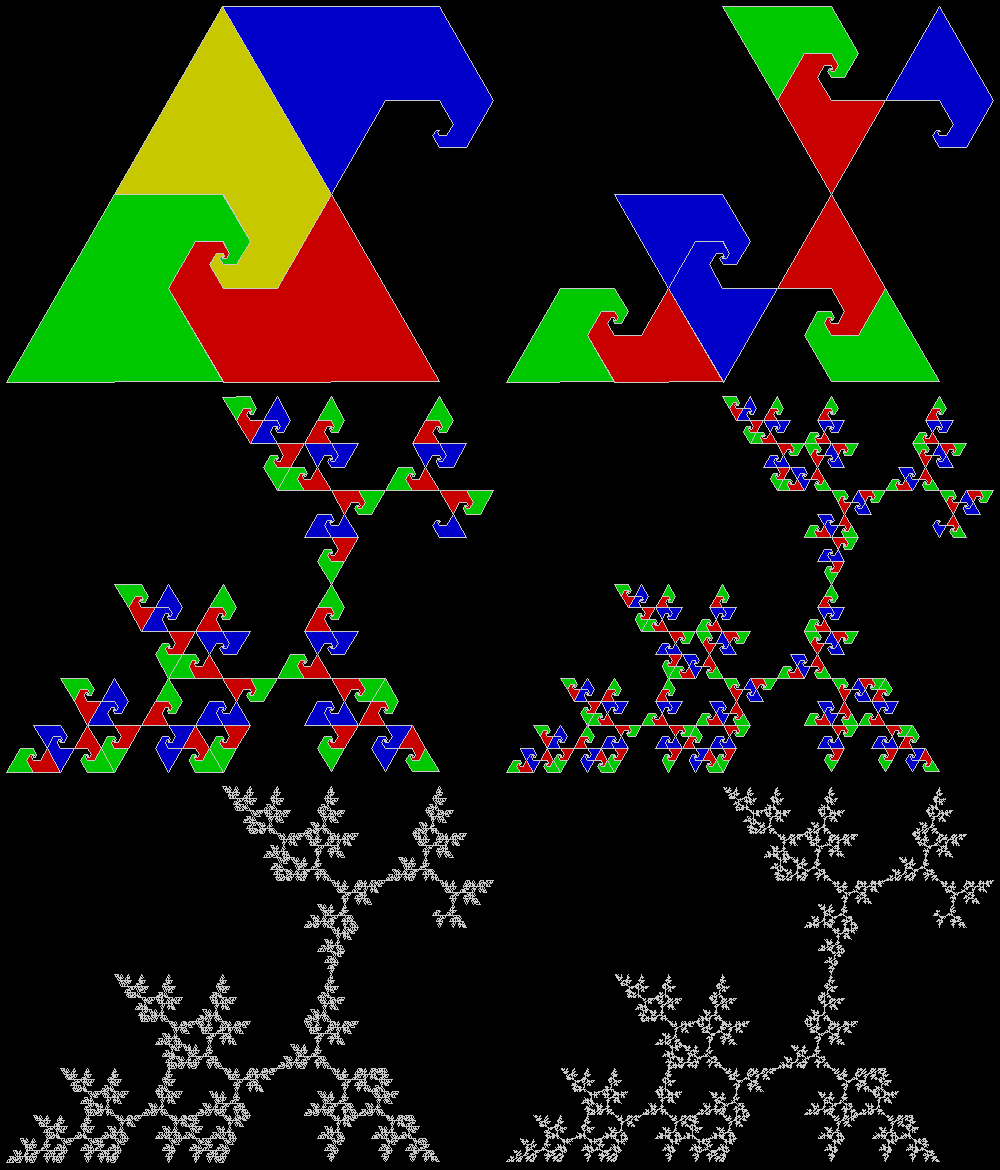
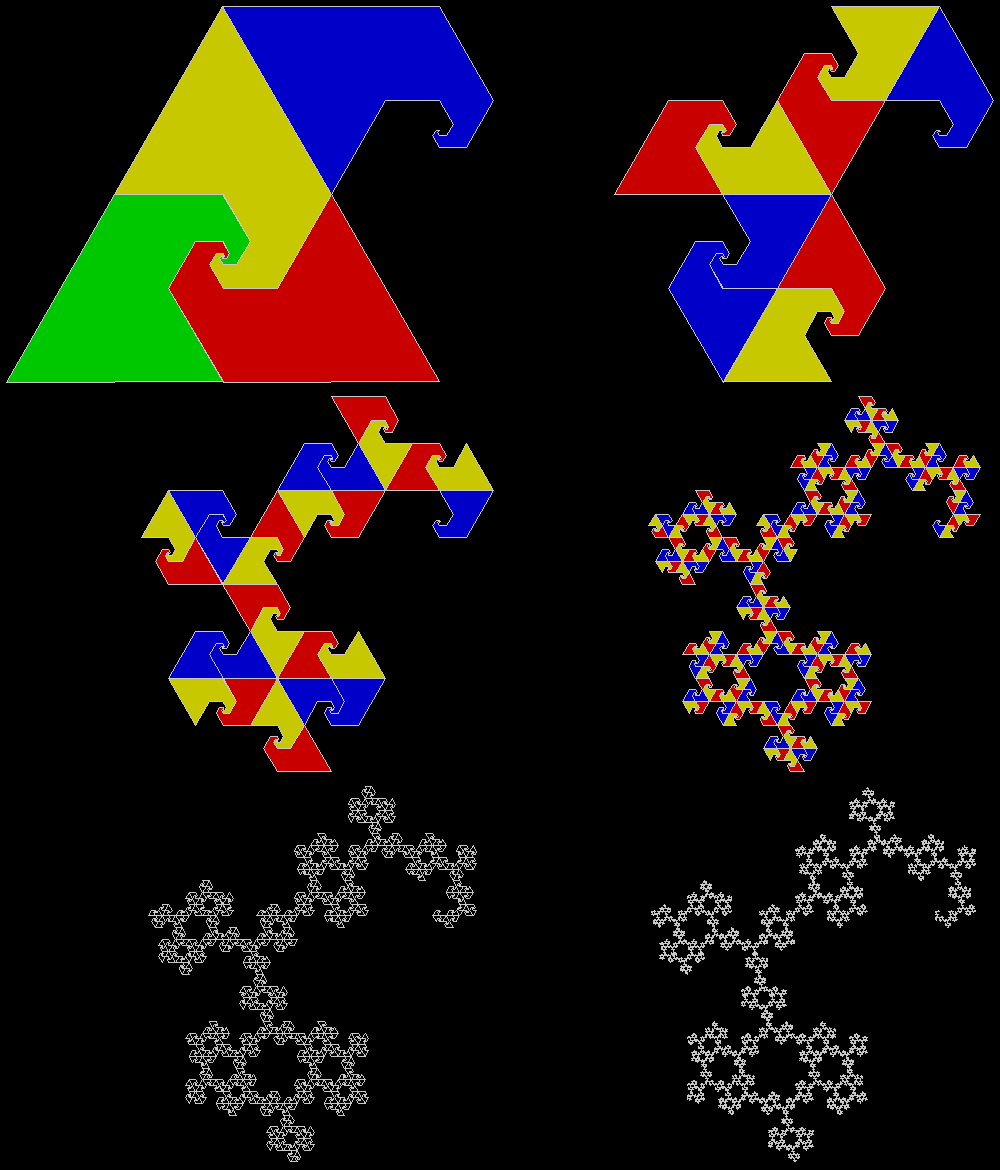
unicorn_fractal1


unicorn_fractal2


unicorn_fractal3


Elsewhere other-posted:
Rep-Tiles Revisited

Get Your Prox Off

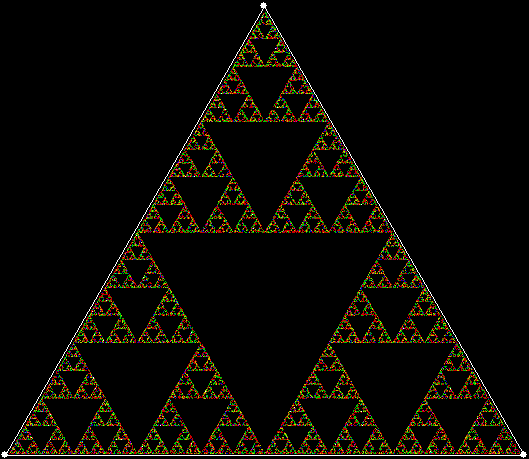
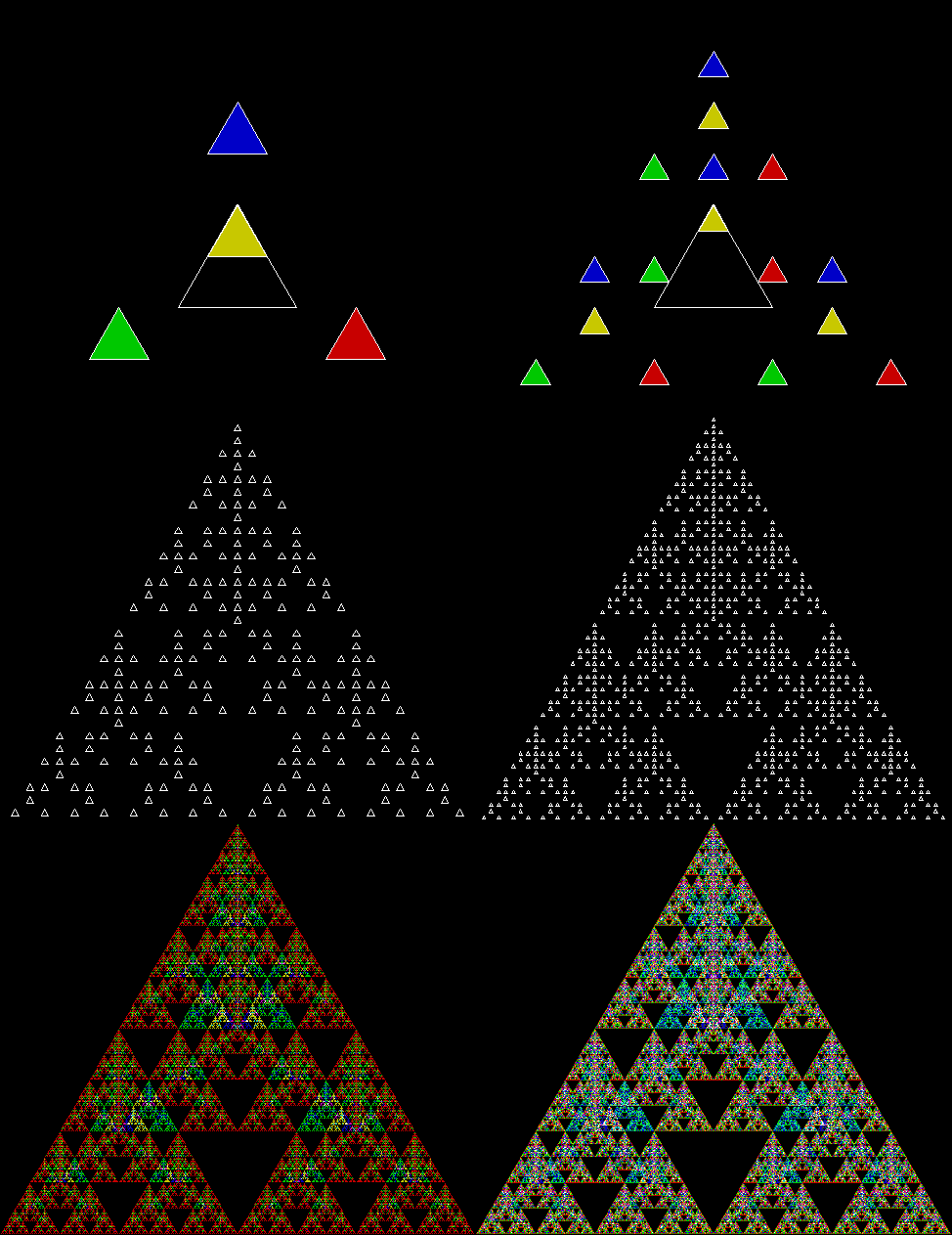
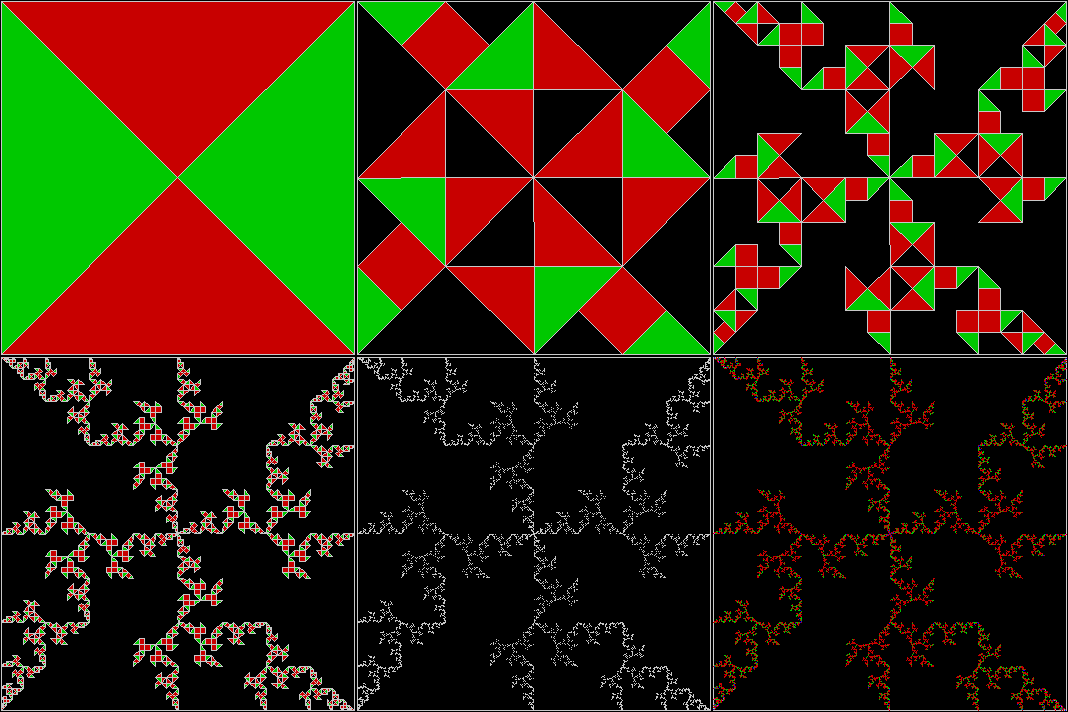
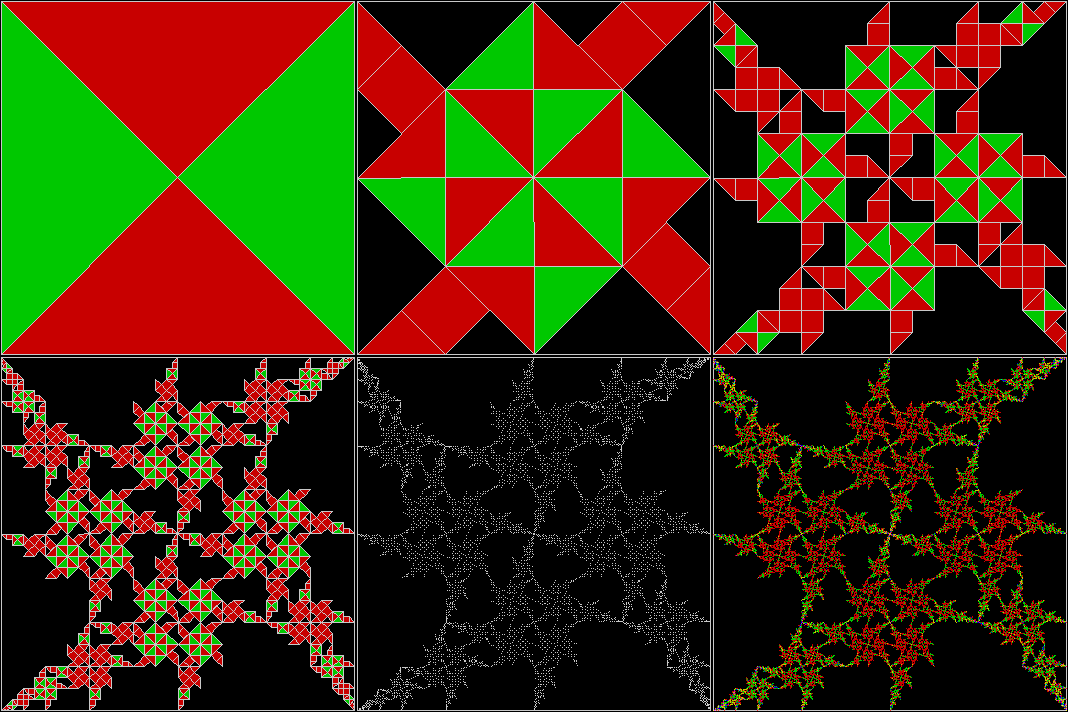
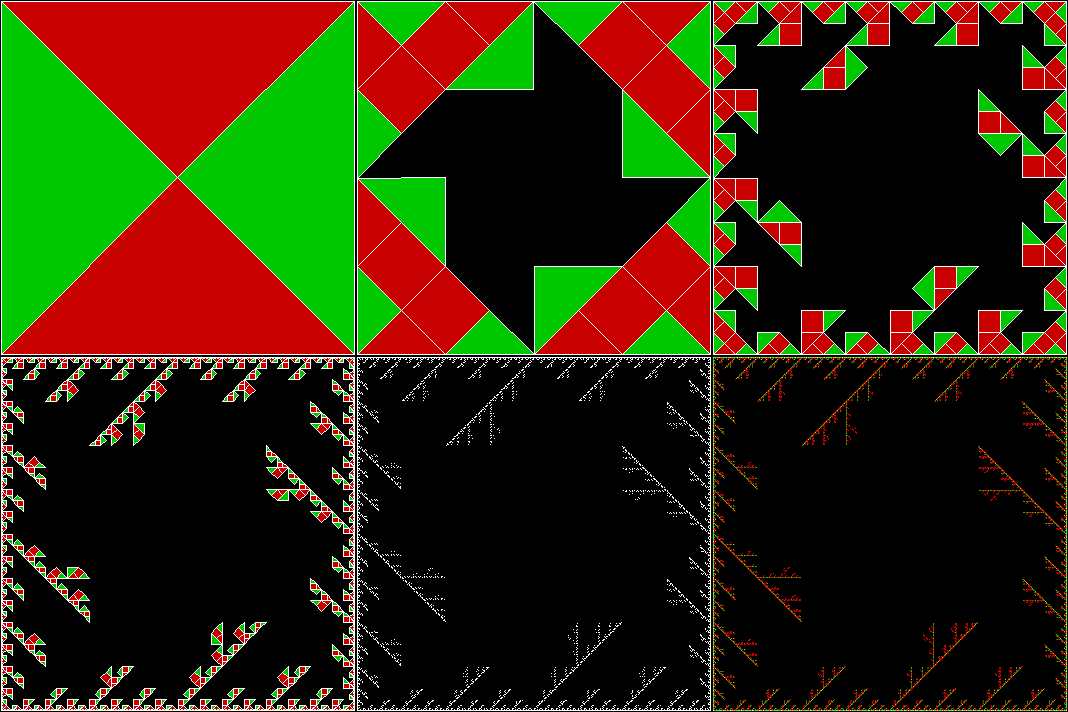
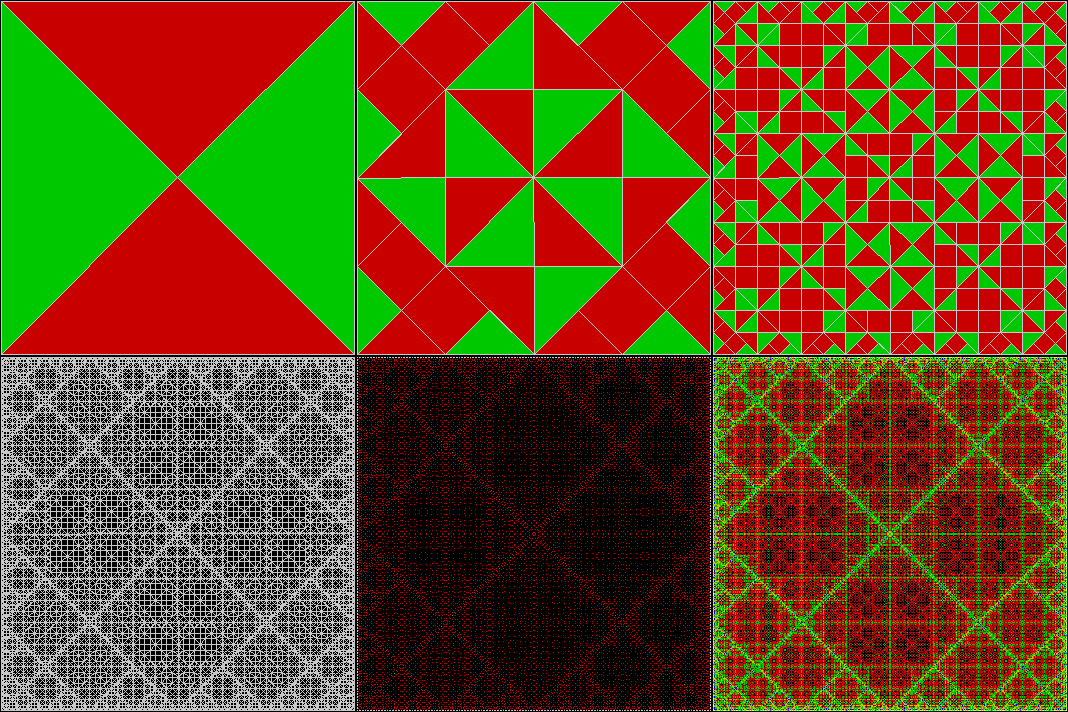
Create a triangle. Find a point somewhere inside it. Choose a corner at random and move halfway towards it. Mark the new point. Repeat the procedure: choose, move, mark. Repeat again and again. In time, a fractal will appear:
siertri

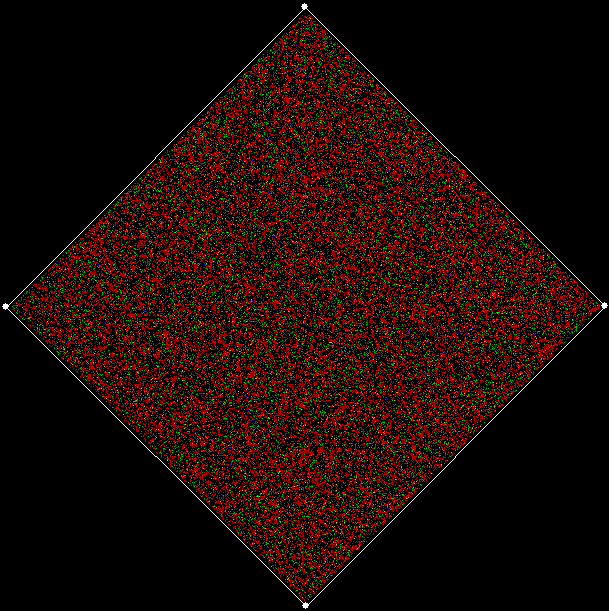
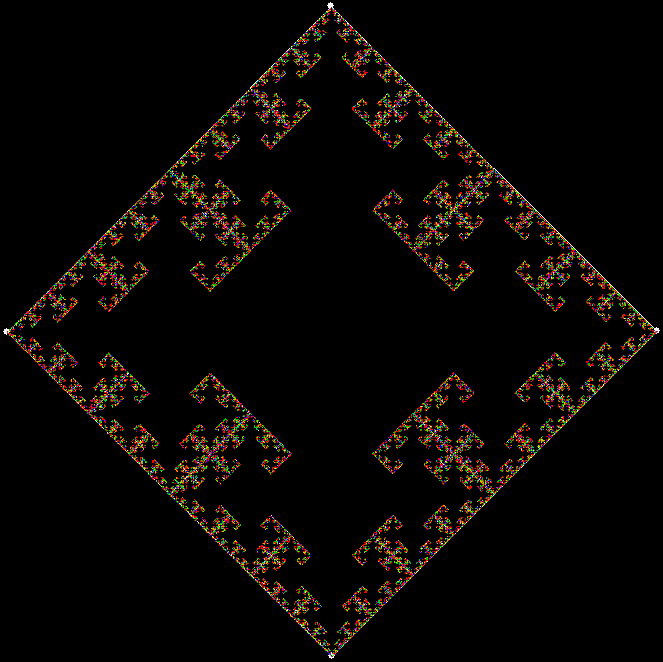
However, if you try the same thing with a square – choose a corner at random, move halfway towards it, mark the new point, repeat – no fractal appears. Instead, the points fill the interior of the square:

sierquad

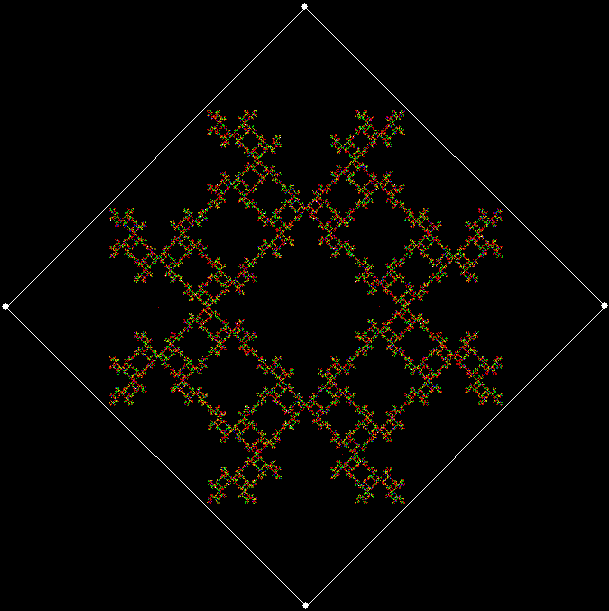
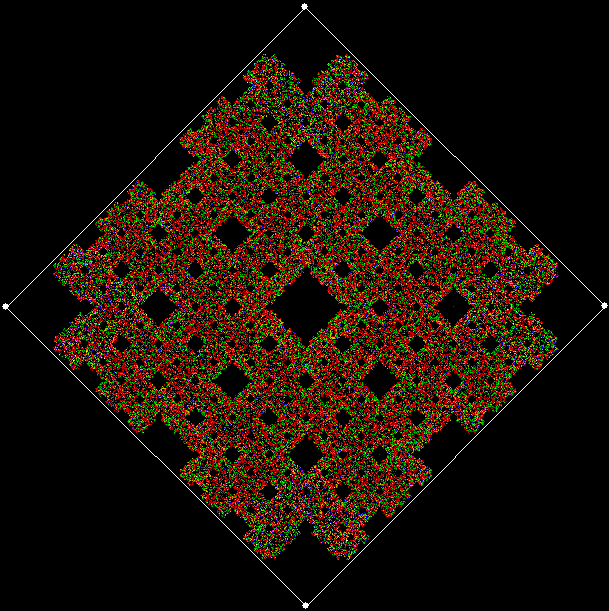
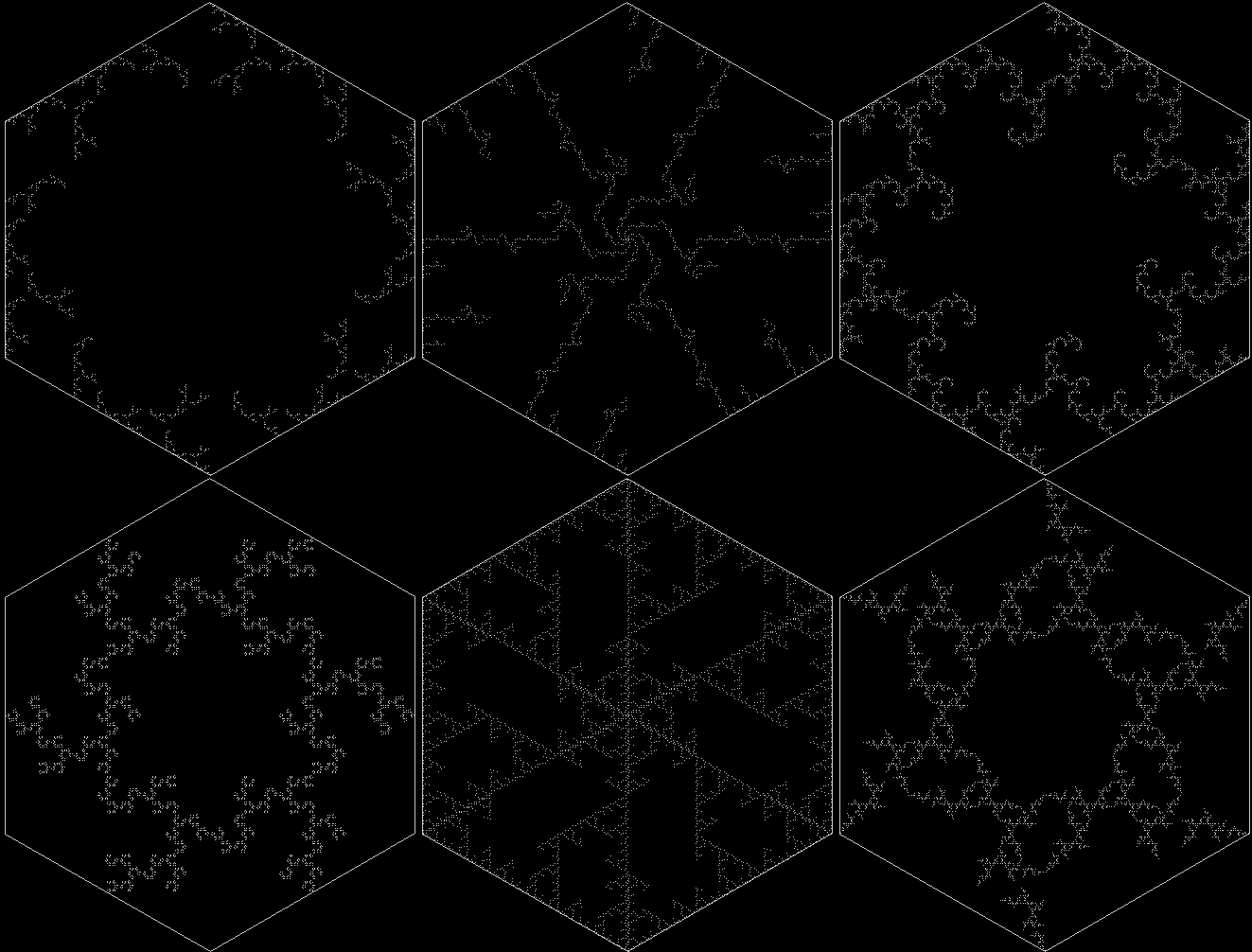
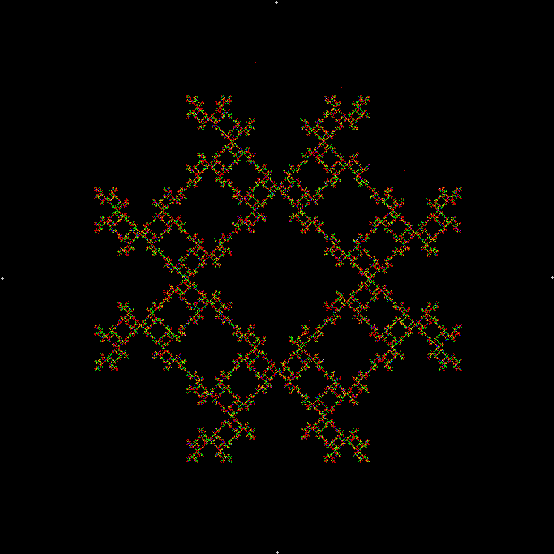
But what happens if you impose restrictions on the randomly chosen corner (or chorner)? Suppose you can’t choose the same corner twice in a row. If this rule is applied to the square, this fractal appears:

restrict4_T


restrict4_Tanim

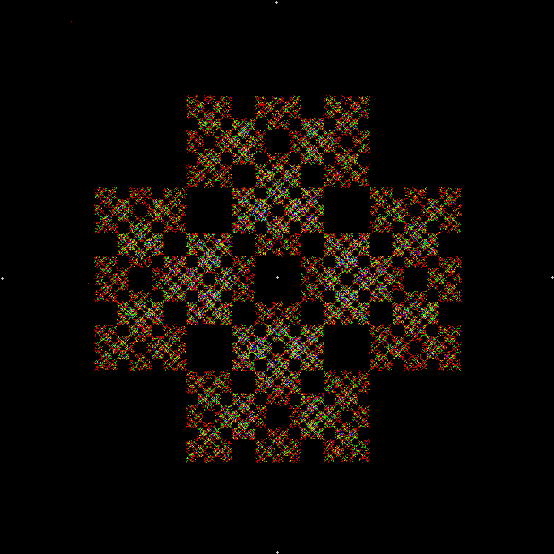
Now apply the no-corner-twice-in-a-row rule to a square that contains a central chorner. This fractal appears:

restrict4_Tc

And if the rule is that you can choose a corner twice in a row but not thrice? This fractal appears:

restrict4FT


restrict4FTc


Here is the rule is that a corner can’t be chosen if it was chosen two moves ago:

restrict4_3F

But what if the restriction is based not on how often or when a corner is chosen, but on its proximity, i.e. how near it is to the marked point? If the nearest corner can’t be chosen, the result is the same as the no-corner-twice-in-a-row rule:

prox4_1

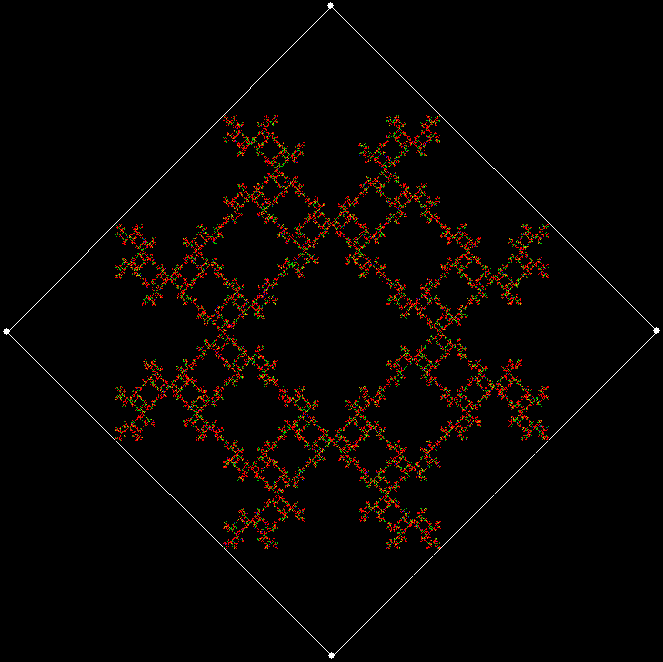
But if the second-nearest corner can’t be chosen, this fractal appears:

prox4_2

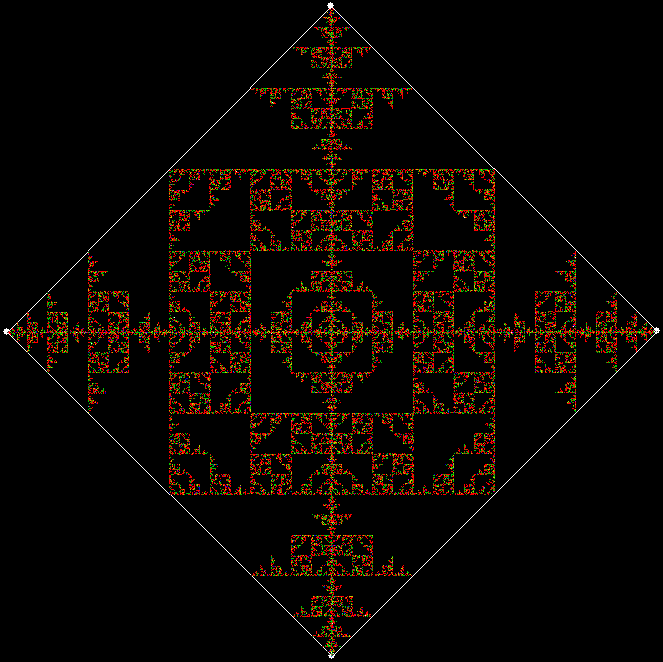
This is the fractal when the third-nearest corner can’t be chosen:

prox4_3

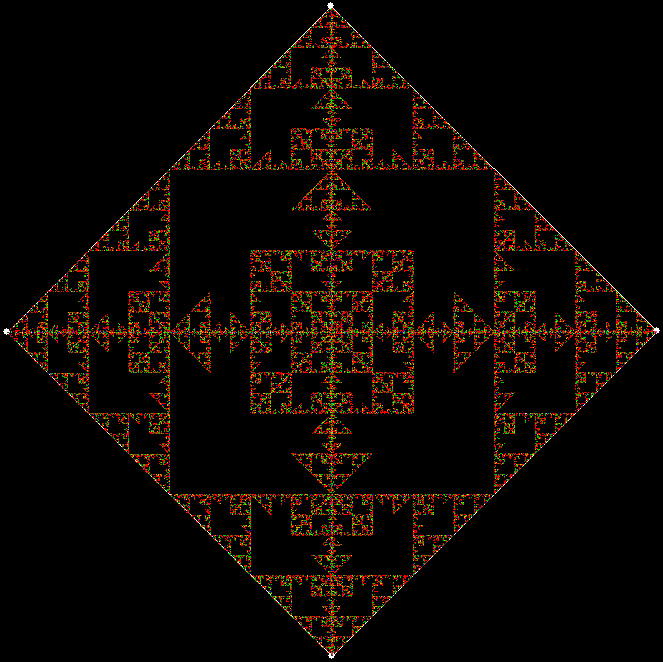
And this is the fractal when the fourth-nearest, or most distant, corner can’t be chosen:

prox4_4

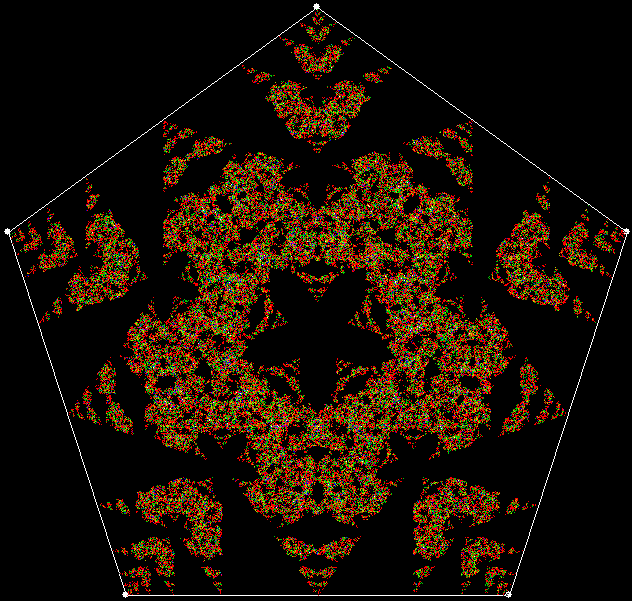
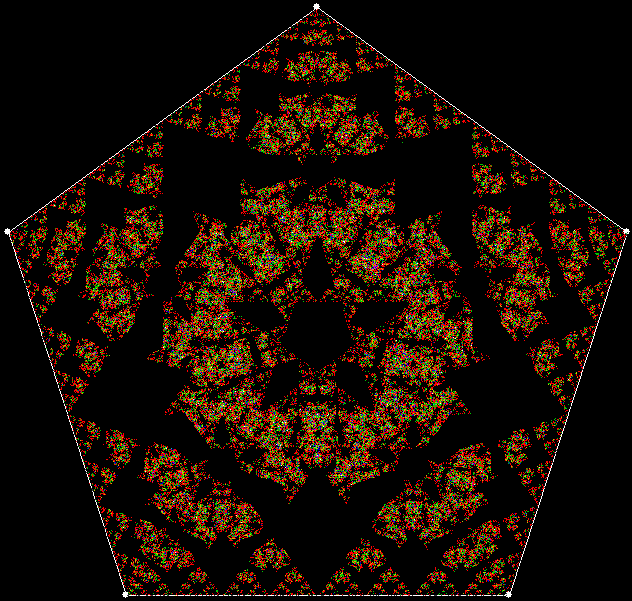
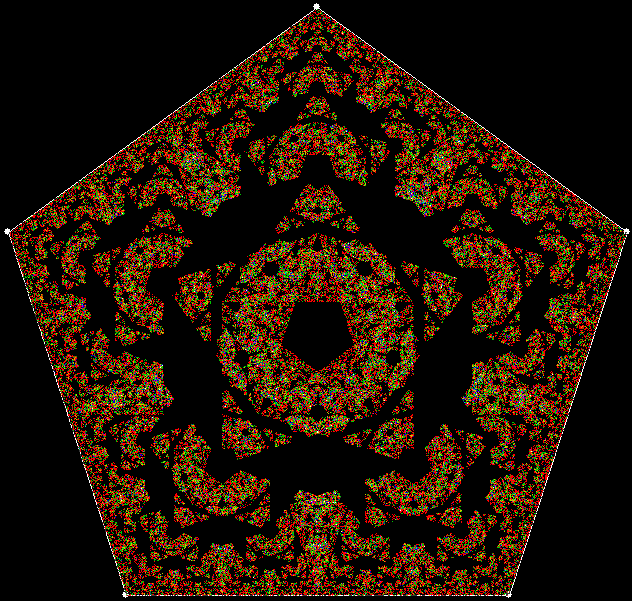
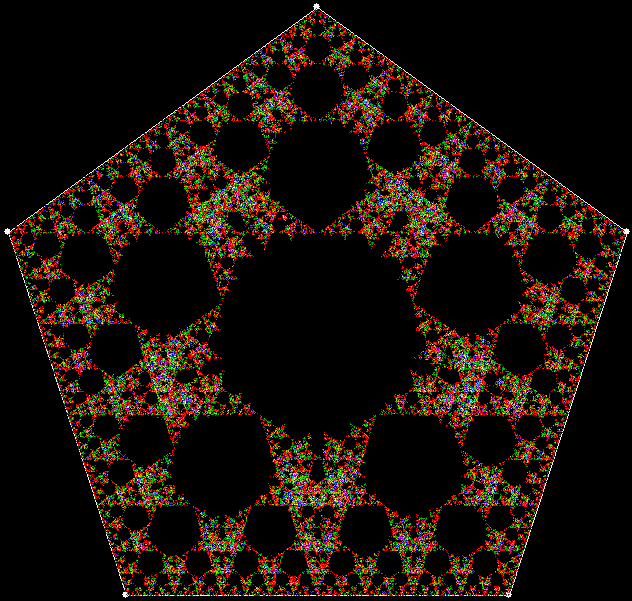
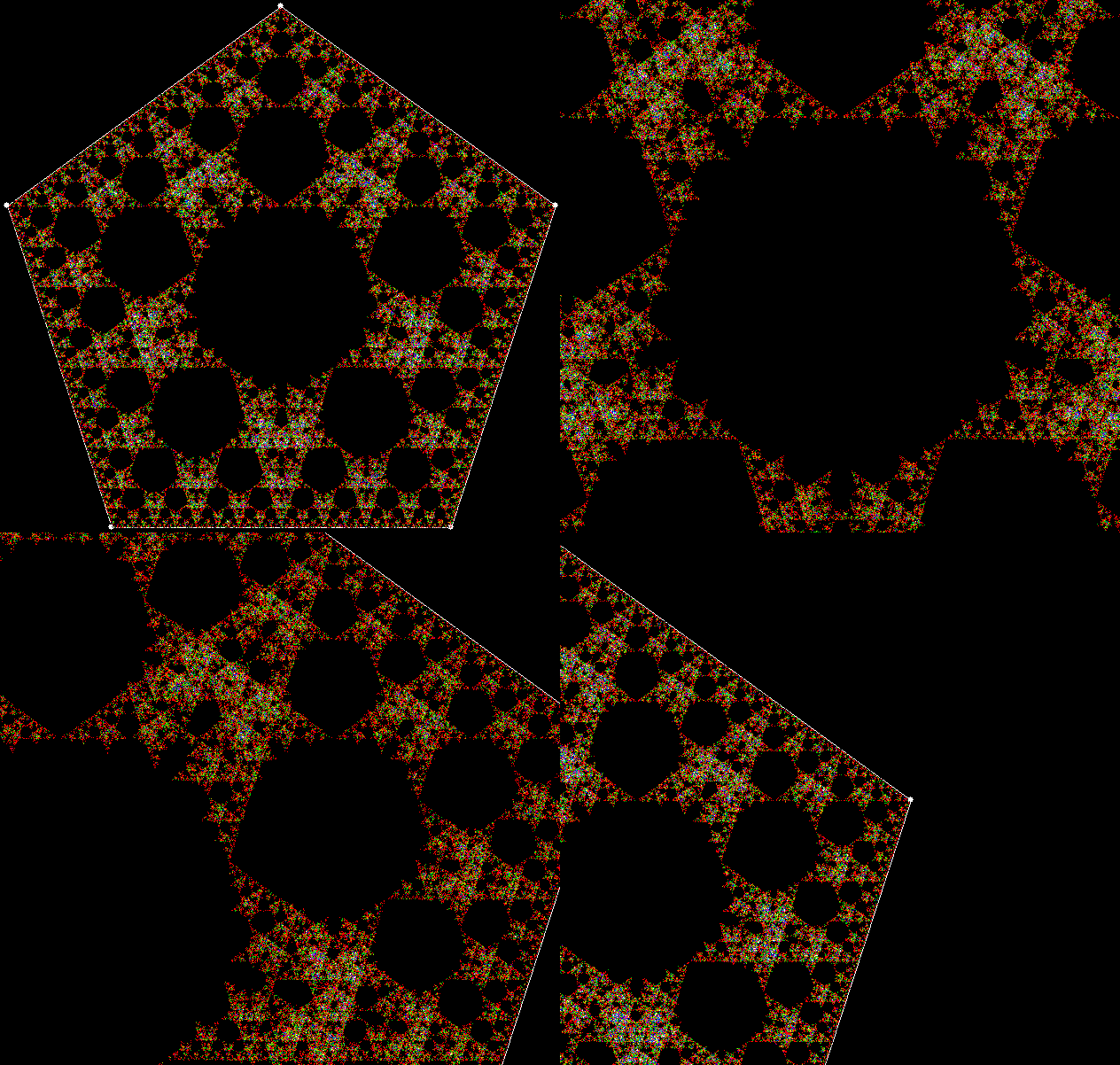
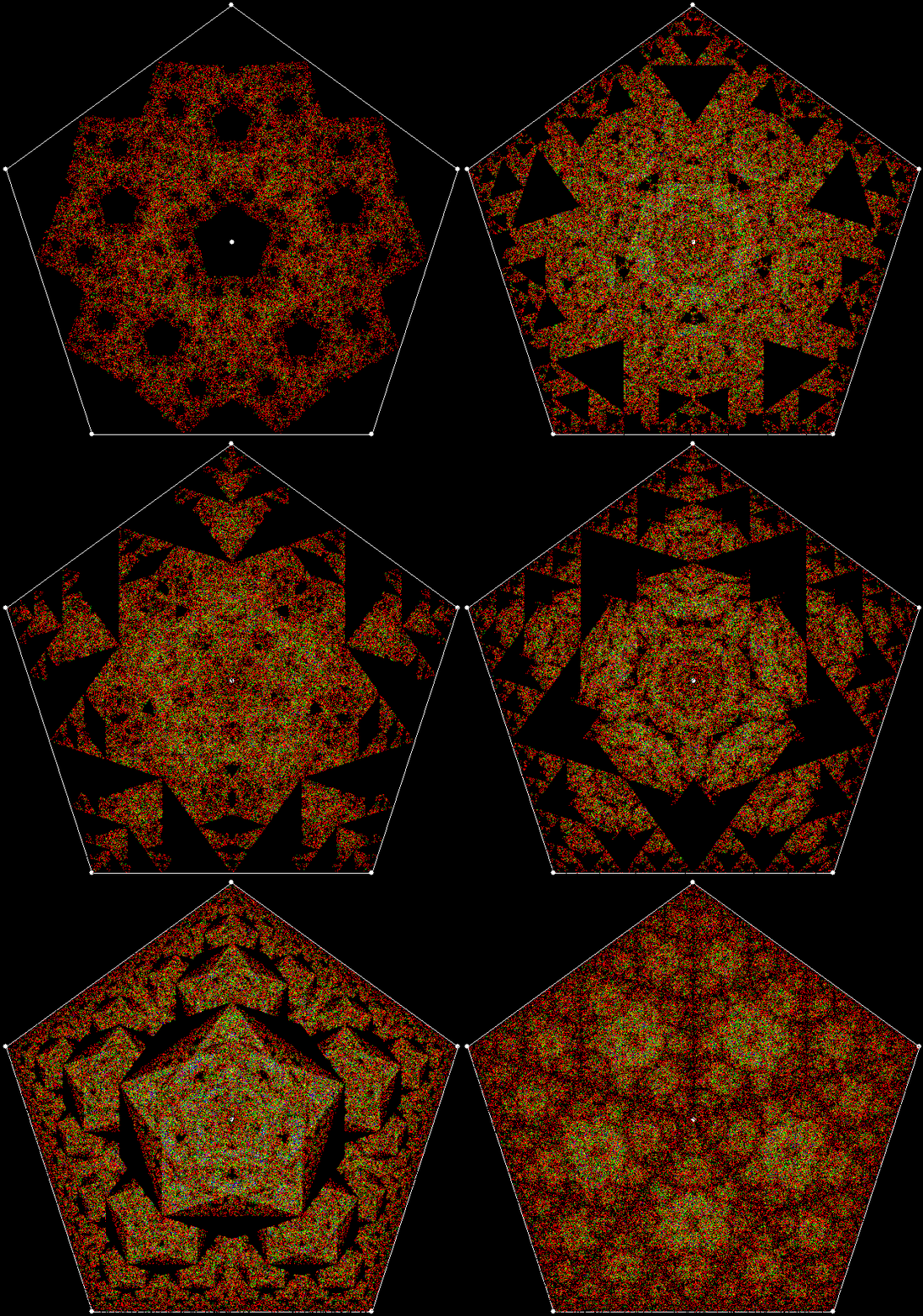
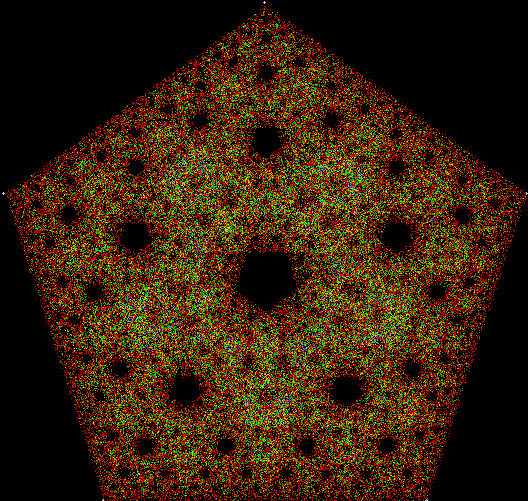
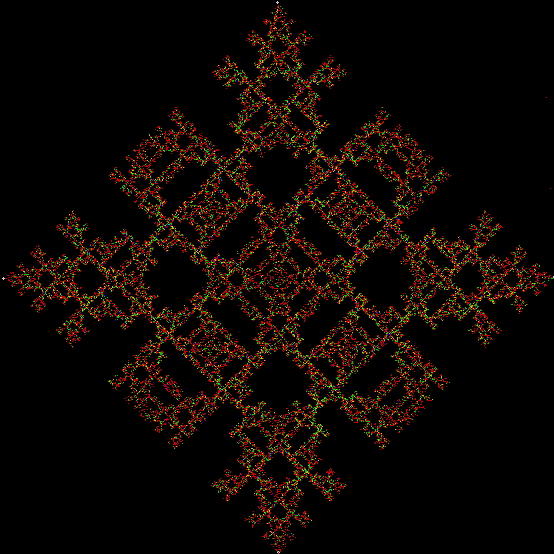
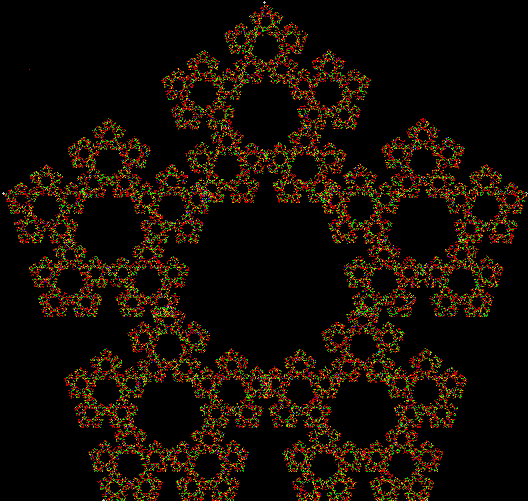
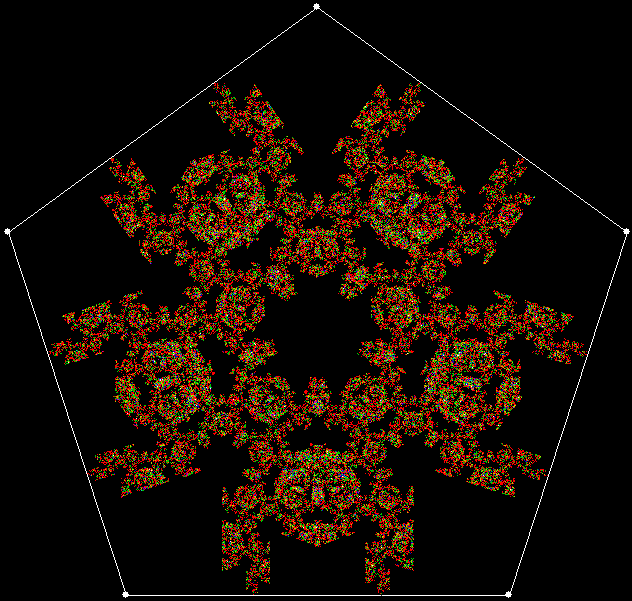
Here are the same restrictions applied to a pentagon:

prox5_1

Nearest corner forbidden


prox5_2

Second-nearest corner forbidden


prox5_3

Third corner forbidden


prox5_4

Fourth corner forbidden


prox5_5

Fifth corner forbidden


prox5_5anim

Fifth corner forbidden (animated)

And a pentagon with a central chorner:

prox5_anim_c

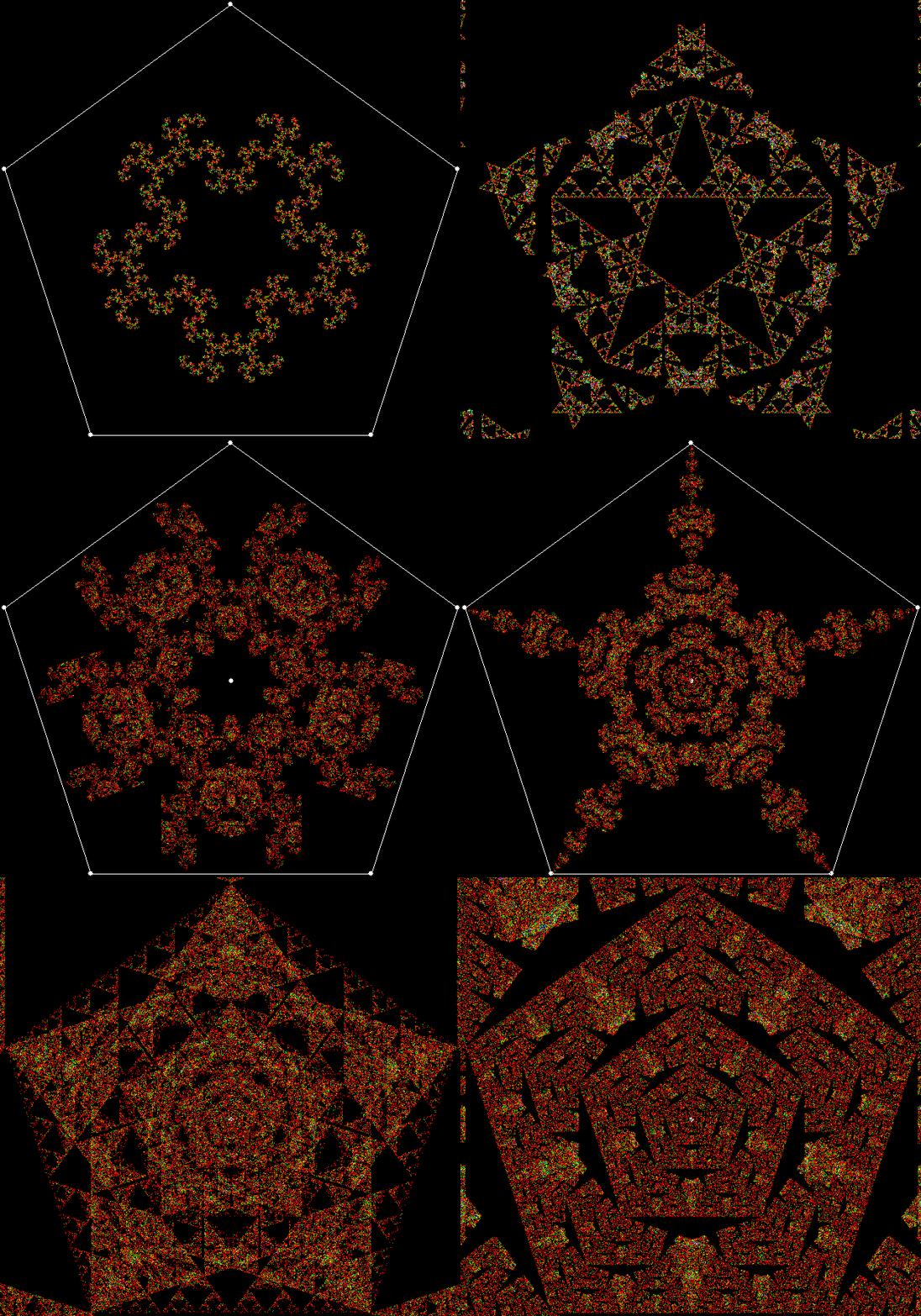
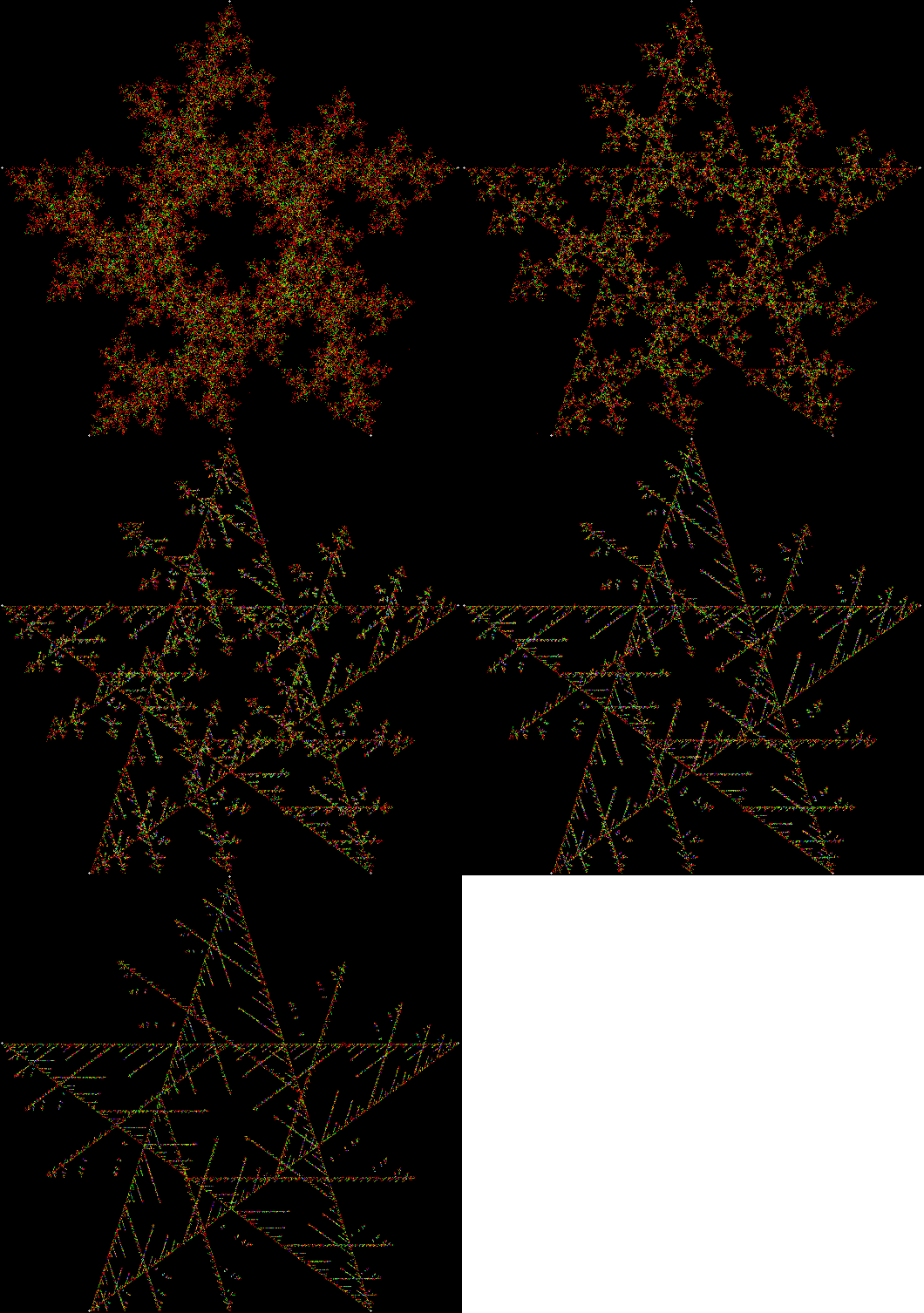
Now try excluding more than one corner. Here are pentagons excluding the n-nearest and n+1-nearest corners (for example, the nearest and second-nearest corners; the second-nearest and third-nearest; and so on):

prox5n_n1_anim

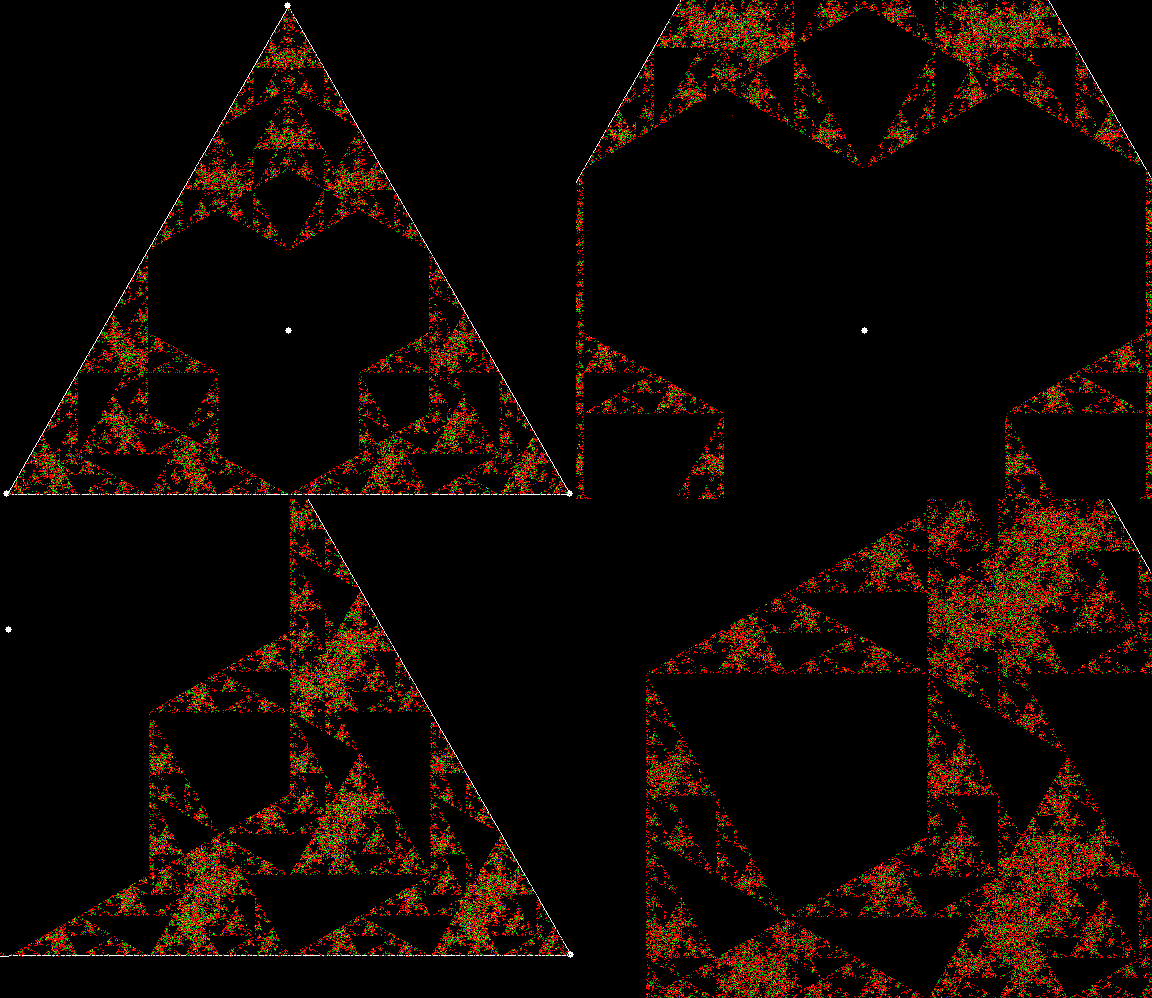
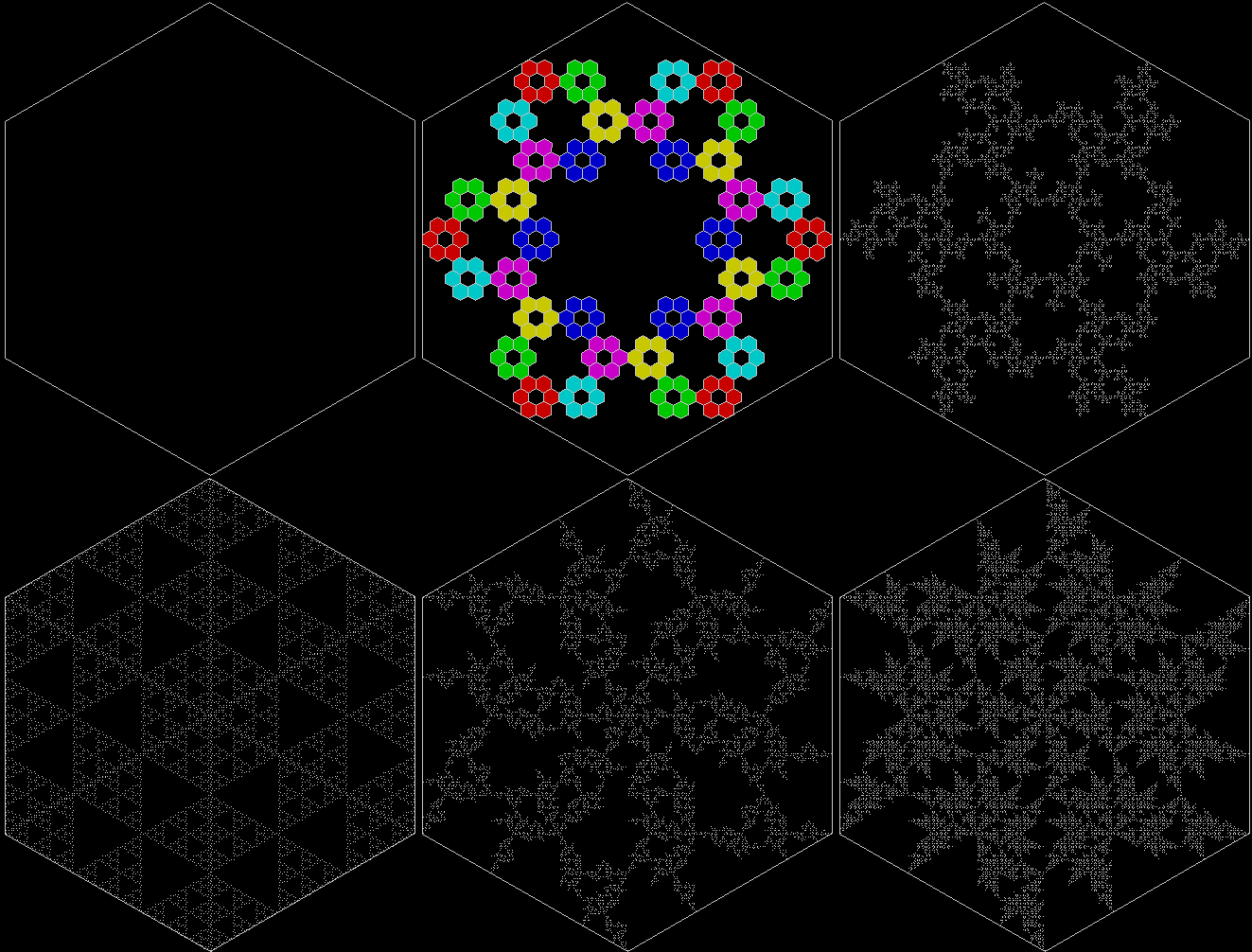
But what if the moving point is set equal to the n-nearest corner before it moves again? If the corner is the second-nearest and the shape is a triangle with a central chorner, this is the fractal that appears:

prox3_set2c


prox3_set2c_anim

Animated version

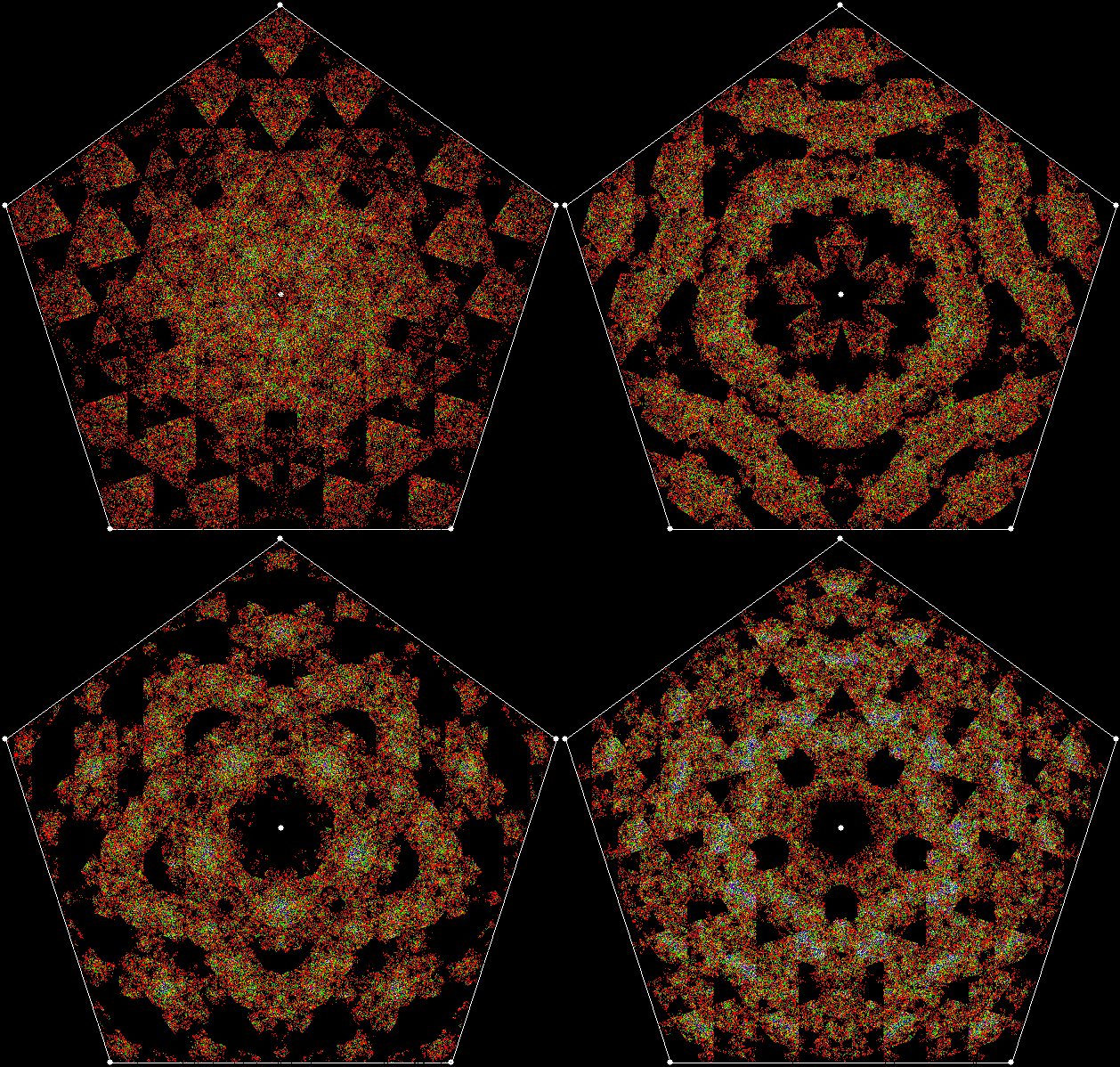
And here is the same rule applied to various n-nearest corners in a pentagon:

prox5_set_anim

Over Again

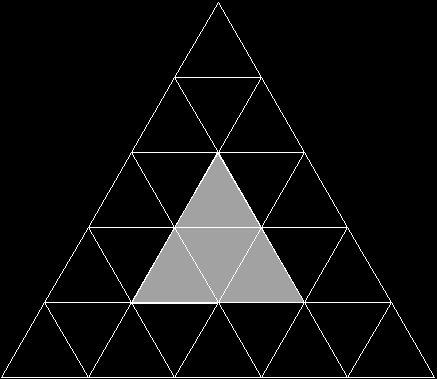
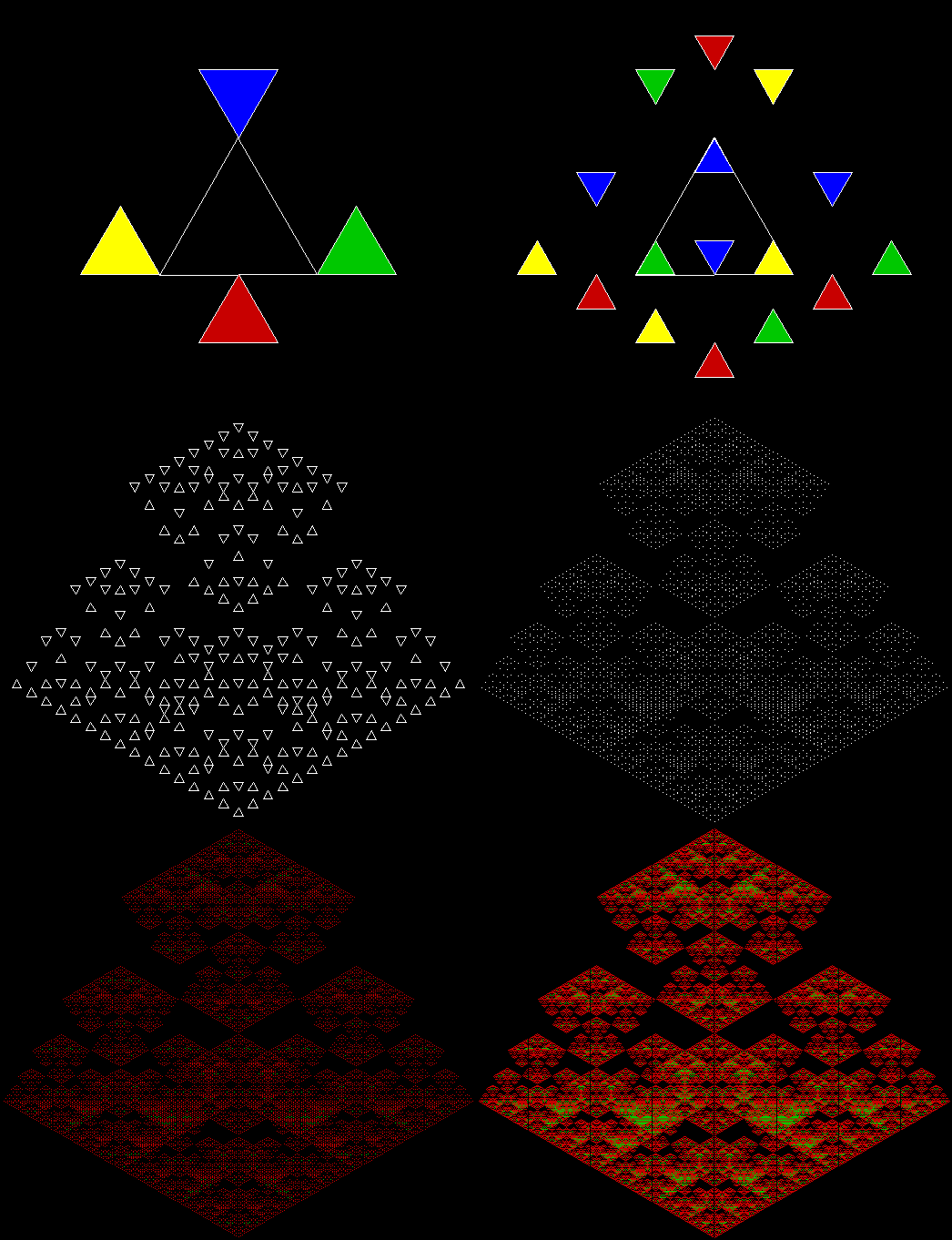
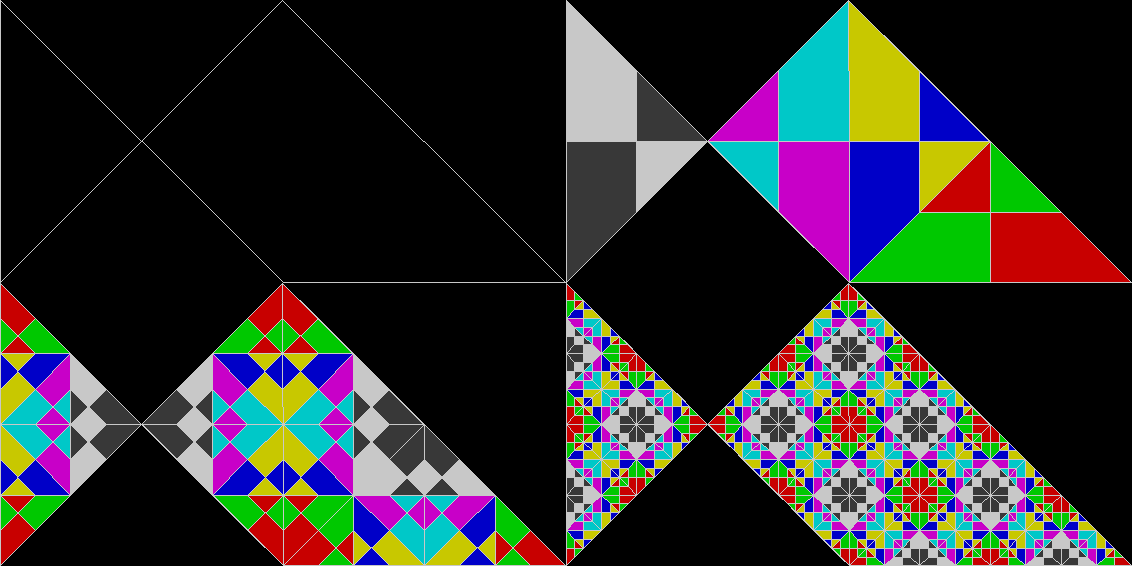
In Boldly Breaking the Boundaries, I looked at the use of squares in what I called over-fractals, or fractals whose sub-divisions reproduce the original shape but appear beyond its boundaries. Now I want to look at over-fractals using triangles. They’re less varied than those involving squares, but still include some interesting shapes. This is the space in which sub-triangles can appear, with the central seeding triangle coloured gray: triangle
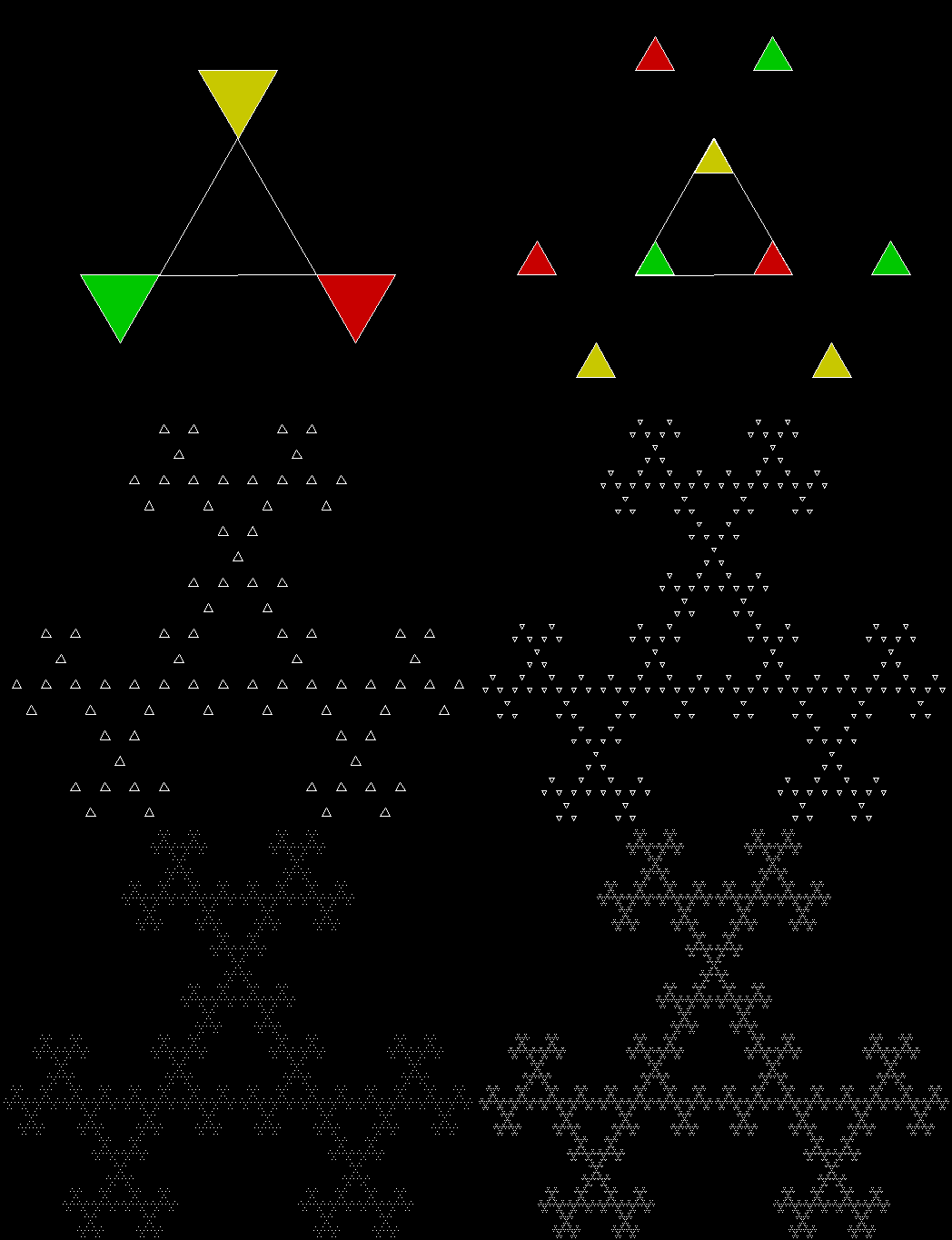
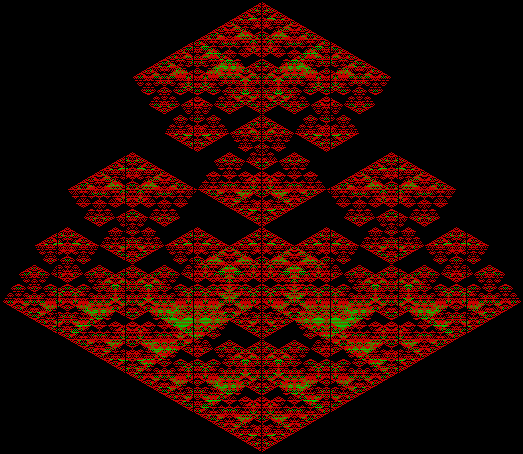
Here are some over-fractals based on the pattern above: overtri1
overtri1_static


overtri2
overtri2_static


overtri3

overtri3_static


overtri4
overtri4_static


overtri5
overtri5_static


overtri6
overtri6_static


overtri7
overtri7_static


overtri8
overtri8_static


overtri9
overtri9_static


overtri10
overtri10_static


overtri11
overtri11_static


overtri12
overtri12_static


overtri13

overtri13_static


Hex Appeal

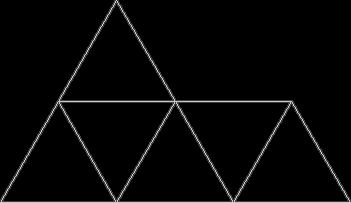
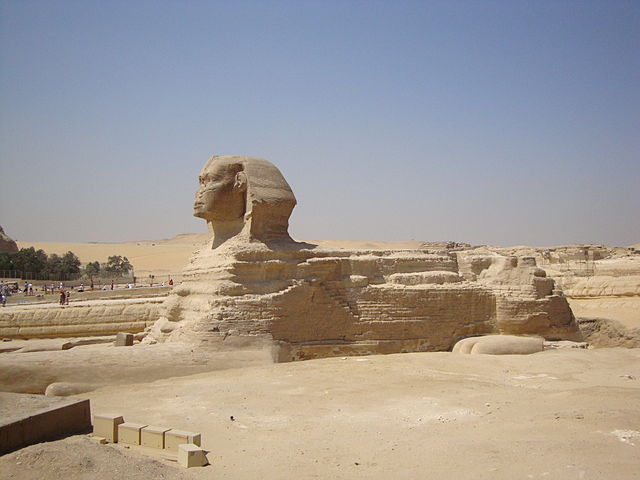
A polyiamond is a shape consisting of equilateral triangles joined edge-to-edge. There is one moniamond, consisting of one equilateral triangle, and one diamond, consisting of two. After that, there are one triamond, three tetriamonds, four pentiamonds and twelve hexiamonds. The most famous hexiamond is known as the sphinx, because it’s reminiscent of the Great Sphinx of Giza:

sphinx_hexiamond

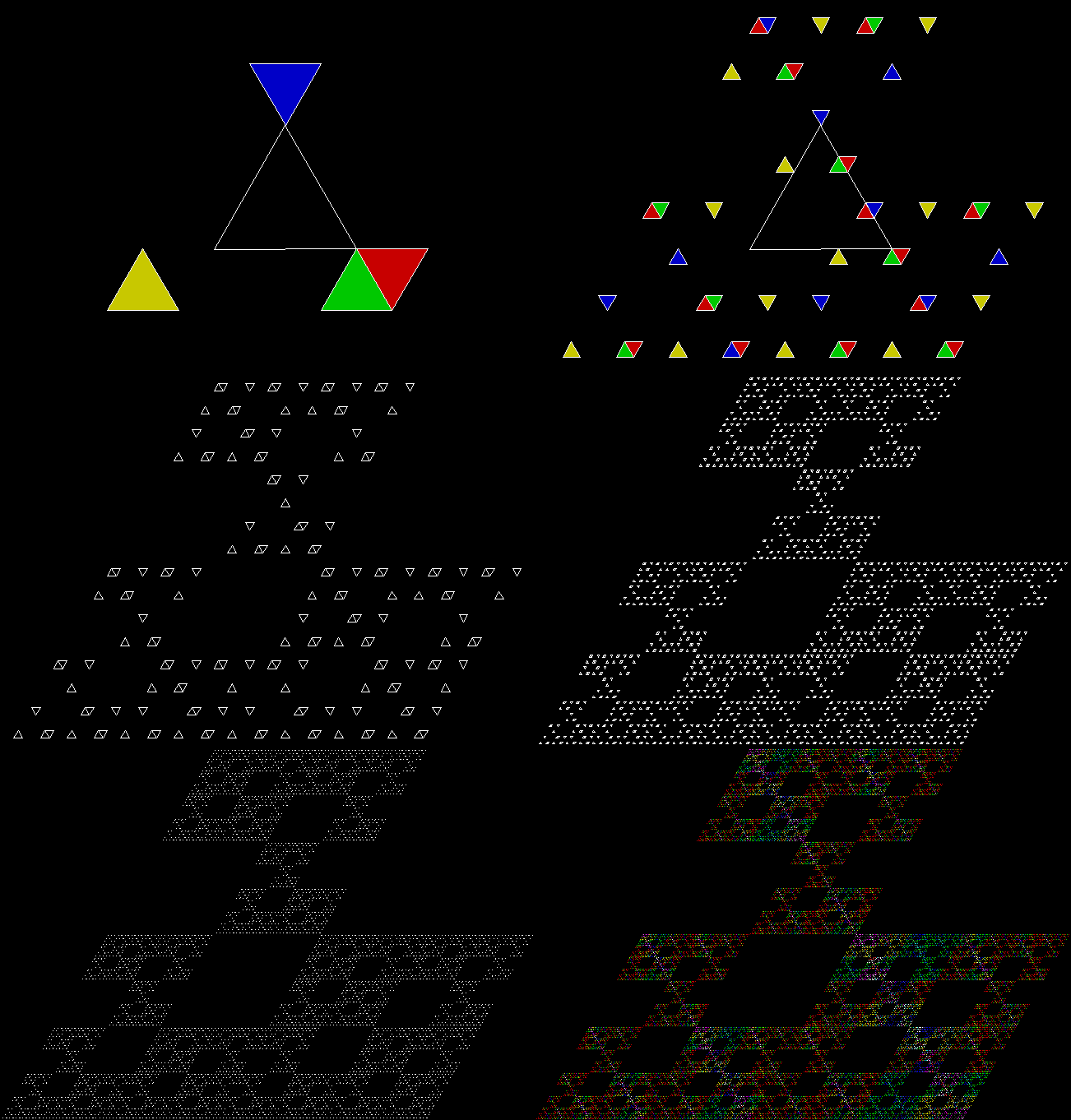
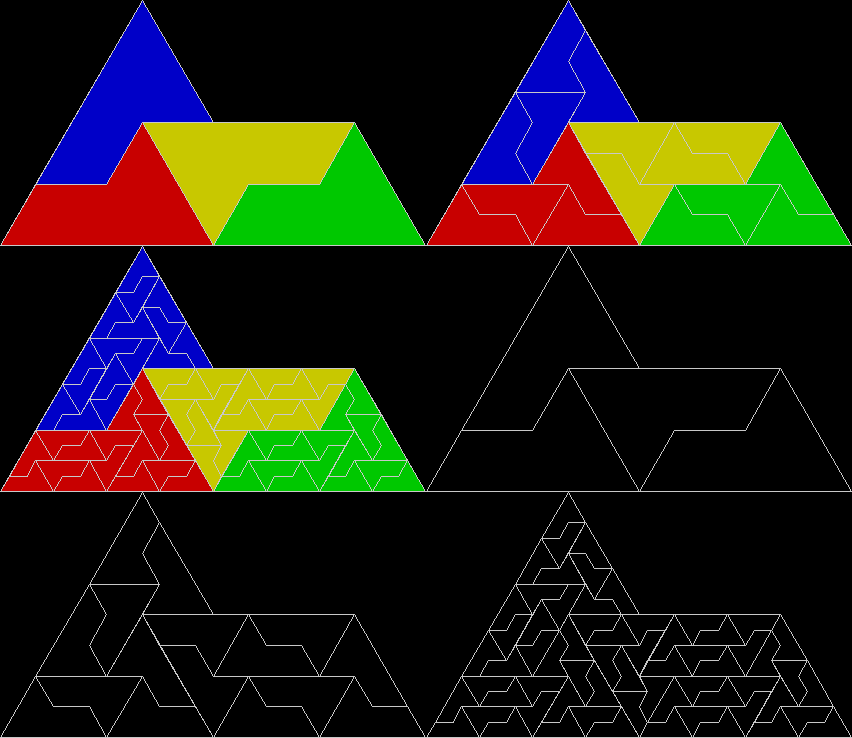
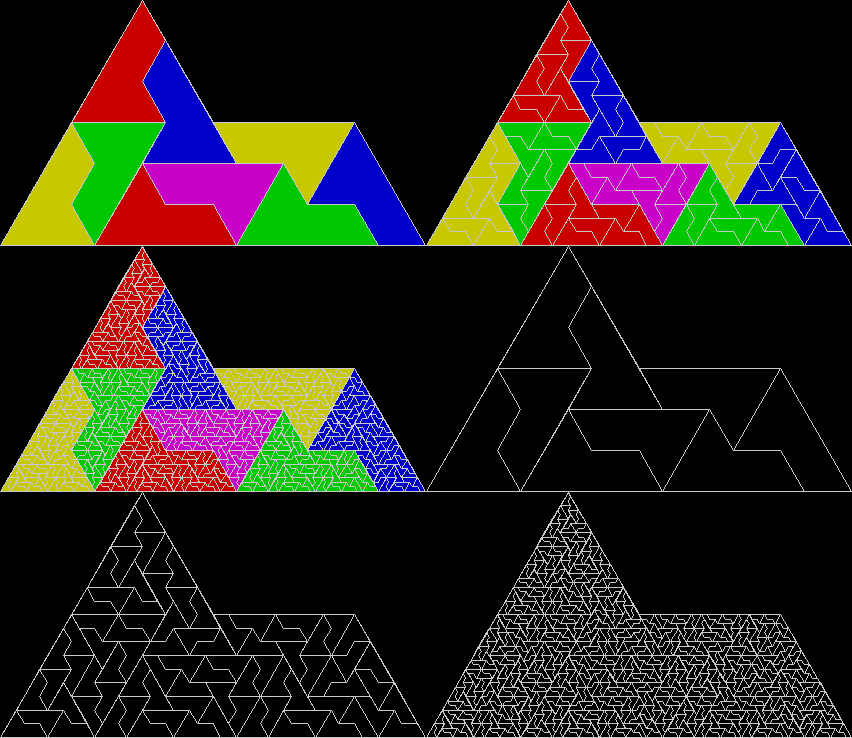
It’s famous because it is the only known pentagonal rep-tile, or shape that can be divided completely into smaller copies of itself. You can divide a sphinx into either four copies of itself or nine copies, like this (please open images in a new window if they fail to animate):

sphinx4

sphinx9

So far, no other pentagonal rep-tile has been discovered. Unless you count this double-triangle as a pentagon:

double_triangle_rep-tile

It has five sides, five vertices and is divisible into sixteen copies of itself. But one of the vertices sits on one of the sides, so it’s not a normal pentagon. Some might argue that this vertex divides the side into two, making the shape a hexagon. I would appeal to these ancient definitions: a point is “that which has no part” and a line is “a length without breadth” (see Neuclid on the Block). The vertex is a partless point on the breadthless line of the side, which isn’t altered by it.

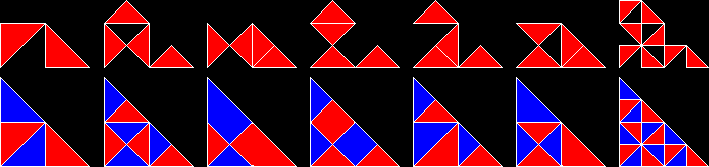
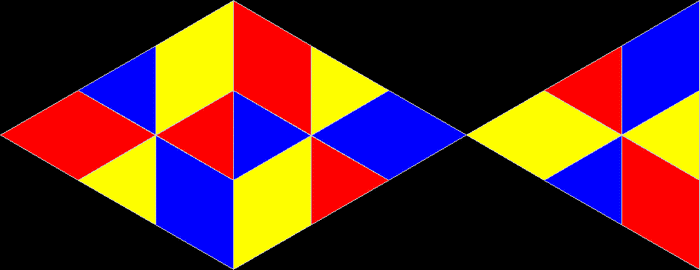
But, unlike the sphinx, the double-triangle has two internal areas, not one. It can be completely drawn with five continuous lines uniting five unique points, but it definitely isn’t a normal pentagon. Even less normal are two more rep-tiles that can be drawn with five continuous lines uniting five unique points: the fish that can be created from three equilateral triangles and the fish that can be created from four isosceles right triangles:

equilateral_triangle_fish_rep-tile

right_triangle_fish_rep-tile

Rep It Up

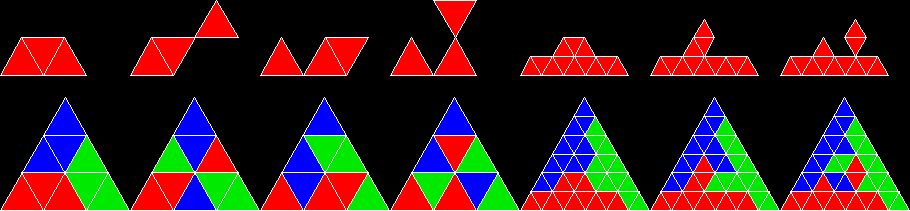
When I started to look at rep-tiles, or shapes that can be divided completely into smaller copies of themselves, I wanted to find some of my own. It turns out that it’s easy to automate a search for the simpler kinds, like those based on equilateral triangles and right triangles.

right triangle rep-tiles

right_triangle_fish

equilateral_triangle_reptiles

equilateral_triangle_rocket

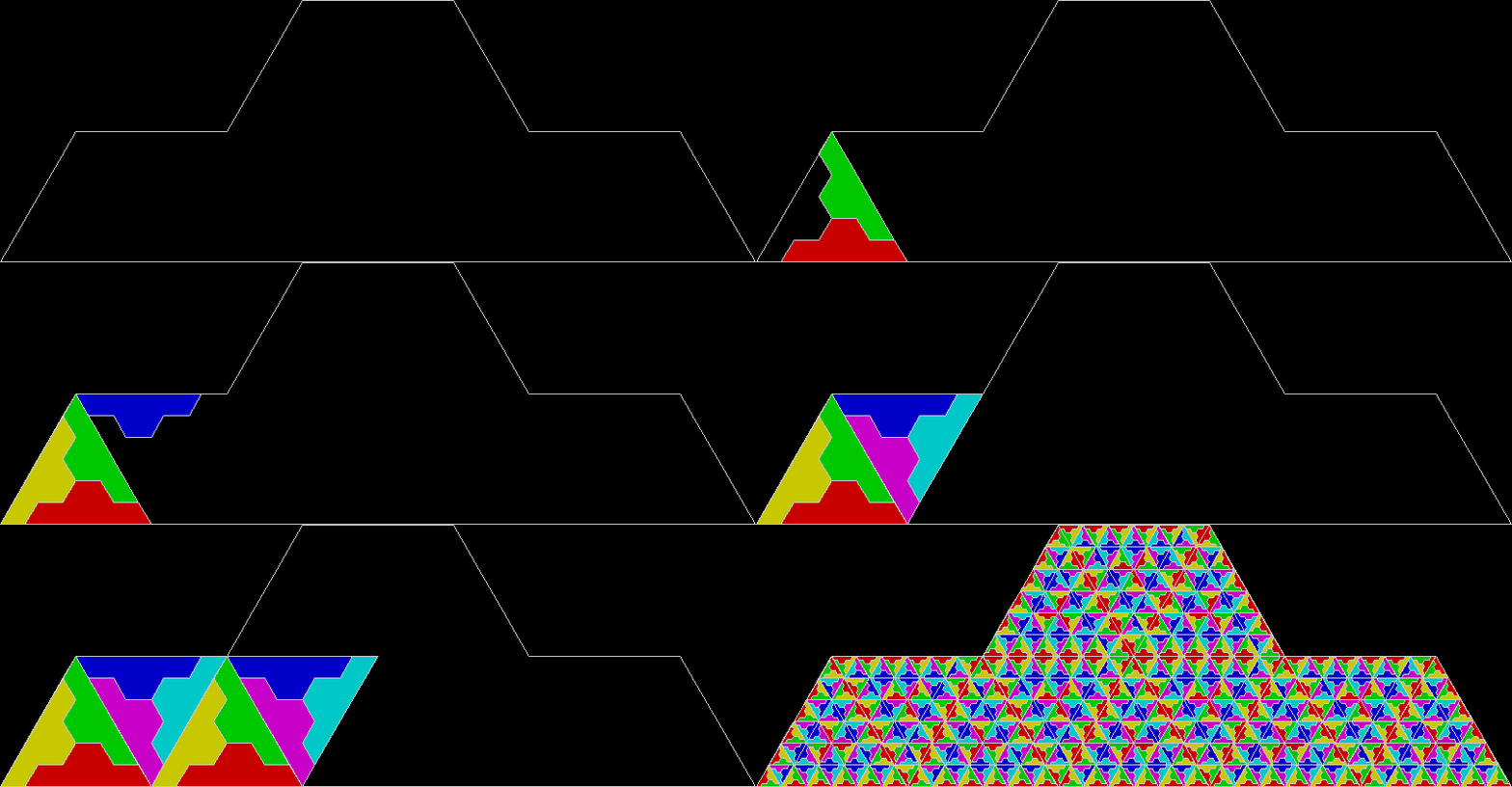
(Please open the following images in a new window if they fail to animate)

duodeciamond

triangle mosaic


Previously pre-posted (please peruse):

Rep-Tile Reflections

Hextra Texture

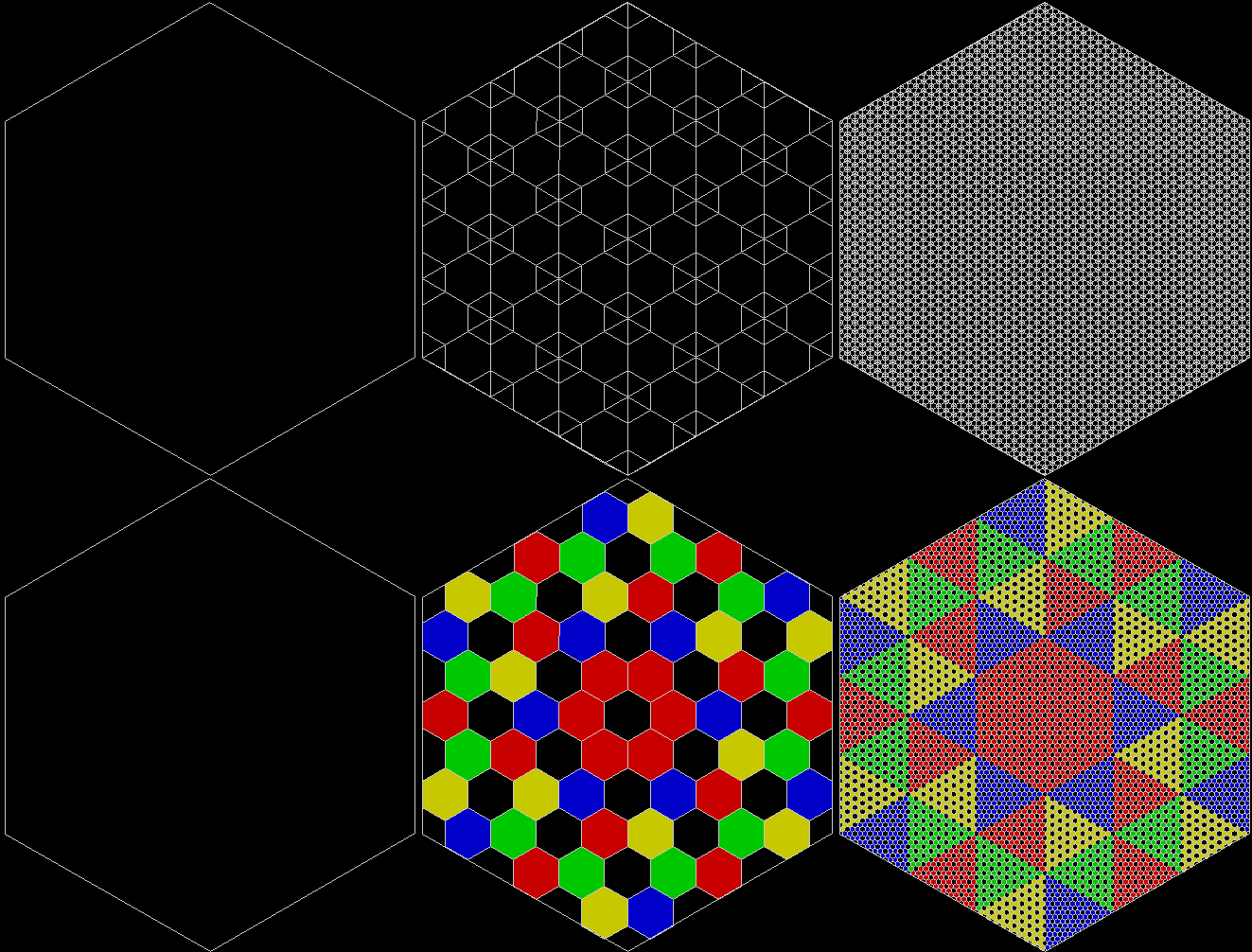
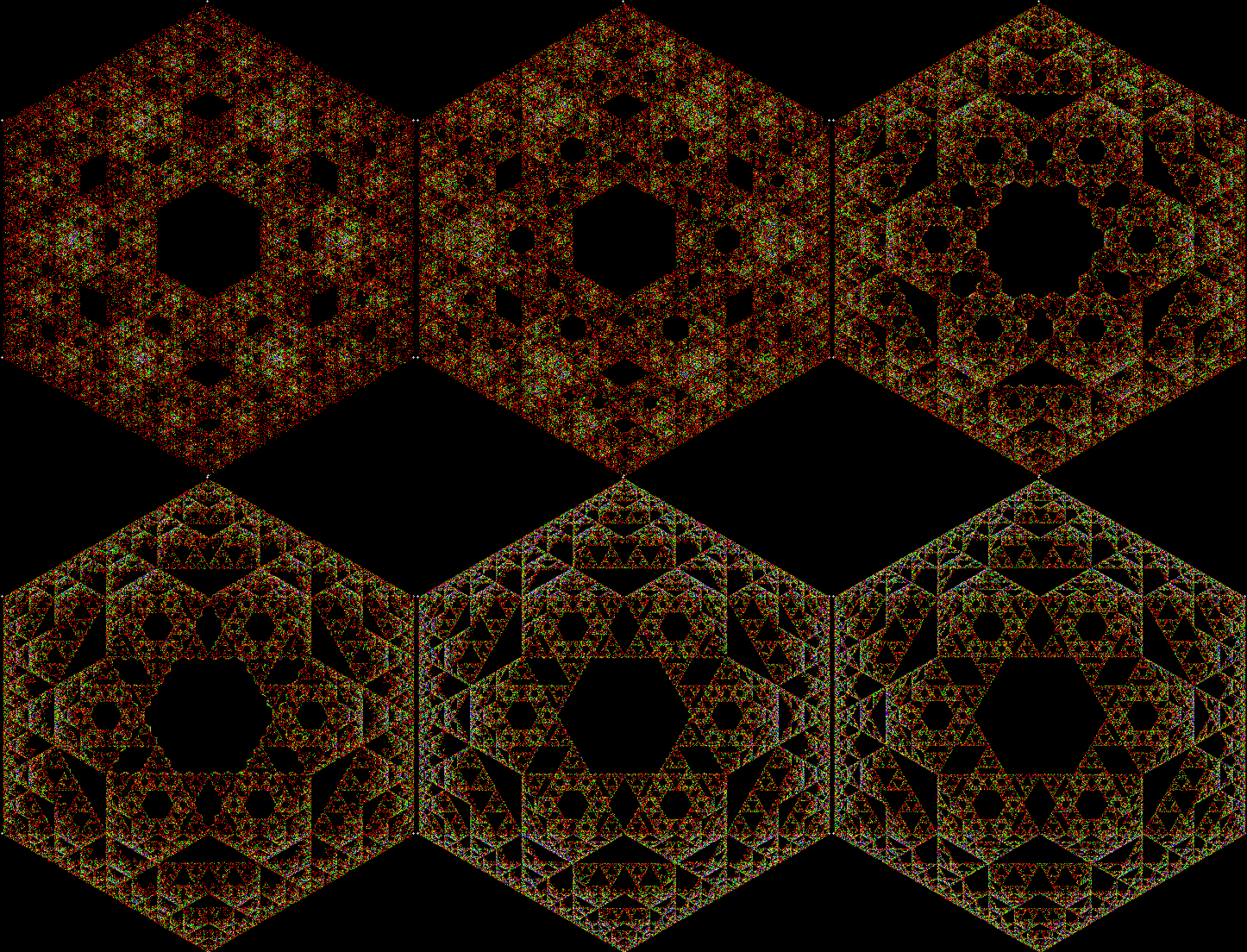
A hexagon can be divided into six equilateral triangles. An equilateral triangle can be divided into a hexagon and three more equilateral triangles. These simple rules, applied again and again, can be used to create fractals, or shapes that echo themselves on smaller and smaller scales.

hextriangle

hextriangle2

hextriangle1


Previously pre-posted (please peruse):

Fractal Fourmulas

Fractal Fourmulas

A square can be divided into four right triangles. A right triangle can be divided into a square and two more right triangles. These simple rules, applied again and again, can be used to create fractals, or shapes that echo themselves on smaller and smaller scales.

trisquare5

trisquare3

trisquare4

trisquare2

trisquare6

trisquare7

trisquare1

Tri Again

All roads lead to Rome, so the old saying goes. But you may get your feet wet, so try the Sierpiński triangle instead. This fractal is named after the Polish mathematician Wacław Sierpiński (1882-1969) and quite a few roads lead there too. You can create it by deleting, jumping or bending, inter alia. Here is method #1:

Sierpinski middle delete

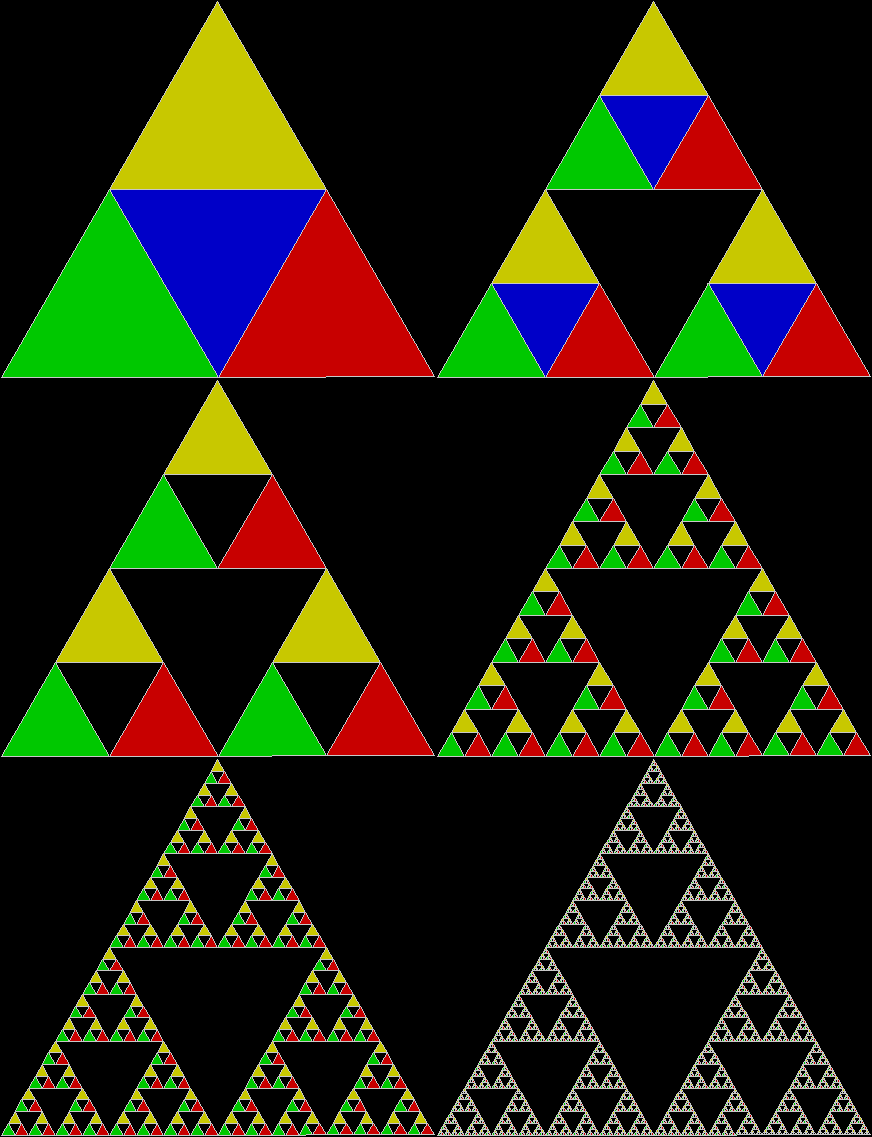
Divide an equilateral triangle into four, remove the central triangle, do the same to the new triangles.

Here is method #2:

Sierpinski random jump

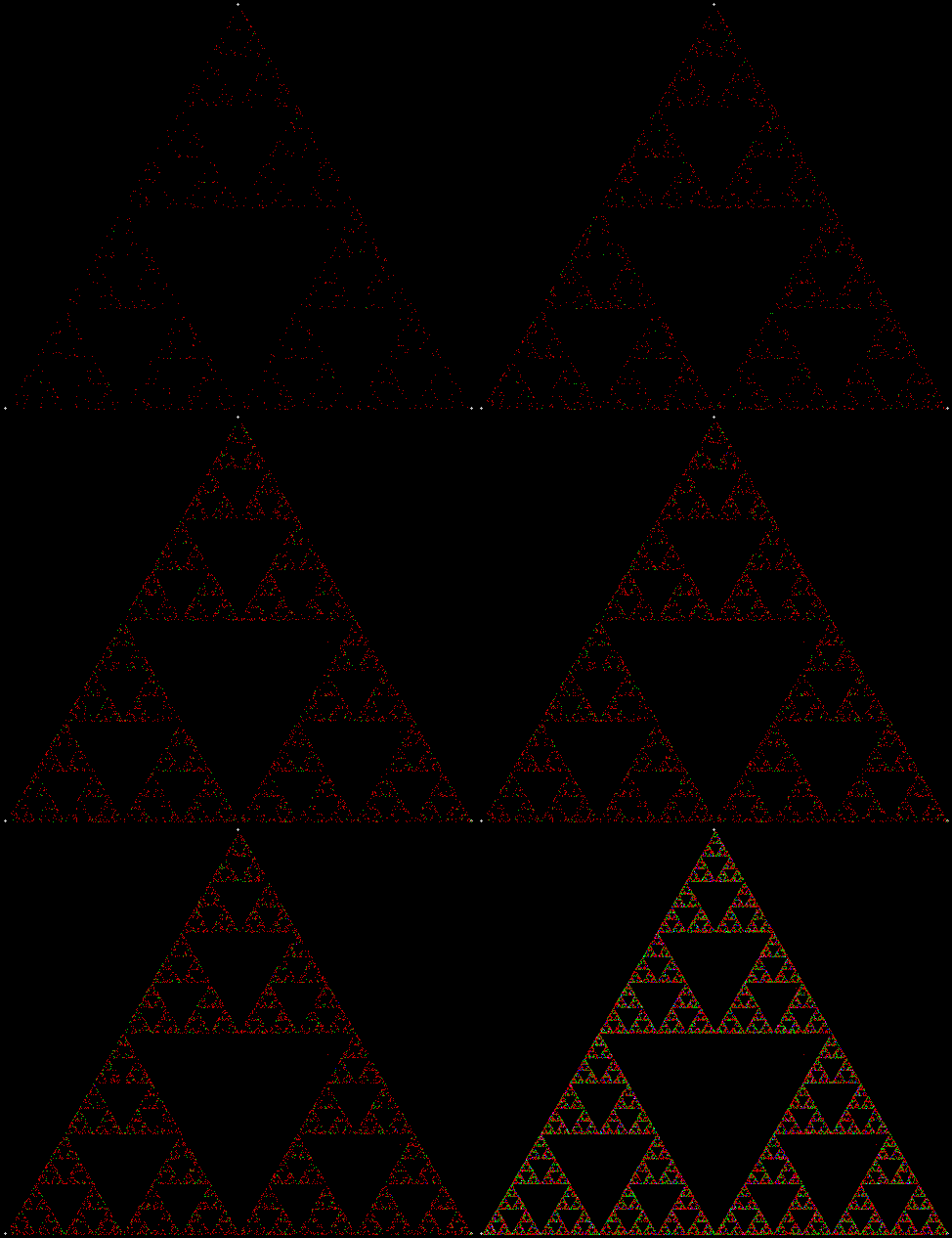
Pick a corner at random, jump half-way towards it, mark the spot, repeat.

And here is method #3:

Sierpinski arrowhead

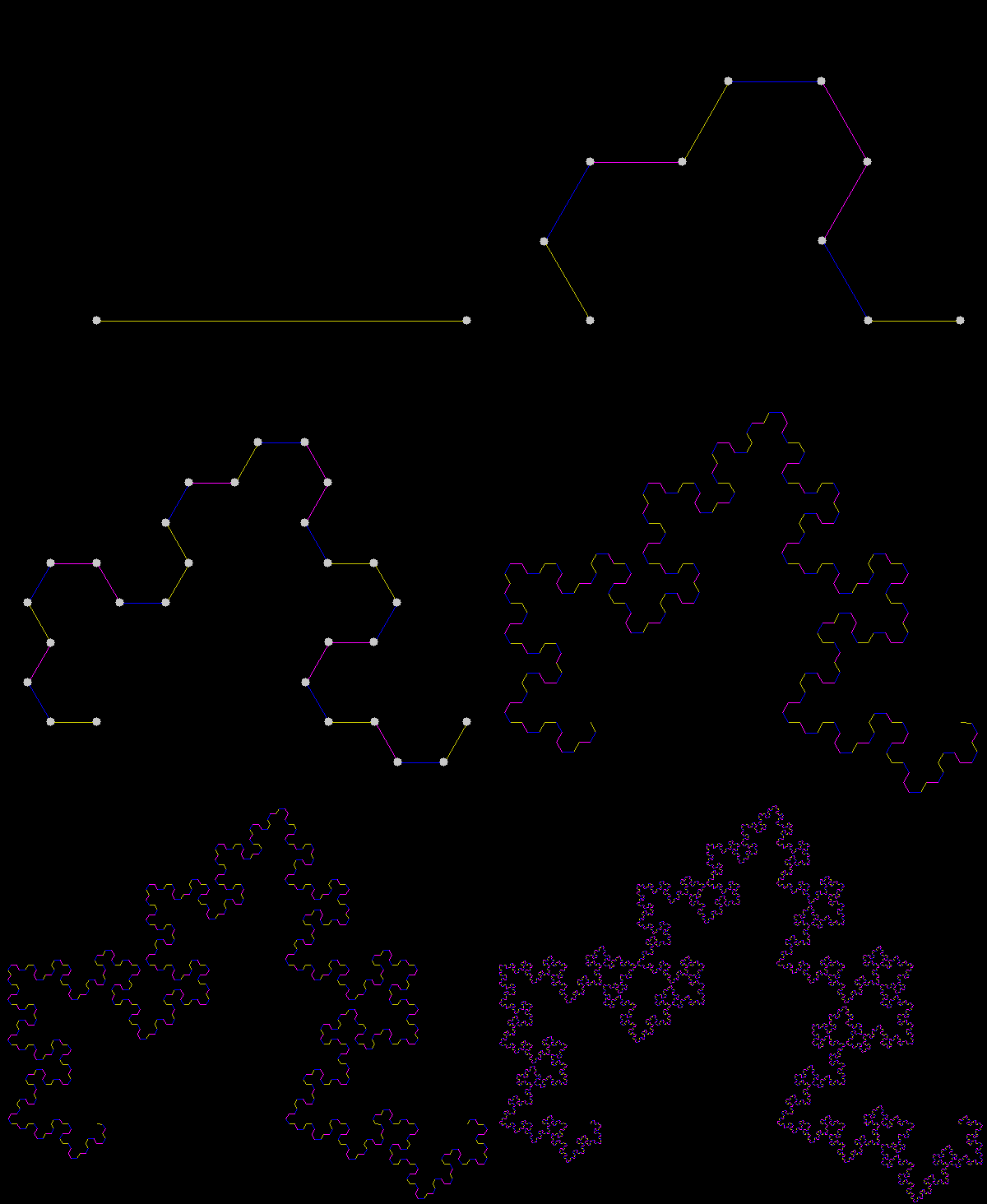
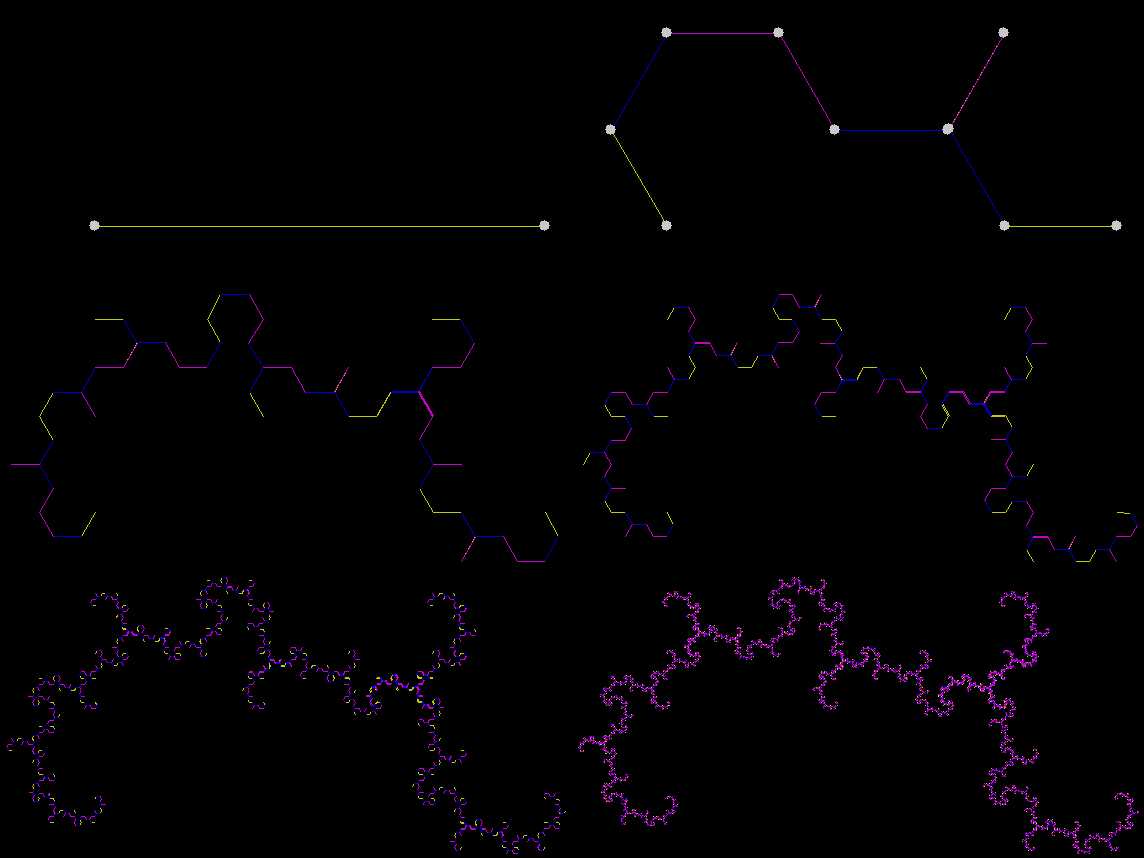
Bend a straight line into a hump consisting of three straight lines, then repeat with each new line.

Each method can be varied to create new fractals. Method #3, which is also known as the arrowhead fractal, depends on the orientation of the additional humps, as you can see from the animated gif above. There are eight, or 2 x 2 x 2, ways of varying these three orientations, so eight fractals can be produced if the same combination of orientations is kept at each stage, like this (some are mirror images — if an animated gif doesn’t work, please open it in a new window):

arrowhead1

arrowhead2

arrowhead3

arrowhead4

arrowhead5

If different combinations are allowed at different stages, the number of different fractals gets much bigger:

• Continuing viewing Tri Again.

V for Vertex

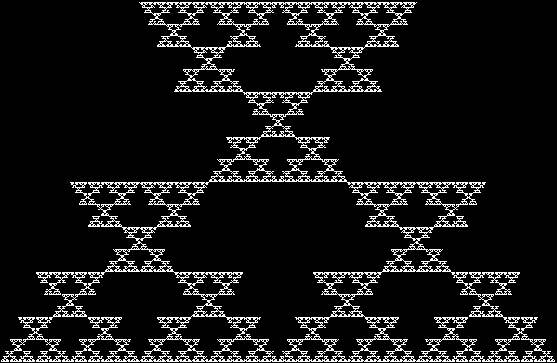
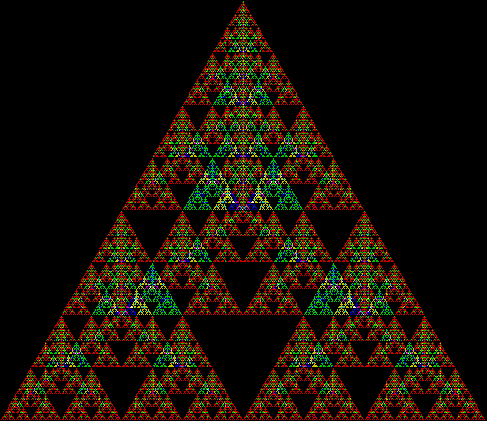
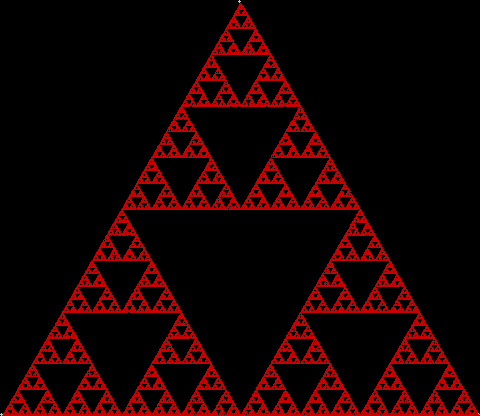
To create a simple fractal, take an equilateral triangle and divide it into four more equilateral triangles. Remove the middle triangle. Repeat the process with each new triangle and go on repeating it. You’ll end up with a shape like this, which is known as the Sierpiński triangle, after the Polish mathematician Wacław Sierpiński (1882-1969):

Sierpinski triangle

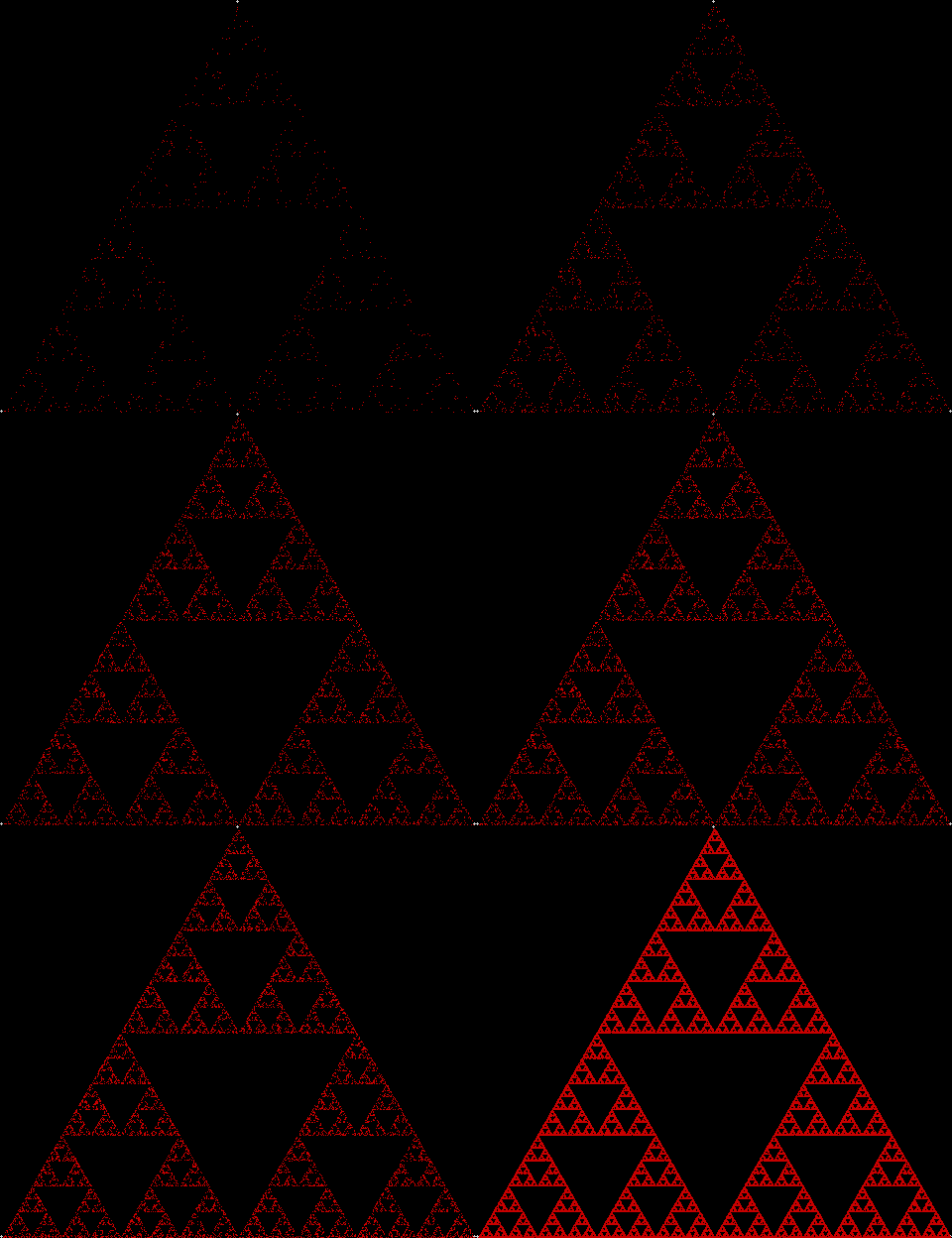
But you can also create the Sierpiński triangle one pixel at a time. Choose any point inside an equilateral triangle. Pick a corner of the triangle at random and move half-way towards it. Mark this spot. Then pick a corner at random again and move half-way towards the corner. And repeat. The result looks like this:

triangle

A simple program to create the fractal looks like this:

initial()
repeat
  fractal()
  altervariables()
until false

function initial()
  v = 3 [v for vertex]
  r = 500
  lm = 0.5
endfunc

function fractal()
  th = 2 * pi / v
[the following loop creates the corners of the triangle]
  for l = 1 to v
    x[l]=xcenter + sin(l*th) * r
    y[l]=ycenter + cos(l*th) * r
  next l
  fx = xcenter
  fy = ycenter
  repeat
    rv = random(v)
    fx = fx + (x[rv]-fx) * lm
    fy = fy + (y[rv]-fy) * lm
    plot(fx,fy)
  until keypressed
endfunc

function altervariables()
[change v, lm, r etc]
endfunc

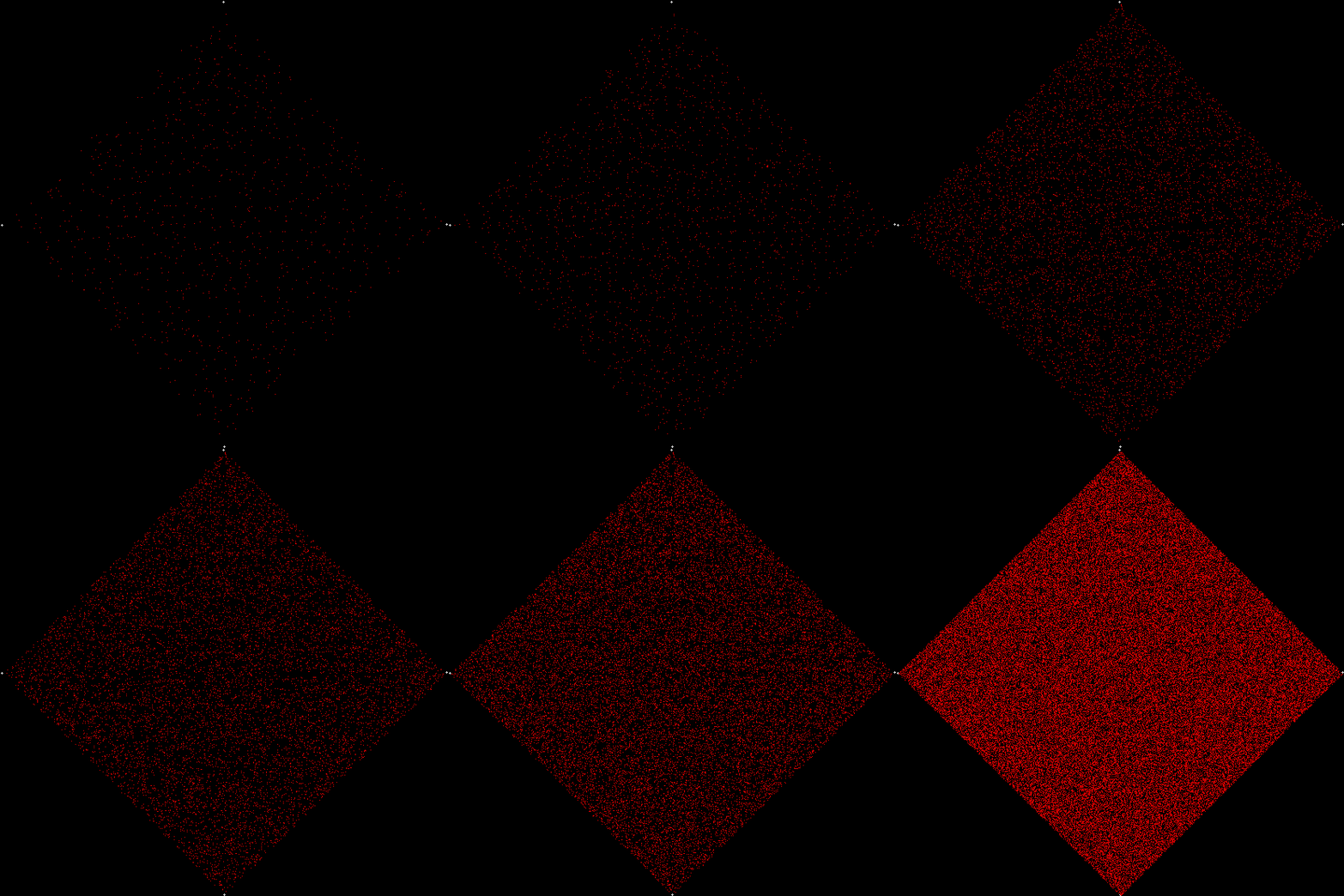
In this case, more is less. When v = 4 and the shape is a square, there is no fractal and plot(fx,fy) covers the entire square.

square

When v = 5 and the shape is a pentagon, this fractal appears:

pentagon

But v = 4 produces a fractal if a simple change is made in the program. This time, a corner cannot be chosen twice in a row:

square_used1

function initial()
  v = 4
  r = 500
  lm = 0.5
  ci = 1 [i.e, number of iterations since corner previously chosen]
endfunc

function fractal()
  th = 2 * pi / v
  for l = 1 to v
    x[l]=xcenter + sin(l*th) * r
    y[l]=ycenter + cos(l*th) * r
    chosen[l]=0
  next l
  fx = xcenter
  fy = ycenter
  repeat
    repeat
      rv = random(v)
    until chosen[rv]=0
    for l = 1 to v
      if chosen[l]>0 then chosen[l] = chosen[l]-1
    next l
    chosen[rv] = ci
    fx = fx + (x[rv]-fx) * lm
    fy = fy + (y[rv]-fy) * lm
    plot(fx,fy)
  until keypressed
endfunc

One can also disallow a corner if the corner next to it has been chosen previously, adjust the size of the movement towards the chosen corner, add a central point to the polygon, and so on. Here are more fractals created with such variations:

square_used1_center

square_used1_vi1

square_used1_vi2

square_used2

pentagon_lm0.6

pentagon_used1_5_vi1

hexagon_used1_6_vi3

Rep-Tile Reflections

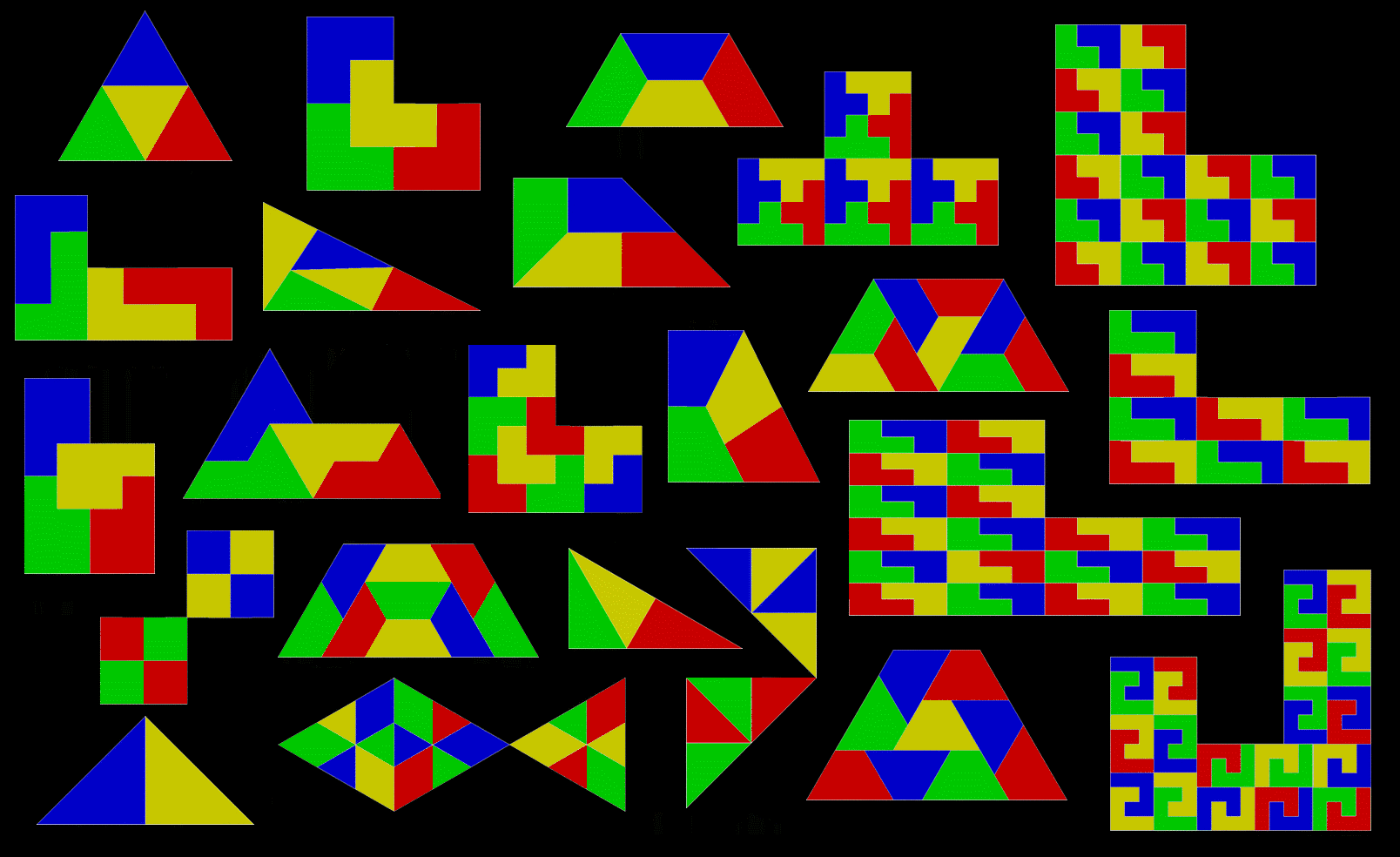
A rep-tile, or repeat-tile, is a two-dimensional shape that can be divided completely into copies of itself. A square, for example, can be divided into smaller squares: four or nine or sixteen, and so on. Rectangles are the same. Triangles can be divided into two copies or three or more, depending on their precise shape. Here are some rep-tiles, including various rep-triangles:

Various rep-tiles

Various rep-tiles — click for larger image

Some are simple, some are complex. Some have special names: the sphinx and the fish are easy to spot. I like both of those, particularly the fish. It would make a good symbol for a religion: richly evocative of life, eternally sub-divisible of self: 1, 9, 81, 729, 6561, 59049, 531441… I also like the double-square, the double-triangle and the T-tile in the top row. But perhaps the most potent, to my mind, is the half-square in the bottom left-hand corner. A single stroke sub-divides it, yet its hypotenuse, or longer side, represents the mysterious and mind-expanding √2, a number that exists nowhere in the physical universe. But the half-square itself is mind-expanding. All rep-tiles are. If intelligent life exists elsewhere in the universe, perhaps other minds are contemplating the fish or the sphinx or the half-square and musing thus: “If intelligent life exists elsewhere in the universe, perhaps…”

Mathematics unites human minds across barriers of language, culture and politics. But perhaps it unites minds across barriers of biology too. Imagine a form of life based on silicon or gas, on unguessable combinations of matter and energy in unreachable, unobservable parts of the universe. If it’s intelligent life and has discovered mathematics, it may also have discovered rep-tiles. And it may be contemplating the possibility of other minds doing the same. And why confine these speculations to this universe and this reality? In parallel universes, in alternative realities, minds may be contemplating rep-tiles and speculating in the same way. If our universe ends in a Big Crunch and then explodes again in a Big Bang, intelligent life may rise again and discover rep-tiles again and speculate again on their implications. The wildest speculation of all would be to hypothesize a psycho-math-space, a mental realm beyond time and matter where, in mathemystic communion, suitably attuned and aware minds can sense each other’s presence and even communicate.

The rep-tile known as the fish

Credo in Piscem…

So meditate on the fish or the sphinx or the half-square. Do you feel the tendrils of an alien mind brush your own? Are you in communion with a stone-being from the far past, a fire-being from the far future, a hive-being from a parallel universe? Well, probably not. And even if you do feel those mental tendrils, how would you know they’re really there? No, I doubt that the psycho-math-space exists. But it might and science might prove its existence one day. Another possibility is that there is no other intelligent life, never has been, and never will be. We may be the only ones who will ever muse on rep-tiles and other aspects of mathematics. Somehow, though, rep-tiles themselves seem to say that this isn’t so. Particularly the fish. It mimics life and can spawn itself eternally. As I said, it would make a good symbol for a religion: a mathemysticism of trans-biological communion. Credo in Piscem, Unum et Infinitum et Æternum. “I believe in the Fish, One, Unending, Everlasting.” That might be the motto of the religion. If you want to join it, simply wish upon the fish and muse on other minds, around other stars, who may be doing the same.