A handsome hamsa (image from The Fair Trade Store)

A handsome hamsa (image from The Fair Trade Store)
Currently listening…
• Los Guabás Guapos, Huevos de Oro (1984)
• EaglePig, Snout in the Cellar (2011)
• Octavio Línqua, Rossoscuro (1996)
• Leporis β, Maria è dei Nostri (2015)
• Baron Mezzanine, Trunquatorial (1976)
• Mqopasizuth, ngCaquro (Live in Harrogate) (2008)
• Queens of Coecos, Queens of Coecos (1995)
• Camelchoir, Holloed (1991)
• Ледяной Трон, Песни в Стране Теней (1997)
• Zambré Neoni, Les Lys de Lyon (1995)
• Meisterflieger, Mitternachtsmesser (1977)
• Xir Piono, k=1221121 (1992)
• Dustizen, The Watchful Quiet (2012)
• Jodi y las Jezabeles, Poco de Mavo (1998)
• Tenebrōth, La Reine Sidérale (2013)
• Fuzznauzea, Ocean of Fuzz (2017)
• Swarmiphora, Cestus Veneris (Live EP) (2009)
• Ce Précepteur, Achetée en Géorgie (1989)
• Sparrows in the Woods, Henderswine (1983)
• Morgan’s Spooks, Verdigris Jar (2006)
• Vuerimanzo, Quederm (2013)
• Halls of Neptune, Sunderwall (1985)
Toxic Turntable #1 • #2 • #3 • #4 • #5 • #6 • #7 • #8 • #9 • #10 • #11 • #12 • #13 • #14 • #15 • #16 • #17 • #18 • #19 • #20 • #21 • #22 • #23 • #24 • #25 • #26
Abyss-illusion rug in blue and yellow (image from Temu)
In “The Trivial Troot”, I looked at what happens when tri(k), the k-th triangular number, is one digit longer than the previous triangular number, tri(k-1):
6 = tri(3)
10 = tri(4)
91 = tri(13)
105 = tri(14)
990 = tri(44)
1035 = tri(45)
[...]↓
10 ← 4
105 ← 14
1035 ← 45
10011 ← 141
100128 ← 447
1000405 ← 1414
10001628 ← 4472
100005153 ← 14142
1000006281 ← 44721
10000020331 ← 141421
100000404505 ← 447214
1000001326005 ← 1414214
10000002437316 ← 4472136
100000012392316 ← 14142136
[...]
What’s going on with k? In a sense, it’s calculating the square roots of 2 and 20:
√2 = 1·414213562373095048801688724209698078569671875376948073176679738...
√20 = 4·472135954999579392818347337462552470881236719223051448541794491...
Now let’s say “Excelsior!” and go higher with a related sequence. A006003 is defined at the Online Encyclopedia of Integer Sequences as the “sum of the next n natural numbers”. Here it is:
1 = 1
5 = 2 + 3
15 = 4 + 5 + 6
34 = 7 + 8 + 9 + 10
65 = 11 + 12 + 13 + 14 + 15
111 = 16 + 17 + 18 + 19 + 20 + 21
175 = 22 + 23 + 24 + 25 + 26 + 27 + 28
260 = 29 + 30 + 31 + 32 + 33 + 34 + 35 + 36
369 = 37 + 38 + 39 + 40 + 41 + 42 + 43 + 44 + 45
505 = 46 + 47 + 48 + 49 + 50 + 51 + 52 + 53 + 54 + 55
671 = 56 + 57 + 58 + 59 + 60 + 61 + 62 + 63 + 64 + 65 + 66
870 = 67 + 68 + 69 + 70 + 71 + 72 + 73 + 74 + 75 + 76 + 77 + 78
1105 = 79 + 80 + 81 + 82 + 83 + 84 + 85 + 86 + 87 + 88 + 89 + 90 + 91
1379 = 92 + 93 + 94 + 95 + 96 + 97 + 98 + 99 + 100 + 101 + 102 + 103 + 104 + 105
1695 = 106 + 107 + 108 + 109 + 110 + 111 + 112 + 113 + 114 + 115 + 116 + 117 + 118 + 119 + 120
2056 = 121 + 122 + 123 + 124 + 125 + 126 + 127 + 128 + 129 + 130 + 131 + 132 + 133 + 134 + 135 + 136
2465 = 137 + 138 + 139 + 140 + 141 + 142 + 143 + 144 + 145 + 146 + 147 + 148 + 149 + 150 + 151 + 152 + 153
2925 = 154 + 155 + 156 + 157 + 158 + 159 + 160 + 161 + 162 + 163 + 164 + 165 + 166 + 167 + 168 + 169 + 170 + 171
3439 = 172 + 173 + 174 + 175 + 176 + 177 + 178 + 179 + 180 + 181 + 182 + 183 + 184 + 185 + 186 + 187 + 188 + 189 + 190
4010 = 191 + 192 + 193 + 194 + 195 + 196 + 197 + 198 + 199 + 200 + 201 + 202 + 203 + 204 + 205 + 206 + 207 + 208 + 209 + 210
[...]
If you’re familiar with triangular numbers, you’ll see that sumnext(k) is always higher than tri(k), except for sumnext(1) = 1 = tri(k). Now, this is what happens when sumnext(k) is one digit longer than sumnext(k-1):
5 = sumnext(2)
15 = sumnext(3)
65 = sumnext(5)
111 = sumnext(6)
870 ← 12
1105 ← 13
9855 ← 27
10990 ← 28
97585 ← 58
102719 ← 59
976625 ← 125
1000251 ← 126
9951391 ← 271
10061960 ← 272
99588644 ← 584
100101105 ← 585
997809119 ← 1259
1000188630 ← 1260
9995386529 ← 2714
10006439295 ← 2715
[...]↓
15 ← 3
111 ← 6
1105 ← 13
10990 ← 28
102719 ← 59
1000251 ← 126
10061960 ← 272
100101105 ← 585
1000188630 ← 1260
10006439295 ← 2715
100049490449 ← 5849
1000188006300 ← 12600
10000910550385 ← 27145
100003310078561 ← 58481
1000021311323825 ← 125993
10000026341777165 ← 271442
100000232056567634 ← 584804
1000002262299152685 ← 1259922
10000004237431278525 ← 2714418
100000026858987459346 ← 5848036
1000000119305407615071 ← 12599211
10000000921801015908705 ← 27144177
100000001209342964609615 ← 58480355
1000000000250317736274865 ← 125992105
10000000037633414521952245 ← 271441762
100000000183357362892853070 ← 584803548
1000000000250317673908773025 ← 1259921050
[...]
What’s going on now? In a sense, the digits of k are approximating the cube roots of 20, 200 and 2000:
2.714417616594906571518089469679489204805107769489096957284365443... = cuberoot(20)
5.848035476425732131013574720275845557060997270202060082845147020... = cuberoot(200)
12.59921049894873164767210607278228350570251464701507980081975112... = cuberoot(2000)
cuberoot(20) = 2.714417616594906571518089469679489204805107769489096957284365443...
cuberoot(200) = 5.848035476425732131013574720275845557060997270202060082845147020...
cuberoot(2000) = 12.59921049894873164767210607278228350570251464701507980081975112...
So you could say that this sequence has gone nexcelsior: sumnext(k) > tri(k); cubes are higher than squares; and (20, 200, 2000) is bigger than (2, 20).
Previously Pre-Posted…
• “The Trivial Troot” — explaining the earlier pattern in triangular numbers
Imagine a ballerina pirouetting on the perimeter of an equilateral triangle. Suppose that her armlength is half the radius of the circumscribed circle. If her right arm is represented in green and her right hand in yellow, this is one path that her right hand might trace, depending on the relative speeds of her feet and her pirouettes:
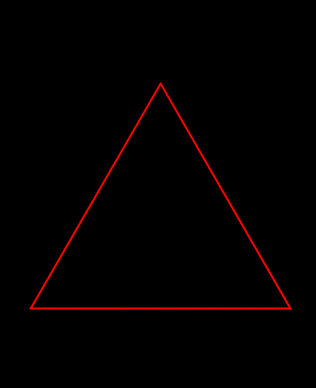
The perimeter of an equilateral triangle

A ballerina pirouetting on the perimeter stage #1
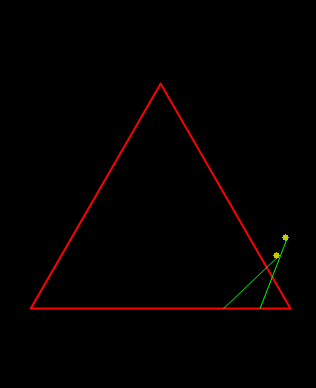
Perimeter pirouette #2
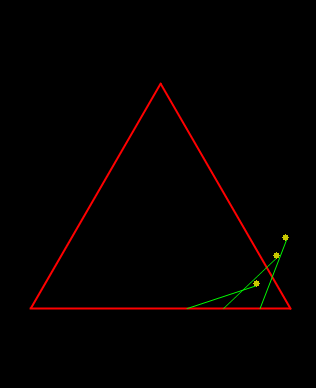
Perimeter pirouette #3

Perimeter pirouette #4
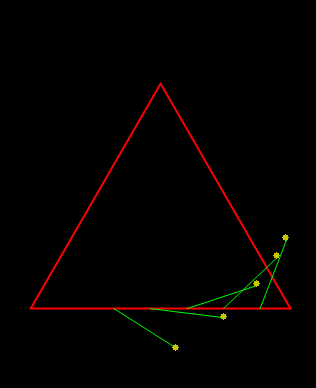
Perimeter pirouette #5
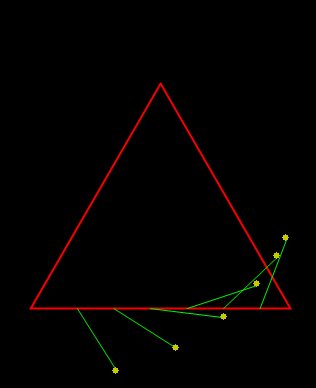
Perimeter pirouette #6
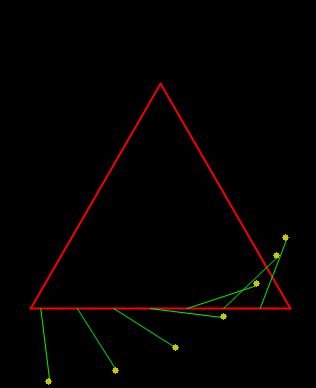
Perimeter pirouette #7
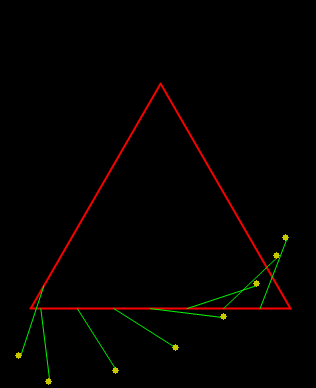
Perimeter pirouette #8

Perimeter pirouette #9
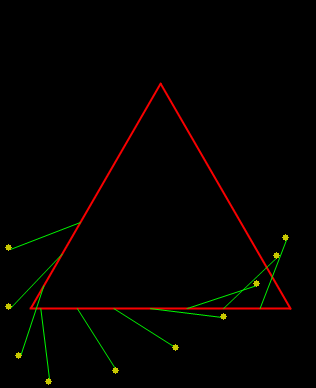
Perimeter pirouette #10
[…]
↓
[…]
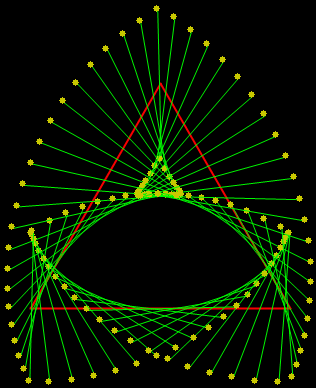
Perimeter pirouette #128

Perimeter pirouettes (animated)
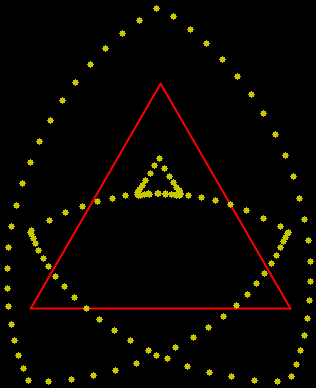
The right hand of the ballerina during the pirouettes

The full path traced by the ballerina’s right hand
The paths change as you adjust speed and direction (clockwise or anticlockwise) of the pirouettes, the armlength of the ballerina, and so on:
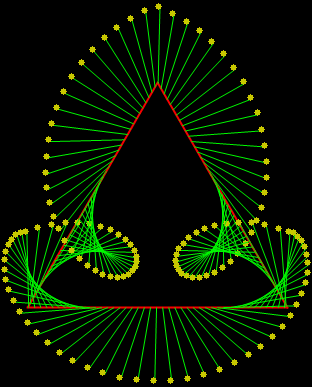
speed = 0.5 (pirouettes)

speed = 0.5 (path)
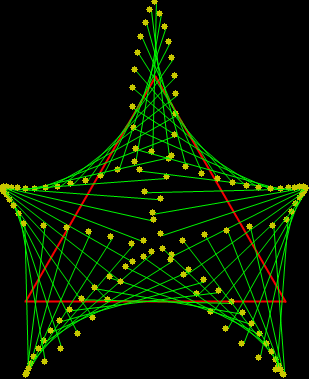
speed = -1 (anticlockwise pirouettes)
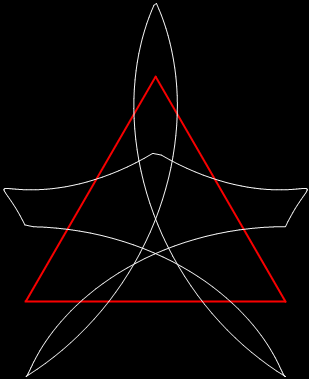
speed = -1 (path)

speed = 1, armlength = 1/3 (pirouettes)

speed = 1, armlength = 1/3 (path)
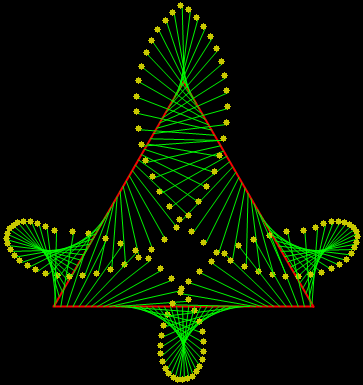
speed = -0.5 (pirouettes)
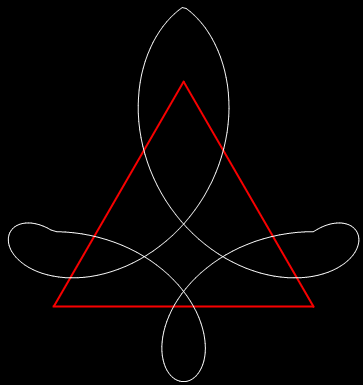
speed = -0.5 (path)
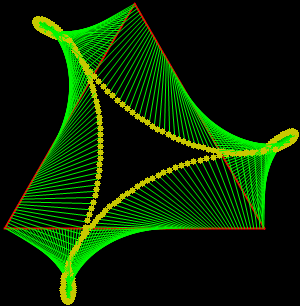
speed = -0.75 (pirouettes)
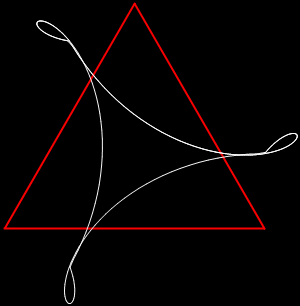
speed = -0.75 (path)
And what about the paths produced by pirouettes on the perimeters of other polygons? Watch this space.
Write the integers in groups of one, two, three, four… numbers like this:
1, 2,3, 4,5,6, 7,8,9,10, 11,12,13,14,15, 16,17,18,19,20,21, 22,23,24,25,26,27,28, 29,30,31,32,33,34,35,36, 37,38,39,40,41,42,43,44,45, 46,47,48,49,50,51,52,53,54,55, 56,57,58,59,60,61,62,63,64,65,66…
Now delete every second group:
1, 2,3, 4,5,6, 7,8,9,10, 11,12,13,14,15, 16,17,18,19,20,21, 22,23,24,25,26,27,28, 29,30,31,32,33,34,35,36, 37,38,39,40,41,42,43,44,45, 46,47,48,49,50,51,52,53,54,55, 56,57,58,59,60,61,62,63,64,65,66…
↓↓↓
1, 4,5,6, 11,12,13,14,15, 22,23,24,25,26,27,28, 37,38,39,40,41,42,43,44,45, 56,57,58,59,60,61,62,63,64,65,66…
The sum of the first n remaining groups equals n^4:
1 = 1 = 1^4
1 + 4+5+6 = 16 = 2^4
1 + 4+5+6 + 11+12+13+14+15 = 81 = 3^4
1 + 4+5+6 + 11+12+13+14+15 + 22+23+24+25+26+27+28 = 256 = 4^4
1 + 4+5+6 + 11+12+13+14+15 + 22+23+24+25+26+27+28 + 37+38+39+40+41+42+43+44+45 = 625 = 5^4
1 + 4+5+6 + 11+12+13+14+15 + 22+23+24+25+26+27+28 + 37+38+39+40+41+42+43+44+45 + 56+57+58+59+60+61+62+63+64+65+66 = 1296 = 6^4
1 + 4+5+6 + 11+12+13+14+15 + 22+23+24+25+26+27+28 + 37+38+39+40+41+42+43+44+45 + 56+57+58+59+60+61+62+63+64+65+66 + 79+80+81+82+83+84+85+86+87+88+89+90+91 = 2401 = 7^4
1 + 4+5+6 + 11+12+13+14+15 + 22+23+24+25+26+27+28 + 37+38+39+40+41+42+43+44+45 + 56+57+58+59+60+61+62+63+64+65+66 + 79+80+81+82+83+84+85+86+87+88+89+90+91 + 106+107+108+109+110+111+112+113+114+115+116+117+118+119+120 = 4096 = 8^4
1 + 4+5+6 + 11+12+13+14+15 + 22+23+24+25+26+27+28 + 37+38+39+40+41+42+43+44+45 + 56+57+58+59+60+61+62+63+64+65+66 + 79+80+81+82+83+84+85+86+87+88+89+90+91 + 106+107+108+109+110+111+112+113+114+115+116+117+118+119+120 + 137+138+139+140+141+142+143+144+145+146+147+148+149+150+151+152+153 = 6561 = 9^4
From David Wells’ Penguin Dictionary of Curious and Interesting Numbers (1986), entry for “81”
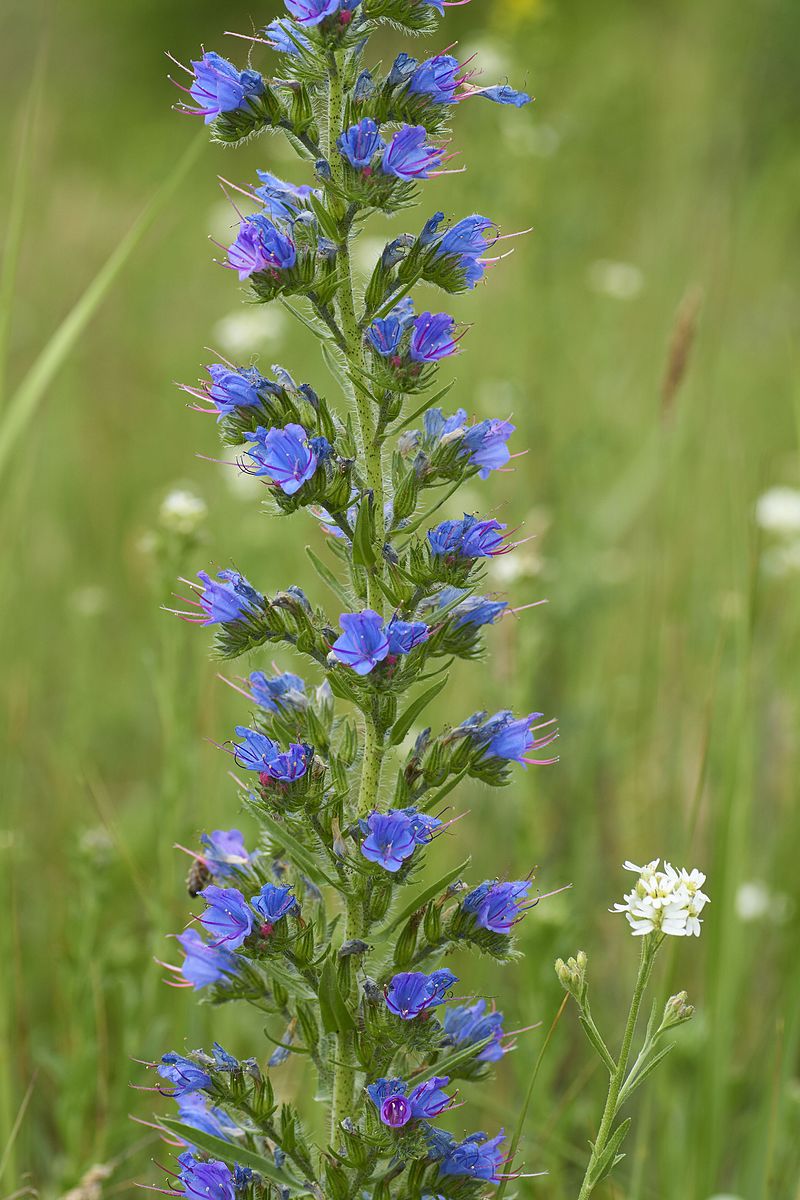
Viper’s bugloss, Echium vulgare (L 1753)
Also known as: blue devil, blue thistle, blueweed, snake flower; Gewöhnlicher Natternkopf, Blaue Natternkopf; vipérine commune, vipérine vulgaire, serpentine; viperina azzurra; viborera, viperina; gwiberlys; żmijowiec zwyczajny; naderles; ლურჯი ძირწითელა; 蓝蓟; синяк обыкновенный; etc.
One Flew Over in terms of the Cuckoo’s Nest — the late great Barry Humphries satirizes the pretension, prolixity and ugliness of modern English
Elsewhere Other-Accessible…
• “In Terms of My Natural Life” — a pome crafted by Les Patterson
• Ex-term-in-ate! — more on “in terms of”…
As pre-previously described on OotÜ-F, the English mathematician John Conway invented the Game of Life. It’s played on a grid of squares with counters. First you put counters on the grid in any pattern you please, random or regular, then you add or remove counters according to three simple rules applied to each square of the grid:
1. If an empty square has exactly three counters as neighbors, put a new counter on the square.
2. If a counter has two or three neighbors, leave it where it is.
3. If a counter has less than two or more than three neighbors, remove it from the grid.
There are lots of variants on Life and I wondered what would happen if you turned the grid into a kind of two-dimensional Pascal’s triangle. You start with 1 in the central square, then apply this rule to each square, [x,y], of the grid:
1. Add all numbers in the eight squares surrounding [x,y], then put that value in [x,y] (as soon as you’ve summed all other squares).
When a square is on the edge of the grid, its [x] or [y] value wraps to the opposite edge. Here’s this Pascal’s Life in action:
0 0 0 0 0 0 0
0 0 0 0 0 0 0
0 0 0 0 0 0 0
0 0 0 1 0 0 0
0 0 0 0 0 0 0
0 0 0 0 0 0 0
0 0 0 0 0 0 0Pascal's square #1
0 0 0 0 0 0 0
0 0 0 0 0 0 0
0 0 1 1 1 0 0
0 0 1 0 1 0 0
0 0 1 1 1 0 0
0 0 0 0 0 0 0
0 0 0 0 0 0 0Pascal's square #2
0 0 0 0 0 0 0
0 1 2 3 2 1 0
0 2 2 4 2 2 0
0 3 4 8 4 3 0
0 2 2 4 2 2 0
0 1 2 3 2 1 0
0 0 0 0 0 0 0Pascal's square #3
01 03 06 07 06 03 01
03 06 12 12 12 06 03
06 12 27 27 27 12 06
07 12 27 24 27 12 07
06 12 27 27 27 12 06
03 06 12 12 12 06 03
01 03 06 07 06 03 01Pascal's square #4
021 038 056 067 056 038 021
038 070 100 124 100 070 038
056 100 132 168 132 100 056
067 124 168 216 168 124 067
056 100 132 168 132 100 056
038 070 100 124 100 070 038
021 038 056 067 056 038 021Pascal's square #5
0285 0400 0560 0615 0560 0400 0285
0400 0541 0755 0811 0755 0541 0400
0560 0755 1070 1140 1070 0755 0560
0615 0811 1140 1200 1140 0811 0615
0560 0755 1070 1140 1070 0755 0560
0400 0541 0755 0811 0755 0541 0400
0285 0400 0560 0615 0560 0400 0285Pascal's square #6
2996 3786 4697 5176 4697 3786 2996
3786 4785 5892 6525 5892 4785 3786
4697 5892 7153 7941 7153 5892 4697
5176 6525 7941 8840 7941 6525 5176
4697 5892 7153 7941 7153 5892 4697
3786 4785 5892 6525 5892 4785 3786
2996 3786 4697 5176 4697 3786 2996Pascal's square #7
As you can see, the numbers quickly get big, so I adjusted the rule: sum the eight neighbors of [x,y], then put sum modulo 10 in [x,y]. The modulus of a number, n is its remainder when it’s divided by another number. For example, 3 modulo 10 = 3, 7 modulo 10 = 7, 10 modulo 10 = 0, 24 modulo 10 = 4, and so on. Pascal’s Life modulo 10 looks like this:
0 0 0 0 0 0 0
0 0 0 0 0 0 0
0 0 0 0 0 0 0
0 0 0 1 0 0 0
0 0 0 0 0 0 0
0 0 0 0 0 0 0
0 0 0 0 0 0 0Pascal's square (n mod 10) #1
0 0 0 0 0 0 0
0 0 0 0 0 0 0
0 0 1 1 1 0 0
0 0 1 0 1 0 0
0 0 1 1 1 0 0
0 0 0 0 0 0 0
0 0 0 0 0 0 0Pascal's square (n mod 10) #2
0 0 0 0 0 0 0
0 1 2 3 2 1 0
0 2 2 4 2 2 0
0 3 4 8 4 3 0
0 2 2 4 2 2 0
0 1 2 3 2 1 0
0 0 0 0 0 0 0Pascal's square (n mod 10) #3
1 3 6 7 6 3 1
3 6 2 2 2 6 3
6 2 7 7 7 2 6
7 2 7 4 7 2 7
6 2 7 7 7 2 6
3 6 2 2 2 6 3
1 3 6 7 6 3 1Pascal's square (n mod 10) #4
1 8 6 7 6 8 1
8 0 0 4 0 0 8
6 0 2 8 2 0 6
7 4 8 6 8 4 7
6 0 2 8 2 0 6
8 0 0 4 0 0 8
1 8 6 7 6 8 1Pascal's square (n mod 10) #5
5 0 0 5 0 0 5
0 1 5 1 5 1 0
0 5 0 0 0 5 0
5 1 0 0 0 1 5
0 5 0 0 0 5 0
0 1 5 1 5 1 0
5 0 0 5 0 0 5Pascal's square (n mod 10) #6
6 6 7 6 7 6 6
6 5 2 5 2 5 6
7 2 3 1 3 2 7
6 5 1 0 1 5 6
7 2 3 1 3 2 7
6 5 2 5 2 5 6
6 6 7 6 7 6 6Pascal's square (n mod 10) #7
7 5 3 3 3 5 7
5 9 5 1 5 9 5
3 5 1 7 1 5 3
3 1 7 6 7 1 3
3 5 1 7 1 5 3
5 9 5 1 5 9 5
7 5 3 3 3 5 7Pascal's square (n mod 10) #8
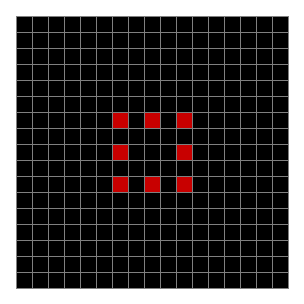
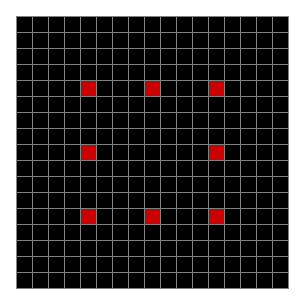
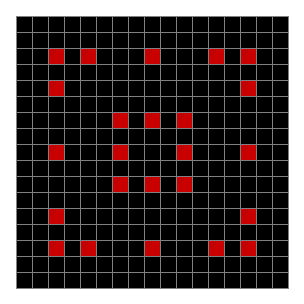
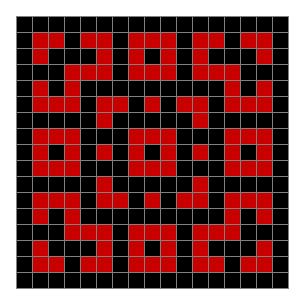
Now add graphics and use n modulo 2 (where all even numbers → 0 and all odd numbers → 1). If you start with a 17×17 square with a square pattern of 1s, you’ll see it evolve like this when 0s are represented in black and 1s are represented in red:

n mod 2 on 17×17 square #1
n mod 2 #2

n mod 2 #3
n mod 2 #4

n mod 2 #5
n mod 2 #6
n mod 2 #7

n mod 2 #8
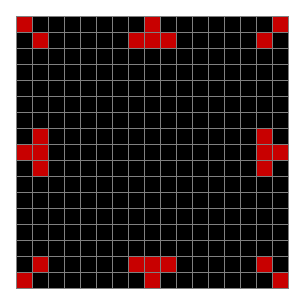
n mod 2 #9

n mod 2 #10

n mod 2 #11

n mod 2 #12

n mod 2 #13
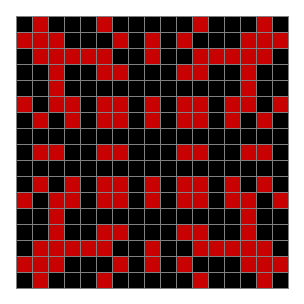
n mod 2 #14
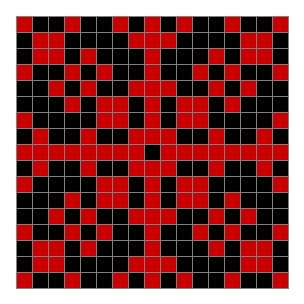
n mod 2 #15

n mod 2 #16
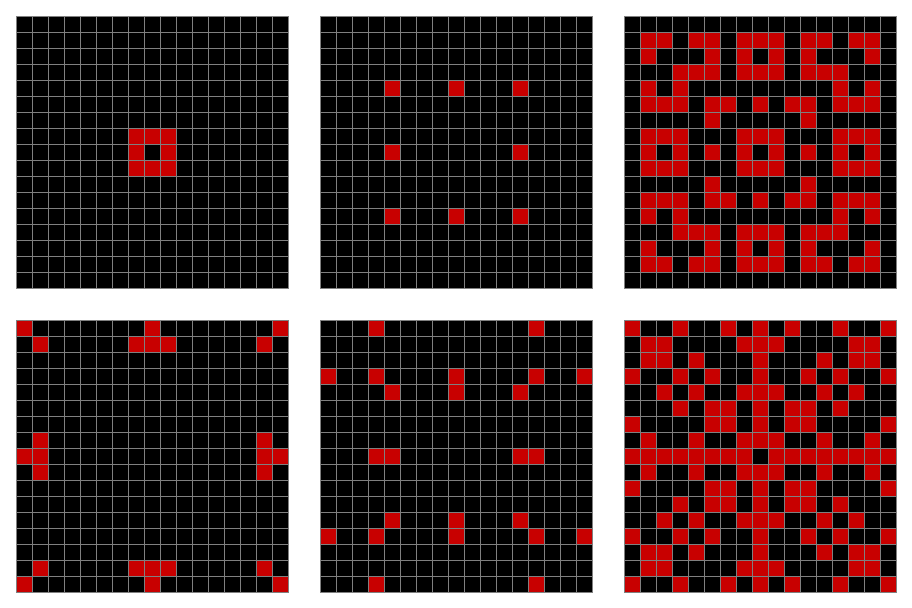
n mod 2 (animated)
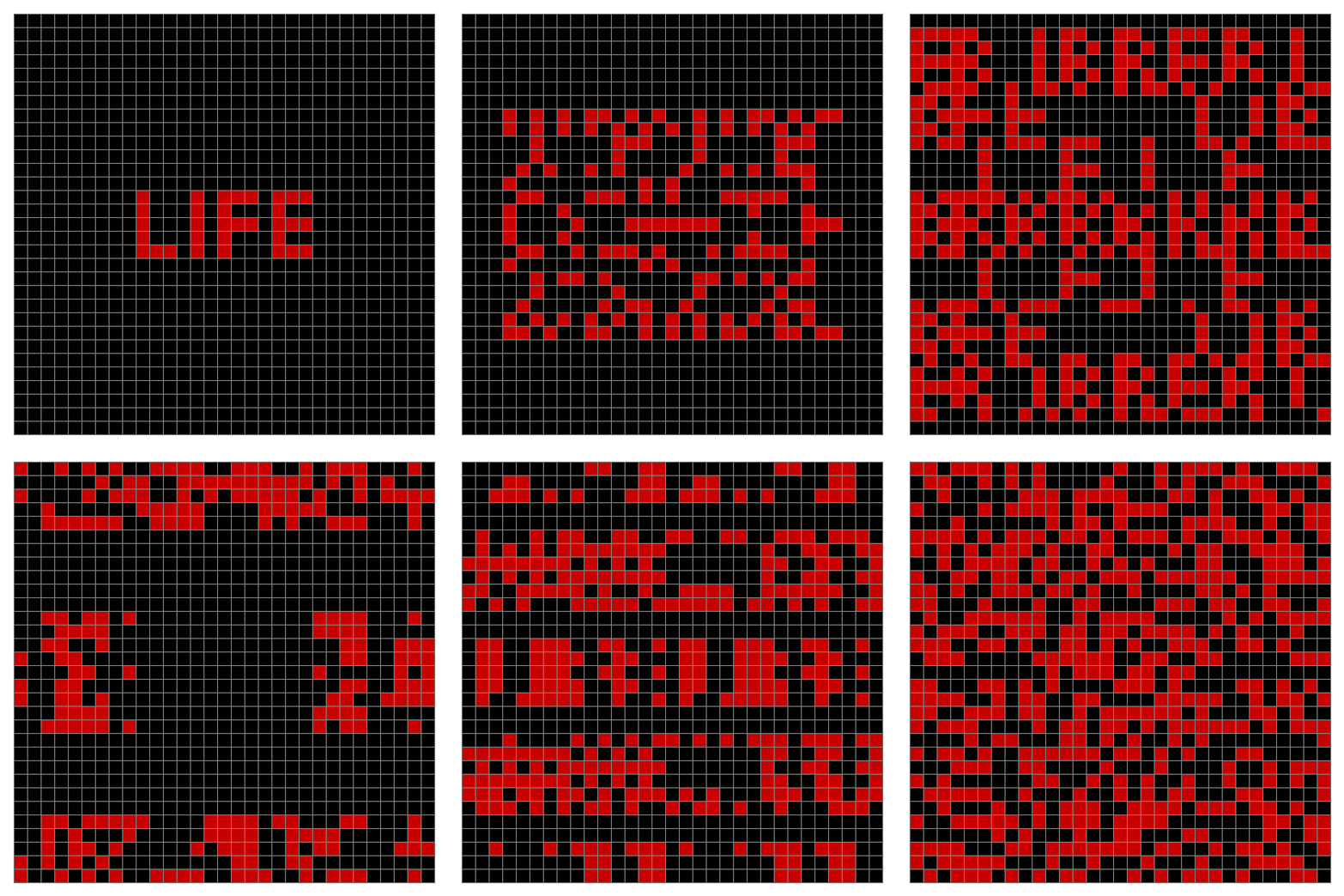
As you can see, the original square re-appears. So do other patterns. Here’s an animated gif for n modulo 2 seeded with a pattern of 1s spelling LIFE:
Now try a spiral as the seed:

Spiral with n mod 2 #1
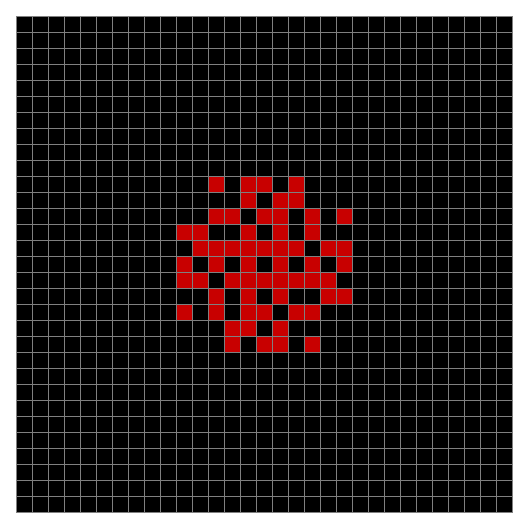
Spiral with n mod 2 #2
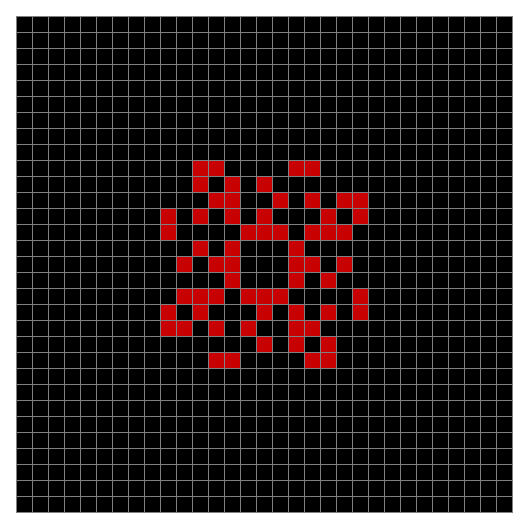
Spiral with n mod 2 #3
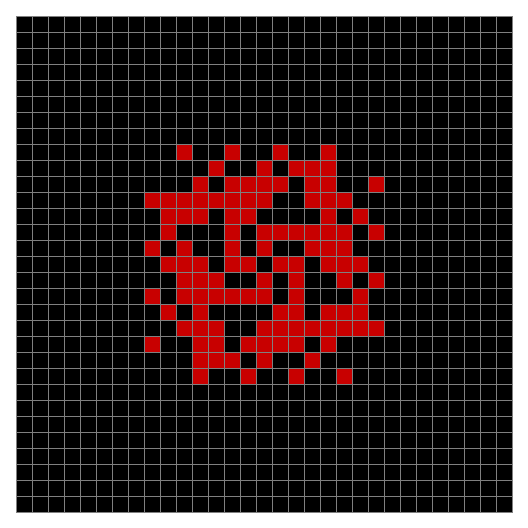
Spiral with n mod 2 #4
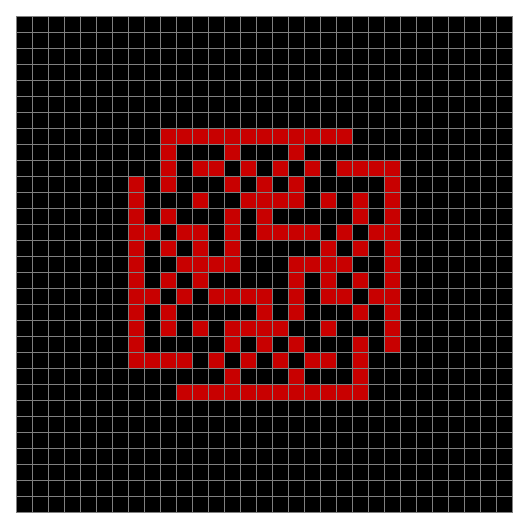
Spiral with n mod 2 #5

Spiral with n mod 2 #6
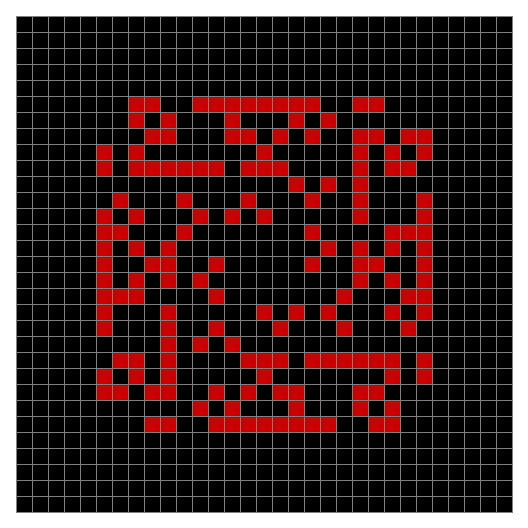
Spiral with n mod 2 #7

Spiral with n mod 2 #8
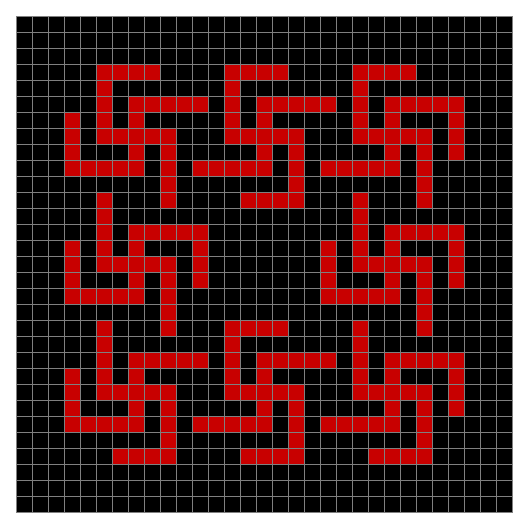
Spiral with n mod 2 #9

Spiral with n mod 2 #10

Spiral with n mod 2 #11
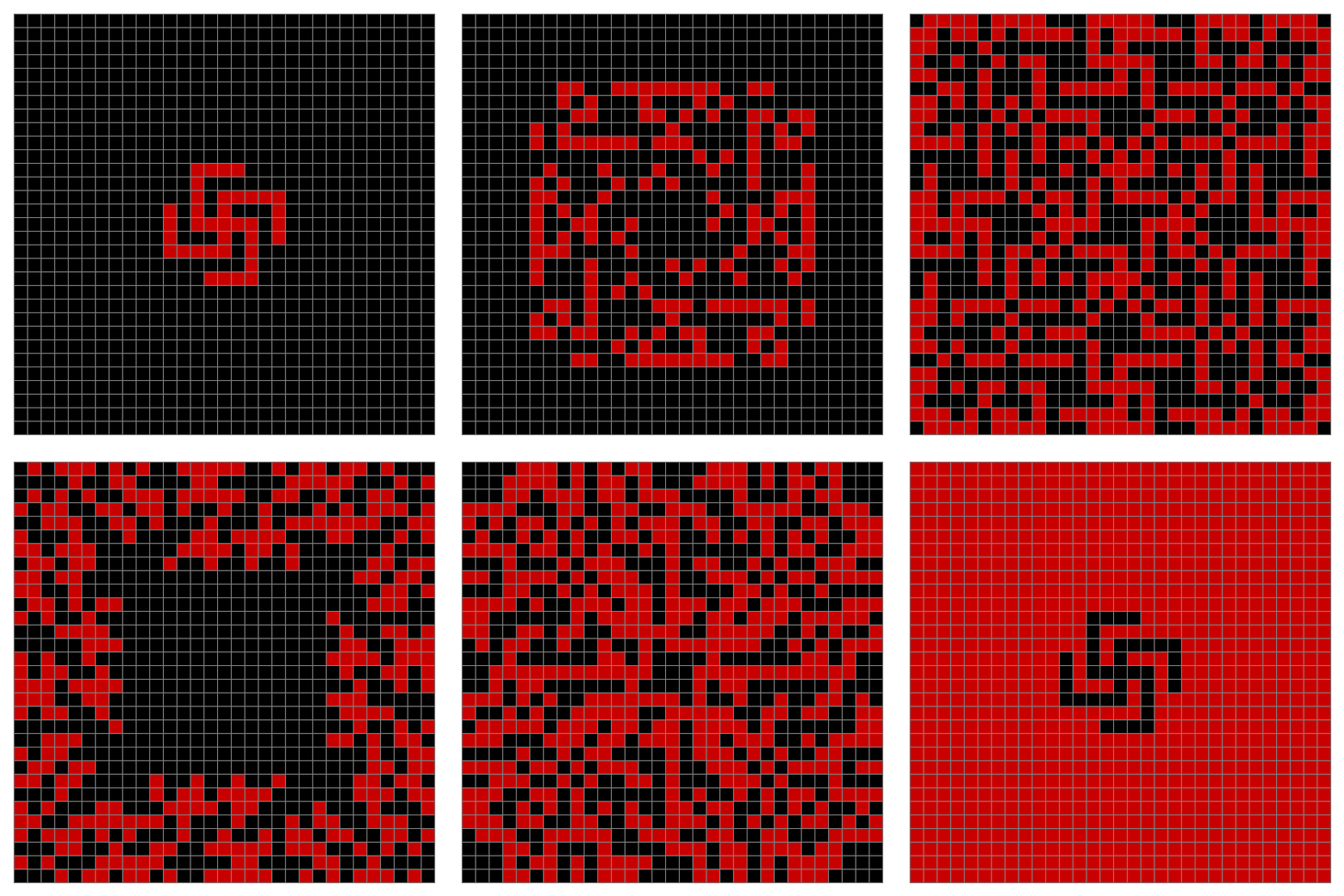
Spiral mod 2 (animated)
Now try the same pattern using modulo 3, where 0s are represented in black, 1s are represented in red and 2s in green. The pattern returns with different colors, i.e. with different underlying digits:
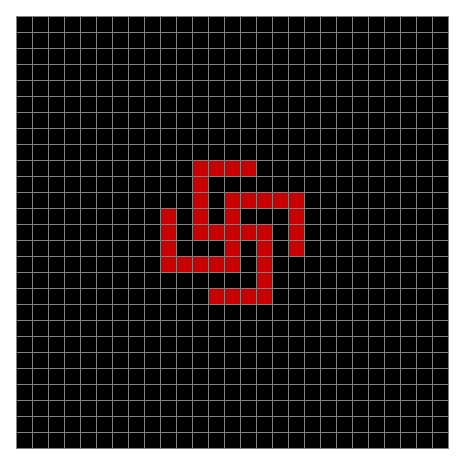
Spiral mod 3 on 27×27 square #1
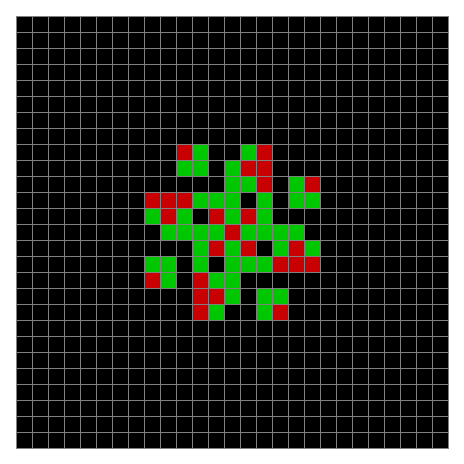
Spiral mod 3 #2

Spiral mod 3 #3
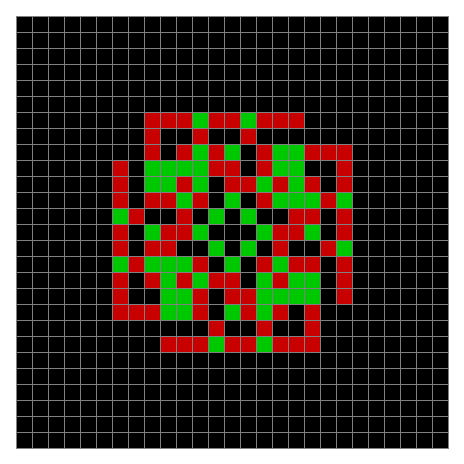
Spiral mod 3 #4
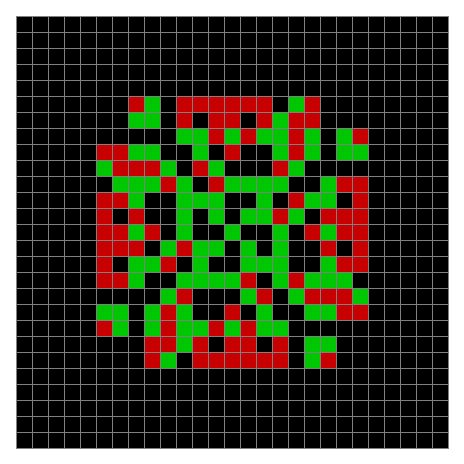
Spiral mod 3 #5

Spiral mod 3 #6
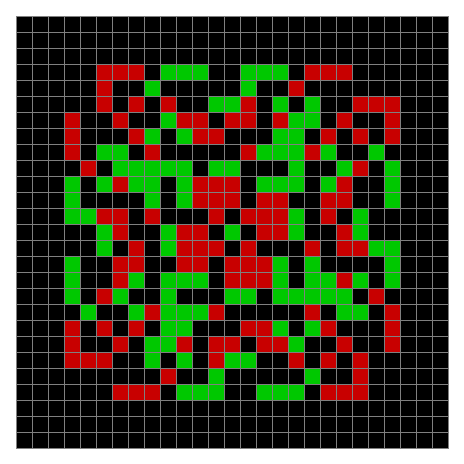
Spiral mod 3 #7

Spiral mod 3 #8

Spiral mod 3 #9
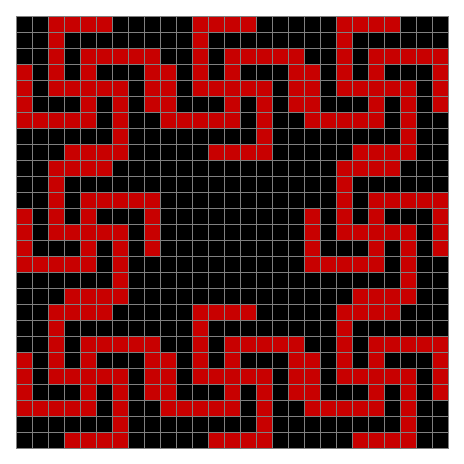
Spiral mod 3 #10

Spiral mod 3 #11
⇓
[…]

Spiral mod 3 #19
⇓
[…]
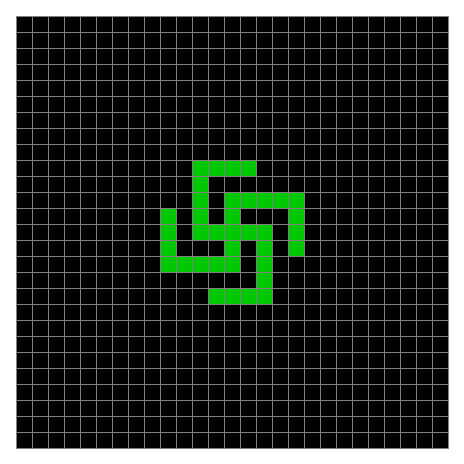
Spiral mod 3 #28
⇓
[…]

Spiral mod 3 #37
⇓
[…]
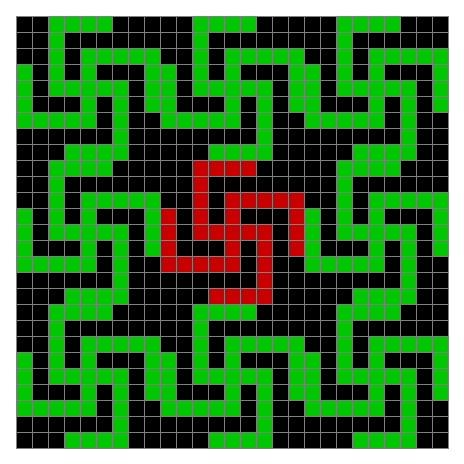
Spiral mod 3 #46

Spiral mod 3 (animated)
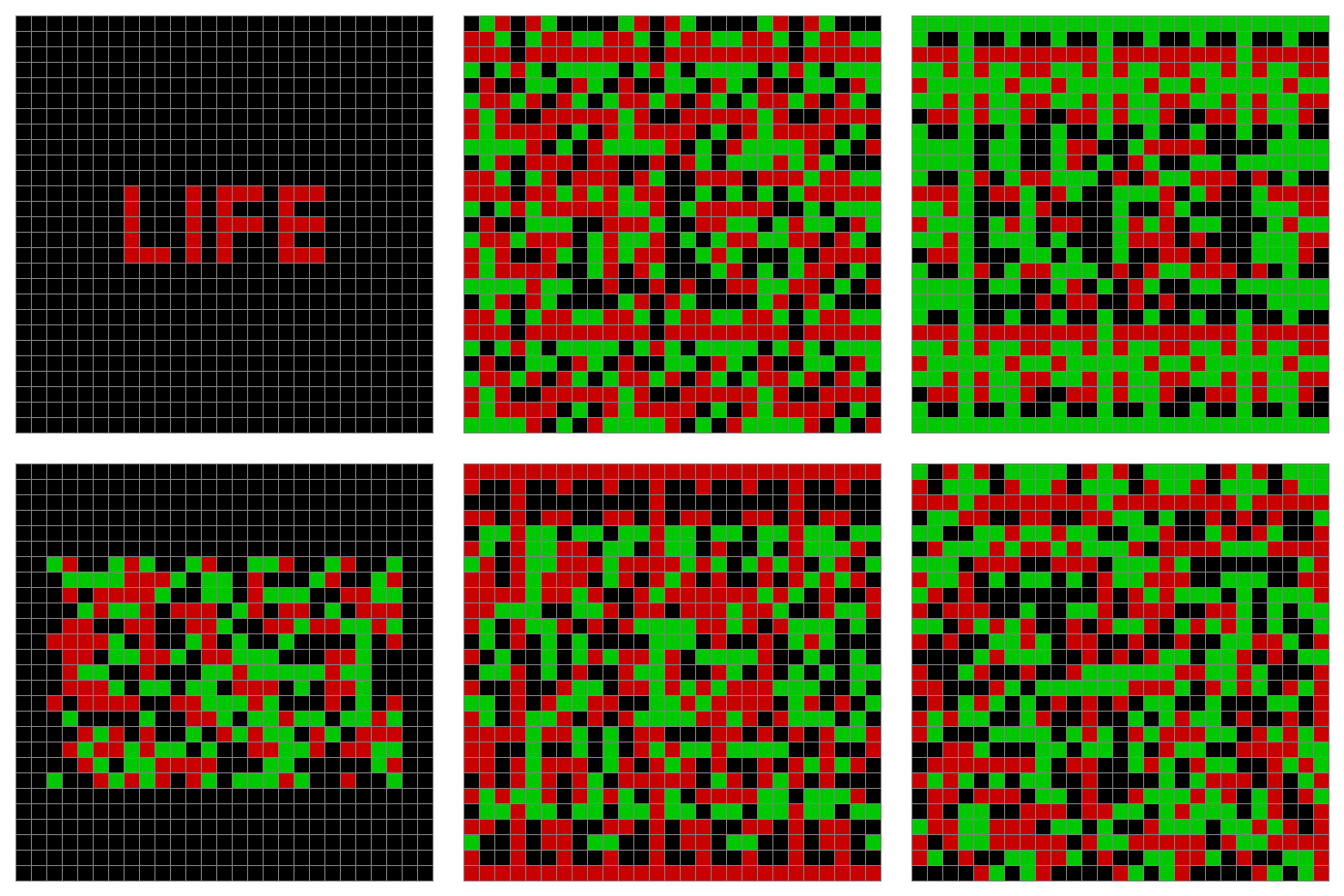
LIFE mod 3 (animated)
Now try n modulo 5, with 0s represented in black, 1s represented in red, 2s in green, 3s in yellow and 4s in dark blue. Again the pattern returns in different colors:

Spiral mod 5 on 25×25 square #1

Spiral mod 5 #2

Spiral mod 5 #3
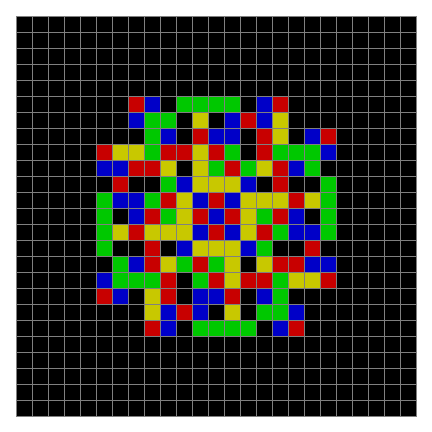
Spiral mod 5 #4
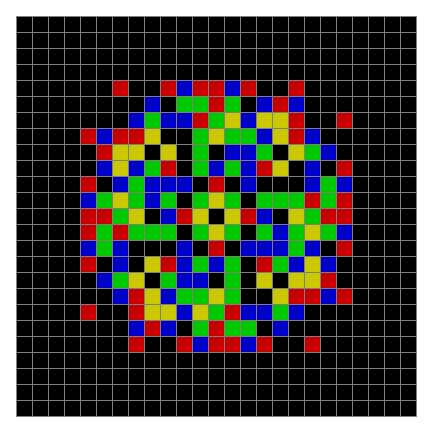
Spiral mod 5 #5

Spiral mod 5 #6
⇓
[…]
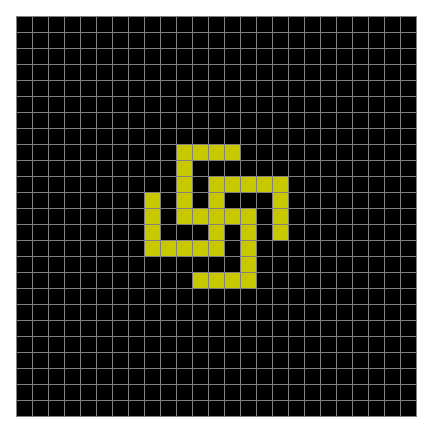
Spiral mod 5 #26
⇓
[…]

Spiral mod 5 #31
⇓
[…]
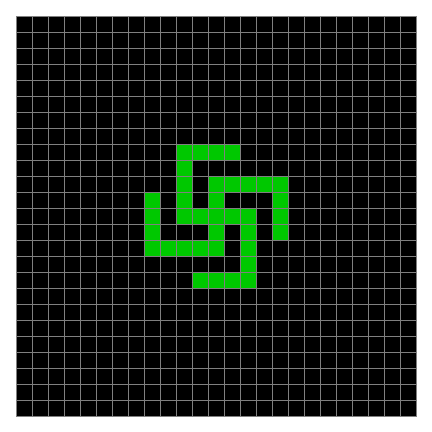
Spiral mod 5 #76
⇓
[…]

Spiral mod 5 #81

Spiral mod 5 (animated)
Finally, try a svastika modulo 7, with 0s represented in black, 1s represented in red, 2s in green, 3s in yellow, 4s in dark blue, 5s in purple and 6s in light blue:
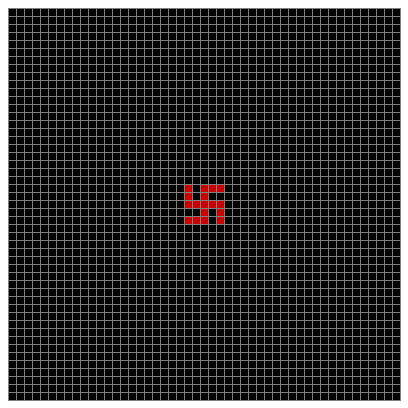
Svastika mod 7 on 49×49 square #1
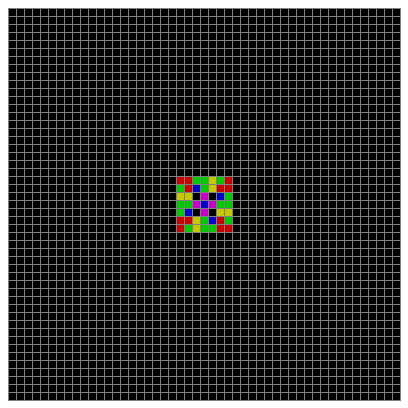
Svastika mod 7 #2
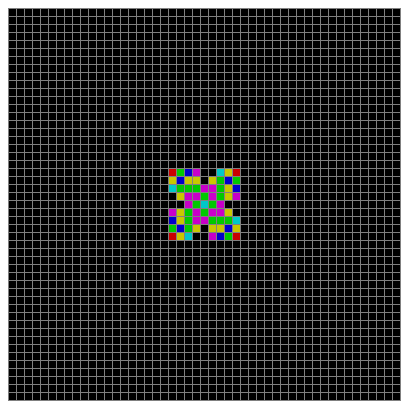
Svastika mod 7 #3
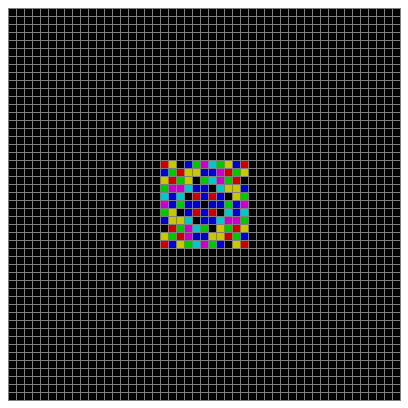
Svastika mod 7 #4

Svastika mod 7 #5

Svastika mod 7 #6

Svastika mod 7 #7
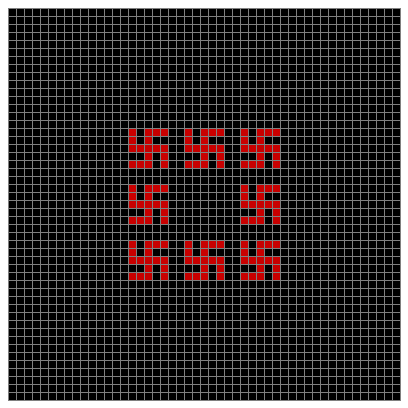
Svastika mod 7 #8
⇓
[…]

Svastika mod 7 #15
⇓
[…]
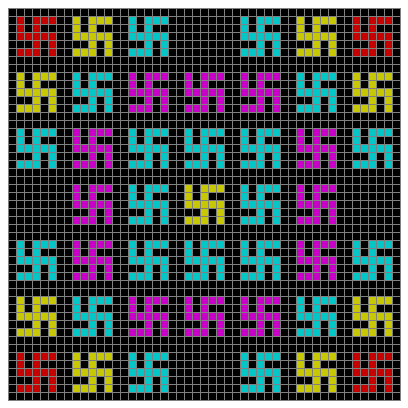
Svastika mod 7 #22
⇓
[…]
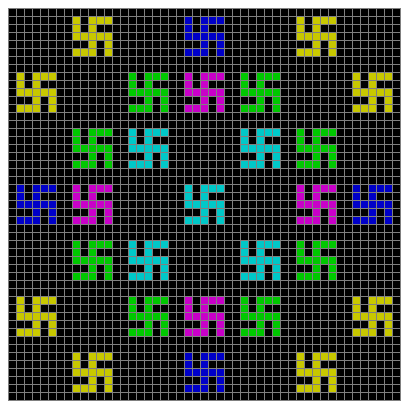
Svastika mod 7 #29
⇓
[…]

Svastika mod 7 #36
⇓
[…]
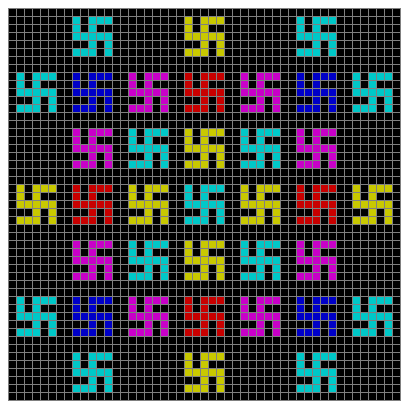
Svastika mod 7 #43

Svastika mod 7 (animated)
Previously Pre-Posted…
• Eternal LIFE — a first look at the Game of Life
Post-Performative Post-Scriptum…
pard, n.¹ A panther, a leopard; (also) an animal resembling these. Now archaic.
pard, n.² A partner, esp. a male partner; a comrade, a mate.
• Oxford English Dictionary

 Overlord In Terms of Core Issues Around Maximal Engagement with Key Notions of the Über-Feral