Square Routes

One of the pleasures of exploring an ancient city like York or Chester is that of learning new routes to the same destination. There are byways and alleys, short-cuts and diversions. You set off intending to go to one place and end up in another.
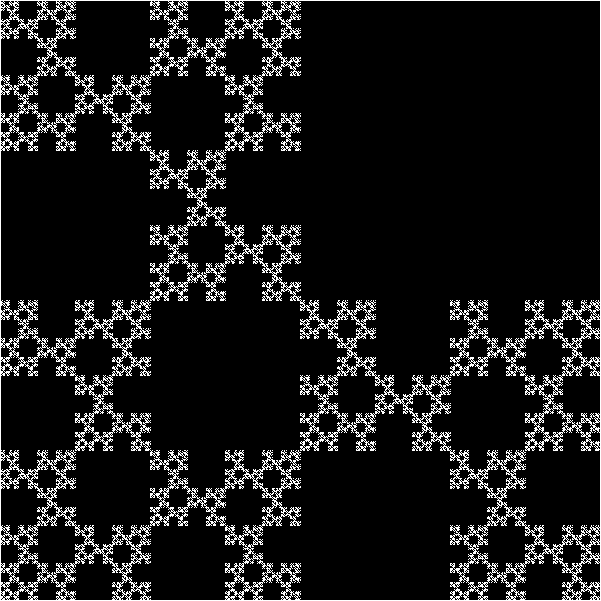
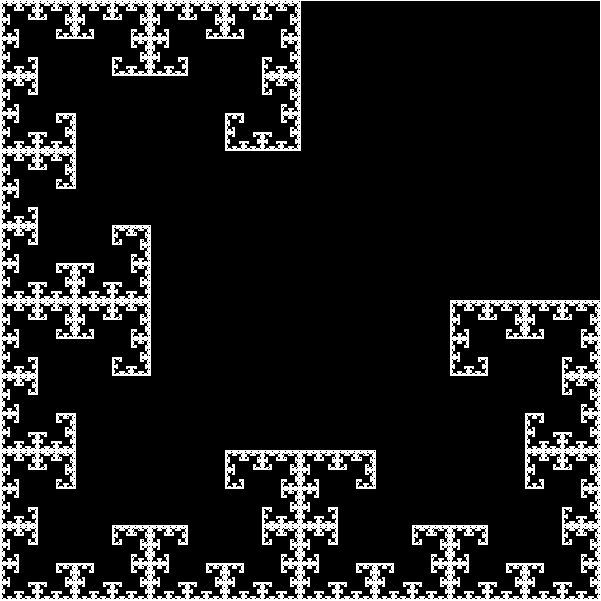
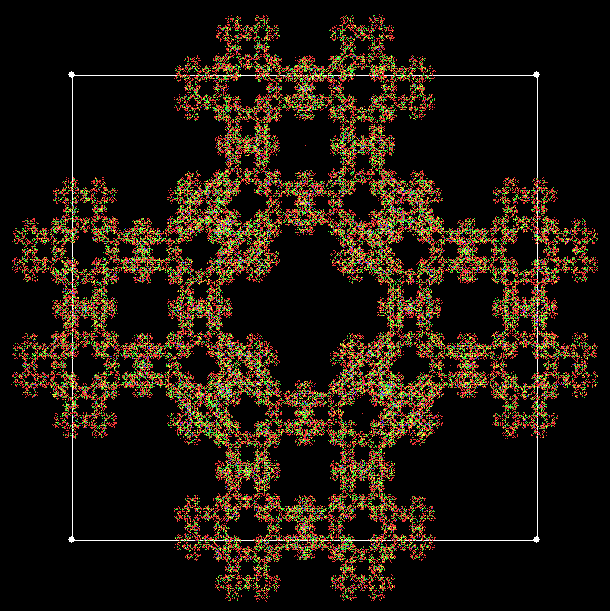
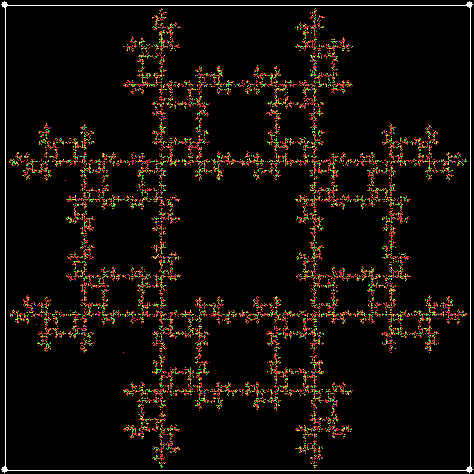
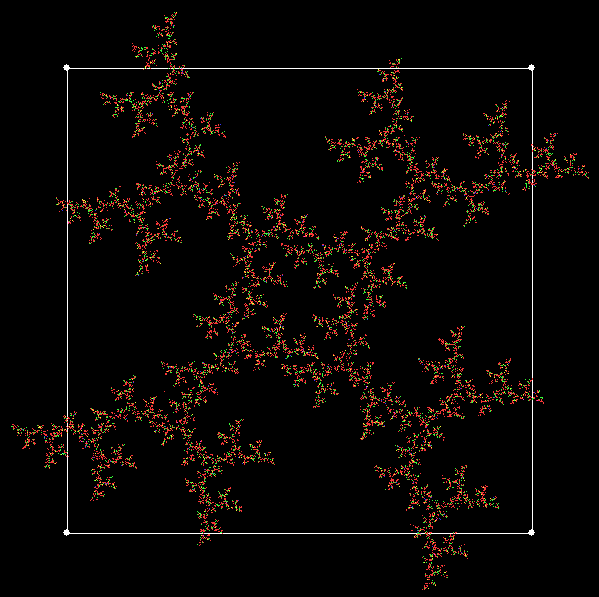
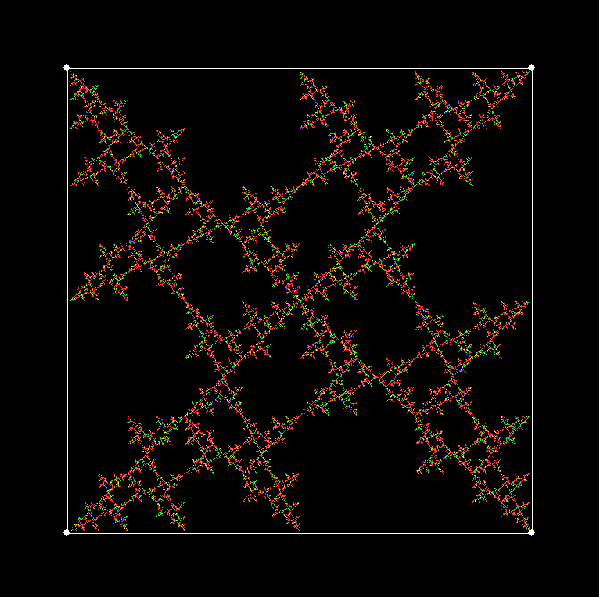
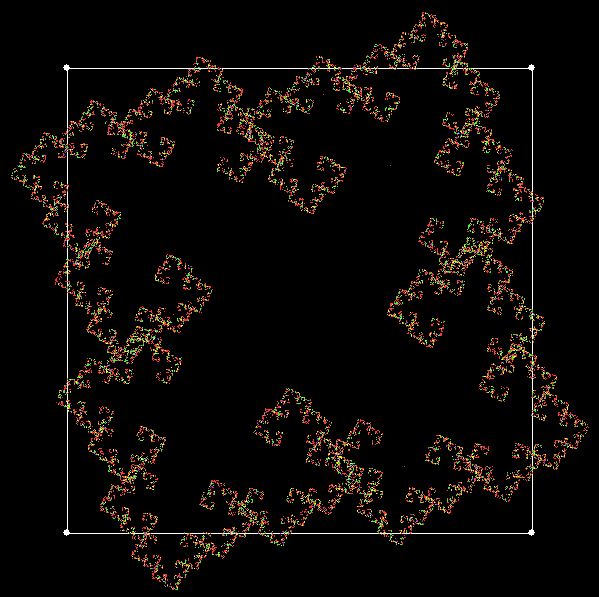
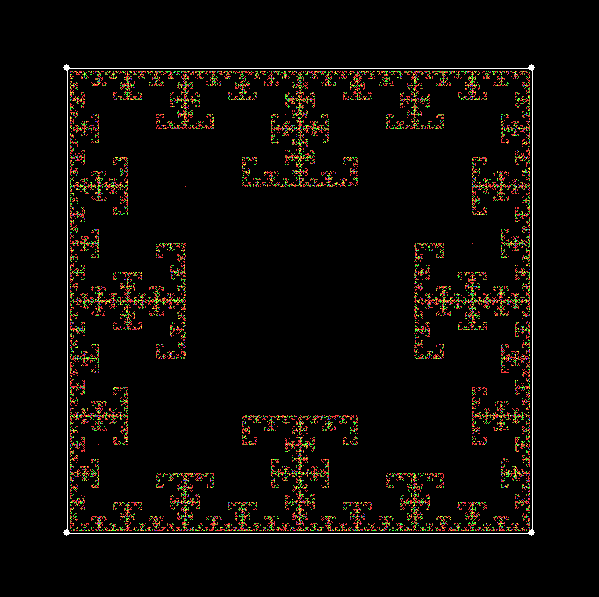
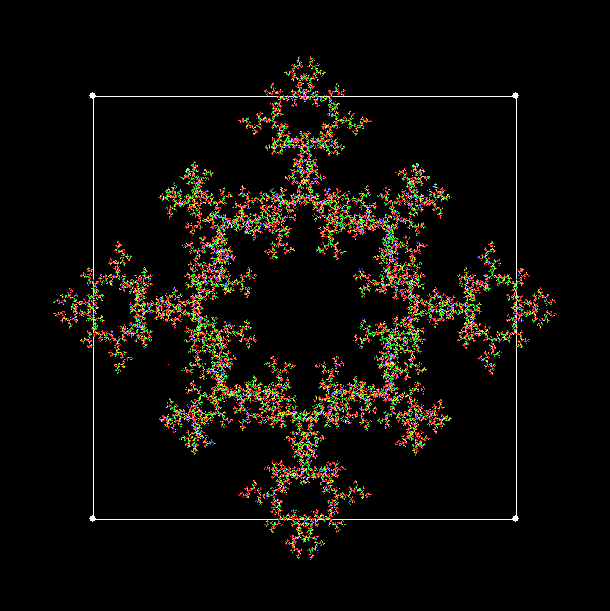
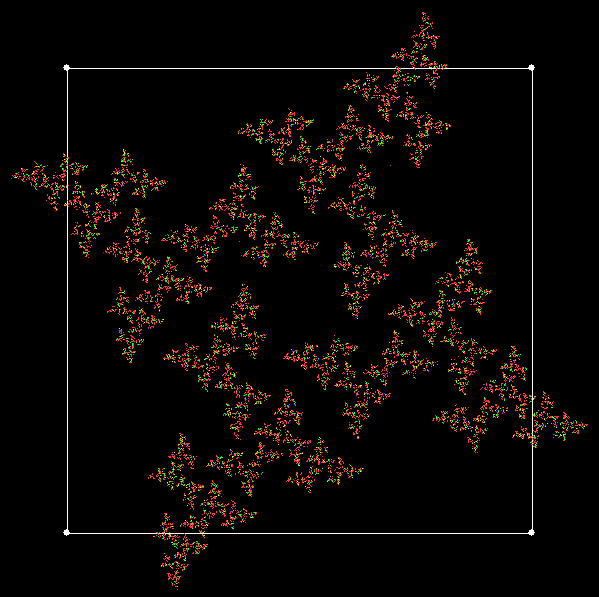
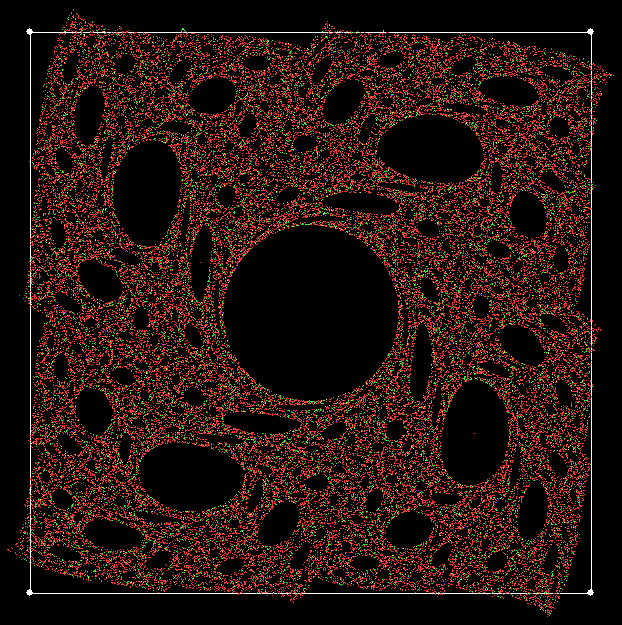
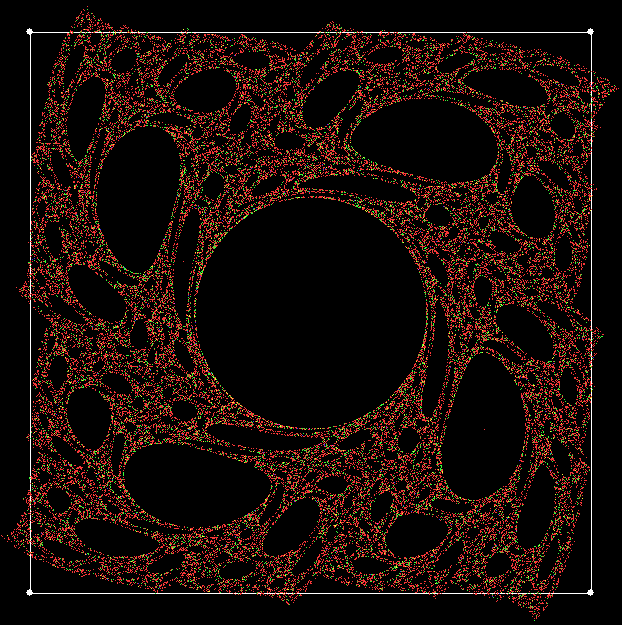
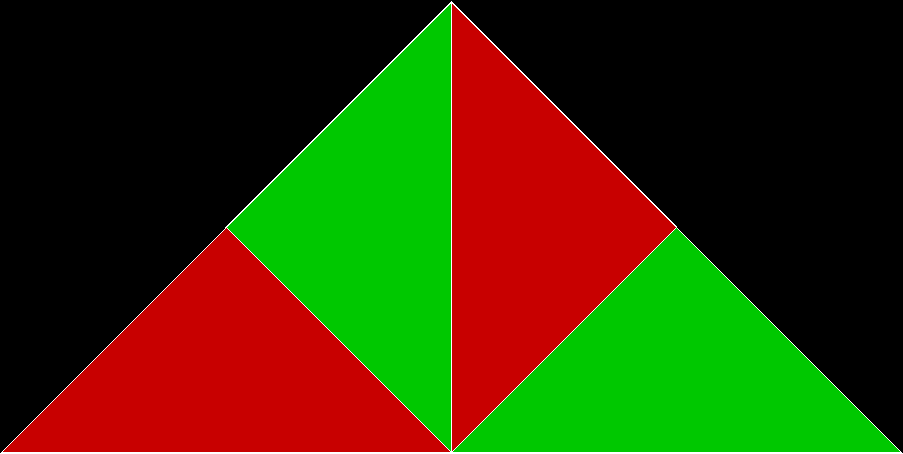
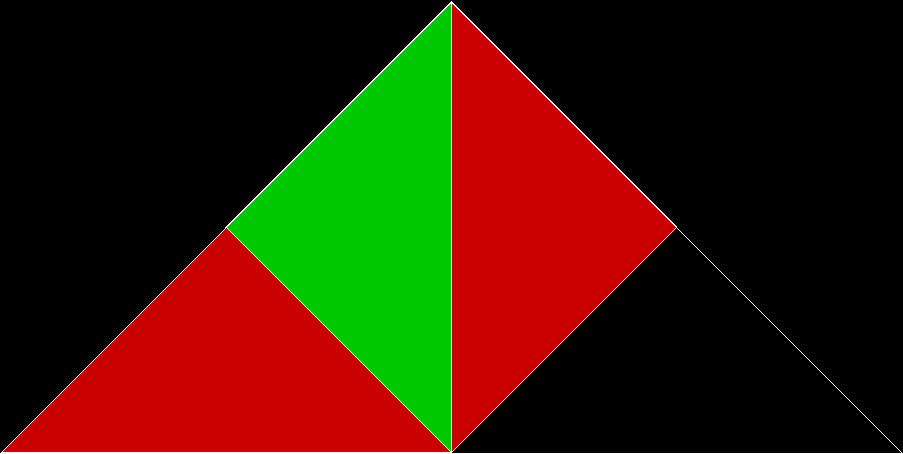
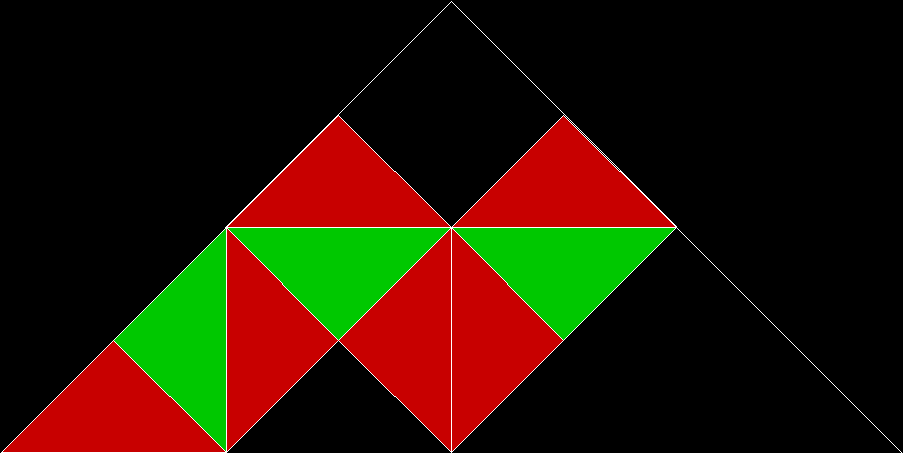
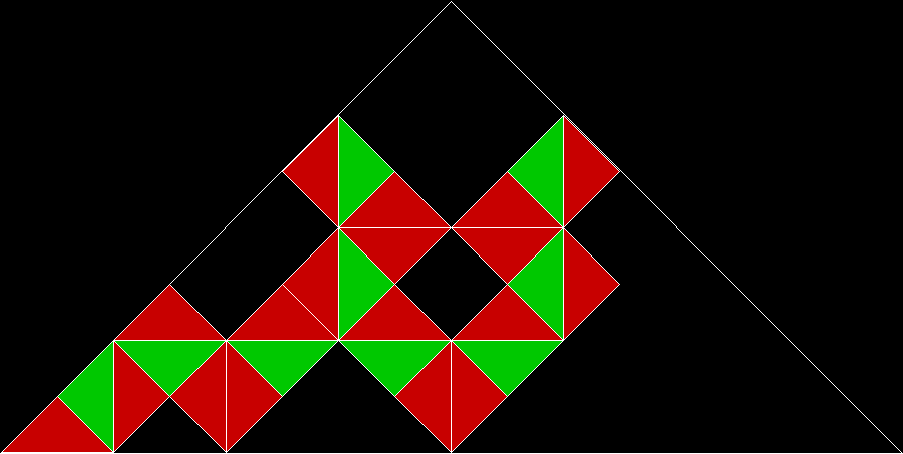
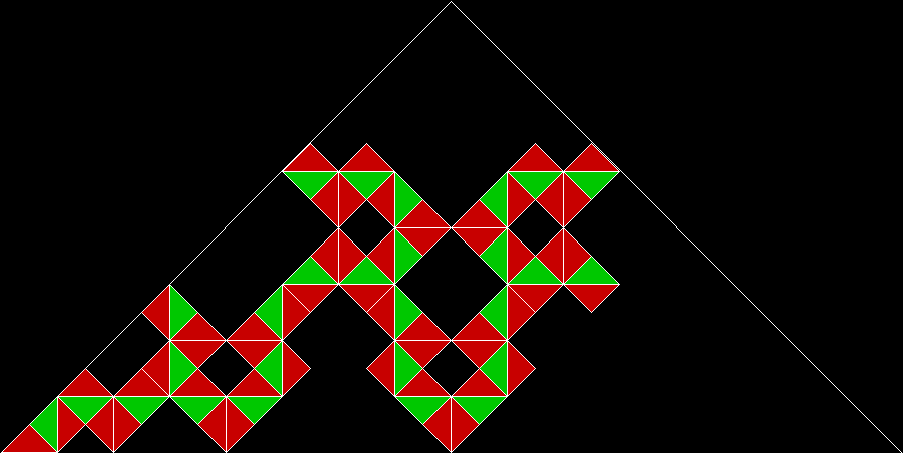
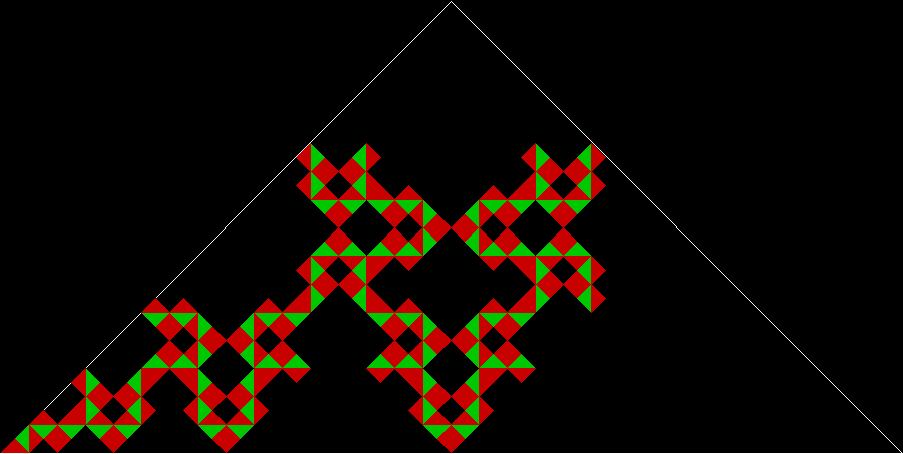
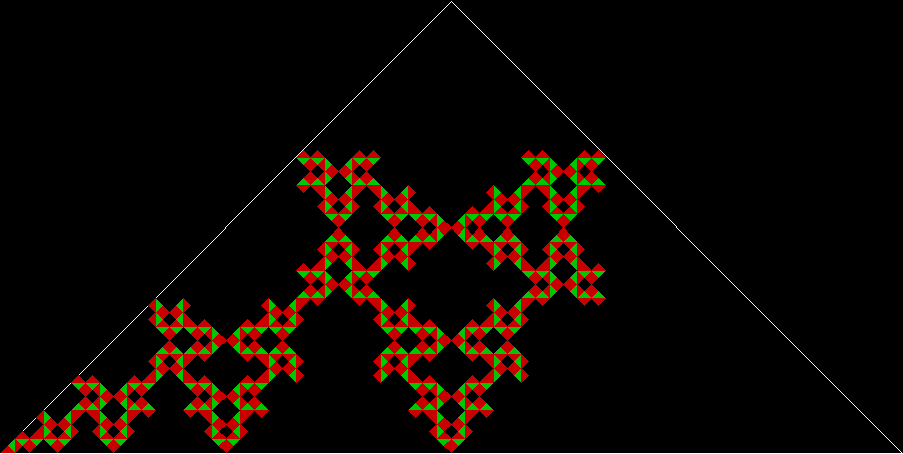
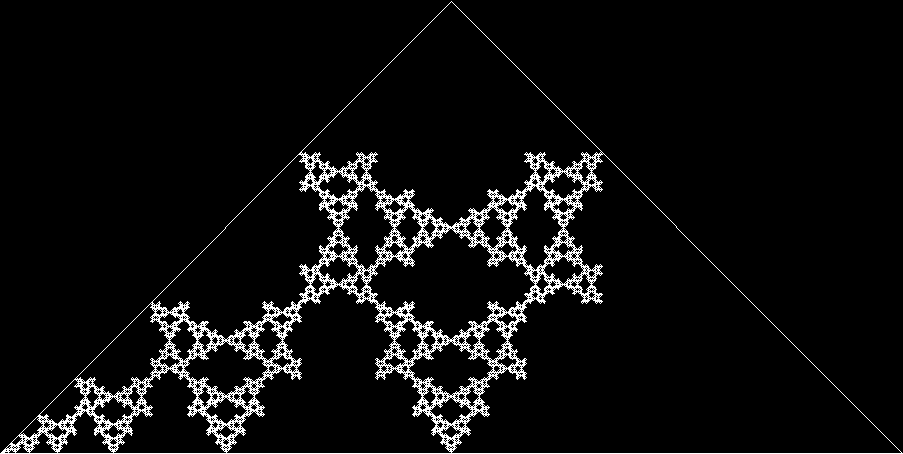
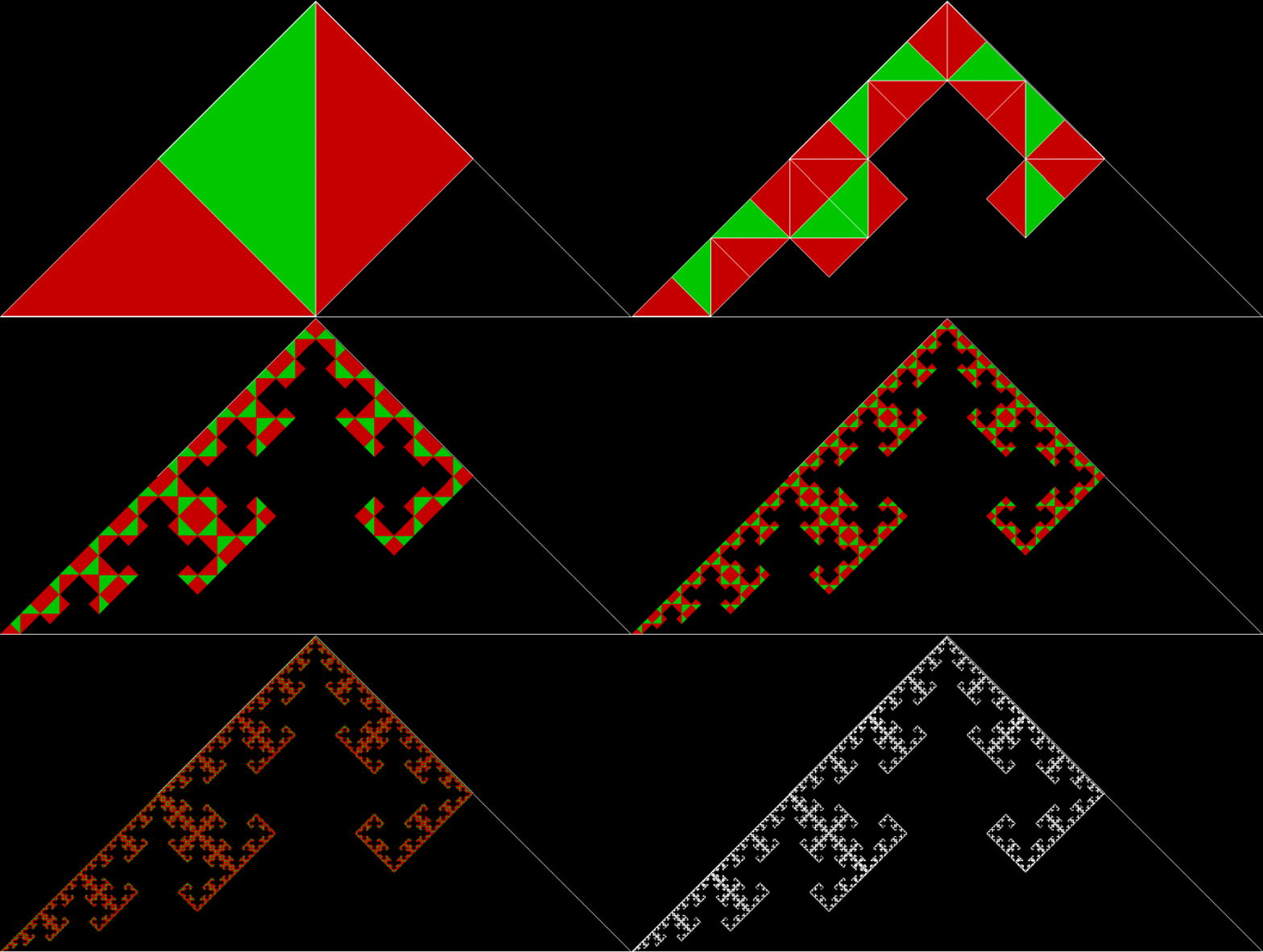
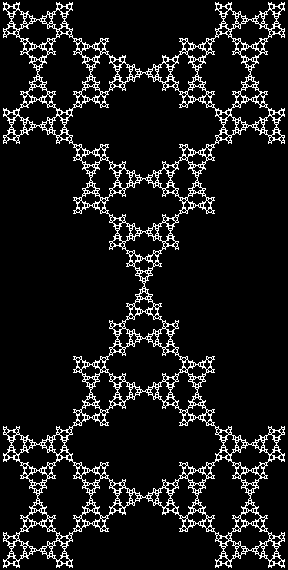
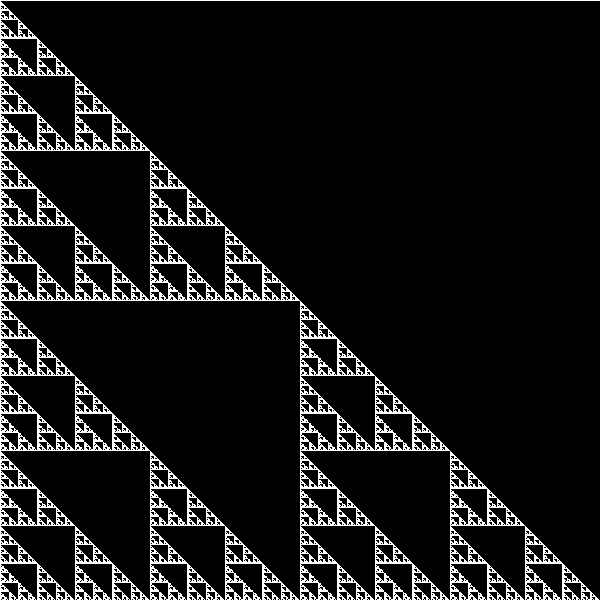
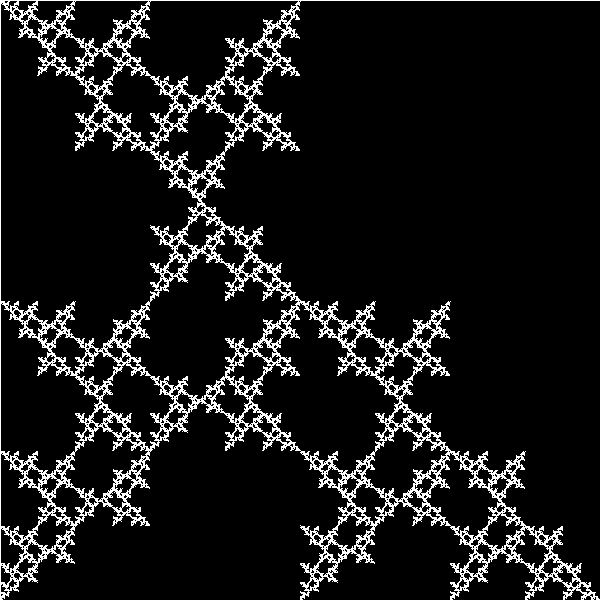
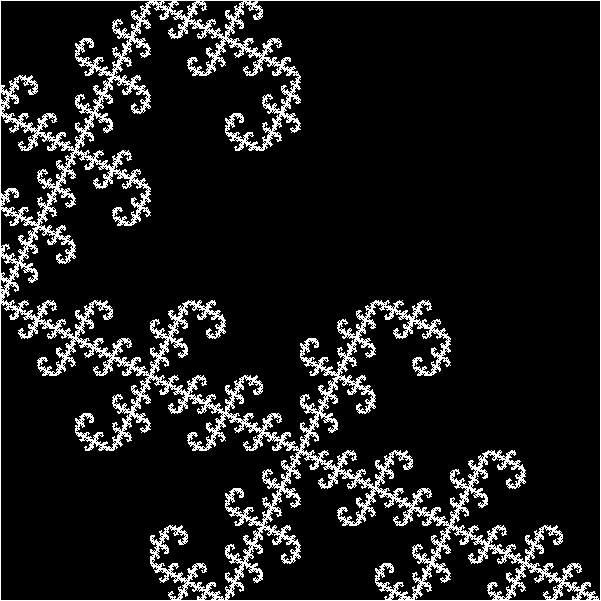
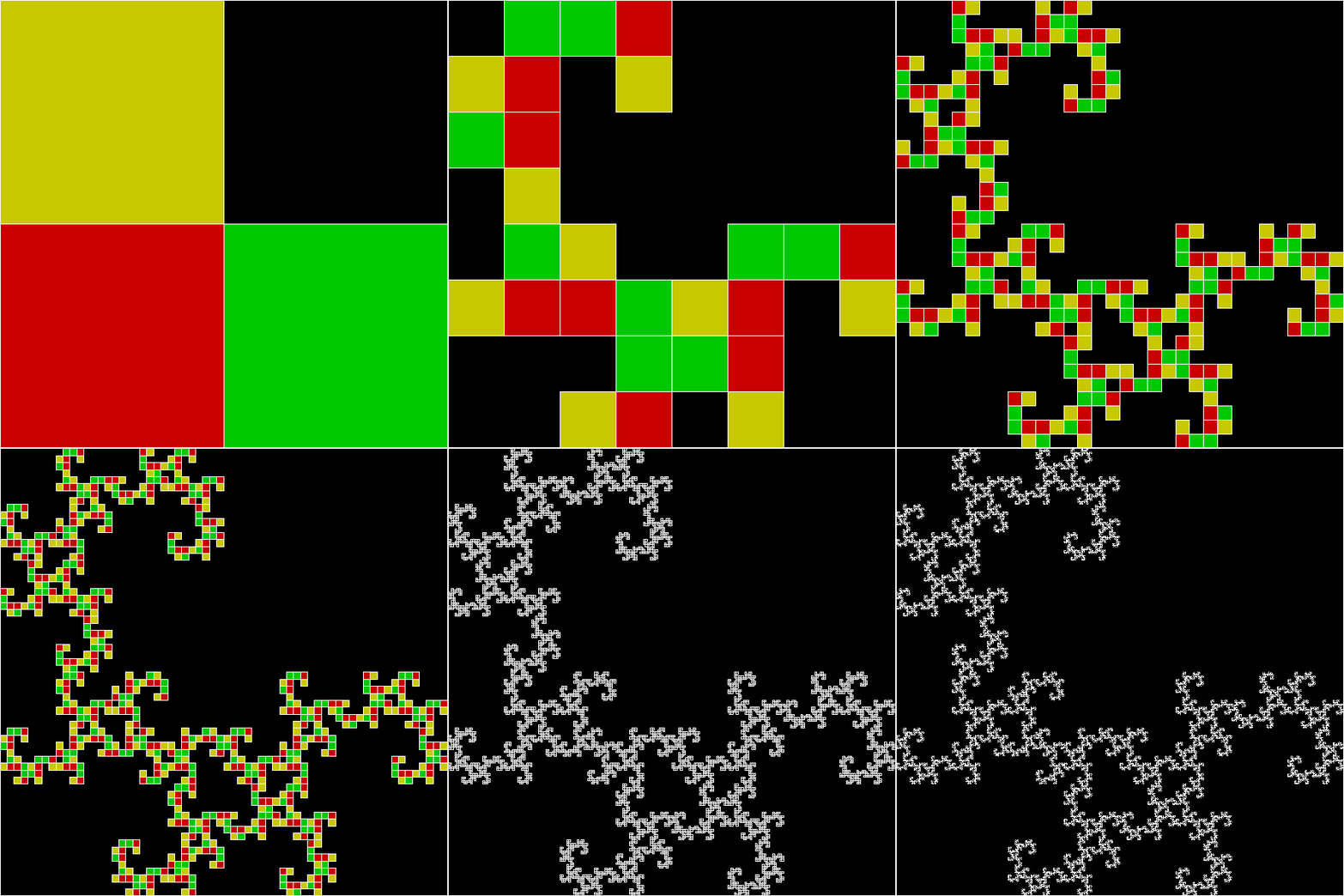
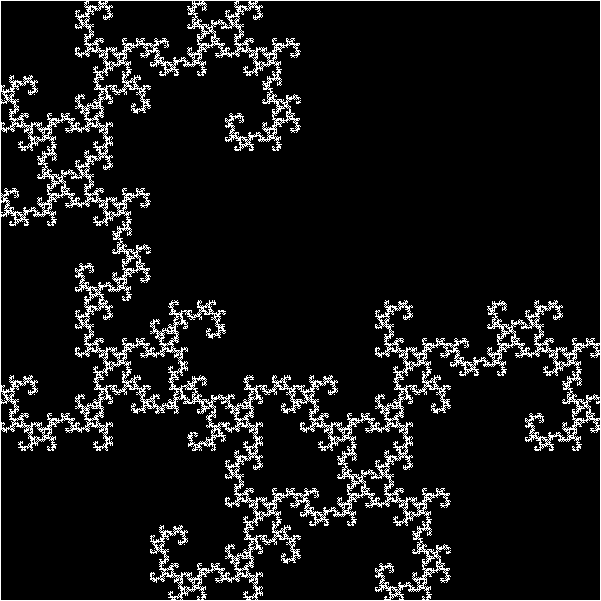
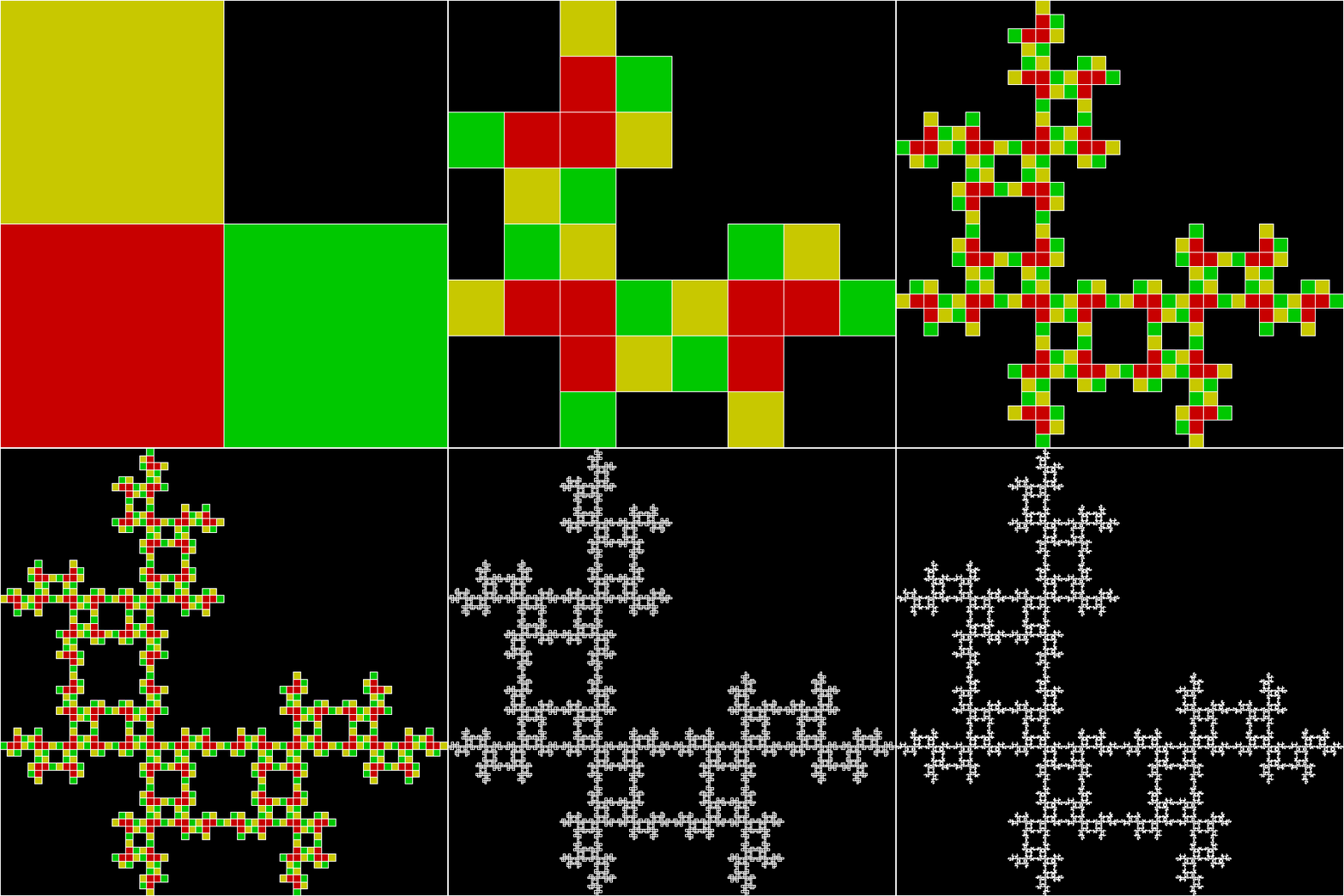
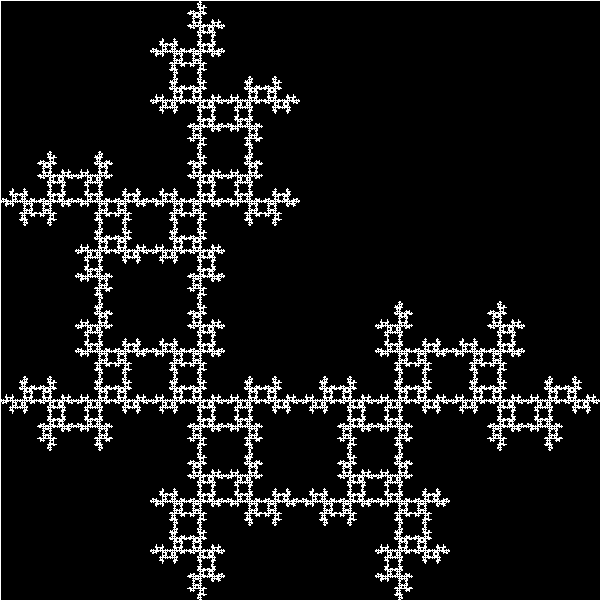
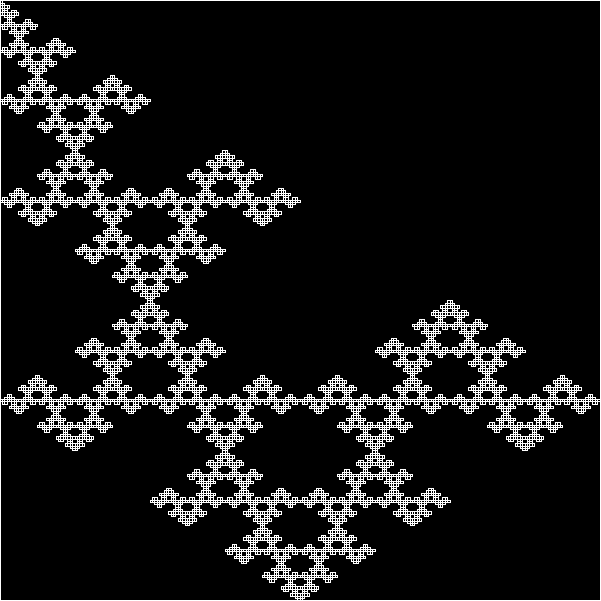
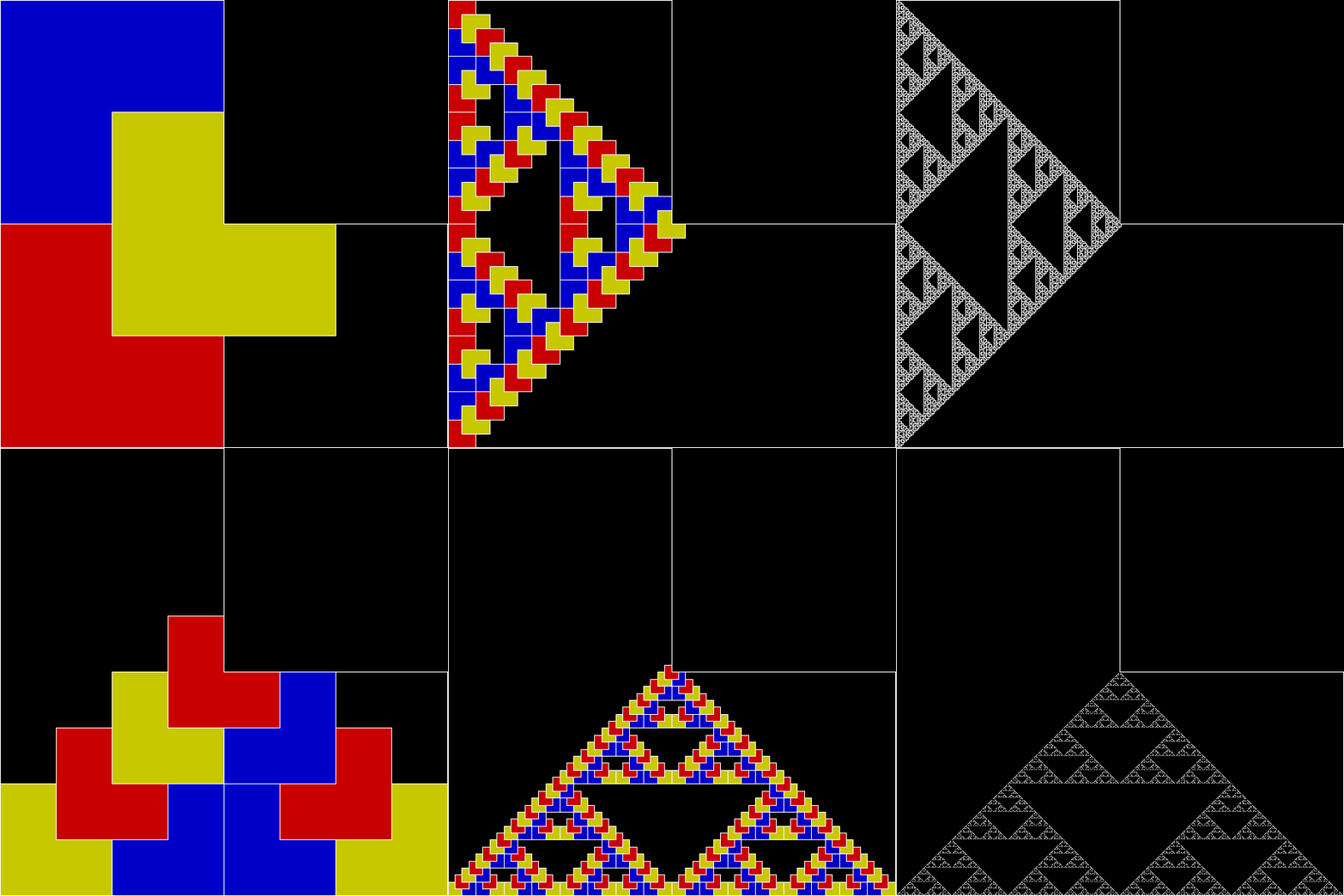
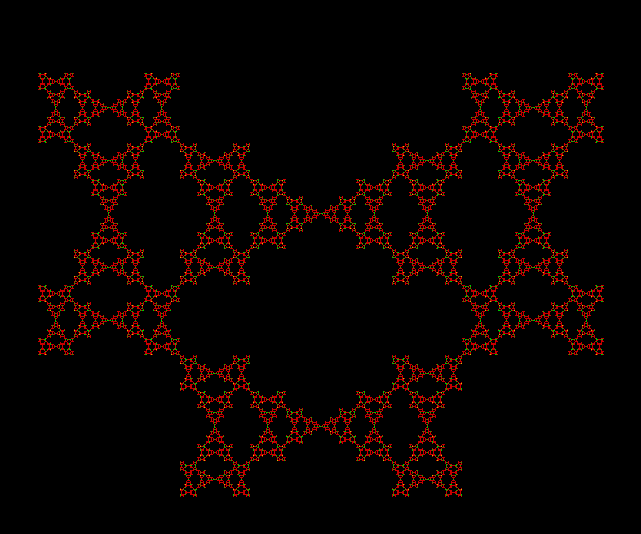
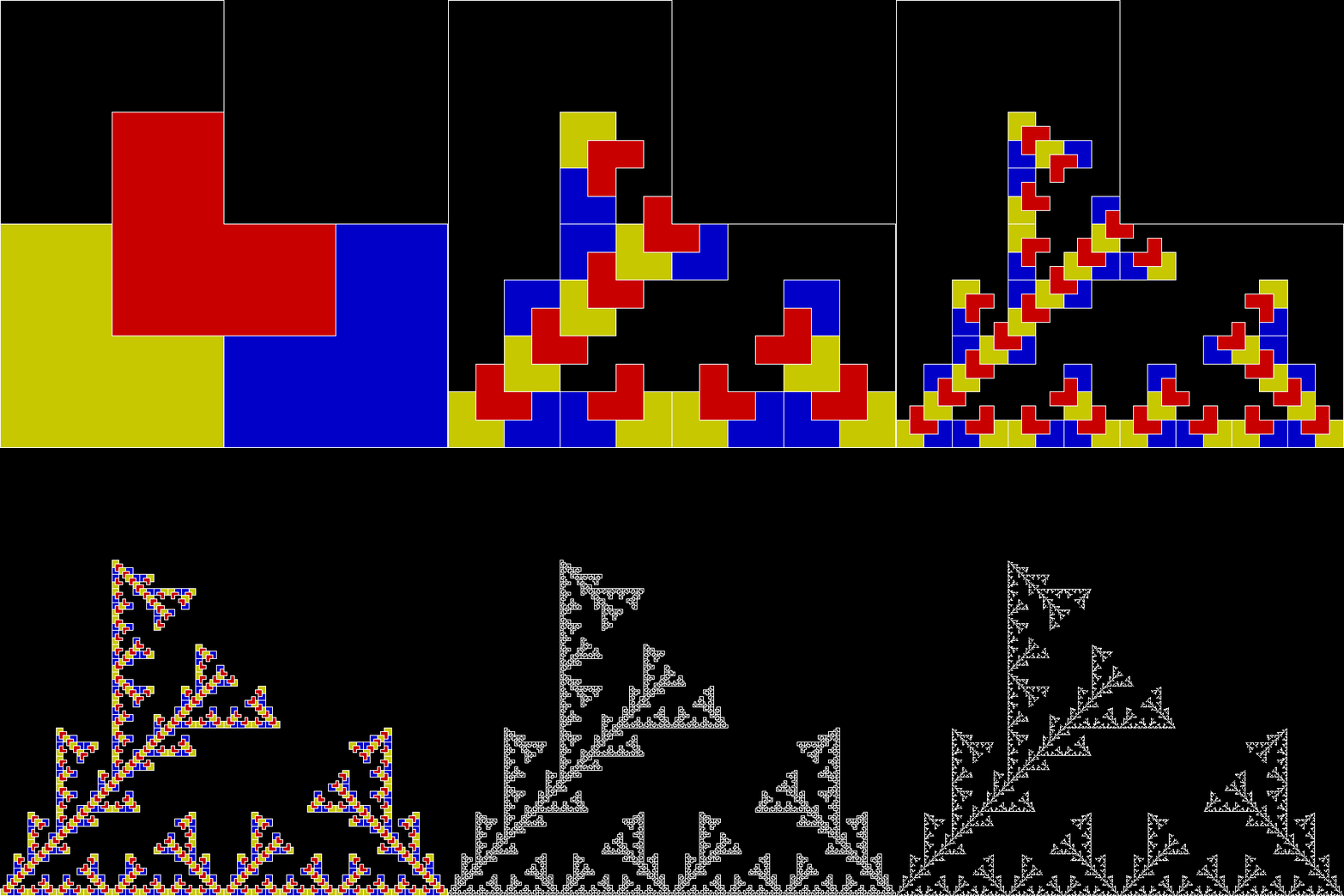
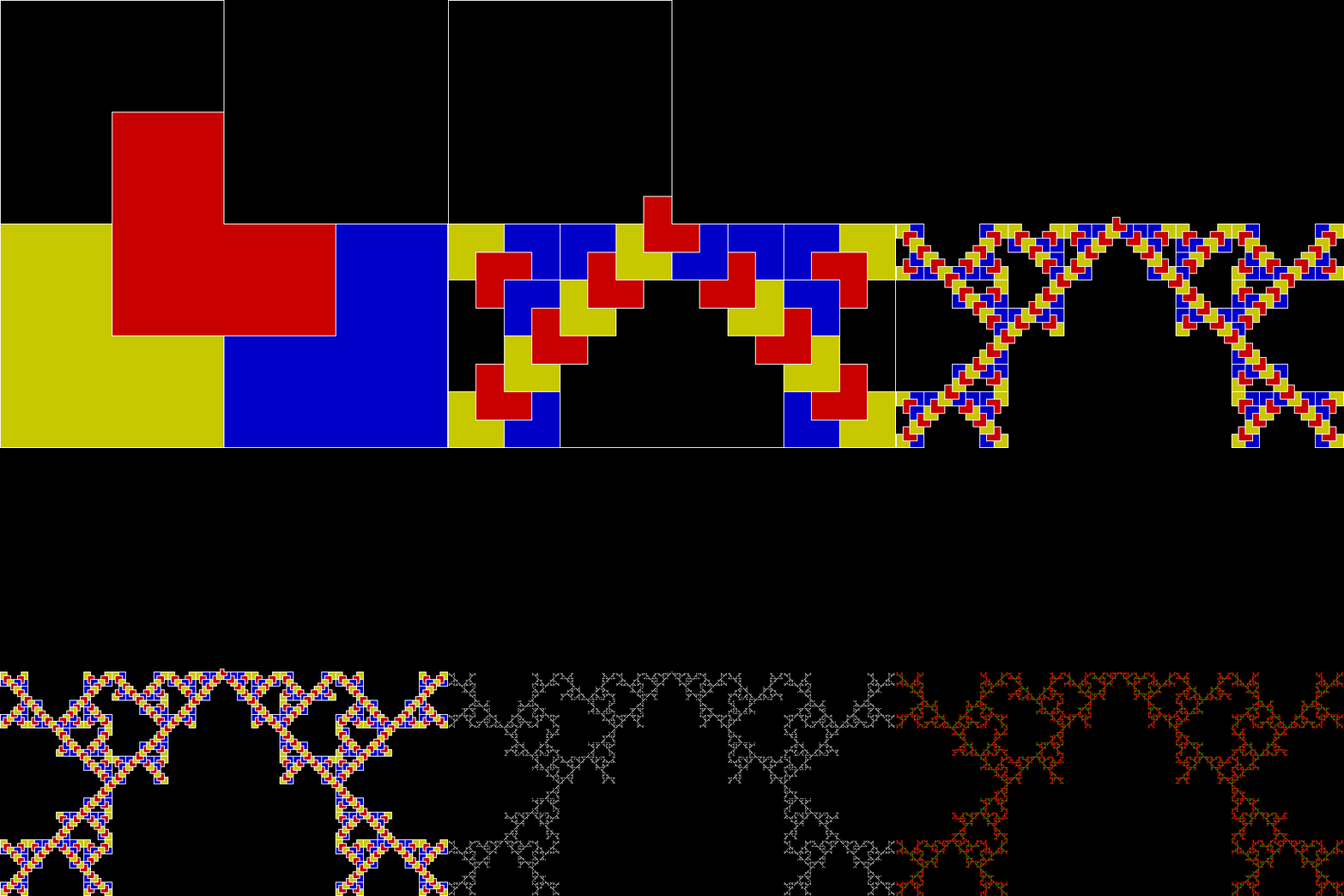
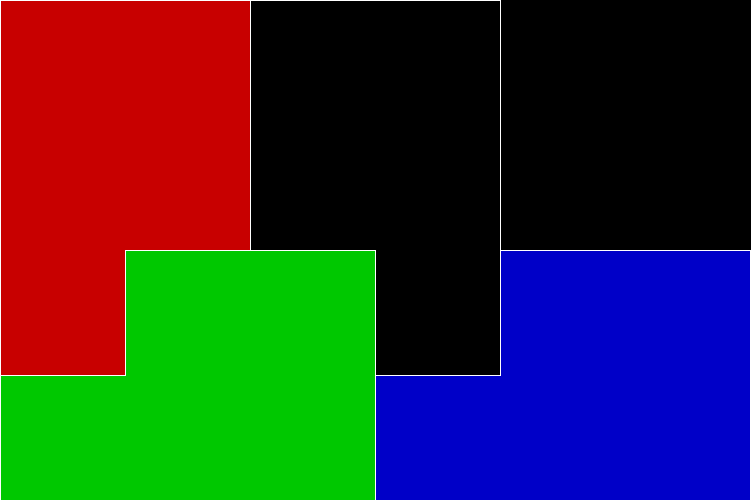
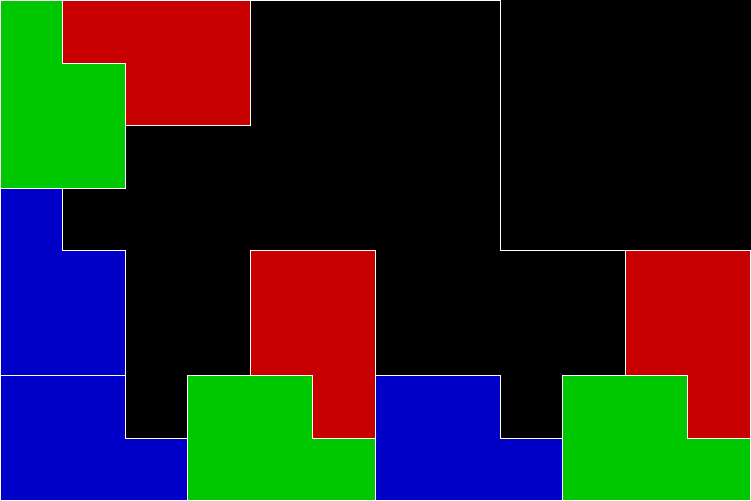
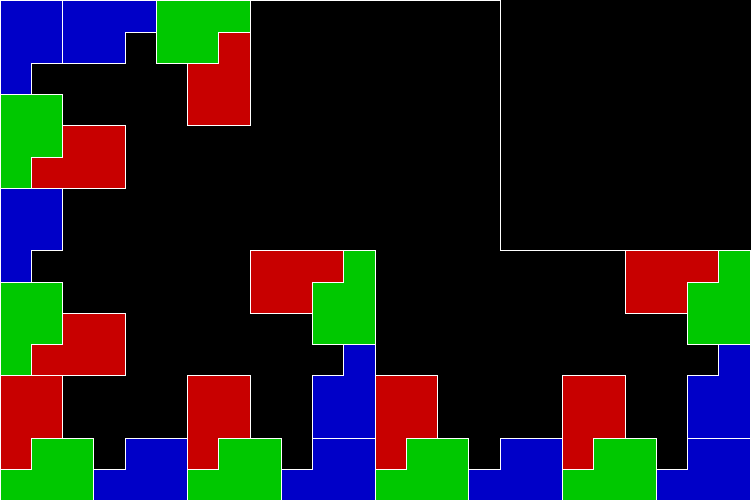
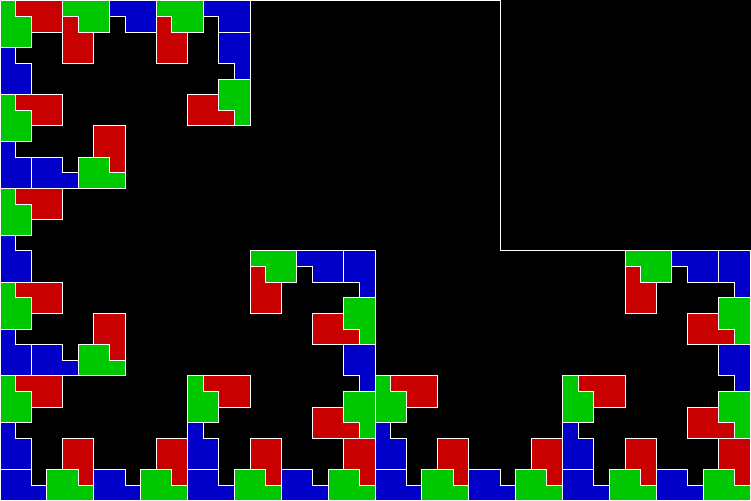
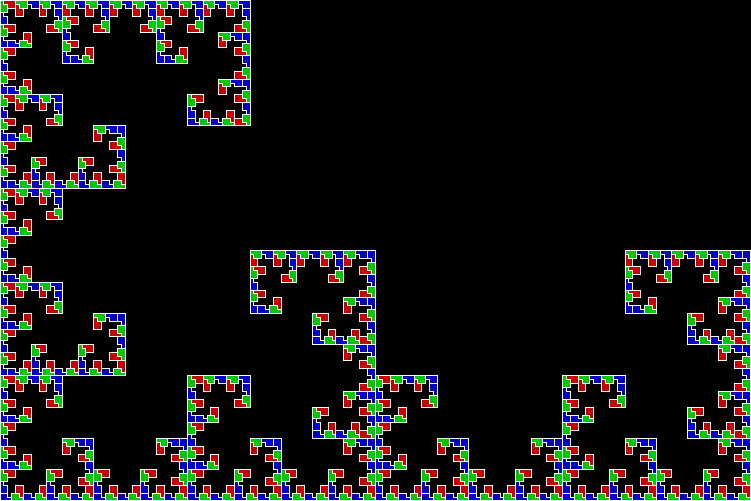
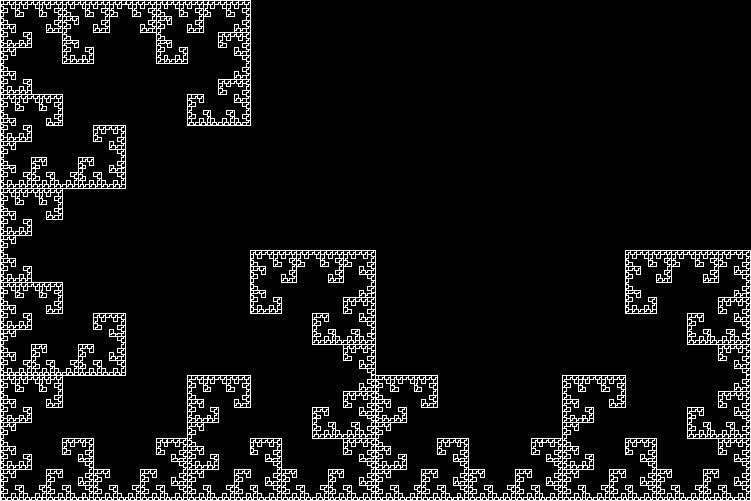
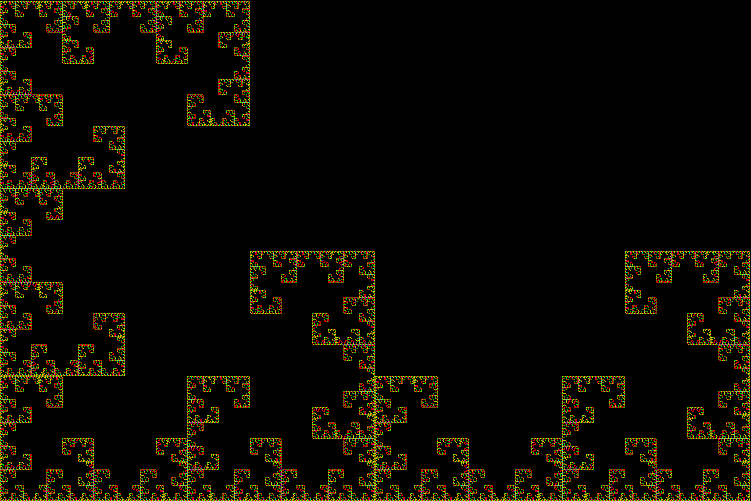
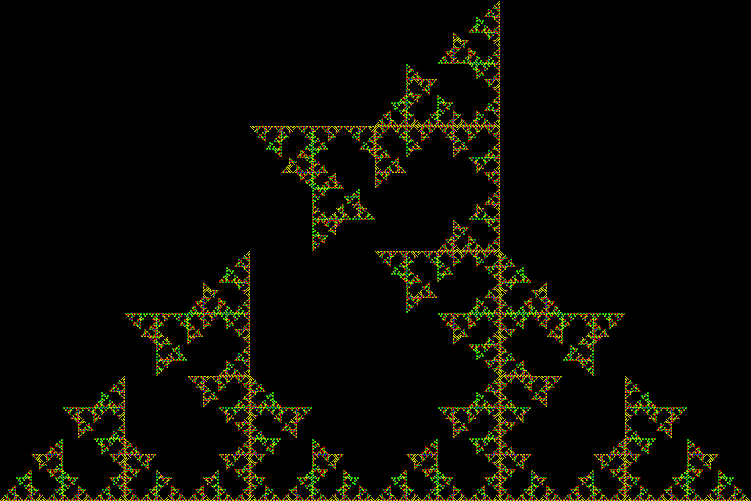
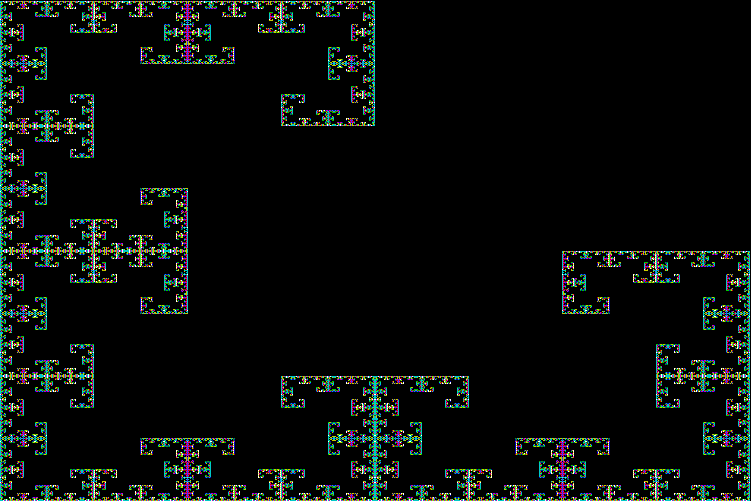
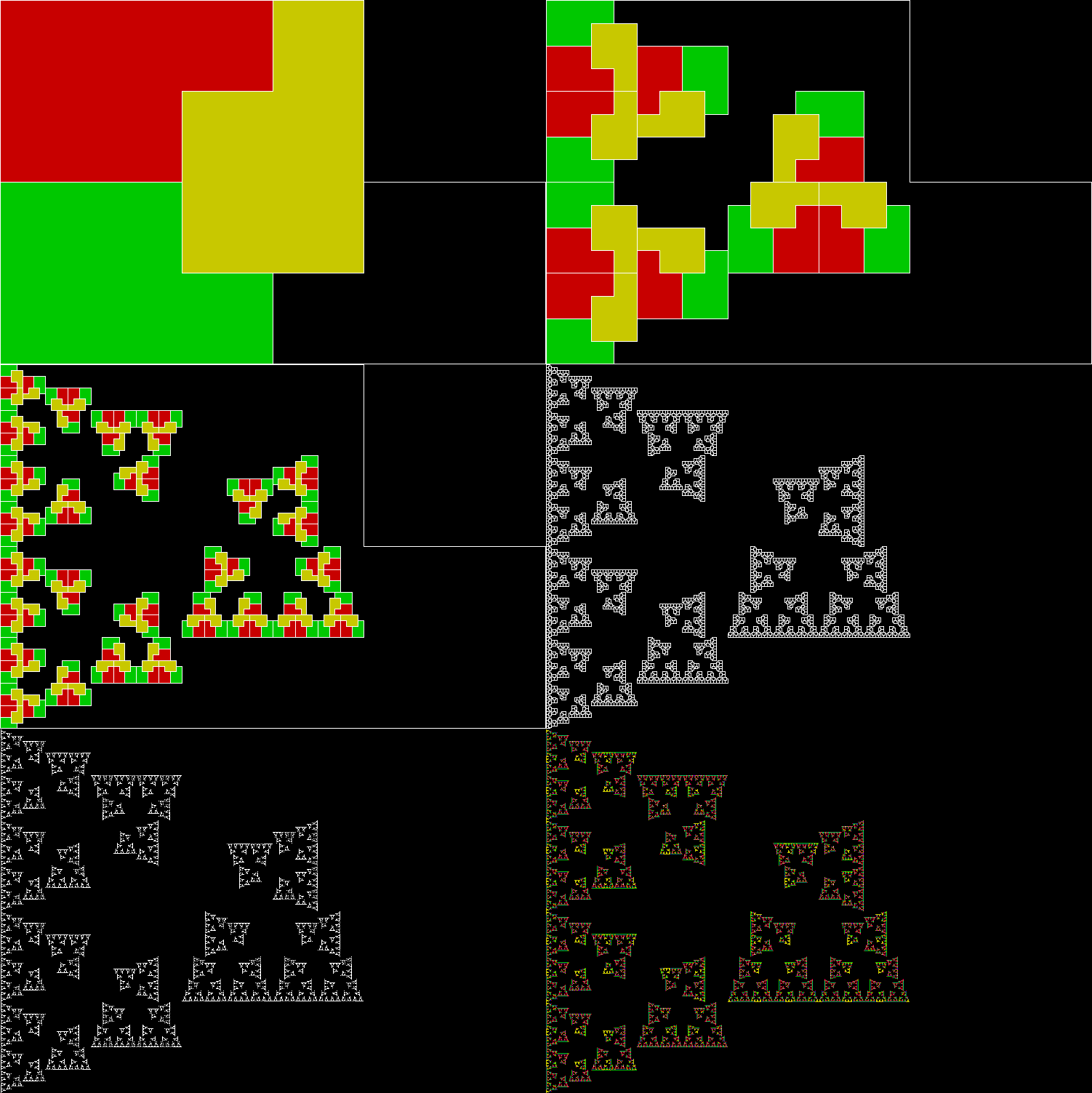
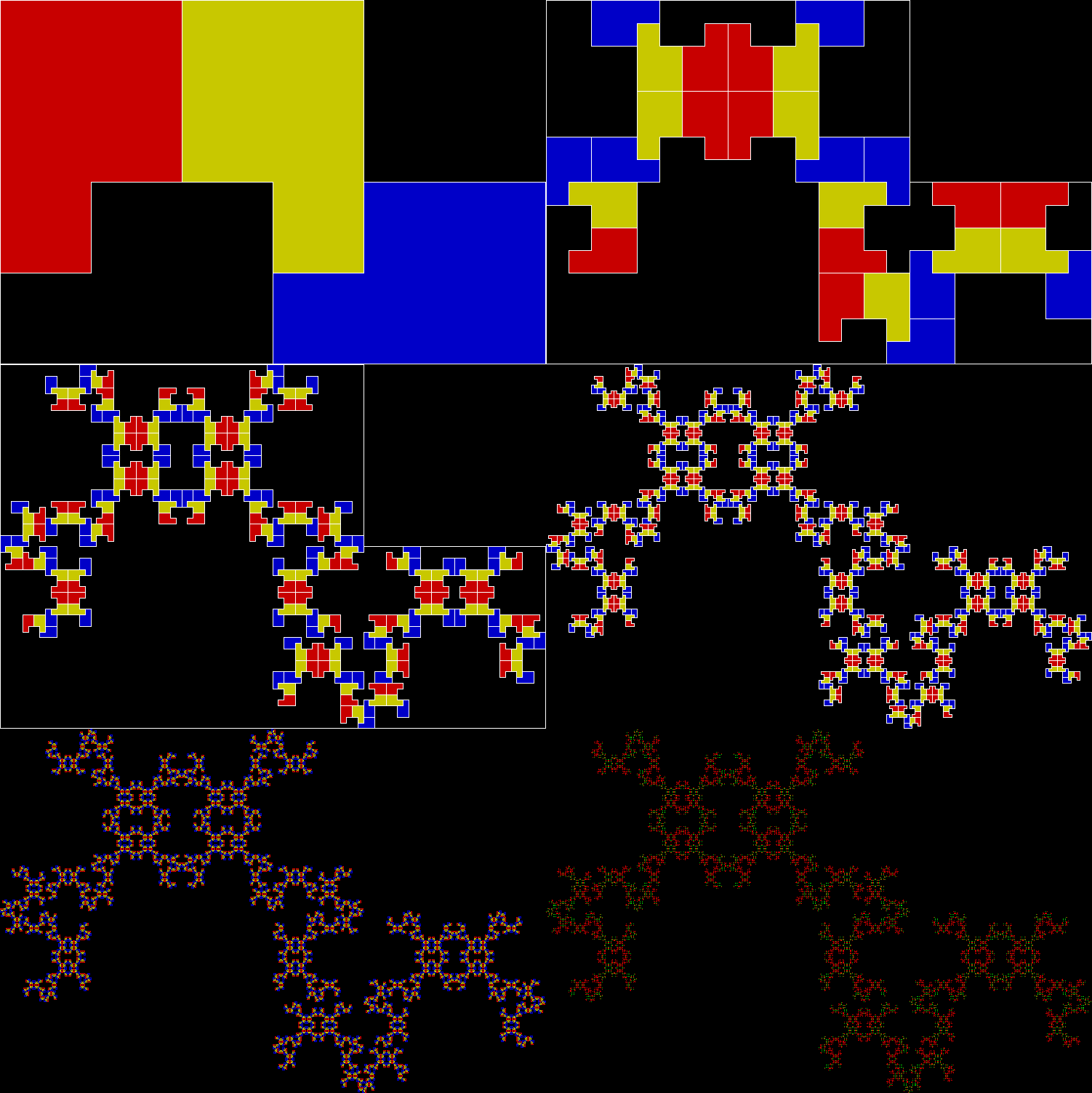
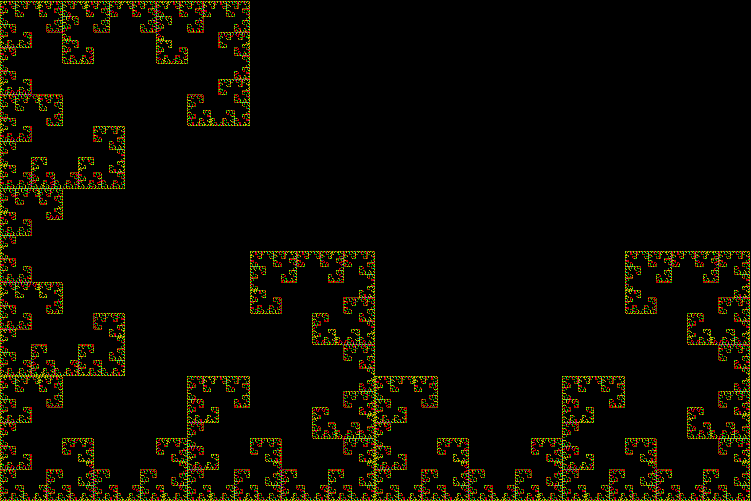
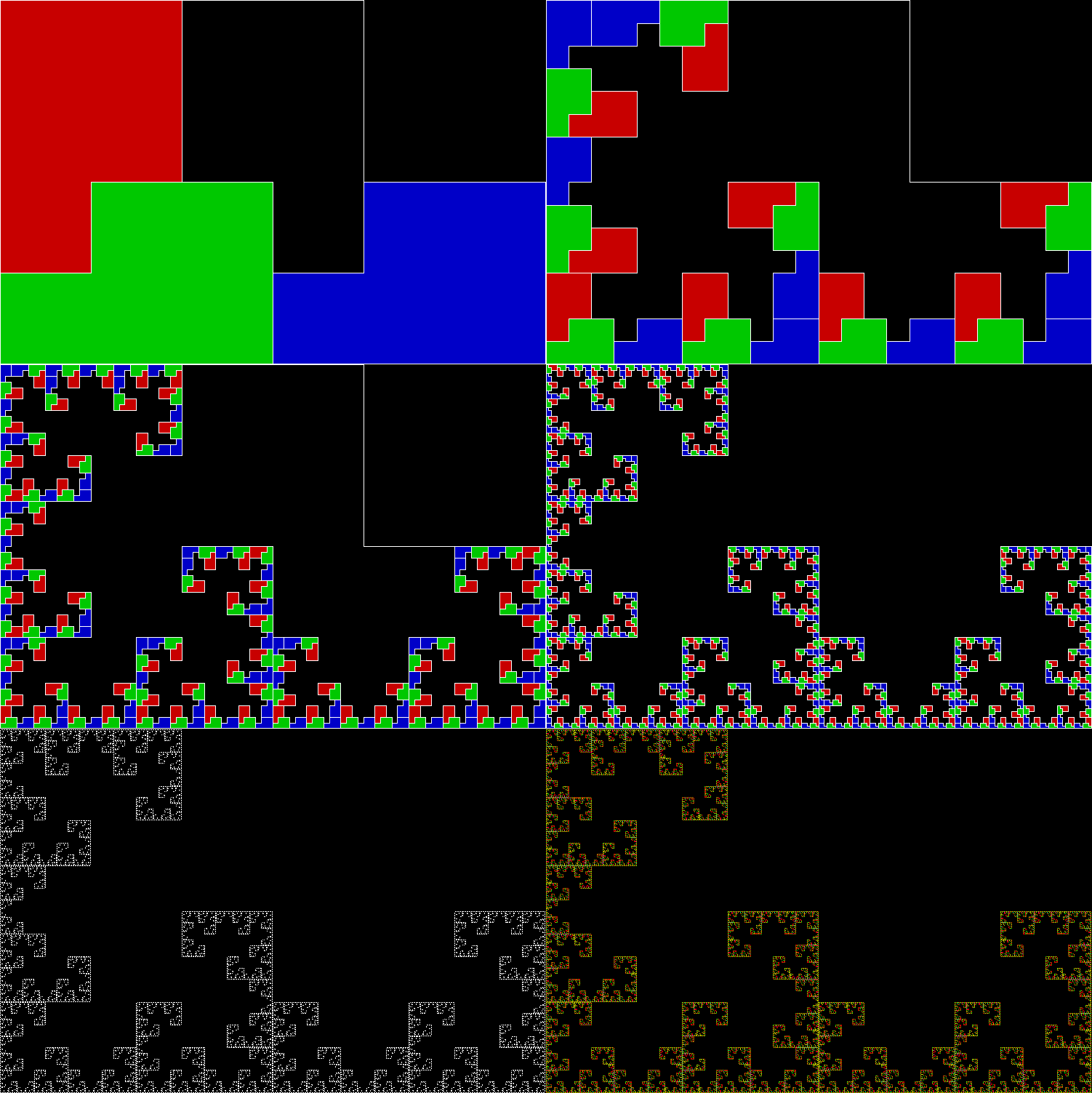
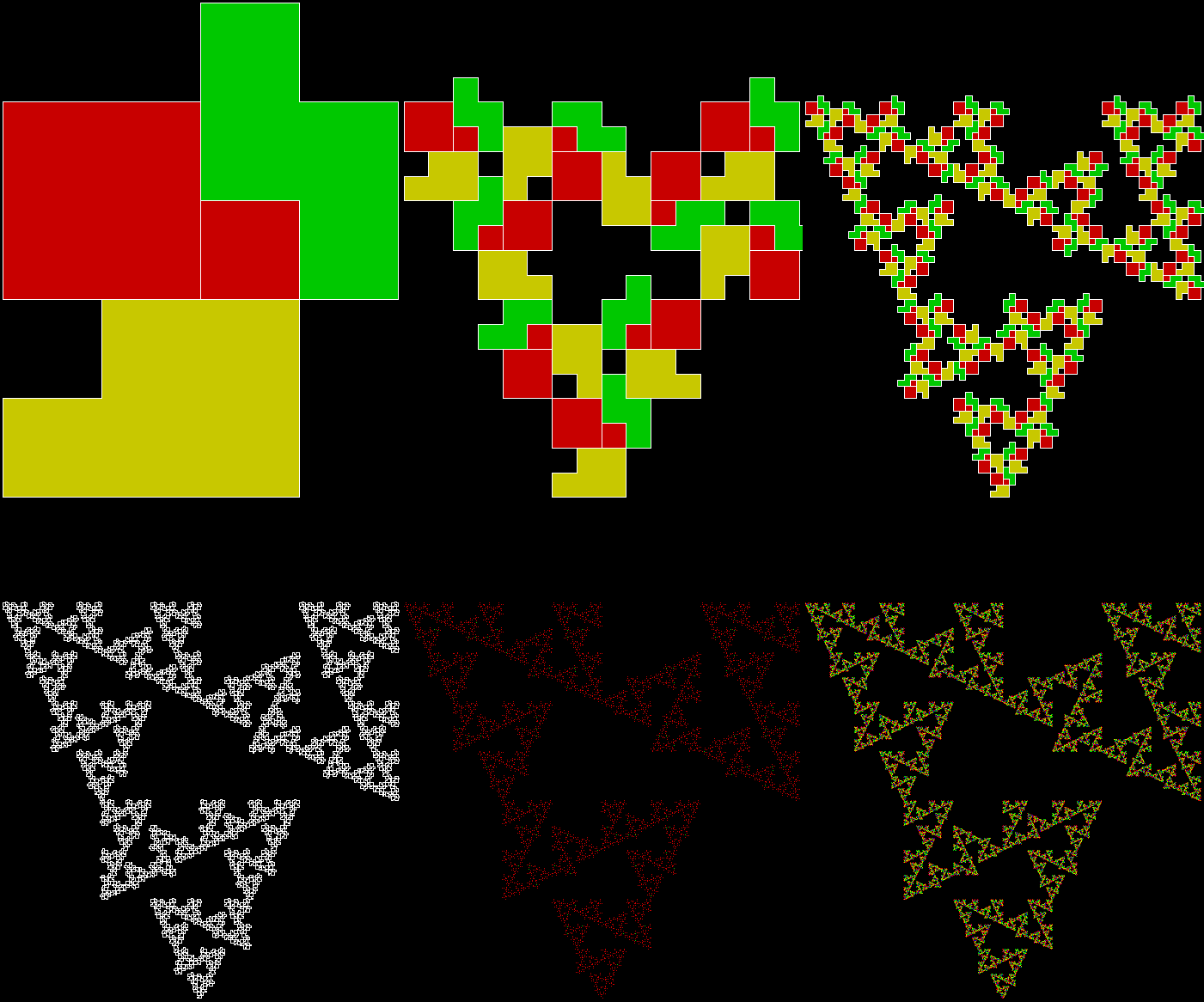
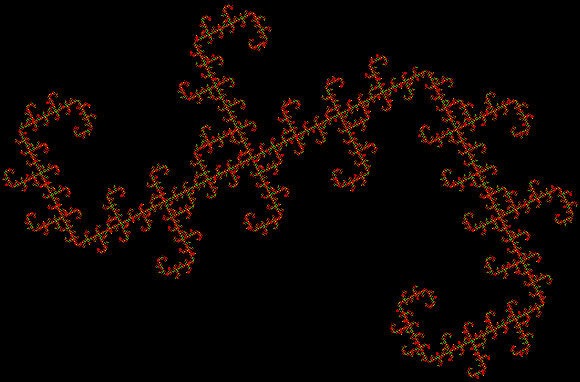
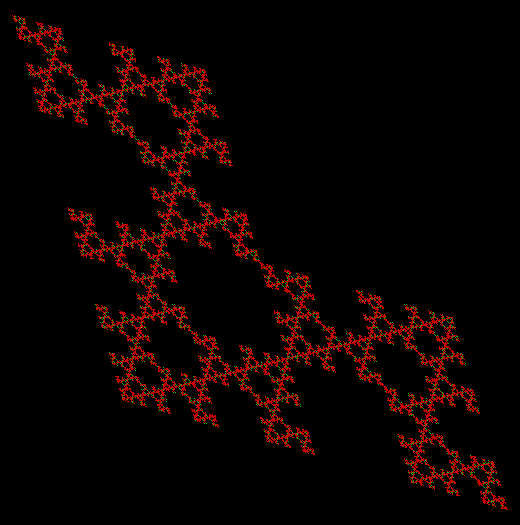
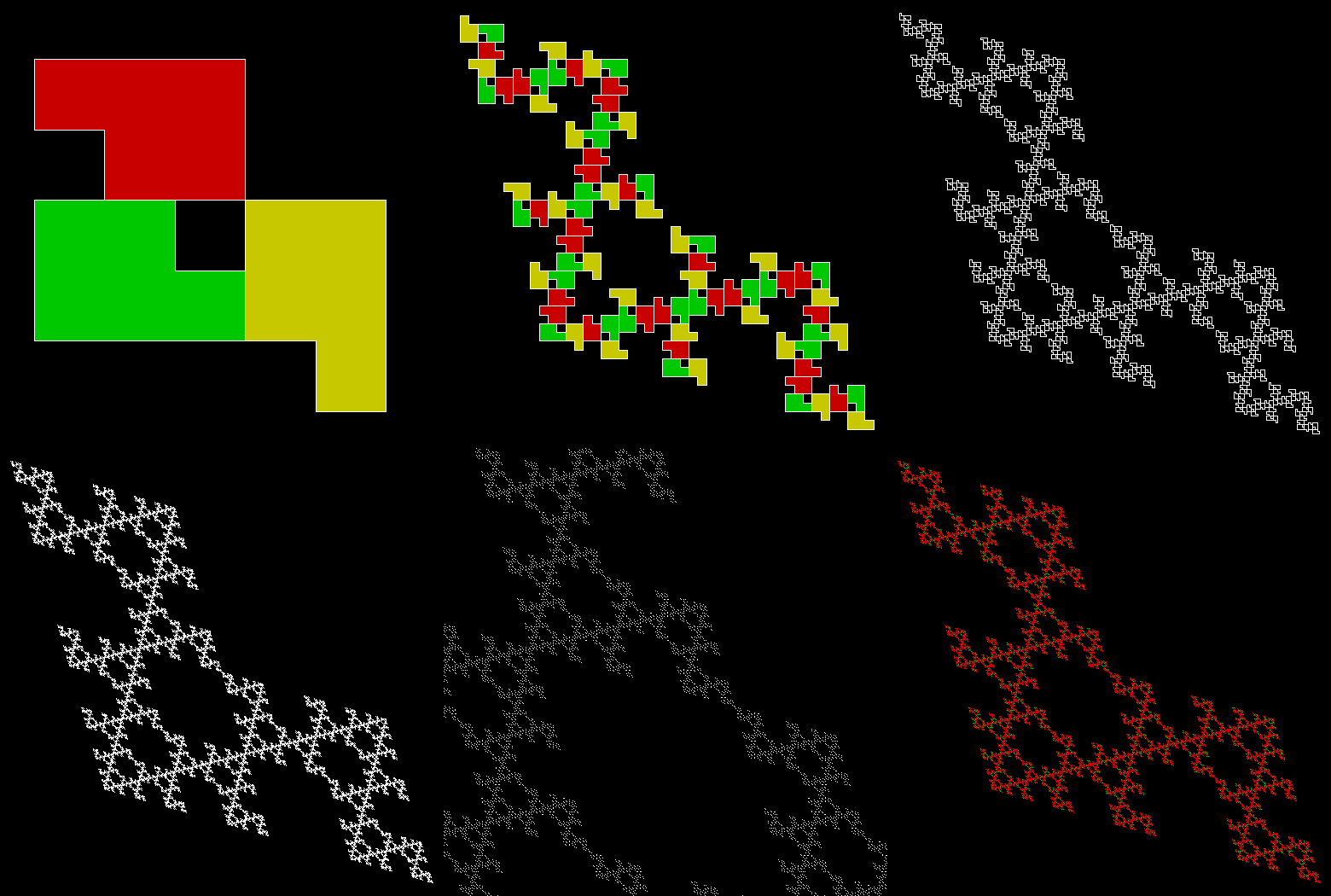
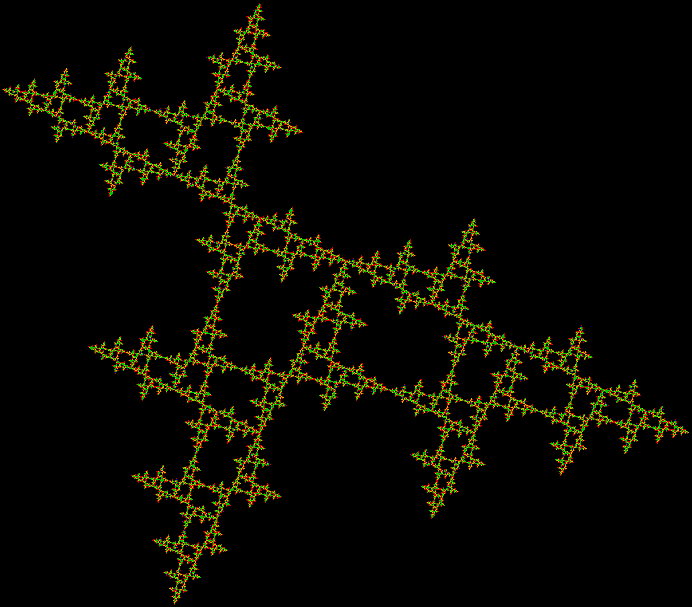
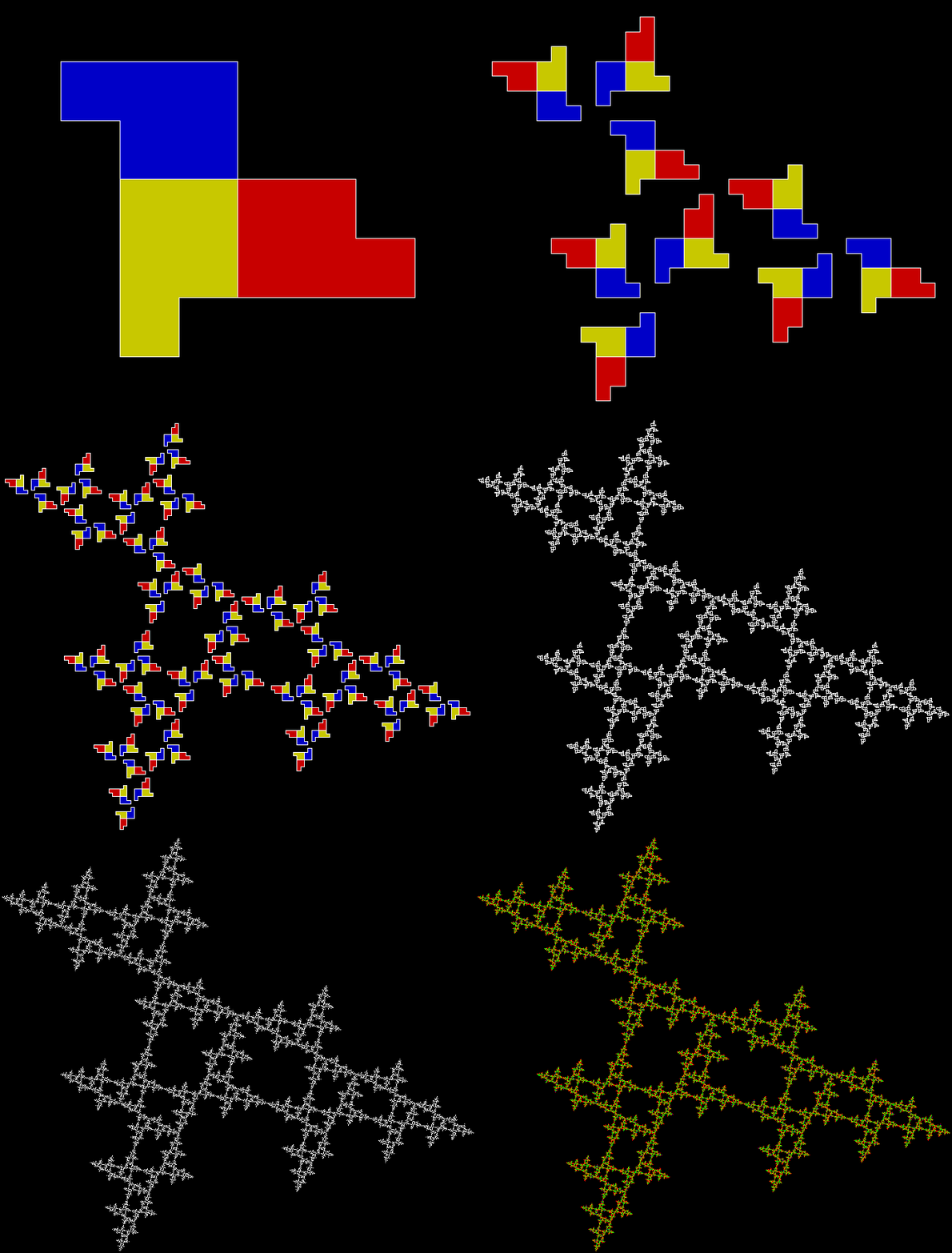
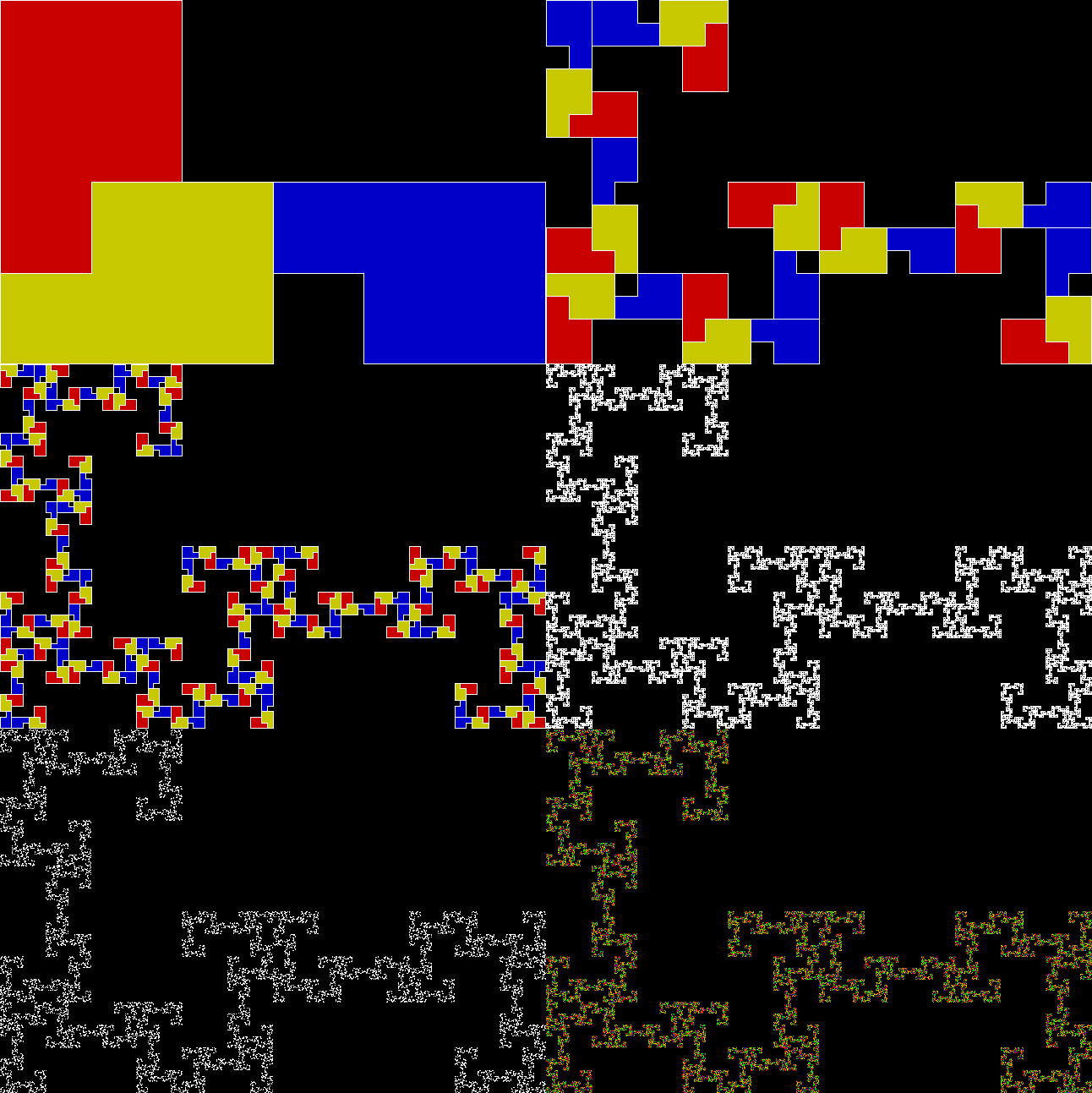
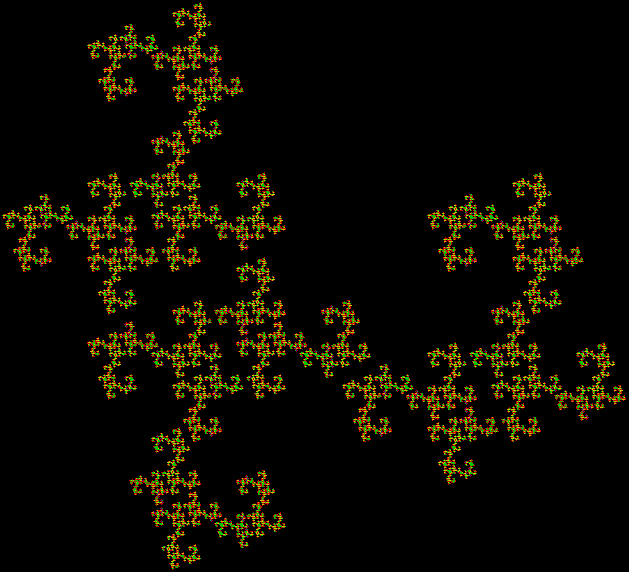
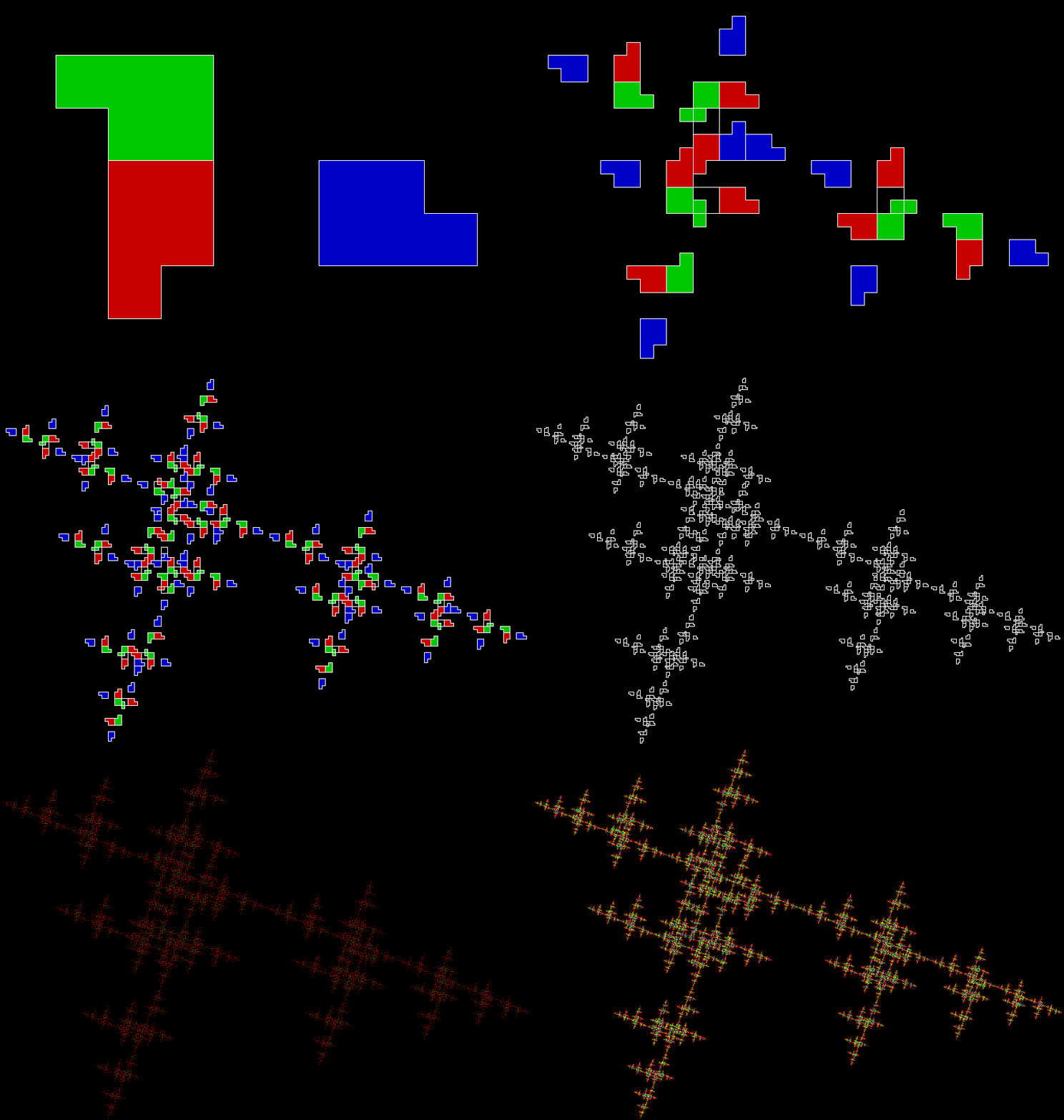
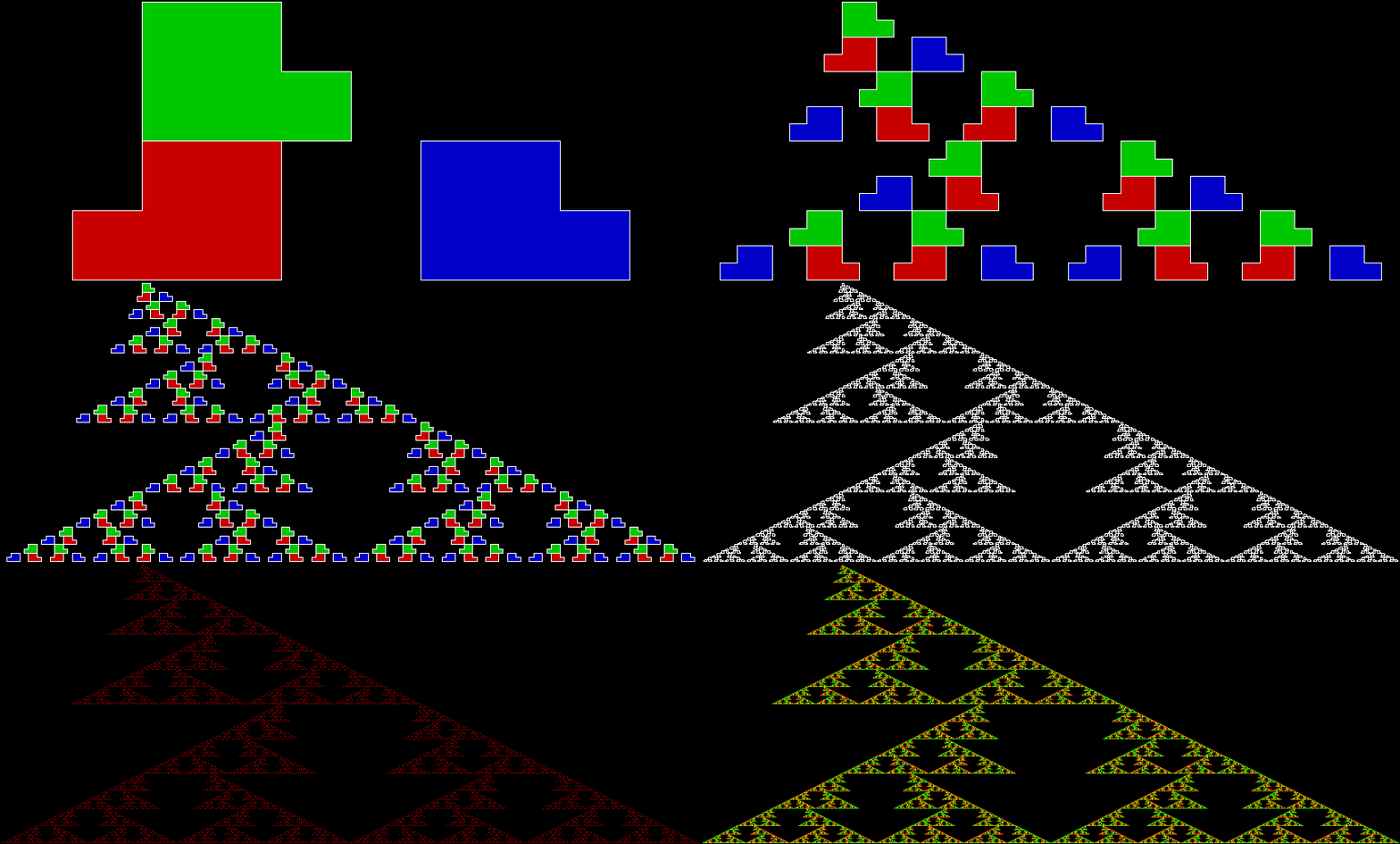
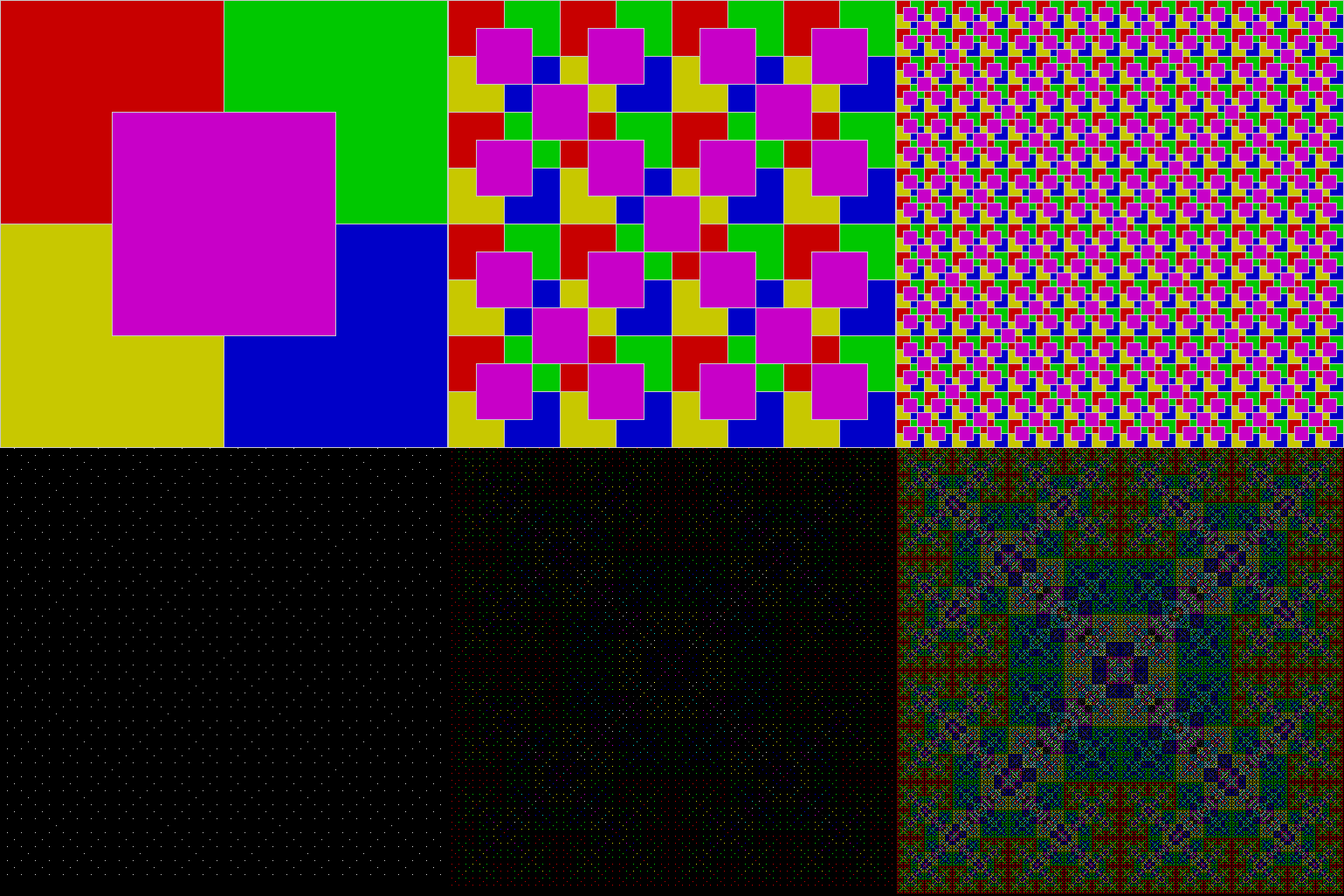
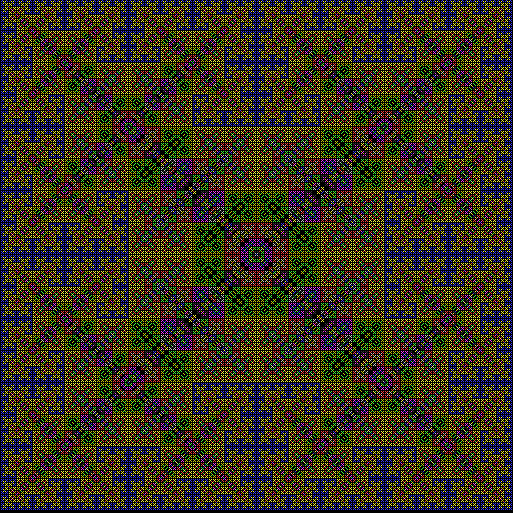
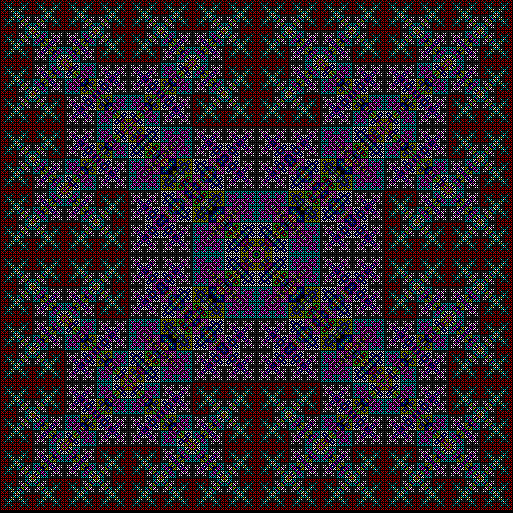
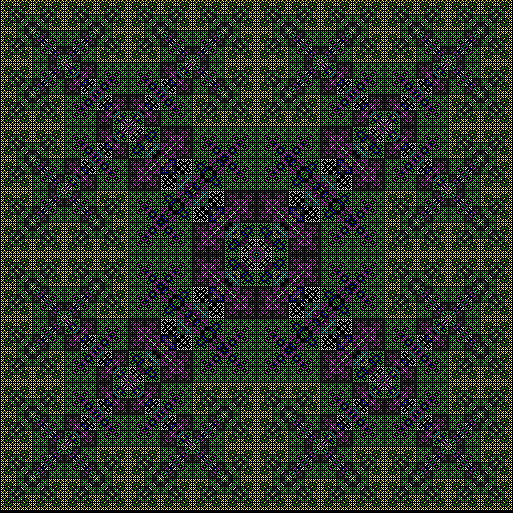
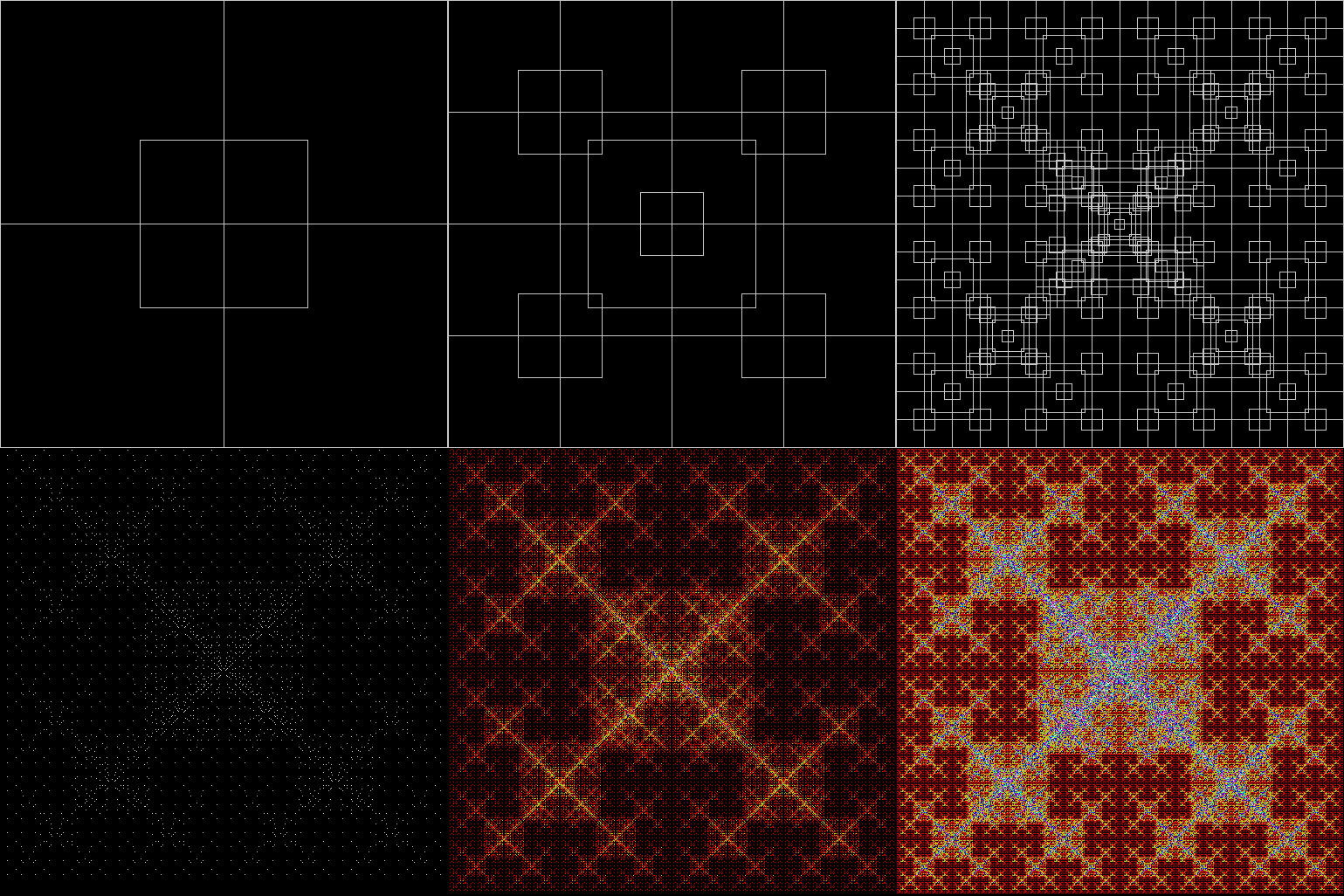
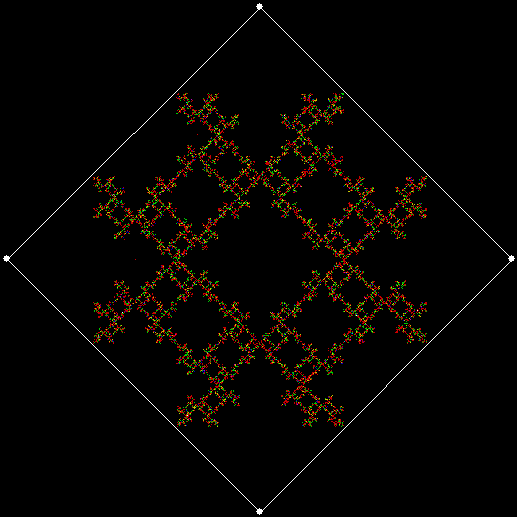
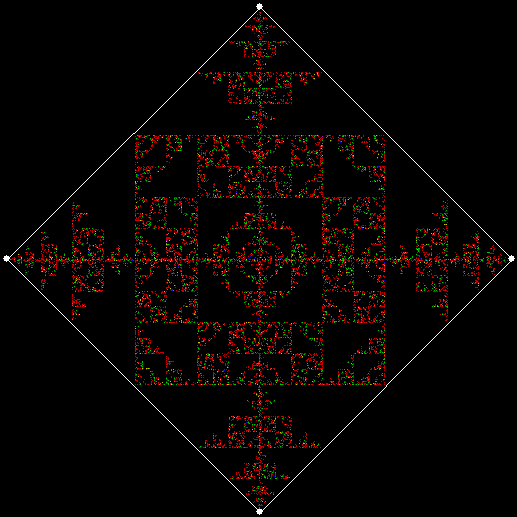
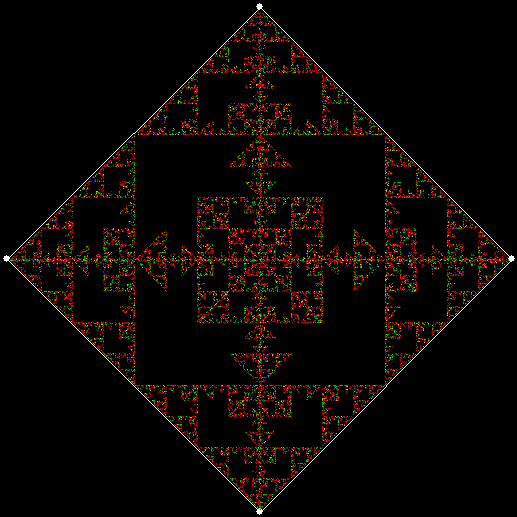
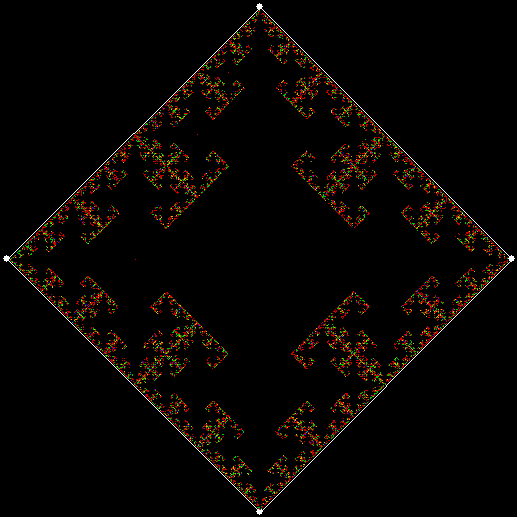
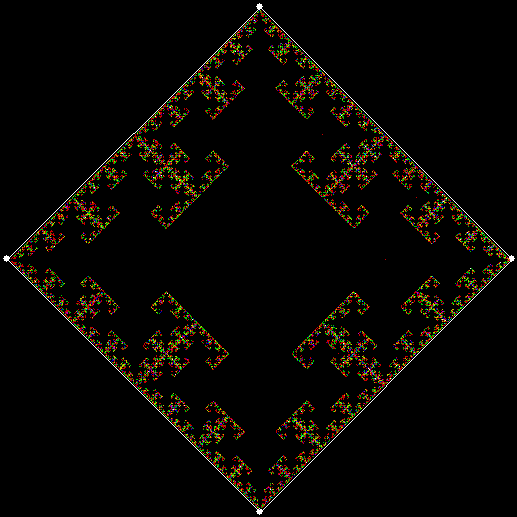
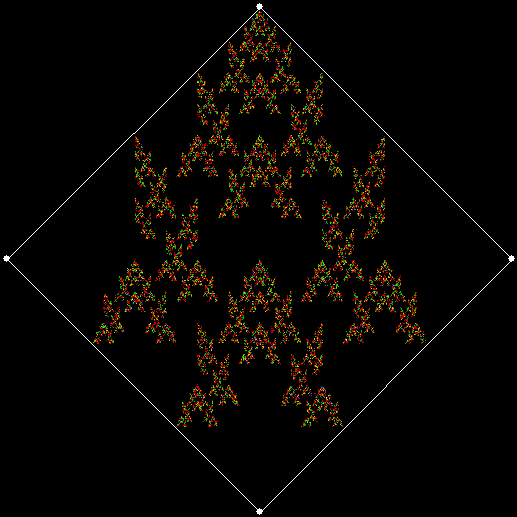
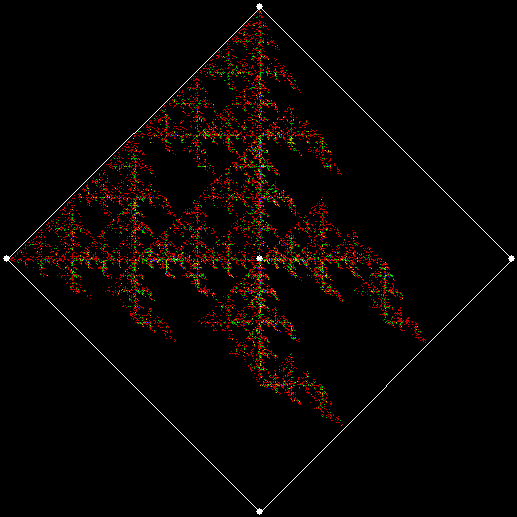
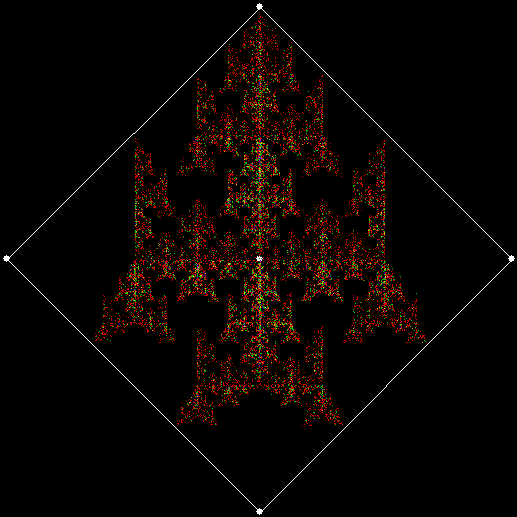
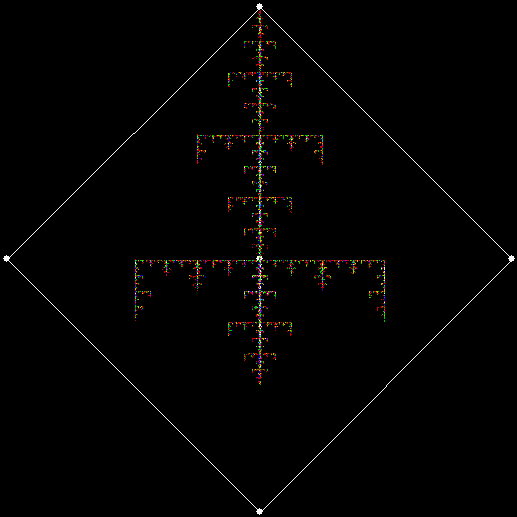
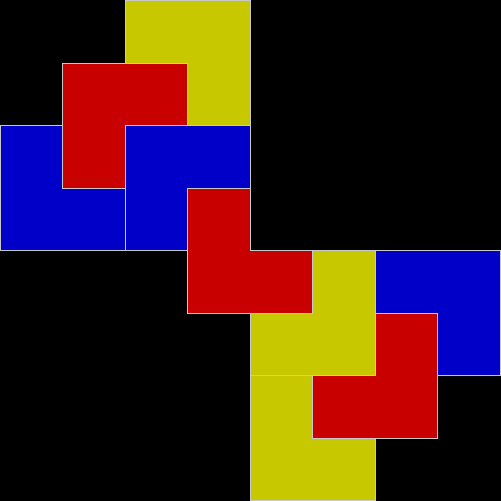
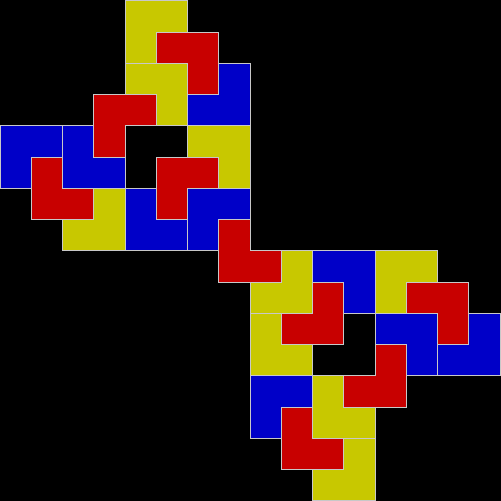
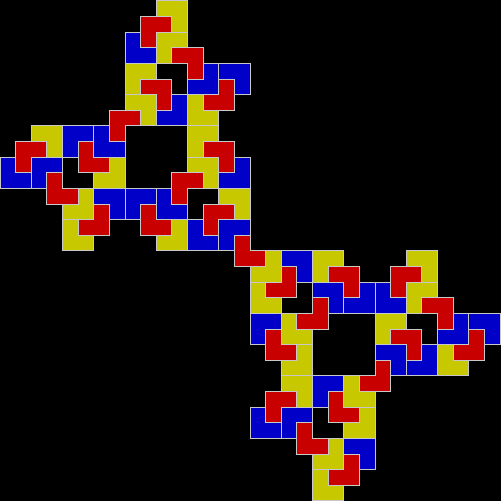
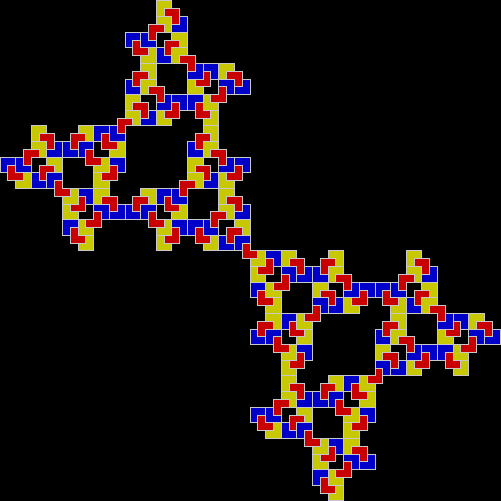
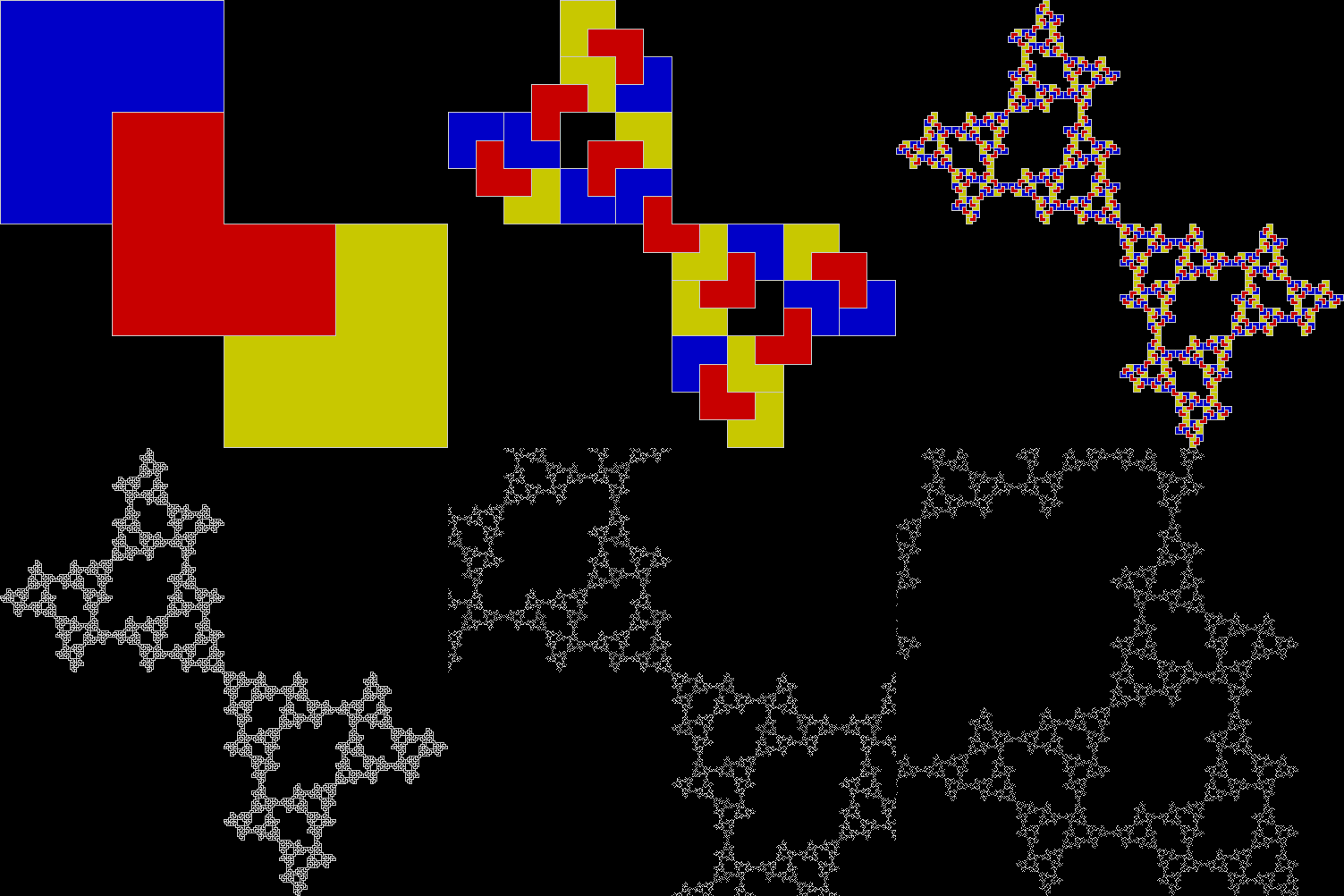
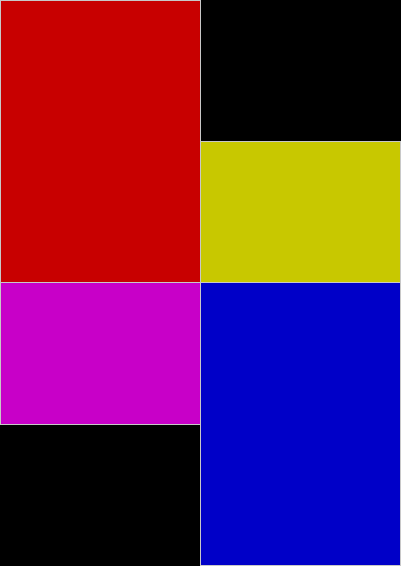
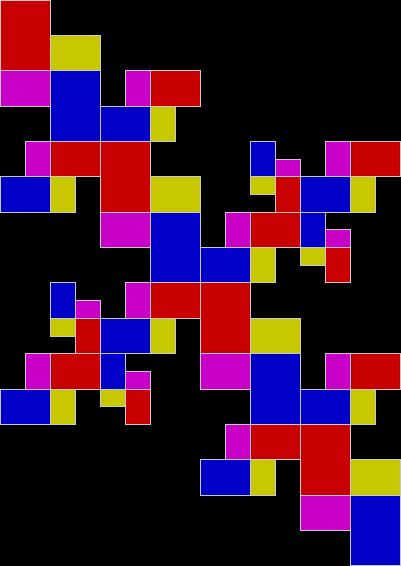
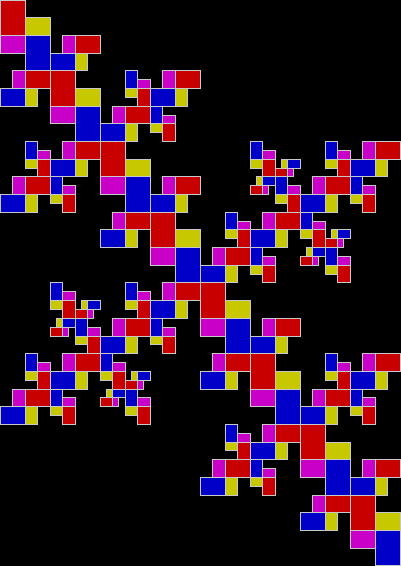
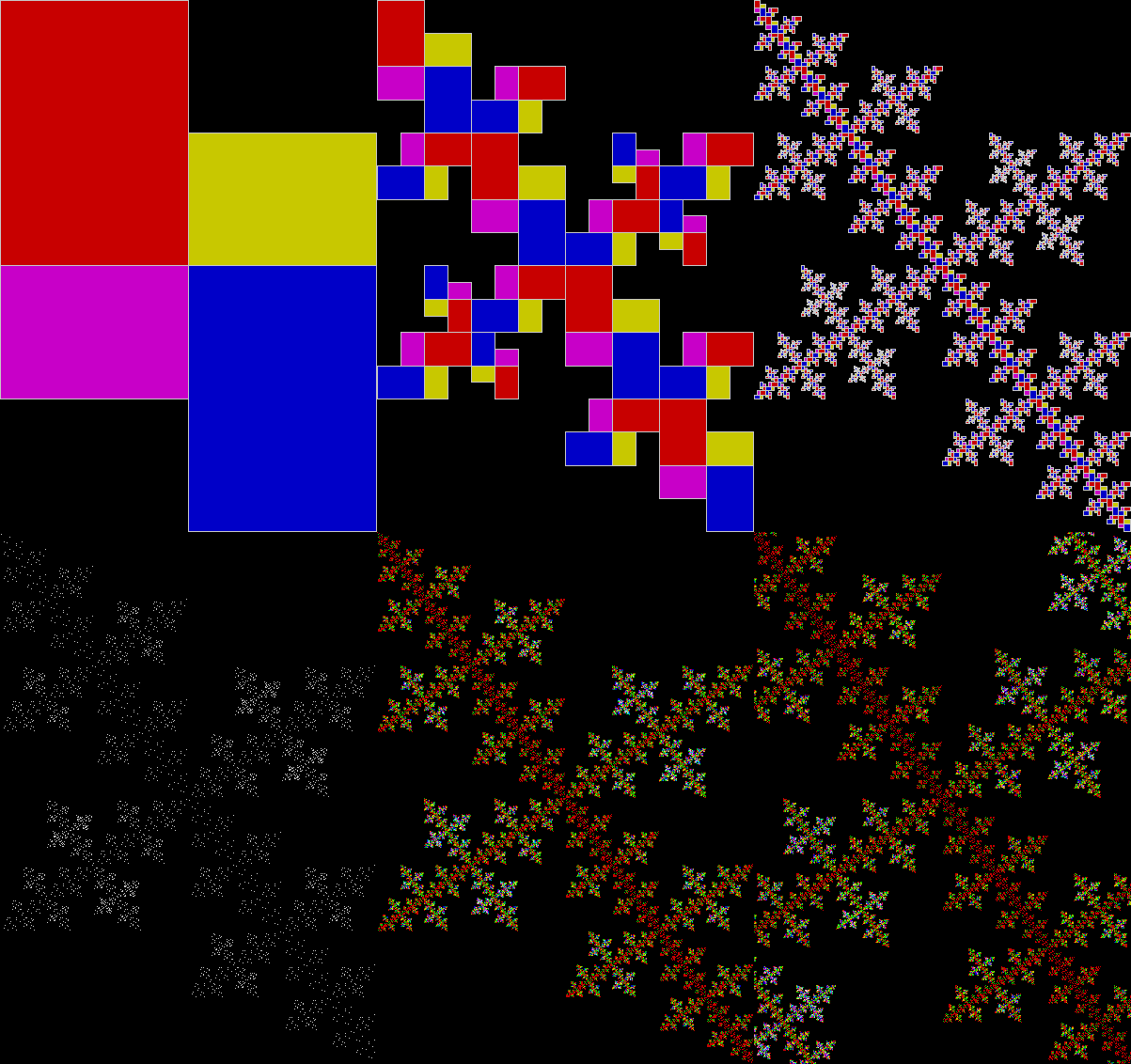
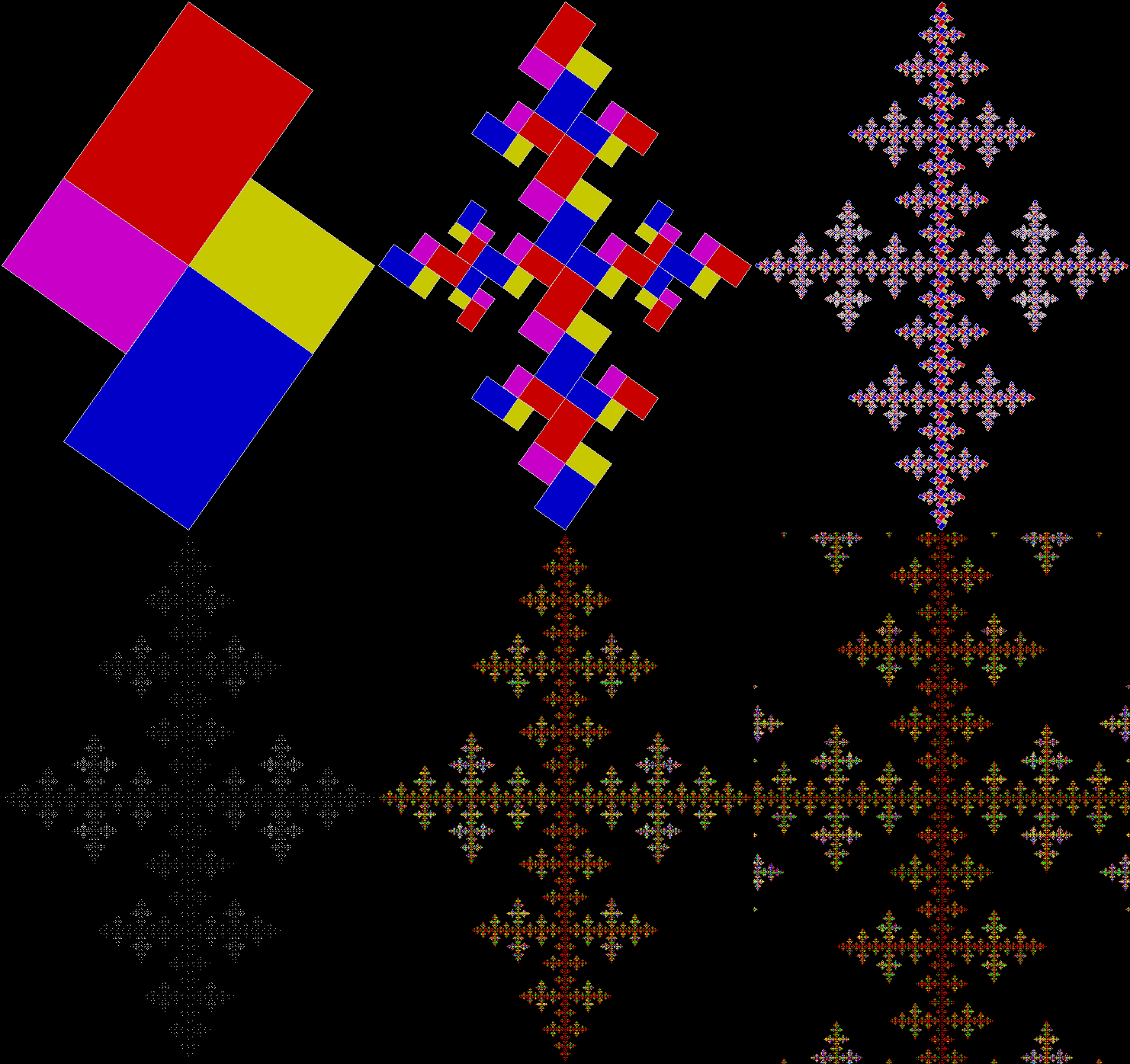
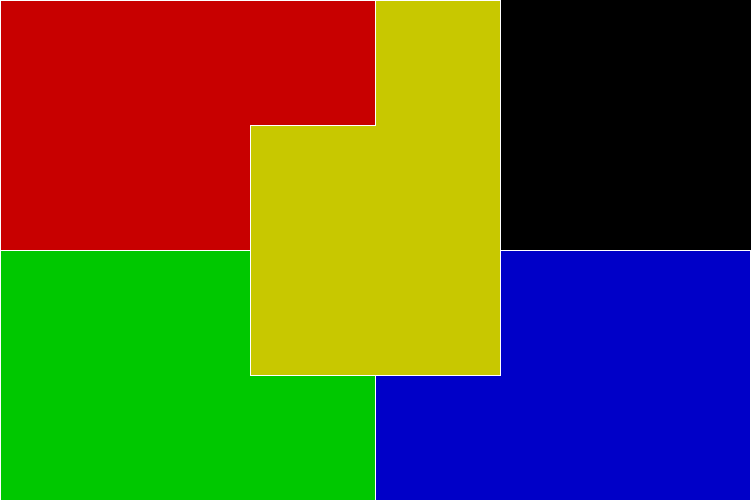
Maths is like that, even at its simplest. There are many routes to the same destination. I first found the fractal below by playing with the L-triomino, or the shape created by putting three squares in the shape of an L. You can divide it into four copies of the same shape and discard one copy, then do the same to each of the sub-copies, then repeat. I’ve decided to call it the hourglass fractal:
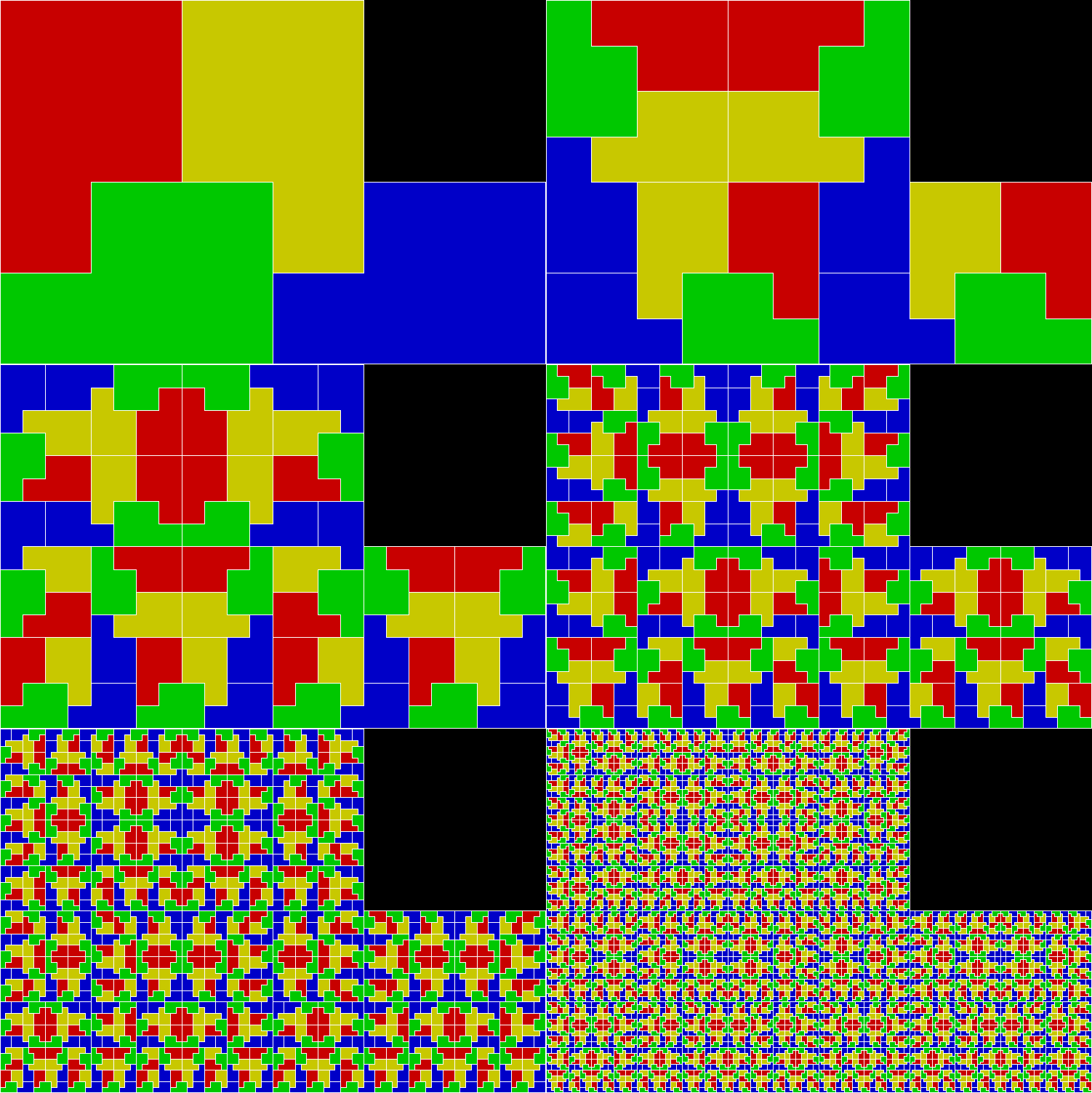
l-triomino_124

Hourglass fractal (animated)


l-triomino_124_upright_static1

Hourglass fractal (static)


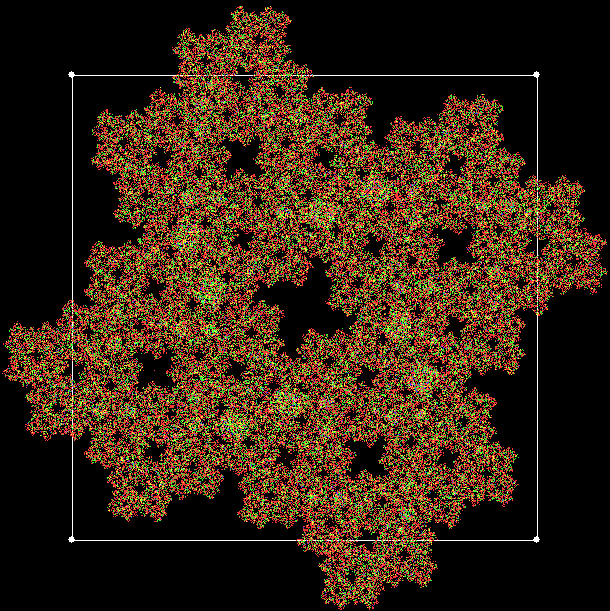
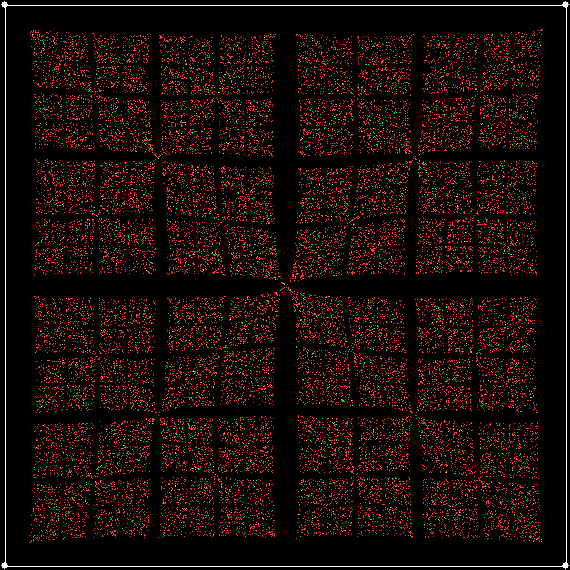
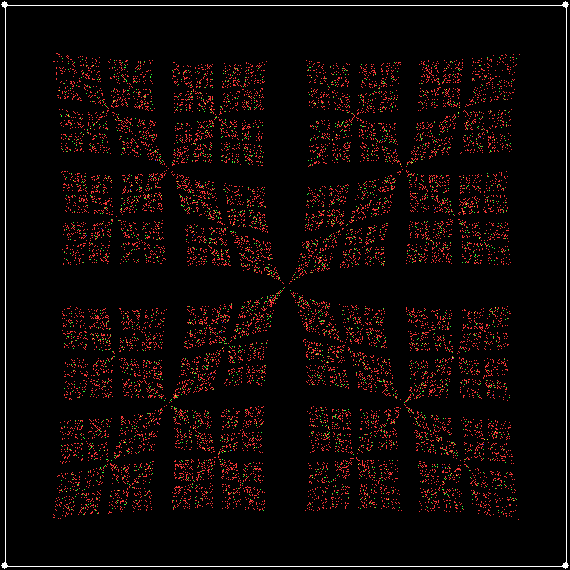
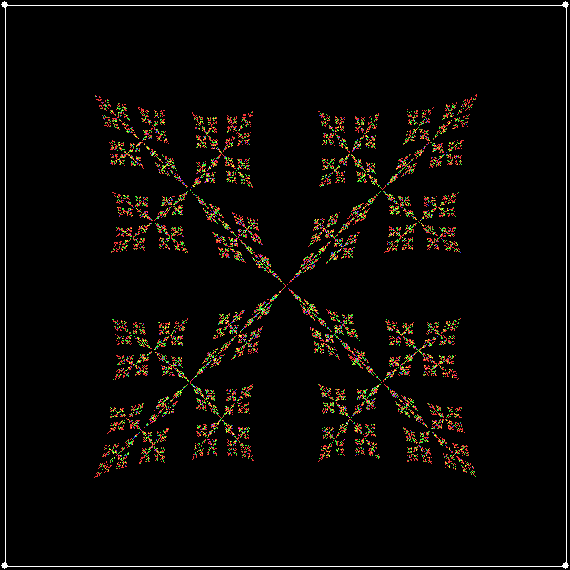
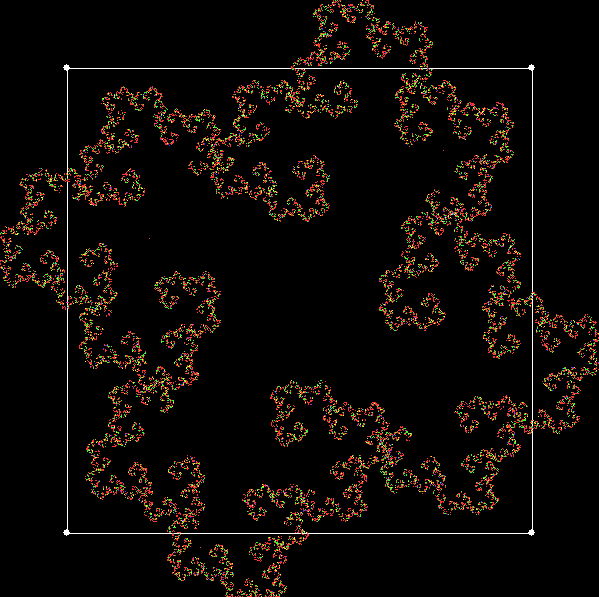
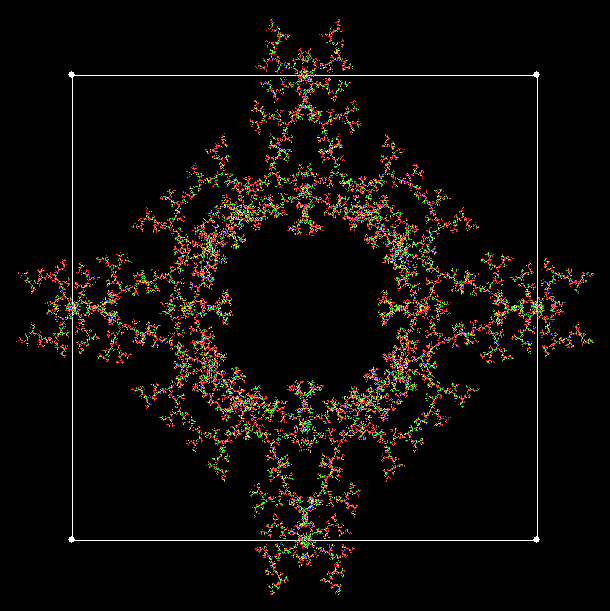
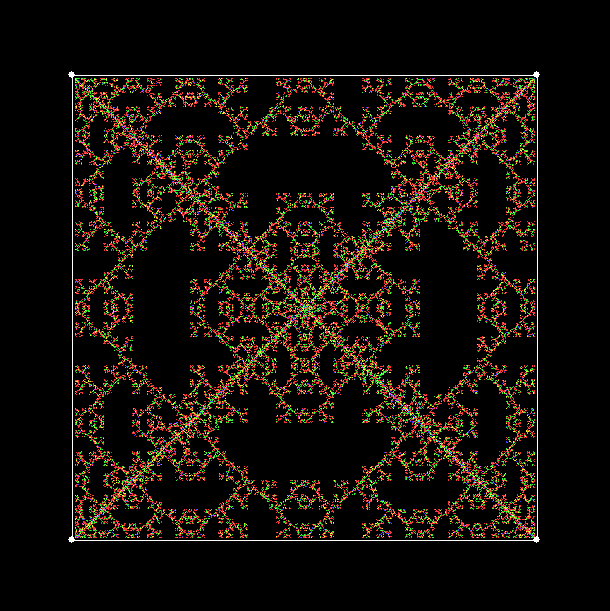
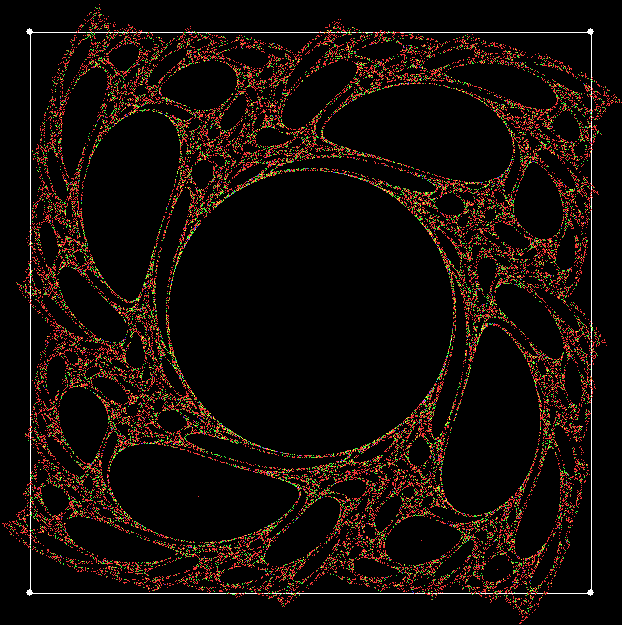
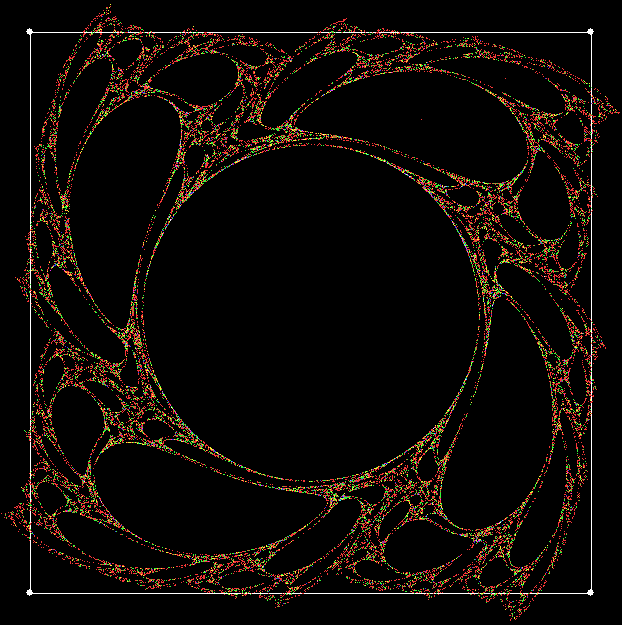
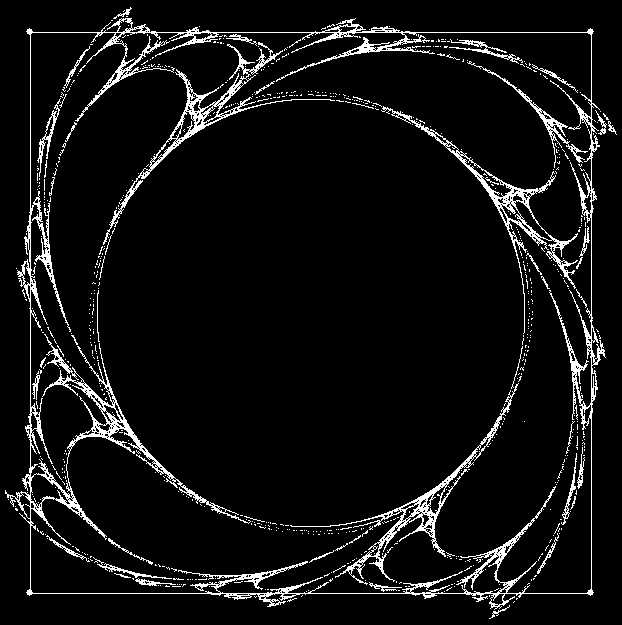
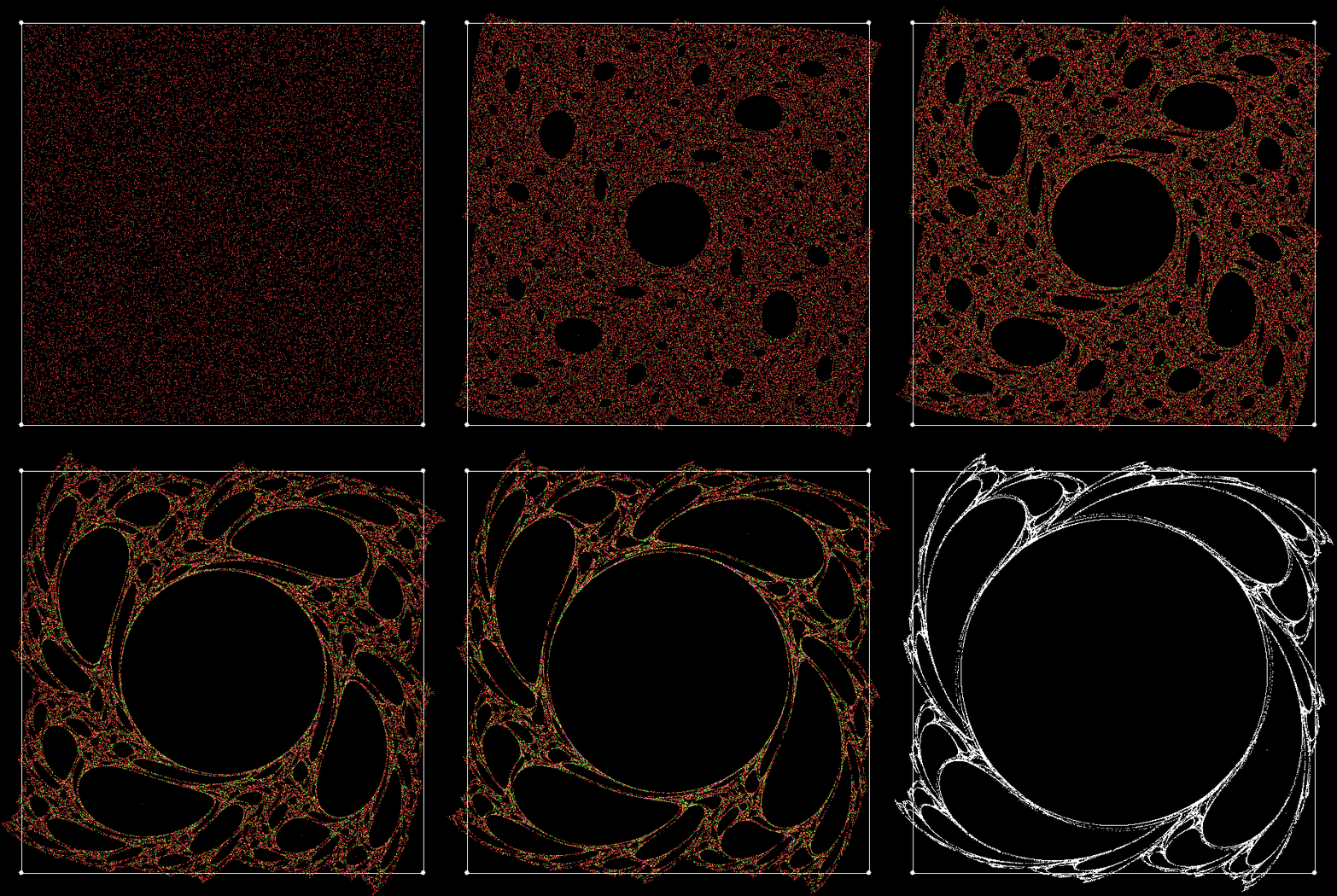
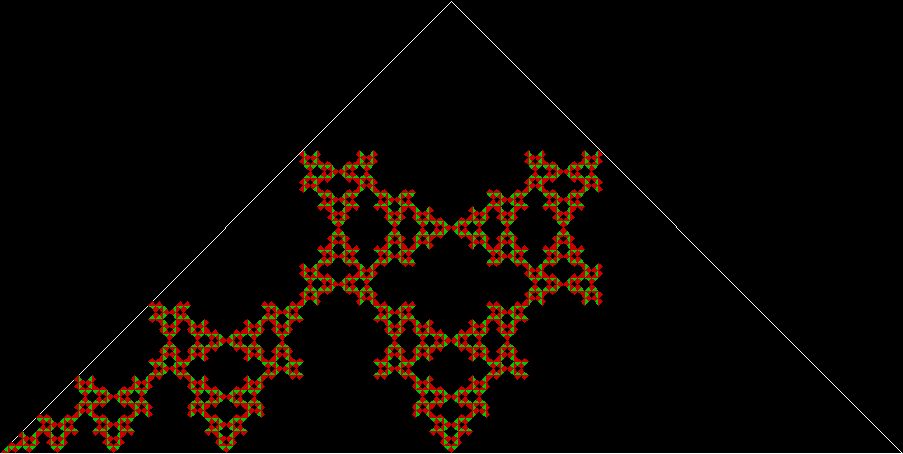
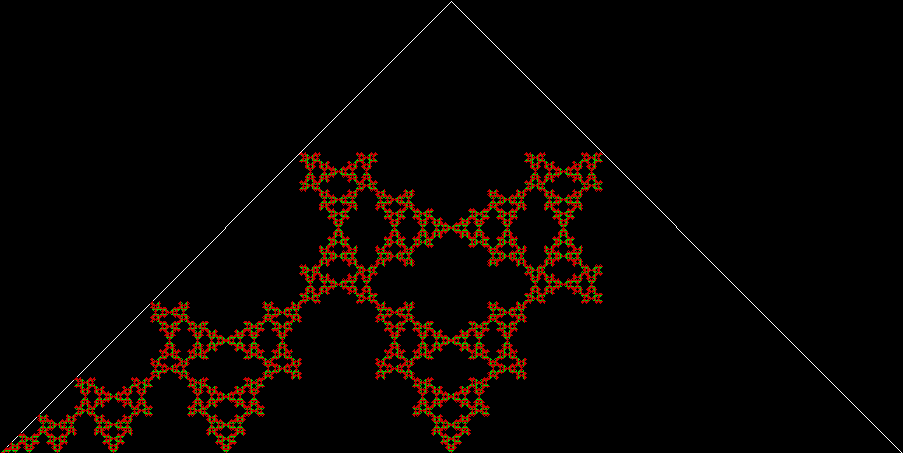
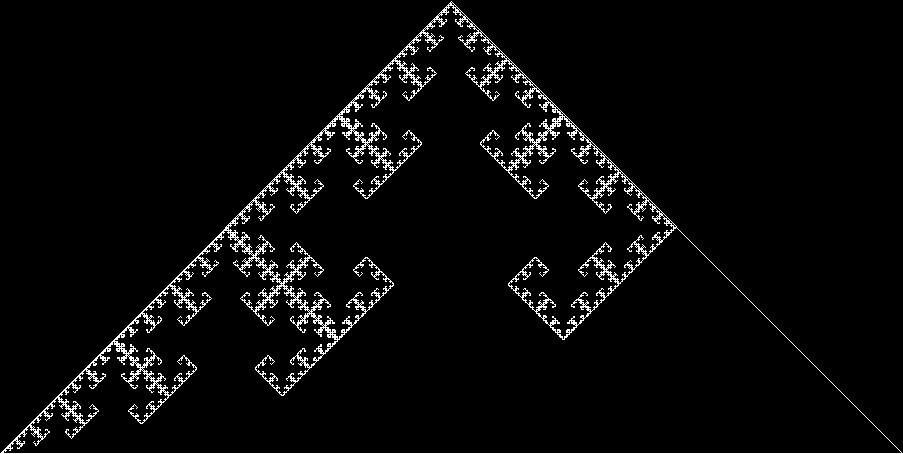
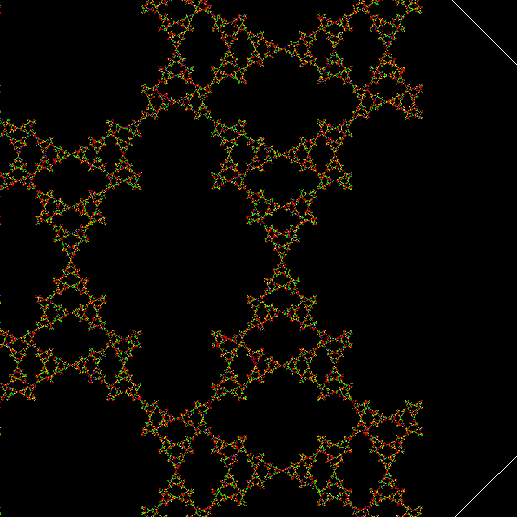
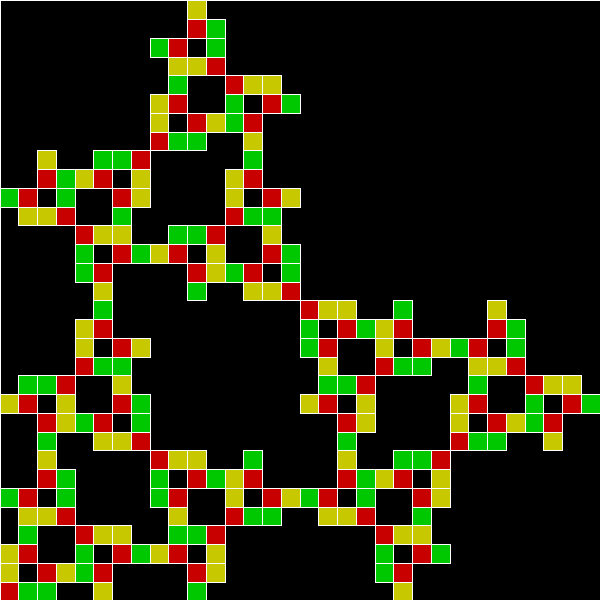
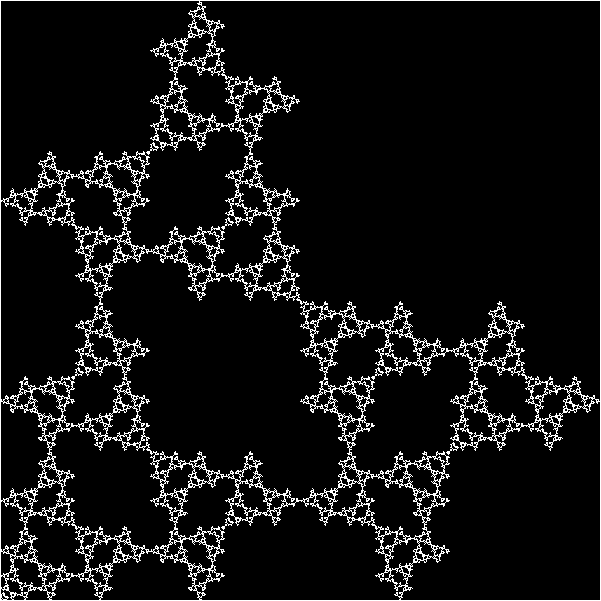
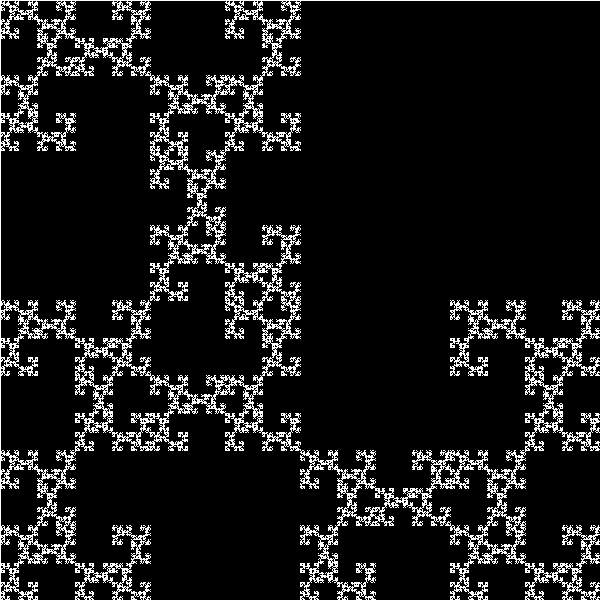
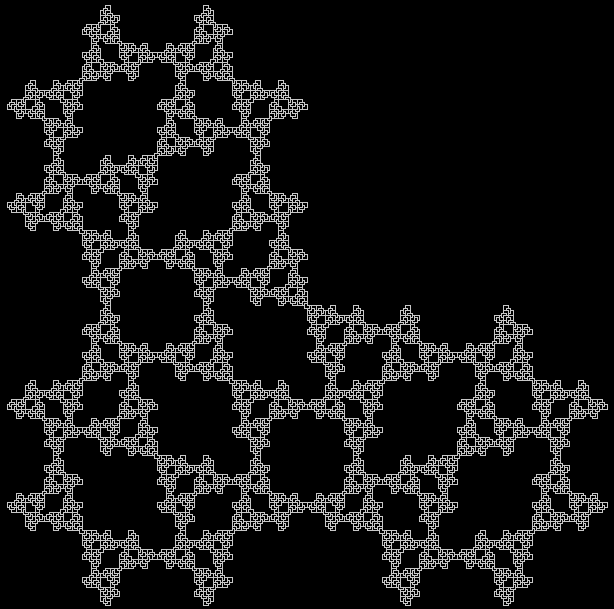
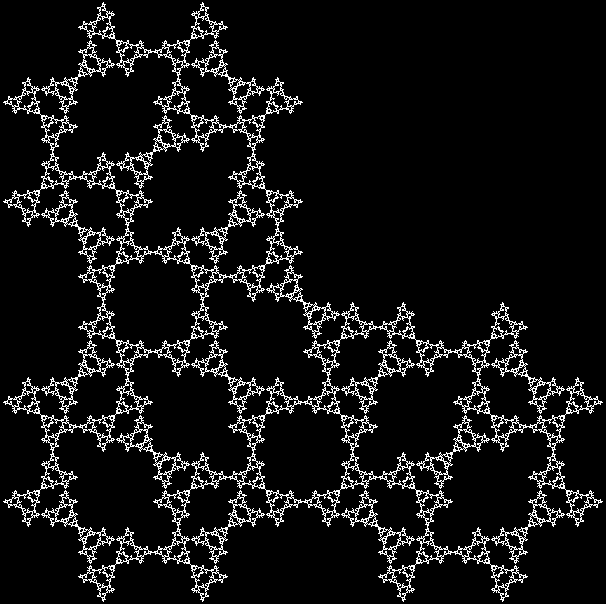
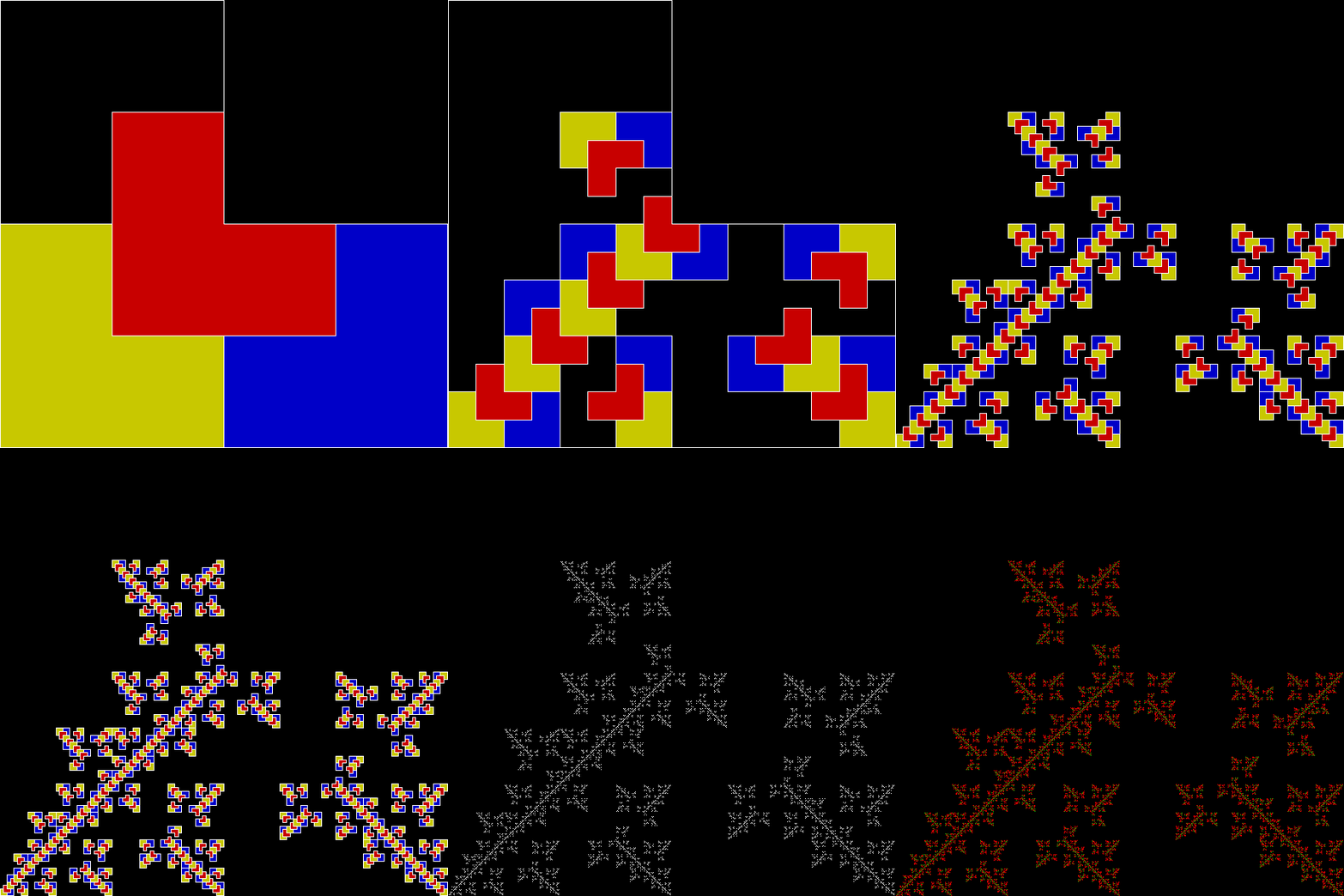
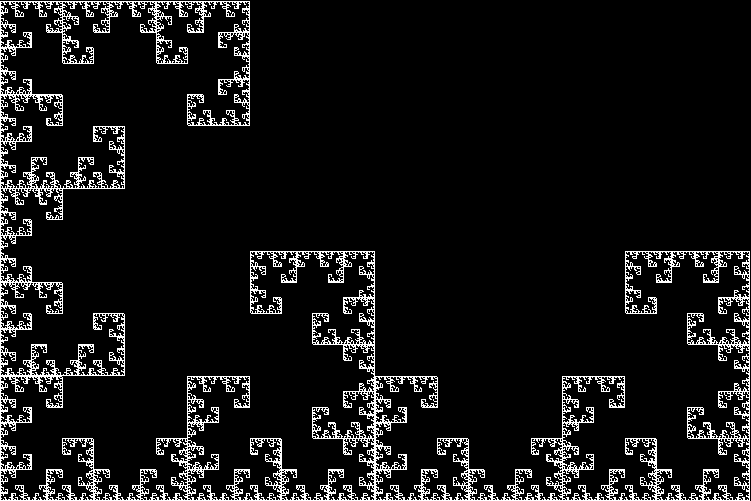
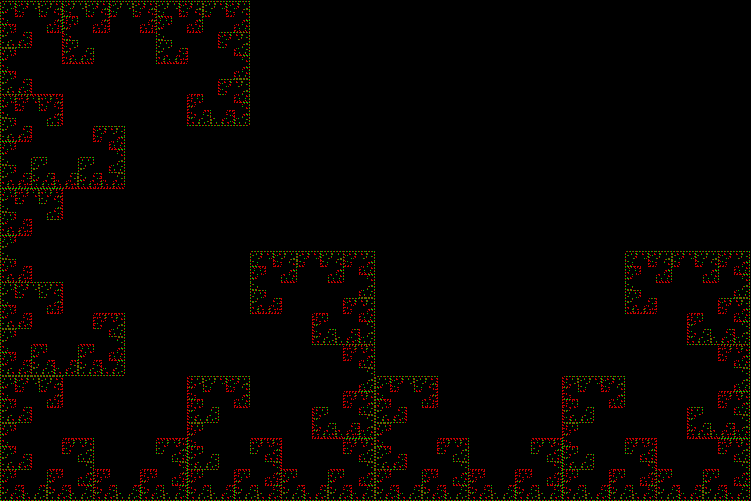
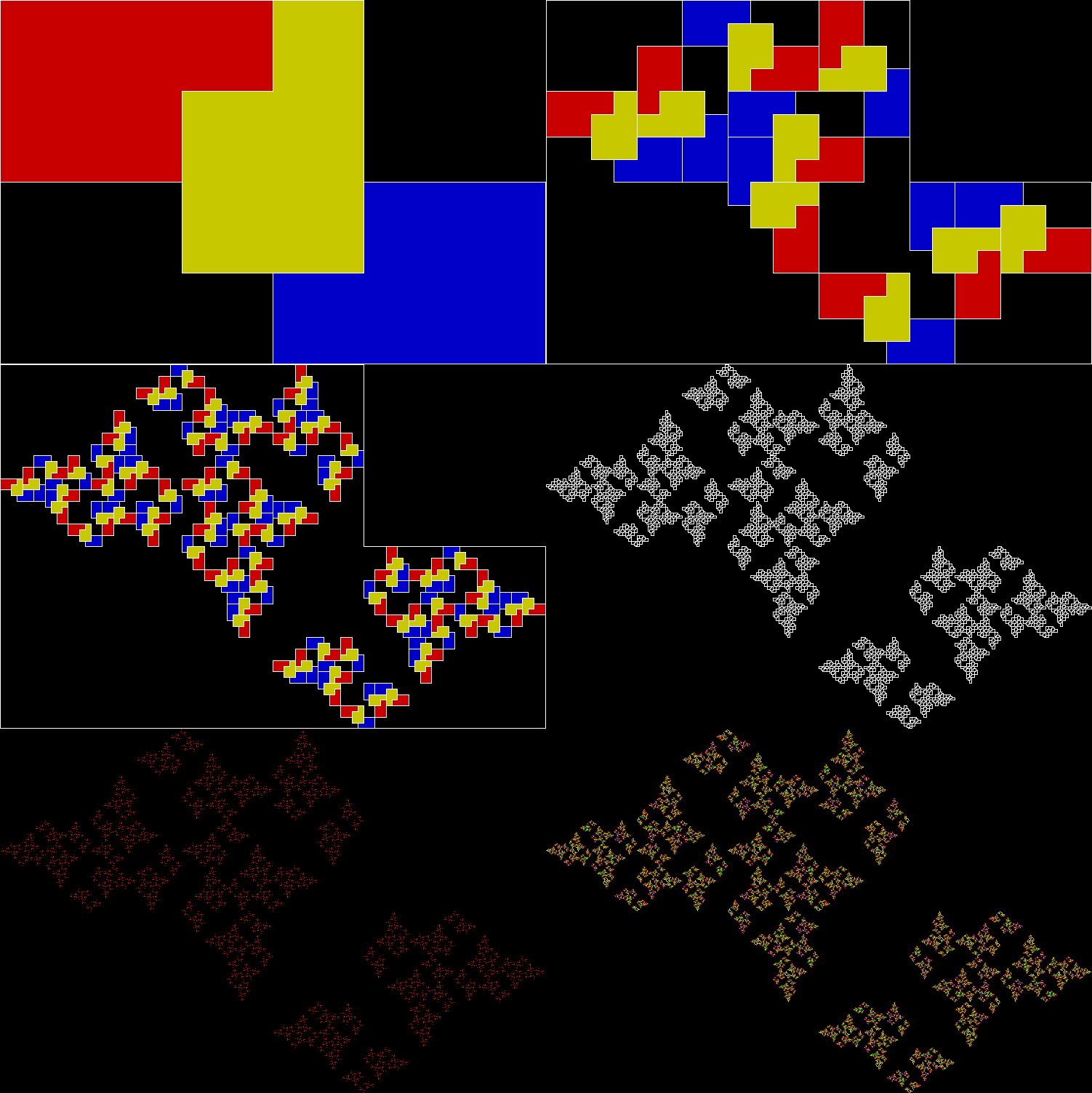
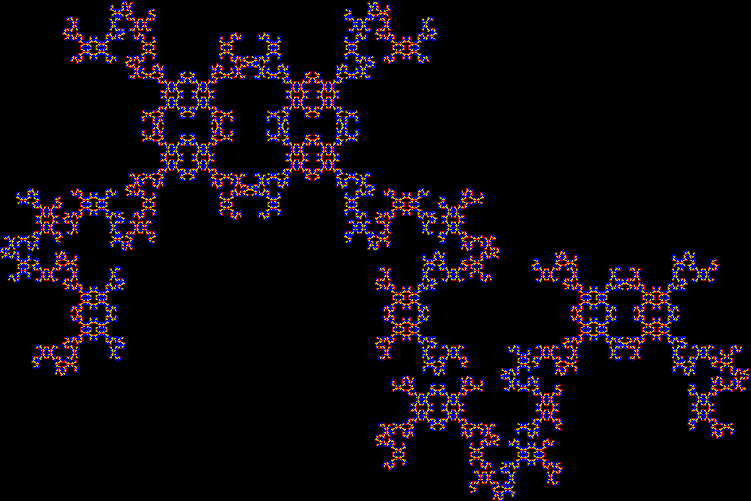
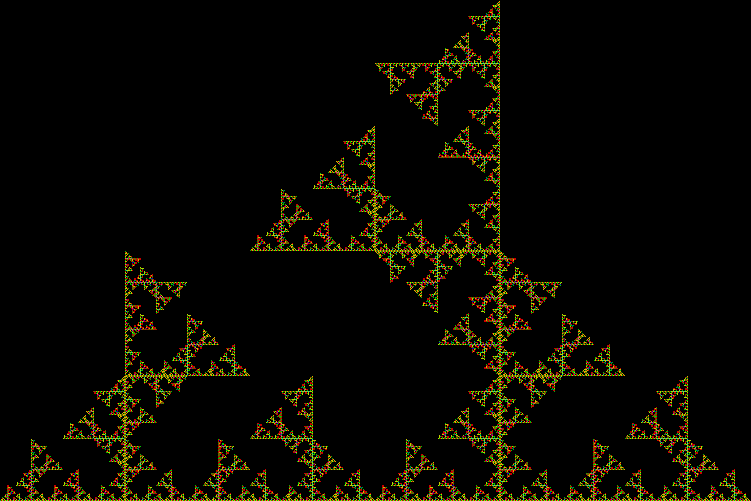
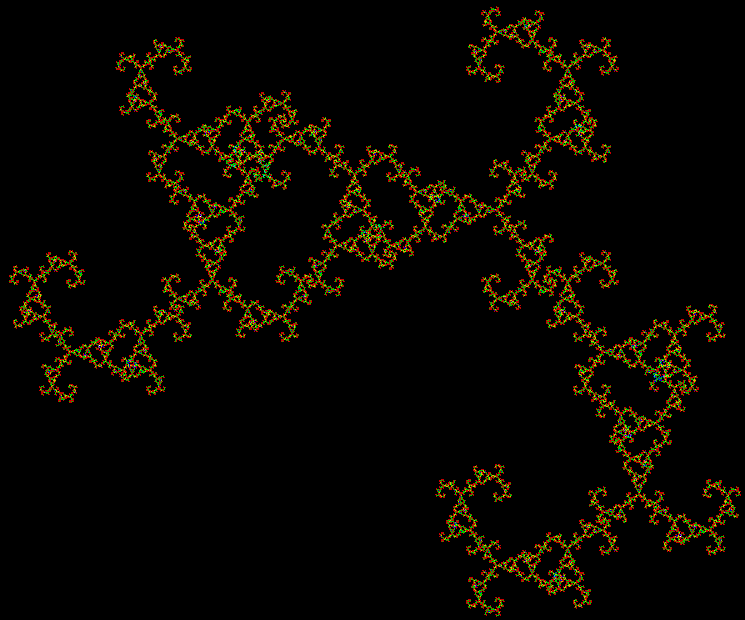
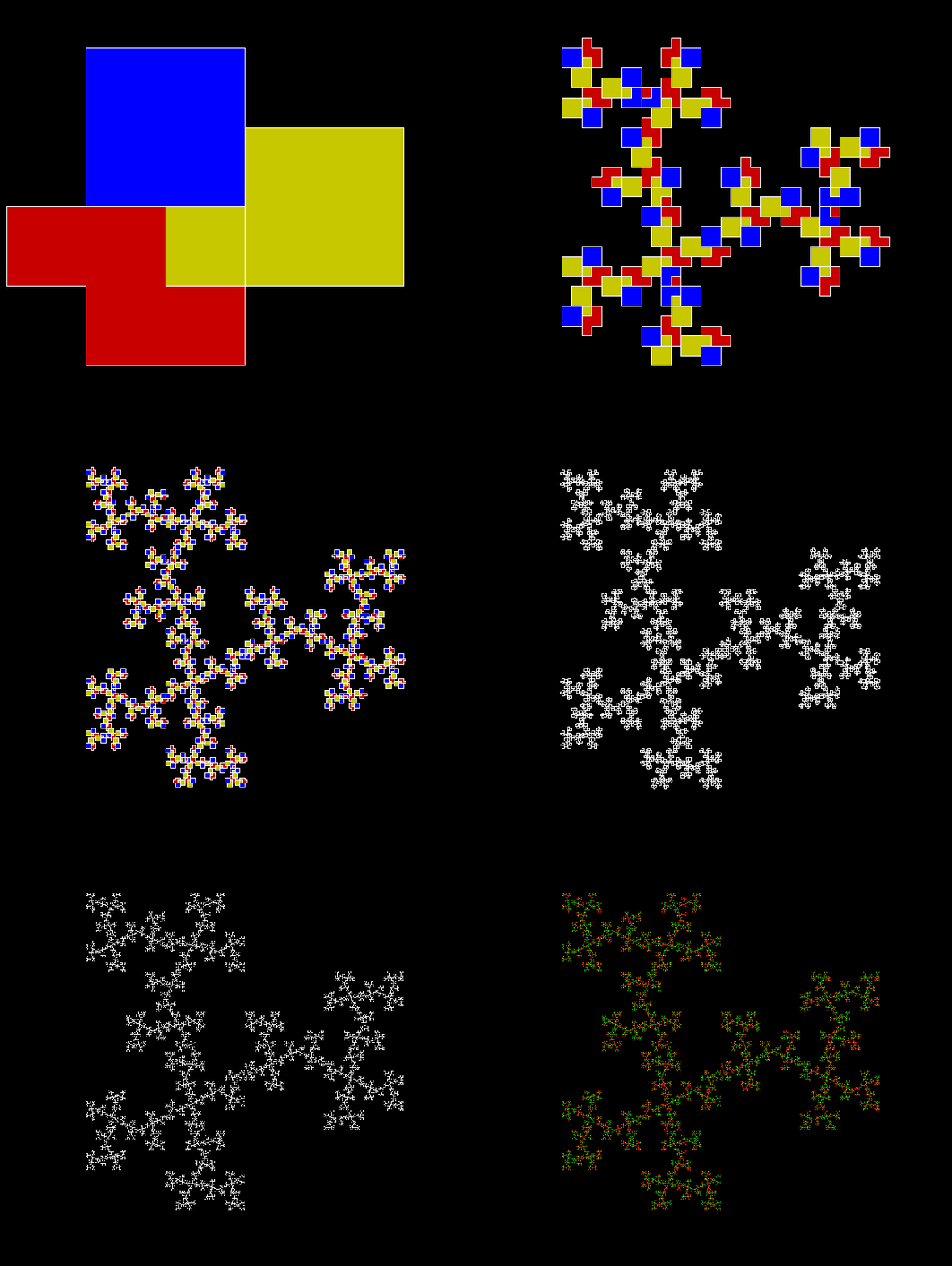
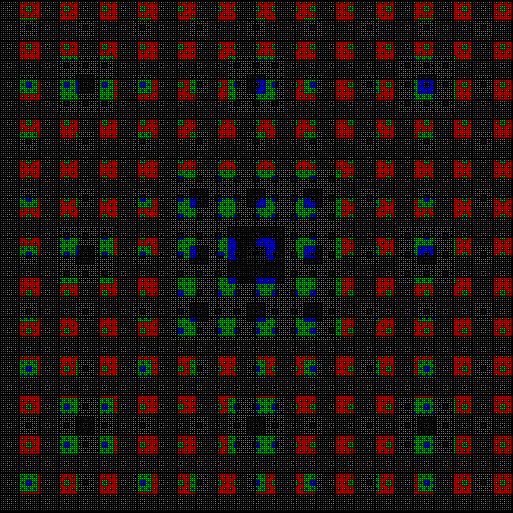
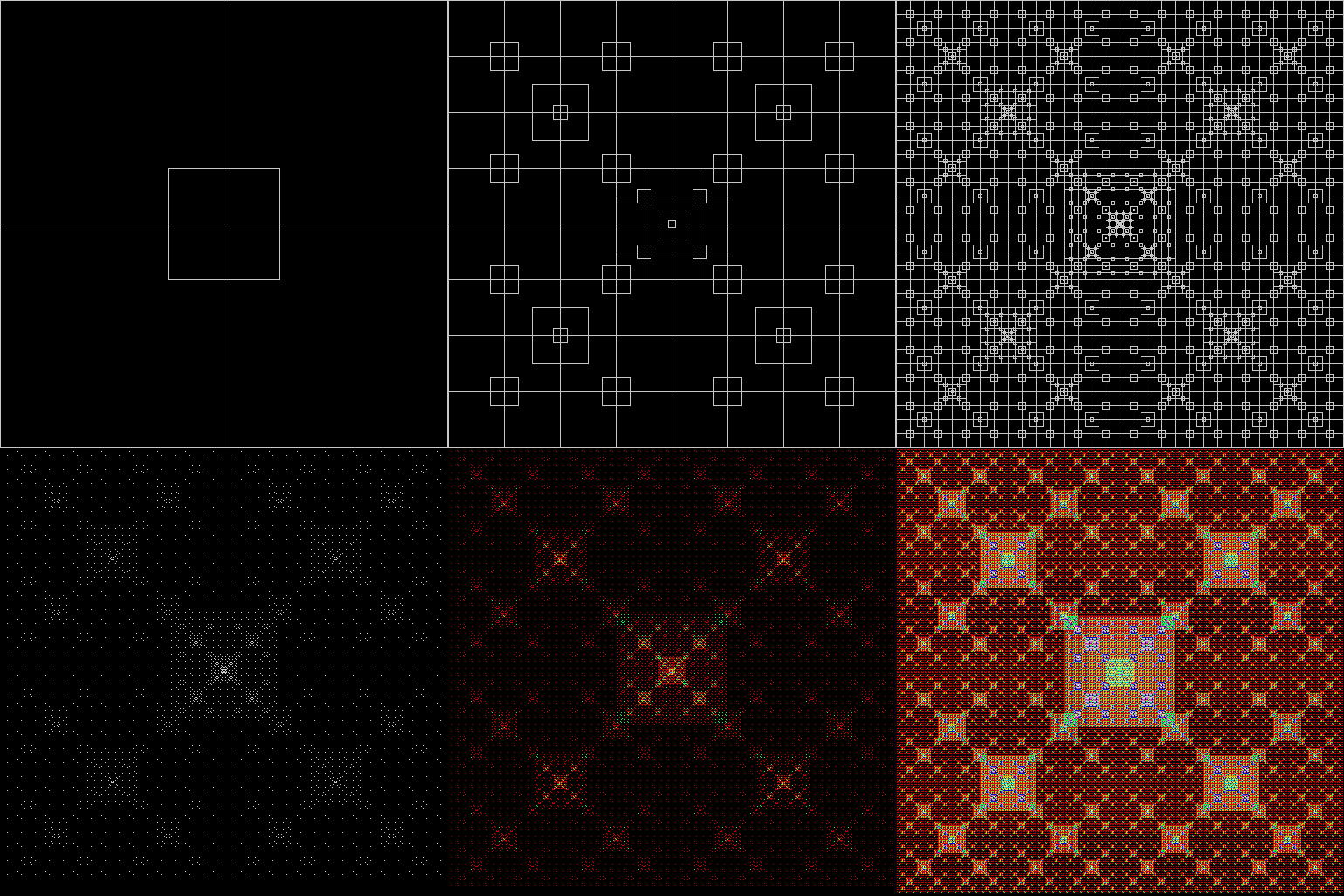
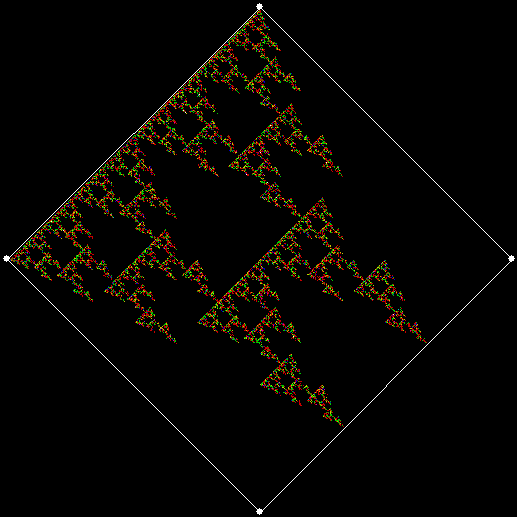
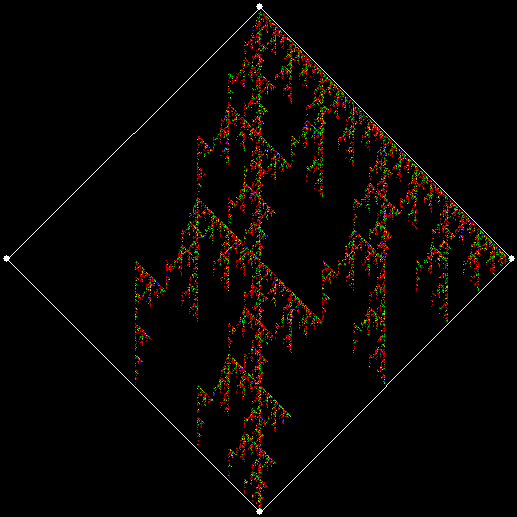
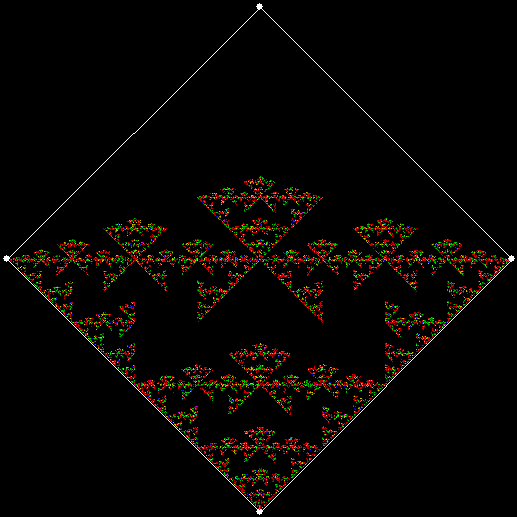
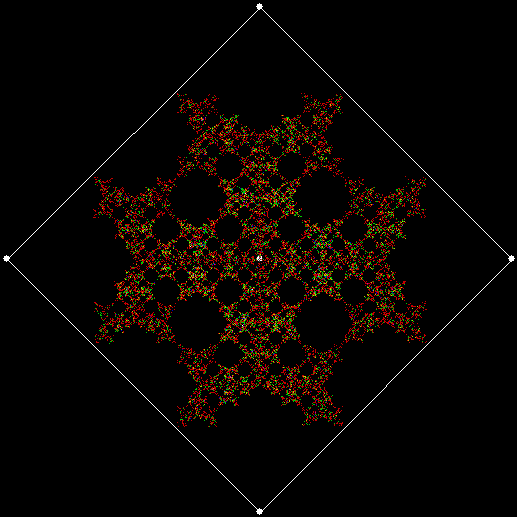
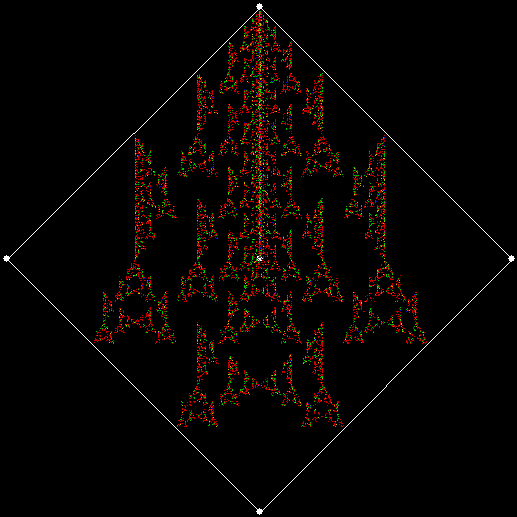
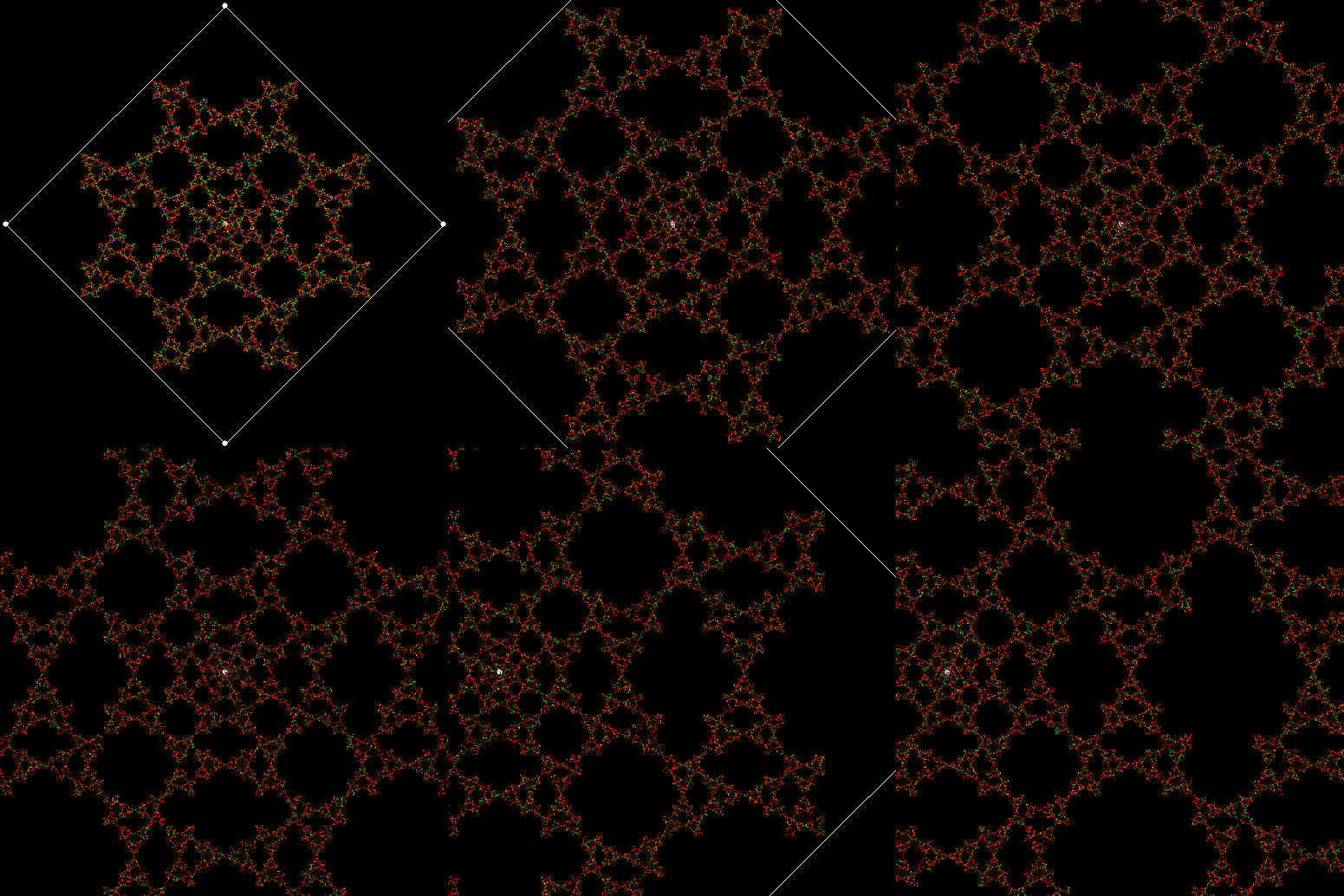
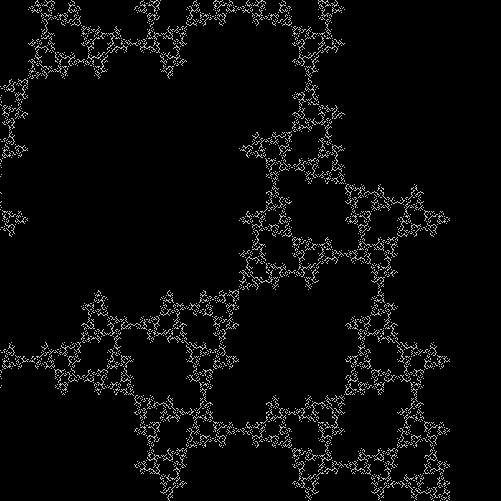
Then I unexpectedly came across the fractal again when playing with what I call a proximity fractal:
v4_ban15_sw3_anim

Hourglass animated (proximity fractal)


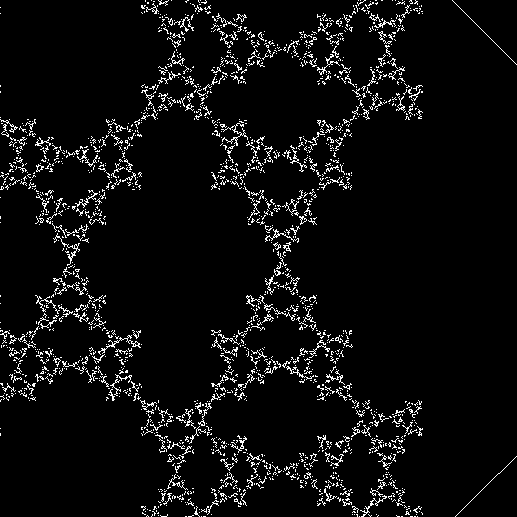
v4_ban15_sw3_col

(Static image)


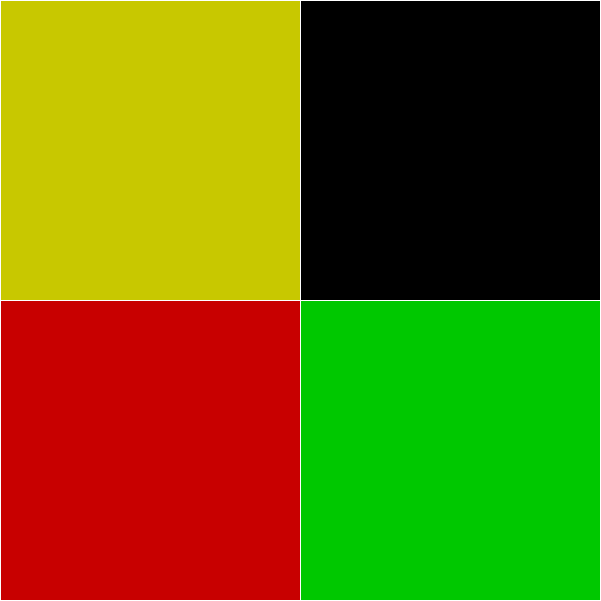
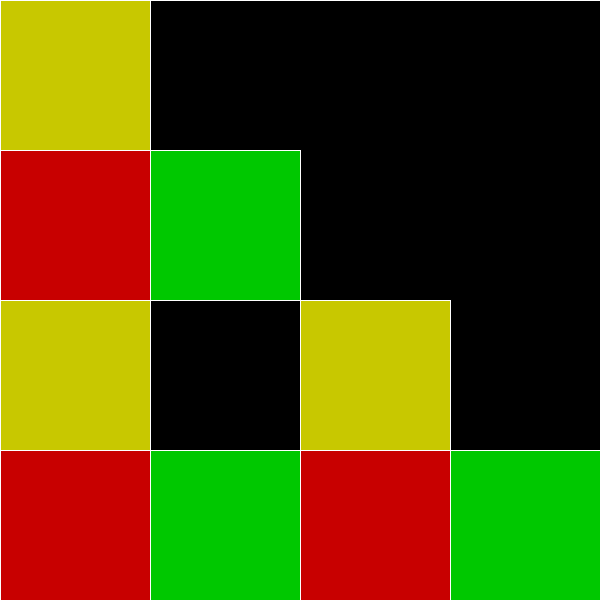
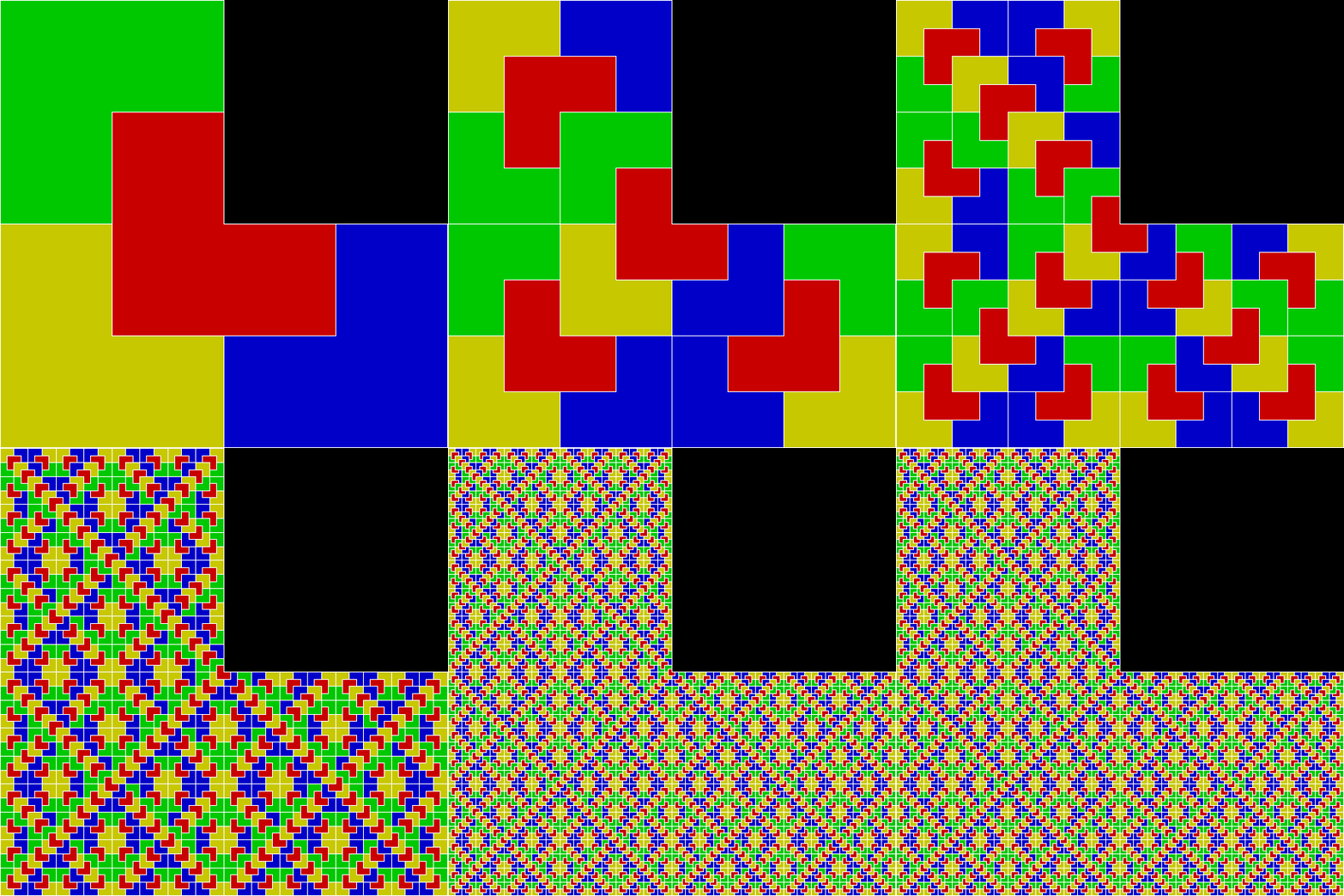
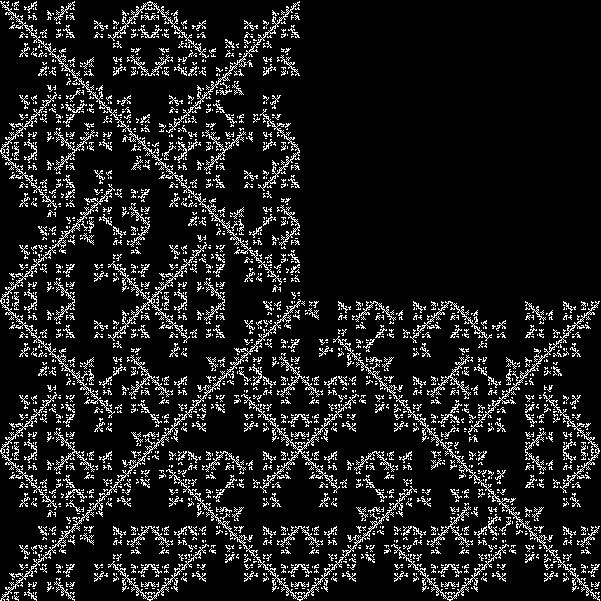
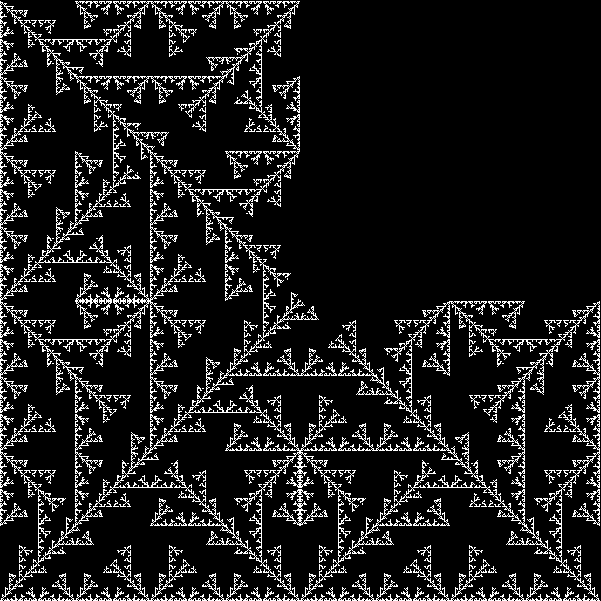
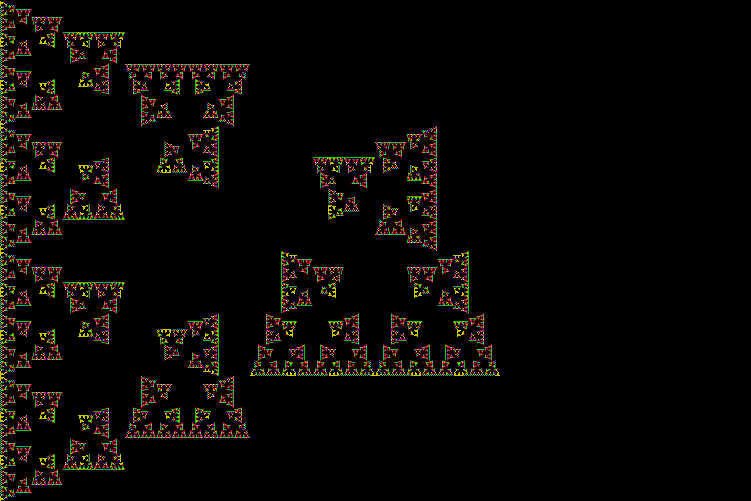
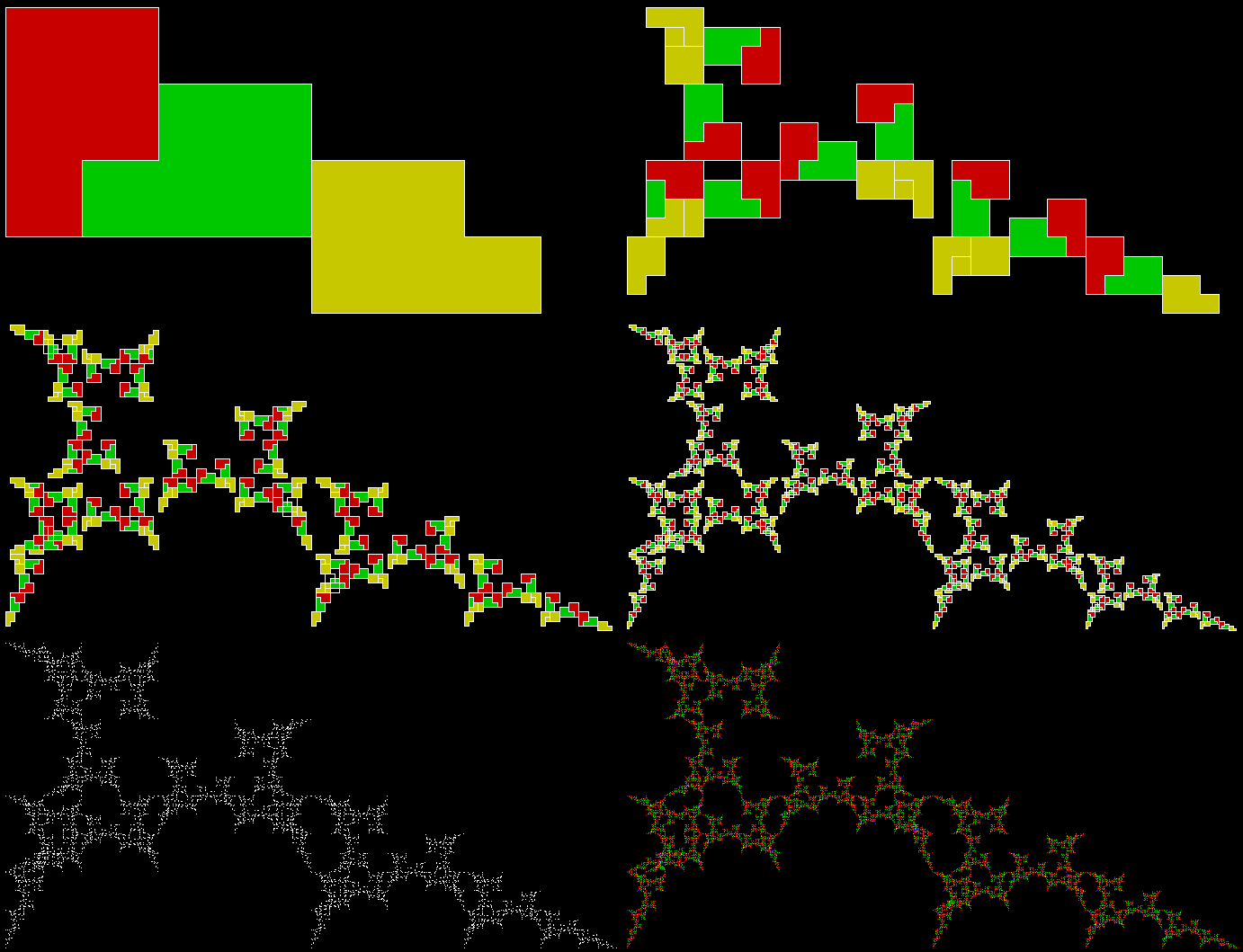
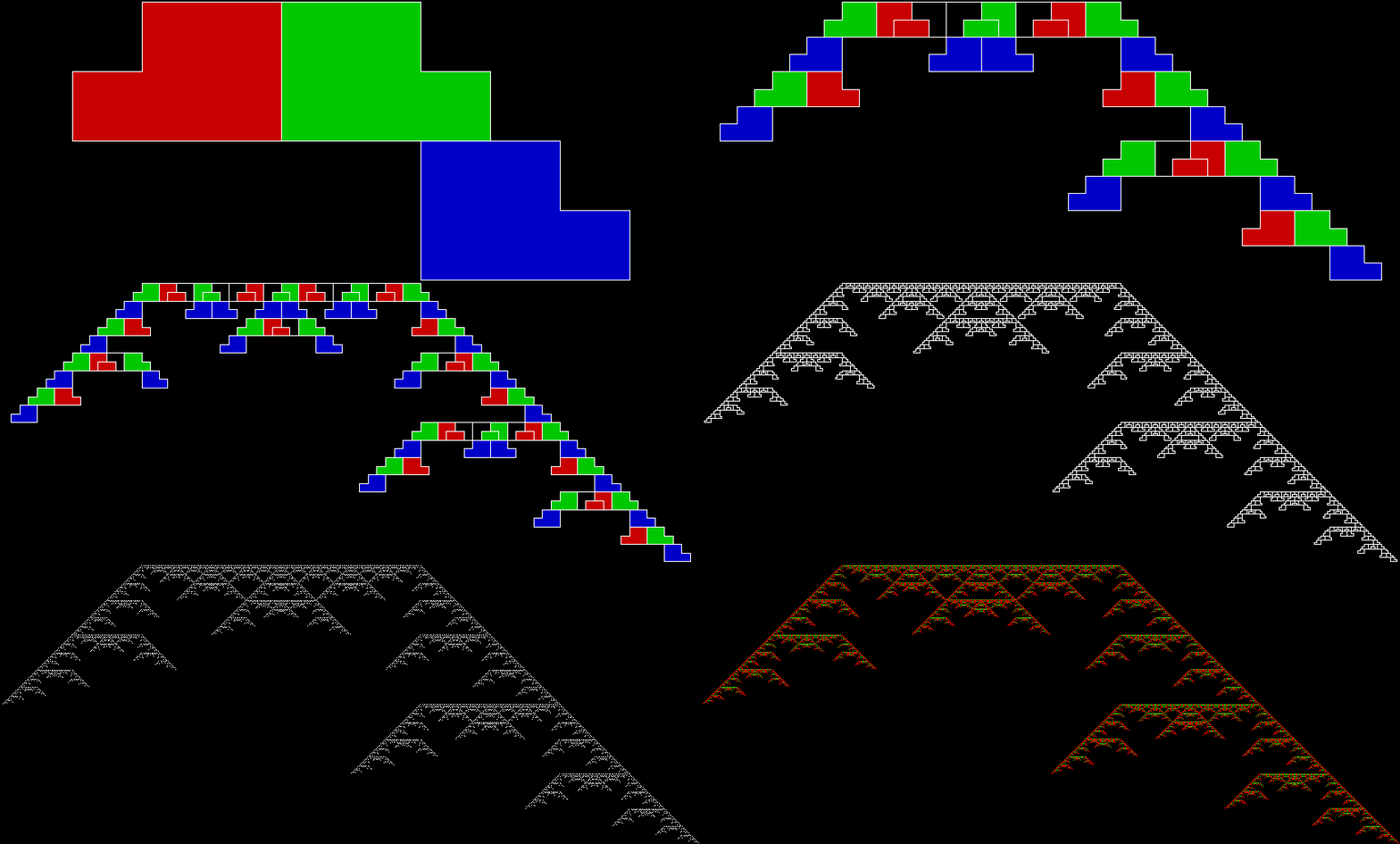
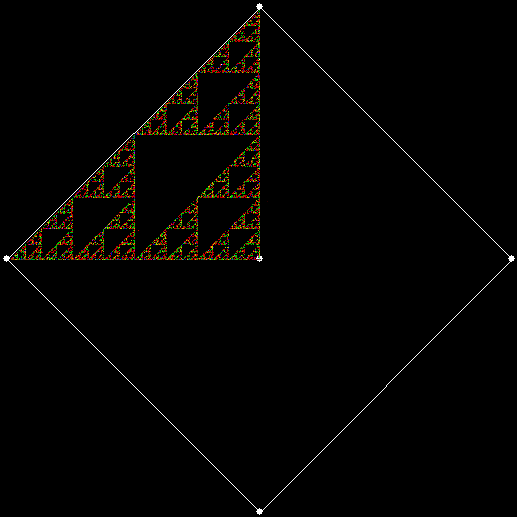
Now I’ve unexpectedly come across it for a third time, playing with a very simple fractal based on a 2×2 square. At first glance, the 2×2 square yields only one interesting fractal. If you divide the square into four smaller squares and discard one square, then do the same to each of the three sub-copies, then repeat, you get a form of the Sierpiński triangle, like this:

sq2x2_123_1

Sierpiński triangle stage 1


sq2x2_123_2

Sierpiński triangle #2


sq2x2_123_3

Sierpiński triangle #3


sq2x2_123_4

Sierpiński triangle #4


sq2x2_123

Sierpiński triangle animated


sq2x2_123_static

(Static image)


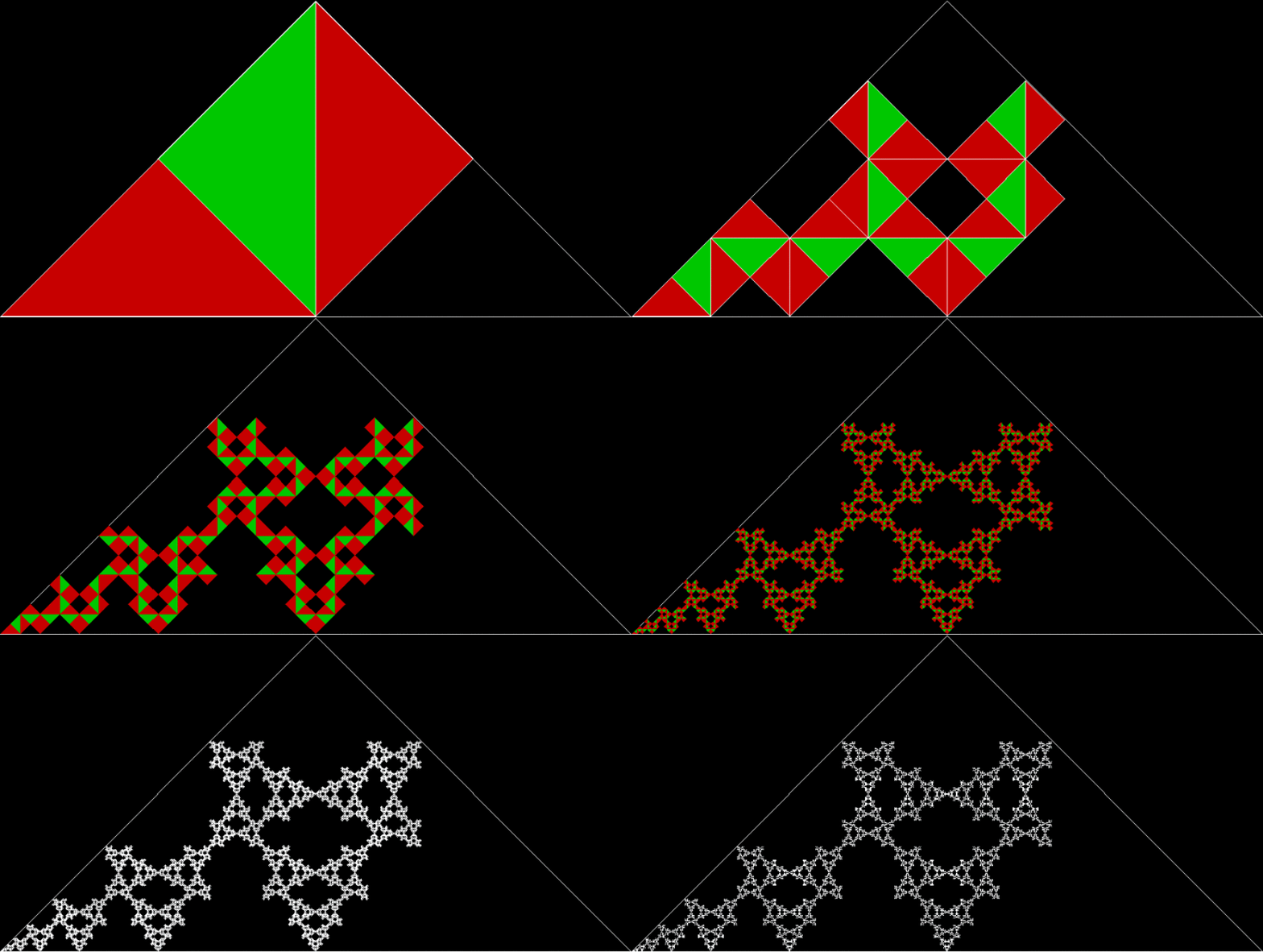
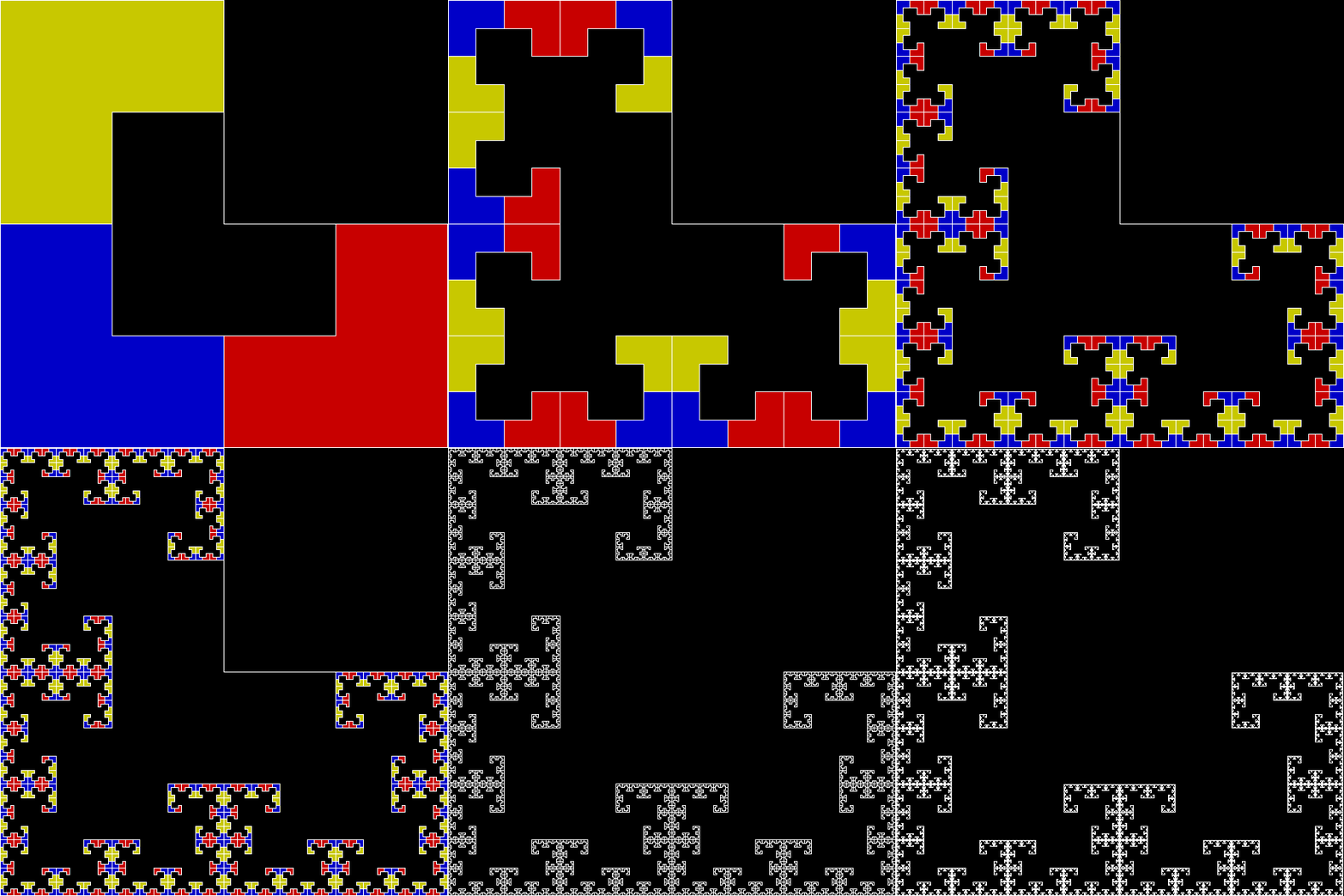
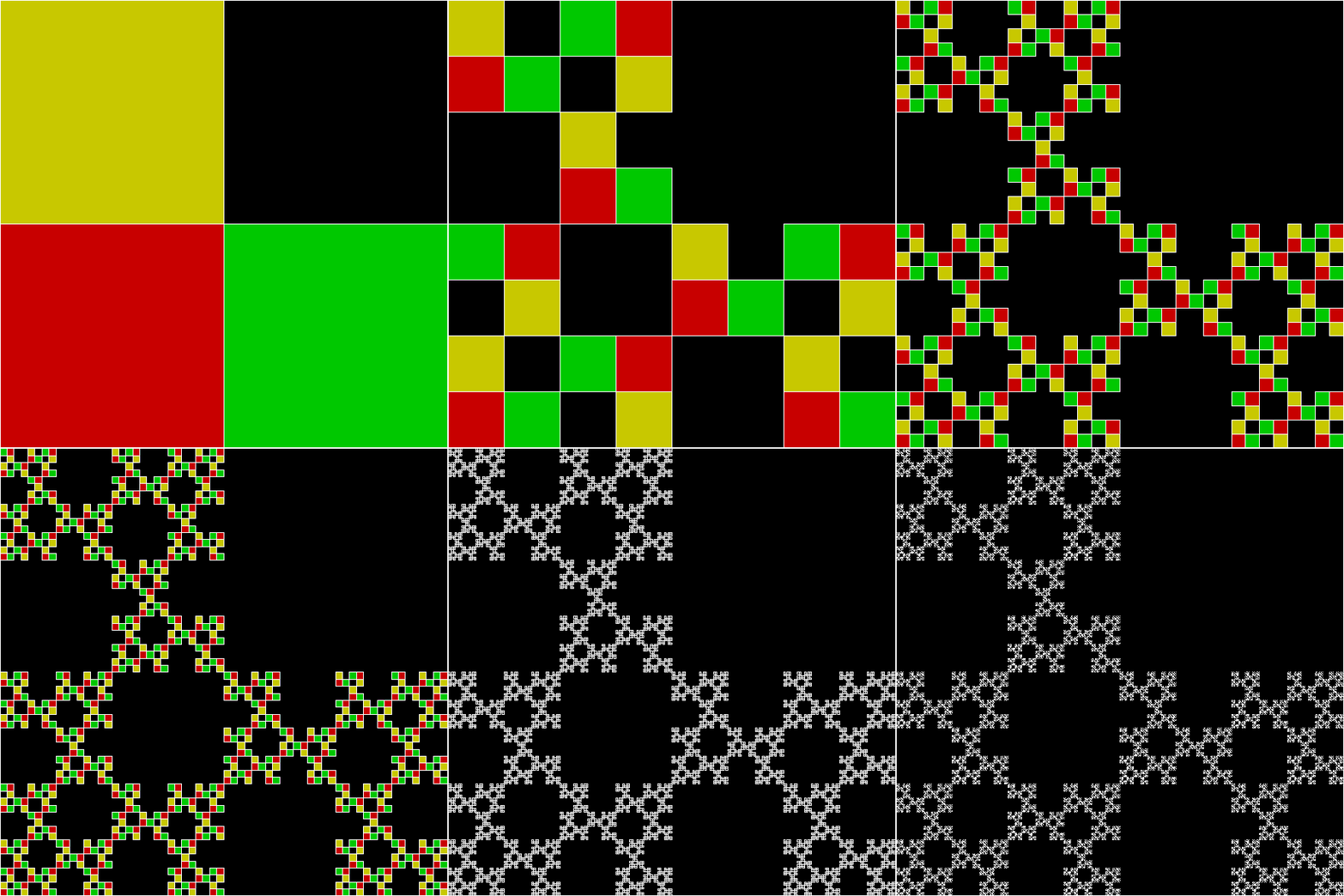
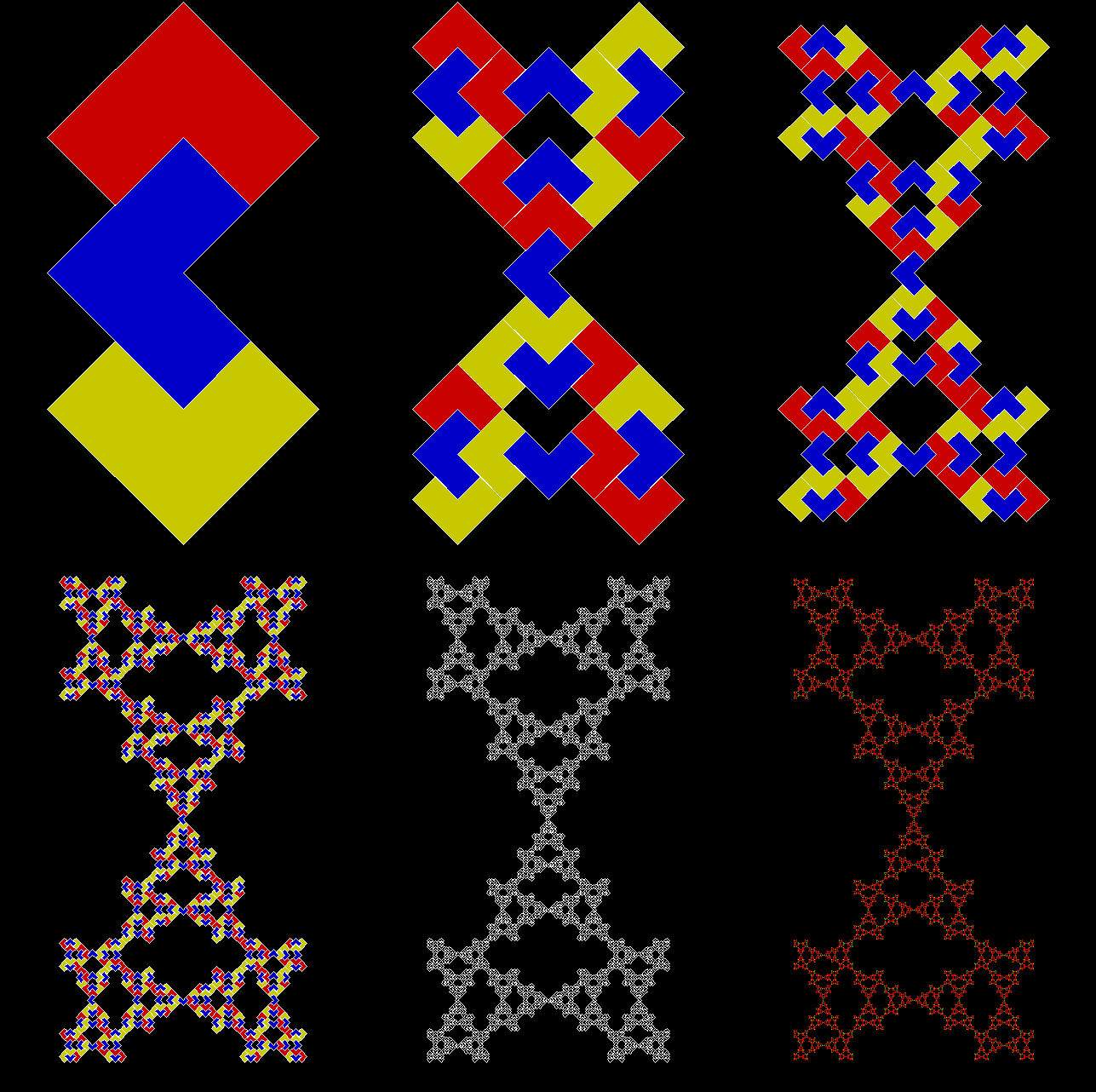
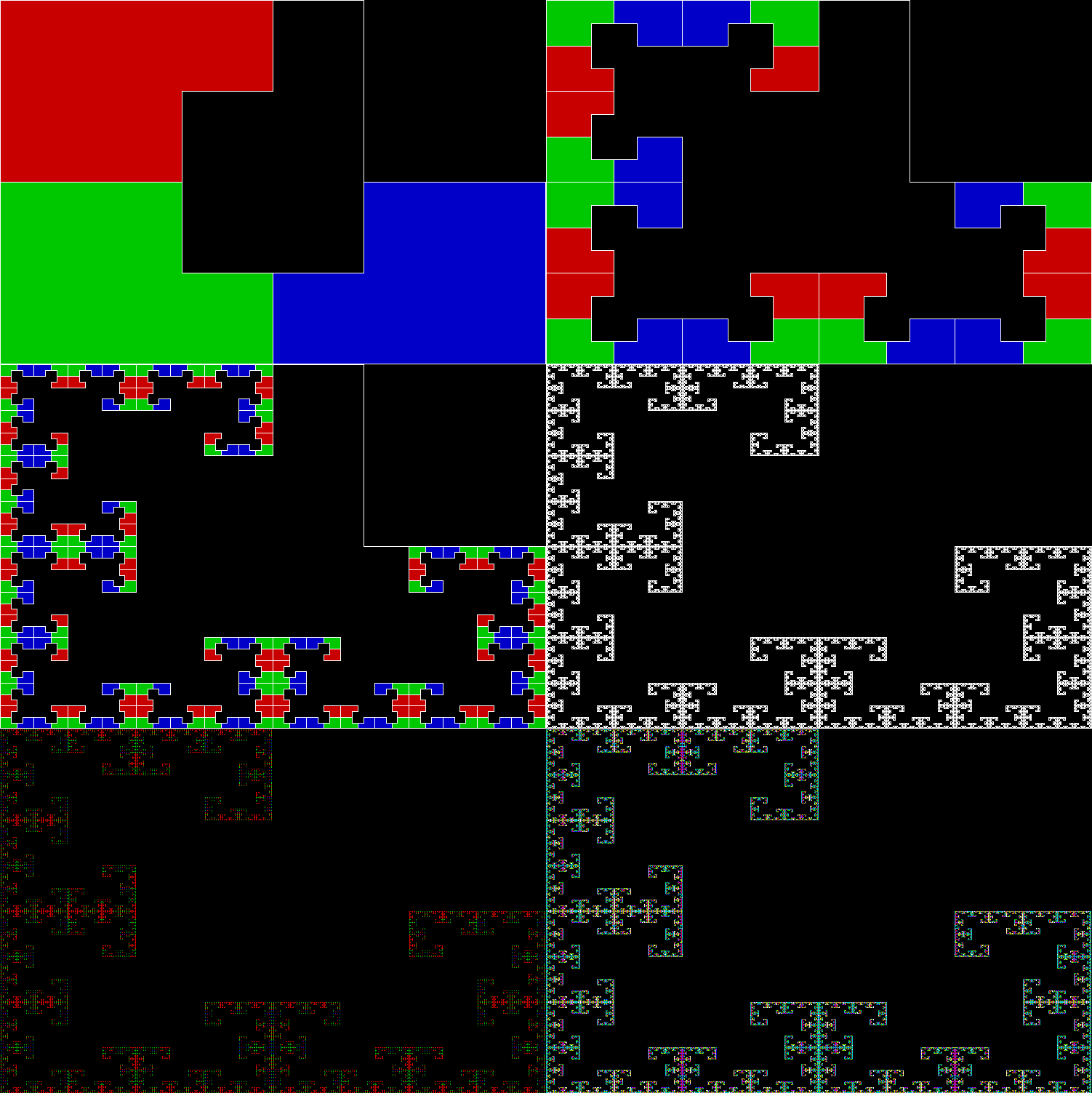
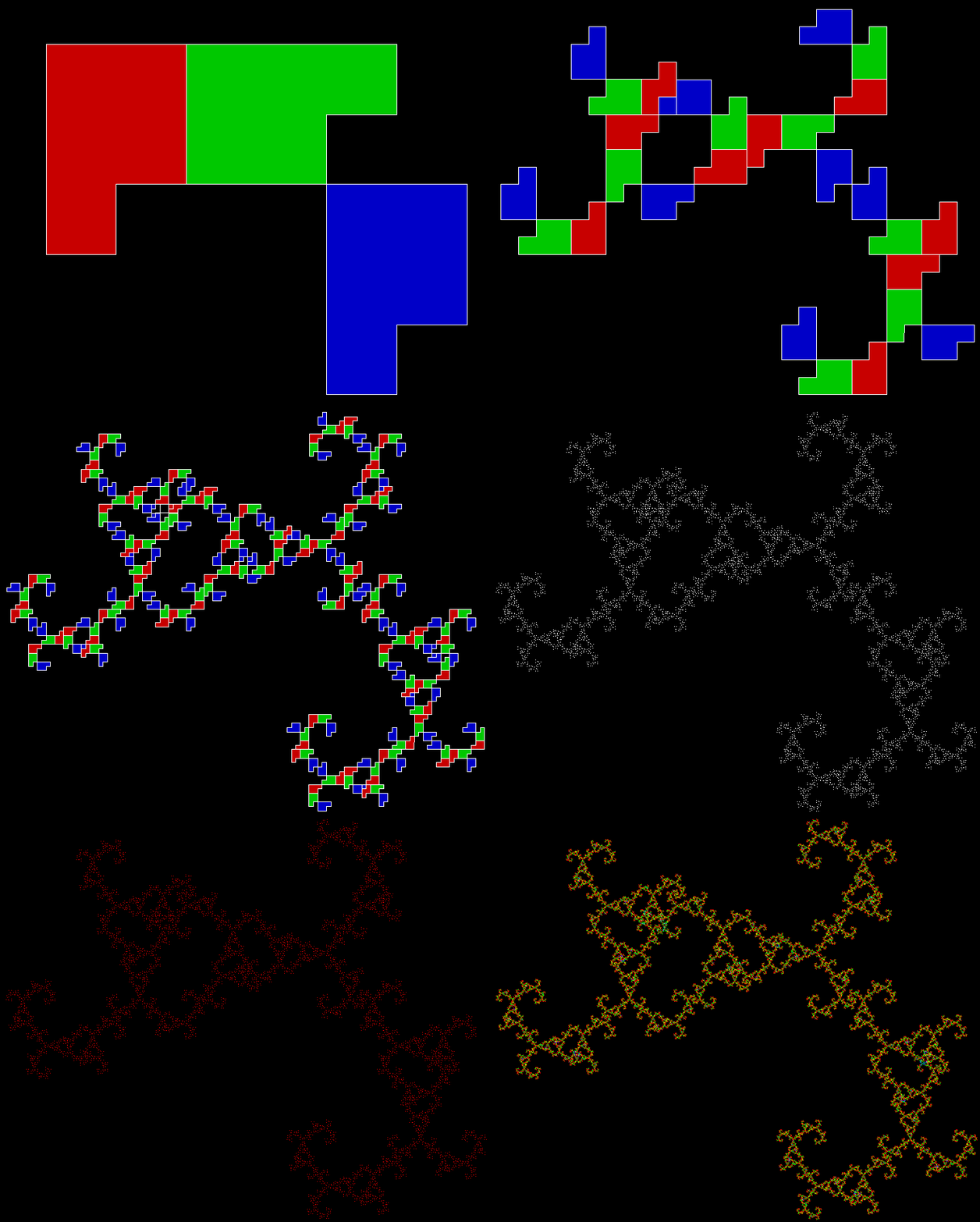
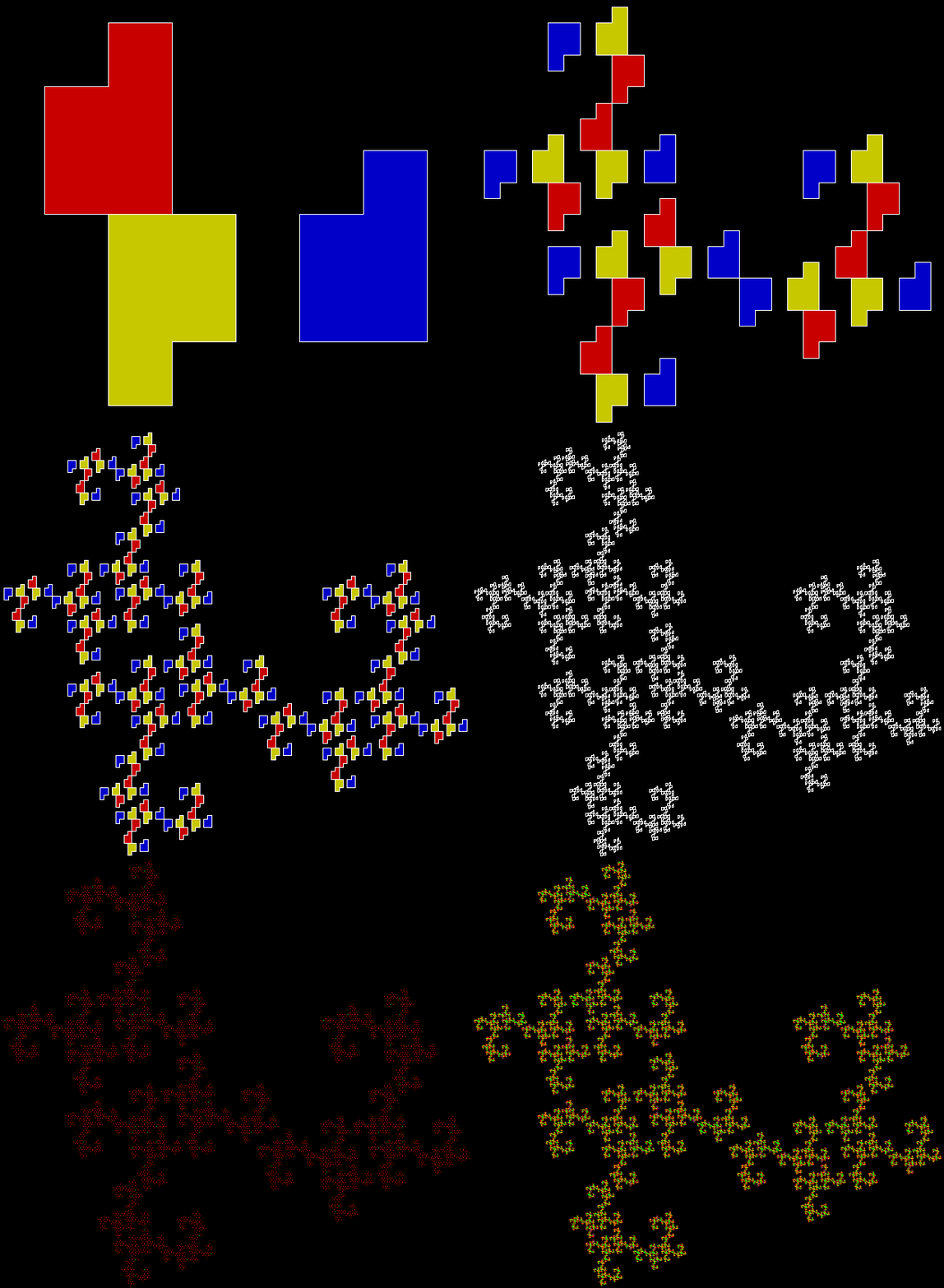
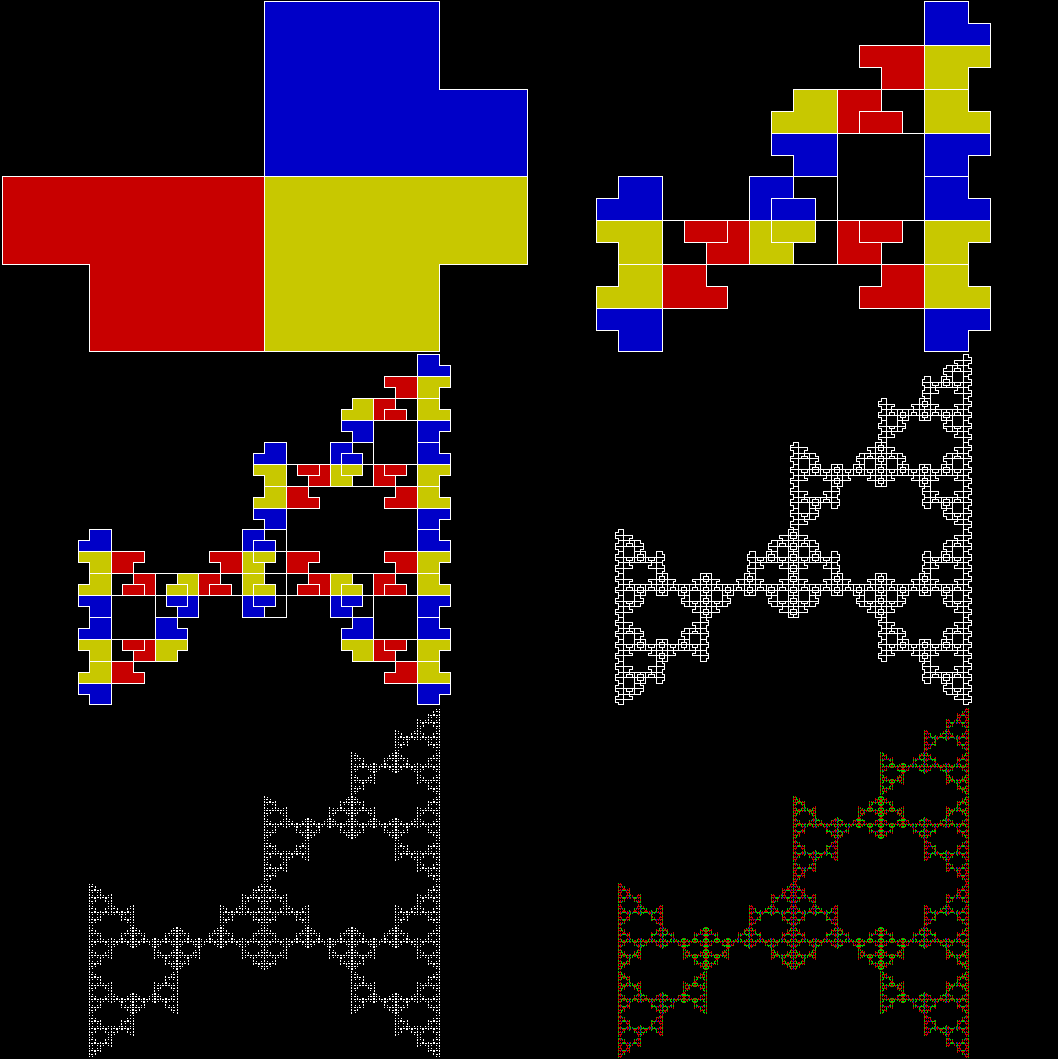
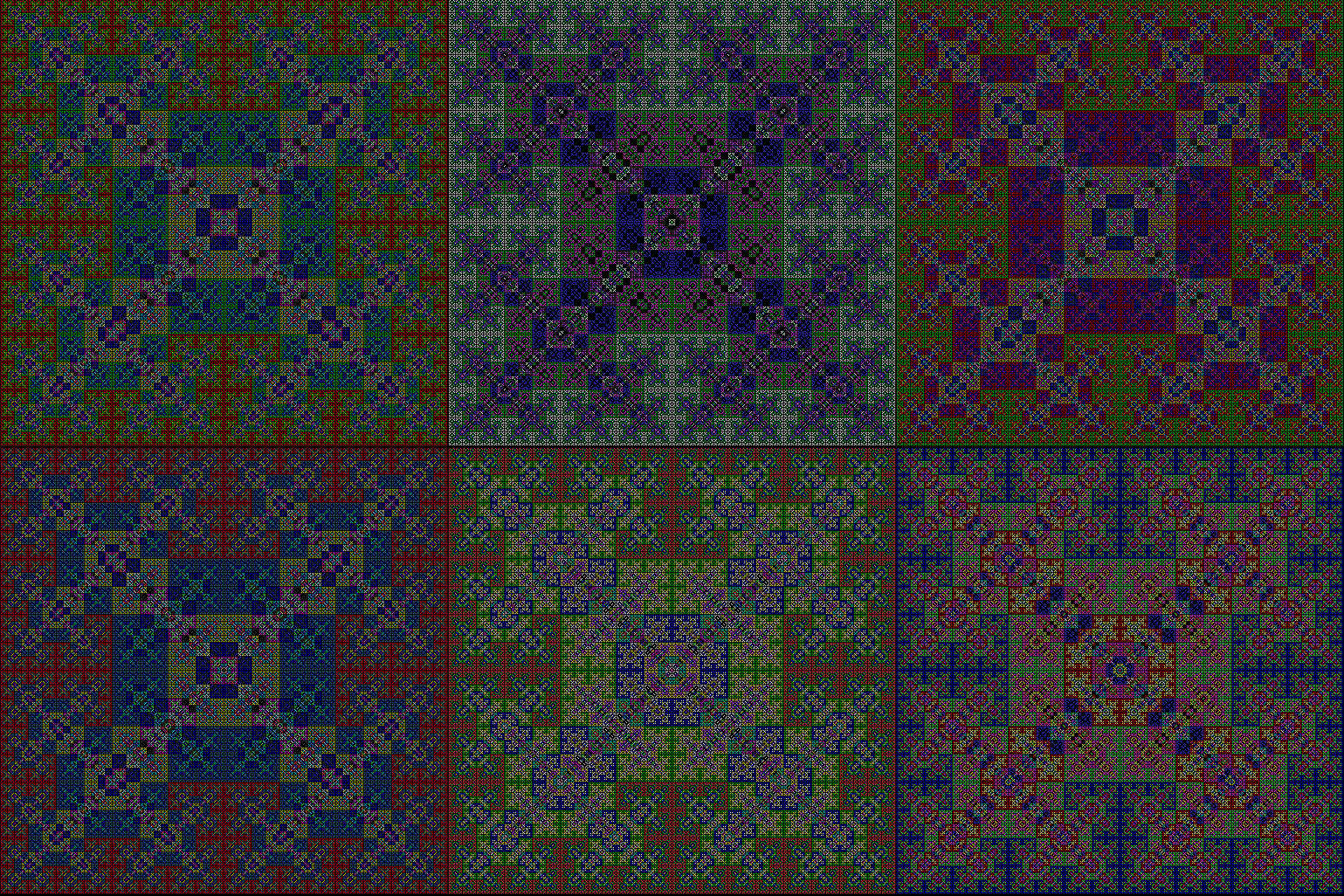
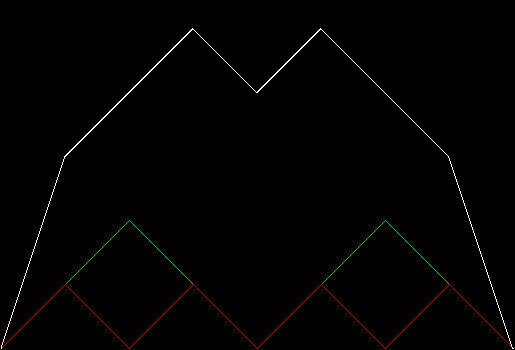
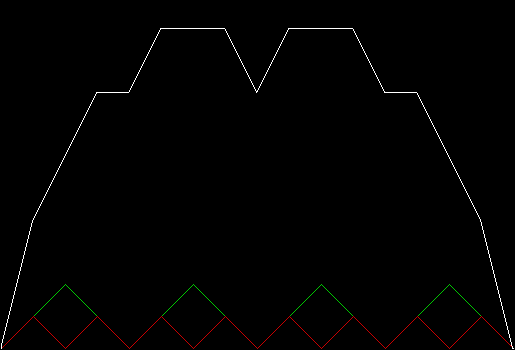
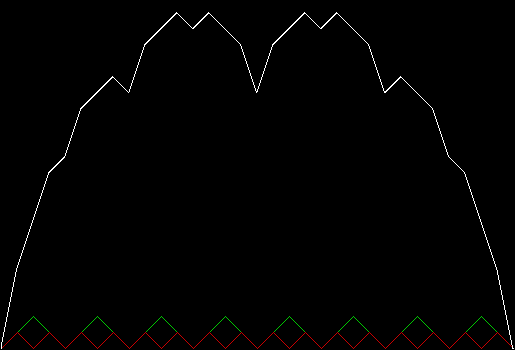
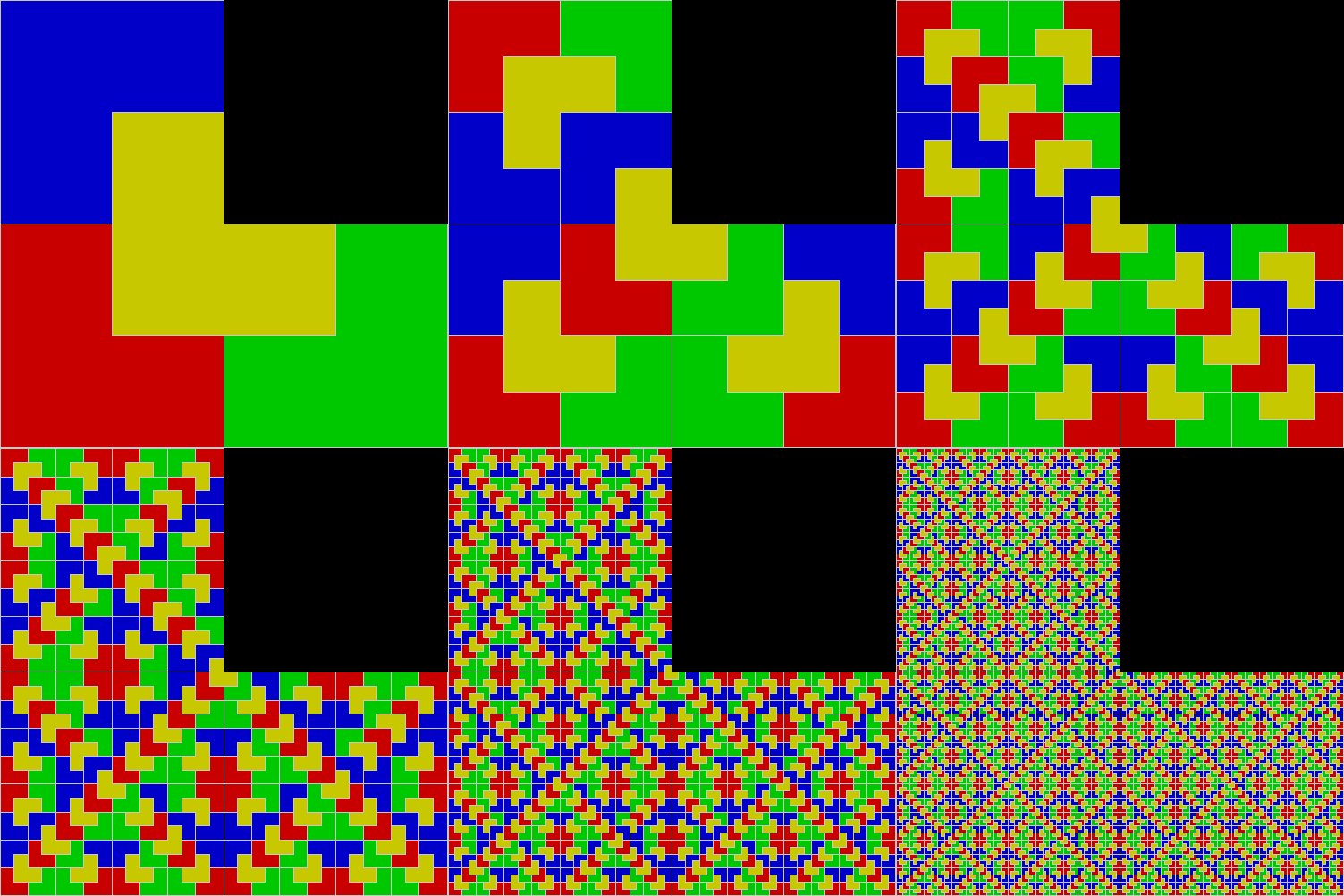
The 2×2 square seems too simple for anything more, but there’s a simple way to enrich it: label the corners of the sub-squares so that you can, as it were, individually rotate them 0°, 90°, 180°, or 270°. One set of rotations produces the hourglass fractal, like this:

sq2x2_123_013_1

Hourglass stage 1


sq2x2_123_013_2

Hourglass #2


sq2x2_123_013_3

Fractal #3


sq2x2_123_013_4

Hourglass #4


sq2x2_123_013_5

Hourglass #5


sq2x2_123_013_6

Hourglass #6


sq2x2_123_013

Hourglass animated


sq2x2_123_013_static

(Static image)


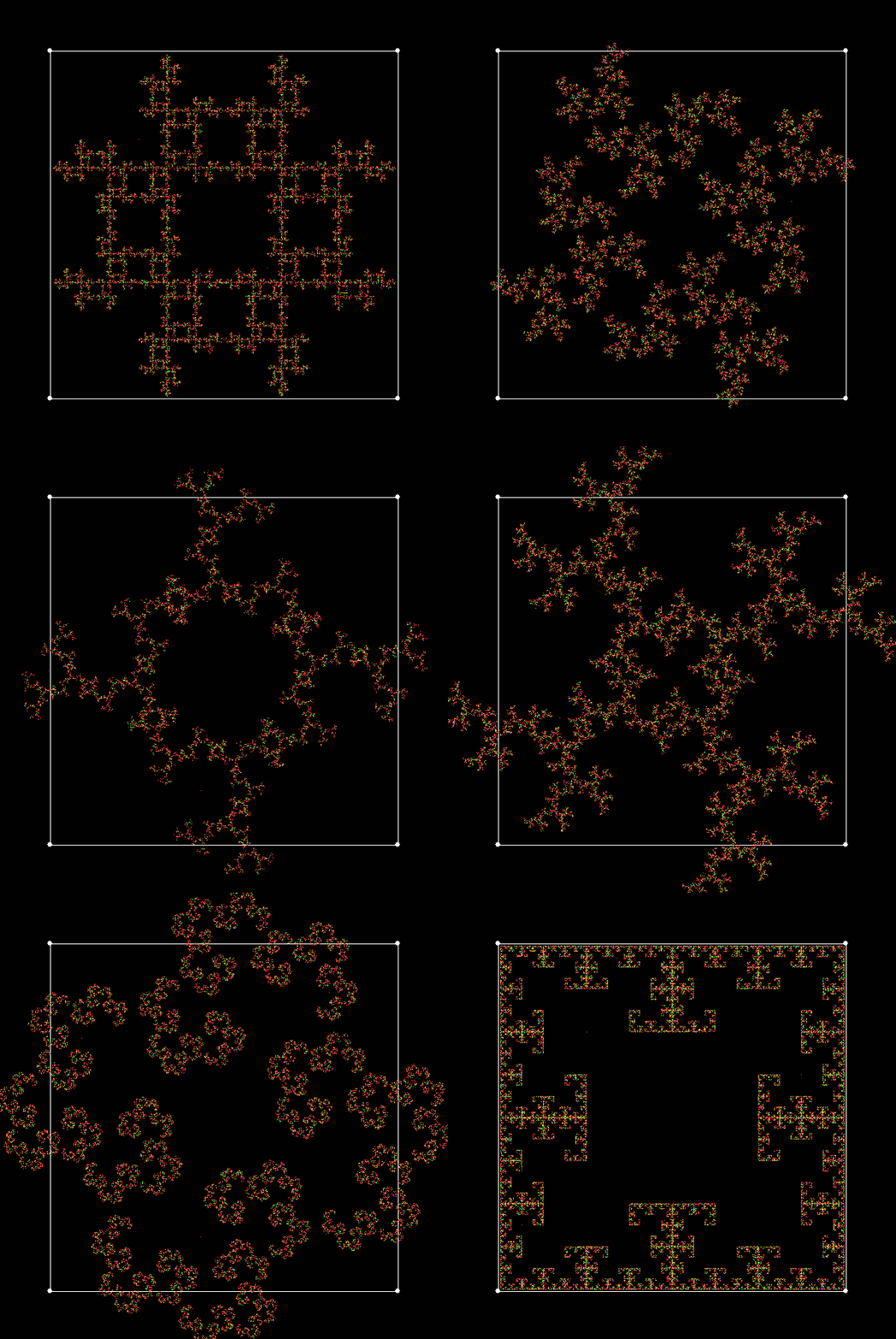
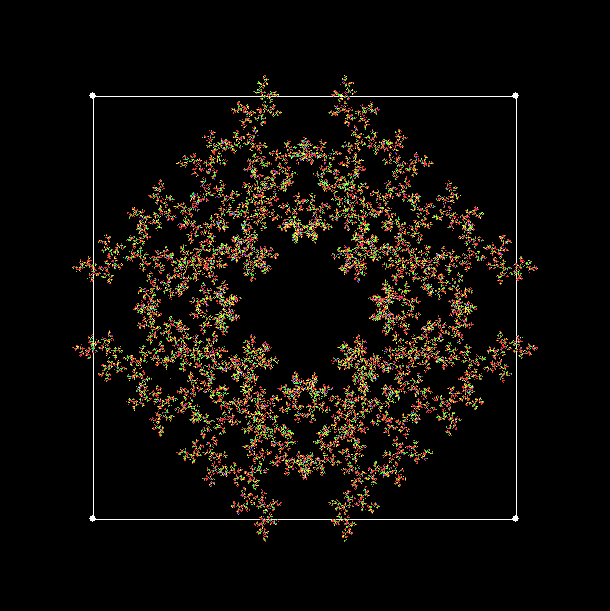
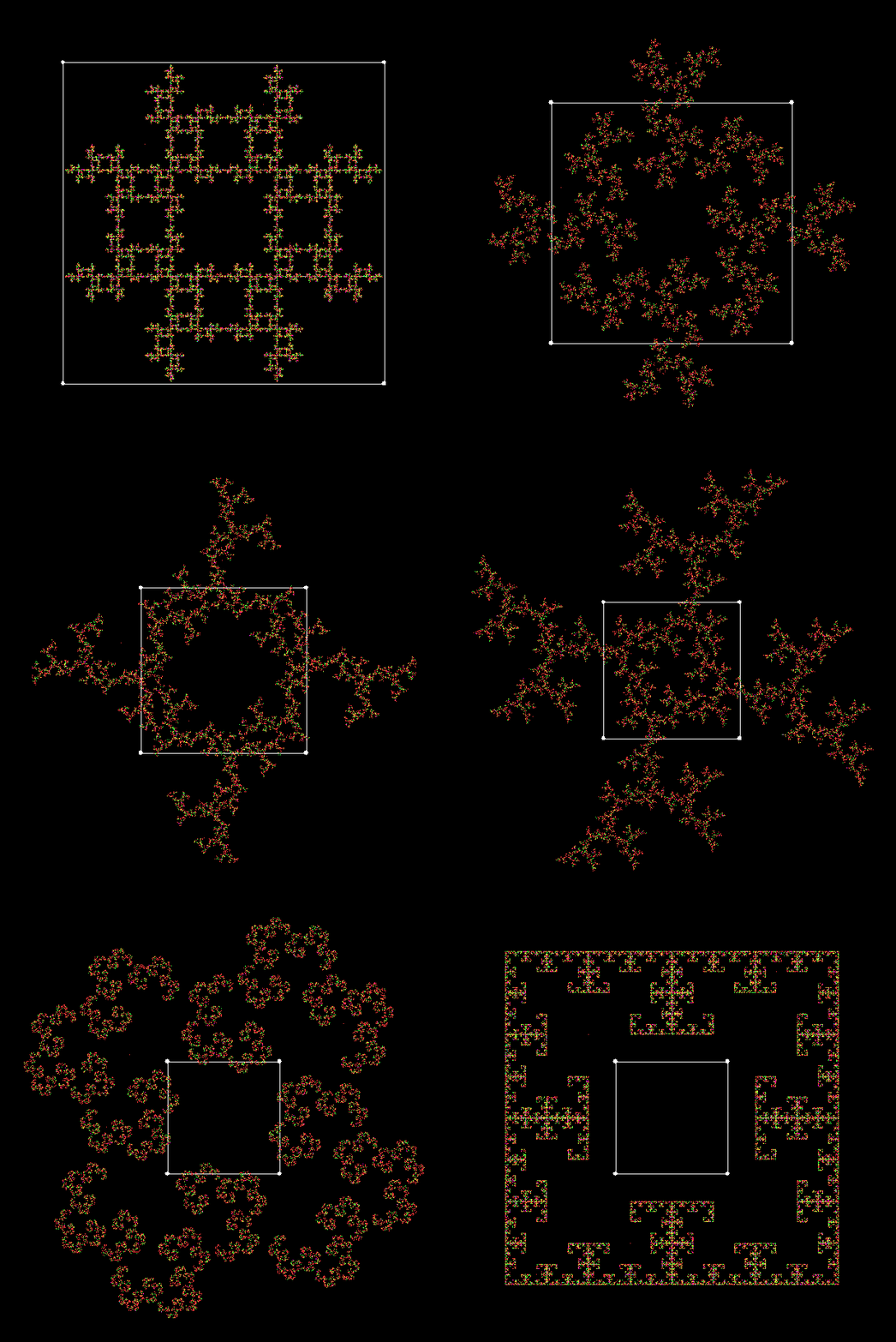
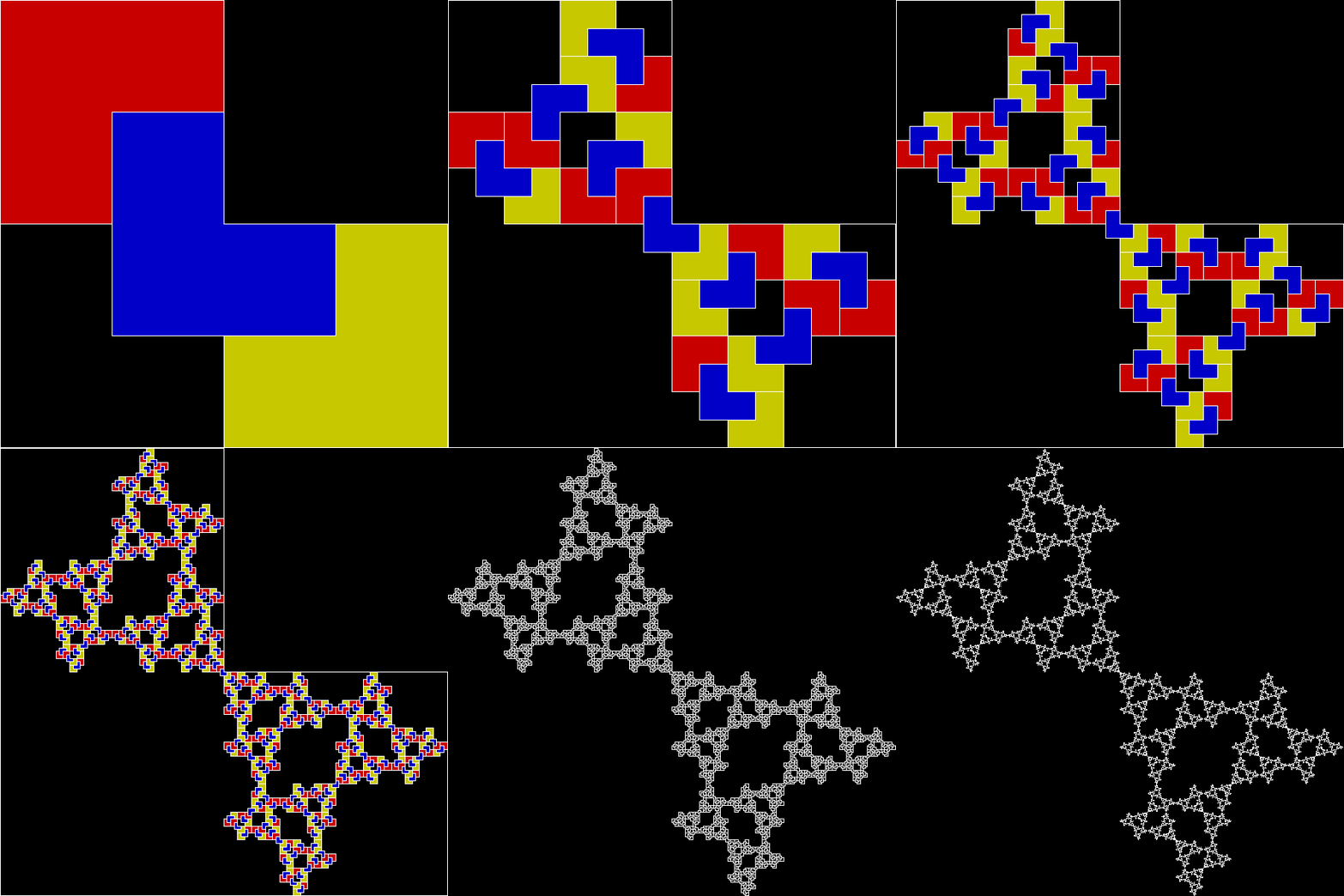
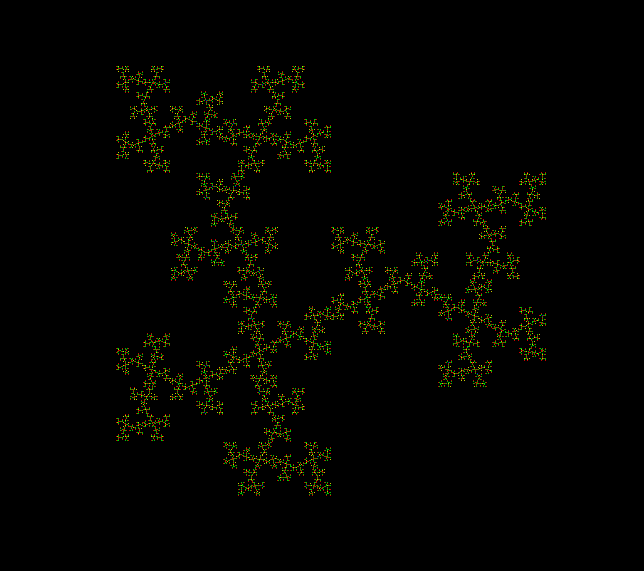
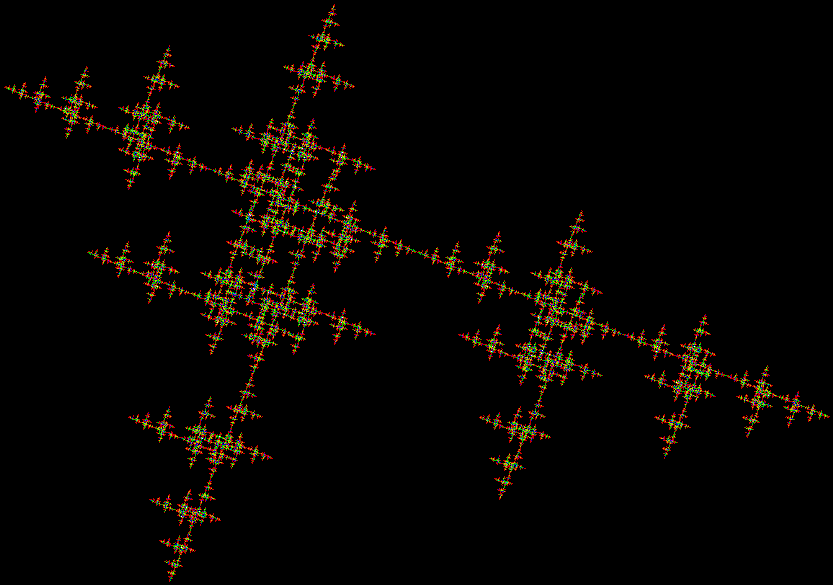
Here are some more fractals from the 2×2 square created using this technique (I’ve found some of them previously by other routes):

sq2x2_123_022


sq2x2_123_022_static

(Static image)


sq2x2_123_031


sq2x2_123_031_static

(Static image)


sq2x2_123_102


sq2x2_123_102_static

(Static image)


sq2x2_123_2011


sq2x2_123_201_static

(Static image)


sq2x2_123_211


sq2x2_123_211_static

(Static image)


sq2x2_123_213


sq2x2_123_213_static

(Static image)


sq2x2_123_033_-111


sq2x2_123_033_-111_static

(Static image)


sq2x2_123_201_1-11_static

(Static image)


sq2x2_200_1-11_static

(Static image)


sq2x2_123_132

(Static image)


Tri-Way to L

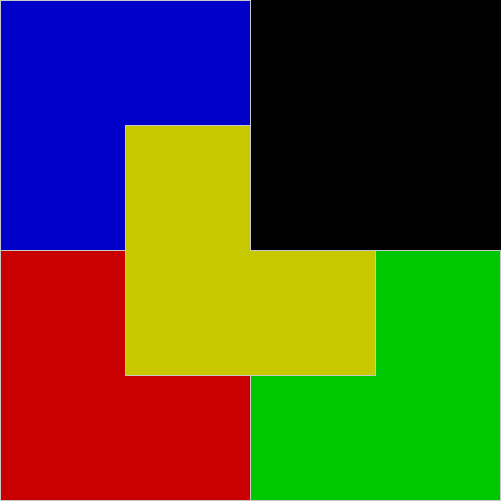
The name is more complicated than the shape: L-triomino. The shape is simply three squares forming an L. And it’s a rep-tile — it can be divided into four smaller copies of itself.

l-triomino

An L-triomino — three squares forming an L


l-triomino_anim

L-triomino as rep-tile


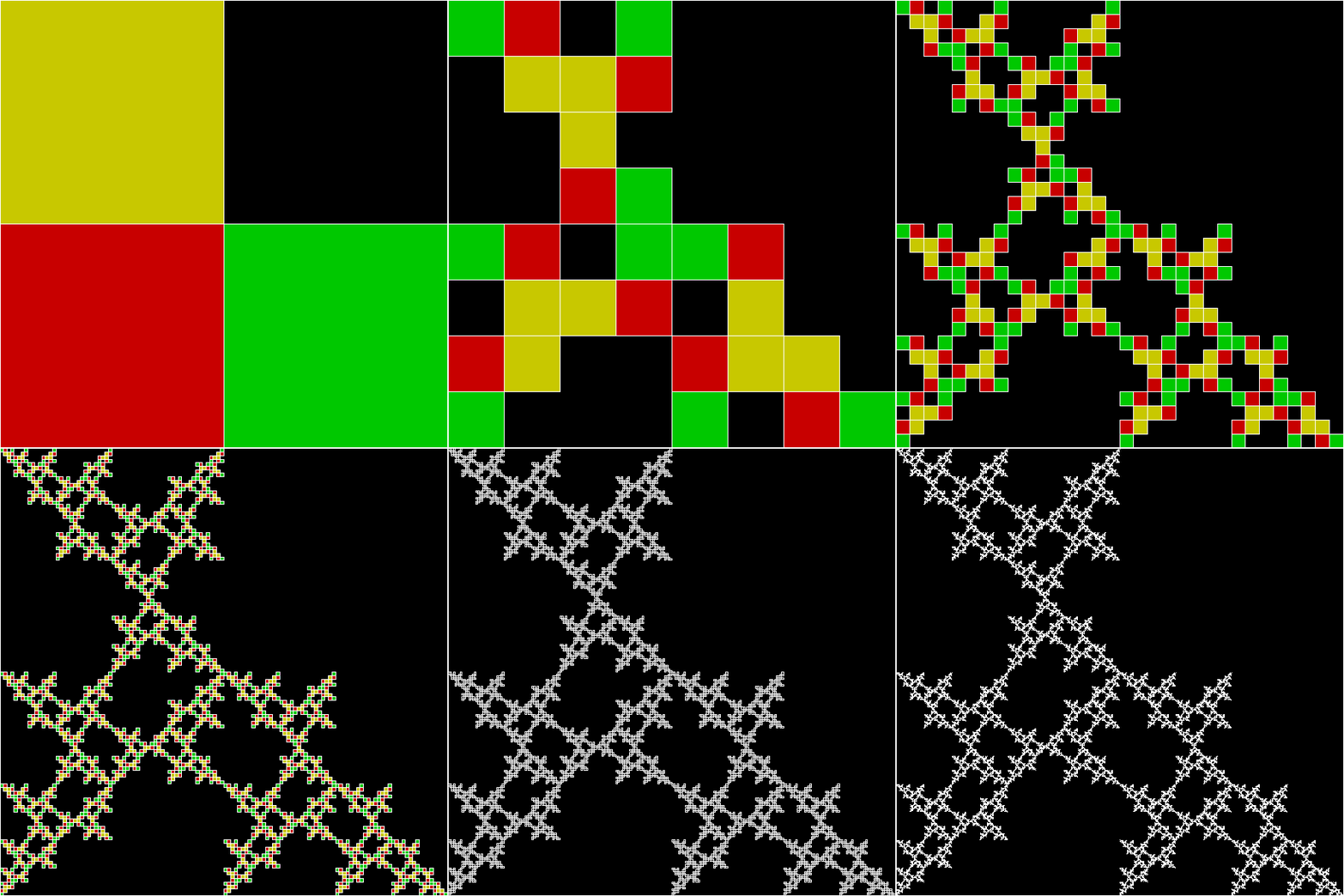
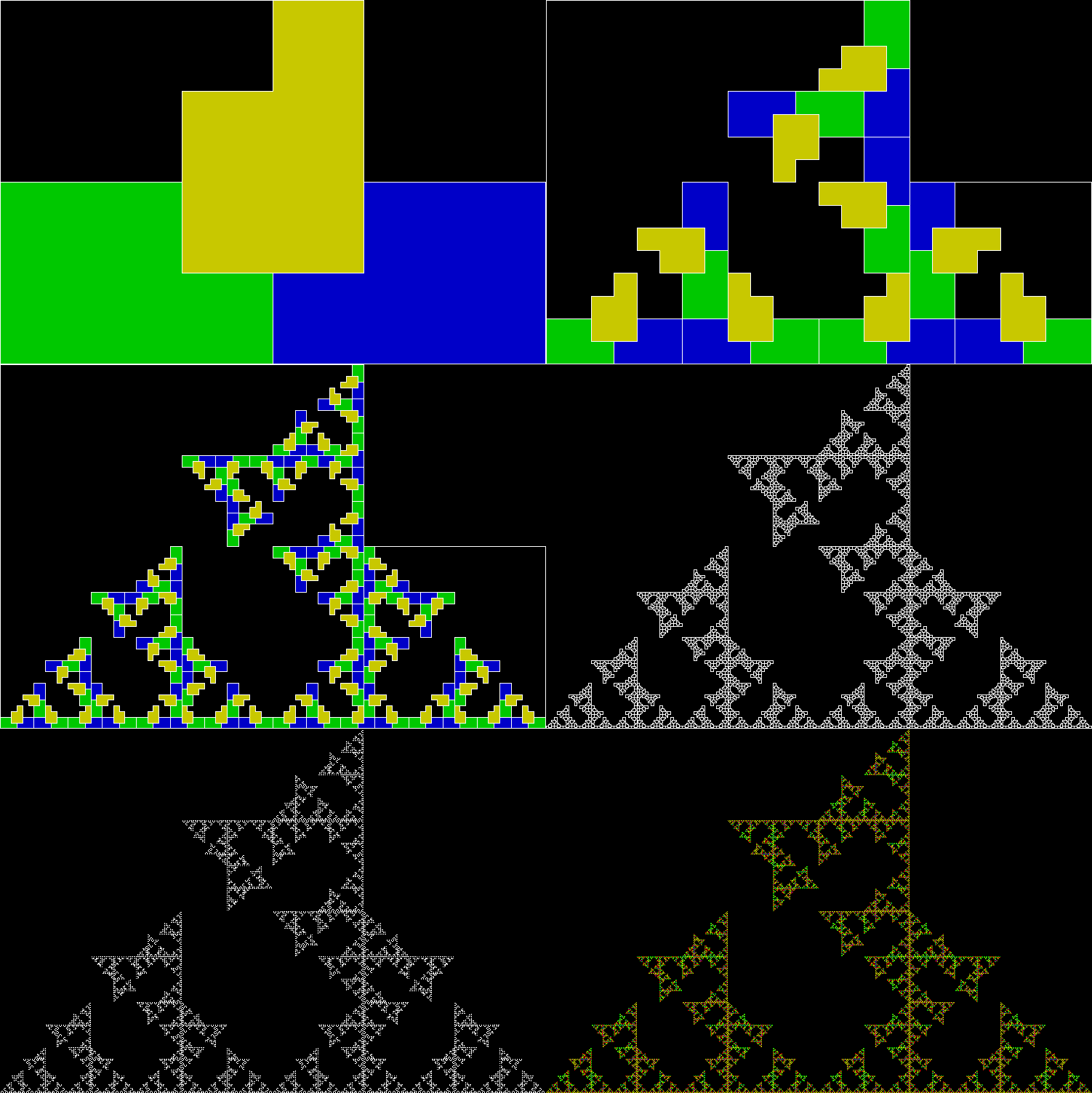
That means it can also be turned into a fractal, as I’ve shown in Rep-Tiles Revisited and Get Your Prox Off #2. First you divide an L-triomino into four sub-copies, then discard one sub-copy, then repeat. Here are the standard L-triomino fractals produced by this technique:

l-triomino_123_134

Fractal from L-triomino — divide and discard


l-triomino_234


l-triomino_124


l-triomino_124_upright


l-triomino_124_upright_static1

(Static image)


l-triomino_124_upright_static2

(Static image)


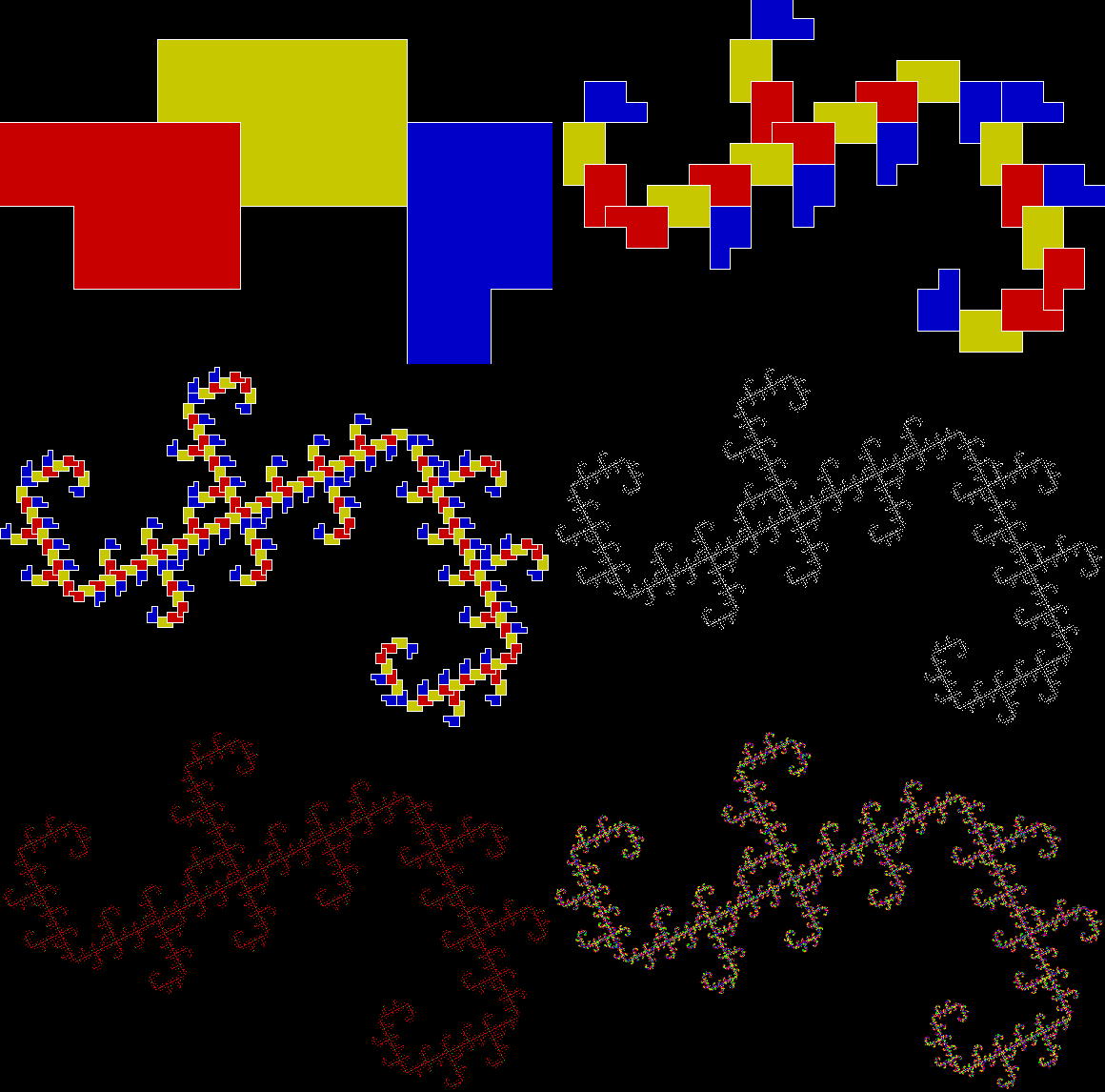
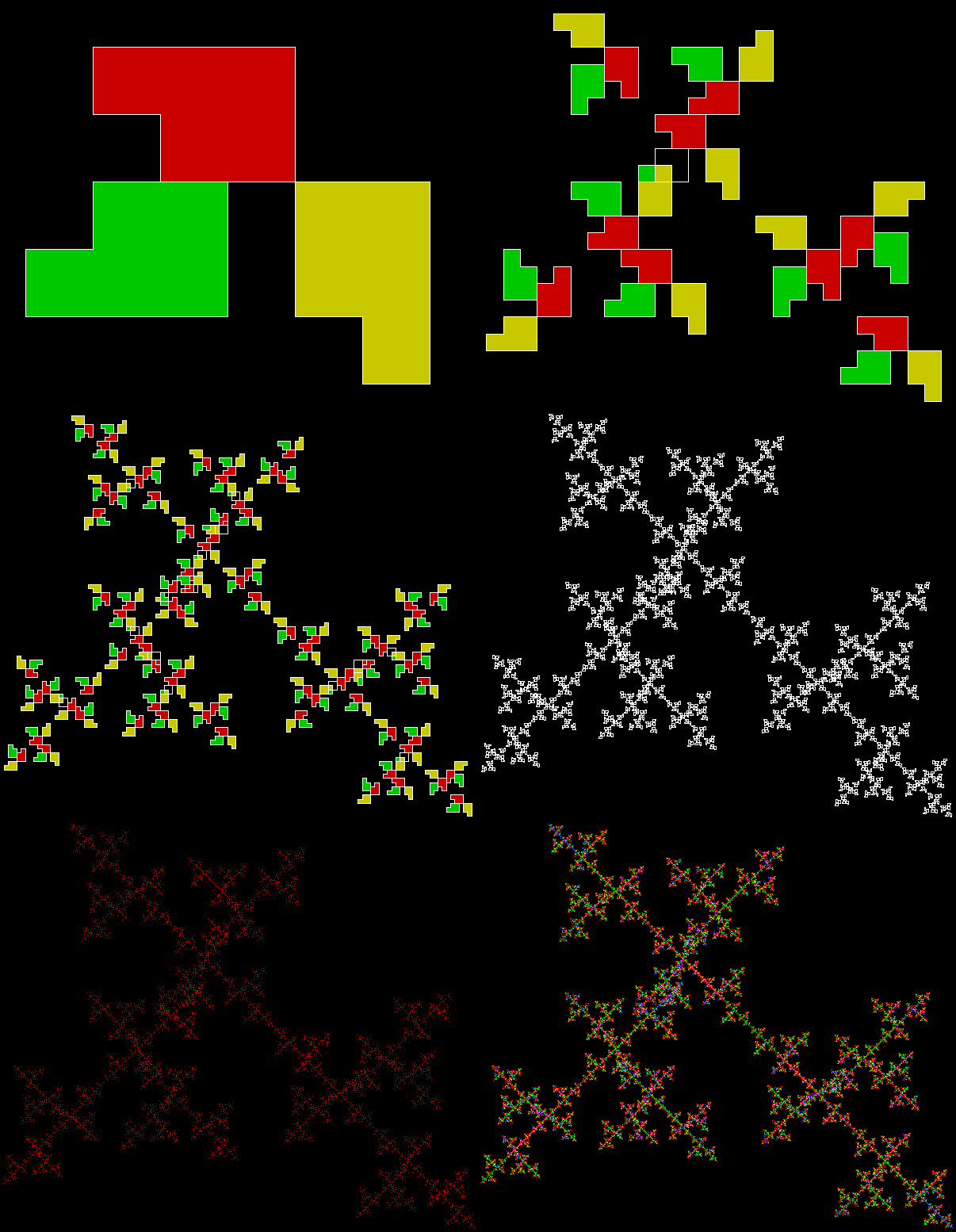
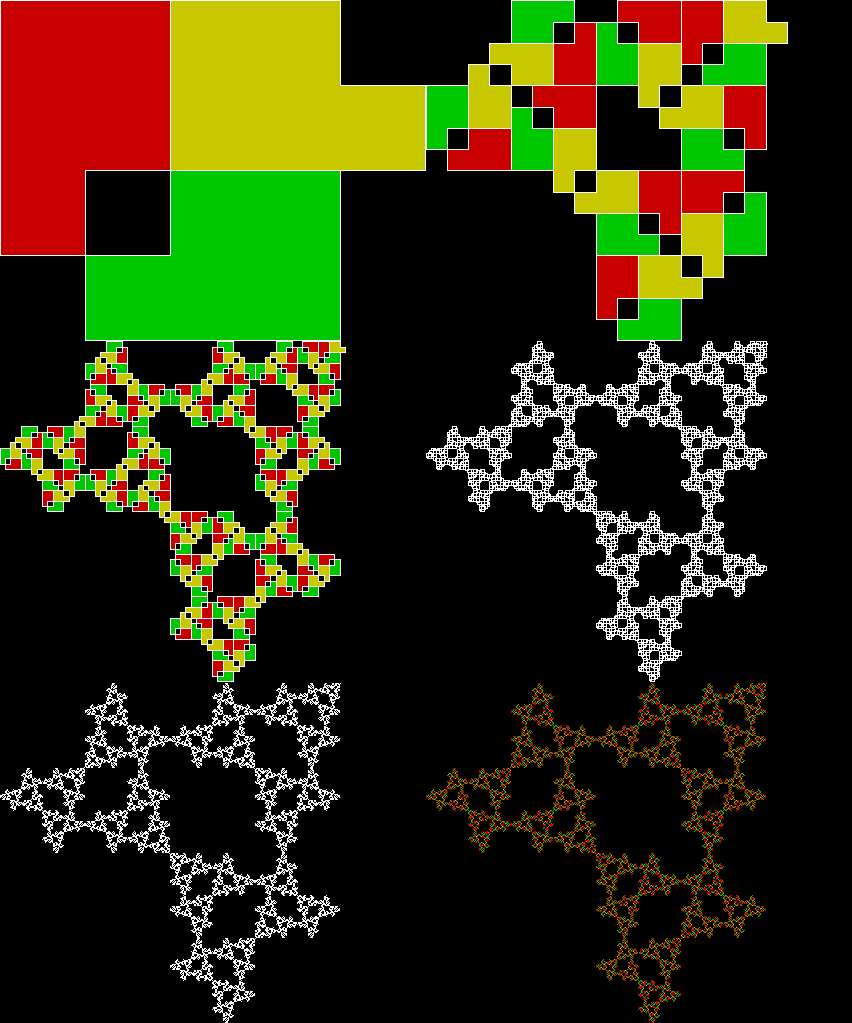
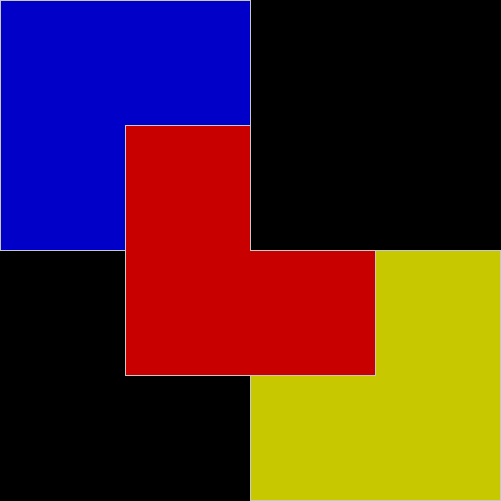
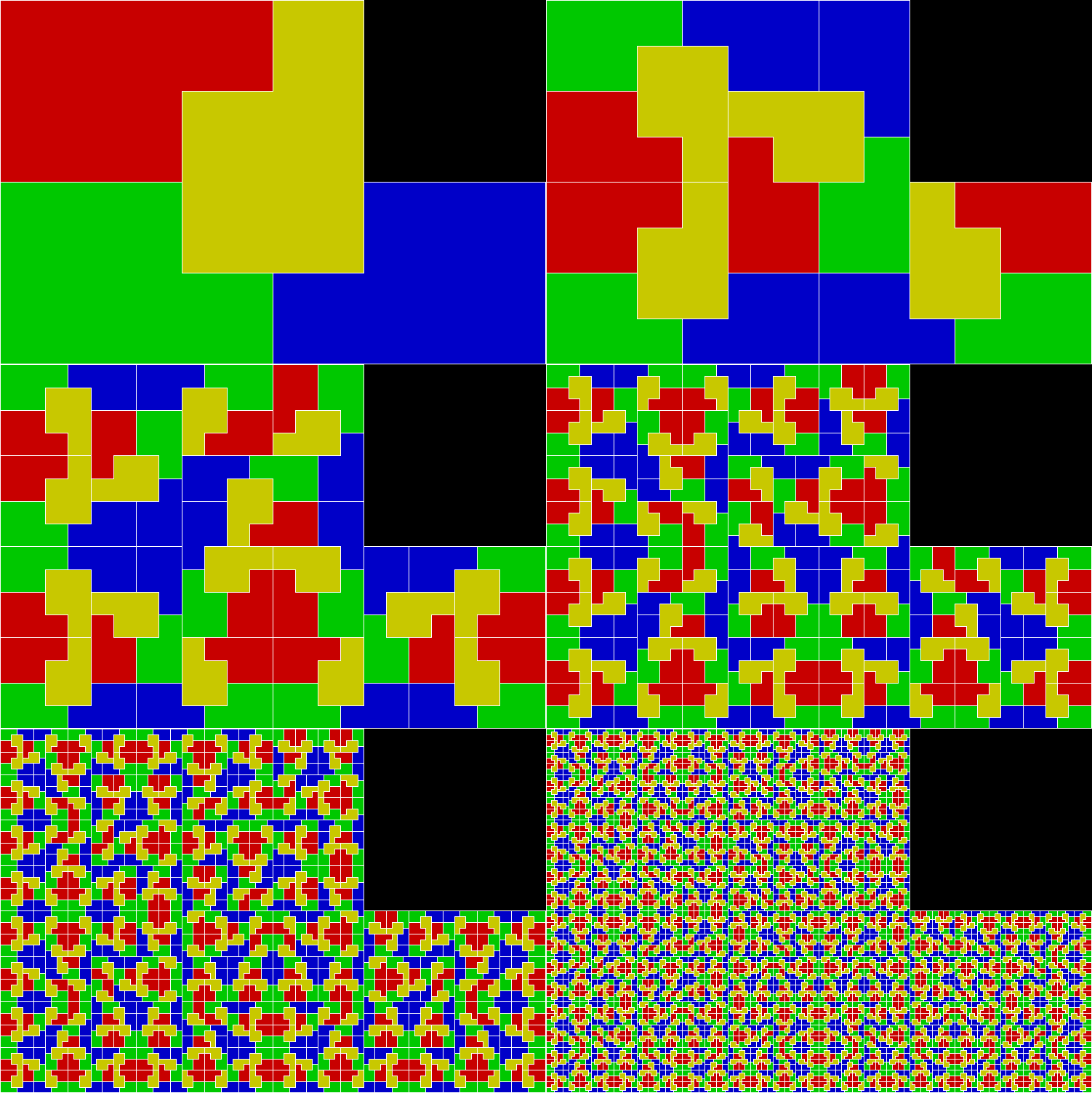
But those fractals don’t exhaust the possibilities of this very simple shape. The standard L-triomino doesn’t have true chirality. That is, it doesn’t come in left- and right-handed forms related by mirror-reflection. But if you number its corners for the purposes of sub-division, you can treat it as though it comes in two distinct orientations. And when the orientations are different in the different sub-copies, new fractals appear. You can also delay the stage at which you discard the first sub-copy. For example, you can divide the L-triomino into four sub-copies, then divide each sub-copy into four more sub-copies, and only then begin discarding.

Here are the new fractals that appear when you apply these techniques:

l-triomino_124_exp

Delay before discarding


l-triomino_124_exp_static

(Static image)


l-triomino_124_tst2_static1

(Static image)


l-triomino_124_tst2_static2

(Static image)


l-triomino_124_tst1


l-triomino_124_tst1_static1

(Static image)


l-triomino_124_tst1_static2

(Static image)


l-triomino_134_adj1

Adjust orientation


l-triomino_134_adj2


l-triomino_134_adj3


l-triomino_134_adj3_tst3

(Static image)


l-triomino_134_adj4


l-triomino_134_exp_static

(Static image)


l-triomino_234_exp

For Revver and Fevver

This shape reminds me of the feathers on an exotic bird:

feathers

(click or open in new window for full size)


feathers_anim

(animated version)


The shape is created by reversing the digits of a number, so you could say it involves revvers and fevvers. I discovered it when I was looking at the Halton sequence. It’s a sequence of fractions created according to a simple but interesting rule. The rule works like this: take n in base b, reverse it, and divide reverse(n) by the first power of b that is greater than n.

For example, suppose n = 6 and b = 2. In base 2, 6 = 110 and reverse(110) = 011 = 11 = 3. The first power of 2 that is greater than 6 is 2^3 or 8. Therefore, halton(6) in base 2 equals 3/8. Here is the same procedure applied to n = 1..20:

1: halton(1) = 1/10[2] → 1/2
2: halton(10) = 01/100[2] → 1/4
3: halton(11) = 11/100[2] → 3/4
4: halton(100) = 001/1000[2] → 1/8
5: halton(101) = 101/1000[2] → 5/8
6: halton(110) = 011/1000 → 3/8
7: halton(111) = 111/1000 → 7/8
8: halton(1000) = 0001/10000 → 1/16
9: halton(1001) = 1001/10000 → 9/16
10: halton(1010) = 0101/10000 → 5/16
11: halton(1011) = 1101/10000 → 13/16
12: halton(1100) = 0011/10000 → 3/16
13: halton(1101) = 1011/10000 → 11/16
14: halton(1110) = 0111/10000 → 7/16
15: halton(1111) = 1111/10000 → 15/16
16: halton(10000) = 00001/100000 → 1/32
17: halton(10001) = 10001/100000 → 17/32
18: halton(10010) = 01001/100000 → 9/32
19: halton(10011) = 11001/100000 → 25/32
20: halton(10100) = 00101/100000 → 5/32…

Note that the sequence always produces reduced fractions, i.e. fractions in their lowest possible terms. Once 1/2 has appeared, there is no 2/4, 4/8, 8/16…; once 3/4 has appeared, there is no 6/8, 12/16, 24/32…; and so on. If the fractions are represented as points in the interval [0,1], they look like this:

line1_1_2

point = 1/2


line2_1_4

point = 1/4


line3_3_4

point = 3/4


line4_1_8

point = 1/8


line5_5_8

point = 5/8


line6_3_8

point = 3/8


line7_7_8

point = 7/8


line_b2_anim

(animated line for base = 2, n = 1..63)


It’s apparent that Halton points in base 2 will evenly fill the interval [0,1]. Now compare a Halton sequence in base 3:

1: halton(1) = 1/10[3] → 1/3
2: halton(2) = 2/10[3] → 2/3
3: halton(10) = 01/100[3] → 1/9
4: halton(11) = 11/100[3] → 4/9
5: halton(12) = 21/100[3] → 7/9
6: halton(20) = 02/100 → 2/9
7: halton(21) = 12/100 → 5/9
8: halton(22) = 22/100 → 8/9
9: halton(100) = 001/1000 → 1/27
10: halton(101) = 101/1000 → 10/27
11: halton(102) = 201/1000 → 19/27
12: halton(110) = 011/1000 → 4/27
13: halton(111) = 111/1000 → 13/27
14: halton(112) = 211/1000 → 22/27
15: halton(120) = 021/1000 → 7/27
16: halton(121) = 121/1000 → 16/27
17: halton(122) = 221/1000 → 25/27
18: halton(200) = 002/1000 → 2/27
19: halton(201) = 102/1000 → 11/27
20: halton(202) = 202/1000 → 20/27
21: halton(210) = 012/1000 → 5/27
22: halton(211) = 112/1000 → 14/27
23: halton(212) = 212/1000 → 23/27
24: halton(220) = 022/1000 → 8/27
25: halton(221) = 122/1000 → 17/27
26: halton(222) = 222/1000 → 26/27
27: halton(1000) = 0001/10000 → 1/81
28: halton(1001) = 1001/10000 → 28/81
29: halton(1002) = 2001/10000 → 55/81
30: halton(1010) = 0101/10000 → 10/81

And here is an animated gif representing the Halton sequence in base 3 as points in the interval [0,1]:

line_b3_anim


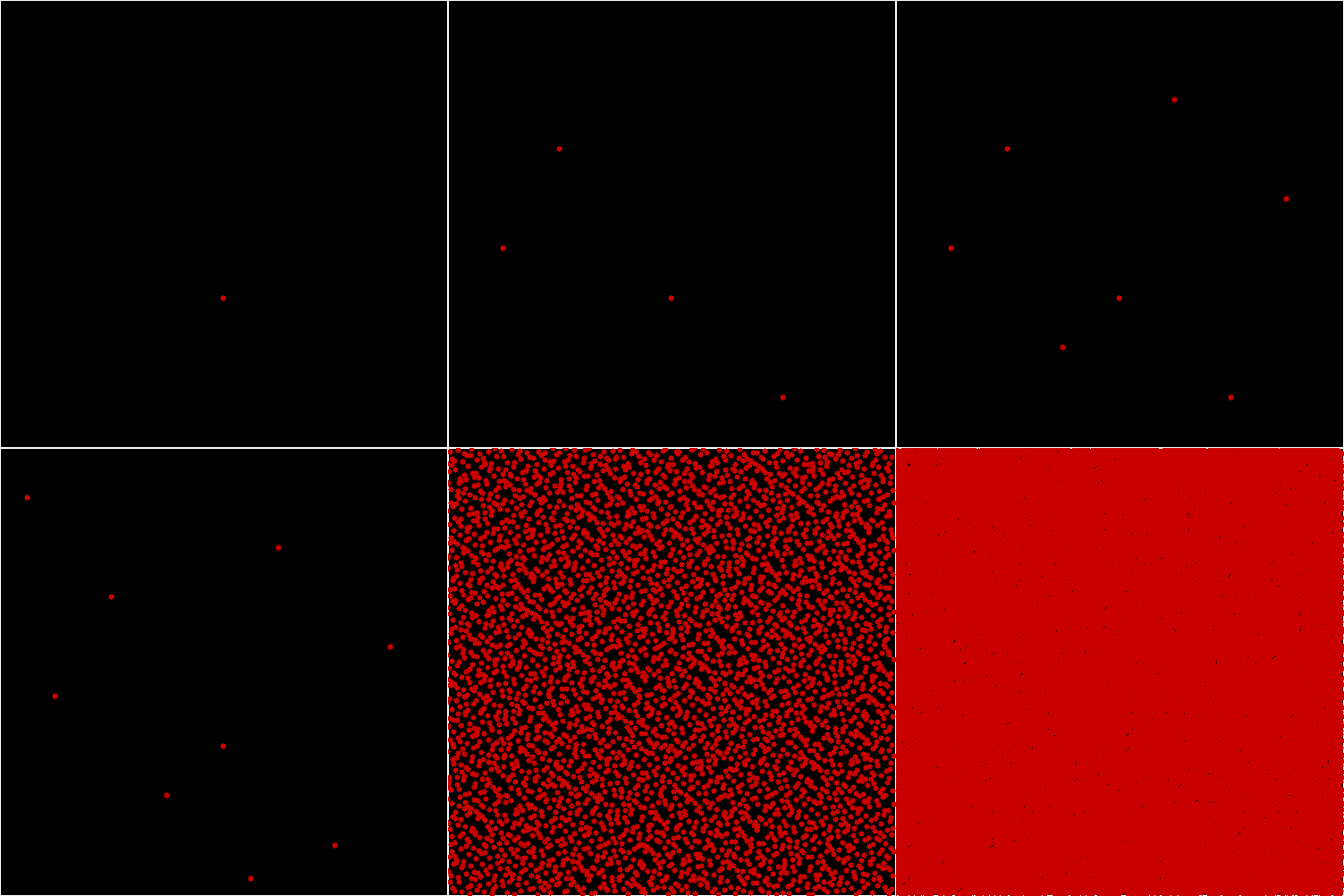
Halton points in base 3 also evenly fill the interval [0,1]. What happens if you apply the Halton sequence to a two-dimensional square rather a one-dimensional line? Suppose the bottom left-hand corner of the square has the co-ordinates (0,0) and the top right-hand corner has the co-ordinates (1,1). Find points (x,y) inside the square, with x supplied by the Halton sequence in base 2 and y supplied by the Halton sequence in base 3. The square will gradually fill like this:

square1

x = 1/2, y = 1/3


square2

x = 1/4, y = 2/3


square3

x = 3/4, y = 1/9


square4

x = 1/8, y = 4/9


square5

x = 5/8, y = 7/9


square6

x = 3/8, y = 2/9


square7

x = 7/8, y = 5/9


square8

x = 1/16, y = 8/9


square9

x = 9/16, y = 1/27…


square_anim

animated square


Read full page: For Revver and Fevver

Rep-tilian Rites

A pentomino is one of the shapes created by laying five squares edge-to-edge. There are twelve of them (not counting reflections) and this is the P-pentomino:

p_pentomino

But it’s not just a pentomino, it’s also a rep-tile, or a shape that can divided into smaller copies of itself. There are two ways of doing this (I’ve rotated the pentomino 90° to make the images look better):

p_pentomino_a


p_pentomino_b


Once you’ve divided the shape into four copies, you can divide the copies, then the copies of the copies, and the copies of the copies of the copies, and so on for ever:

p_pentomino_a_anim


p_pentomino_a_anim


And if you’ve got a reptile, you can turn it into a fractal. Simply divide the shape, discard one or more copies, and continue:

p_pentomino_a_124_1

Pentomino-based fractal stage 1


p_pentomino_a_124_2

Pentomino-based fractal stage 2


p_pentomino_a_124_3

Pentomino-based fractal stage 3


p_pentomino_a_124_4

Stage 4


p_pentomino_a_124_5

Stage 5


p_pentomino_a_124_6

Stage 6


p_pentomino_a_124_7

Stage 7


p_pentomino_a_124_8

Stage 8


p_pentomino_a_124_9

Stage 9


p_pentomino_a_124_10

Stage 10


Here are some more fractals created using the same divide-and-discard process:

p_pentomino_b_234

p_pentomino_b_234anim

Animated version


p_pentomino_b_134

p_pentomino_b_134anim

Animated version


p_pentomino_b_124

p_pentomino_b_124anim


p_pentomino_b_123

p_pentomino_b_123anim


p_pentomino_a_134anim

p_pentomino_a_134


p_pentomino_a_234anim

p_pentomino_a_234


p_pentomino_a_124

p_pentomino_a_124anim


p_pentomino_a_123

p_pentomino_a_123anim


You can also use variants on a standard rep-tile dissection, like rotating the copies or trying different patterns of dissection at different levels to see what new shapes appear:

p_pentomino_adj_13

p_pentomino_adj_anim13


p_pentomino_adj_6

p_pentomino_adj_anim6


p_pentomino_adj_anim5

p_pentomino_adj_5


p_pentomino_adj_3

p_pentomino_adj_anim3


p_pentomino_adj_2

p_pentomino_adj_anim2


p_pentomino_adj_1

p_pentomino_adj_anim1


p_pentomino_adj_17

p_pentomino_adj_anim17


p_pentomino_adj_15

p_pentomino_adj_anim15


p_pentomino_adj_16

p_pentomino_adj_anim16


p_pentomino_adj_8

p_pentomino_adj_anim8


p_pentomino_adj_10

p_pentomino_adj_anim10


p_pentomino_adj_11

p_pentomino_adj_anim11


p_pentomino_adj_14

p_pentomino_adj_anim14


p_pentomino_adj_anim4


p_pentomino_adj_anim12


p_pentomino_adj_anim9


p_pentomino_adj_anim7

Fragic Carpet

Maths is like a jungle: rich, teeming and full of surprises. A waterfall here, a glade of butterflies there, a bank of orchids yonder. There is always something new to see and a different route to try. But sometimes a different route will take you to the same place. I’ve already found two ways to reach this fractal (see Fingering the Frigit and Performativizing the Polygonic):

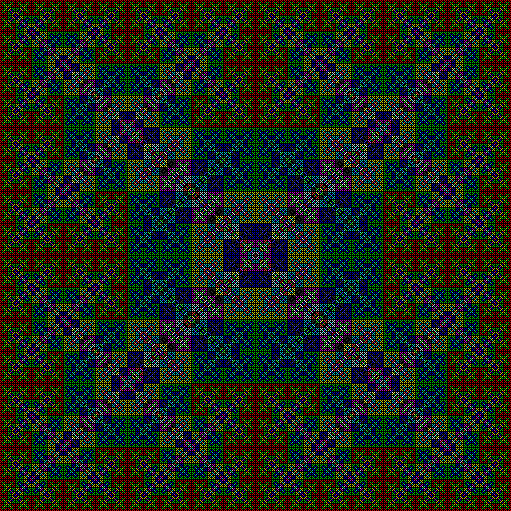
carpet2x2

Fractal Carpet


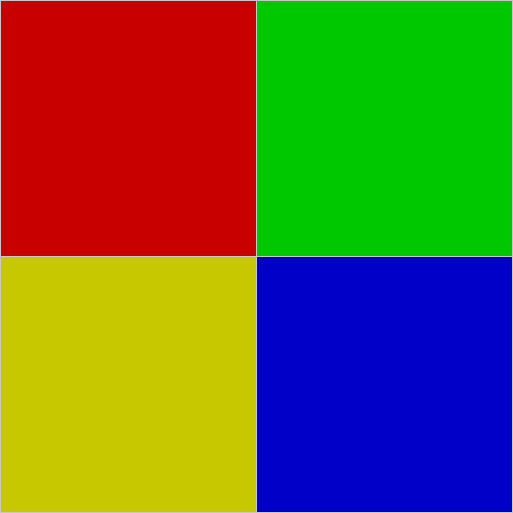
Now I’ve found a third way. You could call it the rep-tile route. Divide a square into four smaller squares:

square2x2

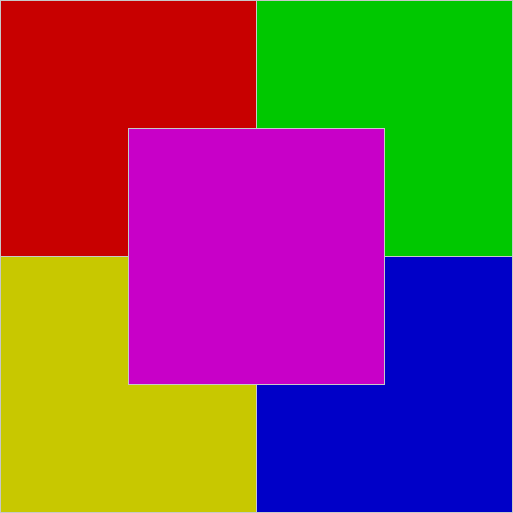
Add an extra square over the centre:

square2x2_1

Then keep dividing the squares in the same way:

carpet2x2_anim_1

Animated carpet (with coloured blocks)


carpet2x2_anim_2

Animated carpet (with empty blocks)


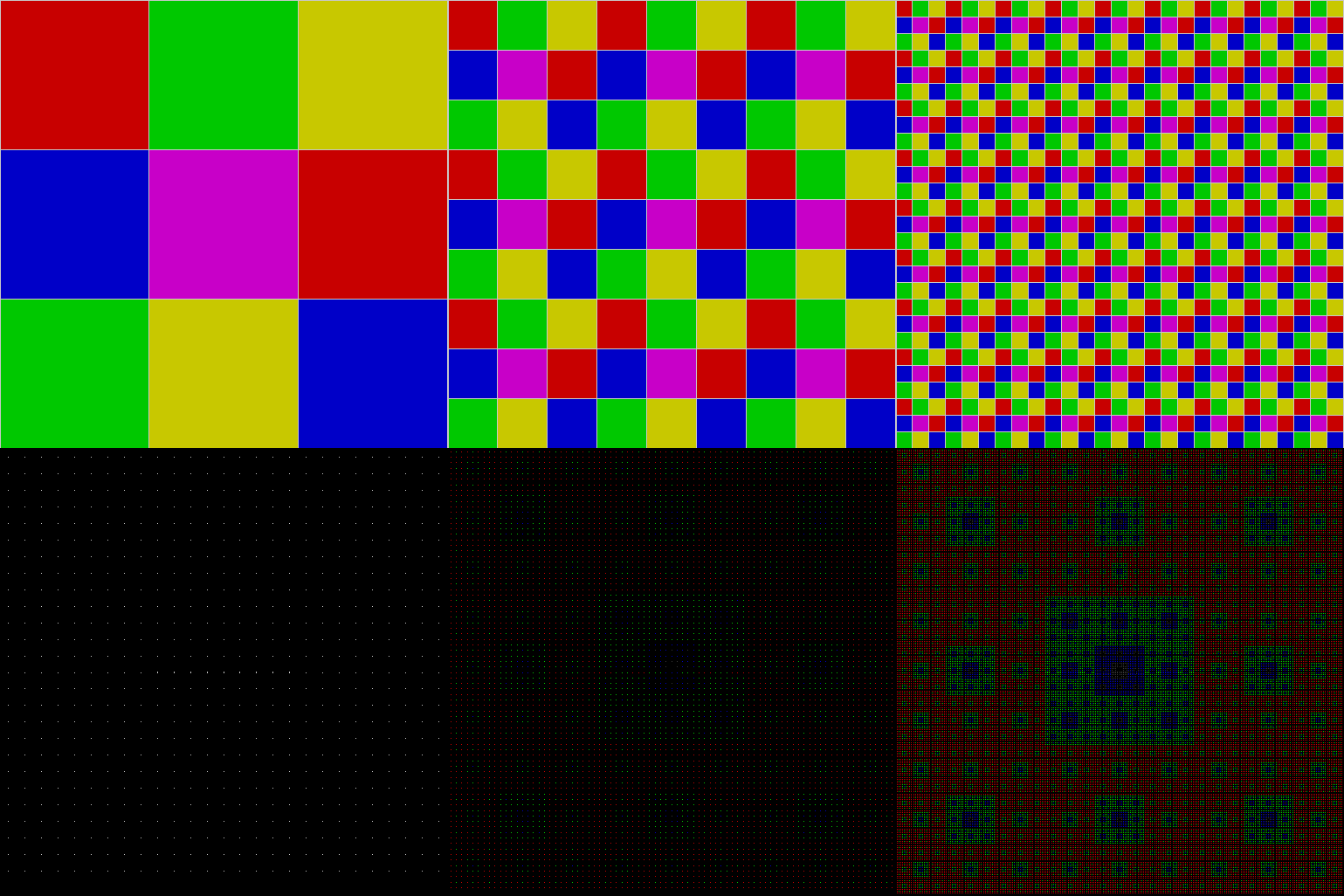
The colours of the fractal appear when the same pixel is covered repeatedly: first it’s red, then green, yellow, blue, purple, and so on. Because the colours and their order are arbitrary, you can use different colour schemes:

carpet2x2_col1

Colour scheme #1


carpet2x2_col2

Colour scheme #2


carpet2x2_col3

Colour scheme #3


Here are more colour-schemes in an animated gif:

carpet2x2_col

Various colour-schemes


Now try dividing the square into nine and sixteen, with an extra square over the centre:

carpet3x3

3×3 square + central square


carpet3x3_anim

3×3 square + central square (animated)


carpet4x4

4×4 square + central square


carpet4x4_anim

4×4 square + central square (animated)


You can also adjust the size of the square added to the 2×2 subdivision:

carpet2x2_1_2

2×2 square + 1/2-sized central square


carpet2x2_3_4

2×2 square + 3/4-sized central square


Elsewhere Other-Posted:

Fingering the Frigit
Performativizing the Polygonic

White Rites

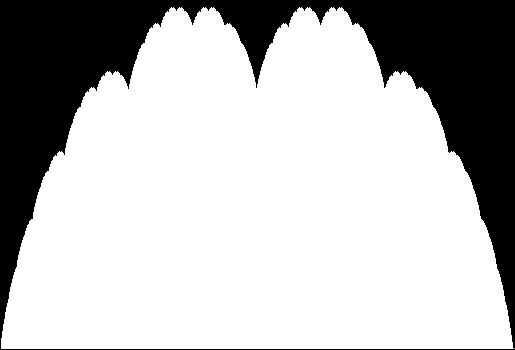
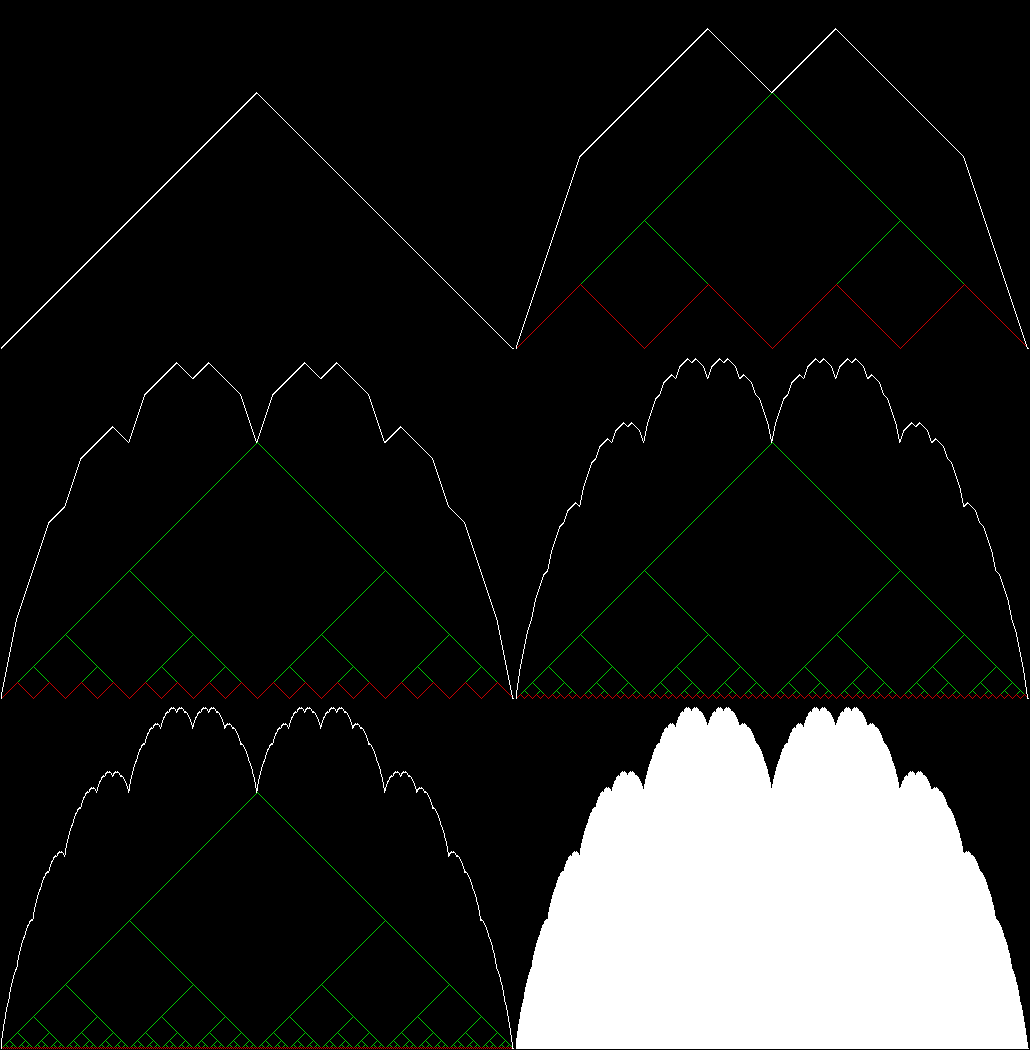
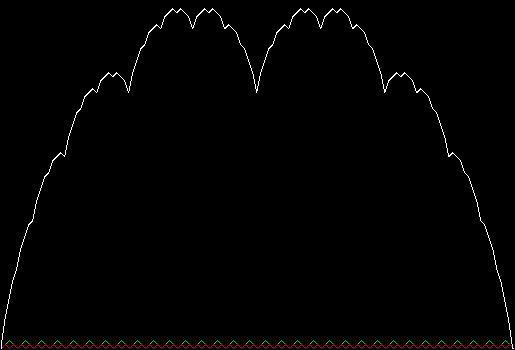
The blancmange curve is an interesting fractal formed by summing a series of zigzags. It
takes its name from its resemblance to the milk-pudding known as a blancmange
(blanc-manger in French, meaning “white eating”):

blanc_solid

Blancmange curve


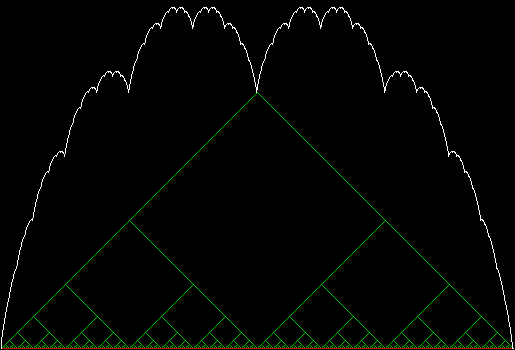
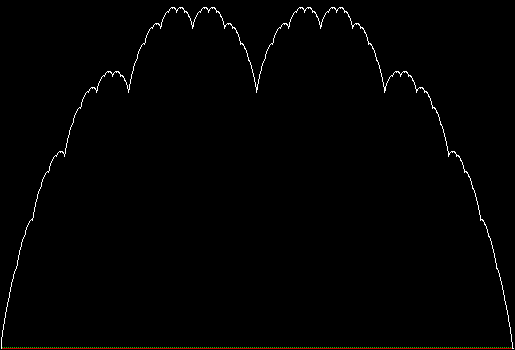
In successive zigzags, the number of zags doubles as their height halves, i.e. z(i) = z(i-1) * 2, h(i) = h(i-1) / 2. If all the zigzags are represented at once, the construction looks like this:

blanc_all

Zigzags 1 to 10


blancmange_all

Zigzags 1 to 10 (animated)


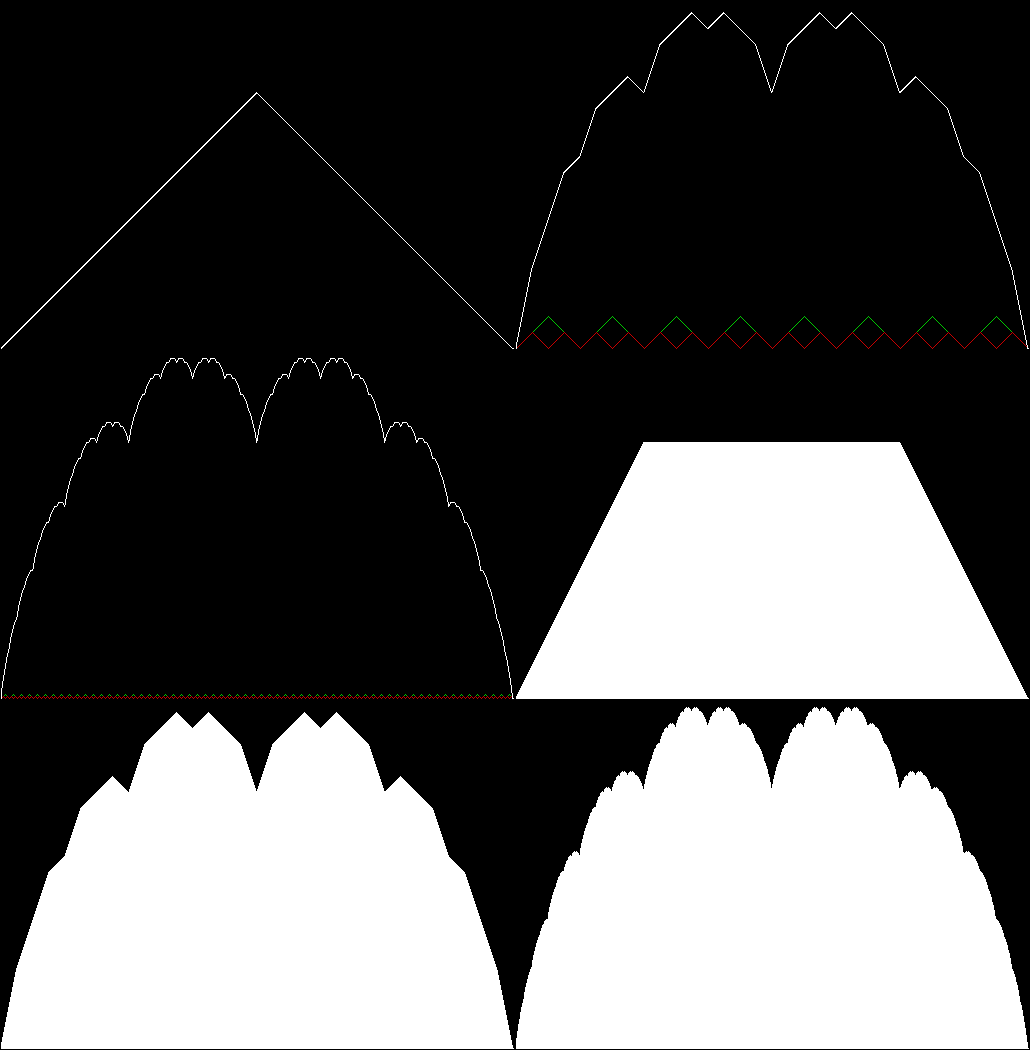
Here is a step-by-step construction, with the total sum of zigzags in white, the present zigzag in red and the previous zigzag in green:

blanc1

Blancmange curve stage 1


blanc2

Stage 2


blanc3

Stage 3


blanc4

Stage 4


blanc5

Stage 5


blanc6

Stage 6


blanc7

Stage 7


blanc8

Stage 8


blanc9

Stage 9


blanc10

Stage 10


blancmange

Blancmange curve (animated)


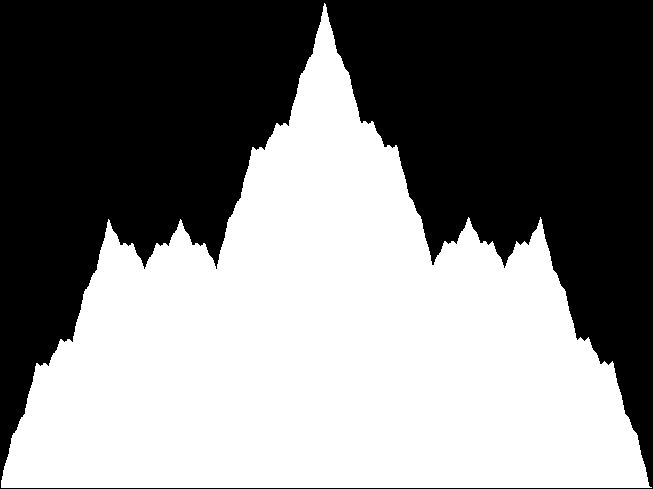
It’s easy to think of variants on the standard blancmange curve. Suppose the number of zags triples as their height is divided by three, i.e. z(i) = z(i-1) * 3, h(i) = h(i-1) / 3:

blanc_x3_solid

Blancmange curve for z(i) = z(i-1) * 3, h(i) = h(i-1) / 3


Continue reading “White Rites”…

Get Your Prox Off #2

Serendipity is the art of making happy discoveries by accident. I made a mistake writing a program to create fractals and made the happy discovery of an attractive new fractal. And also of a new version of an attractive fractal I had seen before.

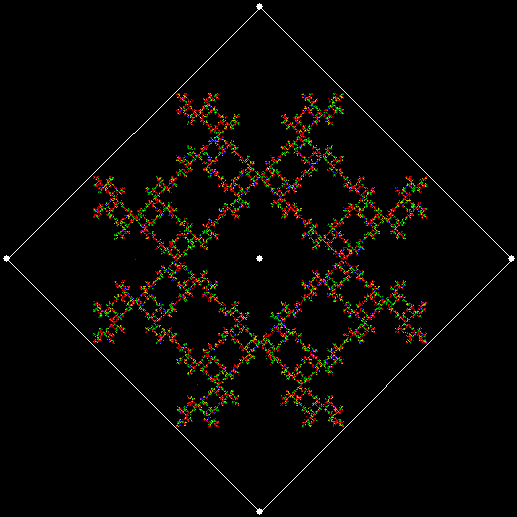
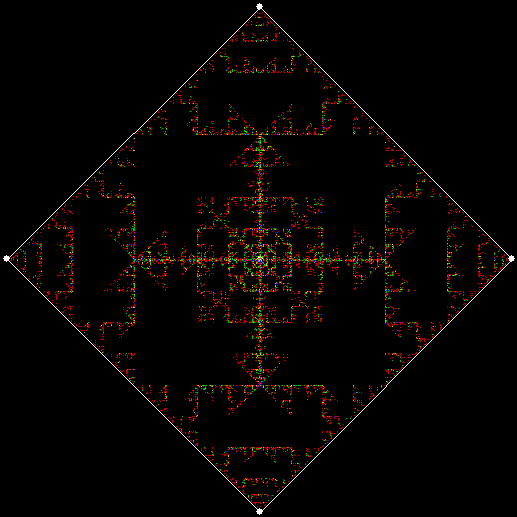
As I described in Get Your Prox Off, you can create a fractal by 1) moving a point towards a randomly chosen vertex of a polygon, but 2) forbidding a move towards the nearest vertex or the second-nearest vertex or third-nearest, and so on. If the polygon is a square, the four possible basic fractals look like this (note that the first fractal is also produced by banning a move towards a vertex that was chosen in the previous move):

v4_ban1

v = 4, ban = prox(1)
(ban move towards nearest vertex)


v4_ban2

v = 4, ban = prox(2)
(ban move towards second-nearest vertex)


v4_ban3

v = 4, ban = prox(3)


v4_ban4

v = 4, ban = prox(4)


This program has to calculate what might be called the order of proximity: that is, it creates an array of distances to each vertex, then sorts the array by increasing distance. I was using a bubble-sort, but made a mistake so that the program ran through the array only once and didn’t complete the sort. If this happens, the fractals look like this (note that vertex 1 is on the right, with vertex 2, 3 and 4 clockwise from it):
v4_ban1_sw1

v = 4, ban = prox(1), sweep = 1


v4_ban2_sw1

v = 4, ban = prox(2), sweep = 1


v4_ban3_sw1

v = 4, ban = prox(3), sweep = 1


v4_ban3_sw1_anim

(Animated version of v4, ban(prox(3)), sw=1)


v4_ban4_sw1

v = 4, ban = prox(4), sweep = 1


Note that in the last case, where ban = prox(4), a bubble-sort needs only one sweep to identify the most distant vertex, so the fractal looks the same as it does with a complete bubble-sort.

These new fractals looked interesting, so I had the idea of adjusting the number of sweeps in the incomplete bubble-sort: one sweep or two or three and so on (with enough sweeps, the bubble-sort becomes complete, but more sweeps are needed to complete a sort as the number of vertices increases). If there are two sweeps, then ban(prox(1)) and ban(prox(2)) look like this:

v4_ban1_sw2

v = 4, ban = prox(1), sweep = 2


v4_ban2_sw1

v = 4, ban = prox(2), sweep = 2


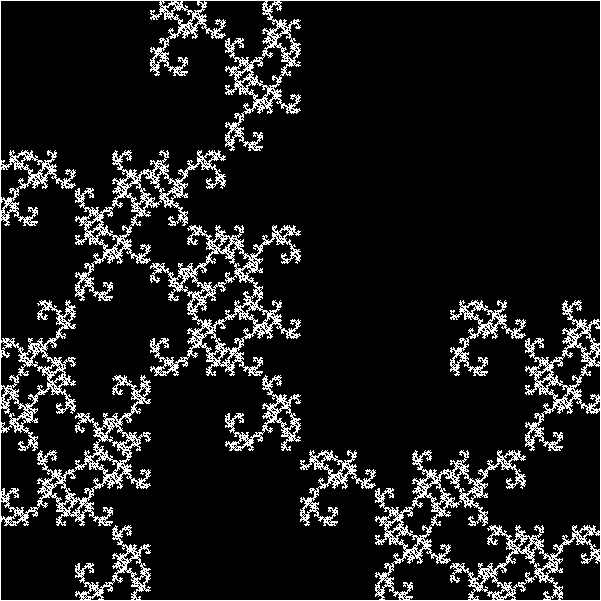
But the fractals produced by sweep = 2 for ban(prox(3)) and ban(prox(4)) are identical to the fractals produced by a complete bubble sort. Now, suppose you add a central point to the polygon and treat that as an additional vertex. If the bubble-sort is incomplete, a ban(prox(1)) fractal with a central point looks like this:

v4c_ban1_sw1

v = 4+c, ban = prox(1), sw = 1


v4c_ban1_sw2

v = 4+c, ban = prox(1), sw = 2


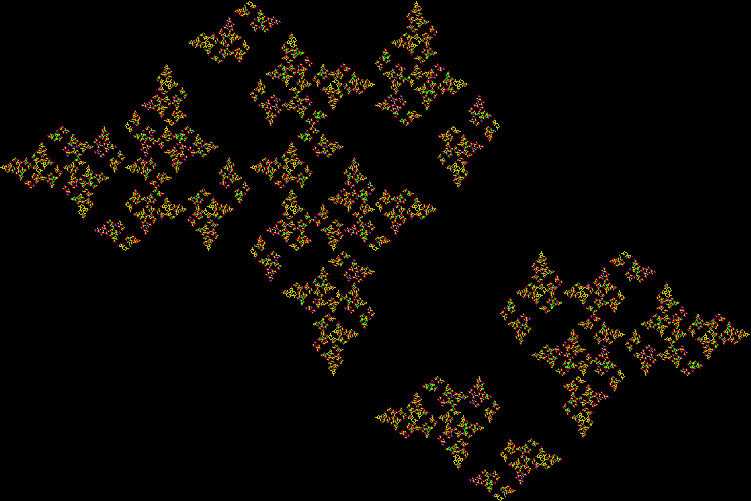
When sweep = 3, an attractive new fractal appears:

v4c_ban1_sw3

v = 4+c, ban = prox(1), sw = 3


v4c_ban1_sw3_anim

v = 4+c, ban = prox(1), sw = 3 (animated)


If you ban two vertices, the nearest and second-nearest, i.e. ban(prox(1), prox(2)), a complete bubble-sort produces a familiar fractal:

v4_ban12

v = 4+c, ban = prox(1), prox(2)


And here is ban(prox(2), prox(4)), with a complete bubble-sort:

v4c_ban24

v = 4, ban = prox(2), prox(4)


If the bubble-sort is incomplete, sweep = 1 and sweep = 2 produce these fractals for ban(prox(1), prox(2)):

v4_ban12_sw1

v = 4, ban = prox(1), prox(2), sw = 1


v4_ban12_sw2

v = 4, ban = prox(1), prox(2), sw = 2*

*The second of those fractals is identical to v = 4, ban(prox(2), prox(3)) with a complete bubble-sort.


Here is ban(prox(1), prox(5)) with a complete bubble-sort:

4c_ban15

v = 4, ban = prox(1), prox(5)


Now try ban(prox(1), prox(5)) with an incomplete bubble-sort:

v4_ban15_sw1

v = 4, ban = prox(1), prox(5), sw = 1


v4_ban15_sw2

v = 4, ban = prox(1), prox(5), sw = 2


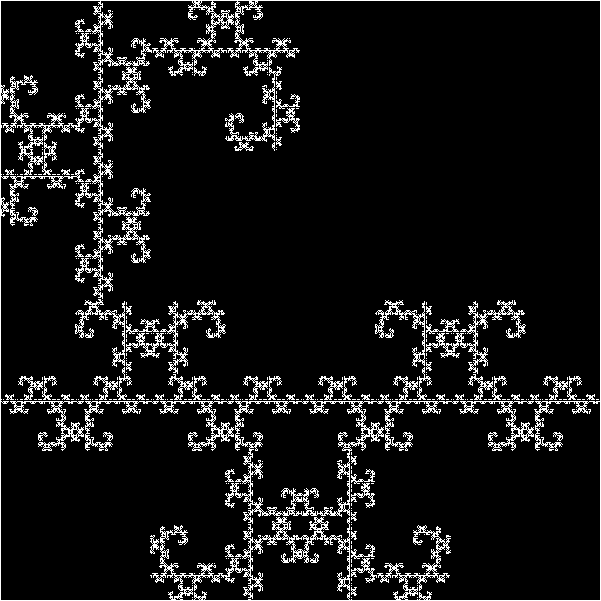
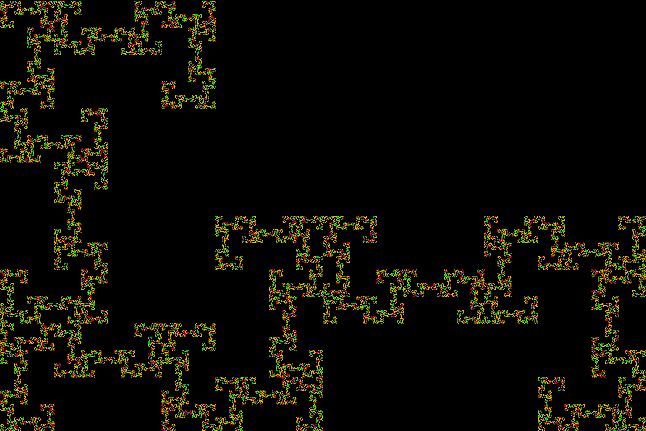
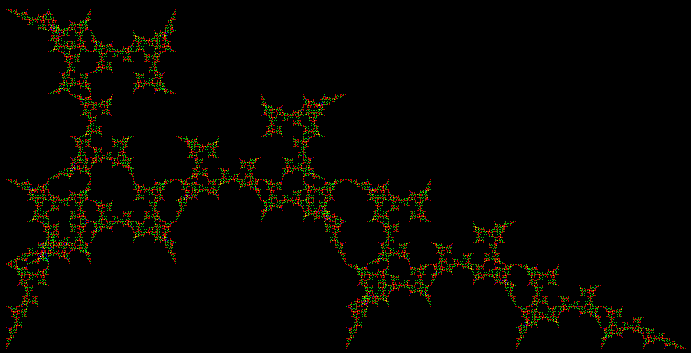
When sweep = 3, the fractal I had seen before appears:

v4_ban15_sw3

v = 4, ban = prox(1), prox(5), sw = 3


v4_ban15_sw3_anim

v = 4, ban = prox(1), prox(5), sw = 3 (animated)


Where had I seen it before? While investigating this rep-tile (a shape that can be tiled with smaller versions of itself):

L-reptile

L-triomino rep-tile


L-reptile_anim

L-triomino rep-tile (animated)


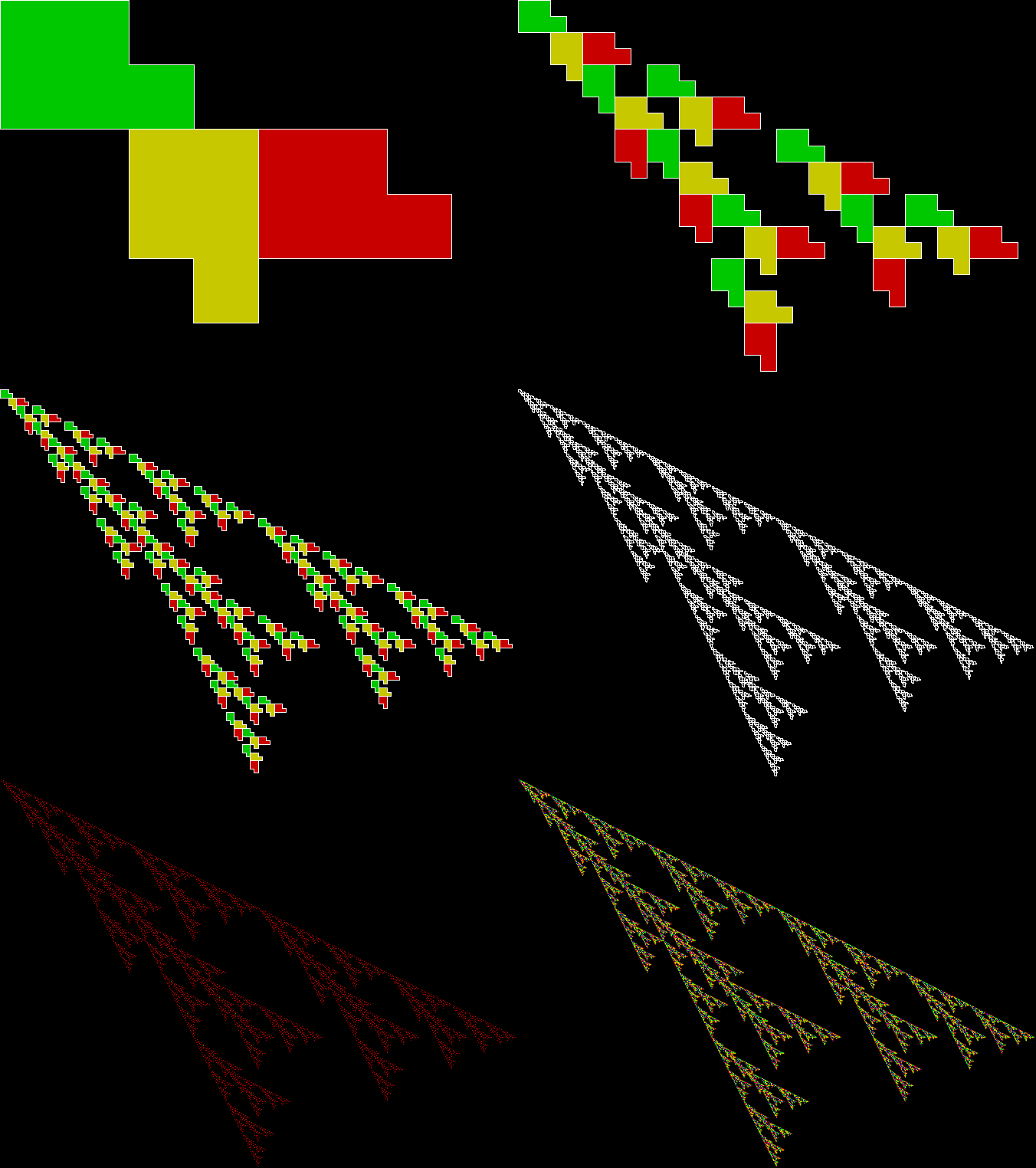
The rep-tile is technically called an L-triomino, because it looks like a capital L and is one of the two distinct shapes you can create by joining three squares at the edges. You can create fractals from an L-triomino by dividing it into four copies, discarding one of the copies, then repeating the divide-and-discard at smaller and smaller scales:

L-reptile_1

L-triomino fractal stage #1


L-reptile_2

L-triomino fractal stage #2


L-reptile_3

L-triomino fractal stage #3


L-reptile_4

L-triomino fractal stage #4


L-reptile_5

L-triomino fractal stage #5


L-reptile_fractal_anim

L-triomino fractal (animated)

L-reptile_fractal_static

L-triomino fractal (close-up)

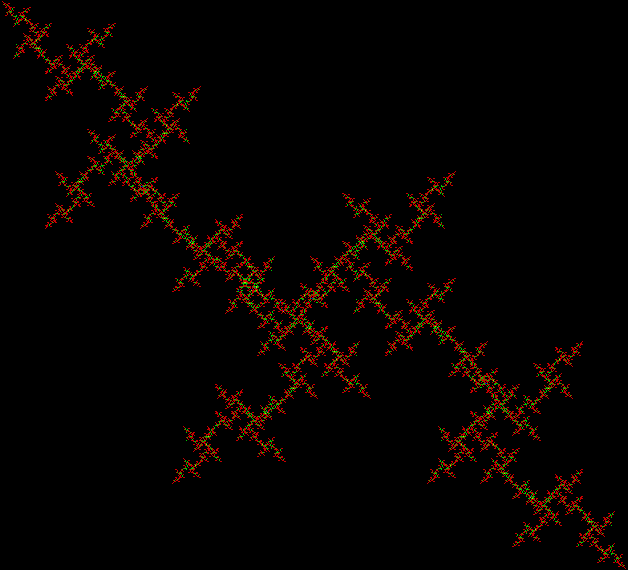
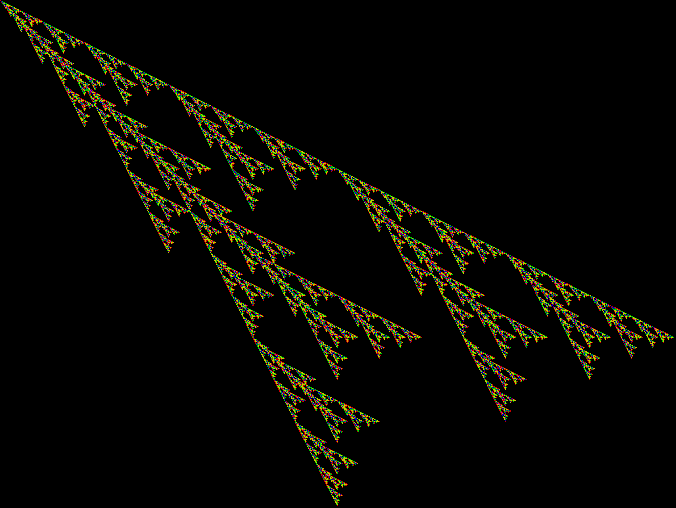
And here’s part of the ban(prox(1), prox(5)) fractal for comparison:

v4_ban15_sw3_mono


v4_ban15_sw3_col

So you can get to the same fractal (or versions of it), by two apparently different routes: random movement of a point inside a square or repeatedly dividing-and-discarding the sub-copies of an L-triomino. That’s serendipity!


Previously pre-posted:

Get Your Prox Off

Radical Sheet

If you take a sheet of standard-sized paper and fold it in half from top to bottom, the folded sheet has the same proportions as the original, namely √2 : 1. In other words, if x = √2 / 2, then 1 / x = √2:

√2 = 1.414213562373…, √2 / 2 = 0.707106781186…, 1 / 0.707106781186… = 1.414213562373…

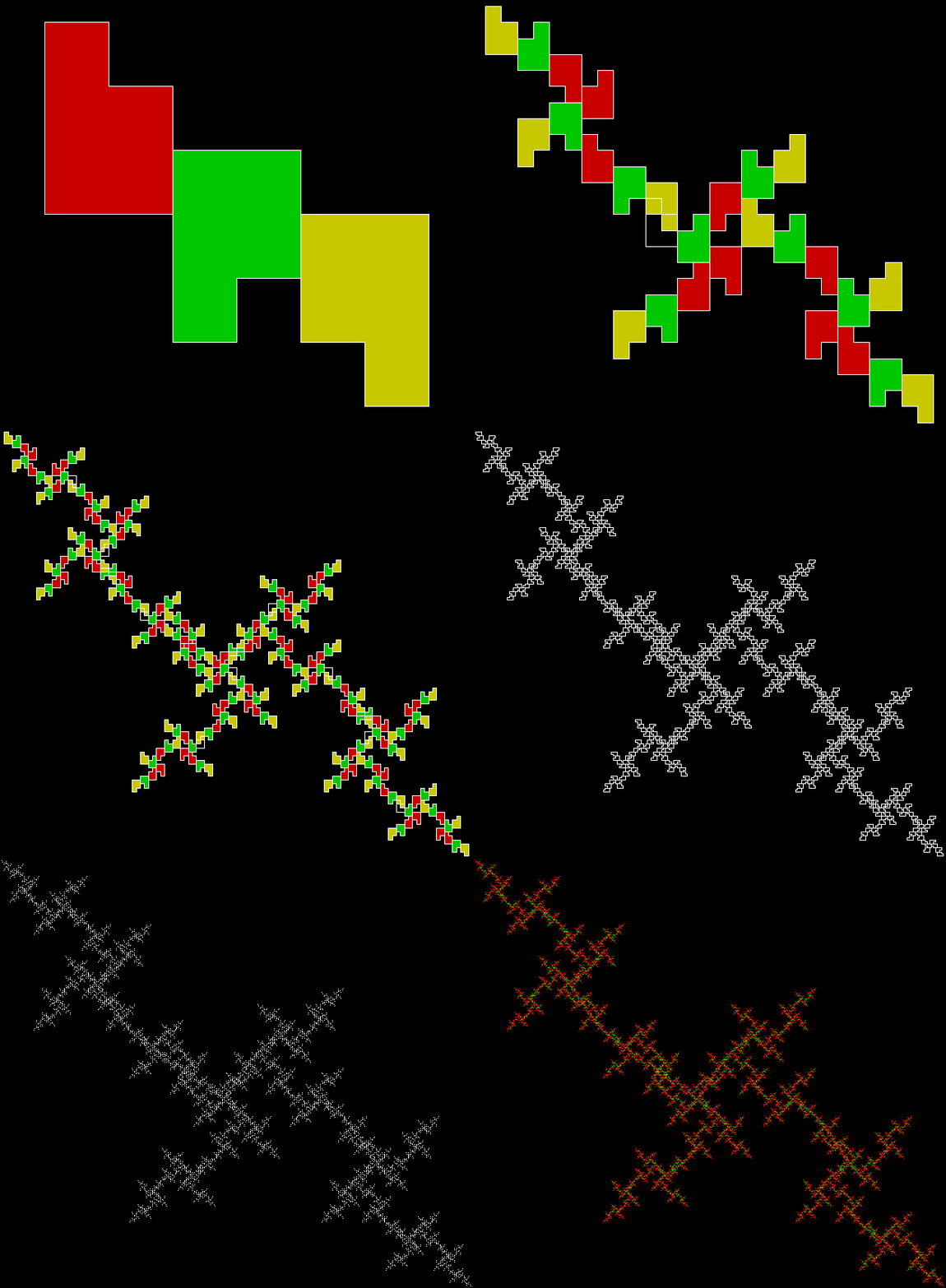
So you could say that paper has radical sheet (the square or other root of a number is also called its radix and √ is known as the radical sign). When a rectangle has the proportions √2 : 1, it can be tiled with an infinite number of copies of itself, the first copy having ½ the area of the original, the second ¼, the third ⅛, and so on. The radical sheet below is tiled with ten diminishing copies of itself, the final two having the same area:

papersizes

papersizes_static

You can also tile a radical sheet with six copies of itself, two copies having ¼ the area of the original and four having ⅛:

paper_6div_static

paper_6div

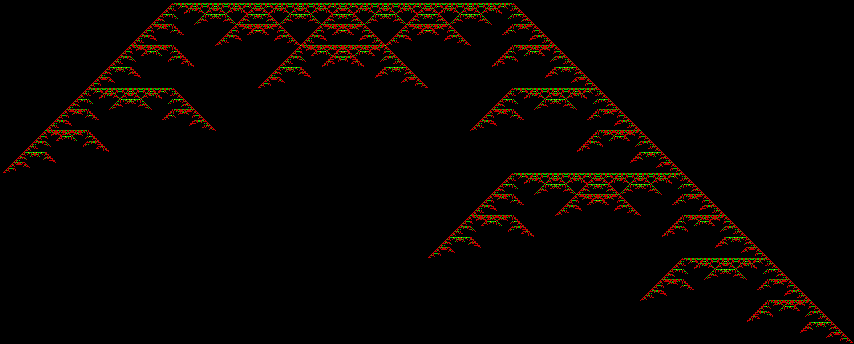
This tiling is when you might say the radical turns crucial, because you can create a fractal cross from it by repeatedly dividing and discarding. Suppose you divide a radical sheet into six copies as above, then discard two of the ⅛-sized rectangles, like this:

paper_cross_1

Stage 1


Then repeat with the smaller rectangles:

paper_cross_2

Stage 2


paper_cross_3

Stage 3


paper_cross_4

Stage 4


paper_cross_5

Stage 5


paper_cross

Animated version

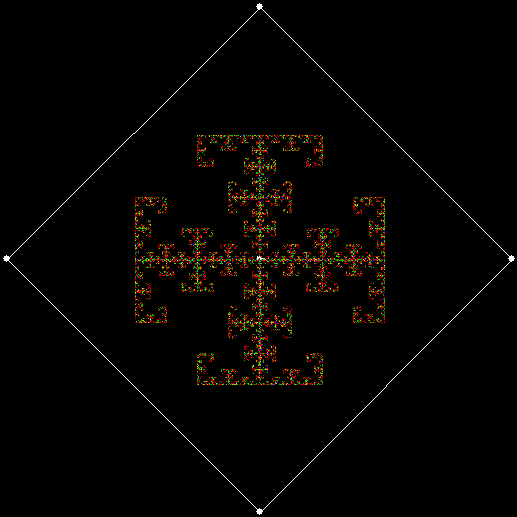
paper_cross_static

Fractile cross

The cross is slanted, but it’s easy to rotate the original rectangle and produce an upright cross:

paper_cross_upright

paper_cross_upright_static

Performativizing the Polygonic

Maths is a mountain: you can start climbing in different places and reach the same destination. There are many ways of proving the irrationality of √2 or the infinitude of the primes, for example. But you can also arrive at the same destination by accident. I’ve found that when I use different methods of creating fractals. The same fractals appear, because apparently different algorithms are actually the same underneath.

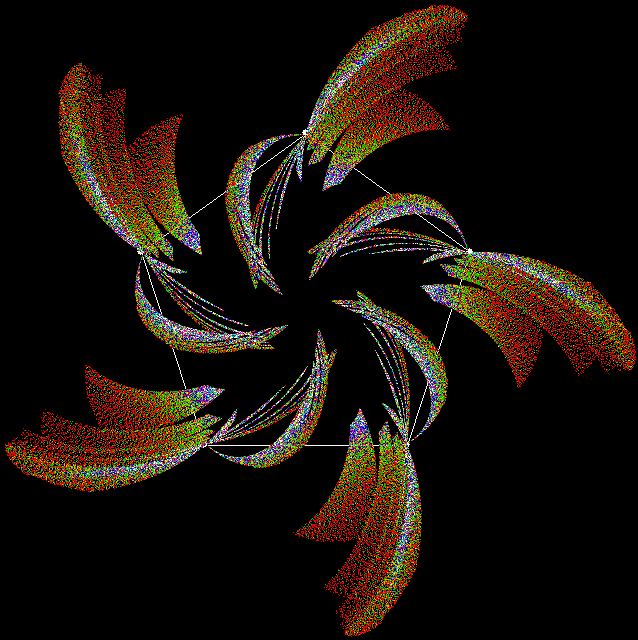
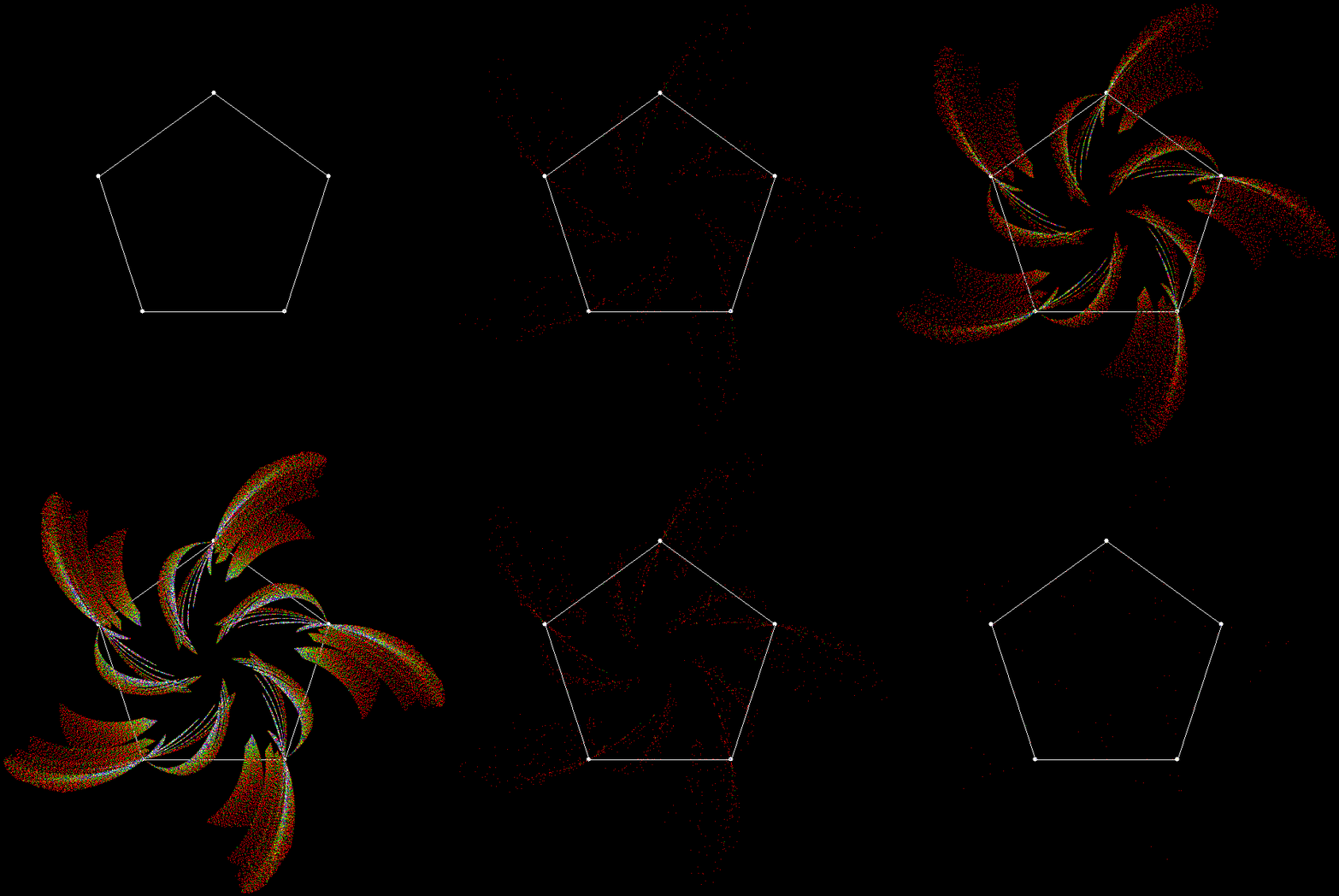
But different methods can create unique fractals too. I’ve found some new ones by using what might be called point-to-point recursion. For example, there are ten ways to select three vertices from the five vertices of a pentagon: (1, 2, 3), (1, 2, 4), (1, 2, 5), (1, 3, 4), (1, 3, 5), (1, 4, 5), (2, 3, 4), (2, 3, 5), (2, 4, 5), (3, 4, 5). Find the midpoint of the first three-point set, (1, 2, 3). Then select two vertices to go with this midpoint, creating a new three-point set, and find the midpoint again. And so on. The process looks like this, with the midpoints shown for all the three-point sets found at each stage:

v5_p3_stage1

vertices = 5, choose sets of 3 points, find mid-point of each

v5_p3_stage2

v5_p3_stage3


At stage 5, the fractal looks like this:

v5_p3_static

v = 5, p = 3


Note that when pixels are used again, the colour changes. That’s another interesting thing about maths: limits can sometimes produce deeper results. If these fractals were drawn at very high resolution, pixels would only be used once and the colour would never change. As it is, low resolution means that pixels are used again and again. But some are used more than others, which is why interesting colour effects appear.

If the formation of the fractal is animated, it looks like this (with close-ups of even deeper stages):
v5_p3


Here are some more examples:

v4c_p2_static

v = 4 + central point, p = 2 (cf. Fingering the Frigit)

v4c_p2

v = 4c, p = 2 (animated)


v4_p3_static

v = 4, p = 3

v4_p3


v5_p4_static

v = 5, p = 4

v5_p4


v5c_p3_static

v = 5 + central point, p = 3

v5c_p3


v5c_p4

v = 5c, p = 4


v5c_p5

v = 5c, p = 5


v6_1_p6

v = 6 + 1 point between each pair of vertices, p = 6


v6_p2

v = 6, p = 2


v6_p3_static

v = 6, p = 3

v6_p3


v6_p4

v = 6, p = 4


v6c_p2_static

v = 6c, p = 2 (cf. Fingering the Frigit)

v6c_p2


v6c_p3_static

v = 6c, p = 3

v6c_p3


v6c_p4

v = 6c, p = 4


v7_p3

v = 7, p = 3


v7_p4_static

v = 7, p = 4

v7_p4


v7_p5_static

v = ,7 p = 5

v7_p5


v7_p4

v = 7c, p = 4


v3_1_p2

v = 3+1, p = 2


v3_1_p3

v = 3+1, p = 3


v3_1_p4

v = 3+1, p = 4


v3_2_p5

v = 3+2, p = 5


v3c_1_p2

v = 3c+1, p = 2


v3c_1_p4

v = 3c+1, p = 4


v3c_p2

v = 3c, p = 2


v3c_p3

v = 3c, p = 3


v4_1_p3

v = 4+1, p = 3


v4_1_p4

v = 4+1, p = 4


v4_1_p5

v = 4+1, p = 6


v4_1_p6

v = 4+1, p = 2


v4c_1_p4

v = 4c+1, p = 4


v4c_p3_static

v = 4c, p = 3

v4c_p3


v5_1_p4_va

v = 5+1, p = 4 (and more)


v5_p2

v = 5, p = 2


Polymorphous Perverticity

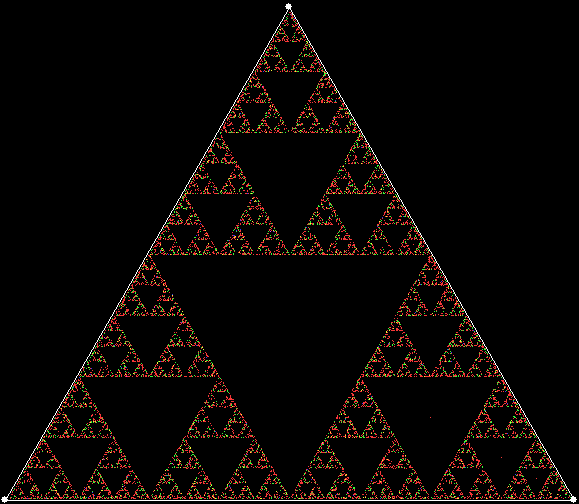
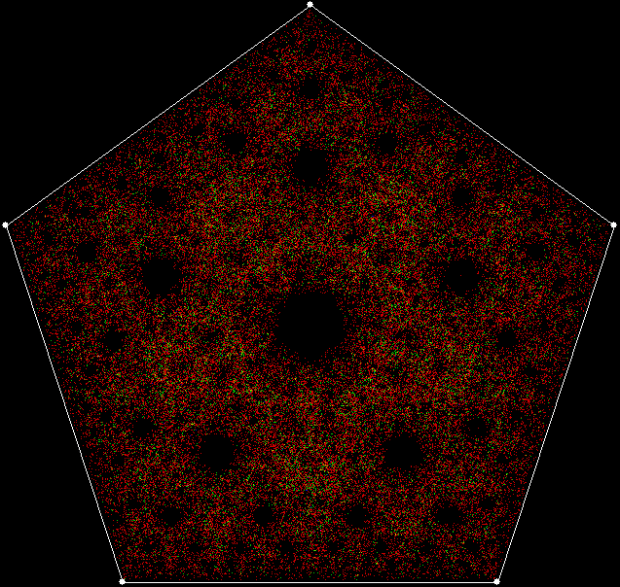
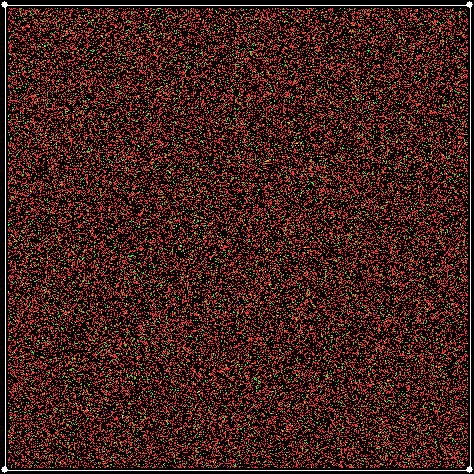
As I’ve explained before on Overlord of the Über-Feral, the planet’s premier purveyor of polygonic performativity (probably (possibly (perspectivistically))), it works with triangles and pentagons, but not with squares. And what is “it”? A simple procedure in which you create a polygon, choose a point inside it, then repeatedly move half-way towards a vertex chosen at random, marking each new position as you go.

pol3_4_5

When the polygon has three vertices, you get a Sierpiński triangle. When it has five, you get what might be called a  Sierpiński pentagon. When it has four, you get nothing. Or rather: you get everything, because the whole interior of the square gradually fills with points. But, as I’ve also explained before, there’s a simple way to change this. You can adapt the procedure so that a vertex can’t be chosen twice in a row, and so on.

When the rule is “No vertex twice in a row”, you get this fractal (colours change as a pixel is selected again):

pol4_0

But you can also use what might be a vertex increment, or vi, whereby you disallow vertices that are next to the previously chosen vertex, or two positions away, and so on. When the rule is “No vertex twice in a row”, the disallowed vertex is (v + 0), that is, vi = 0. If vi = 2 and the rule is disallow(v + 2), this fractal appears (when vi = 1, there’s no fractal):

pol4_2

v = 4, vi = 2

pol4_2_anim


You can extend these rules to apply not just to the previously chosen vertex, but also to the vertex chosen before that. Here are some fractals produced by the rule disallow(v[1] + vi[1], v[2] + vi[2]), where v[1] is the vertex previously chosen and v[2] is the vertex chosen before that:

pol4_1_2

v = 4, vi[1] = 1, vi[2] = 2

pol4_1_2_anim


pol4_2_0

v = 4, vi[1] = 2, vi[2] = 0

pol4_2_0_anim

pol4_2_0_white


pol4_2_1

v = 4, vi[1] = 2, vi[2] = 1

pol4_2_1_anim


pol4_2_2

v = 4, vi[1] = 2, vi[2] = 2

pol4_2_2_anim


And here are some fractals produced by the rule disallow(v[1] + vi[1], v[2] + vi[2], v[3] + vi[3]):

pol4_1_1_0

v = 4, vi[1] = 1, vi[2] = 1, vi[3] = 0

pol4_1_1_0_anim


pol4_1_1_2

v = 4, vi[1] = 1, vi[2] = 1, vi[3] = 2

pol4_1_1_2_anim


Applying these rules to pentagons rather than squares doesn’t produce such a dramatic difference, because the original procedure – choose any vertex at random, taking no account of previous choices – produces a fractal when v = 5, as noted above, but not when v = 4. Nevertheless, here are some fractals for v > 4:

pol5_0

v = 5, vi = 0


pol5_1

v = 5, vi = 1

pol5_1_anim


pol5_2

v = 5, vi = 2

pol5_2_anim


pol5_0_0

v = 5, vi[1] = 0, vi[2] = 0


pol5_1_0

v = 5, vi[1] = 1, vi[2] = 0


pol5_2_0

v = 5, vi[1] = 2, vi[2] = 0

pol5_2_0_anim


pol5_1_1

v = 5, vi[1] = 1, vi[2] = 1

pol5_1_1_anim


pol5_1_1_1

v = 5, vi[1] = 1, vi[2] = 1, vi[3] = 1


pol5_va2

v = 5, vi = various


pol6_1

v = 6, vi = 1

pol6_1_anim