Square Routes Re-Re-Re-Re-Re-Re-Revisited

Suppose you trace all possible routes followed by a point inside a triangle jumping halfway towards one or another of the three vertices of the triangle. If you mark each jump, you get a famous geometrical shape called the Sierpiński triangle (or Sierpiński sieve).

Sierpiński triangle found by tracing all possible routes for a point jumping halfway towards the vertices of a triangle


The Sierpiński triangle is a fractal, because it contains copies of itself at smaller and smaller scales. Now try the same thing with a square. If you trace all possible routes followed by a point inside a square jumping halfway towards one or another of the four vertices of the square, you don’t get an obvious fractal. Instead, the interior of the square fills steadily (and will eventually be completely solid):
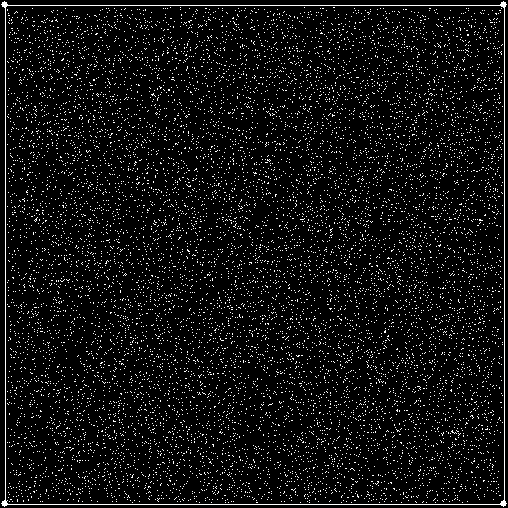
Routes of a point jumping halfway towards vertices of a square


Try a variant. If the point is banned from jumping towards the same vertex twice or more in a row, the routes trace out a fractal that looks like this:
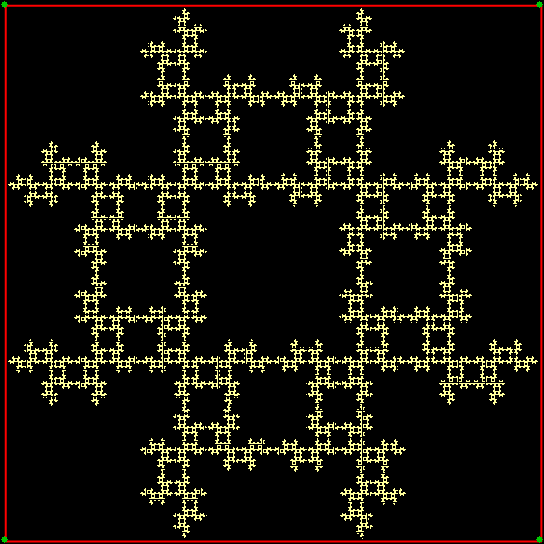
Ban on choosing same vertex twice or more in a row


If the point is banned from jumping towards the vertex one place anti-clockwise of the vertex it’s just jumped towards, you get a fractal like this:
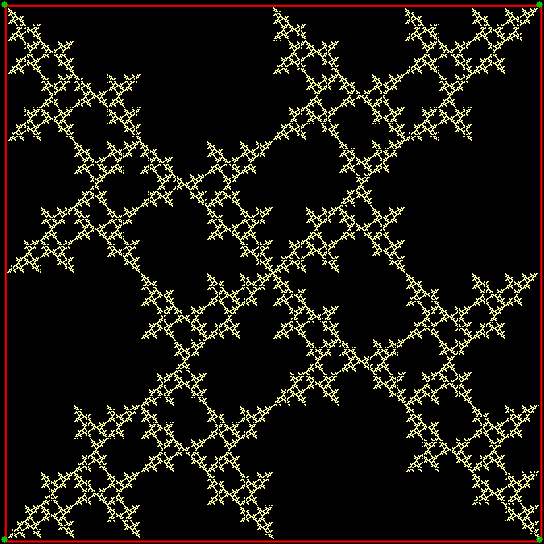
Ban on jumping towards vertex one place anti-clockwise of previously chosen vertex


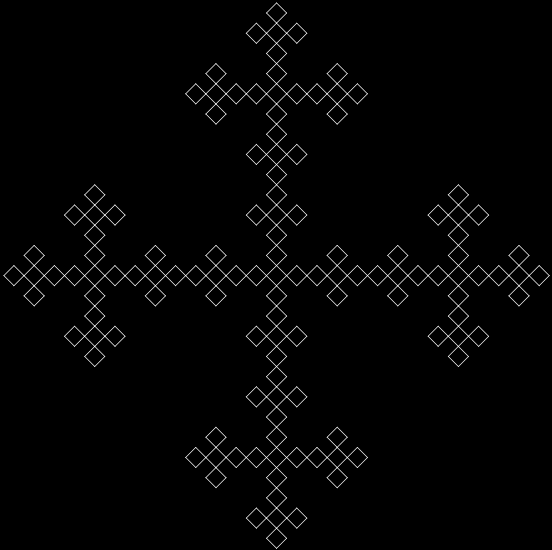
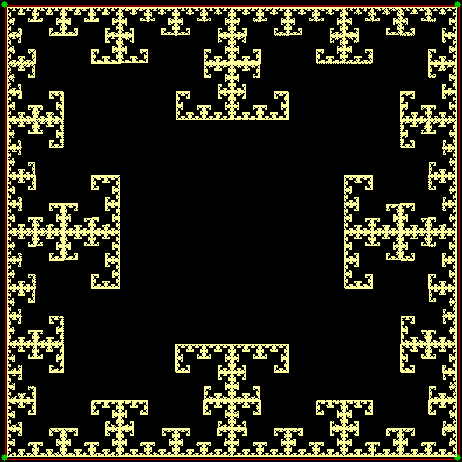
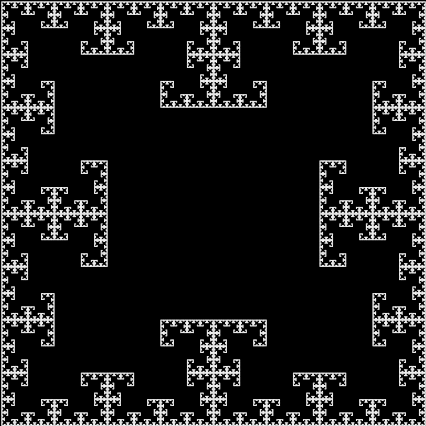
And if the point can’t jump towards two places clockwise or anti-clockwise of the currently chosen vertex, this fractal appears (called a T-square fractal):

Ban on jumping towards the vertex diagonally opposite of the previously chosen vertex


That ban is equivalent to banning the point from jumping from the vertex diagonally opposite to the vertex it’s just jumped towards. Finally, here’s the fractal created when you ban the point from jumping towards the vertex one place clockwise of the vertex it’s just jumped towards:

Ban on jumping towards vertex one place clockwise of previously chosen vertex


As you can see, the fractal is a mirror-image of the one-place-anti-clockwise-ban fractal.

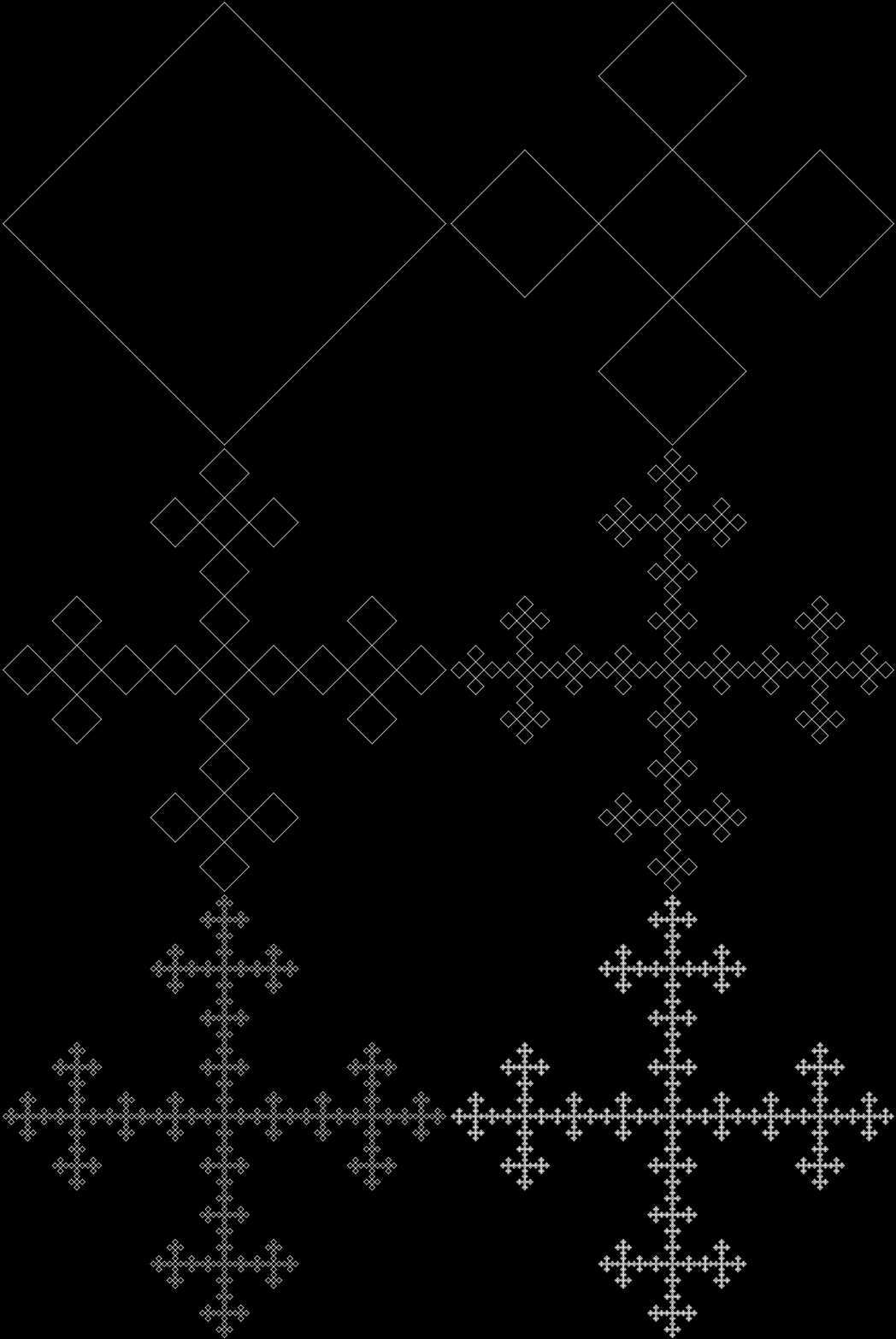
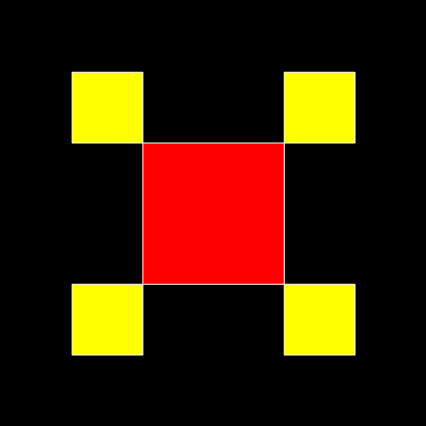
I discovered the ban-construction of those fractals more than twenty years ago. Then I found that I was re-discovering the same fractals when I looked at what first seemed like completely different ways of constructing fractals. There are lots of different routes to the same result. I’ve recently discovered yet another route. Let’s try what seems like an entirely different way of constructing fractals. Take a square and erect four new half-sized squares, sq1, sq2, sq3, sq4, on each corner. Then erect three more quarter-sized squares on the outward facing corners of sq1, sq2, sq3 and sq4. Carry on doing that and see what happens at the end when you remove all the previous stages of construction:
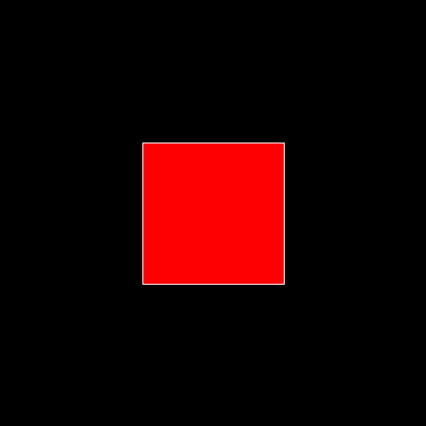
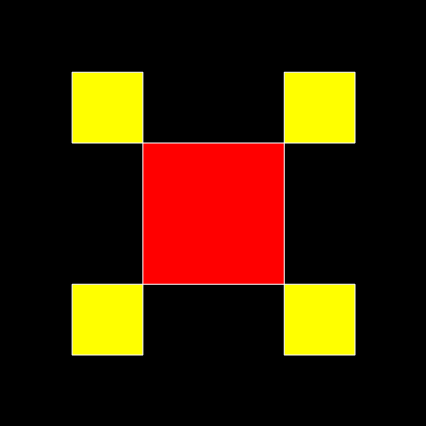
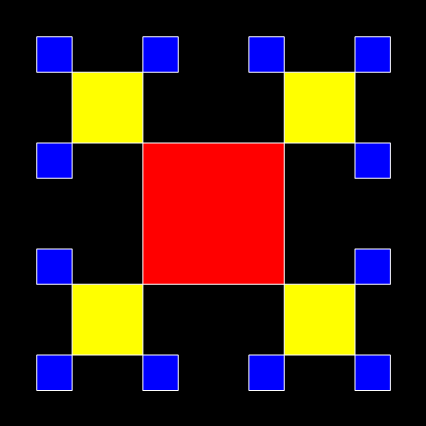
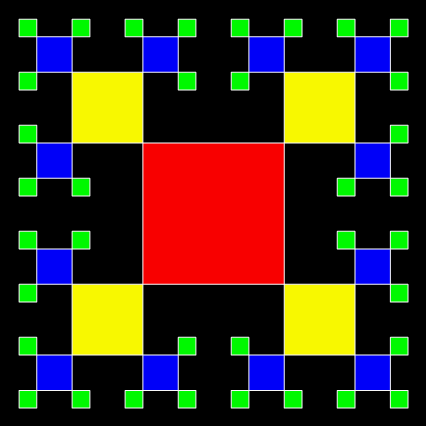
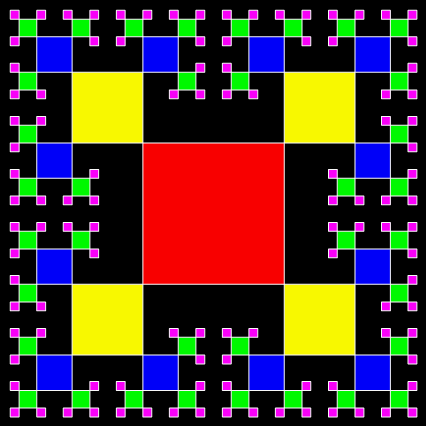
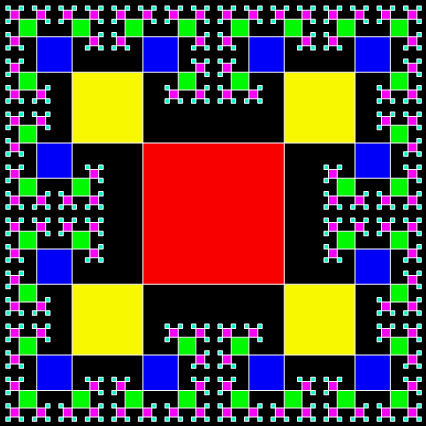
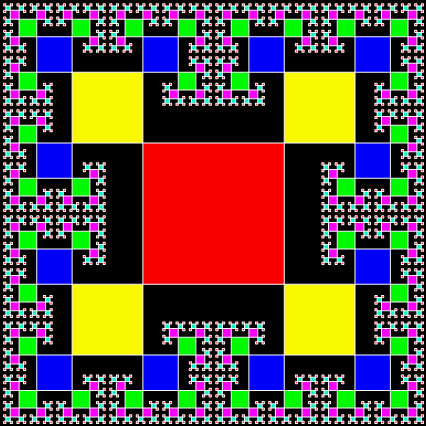
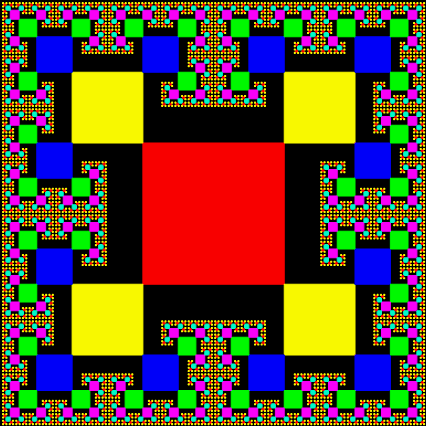
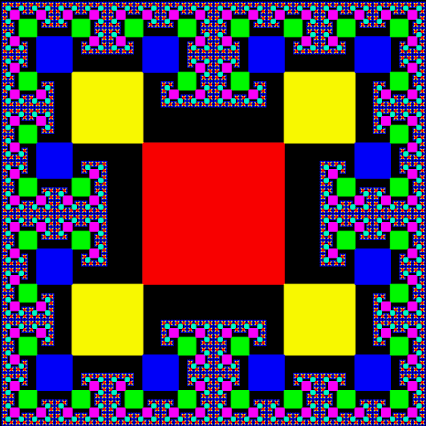
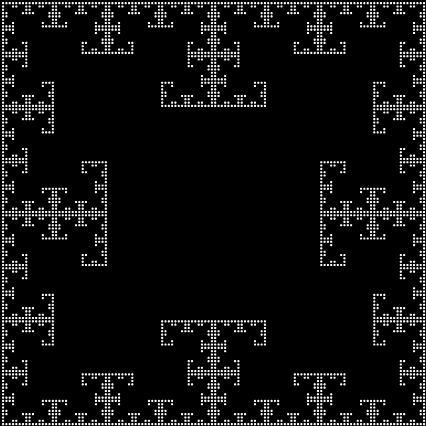

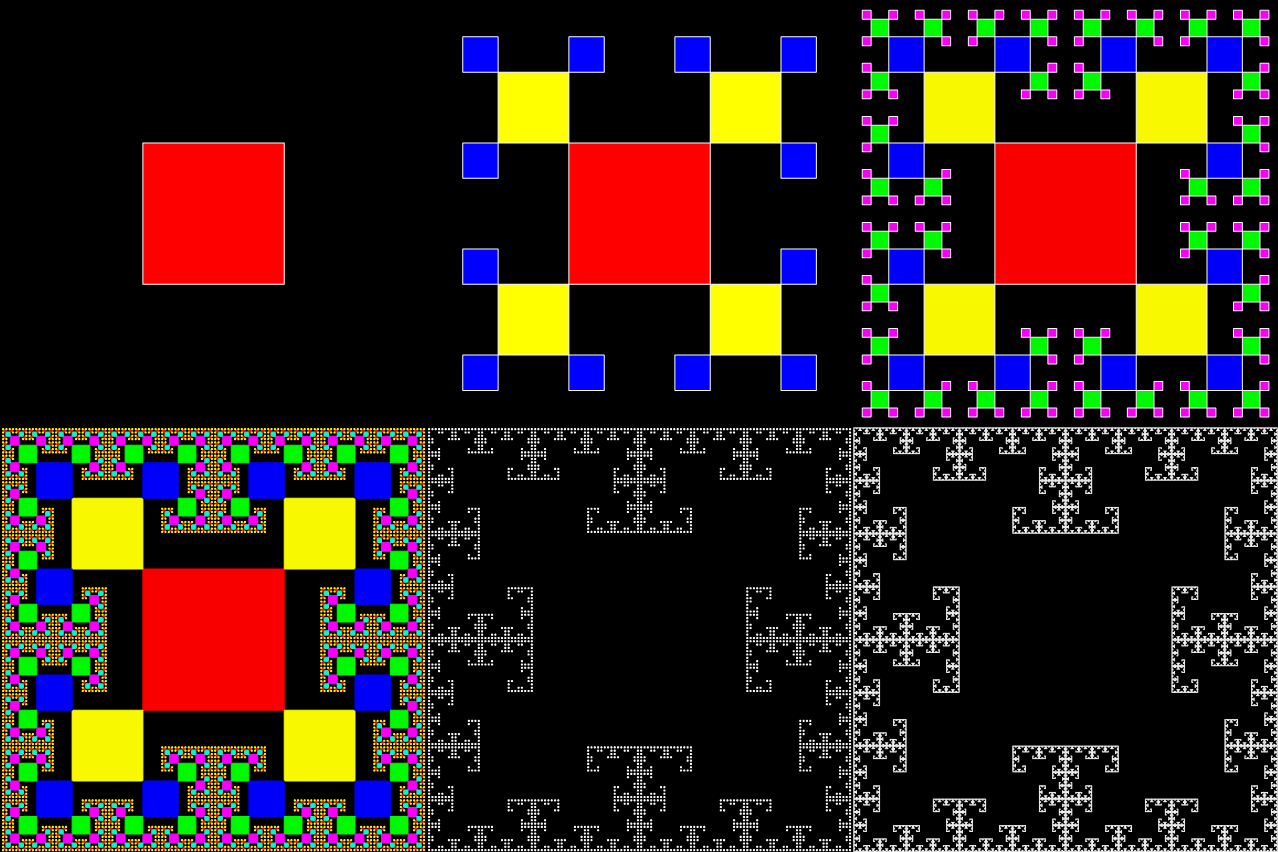
Animation of the new construction
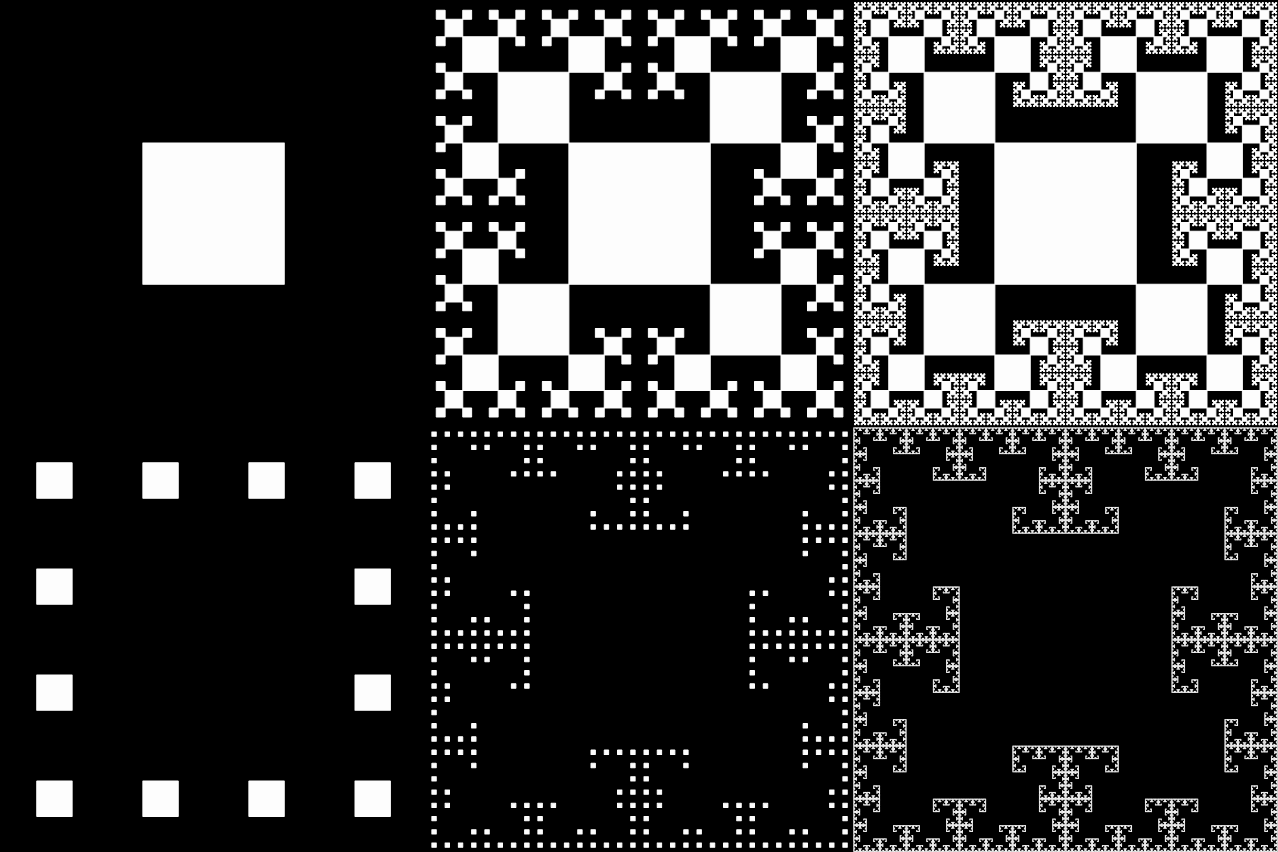

Animation in black-and-white


It’s the T-square fractal again. Now try rotating the squares you add at stage 3 and see what happens (the rotation means that two new squares are added on adjacent outward-facing corners and one new square on the inward-facing corner):
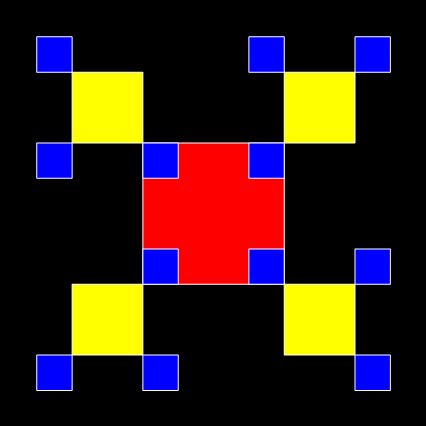
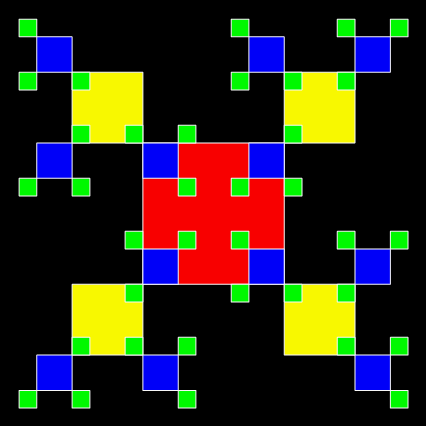

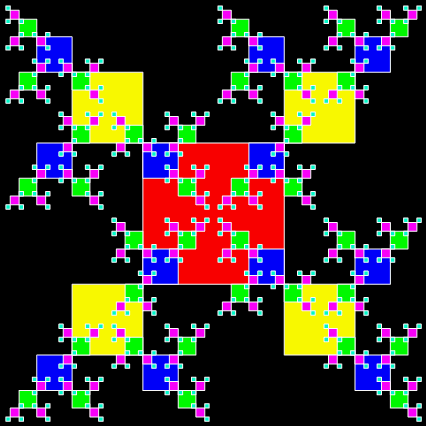
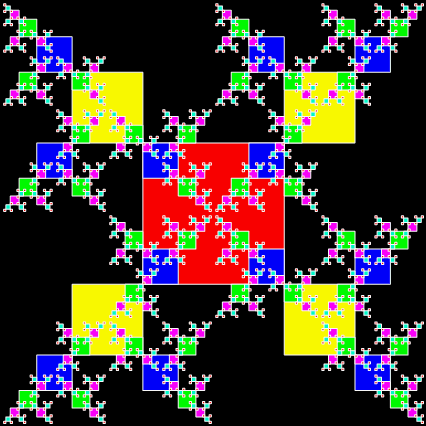

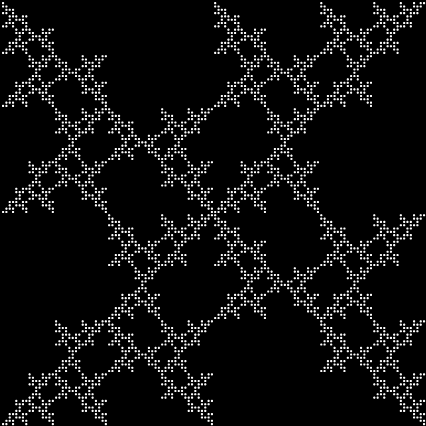
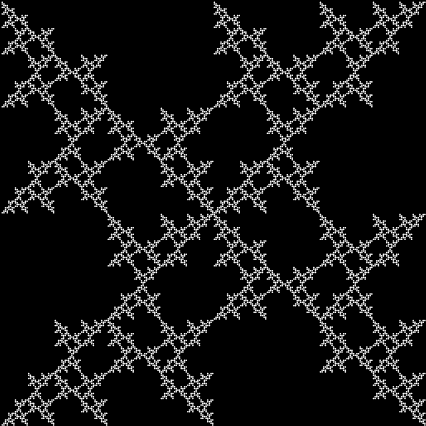
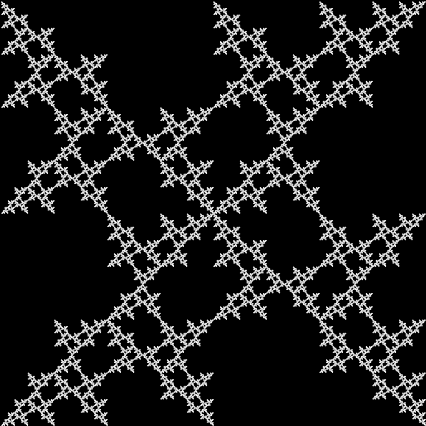
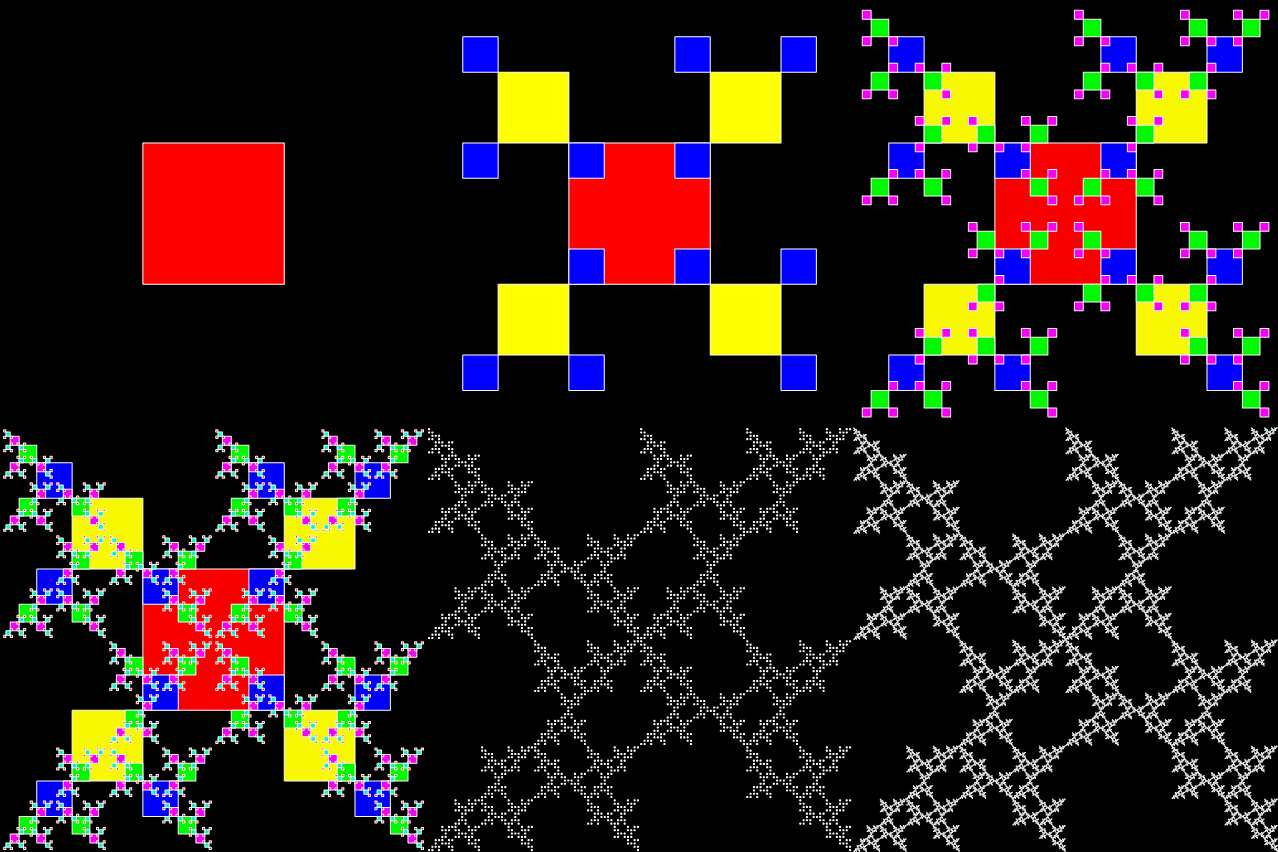
Animation of the construction


It’s the one-place-clockwise-ban fractal again. Now try rotating the squares two places, so that two new squares are added on diagonally opposite outward-facing corners and one new square on the inward-facing corner:
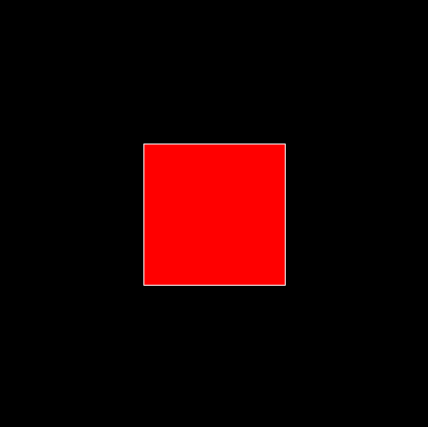
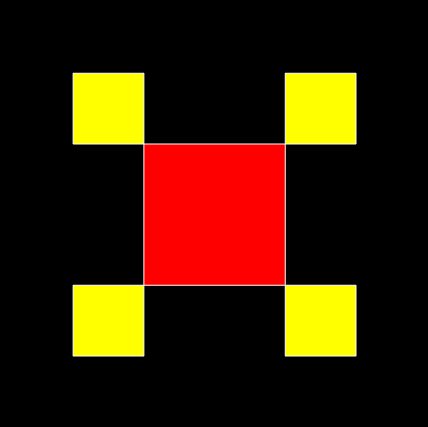

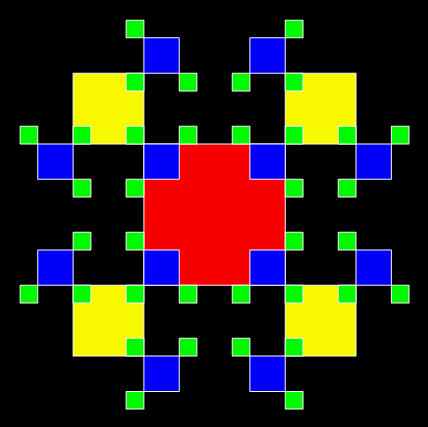
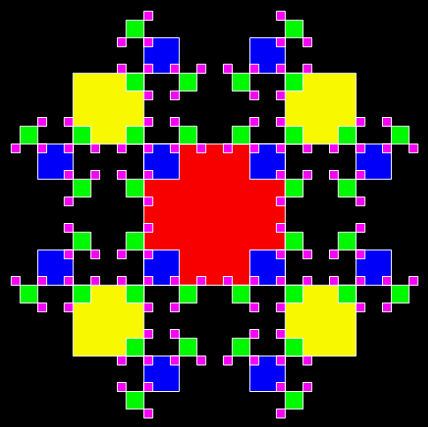
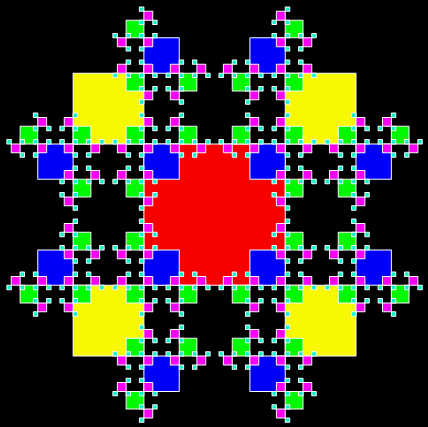
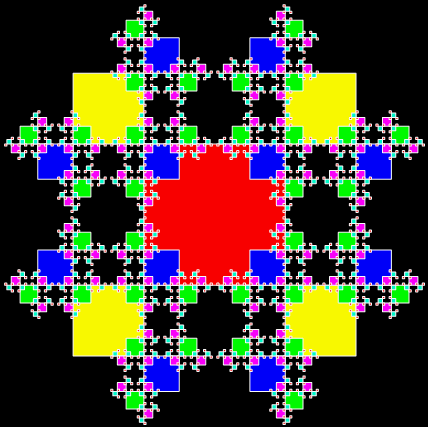

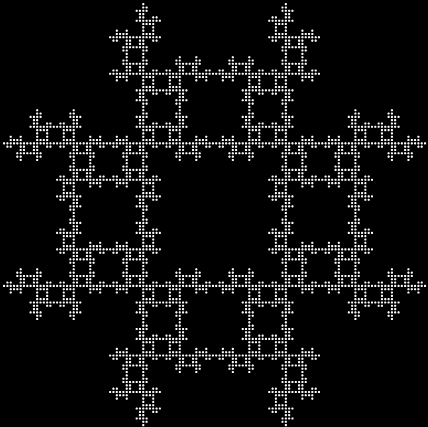


Animation of the construction


It’s the same-vertex-ban fractal again. Finally, rotate squares one place more:

Animation of the construction
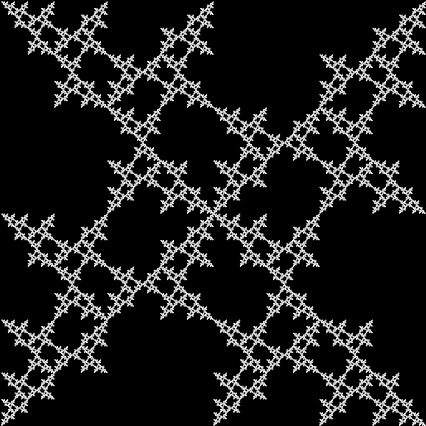


It’s the one-place-clockwise-ban fractal again. And this method isn’t confined to squares. Here’s what happens when you add 5/8th-sized triangles to the corners of triangles:


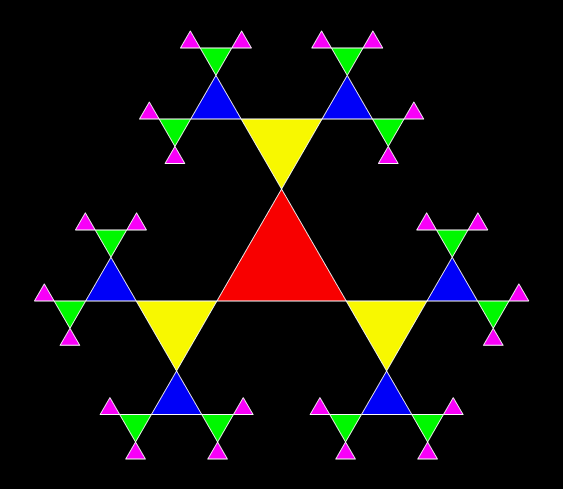


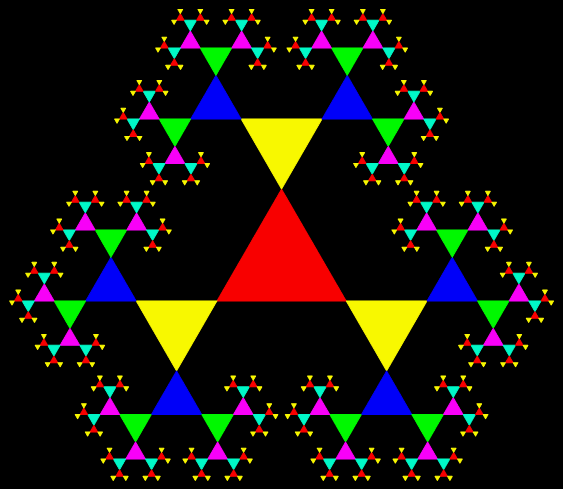
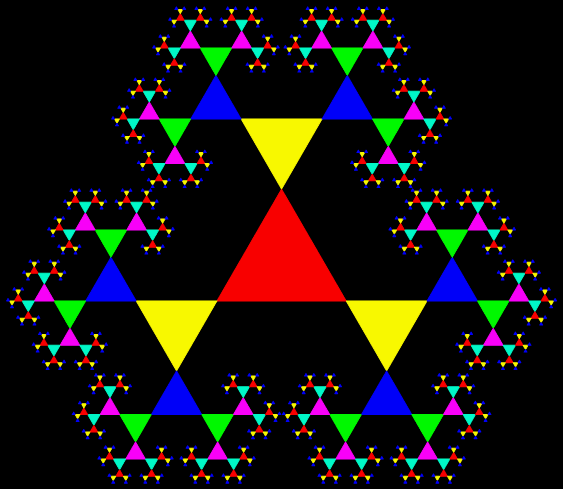
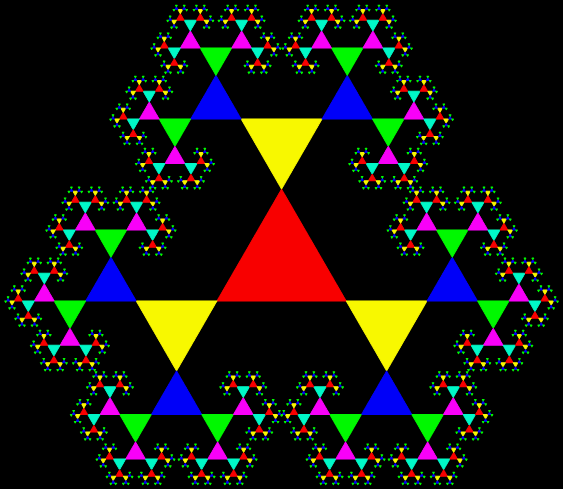
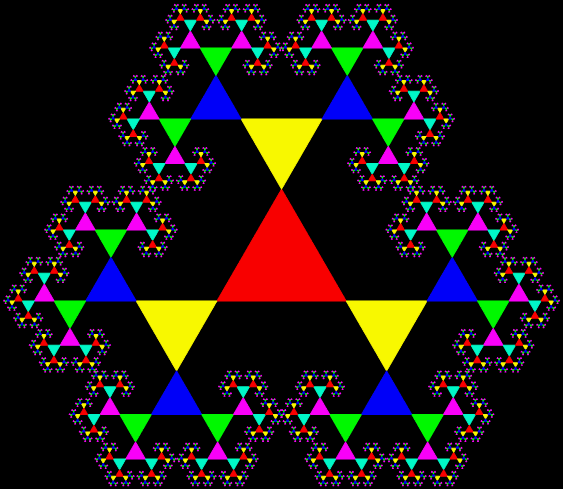

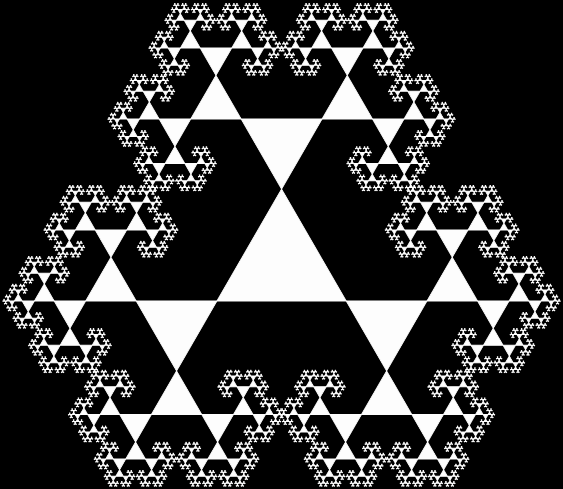

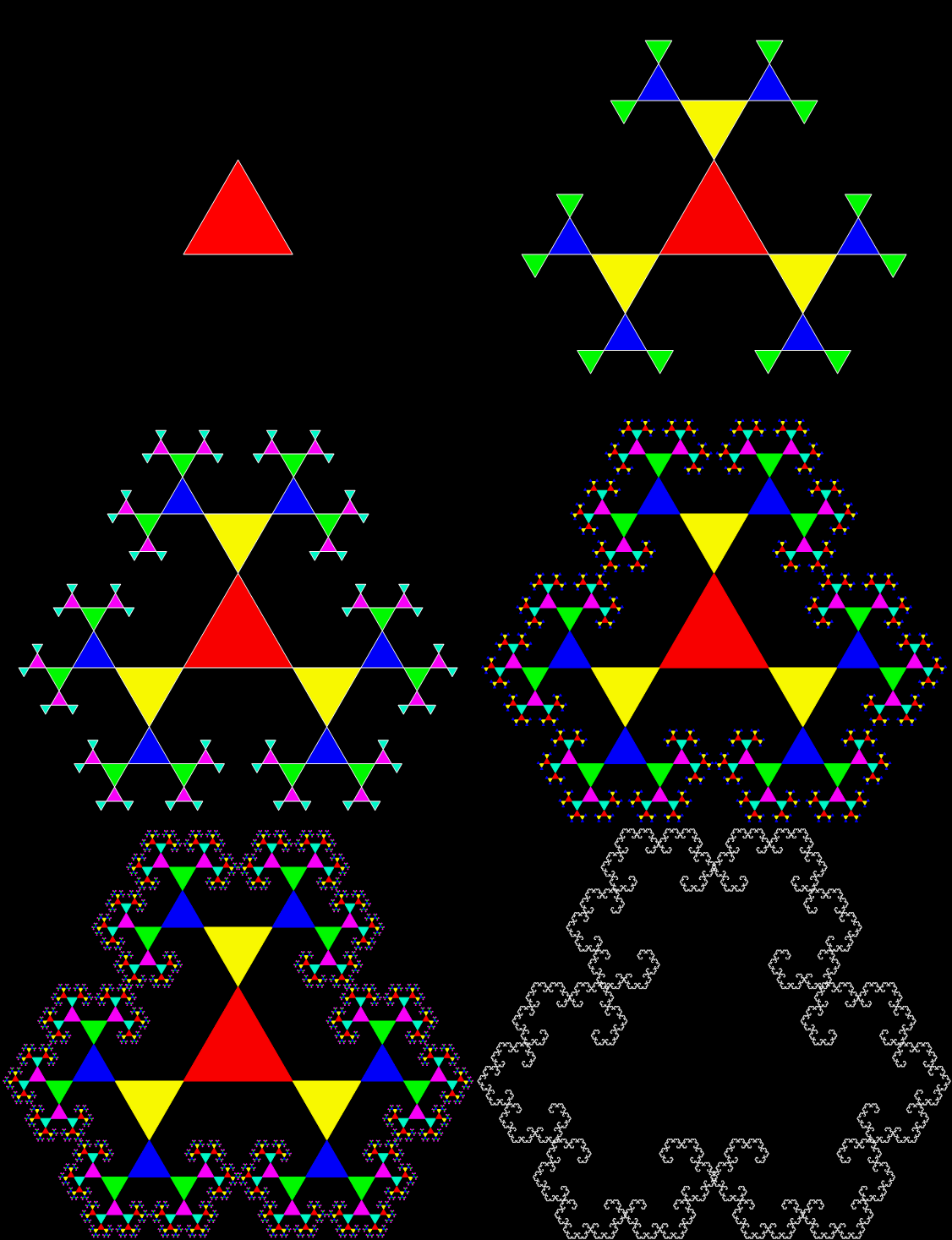
Animation of the construction


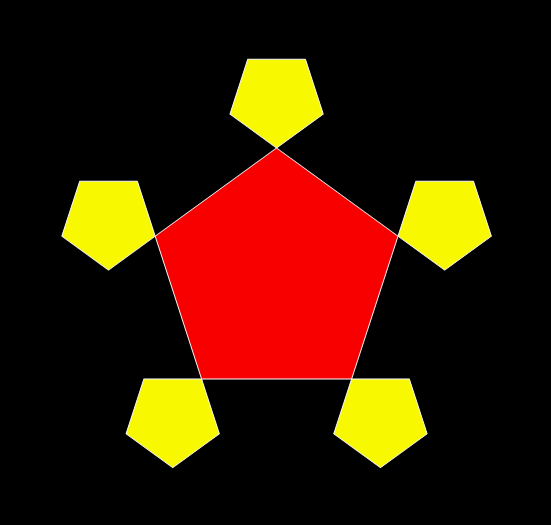
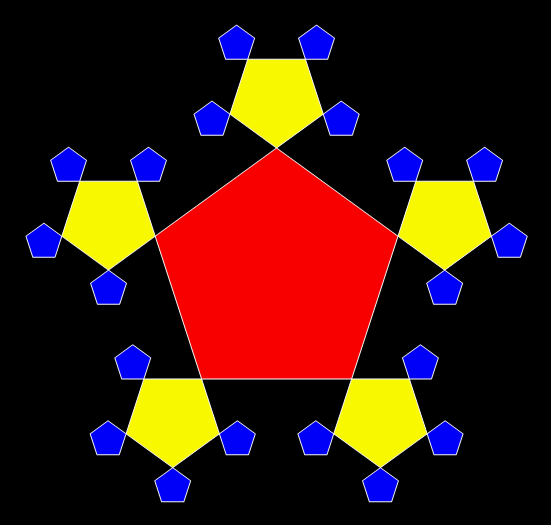
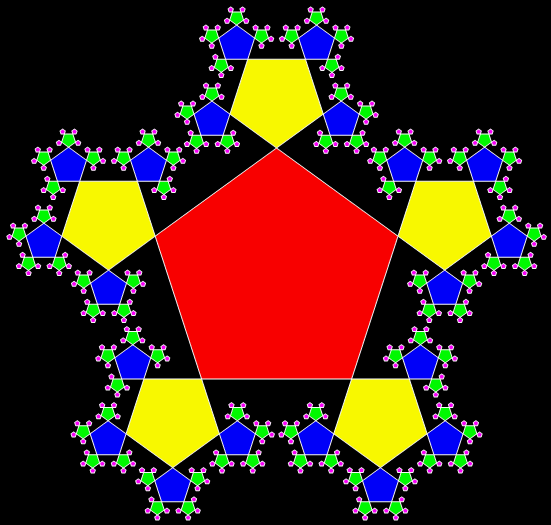
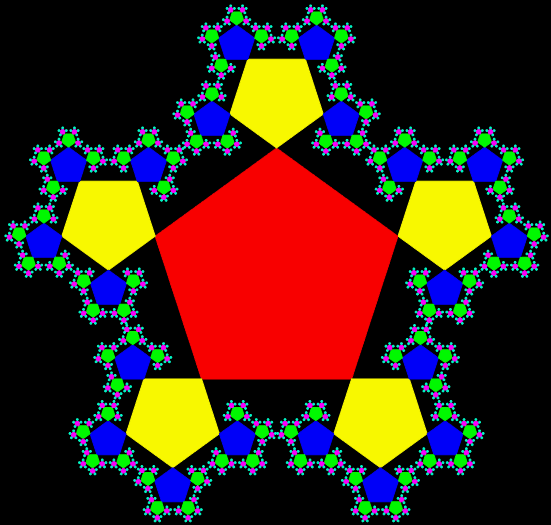
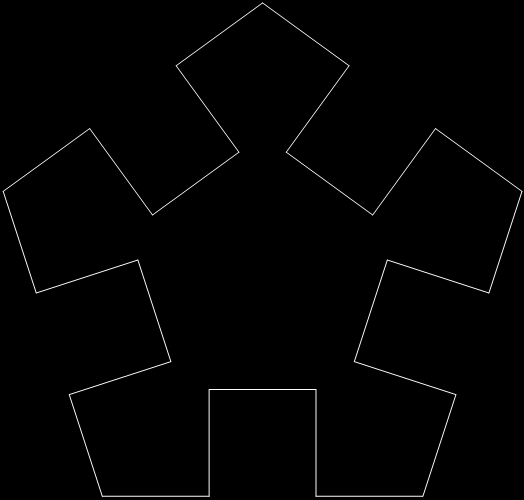
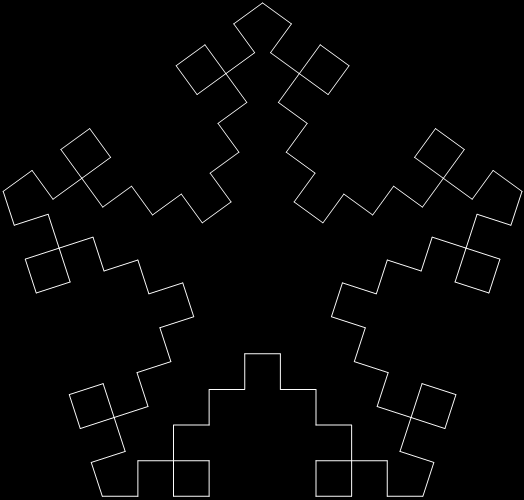
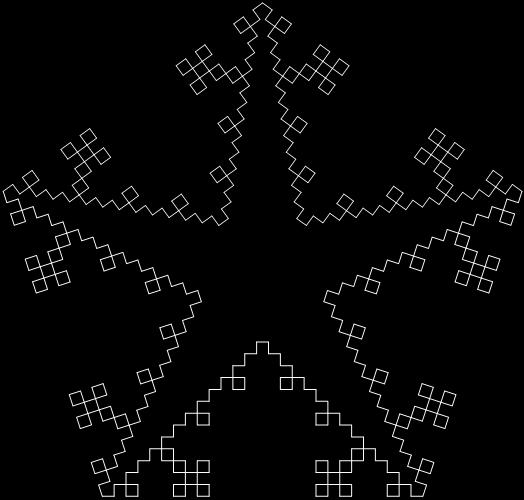
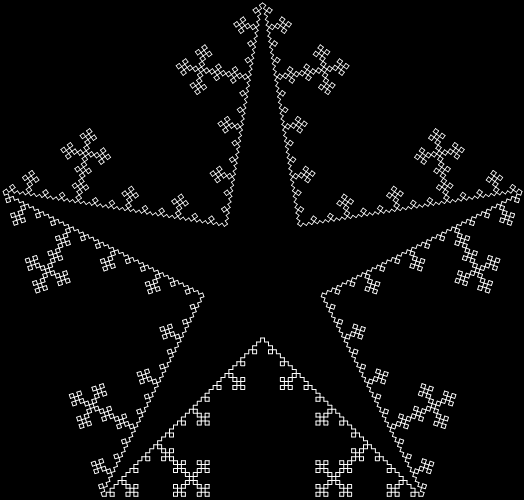
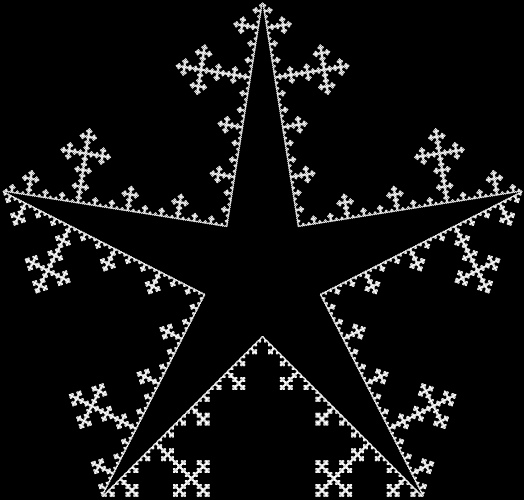
And here’s what happens when you add 5/13th-sized pentagons to the corners of pentagons:
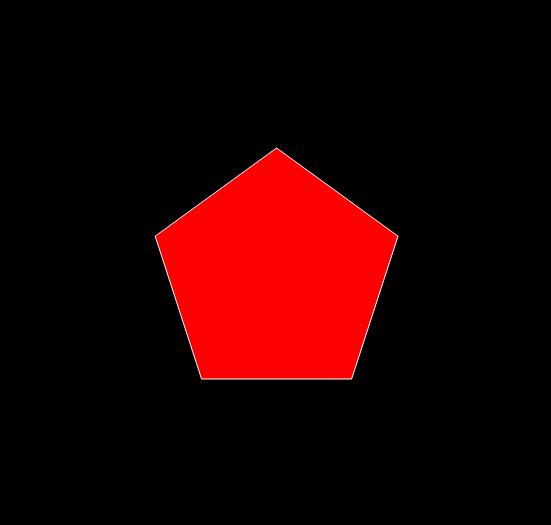


Animation of the construction


Finally, here’s a variant on that pentagonal fractal (adding two rather than four pentagons at stage 3 and higher):
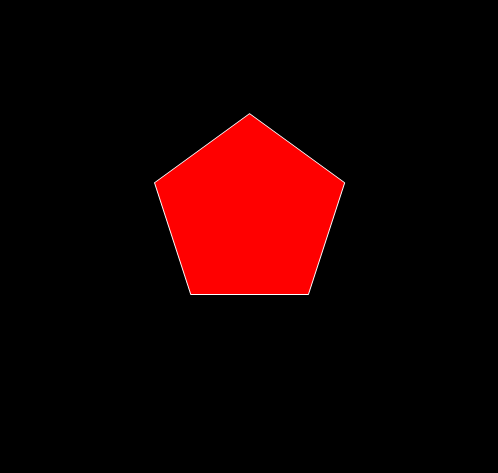
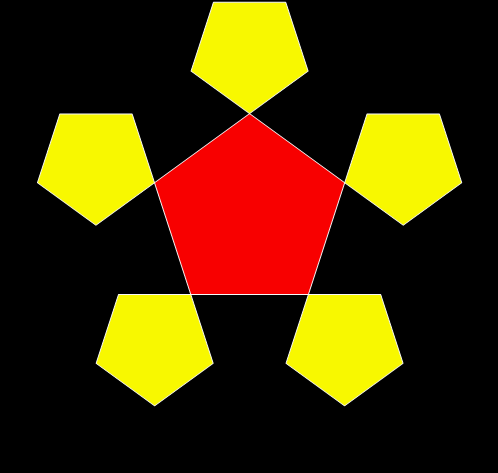
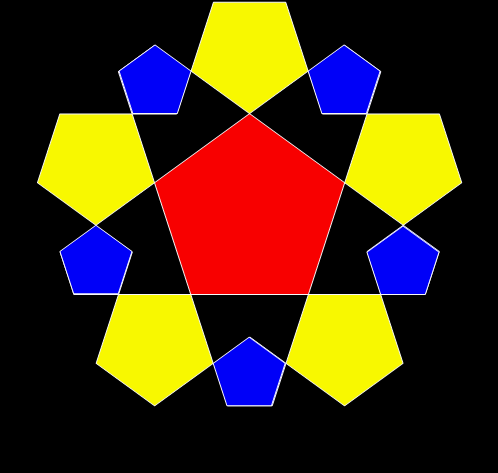
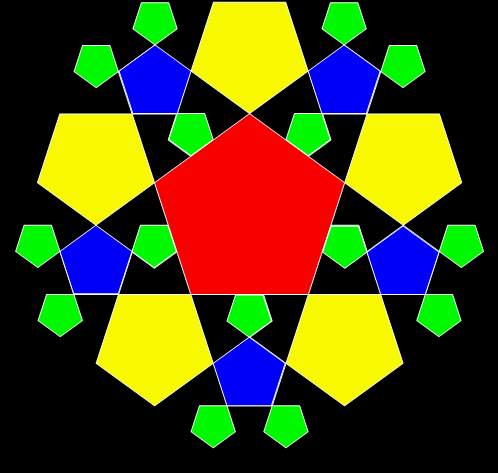


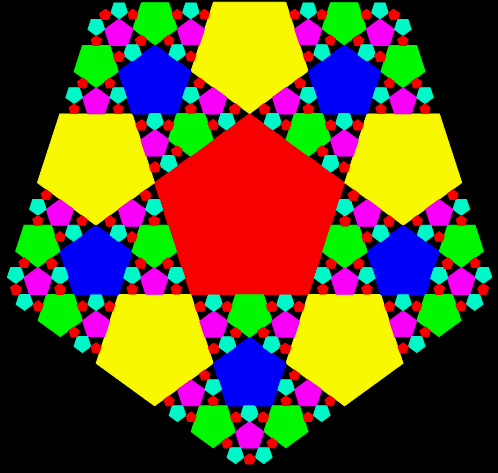

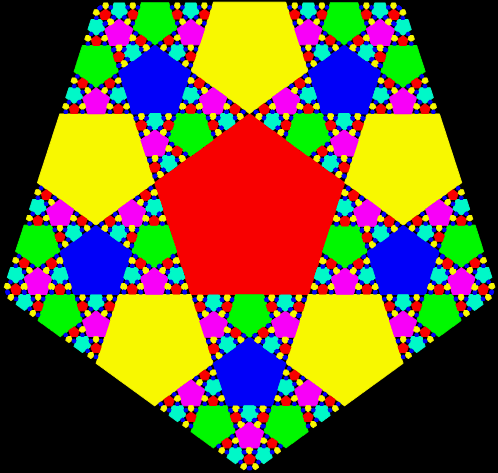
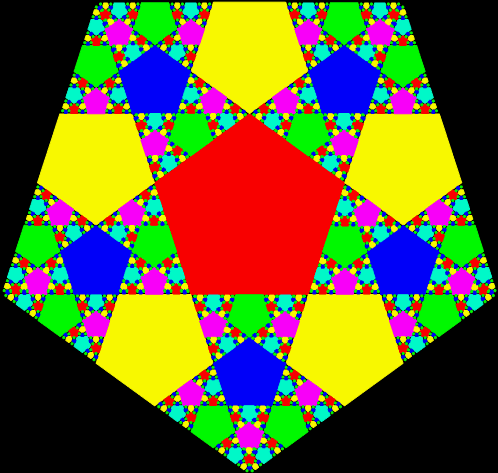

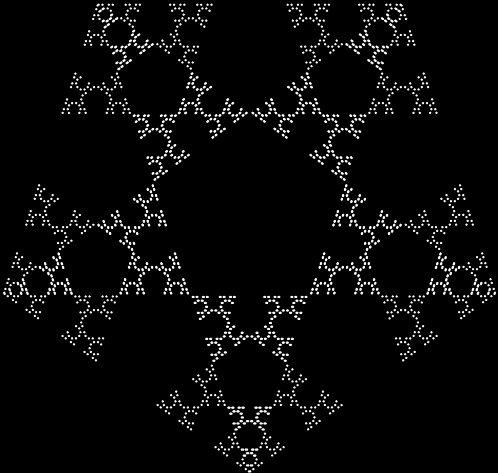
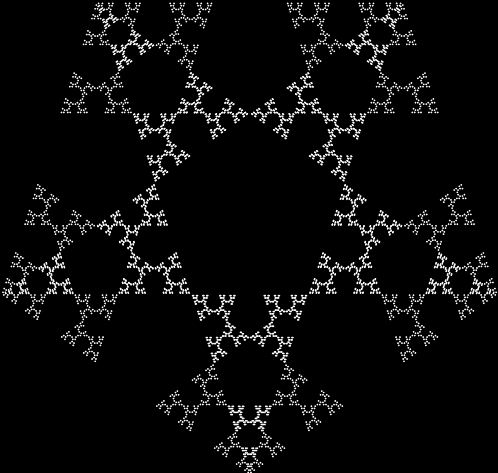

Animation of the construction


Previously pre-posted (please peruse):

Square Routes
Square Routes Revisited
Square Routes Re-Revisited
Square Routes Re-Re-Revisited
Square Routes Re-Re-Re-Revisited
Square Routes Re-Re-Re-Re-Revisited
Square Routes Re-Re-Re-Re-Re-Revisited
Polykoch (Kontinued)

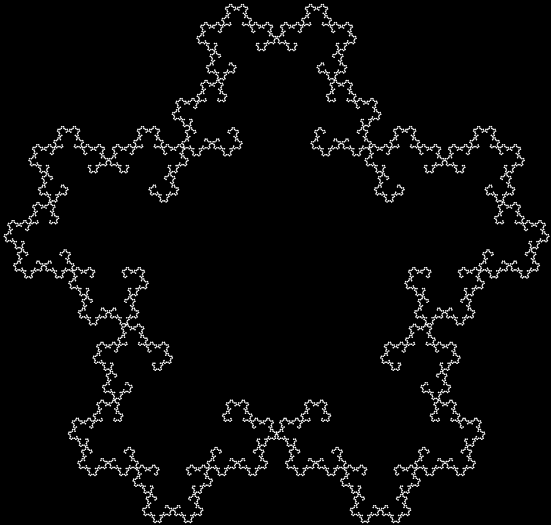
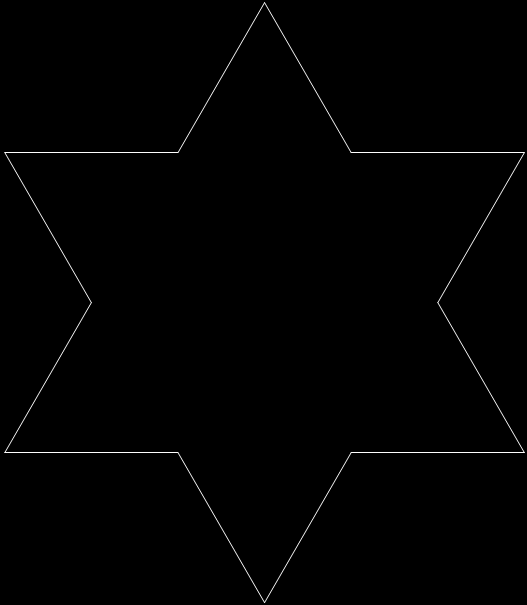
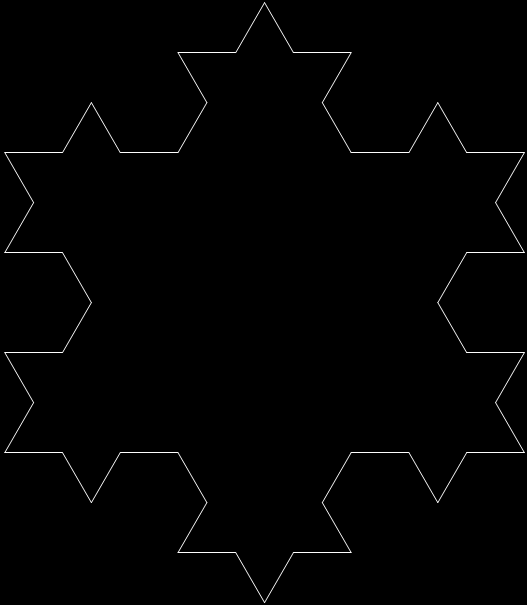
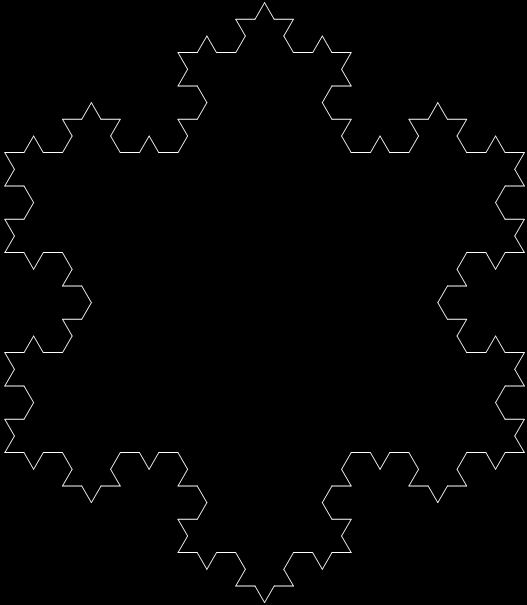
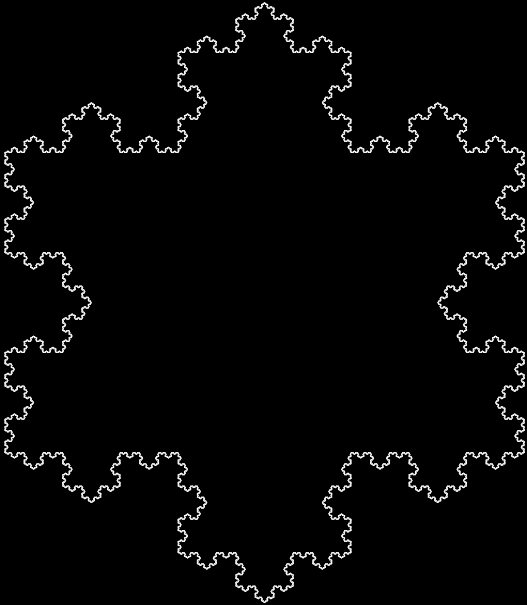
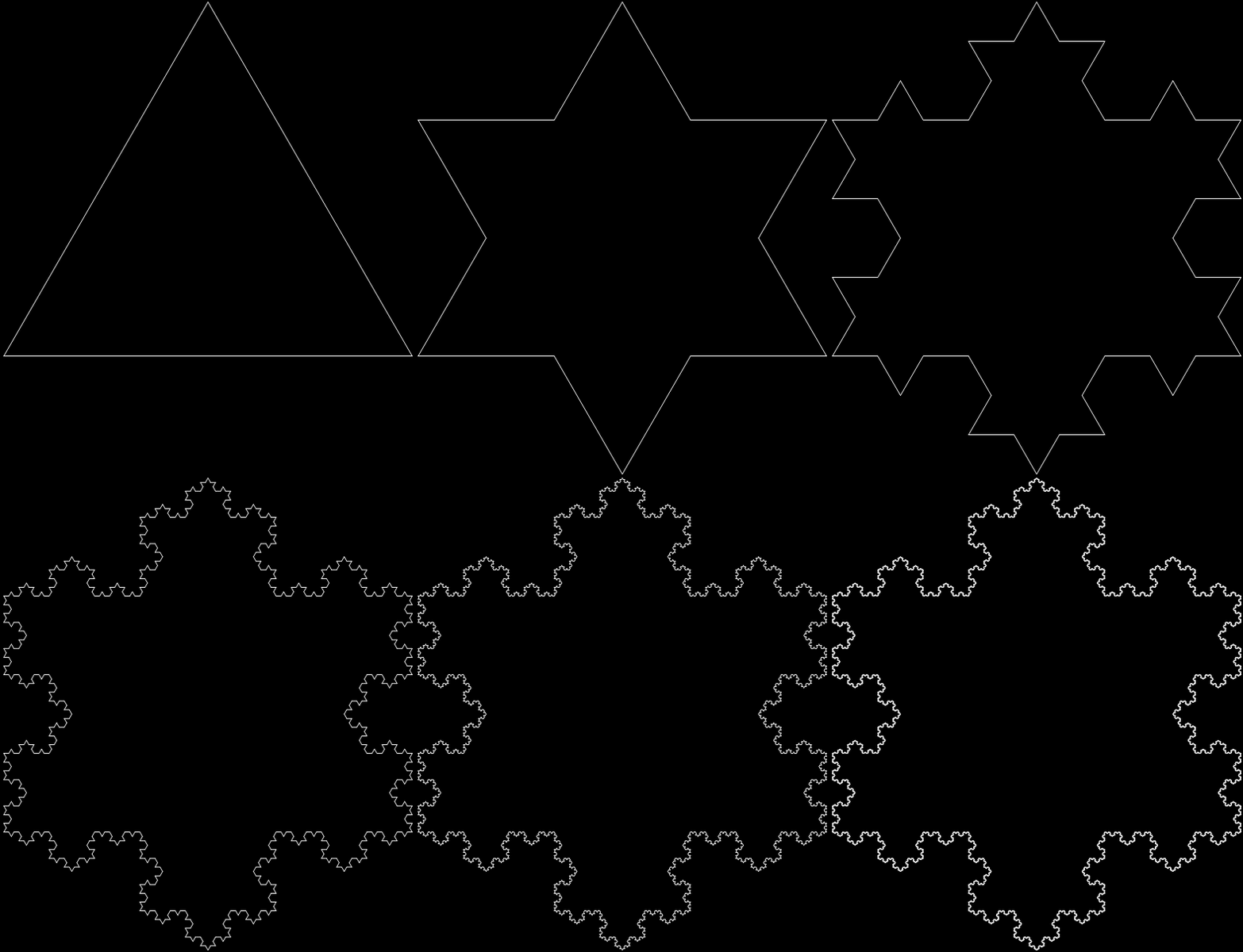
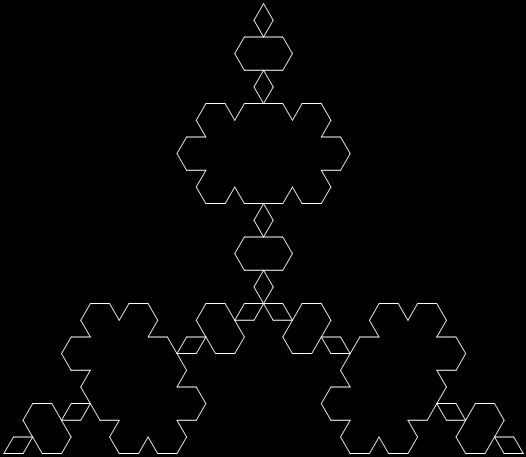
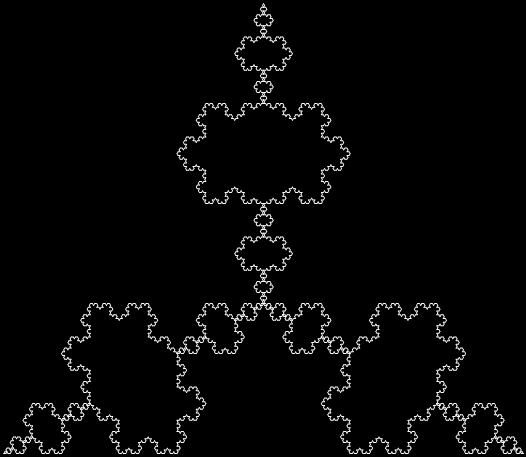
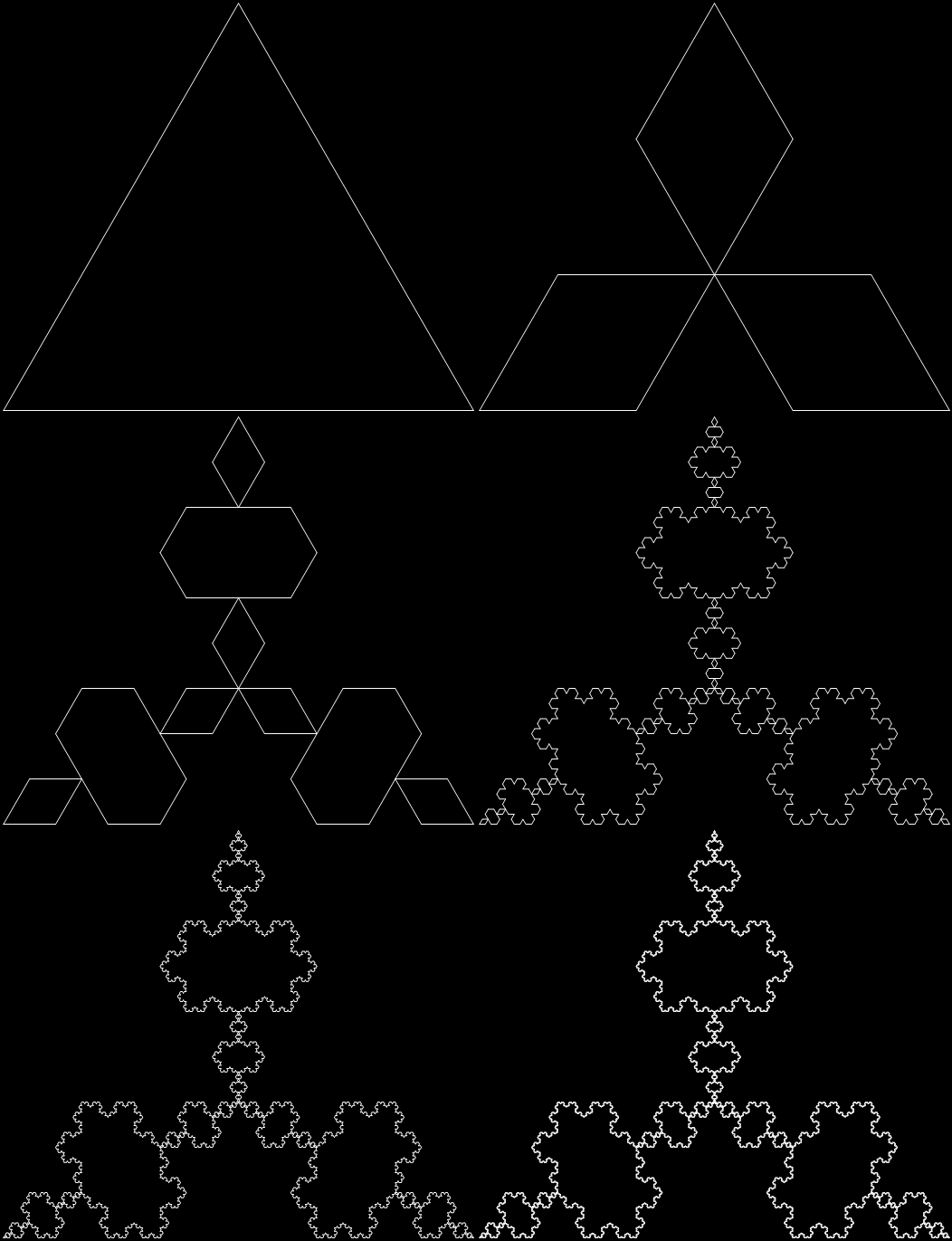
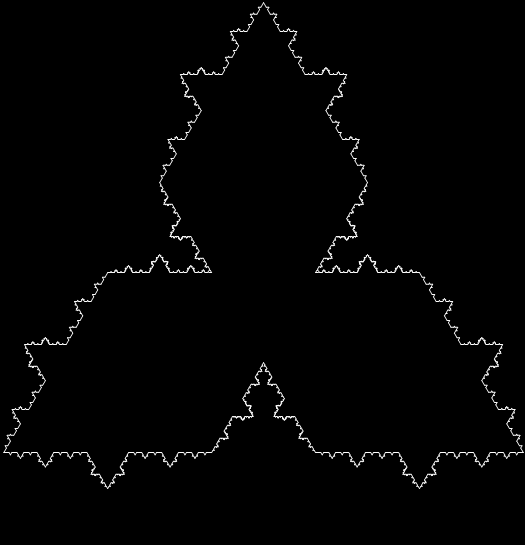
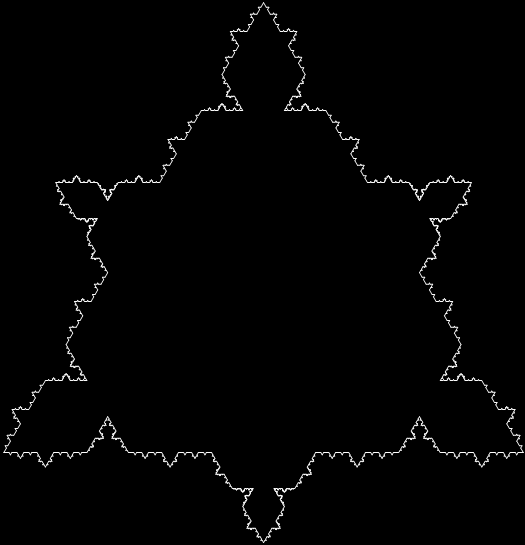
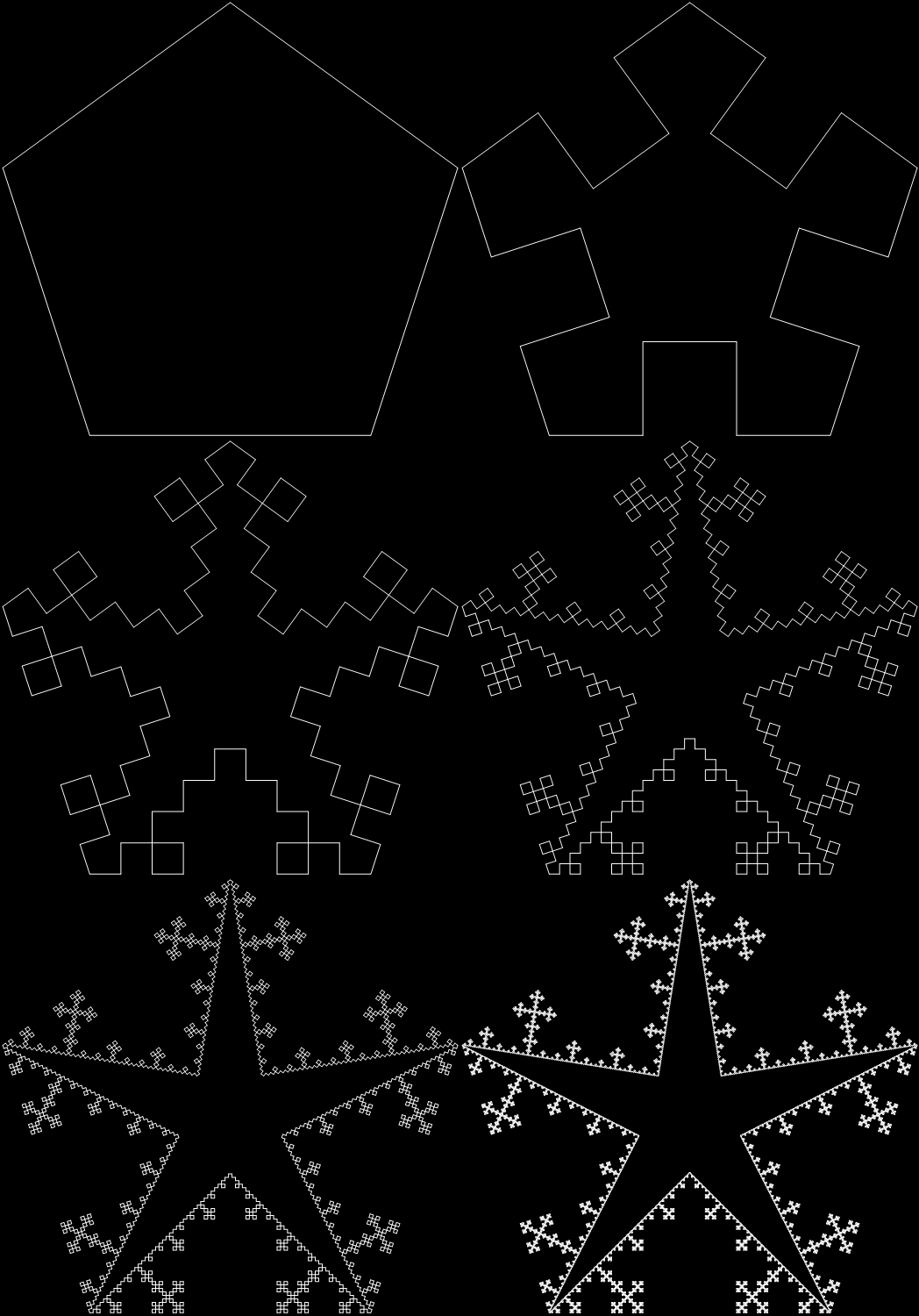
In “Polykoch!”, I looked at variants on the famous Koch snowflake, which is created by erecting new triangles on the sides of an equilaternal triangle, like this:

Koch snowflake #1


Koch snowflake #2


Koch snowflake #3


Koch snowflake #4


Koch snowflake #5


Koch snowflake #6


Koch snowflake #7


Koch snowflake (animated)


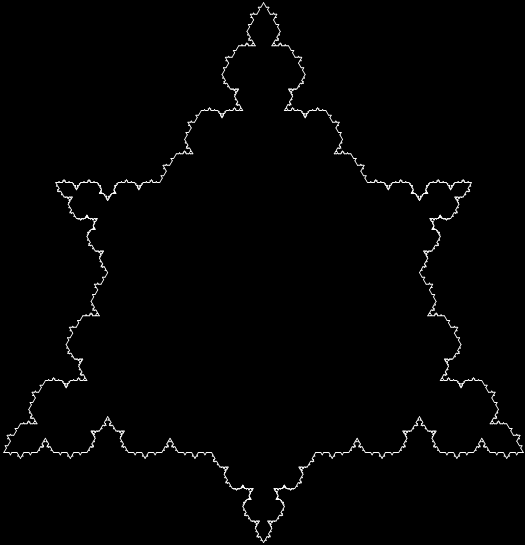
One variant is simple: the new triangles move inward rather than outward:

Inverted Koch snowflake #1
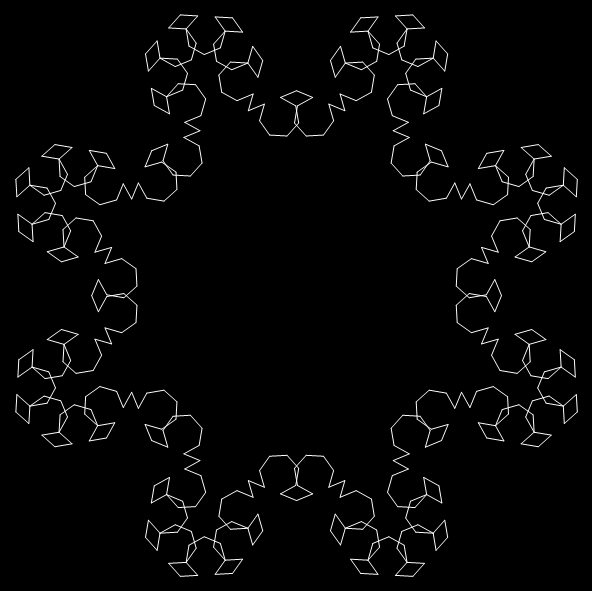

Inverted Koch snowflake #2


Inverted Koch snowflake #3


Inverted Koch snowflake #4


Inverted Koch snowflake #5


Inverted Koch snowflake #6


Inverted Koch snowflake #7


Inverted Koch snowflake (animated)


Or you can alternate between moving the new triangles inward and outward. When they always move outward and have sides 1/5 the length of the sides of the original triangle, the snowflake looks like this:


When they move inward, then always outward, the snowflake looks like this:


And so on:


Now here’s a Koch square with its new squares moving inward:

Inverted Koch square #1


Inverted Koch square #2


Inverted Koch square #3


Inverted Koch square #4


Inverted Koch square #5


Inverted Koch square #6


Inverted Koch square (animated)


And here’s a pentagon with squares moving inwards on its sides:

Pentagon with squares #1


Pentagon with squares #2


Pentagon with squares #3


Pentagon with squares #4


Pentagon with squares #5


Pentagon with squares #6


Pentagon with squares (animated)


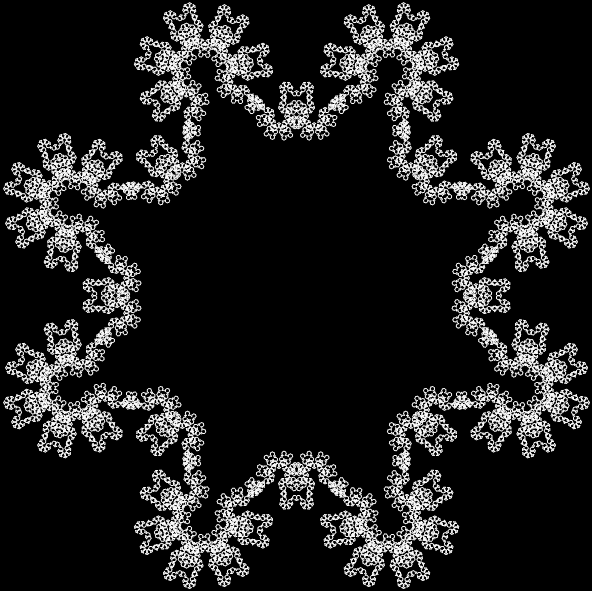
And finally, an octagon with hexagons on its sides. First the hexagons move outward, then inward, then outward, then inward, then outward:

Octagon with hexagons #1


Octagon with hexagons #2


Octagon with hexagons #3


Octagon with hexagons #4


Octagon with hexagons #5


Octagon with hexagons (animated)


Fine as Nine

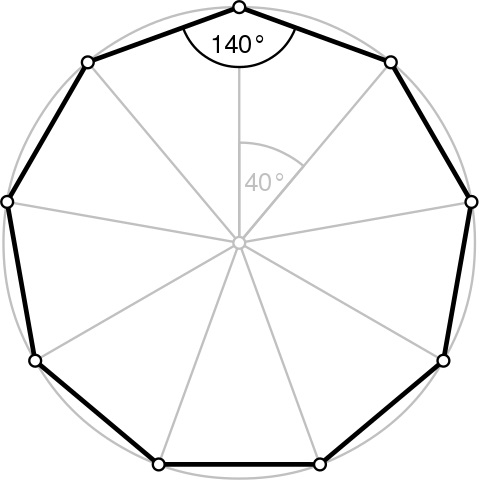
This is a regular nonagon (a polygon with nine sides):

A nonagon or enneagon (from Wikipedia)

And this is the endlessly repeating decimal of the reciprocal of 7:

1/7 = 0.142857142857142857142857…

What is the curious connection between 1/7 and nonagons? If I’d been asked that a week ago, I’d’ve had no answer. Then I found a curious connection when I was looking at the leading digits of polygonal numbers. A polygonal number is a number that can be represented in the form of a polygon. Triangular numbers look like this:


* = 1

*
** = 3

*
**
*** = 6

*
**
***
**** = 10

*
**
***
****
***** = 15

By looking at the shapes rather than the numbers, it’s easy to see that you generate the triangular numbers by simply summing the integers:


1 = 1
1+2=3
1+2+3=6
1+2+3+4=10
1+2+3+4+5=15

Now try the square numbers:


* = 1

**
** = 4

***
***
*** = 9

****
****
****
**** = 16

*****
*****
*****
*****
***** = 25


You generate the square numbers by summing the odd integers:


1 = 1
1+3 = 4
1+3+5 = 9
1+3+7 = 16
1+3+7+9 = 25

Next come the pentagonal numbers, the hexagonal numbers, the heptagonal numbers, and so on. I was looking at the leading digits of these numbers and trying to find patterns. For example, when do the leading digits of the k-th triangular number, tri(k), match the digits of k? This is when:


tri(1) = 1
tri(19) = 190
tri(199) = 19900
tri(1999) = 1999000
tri(19999) = 199990000
tri(199999) = 19999900000
[...]

That pattern is easy to explain. The formula for the k-th polygonal number is k * ((pn-2)*k + (4-pn)) / 2, where pn = 3 for the triangular numbers, 4 for the square numbers, 5 for the pentagonal numbers, and so on. Therefore the k-th triangular number is k * (k + 1) / 2. When k = 19, the formula is 19 * (19 + 1) / 2 = 19 * 20 / 2 = 19 * 10 = 190. And so on. Now try the pol(k) = leaddig(pol(k)) for higher polygonal numbers. The patterns are easy to predict until you get to the nonagonal numbers:


square(10) = 100
square(100) = 10000
square(1000) = 1000000
square(10000) = 100000000
square(100000) = 10000000000
[...]


pentagonal(7) = 70
pentagonal(67) = 6700
pentagonal(667) = 667000
pentagonal(6667) = 66670000
pentagonal(66667) = 6666700000
[...]


hexagonal(6) = 66
hexagonal(51) = 5151
hexagonal(501) = 501501
hexagonal(5001) = 50015001
hexagonal(50001) = 5000150001
[...]


heptagonal(5) = 55
heptagonal(41) = 4141
heptagonal(401) = 401401
heptagonal(4001) = 40014001
heptagonal(40001) = 4000140001
[...]


octagonal(4) = 40
octagonal(34) = 3400
octagonal(334) = 334000
octagonal(3334) = 33340000
octagonal(33334) = 3333400000
[...]


nonagonal(4) = 46
nonagonal(30) = 3075
nonagonal(287) = 287574
nonagonal(2858) = 28581429
nonagonal(28573) = 2857385719
nonagonal(285715) = 285715000000
nonagonal(2857144) = 28571444285716
nonagonal(28571430) = 2857143071428575
nonagonal(285714287) = 285714287571428574
nonagonal(2857142858) = 28571428581428571429
nonagonal(28571428573) = 2857142857385714285719
nonagonal(285714285715) = 285714285715000000000000
nonagonal(2857142857144) = 28571428571444285714285716
nonagonal(28571428571430) = 2857142857143071428571428575
nonagonal(285714285714287) = 285714285714287571428571428574
nonagonal(2857142857142858) = 28571428571428581428571428571429
nonagonal(28571428571428573) = 2857142857142857385714285714285719
nonagonal(285714285714285715) = 285714285714285715000000000000000000
nonagonal(2857142857142857144) = 28571428571428571444285714285714285716
nonagonal(28571428571428571430) = 2857142857142857143071428571428571428575
[...]


What’s going on with the leading digits of the nonagonals? Well, they’re generating a different reciprocal. Or rather, they’re generating the multiple of a different reciprocal:


1/7 * 2 = 2/7 = 0.285714285714285714285714285714...

And why does 1/7 have this curious connection with the nonagonal numbers? Because the nonagonal formula is k * (7k-5) / 2 = k * ((9-2) * k + (4-pn)) / 2. Now look at the pentadecagonal numbers, where pn = 15:


pentadecagonal(1538461538461538461540) = 15384615384615384615406923076923076923076930

2/13 = 0.153846153846153846153846153846...

pentadecagonal formula = k * (13k - 11) / 2 = k * ((15-2)*k + (4-15)) / 2

Penultimately, let’s look at the icosikaihenagonal numbers, where pn = 21:


icosikaihenagonal(2) = 21
icosikaihenagonal(12) = 1266
icosikaihenagonal(107) = 107856
icosikaihenagonal(1054) = 10544743
icosikaihenagonal(10528) = 1052878960
icosikaihenagonal(105265) = 105265947385
icosikaihenagonal(1052633) = 10526335263165
icosikaihenagonal(10526317) = 1052631731578951
icosikaihenagonal(105263159) = 105263159210526318
icosikaihenagonal(1052631580) = 10526315801578947370
icosikaihenagonal(10526315791) = 1052631579163157894746
icosikaihenagonal(105263157896) = 105263157896368421052636
icosikaihenagonal(1052631578949) = 10526315789497368421052643
icosikaihenagonal(10526315789475) = 1052631578947542105263157900
icosikaihenagonal(105263157894738) = 105263157894738263157894736845
icosikaihenagonal(1052631578947370) = 10526315789473706842105263157905
icosikaihenagonal(10526315789473686) = 1052631578947368689473684210526331
icosikaihenagonal(105263157894736843) = 105263157894736843000000000000000000
icosikaihenagonal(1052631578947368422) = 10526315789473684220526315789473684211
icosikaihenagonal(10526315789473684212) = 1052631578947368421257894736842105263166

2/19 = 0.1052631578947368421052631579

icosikaihenagonal formula = k * (19k - 17) / 2 = k * ((21-2)*k + (4-21)) / 2

And ultimately, let’s look at this other pattern in the leading digits of the triangular numbers, which I can’t yet explain at all:


tri(904) = 409060
tri(6191) = 19167336
tri(98984) = 4898965620
tri(996694) = 496699963165
tri(9989894) = 49898996060565
tri(99966994) = 4996699994681515
tri(999898994) = 499898999601055515
tri(9999669994) = 49996699999451815015
tri(99998989994) = 4999898999960055555015
tri(999996699994) = 499996699999945018150015
tri(9999989899994) = 49999898999996005055550015
tri(99999966999994) = 4999996699999994500181500015
tri(999999898999994) = 499999898999999600500555500015
[...]

We Can Circ It Out

It’s a pretty little problem to convert this triangular fractal…

Sierpiński triangle (Wikipedia)


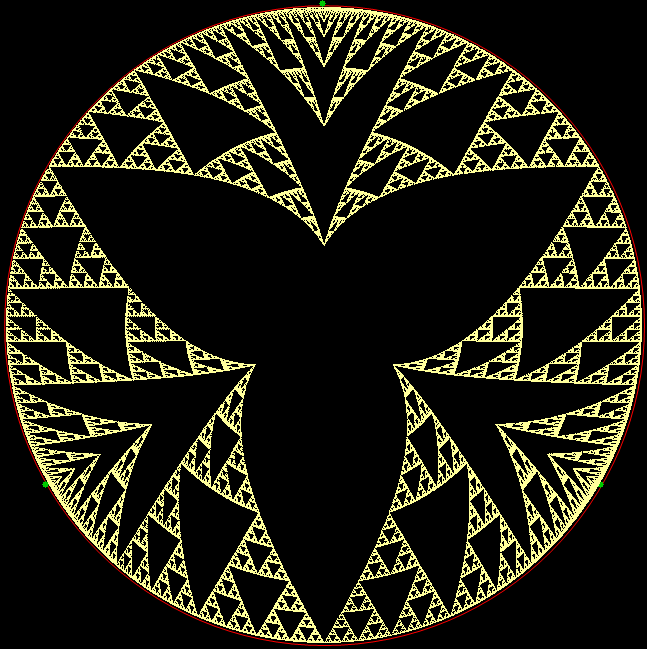
…into its circular equivalent:

Sierpiński triangle as circle


Sierpiński triangle to circle (animated)


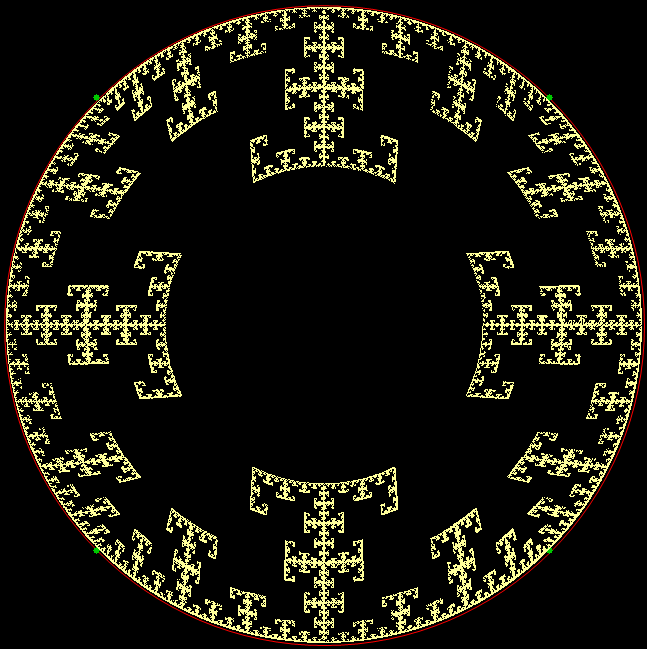
But once you’ve circ’d it out, as it were, you can easily adapt the technique to fractals based on other polygons:

T-square fractal (Wikipedia)

T-square fractal as circle


T-square fractal to circle (animated)


Elsewhere other-accessible…

Dilating the Delta — more on converting polygonic fractals to circles…

Bent Pent

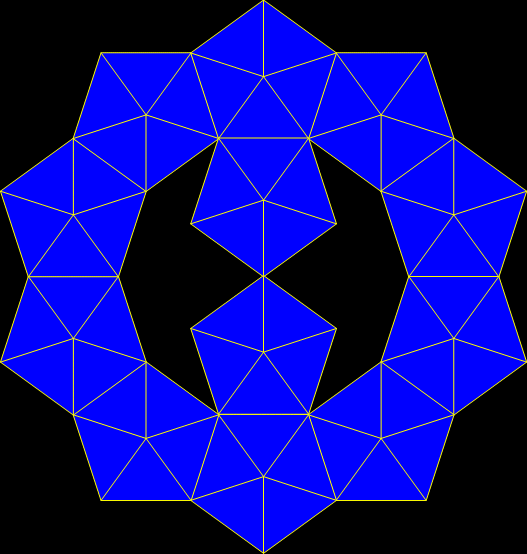
This is a beautiful and interesting shape, reminiscent of a piece of jewellery:

Pentagons in a ring


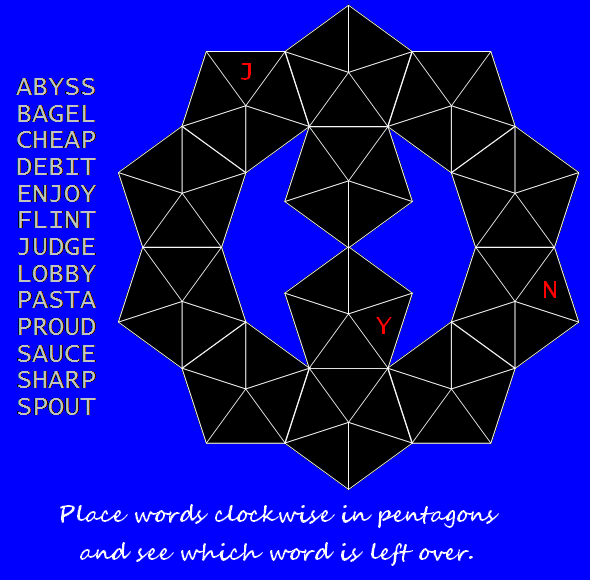
I came across it in this tricky little word-puzzle:

Word puzzle using pentagon-ring


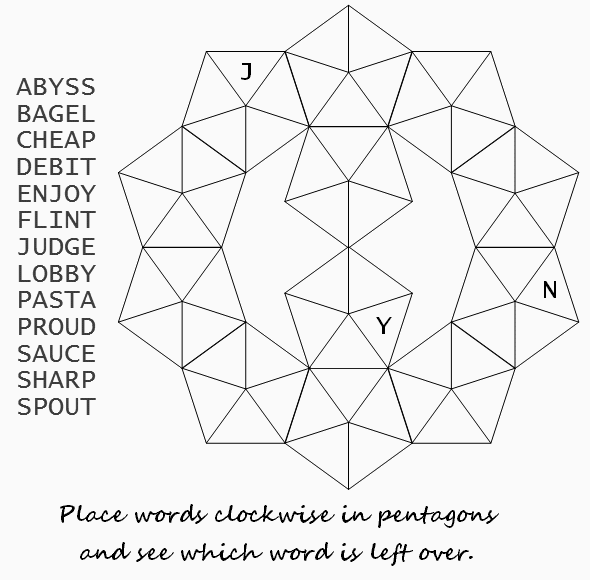
Here’s a printable version of the puzzle:

Printable puzzle


Let’s try placing some other regular polygons with s sides around regular polygons with s*2 sides:

Hexagonal ring of triangles


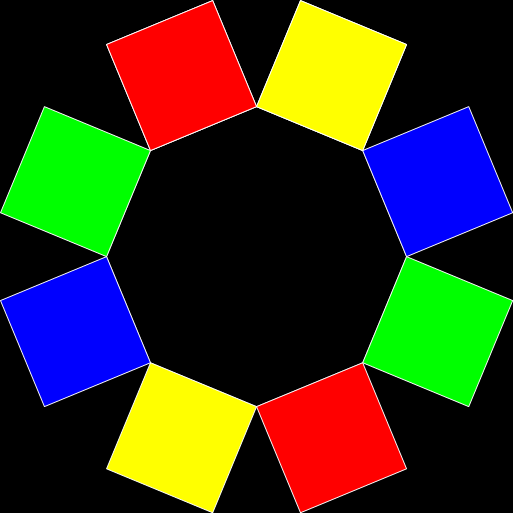
Octagonal ring of squares


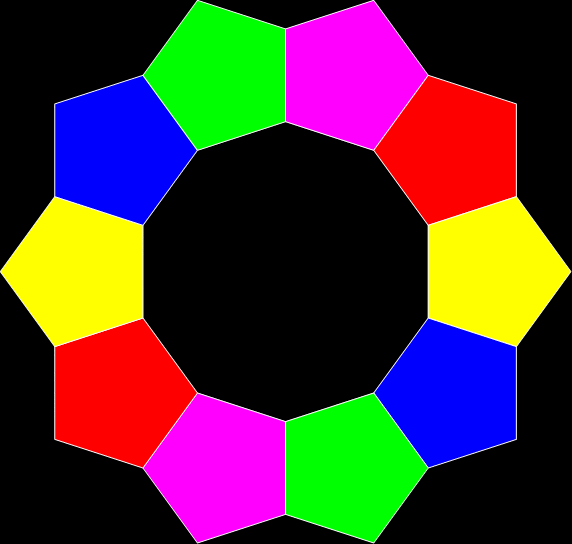
Decagonal ring of pentagons


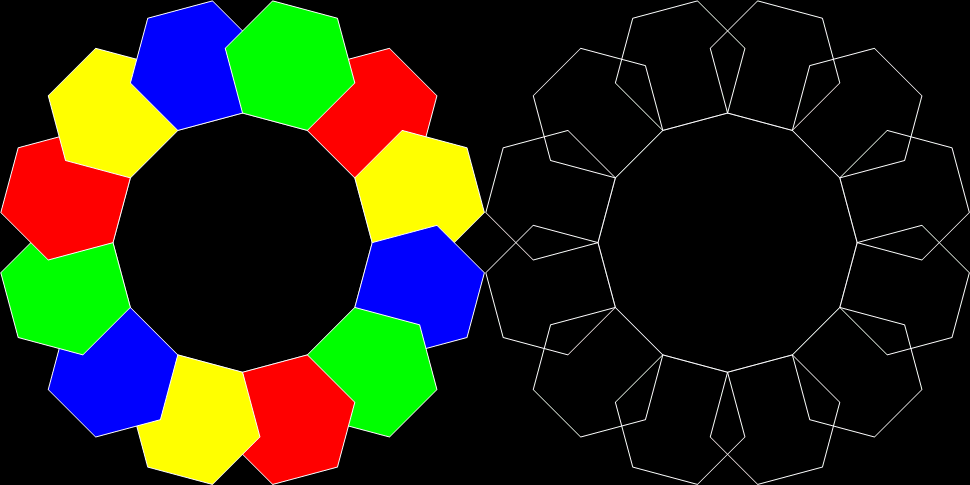
Dodecagonal ring of hexagons


Only regular pentagons fit perfectly, edge-to-edge, around a regular decagon. But all these polygonal-rings can be used to create interesting and beautiful fractals, as I hope to show in a future post.