Elsewhere other-accessible:
• Songs from the Center of the Sun — an interview with Faster Than Lichen

Elsewhere other-accessible:
• Songs from the Center of the Sun — an interview with Faster Than Lichen
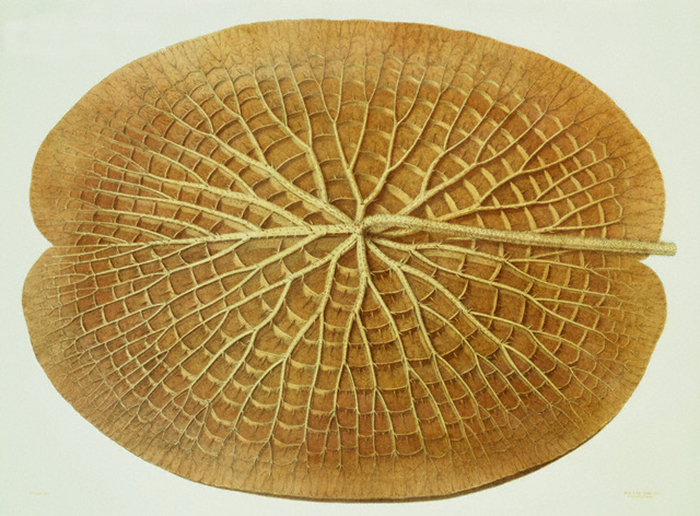
William Sharp, “Victoria Regia or the Great Water Lily of America (Underside of a Leaf)” (1854), viâ Jeff Thompson
Papyrocentric Performativity Presents:
• Roy des Fleurs – Scented Flora of the World: An Encyclopedia, Roy Genders (Robert Hale 1977)
• Art to Hart – Lives in Writing, David Lodge (Vintage Books 2015)
• Could Yew Kudzu? – Wicked Plants: The A-Z of Plants that Kill, Maim, Intoxicate and Otherwise Offend, Amy Stewart (Timber Press 2010)
Or Read a Review at Random: RaRaR
Papyrocentric Performativity Presents:
• At the Margins of Mapness – Mapping the World: The Story of Cartography, Beau Riffenburgh (Carlton Books 2011, 2014)
• Vivid Viral – Flora: An Artistic Voyage through the World of Plants, Sandra Knapp (Natural History Museum 2014)
• Auto Motive – Dream Cars: The Hot 100, Sam Philip (BBC Books 2014)
Or Read a Review at Random: RaRaR
Papyrocentric Performativity Presents:
• Ai Luv Yew – The Bonsai Bible: The Definitive Guide to Choosing and Growing Bonsai, Peter Chan (Hamlyn 2014)
• Starway to Heaven – Guide to the Pyramids of Egypt, Alberto Siliotti, preface by Zahi Hawass (White Star Publishers 2000)
• Escape and Essence – The Wooden Horse, Eric Williams (Pen & Sword 2013)
• Aspects of the Annihilator – Sub-Machine Gun: The development of sub-machine guns and their ammunition from World War I to the present day, Maxim Popenker and Anthony G. Williams (Crowood Press 2011)
• Northanger Abyss – Jane in Blood: Castration, Clitoridolatry and Communal Cannibalism in the Novels of Jane Austen, Dr Miriam B. Stimbers (University of Nebraska Press 2014)
Or Read a Review at Random: RaRaR
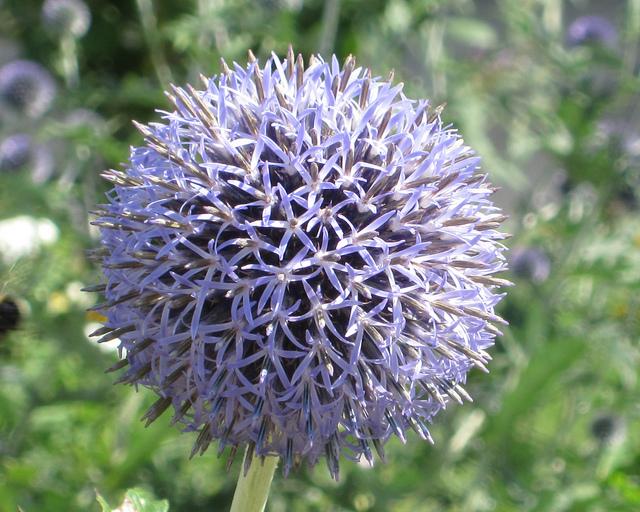
Echinops sphaerocephalus, or Great Globe Thistle
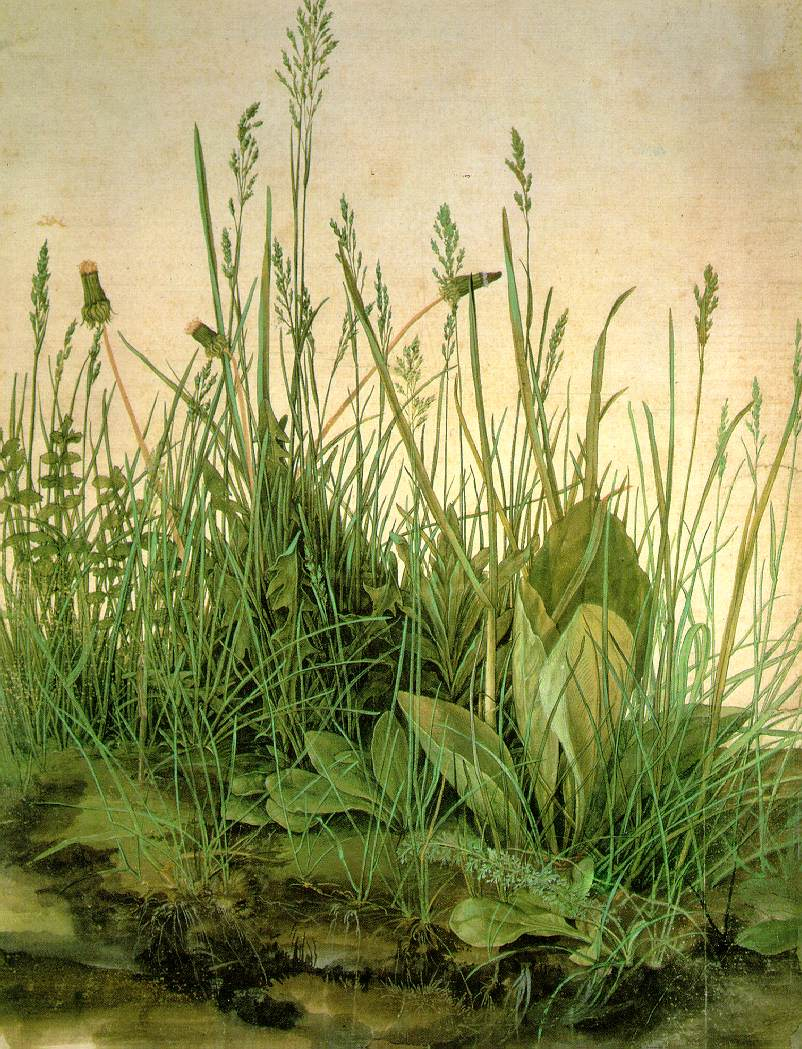
Albrecht Dürer, Das große Rasenstück (1503)
Dürer’s “The Large Piece of Turf”.

Reader’s Digest Field Guide to the Wild Flowers of Britain, J.R. Press et al, illustrated Leonora Box et al (1981)
This is probably the best introduction to British wild flowers that I’ve seen: drawings, photographs and text complement each other perfectly over more than four hundred pages. Despite being compact, it’s a little heavy to be a good field guide, but it would be useful in every British field, wasteland and marsh. From Indian balsam (Impatiens glandulifera) to flowering-rush (Butomus umbellatus) by way of green alkanet (Pentaglottis sempervirens), it’s got a lot, if not the lot (no Mycelis muralis, or wall lettuce, for example). The drawings are skilful, detailed, and often show the plant growing with different species in its habitat, which prepares the eye for identifying it in situ. The drawings also often have the adventitious additions that make David N. Pegler’s Pocket Guide to Mushrooms and Toadstools more enjoyable too, like the half-brick with Canadian fleabane (Conyza canadensis), the chewing-gum wrapper with sea mayweed (Matricaria maritima) and the frog with water violet (Hottonia palustris).
The drawings dominate the page devoted to each plant, but there’s a small photograph of a living specimen too, though “small” doesn’t always mean undramatic. Sea thrift (Armeria maritima) is shown growing quietly on a cliff-top with swirling sea and towering rocks beyond and below it. The photo sums up the book: wild flowers are often delicate and unobtrusive, but they illustrate some grand themes of evolution and biology, from ecological webs to mimicry, parasitism and toxicology: dead-nettles (Lamium spp.) mimick nettles, broomrape (Orobanche spp.) parasitizes broom, clover and more, and lots of British plants can kill you, sicken you or drive you insane, from hemlock (Conium maculatum) to henbane (Hyoscyamus niger). The book explores some grand themes of culture too: the text mixes serious botany with folklore, cuisine, herbalism, and literature. Pignuts (Conopodium majus) appear in The Tempest, for example, and in Ireland “were thought to be the food of leprachauns”. The etymologies aren’t always trustworthy — the “-ard” of “mustard” doesn’t mean ardente, “burning” — but that makes the book itself part of folklore and adds to the plants’ appeal. Highly recommended in this first edition.
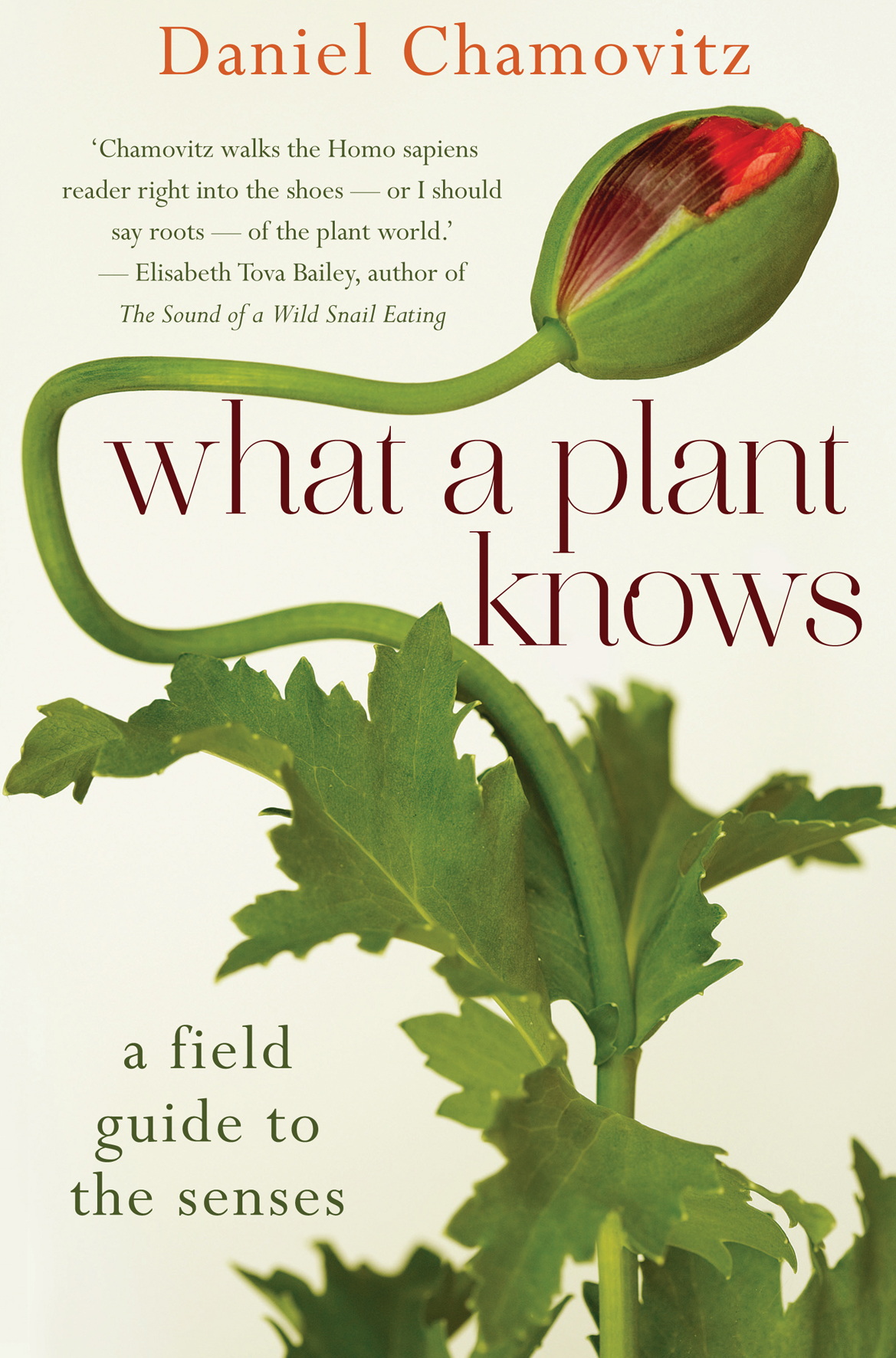 What a Plant Knows: A Field Guide to the Senses of Your Garden – and Beyond, Daniel Chamovitz (Oneworld 2012)
This is a brief but burgeoning book, covering a lot of science and a lot of scientific history. Plants stay in one place and don’t seem to suffer pain or discomfort, so they’re good experimental subjects, particularly for introverts. That’s why Charles Darwin devoted even more time to plants than he did to worms and barnacles. Chamovitz describes Darwin’s ingenious experiments and the even more ingenious experiments of the researchers that followed him. Over millions of years the world has set problems of survival for plants; in solving these problems, plants have set puzzles for scientists. How do plants know when to flower and prepare for winter? How do they resist attacks by insects? Or prey on insects? Or invite visits from pollinators? And how do they communicate with each other? The answers aren’t just chemical: they’re electrical too, as research on the world’s most famous carnivorous plant has proved:
Alexander Volkov and his colleagues at Oakwood University in Alabama first demonstrated that it is indeed electricity that causes the Venus flytrap to close. To test the model, they rigged up very fine electrodes and applied an electrical current to the open lobes of the trap. This made the trap close without any direct touch to its trigger hairs … (ch. 6, “What A Plant Remembers”, pp. 147-8)
Acoustics is also at work in the plant kingdom:
In a process known as buzz pollination, bumblebees stimulate a flower to release its pollen by rapidly vibrating their wing muscles without actually flapping their wings, leading to a high-frequency vibration. … In a similar vein, Roman Zweifel and Fabienne Zeugin from the University of Bern in Switzerland have reported ultrasonic vibrations emanating from pine and oak trees during a drought. These vibrations result from changes in the water content of the water-transporting xylem vessels. While these sounds are passive results of physical forces (in the same way that a rock crashing off a cliff makes a noise), perhaps these ultrasonic vibrations are used as a signal by other trees to prepare for dry conditions. (ch. 4, “What A Plant Hears”, pg. 107-8)
All of this is mathematical: a plant is a mechanism that processes not just sun, water and carbon-dioxide, but information from its environment too. But then sun, water and CO2 are all part of that information: sunlight signals plants as well as sustaining them. Its strength and duration are cues for the seasons and time of the day. So is its colour:
By the time John F. Kennedy was elected president, Warren L. Butler and his colleagues had demonstrated that a single photoreceptor in plants was responsible for both the red and far-red effects. They called this receptor “phytochrome”, meaning “plant colour”. In its simplest model, phytochrome is a light-activated switch. Red light activates phytochrome, turning it into a form primed to receive far-red light. Far-red light inactivates phytochrome, turning it into a form primed to receive red light. Ecologically, this makes a lot of sense. In nature, the last light a plant sees at the end of the day is far-red, and this signifies to the plant that it should “turn-off”. In the morning it sees red light and it wakes up. In this way a plant measures how long ago it last saw red light and adjusts its growth accordingly. (ch. 1, “What A Plant Sees”, pg. 21-2)
There’s an obvious analogy with a computer automatically turning itself off and on, which would make phytochrome and its associated chemicals a kind of hardware created by the software of the genes. Plants share some of that software with human beings: in one fascinating section, Chamovitz discusses the links between healthy plants and sick people:
The arabidopsis [A. thaliana, mustard plant] genome contains BRCA, CFTR, and several hundred other genes associated with human disease or impairment because they are essential for basic cellular biology. These important genes had already evolved 1.5 billion years ago in the single-celled organism that was the common evolutionary ancestor to both plants and animals. (ch. 4, “What A Plant Hears”, pg. 105)
What a Plant Knows stimulates human minds as it discusses plant senses. It’s one of the best briefest, or briefest best, books on science I’ve ever read, packing a lot of history and scientific information into six chapters. Plants don’t move much, but they’re a very lively topic and botany is a good way to understand and appreciate biology and scientific research better.
 Overlord In Terms of Core Issues Around Maximal Engagement with Key Notions of the Über-Feral