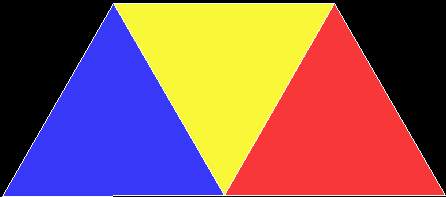
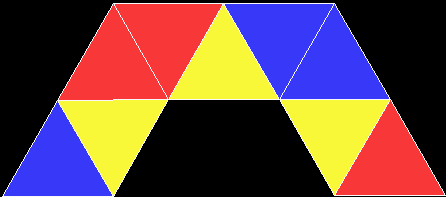
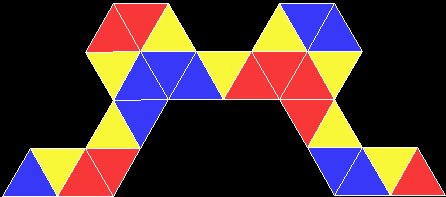
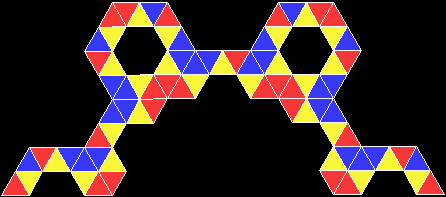
Back to Bases

(N.B. I am not a mathematician and often make stupid mistakes in my recreational maths. Caveat lector.)

101 isn’t a number, it’s a label for a number. In fact, it’s a label for infinitely many numbers. In base 2, 1012 = 5; in base 3, 1013 = 10; 1014 = 17; 1015 = 26; and so on, for ever. In some bases, like 2 and 4, the number labelled 101 is prime. In other bases, it isn’t. But it is always a palindrome: that is, it’s the same read forward and back. But 101, the number itself, is a palindrome in only two bases: base 10 and base 100.1 Note that 100 = 101-1: with the exception of 2, all integers, or whole numbers, are palindromic in at least one base, the base that is one less than the integer itself. So 3 = 112; 4 = 113; 5 = 114; 101 = 11100; and so on.

Less trivial is the question of which integers set progressive records for palindromicity, or for the number of palindromes they create in bases less than the integers themselves. You might guess that the bigger the integer, the more palindromes it will create, but it isn’t as simple as that. Here is 10 represented in bases 2 through 9:

10102 | 1013* | 224* | 205 | 146 | 137 | 128 | 119*

10 is a palindrome in bases 3, 4, and 9. Now here is 30 represented in bases 2 through 29 (note that a number between square brackets represents a single digit in that base):2

111102 | 10103 | 1324 | 1105 | 506 | 427 | 368 | 339* | 30 | 2811 | 2612 | 2413 | 2214* | 2015 | 1[14]16 | 1[13]17 | 1[12]18 | 1[11]19 | 1[10]20 | 1921 | 1822 | 1723 | 1624 | 1525 | 1426 | 1327 | 1228
| 1129*

30, despite being three times bigger than 10, creates only three palindromes too: in bases 9, 14, and 29. Here is a graph showing the number of palindromes for each number from 3 to 100 (prime numbers are in red):
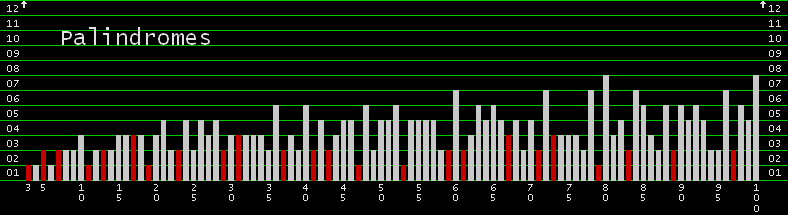
Graph of palindromes in various bases for n=3 to 100

The number of palindromes a number has is related to the number of factors, or divisors, it has. A prime number has only one factor,  itself (and 1), so primes tend to be less palindromic than composite numbers. Even large primes can have only one palindrome, in the base b=n-1 (55,440 has 119 factors and 61 palindromes; 65,381 has one factor and one palindrome, 1165380). Here is a graph showing the number of factors for each number from 3 to 100:

Graph of number of factors for n = 3 to 100

And here is an animated gif combining the two previous images:
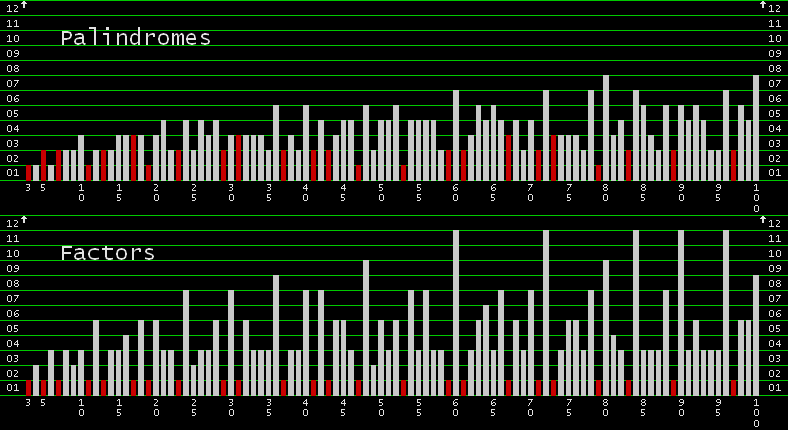
Animated gif of number of palindromes and factors, n=3 to 100

Here is a graph indicating where palindromes appear when n, along the x-axis, is represented in the bases b=2 to n-1, along the y-axis:
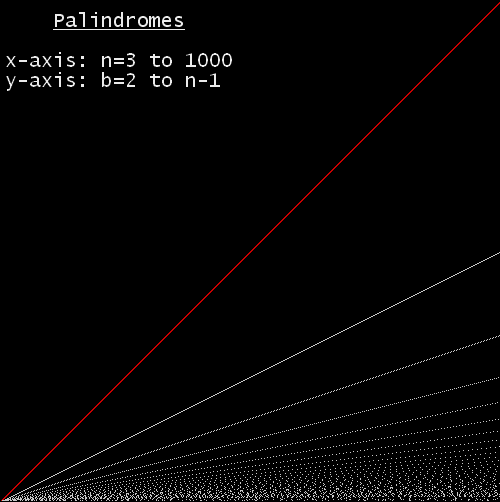
Graph showing where palindromes occur in various bases for n = 3 to 1000

The red line are the palindromes in base b=n-1, which is “11” for every n>2. The lines below it arise because every sufficiently large n with divisor d can be represented in the form d·n1 + d. For example, 8 = 2·3 + 2, so 8 in base 3 = 223; 18 = 3·5 + 3, so 18 = 335; 32 = 4.7 + 4, so 32 = 447; 391 = 17·22 + 17, so 391 = [17][17]22.

And here, finally, is a table showing integers that set progressive records for palindromicity (p = number of palindromes, f = total number of factors, prime and non-prime):

n Prime Factors p f    n Prime Factors p f
3 3 1 1    2,520 23·32·5·7 25 47
5 5 2 1    3,600 24·32·52 26 44
10 2·5 3 3    5,040 24·32·5·7 30 59
21 3·7 4 3    7,560 23·33·5·7 32 63
36 22·32 5 8    9,240 23·3·5·7·11 35 63
60 22·3·5 6 11    10,080 25·32·5·7 36 71
80 24·5 7 9    12,600 23·32·52·7 38 71
120 23·3·5 8 15    15,120 24·33·5·7 40 79
180 22·32·5 9 17    18,480 24·3·5·7·11 43 79
252 22·32·7 11 17    25,200 24·32·52·7 47 89
300 22·3·52 13 17    27,720 23·32·5·7·11 49 95
720 24·32·5 16 29    36,960 25·3·5·7·11 50 95
1,080 23·33·5 17 31    41,580 22·33·5·7·11 51 95
1,440 25·32·5 18 35    45,360 24·34·5·7 52 99
1,680 24·3·5·7 20 39    50,400 25·32·52·7 54 107
2,160 24·33·5 21 39    55,440 24·32·5·7·11 61 119

Notes

1. That is, it’s only a palindrome in two bases less than 101. In higher bases, “101” is a single digit, so is trivially a palindrome (as the numbers 1 through 9 are in base 10).

2. In base b, there are b digits, including 0. So base 2 has two digits, 0 and 1; base 10 has ten digits, 0-9; base 16 has sixteen digits: 0, 1, 2, 3, 4, 5, 6, 7, 8, 9, A, B, C, D, E, F.

Monteverde’s Mathemorphosis

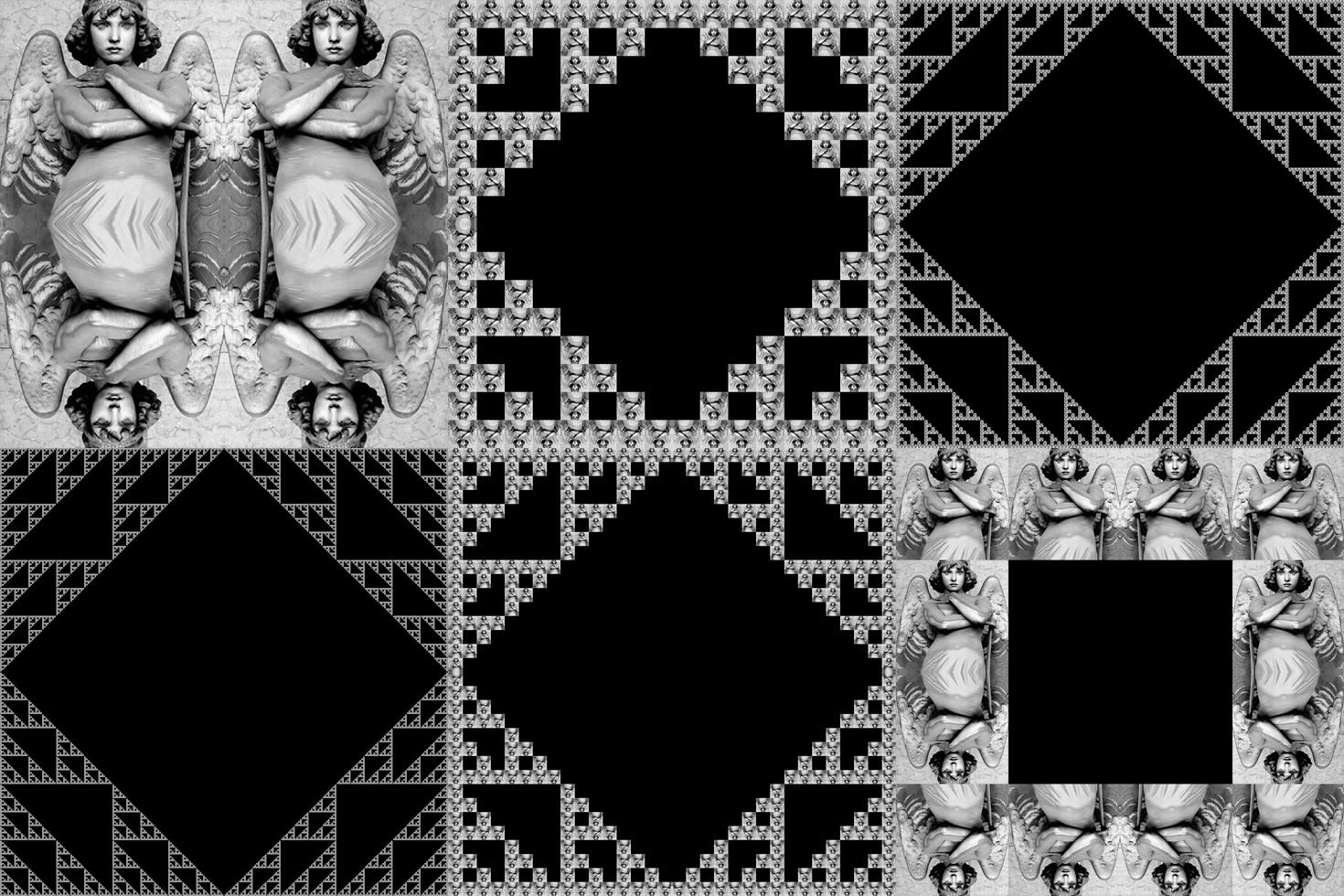
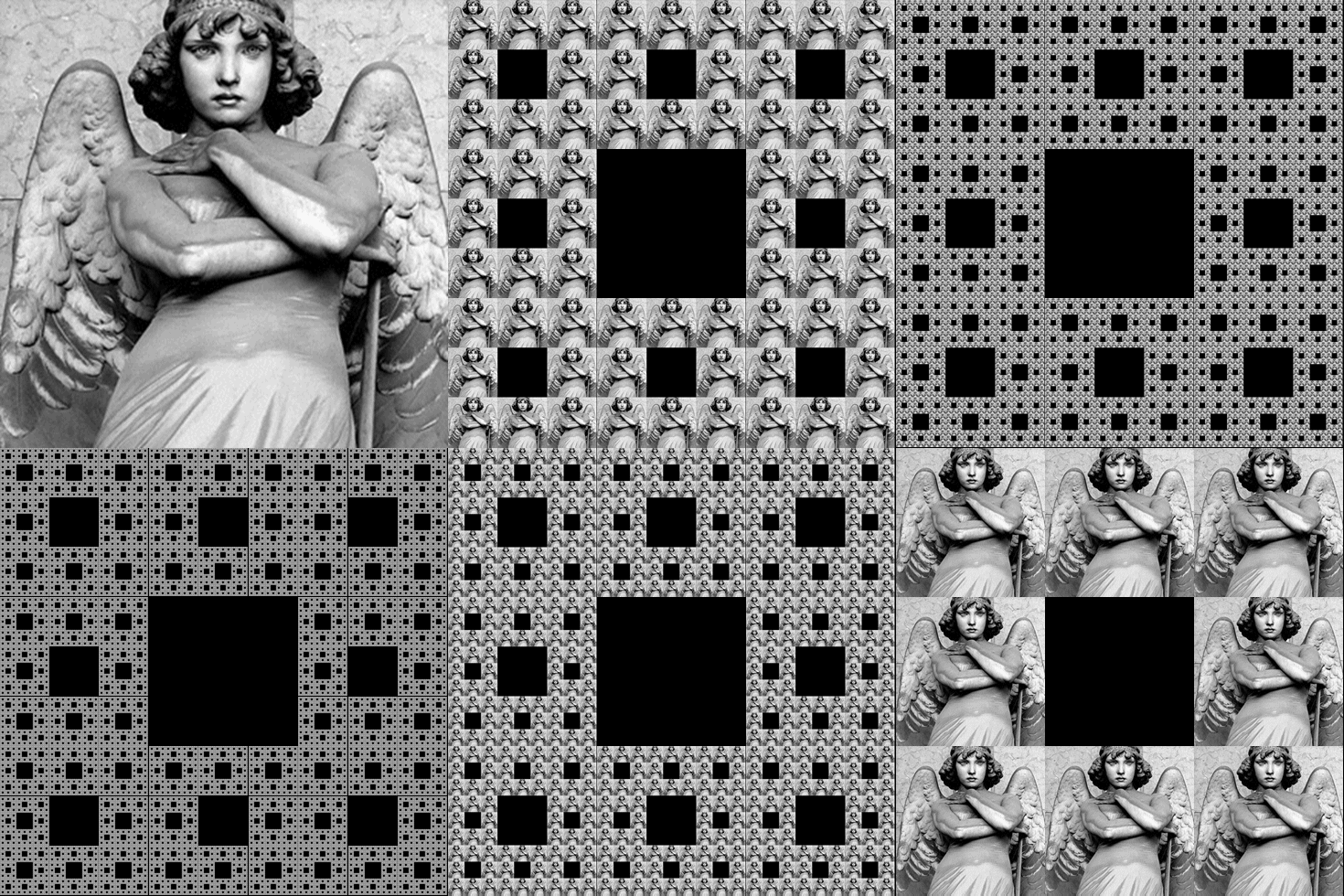
Here are some fractals based on the Angelo di Monteverde or Angelo della Resurrezione carved by the Italian sculptor Giulio Monteverde (1837-1917) for the monumental cemetery of Staglieno in Genoa.
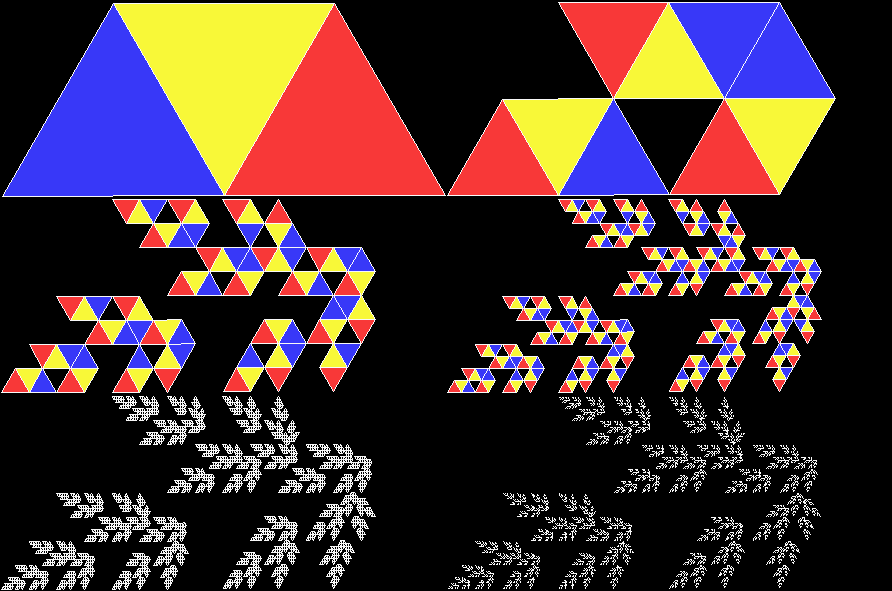
A fractal based on an angel carved by Giulio Monteverde

A fractal based on an angel carved by Giulio Monteverde

A fractal based on an angel carved by Giulio Monteverde

A fractal based on an angel carved by Giulio Monteverde

A fractal based on an angel carved by Giulio Monteverde

A fractal based on an angel carved by Giulio Monteverde

A fractal based on an angel carved by Giulio Monteverde

Jug is the Drug

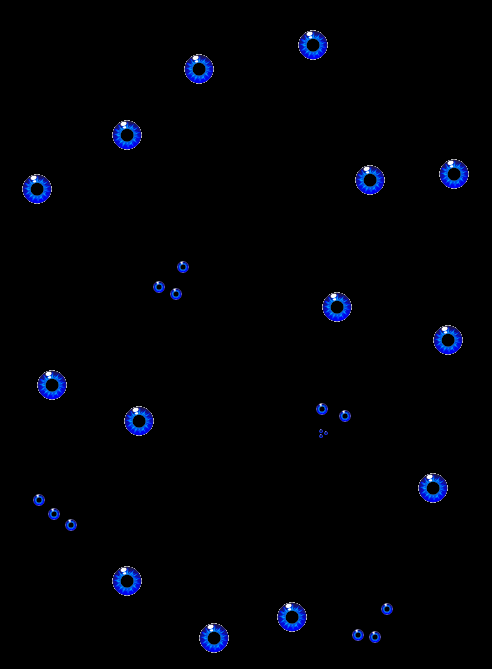
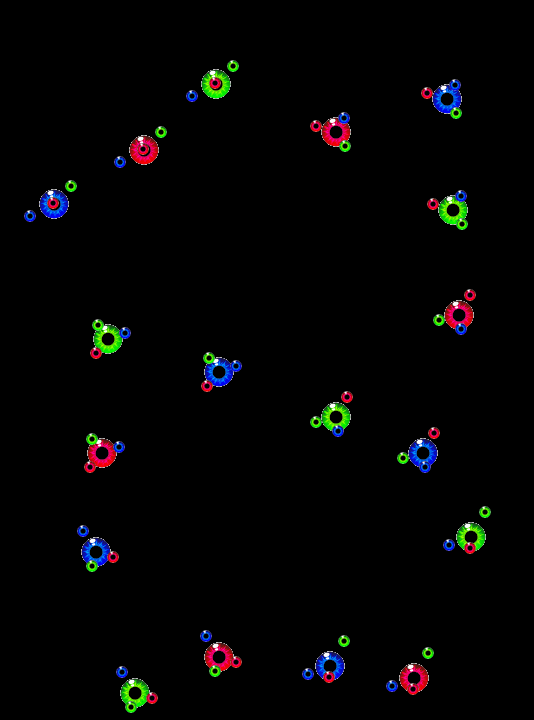
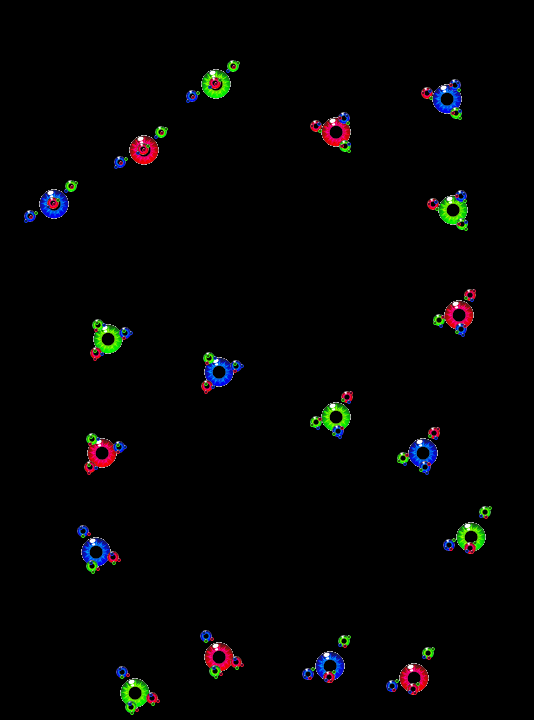
In “The Gems of Rebbuqqa”, I interrogated notions around the concept of priestesses who permanently juggle three giant eye-like gems, a ruby, a sapphire, and an emerald, atop a sandstone altar. In “The Schismatarch” (forthcoming), I will interrogate notions around the concept of a Himalayan sect that believes this universe is one of three juggled by a god called Nganāma. Each of these universes contains a smaller Nganāma who juggles three dwarf universes; et sic ad infinitum. Moreover, the Nganāma juggling our universe sits in a larger universe, one of three juggled by a giant Nganāma in a larger universe still, which is one of three on a higher plane; et sic ad infinitum. The cosmology of the Nganāma-sect is fractal: ut supra, sic infra: as above, so below. Here are some animated gifs inspired by these two stories and based on juggled eye-gem fractals.

A fractal of three juggled blue eyes

 A fractal comprising three juggled eyes

A fractal of three sets of three juggled eyes

A fractal comprising three sets of three sets (sic) of three juggled eyes

A fractal based on juggled eyeballs

A fractal of three juggled eyes, in front of each of which three more eyes are juggled

A fractal of 27 juggled eyes

Whip Poor Wilhelm

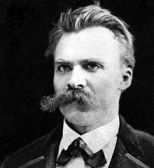
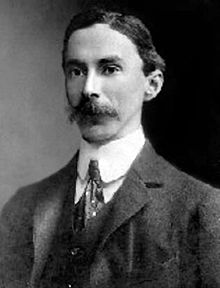
Nietzscheans are a lot like Christians, just as Nietzsche was a lot like Christ. They’re often very bad adverts for their master, and their master would have been horrified to see some of his followers. Or perhaps not: Nietzsche believed in amor fati, or acceptance of fate, after all. He also thought that the omelette of the Übermensch wouldn’t be made without breaking a lot of human eggs. But I’m sure amusement, rather than horror, would have been his reaction to Bertrand Russell’s very hostile chapter about him in A History of Western Philosophy (1945). Russell wasn’t everything Nietzsche despised – I’m not sure a single human being could combine everything Nietzsche despised – but he came pretty close. He was liberal, humanitarian, altruistic, philanthropic, philogynist, and English (kind of). If Russell had liked Nietzsche, Nietzsche would surely have whirled in his grave. But Russell didn’t, and certainly not from the perspective of the Second World War, when he wrote A History of Western Philosophy and Nietzsche still seemed heavily implicated in Nazism.

He wasn’t, of course: the naughty and nasty Nazis misinterpreted him very badly. But he’s much easier for Nazis to misinterpret than Marx is, as proved by the respective status of these two philosophers in Nazi Germany and the Soviet Union. Russell doesn’t so much misinterpret him as mutilate and muffle him. I would have thought that anyone, Nietzschophile or not, would acknowledge the intellectual power and range of Nietzsche’s writing. I have never felt so strongly in the presence of genius as when I first read one of his books. In Wagnerian terms, he combines Wotan with Donner, infusing the subtlety and cunning of Odin into the strength and energy of Thor. I can’t read him in German and he himself said he’d have preferred to write in French. But enough of his power comes across in English even for Russell, I’d’ve thought. Not so, and not so for many other Anglophone readers, who dismiss Nietzsche as meaningless and trivial. You might as well call the sun dull and thunder quiet: Nietzsche blazes and bellows with meaning. He also, unlike many of his followers, has a sense of humour. Russell did too, but his polemic refuses to acknowledge Nietzsche’s jokes and playfulness:

His general outlook remained very similar to that of Wagner in the Ring; Nietzsche’s superman is very like Siegfried, except that he knows Greek. This may seem odd, but that is not my fault. In spite of Nietzsche’s criticism of the romantics, his outlook owes much to them; it is that of aristocratic anarchism, like Byron’s, and one is not surprised to find him admiring Byron. He attempts to combine two sets of values which are not easily harmonized: on the one hand he likes ruthlessness, war, and aristocratic pride; on the other hand, he loves philosophy and literature and the arts, especially music. Historically, these values coexisted in the Renaissance; Pope Julius II, fighting for Bologna and employing Michelangelo, might be taken as the sort of man whom Nietzsche would wish to see in control of governments. (Op. cit.)

Yes, but he justifies his likes, loves, and loathings in some of the most original, exhilarating, and interesting books ever written. Perhaps the problem was the one diagnosed by Lytton Strachey in Eminent Victorians (1918) when he discussed the antagonism between Newman and Charles Kingsley: “The controversy was not a very fruitful one, chiefly because Kingsley could no more understand the nature of Newman’s intelligence than a subaltern in a line regiment can understand a Brahmin of Benares.” Russell was the subaltern, Nietzsche the Brahmin. If Russell was clever, Nietzsche was cleverer. If Russell had read widely, Nietzsche had read wider. Russell was undoubtedly better at maths, but there have been lots of good mathematicians. Nietzsche could have echoed what Beethoven is supposed to have said to an aristocrat who offended him: “There are and will be a thousand princes; there is only one Beethoven.” Without Russell, I don’t think the world would be a very different place: other people would have thought and written pretty much what he did. It’s difficult to say how different the world would be without Nietzsche, but one thing is certain: it would be less interesting and contain less iconoclasm. Nietzsche thought and wrote things no-one else would have or could have. As a philosopher, Russell was a competent but replaceable journalist, Nietzsche a brilliant and irreplaceable poet. He appeals to writers and artists partly because he confirms their self-importance, but the confirmation hasn’t always been wrong. I think a Deus ex Machina is likelier than the Übermensch, but either way mankind will be surpassed and Nietzsche was the one to prophesy it, not Russell. Born earlier, living shorter, he saw further, wrote better, and will be remembered longer. His moustache was bigger too. Russell was wrong to whip poor Wilhelm, but Wilhelm wouldn’t have wanted it any other way.

Nietzsche c. 1875

Nietzsche c. 1875

Bertrand Russell in 1907

Russell in 1907

He Say, He Sigh, He Sow

“It’s only really in the last decade or so that I’ve started to engage seriously with what I think the implications of modernism are in terms of the novel…” – Will Self, The Observer, Sunday, 5th August, 2012.


Pre-Previously Posted (Please Peruse)

Ex-Term-In-Ate!

C.A.S. Lewis

C.S. Lewis (1898-1963) was from Ulster, Clark Ashton Smith (1893-1961) from California. The two men wrote fantasy fiction, distrusted science, and rejected modernism. They had two initials in common too, but not much else. Like his friend J.R.R. Tolkien, Lewis believed in angels but, again like Tolkien, he didn’t write like one. CAS didn’t believe in angels, but did write like one. There is less literary magic in the whole of the Narnia series (1950-6) or Lord of the Rings (1954-5) than in a single of CAS’s Zothique stories, like “The Dark Eidolon” (1935) or “Empire of the Necromancers” (1932). If the English language is a harp, Lewis and Tolkien rarely plucked its sweetest strings. CASean notes do sound now and then in Lord of the Rings, like “The Mirror of Galadriel” and “The Pyre of Denethor”, but the prose of these chapters doesn’t match their titles. CAS, by contrast, could have written prose worthy of the titles. Elsewhere in Lord of the Rings, it’s the prose of a chapter that’s CASean rather than the title. But not very CASean, and not for very long:

The long journey from Rivendell had brought them far south of their own land, but not until now in this more sheltered region had the hobbits felt the change of clime. Here Spring was already busy about them: fronds pierced moss and mould, larches were green-fingered, small flowers were opening in the turf, birds were singing. Ithilien, the garden of Gondor now desolate kept still a dishevelled dryad loveliness. (The Two Towers, Book IV, chapter 4, “Of Herbs and Stewed Rabbit”)

Kings made tombs more splendid than houses of the living, and counted old names in the rolls of their descent dearer than the names of sons. Childless lords sat in aged halls musing on heraldry; in secret chambers withered men compounded strong elixirs, or in high cold towers asked questions of the stars. And the last king of the line of Anárion had no heir. (Ibid., chapter 5, “The Window on the West”)

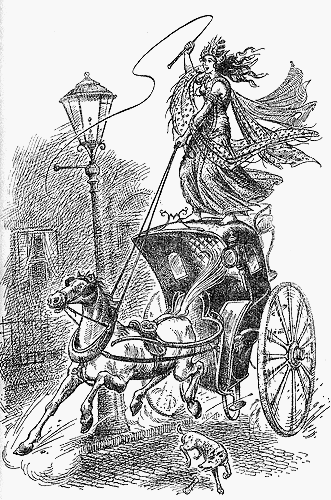
Queen Jadis rides a hackney-cab in nineteenth-century London

Lewis does better, or at least longer: he sustains a flight of CASean invention over two chapters of The Magician’s Nephew (1955). As usual, Pauline Baynes’ drawings are better than his writing, but the prose is conjuring something unusual for Lewis: a genuine sense of antiquity, mystery and desolation. The two young protagonists of the book, Digory and Polly, have been tricked into a “Wood between the Worlds” by the book’s magician. The wood is full of magic pools. Jump into one of them and you’ll be transported to another world. Digory and Polly jump into a pool and find themselves in an ancient abandoned palace lit by a “dull, rather red light”. They begin to explore:

Every now and then they thought they were going to get out into the open and see what sort of country lay around the enormous palace. But each time they only got into another courtyard. They must have been magnificent places when people were still living there. In one there had once been a fountain. A great stone monster with wide-spread wings stood with its mouth open and you could still see a bit of piping at the back of its mouth, out of which the water used to pour. Under it was a wide stone basin to hold the water; but it was as dry as a bone. In other places there were the dry sticks of some sort of climbing plant which had wound itself round the pillars and helped to pull some of them down. But it had died long ago. And there were no ants or spiders or any of the other living things you expect to see in a ruin; and where the dry earth showed between the broken flagstones there was no grass or moss. (Op. cit., chapter four, “The bell and the hammer” (sic))

The prose plods, but one’s aesthetics nods: Lewis is invoking a strange and powerful world. Then the children find a room full of richly dressed men and women frozen like statues. Some look kind and wise, some proud and cruel, some evil and despairing. One woman, the most richly dressed of all and, to Digory, the most beautiful, has a “look of such fierceness and pride that it took your breath away.” There is magic in the room and Digory triggers it, thereby breaking the spell that holds the beautiful woman in suspended animation. She is both a queen and a witch – the witch Jadis. Her name in French means “of old, in olden times”, but the children are not in France, as they discover when Jadis guides them out of the palace:

Much more light than they had yet seen in that country was pouring in through the now empty doorway, and when the Queen led them out through it they were not surprised to find themselves in the open air. The wind that blew in their faces was cold, yet somehow stale. They were looking from a high terrace and there was a great landscape spread out below them.

Low down and near the horizon hung a great, red sun, far bigger than our sun. Digory felt at once that it was also older than ours: a sun near the end of its life, weary of looking down upon that world. To the left of the sun, and higher up, there was a single star, big and bright. Those were the only two things to be seen in the dark sky; they made a dismal group. And on the earth, in every direction, as far as the eye could reach, there spread a vast city in which there was no living thing to be seen. And all the temples, towers, palaces, pyramids, and bridges cast long, disastrous-looking shadows in the light of that withered sun. Once a great river had flowed through the city, but the water had long since vanished, and it was now only a wide ditch of gray dust.

“Look well on that which no eyes will ever see again,” said the Queen. “Such was Charn, that great city, the city of the King of Kings, the wonder of the world, perhaps of all worlds…” (chapter five, “The Deplorable Word”)

Jadis and the city of Charn are Lewis’s most successful invocations of CASean themes like female beauty, sorcerous evil, and dying (or dead) worlds. But the prose is weak and insipid beside that of Clark Ashton Smith – as you can see for yourself by following the links below:

“The Dark Eidolon”

“Empire of the Necromancers”

“The Charnel God”

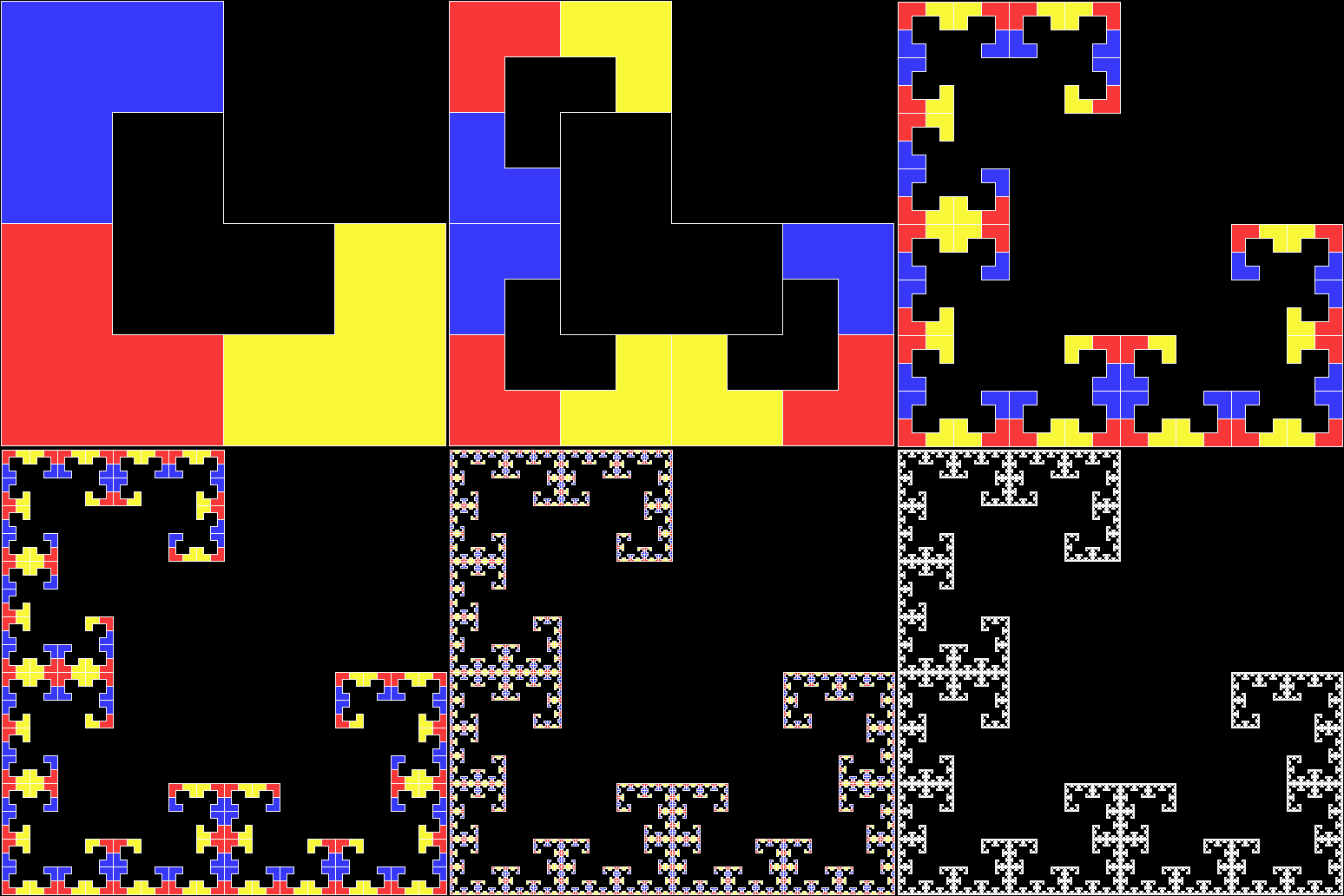
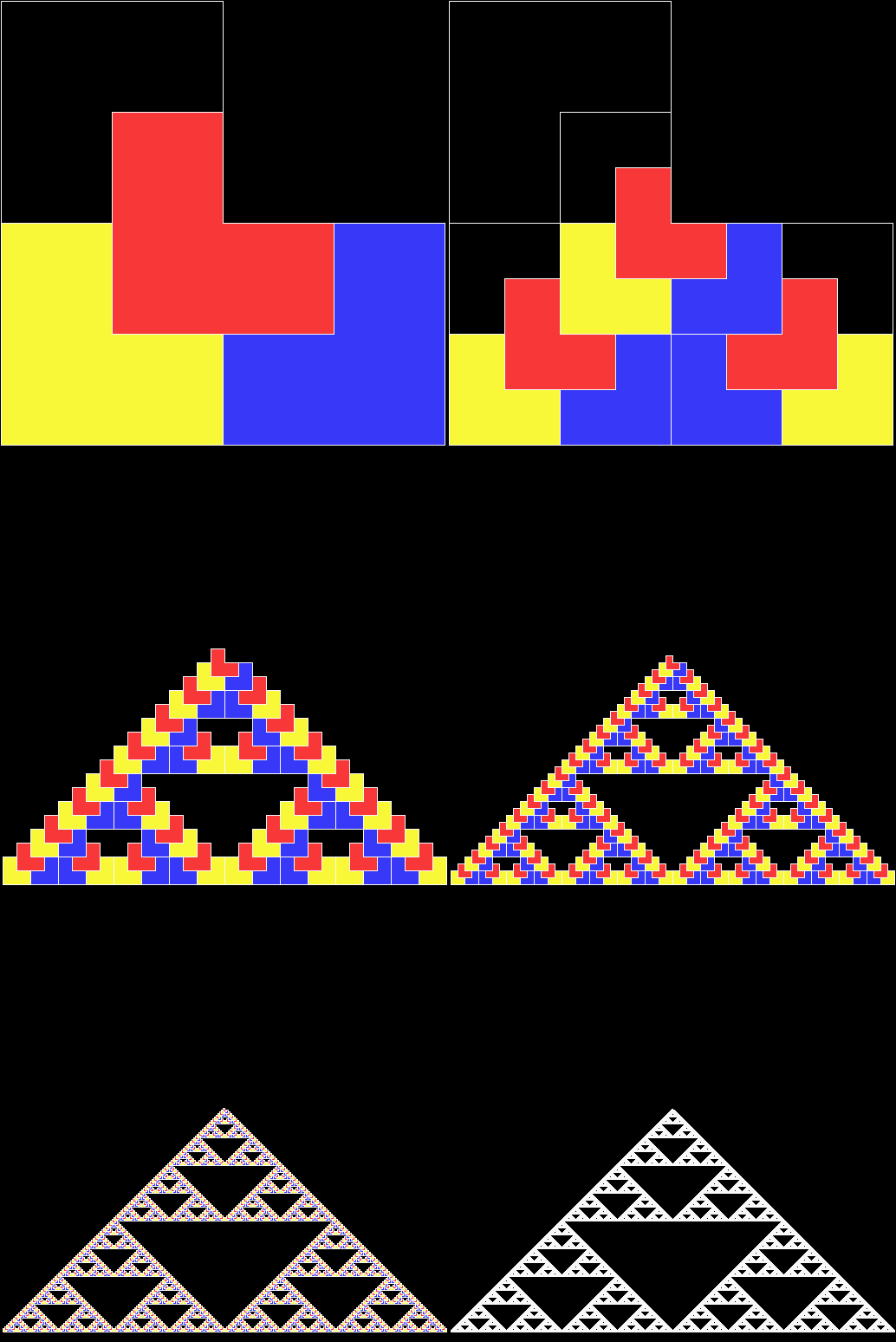
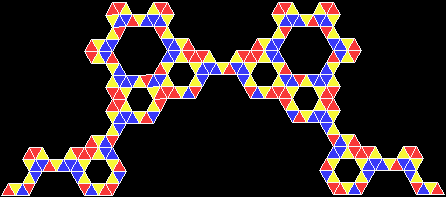
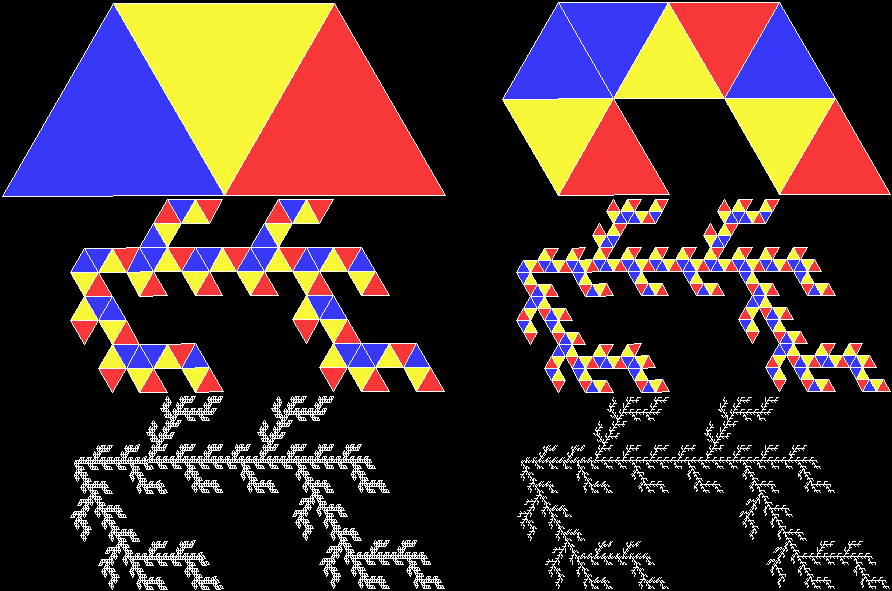
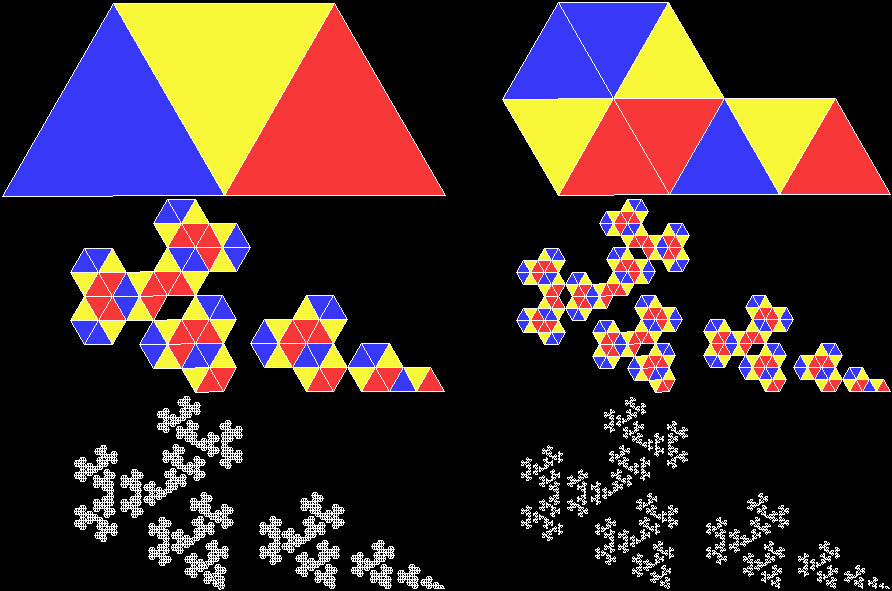
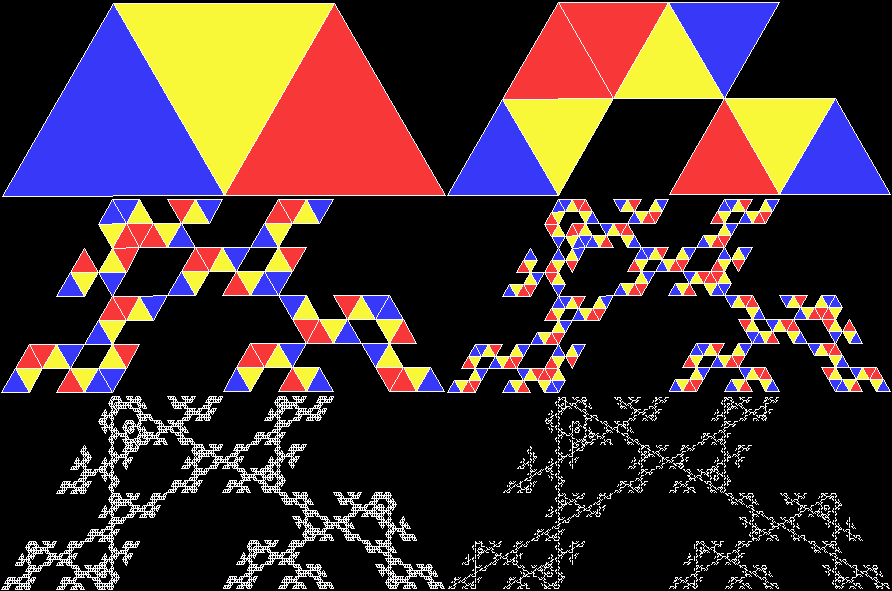
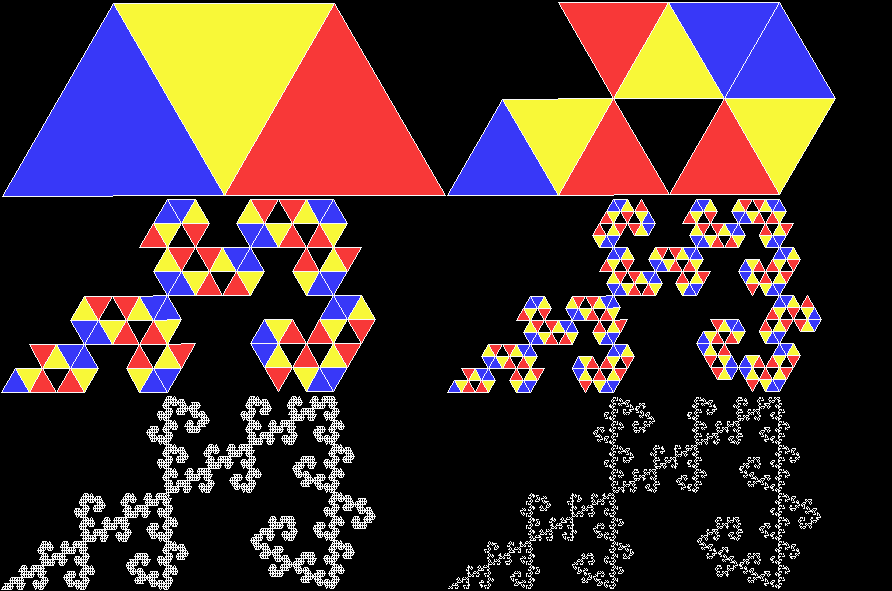
A Feast of Fractiles

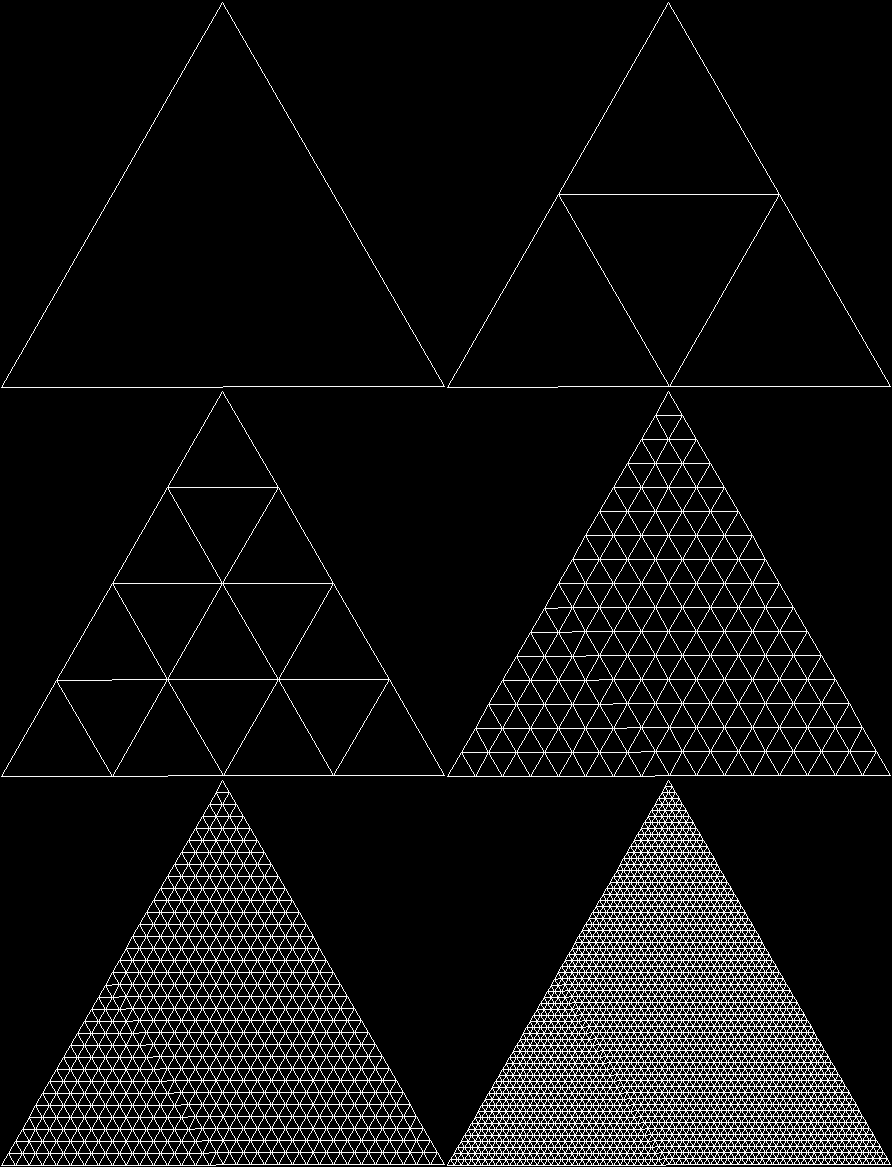
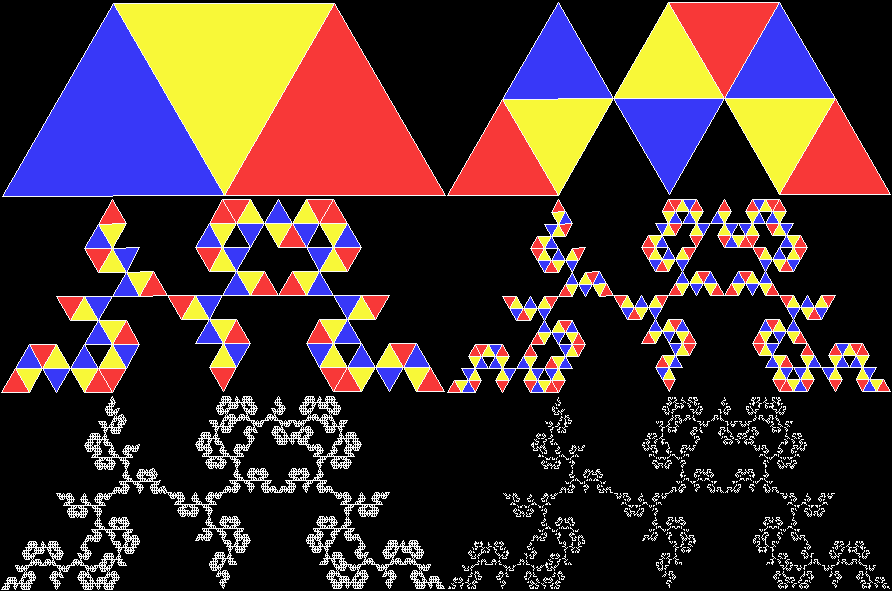
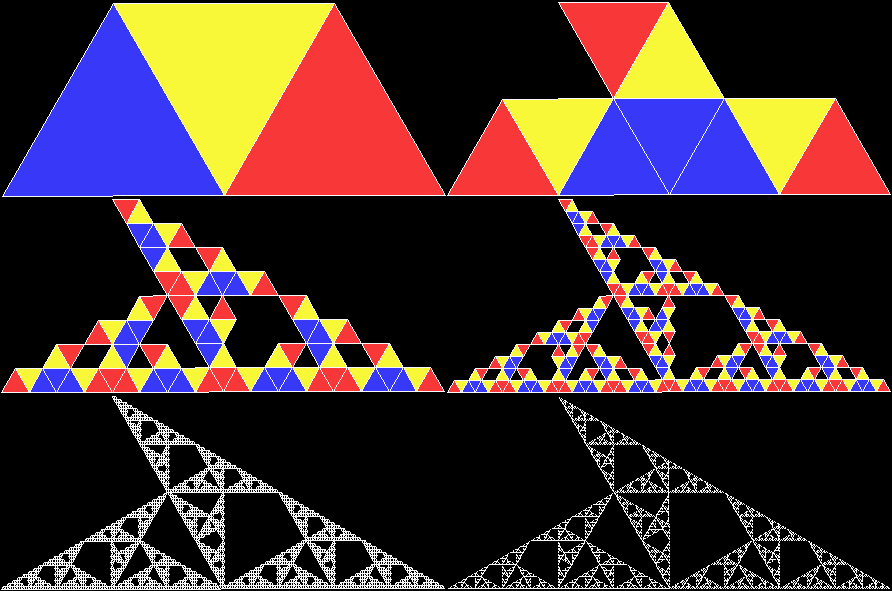
A rep-tile is a shape that can be divided into copies of itself. One of the simplest rep-tiles is the equilateral triangle, which can be divided into four copies of itself, like this:

Self-dividing equilateral triangle

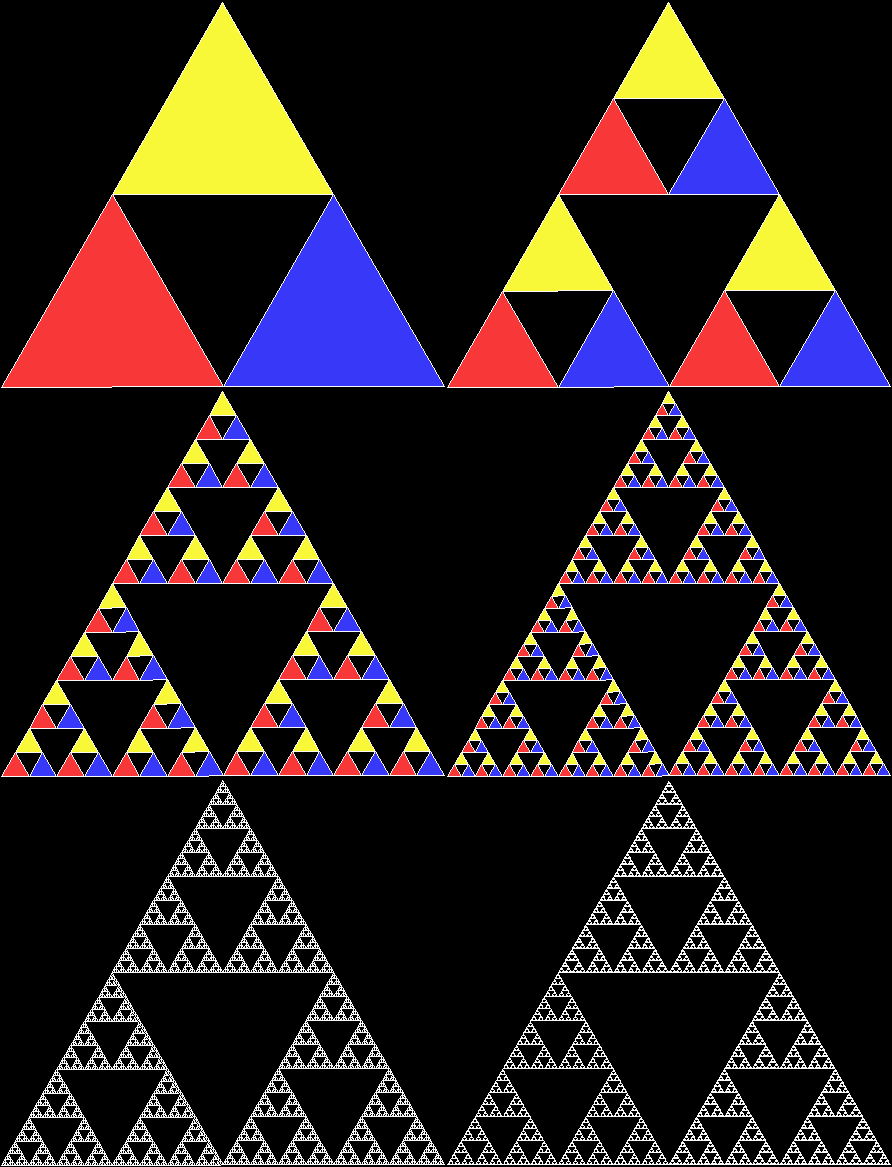
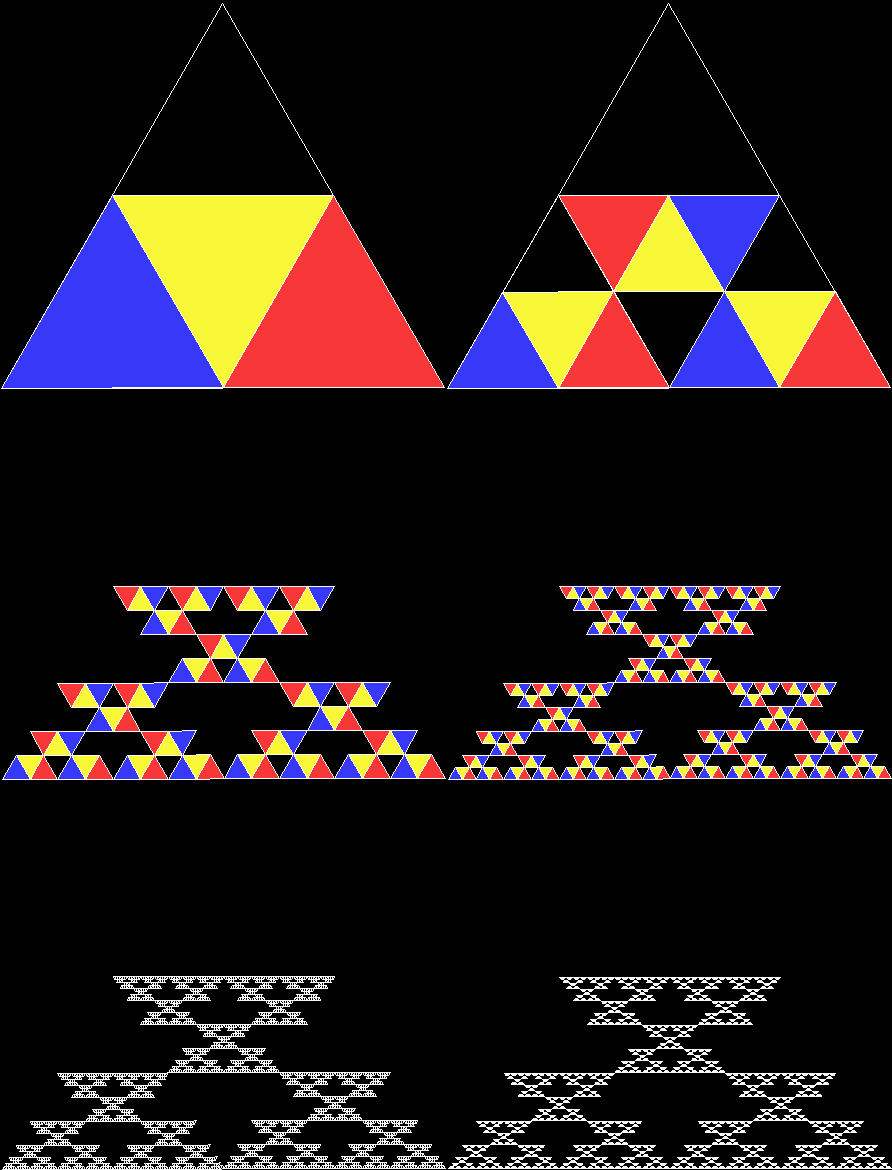
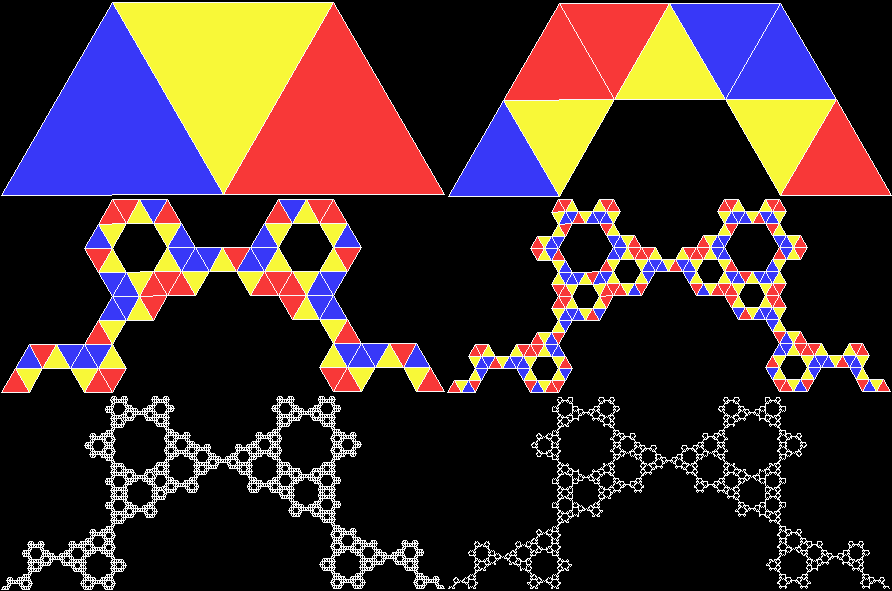
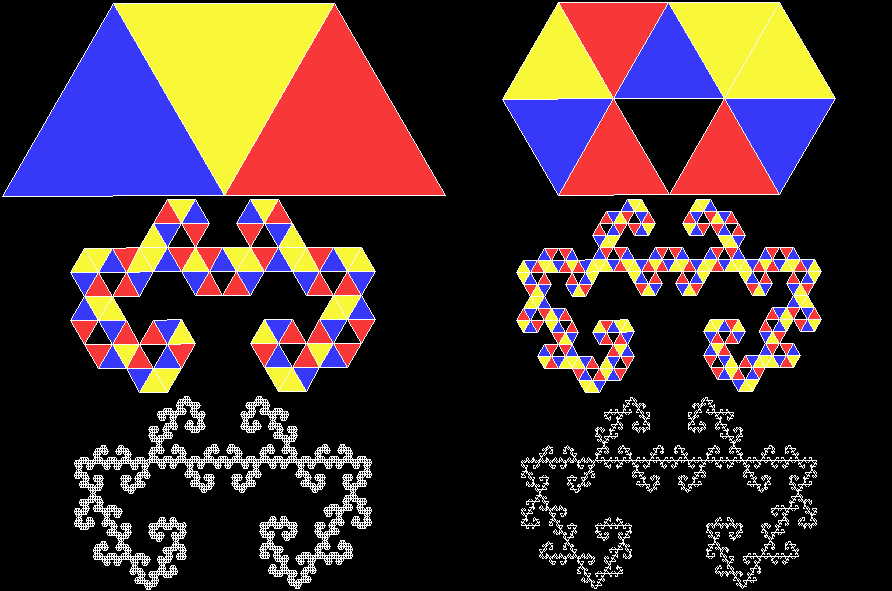
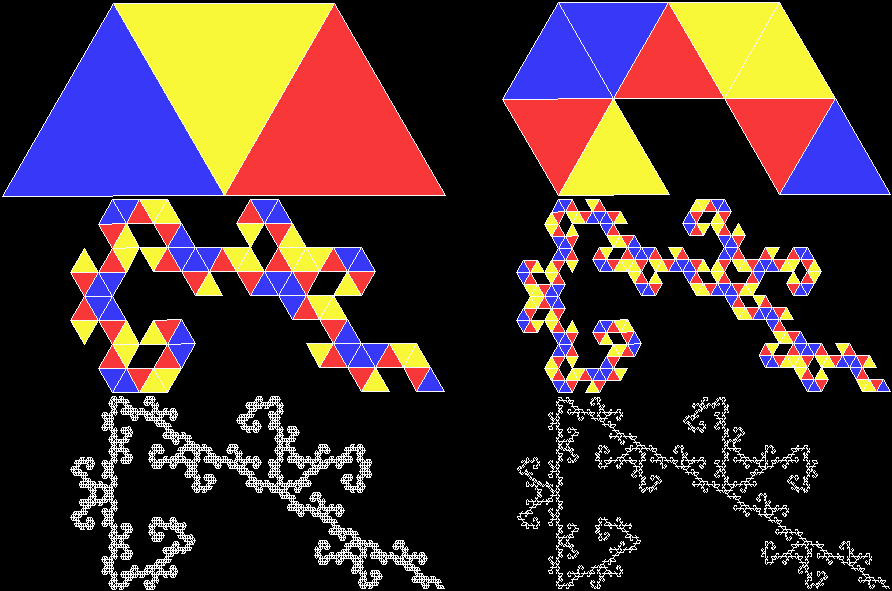
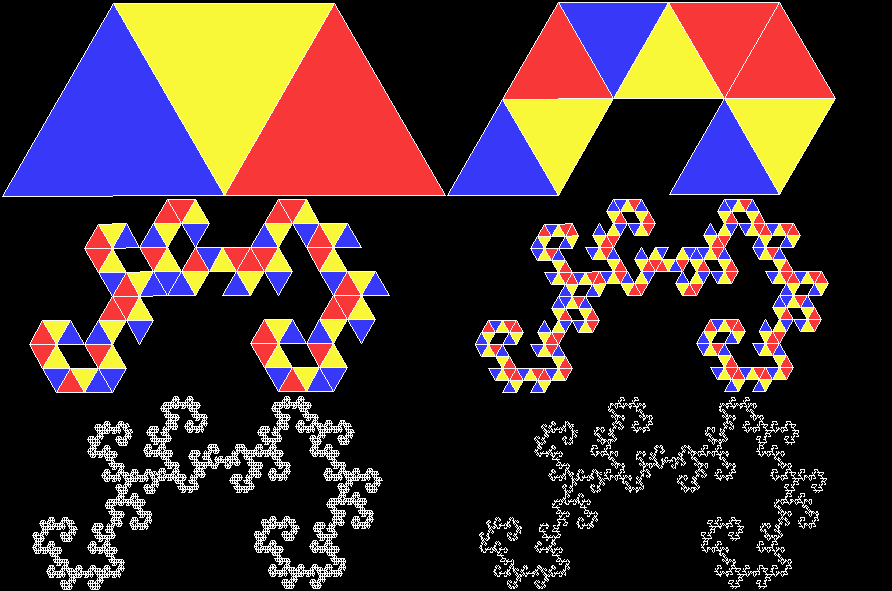
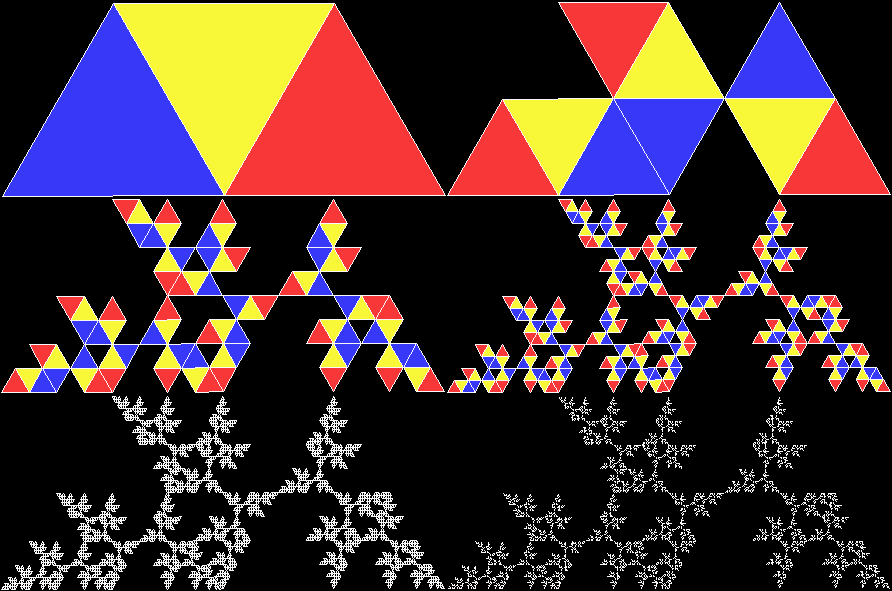
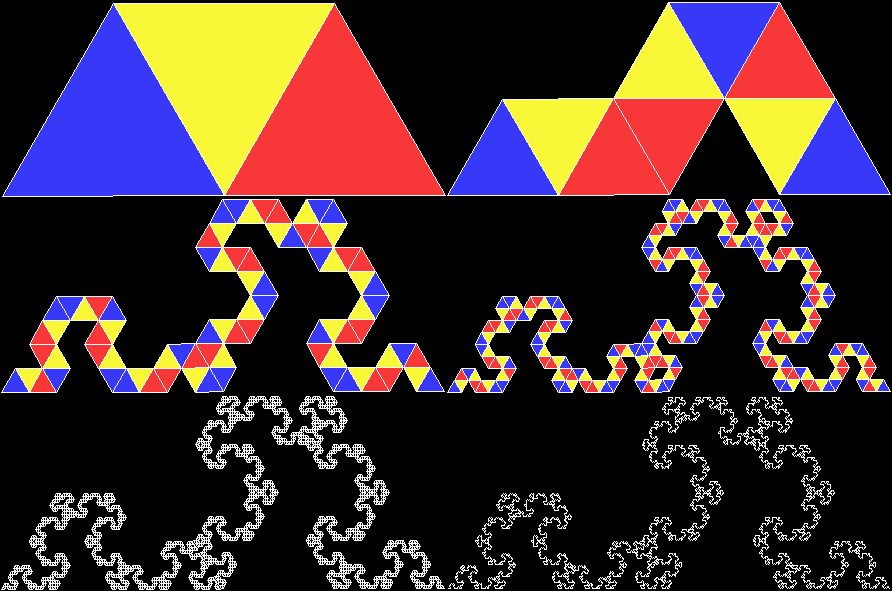
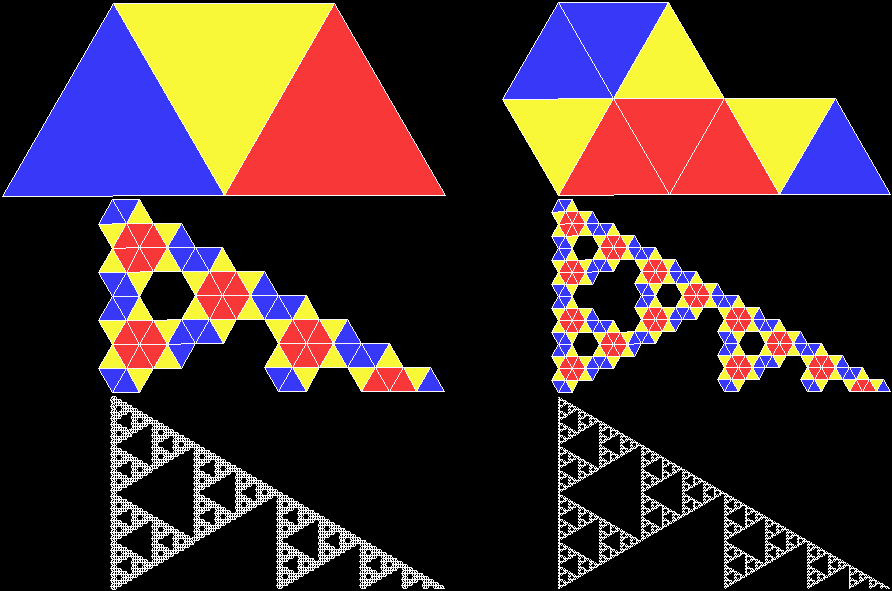
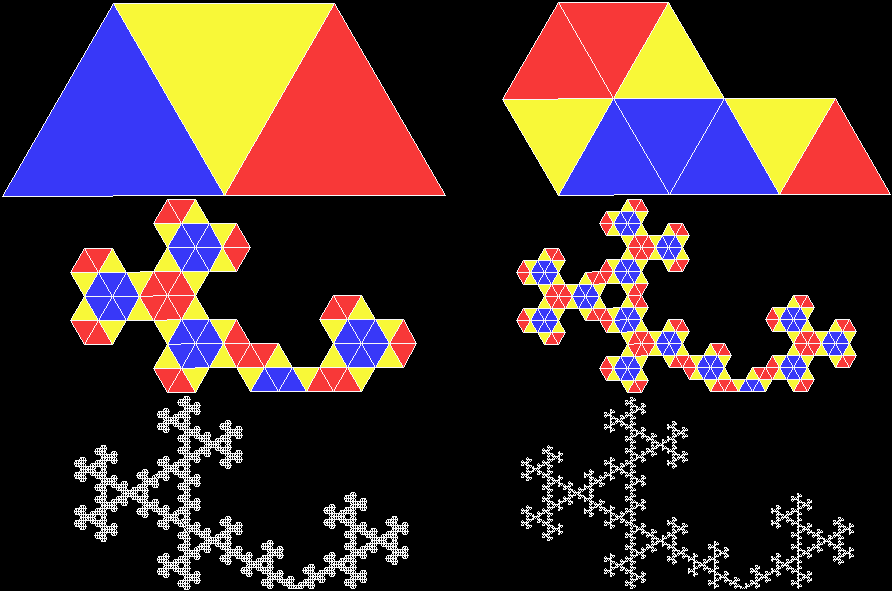
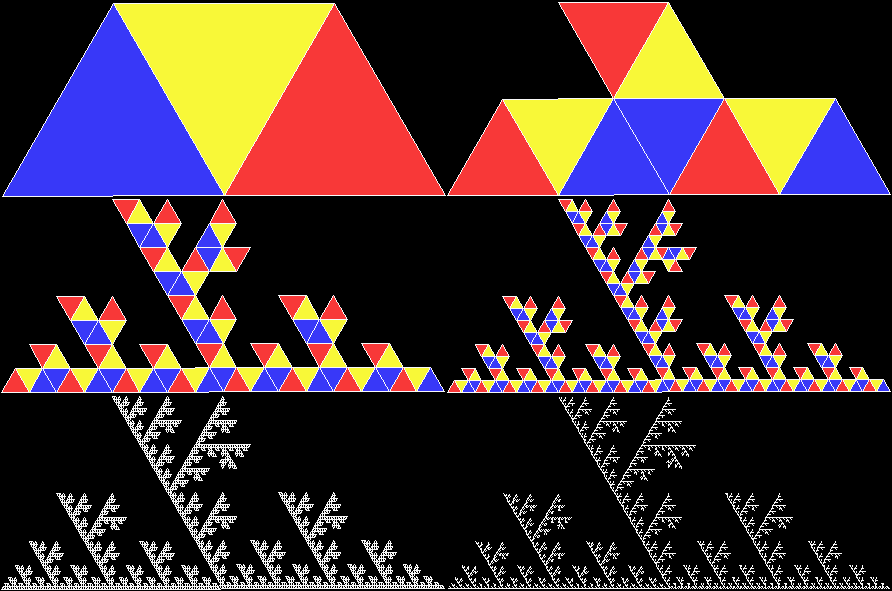
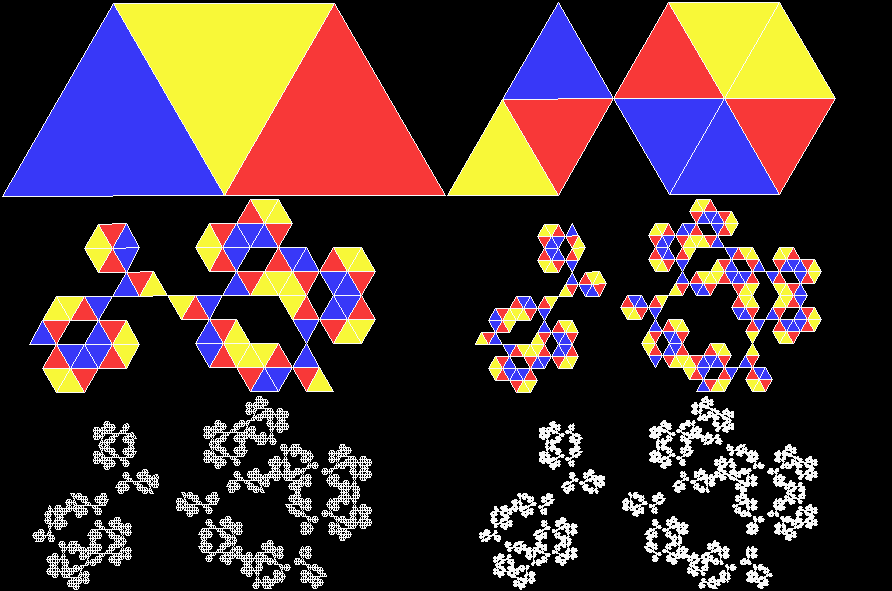
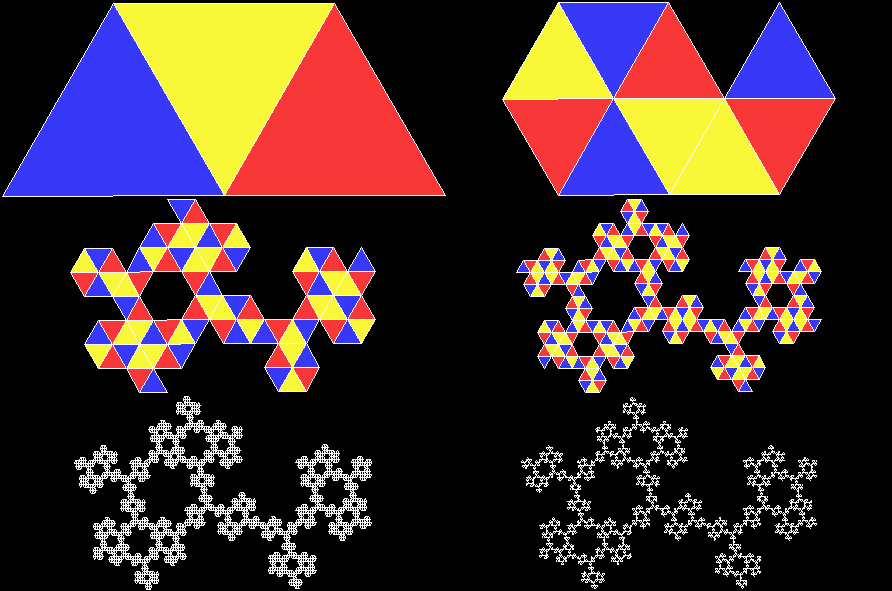
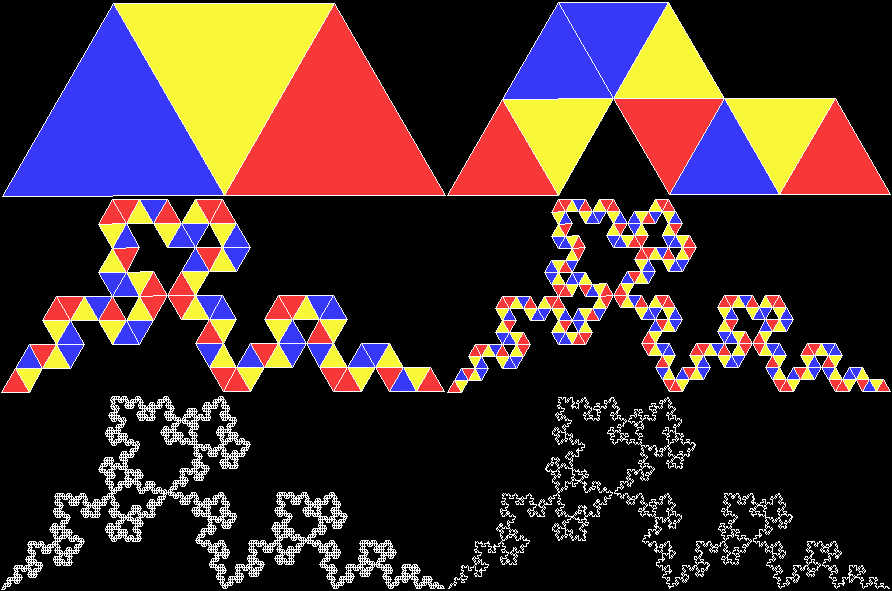
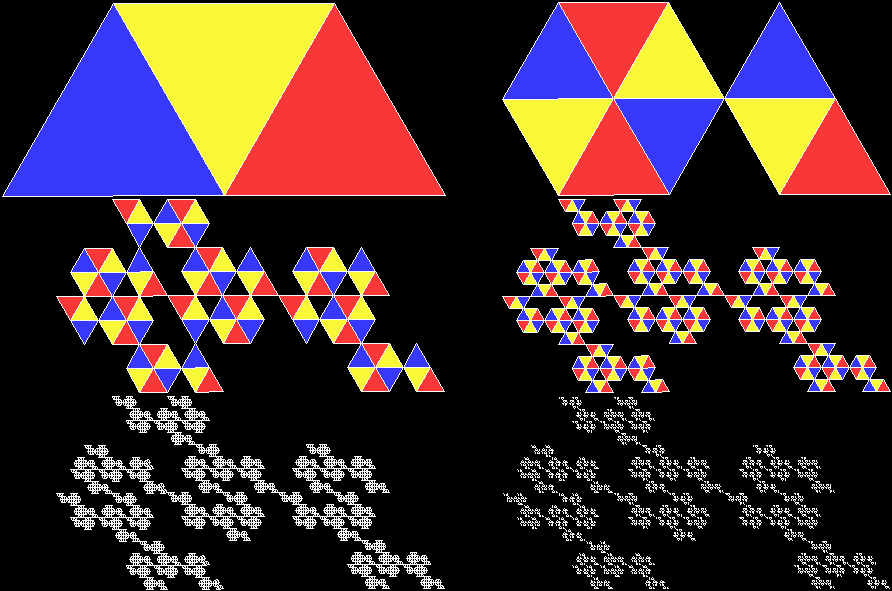
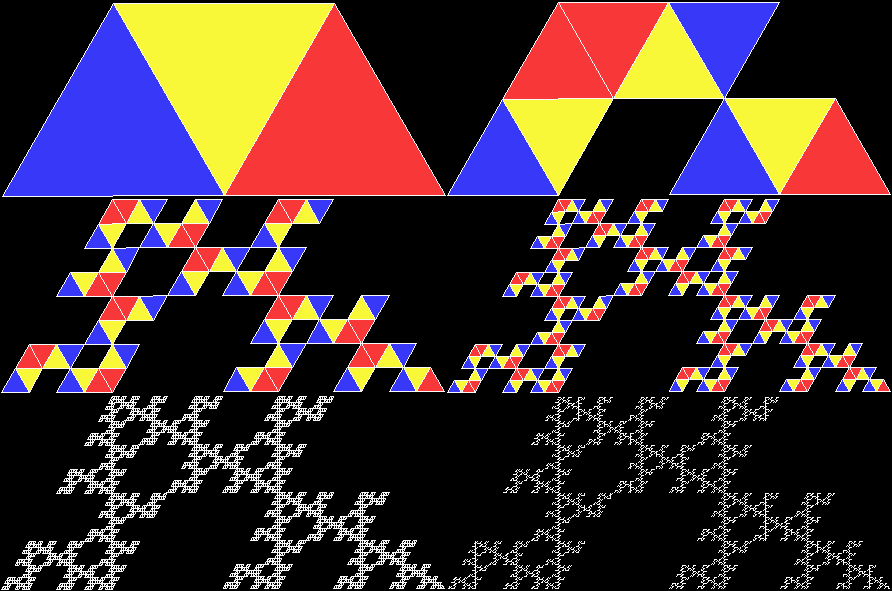
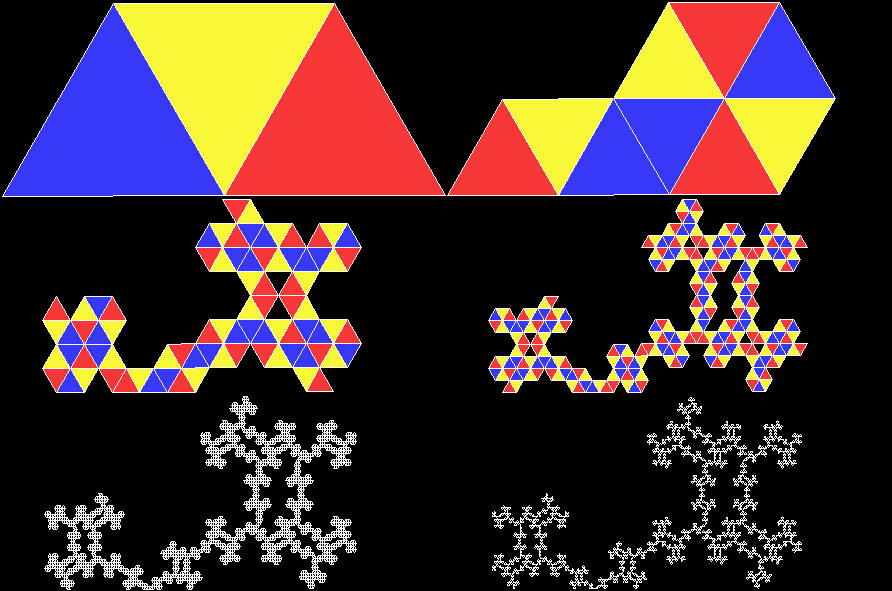
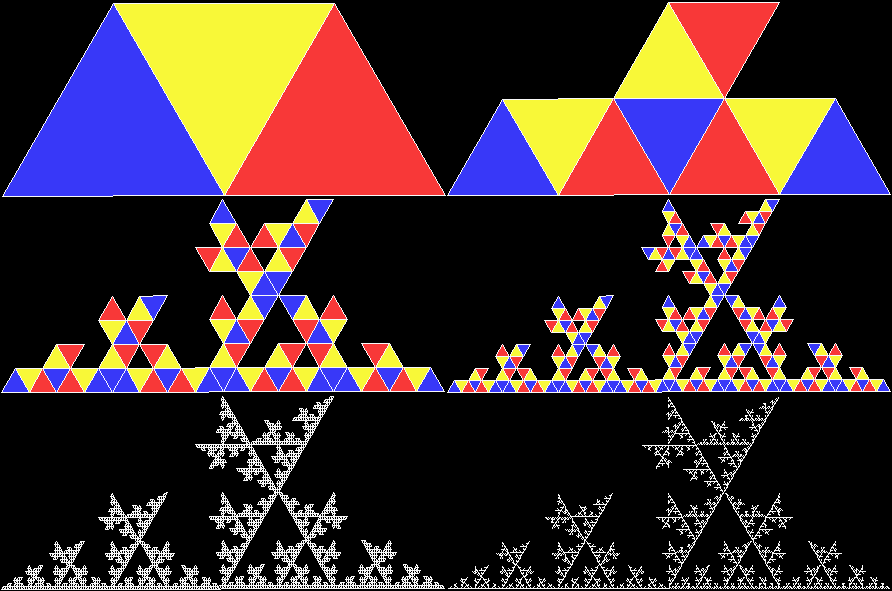
If, on the other hand, the triangle is subdivided and then one of the copies is discarded, many interesting fractals can be made from this very simple shape:

Fractal triangle creating Sierpinski gasket

Triangle fractal 2

This sequence illustrates how a more complex fractal is created:

Triangle fractal 3 split image 1

Triangle fractal 3 split image 2

Triangle fractal 3 split image 3

Triangle fractal 3 split image 4

Triangle fractal 3 split image 5

Triangle fractal 3 split image 6

Triangle fractal 3 split image 7

Triangle fractal 3 split image 8

And here is the sequence in a single animated gif:

Triangle fractal 3

Triangle fractal 4

Triangle fractal 5

Triangle fractal 6

Triangle fractal 7

Triangle fractal 8

Triangle fractal 9

Triangle fractal 10

Triangle fractal 11

Triangle fractal 12

Triangle fractal 13

Triangle fractal 15

Triangle fractal 16

Triangle fractal 17

Triangle fractal 18

Triangle fractal 19

Triangle fractal 20

Triangle fractal 21

Triangle fractal 22

Triangle fractal 23

Triangle fractal 24

Triangle fractal 25

Triangle fractal 26