C.A.S. Lewis

C.S. Lewis (1898-1963) was from Ulster, Clark Ashton Smith (1893-1961) from California. The two men wrote fantasy fiction, distrusted science, and rejected modernism. They had two initials in common too, but not much else. Like his friend J.R.R. Tolkien, Lewis believed in angels but, again like Tolkien, he didn’t write like one. CAS didn’t believe in angels, but did write like one. There is less literary magic in the whole of the Narnia series (1950-6) or Lord of the Rings (1954-5) than in a single of CAS’s Zothique stories, like “The Dark Eidolon” (1935) or “Empire of the Necromancers” (1932). If the English language is a harp, Lewis and Tolkien rarely plucked its sweetest strings. CASean notes do sound now and then in Lord of the Rings, like “The Mirror of Galadriel” and “The Pyre of Denethor”, but the prose of these chapters doesn’t match their titles. CAS, by contrast, could have written prose worthy of the titles. Elsewhere in Lord of the Rings, it’s the prose of a chapter that’s CASean rather than the title. But not very CASean, and not for very long:

The long journey from Rivendell had brought them far south of their own land, but not until now in this more sheltered region had the hobbits felt the change of clime. Here Spring was already busy about them: fronds pierced moss and mould, larches were green-fingered, small flowers were opening in the turf, birds were singing. Ithilien, the garden of Gondor now desolate kept still a dishevelled dryad loveliness. (The Two Towers, Book IV, chapter 4, “Of Herbs and Stewed Rabbit”)

Kings made tombs more splendid than houses of the living, and counted old names in the rolls of their descent dearer than the names of sons. Childless lords sat in aged halls musing on heraldry; in secret chambers withered men compounded strong elixirs, or in high cold towers asked questions of the stars. And the last king of the line of Anárion had no heir. (Ibid., chapter 5, “The Window on the West”)
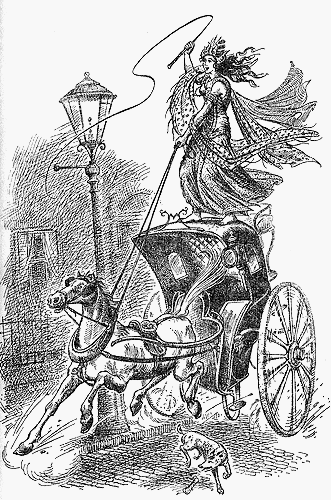
Queen Jadis rides a hackney-cab in nineteenth-century London

Lewis does better, or at least longer: he sustains a flight of CASean invention over two chapters of The Magician’s Nephew (1955). As usual, Pauline Baynes’ drawings are better than his writing, but the prose is conjuring something unusual for Lewis: a genuine sense of antiquity, mystery and desolation. The two young protagonists of the book, Digory and Polly, have been tricked into a “Wood between the Worlds” by the book’s magician. The wood is full of magic pools. Jump into one of them and you’ll be transported to another world. Digory and Polly jump into a pool and find themselves in an ancient abandoned palace lit by a “dull, rather red light”. They begin to explore:

Every now and then they thought they were going to get out into the open and see what sort of country lay around the enormous palace. But each time they only got into another courtyard. They must have been magnificent places when people were still living there. In one there had once been a fountain. A great stone monster with wide-spread wings stood with its mouth open and you could still see a bit of piping at the back of its mouth, out of which the water used to pour. Under it was a wide stone basin to hold the water; but it was as dry as a bone. In other places there were the dry sticks of some sort of climbing plant which had wound itself round the pillars and helped to pull some of them down. But it had died long ago. And there were no ants or spiders or any of the other living things you expect to see in a ruin; and where the dry earth showed between the broken flagstones there was no grass or moss. (Op. cit., chapter four, “The bell and the hammer” (sic))

The prose plods, but one’s aesthetics nods: Lewis is invoking a strange and powerful world. Then the children find a room full of richly dressed men and women frozen like statues. Some look kind and wise, some proud and cruel, some evil and despairing. One woman, the most richly dressed of all and, to Digory, the most beautiful, has a “look of such fierceness and pride that it took your breath away.” There is magic in the room and Digory triggers it, thereby breaking the spell that holds the beautiful woman in suspended animation. She is both a queen and a witch – the witch Jadis. Her name in French means “of old, in olden times”, but the children are not in France, as they discover when Jadis guides them out of the palace:

Much more light than they had yet seen in that country was pouring in through the now empty doorway, and when the Queen led them out through it they were not surprised to find themselves in the open air. The wind that blew in their faces was cold, yet somehow stale. They were looking from a high terrace and there was a great landscape spread out below them.

Low down and near the horizon hung a great, red sun, far bigger than our sun. Digory felt at once that it was also older than ours: a sun near the end of its life, weary of looking down upon that world. To the left of the sun, and higher up, there was a single star, big and bright. Those were the only two things to be seen in the dark sky; they made a dismal group. And on the earth, in every direction, as far as the eye could reach, there spread a vast city in which there was no living thing to be seen. And all the temples, towers, palaces, pyramids, and bridges cast long, disastrous-looking shadows in the light of that withered sun. Once a great river had flowed through the city, but the water had long since vanished, and it was now only a wide ditch of gray dust.

“Look well on that which no eyes will ever see again,” said the Queen. “Such was Charn, that great city, the city of the King of Kings, the wonder of the world, perhaps of all worlds…” (chapter five, “The Deplorable Word”)

Jadis and the city of Charn are Lewis’s most successful invocations of CASean themes like female beauty, sorcerous evil, and dying (or dead) worlds. But the prose is weak and insipid beside that of Clark Ashton Smith – as you can see for yourself by following the links below:
• “The Dark Eidolon”

• “Empire of the Necromancers”

• “The Charnel God”

A Feast of Fractiles

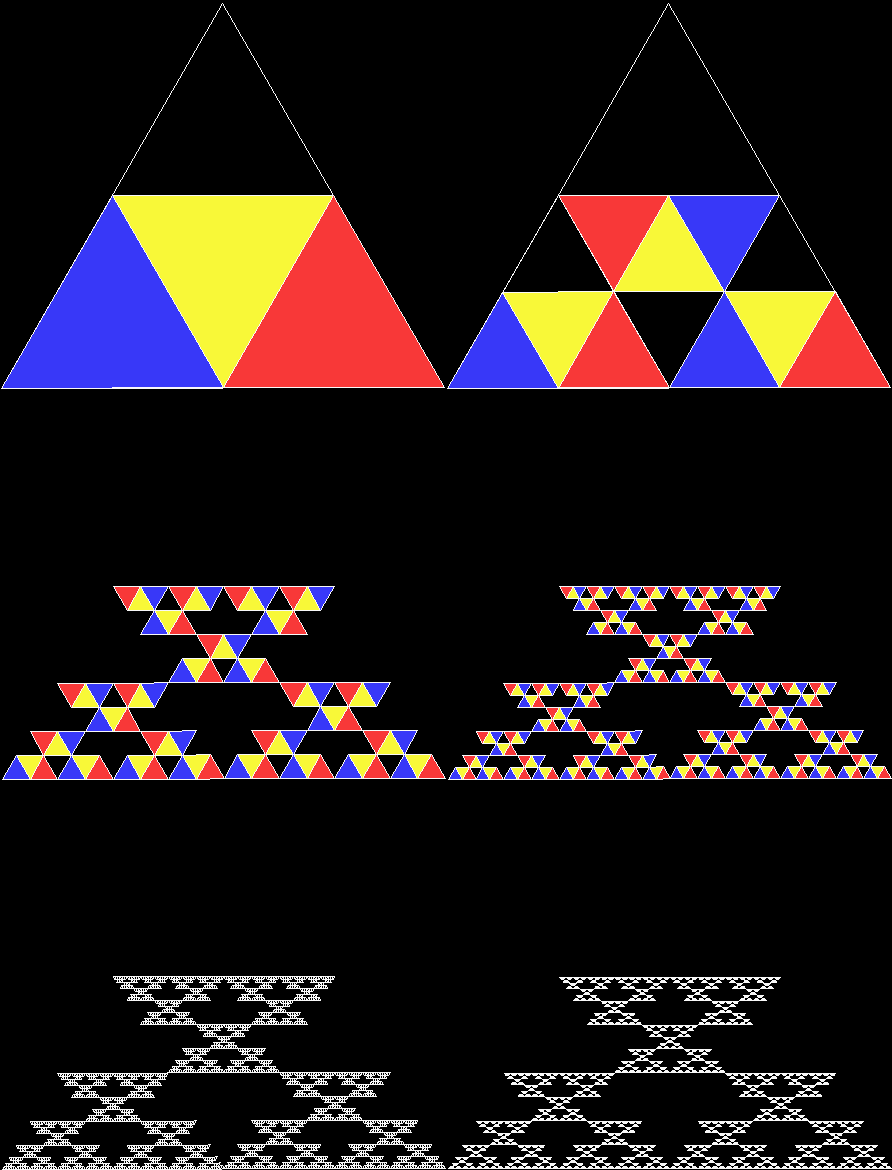
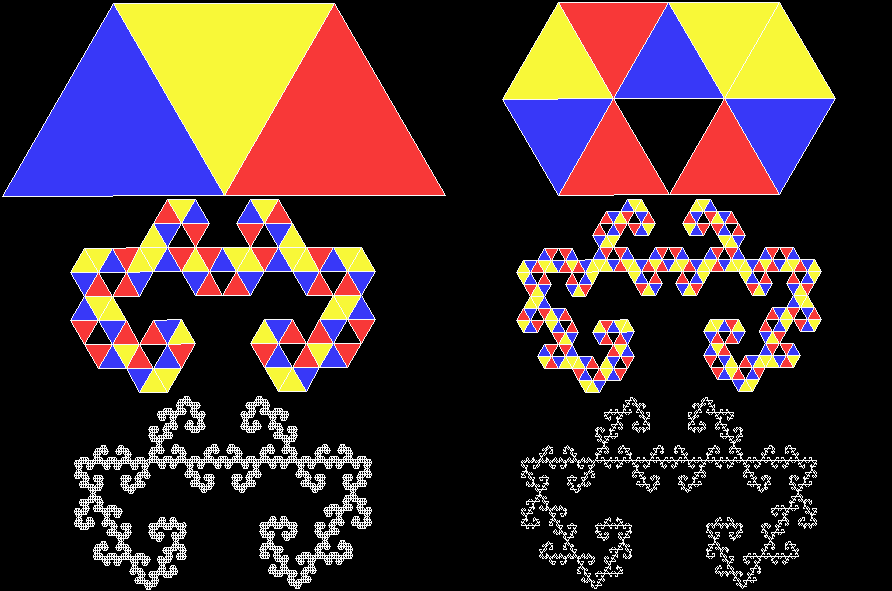
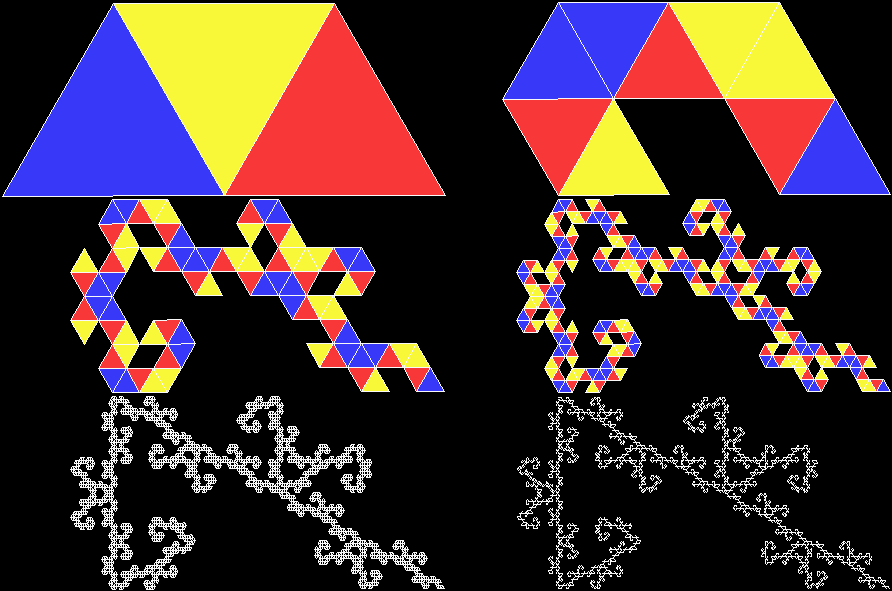
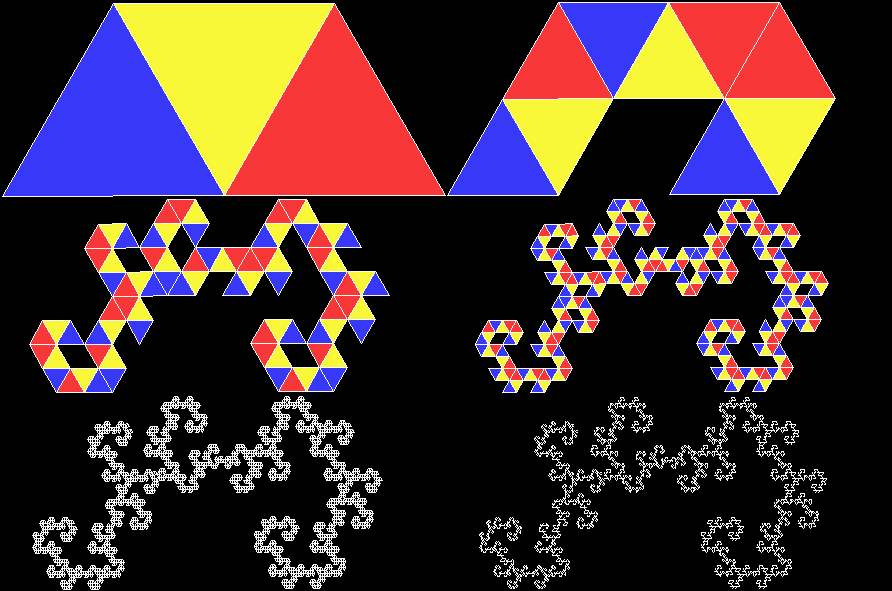
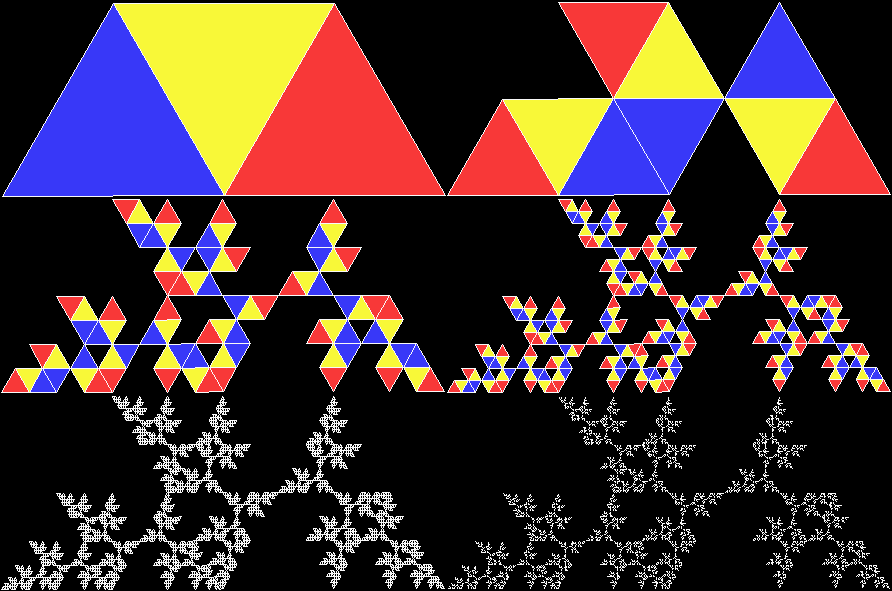
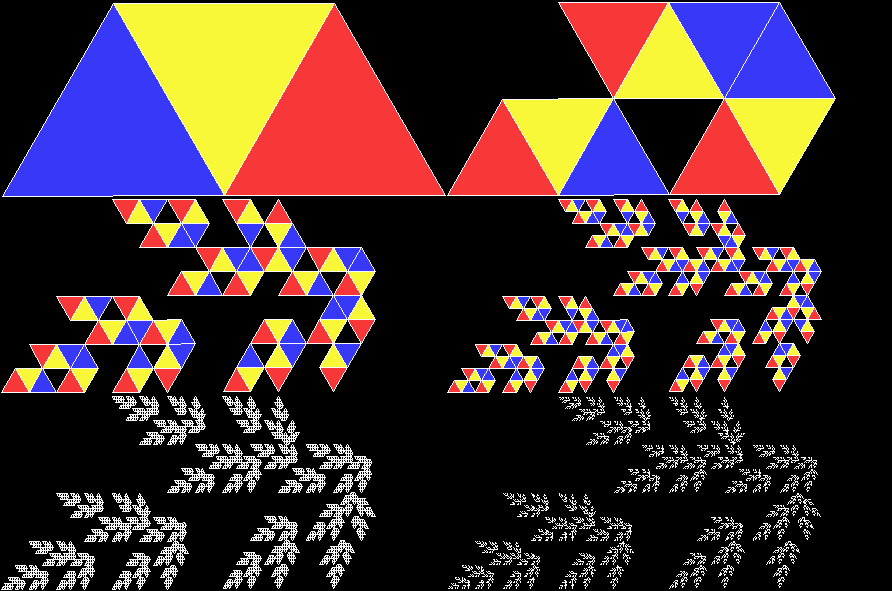
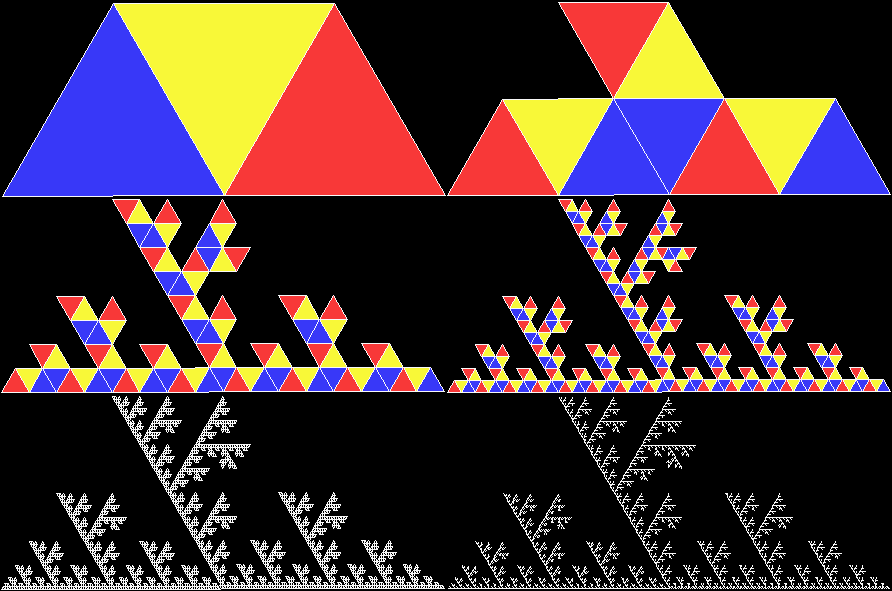
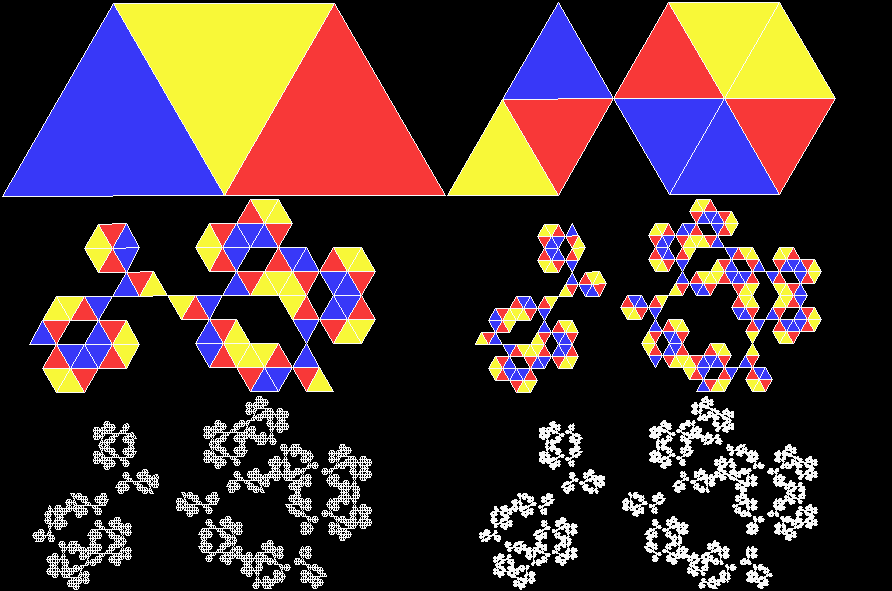
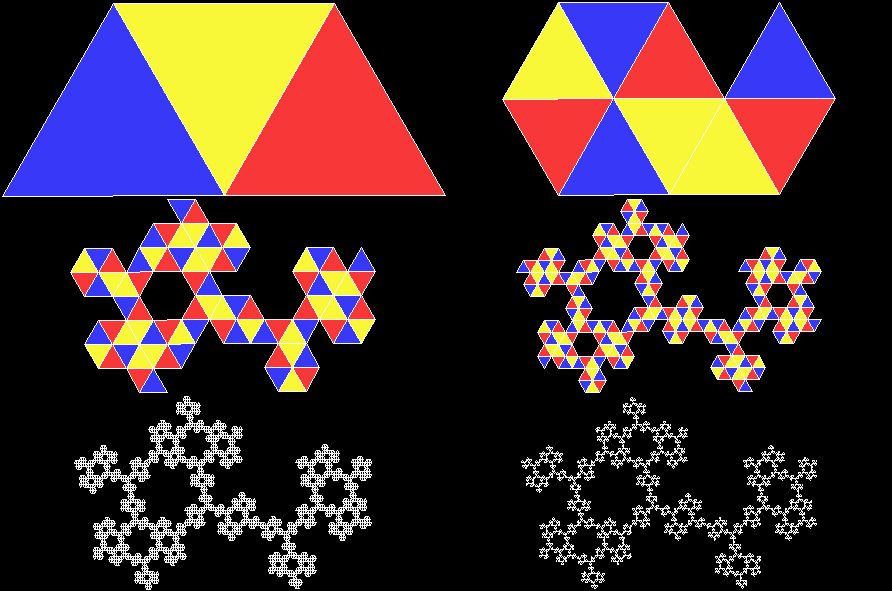
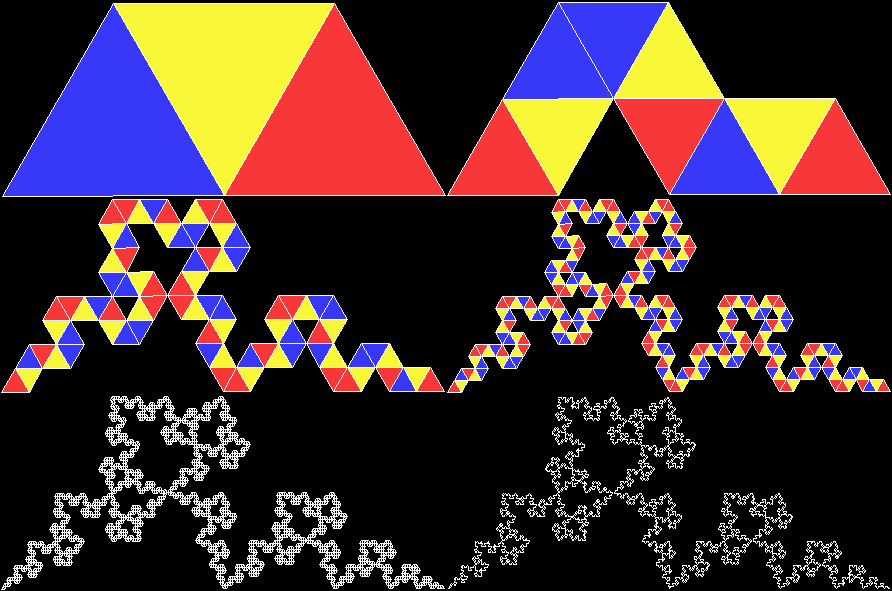
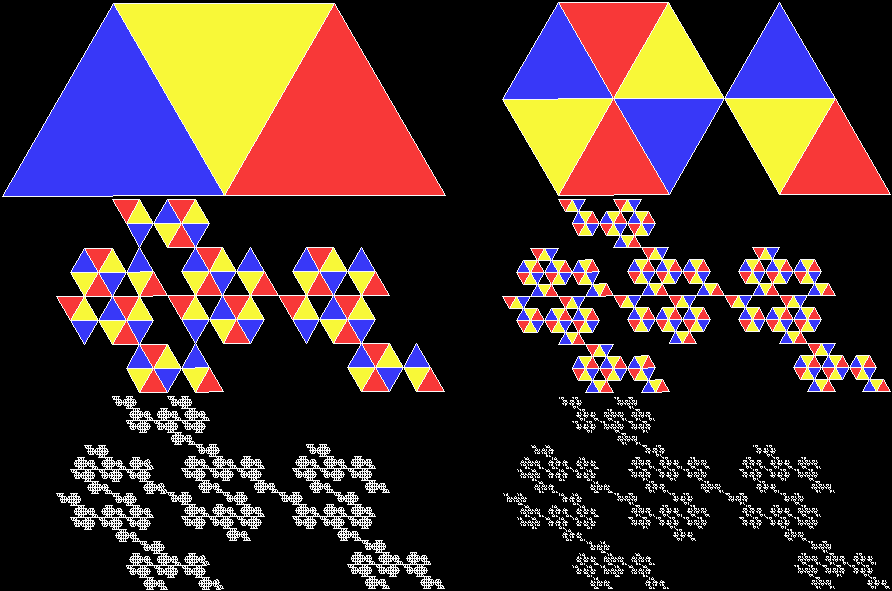
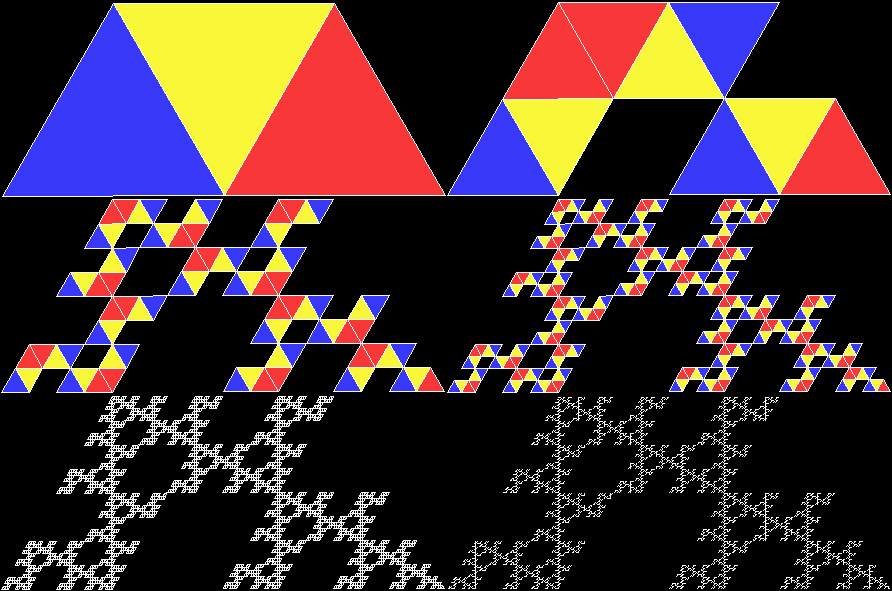
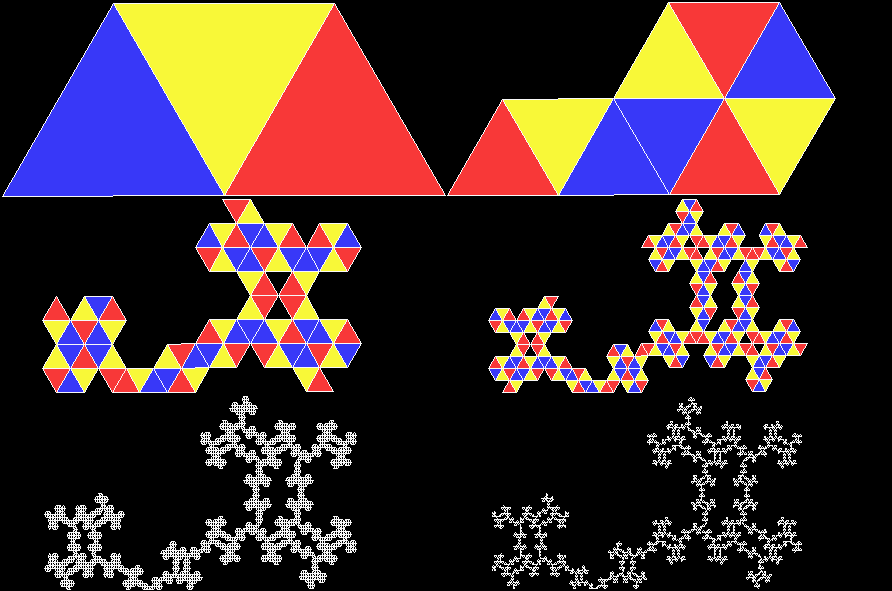
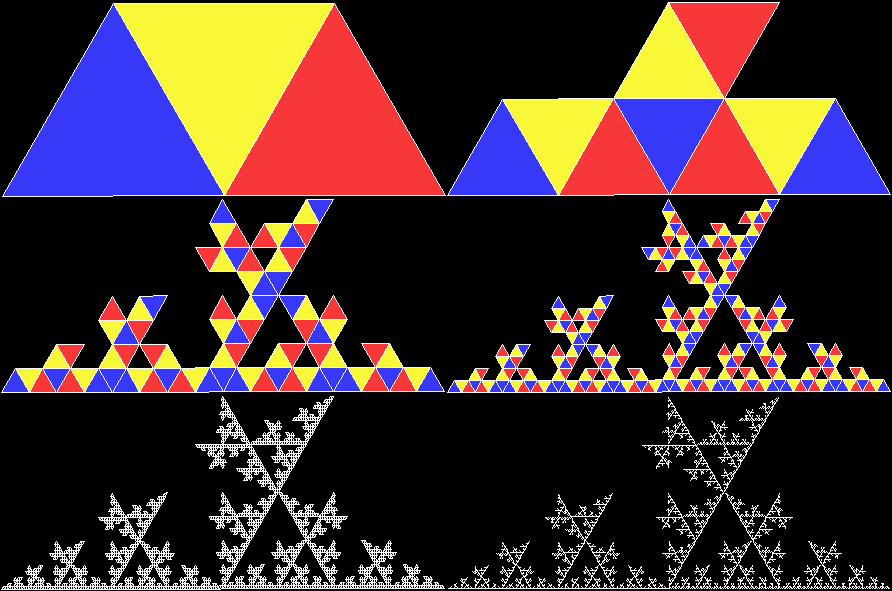
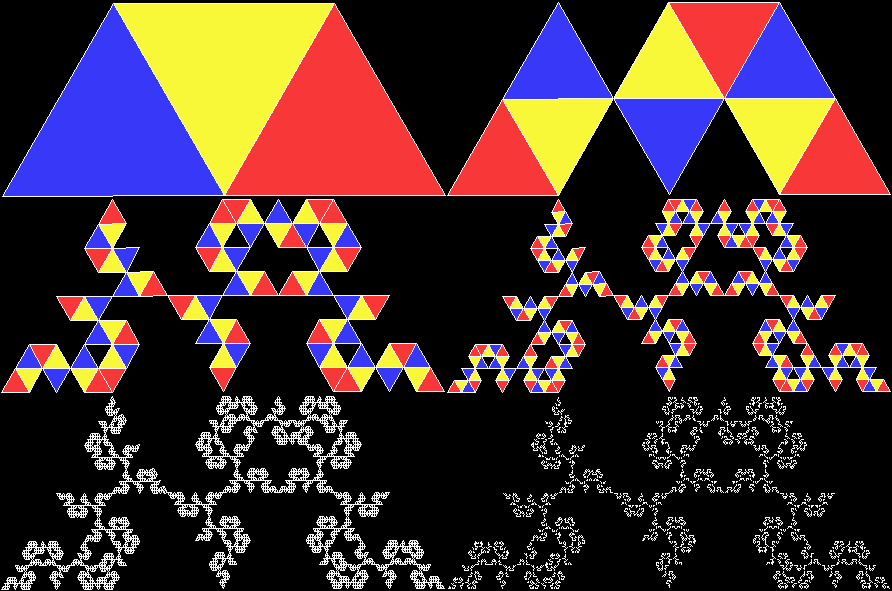
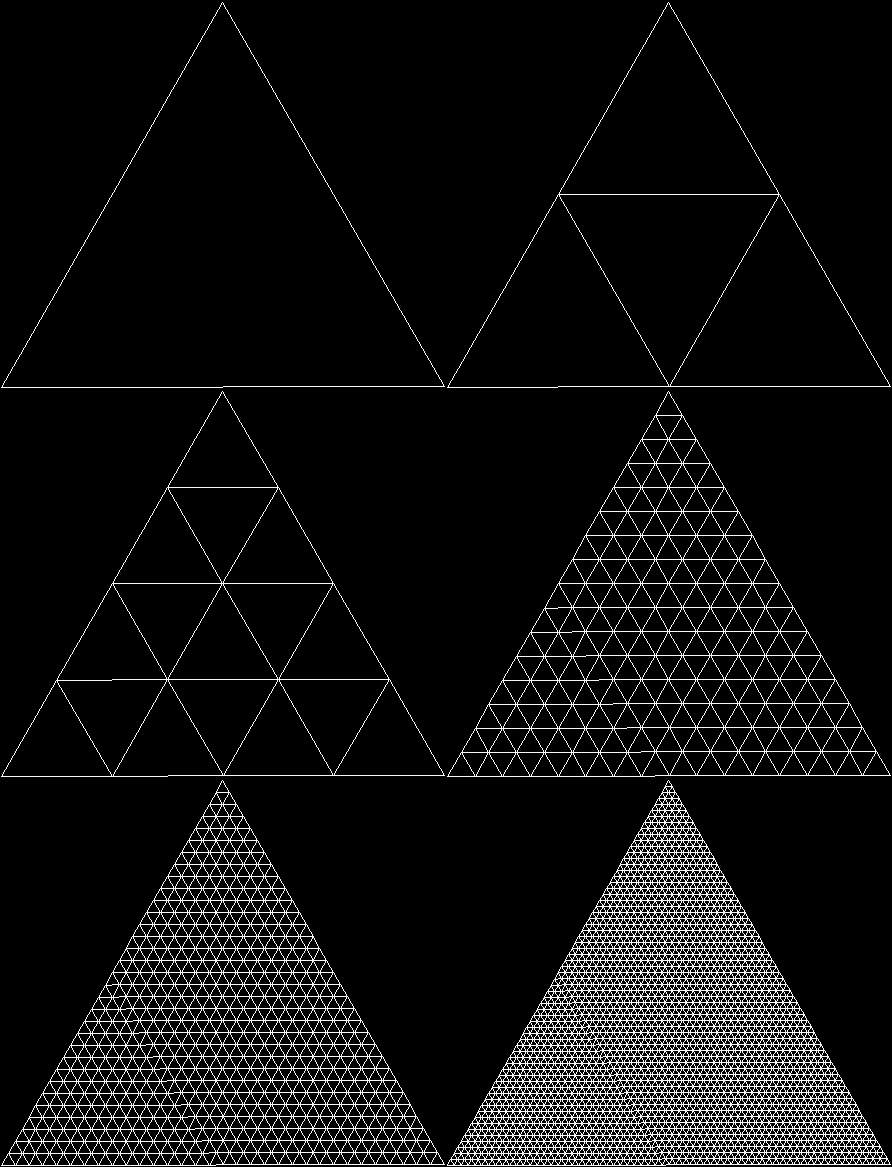
A rep-tile is a shape that can be divided into copies of itself. One of the simplest rep-tiles is the equilateral triangle, which can be divided into four copies of itself, like this:
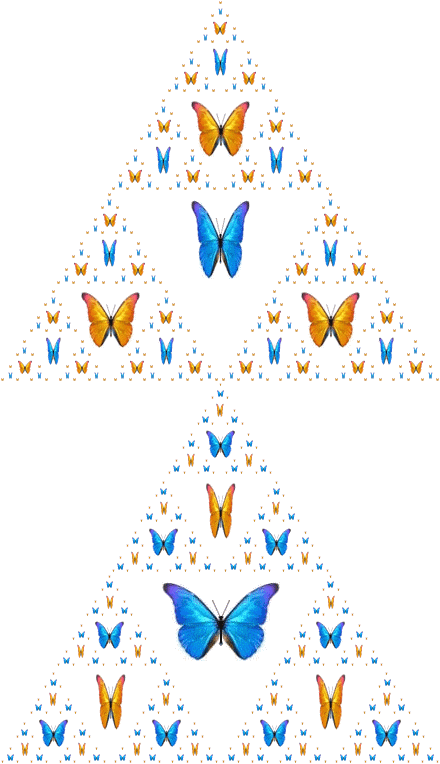
Self-dividing equilateral triangle

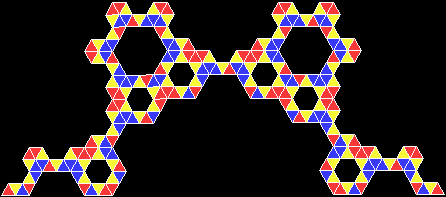
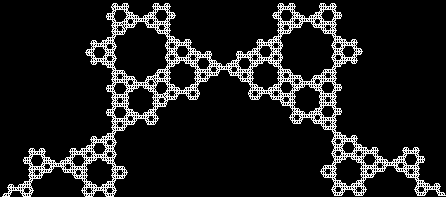
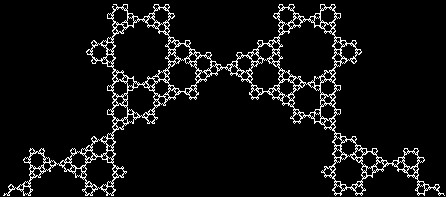
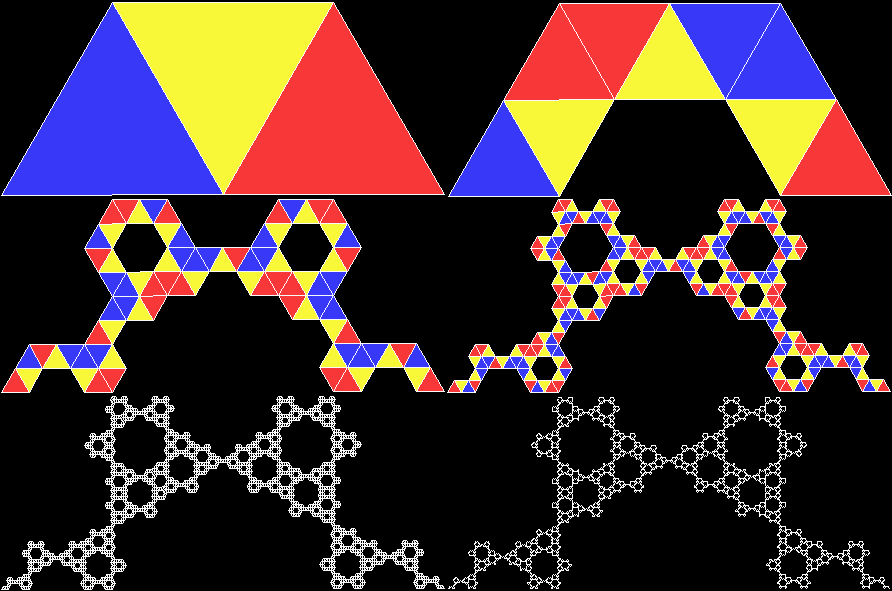
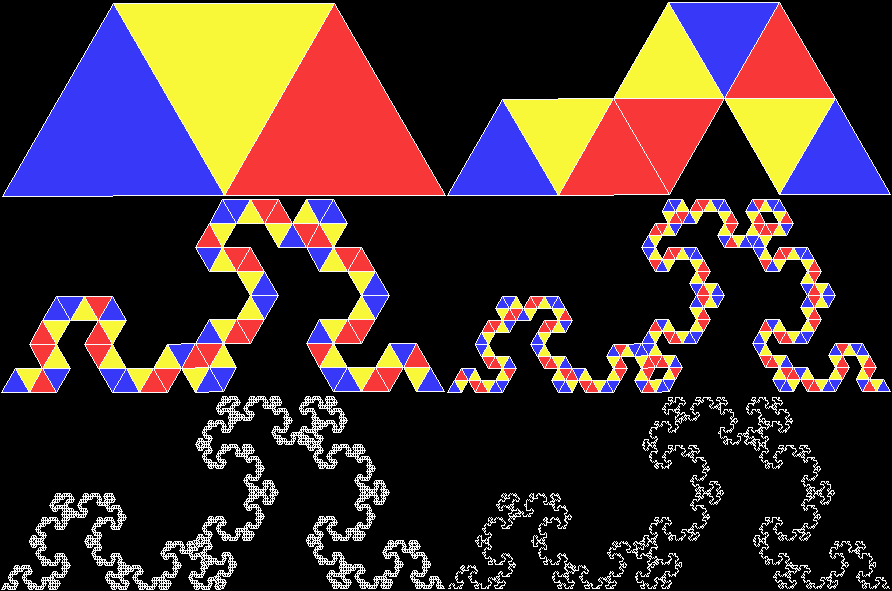
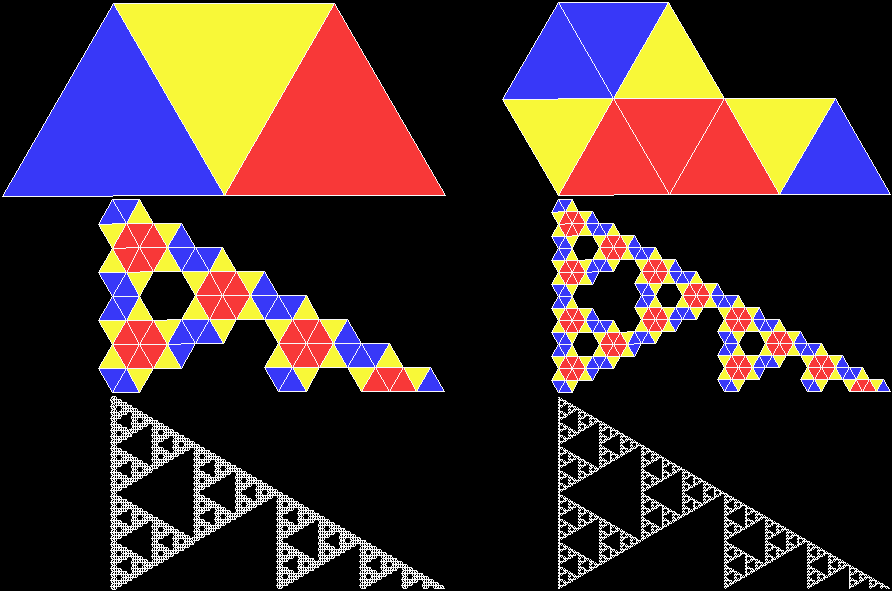
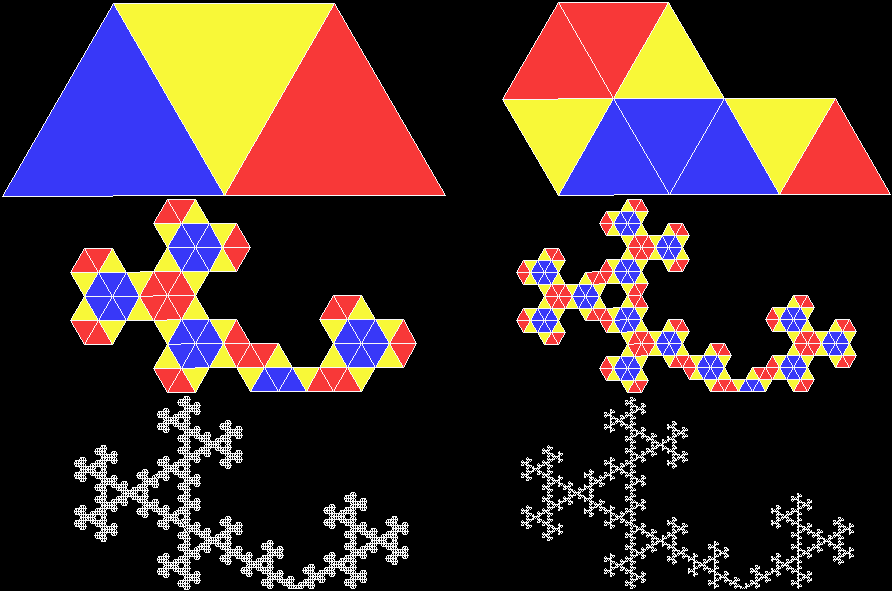
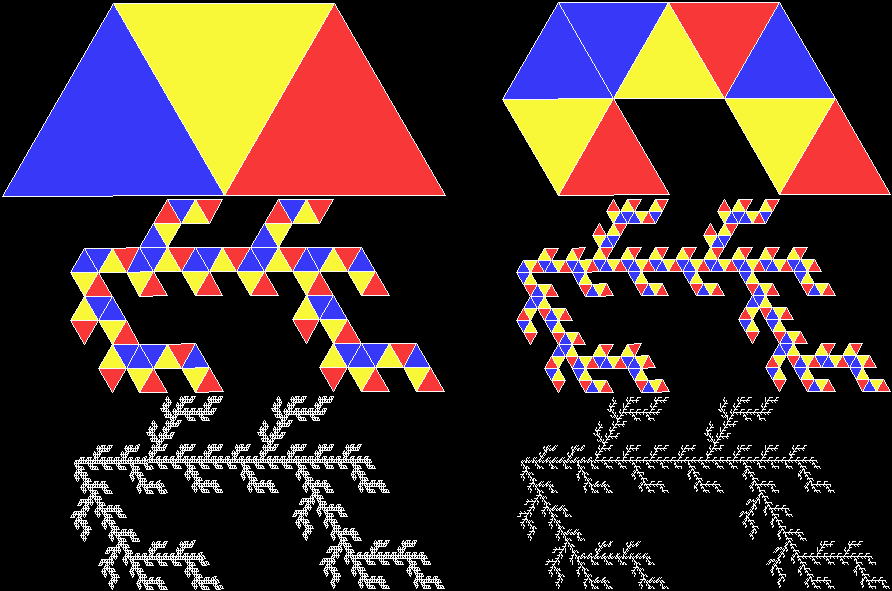
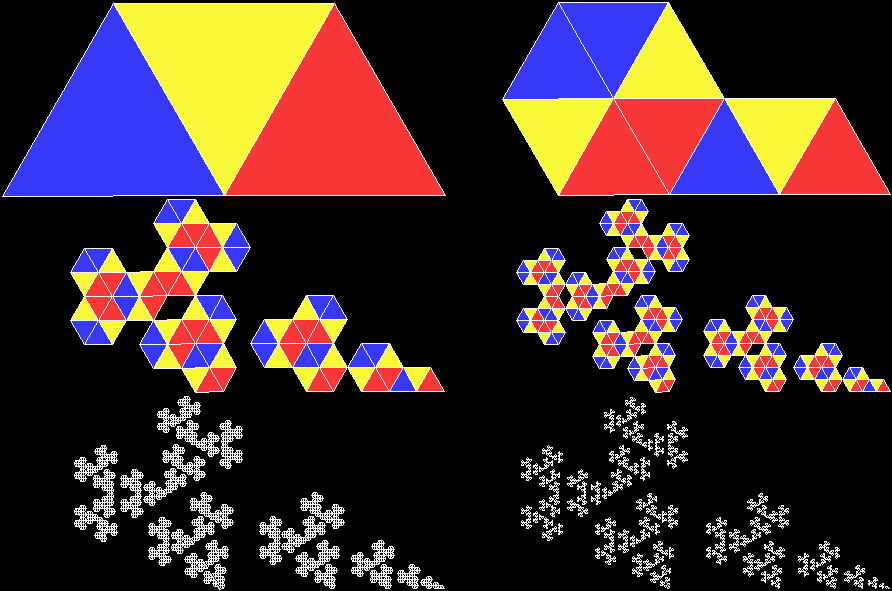
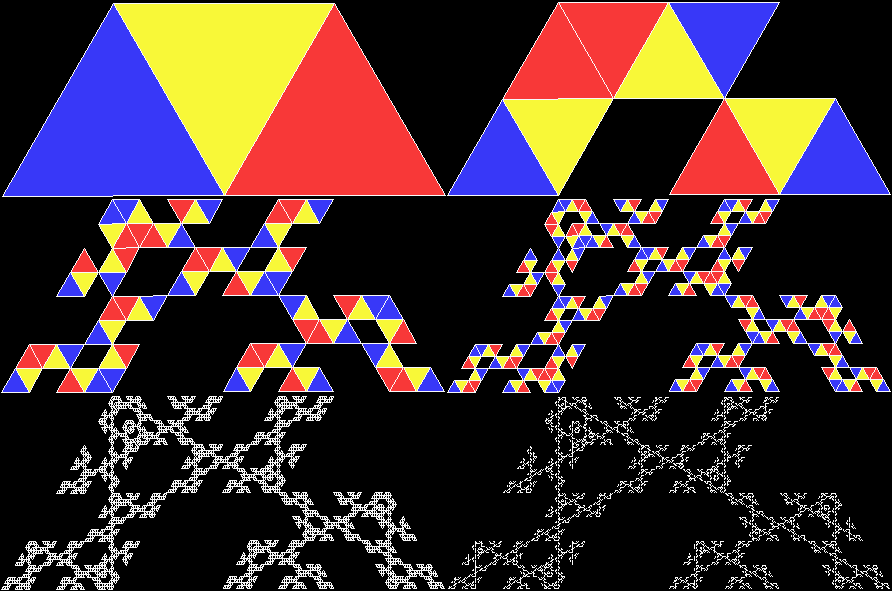
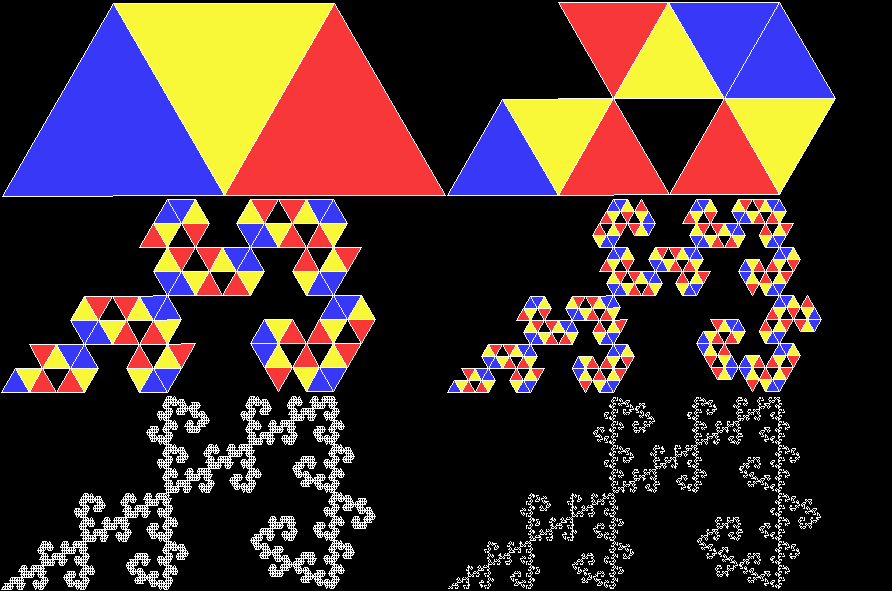
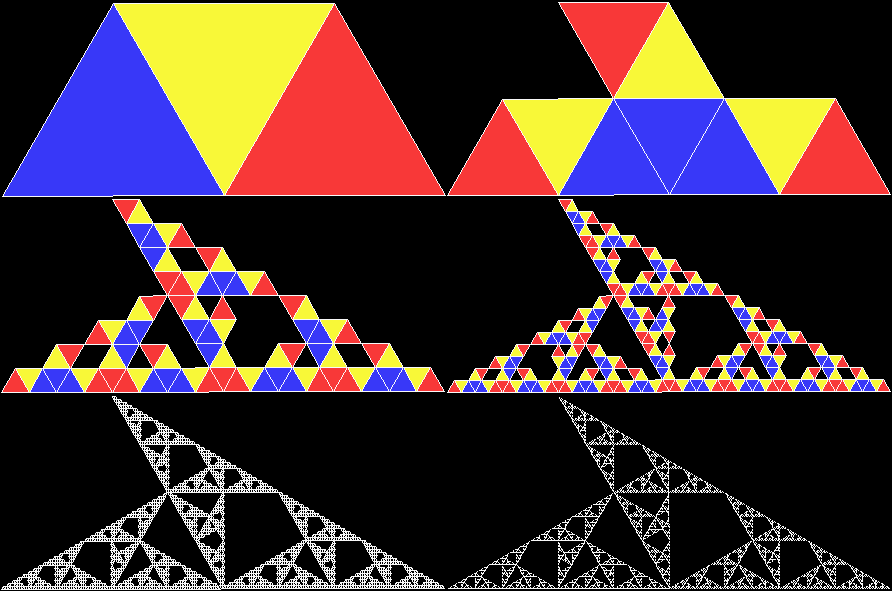
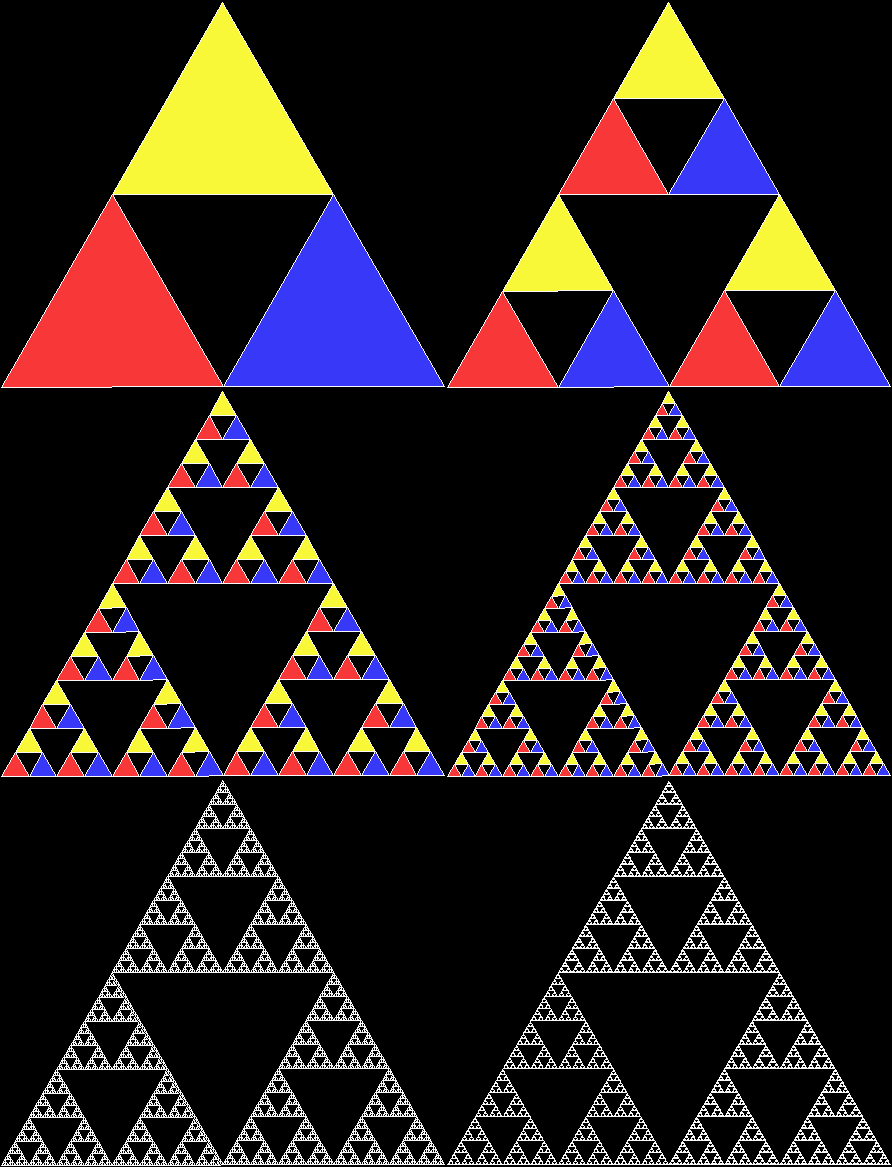
If, on the other hand, the triangle is subdivided and then one of the copies is discarded, many interesting fractals can be made from this very simple shape:

Fractal triangle creating Sierpinski gasket

Triangle fractal 2

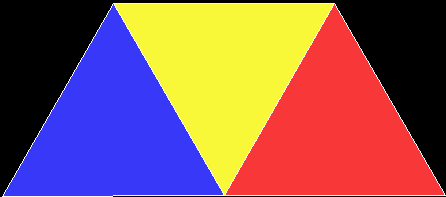
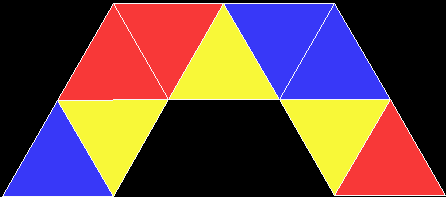
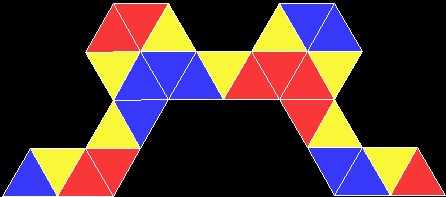
This sequence illustrates how a more complex fractal is created:

Triangle fractal 3 split image 1

Triangle fractal 3 split image 2

Triangle fractal 3 split image 3

Triangle fractal 3 split image 4

Triangle fractal 3 split image 5

Triangle fractal 3 split image 6

Triangle fractal 3 split image 7

Triangle fractal 3 split image 8

And here is the sequence in a single animated gif:

Triangle fractal 3

Triangle fractal 4

Triangle fractal 5

Triangle fractal 6

Triangle fractal 7

Triangle fractal 8

Triangle fractal 9

Triangle fractal 10

Triangle fractal 11

Triangle fractal 12

Triangle fractal 13

Triangle fractal 15

Triangle fractal 16

Triangle fractal 17

Triangle fractal 18

Triangle fractal 19

Triangle fractal 20

Triangle fractal 21

Triangle fractal 22

Triangle fractal 23

Triangle fractal 24

Triangle fractal 25

Triangle fractal 26

Puro Lojo

Los Ojos

He was haunted by eyes. It had begun quite slowly, quite simply: a feeling that he was being watched whenever he went out, that hostile eyes were staring out at him, down on him, from the windows of the town, tracking his progress, feeding the nectar of data to the honeycombs of brains, for savouring later, when he had passed. He started to find quieter, gloomier streets, to stay indoors on sunny days, to keep his curtains drawn. He felt calmer when he knew he wasn’t overlooked, wasn’t being watched, couldn’t be. But then the calm began to evaporate, for he realized that there were eyes even in his house, even here, where he was cocooned in privacy.

The eyes of his books – indeed, the eyes of “books”, the two o’s, the two little eyes staring out between the “b” and the “k”. There were hundreds of eyes, thousands of them, in every book, ready to stare out at him, to watch him, whenever he opened a book and tried to read. Even “eyes” itself, with the twin e’s, seemed to peer at him, if not to stare. It had half-closed lids, ready to open on him, to glare its full. In Spanish, the word opened fully: ojo. The word reminded him of two eyes with a nose between them, with a bindi over the nose, the mystic dot of Hinduism, symbolizing the third eye. In Hindi, though, the word didn’t threaten him: आँख, ānkh. When he’d first started to worry about his books, about the eyes in his books, he’d gone to the public library and spent an hour searching through the dictionaries, making a list of the eye-words he did find threatening, as though he could trap them, confine them, on a single piece of paper.

The “oog” of Dutch. The “öga” of Swedish. The “øje” and “øye” of Danish and Norwegian, which reminded him of the razor-blade slicing the eye in Un Chien Andalou. The “oko” of Czech, Polish, and Russian. The “ojo” of Spanish, the “olho” of Portuguese, the “occhio” of Italian, all from the “oculus” of Latin (“oculo” in the ablative and dative). Then there was the “göz” of Turkish, entirely unrelated, but staring out at him like a cyclops. And what about the “ojú” of Yoruba? It was unrelated to Spanish, but disturbingly similar. Disturbing in a different way was the οφθαλμος, the “ophthalmos”, of ancient Greek. It was such a juicy, gelatinous word, like the juice and jelly of an eye itself, like a mechanism of chemicals and flesh from which the two o’s stared out at him, watching him, judging him, storing data about him for use in his trial, the secret trial that was being prepared for him.

He felt relieved, at first, that modern Greek had a less threatening μάτι, “mati”. But then he discovered that Malay had a word that was very similar, “mata”, though he knew that Malay and Greek were entirely unrelated. He felt his skin prickle as the first hint of a conspiracy trickled into his brain. The lower-case a’s of “matia”, the Greek plural, like the lower-case e’s of “eyes”, were like peering eyes, as though the words were beginning to take on the same form as “ojo” and “oko”, as though they would open fully one day too. He wondered if, one day, all the world’s languages would have eyes in their words for “eye”, would have twin o’s gazing out, glaring out at the reader. The biter bit. The reader read. Or what about a script, a font, a language, that was entirely ocular, entirely based on o’s, that read its readers as they read it? You could do that, could create one. There were enough forms of “o” in the alphabet, or the alphabets, the Latin and French and Czech and Yoruba and Vietnamese.

It was then he realized that he hadn’t looked at the Vietnamese dictionary, having missed it near the end of the shelf. He went to look at it, carrying his eye-list with him. He took the dictionary off the shelf and flicked to the right page. He nearly dropped the book when he saw the word staring up at him: mắt. Like Greek, like Malay. He would discover later, after more research, that the Vietnamese and Malay words probably had a common origin, something he’d half-suspected, after that moment of shock. The language families were spoken in neighbouring regions, after all. But for that moment of shock it had seemed a confirmation of something at work, something beneath the surface, or beneath the lid, peering out, ready to be fully exposed, fully opened, ready to stare its full, to drink his soul.

After his visit to the library, he found it more and more difficult to read English and Spanish, both with eye-like eye-words, both full of o’s. He was haunted by a line from Lovecraft, from “The Shadow over Innsmouth”: “I could not escape the sensation of being watched from ambush on every hand by sly, staring eyes that never shut.” But in English, in Spanish, they were not in ambush. They were there openly, eagerly, greedily. He sought refuge in French and German, whose eye-words were asymmetric, un-eye-like, and where “o” was blessedly far down the list of letter-frequencies. English ran e-t-a-o. All those to’s and of’s and not’s. Spanish was even worse: e-a-o. All those masculine endings, those past tenses, those no’s and lo’s. But French ran e-a-s-i-t-n-r-u-l-o. German was even better: e-n-i-s-t-r-a-d-h-u-g-m-c-l-b-o. He began to sellotape his English and Spanish books shut, as though each were an eye that he was closing by force, blinding so that its myriad inner eyes could not watch him. He felt much calmer reading French and German, much better able to cope when he came across a reference to eyes, and he even laughed aloud when, returning to À Rebours, he read of how the ancestral portraits of des Esseintes alarmaient avec leurs yeux fixes, “startled one with their fixed gaze”.

The disaster, when it came, came without warning. He picked up a French guide to butterflies one afternoon, meaning to browse through it before lunch, and almost at once came across a slip of paper handwritten on both sides. The writing was neat but small and he had to concentrate to read it. It was all part of the trap, he realized too late, to make him focus, to bite more deeply on the poison bait that had been dangled before him. Ice began to form around his viscera as he read, but he could not stop himself until he had finished:

Die einzelnen Worte schwammen um mich; sie gerannen zu Augen die mich anstarrten und in die ich wieder hineinstarren muß: Wirbel sind sie, in die hinabzusehen mich schwindelt, die sich unaufhaltsam drehen und durch die hindurch man ins Leere kommt.

With sick horror, he noted that the passage contained exactly two o’s, near the beginning and near the end, like the grotesque eyes of a distorted, teratomorphic face. Then he turned the slip over and found that the other side contained a translation in English, full of o’s, full of eyes, staring at him, eager to drink the emotion in his face, the realization that he had been trapped. Again, he could not prevent himself from reading to the end:

Single words floated round me; they congealed into eyes that stared at me and that I was forced to stare back into – whirlpools that gave me vertigo and, reeling ceaselessly, led into the void.

He let out an involuntary cry. Where had the slip come from? Who was the author of the German? Who had translated it? Who had written the two languages down, hidden the slip in the book? He looked again and realized that it was his own writing, slow, careful, half-disguised, but unmistakable, now that he looked. There was a conspiracy, yes, there was, and he was the author of it, spinning a web for himself, plotting his own destruction, with hidden motives, hidden hatred. He moaned. Things were moving in his head. The slip was a linguistic key, turning a lock in his subconscious, releasing a phrase that he himself had hidden there. Esse Est Percipi. Berkeley’s great dictum. “To Be Is To Be Perceived”. He knew the truth now. He could not escape, could find no refuge, draw no curtain, close no door, find no darkness to hide in. The universe itself was an eye all around him and he was its eternal focus, naked always, visible always, pierced through and through by a torturer’s gaze that created its own object of torture.

Vermilion Glands

Front cover of The Inner Man The Life of J.G. Ballard by John BaxterReaders’ Advisory: Contains Self-abuse and reference to Mancas.

The Inner Man: The Life of J.G. Ballard, John Baxter (W&N 2011)

“B” is for Bataille, Burroughs, and Ballard. I’ve never read Bataille, I can’t stand Burroughs, I used to love Ballard. Nowadays I have strong doubts about him. Vermilion Sands, yes. Crash, no. Vermilion Sands is surreal, haunting, funny, endlessly inventive, and extravagantly intelligent. Crash, by contrast, is silly and sordid. The last time I tried to read it I quickly gave up. I couldn’t take it seriously any more. It’s a book for pretentious, wanna-be-intellectual adolescents of all ages who like Dark’n’Dangerous Sex’n’Violence. A book for Guardian-readers, in short – the sort of people who continually use and hear the phrase “in terms of”, who believe passionately in Equality, Justice, and the Fight against Hate, and who desperately, desperately, wished they’d been able to stimulate the largest erogenous zone in their bodies by voting for Barack Obama in 2008.

What is that erogenous zone? Well, though not all liberals are Guardianistas, all Guardianistas are liberals, so the largest erogenous zone in a Guardianista’s body is his-or-her narcissism. Guardianistas are also, alas, the sort of people who write biographies of J.G. Ballard. John Baxter is most definitely a committed component of the core community. As a big admirer of Mike Moorcock, Britain’s biggest bearded Burroughsian lit-twat, how could he not be? This is part of why I now have doubts about Ballard. I don’t like liking things that Guardianistas like and I don’t like the fact that Moorcock was mates (on and off) with Ballard. On the other hand, I do like the fact that Moorcock and the Guardian boosted Burroughs big-time back in the day and that the Guardian now bigs up Cormac McCarthy and his Dark’n’Dangerous Sex’n’Violence. Good, I think: they all deserve each other. Perhaps one day, in some drug-stoked, depravity-soaked über-orgy of trans-transgressive hyper-homoeroticism, they’ll all manage to climb up each other’s arseholes and disappear from history.

But Guardianistas don’t just like Burroughs and McCarthy: they like Ballard too. They write books about him. Fortunately, The Inner Man isn’t a good book. That would have been disturbing, believe me. The dedication is by far the best thing in it: “To the insane. I owe them everything.” And guess whose lines those are? After that, it’s mostly Baxter and mostly dull. When it’s not, you’ll usually have Ballard to thank:

Novels sent to him in hope of endorsement got short shrift. He enjoyed describing the satisfying thump of Salman Rushdie’s Midnight’s Children as it hit the bottom of the dustbin. (pg. 47) In September 1995, the Observer, for a piece about odd bequests, invited him to answer the question, “What would you leave to whom, and why?” Jim said, “I would leave Andrea Dworkin my testicles. She could have testicules flambés.” Anti-pornography campaigner Dworkin was a close friend of Mike and Linda Moorcock but a bête noire of Ballard’s. (pg. 308)

I think Ballard was right in his cod-bequest for Dworkin and bum’s-rush for Rushdie. And if Baxter had the same sense of humour and mischief, The Inner Man would have been a much better book. Okay, it’s not that bad, because I managed to finish it, but that was disappointing in its own way. I’d almost have preferred a boldly, flamboyantly pretentious Ballard bio full of solecisms and mixed metaphors to a plodding, mediocre one like this. I like sneering at and feeling sniffily superior to Guardianistas. And all I’ve got to go on here are occasional lines like these:

Like another diligent civil servant, he [Ballard] was Agent 00∞: licensed to chill… (pg. 3) But in surrealism, as in most things, Jim was drawn to the extremity, the dangerous edge, the abyss which, as H.G. Wells warned, will, if you stare into it long enough, stare back at you. (pg. 36)

It’s puzzling that Baxter misattributes such a famous quote and that his editors didn’t spot the misattribution. It’s also puzzling that Baxter doesn’t seem to like Ballard much, to be very interested in Ballard’s life, or to be very enthusiastic about Ballard’s writing. Born in Shanghai, incarcerated (and half-starved) under the Japanese during the war, trained as a doctor: Ballard had an unusual early life for a writer and one can only admire Baxter’s ability to keep the interest out of it. Baxter devotes much more attention to Ballard’s time in advertising and life in suburbia. Yes, the contrast between this apparently staid existence and the wildness of Ballard’s veridically visceral visions is interesting, but it’s obviously related to his early experiences in China. Baxter has got those out of the way within the first 26 pages of a 377-page book. When he himself takes visionary flight, he doesn’t do so to Ballard’s advantage. Why did Ballard turn down the chance to be published in “a series of de luxe limited editions of fantasy classics” by Manchester’s most maverick messiahs, “the radical publishing enterprise of Savoy Books”? Baxter conducts an interview with his own imagination and reports back with this:

He may have felt that involvement with Savoy and [David] Britton – who had already served two prison terms under the Obscene Publications and Dangerous Dogs Acts – risked once again placing him in hazard, as had been the case with “Why I Want to Fuck Ronald Reagan”. (pg. 321)

Eh? Yes, he “may”, but simpler explanations are to hand. Either way, Baxter says the rejection meant that “a sense of grievance” now “permeated his relationship with” the messianic Mancas. Again: Eh? The grievance would have been one-sided, there was never much of a relationship, and although Savoy “put a lot of effort” into persuading Fenella Fielding to record extracts from one of Ballard’s books (no prizes for guessing which), they put in the effort without first asking Ballard if he was interested. When the recordings were made and they did ask, he “refused to cooperate”. It was now that grievance began to permeate the relationship.

Reading about this important episode in Ballard’s career, I felt another feeling begin to permeate me. A familiar feeling. Yes, “S” is for Savoy (B), Sontag (S), and Self (W). All three turn up in this biography, variously offering to publish Ballard, heaping praise on him, and having dinner with him. All three are part of the Guardianista demographic in one way or another: Self nails his colours firmly to the gasbag when he speaks of a “scintilla” of an “affectation” that forms an “armature” (pg. 341). All three add to my doubts about Ballard. If people like that like him, should I like him too, like? I think if Ballard had been born ten or twenty years later, the question wouldn’t arise. A younger Ballard would have been sucked fully into the macroverse of Guardianista subversion, radicalism, and counter-cultural twattishness and I’d never have liked him at all. As it was, he was too big to entirely fit. Crash got sucked and does suck. Vermilion Sands didn’t and doesn’t.

And this biography? Well, it could have been much worse. Yes, it’s dull but that may be partly because Ballard himself is such an interesting and memorable writer. As I’ve pointed out elsewhere, the danger in literary biographies is that the biographee is likely to be a better writer than the biographer. The implicit comparison will always be there and Ballard’s autobiography, Miracles of Life (2008), is likely to remain better, and briefer, than anything a biographer ever turns out. But Baxter tells you about things that Ballard doesn’t, possibly because they’re not true. Like the air of menace Ballard could project and his occasional violence towards his girlfriend Claire Walsh, who “appeared at parties with facial bruises, usually hidden between sunglasses” (pg. 187).

And “girlfriend” is the word: Baxter reports that Ballard “always” and “anachronistically” used it of Walsh (pg. 171), rather than (he implies) the smarmy Guardianista “partner”. Good for Ballard. But bad for Ballard in terms of engagement with issues around the bruises, if true. As George Orwell said:

If Shakespeare returned to the earth to-morrow, and if it were found that his favourite recreation was raping little girls in railway carriages, we should not tell him to go ahead with it on the ground that he might write another King Lear. (“Benefit of Clergy: Some Notes on Salvador Dalí”, 1944)

It would have been better that Ballard hadn’t punched his girlfriend, just as it would have been better that Caravaggio hadn’t been a murderer. But if they hadn’t been violent men, with more than a touch of psychosis, they might not have produced such interesting art. I don’t think Ballard is as significant a figure in European art as Caravaggio, and even if he is, he and his art won’t have as much time to be significant in. One way or another, Europe is now entering its final days. We are about to reap the whirlwinds so diligently sown for us by the Guardianistas and their continental cousins. And science is busy measuring mankind for its coffin. Ballard saw and wrote about parts of this future, but I now prefer his surreal side to his sinister and his dreams to his depravity. It’s bad, v. bad, that Will Self hails Ballard as “My single most important mentor and influence.” But Self (thank Bog) didn’t write this biography. He didn’t write Vermilion Sands either. He couldn’t. Ballard could and did. He could and did write other good stuff. I don’t love him any more, but, despite the Guardian and the Guardianistas, I will continue to read him. Lucky Jim, eh?


Post-Performative Post-Scriptum…

In terms of all Savoy-fans and other non-conformist mavericks, keyly committed core components of the counter-cultural community et al having read this review prior to departing in terms of departure… please can you stop using “in terms of” and “prior to” and stuff? You wouldn’t allow bloated flesh to adversely impact your body, so why do you allow bloated phrases to negatively trajectorize your English?

• Ex-term-in-ate! — more on “in terms of”
• Prior Analytics — more on “prior to”

Central Government

A magic square is a square of numbers in which all rows and columns and both diagonals add to the same number, or the magic total. The 3×3 magic square, also known as the Lo Shu square (“scroll of the River Lo” square), uses the numbers 1 to 9 and has a magic total of 15. I haven’t seen it explicitly stated anywhere on the net, perhaps because it’s trivially obvious to proper mathematicians, but in this and other 3×3 magic squares, the magic total must be three times the central number. Here is the proof:

4 9 2
3 5 7
8 1 6
a b c
d e f
g h i

1. a + b + c = a + e + i = b + e + h = c + e + g

2. 3(a + b + c) = (a + e + i) + (b + e + h) + (c + e + g)

3. 3a + 3b + 3c = 3e + a + i + b + h + c + g

4. 2a + 2b + 2c = 3e + g + h + i

5. 2a + 2b + 2c – (g + h + i) = 3e

6. 3e = a + b + c = magic total

Update: In fact, this fact about 3×3 squares is mentioned a lot on the web. See, for example, Negative Magic Squares, which describes a proof discovered by Māori mathematicians in 736 B.C.E.

Some 3×3 magic squares using entirely prime numbers (except for 1 in the first square):

00043 00001 00067
00061 00037 00013
00007 00073 00031 mt = 111 = 37 x 3

00071 00005 00101
00089 00059 00029
00017 00113 00047 mt = 177 = 59 x 3

00083 00029 00101
00089 00071 00053
00041 00113 00059 mt = 213 = 71 x 3

00103 00007 00109
00079 00073 00067
00037 00139 00043 mt = 219 = 73 x 3

00107 00011 00149
00131 00089 00047
00029 00167 00071 mt = 267 = 89 x 3

00139 00007 00163
00127 00103 00079
00043 00199 00067 mt = 309 = 103 x 3

12841 09769 15013
14713 12541 10369
10069 15313 12241 mt = 37623 = 12541 x 3

12721 07753 17167
16993 12547 08101
07927 17341 12373 mt = 37641 = 12547 x 3

13183 08059 16417
15787 12553 09319
08689 17047 11923 mt = 37659 = 12553 x 3

At the Mountains of Mathness

Shakespeare was a gilded ape.

More later.

For now, join me in wondering something I’ve often wondered: What it would be like to experience an asteroid striking the earth. You might be dead before you knew it. You might be woken by the glare and be dead a few seconds later. Slain by the sound of the strike alone. Or the heat alone. There are asteroids that could wipe out every human on earth, or every vertebrate, or every complex form of life. Or you might survive and wish you hadn’t. After some asteroid-strikes, the living would envy the dead.

Continue reading At the Mountains of Mathness

Try Trunkle

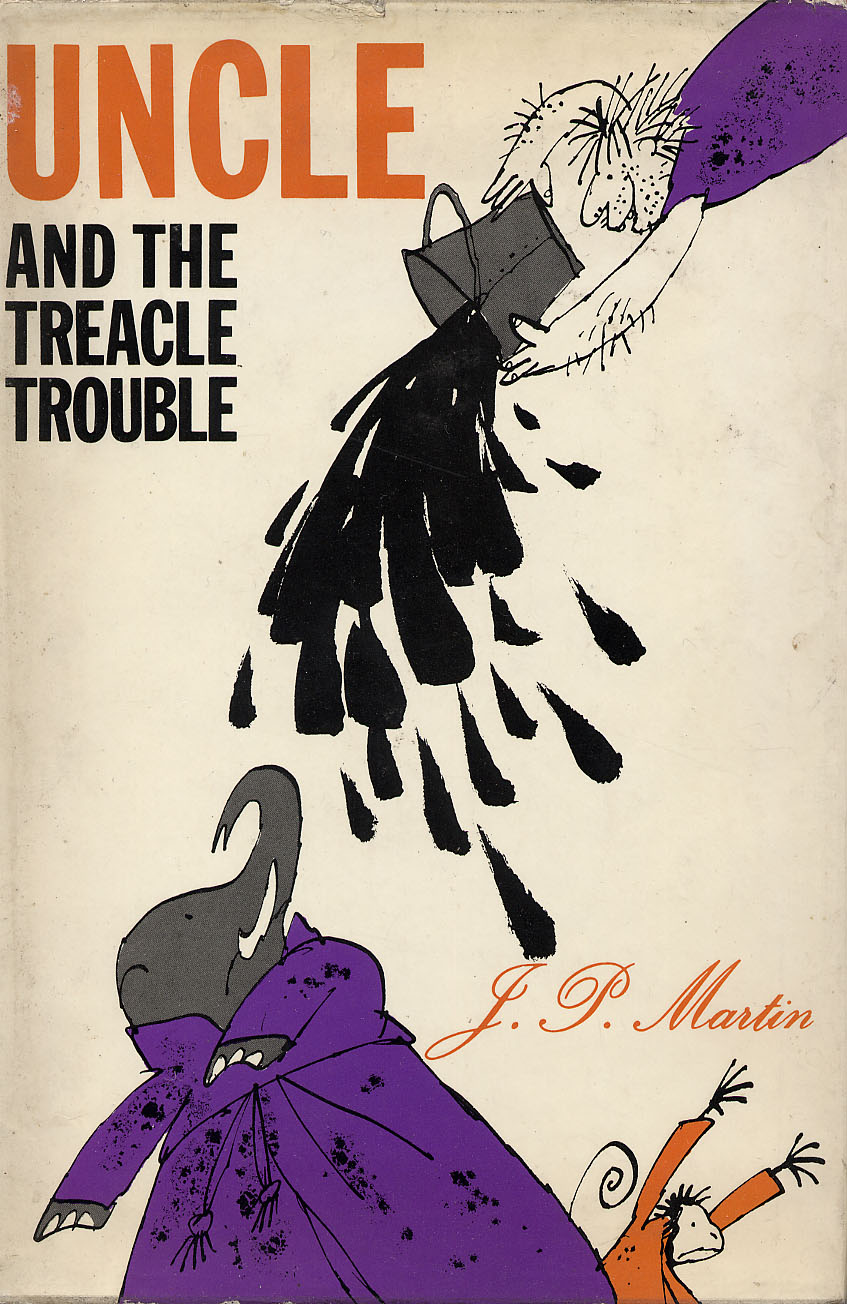
One afternoon, when I was about thirteen or fourteen, I was standing in the queue for the children’s counter in a library in Davyhulme in Manchester. I was carrying four or five books and an older girl read out the title of the one that happened to be on top: Uncle and the Treacle Trouble.

Quentin Blake's cover of J.P. Martin's Uncle and the Treacle Trouble

It was meant to make me feel stupid, but it didn’t much. Don’t judge a book by its cover – or its title. Like Uncle and Claudius the Camel or Uncle and the Battle for Badgertown, Uncle and the Treacle Trouble might sound twee and childish: in fact, it’s one of the cleverest, funniest, most surreal children’s books ever written. The six books in J.P. Martin’s Uncle series deserve to join Lewis Carroll’s Alice in Wonderland, Kenneth Grahame’s Wind in the Willows and A.A. Milne’s Winnie the Pooh among the classics, delighting both children and adults all around the world. Alas, they never have and probably now never will. That gives them a cult cachet, of course, but I’d rather have less cult and more cash for the publishers willing to re-issue them.

How to describe them? “Alice in the Willows” is one way: they combine the surreal invention of Alice in Wonderland with the proper stories of Wind in the Willows. Anthropomorphic animals have odd and interesting adventures. Uncle is a Trunkle: a millionaire elephant living in a city-sized castle with lots of other walking, talking animals. And with humans too, like his loyal librarian Will Shudder, his horticulturalist Butterskin Mute,  and the Badfort Crowd, Uncle’s sworn and socialist enemies. Another way of describing the books is to say they might have written by J.G. Bilne or A.A. Mallard: imagine mixing the vivid surrealism of J.G. Ballard with the sun-kissed camaraderie of A.A. Milne. Or the snow-cloaked camaraderie. The Uncle books are set in all the seasons and appeal to all the senses, including the sense of wonder. Martin’s surreal invention is actually oneirography: in part, the books are transcriptions of his dreams.

That’s one reason I would put them above Alice in Wonderland, Wind in the Willows and Winnie the Pooh. I like all of those books, but they don’t create worlds as large, crowded, and endlessly detailed as the dream-world of Uncle, which has no borders and no barriers. Lewis Carroll’s invention can seem contrived or even didactic. He distorts the real world and plays games with it. Grahame and Milne verge on cosiness or never leave it at all, some would say. Martin doesn’t contrive or do cosy, and his hero has feet of clay. “See that pompous humbug Unc/On the platform raise his trunk…” sing the Badfort Crowd, down but not out after Uncle has thwarted another of their schemes, and they’re right: Uncle, though good and kind-hearted, is pompous. If you wanted to get Nietzschean about it, you could say Uncle represents the calm and ordered world of the Apollonian and the Badfort Gang the chaotic and destructive forces of the Dionysian. But that would probably be taking things too far. Uncle is nearer whimsy than wildness. I would like to know more about J.P. Martin’s education, but if he was influenced by Greek and Roman mythology, he adapted it for a cooler climate and more muted skies. Apollo and Dionysus may do battle in his books, but they do so in the hall of Hypnos, god of sleep. Reading J.P. Martin is like dreaming awake.

But you’ll have sweet dreams, not sour ones: if Martin ever had angst-ridden or ugly dreams, he didn’t transcribe them into his books. He can also, like the late, great Peter Simple, invoke the “mysterious urban poetry” of slag-heaps and abandoned factories. Perhaps Simple, born in 1913, was a fan of Martin, born in 1879, or perhaps they both drew on the same gentle, subtle English traditions of nonsense, whimsy, and satire. Either way, I would place Martin above even Simple. Both are dead now, but the written word, more lasting than bronze, allows their souls to sing on.

A Swirl of Shadows

I tell of the planet of Gdarrujh, far, very far, in space and time. There is a spot there, by a vanished sea, whereon, at certain times of the year, a swirl of shadows will appear on a broken floor of ancient marble. And these shadows are very strange, seeming those of living creatures, yet with likeness to none ever known on that world. Travellers who return from the spot compare the shadows to those of autumn leaves able to hover and flutter at will between sun and earth, shading the latter with their shape. Yet these shadows have heads and limbs, after a fashion, and certainly pertain to the animal, not the vegetable, and even to the human, as though the arms of Gdarrujh-folk were broad-bladed oars and men could row the very insubstantiality of air, ride there at will, though they remained solid flesh and sturdy bone.

And this shadow-swirl has nourished several schools of speculation on Gdarrujh. Some philosophoi say it is nothing real, being a mirage or trick of some long-dead, high-cunning’d mage, whose magick works on down the millennia, tempting the foolish to belief in nonsense and chimæras. But others say, nay, nay, the shadows are those of real creatures, past or to come, and are shown by design of the gods, that men might throw down their walls of dogma, topple their towers of certitude, and know that the Universe holds more than man sees or woman dreams. And a smaller school of the realitarians holds that the shadows are not of the past or future, but rather of the present, being cast somehow through a chink that separates known Gdarrujh from another Gdarrujh that exists in hidden parallel, where creatures dwell not only the land and sea, but also the air, being able to take to it, delight in it, partake there of the lightness of leaves and the grace of fish.

And the creatures of the shadow-swirl have mouths like knives, which gape as though they call, but, in repudiation of whose claims, in confirmation of whose, in relevation of what mysteries, no sound reaches the speculators of Gdarrujh.