Le Neige d’Antan

snow (n.) Middle English snou, from Old English snaw “snow, that which falls as snow; a fall of snow; a snowstorm,” from Proto-Germanic *snaiwaz (source also of Old Saxon and Old High German sneo, Old Frisian and Middle Low German sne, Middle Dutch snee, Dutch sneeuw, German Schnee, Old Norse snjor, Gothic snaiws “snow”), from PIE root *sniegwh– “snow; to snow” (source also of Greek νίφα, nipha, Latin nix (genitive nivis), Old Irish snechta, Irish sneachd, Welsh nyf, Lithuanian sniegas, Old Prussian snaygis, Old Church Slavonic snegu, Russian snieg’, Slovak sneh “snow”). The cognate in Sanskrit, स्निह्यति snihyati, came to mean “he gets wet.” — “Snow” at EtymOnline

The Hex Fractor #3

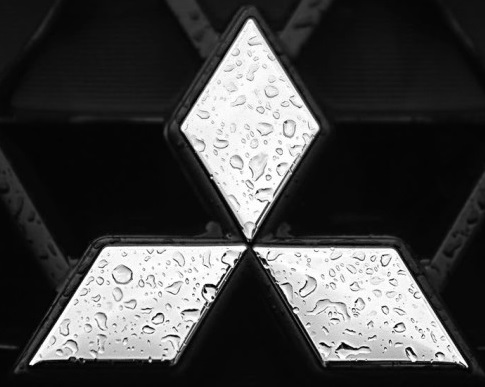
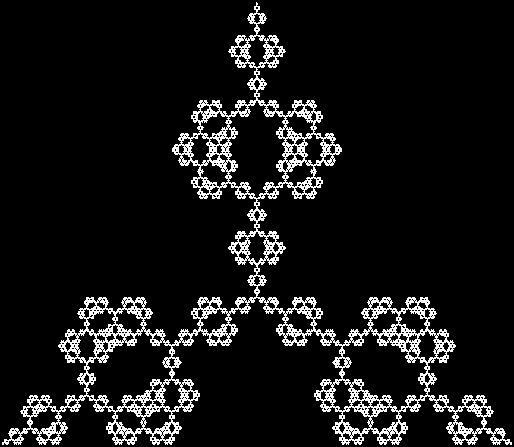
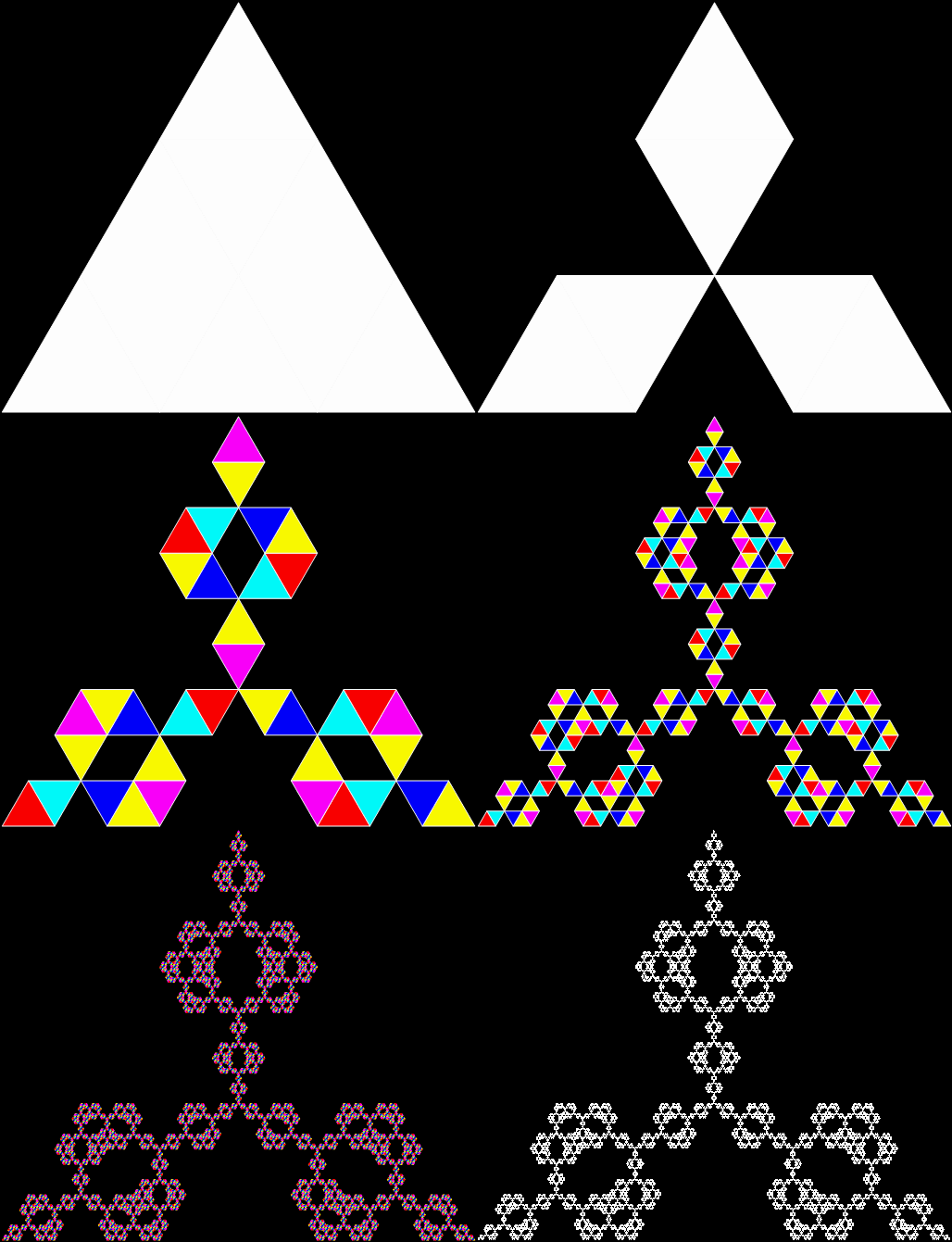
In “Diamonds to Dust”, I showed how the Mitsubishi logo could be turned into a fractal, like this:

The Mitsubishi diamonds (source)


Mitsubishi logo to fractal (animated)


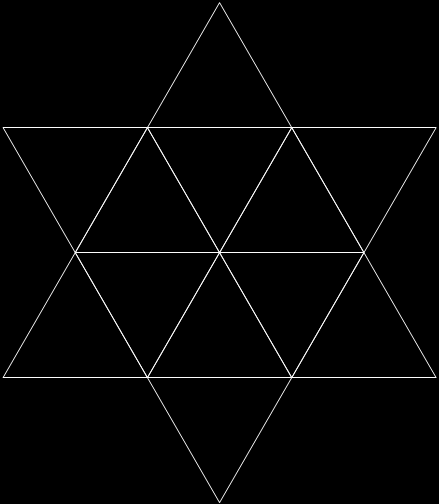
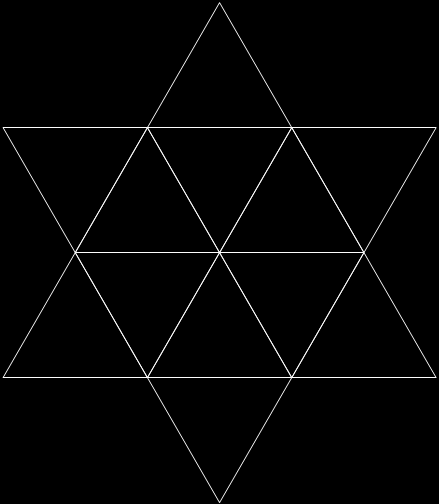
Now I want to look at another famous symbol and its fractalization. Here’s the symbol, the hexagram:

Hexagram, a six-pointed star


The hexagram can be dissected into twelve equilateral triangles like this:

Hexagram dissected into 12 equilateral triangles


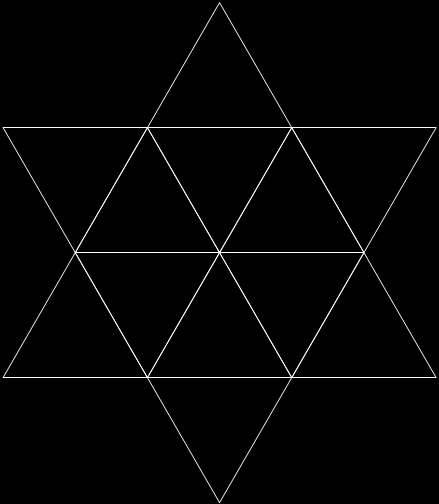
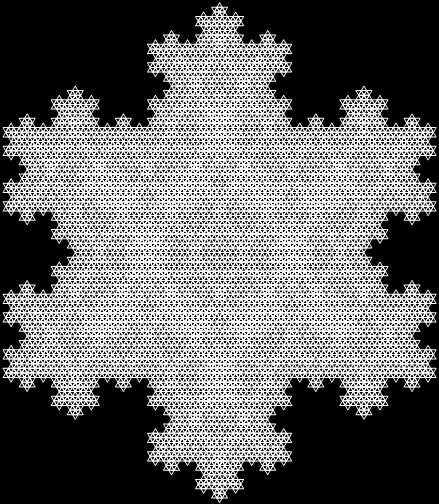
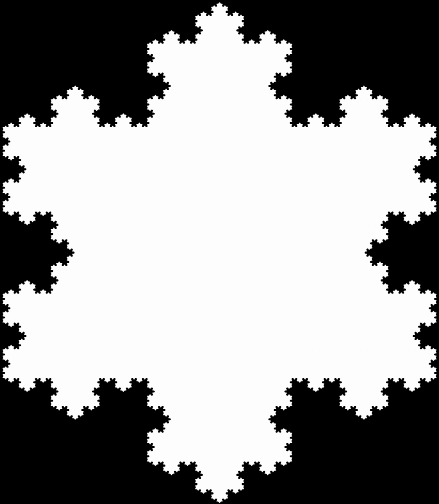
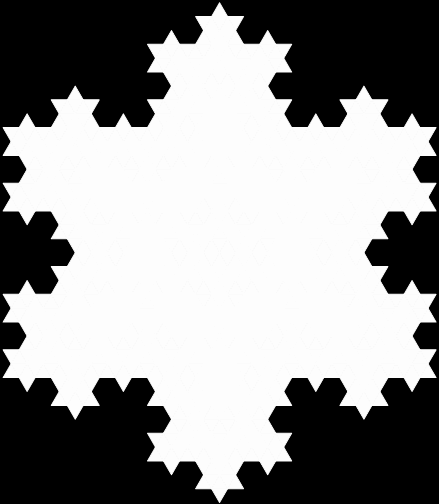
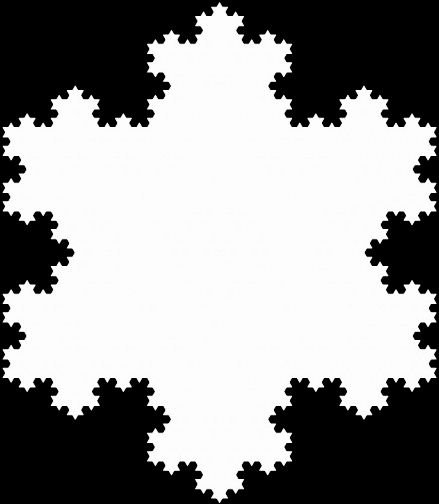
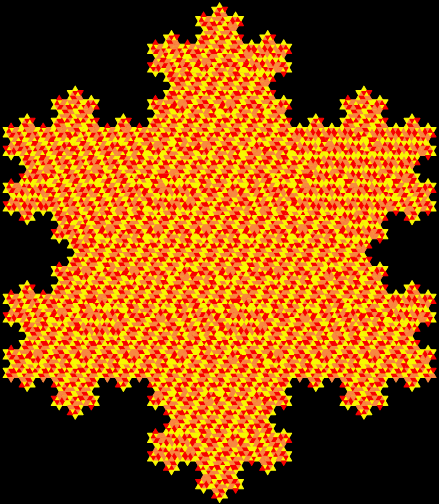
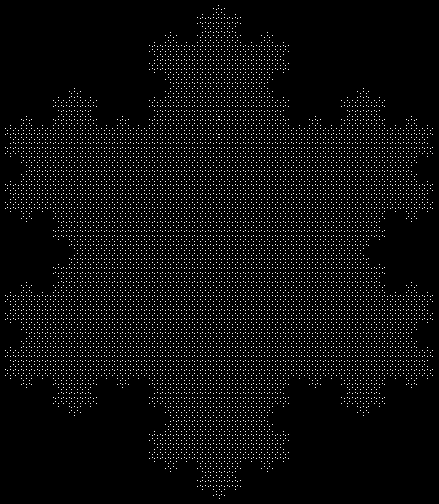
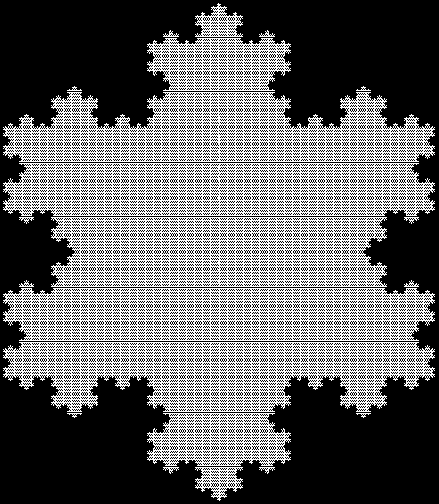
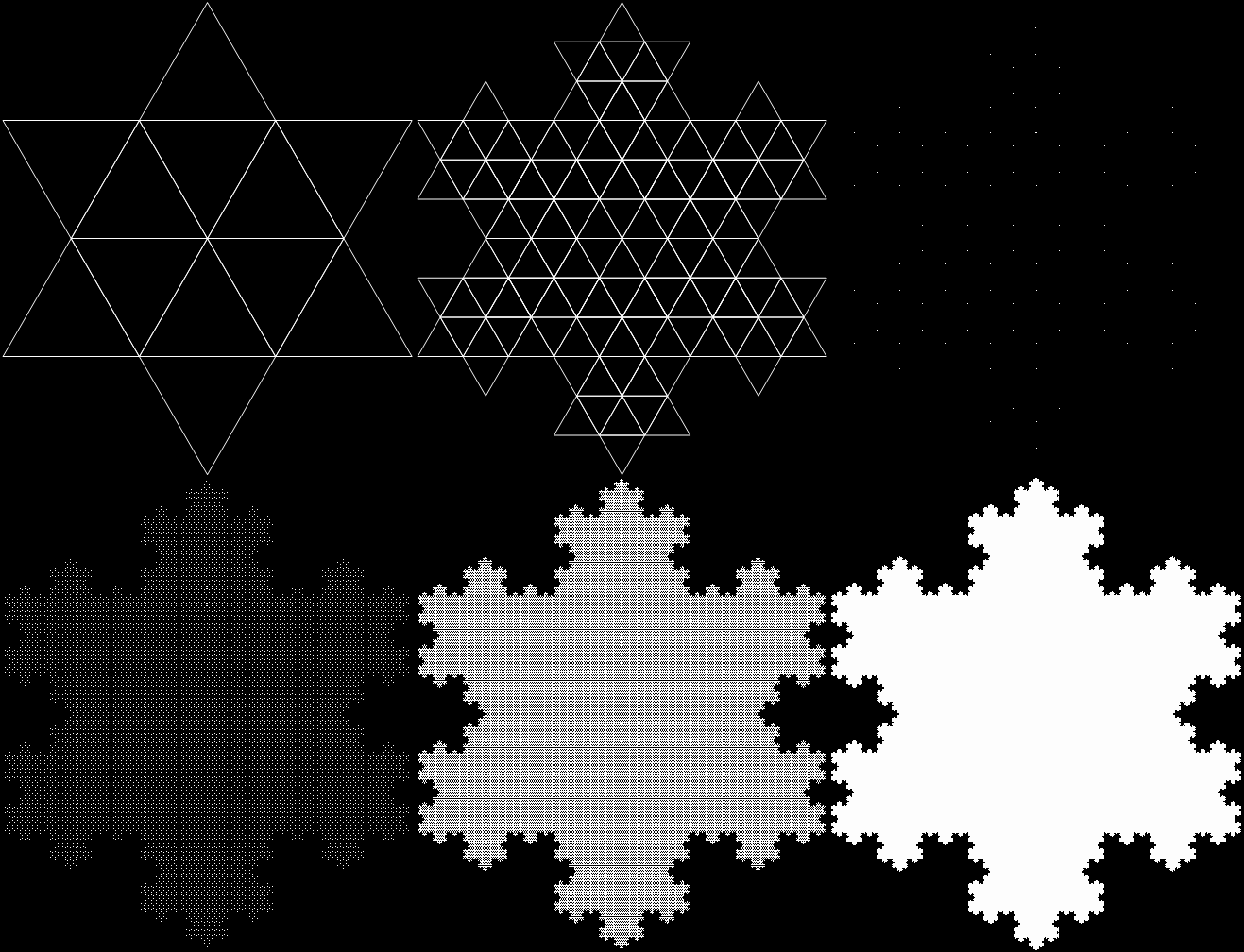
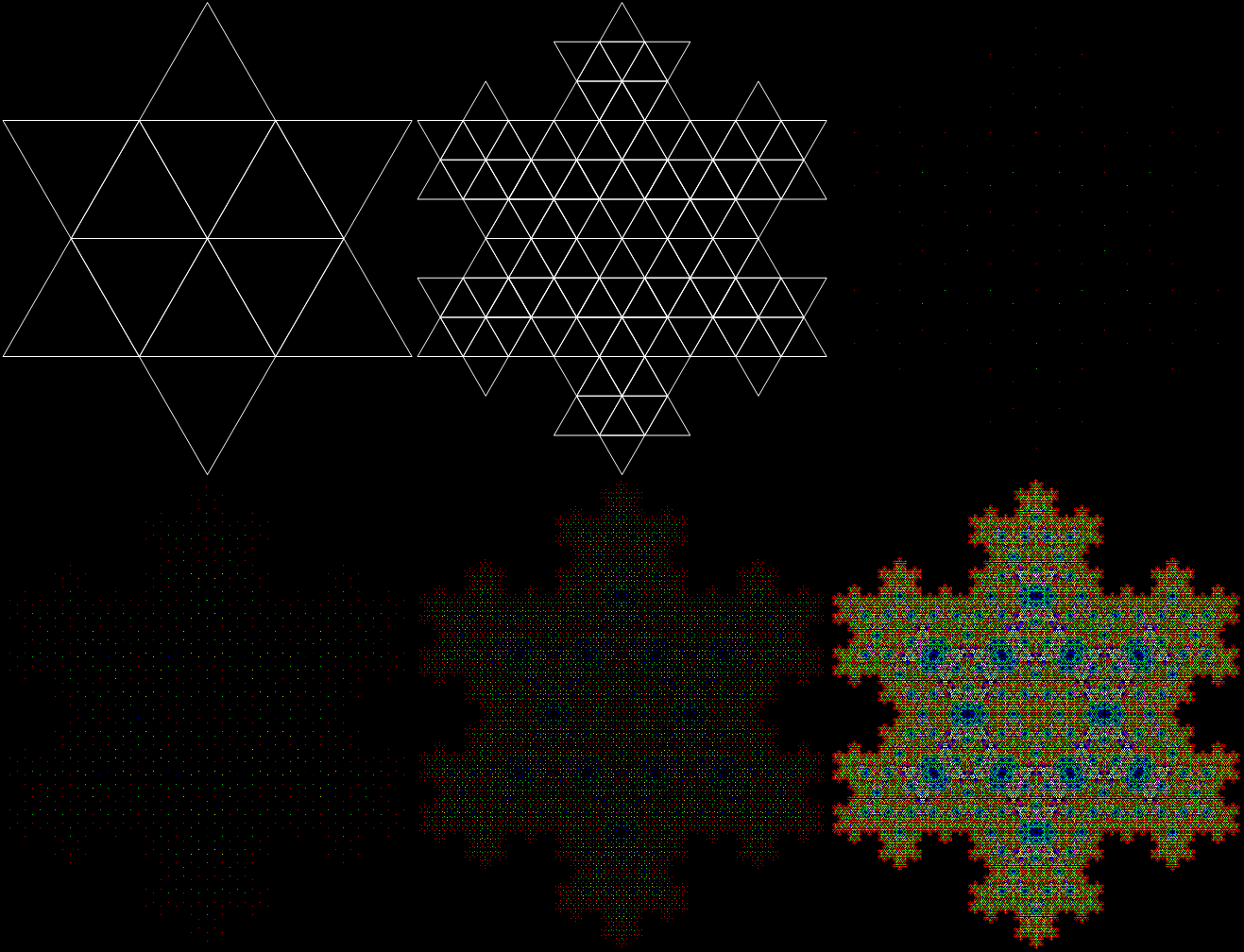
If each triangle in the dissection is replaced by a hexagram, then the hexagram is dissected again into twelve triangles, you get a famous fractal, the Koch snowflake:


The Koch snowflake


The Koch snowflake again


Hexagram to Koch snowflake (animated)


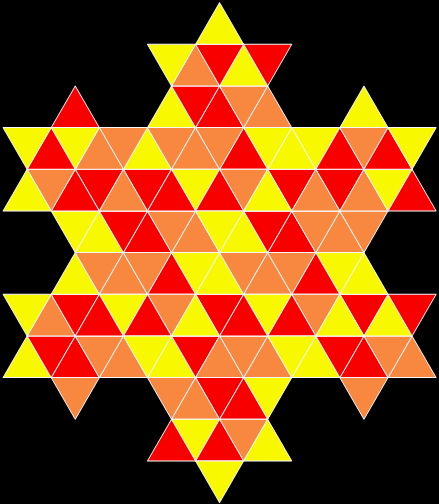
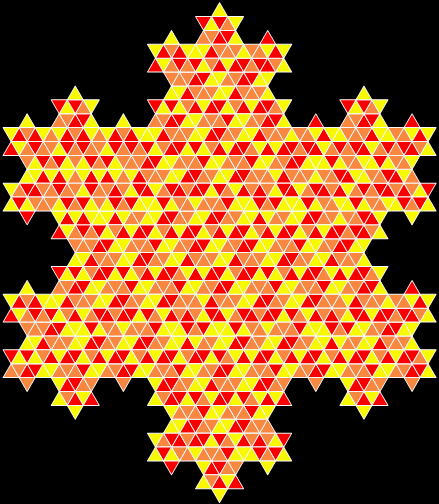
If you color the triangles, you get something like this:


Colored hexagram to fractal (animated)


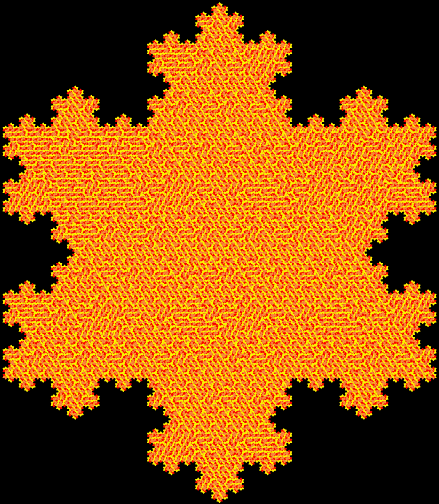
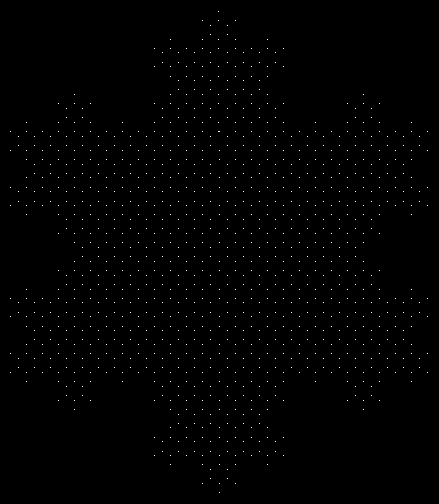
Of course, this is a very inefficient way to create a Koch snowflake, because the interior hexagrams consume processing time while not contributing to the fractal boundary of the snowflake. But in a way you can fully fractalize the hexagram if you draw only the point at the center of each triangle and then color it according to how many times the pixel in question has been drawn on before. To see how this works, first look at what happens when the center-points are represented in white:


White center-points (animated)


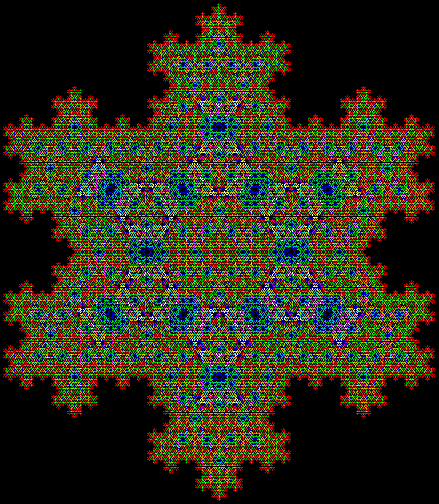
And here’s the fully fractalized hexagram, with colored center-points:


Colored center-points (animated)


Previously Pre-Posted…

The Hex Fractor #1 — hexagons and fractals
The Hex Fractor #2 — hexagons and fractals again
Diamonds to Dust — turning the Mitsubishi logo into a fractal

Renoir et la Reine Noire

« Le noir, une non-couleur ? Où avez-vous encore pris cela ? Le noir, mais c’est la reine des couleurs ! » — Renoir (1841-1919)
• “Black, a non-color? Where did you get that idea? Black, why, it’s the queen of colors!”

Nostocalgie de la Boue

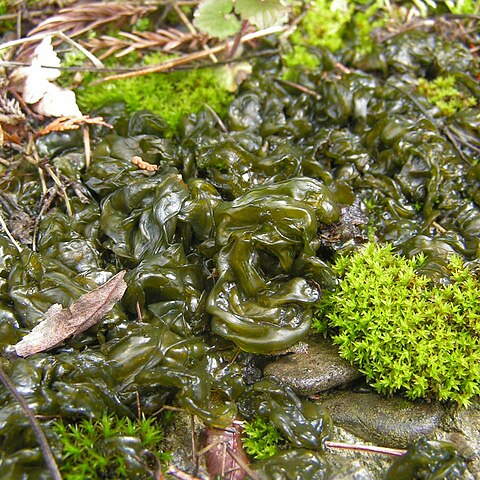
The colonial cyanobacterium Nostoc commune (image from Wikipedia)


Post-Performative Post-Scriptum…

The title of this incendiary intervention is a reference to the French phrase nostalgie de la boue, literally meaning “nostalgia for mud” and referring to a longing for social or sexual degradation.

Miximal Metaphors

“Each of Robyn’s three Honey-era Later performances featured a moment. Towards the end of ‘Missing U’, she finally stared down the camera, having avoided eye contact for fear of emotional collapse, while during ‘Honey’ she did away with the mic stand to make room for supple dance moves. With ‘Every Heartbeat’, meanwhile, peaked when she punctured the highwire emotional blood-letting with a cheeky wink.” — “The 100 greatest BBC music performances – ranked!”, The Guardian, 6×22


Post-Performative Post-Scriptum…

If you think it’s easy to mix so many metaphors in so few words, all I can say is: Try it for yourself!

Green Seen


When you stare at the cross for at least 30 seconds, you see three illusions:

• A gap running around the circle of lilac discs;
• A green disc running around the circle of lilac discs in place of the gap; and
• The green disc running around on the grey background, with the lilac discs having disappeared in sequence. — Lilac Chaser, Wikipedia


Elsewhere Other-Accessible…

Troxler’s fading at Wikipedia

Trim Pickings

Here is an equilateral triangle divided into nine smaller equilateral triangles:

Rep-9 equilateral triangle


The triangle is a rep-tile — it’s tiled with repeating copies of itself. In this case, it’s a rep-9 triangle. Each of the nine smaller triangles can obviously be divided in their turn:

Rep-81 equilateral triangle


Rep-729 equilateral triangle


Rep-729 equilateral triangle again


Rep-6561 equilateral triangle


Rep-9 triangle repeatedly subdividing (animated)


How try trimming the original rep-9 triangle, picking one of the trimmings, and repeating in finer detail. If you choose six triangles in this pattern, you can create a symmetrical braided fractal:

Triangular fractal stage 1


Triangular fractal #2


Triangular fractal #3


Triangular fractal #3 (cleaning up)


Triangular fractal #3 (cleaning up more)


Triangular fractal #4


Triangular fractal #5


Triangular fractal #6


Triangular fractal (animated)


But this fractal using a three-triangle trim-picking isn’t symmetrical:

Trim-picking #1


Trim-picking #2


Trim-picking #3


Trim-picking #4


Trim-picking #5


To make it symmetric, you have to delay the trim, using the full rep-9 trim for the first stage:

Delayed trim-picking #1


Delayed trim-picking #2


Delayed trim-picking #3


Delayed trim-picking #4


Delayed trim-picking #5


Delayed trim-picking #6 (with first two stages as rep-9)


Delayed trim-picking (animated)


Here are some more delayed trim-pickings used to created symmetrical patterns:


Bored Bard

Pol. How say you by that? Still harping on my daughter: yet he knew me not at first; he said I was a Fishmonger: he is farre gone, farre gone: and truly in my youth, I suffred much extreamity for loue: very neere this. Ile speake to him againe. What do you read my Lord?

Ham. Words, words, words. — Hamlet (c. 1600), Act 2, Scene 2

Polykoch (Kontinued)

In “Polykoch!”, I looked at variants on the famous Koch snowflake, which is created by erecting new triangles on the sides of an equilaternal triangle, like this:

Koch snowflake #1


Koch snowflake #2


Koch snowflake #3


Koch snowflake #4


Koch snowflake #5


Koch snowflake #6


Koch snowflake #7


Koch snowflake (animated)


One variant is simple: the new triangles move inward rather than outward:

Inverted Koch snowflake #1


Inverted Koch snowflake #2


Inverted Koch snowflake #3


Inverted Koch snowflake #4


Inverted Koch snowflake #5


Inverted Koch snowflake #6


Inverted Koch snowflake #7


Inverted Koch snowflake (animated)


Or you can alternate between moving the new triangles inward and outward. When they always move outward and have sides 1/5 the length of the sides of the original triangle, the snowflake looks like this:


When they move inward, then always outward, the snowflake looks like this:


And so on:


Now here’s a Koch square with its new squares moving inward:

Inverted Koch square #1


Inverted Koch square #2


Inverted Koch square #3


Inverted Koch square #4


Inverted Koch square #5


Inverted Koch square #6


Inverted Koch square (animated)


And here’s a pentagon with squares moving inwards on its sides:

Pentagon with squares #1


Pentagon with squares #2


Pentagon with squares #3


Pentagon with squares #4


Pentagon with squares #5


Pentagon with squares #6


Pentagon with squares (animated)


And finally, an octagon with hexagons on its sides. First the hexagons move outward, then inward, then outward, then inward, then outward:

Octagon with hexagons #1


Octagon with hexagons #2


Octagon with hexagons #3


Octagon with hexagons #4


Octagon with hexagons #5


Octagon with hexagons (animated)